CN115006526B - Photodynamic TiO 2 Composite nano particle and preparation method and application thereof - Google Patents
Photodynamic TiO 2 Composite nano particle and preparation method and application thereof Download PDFInfo
- Publication number
- CN115006526B CN115006526B CN202210529309.4A CN202210529309A CN115006526B CN 115006526 B CN115006526 B CN 115006526B CN 202210529309 A CN202210529309 A CN 202210529309A CN 115006526 B CN115006526 B CN 115006526B
- Authority
- CN
- China
- Prior art keywords
- tio
- photodynamic
- sirna
- nanoparticles
- complex
- Prior art date
- Legal status (The legal status is an assumption and is not a legal conclusion. Google has not performed a legal analysis and makes no representation as to the accuracy of the status listed.)
- Active
Links
Images




Classifications
-
- A—HUMAN NECESSITIES
- A61—MEDICAL OR VETERINARY SCIENCE; HYGIENE
- A61K—PREPARATIONS FOR MEDICAL, DENTAL OR TOILETRY PURPOSES
- A61K41/00—Medicinal preparations obtained by treating materials with wave energy or particle radiation ; Therapies using these preparations
- A61K41/0057—Photodynamic therapy with a photosensitizer, i.e. agent able to produce reactive oxygen species upon exposure to light or radiation, e.g. UV or visible light; photocleavage of nucleic acids with an agent
-
- A—HUMAN NECESSITIES
- A61—MEDICAL OR VETERINARY SCIENCE; HYGIENE
- A61K—PREPARATIONS FOR MEDICAL, DENTAL OR TOILETRY PURPOSES
- A61K9/00—Medicinal preparations characterised by special physical form
- A61K9/14—Particulate form, e.g. powders, Processes for size reducing of pure drugs or the resulting products, Pure drug nanoparticles
-
- A—HUMAN NECESSITIES
- A61—MEDICAL OR VETERINARY SCIENCE; HYGIENE
- A61P—SPECIFIC THERAPEUTIC ACTIVITY OF CHEMICAL COMPOUNDS OR MEDICINAL PREPARATIONS
- A61P35/00—Antineoplastic agents
Landscapes
- Health & Medical Sciences (AREA)
- Chemical & Material Sciences (AREA)
- Life Sciences & Earth Sciences (AREA)
- Animal Behavior & Ethology (AREA)
- Public Health (AREA)
- Pharmacology & Pharmacy (AREA)
- Medicinal Chemistry (AREA)
- Veterinary Medicine (AREA)
- General Health & Medical Sciences (AREA)
- Epidemiology (AREA)
- Bioinformatics & Cheminformatics (AREA)
- Engineering & Computer Science (AREA)
- Chemical Kinetics & Catalysis (AREA)
- General Chemical & Material Sciences (AREA)
- Nuclear Medicine, Radiotherapy & Molecular Imaging (AREA)
- Organic Chemistry (AREA)
- Biochemistry (AREA)
- Molecular Biology (AREA)
- Pharmaceuticals Containing Other Organic And Inorganic Compounds (AREA)
Abstract
本发明公开了一种光动力TiO2复合纳米粒子及其制备方法和应用。本发明的光动力TiO2复合纳米粒子,由Ru配合物共价修饰TiO2纳米粒子,再进一步负载HIF‑1αsiRNA制得。通过上述方法,制得的TiO2@Ru@siRNA,使TiO2的可见光的光谱光敏化,作为电子受体诱导光电子从价带转移到TiO2的高能导带,实现高效的电子‑空穴分离,有利于电子和氧之间的反应产生单线态氧,而空穴与水分子之间的反应产生强氧化性羟基自由基,从而以获得更优的光催化活性。

The invention discloses a photodynamic TiO2 composite nanoparticle, a preparation method and an application thereof. The photodynamic TiO 2 composite nanoparticle of the present invention is prepared by covalently modifying the TiO 2 nanoparticle with a Ru complex, and further loading HIF-1α siRNA. Through the above method, the prepared TiO 2 @Ru@siRNA can sensitize the visible light spectrum of TiO 2 and act as an electron acceptor to induce photoelectrons to transfer from the valence band to the high-energy conduction band of TiO 2 to achieve efficient electron-hole separation. , which is beneficial to the reaction between electrons and oxygen to generate singlet oxygen, while the reaction between holes and water molecules generates strong oxidizing hydroxyl radicals, so as to obtain better photocatalytic activity.
Description
技术领域technical field
本发明涉及纳米生物医学技术领域,更具体的,涉及一种光动力TiO2复合纳米粒子及其制备方法和应用。The invention relates to the technical field of nano-biomedicine, and more specifically, relates to a photodynamic TiO2 composite nanoparticle and a preparation method and application thereof.
背景技术Background technique
典型的口腔鳞状细胞癌(OSCC)治疗方法是外科手术治疗,部分病例需辅助放射治疗或化学治疗。为了尽可能地去除肿瘤组织,通常会扩大切除相邻的正常功能组织,这种治疗策略往往会造成患者的严重损伤、生活质量的降低等。尽管OSCC患者接受多种治疗,5年总体生存率仍为50%~60%,因此探求新的高效、低毒、靶向性强的药物制剂及方法成为医学界的研究热点。The typical treatment for oral squamous cell carcinoma (OSCC) is surgery, and some cases require adjuvant radiation therapy or chemotherapy. In order to remove the tumor tissue as much as possible, the adjacent normal functional tissue is usually resected extensively. This treatment strategy often causes serious injury and reduces the quality of life of the patient. Although OSCC patients receive a variety of treatments, the 5-year overall survival rate is still 50% to 60%. Therefore, it has become a research hotspot in the medical field to seek new high-efficiency, low-toxic, and highly targeted pharmaceutical preparations and methods.
光动力治疗(PDT)是一种治疗浅表肿瘤(如食道癌,膀胱癌,恶性黑色素瘤)等疾病有效的临床治疗方法。PDT利用光敏制剂经激光(或其他光源)激发后催化肿瘤内部的氧气,生成具有细胞毒性的活性氧(ROS),诸如单线态氧(1O2)、羟基自由基(·OH)、超氧阴离子(·O2-)等,破坏细胞和细胞器的结构与功能,杀伤癌细胞,达到治疗肿瘤的目的。相比手术与放化疗,PDT是一种无创、毒副作用小、选择性好、精准度高的治疗技术。Photodynamic therapy (PDT) is an effective clinical treatment for superficial tumors (such as esophageal cancer, bladder cancer, malignant melanoma) and other diseases. PDT utilizes photosensitizers to catalyze the oxygen inside the tumor after being excited by laser (or other light sources) to generate cytotoxic reactive oxygen species (ROS), such as singlet oxygen ( 1 O 2 ), hydroxyl radicals (·OH), superoxide Anions (·O 2- ), etc., destroy the structure and function of cells and organelles, kill cancer cells, and achieve the purpose of treating tumors. Compared with surgery and radiotherapy and chemotherapy, PDT is a non-invasive, less toxic and side effects, good selectivity, and high precision treatment technology.
然而,在大多数实体瘤中,由于肿瘤的生长速度远大于其内部血管的生成速度,肿瘤微环境长期处于乏氧状态。而光动力疗法作为一种氧依赖性治疗,肿瘤内部的乏氧状态极大的影响活性氧量,降低对肿瘤细胞杀伤作用,因此传统光动力治疗明显受到肿瘤乏氧的限制而无法发挥最大的疗效。However, in most solid tumors, the tumor microenvironment is chronically hypoxic due to the fact that the growth rate of the tumor is much greater than the rate of angiogenesis within it. As photodynamic therapy is an oxygen-dependent therapy, the hypoxic state inside the tumor greatly affects the amount of active oxygen and reduces the killing effect on tumor cells. Therefore, traditional photodynamic therapy is obviously limited by tumor hypoxia and cannot exert its maximum effect. curative effect.
近年来,以纳米技术为基础发展起来的纳米药物递送体系在肿瘤研究领域得到了广泛的关注。相比传统小分子光敏剂的水溶性差,光稳定性差,合成纯化繁琐,机体清除缓慢等,纳米粒子的优势在于其纳米级尺寸,具有较低的毒副作用、高的靶向性,良好的生物相容性等。In recent years, nano-drug delivery systems developed on the basis of nanotechnology have received extensive attention in the field of tumor research. Compared with traditional small-molecule photosensitizers, which have poor water solubility, poor photostability, cumbersome synthesis and purification, and slow clearance from the body, the advantages of nanoparticles lie in their nanoscale size, low toxic and side effects, high targeting, and good biological properties. compatibility etc.
二氧化钛(TiO2)是人类生活中使用最广泛的纳米材料之一。然而,TiO2的光响应范围仅限于紫外线区域,由于紫外线渗透性差,TiO2纳米粒子的光催化活性较差,对深度肿瘤治疗的影响不太显著,使得TiO2纳米粒子用于光动力治疗的效果受限。Titanium dioxide (TiO 2 ) is one of the most widely used nanomaterials in human life. However, the photoresponse range of TiO2 is limited to the ultraviolet region, and due to the poor ultraviolet permeability, the photocatalytic activity of TiO2 nanoparticles is poor, and the effect on deep tumor treatment is not significant, making TiO2 nanoparticles suitable for photodynamic therapy. Effect is limited.
因此,需要开发一种光响应范围更宽、光催化活性更高的光动力TiO2纳米粒子。Therefore, it is necessary to develop a photodynamic TiO2 nanoparticle with a wider photoresponse range and higher photocatalytic activity.
发明内容Contents of the invention
本发明为克服上述现有技术所述的光响应范围窄、光催化活性低的缺陷,提供一种光动力TiO2复合纳米粒子,通过Ru配合物共价修饰TiO2纳米粒子,再进一步负载HIF-1αsiRNA,制得了TiO2@Ru@siRNA,使TiO2的可见光的光谱光敏化,作为电子受体诱导光电子从价带转移到TiO2的高能导带(CB),实现高效的电子-空穴分离,有利于电子和氧之间的反应产生单线态氧(1O2),而空穴与水分子之间的反应产生强氧化性羟基自由基(·OH),从而以获得更优的光催化活性。一方面HIF-1α在缺氧条件下高表达,促进肿瘤组织新血管形成,推进肿瘤的发生发展。抑制HIF-1α的表达,改善乏氧条件;另一方面光照产生大量ROS,主要包括超氧阴离子、羟基自由基、单线态氧等,克服乏氧条件发挥I型和II型光动力效果,杀死肿瘤细胞。In order to overcome the defects of narrow photoresponse range and low photocatalytic activity described in the above prior art, the present invention provides a photodynamic TiO2 composite nanoparticle, which covalently modifies TiO2 nanoparticle by Ru complex, and further loads HIF -1α siRNA, made TiO 2 @Ru@siRNA, makes TiO 2 visible light spectrum photosensitization, acts as an electron acceptor to induce photoelectron transfer from the valence band to the high-energy conduction band (CB) of TiO 2 , realizing efficient electron-hole transfer Separation is beneficial to the reaction between electrons and oxygen to produce singlet oxygen ( 1 O 2 ), while the reaction between holes and water molecules produces strong oxidizing hydroxyl radicals ( OH), so as to obtain better light catalytic activity. On the one hand, HIF-1α is highly expressed under hypoxic conditions, which promotes the formation of new blood vessels in tumor tissue and promotes the occurrence and development of tumors. Inhibit the expression of HIF-1α and improve hypoxic conditions; on the other hand, light produces a large number of ROS, mainly including superoxide anion, hydroxyl radicals, singlet oxygen, etc., to overcome hypoxic conditions and exert type I and type II photodynamic effects, killing dead tumor cells.
本发明的另一目的在于提供上述光动力TiO2复合纳米粒子的制备方法。Another object of the present invention is to provide a method for preparing the above-mentioned photodynamic TiO 2 composite nanoparticles.
本发明的另一目的在于提供上述光动力TiO2复合纳米粒子的应用。Another object of the present invention is to provide the application of the above-mentioned photodynamic TiO 2 composite nanoparticles.
为解决上述技术问题,本发明采用的技术方案是:In order to solve the problems of the technologies described above, the technical solution adopted in the present invention is:
一种光动力TiO2复合纳米粒子,由如下方法制备得到:A kind of photodynamic TiO 2 composite nanoparticles, prepared by the following method:
S1.合成Ru配合物:S1. Synthesis of Ru complexes:
将[Ru(dimbpc)2Cl2]与TTIP分散于甲醇中,经氩气鼓吹溶剂后,进行微波处理,过滤后向滤液中加入饱和NH4PF6溶液,过滤、纯化后得到固体产物,经脱去甲醇,得到[Ru(bpc)2(TTIP)](Cl2),即Ru配合物;Disperse [Ru(dimbpc) 2 Cl 2 ] and TTIP in methanol, blow the solvent with argon, carry out microwave treatment, add saturated NH 4 PF 6 solution to the filtrate after filtration, and obtain a solid product after filtration and purification. Remove methanol to obtain [Ru(bpc) 2 (TTIP)](Cl 2 ), which is the Ru complex;
S2.Ru配合物修饰TiO2:S2. Ru complex modified TiO 2 :
将TiO2纳米粒子分散于有机溶剂中,得到悬浮液;将烷基偶联剂和氨水加至有机溶剂中,得到反应液;将悬浮液滴加至反应液中,经搅拌、过滤得到偶联改性TiO2;Disperse TiO2 nanoparticles in an organic solvent to obtain a suspension; add an alkyl coupling agent and ammonia water to the organic solvent to obtain a reaction liquid; add the suspension dropwise to the reaction liquid, stir and filter to obtain a coupling Modified TiO 2 ;
将偶联改性TiO2分散于有机溶剂中,超声处理后加入Ru配合物、2-(7-氮杂苯并三氮唑)-N,N,N',N'-四甲基脲六氟磷酸酯(HATU)与N,N-二异丙基乙基胺(DIPEA),室温反应后,经后处理,得到TiO2@Ru纳米颗粒;Disperse the coupling-modified TiO 2 in an organic solvent, add Ru complex, 2-(7-azabenzotriazole)-N,N,N',N'-tetramethylurea hexa Fluorophosphate ester (HATU) and N,N-diisopropylethylamine (DIPEA), reacted at room temperature, and post-treated to obtain TiO 2 @Ru nanoparticles;
S3.负载HIF-1αsiRNA:S3. Loading HIF-1α siRNA:
将TiO2@Ru纳米颗粒和HIF-1αsiRNA分散在pH缓冲液中,经0~4℃静置反应0.5~1h,经离心、洗涤,得到TiO2@Ru@siRNA,即所述光动力TiO2复合纳米粒子。Disperse TiO 2 @Ru nanoparticles and HIF-1α siRNA in a pH buffer solution, leave to react at 0-4°C for 0.5-1 h, centrifuge and wash to obtain TiO 2 @Ru@siRNA, namely the photodynamic TiO 2 composite nanoparticles.
所述[Ru(dimbpc)2Cl2]是甲醇酯为配体的Ru化合物,CAS号为854527-66-5。所述TTIP为2-([2,2':5',2″-terthiophen]-5-yl)-1H-imidazo[4,5-f][1,10]phenanthroline,CAS号为1070190-39-4。The [Ru(dimbpc) 2 Cl 2 ] is a Ru compound with methanol ester as a ligand, and the CAS number is 854527-66-5. The TTIP is 2-([2,2':5',2″-terthiophen]-5-yl)-1H-imidazo[4,5-f][1,10]phenanthroline, the CAS number is 1070190-39 -4.
本申请的光动力TiO2复合纳米粒子,通过Ru配合物共价修饰TiO2纳米粒子,再进一步负载HIF-1αsiRNA制得。The photodynamic TiO 2 composite nanoparticles of the present application are prepared by covalently modifying TiO 2 nanoparticles with Ru complexes and further loading HIF-1α siRNA.
一方面通过Ru配合物和TiO2的光电协同效应构建稳定的纳米颗粒TiO2@Ru,Ru配合物中,引入了含有三噻吩的双齿配体,赋予配合物超长的三线态寿命。Ru配合物具有优异的光物理和生物特性即长发光寿命、高水溶性、高细胞吸收、高(光)稳定性等,可在可见光区域内产生更长的波长。On the one hand, the stable nanoparticle TiO 2 @Ru is constructed through the photoelectric synergistic effect of Ru complex and TiO 2 . In the Ru complex, a bidentate ligand containing trithiophene is introduced, endowing the complex with an ultra-long triplet lifetime. Ru complexes have excellent photophysical and biological properties, namely long luminescent lifetime, high water solubility, high cell absorption, high (light) stability, etc., and can generate longer wavelengths in the visible region.
通过Ru配合物和TiO2之间的光致电子转移作用,Ru配合物中的光激发电子主要注入TiO2的导带,增加电子活性,被水中溶解氧所捕获生成单线态氧(1O2),并增加TiO2残留的空穴,产生强氧化性的羟基自由基(·OH),增加活性氧产率从而提高光敏剂在生理条件下的穿透性和相容性,实现对肿瘤部位的被动靶向。Through the photo-induced electron transfer between the Ru complex and TiO 2 , the photoexcited electrons in the Ru complex are mainly injected into the conduction band of TiO 2 , increasing the electron activity, and being captured by dissolved oxygen in water to generate singlet oxygen ( 1 O 2 ), and increase the remaining holes in TiO 2 to generate strong oxidative hydroxyl radicals ( OH), increase the production rate of active oxygen and thus improve the penetration and compatibility of photosensitizers under physiological conditions, and realize the tumor site passive targeting.
另一方面,引入了小分子HIF-1αsiRNA,在激光照射下由于溶酶体的损伤,导致纳米颗粒电荷由正到负的变化,促使HIF-1αsiRNA从溶酶体逃逸至胞质,有效改善肿瘤的乏氧环境,最大限度地增大光动力疗效。On the other hand, the introduction of small molecule HIF-1α siRNA, due to the damage of lysosomes under laser irradiation, leads to a change in the charge of nanoparticles from positive to negative, which promotes the escape of HIF-1α siRNA from lysosomes to the cytoplasm, effectively improving tumor Hypoxic environment to maximize photodynamic efficacy.
发明人研究发现,步骤S1.中,Ru配合物和TTIP仅适用于分散在甲醇中。对于别的醇类,虽然也可能可以分散Ru配合物和TTIP,但在后续微波反应时会发生酯交换反应,不利于产物提纯。用甲醇作溶剂可保证所得产物都为甲醇酯。The inventors have found that in step S1., the Ru complex and TTIP are only suitable for dispersing in methanol. For other alcohols, although it is possible to disperse the Ru complex and TTIP, the transesterification reaction will occur during the subsequent microwave reaction, which is not conducive to product purification. The use of methanol as a solvent ensures that the resulting products are all methanol esters.
优选地,步骤S1.中,所述[Ru(dimbpc)2Cl2]与TTIP摩尔比为1:(0.8~1.2)。Preferably, in step S1., the molar ratio of [Ru(dimbpc) 2 Cl 2 ] to TTIP is 1:(0.8-1.2).
更优选地,步骤S1.中,所述[Ru(dimbpc)2Cl2]与TTIP摩尔比为1:1。More preferably, in step S1., the molar ratio of [Ru(dimbpc) 2 Cl 2 ] to TTIP is 1:1.
优选地,步骤S1.中,所述微波处理的条件为:温度120~150℃,时间10~60min。更优选地,步骤S1.中,所述微波处理的条件为:温度150℃,时间10min。Preferably, in step S1., the conditions of the microwave treatment are: temperature 120-150° C., time 10-60 min. More preferably, in step S1., the conditions of the microwave treatment are: temperature 150° C.,
优选地,步骤S1.中,所述纯化是指柱层析纯化,柱层析纯化的条件为:以200~300目硅胶色谱柱,经乙腈水流动相洗脱纯化。Preferably, in step S1., the purification refers to column chromatography purification, and the condition of column chromatography purification is as follows: a 200-300 mesh silica gel chromatography column is used for elution and purification with acetonitrile water mobile phase.
优选地,所述乙腈水流动相的组成为包括乙腈、H2O、20%KCl,三者体积比为90:10:1。Preferably, the composition of the acetonitrile-water mobile phase includes acetonitrile, H 2 O, and 20% KCl, and the volume ratio of the three is 90:10:1.
优选地,步骤S1.中,所述脱去甲醇的方法为:固体产物分散于碱溶液中,加热回流;冷却后再用酸溶液调节pH以析出固体;经过滤、洗涤,得到Ru配合物。Preferably, in step S1., the method for removing methanol is as follows: the solid product is dispersed in an alkaline solution and heated to reflux; after cooling, the pH is adjusted with an acid solution to precipitate a solid; after filtration and washing, the Ru complex is obtained.
上述脱去甲醇的过程中,先将固体产物分散于碱溶液中,加热回流,目的是将化合物中的甲醇酯水解转变为羧酸;再经碱提酸沉,去除未反应的酯化物原料,纯化配合物。In the above process of removing methanol, the solid product is first dispersed in the alkali solution and heated to reflux, the purpose is to hydrolyze the methanol ester in the compound into a carboxylic acid; and then remove the unreacted esterified raw material through alkali extraction and acid precipitation Purify the complex.
可选地,所述[Ru(dimbpc)2Cl2]的制备方法为:Optionally, the preparation method of [Ru(dimbpc) 2 Cl 2 ] is:
将Dimethyl[2,2'-bipyridine]-4,4'-dicarboxylate(dimbpc)与[RuCl2(DMSO)4]分散于N,N-二甲基甲酰胺(DMF),经加热回流、去除DMF后,加入预冷的丙酮,并在0°静置以析出固体,固体经过滤、洗涤,得到[Ru(dimbpc)2Cl2]。Disperse Dimethyl[2,2'-bipyridine]-4,4'-dicarboxylate (dimbpc) and [RuCl 2 (DMSO) 4 ] in N,N-dimethylformamide (DMF), heat to reflux, and remove DMF Afterwards, pre-cooled acetone was added, and the mixture was allowed to stand at 0° to precipitate solids, which were filtered and washed to obtain [Ru(dimbpc) 2 Cl 2 ].
所述dimbpc的CAS号为71071-46-0;所述[RuCl2(DMSO)4]的CAS号为89395-66-4。The CAS number of the dimbpc is 71071-46-0; the CAS number of the [RuCl 2 (DMSO) 4 ] is 89395-66-4.
具体的,所述[Ru(dimbpc)2Cl2]通过如下方法制备得到Specifically, the [Ru(dimbpc) 2 Cl 2 ] is prepared by the following method
将dimbpc(1.36g,5.00mmol)与[RuCl2(DMSO)4](1.21g,2.50mmol)分散于DMF(20mL),加热回流6h,然后蒸发DMF,加入50mL预冷丙酮;将溶液在0°静置2h,析出固体,将固体过滤后分别用用丙酮和水清洗,得到[Ru(dimbpc)2Cl2]。Disperse dimbpc (1.36g, 5.00mmol) and [RuCl 2 (DMSO) 4 ] (1.21g, 2.50mmol) in DMF (20mL), heat to reflux for 6h, then evaporate DMF, add 50mL pre-cooled acetone; °Stand aside for 2h, a solid precipitated out, and the solid was filtered and washed with acetone and water respectively to obtain [Ru(dimbpc) 2 Cl 2 ].
具体的,步骤S1.可以为:Specifically, step S1 may be:
将[Ru(dimbpc)2Cl2](723.53mg,1.00mmol)与TTIP(446.60mg,1.00mmol)分散于4mL甲醇中,经氩气鼓吹溶剂后,进行微波处理,过滤后向滤液中加入饱和NH4PF6溶液,过滤、纯化后得到固体产物[Ru(dimbpc)2(TTIP)](Cl)2(Rua);Disperse [Ru(dimbpc) 2 Cl 2 ] (723.53mg, 1.00mmol) and TTIP (446.60mg, 1.00mmol) in 4mL of methanol. NH 4 PF 6 solution, after filtration and purification, the solid product [Ru(dimbpc) 2 (TTIP)](Cl) 2 (Rua) was obtained;
粉末状固体产物(118.3mg,0.1mmol)分散于1N的NaOH溶液中,加热回流1h;反应结束后冷却至0°,用1N HCl溶液调节pH至3左右,析出固体;将固体过滤后使用10mL甲醇清洗,再用1N NaOH溶解固体去除不可溶性杂质,抽滤后用甲醇清洗固体,避光干燥后得[Ru(bpc)2(TTIP)](Cl2),即Ru配合物。The powdery solid product (118.3mg, 0.1mmol) was dispersed in 1N NaOH solution, and heated to reflux for 1h; after the reaction was completed, cool to 0°, adjust the pH to about 3 with 1N HCl solution, and precipitate a solid; filter the solid and use 10mL Wash with methanol, then dissolve the solid with 1N NaOH to remove insoluble impurities, wash the solid with methanol after suction filtration, and dry it in the dark to obtain [Ru(bpc) 2 (TTIP)](Cl 2 ), namely the Ru complex.
可选地,步骤S2.中,所述烷基偶联剂为3-氨丙基三乙氧基硅烷(APTEs)和/或3-氨丙基三甲氧基硅烷(APTMs)。Optionally, in step S2., the alkyl coupling agent is 3-aminopropyltriethoxysilane (APTEs) and/or 3-aminopropyltrimethoxysilane (APTMs).
优选地,步骤S2.中,所述烷基偶联剂为APTEs。Preferably, in step S2., the alkyl coupling agent is APTEs.
使用APTEs修饰TiO2纳米粒子,可以使TiO2纳米粒子具有较高的电势。与zeta电位为-7.41±1.22的TiO2相比,偶联改性TiO2的zeta电位为+27.65±2.46。表面正电荷不仅有利于肿瘤细胞对纳米粒子的吸收,而且容易装载siRNA等负生物分子。Using APTEs to modify TiO 2 nanoparticles can make TiO 2 nanoparticles have higher potential. Compared with TiO2 whose zeta potential is −7.41±1.22, the zeta potential of coupling modified TiO2 is +27.65±2.46. The positive surface charge is not only beneficial to the uptake of nanoparticles by tumor cells, but also easy to load negative biomolecules such as siRNA.
优选地,步骤S2.中,所述TiO2纳米粒子、Ru配合物的质量比为(3~4):1。Preferably, in step S2., the mass ratio of the TiO 2 nanoparticles to the Ru complex is (3-4):1.
发明人研究发现,偶联改性TiO2对Ru的最大负载能力为0.315mg/mg。负载率为最大负载能力的80%时,可以最优地保持纳米粒子表面的正电荷。The inventors have found that the maximum loading capacity of coupling modified TiO 2 to Ru is 0.315 mg/mg. The positive charge on the surface of the nanoparticles can be optimally maintained at a loading rate of 80% of the maximum loading capacity.
优选地,步骤S2.中,所述室温反应的条件为:20~25℃,20~24h。更优选地,步骤S2.中,所述室温反应的条件为:25℃,24h。Preferably, in step S2., the conditions for the reaction at room temperature are: 20-25°C, 20-24h. More preferably, in step S2., the conditions of the room temperature reaction are: 25°C, 24h.
优选地,步骤S2.中,所述后处理包括离心、洗涤、干燥。Preferably, in step S2., the post-treatment includes centrifugation, washing and drying.
具体的,步骤S2.可以为:Specifically, step S2 may be:
将2.1mg TiO2纳米粒子分散于7mL甲醇中,超声分散15min,得到TiO2悬浮液;在14mL甲醇溶液中加入1mL APTEs,再加入0.7mL氨水溶液搅拌15min,得到反应液;然后将TiO2悬浮液滴入反应液中,大力搅拌,室温搅拌24h,形成偶联改性TiO2;Disperse 2.1mg of TiO2 nanoparticles in 7mL of methanol and ultrasonically disperse for 15min to obtain a TiO2 suspension; add 1mL of APTEs to 14mL of methanol solution, then add 0.7mL of ammonia solution and stir for 15min to obtain a reaction solution; then suspend TiO2 The liquid is dropped into the reaction solution, stirred vigorously, and stirred at room temperature for 24 hours to form a coupling modified TiO 2 ;
将偶联改性TiO2(67mg)分散于有机溶剂(10mL)中,超声处理后加入Ru配合物(16.9mg,0.015mmol)、HATU(11.4mg,0.03mmol)与DIPEA(10.8μL,0.06mmol),20~25℃室温反应24h后,经离心、洗涤、干燥,得到TiO2@Ru纳米颗粒;Coupling-modified TiO 2 (67 mg) was dispersed in an organic solvent (10 mL), and Ru complex (16.9 mg, 0.015 mmol), HATU (11.4 mg, 0.03 mmol) and DIPEA (10.8 μL, 0.06 mmol) were added after sonication ), reacted at room temperature at 20-25°C for 24 hours, centrifuged, washed, and dried to obtain TiO 2 @Ru nanoparticles;
优选地,步骤S3.中,所述TiO2@Ru纳米颗粒与HIF-1αsiRNA的质量浓度比为1mg/mL:10~30μmol/L。Preferably, in step S3., the mass concentration ratio of the TiO 2 @Ru nanoparticles to HIF-1α siRNA is 1 mg/mL:10-30 μmol/L.
更优选地,步骤S3.中,所述TiO2@Ru纳米颗粒与HIF-1αsiRNA的质量浓度比为1mg/mL:15~20μmol/L。More preferably, in step S3., the mass concentration ratio of the TiO 2 @Ru nanoparticles to HIF-1α siRNA is 1 mg/mL:15-20 μmol/L.
优选地,步骤S3.中,所述离心为冷冻离心,在0~5℃条件下进行离心处理。Preferably, in step S3., the centrifugation is refrigerated centrifugation, and the centrifugation process is performed at 0-5°C.
siRNA的稳定性较差,在低温下冷冻离心可保证HIF-1αsiRNA的稳定性The stability of siRNA is poor, and refrigerated centrifugation at low temperature can ensure the stability of HIF-1α siRNA
优选地,步骤S3.中,所述PH缓冲液为pH=6~7的PBS缓冲液。Preferably, in step S3., the pH buffer is PBS buffer with pH=6-7.
TiO2@Ru纳米颗粒上的游离羧基在生理环境(pH=7.4)下可以解离,可以降低纳米系统的净电位,加速siRNA的解离。因此,在酸性条件下(pH=6~7)负载带负电荷的HIF-1αsiRNA具有更高的负载效率。The free carboxyl groups on TiO 2 @Ru nanoparticles can be dissociated in a physiological environment (pH=7.4), which can reduce the net potential of the nanosystem and accelerate the dissociation of siRNA. Therefore, loading negatively charged HIF-1α siRNA under acidic conditions (pH=6-7) has higher loading efficiency.
本发明还保护上述光动力TiO2复合纳米粒子的制备方法,包括如下步骤:The present invention also protects the preparation method of the above-mentioned photodynamic TiO2 composite nanoparticles, which includes the following steps:
S1.合成Ru配合物:S1. Synthesis of Ru complexes:
将[Ru(dimbpc)2Cl2]与TTIP分散于甲醇中,经氩气鼓吹溶剂后,进行微波处理,过滤后向滤液中加入饱和NH4PF6溶液,过滤、纯化后得到固体产物,经脱去甲醇,得到[Ru(bpc)2(TTIP)](Cl2),即Ru配合物;Disperse [Ru(dimbpc) 2 Cl 2 ] and TTIP in methanol, blow the solvent with argon, carry out microwave treatment, add saturated NH 4 PF 6 solution to the filtrate after filtration, and obtain a solid product after filtration and purification. Remove methanol to obtain [Ru(bpc) 2 (TTIP)](Cl 2 ), which is the Ru complex;
S2.Ru配合物修饰TiO2:S2. Ru complex modified TiO 2 :
将烷基偶联剂与分散于有机溶剂的TiO2纳米粒子混合,经加热回流,过滤得到偶联改性TiO2;mixing an alkyl coupling agent with TiO2 nanoparticles dispersed in an organic solvent, heating to reflux, and filtering to obtain a coupling-modified TiO2 ;
将偶联改性TiO2分散于有机溶剂中,超声处理后加入Ru配合物、2-(7-氮杂苯并三氮唑)-N,N,N',N'-四甲基脲六氟磷酸酯(HATU)与N,N-二异丙基乙基胺(DIPEA),室温反应后,经后处理,得到TiO2@Ru纳米颗粒;Disperse the coupling-modified TiO 2 in an organic solvent, add Ru complex, 2-(7-azabenzotriazole)-N,N,N',N'-tetramethylurea hexa Fluorophosphate ester (HATU) and N,N-diisopropylethylamine (DIPEA), reacted at room temperature, and post-treated to obtain TiO 2 @Ru nanoparticles;
S3.负载HIF-1αsiRNA:S3. Loading HIF-1α siRNA:
将TiO2@Ru纳米颗粒和HIF-1αsiRNA分散在pH缓冲液中,经0~4℃静置反应0.5~1h,经离心、洗涤,得到TiO2@Ru@siRNA,即所述光动力TiO2复合纳米粒子。Disperse TiO 2 @Ru nanoparticles and HIF-1α siRNA in a pH buffer solution, leave to react at 0-4°C for 0.5-1 h, centrifuge and wash to obtain TiO 2 @Ru@siRNA, namely the photodynamic TiO 2 composite nanoparticles.
本发明还保护上述光动力TiO2复合纳米粒子在制备抗肿瘤材料和/或抗肿瘤药物中的应用。The present invention also protects the application of the above-mentioned photodynamic TiO2 composite nanoparticles in the preparation of anti-tumor materials and/or anti-tumor drugs.
与现有技术相比,本发明的有益效果是:Compared with prior art, the beneficial effect of the present invention is:
本申请创造性地开发了一种光动力TiO2复合纳米粒子,即TiO2@Ru@siRNA。TiO2@Ru@siRNA的平均水合粒径为100nm,Zeta电位为1.14±0.37mV,呈立方体形,大小均一,在水溶液体系中分散性良好。This application creatively developed a photodynamic TiO 2 composite nanoparticle, namely TiO 2 @Ru@siRNA. The average hydrated particle size of TiO 2 @Ru@siRNA is 100nm, and the Zeta potential is 1.14±0.37mV. It is cubic in shape, uniform in size, and well dispersed in aqueous solution.
偶联改性TiO2对Ru的最大负载能力为0.315mg/mg,2.0μM的HIF-1αsiRNA可以完全负载到0.2mg/mL的TiO2@Ru上。TiO2@Ru@siRNA在生理条件下相对稳定,药物包封率高,大大提高了药物递送的有效性与安全性。The maximum loading capacity of coupling modified TiO 2 on Ru is 0.315mg/mg, and 2.0μM HIF-1αsiRNA can be completely loaded on 0.2mg/mL TiO 2 @Ru. TiO 2 @Ru@siRNA is relatively stable under physiological conditions and has a high drug encapsulation efficiency, which greatly improves the effectiveness and safety of drug delivery.
TiO2@Ru@siRNA对细胞的暗毒性较低,其光毒性指数超过2000,生物安全性良好,并且能被肿瘤细胞选择性摄取,进一步靶向肿瘤细胞内溶酶体。在激光照射下TiO2@Ru@siRNA能够生成大量ROS,发挥强效的PDT作用,有效杀伤HN6口腔癌细胞。TiO 2 @Ru@siRNA has low dark toxicity to cells, its phototoxicity index exceeds 2000, and it has good biological safety. It can be selectively taken up by tumor cells and further target lysosomes in tumor cells. Under laser irradiation, TiO 2 @Ru@siRNA can generate a large amount of ROS, exert a strong PDT effect, and effectively kill HN6 oral cancer cells.
TiO2@Ru@siRNA可以在光照条件下调控多种免疫途径,其诱导的溶酶体损伤下调HMGB1-NF-κB的表达,进一步抑制PD-L1,从而减轻肿瘤微环境中的免疫抑制;另一方面,流式细胞计数结果显示低表达HMGB1诱导IL-24分泌上调,激活CD4+和CD8+T细胞并促进IFN-γ分泌,增强局部免疫反应。同时,通过体外实验在蛋白水平证明,缺氧通路的关键因子缺氧诱导因子HIF-1α被抑制表达,TiO2@Ru@siRNA能够改善肿瘤微环境乏氧,具有非常突出的光动力治疗效果,且具备免疫调节功能。TiO 2 @Ru@siRNA can regulate a variety of immune pathways under light conditions, and its induced lysosomal damage down-regulates the expression of HMGB1-NF-κB and further inhibits PD-L1, thereby alleviating the immune suppression in the tumor microenvironment; On the one hand, flow cytometry results showed that low expression of HMGB1 induced upregulation of IL-24 secretion, activated CD4 + and CD8 + T cells and promoted IFN-γ secretion, enhancing local immune response. At the same time, in vitro experiments proved at the protein level that the expression of hypoxia-inducible factor HIF-1α, a key factor in the hypoxia pathway, was inhibited. TiO 2 @Ru@siRNA can improve hypoxia in the tumor microenvironment, and has a very prominent photodynamic therapy effect. And has immune regulation function.
附图说明Description of drawings
图1为本发明光动力TiO2复合纳米粒子制备方法步骤S1.的合成路线。Fig. 1 is the synthesis route of Step S1. of the method for preparing photodynamic TiO 2 composite nanoparticles of the present invention.
图2为本发明光动力TiO2复合纳米粒子制备方法步骤S2.的合成路线。Fig. 2 is the synthesis route of Step S2. of the method for preparing photodynamic TiO 2 composite nanoparticles of the present invention.
图3为实施例1制得的光动力TiO2复合纳米粒子的TEM图片。FIG. 3 is a TEM picture of the photodynamic TiO 2 composite nanoparticles prepared in Example 1.
图4为实施例1制得的光动力TiO2复合纳米粒子的水合粒径图。Fig. 4 is the hydrated particle size diagram of the photodynamic TiO 2 composite nanoparticles prepared in Example 1.
图5为实施例1制得的TiO2@Ru和TiO2@Ru@siRNA在不同pH下的Zeta电位图。Fig. 5 is the Zeta potential diagram of TiO 2 @Ru and TiO 2 @Ru@siRNA prepared in Example 1 at different pH.
图6为实施例1制得的纳米颗粒TiO2@Ru@siRNA在不同浓度下的ROS产量图。FIG. 6 is a diagram of the ROS yield of nanoparticle TiO 2 @Ru@siRNA prepared in Example 1 at different concentrations.
图7为实施例1制得的光动力TiO2复合纳米粒子对HN6细胞的RNA测序图;图中(a)为差异表达火山图;(b)为差异表达基因GO富集分析图。Fig. 7 is the photodynamic TiO 2 composite nanoparticles prepared in Example 1 RNA sequencing diagram of HN6 cells; (a) in the figure is a differentially expressed volcano map; (b) is a GO enrichment analysis map of differentially expressed genes.
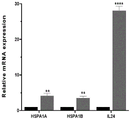
图8为实施例1制得的光动力TiO2复合纳米粒子对HN6细胞的RT-qPCR测试结果。Fig. 8 is the RT-qPCR test result of the photodynamic TiO 2 composite nanoparticles prepared in Example 1 on HN6 cells.
图9为流式细胞术分析CD4+T细胞与CD8+T细胞IFN-γ表达量结果。Figure 9 is the results of flow cytometry analysis of IFN-γ expression in CD4 + T cells and CD8 + T cells.
图10为流式细胞术分析TiO2@Ru@siRNA-PDT处理后HMGB1表达量。Figure 10 is flow cytometry analysis of HMGB1 expression level after treatment with TiO 2 @Ru@siRNA-PDT.
图11为Western blot检测细胞中HIF-1α、PD-L1、NF-κB的表达结果。Figure 11 shows the expression results of HIF-1α, PD-L1, and NF-κB in cells detected by Western blot.
图12为TiO2@Ru@siRNA-PDT处理后透射电镜下细胞形态图。Fig. 12 is a diagram of cell morphology under a transmission electron microscope after treatment with TiO 2 @Ru@siRNA-PDT.
图13为TiO2@Ru@siRNA-PDT处理后WB检测乏氧细胞中GSDMD的表达。Figure 13 shows the expression of GSDMD in hypoxic cells detected by WB after TiO 2 @Ru@siRNA-PDT treatment.
图14为PDX模型研究TiO2@Ru@siRNA介导的PDT作用对口腔癌的治疗效果,图中(a)为治疗结束后肿瘤组织图;(b)为治疗结束后肿瘤组织重量分析;(c)为肿瘤生长曲线;(d)为HE和IHC染色分析PDX模型研究TiO2@Ru@siRNA介导的PDT作用对口腔癌的治疗过程中的肿瘤组织;Scale bars:50μm。Figure 14 is a PDX model to study the therapeutic effect of TiO 2 @Ru@siRNA-mediated PDT on oral cancer, in which (a) is a picture of tumor tissue after treatment; (b) is the weight analysis of tumor tissue after treatment; ( c) is the tumor growth curve; (d) is the HE and IHC staining analysis of the PDX model to study the effect of TiO 2 @Ru@siRNA-mediated PDT on the tumor tissue during the treatment of oral cancer; Scale bars: 50 μm.
图15小鼠主要脏器(心、肝、脾、肺、肾)HE切片;Scale bars:100μm。Fig. 15 HE section of mouse main organs (heart, liver, spleen, lung, kidney); Scale bars: 100 μm.
具体实施方式detailed description
下面结合具体实施方式对本发明作进一步的说明。The present invention will be further described below in combination with specific embodiments.
本发明实施例的附图中相同或相似的标号对应相同或相似的部件;在本发明的描述中,需要理解的是,若有术语“上”、“下”、“左”、“右”、“顶”、“底”、“内”、“外”等指示的方位或位置关系为基于附图所示的方位或位置关系,仅是为了便于描述本发明和简化描述,而不是指示或暗示所指的装置或元件必须具有特定的方位、以特定的方位构造和操作,因此附图中描述位置关系的用语仅用于示例性说明,不能理解为对本专利的限制。In the drawings of the embodiments of the present invention, the same or similar symbols correspond to the same or similar components; , "top", "bottom", "inner", "outer" and other indicated orientations or positional relationships are based on the orientations or positional relationships shown in the drawings, and are only for the convenience of describing the present invention and simplifying the description, rather than indicating or It implies that the device or element referred to must have a specific orientation, be constructed and operated in a specific orientation, so the terms describing the positional relationship in the drawings are for illustrative purposes only, and should not be construed as limitations on this patent.
此外,若有“第一”、“第二”等术语仅用于描述目的,主要是用于区分不同的装置、元件或组成部分(具体的种类和构造可能相同也可能不同),并非用于表明或暗示所指示装置、元件或组成部分的相对重要性和数量,而不能理解为指示或者暗示相对重要性。In addition, if terms such as "first" and "second" are used for descriptive purposes only, they are mainly used to distinguish different devices, elements or components (the specific types and structures may be the same or different), and are not used for The relative importance and quantity of the indicated means, elements or components are stated or implied, and should not be construed as indicating or implying relative importance.
实施例中的原料均可通过市售得到;All the raw materials in the examples can be obtained commercially;
dimbpc,采购自阿拉丁,D154591;dimbpc, purchased from Aladdin, D154591;
RuCl2(DMSO)4,采购自西格玛,733210-1G;RuCl 2 (DMSO) 4 purchased from Sigma, 733210-1G;
TTIP,采购自阿拉丁,T105736;TTIP, purchased from Aladdin, T105736;
NH4PF6,采购自阿拉丁,A196203;NH 4 PF 6 , purchased from Aladdin, A196203;
TiO2,采购自阿拉丁,T306008;TiO 2 , purchased from Aladdin, T306008;
APTEs,采购自阿拉丁,A107147;APTEs, purchased from Aladdin, A107147;
APTMs,采购自阿拉丁,A100943;APTMs, purchased from Aladdin, A100943;
HATU,采购自阿拉丁,H109327;HATU, purchased from Aladdin, H109327;
DIPEA,采购自阿拉丁,B356476;DIPEA, purchased from Aladdin, B356476;
HIF-1αsiRNA,采购自锐博生物,产品编号siB160505051827-1-5;HIF-1α siRNA, purchased from RiboBio, product number siB160505051827-1-5;
PBS缓冲液,采购自索莱宝,P1010。PBS buffer, purchased from Solebol, P1010.
[Ru(dimbpc)2Cl2]通过如下方法制备得到[Ru(dimbpc) 2 Cl 2 ] was prepared by the following method
将dimbpc(1.36g,5.00mmol)与[RuCl2(DMSO)4](1.21g,2.50mmol)分散于DMF(20mL),加热回流6h,然后蒸发DMF,加入50mL预冷丙酮;将溶液在0°静置2h,析出固体,将固体过滤后分别用用丙酮和水清洗,得到[Ru(dimbpc)2Cl2]。Disperse dimbpc (1.36g, 5.00mmol) and [RuCl 2 (DMSO) 4 ] (1.21g, 2.50mmol) in DMF (20mL), heat to reflux for 6h, then evaporate DMF, add 50mL pre-cooled acetone; °Stand aside for 2h, a solid precipitated out, and the solid was filtered and washed with acetone and water respectively to obtain [Ru(dimbpc) 2 Cl 2 ].
核磁分析的设备为:Bruker Advance III 400MHz spectrometer(Germany)。The nuclear magnetic analysis equipment is: Bruker Advance III 400MHz spectrometer (Germany).
除非特别说明,本发明采用的试剂、方法和设备为本技术领域常规试剂、方法和设备。Unless otherwise specified, the reagents, methods and equipment used in the present invention are conventional reagents, methods and equipment in the technical field.
实施例1Example 1
本实施例提供一种光动力TiO2复合纳米粒子,制备方法如下:This embodiment provides a kind of photodynamic TiO Composite nanoparticles, the preparation method is as follows:
S1.合成Ru配合物:S1. Synthesis of Ru complexes:
将[Ru(dimbpc)2Cl2](1.0mmol)与TTIP(1.0mmol)分散于甲醇中,经氩气鼓吹溶剂15min后,进行微波处理,微波处理条件为150℃、10min,过滤后向滤液中加入饱和NH4PF6溶液,过滤、纯化后得到粉末状固体产物[Ru(dimbpc)2(TTIP)](Cl)2(记作Rua);Disperse [Ru(dimbpc) 2 Cl 2 ] (1.0mmol) and TTIP (1.0mmol) in methanol, and after blowing the solvent with argon for 15 minutes, carry out microwave treatment at 150°C for 10 minutes. Saturated NH 4 PF 6 solution was added to it, and after filtration and purification, a powdery solid product [Ru(dimbpc) 2 (TTIP)](Cl) 2 (referred to as Rua) was obtained;
将所得粉末状固体(118.3mg,0.1mmol)分散于1N的NaOH溶液中,加热回流1小时;反应结束后冷却至0°,用1N HCl溶液调节pH至3左右,析出固体;将固体过滤后使用10mL甲醇清洗,再用1N NaOH溶解固体去除不可溶性杂质,抽滤后用甲醇清洗固体,避光干燥后得粉末状固体[Ru(bpc)2(TTIP)](Cl2)(Ru)(bpc=[2,2'-bipyridine]-4,4'-dicarboxylicacid),即Ru配合物(记作Ru)。Disperse the obtained powdery solid (118.3mg, 0.1mmol) in 1N NaOH solution, heat to reflux for 1 hour; cool to 0° after the reaction, adjust the pH to about 3 with 1N HCl solution, and precipitate the solid; filter the solid Wash with 10 mL of methanol, then dissolve the solid with 1N NaOH to remove insoluble impurities, wash the solid with methanol after suction filtration, and dry it in the dark to obtain a powdery solid [Ru(bpc) 2 (TTIP)](Cl 2 )(Ru)( bpc=[2,2'-bipyridine]-4,4'-dicarboxylic acid), that is, the Ru complex (denoted as Ru).
对Rua和Ru配合物进行核磁共振分析,结果如下:Carry out nuclear magnetic resonance analysis to Rua and Ru complex, the result is as follows:
Rua:1H NMR(400MHz,DMSO-d6)δ(ppm)14.60(s,1H),9.41(d,J=7.2Hz,4H),9.04(d,J=6.1Hz,2H),8.13–8.06(m,4H),7.96(d,J=3.6Hz,2H),7.90(dd,J=5.6Hz and1.2Hz,2H),7.85(d,J=6.0Hz,2H),7.75(d,J=7.2Hz,1H),7.58(d,J=12.0Hz,1H),7.54(d,J=8.0Hz,1H),7.46(d,J=2.8Hz,1H)7.40(dd,J=3.8,0.7Hz,1H),7.35(d,J=2.8Hz,1H),7.14(dd,J=3.8and 2.8Hz,1H),4.01(s,6H),3.94(s,6H).13C NMR(400MHz,DMSO-d6)δ(ppm)163.90,163.81,157.27,157.00,152.95,152.56,147.60,138.63,138.11,137.99,136.48,135.60,134.12,130.77,128.46,126.64,126.17,126.08,125.12,124.61,123.87,53.29,53.23.ESI-MS m/z(CH3OH)=556.44([M-2(Cl)]2+,C53H38N8O8RuS3 2+,556.05),1111.46([M-2(Cl)-H]+,C53H37N8O8RuS3 2+,1111.09).Rua: 1 H NMR (400MHz, DMSO-d 6 ) δ (ppm) 14.60 (s, 1H), 9.41 (d, J = 7.2Hz, 4H), 9.04 (d, J = 6.1Hz, 2H), 8.13– 8.06(m,4H),7.96(d,J=3.6Hz,2H),7.90(dd,J=5.6Hz and1.2Hz,2H),7.85(d,J=6.0Hz,2H),7.75(d, J=7.2Hz, 1H), 7.58(d, J=12.0Hz, 1H), 7.54(d, J=8.0Hz, 1H), 7.46(d, J=2.8Hz, 1H), 7.40(dd, J=3.8 13 C NMR (400MHz,DMSO-d 6 )δ(ppm)163.90,163.81,157.27,157.00,152.95,152.56,147.60,138.63,138.11,137.99,136.48,135.60,134.12,130.77,128.46,126.64,126.17,126.08,125.12, 124.61,123.87,53.29,53.23.ESI-MS m/z(CH 3 OH)=556.44([M-2(Cl)] 2+ ,C 53 H 38 N 8 O 8 RuS 3 2+ ,556.05),1111.46 ([M-2(Cl)-H] + ,C 53 H 37 N 8 O 8 RuS 3 2+ , 1111.09).
Ru:1H NMR(400MHz,MeOD)δ9.13(dd,J=8.3,1.0Hz,2H),9.11–9.03(m,4H),8.00(d,J=5.8Hz,2H),7.91–7.85(m,4H),7.81(d,J=3.8Hz,1H),7.74–7.63(m,6H),7.33(dd,J=5.1,0.9Hz,1H),7.30–7.20(m,3H),7.16(d,J=3.8Hz,1H),7.05(dd,J=5.1,3.7Hz,1H).13C NMR(101MHz,MeOD)δ170.19,159.01,158.82,158.72,152.87,152.49,148.71,148.59,148.41,145.56,140.07,139.79,138.23,137.78,137.60,137.35,131.75,129.07,127.91,127.74,127.43,126.66,126.07,125.73,125.54,125.28,124.83,124.66,124.61.ESI-MSm/z(CH3OH)=528.35([M-2(Cl)]2+,C49H30N8O8RuS3 2+,528.02),1055.13([M-2(Cl)-H]+,C49H29N8O8RuS3 2+,1055.03).Ru: 1 H NMR (400MHz, MeOD) δ9.13 (dd, J=8.3, 1.0Hz, 2H), 9.11–9.03 (m, 4H), 8.00 (d, J=5.8Hz, 2H), 7.91–7.85 (m,4H),7.81(d,J=3.8Hz,1H),7.74–7.63(m,6H),7.33(dd,J=5.1,0.9Hz,1H),7.30–7.20(m,3H), 7.16 (d, J=3.8Hz, 1H), 7.05 (dd, J=5.1, 3.7Hz, 1H). 13 C NMR (101MHz, MeOD) δ170.19, 159.01, 158.82, 158.72, 152.87, 152.49, 148.71, 148.59, 148.41,145.56,140.07,139.79,138.23,137.78,137.60,137.35,131.75,129.07,127.91,127.74,127.43,126.66,126.07,125.73,125.54,125.28,124.83,124.66,124.61.ESI-MSm/z(CH 3 OH)=528.35([M-2(Cl)] 2+ ,C 49 H 30 N 8 O 8 RuS 3 2+ ,528.02),1055.13([M-2(Cl)-H] + ,C 49 H 29 N 8 O 8 RuS 3 2+ ,1055.03).
S2.Ru配合物修饰TiO2:S2. Ru complex modified TiO 2 :
将2.1mg TiO2纳米粒子分散于7mL甲醇中,超声分散15min,得到TiO2悬浮液;在14mL甲醇溶液中加入1mL APTEs,再加入0.7mL氨水溶液搅拌15min,得到反应液;然后将TiO2悬浮液滴入反应液中,大力搅拌,室温搅拌24h,形成偶联改性TiO2。Disperse 2.1mg of TiO2 nanoparticles in 7mL of methanol and ultrasonically disperse for 15min to obtain a TiO2 suspension; add 1mL of APTEs to 14mL of methanol solution, then add 0.7mL of ammonia solution and stir for 15min to obtain a reaction solution; then suspend TiO2 The liquid was dropped into the reaction solution, stirred vigorously, and stirred at room temperature for 24 hours to form a coupling modified TiO 2 .
将67mg偶联改性TiO2分散于10mL DMF,超声分散30min;加入Ru配合物Ru(16.9mg,0.015mmol)、HATU(11.4mg,0.03mmol)DIPEA(11.4mg,0.03mmol),25℃室温反应24h后,经离心、洗涤、干燥,得到TiO2@Ru纳米颗粒;Disperse 67mg of coupling-modified TiO2 in 10mL DMF, and disperse by ultrasonic for 30min; After reacting for 24 hours, TiO 2 @Ru nanoparticles were obtained by centrifugation, washing and drying;
S3.负载HIF-1αsiRNA:S3. Loading HIF-1α siRNA:
将TiO2@Ru纳米颗粒和HIF-1αsiRNA分散在pH缓冲液(pH=6.5)中,TiO2@Ru纳米颗粒浓度为0.2mg/mL,HIF-1αsiRNA浓度为2μM;经4℃静置反应0.5h,经10000g、4℃冷冻离心10min,pH=6.5PBS缓冲液洗涤三次,得到TiO2@Ru@siRNA,即光动力TiO2复合纳米粒子。Disperse TiO 2 @Ru nanoparticles and HIF-1α siRNA in pH buffer (pH=6.5), the concentration of TiO 2 @Ru nanoparticles is 0.2 mg/mL, the concentration of HIF-1α siRNA is 2 μM; h, refrigerated centrifugation at 10,000 g at 4°C for 10 min, and washed three times with PBS buffer at pH=6.5 to obtain TiO 2 @Ru@siRNA, namely photodynamic TiO 2 composite nanoparticles.
TiO2@Ru@siRNA的TEM图像见图3;对实施例1的纳米颗粒TiO2@Ru@siRNA进行DLS检测,结果见图4;对实施例1的纳米颗粒TiO2@Ru@siRNA在不同pH下的Zeta电位进行检测,结果见图5。The TEM image of TiO 2 @Ru@siRNA is shown in Figure 3; the DLS detection of the nanoparticle TiO 2 @Ru@siRNA in Example 1 is shown in Figure 4; the nanoparticle TiO 2 @Ru@siRNA in Example 1 was tested in different The Zeta potential at pH was detected, and the results are shown in Figure 5.
TEM检测方法为:将含TiO2@Ru@siRNA的PBS缓冲液滴加在200mesh的铜网上,风干,上机TEM(T12,FEI Tecnai G2 Spirit,Holland)。The TEM detection method is as follows: the PBS buffer solution containing TiO 2 @Ru@siRNA is dropped on a 200mesh copper grid, air-dried, and used for TEM (T12, FEI Tecnai G2 Spirit, Holland).
DLS检测方法为:采用动态光散射法测量TiO2@Ru@siRNA悬浮液(0.5mg/mL)的流体动力学直径;测量的散射光强度显示为光子计数率,单位为每秒千粒计数(kcps);散射角设置为90°;对于每个样品悬浮液,在固定的运行时间(60秒)下进行三次DLS测量;使用Zetasizer Nano instrument DLS system。The DLS detection method is as follows: the hydrodynamic diameter of TiO 2 @Ru@siRNA suspension (0.5 mg/mL) is measured by dynamic light scattering method; the measured scattered light intensity is displayed as photon count rate, and the unit is thousand grain count per second ( kcps); the scattering angle was set to 90°; for each sample suspension, three DLS measurements were performed at a fixed run time (60 s); Zetasizer Nano instrument DLS system was used.
根据图3的TEM图像可以观察到TiO2@Ru@siRNA呈立方体形状,大小基本一致,在水中分散性良好。According to the TEM image in Figure 3, it can be observed that TiO 2 @Ru@siRNA is in the shape of a cube, with basically the same size and good dispersion in water.
根据图4的DLS检测结果,TiO2@Ru纳米颗粒和TiO2@Ru@siRNA的水合粒径约为80nm和100nm。According to the DLS detection results in Figure 4, the hydrated particle sizes of TiO 2 @Ru nanoparticles and TiO 2 @Ru@siRNA are about 80nm and 100nm.
根据图5,TiO2@Ru@siRNA在pH为7.4时,电位为1.14±0.37。According to Figure 5, TiO 2 @Ru@siRNA has a potential of 1.14±0.37 at pH 7.4.
实施例2细胞毒性评价Example 2 Cytotoxicity Evaluation
利用MTT法探究药物在常氧及乏氧条件下联合光动力治疗对口腔鳞状细胞癌的细胞的毒性作用。将常氧细胞和乏氧细胞接种于96孔板,每孔接种3000个细胞,乏氧组放入低氧培养箱中(37℃,1%O2),常氧组正常培养至细胞贴壁。随后吸走原培养液,在细胞中分别加入含有不同浓度药物,每孔100μL,设4个平行孔,同时设空白培养基及未加药细胞作为对照孔。加药培养24后,用525nm激光源(15mW cm-2)光照30min,继续孵育24h。每孔加入20ulMTT 37℃孵育4h,加入150ul DMSO溶解甲瓒后利用多功能酶标仪在595nm处测定每孔的吸光度值(OD)。细胞存活率计算公式为:细胞存活率%=(实验组OD值-空白组OD值)/(对照组OD值-空白组OD值)MTT method was used to explore the toxic effect of drugs combined with photodynamic therapy on oral squamous cell carcinoma cells under normoxia and hypoxia conditions. Inoculate normoxic cells and hypoxic cells in 96-well plates, inoculate 3000 cells per well, place hypoxic group in hypoxic incubator (37°C, 1% O 2 ), and normal oxygen group culture until cells adhere to the wall . Then the original culture medium was sucked away, and different concentrations of drugs were added to the cells, 100 μL per well, and 4 parallel wells were set up. At the same time, blank medium and cells without drug addition were set as control wells. After adding drugs and culturing for 24 hours, irradiate with a 525nm laser source (15mW cm -2 ) for 30 minutes, and continue to incubate for 24 hours. Add 20ul MTT to each well and incubate at 37°C for 4h, add 150ul DMSO to dissolve formazan, and measure the absorbance value (OD) of each well at 595nm with a multifunctional microplate reader. The calculation formula of cell survival rate is: cell survival rate%=(OD value of experimental group-OD value of blank group)/(OD value of control group-OD value of blank group)
使用Ru、以及实施例1中制得的TiO2@Ru纳米颗粒和TiO2@Ru@siRNA在体外对人舌鳞状细胞癌(HN6、HSC-6)和人口腔黏膜癌前细胞(DOK)的光动力活性进行了评价。结果见表1(单位:μg/mL)。Use Ru, and the TiO 2 @Ru nanoparticles and TiO 2 @Ru@siRNA prepared in Example 1 to treat human tongue squamous cell carcinoma (HN6, HSC-6) and human oral mucosa precancerous cells (DOK) in vitro The photodynamic activity was evaluated. The results are shown in Table 1 (unit: μg/mL).
表1细胞毒性评价结果Table 1 Cytotoxicity evaluation results

无论在常氧或缺氧条件下,其光毒性依次为:TiO2@Ru@siRNA>TiO2@Ru纳米颗粒>Ru,在三种细胞株中的光毒性HN6比其他细胞大。Ru、TiO2@Ru和TiO2@Ru@siRNA在没有PDT的情况下对所有细胞系都是无毒的,在常氧条件下,TiO2@Ru@siRNA介导的PDT在HN6细胞中的PI约比Ru高4倍。同样的,在乏氧条件下,TiO2@Ru@siRNA介导的PDT依旧保持良好的光毒性,且PI值(PI:纳米颗粒在黑暗条件下和光照条件下所得到的的IC50值的比值)超过2000。这些结果表明,TiO2@Ru@siRNA可以克服肿瘤的乏氧环境并且可以产生I型和II型光动力效果。Whether under normoxic or hypoxic conditions, the order of phototoxicity was: TiO 2 @Ru@siRNA>TiO 2 @Ru nanoparticles>Ru, and the phototoxicity of HN6 in the three cell lines was greater than that of other cells. Ru, TiO 2 @Ru, and TiO 2 @Ru@siRNA were nontoxic to all cell lines in the absence of PDT, and TiO 2 @Ru@siRNA-mediated PDT in HN6 cells was PI is about 4 times higher than Ru. Similarly, under hypoxic conditions, TiO 2 @Ru@siRNA-mediated PDT still maintains good phototoxicity, and the PI value (PI: the IC 50 value obtained by nanoparticles under dark and light conditions Ratio) over 2000. These results suggest that TiO 2 @Ru@siRNA can overcome the hypoxic environment of tumors and can produce type I and type II photodynamic effects.
实施例3细胞ROS的产生Example 3 Production of Cell ROS
取生长状态良好的HN6细胞,常规漂洗、消化并计数,以1×10⁵个/孔的细胞密度接种于6孔板,37℃低氧培养箱培养过夜使细胞贴壁。加入含一定浓度的TiO2@Ru@siRNA(0.4,0.8μg/mL),每组设3个复孔,放入37℃低氧培养箱避光培养24h。525nm激光照射30min,避光孵育半小时后加入10μM DCFH-DA染料,37℃避光孵育20min。PBS洗涤,用不含EDTA的胰酶消化细胞2min,加入培养基终止消化,收集细胞悬液,1000g,离心3min,弃上清,悬浮细胞,再次离心,弃上清后,每管加入500μL Binding buffer悬浮细胞后上流式细胞仪。HN6 cells in good growth state were taken, rinsed, digested and counted routinely, seeded in a 6-well plate at a cell density of 1×10 5 cells/well, and cultured overnight in a hypoxic incubator at 37°C to allow the cells to adhere to the wall. A certain concentration of TiO 2 @Ru@siRNA (0.4, 0.8 μg/mL) was added, and three replicate wells were set up in each group, and placed in a 37°C hypoxic incubator for 24 hours in the dark. After irradiating with 525nm laser for 30 min, incubate in the dark for half an hour, add 10 μM DCFH-DA dye, and incubate in the dark at 37°C for 20 min. Wash with PBS, digest cells with EDTA-free trypsin for 2 minutes, add medium to stop digestion, collect cell suspension, 1000g, centrifuge for 3 minutes, discard supernatant, suspend cells, centrifuge again, discard supernatant, add 500 μL Binding to each tube The cells were suspended in buffer and placed on the flow cytometer.
根据图6的ROS实验结果:TiO2@Ru@siRNA(0.4,0.8μg/mL)经PDT可诱导ROS生成,在0.8μg/mL的浓度下TiO2@Ru@siRNA使细胞DCF荧光提高到20倍左右。According to the ROS experiment results in Figure 6: TiO 2 @Ru@siRNA (0.4, 0.8 μg/mL) can induce ROS generation after PDT, and at a concentration of 0.8 μg/mL, TiO 2 @Ru@siRNA can increase the cell DCF fluorescence to 20 about times.
实施例4 RNA测序Example 4 RNA sequencing
对HN6细胞加药(TiO2@Ru@siRNA,0.4μg/mL)后24h给予光照30min,放入低氧培养箱4h后trizol法提取RNA,然后进行RNA测序。HN6 cells were given drugs (TiO 2 @Ru@siRNA, 0.4 μg/mL) 24 hours after exposure to light for 30 minutes, placed in a hypoxic incubator for 4 hours, RNA was extracted by trizol method, and then RNA sequencing was performed.
RNA测序的具体方法为:The specific method of RNA sequencing is:
通过高通量测序技术完成6个样品的转录组分析,共获得34.90Gb Clean Data,各样品Clean Data均达到5.41Gb,Q30碱基百分比在92.33%及以上。分别将各样品的CleanReads与指定的参考基因组进行序列比对,比对效率从92.97%到94.53%不等,筛选差异性表达RNA。基于比对结果,进行可变剪接预测分析、基因结构优化分析以及新基因的发掘,发掘新基因4813个,其中1705个得到功能注释。根据基因在不同样品中的表达量识别差异表达基因,并对其进行功能注释和富集分析。实验流程包括样品检测、文库构建及其质量控制和上机测序。The transcriptome analysis of 6 samples was completed by high-throughput sequencing technology, and a total of 34.90Gb Clean Data was obtained. The Clean Data of each sample reached 5.41Gb, and the percentage of Q30 bases was 92.33% and above. The CleanReads of each sample were compared with the designated reference genome. The comparison efficiency ranged from 92.97% to 94.53%, and the differentially expressed RNA was screened. Based on the comparison results, alternative splicing prediction analysis, gene structure optimization analysis, and new gene discovery were carried out, and 4,813 new genes were discovered, of which 1,705 were functionally annotated. Identify differentially expressed genes based on their expression levels in different samples, and perform functional annotation and enrichment analysis on them. The experimental process includes sample detection, library construction and its quality control, and on-machine sequencing.
结果显示如图7所示。RNA-seq表明IL-24、HSPA1A和HSPA1B基因的表达量显著增加并影响多种肿瘤免疫通路。IL-24是一种多功能的抗癌细胞因子,属于白细胞介素IL-10细胞因子家族,被认为是一个肿瘤抑制相关基因,它可以选择性诱导肿瘤细胞发生凋亡并发挥免疫调节和抗血管新生的作用。热休克蛋白70(HSPA1A/HSPA1B)具有诱导CD8+T细胞和CD4+T细胞反应的佐剂能力。The results are shown in Figure 7. RNA-seq showed that the expression levels of IL-24, HSPA1A and HSPA1B genes were significantly increased and affected various tumor immune pathways. IL-24 is a multifunctional anti-cancer cell factor, which belongs to the interleukin IL-10 cytokine family. The role of angiogenesis. Heat shock protein 70 (HSPA1A/HSPA1B) has adjuvant ability to induce CD8 + T cell and CD4 + T cell responses.
RT-qPCR实验的方法具体为:The specific method of RT-qPCR experiment is as follows:
1)RNA提取:对HN6细胞加药(TiO2@Ru@siRNA,0.4μg/mL)后24h给予光照半小时,放入低氧培养箱4h后trizol法提取RNA;1) RNA extraction: HN6 cells were dosed with drugs (TiO 2 @Ru@siRNA, 0.4 μg/mL) and given light for half an
2)cDNA合成:使用PrimeScript RT Master Mix(TaKaRa,China)试剂盒.逆转录反应是每10μl体积可逆转RNA 500ng;具体反应体系如下:样本RNA 500ng,5X PrimeScriptRT Master Mix 2μl,最后加ddH2O至总体10μl;PCR仪按以下程序设置逆转录反应的条件:37℃5分钟,85℃15秒;2) cDNA synthesis: use the PrimeScript RT Master Mix (TaKaRa, China) kit. The reverse transcription reaction is 500ng of reversible RNA per 10μl volume; the specific reaction system is as follows: sample RNA 500ng, 5X PrimeScriptRT Master Mix 2μl, and finally add ddH 2 O to a total of 10 μl; the PCR instrument sets the conditions of the reverse transcription reaction according to the following procedures: 37°C for 5 minutes, 85°C for 15 seconds;
3)由SYBR Green Master Mix(11201ES08,Yeasen,China)和LightCycler96System(Roche,Germany)机器进行实时定量逆转录聚合酶链反应(RT-qPCR)分析;PCR反应程序如下:95℃预变性5min;第二阶段:94℃变性30s,57℃退火30s,72℃延伸45s;40个循环;72℃延伸10min,间隔30s绘制溶解曲线。3) Real-time quantitative reverse transcription polymerase chain reaction (RT-qPCR) analysis was carried out by SYBR Green Master Mix (11201ES08, Yeasen, China) and LightCycler96System (Roche, Germany); The second stage: denaturation at 94°C for 30s, annealing at 57°C for 30s, extension at 72°C for 45s; 40 cycles; extension at 72°C for 10min, drawing a melting curve at intervals of 30s.
4)反应结束后根据各目的基因的Ct值变化,确定每个目的基因的相对表达量。4) After the reaction, the relative expression of each target gene was determined according to the change of the Ct value of each target gene.
根据图8的PCR实验结果,同样的,IL-24、HSPA1A和HSPA1B基因的表达显著增加。According to the PCR experiment results in Fig. 8, similarly, the expressions of IL-24, HSPA1A and HSPA1B genes were significantly increased.
实施例4抗肿瘤效果
(一)收集PDT下TiO2@Ru@siRNA(0.4μg/mL)处理的HN6细胞上清液作为条件培养基,与PBMC共培养,采用流式细胞计数法检测IFN-γ的表达,以探究TiO2@Ru@siRNA在肿瘤免疫微环境中的作用。为了探讨IL-24是否能影响抗肿瘤免疫应答,同时还检测了外源性IL-24对OSCC PBMC中IFN-γ表达的影响。(1) Collect the supernatant of HN6 cells treated with TiO 2 @Ru@siRNA (0.4 μg/mL) under PDT as the conditioned medium, co-culture with PBMC, and detect the expression of IFN-γ by flow cytometry to explore The role of TiO 2 @Ru@siRNA in tumor immune microenvironment. In order to explore whether IL-24 can affect the anti-tumor immune response, the effect of exogenous IL-24 on the expression of IFN-γ in OSCC PBMC was also detected.
结果见图9。可以看出,与对照组相比,细胞上清液中含有生物活性分子混合物,增强了CD4+和CD8+T细胞中IFN-γ的表达。同时外源性IL-24显著提高了CD4+和CD8+T细胞中IFN-γ的表达。因此结果表明,TiO2@Ru@siRNA诱导IL-24上调,促进IFN-γ分泌,IFN-γ具有多种不同的抗肿瘤活性机制,其表达增加刺激肿瘤微环境从而导致抗肿瘤能力增强。The results are shown in Figure 9. It can be seen that the cell supernatant containing a cocktail of bioactive molecules enhanced the expression of IFN-γ in CD4 + and CD8 + T cells compared to the control group. At the same time, exogenous IL-24 significantly increased the expression of IFN-γ in CD4 + and CD8 + T cells. Therefore, the results showed that TiO 2 @Ru@siRNA induced the upregulation of IL-24 and promoted the secretion of IFN-γ. IFN-γ has a variety of different anti-tumor activity mechanisms, and its increased expression stimulates the tumor microenvironment, leading to enhanced anti-tumor ability.
(二)为了验证TiO2@Ru@siRNA-PDT降低HMGB1表达,取生长状态良好的HN6细胞,以1×10⁵个/孔的细胞密度接种于6孔板,37℃低氧培养箱培养过夜使细胞贴壁。PBS洗涤后加入0.2μg/mL,0.4μg/mL,0.8μg/mL三个浓度的TiO2@Ru@siRNA,每组设3个复孔,放入37℃培养箱避光培养24h。525nm激光照射30min,孵育4h后,收集细胞,PBS洗涤3次,4%PFA室温固定15min。随后,0.1%Triton X-100在室温下渗透细胞15min,然后与Alexa
结果如图10。流式细胞术显示TiO2@Ru@siRNA-PDT处理后HMGB1表达下降,并随药物浓度的下降表达下降。The result is shown in Figure 10. Flow cytometry showed that the expression of HMGB1 decreased after TiO 2 @Ru@siRNA-PDT treatment, and the expression decreased with the decrease of drug concentration.
(三)为验证TiO2@Ru@siRNA-PDT降低HIF-1α、PD-L1、NF-κB表达,将HN6细胞分别与TiO2@Ru@siRNA(0.1,0.2,0.4,0.8μg/mL)在37℃低氧培养箱中培养24h后,525nm激光照射30min,4h后收集细胞。收集的细胞用含有100μg/mL PMSF的RIPA缓冲液加冰溶解30min。用BCA定量蛋白浓度,上样电泳转膜后封闭,然后与一抗4℃孵育过夜。洗涤后二抗孵育。上机曝光采集图像,并使用ImageJ软件分析。(3) To verify that TiO 2 @Ru@siRNA-PDT reduces the expression of HIF-1α, PD-L1, and NF-κB, HN6 cells were treated with TiO 2 @Ru@siRNA (0.1, 0.2, 0.4, 0.8 μg/mL) After culturing in a hypoxic incubator at 37°C for 24 h, the cells were irradiated with a 525 nm laser for 30 min, and the cells were collected after 4 h. The collected cells were lysed with RIPA buffer containing 100 μg/mL PMSF on ice for 30 min. The protein concentration was quantified with BCA, the sample was loaded for electrophoresis, transferred to the membrane, blocked, and then incubated with the primary antibody at 4°C overnight. Secondary antibody incubation after washing. Exposure on the machine to collect images, and use ImageJ software analysis.
结果如图11所示。TiO2@Ru@siRNA-PDT可以在缺氧条件下抑制HIF-1α浓度依赖性,降低HIF-1α的表达,同时也下调PD-L1和NF-κB的表达。The result is shown in Figure 11. TiO 2 @Ru@siRNA-PDT can inhibit HIF-1α concentration-dependently under hypoxic conditions, reduce the expression of HIF-1α, and also down-regulate the expressions of PD-L1 and NF-κB.
(四)使用透射电镜观察TiO2@Ru@siRNA-PDT处理后细胞形态的变化。结果如图12所示。与对照组相比(未加药,光照),经TiO2@Ru@siRNA-PDT处理的细胞表现出明显典型的细胞焦亡超微结构特征,包括细胞肿胀,细胞膜破裂,形成大量的小泡,释放细胞内的内容物,诱导炎症反应。WB结果(图13所示)进一步证实TiO2@Ru@siRNA-PDT处理后,随着药物浓度的增加(0.1,0.2,0.4,0.8μg/mL),焦亡的关键蛋白GSDMD表达上调。(4) Using transmission electron microscopy to observe the changes in cell morphology after TiO 2 @Ru@siRNA-PDT treatment. The result is shown in Figure 12. Compared with the control group (no drug, light), cells treated with TiO 2 @Ru@siRNA-PDT showed obvious typical ultrastructural features of pyroptosis, including cell swelling, cell membrane rupture, and the formation of a large number of vesicles , releases intracellular contents, induces an inflammatory response. The WB results (shown in Figure 13) further confirmed that after treatment with TiO 2 @Ru@siRNA-PDT, the expression of the key protein GSDMD of pyroptosis was up-regulated with the increase of drug concentration (0.1, 0.2, 0.4, 0.8 μg/mL).
(五)以PDX模型,评价TiO2@Ru@siRNA-PDT抗肿瘤作用(5) Using PDX model to evaluate the anti-tumor effect of TiO 2 @Ru@siRNA-PDT
BALB/c-nu雌性裸鼠、4-6周龄,饲养于中山大学SPF级屏障系统中,饲料和饮水由动物房经灭菌处理后供动物自由饮食。BALB/c-nu female nude mice, 4-6 weeks old, were reared in the SPF barrier system of Sun Yat-sen University, and the feed and drinking water were sterilized in the animal room for the animals to eat and drink freely.
在BALB/c小鼠中建立PDX模型,联合光动力治疗。当肿瘤体积约200mm3时将其随机分成生理盐水(50μL)、生理盐水(50μL)+光照、TiO2@Ru组(50μL)、TiO2@Ru(50μL)+光照组、TiO2@Ru@siRNA(50μL)、TiO2@Ru@siRNA(50μL)+光照共6组。每组5只,在第0天与第7天给药,剂量为20mg/kg,每只小鼠瘤内注射50μL。对于PDT组,在给药半小时后对小鼠肿瘤区域使用525nm激光发射器(15mW/cm2,1h)进行光照。实验中每隔一天记录小鼠肿瘤体积和体重,23天后处死。A PDX model was established in BALB/c mice, combined with photodynamic therapy. When the tumor volume was about 200 mm 3 , they were randomly divided into normal saline (50 μL), normal saline (50 μL)+light, TiO 2 @Ru group (50 μL), TiO 2 @Ru (50 μL)+light group, TiO 2 @Ru@ siRNA (50 μL), TiO 2 @Ru@siRNA (50 μL) + light, a total of 6 groups. Five mice in each group were administered on
实验结果见图14。根据肿瘤曲线可见生理盐水对照组、生理盐水+光照和TiO2@Ru组之间,肿瘤大小没有显著差异。而TiO2@Ru+光照组和TiO2@Ru@siRNA+光照组肿瘤生长较其他组有明显的抑制作用。在监测的23天内没有观察到肿瘤有复发的迹象。HE结果显示TiO2@Ru@siRNA+PDT组坏死灶较多,IHC结果显示TiO2@Ru+PDT显著降低了肿瘤ki67和HIF-1α的阳性率且TiO2@Ru@siRNA +PDT处理的肿瘤细胞增殖显著降低。此外,从小鼠的体重曲线可以看出,在治疗过程中所有组别的小鼠体重均无明显变化,未出现短期内体重的急剧减少或增加。The experimental results are shown in Figure 14. According to the tumor curve, there was no significant difference in tumor size among the normal saline control group, normal saline + light and TiO 2 @Ru groups. The tumor growth of TiO 2 @Ru+light group and TiO 2 @Ru@siRNA+light group were significantly inhibited compared with other groups. No signs of tumor recurrence were observed during the 23 days of monitoring. HE results showed that the TiO 2 @Ru@siRNA+PDT group had more necrotic foci, and IHC results showed that TiO 2 @Ru+PDT significantly reduced the positive rates of tumor ki67 and HIF-1α and the tumors treated with TiO 2 @Ru@siRNA +PDT Cell proliferation was significantly reduced. In addition, it can be seen from the weight curves of the mice that the weight of the mice in all groups had no significant change during the treatment, and there was no sharp decrease or increase in body weight in a short period of time.
根据图15小鼠主要脏器HE切片并没有发现明显的毒性副作用,这说明本研究中采用的药物剂量及光照强度合理,各种治疗方法生物安全性较高。According to Figure 15, no obvious toxic and side effects were found in the HE slices of the main organs of the mice, which shows that the drug dosage and light intensity used in this study are reasonable, and the biological safety of various treatment methods is high.
显然,本发明的上述实施例仅仅是为清楚地说明本发明所作的举例,而并非是对本发明的实施方式的限定。对于所属领域的普通技术人员来说,在上述说明的基础上还可以做出其它不同形式的变化或变动。这里无需也无法对所有的实施方式予以穷举。凡在本发明的精神和原则之内所作的任何修改、等同替换和改进等,均应包含在本发明权利要求的保护范围之内。Apparently, the above-mentioned embodiments of the present invention are only examples for clearly illustrating the present invention, rather than limiting the implementation of the present invention. For those of ordinary skill in the art, other changes or changes in different forms can be made on the basis of the above description. It is not necessary and impossible to exhaustively list all the implementation manners here. All modifications, equivalent replacements and improvements made within the spirit and principles of the present invention shall be included within the protection scope of the claims of the present invention.
Claims (8)
Priority Applications (1)
| Application Number | Priority Date | Filing Date | Title |
|---|---|---|---|
| CN202210529309.4A CN115006526B (en) | 2022-05-16 | 2022-05-16 | Photodynamic TiO 2 Composite nano particle and preparation method and application thereof |
Applications Claiming Priority (1)
| Application Number | Priority Date | Filing Date | Title |
|---|---|---|---|
| CN202210529309.4A CN115006526B (en) | 2022-05-16 | 2022-05-16 | Photodynamic TiO 2 Composite nano particle and preparation method and application thereof |
Publications (2)
| Publication Number | Publication Date |
|---|---|
| CN115006526A CN115006526A (en) | 2022-09-06 |
| CN115006526B true CN115006526B (en) | 2022-12-16 |
Family
ID=83069481
Family Applications (1)
| Application Number | Title | Priority Date | Filing Date |
|---|---|---|---|
| CN202210529309.4A Active CN115006526B (en) | 2022-05-16 | 2022-05-16 | Photodynamic TiO 2 Composite nano particle and preparation method and application thereof |
Country Status (1)
| Country | Link |
|---|---|
| CN (1) | CN115006526B (en) |
Citations (3)
| Publication number | Priority date | Publication date | Assignee | Title |
|---|---|---|---|---|
| CN104188910A (en) * | 2014-06-20 | 2014-12-10 | 华东理工大学 | Targeting light-operated nitric oxide release nanometer composite material medicine system and preparation method thereof |
| CN105021575A (en) * | 2015-07-21 | 2015-11-04 | 青岛大学 | Photoelectric sensor for detection of kinase activity on the basis of local area surface plasma resonance |
| KR20210131201A (en) * | 2020-04-23 | 2021-11-02 | 성균관대학교산학협력단 | Drug delivery complex for cancer vaccine and preparing method of the same |
Family Cites Families (1)
| Publication number | Priority date | Publication date | Assignee | Title |
|---|---|---|---|---|
| AU2002365115A1 (en) * | 2001-07-20 | 2003-09-02 | North Carolina State University | Light addressable electrochemical detection of duplex structures |
-
2022
- 2022-05-16 CN CN202210529309.4A patent/CN115006526B/en active Active
Patent Citations (3)
| Publication number | Priority date | Publication date | Assignee | Title |
|---|---|---|---|---|
| CN104188910A (en) * | 2014-06-20 | 2014-12-10 | 华东理工大学 | Targeting light-operated nitric oxide release nanometer composite material medicine system and preparation method thereof |
| CN105021575A (en) * | 2015-07-21 | 2015-11-04 | 青岛大学 | Photoelectric sensor for detection of kinase activity on the basis of local area surface plasma resonance |
| KR20210131201A (en) * | 2020-04-23 | 2021-11-02 | 성균관대학교산학협력단 | Drug delivery complex for cancer vaccine and preparing method of the same |
Non-Patent Citations (4)
| Title |
|---|
| Hybrid TiO2–Ruthenium Nano-photosensitizer Synergistically Produces Reactive Oxygen Species in both Hypoxic and Normoxic Conditions;Rebecca C. Gilson et al;《Angew. Chem. Int. Ed.》;20170726;第56卷;第10717-10720页 * |
| Tetranuclear ruthenium(ii) complexes with oligo-oxyethylene linkers as one- and two-photon luminescent tracking non-viral gene vectors;Kangqiang Qiu et al;《Dalton Trans》;20150309;第44卷;第7058-7065页 * |
| The non-viral vectors and main methods of loading siRNA onto the titanium implants and their application;Liangrui Chen et al;《Journal of Biomaterials Science, Polymer Edition》;20200724;第31卷;第2152–2168页 * |
| 以TiO2-SiO2为载体的联吡啶钌对氧敏感性的研究;高尚芬 等;《化学研究与应用》;20051231;第17卷;第808-810页 * |
Also Published As
| Publication number | Publication date |
|---|---|
| CN115006526A (en) | 2022-09-06 |
Similar Documents
| Publication | Publication Date | Title |
|---|---|---|
| CN107875158B (en) | Preparation method of carrier-free nano-drug with chemotherapy/phototherapy | |
| CN114377149B (en) | Mn-based degradable MOF nano-reactor and preparation method and application thereof | |
| Ren et al. | A versatile nanoplatform based on multivariate porphyrinic metal–organic frameworks for catalytic cascade-enhanced photodynamic therapy | |
| CN113150298B (en) | Covalent organic polymer based on porphyrin and preparation method and application thereof | |
| CN104288784A (en) | Nano hydroxyapatite-gene-medicament complex as well as preparation method and application thereof | |
| Zhang et al. | An oxygen-economical nano-photosensitizer with a high photodynamic therapeutic outcome via simultaneous reduction of the cellular respiration and oxygen depletion of PDT | |
| Chen et al. | Porphyrin-based covalent organic frameworks as doxorubicin delivery system for chemo-photodynamic synergistic therapy of tumors | |
| CN108310379B (en) | Nanometer diagnosis and treatment agent with molecular targeting and controllable photodynamic therapy functions and preparation method and application thereof | |
| CN111939124A (en) | Metal polymer, metal polymer nano micelle, and preparation method and application thereof | |
| Kang et al. | Applications of nanocomposites based on zeolitic imidazolate framework-8 in photodynamic and synergistic anti-tumor therapy | |
| CN114209825B (en) | Cuprous ion-responsive NO release and photothermal synergistic therapeutic agent and application thereof | |
| CN111407743A (en) | A kind of dopamine assembly drug delivery system and preparation method thereof | |
| CN115006526B (en) | Photodynamic TiO 2 Composite nano particle and preparation method and application thereof | |
| CN115028159A (en) | Nano carbon dot with peroxide mimic enzyme activity and preparation method and application thereof | |
| CN110917349B (en) | Bowl-shaped ISP (internet service provider) composite functional nano particle as well as preparation method and application thereof | |
| CN118453902B (en) | A nano-delivery material for dual-targeted photodynamic therapy of triple-negative breast cancer and its preparation method and application | |
| CN110922587B (en) | Preparation method of nano-drug and application of nano-drug in treatment of osteosarcoma | |
| Hu et al. | Smart design of a therapeutic nanoplatform for mitochondria-targeted copper-depletion therapy combined with chemotherapy | |
| WO2025123478A1 (en) | Nanoparticle loaded with photosensitizer ce6 and targeting mitochondria of breast cancer cells, and preparation method therefor and use thereof | |
| CN117717562A (en) | Nanometer drug-carrying compound for treating pancreatic cancer by combining gemcitabine and preparation method thereof | |
| CN106822906B (en) | Water-dispersible acid-responsive lymph-targeting slow-release carrier nano-carbon, preparation method and application | |
| CN117462696A (en) | Nanoimmune drug targeting neutrophils and its preparation method and application | |
| CN113509559B (en) | CO and drug release synergistic therapeutic agent and preparation method and application thereof | |
| CN117599214B (en) | Cisplatin diagnosis and treatment probe targeting carbonic anhydrase and preparation method and application thereof | |
| Han et al. | Silicon-based metal-organic frameworks (SiMOFs) for immunogenic cell death in cancer therapy |
Legal Events
| Date | Code | Title | Description |
|---|---|---|---|
| PB01 | Publication | ||
| PB01 | Publication | ||
| SE01 | Entry into force of request for substantive examination | ||
| SE01 | Entry into force of request for substantive examination | ||
| GR01 | Patent grant | ||
| GR01 | Patent grant |