CN114925756B - Waste glass classified recovery method and device based on fine management - Google Patents
Waste glass classified recovery method and device based on fine management Download PDFInfo
- Publication number
- CN114925756B CN114925756B CN202210492189.5A CN202210492189A CN114925756B CN 114925756 B CN114925756 B CN 114925756B CN 202210492189 A CN202210492189 A CN 202210492189A CN 114925756 B CN114925756 B CN 114925756B
- Authority
- CN
- China
- Prior art keywords
- recycling
- information
- waste glass
- classification
- glass
- Prior art date
- Legal status (The legal status is an assumption and is not a legal conclusion. Google has not performed a legal analysis and makes no representation as to the accuracy of the status listed.)
- Active
Links
Images


Classifications
-
- G—PHYSICS
- G06—COMPUTING OR CALCULATING; COUNTING
- G06F—ELECTRIC DIGITAL DATA PROCESSING
- G06F18/00—Pattern recognition
- G06F18/20—Analysing
- G06F18/24—Classification techniques
- G06F18/243—Classification techniques relating to the number of classes
- G06F18/24323—Tree-organised classifiers
-
- G—PHYSICS
- G06—COMPUTING OR CALCULATING; COUNTING
- G06F—ELECTRIC DIGITAL DATA PROCESSING
- G06F18/00—Pattern recognition
- G06F18/20—Analysing
- G06F18/22—Matching criteria, e.g. proximity measures
-
- G—PHYSICS
- G06—COMPUTING OR CALCULATING; COUNTING
- G06Q—INFORMATION AND COMMUNICATION TECHNOLOGY [ICT] SPECIALLY ADAPTED FOR ADMINISTRATIVE, COMMERCIAL, FINANCIAL, MANAGERIAL OR SUPERVISORY PURPOSES; SYSTEMS OR METHODS SPECIALLY ADAPTED FOR ADMINISTRATIVE, COMMERCIAL, FINANCIAL, MANAGERIAL OR SUPERVISORY PURPOSES, NOT OTHERWISE PROVIDED FOR
- G06Q50/00—Information and communication technology [ICT] specially adapted for implementation of business processes of specific business sectors, e.g. utilities or tourism
- G06Q50/10—Services
- G06Q50/26—Government or public services
-
- Y—GENERAL TAGGING OF NEW TECHNOLOGICAL DEVELOPMENTS; GENERAL TAGGING OF CROSS-SECTIONAL TECHNOLOGIES SPANNING OVER SEVERAL SECTIONS OF THE IPC; TECHNICAL SUBJECTS COVERED BY FORMER USPC CROSS-REFERENCE ART COLLECTIONS [XRACs] AND DIGESTS
- Y02—TECHNOLOGIES OR APPLICATIONS FOR MITIGATION OR ADAPTATION AGAINST CLIMATE CHANGE
- Y02W—CLIMATE CHANGE MITIGATION TECHNOLOGIES RELATED TO WASTEWATER TREATMENT OR WASTE MANAGEMENT
- Y02W90/00—Enabling technologies or technologies with a potential or indirect contribution to greenhouse gas [GHG] emissions mitigation
Landscapes
- Engineering & Computer Science (AREA)
- Theoretical Computer Science (AREA)
- Data Mining & Analysis (AREA)
- Business, Economics & Management (AREA)
- General Physics & Mathematics (AREA)
- Physics & Mathematics (AREA)
- Computer Vision & Pattern Recognition (AREA)
- Tourism & Hospitality (AREA)
- Evolutionary Computation (AREA)
- Bioinformatics & Computational Biology (AREA)
- General Engineering & Computer Science (AREA)
- Bioinformatics & Cheminformatics (AREA)
- Artificial Intelligence (AREA)
- Life Sciences & Earth Sciences (AREA)
- Evolutionary Biology (AREA)
- Health & Medical Sciences (AREA)
- Educational Administration (AREA)
- Development Economics (AREA)
- Economics (AREA)
- General Health & Medical Sciences (AREA)
- Human Resources & Organizations (AREA)
- Marketing (AREA)
- Primary Health Care (AREA)
- Strategic Management (AREA)
- General Business, Economics & Management (AREA)
- Processing Of Solid Wastes (AREA)
- Management, Administration, Business Operations System, And Electronic Commerce (AREA)
Abstract
本发明公开了一种基于精细化管理的废玻璃分类回收方法及装置,涉及数据处理技术领域,其中,所述方法包括:获得废玻璃特征信息集;根据废玻璃特征信息集,确定分级特征,并基于分级特征构建废玻璃分类决策树;通过特征采集设备采集获得待回收废玻璃特征;将待回收废玻璃特征输入废玻璃分类决策树中,获得分类结果;根据分类结果进行回收流程参数匹配,获得匹配回收输送信息;根据匹配回收输送信息进行回收收益分析,获得第一回收处理方案。解决了废玻璃分类与回收的方案不匹配,导致的资源利用率低的技术问题,达到了优化废玻璃的分类方式,智能分析精确匹配废玻璃的分类与回收,提高资源利用率的技术效果。
The invention discloses a method and device for sorting and recycling waste glass based on refined management, and relates to the technical field of data processing. The method includes: obtaining a feature information set of waste glass; determining a classification feature according to the feature information set of waste glass, And build a decision tree for waste glass classification based on the classification features; collect the characteristics of the waste glass to be recycled through the feature collection equipment; input the characteristics of the waste glass to be recycled into the waste glass classification decision tree to obtain the classification results; according to the classification results, the parameters of the recycling process are matched, Obtain matching recycling and conveying information; perform recycling income analysis according to the matching recycling and conveying information, and obtain a first recycling and processing scheme. It solves the technical problem of low resource utilization rate caused by the mismatch between waste glass classification and recycling solutions, and achieves the technical effect of optimizing the classification method of waste glass, accurately matching the classification and recycling of waste glass with intelligent analysis, and improving resource utilization rate.
Description
技术领域technical field
本发明涉及数据处理技术领域,具体涉及一种基于精细化管理的废玻璃分类回收方法及装置。The invention relates to the technical field of data processing, in particular to a method and device for sorting and recycling waste glass based on refined management.
背景技术Background technique
玻璃为非晶无机非金属材料,废玻璃无法通过焚烧、填埋中自然降解,也无法采用一般的物理、化学方法加以分解和处理,废玻璃中一般含有锌、铜等重金属,可能会污染土壤和地下水。通过精细化管理,对废玻璃细化分类,通过分类结果对废玻璃进行回收利用,可以有效避免废玻璃的大量堆积导致的一系列环境污染问题,有效提高资源的利用率,但是现阶段的废玻璃分类方案不合理,使得无法对废玻璃进行匹配回收,导致废玻璃回收方案不合理,废玻璃无法进行有效回收,废玻璃大量堆积浪费。Glass is an amorphous inorganic non-metallic material. Waste glass cannot be naturally degraded through incineration or landfill, nor can it be decomposed and treated by general physical and chemical methods. Waste glass generally contains heavy metals such as zinc and copper, which may pollute the soil. and groundwater. Through refined management, detailed classification of waste glass, and recycling of waste glass through the classification results, a series of environmental pollution problems caused by the accumulation of waste glass can be effectively avoided, and the utilization rate of resources can be effectively improved. However, the current waste The unreasonable glass classification scheme makes it impossible to match and recycle the waste glass, resulting in an unreasonable waste glass recycling scheme, the waste glass cannot be effectively recycled, and a large amount of waste glass is piled up and wasted.
现有技术中存在废玻璃分类与回收的方案不匹配,导致的资源利用率低的技术问题。In the prior art, there is a technical problem of low resource utilization rate caused by the mismatch between waste glass classification and recycling schemes.
发明内容Contents of the invention
本申请通过提供了一种基于精细化管理的废玻璃分类回收方法及装置,解决了废玻璃分类与回收的方案不匹配,导致的资源利用率低的技术问题,达到了优化废玻璃的分类方式,智能分析精确匹配废玻璃的分类与回收,提高资源利用率的技术效果。This application provides a waste glass sorting and recycling method and device based on refined management, which solves the technical problem of low resource utilization caused by the mismatch between waste glass sorting and recycling schemes, and optimizes the waste glass sorting method , intelligent analysis accurately matches the classification and recycling of waste glass, and improves the technical effect of resource utilization.
鉴于上述问题,本申请提供了一种基于精细化管理的废玻璃分类回收方法及装置。In view of the above problems, the present application provides a method and device for sorting and recycling waste glass based on refined management.
第一方面,本申请提供了一种基于精细化管理的废玻璃分类回收方法,其中,所述方法应用于废玻璃分类回收系统,所述系统包括特征采集设备,所述方法包括:获得废玻璃特征信息集;根据所述废玻璃特征信息集,确定分级特征,并基于所述分级特征构建废玻璃分类决策树;通过特征采集设备采集获得待回收废玻璃特征;将所述待回收废玻璃特征输入所述废玻璃分类决策树中,获得分类结果;根据所述分类结果进行回收流程参数匹配,获得匹配回收输送信息;根据所述匹配回收输送信息进行回收收益分析,获得第一回收处理方案,其中,所述第一回收处理方案为回收收益最高的回收处理方案。In the first aspect, the present application provides a waste glass sorting and recycling method based on refined management, wherein the method is applied to a waste glass sorting and recycling system, and the system includes feature acquisition equipment, and the method includes: obtaining waste glass feature information set; determine classification features according to the waste glass feature information set, and build a waste glass classification decision tree based on the classification features; collect and obtain the characteristics of the waste glass to be recycled by collecting the characteristics of the waste glass to be recycled; collect the characteristics of the waste glass to be recycled Input the waste glass classification decision tree to obtain classification results; perform recycling process parameter matching according to the classification results to obtain matching recycling and transportation information; perform recycling income analysis according to the matching recycling and transportation information to obtain a first recycling treatment plan, Wherein, the first recovery treatment scheme is the recovery treatment scheme with the highest recovery income.
第二方面,本申请提供了一种基于精细化管理的废玻璃分类回收装置,其中,所述装置包括:第一获得单元,所述第一获得单元用于获得废玻璃特征信息集;第一确定单元,所述第一确定单元用于根据所述废玻璃特征信息集,确定分级特征,并基于所述分级特征构建废玻璃分类决策树;第二获得单元,所述第二获得单元用于通过特征采集设备采集获得待回收废玻璃特征;第三获得单元,所述第三获得单元用于将所述待回收废玻璃特征输入所述废玻璃分类决策树中,获得分类结果;第四获得单元,所述第四获得单元用于根据所述分类结果进行回收流程参数匹配,获得匹配回收输送信息;第五获得单元,所述第五获得单元用于根据所述匹配回收输送信息进行回收收益分析,获得第一回收处理方案,其中,所述第一回收处理方案为回收收益最高的回收处理方案。In the second aspect, the present application provides a waste glass sorting and recycling device based on refined management, wherein the device includes: a first obtaining unit, the first obtaining unit is used to obtain a waste glass characteristic information set; A determining unit, the first determining unit is used to determine classification features according to the waste glass feature information set, and construct a waste glass classification decision tree based on the classification features; a second obtaining unit is used to Obtain the characteristics of the waste glass to be recycled by acquiring the characteristics of the waste glass to be recycled; the third obtaining unit is used to input the characteristics of the waste glass to be recycled into the waste glass classification decision tree to obtain the classification result; the fourth obtainment unit, the fourth obtaining unit is used to match the recycling process parameters according to the classification results, and obtain matching recycling and transportation information; the fifth obtaining unit is used to perform recycling income according to the matching recycling and transportation information analysis to obtain a first recovery treatment scheme, wherein the first recovery treatment scheme is the recovery treatment scheme with the highest recovery income.
第三方面,本申请提供了一种基于精细化管理的废玻璃分类回收系统,其中,包括:存储器、处理器及存储在存储器上并可在处理器上运行的计算机程序,当所述程序被所述处理器执行时,使系统执行所述程序时实现第一方面任一项所述方法的步骤。In the third aspect, the present application provides a waste glass sorting and recycling system based on refined management, which includes: a memory, a processor, and a computer program stored in the memory and operable on the processor. When the program is When the processor executes, it causes the system to implement the steps of any one of the methods described in the first aspect when executing the program.
第四方面,本申请提供了一种计算机可读存储介质,其中,包括计算机程序和/或指令,该计算机程序和/或指令被处理器执行时实现第一方面任一项所述方法的步骤。In a fourth aspect, the present application provides a computer-readable storage medium, which includes computer programs and/or instructions, and when the computer programs and/or instructions are executed by a processor, the steps of any one of the methods described in the first aspect are implemented .
本申请中提供的一个或多个技术方案,至少具有如下技术效果或优点:One or more technical solutions provided in this application have at least the following technical effects or advantages:
由于采用了获得废玻璃特征信息集;确定分级特征,并基于分级特征构建废玻璃分类决策树;通过特征采集设备采集获得待回收废玻璃特征;将待回收废玻璃特征输入废玻璃分类决策树中,获得分类结果;根据分类结果进行回收流程参数匹配,获得匹配回收输送信息;进行回收收益分析,获得第一回收处理方案。本申请实施例达到了优化废玻璃的分类方式,智能分析精确匹配废玻璃的分类与回收,提高资源利用率的技术效果。Due to the use of the waste glass feature information set; determine the classification features, and build a waste glass classification decision tree based on the classification features; collect the characteristics of the waste glass to be recycled through the feature collection equipment; input the characteristics of the waste glass to be recycled into the waste glass classification decision tree , to obtain classification results; perform recycling process parameter matching according to the classification results, and obtain matching recycling transportation information; perform recycling benefit analysis, and obtain the first recycling treatment plan. The embodiment of the present application achieves the technical effect of optimizing the classification method of waste glass, intelligently analyzing and accurately matching the classification and recycling of waste glass, and improving resource utilization.
上述说明仅是本申请技术方案的概述,为了能够更清楚了解本申请的技术手段,而可依照说明书的内容予以实施,并且为了让本申请的上述和其它目的、特征和优点能够更明显易懂,以下特举本申请的具体实施方式。The above description is only an overview of the technical solution of the present application. In order to better understand the technical means of the present application, it can be implemented according to the contents of the description, and in order to make the above and other purposes, features and advantages of the present application more obvious and understandable , the following specifically cites the specific implementation manner of the present application.
附图说明Description of drawings
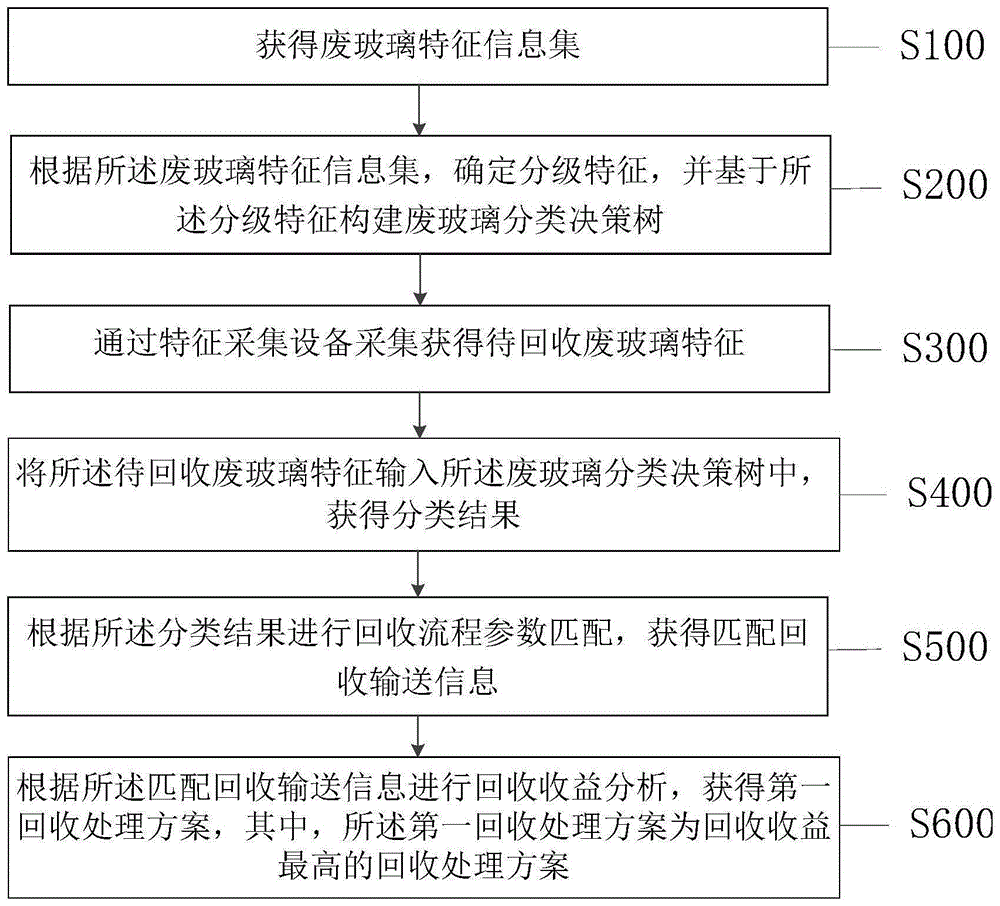
图1为本申请一种基于精细化管理的废玻璃分类回收方法的流程示意图;Fig. 1 is a schematic flow chart of a waste glass sorting and recycling method based on refined management in the present application;
图2为本申请一种基于精细化管理的废玻璃分类回收方法的构建废玻璃分类决策树的流程示意图;Fig. 2 is a schematic flow chart of constructing a waste glass classification decision tree based on a refined management waste glass classification and recycling method of the present application;
图3为本申请一种基于精细化管理的废玻璃分类回收装置的结构示意图;Fig. 3 is a schematic structural diagram of a waste glass sorting and recycling device based on refined management in the present application;
图4为本申请示例性电子设备的结构示意图。FIG. 4 is a schematic structural diagram of an exemplary electronic device of the present application.
附图标记说明:第一获得单元11,第一确定单元12,第二获得单元13,第三获得单元14,第四获得单元15,第五获得单元16,电子设备300,存储器301,处理器302,通信接口303,总线架构304。Description of reference numerals: first obtaining
具体实施方式Detailed ways
本申请通过提供了一种基于精细化管理的废玻璃分类回收方法及装置,解决了废玻璃分类与回收的方案不匹配,导致的资源利用率低的技术问题,达到了优化废玻璃的分类方式,智能分析精确匹配废玻璃的分类与回收,提高资源利用率的技术效果。This application provides a waste glass sorting and recycling method and device based on refined management, which solves the technical problem of low resource utilization caused by the mismatch between waste glass sorting and recycling schemes, and optimizes the waste glass sorting method , intelligent analysis accurately matches the classification and recycling of waste glass, and improves the technical effect of resource utilization.
申请概述Application overview
废玻璃处理方式不合理,废玻璃分类方案与废玻璃回收方案适配度低,使得无法对废玻璃进行匹配回收。The waste glass treatment method is unreasonable, and the compatibility between the waste glass classification scheme and the waste glass recycling scheme is low, making it impossible to match and recycle waste glass.
现有技术中存在废玻璃分类与回收的方案不匹配,导致的资源利用率低的技术问题。In the prior art, there is a technical problem of low resource utilization rate caused by the mismatch between waste glass classification and recycling schemes.
针对上述技术问题,本申请提供的技术方案总体思路如下:In view of the above technical problems, the general idea of the technical solution provided by this application is as follows:
本申请提供了一种基于精细化管理的废玻璃分类回收方法,其中,所述方法包括:获得废玻璃特征信息集;根据废玻璃特征信息集,确定分级特征,并基于分级特征构建废玻璃分类决策树;通过特征采集设备采集获得待回收废玻璃特征;将待回收废玻璃特征输入废玻璃分类决策树中,获得分类结果;根据分类结果进行回收流程参数匹配,获得匹配回收输送信息;根据匹配回收输送信息进行回收收益分析,获得第一回收处理方案。The present application provides a waste glass sorting and recycling method based on refined management, wherein the method includes: obtaining a waste glass characteristic information set; determining classification characteristics according to the waste glass characteristic information set, and constructing a waste glass classification based on the classification characteristics Decision tree: Obtain the characteristics of the waste glass to be recycled through the collection of feature collection equipment; input the characteristics of the waste glass to be recycled into the waste glass classification decision tree to obtain the classification result; match the parameters of the recycling process according to the classification result, and obtain the matching recycling transportation information; according to the matching Recycling and transportation information is used to analyze recycling benefits and obtain the first recycling treatment plan.
在介绍了本申请基本原理后,下面将结合说明书附图来具体介绍本申请的各种非限制性的实施方式。After introducing the basic principles of the present application, various non-limiting implementations of the present application will be specifically introduced below in conjunction with the accompanying drawings.
实施例一Embodiment one
如图1所示,本申请提供了一种基于精细化管理的废玻璃分类回收方法,其中,所述方法应用于废玻璃分类回收系统,所述系统包括特征采集设备,所述方法包括:As shown in Figure 1, the present application provides a waste glass sorting and recycling method based on refined management, wherein the method is applied to a waste glass sorting and recycling system, the system includes feature acquisition equipment, and the method includes:
S100:获得废玻璃特征信息集;S100: Obtain a feature information set of waste glass;
S200:根据所述废玻璃特征信息集,确定分级特征,并基于所述分级特征构建废玻璃分类决策树;S200: Determine classification features according to the waste glass feature information set, and build a waste glass classification decision tree based on the classification features;
具体而言,所述废玻璃为任意废弃玻璃制品,不对所述废玻璃的形状、材料与成分进行具体限制,所述废玻璃为非晶无机非金属材料,一般是以多种无机矿物(如石英砂、硼酸、重晶石)为主要原料,所述废玻璃可以是钢化玻璃、防爆玻璃、压花玻璃、磨砂玻璃或其他任意类型玻璃,所述废玻璃特征信息可以包括但不限于废玻璃密度、杂质成分、成分比例,获得废玻璃特征信息集,所述废玻璃特征可以通过大数据采集获取,对所述废玻璃特征信息进行数据量统计,结合数据量信息进行数据排列,确定所述废玻璃特征信息集,根据所述废玻璃特征信息集,对废玻璃特征进行分级,简单来说就是不同的特征在进行数据分类过程处于不同的分类等级,等级高的数据分类特征先参与数据分类过程;等级低的数据分类特征后参与数据分类过程。基于所述废玻璃特征信息集,结合分级特征,确定特征分类过程的节点信息,构建废玻璃分类决策树,为废玻璃分类提供稳定的模型基础,通过所述废玻璃分类决策树实现废玻璃的精细化分类,提高废玻璃的分类方案的全面性。Specifically, the waste glass is any waste glass product, and the shape, material and composition of the waste glass are not specifically limited. The waste glass is an amorphous inorganic non-metallic material, generally made of various inorganic minerals (such as Quartz sand, boric acid, barite) as the main raw material, the waste glass can be toughened glass, explosion-proof glass, patterned glass, frosted glass or any other type of glass, the waste glass feature information can include but not limited to waste glass Density, impurity composition, and composition ratio to obtain a waste glass feature information set, the waste glass feature can be obtained through big data collection, perform data volume statistics on the waste glass feature information, and perform data arrangement in combination with the data volume information to determine the The waste glass feature information set, according to the waste glass feature information set, the waste glass features are graded. In simple terms, different features are at different classification levels during the data classification process, and the data classification features with higher levels participate in data classification first. process; low-level data classification features participate in the data classification process. Based on the waste glass feature information set, combined with the classification features, determine the node information of the feature classification process, build a waste glass classification decision tree, provide a stable model basis for waste glass classification, and realize waste glass classification through the waste glass classification decision tree. Refined classification to improve the comprehensiveness of the waste glass classification scheme.
S300:通过特征采集设备采集获得待回收废玻璃特征;S300: Obtaining the characteristics of the waste glass to be recycled through the collection of the characteristic collection equipment;
S400:将所述待回收废玻璃特征输入所述废玻璃分类决策树中,获得分类结果;S400: Input the characteristics of the waste glass to be recycled into the waste glass classification decision tree to obtain a classification result;
具体而言,所述特征采集设备可以是图像采集装置或其他相关特征数据采集装置,实际结合所述待回收废玻璃特征信息进行具体确定,所述待回收废玻璃为需要进行分类回收的废玻璃,不对所述待回收废玻璃进行具体限定,示例性的,可以通过图像采集装置采集待回收玻璃的影像信息,所述图像采集装置内部包含一影像卷积处理模块,可以对所述待回收玻璃的影像信息进行特征匹配识别,将所述特征匹配识别结果确定为所述图像采集装置所得的待回收废玻璃特征。上述示例不唯一,不对方案的具体实施进行限定,所述示例说明是为保证方案的可实施,特别的,所述特征采集设备与所述废玻璃特征信息集的特征类型对应。将所述待回收废玻璃特征信息依次分别输入所述废玻璃分类决策树中,特别的,所述信息的输入顺序与所述废玻璃特征信息集的分级特征对应,将所述待回收废玻璃特征输入所述废玻璃分类决策树中,可以唯一确定所述待回收废玻璃的分类结果。Specifically, the feature acquisition device may be an image acquisition device or other relevant feature data acquisition device, which is actually determined in combination with the feature information of the waste glass to be recycled. The waste glass to be recycled is waste glass that needs to be sorted and recycled. , does not specifically limit the waste glass to be recycled. Exemplarily, the image information of the glass to be recycled can be collected by an image acquisition device, and the image acquisition device includes an image convolution processing module inside, which can The image information is subjected to feature matching and recognition, and the feature matching and recognition result is determined as the feature of the waste glass to be recycled obtained by the image acquisition device. The above examples are not exclusive, and do not limit the specific implementation of the solution. The illustrations are to ensure the implementation of the solution. In particular, the feature collection device corresponds to the feature type of the waste glass feature information set. Input the characteristic information of the waste glass to be recycled into the waste glass classification decision tree in sequence, in particular, the input order of the information corresponds to the grading characteristics of the waste glass characteristic information set, and the waste glass to be recycled The characteristics are input into the waste glass classification decision tree, which can uniquely determine the classification result of the waste glass to be recycled.
进一步具体说明,所述特征采集设备与所述废玻璃特征信息集的特征类型对应,简单来讲,所述废玻璃特征信息集对应的所有的需要进行采集获取的特征参数,都可以通过所述特征采集设备进行采集获取,示例性的,所述废玻璃厚度特征与厚度采集测量装置对应,常见如千分尺、游标卡尺;所述废玻璃形状特征与图像采集装置对应,常见如监控摄像头。所述信息的输入顺序与所述废玻璃特征信息集的分级特征对应,常见的,厚度特征分类过程,在废玻璃分类决策树中,可以不断精确,示例性的,设定厚度特征精确到千分位,第一厚度特征可以精确到十分位,第二厚度特征可以精确到百分位,第三厚度特征可以精确到千分位,所述废玻璃厚度数据从十分位、百分位、千分位依次输入所述废玻璃分类决策树中。To further specify, the feature collection device corresponds to the feature type of the waste glass feature information set. Simply speaking, all the feature parameters that need to be collected and obtained corresponding to the waste glass feature information set can be obtained through the The feature collection equipment is used for collection and acquisition. Exemplarily, the thickness feature of the waste glass corresponds to a thickness collection and measurement device, such as a micrometer and a vernier caliper; the shape feature of the waste glass corresponds to an image collection device, such as a surveillance camera. The input sequence of the information corresponds to the classification feature of the waste glass feature information set. Commonly, the thickness feature classification process can be continuously accurate in the waste glass classification decision tree. For example, the thickness feature is set to be accurate to thousands The first thickness feature can be accurate to the tenth place, the second thickness feature can be accurate to the hundredth place, and the third thickness feature can be accurate to the thousandth place. The quantiles are sequentially input into the waste glass classification decision tree.
S500:根据所述分类结果进行回收流程参数匹配,获得匹配回收输送信息;S500: Perform recycling process parameter matching according to the classification result, and obtain matching recycling and transportation information;
S600:根据所述匹配回收输送信息进行回收收益分析,获得第一回收处理方案,其中,所述第一回收处理方案为回收收益最高的回收处理方案。S600: Perform recycling revenue analysis according to the matching recycling and transportation information, and obtain a first recycling processing plan, wherein the first recycling processing plan is a recycling processing plan with the highest recycling revenue.
具体而言,一般的,所述分类结果与回收相对应,确定所述待回收玻璃的分类结果,可以确定所述待回收玻璃的回收方案,通过所述待回收玻璃的回收方案确定回收流程,所述回收流程包括但不限于回收点资质审核、回收点回收总量预估、进行废玻璃分类,通过所述回收流程,确定回收流程参数,对应匹配回收输送信息,所述回收输送信息包括回收点位置信息、废玻璃与所述回收点的距离信息或其他相关数据信息,根据所述匹配回收输送信息,基于所述回收输送信息确定运输成本,通过运输成本与回收收益确定第一回收处理方案,所述回收效益包括但不限于回收再利用的经济效益,所述回收再利用的经济效益具体来说可以是复材性能、回收价值、回收后的环境影响,所述第一回收处理方案为回收收益最高的回收处理方案,特别的,存在多个最高回收收益一致情况,可以结合所述匹配回收输送信息的进行优选,获取效益最佳的回收处理方案,针对废玻璃进行高效回收处理,为废玻璃的分类与回收提供方案支持。Specifically, in general, the classification result corresponds to the recycling, the classification result of the glass to be recycled can be determined, the recycling plan of the glass to be recycled can be determined, and the recycling process can be determined through the recycling plan of the glass to be recycled, The recycling process includes but is not limited to the qualification review of the recycling point, the estimation of the total amount of recycling at the recycling point, and the classification of waste glass. Through the recycling process, the parameters of the recycling process are determined, and the recycling transportation information is matched accordingly. The recycling transportation information includes recycling Point location information, distance information between waste glass and the recycling point, or other relevant data information, according to the matching recycling transportation information, determine the transportation cost based on the recycling transportation information, and determine the first recycling treatment plan based on the transportation cost and recycling income , the recycling benefits include but not limited to the economic benefits of recycling, the economic benefits of the recycling can specifically be composite material performance, recycling value, environmental impact after recycling, the first recycling treatment plan is The recycling processing scheme with the highest recycling income, in particular, there are multiple situations where the highest recycling income is consistent, and can be optimized in combination with the matching recycling and transportation information to obtain the recycling and processing scheme with the best benefit, and carry out efficient recycling processing for waste glass, for Sorting and recycling of waste glass provides program support.
进一步具体说明,结合所述匹配回收输送信息的进行优选,具体的,多个最高回收收益一致,但所述回收点的位置信息可能不一致,对应的废玻璃与所述回收点的距离信息不一致,优选废玻璃与所述回收点的距离最近的回收点,若距离信息一致,可以结合回收输送路线复杂度、回收输送时长进行进一步优选。上述方案优选可以简化方案的实施过程,不对方案进行具体限定,优选方案方式不唯一,具体结合实际数据信息进行具体确定,此处不做限制性说明。To further specify, in combination with the optimization of the matching recycling and transportation information, specifically, multiple highest recycling returns are consistent, but the location information of the recycling point may be inconsistent, and the distance information between the corresponding waste glass and the recycling point is inconsistent, The recycling point with the closest distance between the waste glass and the recycling point is preferred. If the distance information is consistent, further optimization can be made in consideration of the complexity of the recycling transportation route and the recycling transportation time. The above scheme preferably can simplify the implementation process of the scheme, and does not specifically limit the scheme, and the preferred scheme is not unique, and is specifically determined in combination with actual data information, and no restrictive description is made here.
进一步的,如图2所示,所述根据所述废玻璃特征信息集,确定分级特征,并基于所述分级特征构建废玻璃分类决策树,步骤S200还包括:Further, as shown in FIG. 2, the classification feature is determined according to the waste glass feature information set, and a waste glass classification decision tree is constructed based on the classification feature. Step S200 also includes:
S210:基于所述废玻璃特征信息集,获得训练数据集;S210: Obtain a training data set based on the waste glass feature information set;
S220:计算所述训练数据集中各特征数据的基尼系数;S220: Calculate the Gini coefficient of each feature data in the training data set;
S230:根据特征数据的基尼系数,确定所述分级特征,所述分级特征包括N个分级特征,其中,N为大于2的自然数;S230: Determine the grading feature according to the Gini coefficient of the feature data, the grading feature includes N grading features, where N is a natural number greater than 2;
S240:获得样本平衡参数;S240: Obtain a sample balance parameter;
S250:根据所述样本平衡参数对所述分级特征进行修剪,获得第一分级特征、第二分级特征、直到第M分级特征,其中,M为大于2的自然数;S250: Prune the classification feature according to the sample balance parameter to obtain the first classification feature, the second classification feature, and up to the Mth classification feature, where M is a natural number greater than 2;
S260:根据所述第一分级特征、第二分级特征、直到第M分级特征,构建所述废玻璃分类决策树。S260: Construct the waste glass classification decision tree according to the first classification feature, the second classification feature, up to the Mth classification feature.
具体而言,基于所述废玻璃特征信息集,获得训练数据集与测试集数据,所述训练数据集为构建废玻璃分类决策树的数据信息,所述测试集数据为验证废玻璃分类决策树的数据信息;逐次计算所述训练数据集中各特征数据的基尼系数;根据特征数据的基尼系数,确定所述分级特征,所述分级特征包括N个分级特征,其中,N为大于2的自然数,基尼系数的数据大小,确定所述训练数据集的不纯度,所述分级特征为训练数据集的不纯度大的指标数据;获得样本平衡参数,样本平衡参数为数据在所述训练数据集的发生概率;根据所述样本平衡参数对所述分级特征进行修剪,获得第一分级特征、第二分级特征、直到第M分级特征,其中,M为大于2的自然数,具体的,为保证废玻璃分类决策树的全面性与稳定性,可以结合样本平衡参数对特征信息进行加权,所述样本平衡参数对所述分级特征进行修剪调整,获得第一分级特征、第二分级特征、直到第M分级特征,示例性的,样本平衡参数对应的概率为(2%:98%),分类决策树直接进行数据分类,易使得发生概率小的样本被忽略,也就是分类决策树可能直接将数据特征定位到发生概率大的部分,无法保证标签的均衡,通过样本平衡参数对少量标签的数据给较多的权重进行平衡,以确保修剪过程中各节点包含样本权重的占比数量,保证修剪后分类的可靠性,优化得到的决策树得到的分类结果更为精准;将修剪后确定的所述第一分级特征、第二分级特征、直到第M分级特征,构建废玻璃分类决策树,将测试集数据输入废玻璃分类决策树,分类结果稳定表示验证成功,若验证不成功,可以调整训练数据集与测试集数据的数据量,重新进行废玻璃分类决策树的构建,结合样本平衡参数,对所述分级特征进行修剪,能有效保证废玻璃分类决策树的特征分类均衡。Specifically, based on the waste glass feature information set, a training data set and a test set data are obtained, the training data set is data information for constructing a waste glass classification decision tree, and the test set data is used to verify the waste glass classification decision tree. the data information; successively calculate the Gini coefficient of each feature data in the training data set; determine the grading feature according to the Gini coefficient of the feature data, and the grading feature includes N grading features, wherein N is a natural number greater than 2, The data size of the Gini coefficient determines the impurity of the training data set, and the classification feature is the large index data of the impurity of the training data set; obtains the sample balance parameter, and the sample balance parameter is the occurrence of data in the training data set Probability; according to the sample balance parameter, the grading feature is trimmed to obtain the first grading feature, the second grading feature, until the Mth grading feature, wherein, M is a natural number greater than 2, specifically, to ensure the classification of waste glass The comprehensiveness and stability of the decision tree can be combined with the sample balance parameter to weight the feature information. The sample balance parameter prunes and adjusts the classification features to obtain the first classification feature, the second classification feature, and up to the Mth classification feature. , for example, the probability corresponding to the sample balance parameter is (2%: 98%), and the classification decision tree directly classifies the data, which is easy to ignore the samples with a small probability of occurrence, that is, the classification decision tree may directly locate the data features to The part with a high probability of occurrence cannot guarantee the balance of the labels. The sample balance parameter is used to balance the data with a small number of labels with more weights to ensure that each node contains the proportion of sample weights in the pruning process and ensure the reliability of the classification after pruning. The classification result obtained by the optimized decision tree is more accurate; the first grading feature, the second grading feature, and the Mth grading feature determined after pruning are used to construct a waste glass classification decision tree, and the test set data is input Waste glass classification decision tree, if the classification result is stable, it means that the verification is successful. If the verification is unsuccessful, the data volume of the training data set and the test set data can be adjusted, and the construction of the waste glass classification decision tree can be re-constructed. Combined with the sample balance parameters, the classification Pruning the features can effectively ensure the feature classification balance of the waste glass classification decision tree.
进一步的,所述计算所述训练数据集中各特征数据的基尼系数,步骤S220还包括:Further, the step S220 of calculating the Gini coefficient of each feature data in the training data set also includes:
S221:通过公式:
具体而言:通过公式:


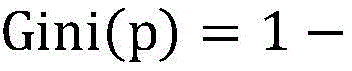

进一步具体说明,数据特征分配过程,具体来说就是可以利用公式计算全部特征数据的不纯度,将不纯的指标最为最优特征进行特征划分,在第一个特征数据下继续计算全部的不纯度指标,进行重复操作,在整体的不纯度指标最优状态,停止特征划分。To further explain in detail, the data feature allocation process, specifically, can use the formula to calculate the impurity of all feature data, divide the impurity index into the most optimal feature, and continue to calculate all the impurity under the first feature data Index, perform repeated operations, and stop feature division in the optimal state of the overall impurity index.
进一步的,所述特征采集设备包括图像采集设备、密度检测设备,所述通过特征采集设备采集获得待回收废玻璃特征,本申请还包括:Further, the feature acquisition equipment includes image acquisition equipment and density detection equipment, and the characteristics of the waste glass to be recycled are obtained through the acquisition of the feature acquisition equipment, and the present application also includes:
S710:通过所述图像采集设备对废玻璃进行图像采集,获得图像信息;S710: Collect images of the waste glass through the image collection device to obtain image information;
S720:通过所述密度检测设备对废玻璃进行密度检测,获得玻璃密度信息;S720: Perform density detection on the waste glass by the density detection device to obtain glass density information;
S730:对所述图像信息进行透明度、颜色特征、瓶身标识提取,获得废玻璃颜色特征、透明度特征、标识特征;S730: Extracting transparency, color features, and bottle identification from the image information to obtain color features, transparency features, and identification features of waste glass;
S740:根据所述标识特征,确定废玻璃材质特征;S740: Determine the material characteristics of the waste glass according to the identification characteristics;
S750:根据所述玻璃密度信息、所述废玻璃颜色特征、透明度特征、废玻璃材质特征,构建所述待回收废玻璃特征。S750: Construct the characteristics of the waste glass to be recycled according to the glass density information, the color characteristics of the waste glass, the transparency characteristics, and the material characteristics of the waste glass.
具体而言,通过所述图像采集设备对所述待回收废玻璃进行图像采集,所述图像采集设备可以是摄像头、摄像机或其他图像采集设备,所述图像采集方案的实际实施通过所述待回收废玻璃的结构信息进行具体细化,一般的,所述待回收废玻璃结构复杂度越高,所述图像采集方案需要进行对应性细化,获得图像信息,所述影响信息包括所述待回收废玻璃的多角度图像信息;对所述图像信息进行透明度、颜色特征、瓶身标识提取,常见的,所述待回收废玻璃为啤酒瓶,瓶身标识可能为多处,实际的数据信息需要结合所述待回收废玻璃进行具体确定,此处不做赘述,所述提取可以通过影像卷积处理模块的特征识别结果进行具体实施,获得所述待回收废玻璃的颜色特征、透明度特征、标识特征;根据所述标识特征,确定废玻璃材质特征,具体的,所述待回收废玻璃为汽车挡风玻璃,LAMINATED(层压的)标识为夹层玻璃,TEMPERED(调合的)标识为钢化玻璃;通过所述密度检测设备对所述待回收废玻璃进行密度检测,所述密度检测设备可以是固体密度计或其他密度检测装置,获得所述待回收废玻璃的玻璃密度信息;根据所述玻璃密度信息、所述废玻璃颜色特征、透明度特征、废玻璃材质特征,进行特征信息整合,构建所述待回收废玻璃特征,保证了所述待回收废玻璃的特征信息的可靠性。Specifically, image acquisition is performed on the waste glass to be recycled through the image acquisition device, the image acquisition device may be a camera, video camera or other image acquisition equipment, and the actual implementation of the image acquisition scheme is carried out through the waste glass to be recycled The structural information of the waste glass is specifically refined. Generally, the higher the structural complexity of the waste glass to be recycled, the image acquisition scheme needs to be refined correspondingly to obtain image information. The impact information includes the waste glass to be recycled. Multi-angle image information of waste glass; extract the transparency, color features, and bottle identification of the image information. Commonly, the waste glass to be recycled is a beer bottle, and there may be multiple bottle identifications. The actual data information needs The specific determination is made in conjunction with the waste glass to be recycled, and will not be repeated here. The extraction can be implemented through the feature recognition result of the image convolution processing module to obtain the color features, transparency features, and identification of the waste glass to be recycled. Features; according to the identification features, determine the material characteristics of waste glass, specifically, the waste glass to be recycled is automobile windshield, LAMINATED (laminated) is marked as laminated glass, and TEMPERED (blend) is marked as tempered glass ; carry out density detection on the waste glass to be recycled through the density detection equipment, and the density detection equipment can be a solid density meter or other density detection devices to obtain the glass density information of the waste glass to be recycled; according to the glass The density information, the color characteristics of the waste glass, the transparency characteristics, and the material characteristics of the waste glass are integrated to construct the characteristics of the waste glass to be recycled, which ensures the reliability of the characteristic information of the waste glass to be recycled.
具体进一步说明,所述提取可以通过影像卷积处理模块的特征识别结果进行具体实施,示例性的,影像卷积处理模块可以对所述待回收废玻璃的瓶身标签进行特征识别,通过所述特征识别结果对瓶身标识提取;所述透明度可以通过同等强度的光源的透光效果进行确定,常见的,同等强度的光源且所述光源与所述待回收废玻璃距离一致,透光效果好对应的所述待回收废玻璃的透明度高,透光效果差对应的所述待回收废玻璃的透明度低,所述颜色特征可以通过所述图像信息结合智能比色装置确定。To further illustrate, the extraction can be specifically implemented through the feature recognition results of the image convolution processing module. Exemplarily, the image convolution processing module can perform feature recognition on the bottle label of the waste glass to be recycled, through the The result of feature recognition extracts the logo on the bottle body; the transparency can be determined by the light transmission effect of the light source of the same intensity. Commonly, the light source of the same intensity and the distance between the light source and the waste glass to be recycled are consistent, and the light transmission effect is good. The corresponding waste glass to be recycled has high transparency, and the waste glass to be recycled has low transparency when the light transmission effect is poor. The color feature can be determined by combining the image information with an intelligent colorimetric device.
进一步的,所述根据所述分类结果进行回收流程参数匹配,获得匹配回收输送信息,步骤S500还包括:Further, the matching of recycling process parameters according to the classification results to obtain matching recycling and transportation information, step S500 also includes:
S510:获得回收参数列表,所述回收参数列表包括回收标准参数、回收输送信息、回收产品参数及其映射关系;S510: Obtain a recycling parameter list, the recycling parameter list includes recycling standard parameters, recycling transportation information, recycled product parameters and their mapping relationships;
S520:根据所述分类结果与所述回收标准参数进行匹配,获得匹配回收标准信息;S520: Match the classification result with the recovery standard parameters to obtain matching recovery standard information;
S530:根据所述匹配回收标准信息与所述回收输送信息进行匹配,获得匹配输送信息;S530: Perform matching according to the matching recycling standard information and the recycling transportation information to obtain matching transportation information;
S540:根据所述匹配输送信息与所述回收产品参数进行匹配,获得匹配产品参数;S540: Match the recycled product parameters according to the matching delivery information to obtain matched product parameters;
S550:基于所述匹配回收标准信息、所述匹配输送信息、所述匹配产品参数,获得所述匹配回收输送信息。S550: Obtain the matching recovery delivery information based on the matching recovery standard information, the matching delivery information, and the matching product parameters.
具体而言,获得回收参数列表,所述回收参数列表包括回收标准参数、回收输送信息、回收产品参数及其映射关系,确定多个回收点,不同的回收点对应不同的回收输送信息,不同的回收点对应不同的回收标准参数,所述回收标准参数包括但不限于颜色标准、密度标准、材质标准,所述回收产品参数为所述待回收废玻璃的产品参数,所述映射关系具体来说就是所述回收产品参数满足所述回收标准参数,所述回收点可以进行所述待回收废玻璃的回收,通过所述回收点确定所述回收输送信息;根据所述分类结果与所述回收标准参数进行匹配,确定分类对应的回收的参数标准,所述参数标准包括但不限于颜色、密度、材质或其他相关参数指标,获得匹配回收标准信息,所述匹配回收标准信息对应可以进行回收的标准信息;根据所述匹配回收标准信息与所述回收输送信息进行匹配,获得匹配输送信息,所述匹配输送信息包括但不限于区域方向、回收点信息,所述回收点信息包括了回收点距离信息、输送方式信息、输送成本信息,所述匹配输送信息可能包含了多个输送的方向;根据所述匹配输送信息与所述回收产品参数进行匹配,所述回收产品参数需要结合后续回收再生产品进行确定,再生产品可以是沥青、混凝土、大理石、玻璃微珠、玻璃棉或其他相关废玻璃加工产品,所述参数匹配可以是结合所述再生产品的工艺要求进行具体实施,不对所述具体实施方案进行具体解释说明,获得匹配产品参数,所述匹配产品参数为所述再生产品进行匹配确定的参数信息;基于所述匹配回收标准信息、所述匹配输送信息、所述匹配产品参数,获得所述匹配回收输送信息,所述匹配回收输送信息结合再生产品进行优化,保证了所述匹配回收输送信息的有效性。Specifically, a list of recycling parameters is obtained, and the list of recycling parameters includes recycling standard parameters, recycling transportation information, recycling product parameters and their mapping relationships, and multiple recycling points are determined. Different recycling points correspond to different recycling and transportation information. Recycling points correspond to different recycling standard parameters. The recycling standard parameters include but not limited to color standards, density standards, and material standards. The recycling product parameters are product parameters of the waste glass to be recycled. The mapping relationship is specifically That is, the recycled product parameters meet the recycling standard parameters, the recycling point can recycle the waste glass to be recycled, and the recycling transportation information is determined through the recycling point; according to the classification result and the recycling standard Parameters are matched to determine the recycling parameter standards corresponding to the classification. The parameter standards include but are not limited to color, density, material or other related parameter indicators, and the matching recycling standard information is obtained. The matching recycling standard information corresponds to the standard that can be recycled information; match the recycling standard information with the recycling transportation information to obtain matching transportation information, the matching transportation information includes but not limited to area direction, recycling point information, and the recycling point information includes recycling point distance information , transportation mode information, and transportation cost information. The matching transportation information may include multiple transportation directions; according to the matching transportation information and the parameters of the recycled products, the parameters of the recycled products need to be combined with subsequent recycled products. It is determined that the recycled products can be asphalt, concrete, marble, glass beads, glass wool or other related waste glass processing products, and the parameter matching can be implemented in combination with the technological requirements of the recycled products, and the specific implementation plan is not Make specific explanations to obtain matching product parameters, and the matching product parameters are parameter information for matching and determining the recycled product; based on the matching recovery standard information, the matching delivery information, and the matching product parameters, obtain the Matching recycling and transportation information, the matching recycling and transportation information is optimized in combination with recycled products, which ensures the validity of the matching recycling and transportation information.
具体进一步说明,不同的回收点对应不同的回收标准参数,不同的回收点的废玻璃进行回收利用的方案不同,回收标准参数也不同,示例性的,碎玻璃的块度需合适,具体解释说明,粗大的碎玻璃输送困难,碎玻璃通过斗提机和皮带机运输,超过限度会造成堵料;过细的碎玻璃会导致配合料中的石英砂熔解困难,延缓玻璃的熔制过程,碎玻璃的具体块度信息可以配合回收利用的方案进行具体确定,此处不做赘述,所述匹配输送信息可能包含了多个输送的方向,常见的,废玻璃的特征类型不同,回收点不同,还可能存在同一特征类型的废玻璃对应多个输送方向,如一个回收点无法回收该类型的所有的废玻璃,需要多个回收点对该类型的所有的废玻璃进行匹配回收。To further explain in detail, different recycling points correspond to different recycling standard parameters. Different recycling points have different recycling schemes for waste glass, and the recycling standard parameters are also different. For example, the blockage of broken glass needs to be appropriate. Please explain in detail , Coarse cullets are difficult to transport, cullets are transported through bucket elevators and belt conveyors, exceeding the limit will cause material blockage; too fine cullets will cause difficulty in melting the quartz sand in the batch material, delaying the melting process of glass, cullets The specific fragmentation information can be specifically determined in conjunction with the recycling scheme, and will not be repeated here. The matching conveying information may include multiple conveying directions. Commonly, the characteristic types of waste glass are different, and the recycling points are different. There may be waste glass of the same characteristic type corresponding to multiple conveying directions. For example, one recycling point cannot recycle all waste glass of this type, and multiple recycling points are required to match and recycle all waste glass of this type.
进一步的,所述根据所述匹配回收输送信息进行回收收益分析,获得第一回收处理方案,其中,所述第一回收处理方案为回收收益最高的回收处理方案,本申请还包括:Further, the recycling income analysis is carried out according to the matching recycling transportation information, and the first recycling processing plan is obtained, wherein the first recycling processing plan is the recycling processing plan with the highest recycling profit, and the present application also includes:
S610:将所述匹配回收输送信息输入多层级效益分析模型,获得多层级分析结果;S610: Input the matching recovery and transportation information into a multi-level benefit analysis model to obtain a multi-level analysis result;
S620:对所述多层级分析结果进行统一量化处理,获得多层量化分析结果;S620: Perform unified quantitative processing on the multi-level analysis results to obtain multi-level quantitative analysis results;
S630:根据所述多层量化分析结果进行回收方案筛选,获得所述第一回收处理方案。S630: Perform recovery scheme screening according to the multi-layer quantitative analysis results to obtain the first recovery treatment scheme.
具体而言,将所述匹配回收输送信息输入多层级效益分析模型,获得多层级分析结果;对所述多层级分析结果进行统一量化处理,所述同一量化处理简单来说就是标准化处理,示例性的,将宽度数据换算以m为单位,将密度数据换算以kg/m3为单位,获得多层量化分析结果;根据所述多层量化分析结果进行回收方案筛选,获得所述第一回收处理方案,所述第一回收处理方案为回收收益最高的回收处理方案,获得所述第一回收处理方案,保证了废玻璃分类回收精细方案的具体实施。Specifically, input the matching, recovery, and transportation information into a multi-level benefit analysis model to obtain multi-level analysis results; perform unified quantitative processing on the multi-level analysis results, and the same quantitative processing is simply standardized processing, exemplary If the width data is converted to m as the unit, and the density data is converted to kg/ m3 as the unit, the multi-layer quantitative analysis result is obtained; the recovery plan is screened according to the multi-layer quantitative analysis result, and the first recycling process is obtained. The first recycling and processing plan is the recycling and processing plan with the highest recycling income, and obtaining the first recycling and processing plan ensures the specific implementation of the fine waste glass sorting and recycling plan.
进一步的,所述将所述匹配回收输送信息输入多层级效益分析模型之前,本申请还包括:Further, before inputting the matching recycling delivery information into the multi-level benefit analysis model, the present application further includes:
S611:获得玻璃信息数据库,所述玻璃信息数据库包括回收标准信息、输送信息、再生产品信息;S611: Obtain a glass information database, where the glass information database includes recycling standard information, transportation information, and recycled product information;
S612:根据所述回收标准信息,确定玻璃材质信息、玻璃颜色信息、玻璃密度信息;S612: Determine glass material information, glass color information, and glass density information according to the recycling standard information;
S613:根据所述玻璃材质信息、玻璃颜色信息、玻璃密度信息进行回收收益评估确定评估影响关系,构建材料收益评估层;S613: Perform recycling benefit assessment according to the glass material information, glass color information, and glass density information to determine the evaluation impact relationship, and build a material benefit evaluation layer;
S614:根据所述输送信息,确定企业紧密度、输送成本信息;S614: Determine enterprise density and delivery cost information according to the delivery information;
S615:根据所述企业紧密度、所述输送成本信息计算权重值,基于所述权重值进行收益评估,构建输送收益评估层;S615: Calculate a weight value according to the enterprise closeness and the transportation cost information, perform revenue evaluation based on the weight value, and construct a transportation revenue evaluation layer;
S616:根据所述再生产品信息,确定再生产品性能、再生生产过程、再生环保影响信息;S616: According to the recycled product information, determine recycled product performance, recycled production process, recycled environmental impact information;
S617:基于所述再生产品性能、再生生产过程、再生环保影响信息进行回收收益评估,确定评估关系构建再生收益评估层;S617: Evaluate recycling benefits based on the recycled product performance, recycled production process, and recycled environmental impact information, and determine the evaluation relationship to build a recycled revenue evaluation layer;
S618:将所述材料收益评估层、所述输送收益评估层、所述再生收益评估层进行连接,构建所述多层级效益分析模型。S618: Connect the material revenue evaluation layer, the transportation revenue evaluation layer, and the recycling revenue evaluation layer to construct the multi-level benefit analysis model.
具体而言,获得玻璃信息数据库,玻璃信息数据库包括回收标准信息、输送信息、再生产品信息,回收标准信息结合回收点回收要求进行对应确定,输送信息结合回收点位置信息确定,输送信息对玻璃材质信息有限制,示例性的,钢化玻璃制品与普通玻璃制品的运输要求不一致,再生产品信息结合所述再生产品的工艺要求进行确定;根据所述回收标准信息,确定玻璃材质信息、玻璃颜色信息、玻璃密度信息;基于神经网络模型,根据所述玻璃材质信息、玻璃颜色信息、玻璃密度信息进行回收收益评估确定评估影响关系,构建材料收益评估层,所述材料收益评估层对应所述神经网络模型的第一网络层;根据所述输送信息,确定企业紧密度、输送成本信息,企业紧密度简单来说就是回收点废玻璃回收类型与所有待回收废玻璃的类型的匹配数据,具体的,所有待回收废玻璃均与第一回收点废玻璃回收类型匹配,第一回收点的企业紧密度高;根据所述企业紧密度、所述输送成本信息计算权重值,基于所述权重值进行收益评估,构建输送收益评估层;根据所述再生产品信息,确定再生产品性能、再生生产过程、再生环保影响信息,再生产品性能可以通过再生产品的使用性能进行确定,再生生产过程可以通过再生产品是的加工生产工艺流程进行确定,再生环保影响信息可以通过再生产品是否可以继续进行回收利用进行确定;基于神经网络模型,通过所述再生产品性能、再生生产过程、再生环保影响信息进行回收收益评估,构建评估关系构建再生收益评估层,评估关系构建再生收益评估层对应所述神经网络模型的第二网络层;将所述材料收益评估层、所述输送收益评估层、所述再生收益评估层进行连接,所述连接不进行数据逻辑运算,为功能层合并操作,构建所述多层级效益分析模型,为进行效益分析提供模型基础。Specifically, the glass information database is obtained. The glass information database includes recycling standard information, transportation information, and recycled product information. The recycling standard information is determined in conjunction with the recycling point recycling requirements. The information is limited. For example, the transportation requirements of tempered glass products and ordinary glass products are inconsistent, and the recycled product information is determined in conjunction with the process requirements of the recycled product; according to the recycling standard information, determine the glass material information, glass color information, Glass density information; based on the neural network model, carry out recycling income assessment according to the glass material information, glass color information, and glass density information to determine the evaluation impact relationship, and construct a material income assessment layer, and the material income assessment layer corresponds to the neural network model The first network layer of the network; according to the transmission information, determine the company’s closeness and delivery cost information. Simply put, the company’s closeness is the matching data between the type of waste glass recycling at the recycling point and all the types of waste glass to be recycled. Specifically, all All the waste glass to be recycled matches the waste glass recycling type of the first recycling point, and the enterprise density of the first recycling point is high; the weight value is calculated according to the enterprise density and the transportation cost information, and the income evaluation is performed based on the weight value , to construct the evaluation layer of transportation revenue; according to the recycled product information, determine the recycled product performance, recycled production process, and recycled environmental impact information. The recycled product performance can be determined through the use performance of the recycled product. The processing and production process is determined, and the environmental impact information of regeneration can be determined by whether the recycled products can continue to be recycled; based on the neural network model, the recycling benefits are evaluated through the performance of the recycled products, the regeneration production process, and the environmental impact information of the regeneration, and the construction The evaluation relationship constructs the regeneration income evaluation layer, and the evaluation relationship constructs the regeneration income evaluation layer corresponding to the second network layer of the neural network model; the material income evaluation layer, the transportation income evaluation layer, and the regeneration income evaluation layer are connected , the connection does not perform data logic operations, and is a functional layer merging operation to construct the multi-level benefit analysis model and provide a model basis for benefit analysis.
进一步具体说明,构建材料收益评估层,所述材料收益评估层对应所述神经网络模型的第一网络层,具体的,将所述玻璃材质信息、玻璃颜色信息、玻璃密度信息进行数据分组,每组数据均包括玻璃材质数据、玻璃颜色数据、玻璃密度数据,将多组玻璃材质数据、玻璃颜色数据、玻璃密度数据确定为训练数据集的输入数据,基于人工神经网络,进行数据训练,在数据输出结果趋于稳定状态,确定所述材料收益评估层。In further detail, a material income evaluation layer is constructed, and the material income evaluation layer corresponds to the first network layer of the neural network model. Specifically, the glass material information, glass color information, and glass density information are grouped into data groups, and each The set of data includes glass material data, glass color data, and glass density data. Multiple sets of glass material data, glass color data, and glass density data are determined as the input data of the training data set. Based on the artificial neural network, data training is performed. The output result tends to a steady state, and the material benefit evaluation layer is determined.
综上所述,本申请所提供的一种基于精细化管理的废玻璃分类回收方法及装置具有如下技术效果:In summary, a method and device for sorting and recycling waste glass based on refined management provided by this application has the following technical effects:
1.由于采用了获得废玻璃特征信息集;确定分级特征,并基于分级特征构建废玻璃分类决策树;通过特征采集设备采集获得待回收废玻璃特征;将待回收废玻璃特征输入废玻璃分类决策树中,获得分类结果;根据分类结果进行回收流程参数匹配,获得匹配回收输送信息;进行回收收益分析,获得第一回收处理方案。本申请通过提供了一种基于精细化管理的废玻璃分类回收方法及装置,达到了优化废玻璃的分类方式,智能分析精确匹配废玻璃的分类与回收,提高资源利用率的技术效果。1. Due to the use of the waste glass characteristic information set; determine the classification characteristics, and build a waste glass classification decision tree based on the classification characteristics; obtain the characteristics of the waste glass to be recycled through the collection of characteristic collection equipment; input the characteristics of the waste glass to be recycled into the waste glass classification decision In the classification tree, the classification results are obtained; the recycling process parameters are matched according to the classification results, and the matching recycling transportation information is obtained; the recycling income analysis is carried out, and the first recycling treatment plan is obtained. This application provides a method and device for sorting and recycling waste glass based on fine management, which achieves the technical effect of optimizing the sorting method of waste glass, intelligently analyzing and accurately matching the sorting and recycling of waste glass, and improving resource utilization.
实施例二Embodiment two
基于与前述实施例中一种基于精细化管理的废玻璃分类回收方法相同的发明构思,如图3所示,本申请提供了一种基于精细化管理的废玻璃分类回收装置,其中,所述装置包括:Based on the same inventive concept as the waste glass sorting and recycling method based on fine management in the previous embodiment, as shown in Figure 3, the present application provides a waste glass sorting and recycling device based on fine management, wherein the Devices include:
第一获得单元11,所述第一获得单元11用于获得废玻璃特征信息集;A first obtaining
第一确定单元12,所述第一确定单元12用于根据所述废玻璃特征信息集,确定分级特征,并基于所述分级特征构建废玻璃分类决策树;A
第二获得单元13,所述第二获得单元13用于通过特征采集设备采集获得待回收废玻璃特征;A second obtaining
第三获得单元14,所述第三获得单元14用于将所述待回收废玻璃特征输入所述废玻璃分类决策树中,获得分类结果;A third obtaining
第四获得单元15,所述第四获得单元15用于根据所述分类结果进行回收流程参数匹配,获得匹配回收输送信息;A fourth obtaining
第五获得单元16,所述第五获得单元16用于根据所述匹配回收输送信息进行回收收益分析,获得第一回收处理方案,其中,所述第一回收处理方案为回收收益最高的回收处理方案。The fifth obtaining
进一步的,所述装置包括:Further, the device includes:
第六获得单元,所述第六获得单元用于基于所述废玻璃特征信息集,获得训练数据集;A sixth obtaining unit, the sixth obtaining unit is used to obtain a training data set based on the waste glass feature information set;
第一计算单元,所述第一计算单元用于计算所述训练数据集中各特征数据的基尼系数;A first calculation unit, the first calculation unit is used to calculate the Gini coefficient of each feature data in the training data set;
第二确定单元,所述第二确定单元用于根据特征数据的基尼系数,确定所述分级特征,所述分级特征包括N个分级特征,其中,N为大于2的自然数;A second determination unit, the second determination unit is used to determine the classification feature according to the Gini coefficient of the feature data, the classification feature includes N classification features, where N is a natural number greater than 2;
第七获得单元,所述第七获得单元用于获得样本平衡参数;a seventh obtaining unit, the seventh obtaining unit is used to obtain a sample balance parameter;
第八获得单元,所述第八获得单元用于根据所述样本平衡参数对所述分级特征进行修剪,获得第一分级特征、第二分级特征、直到第M分级特征,其中,M为大于2的自然数;An eighth obtaining unit, the eighth obtaining unit is used to trim the classification features according to the sample balance parameter, and obtain the first classification feature, the second classification feature, and up to the Mth classification feature, wherein M is greater than 2 the natural number of
第一构建单元,所述第一构建单元用于根据所述第一分级特征、第二分级特征、直到第M分级特征,构建所述废玻璃分类决策树。A first construction unit, the first construction unit is used to construct the waste glass classification decision tree according to the first classification feature, the second classification feature, up to the Mth classification feature.
进一步的,所述装置包括:Further, the device includes:
第二计算单元,所述第二计算单元用于通过公式:

进一步的,所述装置包括:Further, the device includes:
第九获得单元,所述第九获得单元用于通过所述图像采集设备对废玻璃进行图像采集,获得图像信息;A ninth obtaining unit, the ninth obtaining unit is used to collect images of waste glass through the image collection device to obtain image information;
第十获得单元,所述第十获得单元用于通过所述密度检测设备对废玻璃进行密度检测,获得玻璃密度信息;A tenth obtaining unit, the tenth obtaining unit is used to perform density detection on waste glass through the density detection device to obtain glass density information;
第十一获得单元,所述第十一获得单元用于对所述图像信息进行透明度、颜色特征、瓶身标识提取,获得废玻璃颜色特征、透明度特征、标识特征;An eleventh obtaining unit, the eleventh obtaining unit is used to extract the transparency, color features, and bottle identification of the image information, and obtain the color features, transparency features, and identification features of waste glass;
第三确定单元,所述第三确定单元用于根据所述标识特征,确定废玻璃材质特征;A third determination unit, the third determination unit is used to determine the material characteristics of waste glass according to the identification characteristics;
第二构建单元,所述第二构建单元用于根据所述玻璃密度信息、所述废玻璃颜色特征、透明度特征、废玻璃材质特征,构建所述待回收废玻璃特征。The second construction unit is configured to construct the characteristics of the waste glass to be recycled according to the glass density information, the color characteristics of the waste glass, the transparency characteristics, and the material characteristics of the waste glass.
进一步的,所述装置包括:Further, the device includes:
第十二获得单元,所述第十二获得单元用于获得回收参数列表,所述回收参数列表包括回收标准参数、回收输送信息、回收产品参数及其映射关系;A twelfth obtaining unit, the twelfth obtaining unit is used to obtain a recycling parameter list, the recycling parameter list includes recycling standard parameters, recycling transportation information, recycled product parameters and their mapping relationships;
第十三获得单元,所述第十三获得单元用于根据所述分类结果与所述回收标准参数进行匹配,获得匹配回收标准信息;A thirteenth obtaining unit, the thirteenth obtaining unit is configured to match the classification result with the recovery standard parameters, and obtain matching recovery standard information;
第十四获得单元,所述第十四获得单元用于根据所述匹配回收标准信息与所述回收输送信息进行匹配,获得匹配输送信息;A fourteenth obtaining unit, the fourteenth obtaining unit is configured to match the recycling and transportation information according to the matching recycling standard information, and obtain matching transportation information;
第十五获得单元,所述第十五获得单元用于根据所述匹配输送信息与所述回收产品参数进行匹配,获得匹配产品参数;A fifteenth obtaining unit, the fifteenth obtaining unit is configured to match the recycled product parameters according to the matching delivery information, and obtain the matched product parameters;
第十六获得单元,所述第十六获得单元用于基于所述匹配回收标准信息、所述匹配输送信息、所述匹配产品参数,获得所述匹配回收输送信息。A sixteenth obtaining unit, configured to obtain the matching recycling delivery information based on the matching recycling standard information, the matching delivery information, and the matching product parameters.
进一步的,所述装置包括:Further, the device includes:
第十七获得单元,所述第十七获得单元用于将所述匹配回收输送信息输入多层级效益分析模型,获得多层级分析结果;A seventeenth obtaining unit, the seventeenth obtaining unit is used to input the matching recovery and transportation information into a multi-level benefit analysis model to obtain a multi-level analysis result;
第十八获得单元,所述第十八获得单元用于对所述多层级分析结果进行统一量化处理,获得多层量化分析结果;An eighteenth obtaining unit, the eighteenth obtaining unit is configured to perform unified quantitative processing on the multi-level analysis results to obtain multi-level quantitative analysis results;
第十九获得单元,所述第十九获得单元用于根据所述多层量化分析结果进行回收方案筛选,获得所述第一回收处理方案。A nineteenth obtaining unit, the nineteenth obtaining unit is configured to perform recycling scheme screening according to the multi-layer quantitative analysis results, and obtain the first recycling treatment scheme.
进一步的,所述装置包括:Further, the device includes:
第二十获得单元,所述第二十获得单元用于获得玻璃信息数据库,所述玻璃信息数据库包括回收标准信息、输送信息、再生产品信息;A twentieth obtaining unit, the twentieth obtaining unit is used to obtain a glass information database, and the glass information database includes recycling standard information, transportation information, and recycled product information;
第四确定单元,所述第四确定单元用于根据所述回收标准信息,确定玻璃材质信息、玻璃颜色信息、玻璃密度信息;A fourth determination unit, the fourth determination unit is used to determine glass material information, glass color information, and glass density information according to the recycling standard information;
第三构建单元,所述第三构建单元用于根据所述玻璃材质信息、玻璃颜色信息、玻璃密度信息进行回收收益评估确定评估影响关系,构建材料收益评估层;A third construction unit, the third construction unit is used to evaluate the recycling income according to the glass material information, glass color information, and glass density information, determine the evaluation influence relationship, and construct a material income evaluation layer;
第五确定单元,所述第五确定单元用于根据所述输送信息,确定企业紧密度、输送成本信息;A fifth determining unit, the fifth determining unit is used to determine the enterprise closeness and delivery cost information according to the delivery information;
第四构建单元,所述第四构建单元用于根据所述企业紧密度、所述输送成本信息计算权重值,基于所述权重值进行收益评估,构建输送收益评估层;A fourth construction unit, the fourth construction unit is used to calculate a weight value according to the enterprise closeness and the transportation cost information, perform revenue evaluation based on the weight value, and construct a transportation revenue evaluation layer;
第六确定单元,所述第六确定单元用于根据所述再生产品信息,确定再生产品性能、再生生产过程、再生环保影响信息;A sixth determination unit, the sixth determination unit is used to determine the performance of the recycled product, the recycled production process, and the environmental impact information of the recycled product according to the recycled product information;
第七确定单元,所述第七确定单元用于基于所述再生产品性能、再生生产过程、再生环保影响信息进行回收收益评估,确定评估关系构建再生收益评估层;A seventh determining unit, the seventh determining unit is used to evaluate recycling benefits based on the recycled product performance, recycled production process, and recycling environmental impact information, and determine the evaluation relationship to build a recycled revenue evaluation layer;
第五构建单元,所述第五构建单元用于将所述材料收益评估层、所述输送收益评估层、所述再生收益评估层进行连接,构建所述多层级效益分析模型。A fifth construction unit, the fifth construction unit is used to connect the material revenue evaluation layer, the transportation revenue evaluation layer, and the recycling revenue evaluation layer to construct the multi-level benefit analysis model.
示例性电子设备Exemplary electronic device
下面参考图4来描述本申请的电子设备,The electronic equipment of the present application is described below with reference to FIG. 4 ,
基于与前述实施例中一种基于精细化管理的废玻璃分类回收方法相同的发明构思,本申请还提供了一种基于精细化管理的废玻璃分类回收装置,包括:处理器,所述处理器与存储器耦合,所述存储器用于存储程序,当所述程序被所述处理器执行时,使得系统以执行实施例一任一项所述的方法。Based on the same inventive concept as the waste glass sorting and recycling method based on fine management in the foregoing embodiments, the present application also provides a waste glass sorting and recycling device based on fine management, including: a processor, the processor Coupled with a memory, the memory is used to store a program, and when the program is executed by the processor, the system can execute the method described in any one of the embodiments.
该电子设备300包括:处理器302、通信接口303、存储器301。可选的,电子设备300还可以包括总线架构304。其中,通信接口303、处理器302以及存储器301可以通过总线架构304相互连接;总线架构304可以是外设部件互连标(peripheral componentinterconnect,简称PCI)总线或扩展工业标准结构(extended industry Standardarchitecture,简称EISA)总线等。所述总线架构304可以分为地址总线、数据总线、控制总线等。为便于表示,图4中仅用一条粗线表示,但并不表示仅有一根总线或一种类型的总线。The
处理器302可以是一个CPU,微处理器,ASIC,或一个或多个用于控制本申请方案程序执行的集成电路。The
通信接口303,使用任何收发器一类的装置,用于与其他设备或通信网络通信,如以太网,无线接入网(radio access network,RAN),无线局域网(wireless local areanetworks,WLAN),有线接入网等。The
存储器301可以是ROM或可存储静态信息和指令的其他类型的静态存储设备,RAM或者可存储信息和指令的其他类型的动态存储设备,也可以是电可擦可编程只读存储器(electrically erasable Programmable read-only memory,EEPROM)、只读光盘(compactdiscread-only memory,CD-ROM)或其他光盘存储、光碟存储(包括压缩光碟、激光碟、光碟、数字通用光碟、蓝光光碟等)、磁盘存储介质或者其他磁存储设备、或者能够用于携带或存储具有指令或数据结构形式的期望的程序代码并能够由计算机存取的任何其他介质,但不限于此。存储器可以是独立存在,通过总线架构304与处理器相连接。存储器也可以和处理器集成在一起。
其中,存储器301用于存储执行本申请方案的计算机执行指令,并由处理器302来控制执行。处理器302用于执行存储器301中存储的计算机执行指令,从而实现本申请上述实施例提供的一种基于精细化管理的废玻璃分类回收方法。Wherein, the
可选的,本申请中的计算机执行指令也可以称之为应用程序代码,本申请对此不作具体限定。Optionally, the computer-executed instructions in this application may also be referred to as application code, which is not specifically limited in this application.
本申请提供了一种基于精细化管理的废玻璃分类回收方法,其中,所述方法应用于废玻璃分类回收系统,所述系统包括特征采集设备,所述方法包括:获得废玻璃特征信息集;根据所述废玻璃特征信息集,确定分级特征,并基于所述分级特征构建废玻璃分类决策树;通过特征采集设备采集获得待回收废玻璃特征;将所述待回收废玻璃特征输入所述废玻璃分类决策树中,获得分类结果;根据所述分类结果进行回收流程参数匹配,获得匹配回收输送信息;根据所述匹配回收输送信息进行回收收益分析,获得第一回收处理方案,其中,所述第一回收处理方案为回收收益最高的回收处理方案。The present application provides a waste glass sorting and recycling method based on refined management, wherein the method is applied to a waste glass sorting and recycling system, the system includes a feature acquisition device, and the method includes: obtaining a waste glass feature information set; According to the waste glass feature information set, determine the grading feature, and build a waste glass classification decision tree based on the grading feature; acquire the feature of the waste glass to be recycled through the feature collection device; input the feature of the waste glass to be recycled into the waste glass In the glass classification decision tree, classification results are obtained; recycling process parameters are matched according to the classification results to obtain matching recycling and transportation information; recycling income analysis is performed according to the matching recycling and transportation information to obtain a first recycling treatment plan, wherein the The first recovery treatment scheme is the recovery treatment scheme with the highest recovery income.
本领域普通技术人员可以理解:本申请中涉及的第一、第二等各种数字编号仅为描述方便进行的区分,并不用来限制本申请的范围,也不表示先后顺序。“和/或”,描述关联对象的关联关系,表示可以存在三种关系,例如,A和/或B,可以表示:单独存在A,同时存在A和B,单独存在B这三种情况。字符“/”一般表示前后关联对象是一种“或”的关系。“至少一个”是指一个或者多个。至少两个是指两个或者多个。“至少一个”、“任意一个”或其类似表达,是指的这些项中的任意组合,包括单项(个)或复数项(个)的任意组合。例如a,b,或c中的至少一项(个、种),可以表示:a,b,c,a-b,a-c,b-c,或a-b-c,其中a,b,c可以是单个,也可以是多个。Those of ordinary skill in the art can understand that: the first, second and other numbers involved in the present application are only for convenience of description, and are not used to limit the scope of the present application, nor do they indicate the sequence. "And/or" describes the association relationship of associated objects, indicating that there may be three types of relationships, for example, A and/or B may indicate: A exists alone, A and B exist simultaneously, and B exists independently. The character "/" generally indicates that the contextual objects are an "or" relationship. "At least one" means one or more. At least two means two or more. "At least one", "any one" or similar expressions refer to any combination of these items, including any combination of single item(s) or plural item(s). For example a, b, or at least one item (one, species) in c can represent: a, b, c, a-b, a-c, b-c, or a-b-c, where a, b, c can be single or multiple indivual.
在上述实施例中,可以全部或部分地通过软件、硬件、固件或者其任意组合来实现。当使用软件实现时,可以全部或部分地以计算机程序产品的形式实现。所述计算机程序产品包括一个或多个计算机指令。在计算机上加载和执行所述计算机程序指令时,全部或部分地产生按照本申请所述的流程或功能。所述计算机可以是通用计算机、专用计算机、计算机网络、或者其他可编程装置。所述计算机指令可以存储在计算机可读存储介质中,或者从一个计算机可读存储介质向另一个计算机可读存储介质传输,例如,所述计算机指令可以从一个网站站点、计算机、服务器或数据中心通过有线(例如同轴电缆、光纤、数字用户线(DSL))或无线(例如红外、无线、微波等)方式向另一个网站站点、计算机、服务器或数据中心进行传输。所述计算机可读存储介质可以是计算机能够存取的任何可用介质或者是包括一个或多个可用介质集成的服务器、数据中心等数据存储设备。所述可用介质可以是磁性介质,(例如软盘、硬盘、磁带)、光介质(例如DVD)、或者半导体介质(例如固态硬盘(SolidState Disk,SSD))等。In the above embodiments, all or part of them may be implemented by software, hardware, firmware or any combination thereof. When implemented using software, it may be implemented in whole or in part in the form of a computer program product. The computer program product includes one or more computer instructions. When the computer program instructions are loaded and executed on the computer, the processes or functions according to the present application will be generated in whole or in part. The computer can be a general purpose computer, a special purpose computer, a computer network, or other programmable devices. The computer instructions may be stored in or transmitted from one computer-readable storage medium to another computer-readable storage medium, for example, the computer instructions may be transmitted from a website, computer, server or data center Transmission to another website site, computer, server, or data center by wired (eg, coaxial cable, optical fiber, digital subscriber line (DSL)) or wireless (eg, infrared, wireless, microwave, etc.). The computer-readable storage medium may be any available medium that can be accessed by a computer, or a data storage device including a server, a data center, and the like integrated with one or more available media. The available medium may be a magnetic medium (such as a floppy disk, a hard disk, or a magnetic tape), an optical medium (such as a DVD), or a semiconductor medium (such as a solid state disk (SolidState Disk, SSD)) and the like.
本申请中所描述的各种说明性的逻辑单元和电路可以通过通用处理器,数字信号处理器,专用集成电路(ASIC),现场可编程门阵列(FPGA)或其它可编程逻辑装置,离散门或晶体管逻辑,离散硬件部件,或上述任何组合的设计来实现或操作所描述的功能。通用处理器可以为微处理器,可选地,该通用处理器也可以为任何传统的处理器、控制器、微控制器或状态机。处理器也可以通过计算装置的组合来实现,例如数字信号处理器和微处理器,多个微处理器,一个或多个微处理器联合一个数字信号处理器核,或任何其它类似的配置来实现。The various illustrative logic units and circuits described in this application can be implemented by a general-purpose processor, digital signal processor, application-specific integrated circuit (ASIC), field-programmable gate array (FPGA) or other programmable logic device, discrete gate or transistor logic, discrete hardware components, or any combination of the above designed to implement or operate the described functions. The general-purpose processor may be a microprocessor, and optionally, the general-purpose processor may also be any conventional processor, controller, microcontroller or state machine. A processor may also be implemented by a combination of computing devices, such as a digital signal processor and a microprocessor, multiple microprocessors, one or more microprocessors combined with a digital signal processor core, or any other similar configuration to accomplish.
本申请中所描述的方法或算法的步骤可以直接嵌入硬件、处理器执行的软件单元、或者这两者的结合。软件单元可以存储于RAM存储器、闪存、ROM存储器、EPROM存储器、EEPROM存储器、寄存器、硬盘、可移动磁盘、CD-ROM或本领域中其它任意形式的存储媒介中。示例性地,存储媒介可以与处理器连接,以使得处理器可以从存储媒介中读取信息,并可以向存储媒介存写信息。可选地,存储媒介还可以集成到处理器中。处理器和存储媒介可以设置于ASIC中,ASIC可以设置于终端中。可选地,处理器和存储媒介也可以设置于终端中的不同的部件中。这些计算机程序指令也可装载到计算机或其他可编程数据处理设备上,使得在计算机或其他可编程设备上执行一系列操作步骤以产生计算机实现的处理,从而在计算机或其他可编程设备上执行的指令提供用于实现在流程图一个流程或多个流程和/或方框图一个方框或多个方框中指定的功能的步骤。The steps of the methods or algorithms described in this application may be directly embedded in hardware, a software unit executed by a processor, or a combination of both. The software unit may be stored in RAM memory, flash memory, ROM memory, EPROM memory, EEPROM memory, registers, hard disk, removable disk, CD-ROM or any other storage medium in the art. Exemplarily, the storage medium can be connected to the processor, so that the processor can read information from the storage medium, and can write information to the storage medium. Optionally, the storage medium can also be integrated into the processor. The processor and the storage medium can be set in the ASIC, and the ASIC can be set in the terminal. Optionally, the processor and the storage medium may also be arranged in different components in the terminal. These computer program instructions can also be loaded onto a computer or other programmable data processing device, causing a series of operational steps to be performed on the computer or other programmable device to produce a computer-implemented process, thereby The instructions provide steps for implementing the functions specified in the flow chart or blocks of the flowchart and/or the block or blocks of the block diagrams.
这些计算机程序指令也可装载到计算机或其他可编程数据处理设备上,使得在计算机或其他可编程设备上执行一系列操作步骤以产生计算机实现的处理,从而在计算机或其他可编程设备上执行的指令提供用于实现在流程图一个流程或多个流程和/或方框图一个方框或多个方框中指定的功能的步骤。尽管已描述了本发明的优选实施例,但本领域内的技术人员一旦得知了基本创造性概念,则可对这些实施例作出另外的变更和修改。所以,所附权利要求意欲解释为包括优选实施例以及落入本发明范围的所有变更和修改。These computer program instructions can also be loaded onto a computer or other programmable data processing device, causing a series of operational steps to be performed on the computer or other programmable device to produce a computer-implemented process, thereby The instructions provide steps for implementing the functions specified in the flow chart or blocks of the flowchart and/or the block or blocks of the block diagrams. While preferred embodiments of the invention have been described, additional changes and modifications to these embodiments can be made by those skilled in the art once the basic inventive concept is appreciated. Therefore, it is intended that the appended claims be construed to cover the preferred embodiment as well as all changes and modifications which fall within the scope of the invention.
尽管结合具体特征及其实施例对本申请进行了描述,显而易见的,在不脱离本申请的精神和范围的情况下,可对其进行各种修改和组合。相应地,本说明书和附图仅仅是所附权利要求所界定的本申请的示例性说明,且视为已覆盖本申请范围内的任意和所有修改、变化、组合或等同物。显然,本领域的技术人员可以对本申请进行各种改动和变型而不脱离本申请的范围。这样,倘若本申请的这些修改和变型属于本申请权利要求及其等同技术的范围之内,则本申请意图包括这些改动和变型在内。Although the application has been described in conjunction with specific features and embodiments thereof, it will be apparent that various modifications and combinations can be made thereto without departing from the spirit and scope of the application. Accordingly, the specification and drawings are merely illustrative of the application as defined by the appended claims and are deemed to cover any and all modifications, variations, combinations or equivalents within the scope of this application. Apparently, those skilled in the art can make various changes and modifications to the present application without departing from the scope of the present application. Thus, if these modifications and variations of the application fall within the scope of the claims of the application and their equivalent technologies, the application intends to include these modifications and variations.
Claims (8)

Priority Applications (1)
| Application Number | Priority Date | Filing Date | Title |
|---|---|---|---|
| CN202210492189.5A CN114925756B (en) | 2022-05-07 | 2022-05-07 | Waste glass classified recovery method and device based on fine management |
Applications Claiming Priority (1)
| Application Number | Priority Date | Filing Date | Title |
|---|---|---|---|
| CN202210492189.5A CN114925756B (en) | 2022-05-07 | 2022-05-07 | Waste glass classified recovery method and device based on fine management |
Publications (2)
| Publication Number | Publication Date |
|---|---|
| CN114925756A CN114925756A (en) | 2022-08-19 |
| CN114925756B true CN114925756B (en) | 2022-11-11 |
Family
ID=82806619
Family Applications (1)
| Application Number | Title | Priority Date | Filing Date |
|---|---|---|---|
| CN202210492189.5A Active CN114925756B (en) | 2022-05-07 | 2022-05-07 | Waste glass classified recovery method and device based on fine management |
Country Status (1)
| Country | Link |
|---|---|
| CN (1) | CN114925756B (en) |
Families Citing this family (3)
| Publication number | Priority date | Publication date | Assignee | Title |
|---|---|---|---|---|
| CN116597239B (en) * | 2023-07-18 | 2023-10-27 | 苏州友得利金属制品有限公司 | Processing method and system for recycled steel pipe for building |
| CN117218424B (en) * | 2023-09-12 | 2024-06-07 | 陕西丝路创城建设有限公司 | Material management method and system in photovoltaic power station construction |
| CN118211960B (en) * | 2024-04-10 | 2026-01-27 | 广州市稳建工程检测有限公司 | Concrete test block recycling management method and system after compression resistance test |
Citations (9)
| Publication number | Priority date | Publication date | Assignee | Title |
|---|---|---|---|---|
| US5965858A (en) * | 1994-04-15 | 1999-10-12 | Hitachi, Ltd. | Manufactured article recycling system |
| CN103552788A (en) * | 2013-11-07 | 2014-02-05 | 邱泽国 | Clustering type garbage automatic-identification assembly and automatic classification garbage bin for same |
| CN104899698A (en) * | 2015-06-16 | 2015-09-09 | 国网安徽省电力公司 | Power grid enterprise renewable resources differential processing and classification method |
| CN107737735A (en) * | 2017-09-30 | 2018-02-27 | 沈阳知行科技有限公司 | The fusion of abandoned car recovery metal perceives online separation system and method for separating |
| CN111301886A (en) * | 2020-02-25 | 2020-06-19 | 天津工业大学 | Garbage classification and recovery system based on RBF neural network and control method |
| CN112270378A (en) * | 2020-11-13 | 2021-01-26 | 中山大学 | A computer vision-based artificial intelligence sorting method for waste glass |
| CN112893418A (en) * | 2021-02-20 | 2021-06-04 | 宋绪洋 | Garbage refined classification disposal system and disposal method |
| CN113255941A (en) * | 2021-05-21 | 2021-08-13 | 南通市江海公路工程有限公司 | Method and device for treating bridge construction waste |
| CN113313150A (en) * | 2021-05-17 | 2021-08-27 | 南京益得冠电子科技有限公司 | Electronic tongue detection method and system based on PCA and random forest |
Family Cites Families (2)
| Publication number | Priority date | Publication date | Assignee | Title |
|---|---|---|---|---|
| RU2746048C2 (en) * | 2016-05-31 | 2021-04-06 | Корнинг Инкорпорейтед | Anti-counterfeiting measures for glass products |
| CN107563527A (en) * | 2017-09-04 | 2018-01-09 | 昆明理工大学 | A kind of manufacturing type ERM recovery cloud service system and method |
-
2022
- 2022-05-07 CN CN202210492189.5A patent/CN114925756B/en active Active
Patent Citations (9)
| Publication number | Priority date | Publication date | Assignee | Title |
|---|---|---|---|---|
| US5965858A (en) * | 1994-04-15 | 1999-10-12 | Hitachi, Ltd. | Manufactured article recycling system |
| CN103552788A (en) * | 2013-11-07 | 2014-02-05 | 邱泽国 | Clustering type garbage automatic-identification assembly and automatic classification garbage bin for same |
| CN104899698A (en) * | 2015-06-16 | 2015-09-09 | 国网安徽省电力公司 | Power grid enterprise renewable resources differential processing and classification method |
| CN107737735A (en) * | 2017-09-30 | 2018-02-27 | 沈阳知行科技有限公司 | The fusion of abandoned car recovery metal perceives online separation system and method for separating |
| CN111301886A (en) * | 2020-02-25 | 2020-06-19 | 天津工业大学 | Garbage classification and recovery system based on RBF neural network and control method |
| CN112270378A (en) * | 2020-11-13 | 2021-01-26 | 中山大学 | A computer vision-based artificial intelligence sorting method for waste glass |
| CN112893418A (en) * | 2021-02-20 | 2021-06-04 | 宋绪洋 | Garbage refined classification disposal system and disposal method |
| CN113313150A (en) * | 2021-05-17 | 2021-08-27 | 南京益得冠电子科技有限公司 | Electronic tongue detection method and system based on PCA and random forest |
| CN113255941A (en) * | 2021-05-21 | 2021-08-13 | 南通市江海公路工程有限公司 | Method and device for treating bridge construction waste |
Non-Patent Citations (2)
| Title |
|---|
| Waste management, waste resource facilities and waste conversion processes;AyhanDemirbas;《Energy Conversion and Management》;20101015;第52卷(第2期);1280-1287 * |
| 基于深度学习的碎玻璃分选方法研究;曹欣;《中国优秀硕士学位论文全文数据库工程科技Ⅰ辑》;20220315(第03期);B015-832 * |
Also Published As
| Publication number | Publication date |
|---|---|
| CN114925756A (en) | 2022-08-19 |
Similar Documents
| Publication | Publication Date | Title |
|---|---|---|
| CN114925756B (en) | Waste glass classified recovery method and device based on fine management | |
| CN115565373A (en) | Method, device, equipment and medium for real-time risk prediction of expressway tunnel accidents | |
| CN110503245A (en) | A kind of prediction technique of air station flight large area risk of time delay | |
| CN111563074B (en) | Data quality detection method and system based on multi-dimensional label | |
| CN108280542A (en) | A kind of optimization method, medium and the equipment of user's portrait model | |
| CN107729917A (en) | The sorting technique and device of a kind of title | |
| CN108764375A (en) | Highway goods stock transprovincially matching process and device | |
| CN112330441A (en) | Method for evaluating business value credit loan of medium and small enterprises | |
| CN114021716A (en) | Model training method and system and electronic equipment | |
| CN114218383A (en) | Method, device and application for judging repeated events | |
| CN111932394A (en) | Bad root cause path analysis method and system based on association rule mining | |
| CN115439004A (en) | User risk level analysis method, device, equipment and medium | |
| CN108777004A (en) | Expressway coach transportation vehicle transprovincially matching process and device | |
| CN111382948A (en) | Method and device for quantitatively evaluating enterprise development potential | |
| CN106776933A (en) | A kind of processing method and system that polymerization is analyzed to similar case information | |
| CN116050664B (en) | Garbage yield prediction method, system, electronic equipment and readable storage medium | |
| CN114492308B (en) | Industry information indexing method and system combining knowledge discovery and text mining | |
| CN111415081A (en) | Enterprise data processing method and device | |
| CN114881600B (en) | A method and system for evaluating reimbursement items | |
| CN116611338A (en) | Integrated tree model construction method for tracing pollutants, tracing method and equipment | |
| CN117370901A (en) | Weathered cultural relic category identification method, device and equipment based on data analysis | |
| CN117332041A (en) | An electronic bidding and procurement method and system | |
| CN116645221A (en) | Risk assessment method and device, equipment and storage medium | |
| CN115601655A (en) | Water body information identification method and device based on satellite remote sensing and readable medium | |
| CN115952468A (en) | Feature processing method, device, equipment and computer storage medium |
Legal Events
| Date | Code | Title | Description |
|---|---|---|---|
| PB01 | Publication | ||
| PB01 | Publication | ||
| SE01 | Entry into force of request for substantive examination | ||
| SE01 | Entry into force of request for substantive examination | ||
| GR01 | Patent grant | ||
| GR01 | Patent grant | ||
| PP01 | Preservation of patent right |
Effective date of registration: 20251206 Granted publication date: 20221111 |
|
| PP01 | Preservation of patent right |