CN114867502A - Balloon catheter with hydrogel coating - Google Patents
Balloon catheter with hydrogel coating Download PDFInfo
- Publication number
- CN114867502A CN114867502A CN202080082882.4A CN202080082882A CN114867502A CN 114867502 A CN114867502 A CN 114867502A CN 202080082882 A CN202080082882 A CN 202080082882A CN 114867502 A CN114867502 A CN 114867502A
- Authority
- CN
- China
- Prior art keywords
- balloon catheter
- balloon
- hydrogel
- catheter according
- lumen
- Prior art date
- Legal status (The legal status is an assumption and is not a legal conclusion. Google has not performed a legal analysis and makes no representation as to the accuracy of the status listed.)
- Pending
Links
Images


Classifications
-
- A—HUMAN NECESSITIES
- A61—MEDICAL OR VETERINARY SCIENCE; HYGIENE
- A61M—DEVICES FOR INTRODUCING MEDIA INTO, OR ONTO, THE BODY; DEVICES FOR TRANSDUCING BODY MEDIA OR FOR TAKING MEDIA FROM THE BODY; DEVICES FOR PRODUCING OR ENDING SLEEP OR STUPOR
- A61M25/00—Catheters; Hollow probes
- A61M25/01—Introducing, guiding, advancing, emplacing or holding catheters
-
- A—HUMAN NECESSITIES
- A61—MEDICAL OR VETERINARY SCIENCE; HYGIENE
- A61L—METHODS OR APPARATUS FOR STERILISING MATERIALS OR OBJECTS IN GENERAL; DISINFECTION, STERILISATION OR DEODORISATION OF AIR; CHEMICAL ASPECTS OF BANDAGES, DRESSINGS, ABSORBENT PADS OR SURGICAL ARTICLES; MATERIALS FOR BANDAGES, DRESSINGS, ABSORBENT PADS OR SURGICAL ARTICLES
- A61L29/00—Materials for catheters, medical tubing, cannulae, or endoscopes or for coating catheters
- A61L29/14—Materials characterised by their function or physical properties, e.g. lubricating compositions
- A61L29/145—Hydrogels or hydrocolloids
-
- A—HUMAN NECESSITIES
- A61—MEDICAL OR VETERINARY SCIENCE; HYGIENE
- A61L—METHODS OR APPARATUS FOR STERILISING MATERIALS OR OBJECTS IN GENERAL; DISINFECTION, STERILISATION OR DEODORISATION OF AIR; CHEMICAL ASPECTS OF BANDAGES, DRESSINGS, ABSORBENT PADS OR SURGICAL ARTICLES; MATERIALS FOR BANDAGES, DRESSINGS, ABSORBENT PADS OR SURGICAL ARTICLES
- A61L29/00—Materials for catheters, medical tubing, cannulae, or endoscopes or for coating catheters
- A61L29/08—Materials for coatings
- A61L29/085—Macromolecular materials
-
- A—HUMAN NECESSITIES
- A61—MEDICAL OR VETERINARY SCIENCE; HYGIENE
- A61L—METHODS OR APPARATUS FOR STERILISING MATERIALS OR OBJECTS IN GENERAL; DISINFECTION, STERILISATION OR DEODORISATION OF AIR; CHEMICAL ASPECTS OF BANDAGES, DRESSINGS, ABSORBENT PADS OR SURGICAL ARTICLES; MATERIALS FOR BANDAGES, DRESSINGS, ABSORBENT PADS OR SURGICAL ARTICLES
- A61L29/00—Materials for catheters, medical tubing, cannulae, or endoscopes or for coating catheters
- A61L29/14—Materials characterised by their function or physical properties, e.g. lubricating compositions
- A61L29/16—Biologically active materials, e.g. therapeutic substances
-
- A—HUMAN NECESSITIES
- A61—MEDICAL OR VETERINARY SCIENCE; HYGIENE
- A61M—DEVICES FOR INTRODUCING MEDIA INTO, OR ONTO, THE BODY; DEVICES FOR TRANSDUCING BODY MEDIA OR FOR TAKING MEDIA FROM THE BODY; DEVICES FOR PRODUCING OR ENDING SLEEP OR STUPOR
- A61M25/00—Catheters; Hollow probes
- A61M25/10—Balloon catheters
-
- A—HUMAN NECESSITIES
- A61—MEDICAL OR VETERINARY SCIENCE; HYGIENE
- A61L—METHODS OR APPARATUS FOR STERILISING MATERIALS OR OBJECTS IN GENERAL; DISINFECTION, STERILISATION OR DEODORISATION OF AIR; CHEMICAL ASPECTS OF BANDAGES, DRESSINGS, ABSORBENT PADS OR SURGICAL ARTICLES; MATERIALS FOR BANDAGES, DRESSINGS, ABSORBENT PADS OR SURGICAL ARTICLES
- A61L2300/00—Biologically active materials used in bandages, wound dressings, absorbent pads or medical devices
- A61L2300/20—Biologically active materials used in bandages, wound dressings, absorbent pads or medical devices containing or releasing organic materials
- A61L2300/22—Lipids, fatty acids, e.g. prostaglandins, oils, fats, waxes
- A61L2300/222—Steroids, e.g. corticosteroids
-
- A—HUMAN NECESSITIES
- A61—MEDICAL OR VETERINARY SCIENCE; HYGIENE
- A61L—METHODS OR APPARATUS FOR STERILISING MATERIALS OR OBJECTS IN GENERAL; DISINFECTION, STERILISATION OR DEODORISATION OF AIR; CHEMICAL ASPECTS OF BANDAGES, DRESSINGS, ABSORBENT PADS OR SURGICAL ARTICLES; MATERIALS FOR BANDAGES, DRESSINGS, ABSORBENT PADS OR SURGICAL ARTICLES
- A61L2300/00—Biologically active materials used in bandages, wound dressings, absorbent pads or medical devices
- A61L2300/20—Biologically active materials used in bandages, wound dressings, absorbent pads or medical devices containing or releasing organic materials
- A61L2300/23—Carbohydrates
- A61L2300/236—Glycosaminoglycans, e.g. heparin, hyaluronic acid, chondroitin
-
- A—HUMAN NECESSITIES
- A61—MEDICAL OR VETERINARY SCIENCE; HYGIENE
- A61L—METHODS OR APPARATUS FOR STERILISING MATERIALS OR OBJECTS IN GENERAL; DISINFECTION, STERILISATION OR DEODORISATION OF AIR; CHEMICAL ASPECTS OF BANDAGES, DRESSINGS, ABSORBENT PADS OR SURGICAL ARTICLES; MATERIALS FOR BANDAGES, DRESSINGS, ABSORBENT PADS OR SURGICAL ARTICLES
- A61L2300/00—Biologically active materials used in bandages, wound dressings, absorbent pads or medical devices
- A61L2300/40—Biologically active materials used in bandages, wound dressings, absorbent pads or medical devices characterised by a specific therapeutic activity or mode of action
- A61L2300/416—Anti-neoplastic or anti-proliferative or anti-restenosis or anti-angiogenic agents, e.g. paclitaxel, sirolimus
-
- A—HUMAN NECESSITIES
- A61—MEDICAL OR VETERINARY SCIENCE; HYGIENE
- A61L—METHODS OR APPARATUS FOR STERILISING MATERIALS OR OBJECTS IN GENERAL; DISINFECTION, STERILISATION OR DEODORISATION OF AIR; CHEMICAL ASPECTS OF BANDAGES, DRESSINGS, ABSORBENT PADS OR SURGICAL ARTICLES; MATERIALS FOR BANDAGES, DRESSINGS, ABSORBENT PADS OR SURGICAL ARTICLES
- A61L2300/00—Biologically active materials used in bandages, wound dressings, absorbent pads or medical devices
- A61L2300/40—Biologically active materials used in bandages, wound dressings, absorbent pads or medical devices characterised by a specific therapeutic activity or mode of action
- A61L2300/43—Hormones, e.g. dexamethasone
-
- A—HUMAN NECESSITIES
- A61—MEDICAL OR VETERINARY SCIENCE; HYGIENE
- A61M—DEVICES FOR INTRODUCING MEDIA INTO, OR ONTO, THE BODY; DEVICES FOR TRANSDUCING BODY MEDIA OR FOR TAKING MEDIA FROM THE BODY; DEVICES FOR PRODUCING OR ENDING SLEEP OR STUPOR
- A61M25/00—Catheters; Hollow probes
- A61M25/10—Balloon catheters
- A61M2025/1043—Balloon catheters with special features or adapted for special applications
- A61M2025/105—Balloon catheters with special features or adapted for special applications having a balloon suitable for drug delivery, e.g. by using holes for delivery, drug coating or membranes
-
- A—HUMAN NECESSITIES
- A61—MEDICAL OR VETERINARY SCIENCE; HYGIENE
- A61M—DEVICES FOR INTRODUCING MEDIA INTO, OR ONTO, THE BODY; DEVICES FOR TRANSDUCING BODY MEDIA OR FOR TAKING MEDIA FROM THE BODY; DEVICES FOR PRODUCING OR ENDING SLEEP OR STUPOR
- A61M25/00—Catheters; Hollow probes
- A61M25/10—Balloon catheters
- A61M2025/1043—Balloon catheters with special features or adapted for special applications
- A61M2025/1088—Balloon catheters with special features or adapted for special applications having special surface characteristics depending on material properties or added substances, e.g. for reducing friction
Landscapes
- Health & Medical Sciences (AREA)
- Life Sciences & Earth Sciences (AREA)
- Animal Behavior & Ethology (AREA)
- Veterinary Medicine (AREA)
- Public Health (AREA)
- General Health & Medical Sciences (AREA)
- Heart & Thoracic Surgery (AREA)
- Epidemiology (AREA)
- Engineering & Computer Science (AREA)
- Biomedical Technology (AREA)
- Pulmonology (AREA)
- Hematology (AREA)
- Anesthesiology (AREA)
- Biophysics (AREA)
- Chemical & Material Sciences (AREA)
- Child & Adolescent Psychology (AREA)
- Dispersion Chemistry (AREA)
- Medicinal Chemistry (AREA)
- Molecular Biology (AREA)
- Media Introduction/Drainage Providing Device (AREA)
- Materials For Medical Uses (AREA)
Abstract
The invention relates to a balloon catheter (1) for introduction into the vascular system of a human or animal body, said catheter having a longitudinally extending shaft (2), wherein the balloon catheter (1) comprises a distal portion (a) in which a balloon (3) is arranged, the balloon (3) being expandable by supplying a fluid through a lumen (9), the lumen (9) extending through the shaft (2), wherein a distal tip (8) of the balloon catheter (1) is provided with a coating comprising a hydrogel (7). The present invention provides a balloon catheter (1) capable of easily passing through a constricted region in a blood vessel.
Description
Technical Field
The present invention relates to a balloon catheter for introduction into the vascular system of a human or animal body, said catheter being provided with a longitudinally extending shaft, wherein the balloon catheter has a distal portion in which a balloon is arranged, which balloon is expandable by supplying a fluid through a lumen extending through the shaft.
Background
The use of balloon catheters is now becoming standard practice in daily clinical practice. In the context of intravascular interventions, their use typically involves widening a constricted vascular region, for example by a balloon catheter itself or in combination with other medical devices (such as expandable balloon stents or the like). In the case of percutaneous transluminal angioplasty, a balloon catheter is navigated to the stenosis site via a guide wire and guide catheter and is expanded by applying a pressurized fluid (approximately 4 to 12 bar). Deposits present in the stenosis are pressed into the vessel wall. In addition, stents (endovascular prostheses) can be placed in place to maintain a permanent patency of the vessel. To prevent restenosis due to overgrowth of vasoconstriction at the widened site, drug eluting balloon catheters may also be put to use, which are designed to dispense drugs (such as paclitaxel, etc.) at the site of vasoconstriction during dilation. When the treatment has been completed and the balloon is subsequently in the collapsed state, the balloon catheter is withdrawn from the vascular system and removed.
The femoral artery in the groin is often selected as an access point for balloon catheters and other catheters, e.g. for placing stents or inserting other implants into the vascular system. At least in part, the femoral artery extends relatively close to the surface and, for this reason, is readily accessible to the treating physician. Further, a catheter having a relatively large lumen with a large outer diameter can be inserted via the femoral artery (inguinal artery).
Low frictional resistance is advantageous due to the fact that the catheter has to be advanced a relatively long distance from the access site to the target location (which may be, for example, in a region of the heart or brain). Transurethral Foley catheters (Foley-Kathener) are known to be coated immediately prior to use with a hydrogel that increases the lubricity of the catheter when inserted into the urethra. At the same time, the urethra itself is usually provided with a hydrogel. However, the catheters used in these applications are not meant to be inserted into the vascular system; a hydrogel pre-coat is not typically applied to vascular system catheters.
In some cases, balloon catheters are also known from the prior art (e.g. publication WO 2017/139357a1), wherein the balloon itself has been provided with a hydrogel coating, wherein an active substance has been embedded in the hydrogel coating to be applied via the balloon. However, in this case, the hydrogel is not used as a means of increasing the lubricity of the balloon catheter, but as a matrix for the drug to be delivered.
Disclosure of Invention
Based on the prior art described above, it is therefore an object of the present invention to provide a balloon catheter which can be advanced particularly well to a target location, even over relatively long distances, and through a narrow lumen vessel.
This object is achieved, as proposed by the present invention, by providing a balloon catheter to be introduced into the vascular system of a human or animal body, said catheter having a longitudinally extending shaft, wherein the balloon catheter comprises a distal portion in which a balloon is arranged, which balloon is expandable by supplying a fluid through a lumen extending through the shaft, wherein a distal tip of the balloon catheter is provided with a coating comprising a hydrogel.
In contrast to the balloon catheter described above, the hydrogel is thus applied to the distal tip of the balloon catheter according to the invention instead of, or at least not predominantly on, the balloon itself. Application to the distal tip ensures that the balloon catheter can be easily advanced even when a stenotic passageway occurs in the vascular system. Upon passing through such constricted regions, the hydrogel applied to the distal tip of the balloon catheter is instead moved or pushed further proximally, resulting in a balloon catheter with particularly good lubricity at the distal end.
The hydrogel may be applied in such a manner: it initially remains positioned at the distal tip of the balloon catheter. When the hydrogel comes into contact with blood during insertion of the balloon catheter into the blood vessel, it swells due to water absorption and forms a highly lubricious gel, wherein part of the peptization and thus a gel-to-sol transition may occur.
As a result of the application of the hydrogel, not only the advancement of the balloon catheter in the vessel is facilitated, but also the insertion of the balloon catheter into an insertion aid or introducer sheath, which is typically placed in the femoral artery region. Such catheter introducers or sheaths are typically made of a plastic material and are often provided with a membrane that must first be penetrated by the balloon catheter to be pushed forward.
Preferably, the application of the hydrogel coating is limited to the distal tip of the balloon catheter. In particular, the balloon catheter should advantageously not or only partially be coated with hydrogel. For example, although a portion of the balloon catheter may also be provided with a hydrogel coating beyond the immediate distal tip region, such a coating should extend no more than medially from the distal end of the balloon, preferably only over the distal third of the balloon. It is further preferred that the coating with hydrogel extends only over the most distal quarter or over the most distal fifth of the balloon, in each case when viewed in the longitudinal direction of the balloon catheter.
The length of the hydrogel-coated region of the balloon catheter may be, for example, a maximum of 10cm, preferably a maximum of 5cm, more preferably a maximum of 3cm, more preferably a maximum of 2cm, more preferably a maximum of 1cm, wherein in each case reference is made to the distance in the proximal direction from the distal end of the balloon catheter.
By coating the hydrogel only at the distal tip of the balloon catheter, the total amount of hydrogel applied is kept at a low level. On the other hand, the distally applied hydrogel coating performs the desired function, since it is mainly the distal tip of the balloon catheter that is important for improving the advanceability in the vessel. Once the distal tip together with the immediately adjacent balloon section has overcome the constriction region, the other parts of the balloon catheter will generally follow without problems. Moreover, it should be noted that after activation by absorption of moisture, the hydrogel applied to the distal tip has a consistency that causes it to distribute to some extent in the proximal direction only by passing through the constricted region, resulting in a balloon catheter with good overall lubricity in the distal section.
The amount of hydrogel applied should be chosen such that: on the one hand, its function of improving the pushability of the balloon catheter can be achieved, but on the other hand, it should be as small as possible. Hydrogels are additional substances that should be introduced into the vascular system only in the smallest possible amount. When used in larger amounts, for example, some substances that can be used as hydrogels are known to cause side effects or allergic reactions, including anaphylactic shock. Especially since the amount of coating applied should be kept relatively small, it is advantageous to coat only the distal tip of the balloon catheter or only a small area of the balloon catheter adjacent to the distal side. The total amount of hydrogel applied is preferably ≦ 5mg, more preferably ≦ 3mg, further preferably ≦ 1 mg. Typically, the hydrogel coating is free of active substances.
Suitably, the amount of hydrogel coating per unit area is 2.5. mu.g/mm or less 2 And further preferably at 0.5. mu.g/mm 2 To 2.5. mu.g/mm 2 Wherein only the hydrogel coating area of the balloon catheter is taken into account in each case. In doing so, a sufficiently large effect is achieved without risking that an excessive amount of hydrogel is carried away and absorbed by the blood.
As suitable hydrogel materials, conventional substances, in particular polysaccharides, modified polysaccharides, methacrylates, polypeptides, proteins or even synthetic polymers, can be used. Modified polysaccharides are to be understood as meaning, in particular, polysaccharides functionalized in a specific manner or their monomer units. For example, the individual monomer components may have amino or amide functionality, carboxyl functionality, etc., or may be partially oxidized. Examples include, inter alia, polyaminosaccharides, such as chitosan or hyaluronic acid having N-acetamido functional groups and glucuronic acid units, etc. The hydrogel may be crosslinked or non-crosslinked.
In particular, the hydrogel may comprise the following: dextran, polyhydroxyethyl methacrylate, polyacrylate, chitosan, oxidized cellulose, polyvinylpyrrolidone, polyethylene glycol, hyaluronic acid, agarose, starch derivatives such as hydroxyethyl starch, poloxamer, gelatin, fibrin, polyvinyl alcohol, propylene glycol, polyacrylic acid, methyl cellulose, carboxymethyl cellulose, hydroxypropyl methyl cellulose, hydroxyethyl cellulose, hydroxypropyl cellulose, alginate, amylose, amylopectin, xanthan gum, xyloglucan, peptidoglycan, polyoxyethylene derivatives, silicone and/or elastin. Polysaccharides are preferred.
In the context of the present invention, proximal is understood to mean in a direction outside the body, i.e. towards the attending physician, whereas distal is understood to mean the opposite direction, i.e. towards the target site. The longitudinal direction is a proximal to distal direction or vice versa. Radial refers to a plane perpendicular to the longitudinal axis of the balloon catheter.
Typically, a second lumen extends at least partially longitudinally through the shaft, wherein the lumen is for receiving a guidewire. The lumen may extend up to the distal end of the balloon catheter, i.e., the guidewire may exit the balloon catheter at the distal end of the balloon catheter. Thus, the guidewire may first be moved to the desired target location before the balloon catheter itself is advanced to the target location over the guidewire.
In this context, basically two different systems are known from the prior art, namely the over-the-wire (OTW) and the rapid exchange (Rx) balloon catheters. The balloon catheter proposed by the present invention may be an OTW or Rx balloon catheter. While in OTW catheters the lumen of the guidewire extends proximally to distally along the entire length of the catheter, Rx catheters are designed with a separate guidewire entry port (Rx port), where the guidewire exits the catheter significantly distal to the proximal end of the catheter. Thus, in the case of OTW balloon catheters, the lumen for fluid delivery and the guidewire extend concentrically or parallel to each other from the proximal end of the catheter to the balloon, whereas in the case of Rx catheters this is only the case between the Rx port and the balloon. On the other hand, the section between the Rx port and the proximal end has only one lumen for fluid delivery. The lumens may be concentric in the region where the catheter has two lumens, such that a narrower inner lumen containing a guidewire passes through a wider outer lumen for fluid delivery via the wider outer lumen.
As used within the scope of the present invention, the term "balloon" should be understood to define an element of a balloon catheter that can be expanded by the delivery of a fluid, regardless of the shape or material of the expandable element. In general, balloon catheters are well known from the prior art and comprise an elongate shaft extending from a proximal side to a distal side and a balloon arranged in a distal section. Such a catheter is suitably designed for insertion into the corresponding vascular system in terms of its dimensions. The exact dimensions of such catheters may vary depending on whether the vessel is, for example, a coronary artery, an intracranial vessel, or an artery in the lower leg. Further, the balloon catheter is provided with means for delivering fluid to the balloon, said means comprising a delivery/supply lumen extending over the length of the balloon catheter. Typically, each lumen extending through the shaft is formed by a hose or tubular tube.
In this context, the term tube is used to denote a catheter or a hose extending at least partially through the balloon catheter in the longitudinal direction and having a lumen extending through the interior of the tube. The tube may have the shape of a hollow cylinder of circular or elliptical cross-section, but this is not absolutely necessary. Almost any other shape is also conceivable in terms of cross section. However, a circular cross-section or possibly an elliptical cross-section is considered an advantage, since one tube can easily pass through another tube, typically with the second tube extending through the first tube.
In the case of a compliant or semi-compliant balloon, the balloon may be made at least in part of an elastic material. As the elastic material in this case, for example, polyurethane, polyolefin copolymer, polyethylene, or silicone can be used. Other materials which may be used are thermoplastic elastomers, in particular polyether block amides (PEBA). This is a thermoplastic elastomer obtainable by polycondensation of a carboxylic polyamide with a polyether having terminal OH groups. Specifically, PEBA is available under the trade name of Arkema (Arkema)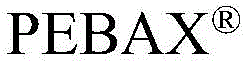 And (4) selling. Polyamides such as nylon (polyhexamethylene adipamide) or the polyamide available under the trade name EMS-GRIVORY may also be used
 Those sold.
The pressure applied to the balloon to cause its expansion in the blood vessel is typically in the range of 4 to 12 bar, preferably 6 to 8 bar. The fluid to be used may be, for example, water mixed with the contrast medium or a saline solution mixed with the contrast medium. The size of the balloon can vary greatly depending on the field of application; for example, the diameter in the expanded state may range from about 1mm to about 50mm, and the length may range from about 5mm to about 300 mm. However, these dimensions may also deviate from this, for example when the balloon/balloon catheter is used for veterinary applications.
The shaft of the balloon catheter may be made of conventional materials, although different materials may also be used, for example to make the distal section softer than the proximal section. Commonly used materials are polymers such as polyethylene, polyurethane, polyvinyl chloride, polyamide, polyimide, silicone, polyetheramide, polytetrafluoroethylene, EPDM (ethylene-propylene-diene rubber), polyether block amide (PEBA) or the materials known under the trade name EMS-GRIVORY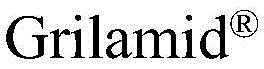 A polyamide sold. If desired, the proximal region of the shaft may also be made of metal, for example stainless steel, in particular.
The length of the shaft (including the region where the balloon is located but not including the hub or similar connector proximal to the shaft) is typically at least 160cm, preferably at least 165 cm. Typical lengths are in the range of 160cm to 180 cm.
The balloon catheter proposed by the invention can also be used for the implantation of stents in body cavities (endoprostheses). Stents are tubular support structures that are implanted within a blood vessel to hold it permanently open. This type of stent may have a self-expanding design or be expanded with the aid of a balloon. For this purpose, the stent is crimped onto a balloon and introduced into the vessel through a balloon catheter. At the desired placement location, the balloon is expanded by the delivery of fluid, which also causes the stent to expand and thus become fixed in the vessel. Furthermore, the use of the balloon according to the invention enables the application of the relevant active substances to the vessel wall. Finally, the balloon is deflated and removed from the vessel while the stent remains in place in the vessel.
If so desired, the balloon catheter may be provided with a balloon coated with an active substance (drug eluting balloon). The active substance or agent is preferably selected from the following: retinoic acid, orphan receptor agonists, elastin derivatives (elafinivates), corticosteroids, steroid hormones, paclitaxel, rapamycin (sirolimus), tacrolimus, hydrophobin, heparin and/or hormone-like or cell proliferation-modulating substances. Particularly preferred are paclitaxel, tacrolimus and sirolimus.
At the proximal end of the balloon catheter (adjacent to the shaft), a so-called catheter hub is usually arranged, which is the connector of the device for fluid delivery and pressurization. For example, the connector may be a conventional luer or luer lock connection. It is particularly convenient to provide two luer lock connectors, typically female connectors, one for connecting the first lumen to the balloon dilator and the other for inserting a guidewire into the balloon catheter. The connector may, for example, comprise polycarbonate. The guidewire extending through the balloon catheter may be held at its proximal end by a torquer that facilitates handling of the typically very thin guidewire.
Typically, the deflated balloon of a balloon catheter is placed in a fold. As required by the size of the balloon, a different number of folds may be formed, which are then wound in the same direction about the axis of the catheter. This arrangement ensures a significant reduction in diameter. In order to reduce the diameter even more, various methods have been proposed according to the prior art. An example of this is the so-called back-cut method, by which a pleated balloon is passed through a generally funnel-shaped nozzle by pulling a tube over it. This causes the tube to be stretched causing its diameter to decrease, which consequently also reduces the diameter of the balloon disposed within the tube. Such a process has been described in publication WO 2016/050303 a 1.
Radiopaque markers may be placed at different locations along the length of the balloon catheter for the purpose of making the catheter visible on radiographs. In particular, the marker may be made of platinum or a platinum alloy.
Drawings
Further description of the invention is provided by way of example through the accompanying drawings, in which
Fig. 1 is a side view of a balloon catheter according to the present invention;
fig. 2 is a longitudinal cross-section of a distal portion of the shaft of the balloon catheter shown in fig. 1.
Detailed Description
In fig. 1, the balloon catheter 1 proposed by the present invention is shown in a side view, wherein, in this selected illustration, the right side represents the proximal side and the left side represents the distal side. The balloon catheter 1 comprises a shaft 2 extending in the longitudinal direction, the outer diameter of which is larger in the proximal section 6 than more distally, only a short section of which is shown here. The portion of the shaft 2 on which the balloon 3 is located is identified by the letter a. The balloon 3 is shown in an unexpanded, but not crimped, state. A first lumen for fluid delivery and a second lumen for receiving a guidewire extend through the shaft 2 (not shown here), wherein each of the two lumens is formed by a tube. Distal tip 8 can be seen distal to balloon 3.
Proximally, two catheter hubs in the form of luer lock connectors 4, 5 are arranged at the proximal portion 6 of the shaft 2, wherein the connector 4 is used for delivering fluid into the first lumen through the balloon dilator and the connector 5 is used for introducing a guidewire into the second lumen.
In fig. 2, only the distal portion of the shaft 2 is shown. The first lumen 9 is configured to accommodate the second lumen 10, i.e. the second lumen 10 extends longitudinally through the first lumen 9. The first lumen 9 is in contact with the balloon 3 at its distal end, the balloon 3 being expandable by supplying a fluid through the first lumen 9. On the other hand, the second lumen 10 has an opening at the distal end and is used to accommodate a guide wire (not shown here).
A distal tip 8 is located at the distal end of the shaft 2. The tip is coated radially (i.e. on its periphery) with hydrogel 8. The application of the coating of hydrogel 8 may extend slightly over the balloon 3, but this is not mandatory; rather, it is advantageous to confine the hydrogel coating 8 primarily to the distal tip 8. When the balloon catheter 1 passes through a constricted region in a blood vessel, the hydrogel coating 8 automatically partially expands further proximally in the longitudinal direction, so that good lubricity and pushability of the balloon catheter 1 are ensured.
Claims (14)
Applications Claiming Priority (3)
| Application Number | Priority Date | Filing Date | Title |
|---|---|---|---|
| DE102019129596.3A DE102019129596A1 (en) | 2019-11-04 | 2019-11-04 | Balloon catheter |
| DE102019129596.3 | 2019-11-04 | ||
| PCT/EP2020/080655 WO2021089470A1 (en) | 2019-11-04 | 2020-11-02 | Balloon catheter with hydrogel coating |
Publications (1)
| Publication Number | Publication Date |
|---|---|
| CN114867502A true CN114867502A (en) | 2022-08-05 |
Family
ID=72432646
Family Applications (1)
| Application Number | Title | Priority Date | Filing Date |
|---|---|---|---|
| CN202080082882.4A Pending CN114867502A (en) | 2019-11-04 | 2020-11-02 | Balloon catheter with hydrogel coating |
Country Status (6)
| Country | Link |
|---|---|
| US (1) | US12491293B2 (en) |
| EP (1) | EP4054664B1 (en) |
| CN (1) | CN114867502A (en) |
| CH (1) | CH715955B1 (en) |
| DE (1) | DE102019129596A1 (en) |
| WO (1) | WO2021089470A1 (en) |
Families Citing this family (2)
| Publication number | Priority date | Publication date | Assignee | Title |
|---|---|---|---|---|
| US12383700B2 (en) | 2019-06-13 | 2025-08-12 | Hollister Incorporated | Reusable urinary catheter products |
| EP4628107A3 (en) | 2019-06-25 | 2025-12-17 | Hollister Incorporated | Reusable urinary catheter products |
Family Cites Families (5)
| Publication number | Priority date | Publication date | Assignee | Title |
|---|---|---|---|---|
| US6306144B1 (en) * | 1996-11-01 | 2001-10-23 | Scimed Life Systems, Inc. | Selective coating of a balloon catheter with lubricious material for stent deployment |
| US7052512B2 (en) * | 2001-07-18 | 2006-05-30 | Boston Scientific Scimed, Inc. | Fluorescent dyed lubricant for medical devices |
| ES2864000T3 (en) | 2014-10-02 | 2021-10-13 | Aachen Scient International Pte Ltd | Procedure for trimming intravascular dilatation catheters |
| JP7027319B2 (en) | 2016-02-08 | 2022-03-01 | オーバスネイチ・メディカル・プライベート・リミテッド | Drug-eluting balloon |
| US20170290561A1 (en) * | 2016-04-06 | 2017-10-12 | Covidien Lp | Medical device imagable by ultrasound |
-
2019
- 2019-11-04 DE DE102019129596.3A patent/DE102019129596A1/en not_active Withdrawn
- 2019-11-08 CH CH01418/19A patent/CH715955B1/en not_active IP Right Cessation
-
2020
- 2020-11-02 US US17/773,881 patent/US12491293B2/en active Active
- 2020-11-02 EP EP20811527.9A patent/EP4054664B1/en active Active
- 2020-11-02 WO PCT/EP2020/080655 patent/WO2021089470A1/en not_active Ceased
- 2020-11-02 CN CN202080082882.4A patent/CN114867502A/en active Pending
Also Published As
| Publication number | Publication date |
|---|---|
| EP4054664A1 (en) | 2022-09-14 |
| CH715955B1 (en) | 2020-09-15 |
| EP4054664B1 (en) | 2023-10-18 |
| US12491293B2 (en) | 2025-12-09 |
| US20220339327A1 (en) | 2022-10-27 |
| WO2021089470A1 (en) | 2021-05-14 |
| DE102019129596A1 (en) | 2021-05-06 |
Similar Documents
| Publication | Publication Date | Title |
|---|---|---|
| US11752313B2 (en) | Balloon catheter including a drug delivery sheath | |
| CN107334562B (en) | Implantable medical device delivery system | |
| EP1791494B1 (en) | Stent delivery system | |
| US6527740B1 (en) | Medical regrooming and drug delivery device | |
| US7208008B2 (en) | Balloonless direct stenting device | |
| US20040230176A1 (en) | System for treating a vascular condition that inhibits restenosis at stent ends | |
| US20020187288A1 (en) | Medical device formed of silicone-polyurethane | |
| US7025752B2 (en) | Reduced slippage balloon catheter and method of using same | |
| US20040153050A1 (en) | Adjustable length conversion adapter for dilatation catheters | |
| US20020055733A1 (en) | Catheter assembly and method of use | |
| US20060030922A1 (en) | Intraluminal stent assembly and method of deploying the same | |
| CN110575606A (en) | drug-eluting balloon dilatation catheter and use method thereof | |
| EP3092028A2 (en) | Balloon catheter with elastomeric sheath and methods | |
| US12491293B2 (en) | Balloon catheter with hydrogel coating | |
| CN103949006B (en) | A kind of coronary dilatation catheter carrying ligustrazine nanoparticle | |
| US20160317790A1 (en) | Balloon Catheter | |
| CN212522102U (en) | Balloon catheter, delivery system and stent system | |
| US20220339404A1 (en) | Kink-proof balloon catheter | |
| US20250295894A1 (en) | Balloon catheter-stent structure combination | |
| US20060079951A1 (en) | Guide catheter with attached stent delivery system | |
| US20230302263A1 (en) | Removable dual function loading tool & protector for drug coated medical devices | |
| US20210346658A1 (en) | Active-substance coating for balloons of balloon catheters |
Legal Events
| Date | Code | Title | Description |
|---|---|---|---|
| PB01 | Publication | ||
| PB01 | Publication | ||
| WD01 | Invention patent application deemed withdrawn after publication | ||
| WD01 | Invention patent application deemed withdrawn after publication |
Application publication date: 20220805 |