CN114767272A - Human-computer interaction system and method based on operator intention correction - Google Patents
Human-computer interaction system and method based on operator intention correction Download PDFInfo
- Publication number
- CN114767272A CN114767272A CN202210208916.0A CN202210208916A CN114767272A CN 114767272 A CN114767272 A CN 114767272A CN 202210208916 A CN202210208916 A CN 202210208916A CN 114767272 A CN114767272 A CN 114767272A
- Authority
- CN
- China
- Prior art keywords
- force sensor
- surgical tool
- dimensional
- dimensional force
- operator
- Prior art date
- Legal status (The legal status is an assumption and is not a legal conclusion. Google has not performed a legal analysis and makes no representation as to the accuracy of the status listed.)
- Granted
Links
Images

Classifications
-
- A—HUMAN NECESSITIES
- A61—MEDICAL OR VETERINARY SCIENCE; HYGIENE
- A61B—DIAGNOSIS; SURGERY; IDENTIFICATION
- A61B34/00—Computer-aided surgery; Manipulators or robots specially adapted for use in surgery
- A61B34/30—Surgical robots
-
- A—HUMAN NECESSITIES
- A61—MEDICAL OR VETERINARY SCIENCE; HYGIENE
- A61B—DIAGNOSIS; SURGERY; IDENTIFICATION
- A61B34/00—Computer-aided surgery; Manipulators or robots specially adapted for use in surgery
- A61B34/70—Manipulators specially adapted for use in surgery
-
- A—HUMAN NECESSITIES
- A61—MEDICAL OR VETERINARY SCIENCE; HYGIENE
- A61B—DIAGNOSIS; SURGERY; IDENTIFICATION
- A61B34/00—Computer-aided surgery; Manipulators or robots specially adapted for use in surgery
- A61B34/70—Manipulators specially adapted for use in surgery
- A61B34/75—Manipulators having means for prevention or compensation of hand tremors
-
- A—HUMAN NECESSITIES
- A61—MEDICAL OR VETERINARY SCIENCE; HYGIENE
- A61B—DIAGNOSIS; SURGERY; IDENTIFICATION
- A61B34/00—Computer-aided surgery; Manipulators or robots specially adapted for use in surgery
- A61B34/70—Manipulators specially adapted for use in surgery
- A61B34/77—Manipulators with motion or force scaling
-
- A—HUMAN NECESSITIES
- A61—MEDICAL OR VETERINARY SCIENCE; HYGIENE
- A61B—DIAGNOSIS; SURGERY; IDENTIFICATION
- A61B34/00—Computer-aided surgery; Manipulators or robots specially adapted for use in surgery
- A61B34/30—Surgical robots
- A61B2034/305—Details of wrist mechanisms at distal ends of robotic arms
-
- A—HUMAN NECESSITIES
- A61—MEDICAL OR VETERINARY SCIENCE; HYGIENE
- A61B—DIAGNOSIS; SURGERY; IDENTIFICATION
- A61B34/00—Computer-aided surgery; Manipulators or robots specially adapted for use in surgery
- A61B34/30—Surgical robots
- A61B2034/305—Details of wrist mechanisms at distal ends of robotic arms
- A61B2034/306—Wrists with multiple vertebrae
Landscapes
- Health & Medical Sciences (AREA)
- Surgery (AREA)
- Engineering & Computer Science (AREA)
- Life Sciences & Earth Sciences (AREA)
- Biomedical Technology (AREA)
- Robotics (AREA)
- Nuclear Medicine, Radiotherapy & Molecular Imaging (AREA)
- Heart & Thoracic Surgery (AREA)
- Medical Informatics (AREA)
- Molecular Biology (AREA)
- Animal Behavior & Ethology (AREA)
- General Health & Medical Sciences (AREA)
- Public Health (AREA)
- Veterinary Medicine (AREA)
- Manipulator (AREA)
Abstract
Description
技术领域technical field
本发明涉及手术机器人领域,尤其是涉及一种基于操作者意图校正的人机交互系统及方法。The invention relates to the field of surgical robots, in particular to a human-computer interaction system and method based on operator intention correction.
背景技术Background technique
手术机器人技术领域中,由于术中的情况千变万化,术前规划存在不适用的可能性,这就需要术者需要根据临床经验来调整手术方案,直接操控机械臂进行重新定位和操作。例如,在实际临床场景中,主动式的手术机器人无法完全满足口腔颌面外科手术需求,医生能够在术中不断调整机器人状态的被动式手术机器人更为需要。In the field of surgical robotics, due to the ever-changing intraoperative conditions, preoperative planning may not be applicable, which requires the operator to adjust the surgical plan based on clinical experience and directly manipulate the robotic arm for repositioning and manipulation. For example, in actual clinical scenarios, active surgical robots cannot fully meet the needs of oral and maxillofacial surgery, and passive surgical robots that doctors can continuously adjust the state of the robot during surgery are more needed.
人机协同控制通过基于力位混合的协调控制,实现机器人协作人类进行操作,将机器人的高精度控制与人的高动态决策能力相结合,是一种常见的机器人控制方式。它主要采用导纳控制或者阻抗控制,一般在机械臂末端安装力传感器,当操作者在末端施加力的时候,将机器人臂末端的受到的外力映射到机械臂的运动,能在人的操作输出力与机器人输出运动之间建立一个量化关系,以解决人机协作操控柔顺性问题,从而实现手术场合中医生对机器人的主动控制及维持医生技能水平的目的。Human-machine collaborative control is a common robot control method that combines the high-precision control of the robot with the high-dynamic decision-making ability of the human through the coordinated control based on force-position mixing to realize the robot's collaborative operation with humans. It mainly adopts admittance control or impedance control. Generally, a force sensor is installed at the end of the robot arm. When the operator applies a force at the end, the external force received at the end of the robot arm is mapped to the movement of the robot arm, which can be output by human operation. A quantitative relationship is established between the force and the output motion of the robot to solve the problem of man-machine cooperation control flexibility, so as to achieve the purpose of the doctor's active control of the robot and the maintenance of the doctor's skill level in the surgical situation.
目前,在手术机器人领域,常见的交互方式包括直接牵引安装在机械臂末端的手术工具和牵引安装力传感器的手柄两种。At present, in the field of surgical robots, the common interaction methods include direct traction on the surgical tool installed at the end of the robotic arm and traction on the handle installed with the force sensor.
第一种交互方式,如美国医疗公司Neocis开发的Yomi牙科种植机器人导航系统,医生通过直接牵引安装在机械臂末端的手术工具进行交互。但由于种植钻的工作自由度只需要5个(不需要考虑钻的旋转,只需要确定其轴向和位置),种植钻旋转运动的调整范围并不大,主要为平移运动。In the first interaction method, such as the Yomi dental implant robot navigation system developed by the American medical company Neocis, the doctor interacts by directly pulling the surgical tool installed at the end of the robotic arm. However, since the working degree of freedom of the implant drill is only 5 (the rotation of the drill does not need to be considered, only its axis and position need to be determined), the adjustment range of the rotary motion of the implant drill is not large, mainly translational motion.
第二种交互方式,如何玉成等在“鼻内镜手术辅助机器人机构设计与安全控制研究”中的相关研究,鼻内镜手术辅助机器人采用了两个力传感器,其中一个安装在手术工具上(鼻内镜),用于操作时感知手术工具上的力;另一个位于操作手柄上,用于人机协作控制。医生通过牵引操作手柄,完成对机器人的控制。The second interaction method, related to research by Yucheng He et al. in "Research on Mechanism Design and Safety Control of Assisted Robot for Nasal Endoscopic Surgery", the assistive robot for nasal endoscopic surgery uses two force sensors, one of which is installed on the surgical tool ( Nasal endoscope), which is used to sense the force on the surgical tool during operation; the other is located on the operating handle, which is used for human-machine cooperative control. The doctor controls the robot by pulling the operating handle.
但是,上述方式都有缺点。在第一种情况中,手术工具需要进行较大的旋转且操作者的手离传感器位置较远时,会导致机器人运动与操作者意图不同的现象。因为此时施力点与传感器之间存在一个位移,根据力的平移原理,虽然X、Y、Z方向上的力不会改变,但传感器与施力点受到的力矩则有所不同,导致机械臂的旋转与操作者的意图不同的问题。而对于第二种情况,因为操作者只捏着手柄上操作,可以认为机械臂能够可以按照操作者的意图来执行,但是该方案的实现需要两个六维力传感器来实现,成本较高,而且六维力传感器体积较大,在很多临床场景下,难以安装到手术工具的手柄上。However, the above methods have disadvantages. In the first case, when the surgical tool needs to perform a large rotation and the operator's hand is far away from the sensor position, it will cause the phenomenon that the robot motion is different from the operator's intention. Because there is a displacement between the force application point and the sensor at this time, according to the principle of force translation, although the force in the X, Y, and Z directions will not change, the moment received by the sensor and the force application point is different, resulting in the mechanical arm The problem is that the rotation is different from the operator's intent. For the second case, because the operator only holds the handle to operate, it can be considered that the robotic arm can be executed according to the operator's intention, but the implementation of this solution requires two six-dimensional force sensors to achieve, and the cost is high. Moreover, the six-dimensional force sensor is relatively large, and in many clinical scenarios, it is difficult to install it on the handle of the surgical tool.
综上,现有的交互装置及方法存在精度较差、稳定性较差、技术成本过高等缺陷。因此,需要一个能够实现根据操作者意图实现机械臂运动的人机交互方案。To sum up, the existing interactive devices and methods have defects such as poor precision, poor stability, and high technical cost. Therefore, there is a need for a human-computer interaction solution that can realize the movement of the manipulator according to the operator's intention.
发明内容SUMMARY OF THE INVENTION
本发明的目的就是为了克服上述现有技术存在的缺陷而提供一种基于操作者意图校正的人机交互系统及方法。The purpose of the present invention is to provide a human-computer interaction system and method for correcting based on the operator's intention in order to overcome the above-mentioned defects of the prior art.
本发明的目的可以通过以下技术方案来实现:The object of the present invention can be realized through the following technical solutions:
第一方面,本发明公开了一种基于操作者意图校正的人机交互系统,包括机械臂、手术工具、六维力传感器S1、力传感器S2和控制器;In a first aspect, the present invention discloses a human-computer interaction system based on operator intention correction, including a robotic arm, a surgical tool, a six-dimensional force sensor S1, a force sensor S2 and a controller;
所述六维力传感器S1安装在机械臂末端,手术工具通过固定装置安装在六维力传感器S1上,所述力传感器S2安装在手术工具上,所述控制器与机械臂、六维力传感器S1和力传感器S2通信连接;The six-dimensional force sensor S1 is installed on the end of the mechanical arm, the surgical tool is installed on the six-dimensional force sensor S1 through a fixing device, the force sensor S2 is installed on the surgical tool, and the controller is connected to the mechanical arm and the six-dimensional force sensor. S1 communicates with the force sensor S2;
操作者牵引手术工具上安装有力传感器S2的部分进行操作时,控制器检测力传感器S2的读数是否到达预设阈值;如果力传感器S2的读数没有达到预设阈值,则机械臂不运动,否则,所述控制器根据力传感器S2的读数以及六维力传感器S1与力传感器S2之间的位置关系对六维力传感器S1读出的力矩进行校正,根据六维力传感器S1的力信号和校正后的力矩信号控制机械臂的运动。When the operator pulls the part where the force sensor S2 is installed on the surgical tool to operate, the controller detects whether the reading of the force sensor S2 reaches the preset threshold; if the reading of the force sensor S2 does not reach the preset threshold, the robotic arm does not move, otherwise, The controller corrects the torque read by the six-dimensional force sensor S1 according to the reading of the force sensor S2 and the positional relationship between the six-dimensional force sensor S1 and the force sensor S2. The torque signal controls the motion of the manipulator.
进一步地,所述预设阈值为操作者手部静止且稳定握持手术工具时力传感器S2的读数。Further, the preset threshold is the reading of the force sensor S2 when the operator's hand is stationary and holding the surgical tool stably.
进一步地,六维力传感器S1与力传感器S2之间的位置关系是根据机械臂、手术工具和固定装置的机械尺寸确定的。Further, the positional relationship between the six-dimensional force sensor S1 and the force sensor S2 is determined according to the mechanical dimensions of the robotic arm, the surgical tool and the fixing device.
进一步地,根据力传感器S2的读数对六维力传感器S1的力矩进行校正具体为:Further, correcting the torque of the six-dimensional force sensor S1 according to the reading of the force sensor S2 is as follows:


进一步地,控制器根据导纳控制,将六维力传感器S1的力信号和校正后的力矩信号转化为机械臂的运动信号,机械臂根据所述运动信号运动,机械臂的运动带动手术工具运动。Further, the controller converts the force signal of the six-dimensional force sensor S1 and the corrected torque signal into the motion signal of the robotic arm according to the admittance control, the robotic arm moves according to the motion signal, and the motion of the robotic arm drives the surgical tool to move. .
进一步地,所述六维力传感器S1固定安装在机械臂的末端,所述固定装置为夹具,手术工具通过夹具安装在六维力传感器S1上。Further, the six-dimensional force sensor S1 is fixedly installed on the end of the mechanical arm, the fixing device is a clamp, and the surgical tool is installed on the six-dimensional force sensor S1 through the clamp.
进一步地,所述力传感器S2安装在手术工具的手柄上,操作者牵引手术工具的手柄进行操作。Further, the force sensor S2 is installed on the handle of the surgical tool, and the operator pulls the handle of the surgical tool to operate.
第二方面,本发明公开了一种基于操作者意图校正的人机交互方法,包括以下步骤:In a second aspect, the present invention discloses a human-computer interaction method based on operator intention correction, comprising the following steps:
检查机械臂、手术工具、六维力传感器S1、力传感器S2和控制器,所述六维力传感器S1安装在机械臂末端,手术工具通过固定装置安装在六维力传感器S1上,所述力传感器S2安装在手术工具上,所述控制器与机械臂、六维力传感器S1和力传感器S2通信连接;Check the robotic arm, the surgical tool, the six-dimensional force sensor S1, the force sensor S2 and the controller, the six-dimensional force sensor S1 is installed at the end of the robotic arm, and the surgical tool is mounted on the six-dimensional force sensor S1 through a fixing device, and the force The sensor S2 is installed on the surgical tool, and the controller is connected in communication with the robotic arm, the six-dimensional force sensor S1 and the force sensor S2;
操作者牵引手术工具上安装有力传感器S2的部分进行操作,控制器检测力传感器S2的读数是否到达预设阈值;The operator pulls the part where the force sensor S2 is installed on the surgical tool to operate, and the controller detects whether the reading of the force sensor S2 reaches a preset threshold;
如果力传感器S2的读数没有达到预设阈值,则机械臂不运动,否则,根据力传感器S2的读数以及确定六维力传感器S1与力传感器S2之间的位置关系对六维力传感器S1的力矩进行校正,根据六维力传感器S1的力信号和校正后的力矩信号控制机械臂的运动。If the reading of the force sensor S2 does not reach the preset threshold, the manipulator does not move, otherwise, according to the reading of the force sensor S2 and the positional relationship between the six-dimensional force sensor S1 and the force sensor S2, the torque of the six-dimensional force sensor S1 is determined Correction is performed, and the motion of the robotic arm is controlled according to the force signal of the six-dimensional force sensor S1 and the corrected torque signal.
进一步地,所述预设阈值为操作者手部静止且稳定握持手术工具时力传感器S2的读数。Further, the preset threshold is the reading of the force sensor S2 when the operator's hand is stationary and holding the surgical tool stably.
进一步地,六维力传感器S1与力传感器S2之间的位置关系是根据机械臂、手术工具和固定装置的机械尺寸确定的。Further, the positional relationship between the six-dimensional force sensor S1 and the force sensor S2 is determined according to the mechanical dimensions of the robotic arm, the surgical tool and the fixing device.
进一步地,根据力传感器S2的读数对六维力传感器S1的力矩进行校正具体为:Further, correcting the torque of the six-dimensional force sensor S1 according to the reading of the force sensor S2 is as follows:


进一步地,控制器根据导纳控制,将六维力传感器S1的力信号和校正后的力矩信号转化为机械臂的运动信号,机械臂根据所述运动信号运动,机械臂的运动带动手术工具运动。Further, the controller converts the force signal of the six-dimensional force sensor S1 and the corrected torque signal into the motion signal of the robotic arm according to the admittance control, the robotic arm moves according to the motion signal, and the motion of the robotic arm drives the surgical tool to move. .
进一步地,所述六维力传感器S1固定安装在机械臂的末端,所述固定装置为夹具,手术工具通过夹具安装在六维力传感器S1上。Further, the six-dimensional force sensor S1 is fixedly installed on the end of the mechanical arm, the fixing device is a clamp, and the surgical tool is installed on the six-dimensional force sensor S1 through the clamp.
进一步地,所述力传感器S2安装在手术工具的手柄上,操作者牵引手术工具的手柄进行操作。Further, the force sensor S2 is installed on the handle of the surgical tool, and the operator pulls the handle of the surgical tool to operate.
与现有技术相比,本发明具有以下有益效果:Compared with the prior art, the present invention has the following beneficial effects:
(1)通过预设阈值,在力传感器读数小于预设阈值时机械臂不运动,达到预设阈值后,对六维力传感器的力矩进行校正,以校正后的力矩为依据控制机械臂运动,解决了在利用导纳控制的人机协作操作过程中,操作者意图与机械臂实际运动不一致的问题。(1) Through the preset threshold, when the reading of the force sensor is less than the preset threshold, the robotic arm does not move, and after reaching the preset threshold, the torque of the six-dimensional force sensor is corrected, and the motion of the robotic arm is controlled based on the corrected torque, It solves the problem of inconsistency between the operator's intention and the actual movement of the manipulator during the man-machine cooperative operation using admittance control.
(2)在手术工具上安装力传感器,预设阈值为操作者手部静止且稳定握持手术工具时力传感器的读数,可以比较力传感器受力与预设阈值判断操作者是否需要牵引机械臂,增加控制的安全性,只有当力传感器受力到达预设阈值时,机械臂才能根据受力情况运动,避免干扰破坏机械臂的正常运动。(2) Install a force sensor on the surgical tool. The preset threshold is the reading of the force sensor when the operator's hand is stationary and holding the surgical tool stably. The force on the force sensor can be compared with the preset threshold to determine whether the operator needs to pull the robotic arm. , to increase the security of control. Only when the force of the force sensor reaches the preset threshold, the robot arm can move according to the force situation, so as to avoid disturbing and destroying the normal movement of the robot arm.
(3)通过牵引手术工具手柄进行操作,充分考虑医生手术时的操作习惯,人机交互性良好,机械臂按照操作者意图运动,降低操作者的学习成本,能够精确地操作机器人,适用于多种手术过程,具有良好的通用性。(3) The operation is performed by pulling the handle of the surgical tool, and the operating habits of the doctor during the operation are fully considered. The human-computer interaction is good. This surgical procedure has good versatility.
附图说明Description of drawings
图1为一种基于操作者意图校正的人机交互系统的结构示意图;1 is a schematic structural diagram of a human-computer interaction system based on operator intention correction;
附图标记:1、机械臂,2、手术工具,S1、六维力传感器,S2、力传感器。Reference numerals: 1. Robot arm, 2. Surgical tool, S1, six-dimensional force sensor, S2, force sensor.
具体实施方式Detailed ways
下面结合附图和具体实施例对本发明进行详细说明。本实施例以本发明技术方案为前提进行实施,给出了详细的实施方式和具体的操作过程,但本发明的保护范围不限于下述的实施例。The present invention will be described in detail below with reference to the accompanying drawings and specific embodiments. This embodiment is implemented on the premise of the technical solution of the present invention, and provides a detailed implementation manner and a specific operation process, but the protection scope of the present invention is not limited to the following embodiments.
在附图中,结构相同的部件以相同数字标号表示,各处结构或功能相似的组件以相似数字标号表示。附图所示的每一组件的尺寸和厚度是任意示出的,本发明并没有限定每个组件的尺寸和厚度。为了使图示更清晰,附图中有些地方适当夸大了部件。In the drawings, structurally identical components are denoted by the same numerals, and structurally or functionally similar components are denoted by like numerals throughout. The size and thickness of each component shown in the drawings are arbitrarily shown, and the present invention does not limit the size and thickness of each component. Parts in the drawings have been appropriately exaggerated in some places for clarity of illustration.
实施例1:Example 1:
第一方面,本发明公开了一种基于操作者意图校正的人机交互系统,包括机械臂1、手术工具2、六维力传感器S1、力传感器S2和控制器;In a first aspect, the present invention discloses a human-computer interaction system based on operator intention correction, comprising a robotic arm 1, a
如图1所示,六维力传感器S1安装在机械臂1末端,手术工具2通过固定装置安装在六维力传感器S1上,力传感器S2安装在手术工具2上,控制器与机械臂1、六维力传感器S1和力传感器S2通信连接;As shown in Figure 1, the six-dimensional force sensor S1 is installed on the end of the robotic arm 1, the
操作者牵引手术工具2上安装有力传感器S2的部分进行操作时,控制器检测力传感器S2的读数是否到达预设阈值;如果力传感器S2的读数没有达到预设阈值,则机械臂1不运动,否则,控制器根据力传感器S2的读数以及六维力传感器S1与力传感器S2之间的位置关系对六维力传感器S1读出的力矩进行校正,根据六维力传感器S1的力信号和校正后的力矩信号控制机械臂1的运动。When the operator pulls the part where the force sensor S2 is installed on the
其中,预设阈值为操作者手部静止且稳定握持手术工具2时力传感器S2的读数。可以在操作前多次测量,记录操作者手部静止且稳定握持手术工具2时力传感器S2的读数,再取平均值作为预设阈值。The preset threshold is the reading of the force sensor S2 when the operator's hand is stationary and holding the
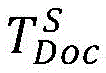
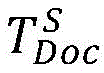
根据力传感器S2的读数对六维力传感器S1的力矩进行校正具体为:Correcting the torque of the six-dimensional force sensor S1 according to the reading of the force sensor S2 is as follows:


在使用时,过程如下:When in use, the process is as follows:
(1)在机械臂1末端安装六维力传感器S1,六维力传感器S1通过螺钉等固定安装在机械臂1的末端;(1) Install the six-dimensional force sensor S1 at the end of the robot arm 1, and the six-dimensional force sensor S1 is fixedly installed at the end of the robot arm 1 through screws;
(2)手术工具2通过固定装置安装在六维力传感器S1上,力传感器S2安装在手术工具2上,固定装置为夹具,手术工具2通过夹具安装在六维力传感器S1上,便于更换和调整手术工具2,力传感器S2安装在手术工具2的手柄上,操作者握持手术工具2的手柄,应保证操作者手握的位置为力传感器S2的中心;(2) The
(3)根据机械臂1、手术工具2和固定装置的机械尺寸确定六维力传感器S1与力传感器S2之间的位置关系,如图1所示,S和Doc分别为六维力传感S1与力传感器S2坐标系,OS的位置即为六维力传感器S1的安装位置,ODoc的位置即为力传感器S2的安装位置;(3) Determine the positional relationship between the six-dimensional force sensor S1 and the force sensor S2 according to the mechanical dimensions of the robotic arm 1, the
(4)操作者牵引手术工具2上安装有力传感器S2的部分进行操作,即操作者牵引手术工具2的手柄进行操作;(4) The operator pulls the part where the force sensor S2 is installed on the
(5)判断力传感器S2的读数是否达到预设阈值,如果没有达到,意为操作者的意图不是牵引机械臂1,则机械臂1不运动,否则,意为操作者的意图是牵引机械臂1,控制器根据力传感器S2的读数以及六维力传感器S1与力传感器S2之间的位置关系对六维力传感器S1读出的力矩进行校正,消除施力点与六维力传感器S1之间存在的位移,使得机械臂1的运动符合操作者意图,具体的,根据导纳控制,控制器根据导纳控制,将六维力传感器S1的力信号F和校正后的力矩信号TS转化为机械臂1的运动信号,机械臂1根据运动信号运动,机械臂1的运动带动手术工具2运动。(5) Judging whether the reading of the force sensor S2 reaches the preset threshold, if not, it means that the operator's intention is not to pull the robot arm 1, then the robot arm 1 does not move, otherwise, it means that the operator's intention is to pull the robot arm 1. The controller corrects the torque read by the six-dimensional force sensor S1 according to the reading of the force sensor S2 and the positional relationship between the six-dimensional force sensor S1 and the force sensor S2, and eliminates the existence between the force application point and the six-dimensional force sensor S1. The displacement of the robot arm 1 conforms to the operator's intention. Specifically, according to the admittance control, the controller converts the force signal F of the six-dimensional force sensor S1 and the corrected torque signal T S into the mechanical force according to the admittance control. The motion signal of the arm 1, the robotic arm 1 moves according to the motion signal, and the motion of the robotic arm 1 drives the
本发明具有以下优点:The present invention has the following advantages:
(1)通过预设阈值,在力传感器S2读数小于预设阈值时机械臂1不运动,达到预设阈值后,对六维力传感器S1的力矩进行校正,以校正后的力矩为依据控制机械臂1运动,解决了在利用导纳控制的人机协作操作过程中,操作者意图与机械臂1实际运动不一致的问题。(1) Through the preset threshold, when the reading of the force sensor S2 is less than the preset threshold, the robot arm 1 does not move, and after reaching the preset threshold, the torque of the six-dimensional force sensor S1 is corrected, and the corrected torque is used as the basis to control the mechanical The movement of the arm 1 solves the problem that the operator's intention is inconsistent with the actual movement of the robotic arm 1 during the man-machine cooperative operation using admittance control.
(2)在手术工具2上安装力传感器S2,预设阈值为操作者手部静止且稳定握持手术工具2时力传感器S2的读数,可以比较力传感器S2受力与预设阈值判断操作者是否需要牵引机械臂1,增加控制的安全性,只有当力传感器S2受力到达预设阈值时,机械臂1才能根据受力情况运动,避免干扰破坏机械臂1的正常运动。(2) Install the force sensor S2 on the
(3)通过牵引手术工具2手柄进行操作,充分考虑医生手术时的操作习惯,人机交互性良好,机械臂1按照操作者意图运动,降低操作者的学习成本,能够精确地操作机器人,适用于多种手术过程,具有良好的通用性。(3) The operation is performed by pulling the handle of the
第二方面,本发明公开了一种基于操作者意图校正的人机交互方法,包括以下步骤:In a second aspect, the present invention discloses a human-computer interaction method based on operator intention correction, comprising the following steps:
①检查机械臂1、手术工具2、六维力传感器S1、力传感器S2和控制器,其中,六维力传感器S1安装在机械臂1末端,手术工具2通过固定装置安装在六维力传感器S1上,力传感器S2安装在手术工具2上,控制器与机械臂1、六维力传感器S1和力传感器S2通信连接;①Check the robotic arm 1, the
②操作者牵引手术工具2上安装有力传感器S2的部分进行操作,控制器检测力传感器S2的读数是否到达预设阈值;② The operator pulls the part of the
③如果力传感器S2的读数没有达到预设阈值,则机械臂1不运动,否则,根据力传感器S2的读数以及确定六维力传感器S1与力传感器S2之间的位置关系对六维力传感器S1的力矩进行校正,根据六维力传感器S1的力信号和校正后的力矩信号控制机械臂1的运动。③ If the reading of the force sensor S2 does not reach the preset threshold, the robot arm 1 does not move, otherwise, according to the reading of the force sensor S2 and the positional relationship between the six-dimensional force sensor S1 and the force sensor S2 is determined. The torque is corrected, and the movement of the robotic arm 1 is controlled according to the force signal of the six-dimensional force sensor S1 and the corrected torque signal.
本发明所提供的一种基于操作者意图校正的人机交互方法与系统实施例基于相同的发明构思,详情请参考系统实施例,在此不再赘述。The human-computer interaction method based on operator intention correction provided by the present invention is based on the same inventive concept as the system embodiment. For details, please refer to the system embodiment, which will not be repeated here.
以上详细描述了本发明的较佳具体实施例。应当理解,本领域的普通技术人员无需创造性劳动就可以根据本发明的构思做出诸多修改和变化。因此,凡本技术领域中技术人员依本发明的构思在现有技术的基础上通过逻辑分析、推理或者有限的实验可以得到的技术方案,皆应在由权利要求书所确定的保护范围内。The preferred embodiments of the present invention have been described in detail above. It should be understood that those skilled in the art can make numerous modifications and changes according to the concept of the present invention without creative efforts. Therefore, all technical solutions that can be obtained by those skilled in the art through logical analysis, reasoning or limited experiments on the basis of the prior art according to the concept of the present invention shall fall within the protection scope determined by the claims.
Claims (10)



Priority Applications (1)
| Application Number | Priority Date | Filing Date | Title |
|---|---|---|---|
| CN202210208916.0A CN114767272B (en) | 2022-03-04 | 2022-03-04 | Man-machine interaction system and method based on operator intention correction |
Applications Claiming Priority (1)
| Application Number | Priority Date | Filing Date | Title |
|---|---|---|---|
| CN202210208916.0A CN114767272B (en) | 2022-03-04 | 2022-03-04 | Man-machine interaction system and method based on operator intention correction |
Publications (2)
| Publication Number | Publication Date |
|---|---|
| CN114767272A true CN114767272A (en) | 2022-07-22 |
| CN114767272B CN114767272B (en) | 2025-07-22 |
Family
ID=82423386
Family Applications (1)
| Application Number | Title | Priority Date | Filing Date |
|---|---|---|---|
| CN202210208916.0A Active CN114767272B (en) | 2022-03-04 | 2022-03-04 | Man-machine interaction system and method based on operator intention correction |
Country Status (1)
| Country | Link |
|---|---|
| CN (1) | CN114767272B (en) |
Cited By (2)
| Publication number | Priority date | Publication date | Assignee | Title |
|---|---|---|---|---|
| CN116619393A (en) * | 2023-07-24 | 2023-08-22 | 杭州键嘉医疗科技股份有限公司 | Method, device and equipment for variable admittance control of manipulator based on SVM |
| CN119632685A (en) * | 2025-02-17 | 2025-03-18 | 北京林电伟业电子技术有限公司 | Orthopedic surgical robot calibration device and method |
Citations (7)
| Publication number | Priority date | Publication date | Assignee | Title |
|---|---|---|---|---|
| JPS6274594A (en) * | 1985-09-30 | 1987-04-06 | 松下電器産業株式会社 | Force sensor calibration method for robotic equipment |
| DE10137955A1 (en) * | 2001-08-07 | 2003-02-27 | Deutsch Zentr Luft & Raumfahrt | Movement command method for service robot uses sensors detecting direct control of robot arm by operator with conversion of sensor values into movement commands after correction for robot arm weight |
| CN108789363A (en) * | 2018-05-25 | 2018-11-13 | 雅客智慧(北京)科技有限公司 | It is a kind of that teaching system and method are directly dragged based on force snesor |
| CN111329591A (en) * | 2020-03-11 | 2020-06-26 | 上海盼研机器人科技有限公司 | Craniotomy robot system with human-machine cooperation function |
| US20200367984A1 (en) * | 2018-01-04 | 2020-11-26 | Covidien Lp | Robotic surgical systems including torque sensors |
| US20210298850A1 (en) * | 2020-03-31 | 2021-09-30 | Auris Health, Inc. | Passive and active arm control schemes with sensor integration to support tele-operation and direct manual interaction |
| CN113510710A (en) * | 2021-07-30 | 2021-10-19 | 北京航空航天大学 | Force traction gravity compensation method for initial value with force sensor |
-
2022
- 2022-03-04 CN CN202210208916.0A patent/CN114767272B/en active Active
Patent Citations (7)
| Publication number | Priority date | Publication date | Assignee | Title |
|---|---|---|---|---|
| JPS6274594A (en) * | 1985-09-30 | 1987-04-06 | 松下電器産業株式会社 | Force sensor calibration method for robotic equipment |
| DE10137955A1 (en) * | 2001-08-07 | 2003-02-27 | Deutsch Zentr Luft & Raumfahrt | Movement command method for service robot uses sensors detecting direct control of robot arm by operator with conversion of sensor values into movement commands after correction for robot arm weight |
| US20200367984A1 (en) * | 2018-01-04 | 2020-11-26 | Covidien Lp | Robotic surgical systems including torque sensors |
| CN108789363A (en) * | 2018-05-25 | 2018-11-13 | 雅客智慧(北京)科技有限公司 | It is a kind of that teaching system and method are directly dragged based on force snesor |
| CN111329591A (en) * | 2020-03-11 | 2020-06-26 | 上海盼研机器人科技有限公司 | Craniotomy robot system with human-machine cooperation function |
| US20210298850A1 (en) * | 2020-03-31 | 2021-09-30 | Auris Health, Inc. | Passive and active arm control schemes with sensor integration to support tele-operation and direct manual interaction |
| CN113510710A (en) * | 2021-07-30 | 2021-10-19 | 北京航空航天大学 | Force traction gravity compensation method for initial value with force sensor |
Cited By (3)
| Publication number | Priority date | Publication date | Assignee | Title |
|---|---|---|---|---|
| CN116619393A (en) * | 2023-07-24 | 2023-08-22 | 杭州键嘉医疗科技股份有限公司 | Method, device and equipment for variable admittance control of manipulator based on SVM |
| CN116619393B (en) * | 2023-07-24 | 2023-11-14 | 杭州键嘉医疗科技股份有限公司 | SVM-based variable admittance control method, device and equipment for robotic arm |
| CN119632685A (en) * | 2025-02-17 | 2025-03-18 | 北京林电伟业电子技术有限公司 | Orthopedic surgical robot calibration device and method |
Also Published As
| Publication number | Publication date |
|---|---|
| CN114767272B (en) | 2025-07-22 |
Similar Documents
| Publication | Publication Date | Title |
|---|---|---|
| US20240407868A1 (en) | Reducing energy buildup in servo-controlled mechanisms | |
| CN101870107B (en) | Control system of auxiliary robot of orthopedic surgery | |
| CN105411681B (en) | The hand eye coordination control system and method for split type micro-wound operation robot | |
| CN104622585A (en) | Master-slave isomorphic teleoperation main hand of laparoscope minimally-invasive surgery robot | |
| CN114767272A (en) | Human-computer interaction system and method based on operator intention correction | |
| CN104546147A (en) | RCM mechanism for mechanical arm of laparoscopic minimally invasive surgical robot | |
| WO2022251881A3 (en) | System and method for planning and adapting to object manipulation by a robotic system | |
| CN105832417B (en) | A kind of micro-wound operation robot mechanical arm RCM mechanisms | |
| CN105748153A (en) | Mechanical arm of assistant robot for minimally invasive surgery | |
| WO2022257073A1 (en) | Dual-arm robot-based weakly connected upper limb rehabilitation training system and training method therefor | |
| CN108214458B (en) | Wearable upper limb robotic arm | |
| WO2021017175A1 (en) | Apparatus and control system for real-time positioning of robotic arm of industrial robot | |
| CN205885526U (en) | Nimble operation shoulder joint | |
| CN111660305A (en) | A mobile SCARA collaborative robot for isolation wards | |
| US12502237B2 (en) | Control method for location and orientation of surgical robot end, and control method for surgical robot | |
| CN114452004A (en) | Control method for position and posture of tail end of surgical robot | |
| CN115500942A (en) | A method for adjusting the working space of the operating arm | |
| CN112957125B (en) | Method and device for planning initial pose of operation arm of endoscopic surgery robot | |
| CN110279470A (en) | Dynamic adjustment device, dynamic adjustment system and method of use thereof | |
| CN207745190U (en) | A kind of novel operation robot main manipulator | |
| CN204484326U (en) | The main hands of a kind of peritoneoscope micro-wound operation robot principal and subordinate's isomorphism formula remote operating | |
| CN115568805B (en) | Endoscopic control methods, minimally invasive surgical robots, and readable storage media | |
| CN106901835A (en) | A kind of main hand of five degree of freedom with position retaining function | |
| CN105287001A (en) | Robot arm rectoscope system | |
| Wang et al. | Preliminary study of a new macro‐micro robot system for dental implant surgery: Design, development and control |
Legal Events
| Date | Code | Title | Description |
|---|---|---|---|
| PB01 | Publication | ||
| PB01 | Publication | ||
| SE01 | Entry into force of request for substantive examination | ||
| SE01 | Entry into force of request for substantive examination | ||
| GR01 | Patent grant | ||
| GR01 | Patent grant |