CN114746622A - Underground optical fiber hydrophone - Google Patents
Underground optical fiber hydrophone Download PDFInfo
- Publication number
- CN114746622A CN114746622A CN202080083268.XA CN202080083268A CN114746622A CN 114746622 A CN114746622 A CN 114746622A CN 202080083268 A CN202080083268 A CN 202080083268A CN 114746622 A CN114746622 A CN 114746622A
- Authority
- CN
- China
- Prior art keywords
- acoustic
- signal
- medium
- pressure
- fluid
- Prior art date
- Legal status (The legal status is an assumption and is not a legal conclusion. Google has not performed a legal analysis and makes no representation as to the accuracy of the status listed.)
- Granted
Links
Images


Classifications
-
- E—FIXED CONSTRUCTIONS
- E21—EARTH OR ROCK DRILLING; MINING
- E21B—EARTH OR ROCK DRILLING; OBTAINING OIL, GAS, WATER, SOLUBLE OR MELTABLE MATERIALS OR A SLURRY OF MINERALS FROM WELLS
- E21B47/00—Survey of boreholes or wells
- E21B47/02—Determining slope or direction
- E21B47/022—Determining slope or direction of the borehole, e.g. using geomagnetism
- E21B47/0224—Determining slope or direction of the borehole, e.g. using geomagnetism using seismic or acoustic means
-
- G—PHYSICS
- G01—MEASURING; TESTING
- G01V—GEOPHYSICS; GRAVITATIONAL MEASUREMENTS; DETECTING MASSES OR OBJECTS; TAGS
- G01V1/00—Seismology; Seismic or acoustic prospecting or detecting
- G01V1/16—Receiving elements for seismic signals; Arrangements or adaptations of receiving elements
- G01V1/18—Receiving elements, e.g. seismometer, geophone or torque detectors, for localised single point measurements
- G01V1/186—Hydrophones
-
- G—PHYSICS
- G01—MEASURING; TESTING
- G01V—GEOPHYSICS; GRAVITATIONAL MEASUREMENTS; DETECTING MASSES OR OBJECTS; TAGS
- G01V1/00—Seismology; Seismic or acoustic prospecting or detecting
- G01V1/22—Transmitting seismic signals to recording or processing apparatus
- G01V1/226—Optoseismic systems
Landscapes
- Engineering & Computer Science (AREA)
- Remote Sensing (AREA)
- Physics & Mathematics (AREA)
- Life Sciences & Earth Sciences (AREA)
- Geology (AREA)
- Geophysics (AREA)
- Acoustics & Sound (AREA)
- Environmental & Geological Engineering (AREA)
- General Life Sciences & Earth Sciences (AREA)
- General Physics & Mathematics (AREA)
- Mining & Mineral Resources (AREA)
- Fluid Mechanics (AREA)
- Geochemistry & Mineralogy (AREA)
- Geophysics And Detection Of Objects (AREA)
- Measuring Fluid Pressure (AREA)
- Measurement Of Mechanical Vibrations Or Ultrasonic Waves (AREA)
- Mechanical Light Control Or Optical Switches (AREA)
Abstract
本发明提供一种用于在钻孔中进行声学检测的方法、系统、装置和产品。装置实施方案包括声学传感器,该声学传感器包括压力换能器,该压力换能器包括:界面,该界面位于流体储存器与流体主体之间,该界面包括附接到光学介质的弯曲构件,该压力换能器被配置为通过该弯曲构件的移动沿着该介质的轴线将入射到该压力换能器上的标称钻孔压力内的声压信号转换为该光学介质上的交变应力,该声压信号通过该流体主体传播;检测器,该检测器被配置为响应于所接收的沿着该轴线传输通过该介质的电磁辐射而产生声学测量信息,该介质的至少一种光学性质对该介质上的该交变应力作出响应;和至少一个耦合振荡器,该至少一个耦合振荡器响应于该声压信号而置换该流体储存器的体积,以通过该弯曲构件来修改具有在预定义频率范围内的频率的该声压信号的信号分量到该光学介质的应力的转换,使得该检测器接收到的该电磁辐射表示经修改的声学信号。
The present invention provides a method, system, apparatus and product for acoustic detection in boreholes. Device embodiments include an acoustic sensor including a pressure transducer including an interface between the fluid reservoir and the fluid body, the interface including a curved member attached to an optical medium, the a pressure transducer configured to convert an acoustic pressure signal within a nominal borehole pressure incident on the pressure transducer to an alternating stress on the optical medium by movement of the flexural member along the axis of the medium, the acoustic pressure signal propagates through the fluid body; a detector configured to generate acoustic measurement information in response to received electromagnetic radiation transmitted along the axis through the medium, at least one optical property of the medium responsive to the alternating stress on the medium; and at least one coupled oscillator that displaces the volume of the fluid reservoir in response to the acoustic pressure signal to modify, by the flexure member, a volume having a predefined The conversion of the signal component of the acoustic pressure signal of frequencies in the frequency range to the stress of the optical medium such that the electromagnetic radiation received by the detector represents a modified acoustic signal.
Description
技术领域technical field
本公开大体上涉及钻孔工具,并且具体地涉及用于在与地层相交的钻孔中进行声学研究的方法和装置。更具体地,本公开涉及声学传感器和在各种工具(包括声学测井工具)中使用此类声学传感器的方法。The present disclosure relates generally to drilling tools and, in particular, to methods and apparatus for conducting acoustic studies in boreholes intersecting formations. More particularly, the present disclosure relates to acoustic sensors and methods of using such acoustic sensors in various tools, including acoustic logging tools.
背景技术Background technique
用于各种目的的钻井是人们所熟知的。可出于地热目的而钻探此类井,以生产烃类(例如油和气)、生产水等。井深度可在数千英尺至25,000英尺或更深的范围内。在烃井中,井下工具通常结合各种传感器、仪器和控制装置以便进行任何数目的井下操作。用于研究地下特征的井下声学测井工具可包括一个或多个声学传输器或源和多个声学接收器。此外或替代地,自给式声学传感器可临时或永久地安装在钻孔内。Drilling for various purposes is well known. Such wells may be drilled for geothermal purposes to produce hydrocarbons (eg, oil and gas), produce water, and the like. Well depths can range from thousands of feet to 25,000 feet or more. In hydrocarbon wells, downhole tools typically incorporate various sensors, instrumentation, and controls in order to perform any number of downhole operations. Downhole acoustic logging tools used to study subsurface features may include one or more acoustic transmitters or sources and multiple acoustic receivers. Additionally or alternatively, the self-contained acoustic sensor may be temporarily or permanently installed within the borehole.
在一些情况下,传输器将声能传输到井筒周围的地下环境中。声学信号由与井筒、井结构和/或地层相关联的界面反射。所反射的声学信号由测井工具中的接收器检测并且经处理以提供对井筒、孔结构和/或地层的一种或多种性质的估计。具有声学“随钻测井”(‘LWD’)或“随钻测量”(‘MWD’)系统作为井底组件的部分的钻井系统,或具有声学设备以用于测量地下地层的性质(在井筒的钻井期间或之后)的钻后钢丝线测井系统(诸如例如,确定井底组件周围(如在MWD系统中)或测井系统周围的地层床边界的位置)是已知的。In some cases, the transmitter transmits acoustic energy into the subsurface environment surrounding the wellbore. Acoustic signals are reflected from interfaces associated with the wellbore, well structure, and/or formation. The reflected acoustic signals are detected by receivers in the logging tool and processed to provide estimates of one or more properties of the wellbore, hole structure, and/or formation. Drilling systems with acoustic "logging while drilling" ('LWD') or "measurement while drilling" ('MWD') systems as part of the bottom hole assembly, or with acoustic equipment for measuring properties of subterranean formations (in the wellbore) Post-drilling wireline logging systems (such as, for example, determining the location of formation bed boundaries around bottom hole assemblies (as in MWD systems) or around logging systems) are known.
在钻孔以从地下开采油时,使井下钻头朝向或远离地下目标通常是有帮助的。声学数据可用于确定地震剖面上的钻头位置以促进地质导向。使用垂直地震剖面(VSP),可在地球表面上或附近的一个或多个声学(地震)源与地球中的接收器(诸如例如在井筒中)之间进行采集。声学传感器(诸如地震传感器(例如,水听器))在钻孔中在各种深度处对地面上的源的响应可以记录为井下测量。When drilling to extract oil from the subsurface, it is often helpful to direct the downhole bit toward or away from the subsurface target. Acoustic data can be used to determine bit position on seismic profiles to facilitate geosteering. Using vertical seismic profiles (VSPs), acquisitions may be made between one or more acoustic (seismic) sources on or near the earth's surface and receivers in the earth, such as, for example, in a wellbore. The response of acoustic sensors, such as seismic sensors (eg, hydrophones) to sources on the surface at various depths in the borehole can be recorded as downhole measurements.
发明内容SUMMARY OF THE INVENTION
在各方面中,本公开涉及用于在与地层相交的钻孔中执行地层评估的方法和装置,包括估计与地层有关的至少一个所关注参数,诸如例如,地层中的声学反射边界的性质。In various aspects, the present disclosure relates to methods and apparatus for performing formation assessment in a borehole intersecting a formation, including estimating at least one parameter of interest related to the formation, such as, for example, properties of acoustic reflective boundaries in the formation.
装置实施方案可包括声学传感器,该声学传感器包括压力换能器。压力换能器可包括:界面,该界面位于流体储存器与流体主体之间,界面包括附接到光学介质的弯曲构件,压力换能器被配置为通过弯曲构件的移动沿着介质的轴线将在入射到压力换能器上的标称钻孔压力内的声压信号转换为光学介质上的交变应力,声压信号通过流体主体传播;检测器,该检测器被配置为响应于所接收的沿着轴线传输通过介质的电磁辐射而产生声学测量信息,介质的至少一种光学性质对介质上的交变应力作出响应;和至少一个耦合振荡器,该至少一个耦合振荡器响应于声压信号而置换流体储存器的体积,以通过弯曲构件来修改具有在预定义频率范围内的频率的声压信号的信号分量到光学介质的应力的转换,使得检测器接收到的电磁辐射表示经修改的声学信号。Device embodiments may include acoustic sensors that include pressure transducers. The pressure transducer may include an interface between the fluid reservoir and the fluid body, the interface including a curved member attached to the optical medium, the pressure transducer configured to move along the axis of the medium by movement of the curved member The acoustic pressure signal within the nominal borehole pressure incident on the pressure transducer is converted into an alternating stress on the optical medium, the acoustic pressure signal propagating through the fluid body; a detector configured to respond to the received of electromagnetic radiation transmitted along an axis through a medium to produce acoustic measurement information, at least one optical property of the medium responsive to alternating stress on the medium; and at least one coupled oscillator responsive to acoustic pressure signal to displace the volume of the fluid reservoir to modify the conversion of the signal component of the acoustic pressure signal having a frequency within a predefined frequency range to the stress of the optical medium by bending the member such that the electromagnetic radiation received by the detector represents a modified the acoustic signal.
耦合振荡器可通过流体储存器耦合到弯曲构件。至少一个耦合振荡器可被配置为通过改变弯曲构件对信号分量的灵敏度来修改弯曲构件对信号分量的转换。至少一个耦合振荡器可被配置为增加弯曲构件对信号分量的灵敏度。至少一个耦合振荡器可被配置为降低弯曲构件对信号分量的灵敏度。弯曲构件响应于入射分量信号的移动可能受到至少一个耦合振荡器响应于入射信号分量的移动的影响。The coupled oscillator may be coupled to the flexure member through a fluid reservoir. The at least one coupled oscillator may be configured to modify the conversion of the signal component by the bending member by changing the sensitivity of the bending member to the signal component. The at least one coupled oscillator may be configured to increase the sensitivity of the flexure member to signal components. The at least one coupled oscillator may be configured to reduce the sensitivity of the flexure member to signal components. Movement of the flexural member in response to the incident signal component may be affected by movement of the at least one coupled oscillator in response to the incident signal component.
流体储存器的体积响应于至少一个耦合振荡器的移动的改变(其可响应于入射信号分量)可影响弯曲构件的移动。至少一个耦合振荡器可被配置为抑制在预定义频率范围内的声压信号的信号分量到光学介质的应力的转换,使得检测器接收到的电磁辐射表示经过滤以大体上去除预定义频率范围内的信号的声学信号。A change in the volume of the fluid reservoir in response to movement of the at least one coupled oscillator, which may be in response to an incident signal component, may affect the movement of the flexure member. The at least one coupled oscillator may be configured to suppress the conversion of a signal component of the sound pressure signal within a predefined frequency range to the stress of the optical medium such that the electromagnetic radiation representation received by the detector is filtered to substantially remove the predefined frequency range The acoustic signal within the signal.
弯曲构件可具有振荡参数的第一值,并且至少一个耦合振荡器中的至少一个耦合振荡器可具有振荡参数的大体上不同于第一值的第二值。振荡参数可包括以下中的至少一者:i)质量;ii)刚度;iii)几何结构;iv)弹簧常数;和v)密度。The flexure member may have a first value of the oscillation parameter, and at least one of the at least one coupled oscillator may have a second value of the oscillation parameter that is substantially different from the first value. The oscillation parameters may include at least one of: i) mass; ii) stiffness; iii) geometry; iv) spring constant; and v) density.
至少一个耦合振荡器可被配置为放大在预定义频率范围内的声压信号的信号分量到光学介质的应力的转换,使得检测器接收到的电磁辐射表示经过滤以放大目标频率窗口内的信号的声学信号。The at least one coupled oscillator may be configured to amplify the conversion of a signal component of the acoustic pressure signal within a predefined frequency range to the stress of the optical medium such that the electromagnetic radiation received by the detector represents a signal filtered to amplify within the target frequency window the acoustic signal.
至少一个耦合振荡器可被配置为抑制在预定义频率范围中的第一目标频率窗口内的声压信号的信号分量的第一部分到光学介质的应力的转换,并且放大在预定义频率范围中的第二目标频率窗口内的声压信号的信号分量的第二部分到光学介质的应力的转换。The at least one coupled oscillator may be configured to suppress the conversion of a first portion of the signal component of the sound pressure signal within a first target frequency window in the predefined frequency range to the stress of the optical medium, and to amplify the Conversion of the second portion of the signal component of the acoustic pressure signal within the second target frequency window to the stress of the optical medium.
至少一个耦合振荡器可以是至少一个额外的弯曲构件。至少一个耦合振荡器可包括至少一个活塞。界面可包括至少一个开口,该至少一个开口提供流体储存器与流体主体之间的流体交换,并且被配置为抑制低频信号和恒定压力到光学介质的应力的转换。经修改的声学信号可以是以下中的至少一者:i)经过滤信号;和ii)经放大信号。The at least one coupled oscillator may be at least one additional bending member. The at least one coupled oscillator may include at least one piston. The interface may include at least one opening that provides fluid exchange between the fluid reservoir and the fluid body and is configured to suppress low frequency signals and constant pressure to optical medium stress conversion. The modified acoustic signal may be at least one of: i) a filtered signal; and ii) an amplified signal.
方法实施方案可包括:使用压力换能器,该压力换能器包括位于流体储存器与流体主体之间的界面,界面包括附接到光学介质的弯曲构件,以通过弯曲构件的移动沿着介质的轴线将入射到压力换能器上的标称钻孔压力内的声压信号转换为光学介质上的交变应力,声压信号通过流体主体传播,包括:响应于声压信号而用至少一个耦合振荡器置换流体储存器的体积,以通过弯曲构件来修改具有在预定义频率范围内的频率的声压信号的信号分量到光学介质的应力的转换;以及使用检测器以响应于所接收的沿着轴线传输通过介质的电磁辐射来产生声学测量信息,介质的至少一种光学性质响应于介质上的交变应力,使得检测器接收到的电磁辐射表示经修改的声学信号。耦合振荡器可通过流体储存器耦合到弯曲构件。至少一个耦合振荡器可被配置为通过改变弯曲构件对信号分量的灵敏度来修改弯曲构件对信号分量的转换。方法可包括影响弯曲构件响应于入射分量信号的移动与至少一个耦合振荡器响应于入射信号分量的移动。Method embodiments may include using a pressure transducer including an interface between the fluid reservoir and the fluid body, the interface including a curved member attached to the optical medium for movement along the medium by the curved member The axis converts an acoustic pressure signal within the nominal borehole pressure incident on the pressure transducer into an alternating stress on the optical medium, the acoustic pressure signal propagating through the fluid body, comprising: responding to the acoustic pressure signal with at least one coupling an oscillator to displace the volume of the fluid reservoir to modify the conversion of a signal component of an acoustic pressure signal having a frequency within a predefined frequency range to a stress of the optical medium by bending the member; and using a detector to respond to the received The acoustic measurement information is generated by transmitting electromagnetic radiation through the medium along an axis, at least one optical property of the medium being responsive to alternating stress on the medium such that the electromagnetic radiation received by the detector is representative of a modified acoustic signal. The coupled oscillator may be coupled to the flexure member through a fluid reservoir. The at least one coupled oscillator may be configured to modify the conversion of the signal component by the bending member by changing the sensitivity of the bending member to the signal component. The method may include affecting movement of the flexure member in response to the incident signal component and movement of the at least one coupled oscillator in response to the incident signal component.
方法可包括使用声学测量信息来估计包括以下中的至少一个所关注参数:i)地层的所关注体积的缓慢度;ii)声学数据通信消息;iii)从换能器到钻孔壁的距离(stand-off);iv)钻孔的几何结构;和v)井下流体的声速。The method may include using the acoustic measurement information to estimate a parameter of interest including at least one of: i) the slowness of the volume of interest of the formation; ii) the acoustic data communication message; iii) the distance from the transducer to the borehole wall ( stand-off); iv) the geometry of the borehole; and v) the speed of sound of the downhole fluid.
装置实施方案可包括声学传感器,该声学传感器包括:压力换能器,该压力换能器包括附接到光学介质的弯曲构件,换能器被配置为通过弯曲构件的移动沿着介质的轴线将入射到换能器上的标称钻孔压力内的低振幅、高频声压信号转换为光学介质上的交变应力,同时抑制低频信号和恒定压力到光学介质的应力的转换,声压信号通过与换能器耦合的井下流体传播;和检测器,该检测器被配置为响应于所接收的沿着轴线传输通过介质的电磁辐射而产生声学测量信息,该介质的至少一种光学性质响应于该介质上的交变应力,使得检测器接收到的电磁辐射表示声学信号。压力换能器可包括含有储存流体的储存器之间的界面,其中界面包括弯曲构件和为储存器之间的储存流体提供通信的至少一个开口。Device embodiments may include an acoustic sensor including: a pressure transducer including a flexural member attached to the optical medium, the transducer configured to move the flexural member along an axis of the medium The low-amplitude, high-frequency sound pressure signal within the nominal borehole pressure incident on the transducer is converted to alternating stress on the optical medium, while the conversion of low-frequency signals and constant pressure to the stress of the optical medium is suppressed. a transducer coupled downhole fluid propagation; and a detector configured to generate acoustic measurement information in response to received electromagnetic radiation transmitted along an axis through a medium, at least one optical property of the medium responsive to the The alternating stress on the medium such that the electromagnetic radiation received by the detector represents an acoustic signal. The pressure transducer may include an interface between reservoirs containing stored fluid, wherein the interface includes a curved member and at least one opening that provides communication for the stored fluid between the reservoirs.
装置可包括钻柱的一部分,并且环境压力噪声可包括钻柱的振动。接收到的辐射包括以下中的至少一者:i)传输通过介质中的光纤布拉格光栅(FBG)的辐射;ii)从介质中的光纤布拉格光栅(FBG)反射的辐射。高频声压信号的平均信号幅度与标称钻孔压力的比率可小于10-3。The apparatus may comprise a portion of the drill string, and the ambient pressure noise may comprise vibration of the drill string. The received radiation includes at least one of: i) radiation transmitted through a fiber Bragg grating (FBG) in the medium; ii) radiation reflected from the fiber Bragg grating (FBG) in the medium. The ratio of the average signal amplitude of the high frequency sound pressure signal to the nominal borehole pressure may be less than 10 −3 .
压力换能器可被配置为以机械流动方式过滤低频环境压力噪声。开口和储存器可被配置为通过压力均衡使用储存流体通过开口的旁通流而以机械流动方式过滤环境压力噪声。弯曲构件可包括以下中的至少一者:i)膜;和ii)弯曲杆。至少一个开口可包括以下中的至少一者:i)弯曲构件中的狭缝;和ii)毛细管。至少一个开口可包括多个狭缝,并且弯曲构件可包括多个狭缝中的第一狭缝与多个狭缝中的第二狭缝之间的界面的一部分。The pressure transducer may be configured to filter low frequency ambient pressure noise in a mechanical flow manner. The opening and the reservoir may be configured to mechanically flow filter ambient pressure noise by pressure equalization using a bypass flow of stored fluid through the opening. The bending member may comprise at least one of: i) a membrane; and ii) a bending rod. The at least one opening may comprise at least one of: i) a slit in the curved member; and ii) a capillary. The at least one opening may include a plurality of slits, and the curved member may include a portion of an interface between a first slit of the plurality of slits and a second slit of the plurality of slits.
压力换能器可包括储存器中的一个储存器与井下流体之间的第二界面,第二界面包括响应于入射到换能器上的高频声压信号的第二弯曲构件。储存器中的第一储存器可由第一储存构件限定,并且储存器中的第二储存器可由第二储存构件限定。第一储存构件可由第二储存构件收纳。The pressure transducer may include a second interface between one of the reservoirs and the downhole fluid, the second interface including a second curved member responsive to a high frequency acoustic pressure signal incident on the transducer. A first of the reservoirs may be defined by the first storage member, and a second of the reservoirs may be defined by the second storage member. The first storage member may be received by the second storage member.
储存器的尺寸和定向可被配置为通过在第一储存器中的弯曲构件处产生大体上等于第二储存器中的弯曲构件处的另一压力的压力来抑制加速诱发的准静水压力信号。在一些装置实施方案中,垂直于与组合的储存流体体积的重心相交的线的每个平面与以下各项相交:i)第一储存器和第二贮存器两者,或ii)第一储存器和第二贮存器均不。The reservoir may be sized and oriented to suppress acceleration-induced quasi-hydrostatic pressure signals by producing a pressure at the flexure member in the first reservoir that is substantially equal to another pressure at the flexure member in the second reservoir. In some device embodiments, each plane perpendicular to a line intersecting the center of gravity of the combined storage fluid volume intersects: i) both the first and second reservoirs, or ii) the first storage neither the second reservoir nor the second reservoir.
换能器可包括支撑弯曲构件的弯曲元件。换能器可包括弯曲元件,该弯曲元件支撑弯曲构件并且被配置为放大弯曲构件的移动。介质可包括相对于邻近介质的最大位移位置的弯曲元件定位的光纤布拉格光栅。换能器可包括填充有膨胀流体的储存器。膨胀流体可被配置为响应于高频声压信号而充当将高频声压信号传输到弯曲构件的固体,并且响应于环境压力噪声而充当防止将环境压力噪声传输到弯曲构件的液体。The transducer may include a flexural element that supports the flexural member. The transducer may include a bending element that supports the bending member and is configured to amplify movement of the bending member. The medium may include a fiber Bragg grating positioned relative to the bending element adjacent the maximum displacement position of the medium. The transducer may include a reservoir filled with inflation fluid. The expansion fluid may be configured to act as a solid that transmits the high frequency acoustic pressure signal to the flexural member in response to the high frequency sound pressure signal, and to act as a liquid to prevent transmission of the ambient pressure noise to the flexural member in response to ambient pressure noise.
方法包括使用压力换能器,该压力换能器包括附接到光学介质的弯曲构件,以通过弯曲构件的移动沿着介质的轴线将入射到压力换能器上的标称钻孔压力内的低振幅、高频声压信号转换为光学介质上的交变应力,同时抑制低频信号和恒定压力到光学介质的应力的转换,声压信号通过与换能器耦合的井下流体传播;以及使用检测器以响应于所接收的沿着轴线传输通过介质的电磁辐射来产生声学测量信息,该介质的至少一种光学性质响应于该介质上的交变应力,使得检测器接收到的电磁辐射表示声学信号。方法可包括使用声学测量信息来估计所关注参数,诸如地层或钻孔的性质。所关注参数可以是以下中的至少一者:i)地层的所关注体积的缓慢度;ii)声学数据通信消息;iii)从换能器到钻孔壁的距离;iv)钻孔的几何结构;和v)井下流体的声速。The method includes using a pressure transducer that includes a flexure member attached to the optical medium to divert, by movement of the flexure member along an axis of the medium, a borehole pressure incident on the pressure transducer within a nominal borehole pressure. conversion of low-amplitude, high-frequency acoustic pressure signals to alternating stress on the optical medium while suppressing the conversion of low-frequency signals and constant pressure to the stress of the optical medium, the acoustic pressure signal propagating through the downhole fluid coupled to the transducer; and the use of a detector to Acoustic measurement information is generated in response to received electromagnetic radiation transmitted along an axis through a medium whose at least one optical property is responsive to alternating stress on the medium such that the electromagnetic radiation received by the detector is representative of an acoustic signal. Methods may include using acoustic measurement information to estimate parameters of interest, such as properties of formations or boreholes. The parameter of interest may be at least one of: i) the slowness of the volume of interest of the formation; ii) the acoustic data communication message; iii) the distance from the transducer to the borehole wall; iv) the geometry of the borehole ; and v) the speed of sound of the downhole fluid.
另外的装置实施方案包括声学传感器,该声学传感器包括压力换能器。压力换能器可包括:界面,该界面位于流体储存器与流体主体之间,界面包括附接到光学介质的弯曲构件,压力换能器被配置为通过弯曲构件的移动沿着介质的轴线将入射到压力换能器上的标称钻孔压力内的声压信号转换为光学介质上的交变应力,声压信号通过流体主体传播;检测器,该检测器被配置为响应于所接收的沿着轴线传输通过介质的电磁辐射而产生声学测量信息,介质的至少一种光学性质对介质上的交变应力作出响应;和至少一个耦合振荡器,该至少一个耦合振荡器与弯曲构件耦合并且被配置为通过弯曲构件来修改具有在预定义频率范围内的频率的声压信号的分量信号到光学介质的应力的转换,使得检测器接收到的电磁辐射表示经修改的声学信号。Additional device embodiments include acoustic sensors that include pressure transducers. The pressure transducer may include an interface between the fluid reservoir and the fluid body, the interface including a curved member attached to the optical medium, the pressure transducer configured to move along the axis of the medium by movement of the curved member an acoustic pressure signal within the nominal borehole pressure incident on the pressure transducer is converted into an alternating stress on the optical medium, the acoustic pressure signal propagating through the fluid body; a detector configured to respond to the received acoustic measurement information is generated by transmitting electromagnetic radiation through a medium along an axis, at least one optical property of the medium responsive to alternating stress on the medium; and at least one coupled oscillator coupled to the flexural member and The conversion of a component signal of an acoustic pressure signal having a frequency within a predefined frequency range to a stress of the optical medium is configured to be modified by the bending member such that the electromagnetic radiation received by the detector is representative of the modified acoustic signal.
一些实施方案包括可由处理器访问并且在其上具有指令的非暂时性计算机可读介质产品,该指令在执行时使至少一个处理器执行上述方法。装置实施方案可包括至少一个处理器和可由至少一个处理器访问的计算机存储器,该至少一个处理器包括在其上具有指令的计算机可读介质,该指令在执行时使至少一个处理器执行上述方法。Some embodiments include a non-transitory computer-readable medium product accessible by a processor and having instructions thereon that, when executed, cause at least one processor to perform the above-described method. Apparatus embodiments may include at least one processor and computer memory accessible by the at least one processor, the at least one processor including a computer-readable medium having instructions thereon that, when executed, cause the at least one processor to perform the above-described method .
本公开的一些特征的示例可能在本文中相当宽泛地概括,以便可更好地理解随后对其的详细描述,并且以便可领会它们代表的对本领域的贡献。Examples of some of the features of the present disclosure may be summarized herein rather broadly in order that the detailed description thereof that follows may be better understood, and so that the contribution to the art that they represent may be appreciated.
附图说明Description of drawings
为了详细地理解本公开,应结合附图参考以下对实施方案的详细描述,在附图中,相似的元件被赋予相似的数字,其中:For a detailed understanding of the present disclosure, reference should be made to the following detailed description of embodiments, taken in conjunction with the accompanying drawings, in which like elements have been given like numerals, wherein:
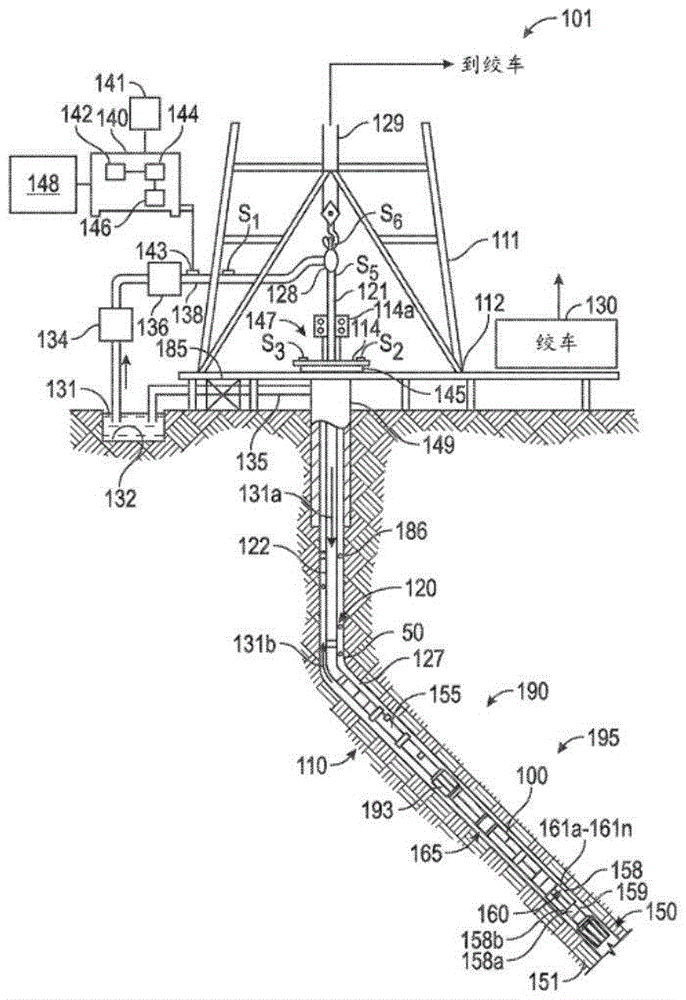
图1A和图1B示出根据本公开的实施方案的系统的组件;1A and 1B illustrate components of a system according to an embodiment of the present disclosure;
图2A到图2C是示出根据本公开的实施方案的包括声学传感器的设备实施方案的操作的示意图;2A-2C are schematic diagrams illustrating the operation of an embodiment of an apparatus including an acoustic sensor according to an embodiment of the present disclosure;
图3A展示示出根据本公开的实施方案的声学传感器的示意图;3A shows a schematic diagram illustrating an acoustic sensor according to an embodiment of the present disclosure;
图3B示出在单个光纤上包括多个压力换能器的传感器;Figure 3B shows a sensor including multiple pressure transducers on a single fiber;
图4A到图4H示出根据本公开的实施方案的换能器;4A-4H illustrate transducers according to embodiments of the present disclosure;
图5A和图5B示出根据本公开的实施方案的换能器组件;5A and 5B illustrate a transducer assembly according to an embodiment of the present disclosure;
图6示出根据本公开的实施方案的另一换能器;FIG. 6 illustrates another transducer according to an embodiment of the present disclosure;
图7A展示示出根据本公开的实施方案的用于在与地层相交的钻孔中进行测井的方法的流程图;7A shows a flow chart illustrating a method for logging in a borehole intersecting a formation in accordance with an embodiment of the present disclosure;
图7B展示示出用于获得声学数据的方法的流程图;7B shows a flowchart illustrating a method for obtaining acoustic data;
图8A到图8F示出根据本公开的实施方案的包括被配置为修改所表示的声学信号的压力换能器的声学传感器;8A-8F illustrate an acoustic sensor including a pressure transducer configured to modify a represented acoustic signal, according to embodiments of the present disclosure;
图8G示出根据本公开的实施方案的耦合振荡器的模型;8G illustrates a model of a coupled oscillator according to an embodiment of the present disclosure;
图9A到图9F展示根据本公开的实施方案的具有弯曲构件的建模系统和具有各种振荡参数的耦合振荡器的计算模型和响应功能。9A-9F show computational models and response functions of a modeling system with flexural members and coupled oscillators with various oscillation parameters, according to embodiments of the present disclosure.
图10展示示出用于获得声学数据的方法的流程图。10 shows a flowchart illustrating a method for obtaining acoustic data.
具体实施方式Detailed ways
本公开的各方面涉及用于声学测井的装置和方法,包括测量和解释指示地层、钻孔或其中的井下流体的所关注参数的物理现象,包括垂直地震剖面法(使用来自钻孔的地震测量)。本公开的各方面包括新颖的声学传感器(例如,水听器),非常适合于在极高压环境中检测非常小的压力差(例如,声学信号)。本公开的各方面可适合于从钻孔声学阵列数据检测声学反射边界(在本文中称为‘反射器’或‘边界’),例如,地质结构和相关所关注参数(例如,这些边界的性质)。Aspects of the present disclosure relate to apparatus and methods for acoustic logging, including measuring and interpreting physical phenomena indicative of parameters of interest in formations, boreholes, or downhole fluids therein, including vertical seismic profiling (using seismic Measurement). Aspects of the present disclosure include novel acoustic sensors (eg, hydrophones) well suited for detecting very small pressure differences (eg, acoustic signals) in extremely high pressure environments. Aspects of the present disclosure may be adapted to detect acoustically reflective boundaries (referred to herein as 'reflectors' or 'boundaries') from borehole acoustic array data, eg, geological structures and related parameters of interest (eg, properties of these boundaries) ).
本公开的各方面包括使用井筒内的传感器和井附近的地面处的源来获取垂直地震剖面(VSP)。VSP测量可产生分辨率比表面地震图像更高的图像。VSP测量也可用于在钻井操作期间查看钻头。表面地震源(例如,陆地上的板振动器、海上的空气枪)可用于产生所检测的声学信号。Aspects of the present disclosure include acquiring vertical seismic profiles (VSPs) using sensors within the wellbore and sources at the surface near the wellbore. VSP measurements produce images with higher resolution than surface seismic images. VSP measurements can also be used to view the drill bit during drilling operations. Surface seismic sources (eg, plate vibrators on land, air guns at sea) can be used to generate the detected acoustic signals.
本公开的实施方案包括评估地球地层的方法。方法可包括在钻孔中部署地震接收器的阵列,并且响应于地球表面上的多个位置处的地震源的激活而记录接收器阵列中的地震信号。对于变井源距几何结构,方法可进一步包括根据多个源位置到多个接收器的地震波的行进时间来估计地震波在多个间隔内传播的速度。出于解释的目的,所估计的参数(例如,垂直速度、所估计的各向异性参数等)可用于进一步处理地面地震数据,以获得深度的地震图像。Embodiments of the present disclosure include methods of assessing earth formations. The method may include deploying an array of seismic receivers in a borehole, and recording seismic signals in the receiver array in response to activation of a seismic source at a plurality of locations on the Earth's surface. For variable well source spacing geometries, the method may further include estimating the velocity of seismic wave propagation in the plurality of intervals based on travel times of the seismic waves from the plurality of source locations to the plurality of receivers. For explanatory purposes, the estimated parameters (eg, vertical velocity, estimated anisotropy parameters, etc.) may be used to further process the surface seismic data to obtain seismic images of depth.
本公开的各方面可涉及地震反演,其中处理地震反射数据以恢复所关注参数,包括地层的所关注体积的性质,诸如饱和岩石基质的一部分。此类参数可包括声阻抗、剪切阻抗、密度、各向异性参数等。执行反演可包括使用由额外的储存器测量结果(例如,测井)产生的其它约束。其它方面涉及对地层缓慢度、声学数据通信消息(例如,泥浆脉冲等)、声学距离、声学井径、通用声速测量等的估计。Aspects of the present disclosure may relate to seismic inversion, wherein seismic reflection data is processed to recover parameters of interest, including properties of a volume of interest of a formation, such as a portion of a saturated rock matrix. Such parameters may include acoustic impedance, shear impedance, density, anisotropy parameters, and the like. Performing the inversion may include using other constraints resulting from additional storage measurements (eg, well logs). Other aspects relate to the estimation of formation slowness, acoustic data communication messages (eg, mud pulses, etc.), acoustic distances, acoustic calipers, general sound velocity measurements, and the like.
已知利用采用携带光纤布拉格光栅(FBG)的光纤的水听器来检测流体中的声学信号。这些传感器将FBG与压力换能器结合使用,该压力换能器沿纤维轴线将声学信号(例如,交变压力)转换为作用在光纤上的交变应力。FBG反射在光纤中传播的光的小光谱部分。这一光谱的中心波长随所测量的数量(例如,压力)而变化,该所测量的量使用光纤的一端处的光学检测器进行检测(检测反射的或剩余的光谱)。It is known to use hydrophones employing optical fibers carrying fiber Bragg gratings (FBGs) to detect acoustic signals in fluids. These sensors use the FBG in conjunction with a pressure transducer that converts an acoustic signal (eg, alternating pressure) to an alternating stress acting on the fiber along the fiber axis. The FBG reflects a small spectral portion of the light propagating in the fiber. The center wavelength of this spectrum varies with the quantity measured (eg, pressure) that is detected using an optical detector at one end of the fiber (detecting the reflected or residual spectrum).
在本公开的各方面中,可使用飞秒激光器将布拉格光栅写入光纤或其它光学介质(例如,块状玻璃或玻璃箔)中。这一技术允许通过修改光栅周期和深度来对各种光栅形状进行印刷,并且因此实现各种效应,包括变迹、pi移位和啁啾光栅等。另外,这一过程可应用于标准光纤。相比之下,在特定应用中可能有利的基于UV光的方法可能需要光敏光纤芯,并且可能在井下条件下遭受氢气变暗。因此,使用基于飞秒激光的工艺可增加光纤的寿命并且潜在地减少包装成本。In various aspects of the present disclosure, Bragg gratings can be written into optical fibers or other optical media (eg, bulk glass or glass foils) using femtosecond lasers. This technique allows printing of various grating shapes by modifying the grating period and depth, and thus enables various effects including apodization, pi-shifting, and chirped gratings, among others. Alternatively, this process can be applied to standard fibers. In contrast, UV-light-based methods, which may be advantageous in certain applications, may require photosensitive fiber cores and may suffer from hydrogen dimming under downhole conditions. Therefore, the use of femtosecond laser-based processes can increase the lifetime of the fiber and potentially reduce packaging costs.
为了获得诸如石油和气体的烃,钻孔(井孔)通过含烃地下地层钻探。最近,已经钻探延伸数千米(“延伸到达”钻孔)的水平钻孔,以在储存器侧获得烃储量,并且从现有的海上平台开发卫星场。用于研究地下特征的井下声学测井工具可包括一个或多个声学传输器或源和多个声学接收器。替代地,所钻探的钻孔可配备有独立的声学传感器。To obtain hydrocarbons such as oil and gas, boreholes (well holes) are drilled through hydrocarbon-bearing subterranean formations. More recently, horizontal boreholes extending over several thousand meters ("extend-to" boreholes) have been drilled to obtain hydrocarbon reserves on the reservoir side and to develop satellite fields from existing offshore platforms. Downhole acoustic logging tools used to study subsurface features may include one or more acoustic transmitters or sources and multiple acoustic receivers. Alternatively, the drilled borehole may be equipped with a separate acoustic sensor.
深油井中的环境条件,诸如例如地下或海底井,非常苛刻。温度可接近250摄氏度,并且压力可达到20到30,000psi(200MPa)或更高。除了防止过早磨损或衰竭所需的严格工具规格之外,这些非常高的压力也加剧了所需信号的小振幅,并且使信号检测精确度成问题。在钻孔的环境压力提供的极大恒定偏移压力下,声压信号的变化可以是例如1Pa到10kPa(10-4psi到1psi)。因此,高频声压信号的平均信号幅度与标称钻孔压力的比率通常小于10-3,并且可达到10-4到10-6或更小的范围。例如,可期望在20,000psi或更高的偏移压力下检测到小于0.1psi的信号压力。The environmental conditions in deep oil wells, such as for example underground or subsea wells, are very harsh. Temperatures can approach 250 degrees Celsius, and pressures can reach 20 to 30,000 psi (200 MPa) or more. In addition to the stringent tool specifications required to prevent premature wear or failure, these very high pressures exacerbate the small amplitude of the desired signal and make signal detection accuracy problematic. The variation in the acoustic pressure signal may be, for example, 1 Pa to 10 kPa (10 −4 psi to 1 psi) at the extremely constant excursion pressure provided by the ambient pressure of the borehole. Therefore, the ratio of the average signal amplitude of the high frequency sound pressure signal to the nominal borehole pressure is typically less than 10-3 and can range from 10-4 to 10-6 or less. For example, it may be desirable to detect signal pressures of less than 0.1 psi at offset pressures of 20,000 psi or higher.
因此,本公开的各方面包括用于在钻孔中检测声学信号的方法和装置。通用装置实施方案可包括声学传感器,该声学传感器包括压力换能器,该压力换能器包括附接到光学介质的弯曲构件。可通过与换能器耦合的井下流体来传播声压信号。换能器可被配置为通过弯曲构件的移动沿着介质的轴线将入射到换能器上的标称钻孔压力内的低振幅的高频声压信号转换为光学介质上的交变应力。该配置可使得这能够实现,同时抑制低频信号和恒定压力信号到光学介质的应力的转换。压力换能器可进一步被配置为以机械流动方式过滤低频环境压力噪声。Accordingly, aspects of the present disclosure include methods and apparatus for detecting acoustic signals in boreholes. General device embodiments may include an acoustic sensor that includes a pressure transducer that includes a curved member attached to an optical medium. The acoustic pressure signal may be propagated through the downhole fluid coupled to the transducer. The transducer may be configured to convert a low amplitude high frequency sound pressure signal within the nominal borehole pressure incident on the transducer to an alternating stress on the optical medium by movement of the flexural member along the axis of the medium. This configuration may enable this while suppressing the conversion of low frequency signals and constant pressure signals to the stress of the optical medium. The pressure transducer may be further configured to mechanically flow filter low frequency ambient pressure noise.
检测器可被配置为响应于所接收的沿着轴线传输通过介质的电磁辐射而产生声学测量信息,其中介质的至少一种光学性质响应于介质上的交变应力,使得检测器接收到的电磁辐射表示声学信号。参见,例如,授予Chang等人的美国专利第6,396,572号。The detector may be configured to generate acoustic measurement information in response to received electromagnetic radiation transmitted through a medium along an axis, wherein at least one optical property of the medium is responsive to alternating stress on the medium such that electromagnetic radiation received by the detector Radiation represents an acoustic signal. See, eg, US Patent No. 6,396,572 to Chang et al.
在特定实施方案中,压力换能器包括位于含有储存流体的储存器之间的界面。界面可包括弯曲构件和为储存器之间的储存器提供通信的至少一个开口。开口和储存器可被配置为通过压力均衡使用储存流体通过开口的旁通流而以机械流动方式过滤环境压力噪声。压力换能器可进一步包括位于储存器中的一个储存器与井下流体之间的第二界面,第二界面包括响应于入射到换能器上的高频声压信号的第二弯曲构件。换能器可包括支撑弯曲构件的弯曲元件。In certain embodiments, the pressure transducer includes an interface between the reservoirs containing the stored fluid. The interface may include a flexure member and at least one opening for providing communication between the reservoirs. The opening and the reservoir may be configured to mechanically flow filter ambient pressure noise by pressure equalization using a bypass flow of stored fluid through the opening. The pressure transducer may further include a second interface between one of the reservoirs and the downhole fluid, the second interface including a second curved member responsive to a high frequency acoustic pressure signal incident on the transducer. The transducer may include a flexural element that supports the flexural member.
在其它实施方案中,换能器可用填充有膨胀流体的储存器来实施。膨胀流体可被配置为响应于高频声压信号而充当将高频声压信号传输到弯曲构件的固体;响应于环境压力噪声,膨胀流体可被配置为充当防止将环境压力噪声传输到弯曲构件的液体。In other embodiments, the transducer may be implemented with a reservoir filled with inflation fluid. The expansion fluid can be configured to act as a solid that transmits the high frequency acoustic pressure signal to the flexural member in response to the high frequency sound pressure signal; the expansion fluid can be configured to act as a liquid that prevents transmission of the ambient pressure noise to the flexural member in response to ambient pressure noise.
本公开的各方面涉及使用至少一个声学传感器作为一个或多个井下声学测井工具或分布式传感器系统的一部分,以响应于在传感器处从地层接收到的压力信号而产生声学信息。信号在本质上可以是地震的,或者可由钻孔中的激励产生。至少一个声学接收器可安置在钻孔中。信息指示所关注参数。如本文所用的术语“信息”包括任何形式的信息(模拟、数字、EM、印刷等),并且可包括以下中的一者或多者:原始数据、经处理数据和信号。Aspects of the present disclosure relate to the use of at least one acoustic sensor as part of one or more downhole acoustic logging tools or distributed sensor systems to generate acoustic information in response to pressure signals received from the formation at the sensor. The signal may be seismic in nature or may be generated by excitation in the borehole. At least one acoustic receiver can be positioned in the borehole. The information indicates the parameter of interest. The term "information" as used herein includes any form of information (analog, digital, EM, printed, etc.) and may include one or more of the following: raw data, processed data, and signals.
方法可包括从信息估计所关注参数,使用所关注参数评估地层,和/或根据反射点的位置、边界的位置、边界的所关注参数或从这些导出的其它所关注参数来执行其它钻孔或地层操作。在特定实施方案中,可使用所关注参数来估计钻井操作的状态、钻孔或地层的特性,或井下工具的组件的定向,并且接着用于执行如上文所述的操作。The method may include estimating a parameter of interest from the information, evaluating the formation using the parameter of interest, and/or performing other drilling or drilling based on the location of the reflection point, the location of the boundary, the parameter of interest for the boundary, or other parameters of interest derived from these. Ground operations. In certain embodiments, the parameters of interest may be used to estimate the state of a drilling operation, characteristics of the borehole or formation, or orientation of components of a downhole tool, and then used to perform operations as described above.
本公开的各方面在各种不同实施方案中得以应用。传感器可与诸如钻柱、连续油管、钢丝绳、e管线、钢丝线等的载体结合使用。传感器可安置在用于测量的工具上、从工具部署或单独部署(在钻孔中输送刀具之前或之后)。传感器、井下工具和其它系统组件可与额外工具耦合或组合,包括例如一些或所有信息处理系统,如图1B中所展示,在下文进一步详细论述。在一些常用实施方案中,载体实施为钻井系统的工具柱,并且声学井筒测井可表征为“随钻测井”(LWD)或“随钻测量”(MWD)操作。如本文所描述,“钻孔”或“井筒”是指构成所钻的井的全部或一部分的单个孔。取决于该配置,在一些情况下,本文所展示的系统可在钻井期间和/或在已形成井筒之后使用,包括在安装壳体或产生基础设施之后。虽然示出陆地系统,但本公开的教导内容也可用于近海或海底应用。如本文所描述,“地层”是指在地下环境中可能遇到的并且围绕钻孔的各种特征和材料。Aspects of the present disclosure find application in various embodiments. Sensors may be used in conjunction with carriers such as drill string, coiled tubing, wireline, e-line, wireline, and the like. The sensor can be placed on the tool for measurement, deployed from the tool, or deployed separately (before or after the tool is transported in the borehole). Sensors, downhole tools, and other system components may be coupled or combined with additional tools, including, for example, some or all information processing systems, as shown in FIG. IB, discussed in further detail below. In some common embodiments, the carrier is implemented as a tool string of a drilling system, and the acoustic wellbore logging can be characterized as a "logging while drilling" (LWD) or "measurement while drilling" (MWD) operation. As described herein, a "borehole" or "wellbore" refers to a single hole that constitutes all or a portion of a well drilled. Depending on the configuration, in some cases the systems presented herein may be used during drilling and/or after the wellbore has been formed, including after installing the casing or generating the infrastructure. Although a terrestrial system is shown, the teachings of the present disclosure may also be used in offshore or subsea applications. As described herein, "formation" refers to various features and materials that may be encountered in a subterranean environment and surround a borehole.
图1A和图1B示出根据本公开的实施方案的系统的组件。图1A示意性地示出具有井下工具10的系统100,该井下工具被配置为使用声学测量仪器40获取用于所关注的井下参数的信息(例如,其中的地层80、钻孔50或井下流体90的性质的值)。换能器模块45可限定仪器的外表面的一部分,从工具主体30延伸到钻孔中,或拖在工具主体30后面。至少一个测量仪器40响应于所关注参数。井下流体的非限制性示例包括钻井流体、回流流体、地层流体、含有一种或多种烃的生产流体、石油,和与井下工具、水、盐水、工程化流体和它们的组合结合使用的溶剂。1A and 1B illustrate components of a system according to an embodiment of the present disclosure. 1A schematically illustrates a
系统100可包括在钻台70上竖立的常规的井架60。可以是刚性或非刚性的输送设备(载体15)可被配置为将井下工具10输送到接近地层85的所关注体积80的井筒50中。载体15可为钻柱、连续油管、钢丝绳、e管线、钢丝线等。井下工具10可与额外的工具耦合或组合,例如一些或全部信息处理系统(插图)。因此,取决于该配置,可在钻孔期间和/或形成井筒50之后使用工具10。如本文所描述,“钻孔”或“井筒”是指构成所钻的井的全部或一部分的单个孔。虽然示出陆地系统,但本公开的教导内容也可用于近海或海底应用。载体15可包括嵌入式导体,该嵌入式导体用于在地面和井下装备(例如七芯电缆)之间提供信号和/或电力通信的电力和/或数据。载体15可包括底部孔组件,该底部孔组件可包括用于旋转钻头的钻井马达。
钻井流体(例如,钻井流体或‘泥浆’)90可存在于地层85与井下工具10之间。地面控制系统65从一或多个声学测量仪器40和用于系统100的其它传感器接收信号,并且根据提供给地面控制系统65的编程指令来处理此类信号。地面控制系统65可在由操作员使用的显示器/监视器上显示期望参数和其它信息。地面控制系统65可在井下工具10上的合适位置处进一步与井下控制系统20通信。地面控制系统65可处理与来自传感器40的操作和数据有关的数据,并且可控制由系统100执行的一个或多个井下操作。Drilling fluid (eg, drilling fluid or 'mud') 90 may be present between
在一个实施方案中,与传感器40相关联的电子器件30可被配置为记录和/或处理所获得的信息。本公开的某些实施方案可用硬件环境来实现,该硬件环境包括信息处理器17、信息存储介质13、输入设备11、处理器存储器9,并且可包括外围信息存储介质19。硬件环境可在井中、在钻机处或在远程位置处。此外,硬件环境的若干部件可分布在那些位置之间。输入设备11可为任何数据读取器或用户输入设备,诸如数据读卡器、键盘、USB端口等。信息存储介质13存储由检测器提供的信息。信息存储介质13可包括用于标准计算机信息存储的任何非暂态计算机可读介质,诸如USB驱动器、记忆棒、硬盘、可移动RAM、EPROM、EAROM、闪存存储器和光盘或本领域的普通技术人员已知的包括基于互联网的存储的其他常用存储器存储系统。信息存储介质13存储程序,该程序在执行时使得信息处理器17执行所公开的方法。信息存储介质13也可存储用户提供的地层信息,或者可将地层信息存储在外围信息存储介质19中,该外围信息存储介质可为任何标准的计算机信息存储设备,诸如USB驱动器、记忆棒、硬盘、可移动RAM或本领域的普通技术人员已知的其它常用存储器存储系统,包括基于互联网的存储器。信息处理器17可为任何形式的计算机或数学处理硬件,包括基于互联网的硬件。当将程序从信息存储介质13加载到处理器存储器9(例如,计算机RAM)中时,程序在执行时使得信息处理器17从信息存储介质13或外围信息存储介质19检索检测器信息并且处理该信息以估计所关注的参数。信息处理器17可位于地面上或井下。In one embodiment, the
如本文所用的术语“信息”包括任何形式的信息(模拟、数字、EM、打印等)。如本文所用,处理器为传输、接收、操纵、转换、计算、调制、转置、携带、存储或以其他方式利用信息的任何信息处理设备。在本公开的若干非限制性方面,信息处理设备包括执行用于执行各种方法的编程指令的计算机。除了本公开中所描述的功能之外,这些指令还可提供装备操作、控制、数据收集和分析以及其他功能。处理器可执行存储在处理器可访问的计算机存储器中的指令,或者可采用被实现为现场可编程门阵列(“FPGA”)、专用集成电路(“ASIC”)、其他组合或顺序逻辑硬件等的逻辑。The term "information" as used herein includes information in any form (analog, digital, EM, print, etc.). As used herein, a processor is any information processing device that transmits, receives, manipulates, converts, computes, modulates, transposes, carries, stores or otherwise utilizes information. In several non-limiting aspects of the present disclosure, an information processing apparatus includes a computer executing programmed instructions for performing various methods. These instructions may provide equipment operation, control, data collection and analysis, and other functions in addition to the functions described in this disclosure. The processor may execute instructions stored in computer memory accessible to the processor, or may employ hardware implemented as field programmable gate arrays ("FPGA"), application specific integrated circuits ("ASIC"), other combinatorial or sequential logic, etc. logic.
为了在单次行程期间执行测量,工具可使用高带宽传输来将检测器20、30所获取的信息传输到地面以进行分析。例如,用于传输所获取的信息的通信管线可为光纤、金属导体或任何其他合适的信号传导介质。应了解,使用“高带宽”通信管线可允许地面人员“实时”监测和控制操作。To perform measurements during a single trip, the tool may use high bandwidth transmissions to transmit the information acquired by the
图1A中所示出的系统的一个新颖点在于地面控制系统65和/或井下控制系统20被配置为执行不在现有技术中的某些方法(下文所论述)。地面控制系统或井下控制系统可被配置为控制上述工具和任何组合传感器,并且根据本文所描述的方法估计所关注的参数。One novelty of the system shown in FIG. 1A is that the
本公开的各方面在各种不同实施方案中得以应用。在一些一般实施方案中,载体15被实现为钻井系统的下井仪器串,并且在钻孔中进行的测量可被表征为“随钻测井”(LWD)或“随钻测量”(MWD)操作。Aspects of the present disclosure find application in various embodiments. In some general embodiments, the carrier 15 is implemented as a downhole tool string of a drilling system, and the measurements made in the borehole may be characterized as "logging while drilling" (LWD) or "measurement while drilling" (MWD) operations .
图1B展示使用来自声学测量工具的测量来评估地层的MWD系统的示例性实施方案。系统101包括载体111,该载体展示为安置在穿透至少一个地层195的井筒或钻孔50中。系统101也包括被配置为用于在钻孔中进行声学测量的工具110。Figure IB shows an exemplary embodiment of a MWD system that uses measurements from an acoustic measurement tool to evaluate a formation.
图1B展示钻柱120,该钻柱包括在钻孔50中作为载体输送的井底组件(BHA)190。钻井系统101包括常规井架111,该常规井架竖立在平台或底板112上,该平台或底板支撑旋转台114,该旋转台由原动机(诸如电动马达(未示出))以期望的旋转速度旋转。具有附接在其底端处的钻井组件190的油管(诸如接合钻杆122)从地面延伸到钻孔50的底部151。附接到钻井组件190的钻头150在其旋转以钻出钻孔50时分解地质地层。钻柱120经由方钻杆接头121、旋转接头128和通过滑轮的管线129联接到绞车130。操作绞车130以控制钻压(“WOB”)。钻柱120可通过顶驱(未示出)而不是通过原动机和旋转台114旋转。另选地,可使用连续油管作为油管122。油管喷射器114a可用于输送具有附接到其底端的钻井组件的连续油管。绞车130和油管喷射器114a的操作在本领域中是已知的,因此在本文不再详细描述。FIG. 1B shows a
应当理解,本公开的实施方案非常适合于在具有各种配置的井中使用,包括水平井、偏离井、倾斜井、多侧井等。因此,本文的方向术语的使用(例如,上方、下方、上部、下部、向上、向下、最顶部、最下部、井上、井下等)是指沿着钻孔朝向或远离地面行进的方向,其中向上方向朝向地面并且向下方向远离地面。It should be appreciated that embodiments of the present disclosure are well suited for use in wells having a variety of configurations, including horizontal wells, offset wells, deviated wells, multiple lateral wells, and the like. Thus, use of directional terms herein (eg, above, below, upper, lower, up, down, topmost, bottommost, uphole, downhole, etc.) refers to the direction of travel along the borehole toward or away from the surface, wherein The upward direction is towards the ground and the downward direction is away from the ground.
来自其源132(诸如泥浆池)的合适的钻井流体131(也称为“泥浆”)在压力下由泥浆泵134循环通过钻柱120。钻井流体131经由排出器136和流体管线138从泥浆泵134流入钻柱120中。来自钻管的钻井流体131a在钻孔底部151处通过钻头150中的开口排出。返回的钻井流体131b向井上循环通过钻柱120与钻孔50之间的环形空间127,并且通过回流管线135和钻屑筛网185返回到泥浆池132,该钻屑筛网从返回的钻孔流体131b去除钻屑186。管线138中的传感器S1提供关于流体流速的信息。与钻柱120相关联的地面扭矩传感器S2和传感器S3分别提供关于钻柱120的扭矩和旋转速度的信息。油管喷射速度由传感器S5确定,而传感器S6提供钻柱120的大钩载荷。A suitable drilling fluid 131 (also referred to as "mud") from its source 132 (such as a mud pit) is circulated under pressure through the
将井控制系统147放置在钻孔50的顶端处。井控制系统147包括地面防喷器(BOP)堆叠115和与井筒环127连通的地面油嘴149。地面油嘴149可控制流体流出钻孔50,以根据需要提供背压以控制井。The
在一些应用中,仅通过旋转钻杆122来旋转钻头150。然而,在许多其他应用中,设置在BHA 190中的井下马达155(泥浆马达)也使钻头150旋转。给定BHA的机械钻速(ROP)很大程度上取决于WOB或者钻头150上的推力及该钻头的旋转速度。In some applications, the
地面控制单元或控制器140经由布置在流体管线138中的传感器143从井下传感器和设备接收信号以及从传感器S1-S6和系统101中所使用的其他传感器接收信号,并根据提供给地面控制单元140的经编程的指令来处理此类信号。地面控制单元140在显示器/监测器141上显示钻井参数和与钻孔、地层和钻井操作相关的其他感兴趣的参数以及操作员用来控制钻井操作的其他信息。地面控制单元140可为基于计算机的单元,其可包括处理器142(诸如微处理器)、存储设备144(诸如固态存储器、磁带或硬盘)和存储设备144中的一个或多个计算机程序146,该一个或多个计算机程序可由处理器142访问以用于执行包含在此类程序中的指令。地面控制单元140可进一步与远程控制单元148通信。地面控制单元140可处理与钻井操作相关的数据、来自地面上的传感器和设备的数据以及从井下所接收的数据;并且可控制井下设备和地面设备的一个或多个操作。数据可以模拟或数字形式传输。Surface control unit or controller 140 receives signals from downhole sensors and equipment via
BHA 190可包括被配置为用于执行声学测量的工具110。BHA 190还可包含确定电阻率、密度、孔隙度、渗透率、声学特性、核磁共振性质、地层压力、井下流体的性质或特性以及围绕BHA 150的地层195的其他期望性质的其他地层评估传感器或设备(也称为随钻测量(“MWD”)或随钻测井(“LWD”)传感器)。为方便起见,所有此类传感器在本文通常由数字165表示。BHA 190可进一步包括用于确定BHA 190的一个或多个性质的多种其他传感器和设备159,诸如振动、弯矩、加速度、振荡、涡流、粘滑、钻压、流体流速、压力、温度、机械钻速、方位角、工具面、钻头旋转等。The
BHA 190可包括用于使钻头50沿着期望的钻井路径转向的转向装置或工具158。在一个方面,该转向装置可包括转向单元160,该转向单元具有多个施力构件161a-161n。施力构件可直接安装在钻柱上,或者它们可至少部分地集成到钻井马达中。在另一方面,施力构件可安装在套筒上,该套筒可围绕钻柱的中心轴线旋转。施力构件可使用机电式致动器、电动液压式致动器或静压式致动器来激活。在另一个实施方案中,该转向装置可包括转向单元158,该转向单元具有弯接头以及第一转向设备158a和第二转向设备158b,该第一转向设备用于在井筒中对弯接头取向,该第二转向设备用于沿着所选择的钻井方向保持弯接头。转向单元158、160可包括近钻头测斜仪和磁力仪。The
钻井系统101可包括用于提供关于与BHA、钻柱、钻头和井下装备(诸如钻井马达、转向单元、推进器等)相关的期望钻井参数的信息的传感器、电路以及处理软件和算法。许多当前钻井系统,尤其是用于钻探高度倾斜和水平井筒的钻井系统,利用连续油管在井下输送钻井组件。在此类应用中,可在钻柱120中部署推进器来在钻头上提供期望的力。
用于确定钻井参数的示例性传感器包括但不限于钻头传感器、RPM传感器、钻压传感器、用于测量泥浆马达参数(例如,泥浆马达定子温度、泥浆马达两端的压差和通过泥浆马达的流体流速)的传感器以及用于测量加速度、振动、涡流、径向位移、粘滑、扭矩、冲击、振动、应变、应力、弯矩、钻头跳动、轴向推力、摩擦、向后旋转、BHA屈曲和径向推力的传感器。沿着钻柱分布的传感器可测量物理量,诸如钻柱加速度和应力、钻柱孔中的内部压力、环中的外部压力、振动、温度、钻柱内部的电场强度和磁场强度、钻柱的孔等。用于进行动态井下测量的合适的系统包括COPILOT,一种由贝克休斯公司(BAKER HUGHES INCORPORATED)制造的井下测量系统。Exemplary sensors for determining drilling parameters include, but are not limited to, bit sensors, RPM sensors, weight-on-bit sensors, sensors for measuring mud motor parameters such as mud motor stator temperature, differential pressure across the mud motor, and fluid flow rate through the mud motor. ) and sensors for measuring acceleration, vibration, eddy current, radial displacement, stick-slip, torque, shock, vibration, strain, stress, bending moment, bit runout, axial thrust, friction, back rotation, BHA buckling and radial to the thrust sensor. Sensors distributed along the drill string measure physical quantities such as drill string acceleration and stress, internal pressure in the drill string holes, external pressure in the annulus, vibration, temperature, electric and magnetic field strengths inside the drill string, holes in the drill string Wait. Suitable systems for making dynamic downhole measurements include COPILOT, a downhole measurement system manufactured by Baker Hughes INCORPORATED.
钻井系统101可包括合适的位置(诸如BHA 190上的193)处的一个或多个井下处理器。该一个或多个处理器可以是使用在合适的非暂态计算机可读介质上实现的计算机程序的微处理器,该计算机程序使得处理器能够执行对系统101的控制和对信息(诸如来自传感器的信息)的处理。非暂态计算机可读介质可包括一个或多个ROM、EPROM、EAROM、EEPROM、闪存存储器、RAM、硬盘驱动器和/或光盘。其他装备诸如电力总线和数据总线、电源等对于本领域的技术人员而言将显而易见。在一个实施方案中,MWD系统在进行钻井操作时利用泥浆脉冲遥测来将数据从井下位置传送到地面。地面处理器142可处理地面测量数据以及从井下处理器传输的数据,以评估地层。
地面处理器142或井下处理器193还可被构造为控制转向装置158、泥浆泵134、绞车130、旋转台114、井下马达155、BHA 190的其他部件或钻井系统101的其他部件。地面处理器142或井下处理器193可被构造为控制上述传感器并且根据本文所述的方法估计感兴趣的参数。Surface processor 142 or
对这些部件的控制可使用下文所述的方法使用一个或多个模型来进行。例如,地面处理器142或井下处理器193可被构造为:i)在触发条件时自主地修改钻井操作;ii)响应于操作员命令修改钻井操作;或iii)这些的组合。此类修改可包括改变钻井参数、使钻头转向(例如,地质导向)、改变钻井流体程序、激活井控制措施等。一般来讲,对这些设备的控制以及对钻井系统的各种过程的控制可以完全自动化的方式或通过经由通知、图形表示、用户界面等与人员的交互来进行。也可使用能够由处理器访问的参考信息。在一些常用实施方案中,地面处理器142、井下处理器193或其它处理器(例如,远程处理器)可被配置为操作消失工具110产生消失波和测量信号。Control of these components may be performed using one or more models using the methods described below. For example, surface processor 142 or
系统101可包括用于各种处理的任何数目的井下工具,这些处理包括地层钻探、地质导向和地层评估(FE),以用于对钻孔内或周围的一种或多种物理性质(包括与钻孔相交的地层的所关注的体积)的深度和/或时间进行电测量。工具110可包括在BHA、钻柱部件或其他合适的载体中或被体现为BHA、钻柱部件或其他合适的载体。
虽然钻柱120被示出为用于工具110的输送装置,但应当理解,本公开的实施方案可与经由刚性输送系统(例如,接合管件或连续油管)以及非刚性输送系统(例如,钢丝线、钢丝绳、e管线等)输送的工具结合使用。钻井系统101可包括用于在钻柱或钢丝线上实现本公开的实施方案的底部孔组件和/或传感器和装备。While the
数学模型、查找表或表示信号与参数值之间关系的其它模型可用于表征地层、钻孔位置或地层中的操作;优化生产或开发的一个或多个操作参数;等等。系统可通过通知、建议和/或智能控制来进行这些动作。可使用根据本公开的测量来确定各种类型的井下参数,并且根据本文公开的实施方案进行评估。Mathematical models, look-up tables, or other models representing relationships between signals and parameter values may be used to characterize the formation, borehole location, or operation in the formation; optimize one or more operating parameters for production or development; and the like. The system may perform these actions through notifications, suggestions, and/or intelligent controls. Various types of downhole parameters can be determined using measurements in accordance with the present disclosure and evaluated in accordance with embodiments disclosed herein.
具有与本公开相同的受让人并且其内容以引用的方式并入本文的Tang的美国专利第7,035,165号公开了一种方法,其中在多个深度处并且针对测井工具上的多个源-接收器间距获得多个多分量声学测量结果。测井工具上的定向传感器(诸如磁力计)可用于获得指示测井工具的定向的定向测量。使用定向测量将多分量测量旋转到固定坐标系统(诸如相对于磁北或地理北定义的基于地球的系统),从而给出旋转的多分量测量。处理旋转的多分量测量以提供地下的图像。US Patent No. 7,035,165 to Tang, having the same assignee as the present disclosure and the contents of which are incorporated herein by reference, discloses a method wherein at multiple depths and for multiple sources on a logging tool- Receiver spacing obtains multiple multi-component acoustic measurements. Orientation sensors on the logging tool, such as magnetometers, can be used to obtain directional measurements indicative of the orientation of the logging tool. The multi-component measurement is rotated to a fixed coordinate system (such as an earth-based system defined relative to magnetic north or geographic north) using the directional measurement, giving a rotated multi-component measurement. Process rotated multicomponent measurements to provide images of the subsurface.
具有与本公开相同的受让人并且其内容以引用的方式并入本文中的授予Mathiszik等人的美国专利第8,055,448B2号公开了MWD声学成像的进一步改进。井下声学测井工具用于产生导向钻孔波,该导向钻孔波作为体波传播到地层中,从界面反射并且被转换回导向钻孔波。由体波的反射产生的导向钻孔波用于使反射器成像。具有与本公开相同的受让人并且其内容以引用的方式并入本文中的授予Geerits等人的美国专利第8,811,114B2号公开了MWD声学成像的进一步改进。Further improvements in MWD acoustic imaging are disclosed in US Patent No. 8,055,448 B2 to Mathiszik et al., having the same assignee as the present disclosure and the contents of which are incorporated herein by reference. Downhole acoustic logging tools are used to generate steerable borehole waves that propagate into the formation as bulk waves, reflect from interfaces and are converted back to steerable borehole waves. Guided borehole waves generated by reflections of bulk waves are used to image the reflector. Further improvements in MWD acoustic imaging are disclosed in US Patent No. 8,811,114 B2 to Geerits et al., assigned to the same assignee as the present disclosure and the contents of which are incorporated herein by reference.
图2A到图2C是示出根据本公开的实施方案的包括声学传感器的设备实施方案的操作的示意图。在常用设备实施方案中,根据本公开的传感器可实施为探针并且安装在井下流体中。这一安装可以是永久的或临时的,并且可涉及通过单独或共用系链悬浮在流体中、自由漂浮或附接到井筒。因此,探针在安装之后可以是静止的或运动的。2A-2C are schematic diagrams illustrating the operation of an embodiment of an apparatus including an acoustic sensor according to an embodiment of the present disclosure. In common device embodiments, sensors according to the present disclosure may be implemented as probes and installed in downhole fluids. This installation may be permanent or temporary, and may involve suspension in fluid, free-floating, or attachment to the wellbore by separate or common tethers. Thus, the probe can be stationary or moving after installation.
参考图2A,系统200包括多个探针202,该多个探针通过系链204悬挂在钻孔50中的流体90中。在安装期间,探针壳体的外部可浸没在井下流体中。在替代实施方案中,探针202可以是可伸缩的;例如,在操作时,探针可插入或放置到钻孔中的井下流体中,并且接着伸缩以进行清洁或允许钻孔中的其它操作。Referring to FIG. 2A ,
图2B是展示根据本公开的实施方案的VSP测量获取的示意图。钻机221位于地面223处。这可以是钻机,或者可以是将钢丝线输送到钻孔201中的桅杆钻机(mast rig)。钻孔201穿透层203、205。定位在钻孔201中的是由211a、211b、211c、211d等表示的地震传感器。每个传感器可以是根据本公开的实施方案的传感器(例如,水听器)。单个偏移VSP的数据通常使用单个地震源来获取,诸如在地面处(或在地面的水体内)的225a。参考图2B,水体的表面可认为是地面。描绘地震能量从源225a传播到检测器211d的示例性射线路径由射线227a描绘,该射线从边界206处的层205的底部反射并且沿着由229a表示的射线路径到达接收器211d。2B is a schematic diagram showing VSP measurement acquisition according to an embodiment of the present disclosure.
在一种典型的VSP操作类型中,由在单个位置(诸如225a)处的操作产生的数据记录在钻孔中的接收器211a、211b、211c、211d等的每一个接收器中。所反射数据的分析可提供关于地下的地震速度和层边界的配置的信息。在变井源距VSP中,重复这一过程以在诸如225b、225c的多个源位置处操作源。从多个检测器处的多个源位置获取数据提供地下区的冗余采样,使得有可能基于源中的每一个源与接收器中的每一个接收器之间的射线的行进时间来确定地下的速度。这种使用行进时间来确定速度的操作称为“层析成像反演”,并且许多处理包可商购获得,并且可作为执行这一地震行进时间数据的层析成像反演的开放源软件(例如,OpenTOAST)。处理VSP测量以表征地层是发展良好的领域。参见,例如,特此以全文引用的方式并入本文的授予Aronstam的美国专利第7,751,279号和授予Zhao等人的美国专利第7,751,279号。In a typical type of VSP operation, data resulting from operation at a single location, such as 225a, is recorded in each of the
图2C展示表面地震调查的模拟几何结构。已假定了垂直钻孔,源已在钻孔中“反射”到地面285a、285b、285c上的模拟接收器位置。类似地,射线路径也已经反射以在钻孔的左侧上给出模拟射线路径。在操作时,方法包括在钻孔中部署如本文所述的地震接收器阵列,并且响应于地球表面上的多个位置处的地震源的激活而记录接收器阵列中的地震信号。对于变井源距技术,方法进一步包括根据地震波从多个源位置到多个接收器的行进时间来估计垂直传播的地震波在多个间隔内的速度,和与压缩波在多个间隔内的正常移动曲线相关的两个各向异性参数ε和δ。出于解释目的,所估计的垂直速度和所估计的间隔各向异性参数可用于进一步处理表面地震数据,以获得深度的地震图像。对于多方位的变井源距或3D VSP几何结构,方法可进一步包括根据地震波从围绕井的多个源位置到多个接收器的行进时间来估计垂直传播的地震波在多个间隔内的速度,和与压缩波在多个间隔内的正常移动速度相关的五个正交晶各向异性参数ε1、ε1、δ1、δ2和δ3。出于解释目的,所估计的垂直速度和所估计的各向异性参数可用于进一步处理表面地震数据,以获得深度的地震图像。参见,例如,特此以全文引用的方式并入本文的授予Blias的美国专利第8,750,074号。Figure 2C shows the simulated geometry for a surface seismic survey. A vertical borehole has been assumed in which the source has "reflected" to simulated receiver locations on the
井下光纤水听器Downhole Fiber Optic Hydrophone
图3A展示示出根据本公开的实施方案的声学传感器的示意图。传感器300是被配置为在钻孔50中输送的测量仪器的一部分。传感器300可包括压力换能器302和询问器304。压力换能器302包括具有浸没在井下流体中的部分(例如,面322)的换能器主体312。换能器主体312可与传感器工具主体(钻环、钢丝线等)机械地去耦合,以便使换能器主体312与结构声传输(structure-borne sound transmission)绝缘。通过与换能器耦合的井下流体传播声压信号。在一些实施方案中,仪器中的一些仪器(或全部仪器)可从工具主体突出到钻孔中。换能器302被配置为将换能器上的标称钻孔压力内的声压信号转换为入射到光学介质(例如,光纤303)上的交变应力。3A shows a schematic diagram illustrating an acoustic sensor according to an embodiment of the present disclosure.
光纤303包括光纤布拉格光栅(‘FBG’)305。这些光纤布拉格光栅是在光纤区段中构造的分布式布拉格反射器的类型(例如,通过使用来自飞秒激光器的脉冲),该反射器反射以特定波长为中心的光,诸如通过在光纤芯的折射率中产生周期性变化并且因此产生特定波长的介电镜。FBG305反射在光纤303中传播的电磁辐射(例如,光)的小光谱部分,从而允许剩余部分行进通过。
电磁辐射由能量源308提供,诸如被配置为通过光纤为传感器提供光的光源。作为一个示例,能量源可以是可调谐激光源,该可调谐激光源被配置为提供具有以选定速率扫描一系列波长的波长的光,但能量源可以是覆盖包括可见、紫外和红外光的一系列波长的任何可调谐光源或扫描波长光源。作为另一示例,发光二极管或超发光二极管可与光纤303光学耦合以提供红外光束。能量源308可任选地并入作为询问器304的一部分,如图3A所展示。The electromagnetic radiation is provided by an
所反射的光谱部分的中心波长(‘所反射光谱’或‘反射光谱’)响应于光纤上的物理参数,尤其包括沿着光纤轴线的应力。归因于换能器的配置,光纤上的应力代表压力。因此,光谱的中心波长随着换能器上的压力的改变而改变,并且指示传感器上的声压信号。The central wavelength of the portion of the reflected spectrum ('reflected spectrum' or 'reflected spectrum') is responsive to physical parameters on the fiber, including, inter alia, stress along the fiber axis. Due to the configuration of the transducer, the stress on the fiber represents pressure. Thus, the center wavelength of the spectrum changes as the pressure on the transducer changes and is indicative of the acoustic pressure signal on the sensor.
光纤303可行进穿过换能器302并且进入询问器304。询问器304(使用例如一个或多个光检测器、电荷耦合装置、光电转换器等实施)与光纤303光学耦合并且检测从光纤接收到的电磁信号(例如,光)。
诸如光学循环器或光纤分离器的光耦合或分离机构307可用于将在光纤303中以相反方向行进的光学信号耦合或分开,诸如例如,通过光纤303将光从光源308提供到换能器302,并且将返回在光纤上的光从换能器302发送到光谱检测器306。光谱检测器306基于响应于电磁能的部分反射的电磁信号而产生指示压力信号的测量信息。An optical coupling or
传感器300可包括用于使用询问器304进行测量的电路310。电路310可包括操作性地连接到源308和光谱检测器306的控制单元。电路310可至少部分地实施为上文参考图1A和图1B描述的至少一个处理器,或者可以是额外的处理器或其它支撑电路。在一些实施方案中,电路310的部分可位于仪器处、在工具中的其它位置处(包括,例如在其它替代工具中)或在地面处。
在操作时,仪器可由电路310控制,包括控制单元(例如,处理器),该控制单元驱动能量源308,同时换能器的部分(例如,面322)浸没在井下流体中并且从光谱检测器306接收测量信息(例如,数据)。In operation, the instrument may be controlled by
因此,询问器304被配置为响应于所接收的传输通过介质的电磁辐射(例如,所反射光谱)而产生声学测量信息。替代地,可使用光学检测器在光纤检测的相对端或原始光谱的剩余部分处检测中心波长。中心波长的时变值可用于产生声压信号的时变值。光谱检测器306可例如使用对应于期望波长的一个或多个光检测器来实施。Thus, the
图3B示出在单个光纤上包括多个压力换能器341、342、343的传感器。对应于每个换能器的光纤部分包括唯一的布拉格光栅。光栅中的每一个光栅的特征波长与剩余光栅的特征波长间隔开,使得可恢复特定换能器的信号。光谱解复用器355,诸如检测器侧上的一组额外布拉格光栅,将信号分离到对应的一组光检测器360、361、362分开,其中一个布拉格光栅和一个光检测器用于每个换能器。这一配置允许同时询问两个或更多个传感器。Figure 3B shows a sensor comprising
压力换能器302被配置为通过弯曲构件的移动沿着介质的轴线将入射到换能器上的标称钻孔压力内的低振幅、高频声压信号转换为光学介质上的交变应力,同时抑制低频信号和恒定压力到光学介质的应力的转换。The
高偏移传感器换能器High excursion sensor transducer
图4A到图4H示出了根据本公开的实施方案的换能器。参考图4A,换能器400包括换能器主体406,该换能器主体含有第一储存器408和第二储存器410。压力换能器400包括位于储存器之间的界面424。主体406和界面424可由硅、玻璃、晶体结构、复合材料等制成,诸如例如,通过将晶片结合在一起、通过减材制造(例如,刻蚀、激光烧蚀)等。每个储存器填充有相同类型的储存器流体(例如,硅油),并且界面424包括至少一个开口,该至少一个开口为第一储存器408与第二储存器410之间的储存器流体提供通信。开口是毛细管404。其它实施方案可使用多于一个毛细管,或者可使用不同类型的开口。4A-4H illustrate transducers according to embodiments of the present disclosure. Referring to FIG. 4A , the transducer 400 includes a
界面424也包括实施为柔性膜420的弯曲构件。柔性膜420可由结合到主体的聚合物(例如,聚偏二氟乙烯(‘PVDF’))制成。在其它实施方案中,弯曲构件是结合在适当位置的额外晶片,或者可通过主体406的减材制造产生。将光纤403的区段附接到膜,该膜包括靠近附接点的FBG。可使用粘合剂、锻接、焊接或剪接工艺来附接光纤。光纤可在法向方向上穿过中心的膜并且在边界点处附接到膜。第二界面将储存器408中的一个储存器和井下流体90分开。第二界面包括响应于入射到换能器上的高频声压信号的第二弯曲构件422。
可使用飞秒激光器将FBG写入光纤中。这允许通过修改光栅周期和深度来印刷各种光栅形状,并且因此实现变迹、pi移位和啁啾光栅。此外,与需要光敏光纤芯的基于UV光的方法相比,这一过程可应用于标准光纤。FBGs can be written into fibers using a femtosecond laser. This allows printing of various grating shapes by modifying the grating period and depth, and thus enables apodization, pi-shift and chirped gratings. Furthermore, this process can be applied to standard fibers compared to UV-light-based methods that require a photosensitive fiber core.
将井下流体中的声学信号入射到膜422上。储存器408的在膜422后面(内部)的流体经受来自井下流体的高环境压力,但这种压力通过毛细管404跨膜424均衡。在毛细管404存在的情况下,换能器主体406内部对恒定或低频压力的流体响应通过毛细管进行均衡,而不会对膜420产生明显的响应(移动)。因此,可以说毛细管404滤除了低频信号。相反,入射到膜422上的高频信号在膜420上引起对称响应,其中在光纤上产生对应的应变信号。在所有流体上均衡的压力升高的情况下,膜420且因此光纤上的响应展现出显著的保真度(例如,约每MPa压差小于10%,或每MPa压差小于5%,或包括每MPa压差小于1%或更佳)。换能器主体406可与传感器工具主体(钻环、钢丝线等)机械地去耦合,以便使换能器主体406与结构声传输绝缘。The acoustic signal in the downhole fluid is incident on the
这些特征的共同结果是压力换能器被配置为使用储存器流体通过开口的旁通流而通过压力均衡来以流动机械方式过滤低频环境压力噪声。这通过具有横截面的流体旁通流来实现,该横截面被配置为通过缓慢承载两个储存器之间的压差来进行补偿。在图4A中,通过在两个硅油填充的储存器之间引入具有适当直径和长度的毛细管404来实现旁通流,以达到期望的截止频率(“f”):A common result of these features is that the pressure transducer is configured to flow mechanically filter low frequency ambient pressure noise by pressure equalization using bypass flow of reservoir fluid through the opening. This is achieved by a fluid bypass flow having a cross-section configured to compensate by slowly carrying the pressure differential between the two reservoirs. In Figure 4A, bypass flow is achieved by introducing a

其中,in,
l是毛细管的长度;l is the length of the capillary;
r是毛细管的半径;r is the radius of the capillary;
V是毛细管后面的储存器的体积;V is the volume of the reservoir behind the capillary;
μ是流体的动态粘度;μ is the dynamic viscosity of the fluid;
ρ是流体密度;以及ρ is the fluid density; and
c是流体的声速。c is the speed of sound of the fluid.
图4B和图4C示出根据本公开的实施方案的另一换能器。图4B是换能器430的侧视图。图4C是界面444的俯视图。换能器430包括换能器主体436,该换能器主体含有第一储存器438和第二储存器440。在一些实施方案中,储存器438和440可被配置为使得它们在垂直于界面444的方向上的相应最大范围相等(并且相反)。这种配置可有效补偿因准静水压力在界面处产生的压力差。换能器主体436也可与传感器工具主体(钻环、钢丝线等)机械地去耦合,以便使换能器主体436与结构声传输绝缘。压力换能器430包括位于储存器之间的界面444。每个储存器填充有相同类型的储存器流体(例如,硅油),并且界面444包括为第一储存器438与第二储存器440之间的储存器流体提供通信的两个开口。开口包括界面444中的狭缝451、452。其它实施方案可额外使用毛细管,或者可使用各种尺寸的更多或更少的开口。4B and 4C illustrate another transducer according to an embodiment of the present disclosure. FIG. 4B is a side view of
弯曲构件421实施为多个狭缝中的第一狭缝451与多个狭缝中的第二狭缝452之间的界面的形成弯曲杆的部分。将光纤433的区段附接(例如,使用粘合剂)到弯曲构件421,并且包括以附接件为中心的FBG。第二界面将储存器438中的一个储存器和井下流体90分开。第二界面包括响应于入射到换能器上的高频声压信号的第二弯曲构件432(例如,膜)。The bending
如前所述,将井下流体中的声学信号入射到外膜452上。通过毛细管狭缝451和452跨界面均衡低频压力,同时防止构件421上的对应的明显响应,从而过滤低频压力信号和恒定压力。再次,在所有流体上均衡的压力升高的情况下,构件421且因此光纤上的响应比传统技术有了极大改进。通过在两个硅油填充的储存器之间配置具有适当尺寸的狭缝451和452来实现旁通流,以达到期望的截止频率(“f”):As previously described, the acoustic signal in the downhole fluid is incident on the

其中,in,
l是狭缝的长度;l is the length of the slit;
h是狭缝的高度;h is the height of the slit;
w是狭缝的宽度;w is the width of the slit;
V是狭缝后面的储存器的体积;V is the volume of the reservoir behind the slit;
μ是流体的动态粘度;μ is the dynamic viscosity of the fluid;
ρ是流体密度;以及ρ is the fluid density; and
c是流体的声速。c is the speed of sound of the fluid.
图4D到图4H示出根据本公开的实施方案的另一换能器。图4D是换能器470的侧视图。图4E是换能器470的垂直于第一视图的第二侧视图。换能器470包括传感器主体476,该传感器主体含有第一储存器478和第二储存器480。每个储存器填充有相同类型的储存器流体(例如,硅油),并且储存器之间的界面474包括开口481和482,该开口为第一储存器478与第二储存器480之间的储存器流体提供通信。第二界面包括响应于入射到换能器上的高频声压信号的第二弯曲构件472(例如,膜)。图4F是界面的俯视图。将光纤483的区段附接(例如,使用粘合剂)到弯曲构件491,并且包括以附接件为中心的FBG 493,如上所述。4D-4H illustrate another transducer according to an embodiment of the present disclosure. FIG. 4D is a side view of
换能器470表示被配置为用于振动补偿的换能器。如上关于图4B和图4C所述,储存器478和480在垂直于界面474的方向上相对于界面474的最大范围可相等,并且这种配置可有效补偿因准静水压力在界面处产生的压力差。为了在所有方向上获得相同的效果,换能器470可被配置为使得上部储存478和下部储存器480可在两个垂直和分别垂直的方向494和495上满足相同的条件。
图4G和4H示出换能器470的一种构造。图4G展示上部储存器构件497的侧视图,并且图4H展示下部储存器构件498的正视图。每个储存器在两个尺寸上是对称的。下部储存器构件498被配置为收纳上部储存器构件497。通过将上部储存器497旋转90度并且将储存器构件与互锁组件耦合,可构造换能器470。储存器构件也被配置为使得上部储器构件497与下储存器构件498基本上对称。上部储存器构件497可具有与下储存构件498基本上相同的尺寸,但与组件对准的定向不同。储存器的流体体积基本上相同。因此,储存器具有形状和相应的定向,这引起抑制任何加速诱导的准静水压力信号。这通过确保弯曲构件处的压力在两个储存器中是相同的来实现。4G and 4H illustrate one configuration of
图5A和5B示出根据本公开的实施方案的换能器组件。换能器500包括玻璃板544,该玻璃板以与界面444类似的方式充当界面壁。可通过换能器主体和膜(未展示)的延伸部分在玻璃板544上方形成额外的储存器。压力换能器500包括弯曲构件521。弯曲构件521实施为多个狭缝中的第一狭缝551与多个狭缝中的第二狭缝552之间的界面的形成弯曲杆的部分。将光纤533的区段附接(例如,使用粘合剂)到弯曲构件521。弯曲元件550支撑弯曲构件521。弯曲元件包括凹口554和空腔555,光纤533位于凹口中。光纤533内的FBG 503定位在空腔555上方,与凹口保持一定距离,该凹口配置为使光纤内的最大弹性应变来自凹口端部处的弯曲元件产生的杠杆作用。相对于其它实施方案(例如,接近10kHz或更多),弯曲元件的楔形轮廓使得质量减少,并且因此使得基本频率增加。5A and 5B illustrate transducer assemblies according to embodiments of the present disclosure. Transducer 500 includes
图6示出根据本公开的实施方案的另一换能器。换能器可用填充有膨胀流体的储存器来实施。膨胀流体可被配置为响应于高频声压信号而充当将高频声压信号传输到弯曲构件的固体;响应于环境压力噪声,膨胀流体可被配置为充当防止将环境压力噪声传输到弯曲构件的液体。FIG. 6 shows another transducer according to an embodiment of the present disclosure. The transducer may be implemented with a reservoir filled with inflation fluid. The expansion fluid can be configured to act as a solid that transmits the high frequency acoustic pressure signal to the flexural member in response to the high frequency sound pressure signal; the expansion fluid can be configured to act as a liquid that prevents transmission of the ambient pressure noise to the flexural member in response to ambient pressure noise.
换能器600包括含有储存器608的换能器主体606。弯曲构件622实施为储存器608内的多个偏置构件621(例如,弹簧),该偏置构件使与光纤633(其延伸穿过主体606)的区段连接的多个波冲击构件634(例如,平面盘)偏置。FBG 603在盘634之间居中。光纤可沿法向方向行进穿过(并且连接在)中心的每个盘634。界面607将储存器608中的一个储存器和井下流体90分开。界面包括响应于入射到换能器上的高频声压信号的外膜652。The
储存器608填充有膨胀流体。膨胀流体被配置为响应于高频声压信号而充当将高频声压信号传输到弯曲构件的固体;然而,响应于环境压力噪声或恒定压力,膨胀流体配置为充当防止将环境压力噪声传输到弯曲构件的液体。
如前所述,将井下流体中的声学信号入射到外膜652上。响应于通过膜652传递到储存器608的高频声学信号,膨胀流体充当将信号传输到冲击构件634的固体,该冲击构件减轻了光纤633上的应力。相反,在液体模式流体中吸收低频或恒定压力,从而导致这种信号被抑制。As previously described, the acoustic signal in the downhole fluid is incident on the
上述换能器与光纤和FBG一起构成对声学诱导的动态压力变化敏感,但对恒定和缓慢变化的压力不敏感的传感器。因此,上述换能器实施方案可能对低于特定频率的压力波不敏感,诸如例如10kHz、1kHz、100Hz或10Hz,或更低。这使得传感器对与标称井下环境一致的压力不敏感,而不会降低对声学信号的敏感性。The transducers described above, together with the optical fiber and the FBG, constitute a sensor that is sensitive to acoustically induced dynamic pressure changes, but insensitive to constant and slowly varying pressures. Accordingly, the transducer embodiments described above may be insensitive to pressure waves below certain frequencies, such as, for example, 10 kHz, 1 kHz, 100 Hz or 10 Hz, or lower. This makes the sensor insensitive to pressures consistent with the nominal downhole environment without reducing sensitivity to acoustic signals.
图7A展示示出根据本公开的实施方案的用于在与地层相交的钻孔中进行测井的方法的流程图700。在任选的步骤710中,根据本公开的声学传感器定位在钻孔中。例如,可使用载体在钻孔中输送声学测井工具。钻孔可填充有井下流体,诸如例如钻井流体。在其它示例中,传感器探针可安装在地层中。参见,例如,Tubel等人的美国专利第7,201,221号,其通常共有并且以全文引用的方式并入本文。7A shows a flowchart 700 illustrating a method for logging in a borehole that intersects a formation, according to an embodiment of the present disclosure. In
方法700的任选步骤720可包括用声学传感器获得声学数据。步骤720可包括在钻孔内或者从地面处的地震装置产生多个声学信号,并且响应于在传感器处接收到的声波信号,诸如例如响应于所传输的声学信号的来自边界的声波的多个声学反射,而在至少一个传感器井下产生声波数据。An
步骤730包括使用包括产生地层信息的声学数据来表征地层。步骤730可包括使用每个反射点的地层中的位置来估计声学反射边界的至少一种性质。这可包括从声学数据估计距边界的距离、倾角、边界在地层中的位置,等等。任选步骤740包括在井上传输地层信息。任选步骤750包括根据地层信息在地层中进行其它操作。Step 730 includes characterizing the formation using acoustic data including generating formation information. Step 730 may include using the location of each reflection point in the formation to estimate at least one property of the acoustic reflection boundary. This may include estimating distance from the boundary, dip angle, location of the boundary in the formation, etc. from the acoustic data.
图7B展示示出用于获得声学数据的方法的流程图760。步骤770包括使用包括附接到光学介质的弯曲构件的压力换能器,以通过弯曲构件的移动沿着介质的轴线将入射到压力换能器上的标称钻孔压力内的低振幅、高频声压信号转换为光学介质上的交变应力。这可通过减轻因标称钻孔压力而引起的压力偏移来进行。7B shows a
步骤780包括使用检测器以响应于所接收的沿着轴线传输通过介质的电磁辐射来产生声学测量信息。介质的至少一种光学性质响应于介质上的交变应力,使得检测器接收到的电磁辐射表示声学信号。Step 780 includes using a detector to generate acoustic measurement information in response to received electromagnetic radiation transmitted through the medium along an axis. At least one optical property of the medium is responsive to alternating stress on the medium such that electromagnetic radiation received by the detector is representative of an acoustic signal.
任选方法可包括估计地层的所关注参数并且使用所关注参数来估计地层的特性或进行其它操作。对参数的估计可包括模型的使用。在一些实施方案中,模型可包括但不限于以下中的一者或多者:(i)数学等式,(ii)算法,(iii)去卷积技术,等等。也可使用能够由处理器访问的参考信息。Optional methods may include estimating parameters of interest for the formation and using the parameters of interest to estimate properties of the formation or perform other operations. Estimation of parameters may include the use of models. In some implementations, a model may include, but is not limited to, one or more of the following: (i) mathematical equations, (ii) algorithms, (iii) deconvolution techniques, and the like. Reference information that can be accessed by the processor may also be used.
耦合振荡器修改Coupling Oscillator Modification
对于一些应用,可保证用于生产所修改信号的替代技术以优化对具有特定特性的信号的检测,诸如例如,所需频率范围内的信号。例如,检测来自特定源类型的信号或去除表征为噪声的信号分量可能是有益的。对上述换能器进行修改,以检测声学反射边界和确定相关的所关注参数、检测地震波在多个间隔内传播的速度、估计垂直速度或各向异性参数、产生地震图像、执行地震反演或以其它方式估计来自钻孔声学阵列数据的所关注参数可能是期望的。此外,使用流体旁通流的实施方案随着频率增加可显示更多的电阻行为,从而充当第一级过滤器。以下本公开的各方面可产生更陡的过滤器曲线。可通过影响弯曲构件的至少一个耦合振荡器来执行对信号的修改。For some applications, alternative techniques for producing modified signals may be warranted to optimize detection of signals with specific characteristics, such as, for example, signals within a desired frequency range. For example, it may be beneficial to detect signals from specific source types or to remove signal components characterized as noise. The above transducers are modified to detect acoustic reflection boundaries and determine associated parameters of interest, detect the velocity of seismic waves propagating over multiple intervals, estimate vertical velocity or anisotropy parameters, generate seismic images, perform seismic inversion or It may be desirable to estimate parameters of interest from borehole acoustic array data in other ways. Additionally, embodiments using fluid bypass flow may exhibit more resistive behavior as frequency increases, acting as a first stage filter. The following aspects of the present disclosure may produce steeper filter curves. The modification of the signal may be performed by affecting at least one coupled oscillator of the bending member.
声压信号由分量信号构成,其中每个分量信号具有相关联的频率范围。虽然期望检测分量信号中的一些分量信号,但其它分量信号的存在可能是不需要的。可能期望抑制处于特定频率范围内的信号的转换,诸如例如表示钻井噪声的那些信号,同时允许处于另一频率范围(‘目标频率范围’)内的分量信号的转换。另外,可能期望放大处于目标频率范围内的分量信号的转换(‘目标分量信号’)。The sound pressure signal consists of component signals, where each component signal has an associated frequency range. While it is desirable to detect some of the component signals, the presence of other component signals may not be required. It may be desirable to suppress transitions of signals in a certain frequency range, such as for example those representing drilling noise, while allowing transitions of component signals in another frequency range ('target frequency range'). In addition, it may be desirable to amplify the transformation of the component signal in the target frequency range ('target component signal').
图8A到图8F示出根据本公开的实施方案的包括被配置为修改所表示声学信号的压力换能器的声学传感器。图8A和图8B展示包括采用耦合振荡器的压力换能器的声学传感器。压力换能器800包括流体储存器804和位于储存器804和流体主体802之间的界面805。换能器的配置,流体主体可包括流体填充的钻孔环或其它井下流体。界面包括附接到光学介质的弯曲构件810,如上文所述。耦合振荡器820耦合到弯曲构件810,使得弯曲构件810的运动在至少一些情况下受到耦合振荡器820的运动的影响。耦合振荡器820可如图8A所展示直接耦合,或如图8B所展示例如通过换能器的一个或多个组件的物理交互作用而间接耦合。在图8B中,通过储存器804中的流体的弹性性质来实现耦合。8A-8F illustrate an acoustic sensor including a pressure transducer configured to modify a represented acoustic signal, according to embodiments of the present disclosure. 8A and 8B show an acoustic sensor including a pressure transducer employing a coupled oscillator. The
图8C和图8D展示采用多个耦合振荡器的压力换能器800'。弯曲构件810响应于入射分量压力信号的移动可受到至少一个耦合振荡器响应于入射分量压力信号的移动的影响。至少一个耦合振荡器可实施为柔性膜、活塞、弯曲杆等,或作为另一弯曲构件,或作为这些的组合。在操作时,耦合振荡器(820a、820b、820c)各自响应入射压力并且具有不同的本征频率。8C and 8D show a
入射到压力换能器上的标称钻孔压力内的声压信号可通过流体主体802传播。压力换能器可用根据本文所描述的实施方案中的任一实施方案的组件来实施。如上文详细描述,压力换能器被配置为通过弯曲构件的移动沿着介质的轴线将声压信号的至少一部分转换为光学介质上的交变应力。An acoustic pressure signal within the nominal borehole pressure incident on the pressure transducer may propagate through the
至少一个耦合振荡器被配置为影响由弯曲构件将具有在预定义频率范围内的频率的声压信号的分量信号转换为光学介质的应力,使得检测器接收到的电磁辐射表示经修改的声学信号。至少一个耦合振荡器可被配置为通过改变弯曲构件对分量信号的灵敏度来修改弯曲构件对分量信号的转换。至少一个耦合振荡器可被配置为增加弯曲构件对特定分量信号的灵敏度或降低灵敏度(例如,不需要或过度表示的信号分量)。The at least one coupled oscillator is configured to affect the conversion of a component signal of the sound pressure signal having a frequency within a predefined frequency range by the flexural member into a stress of the optical medium such that the electromagnetic radiation received by the detector is representative of the modified acoustic signal . The at least one coupled oscillator may be configured to modify the conversion of the component signal by the bending member by changing the sensitivity of the bending member to the component signal. The at least one coupled oscillator may be configured to increase or decrease the sensitivity of the flexure member to certain component signals (eg, unwanted or overrepresented signal components).
至少一个耦合振荡器可被配置为抑制在预定义频率范围内的声压信号的分量信号到光学介质的应力的转换,使得检测器接收到的电磁辐射表示经过滤以大体上去除预定义频率范围内的信号的声学信号。预定义频率范围可包括从零到预定义低频阈值的频率,使得检测器接收到的电磁辐射表示经过滤以大体上去除低于预定义频率阈值的信号的声学信号。至少一个耦合振荡器被配置为放大在预定义频率范围内的声压信号的分量信号到光学介质的应力的转换,使得检测器接收到的电磁辐射表示经过滤以放大目标频率窗口内的信号的声学信号。至少一个耦合振荡器被配置为抑制在预定义频率范围中的第一目标频率窗口内的声压信号的分量信号的第一部分到光学介质的应力的转换,并且放大在预定义频率范围中的第二目标频率窗口内的声压信号的分量信号的第二部分到光学介质的应力的转换。The at least one coupled oscillator may be configured to suppress the conversion of a component signal of the sound pressure signal within a predefined frequency range to the stress of the optical medium such that the electromagnetic radiation representation received by the detector is filtered to substantially remove the predefined frequency range The acoustic signal within the signal. The predefined frequency range may include frequencies from zero to a predefined low frequency threshold, such that the electromagnetic radiation received by the detector represents an acoustic signal filtered to substantially remove signals below the predefined frequency threshold. The at least one coupled oscillator is configured to amplify the conversion of a component signal of the acoustic pressure signal within a predefined frequency range to the stress of the optical medium such that the electromagnetic radiation received by the detector represents a signal filtered to amplify the signal within the target frequency window. acoustic signal. The at least one coupled oscillator is configured to suppress the conversion of a first portion of a component signal of a sound pressure signal within a first target frequency window in a predefined frequency range to the stress of the optical medium, and to amplify a first portion of the sound pressure signal in the predefined frequency range The conversion of the second part of the component signal of the sound pressure signal within the target frequency window to the stress of the optical medium.
在特定实施方案中,修改由至少一个耦合振荡器进行,该耦合振荡器响应于声压信号而置换流体储存器的体积,以通过弯曲构件来修改具有预定义频率范围内的频率的声压信号的信号分量到光学介质的应力的转换。以此方式,检测器接收到的电磁辐射表示经修改的声学信号。In certain embodiments, the modification is performed by at least one coupled oscillator that displaces the volume of the fluid reservoir in response to the acoustic pressure signal to modify the acoustic pressure signal having frequencies within a predefined frequency range by means of the curved member The conversion of the signal components to the stress of the optical medium. In this way, the electromagnetic radiation received by the detector represents a modified acoustic signal.
图8E示出根据本公开的实施方案的来自声学传感器的压力换能器,该声学传感器被配置为使用至少一个耦合振荡器来修改所表示的声学信号,该至少一个耦合振荡器响应于声压信号而置换流体储存器的体积。换能器822包括流体储存器834与位于流体主体832之间的界面825。界面包括实施为柔性膜840和至少一个开口的弯曲构件,该至少一个开口为流体储存器834与流体主体832之间的流体提供通信,并且被配置为抑制低频信号和恒定压力到光学介质的应力的转换,如上文更详细地描述。如上文所示出,光纤的区段附接到膜上。开口是毛细管844。其它实施方案可使用多于一个毛细管,或者可使用不同类型的开口。界面包括响应于入射到换能器上的声压信号而实施为第二柔性膜850的耦合振荡器。8E illustrates a pressure transducer from an acoustic sensor configured to modify a represented acoustic signal using at least one coupled oscillator responsive to sound pressure, according to an embodiment of the present disclosure signal to displace the volume of the fluid reservoir. The
图8F示出来自具有耦合振荡器的声学传感器的另一压力换能器。弯曲构件840'实施为第一狭缝841与第二狭缝842之间的界面的形成弯曲杆的部分。界面825'也可包括第二弯曲构件等(未展示)。将耦合振荡器851实施为活塞850'和弹簧852。Figure 8F shows another pressure transducer from an acoustic sensor with a coupled oscillator. The
图8G示出根据本公开的实施方案的耦合振荡的模型。在图8G的模型中,将第一弯曲构件建模为活塞,该活塞具有通过储存器的流体耦合的额外活塞。参考图8G,将活塞建模为耦合的双质量振荡系统。振荡系统的弹簧由流体的可压缩性提供。质量m2表示耦合到光学换能器的质量,该光学换能器将偏转覆盖到表示活塞的运动的光学信号中。8G illustrates a model of coupled oscillations according to embodiments of the present disclosure. In the model of Figure 8G, the first flexure member is modeled as a piston with an additional piston fluidly coupled through the reservoir. Referring to Figure 8G, the piston is modeled as a coupled two-mass oscillatory system. The spring of the oscillating system is provided by the compressibility of the fluid. The mass m2 represents the mass coupled to the optical transducer that overlays the deflection into the optical signal representing the movement of the piston.
具有强制激励的阻尼的双质量振荡系统的运动方程可表示为:The equation of motion for a damped two-mass oscillatory system with forced excitation can be expressed as:

图9A到图9F展示根据本公开的实施方案的具有弯曲构件的建模系统和具有各种振荡参数的耦合振荡器的计算模型和响应功能。将耦合振荡器实施为第二阻尼弹簧质量系统。图9A是用于示出两个振荡系统的耦合效果的用于示出目的的模型。它不在两个振荡系统之间耦合,并且随后提供两个独立的共振曲线。图9B和图9C出于示出目的分别展示由作用在质量块上的力f1(t)和f2(t)激励的两个没有耦合的振荡器(k2=0并且λ2=0)的振幅和相位,其中f1(t)=f1*cos(ω*t)并且f2(t)=f2*cos(ω*t)。这产生了两个振荡器的两个独立共振曲线。建模系统具有参数值:9A-9F show computational models and response functions of a modeling system with flexural members and coupled oscillators with various oscillation parameters, according to embodiments of the present disclosure. The coupled oscillator is implemented as a second damped spring mass system. Figure 9A is a model for illustration purposes used to illustrate the coupling effect of two oscillatory systems. It does not couple between the two oscillatory systems and then provides two independent resonance curves. Figures 9B and 9C show for illustration purposes two uncoupled oscillators (k 2 =0 and λ 2 =0, respectively) excited by the forces f 1 (t) and f 2 (t) acting on the proof-mass ), where f 1 (t)=f 1 *cos(ω*t) and f 2 (t)=f 2 *cos(ω*t). This produces two independent resonance curves for the two oscillators. The modeled system has parameter values:
k1=1.0k 1 =1.0
k3=1.0k 3 =1.0
m1=1.0m 1 =1.0
m2=0.25m 2 =0.25
λ1=0.15λ 1 =0.15
λ3=0.15λ 3 =0.15
f1=1f 1 =1
f2=-1f 2 =-1
图9D展示耦合系统的计算模型。弹簧k2使质量为m1的振荡系统与质量为m2的振荡系统耦合。图9E和图9F展示现耦合的双质量振荡器系统的振幅和相位,弹簧k2=1的耦合修改对激励力f1和f2的响应。建模系统的这一示例具有参数值:Figure 9D shows a computational model of the coupled system. Spring k 2 couples the oscillatory system of mass m1 with the oscillatory system of mass m2 . Figures 9E and 9F show the amplitude and phase of the now coupled two -mass oscillator system, coupled with spring k2 = 1 modifies the response to excitation forces f1 and f2. This example of a modeling system has parameter values:
k1=1.0k 1 =1.0
k2=0.5k 2 =0.5
k3=1.0k 3 =1.0
m1=1.0m 1 =1.0
m2=0.25m 2 =0.25
λ1=0.2λ 1 =0.2
λ3=0.2λ 3 =0.2
f1=1f 1 =1
f2=-1f 2 =-1
附接到质量m2的光学介质将经历对声学信号的修改响应。它将在预期不需要的信号的较低频率范围内抑制响应,并且将在较高频率范围内放大对期望信号的响应。An optical medium attached to mass m 2 will experience a modified response to the acoustic signal. It will suppress the response in the lower frequency range where unwanted signals are expected, and will amplify the response to the desired signal in the higher frequency range.
图10展示示出用于获得声学数据的方法的流程图1000。步骤1002包括:使用压力换能器,该压力换能器包括位于流体储存器与流体主体之间的界面,界面包括附接到光学介质的弯曲构件,以通过弯曲构件的移动沿着介质的轴线将入射到压力换能器上的标称钻孔压力内的声压信号转换为光学介质上的交变应力。步骤1002包括响应于声压信号而用至少一个耦合振荡器置换流体储存器的体积,以通过弯曲构件来修改具有在预定义频率范围内的频率的声压信号的信号分量到光学介质的应力的转换。这可影响弯曲构件响应于入射信号分量的移动与至少一个耦合振荡器响应于入射信号分量的移动。10 shows a
步骤1004包括使用检测器以响应于所接收的沿着轴线传输通过介质的电磁辐射来产生声学测量信息。介质的至少一种光学性质可响应于介质上的交变应力,使得检测器接收到的电磁辐射表示经修改的声学信号。
任选方法可包括估计地层的所关注参数并且使用所关注参数来估计地层的特性或进行其它操作。对参数的估计可包括模型的使用。在一些实施方案中,模型可包括但不限于以下中的一者或多者:(i)数学等式,(ii)算法,(iii)去卷积技术,等等。也可使用能够由处理器访问的参考信息。Optional methods may include estimating parameters of interest for the formation and using the parameters of interest to estimate properties of the formation or perform other operations. Estimation of parameters may include the use of models. In some implementations, a model may include, but is not limited to, one or more of the following: (i) mathematical equations, (ii) algorithms, (iii) deconvolution techniques, and the like. Reference information that can be accessed by the processor may also be used.
方法实施方案可包括根据地层信息、反射器的所估计性质或使用这些中的一者创建的模型,在地球地层中进行其它操作。其它操作可包括以下中的至少一者:i)地质导向;ii)在地层中钻出附加钻孔;iii)对地层执行附加测量;iv)估计地层的附加参数;v)将装备安装在钻孔中;vi)评估地层;vii)优化地层或类似地层中的当前或未来开发;viii)优化地层或类似地层中的当前或未来勘探;ix)钻孔;和x)从地层信息中产生一种或多种烃。Method embodiments may include performing other operations in Earth's formations based on formation information, estimated properties of reflectors, or models created using one of these. Other operations may include at least one of: i) geosteering; ii) drilling additional boreholes in the formation; iii) performing additional measurements on the formation; iv) estimating additional parameters of the formation; vi) evaluating the formation; vii) optimizing current or future development in the formation or similar formation; viiii) optimizing current or future exploration in the formation or similar formation; ix) drilling holes; and x) generating a one or more hydrocarbons.
可将所估计的所关注参数作为信息存储(记录)在显示器上或在显示器上进行视觉描绘。所关注参数可在存储或显示之前或之后传输。例如,信息可传输到其它井下组件或用于存储、显示或进一步处理的表面。本公开的各方面涉及使用所估计的所关注参数来建模地层的体积,诸如例如,通过将所估计参数值与它们所对应的所关注体积的部分相关联,或通过表示全局坐标系统中的边界和地层。在本公开的各方面中生成和维护的地层的模型可被实现为地层的表示,该表示被存储为信息。信息(例如,数据)也可经传输、存储在非暂时性机器可读介质上和/或在显示器上呈现(例如,视觉描绘)。The estimated parameter of interest may be stored (recorded) as information or visually depicted on the display. The parameter of interest may be transmitted before or after storage or display. For example, information may be transmitted to other downhole components or surfaces for storage, display or further processing. Aspects of the present disclosure relate to modeling the volume of a formation using estimated parameters of interest, such as, for example, by associating estimated parameter values with their corresponding portions of the volume of interest, or by representing Boundaries and stratigraphy. Models of formations generated and maintained in various aspects of the present disclosure may be implemented as representations of formations that are stored as information. Information (eg, data) may also be transmitted, stored on a non-transitory machine-readable medium, and/or presented on a display (eg, a visual depiction).
处理器对测量的处理可在工具、地面或远程位置处发生。数据获取可至少部分地由电子器件控制。在数据的控制和处理中隐含的是在适当的非暂时性机器可读介质上使用计算机程序,使处理器能够执行控制和处理。非暂时性机器可读介质可包括ROM、EPROM、EEPROM、快闪存储器和光盘。术语处理器旨在包括诸如现场可编程门阵列(FPGA)的装置。Processing of measurements by the processor may occur at the tool, on the surface, or at a remote location. Data acquisition may be controlled at least in part by electronics. Implicit in the control and processing of data is the use of a computer program on a suitable non-transitory machine-readable medium to enable a processor to perform the control and processing. Non-transitory machine-readable media may include ROM, EPROM, EEPROM, flash memory, and optical disks. The term processor is intended to include devices such as field programmable gate arrays (FPGAs).
如上文所用,术语“输送设备”是指可用于输送、容纳、支撑或以其他方式有利于使用另一设备、设备部件、设备的组合、介质和/或构件的任何设备、设备部件、设备的组合、介质和/或构件。示例性非限制性的输送设备包括盘管型、接合钻杆型的钻柱及其任何组合或部分。其他输送设备示例包括套管、钢丝线、钢丝线探空仪、钢丝绳探空仪、垂绳(dropshot)、井下潜管、BHA、钻井柱插件、模块、内部壳体及其基底部分、自推式牵引机。如上所述,术语“潜管”是指被构造成部分包封、完全包封、容纳或支撑设备的任何结构。如上所用的术语“信息”包括任何形式的信息(模拟、数字、EM、打印等)。本文的术语“处理器”或“信息处理设备”包括但不限于传输、接收、操纵、转换、计算、调制、转置、携带、存储或以其他方式利用信息的任何设备。信息处理设备可包括微处理器、驻留存储器和用于执行编程指令的外围设备。处理器可执行存储在处理器可访问的计算机存储器中的指令,或者可采用被实现为现场可编程门阵列(“FPGA”)、专用集成电路(“ASIC”)、其他组合或顺序逻辑硬件等的逻辑。因此,处理器可被配置为执行如本文所描述的一种或多种方法,并且处理器的配置可包括与驻留存储器和用于执行编程指令的外围装置的操作连接。As used above, the term "delivery device" refers to any device, device part, device that can be used to convey, contain, support, or otherwise facilitate the use of another device, device part, combination of devices, media, and/or components A combination, medium and/or component. Exemplary non-limiting delivery devices include coil-type, drill-pipe-engaged drill strings, and any combination or portion thereof. Examples of other conveying equipment include casing, wireline, wireline sondes, wireline sondes, dropshots, downhole submersible pipes, BHAs, drilling string inserts, modules, inner casings and their bases, self-propelled type tractor. As noted above, the term "submersible tube" refers to any structure configured to partially enclose, fully enclose, contain, or support equipment. The term "information" as used above includes information in any form (analog, digital, EM, print, etc.). The terms "processor" or "information processing device" herein include, but are not limited to, any device that transmits, receives, manipulates, converts, computes, modulates, transposes, carries, stores, or otherwise utilizes information. An information processing device may include a microprocessor, resident memory, and peripheral devices for executing programming instructions. The processor may execute instructions stored in computer memory accessible to the processor, or may employ hardware implemented as field programmable gate arrays ("FPGA"), application specific integrated circuits ("ASIC"), other combinatorial or sequential logic, etc. logic. Accordingly, a processor may be configured to perform one or more methods as described herein, and the configuration of the processor may include operative connections with resident memory and peripheral devices for executing programming instructions.
如本文所用,术语“流体(fluid/fluids)”是指一种或多种气体、一种或多种液体和它们的混合物。如本文所用的“井下流体”包括任何气体、液体、可流动固体和具有流体性质并且与烃回收有关的其它材料。井下流体可以是天然的或人造的,并且可在井下进行运输或可从井下位置回收。井下流体的非限制性示例包括钻井液、回流液、地层流体、含有一种或多种烃的生产流体、工程化流体、与井下工具一起使用的油和溶剂、水、盐水和它们的组合。本文可使用“工程化流体”来意指出于特定目的配制的人造流体。术语“地质导向”可指改变钻头的方向、使钻头停止前进或继续推进钻头。As used herein, the term "fluid/fluids" refers to one or more gases, one or more liquids, and mixtures thereof. "Downhole fluid" as used herein includes any gas, liquid, flowable solid, and other material that has fluid properties and is relevant to hydrocarbon recovery. Downhole fluids can be natural or man-made, and can be transported downhole or recovered from a downhole location. Non-limiting examples of downhole fluids include drilling fluids, return fluids, formation fluids, production fluids containing one or more hydrocarbons, engineered fluids, oils and solvents used with downhole tools, water, brine, and combinations thereof. "Engineered fluid" may be used herein to mean an artificial fluid formulated for a specific purpose. The term "geosteering" may refer to changing the direction of the drill bit, stopping the advance of the drill bit, or continuing to advance the drill bit.
显而易见的是,在本文公开的技术中,缓慢度和速度的值可互换使用。参数缓慢度和速度是反向相关的,并且可通过本领域众所周知的简单数学关系将一个的测量值转换为另一个的测量值。因此,如本文所用的术语“缓慢度”可指传统上理解的缓慢度,以及其它的参数等效物。It will be apparent that in the techniques disclosed herein, the values of slowness and speed are used interchangeably. The parameters slowness and speed are inversely related, and a measurement of one can be converted to a measurement of the other by simple mathematical relationships well known in the art. Thus, the term "slowness" as used herein may refer to slowness as conventionally understood, as well as other parametric equivalents.
如本文所使用的术语垂直地震剖面(‘VSP’)意指零偏移VSP、偏移VSP、变井源距VSP、走在VSP上(walk-above VSP)、盐接近度VSP(salt-proximity VSP)、剪切波VSP和钻井噪声或随钻地震VSP中的任一者。声学信号意指进行声学测量或处理的任何信号,包括地震信号。如本文所用的术语“快速变化”或“高频”是指对应于用于井下测量应用的典型声学信号的频率特性。如本文所用的术语“缓慢变化”或“低频”是指对应于低于表示期望声学测量值的水平的声学信号的频率特性,并且可由低于截止频率,诸如10kHz、1kHz、100Hz、10Hz或以下的压力波表示。环境压力噪声应理解为指代对钻孔应用的非信号压力变化,包括低频压力,诸如工具振动。因此,机械过滤的环境压力噪声可抑制环境噪声工具振动,诸如泵噪声。与1kHz或更大的声学信号相比,工具振动可具有80至500Hz的特征频率。The term vertical seismic profile ('VSP') as used herein means zero-offset VSP, offset VSP, variable well-spacing VSP, walk-above VSP, salt-proximity VSP VSP), shear wave VSP and any of drilling noise or seismic while drilling VSP. Acoustic signal means any signal that is subjected to acoustic measurements or processing, including seismic signals. The term "rapid change" or "high frequency" as used herein refers to frequency characteristics corresponding to typical acoustic signals used in downhole measurement applications. The term "slowly varying" or "low frequency" as used herein refers to a frequency characteristic of an acoustic signal that corresponds to a level below a level indicative of a desired acoustic measurement, and may be below a cutoff frequency, such as 10 kHz, 1 kHz, 100 Hz, 10 Hz or below pressure wave representation. Ambient pressure noise should be understood to refer to non-signal pressure changes applied to the borehole, including low frequency pressures such as tool vibration. Thus, the mechanically filtered ambient pressure noise can dampen ambient noise tool vibrations, such as pump noise. Tool vibrations may have characteristic frequencies of 80 to 500 Hz compared to acoustic signals of 1 kHz or greater.
虽然前述公开内容针对本公开的一个模式实施方案,但是各种修改对于本领域技术人员而言将是显而易见的。意图是所有变化都被前述公开内容所涵盖。While the foregoing disclosure has been directed to one mode embodiment of the present disclosure, various modifications will be apparent to those skilled in the art. It is intended that all variations are covered by the foregoing disclosure.
Claims (19)
Applications Claiming Priority (3)
| Application Number | Priority Date | Filing Date | Title |
|---|---|---|---|
| US16/709,420 | 2019-12-10 | ||
| US16/709,420 US11867855B2 (en) | 2019-12-10 | 2019-12-10 | Downhole fiber optic hydrophone |
| PCT/US2020/064218 WO2021119258A1 (en) | 2019-12-10 | 2020-12-10 | Downhole fiber optic hydrophone |
Publications (2)
| Publication Number | Publication Date |
|---|---|
| CN114746622A true CN114746622A (en) | 2022-07-12 |
| CN114746622B CN114746622B (en) | 2025-08-15 |
Family
ID=76210896
Family Applications (1)
| Application Number | Title | Priority Date | Filing Date |
|---|---|---|---|
| CN202080083268.XA Active CN114746622B (en) | 2019-12-10 | 2020-12-10 | Underground optical fiber hydrophone |
Country Status (6)
| Country | Link |
|---|---|
| US (1) | US11867855B2 (en) |
| CN (1) | CN114746622B (en) |
| GB (1) | GB2617875B (en) |
| NO (1) | NO20220679A1 (en) |
| SA (1) | SA522432816B1 (en) |
| WO (1) | WO2021119258A1 (en) |
Families Citing this family (1)
| Publication number | Priority date | Publication date | Assignee | Title |
|---|---|---|---|---|
| CN114370925B (en) * | 2021-12-06 | 2022-10-18 | 南京大学 | Method for determining distributed optical fiber sensing channel |
Citations (10)
| Publication number | Priority date | Publication date | Assignee | Title |
|---|---|---|---|---|
| CN102870010A (en) * | 2010-03-23 | 2013-01-09 | 贝克休斯公司 | Apparatus and method for generating broad bandwidth acoustic energy |
| CN103250072A (en) * | 2010-04-27 | 2013-08-14 | 哈里伯顿能源服务公司 | Fracture characterization by interferometric drillbit imaging, time reversal imaging of fractures using drill bit seismics, and monitoring of fracture generation via time reversed acoustics and electroseismics |
| US20130308424A1 (en) * | 2012-05-18 | 2013-11-21 | Baker Hughes Incorporated | Method of Generating and Characterizing a Seismic Signal in a Drill Bit |
| CN105849592A (en) * | 2013-12-17 | 2016-08-10 | 哈利伯顿能源服务公司 | Tunable acoustic transmitter for downhole use |
| US20160266265A1 (en) * | 2015-03-11 | 2016-09-15 | Baker Hughes Incorporated | Downhole fiber optic sensors with downhole optical interrogator |
| US20170212262A1 (en) * | 2016-01-25 | 2017-07-27 | Baker Hughes Incorporated | Non-linear acoustic formation evaluation |
| US20170362926A1 (en) * | 2016-06-16 | 2017-12-21 | Baker Hughes Incoporated | Sonoluminescence spectroscopy for real-time downhole fluid analysis |
| US20180031723A1 (en) * | 2016-07-29 | 2018-02-01 | Baker Hughes, A Ge Company, Llc | Method for an automatic detection of acoustic reflectors and their parameters from borehole acoustic array data |
| CN109804135A (en) * | 2016-09-23 | 2019-05-24 | 通用电气(Ge)贝克休斯有限责任公司 | Downhole optic fiber hydrophone |
| CN110114551A (en) * | 2016-12-30 | 2019-08-09 | 开拓工程股份有限公司 | System and method for telemetry of data between adjacent boreholes |
Family Cites Families (34)
| Publication number | Priority date | Publication date | Assignee | Title |
|---|---|---|---|---|
| US3518573A (en) | 1968-09-03 | 1970-06-30 | Bell Telephone Labor Inc | Oscillator with multiresonator crystal feedback and load coupling |
| JPS61221629A (en) * | 1985-03-15 | 1986-10-02 | Sharp Corp | Manufacturing method of pressure sensitive element |
| SE453561B (en) | 1986-06-25 | 1988-02-15 | Radisensor Ab | MINIATURIZED SENSOR FOR PHYSIOLOGICAL PRESSURE SEATS |
| US4932263A (en) * | 1989-06-26 | 1990-06-12 | General Motors Corporation | Temperature compensated fiber optic pressure sensor |
| US5420688A (en) * | 1992-12-14 | 1995-05-30 | Farah; John | Interferometric fiber optic displacement sensor |
| US5386729A (en) * | 1993-09-22 | 1995-02-07 | The Babcock & Wilcox Company | Temperature compensated microbend fiber optic differential pressure transducer |
| US6787758B2 (en) | 2001-02-06 | 2004-09-07 | Baker Hughes Incorporated | Wellbores utilizing fiber optic-based sensors and operating devices |
| US6160762A (en) * | 1998-06-17 | 2000-12-12 | Geosensor Corporation | Optical sensor |
| WO2000012978A1 (en) | 1998-09-02 | 2000-03-09 | Cidra Corporation | Seismic sensing and acoustic logging systems using optical fiber, transducers and sensors |
| US6233746B1 (en) | 1999-03-22 | 2001-05-22 | Halliburton Energy Services, Inc. | Multiplexed fiber optic transducer for use in a well and method |
| US6246048B1 (en) | 1999-05-18 | 2001-06-12 | Schlumberger Technology Corporation | Methods and apparatus for mechanically enhancing the sensitivity of longitudinally loaded fiber optic sensors |
| GB0021975D0 (en) | 2000-09-07 | 2000-10-25 | Optomed As | Filter optic probes |
| US6337737B1 (en) | 2001-03-09 | 2002-01-08 | Ciena Corporation | Fiber-Bragg-grating-based strain measuring apparatus, system and method |
| CA2444379C (en) | 2002-10-06 | 2007-08-07 | Weatherford/Lamb, Inc. | Multiple component sensor mechanism |
| US7035165B2 (en) | 2003-01-29 | 2006-04-25 | Baker Hughes Incorporated | Imaging near-borehole structure using directional acoustic-wave measurement |
| US6882595B2 (en) | 2003-03-20 | 2005-04-19 | Weatherford/Lamb, Inc. | Pressure compensated hydrophone |
| EP1859244B1 (en) * | 2005-03-10 | 2012-08-15 | Commonwealth Scientific And Industrial Research Organisation | An apparatus for pressure sensing |
| US20060289724A1 (en) | 2005-06-20 | 2006-12-28 | Skinner Neal G | Fiber optic sensor capable of using optical power to sense a parameter |
| GB2427910B (en) * | 2005-07-02 | 2008-03-12 | Sensor Highway Ltd | Fiber optic temperature and pressure sensor and system incorporating same |
| US7911878B2 (en) | 2006-05-03 | 2011-03-22 | Baker Hughes Incorporated | Sub-salt reflection tomography and imaging by walkaway VSP survey |
| WO2007149733A2 (en) | 2006-06-19 | 2007-12-27 | Baker Hughes Incorporated | Isolated sensor housing |
| US8180185B2 (en) * | 2007-03-22 | 2012-05-15 | General Electric Company | Fiber optic sensor for detecting multiple parameters in a harsh environment |
| WO2008157366A2 (en) | 2007-06-15 | 2008-12-24 | Baker Hughes Incorporated | Imaging of formation structure ahead of the drill-bit |
| SA08290691B1 (en) * | 2007-10-31 | 2012-02-22 | شل انترناشيونال ريسيرش ماتشابيج بى . فى | Pressure Sensor Assembly and Method of Using the Assembly |
| US8750074B2 (en) | 2008-11-25 | 2014-06-10 | Baker Hughes Incorporated | Anisotropic parameter determination |
| US9347312B2 (en) | 2009-04-22 | 2016-05-24 | Weatherford Canada Partnership | Pressure sensor arrangement using an optical fiber and methodologies for performing an analysis of a subterranean formation |
| FR2946140B1 (en) | 2009-05-29 | 2011-12-09 | Ixsea | BRAGG NETWORK FIBER HYDROPHONE WITH MEMBRANE AMPLIFIER |
| EP2593434A1 (en) | 2010-07-16 | 2013-05-22 | Purdue Pharma LP | Pyridine compounds as sodium channel blockers |
| US8811114B2 (en) | 2010-08-23 | 2014-08-19 | Baker Hughes Incorporated | Imaging of formation structure ahead of the drill-bit |
| US9222828B2 (en) | 2013-05-17 | 2015-12-29 | Halliburton Energy Services, Inc. | Downhole flow measurements with optical distributed vibration/acoustic sensing systems |
| US9631955B2 (en) | 2014-04-22 | 2017-04-25 | General Electric Company | Method of assembling a subsea sensor |
| MX2016013523A (en) | 2014-06-05 | 2017-01-23 | Halliburton Energy Services Inc | Bender bar transducer with at least three resonance modes. |
| US9562844B2 (en) * | 2014-06-30 | 2017-02-07 | Baker Hughes Incorporated | Systems and devices for sensing corrosion and deposition for oil and gas applications |
| NO20201324A1 (en) * | 2018-05-24 | 2020-12-02 | Baker Hughes Holdings Llc | Transducers including laser etched substrates |
-
2019
- 2019-12-10 US US16/709,420 patent/US11867855B2/en active Active
-
2020
- 2020-12-10 WO PCT/US2020/064218 patent/WO2021119258A1/en not_active Ceased
- 2020-12-10 GB GB2209101.1A patent/GB2617875B/en active Active
- 2020-12-10 NO NO20220679A patent/NO20220679A1/en unknown
- 2020-12-10 CN CN202080083268.XA patent/CN114746622B/en active Active
-
2022
- 2022-06-01 SA SA522432816A patent/SA522432816B1/en unknown
Patent Citations (10)
| Publication number | Priority date | Publication date | Assignee | Title |
|---|---|---|---|---|
| CN102870010A (en) * | 2010-03-23 | 2013-01-09 | 贝克休斯公司 | Apparatus and method for generating broad bandwidth acoustic energy |
| CN103250072A (en) * | 2010-04-27 | 2013-08-14 | 哈里伯顿能源服务公司 | Fracture characterization by interferometric drillbit imaging, time reversal imaging of fractures using drill bit seismics, and monitoring of fracture generation via time reversed acoustics and electroseismics |
| US20130308424A1 (en) * | 2012-05-18 | 2013-11-21 | Baker Hughes Incorporated | Method of Generating and Characterizing a Seismic Signal in a Drill Bit |
| CN105849592A (en) * | 2013-12-17 | 2016-08-10 | 哈利伯顿能源服务公司 | Tunable acoustic transmitter for downhole use |
| US20160266265A1 (en) * | 2015-03-11 | 2016-09-15 | Baker Hughes Incorporated | Downhole fiber optic sensors with downhole optical interrogator |
| US20170212262A1 (en) * | 2016-01-25 | 2017-07-27 | Baker Hughes Incorporated | Non-linear acoustic formation evaluation |
| US20170362926A1 (en) * | 2016-06-16 | 2017-12-21 | Baker Hughes Incoporated | Sonoluminescence spectroscopy for real-time downhole fluid analysis |
| US20180031723A1 (en) * | 2016-07-29 | 2018-02-01 | Baker Hughes, A Ge Company, Llc | Method for an automatic detection of acoustic reflectors and their parameters from borehole acoustic array data |
| CN109804135A (en) * | 2016-09-23 | 2019-05-24 | 通用电气(Ge)贝克休斯有限责任公司 | Downhole optic fiber hydrophone |
| CN110114551A (en) * | 2016-12-30 | 2019-08-09 | 开拓工程股份有限公司 | System and method for telemetry of data between adjacent boreholes |
Non-Patent Citations (1)
| Title |
|---|
| 法林;王蕾;郑雅娟;张奇;张小虎;: "声学在石油测井和地球物理勘探中应用的研究新进展", 石油仪器, no. 02, 15 April 2012 (2012-04-15) * |
Also Published As
| Publication number | Publication date |
|---|---|
| WO2021119258A1 (en) | 2021-06-17 |
| GB202209101D0 (en) | 2022-08-10 |
| CN114746622B (en) | 2025-08-15 |
| GB2617875B (en) | 2024-08-21 |
| GB2617875A (en) | 2023-10-25 |
| SA522432816B1 (en) | 2025-01-14 |
| NO20220679A1 (en) | 2022-06-15 |
| US20210173106A1 (en) | 2021-06-10 |
| BR112022010736A2 (en) | 2022-08-23 |
| US11867855B2 (en) | 2024-01-09 |
Similar Documents
| Publication | Publication Date | Title |
|---|---|---|
| EP3516166B1 (en) | Downhole fiber optic hydrophone | |
| US11287544B2 (en) | Ultrasonic beam focus adjustment for single-transducer ultrasonic assembly tools | |
| US7475732B2 (en) | Instrumentation for a downhole deployment valve | |
| US10465509B2 (en) | Collocated multitone acoustic beam and electromagnetic flux leakage evaluation downhole | |
| US9651709B2 (en) | Distributed acoustic sensing system with variable spatial resolution | |
| US9081110B2 (en) | Devices, systems and methods for low frequency seismic borehole investigations | |
| WO2015026324A1 (en) | Subsurface fiber optic stimulation-flow meter | |
| CN114746622B (en) | Underground optical fiber hydrophone | |
| EP3440315B1 (en) | Gas detection based on evanescent coupling from waveguides in bulk substrates to downhole fluids | |
| US20220179112A1 (en) | Detecting and monitoring formation features with an optical fiber | |
| BR112022010736B1 (en) | APPARATUS FOR USE IN A WELL AND METHOD FOR ACOUSTIC DETECTION IN A WELL | |
| RU2823220C1 (en) | Detection and observation of distinctive features of deposit formation using optical fiber | |
| CA2483527C (en) | Instrumentation for a downhole deployment valve | |
| GB2444195A (en) | Instrumentation for downhole deployment valve | |
| BR112019005546B1 (en) | APPARATUS FOR USE IN A HOLE AND METHOD FOR ACOUSTIC DETECTION IN A HOLE | |
| US10295690B2 (en) | Distributed seismic sensing for in-well monitoring | |
| GB2444194A (en) | Instrumentation for downhole deployment valve |
Legal Events
| Date | Code | Title | Description |
|---|---|---|---|
| PB01 | Publication | ||
| PB01 | Publication | ||
| SE01 | Entry into force of request for substantive examination | ||
| SE01 | Entry into force of request for substantive examination | ||
| CB02 | Change of applicant information |
Address after: Texas, USA Applicant after: Baker Hughes oilfield operations Co.,Ltd. Address before: Texas, USA Applicant before: Baker Hughes oilfield operations Co.,Ltd. |
|
| CB02 | Change of applicant information | ||
| GR01 | Patent grant | ||
| GR01 | Patent grant |