CN114746420A - 1- (4- (aminomethyl) benzyl) -2-butyl-2H-pyrazolo [3,4-c ] quinolin-4-amine derivatives as Toll-like receptor (TLR)7/8 agonists and related compounds and antibody drug conjugates thereof for cancer therapy and diagnosis - Google Patents
1- (4- (aminomethyl) benzyl) -2-butyl-2H-pyrazolo [3,4-c ] quinolin-4-amine derivatives as Toll-like receptor (TLR)7/8 agonists and related compounds and antibody drug conjugates thereof for cancer therapy and diagnosis Download PDFInfo
- Publication number
- CN114746420A CN114746420A CN202080058278.8A CN202080058278A CN114746420A CN 114746420 A CN114746420 A CN 114746420A CN 202080058278 A CN202080058278 A CN 202080058278A CN 114746420 A CN114746420 A CN 114746420A
- Authority
- CN
- China
- Prior art keywords
- tautomer
- stereoisomer
- pharmaceutically acceptable
- mixture
- acceptable salt
- Prior art date
- Legal status (The legal status is an assumption and is not a legal conclusion. Google has not performed a legal analysis and makes no representation as to the accuracy of the status listed.)
- Pending
Links
Images


Classifications
-
- C—CHEMISTRY; METALLURGY
- C07—ORGANIC CHEMISTRY
- C07D—HETEROCYCLIC COMPOUNDS
- C07D471/00—Heterocyclic compounds containing nitrogen atoms as the only ring hetero atoms in the condensed system, at least one ring being a six-membered ring with one nitrogen atom, not provided for by groups C07D451/00 - C07D463/00
- C07D471/02—Heterocyclic compounds containing nitrogen atoms as the only ring hetero atoms in the condensed system, at least one ring being a six-membered ring with one nitrogen atom, not provided for by groups C07D451/00 - C07D463/00 in which the condensed system contains two hetero rings
- C07D471/04—Ortho-condensed systems
-
- A—HUMAN NECESSITIES
- A61—MEDICAL OR VETERINARY SCIENCE; HYGIENE
- A61K—PREPARATIONS FOR MEDICAL, DENTAL OR TOILETRY PURPOSES
- A61K31/00—Medicinal preparations containing organic active ingredients
- A61K31/33—Heterocyclic compounds
- A61K31/395—Heterocyclic compounds having nitrogen as a ring hetero atom, e.g. guanethidine or rifamycins
- A61K31/435—Heterocyclic compounds having nitrogen as a ring hetero atom, e.g. guanethidine or rifamycins having six-membered rings with one nitrogen as the only ring hetero atom
- A61K31/47—Quinolines; Isoquinolines
- A61K31/4738—Quinolines; Isoquinolines ortho- or peri-condensed with heterocyclic ring systems
- A61K31/4745—Quinolines; Isoquinolines ortho- or peri-condensed with heterocyclic ring systems condensed with ring systems having nitrogen as a ring hetero atom, e.g. phenantrolines
-
- A—HUMAN NECESSITIES
- A61—MEDICAL OR VETERINARY SCIENCE; HYGIENE
- A61K—PREPARATIONS FOR MEDICAL, DENTAL OR TOILETRY PURPOSES
- A61K47/00—Medicinal preparations characterised by the non-active ingredients used, e.g. carriers or inert additives; Targeting or modifying agents chemically bound to the active ingredient
- A61K47/50—Medicinal preparations characterised by the non-active ingredients used, e.g. carriers or inert additives; Targeting or modifying agents chemically bound to the active ingredient the non-active ingredient being chemically bound to the active ingredient, e.g. polymer-drug conjugates
- A61K47/51—Medicinal preparations characterised by the non-active ingredients used, e.g. carriers or inert additives; Targeting or modifying agents chemically bound to the active ingredient the non-active ingredient being chemically bound to the active ingredient, e.g. polymer-drug conjugates the non-active ingredient being a modifying agent
- A61K47/68—Medicinal preparations characterised by the non-active ingredients used, e.g. carriers or inert additives; Targeting or modifying agents chemically bound to the active ingredient the non-active ingredient being chemically bound to the active ingredient, e.g. polymer-drug conjugates the non-active ingredient being a modifying agent the modifying agent being an antibody, an immunoglobulin or a fragment thereof, e.g. an Fc-fragment
- A61K47/6801—Drug-antibody or immunoglobulin conjugates defined by the pharmacologically or therapeutically active agent
- A61K47/6803—Drugs conjugated to an antibody or immunoglobulin, e.g. cisplatin-antibody conjugates
-
- A—HUMAN NECESSITIES
- A61—MEDICAL OR VETERINARY SCIENCE; HYGIENE
- A61P—SPECIFIC THERAPEUTIC ACTIVITY OF CHEMICAL COMPOUNDS OR MEDICINAL PREPARATIONS
- A61P29/00—Non-central analgesic, antipyretic or antiinflammatory agents, e.g. antirheumatic agents; Non-steroidal antiinflammatory drugs [NSAID]
-
- A—HUMAN NECESSITIES
- A61—MEDICAL OR VETERINARY SCIENCE; HYGIENE
- A61P—SPECIFIC THERAPEUTIC ACTIVITY OF CHEMICAL COMPOUNDS OR MEDICINAL PREPARATIONS
- A61P35/00—Antineoplastic agents
-
- A—HUMAN NECESSITIES
- A61—MEDICAL OR VETERINARY SCIENCE; HYGIENE
- A61P—SPECIFIC THERAPEUTIC ACTIVITY OF CHEMICAL COMPOUNDS OR MEDICINAL PREPARATIONS
- A61P37/00—Drugs for immunological or allergic disorders
-
- C—CHEMISTRY; METALLURGY
- C07—ORGANIC CHEMISTRY
- C07K—PEPTIDES
- C07K16/00—Immunoglobulins [IGs], e.g. monoclonal or polyclonal antibodies
-
- C—CHEMISTRY; METALLURGY
- C07—ORGANIC CHEMISTRY
- C07K—PEPTIDES
- C07K16/00—Immunoglobulins [IGs], e.g. monoclonal or polyclonal antibodies
- C07K16/18—Immunoglobulins [IGs], e.g. monoclonal or polyclonal antibodies against material from animals or humans
-
- C—CHEMISTRY; METALLURGY
- C07—ORGANIC CHEMISTRY
- C07K—PEPTIDES
- C07K16/00—Immunoglobulins [IGs], e.g. monoclonal or polyclonal antibodies
- C07K16/18—Immunoglobulins [IGs], e.g. monoclonal or polyclonal antibodies against material from animals or humans
- C07K16/28—Immunoglobulins [IGs], e.g. monoclonal or polyclonal antibodies against material from animals or humans against receptors, cell surface antigens or cell surface determinants
- C07K16/30—Immunoglobulins [IGs], e.g. monoclonal or polyclonal antibodies against material from animals or humans against receptors, cell surface antigens or cell surface determinants from tumour cells
-
- C—CHEMISTRY; METALLURGY
- C07—ORGANIC CHEMISTRY
- C07K—PEPTIDES
- C07K16/00—Immunoglobulins [IGs], e.g. monoclonal or polyclonal antibodies
- C07K16/18—Immunoglobulins [IGs], e.g. monoclonal or polyclonal antibodies against material from animals or humans
- C07K16/32—Immunoglobulins [IGs], e.g. monoclonal or polyclonal antibodies against material from animals or humans against translation products of oncogenes
-
- C—CHEMISTRY; METALLURGY
- C07—ORGANIC CHEMISTRY
- C07K—PEPTIDES
- C07K2317/00—Immunoglobulins specific features
- C07K2317/30—Immunoglobulins specific features characterized by aspects of specificity or valency
- C07K2317/31—Immunoglobulins specific features characterized by aspects of specificity or valency multispecific
Landscapes
- Health & Medical Sciences (AREA)
- Chemical & Material Sciences (AREA)
- Organic Chemistry (AREA)
- Life Sciences & Earth Sciences (AREA)
- General Health & Medical Sciences (AREA)
- Medicinal Chemistry (AREA)
- Immunology (AREA)
- Engineering & Computer Science (AREA)
- Bioinformatics & Cheminformatics (AREA)
- Public Health (AREA)
- Veterinary Medicine (AREA)
- Pharmacology & Pharmacy (AREA)
- Animal Behavior & Ethology (AREA)
- Molecular Biology (AREA)
- Biochemistry (AREA)
- Biophysics (AREA)
- Genetics & Genomics (AREA)
- Proteomics, Peptides & Aminoacids (AREA)
- Chemical Kinetics & Catalysis (AREA)
- General Chemical & Material Sciences (AREA)
- Nuclear Medicine, Radiotherapy & Molecular Imaging (AREA)
- Epidemiology (AREA)
- Oncology (AREA)
- Cell Biology (AREA)
- Pain & Pain Management (AREA)
- Rheumatology (AREA)
- Medicines Containing Antibodies Or Antigens For Use As Internal Diagnostic Agents (AREA)
- Peptides Or Proteins (AREA)
- Pharmaceuticals Containing Other Organic And Inorganic Compounds (AREA)
- Nitrogen Condensed Heterocyclic Rings (AREA)
- Medicinal Preparation (AREA)
Abstract
The invention relates to 1- (4- (aminomethyl) benzyl) -2-butyl-2H-pyrazolo [3, 4-c) as Toll-like receptor (TLR)7/8 agonist for cancer therapy]Quinoline-4-amine derivatives and related compounds. The invention also relates to linker payload compounds thereof and antibody conjugates thereof for use in cancer diagnosis. The present specification discloses the synthesis and characterization of exemplary compounds and their pharmacological data (e.g., pages 145 to 156; examples 1 to 3; biological examples 1 to 6; tables 1 and 2).
Description
Cross Reference to Related Applications
This application claims and enjoys the benefit of U.S. provisional application No. 62/862,632 filed on 2019, 6, 17, which is hereby incorporated by reference in its entirety.
Technical Field
The invention provides a pyrazoloquinoline compound and an antibody conjugate thereof; pharmaceutical compositions comprising said compounds and/or conjugates; methods of making the compounds and/or conjugates; and methods of treatment using the compounds, conjugates, and compositions. The compounds, conjugates, and compositions are useful in methods of treating and preventing cell proliferation and cancer, methods of detecting cell proliferation and cancer, and methods of diagnosing cell proliferation and cancer. The compounds, conjugates, and compositions are also useful in methods of treating, preventing, detecting, and diagnosing inflammatory diseases or disorders.
Background
The innate immune system recognizes structurally conserved pathogen-associated molecular patterns through Toll-like receptors (TLRs), which are typically expressed on immune cells such as macrophages and dendritic cells. Activation of TLRs induces an innate (rapid, non-specific) and/or adaptive (slower, more specific) immune response, e.g., induction of cytokines and/or co-stimulation of phagocytic cells and/or activation of T cell responses. Among the TLRs, TLRs 3, 7,8 and 9 are all expressed in the endosome, while others ( TLRs 1, 2, 4, 5, 6, 10 and 11) are located on the plasma membrane. Each TLR elicits a specific cellular response to a pathogen due to the different use of intracellular adaptor proteins. TLR7 is an intracellular receptor expressed on the endosomal membrane and is closely related to TLR 8. TLR7 recognizes nucleosides and nucleotides from intracellular pathogens. Activation of TLR7 induces production of type 1 interferon and an inflammatory response. Saitoh, S-I et al, Nature Communications 2017,8, article number 1592.
Malignant cells utilize the natural immune regulatory function of TLRs to promote their survival, invasion and evade anti-tumor immune responses. Current studies have demonstrated a specific role for TLR activation in different malignancies, promoting disease progression in some cases, and limiting cancer growth in other cases. Braunstein M.J.et al, Target Oncol.2018,13(5), 583-.
It has been found that some TLR agonists induce anti-tumor activity by indirectly activating the immune system of a tolerizing host to destroy cancer cells. The use of TLR7 agonists, such as imiquimod, loxoribin, CL264 (9-benzyl-8-hydroxyadenine derivatives containing glycine on the benzyl group), ssRNA40, R848, and SM-276001, either alone or as vaccine adjuvants, induced strong immune responses in several murine models, resulting in anti-tumor therapeutic efficacy. TLR7 agonist injections decrease tumor progression and modulate systemic and intratumoral immune responses in colon, kidney and breast cancers. The anti-tumor effects associated with TLR7 stimulation have been demonstrated in human skin cancers and cervical intraepithelial neoplasia. Dajon, m.et al, oncoimmunology.2015,4(3), e 991615.
TLR7 targeting may provide new therapeutic options for anti-inflammatory and/or anti-cancer therapies. There is a need in the art for new therapies for inflammatory and/or immunomodulatory diseases, particularly cancer. Antibody conjugates of TLR7 agonists are useful for delivering therapeutic or diagnostic payload moiety to target cells expressing tumor antigens for the treatment and/or diagnosis of such diseases.
Summary of the invention
The invention provides pyrazoloquinolines of formula (I) and their subformulas, compositions comprising the compounds, methods of making the compounds, and methods of treating cell proliferation and/or cancer, and/or inflammation using the compounds, conjugates, and compositions. The compounds of formula (I) and the subformulae and embodiments thereof are useful in methods of treating and preventing cell proliferation and cancer, methods of detecting cell proliferation and cancer, and methods of diagnosing cell proliferation and cancer. The compounds of formula (I) and their subformulas and embodiments are useful in methods of treating and preventing inflammatory diseases and disorders.
In one aspect, the invention provides compounds of formula (I):
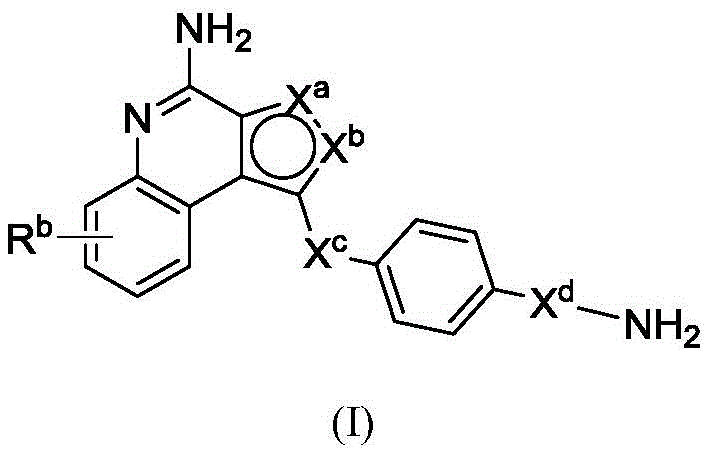
or a pharmaceutically acceptable salt, tautomer, stereoisomer, and/or mixture of stereoisomers thereof; wherein,
Xaand XbOne is-N ═ and the other is-N (R)a)-;
RaIs C1-C6-alkyl, cycloalkyl, or cycloalkylalkyl;
Xcand XdAre each independently C1-C6-an alkylene group; and
Rbis H, quinolinyl, or-C (O) OCH3。
In a second aspect, the invention provides antibody conjugates comprising residues of compounds of formula (I) and the subformulae and embodiments thereof. In some or any embodiment, the conjugate has a structure represented by formula (V),  Wherein Ab is an antibody or antigen-binding fragment thereof; l is a linker; PA is a payload comprising a residue represented by formula (I), (II), or (III) or embodiments thereof (in some embodiments, a moiety of formula (I '), (II ') or (III ')); subscript n is an integer selected from 1 to 30; or a pharmaceutically acceptable salt, solvate, stereoisomer, tautomer, or mixture of regioisomers thereof. The conjugates are useful in methods of treating and preventing cell proliferation and cancer, methods of detecting cell proliferation and cancer, and methods of diagnosing cell proliferation and cancer. The conjugates are useful in methods of treating and preventing inflammatory diseases and disorders.
In another aspect, the invention provides compositions comprising a compound of formula (I), (II) or (III) or embodiments thereof, or an antibody conjugate of formula (V). In some embodiments, the composition is a pharmaceutical composition. Any suitable pharmaceutical composition may be used. In a further aspect, the invention provides a kit comprising a compound of formula (I), (II) or (III) or embodiments thereof, or an antibody conjugate of formula (V); or a pharmaceutical composition thereof.
In another aspect, the invention provides methods of using the compounds or antibody drug conjugates described herein. In some embodiments, the method is a method of delivering one or more payload moiety to a target cell or tissue. In some embodiments, the method is a method of treatment. In some embodiments, the method is a diagnostic method. In some embodiments, the method is an analytical method. In some embodiments, the compound or antibody drug conjugate is used to treat a disease or disorder. In some cases, the disease or disorder is selected from cancer, and/or an inflammatory disease or disorder.
The invention also provides the use of the compounds of the invention and antibody conjugates thereof for the treatment of cancer, and/or inflammatory diseases or disorders.
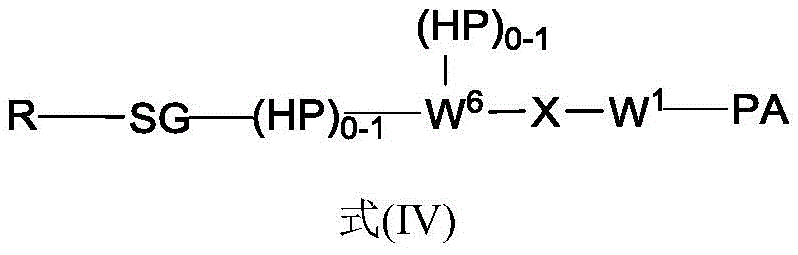
In another aspect, the invention provides a linker payload of formula (IV),

or a pharmaceutically acceptable salt, solvate, stereoisomer, tautomer, or mixture of regioisomers thereof, wherein:
W1is a single bond, or W1Absent, or a divalent linking group;
x is absent, or X is Subscript b is an integer selected from 1 to 10;
each RAWhen present, is independently selected from C at each occurrence1-3An alkyl group;
RT, when present, is a release trigger group;
each HP, when present, is independently a hydrophilic group;
W6is a peptide residue, or W6Is absent;
SG is absent, or SG is a divalent spacer group;
r is a coupling group; and
PA has the structure of formula (I'):
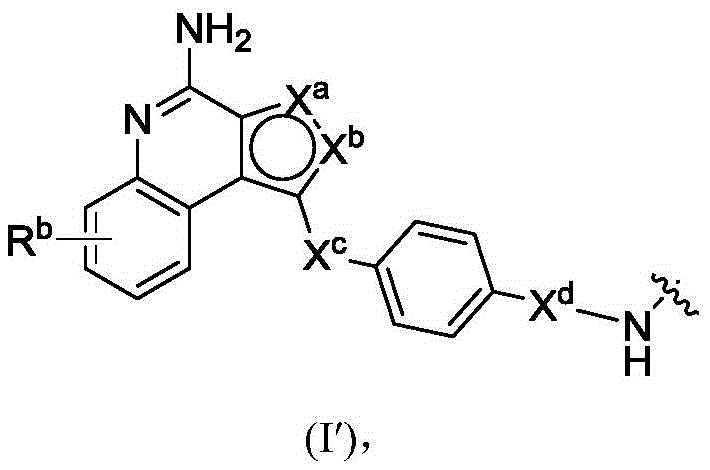
or a tautomer, or mixture of regioisomers thereof, wherein Xa、Xb、Xc、Xd、RbAnd all other groups have the definitions described above for the compounds of formula (I).
Brief description of the drawings
Figure 1 provides in vitro data demonstrating the ability of compound 1 to stimulate activation of several immune cell types from human PBMC (peripheral blood mononuclear cells) -monocytes (figure 1A), B cells (figure 1B), cdcs (figure 1C), and pdcs (figure 1D).
Figure 2 provides in vitro data demonstrating the ability of compound 1 (compared to compound a and resiquimod) to stimulate activation of several immune cell types from cynomolgus monkey PBMC-monocytes (figure 2A), B cells (figure 2B), and DCs (figure 2C).
Figure 3 provides in vitro data demonstrating the ability of compound 1 (compared to compound a) to stimulate activation of several immune cell types from mouse splenocytes-monocytes (figure 3A), macrophages (figure 2B), cDC (figure 3C), and pDC (figure 3D).
Figure 4 provides in vitro data demonstrating the ability of compound 1 (compared to compound a and resiquimod) to produce cytokine release from human PBMC-IL-6 (figure 4A), MCP-1 (figure 4B), and IL1Ra (figure 4C).
Figure 5 provides in vitro data demonstrating the ability of compound 1 (compared to compound a and resiquimod) to produce cytokine release from cynomolgus monkey PBMC-IL-6 (figure 5A) and MCP-1 (figure 5B).
FIG. 6 provides in vitro data demonstrating the ability of Compound 1 (compared to Compound A and Resiquimod) to produce cytokine release from mouse splenocytes-IL-6 (FIG. 6A), MCP-1 (FIG. 6B), TNFa (FIG. 6C), and IP-10 (FIG. 6D).
Detailed Description
Toll-like receptor 7(TLR7) agonists and antibody conjugates thereof for the treatment of cancer and/or inflammatory disorders are described. In some cases, the compounds described herein are selective for TLR7 and do not affect TLR 8.
Definition of
Unless defined otherwise, all technical and scientific terms used herein have the same meaning as commonly understood by one of ordinary skill in the art to which this invention belongs. In many instances, terms of commonly understood meanings are defined herein for clarity and/or ease of reference, and the inclusion of such definitions herein should not be taken to represent a departure from what is commonly understood in the art. The techniques and procedures described or referred to in this disclosure are generally well understood by those of ordinary skill in the art and are often employed using conventional methods, such as, for example, the well-known Green&Sambrook.,Molecular Cloning:A Laboratory Manual 4thed. (2012), Cold Spring Harbor Laboratory Press, Cold Spring Harbor, NY and Ausubel et al, Current Protocols in Molecular Biology, John Wiley&Molecular cloning methods described in Sons. Methods involving the use of commercially available kits and reagents, where appropriate, are generally performed according to manufacturer-defined protocols and conditions/parameters, unless otherwise indicated.
As used herein, the singular forms "a", "an" and "the" include plural referents unless the context clearly dictates otherwise.
The term "about" means and encompasses the indicated value as well as ranges both above and below this value. In certain embodiments, the term "about" means the specified value ± 10%, ± 5% or ± 1%. In certain embodiments, the term "about" means the specified value ± one standard deviation of the value. In certain embodiments, for example, for a logarithmic scale (e.g., pH), the term "about" means the specified value ± 0.3, ± 0.2 or ± 0.1.
The term "immunoglobulin" refers to a class of structurally related proteins that typically comprise two pairs of polypeptide chains: a pair of light (L) chains and a pair of counterweights (H)And (3) a chain. In a "whole immunoglobulin", all four of these chains are linked to each other by disulfide bonds. The structure of immunoglobulins has been characterized in detail. See, e.g., Paul, Fundamental Immunology 7th ed., Ch.5(2013) Lippincott Williams&Wilkins, philiadelphia, PA. Briefly, each heavy chain typically comprises a heavy chain variable region (V)HOr VH) and heavy chain constant region (C)HOr CH). The heavy chain constant region generally comprises three domains, abbreviated CH1 (or CH1), CH2 (or CH2) and CH3 (or CH 3). Each light chain typically comprises a light chain variable region (V)LOr VL) and a light chain constant region. The light chain constant region generally comprises a domain, abbreviated C LOr CL.
The term "antibody" is used in the present invention in its broadest sense. Antibodies include whole antibodies (e.g., whole immunoglobulins) and antibody fragments (e.g., antigen-binding fragments of antibodies). The antibody comprises at least one antigen binding domain. An example of an antigen binding domain is represented by VH-VLA dimer-forming antigen-binding domain.
VHRegion and VLThe regions may be further subdivided into hypervariable regions ("hypervariable regions (HVRs)", also known as "Complementarity Determining Regions (CDRs)") interspersed with more conserved regions. The more conserved regions are called Framework Regions (FR). Each VHAnd VLTypically comprising three CDRs and four FRs (from N-terminus to C-terminus) arranged in the following order: FR1-CDR1-FR2-CDR2-FR3-CDR3-FR 4. The CDRs are involved in antigen binding and affect the specificity of the antigen and the binding affinity of the antibody. See Kabat et al, Sequences of Proteins of Immunological Interest 5th ed. (1991) Public Health Service, National Institutes of Health, Bethesda, Md., which is incorporated herein by reference in its entirety.
The light chain of any vertebrate species can be assigned to one of two types, termed kappa and lambda, depending on the sequence of the constant domains.
The heavy chains of any vertebrate species can be assigned to one of five different types (or isotypes) as follows: IgA, IgD, IgE, IgG and IgM. These types are also named α, δ, ε, γ, and μ, respectively. IgG and IgA types are further classified into subclasses based on sequence differences and function. Humans express the following subclasses: IgG1, IgG2, IgG3, IgG4, IgA1, and IgA 2.
The amino acid sequence boundaries of the CDRs can be determined by one of ordinary skill in the art using any of a number of known numbering schemes, including Kabat et al, supra ("Kabat" numbering scheme); Al-Lazikani et Al, 1997, J.mol.biol.,273: 927-; MacCallum et al, 1996, J.mol.biol.262:732-745 ("Contact" numbering scheme); lefranc et al, dev.comp.immunol.,2003,27:55-77 ("IMGT" numbering scheme); and Honegge and Pl ü ckthun, J.Mol.biol.,2001,309:657-70 ("AHo" numbering scheme), each of which is incorporated herein by reference in its entirety.
CDRs can be assigned, for example, using antibody numbering software such as Abnum, available from www.bioinf.org.uk/abs/Abnum, and described in Abhinandan and Martin, Immunology,2008,45: 3832-.
When referring to residues in the constant region of an antibody heavy chain, the "EU numbering scheme" is typically used (e.g., Kabat et al, supra). Unless otherwise indicated, EU numbering scheme is used to refer to residues in the constant region of the heavy chain of an antibody described herein.
An "antibody fragment" comprises a portion of an intact antibody, such as the antigen binding or variable region of an intact antibody. Antibody fragments include, for example, Fv fragments, Fab fragments, F (ab')2Fragments, Fab' fragments, scFv (sFv) fragments, and scFv-Fc fragments.
An "Fv" fragment comprises a non-covalently linked dimer of one heavy chain variable domain and one light chain variable domain.
A "Fab" fragment comprises, in addition to the heavy and light chain variable domains, the constant domain of the light chain and the first constant domain of the heavy chain (C)H1). Fab fragments can be generated, for example, by papain digestion of full-length antibodies or by recombinant methods.
“F(ab′)2"fragments contain two atoms in the hinge regionFab' fragments linked nearby by a disulfide bond. F (ab')2Fragments can be generated, for example, by pepsin digestion of an intact antibody or by recombinant methods. F (ab') fragments can be dissociated by, for example, treatment with beta-mercaptoethanol.
V comprising "Single chain Fv" or "sFv" or "scFv" antibody fragments in a Single polypeptide chainHDomains and VLA domain. VHAnd VLThe linkage is typically performed by a peptide linker. See Pl ü ckthun A, (1994). Antibodies from Escherichia coli.&Moore G.P, (Eds.), The Pharmacology of Monoclonal Antibodies vol.113(pp.269-315), Springer-Verlag, New York, which is incorporated herein by reference in its entirety.
The "scFv-Fc" fragment comprises an scFv attached to an Fc domain. For example, the Fc domain may be attached to the C-terminus of the scFv. Directionality of variable domains in scFv can be visualized after Fc domains (i.e., VH-VLOr VL-VH) And is VHOr VL. Any suitable Fc domain known in the art or described herein may be used. In certain instances, the Fc domain comprises an IgG1 Fc domain.
The term "monoclonal antibody" refers to an antibody from a population of substantially homogeneous antibodies. A population of substantially homogeneous antibodies comprises substantially similar antibodies that bind to the same epitope, excluding variants that normally occur during the production of monoclonal antibodies. Such variants are usually present in only small amounts. Monoclonal antibodies are generally obtained by a process involving the selection of a single antibody from a plurality of antibodies. For example, the selection process may be to select a unique clone from a collection of multiple clones, such as hybridoma clones, phage clones, yeast clones, bacterial clones, or other recombinant DNA clones. The selected antibody can further be altered, for example, to improve affinity for the target ("affinity maturation"), to humanize the antibody, to improve its production in cell culture, and/or to reduce its immunogenicity in the subject.
The term "chimeric antibody" refers to an antibody in which a portion of the heavy and/or light chain is derived from a particular source or species, while the remainder of the heavy and/or light chain is derived from a different source or species.
"humanized" forms of non-human antibodies refer to chimeric antibodies that contain minimal sequences derived from the non-human antibody. Humanized antibodies are typically human immunoglobulins (recipient antibody) in which residues from one or more CDRs are replaced by residues from one or more CDRs from a non-human antibody (donor antibody). The donor antibody can be any suitable non-human antibody, such as a mouse, rat, rabbit, chicken or non-human primate antibody having the desired specificity, affinity, or biological effect. In some examples, the recipient antibody selected framework region residues through donor antibody corresponding framework region residues were replaced. Humanized antibodies may also comprise residues that are not present in the recipient antibody or the donor antibody. Such modifications can be made to further improve antibody function. See Jones et al, Nature,1986,321:522-525 for further details; riechmann et al, Nature,1988,332: 323-E329; and Presta, curr, Op, Structure, biol.,1992,2: 593-.
A "human antibody" is an antibody having an amino acid sequence corresponding to the amino acid sequence of an antibody produced by a human or human cell, or derived from a non-human source using a human antibody repertoire or human antibody coding sequence (e.g., obtained from a human source or redesigned). Human antibodies specifically exclude humanized antibodies.
An "isolated antibody" refers to an antibody that has been separated from and/or recovered from a component in its natural environment. Components of the natural environment may include enzymes, hormones, and other proteinaceous or nonproteinaceous substances. In some embodiments, the isolated antibody is purified to an extent sufficient to obtain at least 15N-terminal or internal amino acid sequence residues, e.g., by using a rotor sequencer. In some embodiments, the isolated antibody is purified to homogeneity as detected by Coomassie blue (Coomassie blue) or silver staining under reducing or non-reducing conditions by gel electrophoresis (e.g., SDS-PAGE). Isolated antibodies include antibodies in situ within recombinant cells, as at least one component of the antibody's natural environment is not present. In some aspects, the isolated antibody is prepared by at least one purification step.
In some embodiments, the isolated antibody is purified to at least 80, 85, 90, 95, or 99 weight%. In some embodiments, the isolated antibody is purified to at least 80%, 85%, 90%, 95%, or 99% by volume. In some embodiments, the isolated antibody is provided as a solution comprising at least 85%, 90%, 95%, 98%, 99% to 100% by weight of the antibody. In some embodiments, the isolated antibody is provided as a solution comprising at least 85%, 90%, 95%, 98%, 99% to 100% (by volume) of the antibody.
"affinity" refers to the sum strength of a non-covalent interaction between a single binding site of a molecule (e.g., an antibody) and its binding partner (e.g., an antigen). "binding affinity" as used herein, unless otherwise indicated, refers to the inherent binding affinity that reflects a 1:1 interaction between members of a binding pair (e.g., antibody and antigen). The affinity of a molecule X for its partner Y can generally be the dissociation constant (K)D) And (4) showing. Affinity can be determined by conventional methods known in the art, including those described herein. Affinity can be achieved using, for example, Surface Plasmon Resonance (SPR) techniques such as The instrument performs the measurement. In some embodiments, affinity is determined at 25 ℃.
With respect to binding of an antibody to a target molecule, the terms "specifically binds," "specifically binds to …," "specific for," "selectively binds," and "selective for" a particular antigen (e.g., a polypeptide target) or an epitope of a particular antigen mean that there is measurably different binding than non-specific or non-selective interaction. Specific binding can be determined, for example, by determining the binding of the molecule as compared to the binding of a control molecule. Specific binding can also be determined by competition with a control molecule that mimics the binding site of an antibody to the target. In this case, specific binding is indicated if the binding of the antibody to the target is competitively inhibited by the control molecule.
An "affinity matured" antibody is one which has one or more alterations in one or more CDRs or FRs which result in an increase in the affinity of the antibody for its antigen as compared to a parent antibody which does not have the alterations. In one embodiment, the affinity matured antibody has nanomolar or picomolar affinity for the antigen of interest. Affinity matured antibodies can be generated using a variety of methods known in the art. For example, Marks et al (Bio/Technology,1992,10:779-783, which is incorporated herein by reference in its entirety) describe the identification of the marker by VHAnd VLDomain replacement results in affinity maturation. Random mutagenesis of CDR and/or framework residues is described, for example, in: barbas et al (Proc. Nat. Acad. Sci. U.S.A.,1994,91: 3809-; schier et al, Gene,1995,169: 147-; yelton et al, J.Immunol.,1995,155: 1994-2004; jackson et al, J.Immunol.,1995,154: 3310-33199; and Hawkins et al, J.mol.biol.,1992,226:889-896, each of which is incorporated by reference herein in its entirety.
The term "amino acid" refers to twenty common naturally occurring amino acids. Naturally occurring amino acids include alanine (Ala; A), arginine (Arg; R), asparagine (Asn; N), aspartic acid (Asp; D), cysteine (Cys; C); glutamic acid (Glu; E), glutamine (Gln; Q), glycine (Gly; G); histidine (His; H), isoleucine (Ile; I), leucine (Leu; L), lysine (Lys; K), methionine (Met; M), phenylalanine (Phe; F), proline (Pro; P), serine (Ser; S), threonine (Thr; T), tryptophan (Trp; W), tyrosine (Tyr; Y) and valine (Val; V), and less common pyrrolysine and selenocysteine. Natural amino acids also include citrulline. Naturally encoded amino acids include post-translational variants of the 22 naturally occurring amino acids, such as prenylated amino acids, myristoylated amino acids, palmitoylated amino acids, N-linked glycosylated amino acids, O-linked glycosylated amino acids, phosphorylated amino acids, and acylated amino acids. The term "amino acid" also encompasses non-natural (or unnatural) or synthetic alpha, beta, gamma, or delta amino acids, including, but not limited to, the amino acids found in proteins, i.e., glycine, alanine, valine, leucine, isoleucine, methionine, phenylalanine, tryptophan, proline, serine, threonine, cysteine, tyrosine, asparagine, glutamine, aspartic acid, glutamic acid, lysine, arginine, and histidine. In certain embodiments, the amino acid is in the L-configuration. Alternatively, the amino acid may be alanyl, valyl, leucyl, isoleucyl, prolyl, phenylalanyl, tryptophanyl, methionyl, glycyl, seryl, threonyl, cysteinyl, tyrosyl, asparaginyl, glutaminyl, aspartyl, glutamyl, lysyl, arginyl, histidyl, beta-alanyl, beta-valyl, beta-leucyl, beta-isoleucyl, beta-prolyl, beta-phenylalanyl, beta-tryptophanyl, beta-methionyl, beta-glycyl, beta-seryl, beta-threonyl, beta-cysteinyl, beta-tyrosyl, beta-asparaginyl, beta-glutaminyl, tyrosyl, beta-glutaminyl, histidyl, beta-glutaminyl, histidyl, beta-glutaminyl, beta-histidyl, beta-glutamyl, beta-glutaminyl, beta-histidyl, beta-glutaminyl, etc, Derivatives of beta-aspartyl, beta-glutamyl, beta-lysyl, beta-arginyl, or beta-histidyl. The unnatural amino acid is not a proteinogenic amino acid or a post-translationally modified variant thereof. In particular, the term "unnatural amino acid" refers to an amino acid that is not one of the 20 common amino acids or pyrrolysine or selenocysteine or post-translationally modified variants thereof.
The term "conjugate" or "antibody conjugate" refers to an antibody that is linked to one or more payload moiety. The antibody may be any antibody described herein. The payload may be any payload described herein. The antibody can be directly linked to the payload via a covalent bond, or the antibody can be indirectly linked to the payload via a linker. Typically, the linker is covalently linked to the antibody and also covalently linked to the payload. The term "antibody drug conjugate" or "ADC" refers to a conjugate in which at least one payload is a therapeutic moiety, such as a drug.
"pAMF" mutations refer to variant phenylalanine residues added to or substituted into a polypeptide, i.e., p-azidomethyl-L-phenylalanine.
The term "payload" refers to the portion of a molecular moiety that can be conjugated to an antibody. In particular embodiments, the payload is selected from the group consisting of a therapeutic moiety and/or a labeling moiety as described herein.
The term "linker" refers to a moiety of a molecular group capable of forming at least two covalent bonds. Typically, the linker is capable of forming at least one covalent bond with the antibody and at least one other covalent bond with the payload. In certain embodiments, the linker may form more than one covalent bond with the antibody. In certain embodiments, a linker may form more than one covalent bond with a payload, or may form multiple covalent bonds with more than one payload. After the linker forms a bond with the antibody or the payload, or both, the remaining structure, i.e., the residue of the linker after formation of one or more covalent bonds, may still be referred to as a "linker" in the present invention. The term "linker precursor" refers to a linker having one or more reactive groups capable of forming a covalent bond with an antibody or a payload, or both. In some embodiments, the linker is a cleavable linker. For example, a cleavable linker may be released by a biolabile function, which may or may not be engineered. In some embodiments, the linker is a non-cleavable linker. For example, the non-cleavable linker may be a linker that is released upon degradation of the antibody.
When referring to the compounds provided by the present invention, the following terms have the following meanings, unless otherwise indicated. Unless defined otherwise, all technical and scientific terms used herein have the same meaning as commonly understood by one of ordinary skill in the art. If there are multiple definitions of a term of the present invention, those in this section prevail unless otherwise indicated.
"alkoxy" and "alkoxy group" refer to the group-OR "where R" is alkyl OR cycloalkyl. For example, alkoxy groups include methoxy, ethoxy, n-propoxy, isopropoxy, n-butoxy, tert-butoxy, sec-butoxy, n-pentoxy, n-hexoxy, 1, 2-dimethylbutoxy, and the like.
The term "alkyl", as used herein, unless otherwise indicated, refers to a saturated straight or branched chain hydrocarbon. In certain embodiments, the alkyl group is a primary, secondary, or tertiary hydrocarbon. In certain embodiments, the alkyl group includes 1 to 10 carbon atoms, i.e., C1-C10An alkyl group. In certain embodiments, the alkyl is C1-6Alkyl or lower alkyl. In certain embodiments, the alkyl group is selected from the group consisting of methyl, ethyl, propyl, isopropyl, butyl, isobutyl, sec-butyl, tert-butyl, pentyl, isopentyl, neopentyl, hexyl, isohexyl, 3-methylpentyl, 2-dimethylbutyl, and 2, 3-dimethylbutyl.
The term "alkylene" as used herein, unless otherwise specified, refers to a divalent alkyl group, said alkyl group being as defined herein.
"alkenyl" refers to an ethylenically unsaturated hydrocarbon group, in certain embodiments, having up to about 11 carbon atoms or 2-6 carbon atoms, which may be straight or branched chain, and having at least 1 or 1-2 sites of ethylenic unsaturation.
"alkenylene" refers to a divalent alkenyl group as defined herein. Lower alkenylene is C2-C6-alkenylene.
"alkynyl" refers to an acetylenically unsaturated hydrocarbon group, in certain embodiments, having up to about 11 carbon atoms or 2-6 carbon atoms, which may be straight or branched chain, and having at least 1 or 1-2 sites of alkynyl unsaturation. Non-limiting examples of alkynyl groups include acetylenic ethynyl (-C ≡ CH), propargyl (-CH)2C.ident.CH) and the like.
"alkynylene" means a divalent alkynyl group as defined herein. Lower alkynylene is C2-C6-alkynylene.
"amino" means-NH2A group.
The term "alkylamino", as used herein, unless otherwise indicated, refers to the group-NHR ", wherein R" is C1-10Alkyl radicals, e.g. of the present inventionAre well defined. In some or any embodiment, the alkylamino group is C 1-6An alkylamino group.
The term "dialkylamino", as used herein, unless otherwise indicated, refers to a group-NR "R" wherein each R "is independently C1-10Alkyl, as defined herein. In some or any embodiment, the dialkylamino group is di-C1-6An alkylamino group.
The term "aryl" as used herein, unless otherwise specified, refers to phenyl, biphenyl, or naphthyl. The term includes both substituted and unsubstituted moieties. The aryl group may be partially substituted with any of the described groups including, but not limited to, one or more groups selected from the group consisting of: halogen (fluoro, chloro, bromo or iodo), alkyl, haloalkyl, hydroxy, amino, alkylamino, arylamino, alkoxy, aryloxy, nitro, cyano, sulfonic acid, sulfate, phosphonic acid, phosphate or phosphonate, or unprotected, or protected as necessary, as known to those skilled in the art, for example, as taught in Greene, et al, Protective Groups in Organic Synthesis, John Wiley and Sons, Second Edition, 1991; and wherein the aryl group in both the arylamino and aryloxy substituents is not further substituted.
The term "arylene" as used herein, unless otherwise specified, refers to a divalent aryl group as defined herein.
"Alkylenearyl" refers to an arylene group, as defined herein, wherein the aryl ring is substituted with 1 or 2 alkyl groups. "substituted alkylenearyl" means an alkylenearyl group, as defined herein, wherein the arylene group is further substituted, as defined for aryl.
"Arylalkylene" means-CH2-arylene-, -arylene-CH2-, or-CH2-arylene-CH2-a group wherein arylene is as defined herein. "substituted arylenealkyl" refers to an arylenealkyl group, as defined herein, wherein the arylenealkyl group is substituted, e.g.As defined for aryl.
"carboxy" or "carboxy group" refers to the group-C (O) OH.
The term "cycloalkyl", as used herein, unless otherwise indicated, refers to a saturated cyclic hydrocarbon. In certain embodiments, the cycloalkyl group may be a saturated, and/or bridged, and/or unbridged, and/or fused bicyclic group. In certain embodiments, the cycloalkyl group contains 3 to 10 carbon atoms, i.e., C 3To C10A cycloalkyl group. In some embodiments, the cycloalkyl has 3-15 (C)3-15)、3-10(C3-10) Or 3-7 (C)3-7) Carbon atoms. In certain embodiments, the cycloalkyl group is cyclopropyl, cyclobutyl, cyclopentyl, cyclohexyl, cyclohexylmethyl, cycloheptyl, bicyclo [2.1.1]Hexyl, bicyclo [2.2.1]Heptyl, decalinyl, or adamantyl.
The term "cycloalkylene" as used herein refers to a divalent cycloalkyl group, as defined herein. Lower cycloalkylene is C3-C6-cycloalkylene.
The term "cycloalkylalkyl" as used herein, unless otherwise specified, refers to an alkyl group as defined herein substituted with 1 or 2 cycloalkyl groups as defined herein.
The term "heterocycloalkyl" refers to a monovalent monocyclic or polycyclic non-aromatic ring system in which one or more of the ring atoms is a heteroatom independently selected from O, S, or N, and the remaining ring atoms of the non-aromatic ring are carbon atoms. In some or any embodiment, a heterocycloalkyl monovalent monocyclic or polycyclic fully saturated ring system. In certain embodiments, the heterocycloalkyl group has 3 to 20, 3 to 15, 3 to 10, 3 to 8, 4 to 7, 4 to 11, or 5 to 6 ring atoms. The heterocycloalkyl radical may be attached to the main structure at any heteroatom or carbon atom that results in the formation of a stable compound. In certain embodiments, the heterocycloalkyl group is a monocyclic, bicyclic, tricyclic, or tetracyclic ring system, which may include fused or bridged ring systems, and wherein the nitrogen or sulfur atoms may optionally be oxidized and the nitrogen atoms may optionally be quaternized. In some embodiments, heterocycloalkyl groups include, but are not limited to, 2, 5-diazabicyclo [2.2.2] octyl, decahydroisoquinolinyl, dihydrobenzisoxazinyl, dihydrofuranyl, dihydroisoindolyl, dihydropyranyl, dihydropyrazolyl, dihydropyrazinyl, dihydropyridinyl, dihydropyrimidyl, dihydropyrrolyl, dioxolanyl, 1, 4-dithianyl, furanonyl, imidazolidinyl, imidazolinyl, indolinyl, isothiazolidinyl, isoxazolidinyl, morpholinyl, octahydroindolyl, octahydroisoindolyl, oxazolidinonyl, oxiranyl, piperazinyl, piperidinyl, 4-piperidinonyl, pyrazolidinyl, pyrazolinyl, pyrrolidinyl, pyrrolinyl, quinuclidinyl, tetrahydrofuranyl, tetrahydroisoquinolinyl, tetrahydropyranyl, tetrahydrothienyl, Thiazolidinyl, thiazolidinyl, tetrahydroquinolinyl and 1,3, 5-trithiaheterocyclohexyl. In certain embodiments, heterocycloalkyl groups may also be optionally substituted as described herein. In some or any embodiment, heterocycloalkyl is substituted with 1, 2, or 3 groups independently selected from halo (fluoro, chloro, bromo, or iodo), alkyl, haloalkyl, hydroxy, amino, alkylamino, and alkoxy. In some embodiments, a heterocycloalkyl group may contain 1, 2, 3, or 4 heteroatoms. One skilled in the art will recognize that a heterocycloalkyl group of 4 atoms may typically contain 1 or 2 heteroatoms, a heterocycloalkyl group of 5-6 atoms may typically contain 1, 2, or 3 heteroatoms, and a heterocycloalkyl group of 7-10 atoms may typically contain 1, 2, 3, or 4 heteroatoms.
"Heterocycloalkylene" refers to a divalent heterocycloalkyl group, as defined herein.
The term "heteroaryl" refers to a monovalent monocyclic aryl group and/or polycyclic aryl group in which at least one aromatic ring contains one or more heteroatoms in the ring independently selected from O, S and N. Each ring of the heteroaryl group can contain 1 or 2O atoms, 1 or 2S atoms, and/or 1 to 4N atoms, provided that the total number of heteroatoms in each ring is 4 or less, and each ring contains at least one carbon atom. In certain embodiments, heteroaryl groups have 5-20, 5-15, or 5-10 ring atoms. The heteroaryl group may be attached to the rest of the molecule through a nitrogen or carbon atom. In some embodiments, monocyclic heteroaryl groups include, but are not limited to, furyl, imidazolyl, isothiazolyl, isoxazolyl, oxadiazolyl, oxazolyl, pyrazinyl, pyrazolyl, pyridazinyl, pyridyl, pyrimidinyl, pyrrolyl, imidazolyl, triazolyl, thiadiazolyl, thiazolyl, thienyl, tetrazolyl, triazinyl, and triazolyl. Examples of bicyclic heteroaryl groups include, but are not limited to, benzofuranyl, benzimidazolyl, benzisoxazolyl, benzopyranyl, benzothiadiazolyl, benzothiazolyl, benzothienyl, benzotriazolyl, benzoxazolyl, furopyridinyl, imidazopyridinyl, imidazothiazolyl, indolizinyl, indolyl, indazolyl, isobenzofuranyl, isobenzothienyl, isoindolyl, isoquinolyl, isothiazolyl, naphthyridinyl, oxazolopyridinyl, phthalazinyl, pteridinyl, purinyl, pyridopyridinyl, pyrrolopyridinyl, quinolinyl, quinoxalinyl, quinazolinyl, thiadiazolopyrimidyl, and thienopyridinyl. Examples of tricyclic heteroaryl groups include, but are not limited to, acridinyl, benzindolyl, carbazolyl, dibenzofuranyl, pyridyl (perimidinyl), phenanthrolinyl, phenanthridinyl, phenopyrazinyl (phenarasazinyl), phenazinyl, phenothiazinyl, phenoxazinyl, and xanthenyl. In certain embodiments, heteroaryl groups may also be optionally substituted as described herein. "substituted heteroaryl" is heteroaryl substituted as defined for aryl.
The term "heteroarylene" refers to a divalent heteroaryl group, as defined herein. A "substituted heteroarylene" is a heteroarylene substituted as defined for aryl.
The term "protecting group" as used herein, unless otherwise specified, refers to a group added to an oxygen, nitrogen or phosphorus atom to prevent further reaction or for other purposes. A wide variety of oxygen protecting Groups and nitrogen protecting Groups are known to those skilled in the art of Organic Synthesis (see, e.g., those described in Greene, et al, Protective Groups in Organic Synthesis, John Wiley and Sons, Fourth Edition,2006, which is hereby incorporated by reference).
"pharmaceutically acceptable salt" refers to any salt of a compound provided herein that retains its biological properties and is non-toxic or otherwise undesirable for pharmaceutical use. Such salts can be derived from a variety of organic and inorganic counterions well known in the art. Such salts include, but are not limited to: (1) with organic or inorganic acids such as hydrochloric acid, hydrobromic acid, sulfuric acid, nitric acid, phosphoric acid, sulfamic acid, acetic acid, trifluoroacetic acid, trichloroacetic acid, propionic acid, caproic acid, cyclopentylpropionic acid, glycolic acid, glutaric acid, pyruvic acid, lactic acid, malonic acid, succinic acid, sorbic acid, ascorbic acid, malic acid, maleic acid, fumaric acid, tartaric acid, citric acid, benzoic acid, 3- (4-hydroxybenzoyl) benzoic acid, picric acid, cinnamic acid, mandelic acid, phthalic acid, lauric acid, methanesulfonic acid, ethanesulfonic acid, 1, 2-ethanedisulfonic acid, 2-hydroxyethanesulfonic acid, benzenesulfonic acid, 4-chlorobenzenesulfonic acid, 2-naphthalenesulfonic acid, 4-toluenesulfonic acid, camphoric acid, camphorsulfonic acid, 4-methylbicyclo [2.2.2] oct-2-ene-1-carboxylic acid, heptonic acid, acid addition salts formed from 3-phenylpropionic acid, trimethylacetic acid, t-butylacetic acid, lauryl sulfuric acid, gluconic acid, benzoic acid, glutamic acid, hydroxynaphthoic acid, salicylic acid, stearic acid, cyclohexylsulfamic acid, quinic acid, muconic acid, and the like; or (2) when an acidic proton is present in the parent compound, a base addition salt is formed (a) by a salt formed when displaced by a metal ion, e.g., an alkali metal ion, alkaline earth metal ion or aluminum ion, or an alkali metal or alkaline earth metal hydroxide, e.g., sodium, potassium, calcium, magnesium, aluminum, lithium, zinc and barium, or ammonia, or (b) by coordination with an organic base, e.g., an aliphatic, alicyclic or aromatic organic amine, e.g., ammonia, methylamine, dimethylamine, diethylamine, picoline, ethanolamine, diethanolamine, triethanolamine, ethylenediamine, lysine, arginine, ornithine, choline, N' -dibenzylethylenediamine, chloroprocaine, diethanolamine, procaine, N-benzylphenethylamine, N-methylglucamine piperazine, tris (hydroxymethyl) -aminomethane, tetramethylammonium hydroxide, or the like.
By way of example only, and not limitation, pharmaceutically acceptable salts further include sodium, potassium, calcium, magnesium, ammonium, tetraalkylammonium, and the like; when the compounds contain basic functional groups, salts of non-toxic organic or inorganic acids, such as hydrohalides, for example hydrochloride and hydrobromide, sulfate, phosphate, sulfamate, nitrate, acetate, trifluoroacetate, trichloroacetate, propionate, hexanoate, cyclopentylpropionate, glycolate, glutarate, pyruvate, lactate, malonate, succinate, sorbate, ascorbate, malate, maleate, fumarate, tartrate, citrate, benzoate, 3- (4-hydroxybenzoyl) benzoate, picrate, cinnamate, mandelate, phthalate, laurate, methanesulfonate (methanesulfonate), ethanesulfonate, 1, 2-ethanedisulfonate, 2-hydroxyethanesulfonate, benzenesulfonate (benzenesulfonate), 4-chlorobenzenesulfonate, 2-naphthalenesulfonate, 4-toluenesulfonate, camphorate, camphorsulfonate, 4-methylbicyclo [2.2.2] -oct-2-ene-1-carboxylate, glucoheptonate, 3-phenylpropionate, pivalate, t-butylacetate, lauryl sulfate, gluconate, benzoate, glutamate, hydroxynaphthoate, salicylate, stearate, cyclohexylsulfamate, quinic acid salt, muconate, and the like.
With respect to compositions, the term "substantially free of" or "substantially absent" of a stereoisomer means that the composition comprises at least 85% or 90%, and in certain embodiments, 95%, 98%, 99%, or 100% by weight of the designated enantiomer of the compound. In certain embodiments, the methods and compounds provided herein involve a compound that is substantially free of enantiomers.
Similarly, with respect to compositions, the term "isolated" means that the composition comprises at least 85%, 90%, 95%, 98%, 99% to 100% by weight of the compound, the remainder comprising other chemicals or enantiomers.
By "solvate" is meant that the compound provided by the present invention or salt thereof further includes a stoichiometric or non-stoichiometric amount of solvent bound by non-covalent intermolecular forces. When the solvent is water, the solvate is a hydrate.
"isotopic composition" refers to the amount of each isotope present for a given atom, and "natural isotopic composition" refers to the naturally occurring isotopic composition or abundance of a given atom. Atoms containing their natural isotopic composition may also be referred to herein as "non-enriched" atoms. Unless otherwise indicated, the atoms of the compounds described herein are intended to represent any stable isotope of the described atoms. For example, when a position is specifically designated as "H" or "hydrogen," the position is understood to be hydrogen with its natural isotopic composition, unless otherwise specified.
"isotopic enrichment" refers to the percentage of incorporation of the amount of a particular isotope at a given atom in a molecule in place of the natural isotopic abundance of that atom. For example, deuterium enrichment of 1% at a given position means that 1% of the molecules in a given sample contain deuterium at the specified position. Since the natural distribution of deuterium is about 0.0156%, deuterium enrichment at any position in the compound synthesized using non-enriched starting materials is about 0.0156%. Isotopic enrichment of compounds provided herein can be determined using conventional analytical methods known to those skilled in the art, including mass spectrometry and nuclear magnetic resonance spectroscopy.
"isotopically enriched" refers to atoms having an isotopic composition other than the natural isotopic composition of the atoms. "isotopically enriched" can also refer to compounds containing at least one atom having an isotopic composition other than the natural isotopic composition of the atom.
As used herein, "alkyl", "alkylene", "alkylamino", "dialkylamino", "cycloalkyl", "aryl", "arylene", "alkoxy", "amino", "carboxy", "heterocycloalkyl", "heteroaryl", "heteroarylene", "carboxy group" and "amino acid" groups optionally contain deuterium at one or more positions where a hydrogen atom is present, and wherein the deuterium composition of said atoms is not a natural isotopic composition.
The "alkyl", "alkylene", "alkylamino", "dialkylamino", "cycloalkyl", "aryl", "arylene", "alkoxy", "amino", "carboxy", "heterocycloalkyl", "heteroaryl", "heteroarylene", "carboxy group" and "amino acid" groups used herein optionally also contain C-13 in amounts other than the natural isotopic composition.
EC used in the invention50Refers to a dose, concentration, or amount of a particular test compound that elicits a dose-dependent response that is 50% of the maximal expression of a particular response that the particular test compound induces, elicits, or potentiates.
The term IC as used herein50"refers to the amount, concentration, or dose of a particular test compound that achieves 50% inhibition of the maximal response in the assay in which such response is determined.
The terms "subject" and "patient" as used herein are used interchangeably. The term "subject" refers to animals, such as mammals including non-primates (e.g., cows, pigs, horses, cats, dogs, rats, and mice) and primates (e.g., monkeys such as cynomolgus monkeys, chimpanzees, and humans), and in certain embodiments, humans. In certain embodiments, the subject is a farm animal (e.g., horse, cow, pig, etc.) or a pet (e.g., dog or cat). In certain embodiments, the subject is a human.
The terms "therapeutic agent" and "therapeutic drug/agent" as used herein refer to any drug/agent that can be used to treat or prevent a disease/disorder or one or more symptoms thereof. In certain embodiments, the term "therapeutic agent" includes a compound or conjugate provided herein. In certain embodiments, a therapeutic agent is a drug/agent that is known to be useful, or has been or is currently being used to treat or prevent a disease/disorder or one or more symptoms thereof.
The term "therapeutically effective amount" as used herein refers to an amount of a compound or composition that, when administered to a subject to treat a disease or disorder, is sufficient to effectively treat the disease or disorder. The "therapeutically effective amount" may vary depending on, inter alia, the compound, the disease or condition and its severity, and the age, weight, etc., of the subject to be treated.
In certain embodiments, "treating/managing" any disease or disorder refers to ameliorating the disease or disorder present in a subject. In another embodiment, "treating" or "treatment" comprises improving at least one physical parameter, which may not be perceptible by the subject. In yet another embodiment, "treating" or "treatment" includes modulating the disease or disorder, whether physically (e.g., stabilization of a perceptible symptom) or physiologically (e.g., stabilization of a physiological parameter), or both. In another embodiment, "treating" or "treatment" includes delaying or preventing the onset of the disease or disorder, or delaying or preventing the recurrence of the disease or disorder. In yet another embodiment, "treating" or "treatment" includes reducing or eliminating the disease or disorder, or delaying the progression of the disease or disorder or one or more symptoms of the disease or disorder, or reducing the severity of the disease or disorder or one or more symptoms of the disease or disorder.
The term "inhibit growth" (e.g., referring to a cell, such as a tumor cell) as used herein is intended to include any measurable reduction in cell growth (e.g., tumor cell growth) when contacted with an antibody or antibody conjugate as compared to the growth of the same cell not contacted with the antibody or antibody conjugate. In some embodiments, growth may be inhibited by at least about 10%, 20%, 30%, 40%, 50%, 60%, 70%, 80%, 90%, 99%, or 100%. Reduction of cell growth may occur by a variety of mechanisms, including but not limited to antibody internalization, apoptosis, necrosis, and/or effector function-mediated activity.
The term "prophylactic agent" and "prophylactic drug/agent" as used herein refers to any drug/agent that can be used to prevent a disease/disorder or one or more symptoms thereof. In certain embodiments, the term "prophylactic agent" includes a compound provided herein. In certain other embodiments, the term "prophylactic agent" does not refer to a compound provided herein. For example, a prophylactic agent is a drug/agent that is known to be useful, or has been used, or is being used to prevent or arrest the onset, development, progression and/or severity of a disease/disorder.
The phrase "prophylactically effective amount" as used herein refers to an amount of a treatment/therapy (e.g., prophylactic agent) sufficient to result in the prevention or reduction of the development, recurrence, or onset of one or more symptoms associated with a disease/disorder, or the enhancement or improvement of the prophylactic effect of another treatment/therapy (e.g., another prophylactic agent).
In some of the chemical structures shown herein, certain substituents, chemical groups, and atoms are represented by curved/wavy lines (e.g., ) Depicted, the curve/wavy line intersects one or more bonds to represent the atoms through which the substituents, chemical groups, and atoms are attached. For example, in certain configurations, such as, but not limited to
 The curve/wavy line represents the atoms in the backbone of the conjugate or linker-payload structure that are attached to the chemical entity shown. In some constructions, for example, but not limited to
 The curve/wavy line represents the atoms in the antibody or antibody fragment attached to the chemical entity shown and the atoms in the backbone of the conjugate or linker-payload structure attached to the chemical entity shown.
The term "site-specific" refers to a modification of a polypeptide at a predetermined sequence position in the polypeptide. The modification is at a single predictable residue of the polypeptide with little or no change. In particular embodiments, modified amino acids are introduced at the sequence positions, e.g., by recombination or synthesis. Similarly, a moiety may be "site-specifically" attached to a residue at a particular sequence position in a polypeptide. In certain embodiments, the polypeptide may comprise more than one site-specific modification.
Payload compounds of the formulae (I), (II) and (III)
The present invention provides compounds that modulate the activity of a disease or condition associated with Toll-like receptor 7/8. The pyrazoloquinolines may be formed as described herein and used to treat diseases or disorders associated with a disease or disorder associated with Toll-like receptor 7/8. In certain embodiments, the disease or disorder is cancer or an inflammatory disease or disorder.
Embodiments described herein include the compounds, as well as pharmaceutically acceptable salts, hydrates, solvates, stereoisomers, tautomers, or mixtures thereof.
In some or any embodiment, the present invention provides a compound of formula (I), or a pharmaceutically acceptable salt, tautomer, stereoisomer, and/or mixture of stereoisomers thereof; wherein XaAnd XbOne is-N ═ and the other is-N (R)a)-;XcAnd XdAre each independently C1-C6-an alkylene group; raIs C1-C6-an alkyl group; and RbIs H.
In some or any embodiment, the compound of formula (I) has the structure of formula (II), or a pharmaceutically acceptable salt, tautomer, stereoisomer, and/or mixture of stereoisomers thereof:

Wherein R isa、Rb、XcAnd XdAre defined as being in the abstract of the invention or in any embodiment of the invention.
In some or any embodiment, the compound of formula (I) has a structure of formula (III), or a pharmaceutically acceptable salt, tautomer, stereoisomer, and/or mixture of stereoisomers thereof:

wherein R isa、Rb、XcAnd XdAll toolsHaving the definitions set forth in the summary of the invention or in any embodiment of the invention.
In some or any embodiment, the invention provides a compound of formula (I), (II), or (III), wherein RbIs H. In some or any embodiment, the invention provides a compound of formula (I), (II), or (III), wherein RbIs a quinolinyl group. In some or any embodiment, the invention provides a compound of formula (I), (II), or (III), wherein Rbis-C (O) OCH3。
In some or any embodiment, the invention provides a compound of formula (I), (II), or (III), wherein XcIs CH2。
In some or any embodiment, the invention provides a compound of formula (I), (II), or (III), wherein XdIs CH2。
In some or any embodiment, the invention provides a compound of formula (I), (II), or (III), wherein XcAnd X dEach is CH2。
In some or any embodiment, the invention provides a compound of formula (I), (II), or (III), wherein RaIs C1-C6-an alkyl group. In some or any embodiment, the invention provides a compound of formula (I), (II), or (III), wherein RaIs methyl, ethyl, n-propyl, isopropyl, n-butyl, isobutyl, sec-butyl, tert-butyl, n-pentyl, sec-pentyl, or isopentyl.
In some or any embodiment, the invention provides a compound of formula (I), (II), or (III), wherein RaIs a cycloalkyl group.
In some or any embodiment, the invention provides a compound of formula (I), (II), or (III), wherein RaIs a cycloalkylalkyl group.
In some or any embodiment, the invention provides a compound of formula (I), (II), or (III), wherein RbIs H, and XcIs CH2。
In some or any embodiment, the inventionCompounds of formula (I), (II), or (III) are provided, wherein RbIs H, and XdIs CH2。
In some or any embodiment, the invention provides a compound of formula (I), (II), or (III), wherein RbIs H, and XcAnd XdAre all CH2。
In some or any embodiment, the invention provides a compound of formula (I), (II), or (III), wherein R bIs H, XcAnd XdAre all CH2And RaIs methyl, ethyl, n-propyl, isopropyl, n-butyl, isobutyl, sec-butyl, tert-butyl, n-pentyl, sec-pentyl, or isopentyl. In some or any embodiment, the invention provides a compound of formula (I), (II), or (III), wherein RbIs H, XcAnd XdAre all CH2And RaIs n-propyl, isopropyl, n-butyl, isobutyl, sec-butyl, tert-butyl, n-pentyl, sec-pentyl, or isopentyl.
The present invention provides a compound represented by the formula (1):

or a pharmaceutically acceptable salt, tautomer, stereoisomer, and/or mixture of stereoisomers thereof.
Optically active compounds
It will be appreciated that the compounds provided by the present invention have several chiral centers and can exist and be isolated in optically active and racemic forms. Some compounds may exhibit polymorphism. It is to be understood that any racemate, optically active form, diastereomer, polymorphic form, or stereoisomeric form, or mixtures thereof, of the compounds provided herein having the useful properties described herein are included within the scope of the present invention. It is well known in the art how optically active forms should be prepared (e.g., by resolution of the racemate by recrystallization techniques, synthesis from optically active starting materials, chiral synthesis, or by chromatographic separation using a chiral stationary phase).
Likewise, most amino acids are chiral (designated as L or D, where the L enantiomer is the naturally occurring configuration) and may exist as separate enantiomers.
Examples of methods for obtaining optically active substances are known in the art and include at least the following.
i) Physical separation of crystals-a technique to separate macroscopic crystals of individual enantiomers by hand. The technique can be used if crystals of the individual enantiomers are present, i.e. the substance is an aggregate and the crystals are visually distinct.
ii) simultaneous crystallization-a technique whereby the individual enantiomers are crystallized separately from a racemic solution, provided that the latter is a solid aggregate;
iii) enzymatic resolution-a technique whereby racemates are partially or completely separated by virtue of the different reaction rates of the enantiomers with the enzyme;
iv) enzymatic asymmetric synthesis-a synthetic technique that uses enzymatic reactions to obtain enantiomerically pure or enriched synthetic precursors of the desired enantiomer through at least one step of synthesis;
v) chemical asymmetric synthesis-a synthetic technique that can be achieved using chiral catalysts or chiral auxiliaries by synthesizing the desired enantiomer from achiral precursors under conditions of asymmetry (i.e., chirality) of the resulting product;
vi) diastereomer separation-reaction of a racemic compound with an enantiomerically pure reagent (chiral auxiliary) converts the individual enantiomers to diastereomers. Then separating the resulting diastereomers by chromatography or crystallization, by virtue of their now more pronounced structural differences, and subsequently removing the chiral auxiliary to obtain the desired enantiomer;
vii) first and second order asymmetric transformations-either by equilibration of the diastereomers from the racemates to give an advantage of the diastereomers over the desired enantiomer in solution, or by preferential crystallization of the diastereomers over the desired enantiomer to disturb the equilibrium such that ultimately in principle all of the material is converted from the desired enantiomer to the crystalline diastereomer. Techniques for the subsequent release of the desired enantiomer from said diastereomer;
viii) kinetic resolution-the technique refers to the partial or complete resolution of racemates (or further resolution of partially resolved compounds) due to unequal reaction rates of enantiomers with chiral, non-racemic reagents or catalysts under kinetic conditions;
ix) enantiospecific synthesis from non-racemic precursors by obtaining the desired enantiomer from achiral starting materials, and wherein the stereochemical integrity is not or only minimally compromised during synthesis;
x) chiral liquid chromatography-a technique whereby enantiomers of racemates are separated in a liquid mobile phase by virtue of their different interactions with a stationary phase. The stationary phase may be made of chiral material or the mobile phase may contain additional chiral material to cause different interactions;
xi) chiral gas chromatography-a technique whereby the racemate is volatilized and enantiomers are separated by their different interactions in a gas mobile phase with a chromatographic column containing a fixed, non-racemic chiral adsorbent phase;
xii) chiral solvent extraction-a technique whereby enantiomers are separated by preferential dissolution of one enantiomer to form a specific chiral solvent;
xiii) transport across chiral membranes-a technique whereby the racemate is contacted with a thin film barrier. The barrier typically separates two miscible fluids, one of which contains the racemate, and a driving force such as concentration or pressure differential results in preferential transport across the membrane barrier. Separation occurs due to the non-racemic chiral nature of the membrane, which allows only one enantiomer of the racemate to pass through.
In some embodiments, the present invention provides compositions of compounds of formula I and/or II and/or III and/or V and/or VI, which are substantially pure designated enantiomers of the compounds. In some embodiments, in the methods and compositions of the present invention, the compound is substantially free of other enantiomers. In some embodiments, the composition comprises at least 85%, 90%, 95%, 98%, 99% to 100% by weight of the compound, with the remainder comprising other chemicals or enantiomers.
Isotopically enriched compounds
The present invention also provides isotopically enriched compounds, including but not limited to isotopically enriched compounds of formulae I and/or II and/or III and/or V and/or VI.
Isotopic enrichment (e.g., deuteration) of drugs has been previously demonstrated with certain classes of drugs to improve pharmacokinetic ("PK"), pharmacodynamic ("PD") and toxicity profiles. See, e.g., lijin insky et al, Food cosmet.toxicol, 20:393 (1982); lijinky et al, j.nat. cancer inst.,69:1127 (1982); mangold et al, Mutation Res.308:33 (1994); gordon et al, Drug metal dispos, 15:589 (1987); zello et al, Metabolism,43:487 (1994); gateway et al, j.nucl.med.,27:388 (1986); wade D, chem.biol.interact.117:191 (1999).
Isotopic enrichment of a drug can be used, for example, (1) to reduce or eliminate undesirable metabolites, (2) to increase the half-life of the parent drug, (3) to reduce the number of doses required to achieve a desired effect, (4) to reduce the amount of doses necessary to achieve a desired effect, (5) to increase the formation of active metabolites, if any, and/or (6) to reduce the production of harmful metabolites in a particular tissue and/or to create a more efficacious drug and/or a safer drug for combination therapy, whether intended or unintended.
Replacement of an atom of one of its isotopes usually results in a change in the reaction rate of the chemical reaction. This phenomenon is known as the kinetic isotope effect ("KIE"). For example, if the C-H bond is broken during the rate determining step (i.e., the step with the highest transition state energy) in a chemical reaction, then replacement of hydrogen with deuterium will result in a decrease in the reaction rate and the process will slow down. This phenomenon is known as the deuterium kinetic isotope effect ("DKIE"). (see, e.g., Foster et al, adv. drug Res., vol.14, pp.1-36 (1985); Kushner et al, Can.J.Physiol.Pharmacol., vol.77, pp.79-88 (1999)).
The size of DKIE can be expressed as the ratio between the rate of a given reaction in which a C-H bond is broken and the same reaction in which deuterium replaces hydrogen. The DKIE can range from about 1 (no isotopic effect) to very large values, e.g., 50 or more, meaning that the reaction can be 50 or more times slower when deuterium is substituted for hydrogen. The high DKIE value may be due in part to a phenomenon known as tunneling, which is the result of uncertain principles. Tunneling is due to the smaller mass of the hydrogen atoms and occurs because transition states involving protons can sometimes form without the desired activation energy. Since deuterium is of a greater mass than hydrogen, the probability of this phenomenon occurring is statistically much lower.
Tritium ("T") is a radioactive isotope of hydrogen used in research, fusion reactors, neutron generators, and radiopharmaceuticals. Tritium is a hydrogen atom with 2 neutrons in the nucleus and an atomic weight close to 3. It naturally occurs in the environment in very low concentrations, most commonly T2And (O). Tritium decays slowly (half-life of 12.3 years) and releases low-energy beta particles that cannot penetrate the outer layers of human skin. Internal irradiation is a major hazard associated with this isotope, but it must be ingested in large quantities to pose a significant health risk. Compared to deuterium, a smaller amount of tritium must be consumed before hazardous levels are reached. Replacement of hydrogen with tritium ("T") produces a stronger bond than deuterium and numerically produces a greater isotopic effect. Similarly, isotopic substitutions of other elements, including but not limited to,13c or14C is used for replacing carbon,33S、34s, or36S is used for replacing sulfur,15n replaces nitrogen, and17o or18O instead of oxygen, can result in similar kinetic isotope effects.
For example, DKIE was used to reduce the hepatotoxicity of halothane by presumably limiting the production of reactive species such as trifluoroacetyl chloride. However, this approach may not be applicable to all drug classes. For example, deuterium incorporation can lead to metabolic switching. The concept of metabolic switching asserts that xenobiotics, when sequestered by phase I enzymes, can transiently bind and recombine in various conformations prior to chemical reactions (e.g., oxidation). This hypothesis is supported by the relatively large number of binding pockets in many phase I enzymes and the heterozygosity of many metabolic reactions. Metabolic switching can result in different proportions of known metabolites as well as entirely new metabolites. This new metabolic profile may impart more or less toxicity.
The animal body expresses various enzymes for the purpose of removing foreign substances such as therapeutic agents from its circulatory system. Examples of such enzymes include cytochrome P450 enzymes ("CYPs"), esterases, proteases, reductases, dehydrogenases and monoamine oxidases to react with and convert these foreign substances into more polar intermediates or metabolites for renal excretion. Some of the most common metabolic reactions of pharmaceutical compounds involve the oxidation of carbon-hydrogen (C-H) bonds to carbon-oxygen (C-O) or carbon-carbon (C-C) π bonds. The resulting metabolites may be stable or unstable under physiological conditions and may have significantly different pharmacokinetic, pharmacodynamic and acute and long term toxicity profiles relative to the parent compound. For many drugs, this oxidation reaction is rapid. These drugs therefore often require multiple or high-dose daily dosing.
Thus, isotopic enrichment at certain positions of the compounds provided herein will result in detectable KIE as compared to analogous compounds having a natural isotopic composition, and KIE will affect the pharmacokinetic, pharmacological and/or toxicological profile of the compounds of the present invention.
The above compounds are useful as payloads in the antibody drug conjugates of the present invention. In addition to the payloads described above, the molecular payload can be any molecular entity that one of skill in the art may wish to conjugate to a polypeptide. In certain embodiments, the payload is a therapeutic moiety (e.g., a compound of formula (I '), (II '), or (III ') or embodiments thereof, as described herein). In such embodiments, the antibody conjugates can be used to target therapeutic moieties (e.g., the TLR7 agonists of formula (I) described herein) to their molecular targets. Other TLR7 agonists are known to those of skill in the art and include, but are not limited to, 4-amino-2-butoxy-7, 8-dihydro-8- [ [3- (1-pyrrolidinylmethyl) phenyl ] methyl ] -6(5H) -pteridinone (visatimod, GS9620, CAS number 1228585-88-3), 1- (2-methylpropyl) -1H-imidazo [4,5-c ] quinolin-4-amine (imiquimod, CAS number 99011-02-6), 1- (4-amino-2- (ethoxymethyl) -1H-imidazo [4,5-c ] quinolin-1-yl) -2-methylpropan-2-ol (resiquimod), CAS number: 144875-48-9), N- [4- (4-amino-2-ethyl-1H-imidazo [4,5-c ] quinolin-1-yl) butyl ] methanesulfonamide (3M-001), 2-propylthiazolo [4,5-c ] quinolin-4-amine (3M-002), 4-amino-2- (ethoxymethyl) - α, α -dimethyl-6, 7,8, 9-tetrahydro-1H-imidazo [4,5-c ] quinolin-1-ethanol hydrate (3M-003), N- (1- (4-amino-2- (ethoxymethyl) -1H-imidazo [4,5-c ] quinolin-1-yl) -2-methylpropane-2- Yl) methanesulfonamide (CAS No.: 642473-62-9, 3M-011, or 854A), and N- (4- (4-amino-2-ethyl-1H-imidazo [4,5-c ] quinolin-1-yl) butyl) methanesulfonamide (CAS No.: 532959-63-0, 3M-852A, PF-4878691), 2-methyl-1- (2,2, 4-trimethylpent-4-en-1-yl) -1H-imidazo [4,5-c ] quinolin-4-amine (S-34240), loxoribine (loxoribine), CL264, ssRNA40, R848, and SM-276001.
Linker-payload
In one aspect, the invention provides a linker payload compound of formula (IV):
or a pharmaceutically acceptable salt, solvate, stereoisomer, tautomer, or mixture of regioisomers thereof, wherein:
W1is a single bond, or W1Absent, or a divalent linking group;
x is absent, or X is
Subscript b is an integer selected from 1 to 10;
each RAWhen present, is independently selected from C at each occurrence1-3An alkyl group;
RT, when present, is a release trigger group;
each HP, when present, is independently a hydrophilic group;
W6is a residue of a peptide, or W6Is absent;
SG is absent, or SG is a divalent spacer group;
r is H, or a coupling group; and
PA is a payload comprising a compound of formula (I), and in some embodiments, PA has a structure of formula (I'):

or a tautomer, stereoisomer, and/or mixture of stereoisomers thereof, wherein,
Xaand XbOne is-N ═ and the other is-N (R)a)-;
RaIs C1-C6-alkyl, cycloalkyl, or cycloalkylalkyl;
Xcand XdAre each independently C1-C6-an alkylene group; and
Rbis H, quinolinyl, or-C (O) OCH 3。
In some embodiments, PA has a structure represented by formula (II ') or (III'),

or an embodiment thereof.
In one embodiment, the invention provides a linker payload compound of formula (IV), or a pharmaceutically acceptable salt, solvate, stereoisomer, tautomer, or mixture of regioisomers thereof, wherein:
W1is a single bond, or W1Absent, or a divalent linking group;
x is absent, or X is
Subscript b is an integer selected from 1 to 10;
each RAWhen present, is independently selected from C at each occurrence1-3An alkyl group;
RT, when present, is a release-initiating group;
each HP, when present, is independently a hydrophilic group;
W6is a peptide residue, or W6Is absent;
SG is absent, or SG is a divalent spacer group;
r is a coupling group; and
PA is a payload comprising a compound of formula (I), and in some embodiments, PA has a structure of formula (I'):

or a tautomer, stereoisomer, and/or mixture of stereoisomers thereof, wherein,
Xaand XbOne is-N ═ and the other is-N (R)a)-;
RaIs C1-C6-alkyl, cycloalkyl, or cycloalkylalkyl;
Xcand XdAre each independently C1-C6-an alkylene group; and
RbIs H, quinolyl, or-C (O) OCH3。
In some embodiments, PA has a structure represented by formula (II ') or (III'),
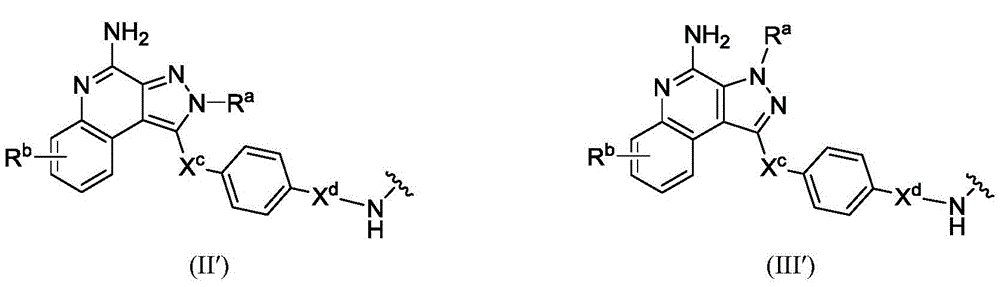
or embodiments thereof.
In some embodiments of formula (IV), PA is any residue of a compound, or any group of a residue of any compound, and in some embodiments, PA has a structure according to any of formulas (I '), (II ') or (III ') described herein.
In some or any embodiment, the present invention provides a compound of formula (I '), (II '), or (III '), wherein RbIs H. In some or any embodiment, the invention provides a compound of formula (I), (II), or (III), wherein RbIs a quinolinyl group. In some or any embodiment, the invention provides a compound of formula (I), (II), or (III), wherein Rbis-C (O) OCH3。
In some or any embodiment, the present invention provides a compound of formula (I '), (II '), or (III '), wherein XcIs CH2。
In some or any embodiment, the present invention provides a compound of formula (I '), (II '), or (III '), wherein XdIs CH2。
In some or any embodiment, the present invention provides a compound of formula (I '), (II '), or (III '), wherein XcAnd X dEach is CH2。
In some or any embodiment, the present invention provides a compound of formula (I '), (II '), or (III '), wherein RaIs C1-C6-an alkyl group. In some or any embodiment, the present invention provides a compound of formula (I '), (II '), or (III '), wherein RaIs methyl, ethyl, n-propyl, isopropyl, n-butyl, isobutyl, sec-butyl, tert-butyl, n-pentyl, sec-pentyl, or isopentyl.
In some or any embodiment, the invention provides a compound of formula (I), (II), or (III), wherein RaIs a cycloalkyl group.
In some or any embodiment, the invention provides a compound of formula (I), (II), or (III), wherein RaIs a cycloalkylalkyl group.
In some or any embodiment, the present invention provides a compound of formula (I '), (II '), or (III '), wherein RbIs H, and XcIs CH2。
In some or any embodiment, the present invention provides a compound of formula (I '), (II '), or (III '), wherein RbIs H, and XdIs CH2。
In some or any embodiment, the present invention provides a compound of formula (I '), (II '), or (III '), wherein RbIs H, and XcAnd XdAre all CH2。
In some or any embodiment, the present invention provides a compound of formula (I '), (II '), or (III '), wherein R bIs H, XcAnd XdAre all CH2And RaIs methyl, ethyl, n-propyl, isopropyl, n-butyl, isobutyl, sec-butyl, tert-butyl, n-pentyl, sec-pentyl, or isopentyl. In some or any embodiment, the present invention provides a compound of formula (I '), (II '), or (III '), wherein RbIs H, XcAnd XdAre all CH2And RaIs n-propyl, isopropyl, n-butyl, isobutyl, sec-butyl, tert-butyl, n-pentyl, sec-pentyl, or isopentyl.
In some embodiments of formula (IV), PA has a structure represented by formula (1'):

or a pharmaceutically acceptable salt, tautomer, stereoisomer, and/or mixture of stereoisomers thereof.
In some embodiments of formula (IV) and embodiments thereof, SG is absent, or SG is
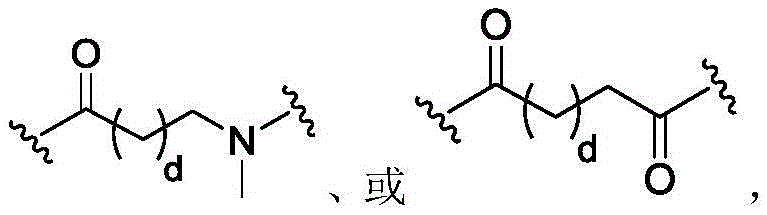 Wherein the subscript d is an integer selected from 1 to 10, wherein each
 Respectively, represent the points of attachment to the remainder of the formula.
In some embodiments of formula (IV) and embodiments thereof, SG is
 Wherein each one of
 Respectively, represent the points of attachment to the remainder of the formula.
In some embodiments of formula (IV) and embodiments thereof, W1When present, is
 Wherein the subscript e is an integer selected from 1 to 10, wherein each
  Respectively, represent the point of attachment to the rest of the general formula.
In some embodiments of formula (IV) and embodiments thereof, W1When present, is
 Wherein each one of
 Each representing the remainder of the formula attached toA point of connection.
In some embodiments of formula (IV) and embodiments thereof, W6Are residues of peptides and comprise natural and/or unnatural amino acids. In some embodiments of formula (IV) and embodiments thereof, W6And when present, is a tripeptide residue. In some embodiments of formula (IV) and embodiments thereof, W6When present, is
 Wherein each one of
 Respectively, represent the points of attachment to the remainder of the formula.
In some embodiments of formula (IV) and embodiments thereof, W6And when present, is a dipeptide residue. In some embodiments of formula (IV), W6When present, is Wherein each one of
 Respectively, represent the points of attachment to the remainder of the formula.
In some embodiments of formula (IV) and embodiments thereof, RT is Wherein
 Represents a point of attachment to the remainder of the formula.
In some embodiments of formula (IV) and embodiments thereof, HP, when present, is Wherein the subscript b is an integer selected from 1 to 10, wherein
  Represents a point of attachment to the remainder of the formula.
In some embodiments of formula (IV) and embodiments thereof, R is:


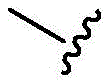
In some embodiments, the linker payload compound of formula (IV) is selected from the group consisting of:

or a pharmaceutically acceptable salt, solvate, stereoisomer, tautomer, or mixture of regioisomers thereof.
Conjugates
The invention provides conjugates of antibodies to TLR7/8 agonists (e.g., any of the TLR7/8 agonists described herein). The conjugates comprise an antibody or antigen-binding fragment thereof directed against a suitable antigen (e.g., a tumor antigen) covalently linked, directly or indirectly, to a payload via a linker. In certain embodiments, the antibody is linked to a payload. In further embodiments, the antibody is linked to more than one payload. In certain embodiments, the antibody is linked to 2, 3, 4, 5, 6, 7, 8, or more payloads. Thus, the drug-to-antibody ratio (DAR) may vary between 1 and 30.
The payload may be any payload deemed useful by one skilled in the art. In certain embodiments, the payload is a therapeutic moiety. In certain embodiments, the payload is a diagnostic moiety, e.g., a label. Useful payloads are described in the following sections and examples.
The linker can be any linker capable of forming at least one bond with the antibody and at least one bond with the payload. Useful linkers are described in the following sections and examples.
The antibody is typically a protein comprising multiple polypeptide chains. In certain embodiments, the antibody is a heterotetramer comprising two identical light (L) chains and two identical heavy (H) chains. Each light chain may be linked to a heavy chain by one covalent disulfide bond. Each heavy chain may be linked to another heavy chain by one or more covalent disulfide bonds. Each heavy chain and each light chain may also have one or more intrachain disulfide bonds. As known to those skilled in the art, each heavy chain typically comprises a variable domain (V)H) Followed by a plurality of constant domains. Each light chain typically comprises a variable domain (V) at one terminus L) And comprising a constant domain. As known to those skilled in the art, antibodies typically have a selective affinity for their target molecule, i.e., the antigen.
The antibodies provided herein can have any antibody format known to those of skill in the art. They may be full-length or fragments. Exemplary full-length antibodies include IgA, IgA1, IgA2, IgD, IgE, IgG1, IgG2, IgG3, IgG4, IgM, and the like. Exemplary fragments include Fv, Fab, Fc, scFv-Fc, and the like.
In certain embodiments, the antibody of the conjugate comprises 1, 2, 3, 4, 5 or 6 CDR sequences of the invention. In certain embodiments, the antibody of the conjugate comprises a heavy chain variable domain (V) as described hereinH). In certain embodiments, the antibody of the conjugate comprises a light chain variable domain (V) as described hereinL). In some embodimentsThe antibody of the conjugate comprises a heavy chain variable domain (V) as described in the present inventionH) And a light chain variable domain (V) as described hereinL). In certain embodiments, the antibody of the conjugate comprises a pair of a heavy chain variable domain and a light chain variable domain (V) as described hereinH-VLPair).
In certain embodiments, the antibody conjugates may be formed from antibodies that comprise one or more reactive groups. In certain embodiments, the antibody conjugate may be formed from an antibody comprising all naturally encoded amino acids. One skilled in the art will recognize that several naturally encoded amino acids include a reactive group that can be coupled to a payload or to a linker. These reactive groups include cysteine side chains, lysine side chains, and amino terminal groups. In these embodiments, the antibody conjugate may comprise a payload or linker attached to a residue of an antibody reactive group. In these embodiments, the payload precursor or linker precursor comprises a reactive group capable of forming a bond with a reactive group of an antibody. Typical reactive groups include maleimide groups, activated carbonates (including but not limited to p-nitrophenyl esters), activated esters (including but not limited to N-hydroxysuccinimide, p-nitrophenyl esters, and aldehydes). Particularly useful reactive groups include maleimides and succinimides, such as N-hydroxysuccinimide, which are used to form bonds to cysteine and lysine side chains. Other reactive groups are described in the following sections and examples.
In a further embodiment, the antibody comprises one or more modified amino acids having a reactive group, as described herein. Typically, the modified amino acid is not a naturally encoded amino acid. These modified amino acids may comprise a reactive group for forming a covalent bond with a linker precursor or payload precursor. One skilled in the art can use reactive groups to attach a polypeptide to any molecular entity capable of forming a covalent bond with a modified amino acid. Accordingly, the invention provides a conjugate comprising an antibody comprising a modified amino acid residue, which modified amino acid residue is directly or indirectly linked to a payload via a linker. Exemplary modified amino acids are described in the following sections. Typically, the modified amino acid has a reactive group capable of forming a bond with a linker or payload having a complementary reactive group.
In certain embodiments, the unnatural amino acid is at a selected position in a polypeptide chain of the antibody. These positions are identified as optimal sites for providing unnatural amino acid substitutions. Each site is capable of carrying an unnatural amino acid with optimal structure, function, and/or method of making an antibody.
In certain embodiments, the site-specific location for substitution provides a stable antibody. Stability can be determined by any technique apparent to those skilled in the art.
In certain embodiments, the site-specific location for substitution provides an antibody with optimal functional properties. For example, the antibody has little or no loss of binding affinity for its target antigen as compared to an antibody that does not have site-specific unnatural amino acids. In certain embodiments, the antibodies can exhibit enhanced binding compared to antibodies that do not have site-specific unnatural amino acids.
In certain embodiments, the site-specific location for substitution provides an antibody that can be advantageously made. For example, in certain embodiments, the antibodies exhibit advantageous properties in their methods of synthesis. In certain embodiments, the antibody has little or no loss in production yield as compared to an antibody that does not have site-specific unnatural amino acids. In certain embodiments, the antibodies may exhibit increased production yields as compared to antibodies that do not have site-specific unnatural amino acids. In certain embodiments, the antibody can exhibit little or no loss of tRNA inhibition as compared to an antibody that does not have a site-specific unnatural amino acid. In certain embodiments, the antibodies can exhibit enhanced tRNA inhibition in production as compared to antibodies that do not have site-specific unnatural amino acids.
In certain embodiments, the site-specific location for substitution provides an antibody with favorable solubility. In certain embodiments, the antibody has little or no loss in solubility compared to an antibody that does not have site-specific unnatural amino acids. In certain embodiments, the antibodies can exhibit enhanced solubility compared to antibodies that do not have site-specific unnatural amino acids.
In certain embodiments, the site-specific location for substitution provides an antibody with advantageous expression. In certain embodiments, the antibodies may exhibit little or no loss of expression as compared to antibodies that do not have site-specific unnatural amino acids. In certain embodiments, the antibodies may exhibit enhanced expression compared to antibodies that do not have site-specific unnatural amino acids.
In certain embodiments, the site-specific location for substitution provides an antibody with favorable folding properties. In certain embodiments, the antibody is lost little or no loss in proper folding as compared to an antibody that does not have site-specific unnatural amino acids. In certain embodiments, the antibodies can exhibit enhanced folding compared to antibodies that do not have site-specific unnatural amino acids.
In certain embodiments, the site-specific location for substitution provides an antibody that can be advantageously conjugated. As described below, several unnatural amino acids have side chains or functional groups that facilitate coupling of the antibody to a second drug, either directly or indirectly via a linker. In certain embodiments, the antibodies may exhibit enhanced conjugation efficiency compared to antibodies that do not have the same or other unnatural amino acid at other positions. In certain embodiments, the antibodies may exhibit enhanced conjugation yields as compared to antibodies that do not have the same or other unnatural amino acid at other positions. In certain embodiments, the antibodies may exhibit enhanced conjugation specificity compared to antibodies that do not have the same or other unnatural amino acid at other positions.
In some embodiments, the one or more unnatural amino acids are at a selected site-specific position in at least one polypeptide chain of the antibody. The polypeptide chain can be any polypeptide chain of an antibody, including without limitation, a light chain or a heavy chain. The site-specific location can be in any domain of the antibody, including any variable domain and any constant domain.
In certain embodiments, the antibodies provided herein comprise one or more unnatural amino acid at a site-specific position. In certain embodiments, the antibodies provided herein comprise two unnatural amino acids at site-specific positions. In certain embodiments, the antibodies provided herein comprise three unnatural amino acids at site-specific positions. In certain embodiments, the antibodies provided herein comprise more than three unnatural amino acids at site-specific positions.
In certain embodiments, the antibodies provided herein comprise one or more unnatural amino acid, each at a position selected from the group consisting of a heavy chain residue or a light chain residue: HC-F404, HC-K121, HC-Y180, HC-F241, HC-221, LC-T22, LC-S7, LC-N152, LC-K42, LC-E161, LC-D170, HC-S136, HC-S25, HC-A40, HC-S119, HC-S190, HC-K222, HC-R19, HC-Y52, or HC-S70, (according to Kabat or Coxiya (Chothia) or EU numbering schemes), or a post-translational modified variant thereof. In certain embodiments, the antibodies provided herein comprise one or more unnatural amino acid, each at a position selected from the group consisting of: HC-180, HC-222, LC-7, or LC-42, (according to Kabat or coxsacia (Chothia) or EU numbering scheme), or a post-translationally modified variant thereof. In these designations, HC denotes the heavy chain residue and LC denotes the light chain residue. In certain embodiments, the unnatural amino acid is at HC-F404. In certain embodiments, the unnatural amino acid is at HC-Y180. In certain embodiments, the unnatural amino acid is at HC-F404 and HC-Y180. In certain embodiments, the unnatural amino acid is at HC-K222. In certain embodiments, the unnatural amino acid is at LC-S7. In certain embodiments, the unnatural amino acid is at LC-K42. In certain embodiments, the unnatural amino acid is at HC-Y180, HC-K222, LC-S7, and LC-K42. In certain embodiments, the unnatural amino acids are the same. In certain embodiments, the unnatural amino acids are different. In certain embodiments, the unnatural amino acid is a residue of formula (30) of the invention.
In some embodiments, the antibody sequence may comprise a Q-tag (Q-tag) sequence that is compatible with transglutaminase conjugation. In some embodiments, the one or more glutamine residues are located in a Q tag independently selected from the group consisting of: LLQGA, YAHQAHY, YRRYRQ, PNPQLPF, PKPQQFM, GQQQLG, WALQRPH, WELQRPY, YPMQGWF, LSLSLSQG, GGGLLQGG, GLLQG, GSPLAQSHGG, GLLQGG, GLLQ, LLQLLQGA, LLQGA, LLQYQGA, LLQGSG, LLQYQG, LLQLLQGG, SLLQG, LLQLQ, LLQLLQ, LLQGR, QGPA, LLQGPP, or GGLLQGPP.
In some embodiments, the tag containing an acyl donor glutamine comprises at least one Gln. In some embodiments, the tag of the acyl donor glutamine comprises the amino acid sequence XXQX, wherein X is any amino acid (e.g., the conventional amino acids Leu, Ala, Gly, Ser, Val, Phe, Tyr, His, Arg, Asn, Glu, Asp, Cys, Gin, Ile, Met, Pro, Thr, Lys, or Trp, or the unconventional amino acids). In some embodiments, the acyl donor glutamine-containing tag (Q tag) comprises an amino acid sequence selected from the group consisting of: LLQGG, LLQG, LSLSLSQG, GGGLLQGG, GLLQG, GSPLAQSSHGG, GLLQGG, GLLQ, LLQLLQGA, LLQGA, LLQYQGA, LLQGSG, LLQYQG, LLQLLQG, SLLQG, LLQLQ, LLQLLQ, LLQGR. In some embodiments, the acyl donor glutamine-containing tag (Q tag) comprises an amino acid sequence selected from the group consisting of: LLQGPA, LLQGPP or GGLLQGPP. In some embodiments, the acyl donor glutamine-containing tag (Q tag) comprises an amino acid sequence selected from the group consisting of: LLQGG and LLQGA. In such embodiments, the linker-payload with the amino group can be coupled to the side chain of one or more glutamine (Q) residues in the antibody in the presence of transglutaminase.
In certain embodiments, the invention provides conjugates of formula (C1) or (C2):

or a pharmaceutically acceptable salt, solvate, stereoisomer, regioisomer, or tautomer thereof, wherein:
ab is a residue of an antibody or antigen-binding fragment thereof;
PA is a payload (in some embodiments, part of a group of formula (I '), (II '), or (III '));
W1、W2、W3、W4and W5Each independently is a single bond, or each independently is absent, or each independently is a divalent linking group;
EG is absent, or EG is an eliminating group;
each RT in the backbone of formula (C1) or (C2), is independently absent, or is independently a release-initiating group, or RT, when linked to EG and EG is an eliminating group, is H or a release-initiating group;
each HP is independently a single bond, or independently absent, or independently a monovalent hydrophilic group, or a divalent hydrophilic group;
SG is a single bond, or SG is absent, or is a divalent spacer group;
r' is a divalent residue of a coupling group; and
subscript n is an integer selected from 1 to 30.
In some embodiments, n is an integer selected from 1 to 8. In some embodiments, n is 2. In some embodiments, n is 3. In some embodiments, n is 4. In some embodiments, n is 5. In some embodiments, n is 6. In some embodiments, n is 7. In some embodiments, n is 8.
Linking group
The linking group facilitates the attachment of an eliminating group, a release initiating group, a hydrophobic group, a spacer group and/or a coupling group to the compound. Useful linking groups are known to those skilled in the art and are not known to the artAs will be apparent to those skilled in the art. Examples of useful linking groups are provided. In certain embodiments, the linking group is referred to as W1、W2、W3、W4Or W5. In certain embodiments, the linking group can comprise a divalent ketone, a divalent ester, a divalent ether, a divalent amide, a divalent amine, an alkylene, an arylene, -S-S-, a carbonyl, or a combination thereof. In certain embodiments, the linking group may comprise-C (O) -, -O-, -C (O) NH-, -C (O) NH-alkyl-, -OC (O) NH-, -SC (O) NH-, -NH-alkyl-, -C (O) N (CH)3)–、–C(O)N(CH3) -alkyl-, -N (CH)3)–、–N(CH3) -alkyl-, -N (CH)3)CH2CH2N(CH3)–、–C(O)CH2CH2CH2C(O)–、–S–、–S-S–、–OCH2CH2O-, or a reverse group thereof (e.g., -NHC (O)) -, or a combination thereof.
Eliminating radicals
The eliminating group facilitates the separation of the biologically active portion of the compound or conjugate of the invention from the remainder of the compound or conjugate in vivo and/or in vitro. The eliminating group may also facilitate the separation of the biologically active portion of the compound or conjugate of the invention, along with the release-initiating group. For example, the eliminating group and the release-initiating group may react in a release reaction to release the biologically active portion of the compound or conjugate of the invention from the compound or conjugate in vivo and/or in vitro. After initiation of the release reaction by the release initiating group, the eliminating group cleaves the bioactive group moiety or prodrug form of the bioactive group moiety and forms a stable, non-toxic entity that does not further affect the activity of this bioactive group moiety.
In certain embodiments, the eliminating group is referred to herein as EG. Useful eliminating groups include those described herein. In certain embodiments, the eliminating group is:

wherein each REGEach independently selected from the group consisting of: hydrogen, alkyl, biphenyl, -CF3、-NO2CN, -F, Br, Cl, alkoxy, alkylamino, dialkylamino, alkyl-C (O) O-, alkylamino-C (O) -, and dialkylamino-C (O) -. In each structure, the phenyl ring may be substituted with 1, 2, 3, or in some cases 4REGThe groups are linked. In the second and third structures, one skilled in the art will recognize that EG is linked to RT that is not within the backbone of formula (C1) as shown in the above description of formula (C1). In some embodiments, REGIs selected from the group consisting of: hydrogen, alkyl, biphenyl, -CF3Alkoxy, alkylamino, dialkylamino, alkyl-C (O) O-, alkylamino-C (O) -, and dialkylamino-C (O) -. In a further embodiment, each R isEGEach independently selected from the group consisting of H and-NO2CN, -fluorine, bromine and chlorine. In certain embodiments, the eliminating group is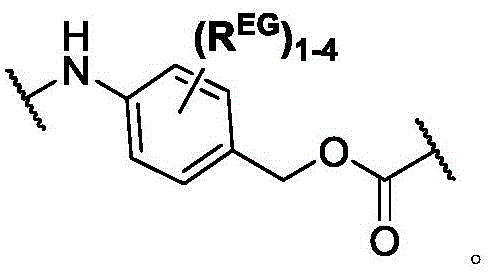 In certain embodiments, the eliminating group is
 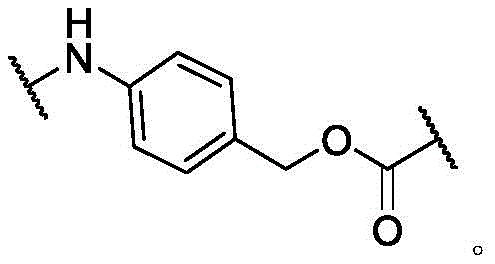 In certain embodiments, the eliminating group is
 In certain embodiments, the eliminating group is
In some embodiments, the eliminating group is:

wherein Z may be CH or NEach REGEach independently selected from the group consisting of: hydrogen, alkyl, biphenyl, -CF3、-NO2CN, -F, Br, Cl, alkoxy, alkylamino, dialkylamino, alkyl-C (O) O-, alkylamino-C (O) -, and dialkylamino-C (O) -. In each structure, the phenyl ring may be substituted with 1, 2, 3, or in some cases 4REGThe groups are linked. In the first and second structures, one skilled in the art will recognize that EG is linked to RT which, as shown in the above description of formula (C1), is not within the backbone of formula (C1). In some embodiments, each R isEGEach independently selected from the group consisting of: hydrogen, alkyl, biphenyl, -CF3Alkoxy, alkylamino, dialkylamino, alkyl-C (O) O-, alkylamino-C (O) -, and dialkylamino-C (O) -. In a further embodiment, each R isEGEach independently selected from hydrogen, -NO2CN, -fluorine, bromine and chlorine. In some embodiments, each R in the EGEGAre all H. In certain embodiments, the eliminating group is  In certain embodiments, the eliminating group is
 In certain embodiments, the eliminating group is
Release initiating groups
The release-inducing group facilitates the separation of the biologically active portion of the compound or conjugate of the invention from the remainder of the compound or conjugate in vivo and/or in vitro. The release-inducing group may also facilitate, along with the eliminating group, the isolation of the biologically active portion of the compound or conjugate of the invention. For example, the eliminating group and the release-initiating group can react in a release reaction to release the biologically active portion of the compound or conjugate of the invention from the compound or conjugate in vivo and/or in vitro. In certain embodiments, the release-initiating group may be activated by a tumor having a high tumor: non-tumor specific bio-driven reactions, such as proteolysis of enzymes overexpressed in the tumor environment.
In certain embodiments, the release-initiating group is referred to herein as RT. In certain embodiments, RT is divalent and is linked within the backbone of formula (C1). In other embodiments, RT is monovalent and is linked to EG as described above. Useful release-initiating groups include those described herein. In certain embodiments, the release-initiating group comprises a residue of a natural or unnatural amino acid or a residue of a sugar ring. In certain embodiments, the release-initiating group is:

One skilled in the art will recognize that the first structure is divalent and may be linked within the backbone of formula (C1) or within its backbone as shown in formula (C2), and that the second structure is monovalent and may be linked to EG as shown in formula (C1) above.
In certain embodiments, the release-initiating group is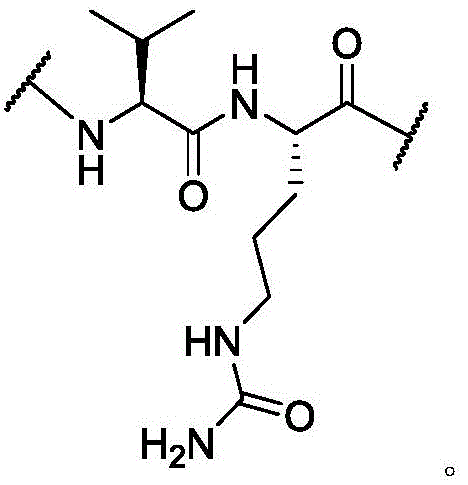 In certain embodiments, the release-initiating group is
In some embodiments, the release initiating group is a protease cleavable R having the structure1-Val-X peptide:

wherein R is1Is H, or And R2is-CH3、-CH2CH2CO2H. Or- (CH)2)3NHCONH2(ii) a Legumain (legumain) cleavable Ala-Ala-Asn or Ala-Ala-Asp peptide having the following structure:

wherein Z is OH or NH2(ii) a Or a β -glucuronidase cleavable β -glucuronide having the structure:
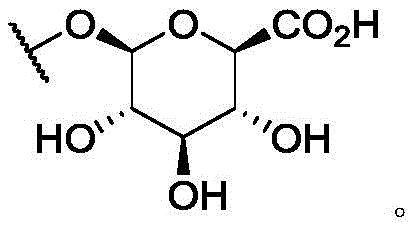
as will be appreciated by one skilled in the art, are divalent structures and may be linked within the backbone of formula (C1) or within the backbone as shown in formula (C2). Structural formula (I)
 Is monovalent and may be linked to EG as shown by formula (C1) above.
Hydrophilic group
The hydrophilic group helps to increase the hydrophilicity of the compounds of the present invention. It is believed that the increased hydrophilicity allows for greater solubility in aqueous solutions, such as those found in biological systems. Hydrophilic groups may also be used as spacer groups, which will be described in further detail herein.
In certain embodiments, the hydrophilic group is referred to herein as HP. Useful hydrophilic groups include those described herein. In certain embodiments, the hydrophilic group is a divalent poly (ethylene glycol). In certain embodiments, the hydrophilic group is a divalent poly (ethylene glycol) represented by the formula:

wherein m is an integer from 1 to 13, optionally an integer from 1 to 4, optionally an integer from 2 to 4, optionally an integer from 4 to 8.
In some embodiments, the hydrophilic group is a divalent poly (ethylene glycol) of the formula:

in some other embodiments, the hydrophilic group is a divalent poly (ethylene glycol) represented by the formula:

in other embodiments, the hydrophilic group is a divalent poly (ethylene glycol) represented by the formula:

in other embodiments, the hydrophilic group is a divalent poly (ethylene glycol) of the formula:

in some embodiments, the hydrophilic group may carry a sulfonic acid represented by a chain having the formula:

spacer group
The spacer group helps to space the coupling group from other groups of the compounds of the invention. The spacing may result in a more efficient coupling of the compound of the invention to the second compound and a more efficient cleavage/cleavage of the active catabolite. The spacer group may also stabilize the coupling group and result in improved overall antibody-drug conjugate properties.
In certain embodiments, the spacer group is referred to herein as SG. Useful spacer groups include those described herein. In certain embodiments, the spacer group is:

in certain embodiments (e.g., certain embodiments of formula (IV)), the spacer group W6(ii) combines with each of said hydrophilic groups to form a divalent poly (ethylene glycol) represented by the formula:

wherein m is an integer from 1 to 13, optionally an integer from 1 to 4, optionally an integer from 2 to 4, or optionally an integer from 4 to 8.
In some embodiments, the SG is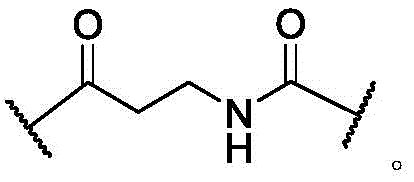
In some embodiments, the divalent poly (ethylene glycol) has the structure shown by the formula:

in some other embodiments, the divalent poly (ethylene glycol) has the structure shown by the formula:

in other embodiments, the divalent poly (ethylene glycol) has the structure shown by the formula:

in other embodiments, the divalent poly (ethylene glycol) has the structure shown by the formula:

in some embodiments, the hydrophilic group may carry a sulfonic acid represented by a chain having the formula:

coupling groups for linker-payloads and residues thereof for conjugates
The coupling group facilitates coupling of the payload of the invention to a second compound (e.g., an antibody of the invention). In certain embodiments, the coupling group is referred to herein as R. The coupling group may react by any suitable reaction mechanism known to those skilled in the art. In certain embodiments, the coupling group is reacted via a [3+2] alkyne-azide cycloaddition reaction, a trans-electron demand Diels-Alder (Diels-Alder) ligation reaction, a thiol-electrophilic reaction, or a carbonyl-oxyamine reaction, as described in detail herein. In certain embodiments, the coupling group comprises an alkyne, strained alkyne, tetrazine, thiol, para-acetyl-phenylalanine residue, oxyamine, maleimide, or azide. In certain embodiments, the coupling group is:


After coupling, a divalent residue of the coupling group is formed and attached to the residue of the second compound. The structure of the bivalent residue is determined by the type of coupling reaction used to form the conjugate.
In certain embodiments, when the conjugate is formed by a [3+2] alkyne-azide cycloaddition reaction, the divalent residue of the coupling group comprises a triazole ring or a fused cyclic group comprising a triazole ring. In certain embodiments, when the conjugate is formed by a strain-promoted [3+2] alkyne-azide cycloaddition (SPAAC) reaction, the divalent residue of the coupling group is:

in certain embodiments, when the conjugate is formed by a tetrazine retro-electron-demand Diels-Alder (Diels-Alder) linking reaction, the divalent residue of the coupling group comprises a fused bicyclic ring having at least two adjacent nitrogen atoms in the ring. In certain embodiments, when the conjugate is formed by a tetrazine retro-electron-demand Diels-Alder (Diels-Alder) ligation reaction, the divalent residue of the coupling group is:

In certain embodiments, when the conjugate is formed by a thiol-maleimide reaction, the divalent residue of the coupling group comprises a succinimide group and a sulfur bond. In certain embodiments, when the conjugate is formed by a thiol-maleimide reaction, the divalent residues of the coupling group are:

in certain embodiments, the conjugate is formed by a thiol-N-hydroxysuccinimide reaction using the following groups:
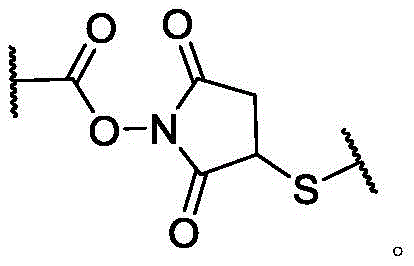

the divalent residues of the coupling group produced are:
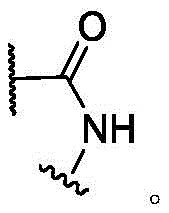
in certain embodiments, when the conjugate is formed by a carbonyl-oxyamine reaction, the divalent residue of the coupling group comprises a divalent residue of a non-natural amino acid. In certain embodiments, when the conjugate is formed by a carbonyl-oxyamine reaction, the divalent residue of the coupling group is:

in certain embodiments, when the conjugate is formed by a carbonyl-oxyamine reaction, the divalent residue of the coupling group comprises an oxime bond. In certain embodiments, when the conjugate is formed by a carbonyl-oxyamine reaction, the divalent residue of the coupling group is:
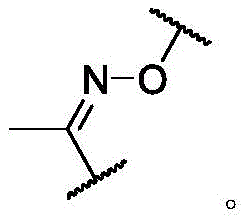
in some embodiments, the present invention provides a conjugate of formula (C1) or (C2), or a pharmaceutically acceptable salt, solvate, stereoisomer, or tautomer thereof; wherein EG comprises phenylene, carboxylene, amine, or a combination thereof. In one embodiment, the present invention provides a conjugate of formula (C1) or (C2), or a pharmaceutically acceptable salt, solvate, stereoisomer, or tautomer thereof; wherein EG is:

Wherein each REGEach independently selected from the group consisting of: H. alkyl, biphenyl, -CF3、-NO2CN, -F, Br, Cl, alkoxy, alkylamino, dialkylamino, alkyl-C (O) O-, alkylamino-C (O) -, and dialkylamino-C (O) -. In each structure, the phenyl ring may be substituted with 1, 2, 3, or in some cases 4REGThe groups are linked. In the second and third structures, one skilled in the art will recognize that EG is linked to RT that is not within the backbone of formula C1, as shown in the above description of formula C1. In some embodiments, each R isEGEach independently selected from the group consisting of: hydrogen, alkyl, biphenyl, -CF3Alkoxy, alkylamino, dialkylamino, alkyl-C (O) O-, alkylamino-C (O) -, and dialkylamino-C (O) -. In a further embodiment, each R isEGEach independently selected from hydrogen, -NO2CN, -fluorine, bromine and chlorine.
In some embodiments, the present invention provides a conjugate of formula (C1) or (C2), or a pharmaceutically acceptable salt, solvate, stereoisomer, or tautomer thereof; wherein EG comprises phenylene, carboxylene, amine, or a combination thereof. In one embodiment, the present invention provides a conjugate of formula (C1) or (C2), or a pharmaceutically acceptable salt, solvate, stereoisomer, or tautomer thereof; wherein EG is:

Wherein Z may be CH or N, each REGEach independently selected from the group consisting of: H. alkyl, aryl, heteroaryl, and heteroaryl,Biphenyl, -CF3、-NO2CN, -F, Br, Cl, alkoxy, alkylamino, dialkylamino, alkyl-C (O) O-, alkylamino-C (O) -, and dialkylamino-C (O) -. In each structure, the phenyl ring may be substituted with 1, 2, 3, or in some cases 4REGThe groups are linked. In the second and third structures, one skilled in the art will recognize that EG is linked to RT that is not within the backbone of formula C1, as shown in the above description of formula C1. In some embodiments, each R isEGEach independently selected from the group consisting of: hydrogen, alkyl, biphenyl, -CF3Alkoxy, alkylamino, dialkylamino, alkyl-C (O) O-, alkylamino-C (O) -, and dialkylamino-C (O) -. In a further embodiment, each R isEGEach independently selected from hydrogen, -NO2CN, -fluorine, bromine and chlorine. In some embodiments, each R in the EGEGAre each H.
In some embodiments, the present invention provides a conjugate having a structure represented by formula (C1) or (C2), or a pharmaceutically acceptable salt, solvate, stereoisomer, or tautomer thereof; wherein RT comprises residues of natural or unnatural amino acids or residues of sugars. In one embodiment, the present invention provides a conjugate of formula (C1) or (C2), or a pharmaceutically acceptable salt, solvate, stereoisomer, or tautomer thereof; wherein RT is:

One skilled in the art will recognize that the first structure is divalent and may be linked within the backbone as shown in formula (C2), while the second structure is monovalent and may be linked to EG as shown in formula (C1) above.
In some embodiments, the present invention provides a conjugate having a structure represented by formula (C1) or (C2), or a pharmaceutically acceptable salt, solvate, stereoisomer, or tautomer thereof; wherein RT comprises residues of natural or unnatural amino acids or residues of sugars. In one embodiment, the invention provides a conjugate of formula (C1) or (C2), or a pharmaceutically acceptable salt, solvate, stereoisomer, or tautomer thereof; wherein RT is:
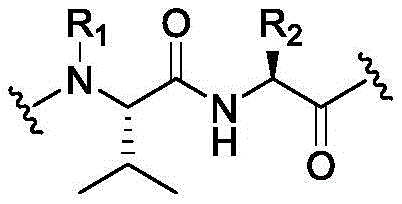
wherein R is1Is H, or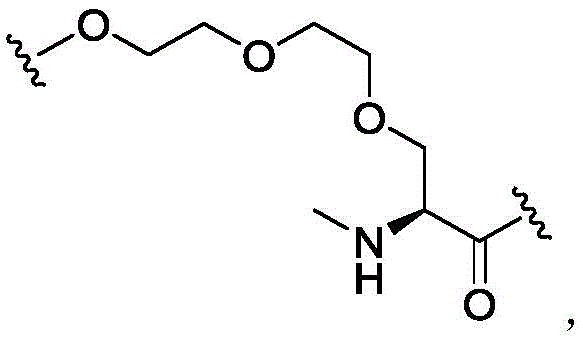 And R2is-CH3、-CH2CH2CO2H. Or- (CH)2)3NHCONH2(ii) a Legumain (legumain) cleavable Ala-Ala-Asn or Ala-Ala-Asp peptide having the following structure:

wherein Z is OH or NH2(ii) a Or a beta-glucuronidase cleavable beta-glucuronide having the structure:

as will be appreciated by one skilled in the art, are divalent structures and may be linked within the backbone of formula (C1) or within the backbone as shown in formula (C2). Structural formula (I)
 Is monovalent and may be linked to EG as shown by formula (C1) above.
In one embodiment, the present invention provides a conjugate having a structure represented by formula (C1) or (C2), or a pharmaceutically acceptable salt, solvate, stereoisomer, or tautomer thereof; wherein the HP comprises poly (ethylene glycol). In one embodiment, the present invention provides a conjugate of formula (C1) or (C2), or a pharmaceutically acceptable salt, solvate, stereoisomer, or tautomer thereof; wherein HP is:
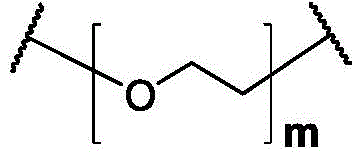
Wherein m is an integer selected from 1 to 13.
In one embodiment, the present invention provides a conjugate of formula (C1) or (C2), or a pharmaceutically acceptable salt, solvate, stereoisomer, or tautomer thereof; wherein SG comprises C1-C10Alkylene radical, C4-C6Alkylene, carbonyl, or combinations thereof. In one embodiment, the present invention provides a conjugate of formula (C1) or (C2), or a pharmaceutically acceptable salt, solvate, stereoisomer, or tautomer thereof; wherein SG is:

in one embodiment, the present invention provides a conjugate of formula (C1) or (C2), or a pharmaceutically acceptable salt, solvate, stereoisomer, or tautomer thereof; wherein W1、W2、W3、W4Or W5Each independently is a single bond, or each independently is absent, or each independently comprises a divalent ketone, a divalent ester, a divalent ether, a divalent amide, a divalent amine, an alkylene, an arylene, -S-S-, a carbonyl ene, or a combination thereof. In one embodiment, the present invention provides a conjugate of formula (C1) or (C2), or a pharmaceutically acceptable salt, solvate, stereoisomer, or tautomer thereof; wherein W1、W2、W3、W4Or W5Each independently a single bond, or each independently absent, or each independently comprise-C (O) -, -O-, -C (O) NH-alkyl-, -OC (O) NH-, -SC (O) NH-, -NH-alkyl-, -C (O) N (CH) 3)–、–C(O)N(CH3) -alkyl-, -N (CH)3)–、–N(CH3) -alkyl-, -N (CH)3)CH2CH2N(CH3)–、–C(O)CH2CH2CH2C(O)–、–S–、–S-S–、–OCH2CH2O-, or a reverse group thereof (e.g., -NHC (O)) -, or a combination thereof.
In one embodiment, the invention provides a conjugate of formula (C1) or (C2), or a pharmaceutically acceptable salt, solvate, stereoisomer, or tautomer thereof; wherein R' comprises a triazolyl ring. In one embodiment, the present invention provides a conjugate of formula (C1) or (C2), or a pharmaceutically acceptable salt, solvate, stereoisomer, or tautomer thereof; wherein R' is a triazole ring or a fused cyclic group comprising a triazole ring. In one embodiment, the present invention provides a conjugate of formula (C1) or (C2), or a pharmaceutically acceptable salt, solvate, stereoisomer, or tautomer thereof; wherein R' is:
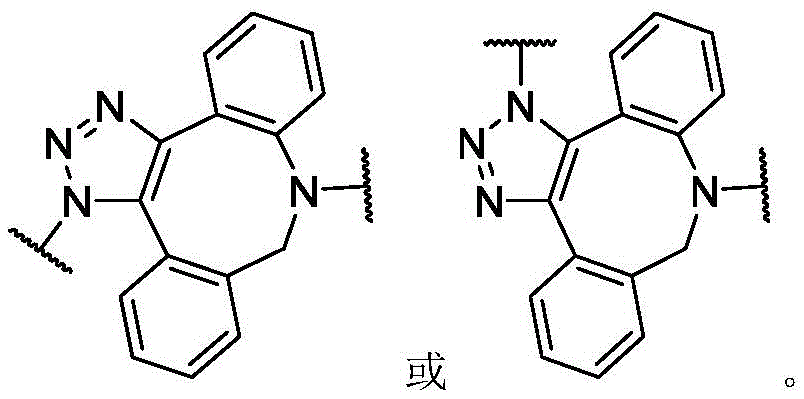
in one embodiment, the present invention provides a conjugate of formula (C1) or (C2), or a pharmaceutically acceptable salt, solvate, stereoisomer, or tautomer thereof; wherein R' comprises a fused bicyclic ring having at least two adjacent nitrogen atoms in the ring. In one embodiment, the present invention provides a conjugate of formula (C1) or (C2), or a pharmaceutically acceptable salt, solvate, stereoisomer, or tautomer thereof; wherein R' is:
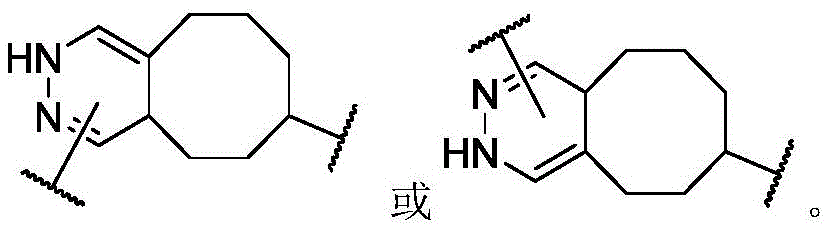
In one embodiment, the present invention provides a conjugate of formula (C1) or (C2), or a pharmaceutically acceptable salt, solvate, stereoisomer, or tautomer thereof; wherein R' comprises a sulfur bond. In one embodiment, the present invention provides a conjugate of formula (C1) or (C2), or a pharmaceutically acceptable salt, solvate, stereoisomer, or tautomer thereof; wherein R' is:
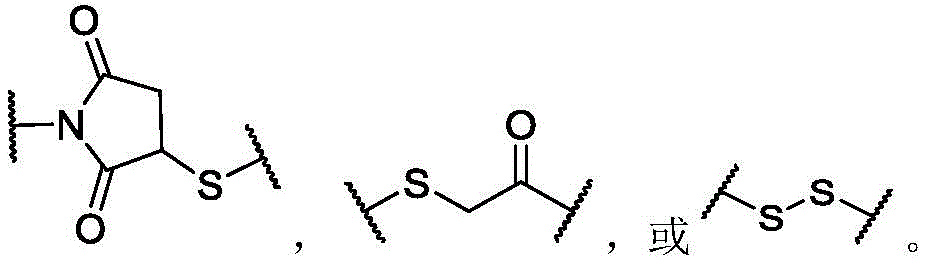
in one embodiment, the present invention provides a conjugate of formula (C1) or (C2), or a pharmaceutically acceptable salt, solvate, stereoisomer, or tautomer thereof; wherein R' comprises a divalent residue of a non-natural amino acid. In one embodiment, the present invention provides a conjugate of formula (C1) or (C2), or a pharmaceutically acceptable salt, solvate, stereoisomer, or tautomer thereof; wherein R' is:
in one embodiment, the present invention provides a conjugate of formula (C1) or (C2), or a pharmaceutically acceptable salt, solvate, stereoisomer, or tautomer thereof; which contains an oxime bond. In one embodiment, the present invention provides a conjugate of formula (C1) or (C2), or a pharmaceutically acceptable salt, solvate, stereoisomer, or tautomer thereof; wherein R' is:

In one embodiment, the present invention provides a conjugate of formula (C1) or (C2), or a pharmaceutically acceptable salt, solvate, stereoisomer, or tautomer thereof; which contains an oxime bond. In one embodiment, the present invention provides a conjugate of formula (C1) or (C2), or a pharmaceutically acceptable salt, solvate, stereoisomer, or tautomer thereof; wherein R' is:

in one embodiment, the present invention provides a conjugate of formula (C1) or (C2), or a pharmaceutically acceptable salt, solvate, stereoisomer, or tautomer thereof; wherein R' is:

in one embodiment, the present invention provides a compound of formula (C1) or (C2), or a pharmaceutically acceptable salt, solvate, stereoisomer, or tautomer thereof; wherein Ab is the residue of any compound known to be useful for coupling to a payload as described herein and an optional linker as described herein. In one embodiment, the present invention provides a compound represented by formula (C1) or (C2), or a pharmaceutically acceptable salt, solvate, stereoisomer, or tautomer thereof; wherein Ab is a residue of an antibody chain or antigen-binding fragment thereof.
In one aspect, the invention provides an antibody conjugate comprising a payload of the invention and an optional linker of the invention attached to an antibody, wherein Ab is a residue of the antibody. In one embodiment, the present invention provides a conjugate of formula (C1) or (C2), or a pharmaceutically acceptable salt, solvate, stereoisomer, or tautomer thereof; wherein: ab is a residue of the antibody; and R' comprises a triazole ring or a fused cyclic group comprising a triazole ring. In one embodiment, the present invention provides a conjugate of formula (C1) or (C2), or a pharmaceutically acceptable salt, solvate, stereoisomer, or tautomer thereof; wherein: ab is a residue of the antibody; and R' is:
in one embodiment, the invention provides an antibody conjugate of formula (C1) or (C2), or a pharmaceutically acceptable salt, solvate, stereoisomer, or tautomer thereof, wherein: ab is a residue of an antibody or antigen-binding fragment thereof; and R' comprises a fused bicyclic ring, wherein the fused bicyclic ring has at least two adjacent nitrogen atoms in the ring. In one embodiment, the invention provides an antibody conjugate of formula (C1) or (C2), or a pharmaceutically acceptable salt, solvate, stereoisomer, or tautomer thereof, wherein: ab is a residue of an antibody or antigen-binding fragment thereof; and R' is:
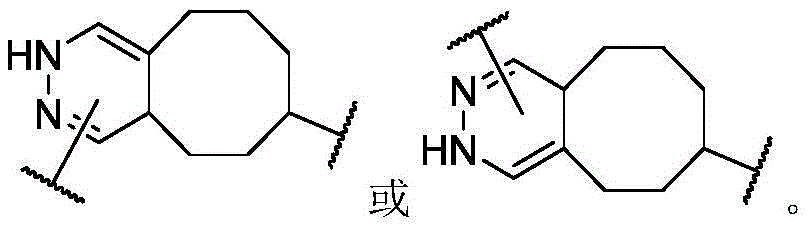
In one embodiment, the invention provides an antibody conjugate of formula (C1) or (C2), or a pharmaceutically acceptable salt, solvate, stereoisomer, or tautomer thereof, wherein: ab is a residue of the polypeptide; and R' comprises a sulfur bond. In one embodiment, the invention provides an antibody conjugate of formula (C1) or (C2), or a pharmaceutically acceptable salt, solvate, stereoisomer, or tautomer thereof, wherein: ab is a residue of the polypeptide; and R' is:

in one embodiment, the invention provides an antibody conjugate of formula (C1) or (C2), or a pharmaceutically acceptable salt, solvate, stereoisomer, or tautomer thereof, wherein: ab is a residue of the polypeptide; and R' comprises a divalent residue of a non-natural amino acid. In one embodiment, the invention provides an antibody conjugate of formula (C1) or (C2), or a pharmaceutically acceptable salt, solvate, stereoisomer, or tautomer thereof, wherein: ab is a residue of the polypeptide; and R' is:

in one embodiment, the invention provides an antibody conjugate of formula (C1) or (C2), or a pharmaceutically acceptable salt, solvate, stereoisomer, or tautomer thereof, wherein: ab is a residue of the polypeptide; and R' comprises an oxime linkage. In one embodiment, the invention provides an antibody conjugate of formula (C1) or (C2), or a pharmaceutically acceptable salt, solvate, stereoisomer, or tautomer thereof, wherein: ab is a residue of the polypeptide; and R' is:

In one embodiment, the invention provides an antibody conjugate of formula (C1) or (C2), or a pharmaceutically acceptable salt, solvate, stereoisomer, or tautomer thereof, wherein: ab is a residue of the polypeptide; and R' comprises an oxime linkage. In one embodiment, the invention provides an antibody conjugate of formula (C1) or (C2), or a pharmaceutically acceptable salt, solvate, stereoisomer, or tautomer thereof, wherein: ab is a residue of the polypeptide; and R' is:

in one embodiment, the invention provides a conjugate represented by any one of the following formulae, wherein Ab represents a residue of an antibody or antigen-binding fragment thereof, and PA represents a payload moiety and regioisomers thereof, wherein in some embodiments PA is a moiety represented by formula (I '), (II '), or (III '). One skilled in the art will recognize that abs may be bound at multiple positions. The present invention provides each of the regioisomers and mixtures thereof.
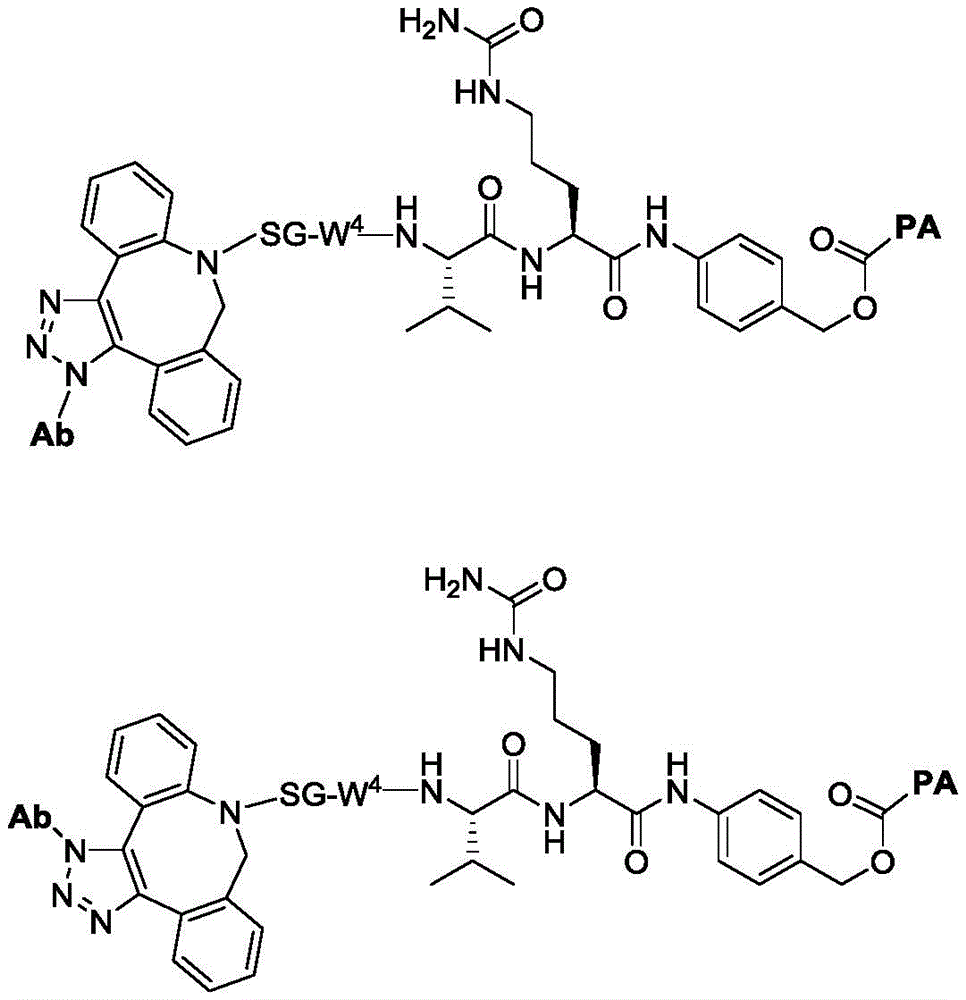

In one embodiment, the invention provides a conjugate represented by any one of the following formulae, wherein Ab represents the residue of an antibody and PA represents a payload moiety, wherein in some embodiments PA is a moiety represented by formula (I '), (II '), or (III '):

In one embodiment, the invention provides a conjugate represented by any one of the following formulae, wherein Ab represents a residue of an antibody or antigen-binding fragment thereof, and PA represents a payload moiety, wherein in some embodiments PA is a moiety represented by formula (I '), (II '), or (III '):
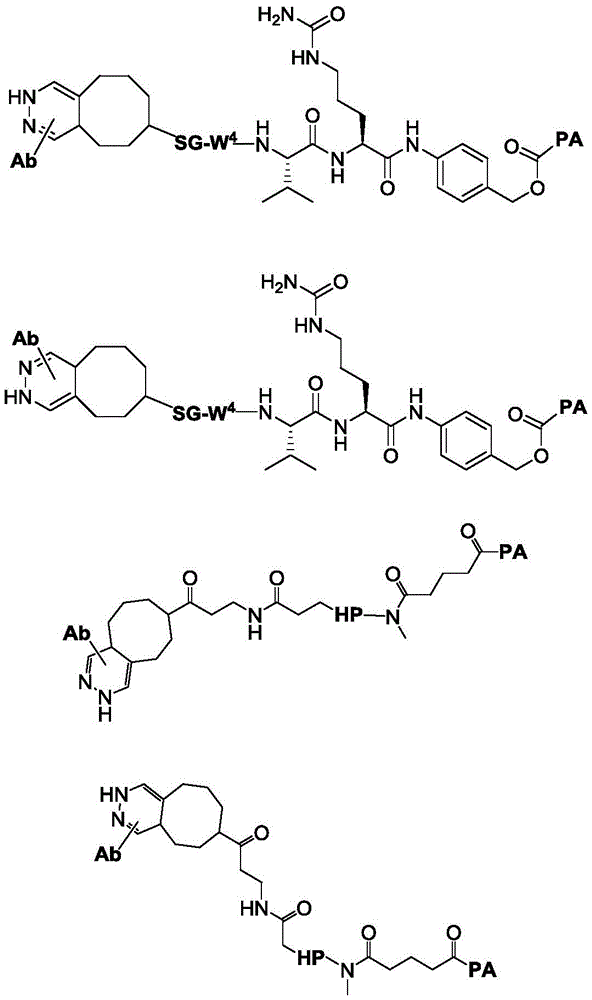
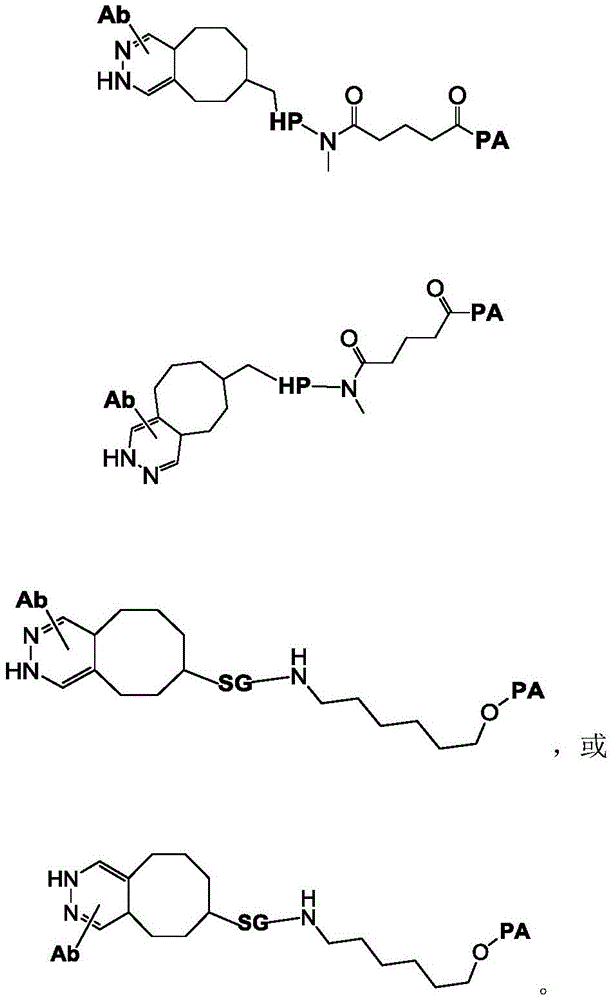
in one embodiment, the invention provides a conjugate represented by any one of formulas 101a-105b, wherein Ab represents a residue of an antibody or antigen-binding fragment thereof, and PA represents a payload moiety, wherein in some embodiments PA is a moiety represented by formula (I '), (II '), or (III '):


in any one of the above embodiments, the conjugate comprises n PA group moieties, wherein n is an integer selected from 1 to 8. In some embodiments, n is 2. In some embodiments, n is 3. In some embodiments, n is 4. In some embodiments, n is 5. In some embodiments, n is 6. In some embodiments, n is 7. In some embodiments, n is 8. Those skilled in the art will recognize that both formulas (101a) and (101b) are based on regioisomers of the nitrogen atom in the triazole attached to the antibody. Similarly, formulae (102a) and (102b), formulae (103a) and (103b), formulae (104a) and (104b), and formulae (105a) and (105b) are all regioisomeric pairs.
In a particular embodiment, the invention provides an antibody conjugate represented by any one of formulae 101a-105b, wherein Ab comprises a residue of an unnatural amino acid represented by formula (30) below. In a particular embodiment, the invention provides an antibody conjugate represented by any one of formulae 101a-105b, wherein Ab comprises a residue of a non-natural amino acid represented by formula (30) at heavy chain position 404 according to the EU numbering system. In a particular embodiment, the invention provides an antibody conjugate represented by any one of formulae 101a-105b, wherein Ab comprises a residue of a non-natural amino acid represented by formula (30) at heavy chain position 180 according to the EU numbering system. In a particular embodiment, the invention provides an antibody conjugate represented by any one of formulae 101a-105b, wherein Ab comprises a residue of a non-natural amino acid represented by formula (30) at heavy chain position 241, according to the EU numbering system. In a particular embodiment, the invention provides an antibody conjugate represented by any one of formulae 101a-105b, wherein Ab comprises a residue of a non-natural amino acid represented by formula (30) at heavy chain position 222 according to the EU numbering system. In a particular embodiment, the invention provides an antibody conjugate shown in any one of formulae 101a-105b, wherein Ab comprises a residue of an unnatural amino acid shown in formula (30) below at position 7 of the light chain according to Kabat or cauchynia (Chothia) numbering system. In a particular embodiment, the invention provides an antibody conjugate shown in any one of formulae 101a-105b, wherein Ab comprises a residue of an unnatural amino acid shown in formula (30) below at light chain position 42, located according to Kabat or cauchy (Chothia) numbering system. In certain embodiments, PA has a structure according to formula (I '), (II '), or (III ') described herein.
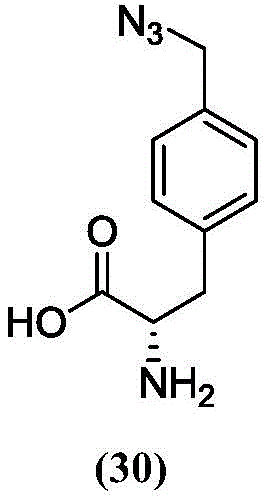
One skilled in the art will recognize that amino acids such as formula (30) are incorporated as residues in polypeptides and antibodies. For example, the residue of formula (30) can have the structure shown below in formula (30'):

further modifications, e.g. in-N3Also included within the term residue of the present invention are terms.
In a particular embodiment, the invention provides an antibody conjugate represented by any one of formulae 101a-105b, wherein Ab comprises a residue of an unnatural amino acid represented by formula (56). In a particular embodiment, the invention provides an antibody conjugate represented by any one of formulae 101a-105b, wherein Ab comprises a residue of a non-natural amino acid represented by formula (56) at heavy chain position 404 according to the EU numbering system. In a particular embodiment, the invention provides an antibody conjugate represented by any one of formulae 101a-105b, wherein Ab comprises a residue of a non-natural amino acid represented by formula (56) at heavy chain position 180 according to the EU numbering system. In a particular embodiment, the invention provides an antibody conjugate represented by any one of formulae 101a-105b, wherein Ab comprises a residue of a non-natural amino acid represented by formula (56) at heavy chain position 241, according to the EU numbering system. In a particular embodiment, the invention provides an antibody conjugate represented by any one of formulae 101a-105b, wherein Ab comprises a residue of a non-natural amino acid represented by formula (56) at heavy chain position 222 according to the EU numbering system. In a particular embodiment, the invention provides an antibody conjugate represented by any one of formulae 101a-105b, wherein Ab comprises a residue of an unnatural amino acid shown below (56) at position 7 of the light chain according to Kabat or Chothia numbering systems. In a particular embodiment, the invention provides an antibody conjugate represented by any one of formulae 101a-105b, wherein Ab comprises a residue of an unnatural amino acid shown below (56) at light chain position 42, according to the Kabat or Chothia numbering system. In certain embodiments, PA has a structure according to formula (I '), (II '), or (III ') described herein. The unnatural amino acid of formula (56) is shown below:

In a particular embodiment, the invention provides an antibody conjugate represented by any one of formulas 101a-105b, wherein Ab comprises an unnatural amino acid residue to azidomethyl-L-phenylalanine. In a particular embodiment, the invention provides an antibody conjugate shown in any one of formulas 101a-105b, wherein Ab comprises an unnatural amino acid residue of p-azidomethyl-L-phenylalanine at heavy chain position 404 according to the EU numbering system. In a particular embodiment, the invention provides an antibody conjugate represented by any one of formulas 101a-105b, wherein Ab comprises an unnatural amino acid residue of p-azidomethyl-L-phenylalanine at position 180 of the heavy chain according to the EU numbering system. In a particular embodiment, the invention provides an antibody conjugate represented by any one of formulas 101a-105b, wherein Ab comprises an unnatural amino acid residue of p-azidomethyl-L-phenylalanine at heavy chain position 241, according to the EU numbering system. In a particular embodiment, the invention provides an antibody conjugate represented by any one of formulas 101a-105b, wherein Ab comprises an unnatural amino acid residue of p-azidomethyl-L-phenylalanine at heavy chain position 222 according to the EU numbering system. In a particular embodiment, the invention provides an antibody conjugate represented by any one of formulas 101a-105b, wherein Ab comprises an unnatural amino acid residue of p-azidomethyl-L-phenylalanine at position 7 of the light chain according to Kabat or coxsacia numbering system. In a particular embodiment, the invention provides an antibody conjugate shown in any one of formulas 101a-105b, wherein Ab comprises an unnatural amino acid residue of p-azidomethyl-L-phenylalanine at position 42 of the light chain according to Kabat or coxsacia numbering system. In certain embodiments, PA has a structure according to formula (I '), (II '), or (III ') described herein.
In particular embodiments, the invention provides antibody drug conjugates comprising residues of a compound of formula (I), formula (II) and/or formula (III) as described herein. In one aspect, the invention provides an antibody drug conjugate of formula (V):

or a pharmaceutically acceptable salt, solvate, stereoisomer, tautomer, or mixture of regioisomers thereof,
wherein,
ab is an antibody, or antigen-binding fragment thereof;
l is a linker;
PA is a payload (e.g., a compound according to formula (I '), (II '), and/or (III ')); and
subscript n is an integer from 1 to 30.
In some embodiments of formula (V), is that

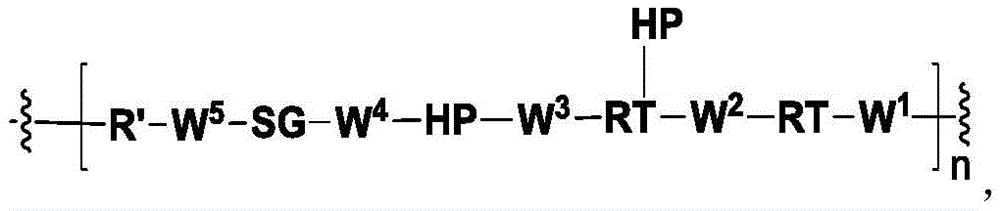
Wherein W1、W2、W3、W4SG, RT, HP, EG and R' in some or any embodiment have the definitions described herein for formulae (C1) and (C2). In some other embodiments of formula (V), is that
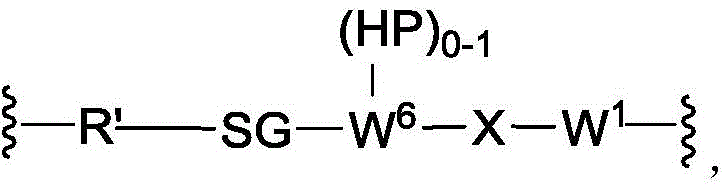 Wherein W1、W6SG, X, HP and R' in some or any embodiment have the definitions described herein for formula (VI).
In another aspect, the invention provides an antibody conjugate having a structure represented by formula (VI):

or a pharmaceutically acceptable salt, solvate, stereoisomer, tautomer, or mixture of regioisomers thereof, wherein:
W1At each occurrence, each independently is a single bond, or each independently is absent, or each independently is a divalent linking group;
x is independently absent or independently at each occurrence
Subscript b is an integer selected from 1 to 10;
RAwhen present, is independently selected from C at each occurrence1-3An alkyl group;
RT, when present, is independently at each occurrence a release trigger group (release trigger group);
HP, when present, at each occurrence, is independently a hydrophilic group;
W6at each occurrence, independently a residue of the peptide, or independently absent;
SG, at each occurrence, is independently absent, or independently is a divalent spacer group;
r' at each occurrence is independently a divalent residue of a coupling group;
subscript n is an integer selected from 1 to 30;
ab is an antibody or antigen-binding fragment thereof; and
each occurrence of PA is independently of the other of formula (I'):
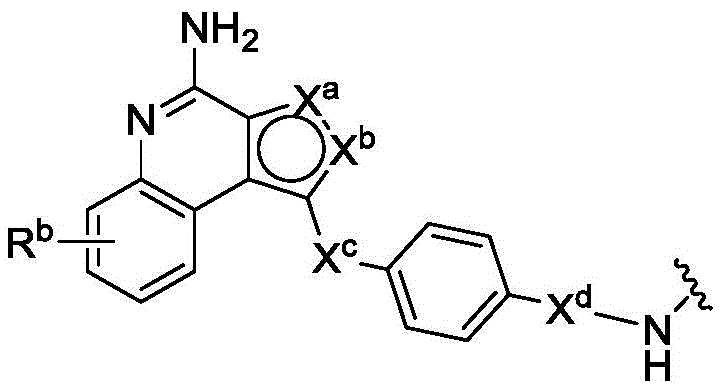

or a tautomer, stereoisomer, and/or mixture of stereoisomers thereof; wherein,
Xaand XbOne is-N ═ and the other is-N (R)a)-;
RaIs C1-C6-alkyl, cycloalkyl, or cycloalkylalkyl;
XcAnd XdAre each independently C1-C6-an alkylene group; and
Rbis H, quinolyl, or-C (O) OCH3。
In another embodiment, the invention provides an antibody conjugate of formula (VI), or a pharmaceutically acceptable salt, solvate, stereoisomer, tautomer, or mixture of regioisomers thereof, wherein:
W1is a single bond, or W1Absent, or a divalent linking group;
x is absent, or X is
Subscript b is an integer selected from 1 to 10;
RAwhen present, is independently selected from C1-3An alkyl group;
RT, when present, are each a release-initiating group;
HP, when present, is independently a hydrophilic group;
W6is a peptide, or W6Is absent;
SG is absent, or SG is a divalent spacer group;
r' is a divalent residue of a coupling group;
subscript n is an integer selected from 1 to 30;
ab is an antibody or antigen-binding fragment thereof; and
PA is a payload of formula (I'):

or a tautomer, stereoisomer, and/or mixture of stereoisomers thereof; wherein,
Xaand XbOne is-N ═ and the other is-N (R)a)-;
RaIs C1-C6-alkyl, cycloalkyl, or cycloalkylalkyl;
Xcand XdAre each independently C1-C6-an alkylene group; and
Rbis H, quinolinyl, or-C (O) OCH3。
In some embodiments of formula (VI) and embodiments thereof, SG is absent, or SG is 
 Wherein subscript d is an integer selected from 1 to 10, wherein each
 Respectively, represent the points of attachment to the remainder of the formula. In some embodiments of formula (VI) and embodiments thereof, SG is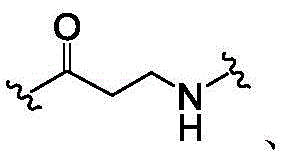
 Wherein each one of
 Respectively, represent the points of attachment to the remainder of the formula.
In some embodiments of formula (VI) and embodiments thereof, W1When present, is
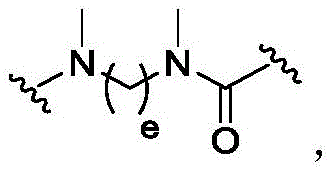 Wherein the subscript e is an integer selected from 1 to 10, wherein each
 Respectively, represent the points of attachment to the remainder of the formula. In some embodiments of formula (VI) and embodiments thereof, W1When present, is
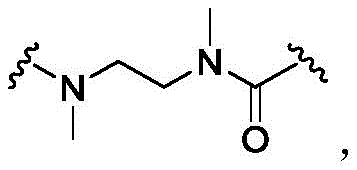 Wherein each one of
 Respectively, represent the points of attachment to the remainder of the formula.
In some embodiments of formula (VI) and embodiments thereof, when W6When a residue of a peptide, the residue of the peptide may comprise natural and/or non-natural amino acid residues. In some embodiments of formula (VI) and embodiments thereof, W6And when present, is a tripeptide residue. In some such embodiments of formula (VI) and embodiments thereof, W6Is that
 Wherein each one of
 Respectively, represent the point of attachment to the rest of the general formula. In the formula (VI) and the implementation method thereofIn some such embodiments of the invention, W6And when present, is a dipeptide residue. In some such embodiments of formula (VI) and embodiments thereof, W 6When present, is
 Wherein each one of
 Respectively, represent the point of attachment to the rest of the general formula.
In some embodiments of formula (VI) and embodiments thereof, RT is Wherein
 Represents a point of attachment to the remainder of the formula.
In some embodiments of formula (VI) and embodiments thereof, HP, when present, is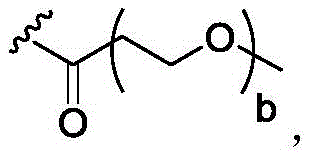 Wherein subscript b is an integer selected from 1 to 10, and
 represents a point of attachment to the remainder of the formula.
In some embodiments of formula (VI) and embodiments thereof, R' is:
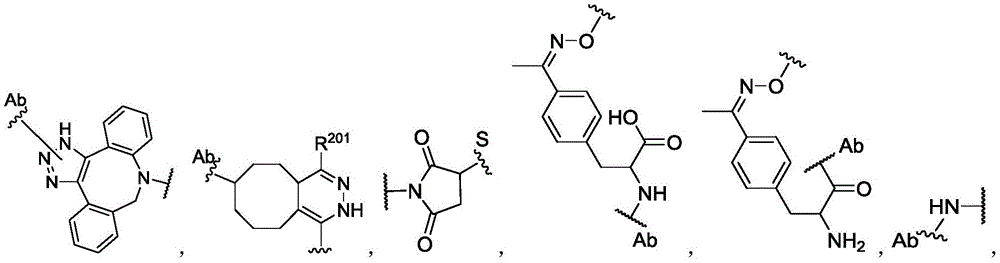


In particular embodiments, the antibody conjugates of the invention are selected from the group consisting of:

or a pharmaceutically acceptable salt, solvate, stereoisomer, tautomer, or mixture of regioisomers thereof; wherein each one of Each represents a point of attachment to the remainder of the formula; l is a linker; and Ab is an antibody or antigen-binding fragment thereof.
In some embodiments, the antibody drug conjugate of formula (VI) of the present invention is selected from the group consisting of:

or a pharmaceutically acceptable salt, solvate, stereoisomer, tautomer, or mixture of regioisomers thereof.
As used herein, when an antibody is conjugated to a linker precursor, for convenience, in some or any of the embodiments, the conjugate of the invention is as follows:


In some embodiments, the antibody or antigen-binding fragment thereof is selected from the group consisting of: anti-BCMA, anti-Muc 16, trastuzumab (trastuzumab), sofotuzumab (sofitizumab), anti-GFP, and anti-FolRa, or antigen-binding fragments thereof.
In some embodiments, the antibody or antigen-binding fragment thereof comprises a Y180(pAMF) mutation, a F404 pAMF mutation, or both a Y180(pAMF) mutation and a F404 pAMF mutation.
In any of the preceding embodiments of formula (V) or (VI), the subscript n is 1 to 30, 1 to 10, 1 to 8, 1 to 6,1 to 4, or 1 to 2. In some embodiments, subscript n is 1. In some embodiments, subscript n is 2. In some embodiments, subscript n is 3. In some embodiments, subscript n is 4. In some embodiments, subscript n is 5. In some embodiments, subscript n is 6. In some embodiments, subscript n is 7. In some embodiments, subscript n is 8. In some embodiments, subscript n is a number greater than 8.
The scope of the embodiments presented herein also encompasses antibody drug conjugates, wherein the antibody is selected from a variety of therapeutic antibodies approved for clinical trials or clinical use development. Such therapeutic antibodies include, but are not limited to, rituximab ( IDEC/gene tack/roche) (see, e.g., U.S. patent No. 5,736,137), a chimeric anti-CD 20 antibody approved for the treatment of non-hodgkin lymphoma; HuMax-CD20, anti-CD 20 currently being developed by Genmab, anti-CD 20 antibodies described in U.S. Pat. No. 5,500,362, AME-133(Applied Molecular Evolution), hA20 (immunology, Inc.), HumalLYM (Intracel), and PRO70769(PCT application No. PCT/US2003/040426), trastuzumab (Trastuzumab) (Trastuzumab)
  Genentech) (see, e.g., U.S. patent No. 5,677,171), humanized anti-Her 2/neu antibodies approved for the treatment of breast cancer; pertuzumab (rhuMab-2C4,
 ) Currently under development by Genentech; anti-Her 2 antibody (U.S. Pat. No. 4,753,894); cetuximab (
 Imclone) (U.S. patent No. 4,943,533; PCT publication No. WO 96/40210), chimeric anti-EGFR antibodies in clinical trials for a variety of cancers; ABX-EGF (U.S. Pat. No. 6,235,883), currently being developed by Abgenix-Immunex-Amgen; HuMax-EGFR (U.S. Pat. No. 7,247,301), currently being developed by Genmab; 425. EMD55900, EMD62000 and EMD72000(Merck KGaA) (U.S. Pat. No. 5,558,864; Murthy, et al (1987) Arch. biochem. Biophys.252(2): 549-60; Rodeck, et al (1987) J. cell. biochem.35(4): 315-20; Kettleborough, et al (1991) Protein Eng.4(7): 773-83); ICR62(Institute of Cancer Research) (PCT publication No. WO 95/20045; Modjtahedi, et al, (1993) J.cell. Biophys.22(I-3): 129-46; Modjtahedi, et al, (1993) Br.J.cancer 67(2): 247-53; Modjtahedi, et al, (1996) Br.J.cancer 73(2): 228-35; Modjtahedi, et al, (2003) int.J.cancer 105(2): 273-80); TheraCIM hR3(YM Biosciences, Canada; and Centro de immunology Molecular, Cuba) (U.S. Pat. No. 5,891,996; U.S. Pat. No. 6,506,883; Mateo, et al (1997)) Immunotech nol.3(1): 71-81); mAb-806(Ludwig institute for Cancer Research, molar Sloan-Kettering) (Jungbuth, et al (2003) Proc. Natl. Acad. Sci. USA.100(2): 639-44); KSB-102(KS Biomedix); MR1-1(IVAX, National Cancer Institute) (PCT publication No. WO 01/62931A 2); and SC100(Scancell) (PCT publication No. WO 01/88138); alemtuzumab (A)
 Millenium), a humanized mAb currently approved for the treatment of B-cell chronic lymphocytic leukemia; moluomamab CD3 (Orthoclone)
 ) An anti-CD 3 antibody developed by Ortho Biotech/qiangsheng corporation; ibritumomab tiuxetan
 It is an anti-CD 20 antibody developed by IDEC/Schering AG; azole micellae of gemtuzumab ozogamicin
 It is an anti-CD 33(P67 protein) antibody developed by Celltech/Wyeth; alfoseit (a)
 anti-LFA-3 Fc fusion developed by Biogen; abciximab
 Developed by Centocor/ceremony; basiliximab
 Developed by Nowa corporation; palivizumab
 Developed by the Medimmune company; infliximab
 From Canti-TNF α antibodies developed by the enterocor corporation; adalimumab
 anti-TNF α antibodies developed by Abbott;
 anti-TNF α antibodies developed by Celltech corporation; golimumab (CNTO-148), a fully human TNF antibody developed by Centocor; etanercept
  The p75TNF receptor Fc fusion developed by Immunex/Amgen; ifenrcept, Fc fusion by the p55TNF receptor previously developed by roche; ABX-CBL, an anti-CD 147 antibody being developed by Abgenix; ABX-IL8, an anti-IL 8 antibody being developed by Abgenix; ABX-MA1, an anti-MUC 18 antibody being developed by Abgenix; pemtumomab (R1549, 90Y-muHMFG1), anti-MUC 1 being developed by Antisoma; therex (R1550), anti-MUC 1 antibody being developed by Antisoma; AngioMab (AS1405), being developed by Antisoma; HuBC-1, being developed by Antisoma; thioplatin (AS1407) being developed by Antisoma;
 (natalizumab), anti- α -4- β -1(VLA-4) and α -4- β -7 antibodies being developed by Biogen; VLA-1mAb, anti-VLA-1 integrin antibody being developed by Biogen; LTBR mAb, an anti-lymphotoxin beta receptor (LTBR) antibody being developed by Biogen; CAT-152, an anti-TGF-. beta.antibody being developed by Cambridge Antibody Technology, Inc.; ABT 874(J695), an anti-IL-12 p40 antibody being developed by Abbott corporation; CAT-192, an anti-TGF β 1 Antibody being developed by Cambridge Antibody Technology and Genzyme; CAT-213, an anti-Eotaxin 1 Antibody being developed by Cambridge Antibody Technology;
 anti-Blys antibodies being developed by Cambridge Antibody Technology and Human Genome Sciences, Inc.; TRAIL-R1 mAb, being produced by Cambridge Antibody Technology and H anti-TRAIL-R1 antibody developed by uman Genome Sciences;
 bevacizumab; rhuMAb-VEGF, an anti-VEGF antibody being developed by Genentech; anti-HER receptor family antibodies being developed by Genentech; anti-tissue factor (ATF), an anti-tissue factor antibody being developed by Genentech;
 (omalizumab), an anti-IgE antibody being developed by Genentech;
 (efletuzumab), an anti-CD 11a antibody being developed by Genentech and Xoma; MLN-02 antibody (original name LDP-02), being developed by Genentech and Millenium Pharmaceuticals; HuMax CD4, which is an anti-CD 4 antibody being developed by Genmab; HuMax-IL15, which is an anti-IL 15 antibody being developed by Genmab and Amgen; HuMax-Inflam, which is being developed by Genmab and Metarex; HuMax-Cancer, which is an anti-heparanase I antibody being developed by Genmab and Metarx and Oxford GcoSciences; HuMax-Lymphoma, being developed by Genmab and Amgen; HuMax-TAC, being developed by Genmab; IDEC-131 and anti-CD 40L antibodies being developed by IDEC Pharmaceuticals; IDEC-151 (Clenoliximab), an anti-CD 4 antibody being developed by IDEC Pharmaceuticals; IDEC-114, an anti-CD 80 antibody being developed by IDEC Pharmaceuticals; IDEC-152, anti-CD 23 being developed by IDEC Pharmaceuticals; anti-macrophage migration factor (MIF) antibodies being developed by IDEC Pharmaceuticals; BEC2, which is an anti-idiotypic antibody being developed by Imclone; IMC-1C11, which is an anti-KDR antibody being developed by Imclone; DC101, which is an anti-flk-1 antibody being developed by Imclone; anti-VE cadherin antibodies being developed by Imclone;
  (labezumab (ibatuzumab)), an anti-VE cadherin antibody being developed by immunolamedics; anti-carcinoembryonic antigen (CEA) antibodies being developed by immunolamedics;
 (epratuzumab), an anti-CD 22 antibody being developed by immunolamedics; AFP-Cide being developed by Immunomedics; myelomas Cide, being developed by Immunodics; LkoCide being developed by Immunodics; ProstaCide being developed by Immunodics; MDX-010, which is an anti-CTLA 4 antibody being developed by Medarex; MDX-060, which is an anti-CD 30 antibody being developed by Medarex; MDX-070 being developed by Metarex; MDX-018, being developed by Metarex; being developed by Metarex and Immuno-Designed Molecules
 (IDM-1) and anti-Her 2 antibodies;
 it is an anti-CD 4 antibody being developed by Medarex and Genmab; HuMax-IL15, which is an anti-IL 15 antibody being developed by Medarex and Genmab; CNTO 148, which is being produced by Metarex and Centocor/J&J developed anti-TNF α antibodies; CNTO 1275, which is currently being produced by centrocor/J&J developed anti-cytokine antibodies; MOR101 and MOR102, anti-intercellular adhesion molecule-1 (ICAM-1) (CD54) antibodies being developed by MorphoSys; MOR201, an anti-fibroblast growth factor receptor 3(FGFR-3) antibody being developed by MorphoSys;
  (vislizumab), an anti-CD 3 antibody being developed by Protein Design Labs;
 it is an anti-gamma interferon antibody being developed by Protein Design Labs; anti- α 5 β 1 interferon being developed by Protein Design Labs; anti-IL-12 being developed by Protein Design Labs; ING-1, which is an anti-Ep-CAM antibody being developed by Xoma;
 (omalizumab), which is being developed by Genentech and novaThe humanized anti-IgE antibody of (a); and MLN01, which is a humanized anti- β 2 integrin antibody being developed by Xoma. In another embodiment, the therapeutic agent comprises KRN330 (Kirin); huA33 antibody (a33, ledwig cancer institute); CNTO 95(α V integrin, Centocor); MEDI-522(
α V β 3 integrin, medimmunee); voluximab (α V β 1 integrin, Biogen/PDL); human mAb 216(B cell glycosylated epitope, NCL); BiTE MT103 (bispecific CD19 α 0CD3, medimmunee); 4G7 α 1H22 (bispecific B cells × Fc γ R1, Medarex/Merck KGa); rM28 (bispecific CD28 × MAPG, european patent No. EP 1444268); MDX447(EMD82633) (bispecific CD64 × EGFR, Medarex); carduozumab (removab) (bispecific EpCAM × anti-CD 3, Trion/Fres); ertuzumab (bispecific HER2/CD3, Fresenius Biotech); agovozumab (oregovomab) (OvaRex) (CA-125, ViRexx);  (WX G250) (carbonic anhydrase IX, Wilex); CNTO 888(CCL2, Centocor); TRC105(CD105 (endoglin), Tracon); BMS-663513(CD137 agonist, Brystol Myers Squibb); MDX-1342(CD19, Metarx corporation); hiprilizumab (Sillizumab) (MEDI-507) (CD2, Medmimmune); ofatumumab (Humax-CD20) (CD20, Genmab); rituximab (Rituxan) (CD20, Genentech); veltuzumab (hA20) (CD20, Immunomedics); epratuzumab (CD22, Amgen); luxiximab (IDEC 152) (CD23, Biogen); Moluomab-CD 3(CD3, Ortho); HuM291(CD3 fc receptor, PDL Biopharma); HeFi-1(CD30, NCl); MDX-060(CD30, Metarex); MDX-1401(CD30, Medarex); SGN-30(CD30, SeattleGenentics); SGN-33 (lintuzumab) (CD33, Seattle genetics); zanolimumab (Zanolimumab) (HUMAX-CD4) (CD4, Genmab); HCD122(CD40, nova); SGN-40(CD40, Seattle genetics); campath1h (alemtuzumab) (CD52, Genzyme); MDX-1411(CD70, Metarex); hLL1(EPB-1) (CD74.38, immunology); galiximab (Galiximab) (IDEC-144) (CD80, Biogen); MT293(TRC093/D93) (cleaved collagen, Tracon); HuLuc63(CS1, PDL Pharma); yipriumamab (ipilimumab) (MDX-010) (CTLA4, Brystol Myers Squibb); qumei food Mumab (Tremelimumab) (Ticilimumab, CP-675,2) (CTLA4, feverfew); HGS-ETR1 (Mapamumab) (DR4TRAIL-R1 agonist, Human Genome Science/Glaxo Smith Kline); AMG-655(DR5, Amgen); apomab (DR5, Genentech); CS-1008(DR5, Daiichi Sankyo); HGS-ETR2 (lyxamumab) (DR5TRAIL-R2 agonist, HGS); cetuximab (erbitux) (EGFR, Imclone); IMC-11F8, (EGFR, Imclone); nimotuzumab (EGFR, YM Bio); panitumumab (vectaboix) (EGFR, Amgen); zatuzumab (Zalutumumab) (HuMaxEGFr) (EGFR, Genmab); CDX-110(EGFRvIII, AVANT immunothereutics); adalimumab (adecatumumab) (MT201) (Epcam, Merck); epilozumab (Panorex, 17-1A) (Epcam, Glaxo/Centocor); MORAB-003 (folate receptor a, Morphotech); KW-2871 (ganglioside GD3, Kyowa); MORAB-009(GP-9, Morphotech); CDX-1307(MDX-1307) (hCGb, Celldex); trastuzumab (herceptin) (HER2, Celldex); pertuzumab (rhuMAb 2C4) (HER2(DI), Genentech); aprezumab (apolizumab) (HLA-DR β chain, PDL Pharma); AMG-479(IGF-1R, Amgen); anti-IGF-1R R1507(IGF1-R, Roche); CP751871(IGF1-R, feverfew); IMC-A12(IGF1-R, Imclone); BIIB022(IGF-1R, Biogen); MIK-. beta.1 (IL-2Rb (CD122), Hoffman LaRoche); CNTO 328(IL6, Centocor); anti-KIR (1-7F9) (killer Ig-like receptor (KIR), Novo); hu3S193(lewis (y), huiwei, ludwigshi cancer institute); hCBE-11 (LT. beta.R, Biogen); HuHMFG1(MUC1, Antisoma/NCL); RAV12 (N-linked carbohydrate epitope, Raven); CAL (parathyroid hormone-related protein (PTH-RP), university of California); CT-011(PD1, CureTech); MDX-1106(ONO-4538) (PD1, Metarex/Ono); MAb CT-011(PD1, Curetech); IMC-3G3(PDGFRa, Imclone); bavituximab (phosphatidylserine, Peregrine); huJ591(PSMA, Cornell Research Foundation); muJ591(PSMA, Cornell Research Foundation); GC1008(TGFb (pan) inhibitor (IgG4), Genzyme); infliximab (Remicade) (TNFa, Centocor); a27.15 (transferrin receptor, Salk Institute, INSERN WO 2005/111082); e2.3 (transferrin receptor, Salk Institute); bevacizumab (Avastin) (VEGF, Genentech); HuMV833(VEGF, Tsukuba Research Lab, PCT publication WO/2000/034) 337,University of Texas);IMC-18F1(VEGFR1,Imclone);IMC-1121(VEGFR2,Imclone)。
Examples of useful bispecific parent antibodies include, but are not limited to, those bispecific parent antibodies having one antibody against a tumor cell antigen and another antibody against a cytotoxic trigger molecule, such as anti-fcyri/anti-CD 15, anti-p 185HER2FcyRIII (CD16), anti-CD 3/anti-malignant B cells (1D10), anti-CD 3/anti-p 185HER2anti-CD 3/anti-p 97, anti-CD 3/anti-renal cell carcinoma, anti-CD 3/anti-OVCAR-3, anti-CD 3/L-D1 (anti-colon cancer), anti-CD 3/anti-melanocyte-stimulating hormone analog, anti-EGF receptor/anti-CD 3, anti-CD 3/anti-CAMA 1, anti-CD 3/anti-CD 19, anti-CD 3/MoV18, anti-Neural Cell Adhesion Molecule (NCAM)/anti-CD 3, anti-Folate Binding Protein (FBP)/anti-CD 3, anti-pan-cancer associated antigen (AMOC-31)/anti-CD 3; bispecific antibodies with one antibody that specifically binds to a tumor antigen and another antibody that binds to a toxin, such as anti-saporin/anti-Id-1, anti-CD 22/anti-saporin, anti-CD 7/anti-saporin, anti-CD 38/anti-saporin, anti-CEA/anti-ricin a chain, anti-interferon alpha (IFN- α)/anti-hybridoma idiotype, anti-CEA/anti-vinca alkaloid; bispecific antibodies for converting enzyme-activated prodrugs, such as anti-CD 30/anti-alkaline phosphatase (which catalyzes the conversion of mitomycin phosphate prodrugs to mitomycin alcohol); bispecific antibodies that can be used as fibrinolytic agents, such as anti-fibrin/anti-tissue plasminogen activator (tPA), anti-fibrin/anti-urokinase plasminogen activator (uPA); immune complex bispecific antibodies for targeting cell surface receptors, such as anti-Low Density Lipoprotein (LDL)/anti-Fc receptors (e.g., Fc γ RI, Fc γ RII or Fc γ RIII); bispecific antibodies for the treatment of infectious diseases, such as anti-CD 3/anti-Herpes Simplex Virus (HSV), anti-T cell receptor: CD3 complex/anti-influenza, anti-Fc γ R/anti-HIV; bispecific antibodies for in vitro or in vivo tumor detection, such as anti-CEA/anti-EOTUBE, anti-CEA/anti-DPTA, anti-p 185 HER2Anti-half-antibody; bispecific antibodies as vaccine adjuvants (see Fanger, M W et al, Crit Rev Immunol.1992; 12(34):101-24, which is incorporated herein by reference); and as a diagnostic toolSpecific antibodies, such as anti-rabbit IgG/anti-ferritin, anti-horseradish peroxidase (HRP)/anti-hormone, anti-somatostatin/anti-substance P, anti-HRP/anti-FITC, anti-CEA/anti-beta-galactosidase (see Nolan, O et R.O' Kennedy, Biochim Biophys acta.1990Aug.1; 1040(1): 1-11), which are incorporated herein by reference). Examples of trispecific antibodies include anti-CD 3/anti-CD 4/anti-CD 37, anti-CD 3/anti-CD 5/anti-CD 37, and anti-CD 3/anti-CD 8/anti-CD 37.
In any one of the above embodiments, wherein the antibody conjugate has a structure according to formulae (V) and (VI), the bracketed structure may be covalently attached to one or more unnatural amino acid of the antibody, wherein the one or more unnatural amino acid is located at a site independently selected from the group consisting of: HC-F241, HC-F404, HC-Y180, and LC-K42 according to the EP numbering scheme of Kabat (Kabat) or Kabat (Kabat), and compositions thereof. In some embodiments, the bracketed structure is covalently attached to one or more unnatural amino acids at position HC-F404 of the antibody. In some embodiments, the bracketed structure is covalently linked to one or more unnatural amino acids at position HC-Y180 of the antibody. In some embodiments, the bracketed structure is covalently attached to one or more unnatural amino acids at position HC-F241 of the antibody. In some embodiments, the bracketed structure is covalently attached to one or more unnatural amino acids at position LC-K42 of the antibody. In some embodiments, the bracketed structure is covalently linked to one or more unnatural amino acids at positions HC-F404 and HC-Y180 of the antibody. In some embodiments, the bracketed structure is covalently linked to one or more unnatural amino acids at positions HC-F241, HC-F404, and HC-Y180 of the antibody. In some embodiments, at least one bracketed structure is covalently attached to an unnatural amino acid at position HC-F404 of the antibody, and at least one bracketed structure is covalently attached to an unnatural amino acid at position HC-Y180 of the antibody. In some embodiments, the bracketed structure is covalently linked to one or more unnatural amino acids at positions HC-Y180 and LC-K42 of the antibody. In some embodiments, the bracketed structure is covalently attached to one or more unnatural amino acids at positions HC-F404 and LC-K42 of the antibody. In a particular embodiment, each unnatural amino acid is a residue of formula (30).
In certain embodiments, the antibody conjugate may have an additional payload selected from the group consisting of: labels, dyes, polymers, water-soluble polymers, polyethylene glycol, derivatives of polyethylene glycol, photocrosslinkers, cytotoxic compounds, radionuclides, drugs, affinity labels, photoaffinity labels, active compounds, resins, second proteins or polypeptides or polypeptide analogs, antibodies or antibody fragments, metal chelators, cofactors, fatty acids, carbohydrates, polynucleotides, DNA, RNA, antisense polynucleotides, peptides, water-soluble dendrimers, cyclodextrins, inhibitory ribonucleic acids, biomaterials, nanoparticles, spin labels, fluorophores, metal-containing moieties, radioactive moieties, novel functional groups, groups that interact covalently or non-covalently with other molecules, photocaged moieties, photoisomerizable moieties, biotin derivatives, biotin analogs, a heavy atom incorporating moiety, a chemically cleavable group, a photocleavable group, an elongated side chain, a carbon linked sugar, a redox active agent, an aminothioate, a toxic moiety, an isotopically labeled moiety, a biophysical probe, a phosphorescent group, a chemiluminescent group, an electron dense group, a magnetic group, an intercalating group, a chromophore, an energy transfer agent, a bioactive agent, a detectable label, a small molecule, or any combination thereof. In embodiments, the payload is a label, dye, polymer, cytotoxic compound, radionuclide, drug, affinity label, resin, protein, polypeptide analog, antibody fragment, metal chelator, cofactor, fatty acid, carbohydrate, polynucleotide, DNA, RNA, peptide, fluorophore, or carbon linked sugar. In another embodiment, the payload is a label, dye, polymer, drug, antibody fragment, DNA, RNA, or peptide.
In certain embodiments, the antibody conjugate comprises one or more water soluble polymers. Various macromolecular polymers and other molecules may be attached to the polypeptides of the present invention to modulate the biological properties of the polypeptides and/or to provide new biological properties to the polypeptides. These macromolecular polymers may be attached to the polypeptide via naturally encoded amino acids, via non-naturally encoded amino acids, or any functional substituents of natural or modified amino acids, or any substituents or functional groups appended to natural or modified amino acids. The molecular weight of the polymer can be of a wide range, including, but not limited to, between about 100Da and about 100,000Da, or greater.
The polymer selected may be water soluble so that the protein to which it is attached does not precipitate in an aqueous environment, such as a physiological environment. The polymer may be branched or unbranched. Preferably, the polymer will be pharmaceutically acceptable for therapeutic use in the final product formulation.
In certain embodiments, the ratio of polyethylene glycol molecules to polypeptide molecules will vary, as will their concentration in the reaction mixture. Generally, the optimal ratio (in terms of reaction efficiency, there is a minimum excess of unreacted protein or polymer) can be determined by the molecular weight of the polyethylene glycol selected and the number of reactive (reactive) groups available. In terms of molecular weight, generally the higher the molecular weight of the polymer, the fewer the number of polymer molecules that can be attached to the protein. Similarly, when optimizing these parameters, the branching of the polymer should be taken into account. Generally, the higher the molecular weight (or more branching), the polymer: the higher the protein ratio.
The water-soluble polymer may be in any structural form including, but not limited to, linear, forked, or branched. Typically, the water soluble polymer is a poly (alkylene glycol), such as poly (ethylene glycol) (PEG), although other water soluble polymers may also be used. For example, PEG is used to describe certain embodiments.
PEG is a well-known water-soluble polymer, which is commercially available,or by ring-opening polymerization of ethylene glycol using methods well known in the art (Sandler and Karo, Polymer Synthesis, Academic Press, New York, Vol.3, pages 138-. The term "PEG" is used broadly to include any polyethylene glycol molecule, regardless of the size or modification of the PEG terminus, and may be represented as linked to a polypeptide by the formula: x' O- (CH)2CH2O)n–CH2CH2-Y, wherein n is 2 to 10,000 and X is H or a terminal modification, including but not limited to C1-4Alkyl, and Y is a point of attachment to the polypeptide.
In some cases, the PEG is terminated at one end with a hydroxyl or methoxy group, i.e., X' is H or CH3("methoxy PEG"). Alternatively, the PEG may be terminated with a reactive (reactive) group, thereby forming a bifunctional polymer. Typical reactive groups may include those commonly used to react with the following functional groups: functional groups present in the 20 common amino acids (including, but not limited to, maleimide groups, activated carbonates (including, but not limited to, p-nitrophenyl esters), activated esters (including, but not limited to, N-hydroxysuccinimide, p-nitrophenyl esters, and aldehydes), and functional groups inert to the 20 common amino acids (including, but not limited to, azide groups, alkyne groups), but specifically reactive with complementary functional groups present in the non-naturally encoded amino acids. Y may be a maleimide bond of a thiol group (including, but not limited to, a thiol group of cysteine). Alternatively, Y may be a bond via residues not normally available with 20 common amino acids. For example, an azide group on PEG can react with an alkyne group on a polypeptide to form Huisgen [3+2 ] ]Cycloaddition products. Alternatively, the alkyne group on the PEG can be reacted with an azide group present in the non-naturally encoded amino acid (e.g., the modified amino acids described herein)To form similar products. In some embodiments, as applicable, strong nucleophiles (including, but not limited to, hydrazine, hydrazide, hydroxylamine, semicarbazide) can react with aldehyde or ketone groups present in the non-naturally encoded amino acid to form a hydrazone, oxime, or semicarbazide, which in some cases can be further reduced by treatment with an appropriate reducing agent. Alternatively, the strong nucleophile may be incorporated into the polypeptide via a non-naturally encoded amino acid and used to preferentially react with ketone or aldehyde groups present in the water-soluble polymer.
PEG of any molecular mass may be used as is practical, including, but not limited to, from about 100 daltons (Da) to 100,000Da or more (including, but not limited to, sometimes 0.1-50kDa or 10-40kDa) as desired. Branched PEGs include, but are not limited to, PEG molecules in which each chain has a Molecular Weight (MW) ranging from 1-100kDa, including, but not limited to, 1-50kDa or 5-20 kDa. A wide range of PEG molecules are described, including but not limited to, the product catalog of Shearwater Polymers, Inc. and the product catalog of Nektar Therapeutics, all of which are incorporated herein by reference.
Typically, at least one end of the PEG molecule is available for reaction with an antibody. For example, PEG derivatives having alkyne and azide moieties for reaction with amino acid side chains can be used to attach PEG to non-naturally encoded amino acids as described herein. If the non-naturally encoded amino acid comprises an azide, the PEG will typically contain an alkyne moiety to effect formation of a [3+2] cycloaddition product, or alternatively an activated PEG species (i.e., ester, carbonate) containing a phosphine group to effect formation of an amide bond. Alternatively, if the non-naturally encoded amino acid comprises an alkyne, the PEG will typically contain an azide group moiety to effect formation of a [3+2] Huisgen cycloaddition product. If the non-naturally encoded amino acid comprises a carbonyl group, the PEG will typically comprise an effective nucleophile (including, but not limited to, a hydrazide, hydrazine, hydroxylamine, or semicarbazide functional group) to effect the formation of the corresponding hydrazone, oxime, and semicarbazone linkages, respectively. In other alternatives, the opposite positioning of the active (reactive) group described herein may be used, i.e., the azido group moiety in the non-naturally encoded amino acid may be reacted with an alkyne-containing PEG derivative.
In some embodiments, polypeptide variants having PEG derivatives comprise a chemical functional group that reacts with a chemical functional group present on a side chain of a non-naturally encoded amino acid.
In certain embodiments, the payload is an azide-or acetylene-containing polymer comprising a water-soluble polymer backbone having an average molecular weight of from about 800Da to about 100,000 Da. The polymer backbone of the water-soluble polymer may be poly (ethylene glycol). However, it is to be understood that a variety of water-soluble polymers, including but not limited to polyethylene glycol and other related polymers, including poly (dextran) and poly (propylene glycol), are also suitable for use, and the use of the term PEG or poly (ethylene glycol) is intended to encompass and include all such molecules. The term PEG includes, but is not limited to, poly (ethylene glycol) in any of its forms, including bifunctional PEG, multi-armed PEG, derivatized PEG, forked PEG, branched PEG, pendant PEG (i.e., PEG or related polymers having one or more functional groups pendant to the polymer backbone), or PEG having degradable linkages therein.
The polymer backbone may be linear or branched. Branched polymer backbones are generally known in the art. Typically, the branched polymer has a central branched core group moiety and a plurality of linear polymer chains attached to the central branched core. PEG is typically used in a branched form that can be prepared by the addition of ethylene oxide to various polyols, such as glycerol, glycerol oligomers, pentaerythritol, and sorbitol. The central branching group moiety may also be derived from several amino acids, such as lysine. The branched poly (ethylene glycol) may be represented in the form of a general formula R (-PEG-OH) mWherein R is derived from a core moiety, such as glycerol, glycerol oligomer, or pentaerythritol, and m represents the number of arms. Multi-armed PEG molecules, such as those described in the following references, can also be used as the polymer backbone: U.S. Pat. Nos. 5,932,462, 5,643,575, 5,229,490, and,4,289,872; U.S. patent application 2003/0143596; WO 96/21469; and WO 93/21259, each of which is incorporated by reference in its entirety.
The branched PEG may also be PEG (-YCHZ)2)nA forked PEG form is represented, where Y is a linking group, and Z is an activated terminal group linked to CH with a chain of atoms of defined length.
Another branched form, pendant PEG, has an active (reactive) group, such as a carboxyl group, which is along the PEG backbone rather than at the end of the PEG chain.
In addition to these forms of PEG, the polymers can also be prepared with weak or degradable linkages in the backbone. For example, PEG can be prepared with ester linkages in the polymer backbone that undergo hydrolysis. As shown in the present invention, the hydrolysis results in the cleavage of the polymer into lower molecular weight fragments: -PEG-CO2-PEG-+H2O→PEG-CO2H + HO-PEG-. It will be understood by those skilled in the art that the term poly (ethylene glycol) or PEG represents or includes all forms known in the art, including but not limited to those disclosed herein.
Many other polymers are also suitable for use. In some embodiments, a water-soluble polymer backbone having from 2 to about 300 termini is particularly suitable. Examples of suitable polymers include, but are not limited to, other poly (alkylene glycols) (e.g., poly (propylene glycol) ("PPG")), copolymers thereof (including, but not limited to, copolymers of ethylene glycol and propylene glycol), terpolymers thereof, mixtures thereof, and the like. Although the molecular weight of each chain of the polymer backbone may vary, it is generally in the range of about 800Da to about 100,000Da, typically about 6,000Da to about 80,000 Da.
Those skilled in the art will recognize that the foregoing list of essentially water-soluble backbones is by no means exhaustive and is merely illustrative and that all polymeric materials having the properties described herein are considered suitable for use.
In some embodiments, the polymer derivative is "multifunctional," meaning that the polymer backbone has at least two ends, and possibly up to about 300 ends, functionalized or activated with a functional group. Polyfunctional polymer derivatives include, but are not limited to, linear polymers having two ends, wherein each end is attached to a functional group that may be the same or different.
Connecting body
In certain embodiments, the antibody may be linked to the payload via one or more linkers capable of reacting with the antibody amino acids and the payload group. The one or more linkers can be any linker apparent to those of skill in the art.
The term "linker" is used herein to refer to a group or bond that is typically formed as a result of a chemical reaction, and is typically a covalent bond.
Useful linkers include those described herein. In certain embodiments, the linker is any bivalent or multivalent linker known to those of skill in the art. Useful divalent linkers include alkylene, substituted alkylene, heteroalkylene, substituted heteroalkylene, arylene, substituted arylene, heteroarylene, and substituted heteroarylene. In certain embodiments, the linker is C1-10Alkylene or C1-10A heteroalkylene group. In some embodiments, said C1-10Heteroalkylidene is PEG.
In certain embodiments, the linker is hydrolytically stable. Hydrolytically stable bonds means that the bond is substantially stable in water and does not react with water at useful pH values, including but not limited to, not reacting with water under physiological conditions for extended periods of time (even indefinitely). In certain embodiments, the linker is hydrolytically unstable. Hydrolytically unstable or degradable bonds means that the bonds are degradable in water or aqueous solutions (including, for example, blood). An enzymatically labile or degradable linkage means that the linkage can be degraded by one or more enzymes.
As understood in the art, both PEG and related polymers may include degradable linkages in the polymer backbone or in linker groups between the polymer backbone and one or more terminal functional groups of the polymer molecule. For example, the ester bond formed by the reaction of PEG carboxylic acid or activated PEG carboxylic acid with an alcohol group on a bioactive agent is typically hydrolyzed under physiological conditions to release the agent/drug.
Other hydrolytically degradable linkages include, but are not limited to, carbonate linkages; imine linkages resulting from the reaction of amines and aldehydes; a phosphate ester bond formed by the reaction of an alcohol with a phosphate group; a hydrazone bond as the reaction product of a hydrazide and an aldehyde; the reaction product acetal linkage of an aldehyde and an alcohol; reaction products of formate and alcohol ortho ester bonds; peptide bonds formed from amine groups (including but not limited to amine groups located at the terminus of polymers such as PEG) and carboxyl groups of peptides; and oligonucleotide linkages formed from phosphoramidite groups (including but not limited to phosphoramidite groups located at the polymer termini) and the 5' -hydroxyl groups of oligonucleotides.
Many different cleavable linkers are known to those skilled in the art. See U.S. patent nos. 4,618,492, 4,542,225, and 4,625,014. Mechanisms for drug release from these linker groups include, for example, irradiation of photolabile bonds and acid-catalyzed hydrolysis. U.S. patent No. 4,671,958, for example, includes a description of an immunoconjugate comprising a linker that is cleaved at a target site in vivo by proteolytic enzymes of the patient's complement system. The length of the linker may be predetermined or selected according to the desired spatial relationship between the polypeptide and the molecule to which it is attached. In view of the large number of methods reported for attaching a variety of radiodiagnostic compounds, radiotherapeutic compounds, drugs, toxins, and other drugs to polypeptides, one skilled in the art will be able to determine an appropriate method for attaching a given drug to a polypeptide.
The linker can have a wide range of molecular weights or molecular lengths. Linkers of greater or lesser molecular weight can be used to provide a desired spatial relationship or conformation between the polypeptide and the linked entity. Linkers having longer or shorter molecular lengths may also be used to provide the desired space or flexibility between the polypeptide and the linked entity. Similarly, a linker having a particular shape or conformation can be used to impart a particular shape or conformation to a polypeptide or linked entity before or after the polypeptide reaches its target. The functional groups present on each end of the linker can be selected to modulate the release of the polypeptide or payload under desired conditions. Such optimization of the spatial relationship between the polypeptide and the linked entity can provide new, adjusted or desired properties to the molecule.
In some embodiments, the water-soluble bifunctional linker provided herein has a dumbbell structure, comprising: a) an azide, alkyne, hydrazine, hydrazide, hydroxylamine, or a carbonyl-containing moiety located on at least a first end of the polymer backbone; and b) at least a second functional group located on a second end of the polymer backbone. The second functional group may be the same or different from the first functional group. In some embodiments, the second functional group is not reactive with the first functional group. In some embodiments, a water-soluble compound comprising at least one arm of a branched molecular structure is provided. For example, the branched molecular structure may be a dendritic structure.
In some embodiments, the linker is derived from a linker precursor selected from the group consisting of: N-Succinimidyl-3- (2-pyridyldithio) propionate (SPDP), N-succinimidyl-4- (2-pyridyldithio) valerate (SPP), N-succinimidyl-4- (2-pyridyldithio) butyrate (SPDB), N-succinimidyl-4- (2-pyridyldithio) -2-sulfo-butyrate (sulfo-SPDB), N-Succinimidyl Iodoacetate (SIA), N-succinimidyl (4-iodoacetyl) aminobenzoate (SIAB), Maleimide PEG NHS, N-succinimidyl 4- (maleimidomethyl) cyclohexanecarboxylate (SMCC), N-sulfosuccinimidyl 4- (maleimidomethyl) cyclohexanecarboxylate (sulfo-SMCC) Or 2, 5-dioxopyrrolidin-1-yl 17- (2, 5-dioxo-2, 5-dihydro-1H-pyrrol-1-yl) -5,8,11, 14-tetraoxy-4, 7,10, 13-tetraazaheptadecane-1-oic acid ester (CX 1-1). In a specific embodiment, the linker is derived from the linker precursor N-succinimidyl 4- (maleimidomethyl) cyclohexanecarboxylate (SMCC).
In some embodiments, the linker is derived from a linker precursor selected from the group consisting of: dipeptides, tripeptides, tetrapeptides, and pentapeptides. In such embodiments, the linker can be cleaved by a protease. Exemplary dipeptides include, but are not limited to, valine-citrulline (vc or val-cit), alanine-phenylalanine (af or ala-phe); phenylalanine-lysine (fk or phe-lys); phenylalanine-homolysine (phe-homolys); and N-methylvaline-citrulline (Me-val-cit). Exemplary tripeptides include, but are not limited to, glycine-valine-citrulline (gly-val-cit), glycine-glycine (gly-gly-gly), and glycine- (methoxyethoxyethyl) serine-valine (gly-val-citalanine OMESerValAla).
In some embodiments, the linker comprises a self-degrading (self-immolative) spacer group. In certain embodiments, the self-degrading (self-immolative) spacer group comprises a p-aminobenzyl group. In some embodiments, para-aminobenzyl alcohol is linked to an amino acid unit via an amide bond, and a carbamate, methyl carbamate, or carbonate is formed between the benzyl alcohol and the payload (Hamann et al (2005) Expert opin. ther. patents (2005)15: 1087-. In some embodiments, the linker comprises a p-aminobenzyloxycarbonyl group (PAB). Other examples of self-degrading (self-immolative) spacer groups include, but are not limited to, aromatic compounds that are electronically similar to PAB groups, such as 2-aminoimidazole-5-methanol derivatives (U.S. Pat. No. 7,375,078; Hay et al (1999) bioorg.Med.chem.Lett.9:2237) and o-or p-amino-benzyl acetals. In some embodiments, spacer groups that undergo cyclization upon hydrolysis of the amide bond can be used, for example substituted and unsubstituted 4-aminobutanoic acid amides (Rodrigues et al (1995) Chemistry Biology 2:223), appropriately substituted bicyclo [2.2.1] and bicyclo [2.2.2] ring systems (Storm et al (1972) J.Amer.Chem.Soc.94:5815), and 2-aminophenylpropionic acid amides (Amsberry, et al (1990) J.org.Chem.55: 5867). The linkage of the drug to the alpha-carbon of the glycine residue is another example of a self-degrading (self-immolative) spacer group that can be used in the conjugate (Kingsbury et al (1984) j. med. chem.27: 1447).
In certain embodiments, linker precursors can be combined to form larger linkers. For example, in certain embodiments, the linker comprises the dipeptides valine-citrulline and p-aminobenzyloxycarbonyl. These are also called citValCit-PAB linkers.
In certain embodiments, the payload may be linked to the linker by one or more linker groups capable of reacting with an antibody amino acid group, referred to herein as linker-payloads. The one or more linkers can be any linker apparent to those of skill in the art or those linkers set forth herein.
Linker precursors can be as described in the examples section of the invention, and/or prepared by standard techniques, or obtained from commercial sources, e.g., WO 2019/055931, WO 2019/055909, WO 2017/132617, and WO 2017/132615, each of which is incorporated by reference in its entirety.
Other linkers, such as linker precursors (A) - (H) and (J) - (M) described below, are disclosed.
Specificity of antibodies
The conjugates comprise an antibody that selectively binds to a human antigen. In some embodiments, the antibody binds to a homolog of a human antigen. In some aspects, the antibody binds to a homolog of a human antigen from a species selected from the group consisting of monkey, mouse, dog, cat, rat, cow, horse, goat, and sheep. In some aspects, the homolog is a cynomolgus monkey homolog. In some aspects, the homolog is a mouse or murine homolog.
In some embodiments, the antibody comprises a light chain. In some aspects, the light chain is a kappa light chain. In some aspects, the light chain is a lambda light chain.
In some embodiments, the antibody comprises a heavy chain. In some aspects, the heavy chain is IgA. In some aspects, the heavy chain is IgD. In some aspects, the heavy chain is IgE. In some aspects, the heavy chain is IgG. In some aspects, the heavy chain is IgM. In some aspects, the heavy chain is IgG 1. In some aspects, the heavy chain is IgG 2. In some aspects, the heavy chain is IgG 3. In some aspects, the heavy chain is IgG 4. In some aspects, the heavy chain is IgA 1. In some aspects, the heavy chain is IgA 2.
In some embodiments, the antibody is anti-humanA body fragment. In some aspects, the antibody fragment is an Fv fragment. In some aspects, the antibody fragment is a Fab fragment. In some aspects, the antibody fragment is F (ab')2And (3) fragment. In some aspects, the antibody fragment is a Fab' fragment. In some aspects, the antibody fragment is a scfv (sfv) fragment. In some aspects, the antibody fragment is a scFv-Fc fragment.
In some embodiments, the antibody is a monoclonal antibody. In some embodiments, the antibody is a polyclonal antibody.
In some embodiments, the antibody is a chimeric antibody. In some embodiments, the antibody is a humanized antibody. In some embodiments, the antibody is a human antibody. In some embodiments, the antibody is an affinity matured antibody.
The antibody conjugates provided herein are useful for treating a variety of diseases and disorders, including cancer (e.g., any of the cancers described herein). In some embodiments, the antibody conjugates provided herein are useful for treating cancer of a solid tumor.
Glycosylation variants
In certain embodiments, the antibody may be altered to increase, decrease, or eliminate the degree of glycosylation thereof. Glycosylation of polypeptides is usually either "N-linked" or "O-linked".
"N-linked" glycosylation refers to the attachment of a carbohydrate moiety to the side chain of an asparagine residue. The tripeptide sequences asparagine-X-serine and asparagine-X-threonine are both recognition sequences for the enzymatic attachment of a carbohydrate moiety to an asparagine side chain, where X is any amino acid except proline. Thus, the presence of any such tripeptide sequences in a polypeptide results in a possible glycosylation site.
"O-linked" glycosylation refers to the attachment of one of the sugars N-acetylgalactosamine, galactose, or xylose to a hydroxyamino acid, most commonly serine or threonine, although 5-hydroxyproline or 5-hydroxylysine may also be used.
Addition or deletion of N-linked glycosylation sites in an antibody can be accomplished by altering the amino acid sequence to create or remove one or more of the above-described tripeptide sequences. Addition or deletion of an O-linked glycosylation site can be accomplished by addition, deletion, or substitution of one or more serine or threonine residues (as the case may be) in the antibody sequence.
Modified amino acids
When the antibody conjugate comprises a modified amino acid, the modified amino acid may be any modified amino acid deemed suitable by the practitioner. In particular embodiments, the modified amino acid comprises a reactive group that can be used to form a covalent bond with a linker precursor or with a payload precursor. In certain embodiments, the modified amino acid is a non-natural amino acid. In certain embodiments, the reactive group is selected from the group consisting of amino, carboxyl, acetyl, hydrazine, hydrazide, carbamido (semicarbazide), sulfonyl, azido, and alkynyl. Modified amino acids are also described, for example, in WO 2013/185115 and WO 2015/006555, each of which is incorporated by reference herein in its entirety.
The terms "residue of an amino acid" and "amino acid residue" both refer to the product of amide or peptide coupling of an amino acid with a suitable coupling partner; wherein, for example, after amide coupling or peptide coupling of amino acids, water molecules are expelled, resulting in a product in which amino acid residues are incorporated. In some embodiments, the amino acid residue has the structure shown below:
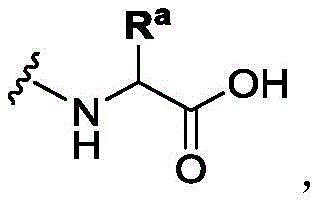 wherein R isaIs the side chain of an amino acid. In some embodiments, the amino acid residue has the structure shown below:

The terms "residue of a peptide" and "peptide residue" refer to the product of amide coupling or peptide coupling of an amino acid with a suitable coupling partner; wherein, for example, after amide coupling or peptide coupling of amino acids, water molecules are expelled, resulting in a product in which peptide residues are incorporated. In some embodiments, the peptide residue has the structure shown below: wherein n is 2 or greater, and wherein RaIs the side chain of an amino acid. In some embodiments, the peptide residue has the structure shown below: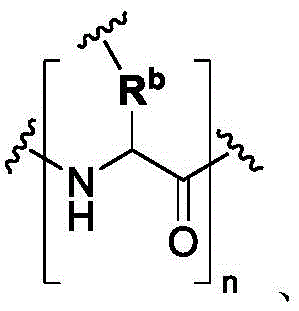
 Wherein n is 2 or greater, and wherein RbIs a residue of an amino acid side chain, e.g. a C (O) residue of a C (O) OH group in an aspartic acid side chain or NH in a lysine side chain2NH residue of (2). In some embodiments, n is 2-50, 2-25, 2-10, 1-5, or 2-3. In some embodiments, n is 2. In some embodiments, n is 3.
In certain embodiments, the amino acid residue has a structure represented by one of the following general formulas:

one skilled in the art will recognize that antibodies generally consist of L-amino acids. However, for unnatural amino acids, the methods and compositions of the invention provide practitioners with the ability to use L-, D-, or racemic unnatural amino acids at site-specific positions. In certain embodiments, the unnatural amino acids described herein include the D-form of the natural amino acid and the racemic form of the natural amino acid.
In the above general formula, the wavy line represents the bond to the rest of the polypeptide chain of the antibody. These non-natural amino acids can be incorporated into a polypeptide chain as if the natural amino acids were incorporated into the same polypeptide chain. In certain embodiments, the unnatural amino acid is incorporated into a polypeptide chain through an amide bond as shown in the general formula.
In the above formula, R represents any functional group without limitation as long as the amino acid residue is different from a natural amino acid residue. In certain embodiments, R can be a hydrophobic group, a hydrophilic group, a polar group, an acidic group, a basic group, a chelating group, a reactive group, a therapeutic group moiety, or a labeling group moiety. In certain embodiments, R is selected from the group consisting of R1zNR2zR3z、R1zC(=O)R2z、R1zC(=O)OR2z、R1zN3、R1zC (≡ CH). In these embodiments, R1zSelected from the group consisting of a bond, alkylene, heteroalkylene, arylene, heteroarylene. R2zAnd R3zEach independently selected from the group consisting of hydrogen, alkyl, and heteroalkyl.
In some embodiments, the non-naturally encoded amino acid includes a side chain functional group that reacts efficiently and selectively with functional groups not present in the 20 common amino acids (including but not limited to azido, ketone, aldehyde, and aminoxy groups) to form stable conjugates. For example, an antigen-binding polypeptide comprising a non-naturally encoded amino acid comprising an azido functional group can be reacted with a polymer, including but not limited to poly (ethylene glycol), or with a second polypeptide comprising an alkyne moiety to form a stable conjugate, i.e., by selective reaction of the azide and alkyne functional groups, to form a Huisgen [3+2] cycloaddition product.
Exemplary non-naturally encoded amino acids suitable for use in the present invention and useful for reaction with water-soluble polymers include, but are not limited to, those that react with carbonyl, aminoxy, hydrazine, hydrazide, semicarbazide, azide, and acetylenic reactive groups. In some embodiments, the non-naturally encoded amino acid comprises a sugar moiety. Examples of such amino acids include N-acetyl-L-glucosamine-L-serine, N-acetyl-L-galactosamino-L-serine, N-acetyl-L-glucosamine-L-threonine, N-acetyl-L-glucosamine-L-asparagine, and O-aminomannosyl (mannosaminyl) -L-serine. Examples of such amino acids also include examples in which the naturally occurring N-or O-linkage between the amino acid and the sugar is replaced by a covalent bond not normally found in nature, including but not limited to alkenes, oximes, thioethers, amides, and the like. Examples of such amino acids also include sugars not commonly found in naturally occurring proteins, such as 2-deoxyglucose, 2-deoxygalactose, and the like.
Many of the non-naturally encoded amino acids provided herein are commercially available, for example, from Sigma-Aldrich (St. Louis, Mo., USA), Novabiochem (a subsidiary of EMD Biosciences, Darmstadt, Germany) or Peptech (Burlington, Mass., USA). Those not commercially available can be optionally synthesized as provided herein or using standard methods known to those skilled in the art. For Organic synthesis techniques, see, e.g., "Organic Chemistry" by Fessendon and Fessendon (1982, Second Edition, Willad Grant Press, Boston Mass.); "Advanced Organic Chemistry" by March (Third Edition,1985, Wiley and Sons, New York); and "Advanced Organic Chemistry" by Carey and Sundberg (Third Edition, Parts A and B,1990, Plenum Press, New York). See also U.S. patent application publication numbers 2003/0082575 and 2003/0108885, which are incorporated herein by reference. In addition to unnatural amino acids that contain unnatural side chains, unnatural amino acids that are useful in the invention optionally comprise modified backbone structures, including, but not limited to, those shown in the structures of formulas II and III:

Wherein Z typically comprises OH, NH2SH, NH-R ', or S-R'; x and Y may be the same or different, and typically comprise S or O, and R ", optionally the same or different, and typically independentlyIs selected from the same member list of R groups described above for the unnatural amino acid of formula I and H. For example, the unnatural amino acids of the invention optionally comprise substitutions in the amino group or the carboxyl group, as shown in formulas II and III. Such types of unnatural amino acids include, but are not limited to, alpha-hydroxy acids, alpha-thio acids, alpha-aminothiocarboxylates, including, but not limited to, those having side chains corresponding to the common 20 natural amino acids or unnatural side chains. In addition, the substitution on the α -carbon optionally includes, but is not limited to, L, D or α - α -disubstituted amino acids, such as D-glutamic acid, D-alanine, D-methyl-O-tyrosine, aminobutyric acid, and the like. Other structural alternatives include cyclic amino acids such as proline analogues and cyclic proline analogues consisting of 3, 4, 6, 7, 8 and 9 atoms, P and y amino acids such as substituted beta-alanine and gamma-aminobutyric acid.
Many unnatural amino acids are based on natural amino acids (e.g., tyrosine, glutamine, phenylalanine, etc.) and are suitable for use in the present invention. Tyrosine analogs include, but are not limited to, para-substituted tyrosines, ortho-substituted tyrosines, and meta-substituted tyrosines, wherein the substituted tyrosines comprise, but are not limited to, a ketone group (including, but not limited to, acetyl), benzoyl, amino, hydrazine, hydroxylamine, thiol, carboxyl, isopropyl, methyl, C 6-C20Straight or branched chain hydrocarbons, saturated or unsaturated hydrocarbons, O-methyl, polyether groups, nitro, alkynyl groups, and the like. In addition, polysubstituted aryl rings are also contemplated. Glutamine analogs that may be suitable for use in the present invention include, but are not limited to, alpha-hydroxy derivatives, gamma-substituted derivatives, cyclic derivatives, and amide-substituted glutamine derivatives. Exemplary phenylalanine analogs that may be suitable for use in the present invention include, but are not limited to, para-substituted phenylalanines, ortho-substituted phenylalanines, and meta-substituted phenylalanines, wherein the substituents include, but are not limited to, hydroxyl, methoxy, methyl, allyl, aldehyde, azido, iodine, bromine, ketone groups (including, but not limited to, acetyl, benzoyl, alkynyl, and the like). Examples of unnatural amino acids that can be used in the inventionExamples include, but are not limited to, p-acetyl-L-phenylalanine, O-methyl-L-tyrosine, L-3- (2-naphthyl) alanine, 3-methyl-phenylalanine, O-4-allyl-L-tyrosine, 4-propyl-L-tyrosine, tri-O-acetyl-GlcNAc β -serine, L-Dopa (Dopa), fluorinated phenylalanine, isopropyl-L-phenylalanine, p-azido-methyl-L-phenylalanine, p-acyl-L-phenylalanine, p-benzoyl-L-phenylalanine, L-phosphoserine, phosphoserine (phosphoserine), phosphotyrosine, p-iodo-phenylalanine, p-bromophenylalanine, p-amino-L-phenylalanine, isopropyl-L-phenylalanine, and p-propargyloxy-phenylalanine, and the like. Examples of structures of various unnatural amino acids that are suitable for use In the invention are provided, for example, In WO 2002/085923 entitled "In vivo incorporation of unnatural amino acids". See also Kiick et al, (2002) Incorporation of azides into recombinant proteins for chemical modification by the Staudinger restriction, PNAS 99:19-24, for other methionine analogues.
Many unnatural amino acids suitable for use in the invention are commercially available, for example, from Sigma (USA) or Aldrich (Milwaukee, Wis., USA). Those compounds that are not commercially available are optionally synthesized as provided herein or in various publications, or using standard methods known to those skilled in the art. For techniques of Organic synthesis, see, e.g., Fessendon and Fessendon, written "Organic Chemistry" (1982, Second Edition, Willad Grant Press, Boston Mass.); "Advanced Organic Chemistry" by March (Third Edition,1985, Wiley and Sons, New York); and "Advanced Organic Chemistry" by Carey and Sundberg (Third Edition, Parts A and B,1990, Plenum Press, New York). Other publications describing the synthesis of Unnatural Amino Acids include, for example, WO 2002/085923 entitled "In vivo incorporation of Unnatual Amino Acids"; matsoukas et al, (1995) J.Med.Chem.,38, 4660-; king, F.E. & Kidd, D.A.A. (1949) ANew Synthesis of glutathione and of gamma-peptides from methylated intermediates.J.chem.Soc.,3315- & 3319; friedman, O.M. & Chatterji, R. (1959) Synthesis of Derivatives of glutathione as Model substratates for Anti-Tumor Agents.J.am.chem.Soc.81, 3750-3752; craig, J.C.et al (1988) Absolute Configuration of the Enantiomers of 7-Chloro-4[ [4- (dimethylamino) -1-methylbutanyl ] amino ] quinoline (chloroquinone), J.Org.chem.53, 1167-1170; azo, M., Vilmont, M. & Frappier, F. (1991) glutamic analytes as Potential analytes, eur.j.med.chem.26, 201-5; koskinen, A.M.P. & Rapoport, H. (1989) Synthesis of 4-understuted Prolines as formulated Amino Acid alloys.J. Org.chem.54, 1859-1866; christie, B.D. & Raport, H. (1985) Synthesis of optical Pure pigments from L-Assembly. application to the Total Synthesis of (+) -Apovincamine through Amino Acid Decarbonylation and Iminium Ion cyclization. J.org.chem.1989: 1859-1866; barton et al, (1987) Synthesis of Novel a-Amino-Acids and depletion Using pharmaceutical Chemistry Synthesis of L-and D-a-Amino-Acids, L-a-aminopimelic Acids and applied unreacted depletion liquids, tetrahedron Lett.43: 4297-; and Subasinge et al, (1992) Quisquartz acid identities: synthesis of beta-heterocyclic 2-aminopropanoic acid derivatives and the activity at a novel liquid-sensitive site.J.Med.chem.35: 4602-7. See also U.S. patent application Ser. No. 60/435,821 filed on 12/22/2003 and entitled "Protein Arrays" and Ser. No. 10/744,899.
Amino acids with carbonyl-reactive (reactive) groups allow for attachment of molecules (including, but not limited to, PEG or other water-soluble molecules) via a variety of reactions, such as nucleophilic addition or aldol condensation reactions.
Exemplary carbonyl-containing amino acids can be represented as follows:
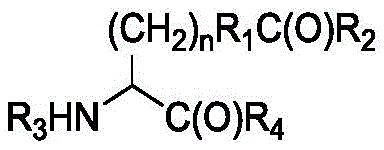
wherein n is 0 to 10; r1Is alkyl, aryl, substituted alkyl, or substituted aryl; r2Is H, alkyl, aryl, substituted alkyl, and substituted aryl; and R3Is H, an amino acid, a polypeptide, or an amino-terminal modifying group, and R4Is H, an amino acid, a polypeptide, or a carboxy-terminal modifying group. In some embodiments, n is 1, R1Is phenyl, and R2Is a simple alkyl group (i.e., methyl, ethyl, or propyl), and the keto moiety is located in the para position relative to the alkyl side chain. In some embodiments, n is 1, R1Is phenyl, and R2Is a simple alkyl group (i.e., methyl, ethyl, or propyl), and the keto moiety is located in a meta position relative to the alkyl side chain.
In some embodiments, non-naturally encoded amino acids with adjacent hydroxyl and amino groups can be incorporated into polypeptides as "masking" aldehyde functionalities. For example, 5-hydroxylysine has a hydroxyl group adjacent to the epsilon amine. The reaction conditions for the generation of aldehydes typically include the addition of a molar excess of sodium metaperiodate under mild conditions to avoid oxidation at other sites within the polypeptide. The pH of the oxidation reaction is typically about 7.0. A typical reaction involves the addition of about 1.5 molar excess of sodium metaperiodate to a buffered solution of the polypeptide, followed by incubation in the dark for about 10 minutes. See, for example, U.S. patent No. 6,423,685, which is incorporated herein by reference.
The carbonyl functional group can selectively react with a reagent containing hydrazine, hydrazide, hydroxylamine or semicarbazide in an aqueous solution under mild conditions to form a corresponding hydrazone bond, oxime bond or semicarbazone bond, respectively, which is stable under physiological conditions. See, e.g., Jencks, w.p., j.am.chem.soc.81,475-481, (1959); shao, J.and Tam, J.P., J.Am.chem.Soc.117: 3893-. In addition, the unique reactivity of the carbonyl group allows for selective modification in the presence of other amino acid side chains. See, e.g., Cornish, V.W., et al., J.Am.chem.Soc.118: 8150-; geoghegan, K.F. & Stroh, J.G., bioconjugug. chem.3:138- & 146 (1992); mahal, L.K., et al, Science 276: 1125-an 1128 (1997).
Non-naturally encoded amino acids comprising nucleophilic groups (e.g., hydrazine, hydrazide, or semicarbazide) allow for reaction with a variety of electrophilic groups, including, but not limited to, with PEG or other water-soluble polymers, to form conjugates.
Exemplary hydrazine, hydrazide or semicarbazide-containing amino acids can be represented as follows:

wherein n is 0 to 10; r1Is alkyl, aryl, substituted alkyl, or substituted aryl, or is absent; x is O, N, or S, or X is absent; r is2Is H, an amino acid, a polypeptide, or an amino-terminal modifying group, and R 3Is H, an amino acid, a polypeptide, or a carboxy-terminal modifying group.
In some embodiments, n is 4, R1Absent, and X is N. In some embodiments, n is 2, R1Absent, and X is absent. In some embodiments, n is 1, R1Is phenyl, X is O, and the oxygen atom is para to the aliphatic group on the aromatic ring.
Hydrazide, hydrazine and semicarbazide containing amino acids are available from commercial sources. For example, L-glutamic acid- γ -hydrazide can be obtained from Sigma Chemical (St. Louis, Mo.). Other commercially unavailable amino acids can be prepared by those skilled in the art. See, for example, U.S. patent No. 6,281,211, which is incorporated herein by reference.
Polypeptides containing non-naturally encoded amino acids with hydrazide, hydrazine, or semicarbazide functional groups can react efficiently and selectively with a variety of molecules containing aldehydes or functional groups of similar chemical reactivity. See, e.g., Shao, J.and Tam, J., J.Am.chem.Soc.117:3893-3899 (1995). The unique activity of hydrazide, hydrazine, and semicarbazide functional groups makes them significantly more reactive towards aldehydes, ketones, and other electrophilic groups than nucleophilic groups present on the 20 common amino acids, including but not limited to the hydroxyl groups of serine or threonine or the amino groups of lysine and the N-terminus.
Non-naturally encoded amino acids containing aminooxy (also known as hydroxylamine) groups allow for reaction with a variety of electrophilic groups, including, but not limited to, with PEG or other water soluble polymers, to form conjugates. Like hydrazines, hydrazides, and semicarbazides, the enhanced nucleophilicity of the aminoxy group allows for efficient and selective reactions with a variety of molecules containing aldehydes or other functional groups of similar chemical reactivity. See, e.g., Shao, J.and Tam, J., J.Am.chem.Soc.117: 3893-; H.Hang and C.Bertozzi, Acc.chem.Res.34:727-736 (2001). However, the reaction with a hydrazine group results in the corresponding hydrazone, while an oxime is typically formed from the reaction of an aminoxy group with a carbonyl-containing group (e.g., a ketone).
Exemplary amino acids containing an amino group can be represented as follows:

wherein n is 0 to 10; r1Is alkyl, aryl, substituted alkyl, or substituted aryl, or R1Is absent; x is O, N, S, or X is absent; m is 0 to 10; y ═ c (o) or Y is absent; r2Is H, an amino acid, a polypeptide, or an amino-terminal modifying group, and R3Is H, an amino acid, a polypeptide, or a carboxy-terminal modifying group. In some embodiments, n is 1, R1Is phenyl, X is O, m is 1, and Y is present. In some embodiments, n is 2, R 1And X are absent, m is 0, and Y is absent.
Amino acids containing an amino acid group can be prepared from readily available amino acid precursors (homoserine, serine and threonine). See, e.g., M.Carrasco and R.Brown, J.org.chem.68:8853-8858 (2003). Certain amino acid containing an aminooxy group, such as L-2-amino-4- (aminooxy) butanoic acid, have been isolated from natural sources (Rosenthal, G.et al., Life Sci.60:1635-1641 (1997). other amino acid containing an aminooxy group can be prepared by one skilled in the art.
The unique reactivity of azide and alkyne functional groups makes them extremely useful for the selective modification of polypeptides and other biomolecules. Organic azides, particularly aliphatic azides and alkynes, are generally stable to common reaction chemistry conditions. In particular, both the azide and alkyne functional groups are inert to the side chains (i.e., R groups) of the 20 common amino acids found in naturally occurring polypeptides. However, when they are brought into close proximity, the "spring-loaded" nature of the azide and alkyne groups is manifested, and they react selectively and efficiently via the Huisgen [3+2] cycloaddition reaction to form the corresponding triazole. See, e.g., Chin J., et al, Science 301:964-7 (2003); wang, q., et al., j.am.chem.soc.125,3192-3193 (2003); chin, J.W., et al, J.Am.chem.Soc.124: 9026-.
Since the Huisgen CYCLOADDITION reaction involves selective CYCLOADDITION reactions (see, e.g., Padwa, A., in COMPREHENSIVE ORGANIC SYNTHESIS, Vol.4, (ed. Trost, B.M.,1991), p.1069-1109; Huisgen, R.in 1,3-DIPOLAR CYCLOADITION CHEMISTRY, (ed. Padwa, A.,1984), p.1-176), rather than nucleophilic substitutions, incorporation of non-naturally encoded amino acids with azide and alkyne-containing side chains allows for selective modification of the resulting polypeptide at the position of the non-naturally encoded amino acid. Cycloaddition reactions involving azide or alkyne-containing antibodies can be carried out at room temperature under aqueous conditions by adding Cu (II) (including, but not limited to, catalytic amounts of CuSO in the presence of a reducing agent4Form) for the in situ reduction of a catalytic amount of Cu (II) to Cu (I). See, e.g., Wang, q., et al, j.am.chem.soc.125,3192-3193 (2003); tornoe, C.W., et al, J.org.chem.67:3057-3064 (2002); rostovtsev, et al, Angew. chem. int. Ed.41: 2596-. Exemplary reducing agents include, but are not limited to, ascorbate, metallic copper, quinine, hydroquinone, vitamin K, glutathione, cysteine, Fe2+、Co2+And the applied potential.
In some cases, when a Huisgen [3+2] cycloaddition reaction between an azide and an alkyne is desired, the antigen-binding polypeptide comprises a non-naturally encoded amino acid comprising an alkyne moiety, and the water-soluble polymer to be attached to the amino acid comprises an azide moiety. Alternatively, the reverse reaction may also be carried out (i.e., the azide group moiety on the amino acid and the alkyne group moiety on the water-soluble polymer).
The azide functional group may also be selectively reacted with the aryl ester containing water soluble polymer and appropriately functionalized with the aryl phosphine group moiety to form an amide linkage. The aryl phosphine group reduces the azide in situ and the resulting amine then reacts efficiently with the proximal ester bond to form the corresponding amide. See, e.g., E.Saxon and C.Bertozzi, Science 287,2007-2010 (2000). The azide-containing amino acid may be an alkyl azide (including, but not limited to, 2-amino-6-azido-1-hexanoic acid) or an aryl azide (p-azido-phenylalanine).
Exemplary water-soluble polymers comprising aryl ester and phosphine group moieties can be represented as follows:

wherein X can be O, N, S, or X is absent, Ph is phenyl, W is a water soluble polymer, and R can be H, alkyl, aryl, substituted alkyl, and substituted aryl. Exemplary R groups include, but are not limited to-CH2、–C(CH3)3-OR ", -NR '" R ", -SR", -halogen, -C (O) R ", -CONR" R' ", -S (O)2R″、–S(O)2NR "R", -CN and-NO2. R 'and R' each independently refer to H, a substituted or unsubstituted heteroalkyl group, a substituted or unsubstituted aryl group (including, but not limited to, aryl groups substituted with 1-3 halogens), a substituted or unsubstituted alkyl, alkoxy or thioalkoxy group, or an aralkyl group. When a compound of the invention includes more than one R group, for example, when more than one of these groups is present, each R group is independently selected to be each R 'and R' group. When R "and R'" are attached to the same nitrogen atom, they may be combined with the nitrogen atom to form a ring of 5, 6 or 7 atoms. For example, -NR "R'" is intended to include, but is not limited to, 1-pyrrolidinyl and 4-morpholinyl. From the above discussion of substituents, those skilled in the art will appreciate that the term "alkyl" is intended to include groups comprising a carbon atom attached to a group other than a hydrogen group, such as haloalkyl (including, but not limited to, -CF) 3and-CH2CF3) And acyl (including but not limited to, -C (O) CH3、–C(O)CF3、–C(O)CH2OCH3And the like).
The azide functionality may also be selectively reacted with a water-soluble polymer containing thioester and appropriately functionalized with an aryl phosphine moiety to form an amide bond. The aryl phosphine group reduces the azide in situ and the resulting amine then reacts efficiently with the thioester bond to form the corresponding amide. Exemplary water-soluble polymers comprising thioester and phosphine moiety can be represented as follows:
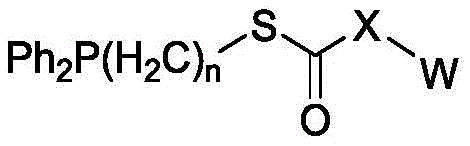
wherein n is 1 to 10; x may be O, N, S, or X is absent, Ph is phenyl, and W is a water soluble polymer.
Exemplary alkyne-containing amino acids can be represented as follows:

wherein n is 0 to 10; r1Is alkyl, aryl, substituted alkyl, or substituted aryl, or R1Is absent; x is O, N, S, or X is absent; m is 0 to 10, R2Is H, an amino acid, a polypeptide, or an amino-terminal modifying group, and R3Is H, an amino acid, a polypeptide, or a carboxy-terminal modifying group. In some embodiments, n is 1, R1Is phenyl, X is absent, m is 0, and the acetylene moiety is located in the para position relative to the alkyl side chain. In some embodiments, n is 1, R1Is phenyl, X is O, m is 1, and the propargyloxy group is located para to the alkyl side chain (i.e., O-propargyl-tyrosine). In some embodiments, n is 1, R 1And X are both absent, and m is 0 (i.e., propargylglycine).
Alkyne-containing amino acids are commercially available. For example, propargylglycine is commercially available from Peptech (Burlington, Mass.). Alternatively, the alkyne-containing amino acid can be prepared according to standard methods. For example, p-propargyloxyphenylalanine may be synthesized, for example, as described in Deiters, A., et al., J.Am.chem.Soc.125: 11782-. Other alkyne-containing amino acids can also be prepared by those skilled in the art.
Exemplary azide-containing amino acids can be represented as follows:

wherein n is 0 to 10; r1Is alkyl, aryl, substituted alkyl, substituted aryl, or R1Is absent; x is O, N, S, or X is absent; m is 0 to 10; r2Is H, an amino acid, a polypeptide, or an amino-terminal modifying group, and R3Is H, an amino acid, a polypeptide, or a carboxy-terminal modifying group. In some embodiments, n is 1, R1Is phenyl, X is absent, m is 0, and the azide moiety is para to the alkyl side chain. In some embodiments, n is 0-4, R1And X are absent, and m is 0. In some embodiments, n is 1, R 1Is phenyl, X is O, m is 2, and the p-azidoethoxy moiety is located in the para position relative to the alkyl side chain.
The azide-containing amino acids are available from commercial sources. For example, 4-azidophenylalanine is available from Chem-Impex International (Wood Dale, IL). For those non-commercially available azide-containing amino acids, the azide groups can be prepared relatively easily using standard methods known to those skilled in the art, including but not limited to by displacement of a suitable leaving group (including but not limited to halide, mesylate, tosylate) or by opening an appropriately protected lactone. See, e.g., Advanced Organic Chemistry by March (Third Edition,1985, Wiley and Sons, New York).
The unique reactivity of the β -substituted aminothiol functional group makes it very useful for the selective modification of polypeptides and other biomolecules containing aldehyde groups by the formation of thiazolidines. See, e.g., J.Shao and J.Tam, J.Am.chem.Soc.1995,117(14) 3893-3899. In some embodiments, the β -substituted aminothiol amino acid can be incorporated into an antibody and then reacted with a water-soluble polymer comprising an aldehyde functional group. In some embodiments, a water-soluble polymer, drug conjugate, or other payload can be conjugated to an antibody polypeptide comprising a β -substituted aminothiol amino acid by forming a thiazolidine.
Specific examples of useful unnatural amino acids include, but are not limited to, p-acetyl-L-phenylalanine, O-methyl-L-tyrosine, L-3- (2-naphthyl) alanine, 3-methyl-phenylalanine, O-4-allyl-L-tyrosine, 4-propyl-L-tyrosine, tri-O-acetyl-GlcNAc β -serine, L-Dopa (Dopa), fluorinated phenylalanine, isopropyl-L-phenylalanine, p-azido-methyl-L-phenylalanine, p-azido-L-phenylalanine, p-acyl-L-phenylalanine, p-benzoyl-L-phenylalanine, L-phosphoserine, phosphinylserine, phosphinoyltyrosine, p-iodo-phenylalanine, p-bromophenylalanine, p-amino-L-phenylalanine, isopropyl-L-phenylalanine, and p-propargyloxy-phenylalanine. Other useful examples include N-acetyl-L-glucosamine-L-serine, N-acetyl-L-galactosamine-L-serine, N-acetyl-L-glucosamine-L-threonine, N-acetyl-L-glucosamine-L-asparagine, and O-aminomannosyl-L-serine.
In particular embodiments, the unnatural amino acid is selected from the group consisting of para-acetyl-phenylalanine, para-ethynyl-phenylalanine, para-propargyloxyphenylalanine, para-azido-methyl-phenylalanine, and para-azido-phenylalanine. One particularly useful unnatural amino acid is para-azidophenylalanine. Such amino acid residues are known to those skilled in the art for facilitating, for example, a Huisgen [3+2] cycloaddition reaction (so-called "click" chemistry) with an alkynyl bearing compound. This reaction enables one skilled in the art to easily and rapidly couple to antibodies at site-specific positions of unnatural amino acids.
In certain embodiments, the first reactive group is an alkynyl group moiety (including, but not limited to, in the case of an unnatural amino acid p-propargyloxyphenylalanine, where the propargyl group is also sometimes referred to as an acetylene group moiety), and the second reactive group is an azido group moiety, [3+2] cycloaddition chemistry may be used. In certain embodiments, the first reactive group is an azido group moiety (including, but not limited to, in the unnatural amino acid p-azido-L-phenylalanine), and the second reactive group is an alkynyl group moiety.
In the above general formula, each L represents a divalent linker. The divalent linker may be any divalent linker known to the person skilled in the art. Typically, the divalent linker is capable of forming a covalent bond with the functional group moiety R and the homologous reactive group (e.g., alpha carbon) of the unnatural amino acid. Useful divalent linkers are bonds, alkylenes, substituted alkylenes, heteroalkylenes, substituted heteroalkylenes, arylenes, substituted arylenes, heteroarylenes, and substituted heteroarylenes. In certain embodiments, L is C1-10Alkylene or C1-10A heteroalkylene group.
The unnatural amino acids used in the methods and compositions of the invention have at least one of four properties: (1) at least one functional group on the side chain of the unnatural amino acid has at least one characteristic and/or activity and/or reactivity that is orthogonal to the chemical reactivity of the 20 common gene-encoded amino acids (i.e., alanine, arginine, asparagine, aspartic acid, cysteine, glutamine, glutamic acid, glycine, histidine, isoleucine, leucine, lysine, methionine, phenylalanine, proline, serine, threonine, tryptophan, tyrosine, and valine), or at least orthogonal to the chemical reactivity of the natural amino acid present in a polypeptide comprising the unnatural amino acid; (2) the introduced unnatural amino acids are substantially chemically inert to the 20 common gene-encoded amino acids; (3) the unnatural amino acid can be stably incorporated into a polypeptide, preferably a polypeptide having a stability comparable to a naturally occurring amino acid, or, under typical physiological conditions, further preferably, such incorporation can be by an in vivo system; and (4) the unnatural amino acid comprises an oxime functional group or a functional group that can be converted to an oxime group by reaction with a reagent, preferably under conditions that do not destroy the biological properties of the polypeptide comprising the unnatural amino acid (unless such destruction of the biological properties is the purpose of modification/conversion), or wherein the conversion can be performed under aqueous conditions at a pH of from about 4 to about 8, or wherein the reactive site on the unnatural amino acid is an electrophilic site. Any number of unnatural amino acids can be introduced into a polypeptide. An unnatural amino acid can also include a protected or masked oxime or a protected or masked group that can be converted to an oxime group upon deprotection of the protected group or unmasking of the masked group. The unnatural amino acid can also include a protected or masked carbonyl or dicarbonyl group that can be converted to a carbonyl or dicarbonyl group after deprotection of the protected group or unmasking of the masked group, which can react with a hydroxylamine or oxime compound to form an oxime group.
In further embodiments, unnatural amino acids that can be used in the methods and compositions of the invention include, but are not limited to, amino acids comprising photoactivatable crosslinkers, spin-labeled amino acids, fluorescent amino acids, metal-bound amino acids, metal-containing amino acids, radioactive amino acids, amino acids having novel functional groups, amino acids that interact covalently or non-covalently with other molecules, photocaged and/or photoisomerizable amino acids, amino acids comprising biotin or biotin analogs, glycosylated amino acids (e.g., sugar-substituted serine), other carbohydrate-modified amino acids, ketone-containing amino acids, aldehyde-containing amino acids, polyethylene glycol or other polyether-containing amino acids, heavy atom-substituted amino acids, chemically cleavable and/or photocleavable amino acids, amino acids having elongated side chains as compared to natural amino acids (including but not limited to polyethers or long chain hydrocarbons, including but not limited to greater than about 5 or greater than about 10 carbon atoms), carbon-linked sugar-containing amino acids, redox-active amino acids, amino thioacid-containing amino acids, and amino acids containing one or more toxic group moieties.
In some embodiments, the unnatural amino acid comprises a sugar moiety. Examples of such amino acids include N-acetyl-L-glucosamine-L-serine, N-acetyl-L-galactosyl-L-serine, N-acetyl-L-glucosamine-L-threonine, N-acetyl-L-glucosamine-L-asparagine, and O-aminomannosyl-L-serine. Examples of such amino acids also include examples in which the naturally occurring N-or O-linkage between the amino acid and the carbohydrate is replaced by a covalent bond not normally found in nature, including but not limited to alkenes, oximes, thioethers, amides, and the like. Examples of such amino acids also include sugars not normally found in naturally occurring proteins, such as 2-deoxyglucose, 2-deoxygalactose, and the like.
The incorporation of chemical moieties of antibodies by the incorporation of unnatural amino acids provides a variety of advantages and manipulations to polypeptides. For example, the unique reactivity of carbonyl or dicarbonyl functional groups (including ketone or aldehyde functional groups) allows for the selective modification of antibodies in vivo and in vitro with any of a variety of hydrazine-or hydroxylamine-containing reagents. For example, heavy atom unnatural amino acids can be used to phase X-ray structural data. The site-specific introduction of heavy atoms using unnatural amino acids also provides selectivity and flexibility in selecting the position of the heavy atom. For example, photoreactive unnatural amino acids (including, but not limited to, amino acids with benzophenone and arylazides (including, but not limited to, phenylazide) side chains) allow for efficient photocrosslinking of polypeptides in vivo and in vitro. Examples of photoreactive unnatural amino acids include, but are not limited to, p-azido-phenylalanine and p-benzoyl-phenylalanine. Antibodies with photoreactive unnatural amino acids can then be cross-linked at will by providing temporal control through excitation of the photoreactive groups. In a non-limiting example, the methyl group of the non-natural amino group can be substituted with an isotopic label (including, but not limited to, a methyl group) as a probe of local structure and kinetics, including, but not limited to, the use of nuclear magnetic resonance and vibrational spectroscopy.
Amino acids with electrophilically active (reactive) groups allow for a variety of reactions to be performed to attach molecules through a variety of chemical reactions, including, but not limited to, nucleophilic addition reactions. Such electrophilically active (reactive) groups include carbonyl or dicarbonyl groups (including keto or aldehyde groups), carbonyl-like or dicarbonyl-like groups (which are similar in reactivity and structure to carbonyl or dicarbonyl groups), masked carbonyl or masked dicarbonyl groups (which can be readily converted to carbonyl or dicarbonyl groups), or protected carbonyl or protected dicarbonyl groups (which when deprotected have a reactivity similar to carbonyl or dicarbonyl groups). Such amino acids include those having the structure shown in formula (AA):

wherein: a is optional and when present is lower alkylene, substituted lower alkylene, lower cycloalkylene, substituted lower cycloalkylene, lower alkenylene, substituted lower alkenylene, lower alkynylene, lower heteroalkylene, substituted heteroalkylene, lower heterocycloalkylene, substituted lower heterocycloalkylene, arylene, substituted arylene, heteroarylene, substituted heteroarylene, alkarylene, substituted alkarylene, aralkylene, or substituted aralkylene; b is optional and, when present, is a linker selected from the group consisting of: lower alkylene, substituted lower alkylene, lower alkenylene, substituted lower alkenylene, lower heteroalkylene, substituted lower heteroalkylene, -O-, -O- (alkylene or substituted alkylene) -, -S-, -S- (alkylene or substituted alkylene) -, -S (O) k- (wherein k is 1, 2, or 3), -S (O)k(alkylene or substituted alkylene) -, -C (O) -, -NS (O)2–、–OS(O)2-, -C (O) - (alkylene or substituted alkylene) -, -C (S) - (alkylene or substituted alkylene) -, -N (R ') -, -NR ' - (alkylene or substituted alkylene) -, -C (O) N (R ') -, -CON (R ') - (alkylene or substituted alkylene) -, -CSN (R ') - (alkylene or substituted alkylene) -, -N (R ') CO- (alkylene or substituted alkylene) -, -N (R ') C (O) O-, -S (O)kN(R″)–、―N(R″)C(O)N(R″)–、–N(R″)C(S)N(R″)–、–N(R″)S(O)kN(R″)–、–N(R″)–N═、―C(R″)═N–、―C(R″)═N–N(R″)–、–C(R″)═N–N═、–C(R″)2-N ═ N-, and-C (R')2-N (R ") -, wherein each R" in B is independently H, alkyl, or substituted alkyl; j is

R is H, alkyl, substituted alkyl, cycloalkyl, or substituted cycloalkyl; each R "in J is independently H, alkyl, substituted alkyl, or a protecting group, or when more than one R" group is present, two R "optionally form a heterocycloalkyl group; r1Is H, an amino protecting group, a resin, an amino acid, a polypeptide, or a polynucleotide; r2Is OH, an ester protecting group, a resin, an amino acid, a polypeptide, or a polynucleotide; r is3And R 4Each independently is H, halogen, lower alkyl, or substituted lower alkyl, or R3And R4Or two R3The groups optionally form a cycloalkyl or heterocycloalkyl group; or-a-B-J-R groups together form a bicyclic or tricyclic cycloalkyl or heterocycloalkyl containing at least one carbonyl group, including a dicarbonyl group, a protected carbonyl gene, including a protected dicarbonyl group, or a masked carbonyl group, including a masked dicarbonyl group; or-J-R groups together form a mono-or bicyclic cycloalkyl or heterocycloalkyl containing at least one carbonyl group, including dicarbonyl groups, protected carbonyl groups, including protected dicarbonyl groups, or masked carbonyl groups, including masked dicarbonyl groups; with the proviso that when A is phenylene and each R3When each is H, B is present; when A is- (CH)2)4And each R3When each is H, B is not-NHC (O) (CH)2CH2) -; and when A and B are both absent and each R is3When each is H, R is not methyl. Such unnatural amino acids can be in the form of a salt, or can be incorporated into an unnatural amino acid polypeptideA polymer, polysaccharide or polynucleotide and optionally post-translational modifications.
In certain embodiments, the compound of formula (AA) is stable in aqueous solution under mildly acidic conditions for at least 1 month. In certain embodiments, the compound of formula (AA) is stable under mildly acidic conditions for at least 2 weeks. In certain embodiments, the compound of formula (AA) is stable under mildly acidic conditions for at least 5 days. In certain embodiments, such acidic conditions are pH values of 2 to 8.
In certain embodiments of the compounds of formula (AA), B is lower alkylene, substituted lower alkylene, -O- (alkylene or substituted alkylene) -, -C (R ') ═ N-N (R ') -, -N (R ') CO-, -C (O) -, -C (R ') ═ N-, -C (O) - (alkylene or substituted alkylene) -, -CON (R ') - (alkylene or substituted alkylene) -, -S (alkylene or substituted alkylene) -, or-S (O)2(alkylene or substituted alkylene) -. In certain embodiments of the compounds of formula (AA), B is-O (CH)2)–、–CH═N–、–CH═N–NH–、–NHCH2–、―NHCO–、–C(O)–、–C(O)–(CH2)–、―CONH–(CH2)–、–SCH2–、–S(═O)CH2-, or-S (O)2CH2-. In certain embodiments of the compounds of formula (AA), R is C1–6Alkyl or cycloalkyl. In certain embodiments of the compounds of formula (AA), R is-CH 3、–CH(CH3)2Or cyclopropyl. In certain embodiments of the compounds of formula (AA), R1Is H, tert-butoxycarbonyl (Boc), 9-fluorenylmethoxycarbonyl (Fmoc), N-acetyl, Tetrafluoroacetyl (TFA), or benzyloxycarbonyl (Cbz). In certain embodiments of the compounds of formula (AA), R1Is a resin, an amino acid, a polypeptide, or a polynucleotide. In certain embodiments of the compounds of formula (AA), R2Is OH, O-methyl, O-ethyl, or O-tert-butyl. In certain embodiments of the compounds of formula (AA), R2Is a resin, an amino acid, a polypeptide, or a polynucleotide. In thatIn certain embodiments of the compounds of formula (AA), R2Is a polynucleotide. In certain embodiments of the compounds of formula (AA), R2Is ribonucleic acid (RNA). In certain embodiments of the compounds of formula (AA), R2Is a tRNA. In certain embodiments of the compounds of formula (AA), the tRNA specifically recognizes a selector codon. In certain embodiments of the compound of formula (AA), the selector codon is selected from the group consisting of: amber codons, ochre codons, opal codons, unique codons, rare codons, unnatural codons, five base codons, and four base codons. In certain embodiments of compounds of formula (AA), R 2Is a suppressor tRNA.
In certain embodiments of the compounds of formula (AA),

selected from the group consisting of: (i) a is substituted lower alkylene, C4-arylene, substituted arylene, heteroarylene, substituted heteroarylene, alkarylene, substituted alkarylene, aralkylene, or substituted aralkylene; b is optional and, when present, is a divalent linker selected from the group consisting of: lower alkylene, substituted lower alkylene, lower alkenylene, substituted lower alkenylene, -O-, -O- (alkylene or substituted alkylene) -, -S-, -S (O) -, -S (O)2–、–NS(O)2–、―OS(O)2-, -C (O) -, -alkylene or substituted alkylene) -, -C (S) -, -N (R '-, -C (O) N (R') -, -CON (R ') - (alkylene or substituted alkylene) -, -CSN (R') -, -N (R ') CO- (alkylene or substituted alkylene) -, -N (R') C (O) O-, -N (R ') C (S) -, -S (O) N (R'), -S (O)2N(R″)、–N(R″)C(O)N(R″)–、―N(R″)C(S)N(R″)–、–N(R″)S(O)N(R″)–、―N(R″)S(O)2N(R″)–、–N(R″)–N═、–C(R″)═N–N(R″)–、―C(R″)═N–N═、–C(R″)2-N ═ N-, and-C (R')2-N (R "); (ii) a is optional and, when present, is substituted lower alkylene, C4-arylene, substituted arylene, heteroarylene, substituted heteroarylene, alkarylene, substituted alkarylene, aralkylene, or substituted aralkylene; b is a divalent linker selected from the group consisting of: lower alkylene, substituted lower alkylene, lower alkenylene, substituted lower alkenylene, -O-, -O- (alkylene or substituted alkylene) -, -S-, -S (O) -, -S (O) 2–、–NS(O)2–、–OS(O)2-, -C (O) - (alkylene or substituted alkylene) -, -C (S) -, -N (R '-, -C (O) N (R') -, -CON (R ') - (alkylene or substituted alkylene) -, -CSN (R') -, -N (R ') CO- (alkylene or substituted alkylene) -, -N (R') C (O) O-, -N (R ') C (S) -, -S (O) N (R'), -S (O)2N(R″)、–N(R″)C(O)N(R″)–、–N(R″)C(S)N(R″)–、–N(R″)S(O)N(R″)–、―N(R″)S(O)2N(R″)–、―N(R″)–N═、–C(R″)═N–N(R″)–、–C(R″)═N–N═、–C(R″)2-N ═ N-, and-C (R')2-N (R ") -; (iii) a is lower alkylene; b is optional and, when present, is a divalent linker selected from the group consisting of: lower alkylene, substituted lower alkylene, lower alkenylene, substituted lower alkenylene, -O-, -O- (alkylene or substituted alkylene) -, -S-, -S (O) -, -S (O)2–、–NS(O)2–、―OS(O)2-, -C (O) - (alkylene or substituted alkylene) -, -C (S) -, -N (R ') -, -C (O) N (R ') -, -CSN (R ') -, -CON (R ') - (alkylene or substituted alkylene) -, -N (R ') C (O) O-, -N (R ') C (S) -, -S (O) N (R ') -, -S (O)2N(R″)、―N(R″)C(O)N(R″)–、–N(R″)C(S)N(R″)–、–N(R″)S(O)N(R″)–、―N(R″)S(O)2N(R″)–、–N(R″)–N═、–C(R″)═N–N(R″)–、–C(R″)═N–N═、–C(R″)2-N ═ N-, and-C (R')2-N (R "); and (iv) A is phenylene; b is a divalent linker selected from the group consisting of: lower alkylene, substituted lower alkylene, lower alkenylene, substituted lower alkenylene, -O-, -O- (alkylene or substituted alkylene) -, -S-, -S (O) -, -S (O) 2–、–NS(O)2–、―OS(O)2-, -C (O) -, -C (S) -, -N (R '-, -C (O) N (R') -, -CON (R ') - (alkylene or substituted alkylene) -, -CSN (R') -, -N (R ') CO- (alkylene or substituted alkylene) -, -N (R') C (O) O-, -N (R ') C (S) -, -S (O) N (R') -, -S (O))2N(R″)、―N(R″)C(O)N(R″)–、―N(R″)C(S)N(R″)–、–N(R″)S(O)N(R″)–、–N(R″)S(O)2N(R″)–、–N(R″)–N═、–C(R″)N–N(R″)–、―C(R″)═N–N═、–C(R″)2-N ═ N-, and-C (R')2-N (R "); j is
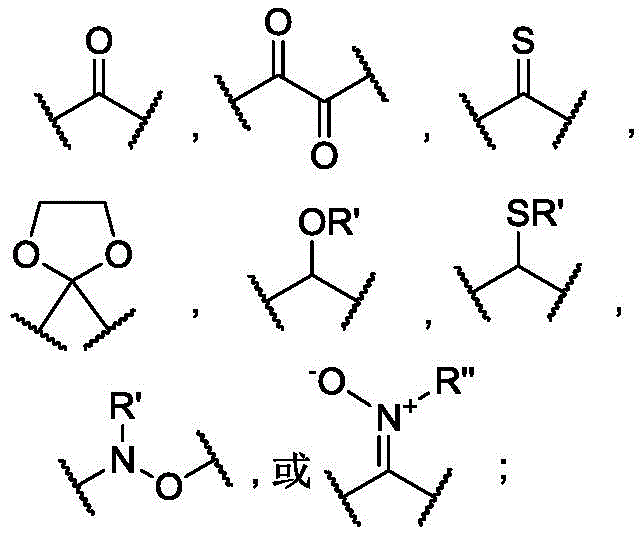
Each R' in J is independently H, alkyl, or substituted alkyl; r1Is optional, and when present, is H, an amino protecting group, a resin, an amino acid, a polypeptide, or a polynucleotide; r2Is optional, and when present, is OH, an ester protecting group, a resin, an amino acid, a polypeptide, or a polynucleotide; each R3And R4Each independently is H, halogen, lower alkyl, or substituted lower alkyl; and R is H, alkyl, substituted alkyl, cycloalkyl, or substituted cycloalkyl.
In certain embodiments, the unnatural amino acid can have a structure represented by formula BB:

or a salt thereof, wherein: d is-Ar-W3-or-W1-Y1-C(O)-Y2-W2-; ar is

W1、W2And W3Each independently is a single bond or lower alkylene; each X1Each independently-NH-, -O-, or-S-; each Y is 1Each independently is a single bond, -NH-, or-O-; each Y is2Each independently is a single bond, -NH-, -O-, or N-or C-linked pyrrolidinylidene; and Z1、Z2And Z3One of them is-N-, Z1、Z2And Z3The other two of which are each independently-CH-. In certain embodiments, the unnatural amino acid has the structure shown in formula BBa:

wherein D has the definition described in the context of formula BB. In certain embodiments, the unnatural amino acid can have a structure represented by formula BBb:

or a salt thereof, wherein W4Is C1-C10An alkylene group. In a further embodiment, W4Is C1-C5An alkylene group. In one embodiment, W4Is C1-C3An alkylene group. In one embodiment, W4Is C1An alkylene group. In particular embodiments, the unnatural amino acid is selected from the group consisting of:


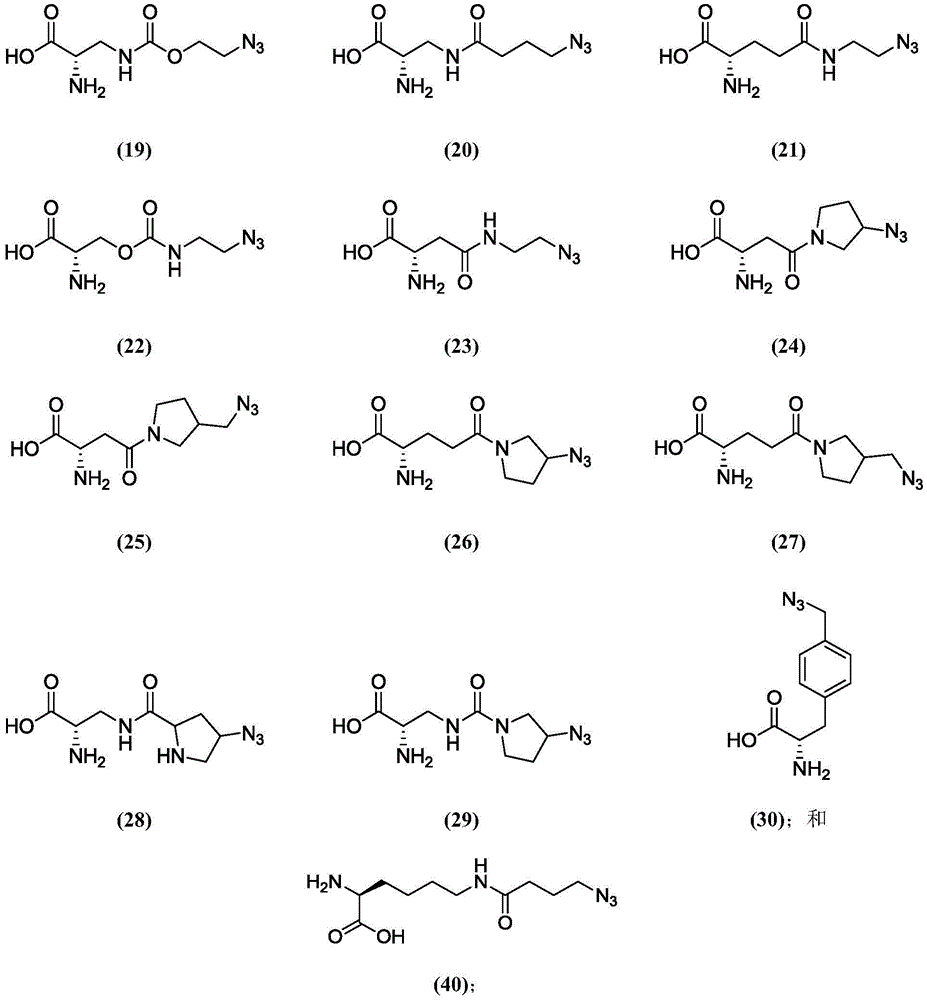
or a salt thereof. Such unnatural amino acids can be in the form of a salt, or can be incorporated into an unnatural amino acid polypeptide, polymer, polysaccharide, or polynucleotide and optionally post-translationally modified.
In certain embodiments, the modified amino acid has the structure of formula CC:

or a salt thereof, wherein Ar is:

v is a single bond, lower alkylene, or-W1–W2–;W1And W2One of which is absent, or is lower alkylene, and the other is-NH-, -O-, or-S-; each X 1Each independently-NH-, -O-, or-S-; z is a linear or branched member1、Z2And Z3One of them is-CH-or-N-, Z1、Z2And Z3Are each independently-CH-; and R is lower alkyl. In certain embodiments, when Ar is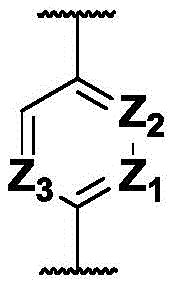 And when V is-NH-, then Z1、Z2And Z3is-N-. In certain embodiments, V is a single bond, -NH-, or-CH2NH–。
In certain embodiments, Ar is
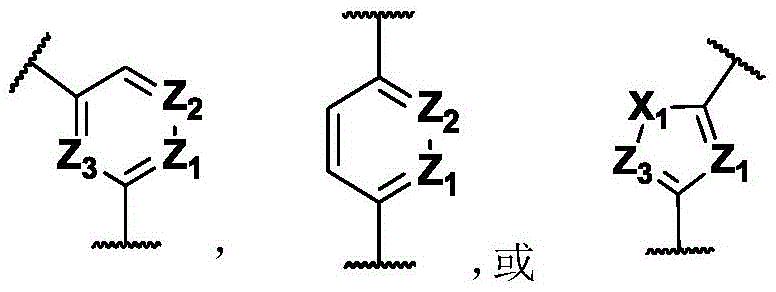
And Z1、Z2、Z3And X1Each having the definition described in the context of formula CC. In certain embodiments according to this paragraph, V is-W1–W2–;W1And W2Is absent, or is-CH2-, the other is-NH-, -O-, or-S-. In certain embodiments according to this paragraph, V is a single bond, -NH-, or-CH2NH-. In certain embodiments according to this paragraph, Z is1Is N. In certain embodiments according to this paragraph, Z is2Is N. In certain embodiments according to this paragraph, Z is3Is N. In certain embodiments according to this paragraph, Z is1Is CH, Z3Is CH, and X1Is S.
In certain embodiments, Ar is

And Z1、Z2And Z3Each having the definition described in the context of formula CC. In certain embodiments according to this paragraph, V is-W1–W2–;W1And W2Is absent, or is-CH 2-, the other is-NH-, -O-, or-S-. In certain embodiments according to this paragraph, V is a single bond, -NH-, or-CH2NH-. In certain embodiments according to this paragraph, Z is1Is N. In certain embodiments according to this paragraph, Z is2Is N. In certain embodiments according to this paragraph, Z is3Is N.
In certain embodiments, Ar is

And Z1、Z3And X1Each having the definition described in the context of formula CC. In certain embodiments according to this paragraph, V is-W1–W2–;W1And W2Is absent, or is-CH2-, the other is-NH-, -O-, or-S-. In certain embodiments according to this paragraph, V is a single bond, -NH-, or-CH2NH-. In certain embodiments according to this paragraph, Z is1Is N. In certain embodiments according to this paragraph, Z is3Is N. In certain embodiments according to this paragraph, Z is1Is CH, Z3Is CH, and X1Is S.
In certain embodiments, the modified amino acid has the structure of formula CCa:
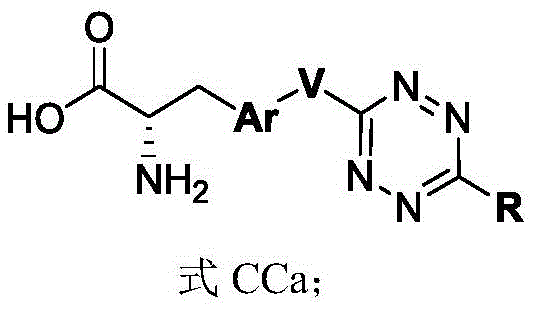
wherein Ar, V and R are each as defined above and below for formula CC.
In one embodiment, the present invention provides a compound represented by any one of formulas CC and CCa, wherein V is a single bond. In another embodiment, the present invention provides a compound represented by any one of formulas CC and CCa, wherein V is-NH-. In another embodiment, the invention provides a compound of any one of formulas CC and CCa, wherein V is-CH 2NH–。
In certain embodiments, the modified amino acid has a structure according to formula DD:

or a salt thereof, wherein both V and R have the definitions described in formula CC. In certain embodiments according to this paragraph, V is-W1–W2–;W1And W2Is absent, or is-CH2-, the other is-NH-, -O-, or-S-. In certain embodiments, V is a single bond, -NH-, or-CH2NH-. At a certain pointIn some embodiments, V is a single bond or-CH2NH-; and R is methyl.
In certain embodiments, the modified amino acid has the structure of formula EE:

or a salt thereof, wherein V and R are both as defined in formula CC. In certain embodiments according to this paragraph, V is-W1–W2–;W1And W2Is absent, or is-CH2-, the other is-NH-, -O-, or-S-. In certain embodiments, V is a single bond, -NH-, or-CH2NH-. In certain embodiments, V is a single bond, -NH-, or-CH2NH-; and R is methyl.
In certain embodiments, the modified amino acid has a structure according to formula FF:

or a salt thereof, wherein both V and R have the definitions described in formula CC. In certain embodiments according to this paragraph, V is-W1–W2–;W1And W2Is absent, or is-CH 2-, the other is-NH-, -O-, or-S-. In certain embodiments, V is a single bond, -NH-, or-CH2NH-. In certain embodiments, V is a single bond, -NH-, or-CH2NH-; and R is methyl.
In certain embodiments, the modified amino acid has a structure represented by formula GG:

or a salt thereof, wherein both V and R have the definitions described in formula CC. In certain embodiments according to this paragraph, V is-W1–W2–;W1And W2Is absent, or is-CH2-, the other is-NH-, -O-, or-S-. In certain embodiments, V is a single bond, -NH-, or-CH2NH-. In certain embodiments, V is a single bond, -NH-, or-CH2NH-; and R is methyl.
In certain embodiments, the modified amino acid has the structure of formula HH:
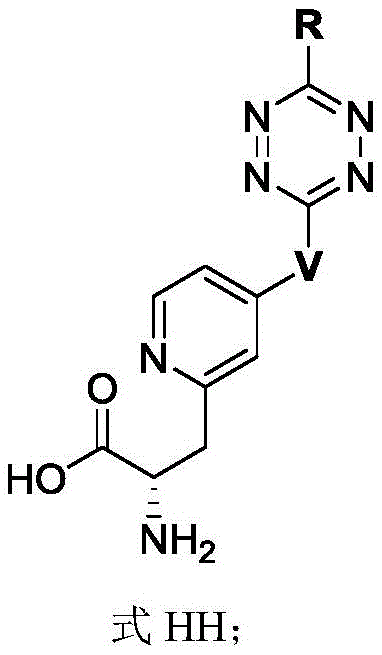
or a salt thereof, wherein both V and R have the definitions described in formula CC. In certain embodiments according to this paragraph, V is-W1–W2–;W1And W2Is absent, or is-CH2-, the other is-NH-, -O-, or-S-. In certain embodiments, V is a single bond, -NH-, or-CH2NH-. In certain embodiments, V is a single bond, -NH-, or-CH2NH-; and R is methyl.
In certain embodiments, the modified amino acid has the structure shown in formula JJ:

or a salt thereof, wherein V and R are both as defined in formula CC. In certain embodiments according to this paragraph, V is-W1–W2–;W1And W2Is absent, or is-CH2-, the other is-NH-, -O-, or-S-. In certain embodiments, V is a single bond, -NH-, or-CH2NH-. In certain embodiments, V is a single bond, -NH-, or-CH2NH-; and R is methyl.
In certain embodiments, the modified amino acid has the structure represented by formula KK:

or a salt thereof, wherein both V and R have the definitions described in formula CC. In certain embodiments according to this paragraph, V is-W1–W2–;W1And W2Is absent, or is-CH2-, the other is-NH-, -O-, or-S-. In certain embodiments, V is a single bond, -NH-, or-CH2NH-. In certain embodiments, V is a single bond, -NH-, or-CH2NH-; and R is methyl.
In certain embodiments, the modified amino acid has the structure of formula LL:

or a salt thereof, wherein V and R are both as defined in formula CC. In certain embodiments according to this paragraph, V is-W 1–W2–;W1And W2Is absent, or is-CH2-, the other is-NH-, -O-, or-S-. In certain embodiments, V is a single bond, -NH-, or-CH2NH-. In certain embodiments, V is a single bond, -NH-, or-CH2NH-; and R is methyl.
In certain embodiments, the modified amino acid has a structure according to any one of formulas 51-62:
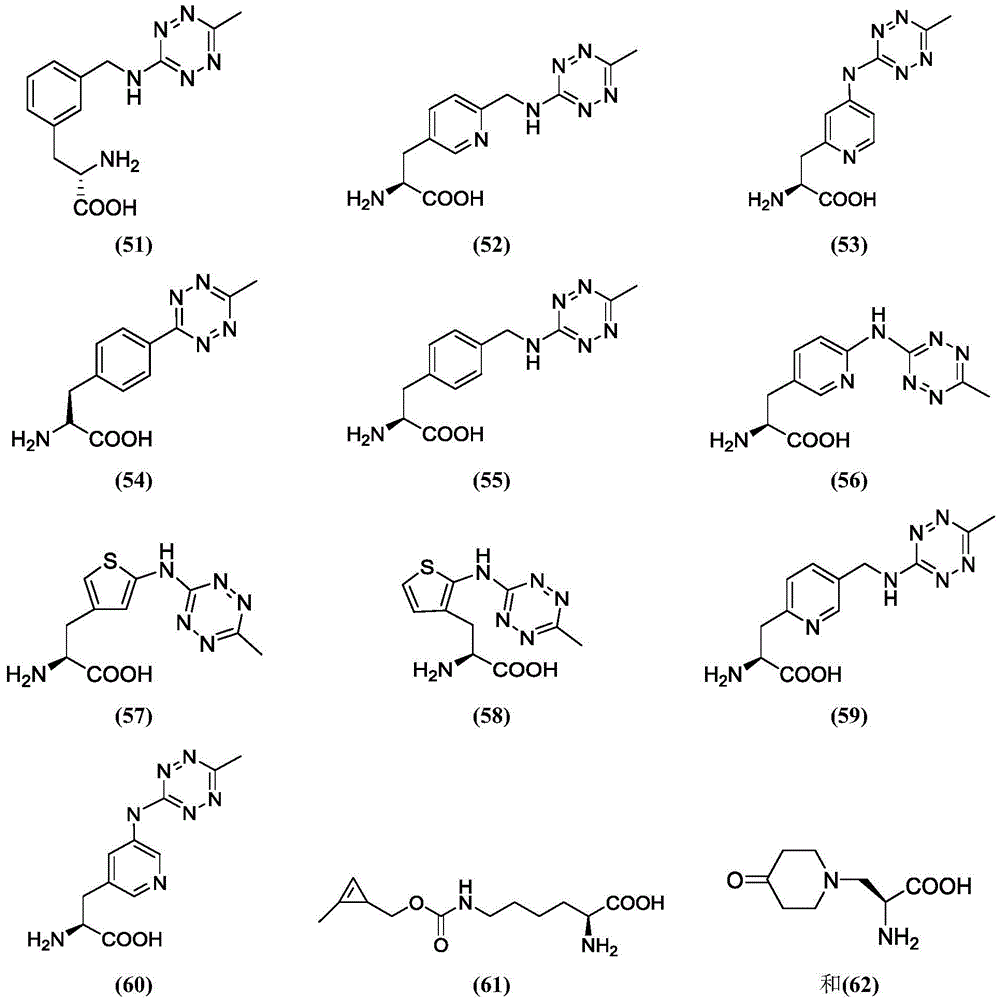
or a salt thereof.
In certain embodiments, the unnatural amino acid is selected from the group consisting of compounds 30, 53, 56, 59, 60, 61, and 62 above. In certain embodiments, the unnatural amino acid is compound 30. In certain embodiments, the unnatural amino acid is compound 56. In some embodiments, the unnatural amino acid is compound 61. In some embodiments, the unnatural amino acid is compound 62. In certain embodiments, the unnatural amino acid is selected from the residues of compounds 30, 53, 56, 59, 60, 61, and 62 above. In certain embodiments, the unnatural amino acid is a residue of compound 30. In certain embodiments, the unnatural amino acid is a residue of compound 56. In some embodiments, the unnatural amino acid is a residue of compound 61. In some embodiments, the unnatural amino acid is a compound of formula 62.
Pharmaceutical compositions and methods of administration
The antibody conjugates provided herein can be formulated into pharmaceutical compositions using methods available in the art and those disclosed herein. Any of the antibody conjugates provided herein can be provided in a suitable pharmaceutical composition and administered by a suitable route of administration.
The methods provided herein comprise administering a pharmaceutical composition comprising at least one antibody conjugate provided herein and one or more compatible and pharmaceutically acceptable carriers. In this context, the term "pharmaceutically acceptable" refers to those approved by a regulatory agency of the federal or a state government or listed in the U.S. pharmacopeia or other generally recognized pharmacopeia for use in animals, and more particularly in humans. The term "carrier" includes diluents, adjuvants (e.g., Freund's adjuvant (complete and incomplete)), adjuvants or vehicles with which the therapeutic agent is administered. Such pharmaceutical carriers can be sterile liquids, such as water and oils, including those of petroleum, animal, vegetable or synthetic origin, such as peanut oil, soybean oil, mineral oil, sesame oil and the like. Water may be used as a carrier when the pharmaceutical composition is administered intravenously. Saline solutions, as well as aqueous dextrose and glycerol solutions, may also be employed as liquid carriers, particularly for injectable solutions. Examples of suitable pharmaceutical carriers are described in Martin, e.w., Remington's pharmaceutical Sciences.
In clinical practice, the pharmaceutical compositions or antibody conjugates provided herein may be administered by any route known in the art. Exemplary routes of administration include, but are not limited to, inhalation, intra-arterial, intradermal, intramuscular, intraperitoneal, intravenous, nasal, parenteral, pulmonary, and subcutaneous routes. In some embodiments, the pharmaceutical composition or antibody conjugate provided by the present invention is administered/dosed parenterally.
Compositions for parenteral administration may be emulsions or sterile solutions. Parenteral compositions can include, for example, propylene glycol, polyethylene glycol, vegetable oils, and injectable organic esters (e.g., ethyl oleate). These compositions may also contain wetting agents, isotonicity agents, emulsifiers, dispersing agents and stabilizers. Sterilization can be performed in several ways, for example using bacterial filters, by irradiation or by heating. Parenteral compositions may also be prepared in the form of sterile solid compositions which are dissolved in sterile water or any other injectable sterile medium at the time of use.
In some embodiments, the compositions provided herein are pharmaceutical compositions or single unit dosage forms. The pharmaceutical compositions and single unit dosage forms provided herein comprise a prophylactically or therapeutically effective amount of one or more prophylactic or therapeutic antibody conjugates.
The pharmaceutical composition may comprise one or more pharmaceutical excipients. Any suitable pharmaceutical excipient may be used and one of ordinary skill in the art will be able to select a suitable pharmaceutical excipient. Non-limiting examples of suitable excipients include starch, glucose, lactose, sucrose, gelatin, malt, rice, flour, chalk, silica gel, sodium stearate, glycerol monostearate, talc, sodium chloride, dried skim milk, glycerol, propylene, glycol, water, ethanol and the like. Whether a particular excipient is suitable for incorporation into a pharmaceutical composition or dosage form depends on a variety of factors well known in the art, including, but not limited to, the manner in which the dosage form is administered to a subject and the specific antibody in the dosage form. The composition or single unit dosage form may also contain minor amounts of wetting or emulsifying agents, or pH buffering agents, if desired. Accordingly, the pharmaceutical excipients provided below are exemplary only and not intended to be limiting. Other Pharmaceutical Excipients include, for example, those described in Handbook of Pharmaceutical Excipients, Rowe et al, (Eds.)6th Ed. (2009), the entire disclosure of which is incorporated herein by reference.
In some embodiments, the pharmaceutical composition comprises an antifoaming agent. Any suitable defoamer can be used. In some aspects, the defoamer is selected from the group consisting of alcohols, ethers, oils, waxes, polysiloxanes, surfactants, and combinations thereof. In some aspects, the defoamer is selected from the group consisting of mineral oil, vegetable oil, vinyl bis-stearamide, paraffin wax, ester wax, fatty alcohol wax, long chain fatty alcohol, fatty acid soap, fatty acid ester, silicone glycol, fluorosilicone, polyethylene glycol-polypropylene glycol copolymer, polydimethylsiloxane-silica, ether, octanol, decanoyl alcohol, sorbitan trioleate, ethanol, 2-ethyl-hexanol, dimethicone (dimethicone), oleyl alcohol, dimethicone (simethione), and combinations thereof.
In some embodiments, the pharmaceutical composition comprises a co-solvent. Illustrative examples of co-solvents include ethanol, poly (ethylene) glycol, butylene glycol, dimethylacetamide, glycerol, and propylene glycol.
In some embodiments, the pharmaceutical composition comprises a buffering agent. Illustrative examples of buffers include acetate, borate, carbonate, lactate, malate, phosphate, citrate, hydroxide, diethanolamine, monoethanolamine, glycine, methionine, guar gum, and monosodium glutamate.
In some embodiments, the pharmaceutical composition comprises a carrier or filler. Illustrative examples of carriers or fillers include lactose, maltodextrin, mannitol, sorbitol, chitosan, stearic acid, xanthan gum, and guar gum.
In some embodiments, the pharmaceutical composition comprises a surfactant. Illustrative examples of surfactants include d-alpha tocopherol, benzalkonium chloride, benzethonium chloride, cetrimide, cetylpyridinium chloride, docusate sodium, glyceryl behenate, glyceryl monooleate, lauric acid, macrogol 15hydroxystearate (macrogol 15hydroxystearate), myristyl alcohol, phospholipids, polyoxyethylene alkyl ethers, polyoxyethylene sorbitan fatty acid esters, polyoxyethylene stearates, polyoxylglycerides, sodium lauryl sulfate, sorbitan esters, and vitamin E polyethylene (ethylene glycol) succinate.
In some embodiments, the pharmaceutical composition comprises an anti-caking agent. Illustrative examples of anticaking agents include calcium phosphate (trivalent), hydroxymethylcellulose, hydroxypropylcellulose, and magnesium oxide.
Other excipients that may be used with the pharmaceutical composition include, for example, albumins, antioxidants, antimicrobials, antifungals, bioabsorbable polymers, chelating agents, controlled release agents, diluents, dispersing agents, dissolution enhancing agents, emulsifiers, gelling agents, ointment bases, permeation enhancers, preservatives, solubilizers, solvents, stabilizers, and sugars. Specific examples of each of such agents are described, for example, in Handbook of Pharmaceutical Excipients, Rowe et al (Eds.)6th Ed. (2009), The Pharmaceutical Press, The entire contents of which are incorporated herein by reference.
In some embodiments, the pharmaceutical composition comprises a solvent. In some aspects, the solvent is a saline solution, such as a sterile isotonic saline solution or a dextrose solution. In some aspects, the solvent is water for injection.
In some embodiments, the pharmaceutical composition is in the form of a particle, such as a microparticle or nanoparticle. The microparticles and nanoparticles may be formed from any suitable material, such as a polymer or lipid. In some aspects, the microparticle or nanoparticle is a micelle, liposome, or polymersome.
The invention further provides anhydrous pharmaceutical compositions and dosage forms comprising the antibody conjugates, as in some embodiments, water may facilitate the degradation of certain antibodies.
The anhydrous pharmaceutical compositions and dosage forms provided by the present invention can be prepared using anhydrous or low moisture content ingredients and low moisture or low moisture conditions. Pharmaceutical compositions and dosage forms comprising lactose and at least one active ingredient comprising a primary or secondary amine may be anhydrous if significant exposure to moisture and/or humidity during manufacture, packaging, and/or storage is expected.
Anhydrous pharmaceutical compositions should be prepared and stored in a manner that maintains their anhydrous nature. Thus, anhydrous compositions can be packaged using materials known to prevent exposure to water, so that they can be included in appropriately formulated kits. Examples of suitable packaging include, but are not limited to, sealed foils, plastics, unit dose containers (e.g., vials), blister packs, and strip packs.
Lactose-free compositions provided by the present invention may comprise excipients well known in the art and include, for example, those listed in the United States Pharmacopeia (USP) sp (xxi)/nf (xvi). Generally, lactose-free compositions comprise the active ingredient, a binder/filler, and a lubricant in pharmaceutically compatible and pharmaceutically acceptable amounts. An exemplary lactose-free dosage form comprises an active ingredient, microcrystalline cellulose, pregelatinized starch, and magnesium stearate.
The invention also provides pharmaceutical compositions and dosage forms comprising one or more excipients that reduce the rate of decomposition of the antibody or antibody conjugate. Such excipients are referred to herein as "stabilizers" and include, but are not limited to, antioxidants, such as ascorbic acid, pH buffers, or salt buffers.
Parenteral dosage forms
In certain embodiments, the present invention provides parenteral dosage forms. Parenteral dosage forms can be administered to a subject by a variety of routes including, but not limited to, subcutaneous, intravenous (including bolus injection), intramuscular, and intraarterial administration. Since their administration typically bypasses the natural defenses of the subject against contaminants, parenteral dosage forms are typically sterile or can be sterilized prior to administration to the subject. Examples of parenteral dosage forms include, but are not limited to, ready-to-use injection solutions, dry products that can be immediately dissolved or suspended in a pharmaceutically acceptable vehicle for injection, ready-to-use injection suspensions, and emulsions.
Suitable vehicles that can be used to provide parenteral dosage forms are known to those skilled in the art. Examples include, but are not limited to: water for injection USP; aqueous vehicles such as, but not limited to, sodium chloride injection, Ringer's injection, dextrose and sodium chloride injection, and lactated Ringer's injection; water-miscible vehicles such as, but not limited to, ethanol, polyethylene glycol, and polypropylene glycol; and non-aqueous vehicles such as, but not limited to, corn oil, cottonseed oil, peanut oil, sesame oil, ethyl oleate, isopropyl myristate, and benzyl benzoate.
Adjuvants that increase the solubility of one or more of the disclosed antibodies may also be incorporated into the parenteral dosage forms.
Dosage and unit dosage forms
In human therapy, the physician will decide what dosimetry he considers most appropriate according to prophylactic or therapeutic treatment and according to the age, weight, condition and other specific factors of the subject to be treated.
In certain embodiments, the compositions provided herein are pharmaceutical compositions or single unit dosage forms. The pharmaceutical compositions and single unit dosage forms provided herein comprise a prophylactically or therapeutically effective amount of one or more prophylactic or therapeutic antibodies.
The amount of antibody conjugate or composition effective to prevent or treat a disorder or one or more symptoms of the disorder will vary with the nature and severity of the disease or condition, and also with the route of administration of the antibody. The frequency and dosage will also vary with the particular factor of each subject, which will depend on the particular therapy (e.g., therapeutic or prophylactic) being administered, the severity of the disorder, disease or condition, the route of administration, and the age, body, weight, response, and past medical history of the subject. Effective doses can be extrapolated from dose response curves derived from in vitro or animal model test systems.
In certain embodiments, an exemplary dose of a composition comprises a milligram or microgram amount of antibody per kilogram of body weight of the subject or sample (e.g., about 10 micrograms per kilogram to about 50 milligrams per kilogram, about 100 micrograms per kilogram to about 25 milligrams per kilogram, or about 100 micrograms per kilogram to about 10 milligrams per kilogram). In certain embodiments, the dose (by weight of antibody) of an antibody conjugate provided by the invention administered to prevent, treat, manage or ameliorate a disorder or one or more symptoms of the disorder in a subject is 0.1mg/kg, 1mg/kg, 2mg/kg, 3mg/kg, 4mg/kg, 5mg/kg, 6mg/kg, 10mg/kg, or 15mg/kg of the subject's body weight or more. In another embodiment, the dose of the composition administered to prevent, treat or ameliorate a disorder or one or more symptoms of the disorder in a subject or provided herein is 0.1mg to 200mg, 0.1mg to 100mg, 0.1mg to 50mg, 0.1mg to 25mg, 0.1mg to 20mg, 0.1mg to 15mg, 0.1mg to 10mg, 0.1mg to 7.5mg, 0.1mg to 5mg, 0.1 to 2.5mg, 0.25mg to 20mg, 0.25 to 15mg, 0.25 to 12mg, 0.25 to 10mg, 0.25mg to 7.5mg, 0.25mg to 5mg, 0.25mg to 2.5mg, 0.5mg to 20mg, 0.5 to 15mg, 0.5 to 12mg, 0.5 to 10mg, 0.5mg to 7.5mg, 0.5mg to 5mg, 0.5mg to 2.5mg, 1mg to 1mg, 1mg to 5mg, or 1 mg.
The dosage may be administered according to a suitable time course, for example once, twice, three times or four times a week. It may be necessary in some cases to use doses of antibody conjugate outside the scope of the present disclosure, as will be apparent to those of ordinary skill in the art. In addition, it should be noted that the clinician or attending physician will know how and when to interrupt, adjust or terminate therapy in conjunction with the subject response.
Different therapeutically effective amounts may be applicable to different diseases and conditions, which are readily known to one of ordinary skill in the art. Similarly, amounts sufficient to prevent, treat or ameliorate such disorders, but insufficient to cause or sufficient to reduce adverse effects associated with the antibodies provided herein are also encompassed by the dosages and dose frequency schedules described herein. In addition, when multiple doses of a composition provided herein are administered to a subject, not all doses need be the same. For example, the dose administered to a subject may be increased to improve the prophylactic or therapeutic effect of the composition, or it may be decreased to reduce one or more adverse effects experienced by a particular subject.
In certain embodiments, treatment or prevention may be initiated with one or more loading doses of an antibody conjugate or composition provided herein, and then maintained with one or more maintenance doses.
In certain embodiments, the dosage of the antibody conjugates or compositions provided herein can be administered to achieve a steady state concentration of the antibody in the blood or serum of the subject. The steady state concentration can be determined by assay techniques available to the skilled artisan, or can be determined based on physical characteristics of the subject, such as height, weight, and age.
In certain embodiments, the same composition may be repeatedly administered, and the administrations may be separated by at least 1 day, 2 days, 3 days, 5 days, 10 days, 15 days, 30 days, 45 days, 2 months, 75 days, 3 months, or 6 months. In other embodiments, the same prophylactic or therapeutic agent can be repeatedly administered, and the administrations can be separated by at least 1 day, 2 days, 3 days, 5 days, 10 days, 15 days, 30 days, 45 days, 2 months, 75 days, 3 months, or 6 months.
Combination therapy and formulation
In certain embodiments, the invention provides compositions, therapeutic formulations, and therapeutic methods or uses comprising any of the antibody conjugates provided herein in combination with one or more of the chemotherapeutic agents disclosed herein, as well as therapeutic methods comprising administering such combinations to a subject in need thereof. Examples of chemotherapeutic agents include, but are not limited to, bendamustine (bendamustine  Cephalon), Venetong (
 Abbvie, Genentech), dinolizumab (
 Amgen;
 Amgen), carfilzomib (
 Amgen), ixazofamide (
 Takeda), erlotinib (
 Genentech/OSI Pharm), bortezomib (
 Millennium Pharm), fulvestrant (
 AstraZeneca), sunitinib (SU11248, Pfizer), letrozole (I)
 Novartis), imatinib mesylate (
 Novartis), PTK787/ZK 222584(Novartis), oxaliplatin (A) ((B)
 Sanofi), 5-FU (5-fluorouracil), Leucovorin (Leucovorin), rapamycin (sirolimus,
 wyeth), lapatinib (a), (b), (c), (d) and (d)
 GSK572016, Glaxo Smith Kline), Lonafarnib (Lonafarnib, SCH 66336), sorafenib (BAY43-9006, Bayer Labs), and gefitinib (R: (R) ((R))
 AstraZeneca), AG1478, AG1571(SU 5271; sugen), alkylating agents, such as thiotepa and
 cyclophosphamide; alkyl sulfonates such as busulfan, improsulfan and piposulfan; aziridines, e.g. benzodipa, carboquone, metotepiparedopa) and uredepa (uredopa); ethyleneimines and methylaminoacridines (melamines) including altretamine, tritylamine, triethylenephosphoramide, and trimethymemimine; annonaceous acetogenins (acetogenins) (especially buclatacin and bullatacin)); camptothecin (including the synthetic analogue topotecan); bryostatin; callystatin; CC-1065 (including its adozelesin (adozelesin), carvelesin (carzelesin), and bizelesin (bizelesin) synthetic analogs); cryptophycins (cryptophycins, in particular cryptophycins 1 and 8); dolastatin (dolastatin); duocarmycins (duocarmycins, including the synthetic analogs KW-2189 and CB1-TM 1); shogaol (eleutherobin); coprinus atrata base (pancratistatin); sarcandra glabra alcohol (sarcodictyin); spongistatin (spongistatin); nitrogen mustards such as chlorambucil (chlorambucil), chlorambucil (chlorenaphazine), chlorophosphamide (chlorophosphamide), estramustine (estramustine), ifosfamide (ifosfamide), mechlorethamine (mechlorethamine), mechlorethamine hydrochloride (mechlorethamine oxide hydrochloride), melphalan (melphalan), neomustard (novembichin), benzene mustard cholesterol (pherenesterodine), prednimustine (prednimustine), trofosfamide (trosfamide) and uramustine (uracil mustard); nitroureas such as carmustine (carmustine), chlorouretocin (chlorozotocin), fotemustine (fotemustine), lomustine (lomustine), nimustine (nimustine) and ramustine (ranirnustine); antibiotics such as enediyne antibiotics (e.g., calicheamicin, especially uncialamycin, calicheamicin γ 1I and calicheamicin ω 1I (Angew chem. Intl. Ed. Engl. (1994)33: 183-186); daptomycin (dynemicin), including daptomycin A; bisphosphonates, such as clodronate; esperamicin), and neooncostatin chromophores (neocarzinostatin chromophores) and related chromoproteenediyne antibiotics (related chromoprotein dienophiles), amethomycin (esperamicin), and related chromogens Mycins (aclacinomysins), actinomycins (actinomycins), anthranilic acid (aurramycin), azaserines (azaserines), bleomycin (bleomycin), actinomycin C (cactinomycin), carubicin (carabicin), carminomycin (carminomycin), carcinomycin (carzinophilin), chromomycin (chromomycin), actinomycin D (dactinomycin), daunorubicin (daunorubicin), ditorexin (detorbiicin), 6-diazo-5-oxo-L-norleucine, norleucine (dothiocin), norubicin (norubicin), norleucine (norleucine), norleucine (norubicin), norubicin, 6-diazo-5-oxo-L-leucine, and norleucine,
 (doxorubicin), morpholino-doxorubicin (morpholino-doxorubicin), cyanomorpholino-doxorubicin (cyanomorphololino-doxorubicin), 2-pyrrolinyl-doxorubicin (2-pyrrolino-doxorubicin), and deoxydoxorubicin (deoxydoxorubicin), epirubicin (epirubicin), esorubicin (esorubicin), idarubicin (idarubicin), marijumycin (marcelomycin), mitomycins (mitomycins) such as mitomycin (c), mycophenolic acid (mycophenolic acid), nogalamycin (nogalamycin), olivomycin (vomycins), pelomycin (polypleycin), pofimycin (porfimycin), puromycin (puromycin), doxorubicin (doxorubicin), streptomycin (streptozocin), streptozocin (streptozocin), streptomycin (streptozorubicin), streptomycin (streptozocin); antimetabolites such as methotrexate (methotrexate) and 5-fluorouracil (5-fluorouracil) (5-FU); folic acid analogs such as denopterin, methotrexate, pladienolide b, pteridolide b, pteropterin and trimetrexate; purine analogs such as fludarabine (fludarabine), 6-mercaptopurine (6-mercaptopurine), thiamiprine (thiamiprine), and thioguanine (thioguanine); pyrimidine analogs such as ancitabine (ancitabine), azacitidine (azacitidine), 6-azauridine (6-azauridine), carmofur (carmofur), cytarabine (cytarabine), dideoxyuridine (dideoxyuridine), doxifluridine (doxifluridine), enocitabine (enocitabine), and floxuridine (floxuridine); androgens, such as carpoterone (calust) erone), dromostanolone propionate, epitioandrostanol (epitiostanol), mepiquat (mepiquotane), and testolactone (testolactone); anti-adrenalines (anti-adrenals) such as aminoglutethimide, mitotane and trilostane; folic acid supplements such as folinic acid (frilic acid); acetoglucurolactone (acegultone); (ii) an aldophosphamide glycoside; aminolevulinic acid (aminolevulinic acid); eniluracil (eniluracil); amsacrine (amsacrine); bestrabuucil; bisantrene; idazot (edatraxate); desphosphamide (defofamine); colchicine (demecolcine); diazaquinone (diaziqutone); isoflurine (elfornithine); ammonium etiolate (ellitinium acetate); epothilone (epothilone); etoglut (etoglucid); gallium nitrate (gallium nitrate); hydroxyurea (hydroxyurea); lentinan (lentinan); lonidamine (lonidainine); maytansinoids such as maytansinoids and ansamitocins (ansamitocins); mitoguazone (mitoguzone); mitoxantrone (mitoxantrone); mopidanol (mopidanmol); diamine nitracridine (nitrarine); pentostatin (pentostatin); methionine mustard (phenamett); pirarubicin (pirarubicin); losoxantrone (losoxantrone); podophyllinic acid (podophyllic acid); 2-ethyl hydrazide (2-ethyl hydrazide); procarbazine (procarbazine);
  Polysaccharide complex (JHS Natural Products, Eugene, OR); razoxane (rizoxane); rhizomycin (rhizoxin); sizofuran (sizofiran); germanium spiroamines (spirogyranium); tenuazonic acid (tenuazonic acid); triimine quinone (triaziquone); 2,2',2 "-trichlorotriethylamine (2,2', 2" -trichlorotriethylamine); trichothecenes (trichothecenes), especially T-2 toxin, verrucin A (verrucin A), tuberculin A (roridin A) and serpentin (anguidine)); urethane (urethan); vindesine (vindesine); dacarbazine (dacarbazine); mannomustine (mannomustine); dibromomannitol (mitobronitol); dibromodulcitol (mitolactol); pipobromane (pipobroman); coverKeterocin (gacytosine); arabinoside (arabinoside) ("Ara-C"); cyclophosphamide; thiotepa; taxanes, e.g.
 (paclitaxel; Bristol-Myers Squibb Oncology, Princeton, N.J.),
 (without hydrogenated castor oil (Cremophor-free)), albumin engineered nanoparticle formulations of paclitaxel (American Pharmaceutical Partners, Schaumberg, Ill.), and
 (docetaxel; Rhone-Poulenc Rorer, Antony, France); chlorambucil (chlorembucil);
  (gemcitabine); 6-thioguanine (6-thioguanine); mercaptopurine (mercaptoprine); methotrexate; platinum analogs such as cisplatin and carboplatin; vinblastine (vinblastine); etoposide (VP-16); ifosfamide; mitoxantrone (mitoxantrone); vincristine (vincristine);
 (vinorelbine); norfloxacin (novantrone); teniposide (teniposide); edatrexate (edatrexate); daunomycin (daunomycin); aminopterin (aminopterin); capecitabine
 Ibandronate (ibandronate); CPT-11; topoisomerase inhibitor RFS 2000; difluoromethyl ornithine (DMFO); retinoids (retinoids), such as retinoic acid (retinoic acid); and pharmaceutically acceptable salts, acids and derivatives of any of the foregoing.
The drug administered in combination with the antibody conjugates disclosed herein may be administered prior to, concurrently with, or immediately after the administration of the antibody conjugate. In certain embodiments, the antibody conjugates provided herein are administered according to a first dosing regimen, and the one or more second agents are administered according to their own dosing regimen. For the purposes of the present invention, such administration regimens are considered to be the administration of the antibody conjugates "in combination" with an additional therapeutically active component. Embodiments include pharmaceutical compositions wherein an antibody conjugate of the invention is co-formulated with one or more chemotherapeutic agents or immunomodulatory agents disclosed herein.
In certain embodiments, the invention provides compositions, therapeutic formulations, and methods of treatment or use comprising any of the antibody conjugates provided herein in combination with one or more immune checkpoint inhibitors, as well as methods of treatment comprising administering such combinations to a subject in need thereof. In some embodiments, the immune checkpoint inhibitor is cytotoxic T lymphocyte antigen 4(CTLA4, also known as CD152), T cell immune receptor with Ig and ITIM domains (TIGIT), glucocorticoid-induced TNFR-related protein (GITR, also known as TNFRSF18), inducible T cell co-stimulation (ICOS, also known as CD278), CD96, poliovirus receptor-related 2(PVRL2, also known as CD112R), programmed cell death protein 1(PD-1, also known as CD279), programmed cell death 1 ligand 1(PD-L1, also known as B7-H3 and CD274), programmed cell death ligand 2(PD-L2, also known as B7-DC and CD273), lymphocyte activation gene-3 (LAG-3, also known as CD223), B7-H4, Killer Immunoglobulin Receptor (KIR), tumor necrosis factor receptor superfamily 4(TNFRSF4, also known as OX40 and CD134) and its ligands OX40L (CD252), indoleamine 2, 3-dioxygenase 1(IDO-1), indoleamine 2, 3-dioxygenase 2(IDO-2), carcinoembryonic antigen-associated cell adhesion molecule 1(CEACAM1), B and T lymphocyte attenuation factor (BTLA, also known as CD272), T cell membrane protein 3(TIM3), adenosine A2A receptor (A2Ar), and V-domain Ig suppressor of T cell activation (VISTA protein). In some embodiments, the immune checkpoint inhibitor is an inhibitor of CTLA4, PD-1, or PD-L1.
In certain embodiments, the invention provides compositions, therapeutic formulations, and methods of treatment or use comprising any of the antibody conjugates provided herein in combination with one or more PD-1 or PD-L1 inhibitors, as well as methods of treatment comprising administering such combinations to a subject in need thereof. In some embodiments, the one or more PD-1 or PD-L1 inhibitors comprise a small molecule blocker of the PD-1 or PD-L1 pathway. In some embodiments, the one or more PD-1 or PD-L1 inhibitors comprise an antibody that inhibits PD-1 or PD-L1 activity. In some embodiments, the one or more PD-1 or PD-L1 inhibitors are selected from the group consisting of: CA-170, BMS-8, BMS-202, BMS-936558, CK-301 and AUNP 12. In some embodiments, the one or more PD-1 or PD-L1 inhibitors are selected from the group consisting of: avelumab (avelumab), nivolumab (nivolumab), pembrolizumab (pembrolizumab), alemtuzumab (atezolizumab), Durvamumab (Durvalumab), AMP-224(GlaxoSmithKline), MEDI0680/AMP-514(AstraZeneca), PDR001(Novartis), cimiral (cimipimab), TSR-042 (TesaxoSmithKline), Terralizumab (Tizlelizumab)/BGB-A317 (Beigenen), CK-301(Checkpoint Therapeutics), BMS-9359 (Bristol-Meyens Squib), Raylelizumab (Camazulumab) (Regenermab), Carrillizumab (Creuzelilizumab), Traintillizumab (Trapentimumab (Nexuridab), nimoralizumab (Biolizumab), and Biolizumab (Biolizumab). In some embodiments, the one or more PD-1 or PD-L1 inhibitors are selected from the group consisting of: MGA012(Incyte/MacroGenics), PF-06801591(Pfizer/Merck KGaA), LY3300054(Eli Lilly), FAZ053(Novartis), PD-11(Novartis), CX-072(CytomX), BGB-A333(Beigene), BI 754091(Boehringer Ingelheim), JNJ-63723283(Johnson and Johnson/Jannsen), AGEN2034(Agenus), CA-327(Curis), CX-188(CytomX), STI-A1110 (Server), JTX-4014(Jounce), AM0001 (armor, Eli Lilly), CBT-502(CBT Pharmaceuticals AB FS118(F-Star/Merck aKGaA), Xconr 17 (Xconor), Xcony 1003), RXcui mAb (RXcoym 762), RXcui mAb-231122 (RXcoym 762), mAb-mAb (Kyob). In some embodiments, the one or more PD-1 or PD-L1 inhibitors are selected from the group consisting of: PRS-332(Pieris Pharmaceuticals), ALPN-202(Alpine Immune Science), TSR-075 (Tesaro/Anatyps Bio), MCLA-145(Merus), MGD013(Macrogenics), MGD019(Macrogenics), RO7121661(Hoffman-La Roche), LY3415244(Eli Lilly). In some embodiments, the one or more PD-1 or PD-L1 inhibitors are selected from anti-PD 1 monospecific or bispecific antibodies described, for example, in WO 2016/077397, WO 2018/156777, and international application number PCT/US2013/034213 filed on 23/5/2018.
In certain embodiments, the invention provides compositions, therapeutic formulations, and methods of treatment or use comprising any of the antibody conjugates provided herein in combination with one or more LAG3 inhibitors, as well as methods of treatment comprising administering such combinations to a subject in need thereof. In some embodiments, the one or more LAG3 inhibitors comprise a small molecule blocker of the LAG3 pathway. In some embodiments, the one or more LAG3 inhibitors comprise an antibody that inhibits LAG3 activity. In some embodiments, the one or more LAG3 inhibitors are independently selected from the group consisting of: IMP321(Eftilagimod alpha, Immutep), relatilimab (Brisol-Myers Squibb), LAG525(Novartis), MK4280(Merck), BI 754111(Boehringer Ingelheim), REGN3767(Regeneron/Sanofi), Sym022(Symphogen), and TSR-033 (Tesaro/GSK).
In certain embodiments, the present invention provides compositions, therapeutic formulations, and therapeutic methods or uses comprising any of the antibody conjugates provided herein in combination with one or more TIM3 inhibitors, as well as therapeutic methods comprising administering such combinations to a subject in need thereof. In some embodiments, the one or more TIM3 inhibitors comprise a small molecule blocker of the TIM3 pathway. In some embodiments, the one or more TIM3 inhibitors comprise an antibody that inhibits TIM3 activity. In some embodiments, the one or more TIM3 inhibitors are independently selected from the group consisting of: TSR-022(Tesaro), LY3321367(Eli Lilly), Sym023(Symphogen) and MBG453 (Novartis).
In certain embodiments, the invention provides compositions, therapeutic formulation formulations, and methods of treatment or use comprising any of the antibody conjugates provided herein in combination with one or more TIGIT inhibitors, as well as methods of treatment comprising administering such combinations to a subject in need thereof. In some embodiments, the one or more TIGIT inhibitors comprise a small molecule blocker of the TIGIT pathway. In some embodiments, the one or more TIGIT inhibitors comprise an antibody that inhibits TIGIT activity. In some embodiments, the one or more TIGIT inhibitors are independently selected from the group consisting of: BMS-986207(BMS), tiragalumab (RG6058, Genentech), ASP-8374(Potenza Therapeutics), etiglimicab, AB-154 (Arcus).
In certain embodiments, the invention provides compositions, therapeutic formulations, and therapeutic methods or uses comprising any of the antibody conjugates provided herein in combination with an inhibitor of one or more T cell activated V domain Ig suppressors (VISTA), as well as therapeutic methods or uses comprising administering such combinations to a subject in need thereof. In some embodiments, the one or more VISTA inhibitors comprise a small molecule blocker of the VISTA pathway. In some embodiments, the one or more VISTA inhibitors comprise an antibody that inhibits VISTA activity. In some embodiments, the one or more VISTA inhibitors are independently selected from the group consisting of: PMC-309(PharmaAbcine Inc), HMBD-002(Hummingbird Bioscience Pte Ltd), JNJ-61610588(Janssen), CA-170(Aurigene Discovery Technologies Ltd).
In certain embodiments, the invention provides compositions, therapeutic formulations, and methods of treatment or use comprising any of the antibody conjugates provided herein in combination with one or more CSF1R inhibitors, as well as methods of treatment comprising administering such combinations to a subject in need thereof. In some embodiments, the one or more CSF1R inhibitors comprise a small molecule blocker of the CSF1R pathway. In some embodiments, the one or more CSF1R inhibitors comprise an antibody that inhibits CSF1R activity. In some embodiments, the one or more CSF1R inhibitors are independently selected from the group consisting of: AMG 820(Amgen), Emactizumab (Roche), IMC-CS4(LY3022855) (Eli Lilly), MCS110(Novartis), cab alizumab (FPA008) (Five Prime Therapeutics), JNJ-40346527(Johnson and Johnson), BLZ945(Novartis), ARRY-382(Array Biopharma), PLX7486 (Plexicon), and Pexidartinib (Plexicon).
In certain embodiments, the invention provides compositions, therapeutic formulations, and methods of treatment or use comprising any of the antibody conjugates provided herein in combination with one or more CD73 inhibitors, as well as methods of treatment comprising administering such combinations to a subject in need thereof. In some embodiments, the one or more CD73 inhibitors comprise a small molecule blocker of the CD73 pathway. In some embodiments, the one or more CD73 inhibitors comprise an antibody that inhibits CD73 activity. In some embodiments, the one or more CD73 inhibitors are independently selected from the group consisting of: MEDI9447 (Medimumene), IPH-5301(Innate Pharma), AB680(Arcus), and BMS-986179(Bristol-Myers Squibb).
In certain embodiments, the invention provides compositions, therapeutic formulations, and methods of treatment or use comprising any of the antibody conjugates provided herein in combination with one or more CD39 inhibitors, as well as methods of treatment comprising administering such combinations to a subject in need thereof. In some embodiments, the one or more CD39 inhibitors comprise a small molecule blocker of the CD39 pathway. In some embodiments, the one or more CD39 inhibitors comprise an antibody that inhibits CD39 activity. In some embodiments, the one or more CD39 inhibitors are independently selected from the group consisting of: CPI-444(Corvus), PBF-509(Pablobio, Novartis), MK-3814(Merck), AZD4635(AstraZeneca), TTX-030(Tizona Therapeutics), IPH-5201(Innate Pharma), SRF-617(Surface Oncology).
In certain embodiments, the invention provides compositions, therapeutic formulations, and therapeutic methods or uses comprising any of the antibody conjugates provided herein in combination with one or more inhibitors of the A2a receptor (A2aR), as well as therapeutic methods comprising administering such combinations to a subject in need thereof. In some embodiments, the one or more A2aR inhibitors comprise a small molecule blocker of the A2aR signaling pathway. In some embodiments, the one or more A2aR inhibitors comprise an antibody that inhibits the activity of the A2a receptor. In some embodiments, the one or more A2aR inhibitors are independently selected from the group consisting of: CPI-444(Corvus), PBF-509(Pablobio, Novartis), MK-3814(Merck), and AZD4635 (AstraZeneca).
In certain embodiments, the invention provides compositions, therapeutic formulations, and methods of treatment or use comprising any of the antibody conjugates provided herein in combination with one or more transforming growth factor-beta (TGF- β) inhibitors, as well as methods of treatment comprising administering such combinations to a subject in need thereof. In some embodiments, the one or more TGF- β inhibitors comprise a small molecule blocker of the TGF- β signaling pathway. In some embodiments, the one or more TGF- β inhibitors comprise an antibody that inhibits TGF- β receptor activity. In some embodiments, the one or more TGF- β inhibitors are independently selected from the group consisting of: AVID200(Formation Biologics), LY3200882(Eli Lilly), M7824(Merck KGaA).
In certain embodiments, the invention provides compositions, therapeutic formulations, and methods of treatment or use comprising any of the antibody conjugates provided herein in combination with one or more B7-H4 inhibitors, as well as methods of treatment comprising administering such combinations to a subject in need thereof. In some embodiments, the one or more B7-H4 inhibitors comprise a small molecule blocker of the B7-H4 pathway. In some embodiments, the one or more B7-H4 inhibitors comprise an antibody that inhibits B7-H4 activity. In some embodiments, the one or more B7-H4 inhibitors are independently selected from the group consisting of FPA-150(Five Prime Therapeutics).
In certain embodiments, the invention provides compositions, therapeutic formulations, and methods of treatment or use comprising any of the antibody conjugates provided herein in combination with one or more KIR inhibitors, as well as methods of treatment comprising administering such combinations to a subject in need thereof. In some embodiments, the one or more KIR inhibitors comprise a small molecule blocker of a KIR pathway. In some embodiments, the one or more KIR inhibitors comprise an antibody that inhibits KIR activity. In some embodiments, the one or more KIR inhibitors are independently selected from the group consisting of: lirilumab (IPH-2102, BMS-986015) (Bristol Myers Squibb), TRL-8605(Trellis Bioscience Inc), IPH-41(IPH 4101) (Innate Pharma S.A.).
In certain embodiments, the invention provides compositions, therapeutic formulations, and methods of treatment or use comprising any of the antibody conjugates provided herein in combination with an inhibitor of one or more tumor necrosis factor receptor superfamily member 4(TNFRSF4, also known as OX40 and CD134) and its ligand OX40L (CD252), as well as methods of treatment comprising administering such combinations to a subject in need thereof. In some embodiments, the one or more inhibitors of TNFRSF4/OX40 or OX40L comprise a small molecule blocker of the TNFRSF4/OX40 pathway. In some embodiments, the one or more inhibitors of TNFRSF4/OX40 or OX40L comprise an antibody that inhibits TNFRSF4/OX40 activity. In some embodiments, the immune checkpoint inhibitor reduces the interaction between TNFRSF4/OX40 and OX 40L. In some embodiments, the one or more inhibitors of TNFRSF4/OX40 or OX40L are independently selected from the group consisting of: INCAGN-1949(Incyte Corp), GSK-3174998(Glaxo Smith Kline), PF-04518600(PF-8600) (Pfizer Inc).
In certain embodiments, the invention provides compositions, therapeutic formulations, and therapeutic methods or uses comprising any of the antibody conjugates provided herein in combination with one or more inhibitors of the indoleamine 2, 3-dioxygenase (IDO) pathway, as well as therapeutic methods or uses comprising administering such combinations to a subject in need thereof. In some embodiments, the immune checkpoint inhibitor is an IDO-1 inhibitor. In some embodiments, the immune checkpoint inhibitor is an IDO-2 inhibitor. In some embodiments, the one or more IDO pathway inhibitors comprise a small molecule blocker of the IDO pathway. In some embodiments, the one or more IDO pathway inhibitors comprise an antibody that inhibits IDO-1 or IDO-2. In some embodiments, the one or more IDO-1 or IDO-2 inhibitors are independently selected from the group consisting of: LY-3381916(Eli Lilly), BMS-986205(Bristol-Myers Squibb), KHK2455(Kyowa Kirin Pharmaceutical Development, Inc.), Indox (New Link Genetics), Epacadostat (INCB24360) (Incyte Corp), GDC-0919(navoximod) (New Link Genetics).
In some embodiments, the immune checkpoint inhibitor is an IDO-2 inhibitor. In some embodiments, the immune checkpoint inhibitor is an antibody directed against IDO-2. In some embodiments, the immune checkpoint inhibitor is a monoclonal antibody directed against IDO-2. In some embodiments, the immune checkpoint inhibitor is a human or humanized antibody directed against IDO-2. In some embodiments, the immune checkpoint inhibitor reduces the expression or activity of one or more immune checkpoint proteins, such as IDO-2.
In certain embodiments, the present invention provides compositions, therapeutic formulations, and methods of treatment or use comprising any of the antibody conjugates provided herein in combination with one or more CEACAM1 inhibitors, as well as methods of treatment comprising administering such combinations to a subject in need thereof. In some embodiments, the one or more CEACAM1 inhibitors comprise a small molecule blocker of the CEACAM1 pathway. In some embodiments, the one or more CEACAM1 inhibitors comprise an antibody that inhibits CEACAM 1. In some embodiments, the one or more CEACAM1 inhibitors are independently selected from the group consisting of: PB-04123(Pangaea Oncology S.A), CM-24(MK-6018) (Merck Sharpe Dohme).
In certain embodiments, the invention provides compositions, therapeutic formulations, and therapeutic methods or uses comprising an activator/agonist combination of any of the antibody conjugates provided herein and one or more glucocorticoid-induced TNFR-related proteins (GITR, also known as TNFRSF18), as well as therapeutic methods or uses comprising administering such a combination to a subject in need thereof. In some embodiments, the one or more GITR agonists comprise a small molecule agonist of the GITR pathway. In some embodiments, the one or more GITR agonists comprise an antibody that activates GITR activity. In some embodiments, the one or more GITR agonists comprise a recombinant protein that activates GITR activity. In some embodiments, the one or more GITR agonists are independently selected from the group consisting of: BMS-986156(Bristol Myers Squibb), TRX-518(Leap Therapeutics), INCACN-1876 (Incyte Corp), MK-1248(Merck and Co Inc), MK-4166(Merck and Co), and GWN-323 (Novartis).
In certain embodiments, the invention provides compositions, therapeutic formulations, and therapeutic methods or uses comprising any of the antibody conjugates provided herein in combination with one or more activator/agonist combinations of inducible T cell co-stimulation (ICOS, also known as CD278), as well as therapeutic methods comprising administering such combinations to a subject in need thereof. In some embodiments, the one or more ICOS agonists comprise a small molecule agonist of the ICOS pathway. In some embodiments, the one or more ICOS agonists comprise an antibody that activates ICOS activity. In some embodiments, the one or more ICOS agonists comprise a recombinant protein that activates ICOS activity. In some embodiments, the one or more ICOS agonists are independently selected from the group consisting of: vopratelimab (JTX-2011) (joint Therapeutics), GSK-3359609(GSK), BMS-986226(BMS), KY-1044(Kymab Ltd).
In certain embodiments, the invention provides compositions, therapeutic formulations, and therapeutic methods or uses comprising any of the antibody conjugates provided herein in combination with one or more activator/agonist combinations of tumor necrosis factor receptor superfamily member 5(CD40), as well as therapeutic methods or uses comprising administering such combinations to a subject in need thereof. In some embodiments, the one or more CD40 agonists comprise a small molecule agonist of the CD40 pathway. In some embodiments, the one or more CD40 agonists comprise an antibody that activates CD40 activity. In some embodiments, the one or more CD40 agonists comprise a recombinant protein that activates CD40 activity. In some embodiments, the one or more CD40 agonists are independently selected from the group consisting of: APX005M (Apexigen), CP-870,893(Pfizer), ABBV-927(Abbvie), SEA-CD40(Seattle Genetics).
In certain embodiments, the invention provides compositions, therapeutic formulations, and therapeutic methods or uses comprising any of the antibody conjugates provided herein in combination with one or more activators/agonists of the STING (stimulator of interferon genes) pathway, as well as therapeutic methods or uses comprising administering such combinations to a subject in need thereof. In some embodiments, the one or more STING agonists comprise a small molecule agonist of the STING pathway. In some embodiments, the one or more STING agonists comprise an antibody that activates STING activity. In some embodiments, the one or more STING agonists comprise a recombinant protein that activates STING activity. In some embodiments, the one or more STING agonists are independently selected from the group consisting of: MK-1454(Merck), ADU-S100(Aduro), and SB11285(Springbank Pharmaceuticals).
In certain embodiments, the invention provides compositions, therapeutic formulations, and therapeutic methods or uses comprising any of the antibody conjugates provided herein in combination with one or more activators/agonists of RIG-I signaling, as well as therapeutic methods or uses comprising administering such combinations to a subject in need thereof. In some embodiments, the one or more RIG-I agonists comprise a small molecule agonist of the RIG-I pathway. In some embodiments, the one or more RIG-I agonists comprise an antibody that activates RIG-I activity. In some embodiments, the one or more RIG-I agonists comprise a recombinant protein that activates RIG-I activity. In some embodiments, the one or more RIG-I agonists are independently selected from the group consisting of: RGT100(MK4621, Merck), and KIN1148(Kineta Inc).
In certain embodiments, the antibody conjugates provided herein are conjugated to (bortezomib),
 (Carfilzomib) and (iii) and (iv) a salt thereof,
 (ixazomide (Ixazomib)) in combination. In certain embodiments, the antibody conjugates provided herein are conjugated to
 (panobinostat)) ) combined administration. In certain embodiments, the antibody conjugates provided herein are conjugated to
 (daratumumab) is administered in combination. In certain embodiments, the antibody conjugates provided herein are conjugated to
 (elotuzumab) in combination. In certain embodiments, the antibody conjugates provided herein are conjugated to
 (pamidronate) or
 (zoledronic acid) are administered in combination. In certain embodiments, the antibody conjugates provided herein are conjugated to
 (denosumab) or
 (denosumab) in combination.
In some embodiments, the antibody conjugates described herein are administered in combination with radiotherapy and/or photodynamic therapy (PDT).
Therapeutic applications
For therapeutic applications, the antibody conjugates of the invention are administered to a mammal (typically a human) in a pharmaceutically acceptable dosage form, such as those known in the art and discussed above. For example, the antibody conjugates of the invention can be administered to a human by bolus injection intravenously or by continuous infusion over a period of time, by intramuscular, intraperitoneal, intracerobrospinal, subcutaneous, intraarticular, intrasynovial, intrathecal, or intratumoral routes. The antibody conjugates may also be administered, suitably by peri-tumoral, intralesional, or peri-lesional routes, to exert local as well as systemic therapeutic effects. The intraperitoneal route may be particularly suitable, for example, for the treatment of ovarian tumors.
The antibody conjugates provided herein can be used to treat any disease or disorder described herein (e.g., an inflammatory and/or proliferative disease or disorder). In some embodiments, the disease or disorder is a disease or disorder that can be diagnosed by overexpression of an antigen. In some embodiments, the disease or disorder is one that may benefit from antibody therapy. In some embodiments, the disease or disorder is cancer.
Any suitable cancer may be treated with the antibody conjugates provided herein. Exemplary suitable cancers include, for example: acute Lymphocytic Leukemia (ALL), Acute Myelogenous Leukemia (AML), adrenocortical carcinoma, anal carcinoma, appendiceal carcinoma, astrocytoma, basal cell carcinoma, brain tumor, bile duct carcinoma, bladder carcinoma, bone carcinoma, breast carcinoma, bronchial tumor, cancer of unknown primary focus, heart tumor, cervical carcinoma, chordoma, colon carcinoma, colorectal carcinoma, craniopharyngeal tumor, ductal carcinoma, embryonic tumor, endometrial carcinoma, ependymoma, esophageal carcinoma, olfactory neuroblastoma, fibrocytoma, Ewing's (Ewing) sarcoma, eye carcinoma, germ cell tumor, gall bladder carcinoma, gastric carcinoma, gastrointestinal carcinoid tumors, gastrointestinal stromal tumors, gestational trophoblastic disease, glioma, head and neck cancer, hepatocellular carcinoma, histiocytoma, Hodgkin's lymphoma, hypopharynx cancer, intraocular melanoma, islet cell tumor, Kaposi's (Kaposi) sarcoma, colon tumor, bladder carcinoma, gastric carcinoma, gastrointestinal stromal tumors, gestational trophoblastoma, neuroblastoma, bladder carcinoma, hepatocellular carcinoma, histiocytoma, Hodgkin's lymphoma, intraocular melanoma, pancreatic carcinoma, Kaposi (Kaposi) sarcoma, bladder carcinoma, bladder carcinoma, carcinoma of the like, carcinoma of the like, carcinoma of the head and/or, Renal cancer, Langerhans cell histiocytosis, laryngeal cancer, lip and oral cancer, liver cancer, lobular carcinoma in situ, lung cancer, macroglobulinemia, malignant fibrous histiocytoma, melanoma, Merkel cell carcinoma, mesothelioma, primary poorly-focalized metastatic cervical squamous cell carcinoma, mid-line cancer involving NUT genes, oral cancer, multiple endocrine tumor syndromes, multiple myeloma, mycosis fungoides, myelodysplastic syndromes, myelodysplastic/myeloproliferative tumors, nasal and paranasal sinus cancers, nasopharyngeal cancer, neuroblastoma, non-small cell lung cancer, oropharyngeal cancer, osteosarcoma, ovarian cancer, pancreatic cancer, papillomatosis, paraganglioma, parathyroid cancer, penile cancer, pharyngeal cancer, pheochromocytoma, pituitary tumor, pleuropneumoblastoma, primary central nervous system lymphoma, Prostate, rectal, renal cell, renal pelvis and ureter cancers, retinoblastoma, rhabdoid tumors, salivary gland cancer, Sezary's (Sezary) syndrome, skin cancer, small cell lung cancer, small bowel cancer, soft tissue sarcoma, spinal cord tumor, gastric cancer, T-cell lymphoma, teratoid tumors, testicular cancer, laryngeal cancer, thymoma and thymic cancer, thyroid cancer, urethral cancer, uterine cancer, vaginal cancer, vulval cancer, and Wilms (Wilms) tumors.
In some embodiments, the disease to be treated with the antibody conjugates provided herein is gastric cancer, colorectal cancer, renal cell carcinoma, cervical cancer, non-small cell lung cancer, ovarian cancer, uterine cancer, endometrial cancer, prostate cancer, breast cancer, head and neck cancer, brain cancer, liver cancer, pancreatic cancer, mesothelioma, and/or a cancer of epithelial origin. In a particular embodiment, the disease is colorectal cancer. In some embodiments, the disease is ovarian cancer. In some embodiments, the disease is breast cancer. In some embodiments, the disease is lung cancer. In some embodiments, the disease is a cancer of the head and neck. In some embodiments, the disease is renal cell carcinoma. In some embodiments, the disease is brain cancer. In some embodiments, the disease is endometrial cancer. In particular embodiments, the disease is pancreatic cancer, multiple myeloma, colorectal cancer, renal and breast cancer, skin cancer, and/or cervical intraepithelial neoplasia.
In particular embodiments, the disease is non-hodgkin's lymphoma, pancreatic cancer, multiple myeloma, colorectal cancer, renal and breast cancer, skin cancer, and/or cervical intraepithelial neoplasia.
In certain embodiments, the invention provides a method of treating cancer comprising administering an effective amount of an antibody conjugate of the invention, or a pharmaceutically acceptable salt thereof. In certain embodiments, the present invention provides methods for treating cancer in a subject. In certain embodiments, the method comprises the step of administering to a subject in need thereof an amount of an antibody conjugate of the invention effective for treating cancer in combination with a second agent effective for treatment or prevention of infection. In certain embodiments, the antibody conjugate is in the form of a pharmaceutical composition or dosage form, as described elsewhere herein.
In certain embodiments, the subject is a treatment-naive subject. In further embodiments, the subject has previously received a cancer treatment. For example, in certain embodiments, the subject is non-responsive to a single agent treatment regimen.
In certain embodiments, the subject is a subject who has discontinued some other treatment due to one or more adverse events associated with the treatment.
In certain embodiments, the subject has received some other anti-cancer therapy and discontinued the therapy prior to administration of the methods provided herein. In further embodiments, the subject has received treatment and continues to receive said treatment while administering the antibody conjugates provided herein. The antibody conjugates of the invention may be co-administered with other therapies for the treatment of cancer, according to the judgment of those skilled in the art. In certain embodiments, the methods or compositions provided herein can be co-administered with reduced doses of other therapies for treating cancer.
In certain embodiments, the present invention provides methods of treating subjects refractory to treatment with some other anti-cancer agents. In some embodiments, the subject may be one who is poorly responsive to some other anti-cancer therapy.
Diagnostic applications
In some embodiments, the antibody conjugates provided herein are for diagnostic applications. These assays are useful, for example, in the diagnosis and/or prognosis of diseases such as cancer.
In some diagnostic and prognostic applications, antibody conjugates can be labeled with a detectable moiety. Suitable detectable moiety include, but are not limited to, radioisotopes, fluorescent labels, and enzyme-substrate labels. In another embodiment, the antibody conjugate does not require labeling, and the presence of the antibody conjugate can be detected using a labeled antibody that specifically binds to the antibody conjugate.
Affinity purification reagents
The antibody conjugates provided by the invention can be used as affinity purification reagents. In this process, the antibody conjugate may be immobilized on a solid phase such as a resin or filter paper using methods well known in the art. The immobilized antibody conjugate is contacted with the sample containing the antigen (or fragment thereof) to be purified, after which the support is washed with a suitable solvent, which removes substantially all of the substance in the sample except the protein of interest (which binds to the immobilized antibody). Finally, the support is washed with another suitable solvent, such as glycine buffer (pH 5.0), which will release the protein from the antibody.
Reagent kit
In some embodiments, the antibody conjugates provided herein are provided in kit form, i.e., a packaged combination of reagents provided in predetermined amounts with instructions for performing the procedure. In some embodiments, the procedure is a diagnostic assay. In other embodiments, the procedure is a therapeutic procedure.
In some embodiments, the kit further comprises a solvent for reconstituting the antibody conjugate. In some embodiments, the antibody conjugate is provided in the form of a pharmaceutical composition.
In some embodiments, the kit can include an antibody conjugate or composition provided herein, optionally a second agent or composition, and instructions for providing information to a health care provider regarding use to treat a disorder. The instructions may be provided in printed form or in the form of an electronic medium (e.g., floppy disk, CD, or DVD), or in the form of a website address where such instructions are available. A unit dose of an antibody conjugate or composition or a second agent or composition provided herein can include a dose such that, when administered to a subject, a therapeutically or prophylactically effective plasma level of the compound or composition can be maintained in the subject for at least 1 day. In some embodiments, the compound or composition may be included as a sterile aqueous pharmaceutical composition or a dry powder (e.g., lyophilized) composition.
In some embodiments, the present invention provides suitable packaging. As used herein, "package" includes solid matrices or materials typically used in systems and capable of containing, within fixed limits, a compound provided herein and/or a second agent suitable for use in a subject. Such materials include glass and plastic (e.g., polyethylene, polypropylene, and polycarbonate) bottles, vials, paper, plastic and plastic foil laminate envelopes, and the like. If electron beam sterilization techniques are used, the packaging should have a density low enough to allow sterilization of the contents.
In some embodiments, the present invention provides:
(a) a compound according to the invention, for example a compound of formula (I), (II) or (III) and claims, and compound 1, or a conjugate comprising a compound of formula (I '), (II ') or (III '); and pharmaceutically acceptable salts and compositions thereof;
(b) a compound according to the invention, for example a compound of formula (I), (II) or (III) and claims, and compound 1, or a conjugate comprising a compound of formula (I '), (II ') or (III '); and pharmaceutically acceptable salts and compositions thereof, for use in the treatment of diseases or conditions in which a subject is in need of a Toll-like receptor 7/8 agonist;
(c) A method of preparing a compound according to the invention, for example a compound of formula (I), (II) or (III) and claims, and compound 1, or a conjugate comprising a compound of formula (I '), (II ') or (III '); as described in more detail elsewhere in the invention;
(d) a pharmaceutical composition comprising: a compound according to the invention, for example a compound of formula (I), (II) or (III) and claims, and compound 1, or a conjugate comprising a compound of formula (I '), (II ') or (III '); or a pharmaceutically acceptable salt thereof, and a pharmaceutically acceptable carrier or diluent;
(e) a method of treating a disease or condition in a subject in need of a Toll-like receptor 7/8 agonist, the method comprising administering a therapeutically or prophylactically effective amount of a compound according to the invention, for example a compound of formula (I), (II) or (III) and claims, and compound 1, or a conjugate comprising a compound of formula (I '), (II ') or (III '); or a pharmaceutically acceptable salt or composition thereof;
(f) a pharmaceutical formulation comprising: a compound according to the invention, e.g. a compound according to formula (I), (II) or (III) and claims, and compound 1, or a conjugate comprising a compound according to formula (I '), (II ') or (III '); or a pharmaceutically acceptable salt thereof, and one or more other effective agents for treating a disease or condition in which a subject is in need of a Toll-like receptor 7/8 agonist, optionally in a pharmaceutically acceptable carrier or diluent;
(g) A method of treating a disease or condition in a subject in need of a Toll-like receptor 7/8 agonist, the method comprising administering a therapeutically or prophylactically effective amount of a compound according to the invention, for example a compound of formula (I), (II) or (III) and claims, and compound 1, or a conjugate comprising a compound of formula (I '), (II ') or (III '); or a pharmaceutically acceptable salt or composition thereof, in combination and/or alternation with one or more agents for treating a disease or condition in which a subject is in need of a Toll-like receptor 7/8 agonist; and
(h) a method of treating a disease or condition in a subject in need of a Toll-like receptor 7/8 agonist, the method comprising administering a therapeutically or prophylactically effective amount of a compound according to the invention, for example a compound of formula (I), (II) or (III) and claims, and compound 1, or a conjugate comprising a compound of formula (I '), (II ') or (III '); or a pharmaceutically acceptable salt or composition thereof, in combination with and/or alternating with one or more anti-cancer agents.
Preparation and synthesis method
General scheme for the synthesis of compounds of formula (II) wherein PG is an N-protecting group, in some embodiments Boc; and wherein all other groups have the definitions stated in the abstract of the invention or in any embodiment of the invention.
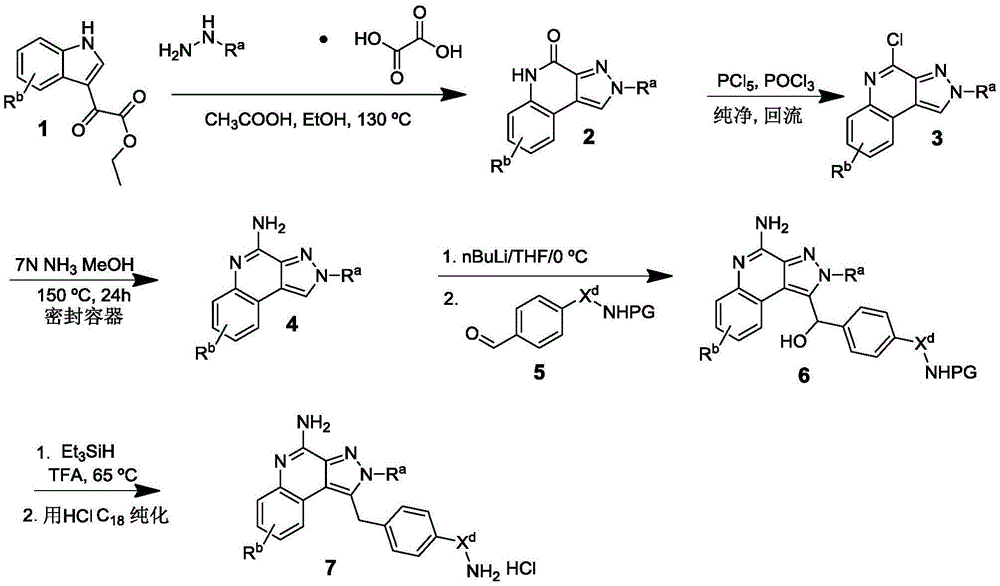
Compounds intermediates for the preparation of compounds of formula (I)
In one embodiment, the present invention provides a compound of formula XX:
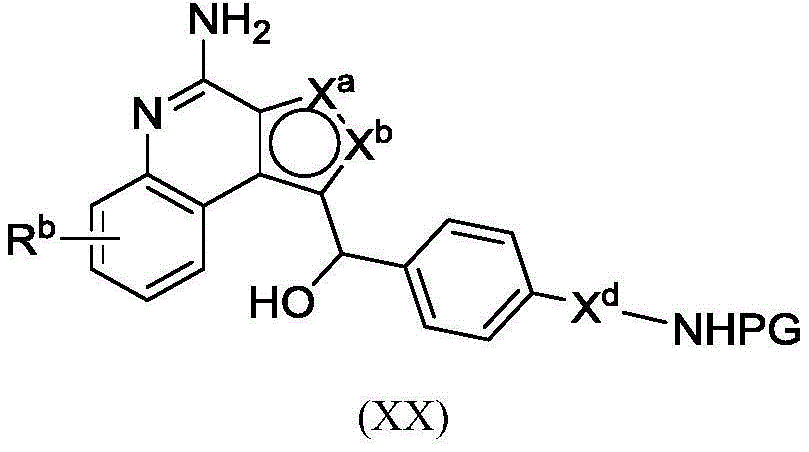
wherein,
or a tautomer, stereoisomer, and/or mixture of stereoisomers thereof; wherein,
PG is an N-protecting group;
Xaand XbOne is-N ═ and the other is-N (R)a)-;
RaIs C1-C6-alkyl, cycloalkyl, or cycloalkylalkyl;
Xdis C1-C6-an alkylene group; and
Rbis H, quinolinyl, or-C (O) OCH3。
In some or any embodiment, RaIs C1-C6-an alkyl group; in some or any embodiment, RaIs a butyl group. In some or any embodiment, RbIs H. In some or any embodiment, Xdis-CH2-。
In another embodiment, the invention provides a compound of formula XXa:

wherein,
or a tautomer, stereoisomer, and/or mixture of stereoisomers thereof; wherein,
PG is an N-protecting group;
Rais C1-C6-alkyl, cycloalkyl, or cycloalkylalkyl;
Xdis C1-C6-an alkylene group; and
Rbis H, quinolinyl, or-C (O) OCH3。
In some or any embodiment, RaIs C1-C6-an alkyl group; in some or any embodiment, RaIs a butyl group. In some or any embodiment, RbIs H. In some or any embodiment, X dis-CH2-。
Antigen preparation
The protein used to isolate the antibody may be an intact antigen or a fragment of an antigen. The intact protein or antigenic fragment can be in the form of an isolated protein or a protein expressed by the cell. Other forms of antigen that can be used to generate antibodies will be apparent to those skilled in the art.
Monoclonal antibodies
Monoclonal antibodies can be obtained, for example, using the hybridoma method first described by Kohler et al, Nature,1975,256: 495-. Monoclonal antibodies can also be obtained, for example, using phage or yeast based libraries. See, e.g., U.S. patent nos. 8,258,082 and 8,691,730, each of which is incorporated by reference herein in its entirety.
In the hybridoma method, a mouse or other suitable host animal is immunized to induce lymphocytes that produce or are capable of producing antibodies that will specifically bind to the protein used for immunization. Alternatively, lymphocytes may be immunized in vitro. The lymphocytes are then fused with myeloma cells using a suitable fusing agent, such as polyethylene glycol, to form hybridoma cells. See Goding J.W., Monoclonal Antibodies: Principles and Practice 3 rded. (1986) Academic Press, San Diego, Calif., which is incorporated herein by reference in its entirety.
The hybridoma cells are seeded and grown in a suitable medium containing one or more agents that inhibit the growth or survival of the unfused, parent myeloma cells. For example, if the parental myeloma cells lack the enzyme hypoxanthine guanine phosphoribosyl transferase (HGPRT or HPRT), the culture medium for the hybridomas typically will include hypoxanthine, aminopterin, and thymidine (HAT medium), which substances prevent the growth of HGPRT-deficient cells.
Useful myeloma cells are myeloma cells that fuse efficiently, support stable high-yield production of antibodies by selected antibody-producing cells, and are sensitive to medium conditions such as the presence or absence of HAT medium. Among the preferred myeloma Cell lines are murine myeloma Cell lines, such as those derived from MOP-21 and MC-11 mouse tumors (available from Salk Institute Cell Distribution Center, San Diego, Calif.), and SP-2 or X63-Ag8-653 cells (available from American Type Culture Collection, Rockville, Md.). Human myeloma and mouse-human heteromyeloma cell lines have also been described for the production of human monoclonal antibodies. See, e.g., Kozbor, j.immunol.,1984,133:3001, which is incorporated herein by reference in its entirety.
After identifying the hybridoma cells that produce the desired specific, affinity, and/or biological activity of the antibody, the selected clones can be subcloned by limiting dilution procedures and grown by standard methods. See Goding, supra. Suitable media for this purpose include, for example, D-MEM or RPMI-1640 medium. In addition, hybridoma cells can be grown in vivo in the form of ascites tumors in the animal.
DNA encoding a monoclonal antibody can be readily isolated and sequenced using conventional methods (e.g., by using oligonucleotide probes that specifically bind to genes encoding the heavy and light chains of the monoclonal antibody). Thus, hybridoma cells can serve as a useful source of DNA encoding an antibody having the desired properties. Once isolated, the DNA can be placed into an expression vector, which is then transfected into a host cell such as a bacterium (e.g., escherichia coli), yeast (e.g., Saccharomyces or Pichia sp.), COS cell, Chinese Hamster Ovary (CHO) cell, or myeloma cell that does not otherwise produce antibodies to produce monoclonal antibodies.
Humanized antibodies
Humanized antibodies can be generated by replacing most or all of the structural parts of a non-human monoclonal antibody with the corresponding human antibody sequences. Thus, hybrid molecules are generated in which only the antigen-specific variable groups or CDRs are composed of non-human sequences. Methods for obtaining humanized antibodies include, for example, those described in: winter and Milstein, Nature,1991,349: 293-; rader et al, proc.nat.acad.sci.u.s.a.,1998,95: 8910-; steinberger et al, J.biol.chem.,2000,275: 36073-36078; queen et al, Proc.Natl.Acad.Sci.U.S.A.,1989,86: 10029-10033; and U.S. Pat. nos. 5,585,089, 5,693,761, 5,693,762, and 6,180,370; each of which is incorporated herein by reference in its entirety.
Human antibodies
Human antibodies can be generated by a variety of techniques known in the art, for example, using transgenic animals (e.g., humanized mice). See, e.g., Jakobovits et al, proc.natl.acad.sci.u.s.a.,1993,90: 2551; jakobovits et al, Nature,1993,362: 255-258; bruggermann et al, Yeast in Immuno, 1993,7: 33; and U.S. patent nos. 5,591,669, 5,589,369, and 5,545,807; each of which is incorporated herein by reference in its entirety. Human antibodies can also be derived from phage display libraries (see, e.g., Hoogenboom et al, J.mol.biol.,1991,227: 381-388; Marks et al, J.mol.biol.,1991,222: 581-597; and U.S. Pat. Nos. 5,565,332 and 5,573,905, each of which is incorporated herein by reference in its entirety). Human antibodies can also be produced from activated B cells in vitro (see, e.g., U.S. Pat. nos. 5,567,610 and 5,229,275, each of which is incorporated herein by reference in its entirety). Human antibodies can also be derived from yeast-based libraries (see, e.g., U.S. patent No. 8,691,730, which is incorporated by reference herein in its entirety).
Coupling of
The antibody conjugates can be prepared by standard techniques. In certain embodiments, the antibody is contacted with a payload precursor under conditions suitable for formation of a bond from the antibody to the payload to form an antibody-payload conjugate. In certain embodiments, the antibody is contacted with the linker precursor under conditions suitable for formation of a bond from the antibody and the linker. Contacting the resulting antibody-linker with a payload precursor under conditions suitable for formation of a bond from the antibody-linker and the payload to form an antibody-linker-payload conjugate. In certain embodiments, a payload precursor is contacted with a linker precursor under conditions suitable for formation of a bond from the payload and the linker. Contacting the resulting payload-linker with the antibody under conditions suitable for formation of a bond from the payload-linker to the antibody to form an antibody-linker-payload conjugate. Suitable linkers for the preparation of antibody conjugates are disclosed, and exemplary conditions for conjugation are described in the examples below.
In some embodiments, conjugates are prepared by contacting an antibody as disclosed herein with a linker precursor having a structure set forth in any one of (a) - (D):

wherein COMPD is
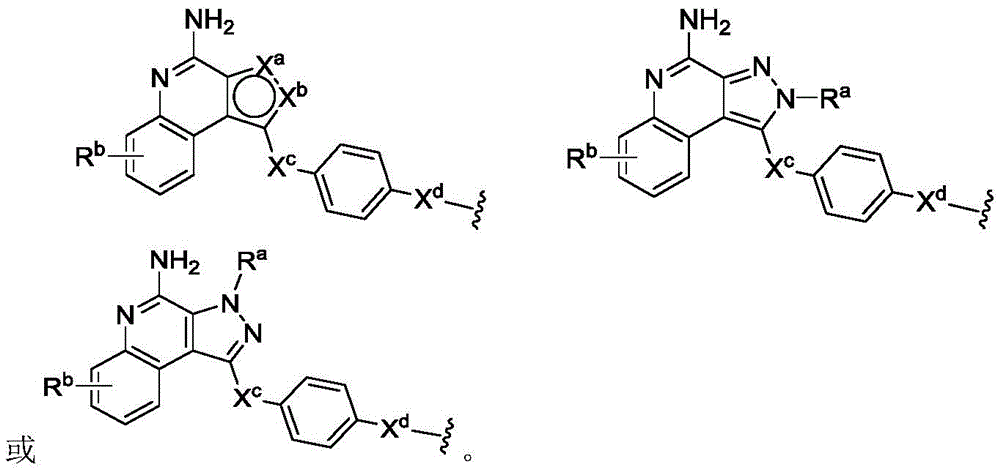

Wherein COMPD is
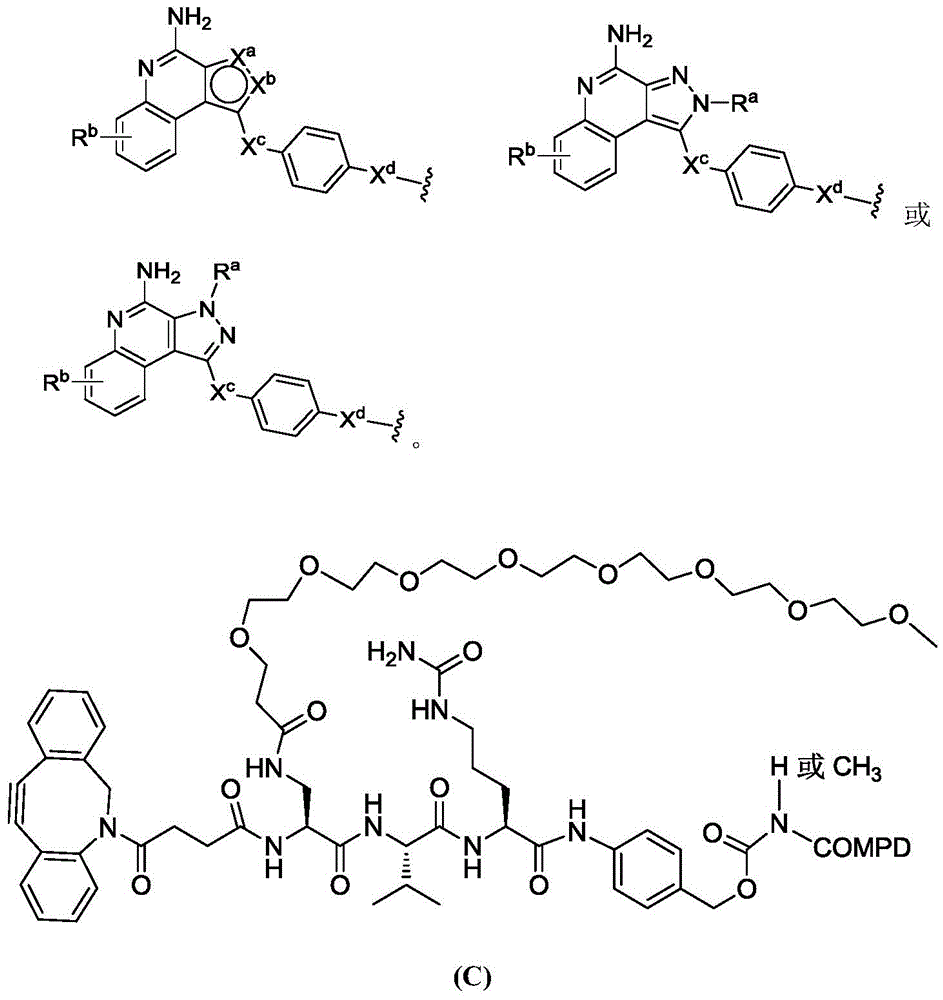
Wherein COMPD is

Vectors, host cells and recombinant methods
Embodiments are also directed to providing isolated nucleic acids encoding the antibodies, vectors, and host cells comprising the nucleic acids, as well as recombinant techniques for producing the antibodies.
For recombinant production of antibodies, the nucleic acid encoding the antibody may be isolated and inserted into a replicable vector for further cloning (i.e., amplification of the DNA) or expression. In some aspects, the nucleic acid can be generated by homologous recombination, for example, as described in U.S. patent No. 5,204,244, which is incorporated by reference herein in its entirety.
Many different vectors are known in the art. Carrier components typically include, but are not limited to, one or more of the following: signal sequences, origins of replication, one or more marker genes, enhancer elements, promoters, transcription termination sequences, such as described in U.S. Pat. No. 5,534,615, which is incorporated herein by reference in its entirety.
Illustrative examples of suitable host cells are provided below. These host cells are not intended to be limiting.
Suitable host cells include any prokaryotic (e.g., bacterial), lower eukaryotic (e.g., yeast), or higher eukaryotic (e.g., mammalian) cells. Suitable prokaryotic cells include eubacteria (eubacteria), such as gram-negative or gram-positive organisms, for example Enterobacteriaceae (Enterobacteriaceae) such as Escherichia (Escherichia) (Escherichia coli), Enterobacteriaceae (Enterobacteriaceae), Erwinia (Erwinia), Klebsiella (Klebsiella), Proteus (Proteus), Salmonella (Salmonella) (Salmonella typhimurium), Serratia (Serratia) (Serratia marcescens), Shigella (Shigella), bacillus (bacillus) (bacillus subtilis) and bacillus licheniformis (b. licheniformis)), Pseudomonas (Pseudomonas) (Pseudomonas aeruginosa (p. aeruginosa), and Streptomyces (Streptomyces). One useful E.coli cloning host is E.coli 294, although other strains such as E.coli B, E.coli X1776, and E.coli W3110 are also suitable.
In addition to prokaryotic cells, eukaryotic microorganisms such as filamentous fungi or yeast are suitable cloning or expression hosts for antibody-encoding vectors. Saccharomyces cerevisiae, or commonly known as baker's yeast, is a frequently used lower eukaryotic host microorganism. However, several other genera, species and strains are available and usable, such as Spodoptera frugiperda (e.g. SF9), Schizosaccharomyces pombe (Schizosaccharomyces pombe), Kluyveromyces (Kluyveromyces) (Kluyveromyces lactis (k.lactis), Kluyveromyces fragilis (k.fragilis), Kluyveromyces bulgaricus (k.bulgaricus), Kluyveromyces williami (k.wichur), Kluyveromyces vachellii (k.waltiali), Kluyveromyces drosophilus (k.drosophila), Kluyveromyces thermotolerans (k.soley) and Kluyveromyces marxianus (k.marxianus), Yarrowia, Pichia pastoris (Pichia pastoris), Candida (Candida albicans) (Candida), Trichoderma harzianum (c), such as Trichoderma harzianum (Trichoderma harzianum), Trichoderma harzianum (e (e.g. Trichoderma harzianum), and Trichoderma harzianum (e.e.e.e.e.e.e.e.e) Torticollis (Tolypocladium), and Aspergillus (Aspergillus) (Aspergillus nidulans (a. nidulans) and Aspergillus niger (a. niger)).
Useful mammalian host cells include COS-7 cells, HEK293 cells; baby Hamster Kidney (BHK) cells; chinese Hamster Ovary (CHO); mouse sertoli (sertoli) cells; vero cells (VERO-76), etc.
Host cells for producing the antibodies of the invention can be cultured in a variety of media. Commercially available media such as, for example, Ham's F10, Minimal Essential Medium (MEM), RPMI-1640, and Dulbecco's Modified Eagle's Medium (DMEM) are suitable for culturing the host cells. In addition, Ham et al, meth.enz.,1979,58: 44; barnes et al, anal. biochem.,1980,102: 255; and any of the media described in U.S. Pat. nos. 4,767,704, 4,657,866, 4,927,762, 4,560,655 and 5,122,469 or WO 90/03430 and WO 87/00195. Each of the above documents is incorporated by reference in its entirety.
Any of these media may be supplemented, if necessary, with hormones and/or other growth factors (such as insulin, transferrin or epidermal growth factor), salts (such as sodium chloride, calcium, magnesium and phosphate), buffers (such as HEPES), nucleotides (such as adenosine and thymidine), antibiotics, trace elements (defined as inorganic compounds usually present at final concentrations in the micromolar range), and glucose or an equivalent energy source. Any other necessary supplements may also be included at appropriate concentrations known to those skilled in the art.
Culture conditions such as temperature, pH, and the like are those previously used for the expression of the host cell and will be apparent to those of ordinary skill in the art.
Using recombinant technology, antibodies can be produced intracellularly, in the periplasmic space (periplasmic space), or directly secreted into the culture medium. If the antibody is produced intracellularly, the first step is to remove particulate debris (whether host cells or lysed fragments) by, for example, centrifugation or ultrafiltration. For example, Carter et al (Bio/Technology,1992,10: 163-. Briefly, the cell paste was thawed in the presence of sodium acetate (pH 3.5), EDTA, and phenylmethylsulfonyl fluoride (PMSF) for about 30 minutes. Cell debris can be removed by centrifugation.
In some embodiments, the antibody is produced in a cell-free system. In some aspects, cell-free systems such as the in vitro transcription and translation systems described in Yin et al, mAbs,2012,4:217-225, the text of which is incorporated herein by reference. In some aspects, the cell-free system utilizes cell-free extracts from eukaryotic cells or from prokaryotic cells. In some aspects, the prokaryotic cell is e. Cell-free expression of the antibody may be useful, for example, where the antibody accumulates in the cell as insoluble aggregates or the production of periplasmic expression is low. Antibodies produced in cell-free systems may be aglycosylated depending on the source of the cell.
When the antibody is secreted into the culture medium, it is first concentrated using a commercially available protein concentration filter such as Or
Or An ultrafiltration device for substantially concentrating the supernatant from the expression system. Any of the above steps may include protease inhibitors such as PMSF to inhibit proteolysis and antibiotics to prevent growth of opportunistic contaminants.
Antibody compositions prepared from cells can be purified using, for example, hydroxyapatite chromatography, colloidal electrophoresis, dialysis, and affinity chromatography, with affinity chromatography being particularly useful purification techniques. The suitability of protein a as an affinity ligand depends on the species and isotype of any immunoglobulin Fc domain present in the antibody. Protein a can be used to purify human gamma 1, gamma 2 or gamma 4 heavy chain-based antibodies (Lindmark et al, j. immunological. meth.,1983,62:1-13, incorporated herein by reference in its entirety). Protein G is useful for all mouse isotypes and human gamma 3(Guss et al, EMBO J.,1986,5:1567-1575, incorporated herein by reference in its entirety).
The most commonly used matrix for attaching this affinity ligand is agarose, but other matrices may be used. The use of mechanically stable matrices such as controlled pore glass or poly (styrenedivinyl) benzene allows faster flow rates and shorter processing times than agarose. When the antibody contains a CH3 domain, a BakerBond can be used  Resin for purification.
Other protein purification techniques such as ion exchange column fractionation, ethanol precipitation, reverse phase HPLC, silica gel chromatography, heparin Chromatography, chromatofocusing, SDS-PAGE, and ammonium sulfate precipitation, and these techniques can be administered by one skilled in the art.
After any preliminary purification steps, the mixture comprising the antibody of interest and contaminants can be subjected to low pH hydrophobic interaction chromatography, using an elution buffer having a pH of between about 2.5 and about 4.5, typically at low salt concentrations (e.g., about 0 to about 0.25M salt).
Examples
The compounds provided herein may be prepared, isolated or obtained by any method apparent to those skilled in the art. The compounds provided by the present invention can be prepared according to the exemplary preparation schemes provided below. Reaction conditions, steps, and reactants not provided in the exemplary preparative schemes are apparent and known to those skilled in the art. As used herein, the symbols and conventions used in the procedures, schemes and examples, whether or not a particular abbreviation is specifically defined, are consistent with those used in the contemporary scientific literature, such as the american journal of chemical society or the journal of biochemistry. Specifically, but not limited to, the following abbreviations may be used in the examples and throughout the specification: g (grams); mg (milligrams); mL (milliliters); μ L (microliters); mM (millimolar); μ M (micromolar); hz (hertz); MHz (megahertz); mmol (millimole); h. hr or hrs (hours); min (minutes); MS (mass spectrometry); ESI (electrospray ionization); TLC (thin layer chromatography); HPLC (high pressure liquid chromatography); rt (room temperature); TFA (trifluoroacetic acid); THF (tetrahydrofuran); calcd (calculated); CDCl 3(deuterated chloroform); DBCO (dibenzocyclooctynylamine); DCM (dichloromethane); DIPEA (diisopropylethylamine); DMSO (dimethyl sulfoxide); DMSO-d6(deuterated dimethyl sulfoxide); EtOAc (ethyl acetate); EtOH (ethanol); MeCN (acetonitrile); MeOH (methanol); and BOC (tert-butyloxycarbonyl).
For all the following examples, standard work-up and purification methods known to the person skilled in the art can be used. All temperatures are expressed in degrees Celsius (C.), unless otherwise indicated. All reactions were carried out at room temperature unless otherwise indicated. The synthetic methods shown herein are intended to illustrate applicable chemistry by use of specific examples and are not intended to be indicative of the scope of the disclosure.
Example 1
Preparation of Compounds of formula (I)

Preparation of 2-butyl-2, 5-dihydro-4H-pyrazolo [3,4-c ] quinolin-4-one (2):

to a 250mL single neck round bottom flask purged with argon and equipped with a Teflon coated magnetic stir bar was added 150mL of anhydrous ethanol, followed by the addition of butylhydrazine oxalate (12.8g, 71.8mmol), followed by 1(10.0g, 46.04mmol) and glacial acetic acid (14.0mL, 245 mmol). A reflux condenser was added and the mixture was heated to 130 ℃ using a sand bath. After 24 hours, the reaction was removed from the heating element and allowed to cool to room temperature before being concentrated using a rotary evaporator. The crude solid was triturated with HPLC acetonitrile (150mL) followed by deionized water (150 mL). The remaining white solid was placed on a lyophilizer overnight. The white precipitate (7.5g) was used in the next step without further purification. ESIMS [ M + H ] ]+Calculated value C14H16N3O242.13, found 242.0.
(3) Preparation of 2-butyl-4-chloro-2H-pyrazolo [3,4-c ] quinoline:
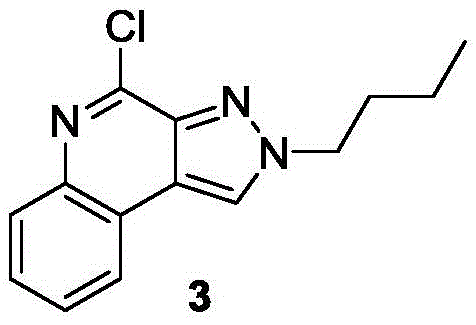
a250 mL single neck round bottom flask purged with argon and equipped with a Teflon coated magnetic stir bar was charged with 2(7.31g, 30.3mmol), PCl5(1.5g, 7.2mmol) and then charged with POCl3(152mL, 1.63mol, Sigma-Aldrich). A reflux condenser was added and the mixture was heated to reflux using a sand bath. After 10 min, LCMS confirmed the reaction was complete. The reaction was cooled to room temperature over 1 hour and then concentrated using a rotary evaporator. The crude material was purified using a TELEDYNE ISCO Combiflash Rf + system (DCM to DCM: MeOH 8:2) with 80g of RedISepRfgold (60mL/min) normal phase cartridge and the product eluted off the column with 95:5DCM: MeOH to give 3. ESIMS [ M + H ]]+Calculated value C14H15ClN3260.10, found 260.0.
(4) Preparation of 2-butyl-2H-pyrazolo [3,4-c ] quinolin-4-amine:

to a 10mL microwave reaction vessel under nitrogen flow was added compound 3(100mg, 0.385mmol) followed by 7N NH3And immediately the container was sealed with a lid using a septum (Biotage 352298) and heated with a sand bath at 150 ℃ for 24 hours. After 24 hours, the reaction was removed from the sand bath and cooled for 1 hour after the vessel was vented with the syringe, the cap was removed with a clamp and the contents dissolved in 10mL of MeOH. The combined MeOH fractions were concentrated using a rotary evaporator. The white solid remaining in the vessel was dissolved with 10mL of deionized water. The combined aqueous fractions were extracted with dichloromethane (3 × 50mL) over MgSO 4Dried, filtered, added to the concentrated MeOH fraction and concentrated again using a rotary evaporator. The crude material was purified using a TELEDYNE ISCO CombiFlashRf + system with 24g of RedISepRfgold (20mL/min) normal phase column (DCM to DCM: MeOH 8:2), where compound 4 eluted out of the column with 95:5DCM: MeOH. Compound 4 is isolated. ESIMS [ M + H ]]+Calculated value C14H17N4241.15, found 241.2.
(6) Preparation of tert-butyl (4- ((4-amino-2-butyl-2H-pyrazolo [3,4-c ] quinolin-1-yl) (hydroxy) methyl) benzyl) carbamate:

to a 25mL single neck round bottom flask with anhydrous THF (5mL, Sigma-Aldrich) purged with argon and equipped with a Teflon coated magnetic stir bar was added 4(217.8mg, 0.9mmol), a solution of 2.5M n-Buli in hexane (1.8mL, 4.5mmol) and neat aldehyde 5(1.1g, 4.7mmol) over 1 minute. Mid-way the n-Buli addition, a tan precipitate formed, giving a heterogeneous solution that disappeared shortly after addition of 5, giving a clear, dark yellow solution. The reaction was stirred at room temperature for 1 hourThen, 5mL of deionized water was added and the resulting mixture was extracted 3 times with 5mL of dichloromethane. The organic fractions were combined and MgSO4Dried and concentrated on a rotary evaporator. The crude material was purified using a TELEDYNE ISCO CombiFlashRf + system (DCM to DCM: MeOH 8:2) with 24g of RedIPRfgold (20mL/min) normal phase column to give 6. ESIMS [ M + H ] ]+Calculated value C27H34N5O3476.27,476.4。
Preparation of 1- (4- (aminomethyl) benzyl) -2-butyl-2H-pyrazolo [3,4-c ] quinolin-4-amine:

to a 10mL single neck round bottom flask equipped with 6(10mg, 0.021mmol) equipped with a Teflon coated magnetic stir bar purged with argon was added trifluoroacetic acid (0.032mL, 0.42mmol) and triethylsilane (0.12mL), a reflux condenser was added, and the mixture was heated to 60 ℃ using a sand bath. After 3 days LCMS showed about 80% conversion of the product. The reaction mixture was concentrated on a rotary evaporator and the residue was dissolved in DMSO (0.5mL) and then loaded onto 10g C18 Waters Sep Pak and purified with deionized water (0.01M HCl) and MeCN (0.01 MHCl). The product was eluted from the column with 19:6 water, MeCN, to give 7. ESIMS [ M + H ]]+Calculated value C22H26N4360.22, found 360.2.
Example 2
Preparation of linker-payloads
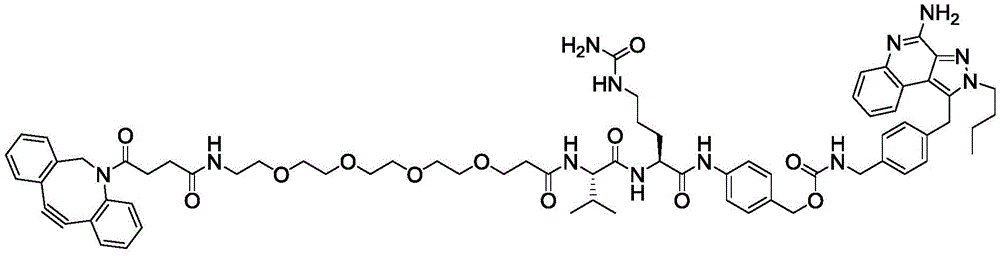
The following scheme illustrates a method for preparing the linker payload, compound 1, described above.

An oven dried 100mL flask equipped with a magnetic stir bar was charged with 1- (4- (aminomethyl) benzyl) -2-butyl-2H-pyrazolo [3,4-c ] quinolin-4-amine (compound 1) (250mg, 0.69mmol), (4-nitrophenyl) [4- [ [ rac- (2S) -2- (9H-fluoren-9-ylmethoxycarbonylamino) -3-methyl-butyryl ] amino ] -5-ureido-pentanoyl ] amino ] phenyl ] methyl carbonate (2.1) (586mg, 0.760mmol) and DMF (10 mL). The clear solution was purged with argon, then DIPEA (0.2mL, 1mmol) was added and the reaction was stirred at room temperature overnight. LCMS showed reaction completion. The solvent was removed to dryness and the residue was purified by flash chromatography to afford compound 2.2. LC-MS (ESI) m/z + H987.8
Compound 2.2(250mg, 0.25mmol) was dissolved in DMF (5mL) and piperidine (5 equiv.) was added. The clear solution was stirred at room temperature for 30 min and LCMS showed Fmoc deprotection. Crude Compound 2.2a was subjected to preparative reverse phase HPLC (method: mobile phase: A-water (10mM NH)4OAc); b-acetonitrile, gradient: 10% -70% B in 20 min, flow rate 50 mL/min).
An oven dried 100mL flask equipped with a magnetic stir bar was charged with compound (2.2a) (200mg, 0.26mmol) prepared above, DBCO-PEG4-NHS ester (204mg, 0.31mmol), and DMF (5 mL). The clear solution was flushed with argon, then DIPEA (70. mu.L, 0.31mmol) was added. The reaction was carried out at room temperature under N2Stirring was carried out for 2 hours at atmospheric pressure. LCMS shows that after the reaction is complete, the material is subjected to preparative reverse phase HPLC (method: mobile phase: A-water (10mM NH)4OAc); b-acetonitrile, gradient: from 10% to 90% B over 20 min, flow rate 50mL/min), the pure fractions were collected and lyophilized to give linker payload-compound 1. HPLC MS data showed 98% purity of the desired product. LC-MS (ESI) m/z + H1299.7
Example 3
Antibody-drug coupling and DAR ratio determination
Antibody-drug conjugates are described in Zimmerman ES, et al 2014, Bioconjugate chem.,25(2), pp 351-361. Briefly, a purified antibody or antigen-binding fragment thereof is conjugated to a TLR7/8 agonist described herein. Stock linker payloads were dissolved in DMSO to a final concentration of 5 mM. The linker-payload was diluted to 1mM with PBS and then added to the purified protein sample to concentrate its final drug The degree was 100. mu.M. The mixture was incubated at room temperature (20 ℃) for 17 hours. Unincorporated drug was removed by passing the reaction samples through 7000MWCO resin in Zeba plates (Thermo Scientific) equilibrated in formulation buffer. Then the filtrate is passed through Q plates (Pall Corp.) to remove endotoxins.
After purification, purified antibody or antibody drug conjugate samples were passed through the same Protein Express LabChip (Caliper Life Sciences #760499) on the Caliper gxi system Are compared to quantify the quality criteria. Samples were prepared for analysis as specified in the Protein Express Reagent Kit (Caliper Life Sciences #760328) except that the samples (mixed in sample buffer +50mM NEM) were heated at 65 ℃ for 10 minutes before analysis on the Caliper system.
The antibody drug conjugate was reduced with 10mM TCEP (Pierce) at 37 ℃ for 10 min. To the reduced sample was added 30 μ L of TA30 (30% acetonitrile, 70% 0.1% trifluoroacetic acid). 20mg of super-DHB (Sigma, part number 50862) was dissolved in TA50 (50% acetonitrile, 50% 0.1% trifluoroacetic acid) to generate a sample matrix. 0.5 μ L of TA30 solution of the sample was added to 0.8 μ L of TA50 solution of the super-DHB matrix and deposited onto a MALDI sample plate. Spectra were collected on a Bruker Autoflex Speed MALDI instrument using the following initial settings: the mass range 7000-. The high voltage is switched on and the ion source 1 is adjusted to 20 kV. 200ns pulse ion extraction, deflection matrix inhibition, inhibition as high as 6000 Da. The peak detection algorithm is centroid, the threshold of signal-to-noise ratio is 20, the peak width is 150m/z, the height is 80%, and TopHat is subtracted from the baseline. The smoothing algorithm was SavtzkyGolay with a width of 10m/z and a period of 10. The DAR for all samples was determined as the weighted average of the deconvoluted mass spectral area under each conjugate curve.
Biological example 1
HEK293 reporter gene detection of TLR7/8 agonist
In this example, the activity of TLR7 agonists to activate the human TLR7, hTLR7 (or human TLR8, hTLR8, or mouse TLR7, hTLR 7) pathway was evaluated against HEK293 reporter cells transfected with human TLR7 (or mouse TLR7 or human TLR8) and an inducible SEAP (secreted embryonic alkaline phosphatase) reporter. The SEAP reporter gene was placed under the control of an IFN-. beta.minimal promoter fused to 5 NF-. kappa.B and AP-1 binding sites. Stimulation with a TLR7 agonist activates NF-. kappa.B and AP-1, thereby inducing SEAP production. The level of SEAP was determined using HEK-Blue assay medium.
HEK 293-human TLR7, HEK 293-mouse TLR7, and HEK 293-human TLR8 reporter cell lines were purchased from Invivogen and maintained in manufacturer's recommended media containing the required supplemental antibiotics. On the day of assay, CELLs were harvested with Accutase and counted by Vi-CELL viability analyzer. Cells were resuspended in HEK blue assay medium and a total of 10000 cells were seeded in each well of a 384 well flat bottom plate. Serial dilutions (1:3 serial dilutions, starting at 5 μ M) of TLR7 agonist free drug were added to the treated wells. Determination of plates in CO 2The culture was carried out in an incubator at 37 ℃ for 4 hours. HEK-BlueTMThe detection medium changed to purple/blue in the presence of the secreted SEAP and was detected spectrophotometrically at 655nm 620-. The log (inhibitor) versus response log (variable slope) was used for 3-parameter fitting using GraphPad Prism, and the data was subjected to nonlinear regression analysis for fitting. The results are reported in Table 1 as EC50(the midpoint of the curve, or the concentration at which 50% of the maximum effect is observed).
The results are provided in table 1 below.
TABLE 1 potency and specificity of TLR7/8 agonists and TLR7/TLR8

Biological example 2
In vitro cytotoxicity
Cytotoxicity of compound 1 was tested in a cell proliferation assay with KB cells. KB cells were obtained from ATCC and maintained in Ham's F-12: high glucose DMEM (50:50) supplemented with 10% heat-inactivated fetal bovine serum (Corning), 1% penicillin/streptomycin (Corning), and 2mmol/L-glutamax (thermo Fisher scientific). The day before the assay, KB cells were harvested with Accutase and a total of 625 cells were seeded into each well of a 384-well flat-bottom white polystyrene plate. Compound 1 was formulated in cell culture medium at 2-fold the starting concentration. Serial dilutions of compound 1 (1:4 serial dilutions, starting at 100 nM) were added to the treatment wells. The assay plate was placed in CO 2The culture was carried out at 37 ℃ for 120 hours in an incubator, and then the measurement was carried out. For Cell viability assay, 30. mu.L of Cell Reagents (Promega corp. madison, WI) were added to each well and the plates were treated according to the product instructions. In that
 Relative luminescence was measured on a plate reader (Perkin-Elmer; Waltham, MA). Using untreated cells as controls, the relative luminescence readings were converted to percent survival. The data were fitted by non-linear regression analysis using log (inhibitor) versus log of response (variable slope) using a 4-parameter fit with GraphPad Prism (GraphPad v 5.0, software; San Diego, California).
Biological example 3
Stimulation of in vitro Activity of other TLRs
In this example, compound 1 was studied for its activity to stimulate different human and mouse TLR pathways in HEK293 cells transfected with inducible SEAP (secreted embryonic alkaline phosphatase) reporter genes and expressing different human TLRs (TLR2, TLR3, TLR4, TLR5, TLR7, TLR8, TLR9) or mouse TLRs (TLR2, TLR3, TLR4, TLR5, TLR7, TLR8, TLR 13). Compound a was used as a control in this assay.

HEK293 reporter cell lines were purchased from Invivogen and maintained in manufacturer recommended media containing the required supplemental antibiotics. On the day of assay, CELLs were harvested with Accutase and counted by Vi-CELL viability analyzer. Cells were resuspended in HEK blue assay medium and a total of 10000 cells were seeded in each well of a 384 well flat bottom plate. Serial dilutions of compound 1 and compound a above (1:8 serial dilutions, starting at 1 μ M) were added to the treated wells. Determination of plates in CO2The culture was carried out in an incubator at 37 ℃ for 16 hours. HEK-BlueTMThe detection medium changed to purple/blue in the presence of the secreted SEAP and was detected spectrophotometrically at 655nm 620-. The log (inhibitor) versus response log (variable slope) was used for 3-parameter fitting using GraphPad Prism, and the data was subjected to nonlinear regression analysis for fitting.
Table 1: summary of HEK293 reporter Gene detection EC50


Estimate of
NA is inactive
Biological example 4
Compound-induced immune cell activation
This example evaluates the ability of compound 1 to stimulate activation of different immune cell populations (monocytes, B cells and DC) in human PBMC (peripheral blood mononuclear cells), cynomolgus monkey PBMC and mouse splenocytes. Compound a above and resiquimod (resiquimod) below were used as controls in this assay.

Peripheral Blood Mononuclear Cells (PBMCs) were isolated from fresh blood from two healthy human donors and two cynomolgus monkey donors using Leukosep tubes and nycprep 1.077 buffer according to the manufacturer's recommendations. Mouse splenocytes were isolated from C57/BL6 mouse spleens by immersion and filtration on a 70 μm cell filter. The isolated PBMC or spleen cells are then frozen using a freezing medium. On the day of assay, PBMC or splenocytes were thawed and cultured in PBMC medium (RPMI supplemented with 10% heat-inactivated fetal bovine serum from Hyclone, 1% penicillin/streptomycin, and 2 mmol/L-glutamax). 300k PBMC or splenocytes in 50. mu.L of medium were seeded into 96-well cell culture plates. Then 50. mu.L of test substance (prepared at 2-fold the starting concentration, 1:4 serial dilutions) was added to the wells. The cell mixture was co-cultured in the presence of the test substance and 10. mu.g/mL of LPS-RS for 48 hours and collected by Accutase. PBMCs or splenocytes are then stained with antibodies against different cell population markers and activation markers. Cells were washed, fixed with 2% PFA overnight, and read on an Attune NxT cell machine (Thermo Fisher). Monocyte activation was expressed as an increase in CD86 expression on CD14+ cells. B cell activation is expressed as an increase in CD86 expression on CD14-/Lin +/HLA-DR + cells. Dendritic Cell (DC) activation is expressed as an increase in CD86 expression on CD14-/Lin-/HLA-DR +/CD123+ cells.
The TLR7/8 agonist compound 1 was very effective in activating monocytes (figure 1A), B cells (figure 1B), cdcs (figure 1C) and pdcs (figure 1D) in human PBMCs. Similar immune cell activation was also observed for monocytes (fig. 2A), B cells (fig. 2B) and DC (fig. 2C) from cynomolgus monkey PBMC and monocytes (fig. 3A), macrophages (fig. 3B), cDC cells (fig. 3C) and pDC (fig. 3D) from mouse splenocytes.
Biological example 5
Compound-induced cytokine release
This example evaluates the ability of compound 1 to induce cytokine release in human PBMC, cynomolgus monkey PBMC, and mouse splenocytes. Compound a and resiquimod above were used as controls in this assay.
Human and cynomolgus PBMC, mouse spleen cells were isolated as described in the previous examples. On the day of assay, 300k PBMC or splenocytes in 50 μ L of medium were seeded into 96-well cell culture plates. Then 50 μ L of test substance (formulated at 2-fold the starting concentration) was added to the wells. The cell mixture was co-cultured in the presence of the test substance and 10. mu.g/mL LPS-RS for 24 hours (human PBMC) or 48 hours (cynomolgus monkey PBMC and mouse spleen cells). Cytokine release in cell culture medium was determined by ELISA.
The TLR7/8 agonist compound 1 stimulated strong IL-6 (fig. 4A), MCP-1 (fig. 4B), IL1Ra (fig. 4C) release from human PBMC, IL-6 (fig. 5A) and MCP-1 (fig. 5B) release from cynomolgus PBMC, and IL-6 (fig. 6A), MCP-1 (fig. 6B), TNFa (fig. 6C) and IP-10 (fig. 6D) release from mouse splenocytes, similar to the activity observed for compound a.
Biological example 6
In vivo model
This example can be used to assess the response of MC38-hFolR α tumors to treatment with a compound provided herein (e.g., compound (1)).
9-10 week old female C57BL/6 mice were anesthetized with isoflurane and 1X10 mice were anesthetized6Individual MC38-h FolR α (mouse colon adenocarcinoma cells were designed to express hFolR α) were implanted subcutaneously in the right posterior abdomen. When the mean tumor size is about 150mm3(designated day 0 post treatment), randomized groupings were started and treatment was started. On days 0 and 4 (q4dx2), animals received Intratumoral (IT) injections of a compound provided herein (e.g., compound (1)). Table 2 provides a list of treatment groups for this study. The compound provided by the present invention (e.g., compound (1)) is dissolved in DMSO, and a dosing solution is prepared in PBS. Body weight and tumor size were monitored 3 times per week. Mean tumor size when vehicle control group>
1,200mm3The primary study endpoint was reached.
TABLE 2
| Group of | Treatment of | Dosage (mg/kg) | Frequency of administration | Pathway(s) | |
| 1 | Vehicle (PBS) | - | |
IT | 8 |
| 2 | Compound (I) | 0.1 | |
IT | 8 |
| 3 | Compound (I) | 0.5 | |
IT | 8 |
| 4 | Compound (I) | 2 | |
IT | 8 |
Animals bearing established MC38-hFolR α tumors are treated intratumorally with the compounds provided herein at the doses described above. Body weight and tumor growth inhibition were measured.
Equivalents of the formula
The invention as set forth above may encompass a variety of different inventions with independent utility. While each of these inventions has been disclosed in its preferred form, the specific embodiments thereof as disclosed and illustrated herein are not to be considered in a limiting sense as numerous variations are possible. The subject matter of the inventions includes all novel and non-obvious combinations and subcombinations of the various elements, features, functions and/or properties disclosed herein. The following claims particularly point out certain combinations and subcombinations regarded as novel and nonobvious. Inventions embodied in other combinations and subcombinations of features, functions, elements, and/or properties may be claimed in this, a priority application or a related application. Such claims, whether directed to a different invention or directed to the same invention, and whether broader, narrower, equal, or different in scope to the original claims, also are regarded as included within the subject matter of the inventions of the present disclosure.
One or more features of any embodiment described in this disclosure or in the drawings may be combined with one or more features of any other embodiment described in this disclosure or in the drawings without departing from the scope of the disclosure.
All publications, patents and patent applications cited in this specification are herein incorporated by reference as if each individual publication or patent application were specifically and individually indicated to be incorporated by reference. Although the foregoing invention has been described in some detail by way of illustration and example for purposes of clarity of understanding, it will be readily apparent to those of ordinary skill in the art in light of the teachings of this invention that certain changes/variations and modifications/variations may be made thereto without departing from the spirit or scope of the appended claims.
Claims (66)
1. A compound of formula (I):
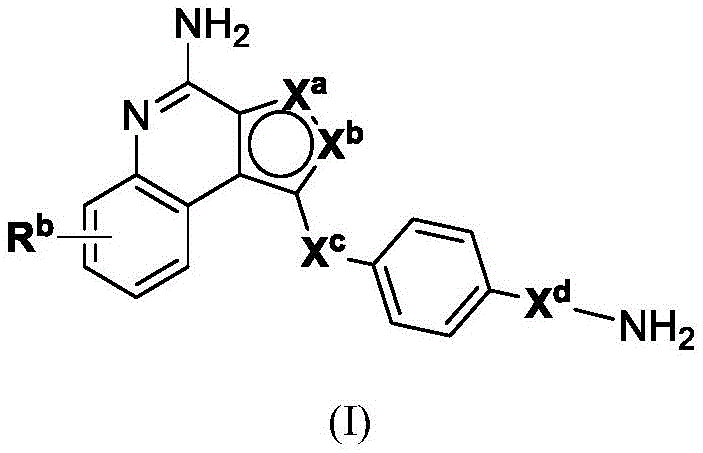
or a pharmaceutically acceptable salt, tautomer, stereoisomer, and/or mixture of stereoisomers thereof; wherein,
Xaand XbOne is-N ═ and the other is-N (R)a)-;
RaIs C1-C6-alkyl, cycloalkyl, or cycloalkylalkyl;
Xcand XdAre each independently C1-C6-an alkylene group; and
Rbis H, quinolinyl, or-C (O) OCH3。
2. The compound of claim 1, having the structure of formula (II):

or a pharmaceutically acceptable salt, tautomer, stereoisomer, and/or mixture of stereoisomers thereof.
3. The compound of claim 1, having the structure of formula (III):

Or a pharmaceutically acceptable salt, tautomer, stereoisomer, and/or mixture of stereoisomers thereof.
4. A compound according to any one of claims 1-3, wherein RbIs H; or a pharmaceutically acceptable salt, tautomer, stereoisomer, and/or mixture of stereoisomers thereof.
5. The compound according to any one of claims 1-4, wherein XcIs CH2(ii) a Or a pharmaceutically acceptable salt, tautomer, stereoisomer, and/or mixture of stereoisomers thereof.
6. The compound according to any one of claims 1-5, wherein XdIs CH2(ii) a Or a pharmaceutically acceptable salt, tautomer, stereoisomer, and/or mixture of stereoisomers thereof.
7. The compound according to any one of claims 1-6, wherein RaIs C1-C6-an alkyl group; or a pharmaceutically acceptable salt, tautomer, stereoisomer, and/or mixture of stereoisomers thereof.
8. The compound according to any one of claims 1-7, wherein RaIs methyl, ethyl, n-propyl, isopropyl, n-butyl, isobutyl, sec-butyl, tert-butyl, n-pentyl, sec-pentyl, or isopentyl; or a pharmaceutically acceptable salt, tautomer, stereoisomer, and/or mixture of stereoisomers thereof.
9. The compound according to any one of claims 1-7, wherein RaIs a butyl group; or a pharmaceutically acceptable salt, tautomer, stereoisomer, and/or mixture of stereoisomers thereof.
10. The compound according to any one of claims 1, 2 and 4-9, which is

Or a pharmaceutically acceptable salt, tautomer, stereoisomer, and/or mixture of stereoisomers thereof.
11. A pharmaceutical composition comprising a compound of any one of claims 1-10, or a pharmaceutically acceptable salt, tautomer, stereoisomer, and/or mixture of stereoisomers thereof; and a pharmaceutically acceptable carrier.
12. A compound of formula (IV):

or a pharmaceutically acceptable salt, solvate, stereoisomer, tautomer, or mixture of regioisomers thereof, wherein:
W1is a single bond, or W1Absent, or a divalent linking group;
x is absent, or X is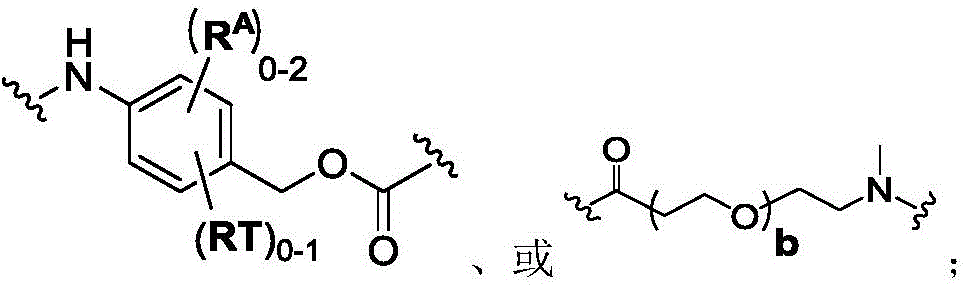
Subscript b is an integer selected from 1 to 10;
each RAWhen present, is independently selected from C at each occurrence1-3An alkyl group;
each RT, when present, is independently a release trigger group (release trigger group);
each HP, when present, is independently a hydrophilic group;
W6Is a residue of a peptide, or W6Is absent;
SG is absent, or SG is a divalent spacer group;
r is H, or a coupling group; and
PA has the structure of formula (I'):

or a tautomer, stereoisomer, and/or mixture of stereoisomers thereof, wherein,
Xaand XbOne is-N ═ and the other is-N (R)a)-;
RaIs C1-C6-alkyl, cycloalkyl, or cycloalkylalkyl;
Xcand XdAre each independently C1-C6-an alkylene group; and
Rbis H, quinolinyl, or-C (O) OCH3。
13. The compound of claim 12, wherein SG is absent, or SG is
 Wherein the subscript d is an integer selected from 1 to 10, wherein each
 Each represents a point of attachment to the remainder of the formula; or a pharmaceutically acceptable salt, tautomer, stereoisomer, and/or mixture of stereoisomers thereof.
14. The compound according to any one of claims 12-13, wherein SG is
 Wherein each one of
 Each represents a point of attachment to the remainder of the formula; or a pharmaceutically acceptable salt, tautomer, stereoisomer, and/or mixture of stereoisomers thereof.
15. The compound of any one of claims 12-14, wherein W1When present, is 
 Wherein the subscript e is an integer selected from 1 to 10, wherein each
 Each represents a point of attachment to the remainder of the formula; or a pharmaceutically acceptable salt, tautomer, stereoisomer, and/or mixture of stereoisomers thereof.
16. The compound according to any one of claims 12-15, wherein W is1When present, is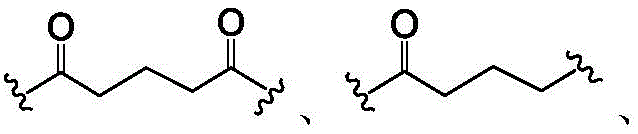
 Wherein each one of
 Each represents a point of attachment to the remainder of the formula; or a pharmaceutically acceptable salt, tautomer, stereoisomer, and/or mixture of stereoisomers thereof.
17. The compound of any one of claims 12-16, wherein W is6When present, is a tripeptide residue; or a pharmaceutically acceptable salt, tautomer, stereoisomer, and/or mixture of stereoisomers thereof.
18. The compound of any one of claims 12-17, wherein W is6When present, is
 Wherein each one of
 Each represents a point of attachment to the remainder of the formula; or a pharmaceutically acceptable salt, tautomer, stereoisomer, and/or mixture of stereoisomers thereof.
19. The compound of any one of claims 12-16, wherein W is6When present, is a dipeptide residue; or a pharmaceutically acceptable salt, tautomer, stereoisomer, and/or mixture of stereoisomers thereof.
20. The compound of any one of claims 12-16 and 19, wherein W6When present, is
 Wherein each one of
 Each represents a point of attachment to the remainder of the formula; or a pharmaceutically acceptable salt, tautomer, stereoisomer, and/or mixture of stereoisomers thereof.
21. The compound of any one of claims 12-20, wherein RT, when present, is Wherein
 Represents a point of attachment to the remainder of the formula; or a pharmaceutically acceptable salt, tautomer, stereoisomer, and/or mixture of stereoisomers thereof.
22. The compound of any one of claims 12-21, wherein HP, when present, is Wherein subscript b is an integer selected from 1 to 10, and
 represents a point of attachment to the remainder of the formula; or a pharmaceutically acceptable salt, tautomer, stereoisomer, and/or mixture of stereoisomers thereof.
23. The compound of any one of claims 12-22, wherein there is one HP and is adjacent to SG; or a pharmaceutically acceptable salt, tautomer, stereoisomer, and/or mixture of stereoisomers thereof.
24. The compound according to any one of claims 12-23, wherein X is  Or a pharmaceutically acceptable salt, tautomer, stereoisomer, and/or mixture of stereoisomers thereof.
25. The compound of any one of claims 12-24, wherein R is a coupling group; or a pharmaceutically acceptable salt, tautomer, stereoisomer, and/or mixture of stereoisomers thereof.
26. The compound according to any one of claims 12-25, wherein R is:


27. The compound of any one of claims 12-26, wherein RaIs C1-C6-an alkyl group; and RbIs H; or a pharmaceutically acceptable salt, tautomer, stereoisomer, and/or mixture of stereoisomers thereof.
28. The compound according to any one of claims 12-27, wherein PA is

Or a pharmaceutically acceptable salt, tautomer, stereoisomer, and/or mixture of stereoisomers thereof.
29. The compound according to any one of claims 12-28, selected from the group consisting of:
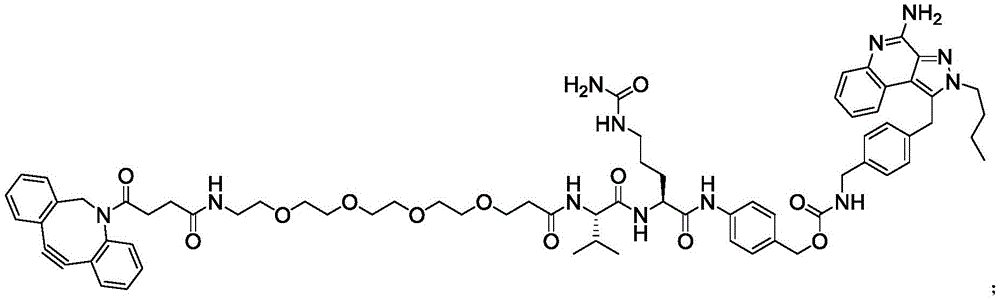
Or a pharmaceutically acceptable salt, tautomer, stereoisomer, and/or mixture of stereoisomers thereof.
30. An antibody drug conjugate having a structure represented by formula (V):

or a pharmaceutically acceptable salt, solvate, stereoisomer, tautomer, or mixture of regioisomers thereof,
wherein,
ab is an antibody, or antigen-binding fragment thereof;
l is a linker;
PA has the structure of formula (I'):

or a tautomer, stereoisomer, and/or mixture of stereoisomers thereof, wherein,
Xaand XbOne is-N ═ and the other is-N (R)a)-;
RaIs C1-C6-alkyl, cycloalkyl, or cycloalkylalkyl;
Xcand XdAre each independently C1-C6-an alkylene group;
Rbis H, quinolyl, or-C (O) OCH3(ii) a And
subscript n is an integer selected from 1 to 30.
31. The antibody drug conjugate of claim 30, having the structure of formula (VI):

or a pharmaceutically acceptable salt, solvate, stereoisomer, tautomer, or mixture of regioisomers thereof, wherein:
each W1Each independently is a single bond, or each independently is absent, or each independently is a divalent linking group;
each X is independently absent or independently 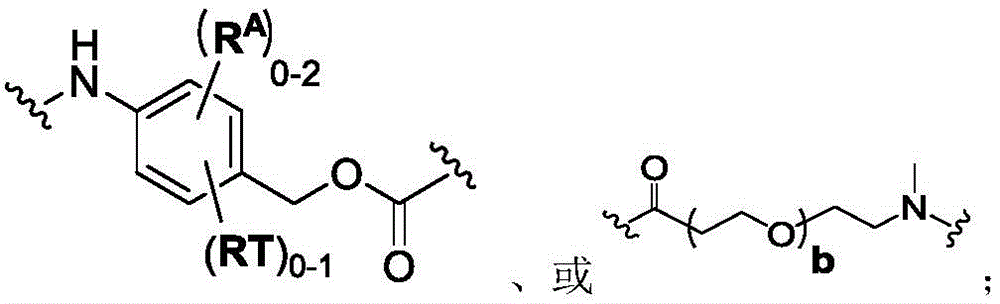
Subscript b is an integer selected from 1 to 10;
each RAWhen present, is independently selected from C at each occurrence1-3An alkyl group;
each RT, when present, is independently at each occurrence a release-initiating group;
each HP, when present, is independently a hydrophilic group;
each W6Each independently is a peptide, or each independently is absent;
each SG is independently absent or independently is a divalent spacer group;
each R' is independently a divalent residue of a coupling group;
subscript n is an integer selected from 1 to 30;
ab is an antibody or antigen-binding fragment thereof; and
each PA has a structure represented by formula (I'):

or a tautomer, stereoisomer, and/or mixture of stereoisomers thereof, wherein,
Xaand XbOne is-N ═ and the other is-N (R)a)-;
RaIs C1-C6-an alkyl group;
Xcand XdAre each independently C1-C6-an alkylene group; and
Rbis H, quinolinyl, or-C (O) OCH3。
32. The antibody drug conjugate of claim 31, having a structure represented by formula (VI), or a pharmaceutically acceptable salt, solvate, stereoisomer, tautomer, or mixture of regioisomers thereof, wherein:
W1is a single bond, or W1Absent, or a divalent linking group;
X is absent, or X is
Subscript b is an integer selected from 1 to 10;
each RAWhen present, is independently selected from C at each occurrence1-3An alkyl group;
RT, when present, at each occurrence, is independently a release-initiating group;
each HP, when present, is independently a hydrophilic group;
W6is a peptide, or W6Is absent;
SG is absent, or SG is a divalent spacer group;
r' is a divalent residue of a coupling group;
subscript n is an integer selected from 1 to 30;
ab is an antibody or antigen-binding fragment thereof; and
PA has the structure of formula (I'):

or a tautomer, stereoisomer, and/or mixture of stereoisomers thereof, wherein,
Xaand XbOne of which is-N ═ and the other is-N (R)a)-;
RaIs C1-C6-an alkyl group;
Xcand XdAre each independently C1-C6-an alkylene group; and
Rbis H, quinolinyl, or-C (O) OCH3。
33. The antibody drug conjugate of claim 32, wherein SG is absent, or SG is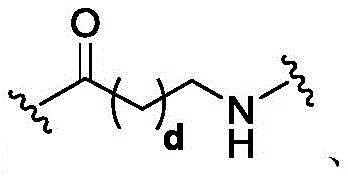
 Wherein the subscript d is an integer selected from 1 to 10, wherein each
 Each represents a point of attachment to the remainder of the formula; or a pharmaceutically acceptable salt, tautomer, stereoisomer, and/or mixture of stereoisomers thereof.
34. According to claim 32-33 wherein SG is
 Wherein each one of
 Each represents a point of attachment to the remainder of the formula; or a pharmaceutically acceptable salt, tautomer, stereoisomer, and/or mixture of stereoisomers thereof.
35. The antibody drug conjugate of any one of claims 32-34, wherein W is1When present, is
 Wherein the subscript e is an integer selected from 1 to 10, wherein each
 Each represents a point of attachment to the remainder of the formula; or a pharmaceutically acceptable salt, tautomer, stereoisomer, and/or mixture of stereoisomers thereof.
36. The antibody drug conjugate of any one of claims 32-35, wherein W1When present, is
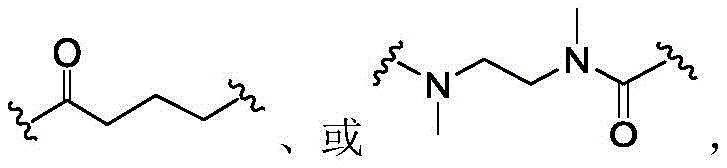 Wherein each one of
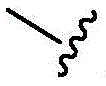 Each represents a point of attachment to the remainder of the formula; or a pharmaceutically acceptable salt, tautomer, stereoisomer, and/or mixture of stereoisomers thereof.
37. The antibody drug conjugate of any one of claims 32-36, wherein W is6When present, is a tripeptide residue; or a pharmaceutically acceptable salt, tautomer, stereoisomer, and/or mixture of stereoisomers thereof.
38. The antibody drug conjugate of any one of claims 32-37, wherein W is6When present, is
 Wherein each one of
 Each represents a point of attachment to the remainder of the formula; or a pharmaceutically acceptable salt, tautomer, stereoisomer, and/or mixture of stereoisomers thereof.
39. The antibody drug conjugate of any one of claims 32-36, wherein W is6When present, is a dipeptide residue; or a pharmaceutically acceptable salt, tautomer, stereoisomer, and/or mixture of stereoisomers thereof.
40. The antibody drug conjugate of any one of claims 32-36 and 39, wherein W is6When present, is
 Wherein each one of
 Each represents a point of attachment to the remainder of the formula; or a pharmaceutically acceptable salt, tautomer, stereoisomer, and/or mixture of stereoisomers thereof.
41. The antibody drug conjugate of any one of claims 32-40 wherein RT is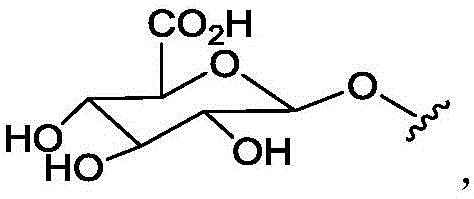 Wherein
 Represents a point of attachment to the remainder of the formula; or a pharmaceutically acceptable salt, tautomer, stereoisomer, and/or mixture of stereoisomers thereof.
42. The antibody drug conjugate of any one of claims 32 to 41, wherein HP, when present, is 
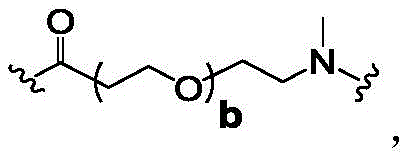 Wherein subscript b is an integer selected from 1 to 10, and
 represents a point of attachment to the remainder of the formula; or a pharmaceutically acceptable salt, tautomer, stereoisomer, and/or mixture of stereoisomers thereof.
43. The antibody drug conjugate of any of claims 32-42, wherein one HP is present and is adjacent to SG; or a pharmaceutically acceptable salt, tautomer, stereoisomer, and/or mixture of stereoisomers thereof.
44. The antibody drug conjugate of any one of claims 32-43, wherein X is Or a pharmaceutically acceptable salt, tautomer, stereoisomer, and/or mixture of stereoisomers thereof.
45. The antibody drug conjugate of any one of claims 32-44, wherein R' is:


46. The compound of any one of claims 12-26 or the antibody of any one of claims 30-45, wherein PA has the structure of formula (II'):

or a tautomer, stereoisomer, and/or mixture of stereoisomers thereof.
47. The compound of any one of claims 12-26 and 46 or the antibody drug conjugate of any one of claims 30-46, wherein RbIs H; or a pharmaceutically acceptable salt, tautomer, stereoisomer, and/or mixture of stereoisomers thereof.
48. The compound of any one of claims 12-26 and 46-47 or the antibody drug conjugate of any one of claims 30-47, wherein XcIs CH2(ii) a Or a pharmaceutically acceptable salt, tautomer, stereoisomer, and/or mixture of stereoisomers thereof.
49. The compound of any one of claims 12-26 and 46-48 or the antibody drug conjugate of any one of claims 30-48, wherein XdIs CH2(ii) a Or a pharmaceutically acceptable salt, tautomer, stereoisomer, and/or mixture of stereoisomers thereof.
50. The compound of any one of claims 12-26 and 46-49 or the antibody of any one of claims 30-49, wherein R aIs C1-C6-an alkyl group; or a pharmaceutically acceptable salt, tautomer, stereoisomer, and/or mixture of stereoisomers thereof.
51. The compound of any one of claims 12-26 and 46-50 or the antibody drug conjugate of any one of claims 30-50Wherein R isaIs methyl, ethyl, n-propyl, isopropyl, n-butyl, isobutyl, sec-butyl, tert-butyl, n-pentyl, sec-pentyl, or isopentyl; or a pharmaceutically acceptable salt, tautomer, stereoisomer, and/or mixture of stereoisomers thereof.
52. The compound of any one of claims 12-26 and 46-51 or the antibody drug conjugate of any one of claims 30-51, wherein RaIs a butyl group; or a pharmaceutically acceptable salt, tautomer, stereoisomer, and/or mixture of stereoisomers thereof.
53. The antibody drug conjugate of any one of claims 30 to 52, wherein PA is:

or a pharmaceutically acceptable salt, solvate, stereoisomer, tautomer, or mixture of regioisomers thereof.
54. The antibody drug conjugate of claim 30 or 31, which is:

or a pharmaceutically acceptable salt, solvate, stereoisomer, tautomer, or mixture of regioisomers thereof.
55. The antibody drug conjugate of any one of claims 30 to 54, wherein the antibody or antigen binding fragment thereof is selected from the group consisting of: anti-BCMA, anti-Muc 16, trastuzumab (trastuzumab), sofotuzumab (sofitizumab), anti-GFP, and anti-FolRa, or antigen-binding fragments thereof; or a pharmaceutically acceptable salt, tautomer, stereoisomer, and/or mixture of stereoisomers thereof.
56. The antibody drug conjugate of any one of claims 30-54, wherein the antibody or antigen binding fragment thereof comprises a Y180 pAMF mutation, a F404 pAMF mutation, or both a Y180 pAMF mutation and a F404 pAMF mutation; or a pharmaceutically acceptable salt, tautomer, stereoisomer, and/or mixture of stereoisomers thereof.
57. A pharmaceutical composition comprising the antibody drug conjugate of any one of claims 30-56, or a pharmaceutically acceptable salt, tautomer, stereoisomer, and/or mixture of stereoisomers thereof; and a pharmaceutically acceptable carrier.
58. A method of treating or preventing a disease or disorder in a subject in need thereof, comprising administering to the subject an effective amount of a compound of any one of claims 1-10, or a pharmaceutically acceptable salt, tautomer, stereoisomer, and/or mixture of stereoisomers thereof; the pharmaceutical composition of claim 11; an antibody drug conjugate according to any one of claims 30 to 56; or the pharmaceutical composition of claim 57.
59. A method of treating a disease or disorder in a subject, wherein the subject is in need of a Toll-like receptor 7/8 agonist, the method comprising administering to the subject a compound of any one of claims 1-10, or a pharmaceutically acceptable salt, tautomer, stereoisomer, and/or mixture of stereoisomers thereof; the pharmaceutical composition of claim 11; an antibody drug conjugate of any one of claims 30-56; or the pharmaceutical composition of claim 57.
60. The method of claim 59, wherein the disease or disorder is cancer.
61. The method of claim 59, wherein the disease or disorder is non-Hodgkin's lymphoma, pancreatic cancer, multiple myeloma, colorectal cancer, renal and breast cancer, skin cancer, and/or cervical intraepithelial neoplasia.
62. A method of diagnosing a disease or disorder or monitoring treatment of a disease or disorder in a subject in need thereof, comprising:
a) administering to the subject an effective amount of the antibody drug conjugate of any one of claims 30-56, or the pharmaceutical composition of claim 57, wherein the antibody drug conjugate of any one of claims 30-56 or the antibody drug conjugate comprised in the pharmaceutical composition of claim 57 optionally comprises a label; and
b) Detecting the antibody drug conjugate, or detecting the label comprised in the antibody drug conjugate.
63. The method of claim 62, wherein the antibody drug conjugate comprises a label.
64. The method of any one of claims 62-63, wherein the label is a radioactive label or a contrast agent.
65. The method of any one of claims 62-64, wherein the disease or disorder is cancer.
66. The method of any one of claims 59 and 62-64, wherein the disease or disorder is an inflammatory disease or disorder.
Applications Claiming Priority (3)
| Application Number | Priority Date | Filing Date | Title |
|---|---|---|---|
| US201962862632P | 2019-06-17 | 2019-06-17 | |
| US62/862632 | 2019-06-17 | ||
| PCT/US2020/038064 WO2020257235A1 (en) | 2019-06-17 | 2020-06-17 | 1-(4-(aminomethyl)benzyl)-2-butyl-2h-pyrazolo[3,4-c]quinolin-4-amine derivatives and related compounds as toll-like receptor (tlr) 7/8 agonists, as well as antibody drug conjugates thereof for use in cancer therapy and diagnosis |
Publications (1)
| Publication Number | Publication Date |
|---|---|
| CN114746420A true CN114746420A (en) | 2022-07-12 |
Family
ID=71452789
Family Applications (1)
| Application Number | Title | Priority Date | Filing Date |
|---|---|---|---|
| CN202080058278.8A Pending CN114746420A (en) | 2019-06-17 | 2020-06-17 | 1- (4- (aminomethyl) benzyl) -2-butyl-2H-pyrazolo [3,4-c ] quinolin-4-amine derivatives as Toll-like receptor (TLR)7/8 agonists and related compounds and antibody drug conjugates thereof for cancer therapy and diagnosis |
Country Status (5)
| Country | Link |
|---|---|
| US (1) | US20220259202A1 (en) |
| EP (1) | EP3983410A1 (en) |
| JP (1) | JP2022536800A (en) |
| CN (1) | CN114746420A (en) |
| WO (1) | WO2020257235A1 (en) |
Families Citing this family (9)
| Publication number | Priority date | Publication date | Assignee | Title |
|---|---|---|---|---|
| AU2017292934B9 (en) | 2016-07-07 | 2024-08-29 | Bolt Biotherapeutics, Inc. | Antibody adjuvant conjugates |
| AU2020241686A1 (en) | 2019-03-15 | 2021-11-04 | Bolt Biotherapeutics, Inc. | Immunoconjugates targeting HER2 |
| EP3980423A1 (en) | 2019-06-10 | 2022-04-13 | Sutro Biopharma, Inc. | 5h-pyrrolo[3,2-d]pyrimidine-2,4-diamino compounds and antibody conjugates thereof |
| WO2020252015A1 (en) * | 2019-06-10 | 2020-12-17 | Sutro Biopharma, Inc. | Immunomodulator antibody drug conjugates and uses thereof |
| CA3165068A1 (en) | 2020-01-30 | 2021-08-05 | John E. Blume | Lung biomarkers and methods of use thereof |
| US20220328134A1 (en) | 2021-03-31 | 2022-10-13 | PrognomIQ, Inc. | Multi-omic assessment |
| WO2023039479A1 (en) | 2021-09-10 | 2023-03-16 | PrognomIQ, Inc. | Direct classification of raw biomolecule measurement data |
| CA3231038A1 (en) | 2021-09-13 | 2023-03-16 | Bruce Wilcox | Enhanced detection and quantitation of biomolecules |
| WO2025250825A1 (en) | 2024-05-30 | 2025-12-04 | Sutro Biopharma, Inc. | Anti-trop2 antibodies, compositions comprising anti-trop2 antibodies and methods of making and using anti-trop2 antibodies |
Citations (3)
| Publication number | Priority date | Publication date | Assignee | Title |
|---|---|---|---|---|
| CN103080092A (en) * | 2010-07-01 | 2013-05-01 | 默克专利股份公司 | Pyrazolo-quinolines |
| US20160039920A1 (en) * | 2013-04-25 | 2016-02-11 | Philogen S.P.A. | Antibody-Drug Conjugates |
| WO2019099412A1 (en) * | 2017-11-14 | 2019-05-23 | Dynavax Technologies Corporation | Cleavable conjugates of tlr7/8 agonist compounds, methods for preparation, and uses thereof |
Family Cites Families (63)
| Publication number | Priority date | Publication date | Assignee | Title |
|---|---|---|---|---|
| CU22545A1 (en) | 1994-11-18 | 1999-03-31 | Centro Inmunologia Molecular | OBTAINING A CHEMICAL AND HUMANIZED ANTIBODY AGAINST THE RECEPTOR OF THE EPIDERMAL GROWTH FACTOR FOR DIAGNOSTIC AND THERAPEUTIC USE |
| US4289872A (en) | 1979-04-06 | 1981-09-15 | Allied Corporation | Macromolecular highly branched homogeneous compound based on lysine units |
| US4671958A (en) | 1982-03-09 | 1987-06-09 | Cytogen Corporation | Antibody conjugates for the delivery of compounds to target sites |
| US4560655A (en) | 1982-12-16 | 1985-12-24 | Immunex Corporation | Serum-free cell culture medium and process for making same |
| US4657866A (en) | 1982-12-21 | 1987-04-14 | Sudhir Kumar | Serum-free, synthetic, completely chemically defined tissue culture media |
| US4816567A (en) | 1983-04-08 | 1989-03-28 | Genentech, Inc. | Recombinant immunoglobin preparations |
| US4767704A (en) | 1983-10-07 | 1988-08-30 | Columbia University In The City Of New York | Protein-free culture medium |
| US4753894A (en) | 1984-02-08 | 1988-06-28 | Cetus Corporation | Monoclonal anti-human breast cancer antibodies |
| US4943533A (en) | 1984-03-01 | 1990-07-24 | The Regents Of The University Of California | Hybrid cell lines that produce monoclonal antibodies to epidermal growth factor receptor |
| US4625014A (en) | 1984-07-10 | 1986-11-25 | Dana-Farber Cancer Institute, Inc. | Cell-delivery agent |
| US4542225A (en) | 1984-08-29 | 1985-09-17 | Dana-Farber Cancer Institute, Inc. | Acid-cleavable compound |
| GB8516415D0 (en) | 1985-06-28 | 1985-07-31 | Celltech Ltd | Culture of animal cells |
| US4927762A (en) | 1986-04-01 | 1990-05-22 | Cell Enterprises, Inc. | Cell culture medium with antioxidant |
| US5567610A (en) | 1986-09-04 | 1996-10-22 | Bioinvent International Ab | Method of producing human monoclonal antibodies and kit therefor |
| IL85035A0 (en) | 1987-01-08 | 1988-06-30 | Int Genetic Eng | Polynucleotide molecule,a chimeric antibody with specificity for human b cell surface antigen,a process for the preparation and methods utilizing the same |
| US5229490A (en) | 1987-05-06 | 1993-07-20 | The Rockefeller University | Multiple antigen peptide system |
| US5204244A (en) | 1987-10-27 | 1993-04-20 | Oncogen | Production of chimeric antibodies by homologous recombination |
| WO1989006692A1 (en) | 1988-01-12 | 1989-07-27 | Genentech, Inc. | Method of treating tumor cells by inhibiting growth factor receptor function |
| AU632065B2 (en) | 1988-09-23 | 1992-12-17 | Novartis Vaccines And Diagnostics, Inc. | Cell culture medium for enhanced cell growth, culture longevity and product expression |
| GB8823869D0 (en) | 1988-10-12 | 1988-11-16 | Medical Res Council | Production of antibodies |
| US5175384A (en) | 1988-12-05 | 1992-12-29 | Genpharm International | Transgenic mice depleted in mature t-cells and methods for making transgenic mice |
| US5530101A (en) | 1988-12-28 | 1996-06-25 | Protein Design Labs, Inc. | Humanized immunoglobulins |
| US5229275A (en) | 1990-04-26 | 1993-07-20 | Akzo N.V. | In-vitro method for producing antigen-specific human monoclonal antibodies |
| US5122469A (en) | 1990-10-03 | 1992-06-16 | Genentech, Inc. | Method for culturing Chinese hamster ovary cells to improve production of recombinant proteins |
| DE69233153T2 (en) | 1991-03-06 | 2004-05-27 | Merck Patent Gmbh | HUMANIZED MONOCLONAL ANTIBODIES |
| ES2136092T3 (en) | 1991-09-23 | 1999-11-16 | Medical Res Council | PROCEDURES FOR THE PRODUCTION OF HUMANIZED ANTIBODIES. |
| CA2128862C (en) | 1992-02-11 | 2008-05-20 | Jonathan G. Seidman | Homogenotization of gene-targeting events |
| US5573905A (en) | 1992-03-30 | 1996-11-12 | The Scripps Research Institute | Encoded combinatorial chemical libraries |
| EP0636156B1 (en) | 1992-04-14 | 1997-07-30 | Cornell Research Foundation, Inc. | Dendritic based macromolecules and method of production |
| US5736137A (en) | 1992-11-13 | 1998-04-07 | Idec Pharmaceuticals Corporation | Therapeutic application of chimeric and radiolabeled antibodies to human B lymphocyte restricted differentiation antigen for treatment of B cell lymphoma |
| US5643575A (en) | 1993-10-27 | 1997-07-01 | Enzon, Inc. | Non-antigenic branched polymer conjugates |
| GB9401182D0 (en) | 1994-01-21 | 1994-03-16 | Inst Of Cancer The Research | Antibodies to EGF receptor and their antitumour effect |
| US5534615A (en) | 1994-04-25 | 1996-07-09 | Genentech, Inc. | Cardiac hypertrophy factor and uses therefor |
| US5932462A (en) | 1995-01-10 | 1999-08-03 | Shearwater Polymers, Inc. | Multiarmed, monofunctional, polymer for coupling to molecules and surfaces |
| JPH11507535A (en) | 1995-06-07 | 1999-07-06 | イムクローン システムズ インコーポレイテッド | Antibodies and antibody fragments that suppress tumor growth |
| US6235883B1 (en) | 1997-05-05 | 2001-05-22 | Abgenix, Inc. | Human monoclonal antibodies to epidermal growth factor receptor |
| US6423685B1 (en) | 1998-03-05 | 2002-07-23 | Chiron Corporation | Method for increasing the serum half-life of a biologically active molecule |
| WO2000034337A1 (en) | 1998-12-10 | 2000-06-15 | Tsukuba Research Laboratory, Toagosei Co., Ltd. | Humanized monoclonal antibodies against vascular endothelial cell growth factor |
| US6281211B1 (en) | 1999-02-04 | 2001-08-28 | Euro-Celtique S.A. | Substituted semicarbazides and the use thereof |
| SK12232002A3 (en) | 2000-02-25 | 2003-03-04 | The Government Of The United States, As Represented By The | Anti-EGFRvIII scFv with improved cytotoxicity and yield, immunotoxins based thereon, and methods of use thereof |
| JP2003533987A (en) | 2000-05-19 | 2003-11-18 | イス ケミカル カンパニー リミテッド | Humanized antibodies against epidermal growth factor receptor |
| PT2316940E (en) | 2000-12-18 | 2013-10-16 | Dyax Corp | Focused libraries of genetic packages |
| MXPA03009566A (en) | 2001-04-19 | 2004-12-06 | Scripps Research Inst | Methods and composition for the production of orthoganal trna-aminoacyltrna synthetase pairs. |
| CN100497389C (en) | 2001-06-13 | 2009-06-10 | 根马布股份公司 | Human monoclonal antibodies to epidermal growth factor receptor (EGFR) |
| MXPA04004336A (en) | 2001-11-07 | 2005-05-16 | Nektar Therapeutics Al Corp | Branched polymers and their conjugates. |
| DE10156482A1 (en) | 2001-11-12 | 2003-05-28 | Gundram Jung | Bispecific antibody molecule |
| MY146124A (en) * | 2003-10-03 | 2012-06-29 | 3M Innovative Properties Co | Pyrazolopyridines and analogs thereof |
| US20090075980A1 (en) * | 2003-10-03 | 2009-03-19 | Coley Pharmaceutical Group, Inc. | Pyrazolopyridines and Analogs Thereof |
| CA2556752C (en) | 2004-02-23 | 2016-02-02 | Genentech, Inc. | Heterocyclic self-immolative linkers and conjugates |
| EP1740616B1 (en) | 2004-04-30 | 2011-12-14 | INSERM (Institut National de la Santé et de la Recherche Médicale) | Anti-tfr antibody. |
| US8431558B2 (en) | 2004-11-01 | 2013-04-30 | The Regents Of The University Of California | Compositions and methods for modification of biomolecules |
| CN101855242B (en) | 2007-09-14 | 2014-07-30 | 阿迪马布有限责任公司 | Rationally designed, synthetic antibody libraries and uses therefor |
| US8519122B2 (en) | 2010-02-12 | 2013-08-27 | The Regents Of The University Of California | Compositions and methods for modification of biomolecules |
| JP5920936B2 (en) | 2010-04-27 | 2016-05-18 | シンアフィックス ビー.ブイ. | Fused cyclooctyne compounds and their use in metal-free click reactions |
| EP2688867B1 (en) | 2011-03-25 | 2018-09-05 | Life Technologies Corporation | Heterobifunctional esters for use in labeling target molecules |
| US20130251783A1 (en) | 2011-09-14 | 2013-09-26 | Universitat Heidelberg | Liposomes containing permeation enhancers for oral drug delivery |
| WO2013092998A1 (en) | 2011-12-23 | 2013-06-27 | Innate Pharma | Enzymatic conjugation of antibodies |
| US9738724B2 (en) | 2012-06-08 | 2017-08-22 | Sutro Biopharma, Inc. | Antibodies comprising site-specific non-natural amino acid residues, methods of their preparation and methods of their use |
| ES2658039T3 (en) | 2013-07-10 | 2018-03-08 | Sutro Biopharma, Inc. | Antibodies comprising multiple site-specific non-natural amino acid residues, methods for their preparation and methods of use |
| EP3218409A2 (en) | 2014-11-11 | 2017-09-20 | Sutro Biopharma, Inc. | Anti-pd-1 antibodies, compositions comprising anti-pd-1 antibodies and methods of using anti-pd-1 antibodies |
| BR112018015238A2 (en) | 2016-01-27 | 2018-12-18 | Sutro Biopharma Inc | antibody conjugate, antibody, kit, pharmaceutical composition, and methods for treating or preventing a disease or condition and for diagnosing a disease or condition |
| WO2018156785A1 (en) | 2017-02-22 | 2018-08-30 | Sutro Biopharma, Inc. | Pd-1/tim-3 bi-specific antibodies, compositions thereof, and methods of making and using the same |
| WO2019055931A1 (en) | 2017-09-18 | 2019-03-21 | Sutro Biopharma, Inc. | Anti- folate receptor alpha antibody conjugates and their uses |
-
2020
- 2020-06-17 CN CN202080058278.8A patent/CN114746420A/en active Pending
- 2020-06-17 US US17/619,511 patent/US20220259202A1/en not_active Abandoned
- 2020-06-17 EP EP20736542.0A patent/EP3983410A1/en not_active Withdrawn
- 2020-06-17 WO PCT/US2020/038064 patent/WO2020257235A1/en not_active Ceased
- 2020-06-17 JP JP2021574988A patent/JP2022536800A/en not_active Withdrawn
Patent Citations (3)
| Publication number | Priority date | Publication date | Assignee | Title |
|---|---|---|---|---|
| CN103080092A (en) * | 2010-07-01 | 2013-05-01 | 默克专利股份公司 | Pyrazolo-quinolines |
| US20160039920A1 (en) * | 2013-04-25 | 2016-02-11 | Philogen S.P.A. | Antibody-Drug Conjugates |
| WO2019099412A1 (en) * | 2017-11-14 | 2019-05-23 | Dynavax Technologies Corporation | Cleavable conjugates of tlr7/8 agonist compounds, methods for preparation, and uses thereof |
Also Published As
| Publication number | Publication date |
|---|---|
| WO2020257235A1 (en) | 2020-12-24 |
| WO2020257235A9 (en) | 2022-05-05 |
| US20220259202A1 (en) | 2022-08-18 |
| EP3983410A1 (en) | 2022-04-20 |
| JP2022536800A (en) | 2022-08-18 |
Similar Documents
| Publication | Publication Date | Title |
|---|---|---|
| JP7590354B2 (en) | Immunomodulator antibody drug conjugates and uses thereof | |
| CN114269749B (en) | 5H-pyrrolo[3,2-d]pyrimidine-2,4-diamino compounds and antibody conjugates thereof | |
| CN114746420A (en) | 1- (4- (aminomethyl) benzyl) -2-butyl-2H-pyrazolo [3,4-c ] quinolin-4-amine derivatives as Toll-like receptor (TLR)7/8 agonists and related compounds and antibody drug conjugates thereof for cancer therapy and diagnosis | |
| US20250236594A1 (en) | Modified amino acids | |
| US20240091365A1 (en) | Beta-glucuronide linker-payloads, protein conjugates thereof, and methods thereof | |
| US9764039B2 (en) | Antibodies comprising multiple site-specific non-natural amino acid residues, methods of their preparation and methods of their use | |
| CN119948030A (en) | Protease/Enzyme Cleavable Linker-Payload and Protein Conjugates | |
| KR20250043602A (en) | Anti-ROR1 antibodies and antibody conjugates, compositions comprising anti-ROR1 antibodies or antibody conjugates, and methods for making and using anti-ROR1 antibodies and antibody conjugates | |
| WO2025029832A2 (en) | Sting agonist compounds and conjugates | |
| WO2022103983A9 (en) | Fluorenylmethyloxycarbonyl and fluorenylmethylaminocarbonyl compounds, protein conjugates thereof, and methods for their use | |
| WO2025080711A9 (en) | Dual payload antibody drug conjugates | |
| WO2025264647A1 (en) | Oxoadenine tlr7 agonist compounds and conjugates |
Legal Events
| Date | Code | Title | Description |
|---|---|---|---|
| PB01 | Publication | ||
| PB01 | Publication | ||
| SE01 | Entry into force of request for substantive examination | ||
| SE01 | Entry into force of request for substantive examination | ||
| WD01 | Invention patent application deemed withdrawn after publication |
Application publication date: 20220712 |
|
| WD01 | Invention patent application deemed withdrawn after publication |