CN114743027B - Cooperative saliency detection method guided by weakly supervised learning - Google Patents
Cooperative saliency detection method guided by weakly supervised learning Download PDFInfo
- Publication number
- CN114743027B CN114743027B CN202210375572.2A CN202210375572A CN114743027B CN 114743027 B CN114743027 B CN 114743027B CN 202210375572 A CN202210375572 A CN 202210375572A CN 114743027 B CN114743027 B CN 114743027B
- Authority
- CN
- China
- Prior art keywords
- network
- gcam
- group
- image
- pixel
- Prior art date
- Legal status (The legal status is an assumption and is not a legal conclusion. Google has not performed a legal analysis and makes no representation as to the accuracy of the status listed.)
- Active
Links
Images


Classifications
-
- G—PHYSICS
- G06—COMPUTING OR CALCULATING; COUNTING
- G06F—ELECTRIC DIGITAL DATA PROCESSING
- G06F18/00—Pattern recognition
- G06F18/20—Analysing
- G06F18/21—Design or setup of recognition systems or techniques; Extraction of features in feature space; Blind source separation
- G06F18/214—Generating training patterns; Bootstrap methods, e.g. bagging or boosting
-
- G—PHYSICS
- G06—COMPUTING OR CALCULATING; COUNTING
- G06F—ELECTRIC DIGITAL DATA PROCESSING
- G06F18/00—Pattern recognition
- G06F18/20—Analysing
- G06F18/24—Classification techniques
- G06F18/241—Classification techniques relating to the classification model, e.g. parametric or non-parametric approaches
- G06F18/2415—Classification techniques relating to the classification model, e.g. parametric or non-parametric approaches based on parametric or probabilistic models, e.g. based on likelihood ratio or false acceptance rate versus a false rejection rate
-
- G—PHYSICS
- G06—COMPUTING OR CALCULATING; COUNTING
- G06F—ELECTRIC DIGITAL DATA PROCESSING
- G06F18/00—Pattern recognition
- G06F18/20—Analysing
- G06F18/25—Fusion techniques
- G06F18/253—Fusion techniques of extracted features
-
- G—PHYSICS
- G06—COMPUTING OR CALCULATING; COUNTING
- G06N—COMPUTING ARRANGEMENTS BASED ON SPECIFIC COMPUTATIONAL MODELS
- G06N3/00—Computing arrangements based on biological models
- G06N3/02—Neural networks
- G06N3/04—Architecture, e.g. interconnection topology
- G06N3/045—Combinations of networks
-
- G—PHYSICS
- G06—COMPUTING OR CALCULATING; COUNTING
- G06N—COMPUTING ARRANGEMENTS BASED ON SPECIFIC COMPUTATIONAL MODELS
- G06N3/00—Computing arrangements based on biological models
- G06N3/02—Neural networks
- G06N3/04—Architecture, e.g. interconnection topology
- G06N3/047—Probabilistic or stochastic networks
-
- G—PHYSICS
- G06—COMPUTING OR CALCULATING; COUNTING
- G06N—COMPUTING ARRANGEMENTS BASED ON SPECIFIC COMPUTATIONAL MODELS
- G06N3/00—Computing arrangements based on biological models
- G06N3/02—Neural networks
- G06N3/08—Learning methods
- G06N3/084—Backpropagation, e.g. using gradient descent
Landscapes
- Engineering & Computer Science (AREA)
- Theoretical Computer Science (AREA)
- Physics & Mathematics (AREA)
- Data Mining & Analysis (AREA)
- General Physics & Mathematics (AREA)
- Life Sciences & Earth Sciences (AREA)
- Artificial Intelligence (AREA)
- General Engineering & Computer Science (AREA)
- Evolutionary Computation (AREA)
- Biomedical Technology (AREA)
- Mathematical Physics (AREA)
- General Health & Medical Sciences (AREA)
- Molecular Biology (AREA)
- Computing Systems (AREA)
- Biophysics (AREA)
- Health & Medical Sciences (AREA)
- Computational Linguistics (AREA)
- Software Systems (AREA)
- Evolutionary Biology (AREA)
- Bioinformatics & Cheminformatics (AREA)
- Bioinformatics & Computational Biology (AREA)
- Computer Vision & Pattern Recognition (AREA)
- Probability & Statistics with Applications (AREA)
- Image Analysis (AREA)
- Image Processing (AREA)
Abstract
本发明提出了一种弱监督学习引导的协同显著性检测方法,用以解决现有协同显著性检测方法易受到不相关的显著目标的干扰的技术问题。本发明的步骤为:搭建GCAM网络的架构;搭建主干网络的架构,通过GCAM网络和主干网络构建GWSCoSal模型;利用训练数据对GCAM网络以图像组的公共类别标签作为真值进行弱监督训练;利用训练数据对主干网络进行像素级训练;GCAM网络的弱监督训练和主干网络的像素级训练联合执行,得到训练后的优化GWSCoSal模型。利用优化GWSCoSal模型对协同显著性数据集进行预测,生成预测的协同显著图。本发明在受到相似非公共显著目标干扰的情况下,能够更准确地检测出协同显著目标,操作简单,检测精度较高。

The invention proposes a weakly supervised learning-guided collaborative saliency detection method to solve the technical problem that existing collaborative saliency detection methods are easily interfered by irrelevant salient objects. The steps of the present invention are: build the framework of the GCAM network; build the framework of the backbone network, construct the GWSCoSal model through the GCAM network and the backbone network; use the training data to carry out weak supervision training on the GCAM network with the public category label of the image group as the true value; The training data performs pixel-level training on the backbone network; the weakly supervised training of the GCAM network and the pixel-level training of the backbone network are jointly executed to obtain the optimized GWSCoSal model after training. The optimized GWSCoSal model is used to predict the co-saliency dataset and generate the predicted co-saliency map. The present invention can more accurately detect the cooperative salient target in the case of being interfered by similar non-common salient targets, and has simple operation and high detection precision.
Description
技术领域technical field
本发明涉及协同显著性检测的技术领域,尤其涉及一种弱监督学习引导的协同显著性检测方法。The invention relates to the technical field of collaborative saliency detection, in particular to a method for collaborative saliency detection guided by weakly supervised learning.
背景技术Background technique
随着现代科技的飞速发展,社会数字化进程加速推进,人工智能在各领域快速兴起。大量的图像、视频等多媒体数据呈爆发式增长,如何利用现有的计算机技术来有效处理并获取有用信息十分重要。现有的协同显著性检测技术是一种模拟人眼注意力机制的计算机视觉技术。在图像组内,可以利用频繁出现的图形或前景区域来表示图像组的主要内容。该方法不仅能够获取图像或视频中的有效目标信息,还能滤除图像或视频中的冗余信息,降低了算法处理的复杂度,从而实现计算资源的优先分配。With the rapid development of modern science and technology, the process of digitalization of society is accelerating, and artificial intelligence is rapidly emerging in various fields. A large amount of multimedia data such as images and videos is growing explosively. How to use existing computer technology to effectively process and obtain useful information is very important. The existing collaborative saliency detection technology is a computer vision technology that simulates the attention mechanism of the human eye. Within a group of images, the main content of the group of images can be represented by frequently appearing figures or foreground areas. This method can not only obtain effective target information in images or videos, but also filter out redundant information in images or videos, which reduces the complexity of algorithm processing, thereby realizing the priority allocation of computing resources.
协同显著性检测的目的在于从两幅或多幅相关图像中寻找公共且显著的目标,根据该定义,协同显著目标必须满足两个要求,它们必须在每幅图像中都是显著的且彼此之间具有相似性。因此,这两个要求对应以下两个任务:(1)从单幅图像中获得图内显著性信息(Intra-saliency);(2)从多幅相关图像中挖掘图间显著性信息(Inter-saliency)。现有的协同显著性检测方法可以依据图内和图间显著性信息的不同融合方式大致分为两类:一类是非端到端的方法,该类方法通常利用手工设计的特征来直接挖掘并融合图内和图间显著性信息的线索。但是,这些手工设计的特征并不能为协同显著目标的公共属性提供强有力的表达,极大程度上限制了非端到端方法的检测性能。另一类是端到端的方法,该类方法利用深度学习的方法来挖掘图内和图间显著性信息,获取的深度特征能更好地对图像进行描述,同时,以端到端的方式将图内和图间显著性信息进行结合,有效地提高了协同显著性检测的性能。The purpose of co-saliency detection is to find common and salient objects from two or more related images. According to this definition, co-saliency objects must meet two requirements, they must be salient in each image and relative to each other. There are similarities between. Therefore, these two requirements correspond to the following two tasks: (1) Obtaining intra-image saliency information (Intra-saliency) from a single image; (2) Mining inter-image saliency information (Inter-image saliency) from multiple related images. saliency). Existing collaborative saliency detection methods can be roughly divided into two categories according to different fusion methods of intra-graph and inter-graph saliency information: one is non-end-to-end methods, which usually use hand-designed features to directly mine and fuse Clues for intra- and inter-graph saliency information. However, these hand-designed features do not provide a powerful representation for the common properties of co-salient objects, which greatly limits the detection performance of non-end-to-end methods. The other is end-to-end methods, which use deep learning methods to mine intra-image and inter-image saliency information, and the obtained deep features can better describe the image. Intra-graph and inter-image saliency information are combined to effectively improve the performance of collaborative saliency detection.
协同显著性检测是由图内显著性信息和图间显著性信息两部分组成,目前已经有研究者提出了大量优秀的单幅图像显著性检测方法来挖掘图内显著性信息线索,因此,无论是对非端到端的方法还是端到端的方法,挖掘更优的图间显著性信息的线索是协同显著性检测的关键。到目前为止,无论是非端到端的方法还是端到端的方法都是提取图像组中每幅图像的特征,并计算其特征的相似度,然后,将其作为图间显著性信息。然而,以这种方式获得的图间显著性信息通常容易受到图像中不相关的显著目标的干扰,这些不相关的显著目标常与协同显著目标之间具有相似的外观特征。事实上,协同显著目标与不相关的显著目标之间最关键的区别在于它们属于不同的类别。因此,挖掘公共类别信息对于提取间的显著性信息至关重要。Co-saliency detection is composed of two parts: intra-image saliency information and inter-image saliency information. At present, researchers have proposed a large number of excellent single-image saliency detection methods to mine saliency information clues in images. Therefore, no matter Whether it is a non-end-to-end method or an end-to-end method, mining better cues of inter-graph saliency information is the key to collaborative saliency detection. So far, both non-end-to-end methods and end-to-end methods extract the features of each image in the image group, and calculate the similarity of their features, and then use it as inter-image saliency information. However, the inter-image saliency information obtained in this way is usually easily disturbed by irrelevant salient objects in the image, which often share similar appearance features with co-salient objects. In fact, the most critical difference between co-salient and uncorrelated salient objects is that they belong to different categories. Therefore, mining common category information is crucial to extract inter-saliency information.
发明内容Contents of the invention
针对现有协同显著性检测方法易受到不相关的显著目标的干扰的技术问题,本发明提出一种弱监督学习引导的协同显著性检测方法,通过弱监督学习引导可以更好的提取一组相关图像的图间显著性信息,得到的协同显著性检测结果更准确。Aiming at the technical problem that existing collaborative saliency detection methods are easily interfered by irrelevant salient objects, this invention proposes a weakly supervised learning-guided collaborative saliency detection method, which can better extract a set of relevant The inter-image saliency information of the image can obtain more accurate co-saliency detection results.
为了达到上述目的,本发明的技术方案是这样实现的:一种弱监督学习引导的协同显著性检测方法,步骤如下:In order to achieve the above object, the technical solution of the present invention is realized as follows: a weakly supervised learning-guided collaborative saliency detection method, the steps are as follows:
步骤一:搭建GCAM网络的架构,将包含有公共类别显著目标的图像组输入GCAM网络,生成每幅图像的组类别激活图GCAM;Step 1: Build the architecture of the GCAM network, input the image group containing the common category salient objects into the GCAM network, and generate the group category activation map GCAM for each image;
步骤二:搭建主干网络的架构,图像组中的每幅图像依次送入主干网络进行处理,主干网络提取的特征与步骤一的组类别激活图GCAM相融合,得到每幅图像的协同显著图;通过GCAM网络和主干网络构建GWSCoSal模型;Step 2: Build the framework of the backbone network. Each image in the image group is sequentially sent to the backbone network for processing, and the features extracted by the backbone network are fused with the group category activation map GCAM in step 1 to obtain the co-saliency map of each image; Construct the GWSCoSal model through the GCAM network and the backbone network;
步骤三:利用训练数据对GWSCoSal模型的GCAM网络以图像组的公共类别标签作为真值进行弱监督训练;Step 3: Use the training data to perform weakly supervised training on the GCAM network of the GWSCoSal model with the public category label of the image group as the true value;
步骤四:利用训练数据对主干网络进行像素级训练;Step 4: Use the training data to perform pixel-level training on the backbone network;
步骤五:利用训练数据对GWSCoSal模型的GCAM网络和主干网络以端到端的方式进行联合训练,得到训练后的优化GWSCoSal模型。Step 5: Use the training data to jointly train the GCAM network and the backbone network of the GWSCoSal model in an end-to-end manner to obtain the optimized GWSCoSal model after training.
步骤六:利用步骤五的优化GWSCoSal模型对现有的协同显著性数据集进行预测,生成预测的协同显著图。Step 6: Use the optimized GWSCoSal model of step 5 to predict the existing co-saliency dataset and generate a predicted co-saliency map.
所述GCAM网络包含N个并联的子网络,N个子网络设置一致且模型参数彼此共享;N个子网络的输出进行逐像素相加得到融合特征向量,融合特征向量通过第二全连接层和softmax分类器,获得分类结果为公共类别标签。The GCAM network includes N parallel sub-networks, the N sub-networks are set in the same way and the model parameters are shared with each other; the outputs of the N sub-networks are added pixel by pixel to obtain a fusion feature vector, and the fusion feature vector is classified by the second fully connected layer and softmax The classification result is obtained as a public category label.
所述子网络为ImageNet数据集上预训练好的VGG16网络,子网络包括连接的特征提取部分和第一全连接层,特征提取部分是由5个依次连接的卷积组构成,每个卷积组中分别对应有2、2、3、3、3个尺寸大小一致的卷积层,5个卷积组之间设有最大池化层。The sub-network is a pre-trained VGG16 network on the ImageNet data set. The sub-network includes a connected feature extraction part and the first fully connected layer. The feature extraction part is composed of 5 sequentially connected convolution groups. Each convolution There are 2, 2, 3, 3, and 3 convolutional layers of the same size in each group, and a maximum pooling layer is set between the 5 convolutional groups.
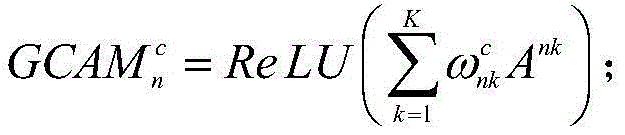
所述步骤一中生成每幅图像的组类别激活图GCAM的方法为:通过第二全连接层FC2的输出结果对子网络的特征提取部分中任意特征层的输出特征矩阵进行求偏导;沿着输入图像各自的子网络反向传播至该特征层,得到该特征层的梯度矩阵并计算其各通道的权重;将各通道权重与该特征层的输出特征矩阵进行逐像素相乘,利用激活函数得到图像组中每幅图像In的组类别激活图GCAM;实现公式为:The method for generating the group category activation map GCAM of each image in the step 1 is: through the output result of the second fully connected layer FC 2 , the output feature matrix of any feature layer in the feature extraction part of the sub-network is used for partial derivation; Propagate back to the feature layer along the respective sub-networks of the input image, obtain the gradient matrix of the feature layer and calculate the weight of each channel; multiply the weight of each channel with the output feature matrix of the feature layer pixel by pixel, and use The activation function obtains the group category activation map GCAM of each image I in the image group; the realization formula is:

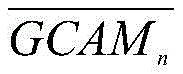
其中,C表示公共类别数;S∈RC是图像组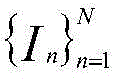


所述N个子网络的输出进行逐像素相加的方法为:The method of pixel-by-pixel addition of the outputs of the N sub-networks is:

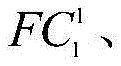
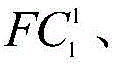
其中,F1 1、F2 1、


所述GCAM网络一个子网络的结构为:The structure of a sub-network of the GCAM network is:

在生成GCAM的过程中,利用第二全连接层输出的结果对卷积层5_3输出的特征矩阵求偏导;沿着输入图像各自的子网络反向传播至卷积5_3层的特征层,得到卷积5_3层的特征层的梯度矩阵并计算其512个通道的权重;将各通道权重与最后一个卷积层的特征层的输出特征矩阵进行逐像素相乘,利用激活函数得到图像组中每幅图像In的组类别激活图GCAM。In the process of generating GCAM, the result of the output of the second fully connected layer is used to obtain the partial derivative of the feature matrix output by the convolutional layer 5_3; backpropagation along the respective sub-networks of the input image to the feature layer of the convolutional 5_3 layer is obtained Convolve the gradient matrix of the feature layer of the 5_3 layer and calculate the weights of its 512 channels; multiply each channel weight with the output feature matrix of the feature layer of the last convolutional layer pixel by pixel, and use the activation function to get each in the image group Group category activation map GCAM for image I n .
所述主干网络基于特征金字塔网络,主干网络包括编码器和解码器,解码器通过侧向连接融合编码器中各层级尺度特征;图像组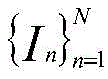
所述编码器由VGG16网络的特征提取部分构成,即不含最后一个最大池化层、全连接层以及softmax层;解码器由与编码器结构对称的卷积层构成,通过将编码器的输出特征与对应解码器的输入特征进行侧向连接,获取多层次的图像特征信息;侧向连接时,编码器中通道数不一致的特征通过卷积操作得到与解码器通道数一致的特征;在解码器最后一层卷积层的输出中,利用线性插值将输出特征尺寸调整为原始图像尺寸。The encoder is composed of the feature extraction part of the VGG16 network, that is, the last maximum pooling layer, fully connected layer and softmax layer are not included; the decoder is composed of a convolutional layer that is symmetrical to the encoder structure, and the output of the encoder is The features are connected laterally with the input features of the corresponding decoder to obtain multi-level image feature information; when connected laterally, the features with inconsistent numbers of channels in the encoder are obtained through convolution operations to obtain features consistent with the number of channels in the decoder; In the output of the last convolutional layer of the decoder, linear interpolation is used to resize the output feature size to the original image size.
所述编码器输出的特征矩阵与组类别激活图GCAM进行融合:
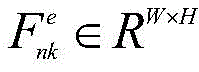
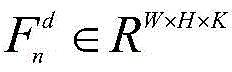
其中,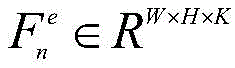




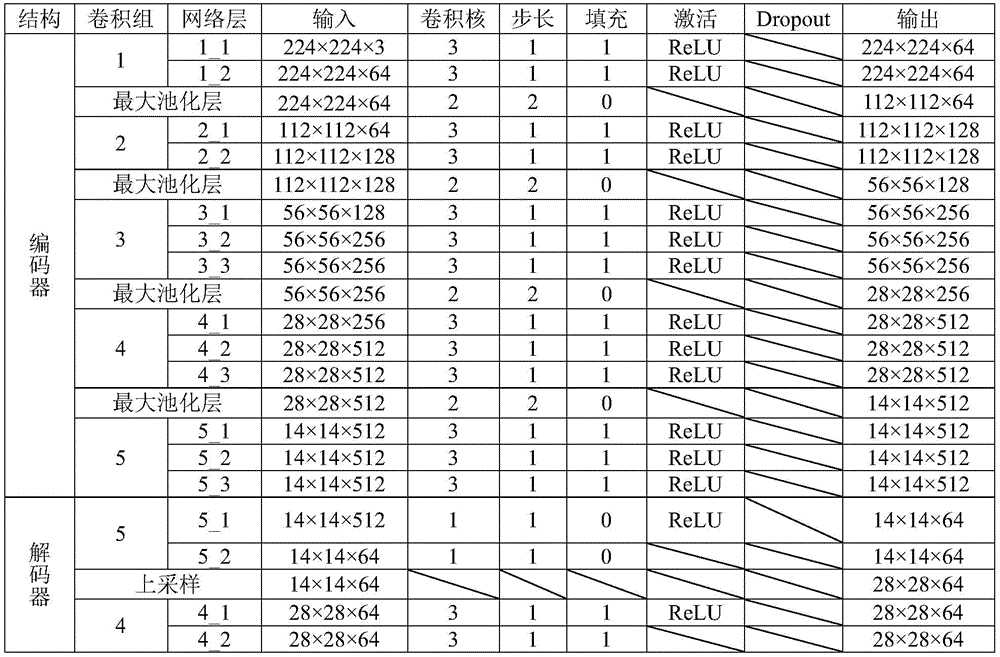
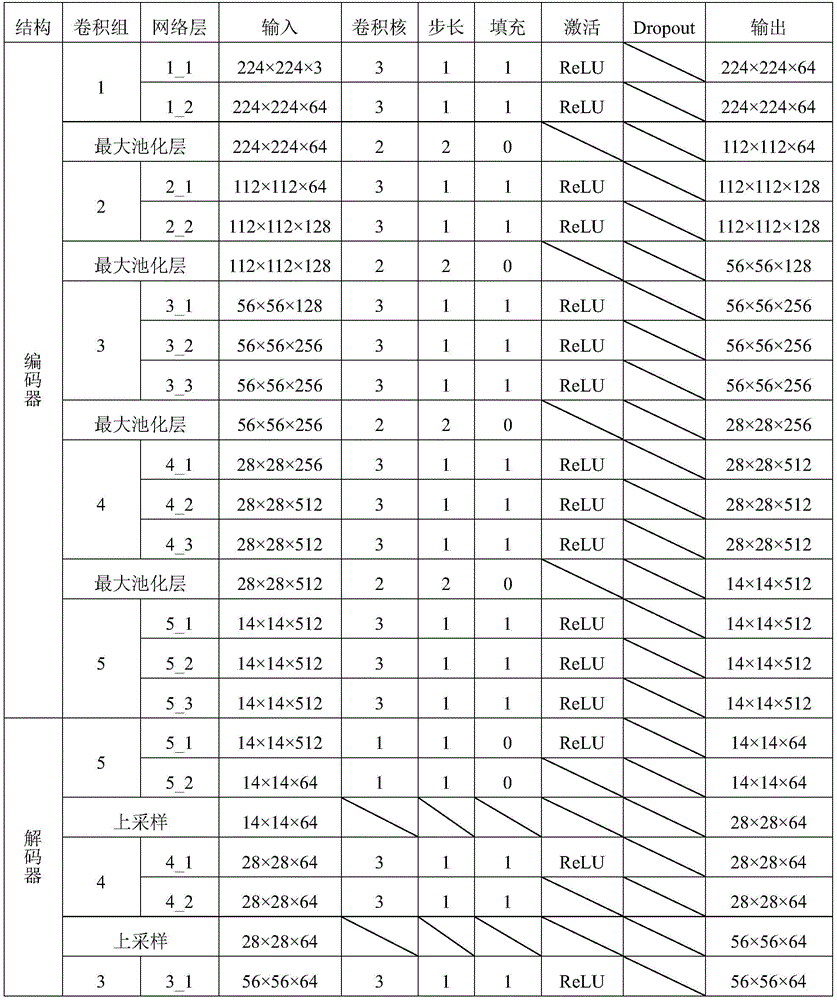
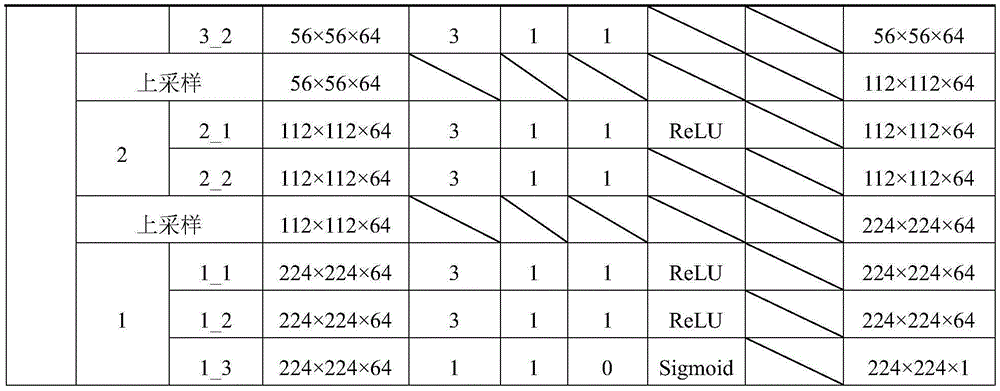
所述编码器和解码器的结构为:The structure of the encoder and decoder is:

其中,ReLU和Sigmoid均表示激活函数。Among them, both ReLU and Sigmoid represent activation functions.
所述GCAM网络的弱监督训练的损失函数为CE-loss损失函数: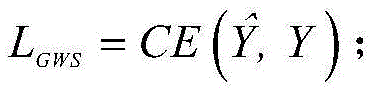
其中,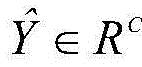
所述主干网络的像素级训练的损失函数LP为:The loss function L P of the pixel-level training of the backbone network is:

其中,On表示图像组中每幅图像In的预测协同显著图;GTn表示图像In的像素级真值图;LSIoU(·)表示交并比损失;LBCE(·)表示二值交叉熵损失;Among them, On represents the predicted co-saliency map of each image I n in the image group; GT n represents the pixel-level truth map of image I n ; L SIoU ( ) represents the intersection ratio loss; L BCE ( ) represents the two value cross entropy loss;
所述GWSCoSal模型的总体训练损失函数为:L=LP+λLGWS;The overall training loss function of the GWSCoSal model is: L=L P +λL GWS ;
其中,λ是用于平衡LGWS和LP之间比例的超参数;where λ is a hyperparameter for balancing the ratio between L GWS and L P ;
所述训练数据采用现有的DUTS数据集和拼图训练策略,随机选择训练数据中的一组5幅图像分别输入GCAM网络和主干网络;所述GCAM网络的弱监督训练中,将图像组中的5幅图像分别输入至GCAM网络中5个对应的子网络,以图像组的公共类别标签作为真值,将第二个全连接层的输出结果与各子网络的特征提取部分中任意特征层的输出特征矩阵进行求偏导;沿着输入图像各自的子网络反向传播至该特征层,得到该特征层的梯度矩阵并计算其各通道的权重;将各通道权重与该特征层的输出特征矩阵进行逐像素相乘,利用激活函数得到5幅图像对应的组类别激活图GCAM;所述主干网络的像素级训练中,将图像组中的5幅图像依次输入至主干网络的编码器;将编码器的最后一个输出特征与GCAM网络生成的组类别激活图GCAM以逐像素相乘的方式进行融合;将融合的特征输入至主干网络的解码器生成5幅图像的协同显著图。训练时解码器生成的协同显著图,在测试时生成的协同显著图为协同显著性检测结果。The training data adopts the existing DUTS data set and the jigsaw puzzle training strategy, randomly selects a group of 5 images in the training data and inputs them into the GCAM network and the backbone network respectively; in the weak supervision training of the GCAM network, the The 5 images are respectively input to 5 corresponding sub-networks in the GCAM network, and the common category label of the image group is used as the true value, and the output result of the second fully connected layer is compared with any feature layer in the feature extraction part of each sub-network. Output the feature matrix for partial derivative; backpropagate to the feature layer along the respective sub-network of the input image, get the gradient matrix of the feature layer and calculate the weight of each channel; combine the weight of each channel with the output feature of the feature layer The matrix is multiplied pixel by pixel, and the activation function is used to obtain the group category activation map GCAM corresponding to the five images; in the pixel-level training of the backbone network, the five images in the image group are sequentially input to the encoder of the backbone network; The last output feature of the encoder is fused with the group category activation map GCAM generated by the GCAM network in a pixel-wise multiplication manner; the fused feature is input to the decoder of the backbone network to generate a co-saliency map of 5 images. The co-saliency map generated by the decoder at training time and the co-saliency map generated at test time are the co-saliency detection results.
所述步骤六中将现有协同显著性数据集中一组5幅图像分别输入GCAM网络和主干网络,其中,每幅输入图像尺寸统一调整为224×224;在图像组输入GCAM网络进行分类时,选择概率得分为Top-3的公共类别作为公共类别标签,并将选择的概率得分作为前3个公共类别对应生成的组类别激活图GCAM的权重,然后,将该权重与每幅输入图像的前3个公共类别对应生成的组类别激活图GCAM进行逐像素相乘,并将3个相乘后的组类别激活图GCAM进行逐像素取均值,生成每幅输入图像的组类别激活图GCAM;In the step six, a group of 5 images in the existing co-saliency data set are respectively input into the GCAM network and the backbone network, wherein the size of each input image is uniformly adjusted to 224×224; when the image group is input into the GCAM network for classification, Select the public category whose probability score is Top-3 as the public category label, and use the selected probability score as the weight of the group category activation map GCAM generated corresponding to the top 3 public categories, and then combine the weight with the previous The three public categories corresponding to the generated group category activation map GCAM are multiplied pixel by pixel, and the three multiplied group category activation maps GCAM are averaged pixel by pixel to generate the group category activation map GCAM of each input image;
所述步骤六中预测的图像组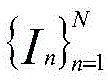

其中,

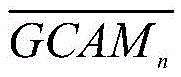
获得组类别激活图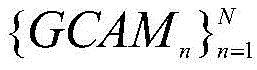
与现有技术相比,本发明的有益效果:首先,采用一组相关图像的公共类别作为真值,通过弱监督学习的方式构建了一个新的组类别激活图(Group Class ActivationMaps,GCAM)网络,使用图像组的公共类别标签通过弱监督学习对GCAM网络进行训练,以GCAM形式呈现图间显著性信息的线索由经过训练的GCAM网络产生;然后,将训练后的GCAM网络产生的GCAM作为图间显著性信息的线索,GCAM网络只突显图像组中公共类别目标所覆盖的区域;最后,将GCAM网络融合到基于特征金字塔网络(Feature Pyramid Networks,FPN)的主干网络中,由像素级标签训练编码-解码器主干网络;采用端到端的方式同时进行GCAM网络的弱监督训练和主干网络的像素级训练,通过主干网络的解码器输出图像组的协同显著图。本发明在受到相似非公共显著目标干扰的情况下,能够更准确地检测出协同显著目标,操作简单,检测精度较高。Compared with the prior art, the beneficial effects of the present invention are as follows: firstly, a new Group Class Activation Map (Group Class ActivationMaps, GCAM) network is constructed by means of weakly supervised learning by using the public category of a group of related images as the true value , the GCAM network is trained by weakly supervised learning using the public category labels of the image group, and the clues to present the saliency information between graphs in the form of GCAM are generated by the trained GCAM network; then, the GCAM generated by the trained GCAM network is used as a graph The GCAM network only highlights the area covered by the common category target in the image group; finally, the GCAM network is integrated into the backbone network based on Feature Pyramid Networks (FPN), trained by pixel-level labels Encoder-decoder backbone network; the weakly supervised training of the GCAM network and the pixel-level training of the backbone network are performed simultaneously in an end-to-end manner, and the co-saliency map of the image group is output through the decoder of the backbone network. The present invention can more accurately detect the cooperative salient target in the case of being interfered by similar non-common salient targets, and has simple operation and high detection precision.
附图说明Description of drawings
为了更清楚地说明本发明实施例或现有技术中的技术方案,下面将对实施例或现有技术描述中所需要使用的附图作简单地介绍,显而易见地,下面描述中的附图仅仅是本发明的一些实施例,对于本领域普通技术人员来讲,在不付出创造性劳动的前提下,还可以根据这些附图获得其他的附图。In order to more clearly illustrate the technical solutions in the embodiments of the present invention or the prior art, the following will briefly introduce the drawings that need to be used in the description of the embodiments or the prior art. Obviously, the accompanying drawings in the following description are only These are some embodiments of the present invention. Those skilled in the art can also obtain other drawings based on these drawings without creative work.
图1为本发明的流程示意图。Fig. 1 is a schematic flow chart of the present invention.
图2为图1中GCAM网络的机构示意图。FIG. 2 is a schematic diagram of the structure of the GCAM network in FIG. 1 .
图3为本发明主干网络的结构图。Fig. 3 is a structural diagram of the backbone network of the present invention.
图4为本发明与现有方法在Cosal2015数据集上的主观对比图。Fig. 4 is a subjective comparison diagram between the present invention and existing methods on the Cosal2015 dataset.
具体实施方式Detailed ways
下面将结合本发明实施例中的附图,对本发明实施例中的技术方案进行清楚、完整地描述,显然,所描述的实施例仅仅是本发明一部分实施例,而不是全部的实施例。基于本发明中的实施例,本领域普通技术人员在没有付出创造性劳动前提下所获得的所有其他实施例,都属于本发明保护的范围。The following will clearly and completely describe the technical solutions in the embodiments of the present invention with reference to the accompanying drawings in the embodiments of the present invention. Obviously, the described embodiments are only some, not all, embodiments of the present invention. Based on the embodiments of the present invention, all other embodiments obtained by persons of ordinary skill in the art without making creative efforts belong to the protection scope of the present invention.
如图1所示,一种弱监督学习引导的协同显著性检测(Group Weakly SupervisedLearning Induced Co-saliency Detection,GWSCoSal)方法,该方法的GWSCoSal模型包含两个子网络:GCAM网络和编码-解码器主干网络。GWSCoSal模型先使用图像组的公共类别标签,通过弱监督学习对GCAM网络进行训练,以GCAM形式呈现的图间显著性特征的线索由经过训练的GCAM网络产生。然后,图像组的GCAM融合至由像素级标签训练的编码-解码器主干网络中。最后,通过主干网络的解码器输出图像组的协同显著图。其步骤如下:As shown in Figure 1, a weakly supervised learning-guided collaborative saliency detection (Group Weakly Supervised Learning Induced Co-saliency Detection, GWSCoSal) method, the GWSCoSal model of this method contains two sub-networks: GCAM network and encoder-decoder backbone network . The GWSCoSal model first uses the public category labels of the image groups to train the GCAM network through weakly supervised learning, and the cues of inter-image salient features presented in the form of GCAM are generated by the trained GCAM network. Then, the GCAM of the group of images is fused into an encoder-decoder backbone network trained by pixel-level labels. Finally, the co-saliency map of the image group is output through the decoder of the backbone network. The steps are as follows:
步骤一:搭建GCAM网络的架构,将包含有相关图像的图像组输入GCAM网络,生成每幅图像的组类别激活图GCAM。Step 1: Build the architecture of the GCAM network, input the image group containing related images into the GCAM network, and generate the group category activation map GCAM for each image.
(1)前向传播(1) Forward propagation
输入一组相关图像

其中,F1 1、F2 1、


(2)生成组类别激活图GCAM(2) Generate group category activation map GCAM
图像组中每幅图像In的GCAM获取过程如下:可以通过第二个全连接层FC2的输出结果对VGG16网络的特征提取部分中任意特征层的输出特征矩阵进行求偏导;然后,沿着输入图像各自的子网络反向传播至该特征层,得到该特征层的梯度矩阵并计算其各通道的权重;最后,将各通道权重与该特征层的输出特征矩阵进行逐像素相乘,利用激活函数得到图像组中每幅图像In的组类别激活图GCAM,其公式如下:The GCAM acquisition process of each image In in the image group is as follows: the output feature matrix of any feature layer in the feature extraction part of the VGG16 network can be calculated for the partial derivative through the output result of the second fully connected layer FC2 ; then, along the The respective sub-networks of the input image are backpropagated to the feature layer, the gradient matrix of the feature layer is obtained and the weights of each channel are calculated; finally, the weights of each channel are multiplied pixel by pixel with the output feature matrix of the feature layer, Use the activation function to obtain the group category activation map GCAM of each image I in the image group, and its formula is as follows:


其中,C表示公共类别数;S∈RC是图像组


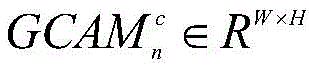
很显然,
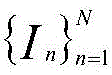

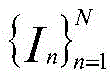
根据协同显著性检测的任务特征和现有的VGG16模型的特征,对已有的VGG16网络基本框架进行改进和创新,搭建了一个符合协同显著性检测任务的网络,以挖掘图间显著性信息,即GCAM网络,其结构如表1所示。According to the task characteristics of collaborative saliency detection and the characteristics of the existing VGG16 model, the basic framework of the existing VGG16 network is improved and innovated, and a network that meets the task of collaborative saliency detection is built to mine saliency information between graphs. That is, the GCAM network, whose structure is shown in Table 1.
表1 GCAM网络的结构组成Table 1 Structural composition of GCAM network
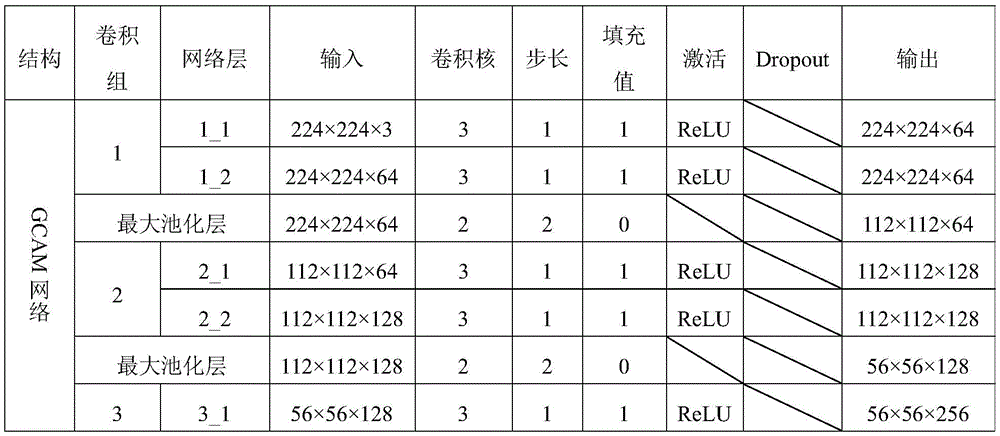
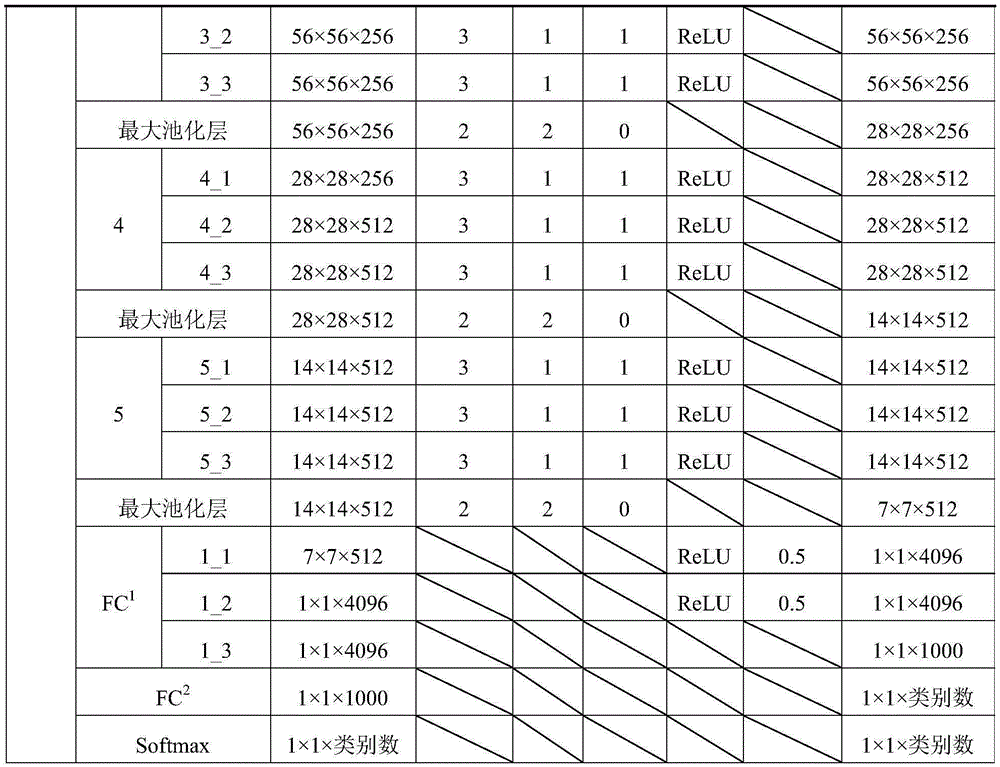
本发明构建的GCAM网络由N个VGG16子网络构成,其中,每幅图像对应一个VGG16子网络,每个子网络设置均一致且模型参数彼此共享,上述表格结构以一个VGG16子网络为例,其余子网络结构与之一致,GCAM网络包含N个特征提取部分、N个第一个全连接层FC1、一个第二个全连接层FC2和一个softmax层。对于损失函数,GCAM网络用到的是CE-loss损失函数。VGG16子网络结构的设计思想参考文献[Simonyan K,Zisserman A.Very DeepConvolutional Networks for Large-Scale Image Recognition[J].arXiv preprintarXiv:1409.1556,2014]。通过特征提取部分的多个卷积组可以提取图像中的细节信息,将每个子网络中第一个全连接层

在生成GCAM的过程中,利用第二个全连接层FC2输出的概率结果对卷积5_3输出的特征矩阵求偏导;然后,沿着输入图像各自的VGG16子网络反向传播至卷积5_3的特征层,得到卷积5_3特征层的梯度矩阵并计算其512个通道的权重,如公式(2)所示。最后,将各通道权重与卷积5_3特征层的输出特征矩阵进行逐像素相乘,利用激活函数得到图像组中每幅图像In的GCAM,如公式(3)所示。In the process of generating GCAM, use the probability result output by the second fully connected layer FC 2 to obtain the partial derivative of the feature matrix output by convolution 5_3; then, backpropagate along the respective VGG16 subnetwork of the input image to convolution 5_3 The feature layer of the convolution 5_3 feature layer is obtained and the weight of its 512 channels is calculated, as shown in formula (2). Finally, the weight of each channel is multiplied pixel by pixel with the output feature matrix of the convolution 5_3 feature layer, and the GCAM of each image I in the image group is obtained by using the activation function, as shown in formula (3).
步骤二:搭建主干网络的架构,图像组中的每幅图像依次送入主干网络进行处理,主干网络提取的特征与步骤一的组类别激活图GCAM相融合,得到每幅图像的协同显著图,将GCAM网络和主干网络联合构建GWSCoSal模型。Step 2: Build the architecture of the backbone network. Each image in the image group is sequentially sent to the backbone network for processing. The features extracted by the backbone network are fused with the group category activation map GCAM in step 1 to obtain the co-saliency map of each image. Combine the GCAM network and the backbone network to construct the GWSCoSal model.
采用目前流行的编码器-解码器结构来构建主干网络。如图3所示,特征金字塔网络(FPN)用于构建编码器-解码器网络,其中,解码器部分通过侧向连接融合了编码器中各层级尺度特征。The current popular encoder-decoder structure is used to build the backbone network. As shown in Figure 3, the feature pyramid network (FPN) is used to construct the encoder-decoder network, in which the decoder part fuses the scale features of each level in the encoder through lateral connections.
与GCAM网络类似,主干网络的编码和解码部分都继承自在ImageNet数据集上预训练的VGG16模型,没有全连接层。如图1和图3所示,图像组
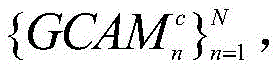
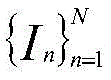

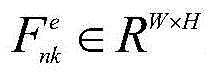
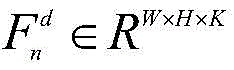
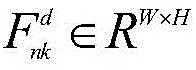
其中,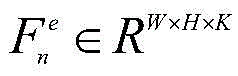




根据协同显著性检测的任务特征和现有的FPN网络的特征,对已有的FPN网络的基本框架进行改进,利用VGG16网络来构建FPN网络中的编码器和解码器,搭建了一个符合协同显著性检测任务的网络,以为挖掘图间显著性信息并将其与图内显著性信息进行融合,即编码-解码器的主干网络。According to the task characteristics of collaborative saliency detection and the characteristics of the existing FPN network, the basic framework of the existing FPN network is improved, and the encoder and decoder in the FPN network are constructed using the VGG16 network, and a collaborative saliency network is built. The network for the task of saliency detection is used to mine inter-graph saliency information and fuse it with intra-graph saliency information, that is, the backbone network of the encoder-decoder.
如表2所示,本发明构建的主干网络包括两个部分:编码器和解码器,其中,编码器由VGG16网络的特征提取部分构成,即不含最后一个最大池化层、全连接层以及softmax层;解码器是由与编码器结构对称的卷积层构成,通过将编码器的输出特征与对应解码器的输入特征进行侧向连接,获取多层次的图像特征信息,即编码器卷积4_3的输出与解码器卷积4_1连接,编码器的卷积3_3的输出与解码器的卷积3_1连接,编码器的卷积2_2的输出与解码器的卷积2_1连接,编码器的卷积1_2的输出与解码器的卷积1_1连接,侧向连接时,编码器中通道数不一致的特征将通过卷积操作得到与解码器通道数一致的特征。此外,在解码器最后一层卷积层的输出中,利用线性插值将输出特征尺寸调整为原始图像尺寸。As shown in Table 2, the backbone network constructed by the present invention includes two parts: an encoder and a decoder, wherein the encoder is composed of the feature extraction part of the VGG16 network, that is, without the last maximum pooling layer, fully connected layer and The softmax layer; the decoder is composed of a convolutional layer that is symmetrical to the encoder structure. By laterally connecting the output features of the encoder with the input features of the corresponding decoder, multi-level image feature information is obtained, that is, the encoder convolution The output of 4_3 is connected to the decoder convolution 4_1, the output of the encoder's convolution 3_3 is connected to the decoder's convolution 3_1, the output of the encoder's convolution 2_2 is connected to the decoder's convolution 2_1, and the encoder's convolution The output of 1_2 is connected to the convolution 1_1 of the decoder. When connecting sideways, the features with inconsistent number of channels in the encoder will be obtained through convolution operation with features consistent with the number of channels in the decoder. Furthermore, in the output of the last convolutional layer of the decoder, the output feature size is resized to the original image size using linear interpolation.
另外,在图间和图内显著性信息融合过程中,将输入图像对应的尺寸为14×14×1的组类别激活图GCAM与编码器的最后一个卷积层5_3的尺寸为14×14×512的输出特征以逐像素相乘的方式进行融合,如公式(4)所示,然后将融合后的特征输入至解码器,最终输出与原始图像尺寸一致的协同显著图。表2中解码器的上采样是采用线性插值。Sigmoid表示激活函数,在此处的使用与一般卷积神经网络中的激活函数用法一样,是将卷积神经网络的输出输入至激活函数进行运算。In addition, in the process of inter-image and intra-image saliency information fusion, the group category activation map GCAM with a size of 14×14×1 corresponding to the input image is combined with the last convolutional layer 5_3 of the encoder with a size of 14×14× The output features of 512 are fused by pixel-by-pixel multiplication, as shown in formula (4), and then the fused features are input to the decoder, and finally a co-saliency map with the same size as the original image is output. The upsampling of the decoder in Table 2 is by linear interpolation. Sigmoid represents the activation function. The use here is the same as the activation function in the general convolutional neural network. The output of the convolutional neural network is input to the activation function for operation.
表2编码器-解码器的主干网络的结构组成Table 2 Structural composition of encoder-decoder backbone network
步骤三:利用训练数据对GCAM网络以图像组的公共类别标签作为真值进行弱监督训练。Step 3: Use the training data to perform weakly supervised training on the GCAM network with the common category label of the image group as the true value.
训练数据采用现有的DUTS数据集和拼图训练策略,随机选择训练数据中的一组5幅图像输入GCAM网络,GCAM网络以图像组的公共类别标签作为真值进行弱监督训练。如图2所示,图像组中的每幅图像In输入至对应的子网络,将每个子网络中第一个全连接层
GCAM网络的弱监督训练损失函数LGWS表达式如下:The expression of the weakly supervised training loss function L GWS of the GCAM network is as follows:

其中,
步骤四:利用训练数据对主干网络进行像素级训练。Step 4: Use the training data to perform pixel-level training on the backbone network.
与GCAM网络训练数据一致,均采用融合GCAM后现有的DUTS数据集和拼图训练策略对主干网络进行像素级训练。如图3所示,将图像组中的5幅图像依次输入至主干网络的编码器部分;然后,将编码器的最后一个输出特征与GCAM网络生成的GCAM以逐像素相乘的方式进行融合;最后,将融合的特征输入至主干网络的解码器部分生成5幅图像的检测结果。在主干网络的像素级训练过程中,通过不断地训练、迭代,主干网络参数不断更新,Adam优化器不断优化网络,得到学习率、训练次数和批量大小的参数设置分别为0.0001、400和1。主干网络的像素级训练损失函数LP如下:Consistent with the GCAM network training data, the backbone network is trained at the pixel level by using the existing DUTS data set and puzzle training strategy after the fusion of GCAM. As shown in Figure 3, the five images in the image group are sequentially input to the encoder part of the backbone network; then, the last output feature of the encoder is fused with the GCAM generated by the GCAM network in a pixel-by-pixel multiplication manner; Finally, the fused features are input to the decoder part of the backbone network to generate detection results for 5 images. During the pixel-level training process of the backbone network, through continuous training and iteration, the parameters of the backbone network are constantly updated, and the Adam optimizer continuously optimizes the network, and the parameter settings of the learning rate, training times and batch size are obtained as 0.0001, 400 and 1 respectively. The pixel-level training loss function L P of the backbone network is as follows:

其中,On表示图像组中每幅图像In的预测协同显著图;GTn表示图像In的像素级真值图;LSIoU(·)表示交并比损失(Intersection over Union,IoU);LBCE(·)表示二值交叉熵损失(Binary Cross Entropy,BCE)。Among them, On represents the predicted co-saliency map of each image I n in the image group; GT n represents the pixel-level truth map of image I n ; L SIoU ( ) represents the intersection over union loss (Intersection over Union, IoU); L BCE ( ) represents the binary cross entropy loss (Binary Cross Entropy, BCE).
步骤五:利用训练数据对GCAM网络和主干网络以端到端的方式进行联合训练,得到训练后的优化GWSCoSal模型。Step 5: Use the training data to jointly train the GCAM network and the backbone network in an end-to-end manner to obtain the optimized GWSCoSal model after training.
在训练阶段,GCAM网络和主干网络以端到端的方式进行联合训练,输入的训练数据均为现有的DUTS数据集和拼图训练策略。在联合训练过程中,通过不断地训练、迭代,GWSCoSal模型参数不断更新,Adam优化器不断优化网络,得到学习率、训练次数和批量大小的参数设置分别为0.0001、400和1。最后,GWSCoSal模型的总体训练损失函数如下:In the training phase, the GCAM network and the backbone network are jointly trained in an end-to-end manner, and the input training data are all existing DUTS datasets and puzzle training strategies. During the joint training process, through continuous training and iteration, the parameters of the GWSCoSal model are constantly updated, and the Adam optimizer continuously optimizes the network, and the parameter settings of the learning rate, training times and batch size are obtained as 0.0001, 400 and 1, respectively. Finally, the overall training loss function of the GWSCoSal model is as follows:
L=LP+λLGWS (7)L=L P +λL GWS (7)
其中,λ是用于平衡LGWS和LP之间比例的超参数。λ的取值一般由实验得出,本发明中该值设置为0.8。where λ is a hyperparameter for balancing the ratio between L GWS and L P. The value of λ is generally obtained by experiments, and this value is set to 0.8 in the present invention.
步骤六:利用步骤五的优化GWSCoSal模型对现有的协同显著性数据集进行预测,生成预测的协同显著图。Step 6: Use the optimized GWSCoSal model of step 5 to predict the existing co-saliency dataset and generate a predicted co-saliency map.
在预测阶段,利用现有的协同显著性数据集来预测步骤五训练后得到的GWSCoSal模型,实现协同显著性检测。In the prediction stage, the existing co-saliency data set is used to predict the GWSCoSal model obtained after step five training to achieve co-saliency detection.
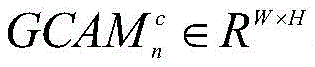
利用现有的协同显著性数据集(iCoseg和Cosal2015)进行预测,将一组5幅图像分别输入GCAM网络和主干网络,其中,每幅输入图像尺寸统一调整为224×224。在图像组输入GCAM网络进行分类时,选择概率得分为Top-3(即得分为前3名)的公共类别作为公共类别标签,并将选择的概率得分作为前3个公共类别对应生成的GCAM的权重,然后,将该权重与每幅输入图像的前3个公共类别对应生成的组类别激活图GCAM进行逐像素相乘,并将3个相乘后的组类别激活图GCAM进行逐像素取均值,生成每幅输入图像的组类别激活图GCAM,以增强模型的鲁棒性。图像组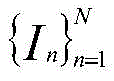

其中,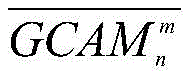
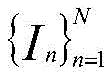
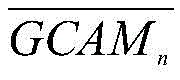
在获得组类别激活图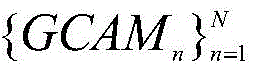
本发明的实现的硬件配置:NVIDIA GeForce RTX 2080Ti@11GB×10GPU,512G内存的工作站进行实验,其软件的平台配置:Ubuntu16.04、python3.7、pytorch1.1.0。The hardware configuration of the realization of the present invention: NVIDIA GeForce RTX 2080Ti@11GB * 10GPU, the workstation of 512G internal memory carries out experiment, the platform configuration of its software: Ubuntu16.04, python3.7, pytorch1.1.0.
此外,为了更好的证明本发明的性能,本发明在现已有的流行的公开数据集Cosal2015进行主观对比。对比的算法一共有12种,分别是CBCS来自于Cluster-based Co-saliency Detection,IPTD来自于Cosaliency Detection Based on IntrasaliencyPrior Transfer and Deep Intersaliency Mining,CODW来自于Detection of Co-salient Objects by Looking Deep and Wide,UMLF来自于A Unified Metric Learning-based Framework for Co-saliency Detection,DARM来自于Co-saliency Detection viaCo-salient Object Discovery and Recovery,GW来自于Deep Group-wise FullyConvolutional Network for Co-saliency Detection with Graph Propagation,CSMG来自于Co-saliency Detection via Mask-guided Fully Convolutional Networks withMulti-scale Label Smoothing,RCAN来自于Detecting Robust Co-saliency withRecurrent Co-attention Neural Network,TSE-GAN来自于Two-stream Encoder GANwith Progressive Training for Co-saliency Detection,GCAGC来自于Adaptive GraphConvolutional Network with Attention Graph Clustering for Co-saliencyDetection,CoEGNet来自于Re-thinking Co-salient Object Detection,GICD来自于Gradient-induced Co-saliency Detection。In addition, in order to better prove the performance of the present invention, the present invention conducts a subjective comparison on the existing popular public data set Cosal2015. There are 12 algorithms for comparison, namely, CBCS comes from Cluster-based Co-saliency Detection, IPTD comes from Cosaliency Detection Based on Intrasaliency Prior Transfer and Deep Intersaliency Mining, CODW comes from Detection of Co-salient Objects by Looking Deep and Wide, UMLF comes from A Unified Metric Learning-based Framework for Co-saliency Detection, DARM comes from Co-saliency Detection via Co-salient Object Discovery and Recovery, GW comes from Deep Group-wise Fully Convolutional Network for Co-saliency Detection with Graph Propagation, CSMG From Co-saliency Detection via Mask-guided Fully Convolutional Networks with Multi-scale Label Smoothing, RCAN from Detecting Robust Co-saliency with Recurrent Co-attention Neural Network, TSE-GAN from Two-stream Encoder GANwith Progressive Training for Co-saliency Detection, GCAGC comes from Adaptive Graph Convolutional Network with Attention Graph Clustering for Co-saliency Detection, CoEGNet comes from Re-thinking Co-salient Object Detection, and GICD comes from Gradient-induced Co-saliency Detection.
如图4所示,本发明所提GWSCoSal方法与12种流行方法在Cosal2015数据集上进行了主观对比,图4中显示的这5组图像分别是瓢虫组、斧头组、香蕉组、飞机组以及圆号组。由于Cosal2015数据集更具挑战性,因此,对其进行主观比较可以更直观地证明GWSCoSal方法的优越性。由图4可知,例如:对于瓢虫组而言,只有GWSCoSal的结果才能在彩色背景干扰的情况下准确、完整地捕捉瓢虫;对于香蕉组而言,GWSCoSal的结果可以准确地捕捉香蕉,更好地提取图间显著性信息的线索,并在抑制不相关的前景目标方面提供最佳性能。与瓢虫组、香蕉组的结果类似,GWSCoSal模型在斧头组、飞机组以及圆号组中的检测结果与人工标注的真值图更接近。As shown in Figure 4, the GWSCoSal method proposed by the present invention was subjectively compared with 12 popular methods on the Cosal2015 dataset. The five groups of images shown in Figure 4 are the ladybug group, the ax group, the banana group, group and horn group. Since the Cosal2015 dataset is more challenging, a subjective comparison with it can more intuitively prove the superiority of the GWSCoSal method. It can be seen from Figure 4 that, for example, for the ladybug group, only the result of GWSCoSal can accurately and completely capture the ladybug under the interference of the colored background; for the banana group, the result of GWSCoSal can accurately capture the banana, and even more well extracts cues of inter-graph saliency information and provides the best performance in suppressing irrelevant foreground objects. Similar to the results of the ladybug group and the banana group, the detection results of the GWSCoSal model in the axe group, airplane group, and French horn group are closer to the manually labeled truth map.
由于不相关的显著目标与公共显著目标之间具有相似的外观特征,因此,协同显著性检测容易受到无关显著目标的干扰。为了解决这一问题,本发明提出了一种弱监督学习引导的协同显著性检测(GWSCoSal)方法,包含多幅相关图像间相似信息的图间显著性信息(Inter-saliency)是协同显著性检测的核心,也是解决上述问题的关键,本发明分析发现,应依据多幅相关图像的公共类别信息来挖掘图间显著性信息。因此,本发明首先采用一组相关图像的公共类别作为真值,通过弱监督学习的方式构建了一个新的组类别激活图(GCAM)网络;然后,将训练后的GCAM网络产生的GCAM作为图间显著性线索,该GCAM只突显图像组中公共类别目标所覆盖的区域;最后,将GCAM融合到基于特征金字塔(FPN)网络的主干网络中;采用端到端的方式同时进行GCAM网络的弱监督训练和主干网络的像素级训练。本发明在受到相似非公共显著目标干扰的情况下,能够更准确地检测出协同显著目标,操作简单,检测精度较高。Due to the similar appearance features between irrelevant salient objects and common salient objects, co-saliency detection is easily disturbed by irrelevant salient objects. In order to solve this problem, the present invention proposes a weakly supervised learning-guided collaborative saliency detection (GWSCoSal) method, which includes inter-graph saliency information (Inter-saliency) that includes similar information between multiple related images. The core is also the key to solve the above problems. The analysis of the present invention finds that the inter-image saliency information should be mined based on the common category information of multiple related images. Therefore, the present invention first adopts the public category of a group of related images as the truth value, and constructs a new group category activation map (GCAM) network through weakly supervised learning; then, the GCAM generated by the trained GCAM network is used as the graph The GCAM only highlights the area covered by the common category objects in the image group; finally, the GCAM is fused into the backbone network based on the Feature Pyramid (FPN) network; the weak supervision of the GCAM network is performed simultaneously in an end-to-end manner Pixel-wise training of training and backbone networks. The present invention can more accurately detect the cooperative salient target in the case of being interfered by similar non-common salient targets, and has simple operation and high detection precision.
本发明包含的GCAM网络在训练阶段利用只包含类别标签的DUTS数据集和拼图训练策略进行弱监督训练,并利用最高的类别得分进行求导和反向传播,以产生具有只激活公共类别目标区域的GCAM;在预测阶段则利用位置类别标签的协同显著性数据集进行测试,采用概率得分为Top-3(前3名)的公共类别作为公共类别标签,并利用该类别得分进行求导和反向传播,以产生图像组的GCAM,从而更好地提取图像组中的图间显著线索。The GCAM network included in the present invention uses only the DUTS data set containing category labels and the puzzle training strategy to perform weakly supervised training during the training phase, and uses the highest category score to perform derivation and backpropagation to generate target areas with only active common categories GCAM; in the prediction stage, the co-significance data set of position category labels is used for testing, and the public category with the probability score of Top-3 (top 3) is used as the public category label, and the category score is used for derivation and inversion. direction propagation to produce a GCAM of an image group to better extract inter-image saliency cues in an image group.
以上所述仅为本发明的较佳实施例而已,并不用以限制本发明,凡在本发明的精神和原则之内,所作的任何修改、等同替换、改进等,均应包含在本发明的保护范围之内。The above descriptions are only preferred embodiments of the present invention, and are not intended to limit the present invention. Any modifications, equivalent replacements, improvements, etc. made within the spirit and principles of the present invention shall be included in the scope of the present invention. within the scope of protection.
Claims (8)







Priority Applications (1)
| Application Number | Priority Date | Filing Date | Title |
|---|---|---|---|
| CN202210375572.2A CN114743027B (en) | 2022-04-11 | 2022-04-11 | Cooperative saliency detection method guided by weakly supervised learning |
Applications Claiming Priority (1)
| Application Number | Priority Date | Filing Date | Title |
|---|---|---|---|
| CN202210375572.2A CN114743027B (en) | 2022-04-11 | 2022-04-11 | Cooperative saliency detection method guided by weakly supervised learning |
Publications (2)
| Publication Number | Publication Date |
|---|---|
| CN114743027A CN114743027A (en) | 2022-07-12 |
| CN114743027B true CN114743027B (en) | 2023-01-31 |
Family
ID=82281418
Family Applications (1)
| Application Number | Title | Priority Date | Filing Date |
|---|---|---|---|
| CN202210375572.2A Active CN114743027B (en) | 2022-04-11 | 2022-04-11 | Cooperative saliency detection method guided by weakly supervised learning |
Country Status (1)
| Country | Link |
|---|---|
| CN (1) | CN114743027B (en) |
Families Citing this family (5)
| Publication number | Priority date | Publication date | Assignee | Title |
|---|---|---|---|---|
| CN116152575B (en) * | 2023-04-18 | 2023-07-21 | 之江实验室 | Weakly supervised object localization method, device and medium based on class activation sampling guidance |
| CN117115626B (en) * | 2023-04-21 | 2025-03-21 | 浪潮电子信息产业股份有限公司 | Collaborative salient object detection method, system, electronic device and storage medium |
| CN116681903B (en) * | 2023-06-06 | 2026-01-13 | 大连民族大学 | Weak supervision significance target detection method based on complementary fusion pseudo tag |
| CN116994006B (en) * | 2023-09-27 | 2023-12-08 | 江苏源驶科技有限公司 | Collaborative saliency detection method and system for fusing image saliency information |
| CN118628870B (en) * | 2024-08-07 | 2024-11-08 | 齐鲁工业大学(山东省科学院) | Collaborative remarkable target detection method based on comprehensive feature mining and background noise reduction |
Citations (10)
| Publication number | Priority date | Publication date | Assignee | Title |
|---|---|---|---|---|
| US8200010B1 (en) * | 2007-09-20 | 2012-06-12 | Google Inc. | Image segmentation by clustering web images |
| CN107909079A (en) * | 2017-10-11 | 2018-04-13 | 天津大学 | One kind collaboration conspicuousness detection method |
| CN108550132A (en) * | 2018-03-16 | 2018-09-18 | 安徽大学 | Cooperative significant target detection method based on global compact prior and global similarity significant propagation |
| CN109255357A (en) * | 2018-08-03 | 2019-01-22 | 天津大学 | A kind of RGBD image collaboration conspicuousness detection method |
| CN109448015A (en) * | 2018-10-30 | 2019-03-08 | 河北工业大学 | Image based on notable figure fusion cooperates with dividing method |
| CN109472259A (en) * | 2018-10-30 | 2019-03-15 | 河北工业大学 | Image co-saliency detection method based on energy optimization |
| CN111027576A (en) * | 2019-12-26 | 2020-04-17 | 郑州轻工业大学 | Cooperative significance detection method based on cooperative significance generation type countermeasure network |
| CN112348033A (en) * | 2020-10-15 | 2021-02-09 | 北京交通大学 | Cooperative significance target detection method |
| CN112651940A (en) * | 2020-12-25 | 2021-04-13 | 郑州轻工业大学 | Collaborative visual saliency detection method based on dual-encoder generation type countermeasure network |
| CN112906800A (en) * | 2021-02-26 | 2021-06-04 | 上海大学 | Image group self-adaptive collaborative saliency detection method |
Family Cites Families (1)
| Publication number | Priority date | Publication date | Assignee | Title |
|---|---|---|---|---|
| US10565305B2 (en) * | 2016-11-18 | 2020-02-18 | Salesforce.Com, Inc. | Adaptive attention model for image captioning |
-
2022
- 2022-04-11 CN CN202210375572.2A patent/CN114743027B/en active Active
Patent Citations (10)
| Publication number | Priority date | Publication date | Assignee | Title |
|---|---|---|---|---|
| US8200010B1 (en) * | 2007-09-20 | 2012-06-12 | Google Inc. | Image segmentation by clustering web images |
| CN107909079A (en) * | 2017-10-11 | 2018-04-13 | 天津大学 | One kind collaboration conspicuousness detection method |
| CN108550132A (en) * | 2018-03-16 | 2018-09-18 | 安徽大学 | Cooperative significant target detection method based on global compact prior and global similarity significant propagation |
| CN109255357A (en) * | 2018-08-03 | 2019-01-22 | 天津大学 | A kind of RGBD image collaboration conspicuousness detection method |
| CN109448015A (en) * | 2018-10-30 | 2019-03-08 | 河北工业大学 | Image based on notable figure fusion cooperates with dividing method |
| CN109472259A (en) * | 2018-10-30 | 2019-03-15 | 河北工业大学 | Image co-saliency detection method based on energy optimization |
| CN111027576A (en) * | 2019-12-26 | 2020-04-17 | 郑州轻工业大学 | Cooperative significance detection method based on cooperative significance generation type countermeasure network |
| CN112348033A (en) * | 2020-10-15 | 2021-02-09 | 北京交通大学 | Cooperative significance target detection method |
| CN112651940A (en) * | 2020-12-25 | 2021-04-13 | 郑州轻工业大学 | Collaborative visual saliency detection method based on dual-encoder generation type countermeasure network |
| CN112906800A (en) * | 2021-02-26 | 2021-06-04 | 上海大学 | Image group self-adaptive collaborative saliency detection method |
Non-Patent Citations (3)
| Title |
|---|
| Class Activation Mapping-Based Car Saliency Region and Detection for In-Vehicle Surveillance;I. D. Bhaswara et al.;《2019 International Electronics Symposium》;20191118;第349-353页 * |
| Grad-CAM: Visual Explanations from Deep Networks via Gradient-Based Localization;R. R. Selvaraju et al.;《2017 IEEE International Conference on Computer Vision 》;20171225;第618-626页 * |
| 协同视觉显著性检测方法综述;钱晓亮 等;《电子学报》;20190630;第47卷(第6期);第1353-1365页 * |
Also Published As
| Publication number | Publication date |
|---|---|
| CN114743027A (en) | 2022-07-12 |
Similar Documents
| Publication | Publication Date | Title |
|---|---|---|
| CN114743027B (en) | Cooperative saliency detection method guided by weakly supervised learning | |
| Zhou et al. | LSNet: Lightweight spatial boosting network for detecting salient objects in RGB-thermal images | |
| CN109859190B (en) | Target area detection method based on deep learning | |
| CN108537192B (en) | Remote sensing image earth surface coverage classification method based on full convolution network | |
| CN113361485B (en) | A hyperspectral image classification method based on spectral spatial attention fusion and deformable convolutional residual network | |
| CN107358626B (en) | Method for generating confrontation network calculation parallax by using conditions | |
| WO2024040973A1 (en) | Multi-scale fused dehazing method based on stacked hourglass network | |
| CN111027576B (en) | Cooperative significance detection method based on cooperative significance generation type countermeasure network | |
| CN110322446A (en) | A kind of domain adaptive semantic dividing method based on similarity space alignment | |
| Zhao et al. | Joint learning of salient object detection, depth estimation and contour extraction | |
| Zhiheng et al. | PyramNet: Point cloud pyramid attention network and graph embedding module for classification and segmentation | |
| Song et al. | A joint siamese attention-aware network for vehicle object tracking in satellite videos | |
| Deng et al. | A dynamic GCN with cross-representation distillation for event-based learning | |
| CN110569926A (en) | A Point Cloud Classification Method Based on Local Edge Feature Enhancement | |
| Liu et al. | Dual-branch self-attention network for pedestrian attribute recognition | |
| Zhou et al. | GTNet: Graph transformer network for 3D point cloud classification and semantic segmentation | |
| CN111582058B (en) | Method for estimating hand posture by using impedance type 3D hierarchical network | |
| Zhou et al. | RCNet: Dual-Network Resonance Collaboration via Mutual Learning for RGB-D Road Defect Detection | |
| Lv et al. | Contour deformation network for instance segmentation | |
| CN115984663A (en) | A YOLOv3 small target detection method based on multi-scale fusion | |
| Xiang et al. | InvFlow: Involution and multi-scale interaction for unsupervised learning of optical flow | |
| Deng et al. | A dynamic graph cnn with cross-representation distillation for event-based recognition | |
| CN113688672A (en) | Action recognition method based on fusion of deep joints and manual apparent features | |
| Liu et al. | Contextualized trajectory parsing with spatio-temporal graph | |
| Fu et al. | Nested densely atrous spatial pyramid pooling and deep dense short connection for skeleton detection |
Legal Events
| Date | Code | Title | Description |
|---|---|---|---|
| PB01 | Publication | ||
| PB01 | Publication | ||
| SE01 | Entry into force of request for substantive examination | ||
| SE01 | Entry into force of request for substantive examination | ||
| GR01 | Patent grant | ||
| GR01 | Patent grant |