Detailed Description
Experimental procedures for the invention not specifically indicated in the following examples are generally carried out under conventional conditions, or as recommended by the manufacturer. The various chemicals used in the examples are commercially available.
Unless defined otherwise, all technical and scientific terms used herein have the same meaning as commonly understood by one of ordinary skill in the art to which this invention belongs. The terminology used in the description of the invention herein is for the purpose of describing particular embodiments only and is not intended to be limiting of the invention.
The terms "comprising" and "having," and any variations thereof, are intended to cover non-exclusive inclusions. For example, a process, method, apparatus, article, or apparatus that comprises a list of steps is not limited to only those steps or modules recited, but may alternatively include other steps not recited, or may alternatively include other steps inherent to such process, method, article, or apparatus.
The "plurality" referred to in the present invention means two or more. "and/or" describes the association relationship of the associated object, indicating that there may be three relationships, for example, a and/or B, which may indicate: a exists alone, A and B exist simultaneously, and B exists alone. The character "/" generally indicates that the former and latter associated objects are in an "or" relationship.
The invention provides a pH responsive polymer material with a structure shown in a formula (I):
wherein R is 1 Selected from the group consisting of: -R 3 -N(R 4 R 5 );
R 2 Selected from: alkyl, aryl substituted alkyl;
R 3 selected from: an alkylene group;
R 4 、R 5 each independently selected from alkyl, or R 4 、R 5 And the nitrogen atom to which it is attached, together form a heterocycloalkyl group;
x is greater than 0;
n + m is not less than 20.
In some of these embodiments, R 2 Selected from: c 1 -C 15 Alkyl radical, C 6 -C 14 Aryl radical, C 6 -C 14 Aryl substituted C 1 -C 15 An alkyl group.
In some of these embodiments, R 2 Selected from: c 1 -C 12 Alkyl, phenyl, naphthyl, phenyl substituted C 1 -C 3 Alkyl, naphthyl substituted C 1 -C 3 An alkyl group.
In some of these embodiments, R 2 Selected from: methyl, ethyl, propyl, isopropyl, butyl, pentyl, hexyl, heptyl, isooctyl, nonyl, decyl, undecyl, dodecyl, tetradecyl, phenyl, naphthyl, benzyl, naphthylmethyl.
In some of these embodiments, R 3 Selected from: c 1 -C 6 An alkylene group.
In some of these embodiments, R 3 Selected from: c 1 -C 3 An alkylene group.
In some of these embodiments, R 3 Selected from: methylene, ethylene, propylene.
In some of these embodiments, R 4 、R 5 Are each independently selected from C 1 -C 6 Alkyl, or R 4 、R 5 Together with the nitrogen atom to which they are attached form 5-1A 0-membered heterocycloalkyl group.
In some of these embodiments, R 4 、R 5 Are each independently selected from C 1 -C 4 Alkyl, or R 4 、R 5 And the nitrogen atom to which they are attached form a 5-8 membered heterocycloalkyl group.
In some of these embodiments, R 4 、R 5 And the nitrogen atom to which they are attached form the following group:
in some embodiments, the pH-responsive polymeric material has a structure represented by formula (II):
wherein R is 2 Selected from: methyl, ethyl, propyl, isopropyl, butyl, pentyl, hexyl, heptyl, isooctyl, nonyl, decyl, undecyl, dodecyl, tetradecyl, phenyl, naphthyl, benzyl, naphthylmethyl.
In some embodiments, the polymeric material has a structure represented by formula (III):
wherein R is 2 Selected from: methyl, ethyl, propyl, isopropyl, butyl, pentyl, hexyl, heptyl, isooctyl, nonyl, decyl, undecyl, dodecyl, tetradecyl, phenyl, naphthyl, benzyl, naphthylmethyl.
In some embodiments, the pH-responsive polymeric material has a structure represented by formula (IV):
wherein R is
1 Selected from the group consisting of:
in some of these embodiments, n + m is not less than 30.
In some of these embodiments, n + m is not less than 40.
In some of these embodiments, n + m is not less than 50.
In some of these embodiments, n + m is not less than 60.
In some of these embodiments, n + m is not less than 70.
In some of these embodiments, n + m is 70-300.
In some of these embodiments, n + m is 75-200.
In some of these embodiments, m is 5-50% of n + m.
In some of these embodiments, m is 15-40% of n + m.
In some of these embodiments, m is 18-30% of n + m.
In some of these embodiments, m is 20-25% of n + m.
In some of these embodiments, x is 10-250.
In some embodiments, the pH-responsive polymeric material has a structure represented by formula (V) or formula (VI):
in the compounds of the invention, when any variable (e.g. R) 2 、R 3 Etc.) occur more than one time in any constituent, then the definition of each occurrence is independent of the definition of each other occurrence. Also, combinations of substituents and variables are permissible only if such combinations result in stable compounds. Line representation of a ring system drawn from a substituentThe indicated bond may be attached to any ring atom that can be substituted. If the ring system is polycyclic, it means that such a bond is only attached to any suitable carbon atom of the adjacent ring. It is to be understood that substituents and substitution patterns on the compounds of the present invention may be selected by one of ordinary skill in the art to provide compounds that are chemically stable and that can be readily synthesized by those skilled in the art and by the methods set forth below from readily available starting materials. If a substituent is itself substituted with more than one group, it is understood that these groups may be on the same carbon atom or on different carbon atoms, so long as the structure is stable. The phrase "optionally substituted with one or more substituents" is considered equivalent to the phrase "optionally substituted with at least one substituent" and preferred embodiments in this case will have from 0 to 3 substituents.
The term "alkyl" as used herein is intended to include both branched and straight chain saturated aliphatic hydrocarbon groups having the specified number of carbon atoms. For example, "C 1 -C 6 Alkyl radical "middle" C 1 -C 6 The definition of "includes groups having 1, 2, 3, 4, 5 or 6 carbon atoms in a linear or branched arrangement. For example, "C 1 -C 6 Alkyl "specifically includes methyl, ethyl, n-propyl, isopropyl, n-butyl, tert-butyl, isobutyl, pentyl, hexyl.
The term "heterocycloalkyl" is a saturated monocyclic cyclic substituent in which one or more ring atoms are selected from heteroatoms of N, O or S (O) m (where m is an integer from 0 to 2), the remaining ring atoms being carbon, for example: piperidinyl, pyrrolidinyl, and the like.
The invention also provides a preparation method of the pH responsive polymer material, which comprises the following steps:
dissolving mPEG-CPDB, a monomer 1, a monomer 2 and an initiator in an organic solvent, and carrying out closed reaction under the protection of nitrogen or inert gas to obtain the product;
the reaction formula is as follows:
in some of these examples, the reaction time is 18 to 24 hours and the reaction temperature is 70 to 80 ℃.
In some of these embodiments, the organic solvent is 1, 4-dioxane.
In some of these embodiments, the initiator is azobisisobutyronitrile.
The invention also provides a pH-responsive polymer material nanoparticle, which is formed by self-assembly of the pH-responsive polymer material in an aqueous medium.
The invention also provides a preparation method of the pH responsive polymer material nanoparticle, which comprises the following steps: and dissolving the pH responsive polymer material in dimethylformamide, then dropwise adding the obtained solution into deionized water under the stirring state, continuously stirring, and dialyzing to remove the solvent, thus obtaining the nanoparticles of the pH responsive polymer material.
In some embodiments, the method for preparing nanoparticles of pH-responsive polymer material comprises the following steps: the pH responsive polymer material is prepared from 45-55 mg: dissolving 1mL of the solution in dimethylformamide, then dropwise adding the obtained solution into deionized water under the stirring state of the rotation speed of 1200-1700 rpm, continuously stirring for 8-12 minutes at the rotation speed of 800-1200 rpm, and dialyzing by using a dialysis bag with the molecular weight cutoff of 10000-20000 to remove the solvent, thus obtaining the pH-responsive polymer material nanoparticles.
The invention also provides application of the pH responsive polymer material in preventing and/or treating tumors.
In some of these embodiments, the tumor is pancreatic cancer, melanoma, colorectal cancer, lung cancer, tongue squamous carcinoma, cervical cancer, ovarian cancer, osteosarcoma, liver cancer, breast cancer, bladder cancer, ovarian epithelial cancer.
The invention also provides application of the pH responsive polymer material in treating bacterial infection.
In some embodiments, the bacterium is a gram-negative bacillus, a gram-negative pseudomonas, a gram-positive staphylococcus, a gram-positive coccus, a gram-positive streptococcus.
In some of these embodiments, the bacteria are escherichia coli, salmonella, staphylococcus aureus, klebsiella pneumoniae, pseudomonas aeruginosa, enterococcus faecalis, streptococcus pyogenes, streptococcus pneumoniae, acinetobacter baumannii, diplococcus pneumoniae, pseudomonas aeruginosa.
The invention also provides a medicine for preventing and/or treating tumors, which is prepared from active ingredients and pharmaceutically acceptable auxiliary materials, wherein the active ingredients comprise the pH-responsive polymer material.
The invention also provides a medicament for treating bacterial infection, which is prepared from an active ingredient and pharmaceutically acceptable auxiliary materials, wherein the active ingredient comprises the pH-responsive polymer material.
The agent for preventing and/or treating tumor and the agent for treating bacterial infection of the present invention can be used for non-human mammals or humans.
The pharmaceutically acceptable auxiliary materials used in the medicine for preventing and/or treating tumors and the medicine for treating bacterial infection of the present invention refer to: one or more compatible solid or liquid fillers or gel substances which are suitable for human use and must be of sufficient purity and sufficiently low toxicity.
By "compatible" is meant that the components of the composition are capable of intermixing with and without significantly diminishing the effectiveness of the active ingredient of the present invention (the pH-responsive rupture polymers of formulas I-VI).
The pharmaceutically acceptable auxiliary materials used by the medicine for preventing and/or treating tumors comprise but are not limited to one or more of the following materials: at least one of a solvent, an excipient, a filler, a compatibilizer, a binder, a humectant, a disintegrant, a slow solvent, an absorption accelerator, an adsorbent, a diluent, a solubilizer, an emulsifier, a lubricant, a wetting agent, a suspending agent, a flavoring agent, and a perfume.
Examples of pharmaceutically acceptable excipients are cellulose and its derivatives (e.g. sodium carboxymethylcellulose, sodium ethylcellulose, cellulose ethylcelluloseAcid esters, etc.), gelatin, talc, solid lubricants (e.g., stearic acid, magnesium stearate), calcium sulfate, vegetable oils (e.g., soybean oil, sesame oil, peanut oil, olive oil, etc.), polyols (e.g., propylene glycol, glycerin, mannitol, sorbitol, etc.), emulsifiers (e.g., propylene glycol, glycerin, sorbitol, etc.), and the like
) Wetting agents (e.g., sodium lauryl sulfate), coloring agents, flavoring agents, stabilizers, antioxidants, preservatives, pyrogen-free water, and the like.
The mode of administration of the active ingredient or pharmaceutical composition of the present invention is not particularly limited, and representative modes of administration include (but are not limited to): oral, rectal, parenteral (intravenous, intramuscular, or subcutaneous), and the like.
Solid dosage forms for oral administration include capsules, tablets, pills, powders and granules.
In these solid dosage forms, the active ingredient is mixed with at least one conventional inert excipient (or carrier), such as sodium citrate or dicalcium phosphate, or with the following:
(a) Fillers or extenders, for example, starch, lactose, sucrose, glucose, mannitol and silicic acid;
(b) Binders, for example, hydroxymethylcellulose, alginates, gelatin, polyvinylpyrrolidone, sucrose and acacia;
(c) Humectants, for example, glycerol;
(d) Disintegrating agents, for example, agar-agar, calcium carbonate, potato or tapioca starch, alginic acid, certain complex silicates, and sodium carbonate;
(e) Slow solvents, e.g., paraffin;
(f) Absorption accelerators, e.g., quaternary ammonium compounds;
(g) Wetting agents, for example, cetyl alcohol and glycerol monostearate;
(h) Adsorbents, for example, kaolin; and
(i) Lubricants, for example, talc, calcium stearate, magnesium stearate, solid polyethylene glycols, sodium lauryl sulfate, or mixtures thereof. In capsules, tablets and pills, the dosage forms may also comprise buffering agents.
The solid dosage forms may also be prepared using coatings and shells, such as enteric coatings and other materials well known in the art. They may contain opacifying agents and the release of the active ingredient in such compositions may be delayed in a certain portion of the digestive tract. Examples of embedding components which can be used are polymeric substances and wax-like substances.
Liquid dosage forms for oral administration include pharmaceutically acceptable emulsions, solutions, suspensions, syrups or tinctures. In addition to the active ingredient, the liquid dosage forms may contain inert diluents commonly employed in the art such as, for example, water or other solvents, solubilizing agents and emulsifiers such as ethyl alcohol, isopropyl alcohol, ethyl carbonate, ethyl acetate, propylene glycol, 1, 3-butylene glycol, dimethylformamide and oils, especially cottonseed, groundnut, corn germ, olive, castor and sesame oils or mixtures of such materials and the like. In addition to these inert diluents, the compositions can also contain adjuvants such as wetting agents, emulsifying and suspending agents, sweetening, flavoring, and perfuming agents.
Suspensions, in addition to the active ingredients, may contain suspending agents as, for example, ethoxylated isostearyl alcohols, polyoxyethylene sorbitol and sorbitan esters, microcrystalline cellulose, aluminum methoxide and agar, or mixtures of these materials, and the like.
Compositions for parenteral injection may comprise physiologically acceptable sterile aqueous or anhydrous solutions, dispersions, suspensions or emulsions, and sterile powders for reconstitution into sterile injectable solutions or dispersions. Suitable aqueous and nonaqueous carriers, diluents, solvents or vehicles include water, ethanol, polyols and suitable mixtures thereof.
The following are specific examples.
In the following examples, a series of membrane-breaking polymeric materials represented by formula (I) were synthesized by RAFT polymerization. The reaction formula is as follows:
wherein mPEG-CPDB is a macromolecular chain transfer agent, the monomer 1 is methacrylate with a pendant group containing protonatable tertiary amine, and the monomer 2 is methacrylate with a pendant group containing a hydrophobic group.
Among them, the macromolecular chain transfer agent mPEG-CPDB for polymerization is referred to the related literature (Ma, X.P.et al.
Ultra-pH-Sensitive Nanoprobe Library with Broad pH compatibility and Fluorescence emission, J.Am.chem.Soc.136,11085-11092 (2014). The nuclear magnetic spectrum is shown in figure 1.
The methacrylate monomer portion having a tertiary amine in the pendant group required for polymerization is commercially available, and if the monomer is purchased to contain p-hydroxyanisole (MEHQ) as a stabilizer, it is removed by distillation, and some of the commercially unavailable products are synthesized by reacting an alcohol with an acid chloride. The specific reaction procedures for the synthesis of the monomers C5-MA, C6-MA, C7-MA and DI-MA are described in the literature (Li, H.J.et. Smart superstructions with ultra high pH-Sensitivity for Targeting Acidic moving microorganism: instant Size Switching and Improved moving punch agriculture. ACS Nano.10,6753-6761 (2016)).
The synthesized structural formulas of C5-MA, C6-MA, C7-MA and DI-MA are respectively as follows:
the nuclear magnetic spectrum is shown in figures 2-5.
The hydrophobic group-containing methacrylate monomer (hereinafter, referred to as a hydrophobic monomer) is commercially available as it is, but a commercial product contains hydroquinone as a stabilizer having a polymerization inhibiting effect, and thus a hydrophobic monomer useful for the reaction is obtained by distillation under normal or reduced pressure. The specific distillation temperatures and pressures are shown in Table 1.
TABLE 1 methacrylate distillation conditions
Example 1:
1. r 1 Is piperidine ethyl (C6), R 2 Preparation and characterization of polymeric materials for different hydrophobic groups
This example prepares a polymeric material containing different kinds and proportions of hydrophobic groups when the tertiary amine is ethylpiperidine (C6). These polymeric materials are synthesized by the RAFT polymerization method described below, the reaction equation being as follows:
wherein R is
2 Is methyl (MeMA),
(EMA)、
(BuMA)、
(IPMA)、
(IOMA)、
(HMA)、
(TMA)、
(BnMA)、
(PhMA)、
(NPhMA)。
The method comprises the following specific steps:
0.2g mPEG 113 -CPDB (wherein, molecular weight of PEG is 5000) is dissolved with 1, 4-dioxane and placed in a reaction vessel, C6-MA monomer and corresponding MeMA, EMA, buMA, HMA, IOMA, TMA, bnMA, phMA, NPhMA monomer are added according to the molar ratio shown in table 2, 2mg of initiator Azobisisobutyronitrile (AIBN) is added after mixing uniformly, the mixture is frozen to solid with liquid nitrogen and decompressed, the room temperature is restored to release oxygen in the reaction solution, the mixture is frozen again, and the above steps are repeated for several times until no oxygen exists in the reaction vessel, high-purity nitrogen is charged, and the reaction is sealed at 75 ℃ for 18-24 hours. And after the reaction is finished, placing the mixture in liquid nitrogen for freezing to terminate the reaction, melting the reaction liquid, and then dropping the reaction liquid into n-hexane to obtain a corresponding orange high polymer material polymer.
Abbreviation P (R) of the Polymer of high molecular Material prepared in this example 1 -R 2(y) ) z (wherein, P represents PEG, R 1 Represents the class of methacrylate monomers having a tertiary amine in the side group, R 2 Representing the kind of the methacrylate monomer containing the hydrophobic group, y representing the ratio of the hydrophobic monomer R2 to the two monomers, and z representing the total polymerization degree of the two monomers) and a charge ratio are shown in Table 2 1 Refers to methacrylate monomer 1 with a tertiary amine in the pendant group (C6-MA in this example), reactant R 2 Refers to hydrophobic group-containing methacrylate monomer 2.
TABLE 2 series of high molecular materials P (R) 1 -R 2(y) ) z Feeding situation of
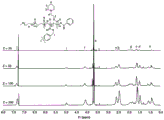
The nuclear magnetic spectrum of the obtained high molecular material polymer is shown in figures 6-9: 3.66ppm of (a) are hydrogen atoms (-CH) of polyethylene glycol segment 2 CH 2 O-) proton signal peak, 1.85ppm (g) is hydrogen atom (-CH) on the main chain of the polymer 2 -) proton signal peak; 0.9-1.05 ppm (h) is methyl hydrogen atom (-CH) on the side chain 3 ) 2.48ppm (b, -NCH) 2 -)、1.62ppm(c,-CH 2 -)、1.47ppm(d,-CH 2 -) is the proton signal peak of the hydrogen atom on the C6 heterocycle, 2.62ppm (e, -CH) 2 N-)、4.10ppm(f,-OCH 2 -) is the proton signal peak of the hydrogen atom on the side chain. For P (C6-Me) y ) The characteristic peak is 3.60ppm (1) is hydrogen atom (-OCH) on the methoxy group of the hydrophobic side chain 3 ) A proton signal peak of (a); p (C6-E) y ) Characteristic peak of (2) < 2 > -OCH of (4.05 ppm) 2 -)、1.28ppm(3,-CH 3 ) Is the proton signal peak of the hydrogen atom on the hydrophobic side chain ethyl; p (C6-Bu) y ) Characteristic peak of (4.09 ppm) (4, -OCH) 2 -)、1.42ppm(5,-CH 2 CH 2 -)、0.97ppm(6,-CH 3 ) The proton signal peak of the hydrogen atom on the hydrophobic side chain butyl is shown. P (C6-H) y ) Its characteristic peak is 4.09ppm (1-OCH) 2 -)、1.34ppm[2,-(CH 2 ) 4 -]、0.88ppm(3,-CH 3 ) Is the proton signal peak of the hydrogen atom on the hexyl of the hydrophobic side chain; p (C6-IO) y ) Characteristic peak of (4.09 ppm) (4, -OCH) 2 -)、1.31ppm[5,-(CH 2 ) 4 -]、0.90ppm(6,-CH 3 ) Is the proton signal peak of the hydrogen atom on the isooctyl of the hydrophobic side chain; p (C6-T) y ) Characteristic peak of (4.09 ppm) (7, -OCH) 2 -)、1.28ppm[8,-CH 2 ) 12 -]、0.89ppm(9,-CH 3 ) The proton signal peak of the hydrogen atom on the hydrophobic side chain butyl is shown. For P (C6-Bn) y ) Its characteristic peak is 5.00ppm (1-OCH) 2 -)、7.34ppm[2,(-CH=) 5 ]Is the proton signal peak of the hydrogen atom on the benzyl group of the hydrophobic side chain. For P (C6-Ph) 20 ) Wherein the peaks at 7.11ppm (1, -CH =), 7.38ppm (2, -CH =), and 7.23ppm (3, -CH =) are those for which the hydrogen atom on the phenyl group of the hydrophobic side chain is presentA proton signal peak; p (C6-NPh) 20 ) Characteristic peak of (5.13 ppm) (4, -OCH) 2 -)、7.82ppm[5,(-CH=) 4 ]、7.48ppm[6,(-CH=) 2 ]Is the proton signal peak of the hydrogen atom on the naphthyl group of the hydrophobic side chain.
Calculating the number average molecular weight (M) according to nuclear magnetism integration and hydrogen atom proton signal peak position and GPC result integration n ) Weight average molecular weight (M) w ) And the monodispersity (PDI), and the molecular weight calculated by the integration of the nmr hydrogen spectrum are listed in the following table, and it is judged that the polymer material designed in this example was successfully synthesized, and the degree of polymerization was controlled to about 80 (see table 3 for relevant data). Wherein the molecular weight of the headings a (M) w ,M n ) And molecular weight distribution (PDI) by GPC testing: the polymer is dissolved in tetrahydrofuran to a final concentration of 5-10 mg/mL. Detection was performed by gel permeation liquid chromatography equipped with a Waters 1515 hplc separation pump and a Waters 2414 refractive index detector. The mobile phase was tetrahydrofuran and the flow rate was 0.3mL/min. Integrating the peak areas of the test results, and fitting with peak area integral curves of standard substances with different molecular weights to obtain the polymer M w ,M n And a PDI. Molecular weight (Mn) and degree of polymerization of superscript b 1 H NMR test results: dissolving the polymer in deuterated chloroform (CDCl) 3 ) The final concentration was 10mg/mL and the internal standard was Tetramethylsilane (TMS). Data were obtained by scanning using a German Bruker 400MHz NMR spectrometer. The number of hydrogen atoms corresponding to the integration of the PEG peak area is defined as 448, and the hydrogen atom proton signal peaks at the remaining positions are integrated and compared with the PEG peak area to calculate the peak value.
TABLE 3 Polymer materials synthesized in this example and their characterization
Note: a represents molecular weight (M) w ,M n ) And the molecular weight distribution is that of GPC measurement; b molecular weight (M) n ) And the degree of polymerization is 1 HNMR calculation.
2. R 1 Is piperidine ethyl (C6), R 2 Preparation of high molecular material nano micelle particles with different hydrophobic groups
The polymer material synthesized by the embodiment has hydrophilic polyethylene glycol and hydrophobic polymethacrylate part, and can self-assemble in water to form nano micelle particles. The specific operation is as follows: 50mg of the polymer material was put in a 5mL sample bottle, and then 1mLN was added thereto and N-Dimethylformamide (DMF) was sufficiently dissolved for use. Another 5mL of sterile water was placed in a pre-sterilized 25mL round-bottom flask on a magnetic stirring table, stirred at RPM =1500r/min, and the DMF solution of the polymeric material was added dropwise to the round-bottom flask using a pipette. After stirring was continued for 10min at RPM =1000r/min, dialysis was performed for 24 hours in 4L of ultrapure water using a dialysis bag with a molecular weight cut-off of 14000, with water changing every 1 hour for the first 6 hours and every 6 hours for the last 18 hours. After dialysis, the cells were removed by pipette and quantified and stored in a refrigerator at 4 ℃. 100 mu L of nanoparticle solution with the concentration of 5mg/mL is taken, diluted to 1mL by PB salt solution with the pH value of 7.4, and the solution is loaded into a potential/particle size special test pool of a nanometer particle sizer to test the particle size and the potential. As shown in Table 4, the polymer material synthesized in this example self-assembled in water to form nano-micelles having a particle size of about 20 to 80nm, and showed a potential of about 0mV, which showed electric neutrality.
TABLE 4 pKa of the series of macromolecular materials and characterization of the particle size and potential in a solution at pH7.4
3. R 1 Is piperidine ethyl (C6), R 2 Protonation of high molecular material with different hydrophobic groups at different pH
The polymer material prepared in this example was dissolved in an acidic solution containing 150mM NaCl to protonate all tertiary amines, then the free hydrogen ions were neutralized with alkali, and the protonation degree and pK of the corresponding polymer material were calculated by monitoring the change in pH of the solution a (ionization equilibrium constant). The specific operation is as follows: 10mg of the polymer material was put into a 20mL sample bottle, and an aqueous HCl solution (10 mL, 0.01M) was added to dissolve the polymer material into a clear solution. 1 to 10. Mu.L of 1M aqueous NaOH solution are added each time, and the change in the pH of the solution is monitored and recorded using a pH meter until the pH reaches 11. The two extreme points of the first derivative of the pH titration curve were determined as fully protonated (protonation rate = 1) and fully unprotonated (protonation rate = 0). When the protonation rate is 0.5, it is confirmed that the molar amounts of the protonated portion and the unprotonated portion of the polymer material in the solution system are the same according to the dissociation equilibrium constant (pK) a ) The polymer material pK is defined as the protonation ratio of 0.5 a . As shown in fig. 10, the protonation rate of such polymer material is rapidly changed with the change of pH, and a large pH jump can be achieved in a small pH range. And analysis shows that along with the increase of the proportion of the hydrophobic structure of the high polymer material, the pKa of the high polymer material is sequentially reduced and is in a linear relationship with the proportion of the methacrylate monomer containing the hydrophobic group. Therefore, the pH-dependent protonation degree of the membrane-breaking polymer can be regulated and controlled by regulating and controlling the proportion of the hydrophobic monomer to the tertiary amine in the structure of the polymer material.
4. R 1 Is piperidine ethyl (C6), R 2 Cytotoxicity of high molecular material with different hydrophobic groups under pH value of normal tissue and tumor tissue characteristics
The cytotoxicity of the series of polymer materials prepared in the embodiment under the characteristic pH of normal tissues and tumor tissues is researched through cytotoxicity, and the activating membrane-breaking polymers which show low cytotoxicity in normal tissues and high cytotoxicity in tumor tissues are screened out. The killing effect of the drug on tumor cells under two conditions of pH7.4 and pH6.8 is evaluated by an MTT method (tetramethylazoazolium salt trace enzyme reaction colorimetry). DMEM culture conditioned with 6mol/L HCl solutionNutrient to pH =6.8 for use. Mouse pancreatic cancer cells Panc02 (purchased from ATCC) were cultured in RPMI-1640 medium containing 10% (v/v) fetal bovine serum. Different concentrations of material (nanomicelle particles prepared in the second part of this example) and cells (concentration 1 × 10) were mixed at pH7.4 and pH6.8 5 one/mL), incubated at 37 ℃ for 4 hours or 24 hours in a carbon dioxide incubator, the original medium was discarded, MTT (0.5 mg/mL, 100. Mu.L) solution was added, and the mixture was incubated at 37 ℃ for 4 hours in a carbon dioxide incubator. Carefully remove the culture medium, add 100. Mu.L DMSO to each well, shake the well on a shaker for 10min at low speed to dissolve the crystals completely. OD 490nm absorbance was measured using a microplate reader. The test results are shown in fig. 11.
As can be seen from the graph a in fig. 11, most of the polymeric materials have weak effects on Panc02 cells under the pH7.4 condition, and have low toxicity on cells after incubation for 24 hours at high concentration, and have no obvious cytotoxicity. The concentration of the material at which the Panc02 cell inhibition rate was 10% was calculated from the MTT results and defined as IC 10 . And the value is plotted with different hydrophobic monomers and ratios of the polymer material, as shown in b of FIG. 11, IC can be found 10 All of which are more than 800 mug/mL, the proportion of the hydrophobic monomer in all methacrylate monomers is not less than 20 percent, and the hydrophobic group R 2 Is a shorter alkyl chain such as ethyl (E), butyl (Bu) and the like or a benzyl (Bn) structure. When the hydrophobic group R 2 When the alkyl chain is a long alkyl chain such as hexyl (H), isooctyl (IO), tetradecyl (T), etc., the cytotoxicity of the polymer is high, and IC is high 10 Lower, indicates that increased hydrophobicity of the methacrylate monomer increases the toxicity of the polymer.
All the polymer materials were incubated with Panc02 cells at pH6.8 for 4 hours to evaluate their killing ability at tumor acidity, and the MTT results are shown in a graph in fig. 12, where darker color indicates stronger cell killing by the polymer. As can be seen from the graph a in fig. 12, the polymer material exhibited a dose-dependent cell killing ability. Calculating the concentration of different macromolecules with the Panc02 cell survival inhibition rate of 50% according to the MTT result under the condition of pH6.8, and defining the concentration as IC 50 . And the value is compared withThe different hydrophobic monomers and ratios of the polymer material are analyzed by mapping, and as shown in b of FIG. 12, the hydrophobic group R can be found 2 The polymer material is a long alkyl chain or benzyl such as hexyl (H), isooctyl (IO), tetradecyl (T) and the like, and the proportion of the hydrophobic monomer in all methacrylate monomers is 5-20 percent, so that the polymer material has strong cell killing capability.
By mixing IC at pH7.4 10 And IC at pH6.8 50 And (4) comprehensively analyzing and mapping to obtain the optimized hydrophobic monomer types and proportions.
As shown in diagram b of fig. 11, the block diagram shows an IC 10 Higher molecular species greater than 800. Mu.g/mL, as shown in Panel b of FIG. 12, with IC as shown in the box 50 Less than 40. Mu.g/mL of a high molecular species. After the two boxes are overlapped (as shown in the C diagram in FIG. 12), the intersection is the macromolecule P (C6-Bn) 20 ). The polymer has low cytotoxicity (IC) under normal physiological conditions (pH = 7.4) 10 > 800 mug/mL) and has strong cell killing capacity (IC) under the tumor microacid environment (pH = 6.8) 50 =23.23μg/mL)。
The toxicity of these polymeric materials was further investigated in mice by testing the maximum lethal dose (MTD). A total of 72 ICR female mice (purchased from Hitachida laboratory animals Co., ltd., hunan) at 5 weeks were divided into 6 groups of 6 animals each having a similar average body weight. The corresponding materials are respectively P (C6-Me) y ) 80 、P(C6-Bu y ) 80 、P(C6-E y ) 80 、P(C6-Bn y ) 80 、P(C6-H y ) 80 、P(C6-IO y ) 80 、P(C6-T y ) 80 Wherein y is the percentage of methacrylate monomers containing hydrophobic groups to all methacrylate monomers. Each material was dosed starting from 10. Mu.g/g body weight, 3 female ICR mice were dosed at the same dose, and if no experimental animals died after 24 hours, the dose was increased by 5. Mu.g/g and dosed again until dead experimental mice appeared. The maximum dose of mice with no mortality was recorded as the maximum tolerated dose in ICR mice and plotted as shown in panel c in figure 11: when the hydrophobic group R 2 Is ethyl (E), butyl (Bu)) And the MTD of the macromolecules is more than 100mg/kg when the alkyl chain or the benzyl (Bn) structure is shorter and the proportion of the hydrophobic monomer in all methacrylate ester monomers is not less than 20 percent.
The relevant data are shown in table 5.
Table 5 concentration of killing 10% of cells (IC) of a series of polymeric materials after 24 hours incubation with Panc02 cells at pH7.4 10 ) Concentration to kill 50% of cells after 4 hours incubation with Panc02 cells at pH6.8 (IC) 50 ) And the highest tolerated dose (MTD) following tail vein injection into ICR mice
The embodiment can find that: when the hydrophobic group is benzyl and the proportion of the hydrophobic monomer in all methacrylate monomers is 20 percent, the high molecular material P (C6-Bn) 20 ) 80 Has low cytotoxicity (IC) under normal physiological conditions (pH = 7.4) 10 More than 800 mug/mL) and stronger cell killing capability and in-vivo toxicity (IC) under the tumor microacid environment (pH = 6.8) 50 =23.23 μ g/mL, MTD > 100 mg/kg), i.e. the strongest selectivity at ph7.4 and ph 6.8.
Example 2:
1. r 2 Is benzyl, R 1 Preparation and characterization of polymeric materials for different tertiary amines
In this example, a series of polymer materials shown in formula (III) were synthesized by RAFT polymerization, and the reaction equation is as follows:
in the formula
1 Is composed of
(C5-MA)、
(C6-MA)、
(C7-MA)、
(DE-MA)。
The specific synthesis steps are as follows:
200mg of mPEG 113 -CPDB dissolved using 1, 4-dioxane is placed in a reaction vessel with a 1. According to R 1 And R 2 To the monomer 1 and benzyl methacrylate (Bn-MA), after mixing well, 2mg of initiator AIBN was added, the mixture was frozen to a solid and then depressurized, returned to room temperature to release oxygen in the reaction solution, frozen again, and this was repeated several times until no oxygen was present in the reaction vessel, and charged with high purity nitrogen and sealed for reaction for 18 to 24 hours. And after the reaction is finished, placing the mixture in liquid nitrogen for freezing to finish the reaction, melting the reaction liquid, and then dripping the reaction liquid into n-hexane to obtain the orange high polymer material polymer.
The abbreviation and feeding ratio of the polymer material prepared in this example are shown in Table 6, wherein reactant R 1 Refers to methacrylate monomer 1 with a tertiary amine in the side group, reactant R 2 Refers to hydrophobic group-containing methacrylate monomer 2 (benzyl methacrylate (Bn-MA) in this example).
Table 6 Synthesis conditions and pKa of the polymeric materials
The nuclear magnetic spectrum of the polymer material prepared in this example is shown in fig. 13-15: 3.66ppm (a) are hydrogen atoms (-CH) of polyethylene glycol segment 2 CH 2 O-) and 1.85ppm (b) is a hydrogen atom (-CH) in the main chain of the polymer 2 -) proton signal peak; 0.9-1.05 ppm (e) is methyl hydrogen atom (-CH) on side chain 3 ) 2.62ppm (d, -CH) 2 N-)、4.10ppm(c,-OCH 2 -) is a proton signal peak of a hydrogen atom on the side chain, 5.00ppm (f, -OCH) 2 -)、7.34ppm[g,(-CH=) 5 ]Is the proton signal peak of the hydrogen atom on the benzyl group of the hydrophobic side chain. For P (C5-Bn) x ) Its characteristic peak is 2.55ppm (1, -NCH) 2 -)、1.78ppm(2,-CH 2 -) is the proton signal peak of the hydrogen atom on the C5 heterocycle. For P (C7-Bn) x ) Its characteristic peak is 2.65ppm (1, -NCH) 2 -)、1.68ppm(2,-CH 2 -)、1.60(3,-CH 2 -) is the proton signal peak of the hydrogen atom on the C7 heterocycle. For P (DE-Bn) x ) Its characteristic peak is 2.50ppm (1, -NCH) 2 -)、1.00ppm(2,-CH 3 ) Is the proton signal peak of the hydrogen atom on the DE alkyl chain. The nuclear magnetic data show that the series of molecular weights, R shown in the formula (III) above were successfully synthesized 1 And R 2 The molar ratio of the polymer material can be controlled.
2. R 2 Is benzyl, R 1 Preparation of polymer material nanoparticles for different tertiary amines
The specific operation of self-assembling the synthesized polymer material in water to form nanoparticles is as follows: 50mg of the polymer material was put in a 5mL sample bottle, and then 1mLN was added thereto and N-Dimethylformamide (DMF) was sufficiently dissolved for use. Another 5mL of sterile water was placed in a pre-sterilized 25mL round-bottom flask on a magnetic stirring table, stirred at RPM =1500r/min, and the DMF solution of the polymeric material was added dropwise to the round-bottom flask using a pipette. After stirring was continued for 10min at RPM =1000r/min, dialysis was performed for 24 hours in 4L of ultrapure water using a dialysis bag with a molecular weight cut-off of 14000, with water changing every 1 hour for the first 6 hours and every 6 hours for the last 18 hours. After dialysis, the cells were removed by pipette and quantified and stored in a refrigerator at 4 ℃. The resulting product was tested for particle size and potential using a particle size potentiometer. The test results show that the synthesized polymer material of the embodiment self-assembles in water to form nano-micelle with the particle size of about 50-60nm, the potential is about 0mV, and the electric neutrality is shown.
3. Similarly, as shown in FIG. 10 (i-k), titration experiments demonstrated that the protonation level of these macromolecules also jumps with pH, and that their pKa decreases with increasing hydrophobic tertiary amine and benzyl doping.
4. R is 2 Is benzyl, R 1 Cytotoxicity of high molecular materials of different tertiary amines at pH values characteristic of normal tissues and tumor tissues
The experimental procedure was as in example 1.
The results of the experiment are shown in fig. 16 and table 7: the polymer material nano-particles with a certain proportion of benzyl-containing hydrophobic side chains can realize selective killing of tumor cells under different pH values, show stronger cytotoxicity under the pH value of 6.8, and are made of polymer materials P (C7-Bn) 20 ) 80 、P(C7-Bn 30 ) 80 、P(C7-Bn 40 ) 80 And P (DE-Bn) 25 ) 80 、P(DE-Bn 30 ) 80 、P(DE-Bn 40 ) 80 Shows low cytotoxicity at pH7.4, IC 10 >800. Mu.g/mL. Further, by studying the MTD of these polymer nanoparticles to ICR mice, it was shown that when the tertiary amine is DE, the polymer nanoparticles still have some toxicity in vivo although they show lower cytotoxicity at pH 7.4. The results were combined to analyze the polymer material P (C6-Bn) 20 ) 80 The nanoparticles have the strongest selectivity under the conditions of pH7.4 and pH6.8, and the MTD of the nanoparticles to mice is higher.
Table 7 concentration of polymer material killing 10% of cells after incubation with Panc02 cells at pH7.4 for 24 (IC) 10 ) Concentration to kill 50% of cells after incubation with Panc02 cells at pH6.8 (IC) 4 50 ) And the highest tolerated dose (MTD) following tail vein injection into ICR mice
EXAMPLE 3 Effect of molecular weight on the Activity of polymeric materials
1. This example used the procedure of example 1 to synthesize and characterize a series of P (C6-Bn) s of different degrees of polymerization (Z, which is the sum of the degrees of polymerization of the C6 and Bn-containing segments) 20 ). The specific nuclear magnetic characterization is shown in FIG. 17, and 3.66ppm (a, -CH) is based on the proton signal peak of hydrogen atom of polyethylene glycol segment 2 CH 2 O-); and proton signal peak of hydrogen atom on side chain, 2.48ppm (b, -NCH) 2 -)、1.62ppm(c,-CH 2 -)、1.47ppm(d,-CH 2 -) the integrated area and degree of polymerization were calculated.
P (C6-Bn) with different degrees of polymerization was tested by MTT method (the same method as in example 1) 20 ) The killing ability of the nanoparticles (prepared as in example 1) to Panc02 cells at pH 6.8. The test results are shown in fig. 18: p (C6-Bn) with a degree of polymerization of 20 20 ) 20 The killing capability to Panc02 cells is weak; the killing ability is gradually enhanced along with the increase of the polymerization degree, and when the polymerization degree is 80 or more, the molecular weight has no influence on the killing effect of cells.
2. In this example, a series of mPEG (molecular weight of 750, 2000 and 10000, respectively, corresponding to x in the structural formula of 16, 44 and 224, respectively) with different molecular weights were used as chain transfer agents to synthesize a polymer material represented by formula I according to the method of example 1, wherein the molecular weights of the mPEG are respectively named as P (C6-Bn) 20 )-750、P(C6-Bn 20 )-2000、P(C6-Bn 20 ) -10000. The series of high molecular materials are subjected to nuclear magnetic characterization, and the spectrogram is shown in fig. 19, so that the designed polymer is proved to be successfully obtained. The series of polymer material nanoparticles (prepared by the same method as example 1) were tested for cytotoxicity under the conditions of pH7.4 and pH6.8 (the specific method is the same as example 1), and as a result, it was found that different lengths of PEG had little effect on their cytotoxicity at pH7.4, low cytotoxicity after incubation at 800 μ g/mL for 24h (as shown in a-diagram in fig. 20), and little effect on their cytotoxicity at pH6.8 (as shown in b-diagram in fig. 20).
Example 4: p (C6-Bn) 20 ) Research on physicochemical properties of polymer nanoparticles
50mg of P (C6-Bn) prepared in example 1 are taken 20 ) 80 The polymer solid was placed in a 5mL sample bottle and dissolved thoroughly in 1mLN of N-Dimethylformamide (DMF) to prepare a solution. Another 5mL of sterile water was placed in a pre-sterilized 25mL round-bottom flask, placed on a magnetic stirring table, stirred at RPM =1500r/min, the polymeric DMF solution was added dropwise to the round-bottom flask using a pipette gun, stirred for 10min at RPM =1000r/min, dialyzed for 24 hours in 4L of ultrapure water using a dialysis bag with a molecular weight cutoff of 14000, the water was changed every 1 hour for the first 6 hours, and the water was changed every 6 hours for the next 18 hours. After dialysis, the cells were removed by pipette and quantified and stored in a refrigerator at 4 ℃. And (3) taking 100 mu L of nanoparticle solution with the concentration of 5mg/mL, diluting the nanoparticle solution to 1mL by using a PB salt solution with the corresponding pH value, loading the nanoparticle solution into a special potential/particle size test pool of a nanoparticle analyzer, and characterizing the particle size and potential of the nanoparticles by using a nanoparticle size and Zeta potential analyzer. As shown in a and b of fig. 21, the particle size was 55.8nm and the potential was only-0.2 mV when pH = 7.4; when the pH is 6.9, the particle size and the potential of the nanoparticles begin to change, the potential is 3.15mV, and the particle size is 15.78nm, which indicates that the structure of the nanoparticles is changed violently due to protonation of the tertiary amine structure; further, when the pH value is less than or equal to 6.8, more tertiary amine structures in the nano-particles are converted into positive electricity to form a cation region, the particle size is about 10nm after the structure conversion, and the potential is more than 9mV. The morphology of the nanoparticles under two pH conditions was observed by TEM as shown in C of FIG. 21, P (C6-Bn) 20 ) Has a complete particle morphology at pH7.4, whereas at pH6.8 the nanoparticles are essentially converted to small particles with a size of about 10 nm.
The combination of tertiary amine units in the polymer with free hydrogen ions in the solution results in the conversion of the polymer from hydrophobic to hydrophilic, thereby exposing a portion of the hydrophobic core. The protonation process of the macromolecule can be proved by measuring the signal intensity of the hydrogen in the hydrophobic core through nuclear magnetic resonance hydrogen spectrum. The specific operation is as follows: 18mg of the polymeric solid and 0.054g of NaCl were added to 6mL of heavy water and the solid was dispersed as much as possible by vortexing. Adding 7 μ L deuterium-substituted hydrochloric acid heavy water solution, and performing ultrasonic treatment to dissolve polymer completely to obtain clear solutionAnd (3) solution. Preparing 0.1mol/L solution by using heavy water and sodium deuteroxide, adding 1 mu L of sodium deuteroxide heavy water solution into the high molecular weight heavy water solution successively, measuring the pH value by a pH meter, and taking 600 mu L of the solution to the nuclear magnetic tube when the pH value is 6.0, 6.5, 6.8, 7.0 and 7.4. The hydrogen spectra of the samples were measured using a nuclear magnetic resonance spectrometer. By hydrogen nuclear magnetic resonance spectroscopy, the solution system is used for P (C6-Bn) at three different pH values 20 ) 80 And (6) performing characterization. As can be seen from d-diagram in FIG. 21, P (C6-Bn) was observed at pH7.4 and 7.0 20 ) 80 There is no signal from a hydrogen atom on the tertiary amine side chain, nor from a hydrogen atom on the phenyl ring. However, as the pH decreased to 6.8 and below, a characteristic signal peak for the hydrogen atom on the tertiary amine side chain appeared on the hydrogen spectrum: 1.59ppm (2), 1.80ppm (3), 3.18ppm (4), and characteristic peaks of hydrogen atoms on benzene rings: 7.42ppm (7). This result demonstrates that the tertiary amine and benzene ring structures are enclosed in a hydrophobic core at pH7.4, whereas under tumor acidic conditions, strong intermolecular charge repulsion and reduced hydrophobicity loosen aggregates and expose segments that can interact with cell membranes.
P (C6-Bn) was detected by MTT method (the same method as in example 1) 20 ) 80 The concentration-dependent cytotoxicity of panc02 cells at different pH values was shown in panel a of FIG. 22: p (C6-Bn) 20 ) 80 Toxicity was negligible in the pH 7.4-6.9 range, and cell viability was less than 50% after 4 hours of incubation at a concentration of 40. Mu.g/mL in the pH 6.8-6.5 range.
Meanwhile, the MTT method (the specific method is the same as the example 1) is adopted to detect P (C6-Bn) 20 ) 80 Cytotoxicity to various cancer cells at different pH values, P (C6-Bn) at pH6.8 20 ) 80 Has good killing effect on various cancer cells, including drug-resistant cells (A549/DDP and CAL-27/DDP). IC of the material on various tumor cells at pH6.8 50 All values were below 50. Mu.g/mL (as shown in panel b of FIG. 22). While incubation at high concentrations for 24 hours at pH7.4 for normal cells was not significantly toxic (as shown in panel c of fig. 22).
Example 5: p (C6-Bn) 20 ) 80 Polymer material killerVerification and research of action mechanism of injured cells
(1) This example further investigated P (C6-Bn) 20 ) 80 Whether the endocytosis of the polymer material affects the killing effect of the polymer material on the Panc02 cells. Cells were treated with either endocytosis inhibitors or co-incubation at 4 ℃ respectively. Panc02 cells and P (C6-Bn) were separated at pH7.4 and 6.8 as shown in a of FIG. 23 20 ) 80 The nanoparticles were incubated at 4 ℃ for 30 minutes in advance, and incubated for 4 hours again to check the cell viability, and cells were incubated with nanoparticles at 37 ℃ as a control. The result shows that the change of the temperature does not influence the killing effect of the polymer nanoparticles on the cells. Since the low temperature can inhibit the endocytosis effect, P (C6-Bn) can be speculated 20 ) 80 Do not act via the classical endocytic pathway. In addition, as shown in b of FIG. 23, cells were pretreated with different endocytosis inhibitors and then reacted with P (C6-Bn) 20 ) 80 After co-incubation, the killing effect of the polymer is not affected and is consistent with that of a control group. Further demonstrating P (C6-Bn) 20 ) 80 The killing of cells is not affected by endocytosis, and only acts by destroying the membrane structure of cells.
(2) Adding 5X 10 to a 100mm cell culture dish 6 Suspending Panc02 cells in water at 37 deg.C, 5% 2 After 24 hours incubation in the incubator to allow adherence, the medium was changed to pH6.8 or 7.4 containing 100. Mu.g/mL P (C6-Bn) 20 ) -DMEM medium for Fe. Cells were harvested at various time points using a cell scraper, fixed with 2.5% glutaraldehyde for 4 hours, and then rinsed three times with PBS for 10-15 minutes each. The cells were then fixed with osmium tetroxide for 1-2 hours and rinsed three times with PBS for 10-15 minutes each. The cells are subjected to gradient dehydration by using ethanol with gradient concentration (25%, 50%,75%,90% and 100%), the ethanol with corresponding concentration is sequentially added into the cells to be soaked for 10-15 minutes, and then the cells are soaked in anhydrous acetone for 10-15 minutes. The cells were then soaked in a solution of acetone: embedding medium =3 (1 (v/v) for 0.5h, in a solution of acetone: embedding medium =1 (v/v) for 4h, and stored in pure embedding medium at 4 ℃ overnight. Loading the sample into a buried plate at 37 deg.CThe mixture is baked for 24 hours and then baked for 48 hours at 60 ℃. The samples were cut into slices of about 100nm thickness with an ultramicrotome (EM UC7, come card), stained with uranyl acetate for 20 minutes, stained with lead citrate for 12 minutes, and then observed with a transmission electron microscope. As shown in FIG. 24, panc02 cells were incubated with P (C6-Bn) at pH7.4 20 ) 80 After 50 minutes of co-incubation, no structural change of the cell membrane was observed and the cell structure was intact. In contrast, when the pH was 6.8, the nanoparticles were observed to attach to the cell membrane after incubation for only 10 minutes. As the incubation time was extended to 25 minutes, significant morphological changes of the cells were found and small bubbles appeared on the membrane. It is further demonstrated by the magnification that the nanoparticles cause the cell membrane to blister. When the co-incubation time exceeded 35 minutes, the cell contents flowed out.
(3) Panc02 cells were cultured with the plates for 24 hours, and after the cells were fixed on the plates, the plates were divided into 6 groups, PBS-treated pH7.4 and pH6.8 control groups, respectively, and P (C6-Bn) was added at a concentration of 50. Mu.g/mL 20 ) As experimental group. After 2 hours of treatment of the material, it was fixed for 20 minutes with 2.5% glutaraldehyde solution, then washed three times with cold PBS, dehydrated in succession with 25%,50%,75%,90%,100% aqueous ethanol solutions, each concentration gradient being 20 minutes, dried using a critical point drying method after dehydration, carbon and gold were uniformly sprayed using a vacuum sprayer, observed using a field emission scanning electron microscope SEM (Instrument manufacturer: carl Zeiss AG model: merlin), and as shown in FIG. 25, under a slightly acidic environment, P (C6-Bn) 20 ) 80 The material showed strong membrane rupture activity. As shown in a and b of FIG. 25, the electron micrographs of mouse pancreatic cancer cells (Panc-02 cells) at pH7.4 and pH6.8, respectively, are shown. As shown in C of FIG. 25, using a material P (C6-Bn) 20 ) 80 The cell membrane was not damaged as shown by electron microscopy after interaction with the cell at pH7.4, and d in FIG. 25 is the interaction of the cell with P (C6-Bn) at pH6.8 20 ) 80 After the action, the cell membrane is completely broken.
Example 6: p (C6-Bn) 20 ) 80 High molecular material tumor inhibition experiment in vivo
Pancreatic cancer tumor in C57 miceIn vivo experimental verification of P (C6-Bn) of tumor subcutaneous model (Panc-02 cells), C57 mouse melanoma tumor subcutaneous model (B16-F10 cells), BALB/C mouse colorectal cancer tumor subcutaneous model (CT-26 cells) and BALB/C Nude mouse human lung cancer tumor subcutaneous model (A549 cells) 20 ) 80 The tumor-inhibiting effect of (1). The operation is as follows:
female mice (C57 BL/6,6-8 weeks) were injected subcutaneously into the back with 1X 10 6 one/mL Panc02 cell suspension (100 μ L) to establish a pancreatic cancer subcutaneous tumor model; female mice (C57 BL/6,6-8 weeks) were injected subcutaneously into the back with 1X 10 6 B16-F10 cell suspension per mL (100 μ L) to establish a melanoma subcutaneous tumor model; female mice (BALB/c, 6-8 weeks) were injected subcutaneously into the back with 5X 10 5 individual/mL CT26 cell suspension (100 μ L) to establish a colorectal cancer subcutaneous tumor model; in female mice (Nu) -/- Nu -/- 6-8 weeks) dorsal subcutaneous injection of 5X 10 6 one/mL A549 cell suspension (100. Mu.L) was used to establish a subcutaneous tumor model of lung cancer. When the tumor grows to 50-100 mm 3 (tumor volume = length × width/2). After grouping, the drug is administered through the tail vein. A negative control group was also set, and an equal volume of PBS solution was injected alone. Tumor size was measured using a vernier caliper and mouse body weight was recorded. The in vivo tumor suppression effect of the Panc02 model is shown in FIG. 26, and it can be seen from the tumor growth curve that three administration groups (drug P (C6-Bn) compared to PBS group 20 ) 80 Nanoparticle material) were inhibited to some extent, wherein the increase in tumor volume was significantly slowed in the group administered at a dose of 50 mg/kg. Meanwhile, after the mice go through the whole treatment period, the weights of the experimental group and the PBS control group are not different, and the weight loss of the mice cannot be caused in the treatment process. The ex vivo tumor weighing can find that the administration groups with different dosages are lighter compared with the PBS control group, wherein the ex vivo tumor weight of the administration group with the dosage of 50mg/kg is also the minimum. The ex vivo tumor weight was consistent with the tumor growth curve results. In other tumor models (administered at a dose of 50 mg/kg), P (C6-Bn) 20 ) 80 The material has better inhibition effect on various tumor models (figure 27).
Example 7: killing effect of high molecular material on bacteria under different pH values
In this embodiment, the effect of the polymer material of the present invention in killing bacteria under acidic conditions is studied, and experiments show that the polymer material of the present invention can efficiently kill bacteria under the acidic condition of infection.
Monoclonal colonies of bacteria (E.coli ATCC25922, salmonella ATCC14028, staphylococcus aureus ATCC6538, klebsiella pneumoniae ATCC700603, pseudomonas aeruginosa ATCC27853, enterococcus faecalis ATCC 29212) were picked up and cultured overnight in 1mL of LB broth with shaking (220 rpm) at 37 ℃. Then, 5. Mu.L of the bacterial suspension was aspirated and inoculated into 1mL of fresh LB broth, and after shaking culture overnight at 37 ℃, the bacterial solution was centrifuged at 10000rpm for 1min, after supernatant was decanted, 1mL of PBS was added for resuspension washing and recentrifugation, and after washing was repeated three times, it was resuspended in PBS.
Diluting Escherichia coli solution to 1 × 10 with M9 medium with pH of 5.00, 5.50, 6.00, and 7.40 6 CFU/mL, then the bacteria liquid and equal volume concentration of 32 u g/mL and 0 u g/mL polymer material solution (using corresponding to pH 5.00, 5.50, 6.00, 7.40M 9 medium preparation) mixed, 37 degrees C after 1h incubation, through dilution plate colony counting method to evaluate its sterilization performance. Wherein, a sample without adding the high molecular material solution is used as a control group, and a corresponding control group is arranged at each pH value. Bacterial survival was calculated by equation (1). The results are shown in graph a of FIG. 28.
Wherein, a sample without adding a polymer material solution is used as a control group, N Sample And N Control The number of Colonies (CFU) surviving in the experimental group and the control group, respectively, at the same dilution factor. The results obtained are the average of the replicates, n =3.
The polymer materials used include: p (C6-Bn) 20 ) 80 Nanoparticles and P (C7-Bn) 20 ) 80 And (3) nanoparticles. FIG. 28 is a, P (C6-Bn) 20 ) 80 Nanoparticles and P (C7-Bn) 20 ) 80 The killing of the nano-particles to the escherichia coli shows pH dependence, has no obvious killing to bacteria at the pH of 7.40, and shows higher killing activity under the acidic condition (the pH is 5.00, 5.50 and 6.00). The same experimental method is used for finding that: p (C6-Bn) 20 ) 80 Nanoparticles and P (C7-Bn) 20 ) 80 The nanoparticles have high killing effect on salmonella, staphylococcus aureus, klebsiella pneumoniae, pseudomonas aeruginosa, enterococcus faecalis and the like under the condition of pH 6.00 at the concentration of 32 mu g/mL, and the result is shown in a b-f diagram in figure 28.
Further, a single colony of E.coli (ATCC 25922) was cultured overnight in 1mL of LB broth with shaking (220 rpm) at 37 ℃. Then, 200. Mu.L of the bacterial suspension was aspirated and inoculated into 20mL of fresh LB broth, and shake-cultured at 37 ℃ for 3 hours to obtain logarithmic phase bacteria, the bacterial solution was centrifuged at 4000rpm for 10 minutes, after the supernatant was decanted, 1mL of PBS was added for resuspension washing and recentrifugation, and after washing was repeated three times, the bacterial suspension was resuspended in PBS.
The bacterial suspension was diluted to 2X 10 with M9 medium at pH 6.00 and 7.40 9 CFU/mL, mixing the above bacteria solution with equal volume of polymer material solution (prepared with M9 culture medium with pH of 6.00 and 7.40 respectively) with concentration of 256 μ g/mL and 0 μ g/mL, incubating at 37 deg.C for 1h, adding electron microscope fixing solution, and fixing overnight. Wash 3 times with PBS, each incubation for 20min; then, the mixture is subjected to gradient dehydration by using 30 percent, 50 percent, 70 percent, 90 percent and 95 percent ethanol solutions respectively, and each time lasts for 15min; then incubating for 3 times with anhydrous ethanol, each time for 15min; finally, incubation was performed twice with tert-butanol for 20min each. After the sample is frozen and dried, spraying gold, and observing the shape of the bacteria by using a field emission scanning electron microscope. The results are shown in FIG. 29, P (C6-Bn) 20 ) 80 Nanoparticles and P (C7-Bn) 20 ) 80 The nano-particles have no obvious effect on the appearance of escherichia coli at pH7.4, and are treated with P (C6-Bn) at pH 6.0 20 ) 80 Nanoparticles and P (C7-Bn) 20 ) 80 After the nano particles are treated, the bacterial cell membrane obviously generates holes, which indicates that P (C6-Bn) 20 ) 80 Nanoparticles and P (C7-Bn) 20 ) 80 Nanoparticles in acidic stripsUnder the conditions, bacteria can be killed by destroying the bacterial cell membrane.
The technical features of the above-mentioned embodiments can be arbitrarily combined, and for the sake of brevity, all possible combinations of the technical features in the following embodiments are not described, however, as long as there is no contradiction between the combinations of the technical features, the combinations should be considered as the scope of the present description.
The above-mentioned embodiments only express several embodiments of the present invention, and the description thereof is more specific and detailed, but not construed as limiting the scope of the present invention. It should be noted that various changes and modifications can be made by those skilled in the art without departing from the spirit of the invention, and these changes and modifications are all within the scope of the invention. Therefore, the protection scope of the present patent shall be subject to the appended claims.