CN114502538A - Substituted 3, 4-dihydroquinazolines for the treatment and prevention of hepatitis B virus infection - Google Patents
Substituted 3, 4-dihydroquinazolines for the treatment and prevention of hepatitis B virus infection Download PDFInfo
- Publication number
- CN114502538A CN114502538A CN202080068602.4A CN202080068602A CN114502538A CN 114502538 A CN114502538 A CN 114502538A CN 202080068602 A CN202080068602 A CN 202080068602A CN 114502538 A CN114502538 A CN 114502538A
- Authority
- CN
- China
- Prior art keywords
- chloro
- methyl
- compound
- dihydroquinazoline
- bromophenyl
- Prior art date
- Legal status (The legal status is an assumption and is not a legal conclusion. Google has not performed a legal analysis and makes no representation as to the accuracy of the status listed.)
- Pending
Links
Classifications
-
- C—CHEMISTRY; METALLURGY
- C07—ORGANIC CHEMISTRY
- C07D—HETEROCYCLIC COMPOUNDS
- C07D239/00—Heterocyclic compounds containing 1,3-diazine or hydrogenated 1,3-diazine rings
- C07D239/70—Heterocyclic compounds containing 1,3-diazine or hydrogenated 1,3-diazine rings condensed with carbocyclic rings or ring systems
- C07D239/72—Quinazolines; Hydrogenated quinazolines
- C07D239/74—Quinazolines; Hydrogenated quinazolines with only hydrogen atoms, hydrocarbon or substituted hydrocarbon radicals, attached to ring carbon atoms of the hetero ring
-
- A—HUMAN NECESSITIES
- A61—MEDICAL OR VETERINARY SCIENCE; HYGIENE
- A61P—SPECIFIC THERAPEUTIC ACTIVITY OF CHEMICAL COMPOUNDS OR MEDICINAL PREPARATIONS
- A61P31/00—Antiinfectives, i.e. antibiotics, antiseptics, chemotherapeutics
- A61P31/12—Antivirals
- A61P31/14—Antivirals for RNA viruses
-
- C—CHEMISTRY; METALLURGY
- C07—ORGANIC CHEMISTRY
- C07D—HETEROCYCLIC COMPOUNDS
- C07D401/00—Heterocyclic compounds containing two or more hetero rings, having nitrogen atoms as the only ring hetero atoms, at least one ring being a six-membered ring with only one nitrogen atom
- C07D401/02—Heterocyclic compounds containing two or more hetero rings, having nitrogen atoms as the only ring hetero atoms, at least one ring being a six-membered ring with only one nitrogen atom containing two hetero rings
- C07D401/04—Heterocyclic compounds containing two or more hetero rings, having nitrogen atoms as the only ring hetero atoms, at least one ring being a six-membered ring with only one nitrogen atom containing two hetero rings directly linked by a ring-member-to-ring-member bond
-
- C—CHEMISTRY; METALLURGY
- C07—ORGANIC CHEMISTRY
- C07D—HETEROCYCLIC COMPOUNDS
- C07D403/00—Heterocyclic compounds containing two or more hetero rings, having nitrogen atoms as the only ring hetero atoms, not provided for by group C07D401/00
- C07D403/02—Heterocyclic compounds containing two or more hetero rings, having nitrogen atoms as the only ring hetero atoms, not provided for by group C07D401/00 containing two hetero rings
- C07D403/04—Heterocyclic compounds containing two or more hetero rings, having nitrogen atoms as the only ring hetero atoms, not provided for by group C07D401/00 containing two hetero rings directly linked by a ring-member-to-ring-member bond
-
- C—CHEMISTRY; METALLURGY
- C07—ORGANIC CHEMISTRY
- C07D—HETEROCYCLIC COMPOUNDS
- C07D417/00—Heterocyclic compounds containing two or more hetero rings, at least one ring having nitrogen and sulfur atoms as the only ring hetero atoms, not provided for by group C07D415/00
- C07D417/02—Heterocyclic compounds containing two or more hetero rings, at least one ring having nitrogen and sulfur atoms as the only ring hetero atoms, not provided for by group C07D415/00 containing two hetero rings
- C07D417/04—Heterocyclic compounds containing two or more hetero rings, at least one ring having nitrogen and sulfur atoms as the only ring hetero atoms, not provided for by group C07D415/00 containing two hetero rings directly linked by a ring-member-to-ring-member bond
Landscapes
- Organic Chemistry (AREA)
- Chemical & Material Sciences (AREA)
- Health & Medical Sciences (AREA)
- Life Sciences & Earth Sciences (AREA)
- Virology (AREA)
- Chemical Kinetics & Catalysis (AREA)
- Pharmacology & Pharmacy (AREA)
- Oncology (AREA)
- Molecular Biology (AREA)
- General Chemical & Material Sciences (AREA)
- Medicinal Chemistry (AREA)
- Nuclear Medicine, Radiotherapy & Molecular Imaging (AREA)
- Communicable Diseases (AREA)
- Animal Behavior & Ethology (AREA)
- General Health & Medical Sciences (AREA)
- Public Health (AREA)
- Veterinary Medicine (AREA)
- Pharmaceuticals Containing Other Organic And Inorganic Compounds (AREA)
- Plural Heterocyclic Compounds (AREA)
Abstract
本发明提供具有如下通式的新型化合物,其中R1至R6如本文所述;包含所述化合物的组合物以及使用所述化合物的方法。 The present invention provides novel compounds of the general formula , wherein R1 to R6 are as described herein; compositions comprising the compounds and methods of using the compounds. 
Description
The present invention relates to organic compounds useful for the treatment and/or prevention of HBV infection in a mammal, and in particular to cccDNA (covalently closed circular DNA) inhibitors useful for the treatment of HBV infection.
Technical Field
The present invention relates to pharmaceutically active substituted 3, 4-dihydroquinazolines, their manufacture, pharmaceutical compositions containing them and their potential use as medicaments.
The invention relates to compounds of formula (I)

Wherein R is1To R6As described below, or a pharmaceutically acceptable salt thereof.
Hepatitis B Virus (HBV) infection is one of the most common viral infections and is the leading cause of chronic hepatitis. It is estimated that, worldwide, about 20 million people have signs of past or present infection with HBV. Currently, more than 2.5 million individuals are chronically infected with HBV and, therefore, are at high risk of developing liver fibrosis, cirrhosis, and hepatocellular carcinoma (HCC). Data indicate that approximately 800,000 deaths are directly associated with HBV infection each year (Lozano, R. et al, Lancet (2012),380(9859), 2095-.
There are many countries in the world that have begun to receive hepatitis b vaccines at birth or in infancy, which has greatly reduced the incidence and prevalence of hepatitis b in most endemic areas over the past few decades. However, the vaccine has no effect on persons who are infected immediately before the vaccine is widely administered and are in the process of developing end-stage liver disease or HCC (Chen, d.s., J Hepatol (2009),50(4), 805-816). Vaccination of infants born to HBV positive mothers is generally insufficient at birth to protect against vertical transmission and requires combined vaccination with hepatitis b immunoglobulin (Li, x.m. et al, World J Gastroenterol (2003),9(7), 1501) 1503).
Current FDA approved therapies for chronic hepatitis b include two types 1 Interferons (IFNs), which are IFN α -2b and pegylated IFN α -2 a; and six nucleoside (nucleotide) analogs (NA) which are lamivudine (lamivudine) (3TC), Tenofovir Disoproxil Fumarate (TDF), adefovir dipivoxil (adefovir) (ADV), telbivudine (telbivudine) (LdT), entecavir (entecavir) (ETV) and virgine (vemlidy) (tenofovir alafenamide (TAF)). IFN therapy is limited, but is known to have serious side effects, and only a small fraction of patients show a sustained virologic response (measured by loss of hepatitis b surface antigen (HBsAg)). NA is an inhibitor of HBV reverse transcriptase, which significantly reduces viral load in most treated patients, and improves liver function and reduces the incidence of liver failure and hepatocellular carcinoma. However, NA therapy is limited (Ahmed, M. et al, Drug Discov Today (2015),20(5), 548-.
Chronic infection with HBV is caused by the persistent presence of covalently closed circular (ccc) DNA, which is present in free form in the hepatocyte nucleus. cccDNA serves as a template for viral RNA transcription and subsequent viral DNA generation. Only a few copies of cccDNA per hepatocyte can establish or reinitiate viral replication. Therefore, a complete cure for chronic hepatitis b would require elimination or permanent silencing of cccDNA. However, cccDNA is very stable in nature and currently available therapeutics cannot eliminate or permanently silence cccDNA (Nassal, M., Gut (2015),64(12), 1972-1984; Gish, R.G. et al, Antiviral Res (2015),121, 47-58; Levrero, M. et al, J Heapotol (2009),51(3),581 592.). Current SoC cannot eliminate cccDNA already present in infected cells. There is an urgent need to discover and develop new anti-HBV agents to eliminate or permanently silence cccDNA of chronic disease origin (Ahmed, M. et al, Drug Discov Today (2015),20(5), 548-561; Nassal, M., Gut (2015),64(12),1972- -.
Disclosure of Invention
Objects of the present invention are the compounds of formula (I), their manufacture, medicaments based on the compounds according to the invention and their manufacture as well as the use of the compounds of formula (I) as cccDNA inhibitors and for the treatment or prevention of HBV infections. The compounds of formula (I) show excellent anti-HBV activity. In addition, the compounds of formula (I) also show a good PK profile.
The invention relates to compounds of formula (I),

wherein
R1Is H, halogen, C1-6Alkyl or halo C1-6An alkyl group;
R2is H, halogen, C1-6Alkyl or halo C1-6An alkyl group;
R3is H, carboxyl, C1-6Alkyl, halo C1-6Alkyl, hydroxy C1-6Alkyl radical, C1-6Alkoxycarbonyl group, C3-7Cycloalkyl, aminocarbonyl, hydroxy C1-6Alkylaminocarbonyl, halogeno C1-6An alkylaminocarbonyl or heterocyclylcarbonyl group;
R4is H or C1-6An alkyl group;
R5is H, C1-6Alkyl or hydroxy C1-6An alkyl group;
R6is phenyl or heterocyclyl; wherein the phenyl and heterocyclyl radicals are unsubstituted or substituted by one or two or threeIndependently selected from halogen, C1-6Alkyl radical, C1-6Alkoxy, hydroxy C1-6Alkoxy radical, C1-6Alkoxycarbonylphenyl, carboxy C1-6Alkoxy radical C1-6Alkoxy, carboxyl C3-7Cycloalkyl radical C1-6Alkoxy and heterocyclyl;
with the proviso that R1And R2Not H at the same time;
or a pharmaceutically acceptable salt thereof.
Detailed Description
Definition of
As used herein, the term "C1-6Alkyl "alone or in combination, denotes a saturated, linear or branched alkyl group containing 1 to 6, in particular 1 to 4, carbon atoms, such as methyl, ethyl, propyl, isopropyl, butyl, isobutyl, tert-butyl, etc. Specific to "C1-6Alkyl "groups are methyl, ethyl, propyl, isopropyl, isobutyl and tert-butyl. Most specifically "C1-6The alkyl "group is methyl.
The term "C1-6Alkoxy "alone or in combination denotes the radical C1-6alkyl-O-in which "C1-6Alkyl "is as defined above; such as methoxy, ethoxy, propoxy, isopropoxy, n-butoxy, isobutoxy, 2-butoxy, tert-butoxy, pentyloxy, hexyloxy, and the like. Specific "C1-6Alkoxy "groups are methoxy and ethoxy.
The term "C3-7Cycloalkyl "denotes a saturated carbocyclic ring containing 3 to 7 carbon atoms, in particular 3 to 6 carbon atoms, such as cyclopropyl, cyclobutyl, cyclopentyl, cyclohexyl, cycloheptyl and the like. Specific "C3-7Cycloalkyl "groups are cyclopropyl and cyclobutyl.
The terms "halogen" and "halo" are used interchangeably herein to mean fluorine, chlorine, bromine or iodine.
The term "halo C1-6Alkyl "denotes an alkyl group in which at least one of the hydrogen atoms of the alkyl group is substituted by the same or different halogen atoms, in particular fluorine or chlorine atoms. Halogen substituted C1-6Example packages for alkyl groupsIncluding monochloro-, difluoro-or trifluoromethyl, -ethyl or-propyl, such as difluoromethyl, chloroethyl and trifluoromethyl.
"Heterocyclyl" refers to any monocyclic, bicyclic, tricyclic or spiro ring system, saturated or unsaturated ring system, aromatic (heteroaryl) or non-aromatic (e.g., heterocycloalkyl) ring system, having 3 to 20 ring atoms, wherein the ring atoms are carbon, and at least one atom in the ring or ring system is a heteroatom selected from nitrogen, sulfur or oxygen. If any ring atom of the ring system is a heteroatom, the system is a heterocyclic group, regardless of the point of attachment of the ring system to the rest of the molecule. In one example, heterocyclyl includes 3-11 ring atoms ("members") and includes monocyclic, bicyclic, tricyclic, and spiro ring systems in which the ring atoms are carbon, wherein at least one atom in the ring or ring system is a heteroatom selected from nitrogen, sulfur, or oxygen. In one example, heterocyclyl includes 3 to 7 membered monocyclic rings having 1, 2,3, or 4 heteroatoms selected from nitrogen, sulfur, or oxygen. In another example, heterocyclyl includes a 4,5, or 6 membered monocyclic ring having 1, 2,3, or 4 heteroatoms selected from nitrogen, sulfur, or oxygen. In one example, heterocyclyl includes 8-to 12-membered bicyclic rings having 1, 2,3, 4,5, or 6 heteroatoms selected from nitrogen, sulfur, or oxygen. In another example, heterocyclyl includes 9 or 10 membered bicyclic rings having 1, 2,3, 4,5, or 6 heteroatoms selected from nitrogen, sulfur, or oxygen. Exemplary heterocyclyl groups are pyridyl, 1-oxo-3, 4-dihydroisoquinolin-2-yl, imidazolyl, morpholino, pyrrolidinyl, and thiazolyl. The heterocyclic radical may optionally be substituted by halogen, OH, SH, cyano, NH2、NHCH3、N(CH3)2、NO2、N3、C(O)CH3、COOH、CO2CH3、C1-6Alkyl radical, C1-6Alkoxy, oxo, halogeno C1-6Alkyl, hydroxy C1-6Alkoxy radical, C1-6Alkoxycarbonylphenyl, carboxy C1-6Alkoxy radical C1-6Alkoxy, carboxyl C3-7Cycloalkyl radical C1-6Alkoxy, phenyl or heterocyclyl.
The compounds according to the invention may be present in the form of their pharmaceutically acceptable salts. The term "pharmaceutically acceptable salts" refers to conventional acid-addition salts or base-addition salts that retain the biological effectiveness and properties of the compounds of formula (I) and are formed from suitable non-toxic organic or inorganic acids or organic or inorganic bases. Acid addition salts include, for example, those derived from inorganic acids such as hydrochloric, hydrobromic, hydroiodic, sulfuric, sulfamic, phosphoric and nitric acids, and those derived from organic acids such as p-toluenesulfonic, salicylic, methanesulfonic, oxalic, succinic, citric, malic, lactic, fumaric, and the like. Base addition salts include those derived from ammonium, potassium, sodium, and quaternary ammonium hydroxides such as tetramethylammonium hydroxide. Chemical modification of pharmaceutical compounds into salts in order to obtain improved physical and chemical stability, hygroscopicity, flowability and solubility of the compounds is a well-known technique among pharmaceutical chemists. This technique is described, for example, in Bastin R.J. et al, Organic Process Research & Development 2000,4, 427-. In particular the sodium salt of the compound of formula (I).
HBV inhibitors
The present invention provides (I) a compound having the general formula (I):

wherein
R1Is H, halogen, C1-6Alkyl or halo C1-6An alkyl group;
R2is H, halogen, C1-6Alkyl or halo C1-6An alkyl group;
R3is H, carboxyl, C1-6Alkyl, halo C1-6Alkyl, hydroxy C1-6Alkyl radical, C1-6Alkoxycarbonyl group, C3-7Cycloalkyl, aminocarbonyl, hydroxy C1-6Alkylaminocarbonyl, halogeno C1-6An alkylaminocarbonyl or heterocyclylcarbonyl group;
R4is H or C1-6An alkyl group;
R5is H, C1-6Alkyl or hydroxy C1-6An alkyl group;
R6is phenyl or heterocyclyl; wherein phenyl and heterocyclyl are unsubstituted or independently selected from halogen, C via one or two or three1-6Alkyl radical, C1-6Alkoxy, hydroxy C1-6Alkoxy radical, C1-6Alkoxycarbonylphenyl, carboxy C1-6Alkoxy radical C1-6Alkoxy, carboxyl C3-7Cycloalkyl radical C1-6Alkoxy and heterocyclyl;
with the proviso that R1And R2Not H at the same time;
or a pharmaceutically acceptable salt thereof.
A further embodiment of the present invention are (ii) compounds of formula (I) according to (I), wherein
R1Is H or halogen;
R2is H or halogeno C1-6An alkyl group;
R3is H, carboxyl, C1-6Alkyl, hydroxy C1-6Alkyl radical, C1-6Alkoxycarbonyl group, C3-7Cycloalkyl, aminocarbonyl, hydroxy C1-6Alkylaminocarbonyl, halogeno C1-6Alkylaminocarbonyl or morpholinocarbonyl;
R4is H or C1-6An alkyl group;
R5is H, C1-6Alkyl or hydroxy C1-6An alkyl group;
R6is phenyl, pyridyl, 1-oxo-3, 4-dihydroisoquinolin-2-yl, imidazolyl or thiazolyl; wherein phenyl, pyridyl, 1-oxo-3, 4-dihydroisoquinolin-2-yl, imidazolyl and thiazolyl are unsubstituted or selected independently from halogen, C via one or two or three1-6Alkyl radical, C1-6Alkoxy, pyrrolidinyl, hydroxy C1-6Alkoxy radical, C1-6Alkoxycarbonylphenyl, carboxy C1-6Alkoxy radical C1-6Alkoxy and carboxyl group C3-7Cycloalkyl radical C1-6Substituent substitution of alkoxy;
with the proviso that R1And R2Not H at the same time;
or a pharmaceutically acceptable salt thereof.
A further embodiment of the invention is (iii) a compound of formula (I) according to any one of (I) - (ii), wherein
R1Is H or Cl;
R2is H or CF3;
R3Is H, carboxy, methyl, isopropyl, hydroxymethyl, methoxycarbonyl, cyclopropyl, aminocarbonyl, hydroxyethylaminocarbonyl, chloroethylaminocarbonyl or morpholinocarbonyl;
R4is H or methyl;
R5is H, methyl or hydroxyethyl;
R6is phenyl, pyridyl, 1-oxo-3, 4-dihydroisoquinolin-2-yl, imidazolyl or thiazolyl; wherein phenyl, pyridyl, 1-oxo-3, 4-dihydroisoquinolin-2-yl, imidazolyl and thiazolyl are unsubstituted or substituted with one or two or three substituents independently selected from Cl, Br, methyl, methoxy, ethoxy, pyrrolidinyl, hydroxyethoxy, methoxycarbonylphenyl, carboxymethoxyethoxy and carboxycyclobutoxyethoxy;
with the proviso that R1And R2Not H at the same time;
or a pharmaceutically acceptable salt thereof.
A further embodiment of the present invention is (iv) a compound of formula (I) according to any one of (I) - (iii), or a pharmaceutically acceptable salt thereof, wherein R3Is carboxyl, C1-6Alkyl or aminocarbonyl.
A further embodiment of the invention is (v) a compound of formula (I) according to any one of (I) - (iv), or a pharmaceutically acceptable salt thereof, wherein R3Is carboxy, methyl, isopropyl or aminocarbonyl.
A further embodiment of the invention is (vi) a compound of formula (I) according to any one of (I) - (v), or a pharmaceutically acceptable salt thereof, wherein R6Is phenyl, imidazolyl or thiazolyl; wherein phenyl, imidazolyl and thiazolyl are unsubstituted or independently selected from halogen, C via one or two1-6Alkyl radical, C1-6Alkoxy radical, C1-6Alkoxycarbonylphenyl and carboxy C3-7Cycloalkyl radical C1-6Substituent of alkoxy.
A further embodiment of the invention is (vii) a compound of formula (I) according to any one of (I) - (vi), or a pharmaceutically acceptable salt thereof, wherein R6Is phenyl, imidazolyl or thiazolyl; wherein phenyl, imidazolyl and thiazolyl are unsubstituted or substituted with one or two substituents independently selected from Br, methyl, methoxy, methoxycarbonylphenyl and carboxycyclobutoxyethoxy.
A further embodiment of the invention is (viii) a compound of formula (I) according to any one of (I) - (vii), or a pharmaceutically acceptable salt thereof, wherein R4Is H.
A further embodiment of this invention is (ix) a compound of formula (I) according to any one of (I) - (viii), or a pharmaceutically acceptable salt thereof, wherein R5Is H.
A further embodiment of the invention is (x) a compound of formula (II) according to any one of (i) - (ix),

wherein
R1Is H or halogen;
R2is H or halogeno C1-6An alkyl group;
R3is carboxyl, C1-6Alkyl or aminocarbonyl;
R6is phenyl, imidazolyl or thiazolyl; wherein phenyl, imidazolyl and thiazolyl are unsubstituted or independently selected from halogen, C via one or two1-6Alkyl radical, C1-6Alkoxy radical, C1-6Alkoxycarbonylphenyl and carboxy C3-7Cycloalkyl radical C1-6Substituent substitution of alkoxy;
with the proviso that R1And R2Not H at the same time;
or a pharmaceutically acceptable salt thereof.
A further embodiment of the invention is (xi) a compound of formula (II) according to any one of (i) - (x), wherein
R1Is H or Cl;
R2is H or CF3;
R3Is carboxy, methyl, isopropyl or aminocarbonyl;
R6is phenyl, imidazolyl or thiazolyl; wherein phenyl, imidazolyl and thiazolyl are unsubstituted or substituted with one or two substituents independently selected from Br, methyl, methoxy, methoxycarbonylphenyl and carboxycyclobutoxyethoxy;
with the proviso that R1And R2Not H at the same time;
or a pharmaceutically acceptable salt thereof.
In another embodiment (xii) of the invention, specific compounds of the invention are selected from:
2- (4-bromophenyl) -8-chloro-3, 4-dihydroquinazoline-4-carboxylic acid;
8-chloro-2-phenyl-3, 4-dihydroquinazoline-4-carboxylic acid;
8-chloro-2- (4-chlorophenyl) -3, 4-dihydroquinazoline-4-carboxylic acid;
8-chloro-2- (4-methoxyphenyl) -3, 4-dihydroquinazoline-4-carboxylic acid;
2- (4-bromo-3-methyl-phenyl) -8-chloro-3, 4-dihydroquinazoline-4-carboxylic acid;
2- (3-bromophenyl) -7- (trifluoromethyl) -3, 4-dihydroquinazoline-4-carboxylic acid;
2- (4-bromophenyl) -7- (trifluoromethyl) -3, 4-dihydroquinazoline-4-carboxylic acid;
8-chloro-2- (6-methoxy-3-pyridyl) -3, 4-dihydroquinazoline-4-carboxylic acid;
8-chloro-2- (6-ethoxy-3-pyridinyl) -3, 4-dihydroquinazoline-4-carboxylic acid;
8-chloro-2- (6-pyrrolidin-1-yl-3-pyridyl) -3, 4-dihydroquinazoline-4-carboxylic acid;
2- (4-bromophenyl) -8-chloro-4-methyl-3H-quinazoline-4-carboxylic acid;
2- (4-bromophenyl) -8-chloro-3, 4-dihydroquinazoline-4-carboxylic acid methyl ester;
2- (4-bromophenyl) -8-chloro-3, 4-dihydroquinazoline-4-carboxamide;
8-chloro-2- (4-methoxyphenyl) -3, 4-dihydroquinazoline-4-carboxamide;
2- (3-bromophenyl) -7- (trifluoromethyl) -3, 4-dihydroquinazoline-4-carboxamide;
8-chloro-N- (2-hydroxyethyl) -2- (4-methoxyphenyl) -3, 4-dihydroquinazoline-4-carboxamide;
[2- (4-bromophenyl) -7- (trifluoromethyl) -3, 4-dihydroquinazolin-4-yl ] -morpholino-methanone;
2- (4-bromophenyl) -8-chloro-N- (2-chloroethyl) -3, 4-dihydroquinazoline-4-carboxamide;
3- [2- [4- [ 4-methyl-7- (trifluoromethyl) -3, 4-dihydroquinazolin-2-yl ] phenoxy ] ethoxy ] cyclobutanecarboxylic acid;
2- [2- [4- [ 4-methyl-7- (trifluoromethyl) -3, 4-dihydroquinazolin-2-yl ] phenoxy ] ethoxy ] acetic acid;
3- [2- [4- (8-chloro-4-methyl-3, 4-dihydroquinazolin-2-yl) phenoxy ] ethoxy ] cyclobutanecarboxylic acid;
3- [2- [4- (8-chloro-4-methyl-3, 4-dihydroquinazolin-2-yl) -3-methyl-phenoxy ] ethoxy ] cyclobutanecarboxylic acid;
2- [2- [4- (8-chloro-4-methyl-3, 4-dihydroquinazolin-2-yl) phenoxy ] ethoxy ] acetic acid;
2- (3-bromophenyl) -3, 4-dimethyl-7- (trifluoromethyl) -4H-quinazoline;
2- [2- (3-bromophenyl) -4-methyl-7- (trifluoromethyl) -4H-quinazolin-3-yl ] ethanol;
2- [2- [4- (8-chloro-3, 4-dimethyl-4H-quinazolin-2-yl) phenoxy ] ethoxy ] acetic acid;
2- [4- (8-chloro-3, 4-dihydroquinazolin-2-yl) phenoxy ] ethanol;
2- [4- (8-chloro-4-methyl-3, 4-dihydroquinazolin-2-yl) phenoxy ] ethanol;
2- (8-chloro-4-methyl-3, 4-dihydroquinazolin-2-yl) -6-methoxy-3, 4-dihydroisoquinolin-1-one;
2- (4-bromoimidazol-1-yl) -4-methyl-7- (trifluoromethyl) -3, 4-dihydroquinazoline;
4-bromo-2- (8-chloro-4-methyl-3, 4-dihydroquinazolin-2-yl) thiazole;
4- [2- (8-chloro-4-methyl-3, 4-dihydroquinazolin-2-yl) thiazol-4-yl ] benzoic acid methyl ester;
2- (3-bromophenyl) -4-methyl-7- (trifluoromethyl) -3, 4-dihydroquinazoline;
2- (4-bromophenyl) -8-chloro-4, 4-dimethyl-3H-quinazoline;
2- (4-bromophenyl) -8-chloro-4-cyclopropyl-3, 4-dihydroquinazoline;
2- (4-bromophenyl) -8-chloro-4-isopropyl-3, 4-dihydroquinazoline;
3- [2- [ 5-bromo-2- (8-chloro-4-methyl-3, 4-dihydroquinazolin-2-yl) phenoxy ] ethoxy ] cyclobutanecarboxylic acid; and
[2- (4-bromophenyl) -8-chloro-3, 4-dihydroquinazolin-4-yl ] methanol;
or a pharmaceutically acceptable salt thereof.
In another embodiment (xiii) of the invention, specific compounds of the invention are selected from:
8-chloro-2-phenyl-3, 4-dihydroquinazoline-4-carboxylic acid;
8-chloro-2- (4-methoxyphenyl) -3, 4-dihydroquinazoline-4-carboxylic acid;
2- (4-bromophenyl) -8-chloro-3, 4-dihydroquinazoline-4-carboxamide;
3- [2- [4- (8-chloro-4-methyl-3, 4-dihydroquinazolin-2-yl) -3-methyl-phenoxy ] ethoxy ] cyclobutanecarboxylic acid;
2- (4-bromoimidazol-1-yl) -4-methyl-7- (trifluoromethyl) -3, 4-dihydroquinazoline;
4- [2- (8-chloro-4-methyl-3, 4-dihydroquinazolin-2-yl) thiazol-4-yl ] benzoic acid methyl ester; and
2- (4-bromophenyl) -8-chloro-4-isopropyl-3, 4-dihydroquinazoline;
or a pharmaceutically acceptable salt thereof.
Synthesis of
The compounds of the present invention may be prepared by any conventional method. Suitable methods for synthesizing these compounds and their starting materials are provided in the schemes and examples below. Unless otherwise indicated, all substituents, in particular R1To R6As defined above. In addition, unless otherwise expressly stated, all reactions, reaction conditions, abbreviations and symbols have the meaning well known to those of ordinary skill in the art of organic chemistry.
Scheme 1

Acylation of the compound of formula III with the compound of formula IV in a suitable solvent such as pyridine affords the compound of formula V. Treatment of the compound of formula V with ammonium acetate in a suitable solvent such as EtOH affords a mixture of the acid of formula VI, the amide of formula VII and the ester of formula VIII. In the presence of a suitable solvent such as MeOH, with a suitable reducing agent such as NaBH4Reducing the compound of formula VI to obtain the compound of formula I-1. In a suitable base such as K2CO3Esterification of a compound of formula I-1 with a suitable reagent such as MeI in the presence of a suitable solvent such as DMF affords a compound of formula I-2. In the presence of a suitable solvent such as MeOH, with a suitable reducing agent such as NaBH4Reducing the compound of formula VII to obtain the compound of formula I-3. In the presence of a suitable solvent such as THF, with a suitable reducing agent such as LiAlH4Reducing the compound of formula VIII to provide the compound of formula I-4.
Scheme 2

Wherein R is7Is hydroxy C1-6Alkyl or halo C1-6An alkyl group.
Treatment of the compound of formula VI with oxalyl dichloride in a suitable solvent such as DCM affords the compound of formula IX. Treatment of a compound of formula IX with a suitable amine a-1 such as 2-aminoethanol in the presence of a suitable base such as TEA in a suitable solvent such as DCM affords a compound of formula X. In the presence of a suitable solvent such as THF, with a suitable reducing agent such as NaBH4Reducing the compound of formula X to obtain the compound of formula I-5.
Scheme 3

Wherein R is8Is hydrogen or C1-6An alkyl group; r9Is C1-6An alkyl group; g1Is C1-6An alkyl group; g2Is C1-6Alkyl or C3-7A cycloalkyl group.
Cyclization of the compound of formula XI with aldehyde XII in a suitable solvent such as acetonitrile with a suitable oxidizing agent such as tert-butyl hydroperoxide, ammonium cerium (IV) nitrate affords the compound of formula XIII. Demethylation of the compound of formula XIII with a suitable lewis acid such as boron tribromide in a suitable solvent such as DCM affords the compound of formula XIV. In the presence of a suitable solvent such as MeOH, with a suitable reducing agent such as NaBH4Reducing the compound of formula XIV to obtain the compound of formula XV. The amino group in the compound of formula XV is protected with di-tert-butyl dicarbonate in the presence of a suitable base such as TEA in a suitable solvent such as DCM to give the compound of formula XVI. In a suitable base such as K2CO3Substitution of a compound of formula XVII with a compound of formula XVII in a suitable solvent such as ACN affords a compound of formula XVIII. Hydrolysis of a compound of formula XVIII with a suitable base such as trimethylstannol in a suitable solvent such as DCE affords a compound of formula XX. Deprotection of a compound of formula XX with a suitable acid such as TFA in a suitable solvent such as DCM affords a compound of formula I-6.
Scheme 4

Acylation of compound XI with an acid chloride of formula XXI in a suitable solvent such as pyridine affords a compound of formula XXII. A compound of formula XXII is treated with a suitable amine of formula A-2, such as methylamine, in a suitable solvent such as EtOH, followed by treatment with a suitable reducing agent such as NaBH4And (4) processing to obtain the compound shown in the formula I-7. Treatment of a compound of formula XXII with ammonium acetate in a suitable solvent such as EtOH affords a compound of formula XXIII. In the presence of a suitable solvent such as MeOH, with a suitable reducing agent such as NaBH4Reducing a compound of formula XXIII to give a compound of formula I-8.
Scheme 5

Compound XXIII can also be obtained by scheme 5. Treatment of a compound of formula XI with 2,2, 2-trichloroacetyl chloride in the presence of a suitable base such as DMAP in a suitable solvent such as DCM affords a compound of formula XXV. Cyclization of the compound of formula XXV with ammonium hydroxide in a suitable solvent such as THF affords the compound of formula XXVI. With POCl in the presence of a suitable base such as N, N-diethylaniline3Treating a compound of formula XXVI affords a compound of formula XXVII. In a suitable base such as K2CO3Substitution of a compound of formula XXVII with a heterocycle such as 4-bromo-1H-imidazole in the presence of a suitable solvent such as DMF affords a compound of formula XXIII. In a suitable catalyst such as Pd (Ph)3P)4And a suitable base such as Cs2CO3A compound of formula XXVII is coupled with a boronic ester such as 2- (4- (4,4,5, 5-tetramethyl-1, 3, 2-dioxaborolan-2-yl) phenoxy) ethanol in the presence of a suitable solvent such as dioxane to give a compound of formula XXIII.
Scheme 6
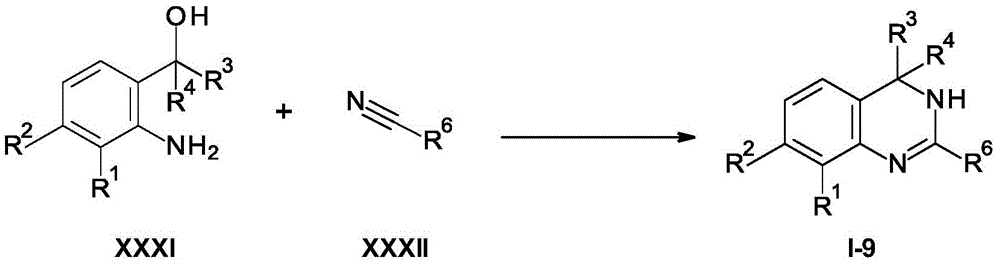
With suitable Lewis acids such as BF3.Et2O cyclization of a compound of formula XXXI with a compound of formula XXXII affords a compound of formula I-9.
The present invention also relates to a process for the preparation of a compound of formula (I), the process comprising at least one of the following steps:
(a) reducing the compound of formula (VI) with a reducing agent,

(b) esterifying a compound of formula (I-1) with MeI in the presence of a base,

(c) reducing the compound of formula (VII) with a reducing agent,

(d) reducing the compound of formula (VIII) with a reducing agent,

(e) reducing the compound of formula (X) with a reducing agent,

(f) deprotecting the compound of formula (XX) with an acid,

(g) a compound of the formula (XXII),


(h) reducing a compound of formula (XXIX) with a reducing agent,

(i) the compound of formula (XXXI),


wherein R is7Is hydroxy C1-6Alkyl or halo C1-6An alkyl group; r8Is hydrogen or C1-6An alkyl group; r9Is C1-6An alkyl group; g1Is C1-6An alkyl group; g2Is C1-6Alkyl or C3-7A cycloalkyl group.
The reducing agent in step (a), (c), (e), (g) or (h) may be, for example, NaBH4。
The base in step (b) may be, for example, K2CO3。
The reducing agent in step (d) may be, for example, LiAlH4。
The acid in step (f) may be, for example, TFA.
The Lewis acid in step (i) may be, for example, BF3.Et2O。
The compounds of formula (I) or formula (II) produced according to the above process are also an object of the present invention.
Pharmaceutical compositions and administration
The invention also relates to compounds of formula (I) or (II) for use as therapeutically active substances. Another embodiment provides pharmaceutical compositions or medicaments containing a compound of the invention and a therapeutically inert carrier, diluent or excipient, as well as methods of using the compounds of the invention to prepare such compositions and medicaments. In one example, a compound of formula (I) or formula (II) may be formulated for galenic administration by mixing at an appropriate pH at ambient temperature and at the desired purity with a physiologically acceptable carrier, i.e., a carrier that is non-toxic to the recipient at the dosages and concentrations used. The pH of the formulation depends primarily on the particular use and concentration of the compound, but is preferably in the range of about 3 to about 8. In one example, a compound of formula (I) or (II) is formulated in acetate buffer at pH 5. In another embodiment, the compound of formula (I) or formula (II) is sterile. The compounds may be stored, for example, as solid or amorphous compositions, as lyophilized formulations, or as aqueous solutions.
The compositions are formulated, metered and administered in a manner consistent with good medical practice. Factors to be considered in this context include the particular condition being treated, the particular mammal being treated, the clinical condition of the individual patient, the cause of the condition, the site of delivery of the agent, the method of administration, the timing of administration, and other factors known to the practitioner. The "effective amount" of the compound to be administered will depend on such considerations and is the minimum amount required to inhibit cccDNA in HBV patients, resulting in a reduction of HBsAg and HBeAg (HBV e antigen) in the serum. For example, the amount may be less than that which is toxic to normal cells or the mammal as a whole.
In one example, a pharmaceutically effective amount of a compound of the invention per dose administered parenterally will be in the range of about 0.1 to 100mg/kg of patient body weight per day, alternatively about 0.1 to 50mg/kg of patient body weight per day, typically with an initial range of 0.3 to 15 mg/kg/day of the compound used. In another embodiment, oral unit dosage forms such as tablets and capsules preferably contain from about 25mg to about 1000mg of a compound of the invention.
The compounds of the invention may be administered by any suitable means, including oral, topical (including buccal and sublingual), rectal, vaginal, transdermal, parenteral, subcutaneous, intraperitoneal, intrapulmonary, intradermal, intrathecal and epidural and intranasal, and, if desired for topical treatment, intralesional administration. Parenteral infusion includes intramuscular, intravenous, intraarterial, intraperitoneal or subcutaneous administration.
The compounds of the invention may be administered in any convenient form of administration, for example, tablets, powders, capsules, solutions, dispersions, suspensions, syrups, sprays, suppositories, gels, emulsions, patches and the like. Such compositions may contain components conventional in pharmaceutical formulations, for example, diluents, carriers, pH adjusting agents, sweeteners, fillers and other active agents.
A general formulation is prepared by mixing the compound of the present invention and a carrier or excipient. Suitable carriers and excipients are well known to those skilled in the art and are described, for example, in Ansel, Howard C. et al, Ansel's Pharmaceutical Delivery Forms and Drug Delivery systems, Philadelphia, Lippincott, Williams and Wilkins, 2004; gennaro, Alfonso R. et al, Remington, The Science and Practice of pharmacy Philadelphia, Lippincott, Williams & Wilkins, 2000; and Rowe, Raymond C.handbook of Pharmaceutical excipients Chicago, Pharmaceutical Press, 2005. The formulations may also contain one or more buffering agents, stabilizing agents, surfactants, wetting agents, lubricants, emulsifiers, suspending agents, preservatives, antioxidants, opacifying agents, glidants, processing aids, colorants, sweeteners, perfuming agents, flavoring agents, diluents, and other known additives to provide an aesthetically pleasing display of the drug (e.g., a compound of the present invention or a pharmaceutical composition thereof) or to aid in the preparation of the pharmaceutical product (e.g., a medicament).
An example of a suitable oral dosage form is a tablet containing about 25mg to 500mg of a compound of the invention complexed with about 90mg to 30mg of anhydrous lactose, about 5 to 40mg of croscarmellose sodium, about 5mg to 30mg polyvinylpyrrolidone (PVP) K30, and about 1mg to 10mg of magnesium stearate. The powdered ingredients are first mixed together and then mixed with the PVP solution. The resulting composition may be dried, granulated, mixed with magnesium stearate and compressed into tablet form using conventional equipment. An example of an aerosol formulation may be prepared by dissolving a compound of the invention (e.g. 5mg to 400mg) in a suitable buffer solution (e.g. phosphate buffer), if desired with the addition of a penetration enhancer (e.g. a salt such as sodium chloride). The solution may be filtered, for example, using a 0.2 micron filter, to remove impurities and contaminants.
Accordingly, one embodiment includes a pharmaceutical composition comprising a compound of formula (I) or (II), or a pharmaceutically acceptable salt thereof.
In a further embodiment, pharmaceutical compositions are included comprising a compound of formula (I) or (II), or a pharmaceutically acceptable salt thereof, and a pharmaceutically acceptable carrier or excipient.
Another embodiment includes a pharmaceutical composition comprising a compound of formula (I) or (II), or a pharmaceutically acceptable salt thereof, for use in treating HBV infection.
Indications and treatment methods
The compounds of the present invention can inhibit cccDNA and have anti-HBV activity. Thus, the compounds of the present invention are useful for treating or preventing HBV infection.
The invention relates to the use of a compound of formula (I) or (II) for the inhibition of cccDNA.
The invention also relates to the use of a compound of formula (I) or (II) for inhibiting HBeAg.
The invention further relates to the use of a compound of formula (I) or (II) for inhibiting HBsAg.
The present invention relates to the use of compounds of formula (I) or (II) for the inhibition of HBV DNA.
The present invention relates to the use of a compound of formula (I) or (II) for the treatment or prevention of HBV infection.
The use of a compound of formula (I) or (II) for the preparation of a medicament useful for the treatment or prevention of diseases associated with HBV infection is an object of the present invention.
The invention relates in particular to the use of compounds of formula (I) or (II) for the preparation of a medicament for the treatment or prevention of HBV infections.
Another embodiment includes a method for treating or preventing HBV infection comprising administering an effective amount of a compound of formula (I) or (II) or a pharmaceutically acceptable salt thereof.
Examples of the invention
The invention will be more fully understood by reference to the following examples. However, they should not be construed as limiting the scope of the invention.
Abbreviations used herein are as follows:
ACN: acetonitrile
BBr3: boron tribromide
DMAP: 4-dimethylaminopyridine
DMF: n, N-dimethylformamide
IC50: molar concentration of inhibitor that produces 50% of the maximum possible response of the inhibitor.
FBS: fetal bovine serum
H2O2: hydrogen peroxide
HPLC: high performance liquid chromatography
Ms (esi): mass spectrometry (electrospray ionization)
Ms: mesyl radical
obsd.: observed value
PE: petroleum ether
EtOAc: ethyl acetate
DCM: methylene dichloride
AcOH:Acetic acid
THF: tetrahydrofuran (THF)
TFA: trifluoroacetic acid
LiAlH4: lithium aluminum hydride
LiBH4: lithium borohydride
TEA triethylamine
NMP: n-methyl-2-pyrrolidone
POCl3: phosphorus oxychloride (V)
BF3.Et2O: boron trifluoride diethyl etherate
S-Phos: 2-dicyclohexylphosphino-2 ',6' -dimethoxybiphenyl
Ts: p-toluenesulfonyl group
δ: chemical shift
General experimental conditions
The intermediates and final compounds were purified by flash chromatography using one of the following instruments: i) biotage SP1 system and Quad 12/25Cartridge module. ii) silica gel column chromatography combi-flash chromatography. Silica gel brand and pore size: i) KP-SIL Particle size: 40-60 μm; ii) CAS registry number: silica gel: 63231-67-4, particle size: 47-60 micron silica gel; iii) ZCX by Qingdao ocean chemical, Inc., pore: 200-300 or 300-400.
Using X BridgeTM Perp C18(5μm,OBDTM30 x 100mm) column or SunAireTM Perp C18(5μm,OBDTM30 x 100mm) column, and the intermediate and the final compound were purified by preparative HPLC on a reverse phase column.
LC/MS spectra were obtained using Waters UPLC-SQD Mass. The standard LC/MS conditions were as follows (run time 3 min):
acid conditions: a: h of 0.1% formic acid and 1% acetonitrile2O solution; b: 0.1% formic acid in acetonitrile; alkaline conditions: a: 0.05% NH3·H2H of O2O solution; b: and (3) acetonitrile.
Mass Spectrum (MS): typically only ions representing the parent mass are reported, unless otherwise stated, the mass ions referred to are positive mass ions (M + H)+。
NMR spectra were obtained using Bruker Avance 400 MHz.
All reactions involving air sensitive reagents were carried out under an argon atmosphere. Reagents were purchased as is from commercial suppliers without further purification unless otherwise stated.
Preparation examples
Example 1: 2- (4-bromophenyl) -8-chloro-3, 4-dihydroquinazoline-4-carboxylic acid

Step 1: preparation of 1- (4-bromobenzoyl) -7-chloro-indoline-2, 3-dione

To a solution of 4-bromobenzoyl chloride (6.65g,30.29mmol) in pyridine (30.0mL,370.92mmol) was added 7-chloroisatin (5.0g,27.54mmol) at 0 deg.C, and the mixture was stirred at 90 deg.C for 2 hours. The mixture was adjusted to a pH of about 7 by addition of 1N HCl solution and the resulting mixture was extracted three times with EtOAc (100 mL). The combined organic layers were washed twice with brine (100mL) and Na2SO4Dried and concentrated in vacuo to give crude 1- (4-bromobenzoyl) -7-chloro-indoline-2, 3-dione (8.0g, 79.69% yield) as a brown solid which was used directly in the next step without further purification. MS observations (ESI)+)[(M+H2O+H)+]:383.9。
And 2, step: preparation of 2- (4-bromophenyl) -8-chloro-quinazoline-4-carboxylic acid

A mixture of 1- (4-bromobenzoyl) -7-chloro-indoline-2, 3-dione (1.0g,2.74mmol) and ammonium acetate (2.1g,27.4mmol) in ethanol (20mL) was stirred at 90 ℃ for 30 minutes under microwave conditions. The mixture was then concentrated in vacuo and the residue was suspended in water (40 mL). The mixture was then adjusted to a pH of about 7 by addition of 1N HCl solution. The resulting mixture was extracted three times with EtOAc (60mL) and the combined organic layers were taken over Na2SO4Dried and concentrated in vacuo. The residue was purified by silica gel column chromatography (eluting with DCM: MeOH 10:1 to 2: 1) to give 2- (4-bromophenyl) -8-chloro-quinazoline-4-carboxylic acid (260mg, 26.1% yield). MS observations (ESI)+)[(M+H)+]: 363.1. and step 3: preparation of 2- (4-bromophenyl) -8-chloro-3, 4-dihydroquinazoline-4-carboxylic acid

To a solution of 2- (4-bromophenyl) -8-chloro-quinazoline-4-carboxylic acid (150mg,0.41mmol) in methanol (5mL) in an ice-water bath was added NaBH4(418mg,12.4 mmol). The mixture was then stirred at room temperature for 2 hours. After the reaction was complete, the reaction mixture was then adjusted to pH about 7 by the addition of AcOH. The mixture was then concentrated in vacuo and the residue was purified by preparative HPLC to give 2- (4-bromophenyl) -8-chloro-3, 4-dihydroquinazoline-4-carboxylic acid (7mg, 4.4% yield) as an off-white solid.1H NMR (400MHz, DMSO-d6): δ ppm 12.97(s,1H),8.55(s,1H),7.99(d, J ═ 8.5Hz,2H),7.76(d, J ═ 8.6Hz,2H),7.36(dd, J ═ 7.9,1.1Hz,1H),7.21(d, J ═ 7.1Hz,1H),7.04(t, J ═ 7.7Hz,1H),5.26(s, 1H). MS observations (ESI)+)[(M+H)+]:365.0。
Example 2: 8-chloro-2-phenyl-3, 4-dihydroquinazoline-4-carboxylic acid
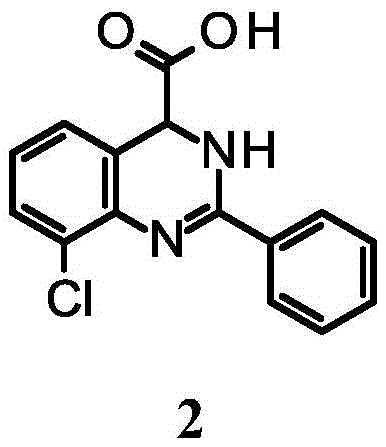
Example 2 was prepared in analogy to the procedure described for the preparation of example 1, by substituting benzoyl chloride for 4-bromobenzoyl chloride in step 1.1H NMR (400MHz, MeOH-d4): delta ppm7.82-7.92(m,2H),7.67-7.75(m,1H),7.50-7.61(m,2H),7.31-7.42(m,2H),7.13-7.23(m, 1H). MS observations (ESI)+)[(M+H)+]:287.2。
Example 3: 8-chloro-2- (4-chlorophenyl) -3, 4-dihydroquinazoline-4-carboxylic acid

Example 3 was prepared in analogy to the procedure described for the preparation of example 1, by substituting benzoyl chloride for 4-bromobenzoyl chloride in step 1.1H NMR (400MHz, DMSO-d6): delta ppm7.78-7.94(m,2H),7.57-7.69(m,2H),7.32-7.49(m,2H),7.13-7.34(m,1H),5.43-5.68(m, 1H). MS observations (ESI)+)[(M+H)+]:321.1。
Example 4: 8-chloro-2- (4-methoxyphenyl) -3, 4-dihydroquinazoline-4-carboxylic acid

Example 4 was prepared in analogy to the procedure described for the preparation of example 1, by substituting 4-bromobenzoyl chloride with 4-methoxybenzoyl chloride in step 1.1H NMR (400MHz, DMSO-d6) < delta > ppm 8.34-8.46(m,2H),7.91-8.06(m,2H),7.50(br dd, J ═ 12.7,8.0Hz,2H),7.28-7.37(m,1H),7.23(br d, J ═ 8.7Hz,2H),3.96(s, 3H). MS observations (ESI)+)[(M+H)+]:317.1。
Example 5: 2- (4-bromo-3-methyl-phenyl) -8-chloro-3, 4-dihydroquinazoline-4-carboxylic acid

In analogy to the procedure described for the preparation of example 1, example 5 was prepared by substituting 4-bromobenzoyl chloride with 4-bromo-3-methylbenzoyl chloride in step 1.1H NMR (400MHz, DMSO-d6): delta ppm 7.90-8.06(m,1H),7.70-7.86(m,2H),7.39-7.49(m,1H),7.28(br s,1H),7.13(br dd, J ═ 3.7,2.3Hz,1H),5.33-5.49(m,1H),2.46(s, 3H). MS observations (ESI)+)[(M+H)+]:379.4。
Example 6: 2- (3-bromophenyl) -7- (trifluoromethyl) -3, 4-dihydroquinazoline-4-carboxylic acid

Example 6 was prepared in analogy to the procedure described for the preparation of example 1, by substituting 6- (trifluoromethyl) indoline-2, 3-dione and 3-bromobenzoyl chloride for 7-chloroisatin and 4-bromobenzoyl chloride in step 1.1H NMR (400MHz, DMSO-d6) < delta > ppm 8.12-8.23(m,1H),7.99-8.04(m,1H),7.76-7.80(m,1H),7.45-7.55(m,2H),7.36-7.44(m,1H),7.33-7.35(m,1H),5.35-5.39(m, 1H). MS observations (ESI)+)[(M+H)+]:399.3。
Example 7: 2- (4-bromophenyl) -7- (trifluoromethyl) -3, 4-dihydroquinazoline-4-carboxylic acid

Example 7 was prepared in analogy to the procedure described for the preparation of example 1, by substituting 6- (trifluoromethyl) indoline-2, 3-dione for 7-chloroisatin chloride in step 1.1H NMR (400MHz, DMSO-d 6). delta.7.94-8.00 (m,2H),7.70-7.79(m,2H),7.26-7.50(m,3H),5.28-5.38(m, 1H). MS observations (ESI)+)[(M+H)+]:399.1。
Example 8: 8-chloro-2- (6-methoxy-3-pyridyl) -3, 4-dihydroquinazoline-4-carboxylic acid

Step 1: preparation of 7-chloro-1- (6-chloropyridine-3-carbonyl) indoline-2, 3-dione 8a

In analogy to the procedure described for the preparation of example 1, intermediate 8a was prepared by substituting 4-bromobenzoyl chloride with 6-chloropyridine-3-carbonyl chloride in step 1.
Step 2: preparation of ethyl 8-chloro-2- (6-chloro-3-pyridyl) quinazoline-4-carboxylate

A mixture of the compound 7-chloro-1- (6-chloronicotinyl) indoline-2, 3-dione (1.6g,4.98mmol) and ammonium acetate (3.84g,49.8mmol) in ethanol (100mL) was stirred at 90 ℃ for 30 minutes under microwave conditions. The mixture was then concentrated in vacuo and the residue was suspended in water (40 mL). The mixture was then adjusted to a pH of about 7 by addition of 1N HCl solution. The resulting mixture was extracted twice/three times with EtOAc (60mL), and the combined organic layers were extracted over Na2SO4Dried and concentrated in vacuo. The residue was purified by silica gel column chromatography (eluting with DCM: MeOH 10:1 to 2: 1) to give ethyl 8-chloro-2- (6-chloro-3-pyridinyl) quinazoline-4-carboxylate (0.28g, 16.1% yield) as a white solid.
And step 3: preparation of 8-chloro-2- (6-methoxy-3-pyridyl) quinazoline-4-carboxylic acid

A mixture of ethyl 8-chloro-2- (6-chloro-3-pyridinyl) quinazoline-4-carboxylate (0.25g, 718. mu. mol) and sodium methoxide (194mg,3.59mmol) in MeOH (20mL) was stirred at 75 ℃ for 16 h. Then mixing the materialsThe compound was concentrated in vacuo and the residue was suspended in water (20 mL). The mixture was then adjusted to a pH of about 7 by addition of 1N HCl solution. The resulting mixture was extracted twice/three times with EtOAc (30mL), and the combined organic layers were Na filtered2SO4Dried and concentrated in vacuo. The residue was used directly in the next step without further purification. MS observations (ESI)+)[(M+H)+]:316.1。
And 4, step 4: preparation of 8-chloro-2- (6-methoxy-3-pyridyl) -3, 4-dihydroquinazoline-4-carboxylic acid

To a solution of 8-chloro-2- (6-methoxy-3-pyridyl) quinazoline-4-carboxylic acid (150mg, 475. mu. mol) in MeOH (50mL) at room temperature was added LiBH4(1.03g,47.5 mmol). The mixture was then stirred at room temperature for 72 hours. The mixture was then adjusted to pH about 7 by the addition of AcOH, and the resulting mixture was then concentrated in vacuo. The residue was then purified by preparative HPLC to give 8-chloro-2- (6-methoxy-3-pyridinyl) -3, 4-dihydroquinazoline-4-carboxylic acid (7mg, 4.4% yield) as a white solid.1H NMR (400MHz, DMSO-d6): δ ppm 12.95-13.12(m,1H),8.82(d, J ═ 2.0Hz,1H),8.54(br d, J ═ 2.2Hz,1H),8.28-8.36(m,1H),7.31-7.45(m,1H),7.17-7.25(m,1H),6.91-7.07(m,2H),5.19-5.32(m,1H),3.88-3.97(s, 3H). MS observations (ESI)+)[(M+H)+]:318.1。
Example 9: 8-chloro-2- (6-ethoxy-3-pyridinyl) -3, 4-dihydroquinazoline-4-carboxylic acid

In analogy to the procedure described for the preparation of example 8, example 9 was prepared by substituting sodium ethoxide for sodium methoxide in step 3.1H NMR(400MHz,DMSO-d6):δ8.71-8.88(m,1H),8.28(br d,J=8.6Hz,1H),7.35-7.47(m,1H),7.20-7.32(m,1H),7.03-7.17(m,1H),6.90-7.03(m,1H),5.19-5.43(m,1H),4.35-449(m,2H),1.35ppm (t, J ═ 7.0Hz, 3H). MS observations (ESI)+)[(M+H)+]:332.1。
Example 10: 8-chloro-2- (6-pyrrolidin-1-yl-3-pyridyl) -3, 4-dihydroquinazoline-4-carboxylic acid

In analogy to the procedure described for the preparation of example 8, example 10 was prepared by replacing sodium methoxide with pyrrolidine in step 3.1H NMR (400MHz, DMSO-d6): delta 11.79-12.03(m,1H),10.91-11.15(m,1H),8.53-8.73(m,1H),7.91(br d, J ═ 8.8Hz,1H),7.56-7.66(m,1H),7.31-7.53(m,2H),6.68-6.80(m,1H),5.65-5.83(m,1H),1.91-2.07(m, 4H). MS observations (ESI)+)[(M+H)+]:357.2。
Example 11: 2- (4-bromophenyl) -8-chloro-4-methyl-3H-quinazoline-4-carboxylic acid
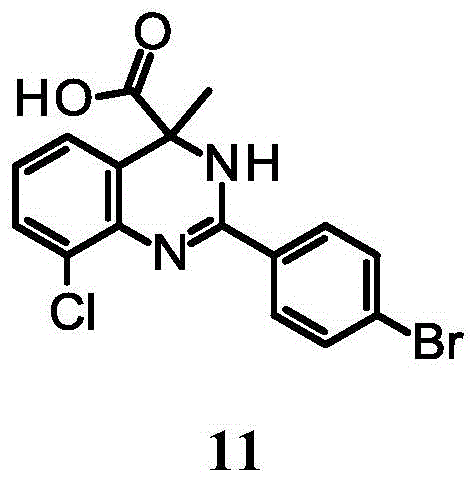
To an ice-bath cooled solution of 2- (4-bromophenyl) -8-chloroquinazoline-4-carboxylic acid (50mg, 138. mu. mol) in THF (10mL) was added dropwise MeMgBr (688. mu.l, 1mol/L, 688. mu. mol). The mixture was then stirred at room temperature for 2 hours. The mixture was then saturated with NH4The Cl solution was quenched and extracted with EtOAc (100 mL). The organic layer was then washed with brine, over Na2SO4Dried and concentrated in vacuo. The residue was then purified by preparative HPLC to give 2- (4-bromophenyl) -8-chloro-4-methyl-3H-quinazoline-4-carboxylic acid (14mg, 26.3% yield) as a white solid.1H NMR (400MHz, DMSO-d6): Δ 8.04-8.27(m,1H),7.91-8.04(m,2H),7.71-7.85(m,2H),7.43(br s,2H),6.95-7.14(m,1H),1.73-2.01ppm (m, 3H). MS observations (ESI)+)[(M+H)+]:379.0。
Example 12: 2- (4-bromophenyl) -8-chloro-3, 4-dihydroquinazoline-4-carboxylic acid methyl ester

To 2- (4-bromophenyl) -8-chloro-3, 4-dihydroquinazoline-4-carboxylic acid (200mg, 547. mu. mol) and K2CO3(227mg,1.64mmol) to a mixture in DMF (5mL) was added iodomethane (155mg,1.09mmol) and the reaction mixture was stirred at 80 ℃ for 1 h. After completion of the reaction, the mixture was diluted with EtOAc (100 mL). The mixture was then filtered, and the filtrate was concentrated in vacuo. The residue was then purified by preparative HPLC to give methyl 2- (4-bromophenyl) -8-chloro-3, 4-dihydroquinazoline-4-carboxylate (6mg, 2.83% yield) as a white solid.1H NMR (400MHz, DMSO-d6): delta 7.88-7.99(m,2H),7.68-7.75(m,2H),7.37-7.42(m,1H),7.26(d, J ═ 7.5Hz,1H),7.02-7.14(m,1H),5.37-5.42(m,1H),3.73(s, 3H). MS observations (ESI)+)[(M+H)+]:377.8。
Example 13: 2- (4-bromophenyl) -8-chloro-3, 4-dihydroquinazoline-4-carboxamide

Step 1: preparation of 2- (4-bromophenyl) -8-chloro-quinazoline-4-carboxamide

To a solution of 4-bromobenzoyl chloride (6.65g,30.29mmol) in pyridine (30.0mL,370.92mmol) was added 7-chloroisatin (5.0g,27.54mmol) under ice water conditions, and the mixture was stirred at 90 ℃ for 2 hours. The mixture was adjusted to a pH of about 7 by addition of 1N HCl solution and the resulting mixture was extracted three times with EtOAc (100 mL). The combined organic layers were washed twice with brine (100mL) and Na2SO4Dried, filtered and concentrated in vacuo to give crude 1- (4-bromobenzoyl) -7-chloro-indoline-2, 3-dione (8g, 79.69% yield) as a brown solid which was used directly in the next step without further purification. MS observations (ESI)+)[(M+H2O+H)+]:383.9。
A mixture of 1- (4-bromobenzoyl) -7-chloro-indoline-2, 3-dione (1g,2.74mmol) and ammonium acetate (2.11g,27.4mmol) in ethanol (20mL) was stirred at 90 ℃ for 30 minutes under microwave conditions. The mixture was then concentrated in vacuo and the residue was suspended in water (40 mL). The mixture was then adjusted to a pH of about 7 by addition of 1N HCl solution. The resulting mixture was extracted twice/three times with EtOAc (60mL), and the combined organic layers were extracted over Na2SO4Dried and concentrated in vacuo. The residue was purified by silica gel column chromatography (eluting with DCM: MeOH 10:1 to 2: 1) to give 2- (4-bromophenyl) -8-chloro-quinazoline-4-carboxamide (200mg, 20.1% yield). MS observations (ESI)+)[(M+H)+]:361.9。
Step 2: preparation of 2- (4-bromophenyl) -8-chloro-3, 4-dihydroquinazoline-4-carboxamide

To a solution of 2- (4-bromophenyl) -8-chloro-quinazoline-4-carboxamide (100mg,276 μmol) in MeOH (10mL) at room temperature was added LiBH4(120mg,5.52mmol), and then the mixture was stirred at room temperature for 5 hours. After the reaction was complete, the solution was adjusted to a pH of about 7 by the addition of AcOH. The resulting mixture was concentrated in vacuo and the residue was purified by preparative HPLC to give 2- (4-bromophenyl) -8-chloro-3, 4-dihydroquinazoline-4-carboxamide (10mg, 9.85% yield) as a white solid.1H NMR (400MHz, DMSO-d 6). delta.7.81-7.97 (m,4H),7.59-7.64(m,1H),7.49-7.55(m,1H),7.38-7.46(m,1H),5.55-5.64(m, 1H). MS observations (ESI)+)[(M+H)+]:363.8。
Example 14: 8-chloro-2- (4-methoxyphenyl) -3, 4-dihydroquinazoline-4-carboxamide

Similar to the procedure described for the preparation of example 13, byExample 14 was prepared using 4-methoxybenzoyl chloride instead of 4-bromobenzoyl chloride in step 1.1H NMR (400MHz, MeOH-d4): Δ 8.26-8.31(m,1H),7.77-7.83(m,2H),7.34-7.40(m,1H),7.24-7.31(m,1H),7.10-7.16(m,1H),6.98-7.06(m,2H),5.29-5.33(m,1H),3.77-3.84(s, 3H). MS observations (ESI)+)[(M+H)+]:316.2。
Example 15: 2- (3-bromophenyl) -7- (trifluoromethyl) -3, 4-dihydroquinazoline-4-carboxamide

Example 15 was prepared in analogy to the procedure described for the preparation of example 13, by substituting 6- (trifluoromethyl) indoline-2, 3-dione and 3-bromobenzoyl chloride for 7-chloroisatin and 4-bromobenzoyl chloride in step 1.1H NMR (400MHz, MeOH-d4): delta ppm 8.14-8.22(m,1H),8.00-8.05(m,1H),7.90-7.96(m,1H),7.49-7.76(m,4H),5.73ppm (s, 1H). MS observations (ESI)+)[(M+H)+]:398.1。
Example 16: 8-chloro-N- (2-hydroxyethyl) -2- (4-methoxyphenyl) -3, 4-dihydroquinazoline-4-carboxamide

Step 1: preparation of 7-chloro-1- (4-methoxybenzoyl) indoline-2, 3-dione

To a mixture of 7-chloroindoline-2, 3-dione (1g,5.51mmol) in pyridine (16mL) was added 4-methoxybenzoyl chloride (1.03g,6.06mmol) at 0 deg.C, and the mixture was stirred at 90 deg.C for 1 hour. The mixture was adjusted to a pH of about 7 by addition of 1N HCl solution and the resulting mixture was extracted three times with EtOAc (30 mL). The combined organic layers were washed twice with brine (30mL) and Na2SO4Drying, filtering and vacuum dryingTo give crude 7-chloro-1- (4-methoxybenzoyl) indoline-2, 3-dione (1.6g, 92% yield) as a brown solid which was used in the next step without further purification.
Step 2: preparation of 8-chloro-2- (4-methoxyphenyl) quinazoline-4-carboxylic acid

A mixture of the compound 7-chloro-1- (4-methoxybenzoyl) indoline-2, 3-dione (1.6g,5.07mmol) and ammonium acetate (3.97g,50.7mmol) in ethanol (20mL) was stirred at 90 ℃ for 30 minutes under microwave conditions. The mixture was then concentrated in vacuo and the residue was suspended in water (40 mL). The mixture was then adjusted to a pH of about 7 by addition of 1N HCl solution. The resulting mixture was extracted twice/three times with EtOAc (60mL), and the combined organic layers were extracted over Na2SO4Dried and concentrated in vacuo. The residue was purified by silica gel column chromatography (eluting with DCM: MeOH 10:1 to 2: 1) to give 8-chloro-2- (4-methoxyphenyl) quinazoline-4-carboxylic acid (250mg, 15.7% yield).
And step 3: preparation of 8-chloro-N- (2-hydroxyethyl) -2- (4-methoxyphenyl) quinazoline-4-carboxamide

To a solution of 8-chloro-2- (4-methoxyphenyl) quinazoline-4-carboxylic acid (250mg, 794. mu. mol) in DCM (20mL) was added oxalyl chloride (106mg, 71.5. mu.L, 834. mu. mol) dropwise. Then 2 drops of DMF were added and the reaction mixture was stirred at rt for 2 h.
The resulting solution was then added to a mixture of 2-aminoethanol (229mg, 226. mu.l, 3.75mmol) and triethylamine (152mg,1.5mmol) in DCM (10mL) at room temperature. After the addition, the mixture was stirred at room temperature for 30 minutes. The mixture was quenched with water (20mL) and extracted three times with EtOAc (30 mL). The combined organic layers were washed with brine and dried over anhydrous Na2SO4Drying and concentrating in vacuo to giveTo crude 8-chloro-N- (2-hydroxyethyl) -2- (4-methoxyphenyl) quinazoline-4-carboxamide (250mg, 91.3% yield) as a yellow solid, which was used directly in the next step without further purification. MS observations (ESI)+)[(M+H)+]:358.2。
And 4, step 4: preparation of 8-chloro-N- (2-hydroxyethyl) -2- (4-methoxyphenyl) -3, 4-dihydroquinazoline-4-carboxamide

To a solution of 8-chloro-N- (2-hydroxyethyl) -2- (4-methoxyphenyl) quinazoline-4-carboxamide (50mg, 140. mu. mol) in a mixed solvent of MeOH (5mL) and THF (5mL) at room temperature was added LiBH4(60.9mg,2.79 mmol). The mixture was stirred at room temperature for 1 hour. After completion of the reaction, the reaction was quenched by addition of AcOH (720mg,12mmol) and the mixture was concentrated in vacuo. The residue was then purified by preparative HPLC to give 8-chloro-N- (2-hydroxyethyl) -2- (4-methoxyphenyl) -3, 4-dihydroquinazoline-4-carboxamide (34mg, 64.2% yield) as a white powder.1H NMR (400MHz, MeOH-d4): delta ppm 8.60-8.82(m,1H),7.77-7.90(m,1H),7.49-7.62(m,1H),7.18-7.42(m,2H),5.49-5.64(m,1H),3.50-3.79(m,3H),3.33-3.50(m,2H),3.02-3.35ppm (m, 1H). MS observations (ESI)+)[(M+H)+]:360.2。
Example 17: [2- (4-bromophenyl) -7- (trifluoromethyl) -3, 4-dihydroquinazolin-4-yl ] -morpholino-methanone

In analogy to the procedure described for the preparation of example 16, example 17 was prepared by substituting 6- (trifluoromethyl) indoline-2, 3-dione, 4-bromobenzoyl chloride for 7-chloroisatin, 4-methoxybenzoyl chloride in step 1 and morpholine for 2-aminoethanol in step 3.1H NMR (400MHz, MeOH-d4): delta ppm 7.81-8.00(m,4H),7.63-7.72(m,1H),7.48-7.59(m,2H),6.25-6.43(m,1H),3.99(br s,2H),3.47-3.92(m, 6H). MS observationObserved value (ESI)+)[(M+H)+]:468.1。
Example 18: 2- (4-bromophenyl) -8-chloro-N- (2-chloroethyl) -3, 4-dihydroquinazoline-4-carboxamide

In analogy to the procedure described for the preparation of example 16, example 18 was prepared by substituting 4-bromobenzoyl chloride for 4-methoxybenzoyl chloride in step 1 and 2-chloroethylamine hydrochloride for 2-aminoethanol in step 3.1H NMR (400MHz, MeOH-d4): delta ppm 7.82-7.93(m,4H),7.55-7.64(m,1H),7.43-7.52(m,1H),7.37-7.44(m,1H),5.53-5.65(m,1H),3.51-3.75ppm (m, 4H). MS observations (ESI)+)[(M+H)+]:424.0。
Example 19: 3- [2- [4- [ 4-methyl-7- (trifluoromethyl) -3, 4-dihydroquinazolin-2-yl ] phenoxy ] ethoxy ] cyclobutanecarboxylic acid

Step 1: preparation of 2-benzyloxyethoxy (trimethyl) silane

To a cooled solution of 2-benzyloxyethanol (20.0g,131.4mmol) and TEA (20.0g,197.1mmol) in dichloromethane (200mL) at 0 deg.C was added chlorotrimethylsilane (17.1g,157.7mmol) and the mixture was then stirred at 25 deg.C for 16 h. After completion of the reaction, the mixture was concentrated in vacuo and the residue was purified by silica gel column chromatography (eluting with PE: EtOAc ═ 50:1 to 10: 1) to give 2-benzyloxyethoxy (trimethyl) silane (25.0g, 84.9% yield) as a colorless oil.
Step 2: preparation of methyl 3- (2-benzyloxyethoxy) cyclobutanecarboxylate

To 2-benzyloxyethoxy (trimethyl) silane (25.0g, 111.4mmol) and methyl 3-oxocyclobutanecarboxylate (CAS No: 4934-99-0, Cat: PB01390 (from PharmaBlock (NanJing)) R at-78 deg.C&Ltd,15.0g,117.0mmol) in dichloromethane (200mL) was added dropwise trimethylsilyl triflate (12.4g,55.7 mmol). After addition, the mixture was stirred at-78 ℃ for an additional 1 hour, and then triethylsilane (14.25g,122.57mmol) was added to the resulting mixture at-78 ℃. The resulting mixture was then warmed to room temperature and stirred for an additional 1 hour. After the reaction was complete, the mixture was taken up with saturated NH4The Cl solution, brine, dried over anhydrous sodium sulfate, and concentrated in vacuo. The residue was purified by silica gel column chromatography (eluting with PE/EtOAc ═ 100:1 to 50: 1) to give methyl 3- (2-benzyloxyethoxy) cyclobutanecarboxylate (28g, 95.1% yield) as a colorless oil. MS observations (ESI)+)[(M+H)+]:265.1.
And step 3: preparation of methyl 3- (2-hydroxyethoxy) cyclobutanecarboxylate

To a solution of methyl 3- (2-benzyloxyethoxy) cyclobutanecarboxylate (28.0g,105.9mmol) in MeOH (300.0mL) at room temperature was added wet Pd (OH)2(1.48g,10.6mmol), and then allowing the mixture to stand at room temperature in H2Hydrogenation was carried out under an atmosphere overnight. After completion of the reaction, the reaction was filtered through a pad of silica gel and the filtrate was concentrated in vacuo to give crude methyl 3- (2-hydroxyethoxy) cyclobutanecarboxylate (18g, 97.6% yield) as a colorless oil.
And 4, step 4: preparation of methyl 3- [2- (p-toluenesulfonyloxy) ethoxy ] cyclobutanecarboxylate

To a solution of methyl 3- (2-hydroxyethoxy) cyclobutanecarboxylate (5g,28.7mmol) and DMAP (5.26g,43.1mmol) in dichloromethane (80mL) at room temperature was added 4-toluene-1-sulfonyl chloride (6.02g,31.6mmol), and the mixture was then stirred at room temperature overnight. After completion of the reaction, the mixture was washed with 1N HCl (25mL), water (15mL), saturated NaHCO3The solution was washed with brine and concentrated in vacuo to give crude 3- [2- (p-toluenesulfonyloxy) ethoxy]Methyl cyclobutanecarboxylate (8.1g, 85.6% yield) as a colorless oil, which was used directly in the next step without further purification. MS observations (ESI)+)[(M+H)+]:329.2.
And 5: preparation of 2- (4-methoxyphenyl) -4-methyl-7- (trifluoromethyl) quinazoline

To 1- [ 2-amino-4- (trifluoromethyl) phenyl]To a solution of ethanone (4.0g,19.69mmol) in ACN (150mL) were added 4-methoxybenzaldehyde (6061.72mg,49.22mmol), tert-butyl hydroperoxide (17743.65mg,137.82mmol) and ammonium cerium (IV) nitrate (864.79mg,1.97 mmol). The mixture was stirred at 80 ℃ for 14 hours. The mixture was diluted with EtOAc (100mL) and the resulting suspension was filtered. The filtrate was then concentrated in vacuo and the residue was purified by silica gel column chromatography (eluting with PE: EtOAc 100:1 to 2: 1) to give 2- (4-methoxyphenyl) -4-methyl-7- (trifluoromethyl) quinazoline (3g, 46.91% yield) as a light yellow solid. MS observations (ESI)+)[(M+H)+]:319.1
Step 6: preparation of 4- [ 4-methyl-7- (trifluoromethyl) quinazolin-2-yl ] phenol

To a solution of 2- (4-methoxyphenyl) -4-methyl-7- (trifluoromethyl) quinazoline (3.0g,9.43mmol) in DCM (50mL) was added boron tribromide (9.45g,37.7 mmol). At 25 deg.C, mixing the mixtureThe mixture was stirred for 1 hour. After completion of the reaction, the mixture was quenched with ice water (30mL) and extracted three times with EtOAc (30 mL). The combined organic layers were washed with brine, dried over anhydrous sodium sulfate and concentrated in vacuo. The residue was purified by silica gel column chromatography (eluting with PE: EtOAc ═ 5:1 to 1:1) to give 4- [ 4-methyl-7- (trifluoromethyl) quinazolin-2-yl]Phenol (750mg, 25.11% yield) as a pale yellow solid. MS observations (ESI)+)[(M+H)+]:305.2。
And 7: preparation of 4- [ 4-methyl-7- (trifluoromethyl) -3, 4-dihydroquinazolin-2-yl ] phenol

To 4- [ 4-methyl-7- (trifluoromethyl) quinazolin-2-yl at 25 ℃]To a solution of phenol (700.0mg,2.3mmol) in THF (10 mL)/ethanol (10mL) was added sodium borohydride (3480.36mg,92mmol) portionwise. The mixture was stirred at 60 ℃ for 48 hours. The mixture was then quenched by water (30mL) and extracted three times with EtOAc (30 mL). The combined organic layers were washed with brine, dried over anhydrous sodium sulfate and concentrated in vacuo. The residue is then purified by silica gel column chromatography (eluting with PE: EtOAc ═ 5:1 to 1:1) to give 4- [ 4-methyl-7- (trifluoromethyl) -3, 4-dihydroquinazolin-2-yl]Phenol (700mg, 100% yield) as a white solid. MS observations (ESI)+)[(M+H)+]:307.2。
And 8: preparation of 2- (4-hydroxyphenyl) -4-methyl-7- (trifluoromethyl) -4H-quinazoline-3-carboxylic acid tert-butyl ester

To 4- [ 4-methyl-7- (trifluoromethyl) -3, 4-dihydroquinazolin-2-yl]To a solution of phenol (700mg,2.3mmol) and triethylamine (0.3mL,2.12mmol) in THF (10mL) was added di-tert-butyl dicarbonate (1157.95mg,5.31 mmol). The mixture was stirred at 25 ℃ for 4 hours. After completion of the reaction, the mixture was concentrated in vacuo to give crude 2-, (b 2)4-hydroxyphenyl) -4-methyl-7- (trifluoromethyl) -4H-quinazoline-3-carboxylic acid tert-butyl ester (710mg, 76.44% yield) as a white solid, which was used directly in the next step without further purification. MS observations (ESI)+)[(M+H)+]:407.0。
And step 9: preparation of methyl 3- [2- [4- [ 4-methyl-7- (trifluoromethyl) -3, 4-dihydroquinazolin-2-yl ] phenoxy ] ethoxy ] cyclobutanecarboxylate

To the solution of tert-butyl 2- (4-hydroxyphenyl) -4-methyl-7- (trifluoromethyl) -4H-quinazoline-3-carboxylate (121.2mg,0.370mmol) and K2CO3(153.03mg,1.11mmol) in ACN (2 mL)/methanol (2mL) was added 3- [2- (p-toluenesulfonyloxy) ethoxy]Cyclobutanecarboxylic acid methyl ester (150.0mg,0.370 mmol). The mixture was stirred at 60 ℃ for 6 hours. After completion of the reaction, the mixture was concentrated in vacuo to give crude 3- [2- [4- [ 4-methyl-7- (trifluoromethyl) -3, 4-dihydroquinazolin-2-yl]Phenoxy radical]Ethoxy radical]Methyl cyclobutanecarboxylate (180mg, 0.390mmol, 105.45% yield) as a white solid, which was used directly in the next step without further purification. MS observations (ESI)+)[(M+H)+]:462.0。
Step 10: preparation of 3- [2- [4- [ 4-methyl-7- (trifluoromethyl) -3, 4-dihydroquinazolin-2-yl ] phenoxy ] ethoxy ] cyclobutanecarboxylic acid

To 3- [2- [4- [ 4-methyl-7- (trifluoromethyl) -3, 4-dihydroquinazolin-2-yl]Phenoxy radical]Ethoxy radical]To a solution of methyl cyclobutanecarboxylate (180.0mg,0.390mmol) in THF (3 mL)/water (3mL) was added LiOH (0.01mL,1.17 mmol). The mixture was stirred at room temperature for 4 hours. The mixture was then adjusted to pH about 6 by addition of 6M HCl and extracted three times with EtOAc (20 mL). The combined organic layers were washed with brine and dried over anhydrous Na2SO4Is driedAnd then concentrated in vacuo. The residue was purified to give 3- [2- [4- [ 4-methyl-7- (trifluoromethyl) -3, 4-dihydroquinazolin-2-yl]Phenoxy radical]Ethoxy radical]Cyclobutanecarboxylic acid (30mg, 17.2% yield) as a white solid.1H NMR (400MHz, MeOH-d4): δ ppm 12.17(br s,1H),10.75(br s,1H),7.96-7.86(m,1H),7.92(d, J ═ 8.9Hz,1H),7.72-7.66(m,1H),7.61(d, J ═ 9.4Hz,2H),7.29(d, J ═ 8.4Hz,2H),5.24(q, J ═ 6.1Hz,1H),4.28-4.21(m,2H),3.95(td, J ═ 7.4,14.6Hz,1H),3.74-3.64(m,2H),2.98-2.88(m,1H),2.63-2.59(m,1H), 2.47-2.36.36 (m,2H),2.23, 2H (m,1H), 2.06-1H), 1H (m,1H), 2.06-2.06 (m, 1H). MS observations (ESI)+)[(M+H)+]:449.2。
Example 20: 2- [2- [4- [ 4-methyl-7- (trifluoromethyl) -3, 4-dihydroquinazolin-2-yl ] phenoxy ] ethoxy ] acetic acid

Step 1: preparation of methyl 2- (2-benzyloxyethoxy) acetate

To a mixture of NaOH (10M,300.0mL), methyl 2-bromoacetate (23.5g,120.3mmol) and tetrabutylammonium iodide (8.8g,24.06mmol) in DCM (300mL) was added 3-benzyloxypropan-1-ol (12.99mL,120.32mmol) at 30 deg.C and the mixture was stirred at 30 deg.C for 72 hours. After completion of the reaction, the organic phase was separated and the aqueous phase was extracted twice with DCM (150 mL). The combined organic layers were washed with brine, over MgSO4Dried and concentrated in vacuo. The residue was purified by silica gel column chromatography (eluting with PE: EtOAc ═ 3: 1) to give methyl 2- (2-benzyloxyethoxy) acetate (21.3g, 63.3% yield) as a colorless liquid. MS observations (ESI)+)[(M+Na)+]:224.1.
Step 2: preparation of methyl 2- [2- (p-toluenesulfonyloxy) ethoxy ] acetate

In analogy to the procedure described for the preparation of compound 19d, compound 20b was prepared by substituting methyl 3- (2-benzyloxyethoxy) cyclobutanecarboxylate in step 3 with methyl 2- (2-benzyloxyethoxy) acetate as starting material. MS observations (ESI)+)[(M+H)+]:289.1.
And step 3: preparation of 2- [2- [4- [ 4-methyl-7- (trifluoromethyl) -3, 4-dihydroquinazolin-2-yl ] phenoxy ] ethoxy ] acetic acid

In analogy to the procedure described for the preparation of example 19 by using 2- [2- (p-toluenesulfonyloxy) ethoxy]Methyl acetate instead of 3- [2- (p-toluenesulfonyloxy) ethoxy in step 9]Methyl cyclobutanecarboxylate to prepare example 20.1H NMR (400MHz, MeOH-d4): δ ppm 12.17(br s,1H),10.70-10.85(m,1H),7.87-8.01(m,2H),7.68-7.74(m,1H),7.58-7.64(m,2H),7.23-7.35(m,2H),5.07-5.31(m,1H),4.21-4.36(m,2H),4.03-4.20(m,2H),3.80-3.96(m,2H),1.62(d, J ═ 6.7Hz, 3H). MS observations (ESI)+)[(M+H)+]:409.1。
Example 21: cis-3- [2- [4- (8-chloro-4-methyl-3, 4-dihydroquinazolin-2-yl) phenoxy ] ethoxy ] cyclobutanecarboxylic acid

Step 1: preparation of cis-3- (2-benzyloxyethoxy) cyclobutanecarboxylic acid tert-butyl ester

To a cooled solution of trifluoromethanesulfonic anhydride (27.8g,98.56mmol) and 2, 6-lutidine (11.48mL,98.56mmol) in DCM (100mL) was added 2- (benzyloxy) ethanol (10.0g,65.71mmol) and the reaction mixture was stirred at-30 ℃ for 1 h. The reaction mixture was washed twice with brine (30mL) and the organic layer was concentrated in vacuo to give crude 2- (benzyloxy) ethyl trifluoromethanesulfonate (18.7g,65.7mmol) as a yellow oil.
To a 0 ℃ cooled solution of cis-3-hydroxycyclobutanecarboxylic acid tert-butyl ester (CAS No: 939768-64-6, catalog No: B253665, from Bepharm Ltd., 11.3g, 65.71mmol) in THF (150mL) was added NaH (3942.44mg,98.56mmol) and the mixture was stirred at room temperature for 1 hour. To the resulting solution was added freshly prepared 2- (benzyloxy) ethyl trifluoromethanesulfonate (18.7g,65.7mmol) and the mixture was stirred at room temperature for 2 hours. The reaction was then quenched with ice water (100mL) and the resulting mixture was extracted twice with EtOAc (200 mL). The combined organic layers were washed with Na2SO4Dried and concentrated in vacuo. The residue was purified by silica gel column chromatography (eluting with PE: EtOAc 100:1 to 2: 1) to give cis-3- (2-benzyloxyethoxy) cyclobutanecarboxylic acid tert-butyl ester (10.0g, 49.67% yield) as a yellow oil.1H NMR(CDCl3400MHz) < delta > ppm 1.44(s,9H),2.17(m,2H),2.54-2.42(m,3H),3.55-3.50(m,2H),3.62-3.57(m,2H),3.99-3.83(m,1H),4.57(s,2H),7.30-7.27(m,1H),7.34(d, J ═ 4.3Hz, 4H). MS observations (ESI)+)[(M+Na)+]:329.1.
Step 2: preparation of cis-3- [2- (p-toluenesulfonyloxy) ethoxy ] cyclobutanecarboxylic acid tert-butyl ester

In analogy to the procedure described for the preparation of compound 19d, compound 21b was prepared by using cis-3- (2-benzyloxyethoxy) cyclobutanecarboxylic acid tert-butyl ester as starting material instead of methyl 3- (2-benzyloxyethoxy) cyclobutanecarboxylate in step 4. MS observations (ESI)+)[(M+H)+]:371.2.
And step 3: preparation of cis-3- [2- [4- (8-chloro-4-methyl-3, 4-dihydroquinazolin-2-yl) phenoxy ] ethoxy ] cyclobutanecarboxylic acid

In analogy to the procedure described for the preparation of example 19, by substituting 1- [ 2-amino-4- (trifluoromethyl) phenyl) ethanone for 1- (2-amino-3-chloro-phenyl) ethanone in step 5]Ethanone and in step 9 with cis-3- [2- (p-toluenesulfonyloxy) ethoxy]Cyclobutanecarboxylic acid tert-butyl ester instead of 3- [2- (p-toluenesulfonyloxy) ethoxy]Methyl cyclobutanecarboxylate to prepare example 21.1H NMR (400MHz, MeOH-d4): δ ppm 7.69-7.84(m,2H),7.41(dd, J ═ 7.8,1.5Hz,1H),7.19-7.31(m,2H),7.09-7.17(m,2H),4.97-5.11(m,1H),4.11-4.20(m,2H),3.86-3.98(m,1H),3.63-3.73(m,2H),2.52-2.66(m,1H),2.37-2.51(m,2H),1.93-2.11(m,2H),1.58ppm (d, J ═ 6.7Hz, 3H). MS observations (ESI)+)[(M+H)+]:414.9。
Example 22: 3- [2- [4- (8-chloro-4-methyl-3, 4-dihydroquinazolin-2-yl) -3-methyl-phenoxy ] ethoxy ] cyclobutanecarboxylic acid

Step 1: preparation of 4- (8-chloro-4-methyl-3, 4-dihydroquinazolin-2-yl) -3-methyl-phenol

In analogy to the procedure described for the preparation of compound 19g, by substituting 1- [ 2-amino-4- (trifluoromethyl) phenyl ] in step 5 with 1- (2-amino-3-chloro-phenyl) ethanone and 4-methoxy-2-methyl-benzaldehyde as starting materials]Ethanone and 4-methoxybenzaldehyde to prepare compound 22 a. MS observations (ESI)+)[(M+H)+]:287.1。
Step 2: preparation of 3- [2- [4- (8-chloro-4-methyl-3, 4-dihydroquinazolin-2-yl) -3-methyl-phenoxy ] ethoxy ] cyclobutanecarboxylic acid

In analogy to the procedure described for the preparation of example 19, by substituting 4- (8-chloro-4-methyl-3, 4-dihydroquinazolin-2-yl) -3-methyl-phenol for 4- [ 4-methyl-7- (trifluoromethyl) -3, 4-dihydroquinazolin-2-yl) in step 8]Phenol to prepare example 22.1H NMR (400MHz, DMSO-d6) < delta > ppm7.81-7.92(m,1H),7.31-7.40(m,1H),7.23(dd, J ═ 7.8,1.5Hz,1H),6.92-7.08(m,2H),6.82-6.89(m,2H),4.68-4.80(m,1H),4.05-4.21(m,2H),3.85-4.00(m,1H),3.53-3.71(m,2H),2.88-2.96(m,1H),2.45-2.48(s,3H),2.33-2.43(m,2H),2.09-2.21(m,1H),1.90-2.03(m,1H),1.22-1.45(m, 3H). MS observations (ESI)+)[(M+H)+]:429.5。
Example 23: 2- [2- [4- (8-chloro-4-methyl-3, 4-dihydroquinazolin-2-yl) phenoxy ] ethoxy ] acetic acid

In analogy to the procedure described for the preparation of example 19, by substituting 4- [ 4-methyl-7- (trifluoromethyl) -3, 4-dihydroquinazolin-2-yl) -3-methyl-phenol for 4- (8-chloro-4-methyl-3, 4-dihydroquinazolin-2-yl) -3-methyl-phenol in step 8]Phenol and 2- [2- (p-toluenesulfonyloxy) ethoxy group in step 9]Methyl acetate instead of 3- [2- (p-toluenesulfonyloxy) ethoxy]Methyl cyclobutanecarboxylate to prepare example 23.1H NMR (400MHz, MeOH-d4): δ ppm 7.74(d, J ═ 8.9Hz,2H),7.34-7.41(m,1H),7.08-7.28(m,4H),4.96-5.06(m,1H),4.18-4.25(m,2H),3.89-3.96(m,2H),3.77-3.86(m,2H),1.55(d, J ═ 6.7Hz, 3H). MS observations (ESI)+)[(M+H)+]:375.1。
Example 24: 2- (3-bromophenyl) -3, 4-dimethyl-7- (trifluoromethyl) -4H-quinazoline

Step 1: preparation of N- [ 2-acetyl-5- (trifluoromethyl) phenyl ] -3-bromobenzamide

To a solution of 1- (2-amino-4- (trifluoromethyl) phenyl) ethanone (1.1g,5.41mmol) in DCM (12mL) was added N-methylmorpholine (1.1g,1.19mL,10.8mmol) and 3-bromobenzoyl chloride (1.54g,925 μ l,7.04mmol) at room temperature and the mixture was then stirred at room temperature overnight. After completion of the reaction, the mixture was diluted with DCM (20mL) and washed with water (10 mL). The organic layer was concentrated in vacuo and the residue was purified by silica gel column chromatography (with PE: EtOAc ═ 5:1) to give N- [ 2-acetyl-5- (trifluoromethyl) phenyl ] N]-3-bromo-benzamide (1.9g, 90.9% yield) as a light gray solid.1H NMR(400MHz,CDCl3):δppm 12.75(br s,1H),9.26-9.37(m,1H),8.18-8.29(m,1H),8.06-8.18(m,1H),7.94-8.04(m,1H),7.67-7.80(m,1H),7.35-7.52(m,2H),2.73-2.89(m,3H)。(ESI+)[(M+H)+]:387.1。
Step 2: preparation of 2- (3-bromophenyl) -3, 4-dimethyl-7- (trifluoromethyl) -4H-quinazoline

To N- [ 2-acetyl-5- (trifluoromethyl) phenyl]-3-bromo-benzamide (100mg,259 μmol) to a solution in EtOH (4mL) methylamine (1.29mL,2.59mmol) was added and then the mixture was stirred at 90 ℃ for 1 hour. LC-MS showed complete conversion of N- (2-acetyl-5- (trifluoromethyl) phenyl) -3-bromobenzamide. Adding NaBH to the resulting mixture4(98mg, 2.59mmol) and the mixture was stirred at 90 ℃ overnight. The mixture was quenched with AcOH (0.2mL) and diluted with water (5 mL). The mixture was then extracted three times with EtOAc (20 mL). The combined organic layers were washed with brine and dried over anhydrous Na2SO4Dried and then concentrated in vacuo. The residue was purified by preparative HPLC to give 2- (3-bromophenyl) -3, 4-dimethyl-7- (trifluoromethyl) -4H-quinazoline (29mg,28.9% yield) as a colorless semi-solid.1H NMR(400MHz,MeOH-d4):δppm 8.42(s,1H),7.78-7.85(m,2H),7.60-7.66(m,1H),7.52-7.56(m,1H),7.46-7.52(m,1H),7.32-7.39(m,2H),4.92-5.01(m,1H),3.14-3.20(m,3H),1.59(d,J=6.5Hz,3H)。(ESI+)[(M+H)+]:383.5。
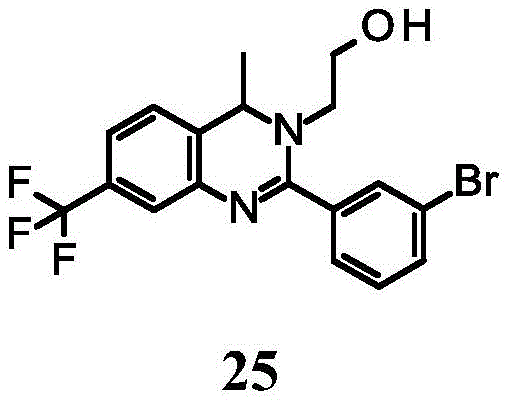
Example 25: 2- [2- (3-bromophenyl) -4-methyl-7- (trifluoromethyl) -4H-quinazolin-3-yl ] ethanol
In analogy to the procedure described for the preparation of example 24, example 25 was prepared by substituting 2-aminoethanol for methylamine in step 2.1H NMR (400MHz, MeOH-d4): delta ppm 7.75-7.78(m,1H),7.69-7.73(m,1H),7.55-7.60(m,1H),7.43-7.49(m,1H),7.39-7.43(m,1H),7.34-7.37(m,1H),7.25-7.29(m,1H),4.90-4.95(m,1H),3.59-3.67(m,2H),3.50-3.59(m,2H),3.39-3.46(m,1H),1.46(d, J ═ 6.5Hz, 3H). MS observations (ESI)+)[(M+H)+]:413.2。
Example 26: 2- [2- [4- (8-chloro-3, 4-dimethyl-4H-quinazolin-2-yl) phenoxy ] ethoxy ] acetic acid

Step 1: preparation of 8-chloro-2- (4-methoxyphenyl) -3, 4-dimethyl-4H-quinazoline

Compound 26a was prepared in analogy to the procedure described for the preparation of example 24, by substituting 1- (2-amino-4- (trifluoromethyl) phenyl) ethanone and 3-bromobenzoyl chloride with 1- (2-amino-3-chloro-phenyl) ethanone and 4-methoxybenzoyl chloride in step 1. MS observations (ESI)+)[(M+H)+]:301.2。
Step 2: preparation of 4- (8-chloro-3, 4-dimethyl-4H-quinazolin-2-yl) phenol

A solution of 8-chloro-2- (4-methoxyphenyl) -3, 4-dimethyl-4H-quinazoline (200mg,0.67mmol) in concentrated HBr acid (5mL) was stirred at 140 ℃ for 5 hours. After completion of the reaction, the mixture was concentrated in vacuo to give crude 4- (8-chloro-3, 4-dimethyl-4H-quinazolin-2-yl) phenol (190mg, 100% yield), which was used directly in the next step without further purification. MS observations (ESI)+)[(M+H)+]:287.6。
And step 3: preparation of methyl 2- [2- [4- (8-chloro-3, 4-dimethyl-4H-quinazolin-2-yl) phenoxy ] ethoxy ] acetate

To a mixture of 4- (8-chloro-3, 4-dimethyl-4H-quinazolin-2-yl) phenol (60mg, 209. mu. mol) and methyl 2- (2- (tosyloxy) ethoxy) acetate (72.4mg, 251. mu. mol) in DMF (5mL) was added K2CO3(57.8mg, 418. mu. mol) and the mixture was stirred at 80 ℃ for 2 hours. The mixture was then diluted with water (15mL) and extracted three times with EtOAc (20 mL). The combined organic layers were then concentrated in vacuo to give crude 2- [2- [4- (8-chloro-3, 4-dimethyl-4H-quinazolin-2-yl) phenoxy]Ethoxy radical]Methyl acetate (84.3mg, 100% yield) as a yellow solid, which was used directly in the next step without further purification. MS observations (ESI)+)[(M+H)+]:403.1。
And 4, step 4: preparation of 2- [2- [4- (8-chloro-3, 4-dimethyl-4H-quinazolin-2-yl) phenoxy ] ethoxy ] acetic acid

To 2- [2- [4- (8-chloro-3, 4-dimethyl-4H-quinazolin-2-yl) phenoxy group]Ethoxy radical]Methyl acetate (50mg, 124)μ mol) to a solution of THF (4mL) and water (1mL) in a mixed solvent, LiOH (14.9mg,621 μmol) was added. The mixture was stirred at room temperature overnight. After completion of the reaction, the reaction was quenched by addition of AcOH (60mg) and concentrated in vacuo. The residue was then purified by preparative HPLC to give 2- [2- [4- (8-chloro-3, 4-dimethyl-4H-quinazolin-2-yl) phenoxy ] ethyl acetate]Ethoxy radical]Acetic acid (15mg, 31.1% yield) as a white solid.1H NMR (400MHz, MeOH-d4) < delta > ppm 11.76-12.00(m,1H),7.72-7.81(m,2H),7.51-7.60(m,1H),7.37(s,1H),7.28-7.33(m,1H),7.21-7.29(m,2H),6.46-6.66(m,1H),5.03-5.22(m,1H),4.23-4.32(m,2H),3.69-3.92(m,2H),3.31-3.34(s,3H),1.53-1.60(m, 3H). MS observations (ESI)+)[(M+H)+]:389.2。
Example 27: 2- [4- (8-chloro-3, 4-dihydroquinazolin-2-yl) phenoxy ] ethanol

Step 1: preparation of 4- (8-chloroquinazolin-2-yl) phenol

A mixture of 2-amino-3-chlorobenzaldehyde (467mg,3mmol) and 4-hydroxybenzamidine hydrochloride (518mg,3mmol) in NMP (5mL) was stirred at 190 ℃ for 2 h. After cooling to room temperature, the mixture was poured into water (30mL) and the resulting suspension was filtered. The filter cake was collected and dried in vacuo to give 4- (8-chloroquinazolin-2-yl) phenol (770mg, 100% yield) as a white solid, which was used directly in the next step without further purification. MS observations (ESI)+)[(M+H)+]:257.1。
And 2, step: preparation of methyl 2- [4- (8-chloroquinazolin-2-yl) phenoxy ] acetate

To 4- (8-chloroquine)Oxazolin-2-yl) phenol (770mg,3mmol) and K2CO3(622mg,4.5mmol) to a mixture in ACN (10mL) was added methyl 2-bromoacetate (459mg,3mmol) and the mixture was stirred at 80 ℃ for 3 hours. The mixture was then filtered and the filtrate was concentrated in vacuo and the residue was purified by silica gel column chromatography (eluting with PE: EtOAc ═ 100:10 to 100: 50) to give 2- [4- (8-chloroquinazolin-2-yl) phenoxy]Methyl acetate (220mg, 22.3% yield) as a pale yellow solid. MS observations (ESI)+)[(M+H)+]:329.1。
And step 3: preparation of 2- [4- (8-chloro-3, 4-dihydroquinazolin-2-yl) phenoxy ] ethanol

To 2- [4- (8-chloroquinazolin-2-yl) phenoxy group at 0 DEG C]LiAlH was added to a solution of methyl acetate (200mg, 608. mu. mol) in THF (5mL)4(34.6mg, 913. mu. mol), and the mixture was stirred at 0 ℃ for 2 hours. The reaction was then quenched by the addition of 0.5mL of 15% NaOH solution. The resulting mixture was then filtered and the solid was washed twice with EtOAc (10 mL). The combined filtrates were concentrated in vacuo and the residue was purified by silica gel column chromatography (eluting with PE: EtOAc ═ 10:1 to 1: 10) to give 2- [4- (8-chloro-3, 4-dihydroquinazolin-2-yl) phenoxy]Ethanol (80mg, 42.6% yield) as a white solid.1H NMR (400MHz, MeOH-d4): δ ppm 7.95-8.01(m,2H),7.85-7.91(m,1H),7.23(dd, J ═ 7.3,2.1Hz,1H),6.99-7.06(m,2H),6.86-6.97(m,2H),4.88-4.94(m,1H),4.55-4.64(m,2H),4.02-4.10(m,2H),3.70-3.77(m, 2H). MS observations (ESI)+)[(M+H)+]:303.1。
Example 28: 2- [4- (8-chloro-4-methyl-3, 4-dihydroquinazolin-2-yl) phenoxy ] ethanol

Step 1: preparation of N- (2-acetyl-6-chloro-phenyl) -2,2, 2-trichloroacetamide

To a solution of 1- (2-amino-3-chlorophenyl) ethanone (5.5g,32.4mmol) and DMAP (0.7g,5.73mmol) in DCM (50mL) was added 2,2, 2-trichloroacetyl chloride (7.08g,38.9mmol) dropwise at 0 ℃. After the addition, the mixture was stirred at 0 ℃ for a further 2 hours. The mixture was then diluted with EtOAc (100mL) and the resulting solution was washed sequentially with water (30mL) and 0.5N HCl (30mL), brine (30 mL). The organic layer was separated and purified over anhydrous Na2SO4Dried and concentrated in vacuo, then the residue was purified by silica gel column chromatography (eluting with PE: EtOAc ═ 10:1 to 2: 1) to give N- (2-acetyl-6-chloro-phenyl) -2,2, 2-trichloro-acetamide (9.8g, 98.2% yield) as a light yellow solid.
Step 2: preparation of 8-chloro-4-methyl-1H-quinazolin-2-one

To a solution of N- (2-acetyl-6-chloro-phenyl) -2,2, 2-trichloroacetamide (9.8g,31.2mmol) in THF (20mL) was added ammonium hydroxide (13.5g,385 mmol). The mixture was stirred at 40 ℃ overnight. The mixture was then concentrated in vacuo to give crude 8-chloro-4-methyl-1H-quinazolin-2-one (6.1g, 100% yield) as a white solid, which was used directly in the next step without further purification. MS observations (ESI)+)[(M+H)+]:195.4。
And step 3: preparation of 2, 8-dichloro-4-methyl-quinazoline

To 8-chloro-4-methyl-1H-quinazolin-2-one (3.5g,18mmol) in POCl3To the suspension in (19.7g,12mL,129mmol) was added N, N-diethylaniline (2.68g,18mmol), and the mixture was stirred at 80 ℃ for 3 hours. After cooling to room temperature, the mixture was carefully quenched with ice waterAnd (6) extinguishing. The resulting mixture was then extracted three times with DCM (30 mL). The combined organic layers were concentrated in vacuo and the residue was purified by silica gel column chromatography (eluting with PE: EtOAc ═ 10:1 to 2: 1) to give 2, 8-dichloro-4-methyl-quinazoline (2.4g, 62.6% yield) as a light yellow solid. MS observations (ESI)+)[(M+H)+]:211.1。
And 4, step 4: preparation of 2- [4- (8-chloro-4-methyl-quinazolin-2-yl) phenoxy ] ethanol
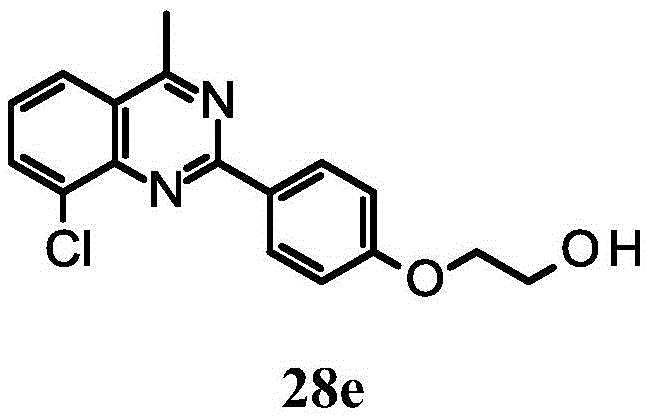
To a solution of 2, 8-dichloro-4-methyl-quinazoline (800mg,3.75mmol), 2- (4- (4,4,5, 5-tetramethyl-1, 3, 2-dioxaborolan-2-yl) phenoxy) ethanol (992mg,3.75mmol), Pd (Ph)3P)4(130mg, 113. mu. mol) and Cs2CO3A mixture of (1.84g,5.63mmol) in a mixed solvent of toluene (7mL), MeOH (1mL) and water (1mL) was charged with N2And stirred at 100 ℃ for 3 hours under microwave conditions. The reaction was then diluted with water (10mL) and extracted three times with EtOAc (20 mL). The combined organic layers were concentrated in vacuo and the residue was purified by silica gel column chromatography (eluting with PE: EtOAc ═ 10:1 to 2: 1) to give 2- [4- (8-chloro-4-methyl-quinazolin-2-yl) phenoxy]Ethanol (500mg, 46.5% yield) as a pale yellow solid. MS observations (ESI)+)[(M+H)+]:315.1。
And 5: preparation of 2- [4- (8-chloro-4-methyl-3, 4-dihydroquinazolin-2-yl) phenoxy ] ethanol

To 2- [4- (8-chloro-4-methyl-quinazolin-2-yl) phenoxy group at 0 ℃]LiAlH was added to a solution of ethanol (200mg, 636. mu. mol) in THF (5mL)4(34.6mg, 913. mu. mol), and the mixture was stirred at 0 ℃ for 2 hours. The reaction was then quenched by the addition of 0.5mL of 15% NaOH solution. The resulting mixture was then filtered and the solid was washed twice with EtOAc (10 mL). Filtering the combined filtrateThe solution was concentrated in vacuo and the residue was purified by silica gel column chromatography (eluting with PE: EtOAc ═ 10:1 to 1: 10) to give 2- [4- (8-chloro-4-methyl-3, 4-dihydroquinazolin-2-yl) phenoxy ] 2- [4- (8-chloro-4-methyl-3, 4-dihydroquinazolin-2-yl)]Ethanol (105mg, 52.2% yield) as a white solid.1H NMR (400MHz, DMSO-d6) < delta > ppm 7.96-8.08(m,3H),7.18-7.30(m,1H),6.98-7.09(m,3H),6.90-6.97(m,1H),4.89-4.93(m,1H),4.70-4.81(m,1H),4.04-4.12(m,2H),3.65-3.80(m,2H),1.33(d, J ═ 6.4Hz, 3H). MS observations (ESI)+)[(M+H)+]:317.1。
Example 29: 2- (8-chloro-4-methyl-3, 4-dihydroquinazolin-2-yl) -6-methoxy-3, 4-dihydroisoquinolin-1-one

Step 1: preparation of 2- (8-chloro-4-methyl-quinazolin-2-yl) -6-methoxy-3, 4-dihydroisoquinolin-1-one

Mixing 2, 8-dichloro-4-methyl quinazoline (100mg, 469. mu. mol), 6-methoxy-3, 4-dihydroisoquinoline-1 (2H) -one (83.2mg, 469. mu. mol), and Cs2CO3(459mg,1.41mmol)、Pd2(dba)3A solution of (86mg,93.9 μmol), S-Phos (57.7mg,141 μmol) in dioxane (3mL) was stirred under microwave conditions at 85 ℃ for 1.5 hours. After completion of the reaction, the mixture was diluted with water (15mL) and extracted twice with EtOAc (20 mL). The combined organic layers were washed with brine (10mL) and Na2SO4Dried and concentrated in vacuo. The residue was purified by silica gel column chromatography (eluting with PE: EtOAc ═ 10:1 to 1: 10) to give 2- (8-chloro-4-methyl-quinazolin-2-yl) -6-methoxy-3, 4-dihydroisoquinolin-1-one (70mg, 42.6% yield) as a yellow solid. MS observations (ESI)+)[(M+H)+]:354.7。
Step 2: preparation of 2- (8-chloro-4-methyl-3, 4-dihydroquinazolin-2-yl) -6-methoxy-3, 4-dihydroisoquinolin-1-one

To a solution of 2- (8-chloro-4-methyl-quinazolin-2-yl) -6-methoxy-3, 4-dihydroisoquinolin-1-one (50mg, 141. mu. mol) in MeOH was added NaBH4(5.35mg, 141. mu. mol), and then the mixture was stirred at room temperature for 2 hours. After completion of the reaction, the mixture was purified by preparative HPLC to give 2- (8-chloro-4-methyl-3, 4-dihydroquinazolin-2-yl) -6-methoxy-3, 4-dihydroisoquinolin-1-one (5.8mg, 11.3% yield) as a white solid.1H NMR (400MHz, DMSO-d6) < delta > ppm9.49-9.74(m,1H),7.95-8.21(m,1H),6.85-7.06(m,4H),6.55-6.83(m,2H),4.83-4.98(m,1H),4.17-4.72(s,3H),3.75-4.02(m,4H),2.74-3.12(m,3H),1.59-1.83(m, 2H). MS observations (ESI)+)[(M+H)+]:355.4。
Example 30: 2- (4-Bromoimidazol-1-yl) -4-methyl-7- (trifluoromethyl) -3, 4-dihydroquinazoline
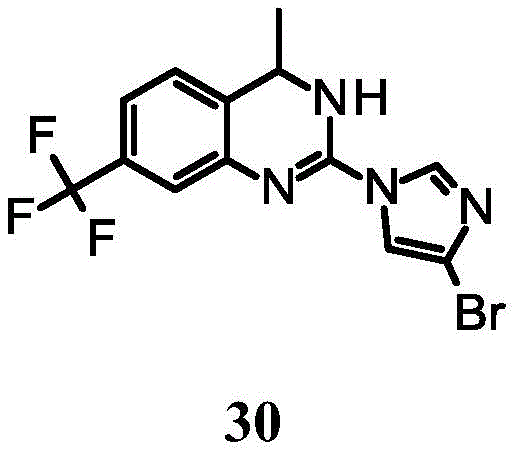
Step 1: preparation of 2-chloro-4-methyl-7- (trifluoromethyl) quinazoline

In analogy to the procedure described for the preparation of compound 28c, compound 30a was prepared by replacing 1- (2-amino-3-chlorophenyl) ethanone in step 1 with 1- (2-amino-4- (trifluoromethyl) phenyl) ethanone. MS observations (ESI)+)[(M+H)+]:246.1。
Step 2: preparation of 2- (4-bromoimidazol-1-yl) -4-methyl-7- (trifluoromethyl) quinazoline

At room temperatureTo a solution of 2-chloro-4-methyl-7- (trifluoromethyl) quinazoline (200mg, 811. mu. mol) in DMF (4mL) was added 4-bromo-1H-imidazole (179mg,1.22mmol) and K2CO3(112mg, 811. mu. mol) and then the mixture was stirred at room temperature overnight. After completion of the reaction, the mixture was partitioned between EtOAc (20mL) and water (20mL), the organic layer was separated and the aqueous phase was extracted twice with EtOAc (20 mL). The combined organic layers were washed with brine, over Na2SO4Dried and concentrated in vacuo. The residue was then purified by silica gel column chromatography (eluting with PE: EtOAc ═ 10:1 to 1: 10) to give 2- (4-bromoimidazol-1-yl) -4-methyl-7- (trifluoromethyl) quinazoline (160mg, 54.7% yield) as a yellow solid. MS observations (ESI)+)[(M+H)+]:356.7。
And step 3: preparation of 2- (4-bromoimidazol-1-yl) -4-methyl-7- (trifluoromethyl) -3, 4-dihydroquinazoline

To a solution of 2- (4-bromoimidazol-1-yl) -4-methyl-7- (trifluoromethyl) quinazoline (50mg,140 μmol) in MeOH (2mL) was added sodium borohydride (10.6mg,280 μmol) at room temperature and the mixture was stirred at room temperature for 40 minutes. After completion of the reaction, the mixture was adjusted to pH about 6 by addition of AcOH. The mixture was concentrated in vacuo and the residue was purified by preparative HPLC to give 2- (4-bromoimidazol-1-yl) -4-methyl-7- (trifluoromethyl) -3, 4-dihydroquinazoline (22mg, 39.4% yield) as a white solid.1H NMR (400MHz, DMSO-d6): δ ppm 8.33(d, J ═ 1.5Hz,1H),7.89(d, J ═ 1.4Hz,1H),7.34-7.52(m,2H),7.19-7.29(m,1H),5.01(q, J ═ 6.4Hz,1H),1.43(d, J ═ 6.5Hz, 3H). MS observations (ESI)+)[(M+H)+]:359.0。
Example 31: 4-bromo-2- (8-chloro-4-methyl-3, 4-dihydroquinazolin-2-yl) thiazole

Step 1: preparation of N- (2-acetyl-6-chloro-phenyl) -4-bromo-thiazole-2-carboxamide

To a solution of 4-bromothiazole-2-carboxylic acid (1g,4.81mmol) in DCM (20mL) was added oxalyl chloride (1.22g, 842. mu.L, 9.61mmol) and DMF (two drops) at room temperature. The mixture was then stirred at room temperature for 3 hours. The mixture was then concentrated in vacuo to give crude 4-bromothiazole-2-carbonyl chloride, which was then redissolved in 1, 4-dioxane (30mL) and 1- (2-amino-3-chlorophenyl) ethanone (815mg,4.81mmol) added to the solution. The mixture was then stirred at room temperature overnight. After completion of the reaction, the mixture was concentrated in vacuo and the residue was taken up in EtOAc (30mL) and saturated NaHCO3The solutions (20mL) were partitioned between. The organic layer was separated and concentrated in vacuo to give crude N- (2-acetyl-6-chloro-phenyl) -4-bromo-thiazole-2-carboxamide (1.5g, 86.8% yield) as a white solid. MS observations (ESI)+)[(M+H)+]:357.9。
Step 2: preparation of 4-bromo-2- (8-chloro-4-methyl-quinazolin-2-yl) thiazole
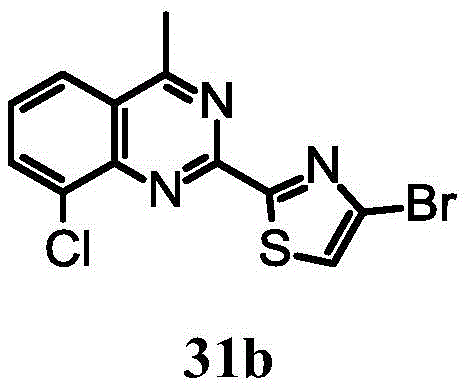
A mixture of N- (2-acetyl-6-chloro-phenyl) -4-bromo-thiazole-2-carboxamide (1.5g,4.17mmol) and ammonium acetate (3.22g,41.7mmol) in EtOH (20mL) was stirred at 80 ℃ for 7 h. After completion of the reaction, the mixture was concentrated in vacuo. The residue was then suspended in water (10mL) and the suspension was then filtered to give 4-bromo-2- (8-chloro-4-methyl-quinazolin-2-yl) thiazole (1.3g, 91.5% yield) as a white solid. MS observations (ESI)+)[(M+H)+]:343.9。
And step 3: preparation of 4-bromo-2- (8-chloro-4-methyl-3, 4-dihydroquinazolin-2-yl) thiazole
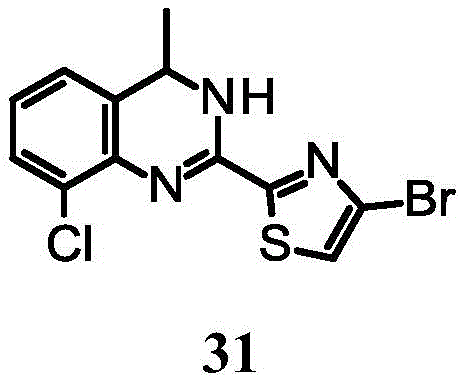
To a solution of 4-bromo-2- (8-chloro-4-methyl-quinazolin-2-yl) thiazole (100mg,294 μmol) in a mixed solvent of THF (5mL) and MeOH (2mL) at room temperature was added NaBH4(55.5mg,1.47mmol), and then the mixture was stirred at 60 ℃ for 1.5 hours. After the reaction is complete, the mixture is passed through addition of NH4The Cl solution (0.3mL) was quenched, and then the mixture was concentrated in vacuo. The residue was then triturated with EtOH (5mL) and the suspension was then filtered. The solid was collected and dried in vacuo to give 4-bromo-2- (8-chloro-4-methyl-3, 4-dihydroquinazolin-2-yl) thiazole (48mg, 46.8% yield) as a white solid.1H NMR (400MHz, DMSO-d6): δ ppm 8.55-8.68(m,1H),8.02-8.11(m,1H),7.25-7.38(m,1H),6.93-7.11(m,2H),4.70-4.89(m,1H),1.35(d, J ═ 6.4Hz, 3H). MS observations (ESI)+)[(M+H)+]:341.9。
Example 32: 4- [2- (8-chloro-4-methyl-3, 4-dihydroquinazolin-2-yl) thiazol-4-yl ] benzoic acid methyl ester

Step 1: preparation of methyl 4- [2- (8-chloro-4-methyl-quinazolin-2-yl) thiazol-4-yl ] benzoate

4-bromo-2- (8-chloro-4-methylquinazolin-2-yl) thiazole (160mg,467 μmol), (4- (methoxycarbonyl) phenyl) boronic acid (84mg,467 μmol) and Pd (Ph)3P)4(27mg, 23.4. mu. mol) in THF (15mL) and K2CO3The mixture of the solution (2mol/L aqueous solution, 2.5mL) in the mixed solvent was stirred at 90 ℃ for 5 hours. After completion of the reaction, THF was removed by concentration in vacuo and the residue was suspended in EtOAc (8 mL). The suspension is then filtered and the solid collected to give 4- [2- (8-chloro-4-methyl-quinazolin-2-yl) thiazol-4-yl]Methyl benzoate (100mg, 53.8% yield) as a white solid.MS observations (ESI)+)[(M+H)+]:400.1。
And 2, step: preparation of methyl 4- [2- (8-chloro-4-methyl-3, 4-dihydroquinazolin-2-yl) thiazol-4-yl ] benzoate

To 4- [2- (8-chloro-4-methyl-quinazolin-2-yl) thiazol-4-yl at room temperature]To a solution of methyl benzoate (200mg, 505. mu. mol) in a mixed solvent of THF (10mL) and MeOH (2mL) was added NaBH4(153mg,4.04mmol), and the mixture was then stirred at 70 ℃ for 2 hours. After the reaction is complete, the mixture is passed through addition of NH4The Cl solution (1mL) was quenched, and then the mixture was concentrated in vacuo. The residue was then triturated with EtOH (15mL) and the suspension was then filtered. The solid was collected and dried in vacuo to give 4- [2- (8-chloro-4-methyl-3, 4-dihydroquinazolin-2-yl) thiazol-4-yl]Methyl benzoate (80mg, 36.2% yield) as a yellow solid.1H NMR (400MHz, DMSO-d6): δ ppm 8.53-8.59(m,2H),8.24-8.31(m,2H),8.02-8.10(m,2H),7.27-7.34(m,1H),7.00-7.12(m,2H),4.91(dd, J ═ 6.2,2.1Hz,1H),3.80-3.93(m,3H),1.41ppm (d, J ═ 6.4Hz, 3H). MS observations (ESI)+)[(M+H)+]:398.1。
Example 33: 2- (3-bromophenyl) -4-methyl-7- (trifluoromethyl) -3, 4-dihydroquinazoline

In analogy to the procedure described for the preparation of example 31, example 33 was prepared by substituting 1- (2-amino-3-chlorophenyl) ethanone and 4-bromothiazole-2-carboxylic acid with 1- (2-amino-4- (trifluoromethyl) phenyl) ethanone and 3-bromobenzoic acid in step 1.1H NMR (400MHz, DMSO-d6): δ ppm 8.17(t, J ═ 1.8Hz,1H),7.95-8.01(m,1H),7.71-7.78(m,1H),7.43-7.51(m,1H),7.17-7.39(m,3H),4.85-4.96(m,1H),1.39(d, J ═ 6.5Hz, 3H). MS observations (ESI)+)[(M+H)+]:368.9。
Example 34: 2- (4-bromophenyl) -8-chloro-4, 4-dimethyl-3H-quinazoline hydrofluoride

Step 1: preparation of 2- (2-amino-3-chloro-phenyl) propan-2-ol

To a solution of methyl 2-amino-3-chlorobenzoate (500mg,2.69mmol) in THF (10mL) was added methylmagnesium chloride (3M in THF, 3.59mL, 10.8mmol), and then the mixture was stirred at room temperature for 2 hours. After the reaction was complete, the mixture was taken up with saturated NH4The Cl solution (15mL) was quenched and extracted three times with EtOAc (20 mL). The combined organic layers were washed with brine, over Na2SO4Dried and concentrated in vacuo to give crude 2- (2-amino-3-chloro-phenyl) propan-2-ol (500mg, 100% yield) as a colorless oil, which was used in the next step without further purification. MS observations (ESI)+)[(M+H)+]:186.7。
Step 2: preparation of 2- (4-bromophenyl) -8-chloro-4, 4-dimethyl-3H-quinazoline hydrofluoride

2- (2-amino-3-chloro-phenyl) propan-2-ol (100mg, 539. mu. mol) and 4-bromobenzonitrile (98mg, 539. mu. mol) were placed in BF3.Et2The mixture in O (0.5mL) was stirred at 70 ℃ overnight. The mixture was then concentrated in vacuo, and the residue triturated with MeOH (5 mL). The suspension was then filtered, the solid collected and dried in vacuo to give 2- (4-bromophenyl) -8-chloro-4, 4-dimethyl-3H-quinazoline hydrofluoride (65mg, 31.2% yield) as a white solid.1H NMR(400MHz,MeOH-d4):δppm7.88-7.95(m,2H),7.78-7.88(m,2H),7.52-7.58(m,1H),7.45-7.51(m,1H),7.25-7.43(m,1H),1.84ppm (s, 6H). MS observations (ESI)+)[(M+H)+]:349.0。
Example 35: 2- (4-bromophenyl) -8-chloro-4-cyclopropyl-3, 4-dihydroquinazoline

Step 1: preparation of (2-amino-3-chloro-phenyl) -cyclopropyl-methanol

To a solution of 2-amino-3-chlorobenzaldehyde (500mg,3.21mmol) in THF (10mL) was added cyclopropylmagnesium bromide (0.7mol/L in THF, 18.4mL, 12.9mmol), and the mixture was stirred at room temperature for 2 hours. After the reaction was complete, the mixture was taken up with saturated NH4The Cl solution (15mL) was quenched and extracted three times with EtOAc (20 mL). The combined organic layers were washed with brine, over Na2SO4Dried and concentrated in vacuo to give crude (2-amino-3-chloro-phenyl) -cyclopropyl-methanol (450mg, 85% yield) as a colorless oil, which was used directly in the next step without further purification. MS observations (ESI)+)[(M+H)+]:197.8。
Step 2: preparation of 2- (4-bromophenyl) -8-chloro-4-cyclopropyl-3, 4-dihydroquinazoline
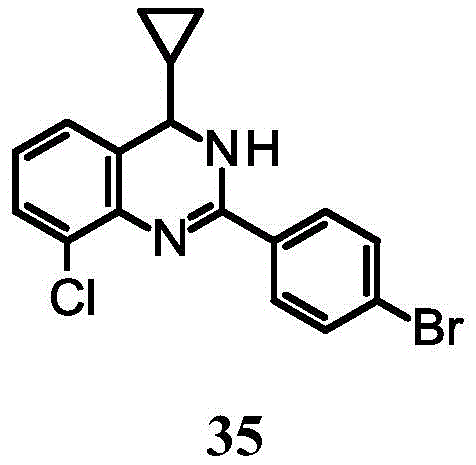
(2-amino-3-chloro-phenyl) -cyclopropyl-methanol (100mg, 506. mu. mol) and 4-bromobenzonitrile (92.1mg, 506. mu. mol) in BF3.Et2The mixture in O (0.5mL) was stirred at 70 ℃ overnight. After completion of the reaction, the mixture was concentrated in vacuo and the residue was purified by preparative HPLC to give 2- (4-bromophenyl) -8-chloro-4-cyclopropyl-3, 4-dihydroquinazoline (65mg, 35.5% yield) as an off-white solid.1H NMR(400MHz,MeOH-d4):δppm 7.91(br d,J ═ 8.4Hz,2H),7.74-7.88(m,2H),7.50-7.60(m,1H),7.31-7.41(m,2H),4.37(br d, J ═ 8.9Hz,1H),1.30-1.42(m,1H),0.49-0.78(m, 4H). MS observations (ESI)+)[(M+H)+]:361.1。
Example 36: 2- (4-bromophenyl) -8-chloro-4-isopropyl-3, 4-dihydroquinazoline

Example 36 was prepared in analogy to the procedure described for the preparation of example 35, by replacing cyclopropyl magnesium bromide with isopropyl magnesium bromide in step 1.1H NMR (400MHz, MeOH-d4): delta ppm7.89-8.07(m,2H),7.68-7.86(m,2H),7.24-7.47(m,1H),6.92-7.17(m,2H),4.18-4.71(m,1H),1.68-2.02(m,1H),0.85-0.99(m,3H),0.66-0.84(m, 3H). MS observations (ESI)+)[(M+H)+]:363.1。
Example 37: 3- [2- [ 5-bromo-2- (8-chloro-4-methyl-3, 4-dihydroquinazolin-2-yl) phenoxy ] ethoxy ] cyclobutanecarboxylic acid

Step 1: preparation of 1- (2-amino-3-chloro-phenyl) ethanol

Compound 37a was prepared in analogy to the procedure described for the preparation of compound 35a, by replacing cyclopropylmagnesium bromide with methylmagnesium bromide in step 1.
Step 2: preparation of methyl 3- [2- (5-bromo-2-cyano-phenoxy) ethoxy ] cyclobutanecarboxylate

To the mixture were added 4-bromo-2-hydroxybenzonitrile (1100mg,5.56mmol), K2CO3(1.54g,11.1mmol) to a mixture in DMF (15mL) was added methyl 3- (2- (tosyloxy) ethoxy) cyclobutanecarboxylate (1.82g,5.56mmol) and the mixture was then stirred at 60 ℃ for 5 h. After completion of the reaction, the mixture was diluted with water (20mL) and extracted twice with EtOAc (30 mL). The combined organic layers were washed with brine, over Na2SO4Dried and concentrated in vacuo. The residue is then purified by silica gel column chromatography (eluting with PE: EtOAc ═ 10:1 to 1: 10) to give 3- [2- (5-bromo-2-cyano-phenoxy) ethoxy]Methyl cyclobutanecarboxylate (1.4g, 71.2% yield) as a colorless oil.
And step 3: preparation of methyl 3- [2- [ 5-bromo-2- (8-chloro-4-methyl-3, 4-dihydroquinazolin-2-yl) phenoxy ] ethoxy ] cyclobutanecarboxylate

1- (2-amino-3-chloro-phenyl) ethanol (130mg, 757. mu. mol) and 3- [2- (5-bromo-2-cyano-phenoxy) ethoxy]A mixture of methyl cyclobutanecarboxylate (268mg, 757. mu. mol) in (diethyloxonium) trifluoroborate (323mg,2.27mmol) was stirred at 70 ℃ overnight. After completion of the reaction, the mixture was quenched with methanol (5mL) and concentrated in vacuo to give crude 3- [2- [ 5-bromo-2- (8-chloro-4-methyl-3, 4-dihydroquinazolin-2-yl) phenoxy]Ethoxy radical]Methyl cyclobutanecarboxylate (385mg, 100% yield), which was used directly in the next step without further purification. MS observations (ESI)+)[(M+H)+]:507.6。
And 4, step 4: preparation of 3- [2- [ 5-bromo-2- (8-chloro-4-methyl-3, 4-dihydroquinazolin-2-yl) phenoxy ] ethoxy ] cyclobutanecarboxylic acid

To 3- [2- [ 5-bromo-2- (8-chloro-4-methyl-3, 4-dihydroquinazolin-2-yl) phenoxy group]Ethoxy radical]To a solution of methyl cyclobutanecarboxylate (100mg, 197. mu. mol) in MeOH (3mL) was added LiOH (18.9mg, 788. mu. mol),and then the mixture was stirred at room temperature for 2 hours. After completion of the reaction, the mixture was adjusted to pH about 6 by addition of AcOH and concentrated in vacuo. The residue was then purified by preparative HPLC to give 3- [2- [ 5-bromo-2- (8-chloro-4-methyl-3, 4-dihydroquinazolin-2-yl) phenoxy]Ethoxy radical]Cyclobutanecarboxylic acid (85mg, 83% yield) as a white powder.1H NMR (400MHz, MeOH-d4): delta ppm 7.59-7.69(m,1H),7.45-7.51(m,1H),7.40-7.45(m,1H),7.34-7.39(m,1H),7.16-7.25(m,2H),5.00-5.09(m,1H),4.25-4.35(m,2H),4.15-4.24(m,0.6H),3.88-3.96(m,0.4H),3.67-3.81(m,2H),2.77-2.94(m,0.6H),2.49-2.59(m,0.4H),2.37-2.47(m,2H),1.96-2.21(m,2H),1.61(d, J ═ 6.6H, 3 Hz). MS observations (ESI)+)[(M+H)+]:493.2。
Example 38: [2- (4-bromophenyl) -8-chloro-3, 4-dihydroquinazolin-4-yl ] methanol

Step 1: preparation of ethyl 2- (4-bromophenyl) -8-chloro-quinazoline-4-carboxylate

A mixture of compound 1- (4-bromobenzoyl) -7-chloroindoline-2, 3-dione (1g,2.74mmol) and ammonium acetate (2.11g,27.4mmol) in ethanol (20mL) was stirred at 90 ℃ for 30 minutes under microwave conditions. The mixture was then adjusted to a pH of about 7 by addition of 1N HCl solution. The resulting mixture was extracted twice/three times with EtOAc (60mL), and the combined organic layers were extracted over Na2SO4Dried and concentrated in vacuo. The residue was purified by silica gel column chromatography (eluting with DCM: MeOH 10:1 to 2: 1) to give ethyl 2- (4-bromophenyl) -8-chloro-quinazoline-4-carboxylate (0.4g, 37.2% yield) as a yellow solid. MS observations (ESI)+)[(M+H)+]:391.0。
Step 2: preparation of [2- (4-bromophenyl) -8-chloro-3, 4-dihydroquinazolin-4-yl ] methanol

To a solution of ethyl 2- (4-bromophenyl) -8-chloro-quinazoline-4-carboxylate (50mg,128 μmol) in MeOH (10mL) at room temperature was added NaBH4(48.3mg,1.28mmol), and the mixture was then stirred at room temperature for 0.5 h. After the reaction was complete, the mixture was then adjusted to pH about 7 by the addition of AcOH. The mixture was then concentrated in vacuo, and the residue was then purified by preparative HPLC to give [2- (4-bromophenyl) -8-chloro-3, 4-dihydroquinazolin-4-yl]Methanol (40mg, 89.1% yield) as a white powder.1H NMR (400MHz, MeOH-d4): δ ppm 7.75-8.01(m,4H),7.47-7.66(m,1H),7.29-7.45(m,2H),5.10(t, J ═ 3.4Hz,1H),3.81-4.07(m, 2H). MS observations (ESI)+)[(M+H)+]:351.2。
Biological examples
Biological example 1: engineered HepDES19 primary screening assay
The assay was used to screen for novel cccDNA inhibitors. HepDES19 is a cccDNA producing cell line. In this cell line, HBeAg in cell culture supernatant acts as a surrogate marker, since HBeAg production is dependent on cccDNA level and activity. HepDES19 is an engineered cell line containing 1.1 unit length of HBV genome, and pgRNA transcription from the transgene is controlled by tetracycline (Tet). In the absence of Tet, transcription of pgRNA will be induced, but HBV e antigen (HBeAg) cannot be produced from this pgRNA due to the very short leader sequence before the HBeAg start codon and the disruption of the start codon. Only after cccDNA formation can the missing leader sequence as well as the start codon mutation be recovered from the 3' terminal redundancy of pgRNA, and then HBeAg can be synthesized. Thus, HBeAg can be used as a surrogate marker for cccDNA (Zhou, T. et al, antibody Res. (2006),72 (2)), 116-.
In 2X 10 flasks per T1506The cells were inoculated with HepDES19 cells and cultured in medium (Dulbecco's modified eagle's medium) containing 3. mu.g/mL of Tet (Sigma, cat # 87128)(Dulbecco's Modified Eagle Medium): nutrient mixture F-12[ DMEM-F12, Gibco Cat No. 11320-82]10% fetal bovine serum [ FBS, Clontech catalog number 631101]0.1mM non-essential amino acid solution [ NEAA, Gibco Cat No. 11140-]50 μ g/mL penicillin-streptomycin [ PS, Invitrogen Cat. 15140-]500. mu.g/mL Geneticin (Geneticin) [ G418, Invitrogen Cat. No. 10131-]) The culture was carried out for 5 days. Cells were then plated at 1504X 10 per T in the absence of Tet6Individual cells were seeded in the same medium as described above for 8 days. Cells were then harvested and plated at 2X 10⁶Density of individual cells/mL frozen. In compound assay, frozen cells were thawed and tested at 6X 10⁴The density of individual cells/well was seeded into 96-well plates. At 24 hours post-inoculation, a semi-logarithmic serial dilution of the compound made with dimethyl sulfoxide (DMSO, Sigma, cat # D2650) was further diluted with the same medium as described above before adding it to the cells to reach the desired final compound concentration and 1% DMSO concentration. The plates were then incubated at 37 ℃ for an additional 5 days before measuring HBeAg levels and cell viability. Intracellular HBeAg levels were measured using an enzyme-linked immunosorbent assay (ELISA) kit (shanghai kowa diagnostic medical products, ltd). Cell viability was assessed using cell counting kit-8 (DonJundo, Cat. CK 04-20). IC from dose-response curves using a 4-parameter logistic curve fitting method50The value is obtained.
The compounds of the invention were tested for their ability to inhibit extracellular HBeAg levels as described herein. Discovery of the IC of the Compounds of the invention50Less than 50. mu.M. Discovery of IC for a specific Compound of formula (I)50Less than 5.0. mu.M. The results of the primary screening assay of HepDES19 are given in table 1.
Table 1: activity data in the primary screening assay of HepDES19
| Example numbering | IC50(μM) | Example numbering | IC50(μM) | Example numbering | IC50(μM) |
| 1 | 5.65 | 14 | 2.47 | 27 | 11.6 |
| 2 | 2.99 | 15 | 0.26 | 28 | 4.77 |
| 3 | 10.3 | 16 | 2.03 | 29 | 0.027 |
| 4 | 0.88 | 17 | 1.65 | 30 | 0.778 |
| 5 | 0.56 | 18 | 2.59 | 31 | 2.03 |
| 6 | 3.43 | 19 | 4.40 | 32 | 0.86 |
| 7 | 3.01 | 20 | 2.01 | 33 | 0.86 |
| 8 | 9.16 | 21 | 1.03 | 34 | 5.78 |
| 9 | 0.45 | 22 | 8.43 | 35 | 0.41 |
| 10 | 0.05 | 23 | 1.78 | 36 | 6.53 |
| 11 | 0.13 | 24 | 2.10 | 37 | 1.97 |
| 12 | 0.33 | 25 | 9.55 | 38 | 5.32 |
| 13 | 0.07 | 26 | 5.54 |
Biological example 2: cryopreserved Primary Human Hepatocyte (PHH) assay
This assay was used to confirm the anti-HBV effect of compounds in the HBV PHH infection assay. Cryopreserved PHH (biorelevationivt, batch YJM) was thawed at 37 ℃ and gently transferred to prewarmed invitrogero HT medium (biorelevationivt, catalog No. S03317). The mixture was centrifuged at 70 Relative Centrifugal Force (RCF) for 3 minutes at room temperature and the supernatant was discarded. Pre-warmed InVitroGRO CP medium (BioRecalamationIVT, Cat. No. S03316) was added to the cell pellet to gently re-pellet the cellsAnd (4) suspending. Cells were plated at 5.8X 10⁴The density of individual cells/well was seeded into collagen I-coated 96-well plates (Gibco, cat # a1142803) containing invitrogero CP medium. All plates were at 37 ℃ and 5% CO2And incubation at 85% humidity.
At 20 hours after plating, the medium was changed to PHH medium (Dubeck's modified eagle's medium (DMEM)/F12(1:1) (Gibco, Cat. No. 11320-033), 10% fetal bovine serum (Gibco Cat. No. 10099141), 100U/mL penicillin, 100. mu.g/mL streptomycin (Gibco, Cat. No. 151401-122), 5ng/mL human epidermal growth factor (Invitrogen Cat. No. PHG 031031 0311L), 20ng/mL dexamethasone (dexamethasone) (Sigma, Cat. No. D4902) and 250ng/mL human recombinant insulin (Gibco, Cat. No. 12585-014)). And the cells were incubated at 37 ℃ and 5% CO2And incubation at 85% humidity for 4 hours. The medium was then changed to pre-warmed PHH medium containing 4% polyethylene glycol (PEG) MW8000(Sigma, cat # P1458-50ML) and 1% DMSO (Sigma, cat # D2650). Mixing 5.8X 10⁶Genome-equivalent HBV was added to the medium.
At 24 hours post-infection, cells were gently washed with PBS and refreshed at 200 μ Ι/well with PHH medium supplemented with 1% DMSO and 0.25mg/mL matrix gel (Corning, catalog No. 356237). All plates were immediately placed in 37 ℃ CO2In an incubator.
After 24 hours, serial dilutions of the compound made with DMSO were further diluted with the same medium (PHH medium supplemented with 1% DMSO and 0.25mg/mL matrix gel as described above) before adding it to the cells to reach the desired final compound concentration and 1% DMSO concentration. The medium containing the compound was refreshed every three days.
Extracellular HBsAg levels were measured using a chemiluminescence immunoassay (CLIA) kit (Autobio, HBsAg quantification CLIA) 9 days after compound treatment.
HBsAg IC was derived from dose-response curves using a 4-parameter logistic curve fitting method50The value is obtained. HBsAg IC of the Compound of formula (I)50<20 μ M, in particular<1 μ M. The results of the PHH test for cryopreservation are given in table 2.
Table 2: freezing preservationHBsAg IC in PHH assay of50Data of
| Example number | HBsAg IC50(μM) | Example numbering | HBsAg IC50(μM) |
| 1 | 3.07 | 12 | 1.36 |
| 2 | 0.415 | 13 | 2.84 |
| 3 | 1.5 | 16 | 4.54 |
| 4 | 1.95 | 19 | 7.63 |
| 5 | 4.37 | 22 | 0.67 |
| 6 | 7.18 | 32 | 0.024 |
| 7 | 2.31 | 36 | 0.042 |
Claims (25)
1. A compound of the formula (I),

wherein
R1Is H, halogen, C1-6Alkyl or halo C1-6An alkyl group;
R2is H, halogen, C1-6Alkyl or halo C1-6An alkyl group;
R3is H, carboxyl, C1-6Alkyl, halo C1-6Alkyl, hydroxy C1-6Alkyl radical, C1-6Alkoxycarbonyl group, C3-7Cycloalkyl, aminocarbonyl, hydroxy C1-6Alkylaminocarbonyl, halogeno C1-6An alkylaminocarbonyl or heterocyclylcarbonyl group;
R4is H or C1-6An alkyl group;
R5is H, C1-6Alkyl or hydroxy C1-6An alkyl group;
R6is phenyl or heterocyclyl; wherein phenyl and heterocyclyl are unsubstituted or independently selected from halogen, C via one or two or three1-6Alkyl radical, C1-6Alkoxy, hydroxy C1-6Alkoxy radical, C1-6Alkoxycarbonylphenyl, carboxy C1-6Alkoxy radical C1-6Alkoxy, carboxyl C3-7Cycloalkyl radical C1-6Alkoxy and heterocyclyl;
with the proviso that R1And R2Not H at the same time;
or a pharmaceutically acceptable salt thereof.
2. The compound of claim 1, wherein
R1Is H or halogen;
R2is H or halogeno C1-6An alkyl group;
R3is H, carboxyl, C1-6Alkyl, hydroxy C1-6Alkyl radical, C1-6Alkoxycarbonyl group, C3-7Cycloalkyl, aminocarbonyl, hydroxy C1-6Alkylaminocarbonyl, halogeno C1-6Alkylaminocarbonyl or morpholinocarbonyl;
R4is H or C1-6An alkyl group;
R5is H, C1-6Alkyl or hydroxy C1-6An alkyl group;
R6is phenyl, pyridyl, 1-oxo-3, 4-dihydroisoquinolin-2-yl, imidazolyl or thiazolyl; wherein phenyl, pyridyl, 1-oxo-3, 4-dihydroisoquinolin-2-yl, imidazolyl and thiazolyl are unsubstituted or selected independently from halogen, C via one or two or three1-6Alkyl radical, C1-6Alkoxy, pyrrolidinyl, hydroxy C1-6Alkoxy radical, C1-6Alkoxycarbonylphenyl, carboxy C1-6Alkoxy radical C1-6Alkoxy and carboxyl C3-7Cycloalkyl radical C1-6Substituent substitution of alkoxy;
with the proviso that R1And R2Not H at the same time;
or a pharmaceutically acceptable salt thereof.
3. The compound of claim 2, wherein
R1Is H or Cl;
R2is H or CF3;
R3Is H, carboxyl, methyl,Isopropyl, hydroxymethyl, methoxycarbonyl, cyclopropyl, aminocarbonyl, hydroxyethylaminocarbonyl, chloroethylaminocarbonyl or morpholinocarbonyl;
R4is H or methyl;
R5is H, methyl or hydroxyethyl;
R6is phenyl, pyridyl, 1-oxo-3, 4-dihydroisoquinolin-2-yl, imidazolyl or thiazolyl; wherein phenyl, pyridyl, 1-oxo-3, 4-dihydroisoquinolin-2-yl, imidazolyl and thiazolyl are unsubstituted or substituted with one or two or three substituents independently selected from Cl, Br, methyl, methoxy, ethoxy, pyrrolidinyl, hydroxyethoxy, methoxycarbonylphenyl, carboxymethoxyethoxy and carboxycyclobutoxyethoxy;
with the proviso that R1And R2Not H at the same time;
or a pharmaceutically acceptable salt thereof.
4. The compound according to claim 1 or 2, or a pharmaceutically acceptable salt thereof, wherein R3Is carboxyl, C1-6Alkyl or aminocarbonyl.
5. The compound according to claim 4, or a pharmaceutically acceptable salt thereof, wherein R3Is carboxy, methyl, isopropyl or aminocarbonyl.
6. The compound according to any one of claims 1, 2 and 4, or a pharmaceutically acceptable salt thereof, wherein R6Is phenyl, imidazolyl or thiazolyl; wherein phenyl, imidazolyl and thiazolyl are unsubstituted or independently selected from halogen, C via one or two1-6Alkyl radical, C1-6Alkoxy radical, C1-6Alkoxycarbonylphenyl and carboxy C3-7Cycloalkyl radical C1-6Substituent of alkoxy.
7. The compound of claim 6, or a pharmaceutically acceptable salt thereof, wherein R6Is phenyl, imidazolyl or thiazolyl; wherein the phenyl, imidazolyl and thiazolyl radicals are unsubstituted or substituted by one or moreTwo substituents independently selected from Br, methyl, methoxy, methoxycarbonylphenyl and carboxycyclobutoxyethoxy.
8. A compound according to any one of claims 1 to 7, or a pharmaceutically acceptable salt thereof, wherein R4Is H.
9. The compound according to any one of claims 1 to 8, or a pharmaceutically acceptable salt thereof, wherein R5Is H.
10. The compound of claim 1 or 2, having formula (II),

wherein
R1Is H or halogen;
R2is H or halogeno C1-6An alkyl group;
R3is carboxyl, C1-6Alkyl or aminocarbonyl;
R6is phenyl, imidazolyl or thiazolyl; wherein phenyl, imidazolyl and thiazolyl are unsubstituted or independently selected from halogen, C via one or two1-6Alkyl radical, C1-6Alkoxy radical, C1-6Alkoxycarbonylphenyl and carboxy C3-7Cycloalkyl radical C1-6Substituent substitution of alkoxy;
with the proviso that R1And R2Not H at the same time;
or a pharmaceutically acceptable salt thereof.
11. The compound of claim 10, wherein
R1Is H or Cl;
R2is H or CF3;
R3Is carboxy, methyl, isopropyl or aminocarbonyl;
R6is phenyl, imidazoleA group or a thiazolyl group; wherein phenyl, imidazolyl and thiazolyl are unsubstituted or substituted with one or two substituents independently selected from Br, methyl, methoxy, methoxycarbonylphenyl and carboxycyclobutoxyethoxy;
with the proviso that R1And R2Not H at the same time;
or a pharmaceutically acceptable salt thereof.
12. A compound according to any one of claims 1 to 3, selected from
2- (4-bromophenyl) -8-chloro-3, 4-dihydroquinazoline-4-carboxylic acid;
8-chloro-2-phenyl-3, 4-dihydroquinazoline-4-carboxylic acid;
8-chloro-2- (4-chlorophenyl) -3, 4-dihydroquinazoline-4-carboxylic acid;
8-chloro-2- (4-methoxyphenyl) -3, 4-dihydroquinazoline-4-carboxylic acid;
2- (4-bromo-3-methyl-phenyl) -8-chloro-3, 4-dihydroquinazoline-4-carboxylic acid;
2- (3-bromophenyl) -7- (trifluoromethyl) -3, 4-dihydroquinazoline-4-carboxylic acid;
2- (4-bromophenyl) -7- (trifluoromethyl) -3, 4-dihydroquinazoline-4-carboxylic acid;
8-chloro-2- (6-methoxy-3-pyridyl) -3, 4-dihydroquinazoline-4-carboxylic acid;
8-chloro-2- (6-ethoxy-3-pyridinyl) -3, 4-dihydroquinazoline-4-carboxylic acid;
8-chloro-2- (6-pyrrolidin-1-yl-3-pyridyl) -3, 4-dihydroquinazoline-4-carboxylic acid;
2- (4-bromophenyl) -8-chloro-4-methyl-3H-quinazoline-4-carboxylic acid;
2- (4-bromophenyl) -8-chloro-3, 4-dihydroquinazoline-4-carboxylic acid methyl ester;
2- (4-bromophenyl) -8-chloro-3, 4-dihydroquinazoline-4-carboxamide;
8-chloro-2- (4-methoxyphenyl) -3, 4-dihydroquinazoline-4-carboxamide;
2- (3-bromophenyl) -7- (trifluoromethyl) -3, 4-dihydroquinazoline-4-carboxamide;
8-chloro-N- (2-hydroxyethyl) -2- (4-methoxyphenyl) -3, 4-dihydroquinazoline-4-carboxamide;
[2- (4-bromophenyl) -7- (trifluoromethyl) -3, 4-dihydroquinazolin-4-yl ] -morpholino-methanone;
2- (4-bromophenyl) -8-chloro-N- (2-chloroethyl) -3, 4-dihydroquinazoline-4-carboxamide;
3- [2- [4- [ 4-methyl-7- (trifluoromethyl) -3, 4-dihydroquinazolin-2-yl ] phenoxy ] ethoxy ] cyclobutanecarboxylic acid;
2- [2- [4- [ 4-methyl-7- (trifluoromethyl) -3, 4-dihydroquinazolin-2-yl ] phenoxy ] ethoxy ] acetic acid;
3- [2- [4- (8-chloro-4-methyl-3, 4-dihydroquinazolin-2-yl) phenoxy ] ethoxy ] cyclobutanecarboxylic acid;
3- [2- [4- (8-chloro-4-methyl-3, 4-dihydroquinazolin-2-yl) -3-methyl-phenoxy ] ethoxy ] cyclobutanecarboxylic acid;
2- [2- [4- (8-chloro-4-methyl-3, 4-dihydroquinazolin-2-yl) phenoxy ] ethoxy ] acetic acid;
2- (3-bromophenyl) -3, 4-dimethyl-7- (trifluoromethyl) -4H-quinazoline;
2- [2- (3-bromophenyl) -4-methyl-7- (trifluoromethyl) -4H-quinazolin-3-yl ] ethanol;
2- [2- [4- (8-chloro-3, 4-dimethyl-4H-quinazolin-2-yl) phenoxy ] ethoxy ] acetic acid;
2- [4- (8-chloro-3, 4-dihydroquinazolin-2-yl) phenoxy ] ethanol;
2- [4- (8-chloro-4-methyl-3, 4-dihydroquinazolin-2-yl) phenoxy ] ethanol;
2- (8-chloro-4-methyl-3, 4-dihydroquinazolin-2-yl) -6-methoxy-3, 4-dihydroisoquinolin-1-one;
2- (4-bromoimidazol-1-yl) -4-methyl-7- (trifluoromethyl) -3, 4-dihydroquinazoline;
4-bromo-2- (8-chloro-4-methyl-3, 4-dihydroquinazolin-2-yl) thiazole;
4- [2- (8-chloro-4-methyl-3, 4-dihydroquinazolin-2-yl) thiazol-4-yl ] benzoic acid methyl ester;
2- (3-bromophenyl) -4-methyl-7- (trifluoromethyl) -3, 4-dihydroquinazoline;
2- (4-bromophenyl) -8-chloro-4, 4-dimethyl-3H-quinazoline;
2- (4-bromophenyl) -8-chloro-4-cyclopropyl-3, 4-dihydroquinazoline;
2- (4-bromophenyl) -8-chloro-4-isopropyl-3, 4-dihydroquinazoline;
3- [2- [ 5-bromo-2- (8-chloro-4-methyl-3, 4-dihydroquinazolin-2-yl) phenoxy ] ethoxy ] cyclobutanecarboxylic acid; and
[2- (4-bromophenyl) -8-chloro-3, 4-dihydroquinazolin-4-yl ] methanol;
or a pharmaceutically acceptable salt thereof.
13. A compound according to any one of claims 1 to 11 selected from
8-chloro-2-phenyl-3, 4-dihydroquinazoline-4-carboxylic acid;
8-chloro-2- (4-methoxyphenyl) -3, 4-dihydroquinazoline-4-carboxylic acid;
2- (4-bromophenyl) -8-chloro-3, 4-dihydroquinazoline-4-carboxamide;
3- [2- [4- (8-chloro-4-methyl-3, 4-dihydroquinazolin-2-yl) -3-methyl-phenoxy ] ethoxy ] cyclobutanecarboxylic acid;
2- (4-bromoimidazol-1-yl) -4-methyl-7- (trifluoromethyl) -3, 4-dihydroquinazoline;
4- [2- (8-chloro-4-methyl-3, 4-dihydroquinazolin-2-yl) thiazol-4-yl ] benzoic acid methyl ester; and
2- (4-bromophenyl) -8-chloro-4-isopropyl-3, 4-dihydroquinazoline;
or a pharmaceutically acceptable salt thereof.
14. A process for the preparation of a compound according to any one of claims 1 to 13, comprising at least one of the following steps:
(a) reducing the compound of formula (VI) with a reducing agent,

(b) esterifying a compound of formula (I-1) with MeI in the presence of a base,

(c) reducing the compound of formula (VII) with a reducing agent,

(d) reducing the compound of formula (VIII) with a reducing agent,
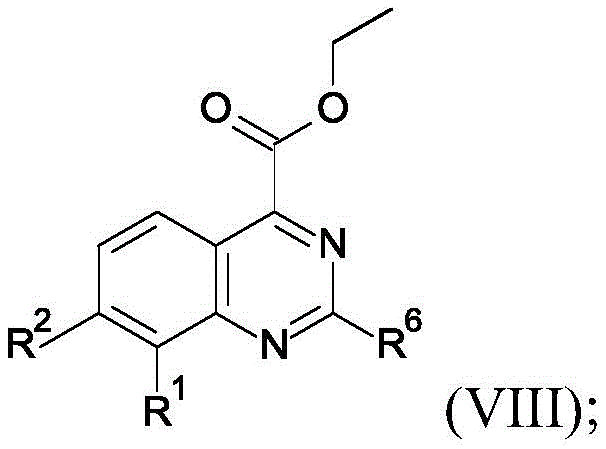
(e) reducing the compound of formula (X) with a reducing agent,

(f) deprotecting the compound of formula (XX) with an acid,

(g) a compound of the formula (XXII),


(h) reducing a compound of formula (XXIX) with a reducing agent,

(i) the compound of formula (XXXI),


wherein R is7Is hydroxy C1-6Alkyl or halo C1-6An alkyl group; r8Is hydrogen or C1-6An alkyl group; r9Is C1-6An alkyl group; g1Is C1-6An alkyl group; g2Is C1-6Alkyl or C3-7A cycloalkyl group; r1To R6As defined in any one of claims 1 to 9.
15. A compound according to any one of claims 1 to 13 for use as therapeutically active substance.
16. A pharmaceutical composition comprising a compound according to any one of claims 1 to 13 and a therapeutically inert carrier.
17. Use of a compound according to any one of claims 1 to 13 for the treatment or prevention of HBV infection.
18. Use of a compound according to any one of claims 1 to 13 for the preparation of a medicament for the treatment or prevention of HBV infection.
19. Use of a compound according to any one of claims 1 to 13 for inhibiting cccDNA.
20. Use of a compound according to any one of claims 1 to 13 for the inhibition of HBeAg.
21. Use of a compound according to any one of claims 1 to 13 for inhibiting HBsAg.
22. Use of a compound according to any one of claims 1 to 13 for inhibiting HBV DNA.
23. A compound according to any one of claims 1 to 13 for use in the treatment or prevention of HBV infection.
24. A compound according to any one of claims 1 to 13, produced according to the method of claim 14.
25. A method for the treatment or prophylaxis of HBV infection comprising administering an effective amount of a compound as defined in any of claims 1 to 13.
Applications Claiming Priority (3)
| Application Number | Priority Date | Filing Date | Title |
|---|---|---|---|
| CN2019109510 | 2019-09-30 | ||
| CNPCT/CN2019/109510 | 2019-09-30 | ||
| PCT/EP2020/077041 WO2021063856A1 (en) | 2019-09-30 | 2020-09-28 | Substituted 3,4-dihydroquinazoline for the treatment and prophylaxis of hepatitis b virus infection |
Publications (1)
| Publication Number | Publication Date |
|---|---|
| CN114502538A true CN114502538A (en) | 2022-05-13 |
Family
ID=72670709
Family Applications (1)
| Application Number | Title | Priority Date | Filing Date |
|---|---|---|---|
| CN202080068602.4A Pending CN114502538A (en) | 2019-09-30 | 2020-09-28 | Substituted 3, 4-dihydroquinazolines for the treatment and prevention of hepatitis B virus infection |
Country Status (5)
| Country | Link |
|---|---|
| US (1) | US20220388969A1 (en) |
| EP (1) | EP4038055A1 (en) |
| JP (1) | JP2022550393A (en) |
| CN (1) | CN114502538A (en) |
| WO (1) | WO2021063856A1 (en) |
Citations (8)
| Publication number | Priority date | Publication date | Assignee | Title |
|---|---|---|---|---|
| CN101171238A (en) * | 2005-05-04 | 2008-04-30 | 弗·哈夫曼-拉罗切有限公司 | (3, 4-dihydro-quinazolin-2-yl) - (2-aryloxy-ethyl) amines active at the 5-HT receptor |
| CN103848821A (en) * | 2012-11-29 | 2014-06-11 | 广东东阳光药业有限公司 | Spiro compound serving as hepatitis C inhibitor, drug composition and applications of spiro compound and drug composition |
| CN104837831A (en) * | 2012-12-07 | 2015-08-12 | 霍夫曼-拉罗奇有限公司 | new pyridine derivatives |
| CN107624113A (en) * | 2015-05-04 | 2018-01-23 | 豪夫迈·罗氏有限公司 | Tetrahydropyridopyrimidines and tetrahydropyridopyrimidines as inhibitors of HBsAg (HBV surface antigen) and HBV DNA production for the treatment of hepatitis B virus infection |
| CN109311851A (en) * | 2016-06-12 | 2019-02-05 | 豪夫迈·罗氏有限公司 | Dihydropyrimidinylbenzazepine*carboxamide compounds |
| WO2019110589A1 (en) * | 2017-12-04 | 2019-06-13 | F. Hoffmann-La Roche Ag | Pyrrolo[2,3-b]pyrazine compounds as cccdna inhibitors for the treatment of hepatitis b virus (hbv) infection |
| WO2019165374A1 (en) * | 2018-02-26 | 2019-08-29 | Gilead Sciences, Inc. | Substituted pyrrolizine compounds as hbv replication inhibitors |
| CN111848601A (en) * | 2019-04-30 | 2020-10-30 | 南京海璞医药科技有限公司 | Compound containing condensed ring, application thereof and pharmaceutical composition containing compound |
-
2020
- 2020-09-28 CN CN202080068602.4A patent/CN114502538A/en active Pending
- 2020-09-28 WO PCT/EP2020/077041 patent/WO2021063856A1/en not_active Ceased
- 2020-09-28 JP JP2022519669A patent/JP2022550393A/en active Pending
- 2020-09-28 EP EP20781484.9A patent/EP4038055A1/en not_active Withdrawn
- 2020-09-28 US US17/765,378 patent/US20220388969A1/en not_active Abandoned
Patent Citations (8)
| Publication number | Priority date | Publication date | Assignee | Title |
|---|---|---|---|---|
| CN101171238A (en) * | 2005-05-04 | 2008-04-30 | 弗·哈夫曼-拉罗切有限公司 | (3, 4-dihydro-quinazolin-2-yl) - (2-aryloxy-ethyl) amines active at the 5-HT receptor |
| CN103848821A (en) * | 2012-11-29 | 2014-06-11 | 广东东阳光药业有限公司 | Spiro compound serving as hepatitis C inhibitor, drug composition and applications of spiro compound and drug composition |
| CN104837831A (en) * | 2012-12-07 | 2015-08-12 | 霍夫曼-拉罗奇有限公司 | new pyridine derivatives |
| CN107624113A (en) * | 2015-05-04 | 2018-01-23 | 豪夫迈·罗氏有限公司 | Tetrahydropyridopyrimidines and tetrahydropyridopyrimidines as inhibitors of HBsAg (HBV surface antigen) and HBV DNA production for the treatment of hepatitis B virus infection |
| CN109311851A (en) * | 2016-06-12 | 2019-02-05 | 豪夫迈·罗氏有限公司 | Dihydropyrimidinylbenzazepine*carboxamide compounds |
| WO2019110589A1 (en) * | 2017-12-04 | 2019-06-13 | F. Hoffmann-La Roche Ag | Pyrrolo[2,3-b]pyrazine compounds as cccdna inhibitors for the treatment of hepatitis b virus (hbv) infection |
| WO2019165374A1 (en) * | 2018-02-26 | 2019-08-29 | Gilead Sciences, Inc. | Substituted pyrrolizine compounds as hbv replication inhibitors |
| CN111848601A (en) * | 2019-04-30 | 2020-10-30 | 南京海璞医药科技有限公司 | Compound containing condensed ring, application thereof and pharmaceutical composition containing compound |
Non-Patent Citations (1)
| Title |
|---|
| YUNHE LV ET AL.: "Copper-catalyzed annulation of amidines for quinazoline synthesis"", 《CHEM. COMMUN》, vol. 49, pages 6439 - 6441 * |
Also Published As
| Publication number | Publication date |
|---|---|
| US20220388969A1 (en) | 2022-12-08 |
| EP4038055A1 (en) | 2022-08-10 |
| WO2021063856A1 (en) | 2021-04-08 |
| JP2022550393A (en) | 2022-12-01 |
Similar Documents
| Publication | Publication Date | Title |
|---|---|---|
| CN109153682B (en) | Novel pyrazine compounds with oxygen, sulfur and nitrogen linkages for the treatment of infectious diseases | |
| US10611748B2 (en) | Xanthone derivatives for the treatment of hepatitis B virus disease | |
| JP6506836B2 (en) | Novel pyridazones and triazinones for the treatment and prevention of hepatitis B virus infection | |
| CN107849037B (en) | Tricyclic 4-pyridone-3-carboxylic acid derivatives for the treatment and prevention of hepatitis B virus infection | |
| AU2011329486A1 (en) | Compounds | |
| WO2004096210A1 (en) | Acylated indoline and tetrahydroquinoline derivatives as hcv inhibitors | |
| CN112839714A (en) | Chromen-4-one derivatives for the treatment and prevention of hepatitis B virus disease | |
| CN112888480A (en) | Novel tricyclic compounds for the treatment and prevention of hepatitis b virus diseases | |
| WO2004096774A1 (en) | Acyl isoindoline derivatives and acyl isoquinoline derivatives as anti-viral agents | |
| CN114502538A (en) | Substituted 3, 4-dihydroquinazolines for the treatment and prevention of hepatitis B virus infection | |
| HK40067636A (en) | Substituted 3,4-dihydroquinazoline for the treatment and prophylaxis of hepatitis b virus infection | |
| EP3911413B1 (en) | Substituted chromen-4-one for the treatment and prophylaxis of hepatitis b virus infection | |
| CN114144401A (en) | Novel quinazoline compounds for the treatment and prevention of hepatitis b virus diseases | |
| CN113286792B (en) | N-containing chromen-4-one derivatives for the treatment and prevention of hepatitis B virus infection | |
| CN112996566A (en) | Chroman-4-one derivatives for the treatment and prevention of hepatitis B virus infection | |
| HK40063226A (en) | Novel quinazoline compounds for the treatment and prophylaxis of hepatitis b virus disease | |
| HK40052525A (en) | Chromen-4-one derivatives for the treatment and prophylaxis of hepatitis b virus disease | |
| HK40059038A (en) | N-containing chromen-4-one derivatives for the treatment and prophylaxis of hepatitis b virus infection | |
| HK40057573A (en) | Chroman-4-one derivatives for the treatment and prophylaxis of hepatitis b virus infection | |
| HK40091598A (en) | Aryloxazolo spiral ring derivatives for the treatment and prophylaxis of hepatitis b virus infection | |
| HK40091592A (en) | Aromatic bridged ring amide derivatives for the treatment and prophylaxis of hepatitis b virus infection | |
| CN116323620A (en) | Aromatic bridged cyclic amide derivatives for treatment and prevention of hepatitis B virus infection | |
| HK40053680A (en) | Novel tricyclic compounds for the treatment and prophylaxis of hepatitis b virus disease | |
| HK40059037A (en) | Substituted chromen-4-one for the treatment and prophylaxis of hepatitis b virus infection | |
| HK40033436A (en) | Novel quinoline compounds for the treatment and prophylaxis of hepatitis b virus disease |
Legal Events
| Date | Code | Title | Description |
|---|---|---|---|
| PB01 | Publication | ||
| PB01 | Publication | ||
| REG | Reference to a national code |
Ref country code: HK Ref legal event code: DE Ref document number: 40067636 Country of ref document: HK |
|
| SE01 | Entry into force of request for substantive examination | ||
| SE01 | Entry into force of request for substantive examination | ||
| WD01 | Invention patent application deemed withdrawn after publication |
Application publication date: 20220513 |
|
| WD01 | Invention patent application deemed withdrawn after publication |