CN114468989B - Tissue component measuring method and device and wearable equipment - Google Patents
Tissue component measuring method and device and wearable equipment Download PDFInfo
- Publication number
- CN114468989B CN114468989B CN202110185764.2A CN202110185764A CN114468989B CN 114468989 B CN114468989 B CN 114468989B CN 202110185764 A CN202110185764 A CN 202110185764A CN 114468989 B CN114468989 B CN 114468989B
- Authority
- CN
- China
- Prior art keywords
- photosensitive surface
- photosurfaces
- photosensitive
- light intensity
- light
- Prior art date
- Legal status (The legal status is an assumption and is not a legal conclusion. Google has not performed a legal analysis and makes no representation as to the accuracy of the status listed.)
- Active
Links
- 238000000034 method Methods 0.000 title claims abstract description 83
- 238000012545 processing Methods 0.000 claims abstract description 61
- 230000001678 irradiating effect Effects 0.000 claims abstract description 4
- 238000005259 measurement Methods 0.000 claims description 313
- 230000003287 optical effect Effects 0.000 claims description 257
- 238000009826 distribution Methods 0.000 claims description 66
- 239000000203 mixture Substances 0.000 claims description 49
- 238000000691 measurement method Methods 0.000 claims description 36
- 239000000523 sample Substances 0.000 claims description 35
- 239000000470 constituent Substances 0.000 claims description 17
- 238000004422 calculation algorithm Methods 0.000 claims description 12
- 238000007667 floating Methods 0.000 claims description 12
- 238000002834 transmittance Methods 0.000 claims description 10
- 230000003205 diastolic effect Effects 0.000 claims description 7
- 230000036961 partial effect Effects 0.000 claims description 5
- 239000000126 substance Substances 0.000 claims description 3
- 238000005192 partition Methods 0.000 claims 1
- 210000001519 tissue Anatomy 0.000 description 147
- 238000010586 diagram Methods 0.000 description 51
- 210000003491 skin Anatomy 0.000 description 43
- 230000000694 effects Effects 0.000 description 33
- 210000004204 blood vessel Anatomy 0.000 description 31
- 230000008859 change Effects 0.000 description 24
- 230000002093 peripheral effect Effects 0.000 description 21
- 238000004519 manufacturing process Methods 0.000 description 20
- 230000002411 adverse Effects 0.000 description 19
- 230000008569 process Effects 0.000 description 15
- 230000005540 biological transmission Effects 0.000 description 14
- 238000001514 detection method Methods 0.000 description 14
- 238000003860 storage Methods 0.000 description 14
- 210000004369 blood Anatomy 0.000 description 13
- 239000008280 blood Substances 0.000 description 13
- 238000004590 computer program Methods 0.000 description 13
- 230000006870 function Effects 0.000 description 12
- 210000004207 dermis Anatomy 0.000 description 10
- 230000002829 reductive effect Effects 0.000 description 10
- 230000035945 sensitivity Effects 0.000 description 10
- 239000000463 material Substances 0.000 description 9
- 230000015654 memory Effects 0.000 description 9
- 239000013307 optical fiber Substances 0.000 description 9
- WQZGKKKJIJFFOK-GASJEMHNSA-N Glucose Natural products OC[C@H]1OC(O)[C@H](O)[C@@H](O)[C@@H]1O WQZGKKKJIJFFOK-GASJEMHNSA-N 0.000 description 7
- 239000008103 glucose Substances 0.000 description 7
- 230000008520 organization Effects 0.000 description 7
- 230000004044 response Effects 0.000 description 6
- 210000004003 subcutaneous fat Anatomy 0.000 description 6
- 238000010521 absorption reaction Methods 0.000 description 5
- 230000008602 contraction Effects 0.000 description 5
- 210000002615 epidermis Anatomy 0.000 description 5
- 238000004891 communication Methods 0.000 description 4
- 210000003722 extracellular fluid Anatomy 0.000 description 4
- 230000002349 favourable effect Effects 0.000 description 4
- 230000001681 protective effect Effects 0.000 description 4
- 230000010349 pulsation Effects 0.000 description 4
- 230000001629 suppression Effects 0.000 description 4
- 230000002792 vascular Effects 0.000 description 4
- 238000000342 Monte Carlo simulation Methods 0.000 description 3
- 230000009471 action Effects 0.000 description 3
- 230000003321 amplification Effects 0.000 description 3
- 210000001367 artery Anatomy 0.000 description 3
- 238000013461 design Methods 0.000 description 3
- 239000000835 fiber Substances 0.000 description 3
- 210000004880 lymph fluid Anatomy 0.000 description 3
- 238000003199 nucleic acid amplification method Methods 0.000 description 3
- 239000005304 optical glass Substances 0.000 description 3
- 230000035515 penetration Effects 0.000 description 3
- 238000007430 reference method Methods 0.000 description 3
- 238000011160 research Methods 0.000 description 3
- QNRATNLHPGXHMA-XZHTYLCXSA-N (r)-(6-ethoxyquinolin-4-yl)-[(2s,4s,5r)-5-ethyl-1-azabicyclo[2.2.2]octan-2-yl]methanol;hydrochloride Chemical group Cl.C([C@H]([C@H](C1)CC)C2)CN1[C@@H]2[C@H](O)C1=CC=NC2=CC=C(OCC)C=C21 QNRATNLHPGXHMA-XZHTYLCXSA-N 0.000 description 2
- GWEVSGVZZGPLCZ-UHFFFAOYSA-N Titan oxide Chemical compound O=[Ti]=O GWEVSGVZZGPLCZ-UHFFFAOYSA-N 0.000 description 2
- 230000001174 ascending effect Effects 0.000 description 2
- 238000004364 calculation method Methods 0.000 description 2
- 238000010276 construction Methods 0.000 description 2
- 239000012530 fluid Substances 0.000 description 2
- 238000005286 illumination Methods 0.000 description 2
- 238000012986 modification Methods 0.000 description 2
- 230000004048 modification Effects 0.000 description 2
- 238000004806 packaging method and process Methods 0.000 description 2
- 239000007787 solid Substances 0.000 description 2
- 239000000758 substrate Substances 0.000 description 2
- 238000013334 tissue model Methods 0.000 description 2
- 230000002861 ventricular Effects 0.000 description 2
- 241000287196 Asthenes Species 0.000 description 1
- 238000004497 NIR spectroscopy Methods 0.000 description 1
- 238000001069 Raman spectroscopy Methods 0.000 description 1
- VYPSYNLAJGMNEJ-UHFFFAOYSA-N Silicium dioxide Chemical compound O=[Si]=O VYPSYNLAJGMNEJ-UHFFFAOYSA-N 0.000 description 1
- 206010047139 Vasoconstriction Diseases 0.000 description 1
- 210000000593 adipose tissue white Anatomy 0.000 description 1
- 210000000709 aorta Anatomy 0.000 description 1
- 238000013459 approach Methods 0.000 description 1
- 230000002238 attenuated effect Effects 0.000 description 1
- 230000009286 beneficial effect Effects 0.000 description 1
- 230000008901 benefit Effects 0.000 description 1
- 210000000601 blood cell Anatomy 0.000 description 1
- 230000017531 blood circulation Effects 0.000 description 1
- 210000001124 body fluid Anatomy 0.000 description 1
- 239000010839 body fluid Substances 0.000 description 1
- 230000001413 cellular effect Effects 0.000 description 1
- 230000009699 differential effect Effects 0.000 description 1
- 230000010339 dilation Effects 0.000 description 1
- 239000004205 dimethyl polysiloxane Substances 0.000 description 1
- 201000010099 disease Diseases 0.000 description 1
- 208000037265 diseases, disorders, signs and symptoms Diseases 0.000 description 1
- 238000005315 distribution function Methods 0.000 description 1
- 210000000624 ear auricle Anatomy 0.000 description 1
- 230000002500 effect on skin Effects 0.000 description 1
- 230000008030 elimination Effects 0.000 description 1
- 238000003379 elimination reaction Methods 0.000 description 1
- 238000005516 engineering process Methods 0.000 description 1
- 210000001061 forehead Anatomy 0.000 description 1
- 230000002641 glycemic effect Effects 0.000 description 1
- 230000036541 health Effects 0.000 description 1
- 230000005764 inhibitory process Effects 0.000 description 1
- 210000000265 leukocyte Anatomy 0.000 description 1
- 230000000670 limiting effect Effects 0.000 description 1
- 239000004973 liquid crystal related substance Substances 0.000 description 1
- 238000004476 mid-IR spectroscopy Methods 0.000 description 1
- 238000012014 optical coherence tomography Methods 0.000 description 1
- 238000005457 optimization Methods 0.000 description 1
- 239000002245 particle Substances 0.000 description 1
- 230000000737 periodic effect Effects 0.000 description 1
- 238000004867 photoacoustic spectroscopy Methods 0.000 description 1
- 230000010287 polarization Effects 0.000 description 1
- 229920000435 poly(dimethylsiloxane) Polymers 0.000 description 1
- -1 polydimethylsiloxane Polymers 0.000 description 1
- 230000002265 prevention Effects 0.000 description 1
- 230000009467 reduction Effects 0.000 description 1
- 230000002441 reversible effect Effects 0.000 description 1
- 239000004065 semiconductor Substances 0.000 description 1
- 239000000741 silica gel Substances 0.000 description 1
- 229910002027 silica gel Inorganic materials 0.000 description 1
- 238000004088 simulation Methods 0.000 description 1
- 230000003595 spectral effect Effects 0.000 description 1
- 239000004408 titanium dioxide Substances 0.000 description 1
- 230000025033 vasoconstriction Effects 0.000 description 1
- 230000024883 vasodilation Effects 0.000 description 1
- 210000003462 vein Anatomy 0.000 description 1
- 230000003313 weakening effect Effects 0.000 description 1
Images


Classifications
-
- A—HUMAN NECESSITIES
- A61—MEDICAL OR VETERINARY SCIENCE; HYGIENE
- A61B—DIAGNOSIS; SURGERY; IDENTIFICATION
- A61B5/00—Measuring for diagnostic purposes; Identification of persons
- A61B5/145—Measuring characteristics of blood in vivo, e.g. gas concentration or pH-value ; Measuring characteristics of body fluids or tissues, e.g. interstitial fluid or cerebral tissue
- A61B5/1455—Measuring characteristics of blood in vivo, e.g. gas concentration or pH-value ; Measuring characteristics of body fluids or tissues, e.g. interstitial fluid or cerebral tissue using optical sensors, e.g. spectral photometrical oximeters
-
- A—HUMAN NECESSITIES
- A61—MEDICAL OR VETERINARY SCIENCE; HYGIENE
- A61B—DIAGNOSIS; SURGERY; IDENTIFICATION
- A61B5/00—Measuring for diagnostic purposes; Identification of persons
- A61B5/0059—Measuring for diagnostic purposes; Identification of persons using light, e.g. diagnosis by transillumination, diascopy, fluorescence
- A61B5/0075—Measuring for diagnostic purposes; Identification of persons using light, e.g. diagnosis by transillumination, diascopy, fluorescence by spectroscopy, i.e. measuring spectra, e.g. Raman spectroscopy, infrared absorption spectroscopy
-
- A—HUMAN NECESSITIES
- A61—MEDICAL OR VETERINARY SCIENCE; HYGIENE
- A61B—DIAGNOSIS; SURGERY; IDENTIFICATION
- A61B5/00—Measuring for diagnostic purposes; Identification of persons
- A61B5/02—Detecting, measuring or recording for evaluating the cardiovascular system, e.g. pulse, heart rate, blood pressure or blood flow
- A61B5/024—Measuring pulse rate or heart rate
- A61B5/02416—Measuring pulse rate or heart rate using photoplethysmograph signals, e.g. generated by infrared radiation
- A61B5/02427—Details of sensor
-
- A—HUMAN NECESSITIES
- A61—MEDICAL OR VETERINARY SCIENCE; HYGIENE
- A61B—DIAGNOSIS; SURGERY; IDENTIFICATION
- A61B5/00—Measuring for diagnostic purposes; Identification of persons
- A61B5/145—Measuring characteristics of blood in vivo, e.g. gas concentration or pH-value ; Measuring characteristics of body fluids or tissues, e.g. interstitial fluid or cerebral tissue
- A61B5/14532—Measuring characteristics of blood in vivo, e.g. gas concentration or pH-value ; Measuring characteristics of body fluids or tissues, e.g. interstitial fluid or cerebral tissue for measuring glucose, e.g. by tissue impedance measurement
-
- A—HUMAN NECESSITIES
- A61—MEDICAL OR VETERINARY SCIENCE; HYGIENE
- A61B—DIAGNOSIS; SURGERY; IDENTIFICATION
- A61B5/00—Measuring for diagnostic purposes; Identification of persons
- A61B5/145—Measuring characteristics of blood in vivo, e.g. gas concentration or pH-value ; Measuring characteristics of body fluids or tissues, e.g. interstitial fluid or cerebral tissue
- A61B5/14546—Measuring characteristics of blood in vivo, e.g. gas concentration or pH-value ; Measuring characteristics of body fluids or tissues, e.g. interstitial fluid or cerebral tissue for measuring analytes not otherwise provided for, e.g. ions, cytochromes
-
- A—HUMAN NECESSITIES
- A61—MEDICAL OR VETERINARY SCIENCE; HYGIENE
- A61B—DIAGNOSIS; SURGERY; IDENTIFICATION
- A61B5/00—Measuring for diagnostic purposes; Identification of persons
- A61B5/48—Other medical applications
- A61B5/4869—Determining body composition
-
- A—HUMAN NECESSITIES
- A61—MEDICAL OR VETERINARY SCIENCE; HYGIENE
- A61B—DIAGNOSIS; SURGERY; IDENTIFICATION
- A61B5/00—Measuring for diagnostic purposes; Identification of persons
- A61B5/68—Arrangements of detecting, measuring or recording means, e.g. sensors, in relation to patient
- A61B5/6801—Arrangements of detecting, measuring or recording means, e.g. sensors, in relation to patient specially adapted to be attached to or worn on the body surface
-
- A—HUMAN NECESSITIES
- A61—MEDICAL OR VETERINARY SCIENCE; HYGIENE
- A61B—DIAGNOSIS; SURGERY; IDENTIFICATION
- A61B5/00—Measuring for diagnostic purposes; Identification of persons
- A61B5/68—Arrangements of detecting, measuring or recording means, e.g. sensors, in relation to patient
- A61B5/6801—Arrangements of detecting, measuring or recording means, e.g. sensors, in relation to patient specially adapted to be attached to or worn on the body surface
- A61B5/6802—Sensor mounted on worn items
- A61B5/681—Wristwatch-type devices
-
- A—HUMAN NECESSITIES
- A61—MEDICAL OR VETERINARY SCIENCE; HYGIENE
- A61B—DIAGNOSIS; SURGERY; IDENTIFICATION
- A61B5/00—Measuring for diagnostic purposes; Identification of persons
- A61B5/72—Signal processing specially adapted for physiological signals or for diagnostic purposes
- A61B5/7203—Signal processing specially adapted for physiological signals or for diagnostic purposes for noise prevention, reduction or removal
- A61B5/7207—Signal processing specially adapted for physiological signals or for diagnostic purposes for noise prevention, reduction or removal of noise induced by motion artifacts
-
- A—HUMAN NECESSITIES
- A61—MEDICAL OR VETERINARY SCIENCE; HYGIENE
- A61B—DIAGNOSIS; SURGERY; IDENTIFICATION
- A61B5/00—Measuring for diagnostic purposes; Identification of persons
- A61B5/02—Detecting, measuring or recording for evaluating the cardiovascular system, e.g. pulse, heart rate, blood pressure or blood flow
- A61B5/021—Measuring pressure in heart or blood vessels
- A61B5/02141—Details of apparatus construction, e.g. pump units or housings therefor, cuff pressurising systems, arrangements of fluid conduits or circuits
Landscapes
- Health & Medical Sciences (AREA)
- Life Sciences & Earth Sciences (AREA)
- Physics & Mathematics (AREA)
- Engineering & Computer Science (AREA)
- General Health & Medical Sciences (AREA)
- Animal Behavior & Ethology (AREA)
- Pathology (AREA)
- Biophysics (AREA)
- Biomedical Technology (AREA)
- Heart & Thoracic Surgery (AREA)
- Medical Informatics (AREA)
- Molecular Biology (AREA)
- Surgery (AREA)
- Veterinary Medicine (AREA)
- Public Health (AREA)
- Optics & Photonics (AREA)
- Signal Processing (AREA)
- Spectroscopy & Molecular Physics (AREA)
- Physiology (AREA)
- Psychiatry (AREA)
- Artificial Intelligence (AREA)
- Computer Vision & Pattern Recognition (AREA)
- Emergency Medicine (AREA)
- Cardiology (AREA)
- Measurement Of The Respiration, Hearing Ability, Form, And Blood Characteristics Of Living Organisms (AREA)
- Investigating Or Analysing Materials By Optical Means (AREA)
- Measuring And Recording Apparatus For Diagnosis (AREA)
- Investigating Or Analysing Biological Materials (AREA)
- Analysing Materials By The Use Of Radiation (AREA)
Abstract
The embodiment of the disclosure provides a tissue component measuring method and device and wearable equipment. The method comprises the following steps: irradiating the measuring area by using a plurality of incident lights with preset wavelengths, and emitting each incident light from at least one emitting position after passing through the measuring area to form at least one emergent light, wherein the incident positions of the incident lights comprise one; acquiring light intensity values corresponding to each emergent light beam acquired by M photosensitive surfaces to obtain T output light intensities, wherein each output light intensity is acquired by processing the light intensity value of the emergent light acquired by one or more photosensitive surfaces, each photosensitive surface can acquire the light intensity value of the emergent light emitted from an emergent position in a preset anti-shaking range corresponding to the photosensitive surface, the distance between the photosensitive surface and the surface of the measuring area is less than or equal to a first distance threshold value, the efficiency of the photosensitive surface for receiving the emergent light is greater than or equal to an efficiency threshold value, and T is greater than or equal to 1 and less than or equal to M; and determining the concentration of the measured tissue component according to at least one output light intensity corresponding to the plurality of preset wavelengths.
Description
Technical Field
The embodiment of the disclosure relates to the technical field of spectral measurement, in particular to a method and a device for texture component measurement and wearable equipment.
Background
The body fluid of human body contains various tissue components, such as blood sugar, fat, white blood cells and the like, and the concentration of each tissue component of the human body needs to be within the corresponding concentration range to ensure the healthy operation of the human body. However, for some individuals, the tissue components are easy to be unbalanced, i.e. the concentrations of the components are not in the range of values, which leads to the body suffering from diseases and endangering health and even life, therefore, for such individuals, the tissue components need to be measured in real time.
Since the optical method has the characteristics of rapidness, no wound, multi-dimensional information and the like, the optical method is generally adopted for measuring the composition in the related art. Optical methods mainly include raman spectroscopy, polarization methods, optical coherence tomography, photoacoustic spectroscopy, mid-infrared spectroscopy, and near-infrared spectroscopy, etc., according to the principle of measurement.
In the course of implementing the disclosed concept, the inventors found that there are at least the following problems in the related art: the measurement accuracy using the related art is not high.
Disclosure of Invention
In view of this, the disclosed embodiments provide an organization component measurement method, apparatus and wearable device.
An aspect of an embodiment of the present disclosure provides an organization component measurement method, including: irradiating a measuring area by using a plurality of incident lights with preset wavelengths, wherein each incident light beam passes through the measuring area and then is emitted from at least one emitting position to form at least one emitting light beam, and the incident position of each incident light beam comprises one; acquiring light intensity values which are acquired by M photosensitive surfaces and correspond to each emergent light beam to acquire T output light intensities, wherein each output light intensity is acquired by processing according to the light intensity value of the emergent light acquired by one or more photosensitive surfaces, each photosensitive surface can acquire the light intensity value of the emergent light emitted from the emergent position in the preset anti-shaking range corresponding to the photosensitive surface, and T is more than or equal to 1 and less than or equal to M; and determining the concentration of the measured tissue constituent according to at least one output light intensity corresponding to the plurality of preset wavelengths.
Another aspect of the embodiments of the present disclosure provides an organization-based measurement apparatus, which includes a light source module configured to irradiate a measurement area with incident light having a plurality of preset wavelengths, wherein each incident light beam passes through the measurement area and then exits from at least one exit position to form at least one exit light beam, and the incident position of the incident light beam includes one exit light beam; the system comprises a collecting module and a control module, wherein the collecting module comprises M photosensitive surfaces, each photosensitive surface can collect the light intensity value of emergent light emitted from an emergent position in a preset anti-shake range corresponding to the photosensitive surface, the collecting module is used for obtaining the light intensity value corresponding to each beam of emergent light collected by the M photosensitive surfaces to obtain T output light intensities, each output light intensity is obtained by processing the light intensity value of the emergent light collected by one or more photosensitive surfaces, and T is more than or equal to 1 and less than or equal to M; and the processing module is used for determining the concentration of the detected tissue component according to at least one output light intensity corresponding to the preset wavelengths.
Another aspect of embodiments of the present disclosure provides a wearable device comprising a tissue composition measurement apparatus as described above.
According to this disclosed embodiment, the photosurface can gather the light intensity value of the emergent light of the emergent position within corresponding preset disturbance range of preventing, because the photosurface that has above-mentioned characteristic has improved the area that can stably receive the emergent light in the photosurface and has accounted for the proportion of the area of this photosurface, consequently, has improved the stability of receiving the emergent light, and then has reduced the adverse effect of the change of the intensity distribution of the emergent light that is caused by the shake to measurement accuracy has been improved.
Drawings
The above and other objects, features and advantages of the present disclosure will become more apparent from the following description of embodiments of the present disclosure with reference to the accompanying drawings, in which:
FIG. 1 schematically illustrates a diagram of receiving emergent light with a relatively small-area photosurface in the presence of dither according to an embodiment of the disclosure;
FIG. 2 is a schematic diagram illustrating an embodiment of a larger area of a photosurface that receives outgoing light when dither occurs according to the disclosure;
FIG. 3 schematically illustrates a flow chart of an organization component measurement method according to an embodiment of the disclosure;
FIG. 4 is a schematic diagram illustrating measurements based on a Monte Carlo simulation method according to an embodiment of the present disclosure;
FIG. 5 schematically illustrates a schematic diagram of a differential measurement according to an embodiment of the disclosure;
FIG. 6 schematically illustrates a schematic view of an annular photosurface according to an embodiment of the disclosure;
FIG. 7 schematically illustrates a schematic view of a sector ring photosurface according to an embodiment of the disclosure;
FIG. 8 schematically illustrates a schematic view of a circular photosurface according to an embodiment of the disclosure;
FIG. 9 schematically illustrates a schematic view of a square photosurface in accordance with embodiments of the disclosure;
FIG. 10 is a schematic diagram illustrating a mask being disposed on an initial photosensitive surface to obtain a photosensitive surface according to an embodiment of the disclosure;
FIG. 11 schematically illustrates a block diagram of an organization component measurement apparatus according to an embodiment of the disclosure;
FIG. 12 schematically illustrates a schematic diagram of an electrical connection of anodes to different photosurfaces in accordance with an embodiment of the disclosure;
FIG. 13 schematically illustrates a schematic view of a medium gloss in the form of a glove according to an embodiment of the present disclosure;
FIG. 14 schematically illustrates a schematic view of a medium gloss in the form of another glove according to an embodiment of the present disclosure;
FIG. 15 schematically illustrates a schematic view of a solid photosurface in the form of a bracelet according to an embodiment of the disclosure;
FIG. 16 schematically illustrates a schematic view of another solid photosurface in the form of a bracelet according to an embodiment of the disclosure;
FIG. 17 schematically illustrates a schematic view of a stereoscopic optical surface for arm measurement, according to an embodiment of the disclosure;
FIG. 18 schematically illustrates a schematic view of a measurement probe with a first sleeve disposed thereon according to an embodiment of the disclosure;
FIG. 19 schematically illustrates a schematic view of a first sleeve externally locating a second sleeve within a target area in accordance with an embodiment of the disclosure;
FIG. 20 is a schematic diagram illustrating a photosurface receiving outgoing light without being filled with an index match according to an embodiment of the disclosure;
FIG. 21 schematically illustrates a diagram of a photosurface receiving outgoing light with an index match filled in according to an embodiment of the disclosure;
FIG. 22 is a schematic diagram illustrating another exemplary embodiment of a photosurface receiving outgoing light with a filled index match according to the disclosure;
FIG. 23 schematically illustrates a circular incident light center incident annular photosurface periphery reception schematic in accordance with an embodiment of the disclosure;
FIG. 24 schematically illustrates a schematic diagram of a central incident annular photosurface peripheral acceptance of annular incident light according to an embodiment of the disclosure;
FIG. 25 is a schematic diagram illustrating a circular incident light center incident fan ring photosurface peripheral reception in accordance with an embodiment of the disclosure;
FIG. 26 schematically illustrates a central incident circular photosurface peripheral acceptance of circular incident light according to an embodiment of the disclosure;
FIG. 27 is a schematic diagram illustrating a central reception of ring-shaped incident light incident on the peripheries of two ring-shaped photosurfaces according to an embodiment of the disclosure;
FIG. 28 schematically illustrates a circular incident light center incident two fan ring photosurface peripheral acceptance schematic in accordance with an embodiment of the disclosure;
FIG. 29 is a schematic diagram illustrating peripheral incident circular photosurface internal reception of annular incident light according to an embodiment of the disclosure;
FIG. 30 is a schematic diagram illustrating peripheral incident circular photosurface and internal reception of fan ring incident light in accordance with an embodiment of the disclosure;
FIG. 31 is a schematic diagram illustrating peripheral incidence of incident light onto an interior of a circular photosurface and reception thereof according to an embodiment of the disclosure;
FIG. 32 is a schematic diagram illustrating peripheral incidence of annular incident light into the interior of a first set of photosurfaces for reception in accordance with an embodiment of the disclosure;
FIG. 33 is a schematic diagram illustrating peripheral incidence of annular incident light into the interior of a second set of photosurfaces for reception in accordance with an embodiment of the disclosure;
FIG. 34 is a schematic diagram illustrating an incident annular incident light beam received within a third set of photosurfaces that comprises four sector-annular photosurfaces in accordance with an embodiment of the disclosure;
FIG. 35 schematically illustrates a two-end reception schematic according to an embodiment of the disclosure;
figure 36 schematically illustrates a schematic diagram of a wearable device according to an embodiment of the present disclosure;
figure 37 schematically illustrates a schematic diagram of an assembly process of a wearable device according to an embodiment of the present disclosure;
fig. 38 schematically illustrates a schematic diagram of keeping an average optical path of outgoing light received by a measurement probe within a preset optical path range during skin jitter if a wearable device is consistent with a skin jitter rule according to an embodiment of the present disclosure; and
fig. 39 schematically shows a schematic diagram of an average optical path of outgoing light received by a measurement probe remaining within a preset optical path range during skin jitter if a wearable device causes a movement amplitude of skin at a measurement area to be less than or equal to a movement amplitude threshold value, according to an embodiment of the present disclosure.
Detailed Description
Hereinafter, embodiments of the present disclosure will be described with reference to the accompanying drawings. It should be understood that these descriptions are illustrative only and are not intended to limit the scope of the present disclosure. In the following detailed description, for purposes of explanation, numerous specific details are set forth in order to provide a thorough understanding of the embodiments of the disclosure. It may be evident, however, that one or more embodiments may be practiced without these specific details. Moreover, in the following description, descriptions of well-known structures and techniques are omitted so as to not unnecessarily obscure the concepts of the present disclosure.
The terminology used herein is for the purpose of describing particular embodiments only and is not intended to be limiting of the disclosure. The terms "comprises," "comprising," and the like, as used herein, specify the presence of stated features, steps, operations, and/or components, but do not preclude the presence or addition of one or more other features, steps, operations, or components.
All terms (including technical and scientific terms) used herein have the same meaning as commonly understood by one of ordinary skill in the art unless otherwise defined. It is noted that the terms used herein should be interpreted as having a meaning that is consistent with the context of this specification and should not be interpreted in an idealized or overly formal sense.
Where a convention analogous to "at least one of A, B, and C, etc." is used, in general such a construction is intended in the sense one having skill in the art would understand the convention (e.g., "a system having at least one of A, B, and C" would include but not be limited to systems that have A alone, B alone, C alone, A and B together, A and C together, B and C together, and/or A, B, and C together, etc.). In those instances where a convention analogous to "at least one of A, B, or C, etc." is used, in general such a construction is intended in the sense one having skill in the art would understand the convention (e.g., "a system having at least one of A, B, or C" would include but not be limited to systems that have A alone, B alone, C alone, A and B together, A and C together, B and C together, and/or A, B, and C together, etc.).
Research for measuring a tissue composition of a living body based on an optical method has been developed for nearly fifty years, and although a lot of scientific research institutes and companies have been in great enthusiasm for research in this field, since a measured tissue composition itself is generally weakly absorbed, a variation range of a measured tissue composition concentration of a measured object itself is generally not large, and thus a measured tissue composition signal is generally weak, and interference such as variation of a measurement condition easily overwhelms the weak measured tissue composition signal, a scheme for realizing reliable measurement of a tissue composition has not been developed yet. Therefore, the measurement of the components of living tissues is a worldwide problem to be solved urgently. The tissue components may include blood glucose, fat, leukocytes, etc. The measured tissue constituent signal represents a change in output light intensity caused by a change in concentration of the measured tissue constituent. The measurement condition may be understood as a condition that affects the transmission path of light. The measurement conditions may include controllable measurement conditions and uncontrollable measurement conditions. The controllable measurement condition refers to a measurement condition which can be kept within a preset variation range (i.e., kept constant or basically kept constant) by adopting an effective control method in each tissue composition measurement process, wherein the effective control method can be realized by matching with hardware design. An uncontrollable measurement condition refers to a measurement condition having characteristics that are difficult to predict and uncontrollable. The controllable measurement conditions may include temperature, pressure, measurement area, measurement attitude, and the like. The uncontrollable measurement conditions may include physiological background variations, measurement device drift, and the like.
In carrying out the disclosed concept, the inventors have found that the main reason why the measurement accuracy is not high with the related art is.
The inventors have found that the measurement results obtained are different if, otherwise, the intensity distribution of only the spot of light impinging on the measurement area is changed. If the light-sensing surface is arranged close to the blood vessel to obtain a measurement result, compared with the measurement result obtained by arranging the same light-sensing surface far away from the blood vessel under the condition that other conditions are not changed, the measurement result obtained by arranging the light-sensing surface far away from the blood vessel is better than the measurement result obtained by arranging the light-sensing surface close to the blood vessel. The measurement result can be represented by the relative variation of the light intensity value of the emergent light received by the photosensitive surface or the standard deviation of the light intensity value, the smaller the relative variation of the light intensity value is, the more excellent the measurement result is, the smaller the standard deviation of the light intensity value is, and the more excellent the measurement result is. When different reasons of measurement results are researched, the fact that the intensity distribution of light spots irradiated to a measurement area by changing incident light can represent the randomness of light source irradiation, the distance from a blood vessel can represent the strength of pulse beat, and the randomness of light source irradiation and the pulse beat are sources of jitter. Thus, it was found that one of the causes of the measurement accuracy being not high is jitter.
Based on the study of jitter, it was found that jitter can be classified into internal and external sources depending on the source causing it. The internal source may include a physiological background variation in addition to the pulse beat. External sources may include, in addition to randomness in the illumination of the light source, uncertainty in the transmission of the incident light itself. The randomness of the illumination of the light source may be reflected by the intensity distribution of the spot of light illuminated by the incident light to the measurement area. And the jitter caused by an internal source or an external source influences the transmission path of light in the tissue, so that the intensity distribution of emergent light on a measuring area is influenced.
In order to solve the problem of low measurement accuracy caused by jitter, the inventors found that a scheme of collecting the light intensity value of the emergent light by using a photosensitive surface with a large area (i.e., a large-area photosensitive surface) can be adopted to effectively suppress the adverse effect of jitter on the measurement result. The large-area light-sensitive surface can effectively inhibit adverse effects caused by shaking, and the large-area light-sensitive surface can be understood as the area of the light-sensitive surface, so that the light-sensitive surface can acquire the light intensity value of emergent light emitted from the emergent position within the preset shake prevention range. The large-area light-sensitive surface is continuous in area, and is made of a photosensitive material, which is different from single-point optical fiber receiving and multiple single optical fiber combined receiving. The following will specifically explain why the scheme of collecting the output light intensity of the emergent light by using the large-area photosensitive surface can effectively suppress the adverse effect of jitter on the measurement result.
Because the large-area photosurface can improve the proportion of the area of the photosurface, which can stably receive the emergent light, in the photosurface, in the area of the photosurface, the stability of receiving the emergent light can be improved, and then the adverse effect of the change of the intensity distribution of the emergent light caused by jitter can be reduced, thereby improving the measurement precision. The stability can be represented by the relative variation of the light intensity value of the received emergent light of the photosensitive surface or the standard deviation of the light intensity value, the smaller the relative variation of the light intensity value is, the higher the stability is, the smaller the standard deviation of the light intensity value is, and the higher the stability is.
Schematically, the shaking caused by the pulse beat will be described as an example. The pulse beat can be reflected by the state of the blood vessels. Fig. 1 schematically illustrates a schematic diagram of receiving emergent light with a photosensitive surface with a small area when dithering occurs according to an embodiment of the disclosure. Fig. 2 schematically illustrates a schematic diagram of receiving emergent light with a large-area photosurface when dithering occurs according to an embodiment of the disclosure. The jitter occurred in fig. 1 and fig. 2 is the same. The area of the sensing surface a in fig. 1 is smaller than the area of the sensing surface B in fig. 2. The photosensitive surface A and the photosensitive surface B are both square photosensitive surfaces. In fig. 1 and 2, a vascular state 1 indicates a vasoconstriction state, a vascular state 2 indicates a vasodilation state, a skin state 1 indicates a skin state corresponding to the vascular state 1, and a skin state 2 indicates a skin state corresponding to the vascular state 2. The skin state 1 to the skin state 2 represent shaking.
In the case where the same jitter occurs, the measurement results obtained with the photosensitive surfaces of different areas are compared. The measurement result is represented by the relative variation of the light intensity value of the light-sensitive surface receiving the emergent light in a preset time period or the standard deviation of the light intensity value. Wherein, the relative change amount of the light intensity value can be determined by the following way: calculating the difference value between the maximum light intensity value and the minimum light intensity value in a preset time period, calculating the average value of the emergent values in the preset time period, calculating the ratio of the difference value to the average value, and taking the ratio as the relative variation of the light intensity values. The preset time period may be one pulsation cycle.
The measurement results also show that the measurement results obtained by adopting the photosensitive surface B are superior to the measurement results obtained by adopting the photosensitive surface A no matter the measurement results are represented by adopting the relative variation of the light intensity value of the emergent light received by the photosensitive surface or the measurement results are represented by adopting the standard deviation of the light intensity value of the emergent light received by the photosensitive surface.
Since the area of the photosensitive surface B is larger than that of the photosensitive surface a, it can be said that the large-area photosensitive surface can improve the stability of receiving the outgoing light, and further can reduce the adverse effect of the change in intensity distribution of the outgoing light caused by jitter, thereby improving the measurement accuracy.
In addition, because the output light intensity of the emergent light is weak, the output light intensity change caused by the concentration change of the detected tissue components is also weak, and the efficiency of the emergent light received by the emergent light receiving mode adopted in the related technology is low, the signal-to-noise ratio of the received output light intensity is low, and the measurement accuracy is low. The large-area light-sensing surface can improve the signal-to-noise ratio of output light intensity, and further improve measurement accuracy. The large-area light-sensitive surface can receive emergent light in a large range, so that the efficiency of receiving the emergent light is improved, the signal-to-noise ratio of output light intensity can be improved, and the measurement precision is improved.
It should be noted that the large-area photosensitive surface according to the embodiment of the disclosure can achieve higher stability and efficiency of receiving and emitting light under the condition that the distance from the surface of the measurement region is smaller, that is, under the condition that the large-area photosensitive surface is close to the surface of the measurement region. This is not possible with single-point fiber reception and multiple single-fiber joint reception because, for one, it is limited by the numerical aperture constraints of the fibers; secondly, it is limited by the state change of the optical fiber. The state change of the optical fiber is easily influenced by the environment, and the change of the optical fiber has great influence on the stability of receiving emergent light.
It should also be noted that a large area photosurface can be used, typically to improve the signal-to-noise ratio of the output light intensity. In other words, the large-area photosurface generally functions to improve the signal-to-noise ratio of the output light intensity, unlike the large-area photosurface that mainly functions in the disclosed embodiment, which mainly functions to effectively suppress jitter.
The following description will be given with reference to specific examples.
Fig. 3 schematically illustrates a flow chart of an organization component measurement method according to an embodiment of the disclosure.
As shown in fig. 3, the method includes operations S310 to S330.
In operation S310, a measurement region is irradiated with incident light having a plurality of predetermined wavelengths, wherein each incident light beam passes through the measurement region and then exits from at least one exit position to form at least one exit light beam, and the incident position of the incident light beam includes one exit light beam.
According to the embodiments of the present disclosure, since different measurement locations have different skin characteristics, which may include a smoothness degree, a presence or absence of hair, a flat state, a skin thickness, a softness degree, and the like, it is necessary to select an appropriate measurement location according to actual conditions, such as a structure of a measurement probe. The measurement site may include at least one of a finger, a palm, an arm, a forehead, and an earlobe. The measurement region may be a region on the measurement site.
According to an embodiment of the present disclosure, the preset wavelength may be a wavelength sensitive to a measured tissue component. The band to which the preset wavelength belongs may include an ultraviolet band, a visible light band, a near-infrared band, a mid-infrared band, or a far-infrared band. Illustratively, if the tissue to be measured is blood glucose, the predetermined wavelength may be a wavelength sensitive to blood glucose, and specifically 1550nm or 1609nm. The incident light may be collimated light or non-collimated light. The incident position of the incident light may include one.
In operation S320, light intensity values corresponding to each outgoing light beam collected by the M photosensitive surfaces are obtained, and T output light intensities are obtained, where each output light intensity is obtained by processing the light intensity values of the outgoing light collected by one or more photosensitive surfaces, each photosensitive surface can collect the light intensity value of the outgoing light emitted from an outgoing position within a preset anti-shake range corresponding to the photosensitive surface, and T is greater than or equal to 1 and less than or equal to M.
According to the embodiment of the disclosure, in order to improve the measurement accuracy, it is necessary to ensure that each photosensitive surface can collect the light intensity value of the emergent light emitted from the emergent position within the preset anti-shake range corresponding to the photosensitive surface as much as possible, which requires that the area of the photosensitive surface is as large as possible. Each photosensitive surface has a corresponding preset anti-shaking range, and the preset anti-shaking ranges of different photosensitive surfaces are the same or different. The larger the area of the photosensitive surface, the better the effect of suppressing the shake, will be described below in connection with an example from three points of view. The area of the light sensing surface A is preset to be smaller than that of the light sensing surface B. The photosensitive surface A and the photosensitive surface B are both square photosensitive surfaces.
First, jitter caused by pulse beat is suppressed. The light-sensitive surface A and the light-sensitive surface B are respectively arranged at the same position on the measuring area, and the position is close to the blood vessel. Under the same other conditions, the measurement results obtained by using the photosensitive surface A and the photosensitive surface B are compared, wherein the measurement results are represented by the relative variation of the light intensity value of the emergent light received by the photosensitive surface in a pulse period or the standard deviation of the light intensity value. The calculation of the relative variation of the light intensity values is as described above and will not be described herein. The relative variation of the light intensity value of the emergent light received by the photosensitive surface B is smaller than that of the emergent light received by the photosensitive surface A, and the standard deviation of the light intensity value of the emergent light received by the photosensitive surface B is smaller than that of the emergent light received by the photosensitive surface A. Therefore, no matter the relative variation of the light intensity value of the emergent light received by the photosensitive surface is adopted to represent the measurement result, or the standard deviation of the light intensity value of the emergent light received by the photosensitive surface is adopted to represent the measurement result, the measurement result obtained by adopting the photosensitive surface B is superior to the measurement result obtained by adopting the photosensitive surface A.
Since the measurement result obtained by using the photosensitive surface B is better than the measurement result obtained by using the photosensitive surface a, and the area of the photosensitive surface B is larger than that of the photosensitive surface a, it can be said that the larger the area of the photosensitive surface is, the better the effect of suppressing the jitter caused by the pulse beat is.
Second, jitter caused by variation in intensity distribution of a spot irradiated with incident light to a measurement region is suppressed. In the case where other conditions are unchanged, only the intensity distribution of the spot of the incident light irradiated to the measurement region is changed. And comparing the measurement results obtained by adopting the light-sensitive surface A and the light-sensitive surface B, wherein the measurement results are represented by the relative variation of the light intensity value of the emergent light received by the light-sensitive surface in a preset time period or the standard deviation of the light intensity value. The calculation of the relative variation of the light intensity values is as described above, and is not described herein again. The change amount of the light intensity value of the emergent light received by the photosensitive surface B is smaller than that of the emergent light received by the photosensitive surface A, and the standard deviation of the light intensity value of the emergent light received by the photosensitive surface B is smaller than that of the emergent light received by the photosensitive surface A. Therefore, no matter the relative variation of the light intensity value of the emergent light received by the photosensitive surface is adopted to represent the measurement result, or the standard deviation of the light intensity value of the emergent light received by the photosensitive surface is adopted to represent the measurement result, the measurement result obtained by adopting the photosensitive surface B is superior to the measurement result obtained by adopting the photosensitive surface A.
Since the measurement result obtained by using the photosensitive surface B is superior to the measurement result obtained by using the photosensitive surface a, and the area of the photosensitive surface B is larger than that of the photosensitive surface a, it can be said that the larger the area of the photosensitive surface is, the better the effect of suppressing jitter caused by the variation in the intensity distribution of the light spot irradiated to the measurement region by the incident light is.
Third, jitter caused by uncertainty in the transmission of the incident light itself is suppressed. A monte carlo simulation method is used. With the number of photons being 10 15 The light sensing surface A and the light sensing surface B are respectively arranged at the position 2.4mm away from the center of the incident light, and the simulation times are 22 times. Ratio ofCompared with the measurement results obtained by adopting the photosensitive surface A and the photosensitive surface B, the measurement results are represented by the standard deviation of the number of emitted photons per unit area, and the smaller the standard deviation of the number of emitted photons per unit area is, the better the inhibition effect is. Fig. 4 is a schematic diagram illustrating measurement results obtained based on a monte carlo simulation method according to an embodiment of the disclosure. It is found that the standard deviation of the number of emitted photons per unit area corresponding to the light-sensing surface B is smaller than the standard deviation of the number of emitted photons per unit area corresponding to the light-sensing surface a. I.e. the measurement results obtained with the photosurface B are better than the measurement results obtained with the photosurface a.
Since the measurement result obtained by using the photosensitive surface B is superior to the measurement result obtained by using the photosensitive surface a, and the area of the photosensitive surface B is larger than that of the photosensitive surface a, it can be said that the larger the area of the photosensitive surface is, the better the effect of suppressing jitter caused by uncertainty in transmission of incident light itself is.
By the above three examples, it is explained that the larger the area of the photosensitive surface is, the better the effect of suppressing the adverse effect of the jitter on the measurement result is.
According to the embodiment of the disclosure, each photosensitive surface may be an annular photosensitive surface or a non-annular photosensitive surface, where the non-annular photosensitive surface may include a sector-ring photosensitive surface, a circular photosensitive surface, a sector-shaped photosensitive surface, an oval photosensitive surface, or a polygonal photosensitive surface. The polygonal light-sensing surface can comprise a square light-sensing surface, a rectangular light-sensing surface or a triangular light-sensing surface.
According to the embodiment of the disclosure, each photosensitive surface in the M photosensitive surfaces can be used alone, partially or totally in combination, and the combination means that one output light intensity is output. In the embodiments of the present disclosure, the photosensitive surface for outputting one output light intensity is referred to as a similar photosensitive surface, and the similar photosensitive surface may include one or more photosensitive surfaces. The condition that different photosensitive surfaces are used in combination may be that the average optical path of the outgoing light received by each photosensitive surface is within the average optical path range. The average optical path range may be a range composed of greater than or equal to the first average optical path threshold and less than or equal to the second average optical path threshold. The first average optical path threshold and the second average optical path threshold may be determined according to an optical path average value and an optical path variation amplitude. The average value of the optical paths is an average value calculated according to the average optical paths of emergent light received by all photosensitive positions of the same type of photosensitive surfaces. For example, if the average value of the optical path is a and the amplitude of the optical path variation is ± 30%, the first average optical path threshold may be 0.7a and the second average optical path threshold may be 1.3a.
The average optical length is explained as follows. The transmission path of light in tissue can be represented by an optical path length, which is used to represent the total distance light is transmitted in tissue, and a penetration depth, which is used to represent the maximum longitudinal distance light can reach in tissue. For a determined source-probe distance, the average path length is used to represent the average of the path length of light in the tissue. The probability distribution function of the optical path length can be understood as a function of the source probe distance, which represents the radial distance between the center of the incident light and the center of the photosurface, and the tissue optical parameters. Accordingly, in mathematical terms, the average optical path length can be understood as a function of the source-probe distance and the tissue optical parameters, which can include absorption coefficient, scattering coefficient, and anisotropy factor. Factors that affect the average optical path may include absorption coefficients, scattering coefficients, anisotropy factors, and source-probe distances.
According to embodiments of the present disclosure, the same type of photosurface may be an annular photosurface or a non-annular photosurface. The similar photosensitive surfaces are annular photosensitive surfaces, and may include that the similar photosensitive surfaces are independent annular photosensitive surfaces in the case that the similar photosensitive surfaces include one photosensitive surface. In the case where the same type of photosensitive surface includes a plurality of photosensitive surfaces, the same type of photosensitive surface is an annular photosensitive surface formed by combining the plurality of photosensitive surfaces. The same type of photosensitive surface is a non-annular photosensitive surface, which may include that the same type of photosensitive surface is an independent non-annular photosensitive surface in the case that the same type of photosensitive surface includes one photosensitive surface. In the case where the same type of photosensitive surface includes a plurality of photosensitive surfaces, the same type of photosensitive surface is a non-annular photosensitive surface formed according to a combination of the plurality of photosensitive surfaces.
In operation S330, a concentration of the measured tissue constituent is determined according to at least one output light intensity corresponding to a plurality of preset wavelengths.
According to an embodiment of the present disclosure, after obtaining at least one output light intensity corresponding to at least one preset wavelength, the at least one output light intensity corresponding to the at least one preset wavelength may be processed using an interference suppression method to determine the concentration of the measured tissue component. The interference suppression method may include a differential measurement method. The differential measurement method may include a time differential measurement method, a position differential measurement method, or a wavelength differential measurement method. Alternatively, the at least one output light intensity may be processed using a non-differential measurement method to determine the concentration of the measured tissue constituent. Each output intensity may comprise a diffusely scattered intensity or a diffusely transmitted intensity.
According to the technical scheme of this disclosed embodiment, the light intensity value of the emergent light that the emergent position that the sensitive surface can gather in the preset disturbance range of preventing that corresponds was emergent, because the sensitive surface that has above-mentioned characteristic has improved the area that can stably receive the emergent light in the sensitive surface and has accounted for the proportion of the area of this sensitive surface, consequently, has improved the stability of receiving the emergent light, and then has reduced the adverse effect of the change of the intensity distribution of the emergent light that leads to by the shake to measurement accuracy has been improved.
According to the embodiment of the disclosure, the proportion of the average optical path of the emergent light received by each photosensitive surface in the target tissue layer to the total optical path is greater than or equal to a proportion threshold, wherein the total optical path is the total distance transmitted by the emergent light in the measuring area.
According to the embodiment of the present disclosure, the tissue model of the measured object is generally a layered structure, i.e. can be divided into one or more layers. The information of the measured tissue components carried by different tissue layers is different, and in order to improve the measurement accuracy, the transmission path of the emergent light needs to be made as much as possible mainly through the tissue layer carrying the measured tissue components and having richer information. The target tissue layer may be understood as a relatively informative tissue layer carrying the measured tissue composition, or a tissue layer which is the main source of the measured tissue composition. The following description will be given taking the subject as a human body and the tissue to be measured as blood sugar.
The skin tissue model of a human body is understood to be a three-layer model, namely, from the outside to the inside, the epidermis layer, the dermis layer and the subcutaneous fat layer. The epidermis layer contains a small amount of interstitial fluid and does not contain plasma and lymph fluid. The dermis contains a large amount of interstitial fluid and, due to the presence of abundant capillaries, also contains a large amount of plasma and a small amount of lymph fluid. The subcutaneous fat layer contains a small amount of cellular fluid, and, due to the presence of blood vessels such as veins and arteries, contains a large amount of plasma and a small amount of lymph fluid. It follows that different tissue layers carry different information about the measured tissue composition.
The epidermis layer is not a suitable source of glycemic information, since it contains small amounts of interstitial fluid. Although the subcutaneous fat layer contains a large amount of plasma and a relatively small amount of interstitial fluid, the subcutaneous fat layer is also not a suitable source of blood glucose information due to the limited penetration depth of incident light. The dermis can be a major source of blood glucose information because it contains abundant capillaries and large amounts of tissue fluid and is easily accessible to the dermis. Accordingly, the target tissue layer may be a dermal layer.
According to embodiments of the present disclosure, an average optical path of the emerging light in each tissue layer may be determined according to the optical path and the penetration depth.
In order to ensure that the transmission path of the emergent light is mainly emergent light passing through a target tissue layer as much as possible, the proportion of the average optical path of the emergent light received by each photosensitive surface in the target tissue layer to the total optical path is required to be larger than or equal to a proportion threshold, wherein the total optical path can be the total distance transmitted by the emergent light in a measurement area, namely the total distance of the paths traveled by the incident light from the incident light entering the measurement area to the emergent position in the measurement area. Wherein the proportional threshold is related to a source-detector distance between a center of the photosurface and a center of the incident light and the tissue optical parameters.
It should be noted that, since the embodiment of the present disclosure defines a ratio of an average optical path of the emergent light received by the light sensing surface in the target tissue layer to a total optical path, an area of the light sensing surface of the embodiment of the present disclosure cannot be too large, which is a large area within an area range.
According to an embodiment of the present disclosure, the method may further include the following operations.
And determining the total area of the same type of photosensitive surfaces according to the tissue structure characteristics in the measurement area, wherein the same type of photosensitive surfaces comprise one or more photosensitive surfaces and are used for outputting an output light intensity.
According to the embodiment of the disclosure, the total area of the same kind of photosensitive surfaces can be determined according to the tissue structure characteristics in the measurement area. The tissue structure feature is understood to be a structure feature of the measurement region.
Illustratively, if the measurement region is a region where three blood vessels intersect, if the same type of photosensitive surfaces are disposed in the region where the three blood vessels intersect, the total area of the same type of photosensitive surfaces is limited by the area of the region where the three blood vessels intersect, that is, the total area of the same type of photosensitive surfaces needs to be determined according to the area of the region where the three blood vessels intersect.
If the measuring region is the region where the finger is located, if the same type of photosensitive surface is arranged in the region where the finger is located, the total area of the same type of photosensitive surface is limited by the area of the region where the finger is located, that is, the total area of the same type of photosensitive surface needs to be determined according to the area of the region where the finger is located.
It should be noted that, since the area of the photosensitive surface in the embodiment of the present disclosure may be determined according to the tissue structure characteristics, and the area determined according to the tissue structure characteristics generally cannot be too large, the area of the photosensitive surface in the embodiment of the present disclosure cannot be too large, which is a large area within the area range.
According to an embodiment of the disclosure, a ratio of an area of each photosensitive surface to a perimeter of the photosensitive surface is greater than or equal to a ratio threshold.
According to the embodiment of the disclosure, in order to reduce the influence of jitter caused by the uncertainty of incident light transmission, the randomness of the light source, the physiological background variation and the pulse beat on the distribution of the emergent light on the measurement area, the ratio of the area of the photosensitive surface to the circumference of the photosensitive surface may be made as large as possible, that is, the reason why the ratio is greater than or equal to the ratio threshold value is that.
For convenience of explanation, the photosensitive surface is hereinafter divided into two parts, i.e., an edge part and a non-edge part (or an inner part). Usually, the main influence of the jitter is the emergent light collected by the edge part, and the influence on the non-edge part is small, namely, the non-edge part can collect the emergent light more stably. It is understood that, in the presence of jitter, the intensity distribution of the outgoing light in the measurement region changes slightly, so that the light intensity value of the outgoing light received by the edge portion changes greatly along with the change of the intensity distribution of the outgoing light, and most of the outgoing light at the non-edge portion can be stably collected by the photosensitive surface, so that the light intensity value of the outgoing light received by the non-edge portion can be kept relatively stable. Therefore, in order to effectively suppress the adverse effect of the jitter on the measurement result, the ratio of the area corresponding to the non-edge portion to the area of the light-sensing surface can be made as large as possible, and the effect of reducing the adverse effect is better when the ratio is larger. Wherein the edge portion may be characterized by a perimeter of the photosurface and the non-edge portion may be characterized by an area of the photosurface. Thus, the ratio of the area of the light-sensing surface to the perimeter of the light-sensing surface can be made as large as possible.
For example, if the photosensitive surface 1 is a circular photosensitive surface and the photosensitive surface 2 is a square photosensitive surface, in the case of the same perimeter, since the area of the photosensitive surface 1 is larger than the area of the photosensitive surface 2, the ratio of the area of the photosensitive surface 1 to the perimeter is larger than the ratio of the area of the photosensitive surface 2 to the perimeter, and thus the adverse effect of the photosensitive surface 1 is better than that of the photosensitive surface 2.
It should be noted that the description is made on the condition that the ratio of the area of the photosensitive surface to the perimeter of the photosensitive surface is greater than or equal to the ratio threshold value when the area of the photosensitive surface is satisfied and is greater than or equal to the area threshold value. For most shapes of photosurfaces, it is also practical to limit the size of the area of the photosurface, typically if the ratio of the area of the photosurface to the perimeter of the photosurface is greater than or equal to a ratio threshold. This is because, generally, for most shapes of graphics, the ratio of the area of the graphic to the perimeter has a positive correlation with the size of the area, i.e., the larger the ratio of the area of the graphic to the perimeter, the larger the area of the graphic.
Exemplary, e.g. circular, having an area of π R 2 The ratio of the area of the circle to the circumference is R/2, where R represents the radius. Since the ratio of the area of the circle to the circumference is only related to the radius, and the size of the area of the circle is only related to the radius, the ratio of the area of the circle to the circumference and the size of the area have a positive correlation, and if the ratio of the area of the circle to the circumference is defined, the size of the area of the circle is also defined. Also as a square, the square has an area a 2 The ratio of the area of the square to the perimeter is a/4, a representing the side length. Because the ratio of the area of the square to the perimeter is only related to the side length, and the area of the square is only related to the side length, the ratio of the area of the square to the perimeter and the size of the area have a positive correlation, and if the ratio of the area of the square to the perimeter is defined, the size of the area of the square is also defined.
According to an embodiment of the present disclosure, the ratio threshold is greater than or equal to 0.04mm.
According to the embodiment of the disclosure, the area of the photosensitive surface of the disclosure is a relatively large area, that is, the area of the photosensitive surface is a large area within an area range. This case will be explained below.
First, the area of the photosensitive surface cannot be too small. Because the large-area photosensitive surface of the embodiment of the disclosure refers to the area of the photosensitive surface, so that the photosensitive surface can collect the light intensity value of the emergent light emitted from the emergent position in the preset anti-shake range, the large area of the large-area photosensitive surface of the embodiment of the disclosure is a large area for realizing anti-shake, and meanwhile, the area of the photosensitive surface can be represented by the ratio of the area of the photosensitive surface to the perimeter of the photosensitive surface, so that the photosensitive surface can collect the light intensity value of the emergent light emitted from the emergent position in the preset anti-shake range, and under a normal condition, the ratio of the area of the photosensitive surface to the perimeter and the area of the photosensitive surface have a positive correlation relationship, so if the ratio of the area of the photosensitive surface to the perimeter of the photosensitive surface is greater than or equal to a threshold value of the ratio, the size of the area of the photosensitive surface is actually defined, that the area of the photosensitive surface cannot be too small through the ratio of the area of the photosensitive surface to the perimeter being greater than or equal to the threshold value of the ratio.
Secondly, the area of the photosensitive surface cannot be too large. The embodiment of the disclosure requires that the proportion of the average optical path of the emergent light received by the photosensitive surface in the target tissue layer to the total optical path is greater than or equal to a proportion threshold, and/or the area of the photosensitive surface is determined according to the tissue structure characteristics, which indicates that the area of the photosensitive surface cannot be too large.
It can be stated that the area of the photosensitive surface of the embodiment of the present disclosure is a relatively large area, i.e., a large area within the area range.
In addition, although the area of the photosensitive surface is large, the ratio of the area of the photosensitive surface to the circumference of the photosensitive surface is not large due to the fact that the circumference of the photosensitive surface is also large, that is, the ratio of the area of the photosensitive surface to the circumference of the photosensitive surface is smaller than a threshold value, and therefore, the absolute large-area photosensitive surface may be difficult to meet the requirement of anti-shake. The situation that the ratio of the area of the photosensitive surface to the perimeter of the photosensitive surface is smaller than the ratio threshold value due to the fact that the area of the photosensitive surface is too small and the perimeter of the photosensitive surface is large may also exist, and therefore the requirement for anti-shaking is difficult to meet due to the fact that the area of the photosensitive surface is too small.
According to an embodiment of the present disclosure, the light sensing surface is in contact or non-contact with a surface of the measurement region.
According to embodiments of the present disclosure, forms of tissue composition measurement may include contact and non-contact measurements. The contact type measurement can avoid interference light from being received by the photosensitive surface, and further can improve measurement accuracy. The non-contact measurement can avoid the influence of interference factors such as temperature, pressure and the like on the measurement result, and further can improve the measurement precision.
If the photosurface is placed in contact with the surface of the measurement area, the tissue composition measurement may be considered to be in the form of a contact measurement. If the light-sensitive surface is arranged to be in non-contact with the surface of the measurement area, the measurement of the tissue composition may be considered to be in the form of a non-contact measurement.
According to the embodiment of the disclosure, the distance between the photosensitive surface and the surface of the measurement area is smaller than or equal to the first distance threshold, and the efficiency of receiving emergent light by the photosensitive surface is larger than or equal to the efficiency threshold.
According to the embodiment of the disclosure, since the photosensitive surface is made of the photosensitive material, the area of the photosensitive surface is continuous, so that the receiving of a large-range light intensity value can be realized, and the efficiency of receiving emergent light is improved. Based on this, even in the case of being close to the surface of the measurement region, that is, in the case where the distance of the light-receiving surface from the surface of the measurement region is less than or equal to the first distance threshold value, it is possible to achieve that the efficiency of receiving the outgoing light is greater than or equal to the efficiency threshold value.
According to an embodiment of the present disclosure, determining the concentration of the measured tissue constituent according to at least one output light intensity corresponding to a plurality of preset wavelengths may include the following operations.
For each preset wavelength in the plurality of preset wavelengths, a first output light intensity and a second output light intensity are determined from at least two output light intensities corresponding to the preset wavelength. And determining the concentration of the detected tissue component according to the first output light intensity and the second output light intensity corresponding to each preset wavelength.
According to the embodiment of the present disclosure, the average optical path of the outgoing light corresponding to the first output light intensity is different from the average optical path of the outgoing light corresponding to the second output light intensity. For each measured tissue component, the concentration of the measured tissue component can be determined according to the first output light intensity and the second output light intensity corresponding to each preset wavelength.
According to the embodiment of the present disclosure, determining the concentration of the measured tissue component according to the first output light intensity and the second output light intensity corresponding to the respective preset wavelengths may include the following operations.
And carrying out differential processing on the first output light intensity and the second output light intensity corresponding to the preset wavelength to obtain a differential signal. And determining the concentration of the detected tissue component according to the differential signals corresponding to the preset wavelengths.
According to the embodiments of the present disclosure, since the variation of the uncontrollable measurement condition has a characteristic of being difficult to predict and uncontrollable, it is difficult to reduce the influence of the variation of the uncontrollable measurement condition on the measurement result in a manner of achieving reproducibility by employing an effective control method. In order to improve the measurement accuracy, the inventors have found that the influence of variations in the uncontrollable measurement conditions on the measurement results can be reduced by applying a reasonable mathematical algorithm such that its influence on the measurement results can be reduced to a negligible extent, i.e. such that the influence of variations in the uncontrollable measurement conditions on the measurement results is comparable to the level of the influence of random noise on the measurement results.
In order to reduce the influence of the variation of the uncontrollable measurement condition on the measurement result, an interference suppression method can be adopted, wherein the interference suppression method can comprise a differential measurement method. The differential measurement method may include a time differential measurement method and a position differential measurement method. The reason why the differential measurement method can reduce the influence of the variation of the uncontrollable measurement condition on the measurement result is that if the interference information carried by the output light intensities under different average light paths is basically the same, that is, the influence of the interference on the output light intensities under different average light paths is basically the same, the effective information carried by the output light intensities under different average light paths is different, so that the output light intensities under two average light paths (namely, the first output light intensity and the second output light intensity) can be subjected to differential processing to obtain a differential signal, and the concentration of the measured tissue component is determined according to the differential signal. Wherein the disturbance information may be understood as the response of the output light intensity to the disturbance. Valid information may be understood as the response of the output light intensity to the measured tissue composition.
According to an embodiment of the present disclosure, the difference processing of performing the difference processing on the first output light intensity and the second output light intensity corresponding to the preset wavelength may include a hardware-aspect processing manner and a software-aspect processing manner. The processing manner in the aspect of hardware may include processing by using a differential circuit. The software-aspect processing may include performing a difference operation using a difference algorithm. The difference algorithm may include a direct difference operation and a logarithmic difference operation. The direct difference operation is to directly perform difference processing on the two parameters. The logarithmic difference operation means that firstly, the logarithm operation is carried out on the two parameters to obtain a parameter after the logarithm operation, and then the difference processing is carried out on the two parameters after the logarithm operation.
According to the embodiment of the disclosure, the common-mode interference information can be effectively weakened through the differential measurement method, and the measurement precision is further improved.
According to an embodiment of the present disclosure, performing a difference process on the first output light intensity and the second output light intensity corresponding to the preset wavelength to obtain a difference signal may include the following operations.
And processing the first output light intensity and the second output light intensity corresponding to the preset wavelength by using a differential circuit to obtain a differential signal.
According to the embodiment of the present disclosure, the differential processing of the first output light intensity and the second output light intensity may be implemented by using a differential circuit to directly obtain a differential signal.
According to an embodiment of the present disclosure, performing a difference process on the first output light intensity and the second output light intensity corresponding to the preset wavelength to obtain a difference signal may include the following operations.
And processing the first output light intensity and the second output light intensity corresponding to the preset wavelength by adopting a differential algorithm to obtain a differential signal.
According to an embodiment of the present disclosure, processing the first output light intensity and the second output light intensity corresponding to the preset wavelength by using a difference algorithm to obtain a difference signal may include the following operations.
And carrying out direct differential operation on the first output light intensity and the second output light intensity corresponding to the preset wavelength to obtain a differential signal.
According to an embodiment of the present disclosure, processing the first output light intensity and the second output light intensity corresponding to the preset wavelength by using a difference algorithm to obtain a difference signal may include the following operations.
And carrying out logarithm processing on the first output light intensity and the second output light intensity corresponding to the preset wavelength to obtain first logarithm light intensity and second logarithm light intensity. And carrying out direct differential operation on the first logarithmic light intensity and the second logarithmic light intensity corresponding to the preset wavelength to obtain a differential signal.
According to an embodiment of the present disclosure, the first logarithmic light intensity represents a logarithm of the first output light intensity, and the second logarithmic light intensity represents a logarithm of the second output light intensity.
The differential signal can be determined by the following formula (1).

Wherein, A D Which is representative of a differential signal that is,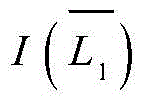 which is indicative of a first output light intensity,
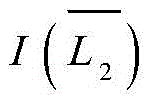 representing the second output light intensity.
 Representing the average optical path corresponding to the first output light intensity,
 indicating the average optical path corresponding to the second output light intensity.
According to the embodiment of the disclosure, the first output light intensity and the second output light intensity are acquired by the same or different similar photosensitive surfaces at different moments, wherein the first output light intensity is a systolic light intensity, the second output light intensity is a diastolic light intensity, the similar photosensitive surfaces comprise one or more photosensitive surfaces, and the similar photosensitive surfaces are used for outputting one output light intensity.
According to the embodiment of the disclosure, under the condition that the first output light intensity and the second output light intensity are acquired by the same or different similar photosurfaces at different time, a time difference measurement method based on pulse waves can be adopted to measure the tissue components.
The pulse, i.e. the arterial pulsation, means the periodic contraction and relaxation of the blood vessel along with the pulsation of the heart, the pressure in the aorta causes the diameter of the blood vessel to change pulsatorily, and the blood flow in the blood vessel also changes regularly and periodically along with the change. Each pulse waveform includes an ascending branch and a descending branch, wherein the ascending branch represents the dilation of the systolic ventricular artery and the descending branch represents the retraction of the diastolic ventricular artery. The contraction of the ventricles represents one cycle of pulsation.
According to the embodiments of the present disclosure, since the time difference measurement method based on the pulse wave is adopted, it is necessary to use information of the pulse as much as possible, and therefore, in order to improve the measurement accuracy, the light-sensing surface may be disposed at a position as close as possible to the target site (for example, the target blood vessel). That is, the analogous photosensitive surfaces for outputting the first output light intensity and the second output light intensity may be disposed at a position where the distance from the target portion is less than or equal to the fourth distance threshold. The fourth distance threshold may be zero, that is, the same type of photosensitive surface may be disposed on the target portion. The same type photosensitive surface for outputting the first output light intensity and the second output light intensity is arranged at a position where the distance from the target part is smaller than or equal to a fourth distance threshold, namely the distance from each photosensitive surface in the same type photosensitive surface for outputting the first output light intensity and the second output light intensity to the target part is smaller than or equal to the fourth distance threshold. The distance from each photosensitive surface in the same type of photosensitive surfaces to the target portion is smaller than or equal to the fourth distance threshold, and may be a distance from an edge of the photosensitive surface, which is farthest from the target portion, in the same type of photosensitive surfaces to the target blood vessel is smaller than or equal to the fourth distance threshold.
It should be noted that, with the time difference measurement method based on pulse waves, it is necessary to use the information of the pulse as much as possible without contradiction to the above-mentioned reduction of the adverse effect of the pulse on the measurement by using a large-area photosurface, the former uses the useful information of the pulse as much as possible, and the latter reduces the adverse effect of the pulse as much as possible. In addition, the first output light intensity may be a diastolic light intensity, and the second output light intensity may be a systolic light intensity. The first output light intensity and the second output light intensity corresponding to the preset wavelength may be output light intensities in the same pulse period or output light intensities in different pulse periods.
According to the embodiment of the disclosure, a first output light intensity corresponding to a preset wavelength is acquired by a first similar photosensitive surface corresponding to the preset wavelength, and a second output light intensity corresponding to the preset wavelength is acquired by a second similar photosensitive surface corresponding to the preset wavelength, wherein the first similar photosensitive surface comprises one or more photosensitive surfaces, and the second similar photosensitive surface comprises one or more photosensitive surfaces.
According to the embodiment of the disclosure, for a preset wavelength, a first similar photosensitive surface and a second similar photosensitive surface corresponding to the preset wavelength are provided, wherein the first similar photosensitive surface is used for outputting a first output light intensity corresponding to the preset wavelength, and the second similar photosensitive surface is used for outputting a second output light intensity corresponding to the preset wavelength. The first and second homogeneous photosurfaces may each comprise one or more photosurfaces.
According to the embodiment of the disclosure, the first output light intensity and the second output light intensity can be processed by adopting a position difference measurement method to determine the concentration of the measured tissue component.
According to the embodiments of the present disclosure, since the position difference measurement method needs to avoid the target site (for example, the target blood vessel) as much as possible, in order to improve the measurement accuracy, the light-sensing surface may be disposed at a position as far as possible from the target site. That is, the first homogeneous photosurface for outputting the first output light intensity may be located at a distance from the target portion greater than or equal to the fifth distance threshold, i.e., the distance from each photosurface in the first homogeneous photosurface to the target portion is greater than or equal to the fifth distance threshold. The distance from each photosensitive surface in the first homogeneous photosensitive surface to the target portion may be greater than or equal to a fifth distance threshold, and the distance from the edge of the photosensitive surface closest to the target portion in the first homogeneous photosensitive surface to the target portion may be greater than or equal to the fifth distance threshold. Or the first homogeneous photosensitive surface is not in contact with the target part, and the distance between the center of the photosensitive surface closest to the target part in the first homogeneous photosensitive surface and the target part is greater than or equal to a fifth distance threshold value. And setting the photosensitive surface for outputting the second output light intensity at a position where the distance from the target part is greater than or equal to a sixth distance threshold. For the understanding that the second homogeneous photosensitive surface for outputting the second light intensity is disposed at the position where the distance from the target portion is greater than or equal to the sixth distance threshold, reference may be made to the description of the first homogeneous photosensitive surface for outputting the first output light intensity, and details thereof are not repeated herein.
According to the embodiment of the disclosure, the average optical path of the emergent light received by different photosensitive positions of each photosensitive surface in the first homogeneous photosensitive surface belongs to a first average optical path range, wherein the first average optical path range is determined according to a first optical path average value, and the first optical path average value is an average value calculated according to the average optical path of the emergent light received by each photosensitive position of the first homogeneous photosensitive surface. The average optical path of the emergent light received by different photosensitive positions of each photosensitive surface in the second similar photosensitive surface belongs to a second average optical path range, wherein the second average optical path range is determined according to a second optical path average value, and the second optical path average value is an average value obtained by calculating the average optical path of the emergent light received by each photosensitive position of the second similar photosensitive surface.
According to the embodiment of the disclosure, in order to improve the measurement accuracy of tissue composition measurement by using a position difference-based measurement method, it is necessary to ensure that the emergent light received by the first similar photosensitive surface has a characteristic of a short optical path as much as possible, and the emergent light received by the second similar photosensitive surface also has a characteristic of a short optical path. The short path length is understood to mean that the average optical length of the outgoing light is within the range of the average optical length.
Aiming at the first similar photosurface, the average optical path of emergent light received by different photosites of each photosurface in the first similar photosurface belongs to the first average optical path range. Wherein the first average optical path range is determined as follows. And determining a first optical path average value of the average optical paths of the emergent light received by all the photosensitive positions of the first similar photosensitive surface, and determining a first optical path variation amplitude. And determining a first average optical path range according to the first optical path average value and the first optical path variation amplitude. Illustratively, if the first path length average value is b and the first path length variation amplitude is ± 40%, the first average path length range may be greater than or equal to 0.6b and less than or equal to 1.4b.
Aiming at the second similar light-sensitive surface, the average optical path of the emergent light received by different light-sensitive positions of each light-sensitive surface in the second similar light-sensitive surface belongs to the second average optical path range. Wherein the second average optical path range is determined as follows. And determining a second optical path average value of the average optical paths of the emergent light received by all the photosensitive positions of the second similar photosensitive surface, and determining a second optical path variation amplitude. And determining a second average optical path range according to the second optical path average value and the second optical path variation amplitude.
According to an embodiment of the present disclosure, an absolute value of a difference value of the first and second path length average values belongs to the first path length difference range.
According to the embodiment of the disclosure, in order to improve the measurement accuracy of tissue composition measurement based on the differential measurement method, a first homogeneous photosensitive surface and a second homogeneous photosensitive surface need to be arranged in a proper position range. The following description will be given taking the measured tissue composition as blood sugar. For the tissue to be measured to be classified as blood sugar, the target tissue layer is the dermis layer, and the required output light intensity is the output light intensity mainly carrying the tissue composition information in the dermis layer.
First, if the distance from the position of the photosensitive surface to the center of the incident light is too small, the output light intensity of the outgoing light will mainly carry the tissue composition information in the epidermis layer, i.e., the blood glucose information. If the position of the photosensitive surface is too far from the center of the incident light, the output light intensity of the emergent light will mainly carry the tissue composition information in the subcutaneous fat layer. The dermis is located between the epidermis layer and the subcutaneous fat layer, so that the arrangement positions of the first similar photosensitive surface and the second similar photosensitive surface need to be selected in a proper position range, and the distance between the first similar photosensitive surface and the second similar photosensitive surface cannot be too large.
Secondly, although the differential measurement method can effectively weaken the common-mode interference, the differential measurement method also loses a part of effective information, namely blood glucose information, while weakening the common-mode interference. If the two locations are in close proximity, then valid information may be lost altogether. Therefore, the arrangement positions of the first similar photosensitive surface and the second similar photosensitive surface need to be selected in a proper position range, and the distance between the first similar photosensitive surface and the second similar photosensitive surface cannot be too small.
In order to realize that the first similar photosensitive surface and the second similar photosensitive surface are arranged in a reasonable position range, the first similar photosensitive surface and the second similar photosensitive surface can be determined according to an effective information measurement principle, a difference measurement precision optimization principle and an interference signal effective elimination principle. The effective information measurement principle may mean that the emergent light at two positions can carry tissue composition information in a target tissue layer as much as possible, and therefore, the two positions should be within a reasonable position range. The principle of optimizing the precision of the differential measurement may mean that there should be a certain distance between two positions to ensure that as much valid information as possible remains after the difference. The principle of effectively eliminating the interference signal may mean that the distance between the two positions should be as small as possible to improve the effect of the differential measurement method in eliminating the common mode interference.
And setting a first similar photosensitive surface and a second similar photosensitive surface within a reasonable position range, and reflecting the first similar photosensitive surface and the second similar photosensitive surface on the optical path, wherein the absolute value of the difference value between a first optical path average value corresponding to the first similar photosensitive surface and a second optical path average value corresponding to the second similar photosensitive surface belongs to a first optical path difference range. Wherein, the first optical path difference range is determined according to the optimal differential optical path. The optimal differential optical path may be determined according to at least one of the three principles described above.
It can be understood that the requirements for the position setting of the first similar photosensitive surface and the second similar photosensitive surface also require that the area of the photosensitive surfaces cannot be too large, otherwise the differential effect is affected, and the measurement accuracy is further affected.
According to the embodiment of the present disclosure, the first average optical path range is less than or equal to the first optical path difference range, and the second average optical path range is less than or equal to the first optical path difference range.
According to the embodiment of the disclosure, in order to realize that the first similar photosensitive surface and the second similar photosensitive surface are arranged in the reasonable position range as much as possible and are reflected on the optical path, it is further required to ensure that the first average optical path range is less than or equal to the first optical path difference range and the second average optical path range is less than or equal to the first optical path difference range. Therefore, the absolute value of the difference between the first optical path average value corresponding to the first homogeneous photosensitive surface and the second optical path average value corresponding to the second homogeneous photosensitive surface belongs to a first optical path difference range, the first average optical path range is smaller than or equal to the first optical path difference range, and the second average optical path range is smaller than or equal to the first optical path difference range.
According to an embodiment of the present disclosure, the first optical path difference range is determined according to an optimal differential optical path corresponding to a preset wavelength.
According to an embodiment of the present disclosure, in the case where the measurement region of the measured object is determined, there is an optimum differential sensitivity corresponding to the preset wavelength, wherein the optimum differential sensitivity may represent a sensitivity corresponding to when a change in the differential signal due to a change in the concentration of the unit measured tissue component is the largest. The optimum differential optical path may be determined based on the optimum differential sensitivity, that is, the optimum differential optical path may be determined based on the principle of optimizing the precision of differential measurement, and thus, the optical path corresponding to the optimum differential sensitivity may be referred to as the optimum differential optical path.
According to the embodiment of the disclosure, after determining the optimal differential optical path corresponding to the preset wavelength, the up-down adjustment amplitude may be set, and the first optical path difference range corresponding to the preset wavelength is determined according to the optimal differential optical path corresponding to the preset wavelength and the up-down adjustment amplitude.
According to the embodiment of the disclosure, the source detection distance from each photosurface of the first homogeneous photosurfaces corresponding to the preset wavelength to the center of the incident light is within the preset source detection distance range corresponding to the preset wavelength, wherein the preset source detection distance range is determined according to the source detection distance from the floating reference position corresponding to the preset wavelength to the center of the incident light.
According to an embodiment of the present disclosure, in order to further improve the measurement accuracy, the position of the photosensitive surface may be set based on a floating reference method. The floating reference method will be described below.
For the measured object, when incident light enters tissues, absorption and scattering can occur, the absorption can directly cause light energy attenuation, the scattering can influence the distribution of emergent light by changing the transmission direction of photons, and the distribution of the emergent light is the result of the combined action of the incident light and the emergent light. Based on the floating reference method, there is a position from the center of the incident light for the measured tissue component where the degrees of influence of the absorption and scattering effects on the output light intensity of the outgoing light are the same and opposite in direction, and therefore, the outgoing light is not sensitive to the concentration change of the measured tissue component. A position having the above-described characteristics may be referred to as a reference position (or referred to as a reference position). The output intensity of the emerging light at the reference position reflects the response to disturbances other than the measured tissue composition during the measurement. Meanwhile, there is also a position from the center of the incident light for the measured tissue component, and the sensitivity of the output light intensity of the outgoing light at the position to the concentration change of the measured tissue component is greater than or equal to the sensitivity threshold. A location having the above characteristics may be referred to as a measurement location. The output light intensity of the emergent light at the measurement position reflects the response to the measured tissue component during the measurement process and the response to other interference except the measured tissue component. The reference position and the measurement position vary depending on the wavelength, the measurement object, and the measurement area, and thus the reference position can be referred to as a floating reference position.
According to the embodiments of the present disclosure, since the output light intensity of the outgoing light emitted at the floating reference position mainly carries the response to the disturbance other than the measured tissue component during the measurement, the output light intensity of the outgoing light emitted from the floating reference position can be introduced into the differential measurement to weaken the common mode disturbance to the maximum extent and lose the effective information to a smaller extent. Based on the above, in the case that the measurement area of the object to be measured is determined, for each preset wavelength, the source-sensing distance from at least one photosensitive surface of the M photosensitive surfaces to the center of the incident light is within the preset source-sensing distance range corresponding to the preset wavelength, and the preset source-sensing distance range is determined according to the source-sensing distance from the floating reference position corresponding to the preset wavelength to the center of the incident light. In an embodiment of the present disclosure, a source detection distance of each photosurface of the first homogeneous photosurface from a center of incident light may be within a preset source detection distance range corresponding to a preset wavelength.
Illustratively, e.g. for the measurement area B of the object A to be measured, with a predetermined wavelength λ 1 The corresponding floating reference position is 1.7m away from the center of the incident lightm, then is equal to the predetermined wavelength λ 1 The corresponding preset source probe distance range may be 1.5mm to 1.9mm.
Based on the above, the same kind of photosensitive surface corresponding to the reference position and the same kind of photosensitive surface corresponding to the measurement position can be determined, the output light intensity collected by the same kind of photosensitive surface corresponding to the reference position is referred to as a first output light intensity, and the output light intensity collected by the same kind of photosensitive surface corresponding to the measurement region is referred to as a second output light intensity. Or, the output light intensity collected by the same kind of photosensitive surface corresponding to the measurement region is referred to as a first output light intensity, and the output light intensity collected by the same kind of photosensitive surface corresponding to the reference position is referred to as a second output light intensity.
According to an embodiment of the present disclosure, determining the concentration of the measured tissue constituent according to at least one output light intensity corresponding to a plurality of preset wavelengths may include the following operations.
For each of a plurality of preset wavelengths, a third output light intensity is determined from at least one output light intensity corresponding to the preset wavelength. And carrying out differential processing on the third output light intensities corresponding to different preset wavelengths to obtain at least one differential signal. The concentration of the measured tissue constituent is determined based on the at least one differential signal.
According to an embodiment of the present disclosure, the third output light intensity may be processed using a wavelength difference measurement method to determine the concentration of the measured tissue constituent. If the following conditions are met, the tissue composition measurement can be carried out by adopting a wavelength difference measurement method, so that the common-mode interference can be eliminated, meanwhile, enough effective information can be kept, and the measurement precision is improved.
First, for each tissue component to be measured, the influence of the same disturbance (such as temperature or pressure) on the output light intensity at two preset wavelengths is in accordance or substantially in accordance with the rule.
Secondly, the sensitivity of the output light intensity under two preset wavelengths to the change of the concentration of the detected tissue components has larger difference.
And under the condition that the preset wavelength is determined, determining a third output light intensity from at least one output light intensity corresponding to the preset wavelength. Thereby a third output light intensity for each preset wavelength may be obtained. For two preset wavelengths, the two third output light intensities may be subjected to difference processing to obtain a difference signal.
According to an embodiment of the present disclosure, the differential processing of the two third output light intensities may include the following operations. And processing the two third output light intensities by adopting a differential circuit to obtain a differential signal. Or, performing differential operation on the two third output light intensities by adopting a differential algorithm to obtain a differential signal. And performing a difference operation on the two third output light intensities by using a difference algorithm to obtain a difference signal, wherein the following operation can be performed. And carrying out direct differential operation on the two third output light intensities to obtain a differential signal. Or, the two third output light intensities are respectively subjected to logarithm processing to obtain two logarithm light intensities, and the two logarithm light intensities are subjected to direct differential operation to obtain a differential signal.
According to an embodiment of the present disclosure, determining the concentration of the measured tissue constituent according to the differential signal corresponding to each preset wavelength may include the following operations.
And carrying out direct differential operation on the differential signals corresponding to different preset wavelengths to obtain at least one wavelength differential signal. And determining the concentration of the detected tissue component according to the at least one wavelength differential signal.
According to embodiments of the present disclosure, the differential signal may be processed using a wavelength differential measurement method to determine the concentration of the measured tissue constituent. If the following conditions are met, the tissue composition measurement can be carried out by adopting a wavelength difference measurement method, so that the common-mode interference can be eliminated, meanwhile, enough effective information can be kept, and the measurement precision is improved.
First, for each tissue component to be measured, the influence of the same disturbance (e.g., temperature or pressure) on the differential signal at two preset wavelengths is uniform or substantially uniform.
Secondly, the sensitivity of the differential signals under the two preset wavelengths to the concentration change of the detected tissue components has larger difference.
For two preset wavelengths, the two differential signals can be subjected to direct differential operation to obtain wavelength differential signals. And determining the concentration of the detected tissue component according to the at least one wavelength differential signal.
According to an embodiment of the present disclosure, determining the concentration of the measured tissue constituent according to at least one output light intensity corresponding to a plurality of preset wavelengths may include the following operations.
Determining a fourth output light intensity from the at least one output light intensity corresponding to the preset wavelength for each of the plurality of preset wavelengths. And determining the concentration of the detected tissue components according to the fourth output light intensity corresponding to each preset wavelength.
According to the embodiment of the disclosure, the tissue composition measurement can be performed by adopting a non-differential measurement method, that is, the concentration of the measured tissue composition is determined according to the fourth output light intensity corresponding to each preset wavelength.
According to the embodiment of the disclosure, the fourth light intensity corresponding to the preset wavelength is acquired by the same type of photosensitive surface corresponding to the preset wavelength, and a difference value between an average optical path of emergent light received by different photosensitive positions of each photosensitive surface in the same type of photosensitive surface and an optimal optical path corresponding to the preset wavelength belongs to the second optical path difference range.
According to the embodiment of the disclosure, in order to improve the measurement accuracy, in the case that the measurement area of the measured object is determined, for each preset wavelength, the average optical path of the outgoing light received by different photosensitive positions in the same type photosensitive surface for acquiring the third output light intensity may be made to approach the optimal optical path corresponding to the preset wavelength, that is, the absolute value of the difference between the average optical path of the outgoing light received by different photosensitive positions in the same type photosensitive surface for acquiring the third output light intensity and the optimal optical path corresponding to the preset wavelength is smaller than or equal to the second optical path difference range. The optimal optical path corresponding to the preset wavelength can be understood as the optical path corresponding to the maximum sensitivity of the detected tissue component at the preset wavelength.
According to the embodiment of the disclosure, each photosensitive surface comprises an annular photosensitive surface or a non-annular photosensitive surface, and the shapes of different photosensitive surfaces are the same or different.
According to an embodiment of the present disclosure, each photosensitive surface may be made of a photosensitive material. The annular photosensitive surface can avoid the problem of azimuth positioning, and can realize the design of a larger area in a smaller source detection distance range. It should be noted that, since the source-probe distance is usually a relatively important physical quantity in the measurement of the composition of the living tissue, it is very meaningful to design a relatively large area in a relatively small source-probe distance range.
According to the embodiment of the present disclosure, in some cases, the non-annular photosurface is adopted to have the following beneficial effects.
First, because the measurement result is influenced by the measurement area, if the photosensitive surface is generally disposed in the measurement area favorable for measurement, the measurement result obtained by disposing the photosensitive surface in the measurement area favorable for measurement is better than that obtained by disposing the photosensitive surface in the measurement area favorable for measurement in comparison with the measurement area in which interference is caused to measurement, and therefore, the photosensitive surface can be disposed in a suitable position according to the tissue structure characteristics. The non-annular photosensitive surface can easily avoid a measurement area which interferes with measurement, such as a blood vessel or a wound area, so that the non-annular photosensitive surface has a good effect.
Secondly, due to the non-uniformity of the tissue, the transmission paths of the same incident light in the tissue may be different, and the average optical paths corresponding to the emergent light at different emitting positions are different. Taking the blood sugar as an example of the organization to be measured, the dermis is the main source of the blood sugar signal, so that the emergent light is the emergent light which is mainly obtained after transmission in the dermis, and accordingly, certain requirements are provided for the average optical path corresponding to the emergent light.
Assuming that the annular light-sensing surface with the corresponding size is designed according to the requirement for the average optical path, it can be considered that the average optical paths corresponding to the emergent light received by different light-sensing positions of the annular light-sensing surface are basically similar and mainly the emergent light passing through the dermis layer, and the average optical path is within the average optical path range C. In this case, if the skin tissue is uniform, the above conclusion is true. However, since the skin tissue is not uniform, the average optical path difference corresponding to the outgoing light received by different photosensitive positions of the same annular photosensitive surface is large, if the average optical paths corresponding to the outgoing light received by a part of the photosensitive positions of the annular photosensitive surface are substantially similar and are within the average optical path range C, the average optical path corresponding to the outgoing light received by another part of the photosensitive positions of the annular photosensitive surface is larger than the difference and is not within the average optical path range C. Because the average optical path of the emergent light in the average optical path range C can indicate that the emergent light mainly passes through the corium layer, the emergent light which is not in the average optical path range C may not mainly pass through the corium layer, and meanwhile, the annular photosensitive surface outputs an output light intensity, the quality of the output light intensity signals obtained by adopting the annular photosensitive surface is not high under the condition that the skin tissue is not uniform, and further the measurement precision is influenced.
The non-annular photosensitive surfaces may be set according to actual conditions, and in the above example, assuming that the average optical path that is not within the average optical path range C is within the average optical path range D, two non-annular photosensitive surfaces may be used, where one non-annular photosensitive surface is used to receive the light intensity value of the outgoing light whose average optical path is within the average optical path range C of the outgoing light, the other non-annular photosensitive surface is used to receive the light intensity value of the outgoing light whose average optical path is within the average optical path range D of the outgoing light, and the output light intensities of the two non-annular photosensitive surfaces are consistent with actual values, which is favorable for ensuring measurement accuracy.
Thirdly, when the time difference measurement method based on the pulse wave is adopted to measure the tissue components, the pulse signal is required to be fully utilized, namely, the difference between the light intensity in the systolic period and the light intensity in the diastolic period is as large as possible. Under the condition, most of the annular photosensitive surface is not positioned above the blood vessel, so that the pulse signal acquisition effect is influenced, and the difference degree between the light intensity in the contraction phase and the light intensity in the diastole phase is reduced. Therefore, the difference degree of the light intensity in the contraction period and the light intensity in the relaxation period obtained by the annular photosensitive surface is smaller than that of the light intensity in the contraction period and the light intensity in the relaxation period obtained by the non-annular photosensitive surface.
Fourthly, due to the influence of tissue nonuniformity and physiological background variation on emergent light, the average optical paths of the emergent light received by different photosurfaces which have the same source detection distance from the center of incident light may have difference, so that the output light intensities collected by different photosurfaces which have the same source detection distance from the center of the incident light can be adopted to carry out differential operation so as to measure tissue components. The non-annular photosensitive surface can be realized, namely at least two non-annular photosensitive surfaces are discretely arranged by taking the center of incident light as the center aiming at the same source detection distance so as to realize the output of two output light intensities.
Fifthly, the manufacturing process difficulty is low, and the manufacturing cost is low.
The fourth aspect is explained below with reference to fig. 5. Fig. 5 schematically shows a schematic diagram of a differential measurement according to an embodiment of the present disclosure. As shown in fig. 5, fig. 5 includes four sector ring photosensitive surfaces, which are sector ring photosensitive surface 1, sector ring photosensitive surface 2, sector ring photosensitive surface 3, and sector ring photosensitive surface 4, where the four sector ring photosensitive surfaces are used separately, and each sector ring photosensitive surface has a corresponding output light intensity. The centers of the four fan-ring photosurfaces are the same distance from the center of incident light, namely the same source-detecting distance is obtained. Due to tissue heterogeneity, average optical paths corresponding to emergent light received by the sector ring photosensitive surface 1 and the sector ring photosensitive surface 2 are different, so that differential operation can be performed according to output light intensity collected by the sector ring photosensitive surface 1 and output light intensity collected by the sector ring photosensitive surface 2, and differential measurement is achieved.
According to an embodiment of the present disclosure, the non-annular photosensitive surface includes a sector ring photosensitive surface, a circular photosensitive surface, a sector photosensitive surface, an oval photosensitive surface, or a polygonal photosensitive surface.
According to an embodiment of the present disclosure, the polygonal photosensitive surface includes a square photosensitive surface, a rectangular photosensitive surface, or a triangular photosensitive surface.
According to the embodiment of the disclosure, the central angle can be designed according to actual conditions to obtain the corresponding sector ring photosurface. For example, a sector ring photosurface with a central angle of 90 °, a sector ring photosurface with a central angle of 180 °, and a sector ring photosurface with a central angle of 45 °.
Fig. 6 schematically illustrates a schematic view of an annular photosurface according to an embodiment of the disclosure. Fig. 7 schematically illustrates a schematic view of a sector ring photosurface according to an embodiment of the disclosure. Fig. 8 schematically illustrates a schematic view of a circular photosurface according to an embodiment of the disclosure. Fig. 9 schematically illustrates a schematic diagram of a square photosurface according to an embodiment of the disclosure.
According to the embodiment of the disclosure, the same-type photosensitive surface includes an annular photosensitive surface or a non-annular photosensitive surface, wherein the same-type photosensitive surface includes one or more photosensitive surfaces, and the same-type photosensitive surface is used for outputting an output light intensity.
According to the embodiments of the present disclosure, the similar photosensitive surface may be an annular photosensitive surface or a non-annular photosensitive surface, that is, the similar photosensitive surface is represented as an annular photosensitive surface or a non-annular photosensitive surface as a whole. Depending on the number of photosensitive surfaces that a similar type of photosensitive surface comprises, it may be determined whether the shape as a whole is formed by one single photosensitive surface or by a combination of a plurality of photosensitive surfaces. Wherein, each photosurface in the same type of photosurface can be an annular photosurface or a non-annular photosurface.
According to the embodiment of the present disclosure, the similar photosensitive surfaces are annular photosensitive surfaces, and may include: in the case where the similar photosensitive surface includes one photosensitive surface, the similar photosensitive surface is an independent annular photosensitive surface. In the case where the same type of photosensitive surface includes a plurality of photosensitive surfaces, the same type of photosensitive surface is an annular photosensitive surface formed by combining the plurality of photosensitive surfaces. The similar photosensitive surface is a non-annular photosensitive surface and can comprise: in the case where the same type of photosensitive surface includes one photosensitive surface, the same type of photosensitive surface is an independent non-annular photosensitive surface. In the case where the same type of photosensitive surface includes a plurality of photosensitive surfaces, the same type of photosensitive surface is a non-annular photosensitive surface formed according to a combination of the plurality of photosensitive surfaces.
According to the embodiment of the disclosure, the plurality of photosensitive surfaces participating in combination are closely arranged to ensure that no gap exists between the adjacent photosensitive surfaces as much as possible. Because the circular photosensitive surface or the square photosensitive surface is common at present, the manufacturing process difficulty is low, the manufacturing cost is low, photosensitive surfaces with other shapes are generally required to be customized, the manufacturing process difficulty is high, and the manufacturing cost is high, therefore, if the manufacturing cost is limited, a plurality of circular photosensitive surfaces and/or a plurality of square photosensitive surfaces can be combined to form the same type of photosensitive surfaces with other shapes by adopting a combined mode. Wherein the square shape comprises a square or a rectangle.
The manufacturing cost of the photosensitive surface is also related to the size of the area of the photosensitive surface, and generally, the larger the area of the photosensitive surface, the higher the manufacturing cost. If a larger-area photosensitive surface is needed and a plurality of smaller-area photosensitive surfaces exist at present, the plurality of smaller-area photosensitive surfaces can be combined to obtain a larger-area photosensitive surface in order to reduce the manufacturing cost.
According to the embodiment of the disclosure, under the condition that the distance from the similar photosensitive surface to the target part is determined to be greater than or equal to the second distance threshold, the similar photosensitive surface comprises an annular photosensitive surface, a sector photosensitive surface, a circular photosensitive surface or a square photosensitive surface.
According to the embodiment of the disclosure, under the condition that the distance between the similar photosensitive surface and the target part is greater than or equal to the second distance threshold, the photosensitive surface with the proper shape can be selected according to the jitter condition of the actual emergent light, so that the adverse effect of jitter on measurement can be weakened to the greatest extent.
The target site may be a site where jitter occurs. Since one of the sources causing the jitter is the pulse beat, which is related to the blood vessel, the target site may be the blood vessel. Generally, the jitter distribution of the emergent light close to the blood vessel has a certain directivity, while the jitter distribution of the emergent light far away from the blood vessel is relatively uniform and has no directivity.
If the similar photosensitive surface is far away from the target part (such as a target blood vessel), the jitter distribution of the emergent light can be relatively uniform, and in this case, an annular photosensitive surface, a fan-shaped photosensitive surface, a circular photosensitive surface or a square photosensitive surface can be selected. The distance of the same type of photosensitive surfaces from the target portion may be understood as the distance of each of the same type of photosensitive surfaces from the target portion being greater than or equal to the second distance threshold. The distance between each photosensitive surface of the same type of photosensitive surfaces and the target portion is greater than or equal to the second distance threshold, where the distance between the edge of the photosensitive surface closest to the target portion in the same type of photosensitive surfaces and the target portion is greater than or equal to the second distance threshold, or the same type of photosensitive surfaces are not in contact with the target portion, and the distance between the center of the photosensitive surface closest to the target portion in the same type of photosensitive surfaces and the target portion is greater than or equal to the second distance threshold.
Under the condition that the similar photosurfaces are far away from the target part, if the average optical path of the emergent light received by different photosurfaces in each photosurface of the similar photosurfaces is smaller than or equal to the optical path threshold value, the jitter condition of the emergent light can be shown to be influenced by the size of the optical path, wherein the larger the average optical path of the emergent light is, the more obvious the jitter condition of the emergent light is, and otherwise, the less obvious the jitter condition of the emergent light is. In this case, the arc length corresponding to a position farther from the center of the incident light may be designed to be longer, whereby an annular photosensitive surface, a fan-ring photosensitive surface, or a fan-shaped photosensitive surface may be selected.
Under the condition that the similar photosurfaces are far away from the target part, if the average optical path of the emergent light received by different photosurfaces in the similar photosurfaces is larger than the optical path threshold, the jitter condition of the emergent light is almost irrelevant to the size of the optical path. In this case, a circular photosensitive surface or a square photosensitive surface may be selected.
According to the embodiment of the present disclosure, if the same kind of photosensitive surfaces includes one photosensitive surface, the sector ring photosensitive surface is an independent sector ring photosensitive surface. If the same type of photosensitive surface comprises a plurality of photosensitive surfaces, the sector ring photosensitive surface is a photosensitive surface formed by combining the plurality of photosensitive surfaces. Similarly, the same type of photosensitive surface may be formed independently or combined to form the same type of photosensitive surface for the case that the same type of photosensitive surface includes an annular photosensitive surface, a circular photosensitive surface, a square photosensitive surface or a sector photosensitive surface.
It should be noted that, because the circular photosensitive surface or the square photosensitive surface is common at present, the manufacturing process difficulty is small, the manufacturing cost is low, and the photosensitive surfaces of other shapes generally need to be customized, the manufacturing process difficulty is large, and the manufacturing cost is high, if the manufacturing cost is limited, the similar photosensitive surface includes the circular photosensitive surface or the square photosensitive surface under the condition that the distance from the similar photosensitive surface to the target position is greater than or equal to the second distance threshold.
According to the embodiment of the disclosure, in the case that it is determined that the distance from the similar photosensitive surface to the target portion is less than or equal to the third distance threshold, the shape of the similar photosensitive surface is determined according to the jitter distribution shape area of the outgoing light.
According to the embodiment of the disclosure, if the distance from the similar photosensitive surface to the target part is less than or equal to the third distance threshold, the shape area of the similar photosensitive surface is determined according to the jitter distribution of the emergent light.
According to the embodiment of the present disclosure, if the similar photosensitive surface is close to the target region (for example, the target blood vessel), it can be said that the jitter distribution of the emitted light has a certain directionality. In this case, the shape of the same-type photosensitive surface can be determined according to the jitter distribution of the outgoing light. Alternatively, the shape of the same-kind photosensitive surface and the jitter distribution of the outgoing light are similar patterns. For example, if the jitter distribution of the outgoing light is an elliptical shape, the shape of the same type of photosensitive surface may be designed to be an elliptical photosensitive surface. Alternatively, if the jitter distribution of the outgoing light is rectangular, the shape of the similar photosensitive surface may be designed to be a rectangular photosensitive surface. Or, if the jitter distribution of the emergent light is rhombic, the shape of the same type of photosensitive surface can be designed to be a rhombic photosensitive surface.
According to the embodiment of the disclosure, the jitter distribution of the emergent light comprises a jitter distribution divided into a jitter distribution along a first direction and a jitter distribution along a second direction, the first direction and the second direction are perpendicular to each other, the ratio of the length of the same-kind photosensitive surface along the first direction to the length of the same-kind photosensitive surface along the second direction is determined according to the ratio of the jitter amplitude of the emergent light along the first direction to the jitter amplitude of the emergent light along the second direction, and the jitter amplitude of the emergent light along the first direction is the largest.
According to the embodiment of the disclosure, if the jitter distribution of the outgoing light includes jitter distributions along two mutually perpendicular directions, where the jitter distributions of the two mutually perpendicular directions are obtained by decomposing jitter of the outgoing light into the two mutually perpendicular directions, the two mutually perpendicular directions are respectively referred to as a first direction and a second direction, where jitter amplitude of the outgoing light along the first direction is the largest, a ratio of a length of the same type of photosensitive surface along the first direction to a length of the same type of photosensitive surface along the second direction may be set according to a ratio of jitter amplitude of the outgoing light along the first direction to the second direction, and the ratio of the length of the same type of photosensitive surface along the first direction to the length of the same type of photosensitive surface along the second direction may be greater than or equal to the ratio of jitter amplitude of the outgoing light along the first direction to the second direction.
For example, if the first direction and the second direction are the Y-axis direction and the X-axis direction in a rectangular coordinate system, respectively, the ratio of the jitter amplitude of the outgoing light in the Y-axis direction to the jitter amplitude in the X-axis direction can be expressed as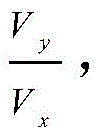 The ratio of the length of the same type of photosensitive surface along the Y-axis direction to the length of the same type of photosensitive surface along the X-axis direction can be expressed as
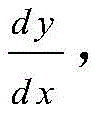 Then
Then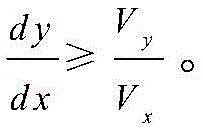
According to the embodiment of the disclosure, the similar photosensitive surface comprises a rectangular photosensitive surface or an elliptical photosensitive surface, the ratio of the length to the width of the rectangular photosensitive surface is determined according to the ratio of the jitter amplitude of the emergent light in the first direction to the jitter amplitude of the emergent light in the second direction, and the ratio of the long axis to the short axis of the elliptical photosensitive surface is determined according to the ratio of the jitter amplitude of the emergent light in the first direction to the jitter amplitude of the emergent light in the second direction.
According to an embodiment of the disclosure, if the distance from the homogeneous photosurface to the target portion is smaller than or equal to a third distance threshold, the jitter distribution of the emergent light comprises a jitter distribution decomposed into a first direction and a second direction, and the first direction and the second direction are perpendicular to each other, the homogeneous photosurface may comprise a rectangular photosurface or an elliptical photosurface. The ratio of the length to the width of the rectangular photosensitive surface is larger than or equal to the ratio of the jitter amplitude of the emergent light along the first direction to the jitter amplitude of the emergent light along the second direction. The ratio of the long axis to the short axis of the elliptic photosensitive surface is larger than or equal to the ratio of the jitter amplitude of the emergent light along the first direction to the jitter amplitude of the emergent light along the second direction.
According to the embodiment of the disclosure, each output light intensity is processed according to the light intensity value of the emergent light collected by one or more photosensitive surfaces, and the following operations can be included.
One or more photosurfaces are used in combination to output an output light intensity. Or under the condition that each photosensitive surface in one or more photosensitive surfaces is used independently, the light intensity value of emergent light collected by each photosensitive surface is calculated to obtain output light intensity.
According to embodiments of the present disclosure, a photosurface for outputting an output light intensity is referred to as a homogeneous photosurface, which may include one or more photosurfaces. The condition for combining the different photosensitive surfaces may be that the average optical path of the emergent light received by each photosensitive surface is within the average optical path range. The average optical path range may be a range consisting of greater than or equal to the first average optical path threshold and less than or equal to the second average optical path threshold. The first average optical path threshold and the second average optical path threshold may be determined according to an optical path average value and an optical path variation amplitude. The average value of the optical paths is an average value calculated according to the average optical paths of emergent light received by all photosensitive positions of the same type of photosensitive surfaces.
The photosensitive surface is usually used in cooperation with an amplifying circuit corresponding to the photosensitive surface to output a light intensity value. In order to enable the same type of photosensitive surfaces to output relatively accurate output light intensity, the product of the photoresponse rate of each photosensitive surface in the same type of photosensitive surfaces and the amplification factor of the amplifying circuit matched with the photosensitive surface is required to be a preset value, and under the condition that the photoresponse rate of each photosensitive surface and the amplification factor of the amplifying circuit matched with the photosensitive surface are ensured to be the same preset value, the same type of photosensitive surfaces output one output light intensity. If the product of the photoresponse rate of the photosensitive surface and the amplification factor of the amplifying circuit matched with the photosensitive surface is not the same preset value, a corresponding method needs to be adopted to enable the product to be the same preset value.
The output light intensity of the same type of photosensitive surface can be realized by adopting a hardware or software mode.
The first mode is a hardware mode. Cathodes and anodes of different photosurfaces in the same type of photosurfaces can be electrically connected with each other, namely, the common-cathode-common-anode electrical connection between different photosurfaces is realized. In this case, it is equivalent to connect different photosensitive surfaces in parallel to realize the combined use of one or more photosensitive surfaces for outputting an output light intensity. It should be noted that it is necessary to ensure the photoresponse rates of different photosensitive surfaces to be consistent as much as possible to obtain more accurate output light intensity.
Mode two, software mode. Cathodes among different photosurfaces in the same type of photosurfaces are not connected with each other and anodes among the same type of photosurfaces are not connected with each other, namely, each photosurface is independently used and outputs a light intensity value. After the light intensity value corresponding to each photosensitive surface is obtained, the light intensity values of the photosensitive surfaces of the same type can be weighted and summed by adopting a corresponding algorithm to obtain an output light intensity.
Alternatively, the output light intensity corresponding to the same kind of photosensitive surface can be determined by the following equations (2) and (3).


Wherein I represents the output light intensity corresponding to the same kind of photosensitive surface, I i Representing a light intensity value corresponding to a photosurface i, wherein i belongs to {1, 2.,. N-1, N }, N represents the number of photosurfaces included in the same type of photosurfaces, N is more than or equal to 1 and less than or equal to M, M represents the total number of photosurfaces, and alpha is i Representing a weighting coefficient corresponding to the photosensitive surface i, H representing a predetermined value, beta i Indicating the photoresponse, γ, corresponding to the photosurface i i The magnification of the amplifier circuit used in conjunction with the photosensitive surface i is shown.
According to the embodiment of the disclosure, the photosensitive surface is obtained after a mask plate is arranged on the initial photosensitive surface, and the light transmittance of the mask plate is smaller than or equal to the light transmittance threshold.
According to the embodiment of the present disclosure, the shape of the mask is determined according to the shape of the jitter distribution of the outgoing light.
According to the embodiment of the disclosure, because the current round photosensitive surface or the square photosensitive surface is common, the manufacturing process difficulty is small, the manufacturing cost is low, and the photosensitive surfaces of other shapes are generally required to be customized, the manufacturing process difficulty is large, and the manufacturing cost is high, therefore, if the manufacturing cost is limited, a mode of setting a mask plate on the initial photosensitive surface can be adopted, wherein the part of the initial photosensitive surface, which is shielded by the mask plate, is difficult to receive the light intensity value because the light transmittance of the mask plate is less than or equal to the light transmittance threshold value.
Based on the above, the shape and the position of the mask plate can be set according to the actually required shape and area, so that the photosensitive surface with the preset shape and area can be obtained. Wherein, the shape and the area which are actually needed can be determined according to the jitter distribution condition of the emergent light.
For example, fig. 10 schematically illustrates a schematic diagram of a photosensitive surface obtained by disposing a mask on an initial photosensitive surface according to an embodiment of the disclosure. In fig. 10, the initial photosensitive surface is a square photosensitive surface, and the photosensitive surface is a circular photosensitive surface.
According to the embodiments of the present disclosure, the intensity distribution of the spot irradiated with the incident light to the measurement region is uniform.
According to the embodiment of the disclosure, in order to enable the measured object to perform tissue composition measurement under a more relaxed requirement, thereby better ensuring the measurement accuracy, the method can be implemented in a manner of ensuring that the intensity distribution of the light spot irradiated to the measurement area by the incident light is uniform. Meanwhile, the more uniform the intensity distribution of the light spot irradiated to the measurement area by the incident light, the lower the requirement on the reproducibility of the controllable measurement condition, and the better the effect of suppressing the influence of the uncontrollable measurement condition on the measurement result by adopting the differential measurement method, thereby better ensuring the measurement accuracy. In addition, since the light energy of the incident light is attenuated to a certain extent by the measure of making the intensity distribution of the spot of the incident light on the measurement area uniform, and the light energy of the incident light is not too small as required by the tissue composition measurement, it is necessary to minimize the attenuation of the light energy of the incident light as much as possible while ensuring the intensity distribution of the spot of the incident light on the measurement area uniform. In addition, if the incident light is realized by adopting an optical fiber transmission mode, the light spots of the incident light are uniformly distributed on the measuring area, and the adverse effect of optical fiber jitter on the measuring result is also reduced.
According to an embodiment of the present disclosure, an area of a spot of incident light irradiated to the measurement region is greater than or equal to a spot area threshold.
According to the embodiment of the disclosure, in order to enable the measured object to perform tissue composition measurement under a more relaxed requirement, thereby better ensuring the measurement accuracy, the measurement method can be implemented in a manner that the area of the light spot irradiated to the measurement region by the incident light is greater than or equal to the light spot area threshold. Meanwhile, in a certain range, the larger the area of a light spot irradiated to a measurement area by incident light is, the lower the requirement on the reproducibility of a controllable measurement condition is, and the better the effect of suppressing the influence of an uncontrollable measurement condition on a measurement result by adopting a differential measurement method is, so that the measurement accuracy can be better ensured. The spot area threshold may be set according to actual conditions, and is not specifically limited herein. In addition, if the incident light is realized by adopting an optical fiber transmission mode, the area of a light spot irradiated to the measuring area by the incident light is larger than or equal to a light spot area threshold value, and the adverse effect of optical fiber jitter on the measuring result is also reduced.
Fig. 11 schematically illustrates a block diagram of a tissue-component measurement device according to an embodiment of the disclosure.
As shown in fig. 11, the tissue composition measurement device 1100 includes a light source module 1110, an acquisition module 1120, and a processing module 1130.
The light source module 1110 is configured to irradiate a measurement area with incident light with a plurality of preset wavelengths, where each incident light passes through the measurement area and then exits from at least one exit position to form at least one exit light, and the incident position of the incident light includes one.
The collection module 1120 comprises M photosensitive surfaces, each photosensitive surface can collect the light intensity value of emergent light emitted from the emergent position in the preset anti-shake range corresponding to the photosensitive surface, the collection module is used for acquiring the light intensity value corresponding to each emergent light collected by the M photosensitive surfaces to obtain T output light intensities, each output light intensity is obtained by processing the light intensity value of the emergent light collected by one or more photosensitive surfaces, and T is more than or equal to 1 and less than or equal to M.
The processing module 1130 is configured to determine the concentration of the measured tissue constituent according to at least one output light intensity corresponding to a plurality of preset wavelengths.
According to the technical scheme of this disclosed embodiment, the light intensity value of the emergent light that the emergent position that the sensitive surface can gather in the preset disturbance range of preventing that corresponds was emergent, because the sensitive surface that has above-mentioned characteristic has improved the area that can stably receive the emergent light in the sensitive surface and has accounted for the proportion of the area of this sensitive surface, consequently, has improved the stability of receiving the emergent light, and then has reduced the adverse effect of the change of the intensity distribution of the emergent light that leads to by the shake to measurement accuracy has been improved.
According to the embodiment of the disclosure, the proportion of the average optical path of the emergent light received by each photosensitive surface in the target tissue layer to the total optical path is greater than or equal to a proportion threshold, wherein the total optical path is the total distance transmitted by the emergent light in the measuring area.
According to the embodiment of the disclosure, the total area of the same type of photosensitive surfaces is determined according to the tissue structure characteristics in the measurement area, wherein the same type of photosensitive surfaces comprises one or more photosensitive surfaces, and the same type of photosensitive surfaces are used for outputting an output light intensity.
According to an embodiment of the disclosure, a ratio of an area of each photosensitive surface to a perimeter of the photosensitive surface is greater than or equal to a ratio threshold.
According to an embodiment of the present disclosure, the ratio threshold is greater than or equal to 0.04mm.
According to an embodiment of the present disclosure, the light sensing surface is in contact or non-contact with a surface of the measurement region.
According to the embodiment of the disclosure, the distance between the photosensitive surface and the surface of the measurement area is smaller than or equal to the first distance threshold, and the efficiency of receiving emergent light by the photosensitive surface is larger than or equal to the efficiency threshold.
According to the embodiment of the disclosure, one or more same-type photosensitive surfaces corresponding to each preset wavelength exist in the M photosensitive surfaces, wherein the same-type photosensitive surfaces are used for collecting first output light intensity and/or second output light intensity corresponding to the preset wavelengths at different moments, the first output light intensity is systolic light intensity, the second output light intensity is diastolic light intensity, and the same-type photosensitive surfaces comprise one or more photosensitive surfaces. The processing module 1130 is configured to determine the concentration of the measured tissue component according to the first output light intensity and the second output light intensity corresponding to each preset wavelength.
According to the embodiment of the disclosure, a first similar light-sensitive surface and a second similar light-sensitive surface corresponding to each preset wavelength exist in the M light-sensitive surfaces, wherein the first similar light-sensitive surface is used for collecting first output light intensity corresponding to the preset wavelength, the second similar light-sensitive surface is used for collecting second output light intensity corresponding to the preset wavelength, the first similar light-sensitive surface comprises one or more light-sensitive surfaces, and the second similar light-sensitive surface comprises one or more light-sensitive surfaces. The processing module 1130 is configured to determine the concentration of the measured tissue component according to the first output light intensity and the second output light intensity corresponding to each preset wavelength.
According to the embodiment of the disclosure, the average optical path of the emergent light received by different photosensitive positions of each photosensitive surface in the first homogeneous photosensitive surface belongs to a first average optical path range, wherein the first average optical path range is determined according to a first optical path average value, and the first optical path average value is an average value calculated according to the average optical path of the emergent light received by each photosensitive position of the first homogeneous photosensitive surface. The average optical path of the emergent light received by different photosensitive positions of each photosensitive surface in the second similar photosensitive surface belongs to a second average optical path range, wherein the second average optical path range is determined according to a second optical path average value, and the second optical path average value is an average value obtained by calculating the average optical path of the emergent light received by each photosensitive position of the second similar photosensitive surface.
According to an embodiment of the present disclosure, an absolute value of a difference value of the first optical path average value and the second optical path average value belongs to the first optical path difference range.
According to the embodiment of the present disclosure, the first average optical path range is less than or equal to the first optical path difference range, and the second average optical path range is less than or equal to the first optical path difference range.
According to an embodiment of the present disclosure, the first optical path difference range is determined according to an optimal differential optical path corresponding to a preset wavelength.
According to the embodiment of the disclosure, the source detection distance from each photosurface of the first homogeneous photosurfaces corresponding to the preset wavelength to the center of the incident light is within the preset source detection distance range corresponding to the preset wavelength, wherein the preset source detection distance range is determined according to the source detection distance from the floating reference position corresponding to the preset wavelength to the center of the incident light.
According to the embodiment of the disclosure, the M photosurfaces have the same type photosurfaces corresponding to each preset wavelength, wherein the same type photosurfaces are used for acquiring the third output light intensity corresponding to the preset wavelength, and the same type photosurfaces comprise one or more photosurfaces. The processing module 1130 is configured to perform differential processing on the third output light intensities corresponding to different preset wavelengths to obtain at least one differential signal, and determine the concentration of the detected tissue component according to the at least one differential signal.
According to an embodiment of the present disclosure, the processing module 1130 is configured to perform difference processing on a first output light intensity and a second output light intensity corresponding to preset wavelengths to obtain a difference signal, perform direct difference operation on difference signals corresponding to different preset wavelengths to obtain at least one wavelength difference signal, and determine the concentration of the measured tissue component according to the at least one wavelength difference signal.
According to the embodiment of the disclosure, the M photosurfaces have a same type photosurface corresponding to each preset wavelength, wherein the same type photosurface is used for acquiring fourth output light intensity corresponding to the preset wavelength, and the same type photosurfaces comprise one or more photosurfaces. And a processing module 1130, configured to determine the concentration of the detected tissue component according to the fourth output light intensities corresponding to the respective preset wavelengths.
According to the embodiment of the disclosure, the difference value between the average optical path of the emergent light received by different photosensitive positions of each photosensitive surface in the same type of photosensitive surface and the optimal optical path corresponding to the preset wavelength belongs to the second optical path difference range.
According to an embodiment of the present disclosure, each photosensitive surface includes an annular photosensitive surface or a non-annular photosensitive surface, and the shapes of the different photosensitive surfaces are the same or different.
According to an embodiment of the present disclosure, the non-annular photosensitive surface includes a sector annular photosensitive surface, a circular photosensitive surface, a sector annular photosensitive surface, an oval photosensitive surface, or a polygonal photosensitive surface.
According to an embodiment of the present disclosure, the polygonal photosensitive surface includes a square photosensitive surface, a rectangular photosensitive surface, or a triangular photosensitive surface.
According to the embodiment of the disclosure, the same-type photosensitive surface includes an annular photosensitive surface or a non-annular photosensitive surface, wherein the same-type photosensitive surface includes one or more photosensitive surfaces, and the same-type photosensitive surface is used for outputting an output light intensity.
According to an embodiment of the present disclosure, the same kind of photosensitive surface is an annular photosensitive surface, including: in the case where the similar photosensitive surface includes one photosensitive surface, the similar photosensitive surface is an independent annular photosensitive surface. In the case where the same type of photosensitive surface includes a plurality of photosensitive surfaces, the same type of photosensitive surface is an annular photosensitive surface formed by combining the plurality of photosensitive surfaces. The similar photosurface is a non-annular photosurface and comprises: in the case where the same type of photosensitive surface includes one photosensitive surface, the same type of photosensitive surface is an independent non-annular photosensitive surface. In the case where the same type of photosensitive surface includes a plurality of photosensitive surfaces, the same type of photosensitive surface is a non-annular photosensitive surface formed according to a combination of the plurality of photosensitive surfaces.
According to the embodiment of the disclosure, under the condition that it is determined that the distance between the similar photosensitive surface and the target part is greater than or equal to the second distance threshold, the similar photosensitive surface comprises an annular photosensitive surface, a fan-shaped photosensitive surface, a circular photosensitive surface or a square photosensitive surface.
According to the embodiment of the disclosure, in the case that it is determined that the distance from the same type of photosensitive surface to the target portion is less than or equal to the third distance threshold, the shape of the same type of photosensitive surface is determined according to the jitter distribution of the outgoing light.
According to the embodiment of the disclosure, the jitter distribution of the emergent light comprises a jitter distribution divided into a jitter distribution along a first direction and a jitter distribution along a second direction, the first direction and the second direction are perpendicular to each other, the ratio of the length of the same-kind photosensitive surface along the first direction to the length of the same-kind photosensitive surface along the second direction is determined according to the ratio of the jitter amplitude of the emergent light along the first direction to the jitter amplitude of the emergent light along the second direction, and the jitter amplitude of the emergent light along the first direction is the largest.
According to the embodiment of the disclosure, the similar photosensitive surface comprises a rectangular photosensitive surface or an elliptical photosensitive surface, the ratio of the length to the width of the rectangular photosensitive surface is determined according to the ratio of the jitter amplitude of the emergent light in the first direction to the jitter amplitude of the emergent light in the second direction, and the ratio of the long axis to the short axis of the elliptical photosensitive surface is determined according to the ratio of the jitter amplitude of the emergent light in the first direction to the jitter amplitude of the emergent light in the second direction.
According to the embodiment of the disclosure, the anodes of different photosensitive surfaces in the M photosensitive surfaces are not electrically connected with each other, the anodes of partial photosensitive surfaces are electrically connected, or the anodes of all photosensitive surfaces are electrically connected.
According to an embodiment of the present disclosure, each of the M photosurfaces may be used alone, in which case the anodes of different ones of the M photosurfaces are not electrically connected.
Some of the M photosurfaces may be used in combination, in which case the anodes of the different photosurfaces used in combination are electrically connected.
All of the M photosurfaces may be used in combination, in which case the anodes of the different photosurfaces used in combination are electrically connected.
Fig. 12 schematically illustrates a schematic diagram of anode electrical connections of a different photosurface according to an embodiment of the disclosure. As shown in fig. 12, the anodes of all the photosensitive surfaces are electrically connected.
According to embodiments of the present disclosure, different portions of the same photosurface are in the same plane or different planes.
According to the embodiment of the disclosure, the photosensitive surface may be a planar photosensitive surface or a stereoscopic photosensitive surface, wherein if different portions of the photosensitive surface are all in the same plane, the photosensitive surface is a planar photosensitive surface. If different parts of the light-sensitive surface are on different planes, the light-sensitive surface is a three-dimensional light-sensitive surface. Specifically, the planar photosensitive surface or the stereoscopic photosensitive surface may be set according to actual conditions, and is not limited specifically herein.
Alternatively, for contact measurement, in order to improve the measurement accuracy, it is necessary to make the target surface of the photosensitive surface and the skin surface of the measurement region in a better fit state as much as possible. Wherein the target surface of the photosurface represents a surface that is close to the measurement area. Because the flatness of the skin surface of the measurement area may not be high, if a planar photosurface is used, it may be difficult to achieve a better fit state between the target surface of the photosurface and the skin surface of the measurement area, and the stereoscopic photosurface is a photosurface with different portions in different planes, so that a stereoscopic photosurface can be used, and a specific stereoscopic photosurface form can be set according to the tissue structure characteristics of the measurement area.
FIG. 13 schematically illustrates a schematic view of a contoured glazing in the form of a glove according to an embodiment of the present disclosure. Fig. 14 schematically illustrates a schematic view of a medium gloss in the form of another glove according to an embodiment of the present disclosure.
Fig. 15 schematically illustrates a schematic view of a stereoscopic photosurface in the form of a bracelet according to an embodiment of the disclosure. Fig. 16 schematically illustrates a schematic view of another stereoscopic photosurface in the form of a bracelet according to an embodiment of the disclosure.
Fig. 17 schematically illustrates a schematic view of a stereoscopic optical surface for arm measurement according to an embodiment of the disclosure. In fig. 17, the distances of different portions of the photosensitive surface from the predetermined plane may be set according to the anatomical features of the arm. H in FIG. 17 1 And h 2 Indicating the distance of different portions of the photosurface from the predetermined plane.
According to the embodiment of the disclosure, the photosensitive surfaces are collected on the same plane or different planes, wherein the photosensitive surface collection comprises a plurality of photosensitive surfaces.
According to an embodiment of the present disclosure, each photosurface included in the set of photosurfaces may be a planar photosurface or a stereoscopic photosurface. If the photosensitive surface set comprises a plurality of plane photosensitive surfaces, a mode that part of the plane photosensitive surfaces or all the plane photosensitive surfaces in the plurality of plane photosensitive surfaces are arranged on different planes can be adopted to realize that the photosensitive surface form presented by the photosensitive surface set is a stereoscopic photosensitive surface.
It should be noted that, according to the stereoscopic light surface formed by the plurality of planar light sensing surfaces, the above effect for the contact measurement may also be achieved, and details are not described here.
According to an embodiment of the present disclosure, the tissue composition measuring device 1100 further includes a mask plate disposed on the initial photosensitive surface, wherein a light transmittance of the mask plate is less than or equal to a light transmittance threshold. And the mask plate is used for setting the mask plate on the initial photosensitive surface to obtain a photosensitive surface.
According to the embodiment of the present disclosure, the shape of the mask is determined according to the shape of the jitter distribution of the outgoing light.
As shown in fig. 18, the tissue composition measuring device 1100 further comprises a measuring probe comprising M photosurfaces, on which a first sleeve 1140 is disposed, according to an embodiment of the disclosure. The first end face of the first sleeve 1140 extends beyond a target surface of the measurement probe, where the first end face represents an end face proximate to the measurement region and the target surface of the measurement probe represents a surface proximate to the measurement region.
According to an embodiment of the present disclosure, in order to shield the interference light, the first sleeve 1140 may be disposed on the measurement probe such that an end surface of the first sleeve 1140 close to the measurement region exceeds a target surface of the measurement probe. The disturbance light may include surface reflected light and/or diffracted light.
According to the embodiment of the disclosure, the second end face and/or the inner region of the first sleeve is provided with the scatterer, wherein the first end face and the second end face are two opposite end faces, and the inner region comprises an inner partial region or an inner whole region.
According to an embodiment of the present disclosure, in order to make the intensity distribution of the spot irradiated with the incident light to the measurement region uniform, a manner of providing scatterers at corresponding portions of the first sleeve 1140 may be employed. The scatterer may comprise parchment, silica gel, or a target mixture, wherein the target mixture may comprise a mixture of polydimethylsiloxane and titanium dioxide particles.
As shown in fig. 19, the tissue composition measurement device 1100 further comprises a second sleeve 1150, the second sleeve 1150 being disposed outside of a target region of the first sleeve 1140, wherein the target region represents a partial or full region of the first sleeve 1140 beyond a target surface of the measurement probe, according to an embodiment of the present disclosure.
According to an embodiment of the present disclosure, in order to make a spot of incident light irradiated to the measurement region as large as possible, a manner of providing the second sleeve 1150 outside the target region of the first sleeve 1140 may be employed.
According to an embodiment of the present disclosure, the second sleeve 1150 is provided with a diffuser.
According to an embodiment of the present disclosure, if the second sleeve 1150 is provided, in order to make the intensity distribution of the spot irradiated to the measurement region by the incident light uniform, a manner of providing scatterers at the corresponding portion of the second sleeve 1150 may be employed.
According to an embodiment of the present disclosure, the inner diameter of the first sleeve 1140 is greater than or equal to an inner diameter threshold.
According to an embodiment of the present disclosure, the apertures of the first end face of the first sleeve 1140 are greater than or equal to the apertures of the second end face of the first sleeve 1140.
According to an embodiment of the present disclosure, in order to make the spot of the incident light irradiated to the measurement region as large as possible, it may be possible to adopt a manner that the inner diameter of the first sleeve 1140 is greater than or equal to the inner diameter threshold value, and/or the opening of the first end surface of the first sleeve 1140 is greater than or equal to the opening of the second end surface of the first sleeve 1140, i.e., the opening of the end surface of the first sleeve 1140 close to the measurement region is greater than or equal to the opening of the end surface of the first sleeve 1140 far from the measurement region.
As shown in fig. 21 to 22, according to the embodiment of the present disclosure, an index matching substance is filled between the light sensing surface and the measurement region.
According to the embodiment of the disclosure, the jitter can cause the surface of the measurement area to be unstable, so that the emergent angle of the emergent light is changed, and therefore, in order to suppress adverse effects caused by the jitter as much as possible, a refractive index matching material can be filled between the photosensitive surface and the measurement area, and the stability and the efficiency of the photosensitive surface for receiving the emergent light are improved.
Schematically, the shaking caused by the pulse beat will be described as an example. The pulse beat can be reflected by the state of the blood vessels. Fig. 20 schematically illustrates a schematic diagram of a light-sensing surface receiving emergent light without being filled with an index matching substance according to an embodiment of the disclosure. In fig. 20, a blood vessel state 1 indicates a vasoconstricted state, a blood vessel state 2 indicates a vasodilated state, a skin state 1 indicates a skin state corresponding to the blood vessel state 1, and a skin state 2 indicates a skin state corresponding to the blood vessel state 2. As can be seen from fig. 20, the jitter causes instability of the skin surface in the measurement region, and the emission angle of the emitted light changes.
Fig. 21 schematically illustrates a schematic diagram of a photosensitive surface receiving outgoing light with a filled refractive index matching material according to an embodiment of the disclosure.
Fig. 22 schematically illustrates another schematic diagram of a photosensitive surface receiving emergent light with an index matching object filled therein according to an embodiment of the disclosure.
As can be seen from fig. 21 and 22, the refractive index matching material is filled between the light-sensing surface and the measurement region, so that the stability and efficiency of the measurement probe for receiving the emergent light can be improved.
According to an embodiment of the present disclosure, the shape of the incident light includes a point shape, a line shape, or a plane shape.
According to embodiments of the present disclosure, a facet shape may include a circle, a ring, a square, a triangle, or the like.
According to an embodiment of the present disclosure, the positional relationship between the incident position and the M photosensitive surfaces includes one of: the positions of the M photosensitive surfaces are located inside the incident position. The positions of the M photosensitive surfaces are outside the incident position. The positions of the M photosensitive surfaces form a nesting position relationship with each incident position.
According to the embodiments of the present disclosure, the positional relationship between the incident position and the M photosensitive surfaces may include one of the following cases and will be described with reference to the drawings.
In one embodiment, the M photosurfaces are all disposed around the outside of the incident position. The above-mentioned arrangement mode of position relation will form the implementation mode of incident of middle incident light and receiving of peripheral light. See fig. 23-28. Fig. 23 to 26 show the case of one photosensitive surface, and fig. 27 to 28 show the case of a plurality of photosensitive surfaces.
Fig. 23 schematically illustrates a schematic diagram of a circular incident light center incident annular photosurface peripheral acceptance according to an embodiment of the disclosure. Fig. 24 schematically illustrates a schematic diagram of a central incident annular photosurface peripheral acceptance of annular incident light according to an embodiment of the disclosure. Fig. 25 schematically illustrates a circular incident light center incident fan ring photosurface peripheral acceptance schematic in accordance with an embodiment of the disclosure. Fig. 26 schematically illustrates a schematic diagram of a circular incident light center incident circular photosurface peripheral acceptance according to an embodiment of the disclosure.
Fig. 27 schematically illustrates a schematic diagram of a central reception of ring-shaped incident light into the peripheries of two ring-shaped photosurfaces according to an embodiment of the disclosure. Fig. 28 schematically illustrates a circular incident light center incident two fan-ring photosurface peripheral acceptance schematic according to an embodiment of the disclosure.
Second, the incident position is set around the outside of the M photosensitive surfaces, that is, the M photosensitive surfaces are surrounded by the incident position. The above-mentioned arrangement of the position relationship will form the implementation of peripheral light incidence and intermediate light reception. See fig. 29-34. Fig. 29 to 31 show the case of one photosensitive surface, and fig. 32 to 34 show the case of a plurality of photosensitive surfaces.
Fig. 29 schematically illustrates a schematic diagram of peripheral incidence of annular incident light received inside a circular photosurface according to an embodiment of the disclosure. Fig. 30 schematically illustrates a diagram of peripheral incident circular photosurface internal reception of fan-ring incident light according to an embodiment of the disclosure. Fig. 31 schematically illustrates a schematic diagram of peripheral incidence of incident light to the interior of a circular photosurface for reception according to an embodiment of the disclosure.
Fig. 32 schematically illustrates a schematic view of a peripheral incidence of annular incident light into a first set of photosurfaces including two annular photosurfaces according to an embodiment of the disclosure. Fig. 33 is a schematic diagram illustrating peripheral incidence of annular incident light into the interior of a second set of photosurfaces including an annular photosurface and a circular photosurface according to an embodiment of the disclosure. Fig. 34 schematically illustrates a schematic view of an annular incident light beam incident on and received by a third set of photosurfaces, which includes four fan-ring photosurfaces, according to an embodiment of the disclosure.
And thirdly, W photosensitive surfaces in the M photosensitive surfaces are arranged around the outer part of the incident position, and M-W photosensitive surfaces in the M photosensitive surfaces are arranged inside the incident position, namely the W photosensitive surfaces are arranged around the outer part of the incident position, and the M-W photosensitive surfaces are surrounded by the incident position. The above-mentioned positional relationship setting manner will form an implementation manner of both-end reception. See fig. 35. Fig. 35 schematically illustrates a schematic diagram of two-end reception according to an embodiment of the disclosure.
According to an embodiment of the present disclosure, the tissue composition measuring device 1100 further includes a protection portion. And a protection portion provided on a target surface of the light sensing surface for protecting the light sensing surface, wherein the target surface of the light sensing surface represents a surface close to the measurement region.
According to an embodiment of the present disclosure, in order to protect the light sensing surface, a protection portion may be further provided on a target surface of the light sensing surface. The material of which the guard is made may be a transparent and flexible material. The protective part may include an antireflection film or optical glass. The distance between the protective portion and the target surface of the photosensitive surface may be determined according to the material of the protective portion.
For example, if the antireflection film is disposed at the protection portion, the distance between the antireflection film and the target surface of the photosensitive surface may be zero. If the protective part is optical glass, the distance between the optical glass and the target surface of the light-sensing surface is greater than or equal to the distance threshold value. The distance threshold value can be set according to actual conditions.
Any of the modules, units, or at least part of the functionality of any of them according to embodiments of the present disclosure may be implemented in one module. Any one or more of the modules and units according to the embodiments of the present disclosure may be implemented by being split into a plurality of modules. Any one or more of the modules, units according to the embodiments of the present disclosure may be implemented at least partially as a hardware Circuit, such as a Field Programmable Gate Array (FPGA), a Programmable Logic Array (PLA), a system on a chip, a system on a substrate, a system on a package, an Application Specific Integrated Circuit (ASIC), or may be implemented by hardware or firmware in any other reasonable manner of integrating or packaging a Circuit, or implemented by any one of three implementations of software, hardware, and firmware, or any suitable combination of any of them. Alternatively, one or more of the modules, units according to embodiments of the present disclosure may be implemented at least partly as computer program modules, which, when executed, may perform the respective functions.
For example, any number of the acquisition modules and the processing modules may be combined and implemented in one module/unit, or any one of the modules/units may be split into a plurality of modules/units. Alternatively, at least part of the functionality of one or more of these modules/units may be combined with at least part of the functionality of other modules/units and implemented in a single module/unit. According to an embodiment of the present disclosure, at least one of the acquisition module and the processing module may be implemented at least partially as a hardware circuit, such as a Field Programmable Gate Array (FPGA), a Programmable Logic Array (PLA), a system on a chip, a system on a substrate, a system on a package, an Application Specific Integrated Circuit (ASIC), or may be implemented in hardware or firmware in any other reasonable manner of integrating or packaging a circuit, or in any one of three implementations of software, hardware, and firmware, or in a suitable combination of any of them. Alternatively, at least one of the acquisition module and the processing module may be at least partly implemented as a computer program module, which when executed may perform a corresponding function.
It should be noted that the tissue composition measuring device in the embodiment of the present disclosure corresponds to the tissue composition measuring method portion in the embodiment of the present disclosure, and the description of the tissue composition measuring device portion specifically refers to the tissue composition measuring method portion, which is not described herein again.
Fig. 36 schematically illustrates a schematic diagram of a wearable device according to an embodiment of the disclosure. The wearable device 3600 shown in fig. 36 is only one example and should not bring any limitation to the function and use range of the embodiments of the present disclosure.
As shown in fig. 36, a wearable device 3600 includes a tissue composition measurement apparatus 1100.
According to the technical scheme of this disclosed embodiment, the light intensity value of the emergent light that the emergent position that the sensitive surface can gather in the preset disturbance range of preventing that corresponds was emergent, because the sensitive surface that has above-mentioned characteristic has improved the area that can stably receive the emergent light in the sensitive surface and has accounted for the proportion of the area of this sensitive surface, consequently, has improved the stability of receiving the emergent light, and then has reduced the adverse effect of the change of the intensity distribution of the emergent light that leads to by the shake to measurement accuracy has been improved.
As shown in fig. 37, the wearable device 3600 further includes a clasp portion 3610 and a body 3620 according to an embodiment of the present disclosure. The clasp portion 3610 and the body 3620 are used in cooperation to secure the tissue constituent measurement device 1100.
Fig. 37 schematically shows a schematic diagram of an assembly process of a wearable device according to an embodiment of the present disclosure.
According to an embodiment of the present disclosure, the quality of the wearable device 3600 is less than or equal to a quality threshold to enable the movement law of the wearable device 3600 to stay consistent with the skin jitter law at the measurement area.
According to the embodiment of the disclosure, in order to improve the measurement accuracy, the weight of the wearable device 3600 can be lighter, so that when the wearable device 3600 is worn to a position corresponding to a measurement area, the skin jitter at the measurement area can be followed, that is, the movement rule of the wearable device 3600 can be kept consistent with the skin jitter rule at the measurement area, and therefore, the average optical path of emergent light received by a measurement probe is kept within a preset optical path range in the skin jitter process. The reason why the average optical path of the outgoing light received by the measurement probe can be kept within the preset optical path range during the skin shaking process at the measurement area is that if the wearable device 3600 can follow the skin shaking process at the measurement area, the relative position of the measurement probe on the measurement area can be kept unchanged or basically unchanged, and therefore, the measurement probe can receive the outgoing light emitted from a fixed outgoing position, wherein the fixed outgoing position represents the outgoing position of which the relative position with the measurement area is kept unchanged or basically kept unchanged. Meanwhile, in the skin shaking process at the measuring area, the relative position of the incident light on the measuring area can be kept unchanged or basically unchanged, so that the average optical path of the emergent light can be kept unchanged as much as possible under the condition that the incident position of the incident light and the emergent position of the emergent light are determined.
For example, fig. 38 schematically shows a schematic diagram of keeping the average optical path of the outgoing light received by the measurement probe within the preset optical path range during the skin-shaking process under the condition that the wearable device is consistent with the skin-shaking rule according to the embodiment of the disclosure. During the skin shaking, the measurement probe (not shown in fig. 38) can stably receive the outgoing light emitted from the outgoing position B at the measurement region after the incident light is incident from the incident position a at the measurement region. ζ for skin movement amplitude 1 ζ representing the amplitude of movement of the measuring probe 2 Is shown as ζ 1 =ζ 2 。
According to an embodiment of the present disclosure, the wearable device 3600 is such that a movement amplitude of the skin at the measurement area is less than or equal to a movement amplitude threshold.
According to the embodiment of the present disclosure, in order to improve the measurement accuracy, the mass of the wearable device 3600 may be made larger, and when the wearable device 3600 is disposed at a position corresponding to the measurement region, the skin jitter at the measurement region can be suppressed, that is, the moving amplitude of the skin at the measurement region is less than or equal to the moving amplitude threshold, thereby, the average optical path of the outgoing light received by the measurement probe is kept within the preset optical path range during the skin jitter. The reason why the average optical path of the emergent light received by the measuring probe is kept within the preset optical path range in the skin shaking process at the measuring region is that if the wearable device 3600 can press the skin shaking at the measuring region, the relative position of the measuring probe on the measuring region can be kept unchanged or basically unchanged as much as possible, and therefore the measuring probe can receive the emergent light emitted from the fixed emitting position. Meanwhile, in the skin shaking process at the measuring area, the relative position of the incident light on the measuring area can be kept unchanged or basically unchanged, so that the average optical path of the emergent light can be kept unchanged as much as possible under the condition that the incident position of the incident light and the emergent position of the emergent light are determined.
For example, fig. 39 schematically shows a schematic diagram of an average optical path of outgoing light received by a measurement probe in a case where a wearable device makes a movement amplitude of skin at a measurement area less than or equal to a movement amplitude threshold value keep within a preset optical path range during skin jitter according to an embodiment of the present disclosure. The amplitude of the movement of the skin at the measurement area in fig. 39 is close to zero.
According to the embodiments of the present disclosure, the specific description of the tissue composition measuring device may refer to the above corresponding parts, which are not described in detail herein. Further, the tissue composition measuring apparatus includes a processor which can perform various appropriate actions and processes in accordance with a program stored in a Read-Only Memory (ROM) or a program loaded from a storage section into a Random Access Memory (RAM). The processor may comprise, for example, a general purpose microprocessor (e.g., a CPU), an instruction set processor and/or associated chipset, and/or a special purpose microprocessor (e.g., an Application Specific Integrated Circuit (ASIC)), among others. The processing may also include on-board memory for caching purposes. The processor may comprise a single processing unit or a plurality of processing units for performing the different actions of the method flows according to embodiments of the present disclosure.
In the RAM, various programs and data necessary for the operation of the tissue composition measuring apparatus are stored. The processor, the ROM, and the RAM are connected to each other through a bus. The processor performs various operations of the method flows according to the embodiments of the present disclosure by executing programs in the ROM and/or RAM. Note that the program may also be stored in one or more memories other than the ROM and RAM. The processes may also perform various operations of method flows according to embodiments of the present disclosure by executing programs stored in the one or more memories.
According to embodiments of the present disclosure, the wearable device may further include an input/output (I/O) interface also connected to the bus. The wearable device may further comprise one or more of the following components connected to the I/O interface: an input section including a keyboard, a mouse, and the like; an output section including a Cathode Ray Tube (CRT), a Liquid Crystal Display (LCD), and the like, and a speaker and the like; a storage section including a hard disk and the like; and a communication section including a network interface card such as a LAN card, a modem, or the like. The communication section performs communication processing via a network such as the internet. The drive is also connected to the I/O interface as needed. A removable medium such as a magnetic disk, an optical disk, a magneto-optical disk, a semiconductor memory, or the like is mounted on the drive as necessary, so that a computer program read out therefrom is mounted into the storage section as necessary.
The present disclosure also provides a computer-readable storage medium, which may be embodied in the device/apparatus/system described in the above embodiments; or may exist separately and not be assembled into the device/apparatus/system. The computer-readable storage medium carries one or more programs which, when executed, implement the method according to an embodiment of the disclosure.
According to an embodiment of the present disclosure, the computer-readable storage medium may be a non-volatile computer-readable storage medium. Examples may include, but are not limited to: a portable Computer diskette, a hard disk, a Random Access Memory (RAM), a Read-Only Memory (ROM), an Erasable Programmable Read-Only Memory (EPROM) or flash Memory), a portable compact Disc Read-Only Memory (CD-ROM), an optical storage device, a magnetic storage device, or any suitable combination of the preceding. In the present disclosure, a computer readable storage medium may be any tangible medium that can contain, or store a program for use by or in connection with an instruction execution system, apparatus, or device.
For example, according to embodiments of the present disclosure, a computer-readable storage medium may include the ROM and/or RAM and/or one or more memories other than ROM and RAM described above.
Embodiments of the present disclosure also include a computer program product comprising a computer program containing program code for performing the methods provided by embodiments of the present disclosure.
The computer program, when executed by a processor, performs the above-described functions defined in the system/apparatus of the embodiments of the present disclosure. The systems, apparatuses, modules, units, etc. described above may be implemented by computer program modules according to embodiments of the present disclosure.
In one embodiment, the computer program may be hosted on a tangible storage medium such as an optical storage device, a magnetic storage device, or the like. In another embodiment the computer program may also be transmitted in the form of a signal on a network medium, distributed and downloaded and installed via the communication part and/or installed from a removable medium. The computer program containing program code may be transmitted using any suitable network medium, including but not limited to: wireless, wired, etc., or any suitable combination of the foregoing.
In accordance with embodiments of the present disclosure, program code for executing computer programs provided by embodiments of the present disclosure may be written in any combination of one or more programming languages, and in particular, these computer programs may be implemented using high level procedural and/or object oriented programming languages, and/or assembly/machine languages. The programming language includes, but is not limited to, programming languages such as Java, C + +, python, the "C" language, or the like. The program code may execute entirely on the user computing device, partly on the user device, partly on a remote computing device, or entirely on the remote computing device or server. In situations involving remote computing devices, the remote computing devices may be connected to the user computing device through any kind of Network, including a Local Area Network (LAN) or Wide Area Network (WAN), or may be connected to external computing devices (e.g., through the internet using an internet service provider).
The flowchart and block diagrams in the figures illustrate the architecture, functionality, and operation of possible implementations of systems, methods and computer program products according to various embodiments of the present disclosure. In this regard, each block in the flowchart or block diagrams may represent a module, segment, or portion of code, which comprises one or more executable instructions for implementing the specified logical function(s). It should also be noted that, in some alternative implementations, the functions noted in the block may occur out of the order noted in the figures. For example, two blocks shown in succession may, in fact, be executed substantially concurrently, or the blocks may sometimes be executed in the reverse order, depending upon the functionality involved. It will also be noted that each block of the block diagrams or flowchart illustration, and combinations of blocks in the block diagrams or flowchart illustration, can be implemented by special purpose hardware-based systems which perform the specified functions or acts, or combinations of special purpose hardware and computer instructions. Those skilled in the art will appreciate that various combinations and/or combinations of features recited in the various embodiments and/or claims of the present disclosure can be made, even if such combinations or combinations are not expressly recited in the present disclosure. In particular, various combinations and/or combinations of the features recited in the various embodiments and/or claims of the present disclosure may be made without departing from the spirit or teaching of the present disclosure. All such combinations and/or associations are within the scope of the present disclosure.
The embodiments of the present disclosure have been described above. However, these examples are for illustrative purposes only and are not intended to limit the scope of the present disclosure. Although the embodiments are described separately above, this does not mean that the measures in the embodiments cannot be used in advantageous combination. The scope of the disclosure is defined by the appended claims and equivalents thereof. Various alternatives and modifications can be devised by those skilled in the art without departing from the scope of the present disclosure, and such alternatives and modifications are intended to be within the scope of the present disclosure.
Claims (78)
1. An tissue partition measurement method comprising:
irradiating a measuring area by using a plurality of incident lights with preset wavelengths, wherein each incident light beam is emitted from at least one emitting position after passing through the measuring area to form at least one emergent light beam, and the incident position of the incident light beam comprises one;
acquiring light intensity values, corresponding to each bundle of emergent light, acquired by M photosurfaces to obtain T output light intensities, wherein each output light intensity is obtained by processing the light intensity value of the emergent light acquired by one or more photosurfaces, each photosurface can acquire the light intensity value of the emergent light emitted from an emergent position in a preset anti-shaking range corresponding to the photosurface, the distance between the photosurface and the surface of the measurement area is less than or equal to a first distance threshold value, the efficiency of the photosurface for receiving the emergent light is greater than or equal to an efficiency threshold value, and T is greater than or equal to 1 and less than or equal to M; and
determining the concentration of the measured tissue component according to at least one output light intensity corresponding to the plurality of preset wavelengths;
every the photosurface can gather with the light intensity value of the emergent light that the emergent position that predetermines in the anti-shake scope that the photosurface corresponds was emergent includes:
the ratio of the area of each photosensitive surface to the perimeter of the photosensitive surface is greater than or equal to a ratio threshold value, so that the ratio of the area corresponding to the non-edge part of the photosensitive surface to the area of the photosensitive surface is as large as possible, wherein the perimeter represents the edge part of the photosensitive surface, and the area represents the non-edge part of the photosensitive surface.
2. The method according to claim 1, wherein the ratio of the average optical path of the emergent light received by each photosensitive surface in the target tissue layer to the total optical path is greater than or equal to a ratio threshold value, wherein the total optical path is the total distance of the emergent light transmitted in the measurement area.
3. The method of claim 1 or 2, further comprising:
and determining the total area of the same kind of photosensitive surfaces according to the tissue structure characteristics in the measurement region, wherein the same kind of photosensitive surfaces comprise one or more photosensitive surfaces, and the same kind of photosensitive surfaces are used for outputting one output light intensity.
4. The method of claim 1, wherein the ratio threshold is greater than or equal to 0.04mm.
5. The method of claim 1 or 2, wherein the photosurface is in contact with or not in contact with a surface of the measurement region.
6. The method according to claim 1 or 2, wherein said determining the concentration of the measured tissue element from at least one output light intensity corresponding to said plurality of preset wavelengths comprises:
determining a first output light intensity and a second output light intensity from at least two output light intensities corresponding to the preset wavelengths for each preset wavelength in the plurality of preset wavelengths; and
and determining the concentration of the detected tissue component according to the first output light intensity and the second output light intensity corresponding to each preset wavelength.
7. The method of claim 6, wherein said determining the concentration of the measured tissue constituent from the first and second output intensities corresponding to the respective predetermined wavelengths comprises:
carrying out differential processing on the first output light intensity and the second output light intensity corresponding to the preset wavelength to obtain a differential signal; and
and determining the concentration of the detected tissue component according to the differential signal corresponding to each preset wavelength.
8. The method of claim 7, wherein the differentiating the first output light intensity and the second output light intensity corresponding to the preset wavelength to obtain a differential signal comprises:
and processing the first output light intensity and the second output light intensity corresponding to the preset wavelength by adopting a differential circuit to obtain the differential signal.
9. The method of claim 7, wherein the differentiating the first output light intensity and the second output light intensity corresponding to the preset wavelength to obtain a differential signal comprises:
and processing the first output light intensity and the second output light intensity corresponding to the preset wavelength by adopting a differential algorithm to obtain the differential signal.
10. The method of claim 9, wherein the processing the first output light intensity and the second output light intensity corresponding to the preset wavelength by using a difference algorithm to obtain the difference signal comprises:
and carrying out direct differential operation on the first output light intensity and the second output light intensity corresponding to the preset wavelength to obtain the differential signal.
11. The method of claim 9, wherein the processing the first output light intensity and the second output light intensity corresponding to the preset wavelength by using a difference algorithm to obtain the difference signal comprises:
carrying out logarithm processing on the first output light intensity and the second output light intensity corresponding to the preset wavelength to obtain first logarithm light intensity and second logarithm light intensity; and
and carrying out direct differential operation on the first logarithmic light intensity and the second logarithmic light intensity corresponding to the preset wavelength to obtain the differential signal.
12. The method of claim 7, wherein the first output intensity and the second output intensity are collected from the same or different types of photosurfaces at different times, wherein the first output intensity is a systolic intensity and the second output intensity is a diastolic intensity, and the types of photosurfaces comprise one or more of the photosurfaces, and the types of photosurfaces are used for outputting one of the output intensities.
13. The method of claim 7, wherein a first output intensity corresponding to the predetermined wavelength is collected from a first homogeneous photosurface corresponding to the predetermined wavelength and a second output intensity corresponding to the predetermined wavelength is collected from a second homogeneous photosurface corresponding to the predetermined wavelength, wherein the first homogeneous photosurface comprises one or more photosurfaces and the second homogeneous photosurface comprises one or more photosurfaces.
14. The method of claim 13, wherein the average optical path length of the outgoing light received by each of the different photosensitive locations of the first homogeneous photosensitive surface belongs to a first average optical path range, wherein the first average optical path range is determined according to a first optical path average value, and the first optical path average value is an average value calculated according to the average optical path length of the outgoing light received by each of the photosensitive locations of the first homogeneous photosensitive surface;
the average optical path of the emergent light received by different photosensitive positions of each photosensitive surface in the second similar photosensitive surface belongs to a second average optical path range, wherein the second average optical path range is determined according to a second optical path average value, and the second optical path average value is an average value obtained by calculating the average optical path of the emergent light received by each photosensitive position of the second similar photosensitive surface.
15. The method of claim 14, wherein an absolute value of a difference of the first path length average and the second path length average belongs to a first path length difference range.
16. The method of claim 15, wherein the first average optical path range is less than or equal to the first optical path difference range and the second average optical path range is less than or equal to the first optical path difference range.
17. The method of claim 15, wherein the first optical path difference range is determined according to an optimal differential optical path corresponding to the preset wavelength.
18. The method of claim 13, wherein a source-sensing distance of each of the photosurfaces of a first class corresponding to the predetermined wavelength from a center of the incident light is within a predetermined source-sensing distance range corresponding to the predetermined wavelength, wherein the predetermined source-sensing distance range is determined according to a source-sensing distance of a floating reference position corresponding to the predetermined wavelength from the center of the incident light.
19. The method according to claim 1 or 2, wherein said determining the concentration of the measured tissue element from at least one output light intensity corresponding to said plurality of preset wavelengths comprises:
determining a third output light intensity from at least one output light intensity corresponding to each of the plurality of preset wavelengths;
carrying out differential processing on the third output light intensities corresponding to different preset wavelengths to obtain at least one differential signal; and
determining the concentration of the measured tissue constituent based on the at least one differential signal.
20. The method of claim 7, wherein said determining the concentration of the measured tissue constituent from the differential signal corresponding to each of the predetermined wavelengths comprises:
carrying out direct differential operation on differential signals corresponding to different preset wavelengths to obtain at least one wavelength differential signal; and
and determining the concentration of the detected tissue component according to the at least one wavelength differential signal.
21. The method of claim 1 or 2, wherein said determining the concentration of the measured tissue element from at least one output light intensity corresponding to said plurality of preset wavelengths comprises:
determining a fourth output light intensity from at least one output light intensity corresponding to each of the plurality of preset wavelengths; and
and determining the concentration of the detected tissue component according to the fourth output light intensity corresponding to each preset wavelength.
22. The method of claim 21, wherein a fourth light intensity corresponding to the predetermined wavelength is collected from a same kind of photosensitive surface corresponding to the predetermined wavelength, and a difference between an average optical path length of the outgoing light received by different photosensitive positions of each of the same kind of photosensitive surfaces and an optimal optical path length corresponding to the predetermined wavelength falls within a second optical path difference range.
23. The method of claim 1 or 2, wherein each of the photosurfaces comprises an annular photosurface or a non-annular photosurface, and the shapes of the different photosurfaces are the same or different.
24. The method of claim 23, wherein the non-annular photosurfaces comprise sector-annular photosurfaces, circular photosurfaces, sector-shaped photosurfaces, elliptical photosurfaces or polygonal photosurfaces.
25. The method of claim 24, wherein the polygonal photosurface comprises a square photosurface, a rectangular photosurface or a triangular photosurface.
26. The method of claim 22, wherein said homogeneous photosurfaces comprise annular photosurfaces or non-annular photosurfaces, wherein said homogeneous photosurfaces comprise one or more of said photosurfaces and said homogeneous photosurfaces are for outputting one of said output intensities.
27. The method of claim 26, wherein the homogeneous photosurface is the annular photosurface and comprises:
under the condition that the same type of photosensitive surface comprises one photosensitive surface, the same type of photosensitive surface is an independent annular photosensitive surface;
under the condition that the same type of photosensitive surface comprises a plurality of photosensitive surfaces, the same type of photosensitive surface is an annular photosensitive surface formed by combining the plurality of photosensitive surfaces;
the same kind of photosensitive surface is the non-annular photosensitive surface, and comprises:
under the condition that the same type of photosensitive surface comprises one photosensitive surface, the same type of photosensitive surface is an independent non-annular photosensitive surface;
and under the condition that the same type of photosensitive surface comprises a plurality of photosensitive surfaces, the same type of photosensitive surface is a non-annular photosensitive surface formed by combining the plurality of photosensitive surfaces.
28. The method of claim 27, wherein the similar photosurfaces comprise annular photosurfaces, sector-ring photosurfaces, sector-shaped photosurfaces, circular photosurfaces or square photosurfaces upon determining that the distance of the similar photosurfaces from the target site is greater than or equal to a second distance threshold.
29. The method of claim 28 wherein the shape of the homogeneous photosurface is determined from the dither distribution of the emerging light upon determining that the homogeneous photosurface is less than or equal to a third distance threshold from the target site.
30. The method of claim 29 wherein the dither distribution of the outgoing light includes a dither distribution decomposed into a dither distribution in a first direction and a dither distribution in a second direction, the first direction and the second direction being perpendicular to each other, a ratio of a length of the same kind of photosensitive surface in the first direction to a length of the same kind of photosensitive surface in the second direction being determined according to a ratio of a dither amplitude of the outgoing light in the first direction to a dither amplitude of the outgoing light in the second direction, the dither amplitude of the outgoing light in the first direction being largest.
31. The method of claim 30 wherein the photosurfaces of the same type comprise rectangular photosurfaces or elliptical photosurfaces, the ratio of length to width of the rectangular photosurfaces is determined according to the ratio of the dither amplitude of the outgoing light in the first direction to the dither amplitude of the outgoing light in the second direction, and the ratio of the major axis to the minor axis of the elliptical photosurfaces is determined according to the ratio of the dither amplitude of the outgoing light in the first direction to the dither amplitude of the outgoing light in the second direction.
32. The method according to claim 1 or 2, wherein each of the output light intensities is processed according to a light intensity value of emergent light collected by one or more photosensitive surfaces, and comprises the following steps:
combining said one or more photosurfaces to output one said output intensity; or
And under the condition that each photosensitive surface in the one or more photosensitive surfaces is used independently, calculating the light intensity value of emergent light collected by each photosensitive surface to obtain one output light intensity.
33. The method according to claim 1 or 2, wherein the photosensitive surface is obtained by arranging a mask on an initial photosensitive surface, and the light transmittance of the mask is less than or equal to a light transmittance threshold.
34. The method according to claim 33, wherein the shape of the mask is determined according to a shape of a jitter distribution of the outgoing light.
35. A method according to claim 1 or 2, wherein the intensity distribution of the spot of incident light impinging on the measurement area is uniform.
36. The method of claim 1 or 2, wherein the area of the spot of the incident light impinging on the measurement region is greater than or equal to a spot area threshold.
37. An organization-division measuring apparatus comprising:
the device comprises a light source module, a measurement module and a control module, wherein the light source module is used for irradiating a measurement area with incident light with a plurality of preset wavelengths, each beam of incident light is emitted from at least one emitting position after passing through the measurement area to form at least one beam of emitting light, and the incident position of the incident light comprises one;
the collecting module comprises M photosensitive surfaces, each photosensitive surface can collect the light intensity value of emergent light emitted from an emergent position in a preset anti-shaking range corresponding to the photosensitive surface, the collecting module is used for acquiring the light intensity value corresponding to each beam of emergent light collected by the M photosensitive surfaces to obtain T output light intensities, wherein each output light intensity is obtained by processing the light intensity value of the emergent light collected by one or more photosensitive surfaces, the distance between each photosensitive surface and the surface of the measuring area is less than or equal to a first distance threshold value, the efficiency of the photosensitive surface for receiving the emergent light is greater than or equal to an efficiency threshold value, and T is greater than or equal to 1 and less than or equal to M; and
the processing module is used for determining the concentration of the detected tissue component according to at least one output light intensity corresponding to the preset wavelengths;
every the photosurface can gather with the light intensity value of the emergent light that the emergent position that predetermines in the anti-shake scope that the photosurface corresponds was emergent includes:
the ratio of the area of each photosensitive surface to the perimeter of the photosensitive surface is greater than or equal to a ratio threshold value, so that the ratio of the area corresponding to the non-edge part of the photosensitive surface to the area of the photosensitive surface is as large as possible, wherein the perimeter represents the edge part of the photosensitive surface, and the area represents the non-edge part of the photosensitive surface.
38. The device of claim 37, wherein a ratio of an average optical path of the emergent light received by each photosensitive surface in a target tissue layer to a total optical path is greater than or equal to a ratio threshold, wherein the total optical path is a total distance traveled by the emergent light in the measurement region.
39. The apparatus of claim 37 or 38, wherein a total area of homogeneous photosensitive surfaces comprising one or more of said photosensitive surfaces is determined based on tissue structure characteristics within said measurement region, said homogeneous photosensitive surfaces being configured to output one of said output intensities.
40. The apparatus of claim 37, wherein the ratio threshold is greater than or equal to 0.04mm.
41. The apparatus of claim 37 or 38, wherein the photosurface is in contact with or not in contact with a surface of the measurement region.
42. The apparatus of claim 37, wherein one or more of said M photosurfaces corresponding to each of said preset wavelengths are present, wherein said photosurfaces are configured to acquire a first output intensity and/or a second output intensity corresponding to said preset wavelengths at different times, wherein said first output intensity is a systolic intensity and said second output intensity is a diastolic intensity, and wherein said photosurfaces of the same type comprise one or more of said photosurfaces;
and the processing module is used for determining the concentration of the detected tissue component according to the first output light intensity and the second output light intensity corresponding to each preset wavelength.
43. The apparatus of claim 37, wherein there are a first homogeneous photosurface and a second homogeneous photosurface corresponding to each of said predetermined wavelengths, wherein said first homogeneous photosurface is configured to acquire a first output intensity corresponding to said predetermined wavelength and said second homogeneous photosurface is configured to acquire a second output intensity corresponding to said predetermined wavelength, said first homogeneous photosurface comprises one or more of said photosurfaces and said second homogeneous photosurface comprises one or more of said photosurfaces;
and the processing module is used for determining the concentration of the detected tissue component according to the first output light intensity and the second output light intensity corresponding to each preset wavelength.
44. The apparatus of claim 43 wherein the average optical path length of the emitted light received at the different photosites of each photosurface of the first class of photosurfaces falls within a first average optical path range, wherein the first average optical path range is determined according to a first optical path average value calculated from the average optical path lengths of the emitted light received at the photosites of the first class of photosurfaces;
the average optical path of the emergent light received by different photosensitive positions of each photosensitive surface in the second similar photosensitive surface belongs to a second average optical path range, wherein the second average optical path range is determined according to a second optical path average value, and the second optical path average value is an average value obtained by calculating the average optical path of the emergent light received by each photosensitive position of the second similar photosensitive surface.
45. The apparatus of claim 44, wherein an absolute value of a difference of the first path length average and the second path length average falls within a first path length difference range.
46. The apparatus of claim 45, wherein the first average optical path range is less than or equal to the first optical path difference range and the second average optical path range is less than or equal to the first optical path difference range.
47. The apparatus of claim 45, wherein the first optical path difference range is determined according to an optimal differential optical path corresponding to the preset wavelength.
48. The apparatus of claim 43 wherein a source-sensing distance of each of the photosurfaces of a first class corresponding to the predetermined wavelength from the center of the incident light is within a predetermined source-sensing distance range corresponding to the predetermined wavelength, wherein the predetermined source-sensing distance range is determined according to a source-sensing distance of a floating reference position corresponding to the predetermined wavelength from the center of the incident light.
49. The apparatus of claim 37 or 38, wherein there are similar photosurfaces corresponding to each of the preset wavelengths for acquiring a third output intensity corresponding to the preset wavelength, the similar photosurfaces comprising one or more of the photosurfaces;
and the processing module is used for carrying out differential processing on the third output light intensities corresponding to different preset wavelengths to obtain at least one differential signal, and determining the concentration of the detected tissue component according to the at least one differential signal.
50. The device according to claim 41, wherein the processing module is configured to perform a difference processing on the first output light intensity and the second output light intensity corresponding to the preset wavelengths to obtain a difference signal, perform a direct difference operation on the difference signals corresponding to different preset wavelengths to obtain at least one wavelength difference signal, and determine the concentration of the detected tissue component according to the at least one wavelength difference signal.
51. The apparatus of claim 37 or 38, wherein there are similar photosurfaces corresponding to each of the preset wavelengths for acquiring a fourth output light intensity corresponding to the preset wavelength, the similar photosurfaces comprising one or more of the photosurfaces;
and the processing module is used for determining the concentration of the detected tissue component according to the fourth output light intensity corresponding to each preset wavelength.
52. The apparatus of claim 51, wherein the difference between the average optical path length of the emergent light received by each of the photosensitive surfaces of the same kind at different photosensitive positions and the optimal optical path length corresponding to the preset wavelength belongs to a second optical path length difference range.
53. The apparatus of claim 37 or 38, wherein each of the photosurfaces comprises an annular photosurface or an annular photosurface, and the shapes of the different photosurfaces are the same or different.
54. The apparatus of claim 53, wherein the non-annular photosurfaces comprise sector-annular photosurfaces, circular photosurfaces, sector-shaped photosurfaces, elliptical photosurfaces or polygonal photosurfaces.
55. The apparatus of claim 54, wherein the polygonal photosurface comprises a square photosurface, a rectangular photosurface or a triangular photosurface.
56. The apparatus of claim 53 wherein like photosurfaces comprise either said annular photosurfaces or said non-annular photosurfaces, wherein said like photosurfaces comprise one or more of said photosurfaces and said like photosurfaces are configured to output one of said output intensities.
57. The apparatus of claim 56, wherein the homogeneous photosurface is the toroidal photosurface and comprises:
under the condition that the same type of photosensitive surface comprises one photosensitive surface, the same type of photosensitive surface is an independent annular photosensitive surface;
under the condition that the same type of photosensitive surface comprises a plurality of photosensitive surfaces, the same type of photosensitive surface is an annular photosensitive surface formed by combining the plurality of photosensitive surfaces;
the same kind of photosensitive surface is the non-annular photosensitive surface, and comprises:
under the condition that the same type of photosensitive surface comprises one photosensitive surface, the same type of photosensitive surface is an independent non-annular photosensitive surface;
and under the condition that the same type of photosensitive surface comprises a plurality of photosensitive surfaces, the same type of photosensitive surface is a non-annular photosensitive surface formed by combining the plurality of photosensitive surfaces.
58. The apparatus of claim 57, wherein the same type of photosurface comprises an annular photosurface, a sector-shaped photosurface, a circular photosurface or a square photosurface if it is determined that the same type of photosurface is at a distance from the target site which is greater than or equal to a second distance threshold.
59. The apparatus of claim 58 wherein the shape of the homogeneous photosurface is determined from the dither distribution of the emerging light upon determining that the homogeneous photosurface is at a distance from the target site that is less than or equal to a third distance threshold.
60. The apparatus of claim 59 wherein the dither distribution of the outgoing light includes a dither distribution decomposed into a dither distribution in a first direction and a dither distribution in a second direction, the first direction and the second direction being perpendicular to each other, a ratio of a length of the same kind of photosensitive surface in the first direction to a length of the same kind of photosensitive surface in the second direction being determined according to a ratio of a dither amplitude of the outgoing light in the first direction to a dither amplitude of the outgoing light in the second direction, the dither amplitude of the outgoing light in the first direction being largest.
61. The device of claim 60, wherein the photosurfaces of the same type comprise rectangular photosurfaces or elliptical photosurfaces, a ratio of a length to a width of the rectangular photosurfaces is determined according to a ratio of a dither amplitude of the outgoing light in the first direction to a dither amplitude of the outgoing light in the second direction, and a ratio of a long axis to a short axis of the elliptical photosurfaces is determined according to a ratio of a dither amplitude of the outgoing light in the first direction to a dither amplitude of the outgoing light in the second direction.
62. The apparatus of claim 37 or 38, wherein the anodes of different ones of the M photosurfaces are not electrically connected to each other, the anodes of some photosurfaces are electrically connected, or the anodes of all photosurfaces are electrically connected.
63. Apparatus according to claim 37 or 38, wherein different portions of the same photosurface are in the same plane or in different planes.
64. The apparatus of claim 37 or 38, wherein the set of photosurfaces is in the same plane or in different planes, wherein the set of photosurfaces comprises a plurality of photosurfaces.
65. The device of claim 37 or 38, further comprising a mask disposed on the initial photosensitive surface, wherein a light transmittance of the mask is less than or equal to a light transmittance threshold;
the mask plate is used for setting the mask plate on the initial photosensitive surface to obtain the photosensitive surface.
66. The apparatus of claim 65, wherein the shape of the mask is determined according to a dither distribution shape of the outgoing light.
67. The apparatus of claim 37, further comprising a measurement probe including the M photosurfaces, the measurement probe having a first sleeve disposed thereon;
the first end face of the first sleeve extends beyond a target surface of the measurement probe, wherein the first end face represents an end face proximate to the measurement region and the target surface of the measurement probe represents a surface proximate to the measurement region.
68. The device of claim 67, wherein the second end surface and/or an inner region of the first sleeve is provided with a diffuser, wherein the first end surface and the second end surface are opposite end surfaces, and the inner region comprises a partial region or a whole region of the inner portion.
69. The apparatus according to claim 68, further comprising a second sleeve disposed outside of a target area of the first sleeve, wherein the target area represents a partial or full area of the first sleeve beyond a target surface of the measurement probe.
70. The device of claim 69, wherein the second sleeve is provided with the scatterer.
71. The device of claim 67, wherein an inner diameter of the first sleeve is greater than or equal to an inner diameter threshold.
72. The device of claim 67 wherein the apertures of the first end face of the first sleeve are greater than or equal to the apertures of the second end face of the first sleeve.
73. The apparatus of claim 37 or 38, wherein an index matching substance is filled between the photosensitive surface and the measurement region.
74. The apparatus of claim 37 or 38, wherein the positional relationship between the incident position and the M photosurfaces comprises one of:
the positions of the M photosensitive surfaces are positioned inside the incidence position;
the positions of the M photosensitive surfaces are positioned outside the incidence position;
the positions of the M photosensitive surfaces and the incidence position form a nesting position relation.
75. The device of claim 37 or 38, further comprising a guard;
the protection part is arranged on the target surface of the light-sensitive surface and used for protecting the light-sensitive surface, wherein the target surface of the light-sensitive surface represents a surface close to the measurement area.
76. A wearable device comprising the tissue composition measurement device of any one of claims 37-75.
77. The wearable device of claim 76, wherein a mass of the wearable device is less than or equal to a mass threshold to enable the wearable device movement law to stay consistent with a skin jitter law at a measurement area.
78. The wearable device of claim 76, wherein the wearable device causes a magnitude of movement of skin at the measurement region to be less than or equal to a magnitude of movement threshold.
Priority Applications (8)
| Application Number | Priority Date | Filing Date | Title |
|---|---|---|---|
| CN202110185764.2A CN114468989B (en) | 2021-02-11 | 2021-02-11 | Tissue component measuring method and device and wearable equipment |
| EP21925526.2A EP4292513A4 (en) | 2021-02-11 | 2021-12-31 | METHOD AND DEVICE FOR MEASURING TISSUE COMPONENTS AND WEARABLE DEVICE |
| US18/546,114 US20240225553A9 (en) | 2021-02-11 | 2021-12-31 | Method of measuring tissue element, device of measuring tissue element, and wearable apparatus |
| PCT/CN2021/143511 WO2022170881A1 (en) | 2021-02-11 | 2021-12-31 | Tissue component measurement method and apparatus, and wearable device |
| AU2021427505A AU2021427505B2 (en) | 2021-02-11 | 2021-12-31 | Tissue component measurement method and apparatus, and wearable device |
| CA3208187A CA3208187A1 (en) | 2021-02-11 | 2021-12-31 | Method of measuring tissue element, device of measuring tissue element, and wearable apparatus |
| KR1020237030776A KR20230147117A (en) | 2021-02-11 | 2021-12-31 | Tissue composition measurement methods, devices, and wearable devices |
| JP2023548695A JP2024509732A (en) | 2021-02-11 | 2021-12-31 | Tissue component measurement method, device and wearable device |
Applications Claiming Priority (1)
| Application Number | Priority Date | Filing Date | Title |
|---|---|---|---|
| CN202110185764.2A CN114468989B (en) | 2021-02-11 | 2021-02-11 | Tissue component measuring method and device and wearable equipment |
Publications (2)
| Publication Number | Publication Date |
|---|---|
| CN114468989A CN114468989A (en) | 2022-05-13 |
| CN114468989B true CN114468989B (en) | 2022-11-25 |
Family
ID=81491561
Family Applications (1)
| Application Number | Title | Priority Date | Filing Date |
|---|---|---|---|
| CN202110185764.2A Active CN114468989B (en) | 2021-02-11 | 2021-02-11 | Tissue component measuring method and device and wearable equipment |
Country Status (8)
| Country | Link |
|---|---|
| US (1) | US20240225553A9 (en) |
| EP (1) | EP4292513A4 (en) |
| JP (1) | JP2024509732A (en) |
| KR (1) | KR20230147117A (en) |
| CN (1) | CN114468989B (en) |
| AU (1) | AU2021427505B2 (en) |
| CA (1) | CA3208187A1 (en) |
| WO (1) | WO2022170881A1 (en) |
Citations (3)
| Publication number | Priority date | Publication date | Assignee | Title |
|---|---|---|---|---|
| CN103049919A (en) * | 2012-12-13 | 2013-04-17 | 上海宇航系统工程研究所 | Embedded target detection algorithm |
| WO2018196370A1 (en) * | 2017-04-25 | 2018-11-01 | 华南理工大学 | Pattern recognition-based visual projection interaction system and interaction method |
| CN112215802A (en) * | 2018-07-16 | 2021-01-12 | 华为技术有限公司 | A kind of skin detection method and electronic device |
Family Cites Families (17)
| Publication number | Priority date | Publication date | Assignee | Title |
|---|---|---|---|---|
| US5515847A (en) * | 1993-01-28 | 1996-05-14 | Optiscan, Inc. | Self-emission noninvasive infrared spectrophotometer |
| JP3772189B2 (en) * | 1995-06-09 | 2006-05-10 | コンメド コーポレイション | Sensor for optical measurement of blood oxygen saturation, measuring method thereof, and measuring apparatus thereof |
| US6533729B1 (en) * | 2000-05-10 | 2003-03-18 | Motorola Inc. | Optical noninvasive blood pressure sensor and method |
| CN1699973B (en) * | 2005-04-28 | 2012-05-09 | 天津先阳科技发展有限公司 | Method for realizing concentration measurement by employing flotation benchmarks |
| US8515509B2 (en) * | 2008-08-04 | 2013-08-20 | Cercacor Laboratories, Inc. | Multi-stream emitter for noninvasive measurement of blood constituents |
| GB2494622A (en) * | 2011-08-30 | 2013-03-20 | Oxitone Medical Ltd | Wearable pulse oximetry device |
| US20160249836A1 (en) * | 2012-07-16 | 2016-09-01 | Sandeep Gulati | Sample optical pathlength control using a noninvasive analyzer apparatus and method of use thereof |
| US20150018647A1 (en) * | 2013-07-09 | 2015-01-15 | Xerox Corporation | Method and apparatus for monitoring a subject for blood oxygen saturation |
| GB2519335A (en) * | 2013-10-17 | 2015-04-22 | Univ Loughborough | Opto-physiological sensor and method of design |
| TWI794168B (en) * | 2016-04-20 | 2023-03-01 | 美商菲歐普提斯公司 | Oximeter device and method for forming the same |
| WO2018116110A1 (en) * | 2016-12-23 | 2018-06-28 | Oxitone Medical Ltd. | Wrist-sensor pulse oximetry device and method |
| CN210673305U (en) * | 2017-03-07 | 2020-06-05 | 歌尔科技有限公司 | Wearing equipment with heart rate detection function |
| CN111741715A (en) * | 2017-12-29 | 2020-10-02 | 雷迪安特血氧测定公司 | Transabdominal fetal pulse oximetry and/or uterine tone determination devices and systems with adjustable components and methods of use |
| CN108814620A (en) * | 2018-05-30 | 2018-11-16 | 清华大学 | Flexible physiological information monitoring device |
| TWI833846B (en) * | 2018-11-27 | 2024-03-01 | 晶元光電股份有限公司 | An optical sensing device |
| NZ777612A (en) * | 2018-12-14 | 2023-06-30 | Tianjin Sunrise Tech Development Co Ltd | Noninvasive detection method, apparatus and system for tissue constituent, and wearable device |
| CN110613462B (en) * | 2019-09-11 | 2022-04-08 | 河南大学 | A method and device for detecting tissue oxygen saturation that is not affected by individual differences |
-
2021
- 2021-02-11 CN CN202110185764.2A patent/CN114468989B/en active Active
- 2021-12-31 KR KR1020237030776A patent/KR20230147117A/en active Pending
- 2021-12-31 US US18/546,114 patent/US20240225553A9/en active Pending
- 2021-12-31 JP JP2023548695A patent/JP2024509732A/en active Pending
- 2021-12-31 WO PCT/CN2021/143511 patent/WO2022170881A1/en not_active Ceased
- 2021-12-31 EP EP21925526.2A patent/EP4292513A4/en active Pending
- 2021-12-31 AU AU2021427505A patent/AU2021427505B2/en active Active
- 2021-12-31 CA CA3208187A patent/CA3208187A1/en active Pending
Patent Citations (3)
| Publication number | Priority date | Publication date | Assignee | Title |
|---|---|---|---|---|
| CN103049919A (en) * | 2012-12-13 | 2013-04-17 | 上海宇航系统工程研究所 | Embedded target detection algorithm |
| WO2018196370A1 (en) * | 2017-04-25 | 2018-11-01 | 华南理工大学 | Pattern recognition-based visual projection interaction system and interaction method |
| CN112215802A (en) * | 2018-07-16 | 2021-01-12 | 华为技术有限公司 | A kind of skin detection method and electronic device |
Also Published As
| Publication number | Publication date |
|---|---|
| EP4292513A4 (en) | 2025-01-22 |
| KR20230147117A (en) | 2023-10-20 |
| WO2022170881A1 (en) | 2022-08-18 |
| CA3208187A1 (en) | 2022-08-18 |
| AU2021427505B2 (en) | 2025-01-23 |
| EP4292513A1 (en) | 2023-12-20 |
| AU2021427505A1 (en) | 2023-09-28 |
| US20240225553A9 (en) | 2024-07-11 |
| JP2024509732A (en) | 2024-03-05 |
| CN114468989A (en) | 2022-05-13 |
| US20240130687A1 (en) | 2024-04-25 |
Similar Documents
| Publication | Publication Date | Title |
|---|---|---|
| EP4292532A1 (en) | Tissue element measurement method and apparatus, and wearable device | |
| CN114916908B (en) | Tissue composition measurement method and device based on Raman spectrum and wearable equipment | |
| CN114468989B (en) | Tissue component measuring method and device and wearable equipment | |
| CN114468990B (en) | Method and device for detecting components of living tissue and wearable equipment | |
| CN214477489U (en) | Detector and wearable equipment | |
| CN114468988B (en) | Detector and wearable equipment | |
| WO2022170882A1 (en) | Method and apparatus for suppressing influence of shaking, and wearable device | |
| RU2830103C1 (en) | Method and device for measuring tissue element and wearable device | |
| JP7755875B2 (en) | Tissue component measurement method, device, and wearable device | |
| JP7745285B2 (en) | Tissue component measurement method, device, and wearable device | |
| RU2826213C1 (en) | Method of measuring glucose in blood, device for measuring glucose in blood and portable device for measuring glucose in blood |
Legal Events
| Date | Code | Title | Description |
|---|---|---|---|
| PB01 | Publication | ||
| PB01 | Publication | ||
| SE01 | Entry into force of request for substantive examination | ||
| SE01 | Entry into force of request for substantive examination | ||
| GR01 | Patent grant | ||
| GR01 | Patent grant |