CN114338685A - Edge server resource allocation method based on credit-price relationship - Google Patents
Edge server resource allocation method based on credit-price relationship Download PDFInfo
- Publication number
- CN114338685A CN114338685A CN202111485003.5A CN202111485003A CN114338685A CN 114338685 A CN114338685 A CN 114338685A CN 202111485003 A CN202111485003 A CN 202111485003A CN 114338685 A CN114338685 A CN 114338685A
- Authority
- CN
- China
- Prior art keywords
- edge server
- price
- credit
- user
- matching
- Prior art date
- Legal status (The legal status is an assumption and is not a legal conclusion. Google has not performed a legal analysis and makes no representation as to the accuracy of the status listed.)
- Granted
Links
- 238000000034 method Methods 0.000 title claims abstract description 41
- 238000013468 resource allocation Methods 0.000 title claims abstract description 21
- 230000007246 mechanism Effects 0.000 claims abstract description 18
- 238000013210 evaluation model Methods 0.000 claims abstract description 16
- 238000012216 screening Methods 0.000 claims abstract 5
- 230000008569 process Effects 0.000 claims description 15
- 230000001174 ascending effect Effects 0.000 claims description 3
- 238000004364 calculation method Methods 0.000 claims description 3
- 238000005265 energy consumption Methods 0.000 description 6
- 230000008901 benefit Effects 0.000 description 4
- 239000002699 waste material Substances 0.000 description 4
- 230000002860 competitive effect Effects 0.000 description 2
- 238000001914 filtration Methods 0.000 description 2
- 238000004519 manufacturing process Methods 0.000 description 2
- 238000012986 modification Methods 0.000 description 2
- 230000004048 modification Effects 0.000 description 2
- 238000011160 research Methods 0.000 description 2
- 230000009286 beneficial effect Effects 0.000 description 1
- 230000005540 biological transmission Effects 0.000 description 1
- 230000008859 change Effects 0.000 description 1
- 238000004891 communication Methods 0.000 description 1
- 238000013461 design Methods 0.000 description 1
- 238000011161 development Methods 0.000 description 1
- 238000005516 engineering process Methods 0.000 description 1
- 239000002360 explosive Substances 0.000 description 1
- 230000035755 proliferation Effects 0.000 description 1
Images


Landscapes
- Management, Administration, Business Operations System, And Electronic Commerce (AREA)
Abstract
Description
技术领域technical field
本发明属于移动边缘计算领域,具体是一种基于信用度-价格关系的边缘服务器资源分配方法。The invention belongs to the field of mobile edge computing, in particular to an edge server resource allocation method based on a credit-price relationship.
背景技术Background technique
在无处不在的无线通信网络的驱动下,用户的普及导致信息和数据日益增长,但目前大多数用户尺寸有限,导致其计算能力和电池寿命有限。云端服务器强大的计算和存储能力使用户上产生的任务得到有效的处理,并且为终端用户带来更有效的服务。然而,随着5G的推进、互联网和计算机技术的发展﹐用户呈现爆炸式增长的趋势。连接到远程云服务器上的用户的数量也急剧增加,高质量的服务需求给云服务器带来了巨大的压力。除此,由于云服务器部署在距离用户非常远的核心网中心,这使得完成用户产生的数据任务将导致更大的延迟和更多的能耗,并且长距离传输延迟会大大降低系统的运行效率。因此,传统的基于云计算的集中式服务模式已难以满足当前的业务需求。The proliferation of users, driven by ubiquitous wireless communication networks, has led to an ever-increasing amount of information and data, but most current users are limited in size, resulting in limited computing power and battery life. The powerful computing and storage capabilities of the cloud server enable the tasks generated by the users to be effectively processed and bring more effective services to the end users. However, with the advancement of 5G and the development of Internet and computer technology, users are showing an explosive growth trend. The number of users connected to remote cloud servers has also increased dramatically, and the demand for high-quality services has put enormous pressure on cloud servers. In addition, since the cloud server is deployed in the core network center very far away from the user, the completion of the data task generated by the user will lead to greater delay and more energy consumption, and the long-distance transmission delay will greatly reduce the operating efficiency of the system . Therefore, the traditional centralized service model based on cloud computing has been difficult to meet the current business needs.
移动边缘计算(MEC)作为一种新兴的计算范式,边缘服务器在靠近用户终端设备的网络边缘处理和存储数据,是一种就近为用户提供可靠稳定服务的一种计算模式。由于边缘服务器部署在距离用户较近的位置,它们能直接提供更有效的服务从而保证较低的延迟,避免服务器在本地处理数据时将数据全部上传至云端,从而减少了带宽压力,同时广泛分布的边缘服务器在一定程度降低了云服务器的能耗。因此,可引入移动边缘计算来处理用户产生的数据任务,在距离用户更近的位置更有效地处理用户产生的任务需求。然而,尽管移动边缘计算的应用能达到更好的效果,但它也面临着一些挑战,如边缘服务器资源有限,并且用户和边缘服务器的利益不一致导致由利润驱动的资源不能得到较好的分配和利用。目前,拍卖是一种很受欢迎的交易形式,它能以有竞争力的价格将卖家的资源有效地分配给买家。但云市场还不可避免地存在着一些不诚实的参与者,或因网络动态性、资源异构性和边缘服务器失信等情况,导致边缘服务器在面临大量的任务需求请求时对其资源分配不合理或资源分配失败。因此,如何设计一个在满足用户需求的情况下,能提高边缘服务器的资源利用率、保证整个边缘计算资源分配过程的可靠性和尽可能提高边缘服务器和用户的效用的资源分配机制仍是一个非常值得研究的问题。Mobile edge computing (MEC) is an emerging computing paradigm. Edge servers process and store data at the edge of the network close to user terminal devices. It is a computing model that provides reliable and stable services to users nearby. Since edge servers are deployed closer to users, they can directly provide more efficient services to ensure lower latency and avoid uploading all data to the cloud when the server processes data locally, thereby reducing bandwidth pressure and being widely distributed The edge server reduces the energy consumption of the cloud server to a certain extent. Therefore, mobile edge computing can be introduced to process data tasks generated by users, and more effectively handle the task requirements generated by users at a location closer to the user. However, although the application of mobile edge computing can achieve better results, it also faces some challenges, such as limited edge server resources, and inconsistent interests of users and edge servers, resulting in profit-driven resources cannot be well allocated and use. Auctions are currently a popular form of transaction that efficiently allocates sellers’ resources to buyers at competitive prices. However, there are inevitably some dishonest participants in the cloud market, or due to network dynamics, resource heterogeneity, and untrustworthy edge servers, which lead to unreasonable resource allocation for edge servers when faced with a large number of task demand requests or resource allocation failed. Therefore, how to design a resource allocation mechanism that can improve the resource utilization of edge servers, ensure the reliability of the entire edge computing resource allocation process, and maximize the utility of edge servers and users while meeting user needs is still a very important issue. Questions worth investigating.
面对边缘服务器资源有限,但资源又不能得到充分利用、资源分配过程中会因网络动态性、资源异构性和服务器失信而导致资源分配中断以及双方利益不一致等问题,需要一个有效可靠的资源分配方法来处理高并发的边缘任务和异构的边缘资源。Faced with the limited resources of edge servers, but the resources cannot be fully utilized, the resource allocation process will be interrupted due to network dynamics, resource heterogeneity, and server untrustworthiness, and the interests of both parties will be inconsistent. An effective and reliable resource is needed. Allocate methods to handle highly concurrent edge tasks and heterogeneous edge resources.
由于卸载到边缘服务器中执行的任务都是由于移动终端存储能力和计算能力不足产生的,并且在资源有限的情况下,每个发出请求的用户都希望能够获得可靠的边缘服务器资源来更有效地处理任务。如果在资源匹配过程中,考虑边缘服务器的信用度因素,并在后续中比较请求某一服务器资源的所有用户的资源请求量和边缘服务器的资源拥有量情况而作出匹配选择,这样不仅能提高分配可靠性,还能提高整个云市场的资源利用率和成功交易量。Since the tasks offloaded to the edge server are all generated due to the insufficient storage and computing power of the mobile terminal, and in the case of limited resources, each requesting user hopes to obtain reliable edge server resources to more effectively Process tasks. If in the process of resource matching, the credit factor of the edge server is considered, and the resource request amount of all users requesting a server resource and the resource ownership of the edge server are compared to make a matching selection, which can not only improve the reliability of allocation It can also improve resource utilization and successful transaction volume of the entire cloud market.
经过检索,公开号为CN107995660B,支持D2D-边缘服务器卸载的联合任务调度及资源分配方法,其特征在于:该方法包括以下步骤:S1:建模用户联合开销;S2:建模用户任务执行所需时延;S3:建模用户任务执行所需能耗;S4:建模用户任务调度及资源分配限制条件;S5:在满足任务调度及资源分配的条件下,基于用户联合开销最小化确定用户任务调度及资源分配策略;所述S1具体为:根据公式建模用户联合开销为网络中所有用户执行任务的开销总和,其中,为第i个用户执行任务所需开销,1≤i≤N,N为网络中待执行任务的用户数目;建模为其中,t表示第i个用户执行任务所需时延,e表示第i个用户ii执行任务所需能耗,表示第i个用户时延开销的加权系数,表示第i个用户能耗开销的加权系数。After retrieval, the publication number is CN107995660B, a joint task scheduling and resource allocation method supporting D2D-edge server offloading, characterized in that: the method includes the following steps: S1: modeling user joint overhead; S2: modeling user task execution required Delay; S3: Modeling the energy consumption required for the execution of user tasks; S4: Modeling user task scheduling and resource allocation constraints; S5: Under the conditions of task scheduling and resource allocation, determine user tasks based on the minimization of user joint overhead Scheduling and resource allocation strategy; the S1 is specifically: modeling the joint overhead of users according to the formula is the sum of the overheads of all users in the network performing tasks, where is the overhead required for the i-th user to perform tasks, 1≤i≤N, N is the number of users to perform tasks in the network; modeled as where, t represents the delay required for the ith user to perform tasks, e represents the energy consumption required for the ith user ii to perform tasks, and represents the delay overhead of the ith user The weighting coefficient of , which represents the weighting coefficient of the i-th user's energy consumption overhead.
公开号为CN107995660B的发明专利与本发明的区别有以下几点:The differences between the invention patent whose publication number is CN107995660B and the present invention are as follows:
1、该发明考虑的是任务卸载,本发明考虑的是资源分配,虽总体概念区别不大,但实际所做内容因研究方向与研究方法不同都有很大的区别;1. What this invention considers is task offloading, and what this invention considers is resource allocation. Although the overall concept is not very different, the actual content is very different due to different research directions and research methods;
2、该发明以时延与能耗等最小化联合开销为目标,而本研究注重的是经济效益方面,以信用度和价格因素为目标,考虑的是资源分配的可靠性以及资源浪费情况;2. The invention aims to minimize joint overhead such as delay and energy consumption, while this study focuses on economic benefits, takes credit and price factors as the goal, and considers the reliability of resource allocation and resource waste;
3、本发明中克服了节点不可靠的情况,尽可能避免了边缘服务器获取到利润后不作为的情况;3. In the present invention, the situation of unreliable nodes is overcome, and the situation of inaction after the edge server obtains profit is avoided as much as possible;
4,本发明中提出价格动态更新机制,通过改进算法尽可能地克服了资源浪费情况。4. The present invention proposes a price dynamic update mechanism, which overcomes the waste of resources as much as possible by improving the algorithm.
发明内容SUMMARY OF THE INVENTION
本发明旨在解决以上现有技术的问题。提出了一种基于信用度-价格关系的边缘服务器资源分配方法。本发明的技术方案如下:The present invention aims to solve the above problems of the prior art. An edge server resource allocation method based on the credit-price relationship is proposed. The technical scheme of the present invention is as follows:
一种基于信用度-价格关系的边缘服务器资源分配方法,其包括以下步骤:An edge server resource allocation method based on a credit-price relationship, comprising the following steps:
S1,获取边缘服务器资源数,要价及信用度,获取用户的出价及其要求的信用度;S2,根据信用度评估模型对边缘服务器与用户进行排序;S3,根据排序结果、价格约束及信用度约束等,对用户和边缘服务器拥有的资源进行匹配;S4,判断边缘服务器与用户是否能进行价格动态更新,若能更新则更新价格后继续匹配;S5,对匹配结果进行筛选,筛选重复的用户请求;S6,根据最终成功的匹配结果计算成交价格以及成交效用;S7,根据信用度评估模型更新边缘服务器信用度。S1, obtain the number of edge server resources, asking price and credit, obtain the user's bid and the required credit; S2, sort the edge servers and users according to the credit evaluation model; S3, according to the sorting result, price constraints and credit constraints, etc. Match the resources owned by the user and the edge server; S4, determine whether the edge server and the user can dynamically update the price, and if so, update the price and continue matching; S5, filter the matching results, and filter duplicate user requests; S6, Calculate the transaction price and transaction utility according to the final successful matching result; S7, update the credit degree of the edge server according to the credit degree evaluation model.
进一步的,所述S1,获取边缘服务器资源数,要价及信用度,获取用户的出价及其要求的信用度,具体包括:Further, in the S1, obtain the number of edge server resources, the asking price and the credit rating, and obtain the user's bid and the required credit rating, specifically including:
获取边缘服务器与用户的信息,若为第一次参与匹配,则根据信用度评估模型中的信用度-价格关系机制初始化边缘服务器与用户的价格,计算出边缘服务器i的初始要价Aski与用户j对边缘服务器i的初始请求价格
进一步的,所述根据信用度-价格关系机制初始化边缘服务器的要价与用户的竞价步骤如下:Further, the steps of initializing the asking price of the edge server and the bidding of the user according to the credit-price relationship mechanism are as follows:
(1)首先根据如下公式初始化边缘服务器的要价AskSi与用户竞价
AskSi=Crei*10 (1)AskS i = Cre i *10 (1)

其中Crei∈[0,1],


(2)根据如下公式所示,随机生成最终的边缘服务器要价与用户竞价;(2) According to the following formula, randomly generate the final edge server asking price and user bidding;
Aski=AskSi+Random(-a,a) (3)Ask i =AskS i +Random(-a,a) (3)

其中,Aski表示边缘服务器i初始最终价格,
在之后每次迭代时,根据信用度-价格关系,对于边缘服务器则是首先会根据边缘服务器当前的信用度值生成一个初始价格AskSi;然后,根据Random(-a,a)进行随机价格波动,最终生成的Aski即为最终的这次匹配时边缘服务器的要价;对于用户,则跟初始要价类似;首先随机生成一个用户j对边缘服务器i的信用度要求值


进一步的,所述




进一步的,所述的基于信用度-价格关系的边缘服务器资源分配方法,其特征在于,所述步骤S2根据信用度评估模型对边缘服务器与用户进行排序,具体包括:根据信用度评估模型,对边缘服务器与用户进行优先级排序。针对边缘服务器,通过判断Ranki大小对其进行升序排序。针对用户,则根据

Ranki=Aski/Crei (6)Rank i =Ask i /Cre i (6)

其中,Crei表示边缘服务器i的初始信用度,
进一步的,所述步骤S3根据排序结果,用户要求的信用度以及边缘服务器拥有的资源进行匹配,具体包括:根据价格约束跟信用度约束等将用户与边缘服务器进行匹配,匹配时如果边缘服务器的资源不足,那么就不能进行匹配。由于每个用户可能出价给不同的边缘服务器,所以一个用户可能出现多次,一个边缘服务器也可能出现多次。Further, the step S3 performs matching according to the sorting result, the credit degree required by the user and the resources possessed by the edge server, which specifically includes: matching the user with the edge server according to price constraints and credit constraints, etc., if the resources of the edge server are insufficient during matching. , then it cannot be matched. Since each user may bid on a different edge server, a user may appear multiple times, and an edge server may appear multiple times.
进一步的,所述步骤S4中判断边缘服务器与用户是否能进行价格动态更新,若能更新则更新价格后继续匹配,具体包括:在已提出的信用度-价格关系的基础上,提出动态价格更新机制;动态价格更新机制公式如式所示:Further, in the step S4, it is determined whether the edge server and the user can dynamically update the price, and if it can be updated, the price will be updated and then continue to match, which specifically includes: on the basis of the proposed credit-price relationship, propose a dynamic price update mechanism. ; The formula of the dynamic price update mechanism is as follows:
Ask'i=Aski-a' (8)Ask' i =Ask i -a' (8)

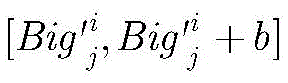
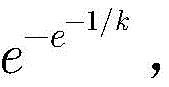
其中Ask'i为更新后的要价,a'为边缘服务器要价更新值;
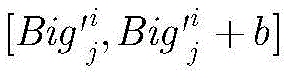
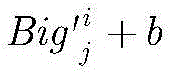
进一步的,所述步骤S5对匹配结果进行筛选,筛选重复的用户请求,具体包括:在匹配完成后,需要对匹配结果进行筛选;因为同一时间内一个用户只能请求一个边缘服务器,但是一个边缘服务器在同一时间内,在资源充足的情况下是能够处理多个用户的请求;因为需要筛选出用户重复发出的请求,其筛选规则是舍去效用较低的用户请求。Further, in the step S5, the matching results are screened, and repeated user requests are screened, which specifically includes: after the matching is completed, the matching results need to be screened; because a user can only request one edge server at the same time, but one edge server At the same time, the server can process requests from multiple users with sufficient resources; because it is necessary to filter out the repeated requests from users, the filtering rule is to discard user requests with lower utility.
进一步的,所述步骤S6中,最终匹配完成后,根据双方价格计算出交易价格及效用,其计算公式如式所示。Further, in the step S6, after the final matching is completed, the transaction price and utility are calculated according to the prices of both parties, and the calculation formula is as shown in the formula.




V=Vj+Vi (14)V = V j +V i (14)
其中
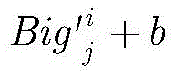
进一步的,所述步骤S7中,通过使用信用度评估模型中信用度更新公式更新边缘服务器信用度,信用度更新公式如式所示:Further, in the step S7, the edge server credit is updated by using the credit update formula in the credit assessment model, and the credit update formula is shown in the formula:

其中Creki代表的是第k次拍卖结束后的该服务器的信用度值,需要根据本次匹配结果更新边缘服务器的信用度;α是一个变量因子,取值为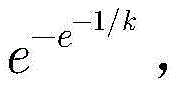
本发明的优点及有益效果如下:The advantages and beneficial effects of the present invention are as follows:
1.本发明通过结合双拍卖算法过程,引入信用度这一需求属性,考虑信用度跟价格两方面的因素,提出基于信用度-价格关系的信用度评估模型,使其信用度通过影响资源匹配来提高资源分配的可靠性。提出的基于信用度-价格关系的信用度评估模型在权利要求2-5以及权利要求10中进行了具体的阐述说明,创新优点具体表现在:现有的发明中,在拍卖中使用信用度评估时,均未对信用度与价格之间的关系进行一个定义。在初始化价格时,若随机生成信用度和价格,会导致信用度较好的边缘服务器获取到一个较低的要价,这样显然是不合理的,并且也不能明确得出每一次更新后的信用度值对下一次匹配中价格的影响情况。因此本发明提出了基于信用度-价格关系信用度评估模型,并对提出的相关公式(1)(2)(3)(4)(5)(6)(15)在权利要求书中都进行了解释说明。1. The present invention introduces the demand attribute of credit degree by combining the double auction algorithm process, and considers the factors of credit degree and price, and proposes a credit degree evaluation model based on the relationship between credit degree and price, so that the credit degree can improve resource allocation by affecting resource matching. reliability. The proposed credit rating model based on the credit rating-price relationship is specifically described in claims 2-5 and
2.本发明在1的基础上,提出了动态价格更新机制,通过使用动态价格更新改进双拍卖算法。尽可能地使所有资源都被匹配,减少边缘服务器资源浪费。提出的动态价格更新机制在权利要求8中进行了具体的阐述说明,创新优点具体表现在:由于每一次匹配后还会有剩余资源以及未匹配上资源的用户,为了利用上这些资源,本发明基于1中提出的信用度-价格关系,取关系中的价格区间为价格不再迭代边界,对价格进行更新后再匹配,尽可能地避免了资源浪费。因此本发明提出了动态价格更新机制,并对提出的相关公式(8)(9)在权利要求书中都进行了解释说明。2. On the basis of 1, the present invention proposes a dynamic price update mechanism, and improves the double auction algorithm by using dynamic price update. All resources are matched as much as possible to reduce the waste of edge server resources. The proposed dynamic price update mechanism is specifically described in claim 8, and the innovative advantages are embodied in: since there will be remaining resources and users who have not matched the resources after each match, in order to utilize these resources, the present invention Based on the credit-price relationship proposed in 1, the price range in the relationship is taken as the price no longer iterative boundary, and the price is updated before matching, which avoids waste of resources as much as possible. Therefore, the present invention proposes a dynamic price update mechanism, and the related formulas (8) and (9) proposed are explained in the claims.
附图说明Description of drawings
图1是本发明提供优选实施例移动边缘计算模型;Fig. 1 is the mobile edge computing model provided by the preferred embodiment of the present invention;
图2是本发明的流程图。Figure 2 is a flow chart of the present invention.
具体实施方式Detailed ways
下面将结合本发明实施例中的附图,对本发明实施例中的技术方案进行清楚、详细地描述。所描述的实施例仅仅是本发明的一部分实施例。The technical solutions in the embodiments of the present invention will be described clearly and in detail below with reference to the accompanying drawings in the embodiments of the present invention. The described embodiments are only some of the embodiments of the invention.
本发明解决上述技术问题的技术方案是:The technical scheme that the present invention solves the above-mentioned technical problems is:
本发明提供的一种基于信用度-价格关系的资源分配策略,包括以下步骤:A resource allocation strategy based on a credit-price relationship provided by the present invention includes the following steps:
S1,获取边缘服务器与用户的信息。若为第一次参与匹配,则根据信用度评估模型中的信用度-价格关系机制初始化边缘服务器与用户的价格,计算出边缘服务器i的初始要价Aski与用户j对边缘服务器i的初始请求价格
S2,根据信用度评估模型,对边缘服务器与用户进行排序。针对边缘服务器,通过判断Ranki大小对其进行升序排序。针对用户,则根据

Ranki=Aski/Crei Rank i =Ask i /Cre i

其中,Crei表示边缘服务器i的初始信用度,
S3,将用户的请求与边缘服务器进行匹配,匹配时如果边缘服务器的资源不足,那么就不能进行匹配。在匹配时,每个用户可能出价给不同的边缘服务器。因此,一个用户可能出现多次,一个边缘服务器也可能出现多次。S3, the user's request is matched with the edge server, and if the resources of the edge server are insufficient, the matching cannot be performed. When matching, each user may bid on a different edge server. Therefore, a user may appear multiple times, and an edge server may appear multiple times.
S4,如果匹配完成后还有边缘服务器存有资源,则对还有剩余资源的边缘服务器和未完成匹配的用户都进行价格更新,更新完成后再次进行匹配。直到边缘服务器无剩余资源或者用户跟边缘服务器无法进行价格更新。S4, if there are still edge servers with resources after the matching is completed, the price of the edge servers with remaining resources and the users who have not completed the matching will be updated, and the matching will be performed again after the update is completed. Until the edge server has no remaining resources or the user cannot update the price with the edge server.
S5,在匹配完成后,需要对匹配结果进行筛选。因为同一时间内一个用户只能请求一个边缘服务器,但是一个边缘服务器在同一时间内,在资源充足的情况下是能够处理多个用户的请求。因为需要筛选出用户重复发出的请求,其筛选规则是舍去效用较低的用户请求。S5, after the matching is completed, the matching results need to be filtered. Because a user can only request one edge server at the same time, but an edge server can process requests from multiple users at the same time with sufficient resources. Because it is necessary to filter out repeated requests by users, the filtering rule is to discard user requests with lower utility.
S6,最终匹配完成后,根据双方价格计算出交易价格及效用。其计算公式如式所示。S6, after the final matching is completed, the transaction price and utility are calculated according to the prices of both parties. Its calculation formula is shown in the formula.
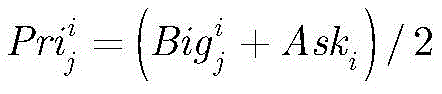

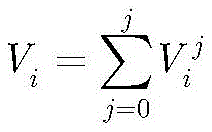

V=Vj+Vi V=V j +V i
其中
S7,计算出成交价格与效用后,根据信用度评估模型中信用度更新公式更新边缘服务器的信用度,更新后的信用度值将作为该边缘服务器下一次参与匹配的信用度初始值。S7, after calculating the transaction price and utility, update the credit of the edge server according to the credit update formula in the credit evaluation model, and the updated credit value will be used as the initial value of the credit for the next matching of the edge server.
S8,匹配完成,本次整个拍卖过程完成。S8, the matching is completed, and the entire auction process is completed.
在本实施例中,所述步骤S1中根据信用度-价格关系机制初始化边缘服务器的要价与用户的竞价步骤如下:In this embodiment, the steps of initializing the asking price of the edge server and the bidding of the user according to the credit-price relationship mechanism in the step S1 are as follows:
(1)首先根据如下公式初始化边缘服务器的要价AskSi与用户竞价
AskSi=Crei*10AskS i = Cre i *10

其中Crei∈[0,1],



在最开始初始化时,设定每个边缘服务器的信用度值为0.5。而对于用户j对边缘服务器i的信用度要求


(2)通过初始化边缘服务器与用户的初始价格后,生成的是一个固定的值,不符合实际情况。为了更符合实际生活中的竞争拍卖情况,则根据实验环境下价格区间设置一个价格波动区间,根据如下公式所示,随机生成最终的边缘服务器要价与用户竞价。(2) After initializing the initial price between the edge server and the user, a fixed value is generated, which does not conform to the actual situation. In order to be more in line with the competitive auction situation in real life, a price fluctuation range is set according to the price range in the experimental environment, and the final edge server asking price and user bidding are randomly generated according to the following formula.
Aski=AskSi+Random(-a,a)Ask i =AskS i +Random(-a,a)

其中,Aski表示边缘服务器i初始最终价格,

因此,在之后每次迭代时,根据信用度-价格关系,对于边缘服务器则是首先会根据边缘服务器当前的信用度值生成一个初始价格AskSi;然后,根据Random(-a,a)进行随机价格波动,最终生成的Aski即为最终的这次匹配时边缘服务器的要价。对于用户,则跟初始要价类似。首先随机生成一个用户j对边缘服务器i的信用度要求值

在本实施例中,所述步骤S4中,由于每轮匹配完成后,可能还会有剩余的资源,为了利用上这些资源。在已提出的信用度-价格关系的基础上,提出动态价格更新机制。动态价格更新机制公式如式所示。In this embodiment, in the step S4, after each round of matching is completed, there may be remaining resources, in order to utilize these resources. On the basis of the proposed credit-price relationship, a dynamic price update mechanism is proposed. The formula of the dynamic price update mechanism is shown in the formula.
Ask'i=Aski-a'Ask' i =Ask i -a'

其中Ask'i为更新后的要价,a'为边缘服务器要价更新值。
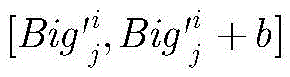
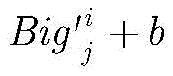
为了降低本发明时间复杂度,a'取值为a'=a/2,b'取值为b'=b/2。In order to reduce the time complexity of the present invention, the value of a' is a'=a/2, and the value of b' is b'=b/2.
在本实施例中,所述步骤S7中,通过使用信用度评估模型中信用度更新公式更新边缘服务器信用度,信用度更新公式如式所示。In this embodiment, in the step S7, the edge server credit is updated by using the credit update formula in the credit assessment model, and the credit update formula is as shown in the formula.

其中Creki代表的是第k次拍卖结束后的该服务器的信用度值,需要根据本次匹配结果更新边缘服务器的信用度。α是一个变量因子,取值为
还需要说明的是,术语“包括”、“包含”或者其任何其他变体意在涵盖非排他性的包含,从而使得包括一系列要素的过程、方法、商品或者设备不仅包括那些要素,而且还包括没有明确列出的其他要素,或者是还包括为这种过程、方法、商品或者设备所固有的要素。在没有更多限制的情况下,由语句“包括一个……”限定的要素,并不排除在包括所述要素的过程、方法、商品或者设备中还存在另外的相同要素。It should also be noted that the terms "comprising", "comprising" or any other variation thereof are intended to encompass a non-exclusive inclusion such that a process, method, article or device comprising a series of elements includes not only those elements, but also Other elements not expressly listed or inherent to such a process, method, article of manufacture or apparatus are also included. Without further limitation, an element qualified by the phrase "comprising a..." does not preclude the presence of additional identical elements in the process, method, article of manufacture or device that includes the element.
以上这些实施例应理解为仅用于说明本发明而不用于限制本发明的保护范围。在阅读了本发明的记载的内容之后,技术人员可以对本发明作各种改动或修改,这些等效变化和修饰同样落入本发明权利要求所限定的范围。The above embodiments should be understood as only for illustrating the present invention and not for limiting the protection scope of the present invention. After reading the contents of the description of the present invention, the skilled person can make various changes or modifications to the present invention, and these equivalent changes and modifications also fall within the scope defined by the claims of the present invention.
Claims (10)



















Priority Applications (1)
| Application Number | Priority Date | Filing Date | Title |
|---|---|---|---|
| CN202111485003.5A CN114338685B (en) | 2021-12-07 | 2021-12-07 | Edge server resource allocation method based on credit-price relationship |
Applications Claiming Priority (1)
| Application Number | Priority Date | Filing Date | Title |
|---|---|---|---|
| CN202111485003.5A CN114338685B (en) | 2021-12-07 | 2021-12-07 | Edge server resource allocation method based on credit-price relationship |
Publications (2)
| Publication Number | Publication Date |
|---|---|
| CN114338685A true CN114338685A (en) | 2022-04-12 |
| CN114338685B CN114338685B (en) | 2023-09-26 |
Family
ID=81048914
Family Applications (1)
| Application Number | Title | Priority Date | Filing Date |
|---|---|---|---|
| CN202111485003.5A Active CN114338685B (en) | 2021-12-07 | 2021-12-07 | Edge server resource allocation method based on credit-price relationship |
Country Status (1)
| Country | Link |
|---|---|
| CN (1) | CN114338685B (en) |
Cited By (1)
| Publication number | Priority date | Publication date | Assignee | Title |
|---|---|---|---|---|
| CN116419399A (en) * | 2023-04-04 | 2023-07-11 | 北京邮电大学 | An Immersive Media Resource Allocation Method Based on Auction Bidding |
Citations (5)
| Publication number | Priority date | Publication date | Assignee | Title |
|---|---|---|---|---|
| US20040010592A1 (en) * | 2000-01-14 | 2004-01-15 | Carver Andrew Richard | Resource allocation |
| CN106131158A (en) * | 2016-06-30 | 2016-11-16 | 上海天玑科技股份有限公司 | Resource scheduling device based on cloud tenant's credit rating under a kind of cloud data center environment |
| CN106817401A (en) * | 2016-11-18 | 2017-06-09 | 武汉科技大学 | A kind of resource allocation method in cloud environment |
| CN109474983A (en) * | 2018-12-26 | 2019-03-15 | 国网浙江省电力有限公司信息通信分公司 | Channel allocation method for joint transmit power control in MEC network |
| CN110276670A (en) * | 2019-05-16 | 2019-09-24 | 广东工业大学 | A Computing Resource Allocation Method Based on Task Migration |
-
2021
- 2021-12-07 CN CN202111485003.5A patent/CN114338685B/en active Active
Patent Citations (5)
| Publication number | Priority date | Publication date | Assignee | Title |
|---|---|---|---|---|
| US20040010592A1 (en) * | 2000-01-14 | 2004-01-15 | Carver Andrew Richard | Resource allocation |
| CN106131158A (en) * | 2016-06-30 | 2016-11-16 | 上海天玑科技股份有限公司 | Resource scheduling device based on cloud tenant's credit rating under a kind of cloud data center environment |
| CN106817401A (en) * | 2016-11-18 | 2017-06-09 | 武汉科技大学 | A kind of resource allocation method in cloud environment |
| CN109474983A (en) * | 2018-12-26 | 2019-03-15 | 国网浙江省电力有限公司信息通信分公司 | Channel allocation method for joint transmit power control in MEC network |
| CN110276670A (en) * | 2019-05-16 | 2019-09-24 | 广东工业大学 | A Computing Resource Allocation Method Based on Task Migration |
Non-Patent Citations (5)
| Title |
|---|
| TAYEBEH BAHREINI: "An Envy-Free Auction Mechanism for Resource Allocation in Edge Computing Systems", 《IEEEXPLORE》 * |
| 吴振铨;黄旭民;余荣;何昭水;: "车载边缘计算中基于信誉值的计算卸载方法研究", 计算机应用研究, no. 09 * |
| 苑迎;王翠荣;王聪;任婷婷;刘冰玉;: "基于非完全信息博弈的云资源分配模型", 计算机研究与发展, no. 06 * |
| 邓晓衡;关培源;万志文;刘恩陆;罗杰;赵智慧;刘亚军;张洪刚;: "基于综合信任的边缘计算资源协同研究", 计算机研究与发展, no. 03 * |
| 郑晶;: "基于信誉度的网格资源调度算法的实现", 福建电脑, no. 11 * |
Cited By (1)
| Publication number | Priority date | Publication date | Assignee | Title |
|---|---|---|---|---|
| CN116419399A (en) * | 2023-04-04 | 2023-07-11 | 北京邮电大学 | An Immersive Media Resource Allocation Method Based on Auction Bidding |
Also Published As
| Publication number | Publication date |
|---|---|
| CN114338685B (en) | 2023-09-26 |
Similar Documents
| Publication | Publication Date | Title |
|---|---|---|
| CN110417872B (en) | Edge network resource allocation method facing mobile block chain | |
| US8682724B2 (en) | System and method using sampling for scheduling advertisements in slots of different quality in an online auction with budget and time constraints | |
| US8001001B2 (en) | System and method using sampling for allocating web page placements in online publishing of content | |
| CN111757354A (en) | A multi-user slice resource allocation method based on competitive game | |
| CN106817401B (en) | Resource allocation method in cloud environment | |
| US10366413B2 (en) | Sponsored online content management using query clusters | |
| CN111163519A (en) | A Wireless Body Area Network Resource Allocation and Task Offloading Algorithm for Maximizing System Benefits | |
| CN105721565A (en) | Game-based cloud computing resource allocation method and system | |
| CN108182112A (en) | Resource Allocation Mechanism for Human-Centered Perceptual Networks Based on Combinatorial Auctions | |
| Pourebrahimi et al. | Market-based resource allocation in grids | |
| Besharati et al. | An incentive-compatible offloading mechanism in fog-cloud environments using second-price sealed-bid auction | |
| US7636678B2 (en) | Systems and methods that facilitate maximizing revenue for multi-unit auctions with private budgets | |
| Lin et al. | A novel latency-guaranteed based resource double auction for market-oriented edge computing | |
| CN111949409A (en) | A method and system for offloading computing tasks in a power wireless heterogeneous network | |
| CN114338685A (en) | Edge server resource allocation method based on credit-price relationship | |
| CN108055095B (en) | Stable combined spectrum matching algorithm | |
| CN109040193A (en) | Based on without the mobile device cloud resource distribution method for relying on subtask | |
| CN113535408B (en) | Edge-side computing resource auction optimization method | |
| CN115567983B (en) | D2D computing unloading method based on Stackelberg game | |
| CN111866062A (en) | Trusted negotiation method and device for cloud service transaction | |
| CN109040206A (en) | A kind of computing resource long-term allocation method based on mobile device cloud | |
| CN115705577A (en) | Cost control method, device, computer equipment and storage medium for recommended information | |
| CN109410014B (en) | Method and application of virtual resource sharing and allocation based on pricing mechanism in satellite network | |
| CN112463371B (en) | Heterogeneous mobile edge cloud-oriented cooperative task unloading auction method | |
| CN112508608B (en) | Popularization activity configuration method, system, computer equipment and storage medium |
Legal Events
| Date | Code | Title | Description |
|---|---|---|---|
| PB01 | Publication | ||
| PB01 | Publication | ||
| SE01 | Entry into force of request for substantive examination | ||
| SE01 | Entry into force of request for substantive examination | ||
| GR01 | Patent grant | ||
| GR01 | Patent grant |