CN114329500B - Server cluster security vulnerability detection method based on artificial intelligence - Google Patents
Server cluster security vulnerability detection method based on artificial intelligence Download PDFInfo
- Publication number
- CN114329500B CN114329500B CN202210220975.XA CN202210220975A CN114329500B CN 114329500 B CN114329500 B CN 114329500B CN 202210220975 A CN202210220975 A CN 202210220975A CN 114329500 B CN114329500 B CN 114329500B
- Authority
- CN
- China
- Prior art keywords
- evaluated
- category
- vector
- obtaining
- log data
- Prior art date
- Legal status (The legal status is an assumption and is not a legal conclusion. Google has not performed a legal analysis and makes no representation as to the accuracy of the status listed.)
- Active
Links
- 238000013473 artificial intelligence Methods 0.000 title claims abstract description 19
- 238000001514 detection method Methods 0.000 title claims abstract description 17
- 239000013598 vector Substances 0.000 claims abstract description 180
- 238000013528 artificial neural network Methods 0.000 claims abstract description 40
- 230000004927 fusion Effects 0.000 claims abstract description 14
- 238000012549 training Methods 0.000 claims abstract description 9
- 238000000034 method Methods 0.000 claims description 20
- 230000000306 recurrent effect Effects 0.000 claims description 8
- 230000008569 process Effects 0.000 claims description 4
- 238000011478 gradient descent method Methods 0.000 claims description 2
- 230000002159 abnormal effect Effects 0.000 description 5
- 125000004122 cyclic group Chemical group 0.000 description 5
- 230000000694 effects Effects 0.000 description 2
- 238000012545 processing Methods 0.000 description 2
- 230000009286 beneficial effect Effects 0.000 description 1
- 238000004891 communication Methods 0.000 description 1
- 238000013523 data management Methods 0.000 description 1
- 238000012986 modification Methods 0.000 description 1
- 230000004048 modification Effects 0.000 description 1
- 230000000750 progressive effect Effects 0.000 description 1
Images

Landscapes
- Information Retrieval, Db Structures And Fs Structures Therefor (AREA)
Abstract
The invention relates to the technical field of artificial intelligence, in particular to a server cluster security vulnerability detection method based on artificial intelligence, which comprises the following steps: acquiring all log data under each known vulnerability type, randomly distributing a label vector for each known vulnerability type, and training a neural network according to the label vector and the log data; obtaining the characteristic vector of log data in a fixed time period through a neural network, clustering all the characteristic vectors to obtain all categories to be evaluated, calculating the fusion characteristic vector of each category to be evaluated, obtaining the known vulnerability type corresponding to each category to be evaluated according to the fusion characteristic vector of each category to be evaluated and the label vector corresponding to each category to be evaluated, and further obtaining all the security vulnerabilities. The invention can timely and accurately discover the security loophole, and avoids the condition that the characteristic information of the log data reflecting the security loophole is submerged or interfered by the characteristic information of the log data without the security loophole.
Description
Technical Field
The invention relates to the technical field of artificial intelligence, in particular to a server cluster security vulnerability detection method based on artificial intelligence.
Background
The server cluster can utilize a plurality of computers to perform parallel computation so as to obtain high computation speed, and also can use a plurality of computers to perform backup so as to ensure that any one machine damages the whole system or can normally run. The more computer nodes are operated in the cluster, the more complicated the services such as network communication, access authority, file data management, resource scheduling and the like are, and the more easily security holes are generated; the security vulnerability is often detected through the abnormity of log data, the log data output by the server cluster in each time period is large, the log data comprises a large amount of normal operation logs and logs of abnormal operation, but the abnormal logs are mixed in the normal logs, so that the information represented by the abnormal logs is submerged by the normal logs, the characteristics of the abnormal logs are difficult to extract, and the security vulnerability detection method is not timely or accurate; and with the diversification of network attacks, some security holes can be discovered, and finally, cluster nodes are launched to operate, so that the data processing capacity of the cluster is reduced or the data of the server cluster is lost, and other consequences are caused.
Disclosure of Invention
In order to solve the above technical problems, an object of the present invention is to provide a server cluster security vulnerability detection method based on artificial intelligence, which adopts the following technical scheme:
the invention provides a server cluster security vulnerability detection method based on artificial intelligence, which comprises the following steps:
merging the types without the security vulnerabilities and all the security vulnerabilities together to be called known vulnerability types in a unified mode, acquiring all log data under each known vulnerability type, then randomly distributing a label vector for each known vulnerability type, respectively inputting all the log data into a neural network to be trained, outputting a feature vector corresponding to each log data by the neural network, and training the neural network to be trained through a designed loss function according to the label vector;
the method comprises the steps of inputting log data acquired within a fixed time period into a trained neural network respectively, acquiring all feature vectors output by the network respectively, clustering all the feature vectors according to label vectors and acquiring all categories to be evaluated, enabling each category to be evaluated to correspond to one label vector, fusing the feature vectors in each category to be evaluated to acquire a fused feature vector of each category to be evaluated, acquiring a known type corresponding to each category to be evaluated according to the fused feature vector of each category to be evaluated and the label vector corresponding to each category to be evaluated, and taking the known type corresponding to all categories to be evaluated as a known vulnerability type appearing within the fixed time period.
Further, the step of obtaining the fusion feature vector of each category to be evaluated includes:
calculating all cosine similarities of any one feature vector in each category to be evaluated and all feature vectors in all other categories to be evaluated, calling the reciprocal of the maximum value in all the cosine similarities as the identification effectiveness of any one feature vector, taking the identification effectiveness of each feature vector in each category to be evaluated as a weight, carrying out weighted summation on all feature vectors in each category to be evaluated, and calling the obtained result as the fusion feature vector of each category to be evaluated.
Further, the step of obtaining the known vulnerability type corresponding to each category to be evaluated includes:
calculating the first cosine similarity of the fusion feature vector of each category to be evaluated and the label vector corresponding to each category to be evaluated;
obtaining a plane formed by a label vector corresponding to each category to be evaluated and a reference vector, wherein the reference vector refers to a label vector corresponding to no security vulnerability in a known vulnerability type, orthogonally projecting the fusion characteristic vector of each category to be evaluated on the plane, obtaining a projection vector on the plane, calculating a second cosine similarity of the projection vector and the label vector corresponding to each category to be evaluated, and calculating a third cosine similarity of the projection vector and the reference vector;
and normalizing the second cosine similarity and the third cosine similarity to obtain a normalized result of the second cosine similarity, wherein the mean value of the normalized result and the first cosine similarity is called the vulnerability confidence of each to-be-evaluated category, when the vulnerability confidence is greater than a preset threshold value, the fact that each to-be-evaluated category corresponds to one known vulnerability type is shown, and the known vulnerability type corresponding to each to-be-evaluated category is the known vulnerability type corresponding to the tag vector corresponding to each to-be-evaluated category.
Further, the step of obtaining all the categories to be evaluated includes:
firstly, obtaining all cosine similarities of any one feature vector and all label vectors, obtaining a corresponding label vector when the cosine similarity in all the cosine similarities takes the maximum value, called a clustering center of any one feature vector, then obtaining the clustering centers of all the feature vectors in the same way, finally clustering all the feature vectors with the same clustering center into the same category, further obtaining all categories, each category is called a category to be evaluated and corresponds to one clustering center, and the clustering center is the label vector.
Further, the obtaining step of the loss function includes:
obtaining a feature vector output after log data are input into a neural network to be trained, firstly calculating the fourth cosine similarity between a label vector corresponding to a known vulnerability type corresponding to the log data and the feature vector, then summing the cosine similarities between the feature vector and all other label vectors, and taking the difference between the summation result and the fourth cosine similarity as a loss function of the network to be trained.
Further, the tag vector obtaining step includes:
the method comprises the steps of constructing a hyper-sphere with the radius of 1 in a Euclidean space with preset dimensions, obtaining the spherical surface of the hyper-sphere in a first quadrant in the Euclidean space, wherein the first quadrant is the space where all points with the dimension being more than or equal to 0 exist in the Euclidean space, randomly obtaining a certain number of uniformly distributed points on the spherical surface, wherein the number of the points is equal to the number of known vulnerability types, each point corresponds to one known vulnerability type, and each point is a label vector.
Further, the network structure of the neural network to be trained adopts a network structure of a recurrent neural network, and the training process is as follows: firstly, randomly selecting a known vulnerability type, randomly obtaining log data under the known vulnerability type, inputting the log data into a neural network to be trained, updating parameters of the neural network to be trained according to a loss function by using a random gradient descent method until the loss function is converged, and obtaining the neural network to be trained after convergence.
Further, all security vulnerability types include, but are not limited to: file read-write security holes, authority access security holes and storage resource scheduling security holes.
The invention has the following beneficial effects: the characteristic vectors of the log data within a period of time are extracted through the neural network, all the security holes within a period of time are obtained after the characteristic vectors are clustered and fused, so that the security holes can be timely and accurately found, and the condition that the characteristic information of the log data reflecting the security holes is submerged or interfered by the characteristic information of the log data without the security holes is avoided.
Drawings
In order to more clearly illustrate the embodiments of the present invention or the technical solutions and advantages of the prior art, the drawings used in the description of the embodiments or the prior art will be briefly described below, it is obvious that the drawings in the following description are only some embodiments of the present invention, and other drawings can be obtained by those skilled in the art without creative efforts.
Fig. 1 is a flowchart of a server cluster security vulnerability detection method based on artificial intelligence according to an embodiment of the present invention.
Detailed Description
In order to further explain the technical means and effects of the present invention adopted to achieve the predetermined object, the following detailed description, with reference to the accompanying drawings and preferred embodiments, describes specific embodiments, structures, features and effects of the server cluster security vulnerability detection method based on artificial intelligence according to the present invention. In the following description, different "one embodiment" or "another embodiment" refers to not necessarily the same embodiment. Furthermore, the particular features, structures, or characteristics may be combined in any suitable manner in one or more embodiments.
Unless defined otherwise, all technical and scientific terms used herein have the same meaning as commonly understood by one of ordinary skill in the art to which this invention belongs.
The following describes a specific scheme of the server cluster security vulnerability detection method based on artificial intelligence in detail with reference to the accompanying drawings.
Referring to fig. 1, a method for detecting a security vulnerability of a server cluster based on artificial intelligence is shown, and the method is characterized by comprising the following steps:
log data under all known vulnerability types is obtained, and a tag vector is allocated to each known vulnerability type.
The log system in the server cluster is used for recording data such as executing operation steps of the computer at every moment or states of the computer, and the log data in the log system can reflect whether security holes exist in the server cluster or not.
The invention divides the security vulnerabilities into a plurality of types, including file read-write security vulnerabilities, authority access security vulnerabilities, storage resource scheduling security vulnerabilities and the like, combines the types of no security vulnerabilities and all security vulnerabilities together and is called a known vulnerability type uniformly, and the invention is described by taking a total of N known vulnerability types as an example.
And manually counting to obtain all log data under each known vulnerability type, or manually enabling the server cluster to simulate to generate each known vulnerability type, recording all log data under each known vulnerability, and finally enabling each known vulnerability type to correspond to a log data set.
Constructing a hypersphere with a radius dimension of 1 in a K-dimensional Euclidean space, wherein for any point in the Euclidean space, the point meets the condition that each dimension is greater than or equal to 0, and the space range of all the points meeting the condition is the first quadrant of the Euclidean space; acquiring a spherical surface of a hyper-sphere in a first quadrant, randomly selecting N points on the spherical surface, wherein the N points are uniformly distributed, and then enabling the N points to be in one-to-one correspondence with N known vulnerability types, so that each point corresponding to each known vulnerability type is called as a label vector of each known vulnerability type; the present invention will be described with K =5 as an example. It should be noted that the known vulnerability type includes a non-security vulnerability, and a tag vector corresponding to the non-security vulnerability is referred to as a reference vector.
The method for obtaining the label vectors avoids the condition that all the label vectors are distributed too discretely, ensures that the label vectors are uniformly distributed, and is more accurate and easier for convergence when the label vectors are used for training the neural network.
And training the neural network according to the log data under all the known vulnerability types and the label vector under each known vulnerability type.
Because the log data is text data, the network structure of the neural network constructed by the invention adopts a network structure of a recurrent neural network, and the common recurrent neural network results comprise LSTM, GRU and the like; the neural network randomly needs to be trained, and the specific training method and the training process are as follows:
after the parameters are initialized randomly for the cyclic neural network, a known vulnerability type is selected from all known vulnerability types at random, the known vulnerability type is assumed to be the nth of all the known vulnerability types, and the corresponding label vector is Randomly selecting log data from the log data corresponding to the known vulnerability type, inputting the log data into the recurrent neural network, outputting a K-dimensional feature vector by the recurrent neural network, and recording the K-dimensional feature vector as the K-dimensional feature vector
 And indicates the characteristics included in the input log data.
Then a loss function is constructed
Wherein And representing a label vector corresponding to the ith known vulnerability type, wherein the value of i is not equal to n.
 Representing feature vectors
 And the label vector
 The degree of similarity of the cosine of (c),
 representing feature vectors
 And the label vector
 Cosine similarity of (d);
the invention expects the characteristics contained in the log data in the nth known vulnerability type output by the network Tag vector corresponding to nth known vulnerability type
 As similar as possible, and
 the tag vectors corresponding to all other known vulnerability types are as dissimilar as possible, so it is desirable to do so
 As small as possible
 The loss function is constructed as large as possible, and the trained recurrent neural network can extract the accurate features of each log under different known vulnerability types, so that the subsequent security vulnerability detection is facilitated.
And updating parameters of the cyclic neural network by using a random gradient descent algorithm according to the constructed loss function, continuously calculating the loss function and continuously updating the parameters of the cyclic neural network by continuously and randomly selecting log data with known vulnerability types until the cyclic neural network is completely trained when the loss function is converged.
The time sequence characteristics of a plurality of pieces of log data are not considered when the neural network is trained, and the trained neural network has more generalization capability.
And obtaining the security loophole in a fixed time period according to the trained cyclic neural network.
When a security vulnerability is identified, a plurality of pieces of log data within a period of time are often referred to, all the log data within T moments closest to the current moment are obtained, 1 second is taken as one moment, T =600 is taken as an example for description, the log data comprise abnormal log data capable of reflecting the security vulnerability and normal log data without the security vulnerability, and the log data are respectively input into a recurrent neural network to further obtain all feature vectors of the log data.
Then, all the obtained feature vectors are classified, and the specific classification method comprises the following steps: firstly, any one feature vector is obtained Cosine similarity with the ith label vector, note
 When i takes all values, a set is obtained
 (ii) a Then, the maximum value in the set is obtained, and the maximum value is assumed to be
 Then the jth label vector is called the feature vector
 The cluster center of (a); similarly, for all the feature vectors, the clustering center of each feature vector is obtained, and finally the feature vectors have the same clustering centerAll the feature vectors are clustered into the same category, all the categories are further obtained, each category is called a category to be evaluated and corresponds to a clustering center, and because the clustering center is a label vector substantially, each category to be evaluated corresponds to a label vector.
Compared with the similarity between all feature vectors in the same category to be evaluated and the tag vector corresponding to the category to be evaluated and the similarity between all feature vectors in the same category to be evaluated and the tag vectors corresponding to other categories to be evaluated, the similarity is the largest, so that it is considered that log data corresponding to all feature vectors in the same category to be evaluated can show that a server cluster has a certain known vulnerability type, for example, when the known vulnerability type of the tag vector corresponding to a certain category to be evaluated is an access security vulnerability, it can be considered that: according to the method and the device, the existence of the access security vulnerability of the server cluster in the latest time period can be known according to the log data corresponding to all the characteristic vectors in the category to be evaluated; for another example, when the known vulnerability type of the tag vector corresponding to a certain category to be evaluated is no security vulnerability, it may be said that: according to the method and the device, the fact that the server cluster does not have any security vulnerability in the latest time period can be known according to the log data corresponding to all the feature vectors in the category to be evaluated.
However, in an actual situation, whether the security holes occur or not can be judged through a plurality of pieces of log data, and in the log data corresponding to each security hole, the security holes cannot be accurately determined only by looking at one or two pieces of log data alone; even the log data corresponding to each security hole contains some log data, the log data often appear in the log data without the security hole, and the method for obtaining the security hole type according to the clustering result of the feature vector of the log data is possibly inaccurate by considering that the log data generated within a period of time are various and can reflect that the feature information of the log data with the security hole is submerged or interfered by the feature information of the log data without the security hole, so that the accurate security hole is further obtained by the following method:
assuming that one of the categories to be evaluated comprises Q characteristic vectors, calculating the Q characteristic vectors Comparing all cosine similarities of all feature vectors in all other classes to be evaluated with the reciprocal of the maximum value in all cosine similarities
 Identification validity called qth feature vector;
 the larger the feature vector is, the more dissimilar the q-th feature vector and feature vectors in other categories to be evaluated are, the more special the q-th feature vector is for the category to be evaluated is, the more distinctive features of the category to be evaluated can be embodied, and the more effective the q-th feature vector is for identifying security vulnerabilities; and;
 the smaller the similarity between the q-th feature vector and the feature vectors in other categories to be evaluated, the more ineffective the q-th feature vector is in identifying security holes, the more easily noise and error interference are introduced, or uncertainty is introduced.
Order to And V represents the fusion feature vector of the category to be evaluated, and is a result obtained by weighted fusion of the feature vectors in the category to be evaluated, and the fusion feature vector of the category to be evaluated can accurately and reliably represent security vulnerability information contained in log data corresponding to the feature vector of the category to be evaluated.
Further, obtaining The cosine similarity of the label vector corresponding to the category to be evaluated is marked as x 1; then obtainA plane formed by the label vector corresponding to the category to be evaluated and a reference vector, wherein the reference vector is a label vector corresponding to no security vulnerability in a known vulnerability type, then the fusion characteristic vector of the category to be evaluated is orthogonally projected on the plane, a projection vector on the plane is obtained, the cosine similarity of the projection vector and the label vector corresponding to the category to be evaluated is calculated and is marked as x2, and then the cosine similarity of the projection vector and the reference vector is calculated and is marked as x 3; then order
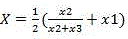 And representing the vulnerability confidence of the category to be evaluated, wherein the larger the value is, the more similar the fused feature vector of the category to be evaluated is to the label vector corresponding to the category to be evaluated, and the more dissimilar the fused feature vector of the category to be evaluated is to the reference vector, and further, the more likely the log data corresponding to the feature vector in the category to be evaluated contains a certain known vulnerability type, and the known vulnerability type is the known vulnerability type corresponding to the label vector corresponding to the category to be evaluated. It should be noted that when the label vector corresponding to the category to be evaluated is the same as the reference vector, the above-mentioned plane does not exist, and this case, the instruction is to say that
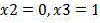 。
。
When the confidence of the vulnerability of the category to be evaluated is greater than a preset threshold, the method takes the threshold as 0.5 as an example for description, the log data corresponding to the feature vector in the category to be evaluated is considered to contain a certain known vulnerability type, the known vulnerability type is the known vulnerability type corresponding to the tag vector corresponding to the category to be evaluated, for example, when the known vulnerability type of the tag vector corresponding to the category to be evaluated is an access security vulnerability, the server cluster is indicated to have the access security vulnerability in the latest time period; for example, when the known vulnerability type of the tag vector corresponding to the category to be evaluated is no security vulnerability, it indicates that no security vulnerability exists in the server cluster in the latest time period; and when the vulnerability confidence coefficient of the category to be evaluated is less than or equal to a preset threshold value, the known vulnerability type is not found.
The method for acquiring the security vulnerability type can avoid the condition that the characteristic information of the log data reflecting the security vulnerability is submerged or interfered by the characteristic information of the log data without the security vulnerability, so that the security vulnerability can be timely and accurately discovered.
Similarly, for all categories to be evaluated, the security vulnerabilities can be obtained by referring to the method, and all the finally obtained security vulnerabilities are all possible security vulnerabilities existing in the server cluster in the latest T moments.
It should be noted that: the precedence order of the above embodiments of the present invention is only for description, and does not represent the merits of the embodiments. And specific embodiments thereof have been described above. Other embodiments are within the scope of the following claims. In some cases, the actions or steps recited in the claims may be performed in a different order than in the embodiments and still achieve desirable results. In addition, the processes depicted in the accompanying figures do not necessarily require the particular order shown, or sequential order, to achieve desirable results. In some embodiments, multitasking and parallel processing may also be possible or may be advantageous.
The embodiments in the present specification are described in a progressive manner, and the same and similar parts among the embodiments are referred to each other, and each embodiment focuses on the differences from the other embodiments.
The above description is only for the purpose of illustrating the preferred embodiments of the present invention and is not to be construed as limiting the invention, and any modifications, equivalents, improvements and the like that fall within the spirit and principle of the present invention are intended to be included therein.
Claims (7)
1. The server cluster security vulnerability detection method based on artificial intelligence is characterized by comprising the following steps:
merging the types without the security vulnerabilities and all the security vulnerabilities together to be called known vulnerability types in a unified mode, acquiring all log data under each known vulnerability type, then randomly distributing a label vector for each known vulnerability type, respectively inputting all the log data into a neural network to be trained, outputting a feature vector corresponding to each log data by the neural network, and training the neural network to be trained through a designed loss function according to the label vector;
respectively inputting log data acquired within a fixed time period into a trained neural network, respectively acquiring all feature vectors output by the network, clustering all the feature vectors according to tag vectors and acquiring all categories to be evaluated, enabling each category to be evaluated to correspond to one tag vector, fusing the feature vectors in each category to be evaluated to acquire a fused feature vector of each category to be evaluated, acquiring a known type corresponding to each category to be evaluated according to the fused feature vector of each category to be evaluated and the tag vector corresponding to each category to be evaluated, and taking the known vulnerability type corresponding to each category to be evaluated as a known vulnerability type appearing within the fixed time period;
the step of obtaining the known vulnerability type corresponding to each category to be evaluated comprises the following steps:
calculating the first cosine similarity of the fusion feature vector of each category to be evaluated and the label vector corresponding to each category to be evaluated;
obtaining a plane formed by a label vector corresponding to each category to be evaluated and a reference vector, wherein the reference vector refers to a label vector corresponding to no security vulnerability in a known vulnerability type, orthogonally projecting the fusion characteristic vector of each category to be evaluated on the plane, obtaining a projection vector on the plane, calculating a second cosine similarity of the projection vector and the label vector corresponding to each category to be evaluated, and calculating a third cosine similarity of the projection vector and the reference vector;
and normalizing the second cosine similarity and the third cosine similarity to obtain a normalized result of the second cosine similarity, wherein the mean value of the normalized result and the first cosine similarity is called the vulnerability confidence of each to-be-evaluated category, when the vulnerability confidence is greater than a preset threshold value, the fact that each to-be-evaluated category corresponds to one known vulnerability type is shown, and the known vulnerability type corresponding to each to-be-evaluated category is the known vulnerability type corresponding to the tag vector corresponding to each to-be-evaluated category.
2. The artificial intelligence based server cluster security vulnerability detection method according to claim 1, wherein the obtaining step of the fusion feature vector of each category to be evaluated comprises:
calculating all cosine similarities of any one feature vector in each category to be evaluated and all feature vectors in all other categories to be evaluated, taking the reciprocal of the maximum value in all the cosine similarities as the identification effectiveness of any one feature vector, taking the identification effectiveness of each feature vector in each category to be evaluated as a weight, carrying out weighted summation on all the feature vectors in each category to be evaluated, and taking the obtained result as the fusion feature vector of each category to be evaluated.
3. The artificial intelligence based server cluster security vulnerability detection method according to claim 1, wherein the obtaining of all categories to be evaluated comprises:
firstly, obtaining all cosine similarities of any one feature vector and all label vectors, obtaining a corresponding label vector when the cosine similarity in all the cosine similarities takes the maximum value, called a clustering center of any one feature vector, then obtaining the clustering centers of all the feature vectors in the same way, finally clustering all the feature vectors with the same clustering center into the same category, further obtaining all categories, each category is called a category to be evaluated and corresponds to one clustering center, and the clustering center is the label vector.
4. The artificial intelligence based server cluster security vulnerability detection method of claim 1, wherein the obtaining step of the loss function comprises:
obtaining a feature vector output after log data are input into a neural network to be trained, firstly calculating the fourth cosine similarity between a label vector corresponding to a known vulnerability type corresponding to the log data and the feature vector, then summing the cosine similarities between the feature vector and all other label vectors, and taking the difference between the summation result and the fourth cosine similarity as a loss function of the network to be trained.
5. The artificial intelligence based server cluster security vulnerability detection method of claim 1, wherein the obtaining step of the tag vector comprises:
the method comprises the steps of constructing a hypersphere with the radius of 1 in a Euclidean space with preset dimensionality, obtaining the spherical surface of the hypersphere in a first quadrant in the Euclidean space, wherein the first quadrant is the space where all points with each dimensionality larger than or equal to 0 exist, randomly obtaining a certain number of uniformly distributed points on the spherical surface, wherein the number of the points is equal to the number of known vulnerability types, each point corresponds to one known vulnerability type, and each point is a label vector.
6. The method for detecting the security vulnerability of the server cluster based on the artificial intelligence as claimed in claim 1, wherein the network structure of the neural network to be trained is a network structure of a recurrent neural network, and the training process is as follows: firstly, randomly selecting a known vulnerability type, randomly obtaining log data under the known vulnerability type, inputting the log data into a neural network to be trained, updating parameters of the neural network to be trained according to a loss function by using a random gradient descent method until the loss function is converged, and obtaining the neural network to be trained after convergence.
7. The artificial intelligence based server cluster security vulnerability detection method of claim 1, wherein all security vulnerability types include: file read-write security vulnerabilities, privilege access security vulnerabilities, storage resource scheduling security vulnerabilities.
Priority Applications (1)
| Application Number | Priority Date | Filing Date | Title |
|---|---|---|---|
| CN202210220975.XA CN114329500B (en) | 2022-03-09 | 2022-03-09 | Server cluster security vulnerability detection method based on artificial intelligence |
Applications Claiming Priority (1)
| Application Number | Priority Date | Filing Date | Title |
|---|---|---|---|
| CN202210220975.XA CN114329500B (en) | 2022-03-09 | 2022-03-09 | Server cluster security vulnerability detection method based on artificial intelligence |
Publications (2)
| Publication Number | Publication Date |
|---|---|
| CN114329500A CN114329500A (en) | 2022-04-12 |
| CN114329500B true CN114329500B (en) | 2022-06-17 |
Family
ID=81033052
Family Applications (1)
| Application Number | Title | Priority Date | Filing Date |
|---|---|---|---|
| CN202210220975.XA Active CN114329500B (en) | 2022-03-09 | 2022-03-09 | Server cluster security vulnerability detection method based on artificial intelligence |
Country Status (1)
| Country | Link |
|---|---|
| CN (1) | CN114329500B (en) |
Families Citing this family (1)
| Publication number | Priority date | Publication date | Assignee | Title |
|---|---|---|---|---|
| CN118018269B (en) * | 2024-01-31 | 2024-12-24 | 北京亚鸿世纪科技发展有限公司 | Data security analysis method and system |
Family Cites Families (7)
| Publication number | Priority date | Publication date | Assignee | Title |
|---|---|---|---|---|
| US11645515B2 (en) * | 2019-09-16 | 2023-05-09 | International Business Machines Corporation | Automatically determining poisonous attacks on neural networks |
| CN110866254B (en) * | 2019-09-29 | 2023-06-30 | 华为终端有限公司 | A method for detecting vulnerabilities and electronic equipment |
| CN111523119B (en) * | 2020-04-26 | 2023-05-05 | 南开大学 | Vulnerability detection method and device, electronic equipment and computer readable storage medium |
| CN111639344B (en) * | 2020-07-31 | 2020-11-20 | 中国人民解放军国防科技大学 | A kind of vulnerability detection method and device based on neural network |
| CN112016097B (en) * | 2020-08-28 | 2024-02-27 | 深圳泓越信息科技有限公司 | A method to predict when network security vulnerabilities will be exploited |
| CN113010895B (en) * | 2020-12-08 | 2022-12-30 | 四川大学 | Vulnerability hazard assessment method based on deep learning |
| CN113839963B (en) * | 2021-11-25 | 2022-02-15 | 南昌首页科技发展有限公司 | Network security vulnerability intelligent detection method based on artificial intelligence and big data |
-
2022
- 2022-03-09 CN CN202210220975.XA patent/CN114329500B/en active Active
Also Published As
| Publication number | Publication date |
|---|---|
| CN114329500A (en) | 2022-04-12 |
Similar Documents
| Publication | Publication Date | Title |
|---|---|---|
| US12182263B2 (en) | Defending deep generative models against adversarial attacks | |
| Salman et al. | Overfitting mechanism and avoidance in deep neural networks | |
| US11645515B2 (en) | Automatically determining poisonous attacks on neural networks | |
| US20210019399A1 (en) | Detection of Test-Time Evasion Attacks | |
| Shi et al. | Generative adversarial networks for black-box API attacks with limited training data | |
| CN112948578B (en) | A kind of DGA domain name open set classification method, device, electronic equipment and medium | |
| US20200074247A1 (en) | System and method for a visual recognition and/or detection of a potentially unbounded set of categories with limited examples per category and restricted query scope | |
| Odiathevar et al. | An online offline framework for anomaly scoring and detecting new traffic in network streams | |
| CN112632609A (en) | Abnormality detection method, abnormality detection device, electronic apparatus, and storage medium | |
| CN107729952A (en) | A kind of traffic flow classification method and device | |
| Ng et al. | Static malware clustering using enhanced deep embedding method | |
| CN114329500B (en) | Server cluster security vulnerability detection method based on artificial intelligence | |
| Ullah et al. | An ensemble-based hybrid model for the detection of attacks in the internet of vehicular things | |
| CN114244611A (en) | Abnormal attack detection method, device, equipment and storage medium | |
| Hafiz et al. | A robust malware classification approach leveraging explainable AI | |
| CN117112395A (en) | API abnormal access detection method, device, equipment and medium | |
| Meryem et al. | A novel approach in detecting intrusions using NSLKDD database and MapReduce programming | |
| CN112468487A (en) | Method and device for realizing model training and method and device for realizing node detection | |
| US20230267200A1 (en) | A Method of Training a Submodule and Preventing Capture of an AI Module | |
| CN113255711B (en) | Countermeasure detection method, device and equipment | |
| JP2023055093A (en) | Method of training module and method of preventing capture of ai module | |
| EP4278305A1 (en) | A method of training a submodule and preventing capture of an ai module | |
| CN116710929A (en) | Method and apparatus for generating training data for a graph neural network | |
| KR102772098B1 (en) | AI based Mutated Advanced Persistent Threat Classification System and Method | |
| Kumar | Smartphone Authentication with Lightweight Deep Learning |
Legal Events
| Date | Code | Title | Description |
|---|---|---|---|
| PB01 | Publication | ||
| PB01 | Publication | ||
| SE01 | Entry into force of request for substantive examination | ||
| SE01 | Entry into force of request for substantive examination | ||
| GR01 | Patent grant | ||
| GR01 | Patent grant | ||
| PE01 | Entry into force of the registration of the contract for pledge of patent right |
Denomination of invention: A method for detecting security vulnerabilities in server clusters based on artificial intelligence Granted publication date: 20220617 Pledgee: China Postal Savings Bank Co.,Ltd. Jining Rencheng District sub branch Pledgor: Shandong Zhuolang Testing Co.,Ltd. Registration number: Y2024980018859 |
|
| PE01 | Entry into force of the registration of the contract for pledge of patent right |