CN114269890B - Detergent compositions containing maleic acid tetrapolymer - Google Patents
Detergent compositions containing maleic acid tetrapolymer Download PDFInfo
- Publication number
- CN114269890B CN114269890B CN202080059007.4A CN202080059007A CN114269890B CN 114269890 B CN114269890 B CN 114269890B CN 202080059007 A CN202080059007 A CN 202080059007A CN 114269890 B CN114269890 B CN 114269890B
- Authority
- CN
- China
- Prior art keywords
- composition
- zinc
- acid
- aluminum
- water
- Prior art date
- Legal status (The legal status is an assumption and is not a legal conclusion. Google has not performed a legal analysis and makes no representation as to the accuracy of the status listed.)
- Active
Links
Images


Classifications
-
- C—CHEMISTRY; METALLURGY
- C11—ANIMAL OR VEGETABLE OILS, FATS, FATTY SUBSTANCES OR WAXES; FATTY ACIDS THEREFROM; DETERGENTS; CANDLES
- C11D—DETERGENT COMPOSITIONS; USE OF SINGLE SUBSTANCES AS DETERGENTS; SOAP OR SOAP-MAKING; RESIN SOAPS; RECOVERY OF GLYCEROL
- C11D3/00—Other compounding ingredients of detergent compositions covered in group C11D1/00
- C11D3/16—Organic compounds
- C11D3/37—Polymers
- C11D3/3746—Macromolecular compounds obtained by reactions only involving carbon-to-carbon unsaturated bonds
- C11D3/3757—(Co)polymerised carboxylic acids, -anhydrides, -esters in solid and liquid compositions
- C11D3/3765—(Co)polymerised carboxylic acids, -anhydrides, -esters in solid and liquid compositions in liquid compositions
-
- C—CHEMISTRY; METALLURGY
- C11—ANIMAL OR VEGETABLE OILS, FATS, FATTY SUBSTANCES OR WAXES; FATTY ACIDS THEREFROM; DETERGENTS; CANDLES
- C11D—DETERGENT COMPOSITIONS; USE OF SINGLE SUBSTANCES AS DETERGENTS; SOAP OR SOAP-MAKING; RESIN SOAPS; RECOVERY OF GLYCEROL
- C11D3/00—Other compounding ingredients of detergent compositions covered in group C11D1/00
- C11D3/16—Organic compounds
- C11D3/37—Polymers
- C11D3/3746—Macromolecular compounds obtained by reactions only involving carbon-to-carbon unsaturated bonds
- C11D3/3757—(Co)polymerised carboxylic acids, -anhydrides, -esters in solid and liquid compositions
-
- C—CHEMISTRY; METALLURGY
- C11—ANIMAL OR VEGETABLE OILS, FATS, FATTY SUBSTANCES OR WAXES; FATTY ACIDS THEREFROM; DETERGENTS; CANDLES
- C11D—DETERGENT COMPOSITIONS; USE OF SINGLE SUBSTANCES AS DETERGENTS; SOAP OR SOAP-MAKING; RESIN SOAPS; RECOVERY OF GLYCEROL
- C11D1/00—Detergent compositions based essentially on surface-active compounds; Use of these compounds as a detergent
- C11D1/66—Non-ionic compounds
- C11D1/72—Ethers of polyoxyalkylene glycols
- C11D1/721—End blocked ethers
-
- C—CHEMISTRY; METALLURGY
- C11—ANIMAL OR VEGETABLE OILS, FATS, FATTY SUBSTANCES OR WAXES; FATTY ACIDS THEREFROM; DETERGENTS; CANDLES
- C11D—DETERGENT COMPOSITIONS; USE OF SINGLE SUBSTANCES AS DETERGENTS; SOAP OR SOAP-MAKING; RESIN SOAPS; RECOVERY OF GLYCEROL
- C11D1/00—Detergent compositions based essentially on surface-active compounds; Use of these compounds as a detergent
- C11D1/66—Non-ionic compounds
- C11D1/722—Ethers of polyoxyalkylene glycols having mixed oxyalkylene groups; Polyalkoxylated fatty alcohols or polyalkoxylated alkylaryl alcohols with mixed oxyalkylele groups
-
- C—CHEMISTRY; METALLURGY
- C11—ANIMAL OR VEGETABLE OILS, FATS, FATTY SUBSTANCES OR WAXES; FATTY ACIDS THEREFROM; DETERGENTS; CANDLES
- C11D—DETERGENT COMPOSITIONS; USE OF SINGLE SUBSTANCES AS DETERGENTS; SOAP OR SOAP-MAKING; RESIN SOAPS; RECOVERY OF GLYCEROL
- C11D3/00—Other compounding ingredients of detergent compositions covered in group C11D1/00
- C11D3/02—Inorganic compounds ; Elemental compounds
- C11D3/04—Water-soluble compounds
-
- C—CHEMISTRY; METALLURGY
- C11—ANIMAL OR VEGETABLE OILS, FATS, FATTY SUBSTANCES OR WAXES; FATTY ACIDS THEREFROM; DETERGENTS; CANDLES
- C11D—DETERGENT COMPOSITIONS; USE OF SINGLE SUBSTANCES AS DETERGENTS; SOAP OR SOAP-MAKING; RESIN SOAPS; RECOVERY OF GLYCEROL
- C11D3/00—Other compounding ingredients of detergent compositions covered in group C11D1/00
- C11D3/02—Inorganic compounds ; Elemental compounds
- C11D3/04—Water-soluble compounds
- C11D3/044—Hydroxides or bases
-
- C—CHEMISTRY; METALLURGY
- C11—ANIMAL OR VEGETABLE OILS, FATS, FATTY SUBSTANCES OR WAXES; FATTY ACIDS THEREFROM; DETERGENTS; CANDLES
- C11D—DETERGENT COMPOSITIONS; USE OF SINGLE SUBSTANCES AS DETERGENTS; SOAP OR SOAP-MAKING; RESIN SOAPS; RECOVERY OF GLYCEROL
- C11D3/00—Other compounding ingredients of detergent compositions covered in group C11D1/00
- C11D3/02—Inorganic compounds ; Elemental compounds
- C11D3/04—Water-soluble compounds
- C11D3/10—Carbonates ; Bicarbonates
-
- C—CHEMISTRY; METALLURGY
- C11—ANIMAL OR VEGETABLE OILS, FATS, FATTY SUBSTANCES OR WAXES; FATTY ACIDS THEREFROM; DETERGENTS; CANDLES
- C11D—DETERGENT COMPOSITIONS; USE OF SINGLE SUBSTANCES AS DETERGENTS; SOAP OR SOAP-MAKING; RESIN SOAPS; RECOVERY OF GLYCEROL
- C11D3/00—Other compounding ingredients of detergent compositions covered in group C11D1/00
- C11D3/02—Inorganic compounds ; Elemental compounds
- C11D3/12—Water-insoluble compounds
- C11D3/1213—Oxides or hydroxides, e.g. Al2O3, TiO2, CaO or Ca(OH)2
-
- C—CHEMISTRY; METALLURGY
- C11—ANIMAL OR VEGETABLE OILS, FATS, FATTY SUBSTANCES OR WAXES; FATTY ACIDS THEREFROM; DETERGENTS; CANDLES
- C11D—DETERGENT COMPOSITIONS; USE OF SINGLE SUBSTANCES AS DETERGENTS; SOAP OR SOAP-MAKING; RESIN SOAPS; RECOVERY OF GLYCEROL
- C11D3/00—Other compounding ingredients of detergent compositions covered in group C11D1/00
- C11D3/16—Organic compounds
- C11D3/20—Organic compounds containing oxygen
- C11D3/2003—Alcohols; Phenols
- C11D3/2006—Monohydric alcohols
- C11D3/201—Monohydric alcohols linear
-
- C—CHEMISTRY; METALLURGY
- C11—ANIMAL OR VEGETABLE OILS, FATS, FATTY SUBSTANCES OR WAXES; FATTY ACIDS THEREFROM; DETERGENTS; CANDLES
- C11D—DETERGENT COMPOSITIONS; USE OF SINGLE SUBSTANCES AS DETERGENTS; SOAP OR SOAP-MAKING; RESIN SOAPS; RECOVERY OF GLYCEROL
- C11D3/00—Other compounding ingredients of detergent compositions covered in group C11D1/00
- C11D3/16—Organic compounds
- C11D3/20—Organic compounds containing oxygen
- C11D3/2003—Alcohols; Phenols
- C11D3/2065—Polyhydric alcohols
Landscapes
- Chemical & Material Sciences (AREA)
- Life Sciences & Earth Sciences (AREA)
- Engineering & Computer Science (AREA)
- Chemical Kinetics & Catalysis (AREA)
- Oil, Petroleum & Natural Gas (AREA)
- Wood Science & Technology (AREA)
- Organic Chemistry (AREA)
- Inorganic Chemistry (AREA)
- Health & Medical Sciences (AREA)
- Emergency Medicine (AREA)
- Detergent Compositions (AREA)
Abstract
本文描述了有效控制硬水垢积聚的洗涤剂组合物。具体地,所述组合物将四元共聚物与碱性组合物组合以有效防止或去除碳酸钙水垢形成。提供了供碱性器皿洗涤和其它应用中使用的采用所述洗涤剂组合物的方法以及防止水垢积聚的方法。

Detergent compositions are described herein which are effective in controlling the build-up of hard water scale. Specifically, the composition combines a tetrapolymer with an alkaline composition to effectively prevent or remove calcium carbonate scale formation. Methods of using the detergent compositions and methods of preventing limescale build-up are provided for use in alkaline warewashing and other applications.
Description
Cross Reference to Related Applications
The present application claims priority from provisional application serial No. 62/883,222 filed on 8/6 of 2019 in accordance with 35u.s.c. ≡119, the entire contents of which are incorporated herein by reference.
Technical Field
The present disclosure relates to detergent compositions effective in controlling hard scale build-up, particularly preventing and/or removing calcium carbonate scale formation. In particular, detergent compositions employing polymaleic acid tetrapolymers in combination with alkali metal carbonates and/or alkali metal hydroxides are provided. Methods of employing the detergent compositions and methods of preventing scale build-up for use in alkaline warewashing and other applications are provided.
Background
Scale includes inorganic mineral components of water that will precipitate and form deposits. Scale can precipitate as a fine scale of hard insoluble crystalline solids and is detrimental to system and equipment surfaces (e.g., glass, plastic, and/or metal surfaces), thereby inhibiting the detersive efficacy of the detergent composition and any other compositions used in series with the detergent (e.g., rinse aid, antimicrobial agent, etc.). Alkaline detergents are commonly used in industrial warewashing and other environments. In the presence of hard water, effective cleaning performance is difficult due to the deposition of calcium carbonate scale on hard surfaces such as glass, plastic and metal.
To address the calcium carbonate scaling problem, many existing detergents utilize polymerization threshold agents, chelating agents, and/or water conditioning agents. However, many of these compositions use one or more phosphorus-based compounds. Phosphorus is less preferred in view of safer and more sustainable detergent compositions. This has led to the development of compositions containing alternative complexing agents, builders, threshold agents, corrosion inhibitors and the like, which are used in place of the predominantly phosphorus-containing compounds. However, many of these compositions are expensive and/or must be present in relatively high amounts to ensure effective scale inhibition. Further, many are not as effective as conventional scale inhibitors.
Accordingly, there is a need to develop environmentally sustainable detergent compositions that effectively prevent the formation and/or removal of calcium carbonate scale under highly alkaline conditions.
There is a further need for a scale-inhibiting detergent composition that functions effectively even at low concentrations of scale inhibitor.
Finally, there is a need to develop cost effective scale inhibiting detergent compositions.
Other needs, objects, advantages, or features of the disclosure will become apparent from the following description taken in conjunction with the accompanying drawings.
Disclosure of Invention
In one aspect, the present disclosure relates to a scale-inhibiting detergent composition comprising one or more alkalinity sources, one or more surfactants, and a maleic tetrapolymer. According to this embodiment, the one or more alkalinity sources may include, but are not limited to, sodium hydroxide, potassium hydroxide, lithium hydroxide, sodium silicate, sodium metasilicate, potassium silicate, potassium metasilicate, sodium carbonate, potassium carbonate, sodium bicarbonate, potassium bicarbonate, sodium sesquicarbonate, potassium sesquicarbonate, sodium borate, potassium borate, or a combination thereof. According to this embodiment, the maleic acid tetrapolymer may, for example, comprise more than 50% maleic acid, up to about 5% maleic anhydride, up to about 50% acrylic acid, and up to about 50% 2-carbon alkyl groups. Consistent with this embodiment, the surfactant may comprise nonionic, anionic, amphoteric, zwitterionic, and/or cationic surfactants. In the case of containing a nonionic surfactant, the nonionic surfactant may include, for example, a polyoxyethylene-polyoxypropylene block copolymer.
In one aspect, the composition may further comprise one or more water modifiers, wherein the one or more water modifiers are phosphates, phosphonates, aminocarboxylic acids, organic water modifiers, inorganic water modifiers, polycarboxylic acids, or combinations thereof.
In an embodiment, the composition may further comprise a carrier, wherein the carrier may comprise, but is not limited to, water, an alcohol, a water-soluble glycol, or a combination thereof. In an embodiment, where the carrier is water, the water may be present in an amount between about 10wt.% and about 60 wt.%.
In one aspect, the composition may further comprise one or more additional functional ingredients. Additional functional ingredients may include, but are not limited to, fillers, additional surfactants, corrosion inhibitors, additional water conditioning agents, hardeners, bleaching agents, defoamers, anti-redeposition agents, stabilizers, dispersants, enzymes, thickeners, fragrances, dyes, or combinations thereof.
In a further aspect, the present disclosure relates to a scale-inhibiting detergent composition comprising between about 5wt.% and about 80wt.% of one or more alkalinity sources, between about 5wt.% and about 50wt.% of a nonionic surfactant, and between about 1wt.% and about 15wt.% of a maleic acid tetrapolymer, wherein the maleic acid tetrapolymer comprises more than 50% maleic acid, up to about 5% maleic anhydride, up to about 50% acrylic acid, and up to about 50% 2-carbon alkyl groups.
In one embodiment, the nonionic surfactant can include, for example, a polyoxyethylene-polyoxypropylene block copolymer.
In one aspect, the composition may further comprise between about 0.001wt.% and about 5wt.% of a corrosion inhibitor, and wherein the corrosion inhibitor is an aluminum salt, such as sodium aluminate, aluminum bromide, aluminum chlorate, aluminum chloride, aluminum iodide, aluminum nitrate, aluminum sulfate, aluminum acetate, aluminum formate, aluminum tartrate, aluminum lactate, aluminum oleate, aluminum bromate, aluminum borate, aluminum potassium sulfate, aluminum zinc sulfate, zinc chloride, zinc sulfate, zinc nitrate, zinc iodide, zinc thiocyanate, zinc fluorosilicate, zinc dichromate, zinc chlorate, sodium zincate, zinc gluconate, zinc acetate, zinc benzoate, zinc citrate, zinc lactate, zinc formate, zinc bromate, zinc bromide, zinc fluoride, zinc fluorosilicate, zinc salicylate, or a combination thereof.
In one aspect, the pharmaceutical composition may further comprise between about 0.01wt.% and about 8wt.% of a carrier. In one embodiment, the carrier may include, but is not limited to, water, ethanol, n-propanol, isopropanol, pentanediol, hexanediol, propylene glycol, or combinations thereof.
In one aspect, the pharmaceutical composition may further comprise between about 0.5wt.% to about 10wt.% of a filler. In one embodiment, the carrier may include, but is not limited to, sodium sulfate, sodium chloride, starch, sugar, C 1 -C 10 Alkylene glycol or combinations thereof.
In one aspect, the pharmaceutical composition may further comprise between about 1wt.% and about 55wt.% of one or more polycarboxylic acid polymers.
In an embodiment, the composition may be a pressed solid, a cast solid, an extruded solid, or a flowable solid. In further embodiments, the composition may be a liquid concentrate. In one embodiment, the composition is provided as a liquid concentrate, which may be diluted to form a use solution.
In one aspect, the present disclosure is directed to a method of preventing scale formation on a surface, the method comprising providing a scale-inhibiting composition comprising one or more alkalinity sources, one or more water conditioning agents, and a maleic acid tetrapolymer; and thereafter contacting the scale inhibiting composition with a surface.
In one aspect, the surface comprises metal, plastic, and/or glass. In further aspects, the surface is a hard surface comprising a grill, oven, cutlery, flatware, surgical instrument, vehicle, floor, countertop, table, or combination thereof.
While multiple embodiments are disclosed, other embodiments will become apparent to those skilled in the art upon disclosing and describing the following detailed description of illustrative embodiments. Accordingly, the drawings and detailed description are to be regarded as illustrative in nature and not as restrictive.
Drawings
Fig. 1 depicts glass and plastic cups cleaned with control formulations containing high levels of alkalinity, no tetrapolymer, and no calcium carbonate scale inhibitor.
Fig. 2 shows glass and plastic cups cleaned with solid detergent 1, i.e., a solid detergent formulation without the tetrapolymer and conventional calcium carbonate scale inhibitors (e.g., acusol 448).
Fig. 3 shows glass and plastic cups cleaned with solid detergent 2, i.e., a solid detergent formulation containing about 8wt.% of a maleic-based tetrapolymer according to the present disclosure.
Fig. 4 depicts glass and plastic cups cleaned with solid detergent 3, i.e., a solid detergent formulation containing about 4wt.% of a maleic-based tetrapolymer according to the present disclosure.
Fig. 5 shows glass and plastic cups cleaned with a solid detergent 4, i.e., a solid detergent formulation containing about 2wt.% of a maleic-based tetrapolymer according to the present disclosure.
Fig. 6 depicts glass and plastic cups cleaned with a solid detergent 5, i.e., a solid detergent formulation containing about 1wt.% of a maleic-based tetrapolymer according to the present disclosure.
Fig. 7 shows glass and plastic cups cleaned with solid detergent 6, i.e., a solid detergent formulation that does not contain 12wt.% of a tetrapolymer of a conventional calcium carbonate scale inhibitor (e.g., a polymaleic acid homopolymer such as belclee 200).
Fig. 8 depicts glass and plastic cups cleaned with liquid detergent 1, i.e., a liquid detergent formulation that is free of tetrapolymer and conventional calcium carbonate scale inhibitors (e.g., acumer 1000).
Fig. 9 depicts glass and plastic cups cleaned with liquid detergent 2, i.e., a liquid detergent formulation containing about 1.6wt.% of a maleic-based tetrapolymer according to the present disclosure.
Fig. 10 shows glass and plastic cups cleaned with solid detergent 7, i.e., a solid detergent formulation containing about 8% maleic-based tetrapolymer and no other water conditioner/polymer according to the present disclosure.
Fig. 11 shows glass and plastic cups cleaned with liquid detergent 3, i.e., a liquid detergent formulation containing about 8% maleic-based tetrapolymer and no other water conditioner/polymer according to the present disclosure.
Fig. 12 shows glass and plastic cups cleaned with liquid detergent 4, i.e., a liquid detergent formulation containing about 4% maleic-based tetrapolymer and no other water conditioner/polymer according to the present disclosure.
Fig. 13 depicts glass and plastic cups cleaned with liquid detergent 5, i.e., a liquid detergent formulation containing about 1% maleic-based tetrapolymer and no other water conditioner/polymer according to the present disclosure.
Fig. 14 shows glass and plastic cups cleaned with solid detergent 8, i.e., a solid detergent formulation containing about 4% maleic acid-based tetrapolymer according to the present disclosure.
Fig. 15 depicts glass and plastic cups cleaned with solid detergent 8, i.e., a solid detergent formulation containing 6.4% of a maleic-based tetrapolymer according to the present disclosure.
Fig. 16 is a graph comparing the lamp box scores of the solid and liquid detergent compositions evaluated in examples 1-2.
Fig. 17 is a schematic diagram of a racurn rack used in a 100 cycle test, in which six clean glass cups (as indicated by "G") are placed diagonally in the racurn rack, and one Newport 10 oz plastic cup (as indicated by "P") is placed diagonally in the racurn rack, which is then placed in a warewasher.
Various embodiments of the present invention will be described in detail with reference to the drawings, wherein like reference numerals refer to like parts throughout the several views. References to various embodiments do not limit the scope of the invention. The drawings presented herein are not limiting to the various embodiments according to the invention and are presented for the purpose of illustrating the invention.
Detailed Description
The compositions described herein relate to detergent compositions employing maleic acid-based tetrapolymers as part of alkaline detergent compositions. Detergent compositions have a number of advantages over conventional alkali metal carbonate and/or alkali metal hydroxide detergents. For example, detergent compositions prevent effective hard scale accumulation under alkaline conditions and using low levels of scale inhibiting polymers.
The embodiments described herein are not limited to a particular alkaline detergent composition, which may vary and is understood by those skilled in the art. It is further understood that all terms used herein are used solely for the purpose of describing particular embodiments and are not intended to be limiting in any way or scope. For example, as used in this specification and the appended claims, the singular forms "a," "an," and "the" may include plural referents unless the content clearly dictates otherwise. Further, all units, prefixes, and symbols may be represented in their SI accepted form.
The recitation of numerical ranges in the specification includes the numbers defining the range, and includes each integer within the defined range. For example, a range described as "between about 1ppm and about 10 ppm" includes 1ppm, 2ppm, 3ppm, 4ppm, 5ppm, 6ppm, 7ppm, 8ppm, 9ppm, and 10ppm.
For clarity, certain terms are first defined. Unless otherwise defined, all technical and scientific terms used herein have the same meaning as commonly understood in the art. Many methods and materials similar, modified, or equivalent to those described herein can be used in the practice of the embodiments described herein without undue experimentation, the preferred materials and methods are described herein. In describing and claiming the embodiments described herein, the following terminology will be used in accordance with the definitions set out below.
As used herein, the term "about" refers to the amount of change that may occur, for example, through typical measurement and liquid handling procedures used to prepare concentrates or use solutions in the real world; through inadvertent errors in these procedures; differences in the manufacture, source or purity of the components used to prepare the composition or perform the method; etc. The term "about" also encompasses amounts that differ due to different equilibrium conditions of the composition resulting from a particular initial mixture. Whether or not modified by the term "about", the claims contain equivalent amounts of those amounts.
"anti-redeposition agent" refers to a compound that helps to remain suspended in water without redeposition onto the object being cleaned. Anti-redeposition agents can be used in the detergent compositions described herein to help reduce redeposition of removed soils onto a surface being cleaned.
As used herein, the term "cleaning" refers to performing or assisting any soil removal, bleaching, microorganism population reduction, or a combination thereof.
As used herein, the term "defoamer" refers to a composition that is capable of reducing foam stability. Examples of defoamers include, but are not limited to: (poly) ethylene oxide/(poly) propylene block copolymers, such as those available under the name Pluronic N-3; silicone compounds such as silica dispersed in polydimethylsiloxane, and functionalized polydimethylsiloxane, such as those available under the name Abil B9952; fatty amides, hydrocarbon waxes, fatty acids, fatty esters, fatty alcohols, fatty acid soaps, ethoxylates, mineral oils, polyethylene glycol esters, and alkyl phosphates, such as mono-octadecyl phosphate. Discussion of defoamers can be found, for example, in U.S. Pat. nos. 3,048,548 and 3,334,147, the disclosures of which are incorporated herein by reference.
As used herein, the term "microorganism" refers to any non-cellular or unicellular (including population-based) organism. Microorganisms include all prokaryotes. Microorganisms include bacteria (including cyanobacteria), spores, mosses, fungi, protozoa, prions, viroids, viruses, phages, and some algae. The term "microorganism" as used herein is synonymous with microorganism (microorgan).
As used herein, the term "phosphorus-free" or "substantially phosphorus-free" refers to a composition, mixture, or ingredient that is free of phosphorus or a phosphorus-containing compound or to which phosphorus or a phosphorus-containing compound is not added. In the case of phosphorus or phosphorus-containing compounds present by contamination of the phosphorus-free composition, mixture or ingredient, the amount of phosphorus should be less than 0.5wt.%. Preferably, the amount of phosphorus is less than 0.1wt.%, more preferably the amount of phosphorus is less than 0.01wt.%, and most preferably the amount of phosphorus is about 0.00wt.%.
The term "substantially similar cleaning performance" generally refers to being achieved by an alternative cleaning product or alternative cleaning system having substantially the same degree (or at least not significantly less) of cleanliness or substantially the same pneumatic consumption (or at least not significantly less) or both.
As used herein, the term "ware" refers to items such as eating and cooking utensils, dishes, and other hard surfaces, such as showers, sinks, toilets, bathtubs, countertops, windows, mirrors, transportation vehicles, and floors. As used herein, the term "warewashing" refers to washing, cleaning or rinsing wares. A vessel also refers to an article made of plastic. Types of plastics that may be cleaned with the detergent compositions described herein include, but are not limited to, those comprising polycarbonate Polymers (PC), acrylonitrile-butadiene-styrene polymers (ABS), and polysulfone Polymers (PS). Another exemplary plastic that may be cleaned using the detergent composition comprises polyethylene terephthalate (PET).
As used herein, the terms "weight percent" (wt.%), "wt.%," weight percent (percent by weight) "," wt.% (by weight) ", and variants thereof refer to the weight of a substance divided by the total weight of the composition and multiplied by the concentration of the substance of 100. It should be understood that as used herein, "percent", "%" and the like are intended to be synonymous with "weight percent", "wt.%," and the like.
The methods and detergent compositions described herein may comprise, consist essentially of, or consist of the components and ingredients recited in the exemplary embodiments. As used herein, "consisting essentially of …" means that the methods and compositions can comprise additional steps, components, or ingredients, provided that the additional steps, components, or ingredients do not materially alter the basic and novel characteristics of the claimed methods and compositions.
Composition and method for producing the same
According to embodiments, the detergent composition incorporates a maleic acid-based tetrapolymer in combination with one or more alkalinity sources, water conditioning agents, corrosion inhibitors, nonionic surfactants, polycarboxylic acids and additional ingredients to provide significantly improved inhibition of calcium carbonate deposition on glass and plastic surfaces.
Further description of suitable formulations are shown in the following table:
TABLE 1A

TABLE 1B

Tetrapolymer based on maleic acid
According to an embodiment, the detergent composition comprises a maleic acid based tetrapolymer. Polymaleic acid may be an effective calcium carbonate scale inhibitor. In particular, a quadripolymer based on polymaleic acid can provide excellent scale inhibition. In one aspect, the detergent composition comprises a polymaleic acid copolymer wherein the copolymer contains monocarboxylic acid, terminal hydroxyl groups, and nonionic functional groups.
The polymer may contain an amount of non-functional groups that may assist in adsorbing the polymer to the crystal surface in use. The polymer may preferably contain monocarboxylic acids, nonionic functional groups, and terminal hydroxyl groups in proportions to achieve the desired processing functionality. For example, such copolymers may comprise at least about 10% (Mw) polymaleic acid and at least about 10% (Mw) in situ formed comonomer comprising at least 10% (Mw) decarboxylated maleic acid. In some cases, the polymer may have a significantly higher proportion of decarboxylated monomer repeat units in the reinforced copolymer. In some cases, the molecular weight of the combined copolymer is between about 300 and about 3,000 daltons.
In a preferred embodiment, the polymer may contain monocarboxylic acid, terminal hydroxyl groups, and nonionic functional groups on a molar basis such that the polymer comprises at least 50% maleic acid and up to about 50% free radically polymerized comonomer. In one embodiment, the maleic acid comprises at least 5% decarboxylated maleic acid repeat units. In further embodiments, the nonionic functional groups and terminal hydroxyl groups are formed during the aqueous polymerization process.
In still further embodiments, the polymer may contain more than 50% maleic acid, up to about 5% maleic anhydride, up to about 50% acrylic acid, and up to about 50% 2-carbon alkyl groups on a molar basis.
Polymers prepared according to the principles disclosed herein or characterized by the properties disclosed herein can be advantageously applied to systems (e.g., aqueous systems) as treatment additives to prevent or repair mineral scaling. In applications, the polymer may adsorb onto the crystal or lattice structure, among other functions, with the result that, for example, the crystal habit of the undesired inorganic compounds is altered.
Further discussion of suitable tetrapolymers and methods of making the same are found in US 2018/0215638 and US 2016/019551, which are incorporated herein by reference in their entirety.
In a preferred embodiment, the maleic acid-based tetrapolymer is 585, commercially available from Radical Polymers (radial Polymers).
In one embodiment, the maleic acid-based tetrapolymer is present in an amount greater than about 1 wt.%. In some embodiments, the detergent composition comprises the maleic-based tetrapolymer in an amount of between about 0.0001wt.% and about 30wt.%, preferably between about 0.001wt.% and about 20wt.%, more preferably between about 1wt.% and about 15 wt.%.
Alkalinity source
According to embodiments, the detergent composition comprises one or more alkalinity sources. Exemplary alkalinity sources include alkali metal carbonates and/or alkali metal hydroxides. In a preferred embodiment, the composition comprises two alkalinity sources. In further embodiments, the two alkalinity sources comprise sodium hydroxide (50%) and caustic beads.
The alkali metal carbonates used in detergent formulations are commonly referred to as ash-based detergents and sodium carbonate is most often employed. Additional alkali metal carbonates include, for example, sodium carbonate or potassium carbonate. In one aspect, alkali metal carbonates are further understood to comprise metasilicates, silicates, bicarbonates and sesquicarbonates. As described herein, any "ash-based" or "alkali metal carbonate" is also understood to include all alkali metal carbonates, metasilicates, silicates, bicarbonates, and/or sesquicarbonates.
The alkali metal hydroxide used in the detergent formulation is commonly referred to as a caustic detergent. Examples of suitable alkali metal hydroxides include sodium hydroxide, potassium hydroxide, and lithium hydroxide. Exemplary alkali metal salts include sodium carbonate, potassium carbonate, and mixtures thereof. The alkali metal hydroxide may be added to the composition in any form known in the art, including in the form of solid beads, dissolved in an aqueous solution, or a combination thereof. The alkali metal hydroxide is a solid in the form of a granular solid or beads having a mixture with a particle size in the range of about 12-100 mesh (U.S.), or in the form of an aqueous solution, for example, in 45% and 50% by weight solutions.
In addition to the first alkalinity source, the detergent composition may include a second alkalinity source. Examples of useful second alkalinity sources include, but are not limited to: metal silicates such as sodium silicate or potassium silicate or sodium metasilicate or potassium metasilicate; metal carbonates such as sodium or potassium carbonate, sodium or potassium bicarbonate, sodium or potassium sesquicarbonate; metal borates such as sodium borate or potassium borate; and ethanolamine and amines. Such alkaline agents are generally available in the form of aqueous solutions or powders, any of which are suitable for use in formulating the detergent compositions of the present invention.
An effective amount of one or more alkalinity sources is provided in the detergent composition. An effective amount is referred to herein as an amount that provides a use composition having a pH of between about 8 and about 13, more preferably between about 9 and about 12.
In some embodiments, the composition comprises between about 1wt.% and about 90wt.% of the first alkalinity source, preferably between about 5wt.% and about 40wt.%, more preferably between about 10wt.% and about 20wt.% of the composition of the first alkalinity source. In an embodiment, the composition comprises a second alkalinity source present in an amount between about 0wt.% and about 90wt.%, preferably between about 20wt.% and about 70wt.%, more preferably between about 55wt.% and about 65 wt.%.
Surface active agent
In some embodiments, the detergent compositions described herein comprise one or more surfactants. Suitable surfactants for use include, but are not limited to, nonionic surfactants, anionic surfactants, cationic surfactants, amphoteric surfactants, and/or zwitterionic surfactants.
In some embodiments, the detergent composition comprises between about 0wt.% and about 90wt.% of one or more surfactants, comprising, for example, about 10wt.%, 20wt.%, 30wt.%, 40wt.%, 50wt.%, 60wt.%, 70wt.%, 80wt.% of one or more nonionic, anionic, cationic, amphoteric, and/or zwitterionic surfactants. In an embodiment, the detergent composition comprises one or more nonionic surfactants present in an amount of between about 0wt.% and about 10wt.%, preferably between about 0.001wt.% and about 5wt.%, more preferably between 0.1wt.% and about 2 wt.%.
Nonionic surfactant
Suitable nonionic surfactants for use include, for example, alkoxylated surfactants. Suitable alkoxylated surfactants include EO/PO copolymers, capped EO/PO copolymers, alcohol alkoxylates, capped alcohol alkoxylates, mixtures thereof, and the like. Alkoxylated surfactants suitable for use as solvents include EO/PO block copolymers, e.g And reverse->
 A surfactant; alcohol alkoxylates; a capped alcohol alkoxylate; mixtures thereof, and the like.
Suitable nonionic surfactants are generally characterized by the presence of organic hydrophobic groups and organic hydrophilic groups and are typically produced by condensation of organic aliphatic, alkylaromatic or polyoxyalkylene hydrophobic compounds with hydrophilic basic oxidized moieties which are conventionally ethylene oxide or a polyhydrated product thereof, polyethylene glycol. In fact, any hydrophobic compound having a hydroxyl, carboxyl, amino or amide group with a reactive hydrogen atom may be condensed with ethylene oxide, or a polyhydrated adduct thereof, or a mixture thereof with an alkylene oxide such as propylene oxide to form a nonionic surfactant. The length of the hydrophilic polyoxyalkylene moieties condensed with any particular hydrophobic compound can be readily adjusted to produce a water-dispersible or water-soluble compound having a desired degree of balance between hydrophilicity and hydrophobicity.
Block polyoxypropylene-polyoxyethylene polymeric compounds based on propylene glycol, ethylene glycol, glycerol, trimethylolpropane and ethylenediamine as initiator reactive hydrogen compounds are suitable nonionic surfactants.
Some examples of polyoxyethylene-polyoxypropylene block copolymers include those having the formula:
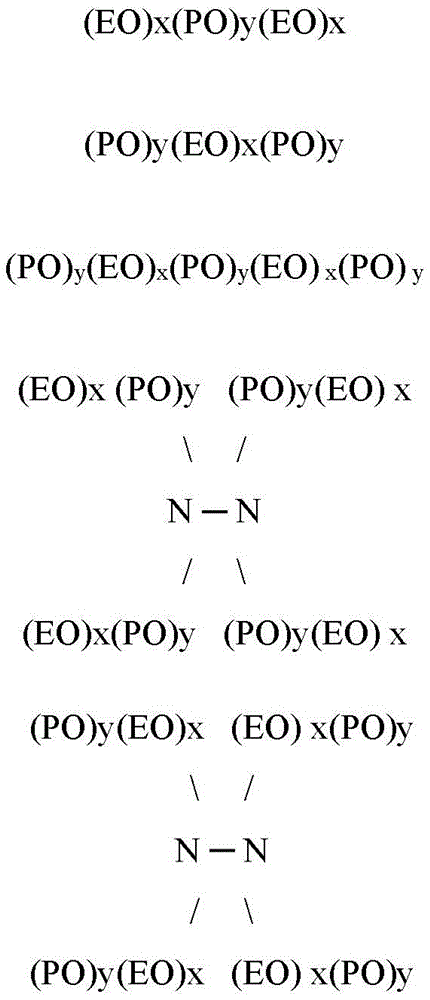
wherein EO represents an ethylene oxide group, PO represents a propylene oxide group, and x and y represent the average molecular proportions of each alkylene oxide monomer in the overall block copolymer composition. In some embodiments, x is in the range of about 10 to about 130, y is in the range of about 15 to about 70, and x plus y is in the range of about 25 to about 200. It should be understood that each x and y in a molecule may be different. In some embodiments, the total polyoxyethylene component of the block copolymer may be in the range of at least about 20mol% of the block copolymer, and in some embodiments, in the range of at least about 30mol% of the block copolymer. In some embodiments, the molecular weight of the material may be greater than about 400, and in some embodiments, the molecular weight may be greater than about 500. For example, in some embodiments, the molecular weight of the material may be in the range of about 500 to about 7000 or more, or in the range of about 950 to about 4000 or more, or in the range of about 1000 to about 3100 or more, or in the range of about 2100 to about 6700 or more.
Although the exemplary polyoxyethylene-polyoxypropylene block copolymer structures provided above have 3-8 blocks, it should be appreciated that the nonionic block copolymer surfactants can comprise more or less than 3 or 8 blocks. In addition, the nonionic block copolymer surfactant can comprise additional repeat units, such as butylene oxide repeat units. In addition, suitable nonionic block copolymer surfactantsCan be characterized as a block copolymer of a mixed polyoxyethylene and polyoxypropylene. Examples of polymeric compounds made by sequential propoxylation and ethoxylation of initiators are available under the trade name manufactured by BASF Corp And->
And-> Commercially available, in particular->
 N-3、
N-3、 25-R2 and others.
Semi-polar nonionic surfactant
Semi-polar type nonionic surfactants are another type of nonionic surfactant that can be used in the detergent compositions described herein. Semi-polar nonionic surfactants include amine oxides, phosphine oxides, sulfoxides and their alkoxylated derivatives.
Amine oxides are tertiary amine oxides corresponding to the general formula:
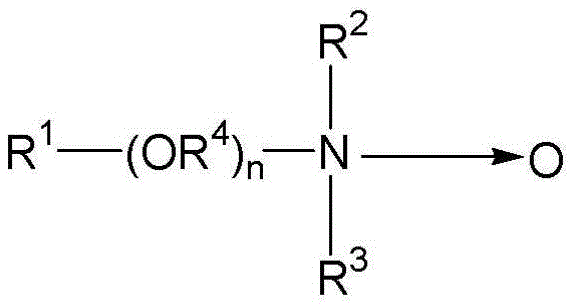
wherein the arrow is a conventional representation of a semi-polar bond; and R is 1 、R 2 And R is 3 May be aliphatic, aromatic, heterocyclic, alicyclic, or combinations thereof. Generally, for detergent-related amine oxides, R 1 Is an alkyl group having from about 8 to about 24 carbon atoms; r is R 2 And R is 3 Is an alkyl or hydroxyalkyl group having 1 to 3 carbon atoms or a mixture thereof; r is R 2 And R is 3 May be attached to each other, for example, by an oxygen atom or a nitrogen atom, to form a ring structure; r is R 4 Is an alkylene or hydroxyalkylene group having 2 to 3 carbon atoms; and n is in the range of 0 to about 20. Amine oxides may be formed from the corresponding amine and an oxidizing agent such as hydrogen peroxide.
Suitable semi-polar nonionic surfactants also include water-soluble phosphine oxides having the following structure:
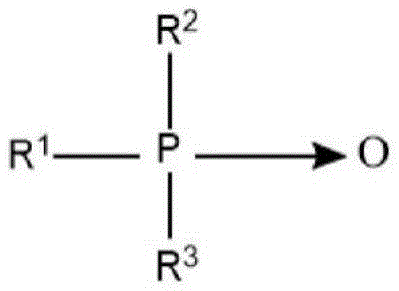
wherein the arrow is a conventional representation of a semi-polar bond; and R is 1 An alkyl, alkenyl or hydroxyalkyl moiety having a chain length in the range of from 10 to about 24 carbon atoms; and R is 2 And R is 3 Each is an alkyl moiety independently selected from alkyl or hydroxyalkyl groups containing 1 to 3 carbon atoms.
Examples of suitable phosphine oxides include dimethyldecyl phosphine oxide, dimethyltetradecyl phosphine oxide, methylethyl tetradecyl phosphine oxide, dimethylhexadecyl phosphine oxide, diethyl-2-hydroxyoctyl decyl phosphine oxide, bis (2-hydroxyethyl) dodecyl phosphine oxide, and bis (hydroxymethyl) tetradecyl phosphine oxide.
Suitable water-soluble amine oxide surfactants are selected from the group consisting of octyl, decyl, dodecyl, isododecyl, coconut or tallow alkyl di- (lower alkyl) amine oxides, specific examples of which are octyl dimethyl amine oxide, nonyl dimethyl amine oxide, decyl dimethyl amine oxide, undecyl dimethyl amine oxide, dodecyl dimethyl amine oxide, isododecyl dimethyl amine oxide, tridecyl dimethyl amine oxide, tetradecyl dimethyl amine oxide, pentadecyl dimethyl amine oxide, hexadecyl dimethyl amine oxide, heptadecyl dimethyl amine oxide, octadecyl dimethyl amine oxide, dodecyl dipropyl amine oxide, tetradecyl dipropyl amine oxide, hexadecyl dipropyl amine oxide, tetradecyl dibutyl amine oxide, octadecyl dibutyl amine oxide, bis (2-hydroxyethyl) dodecyl amine oxide, bis (2-hydroxyethyl) -3-dodecyloxy-1-hydroxypropyl amine oxide, dimethyl- (2-hydroxydodecyl) amine oxide, 3,6, 9-tris (octadecyl) dimethyl amine oxide and 3-dodecyloxy-2-hydroxypropyl di- (2-hydroxyethyl) amine oxide.
Semi-polar nonionic surfactants suitable for use herein also include water-soluble sulfoxide compounds having the structure:
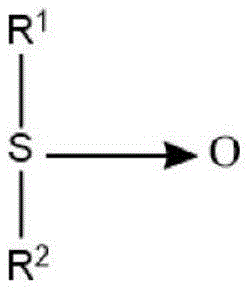
wherein the arrow is a conventional representation of a semi-polar bond; and R is 1 An alkyl or hydroxyalkyl moiety having from about 8 to about 28 carbon atoms, from 0 to about 5 ether linkages, and from 0 to about 2 hydroxy substituents; and R is 2 Is an alkyl moiety consisting of an alkyl group having 1 to 3 carbon atoms and a hydroxyalkyl group. Suitable examples of such sulfoxides include dodecyl methyl sulfoxide; 3-hydroxy tridecyl methyl sulfoxide; 3-methoxytridecyl methyl sulfoxide; 3-hydroxy-4-dodecyloxybutyl methyl sulfoxide.
Suitable semi-polar nonionic surfactants include, but are not limited to, dimethyl amine oxides such as lauryl dimethyl amine oxide, myristyl dimethyl amine oxide,Cetyl dimethylamine oxide, combinations thereof, and the like. Alkoxylated amines or, most particularly, alcohol alkoxylation/amination/alkoxylation surfactants are also suitable. These nonionic surfactants can be at least partially composed of the general formula: r is R 20 --(PO) S N--(EO) t H、R 20 --(PO) S N--(EO) t H(EO) t H and R 20 --N(EO) t H represents; wherein R is 20 Is an alkyl, alkenyl or other aliphatic group or alkyl-aryl group having 8 to 20, preferably 12 to 14 carbon atoms, EO is ethylene oxide, PO is propylene oxide, s is 1 to 20, preferably 2 to 5, t is 1 to 10, preferably 2 to 5, and u is 1 to 10, preferably 2 to 5. Other variations of the scope of these compounds may be represented by the alternative formula: r is R 20 --(PO) V --N[(EO) w H][(EO) z H]Represented by R, wherein 20 As defined above, v is 1 to 20 (e.g., 1, 2, 3, or 4 (preferably 2)), and w and z are independently 1 to 10, preferably 2 to 5. These compounds are commercially represented by the series of products sold as nonionic surfactants by hentmann chemical company (Huntsman Chemicals).
Anionic surfactants
Anionic sulfate surfactants suitable for use in the compositions of the present invention include alkyl ether sulfates, alkyl sulfates, linear and branched primary and secondary alkyl sulfates, alkyl ethoxy sulfates, fatty oil alkenyl glycerol sulfates, alkylphenol ethylene oxide ether sulfates, C 5 -C 17 acyl-N- (C) 1 -C 4 Alkyl) and-N- (C) 1 -C 2 Hydroxyalkyl) reduced glucosamine sulfate and alkyl polysaccharide sulfate, such as alkyl polyglucoside sulfate, and the like. Also included are alkyl sulfates, alkyl poly (ethyloxy) ether sulfates and aromatic poly (ethyloxy) sulfates such as the sulfates or condensation products of ethylene oxide and nonylphenol (typically having 1 to 6 ethylene oxide groups per molecule).
Anionic sulfonate surfactants suitable for use in the present compositions also include alkyl sulfonates, linear and branched primary and secondary alkyl sulfonates, and aromatic sulfonates with or without substituents.
Anionic carboxylate surfactants suitable for use in the present compositions include carboxylic acids (and salts) such as alkanoic acids (and alkanoates), carboxylic acid esters (e.g., alkyl succinates), carboxylic acid ethers, and the like. Such carboxylates include alkyl ethoxy carboxylates, alkyl aryl ethoxy carboxylates, alkyl polyethoxy polycarboxylate surfactants and soaps (e.g., alkyl carboxyl groups). The secondary carboxylates used in the present compositions include those containing carboxyl units attached to a secondary carbon. The secondary carbon may be in a ring structure, for example as in p-octyl benzoic acid, or as in an alkyl substituted cyclohexyl carboxylate. The secondary carboxylate surfactants typically do not contain ether linkages, do not contain ester linkages, and do not contain hydroxyl groups. Further, it generally does not have a nitrogen atom in the head group (amphiphilic moiety). Suitable secondary soap surfactants typically contain a total of 11 to 13 carbon atoms, but multiple carbon atoms (e.g., up to 16) may be present. Suitable carboxylates also include acyl amino acids (and salts) such as acyl glutamate, acyl peptides, sarcosinates (e.g., N-acyl sarcosinates), taurates (e.g., N-acyl taurates and fatty acid amides of methyl taurate), and the like.
Suitable anionic surfactants include alkyl or alkylaryl ethoxy carboxylates of the formula:
R-O-(CH 2 CH 2 O) n (CH 2 ) m -CO 2 X (3)
wherein R is C 8 To C 22 Alkyl or Wherein R is 1 Is C 4 -C 16 An alkyl group; n is an integer from 1 to 20; m is an integer from 1 to 3; and X is a counter ion such as hydrogen, sodium, potassium, lithium, ammonium, or an amine salt such as monoethanolamine, diethanolamine, or triethanolamine. In some embodiments, n is an integer from 4 to 10 and m is 1. In some embodiments, R is C 8 -C 16 An alkyl group. In some embodiments, R is C 12 -C 14 Alkyl, n is 4, and m is 1.
In other embodimentsIn embodiments, R is And R is 1 Is C 6 -C 12 An alkyl group. In still other embodiments, R 1 Is C 9 Alkyl, n is 10 and m is 1.
Such alkyl and alkylaryl ethoxy carboxylates are commercially available. These ethoxy carboxylates are generally available as acid forms which can be readily converted to the anionic or salt forms. Commercially available carboxylates comprise Neodox 23-4, C 12-13 Alkylpolyethoxy (4) carboxylic acid (Shell Chemical), and Emcol CNP-110, C 9 Alkylaryl polyethoxy (10) carboxylic acid (Witco Chemical). Carboxylates are also available from Craien, e.g. products DTC,C 13 Alkyl polyethoxy (7) carboxylic acids.
Amphoteric surfactants
Amphoteric or ampholytic surfactants contain both basic and acidic hydrophilic groups and organic hydrophobic groups. These ionic entities may be any of the anionic or cationic groups described herein with respect to other types of surfactants. Basic nitrogen and acidic carboxylate groups are typical functional groups used as basic and acidic hydrophilic groups. Among the several surfactants, sulfonate, sulfate, phosphonate, or phosphate groups provide a negative charge.
Amphoteric surfactants can be generally described as derivatives of aliphatic secondary and tertiary amines in which the aliphatic radical can be straight or branched chain and in which one of the aliphatic substituents contains from about 8 to 18 carbon atoms and one contains an anionic hydrotropic group such as carboxy, sulfonate, sulfato, phosphate, or phosphono. The first class comprises acyl/dialkyl ethylenediamine derivatives (e.g., 2-alkyl hydroxyethyl imidazoline derivatives) and salts thereof. The second class comprises N-alkyl amino acids and salts thereof. Some amphoteric surfactants may be considered to meet both categories.
Amphoteric surfactants can be synthesized by methods known to those of ordinary skill in the art. For example, 2-alkyl hydroxyethyl imidazolines are synthesized by condensation and ring closure of long chain carboxylic acids (or derivatives) with dialkyl ethylenediamines. Commercial ampholytic surfactants are derivatized by sequential hydrolysis and ring opening of the imidazoline ring by alkylation, for example with chloroacetic acid or ethyl acetate. During alkylation, one or both of the carboxy-alkyl groups react with different alkylating agents to form tertiary amines and ether linkages, yielding different tertiary amines.
Suitable long chain imidazole derivatives may generally have the general formula:

where R is an acyclic hydrophobic group containing from about 8 to 18 carbon atoms and M is a cation for neutralizing the charge of an anion, typically sodium. Commercially well known imidazoline derived amphoteric surfactants that can be used in the present compositions include, for example: cocoyl amphopropionate, cocoyl amphoglycinate, cocoyl amphopropylsulfonate, and cocoyl amphopropionate. The amphoteric carboxylic acid may be produced from fatty imidazolines in which the dicarboxylic acid functionality of the amphoteric dicarboxylic acid is diacetic acid and/or dipropionic acid.
The carboxymethylated compounds described hereinabove (glycinates) are often referred to as betaines. Betaines are a particular class of amphoteric surfactants discussed herein below in the section entitled zwitterionic surfactants.
Easy to pass RNH 2 Wherein r=c 8 -C 18 Reaction of linear or branched alkyl, fatty amines with halogenated carboxylic acids to produce long chain N-alkyl amino acids. Alkylation of the primary amino groups of amino acids yields secondary and tertiary amines. The alkyl substituent may have additional amino groups that provide more than one reactive nitrogen center. Most commercial N-alkyl amino acids are alkyl derivatives of beta-alanine or beta-N (2-carboxyethyl) alanine. Suitable commercial N-alkyl amino acids Examples of ampholytes include, but are not limited to, beta-aminodipropionate, RN (C) 2 H 4 COOM) 2 And RNHC 2 H 4 COOM. In one embodiment, R may be an acyclic hydrophobic group containing from about 8 to about 18 carbon atoms, and M is a cation for neutralizing the charge of the anion.
Suitable amphoteric surfactants include those derived from coconut products such as coconut oil or coconut fatty acids. Further suitable coconut derived surfactants comprise ethylenediamine moieties, alkanolamide moieties, amino acid moieties, such as glycine, or combinations thereof, as part of their structure; and aliphatic substituents of about 8 to 18 (e.g., 12) carbon atoms. Such surfactants can also be considered alkyl amphodicarboxylic acids. These amphoteric surfactants may comprise chemical structures represented as follows: c (C) 12 -alkyl-C (O) -NH-CH 2 -CH 2 -N + (CH 2 -CH 2 -CO 2 Na) 2 -CH 2 -CH 2 -OH or C 12 -alkyl-C (O) -N (H) -CH 2 -CH 2 -N + (CH 2 -CO 2 Na) 2 -CH 2 -CH 2 -OH. Disodium cocoamphodipropionate is a suitable amphoteric surfactant and is available under the trade name Miranol TM FBS is available from rotia inc (Rhodia inc., cranbury, n.j.) in klanbury, new jersey. Another suitable coconut-derived amphoteric surfactant having the chemical name disodium cocoamphodiacetate is known under the trade name Mirataine TM JCHA is also sold from rotia corporation, klandi, new jersey. A typical list of amphoteric classes and species of these surfactants is given in the following documents: U.S. Pat. No. 3,929,678 to J.Bertz Schwartz and J.W.Perry surfactants and detergents (SURFACE ACTIVE AGENTS AND DETERGENTS), volumes I-II (1958), both of which are incorporated herein by reference in their entirety.
Cationic surfactants
A surfactant is classified as cationic if the charge on the hydrotrope portion of the molecule is positive. Within this groupAlso included are surfactants in which the hydrotrope is uncharged unless the pH is reduced to near neutral or lower, but then cationic (e.g., alkylamine). Theoretically, cationic surfactants can be made from a polymer containing an "onium" structure R n Any combination of the elements of x+y are synthesized and may comprise compounds other than nitrogen (ammonium), such as phosphorus (phosphonium) and sulfur (sulfonium). In fact, nitrogen-containing compounds predominate in the field of cationic surfactants, probably because the synthetic route to nitrogen-containing cationic surfactants is straightforward and the yields of the resulting products are high, which can make them less costly.
Cationic surfactants preferably comprise, more preferably refer to compounds containing at least one long carbon chain hydrophobic group and at least one positively charged nitrogen. In so-called interrupted alkylamines and amidoamines, the long carbon chain groups may be directly attached to the nitrogen atom by simple substitution; or more preferably indirectly, through one or more bridging functional groups. Such functional groups may make the molecule more hydrophilic and/or more water-dispersible, more readily soluble in water by the co-surfactant mixture, and/or water-soluble. To increase water solubility, additional primary, secondary or tertiary amino groups may be introduced, or the amino nitrogen may be quaternized using low molecular weight alkyl groups. Further, the nitrogen may be part of a branched or straight chain moiety of different degrees of unsaturation, or part of a saturated or unsaturated heterocyclic ring. In addition, cationic surfactants may contain complex linkages having more than one cationic nitrogen atom.
Surfactant compounds classified as amine oxides, amphoteric surfactants, and zwitterionic surfactants are themselves typically cationic in near neutral to acidic pH solutions and can overlap with surfactant classifications. Polyoxyethylated cationic surfactants generally behave like nonionic surfactants in alkaline solutions and like cationic surfactants in acidic solutions. The simplest cationic amines, amine salts and quaternary ammonium compounds can be schematically depicted as follows:

Wherein R represents a long alkyl chain, R 'and R' may be long alkyl chains or smaller alkyl or aryl groups or hydrogen, and X represents an anion. Most large volume commercial cationic surfactants can be subdivided into four main categories and additional subgroups known to those skilled in the art and described in the following documents: "surfactant university (Surfactant Encyclopedia)", "cosmetic and toiletry products (C) OSMETICS &T OILETRIES ) (104 (2), 86-96 (1989), which is incorporated herein by reference in its entirety). The first class comprises alkylamines and salts thereof. The second class comprises alkyl imidazolines. The third class comprises ethoxylated amines. The fourth class comprises quaternary ammonium salts such as alkyl benzyl dimethyl ammonium salts, alkylbenzene salts, heterocyclic ammonium salts, tetraalkylammonium salts, and the like. Cationic surfactants are known to have a variety of properties that can be beneficial in the present compositions. These desirable characteristics may include detergency in compositions at or below neutral pH, antimicrobial efficacy, thickening or gelling in conjunction with other agents, and the like. Suitable cationic surfactants include, but are not limited to, those having the formula R 1 mR 2 Those cationic surfactants of the xYLZ type, wherein each R 1 Is an organic group containing a linear or branched alkyl or alkenyl group optionally substituted with up to three phenyl or hydroxy groups and optionally with up to four of the following structures:

Or an isomer or mixture of these structures, and which contains from about 8 to 22 carbon atoms. R is R 1 The radicals may additionally contain up to 12 ethoxy groups. m is a number from 1 to 3. Preferably, when m is 2, no more than one R in the molecule 1 The group has 16 or more carbon atoms, or when m is 3, more than 12 carbon atoms. Each R 2 Is an alkyl or hydroxyalkyl or benzyl group having 1 to 4 carbon atomsAnd no more than one R in the molecule 2 Is benzyl. x is a number from 0 to 11, preferably from 0 to 6. Any remaining carbon atom positions on the Y group are filled with hydrogen. Y is a group which may include but is not limited to

Or a mixture thereof. Preferably, L is 1 or 2, wherein when L is 2, the Y group is selected from R having 1 to about 22 carbon atoms and two free carbon single bonds 1 And R is 2 The portions of the analog (preferably alkylene or alkenylene) are spaced apart. Z is a water-soluble anion, such as a halide, sulfate, methylsulfate, hydroxide or nitrate anion, particularly preferably a chloride, bromide, iodide, sulfate or methylsulfate anion, in an amount such that the cationic component is electrically neutral.
Zwitterionic surfactants
Zwitterionic surfactants can be considered a subset of amphoteric surfactants and can contain anionic charges. Zwitterionic surfactants can be generally described as derivatives of secondary and tertiary amines, heterocyclic secondary and tertiary amines, or derivatives of quaternary ammonium, quaternary phosphonium, or tertiary sulfonium compounds. Zwitterionic surfactants typically comprise positively charged quaternary ammonium ions, or in some cases sulfonium or phosphonium ions; a negatively charged carboxyl group; an alkyl group. Zwitterionic surfactants generally contain cationic and anionic groups, which ionize to nearly the same extent in the equipotential regions of the molecule and which can create strong "internal salt" attractive forces between the positive-negative charge centers. Examples of such synthetic zwitterionic surfactants include derivatives of aliphatic quaternary ammonium, phosphonium and sulfonium compounds, in which the aliphatic radicals can be straight or branched chain and wherein one of the aliphatic substituents contains from 8 to 18 carbon atoms and one contains an anionic hydrotropic group, such as carboxy, sulfonate, sulfate, phosphate or phosphonate.
Betaine surfactants and sulfobetaine surfactants are exemplary zwitterionic surfactants for use herein. The general formula of these compounds is:
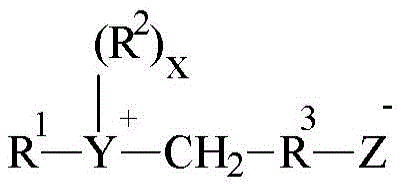
Wherein R is 1 An alkyl, alkenyl or hydroxyalkyl group containing from 8 to 18 carbon atoms having from 0 to 10 ethylene oxide moieties and from 0 to 1 glyceryl moiety; y is selected from the group consisting of: nitrogen, phosphorus and sulfur atoms; r is R 2 Is an alkyl or monohydroxyalkyl group containing from 1 to 3 carbon atoms; x is 1 when Y is a sulfur atom and 2 when Y is a nitrogen or phosphorus atom, R 3 Alkylene or hydroxyalkylene of 1 to 4 carbon atoms and Z is a group selected from the group consisting of: carboxylate, sulfonate, sulfate, phosphonate, and phosphate.
Examples of zwitterionic surfactants having the structure listed above include: 4- [ N, N-bis (2-hydroxyethyl) -N-octadecyl ammonium ] -butane-1-carboxylate; 5- [ S-3-hydroxypropyl-S-hexadecyldihydrosulfanyl ] -3-hydroxypentane-1-sulfate; 3- [ P, P-diethyl-P-3, 6, 9-trioxatetracos-spho ] -2-hydroxypropion-1-phosphate; 3- [ N, N-dipropyl-N-3-dodecyloxy-2-hydroxypropyl-ammonio ] -propane-1-phosphonate; 3- (N, N-dimethyl-N-hexadecyl ammonium) -propane-1-sulfonate; 3- (N, N-dimethyl-N-hexadecylammonium) -2-hydroxy-propane-1-sulfonate; the alkyl groups contained in the detergent surfactant may be linear or branched and may be saturated or unsaturated.
Zwitterionic surfactants suitable for use in the present compositions comprise betaines having the general structure:

these surfactant betaines generally exhibit neither strong cationic or anionic character at pH extremes nor show reduced water solubility in their isoelectric range. Unlike "external" quaternary ammonium salts, betaines are compatible with anionic surfactants. Examples of suitable betaines include cocoyl amidopropyl dimethyl betaine; cetyl dimethyl betaine; c (C) 12-14 Acyl amidopropyl betaines; c (C) 8-14 Acyl amidohexyl diethyl betaine; 4-C 14-16 Acyl methyl amido diethyl ammonium group-1-carboxybutane; c (C) 16-18 Acyl amidodimethyl betaine; c (C) 12-16 Acyl amidopentanes diethyl betaines; c 12-16 Acyl methyl amido dimethyl betaine.
Suitable sulfobetaines may include, but are not limited to, those having the formula (R 1 ) 2 N + R 2 SO 3- Wherein R is C 6 -C 18 Hydrocarbyl radicals, each R 1 Typically independently C 1 -C 3 Alkyl, e.g. methyl, and R 2 Is C 1 -C 6 Hydrocarbyl radicals, e.g. C 1 -C 3 Alkylene or hydroxyalkylene groups.
A typical list of zwitterionic classes and species of these surfactants is given in the following documents: U.S. Pat. No. 3,929,678, J.Bertz Schwartz and J.W.Perry "surfactant and detergent", volume I-II (1958).
Phosphinosuccinic acid (PSO) derivatives
The detergent composition may employ a phosphinosuccinic acid (PSO) derivative. PSO derivatives can also be described as phosphonic acid based compositions. In one aspect, the PSO derivatives may be a combination of mono-, di-and oligomeric phosphinosuccinic acid adducts and phosphinosuccinic acid (PSA) adducts.
The phosphinosuccinic acid (PSA) adduct may have the following formula (I):

the mono phosphinosuccinic acid adducts have the following formula (II):

the bisphosphonyl succinic acid adducts have the following formula (III):
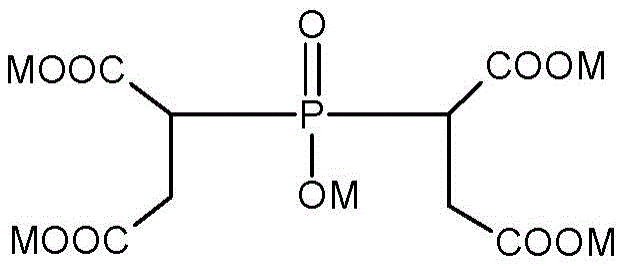
an exemplary structure of the oligomeric phosphinosuccinic acid adduct is shown in formula (IV) below:
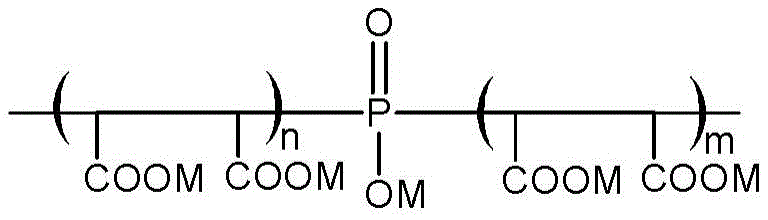
wherein M is H + 、Na + 、K + 、NH 4 + Or a mixture thereof; and the sum of m plus n is greater than 2.
Additional oligomeric phosphinosuccinic acid adduct structures are set forth, for example, in U.S. Pat. nos. 5,085,794, 5,023,000 and 5,018,577, each of which is incorporated herein by reference in its entirety. The oligomeric species may also contain a phosphinosuccinate in which the phosphonate groups are esterified with an alkyl group derived from the succinate. Furthermore, the oligomeric phosphinosuccinic acid adducts may include between about 1wt.% and about 20wt.% of additional monomers including, but not limited to, acrylic acid, methacrylic acid, itaconic acid, 2-amido-2-methylpropanesulfonic Acid (AMPS), and acrylamide.
The adducts of formulas I, II, III and IV may be used in acid or salt form. Further, in addition to the phosphinosuccinic acid and oligomeric species, the composition may also contain a certain oxidized phosphinosuccinic acid derivative (I) from adduct II, and a compound of formula H 2 P0 2 -、HP0 3 2- And PO (PO) 4 3- And impurities such as various inorganic phosphorus byproducts.
In one aspect, mono-, di-and oligomeric phosphinosuccinic acid adducts and phosphinosuccinic acid (PSAs) may be provided in the following molar and weight ratios.
| Species: | single sheet | PSA | Double-piece | Oligomer |
| And | C 4 H 7 PO 6 | C 4 H 7 PO 7 | C 8 H 11 PO 10 | C 14.1 H 17.1 PO 16.1 |
| MW | 182 | 198 | 298 | 475.5 (average) |
| Mole fraction (by NMR) | 0.238 | 0.027 | 0.422 | 0.309 |
| Wt. fraction (as acid) | 0.135 | 0.017 | 0.391 | 0.457 |
Detergent compositions and methods of use may employ phosphinosuccinic acid derivatives and may comprise one or more of PSO derivatives selected from mono-, di-and oligomeric phosphinosuccinic acid and phosphinosuccinic acid, wherein at least about 10 mole% of the derivatives comprise succinic acid to phosphorus ratio of about 1:1 to about 20:1. The phosphinosuccinic acid derivatives may comprise one or more of PSO derivatives selected from mono-, di-and optionally oligomeric phosphinosuccinic acid and phosphinosuccinic acid, wherein at least about 10mol% of the derivatives comprise succinic acid to phosphorus ratio of about 1:1 to about 15:1. More specifically, the phosphinosuccinic acid derivatives may comprise one or more derivatives selected from the group consisting of mono-, di-, and optionally oligomeric phosphinosuccinic acid and phosphinosuccinic acid, wherein at least about 10 mole% of the derivatives comprise succinic acid to phosphorus ratio of about 1:1 to about 10:1.
Additional description of suitable mono-, di-and oligomeric phosphinosuccinic acid adducts including suitable PSO derivatives is provided in U.S. patent No. 6,572,789, which is incorporated herein by reference in its entirety.
In aspects of the invention, the detergent composition is free of nitrilotriacetic acid (NTA) to meet certain regulations. In a further aspect of the invention, the detergent composition is substantially free of phosphorus to meet certain regulations. The PSO derivative may provide a substantially phosphorus-free detergent composition having less than about 0.5wt.% phosphorus. More preferably, the amount of phosphorus in the detergent composition may be less than about 0.1wt.%. Accordingly, a benefit of the detergent compositions described herein is to provide a detergent composition capable of controlling (i.e., preventing) the accumulation of hard scale on the surface of a substrate without the use of phosphates such as tripolyphosphate, which are commonly used in detergents to prevent hard scale and/or accumulation.
When used in the detergent compositions described herein, the PSO derivatives may be present in an amount of between about 0wt.% and about 15wt.%, preferably between about 1wt.% and about 10wt.%, more preferably between about 5wt.% and about 10 wt.%.
Water regulators, builders, chelating agents and/or chelates
The composition may comprise one or more water conditioning or builder (e.g., builder), also known as chelating agents or chelates, including, but not limited to: condensed phosphates, alkali metal carbonates, phosphonates, aminocarboxylic acids, polycarboxylic acid polymers and/or polyacrylates. Generally, chelating agents are molecules that are capable of coordinating (i.e., binding) metal ions common in natural water to prevent the metal ions from interfering with the action of other detersive ingredients of the cleaning composition. Similarly, builders and water conditioning agents also aid in the removal of metal compounds. Exemplary water conditioning agents include anti-redeposition agents, chelating agents, chelates, and inhibitors.
Examples of condensed phosphates include, but are not limited to, sodium and potassium orthophosphates, sodium and potassium pyrophosphates, sodium tripolyphosphates, and sodium hexametaphosphate. Condensed phosphates may also aid in curing the composition to a limited extent by fixing the free water present in the composition as water of hydration.
Examples of phosphonates include, but are not limited to: 2-phosphonobutane-1, 2, 4-tricarboxylic acid (PBTC), 1-hydroxyethane-1, 1-diphosphonic acid, CH 2 C(OH)[PO(OH) 2 ] 2 The method comprises the steps of carrying out a first treatment on the surface of the Aminotri (methylenephosphonic acid), N [ CH ] 2 PO(OH) 2 ] 3 The method comprises the steps of carrying out a first treatment on the surface of the Aminotri (methylenephosphonate), sodium salt (ATMP), N [ CH ] 2 PO(ONa) 2 ] 3 The method comprises the steps of carrying out a first treatment on the surface of the 2-hydroxyethyl iminobis (methylenephosphonic acid), HOCH 2 CH 2 N[CH 2 PO(OH) 2 ] 2 The method comprises the steps of carrying out a first treatment on the surface of the Diethylenetriamine penta (methylenephosphonic acid), (HO) 2 POCH 2 N[CH 2 N[CH 2 PO(OH) 2 ] 2 ] 2 The method comprises the steps of carrying out a first treatment on the surface of the Diethylenetriamine penta (methylenephosphonate), sodium salt (DTPMP), C 9 H (28-x) N 3 Na x O 15 P 5 (x=7); hexamethylenediamine (tetramethylene phosphonate), potassium salt, C 10 H (28-x) N 2 K x O 12 P 4 (x=6); bis (hexamethylene) triamine (pentamethylene phosphonic acid), (HO) 2 )POCH 2 N[(CH 2 ) 2 N[CH 2 PO(OH) 2 ] 2 ] 2 The method comprises the steps of carrying out a first treatment on the surface of the And phosphorous acid H 3 PO 3 . Preferred phosphonates are PBTC, HEDP, ATMP and DTPMP. Preferably a neutralized or basic phosphonate, or a combination of phosphonate and an alkali source prior to addition to the mixture, such that when the phosphonate is added, little or no heat or gas generated by the neutralization reaction is present. However, in one embodiment, the composition is free of phosphorus.
Suitable aminocarboxylic acid materials that contain little or no NTA include, but are not limited to: n-hydroxyethyl amino diacetic acid, ethylenediamine tetra acetic acid (EDTA), hydroxyethyl ethylenediamine tetra acetic acid, diethylenetriamine pentaacetic acid, N-hydroxyethyl-ethylenediamine triacetic acid (HEDTA), diethylenetriamine pentaacetic acid (DTPA), methylglycine diacetic acid (MGDA), glutamic acid-N, N-diacetic acid (GLDA), ethylenediamine succinic acid (EDDS), 2-hydroxyethyl iminodiacetic acid (HEIDA), iminodisuccinic acid (IDS), 3-hydroxy-2-2' -iminodisuccinic acid (HIDS) and other similar acids having amino groups with carboxylic acid substituents or salts thereof. However, in one embodiment, the composition is free of aminocarboxylate.
Suitable organic water modifiers may include polymers and small molecule water modifiers. The small organic molecule water regulator is typically an organic carboxylate compound or an organic phosphate salt water regulator. Polymeric inhibitors often include polyanionic compositions, such as polyacrylic acid compounds. Recently, sodium carboxymethylcellulose has found use as an anti-redeposition agent. This is more widely discussed in U.S. patent No. 8,729,006 to Miralles et al, which is incorporated herein in its entirety.
Small molecule organic water modulators include, but are not limited to: sodium gluconate, sodium glucoheptanoate, N-hydroxyethylenediamine triacetic acid (HEDTA), ethylenediamine tetraacetic acid (EDTA), nitrilotriacetic acid (NTA), diethylenetriamine pentaacetic acid (DTPA), ethylenediamine tetrapropionic acid, triethylenetetramine hexaacetic acid (TTHA) and the corresponding alkali metal, ammonium and substituted ammonium salts, ethylenediamine tetraacetic acid tetrasodium salt (EDTA), nitrilotriacetic acid trisodium salt (NTA), ethanol diglycine disodium salt (ethanoldiglycine disodium salt, EDG), diethanolglycine sodium salt (DEG) and 1, 3-propylenediamine tetraacetic acid (PDTA), dicarboxymethyl glutamate tetrasodium salt (GLDA), methylglycine-N-diacetic acid trisodium salt (MGDA) and iminodisuccinic acid sodium salt (IDS). All of which are known and commercially available.
Suitable inorganic water conditioning agents include, but are not limited to, sodium tripolyphosphate and other higher linear and cyclic polyphosphate species. Suitable condensed phosphates include sodium and potassium orthophosphates, sodium and potassium pyrophosphates, sodium tripolyphosphates and sodium hexametaphosphate. Condensed phosphates may also assist in curing solid detergent compositions to a limited extent by: the free water present in the composition is fixed as water of hydration.
In one embodiment, the composition may be substantially free of phosphorus, phosphate and/or phosphonate.
In addition to aminocarboxylates that are little or no NTA, water-adjusting polymers may be used as phosphorus-free builders. The polycarboxylic acid polymer chelating agent is a non-phosphorus containing chelating agent. Polycarboxylates include those chelating polymers having pendant carboxylate (- -CO2- -) groups such as polyacrylic acid homopolymers, polymaleic acid homopolymers, maleic acid/olefin copolymers, sulfonated copolymers or terpolymers, acrylic acid/maleic acid copolymers or terpolymers, polymethacrylic acid homopolymers, polymethacrylic acid copolymers or terpolymers, acrylic acid-methacrylic acid copolymers, hydrolyzed polyacrylamides, hydrolyzed polymethacrylamides, hydrolyzed polyamide-methacrylamide copolymers, hydrolyzed polyacrylonitrile, hydrolyzed polymethacrylonitrile, hydrolyzed acrylonitrile-methacrylonitrile copolymers, and combinations thereof. For further discussion of chelators/chelates, see K IRK -O THMER Encyclopedia of chemical technology (E) NCYCLOPEDIA OF C HEMICAL T ECHNOLOGY ) (3 rd edition)) Volume 5, pages 339-66, volume 23, pages 319-20, the disclosures of which are incorporated herein by reference. These materials may also be used at sub-stoichiometric levels to act as crystal modifiers.
The polycarboxylic acid polymer chelating agent may comprise polyacrylic acid homopolymers and polymaleic acid homopolymers, as well as polymers modified by fatty acid end groups. Exemplary polyacrylic acid homopolymers include those having a molecular weight of between about 500 to 100,000g/mol, or between about 1,000 to 50,000g/mol, or between about 1,000 to 25,000 g/mol. Exemplary suitable commercially available polyacrylic acid polymers include Acusol 445N (fully neutralized acrylic acid homopolymer), acusol 448, and Acusol 944, available from Dow Chemical company (Dow Chemical). Exemplary suitable commercially available polymaleic acid chelators/water modulators include, for example, belclene 200, commercially available from BWA.
In further embodiments, a mixture of acrylic homopolymers and/or polymers comprising acrylate monomers may be employed.
In an embodiment, the detergent composition comprises one or more water conditioners, builders, chelating agents and/or chelates present in an amount of about 0wt.% to at most about 80 wt.%. In an embodiment, the detergent composition comprises a small molecule organic water conditioner and a polycarboxylic acid polymer chelant, wherein the small molecule organic water conditioner is present in an amount of between about 0wt.% to about 40wt.%, preferably between about 0.5wt.% to about 25wt.%, more preferably between about 5wt.% to about 15 wt.%; and wherein the polycarboxylic acid polymer chelating agent is present in an amount of between about 0wt.% to about 40wt.%, preferably between about 1wt.% to about 25wt.%, more preferably between about 5wt.% to about 15 wt.%.
Corrosion inhibitors
The detergent compositions described herein may optionally comprise one or more corrosion inhibitors for treating calcium carbonate based scale or other types of mineral scale, including calcium sulfate, calcium phosphate, barium sulfate, strontium sulfate, ferric hydroxide, silica (silica), calcium oxalate and others. Examples of suitable corrosion inhibitors include, but are not limited to, combinations of aluminum ion sources and zinc ion sources, and alkali metal silicates or hydrates thereof.
Corrosion inhibitors may refer to a combination of an aluminum ion source and a zinc ion source. When the solid detergent composition is provided in the form of a use solution, the aluminum ion source and the zinc ion source provide aluminum ions and zinc ions, respectively. The amount of corrosion inhibitor is calculated based on the combination of the aluminum ion source and the zinc ion source. Any substance that provides aluminum ions in the use solution may be referred to as an aluminum ion source, and any substance that provides zinc ions when provided in the use solution may be referred to as a zinc ion source. The aluminum ion source and/or the zinc ion source need not react to form aluminum ions and/or zinc ions. Aluminum ions can be considered an aluminum ion source and zinc ions can be considered a zinc ion source. The aluminum ion source and the zinc ion source may be provided as organic salts, inorganic salts, and mixtures thereof.
Exemplary sources of aluminum ions include, but are not limited to: aluminum salts such as sodium aluminate, aluminum bromide, aluminum chlorate, aluminum chloride, aluminum iodide, aluminum nitrate, aluminum sulfate, aluminum acetate, aluminum formate, aluminum tartrate, aluminum lactate, aluminum oleate, aluminum bromate, aluminum borate, aluminum potassium sulfate, and aluminum zinc sulfate. Exemplary sources of zinc ions include, but are not limited to: zinc salts such as zinc chloride, zinc sulfate, zinc nitrate, zinc iodide, zinc thiocyanate, zinc fluorosilicate, zinc dichromate, zinc chlorate, sodium zincate, zinc gluconate, zinc acetate, zinc benzoate, zinc citrate, zinc lactate, zinc formate, zinc bromate, zinc bromide, zinc fluoride, zinc fluorosilicate, and zinc salicylate.
In some embodiments, the detergent composition contains one or more corrosion inhibitors present in an amount of between about 0wt.% to about 10wt.%, preferably between about 0.001wt.% to about 5wt.%, more preferably between about 0.05wt.% to about 0.5 wt.%.
Defoaming agent
The detergent composition may comprise an antifoaming agent. The defoamer maintains a low foam profile and/or causes dissolution of the foam profile under various water conditions, preferably deionized or soft water conditions and/or under mechanical action. In still further aspects, the defoamer is compatible with surfactants, preferably nonionic surfactants, to achieve key properties such as coupling/wetting and improved material compatibility.
Any of a variety of suitable defoamers may be used, for example, any of a variety of nonionic Ethylene Oxide (EO) containing surfactants, particularly the nonionic surfactants described herein. Many nonionic ethylene oxide derivative surfactants are water soluble and have cloud points below the intended use temperature of the rinse aid composition and thus can be suitable defoamers. Some examples of ethylene oxide derivative surfactants that may be used as defoamers include polyoxyethylene-polyoxypropylene block copolymers, such as N-3, alcohol alkoxylates, low molecular weight EO containing surfactants, and the like, or derivatives thereof, as described herein.
In an alternative aspect, the defoamer is a metal salt comprising, for example, aluminum, magnesium, calcium, zinc, and/or other rare earth metal salts. In a preferred aspect, the defoamer is a cation having a high charge density, such as Fe 3+ 、Al 3+ And La (La) 3+ . In a preferred aspect, the defoamer is aluminum sulfate. In other aspects, the defoamer is not a transition metal compound. In some embodiments, the detergent compositions described herein may comprise a food grade quality defoamer (antifoaming agent or defoamer), comprising, for example, a silicone-based product.
In one aspect, the composition may include one or more defoamers present at any suitable concentration to provide a desired degree of defoaming. In some embodiments, the composition has a defoamer concentration of about 0.001wt.% to about 10wt.% or about 0.1wt.% to about 5 wt.%. In still other embodiments, the defoamer has a concentration of about 0.1wt.% to about 1 wt.%. In an embodiment, the composition comprises two defoamers, in particular a metal salt and a nonionic surfactant, wherein the metal salt is present in an amount of between about 0wt.% and about 10wt.%, preferably between about 0.001wt.% and about 5wt.%, more preferably between about 0.05wt.% and about 0.5 wt.%; and wherein the nonionic surfactant is present in an amount of between about 0wt.% and about 10wt.%, preferably between about 0.001wt.% and about 5wt.%, more preferably between about 0.1wt.% and about 2 wt.%.
Carrier body
The composition includes one or more carriers. Preferred carriers may include, but are not limited to, water and/or water soluble carriers. Preferred water-soluble carriers include, but are not limited to, alcohols, water-soluble glycols, or mixtures thereof. Preferred alcohols include, but are not limited to, ethanol, n-propanol, and isopropanol. Preferred glycols include, but are not limited to, pentanediol, hexanediol, and propylene glycol. In embodiments that include water as a carrier, the water is deionized or demineralized water.
In an embodiment, the detergent composition comprises one or more carriers comprising a water-soluble glycol and deionized water, wherein the glycol is present in an amount between about 0wt.% and about 50wt.%, preferably between about 0.01wt.% and about 8wt.%, more preferably between about 0.1wt.% and about 2 wt.%; and wherein deionized water is present in an amount of between about 0wt.% to about 90wt.%, preferably between about 0wt.% to about 50wt.%, more preferably between about 0.5wt.% to about 10 wt.%.
Packing material
In some embodiments, the detergent composition may contain a small but effective amount of one or more fillers that are generally inert, but may be combined with a surfactant system to increase the overall capacity of the composition. Some examples of suitable fillers may include, but are not limited to, sodium sulfate, sodium chloride, starch, sugars, C such as propylene glycol, and the like 1 -C 10 Alkylene glycols, and combinations thereof.
In one aspect, the detergent composition comprises between about 0wt.% and about 40wt.%, preferably between about 0.5wt.% and about 10wt.%, more preferably between about 1wt.% and about 5wt.% of one or more fillers.
Additional functional ingredients
The components of the detergent composition may be combined with various additional functional ingredients. In some embodiments, the detergent composition comprising the PSO derivative and the alkalinity source comprises a substantial amount or even substantially all of the total weight of the detergent composition, e.g., in embodiments in which little or no additional functional ingredient is disposed. In these examples, the ranges of component concentrations of the detergent compositions provided above represent the ranges of those same components in the detergent composition.
The functional ingredients provide the desired characteristics and functions to the detergent composition. For the purposes of this disclosure, the term "functional ingredient" includes ingredients that provide beneficial properties in a particular application when dispersed or dissolved in a use and/or concentrate, such as an aqueous solution. Some examples of functional ingredients are discussed in more detail below, but the particular materials discussed are given by way of example only, and a wide variety of other functional ingredients may be used. For example, many of the functional ingredients discussed below relate to materials used in cleaning applications. However, other embodiments may include functional components used in other applications.
Exemplary additional functional ingredients include, for example: a builder or water conditioner comprising a detergent builder; a hardening agent; a bleaching agent; a filler; a defoaming agent; an anti-redeposition agent; a stabilizer; a dispersing agent; an enzyme; glass and metal corrosion inhibitors; fragrances and dyes; a thickener; etc. Further description of suitable additional functional ingredients is set forth in U.S. patent No. 8,748,364, which is incorporated herein by reference in its entirety.
In an embodiment, the composition may contain one or more additional functional ingredients present in an amount of between about 0wt.% and about 90wt.%, between about 20wt.% and about 50wt.%, and/or between about 1wt.% and about 10wt.% of the composition.
Form of the composition
The detergent compositions described herein may be formulated as solids, liquids, powders, pastes, gels, and the like.
The detergent composition may be provided as a liquid, comprising a liquid concentrate. When provided as a concentrate, the composition may be diluted to form a use composition. In general, concentrate refers to a composition of a use solution intended to be diluted with water to provide a contact object to provide desired cleaning, rinsing, etc. The detergent composition that is contacted with the article to be laundered may be referred to as a concentrate or use composition (or use solution), depending on the formulation employed in the methods as described herein.
The use solution may be prepared from a concentrate by diluting the concentrate with water at a dilution ratio that provides the use solution with the desired wash characteristics. The water used to dilute the concentrate to form the use composition may be referred to as dilution water or diluent and may vary from location to location. Typical dilution factors are between about 1 and about 10,000, but will depend on factors including the hardness of the water, the amount of soil to be removed, and the like. In one embodiment, the concentrate is diluted at a concentrate to water ratio of between about 1:10 and about 1:10,000. Specifically, the concentrate is diluted at a concentrate to water ratio of between about 1:100 and about 1:5,000. More specifically, the concentrate is diluted at a concentrate to water ratio of between about 1:250 and about 1:2,000. In use solutions, the detergent composition is present at between about 10ppm and about 10,000ppm, preferably between about 200ppm and about 5000ppm, more preferably between about 500ppm and about 2000ppm, and between about 750ppm and about 1500ppm, and in the most preferred embodiment about 1000 ppm.
In other embodiments, the dilution ratio may be determined based on the desired concentration of a particular component, such as a maleic acid-based tetrapolymer. In an embodiment, the concentrate is diluted at a ratio that results in a low but effective level of polymer, such as with a solution, wherein the maleic acid-based tetrapolymer is present at between about 1ppm and about 100ppm, preferably between about 1ppm and about 40ppm, more preferably between about 1ppm and about 20ppm, and most preferably between about 1ppm and about 10 ppm.
In one embodiment, when provided as a liquid, the detergent compositions of the present disclosure may be prepared, for example, according to table 2 below:
TABLE 2
| Material | Wt.% of |
| NaOH(50%) | 40-60 |
| Builder agent | 0-5 |
| Other polymers | 0-5 |
| Tetrapolymer based on maleic acid | 0.1-10 |
| Water and its preparation method | 40-60 |
In addition to liquids, the detergents of the present disclosure may be provided as solids. Solid detergent compositions offer certain commercial advantages. For example, the use of concentrated solid detergent compositions reduces transportation costs due to the compact solid form, as compared to larger liquid products. In certain embodiments, the solid product may be provided in the form of a multipurpose solid such as a block or a plurality of pellets, and the aqueous use solution used to produce the detergent composition may be repeated for multiple cycles or a predetermined number of dispensing cycles. In certain embodiments, the mass of the solid detergent composition may be greater than about 5 grams, such as about 5 grams to 10 kilograms. In certain embodiments, the mass of the solid detergent composition in a multipurpose form is from about 1 kg to about 10 kg or more.
Suitable solid compositions produced in accordance with the present disclosure may take a variety of forms, including but not limited to granular and pellet-like solid compositions, flakes, powders, microparticles, granules, tablets, troches, wafers, clusters, bricks, unit dose, flowable solids, and/or block compositions, whether pressed, extruded, or cast.
In pressing solids, flowable solids such as granular or other particulate solids are combined under pressure to form a solid composition. In the pressed solids process, a flowable solid of the composition is placed into a forming member (e.g., a mold or container). The method may comprise mildly compacting the flowable solids in the forming member to produce a solid cleaning composition. The pressure may be applied by a block machine or rotary table press, or the like.
The detergent composition may optionally be cured to produce a solid composition. As mentioned herein, the uncured composition comprising the flowable solids is compressed to provide sufficient surface contact between the particles comprising the flowable solids such that the uncured composition will cure to a stable solid composition. Contacting the particles (e.g., fines) with one another in sufficient amounts provides binding of the particles to one another effective to produce a stable solid composition. The inclusion of the curing step may include allowing the compacted solid to solidify for a period of time, such as a few hours or about 1 day (or longer). In further aspects, the method may include vibrating a flowable solid in a shape or mold, such as the method disclosed in U.S. patent No. 8,889,048, which is incorporated herein by reference in its entirety.
The use of compressed solids provides a number of benefits over conventional solid block or tablet compositions that require high pressure in a tablet press, or casting that requires melting of the composition, consumes significant amounts of energy, and/or extrusion that requires expensive equipment and advanced technical knowledge. Compacting solids overcomes various limitations of other solid formulations that are required to prepare solid compositions. Furthermore, the compacted solid composition retains its shape under conditions in which the composition may be stored or handled.
In one embodiment, the detergent compositions of the present disclosure may be provided in the form of granules. In one aspect, the prill material may be formed by compressing a solid prill or agglomerated composite of urea and acid in a suitable prill apparatus to produce a prill material of suitable size. Solid block materials and cast solid block materials may be manufactured by introducing a pre-hardened block or a solid block hardened in a container into the container. Preferred containers comprise disposable plastic containers or water-soluble film containers. Other suitable packages for the composition include flexible bags, sachets, shrink wrap, and water soluble films such as polyvinyl alcohol.
In other aspects, the solid compositions may be formed using batch or continuous mixing systems to combine the materials described herein. In an exemplary embodiment, a single-or twin-screw extruder is used to combine and mix one or more components at high shear to form a homogeneous mixture. In some embodiments, the processing temperature is at or below the melting temperature of the components. The processed mixture may be dispensed from the mixer by forming, casting, or other suitable means whereby the cleaning composition hardens into a solid form. In general, solid compositions processed according to these methods are substantially homogeneous in terms of their component distribution throughout the mass and dimensionally stable.
In the extrusion process, the components of the composition are introduced into a final mixing system and continuously mixed until the components form a substantially homogeneous semi-solid mixture, wherein the components are distributed throughout their mass. The mixture is then discharged from the mixing system into or through a die or other shaping means. The product is then packaged. In an exemplary embodiment, the formed composition begins to harden into a solid form.
In the casting process, the components of the composition are introduced into a final mixing system and continuously mixed until the components form a substantially homogeneous liquid mixture, wherein the components are distributed throughout their mass. Once mixing is complete, the product is transferred to a packaging container where curing takes place. In an exemplary embodiment, the casting composition begins to harden into a solid form.
In one embodiment, when provided as a solid, the detergent compositions of the present disclosure may be prepared, for example, according to table 3 below:
TABLE 3 Table 3
| Material | Wt.% of |
| NaOH(50%) | 10-60 |
| Builder agent | 0-20 |
| Other polymers | 0-15 |
| Water and its preparation method | 0-10 |
| NaOH beads | 35-65 |
| Sodium sulfate | 0-10 |
| Tetrapolymer based on maleic acid | 0.1-15 |
| EO/PO block copolymers | 0.1-5 |
Application method
The detergent compositions described herein are suitable for use in a variety of applications and methods, including any application suitable for alkali metal hydroxide and/or alkali metal carbonate detergents. More specifically, the detergent compositions described herein may be used in any industry where alkaline detergents are desired, and where it is advantageous to prevent the formation or removal of calcium carbonate scale build-up on glass, plastic and/or metal surfaces. In addition, the compositions and methods are well suited for controlling water hardness build-up on multiple surfaces. The methods described herein prevent moderate to severe build-up of hardness on the treated substrate surface, thereby beneficially improving the aesthetic appearance of the surface. In certain embodiments, the surface that is desired to prevent hard scale build-up comprises, for example, a plastic, metal, glass surface, and/or any suitable hard surface.
Methods of using the detergent compositions described herein are particularly useful for institutional ware washing. Exemplary disclosures of warewashing applications are set forth in U.S. patent application Ser. Nos. 8,758,520 and 9,139,800, including all references cited therein, which are incorporated by reference in their entirety. The method may be performed in any household or institutional dishwasher, including for example those described in U.S. patent No. 8,092,613, which includes all figures and figures incorporated herein by reference in their entirety. Some non-limiting examples of dish washers include door or hood machines, aisle machines, under counter machines, glass washers, long-drain machines, kitchen ware machines, ware washers, and household dish washers. The dishwasher may be a single-tub machine or a multi-tub machine.
A door dishwasher, also called a hood dishwasher, refers to a commercial dishwasher in which dirty dishes are placed on racks, and then the racks are moved into the dishwasher. Door-type dishwashers clean one or two racks at a time. In such machines, the rack is stationary and the wash and rinse arms move. The gate machine comprises two sets of arms, one set of wash and rinse arms or one set of rinse arms.
The door machine may be a high temperature machine or a low temperature machine. In high temperature machines, the dishes are sterilized with hot water. In cryogenic machines, dishes are sterilized with chemical sterilizing agents. The gate machine may be a recirculating machine or a fill-and-dump (dump and fill) machine. In a recycling machine, the detergent solution is reused or "recycled" between wash cycles. The concentration of the detergent solution is adjusted between wash cycles in order to maintain a sufficient concentration. In a reverse-fill machine, the wash solution is not reused between wash cycles. A new detergent solution is added before the next wash cycle. Some non-limiting examples of gate machines include Ecolab Omega HT, hobart AM-14, ecolab ES-2000, hobart LT-1, CMA EVA-200, american Dish Service L-3DW and HT-25, autochlor A5, champion D-HB, and Jackson Tempstar.
The detergent composition is effective in preventing hard scale accumulation in warewashing applications using a variety of water sources including hard water. In addition, the detergent compositions are suitable for use in the temperature ranges typically used in industrial warewashing applications, including, for example, about 150°f to about 165°f during the washing step and about 170°f to about 185°f during the rinsing step.
In addition, the method of use of the detergent composition is also applicable to CIP and/or COP processes, instead of using bulk detergents, leaving a hard water residue on the treated surface. In other applications where industry standards focus on the quality of the treated surface, methods of use may be desirable to prevent hard scale build-up provided by the detergent composition. This includes, but is not limited to, vehicle care, industry, hospital and textile care.
Other industries in which detergent compositions may be used include food and beverage applications, restaurant/catering industries, textile care/laundry, health care industries (e.g., hospitals, care facilities, clinics, etc.), and/or pest elimination. Examples of applications for use of the detergent composition include, for example, alkaline detergents, warewashing detergents, laundry prepregs, drain cleaners, hard surface cleaners, surgical instrument cleaners, transportation vehicle cleaners, dishwashing prepregs, dishwashing cleaners, beverage machine cleaners, concrete cleaners, building exterior cleaners, metal cleaners, floor cleaners, counter cleaners, table cleaners, degreasing agents, soil release agents, textiles and/or fabrics, which are effective as grill and oven cleaners. Among these various applications, cleaning compositions with high alkalinity are most desirable and most effective, but the damage caused by hard scale accumulation is undesirable.
The various methods of use as described herein employ detergent compositions that may be formed prior to or at the time of use by combining the components of the detergent compositions in the weight percentages disclosed herein. The detergent composition may be provided in a variety of formulations. Methods of use any of the disclosed formulations may be employed, including, for example, liquid, semi-solid, and/or other solid formulations as described herein.
The method may also employ concentrates and/or use solutions that constitute aqueous solutions or dispersions of concentrates as described herein. Such use solutions may be formed during a wash process, such as during a warewash process.
In various aspects, with packaged solid detergent compositions, the product may first need to be removed from any suitable package (e.g., film). Thereafter, according to certain methods of use, the composition may be inserted directly into a dispensing apparatus and/or provided to a water source for cleaning. Examples of such dispensing systems include, for example, U.S. Pat. nos. 4,826,661, 4,690,305, 4,687,121, 4,426,362, and U.S. patent nos. 32,763 and 32,818, the disclosures of which are incorporated herein by reference in their entireties. Ideally, the solid detergent composition is configured or created to closely match the particular shape of the dispensing system to prevent the introduction and dispensing of incorrect solid products into the apparatus.
In certain embodiments, the detergent composition may be mixed with a water source prior to or at the time of use. In other embodiments, the detergent composition need not form a use solution and/or be further diluted, and may be used without further dilution.
In various aspects, a solid detergent composition is employed and a water source contacts the detergent composition to convert the solid detergent composition (particularly a powder) into a use solution. Additional dispensing systems may also be utilized which are better suited for converting alternative solid detergent compositions into use solutions. The method comprises the use of a variety of solid detergent compositions, including for example, extruded block or "capsule" type packages.
In one aspect, the dispenser may be used to spray water (e.g., in a spray pattern from a nozzle) to form a detergent use solution. For example, water may be sprayed with the detergent composition onto a device or other holding reservoir, where the water reacts with the solid detergent composition to form a use solution. In certain embodiments of the method, the use solution may be configured to drip downward due to gravity until the dissolved solution of the detergent composition is dispensed for use. In one aspect, the use solution may be dispensed into a wash solution of a warewasher.
All publications and patent applications in this specification are indicative of the level of ordinary skill in the art to which this disclosure pertains. All publications and patent applications are herein incorporated by reference to the same extent as if each individual publication or patent application was specifically and individually indicated to be incorporated by reference.
Examples
Embodiments of the compositions described herein are further defined in the following non-limiting examples. It should be understood that these examples, while indicating certain embodiments, are given by way of illustration only. From the above discussion and these examples, one skilled in the art can ascertain the essential characteristics of the compositions and methods described herein, and without departing from the spirit and scope thereof, can make various changes and modifications of the embodiments to adapt the embodiments to various uses and conditions. Accordingly, various modifications in light of the above described embodiments, in addition to those shown and described herein, will be apparent to those skilled in the art. Such modifications are intended to fall within the scope of the appended claims.
Example 1
To determine the ability of the solid detergent compositions of the present disclosure to remove spots and films from ware, solid detergent compositions were prepared according to table 4 below. The detergents according to the present disclosure were compared to solid detergent controls (containing high levels of alkalinity and no polymer) and to solid detergent 6, i.e., a detergent comparable to commercially available detergents (containing other polymers for minimizing scaling).
TABLE 4 Table 4
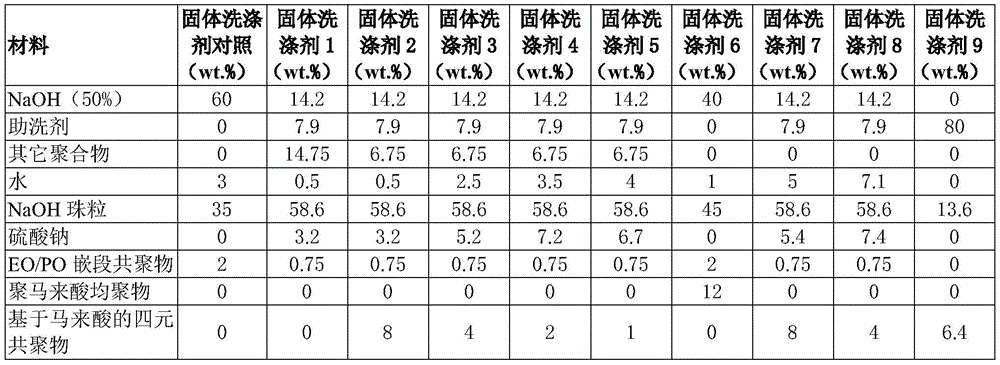
After the formulation was prepared, six Libby 10 oz glasses were prepared by removing all films and foreign matter from the glass surface. The Apex HT warewasher was then filled with the appropriate amount of water and tested for water hardness.
After the hardness values were recorded, the sink heater was turned on. On the day of the experiment, the water hardness was 17 grains (grains). The warewasher is opened and the machine is operated in a wash/rinse cycle until the wash temperature is between about 150°f and about 160°f and the rinse temperature is between about 175°f and about 190°f. The controller then begins dispensing the appropriate amount of detergent into the wash tank. The detergent is dispensed such that when the detergent is mixed with water during circulation to form a use solution, the detergent concentration in the use solution is 1000 parts per million (ppm). The solution in the wash tank was titrated to check the detergent concentration.
As shown in fig. 17, six clean glass cups were placed diagonally in a racurn rack, and one Newport 10 oz plastic cup was placed diagonally in a racurn rack (where p=plastic cup, g=glass), and the rack was placed inside a warewasher.
Then 100 cycles of testing were started. At the beginning of each wash cycle, an appropriate amount of detergent is automatically dispensed into the warewasher to maintain an initial detergent concentration. The detergent concentration is controlled by conductivity.
After 100 cycles are completed, the rack is removed from the warewasher and the glass and plastic cups are dried. The analysis light box was then used to evaluate the grading of glasses and plastic cups for plaque and film accumulation.
The light box test uses a digital camera, a light box, a light source, a photometer, and a control computer employing commercial software of "Spot Advance" and "Image Pro Plus". The glass article to be evaluated is placed on one side of the light box and the light source intensity is adjusted to a predetermined value using a photometer. A photographic image of the glass article is obtained and saved to a computer. The upper half of the glass article was then analyzed using software and the computer presented a histogram with the area under the graph being proportional to the film thickness.
Generally, a lower light box score indicates more light is able to pass through the cup. Thus, the lower the light box score, the more effective the composition is at preventing fouling on the surface of the cup. The results of the 100 cycle test and the subsequent light box test are shown in table 5 and fig. 16 below.
TABLE 5

These results indicate the utility provided by the maleic acid-based tetrapolymer, as the compositions of the present invention perform better than compositions without the tetrapolymer or conventional calcium carbonate scale inhibitors. These data also show that the solid detergent compositions of the present disclosure perform significantly better than the control formulation in removing and preventing calcium carbonate build-up on plastics and glass. Further, the performance of the compositions of the present disclosure is also at least as good as comparable commercially available formulations, and in many cases much better, and performs very well even in the absence of additional water regulating polymers. As shown in solid detergent 9, the compositions of the present disclosure provide significantly improved performance even at a concentration of about 500 ppm. These results are also visually demonstrated in fig. 1-7 and 10.
Example 2
To determine the ability of the liquid detergent compositions of the present disclosure to remove spots and films from ware, liquid detergent compositions were prepared according to table 6 below. The detergents according to the present disclosure were compared to a control (containing high levels of alkalinity and no polymer) and to a solid detergent 6, i.e., a detergent comparable to commercially available detergents (containing other polymers for minimizing scaling).
TABLE 6
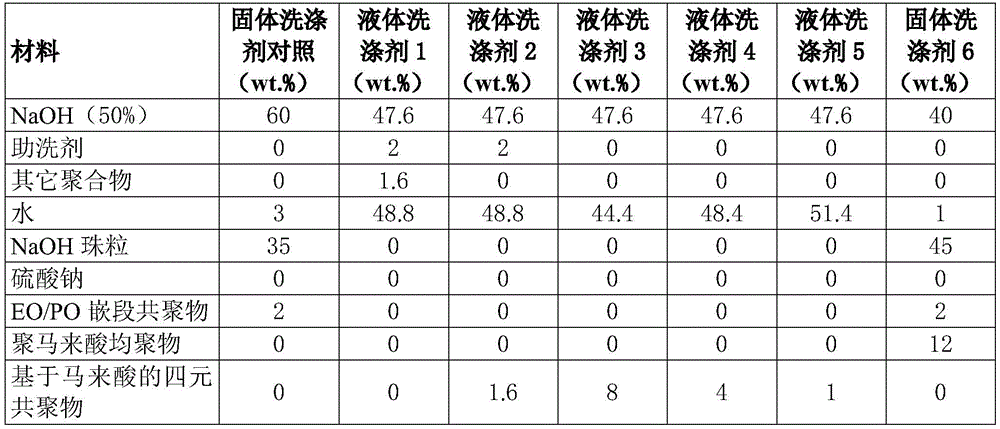
After preparing the formulations, the compositions of table 4 were evaluated using the 100 cycle procedure outlined in example 1. The results of the 100 cycle test and the subsequent light box test are shown in table 7 and fig. 16 below.
TABLE 7
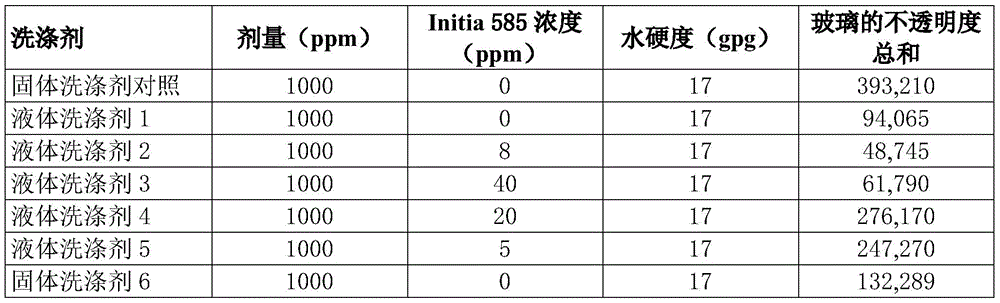
Table 7 shows that the liquid detergent compositions of the present disclosure perform significantly better than control formulations, formulations without calcium carbonate scale inhibitors, and comparable commercial formulations in preventing calcium carbonate build-up on plastics and glass. The formulations of the present disclosure show surprisingly improved performance even in the absence of additional water conditioning agents/polymers. These results are further shown in figures 1, 8-9 and 11.
The tetrapolymers evaluated in this example, and also in example 1, included blends of maleic acid, maleic anhydride, acrylic acid, and alkanes (decarboxylated monomers). Maleic acid, acrylic acid and maleic anhydride are each used alone to solve the problem of scale formation. However, no successful or excellent results are expected in using tetrapolymers incorporating all of the polymerized monomers of maleic acid, acrylic acid, maleic anhydride and alkanes. At best, it is expected that the tetrapolymer will perform no better than other acrylic or maleic polymers. Surprisingly, however, the tetrapolymer of the composition exhibits significant advantages over other polymers, especially at such low concentrations. At half the concentration of the control composition, the exemplary composition exhibited significantly better than the control composition. The exemplary compositions also exhibited substantially similar properties to the control compositions at quarter the concentration of the control compositions. In cases where the risk of fouling is particularly severe, exemplary compositions may provide significantly improved performance at only 50% of the concentration of existing commercial products.
Thus, excellent industry standard performance can be achieved at only 25% of the concentration of the existing commercial product, while significant improvement can be achieved at 50% concentration. Achieving industry standard performance at much lower concentrations is beneficial for reducing material costs and allows for the preparation of more concentrated formulations. Further, the detergent composition and dispenser have a longer service life, as fewer products are required to achieve excellent scale inhibition results. Having thus described the embodiments, it will be apparent that they may be varied in many ways. Such variations are not to be regarded as a departure from the spirit and scope of the disclosure, and all such modifications are intended to be included within the scope of the following claims.
Claims (21)
Applications Claiming Priority (3)
| Application Number | Priority Date | Filing Date | Title |
|---|---|---|---|
| US201962883222P | 2019-08-06 | 2019-08-06 | |
| US62/883,222 | 2019-08-06 | ||
| PCT/US2020/045102 WO2021026292A1 (en) | 2019-08-06 | 2020-08-06 | Detergent composition containing a maleic acid tetrapolymer |
Publications (2)
| Publication Number | Publication Date |
|---|---|
| CN114269890A CN114269890A (en) | 2022-04-01 |
| CN114269890B true CN114269890B (en) | 2023-05-23 |
Family
ID=72139753
Family Applications (1)
| Application Number | Title | Priority Date | Filing Date |
|---|---|---|---|
| CN202080059007.4A Active CN114269890B (en) | 2019-08-06 | 2020-08-06 | Detergent compositions containing maleic acid tetrapolymer |
Country Status (6)
| Country | Link |
|---|---|
| US (2) | US11306276B2 (en) |
| EP (1) | EP3990601A1 (en) |
| JP (1) | JP7342245B2 (en) |
| CN (1) | CN114269890B (en) |
| CA (2) | CA3148228C (en) |
| WO (1) | WO2021026292A1 (en) |
Families Citing this family (3)
| Publication number | Priority date | Publication date | Assignee | Title |
|---|---|---|---|---|
| CN114269890B (en) * | 2019-08-06 | 2023-05-23 | 埃科莱布美国股份有限公司 | Detergent compositions containing maleic acid tetrapolymer |
| CN115614002B (en) * | 2021-07-13 | 2024-10-01 | 中国石油天然气股份有限公司 | Self-controlled slow release device |
| US20250137142A1 (en) * | 2023-11-01 | 2025-05-01 | Halliburton Energy Services, Inc. | Corrosion inhibitor for mild steel in circulating water systems |
Family Cites Families (47)
| Publication number | Priority date | Publication date | Assignee | Title |
|---|---|---|---|---|
| US3048548A (en) | 1959-05-26 | 1962-08-07 | Economics Lab | Defoaming detergent composition |
| BE624833A (en) | 1962-02-28 | |||
| DE2437090A1 (en) | 1974-08-01 | 1976-02-19 | Hoechst Ag | CLEANING SUPPLIES |
| USRE32818E (en) | 1978-02-07 | 1989-01-03 | Ecolab Inc. | Cast detergent-containing article and method of using |
| USRE32763E (en) | 1978-02-07 | 1988-10-11 | Ecolab Inc. | Cast detergent-containing article and method of making and using |
| US4426362A (en) | 1978-12-05 | 1984-01-17 | Economics Laboratory, Inc. | Solid block detergent dispenser |
| US4690305A (en) | 1985-11-06 | 1987-09-01 | Ecolab Inc. | Solid block chemical dispenser for cleaning systems |
| US4687121A (en) | 1986-01-09 | 1987-08-18 | Ecolab Inc. | Solid block chemical dispenser for cleaning systems |
| US4826661A (en) | 1986-05-01 | 1989-05-02 | Ecolab, Inc. | Solid block chemical dispenser for cleaning systems |
| US5085794A (en) | 1990-04-25 | 1992-02-04 | Nalco Chemical Company | Oligomer containing phosphinate compositions and their method of manufacture |
| US5023000A (en) | 1990-05-10 | 1991-06-11 | Nalco Chemical Company | Oligomer-containing phosphate scale inhibitors |
| US5018577A (en) | 1990-08-02 | 1991-05-28 | Nalco Chemical Company | Phosphinate inhibitor for scale squeeze applications |
| DE4239076A1 (en) | 1992-11-20 | 1994-05-26 | Basf Ag | Mixtures of polymers of monoethylenically unsaturated dicarboxylic acids and polymers of ethylenically unsaturated monocarboxylic acids and / or polyaminocarboxylic acids and their use |
| DE19503546A1 (en) | 1995-02-03 | 1996-08-08 | Basf Ag | Water-soluble or water-dispersible graft polymers, processes for their preparation and their use |
| DE19516957C2 (en) | 1995-05-12 | 2000-07-13 | Stockhausen Chem Fab Gmbh | Water-soluble copolymers and process for their preparation and their use |
| US6172028B1 (en) | 1996-03-26 | 2001-01-09 | Basf Aktiengesellschaft | Detergent and tableware cleaner |
| DE10050622A1 (en) | 2000-07-07 | 2002-05-02 | Henkel Kgaa | Rinse aid II a |
| US6572789B1 (en) | 2001-04-02 | 2003-06-03 | Ondeo Nalco Company | Corrosion inhibitors for aqueous systems |
| DE10153553A1 (en) | 2001-07-07 | 2003-06-12 | Henkel Kgaa | Non-aqueous "3in1" dishwasher detergent II |
| US8668779B2 (en) | 2002-04-30 | 2014-03-11 | Nalco Company | Method of simultaneously cleaning and disinfecting industrial water systems |
| US8092613B2 (en) | 2002-05-31 | 2012-01-10 | Ecolab Usa Inc. | Methods and compositions for the removal of starch |
| DE102005041349A1 (en) | 2005-08-31 | 2007-03-01 | Basf Ag | Phosphate-free cleaning formulation, useful for dishwasher, comprises: copolymers from monoethylenic unsaturated monocarboxylic acids; complexing agent; nonionic surfactant, bleaching agent; builder; enzyme; and additives |
| FR2894971B1 (en) | 2005-12-20 | 2008-05-16 | Rhodia Recherches & Tech | COMPOSITION FOR TREATING AND / OR MODIFYING HARD SURFACES, COMPRISING A SYNTHETIC POLYMER |
| JP5213091B2 (en) * | 2006-08-22 | 2013-06-19 | ディバーシー株式会社 | Granular detergent composition for automatic dishwasher, method for producing the same, and method for using the same |
| PL2201090T3 (en) | 2007-10-12 | 2012-01-31 | Basf Se | Dishwashing formulation comprising a mixture of hydrophobically modified polycarboxylates and hydrophilically modified polycarboxylates |
| US8889048B2 (en) | 2007-10-18 | 2014-11-18 | Ecolab Inc. | Pressed, self-solidifying, solid cleaning compositions and methods of making them |
| US8497318B2 (en) | 2010-07-01 | 2013-07-30 | Basf Se | Copolymers of monocarboxylic acids and dicarboxylic acids, their preparation and use |
| US9670435B2 (en) | 2010-11-23 | 2017-06-06 | Basf Se | Copolymers comprising carboxylic acid groups, sulfo groups and polyalkylene oxide groups as a scale-inhibiting additive to washing and cleaning products |
| US8748364B2 (en) | 2010-12-23 | 2014-06-10 | Ecolab Usa Inc. | Detergent composition containing an aminocarboxylate and a maleic copolymer |
| US8980815B2 (en) | 2011-02-25 | 2015-03-17 | Prestone Products Corporation | Composition for cleaning a heat transfer system having an aluminum component |
| ES2752079T3 (en) | 2011-05-20 | 2020-04-02 | Ecolab Usa Inc | Acidic formulations for use in a utensil washing system |
| US8729006B2 (en) | 2011-06-28 | 2014-05-20 | Ecolab Usa Inc. | Methods and compositions using sodium carboxymethyl cellulose as scale control agent |
| WO2013088266A1 (en) | 2011-12-13 | 2013-06-20 | Ecolab Usa Inc. | Concentrated warewashing compositions and methods |
| US20130252871A1 (en) * | 2012-03-23 | 2013-09-26 | Ecolab Usa Inc. | Cleaning composition including a terpolymer containing maleic acid, vinyl acetate, and alkyl acrylate monomers for enhanced scale control |
| US8623151B2 (en) | 2012-03-23 | 2014-01-07 | Ecolab Usa Inc. | Terpolymer containing maleic acid, vinyl acetate, and alkyl acrylate monomers for aluminum protection |
| US8748365B2 (en) | 2012-09-13 | 2014-06-10 | Ecolab Usa Inc. | Solidification matrix comprising phosphinosuccinic acid derivatives |
| US9394508B2 (en) * | 2012-10-26 | 2016-07-19 | Ecolab Usa Inc. | Phosphorus free low temperature ware wash detergent for reducing scale build-up |
| US9127236B2 (en) | 2013-10-09 | 2015-09-08 | Ecolab Usa Inc. | Alkaline detergent composition containing a carboxylic acid terpolymer for hard water scale control |
| US9127235B2 (en) | 2013-10-09 | 2015-09-08 | Ecolab Usa Inc. | Alkaline detergent composition containing a carboxylic acid/polyalkylene oxide copolymer for hard water scale control |
| CN105829516A (en) * | 2013-11-11 | 2016-08-03 | 艺康美国股份有限公司 | High Alkaline Warewash Detergent With Enhanced Scale Control And Soil Dispersion |
| CN104045173A (en) * | 2014-06-19 | 2014-09-17 | 辽宁石油化工大学 | Novel non-phosphorus quadripolymer scale inhibitor and preparation method thereof |
| EP3161115B1 (en) | 2014-06-27 | 2019-02-20 | Henkel AG & Co. KGaA | Dishwasher detergent comprising phosphate-containing polymers |
| US20160115051A1 (en) | 2014-10-28 | 2016-04-28 | Michael Lee Standish | Treatment of Aqueous Systems |
| US9765286B2 (en) | 2014-12-22 | 2017-09-19 | Ecolab Usa Inc. | Warewashing composition containing alkanol amine phosphonate and methods of use |
| JP6444245B2 (en) * | 2015-04-06 | 2018-12-26 | 株式会社Adeka | Concentrated liquid detergent composition for automatic dishwasher and method for washing dishes with automatic dishwasher |
| JP6490292B2 (en) * | 2018-11-27 | 2019-03-27 | 株式会社Adeka | Concentrated liquid detergent composition for automatic dishwasher and method for washing dishes with automatic dishwasher |
| CN114269890B (en) * | 2019-08-06 | 2023-05-23 | 埃科莱布美国股份有限公司 | Detergent compositions containing maleic acid tetrapolymer |
-
2020
- 2020-08-06 CN CN202080059007.4A patent/CN114269890B/en active Active
- 2020-08-06 JP JP2022507508A patent/JP7342245B2/en active Active
- 2020-08-06 WO PCT/US2020/045102 patent/WO2021026292A1/en not_active Ceased
- 2020-08-06 CA CA3148228A patent/CA3148228C/en active Active
- 2020-08-06 US US16/947,568 patent/US11306276B2/en active Active
- 2020-08-06 EP EP20757806.3A patent/EP3990601A1/en active Pending
- 2020-08-06 CA CA3256479A patent/CA3256479A1/en active Pending
-
2022
- 2022-03-10 US US17/654,265 patent/US11788033B2/en active Active
Also Published As
| Publication number | Publication date |
|---|---|
| CA3256479A1 (en) | 2025-05-16 |
| US20210040419A1 (en) | 2021-02-11 |
| CA3148228C (en) | 2025-07-22 |
| US11788033B2 (en) | 2023-10-17 |
| CN114269890A (en) | 2022-04-01 |
| US20220195345A1 (en) | 2022-06-23 |
| JP2022544134A (en) | 2022-10-17 |
| US11306276B2 (en) | 2022-04-19 |
| CA3148228A1 (en) | 2021-02-11 |
| WO2021026292A1 (en) | 2021-02-11 |
| EP3990601A1 (en) | 2022-05-04 |
| JP7342245B2 (en) | 2023-09-11 |
Similar Documents
| Publication | Publication Date | Title |
|---|---|---|
| ES2951535T3 (en) | Low foaming dishwashing detergent containing a mixed cationic/non-ionic surfactant system for better removal of oily soils | |
| CN109294764B (en) | Alkaline detergent compositions containing carboxylic acid terpolymers for hard water scale control | |
| US8748365B2 (en) | Solidification matrix comprising phosphinosuccinic acid derivatives | |
| CN105814181B (en) | Use of aminocarboxylic acids for strengthening metal protection in alkaline detergents | |
| JP7358158B2 (en) | Cleaning composition containing phosphinosuccinic acid adduct and method for using the same | |
| CN114222808A (en) | Concentrated 2-in-1 dishwasher detergent and rinse aid | |
| TWI642775B (en) | Aluminum safe degreasing and pre-soak technology for bakery and deli wares and use thereof | |
| CN114269890B (en) | Detergent compositions containing maleic acid tetrapolymer | |
| CN114350450A (en) | Solid rinse aid composition containing polyacrylic acid | |
| US9023779B2 (en) | Inhibiting corrosion of aluminum on consumer ware washing product using phosphinosuccinic acid oligomers | |
| US20140261567A1 (en) | Inhibiting corrosion of aluminum on alkaline media by phosphinosuccinate oligomers and mixtures thereof | |
| CN106103679A (en) | Detergent composition exhibiting both cleaning and rinsing functions | |
| CN119585407A (en) | Compositions and methods of use for equipment degreasing | |
| HK1221732B (en) | Use of amino carboxylate for enhancing metal protection in alkaline detergents | |
| HK1233292A1 (en) | Solid rinse aid composition comprising polyacrylic acid |
Legal Events
| Date | Code | Title | Description |
|---|---|---|---|
| PB01 | Publication | ||
| PB01 | Publication | ||
| SE01 | Entry into force of request for substantive examination | ||
| SE01 | Entry into force of request for substantive examination | ||
| GR01 | Patent grant | ||
| GR01 | Patent grant |