CN114269738A - MOR receptor agonist compound, preparation method and application thereof - Google Patents
MOR receptor agonist compound, preparation method and application thereof Download PDFInfo
- Publication number
- CN114269738A CN114269738A CN202180005003.2A CN202180005003A CN114269738A CN 114269738 A CN114269738 A CN 114269738A CN 202180005003 A CN202180005003 A CN 202180005003A CN 114269738 A CN114269738 A CN 114269738A
- Authority
- CN
- China
- Prior art keywords
- compound
- group
- preparation
- formula
- further substituted
- Prior art date
- Legal status (The legal status is an assumption and is not a legal conclusion. Google has not performed a legal analysis and makes no representation as to the accuracy of the status listed.)
- Granted
Links
Classifications
-
- C—CHEMISTRY; METALLURGY
- C07—ORGANIC CHEMISTRY
- C07D—HETEROCYCLIC COMPOUNDS
- C07D405/00—Heterocyclic compounds containing both one or more hetero rings having oxygen atoms as the only ring hetero atoms, and one or more rings having nitrogen as the only ring hetero atom
- C07D405/14—Heterocyclic compounds containing both one or more hetero rings having oxygen atoms as the only ring hetero atoms, and one or more rings having nitrogen as the only ring hetero atom containing three or more hetero rings
-
- A—HUMAN NECESSITIES
- A61—MEDICAL OR VETERINARY SCIENCE; HYGIENE
- A61P—SPECIFIC THERAPEUTIC ACTIVITY OF CHEMICAL COMPOUNDS OR MEDICINAL PREPARATIONS
- A61P29/00—Non-central analgesic, antipyretic or antiinflammatory agents, e.g. antirheumatic agents; Non-steroidal antiinflammatory drugs [NSAID]
-
- C—CHEMISTRY; METALLURGY
- C07—ORGANIC CHEMISTRY
- C07D—HETEROCYCLIC COMPOUNDS
- C07D405/00—Heterocyclic compounds containing both one or more hetero rings having oxygen atoms as the only ring hetero atoms, and one or more rings having nitrogen as the only ring hetero atom
- C07D405/02—Heterocyclic compounds containing both one or more hetero rings having oxygen atoms as the only ring hetero atoms, and one or more rings having nitrogen as the only ring hetero atom containing two hetero rings
- C07D405/12—Heterocyclic compounds containing both one or more hetero rings having oxygen atoms as the only ring hetero atoms, and one or more rings having nitrogen as the only ring hetero atom containing two hetero rings linked by a chain containing hetero atoms as chain links
-
- C—CHEMISTRY; METALLURGY
- C07—ORGANIC CHEMISTRY
- C07D—HETEROCYCLIC COMPOUNDS
- C07D409/00—Heterocyclic compounds containing two or more hetero rings, at least one ring having sulfur atoms as the only ring hetero atoms
- C07D409/14—Heterocyclic compounds containing two or more hetero rings, at least one ring having sulfur atoms as the only ring hetero atoms containing three or more hetero rings
-
- Y—GENERAL TAGGING OF NEW TECHNOLOGICAL DEVELOPMENTS; GENERAL TAGGING OF CROSS-SECTIONAL TECHNOLOGIES SPANNING OVER SEVERAL SECTIONS OF THE IPC; TECHNICAL SUBJECTS COVERED BY FORMER USPC CROSS-REFERENCE ART COLLECTIONS [XRACs] AND DIGESTS
- Y02—TECHNOLOGIES OR APPLICATIONS FOR MITIGATION OR ADAPTATION AGAINST CLIMATE CHANGE
- Y02P—CLIMATE CHANGE MITIGATION TECHNOLOGIES IN THE PRODUCTION OR PROCESSING OF GOODS
- Y02P20/00—Technologies relating to chemical industry
- Y02P20/50—Improvements relating to the production of bulk chemicals
- Y02P20/55—Design of synthesis routes, e.g. reducing the use of auxiliary or protecting groups
Landscapes
- Chemical & Material Sciences (AREA)
- Organic Chemistry (AREA)
- Health & Medical Sciences (AREA)
- Pain & Pain Management (AREA)
- Rheumatology (AREA)
- Chemical Kinetics & Catalysis (AREA)
- General Chemical & Material Sciences (AREA)
- Medicinal Chemistry (AREA)
- Nuclear Medicine, Radiotherapy & Molecular Imaging (AREA)
- Pharmacology & Pharmacy (AREA)
- Life Sciences & Earth Sciences (AREA)
- Animal Behavior & Ethology (AREA)
- General Health & Medical Sciences (AREA)
- Public Health (AREA)
- Veterinary Medicine (AREA)
- Pharmaceuticals Containing Other Organic And Inorganic Compounds (AREA)
Abstract
本发明涉及药物化学领域,具体涉及一类6‑氧杂螺[4.5]癸烷类衍生物作为MOR受体激动剂的用途,用于治疗如疼痛和疼痛相关的紊乱。The invention relates to the field of medicinal chemistry, in particular to the use of a class of 6-oxaspiro[4.5]decane derivatives as MOR receptor agonists for the treatment of pain and pain-related disorders.
Description
The present invention relates to the field of pharmaceutical chemistry, and in particular to the use of a class of 6-oxaspiro [4.5] decane derivatives as MOR receptor agonists for the treatment of, for example, pain and pain related disorders.
Until now, opioid drugs (opioid drugs) represented by morphine are still effective drugs mainly for treating severe pain, and such drugs have good analgesic activity, but have greatly limited clinical application due to serious adverse reactions of the central nervous system, especially side effects such as respiratory depression, constipation, tolerance, addiction and the like. Therefore, people are always dedicated to searching for ideal opioid with good analgesic effect and small addiction, and in the process of continuously exploring the structure-activity relationship of opioid, people have deeper understanding on the in vivo specific substance group of the opioid.
Three molecularly and pharmacologically distinct classes of Opioid Receptors (ORs) have been shown: δ, κ, and μ. Opioids are primarily conducted through opioid μ receptors. The mu receptor is a classical GPCR, and a large number of researches show that the biased agonist of the mu receptor has better analgesic effect and can reduce related side effects. This opens the possibility for the development of ideal opioid drugs. Currently, the most rapidly progressing is Trevena cava TRV130 (oligoridine). In 2017, in 2 months, the TRV130 is partially successful in two three clinical stages, and the postoperative analgesic effect is superior to that of a placebo, so that the primary end point of the test is reached. But did not show a clear trend to be better than morphine as expected in terms of improved tolerability.
Therefore, on the basis of the existing domestic and foreign research, the invention strives to develop the mu receptor biased agonist with better drug effect, longer analgesic duration and lower side effect, and provides a better choice for clinical application.
Disclosure of Invention
The invention relates to a 6-oxaspiro [4.5] decane derivative as an agonist of a mu receptor, in particular to a 6-oxaspiro [4.5] decane derivative, a preparation method and medical application thereof, particularly a 6-oxaspiro [4.5] decane derivative shown in a general formula (I) and application thereof in preparing an analgesic drug, more particularly application thereof in preparing a drug suitable for moderate to severe pain.
An object of the present invention is to provide a 6-oxaspiro [4.5] decane derivative having a structure represented by the following general formula (I):
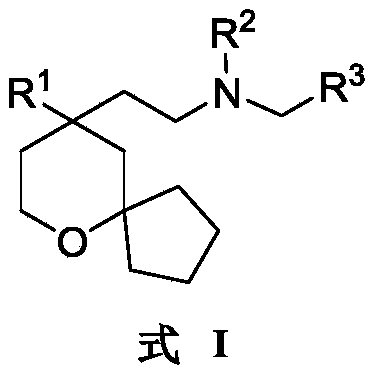
or a tautomer, mesomer, racemate, enantiomer, diastereomer, or mixture thereof;
wherein:
R 1selected from phenyl or pyridyl, wherein the hydrogen atom of the phenyl or pyridyl group may be further substituted by a fluorine atom or a chlorine atom;
R 2selected from hydrogen atoms or C1-C 3Alkyl groups of (a);
R 3is selected from Wherein the hydrogen atom of the aryl group may be further substituted by a fluorine atom, a chlorine atom, an alkyl group, a heterocyclic group, an alkoxy group which may be further substituted by any one group selected from the heterocyclic group and the alkoxy group.
Preferably, in the compounds of the present invention represented by the general formula (I):
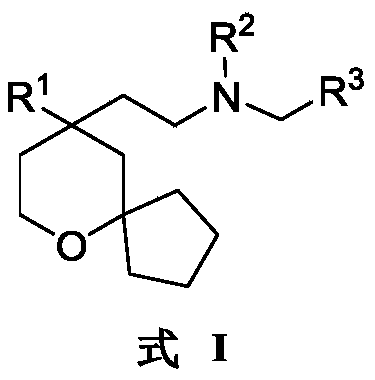
R 1selected from phenyl or pyridyl, wherein the hydrogen atom of the phenyl or pyridyl group may be further substituted by a fluorine atom or a chlorine atom;
R 2selected from a hydrogen atom, a methyl group or an ethyl group;
R 3is selected from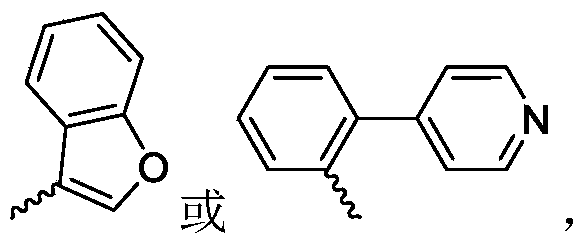 Wherein the hydrogen atom of the aryl group may be further substituted by a fluorine atom, a chlorine atom, an alkyl group, an alkoxy group which may be further substituted by any one group selected from a heterocyclic group and an alkoxy group.
More preferably, the compound of the present invention represented by the general formula (I):
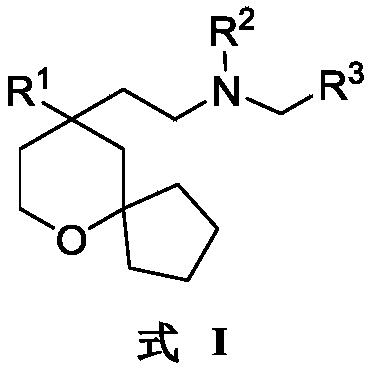
R 1is selected from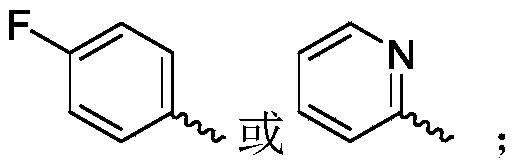
R 2Selected from hydrogen atoms;
R 3is selected from
Even more preferably, the compound of the present invention represented by the general formula (I):

R 1is selected from
R 2Selected from hydrogen atoms;
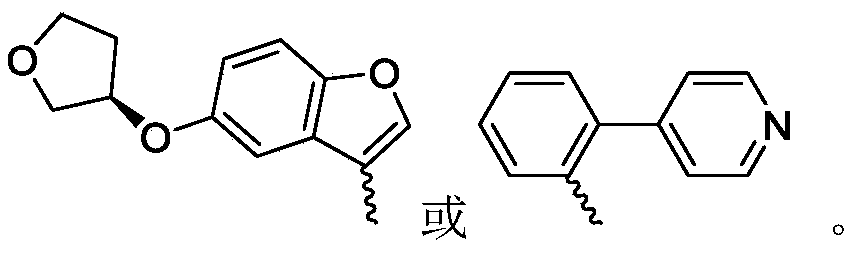
R 3is selected from
Among the 6-oxaspiro [4.5] decane derivatives represented by the general formula (I) of the present invention, preferred compounds include, but are not limited to, compounds:
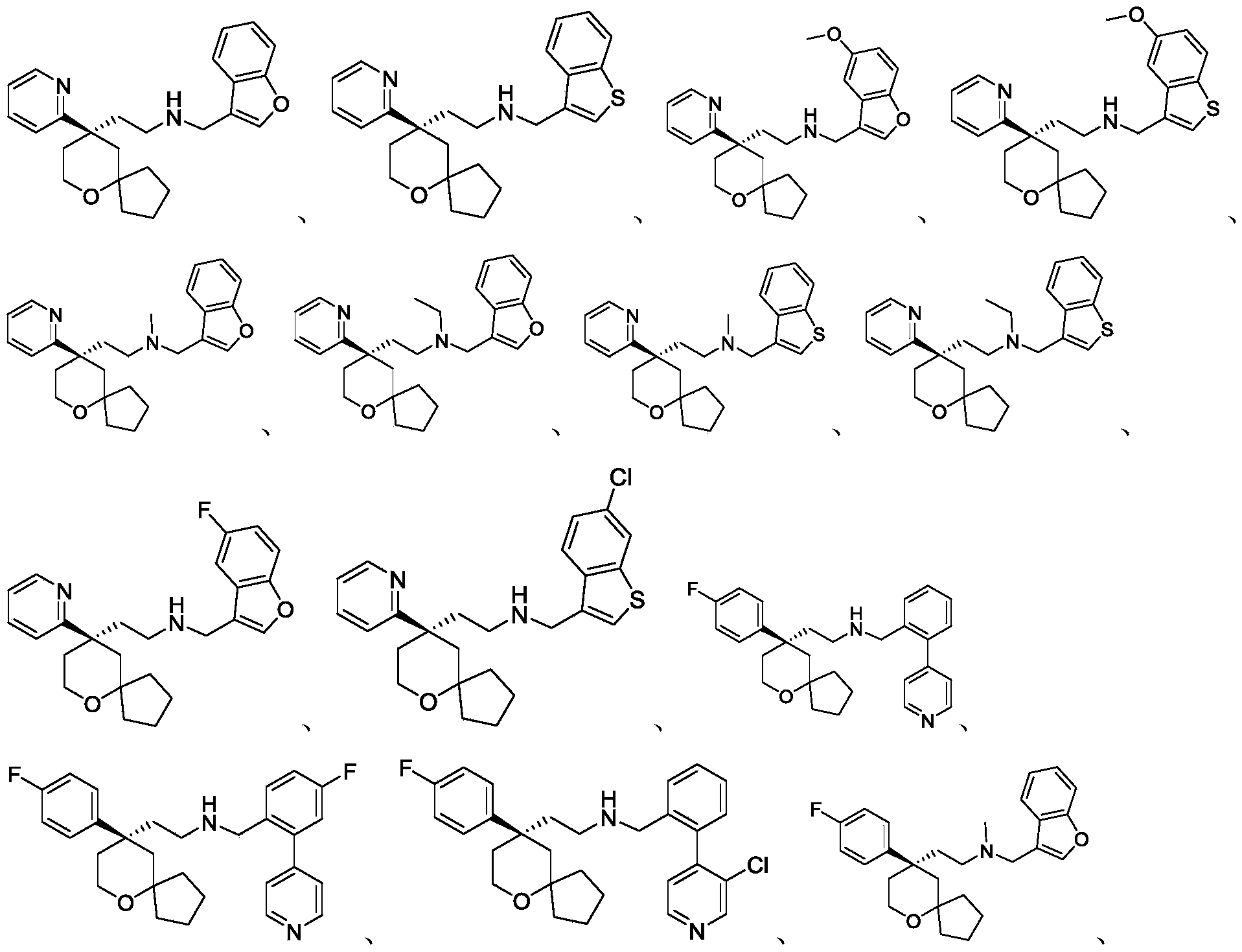
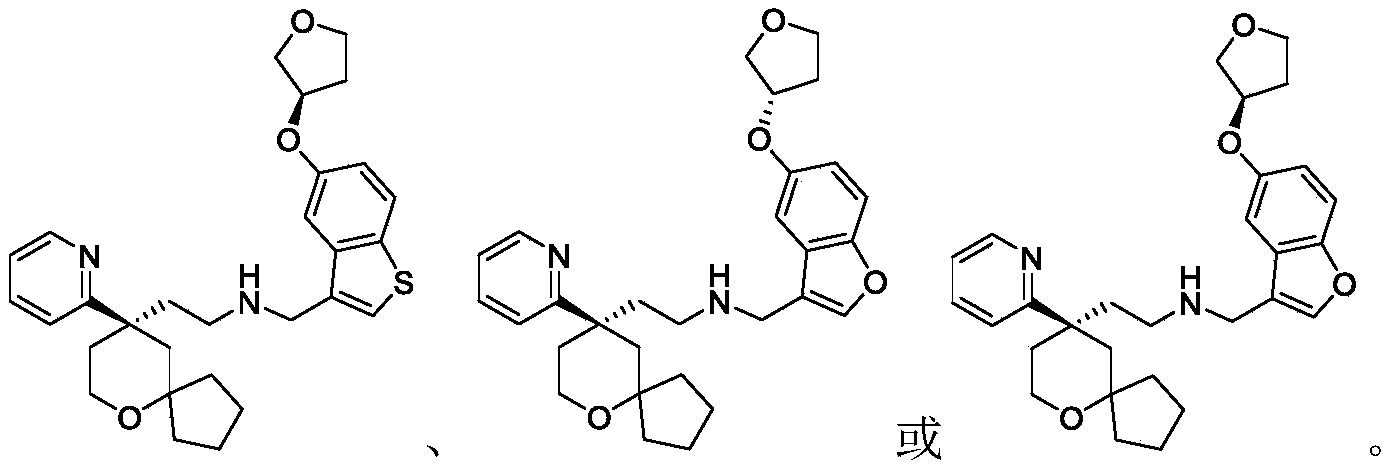
further, among the 6-oxaspiro [4.5] decane-based derivatives represented by the general formula (I) of the present invention, preferable compounds include, but are not limited to, compounds:
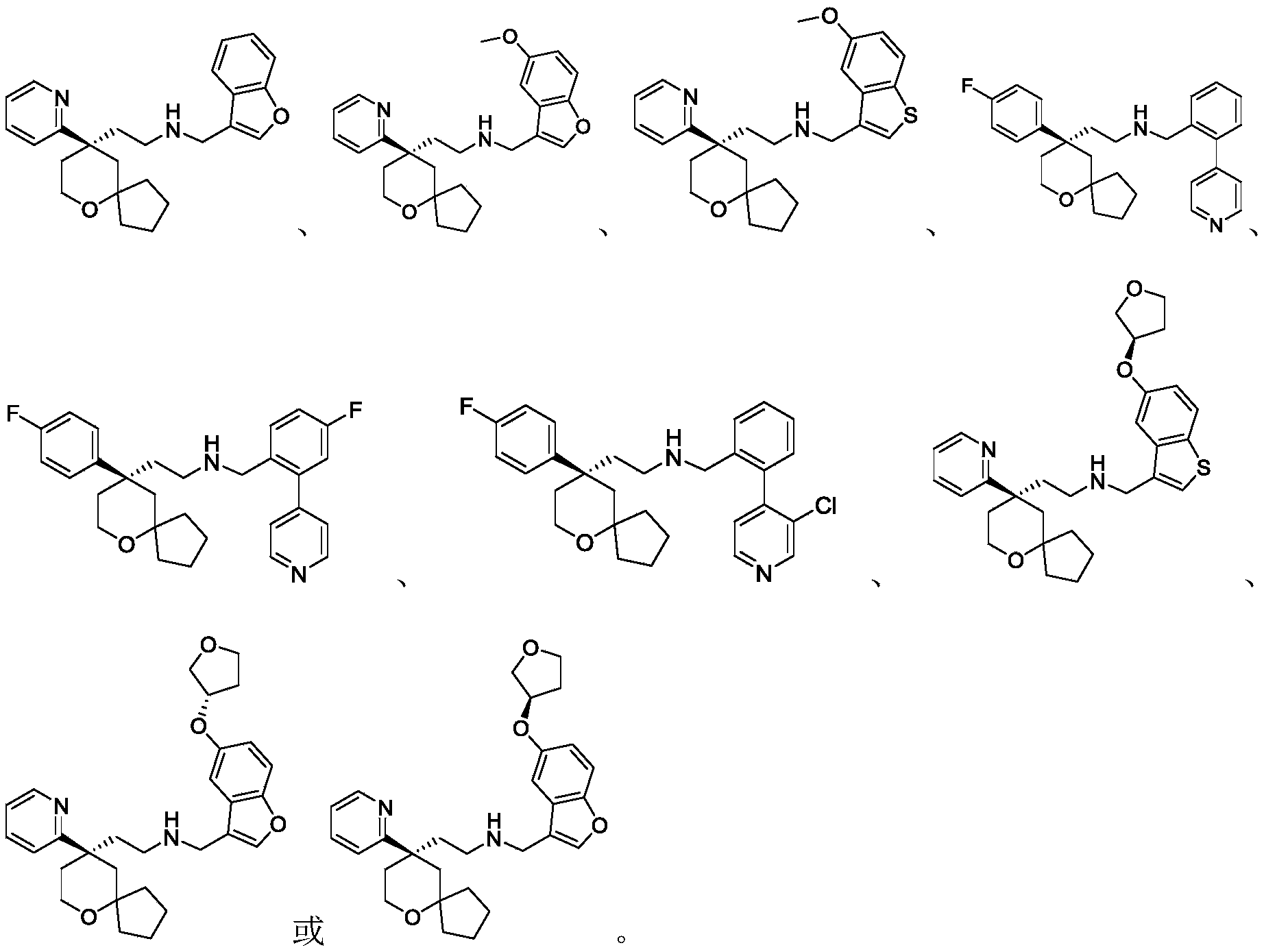
another object of the present invention is to provide a process for the preparation of the above compound of formula (I), said process comprising the steps of:
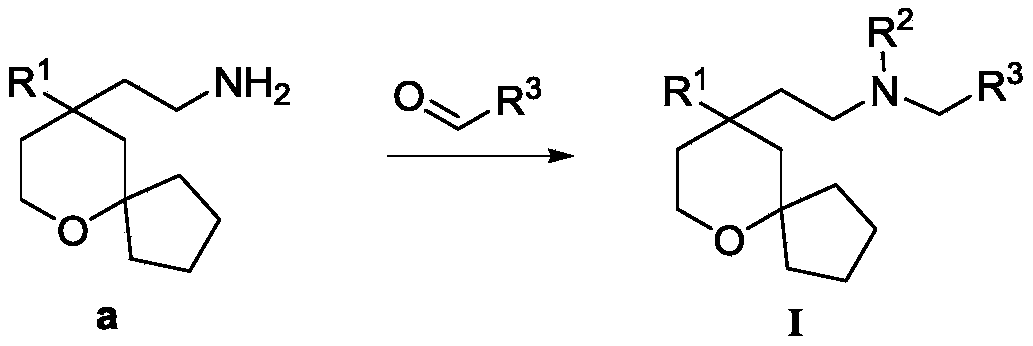
the starting material a reacts with the starting material aldehyde to obtain R2H as the target compound I, if R2Is alkylAnd then the target compound I can be obtained after further alkylation reaction.
Wherein R in the starting material1Selected from phenyl or pyridyl, wherein the hydrogen atom of the phenyl or pyridyl group may be further substituted by a fluorine atom or a chlorine atom; r2Selected from hydrogen atoms or C1-C 3Alkyl groups of (a); r3Is selected from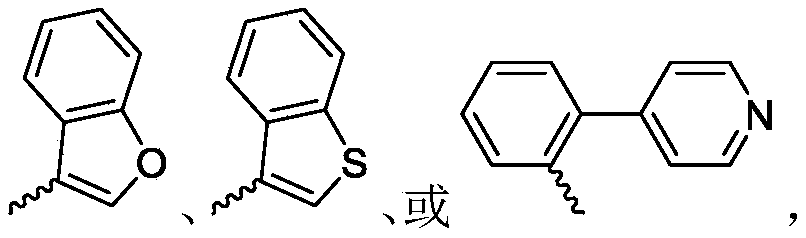 Wherein the hydrogen atom of the aryl group may be further substituted by a fluorine atom, a chlorine atom, an alkyl group, a heterocyclic group, an alkoxy group which may be further substituted by any one group selected from the heterocyclic group and the alkoxy group.
Further, R1Selected from phenyl or pyridyl, wherein the hydrogen atom of the phenyl or pyridyl group may be further substituted by a fluorine atom or a chlorine atom; r2Selected from a hydrogen atom, a methyl group or an ethyl group; r3Is selected from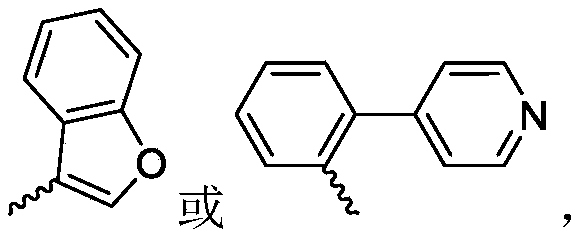 Wherein the hydrogen atom of the aryl group may be further substituted by a fluorine atom, a chlorine atom, an alkyl group, an alkoxy group which may be further substituted by any one group selected from a heterocyclic group and an alkoxy group.
Further, R1Is selected from R 2Selected from hydrogen atoms; r3Is selected from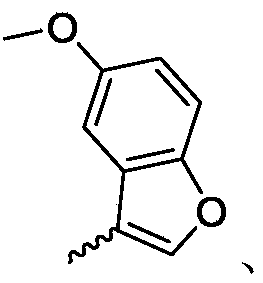

Preferably, the present invention provides a process for the preparation of a compound of formula (Ia) as described above, said process comprising the steps of:
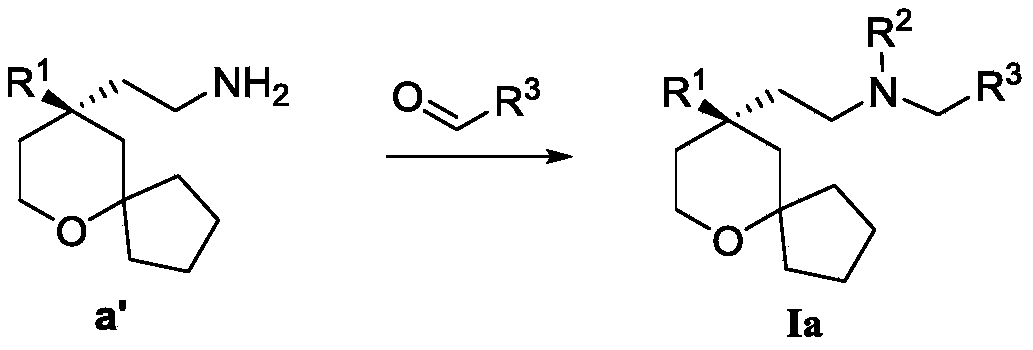
wherein R is1Is selected from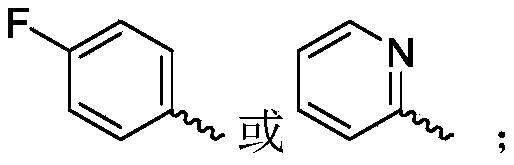
R 2Selected from hydrogen atoms;
R 3is selected from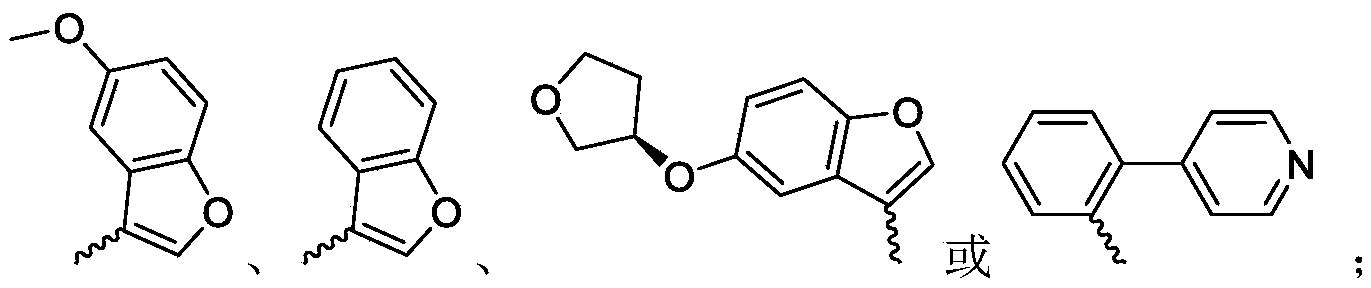
The starting material a' reacts with the raw material aldehyde to obtain the target compound Ia.
Still another object of the present invention is to provide the use of the compound represented by the above general formula (I) in the preparation of mu receptor agonist drugs, specifically in the preparation of analgesic drugs, and more specifically in the preparation of drugs suitable for moderate to severe pain. Through in vitro action tests on delta, kappa and mu, the compound of the invention shows excellent mu selectivity and agonistic activity; through a pharmacodynamic test on the influence of a rat thermal radiation tail flick model, the compound still can show a good analgesic effect 3 hours after administration; through research and test on pharmacokinetics of normal rats, the compound shows excellent pharmacokinetic characteristics; through an influence test on the pushing and discharging time of the mouse colon glass beads, the pushing and discharging delay effects of the compound on the mouse glass beads after single tail vein administration are lower than those of a positive compound, so that the inhibition effect on the mouse colon function is smaller, and the clinical constipation side effect is lower.
The present invention is described in further detail with reference to the following examples, but the present invention is not limited thereto, and any equivalent replacement in the field made in accordance with the present disclosure is included in the scope of the present invention.
The structure of the compound is determined by Mass Spectrometry (MS) or nuclear magnetic resonance (M)1HNMR).
Nuclear magnetic resonance (1HNMR) displacement (δ) is given in units of parts per million (ppm); nuclear magnetic resonance (1HNMR) was performed by using Bruker AVANCE-400 NMR spectrometer, and the solvent was deuterated chloroform (CDCl)3) Internal standard is Tetramethylsilane (TMS), and chemical shift is 10-6(ppm) is given as a unit.
Mass Spectrometry (MS) measurements were carried out using a FINNIGAN LCQAD (ESI) mass spectrometer (manufacturer: Therm, model: Finnigan LCQ advantage MAX).
The thin silica gel layer is prepared from HSGF254 or GF254 silica gel plate.
The column chromatography generally uses 200-mesh and 300-mesh silica gel of the Tibet yellow sea silica gel as a carrier.
In the case where no specific explanation is given to the present invention, the reactions mentioned in the present invention are all carried out under a nitrogen atmosphere.
The term "nitrogen atmosphere" in the present invention means, for example, that a reaction flask is connected to a nitrogen balloon having a volume of 1L.
In the case where the present invention is not specifically described, the solution mentioned in the reaction of the present invention is an aqueous solution.
The term "room temperature" in the present invention means a temperature between 10 ℃ and 25 ℃.
In one embodiment, the present invention relates to 6-oxaspiro [4.5] decane-based derivatives having a structure represented by the following general formula (I):
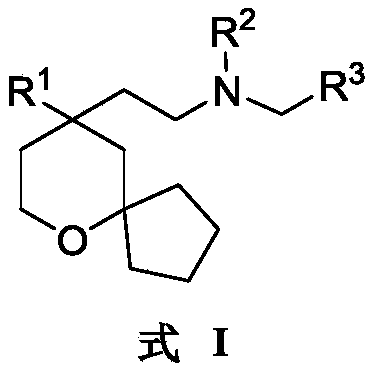
or a tautomer, mesomer, racemate, enantiomer, diastereomer, or mixture thereof;
wherein: r1Selected from phenyl or pyridyl, wherein the hydrogen atom of the phenyl or pyridyl group may be further substituted by a fluorine atom or a chlorine atom; r2Selected from hydrogen atoms or C1-C 3Alkyl groups of (a); r3Is selected from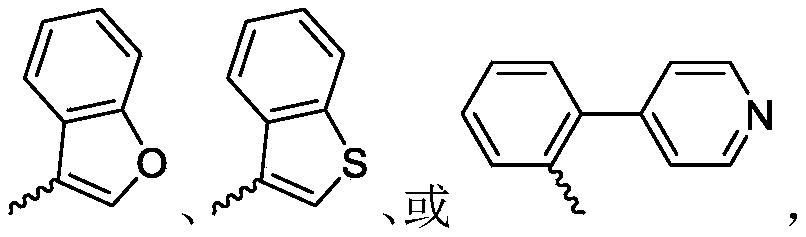 Wherein the hydrogen atom of the aryl group may be further substituted by a fluorine atom, a chlorine atom, an alkyl group, a heterocyclic group, an alkoxy group which may be further substituted by any one group selected from the heterocyclic group and the alkoxy group.
In a preferred embodiment of the present invention,
R 1selected from phenyl or pyridyl, wherein the hydrogen atom of the phenyl or pyridyl group may be further substituted by a fluorine atom or a chlorine atom; r2Selected from a hydrogen atom, a methyl group or an ethyl group; r3Is selected from Wherein the hydrogen atom of the aryl group may be further substituted by a fluorine atom, a chlorine atom, an alkyl group, an alkoxy group which may be further substituted by any one group selected from a heterocyclic group and an alkoxy group.
In a more preferred embodiment of the method of the invention,
R 1is selected from R 2Selected from hydrogen atoms; r3Is selected from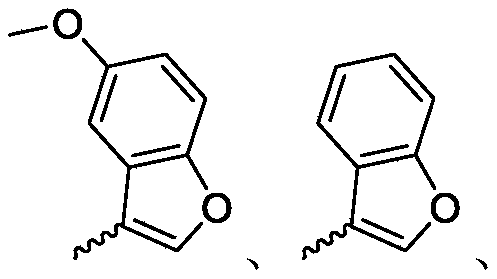
Examples
EXAMPLE 1 preparation of Compound 1
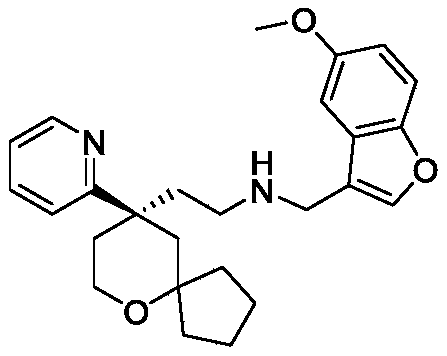
The preparation scheme is shown in the following chart:

the first step is as follows: 1b preparation
2 '-hydroxy-5' -methoxyacetophenone 1a (30g, 0.18mol) was dissolved in N, N-dimethylformamide (30ml), potassium carbonate (99.8g, 0.72mol) was added, ethyl bromoacetate (36g, 0.22mol) was added in an ice-water bath, and after the addition was completed, the reaction was carried out at room temperature. After the reaction was completed, water was added to the system to quench the reaction, extraction was performed 3 times with ethyl acetate, the organic phases were combined, washed 1 time with water and saturated brine, dried over anhydrous sodium sulfate, suction-filtered, and the filtrate was concentrated to obtain compound 1b (45.4g, off-white solid) with a yield of 99.6%.
MS m/z(ES):253.1[M+1]
The second step is that: preparation of 1c
Compound 1b (45.4g, 0.18mol) was dissolved in methanol (315ml), and a solution of sodium hydroxide (28.9g, 0.72mol) and water (135ml) was added in an ice-water bath, followed by reaction at room temperature. After the reaction is finished, the solvent in the reaction system is concentrated, water is added for dissolving, the pH value is adjusted to 4-5 by using dilute hydrochloric acid, then ethyl acetate is used for extracting for 3 times, organic phases are combined and washed by water and saturated saline solution for 1 time respectively, after drying of anhydrous sodium sulfate, suction filtration is carried out, the filtrate is concentrated, and the compound 1c (39.1g, white-like solid) is obtained, wherein the yield is 96.8%.
MS m/z(ES):225.1[M+1]
The third step: preparation of 1d
Compound 1c (39.1g, 0.17mol) was dissolved in acetic anhydride (780ml), and sodium acetate (200g, 2.4mol) was added at room temperature, followed by reaction at 110 ℃ after completion of the addition. After the reaction is finished, adding ice water into the system in an ice water bath to quench the reaction, stirring the mixture to react for 30min, then adjusting the pH value to 8-9 by using sodium hydroxide, extracting the mixture for 4 times by using petroleum ether, combining organic phases, washing the combined organic phases by using water and saturated saline solution for 1 time respectively, drying the combined organic phases by using anhydrous sodium sulfate, performing suction filtration, and concentrating the filtrate to obtain a compound 1d (24g, yellow oily matter) with the yield of 84.8%.
The fourth step: preparation of 1e
Compound 1d (4.0g, 24.7mmol) was dissolved in 1, 4-dioxane (40ml), selenium dioxide (9.8g, 88mmol) was added at room temperature, and after the addition was completed, the reaction was carried out at 110 ℃. After the reaction was completed, water was added to the system to quench the reaction, and the reaction was extracted 3 times with ethyl acetate, the organic phases were combined and washed 1 time with water and saturated brine, respectively, dried over anhydrous sodium sulfate, and then filtered with suction, and the filtrate was concentrated to obtain an oil, which was purified by column chromatography (ethyl acetate/petroleum ether: 1/15) to obtain compound 1e (2.4g, an orange-red oil) with a yield of 55.2%.
MS m/z(ES):177.1[M+1]
The fifth step: preparation of Compound 1
(R) -2- (9- (pyridin-2-yl) -6-oxaspiro [4.5] decan-9-yl) ethylamine 1f (3g, 11.5mmol) was dissolved in methylene chloride (20ml), and after the addition of compound 1e (2.1g, 11.9mmol) and anhydrous sodium sulfate (6.4g, 46mmol), the reaction mixture was reacted at room temperature. After 12h of reaction, dichloromethane in the reaction system is concentrated, then methanol (20ml) is added for dissolution, sodium borohydride (0.44g, 11.6mmol) is added in batches in ice water bath, after the reaction is finished, water is added into the reaction system for quenching reaction, and then methanol in the reaction system is concentrated to obtain oily matter. Dissolving the oily substance with water and ethyl acetate, extracting with ethyl acetate for 3 times, combining organic phases, washing with water, washing with saturated saline solution for 1 time, drying with anhydrous sodium sulfate, vacuum filtering, and concentrating the filtrate to obtain yellow oily substance. The yellow oil was purified by column chromatography (dichloromethane/methanol ═ 20/1) to give compound 1(1.05g, yellow oil) in 21.7% yield, purity: 98.28 percent.
MS m/z(ES):421.2[M+1]
1H NMR(400MHz,CDCl3)δ8.53–8.52(m,1H),7.61–7.56(m,1H),7.40(s,1H),7.32(d,J=8.9Hz,1H),7.27–7.25(m,1H),7.10–7.07(m,1H),6.99(d,J=2.5Hz,1H),6.89–6.86(m,1H),3.84(s,3H),3.76–3.73(m,4H),2.61–2.54(m,1H),2.45–2.41(m,1H),2.36–2.33(m,1H),2.22–2.15(m,1H),2.05–1.98(m,1H),1.91(d,J=13.7Hz,1H),1.82–1.62(m,4H),1.54–1.37(m,4H),1.13–1.08(m,1H),0.72–0.64(m,1H).
EXAMPLE 2 preparation of Compound 2

The preparation scheme is shown in the following chart:

the first step is as follows: preparation of Compound 2
(R) -2- (9- (pyridin-2-yl) -6-oxaspiro [4.5] decan-9-yl) ethylamine 1f (999mg, 3.6mmol) was dissolved in methylene chloride (10mL), and 3-aldehyde benzofuran 2a (0.53g, 3.6mmol) and anhydrous sodium sulfate (2.1g, 14.4mmol) were added to the solution, followed by reaction at room temperature. After 12h of reaction, dichloromethane in the reaction system is concentrated, then methanol (7mL) is added to dissolve the dichloromethane, sodium borohydride (273mg, 7.2mmol) is added in batches in an ice water bath, after the reaction is finished, the methanol in the reaction system is concentrated, then water and ethyl acetate are added to dissolve the methanol, liquid separation is carried out, the water phase is extracted for 2 times by ethyl acetate, the organic phase is combined, then water washing and saturated saline water washing are carried out for 1 time, after anhydrous sodium sulfate is dried, suction filtration is carried out, and the filtrate is concentrated to obtain yellow oily matter. The yellow oil was purified by column chromatography (dichloromethane/methanol ═ 25/1) to give compound 2(0.63g, yellow oil) in 44.8% yield, purity: 96.95 percent.
MS m/z(ES):391.2[M+1]
1H NMR(400MHz,CDCl3)δ8.56–8.54(m,1H),7.61–7.57(m,1H),7.51–7.43(m,2H),7.39(s,1H),7.29–7.25(m,2H),7.23–7.19(m,1H),7.11–7.08(m,1H),3.77–3.74(m,2H),3.73(s,2H),2.58–2.51(m,1H),2.46–2.42(m,1H),2.37–2.34(m,1H),2.19–2.12(m,1H),2.02–1.96(m,1H),1.92(d,J=13.7Hz,1H),1.76–1.67(m,4H),1.55–1.40(m,4H),1.14–1.09(m,1H),0.73–0.65(m,1H).
EXAMPLE 3 preparation of Compound 3
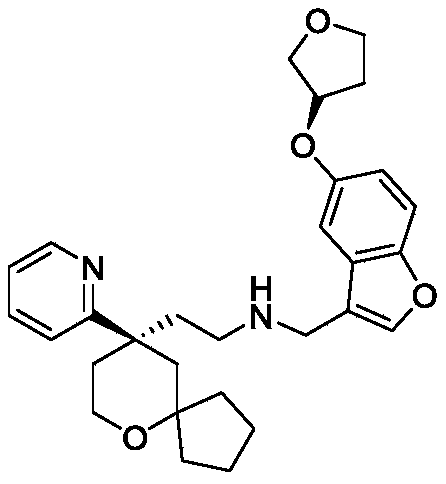
The preparation scheme is shown in the following chart:
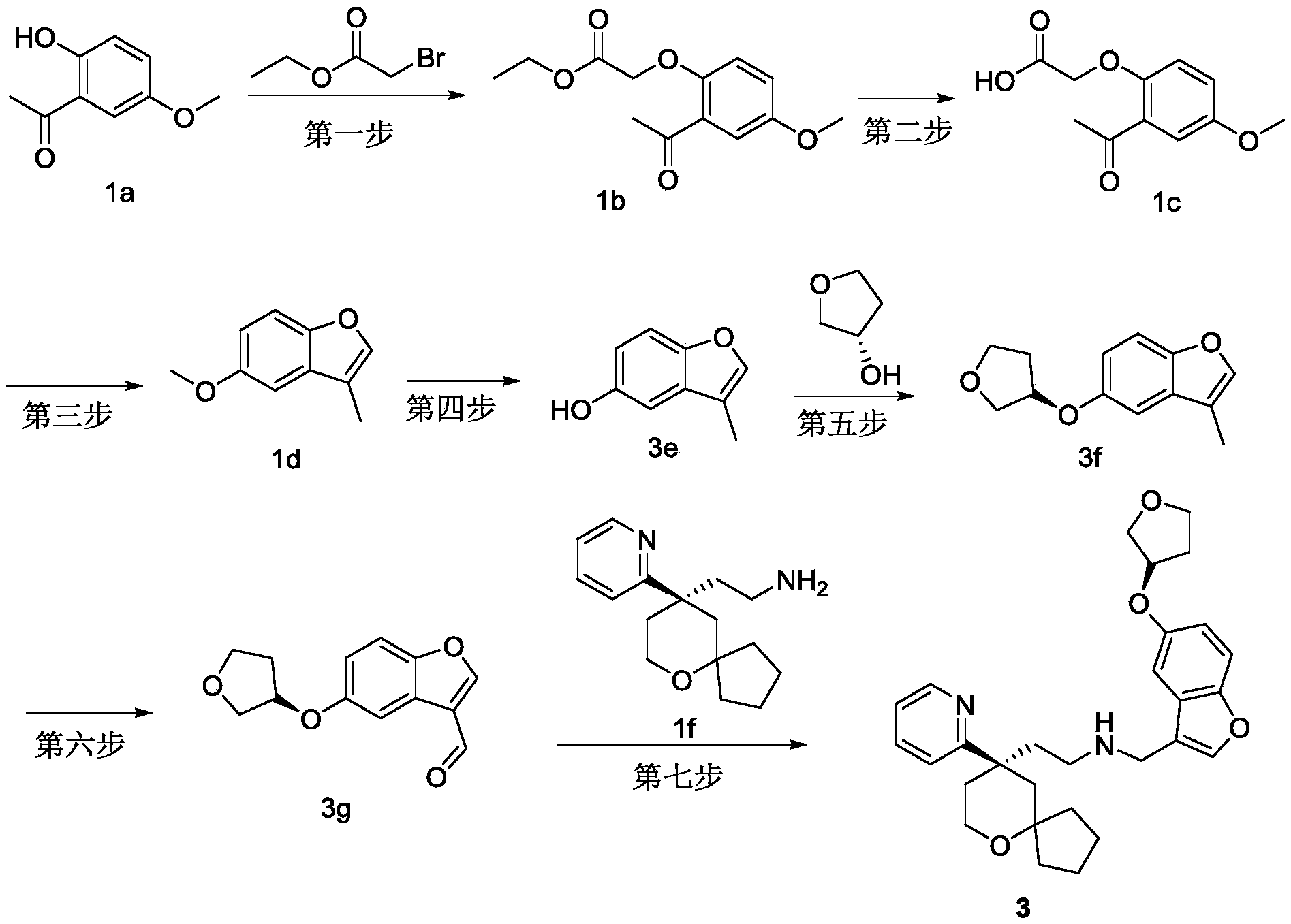
the first step is the same as the first step of example 1;
the second step is the same as the second step of example 1;
the third step is the same as the third step of example 1;
the fourth step: preparation of 3e
Dissolving the compound 1d (2.1g, 12.9mol) in dichloromethane (21ml), dropwise adding boron tribromide (6.5g, 25.9mol) at 0-5 ℃, and reacting at 0-5 ℃ after the addition is finished. The reaction was monitored by TLC, after the reaction of the starting materials was complete, water was added to the reaction system to quench the reaction, the reaction was filtered (celite was spread), the filter cake was washed with dichloromethane, the filtrate was partitioned, the aqueous phase was extracted 2 times with dichloromethane, the organic phases were combined and washed 1 time with water, dried over anhydrous sodium sulfate, filtered and the filtrate was concentrated to give 1.6g of yellow oily compound 3e in 83.4% yield.
ESI-MS:m/z=149.1[M+1]
The fifth step: preparation of 3f
Compound 3e (1.6g,10.8mol) and S-3-hydroxytetrahydrofuran (0.95g, 10.8mol) were dissolved in dichloromethane (16ml), and triphenylphosphine (3.1g, 11.9mol) and DIAD (2.4g,11.9mol) were added thereto at 0 to 5 ℃ and then reacted at room temperature. The reaction was monitored by TLC, after the reaction of the starting materials was complete, water was added to the reaction system to quench the reaction, ethyl acetate was added 2 times, the organic phases were combined and washed with water and saturated brine 1 time each, dried over anhydrous sodium sulfate, filtered, and the filtrate was concentrated to give an oil which was purified by silica gel column chromatography (ethyl acetate/petroleum ether: 1/5) to give 1.8g of yellow oily compound 3f in 76.4% yield.
ESI-MS:m/z=219.1[M+1]
And a sixth step: preparation of 3g
Compound 3f (1.8g, 8.2mmol) was dissolved in 1, 4-dioxane (18ml), selenium dioxide (4.6g, 41.2mmol) was added at room temperature, and after the addition was completed, the reaction was carried out at 110 ℃. The reaction was monitored by TLC, after the reaction of the starting materials was complete, water was added to the system to quench the reaction, and the reaction was extracted 3 times with ethyl acetate, the organic phases were combined and washed 1 time with water and saturated brine, respectively, after drying over anhydrous sodium sulfate, suction filtration was performed, the filtrate was concentrated to give an oil, which was purified by column chromatography (ethyl acetate/petroleum ether: 1/5) to give 0.85g of an orange oil compound 3g, with a yield of 44.3%.
ESI-MS:m/z=233.1[M+1]
The seventh step: preparation of Compound 3
The compound (3g, 0.85g, 3.7mmol) was dissolved in methylene chloride (10ml), and (R) -2- (9- (pyridin-2-yl) -6-oxaspiro [4.5] decan-9-yl) ethylamine (1 f, 0.95g, 3.7mmol) and anhydrous sodium sulfate (2.1g, 14.6mmol) were added to the solution, followed by reaction at room temperature. After 12h of reaction, anhydrous sodium sulfate was added and stirred for 30min, filtered, the filtrate was concentrated to give an oil, which was then dissolved with methanol (20ml) and sodium borohydride (0.14g, 3.7mmol) was added portionwise at-10 ℃ to-5 ℃. Monitoring the reaction by LC-MS, adding water into the reaction system after the raw materials react completely to quench the reaction, and then concentrating methanol in the reaction system to obtain an oily substance. Dissolving the oily substance with water and ethyl acetate, extracting with ethyl acetate for 3 times, combining organic phases, washing with water, washing with saturated saline solution for 1 time, drying with anhydrous sodium sulfate, vacuum filtering, and concentrating the filtrate to obtain yellow oily substance. The yellow oil was purified by column chromatography (dichloromethane/methanol ═ 20/1) to give 0.53g of compound 3 as a yellow oil in 30.2% yield and purity: 98.88 percent.
ESI-MS:m/z=477.3[M+1]
1HNMR(400MHz,CDCl3)δ8.55–8.53(m,1H),7.62–7.58(m,1H),7.38(s,1H),7.34–7.28(m,2H),7.11–7.08(m,1H),6.96(d,J=2.5Hz,1H),6.87–6.84(m,1H),4.96–4.93(m,1H),4.04–3.98(m,3H),3.94–3.89(m,1H),3.76–3.74(m,2H),3.69(s,2H),2.59–2.52(m,1H),2.46–2.42(m,1H),2.37–2.33(m,1H),2.20–2.12(m,3H),2.01–1.96(m,1H),1.92(d,J=13.7Hz,1H),1.79–1.64(m,4H),1.54–1.38(m,4H),1.14–1.09(m,1H),0.72–0.65(m,1H).
EXAMPLE 4 preparation of Compound 4
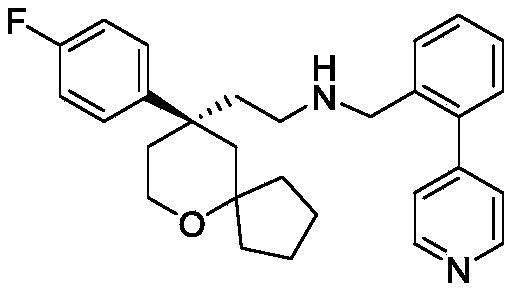
The preparation scheme is shown in the following chart:

(R) -2- (9- (4-fluorophenyl) -6-oxaspiro [4.5] decan-9-yl) ethylamine 4a (666mg, 2.4mmol) was dissolved in methylene chloride (7mL), and 2- (4-pyridyl) benzaldehyde 4b (0.44g, 2.4mmol) and anhydrous sodium sulfate (1.4g, 9.6mmol) were added to the solution, followed by reaction at room temperature. After 12h of reaction, dichloromethane in the reaction system is concentrated, then methanol (7mL) is added for dissolving, sodium borohydride (182mg, 4.8mmol) is added in batches in an ice water bath, after the reaction is finished, the methanol in the reaction system is concentrated, then water and ethyl acetate are added for dissolving, liquid separation is carried out, the water phase is extracted for 2 times by ethyl acetate, the organic phase is combined, then water washing and saturated saline water washing are carried out for 1 time, after anhydrous sodium sulfate is dried, suction filtration is carried out, and the filtrate is concentrated to obtain yellow oily matter. The yellow oil was purified by column chromatography (dichloromethane/methanol ═ 25/1) to give compound 4(0.46g, yellow oil) in 42.7% yield, purity: 99.59 percent.
MS m/z(ES):445.3[M+1]
1H NMR(400MHz,CDCl 3)δ8.62–8.60(m,2H),7.35–7.30(m,3H),7.27–7.25(m,2H),7.21–7.17(m,3H),7.01–6.97(m,2H),3.74–3.68(m,2H),3.51(s,2H),2.32–2.25(m,1H),2.17–2.13(m,1H),2.03–1.96(m,2H),1.87(d,J=13.9Hz,1H),1.78–1.57(m,6H),1.50–1.40(m,4H),0.85–0.77(m,1H).
Pharmacological toxicological evaluation
The test drugs are:
positive control drug: TRV130, available from medton biopharmaceutical corporation, orange oil, purity: 99.95 percent;
the compound of example 1: example 1 preparation, provided by the synthetic research laboratory of medeton biopharmaceutical corporation, yellow oil, purity: 98.28 percent;
the compound of example 2: example 2 preparation, provided by the synthetic research laboratory of medeton biopharmaceutical corporation, yellow oil, purity: 96.95 percent;
the compound of example 3: example 3 preparation, provided by the synthetic research laboratory of medeton biopharmaceutical corporation, yellow oil, purity: 98.88 percent;
the compound of example 4: example 4 preparation, provided by the synthetic research laboratory of medeton biopharmaceutical corporation, yellow oil, purity: 99.59 percent.
EXPERIMENTAL EXAMPLE 1 in vitro assay of the Effect of Compounds of formula I on different receptor Activity
1. The purpose of the test is as follows: the agonistic activity of a compound sample is detected by using MOR (mu Opioid receptor), KOR (kappa Opioid receptor), DOR (Delta Opioid receptor) stable cell lines and an established cAMP assay platform.
2, test method:
2.1 preparation of Compounds
a. All samples were dissolved in DMSO to a storage concentration of 30 mM.
b. Sample dilution sequences were prepared on 384-well LDV plates. The first concentration point was 6mM, 3.162 fold gradient dilution, for a total of 11 concentration points.
c. The sample dilution sequence was transferred to a laboratory plate (Corning-3824) using an Echo machine, corresponding to 50nL per well.
d. 50nL of HPE or ZPE were transferred to the corresponding positions on the test plate using an Echo machine.
2.2 cAMP agonistic Activity detection assay procedure
a. Assay buffer and stimulation buffer (STB) required for the experiments were prepared.
b. To each well of the assay plate (50 nL of compound in the well) was added 5uL of STB, followed by 5uL of cell suspension.
c. The experimental plate is placed in a constant-temperature incubator at 37 ℃ for incubation.
d. Preparing a cAMP standard concentration curve. First concentration point 2848nM, 4-fold gradient dilution, total 16 concentrations tested, 3 replicates per concentration point.
e. cAMP detection reagent (Cisbio #62AM4PEJ) was added to the sample and cAMP standard concentration plates. First add 5uL D2 reagent, then add 5uL Crytate reagent.
f. The plates were allowed to stand at room temperature for 60 minutes and then read on Envision.
3. Test results
TABLE 1 Experimental examples the agonistic activity of the compounds at different opioid receptors


4. Conclusion
In the experimental examples, each compound has a good agonistic effect on mu opioid receptors, and has a weak agonistic effect on kappa and delta opioid receptors.
EC for μ receptor in examples 1, 3, 4 compared to the Positive Compound (TRV130)50The value is about 1/10 for TRV130, and the EC for kappa and delta receptors50About 10 times more than TRV130, which shows that the agonism of the examples 1, 3 and 4 is obviously better than that of the positive medicine and the selectivity is better;
and EC of example 250Values on the same order as TRV130, and EC for kappa and delta receptors50About 7 times as high as TRV130, indicating that example 2 had comparable agonism to positivity but better selectivity.
In conclusion, the compounds in the experimental examples have better agonistic action on mu opioid receptors and better selectivity.
Experimental example 2 Effect of Compound of formula I on thermal radiation tail-flick threshold time in rats
1. The purpose of the test is as follows: the effect of each compound sample on the pain threshold in rats was measured by the rat thermal radiation tail flick method.
2. The test method comprises the following steps:
(1) dose and route of administration:
the medicine is administrated by tail vein injection at the dosage of 0.7 mg/kg;
(2) the operation method comprises the following steps:
rats (SD rats, SPF grade, body weight 220-250 g, purchased from Beijing Wittingle laboratory animal technology Co., Ltd.) were first fixed in a specially made plastic cylinder, and their tails were exposed and allowed to droop naturally, and the animals were then tested after they were calmed. The radiant heat source can adopt an 8.75mm projection lamp bulb (34W, adjustable), emits a light beam with the diameter of about 4mm after being focused by a lens, and irradiates the skin at the junction of the middle third and the lower third of the tail part (the light source and the tail part skin are required to be closely attached); and synchronously recording the irradiation duration by adopting an electronic timer connected with the light source in parallel, namely automatically and simultaneously starting a stopwatch when the irradiation starts, and automatically closing the light source and simultaneously stopping the timing when the tail of the animal obviously escapes. The measured time interval is the tail flick response latency. Normal rats were 3-5 s, and were rejected for more than 5 or less than 3 s. Then every 5min, the average of three determinations was taken as the basal nociception threshold. If the animal is subjected to the analgesic effect for more than 10s, the irradiation is stopped and 10s is taken as the upper limit of the tail flick latency period so as to prevent the skin from being burnt by over-long irradiation. After a dose of drug was given to the rats, the pain threshold of the rats was measured at different times.
(3) Detection indexes and statistical methods:
after the rats were given a dose of the drug, the pain threshold of the rats was measured at 0.5, 1, 2, 3 h. The maximum percent analgesia (% MPE) after administration is calculated as follows: MPE (%) × 100% (post-administration pain valve-pre-administration pain valve)/(10 s-pre-administration pain valve))
3. Test results
Table 2 maximum percent analgesia (MPE (%), Mean ± SEM, n ═ 10) for various time periods after administration of each compound

Note: compared with TRV130, the color is ' P <0.01 ' and the color is ' P <0.05
The compounds in the experimental example have obvious effect of prolonging the thermal radiation tail-flick pain threshold time of rats.
After 0.5h of administration, the MPE of each compound of this example reached 100%, consistent with the positive compound (TRV 130);
after 1h of administration, the MPE of each compound of example 1, example 2, example 3 and example 4 of the experimental example is 89.95 +/-7.06, 82.81 +/-9.77, 86.89 +/-7.34 and 85.79 +/-9.25 respectively, and the MPE is basically equivalent to that of a positive compound (the MPE is 88.69 +/-1.52) and has no statistical difference;
after 2h of administration, compared with the positive compound (MPE is 70.01 +/-8.01), the compound of example 1, example 3 and example 4 has very obvious effect of prolonging pain threshold time, the difference has statistical significance (P <0.01), and the MPE corresponding to the compound is 86.51 +/-10.06, 82.95 +/-8.69 and 83.78 +/-11.31; compared with the positive compound, the compound in the example 2 has obvious effect of prolonging pain threshold time, the difference has statistical significance (P <0.05), and the corresponding MPE is 79.23 +/-10.51;
after 3h of administration, example 1, example 3, example 4 had a very significant pain threshold time-prolonging effect compared to the positive compound (MPE of 49.32 ± 7.12), with statistical differences (P <0.01), corresponding to MPE of 65.91 ± 5.76, 61.46 ± 8.58, 60.92 ± 2.45, respectively; compared with the positive compound, the compound in the example 2 has obvious effect of prolonging pain threshold time, the difference has statistical significance (P <0.05), and the corresponding MPE is 55.50 +/-6.85;
the above results demonstrate that, at the same dose, examples 1, 2, 3, and 4 all have a longer duration of analgesic effect compared to the positive compound, with a statistically superior prolongation effect.
EXAMPLE 3 pharmacokinetic testing of a Compound of formula I after a single intravenous injection
1. The purpose of the test is as follows: pharmacokinetic parameters were examined for each of the experimental compounds after a single tail vein administration.
2. Test method
(1) Dose and route of administration:
the drug is administered into tail vein at 2mg/kg equal dose;
(2) designing a blood sampling point:
before and after administration for 5min, 10min,15min,20min,30min,45min,1h,2h,4h,6h,8h,24h, blood was taken from jugular vein, 200ul of whole blood was taken at each time point and placed in the container containing EDTA-K2The plasma is separated after the centrifugation of 2000g at the low temperature of 4 ℃, transferred to a micro-centrifuge tube and stored in a refrigerator at the temperature of 80 ℃ below zero for standby.
(3) Sample detection
By establishing a reliable LC/MS/MS analysis method, the blood concentration of each sample is detected, and the pharmacokinetic parameters of each compound are calculated.
3. Test results
Table 3 single tail vein administration major pharmacokinetic parameters (n ═ 3)
| Parameter(s) | T 1/2(h) | T max(h) | C max(ng·mL -1) | AUC last(h·ng·mL -1) |
| TRV130 | 0.94±0.03 | 0.14±0.10 | 234.67±22.73 | 319.13±30.63 |
| Example 1 | 3.17±0.02 ※※ | 0.11±0.05 | 601.34±32.53 ※※ | 584.94±25.91 ※※ |
| Example 2 | 2.29±0.13 ※※ | 0.15±0.01 | 308.67±43.02 ※ | 379.46±63.10 ※ |
| Example 3 | 2.95±0.34 ※※ | 0.15±0.02 | 543.09±72.77 ※※ | 532.04±50.57 ※※ |
| Example 4 | 3.23±0.11 ※※ | 0.18±0.03 | 551.77±48.69 ※※ | 563.07±31.76 ※※ |
Note: compared with the TRV130, the color is as much as P <0.01 and the color is as much as P < 0.05;
TRV130, example 1, example 2, example 3, example 4T after a single tail vein injection administration in rats (SD rats, SPF grade, body weight 220-250 g, from Wintolite laboratory animals technologies, Inc. of Beijing;)1/20.94 plus or minus 0.03, 3.17 plus or minus 0.02, 2.29 plus or minus 0.13, 2.95 plus or minus 0.34 and 3.23 plus or minus 0.11 respectively; t ismax0.14 plus or minus 0.10, 0.11 plus or minus 0.05, 0.15 plus or minus 0.01, 0.15 plus or minus 0.02 and 0.18 plus or minus 0.03 respectively; cmax234.67 + -22.73, 601.34 + -32.53, 308.67 + -43.02, 543.09 + -72.77 and 551.77 + -48.69; AUClast319.13 + -30.63, 584.94 + -25.91, 379.46 + -63.10, 532.04 + -50.57 and 563.07 + -31.76。
T of examples 1, 2, 3, 4 compared to the positive compound TRV1301/2Longer, with very significant statistical differences (mean P <0.01), indicating that the analgesic effect of each compound of this example lasts longer; meanwhile, C of example 1, example 2, example 3, example 4maxAnd AUClastMore, of these, example 1, example 3, and example 4 have very significant statistical differences (P <0.01), while example 2 has significant statistical differences (P <0.05), indicating that each compound of this example has better analgesic effect and lower effective dose.
In conclusion, compared with the positive compound, each compound of the present example has the advantages of better drug effect and longer duration of analgesia on the rat thermal radiation tail flick model, wherein examples 1, 3 and 4 are relatively better.
Experimental example 4 Effect of a Single intravenous injection of a Compound of formula I on colonic glass bead expulsion time in mice
1. The purpose of the test is as follows: the influence of the tested compound on the mouse colon glass bead expulsion time is tested, and the inhibition effect on the colon motility is preliminarily explored.
2. Test method
(1) Dose and route of administration:
1mg/kg of the same dosage is taken by tail vein;
(2) the test process comprises the following steps:
after C57BL/6 mice were acclimatized for 6-7 days, the animals were fasted for 12-16 hours without water deprivation, and were divided into 10 groups of 10 animals each by a random method. The tail vein of each group is used for single administration, the administration volume is 10mL/kg, and the solvent control group is administered with a solvent (physiological saline) through the tail vein. 20min after administration, glass beads of 2mm diameter preheated to 37 ℃ were transanally pushed into the rectum by a length of 2cm, timing was started immediately and the animals were placed individually in observation cages and the time of expulsion of the glass beads was observed (observation period 120 min). If the beads were not expelled at the end of the observation period, the animals were euthanized and the straight intestine was dissected to confirm that the beads were still in the intestine.
(3) Detection indexes and statistical methods:
the correlation index is calculated according to the following calculation formula:
colon Exclusion Rate (CER), the number of animals that successfully expelled the glass beads during the observation period/total number of animals in the group x 100%;
the ejection Time extension Rate (ETPR) is (average ejection Time of test sample group-average ejection Time of solvent control group)/average ejection Time of solvent control group × 100%;
percent Maximum Possible Effect (% Maximum Possible Effect, Percent pervious MPE) — (average push time of test sample group-average push time of solvent control group)/(average push time of solvent control group) × 100%;
experimental data were calculated and statistically processed using Microsoft Office Excel 2007 and GraphPad Prism software. Data are expressed as means ± standard error (Mean ± s.e.m.) and comparisons between groups are performed using One-way ANOVA (One-way ANOVA) and pairwise comparisons using Dunnett's method, unless otherwise specified.
3. Test results
Table 4 mean ejection time, ejection time extension rate and maximum possible effect percentage for each group of animals (n ═ 10)

Note: compared with a solvent control group, the drug is in the color of P < 0.01;
compared to TRV130, ". diamond-solid" P <0.01, ". diamond-solid" P < 0.05;
compared with a vehicle control group, the compound in the experimental example has extremely obvious prolongation of the average expulsion time (the average P is less than 0.01), and the prolongation rate of the expulsion time is also greatly increased, which shows that the compound has extremely obvious delay effect on the mouse glass bead expulsion after single tail vein administration.
Compared with the positive compound TRV130, the average expulsion time of the compound in the examples 1, 3 and 4 is greatly reduced (the average P is less than 0.01), and the expulsion time prolonging rate is also greatly reduced, which indicates that the expulsion delay effect of the glass beads on mice after single tail vein administration of the compound in the examples 1, 3 and 4 is very much lower than that of the positive compound.
Compared with the positive compound TRV130, the mean expulsion time of the compound in the example 2 is obviously reduced (P is less than 0.05), and the prolongation rate of the expulsion time is also reduced to a certain extent, which indicates that the expulsion delay effect of the compound in the example 2 on the glass beads of the mice after single tail vein administration is obviously lower than that of the positive compound.
In conclusion, the push-to-drain delay effect of each compound on the mouse glass beads after single tail vein administration in the experimental example is lower than that of a positive compound, which indicates that the inhibition effect on the colon function of the mouse is smaller, and the clinical constipation side effect is lower.
It will be apparent to those skilled in the art from the foregoing that the compounds of the present embodiments exhibit analgesic effects, and that various modifications and variations can be made in the compounds, compositions and methods of the present invention without departing from the spirit or scope of the invention, and therefore, the invention includes modifications and variations to the invention provided they come within the scope of the appended claims and their equivalents.
Claims (11)
- A compound of the general formula (I):
 or a tautomer, mesomer, racemate, enantiomer, diastereomer, or mixture thereof;wherein:R 1selected from phenyl or pyridyl, wherein the hydrogen atom of the phenyl or pyridyl group may be further substituted by a fluorine atom or a chlorine atom;R 2selected from hydrogen atoms or C1-C 3Alkyl groups of (a);R 3is selected fromWherein the hydrogen atom of the aryl group may be further substituted by a fluorine atom, a chlorine atom, an alkyl group, a heterocyclic group, an alkoxy group which may be further substituted by any one group selected from the heterocyclic group and the alkoxy group.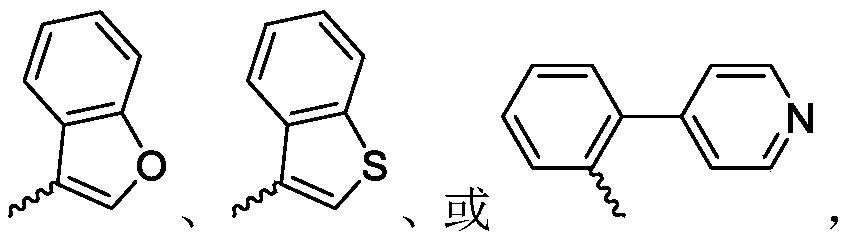
- A compound of formula (I) according to claim 1, wherein:
 R 1selected from phenyl or pyridyl, wherein the hydrogen atom of the phenyl or pyridyl group may be further substituted by a fluorine atom or a chlorine atom;R 2selected from a hydrogen atom, a methyl group or an ethyl group;R 3is selected fromWherein the hydrogen atom of the aryl group may be further substituted by a fluorine atom, a chlorine atom, an alkyl group, an alkoxy group which may be further substituted by any one group selected from a heterocyclic group and an alkoxy group.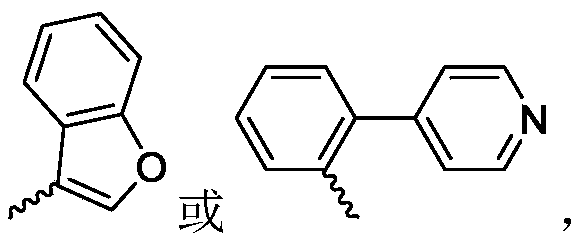
- A compound of formula (I) according to claim 1 or 2, wherein:
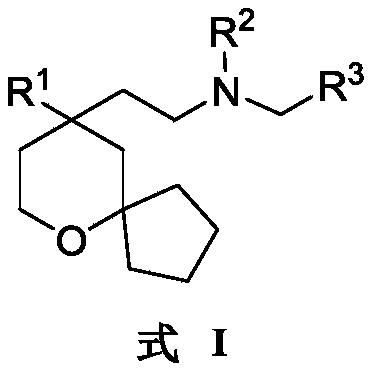 R 1is selected from
 R 2Selected from hydrogen atoms;R 3is selected from
- A compound of formula (I) according to any one of claims 1 to 3, characterized in that the compound of formula (I) has the following structure:
 R 1is selected from
 R 2Selected from hydrogen atoms;R 3is selected from
- A compound of formula (I) according to any one of claims 1 to 4, selected from:

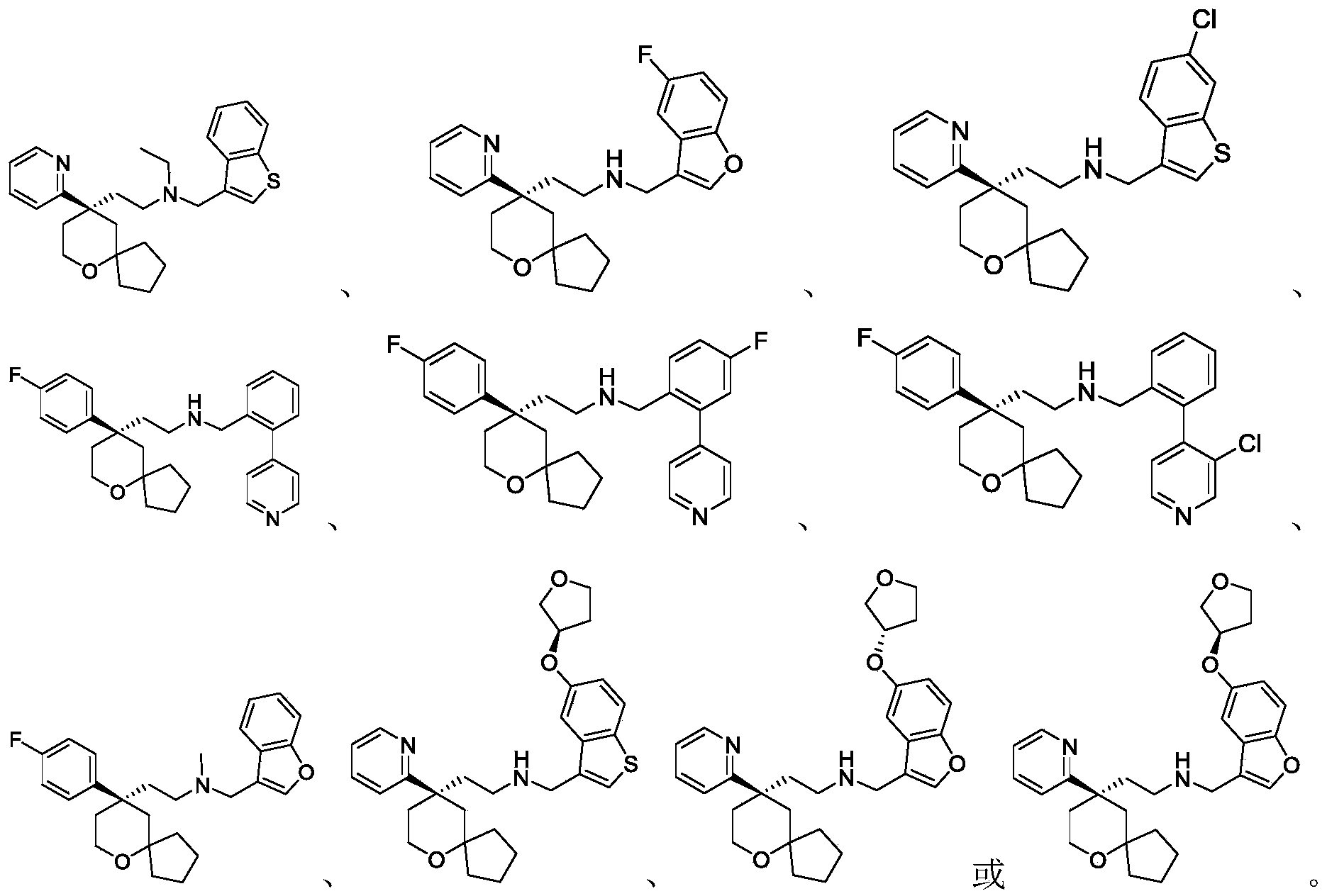
- the compound of formula (I) according to claim 5, selected from:

- a process for the preparation of a compound of formula (I) according to any one of claims 1 to 6, comprising the steps of:
 wherein R is1、R 2、R 3As defined in any one of claims 1 to 6;the starting material a reacts with the starting material aldehyde to obtain R2H as the target compound I, if R2And if the alkyl is alkyl, further alkylation reaction is carried out to obtain the target compound I.
 - A process for the preparation of a compound of formula (Ia) according to claim 4, comprising the steps of:
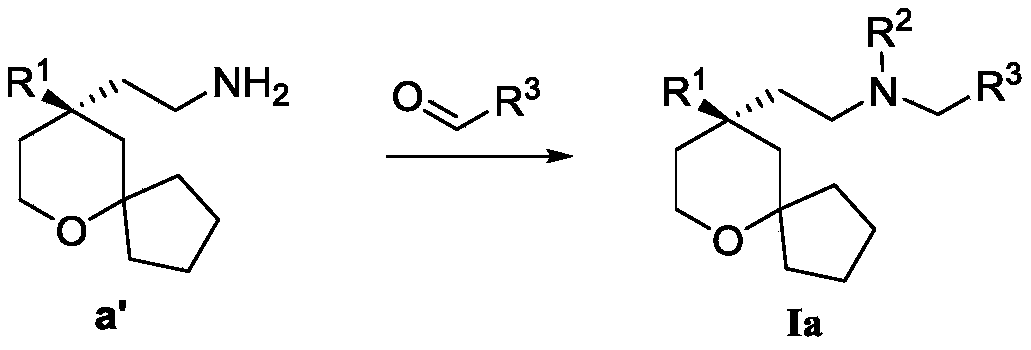 wherein R is1Is selected from
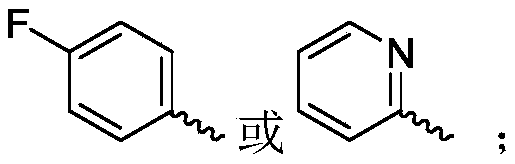 R 2Selected from hydrogen atoms;R 3is selected from
 The starting material a' reacts with the raw material aldehyde to obtain the target compound Ia.
 - The compound of formula (I) according to claim 1, for use in the preparation of a μ receptor agonist medicament.
- Use according to claim 9, for the preparation of an analgesic drug.
- Use according to claim 10, for the preparation of a medicament for moderate to severe pain.
Applications Claiming Priority (3)
| Application Number | Priority Date | Filing Date | Title |
|---|---|---|---|
| CN2020107944917 | 2020-08-10 | ||
| CN202010794491 | 2020-08-10 | ||
| PCT/CN2021/110702 WO2022033380A1 (en) | 2020-08-10 | 2021-08-05 | Mor receptor agonist compound, preparation method therefor, and use thereof |
Publications (2)
| Publication Number | Publication Date |
|---|---|
| CN114269738A true CN114269738A (en) | 2022-04-01 |
| CN114269738B CN114269738B (en) | 2023-09-29 |
Family
ID=80247702
Family Applications (1)
| Application Number | Title | Priority Date | Filing Date |
|---|---|---|---|
| CN202180005003.2A Active CN114269738B (en) | 2020-08-10 | 2021-08-05 | A kind of MOR receptor agonist compound, preparation method and use thereof |
Country Status (4)
| Country | Link |
|---|---|
| US (1) | US20230096978A1 (en) |
| EP (1) | EP4089088A4 (en) |
| CN (1) | CN114269738B (en) |
| WO (1) | WO2022033380A1 (en) |
Cited By (2)
| Publication number | Priority date | Publication date | Assignee | Title |
|---|---|---|---|---|
| CN115677675A (en) * | 2021-07-21 | 2023-02-03 | 成都苑东生物制药股份有限公司 | Salt, preparation method and use of a kind of 6-oxaspiro[4,5]decane compound |
| CN115819171A (en) * | 2022-07-25 | 2023-03-21 | 成都苑东生物制药股份有限公司 | Chiral resolution method of key intermediate in MOR receptor agonist synthetic route |
Families Citing this family (3)
| Publication number | Priority date | Publication date | Assignee | Title |
|---|---|---|---|---|
| WO2023030319A1 (en) * | 2021-08-31 | 2023-03-09 | 天地恒一制药股份有限公司 | Opioid receptor agonist, and preparation method therefor and use thereof |
| CN116589451B (en) * | 2022-02-11 | 2024-07-09 | 成都硕德药业有限公司 | New crystal form, application and preparation method of 6-oxaspiro [4,5] decane compound |
| JP7688242B1 (en) * | 2023-09-29 | 2025-06-03 | 第一三共株式会社 | 3-Phenylpropylamine Derivatives |
Citations (8)
| Publication number | Priority date | Publication date | Assignee | Title |
|---|---|---|---|---|
| CN103702561A (en) * | 2011-03-23 | 2014-04-02 | 特维娜有限公司 | Opioid receptor ligands and methods of using and making same |
| CN106588899A (en) * | 2015-10-15 | 2017-04-26 | 江苏恒瑞医药股份有限公司 | Pyridyl-substituted 6-oxaspiro[4.5]decane derivative and preparation method thereof, and applications of pyridyl-substituted 6-oxaspiro[4.5]decane derivative in medicines |
| CN108366997A (en) * | 2015-12-14 | 2018-08-03 | 特维娜有限公司 | Methods of treating hyperalgesia |
| CN108601775A (en) * | 2015-12-17 | 2018-09-28 | 特维娜有限公司 | The combination of opiate receptors ligands and cytochrome P 450 inhibitors |
| CN109206417A (en) * | 2017-07-04 | 2019-01-15 | 四川海思科制药有限公司 | Opioid receptor agonists and their applications |
| CN109516982A (en) * | 2017-09-18 | 2019-03-26 | 上海华汇拓医药科技有限公司 | μ-opioid receptor agonist, its preparation method and its application in the field of medicine |
| CN111065390A (en) * | 2017-12-06 | 2020-04-24 | 江苏恒瑞医药股份有限公司 | Use of a KOR agonist in combination with a MOR agonist in the preparation of a medicament for treating pain |
| CN115677675A (en) * | 2021-07-21 | 2023-02-03 | 成都苑东生物制药股份有限公司 | Salt, preparation method and use of a kind of 6-oxaspiro[4,5]decane compound |
-
2021
- 2021-08-05 EP EP21855433.5A patent/EP4089088A4/en not_active Withdrawn
- 2021-08-05 US US17/792,461 patent/US20230096978A1/en active Pending
- 2021-08-05 WO PCT/CN2021/110702 patent/WO2022033380A1/en not_active Ceased
- 2021-08-05 CN CN202180005003.2A patent/CN114269738B/en active Active
Patent Citations (8)
| Publication number | Priority date | Publication date | Assignee | Title |
|---|---|---|---|---|
| CN103702561A (en) * | 2011-03-23 | 2014-04-02 | 特维娜有限公司 | Opioid receptor ligands and methods of using and making same |
| CN106588899A (en) * | 2015-10-15 | 2017-04-26 | 江苏恒瑞医药股份有限公司 | Pyridyl-substituted 6-oxaspiro[4.5]decane derivative and preparation method thereof, and applications of pyridyl-substituted 6-oxaspiro[4.5]decane derivative in medicines |
| CN108366997A (en) * | 2015-12-14 | 2018-08-03 | 特维娜有限公司 | Methods of treating hyperalgesia |
| CN108601775A (en) * | 2015-12-17 | 2018-09-28 | 特维娜有限公司 | The combination of opiate receptors ligands and cytochrome P 450 inhibitors |
| CN109206417A (en) * | 2017-07-04 | 2019-01-15 | 四川海思科制药有限公司 | Opioid receptor agonists and their applications |
| CN109516982A (en) * | 2017-09-18 | 2019-03-26 | 上海华汇拓医药科技有限公司 | μ-opioid receptor agonist, its preparation method and its application in the field of medicine |
| CN111065390A (en) * | 2017-12-06 | 2020-04-24 | 江苏恒瑞医药股份有限公司 | Use of a KOR agonist in combination with a MOR agonist in the preparation of a medicament for treating pain |
| CN115677675A (en) * | 2021-07-21 | 2023-02-03 | 成都苑东生物制药股份有限公司 | Salt, preparation method and use of a kind of 6-oxaspiro[4,5]decane compound |
Non-Patent Citations (2)
| Title |
|---|
| VASUDEVAN, LAKSHMI,等: "Assessment of structure-activity relationships and biased agonism at the Mu opioid receptor of novel synthetic opioids using a novel, stable bio-assay platform", 《BIOCHEMICAL PHARMACOLOGY (AMSTERDAM, NETHERLANDS)》, pages 1 - 11 * |
| ZHAO, ZHENNAN,等: "Molecular dynamics simulations to investigate how PZM21 affects the conformational state of the μ-opioid receptor upon activation", 《INTERNATIONAL JOURNAL OF MOLECULAR SCIENCES》, vol. 21, no. 13, pages 1 - 16 * |
Cited By (3)
| Publication number | Priority date | Publication date | Assignee | Title |
|---|---|---|---|---|
| CN115677675A (en) * | 2021-07-21 | 2023-02-03 | 成都苑东生物制药股份有限公司 | Salt, preparation method and use of a kind of 6-oxaspiro[4,5]decane compound |
| CN115677675B (en) * | 2021-07-21 | 2025-09-12 | 成都苑东生物制药股份有限公司 | Salt of 6-oxaspiro[4,5]decane compound, preparation method and use thereof |
| CN115819171A (en) * | 2022-07-25 | 2023-03-21 | 成都苑东生物制药股份有限公司 | Chiral resolution method of key intermediate in MOR receptor agonist synthetic route |
Also Published As
| Publication number | Publication date |
|---|---|
| EP4089088A1 (en) | 2022-11-16 |
| CN114269738B (en) | 2023-09-29 |
| WO2022033380A1 (en) | 2022-02-17 |
| EP4089088A4 (en) | 2023-09-13 |
| US20230096978A1 (en) | 2023-03-30 |
Similar Documents
| Publication | Publication Date | Title |
|---|---|---|
| CN114269738A (en) | MOR receptor agonist compound, preparation method and application thereof | |
| EP4025568B1 (en) | Rip1 inhibitory compounds and methods for making and using the same | |
| RU2285693C2 (en) | Derivatives of pyridine and quinoline, method for their preparing, pharmaceutical composition, using compounds for treatment of dpp-iv-associated diseases | |
| TWI615393B (en) | Acrylic derivative, preparation method thereof and use thereof in medicine | |
| KR20210102328A (en) | THRβ receptor agonist compounds and methods for their preparation and uses | |
| US20030153552A1 (en) | Method of treating chemical dependency in mammals and a composition therefor | |
| CN109415361B (en) | Acrylic derivatives, their preparation method and their use in medicine | |
| TWI252229B (en) | Process to prepare oxazolidinones | |
| KR20240125003A (en) | Pharmaceutically acceptable salts, crystal forms and methods for preparing the same of GLP-1 receptor agonists | |
| CN120359210A (en) | CYP11B2 inhibitor compound, pharmaceutical composition and application thereof | |
| EP3532470A1 (en) | Oxazole derivatives for use as irak inhibitors and method for their preparation | |
| WO2017071653A1 (en) | N-benzyl-5/6-formylaminoindole-2-carboxylic acid derivative and use thereof | |
| CN102869665B (en) | Benzazepine Compounds | |
| CN101404997A (en) | Duloxetine salts | |
| JP4292738B2 (en) | Indole derivatives and their pharmaceutical use | |
| EP1923387B1 (en) | Acylguanidine derivative or salt thereof | |
| JPH085863B2 (en) | 14-Anisoylaconine and novel analgesic / anti-inflammatory agent containing the same | |
| EP4400504A1 (en) | Thiophene ring compound, preparation method therefor and application thereof | |
| HK40082587A (en) | Mor receptor agonist compound, preparation method therefor, and use thereof | |
| CN114502556A (en) | Biphenyl fluoro double bond derivative and preparation method and pharmaceutical application thereof | |
| CN120112529B (en) | A pyridine-containing compound, its preparation method and uses | |
| CN111233820A (en) | Fingolimod derivative containing crown ether and di (2-methoxyethoxy) structure | |
| TW202525292A (en) | Fused pyrimidine ring compound, pharmaceutical composition, and use thereof | |
| CN120535504A (en) | A crystal form of p38α-MK2 inhibitor, preparation method and application thereof | |
| CN117126134A (en) | Novel tetrahydroisoquinoline compounds, their preparation methods, pharmaceutical compositions containing such compounds and their uses |
Legal Events
| Date | Code | Title | Description |
|---|---|---|---|
| PB01 | Publication | ||
| PB01 | Publication | ||
| SE01 | Entry into force of request for substantive examination | ||
| SE01 | Entry into force of request for substantive examination | ||
| GR01 | Patent grant | ||
| GR01 | Patent grant |