CN114196632A - Culture medium for efficiently culturing hematopoietic stem cells in vitro - Google Patents
Culture medium for efficiently culturing hematopoietic stem cells in vitro Download PDFInfo
- Publication number
- CN114196632A CN114196632A CN202111289293.6A CN202111289293A CN114196632A CN 114196632 A CN114196632 A CN 114196632A CN 202111289293 A CN202111289293 A CN 202111289293A CN 114196632 A CN114196632 A CN 114196632A
- Authority
- CN
- China
- Prior art keywords
- culture medium
- hematopoietic stem
- recombinant human
- stem cells
- cells
- Prior art date
- Legal status (The legal status is an assumption and is not a legal conclusion. Google has not performed a legal analysis and makes no representation as to the accuracy of the status listed.)
- Pending
Links
Classifications
-
- C—CHEMISTRY; METALLURGY
- C12—BIOCHEMISTRY; BEER; SPIRITS; WINE; VINEGAR; MICROBIOLOGY; ENZYMOLOGY; MUTATION OR GENETIC ENGINEERING
- C12N—MICROORGANISMS OR ENZYMES; COMPOSITIONS THEREOF; PROPAGATING, PRESERVING, OR MAINTAINING MICROORGANISMS; MUTATION OR GENETIC ENGINEERING; CULTURE MEDIA
- C12N5/00—Undifferentiated human, animal or plant cells, e.g. cell lines; Tissues; Cultivation or maintenance thereof; Culture media therefor
- C12N5/06—Animal cells or tissues; Human cells or tissues
- C12N5/0602—Vertebrate cells
- C12N5/0634—Cells from the blood or the immune system
- C12N5/0647—Haematopoietic stem cells; Uncommitted or multipotent progenitors
-
- C—CHEMISTRY; METALLURGY
- C12—BIOCHEMISTRY; BEER; SPIRITS; WINE; VINEGAR; MICROBIOLOGY; ENZYMOLOGY; MUTATION OR GENETIC ENGINEERING
- C12N—MICROORGANISMS OR ENZYMES; COMPOSITIONS THEREOF; PROPAGATING, PRESERVING, OR MAINTAINING MICROORGANISMS; MUTATION OR GENETIC ENGINEERING; CULTURE MEDIA
- C12N2500/00—Specific components of cell culture medium
- C12N2500/05—Inorganic components
- C12N2500/10—Metals; Metal chelators
- C12N2500/20—Transition metals
- C12N2500/24—Iron; Fe chelators; Transferrin
- C12N2500/25—Insulin-transferrin; Insulin-transferrin-selenium
-
- C—CHEMISTRY; METALLURGY
- C12—BIOCHEMISTRY; BEER; SPIRITS; WINE; VINEGAR; MICROBIOLOGY; ENZYMOLOGY; MUTATION OR GENETIC ENGINEERING
- C12N—MICROORGANISMS OR ENZYMES; COMPOSITIONS THEREOF; PROPAGATING, PRESERVING, OR MAINTAINING MICROORGANISMS; MUTATION OR GENETIC ENGINEERING; CULTURE MEDIA
- C12N2500/00—Specific components of cell culture medium
- C12N2500/50—Soluble polymers, e.g. polyethyleneglycol [PEG]
-
- C—CHEMISTRY; METALLURGY
- C12—BIOCHEMISTRY; BEER; SPIRITS; WINE; VINEGAR; MICROBIOLOGY; ENZYMOLOGY; MUTATION OR GENETIC ENGINEERING
- C12N—MICROORGANISMS OR ENZYMES; COMPOSITIONS THEREOF; PROPAGATING, PRESERVING, OR MAINTAINING MICROORGANISMS; MUTATION OR GENETIC ENGINEERING; CULTURE MEDIA
- C12N2500/00—Specific components of cell culture medium
- C12N2500/90—Serum-free medium, which may still contain naturally-sourced components
-
- C—CHEMISTRY; METALLURGY
- C12—BIOCHEMISTRY; BEER; SPIRITS; WINE; VINEGAR; MICROBIOLOGY; ENZYMOLOGY; MUTATION OR GENETIC ENGINEERING
- C12N—MICROORGANISMS OR ENZYMES; COMPOSITIONS THEREOF; PROPAGATING, PRESERVING, OR MAINTAINING MICROORGANISMS; MUTATION OR GENETIC ENGINEERING; CULTURE MEDIA
- C12N2501/00—Active agents used in cell culture processes, e.g. differentation
- C12N2501/10—Growth factors
- C12N2501/125—Stem cell factor [SCF], c-kit ligand [KL]
-
- C—CHEMISTRY; METALLURGY
- C12—BIOCHEMISTRY; BEER; SPIRITS; WINE; VINEGAR; MICROBIOLOGY; ENZYMOLOGY; MUTATION OR GENETIC ENGINEERING
- C12N—MICROORGANISMS OR ENZYMES; COMPOSITIONS THEREOF; PROPAGATING, PRESERVING, OR MAINTAINING MICROORGANISMS; MUTATION OR GENETIC ENGINEERING; CULTURE MEDIA
- C12N2501/00—Active agents used in cell culture processes, e.g. differentation
- C12N2501/10—Growth factors
- C12N2501/145—Thrombopoietin [TPO]
-
- C—CHEMISTRY; METALLURGY
- C12—BIOCHEMISTRY; BEER; SPIRITS; WINE; VINEGAR; MICROBIOLOGY; ENZYMOLOGY; MUTATION OR GENETIC ENGINEERING
- C12N—MICROORGANISMS OR ENZYMES; COMPOSITIONS THEREOF; PROPAGATING, PRESERVING, OR MAINTAINING MICROORGANISMS; MUTATION OR GENETIC ENGINEERING; CULTURE MEDIA
- C12N2501/00—Active agents used in cell culture processes, e.g. differentation
- C12N2501/20—Cytokines; Chemokines
- C12N2501/23—Interleukins [IL]
- C12N2501/2303—Interleukin-3 (IL-3)
-
- C—CHEMISTRY; METALLURGY
- C12—BIOCHEMISTRY; BEER; SPIRITS; WINE; VINEGAR; MICROBIOLOGY; ENZYMOLOGY; MUTATION OR GENETIC ENGINEERING
- C12N—MICROORGANISMS OR ENZYMES; COMPOSITIONS THEREOF; PROPAGATING, PRESERVING, OR MAINTAINING MICROORGANISMS; MUTATION OR GENETIC ENGINEERING; CULTURE MEDIA
- C12N2501/00—Active agents used in cell culture processes, e.g. differentation
- C12N2501/20—Cytokines; Chemokines
- C12N2501/26—Flt-3 ligand (CD135L, flk-2 ligand)
-
- C—CHEMISTRY; METALLURGY
- C12—BIOCHEMISTRY; BEER; SPIRITS; WINE; VINEGAR; MICROBIOLOGY; ENZYMOLOGY; MUTATION OR GENETIC ENGINEERING
- C12N—MICROORGANISMS OR ENZYMES; COMPOSITIONS THEREOF; PROPAGATING, PRESERVING, OR MAINTAINING MICROORGANISMS; MUTATION OR GENETIC ENGINEERING; CULTURE MEDIA
- C12N2501/00—Active agents used in cell culture processes, e.g. differentation
- C12N2501/999—Small molecules not provided for elsewhere
Landscapes
- Health & Medical Sciences (AREA)
- Engineering & Computer Science (AREA)
- Life Sciences & Earth Sciences (AREA)
- Biomedical Technology (AREA)
- Genetics & Genomics (AREA)
- Wood Science & Technology (AREA)
- Hematology (AREA)
- Biotechnology (AREA)
- Organic Chemistry (AREA)
- Bioinformatics & Cheminformatics (AREA)
- Chemical & Material Sciences (AREA)
- Zoology (AREA)
- Cell Biology (AREA)
- Microbiology (AREA)
- Developmental Biology & Embryology (AREA)
- Biochemistry (AREA)
- General Engineering & Computer Science (AREA)
- General Health & Medical Sciences (AREA)
- Immunology (AREA)
- Micro-Organisms Or Cultivation Processes Thereof (AREA)
Abstract
The application relates to a culture medium for efficiently culturing hematopoietic stem cells in vitro, belonging to the technical field of cell in vitro culture. The culture medium for efficiently culturing the hematopoietic stem cells in vitro comprises a basic culture medium and an additive factor; the basic culture medium is a serum-free culture medium; recombinant human stem cell factor: 50-200ng/ml, recombinant human thrombopoietin: 20-100ng/ml, recombinant human FMS-like tyrosine kinase 3 ligand: 100-200ng/ml, interleukin-3: 30-60ng/ml, polyvinyl alcohol: 1-10mg/ml, insulin-transferrin-selenium-ethanolamine additive: 1-2:100ml/ml, indole analogue: 10-200ng/ml, nitrogen heterocyclic compound: 10-200 ng/ml. The defects of low expansion rate, easy differentiation and the like of the hematopoietic stem cells in the prior art are overcome; the proliferation efficiency of the hematopoietic stem cells is improved by 50 to 100 times, and the number of the obtained hematopoietic stem cells is more.
Description
Technical Field
The application relates to a culture medium for efficiently culturing hematopoietic stem cells in vitro, belonging to the technical field of cell in vitro culture.
Background
The hematopoietic stem cell transplantation technology is a common and effective treatment means for clinically treating various blood diseases and immune system diseases such as leukemia, lymphoma, aplastic anemia, thalassemia and the like. Hematopoietic stem cells are generally derived from three sources: bone marrow, peripheral blood and cord blood. Compared with bone marrow and peripheral blood hematopoietic stem cells, the umbilical cord blood hematopoietic stem cells are convenient to obtain, rich in sources, free of damage and side effects on donors, and therefore become an important source of hematopoietic stem cell transplantation donors.
At present, the bottleneck of the umbilical cord blood hematopoietic stem cell transplantation technology is that the content of hematopoietic stem cells in umbilical cord blood is low, and the number of hematopoietic stem cells and progenitor cells contained in one umbilical cord blood is not enough to rapidly recover the immune system of an adult patient, so that the fatality rate of opportunistic infection is increased. The current tentative strategy is transplantation of two umbilical cord blood, i.e. one patient receives transplantation of two umbilical cord blood after marrow removal, but this increases the difficulty of matching HLA of donors, so a method for amplifying umbilical cord blood hematopoietic stem cells is urgently needed to obtain sufficient hematopoietic stem cells for transplantation.
Many attempts have been made to expand hematopoietic stem cells in vitro, but none have achieved the desired effect. In the early days, hematopoietic stem cells were cultured using cytokines in blood, and as a result, the cells were differentiated and the transplantation function was weakened. Subsequently, it was discovered that Wnt (secreted glycoprotein) signaling molecules, Notch ligands, retinoic acid antagonists, etc. in the myeloid hematopoietic stem cell microenvironment were able to efficiently expand CD34+ hematopoietic stem/progenitor cells. Using CHIR99021 (chemical formula: C)22H18Cl2N8) Or BIO (chemical formula C)16H10BrN3O2) Activating Wnt signal path to maintain the transplantation capacity of in vitro cultured hemopoietic stem cell; on the other hand, when DLL1 antibody (Notch signaling pathway Delta-like ligand 1 antibody), DSL1 (polypeptide derived from Notch signaling pathway Delta-like ligand 1), or the like is added to a hematopoietic stem cell culture system, hematopoietic stem cells can be appropriately amplified by activation of Notch signaling. In addition, it was found that PTN (pleiotropic growth factor) secreted by bone marrow endothelial stromal cells can slightly expand hematopoietic stem cells. Physiological condition hematopoietic stem cell in hypoxia stripUnder the circumstances, the oxygen stress generated by in vitro culture impairs the self-renewal and transplantation functions of hematopoietic stem cells by increasing the level of ROS (reactive oxygen species in cells); it was found that the addition of antioxidants and the inhibition of mTOR (rapamycin target) were able to counteract these lesions. However, the above-mentioned techniques have not been able to significantly expand umbilical cord blood hematopoietic stem cells. It is discovered that a copper ion chelating agent TEPA (triethyl phosphonoacetate) and a SIRT (sirtuin) inhibitor Nicotinamide (Nicotinamide) can obviously improve the hematopoietic stem cell transplantation level and show a primary curative effect in clinical experiments, but the survival time of the expanded cells in vivo is not long enough and the differentiation lineage is not complete enough. Overall, there is no clear consensus on optimal conditions for the in vitro expansion of hematopoietic stem cells.
Disclosure of Invention
In order to solve the technical problems of small quantity of increased hematopoietic stem cells and poor colony forming capability of the hematopoietic stem cells CFU in the existing in-vitro hematopoietic stem cell culture technology, the application provides a culture medium for efficiently culturing the hematopoietic stem cells in vitro. The culture medium can increase the number of the hematopoietic stem cells and improve the forming ability of the hematopoietic stem cell CFU colony, so that the hematopoietic stem cells can be in a state of proliferation and no differentiation, and further the clinical transplantation requirement is met.
The technical scheme of the invention is as follows:
a culture medium for efficiently culturing hematopoietic stem cells in vitro comprises a basic culture medium and an additive factor;
the basic culture medium is a serum-free culture medium;
the additive factors and the content thereof relative to the basic culture medium are as follows:
recombinant human stem cell factor: 50-200ng/ml,
Recombinant human thrombopoietin: 20-100ng/ml,
Recombinant human FMS-like tyrosine kinase 3 ligand: 100-200ng/ml,
Interleukin-3: 30-60ng/ml,
Polyvinyl alcohol: 1-10mg/ml,
Insulin-transferrin-selenium-ethanolamine additive: 1-2:100ml/ml,
Indole analogues: 10-200ng/ml,
A nitrogen heterocyclic compound: 10-200 ng/ml.
The invention adds a specific amount of recombinant human Stem Cell Factor (SCF), recombinant human thrombopoietin, recombinant human FMS-like tyrosine kinase 3 ligand rhFLT3L, interleukin-3 (IL-3), polyvinyl alcohol, insulin-transferrin-selenium-ethanolamine, UM171 and SR1 on the basis of serum-free culture medium. Wherein, the specific functions of each additive factor in the culture medium are as follows:
stem Cell Factor (SCF) is an important hematopoietic cytokine that is a ligand for the tyrosine kinase receptor c-Kit. SCF primarily acts on early hematopoietic stem cells, primitive hematopoietic progenitor cells, and induces survival, proliferation, and differentiation of these cells. SCF alone has low biological effects, but it has strong synergistic effects with other cytokines. Recombinant Human Stem Cell Factor (rhSCF) refers to a Human Stem Cell Factor expressed using escherichia coli or the like by genetic engineering methods.
Recombinant human Thrombopoietin (TPO) promotes the proliferation of hematopoietic stem cells.
The recombinant human FMS-like tyrosine kinase 3 ligand rhFLT3L can promote the proliferation of hemopoietic stem cells.
Interleukin-3 mainly stimulates the proliferation and differentiation of myeloid cells by multiple cytokines, promoting hematopoietic stem cell proliferation and colony formation.
The synergistic effect of the recombinant human stem cell factor, the recombinant human thrombopoietin, the recombinant human FMS-like tyrosine kinase 3 ligand and the interleukin-3 can promote the proliferation of hematopoietic stem cells and maintain the self-renewal of the hematopoietic stem cells.
The polyvinyl alcohol is an extremely safe high molecular organic matter, can be used as a substrate material for in vitro culture of hematopoietic stem cells, and provides a suitable place for cell growth.
Insulin-transferrin-selenium-ethanolamine, as a cell culture growth additive, can reduce the concentration of fetal bovine serum required for cell maintenance and low density attachment, wherein insulin promotes the absorption of glucose and amino acids, transferrin promotes the transport of iron ions, selenium maintains the reducibility of glutathione, and ethanolamine is a precursor of phospholipids.
The two small molecules of indole analogue and nitrogen heterocyclic compound are considered as more mature and stable hematopoietic stem cell in-vitro amplification agents, and cells after in-vitro amplification culture for a period of time still have strong dryness.
Experimental research proves that the azacyclic compound SR1 and the indole analogue UM171 can more effectively amplify hematopoietic stem cells with long-term transplantation capability. Clinical experiments show that SR1 expanded hematopoietic stem cells have the capability of reconstructing the immune system of patients, but the hematopoietic stem cells still do not get rid of the dependence on double cord blood transplantation. However, in the present application, there is a synergistic effect between the azacyclic compound SR1 and the indole analogue UM171 and other additional factors; the synergistic effect of the various additives can improve the proliferation speed of the hematopoietic stem cells and the dryness of the hematopoietic stem cells.
The culture medium for efficiently culturing hematopoietic stem cells in vitro according to the present application described above is, optionally,
the addition factors and the dosage relative to the basic culture medium are as follows:
recombinant human stem cell factor: 50-100ng/ml,
Recombinant human thrombopoietin: 20-50ng/ml,
Recombinant human FMS-like tyrosine kinase 3 ligand: 100-150ng/ml,
Interleukin-3: 30-50ng/ml,
Polyvinyl alcohol: 1-6mg/ml,
Insulin-transferrin-selenium-ethanolamine additive: 2:100ml/ml,
Indole analogues: 10-100ng/ml,
A nitrogen heterocyclic compound: 10-100 ng/ml;
specifically, the addition factors and the dosage thereof relative to the basic culture medium are as follows:
recombinant human stem cell factor: 100ng/ml,
Recombinant human thrombopoietin: 50ng/ml,
Recombinant human FMS-like tyrosine kinase 3 ligand: 150ng/ml,
Interleukin-3: 50ng/ml,
Polyvinyl alcohol: 6mg/ml,
Insulin-transferrin-selenium-ethanolamine additive: 2:100ml/ml,
Indole analogues: 100ng/ml,
A nitrogen heterocyclic compound: 100 ng/ml.
In the present application, it is preferred that,
the recombinant human stem cell factor rhSCF can be prepared by self according to the prior art, can also be selected from the existing commodities, and specifically can be selected from Peprotech AF-250-03;
the recombinant human thrombopoietin rhTPO can be prepared by self according to the prior art, can also be selected from the existing commercial products, and specifically can be selected from Peprotech AF-315-14;
the recombinant human FMS-like tyrosine kinase 3 ligand rhFLT3L can be prepared by the prior art, can be selected from the existing commercial products, and can be specifically selected from R & D Bio-Techne 308E-GMP.
The recombinant human interleukin-3 can be prepared according to the prior art, can also be selected from the existing commodities, and specifically can be selected from Peprotech 200-03;
the polyvinyl alcohol refers to polyvinyl alcohol (PVA); can prepare according to prior art by oneself, also can select from current commodity, concrete can select Shanghai Aladdin Biotechnology GmbH, brand: alatin, degree of alcoholysis: 72.5-74.5 mol%, viscosity: 4.2-5.0mPa.s, CAS number 9002-89-5;
the insulin-transferrin-selenium-ethanolamine additive (ITS-X) can be prepared according to the prior art, and can also be selected from the existing commercial products, and particularly can be selected from Gibco 51500-.
The indole analogue (UM171) can be selected from existing commercial products, and specifically can be selected from MedChemexpress HY-12878.
The nitrogen heterocyclic compound (SR1) can be selected from the existing commercial products, and specifically can be selected from MedChemExpressHY-15001.
Advantageous effects
1. The defects of low expansion rate, easy differentiation and the like of the hematopoietic stem cells in the prior art are overcome; the hematopoietic stem cell proliferation efficiency is improved by 50-100 times (relative to the culture medium combining SFI and SFTI); the obtained hematopoietic stem cells have more quantity;
2. can maintain the dryness of hematopoietic stem cells, and the cultured cells can be differentiated into various types of cells in a blood system;
3. the culture medium is simple and convenient to operate and low in cost.
Detailed Description
The following examples are given for the detailed implementation and specific operation of the present invention, but the scope of the present invention is not limited to the following examples. The examples, in which specific conditions are not specified, were conducted under conventional conditions or conditions recommended by the manufacturer. The reagents or instruments used are not indicated by the manufacturer, and are all conventional products commercially available.
In the application, the recombinant human stem cell factor is abbreviated as rhSCF;
the recombinant human thrombopoietin is rhTPO for short;
the recombinant human FMS-like tyrosine kinase 3 ligand is rhFLT3L for short;
the insulin-transferrin-selenium-ethanolamine additive is abbreviated as ITSE;
the indole analogue is abbreviated as UM171, and the CAS number of the indole analogue is 1448724-09-1;
the nitrogen heterocyclic compound is abbreviated as SR1, and the CAS number of the nitrogen heterocyclic compound is 1227633-49-9.
Example 1Magnetic bead sorting of CD34+ cells
Magnetic bead sorting culture medium for CD34+ cells of German America, whirly and whirly biotechnology limited company
Immunomagnetic bead cell isolation (MACS) medium (Miltenyi Biotec, usa, including reagents a1, a2, B); cell filter screen (Becton Dickinson corporation, pore size 70 μm)
Cell suspensions (density 1X 10) were made up in Phosphate Buffered Saline (PBS)8/ml), adding reagent A1 and A2 at the same time, incubating at 4 deg.C for 15min, washing with PBS for 1 time, adding reagent B, incubating at 4 deg.C for 15min, centrifuging, and making into mononuclear cell suspension (density 1 × 10)8In ml). The specific procedures were performed according to MACS Medium instructions.
After the cell suspension is filtered by a cell filter screen, cells are added into a sorting column fixed in a high-intensity magnetic field, the cells which are not combined with the magnetic beads flow out along with buffer solution by utilizing gravity, the CD34+ cells combined with the magnetic beads are retained in the column, PBS is added for washing for 2 times, the sorting column is moved out of the magnetic field, the CD34+ cells adsorbed on the column are quickly eluted by the PBS, and the cells are collected for later use. And (3) fine extraction, namely adding the obtained CD34+ cells into the sorting column again, and repeatedly sorting for 1 time to obtain high-purity CD34+ cells.
Example 2Preparation of hematopoietic Stem cell Medium
Polyvinyl alcohol (PVA) is stored in sterile deionized water, placed in a heat-resistant glass bottle and autoclaved to obtain a polyvinyl alcohol aqueous solution with the concentration of 2.5% w/w. Storing at 4 deg.C.
Adding rhSCF (recombinant human stem cell factor), rhTPO (recombinant human thrombopoietin), rhFLT3L (recombinant human FMS-like tyrosine kinase 3 ligand), IL-3, a polyvinyl alcohol aqueous solution, an insulin-transferrin-selenium-ethanolamine additive, UM171 and SR1 into 500ml of serum-free culture medium according to the dosage of the following table 1; hematopoietic stem cell culture media T1-T8 and C1-C3 (as controls) were obtained, respectively;
wherein the recombinant human stem cell factor rhSCF is Peprotech AF-250-03, and the recombinant human thrombopoietin rhTPO is Peprotech AF-315-14; the recombinant human FMS-like tyrosine kinase 3 ligand rhFLT3L is R & D Bio-Techne 308E-GMP; interleukin-3 (IL-3) is Peprotech-200-03, the polyvinyl alcohol is avastin, 9002-89-5; the insulin-transferrin-selenium-ethanolamine additive (ITS-X) is Gibco 51500-056; UM171 is MedChemexpress HY-12878; SR1 is MedChemExpressHY-15001.
TABLE 1

Example 3
CD34+ cells were cultured in vitro using the hematopoietic stem cell culture medium prepared in example 2, and then CFU culture was performed to select the optimum ratio. The specific operation is as follows:
1.1, the CD34+ obtained in example 1 was washed with physiological saline 3 times and counted, and the cell concentration was adjusted to 2X 10 by using the culture media T1-T8 and C1-C3 in example 2, respectively56ml each of the cell suspensions, the cell suspensions were plated into six well cell culture plates, 2ml per well.
1.2 placing the six-hole cell culture plate in CO with the mass concentration of 5%2CO with relative humidity of 100% and 37 ℃2Culturing for 24 hours in a cell culture box; then, the culture medium was changed, the cells were further cultured for 12 hours, harvested and counted, and the number and viability of CD34+ cells were determined by Taiwan blue staining with a final concentration (mass concentration) of 0.04%. The percentage of CD34+ cells in each group of cells was determined by flow cytometry. The results of the total number of hematopoietic stem cells, the cell viability and the CD34+ cell ratio under each medium condition are shown in Table 2.
2.1 when the cells grow to the fusion degree of 80%, digesting and harvesting with pancreatin, washing with RPMI1640 culture solution for 3 times, counting, adjusting cell concentration with RPMI1640 culture solution to 1-2 × 10⁷Cell suspension/ml.
2.2, the cell suspension separated in step 2.1 is cultured in alpha-MEM-methylcellulose medium, and inoculated into 35mm culture dishes, 1ml each, and 3 dishes are repeated. Gently shaking, observing CD34+ cell distribution, wherein CD34+ cells should be uniformly distributed, can not be aggregated into clusters, and have a mass concentration of 5% CO2CO with relative humidity of 100% and 37 ℃2In the incubator, the results were observed under an inverted microscope after 14 days of culture.
2.3, the average of 3 dishes was used as the result, and the number of colonies counted as colonies with a cell mass of 40 cells or more in the dish was recorded, as shown in Table 3.
TABLE 2
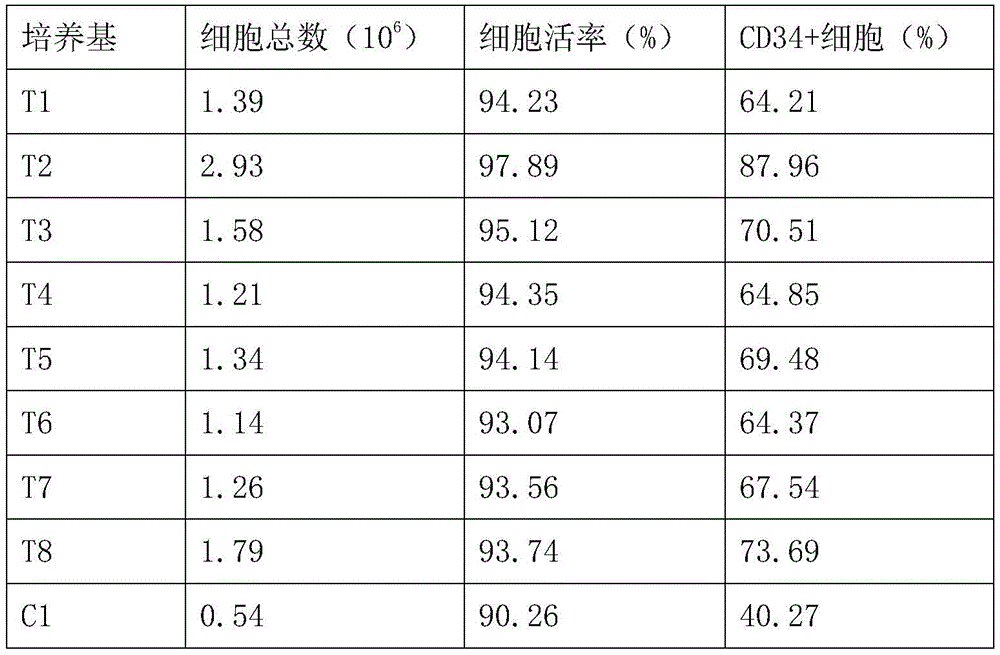

TABLE 3
| Culture medium | Total number of colonies |
| T1 | 197.33 |
| T2 | 214.33 |
| T3 | 187.67 |
| T4 | 179.67 |
| T5 | 154.00 |
| T6 | 146.67 |
| T7 | 139.33 |
| T8 | 1.79 |
| C1 | 72 |
| C2 | 98.67 |
| C3 | 134.33 |
Example 4
Collecting CD34+ cells cultured in each group of culture medium (T1-T8, C1-C3), and collecting 3X 10 cells9CD34+ cells were injected into NSI mice via tail vein, and proliferation and differentiation of CD34+ cells were observed.
The specific operation is as follows:
1. CD34+ cells cultured in each group of medium (T1-T8, C1-C3) were collected, 8 portions per group, and each portion was injected into immunodeficient mice via tail vein (each half of 8 mice injected per group). CD34+ cell engraftment was observed 1 month after injection.
2. The transplanted recipient mouse is periodically bled from the tail vein, the hematology (white blood cells, hematocrit, platelets) is detected by a hematology analyzer, and the survival time of the transplanted recipient mouse and the survival conditions of the transplanted recipient mouse after 7 days, 14 days and 30 days are observed. The specific results are shown in tables 4.1, 4.2 and 4.3.
TABLE 4.1 days after transplantation


TABLE 4.2 post-transplant 14d
| Grouping | White blood cells (10)9/L) | Hematocrit (%) | Blood platelets (10)9/L) |
| T1 | 1.12 | 24.13 | 51.27 |
| T2 | 1.37 | 31.24 | 79.52 |
| T3 | 1.16 | 25.37 | 60.45 |
| T4 | 1.23 | 26.71 | 57.24 |
| T5 | 1.27 | 19.28 | 59.37 |
| T6 | 1.29 | 25.19 | 58.16 |
| T7 | 1.17 | 26.34 | 54.93 |
| T8 | 1.15 | 28.97 | 61.25 |
| C1 | 0.42 | 16.57 | 35.14 |
| C2 | 0.95 | 27.81 | 49.78 |
| C3 | 0.91 | 30.57 | 57.69 |
TABLE 4.3 days after transplantation
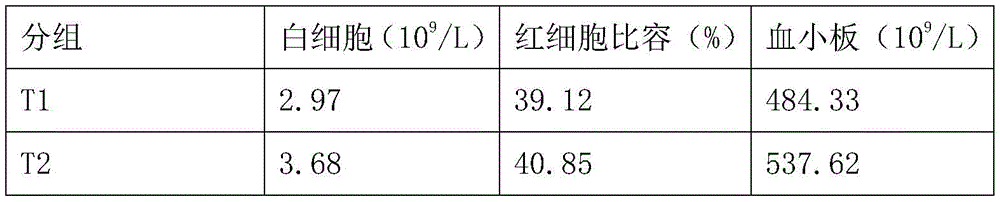

In tables 4.1-4.3, "T1-T8, C1-C3" in the column "group" means that CD34+ cells injected into mice were cultured in "T1-T8, C1-C3" medium in Table 1, respectively. Mice injected with CD34+ cells cultured in the "T1-T8" medium of Table 1 were used as experimental groups 1-8, and mice injected with CD34+ cells cultured in the "C1-C3" medium of Table 1 were used as control groups 1-3.
And (4) analyzing results:
(1) change in peripheral blood leukocytes: peripheral blood leucocyte of the experimental group mouse is obviously higher than that of the control group; the peripheral blood leucocytes of mice of other experimental groups and control groups except the control group 1 are increased to different degrees; mice in experimental group 2 reached the normal range on day 30 with peripheral blood leukocytes; the peripheral blood leukocytes of the control group 1 mice were always decreased, and all of the control group 1 mice died.
(2) Peripheral red hematocrit variation: the level of hematocrit of the control mice gradually decreased; the hematocrit of the experimental mice is obviously higher than that of the control group, and the hematocrit of the experimental mice is still continuously increased to a normal range when the experimental mice are detected 30 days after transplantation.
(3) Peripheral platelet changes: the blood platelet of the control group mice is rapidly reduced about 7 days, and the blood platelet of the experimental group mice is obviously higher than that of the control group mice. The platelets of the mice in the experimental group are continuously increased and return to the normal range at 30 d.
By comparison: the rising speed of various cells in the experimental group 2 is the fastest, and the cells reach the normal level firstly; the experimental groups were repeated 1, 3-8 times, and the control groups 1-3 were repeated with the addition of UM171 and SR1 factors. The results show that UM171 and SR1 play a very important role in hematopoietic stem cell culture system, and polyvinyl alcohol can better maintain the activity of hematopoietic stem cells and increase the proliferation speed.
Claims (10)
1. A culture medium for efficiently culturing hematopoietic stem cells in vitro is characterized by comprising a basic culture medium and an additive factor;
the basic culture medium is a serum-free culture medium;
the additive factors and the content thereof relative to the basic culture medium are as follows:
recombinant human stem cell factor: 50-200ng/ml,
Recombinant human thrombopoietin: 20-100ng/ml,
Recombinant human FMS-like tyrosine kinase 3 ligand: 100-200ng/ml,
Interleukin-3: 30-60ng/ml,
Polyvinyl alcohol: 1-10mg/ml,
Insulin-transferrin-selenium-ethanolamine additive: 1-2:100ml/ml,
Indole analogues: 10-200ng/ml,
A nitrogen heterocyclic compound: 10-200 ng/ml.
2. The culture medium of claim 1, wherein the recombinant human stem cell factor: 50-100 ng/ml.
3. The culture medium of claim 1, wherein recombinant human thrombopoietin: 20-50 ng/ml.
4. The culture medium of claim 1, wherein the recombinant human FMS-like tyrosine kinase 3 ligand: 100-150 ng/ml.
5. The culture medium of claim 1, wherein the ratio of interleukin-3: 30-50 ng/ml.
6. The culture medium according to claim 1, wherein the ratio of polyvinyl alcohol: 1-6 mg/ml.
7. The culture medium of claim 1, wherein the insulin-transferrin-selenium-ethanolamine additive: 2:100 ml/ml.
8. The culture medium of claim 1, wherein the indole analog: 10-100 ng/ml.
9. The culture medium of claim 1, wherein the nitrogen heterocyclic compound: 10-100 ng/ml.
10. The medium according to claim 1,
recombinant human stem cell factor: 100ng/ml,
Recombinant human thrombopoietin: 50ng/ml,
Recombinant human FMS-like tyrosine kinase 3 ligand: 150ng/ml,
Interleukin-3: 50ng/ml,
Polyvinyl alcohol: 6mg/ml,
Insulin-transferrin-selenium-ethanolamine additive: 2:100ml/ml,
Indole analogues: 100ng/ml,
A nitrogen heterocyclic compound: 100 ng/ml.
Priority Applications (1)
| Application Number | Priority Date | Filing Date | Title |
|---|---|---|---|
| CN202111289293.6A CN114196632A (en) | 2021-11-02 | 2021-11-02 | Culture medium for efficiently culturing hematopoietic stem cells in vitro |
Applications Claiming Priority (1)
| Application Number | Priority Date | Filing Date | Title |
|---|---|---|---|
| CN202111289293.6A CN114196632A (en) | 2021-11-02 | 2021-11-02 | Culture medium for efficiently culturing hematopoietic stem cells in vitro |
Publications (1)
| Publication Number | Publication Date |
|---|---|
| CN114196632A true CN114196632A (en) | 2022-03-18 |
Family
ID=80646676
Family Applications (1)
| Application Number | Title | Priority Date | Filing Date |
|---|---|---|---|
| CN202111289293.6A Pending CN114196632A (en) | 2021-11-02 | 2021-11-02 | Culture medium for efficiently culturing hematopoietic stem cells in vitro |
Country Status (1)
| Country | Link |
|---|---|
| CN (1) | CN114196632A (en) |
Citations (7)
| Publication number | Priority date | Publication date | Assignee | Title |
|---|---|---|---|---|
| CN102448949A (en) * | 2009-06-04 | 2012-05-09 | 日产化学工业株式会社 | Heterocyclic compound and hematopoietic stem cell amplifier |
| CN105713880A (en) * | 2016-04-20 | 2016-06-29 | 广东艾时代生物科技有限责任公司 | Serum-free culture medium for hematopoietic stem cell in vitro expansion culture and application thereof |
| CN107034184A (en) * | 2017-05-04 | 2017-08-11 | 济南赛尔生物科技股份有限公司 | A kind of kit for original cuiture umbilical cord mesenchymal stem cells |
| CN107338220A (en) * | 2017-06-07 | 2017-11-10 | 北京呈诺医学科技有限公司 | The method and its culture medium that inductive pluripotent stem cells break up to candidate stem cell |
| CN109735491A (en) * | 2019-01-16 | 2019-05-10 | 广东美赛尔细胞生物科技有限公司 | A kind of serum free medium and preparation method thereof of amplifiable candidate stem cell |
| CN110628718A (en) * | 2019-09-29 | 2019-12-31 | 广州医科大学附属第三医院(广州重症孕产妇救治中心、广州柔济医院) | Stem cell expansion medium and stem cell culture method |
| WO2021149799A1 (en) * | 2020-01-24 | 2021-07-29 | 国立大学法人東京大学 | Serum-free medium and culturing method suited for culturing blood cells such as human hematopoietic stem cells |
-
2021
- 2021-11-02 CN CN202111289293.6A patent/CN114196632A/en active Pending
Patent Citations (7)
| Publication number | Priority date | Publication date | Assignee | Title |
|---|---|---|---|---|
| CN102448949A (en) * | 2009-06-04 | 2012-05-09 | 日产化学工业株式会社 | Heterocyclic compound and hematopoietic stem cell amplifier |
| CN105713880A (en) * | 2016-04-20 | 2016-06-29 | 广东艾时代生物科技有限责任公司 | Serum-free culture medium for hematopoietic stem cell in vitro expansion culture and application thereof |
| CN107034184A (en) * | 2017-05-04 | 2017-08-11 | 济南赛尔生物科技股份有限公司 | A kind of kit for original cuiture umbilical cord mesenchymal stem cells |
| CN107338220A (en) * | 2017-06-07 | 2017-11-10 | 北京呈诺医学科技有限公司 | The method and its culture medium that inductive pluripotent stem cells break up to candidate stem cell |
| CN109735491A (en) * | 2019-01-16 | 2019-05-10 | 广东美赛尔细胞生物科技有限公司 | A kind of serum free medium and preparation method thereof of amplifiable candidate stem cell |
| CN110628718A (en) * | 2019-09-29 | 2019-12-31 | 广州医科大学附属第三医院(广州重症孕产妇救治中心、广州柔济医院) | Stem cell expansion medium and stem cell culture method |
| WO2021149799A1 (en) * | 2020-01-24 | 2021-07-29 | 国立大学法人東京大学 | Serum-free medium and culturing method suited for culturing blood cells such as human hematopoietic stem cells |
Non-Patent Citations (3)
| Title |
|---|
| ADAM C. WILKINSON等: "Stabilizing hematopoietic stem cells in vitro", CURR OPIN GENET DEV., 31 October 2020 (2020-10-31), pages 4 * |
| IMAN FARES等: "Pyrimidoindole derivatives are agonists of human hematopoietic stem cell self-renewal", SCIENCE, 19 September 2014 (2014-09-19), pages 1509 - 1512, XP055982120, DOI: 10.1126/science.1256337 * |
| 刘云霞等: "不同细胞因子组合对体外培养人脐带血造血干细胞的扩增效果", 中国组织工程研究与临床康复, vol. 11, no. 3, 21 January 2007 (2007-01-21), pages 401 - 404 * |
Similar Documents
| Publication | Publication Date | Title |
|---|---|---|
| CN111235105B (en) | Method for differentiating human pluripotent stem cells into natural killer cells and application | |
| US7790458B2 (en) | Material and methods for the growth of hematopoietic stem cells | |
| KR101544292B1 (en) | Methods of expanding myeloid cell populations and uses thereof | |
| JP7779519B2 (en) | Serum-free medium suitable for culturing blood cells such as human hematopoietic stem cells and culture method | |
| US6383480B1 (en) | Composition comprising midkine or pleiotrophin protein and method of increasing hematopoietic cells | |
| CN112608895A (en) | Natural killer cell differentiated from human pluripotent stem cell and preparation method and application thereof | |
| CN101864396A (en) | A method for inducing megakaryotic progenitor cells and megakaryocytes in vitro | |
| CN114075547A (en) | Method for expanding hematopoietic stem cells and composition thereof | |
| JP4651282B2 (en) | Method for amplifying hematopoietic stem cells and hematopoietic progenitor cells | |
| KR20050042046A (en) | Method of amplifying hematopoietic stem cells | |
| Sotnezova et al. | Ex vivo expansion of hematopoietic stem and progenitor cells from umbilical cord blood | |
| CN114196632A (en) | Culture medium for efficiently culturing hematopoietic stem cells in vitro | |
| WO2022143675A1 (en) | Culture medium composition for amplifying and maintaining self-renewal capacity and differentiation potential of hscs and application thereof | |
| CN114517176B (en) | Kit for inducing IPS (in-plane switching) cells into NK (natural killer) cells and application method of kit | |
| CN116042522A (en) | A method for large-scale expansion of human hematopoietic stem cells based on bionic microcarriers | |
| RU2839122C1 (en) | Serum-free medium and culturing method, suitable for culturing blood cells, including human hematopoietic stem cells | |
| WO2025028606A1 (en) | Culture medium for human cells, and method for culturing human hematopoietic stem cells | |
| CN118240759A (en) | Application of pyrimidine indole derivative UM729 combined nicotinamide in preparation of hematopoietic stem cell expansion reagent | |
| HK40110841A (en) | Method for promoting in-vitro expansion of hematopoietic stem progenitor cells | |
| EP1881063A1 (en) | Stem cell populations and methods of use | |
| HK40069747A (en) | Culture medium composition for amplifying and maintaining self-renewal capacity and differentiation potential of hscs and application thereof | |
| CN118147070A (en) | Method for promoting in-vitro expansion of hematopoietic stem progenitor cells | |
| CN118726233A (en) | Application of lipids in promoting hematopoietic differentiation | |
| CN114634906A (en) | In-vitro efficient induction megakaryocyte progenitor cell differentiation system with clear components and definite effect | |
| CN113025573A (en) | Liquid supplementing culture medium and method for culturing and inducing hematopoietic stem cells to differentiate into megakaryocyte |
Legal Events
| Date | Code | Title | Description |
|---|---|---|---|
| PB01 | Publication | ||
| PB01 | Publication | ||
| SE01 | Entry into force of request for substantive examination | ||
| SE01 | Entry into force of request for substantive examination |