Detailed Description
The principles of the present disclosure will now be described with reference to a few exemplary embodiments. It is understood that these examples are described merely to illustrate and assist those of ordinary skill in the art in understanding and enabling the disclosure, and do not imply any limitation on the scope of the disclosure. The disclosure described herein may be implemented in various ways other than those described below.
In the following description and claims, unless defined otherwise, all technical and scientific terms used herein have the same meaning as commonly understood by one of ordinary skill in the art to which this disclosure belongs.
References in the present disclosure to "one embodiment," "an example embodiment," etc., indicate that the embodiment described may include a particular feature, structure, or characteristic, but every embodiment may not necessarily include the particular feature, structure, or characteristic. Moreover, such phrases are not necessarily referring to the same embodiment. Further, when a particular feature, structure, or characteristic is described in connection with an example embodiment, it is within the knowledge of one skilled in the art to affect such feature, structure, or characteristic in connection with other embodiments whether or not explicitly described.
It will be understood that, although the terms first, second, etc. may be used herein to describe various elements, these elements should not be limited by these terms. These terms are only used to distinguish one element from another. For example, a first element may be termed a second element, and, similarly, a second element may be termed a first element, without departing from the scope of example embodiments. As used herein, the term "and/or" includes any and all combinations of one or more of the listed terms.
The terminology used herein is for the purpose of describing particular embodiments only and is not intended to be limiting of example embodiments. As used herein, the singular forms "a", "an" and "the" are intended to include the plural forms as well, unless the context clearly indicates otherwise. It will be further understood that the terms "comprises," "comprising," "includes," "having," "has," "having," "includes" and/or "including," when used herein, specify the presence of stated features, elements, and/or components, etc., but do not preclude the presence or addition of one or more other features, elements, components, and/or groups thereof.
As used in this application, the term "circuitry" may refer to one or more or all of the following:
(a) hardware-only circuit implementations (such as implementations in analog and/or digital circuitry only) and
(b) a combination of hardware circuitry and software, such as (as applicable):
(i) combinations of analog and/or digital hardware circuit(s) and software/firmware, and
(ii) any portion of hardware processor(s) with software (including digital signal processor (s)), software, and memory(s) that work together to cause a device, such as a mobile phone or server, to perform various functions, and
(c) hardware circuit(s) and/or processor(s), such as microprocessor(s) or a portion of microprocessor(s), that require software (e.g., firmware) for operation but may not be present when such software is not required for operation.
The definition of circuitry applies to all uses of the term in this application, including in any claims. As another example, as used in this application, the term circuitry also encompasses implementations of only a hardware circuit or processor (or multiple processors) or portion of a hardware circuit or processor and its (or their) accompanying software and/or firmware. The term circuitry also encompasses, for example and if applicable to the particular claim element, a baseband integrated circuit or processor integrated circuit for a mobile device, or a similar integrated circuit in a server, a cellular network device, or other computing or network device.
As described above, in the era of big data, the amount of data has increased explosively, and users have not managed data well depending on the conventional method. The advent of cloud computing has provided a new outlet to this dilemma. Cloud computing offers significant advantages to users, such as flexible storage, location-independent on-demand access services, high reliability, and the like. However, the user may no longer manage the data on the cloud while processing the data locally. Although Cloud Storage Servers (CSSs) may claim that a user's data is stored correctly, the security of the data in the cloud may still be questioned. One reason is that the CSS may deliberately delete data that is not accessed or that is accessed very rarely in order to save storage space. Another reason is that software or hardware errors and human errors can also cause data corruption in the cloud. Therefore, there is a need for a mechanism that enables a user to check the integrity of data stored in the cloud.
To address the above integrity issues in cloud storage, a variety of data integrity schemes have been proposed. In general, integrity auditing schemes can be divided into two categories: private auditing and public auditing. In public auditing, a user can audit cloud data by himself, and a Third Party Auditor (TPA) can be allowed to interact with the CSS instead of the user. However, most current public auditing schemes are primarily directed to single copy storage. In the single-copy scheme, once the audit fails, the data in the cloud is damaged, and the deletion of the local copy makes the damaged data difficult to recover. By storing multiple copies of the original data across multiple cloud servers, multiple copy storage becomes a necessary choice to improve data availability and recoverability. One significant feature of multi-copy storage is that as long as the copy of the data stored in the cloud remains intact, the corrupted data can be fully recovered. However, current multi-copy schemes may only support static data copies. That is, different data blocks of a file may have the same number of copies regardless of the respective importance of the data blocks. The inventors of the present application have realized that dynamic multiple solutions may suffer from security problems or performance deficiencies. Therefore, the dynamic public auditing scheme is provided for the multi-copy storage in the cloud data storage, and the method has important significance.
To enable public auditing of multiple copy stores, some cryptographic schemes have been implemented to provide integrity assurance to users. However, these schemes may have different limitations. For example, some schemes are designed based on Public Key Infrastructure (PKI), but the use of certificates makes the schemes expensive to deploy. Some schemes require the number of copies and the number of data blocks to participate in the generation of the copies, so that data dynamics cannot be supported. Some solutions may have security vulnerabilities. Further, in some schemes, the overhead of updating a data block may increase linearly with the number of copies of the data block.
Embodiments of the present disclosure propose a multiple-copy public auditing scheme using certificateless signatures to address the above-mentioned problems and/or one or more other potential problems. In particular, the scheme allows a user to determine the number of copies of each data block based on the importance of the data block. An improved MHT is proposed to enable bulk updating of multiple copies of a data block. In addition, signature exchange verification is implemented to achieve fair arbitration and to handle conflicts between users and storage servers.
Referring now to fig. 1, shown is a block diagram of an example storage system 100, in accordance with some example embodiments of the present disclosure. For example, as shown in fig. 1, system 100 may include a client 110, an audit server 120, a storage server 130, and a Key Generation Center (KGC) 140. It should be understood that the configuration of system 100 is shown for illustrative purposes only and does not imply any limitation as to the scope of the present disclosure. Embodiments of the present disclosure may also be applied to systems having different structures. For example, in some example embodiments, the audit server 120 may be omitted.
Client 110 may be any device operated by user 101. For example, the client 110 may receive instructions from the user 101 and perform actions based on the instructions from the user 101. Examples of clients 110 may include, but are not limited to, computers, cell phones, wearable devices, appliances, and the like.
In some example embodiments, the client 110 may divide a file to be stored to the storage server 130 into a plurality of data blocks according to instructions from the user 101. Client 110 may generate one or more copies for each data block based on the importance of the data block. For example, the client 110 may generate a greater number of copies for a data block of higher importance, but a lesser number of copies for another data block of lower importance. Client 110 may upload all copies of the data block to storage server 130 for storage. To protect data integrity, the client 110 may also generate a label for each data block based on the client's 110 private key. The client 110 may also generate a file signature for the file based on its private key. The generation of the tags and file signatures for the multiple data blocks may be based on an improved MHT, which is described in detail below in conjunction with fig. 2. Client 110 may send the tags and file signatures for multiple data blocks to storage server 130 for storage.
In some example embodiments, audit server 120 may be implemented as a separate computing device from client 110. Audit server 120 may communicate with both client 110 and storage server 130. For example, audit server 120 may have more computing resources and expertise than client 110, such that client 110 may delegate auditing of data integrity to audit server 120. Alternatively, in some example embodiments, the audit server 120 and the client 110 may be implemented in the same physical device.
In some example embodiments, the client 110 may send a request (also referred to as a "first request") to the audit server 120 for verifying the data integrity of the file stored by the client 110 at the storage server 130. In response to the first request, audit server 120 may generate and send a challenge message to storage server 130. Storage server 130 may generate a proof of data integrity for the file based on the challenge message and send the proof to audit server 120. In response to receiving the proof, audit server 120 may verify the validity of the proof to determine whether the file has been properly stored at storage server 130. Audit server 120 may send a response to client 110 indicating the result of the verification of the data integrity of the file. Alternatively, in some example embodiments, the audit server 120 may be omitted from the system 100. For example, a challenge message may be generated by client 110 and sent to storage server 130. In response to receiving the attestation from the storage server 130, the client 110 can verify the validity of the attestation to determine whether the file has been properly stored at the storage server 130.
Storage server 130 may include one or more storage devices currently known or to be developed in the future. In some example embodiments, the storage server 130 may be a Cloud Storage Server (CSS), which may be a resource center with powerful computing power and sufficient storage space. The storage server 130 may be responsible for storing and managing data (such as copies of data blocks of a file) from the client 110 and responding to challenge messages from the client 110 or the audit server 120 at any time. Storage server 130 may, via an integrity mechanism, make client 110 believe that it is honest at the time that user data is stored.
KGC 140 may be a third party trusted by client 110 and storage server 130. Key generation center 140 may generate partial keys based on the identification of client 110 and storage server 130, respectively. KGC 140 cannot forge a valid signature because it only possesses a partial key of the selected identity.
As described above, according to example embodiments of the present disclosure, improved MHT is introduced to enable batch updating of multiple copies of a data block. Both client 110 and storage server 130 may maintain such MHTs to reduce the overhead of updating data blocks with multiple copies.
Fig. 2 illustrates a schematic diagram of an example MHT 200, according to some example embodiments of the present disclosure. In some example embodiments, MHT 200 may be constructed by using a cryptographic hash function H.
As shown in FIG. 2, MHT 200 may include a plurality of nodes 210, 220-1, 220-2 … … 220-6, 230-1, 230-2 … … 230-8. Each node in MHT 200 may store two elements, one of which is a hash valuehNAnd the other is location information of nodes in the MHT 200lN. A leaf node (such as any of nodes 230-1, 230-2 … … 230-8) may correspond to a data block of a file. In some example embodiments, to reduce computational overhead, hash values stored at leaf nodes may also be usedhNThe labels of the data blocks corresponding to the leaf nodes are computed so that each data block only needs to be hashed once when generating the labels and MHTs. For each non-leaf node (such as any of nodes 220-1, 220-2 … … 220-6)What one), the hash value stored at the non-leaf nodehNCan be calculated as:hN=H(hlchildren||hrchildrenl N), whereinhlchildrenRepresenting the hash value stored by the left child node of the non-leaf node,hlchildrenrepresents a hash value stored by a right child node of a non-leaf node, and Nlthe value of (d) indicates the location of a non-leaf node in the MHT 200. For example, as shown in FIG. 2, non-leaf node 220-3 includes two child nodes 230-1 and 230-2. The location information of the left child node 230-1 is denoted as "000", and the location information of the right child node 230-2 is denoted as "001". Therefore, the location information of the non-leaf node 220-3 is "00", which is a common part in the location information of the left child node and the right child node. Location information of root node 210 RlMay be set to null. In this way, the hash values and location information of all nodes are easily obtained, thereby constructing the MHT as shown in fig. 2.
The verification path for a node may be defined as the siblings on the path searching up from the node to the root node. For example, if a data block corresponding to leaf node 230-4 is updated, to validate the updated data block (such as the new node (h)4011)), the verification path {230-3, 220-2} can be provided. In this manner, the hash value stored at node 220-4 may be updated to: h isb=H(h3||h4||lb) Wherein blIs "01". The hash values stored at nodes 220-1 and 210 may be similarly updated.
As shown in FIG. 2, assume that there are three copies of a block of data corresponding to leaf node 230-1 (e.g., denoted as b)11、b12And b13) While another data block node corresponding to leaf node 230-2 has two copies (e.g., denoted as b)21And b22). The hash values stored at leaf nodes 230-1 and 230-2 may be computed as: h is1=H(H(b11)||H(b12)||H(b13) ) and h2=H(H(b21)||H(b22)). That is, each leaf node in the MHT 200 stores a hash value calculated based on all the copies corresponding to the data block. Thus, the opening of the data block is updatedThe pin is independent of the number of copies of the data block. Further, MHT 200 as shown in fig. 2 may support dynamic updates of data blocks with different numbers of copies.
Based on the improved MHT 200 as shown in fig. 2, a multi-copy public auditing scheme can be implemented that can support dynamic batch update of multiple copies of one data block and prevent cloud-initiated replacement attacks during the update process. More details will be described below with reference to fig. 3A to 3E.
In the following description, it is assumed that G1And G2Two multiplications of prime order q are each represented, where q is a large prime number. Also assume that e is selected as a computable bilinear pair, which will be G1The product of two elements above maps to G2An element of (1). Namely e: g1×G1→G2. Suppose G is G1The generator of (1). Three cryptographic hash functions H are also predefined: {0,1}*→GI、H1:{0,1}*→ G1 and H2:{0,1}*→ZqAnd a cryptographic pseudo-random function Ψ: zq×{0,1}*→ZqWherein Z isqRepresents the range [1, q-1 ]]And {0, 1}*Representing a binary string of arbitrary length. KGC 140 may select the master key s ∈ ZqAnd computing the system public key mpk g based on the master keys∈G1. The KGC 140 may publish the system parameter G to both the client 110 and the storage server 1301,·G2,·q,·e,·g,·H,·H1,·H2Psi,. mpk, but keeping its master key s secret.
Fig. 3A illustrates an interaction diagram of an example process 310 for obtaining a key from KGC 140, according to some example embodiments of the present disclosure. For discussion purposes, process 310 will be described with reference to fig. 1. For example, process 310 may involve client 110, storage server 130, and KGC 140 as shown in fig. 1. It should be understood that process 310 may include additional acts not shown in fig. 3A, or omit some of the acts shown in fig. 3A. The scope of the present disclosure is not limited in this respect.
As shown in the figure3A, the
client 110 may send 311 an identifier of the client 110 (such as a binary string identifying the client 110) to the
KGC 140. In response to receiving the identifier of
client 110,
KGC 140 may generate 312 a partial private key for
client 110 based on the identifier of
client 110. For example, part of the private key of the
client 110 may be computed as: ssk
U=H
1(ID
U)
sWherein ID
URepresenting an identifier of the
client 110.
KGC 140 may return 313 portion of private key ssk to
client 110
U.
Client 110 may verify 314 partial private key ssk
UThe effectiveness of (c). For example,
client 110 may check equation e (ssk)
C,g)=e(H
1(ID
C) Mpk) can be satisfied to verify partial private key ssk
UThe effectiveness of (c). In response to the equation not being satisfied,
client 110 may determine partial private key ssk
UAnd (4) invalidation.
Client 110 may then request a partial private key from
KGC 140 again. In response to the equation being satisfied,
client 110 may determine partial private key ssk
UIs effective.
Client 110 may then base ssk on the partial private key
UAnd a selected secret value x
U∈Z
qTo determine 315 its private key sk
U. Namely sk
U={ssk
U,x
U}.
Client 110 may also determine 315 its public key as:
similarly, the
storage server 130 may send 316 an identifier of the storage server 130 (such as a binary string identifying the storage server 130) to the
KGC 140. In response to receiving the identifier of the
storage server 130, the
KGC 140 may generate 317 a partial private key for the
storage server 130 based on the identifier of the
storage server 130. For example, the partial private key for the
storage server 130 may be computed as: ssk
C=H
1(ID
C)
sWherein ID
CRepresenting an identifier of
storage server 130.
KGC 140 may return 318 partial private key ssk to
storage server 130
U.
Storage server 130 may verify 319 a portion of private key ssk
UThe effectiveness of (c). E.g.
storageThe server 130 may check equation e (ssk)
C,g)=e(H
1(ID
C) Mpk) can be satisfied to verify partial private key ssk
UThe effectiveness of (c). In response to the equation not being satisfied,
storage server 130 may determine partial private key ssk
UAnd (4) invalidation. The
storage server 130 may then request a partial private key from
KGC 140 again. In response to the equation being satisfied,
storage server 130 may determine partial private key ssk
UIs effective.
Storage server 130 may then base portion private key ssk on
UAnd a selected secret value x
C∈Z
qTo determine 315 its private key sk
C. Namely sk
C={ssk
C,x
C}.
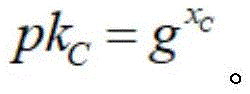
Storage server 130 may also determine 315 its public key as:
fig. 3B illustrates an interaction diagram of an example process 330 for storing a file in a storage server, according to some example embodiments of the present disclosure. For purposes of discussion, process 330 will be described with reference to FIG. 1. For example, process 330 may involve client 110 and storage server 130 as shown in FIG. 1. It should be understood that this process 330 may include additional acts not shown in fig. 3B, or omit some of the acts shown in fig. 3B. The scope of the present disclosure is not limited in this respect.
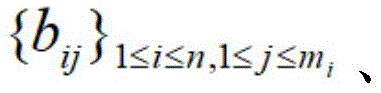
As shown in fig. 3B, the client 110 may divide 331 a file F to be stored to the storage server 130 into a plurality of data blocks. A file may be represented as F ═ b1,b2,…,bnIn which b isi∈ZqAnd n represents the number of data blocks. Client 110 may select a random name for the file, where the name ∈ Zq. For each data block bi(where i ∈ [1, n ]]) Client 110 may generate 332miA copy of, wherein mi∈[1,mmax]And m ismaxRepresenting the maximum number of copies supported by a block of data. In some example embodiments, the data block b may be based oniTo determine miThe value of (c). E.g. data block biOf importanceThe higher, miThe larger the value of (c). For each data block bi(where i ∈ [1, n ]]) The client 110 may select the random value vi∈ZqAnd generate miA copy bij=bi+ΨK(name||j||vi) Where j is ∈ [1, m ]i]And K ═ H2(name||xU||sskU). It will be appreciated that for block biAny copy of bijThe client 110 can easily recover the plaintext bi=bij-ΨK(name||j||vi). It can be seen that the sequence number i of the data block does not participate in the generation of the copy of the data block, thereby avoiding tag recalculation caused by data updates.
In the case of the original data block b
iGenerating all copies b
ij(where j ∈ [1, m ]
i]) Thereafter, the
client 110 may base the client's 110 private key and the data block b on
iAll copies b of
ij(where j ∈ [1, m ]
i]) Choosing value u e G
1And generates 333 for data block b
iThe label of (1). E.g. data block b
iTag sigma of
iCan be calculated as:
wherein
Client 110 may be based on M
iThe construction of the above MHT (such as the
MHT 200 shown in FIG. 2) generates a root hash value R, and generates 334 a file signature for the file based on the root hash value R
The
client 110 may then send 335 all copies of the data block to the
storage server 130
All tags { σ
i}
1≤i≤nAnd a file signature Sig
U(also referred to as "first file signature") for storage. In some example implementationsIn an example, the
client 110 may also send the constructed MHT to the
storage server 130 so that the
storage server 130 may utilize the hash value stored in the MHT without further computation. Alternatively, in some example embodiments,
storage server 130 may base its copy of the received data block on
The same MHT was constructed. Alternatively or additionally, in some example embodiments, the
client 110 may delete all information except the root hash value R.
In some example embodiments, all copies of a data block are responded to from
client 110
All tags { σ
i}
1≤i≤nAnd a first file signature Sig
UThe
storage server 130 may verify 336 whether the tag and the first file signature are valid. For example,
storage server 130 may first check the equation
Whether it can be satisfied to verify the validity of the tag. In response to the equation not being satisfied,
storage server 130 may refuse to store the corresponding data block and tag. In response to the equation being satisfied,
storage server 130 may calculate a routing hash value R based on the MHT (such as
MHT 200 shown in FIG. 2) and by checking the relationship e (Sig)
U,g)=e(H(R),pk
U) Whether or not it can be satisfied to verify the first file signature Sig
UThe effectiveness of (c). In response to the relationship not being satisfied,
storage server 130 may refuse to store the corresponding data block and tag. In response to the relationship being satisfied,
storage server 130 may store 337 all data sent from
client 110 and generate 337 a file signature (also referred to as a "second file signature") for the file and a private key of
storage server 130 based on the root hash value and the private key of
storage server 130. For example, a second file signature may be generated as:
storage server 130 may send 338 the second file signature to
client 110. In response to receiving the second file signature,
client 110 may sign e (Sig)
CG) and e (H (R), pk)
C) Comparing 339 to check second file signature Sig
CThe effectiveness of (c). In response to e (Sig)
CG) is equal to e (H (R), pk
C) (i.e., the second file signature is valid),
client 110 may determine that the file has been properly stored by
storage server 130.
Fig. 3C illustrates an interactive diagram of an example process 350 for verifying data integrity of a file stored at a storage server, according to some example embodiments of the present disclosure. As shown in FIG. 1, flow 350 may involve client 110, audit server 120, and storage server 130. In the example shown in FIG. 3C, client 110 may delegate the audit of data integrity to audit server 120. It should be understood that process 350 may include additional acts not shown in fig. 3C, or omit some of the acts shown in fig. 3C. The scope of the present disclosure is not limited in this respect.
As shown in fig. 3C, the client 110 may send 351 a request (i.e., a first request) to the audit server 120 for verifying the data integrity of the file stored at the storage server 130. In response to the first request, audit server 120 may generate 352 a challenge message. In some example embodiments, audit server 120 may select a set of data blocks of a file for integrity verification. For example, the audit server 120 may randomly select c data blocks from a total of n data blocks of the file, where c represents the number of data blocks to challenge. For each selected data block bi(where I e.I and I represents a randomly selected subset of {1,2 … … n }), the audit server 120 may determine an authentication parameter { r }i∈Zq}i∈I. Audit server 120 may generate a challenge message to include verification parameters for the set of data blocks and an indication of the set of data blocks. Audit server 120 may then send 353 a challenge message to storage server 130.
In response to receiving the challenge message from the
audit server 120, the
storage server 130 may prove { σ, μ, M } based on
challenge message generation 354. In some example embodiments, the attestation { σ, μ, M } may include a tag attestation σ, a data block attestation μ, and a respective hash value M of the c data blocks. For example, it is demonstrated that { σ, μ, M } can be generated as:
and
where I ∈ I. The
storage server 130 may then send 355 the attestation to the
audit server 120. In response to receiving the proof, the
audit server 120 may verify 356 the validity of the proof to determine whether the file has been properly stored at the
storage server 130. For example,
audit server 120 may check relationships
Whether it can be satisfied to verify the validity of the proof. In response to the relationship being satisfied,
audit server 120 may determine that
storage server 130 has correctly stored the file as required by
client 110. In response to the relationship not being satisfied, the
audit server 120 may determine that verifying the data integrity of the file failed. The
audit server 120 may send 357 a response to the first request to the
client 110 indicating a verification of the data integrity of the file.
Fig. 3D illustrates an interactive diagram of another example process 370 for verifying data integrity of a file stored at a storage server, according to some example embodiments of the present disclosure. Process 370 may include client 110 and storage server 130 as shown in fig. 1. In the example shown in fig. 3D, the client 110 may initiate an audit of data integrity itself without committing it to a third party. It should be understood that process 370 may include additional acts not shown in fig. 3D, or omit some of the acts shown in fig. 3D. The scope of the present disclosure is not limited in this respect.
As shown in fig. 3D, the client 110 may generate 371 a challenge message. In some example embodiments, the client 110 may select a set of data blocks of a file for integrity verification. For example, the client 110 may randomly select c data blocks from a total of n data blocks of the file, where c represents the number of data blocks to challenge. For each selected data block bi(where I e.I and I represents a randomly selected subset of {1,2 … … n }), client 110 may determine an authentication parameter { r }i∈Zq}i∈I. The client 110 may generate a challenge message to include authentication parameters for the set of data chunks and an indication of the set of data chunks. Client 110 may then send 372 a challenge message to storage server 130.
In response to receiving the challenge message from
client 110,
storage server 130 may generate 373 a certification { σ, μ, M } based on the challenge message. In some example embodiments, the attestation { σ, μ, M } may include a tag attestation σ, a data block attestation μ, and a respective hash value M of the c data blocks. For example, it is demonstrated that { σ, μ, M } can be generated as:
and
where I ∈
I. Storage server 130 may then send 374 the attestation to
client 110. In response to receiving the attestation, the
client 110 can verify 375 the validity of the attestation to determine whether the file has been properly stored at the
storage server 130. For example,
client 110 may check relationships
Whether it can be satisfied to verify the validity of the proof. In response to the relationship being satisfied,
client 110 may determine that
storage server 130 has correctly stored the file as requested by
client 110. In response to the relationship not being
satisfiedClient 110 may determine that verifying the data integrity of the file fails.
Fig. 3E illustrates an interaction diagram of an example process 390 for updating a file stored at a storage server, according to some example embodiments of the present disclosure. For purposes of discussion, the process 390 will be described with reference to FIG. 1. Process 390 may involve client 110 and storage server 130 as shown in fig. 1. It should be understood that process 390 may include additional acts not shown in fig. 3E, or omit some of the acts shown in fig. 3E. The scope of the present disclosure is not limited in this respect.
As shown in fig. 3E,
client 110 may generate 391 a request (also referred to as a "second request") for updating data blocks of a file stored at
storage server 130. In some example embodiments, three update operations are supported, including modification of data blocks, insertion of data blocks, and deletion of data blocks. For example, the second request may be expressed as:
where name represents the file identification and i represents the sequence number of the target data block. OP may be selected from the set { 'M', 'I', 'D' }, where 'M' indicates the data block b
iTo be modified, 'I' indicates that block b is to be modified
iA new data block is inserted before and 'D' indicates data block b
iTo be deleted.
And
represents the new value of the data block and the corresponding tag, and when OP is set to 'D',
and
the value of (d) may be null. The
client 110 may send 392 the second request to the
storage server 130.
In some example embodiments, a given file F ═ b
i}
1≤i≤nIf the data block b
iData block b 'to be modified as new'
iClient 110 may first target new data chunk b'
iGenerating m
iCopies, i.e., b'
ij=b′
i+Ψ
K(name||j||v
i) Where j is ∈ [1, m ]
i].
Client 110 may then be directed to new data chunk b'
iGenerate new tag σ'
iI.e. by
Wherein i is more than or equal to 1 and less than or equal to m
iAnd is
The
client 110 may then send 392 the modification request to the
storage server 130
In response to receiving the modification request from
client 110,
storage server 130 may use new data chunk b'
iCopies of (2)
Replacing 393 the original data block b
iIs shown as a copy of
) And with a new data block b'
iTag of'
iReplacing original data block b
iTag sigma of
i. The
storage server 130 may then generate 394 a proof (hereinafter also referred to as a "second proof") that indicates that the copy of the original data block and the corresponding tag have been modified at the
storage server 130. For example, the
storage server 130 may update the MHT and generate a new root hash value. The
storage server 130 may generate a signature Sig based on the new root hash value R
C. Finally, the
storage server 130 may send 395 the second proof P ═ Ω to the
client 110
i,H(M
i),Sig
CR', where Ω
iDenotes b
iThe verification path of (1). In response to receiving the second proof, the
client 110 may verify 396 the validity of the second proof. For example,
client 110 may use { Ω }
i,H(M
i) Get the old root hash value and compare it to the stored root hash value. If the check of the root hash value is successful (i.e., based on { Ω })
i,H(M
i) Determined old root hash value equal to the stored root hash value), the
client 110 may also check equation e (Sig) as well
C,g)=e(H(R′),pk
C) Whether it can be satisfied to verify the validity of R'. In response to the equation being satisfied,
client 110 may store the new root R' and generate 397 a new signature (also referred to as a "third file signature")
The
client 110 may send 398 a third file signature to the
storage server 130 for storage.
Storage server 130 may determine the storage capacity by examining equation e (Sig)
U,g)=e(H(R′),pk
U) Whether it can be satisfied to verify 399 the validity of the third file signature. In response to the equation being satisfied,
storage server 130 may determine that
client 110 has confirmed the modification operation.
Alternatively, in some example embodiments, given file F ═ { b ═ b
i}
1≤i≤nIf it is to be at data block b
iInserted before data Block b'
iClient 110 may first target new data chunk b'
iGenerating m
iCopies, i.e., b'
ij=b′
i+Ψ
K(mame||j||v
i) Where j is E [1, mi].
Client 110 may then aim for new data chunk b'
iGenerate new tag σ'
i,
Wherein i is more than or equal to 1 and less than or equal to m
iAnd is
The
client 110 may then send 392 the insertion request to the
storage server 130
In response to receiving an insertion request from
client 110,
storage server 130 may be in
Front insert 393
And at σ
iIs inserted before sigma'
i.
Storage server 130 may then generate 394 a second attestation indicating new data block b'
iIs inserted into the
storage server 130, along with the corresponding tag. For example, the
storage server 130 may update the MHT and generate a new root hash value R'. The
storage server 130 may generate a signature Sig based on the new root hash value R
C. Finally, the
storage server 130 may send 395 the second proof P ═ Ω to the
client 110
i,H(M
i),Sig
CR', where Ω
iDenotes b
iThe verification path of (1). In response to receiving the second proof, the
client 110 may verify 396 the validity of the second proof. For example,
client 110 may use { Ω }
i,H(M
i) Get the old root hash value and compare it to the stored root hash value. If the check of the root hash value is successful (i.e., based on { Ω })
i,H(M
i) Determined old root hash value equal to the stored root hash value), the
client 110 may also check equation e (Sig) as well
C,g)=e(H(R′),pk
C) Whether it can be satisfied to verify the validity of R'. In response to the equation being satisfied,
client 110 may store the new root R' and generate 397 a third
file signatureClient 110 may send 398 a third file signature to
storage server 130 for storage.
Storage server 130 may determine the storage capacity by examining equation e (Sig)
U,g)=e(H(R′),pk
U) Whether it can be satisfied to verify 399 the validity of the third file signature. In response to the equation being satisfied,
storage server 130 may determine the
guestThe client 110 has confirmed the insertion operation.
In some example embodiments, a given file F ═ b
i}
1≤i≤nIf data block b is to be deleted from the file
iClient 110 may send 392 a delete request { name,. D,. i, null,. null } to
storage server 130. In response to receiving a delete request from
client 110,
storage server 130 may delete 393 the copy of the data chunk
And the label sigma of the data block
i.
Storage server 130 may then generate 394 a second attestation indicating deletion of data block b at storage server 130
iA copy of (c) and a corresponding tag. For example,
storage server 130 may update the MHT and generate a new root hash value R'. The
storage server 130 may generate a signature Sig based on the new root hash value R
C. Finally, the
storage server 130 may send 395 the second proof P ═ Ω to the
client 110
i,H(M
i),Sig
CR', where Ω
iRepresenting b in old tree
iThe verification path of (1). In response to receiving the second proof, the
client 110 may verify 396 the validity of the second proof. For example,
client 110 may use { Ω }
i,H(M
i) Get the old root hash value and compare it to the stored root hash value. If the check of the root hash value is successful (i.e., based on { Ω })
i,H(M
i) Determined old root hash value equal to the stored root hash value), the
client 110 may also check equation e (Sig) as well
C,g)=e(H(R′),pk
C) Whether it can be satisfied to verify the validity of R'. In response to the equation being satisfied,
client 110 may store the new root R' and generate 397 a third file signature
The
client 110 may send 398 a third file signature to the
storage server 130 for storage.
Storage server 130 may determine the storage capacity by examining equation e (Sig)
U,g)=e(H(R′),pk
U) Whether it can be satisfied to verify 39Validity of third file signature 9. In response to the equation being satisfied,
storage server 130 may determine that
client 110 has confirmed the deletion operation.
In some example embodiments, arbitration may be initiated if any verification of the validity of the file signature or certificate fails, or a conflict occurs between the client 110 and the storage server 130. A root hash value R stored in the client 110 and a file signature Sig generated based on the root hash value R and stored in the storage server 130CMay be provided to an arbitration entity that is trusted by both the client 110 and the storage server 130. The arbitrating entity may pass a check e (Sig)C,g)=e(H(R),pkC) Whether Sig can be satisfied for verificationCThe effectiveness of (c). If the equation is satisfied, the arbitration entity may output a result indicating that the client 110 is not honest. If the equation is not satisfied, the arbitration entity may output a different result indicating that the storage server 130 is not honest.
In summary, it can be seen that the embodiments of the present disclosure provide a multiple-copy public auditing scheme using certificateless signatures. This scheme allows a user to determine the number of copies for each data block based on the importance of the data block. An improved MHT is proposed to enable bulk updating of multiple copies of a data block so that overhead does not increase with the number of copies of the data block. Based on the improved MHT, a signature verification mechanism is implemented to handle disputes that dishonest users may mistakenly frame a cloud server for compensation. Therefore, the scheme according to the embodiment of the disclosure improves the efficiency of dynamic update of the multi-copy storage, and can be well applied to practical application.
Fig. 4 illustrates a flowchart of an example method 400 for storing a file in a storage server according to some example embodiments of the present disclosure. Method 400 may be implemented on client 110 as shown in fig. 1. It should be understood that method 400 may include additional blocks not shown and/or may omit some of the blocks shown, and the scope of the present disclosure is not limited in this respect.
At block 410, client 110 divides a file to be stored at storage server 130 into a plurality of data blocks.
At block 420, the client 110 generates at least one copy for each of the plurality of data blocks, the number of at least one copy being associated with the importance of the data block.
At block 430, client 110 generates respective tags for the plurality of data blocks and a first file signature for the file based on the copy of the plurality of data blocks and a first private key of client 110 obtained from KGC 140.
At block 440, client 110 sends a copy of the plurality of data blocks, a tag of the plurality of data blocks, and a first file signature to storage server 130 for storing the file at storage server 130.
In some example embodiments, the method 400 further comprises: sending a first request to audit server 120, the first request for verifying data integrity of a file stored at storage server 130; and receiving a response to the first request from the audit server 120, the response indicating a verification of data integrity of the file.
In some example embodiments, the method 400 further comprises: sending an identifier of the client 110 to the KGC 140; receiving a partial private key generated based on the identifier from KGC 140; verifying the validity of part of the private key; and responsive to the partial private key being valid, determining a first private key based on the partial private key and a secret value of the client 110.
In some example embodiments, generating respective tags for the plurality of data blocks and a first file signature for the file comprises: determining a hash value for each of a plurality of data chunks; generating labels for the plurality of data blocks based on the hash values of the plurality of data blocks, the copies of the plurality of data blocks, and the first private key; and generating a first file signature based on the hash values of the plurality of data blocks and the first private key.
In some example embodiments, the plurality of data chunks includes a first data chunk having a first copy set, and determining the hash value for each data chunk of the plurality of data chunks includes: generating a hash value for each replica in the first set of replicas; aggregating hash values of the first copy set; and generating a hash value for the first data block based on the aggregation result.
In some example embodiments, the method 400 further comprises: receiving a second file signature of the file from the storage server 130, the second file signature being generated based on a second private key of the storage server 130; verifying the validity of the second file signature based on the public key of the storage server 130; and in response to the second file signature being valid, determining that the file has been stored at storage server 130.
In some example embodiments, the method 400 further comprises: sending a second request to the storage server 130, the second request for updating the file stored in the storage server 130; receiving a certification from the storage server 130, the certification indicating that the file stored at the storage server 130 is updated based on the second request; verifying the validity of the proof based on the first file signature; in response to the proof being valid, generating a third file signature based on the proof and the first private key; and send a third file signature to storage server 130 to indicate that the update has been validated by client 110.
In some example embodiments, the plurality of data blocks includes a second data block having a second copy set and a second tag. Sending the second request includes: a second request to modify the second data block into a third data block is sent to the storage server 130, the second request indicating a third number of copies and a third tag generated for the third data block. Receiving the proof includes: a proof is received from storage server 130 indicating that the second copy set was replaced by the third copy set and that the second tag was replaced by the third tag.
In some example embodiments, the plurality of data blocks includes a second data block having a second copy set and a second tag. Sending the second request includes: a second request is sent to the storage server 130 to insert a third data block before the second data block, the second request indicating a third number of copies and a third tag generated for the third data block. Receiving the proof includes: receiving a proof from storage server 130 indicating that the third set of copies is inserted before the second set of copies and that the third tag is inserted before the second tag.
In some example embodiments, the plurality of data blocks includes a second data block having a second copy set and a second tag. Sending the second request includes: a second request to delete the second data block is sent to storage server 130. Receiving the proof includes: a proof is received from storage server 130 indicating deletion of the second copy set and the label of the second data block.
Fig. 5 illustrates a flowchart of an example method for verifying data integrity of a file stored at a storage server, according to some example embodiments of the present disclosure. The method 500 may be implemented at the client 110 or the audit server 120 as shown in FIG. 1. It should be understood that method 500 may include additional blocks not shown and/or may omit some of the blocks shown, and that the scope of the present disclosure is not limited in this respect.
At block 510, a challenge message is generated that is used to verify the data integrity of a file stored by client 110 at storage server 130. The file stored at storage server 130 includes a plurality of data blocks, each data block including a tag and at least one copy, and the number of at least one copy is associated with the importance of the data block.
In some example embodiments, generating the challenge message comprises: selecting a set of data blocks from the plurality of data blocks for verifying data integrity of the file; determining a validation parameter for each data block in the set of data blocks; and generating a challenge message comprising the authentication parameters of the set of data blocks and an indication of the set of data blocks.
At block 520, the challenge message is sent to storage server 130.
At block 530, proof of data integrity for the file is received from storage server 130. The proof is generated based on the challenge message.
In some example embodiments, the proof of data integrity for the file comprises: a tag attestation generated based on tags of the set of data blocks; a data block attestation generated based on the respective copy of the set of data blocks and the validation parameters of the set of data blocks; and a corresponding hash value for the set of data chunks.
At block 540, the data integrity of the file stored at the storage server 130 is verified by verifying the validity of the proof.
In some example embodiments, verifying the data integrity of the file comprises: determining whether the hash values of the tag certificate, the data block certificate and the data block set satisfy a predetermined relationship; responsive to satisfying a predetermined relationship, determining that the proof is valid; and in response to the proof being valid, determining that verifying the data integrity of the file was successful.
In some exemplary embodiments, verifying the data integrity of the file further comprises: in response to the predetermined relationship not being satisfied, determining that the proof is invalid; and in response to the attestation being invalid, determining that verifying the data integrity of the file failed.
In some example embodiments, method 500 is performed at client 110.
In some example embodiments, the method 500 is performed at an audit server 120 that is separate from the client 110. Generating the challenge message includes: the challenge message is generated in response to receiving a first request from client 110 to verify data integrity of a file stored at storage server 130. The method 500 further includes: in response to the data integrity of the file being verified, a response to the first request is sent to the client 110, the response indicating a verification result of the data integrity of the file.
Fig. 6 illustrates a flowchart of an example method for verifying data integrity of a file stored at a storage server, according to some example embodiments of the present disclosure. Method 600 may be implemented on storage server 130 as shown in fig. 1. It should be understood that method 600 may include additional blocks not shown and/or may omit some of the blocks shown, as the scope of the present disclosure is not limited in this respect.
At block 610, storage server 130 receives a challenge message from the device for verifying data integrity of a file stored by client 110 at storage server 130. The file includes a plurality of data blocks, each data block including a tag and at least one copy, and the number of at least one copy is associated with the importance of the data block.
In some example embodiments, the device includes a client 110.
In some example embodiments, the device includes an audit server 120 that is separate from the client 110.
At block 620, storage server 130 generates a first proof of file data integrity based on the challenge message.
At block 630, storage server 130 sends the first proof to the device.
In some example embodiments, the method 600 further comprises: prior to receiving the challenge message, receiving from the client 110 respective copies of the plurality of data blocks, respective tags of the plurality of data blocks, and a first file signature of the file, the tags and the first file signature of the plurality of data blocks being generated based on the copies of the plurality of data blocks and a first private key of the client 110; verifying the validity of the tags of the plurality of data blocks and the first file signature; and storing the file at the storage server 130 by storing a copy of the plurality of data blocks, the tag of the plurality of data blocks, and the first file signature in response to the tag of the plurality of data blocks and the first file signature being valid.
In some example embodiments, the method 600 further comprises: determining a hash value for each of a plurality of data chunks; in response to the file being stored at storage server 130, generating a second file signature for the file based on the hash values of the plurality of data chunks and a second private key of storage server 130 obtained from KGC 140; and send the second file signature to the client 110.
In some example embodiments, the method 600 further comprises: sending the identifier of the storage server 130 to the KGC 140; receiving a partial private key generated based on the identifier from KGC 140; verifying the validity of part of the private key; and in response to the partial private key being valid, determining a second private key based on the partial private key and the secret value of storage server 130.
In some example embodiments, determining the hash value for each of the plurality of data chunks comprises: generating a hash value for each replica in the first set of replicas; aggregating hash values of the first copy set; and generating a hash value for the first data block based on the aggregation result.
In some example embodiments, generating the first proof comprises: generating a tag attestation based on respective tags of the set of data blocks; generating a data block attestation based on the respective copy of the set of data blocks and the validation parameters of the set of data blocks; generating a hash value for each data chunk of a set of data chunks; and generating a first attestation that includes the tag attestation, the data chunk attestation, and a hash value of the set of data chunks. Sending the first proof includes: a first attestation is sent to a device, the first attestation including a tag attestation, a data block attestation, and a hash value of a set of data blocks.
In some example embodiments, the method 600 further comprises: receiving a second request for updating a file stored in the storage server 130 from the client 110; updating the file in response to the second request; generating a second attestation indicating that the file stored at the storage server 130 was updated; sending the second proof to the client 110; receiving a third file signature from the client 110, the third file signature generated based on the second proof and the first private key; verifying the validity of the third file signature based on the public key of the client 110; and in response to the third file signature being valid, determining that the client 110 has validated the update.
In some example embodiments, the plurality of data blocks includes a second data block having a second copy set and a second tag. Receiving the second request includes: a second request is received from the client 110 to modify the second data block into a third data block, the second request indicating a third number of copies and a third tag generated for the third data block. The update file includes: the second copy set is replaced with the third copy set and the second label is replaced with the third label. Generating the second proof includes: a second proof is generated indicating that the second copy set is replaced by the third copy set and that the second label is replaced by the third label.
In some example embodiments, the plurality of data blocks includes a second data block having a second copy set and a second tag. Receiving the second request includes: a second request is received from the client 110 to insert a third data block before the second data block, the second request indicating a third number of copies and a third tag generated for the third data block. The update file includes: a third copy set is inserted before the second copy set and a third label is inserted before the second label. Generating the second proof includes: a second proof is generated indicating that the third set of copies is inserted before the second set of copies and that the third label is inserted before the second label.
In some example embodiments, the plurality of data blocks includes a second data block having a second copy set and a second tag. Receiving the second request includes: a second request is received from the client 110 to delete the second data block. The update file includes: deleting the second copy set and the second label. Generating the second proof includes: a second proof is generated indicating that the second set of copies and the label of the second data block were deleted.
In some example embodiments, an apparatus capable of performing the method 400 may include means for performing the respective steps of the method 400. The component may be implemented in any suitable form. For example, the components may be implemented in circuitry or software modules.
In some example embodiments, an apparatus (e.g., client 110) capable of performing method 400 includes: means for dividing a file to be stored in a storage server into a plurality of data blocks; means for generating at least one copy for each of a plurality of data blocks, the number of at least one copy being associated with an importance of the data block; means for generating respective labels for the plurality of data blocks and a first file signature for the file based on the copies of the plurality of data blocks and a first private key of the device obtained from the key generation center; and means for sending the copy of the plurality of data blocks, the tag of the plurality of data blocks, and the first file signature to a storage server for storing the file at the storage server.
In some example embodiments, an apparatus capable of performing method 400 further comprises: means for sending a first request to an audit server, the first request to verify data integrity of a file stored on a storage server; and means for receiving a response to the first request from the audit server, the response indicating a verification of file data integrity.
In some example embodiments, an apparatus capable of performing method 400 further comprises: means for sending an identifier of the device to the key generation center; means for receiving a partial private key generated based on the identifier from a key generation center; means for verifying the validity of a portion of the private key; and means for determining, in response to the partial private key being valid, a first private key based on the partial private key and a secret value of the device.
In some example embodiments, the means for generating a first file signature of the respective tag and file for the plurality of data blocks comprises: means for determining a hash value for each of a plurality of data chunks; means for generating a label for the plurality of data chunks based on the hash values of the plurality of data chunks, the copy of the plurality of data chunks, and the first private key; and means for generating a first file signature based on the hash values of the plurality of data chunks and the first private key.
In some example embodiments, the plurality of data chunks comprises a first data chunk having a first copy set, and the means for determining the hash value for each data chunk of the plurality of data chunks comprises: means for generating a hash value for each replica of the first set of replicas; means for aggregating hash values of the first copy set; and means for generating a hash value for the first data chunk based on the result of the aggregation.
In some example embodiments, an apparatus capable of performing method 400 further comprises: means for receiving a second file signature of the file from the storage server, the second file signature generated based on a second private key of the storage server; means for verifying the validity of the second file signature based on the public key of the storage server; and means for determining that the file has been stored at the storage server in response to the second file signature being valid.
In some example embodiments, an apparatus capable of performing method 400 further comprises: means for sending a second request to the storage server, the second request for updating the file stored at the storage server; means for receiving a credential from the storage server, the credential indicating that the file stored at the storage server was updated based on the second request; means for verifying the proof of validity based on the first document signature; means for generating a third file signature based on the proof and the first private key in response to the proof being valid; and means for sending a third file signature to the storage server to indicate that the update has been validated by the device.
In some example embodiments, the plurality of data blocks includes a second data block having a second copy set and a second tag. Means for sending a second request: means are included for sending a second request to the storage server to modify the second data block into a third data block, the second request indicating a third number of copies and a third tag generated for the third data block. The means for receiving the proof comprises: means for receiving a proof from the storage server indicating that the second copy set is replaced by the third copy set and that the second tag is replaced by the third tag.
In some example embodiments, the plurality of data blocks includes a second data block having a second copy set and a second tag. The means for sending the second request comprises: means for sending a second request to the storage server to insert a third data block before the second data block, the second request indicating a third number of copies and a third tag generated for the third data block. The means for receiving the proof comprises: means for receiving a proof from the storage server indicating that the third set of copies is inserted before the second set of copies and that the third tag is inserted before the second tag.
In some example embodiments, the plurality of data blocks includes a second data block having a second copy set and a second tag. The means for sending the second request comprises: means for sending a second request to the storage server to delete the second data block. The means for receiving the proof comprises: means for receiving a proof from the storage server indicating that the second copy set and the tag of the second data block were deleted.
In some example embodiments, an apparatus capable of performing the method 500 may include means for performing the respective steps of the method 500. The component may be implemented in any suitable form. For example, the components may be implemented in circuitry or software modules.
In some example embodiments, an apparatus (e.g., client 110 or audit server 120) capable of performing method 500 includes: means for generating a challenge message for verifying data integrity of a file stored by a client at a storage server, the file comprising a plurality of data blocks, each data block comprising at least one copy and having a tag generated based on the at least one copy, and the number of the at least one copy being associated with importance of the data block; means for sending a challenge message to a storage server; means for receiving a proof of data integrity for the file from the storage server, the proof generated based on the challenge message; and means for verifying the data integrity of the file by verifying the validity of the proof.
In some example embodiments, the means for generating the challenge message comprises: means for selecting a set of data blocks from a plurality of data blocks for use in verifying data integrity of a file; means for determining a validation parameter for each data block in the set of data blocks; and means for generating a challenge message comprising authentication parameters for the set of data blocks and an indication of the set of data blocks.
In some example embodiments, the proof of data integrity for the file comprises: a tag attestation generated based on tags of the set of data blocks; a data block attestation generated based on the respective copy of the set of data blocks and the validation parameters of the set of data blocks; and a corresponding hash value for the set of data chunks.
In some example embodiments, the means for verifying the data integrity of the file comprises: means for determining whether the hash values of the tag attestation, the data block attestation, and the set of data blocks satisfy a predetermined relationship; means for determining that the proof is valid in response to a predetermined relationship being satisfied; and means for determining that verifying the data integrity of the file was successful in response to the proof being valid.
In some example embodiments, the means for verifying the data integrity of the file further comprises: means for determining that the proof is invalid in response to not satisfying a predetermined relationship; and means for determining that verifying the data integrity of the file failed in response to the proof being invalid.
In some example embodiments, the apparatus comprises a client.
In some example embodiments, the apparatus comprises an audit server separate from the client, and the means for generating the challenge message comprises: means for generating a challenge message for verifying data integrity of a file stored at a storage server in response to receiving a first request from a client. The apparatus also includes means for sending a response to the first request to the client in response to the data integrity of the file being verified, the response indicating a verification result of the data integrity of the file.
In some example embodiments, an apparatus capable of performing the method 600 may include means for performing the respective steps of the method 600. The component may be implemented in any suitable form. For example, the apparatus may be implemented in circuitry or software modules.
In some example embodiments, an apparatus (e.g., storage server 130) capable of performing method 600 includes: means for receiving a challenge message from a further apparatus, the challenge message for verifying data integrity of a file stored by a client at the apparatus, the file comprising a plurality of data blocks, each data block comprising at least one copy and having a tag generated based on the at least one copy, and the number of the at least one copy being associated with importance of the data block; means for generating a first proof of data integrity for the file based on the challenge message; and means for sending the first proof to a further apparatus.
In some example embodiments, an apparatus capable of performing method 600 further comprises: means for receiving, from the client, prior to receiving the challenge message, respective copies of the plurality of data blocks, respective tags of the plurality of data blocks, and a first file signature of the file, the tags of the plurality of data blocks and the first file signature being generated based on the copies of the plurality of data blocks and a first private key of the client; means for verifying the validity of the tags of the plurality of data blocks and the first file signature; and means for storing the file at the device by storing a copy of the plurality of data blocks, the tag of the plurality of data blocks, and the first file signature in response to the tag of the plurality of data blocks and the first file signature being valid.
In some example embodiments, an apparatus capable of performing method 600 further comprises: means for determining a hash value for each of a plurality of data chunks; means for generating a second file signature for the file based on the hash values of the plurality of data chunks and a second private key of the device obtained from the key generation center in response to the file being stored at the device; and means for sending the second file signature to the client.
In some example embodiments, an apparatus capable of performing method 600 further comprises: means for sending an identifier of the device to the key generation center; means for receiving a partial private key generated based on the identifier from a key generation center; means for verifying the validity of a portion of the private key; and means for determining, in response to the partial private key being valid, a second private key based on the partial private key and a secret value of the device.
In some example embodiments, the plurality of data chunks comprises a first data chunk having a first copy set, and the means for determining the hash value for each data chunk of the plurality of data chunks comprises: means for generating a hash value for each replica in the first set of replicas; means for aggregating hash values of the first copy set; and means for generating a hash value for the first data chunk based on the result of the aggregation.
In some example embodiments, the means for generating the first proof comprises: means for generating a tag attestation based on respective tags of the set of data blocks; means for generating a data block attestation based on a respective copy of the set of data blocks and verification parameters of the set of data blocks; means for generating a hash value for each data chunk of a set of data chunks; and means for generating a first attestation that includes the tag attestation, the data chunk attestation, and a hash value of the set of data chunks. The means for sending the first proof comprises: means for sending a first attestation to a further apparatus, the first attestation including a ticket attestation, a data chunk attestation, and a hash value of a set of data chunks.
In some example embodiments, an apparatus capable of performing method 600 further comprises: means for receiving a second request from the client, the second request for updating a file stored at the device; means for updating the file in response to the second request; means for generating a second proof indicating that a file stored at the apparatus is updated; means for sending a second proof to the client; means for receiving a third file signature generated based on the second proof and the first private key from the client; means for verifying the validity of the third file signature based on the public key of the client; and means for determining that the client has validated the update in response to the third file signature being valid.
In some example embodiments, the plurality of data blocks includes a second data block having a second copy set and a second tag. The means for receiving a request to send includes: a second request to modify the second data block into a third data block is received from the client, the second request indicating a third number of copies and a third tag generated for the third data block. The means for updating the file comprises: means for replacing the second copy set with a third copy set and the second label with a third label. The means for generating a second proof comprises: means for generating a second proof indicating that the second copy set is replaced by the third copy set and that the second label is replaced by the third label.
In some example embodiments, the plurality of data blocks includes a second data block having a second copy set and a second tag. The means for receiving a request to send includes: means for receiving, from the client, a second request to insert a third data block before the second data block, the second request indicating a third number of copies and a third tag generated for the third data block. The means for updating the file comprises: means for inserting a third copy set before the second copy set and a third label before the second label. The means for generating a second proof comprises: means for generating a second proof indicating that the third set of copies is inserted before the second set of copies and that the third tag is inserted before the second tag.
In some example embodiments, the plurality of data blocks includes a second data block having a second set of replicas and a second tag. The means for receiving the send request comprises means for receiving a second request to delete the second data block from the client. The means for updating the file comprises means for deleting the second set of copies and the second tag. The means for generating a second proof includes means for generating a second proof indicating deletion of a second set of copies and tags of the second data block.
In some example embodiments, the further apparatus comprises a client.
In some example embodiments, the further apparatus comprises an audit server separate from the client.
Fig. 7 is a simplified block diagram of a device 700 suitable for implementing embodiments of the present disclosure. For example, the client 110, audit server 120, storage server 130, and/or key generation center 140 as shown in FIG. 1 may be implemented by the device 700. As shown, the device 700 includes one or more processors 710, one or more memories 720 coupled to the processors 710, and one or more communication modules 740 coupled to the processors 710.
The communication module 740 is used for bidirectional communication. The communication module 740 has at least one antenna to facilitate communication. The communication interface may represent any interface required to communicate with other network elements.
The processor 710 may be of any type suitable for a local technology network, and may include one or more of the following: general purpose computers, special purpose computers, microprocessors, Digital Signal Processors (DSPs) and processors based on a multi-core processor architecture, as non-limiting examples. Device 700 may have multiple processors, such as application specific integrated circuit chips that are subordinate in time to a clock that synchronizes the host processor.
Memory 720 may include one or more non-volatile memories and one or more volatile memories. Examples of non-volatile memory include, but are not limited to, Read Only Memory (ROM)724, Electrically Programmable Read Only Memory (EPROM), flash memory, a hard disk, a Compact Disc (CD), a Digital Video Disk (DVD), and other magnetic and/or optical storage. Examples of volatile memory include, but are not limited to, Random Access Memory (RAM)722 and other volatile memory that does not persist for the duration of the power down.
The computer programs 730 include computer-executable instructions that are executed by the associated processor 710. The program 730 may be stored in the ROM 724. The processor 710 may perform any suitable actions and processes by loading the program 730 into the RAM 722.
Embodiments of the disclosure may be implemented by the program 730 so that the device 700 may perform any of the processes of the disclosure as discussed with reference to fig. 4-6. Embodiments of the present disclosure may also be implemented by hardware or a combination of software and hardware.
In some example embodiments, the program 730 may be tangibly embodied in a computer-readable medium, which may be included in the device 700 (such as in the memory 720) or in other storage accessible by the device 700. The device 700 may load the program 730 from the computer-readable medium into the RAM 722 for execution. The computer readable medium may include any type of tangible, non-volatile memory, such as ROM, EPROM, flash memory, a hard disk, a CD, a DVD, etc. Fig. 10 shows an example of a computer readable medium 800 in the form of a CD or DVD. The computer readable medium has program 730 stored thereon.
It should be understood that future networks may utilize Network Function Virtualization (NFV), which is a network architecture concept that proposes virtualizing network node functions as "building blocks" or entities that may be operatively connected or linked together to provide services. A Virtualized Network Function (VNF) may comprise one or more virtual machines that use computer program code that runs on standard or generic type servers instead of custom hardware. Cloud computing or data storage may also be utilized. In radio communication, this may mean that the node operations are at least partly performed in a central/concentration unit CU (e.g. a server, a host or a node) operatively coupled to a distributed unit DU (e.g. a radio head/node). Node operations may also be distributed among multiple servers, nodes, or hosts. It should also be understood that the labor allocation between core network operation and base station operation may vary depending on the implementation.
In one embodiment, the server may generate a virtual network through which the server communicates with the distributed elements. In general, virtual networks may involve the process of combining hardware and software network resources and network functions into a single software-based management entity (i.e., a virtual network). Such a virtual network may provide flexible operational distribution between the server and the radio heads/nodes. In practice, any digital signal processing task may be performed in a CU or DU, and the boundaries of the transfer of responsibility between the CU and DU may be chosen depending on the implementation.
Thus, in an embodiment, a CU-DU architecture is implemented. In such a case, the apparatus 700 may be included in a central unit (e.g., control unit, edge cloud server, server) that is operatively coupled (e.g., via a wireless or wired network) to a distributed unit (e.g., remote radio head/node). That is, the central unit (e.g., edge cloud server) and the distributed units may be independent devices that communicate with each other via a radio path or via a wired connection. Alternatively, they may be in the same entity communicating via a wired connection or the like. An edge cloud or edge cloud server may serve multiple distributed units or radio access networks. In one embodiment, at least some of the described processes may be performed by a central unit. In another embodiment, the apparatus 700 may alternatively be included in a distributed unit, and at least some of the described processes may be performed by the distributed unit.
In one embodiment, the performance of at least some of the functions of the apparatus 700 may be shared between two physically separated devices (DU and CU) forming one operational entity. Thus, it can be seen that the apparatus describes an operational entity comprising one or more physically separated devices for performing at least some of the described processes. In one embodiment, such a CU-DU architecture may provide flexible operation distribution between CUs and DUs. In practice, any digital signal processing task may be performed in a CU or DU, and the boundary of the transfer of responsibility between the CU and DU may be chosen according to the implementation. In an embodiment, the device 700 controls the execution of processes regardless of the location of the device and regardless of where the processes/functions are executed.
In general, the various embodiments of the disclosure may be implemented in hardware or special purpose circuits, software, logic or any combination thereof. Some aspects may be implemented in hardware, while other aspects may be implemented in firmware or software which may be executed by a controller, microprocessor or other computing device. While various aspects of the embodiments of the disclosure are illustrated and described as block diagrams, flow charts, or using some other pictorial representation, it is well understood that the block diagrams, apparatus, systems, techniques or methods described herein may be implemented in, as non-limiting examples, hardware, software, firmware, special purpose circuits or logic, general purpose hardware or controller or other computing devices, or some combination thereof.
The present disclosure also provides at least one computer program product, tangibly stored on a non-transitory computer-readable storage medium. The computer program product comprises computer-executable instructions, such as those included in program modules, that execute in a device on a target real or virtual processor to perform the method 400 as described above with reference to fig. 4. Generally, program modules include routines, programs, libraries, objects, classes, components, data structures, etc. that perform particular tasks or implement particular abstract data types. In various embodiments, the functionality of the program modules may be combined or split between program modules as desired. Machine-executable instructions of program modules may be executed within local or distributed devices. In a distributed facility, program modules may be located in both local and remote memory storage media.
Program code for performing the methods of the present disclosure may be written in any combination of one or more programming languages. These program codes may be provided to a processor or controller of a general purpose computer, special purpose computer, or other programmable data processing apparatus, such that the program codes, when executed by the processor or controller, cause the flowcharts and/or block diagrams to be implemented. The program code may execute entirely on the machine, partly on the machine, as a stand-alone software package, partly on the machine and partly on a remote machine or entirely on the remote machine or server.
In the context of the present disclosure, computer program code or related data may be carried by any suitable carrier to enable a device, apparatus or processor to perform various processes and operations as described above. Examples of a carrier include a signal, computer readable medium, and the like.
The computer readable medium may be a computer readable signal medium or a computer readable storage medium. A computer readable medium may include, but is not limited to, an electronic, magnetic, optical, electromagnetic, infrared, or semiconductor system, apparatus, or device, or any suitable combination of the foregoing. More specific examples of a computer-readable storage medium would include an electrical connection having one or more wires, a portable computer diskette, a hard disk, a Random Access Memory (RAM), a read-only memory (ROM), an erasable programmable read-only memory (EPROM or flash memory), an optical fiber, a portable compact disc read-only memory (CD-ROM), an optical storage device, a magnetic storage device, or any suitable combination of the foregoing.
Further, while operations are described in a particular order, this should not be understood as requiring that such operations be performed in the particular order shown or in sequential order, or that all illustrated operations be performed, to achieve desirable results. In some cases, multitasking and parallel processing may be advantageous. Likewise, while the above discussion contains several specific implementation details, these should not be construed as limitations on the scope of the disclosure, but rather as descriptions of features that may be specific to particular embodiments. Certain features that are described in the context of separate embodiments can also be implemented in combination in a single embodiment. Conversely, various features that are described in the context of a single embodiment can also be implemented in multiple embodiments separately or in any suitable subcombination.
Although the disclosure has been described in language specific to structural features and/or methodological acts, it is to be understood that the disclosure defined in the appended claims is not necessarily limited to the specific features or acts described above. Rather, the specific features and acts described above are disclosed as example forms of implementing the claims.