[go: up one dir, main page]

CN114099424A - A preparation of recombinant immune cytokines - Google Patents

A preparation of recombinant immune cytokines Download PDF

Info

Publication number
CN114099424A
CN114099424A CN202010861839.XA CN202010861839A CN114099424A CN 114099424 A CN114099424 A CN 114099424A CN 202010861839 A CN202010861839 A CN 202010861839A CN 114099424 A CN114099424 A CN 114099424A
Authority
CN
China
Prior art keywords
ser
leu
thr
val
lys
Prior art date
Legal status (The legal status is an assumption and is not a legal conclusion. Google has not performed a legal analysis and makes no representation as to the accuracy of the status listed.)
Granted
Application number
CN202010861839.XA
Other languages
Chinese (zh)
Other versions
CN114099424B (en
Inventor
戴建新
寇庚
黄卫红
侯盛
郭怀祖
郭清城
徐进
张存超
刘元元
Current Assignee (The listed assignees may be inaccurate. Google has not performed a legal analysis and makes no representation or warranty as to the accuracy of the list.)
Shanghai Maitai Junao Biotechnology Co ltd
Original Assignee
Shanghai Zhangjiang Biotechnology Co ltd
Yuehai Baiao Pharmaceutical Shaoxing Co ltd
Shanghai Biomabs Pharmaceuticals Co Ltd
Priority date (The priority date is an assumption and is not a legal conclusion. Google has not performed a legal analysis and makes no representation as to the accuracy of the date listed.)
Filing date
Publication date
Application filed by Shanghai Zhangjiang Biotechnology Co ltd, Yuehai Baiao Pharmaceutical Shaoxing Co ltd, Shanghai Biomabs Pharmaceuticals Co Ltd filed Critical Shanghai Zhangjiang Biotechnology Co ltd
Priority to CN202010861839.XA priority Critical patent/CN114099424B/en
Publication of CN114099424A publication Critical patent/CN114099424A/en
Application granted granted Critical
Publication of CN114099424B publication Critical patent/CN114099424B/en
Active legal-status Critical Current
Anticipated expiration legal-status Critical

Links

Images

Classifications

    • AHUMAN NECESSITIES
    • A61MEDICAL OR VETERINARY SCIENCE; HYGIENE
    • A61KPREPARATIONS FOR MEDICAL, DENTAL OR TOILETRY PURPOSES
    • A61K9/00Medicinal preparations characterised by special physical form
    • A61K9/0012Galenical forms characterised by the site of application
    • A61K9/0019Injectable compositions; Intramuscular, intravenous, arterial, subcutaneous administration; Compositions to be administered through the skin in an invasive manner
    • AHUMAN NECESSITIES
    • A61MEDICAL OR VETERINARY SCIENCE; HYGIENE
    • A61KPREPARATIONS FOR MEDICAL, DENTAL OR TOILETRY PURPOSES
    • A61K38/00Medicinal preparations containing peptides
    • A61K38/16Peptides having more than 20 amino acids; Gastrins; Somatostatins; Melanotropins; Derivatives thereof
    • A61K38/17Peptides having more than 20 amino acids; Gastrins; Somatostatins; Melanotropins; Derivatives thereof from animals; from humans
    • A61K38/19Cytokines; Lymphokines; Interferons
    • A61K38/20Interleukins [IL]
    • A61K38/2013IL-2
    • AHUMAN NECESSITIES
    • A61MEDICAL OR VETERINARY SCIENCE; HYGIENE
    • A61KPREPARATIONS FOR MEDICAL, DENTAL OR TOILETRY PURPOSES
    • A61K39/00Medicinal preparations containing antigens or antibodies
    • A61K39/395Antibodies; Immunoglobulins; Immune serum, e.g. antilymphocytic serum
    • AHUMAN NECESSITIES
    • A61MEDICAL OR VETERINARY SCIENCE; HYGIENE
    • A61KPREPARATIONS FOR MEDICAL, DENTAL OR TOILETRY PURPOSES
    • A61K47/00Medicinal preparations characterised by the non-active ingredients used, e.g. carriers or inert additives; Targeting or modifying agents chemically bound to the active ingredient
    • A61K47/02Inorganic compounds
    • AHUMAN NECESSITIES
    • A61MEDICAL OR VETERINARY SCIENCE; HYGIENE
    • A61KPREPARATIONS FOR MEDICAL, DENTAL OR TOILETRY PURPOSES
    • A61K47/00Medicinal preparations characterised by the non-active ingredients used, e.g. carriers or inert additives; Targeting or modifying agents chemically bound to the active ingredient
    • A61K47/06Organic compounds, e.g. natural or synthetic hydrocarbons, polyolefins, mineral oil, petrolatum or ozokerite
    • A61K47/16Organic compounds, e.g. natural or synthetic hydrocarbons, polyolefins, mineral oil, petrolatum or ozokerite containing nitrogen, e.g. nitro-, nitroso-, azo-compounds, nitriles, cyanates
    • A61K47/18Amines; Amides; Ureas; Quaternary ammonium compounds; Amino acids; Oligopeptides having up to five amino acids
    • A61K47/183Amino acids, e.g. glycine, EDTA or aspartame
    • AHUMAN NECESSITIES
    • A61MEDICAL OR VETERINARY SCIENCE; HYGIENE
    • A61KPREPARATIONS FOR MEDICAL, DENTAL OR TOILETRY PURPOSES
    • A61K47/00Medicinal preparations characterised by the non-active ingredients used, e.g. carriers or inert additives; Targeting or modifying agents chemically bound to the active ingredient
    • A61K47/06Organic compounds, e.g. natural or synthetic hydrocarbons, polyolefins, mineral oil, petrolatum or ozokerite
    • A61K47/26Carbohydrates, e.g. sugar alcohols, amino sugars, nucleic acids, mono-, di- or oligo-saccharides; Derivatives thereof, e.g. polysorbates, sorbitan fatty acid esters or glycyrrhizin
    • AHUMAN NECESSITIES
    • A61MEDICAL OR VETERINARY SCIENCE; HYGIENE
    • A61KPREPARATIONS FOR MEDICAL, DENTAL OR TOILETRY PURPOSES
    • A61K9/00Medicinal preparations characterised by special physical form
    • A61K9/08Solutions
    • AHUMAN NECESSITIES
    • A61MEDICAL OR VETERINARY SCIENCE; HYGIENE
    • A61PSPECIFIC THERAPEUTIC ACTIVITY OF CHEMICAL COMPOUNDS OR MEDICINAL PREPARATIONS
    • A61P35/00Antineoplastic agents

Landscapes

  • Health & Medical Sciences (AREA)
  • Life Sciences & Earth Sciences (AREA)
  • Chemical & Material Sciences (AREA)
  • Medicinal Chemistry (AREA)
  • Veterinary Medicine (AREA)
  • Pharmacology & Pharmacy (AREA)
  • Animal Behavior & Ethology (AREA)
  • General Health & Medical Sciences (AREA)
  • Public Health (AREA)
  • Epidemiology (AREA)
  • Engineering & Computer Science (AREA)
  • Chemical Kinetics & Catalysis (AREA)
  • General Chemical & Material Sciences (AREA)
  • Bioinformatics & Cheminformatics (AREA)
  • Oil, Petroleum & Natural Gas (AREA)
  • Proteomics, Peptides & Aminoacids (AREA)
  • Immunology (AREA)
  • Dermatology (AREA)
  • Inorganic Chemistry (AREA)
  • Zoology (AREA)
  • Gastroenterology & Hepatology (AREA)
  • Molecular Biology (AREA)
  • Biochemistry (AREA)
  • Nuclear Medicine, Radiotherapy & Molecular Imaging (AREA)
  • Organic Chemistry (AREA)
  • Microbiology (AREA)
  • Mycology (AREA)
  • Peptides Or Proteins (AREA)

Abstract

本发明属于生物医药领域,具体涉及一种重组免疫细胞因子的制剂。本发明提供了一种重组免疫细胞因子的制剂,包括特定浓度的BiPI蛋白和辅料,提高了靶向PD‑L1与IL‑2受体的重组免疫细胞因子在储存中的稳定性,延长了其保质期,有广泛的应用前景和良好的经济价值。The invention belongs to the field of biomedicine, in particular to a preparation of recombinant immune cytokines. The present invention provides a preparation of recombinant immune cytokines, including BiPI protein and excipients at a specific concentration, which improves the stability of recombinant immune cytokines targeting PD-L1 and IL-2 receptors in storage and prolongs their storage time. Shelf life, broad application prospects and good economic value.

Description

Preparation of recombinant immunocytokine
Technical Field
The invention belongs to the field of biological medicines, and particularly relates to a preparation of a recombinant immune cytokine.
Background
The "immune escape" of tumor cells is considered to be the main mechanism of tumor development and development. The immunotherapy of tumor is to eliminate tumor by activating the body's own immunity. The recombinant monoclonal antibody medicament has the advantages of specific targeting, definite curative effect and the like, so that the antibody-based tumor immunotherapy strategy has become a main strategy for clinical tumor therapy for three decades.
According to the "tumor immunoeditorial" theory, the disease process of tumors is a dynamic process of the immune system interacting with cancer cells, where the body's immune system plays a dual role in eliminating tumors and promoting progression. Under normal physiological conditions, the body can recognize tumor specific antigens by activating innate immunity and adaptive systems, and then discover and eliminate tumor cells. However, some tumor cells resist the attack of the immune system of the body through various modes such as 'immune editing' and the like, and finally the tumor immune escape occurs. Tumor immune escape mechanisms include antigen modulation of tumor cells, reduced dendritic cell antigen presentation, loss of T cell responsiveness, and inhibition of CD8+ T cell activation. In addition, the tumor cells can also be suitable for the tumor microenvironment for tumorigenesis, development and invasion through secreted or expressed immunosuppressive factors (such as TGF-beta, IL-10, CTLA-4, PD-1 and the like).
The immunotherapy of tumor is to eliminate tumor by enhancing the recognition ability of body to cancer cell and utilizing the body's own immunity. Compared with traditional therapies such as operation, chemotherapy, radiotherapy and the like, the tumor immunotherapy has the advantages of good tumor targeting property, lasting curative effect, small clinical side effect and the like. Currently, the tumor immunotherapy applied in clinical applications mainly includes: cell therapy (ProvengeTM), cytokines (IL-2, IFN- α, etc.), and therapeutic monoclonal antibody drugs. The recombinant monoclonal antibody medicament has the advantages of specific targeting, definite curative effect and the like, and is most widely applied. However, due to the strong genetic variability in cancer patients, the multiple ways that cancer cell immunity escapes, and the like, the effective rate of the existing antibody drug-based immunotherapy for advanced metastatic solid tumors is about 30-50%, which is significantly higher than that of chemotherapy, but still not ideal for most patients.
The fusion protein (bispecific antibody or bifunctional fusion protein) which is prepared by the gene recombination technology and can simultaneously combine two different targets is an immunotherapy drug with a new generation of molecular structure, and a novel or better pharmacological function can be realized by ingenious design, such as a dual function of marking tumor cells and recruiting immune cells can be achieved, or the two signal paths are simultaneously regulated and controlled to kill tumor cells in a synergistic manner, so that the fusion protein is expected to have higher efficiency and better disease improvement effect, and the defect of a single-target immunotherapy drug is overcome.
"a recombinant immunocytokine targeting PD-L1 and IL-2 receptor" (BiPI for short, patent application number CN 201610878334.8) is a recombinant protein which expresses interleukin 2 fusion at the C end of the heavy chain of anti-PD-L1 antibody, and can be combined with PD-L1 molecules and IL-2 receptor (IL-2R).
PD-L1 (Programmed Cell Death 1 ligand 1), also known as surface antigen cluster of differentiation 274 (CD 274) or B7 homolog 1 (B7 homolog 1, B7-H1), is a transmembrane Protein of 40kDa in size, is one of 2 ligands of PD-1 (Programmed Cell Death Protein 1), is highly expressed in heart, skeletal muscle, placenta, lung, is lowly expressed in thymus, spleen, kidney, liver, is also expressed in immune cells such as activated T cells, B cells, dendritic cells, and is widely expressed on various tumor cells. After being combined with PD-1, PD-L1 can transmit an immunosuppressive signal and reduce the proliferation of T cells, and an Immune checkpoint (Immune checkpoint) mechanism can be utilized by cancer cells to realize Immune escape, so that PD-1 and PD-L1 become targets for cancer immunotherapy.
IL-2 (Interleukin-2 ) is a cytokine of the chemokine family, consisting mainly of T cells (in particular CD 4)+T cells) are synthesized following stimulation by antigen or mitogen; IL-2 is also produced by B cells, NK cells and monocyte-macrophages. The target cells for IL-2 include T cells, NK cells, B cells, monocyte-macrophages and the like, and the surfaces of the cells can express IL-2 receptors (IL-2R). The biological activity of IL-2 includes stimulating T cell growth, inducing cytotoxicity, promoting B cell growth and differentiation, enhancing monocyte-macrophage antigen presenting capacity, bactericidal activity, cytotoxicity, etc. However, the biggest limitation of the wide application of IL-2 is the severe adverse reaction of vascular leak syndrome characterized by hypertension and fever, and the half-life of the IL-2 is only 5-7 minutes; another disadvantage is that it binds extensively to receptors expressed on immune cells, expanding regulatory T cells (tregs) and hindering the body's immunity against cancer.
The recombinant immunocytokine BiPI targeting PD-L1 and an IL-2 receptor blocks a PD-1/PD-L1 signal channel by using an anti-PD-L1 antibody and activates T cell autoimmunity; on the other hand, the fusion of the polypeptide and IL-2 endows IL-2 targeting, so that IL-2 is more recruited to a tumor part, the adaptive immunity and the innate immunity of an organism are combined, and the tumor inhibition effect is improved.
However, the dual-target drug has a unique structure, and needs to ensure that the two components of the drug molecule (anti-PD-L1 antibody and IL-2 expressed by C-terminal fusion thereof) in the preparation stably maintain good biological activity, and the preparation formula needs to be researched in a targeted manner to achieve the optimal effect in order to fully play the effect.
Disclosure of Invention
In order to improve the stability and prolong the shelf life of 'a recombinant immunocytokine targeting PD-L1 and IL-2 receptor' (BiPI for short, patent application number CN 201610878334.8), the invention provides a preparation formula, and the technical scheme is as follows:
the BiPI protein has a light chain sequence of SEQ ID NO. 1 and a heavy chain sequence of SEQ ID NO. 2, and two peptide chains of the light chain and the heavy chain are linked through a disulfide bond.
The preparation formula comprises the following doses or concentrations of BiPI protein and auxiliary materials:
BiPI,20 mg/mL~50 mg/mL;
histidine, 1.55 plus or minus 0.5 mg/mL;
polysorbate 80 (PEG 80), 0.1 ± 0.01 mg/mL;
trehalose, 50 ± 5 mg/mL;
hydrochloric acid, and adjusting the pH of the solution to 6.0 +/-0.3.
More specifically, the preparation formula comprises the following doses or concentrations of BiPI protein and auxiliary materials:
BiPI,50 mg/mL;
histidine, 1.55 mg/mL;
PEG80,0.1 mg/mL;
trehalose, 50 mg/mL;
hydrochloric acid, and adjusting the pH of the solution to 6.0.
The solvent used is water, and the quality standard of the water for injection is met.
The quality and the production process of the auxiliary materials such as histidine, polysorbate 80, trehalose, hydrochloric acid and the like meet the requirements of administrative agencies on pharmaceutical auxiliary materials and reach the quality standard specified in Chinese pharmacopoeia.
The preparation formula is suitable for the administration mode of intravenous injection.
The method has the advantages that the storage stability of the BiPI protein under the concentration of 20-50 mg/mL can be obviously improved, and the generation of aggregates and charge heteroplasms in the storage process is reduced.
Drawings
FIG. 1 shows the results of the determination of bispecific binding ability of BiPI recombinant proteins after storage.
Detailed Description
Example 1 formulation of a recombinant immunocytokine targeting PD-L1 and IL-2 receptor
"a recombinant immunocytokine targeting PD-L1 and IL-2 receptor" (abbreviated as BiPI, patent application No. CN 201610878334.8) was dissolved in a solution of the formulation shown in table 1 to form an injection preparation for intravenous injection.
Table 1 formulation of BiPI
Components Final concentration Concentration unit
BiPI 50 mg/mL
Histidine 1.55 mg/mL
PEG80 0.1 mg/mL
Trehalose 50 mg/mL
HCl Adjusting the pH of the solution to 6.0
The preparation formula is realized by the following steps: after purifying and removing viruses from the cell culture fluid containing BiPI through a series of steps of chromatography, filtration and the like, concentrating the obtained solution containing the target protein, dialyzing, diluting, and preparing into the buffer solution prepared according to the formula.
Example 2 Effect of different buffers and pH on the stability of proteins of interest
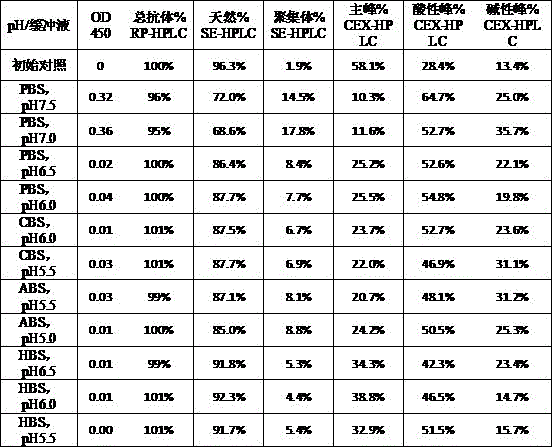
BIPI protein was dissolved in 20 mM Phosphate Buffer Solution (PBS), Citrate Buffer Solution (CBS), Acetate Buffer Solution (ABS) and Histidine Buffer Solution (HBS) at different pH values at a concentration of 20 mg/mL, respectively, and left at 45 ℃ for 28 days, and then protein distribution in the solution was analyzed by reverse phase chromatography (RP-HPLC), size exclusion chromatography (SE-HPLC) and cation exchange chromatography (CEX-HPLC), respectively, and the results of the analysis were shown in Table 2 with the initial sample not incubated at 45 ℃ as a control.
TABLE 2 Effect of different buffers on the stability of BiPI recombinant proteins
Figure DEST_PATH_IMAGE002
The results indicate that the use of 20 mM histidine buffer pH6.0 is most beneficial for stabilization of the BiPI recombinant protein from the standpoint of aggregate and charge heteroplasmon formation.
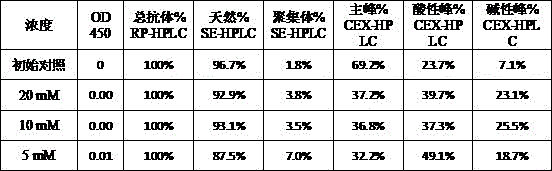
To further optimize the buffer concentration, the above analysis was repeated using 20 mM, 10 mM, and 5 mM histidine buffer pH6.0, respectively, and the results are shown in Table 3.
TABLE 3 Effect of different histidine buffers on the stability of BiPI recombinant proteins
Figure DEST_PATH_IMAGE004
The results show that similar results were obtained at 20 mM and 10 mM concentrations, whereas the results were significantly reduced at 5 mM concentration, and therefore 10 mM ph6.0 histidine buffer was selected as the buffer for the BiPI recombinant protein formulation.
Example 3 Effect of different surfactants on the stability of proteins of interest
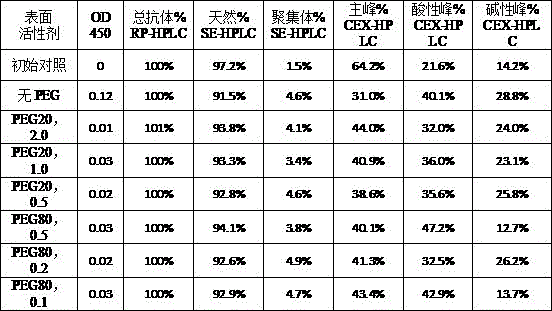
BIPI protein was dissolved in 10 mM histidine buffer pH6.0 to which polysorbate 20 (PEG 20) and polysorbate 80 (PEG 80) were added at different concentrations at a concentration of 50 mg/mL, respectively, and left at 45 ℃ for 28 days, and then protein distribution in the solution was analyzed by reverse phase chromatography (RP-HPLC), size exclusion chromatography (SE-HPLC), and cation exchange chromatography (CEX-HPLC), respectively, with the initial sample without incubation at 45 ℃ and the sample without polysorbate added as controls, respectively, and the analysis results are shown in Table 4.
TABLE 4 Effect of different surfactants on the stability of BiPI recombinant proteins
Figure DEST_PATH_IMAGE006
The concentration units of PEG20 and PEG80 in the above table are mg/mL.
The results show that the addition of nonionic surfactants such as PEG20 and PEG80 helps to enhance the stability of BiPI at a concentration of 50 mg/mL, but the effects of different concentrations of PEG20 and PEG80 are not significantly different, so that 0.1 mg/mL of polysorbate 80 (PEG 80) is selected as a preparation component.
Example 4 Effect of different saccharides on the stability of proteins of interest
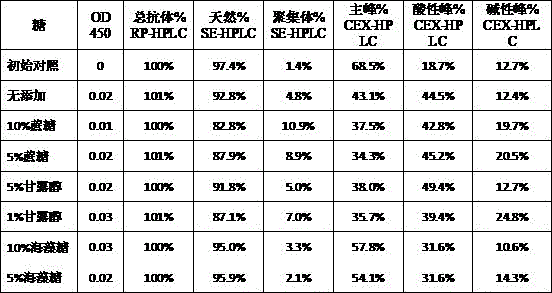
BIPI protein was dissolved in 10 mM, pH6.0 histidine buffer supplemented with various concentrations of saccharides and 0.1 mg/mL polysorbate 80 at a concentration of 50 mg/mL, respectively, left at 45 ℃ for 28 days, and then the protein distribution in the solution was analyzed by reverse phase chromatography (RP-HPLC), size exclusion chromatography (SE-HPLC), and cation exchange chromatography (CEX-HPLC), respectively, with the initial sample not incubated at 45 ℃ and the sample without saccharides, respectively, as controls, and the analysis results are shown in Table 5.
TABLE 5 Effect of different saccharides on the stability of BiPI recombinant proteins
Figure DEST_PATH_IMAGE008
The results show that the stability of BiPI is improved most strongly by addition of trehalose, but the effect of trehalose at 10%, 5% concentration is not significantly different, so 5% (equivalent to 50 mg/mL) trehalose was chosen as a formulation component.
Example 5 testing of BiPI recombinant protein formulations for stability at different storage temperatures
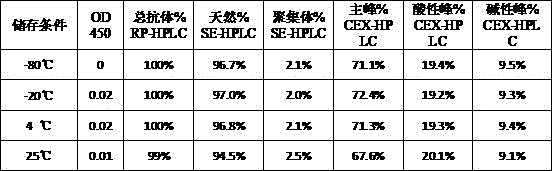
The BIPI protein was formulated according to the formulation and method described in example 1, stored at-80 deg.C, -20 deg.C, 4 deg.C, and 25 deg.C for 6 months, and then analyzed by reverse phase chromatography (RP-HPLC), size exclusion chromatography (SE-HPLC), and cation exchange chromatography (CEX-HPLC) for protein distribution, and the results are shown in Table 6
TABLE 6 detection of BiPI recombinant protein formulations for stability at different storage temperatures
Figure DEST_PATH_IMAGE010
The results show that the preparation has no change in molecular distribution when stored at-80 deg.C, -20 deg.C and 4 deg.C for 6 months, the protein purity of SE-HPLC analysis is still above 95%, and the proportion of aggregate, acidic peak and alkaline peak has no obvious change. But the distribution of molecules stored at 25 ℃ for 6 months changed slightly with considerable attention.
Example 6 flow cytometry assay for bispecific binding Capacity of BiPI recombinant proteins after storage
BiPI samples from example 5 stored at-80 deg.C, -20 deg.C, 4 deg.C, 25 deg.C for 6 months were examined by flow cytometry as follows:
(1) collecting CT26 cells (mouse colon cancer cells) in good growth state into a 15 mL centrifuge tube, centrifuging at 1000 rpm for 5 minutes, pouring out the upper culture solution, and resuspending the cells in PBS solution containing 1% FBS;
(2) the cells were counted and counted at 2X 10⁶Adding the amount of each cell/tube into a flow tube, wherein each tube is 100 mu L, and three multiple holes are arranged;
(3) respectively diluting BiPI and IgG at the initial concentration of 10 mu g/mL and 2 times, diluting each group with three wells for 12 concentrations, respectively vertically adding 100 mu L of diluted experimental medicine and control into a flow tube, shaking for 3 seconds to fully mix cells and antibodies, covering with tinfoil paper, and placing in a refrigerator at 4 ℃ for 1 hour;
(4) centrifuging the flow tube at 1000 rpm for 5 min, pouring out the upper layer liquid rapidly without shaking to avoid cell loss at the bottom of the tube, adding 1% FBS-containing PBS solution at 200 μ L/tube volume, shaking, mixing, centrifuging again, repeating the step for 2 times, and washing off unbound antibody on the cell surface;
(5) adding a rabbit anti-human IL-2 secondary antibody (diluted at a ratio of 1: 300) marked by PE, adding into a flow tube at a rate of 100 mu L/tube, shaking and uniformly mixing, and incubating for 45 min at 4 ℃ in a dark place;
(6) after repeating the step (4), after washing the cells for 2 times, resuspending the cells in 200. mu.L of PBS containing 1% FBS, shaking and mixing the cells uniformly, detecting the fluorescence reading on a machine, and then plotting the fluorescence reading against the concentration of BiPI (see FIG. 1).
The EC50 values of BiPI samples stored at-80 deg.C, -20 deg.C, 4 deg.C, 25 deg.C for 6 months were 0.486 mg/mL, 0.501 mg/mL, 0.522 mg/mL, 0.619 mg/mL, respectively, as determined by curve analysis, indicating that BiPI protein retains binding activity against PD-L1 and IL-2 well during low temperature storage at-20 deg.C to 4 deg.C after use of the formulation listed in example 1.
Sequence listing
<110> Shanghai Baimeibo pharmaceutical Co., Ltd
<120> preparation of recombinant immunocytokine
<160> 2
<170> SIPOSequenceListing 1.0
<210> 1
<211> 214
<212> PRT
<213> Artificial Sequence (Artificial Sequence)
<400> 1
Asp Ile Gln Met Thr Gln Ser Pro Ser Ser Leu Ser Ala Ser Val Gly
1 5 10 15
Asp Arg Val Thr Ile Thr Cys Arg Ala Ser Gln Asp Val Ser Thr Ala
20 25 30
Val Ala Trp Tyr Gln Gln Lys Pro Gly Lys Ala Pro Lys Leu Leu Ile
35 40 45
Tyr Ser Ala Ser Phe Leu Tyr Ser Gly Val Pro Ser Arg Phe Ser Gly
50 55 60
Ser Gly Ser Gly Thr Asp Phe Thr Leu Thr Ile Ser Ser Leu Gln Pro
65 70 75 80
Glu Asp Phe Ala Thr Tyr Tyr Cys Gln Gln Tyr Leu Tyr His Pro Ala
85 90 95
Thr Phe Gly Gln Gly Thr Lys Val Glu Ile Lys Arg Thr Val Ala Ala
100 105 110
Pro Ser Val Phe Ile Phe Pro Pro Ser Asp Glu Gln Leu Lys Ser Gly
115 120 125
Thr Ala Ser Val Val Cys Leu Leu Asn Asn Phe Tyr Pro Arg Glu Ala
130 135 140
Lys Val Gln Trp Lys Val Asp Asn Ala Leu Gln Ser Gly Asn Ser Gln
145 150 155 160
Glu Ser Val Thr Glu Gln Asp Ser Lys Asp Ser Thr Tyr Ser Leu Ser
165 170 175
Ser Thr Leu Thr Leu Ser Lys Ala Asp Tyr Glu Lys His Lys Val Tyr
180 185 190
Ala Cys Glu Val Thr His Gln Gly Leu Ser Ser Pro Val Thr Lys Ser
195 200 205
Phe Asn Arg Gly Glu Cys
210
<210> 2
<211> 599
<212> PRT
<213> Artificial Sequence (Artificial Sequence)
<400> 2
Glu Val Gln Leu Val Glu Ser Gly Gly Gly Leu Val Gln Pro Gly Gly
1 5 10 15
Ser Leu Arg Leu Ser Cys Ala Ala Ser Gly Phe Thr Phe Ser Asp Ser
20 25 30
Trp Ile His Trp Val Arg Gln Ala Pro Gly Lys Gly Leu Glu Trp Val
35 40 45
Ala Trp Ile Ser Pro Tyr Gly Gly Ser Thr Tyr Tyr Ala Asp Ser Val
50 55 60
Lys Gly Arg Phe Thr Ile Ser Ala Asp Thr Ser Lys Asn Thr Ala Tyr
65 70 75 80
Leu Gln Met Asn Ser Leu Arg Ala Glu Asp Thr Ala Val Tyr Tyr Cys
85 90 95
Ala Arg Arg His Trp Pro Gly Gly Phe Asp Tyr Trp Gly Gln Gly Thr
100 105 110
Leu Val Thr Val Ser Ser Ala Ser Thr Lys Gly Pro Ser Val Phe Pro
115 120 125
Leu Ala Pro Ser Ser Lys Ser Thr Ser Gly Gly Thr Ala Ala Leu Gly
130 135 140
Cys Leu Val Lys Asp Tyr Phe Pro Glu Pro Val Thr Val Ser Trp Asn
145 150 155 160
Ser Gly Ala Leu Thr Ser Gly Val His Thr Phe Pro Ala Val Leu Gln
165 170 175
Ser Ser Gly Leu Tyr Ser Leu Ser Ser Val Val Thr Val Pro Ser Ser
180 185 190
Ser Leu Gly Thr Gln Thr Tyr Ile Cys Asn Val Asn His Lys Pro Ser
195 200 205
Asn Thr Lys Val Asp Lys Lys Val Glu Pro Lys Ser Cys Asp Lys Thr
210 215 220
His Thr Cys Pro Pro Cys Pro Ala Pro Glu Leu Leu Gly Gly Pro Ser
225 230 235 240
Val Phe Leu Phe Pro Pro Lys Pro Lys Asp Thr Leu Met Ile Ser Arg
245 250 255
Thr Pro Glu Val Thr Cys Val Val Val Asp Val Ser His Glu Asp Pro
260 265 270
Glu Val Lys Phe Asn Trp Tyr Val Asp Gly Val Glu Val His Asn Ala
275 280 285
Lys Thr Lys Pro Arg Glu Glu Gln Tyr Ala Ser Thr Tyr Arg Val Val
290 295 300
Ser Val Leu Thr Val Leu His Gln Asp Trp Leu Asn Gly Lys Glu Tyr
305 310 315 320
Lys Cys Lys Val Ser Asn Lys Ala Leu Pro Ala Pro Ile Glu Lys Thr
325 330 335
Ile Ser Lys Ala Lys Gly Gln Pro Arg Glu Pro Gln Val Tyr Thr Leu
340 345 350
Pro Pro Ser Arg Glu Glu Met Thr Lys Asn Gln Val Ser Leu Thr Cys
355 360 365
Leu Val Lys Gly Phe Tyr Pro Ser Asp Ile Ala Val Glu Trp Glu Ser
370 375 380
Asn Gly Gln Pro Glu Asn Asn Tyr Lys Thr Thr Pro Pro Val Leu Asp
385 390 395 400
Ser Asp Gly Ser Phe Phe Leu Tyr Ser Lys Leu Thr Val Asp Lys Ser
405 410 415
Arg Trp Gln Gln Gly Asn Val Phe Ser Cys Ser Val Met His Glu Ala
420 425 430
Leu His Asn His Tyr Thr Gln Lys Ser Leu Ser Leu Ser Pro Gly Gly
435 440 445
Gly Gly Ser Gly Gly Gly Gly Ser Gly Gly Gly Gly Ser Gly Gly Gly
450 455 460
Gly Ser Ala Pro Thr Ser Ser Ser Thr Lys Lys Thr Gln Leu Gln Leu
465 470 475 480
Glu His Leu Leu Leu Thr Leu Gln Met Ile Leu Asn Gly Ile Asn Asn
485 490 495
Tyr Lys Asn Pro Lys Leu Thr Arg Met Leu Thr Phe Lys Phe Tyr Met
500 505 510
Pro Lys Lys Ala Thr Glu Leu Lys His Leu Gln Cys Leu Glu Glu Glu
515 520 525
Leu Lys Pro Leu Glu Glu Val Leu Asn Leu Ala Gln Ser Lys Asn Phe
530 535 540
His Leu Arg Pro Arg Asp Leu Ile Ser Asn Ile Asn Val Ile Val Leu
545 550 555 560
Glu Leu Lys Gly Ser Glu Thr Thr Phe Met Cys Glu Tyr Ala Asp Glu
565 570 575
Thr Ala Thr Ile Val Glu Phe Leu Asn Arg Trp Ile Thr Phe Cys Gln
580 585 590
Ser Ile Ile Ser Thr Leu Thr
595

Claims (2)

1.一种重组免疫细胞因子的制剂,其特征是,包括以下剂量或浓度的重组免疫细胞因子和辅料:1. a preparation of recombinant immune cytokines, is characterized in that, comprises the recombinant immune cytokines and adjuvant of following dosage or concentration: 重组免疫细胞因子,20 mg/mL~50 mg/mL;Recombinant immunocytokine, 20 mg/mL~50 mg/mL; 组氨酸,1.55±0.5 mg/mL;Histidine, 1.55±0.5 mg/mL; 聚山梨酯80(PEG80),0.1±0.01 mg/mL;Polysorbate 80 (PEG80), 0.1±0.01 mg/mL; 海藻糖,50±5 mg/mL;Trehalose, 50±5 mg/mL; 盐酸,调溶液pH至6.0±0.3;Hydrochloric acid, adjust the pH of the solution to 6.0±0.3; 所述的重组免疫细胞因子由具有SEQ ID NO: 1的肽链和SEQ ID NO:2的肽链通过二硫键链接而成。The recombinant immunocytokine is formed by linking a peptide chain with SEQ ID NO: 1 and a peptide chain with SEQ ID NO: 2 through disulfide bonds. 2.根据权利要求1所述的重组免疫细胞因子的制剂,其特征是,包括以下剂量或浓度的重组免疫细胞因子和辅料:2. The preparation of recombinant immune cytokines according to claim 1, is characterized in that, comprises the recombinant immune cytokines and adjuvant of following dosage or concentration: 重组免疫细胞因子,50 mg/mL;Recombinant immunocytokine, 50 mg/mL; 组氨酸,1.55 mg/mL;Histidine, 1.55 mg/mL; PEG80,0.1 mg/mL;PEG80, 0.1 mg/mL; 海藻糖,50 mg/mL;Trehalose, 50 mg/mL; 盐酸,调溶液pH至6.0;Hydrochloric acid, adjust the pH of the solution to 6.0; 所述的重组免疫细胞因子由具有SEQ ID NO: 1的肽链和SEQ ID NO:2的肽链通过二硫键链接而成。The recombinant immunocytokine is formed by linking a peptide chain with SEQ ID NO: 1 and a peptide chain with SEQ ID NO: 2 through disulfide bonds.
CN202010861839.XA 2020-08-25 2020-08-25 A preparation of recombinant immune cytokine Active CN114099424B (en)

Priority Applications (1)

Application Number Priority Date Filing Date Title
CN202010861839.XA CN114099424B (en) 2020-08-25 2020-08-25 A preparation of recombinant immune cytokine

Applications Claiming Priority (1)

Application Number Priority Date Filing Date Title
CN202010861839.XA CN114099424B (en) 2020-08-25 2020-08-25 A preparation of recombinant immune cytokine

Publications (2)

Publication Number Publication Date
CN114099424A true CN114099424A (en) 2022-03-01
CN114099424B CN114099424B (en) 2025-03-14

Family

ID=80373819

Family Applications (1)

Application Number Title Priority Date Filing Date
CN202010861839.XA Active CN114099424B (en) 2020-08-25 2020-08-25 A preparation of recombinant immune cytokine

Country Status (1)

Country Link
CN (1) CN114099424B (en)

Citations (4)

* Cited by examiner, † Cited by third party
Publication number Priority date Publication date Assignee Title
AU2016213875A1 (en) * 2006-12-21 2016-09-01 Amgen Inc. Stable Buffered Formulations Containing Polypeptides
CN107915777A (en) * 2016-10-09 2018-04-17 泰州迈博太科药业有限公司 A kind of recombinant immune cell factor and its application
CN109310628A (en) * 2016-06-30 2019-02-05 赛特瑞恩股份有限公司 Stable Liquid Pharmaceutical Formulations
CN110623921A (en) * 2019-08-15 2019-12-31 北京东方百泰生物科技有限公司 Bispecific antibody injection preparation for resisting CD3 and CD19

Patent Citations (4)

* Cited by examiner, † Cited by third party
Publication number Priority date Publication date Assignee Title
AU2016213875A1 (en) * 2006-12-21 2016-09-01 Amgen Inc. Stable Buffered Formulations Containing Polypeptides
CN109310628A (en) * 2016-06-30 2019-02-05 赛特瑞恩股份有限公司 Stable Liquid Pharmaceutical Formulations
CN107915777A (en) * 2016-10-09 2018-04-17 泰州迈博太科药业有限公司 A kind of recombinant immune cell factor and its application
CN110623921A (en) * 2019-08-15 2019-12-31 北京东方百泰生物科技有限公司 Bispecific antibody injection preparation for resisting CD3 and CD19

Non-Patent Citations (3)

* Cited by examiner, † Cited by third party
Title
XI CHEN等: "Therapeutic efficacy of an anti-PD-L1 antibody based immunocytokine in a metastatic mouse model of colorectal cancer", 《BIOCHEMICAL AND BIOPHYSICAL RESEARCH COMMUNICATIONS》, vol. 480, no. 2016, 5 October 2016 (2016-10-05), pages 160 - 165, XP029784153, DOI: 10.1016/j.bbrc.2016.10.011 *
吴晓丽;杨青;罗建军;: "抗体A的制剂处方研究", 食品与发酵科技, no. 01, 25 February 2017 (2017-02-25), pages 9 - 14 *
陈曦: "靶向程序性死亡因子配体1的新型免疫细胞因子的制备及抗肿瘤功能研究", 《中国优秀硕士学位论文全文数据库 (医药卫生科技辑)》, no. 2017, 15 May 2017 (2017-05-15), pages 1 - 57 *

Also Published As

Publication number Publication date
CN114099424B (en) 2025-03-14

Similar Documents

Publication Publication Date Title
CN110437339B (en) Fusion protein type prodrug with interleukin 15 as active component
CN112426526B (en) A kind of preparation method of NK cell and its application in the treatment of cancer
CN105189562B (en) IL-15 heterodimeric protein and use thereof
CN113248625B (en) Fusion protein, gene encoding fusion protein, recombinant vector and their application
JP2022524018A (en) IL-10 Variant Molecules and Methods for Treating Inflammatory Diseases and Tumors
WO2021253360A1 (en) Activatable procytokines
US12145007B2 (en) Dual cytokine fusion proteins comprising IL-10
CN110623921B (en) Bispecific antibody injection preparation for resisting CD3 and CD19
CN112679615B (en) Fusion protein
CN118598975A (en) Interleukin-21 mutant and its application
WO2023086929A1 (en) Sirp1a - and cd40l-based chimeric proteins
KR20240057442A (en) Bispecific NK cell agonist, manufacturing method and application
CN111920948B (en) Pharmaceutical composition comprising immune cells for treating cancer
CN114099424B (en) A preparation of recombinant immune cytokine
CN116848137A (en) Anti-GDF15 antibodies and dosing regimens for the treatment of cancer
CN118373896B (en) Bifunctional fusion proteins of anti-PD-1 antibodies and IL-2 mutants
EP4643886A1 (en) Anti-cd33/cll1 bispecific antibody-natural killer cell conjugate and use thereof
JP5227028B2 (en) Formulation for immunotherapy having neutralizing ability of interleukin-2
CN118613277A (en) Peptide modulators
CN115581766A (en) PD-L1/TGF beta combined bifunctional antibody fusion protein liquid preparation
CN115154598A (en) anti-PD-1/VEGF bispecific antibody liquid preparation
RU2836849C2 (en) Il-10 variant molecules and method of treating malignant tumour
CN114099423A (en) Preparation of targeting CD47 and PD-L1 bifunctional fusion protein
WO2024037322A1 (en) IL-15 MUTANT-FC/IL-15Rα SUBUNIT-FC HETERODIMER AND USE THEREOF
KR20250135294A (en) IL-15 agonists for cancer

Legal Events

Date Code Title Description
PB01 Publication
PB01 Publication
SE01 Entry into force of request for substantive examination
TA01 Transfer of patent application right

Effective date of registration: 20241017

Address after: 312000 plot west of the intersection of Wangjiang Road and Yunfan Road in Lihai Street, Yuecheng District, Shaoxing City, Zhejiang Province

Applicant after: Yuehai Baiao Pharmaceutical (Shaoxing) Co.,Ltd.

Country or region after: China

Address before: 201 203 No. 301 Li Bing Road, Pudong New Area, Shanghai

Applicant before: Shanghai Biomabs Pharmaceuticals Co.,Ltd.

Country or region before: China

Applicant before: SHANGHAI ZHANGJIANG BIOTECHNOLOGY Co.,Ltd.

Applicant before: Yuehai Baiao Pharmaceutical (Shaoxing) Co.,Ltd.

GR01 Patent grant
GR01 Patent grant
TR01 Transfer of patent right

Effective date of registration: 20250425

Address after: No. 301 Libing Road, China (Shanghai) Pilot Free Trade Zone, Pudong New Area, Shanghai, 200120

Patentee after: SHANGHAI MAITAI JUNAO BIOTECHNOLOGY CO.,LTD.

Country or region after: China

Address before: 312000 plot west of the intersection of Wangjiang Road and Yunfan Road in Lihai Street, Yuecheng District, Shaoxing City, Zhejiang Province

Patentee before: Yuehai Baiao Pharmaceutical (Shaoxing) Co.,Ltd.

Country or region before: China