Disclosure of Invention
In view of this, embodiments of the present invention provide a method, an apparatus, a system and related devices for generating a test sequence, so as to reduce the labor cost for generating the test sequence.
In order to achieve the above object, the embodiments of the present invention provide the following technical solutions.
In a first aspect, an embodiment of the present invention provides a method for generating a test sequence, including:
obtaining a description file of a test case, wherein the description file comprises control logic of the test case, and the control logic of the test case is at least used for describing the logical relationship of each test element in the test case;
analyzing the description file to determine test elements in the test case;
obtaining the constraint corresponding to the test element from a basic rule base; wherein the basic rule base at least comprises basic constraints of the test elements;
and generating a test sequence corresponding to the test case based on the description file and the constraint in the basic rule base.
Optionally, before obtaining the description file of the test case, the method further includes:
and constructing a basic rule base corresponding to the application scene of the test case, wherein the basic rule base at least comprises basic constraints of each test element based on the application scene.
Optionally, the constructing a basic rule base corresponding to an application scenario of the test case includes:
acquiring a rule file, wherein the rule file is used for describing basic constraints of test elements;
analyzing the rule file and determining the basic constraint of the test element;
and constructing and forming a basic rule base based on the basic constraint of the test element.
Optionally, the constructing forms a basic rule base, including:
configuring basic constraints of test elements in an application scene of the test case;
and configuring basic rules under the application scene of the test case.
Optionally, in the step of generating the test sequence corresponding to the test case, specifically, a test sequence file is generated, where the test sequence file includes the test sequence and a constraint for generating the test sequence.
Optionally, the test sequence includes a plurality of parts, and in the test sequence file, each part of the test sequence corresponds to a constraint for generating the part of the test sequence.
Optionally, after obtaining the constraint corresponding to the test element from the basic rule base, before generating the test sequence corresponding to the test case based on the description file and the constraint in the basic rule base, the method includes:
determining whether the basic rule base has the constraint of all test elements in the test case;
if yes, determining whether the constraint range of the test element in the description file is in the constraint range of the corresponding test element in the basic rule base based on the constraint of each test element in the basic rule base,
and if so, executing the step of generating a test sequence corresponding to the test case based on the description file and the constraint in the basic rule base.
Optionally, the generating a test sequence corresponding to the test case based on the description file and the constraint in the basic rule base includes:
determining a previous value of the test element in the test case;
and determining the current value of the test element based on the previous value of the test element and the constraint corresponding to the test element.
Optionally, the generating a test sequence corresponding to the test case includes:
acquiring type information of a test sequence for generation;
and calling a processing subfunction of the instruction type corresponding to the type information to generate a test sequence.
Optionally, in the step of parsing the description file and determining the test elements in the test case, the parsing process further determines constraints corresponding to the test elements in the description file;
and generating a test sequence corresponding to the test case based on the description file and the constraints in the basic rule base, specifically, generating the test sequence corresponding to the test case based on the control logic of the test case and the constraints corresponding to the test elements in the description file and the constraints corresponding to the test elements in the basic rule base.
Optionally, the basic constraint includes: and the hardware constraint and the software constraint of each test element under the application scene are at least one of bit width, address and occupied storage space of the test case, and the software constraint is at least one of a data format of the test case, a data type of the test element and an RTL design rule corresponding to the test element.
Optionally, the description file is in an xml format, and the description file is analyzed to determine the test elements in the test case, specifically, a script tool is used to analyze the description file to determine the test elements in the test case.
Optionally, the rule file is in an xsd format, and the rule file is analyzed, specifically, the rule file is analyzed by using a script tool.
In a second aspect, an embodiment of the present invention provides a test sequence generation apparatus, including:
the file acquisition module is used for acquiring a description file of a test case, wherein the description file comprises control logic of the test case, and the control logic of the test case is at least used for describing the logic relationship of each test element in the test case;
the file analysis module is used for analyzing the description file and determining the test elements in the test case;
the constraint obtaining module is used for obtaining the constraint corresponding to the test element from the basic rule base; wherein the basic rule base at least comprises basic constraints of the test elements;
and the sequence generation module is used for generating a test sequence corresponding to the test case based on the description file and the constraint in the basic rule base.
Optionally, the test sequence generating apparatus further includes:
and the rule base building module is used for building a basic rule base corresponding to the application scene of the test case, and the basic rule base comprises basic constraints at least based on each test element under the application scene.
In a third aspect, an embodiment of the present invention provides a chip verification system, where the chip verification system is configured to execute the test sequence generation method according to the first aspect.
In a fourth aspect, an embodiment of the present invention provides a computer device, including at least one memory and at least one processor; the memory stores one or more computer-executable instructions that are invoked by the processor to perform the test sequence generation method as described above in relation to the first aspect.
In a fifth aspect, embodiments of the present invention provide a storage medium storing one or more computer-executable instructions for performing the test sequence generation method according to the first aspect.
The embodiment of the invention provides a method, a device, a system and related equipment for generating a test sequence, wherein the method comprises the following steps: obtaining a description file of a test case, wherein the description file comprises control logic of the test case, and the control logic of the test case is at least used for describing the logic relationship of each test element in the test case; analyzing the description file to determine test elements in the test case; obtaining the constraint corresponding to the test element from a basic rule base; wherein the basic rule base at least comprises basic constraints of the test elements; and generating a test sequence corresponding to the test case based on the description file and the constraint in the basic rule base.
It can be seen that, in the test sequence generation method in the embodiment of the present invention, the generation of the test sequence is realized based on the description file and the constraint of the test element in the test case acquired from the basic rule base after the description file is analyzed, so that the constraint in the basic rule base does not need to be described in the description file, the number of constraints written in the description file is reduced, the labor cost consumed for writing the test case is reduced, and the labor cost consumed for generating the test sequence is reduced.
Detailed Description
The technical solutions in the embodiments of the present invention will be clearly and completely described below with reference to the drawings in the embodiments of the present invention, and it is obvious that the described embodiments are only a part of the embodiments of the present invention, and not all of the embodiments. All other embodiments, which can be derived by a person skilled in the art from the embodiments given herein without making any creative effort, shall fall within the protection scope of the present invention.
Based on the background art, in the verification process of the existing chip design, a large amount of labor cost is required to be consumed in a mode of generating a test sequence.
This is because, in the verification process of chip design, a large number of constraints need to be set to generate a test sequence that meets the conditions, so that the method for generating a sequence needs to consume a large amount of labor cost to set the constraints.
Based on this, the embodiment of the present invention provides a method, an apparatus, a system and related devices for generating a test sequence, where the method includes: obtaining a description file of a test case, wherein the description file comprises control logic of the test case, and the control logic of the test case is at least used for describing the logic relationship of each test element in the test case; analyzing the description file and determining test elements in the test case; obtaining the constraint corresponding to the test element from a basic rule base; wherein the basic rule base at least comprises basic constraints of the test elements; and generating a test sequence corresponding to the test case based on the description file and the constraint in the basic rule base.
It can be seen that, in the test sequence generation method in the embodiment of the present invention, the generation of the test sequence is realized based on the description file and the constraint of the test element in the test case acquired from the basic rule base after the description file is analyzed, so that the constraint in the basic rule base does not need to be described in the description file, the number of constraints written in the description file is reduced, the labor cost consumed for writing the test case is reduced, and the labor cost consumed for generating the test sequence is reduced.
Fig. 1 schematically shows an alternative flowchart of a test sequence generation method provided by an embodiment of the present invention. As shown in fig. 1, the test sequence generation method may include:
step S10: constructing a basic rule base corresponding to the application scene of the test case;
the basic rule base comprises basic constraints based on at least each test element under the application scene.
The test case can be composed of test elements, and a complete test case can be formed based on the logical relationship between the test elements and the corresponding constraint of each test element. The test element may be understood as an element (element) of a test case, for example, a variable in the test case, and referring to the test element example diagram of the test case shown in fig. 2, the test element in the test case may be an operation code (opcode), a command (command), an address (addr), data (data), and the like.
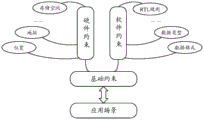
Before writing the description file of the test case, a corresponding basic rule base can be constructed first. The basic rule base is used for describing a constraint shared by test cases in a specific environment as a basic constraint, and referring to an example diagram of the basic constraint shown in fig. 3, the basic rule base may be directed to a test case in an application scenario, and correspondingly, the basic rule base may describe a constraint shared by test elements in the application scenario; or, the basic rule base may be directed to a test case in a project group in an application scenario, and correspondingly, constraints shared by test elements in the project group in the application scenario may be described in the basic rule base, and the shared constraints are used to reflect basic rules of the corresponding test case.
Based on different application scenarios, the hardware environments corresponding to the test cases are different, and therefore, the basic rule base at least aims at one application scenario. Correspondingly, the basic rule base forms the basic constraint of the test element at least based on the test logic of the application scenario.
With continued reference to fig. 3, the basic constraints at least include hardware constraints of the test element corresponding to the application scenario, where the hardware constraints may be, for example, at least one of bit width, address, and occupied storage space of the test element. Of course, in some alternative examples, the base constraint may further include a software constraint of the corresponding test element in the application scenario, for example, a data format of the test element, a data type of the test element, an RTL (Register Transfer Level) design rule corresponding to the test element, and the like.
In an alternative example, the basic rule base is used to define all elements (elements) used in an application scenario (e.g., the entire access verification environment), and the definition of the elements may include, for example, constraints on bit widths and value ranges of the elements, and constraints on value methods of random numbers of the elements. The constraint on the value method of the random number of the element may be, for example, any one or more of the following cases: (i) a completely random value within a constrained range; (ii) when a plurality of instruction groups need to be sent, the value of an element in each instruction is automatically strengthened to a fixed value; (iii) in a single instruction set, each cycle (clock cycle) automatically enforces a fixed value, etc.
It is understood that the more specific the specific environment to be addressed, the more common constraints are and the smaller the scope of the constraints is, and the more fundamental constraints are embodied and the smaller the scope of the constraints is in the basic rule base. For example, in an application scenario, the corresponding basic constraints may only be hardware constraints and more basic software constraints of the application scenario, and in a project group in an application scenario, the corresponding basic constraints may further include constraints that are common to the test elements in the project group, for example, a value range of the test element, attribute parameters of the test element in the project group, and an RTL design rule that is further defined by the test element in the project group.
The more constraints provided in the basic rule base, the less constraints which need to be written in the description files of the corresponding test cases, and the less labor cost is consumed.
In an optional example, the basic rule base may be a hash (hash) database, and the basic constraint therein may be described by using Schema technology, and of course, in other examples, the basic rule base may also be a B + tree database, a fix-length database, a table database, and the like.
The basic rule base may further perform configuration of basic rules, for example, configure a random mechanism, so that the generated test sequence is randomized on the premise of meeting corresponding constraints. In a further example, the basic rule base may further perform configuration of basic rules according to requirements, and the present invention is not specifically limited herein.
After the basic rule base defines the basic restriction, the description file of the test case can be written. It is understood that, in the case that the application scenario is fixed, the basic rule base may also be constructed in advance, so that the corresponding example may not include step S10, and further, the description file may be written directly based on the basic rule base, and further, step S11 to step S14 are performed to generate the corresponding test sequence.
Next, with continued reference to fig. 1, step S11 is performed: obtaining a description file of a test case;
the description file comprises control logic of the test case, and the control logic of the test case is at least used for constraining the logic relationship of each test element in the test case;
in an optional example, referring to the structural example diagram of the test case shown in fig. 4, the test case may include Environment settings (Environment), start settings (Setup), test flows (Steps), Result settings (Result), and the like, where the Environment settings may include corresponding hardware constraints and partial basic software constraints, and may be stored in a basic rule base as basic constraints, and at least part of the constraints in the start settings may be stored in the basic rule base as common constraints, or all the constraints in the start settings may be stored in the basic rule base; the test flow and the result are set as control logic of the test case and can be described in a description file of the test case; or, in other embodiments, a constraint that a part of the test flow and the result setting can be commonly used may be further stored in the basic rule base, so as to further simplify the description file, and of course, at least the main logic of the control logic of the test case should be retained in the description file.
The description file may be in an xml (Extensible Markup Language) format, and is used for organizing and storing data of a corresponding test case, but does not participate in operations such as data generation, reading, transmission, and storage.
The number of constraints in the description file is reduced, so that the probability of write errors in the writing process of the corresponding description file is greatly reduced. Meanwhile, with the reduction of the number of constraints in the description file, the labor cost consumed for checking the description file is also reduced.
Based on the embodiment of the invention, the description file comprises the control logic for describing the logical relationship of each test element in the test case, so that a tester can clearly and intuitively determine the logical structure of the test case, further constraint conflicts possibly generated under multi-layer constraints are avoided, and the modification and multiplexing of the test case are easy to realize.
Next, with continued reference to fig. 1, step S12 is performed: analyzing the description file and determining test elements in the test case;
based on the description in the description file, the test elements in the description file can be determined in an analytic mode. The description file may be in an xml format, and correspondingly, a script tool may be used to analyze the description file to determine the test elements in the test case.
It is understood that the description file may include both the control logic of the test case and the constraint of the corresponding test element, and in an alternative example, in step S12, the constraint corresponding to each test element in the description file may also be simultaneously parsed and determined, so that the partial parsing result may be directly utilized in a subsequent step to generate a corresponding test sequence.
With continued reference to fig. 1, step S13 is performed: obtaining the constraint corresponding to the test element from a basic rule base;
based on the basic constraint of at least the test element included in the basic rule base, the constraint of the corresponding test element can be obtained from the basic rule base. Specifically, based on the test element, a constraint corresponding to the test element may be found.
Specifically, whether the basic rule base contains the constraint corresponding to the test element or not can be determined in a query mode. When the corresponding constraint is inquired, the constraint is obtained.
With continued reference to fig. 1, step S14 is performed: generating a test sequence corresponding to the test case based on the constraint in the description file and the constraint in the basic rule base;
after the constraints in the basic rule base are obtained, a test sequence corresponding to the test case can be generated based on the constraints in the description file and the constraints in the basic rule base.
When the description file includes both the control logic of the test case and the constraints corresponding to the test elements, this step may specifically be to generate a test sequence corresponding to the test case based on the control logic of the test case and the constraints corresponding to the test elements in the description file, and the constraints corresponding to the test elements in the basic rule base.
In an optional example, the test sequence generated in step S14 may be in the form of a file, and correspondingly, the test sequence corresponding to the test case is generated, specifically, a test sequence file is generated, and the test sequence file includes the test sequence. In order to improve readability of the test sequence file, in a further optional example, the test sequence file further includes a constraint for generating the test sequence, wherein the test sequence may further be divided into a plurality of portions, and the test sequence of each portion may correspond to the constraint for generating the test sequence of the portion one to one, so that a tester can intuitively know the test sequence and the constraint corresponding to the test sequence.
Referring to fig. 5, an example of a structure of a test sequence file is shown, wherein the test sequence file includes a portion 11, a portion 12, and a portion 13, wherein the portion 11 corresponds to a constraint 21, and the constraint 21 is correspondingly disposed on one side of the portion 11; the part 12 corresponds to the constraint 22, and the constraint 22 is correspondingly arranged on one side of the part 12; the portion 13 corresponds to the constraint 23 and the constraint 23 is disposed on the side of the portion 13. It is understood that fig. 5 only shows one arrangement manner of the test sequence file, and in other alternative examples, other arrangement manners may also be adopted, for example, corresponding constraints are correspondingly arranged above the portions, and the like, and the embodiment of the present invention is not specifically limited herein.
It should be noted that, in the method for generating a test sequence according to the embodiment of the present invention, constraints of different test elements may be obtained based on a basic rule base, so that the test sequence may be generated without describing too many redundant constraints in a description file, and the labor cost required for generating the test sequence is reduced. Moreover, excessive redundant constraint does not need to be described based on the description file, so that the structure is clear, the hierarchy is clear, the adjustment and the reuse are simpler and more convenient when being needed, and the labor cost is further saved.
It can be understood that the description file includes the control logic of the test case, and excessive basic constraints do not need to be written, so that the data structure and the control level of the test case can be clearly and accurately embodied in the description file, and therefore, in the subsequent adjustment process of the test case, the position to be adjusted can be timely and accurately found, and the adjustment and multiplexing of the test case are realized.
Taking the example diagram of the logical structure of the Test case shown in fig. 6 as an example, the Test case (Test case) in fig. 6 includes two instruction groups (instruction group 0 and instruction group 1), and each instruction group includes a load (load)/store (store)/atomic operation (atomic) instruction, a register operation (register) instruction, a Test platform (testbench) configuration instruction, and the like. In each corresponding instruction, it is necessary to constrain each test element based on a corresponding control logic, for example, the load/store/atomic operation instruction includes different types of test elements such as a command (command), an address (addr), data (data), and the like, where the command may be correspondingly constrained based on control fields such as a corresponding operation code (opcode), a data format (data format), a numerical format (numeric format), a storage type (memory type), and the like; addresses may be correspondingly constrained based on index (index) and offset (offset), etc.; data can be constrained based on different data types such as integer (int), floating point (float), short integer (sint), etc.; correspondingly, the register instruction may include test elements such as configuration data (data), an address (addr), a read/write operation type (read/write type), and the like; the test platform configuration instructions may include test elements such as commands (commands), control data (data), and the like.
The description file corresponding to the test case may include instruction groups included in the test case, test elements such as commands, addresses, data, and the like corresponding to different instructions in each instruction group, describe control logic corresponding to the test elements, and specific constraints corresponding to the test elements in the test case.
In step S12, the test elements in the test case may be parsed and determined by using a script tool. For example, in the test case shown in fig. 6, test elements such as addresses and data corresponding to respective instructions in the test case may be analyzed and determined, and constraints corresponding to the test elements in the description file may be determined at the same time, so as to perform subsequent steps.
In an optional example, referring to another optional flowchart of the test sequence generation method shown in fig. 7, before the test sequence is generated, the constraint in the description file may also be confirmed, and when the constraint in the description file conforms to the corresponding rule, the generation of the test sequence is performed.
Specifically, after step S13 and before step S14, a flow of confirming the constraint in the description file is performed, including:
step S21: determining whether the basic rule base has the constraint of all test elements in the test case;
and when the test elements which are not defined in the basic rule base exist in the description file, generating error information and quitting the generation flow of the test sequence. When it is determined that the constraints of all the test elements in the test case exist in the basic rule base, step S22 is executed.
Step S22: determining whether the constraint range of the test elements in the description file is within the constraint range of the corresponding test elements in the basic rule base or not based on the constraint of each test element in the basic rule base;
the constraint range of the test element in the description file should be within the constraint range of the corresponding test element in the basic rule base, so as to avoid the constraint of the description file from being out of bounds.
It should be noted that the constraint range of the test element in the description file is equal to the constraint range of the corresponding test element in the basic rule base, and it can also be understood that the constraint range of the test element in the description file is within the constraint range of the corresponding test element in the basic rule base.
For example, the constraint corresponding to each test element in the basic rule base may determine whether the value range of the test element in the description file is out of range, or whether the value method of the test element is one of the methods defined in the basic rule base, so as to determine whether the constraint range of the test element in the description file is within the constraint range corresponding to the test element in the basic rule base.
And when the constraint range of the test element in the description file is not in the constraint range of the corresponding test element in the basic rule base, the description file is considered as an error, error information is generated, and the generation flow of the test sequence is exited.
When it is determined that the constraint range of the test element in the description file is within the constraint range of the corresponding test element in the basic rule base, step S14 is performed.
Through the confirmation process of restricting the description file, the errors possibly occurring in the description file can be found in time, and the verification/test process of chip design influenced by the wrong description file is avoided.
In an alternative example, the base rule base may be generated based on a corresponding rule file. Referring to an alternative flowchart of step S10 shown in fig. 8, step S10 may include:
step S101: acquiring a rule file;
wherein the rule file is used for describing the basic constraint of the test element.
The rule file may be written by a tester or may be generated by a tool used to generate the rule file. In an optional example, the rule file may describe the basic constraint through a Schema technology, so that the transplantation and integration from a block layer to an SOC layer may be performed conveniently, and further, in a simulation verification stage, the connection with a simulation verification platform is realized.
The basic rules of the test case can be described simply and conveniently through the Schema technology, including operation codes, commands, addresses, bit widths and types of data and the like, so that the description file of the test case only needs to complete a small amount of configuration and constraint, and a desired test sequence can be generated based on the basic rule base.
Specifically, the format of the rule file may be xsd (XML Schema Definition, document structure description).
Step S102: analyzing the rule file and determining the basic constraint of the test element;
by analyzing the rule file, corresponding basic constraint information can be obtained, and the basic rule base is constructed based on the basic constraint information.
Specifically, a script tool may be used to parse the rule file.
Step S103: constructing and forming a basic rule base based on the basic constraint of the test element;
the basic rule base may be a hash database or other types of databases, and a construction method matched with the corresponding type of database may be adopted in the construction process of the basic rule base, for example, when the basic rule base is a hash database, the construction method of the hash database may be adopted to construct the basic rule base.
In addition, it should be noted that, the basic rule base may also be configured with basic rules, for example, a random mechanism for implementing test sequence randomization, and the basic rules may be configured in the process of constructing the basic rule base. Accordingly, constructing the base rule base may include: configuring basic constraints of test elements in an application scene of the test case; and configuring basic rules under the application scene of the test case.
It should be noted that the basic rule base may be fixed or may be updated based on a preset time, for example, when the application scene changes, the basic rule base is correspondingly updated, or the basic rule base is adaptively adjusted (i.e., updated) based on a preset period. The updated content may be a basic constraint or a basic rule, and the present invention is not limited in this respect.
In some examples, referring to the optional flowchart of step S14 shown in fig. 9, when generating the test sequence, the value of the test element in the current flow may be determined based on the value of the test element in the previous flow.
Specifically, step S14 may include:
step S14 a: determining a previous value of the test element in the test case;
the previous value of the test element may be understood as a value of the test element in the previous instruction group in the corresponding current instruction when the test case needs to send multiple instruction groups, or a value of the test element in the previous clock cycle in a single instruction group of the test case.
It can be understood that, when the test case needs to send multiple instruction groups, the current instruction may be an instruction in an instruction group after values of the multiple instruction groups have been determined, or may be an instruction in a first instruction group that needs to be determined. When the current instruction is an instruction in the first instruction group to be determined, the previous value of the test element may be determined to be a null value.
Correspondingly, when the value taking process of a single instruction group may include values in multiple clock cycles, the current clock cycle may be a clock cycle after the values in the multiple clock cycles have been determined, or may be the first clock cycle that needs to be determined. When the current clock cycle is the first clock cycle to be determined, the previous value of the test element can be determined to be a null value.
Step S14 b: determining the current value of the test element based on the previous value of the test element and the constraint of the corresponding test element;
after the previous value of the test element is determined, the current value of the test element may be determined based on the previous value and the constraint (for example, the value method of the test element) corresponding to the test element.
For example, the value method constraint of the test element is as follows: (ii) when a plurality of instruction groups need to be sent, the value of an element in each instruction is automatically strengthened to a fixed value; correspondingly, the current value of the test element can be determined based on the previous value of the test element and the fixed value.
Or, the value taking method constraint of the test element is as follows: (iii) in a single instruction group, each cycle (clock cycle) automatically enforces a fixed value; correspondingly, the current value of the test element can be determined based on the previous value of the test element and the fixed value.
It is understood that the type of the required test sequence is different based on the test bench (test bench), for example, the test bench may be C + +, System Verilog, System C, etc., and the type of the corresponding test sequence should be adapted to the corresponding test bench. Based on the foregoing steps, constraints in the description file and constraints in the basic rule base have been obtained, and all information used for describing the test case has been obtained in this step.
In an alternative example, referring to another alternative flowchart of step S14 shown in fig. 10, step S14 may further include:
step S141: acquiring type information of a test sequence for generation;
the type information of the test sequence can be written in a description file and acquired from the parsing process of the description file as a constraint. Or, the type information of the test sequence may be determined based on information input by the user when the test case is generated, for example, a prompt message pops up on the display device, so that the user inputs the type information of the test sequence to be generated based on the prompt message, and further obtains the type information of the test sequence.
Step S142: and calling a processing subfunction of the instruction type corresponding to the type information to generate a test sequence.
It is understood that different instruction types (instruction types) are corresponding based on different type information, and after determining the type information, the test sequence may be generated based on the processing sub-function of the corresponding instruction type. The processing sub-function is a function defined in the script tool and used for assisting the flow execution.
After the test cases of the corresponding types are generated, the test cases can be directly provided for the corresponding test platforms to use.
It can be understood that different types of test sequences can be generated based on processing subfunctions of different instruction types, that is, the description file in the embodiment of the present invention is a general file that can correspond to different test platforms, thereby expanding the applicable environment of the embodiment of the present invention. In addition, due to the expansion of the applicable environment of the description file in the embodiment of the invention, the description file does not need to be written with different codes based on different test platforms, and the labor cost is further reduced.
In the following, the test sequence generation apparatus provided in the embodiment of the present invention is introduced, and the apparatus content described below may be regarded as a chip test device or a computer device, which is a functional module required to implement the test sequence generation method provided in the embodiment of the present invention. The device content described below may be referred to in correspondence with the method content described above.
Fig. 11 shows a block diagram of a test sequence generation apparatus according to an embodiment of the present invention. As shown in fig. 11, the apparatus may include:
the file obtaining module 200 is configured to obtain a description file of a test case, where the description file includes a control logic of the test case, and the control logic of the test case is at least used to describe a logical relationship between test elements in the test case;
the file analysis module 210 is configured to analyze the description file and determine a test element in the test case;
a constraint obtaining module 220, configured to obtain a constraint corresponding to the test element from a basic rule base; wherein the basic rule base at least comprises basic constraints of the test elements;
a sequence generating module 230, configured to generate a test sequence corresponding to the test case based on the description file and the constraint in the basic rule base.
In some embodiments, referring to another block diagram of the test sequence generation apparatus provided in the embodiment of the present invention shown in fig. 12, the test sequence generation apparatus further includes:
a rule base building module 240, configured to build a basic rule base corresponding to an application scenario of the test case, where the basic rule base includes at least a basic constraint based on each test element in the application scenario.
In some embodiments, the rule base building module 240 is configured to build a basic rule base corresponding to an application scenario of a test case, and includes:
acquiring a rule file, wherein the rule file is used for describing basic constraints of test elements;
analyzing the rule file and determining the basic constraint of the test element;
and constructing and forming a basic rule base based on the basic constraint of the test element.
In some embodiments, the rule base building module 240 is configured to form a basic rule base, and includes:
configuring basic constraints of test elements in an application scene of the test case;
and configuring basic rules under the application scene of the test case.
In some embodiments, the sequence generating module 230 is configured to generate a test sequence corresponding to the test case, specifically, generate a test sequence file, where the test sequence file includes the test sequence and a constraint for generating the test sequence.
In some embodiments, the test sequence includes a plurality of portions, and each portion of the test sequence in the test sequence file corresponds one-to-one to a constraint that generated the portion of the test sequence.
In some embodiments, the sequence generating module 230 is configured to generate a test sequence corresponding to the test case, and includes:
acquiring type information of a test sequence for generation;
and calling a processing subfunction of the instruction type corresponding to the type information to generate a test sequence.
In some embodiments, the file parsing module 210 is configured to, in a process of parsing the description file and determining the test elements in the test case, determine constraints corresponding to the test elements in the description file in the parsing process;
the sequence generating module 230 is configured to generate a test sequence corresponding to the test case based on the description file and the constraints in the basic rule base, specifically, generate a test sequence corresponding to the test case based on the control logic of the test case and the constraints corresponding to the test elements in the description file, and the constraints corresponding to the test elements in the basic rule base.
In some embodiments, the base constraint comprises: and the hardware constraint and the software constraint of each test element under the application scene are at least one of bit width, address and occupied storage space of the test case, and the software constraint is at least one of a data format of the test case, a data type of the test element and an RTL design rule corresponding to the test element.
In some embodiments, the description file is in an xml format, and the file parsing module 210 is configured to parse the description file and determine the test elements in the test case, specifically, parse the description file by using a script tool and determine the test elements in the test case.
In some embodiments, the rule file is in an xsd format, and the rule base building module 240 is configured to parse the rule file, specifically, parse the rule file by using a script tool.
Embodiments of the present invention further provide a chip verification system, and in some embodiments, the chip verification system may be configured to execute the test sequence generation method provided in the embodiments of the present invention.
An embodiment of the present invention further provides a computer device, where the computer device may include: at least one memory and at least one processor; the memory stores one or more computer-executable instructions that are invoked by the processor to perform the test sequence generation method provided by embodiments of the invention.
An embodiment of the present invention provides a storage medium, where the storage medium stores one or more computer-executable instructions, and the one or more computer-executable instructions are used to execute the test sequence generation method described above.
While various embodiments of the present invention have been described above, various alternatives described in the various embodiments can be combined and cross-referenced without conflict to extend the variety of possible embodiments that can be considered disclosed and disclosed in connection with the embodiments of the present invention.
Although the embodiments of the present invention have been disclosed, the present invention is not limited thereto. Various changes and modifications may be effected therein by one skilled in the art without departing from the spirit and scope of the invention as defined in the appended claims.