CN113963679A - A voice style transfer method, device, electronic device and storage medium - Google Patents
A voice style transfer method, device, electronic device and storage medium Download PDFInfo
- Publication number
- CN113963679A CN113963679A CN202111262784.1A CN202111262784A CN113963679A CN 113963679 A CN113963679 A CN 113963679A CN 202111262784 A CN202111262784 A CN 202111262784A CN 113963679 A CN113963679 A CN 113963679A
- Authority
- CN
- China
- Prior art keywords
- phoneme
- synthesized
- target
- audio
- duration
- Prior art date
- Legal status (The legal status is an assumption and is not a legal conclusion. Google has not performed a legal analysis and makes no representation as to the accuracy of the status listed.)
- Granted
Links
Images


Classifications
-
- G—PHYSICS
- G10—MUSICAL INSTRUMENTS; ACOUSTICS
- G10L—SPEECH ANALYSIS TECHNIQUES OR SPEECH SYNTHESIS; SPEECH RECOGNITION; SPEECH OR VOICE PROCESSING TECHNIQUES; SPEECH OR AUDIO CODING OR DECODING
- G10L13/00—Speech synthesis; Text to speech systems
- G10L13/02—Methods for producing synthetic speech; Speech synthesisers
-
- G—PHYSICS
- G10—MUSICAL INSTRUMENTS; ACOUSTICS
- G10L—SPEECH ANALYSIS TECHNIQUES OR SPEECH SYNTHESIS; SPEECH RECOGNITION; SPEECH OR VOICE PROCESSING TECHNIQUES; SPEECH OR AUDIO CODING OR DECODING
- G10L13/00—Speech synthesis; Text to speech systems
- G10L13/02—Methods for producing synthetic speech; Speech synthesisers
- G10L13/04—Details of speech synthesis systems, e.g. synthesiser structure or memory management
-
- G—PHYSICS
- G10—MUSICAL INSTRUMENTS; ACOUSTICS
- G10L—SPEECH ANALYSIS TECHNIQUES OR SPEECH SYNTHESIS; SPEECH RECOGNITION; SPEECH OR VOICE PROCESSING TECHNIQUES; SPEECH OR AUDIO CODING OR DECODING
- G10L13/00—Speech synthesis; Text to speech systems
- G10L13/08—Text analysis or generation of parameters for speech synthesis out of text, e.g. grapheme to phoneme translation, prosody generation or stress or intonation determination
Landscapes
- Engineering & Computer Science (AREA)
- Computational Linguistics (AREA)
- Health & Medical Sciences (AREA)
- Audiology, Speech & Language Pathology (AREA)
- Human Computer Interaction (AREA)
- Physics & Mathematics (AREA)
- Acoustics & Sound (AREA)
- Multimedia (AREA)
- Compression, Expansion, Code Conversion, And Decoders (AREA)
Abstract
本公开提供了一种语音风格迁移方法、装置、电子设备及存储介质,涉及人工智能技术领域,尤其涉及语音技术领域。具体实现方案为:提取待迁移的目标音频的声谱特征和音素时长特征,对待合成音素序列进行内容特征提取和音素时长预测,得到各待合成音素的内容特征和预测基本时长,基于目标音频的音素时长特征调整待合成音素的预测基本时长,得到待合成音素的目标时长,基于目标音频的声谱特征、各待合成音素的内容特征和目标时长,得到具有目标音频风格的目标声谱,并对其进行音频转换,得到合成音频。应用本公开,使得音频迁移效果更好,提高了音频迁移准确度。
The present disclosure provides a voice style transfer method, device, electronic device and storage medium, which relate to the technical field of artificial intelligence, and in particular, to the technical field of voice. The specific implementation scheme is: extracting the spectral features and phoneme duration features of the target audio to be migrated, extracting the content features and predicting the phoneme duration of the phoneme sequence to be synthesized, and obtaining the content features and predicted basic duration of each phoneme to be synthesized. The phoneme duration feature adjusts the predicted basic duration of the phoneme to be synthesized, and obtains the target duration of the phoneme to be synthesized. Convert it to audio to get synthetic audio. By applying the present disclosure, the effect of audio migration is better, and the accuracy of audio migration is improved.
Description
技术领域technical field
本公开涉及人工智能技术领域,尤其涉及深度学习、语音合成、语音识别和语音转写技术领域,具体涉及一种语音风格迁移方法、装置、电子设备及存储介质。The present disclosure relates to the technical field of artificial intelligence, in particular to the technical fields of deep learning, speech synthesis, speech recognition and speech transcription, and in particular to a speech style transfer method, device, electronic device and storage medium.
背景技术Background technique
目前,在许多领域中都使用到语音风格迁移技术,例如变声系统、语音聊天等。语音风格迁移指的是给出某一说话人的音频,针对任意文本序列,生成具有该说话人特点的语音。At present, voice style transfer technology is used in many fields, such as voice changing system, voice chat and so on. Speech style transfer refers to the generation of speech with the characteristics of the speaker given the audio of a certain speaker for any text sequence.
发明内容SUMMARY OF THE INVENTION
本公开提供了一种用于提高语音风格迁移精确度的语音风格迁移方法、装置、电子设备以及存储介质。The present disclosure provides a voice style transfer method, apparatus, electronic device and storage medium for improving the accuracy of voice style transfer.
根据本公开的一方面,提供了一种语音风格迁移方法,包括:According to an aspect of the present disclosure, there is provided a voice style transfer method, comprising:
获取待迁移的目标音频以及待合成音素序列;Obtain the target audio to be migrated and the phoneme sequence to be synthesized;
对所述待迁移的目标音频进行声谱特征提取以及音素时长特征提取,得到所述目标音频的声谱特征和音素时长特征;Performing spectral feature extraction and phoneme duration feature extraction on the target audio to be migrated, to obtain the sound spectrum feature and phoneme duration feature of the target audio;
对所述待合成音素序列进行内容特征提取以及音素时长预测,得到所述待合成音素序列的内容特征以及每个待合成音素的预测基本时长;Perform content feature extraction and phoneme duration prediction on the to-be-synthesized phoneme sequence to obtain the content feature of the to-be-synthesized phoneme sequence and the predicted basic duration of each to-be-synthesized phoneme;
基于所述目标音频的音素时长特征,对所述每个待合成音素的预测基本时长进行调整,得到所述每个待合成音素的目标时长;Based on the phoneme duration feature of the target audio, adjusting the predicted basic duration of each of the to-be-synthesized phonemes to obtain the target duration of each of the to-be-synthesized phonemes;
基于所述目标音频的声谱特征、待合成音素序列的内容特征以及每个待合成音素的目标时长,获取所述待合成音素序列对应的具有目标音频风格的目标声谱;Based on the sound spectrum feature of the target audio, the content feature of the phoneme sequence to be synthesized, and the target duration of each phoneme to be synthesized, obtain a target sound spectrum with the target audio style corresponding to the phoneme sequence to be synthesized;
将所述目标声谱转化为音频,得到所述待合成音素序列对应的具有目标音频风格的合成音频。The target sound spectrum is converted into audio to obtain a synthesized audio with the target audio style corresponding to the to-be-synthesized phoneme sequence.
根据本公开的另一方面,提供了一种语音风格迁移装置,包括:According to another aspect of the present disclosure, a voice style transfer apparatus is provided, comprising:
音频及音素序列获取模块,用于获取待迁移的目标音频以及待合成音素序列;The audio and phoneme sequence acquisition module is used to acquire the target audio to be migrated and the phoneme sequence to be synthesized;
目标音频特征获取模块,用于对所述待迁移的目标音频进行声谱特征提取以及音素时长特征提取,得到所述目标音频的声谱特征和音素时长特征;A target audio feature acquisition module, configured to perform spectral feature extraction and phoneme duration feature extraction on the target audio to be migrated, to obtain the sound spectrum feature and phoneme duration feature of the target audio;
待合成音素序列特征提取模块,用于对所述待合成音素序列进行内容特征提取以及音素时长预测,得到所述待合成音素序列的内容特征以及每个待合成音素的预测基本时长;a feature extraction module for the phoneme sequence to be synthesized, for performing content feature extraction and phoneme duration prediction on the phoneme sequence to be synthesized, to obtain the content feature of the phoneme sequence to be synthesized and the predicted basic duration of each phoneme to be synthesized;
音素时长调整模块,用于基于所述目标音频的音素时长特征,对所述每个待合成音素的预测基本时长进行调整,得到所述每个待合成音素的目标时长;a phoneme duration adjustment module, configured to adjust the predicted basic duration of each of the to-be-synthesized phonemes based on the phoneme duration feature of the target audio to obtain the target duration of each of the to-be-synthesized phonemes;
目标声谱获取模块,用于基于所述目标音频的声谱特征、待合成音素序列的内容特征以及每个待合成音素的目标时长,获取所述待合成音素序列对应的具有目标音频风格的目标声谱;The target sound spectrum acquisition module is used to obtain the target audio style corresponding to the phoneme sequence to be synthesized based on the sound spectrum feature of the target audio, the content feature of the phoneme sequence to be synthesized, and the target duration of each phoneme to be synthesized sound spectrum;
合成音频获取模块,用于将所述目标声谱转化为音频,得到所述待合成音素序列对应的具有目标音频风格的合成音频。A synthesized audio acquisition module, configured to convert the target sound spectrum into audio, and obtain a synthesized audio with the target audio style corresponding to the to-be-synthesized phoneme sequence.
根据本公开的另一方面,提供了一种电子设备,包括:According to another aspect of the present disclosure, there is provided an electronic device, comprising:
至少一个处理器;以及at least one processor; and
与所述至少一个处理器通信连接的存储器;其中,a memory communicatively coupled to the at least one processor; wherein,
所述存储器存储有可被所述至少一个处理器执行的指令,所述指令被所述至少一个处理器执行,以使所述至少一个处理器能够执行上述任一所述的语音风格迁移方法。The memory stores instructions executable by the at least one processor, the instructions being executed by the at least one processor to enable the at least one processor to perform any one of the speech style transfer methods described above.
根据本公开的另一方面,提供了一种存储有计算机指令的非瞬时计算机可读存储介质,其中,所述计算机指令用于使所述计算机执行上述任一所述的语音风格迁移方法。According to another aspect of the present disclosure, there is provided a non-transitory computer-readable storage medium storing computer instructions, wherein the computer instructions are used to cause the computer to execute any one of the above-mentioned speech style transfer methods.
根据本公开的另一方面,提供了一种计算机程序产品,包括计算机程序,所述计算机程序在被处理器执行时实现上述任一所述的语音风格迁移方法。According to another aspect of the present disclosure, there is provided a computer program product, including a computer program, which when executed by a processor implements any one of the above-mentioned speech style transfer methods.
本公开中,对待迁移的目标音频进行声谱特征提取和音素时长特征提取,得到其声谱特征和音素时长特征,对待合成音素序列进行内容特征提取以及音素时长预测,得到各音素的内容特征和预测基本时长,之后基于目标音频的音素时长特征对待合成音素序列中各音素的预测基本时长进行调整,得到各待合成音素的目标时长,并基于目标音频的声谱特征以及各待合成音素的内容特征和目标时长,得到所述待合成音素序列对应的具有目标音频风格的目标声谱,并对其进行音频转换,得到所述待合成音素序列对应的具有目标音频风格的合成音频。应用本公开,通过结合对待迁移目标音频风格影响较大的语速,进行语音风格迁移,使得音频迁移效果更好,提高音频迁移准确度。In the present disclosure, the target audio to be migrated is subjected to spectral feature extraction and phoneme duration feature extraction to obtain its spectral features and phoneme duration features, and content feature extraction and phoneme duration prediction are performed on the synthesized phoneme sequence to obtain the content features and duration of each phoneme. Predict the basic duration, and then adjust the predicted basic duration of each phoneme in the phoneme sequence to be synthesized based on the phoneme duration feature of the target audio to obtain the target duration of each phoneme to be synthesized, and based on the spectral characteristics of the target audio and the content of each phoneme to be synthesized feature and target duration, obtain the target sound spectrum with the target audio style corresponding to the to-be-synthesized phoneme sequence, and perform audio conversion on it to obtain the synthesized audio with the target audio style corresponding to the to-be-synthesized phoneme sequence. By applying the present disclosure, voice style transfer is performed in combination with the speech rate which has a great influence on the audio style of the target to be transferred, so that the effect of audio transfer is better and the accuracy of audio transfer is improved.
应当理解,本部分所描述的内容并非旨在标识本公开的实施例的关键或重要特征,也不用于限制本公开的范围。本公开的其它特征将通过以下的说明书而变得容易理解。It should be understood that what is described in this section is not intended to identify key or critical features of embodiments of the disclosure, nor is it intended to limit the scope of the disclosure. Other features of the present disclosure will become readily understood from the following description.
附图说明Description of drawings
附图用于更好地理解本方案,不构成对本公开的限定。其中:The accompanying drawings are used for better understanding of the present solution, and do not constitute a limitation to the present disclosure. in:
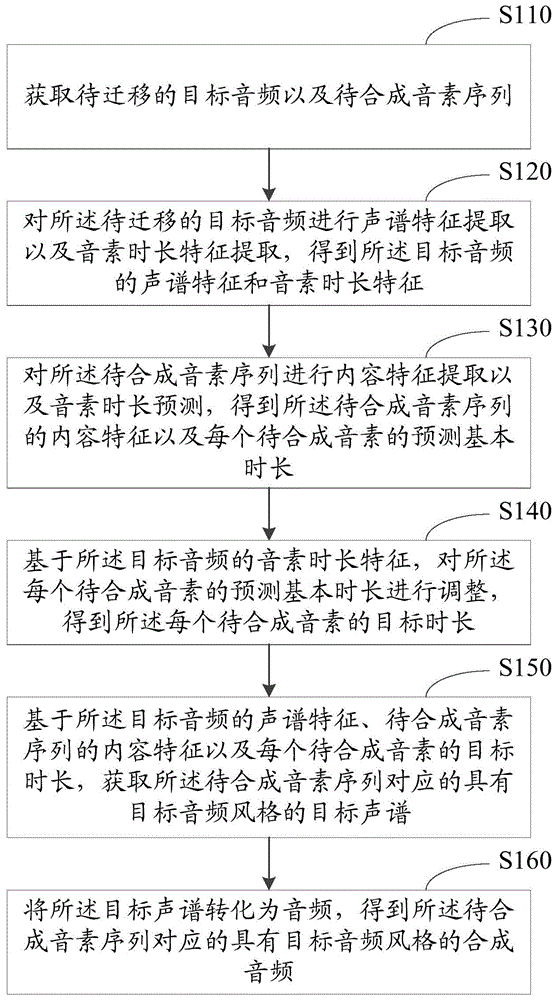
图1是根据本公开提供的语音风格迁移方法的第一实施例的示意图;1 is a schematic diagram of a first embodiment of a voice style transfer method provided according to the present disclosure;
图2是根据本公开提供的语音风格迁移方法的第二实施例的示意图;2 is a schematic diagram of a second embodiment of a voice style transfer method provided according to the present disclosure;
图3是根据本公开提供的语音风格迁移方法的第三实施例的示意图;3 is a schematic diagram of a third embodiment of a voice style transfer method provided according to the present disclosure;
图4是本公开中训练内容编码模型的流程示意图;4 is a schematic flowchart of training a content encoding model in the present disclosure;
图5是根据本公开提供的语音风格迁移方法的一种流程示意图;Fig. 5 is a kind of schematic flow chart of the speech style transfer method provided according to the present disclosure;
图6是本公开中训练风格编码模型和声谱解码模型的流程示意图;6 is a schematic flowchart of training a style encoding model and a sound spectrum decoding model in the present disclosure;
图7是本公开中训练、测试各模型的流程示意图;7 is a schematic flowchart of training and testing each model in the present disclosure;
图8是根据本公开提供的语音风格迁移装置的第一实施例的示意图;8 is a schematic diagram of a first embodiment of a speech style transfer apparatus provided according to the present disclosure;
图9是用来实现本公开实施例的语音风格迁移方法的电子设备的框图。FIG. 9 is a block diagram of an electronic device used to implement the voice style transfer method according to an embodiment of the present disclosure.
具体实施方式Detailed ways
以下结合附图对本公开的示范性实施例做出说明,其中包括本公开实施例的各种细节以助于理解,应当将它们认为仅仅是示范性的。因此,本领域普通技术人员应当认识到,可以对这里描述的实施例做出各种改变和修改,而不会背离本公开的范围和精神。同样,为了清楚和简明,以下的描述中省略了对公知功能和结构的描述。Exemplary embodiments of the present disclosure are described below with reference to the accompanying drawings, which include various details of the embodiments of the present disclosure to facilitate understanding and should be considered as exemplary only. Accordingly, those of ordinary skill in the art will recognize that various changes and modifications of the embodiments described herein can be made without departing from the scope and spirit of the present disclosure. Also, descriptions of well-known functions and constructions are omitted from the following description for clarity and conciseness.
为了能较好的迁移语音风格,本公开提供了一种语音风格迁移方法、装置、电子设备及存储介质。下面首先对本公开提供的语音风格迁移方法进行说明。In order to better migrate the voice style, the present disclosure provides a voice style transfer method, device, electronic device and storage medium. The following first describes the speech style transfer method provided by the present disclosure.
如图1所示,图1是本公开根据本公开提供的语音风格迁移方法的第一实施例的示意图,该方法可以包括以下步骤:As shown in FIG. 1, FIG. 1 is a schematic diagram of a first embodiment of a speech style transfer method provided by the present disclosure according to the present disclosure, and the method may include the following steps:
步骤S110,获取待迁移的目标音频以及待合成音素序列。Step S110, acquiring the target audio to be migrated and the phoneme sequence to be synthesized.
本公开实施例中,上述待迁移的目标音频可以是说话人通过麦克风等声音输入设备输入的任意内容的一句话,上述说话人可以是用户本人,也可以是虚拟人物(如动漫角色等)。In the embodiment of the present disclosure, the target audio to be migrated may be a sentence of any content input by the speaker through a voice input device such as a microphone, and the speaker may be the user himself or a virtual character (such as an anime character, etc.).
在语言学中,音素指的是根据语音的自然属性划分出来的最小语音单位,音节中的一个发音动作构成一个音素。例如,“普通话”一词,就可以分为"p,u,t,o,ng,h,u,a"八个音素。本公开实施例中,上述待合成音素序列则可以是任意内容的文本序列,上述文本序列可以是其他用户输入的、需要生成有说话人风格的文本序列,也可以是其他用户通过语音输入相应音频,由电子设备对该音频进行特征提取等操作得到相应的音素序列,本公开中对此不做具体限定。In linguistics, phoneme refers to the smallest phonetic unit divided according to the natural properties of speech, and a pronunciation action in a syllable constitutes a phoneme. For example, the word "Mandarin" can be divided into eight phonemes "p, u, t, o, ng, h, u, a". In the embodiment of the present disclosure, the above-mentioned phoneme sequence to be synthesized may be a text sequence with any content, the above-mentioned text sequence may be a text sequence input by other users and need to generate a speaker-style text sequence, or a corresponding audio frequency input by other users through voice , the electronic device performs feature extraction on the audio to obtain a corresponding phoneme sequence, which is not specifically limited in this disclosure.
步骤S120,对所述待迁移的目标音频进行声谱特征提取以及音素时长特征提取,得到所述目标音频的声谱特征和音素时长特征。Step S120, extracting the spectral feature and the phoneme duration feature of the target audio to be migrated, to obtain the sound spectrum feature and the phoneme duration feature of the target audio.
本公开实施例中,上述待迁移的目标音频的声谱特征可以反映说话人的声音特征,上述音素时长特征则可以反映说话人的语速。In the embodiment of the present disclosure, the spectral feature of the target audio to be migrated may reflect the voice feature of the speaker, and the phoneme duration feature may reflect the speaking rate of the speaker.
本公开实施例中,可以通过对目标音频信号进行分帧加窗,对每一帧做FFT(快速傅里叶变换),把每一帧FFT后的频域信号(频谱图)在时间上堆叠起来得到声谱图后,针对声谱图提取其声谱特征。In the embodiment of the present disclosure, the target audio signal can be divided into frames and windowed, and FFT (fast Fourier transform) can be performed on each frame, and the frequency domain signal (spectrogram) after FFT of each frame can be stacked in time. After the spectrogram is obtained, the spectrogram features are extracted from the spectrogram.
本公开实施例中,上述音素时长特征可以是针对目标音频内部的各个音素进行提取,即得到的可以是各个内部音素的时长特征。In the embodiment of the present disclosure, the above-mentioned phoneme duration feature may be extracted for each phoneme inside the target audio, that is, the obtained duration feature of each internal phoneme may be obtained.
步骤S130,对所述待合成音素序列进行内容特征提取以及音素时长预测,得到所述待合成音素序列的内容特征以及每个待合成音素的预测基本时长。Step S130 , performing content feature extraction and phoneme duration prediction on the to-be-synthesized phoneme sequence to obtain the content feature of the to-be-synthesized phoneme sequence and the predicted basic duration of each to-be-synthesized phoneme.
本实施例中,可以使用预设的内容特征提取算法对待合成音素序列进行内容特征提取。本公开实施例中,上述内容特征可以表征音素代表的内容信息与其上下文的关联信息以及语义信息,作为一种具体实施方式,上述内容特征可以是以向量形式表达。In this embodiment, a preset content feature extraction algorithm may be used to extract the content feature of the phoneme sequence to be synthesized. In the embodiment of the present disclosure, the above-mentioned content feature may represent the association information and semantic information of the content information represented by the phoneme and its context, as well as semantic information. As a specific implementation manner, the above-mentioned content feature may be expressed in the form of a vector.
本公开实施例中,上述每个待合成音素的预测基本时长可以将待合成音素序列输入预先训练好的时长预测模型后获得。该时长预测模型,可以是通过开源数据Aishell3中的音频的音素标注以及时长标注预先训练的LSTM-CTC、CNN-RNN-T、LAS、Chain、GMM-HM等语音识别模型。预测结果可以用单位时长的数量来表征。例如:可以设置一个单位时长为10ms,如果某个待合成音素的预测结果为3个单位时长,则其实际时长就是30ms。In the embodiment of the present disclosure, the predicted basic duration of each phoneme to be synthesized can be obtained by inputting the sequence of the phoneme to be synthesized into a pre-trained duration prediction model. The duration prediction model can be a speech recognition model such as LSTM-CTC, CNN-RNN-T, LAS, Chain, GMM-HM, etc., which are pre-trained through the audio phoneme annotation and duration annotation in the open source data Aishell3. The prediction result can be characterized by the quantity per unit time. For example, a unit duration can be set to 10ms. If the prediction result of a phoneme to be synthesized is 3 unit durations, its actual duration is 30ms.
步骤S140,基于所述目标音频的音素时长特征,对所述每个待合成音素的预测基本时长进行调整,得到所述每个待合成音素的目标时长;Step S140, based on the phoneme duration feature of the target audio, adjust the predicted basic duration of each of the to-be-synthesized phonemes to obtain the target duration of each of the to-be-synthesized phonemes;
该步骤可以使得各待合成音素的时长与目标音频中的音素时长接近,即使得合成音频的语速与目标音频的语速接近。In this step, the duration of each phoneme to be synthesized can be made close to the duration of the phonemes in the target audio, that is, the speech rate of the synthesized audio can be made close to the speech rate of the target audio.
步骤S150,基于所述目标音频的声谱特征、待合成音素序列的内容特征以及每个待合成音素的目标时长,获取所述待合成音素序列对应的具有目标音频风格的目标声谱;Step S150, based on the sound spectrum feature of the target audio, the content feature of the phoneme sequence to be synthesized, and the target duration of each phoneme to be synthesized, obtain a target sound spectrum with the target audio style corresponding to the phoneme sequence to be synthesized;
步骤S160,将所述目标声谱转化为音频,得到所述待合成音素序列对应的具有目标音频风格的合成音频。Step S160: Convert the target sound spectrum into audio to obtain a synthesized audio with a target audio style corresponding to the to-be-synthesized phoneme sequence.
本公开实施例中,可以通过IFFT(Inverse Fast Fourier Transform,快速傅里叶逆变换)将一帧一帧的声谱信号变换成一小段一小段的时域信号,再将他们拼接起来,得到音频,本公开中对此不做具体限定。In the embodiment of the present disclosure, IFFT (Inverse Fast Fourier Transform, Inverse Fast Fourier Transform) can be used to transform a frame-by-frame sound spectrum signal into a small segment of a time domain signal, and then splicing them together to obtain audio, There is no specific limitation on this in the present disclosure.
本公开提供的语音风格迁移方法中,对待迁移的目标音频进行声谱特征提取和音素时长特征提取,得到其声谱特征和音素时长特征,对待合成音素序列进行内容特征提取以及音素时长预测,得到各音素的内容特征和预测基本时长,之后基于目标音频的音素时长特征对待合成音素序列中各音素的预测基本时长进行调整,得到各待合成音素的目标时长,并基于目标音频的声谱特征以及各待合成音素的内容特征和目标时长,得到所述待合成音素序列对应的具有目标音频风格的目标声谱,并对其进行音频转换,得到所述待合成音素序列对应的具有目标音频风格的合成音频。应用本公开实施例,通过结合对待迁移目标音频风格影响较大的语速,进行语音风格迁移,使得音频迁移效果更好,提高音频迁移准确度。In the speech style transfer method provided by the present disclosure, the target audio to be migrated is subjected to spectral feature extraction and phoneme duration feature extraction to obtain its sound spectrum feature and phoneme duration feature, and content feature extraction and phoneme duration prediction are performed on the synthesized phoneme sequence to obtain The content features and predicted basic duration of each phoneme are then adjusted based on the phoneme duration feature of the target audio to the predicted basic duration of each phoneme in the phoneme sequence to be synthesized to obtain the target duration of each phoneme to be synthesized, and based on the sound spectrum features of the target audio and The content characteristics and target duration of each phoneme to be synthesized are obtained, and the target sound spectrum with the target audio style corresponding to the phoneme sequence to be synthesized is obtained, and audio conversion is performed on it to obtain the corresponding phoneme sequence to be synthesized with the target audio style. Synthesized audio. By applying the embodiment of the present disclosure, the voice style transfer is performed by combining the speech rate which has a great influence on the audio style of the target to be transferred, so that the effect of the audio transfer is better and the accuracy of the audio transfer is improved.
在本公开的一种实施例中,上述目标音频的音素时长特征可以具体可以是音素时长的均值和方差,因此,参见图2,图1所示的步骤S120具体可以细化为以下步骤:In an embodiment of the present disclosure, the phoneme duration feature of the above-mentioned target audio may specifically be the mean and variance of the phoneme duration. Therefore, referring to FIG. 2 , step S120 shown in FIG. 1 may be specifically refined into the following steps:
步骤S121,对所述待迁移的目标音频进行声谱特征提取,得到所述目标音频的声谱特征;以及对所述待迁移的目标音频中包含的各个音素进行时长计算,得到所述目标音频的音素时长的均值和方差。Step S121, performing spectral feature extraction on the target audio to be migrated to obtain the spectral features of the target audio; and performing duration calculation on each phoneme included in the target audio to be migrated to obtain the target audio The mean and variance of the phoneme durations.
如上所述,音素是最小的语音单位,本公开实施例中可以针对目标音素中的各个音素进行音素时长计算,得到的目标音素时长的均值和方差,就可以较好的反映出说话人的语速变化,使得语音风格迁移的效果更好。As mentioned above, a phoneme is the smallest unit of speech. In the embodiment of the present disclosure, the phoneme duration can be calculated for each phoneme in the target phoneme, and the obtained mean and variance of the target phoneme duration can better reflect the speaker's speech. The speed of change makes the effect of voice style transfer better.
这样,如图2所示,图1中的步骤S140就可以相应的被细化为以下步骤:In this way, as shown in FIG. 2 , step S140 in FIG. 1 can be correspondingly refined into the following steps:
步骤S141,根据所述目标音频的音素时长的均值和方差,对所述每个待合成音素的预测基本时长进行调整,得到所述每个待合成音素的符合目标音频语速的目标时长。Step S141: Adjust the predicted basic duration of each phoneme to be synthesized according to the mean and variance of the phoneme durations of the target audio to obtain a target duration of each phoneme to be synthesized that meets the target audio speech rate.
作为本公开实施例的一种具体实施方式,每个待合成音素的目标时长可以是各待合成音素的预测基本时长*方差+均值,该方差和均值就是上述对目标音频中的每个音素进行音素时长计算得到的音素时长的均值和方差。例如:预测的基本时长是2个单位,方差为0.5个单位,均值是2个单位,则调整后的时长为2*0.5+2=3个单位时长。As a specific implementation of the embodiment of the present disclosure, the target duration of each to-be-synthesized phoneme may be the predicted basic duration of each to-be-synthesized phoneme*variance+mean, and the variance and mean are the same as the above-mentioned calculation of each phoneme in the target audio. The mean and variance of the phoneme duration calculated by the phoneme duration. For example: the basic duration of the forecast is 2 units, the variance is 0.5 units, and the mean is 2 units, then the adjusted duration is 2*0.5+2=3 unit durations.
如图3所示,在本公开的一种实施例中,图1中的步骤S150之前,还可以包括:As shown in FIG. 3 , in an embodiment of the present disclosure, before step S150 in FIG. 1 , it may further include:
步骤S350,基于所述目标音频的声谱特征,提取所述目标音频的风格特征。Step S350, based on the spectral feature of the target audio, extract the style feature of the target audio.
通常,说话人的行为由有意识和无意识的活动组成,一般变化性很强。从声谱角度出发可以包括3类特征,一个是内在的稳定的粗粒度的特性,这部分是由说话人的生理结构特点决定的,不同的说话人不一样,从主观听觉上感受不同,表现在声谱的低频区域,例如平均的基音频率(pitch,或音高),反映声道冲激响应的频谱包络(spectral envelope),共振峰(formant)的相对幅度与位置等。另外一个是不稳定的短时声学特性,发音的快慢急剧抖动(sharp and rapid)情况,基音频率,响度(intensity),频谱的精细化结构等,这些能够反映说话人心理或精神方面的变化,在交谈时可以通过改变这些来表达不同的情绪与意图。其次是重音(stress),停顿(pause)等与说话人本身无关的,但也影响了主观听觉。Typically, speaker behavior consists of conscious and unconscious activities, which are generally highly variable. From the perspective of sound spectrum, it can include three types of features. One is the inherent stable and coarse-grained feature, which is partly determined by the physiological structure of the speaker. In the low frequency region of the sound spectrum, such as the average pitch frequency (pitch, or pitch), the spectral envelope reflecting the impulse response of the vocal tract, the relative amplitude and position of the formant, and so on. The other is the unstable short-term acoustic characteristics, sharp and rapid pronunciation, pitch frequency, loudness, and refined structure of the spectrum, etc., which can reflect the psychological or spiritual changes of the speaker. You can change these to express different emotions and intentions when talking. Followed by stress (stress), pause (pause) has nothing to do with the speaker itself, but also affect the subjective hearing.
因此,本公开实施例中,可以对说话人的上述风格特征进行提取,这样,可以将说话人的待迁移目标音频声谱特征中的风格特征与内容特征分离,降低目标音频的内容对其风格的影响,使得语音风格迁移更加准确。Therefore, in the embodiment of the present disclosure, the above-mentioned style features of the speaker can be extracted, so that the style features and content features in the target audio spectral features of the speaker to be migrated can be separated, and the content of the target audio can be reduced to its style. The influence of speech style transfer is more accurate.
参见图3,如图3所示,图1中的步骤S150就可以细化为以下步骤:Referring to FIG. 3, as shown in FIG. 3, step S150 in FIG. 1 can be refined into the following steps:
步骤S151,基于所述待合成音素序列中每个待合成音素的目标时长,对所述待合成音素序列中每个音素对应的内容特征进行复制和组合,得到所述待合成音素序列的目标内容特征。Step S151, based on the target duration of each to-be-synthesized phoneme in the to-be-synthesized phoneme sequence, copy and combine the content features corresponding to each phoneme in the to-be-synthesized phoneme sequence to obtain the target content of the to-be-synthesized phoneme sequence feature.
如上所述,本公开实施例中,提取的是每个待合成音素的内容特征向量,因此,在得到各个待合成音素的目标时长后,就可以针对每个待合成音素,将其内容特征向量结合其目标时长进行复制,得到该待合成音素的目标内容特征,进而将各待合成音素的目标内容特征进行组合得到整个待合成音素序列的目标内容特征。As described above, in the embodiment of the present disclosure, the content feature vector of each phoneme to be synthesized is extracted. Therefore, after obtaining the target duration of each phoneme to be synthesized, the content feature vector of each phoneme to be synthesized can The target content feature of the phoneme to be synthesized is obtained by copying in combination with the target duration, and then the target content feature of each phoneme to be synthesized is combined to obtain the target content feature of the entire phoneme sequence to be synthesized.
如上所述,各待合成音素的目标时长可以是以单位时长的形式表示,因此,作为本公开实施例的一种具体实施方式,可以按照待合成音素目标时长包含的单位时长的个数对其内容特征向量进行复制。例如:若待合成音素序列包含3个音素,分别为音素A、音素B、音素C,其内容特征向量分别记为A、B、C。计算得到音素A目标时长为3个单位时长,音素B的目标时长为2个单位时长,音素C的目标时长为2个单位时长,那么,该待合成音素序列的内容特征中就包含3个音素A的内容特征向量、2个音素B的内容特征向量、2个音素C的内容特征向量,即对该待合成音素序列来说,将各待合成音素的内容特征向量进行复制组合后得到的目标内容特征就是AAABBCC。As described above, the target duration of each phoneme to be synthesized can be expressed in the form of unit duration. Therefore, as a specific implementation of the embodiment of the present disclosure, the target duration of the phoneme to be synthesized can be based on the number of unit durations included in the target duration. The content feature vector is copied. For example, if the phoneme sequence to be synthesized includes 3 phonemes, which are phoneme A, phoneme B, and phoneme C, respectively, the content feature vectors thereof are denoted as A, B, and C, respectively. It is calculated that the target duration of phoneme A is 3 unit durations, the target duration of phoneme B is 2 unit durations, and the target duration of phoneme C is 2 unit durations, then, the content feature of the phoneme sequence to be synthesized contains 3 phonemes The content feature vector of A, the content feature vector of 2 phonemes B, and the content feature vector of 2 phonemes C, that is, for the to-be-synthesized phoneme sequence, the target obtained by copying and combining the content feature vectors of each to-be-synthesized phoneme The content feature is AAABBCC.
步骤S152,基于所述待合成音素序列的目标内容特征及所述目标音频的风格特征,对待合成音素序列进行解码,获取所述待合成音素序列对应的具有目标音频风格的目标声谱。Step S152, decoding the to-be-synthesized phoneme sequence based on the target content feature of the to-be-synthesized phoneme sequence and the to-be-synthesized phoneme sequence to obtain a target sound spectrum with a target audio style corresponding to the to-be-synthesized phoneme sequence.
本公开实施例中,上述针对目标音频的声谱特征提取、风格特征提取、针对待合成音素序列的内容特征提取、音素时长预测,以及获取目标声谱和目标音频的步骤,都可通过预先训练好的内容编码模型、时长预测模型、风格编码模型以及声谱解码模型等等模型执行。In the embodiment of the present disclosure, the above-mentioned steps of extracting the spectral features of the target audio, extracting the style features, extracting the content features of the phoneme sequence to be synthesized, predicting the duration of the phonemes, and obtaining the target sound spectrum and the target audio can all be performed through pre-training. Good content coding models, duration prediction models, style coding models, and spectral decoding models, etc.
作为一种具体实施方式,本公开实施例中,上述对待迁移的目标音频进行声谱特征提取的步骤就可以包括:As a specific implementation manner, in the embodiment of the present disclosure, the above steps of extracting the spectral features of the target audio to be migrated may include:
将所述待迁移的目标音频输入预设的声谱特征提取模型,得到所述目标音频的声谱特征。Inputting the target audio to be migrated into a preset spectral feature extraction model to obtain the spectral features of the target audio.
本公开实施例中,上述声谱特征可以是MFCC(Mel-Frequency CepstralCoefficients,梅尔倒谱系数)、PLP(Perceptual Linear Prediction,感知线性预测系数)或Fbank(Filter bank)特征等等。以MFCC特征为例,其提取过程可以包括:对语音信号进行预加重、分帧和加窗;对于每一个短时分析窗(即分出的每一帧),通过FFT得到对应的频谱;将计算得到的频谱通过Mel滤波器组,得到Mel频谱;在Mel频谱上进行倒谱分析(取对数、逆变换),获得Mel频谱倒谱系数MFCC。In the embodiment of the present disclosure, the above-mentioned acoustic spectral features may be MFCC (Mel-Frequency Cepstral Coefficients, Mel cepstral coefficients), PLP (Perceptual Linear Prediction, perceptual linear prediction coefficients), or Fbank (Filter bank) features, and so on. Taking the MFCC feature as an example, the extraction process may include: pre-emphasizing, framing and windowing the speech signal; for each short-term analysis window (that is, each separated frame), obtain the corresponding spectrum through FFT; The calculated spectrum is passed through the Mel filter bank to obtain the Mel spectrum; the cepstral analysis (take logarithm, inverse transformation) is performed on the Mel spectrum to obtain the Mel spectrum cepstral coefficient MFCC.
上述说话人特征可以通过预训练的说话人识别模型进行提取。作为本公开实施例的一种具体实施方式,上述说话人识别模型可以由多层TDNN(time delay neuralnetwork,时延神经网络)构成。在训练该模型时,可以基于开源数据集Aishelll~3进行训练,将每帧音频的声谱特征作为模型的输入,上述每帧音频的声谱特征也可以是MFCC、PLP或Fbank等等,上述每帧音频的声谱特征维度可以是20,每帧的时长可以是25ms、帧移可以是10ms。模型输出的则可以是预测的各个说话人的概率。本实施例中,训练的损失函数可以是CE(cross entropy,交叉熵),即可以基于模型输出的预测的各说话人概率与音频对应的真实说话人得到上述损失函数值,并基于该损失函数值更新说话人识别模型中各层网络的参数,计算时可以带有一定数量的上下文(例如,前后各2帧),来提高计算准确性。训练好后,可以从该说话人识别模型的倒数第2层进行抽取,将抽取得到的数据作为说话人特征,当然也可以从其它层抽取,本公开不做具体限定。The above speaker features can be extracted by a pre-trained speaker recognition model. As a specific implementation of the embodiment of the present disclosure, the above-mentioned speaker recognition model may be composed of a multi-layer TDNN (time delay neural network, time delay neural network). When training the model, it can be trained based on the open source data set Aishellll~3, and the spectral features of each frame of audio can be used as the input of the model. The above-mentioned spectral features of each frame of audio can also be MFCC, PLP, or Fbank, etc. The above The sound spectrum feature dimension of each frame of audio may be 20, the duration of each frame may be 25ms, and the frame shift may be 10ms. The output of the model can be the predicted probability of each speaker. In this embodiment, the training loss function may be CE (cross entropy, cross entropy), that is, the loss function value can be obtained based on the predicted probability of each speaker output by the model and the real speaker corresponding to the audio, and based on the loss function The value updates the parameters of each layer of the network in the speaker recognition model, and can be calculated with a certain amount of context (for example, 2 frames before and after) to improve the calculation accuracy. After training, extraction can be performed from the penultimate second layer of the speaker recognition model, and the extracted data can be used as speaker features. Of course, it can also be extracted from other layers, which is not specifically limited in this disclosure.
本公开实施例中,上述对待合成音素序列进行内容特征提取以及音素时长预测的步骤就可以包括:In the embodiment of the present disclosure, the above-mentioned steps of performing content feature extraction and phoneme duration prediction on the synthesized phoneme sequence can include:
将所述待合成音素序列输入预设的内容编码模型,得到待合成音素序列的内容特征;以及将所述待合成音素序列输入预设的时长预测模型,得到每个待合成音素的预测基本时长。Inputting the to-be-synthesized phoneme sequence into a preset content coding model to obtain content features of the to-be-synthesized phoneme sequence; and inputting the to-be-synthesized phoneme sequence into a preset duration prediction model to obtain the predicted basic duration of each to-be-synthesized phoneme .
接下来分别对上述内容编码模型和时长预测模型进行说明。Next, the above-mentioned content coding model and duration prediction model will be described respectively.
本公开实施例中,上述内容编码模型可以由多层{Conv1D+ReLU(激活函数)层+IN层+Dropout层}网络构成,上述Conv1D一种卷积神经网络,ReLU层是为了加入非线性因素,增强模型表达能力,IN(Instance Normalization,实体规整)层则可以用来对数据进行归一化,来保证每层网络的输入数据分布是相同的,进而加快神经网络的收敛速度,Dropout层则可以避免模型出现过拟合问题。In the embodiment of the present disclosure, the above content encoding model may be composed of a multi-layer {Conv1D+ReLU (activation function) layer+IN layer+Dropout layer} network, the above Conv1D is a convolutional neural network, and the ReLU layer is for adding nonlinear factors. , to enhance the model expression ability, the IN (Instance Normalization, entity regularization) layer can be used to normalize the data to ensure that the input data distribution of each layer of the network is the same, thereby speeding up the convergence speed of the neural network, the Dropout layer is Overfitting of the model can be avoided.
IN层是从空间各个维度相互独立的假设出发的,并对各个维度分别进行规整,针对内容编码模型的每一层网络,对输入到该层的特征x,从不同维度计算均值与方差,然后规整,规范化后分布均值为0,方差为1,具体的计算公式如下所示:The IN layer starts from the assumption that each dimension of the space is independent of each other, and adjusts each dimension separately. For each layer of the content coding model, for the feature x input to the layer, the mean and variance are calculated from different dimensions, and then After normalization, the distribution mean is 0 and the variance is 1. The specific calculation formula is as follows:

该公式中,γ、β表示待迁移目标音频的风格,σ和μ分别是均值和标准差,x则是输入到该层的待合成音素序列的特征,IN(x)则是IN层的输出。In this formula, γ and β represent the style of the target audio to be migrated, σ and μ are the mean and standard deviation, respectively, x is the feature of the phoneme sequence input to the layer to be synthesized, and IN(x) is the output of the IN layer .

该公式中H、W分别表示输入特征的两个维度,x则是相应的输入特征,n,c可分别代表x的样本索引和特征通道索引。In this formula, H and W represent the two dimensions of the input feature respectively, x is the corresponding input feature, and n and c can represent the sample index and feature channel index of x, respectively.

该公式中,ε是一个很小的常量(例如,0.1),来避免出现方差为0的情况。In this formula, ε is a small constant (eg, 0.1) to avoid the situation where the variance is 0.
本公开实施例中,内容编码模型相当于将音素通过神经网络映射到高维空间,将音素本身代表的内容信息,与其上下文的关联信息,语义信息表征出来,使得提取到的音素特征更加完整。如上所述,该内容编码模型提取到的具体可以是待合成音素序列的内容特征向量(content embedding)。In the embodiment of the present disclosure, the content coding model is equivalent to mapping phonemes to a high-dimensional space through a neural network, and characterizes the content information represented by the phoneme itself, its contextual association information, and semantic information, so that the extracted phoneme features are more complete. As described above, what is extracted by the content coding model may specifically be the content embedding of the phoneme sequence to be synthesized.
本公开实施例中,可以基于开源数据Aishell3(多说话人普通话数据)对待训练的内容编码模型进行训练,来得到上述内容编码模型。In the embodiment of the present disclosure, the content coding model to be trained can be trained based on the open source data Aishell3 (multi-speaker Mandarin data) to obtain the above content coding model.
作为一种具体实施方式,如图4所示,上述内容编码模型可以采用以下步骤训练得到:As a specific implementation, as shown in Figure 4, the above-mentioned content coding model can be obtained by training the following steps:
步骤S410,将第一样本音频输入至预先训练完成的说话人识别模型,得到第一样本音频对应的样本说话人特征。In step S410, the first sample audio is input into the pre-trained speaker recognition model, and the sample speaker feature corresponding to the first sample audio is obtained.
上述第一样本音频可以是上述开源数据Aishell3中的音频数据,使用上述说话人识别模型对该第一样本音频进行处理,就可以得到该样本音频对应的说话人特征。The above-mentioned first sample audio may be the audio data in the above-mentioned open source data Aishell3, and the speaker characteristic corresponding to the sample audio can be obtained by processing the first sample audio by using the above-mentioned speaker recognition model.
步骤S420,将第一样本音频的第一音素序列输入待训练的内容编码模型,得到第一样本音素序列中各个音素的第一样本内容特征。Step S420: Input the first phoneme sequence of the first sample audio into the content coding model to be trained, and obtain the first sample content feature of each phoneme in the first sample phoneme sequence.
步骤S430,基于第一样本音素序列中每个音素的时长,对各个音素的第一样本内容特征进行复制和组合,得到第一样本音素序列中各个音素的第一样本目标内容特征。Step S430, based on the duration of each phoneme in the first sample phoneme sequence, copy and combine the first sample content features of each phoneme to obtain the first sample target content feature of each phoneme in the first sample phoneme sequence .
本实施例中,可以利用GMM-HMM、CNN、RNN-T、Chain、LAS等等模型,可以将音频转成文字,并且带有时间信息(包括:每个音素的时间点和持续时长),基于上述时间信息,即可计算内部音素的时长,以及音素时长的均值与方差。In this embodiment, models such as GMM-HMM, CNN, RNN-T, Chain, LAS, etc. can be used to convert audio into text with time information (including: the time point and duration of each phoneme), Based on the above time information, the duration of the internal phoneme and the mean and variance of the duration of the phoneme can be calculated.
作为本实施例的一种具体实施方式,可以由上述声谱解码模型对各个音素的第一样本内容特征,结合音素的时长进行复制和组合,得到上述各个音素的第一样本目标内容特征。As a specific implementation of this embodiment, the above-mentioned sound spectrum decoding model can copy and combine the first sample content features of each phoneme in combination with the duration of the phonemes to obtain the first sample target content features of each phoneme. .
步骤S440,将所述说话人特征及各个第一样本目标内容特征输入至待训练的声谱解码模型,得到第一样本声谱特征;Step S440, inputting the speaker feature and each first sample target content feature into the sound spectrum decoding model to be trained to obtain the first sample sound spectrum feature;
步骤S450,基于第一样本声谱特征与第一样本音频的真实声谱特征的误差,对待训练的内容编码模型的参数进行更新,直至待训练的内容编码模型收敛。Step S450, based on the error between the first sample sound spectrum feature and the real sound spectrum feature of the first sample audio, update the parameters of the content coding model to be trained until the content coding model to be trained converges.
本公开实施例中,可以将得到的第一样本声谱特征与该音频真实的声谱特征通过MSE(mean square error,均方误差)计算损失,进而更新整个网络。In the embodiment of the present disclosure, the obtained sound spectrum feature of the first sample and the real sound spectrum feature of the audio can be used to calculate the loss through MSE (mean square error, mean square error), and then update the entire network.
通过训练得到的内容编码模型,提取待合成音素序列的内容特征,在提取时会关联音素的前后音素以及语义信息,使得提取到的内容特征更加准确。The content encoding model obtained by training extracts the content features of the phoneme sequence to be synthesized, and associates the phonemes before and after the phoneme and semantic information during extraction, so that the extracted content features are more accurate.
本公开实施例中,上述时长预测模型可以由1层self-attention(自注意力机制网络层),2层{Conv1D+ReLU},1层Linear(线性层)构成,输入可以是各个待合成音素,输出则是相应音素的预测基本时长。如上所述,该时长预测模型可以是通过开源数据Aishell3中的音频的音素标注以及时长标注预先训练的语音识别模型,该语音识别模型可以是LSTM-CTC,CNN-RNN-T,LAS,Chain,GMM-HMM等等。In the embodiment of the present disclosure, the above-mentioned duration prediction model may be composed of 1 layer of self-attention (self-attention mechanism network layer), 2 layers of {Conv1D+ReLU}, and 1 layer of Linear (linear layer), and the input may be each phoneme to be synthesized. , and the output is the predicted base duration of the corresponding phoneme. As mentioned above, the duration prediction model can be a speech recognition model pre-trained by phoneme annotation and duration annotation of audio in the open source data Aishell3, and the speech recognition model can be LSTM-CTC, CNN-RNN-T, LAS, Chain, GMM-HMM and more.
上述时长预测模型还可以基于上述待迁移目标音频的时长均值与方差对预测基本时长进行调整,来得到各待合成音素的目标时长。The aforementioned duration prediction model may also adjust the predicted basic duration based on the duration mean and variance of the aforementioned target audio to be migrated, so as to obtain the target duration of each phoneme to be synthesized.
通常,语速是说话风格中主观体验的至关重要的一个因素,本公开实施例中,使用单独模型调整待合成音素的时长(语速),提高各个待合成音素时长调整的便利性。Generally speaking, speech rate is a crucial factor of subjective experience in speaking style. In the embodiment of the present disclosure, a separate model is used to adjust the duration (speech rate) of the phoneme to be synthesized, so as to improve the convenience of adjusting the duration of each phoneme to be synthesized.
本公开实施例中,上述基于所述目标音频的声谱特征,提取所述目标音频的风格特征的步骤,可以包括:In the embodiment of the present disclosure, the above-mentioned step of extracting the style feature of the target audio based on the spectral feature of the target audio may include:
将所述目标音频的声谱特征输入预设的风格编码模型,得到所述目标音频的风格特征。Inputting the spectral features of the target audio into a preset style coding model to obtain the style features of the target audio.
上述基于所述待合成音素序列的目标内容特征及所述目标音频的风格特征,对待合成音素序列进行解码,获取所述待合成音素序列对应的具有目标音频风格的目标声谱的步骤就可以包括:The above-mentioned steps based on the target content feature of the to-be-synthesized phoneme sequence and the style feature of the target audio, decoding the to-be-synthesized phoneme sequence, and obtaining the target sound spectrum with the target audio style corresponding to the to-be-synthesized phoneme sequence can include: :
将所述待合成音素序列的目标内容特征及所述目标音频的风格特征输入预设的声谱解码模型,得到所述待合成音素序列对应的具有目标音频风格的目标声谱。Inputting the target content feature of the phoneme sequence to be synthesized and the style feature of the target audio into a preset sound spectrum decoding model, to obtain a target sound spectrum with the target audio style corresponding to the phoneme sequence to be synthesized.
参见图5,图5是本公开提供的语音迁移方法的一种流程示意图,具体可以包括以下步骤:Referring to FIG. 5, FIG. 5 is a schematic flowchart of a voice migration method provided by the present disclosure, which may specifically include the following steps:
①、对待迁移目标音频进行声谱特征提取以及音素时长计算,得到目标音频的目标声谱特征以及其音素时长的均值和方差。①. Extract the spectral features of the target audio to be migrated and calculate the phoneme duration to obtain the target spectral features of the target audio and the mean and variance of its phoneme duration.
②、对待合成音素序列通过时长预测模型,得到各待合成音素的预测基本时长,并结合目标音频的音素时长的均值和方差进行调整,得到各音素的目标时长。②. The phoneme sequence to be synthesized passes through the duration prediction model to obtain the predicted basic duration of each phoneme to be synthesized, and adjusts it in combination with the mean and variance of the phoneme durations of the target audio to obtain the target duration of each phoneme.
③、对待合成音素序列通过内容编码模型,得到各待合成音素的内容特征向量,并结合各音素的目标时长对相应的内容特征向量进行复制和组合,得到待合成音素序列的目标内容特征向量。3. Obtain the content feature vector of each phoneme to be synthesized through the content coding model of the phoneme sequence to be synthesized, and copy and combine the corresponding content feature vector in combination with the target duration of each phoneme to obtain the target content feature vector of the phoneme sequence to be synthesized.
④、将目标音频的声谱特征输入至风格编码模型,得到目标音频的风格特征(包括目标音频声谱的均值方差等)。④. Input the spectral features of the target audio into the style coding model to obtain the style features of the target audio (including the mean variance of the target audio sound spectrum, etc.).
⑤、将步骤③中得到的待合成音素序列的目标内容特征向量输入至声谱解码模型,并结合步骤④中得到的目标音频风格特征,得到合成声谱。5. Input the target content feature vector of the phoneme sequence to be synthesized obtained in
⑥、对合成声谱进行音频转换,得到待合成音素序列对应的具有待迁移目标音频风格的合成音频。⑥. Perform audio conversion on the synthesized sound spectrum to obtain synthesized audio corresponding to the to-be-synthesized phoneme sequence with the to-be-migrated target audio style.
本公开实施例中,上述风格编码模型和声谱解码模型可以构成U型网络。其中,上述风格编码模型可以为第一U型网络模型,上述声谱解码模型则可以是第二U型网络模型。In the embodiment of the present disclosure, the above-mentioned style encoding model and sound spectrum decoding model may form a U-shaped network. The above-mentioned style encoding model may be a first U-shaped network model, and the above-mentioned sound spectrum decoding model may be a second U-shaped network model.
因此,所述将所述目标音频的声谱特征输入预设的风格编码模型,得到所述目标音频的风格特征的步骤,可以包括:Therefore, the step of inputting the spectral features of the target audio into a preset style coding model to obtain the style features of the target audio may include:
将所述目标音频的声谱特征输入所述第一U型网络模型,进行内容特征提取,将第一U型网络模型的中间层输出的特征,作为所述目标音频的风格特征。Inputting the spectral features of the target audio into the first U-shaped network model, performing content feature extraction, and using the features output by the middle layer of the first U-shaped network model as the style features of the target audio.
通过使用独立的风格编码模型对待迁移音频的风格进行提取,可以减少内容对于音频风格的影响,使得提取到的待迁移音频的风格信息更加准确。By using an independent style encoding model to extract the style of the audio to be migrated, the influence of the content on the audio style can be reduced, so that the extracted style information of the audio to be migrated is more accurate.
所述将所述待合成音素序列的目标内容特征及所述目标音频的风格特征输入预设的声谱解码模型,得到所述待合成音素序列对应的具有目标音频风格的目标声谱的步骤,就可以包括:The step of inputting the target content feature of the to-be-synthesized phoneme sequence and the style feature of the target audio into a preset sound spectrum decoding model to obtain a target sound spectrum with the target audio style corresponding to the to-be-synthesized phoneme sequence, can include:
将所述待合成音素序列的目标内容特征及所述目标音频的风格特征输入所述第二U型网络模型,得到所述第二U型网络模型输出的所述待合成音素序列对应的具有目标音频风格的目标声谱。Inputting the target content feature of the phoneme sequence to be synthesized and the style feature of the target audio into the second U-shaped network model, to obtain the corresponding target phoneme sequence output from the second U-shaped network model. The target spectrum of the audio style.
通过使用上述U型网络进行语音风格迁移,可以将音频中的说话特点(speakingstyle,说话风格)与内容(content)进行解耦,分开建模,降低互相影响,提高待迁移音频的内容特征和风格特征的提取精度。By using the above U-shaped network for speech style transfer, the speaking characteristics (speaking style) and content (content) in the audio can be decoupled, modeled separately, and mutual influences can be reduced to improve the content characteristics and style of the audio to be migrated. Feature extraction accuracy.
如上所述,从声谱角度来说,说话人的音频特征可以分为内在稳定的粗粒度特性、不稳定的短时声学特征以及重音、停顿等特征。因此,本公开实施例中,可以使用多层卷积网络对目标音频的风格特征和内容特征进行提取,获取不同层级的目标音频的风格特征以及内容特征,该风格特征可以包括目标音频的均值、方差、将各中间层的输出等等。As mentioned above, from the perspective of sound spectrum, the audio features of speakers can be divided into intrinsically stable coarse-grained features, unstable short-term acoustic features, and features such as accents and pauses. Therefore, in the embodiment of the present disclosure, a multi-layer convolutional network can be used to extract the style features and content features of the target audio to obtain the style features and content features of the target audio at different levels, and the style features can include the mean value of the target audio, variance, the output of each intermediate layer, and so on.
在对风格编码模型进行训练时,输入的可以是样本音频真实的声谱特征,输出的则是预测的内容特征向量。之后基于该预测的内容特征向量与上述内容编码模型输出的该音频的内容特征向量,通过MSE(Mean Square Error,均方误差)计算误差损失,反向更新风格编码模型。When training the style encoding model, the input can be the real spectral features of the sample audio, and the output is the predicted content feature vector. Then, based on the predicted content feature vector and the audio content feature vector output by the content coding model, the error loss is calculated by MSE (Mean Square Error, mean square error), and the style coding model is updated inversely.
作为一种具体实施方式,本公开实施例中,上述风格编码模型可以由多个{ResCon1D+IN}层构成,每个ResCon1D由2层{Conv1D+ReLU}构成。As a specific implementation manner, in the embodiment of the present disclosure, the above-mentioned style coding model may be composed of multiple {ResCon1D+IN} layers, and each ResCon1D is composed of two layers {Conv1D+ReLU}.
本公开实施例中,上述声谱解码模型可以由多个{AdaIN+ResCon1D}层构成,每个ResCon1D由2层{Conv1D+ReLU}构成,AdaIN(Adaptive Instance Normalization,自适应的实体规整)层,跟IN类似,只是两边的系数发生了变化,如下:In the embodiment of the present disclosure, the above-mentioned sound spectrum decoding model may be composed of multiple {AdaIN+ResCon1D} layers, each ResCon1D is composed of two layers {Conv1D+ReLU}, AdaIN (Adaptive Instance Normalization, adaptive entity regularization) layer, Similar to IN, but the coefficients on both sides have changed, as follows:

该公式中,x和y分别是内容特征和风格特征,σ和μ分别是均值和方差,该均值和方差即上述风格编码模型输出的均值与方差,该公式将内容特征的均值和方差与风格特征对齐。该声谱解码模型相当于给定内容,然后将目标音频的风格应用在该内容上,得到目标声谱的过程。In this formula, x and y are the content feature and style feature, respectively, σ and μ are the mean and variance, respectively, and the mean and variance are the mean and variance of the output of the above style encoding model. This formula combines the mean and variance of the content feature with the style. Feature alignment. The sound spectrum decoding model is equivalent to a given content, and then the style of the target audio is applied to the content to obtain the target sound spectrum.
在对声谱编码模型进行训练时,输入的可以是音素的内容特征向量,并结合风格编码模型的部分输出(风格特征),输出是则是预测的声谱特征,之后基于预测的声谱特征以及音频真实的声谱特征,通过MSE(Mean Square Error,均方误差)计算误差损失,反向更新声谱解码模型。When training the spectral coding model, the input can be the content feature vector of the phoneme, and combined with part of the output (style features) of the style coding model, the output is the predicted spectral feature, and then based on the predicted spectral feature As well as the real sound spectrum features of the audio, the error loss is calculated by MSE (Mean Square Error, mean square error), and the sound spectrum decoding model is reversely updated.
这样,结合风格编码模型的部分信息,构成完整的U型网络,能够更精准的预测声学细致的信息(例如,音高(pitch),和声(harmonic),频谱包络,响度等)以及句子级别的随机性较强的说话风格(例如,停顿重音等)。In this way, combined with the partial information of the style coding model, a complete U-shaped network can be formed, which can more accurately predict the detailed information of acoustics (such as pitch, harmony, spectral envelope, loudness, etc.) and sentences The level of randomness of speaking styles (eg, pauses, accents, etc.).
如上所述,上述风格编码模型和声谱解码模型共同构成U型网络,本公开实施例中,可以同时训练上述风格编码模型和声谱解码模型。作为本公开实施例的一种具体实施方式,如图6所示,上述U型网络可以采用以下步骤训练得到:As described above, the above style encoding model and the sound spectrum decoding model together constitute a U-shaped network. In the embodiment of the present disclosure, the above style encoding model and the sound spectrum decoding model can be trained simultaneously. As a specific implementation of the embodiment of the present disclosure, as shown in FIG. 6 , the above-mentioned U-shaped network can be obtained by training the following steps:
步骤S610,计算第二样本音频的音素时长的均值和方差及真实声谱特征。Step S610: Calculate the mean and variance of the phoneme duration of the second sample audio and the real sound spectrum feature.
如上所述,本实施例中,可以利用GMM-HMM、CNN、RNN-T、Chain、LAS等等模型,将第二样本音频转成带有时间信息(包括:每个音素的时间点和持续时长)的文字,基于该时间信息来计算内部音素的时长均值与方差。As mentioned above, in this embodiment, GMM-HMM, CNN, RNN-T, Chain, LAS, etc. models can be used to convert the second sample audio into time information (including: the time point and duration of each phoneme) duration), based on the time information, the duration mean and variance of the internal phoneme are calculated.
步骤S620,利用已训练完成的内容编码模型和已训练完成的时长预测模型,对第二样本音频的第二样本音素序列进行内容特征提取以及音素时长预测,得到第二样本内容特征以及每个样本音素的样本预测基本时长;Step S620, using the trained content coding model and the trained duration prediction model to perform content feature extraction and phoneme duration prediction on the second sample phoneme sequence of the second sample audio to obtain the second sample content feature and each sample The basic duration of phoneme sample prediction;
步骤S630,基于所述第二样本音频的音素时长的均值和方差,对所述第二样本音素序列中的每个音素的预测基本时长进行调整,得到所述第二样本音素序列中各个音素的样本目标时长。Step S630, based on the mean and variance of the phoneme durations of the second sample audio, adjust the predicted basic duration of each phoneme in the second sample phoneme sequence, and obtain the average value of each phoneme in the second sample phoneme sequence. Sample target duration.
上述步骤S620、S630已在上面进行详细说明,此处不再赘述。The above steps S620 and S630 have been described in detail above, and will not be repeated here.
步骤S640,基于各个样本目标时长,对所述第二样本音素序列中每个音素对应的第二样本内容特征进行复制和组合,得到所述第二样本音素序列的第二样本目标内容特征,作为第二样本音频的真实内容特征。Step S640, based on the target duration of each sample, copy and combine the second sample content feature corresponding to each phoneme in the second sample phoneme sequence to obtain the second sample target content feature of the second sample phoneme sequence, as The real content features of the second sample audio.
本公开实施例中,对于第二样本序列中的各个音素来说,可以将音素的内容特征按照目标时长中包含单位时长的个数进行复制并组合,来得到第二样本目标内容特征。In the embodiment of the present disclosure, for each phoneme in the second sample sequence, the content features of the phonemes may be copied and combined according to the number of units of duration included in the target duration to obtain the second sample target content features.
步骤S650,将所述第二样本音频的真实声谱特征输入至待训练的风格编码模型,得到第二样本音频的样本风格特征和样本音频内容特征。Step S650: Input the real spectral features of the second sample audio into the style coding model to be trained to obtain sample style features and sample audio content features of the second sample audio.
如上所述,风格编码模型将风格与内容进行解耦,分开建模。因此,待训练的风格编码模型可以输出第二音频的内容特征和风格特征。As mentioned above, the style encoding model decouples style from content and models them separately. Therefore, the style encoding model to be trained can output the content features and style features of the second audio.
步骤S660,基于所述样本音频内容特征与所述真实内容特征的误差,对待训练的风格编码模型的参数进行更新,直至待训练的风格编码模型收敛,得到待定风格编码模型。Step S660, based on the error between the sample audio content feature and the real content feature, update the parameters of the style coding model to be trained until the style coding model to be trained converges to obtain the style coding model to be determined.
如上所述,可以通过MSE(Mean Square Error,均方误差)计算样本音频内容特征与所述真实内容特征之间的误差损失。As described above, the error loss between the sample audio content feature and the real content feature can be calculated by MSE (Mean Square Error, Mean Square Error).
本公开实施例中,风格编码模型与声谱解码模型共同构成U型网络,因此,在后续对声谱解码模型进行训练时,会更新整个U型网络的参数,所以此处得到的并不是训练好的风格编码模型。In the embodiment of the present disclosure, the style encoding model and the sound spectrum decoding model together form a U-shaped network. Therefore, when the sound spectrum decoding model is subsequently trained, the parameters of the entire U-shaped network will be updated, so what is obtained here is not training. Good style coding model.
步骤S670,将所述真实内容特征和待定风格编码模型输出的样本风格特征输入至待训练的声谱解码模型,得到样本声谱特征。Step S670: Input the real content feature and the sample style feature output by the undetermined style coding model into the sound spectrum decoding model to be trained to obtain the sample sound spectrum feature.
如上所述,待定风格编码模型输出的样本风格特征可以包括样本音频的均值、方差,以及多层卷积网络中各层的输出。As described above, the sample style features output by the undetermined style encoding model may include the mean and variance of the sample audio, and the output of each layer in the multi-layer convolutional network.
步骤S680,基于样本声谱特征与真实声谱特征的误差,对待训练的声谱解码模型和待定风格编码模型的参数进行更新,直至待训练的声谱解码模型和待定风格编码模型收敛。Step S680, based on the error between the sample sound spectrum feature and the real sound spectrum feature, update the parameters of the sound spectrum decoding model to be trained and the undetermined style encoding model until the sound spectrum decoding model to be trained and the undetermined style encoding model converge.
本公开实施例中,通过结合风格编码模型的输出风格特征,对声谱解码模型以及风格编码模型构成的U型网络进行参数更新,使得U型网络可以更精准的预测细致的声学信息,提高语音风格迁移的准确性。In the embodiment of the present disclosure, by combining the output style features of the style coding model, the parameters of the U-shaped network composed of the sound spectrum decoding model and the style coding model are updated, so that the U-shaped network can more accurately predict the detailed acoustic information and improve the speech Accuracy of style transfer.
接下来对本公开中对整个语音风格迁移网络进行训练、测试的过程进行介绍。Next, the process of training and testing the entire speech style transfer network in the present disclosure will be introduced.
参见图7,图7示出了本公开实施例中,对语音风格迁移网络进行预训练、训练及测试的过程:Referring to FIG. 7, FIG. 7 shows the process of pre-training, training, and testing the speech style transfer network in an embodiment of the present disclosure:
在预训练阶段,通过开源数据Aishell1~3,在多层TDNN-xvector网络上训练说话人识别模型,该说话人识别模型可以对说话人特征(Speaker Embedding)进行提取。In the pre-training stage, the speaker recognition model is trained on the multi-layer TDNN-xvector network through the open source data Aishell1-3. The speaker recognition model can extract speaker features (Speaker Embedding).
然后通过样本音频的说话人特征和该样本音频的音素序列训练内容编码(Content Encoder)模型和声谱解码(Mel Decoder)模型组合的多说话人合成系统,来得到内容编码模型。Then, a multi-speaker synthesis system combining a content encoding (Content Encoder) model and a sound spectrum decoding (Mel Decoder) model is trained through the speaker characteristics of the sample audio and the phoneme sequence of the sample audio to obtain a content encoding model.
具体的,可以是将样本音频的样本音素序列输入至待训练的内容编码模型中,得到待训练的内容编码模型输出的各样本音素的内容特征(图7中,样本音素序列包含3个样本音素)。之后基于各样本音素的时长对各音素的内容特征进行复制和组合,得到样本音素序列的内容特征,将该内容特征以及说话特征输入至待训练声谱解码模型,得到待训练声谱解码模型输出的样本音素序列的目标声谱,并基于目标声谱和样本音频的声谱特征计算损失函数,来更新内容编码模型的参数,直至模型收敛,得到训练好的内容编码模型。Specifically, the sample phoneme sequence of the sample audio can be input into the content coding model to be trained to obtain the content features of each sample phoneme output by the content coding model to be trained (in FIG. 7 , the sample phoneme sequence contains 3 sample phonemes). ). Then copy and combine the content features of each phoneme based on the duration of each sample phoneme to obtain the content features of the sample phoneme sequence, input the content features and speech features to the audio spectrum decoding model to be trained, and obtain the output of the audio spectrum decoding model to be trained The target sound spectrum of the sample phoneme sequence is calculated, and the loss function is calculated based on the target sound spectrum and the spectral features of the sample audio to update the parameters of the content coding model until the model converges, and the trained content coding model is obtained.
预训练阶段,还可以对音素时长预测模型进行训练,即通过开源数据Aishell3中的音频的音素标注以及时长标注训练得到。In the pre-training stage, the phoneme duration prediction model can also be trained, which is obtained by training the phoneme annotation and duration annotation of the audio in the open source data Aishell3.
在训练阶段,训练数据中的每条样本音频都有音素标注,结合具体的样本音频,即可计算得到样本音频的各样本音素时长的均值(Mean)和方差(Std),而通过样本音频可以计算得到其声谱特征,将样本音频的样本音素序列输入至训练好的内容编码模型,就可以得到各样本音素的内容特征向量。In the training phase, each sample audio in the training data is marked with a phoneme. Combined with the specific sample audio, the mean (Mean) and variance (Std) of each sample phoneme duration of the sample audio can be calculated. The sound spectrum feature is obtained by calculation, and the sample phoneme sequence of the sample audio is input into the trained content coding model, and the content feature vector of each sample phoneme can be obtained.
然后将上述样本音素序列输入至与训练好的时长预测模型,得到各样本音素的预测基本时长,并结合计算得到的各样本音素时长的均值和方差加以调节,获得最终的目标时长信息。基于该目标时长对上述训练好的内容编码模型输出的内容特征向量进行复制和组合,就可以得到样本音频的真实内容特征向量。Then, the above-mentioned sample phoneme sequence is input into the trained duration prediction model to obtain the predicted basic duration of each sample phoneme, which is adjusted in combination with the calculated mean and variance of the duration of each sample phoneme to obtain the final target duration information. Based on the target duration, the content feature vector output by the above trained content coding model is copied and combined to obtain the real content feature vector of the sample audio.
将样本音频的真实声谱特征输入到风格编码模型(由多个{ResCNN1D层+IN层}构成),计算得到中间各个层的风格特征以及输出层的内容特征向量,与上述样本音频真实的内容特征向量计算误差(loss2),并反向更新网络Input the real spectral features of the sample audio into the style coding model (consisting of multiple {ResCNN1D layers + IN layers}), and calculate the style features of each intermediate layer and the content feature vector of the output layer, which is consistent with the real content of the above sample audio. The feature vector calculates the error (loss2) and updates the network in reverse
将上述真实的内容特征向量再输入到声谱解码模型(由多个{ResCNN1D层+AdaIN层}构成),并结合风格编码模型各中间层输出的风格特征(包括真实声谱的均值、方差),生成带有样本音频风格的目标声谱,与真实的声谱计算误差(loss1),反向更新整个U型网络,这样迭代多轮至收敛即可完成训练。Input the above-mentioned real content feature vector into the sound spectrum decoding model (composed of multiple {ResCNN1D layers + AdaIN layers}), and combine the style features output by each intermediate layer of the style encoding model (including the mean and variance of the real sound spectrum) , generate the target sound spectrum with the sample audio style, calculate the error (loss1) with the real sound spectrum, and update the entire U-shaped network in reverse, so that the training can be completed after multiple iterations until convergence.
在测试阶段,对待迁移的目标音频,提取声谱特征,以及计算内部音素的时长均值与方差。In the testing phase, the target audio to be transferred is extracted, the spectral features are extracted, and the duration mean and variance of the internal phonemes are calculated.
对待合成音素序列,通过时长预测模型得到预测基本时长信息,然后再根据目标音频的时长均值方差进行调整,得到目标音频语速指导下的目标时长。另外,待合成音素序列通过内容编码模型,得到内容特征向量,结合目标时长进行复制和组合。For the synthesized phoneme sequence, the basic duration information of the prediction is obtained through the duration prediction model, and then adjusted according to the duration mean variance of the target audio to obtain the target duration under the guidance of the target audio speech rate. In addition, the phoneme sequence to be synthesized passes through the content coding model to obtain the content feature vector, which is copied and combined in combination with the target duration.
目标音频提取的声谱特征通过风格编码模型计算风格特征信息(包括声谱的均值、方差等),将上述得到的内容特征向量输入到声谱解码模型,结合上述风格特征信息,共同合成具有目标音频风格的目标声谱,最后再转换成音频,从而得到具有目标音频风格的合成音频。The sound spectrum feature extracted from the target audio is used to calculate the style feature information (including the mean, variance, etc. of the sound spectrum) through the style encoding model, input the content feature vector obtained above into the sound spectrum decoding model, and combine the above style feature information. The target sound spectrum of the audio style is finally converted into audio, so as to obtain the synthesized audio with the target audio style.
可见,与现有技术中通过内容方面的特征提取(phoneme),说话人特性的提取(speaker),音频声谱特征的预测(mel-spectrogram),最后将声谱通过现有的声码器(Vocoder)转换为音频进行语音风格迁移造成的缺乏说话人动态或随机细粒度的特征相比,本公开实施例提供的语音风格迁移方法,设计了时长预测模型结合规整的手段,实现了合成的音频语速与目标音频的匹配,奠定了风格迁移的基础,另外设计了风格编码模型,通过与声谱解码模型的联合训练,很好的将内容信息与说话人说话风格解耦开来,降低了互相的影响,最后通过声谱重建的U型网络,最大精度的预测声学细致的信息,例如音高,和声,频谱包络,响度等,以及句子级别的随机性较强的说话风格,比如停顿重音等,实现了基于一句话的语音风格迁移。It can be seen that, in contrast to the prior art, the feature extraction of content (phoneme), the extraction of speaker characteristics (speaker), the prediction of audio spectral features (mel-spectrogram), and finally the sound spectrum is passed through the existing vocoder ( Compared with the lack of speaker dynamics or random fine-grained features caused by the voice style transfer from Vocoder) to audio, the voice style transfer method provided by the embodiments of the present disclosure designs a duration prediction model combined with regular means to realize the synthesized audio The matching of speech rate and target audio lays the foundation for style transfer. In addition, a style encoding model is designed. Through joint training with the sound spectrum decoding model, the content information is well decoupled from the speaker's speaking style, reducing the cost of Influence each other, and finally through the U-shaped network of spectral reconstruction, the maximum accuracy can predict the detailed information of acoustics, such as pitch, harmony, spectral envelope, loudness, etc., and the speaking style with strong randomness at the sentence level, such as Pause accents, etc., realize the voice style transfer based on a sentence.
根据本公开的实施例,本公开还提供了一种语音风格迁移装置,如图8所示,该装置可以包括:According to an embodiment of the present disclosure, the present disclosure also provides a voice style transfer apparatus, as shown in FIG. 8 , the apparatus may include:
音频及音素序列获取模块810,用于获取待迁移的目标音频以及待合成音素序列;an audio and phoneme
目标音频特征获取模块820,用于对所述待迁移的目标音频进行声谱特征提取以及音素时长特征提取,得到所述目标音频的声谱特征和音素时长特征;A target audio
待合成音素序列特征提取模块830,用于对所述待合成音素序列进行内容特征提取以及音素时长预测,得到所述待合成音素序列的内容特征以及每个待合成音素的预测基本时长;The
音素时长调整模块840,用于基于所述目标音频的音素时长特征,对所述每个待合成音素的预测基本时长进行调整,得到所述每个待合成音素的目标时长;The phoneme
目标声谱获取模块850,用于基于所述目标音频的声谱特征、待合成音素序列的内容特征以及每个待合成音素的目标时长,获取所述待合成音素序列对应的具有目标音频风格的目标声谱;The target sound
合成音频获取模块860,用于将所述目标声谱转化为音频,得到所述待合成音素序列对应的具有目标音频风格的合成音频。The synthesized
本公开提供的语音风格迁移装置中,对待迁移的目标音频进行声谱特征提取和音素时长特征提取,得到其声谱特征和音素时长特征,对待合成音素序列进行内容特征提取以及音素时长预测,得到各音素的内容特征和预测基本时长,之后基于目标音频的音素时长特征对待合成音素序列中各音素的预测基本时长进行调整,得到各待合成音素的目标时长,并基于目标音频的声谱特征以及各待合成音素的内容特征和目标时长,得到所述待合成音素序列对应的具有目标音频风格的目标声谱,并对其进行音频转换,得到所述待合成音素序列对应的具有目标音频风格的合成音频。应用本公开实施例,通过结合对待迁移目标音频风格影响较大的语速,进行语音风格迁移,使得音频迁移效果更好,提高音频迁移准确度。In the speech style transfer device provided by the present disclosure, the target audio to be migrated is extracted by spectral features and phoneme duration features to obtain its sound spectrum features and phoneme duration features, and the synthesized phoneme sequence is subjected to content feature extraction and phoneme duration prediction to obtain The content features and predicted basic duration of each phoneme are then adjusted based on the phoneme duration feature of the target audio to the predicted basic duration of each phoneme in the phoneme sequence to be synthesized to obtain the target duration of each phoneme to be synthesized, and based on the sound spectrum features of the target audio and The content characteristics and target duration of each phoneme to be synthesized are obtained, and the target sound spectrum with the target audio style corresponding to the phoneme sequence to be synthesized is obtained, and audio conversion is performed on it to obtain the corresponding phoneme sequence to be synthesized with the target audio style. Synthesized audio. By applying the embodiments of the present disclosure, voice style transfer is performed in combination with the speech rate which has a great influence on the audio style of the target to be transferred, so that the effect of audio transfer is better and the accuracy of audio transfer is improved.
在本公开的一种实施例中,所述目标音频特征获取模块820,对所述待迁移的目标音频进行音素时长特征提取,包括:对所述待迁移的目标音频中包含的各个音素进行时长计算,得到所述目标音频的音素时长的均值和方差;In an embodiment of the present disclosure, the target audio
所述音素时长调整模块840,用于根据所述目标音频的音素时长的均值和方差,对所述每个待合成音素的预测基本时长进行调整,得到所述每个待合成音素的符合目标音频语速的目标时长。The phoneme
在本公开的一种实施例中,上述装置还可以包括风格特征提取模块(图中未示出),用于基于所述目标音频的声谱特征,提取所述目标音频的风格特征;In an embodiment of the present disclosure, the above apparatus may further include a style feature extraction module (not shown in the figure), configured to extract the style feature of the target audio based on the spectral feature of the target audio;
所述目标声谱获取模块850,用于基于所述待合成音素序列中每个待合成音素的目标时长,对所述待合成音素序列中每个音素对应的内容特征进行复制和组合,得到所述待合成音素序列的目标内容特征;The target sound
基于所述待合成音素序列的目标内容特征及所述目标音频的风格特征,对待合成音素序列进行解码,获取所述待合成音素序列对应的具有目标音频风格的目标声谱。Based on the target content feature of the to-be-synthesized phoneme sequence and the style feature of the target audio, the to-be-synthesized phoneme sequence is decoded to obtain a target sound spectrum with the target audio style corresponding to the to-be-synthesized phoneme sequence.
在本公开的一种实施例中,所述目标音频特征获取模块820,可以用于将所述待迁移的目标音频输入预设的声谱特征提取模型,得到所述目标音频的声谱特征;In an embodiment of the present disclosure, the target audio
所述待合成音素序列特征提取模块830,用于将所述待合成音素序列输入预设的内容编码模型,得到待合成音素序列的内容特征;以及将所述待合成音素序列输入预设的时长预测模型,得到每个待合成音素的预测基本时长;The
所述风格特征提取模块,用于将所述目标音频的声谱特征输入预设的风格编码模型,得到所述目标音频的风格特征;The style feature extraction module is used to input the spectral feature of the target audio into a preset style coding model to obtain the style feature of the target audio;
所述目标声谱获取模块850,用于将所述待合成音素序列的目标内容特征及所述目标音频的风格特征输入预设的声谱解码模型,得到所述待合成音素序列对应的具有目标音频风格的目标声谱。The target sound
在本公开一种实施例中,所述预设的风格编码模型为第一U型网络模型;In an embodiment of the present disclosure, the preset style encoding model is a first U-shaped network model;
所述风格特征提取模块,用于将所述目标音频的声谱特征输入所述第一U型网络模型,进行内容特征提取,将第一U型网络模型的中间层输出的特征,作为所述目标音频的风格特征。The style feature extraction module is used for inputting the spectral features of the target audio into the first U-shaped network model, extracting content features, and using the features output by the middle layer of the first U-shaped network model as the The stylistic features of the target audio.
在本公开其他实施例中,所述预设的声谱解码模型为第二U型网络模型;In other embodiments of the present disclosure, the preset audio spectrum decoding model is a second U-shaped network model;
所述目标声谱获取模块850,用于将所述待合成音素序列的目标内容特征及所述目标音频的风格特征输入所述第二U型网络模型,得到所述第二U型网络模型输出的所述待合成音素序列对应的具有目标音频风格的目标声谱。The target sound
本公开的技术方案中,所涉及的用户个人信息的收集、存储、使用、加工、传输、提供和公开等处理,均符合相关法律法规的规定,且不违背公序良俗。In the technical solutions of the present disclosure, the collection, storage, use, processing, transmission, provision, and disclosure of the user's personal information involved are all in compliance with relevant laws and regulations, and do not violate public order and good customs.
根据本公开的实施例,本公开还提供了一种电子设备、一种可读存储介质和一种计算机程序产品。According to embodiments of the present disclosure, the present disclosure also provides an electronic device, a readable storage medium, and a computer program product.
图9示出了可以用来实施本公开的实施例的示例电子设备900的示意性框图。电子设备旨在表示各种形式的数字计算机,诸如,膝上型计算机、台式计算机、工作台、个人数字助理、服务器、刀片式服务器、大型计算机、和其它适合的计算机。电子设备还可以表示各种形式的移动装置,诸如,个人数字处理、蜂窝电话、智能电话、可穿戴设备和其它类似的计算装置。本文所示的部件、它们的连接和关系、以及它们的功能仅仅作为示例,并且不意在限制本文中描述的和/或者要求的本公开的实现。FIG. 9 shows a schematic block diagram of an example
如图9所示,设备900包括计算单元901,其可以根据存储在只读存储器(ROM)902中的计算机程序或者从存储单元908加载到随机访问存储器(RAM)903中的计算机程序,来执行各种适当的动作和处理。在RAM 903中,还可存储设备900操作所需的各种程序和数据。计算单元901、ROM 902以及RAM 903通过总线904彼此相连。输入/输出(I/O)接口905也连接至总线904。As shown in FIG. 9 , the
设备900中的多个部件连接至I/O接口905,包括:输入单元906,例如键盘、鼠标等;输出单元907,例如各种类型的显示器、扬声器等;存储单元908,例如磁盘、光盘等;以及通信单元909,例如网卡、调制解调器、无线通信收发机等。通信单元909允许设备900通过诸如因特网的计算机网络和/或各种电信网络与其他设备交换信息/数据。Various components in the
计算单元901可以是各种具有处理和计算能力的通用和/或专用处理组件。计算单元901的一些示例包括但不限于中央处理单元(CPU)、图形处理单元(GPU)、各种专用的人工智能(AI)计算芯片、各种运行机器学习模型算法的计算单元、数字信号处理器(DSP)、以及任何适当的处理器、控制器、微控制器等。计算单元901执行上文所描述的各个方法和处理,例如语音风格迁移方法。例如,在一些实施例中,语音风格迁移方法可被实现为计算机软件程序,其被有形地包含于机器可读介质,例如存储单元908。在一些实施例中,计算机程序的部分或者全部可以经由ROM 902和/或通信单元909而被载入和/或安装到设备900上。当计算机程序加载到RAM 903并由计算单元901执行时,可以执行上文描述的语音风格迁移方法的一个或多个步骤。备选地,在其他实施例中,计算单元901可以通过其他任何适当的方式(例如,借助于固件)而被配置为执行语音风格迁移方法。
本文中以上描述的系统和技术的各种实施方式可以在数字电子电路系统、集成电路系统、场可编程门阵列(FPGA)、专用集成电路(ASIC)、专用标准产品(ASSP)、芯片上系统的系统(SOC)、负载可编程逻辑设备(CPLD)、计算机硬件、固件、软件、和/或它们的组合中实现。这些各种实施方式可以包括:实施在一个或者多个计算机程序中,该一个或者多个计算机程序可在包括至少一个可编程处理器的可编程系统上执行和/或解释,该可编程处理器可以是专用或者通用可编程处理器,可以从存储系统、至少一个输入装置、和至少一个输出装置接收数据和指令,并且将数据和指令传输至该存储系统、该至少一个输入装置、和该至少一个输出装置。Various implementations of the systems and techniques described herein above may be implemented in digital electronic circuitry, integrated circuit systems, field programmable gate arrays (FPGAs), application specific integrated circuits (ASICs), application specific standard products (ASSPs), systems on chips system (SOC), load programmable logic device (CPLD), computer hardware, firmware, software, and/or combinations thereof. These various embodiments may include being implemented in one or more computer programs executable and/or interpretable on a programmable system including at least one programmable processor that The processor, which may be a special purpose or general-purpose programmable processor, may receive data and instructions from a storage system, at least one input device, and at least one output device, and transmit data and instructions to the storage system, the at least one input device, and the at least one output device an output device.
用于实施本公开的方法的程序代码可以采用一个或多个编程语言的任何组合来编写。这些程序代码可以提供给通用计算机、专用计算机或其他可编程数据处理装置的处理器或控制器,使得程序代码当由处理器或控制器执行时使流程图和/或框图中所规定的功能/操作被实施。程序代码可以完全在机器上执行、部分地在机器上执行,作为独立软件包部分地在机器上执行且部分地在远程机器上执行或完全在远程机器或服务器上执行。Program code for implementing the methods of the present disclosure may be written in any combination of one or more programming languages. These program codes may be provided to a processor or controller of a general purpose computer, special purpose computer or other programmable data processing apparatus, such that the program code, when executed by the processor or controller, performs the functions/functions specified in the flowcharts and/or block diagrams. Action is implemented. The program code may execute entirely on the machine, partly on the machine, partly on the machine and partly on a remote machine as a stand-alone software package or entirely on the remote machine or server.
在本公开的上下文中,机器可读介质可以是有形的介质,其可以包含或存储以供指令执行系统、装置或设备使用或与指令执行系统、装置或设备结合地使用的程序。机器可读介质可以是机器可读信号介质或机器可读储存介质。机器可读介质可以包括但不限于电子的、磁性的、光学的、电磁的、红外的、或半导体系统、装置或设备,或者上述内容的任何合适组合。机器可读存储介质的更具体示例会包括基于一个或多个线的电气连接、便携式计算机盘、硬盘、随机存取存储器(RAM)、只读存储器(ROM)、可擦除可编程只读存储器(EPROM或快闪存储器)、光纤、便捷式紧凑盘只读存储器(CD-ROM)、光学储存设备、磁储存设备、或上述内容的任何合适组合。In the context of the present disclosure, a machine-readable medium may be a tangible medium that may contain or store a program for use by or in connection with the instruction execution system, apparatus or device. The machine-readable medium may be a machine-readable signal medium or a machine-readable storage medium. Machine-readable media may include, but are not limited to, electronic, magnetic, optical, electromagnetic, infrared, or semiconductor systems, devices, or devices, or any suitable combination of the foregoing. More specific examples of machine-readable storage media would include one or more wire-based electrical connections, portable computer disks, hard disks, random access memory (RAM), read only memory (ROM), erasable programmable read only memory (EPROM or flash memory), fiber optics, compact disk read only memory (CD-ROM), optical storage, magnetic storage, or any suitable combination of the foregoing.
为了提供与用户的交互,可以在计算机上实施此处描述的系统和技术,该计算机具有:用于向用户显示信息的显示装置(例如,CRT(阴极射线管)或者LCD(液晶显示器)监视器);以及键盘和指向装置(例如,鼠标或者轨迹球),用户可以通过该键盘和该指向装置来将输入提供给计算机。其它种类的装置还可以用于提供与用户的交互;例如,提供给用户的反馈可以是任何形式的传感反馈(例如,视觉反馈、听觉反馈、或者触觉反馈);并且可以用任何形式(包括声输入、语音输入或者、触觉输入)来接收来自用户的输入。To provide interaction with a user, the systems and techniques described herein may be implemented on a computer having a display device (eg, a CRT (cathode ray tube) or LCD (liquid crystal display) monitor) for displaying information to the user ); and a keyboard and pointing device (eg, a mouse or trackball) through which a user can provide input to the computer. Other kinds of devices can also be used to provide interaction with the user; for example, the feedback provided to the user can be any form of sensory feedback (eg, visual feedback, auditory feedback, or tactile feedback); and can be in any form (including acoustic input, voice input, or tactile input) to receive input from the user.
可以将此处描述的系统和技术实施在包括后台部件的计算系统(例如,作为数据服务器)、或者包括中间件部件的计算系统(例如,应用服务器)、或者包括前端部件的计算系统(例如,具有图形用户界面或者网络浏览器的用户计算机,用户可以通过该图形用户界面或者该网络浏览器来与此处描述的系统和技术的实施方式交互)、或者包括这种后台部件、中间件部件、或者前端部件的任何组合的计算系统中。可以通过任何形式或者介质的数字数据通信(例如,通信网络)来将系统的部件相互连接。通信网络的示例包括:局域网(LAN)、广域网(WAN)和互联网。The systems and techniques described herein may be implemented on a computing system that includes back-end components (eg, as a data server), or a computing system that includes middleware components (eg, an application server), or a computing system that includes front-end components (eg, a user's computer having a graphical user interface or web browser through which a user may interact with implementations of the systems and techniques described herein), or including such backend components, middleware components, Or any combination of front-end components in a computing system. The components of the system may be interconnected by any form or medium of digital data communication (eg, a communication network). Examples of communication networks include: Local Area Networks (LANs), Wide Area Networks (WANs), and the Internet.
计算机系统可以包括客户端和服务器。客户端和服务器一般远离彼此并且通常通过通信网络进行交互。通过在相应的计算机上运行并且彼此具有客户端-服务器关系的计算机程序来产生客户端和服务器的关系。服务器可以是云服务器,也可以为分布式系统的服务器,或者是结合了区块链的服务器。A computer system can include clients and servers. Clients and servers are generally remote from each other and usually interact through a communication network. The relationship of client and server arises by computer programs running on the respective computers and having a client-server relationship to each other. The server can be a cloud server, a distributed system server, or a server combined with blockchain.
应该理解,可以使用上面所示的各种形式的流程,重新排序、增加或删除步骤。例如,本发公开中记载的各步骤可以并行地执行也可以顺序地执行也可以不同的次序执行,只要能够实现本公开公开的技术方案所期望的结果,本文在此不进行限制。It should be understood that steps may be reordered, added or deleted using the various forms of flow shown above. For example, the steps described in the present disclosure can be executed in parallel, sequentially, or in different orders. As long as the desired results of the technical solutions disclosed in the present disclosure can be achieved, there is no limitation herein.
上述具体实施方式,并不构成对本公开保护范围的限制。本领域技术人员应该明白的是,根据设计要求和其他因素,可以进行各种修改、组合、子组合和替代。任何在本公开的精神和原则之内所作的修改、等同替换和改进等,均应包含在本公开保护范围之内。The above-mentioned specific embodiments do not constitute a limitation on the protection scope of the present disclosure. It should be understood by those skilled in the art that various modifications, combinations, sub-combinations and substitutions may occur depending on design requirements and other factors. Any modifications, equivalent replacements, and improvements made within the spirit and principles of the present disclosure should be included within the protection scope of the present disclosure.
Claims (17)
Priority Applications (1)
| Application Number | Priority Date | Filing Date | Title |
|---|---|---|---|
| CN202111262784.1A CN113963679B (en) | 2021-10-28 | 2021-10-28 | A method, device, electronic device and storage medium for voice style transfer |
Applications Claiming Priority (1)
| Application Number | Priority Date | Filing Date | Title |
|---|---|---|---|
| CN202111262784.1A CN113963679B (en) | 2021-10-28 | 2021-10-28 | A method, device, electronic device and storage medium for voice style transfer |
Publications (2)
| Publication Number | Publication Date |
|---|---|
| CN113963679A true CN113963679A (en) | 2022-01-21 |
| CN113963679B CN113963679B (en) | 2025-06-17 |
Family
ID=79467827
Family Applications (1)
| Application Number | Title | Priority Date | Filing Date |
|---|---|---|---|
| CN202111262784.1A Active CN113963679B (en) | 2021-10-28 | 2021-10-28 | A method, device, electronic device and storage medium for voice style transfer |
Country Status (1)
| Country | Link |
|---|---|
| CN (1) | CN113963679B (en) |
Cited By (8)
| Publication number | Priority date | Publication date | Assignee | Title |
|---|---|---|---|---|
| CN114495956A (en) * | 2022-02-08 | 2022-05-13 | 北京百度网讯科技有限公司 | Voice processing method, device, equipment and storage medium |
| CN114708876A (en) * | 2022-05-11 | 2022-07-05 | 北京百度网讯科技有限公司 | Audio processing method and device, electronic equipment and storage medium |
| CN115376533A (en) * | 2022-08-16 | 2022-11-22 | 杭州电子科技大学 | Voice conversion method for personalized voice generation |
| CN116110368A (en) * | 2023-02-16 | 2023-05-12 | 腾讯音乐娱乐科技(深圳)有限公司 | Data processing method, computer device, and computer-readable storage medium |
| CN116129852A (en) * | 2022-09-02 | 2023-05-16 | 马上消费金融股份有限公司 | Training method of speech synthesis model, speech synthesis method and related equipment |
| CN116403563A (en) * | 2023-04-25 | 2023-07-07 | 暗物智能科技(广州)有限公司 | Method, device, electronic device and storage medium for generating colloquial acoustic features |
| CN116469359A (en) * | 2023-04-14 | 2023-07-21 | 平安科技(深圳)有限公司 | Music style transfer method, device, computer equipment and storage medium |
| WO2023200646A1 (en) * | 2022-04-11 | 2023-10-19 | Snap Inc. | Animated speech refinement using machine learning |
Citations (7)
| Publication number | Priority date | Publication date | Assignee | Title |
|---|---|---|---|---|
| CN101399036A (en) * | 2007-09-30 | 2009-04-01 | 三星电子株式会社 | Device and method for conversing voice to be rap music |
| CN111899720A (en) * | 2020-07-30 | 2020-11-06 | 北京字节跳动网络技术有限公司 | Method, apparatus, device and medium for generating audio |
| CN112002305A (en) * | 2020-07-29 | 2020-11-27 | 北京大米科技有限公司 | Speech synthesis method, device, storage medium and electronic device |
| CN112802448A (en) * | 2021-01-05 | 2021-05-14 | 杭州一知智能科技有限公司 | Speech synthesis method and system for generating new tone |
| CN112927674A (en) * | 2021-01-20 | 2021-06-08 | 北京有竹居网络技术有限公司 | Voice style migration method and device, readable medium and electronic equipment |
| WO2021128256A1 (en) * | 2019-12-27 | 2021-07-01 | 深圳市优必选科技股份有限公司 | Voice conversion method, apparatus and device, and storage medium |
| CN113178188A (en) * | 2021-04-26 | 2021-07-27 | 平安科技(深圳)有限公司 | Speech synthesis method, apparatus, device and storage medium |
-
2021
- 2021-10-28 CN CN202111262784.1A patent/CN113963679B/en active Active
Patent Citations (7)
| Publication number | Priority date | Publication date | Assignee | Title |
|---|---|---|---|---|
| CN101399036A (en) * | 2007-09-30 | 2009-04-01 | 三星电子株式会社 | Device and method for conversing voice to be rap music |
| WO2021128256A1 (en) * | 2019-12-27 | 2021-07-01 | 深圳市优必选科技股份有限公司 | Voice conversion method, apparatus and device, and storage medium |
| CN112002305A (en) * | 2020-07-29 | 2020-11-27 | 北京大米科技有限公司 | Speech synthesis method, device, storage medium and electronic device |
| CN111899720A (en) * | 2020-07-30 | 2020-11-06 | 北京字节跳动网络技术有限公司 | Method, apparatus, device and medium for generating audio |
| CN112802448A (en) * | 2021-01-05 | 2021-05-14 | 杭州一知智能科技有限公司 | Speech synthesis method and system for generating new tone |
| CN112927674A (en) * | 2021-01-20 | 2021-06-08 | 北京有竹居网络技术有限公司 | Voice style migration method and device, readable medium and electronic equipment |
| CN113178188A (en) * | 2021-04-26 | 2021-07-27 | 平安科技(深圳)有限公司 | Speech synthesis method, apparatus, device and storage medium |
Cited By (10)
| Publication number | Priority date | Publication date | Assignee | Title |
|---|---|---|---|---|
| CN114495956A (en) * | 2022-02-08 | 2022-05-13 | 北京百度网讯科技有限公司 | Voice processing method, device, equipment and storage medium |
| WO2023200646A1 (en) * | 2022-04-11 | 2023-10-19 | Snap Inc. | Animated speech refinement using machine learning |
| CN114708876A (en) * | 2022-05-11 | 2022-07-05 | 北京百度网讯科技有限公司 | Audio processing method and device, electronic equipment and storage medium |
| CN114708876B (en) * | 2022-05-11 | 2023-10-03 | 北京百度网讯科技有限公司 | Audio processing method, device, electronic equipment and storage medium |
| CN115376533A (en) * | 2022-08-16 | 2022-11-22 | 杭州电子科技大学 | Voice conversion method for personalized voice generation |
| CN116129852A (en) * | 2022-09-02 | 2023-05-16 | 马上消费金融股份有限公司 | Training method of speech synthesis model, speech synthesis method and related equipment |
| CN116110368A (en) * | 2023-02-16 | 2023-05-12 | 腾讯音乐娱乐科技(深圳)有限公司 | Data processing method, computer device, and computer-readable storage medium |
| CN116110368B (en) * | 2023-02-16 | 2025-05-09 | 腾讯音乐娱乐科技(深圳)有限公司 | Data processing method, computer device and computer readable storage medium |
| CN116469359A (en) * | 2023-04-14 | 2023-07-21 | 平安科技(深圳)有限公司 | Music style transfer method, device, computer equipment and storage medium |
| CN116403563A (en) * | 2023-04-25 | 2023-07-07 | 暗物智能科技(广州)有限公司 | Method, device, electronic device and storage medium for generating colloquial acoustic features |
Also Published As
| Publication number | Publication date |
|---|---|
| CN113963679B (en) | 2025-06-17 |
Similar Documents
| Publication | Publication Date | Title |
|---|---|---|
| CN112634856B (en) | Speech synthesis model training method and speech synthesis method | |
| US10559299B1 (en) | Reconciliation between simulator and speech recognition output using sequence-to-sequence mapping | |
| CN113963679B (en) | A method, device, electronic device and storage medium for voice style transfer | |
| CN113571039B (en) | Voice conversion method, system, electronic equipment and readable storage medium | |
| CN110246488B (en) | Speech conversion method and device for semi-optimized CycleGAN model | |
| CN113808571B (en) | Speech synthesis method, device, electronic device and storage medium | |
| WO2020215666A1 (en) | Speech synthesis method and apparatus, computer device, and storage medium | |
| KR20230003056A (en) | Speech recognition using non-speech text and speech synthesis | |
| JP7257593B2 (en) | Training Speech Synthesis to Generate Distinguishable Speech Sounds | |
| JP2025510710A (en) | Using non-parallel voice conversion to train speech recognition models. | |
| CN118553231B (en) | Speech recognition method for multiple languages | |
| JP7146038B2 (en) | Speech recognition system and method | |
| CN110600013A (en) | Training method and device for non-parallel corpus voice conversion data enhancement model | |
| Ali et al. | DWT features performance analysis for automatic speech recognition of Urdu | |
| US20230131494A1 (en) | Voice generating method and apparatus, electronic device and storage medium | |
| CN119207371A (en) | Emotional speech conversion method, device, equipment and medium based on prosody prediction | |
| CN116013336A (en) | Voice conversion method, device, electronic device and storage medium | |
| CN114882151A (en) | Method and device for generating virtual image video, equipment, medium and product | |
| CN113689867B (en) | A training method, device, electronic device and medium for a speech conversion model | |
| CN113838453A (en) | Voice processing method, device, equipment and computer storage medium | |
| Kurian et al. | Connected digit speech recognition system for Malayalam language | |
| CN114420087B (en) | Methods, devices, equipment, media and products for determining acoustic characteristics | |
| CN114333848A (en) | Voiceprint recognition method, device, electronic device and storage medium | |
| Oye et al. | Improving Multilingual ASR Accuracy in Noisy Environments Using Custom Trained Vosk Models and Noise-Resilient Preprocessing Pipelines | |
| Gan et al. | Mandarin-tibetan cross-lingual voice conversion system based on deep neural network |
Legal Events
| Date | Code | Title | Description |
|---|---|---|---|
| PB01 | Publication | ||
| PB01 | Publication | ||
| SE01 | Entry into force of request for substantive examination | ||
| SE01 | Entry into force of request for substantive examination | ||
| GR01 | Patent grant | ||
| GR01 | Patent grant |