CN113950046A - Credible encryption positioning method for heterogeneous topological network based on federal learning - Google Patents
Credible encryption positioning method for heterogeneous topological network based on federal learning Download PDFInfo
- Publication number
- CN113950046A CN113950046A CN202111213079.2A CN202111213079A CN113950046A CN 113950046 A CN113950046 A CN 113950046A CN 202111213079 A CN202111213079 A CN 202111213079A CN 113950046 A CN113950046 A CN 113950046A
- Authority
- CN
- China
- Prior art keywords
- agent
- ciphertext
- anchor node
- contribution
- intelligent agent
- Prior art date
- Legal status (The legal status is an assumption and is not a legal conclusion. Google has not performed a legal analysis and makes no representation as to the accuracy of the status listed.)
- Granted
Links
- 238000000034 method Methods 0.000 title claims abstract description 62
- 238000004364 calculation method Methods 0.000 claims abstract description 9
- 230000008569 process Effects 0.000 claims description 24
- 230000006870 function Effects 0.000 claims description 22
- 235000008694 Humulus lupulus Nutrition 0.000 claims description 4
- 239000003795 chemical substances by application Substances 0.000 description 88
- 238000009826 distribution Methods 0.000 description 9
- 238000007476 Maximum Likelihood Methods 0.000 description 7
- 238000005516 engineering process Methods 0.000 description 5
- 238000004422 calculation algorithm Methods 0.000 description 3
- 238000004891 communication Methods 0.000 description 3
- 230000004807 localization Effects 0.000 description 3
- 230000005540 biological transmission Effects 0.000 description 2
- 230000000694 effects Effects 0.000 description 2
- 230000010354 integration Effects 0.000 description 2
- 230000007246 mechanism Effects 0.000 description 2
- 238000012545 processing Methods 0.000 description 2
- 230000009471 action Effects 0.000 description 1
- 239000000654 additive Substances 0.000 description 1
- 230000000996 additive effect Effects 0.000 description 1
- 238000013398 bayesian method Methods 0.000 description 1
- 238000013480 data collection Methods 0.000 description 1
- 238000009795 derivation Methods 0.000 description 1
- 238000001514 detection method Methods 0.000 description 1
- 238000011161 development Methods 0.000 description 1
- 238000010586 diagram Methods 0.000 description 1
- 230000007613 environmental effect Effects 0.000 description 1
- 238000011156 evaluation Methods 0.000 description 1
- 238000005290 field theory Methods 0.000 description 1
- 238000009776 industrial production Methods 0.000 description 1
- 238000000691 measurement method Methods 0.000 description 1
- 239000000203 mixture Substances 0.000 description 1
- 238000012986 modification Methods 0.000 description 1
- 230000004048 modification Effects 0.000 description 1
- 238000012544 monitoring process Methods 0.000 description 1
- 238000005457 optimization Methods 0.000 description 1
Images


Classifications
-
- H—ELECTRICITY
- H04—ELECTRIC COMMUNICATION TECHNIQUE
- H04W—WIRELESS COMMUNICATION NETWORKS
- H04W12/00—Security arrangements; Authentication; Protecting privacy or anonymity
- H04W12/009—Security arrangements; Authentication; Protecting privacy or anonymity specially adapted for networks, e.g. wireless sensor networks, ad-hoc networks, RFID networks or cloud networks
-
- H—ELECTRICITY
- H04—ELECTRIC COMMUNICATION TECHNIQUE
- H04L—TRANSMISSION OF DIGITAL INFORMATION, e.g. TELEGRAPHIC COMMUNICATION
- H04L9/00—Cryptographic mechanisms or cryptographic arrangements for secret or secure communications; Network security protocols
- H04L9/008—Cryptographic mechanisms or cryptographic arrangements for secret or secure communications; Network security protocols involving homomorphic encryption
-
- H—ELECTRICITY
- H04—ELECTRIC COMMUNICATION TECHNIQUE
- H04L—TRANSMISSION OF DIGITAL INFORMATION, e.g. TELEGRAPHIC COMMUNICATION
- H04L9/00—Cryptographic mechanisms or cryptographic arrangements for secret or secure communications; Network security protocols
- H04L9/30—Public key, i.e. encryption algorithm being computationally infeasible to invert or user's encryption keys not requiring secrecy
- H04L9/3066—Public key, i.e. encryption algorithm being computationally infeasible to invert or user's encryption keys not requiring secrecy involving algebraic varieties, e.g. elliptic or hyper-elliptic curves
-
- H—ELECTRICITY
- H04—ELECTRIC COMMUNICATION TECHNIQUE
- H04W—WIRELESS COMMUNICATION NETWORKS
- H04W12/00—Security arrangements; Authentication; Protecting privacy or anonymity
- H04W12/02—Protecting privacy or anonymity, e.g. protecting personally identifiable information [PII]
-
- H—ELECTRICITY
- H04—ELECTRIC COMMUNICATION TECHNIQUE
- H04W—WIRELESS COMMUNICATION NETWORKS
- H04W12/00—Security arrangements; Authentication; Protecting privacy or anonymity
- H04W12/03—Protecting confidentiality, e.g. by encryption
-
- H—ELECTRICITY
- H04—ELECTRIC COMMUNICATION TECHNIQUE
- H04W—WIRELESS COMMUNICATION NETWORKS
- H04W16/00—Network planning, e.g. coverage or traffic planning tools; Network deployment, e.g. resource partitioning or cells structures
- H04W16/22—Traffic simulation tools or models
- H04W16/225—Traffic simulation tools or models for indoor or short range network
-
- H—ELECTRICITY
- H04—ELECTRIC COMMUNICATION TECHNIQUE
- H04W—WIRELESS COMMUNICATION NETWORKS
- H04W64/00—Locating users or terminals or network equipment for network management purposes, e.g. mobility management
Landscapes
- Engineering & Computer Science (AREA)
- Signal Processing (AREA)
- Computer Networks & Wireless Communication (AREA)
- Computer Security & Cryptography (AREA)
- Theoretical Computer Science (AREA)
- Mathematical Physics (AREA)
- Physics & Mathematics (AREA)
- Pure & Applied Mathematics (AREA)
- Mathematical Optimization (AREA)
- Computing Systems (AREA)
- Mathematical Analysis (AREA)
- General Physics & Mathematics (AREA)
- Algebra (AREA)
- Mobile Radio Communication Systems (AREA)
Abstract
本发明公开一种基于联邦学习的异构拓扑网络可信加密定位方法,包括设置无线自组织网络包括待定位智能体和锚节点群,将待定位智能体初始位置进行加密生成初始位置密文;锚节点群对初始位置密文解密,计算待定位智能体位置估计贡献度并加密返回至待定位智能体;待定位智能体利用贡献度密文进行运算,获得智能体位置估计值发送至锚节点群,锚节点群对智能体位置估计值进行解密,计算新的待定位智能体位置估计的贡献度并加密,将新的贡献度密文返回至待定位智能体,进行迭代获得最终加密贡献度;待定位智能体对最终加密贡献度进行密文运算,确定智能体位置。本发明在异构拓扑网络定位中,有效地提高定位精度,简化在保证私密性前提下实现距离估计算。
The invention discloses a credible encryption positioning method for heterogeneous topology networks based on federated learning, which includes setting a wireless self-organizing network to include a to-be-located agent and an anchor node group, and encrypting the initial position of the to-be-located agent to generate an initial position ciphertext; The anchor node group decrypts the ciphertext of the initial position, calculates the estimated contribution of the position of the agent to be located, and encrypts it and returns it to the agent to be located; the agent to be located uses the contribution ciphertext to perform operations to obtain the estimated value of the agent's position and send it to the anchor node. Group, the anchor node group decrypts the estimated value of the agent's position, calculates the contribution of the new position estimate of the agent to be located and encrypts it, returns the new contribution ciphertext to the agent to be located, and iterates to obtain the final encrypted contribution. ; The agent to be located performs ciphertext operation on the final encryption contribution to determine the location of the agent. In the heterogeneous topology network positioning, the invention effectively improves the positioning accuracy, and simplifies the distance estimation calculation under the premise of ensuring privacy.
Description
技术领域technical field
本发明涉及无线通信技术领域,特别是涉及一种基于联邦学习的异构拓扑网络可信加密定位方法。The invention relates to the technical field of wireless communication, in particular to a trusted encryption positioning method for heterogeneous topology networks based on federated learning.
背景技术Background technique
随着物联网技术成为新一轮产业革命的重要方向和推动力量,无线网络融合5G通信、群智感知等核心关键技术共同支撑了物联网产业链条的发展。在信息攫取及共享方面,无线自组织网络具有快速部署、高容错性和强隐蔽性的优势,在工业生产、军事探测、环境监测等领域发挥重要作用。信息资源价值最大化的基本前提是数据采集位置的可获得性及准确性,由于信号遮挡、干扰等原因,隧道、室内、深山等区域无法有效感知北斗、GPS的位置信息,因此,定位方法研究成为泛网络化技术广泛应用的迫切需求。As the Internet of Things technology has become an important direction and driving force for the new round of industrial revolution, the integration of wireless networks with core key technologies such as 5G communication and crowdsensing has jointly supported the development of the Internet of Things industry chain. In terms of information capture and sharing, wireless ad hoc networks have the advantages of rapid deployment, high fault tolerance and strong concealment, and play an important role in industrial production, military detection, environmental monitoring and other fields. The basic premise of maximizing the value of information resources is the availability and accuracy of data collection locations. Due to signal occlusion, interference and other reasons, the location information of Beidou and GPS cannot be effectively sensed in tunnels, indoors, and deep mountains. It has become an urgent need for the widespread application of pan-networking technology.
目前无线网络的定位模型包括非贝叶斯模型和贝叶斯模型,非贝叶斯模型将节点位置视为未知的确定性参数,贝叶斯模型将节点位置视为随机变量的实现。常用的非贝叶斯估计器包括最小二乘估计器和极大似然估计器。最小二乘估计器针对TOA、TDOA等接收信号的噪声干扰,建立线性等式并给出加权最小二乘估计模型。极大似然估计器结合均方误差评价或高斯分布的信道损失模型,构建了负约束条件似然估计、联合似然估计器、加性噪声似然估计等模型。常用的贝叶斯估计器包括最小均方误差估计器和最小后验估计器。最小均方误差估计器涉及了迭代多边定位等,针对全局最小均方方法定位误差过大且缺乏稳健性的问题,实现了SLn估计等。最小后验估计器结合能量估计源参数、共轭指数普适性等手段,提出了多源定位期望最大化估计、分布式变分贝叶斯方法等。The current positioning models of wireless networks include non-Bayesian models and Bayesian models. Non-Bayesian models regard node locations as unknown deterministic parameters, and Bayesian models regard node locations as the realization of random variables. Commonly used non-Bayesian estimators include least squares estimators and maximum likelihood estimators. The least squares estimator establishes a linear equation and gives a weighted least squares estimation model for the noise interference of received signals such as TOA and TDOA. The maximum likelihood estimator combines the mean square error evaluation or the Gaussian distribution channel loss model to construct models such as negative constraint likelihood estimation, joint likelihood estimator, and additive noise likelihood estimation. Commonly used Bayesian estimators include minimum mean square error estimator and minimum a posteriori estimator. The minimum mean square error estimator involves iterative multilateral positioning, etc. For the problem that the positioning error of the global minimum mean square method is too large and lacks robustness, SLn estimation is implemented. The minimum a posteriori estimator combines energy estimation source parameters, conjugate exponent universality and other means, and proposes multi-source localization expectation maximization estimation, distributed variational Bayesian method, etc.
实际工程中,网络任务执行面临更为复杂的部署地形和通信环境,例如地形限制(存在森林、湖泊、山地、盆地等)或者节点自身故障或死亡等,造成节点部署困难、覆盖率低、节点分布不均等问题。因此,传统定位技术的应用前景严重受限于部署环境复杂性带来的不确定性分布特征,无法适用于异构拓扑网络定位技术在工程实践中的应用。此外,在异构拓扑网络定位中,往往较少地考虑位置的隐私性及安全性,导致网络中智能体或锚节点的信息泄露,或受到网络攻击后信息被动篡改,降低锚节点主动提供定位辅助的意愿,导致定位信息不准确。In actual engineering, network task execution faces more complex deployment terrain and communication environment, such as terrain restrictions (there are forests, lakes, mountains, basins, etc.) or node failure or death, etc., resulting in difficulty in node deployment, low coverage, and node failure. Unequal distribution problem. Therefore, the application prospect of traditional positioning technology is severely limited by the uncertain distribution characteristics brought by the complexity of the deployment environment, and cannot be applied to the application of heterogeneous topology network positioning technology in engineering practice. In addition, in the positioning of heterogeneous topological networks, the privacy and security of the location are often less considered, resulting in information leakage of the agents or anchor nodes in the network, or passive tampering of information after a network attack, reducing the ability of anchor nodes to actively provide positioning. Willingness to assist, resulting in inaccurate positioning information.
发明内容SUMMARY OF THE INVENTION
本发明的目的是提供一种基于联邦学习的异构拓扑网络可信加密定位方法,以解决上述现有技术存在的问题,在异构拓扑网络定位中,对智能体和锚节点的信息进行加密,并且降低位置估计过程的计算量,提高了定位效率,并且距离估计计算简单,有效的降低了计算复杂度。The purpose of the present invention is to provide a method for trusted encryption and positioning of heterogeneous topology networks based on federated learning, so as to solve the problems existing in the prior art. , and the calculation amount of the position estimation process is reduced, the positioning efficiency is improved, and the distance estimation calculation is simple, which effectively reduces the computational complexity.
为实现上述目的,本发明提供了如下方案:本发明提供一种基于联邦学习的异构拓扑网络可信加密定位方法,其特征在于,包括以下步骤:In order to achieve the above purpose, the present invention provides the following solutions: the present invention provides a method for trusted encryption and positioning of heterogeneous topology networks based on federated learning, which is characterized in that it includes the following steps:
S1、设置无线自组织网络包括待定位智能体和锚节点群,所述锚节点群用于辅助所述待定位智能体进行定位,将所述待定位智能体的初始位置进行加密,生成初始位置密文,其中,智能体为未知自身位置的网络节点,所述锚节点群包括若干锚节点,所述锚节点为已知自身位置的网络节点;S1. Set the wireless ad hoc network to include an agent to be located and an anchor node group, the anchor node group is used to assist the agent to be located in positioning, encrypt the initial position of the agent to be located, and generate an initial position ciphertext, wherein the agent is a network node whose own position is unknown, the anchor node group includes several anchor nodes, and the anchor node is a network node whose own position is known;
S2、将所述初始位置密文发送至所述锚节点群,所述锚节点群对所述初始位置密文进行解密,计算所述锚节点群中的各个锚节点对所述待定位智能体位置估计的贡献度,对若干所述贡献度进行加密,并将全部贡献度密文返回至所述待定位智能体;S2. Send the initial position ciphertext to the anchor node group, and the anchor node group decrypts the initial position ciphertext, and calculates the effect of each anchor node in the anchor node group on the to-be-located agent Contribution of location estimation, encrypting several of the contribution degrees, and returning all the contribution ciphertexts to the to-be-located agent;
S3、所述待定位智能体将全部所述贡献度密文进行密文乘法运算,获得智能体位置估计值的密文,将所述智能体位置估计值的密文发送至所述锚节点群,所述锚节点群对所述智能体位置估计值进行解密,计算新的所述待定位智能体位置估计的贡献度并加密,获得新的贡献度密文,将所述新的贡献度密文返回至所述待定位智能体,重复本步直至达到设定的迭代次数,获得最终加密贡献值;S3. The to-be-located agent performs a ciphertext multiplication operation on all the contribution ciphertexts to obtain the ciphertext of the estimated value of the position of the agent, and sends the ciphertext of the estimated value of the position of the agent to the anchor node group , the anchor node group decrypts the estimated value of the position of the agent, calculates the new contribution degree of the position estimate of the agent to be located and encrypts it, obtains a new contribution degree ciphertext, and encrypts the new contribution degree The text returns to the agent to be located, and repeats this step until the set number of iterations is reached, and the final encryption contribution value is obtained;
S4、所述待定位智能体对所述最终加密贡献值进行密文乘法运算,获得最终智能体位置估计结果的密文,将所述最终智能体位置估计结果的密文生成明文,获得所述待定位智能体的位置信息。S4. The agent to be located performs a ciphertext multiplication operation on the final encryption contribution value to obtain the ciphertext of the final agent position estimation result, and generates the ciphertext of the final agent position estimation result into plaintext to obtain the The location information of the agent to be located.
可选地,所述S1-S3中的加密过程采用Paillier同态加密方法。Optionally, the encryption process in S1-S3 adopts Paillier homomorphic encryption method.
可选地,所述加密过程采用式(24)输出密文:Optionally, the encryption process adopts formula (24) to output the ciphertext:

其中,[]表示加密处理,

可选地,所述密文乘法运算的方法如式(20)所示:Optionally, the method of the ciphertext multiplication is as shown in formula (20):

其中,[]表示加密处理,Π表示对来自所有锚节点的密文进行乘法运算,∑表示对所有锚节点的位置贡献度进行求和运算,


可选地,所述定位智能体位置估计的贡献度的计算过程包括:Optionally, the calculation process of the contribution degree of the position estimation of the positioning agent includes:
基于所述锚节点群的解密结果,估计椭圆短轴值,基于所述椭圆短轴值,计算所述定位智能体位置估计的贡献度。Based on the decryption result of the anchor node group, the short-axis value of the ellipse is estimated, and based on the short-axis value of the ellipse, the contribution degree of the position estimation of the positioning agent is calculated.
可选地,所述椭圆短轴值的估计方法如式(13)所示:Optionally, the estimation method of the ellipse minor axis value is shown in formula (13):

其中,


可选地,所述定位智能体位置估计的贡献度的计算方法如式(18)-(19)所示:Optionally, the calculation method of the contribution degree of the position estimation of the positioning agent is as shown in equations (18)-(19):


其中,


可选地,所述S4中将所述最终智能体位置估计结果生成明文

其中,L()为关于变量的函数运算,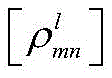
可选地,所述锚节点群的解密方法如式(25)所示:Optionally, the decryption method of the anchor node group is shown in formula (25):

其中,

本发明公开了以下技术效果:The present invention discloses the following technical effects:
本发明提供的一种基于联邦学习的异构拓扑网络可信加密定位方法,The invention provides a credible encryption positioning method for heterogeneous topology networks based on federated learning,
1、提供的近似椭圆的距离估计方法,能够较好的处理多跳测距中的路径非线性问题,解决异构拓扑带来的定位不准确性,与估计三角形折角相比,计算公式简单,有效的降低了计算复杂度。1. The provided approximate ellipse distance estimation method can better handle the path nonlinear problem in multi-hop ranging, and solve the positioning inaccuracy caused by heterogeneous topologies. Compared with estimating the triangle angle, the calculation formula is simple, The computational complexity is effectively reduced.
2、定位过程采用Paillier同态加密及区块链可信传输方式,能够较好的保证位置信息的安全性及可信性,同时,同态加密方式能够尽量降低位置估计过程的计算量,保证定位效率。2. The positioning process adopts Paillier homomorphic encryption and blockchain trusted transmission method, which can better ensure the security and reliability of location information. positioning efficiency.
3、本发明提供的基于联邦学习的位置估计方式,有效地保证了主动辅助位置估计的锚节点信息的隐私性,使得锚节点在不暴露各自位置的前提下协助智能体实现位置估计。3. The position estimation method based on federated learning provided by the present invention effectively ensures the privacy of the anchor node information for actively assisting position estimation, so that the anchor nodes assist the agent to realize position estimation without exposing their respective positions.
附图说明Description of drawings
为了更清楚地说明本发明实施例或现有技术中的技术方案,下面将对实施例中所需要使用的附图作简单地介绍,显而易见地,下面描述中的附图仅仅是本发明的一些实施例,对于本领域普通技术人员来讲,在不付出创造性劳动性的前提下,还可以根据这些附图获得其他的附图。In order to more clearly illustrate the embodiments of the present invention or the technical solutions in the prior art, the accompanying drawings required in the embodiments will be briefly introduced below. Obviously, the drawings in the following description are only some of the present invention. In the embodiments, for those of ordinary skill in the art, other drawings can also be obtained according to these drawings without creative labor.
图1为本发明实施例中无线自组织网络分布及最短路径树示意图;1 is a schematic diagram of a wireless ad hoc network distribution and a shortest path tree according to an embodiment of the present invention;
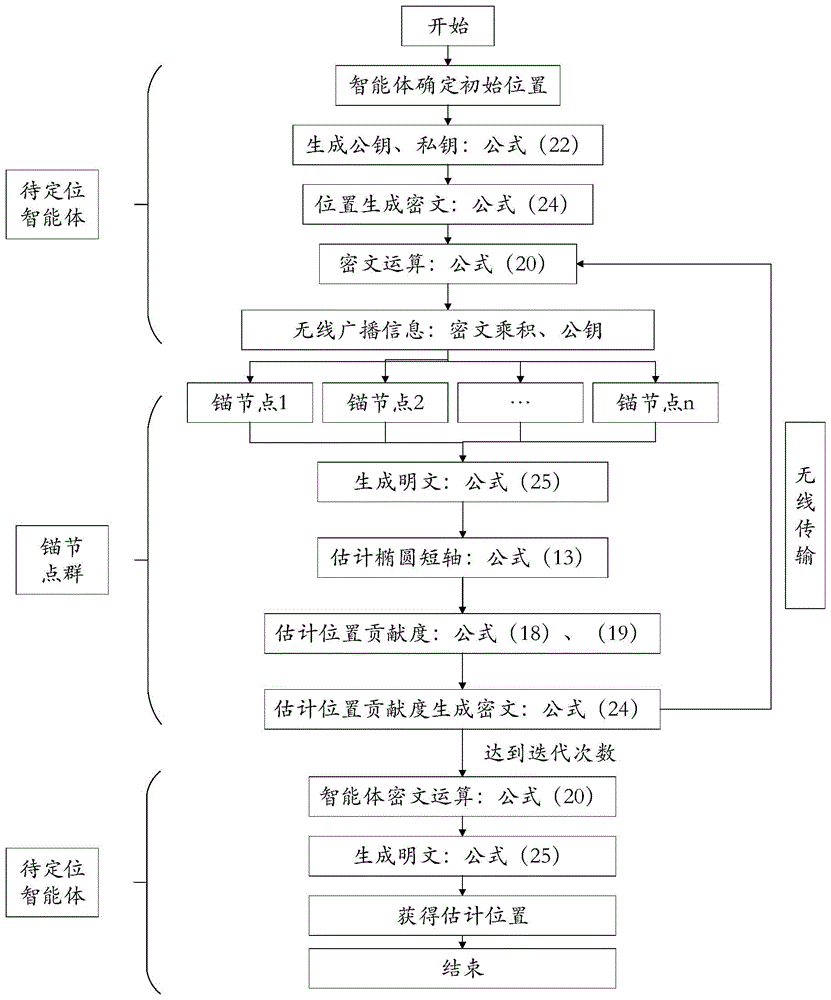
图2为本发明实施例中异构拓扑网络可信加密定位方法的流程示意图。FIG. 2 is a schematic flowchart of a method for trusted encryption and positioning of a heterogeneous topology network according to an embodiment of the present invention.
具体实施方式Detailed ways
下面将结合本发明实施例中的附图,对本发明实施例中的技术方案进行清楚、完整地描述,显然,所描述的实施例仅仅是本发明一部分实施例,而不是全部的实施例。基于本发明中的实施例,本领域普通技术人员在没有做出创造性劳动前提下所获得的所有其他实施例,都属于本发明保护的范围。The technical solutions in the embodiments of the present invention will be clearly and completely described below with reference to the accompanying drawings in the embodiments of the present invention. Obviously, the described embodiments are only a part of the embodiments of the present invention, but not all of the embodiments. Based on the embodiments of the present invention, all other embodiments obtained by those of ordinary skill in the art without creative efforts shall fall within the protection scope of the present invention.
为使本发明的上述目的、特征和优点能够更加明显易懂,下面结合附图和具体实施方式对本发明作进一步详细的说明。In order to make the above objects, features and advantages of the present invention more clearly understood, the present invention will be described in further detail below with reference to the accompanying drawings and specific embodiments.
本发明提供一种基于联邦学习的异构拓扑网络可信加密定位方法,参照图2,在本实施例中,采用近似椭圆距离计算异构拓扑网络中用于智能体定位的位置估计贡献值。The present invention provides a trusted encryption positioning method for heterogeneous topological networks based on federated learning. Referring to FIG. 2 , in this embodiment, approximate elliptical distance is used to calculate the contribution value of position estimation for agent positioning in heterogeneous topological networks.
假设无线自组织网络中存在M=NA+Na个网络节点,其中NA表示锚节点(已知自身位置)的个数,Na表示智能体(未知自身位置)的个数,第m个网络节点为智能体,第m个网络节点的位置为θm=[xm,ym],m∈A,其中A={1,…,Na}表示智能体的集合,第n个节点为锚节点,该锚节点的位置为θn=[xn,yn],n∈S,其中,S={Na+1,…,M}表示锚节点的集合。网络节点m,n之间的实际距离为rmn=||θm-θn||。假设智能体m随机分布在无线自组织网络中的某一区域内,通过多跳方式与锚节点n形成最短路径树。受到路径偏折及异构拓扑空间的影响,网络节点之间通过多跳方式进行距离估计往往面临路径的非线性,通过抽象路径的途经曲线,最短路径树途经距离可以近似为椭圆边长的一半,定义为多跳距离,用Lmn表示,如图1所示。Assume that there are M=N A +N a network nodes in the wireless ad hoc network, where N A represents the number of anchor nodes (whose location is known), Na represents the number of agents (whose location is unknown), and the mth The network nodes are agents, and the position of the mth network node is θ m = [x m , y m ], m∈A, where A={1,...,N a } represents the set of agents, the nth A node is an anchor node, and the position of the anchor node is θ n =[x n , y n ], n∈S, where S={N a +1, . . . , M} represents a set of anchor nodes. The actual distance between network nodes m and n is r mn =||θ m -θ n ||. Assume that the agent m is randomly distributed in a certain area in the wireless ad hoc network, and forms the shortest path tree with the anchor node n in a multi-hop manner. Affected by path deflection and heterogeneous topological space, the distance estimation between network nodes through multi-hop method often faces the nonlinearity of the path. By abstracting the path curve of the path, the path distance of the shortest path tree can be approximately half the length of the ellipse side. , defined as the multi-hop distance, denoted by Lmn , as shown in Figure 1.
节点m,n之间多跳距离Lmn为全部跳数的距离和,借助椭圆周长近似解公式可以得到节点m,n的估计距离dmn如式(1)所示:The multi-hop distance L mn between nodes m and n is the sum of the distances of all hops. With the approximate solution formula of the ellipse circumference, the estimated distance d mn of nodes m and n can be obtained as shown in formula (1):
dmn=Lmn/2-(π-2)bmn/2 (1)d mn =L mn /2-(π-2)b mn /2 (1)
其中,bmn为近似椭圆的短轴长度,节点o为最短路径中途经异构拓扑空间边界的节点,且其距离节点m,n近似相等。通过设置虚拟节点及三角形的边角关系近似得到异构拓扑空间路径的角度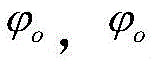


Lmo,Lon分别为网络节点m,o和网络节点n,o的多跳距离。 Lmo and Lon are the multi-hop distances of network nodes m, o and network nodes n, o, respectively.
假设估计距离dmn服从参数分布为


p(dm,bm;θm)=p(dm|bm;θm)p(bm) (3)p(d m , b m ; θ m )=p(d m |b m ; θ m )p(b m ) (3)
其中,dm=[dmn,…],n∈S表示智能体m到所有锚节点的观测距离的集合,bm=[bmn,…],n∈S表示智能体m到所有锚节点间的椭圆短轴的集合。Among them, d m = [d mn ,...], n∈S represents the set of observation distances from agent m to all anchor nodes, b m =[b mn ,...], n∈S represents agent m to all anchor nodes A collection of ellipse minor axes in between.
借助式(1)中节点距离的软测量方法得到的距离观测值用于构建智能体与锚节点的联合概率密度函数,假设智能体m与锚节点群中的全部锚节点服从联合概率密度函数如式(4)所示:The distance observations obtained by the soft measurement method of node distance in Eq. (1) are used to construct the joint probability density function of the agent and the anchor node. It is assumed that the agent m and all anchor nodes in the anchor node group obey the joint probability density function as follows: Formula (4) shows:
p(dm;θm)=Πn∈Sp(dmn;θm) (4)p(d m ; θ m )=Π n∈S p(d mn ; θ m ) (4)
无线自组织网络全部智能体的定位问题可以转化为求智能体位置参数的极大似然估计,单一智能体的极大似然求解与所有节点的极大似然求解具有相同的求解过程及方法,因此建立近似椭圆距离估计的单个智能体m异构拓扑空间的极大似然函数目标公式如式(5)所示:The positioning problem of all agents in wireless self-organizing networks can be transformed into the maximum likelihood estimation of the location parameters of the agents. The maximum likelihood solution of a single agent has the same solution process and method as the maximum likelihood solution of all nodes. , so the maximum likelihood function objective formula of a single agent m heterogeneous topological space for approximate elliptic distance estimation is as shown in formula (5):
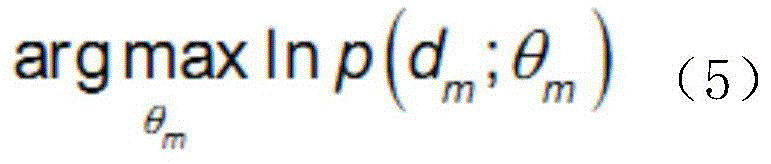
其中,函数arg max表示令ln p(dm;θm)取极大值时θm的取值。基于近似椭圆距离观测的多智能体网络定位模型中,似然估计的优化结果受到隐变量即近似椭圆短轴的影响,定位模型中位置参数及隐变量参数的最优解难以推导,变分贝叶斯-期望最大化方法在处理附带隐变量的混合高斯模型中具有良好的性能,因此借助变分贝叶斯-期望最大化方法解决异构拓扑空间的定位问题。Among them, the function arg max represents the value of θ m when ln p(d m ; θ m ) takes a maximum value. In the multi-agent network localization model based on approximate ellipse distance observation, the optimization result of likelihood estimation is affected by the hidden variable, that is, the short axis of the approximate ellipse. The Yeas-expectation-maximization method has good performance in dealing with Gaussian mixture models with latent variables, so the variational Bayes-expectation-maximization method is used to solve the localization problem in heterogeneous topological spaces.
按照期望最大化理论,固定参数的情况下最优化KL距离即可实现定位。然而,由于椭圆短轴作为隐变量导致积分问题,后验概率难以解算闭环解,因此在期望最大化模型的基础上,采用变分贝叶斯-期望最大化算法对定位过程中的参数实施推导,通过多次迭代逼近智能体的实际位置,该过程分为两个步骤:According to the expectation maximization theory, positioning can be achieved by optimizing the KL distance with fixed parameters. However, since the short axis of the ellipse is used as a hidden variable to cause the integration problem, the posterior probability is difficult to solve for the closed-loop solution. Therefore, based on the expectation-maximization model, the variational Bayes-expectation-maximization algorithm is used to implement the parameters in the positioning process. Derivation, approximating the actual position of the agent through multiple iterations, the process is divided into two steps:
VBE-step:给定I次迭代的位置估计值

其中,E{·}表示已知智能体m的观测距离集合dm后对内部变量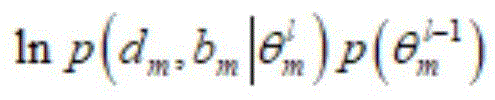
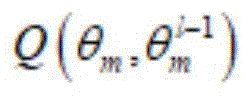
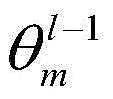
VBM-step:最大化条件期望,获得下一次迭代的估计值如式(7)所示:VBM-step: Maximize the conditional expectation and obtain the estimated value of the next iteration as shown in equation (7):

已知极大似然模型中位置变量和椭圆短轴隐变量的随机分布,按照变分贝叶斯-期望最大化算法的计算方式,借助中心场理论推导各参数的后验概率密度如式(8)所示:Knowing the random distribution of the position variable and the ellipse short-axis hidden variable in the maximum likelihood model, according to the calculation method of the variational Bayes-expectation maximization algorithm, the posterior probability density of each parameter is deduced with the help of the central field theory as formula ( 8) shown:

其中,<·>表示中对于任意变量i满足i≠j时已知变量j先验关于随机变量j对
已知异构拓扑空间智能体定位过程中各参数的概率密度函数,关于椭圆短轴隐变量bmn的对数后验概率为如式(9)所示:Knowing the probability density function of each parameter in the process of agent positioning in heterogeneous topological spaces, the logarithmic posterior probability of the latent variable b mn on the short axis of the ellipse is as shown in Equation (9):

且and


其中,
则隐变量椭圆短轴的对数后验概率为如式(12)所示:Then the logarithmic posterior probability of the minor axis of the latent variable ellipse is as shown in formula (12):

因此,隐变量椭圆短轴的迭代解析解为如式(13)所示:Therefore, the iterative analytical solution of the minor axis of the hidden variable ellipse is as shown in Eq. (13):

其中,l为迭代次数,

以同样的方式推导智能体的估计位置,其对数后验概率为The estimated position of the agent is derived in the same way, with the log posterior probability of

其中,||θm-θn||采用二阶泰勒展开进行处理,因此,智能体估计位置的迭代解析解为如式(15)-(16)所示:Among them, ||θ m -θ n || is processed by the second-order Taylor expansion. Therefore, the iterative analytical solution of the estimated position of the agent is as shown in equations (15)-(16):


其中,
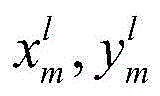

可以看出,智能体的位置估计受到多个锚节点综合作用的结果,因此,如式(17)所示,令It can be seen that the position estimation of the agent is the result of the combined action of multiple anchor nodes. Therefore, as shown in equation (17), let

其中,


因此,智能体m的位置估计需要每次迭代获取来自多个智能体m位置估计的贡献值。Therefore, the position estimation of agent m requires each iteration to obtain the contribution values from multiple position estimates of agent m.
由于异构拓扑网络定位信息对隐私性和安全性具有极高的要求,因此,本实施例中,在智能体定位过程中通信信息
为了降低智能体定位中加密方法带来的计算量,可信定位信息的链上加密方案采用Paillier同态加密结合区块链可信传输的方式,链上传输的加密数据包括


其中,[]表示加密处理,Π表示对来自所有锚节点的密文进行乘法运算,∑表示对所有锚节点的位置贡献度进行求和运算,


令lcm(a,b)表示整数a和整数b的最小公倍数,gcm(a,b)表示整数a和整数b的最小公因数,对网络位置信息实施加密的过程包括:Let lcm(a, b) represent the least common multiple of integer a and integer b, and gcm(a, b) represent the least common factor of integer a and integer b. The process of encrypting network location information includes:
(1)生成公钥pki、私钥ski:(1) Generate the public key pk i and the private key ski :
输入安全参数1k,选择两个随机k比特素数P和Q,并置N=PQ。如式(21)所示。选择参数g满足:Enter the security parameter 1 k , select two random k-bit prime numbers P and Q, and set N=PQ. As shown in formula (21). Choose parameter g to satisfy:
gcd(L(gλ(N)mod N2),N)=1 (21)gcd(L(g λ(N) mod N 2 ), N)=1 (21)
其中,关于变量u的函数定义为L(u)=(u-1)/N,λ(N)=lcm(P-1,Q-1),变量u表示函数括号内的运算结果,即u=gλ(N)mod N2。mod为取余运算。Among them, the function of the variable u is defined as L(u)=(u-1)/N, λ(N)=lcm(P-1, Q-1), and the variable u represents the operation result in the function parentheses, that is, u =g λ(N) mod N 2 . mod is the remainder operation.
选择随机数

公钥及私钥的生成函数P.KeyGen如式(22)所示:The generation function P.KeyGen of public key and private key is shown in formula (22):
(pki,ski)←P.KeyGen(1) (22)(pk i , ski ) ←P.KeyGen(1) (22)
(2)生成密文:(2) Generate ciphertext:
已知智能体m在迭代计算智能体位置估计结果的过程中估计位置



密文生成函数P.Encpk如式(24)所示:The ciphertext generation function P.Enc pk is shown in formula (24):

位置信息密文生成后上传至区块链,保证智能体接收后的密文信息可信。After the location information ciphertext is generated, it is uploaded to the blockchain to ensure that the ciphertext information received by the agent is credible.
(3)明文生成方法(3) Plaintext generation method
已知密文


式(25)-(26)所示的明文生成函数如式(27)所示:The plaintext generation function shown in equations (25)-(26) is shown in equation (27):

在群多智能体的异构拓扑网络定位中,智能体及锚节点对信息隐私具有较高的要求,尤其是位置隐私更加影响锚节点主动提供定位辅助的意愿,因此本实施例中采用联邦学习机制实现智能体的隐私保护定位。In the heterogeneous topology network positioning of swarm multi-agents, the agents and anchor nodes have higher requirements for information privacy, especially the location privacy affects the willingness of anchor nodes to actively provide positioning assistance. Therefore, federated learning is adopted in this embodiment. The mechanism realizes the privacy protection positioning of the agent.
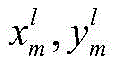
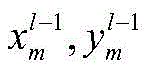
基于联邦机制的智能体位置迭代估计首先由智能体m自身通过区块链发送初始位置的加密信息


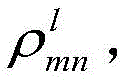


在本实施例中,智能体m同时获得来自锚节点群中所有锚节点的加密数据


最后应说明的是:以上所述实施例,仅为本发明的具体实施方式,用以说明本发明的技术方案,而非对其限制,本发明的保护范围并不局限于此,尽管参照前述实施例对本发明进行了详细的说明,本领域的普通技术人员应当理解:任何熟悉本技术领域的技术人员在本发明揭露的技术范围内,其依然可以对前述实施例所记载的技术方案进行修改或可轻易想到变化,或者对其中部分技术特征进行等同替换;而这些修改、变化或者替换,并不使相应技术方案的本质脱离本发明实施例技术方案的精神和范围。都应涵盖在本发明的保护范围之内。因此,本发明的保护范围应所述以权利要求的保护范围为准。Finally, it should be noted that the above-mentioned embodiments are only specific implementations of the present invention, and are used to illustrate the technical solutions of the present invention, but not to limit them. The protection scope of the present invention is not limited thereto, although referring to the foregoing The embodiment has been described in detail the present invention, and those of ordinary skill in the art should understand: any person skilled in the art who is familiar with the technical field of the present invention can still modify the technical solutions described in the foregoing embodiments within the technical scope disclosed by the present invention. Changes can be easily conceived, or equivalent replacements are made to some of the technical features; and these modifications, changes or replacements do not make the essence of the corresponding technical solutions deviate from the spirit and scope of the technical solutions of the embodiments of the present invention. All should be included within the protection scope of the present invention. Therefore, the protection scope of the present invention should be based on the protection scope of the claims.
Claims (9)













Priority Applications (1)
| Application Number | Priority Date | Filing Date | Title |
|---|---|---|---|
| CN202111213079.2A CN113950046B (en) | 2021-10-19 | 2021-10-19 | A Trusted Encryption Localization Method for Heterogeneous Topology Networks Based on Federated Learning |
Applications Claiming Priority (1)
| Application Number | Priority Date | Filing Date | Title |
|---|---|---|---|
| CN202111213079.2A CN113950046B (en) | 2021-10-19 | 2021-10-19 | A Trusted Encryption Localization Method for Heterogeneous Topology Networks Based on Federated Learning |
Publications (2)
| Publication Number | Publication Date |
|---|---|
| CN113950046A true CN113950046A (en) | 2022-01-18 |
| CN113950046B CN113950046B (en) | 2022-05-03 |
Family
ID=79331601
Family Applications (1)
| Application Number | Title | Priority Date | Filing Date |
|---|---|---|---|
| CN202111213079.2A Expired - Fee Related CN113950046B (en) | 2021-10-19 | 2021-10-19 | A Trusted Encryption Localization Method for Heterogeneous Topology Networks Based on Federated Learning |
Country Status (1)
| Country | Link |
|---|---|
| CN (1) | CN113950046B (en) |
Cited By (1)
| Publication number | Priority date | Publication date | Assignee | Title |
|---|---|---|---|---|
| CN115174033A (en) * | 2022-06-13 | 2022-10-11 | 湖北工业大学 | Method and system for resisting collusion attack of perception platform and user in mobile crowd sensing |
Citations (8)
| Publication number | Priority date | Publication date | Assignee | Title |
|---|---|---|---|---|
| US20050138200A1 (en) * | 2003-12-17 | 2005-06-23 | Palo Alto Research Center, Incorporated | Information driven routing in ad hoc sensor networks |
| CN110113713A (en) * | 2019-06-27 | 2019-08-09 | 上海海事大学 | Based on the improved wireless sensor network DV-Hop node positioning method of DE |
| CN110601814A (en) * | 2019-09-24 | 2019-12-20 | 深圳前海微众银行股份有限公司 | Federal learning data encryption method, device, equipment and readable storage medium |
| CN111556454A (en) * | 2020-04-24 | 2020-08-18 | 河南工业大学 | A Weighted DV_Hop Node Location Method Based on Minimum Mean Square Error Criterion |
| CN112132293A (en) * | 2020-09-30 | 2020-12-25 | 腾讯科技(深圳)有限公司 | Calculation method, device, equipment and medium in longitudinal federal learning |
| US20210158216A1 (en) * | 2021-01-28 | 2021-05-27 | Alipay Labs (singapore) Pte. Ltd. | Method and system for federated learning |
| CN113177645A (en) * | 2021-06-29 | 2021-07-27 | 腾讯科技(深圳)有限公司 | Federal learning method and device, computing equipment and storage medium |
| WO2021189906A1 (en) * | 2020-10-20 | 2021-09-30 | 平安科技(深圳)有限公司 | Target detection method and apparatus based on federated learning, and device and storage medium |
-
2021
- 2021-10-19 CN CN202111213079.2A patent/CN113950046B/en not_active Expired - Fee Related
Patent Citations (8)
| Publication number | Priority date | Publication date | Assignee | Title |
|---|---|---|---|---|
| US20050138200A1 (en) * | 2003-12-17 | 2005-06-23 | Palo Alto Research Center, Incorporated | Information driven routing in ad hoc sensor networks |
| CN110113713A (en) * | 2019-06-27 | 2019-08-09 | 上海海事大学 | Based on the improved wireless sensor network DV-Hop node positioning method of DE |
| CN110601814A (en) * | 2019-09-24 | 2019-12-20 | 深圳前海微众银行股份有限公司 | Federal learning data encryption method, device, equipment and readable storage medium |
| CN111556454A (en) * | 2020-04-24 | 2020-08-18 | 河南工业大学 | A Weighted DV_Hop Node Location Method Based on Minimum Mean Square Error Criterion |
| CN112132293A (en) * | 2020-09-30 | 2020-12-25 | 腾讯科技(深圳)有限公司 | Calculation method, device, equipment and medium in longitudinal federal learning |
| WO2021189906A1 (en) * | 2020-10-20 | 2021-09-30 | 平安科技(深圳)有限公司 | Target detection method and apparatus based on federated learning, and device and storage medium |
| US20210158216A1 (en) * | 2021-01-28 | 2021-05-27 | Alipay Labs (singapore) Pte. Ltd. | Method and system for federated learning |
| CN113177645A (en) * | 2021-06-29 | 2021-07-27 | 腾讯科技(深圳)有限公司 | Federal learning method and device, computing equipment and storage medium |
Cited By (2)
| Publication number | Priority date | Publication date | Assignee | Title |
|---|---|---|---|---|
| CN115174033A (en) * | 2022-06-13 | 2022-10-11 | 湖北工业大学 | Method and system for resisting collusion attack of perception platform and user in mobile crowd sensing |
| CN115174033B (en) * | 2022-06-13 | 2024-04-12 | 湖北工业大学 | Method and system for resisting collusion attacks between perception platform and users in mobile crowd intelligence perception |
Also Published As
| Publication number | Publication date |
|---|---|
| CN113950046B (en) | 2022-05-03 |
Similar Documents
| Publication | Publication Date | Title |
|---|---|---|
| Yang et al. | The death and rebirth of privacy-preserving WiFi fingerprint localization with Paillier encryption | |
| Althobaiti et al. | Quantum-resistant cryptography for the internet of things based on location-based lattices | |
| Gui et al. | Connectivity based DV-hop localization for Internet of Things | |
| Hadjicostis | Privary preserving distributed average consensus via homomorphic encryption | |
| Lv et al. | Space-time hierarchical-graph based cooperative localization in wireless sensor networks | |
| CN104079576B (en) | A kind of dynamic cooperative alliances Structure formation method based on Bayes's Game with Coalitions | |
| CN113950046B (en) | A Trusted Encryption Localization Method for Heterogeneous Topology Networks Based on Federated Learning | |
| Zhu et al. | Protecting position privacy in range-based crowdsourcing cooperative localization | |
| Bakas et al. | Multi-input functional encryption: efficient applications from symmetric primitives | |
| CN105828432B (en) | A kind of efficient method for secret protection of anchor node ranging localization | |
| CN112187770B (en) | A security fusion and statistical method of multi-source marine data based on nearshore Internet of Things | |
| Chen et al. | PP-OCQ: A distributed privacy-preserving optimal closeness query scheme for social networks | |
| Aristov et al. | Encrypted multisensor information filtering | |
| Chatzigiannakis et al. | Design, analysis and performance evaluation of group key establishment in wireless sensor networks | |
| Fan et al. | An extended joint spatial and temporal cooperation model for the range-based localization problem | |
| CN118158661A (en) | A Consensus-Based Privacy-Preserving Data Aggregation Method for Dynamic Sensor Networks | |
| Iutzeler | Distributed estimation and optimization in asynchronous networks | |
| Hernandez et al. | Proximity-based positioning scheme with multi-layer privacy | |
| Hong et al. | Collaboratively solving the traveling salesman problem with limited disclosure | |
| Luo et al. | Approximate shortest distance queries with advanced graph analytics over large-scale encrypted graphs | |
| Sun et al. | G-STAR: Geometric STAteless Routing for 3-D wireless sensor networks | |
| Meyer et al. | Cooperative simultaneous localization and tracking in mobile agent networks | |
| Teguig et al. | Security in wireless sensor network and IoT: an elliptic curves cryptosystem based approach | |
| Racharla et al. | A review on localization problems in wireless sensor network: Algorithmic and performance analysis | |
| Etzlinger et al. | Mean field message passing for cooperative simultaneous ranging and synchronization |
Legal Events
| Date | Code | Title | Description |
|---|---|---|---|
| PB01 | Publication | ||
| PB01 | Publication | ||
| SE01 | Entry into force of request for substantive examination | ||
| SE01 | Entry into force of request for substantive examination | ||
| GR01 | Patent grant | ||
| GR01 | Patent grant | ||
| CF01 | Termination of patent right due to non-payment of annual fee |
Granted publication date: 20220503 |
|
| CF01 | Termination of patent right due to non-payment of annual fee |