CN113853189A - exercise device - Google Patents
exercise device Download PDFInfo
- Publication number
- CN113853189A CN113853189A CN202080036669.XA CN202080036669A CN113853189A CN 113853189 A CN113853189 A CN 113853189A CN 202080036669 A CN202080036669 A CN 202080036669A CN 113853189 A CN113853189 A CN 113853189A
- Authority
- CN
- China
- Prior art keywords
- motor
- shoe
- exercise device
- elongate member
- power
- Prior art date
- Legal status (The legal status is an assumption and is not a legal conclusion. Google has not performed a legal analysis and makes no representation as to the accuracy of the status listed.)
- Granted
Links
Images


Classifications
-
- A—HUMAN NECESSITIES
- A61—MEDICAL OR VETERINARY SCIENCE; HYGIENE
- A61H—PHYSICAL THERAPY APPARATUS, e.g. DEVICES FOR LOCATING OR STIMULATING REFLEX POINTS IN THE BODY; ARTIFICIAL RESPIRATION; MASSAGE; BATHING DEVICES FOR SPECIAL THERAPEUTIC OR HYGIENIC PURPOSES OR SPECIFIC PARTS OF THE BODY
- A61H1/00—Apparatus for passive exercising; Vibrating apparatus; Chiropractic devices, e.g. body impacting devices, external devices for briefly extending or aligning unbroken bones
- A61H1/005—Moveable platforms, e.g. vibrating or oscillating platforms for standing, sitting, laying or leaning
-
- A—HUMAN NECESSITIES
- A61—MEDICAL OR VETERINARY SCIENCE; HYGIENE
- A61H—PHYSICAL THERAPY APPARATUS, e.g. DEVICES FOR LOCATING OR STIMULATING REFLEX POINTS IN THE BODY; ARTIFICIAL RESPIRATION; MASSAGE; BATHING DEVICES FOR SPECIAL THERAPEUTIC OR HYGIENIC PURPOSES OR SPECIFIC PARTS OF THE BODY
- A61H1/00—Apparatus for passive exercising; Vibrating apparatus; Chiropractic devices, e.g. body impacting devices, external devices for briefly extending or aligning unbroken bones
- A61H1/02—Stretching or bending or torsioning apparatus for exercising
- A61H1/0237—Stretching or bending or torsioning apparatus for exercising for the lower limbs
-
- A—HUMAN NECESSITIES
- A61—MEDICAL OR VETERINARY SCIENCE; HYGIENE
- A61H—PHYSICAL THERAPY APPARATUS, e.g. DEVICES FOR LOCATING OR STIMULATING REFLEX POINTS IN THE BODY; ARTIFICIAL RESPIRATION; MASSAGE; BATHING DEVICES FOR SPECIAL THERAPEUTIC OR HYGIENIC PURPOSES OR SPECIFIC PARTS OF THE BODY
- A61H1/00—Apparatus for passive exercising; Vibrating apparatus; Chiropractic devices, e.g. body impacting devices, external devices for briefly extending or aligning unbroken bones
- A61H1/02—Stretching or bending or torsioning apparatus for exercising
-
- A—HUMAN NECESSITIES
- A61—MEDICAL OR VETERINARY SCIENCE; HYGIENE
- A61H—PHYSICAL THERAPY APPARATUS, e.g. DEVICES FOR LOCATING OR STIMULATING REFLEX POINTS IN THE BODY; ARTIFICIAL RESPIRATION; MASSAGE; BATHING DEVICES FOR SPECIAL THERAPEUTIC OR HYGIENIC PURPOSES OR SPECIFIC PARTS OF THE BODY
- A61H23/00—Percussion or vibration massage, e.g. using supersonic vibration; Suction-vibration massage; Massage with moving diaphragms
- A61H23/02—Percussion or vibration massage, e.g. using supersonic vibration; Suction-vibration massage; Massage with moving diaphragms with electric or magnetic drive
-
- A—HUMAN NECESSITIES
- A63—SPORTS; GAMES; AMUSEMENTS
- A63B—APPARATUS FOR PHYSICAL TRAINING, GYMNASTICS, SWIMMING, CLIMBING, OR FENCING; BALL GAMES; TRAINING EQUIPMENT
- A63B21/00—Exercising apparatus for developing or strengthening the muscles or joints of the body by working against a counterforce, with or without measuring devices
- A63B21/0004—Exercising devices moving as a whole during exercise
-
- A—HUMAN NECESSITIES
- A63—SPORTS; GAMES; AMUSEMENTS
- A63B—APPARATUS FOR PHYSICAL TRAINING, GYMNASTICS, SWIMMING, CLIMBING, OR FENCING; BALL GAMES; TRAINING EQUIPMENT
- A63B21/00—Exercising apparatus for developing or strengthening the muscles or joints of the body by working against a counterforce, with or without measuring devices
- A63B21/02—Exercising apparatus for developing or strengthening the muscles or joints of the body by working against a counterforce, with or without measuring devices using resilient force-resisters
- A63B21/026—Bars; Tubes; Leaf springs
- A63B21/027—Apparatus forced to oscillate at its resonant frequency
-
- A—HUMAN NECESSITIES
- A63—SPORTS; GAMES; AMUSEMENTS
- A63B—APPARATUS FOR PHYSICAL TRAINING, GYMNASTICS, SWIMMING, CLIMBING, OR FENCING; BALL GAMES; TRAINING EQUIPMENT
- A63B21/00—Exercising apparatus for developing or strengthening the muscles or joints of the body by working against a counterforce, with or without measuring devices
- A63B21/02—Exercising apparatus for developing or strengthening the muscles or joints of the body by working against a counterforce, with or without measuring devices using resilient force-resisters
- A63B21/045—Exercising apparatus for developing or strengthening the muscles or joints of the body by working against a counterforce, with or without measuring devices using resilient force-resisters having torsion or bending or flexion element
-
- A—HUMAN NECESSITIES
- A63—SPORTS; GAMES; AMUSEMENTS
- A63B—APPARATUS FOR PHYSICAL TRAINING, GYMNASTICS, SWIMMING, CLIMBING, OR FENCING; BALL GAMES; TRAINING EQUIPMENT
- A63B21/00—Exercising apparatus for developing or strengthening the muscles or joints of the body by working against a counterforce, with or without measuring devices
- A63B21/40—Interfaces with the user related to strength training; Details thereof
- A63B21/4001—Arrangements for attaching the exercising apparatus to the user's body, e.g. belts, shoes or gloves specially adapted therefor
- A63B21/4011—Arrangements for attaching the exercising apparatus to the user's body, e.g. belts, shoes or gloves specially adapted therefor to the lower limbs
- A63B21/4015—Arrangements for attaching the exercising apparatus to the user's body, e.g. belts, shoes or gloves specially adapted therefor to the lower limbs to the foot
-
- A—HUMAN NECESSITIES
- A63—SPORTS; GAMES; AMUSEMENTS
- A63B—APPARATUS FOR PHYSICAL TRAINING, GYMNASTICS, SWIMMING, CLIMBING, OR FENCING; BALL GAMES; TRAINING EQUIPMENT
- A63B21/00—Exercising apparatus for developing or strengthening the muscles or joints of the body by working against a counterforce, with or without measuring devices
- A63B21/40—Interfaces with the user related to strength training; Details thereof
- A63B21/4041—Interfaces with the user related to strength training; Details thereof characterised by the movements of the interface
- A63B21/4043—Free movement, i.e. the only restriction coming from the resistance
-
- A—HUMAN NECESSITIES
- A63—SPORTS; GAMES; AMUSEMENTS
- A63B—APPARATUS FOR PHYSICAL TRAINING, GYMNASTICS, SWIMMING, CLIMBING, OR FENCING; BALL GAMES; TRAINING EQUIPMENT
- A63B23/00—Exercising apparatus specially adapted for particular parts of the body
- A63B23/035—Exercising apparatus specially adapted for particular parts of the body for limbs, i.e. upper or lower limbs, e.g. simultaneously
- A63B23/03508—For a single arm or leg
-
- A—HUMAN NECESSITIES
- A63—SPORTS; GAMES; AMUSEMENTS
- A63B—APPARATUS FOR PHYSICAL TRAINING, GYMNASTICS, SWIMMING, CLIMBING, OR FENCING; BALL GAMES; TRAINING EQUIPMENT
- A63B23/00—Exercising apparatus specially adapted for particular parts of the body
- A63B23/035—Exercising apparatus specially adapted for particular parts of the body for limbs, i.e. upper or lower limbs, e.g. simultaneously
- A63B23/03516—For both arms together or both legs together; Aspects related to the co-ordination between right and left side limbs of a user
- A63B23/03533—With separate means driven by each limb, i.e. performing different movements
- A63B23/03541—Moving independently from each other
-
- A—HUMAN NECESSITIES
- A63—SPORTS; GAMES; AMUSEMENTS
- A63B—APPARATUS FOR PHYSICAL TRAINING, GYMNASTICS, SWIMMING, CLIMBING, OR FENCING; BALL GAMES; TRAINING EQUIPMENT
- A63B23/00—Exercising apparatus specially adapted for particular parts of the body
- A63B23/035—Exercising apparatus specially adapted for particular parts of the body for limbs, i.e. upper or lower limbs, e.g. simultaneously
- A63B23/04—Exercising apparatus specially adapted for particular parts of the body for limbs, i.e. upper or lower limbs, e.g. simultaneously for lower limbs
-
- A—HUMAN NECESSITIES
- A63—SPORTS; GAMES; AMUSEMENTS
- A63B—APPARATUS FOR PHYSICAL TRAINING, GYMNASTICS, SWIMMING, CLIMBING, OR FENCING; BALL GAMES; TRAINING EQUIPMENT
- A63B24/00—Electric or electronic controls for exercising apparatus of preceding groups; Controlling or monitoring of exercises, sportive games, training or athletic performances
- A63B24/0003—Analysing the course of a movement or motion sequences during an exercise or trainings sequence, e.g. swing for golf or tennis
-
- A—HUMAN NECESSITIES
- A63—SPORTS; GAMES; AMUSEMENTS
- A63B—APPARATUS FOR PHYSICAL TRAINING, GYMNASTICS, SWIMMING, CLIMBING, OR FENCING; BALL GAMES; TRAINING EQUIPMENT
- A63B24/00—Electric or electronic controls for exercising apparatus of preceding groups; Controlling or monitoring of exercises, sportive games, training or athletic performances
- A63B24/0087—Electric or electronic controls for exercising apparatus of groups A63B21/00 - A63B23/00, e.g. controlling load
-
- A—HUMAN NECESSITIES
- A61—MEDICAL OR VETERINARY SCIENCE; HYGIENE
- A61H—PHYSICAL THERAPY APPARATUS, e.g. DEVICES FOR LOCATING OR STIMULATING REFLEX POINTS IN THE BODY; ARTIFICIAL RESPIRATION; MASSAGE; BATHING DEVICES FOR SPECIAL THERAPEUTIC OR HYGIENIC PURPOSES OR SPECIFIC PARTS OF THE BODY
- A61H2201/00—Characteristics of apparatus not provided for in the preceding codes
- A61H2201/12—Driving means
- A61H2201/1207—Driving means with electric or magnetic drive
-
- A—HUMAN NECESSITIES
- A61—MEDICAL OR VETERINARY SCIENCE; HYGIENE
- A61H—PHYSICAL THERAPY APPARATUS, e.g. DEVICES FOR LOCATING OR STIMULATING REFLEX POINTS IN THE BODY; ARTIFICIAL RESPIRATION; MASSAGE; BATHING DEVICES FOR SPECIAL THERAPEUTIC OR HYGIENIC PURPOSES OR SPECIFIC PARTS OF THE BODY
- A61H2201/00—Characteristics of apparatus not provided for in the preceding codes
- A61H2201/16—Physical interface with patient
- A61H2201/1602—Physical interface with patient kind of interface, e.g. head rest, knee support or lumbar support
- A61H2201/164—Feet or leg, e.g. pedal
-
- A—HUMAN NECESSITIES
- A61—MEDICAL OR VETERINARY SCIENCE; HYGIENE
- A61H—PHYSICAL THERAPY APPARATUS, e.g. DEVICES FOR LOCATING OR STIMULATING REFLEX POINTS IN THE BODY; ARTIFICIAL RESPIRATION; MASSAGE; BATHING DEVICES FOR SPECIAL THERAPEUTIC OR HYGIENIC PURPOSES OR SPECIFIC PARTS OF THE BODY
- A61H2201/00—Characteristics of apparatus not provided for in the preceding codes
- A61H2201/16—Physical interface with patient
- A61H2201/1602—Physical interface with patient kind of interface, e.g. head rest, knee support or lumbar support
- A61H2201/164—Feet or leg, e.g. pedal
- A61H2201/1642—Holding means therefor
-
- A—HUMAN NECESSITIES
- A61—MEDICAL OR VETERINARY SCIENCE; HYGIENE
- A61H—PHYSICAL THERAPY APPARATUS, e.g. DEVICES FOR LOCATING OR STIMULATING REFLEX POINTS IN THE BODY; ARTIFICIAL RESPIRATION; MASSAGE; BATHING DEVICES FOR SPECIAL THERAPEUTIC OR HYGIENIC PURPOSES OR SPECIFIC PARTS OF THE BODY
- A61H2201/00—Characteristics of apparatus not provided for in the preceding codes
- A61H2201/50—Control means thereof
-
- A—HUMAN NECESSITIES
- A61—MEDICAL OR VETERINARY SCIENCE; HYGIENE
- A61H—PHYSICAL THERAPY APPARATUS, e.g. DEVICES FOR LOCATING OR STIMULATING REFLEX POINTS IN THE BODY; ARTIFICIAL RESPIRATION; MASSAGE; BATHING DEVICES FOR SPECIAL THERAPEUTIC OR HYGIENIC PURPOSES OR SPECIFIC PARTS OF THE BODY
- A61H2201/00—Characteristics of apparatus not provided for in the preceding codes
- A61H2201/50—Control means thereof
- A61H2201/5097—Control means thereof wireless
-
- A—HUMAN NECESSITIES
- A61—MEDICAL OR VETERINARY SCIENCE; HYGIENE
- A61H—PHYSICAL THERAPY APPARATUS, e.g. DEVICES FOR LOCATING OR STIMULATING REFLEX POINTS IN THE BODY; ARTIFICIAL RESPIRATION; MASSAGE; BATHING DEVICES FOR SPECIAL THERAPEUTIC OR HYGIENIC PURPOSES OR SPECIFIC PARTS OF THE BODY
- A61H2203/00—Additional characteristics concerning the patient
- A61H2203/04—Position of the patient
- A61H2203/0425—Sitting on the buttocks
- A61H2203/0431—Sitting on the buttocks in 90°/90°-position, like on a chair
-
- A—HUMAN NECESSITIES
- A61—MEDICAL OR VETERINARY SCIENCE; HYGIENE
- A61H—PHYSICAL THERAPY APPARATUS, e.g. DEVICES FOR LOCATING OR STIMULATING REFLEX POINTS IN THE BODY; ARTIFICIAL RESPIRATION; MASSAGE; BATHING DEVICES FOR SPECIAL THERAPEUTIC OR HYGIENIC PURPOSES OR SPECIFIC PARTS OF THE BODY
- A61H2203/00—Additional characteristics concerning the patient
- A61H2203/04—Position of the patient
- A61H2203/0443—Position of the patient substantially horizontal
-
- A—HUMAN NECESSITIES
- A61—MEDICAL OR VETERINARY SCIENCE; HYGIENE
- A61H—PHYSICAL THERAPY APPARATUS, e.g. DEVICES FOR LOCATING OR STIMULATING REFLEX POINTS IN THE BODY; ARTIFICIAL RESPIRATION; MASSAGE; BATHING DEVICES FOR SPECIAL THERAPEUTIC OR HYGIENIC PURPOSES OR SPECIFIC PARTS OF THE BODY
- A61H2205/00—Devices for specific parts of the body
- A61H2205/08—Trunk
- A61H2205/083—Abdomen
-
- A—HUMAN NECESSITIES
- A61—MEDICAL OR VETERINARY SCIENCE; HYGIENE
- A61H—PHYSICAL THERAPY APPARATUS, e.g. DEVICES FOR LOCATING OR STIMULATING REFLEX POINTS IN THE BODY; ARTIFICIAL RESPIRATION; MASSAGE; BATHING DEVICES FOR SPECIAL THERAPEUTIC OR HYGIENIC PURPOSES OR SPECIFIC PARTS OF THE BODY
- A61H2205/00—Devices for specific parts of the body
- A61H2205/10—Leg
- A61H2205/106—Leg for the lower legs
-
- A—HUMAN NECESSITIES
- A61—MEDICAL OR VETERINARY SCIENCE; HYGIENE
- A61H—PHYSICAL THERAPY APPARATUS, e.g. DEVICES FOR LOCATING OR STIMULATING REFLEX POINTS IN THE BODY; ARTIFICIAL RESPIRATION; MASSAGE; BATHING DEVICES FOR SPECIAL THERAPEUTIC OR HYGIENIC PURPOSES OR SPECIFIC PARTS OF THE BODY
- A61H2205/00—Devices for specific parts of the body
- A61H2205/10—Leg
- A61H2205/108—Leg for the upper legs
Landscapes
- Health & Medical Sciences (AREA)
- Physical Education & Sports Medicine (AREA)
- General Health & Medical Sciences (AREA)
- Orthopedic Medicine & Surgery (AREA)
- Life Sciences & Earth Sciences (AREA)
- Biophysics (AREA)
- Animal Behavior & Ethology (AREA)
- Rehabilitation Therapy (AREA)
- Public Health (AREA)
- Veterinary Medicine (AREA)
- Pain & Pain Management (AREA)
- Epidemiology (AREA)
- Rehabilitation Tools (AREA)
- Percussion Or Vibration Massage (AREA)
Abstract
一种锻炼装置,包括鞋、柔性的长形构件和马达组件。柔性的长形构件在多个位置中的一个位置处被附接至鞋。马达组件设置在鞋与长形构件之间。马达组件配置为引起长形构件振荡。

An exercise device includes a shoe, a flexible elongate member, and a motor assembly. The flexible elongate member is attached to the shoe at one of a plurality of locations. The motor assembly is disposed between the shoe and the elongated member. The motor assembly is configured to cause the elongated member to oscillate.
Description
Cross Reference to Related Applications
This application claims the benefit of U.S. provisional application No. 16/420,236 filed on 23.05.2019. The entire disclosure of the above application is incorporated herein by reference.
Technical Field
The present disclosure relates to an exercise device.
Background
This section provides background information related to the present disclosure and not necessarily prior art.
Exercise devices may be used to exercise various muscles of a person's body. Such exercise devices can be difficult to use and expensive to manufacture. The exercise device of the present disclosure is simple to use and inexpensive to manufacture. For example, the exercise device of the present disclosure is also effective to exercise a person's body, including the person's lower body parts (e.g., lower legs, thighs, lower abdomen, etc.).
Disclosure of Invention
This section provides a general summary of the disclosure, and is not a comprehensive disclosure of its full scope or all of its features.
In one form, the present disclosure provides an exercise device including a shoe, a flexible elongate member, and a motor assembly. The flexible elongate member is attached to the shoe at one of a plurality of locations. The motor assembly is disposed between the shoe and the elongated member. The motor assembly is configured to cause an oscillation (oscillate) of the elongate member.
In some configurations of the exercise device of the preceding paragraph, the elongated member is attached to the shoe at a location such that the shoe and the elongated member extend parallel to each other.
In some configurations of the exercise device of any one or more of the above paragraphs, the elongated member is attached to the shoe at a position such that the shoe and the elongated member are angled with respect to each other.
In some configurations of the exercise device of any one or more of the above paragraphs, the motor assembly includes a motor, and a plurality of vibration members (vibrations) connected to the motor. When the motor is in an OFF mode, the vibrating member is spaced from the top surface of the elongate member.
In some configurations of the exercise device of any one or more of the above paragraphs, the vibrating member is configured to move up and down when the motor is turned to an ON mode (ON mode), which causes the vibrating member to strike a top surface of the elongated member, causing the elongated member to oscillate.
In another form, the present disclosure provides an exercise apparatus that includes an exercise device and a processor. The exercise device includes a shoe, a flexible elongate member, and a motor assembly. The flexible elongate member is configured to be attached to the shoe at one of a plurality of locations. The motor assembly is disposed between the shoe and the elongated member. The motor assembly includes a motor and a vibration member connected to the motor. The vibrating member is configured to strike the elongated member such that the elongated member oscillates. The processor is configured to execute instructions stored in a non-transitory computer readable medium. These instructions include: uploading a medical image; matching the medical image with a template medical image stored in a non-transitory computer readable medium to obtain a treatment plan; generating a notification indicating which of a plurality of positions to attach the flexible elongate member to the shoe; and initiating a treatment protocol such that a signal is sent to the motor that causes the vibrating member to strike and oscillate the elongated member.
In some configurations of the exercise device of the above paragraph, the signal sent to the motor causes the motor to go to an on mode that is at a predetermined power for a predetermined duration.
In some configurations of the exercise device of any one or more of the above paragraphs, the signal sent to the motor causes the motor to turn to an on mode, the on mode lasting for a predetermined duration.
In some configurations of the exercise device of any one or more of the above paragraphs, the power of the motor is varied for a predetermined duration.
In some configurations of the exercise device of any one or more of the above paragraphs, the power of the motor is adjustable.
In some configurations of the exercise device of any one or more of the above paragraphs, the amplitude of the oscillations of the elongated member is greater when the power is increased and the amplitude of the oscillations of the elongated member is less when the power is decreased.
In some configurations of the exercise device of any one or more of the above paragraphs, the vibrating member impacts the elongated member with a greater force when the power is increased and with a lesser force when the power is decreased.
In some configurations of the exercise device of any one or more of the above paragraphs, the medical image is a medical image of a muscle of a lower body part (lower body part).
In yet another form, the present disclosure provides a method comprising: uploading a medical image; matching the medical image with a template medical image stored in a non-transitory computer readable medium to obtain a treatment plan; generating a notification indicating which of a plurality of positions to connect the flexible elongate member of the exercise device to the shoe of the exercise apparatus; and initiating a treatment regimen such that a signal is sent to a motor of the exercise device that causes a vibrating member of the exercise device to strike and oscillate the elongated member.
In some configurations of the method of the above paragraph, the signal sent to the motor causes the motor to go to an on mode that is at a predetermined power for a predetermined duration.
In some configurations of the method of any one or more of the above paragraphs, the signal sent to the motor causes the motor to go to an on mode, the on mode lasting for a predetermined duration.
In some configurations of the method of any one or more of the above paragraphs, the power of the motor is varied for a predetermined duration.
In some configurations of the method of any one or more of the above paragraphs, the power of the motor is adjustable.
In some configurations of the method of any one or more of the above paragraphs, the amplitude of the oscillation of the elongate member is greater when the power is increased and is less when the power is decreased.
In some configurations of the method of any one or more of the above paragraphs, the vibrating member impacts the elongated member with a greater force when the power is increased, and the vibrating member impacts the elongated member with a lesser force when the power is decreased.
In some configurations of the method of any one or more of the above paragraphs, the medical image is a medical image of a muscle of the lower body part.
Further areas of applicability will become apparent from the description provided herein. The description and specific examples in this summary are intended for purposes of illustration only and are not intended to limit the scope of the present disclosure.
Drawings
The drawings described herein are for illustrative purposes only of selected embodiments and not all possible implementations, and are not intended to limit the scope of the present disclosure.
FIG. 1a is a perspective view of an exercise device with a person sitting down and wearing an exercise apparatus according to the principles of the present disclosure;
FIG. 1b is a perspective view of an alternate exercise device with a person sitting down and wearing an exercise apparatus;
FIG. 2 is an exploded view of an exercise apparatus of the exercise device of FIG. 1 a;
FIG. 3 is a bottom view of an exercise apparatus of the exercise device of FIG. 1 a;
FIG. 4 is a cross-sectional view of an exercise apparatus;
FIG. 5 is a block diagram showing communication between an exercise device and a computing device;
FIG. 6 is a flow chart describing an algorithm for operating an exercise device of the exercise apparatus;
FIG. 7 is a perspective view of a person sitting down and wearing an exercise device, and a positively oscillating elongated member of the exercise device; and
fig. 8 is a perspective view of a person lying on their back and wearing an exercise device, and two elongated members of the exercise device that are oscillating.
Corresponding reference characters indicate corresponding parts throughout the several views of the drawings.
Detailed Description
Exemplary embodiments will now be described more fully with reference to the accompanying drawings.
The exemplary embodiments are provided so that this disclosure will be thorough and will fully convey the scope to those skilled in the art. Numerous specific details are set forth, such as examples of specific components, devices, and methods, in order to provide a thorough understanding of embodiments of the present disclosure. It will be apparent to those skilled in the art that specific details need not be employed, that example embodiments may be embodied in many different forms and that neither should be construed to limit the scope of the invention. In some example embodiments, well-known processes, well-known device structures, and well-known technologies are not described in detail.
The terminology used herein is for the purpose of describing particular example embodiments only and is not intended to be limiting. As used herein, the singular forms "a", "an" and "the" may be intended to include the plural forms as well, unless the context clearly indicates otherwise. The terms "comprises," "comprising," "including," and "having" are inclusive and therefore specify the presence of stated features, integers, steps, operations, elements, and/or components, but do not preclude the presence or addition of one or more other features, integers, steps, operations, elements, components, and/or groups thereof. The method steps, processes, and operations described herein are not to be construed as necessarily requiring their performance in the particular order discussed or illustrated, unless specifically identified as an order of performance. It should also be understood that additional or alternative steps may be employed.
When an element or layer is referred to as being "on," "engaged to," "connected to" or "coupled to" another element or layer, it can be directly on, engaged, connected or coupled to the other element or layer or intervening elements or layers may be present. In contrast, when an element is referred to as being "directly on," "directly engaged to," "directly connected to" or "directly coupled to" another element or layer, there may be no intervening elements or layers present. Other words used to describe the relationship between elements should be construed similarly (e.g., "between … …" as opposed to "directly between … …", "adjacent" as opposed to "directly adjacent", etc.). As used herein, the term "and/or" includes any and all combinations of one or more of the associated listed items.
Although the terms "first," "second," "third," etc. may be used herein to describe various elements, components, regions, layers and/or sections, these elements, components, regions, layers and/or sections should not be limited by these terms unless otherwise specified. These terms may be only used to distinguish one element, component, region, layer or section from another region, layer or section. As used herein, terms such as "first," "second," and other numerical designations do not imply a sequence or order unless clearly indicated by the context. Thus, a first element, component, region, layer or section discussed below could be termed a second element, component, region, layer or section without departing from the teachings of the example embodiments.
Spatially relative terms (e.g., "inner," "outer," "below," "lower," "below," "above," "upper," etc.) may be used herein for ease of description to describe one element or feature's relationship to another element(s) or feature(s) as illustrated in the figures. Spatially relative terms are intended to encompass different orientations of the device in use or operation in addition to the orientation depicted in the figures. For example, if the device in the figures is turned over, elements described as "below" or "beneath" other elements or features would then be oriented "above" the other elements or features. Thus, the exemplary term "below" can encompass both an orientation of above and below. The device may be otherwise oriented (rotated 90 degrees or at other orientations) and the spatially relative descriptors used herein interpreted accordingly.
As shown in fig. 1a, an exercise device 10 is provided. The user 12 may operate the exercise device 10 to perform an exercise. For example, the exercise device 10 may be operated by a user 12 to exercise a lower body portion 13 of the user 12, such as the user's legs 11 (i.e., each leg 11 includes a lower leg 14, an upper leg 16, and a foot 17) and, for example, the lower abdomen 18. Exercise apparatus 10 may include a pair of exercise devices 20 and a computing device 22.
As shown in fig. 1-4 and 7, each exercise device 20 may be operable independently of one another and may include a flexible elongate member 26 and a shoe 28. The elongate member 26 may be flat and may include opposing ends. In some configurations, the elongate member 26 may be curved. In some configurations, the elongate member 26 may be retractable such that the elongate member 26 may be conveniently packaged and transported. In some configurations, as shown in fig. 1b, the opposite end 30 of each elongate member 26 may include a weight 31 attached thereto to facilitate oscillation of the elongate member 26. The elongate member 26 may be removably attached to the shoe 28 at a mid-portion of the elongate member 26 in a plurality of positions.
For example, as shown in fig. 3, the elongate member 26 may be attached to the shoe 28 in a first position in which the elongate member 26 and the shoe 28 are parallel to each other (i.e., the shoe 28 extends in a direction parallel to the longitudinal axis of the elongate member 26). In another example, as shown in phantom in fig. 3, the elongate member 26 may be attached to the shoe 28 in a second position in which the elongate member 26 is angled (i.e., non-parallel angle) relative to the shoe 28 (i.e., a portion of the elongate member 26 extends beyond an inward portion 34 of the shoe 28 at a front end of the shoe and another portion of the elongate member 26 extends beyond an outward portion 36 of the shoe 28 at a rear end of the shoe). It should be understood that the inward portion 34 of the shoe 28 is opposite the outward portion 36 of the shoe 28 and that the inward portion 34 of the shoe 28 faces the inward portion 34 of the other shoe 28. In another example, as shown in phantom in fig. 3, the elongate member 26 may be attached to the shoe 28 in a third position in which the elongate member 26 is angled (i.e., non-parallel angle) relative to the shoe 28 (i.e., a portion of the elongate member 26 extends beyond the outward portion 36 of the shoe 28 at the front end of the shoe and another portion of the elongate member 26 extends beyond the inward portion 34 of the shoe 28 at the rear end of the shoe). Each location where the elongate member 26 is attached to the shoe 28 is for a different area of the lower body portion 13.
As shown in fig. 3, the elongate member 26 may be attached to the shoe 28 by fasteners 38a, 38b (e.g., bolts, screws, etc.). The shoe 28 may include a first plurality of apertures 40, including apertures 40a, 40b, and 40 (not shown), at or near the front end of the shoe 28, and a second plurality of apertures 42, including apertures 42a, 42b, and 42 (not shown), at or near the rear end of the shoe 28. The fastener 38a may extend through one of the apertures (not shown) of the elongate member 26 and the plurality of apertures 40 of the shoe 28 to attach the elongate member 26 to the shoe 28. Similarly, the fastener 38b may extend through one of the apertures (not shown) of the elongate member 26 and the plurality of apertures 42 of the shoe 28 to further attach the elongate member 26 to the shoe 28. It will be appreciated that the apertures 40, 42 and the aperture of the elongate member 26 may be threaded.
It should also be understood that while the elongate member 26 is attached to the shoe 28 by the fasteners 38a, 38b, the elongate member 26 may be attached to the shoe 28 or the user's foot by an attachment mechanism or any other suitable means. For example, a locking plate (not shown) may be attached to the elongate member 26 in a plurality of positions. The shoe 28 may be secured to the locking plate by, for example, a strap (not shown) such that the shoe 28 is attached to the elongate member 26. The foot of the user 12 may be inserted into the shoe 28 (through the opening 50) to secure the foot of the user 12 to the shoe 28. The foot of the user 12 may also be directly attached to the elongated member 26 (i.e., without the shoe 28) via a locking plate or any other attachment mechanism (e.g., strap).
As shown in fig. 4, the motor assembly 52 may be disposed in a cavity 54 formed in a sole 55 of the shoe 28 and may include a motor housing 56 and a motor apparatus 58. In some configurations, the motor assembly 52 may be attached to the top surface 59 of the elongate member 26 or the bottom surface 61 of the sole 55 of the shoe 28 by any suitable means (adhesives, fasteners, etc.). The motor housing 56 may be adjacent to the top surface 59 of the elongated member 26 (i.e., the motor housing 56 may contact the top surface 59 of the elongated member 26 or may be spaced apart from the top surface 59 of the elongated member 26). The motor housing 56 may also house a motor apparatus 58. The motor apparatus 58 may include a motor 62 and a vibration member 64. For example, the motor 62 may be a servo motor.
The vibrating member 64 may be connected to the motor 62 such that when the motor 62 is in the off mode, there is a gap between the end of the vibrating member 64 and the top surface 59 of the elongate member 26. The vibration member 64 is configured to move up and down when the motor 62 is turned to the on mode. This causes the vibrating member 64 to strike the top surface 59 of the elongate member 26 causing the elongate member 26 to oscillate back and forth (fig. 7; the end of the elongate member 26 oscillating back and forth). A cap (not shown) made of natural rubber, synthetic rubber, or any other suitable material may be provided on the vibration member 64 to protect the elongated member 26 when the vibration member 64 repeatedly strikes the elongated member 26. It will be appreciated that the power of the motor 62 is adjustable. In this way, as the power of the motor 62 increases, the amplitude of the oscillation of the elongate member 26 is greater, as opposed to when the power of the motor 62 decreases. In other words, as the power of the motor 62 is increased, the vibrating member 64 strikes the elongated member 26 with a greater force, as opposed to when the power of the motor 62 is decreased, thereby causing the amplitude of the oscillations of the elongated member 26 to be greater.
As shown in fig. 5, computing device 22 may be in communication with motor 62 of motor assembly 52 of a pair of exercise devices 20, and may include a processor 68 configured to execute instructions stored in a memory unit 70, which may be a non-transitory computer-readable medium such as a random-access memory (RAM) and/or a read-only memory (ROM). For example, the computing device 22 may be a computer, a mobile phone (e.g., a smartphone) or a tablet computer, or any other communication device or network of devices. The computing device 22 may be via, for example, the Internet, Wi-Fi, Bluetooth
 A power-line carrier communication (PLCC), or cellular connection, or any other wired or wireless communication protocol communicates with the
 motor 62. User 12 may upload his or her medical images (e.g., ultrasound images, Magnetic Resonance Imaging (MRI), etc.) provided by his or her physician to computing device 22. For example, the medical image may be a medical image of the lower body part 13 of the user 12. For example, the medical image may be an MRI of the calf muscle of the user 12. In another example, the medical image may be an MRI of a thigh muscle of the user 12.
The memory unit 70 may store the template image therein. The template image may be, for example, a medical image (e.g., an ultrasound image, Magnetic Resonance Imaging (MRI), etc.) of the muscle under predetermined conditions (e.g., mild muscle strain, severe muscle contusion, etc.). Each template image may be associated with a treatment protocol. For example, a template image of a calf muscle with a slight strain may be associated with one treatment plan. In another example, a template image of a lower abdominal muscle with a mild strain may be associated with another treatment protocol.
The processor 68 may communicate with the memory unit 70 to match the uploaded image with a corresponding template image stored in the memory unit 70. Once the uploaded images are matched with the corresponding template images, the treatment plan associated with the template images is obtained. Based on the treatment regimen, the computing device 22 may notify the user 12 of the shoe 28 to wear (i.e., left or right shoes) and notify the user 12 of the shoe 28 that the elongate member 26 should be attached to the shoe 28 worn by the user 12. Once the user 12 wears the shoe 28 and attaches the elongate member 26 to the shoe 28 worn by the user 12, the user 12 may select a control on the computing device 22 to begin the treatment regimen, which in turn sends a signal to the motor 62 to turn the motor 62 to the on mode. Based on the treatment regimen, the signal sent to the motor 62 causes the motor 62 to turn on at a predetermined power for a predetermined duration. It should be understood that in some configurations, the signal sent to the motor 62 causes the power of the motor 62 to vary over the course of a predetermined duration based on the treatment regimen. For example, if the motor 62 is to operate for a predetermined duration of 10 minutes, the motor 62 may operate at the first power for 5 minutes and at the second power for 5 minutes.
It should be understood that in some configurations, the memory unit 70 may be remote (e.g., in a cloud-based server) and may store the template images therein. In such a configuration, the computing device 22 may communicate with the remote memory unit 70 such that the uploaded images may be matched with the respective template images stored in the memory unit 70 and the treatment protocol associated with the respective template images obtained.
It should also be understood that if the uploaded image does not match any of the template images stored in the memory unit 70, a custom treatment plan will be created for the uploaded image based on the template images stored in the memory unit 70. For example, if the uploaded image is proximate to two template images stored in the memory unit 70, the custom treatment protocol may be a combination of treatment protocols associated with the two template images.
In some configurations, as shown in fig. 8, the user 12 may be supine 80, with each leg 11 elevated above the ground surface 84 (i.e., each leg 11 suspended in the air and away from the ground surface 84). At this point, with the vibrating members 64 of each exercise device 20 causing the respective elongated members 26 to oscillate, the user 12 may alternately move their legs 11 back and forth to further recover and/or exercise their lower body portion 13. In some configurations, when the motor 62 is in the off mode and one of the legs 11 is fully extended, the user 12 may move the foot 17 associated with the extended leg 11 back and forth, causing the elongated member 26 secured to the foot 17 to oscillate, rather than the vibrating member 64 oscillating the elongated member 26. In some configurations, the user 12 may move only one leg 11 back and forth, rather than alternating the legs 11 back and forth.
Referring to fig. 6, a flow chart 200 of an exemplary embodiment of a control algorithm for oscillating at least one of the elongated members 26 of the exercise device 20 to exercise and/or recover the lower body portion 13 of the user 12 is shown. The control algorithm begins at 204. At 208, the control algorithm uploads the medical image of user 12 to computing device 22 using processor 68.
At 212, the control algorithm matches the uploaded image with a corresponding template image stored in the memory unit 70 of the computing device 22 using the processor 68 and obtains a treatment protocol associated with the corresponding template image. At 216, the control algorithm uses the processor 68 to generate a notification indicating which of a plurality of positions to attach the flexible elongate member 26 to the shoe 28. For example, the elongate member 26 may be attached to the shoe 28 in a first position in which the elongate member 26 and the shoe 28 are parallel to each other (i.e., the shoe 28 extends in a direction parallel to the longitudinal axis of the elongate member 26). In another example, the elongate member 26 may be attached to the shoe 28 in a second position in which the elongate member 26 is angled (i.e., non-parallel angle) relative to the shoe 28 (i.e., a portion of the elongate member 26 extends beyond the inward portion 34 of the shoe 28 at the front end of the shoe and another portion of the elongate member 26 extends beyond the outward portion 36 of the shoe 28 at the rear end of the shoe).
At 220, the control algorithm notifies user 12 using processor 68 to begin the treatment regimen. Once user 12 begins the treatment regimen, computing device 22 sends a signal to motor 62 to turn motor 62 to the on mode. Based on the treatment regimen, the signal sent to the motor 62 causes the motor 62 to turn on at a predetermined power for a predetermined duration. In some configurations, the signal sent to the motor 62 causes the power of the motor 62 to vary over the course of a predetermined duration based on the treatment regimen. For example, if the motor 62 is to operate for a predetermined duration of 10 minutes, the motor 62 may operate at the first power for 5 minutes and at the second power for 5 minutes. The motor 62 moves the vibrating member 64 up and down in the on mode, which causes the elongate member 26 to oscillate (fig. 7). The amplitude of the oscillation depends on the power at which the motor 62 is operated. For example, the oscillation of the elongated member 26 exercises and/or restores muscles in the lower body portion 13 of the user 12. The control algorithm then proceeds to 224 and ends.
The teachings of the present disclosure provide the benefit of allowing a user 12 to exercise and/or rehabilitate his or her lower body portion 13 without movement of his or her lower body portion 13. It will be appreciated that in some configurations, for example, the user 12 may manually move his or her legs up and down to cause oscillation of the elongate member 26 to exercise and/or rehabilitate his or her lower body portion 13. The teachings of the present disclosure may also allow user 12 to exercise and/or rehabilitate at home, rather than in a gym or rehabilitation facility. The teachings of the present disclosure may also allow user 12 to exercise and/or rehabilitate different areas of his or her lower body portion 13 based on a treatment regimen (i.e., based on the position at which elongate member 26 is attached to shoe 28 and based on the duration of time motor 62 is on and the power set by motor 62).
In this disclosure, including the definitions below, the term "module" may be replaced with the term "circuit". The term "module" may refer to, be part of, or include the following: application Specific Integrated Circuits (ASICs); digital, analog, or hybrid analog/digital discrete circuits (digital, analog, or mixed analog/digital discrete circuits); digital, analog, or hybrid analog/digital integrated circuits (digital, analog, or mixed analog/digital integrated circuits); a combinational logic circuit (combinational logic circuit); a Field Programmable Gate Array (FPGA); processor circuitry (shared, dedicated, or group) that executes code; memory circuitry (shared, dedicated, or group) that stores code executed by the processor circuitry; other suitable hardware components that provide the described functionality; or a combination of some or all of the above, for example in a system-on-chip (system-on-chip).
The module may include one or more interface circuits. In some examples, the interface circuit may include a wired or wireless interface to a Local Area Network (LAN), the internet, a Wide Area Network (WAN), or a combination thereof. The functionality of any given module of the present disclosure may be distributed among multiple modules connected via interface circuits. For example, multiple modules may allow load balancing. In another example, a server (also referred to as a remote or cloud) module may perform certain functions on behalf of a client module.
The apparatus and methods described herein may be partially or fully implemented by a special purpose computer created by configuring a general purpose computer to perform one or more specific functions embodied in a computer program. The functional blocks and flowchart elements described above are used as software specifications, which may be transformed into a computer program by the routine work of a skilled person or programmer.
The computer program includes processor-executable instructions stored on at least one non-transitory, tangible computer-readable medium. The computer program may also comprise or rely on stored data. The computer programs may include a basic input/output system (BIOS) that interacts with the hardware of the special purpose computer, a device driver that interacts with specific devices of the special purpose computer, one or more operating systems, user applications, background services, background applications, and the like.
The computer program may include: (i) descriptive text to be parsed, such as HTML (hypertext markup language) or XML (extensible markup language), (ii) assembly code, (iii) object code generated by a compiler from source code, (iv) source code executed by an interpreter, (v) source code compiled and executed by a real-time compiler, etc. By way of example only, source code may be written using a syntax of a language that includes: C. c + +, C #, Objective-C, Swift, Haskell, Go, SQL, R, Lisp, Fortran、Perl、Pascal、Curl、OCaml、
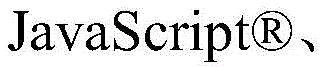 HTML5(Hypertext Markup Language 5th version), Ada, ASP (Active Server Pages), PHP (PHP: Hypertext preprocessor), Scala, Eiffel, Smalltalk, Erlang, Ruby, Safty, and Safty,
 Lua, MATLAB, SIMULINK and
the foregoing description of embodiments has been presented for purposes of illustration and description. It is not intended to be exhaustive or to limit the disclosure. Individual elements or features of a particular embodiment are generally not limited to that particular embodiment, but are interchangeable where applicable and can be used in a selected embodiment even if not specifically shown or described. As such may be varied in many ways. Such variations are not to be regarded as a departure from the disclosure, and all such modifications are intended to be included within the scope of the disclosure.
Claims (21)
Applications Claiming Priority (3)
| Application Number | Priority Date | Filing Date | Title |
|---|---|---|---|
| US16/420,236 US11000438B2 (en) | 2019-05-23 | 2019-05-23 | Exercising apparatus |
| US16/420,236 | 2019-05-23 | ||
| PCT/US2020/033975 WO2020237036A1 (en) | 2019-05-23 | 2020-05-21 | Exercising apparatus |
Publications (2)
| Publication Number | Publication Date |
|---|---|
| CN113853189A true CN113853189A (en) | 2021-12-28 |
| CN113853189B CN113853189B (en) | 2024-08-09 |
Family
ID=73457941
Family Applications (1)
| Application Number | Title | Priority Date | Filing Date |
|---|---|---|---|
| CN202080036669.XA Active CN113853189B (en) | 2019-05-23 | 2020-05-21 | Exercise device |
Country Status (4)
| Country | Link |
|---|---|
| US (1) | US11000438B2 (en) |
| EP (1) | EP3972549A4 (en) |
| CN (1) | CN113853189B (en) |
| WO (1) | WO2020237036A1 (en) |
Families Citing this family (2)
| Publication number | Priority date | Publication date | Assignee | Title |
|---|---|---|---|---|
| CN117279696A (en) | 2021-05-10 | 2023-12-22 | 沃尔德玛·L·华盛顿 | Exercise equipment |
| CN116196599B (en) * | 2023-03-17 | 2024-07-05 | 姜丽丽 | Rehabilitation is with taking exercise device |
Citations (5)
| Publication number | Priority date | Publication date | Assignee | Title |
|---|---|---|---|---|
| CN2177479Y (en) * | 1993-10-15 | 1994-09-21 | 戴碧桥 | Foot sole massager |
| US5592759A (en) * | 1995-01-26 | 1997-01-14 | Co-Jo Sports, Inc. | Vibrating footwear |
| US20120088640A1 (en) * | 2010-10-06 | 2012-04-12 | Daniel Raymond Wissink | Shoe Shaker |
| US20130053224A1 (en) * | 2011-08-29 | 2013-02-28 | Neville Dhanraj Dhanai | Ankle exerciser |
| CN206006102U (en) * | 2016-08-10 | 2017-03-15 | 温州家诺电子有限公司 | A kind of intelligent massaging footwear of mobile phone A PP control |
Family Cites Families (9)
| Publication number | Priority date | Publication date | Assignee | Title |
|---|---|---|---|---|
| US4258910A (en) * | 1978-09-25 | 1981-03-31 | Carter John R | Flexible foot extender |
| US5147262A (en) * | 1988-10-28 | 1992-09-15 | Bruce Hymanson | Isokinetic oscillating exercise apparatus |
| US5184989A (en) * | 1991-11-13 | 1993-02-09 | George Stanec | Physical exercise system using skis |
| US5722919A (en) * | 1996-08-30 | 1998-03-03 | Timmer; Kirk | Ankle rehabilitation and conditioning device |
| JP2001258975A (en) | 2000-03-22 | 2001-09-25 | Wako Seisakusho:Kk | Foot massager |
| KR200408764Y1 (en) | 2005-11-29 | 2006-02-16 | 최미경 | Foot and leg fitness equipment |
| JP2009219576A (en) | 2008-03-14 | 2009-10-01 | Fuji Iryoki:Kk | Vibration exercise equipment |
| KR100991909B1 (en) | 2008-05-26 | 2010-11-04 | 김현곤 | Walking Shiatsu Foot Massager |
| US8439854B2 (en) * | 2009-04-22 | 2013-05-14 | Timothy Terrio | Ankle rehabilitation device |
-
2019
- 2019-05-23 US US16/420,236 patent/US11000438B2/en active Active
-
2020
- 2020-05-21 CN CN202080036669.XA patent/CN113853189B/en active Active
- 2020-05-21 EP EP20809011.8A patent/EP3972549A4/en active Pending
- 2020-05-21 WO PCT/US2020/033975 patent/WO2020237036A1/en not_active Ceased
Patent Citations (5)
| Publication number | Priority date | Publication date | Assignee | Title |
|---|---|---|---|---|
| CN2177479Y (en) * | 1993-10-15 | 1994-09-21 | 戴碧桥 | Foot sole massager |
| US5592759A (en) * | 1995-01-26 | 1997-01-14 | Co-Jo Sports, Inc. | Vibrating footwear |
| US20120088640A1 (en) * | 2010-10-06 | 2012-04-12 | Daniel Raymond Wissink | Shoe Shaker |
| US20130053224A1 (en) * | 2011-08-29 | 2013-02-28 | Neville Dhanraj Dhanai | Ankle exerciser |
| CN206006102U (en) * | 2016-08-10 | 2017-03-15 | 温州家诺电子有限公司 | A kind of intelligent massaging footwear of mobile phone A PP control |
Also Published As
| Publication number | Publication date |
|---|---|
| CN113853189B (en) | 2024-08-09 |
| US20200368091A1 (en) | 2020-11-26 |
| WO2020237036A1 (en) | 2020-11-26 |
| US11000438B2 (en) | 2021-05-11 |
| EP3972549A4 (en) | 2023-05-31 |
| EP3972549A1 (en) | 2022-03-30 |
Similar Documents
| Publication | Publication Date | Title |
|---|---|---|
| KR102682903B1 (en) | Method for walking assist, and devices operating the same | |
| KR101261650B1 (en) | Training apparatus | |
| JP4185108B2 (en) | Exercise management system | |
| KR102485718B1 (en) | Method and apparatus for calculating torque of walking assist device | |
| KR101383059B1 (en) | Wearable vibratory stimulation device and operational protocol thereof | |
| ES2905096T3 (en) | exoskeleton | |
| JP6113293B2 (en) | Robot for walking rehabilitation of stroke patients | |
| US20230337942A1 (en) | Walking assistance method and apparatuses | |
| CN113853189B (en) | Exercise device | |
| WO2007116681A1 (en) | Exercise management system, exercise management method, and exercise management program | |
| WO2019134594A1 (en) | Physical rehabilitation apparatus, method, computer storage medium and electronic device | |
| US12053660B2 (en) | Exercising apparatus | |
| CN117279696A (en) | Exercise equipment | |
| US20070037670A1 (en) | Aquatic stabilizer apparatus | |
| KR102041601B1 (en) | Walking assitive device | |
| RU196167U1 (en) | Exoskeleton Foot | |
| US20250186824A1 (en) | Dexterity system | |
| KR20200005331A (en) | Walking assistive device | |
| Van Thuc et al. | Investigation of the “pendulum effect” during gait locomotion under the novel body weight support system and counter weight system | |
| CN107749153A (en) | A kind of wearable Portable sitting detection means | |
| Osman et al. | Design and development of Ankle-Foot Rehabilitation Exerciser (AFRE) system using pneumatic actuator | |
| KR20250132324A (en) | Wearable device providing torque for periodic movement of user and method of operating the same | |
| JP2008253804A (en) | Exercise management system | |
| RU150470U1 (en) | VERTICALIZER | |
| RU177670U1 (en) | Rehabilitation device for the development of movements in the joints of the upper limbs |
Legal Events
| Date | Code | Title | Description |
|---|---|---|---|
| PB01 | Publication | ||
| PB01 | Publication | ||
| SE01 | Entry into force of request for substantive examination | ||
| SE01 | Entry into force of request for substantive examination | ||
| GR01 | Patent grant | ||
| GR01 | Patent grant |