CN113747917A - Monoclonal antibody aiming at MHC (major histocompatibility complex) bound human Dickkopf-1 peptide and application thereof - Google Patents
Monoclonal antibody aiming at MHC (major histocompatibility complex) bound human Dickkopf-1 peptide and application thereof Download PDFInfo
- Publication number
- CN113747917A CN113747917A CN202080026280.7A CN202080026280A CN113747917A CN 113747917 A CN113747917 A CN 113747917A CN 202080026280 A CN202080026280 A CN 202080026280A CN 113747917 A CN113747917 A CN 113747917A
- Authority
- CN
- China
- Prior art keywords
- antibody
- fragment
- seq
- antibody fragment
- cancer
- Prior art date
- Legal status (The legal status is an assumption and is not a legal conclusion. Google has not performed a legal analysis and makes no representation as to the accuracy of the status listed.)
- Granted
Links
Images


Classifications
-
- C—CHEMISTRY; METALLURGY
- C07—ORGANIC CHEMISTRY
- C07K—PEPTIDES
- C07K16/00—Immunoglobulins [IGs], e.g. monoclonal or polyclonal antibodies
- C07K16/18—Immunoglobulins [IGs], e.g. monoclonal or polyclonal antibodies against material from animals or humans
-
- A—HUMAN NECESSITIES
- A61—MEDICAL OR VETERINARY SCIENCE; HYGIENE
- A61P—SPECIFIC THERAPEUTIC ACTIVITY OF CHEMICAL COMPOUNDS OR MEDICINAL PREPARATIONS
- A61P35/00—Antineoplastic agents
-
- A—HUMAN NECESSITIES
- A61—MEDICAL OR VETERINARY SCIENCE; HYGIENE
- A61K—PREPARATIONS FOR MEDICAL, DENTAL OR TOILETRY PURPOSES
- A61K39/00—Medicinal preparations containing antigens or antibodies
- A61K2039/505—Medicinal preparations containing antigens or antibodies comprising antibodies
-
- A—HUMAN NECESSITIES
- A61—MEDICAL OR VETERINARY SCIENCE; HYGIENE
- A61K—PREPARATIONS FOR MEDICAL, DENTAL OR TOILETRY PURPOSES
- A61K39/00—Medicinal preparations containing antigens or antibodies
- A61K2039/545—Medicinal preparations containing antigens or antibodies characterised by the dose, timing or administration schedule
-
- C—CHEMISTRY; METALLURGY
- C07—ORGANIC CHEMISTRY
- C07K—PEPTIDES
- C07K2317/00—Immunoglobulins specific features
- C07K2317/30—Immunoglobulins specific features characterized by aspects of specificity or valency
- C07K2317/32—Immunoglobulins specific features characterized by aspects of specificity or valency specific for a neo-epitope on a complex, e.g. antibody-antigen or ligand-receptor
-
- C—CHEMISTRY; METALLURGY
- C07—ORGANIC CHEMISTRY
- C07K—PEPTIDES
- C07K2317/00—Immunoglobulins specific features
- C07K2317/50—Immunoglobulins specific features characterized by immunoglobulin fragments
- C07K2317/56—Immunoglobulins specific features characterized by immunoglobulin fragments variable (Fv) region, i.e. VH and/or VL
- C07K2317/565—Complementarity determining region [CDR]
-
- C—CHEMISTRY; METALLURGY
- C07—ORGANIC CHEMISTRY
- C07K—PEPTIDES
- C07K2317/00—Immunoglobulins specific features
- C07K2317/70—Immunoglobulins specific features characterized by effect upon binding to a cell or to an antigen
- C07K2317/73—Inducing cell death, e.g. apoptosis, necrosis or inhibition of cell proliferation
- C07K2317/732—Antibody-dependent cellular cytotoxicity [ADCC]
-
- C—CHEMISTRY; METALLURGY
- C07—ORGANIC CHEMISTRY
- C07K—PEPTIDES
- C07K2317/00—Immunoglobulins specific features
- C07K2317/70—Immunoglobulins specific features characterized by effect upon binding to a cell or to an antigen
- C07K2317/73—Inducing cell death, e.g. apoptosis, necrosis or inhibition of cell proliferation
- C07K2317/734—Complement-dependent cytotoxicity [CDC]
Landscapes
- Chemical & Material Sciences (AREA)
- Health & Medical Sciences (AREA)
- Organic Chemistry (AREA)
- General Health & Medical Sciences (AREA)
- Life Sciences & Earth Sciences (AREA)
- Medicinal Chemistry (AREA)
- Nuclear Medicine, Radiotherapy & Molecular Imaging (AREA)
- Immunology (AREA)
- General Chemical & Material Sciences (AREA)
- Animal Behavior & Ethology (AREA)
- Chemical Kinetics & Catalysis (AREA)
- Public Health (AREA)
- Veterinary Medicine (AREA)
- Pharmacology & Pharmacy (AREA)
- Biochemistry (AREA)
- Biophysics (AREA)
- Genetics & Genomics (AREA)
- Molecular Biology (AREA)
- Proteomics, Peptides & Aminoacids (AREA)
- Medicines Containing Antibodies Or Antigens For Use As Internal Diagnostic Agents (AREA)
- Peptides Or Proteins (AREA)
Abstract
Provided herein are methods and reagents for treating cancer. Provided are methods of treating cancer comprising administering to a patient in need thereof an effective amount of a DKK1 peptide-loaded MHC antibody provided herein. The method may further comprise administering to the patient an effective amount of chemotherapy or immunotherapy.
Description
Reference to related applications
This application claims priority to U.S. provisional application No. 62/800,007 filed on 1/2/2019, the entire contents of which are incorporated herein by reference.
Reference to a list of sequences
This application contains a sequence listing, filed in ASCII format through EFS-Web and incorporated herein by reference in its entirety. This ASCII copy was created on day 22/1/2020 named UTFCP1418WO _ st25.txt, with a size of 7.4 kilobytes.
Background
1. Field of the invention
The present disclosure relates generally to the fields of medicine, immunology and cancer biology. More particularly, it relates to antibodies that bind to MHC loaded with DKK1 peptides and methods of use thereof.
2. Description of the related Art
Studies have shown that Dickkopf-1(DKK1) is highly expressed in tumor cells of all patients with multiple myeloma, but is absent in normal organs or tissues other than placenta and prostate. In addition, DKK1 was also expressed in other cancers, such as lymphoma, prostate, lung, and breast. Nova has a humanized anti-DKK 1 monoclonal antibody (BHQ880) that binds to and neutralizes DKK 1. This product is currently in clinical research for cancer. However, since DKK 1is a secreted protein, BHQ880 mab cannot bind to cancer cells and thus may not be therapeutically resistant to cancer cells. Thus, monoclonal antibodies that bind to and kill cancer cells by mediating ADCC and/or CDC are needed.
Disclosure of Invention
Thus, according to the present disclosure, there is provided a monoclonal antibody or antibody fragment, wherein the antibody or antibody fragment is characterized by clone-paired heavy and light chain CDR sequences from table 1. The antibody or antibody fragment has a heavy chain variable sequence CDR1-3 according to SEQ ID NOS: 2,3 and 4, respectively, and a light chain variable sequence CDR1-3 according to SEQ ID NOS: 5,6 and 7, respectively. In various aspects, any given CDR sequence may differ from the sequences of table 1 by one or two amino acid substitutions. In various aspects, any given CDR sequence can be at least 70%, 75%, 80%, 85%, 90%, or 95% identical to a sequence in table 1.
In some aspects, the antibody or antibody fragment is encoded by light and heavy chain variable sequences according to clone-paired sequences from table 3. In some aspects, the antibody or antibody fragment is encoded by light and heavy chain variable sequences having at least 70%, 80%, or 90% identity to the clone-paired variable sequences from table 3. In some aspects, the antibody or antibody fragment is encoded by light and heavy chain variable sequences having at least 95% identity to clone-paired sequences from table 3.
In some aspects, the antibody or antibody fragment is encoded by light and heavy chain variable sequences having at least 70%, 80%, or 90% identity to clone-paired sequences from table 3. In some aspects, the antibody or antibody fragment is encoded by a heavy chain variable sequence having at least 70%, 80%, or 90% identity to SEQ ID No. 10 and a light chain variable sequence having at least 70%, 80%, or 90% identity to SEQ ID No. 11. In some aspects, the antibody or antibody fragment is encoded by a heavy chain variable sequence having at least 95% identity to SEQ ID No. 10 and a light chain variable sequence having at least 95% identity to SEQ ID No. 11. In some aspects, the antibody or antibody fragment is encoded by the heavy chain variable sequence of SEQ ID NO. 10 and the light chain variable sequence of SEQ ID NO. 11.
In some aspects, the antibody or antibody fragment comprises light chain and heavy chain variable sequences according to clone-paired sequences from table 2.
In some aspects, the antibody or antibody fragment comprises light and heavy chain variable sequences having at least 70%, 80%, or 90% identity to the clone-paired variable sequences from table 2. In some aspects, the antibody or antibody fragment comprises light and heavy chain variable sequences having 95% identity to clone-paired sequences from table 2.
In some aspects, the antibody or antibody fragment comprises a heavy chain variable sequence having at least 70%, 80%, or 90% identity to SEQ ID No. 8 and a light chain variable sequence having at least 70%, 80%, or 90% identity to SEQ ID No. 9. In some aspects, the antibody or antibody fragment comprises a heavy chain variable sequence having at least 95% identity to SEQ ID No. 8 and a light chain variable sequence having at least 95% identity to SEQ ID No. 9. In some aspects, the antibody or antibody fragment comprises a heavy chain variable sequence having the sequence of SEQ ID NO. 8 and a light chain variable sequence having the sequence of SEQ ID NO. 9.
Also provided herein are monoclonal antibodies or antigen-binding fragments thereof that compete for binding to the same epitope as any monoclonal antibody or antigen-binding fragment thereof defined herein based on its CDR sequences.
In some aspects, the antibody or antibody fragment is a humanized antibody. In some aspects, the antibody fragment is a monovalent scFv (single chain fragment variable) antibody, a bivalent scFv, a Fab fragment, F (ab')2Fragment, F (ab')3Fragments, Fv fragments or single chain antibodies. In some aspects, the antibody is a chimeric antibody or a bispecific antibody. In some aspects, the antibody is an IgG antibody or a recombinant IgG antibody or antibody fragment. In some aspects, the antibody is conjugated or fused to an imaging agent or cytotoxic agent.
In one embodiment, provided herein is a hybridoma or engineered cell encoding an antibody or antibody fragment according to any one of the embodiments herein.
In one embodiment, provided herein is a method of treating a cancer patient comprising administering an effective amount of a DKK1 peptide-loaded MHC targeting antibody or antibody fragment. In some aspects, the DKK1 peptide-loaded MHC targeting antibody or antibody fragment is an antibody or antibody fragment according to any one of the embodiments herein. In some aspects, the cancer patient has been determined to express elevated levels of DKK1 relative to a control patient.
In some aspects, the methods are further defined as methods of increasing sensitivity to chemotherapy. In some aspects, the methods are further defined as methods of increasing sensitivity to immunotherapy. In some aspects, the cancer is myeloma, breast cancer, prostate cancer, or lymphoma. In some aspects, the methods are further defined as methods of inhibiting cancer growth.
In some aspects, the method further comprises administering at least a second anti-cancer therapy. In some aspects, the second anti-cancer therapy is chemotherapy, immunotherapy, radiation therapy, gene therapy, surgery, hormone therapy, anti-angiogenesis therapy, or cytokine therapy. In some aspects, the chemotherapy comprises lenalidomide. In some aspects, the immunotherapy comprises an immune checkpoint inhibitor. In some aspects, the immune checkpoint inhibitor is a CTLA-4 antagonist, a PD-1 antagonist, a PD-L1 antagonist, an OX40 agonist, a LAG3 antagonist, a 4-1BB agonist, or a TIM3 antagonist. In some aspects, the immune checkpoint inhibitor is a CTLA-4 antagonist. In some aspects, the immune checkpoint inhibitor is a PD1 or PDL1 antagonist. In some aspects, the immune checkpoint inhibitor is a combination of a CTLA-4 antagonist and a PD1 antagonist. In some aspects, the immune checkpoint inhibitor is a combination of a CTLA-4 antagonist and a PDL1 antagonist.
In one embodiment, provided herein is an antibody or antibody fragment according to any one of the embodiments herein for use as a medicament for treating cancer in a subject. In one embodiment, provided herein is a use of an antibody or antibody fragment according to any one of the embodiments herein in the manufacture of a medicament for the treatment of cancer.
In one embodiment, provided herein is a method of detecting the presence of a cell surface DKK1 peptide/HLA-a 2 complex on a cancer cell, the method comprising contacting the cancer cell with an MHC targeting antibody or antibody fragment loaded with a DKK1 peptide. In some aspects, the DKK1 peptide-loaded MHC targeting antibody or antibody fragment is an antibody or antibody fragment according to any one of the embodiments herein.
In one embodiment, provided herein is a method of determining the level of a cell surface DKK1 peptide/HLA-a 2 complex on a cancer cell, the method comprising contacting the cancer cell with an MHC targeting antibody or antibody fragment loaded with a DKK1 peptide. In some aspects, the DKK1 peptide-loaded MHC targeting antibody or antibody fragment is an antibody or antibody fragment according to any one of the embodiments herein.
As used herein, "substantially free" with respect to a particular component is used herein to mean that the particular component is not intentionally formulated into the composition and/or is present only as a contaminant or in trace amounts. Thus, the total amount of the specified component resulting from any unintended contamination of the composition is well below 0.05%, preferably below 0.01%. Most preferred are compositions in which no amount of a given ingredient is detectable using standard analytical methods.
As used in this specification, "a" or "an" may mean one or more. As used in the claims herein, the terms "a" or "an" when used in conjunction with the word "comprising" may mean one or more than one.
The term "or" as used in the claims means "and/or" unless specifically indicated to refer only to alternatives, or alternatives are mutually exclusive, but the disclosure supports definitions referring only to alternatives and "and/or". As used herein, "another" may refer to at least a second or more.
Throughout this application, the term "about" is used to indicate that a numerical value includes the inherent variation of error in apparatus, methods used to determine the value, differences between study objects, or values within 10% of the stated numerical value.
Other objects, features and advantages of the present invention will become apparent from the following detailed description. It should be understood, however, that the detailed description and the specific examples, while indicating preferred embodiments of the invention, are given by way of illustration only, since various changes and modifications within the spirit and scope of the invention will become apparent to those skilled in the art from this detailed description.
Brief Description of Drawings
The accompanying drawings, which are incorporated in and constitute a part of this specification, are included to further illustrate certain aspects of the disclosure. The invention may be better understood by reference to one or more of these drawings in combination with the detailed description of specific embodiments.
FIGS. 1A-C: and (3) verification of an action mechanism of the A2-DKK1 monoclonal antibody in vivo. The results show bioluminescence images (fig. 1A), tumor burden (fig. 1B) and survival (fig. 1C) of mice receiving different treatments. SCID mice (5/group) were xenografted subcutaneously with U266 myeloma cells, then treated with mouse IgG (mIgG), A2-DKK1mAb (C2), A2-DKK1mAb (C2) in combination with specific mAb-depleted NK cells (NK-depleted), and A2-DKK1mAb (C2) in combination with Cobra Venom Factor (CVF) -depleted complement (CP-depleted)And (4) treating. Tumor burden was determined twice weekly. When the subcutaneous tumor reaches 225mm2Or euthanizing the mouse when the mouse is dying. Representative results of one of two independent experiments performed are shown. Error bars are SEM. P<0.05, compared to treatment with A2-DKK1 mAb.
FIGS. 2A-C: therapeutic benefit of A2-DKK1MAb on primary MM in SCID-hu model. In SCID-hu mice (6 mice per group), primary myeloma cells from HLA-a2 patients (n ═ 3) were injected directly into implanted human bone and tumor growth was monitored at the level of circulating human M-protein or its light chain. Mice received 100 μ g of A2-DKK1 monoclonal antibody (C2) or 100 μ g of mouse IgG1 or an equal volume of PBS i.p. injections (one every three days for six injections). When the circulating human M-protein reaches 50 mu g/mL or the subcutaneous tumor reaches 400mm2Mice were euthanized at time. Tumor burden (fig. 2A), survival (fig. 2B) and X-ray images (fig. 2C) are shown for mice receiving different treatments. Error bars are SEM. P<0.05,**P<0.01。
FIG. 3A-B. A2-DKK1mab pharmacokinetics in SCID mice. A2-NSG mice were injected intravenously with U266 myeloma cells, followed by intraperitoneal injections of 50 μ g (C2-50), 100 μ g (C2-100), 200 μ g (C2-200) A2-DKK1mab (C2), or 100 μ g mouse IgG1 (once every three days, six injections). Tumor burden was monitored based on circulating human M-protein or its light chain levels. Shown are the tumor burden in mice receiving different treatments (FIG. 3A) and the A2-DKK1 single-resistance pharmacokinetics in mice receiving 100 μ g A2-DKK1mab (FIG. 3B). Error bars are SEM. P <0.05, P < 0.01.
FIG. 4A-E.A2-DKK1 monoclonal antibody toxicity and safety tests in A2-SCID mice. A2-SCID mice were challenged subcutaneously with U266 myeloma cells and then treated intraperitoneally with either 400 μ g A2-DKK1 monoclonal antibody (C2) or 400 μ g mouse IgG1(mIgG) (six injections every three days). HE staining (fig. 4A), a2-DKK1 monoclonal antibody staining (fig. 4B), Tunel analysis (fig. 4C and 4E), and Mean Fluorescence Intensity (MFI) (fig. 4D) are shown for different tissues and tumors of mice receiving different treatments. Representative results of one of two independent experiments performed are shown. P < 0.05; p <0.01 (compared to control).
Fig. 5A-c.a2-DKK1 monoclonal antibody binding ability to T2 cells. (FIG. 5A) peptide binding assay showed the specificity of A2-DKK1mab (C2), T2 cells were incubated overnight with different doses of DKK1 peptides P20 and P66v, and expression (MFI) of surface HLA-A0201-DKK 1 was analyzed using A2-DKK1mab (C2). (FIG. 5B) T2 cells were incubated overnight with different doses of DKK1 peptide P20, treated with 100. mu.g/mL A2-DKK1mab (C2) for 48 hours, and analyzed for apoptosis. (fig. 5C) T2 cells were incubated overnight with different doses of DKK1 peptide P20 and then analyzed for antibody binding capacity.
FIG. 6A-C.A2-NSG mouse model immunotherapy with A2-DKK1 mab. A2-NSG mice were treated by i.v. injection of U266 myeloma cells followed by i.p. injection of 100. mu. g A2-DKK1mab (C2) or 100. mu.g mouse IgG1(mIgG) or PBS (once every three days, six total injections). Tumor burden was monitored based on circulating human M-protein or its light chain levels. When circulating human M-protein reached 50. mu.g/mL or the mice were moribund, the mice were euthanized. The results show bioluminescence images (fig. 6A), tumor burden (fig. 6B) and survival (fig. 6C) of mice receiving different treatments. Error bars are SEM. P <0.05, P < 0.01.
Fig. 7A-d.a2-DKK 1mab specificity and antibody binding ability. (FIG. 7A) the specificity of A2-DKK1mab was tested by ELISA coated with different antigens. (FIG. 7B) peptide binding assay showed the specificity of A2-DKK1mab, MM cell lines U266 and ARP-1 were incubated overnight with DKK1 peptide P20, and surface HLA-A0201-DKK 1 expression (MFI) was analyzed by A2-DKK1 mab. (FIG. 7C) surface binding affinity of different doses of A2-DKK1mab to U266. (FIG. 7D) antibody binding ability of A2-DKK1mAb to normal PBMC, MGUS and MM patient samples as well as U266. Error bars are SEM. P <0.05, P < 0.01.
FIG. 8A-B.A2-DKK 1mab binding to the surface of breast and prostate cancer cell lines. The results show surface binding of a2-DKK1mab to breast cancer cell line (fig. 8A) and prostate cancer cell line (fig. 8B).
FIG. 9A-F. A2-DKK1 monoclonal antibodies induced apoptosis in different cancer cells in vitro. (FIGS. 9A and 9B) apoptosis of U266 induced by different doses of A2-DKK1 mab. In FIG. 9B, the left column of each pair is "C2" and the right column is "C3". (FIG. 9C) T2 cells were incubated overnight with different doses of DKK1 peptide P20, then treated with 100. mu.g/mL A2-DKK1mab for 48 hours and analyzed for apoptosis. (FIG. 9D) T2 cells with or without peptide loading. (FIG. 9E) apoptosis of myeloma and lymphoma cell lines induced by A2-DKK1 mAb. (FIG. 9F) apoptosis of breast and prostate cancer cell lines induced by A2-DKK1 mab. Error bars are SEM. P <0.05, P < 0.01.
Figure 10A-h.a2-DKK1 monoclonal antibodies induced ADCC in vitro for different cancer cells. (FIG. 10A) Cr-51 release assay was used to test the ADCC of myeloma and lymphoma cell lines induced by A2-DKK1 monoclonal antibody. In each set of columns, these columns represent, from left to right, U266, ARP-1, Mino, and SP 53. (FIG. 10B) Cr-51 release assay to detect ADCC of breast and prostate cancer cell lines induced by A2-DKK1 mab. In each set of columns, the columns represent, from left to right, MCF-7, MDA-MD-231, LNCap-LN3, and PC-3(A2 +). (FIGS. 10C and 10D) IncuCyte ZOOM live imaging system showed ADCC of the breast cancer cell line MDA-MB-231 induced by A2-DKK1 mab. (FIGS. 10E-H) Cr-51 release assay for ADCC induced by myeloma (FIG. 10E), lymphoma (FIG. 10E), breast (FIG. 10F) and prostate cancer cell lines (FIG. 10G) and A2-DKK1mab loaded with different peptides, with mouse isotype IgG1 and anti-HLA-A2 mab (BB7.2) as controls. Error bars are SEM. P <0.05, P < 0.01.
Fig. 11A-g.a2-DKK 1mab induced CDC in vitro in different cancer cells. (FIG. 11A) Cr-51 release assay CDC of A2-DKK1 mab-induced myeloma and lymphoma cell lines was examined. In each set of columns, these columns represent, from left to right, U266, ARP-1, Mino, and SP 53. (FIG. 11B) Cr-51 release assay CDC of A2-DKK1 mab-induced breast and prostate cancer cell lines. In each set of columns, the columns represent, from left to right, MCF-7, MDA-MD-231, LNCap-LN3, and PC-3(A2 +). (FIGS. 11C and D) IncuCyte ZOOM live imaging system showed CDC of A2-DKK1 mab-induced breast cancer cell line MDA-MB-231. (FIG. 11E-G) IncuCyte ZOOM real-time imaging System detects CDC of A2-DKK1 mab-induced prostate cell lines PC-2-A2- (FIG. 11E & G) and PC-2-A2+ (FIG. 11F & G), mouse isotype IgG 1as control. Error bars are SEM. P <0.05, P < 0.01.
Detailed Description
DKK1 peptides (e.g.P20 and P66v which bind to HLA-a2 molecules) specific cytotoxic T cells specifically kill myeloma and other cancer cells expressing DKK1 and HLA-a2, but not HLA-a2+Normal cells, indicating DKK1+The tumor cells naturally express these peptides on their surface (in the case of HLA-A2). Therefore, DKK 1is a widely expressed tumor-associated antigen that can be targeted for immunotherapy.
DKK1 peptide P20/HLA-A2 monomer was synthesized and used to immunize mice. Hybridomas secreting monoclonal antibodies (mabs) recognizing soluble and cell surface expressed DKKl P20/HLA-a2 complexes were obtained. These monoclonal antibodies and HLA-A2 expressing DKK1+Cancer cells specifically bind, but not to HLA-A2 expressing DKK1-Cancer cells or DKK1-HLA-A2+Normal blood cells bind specifically. Therefore, it is possible that these mAbs are expressed on HLA-A2 because DKK 1is expressed by cancer cells rather than normal cells+Cancer cells are specifically targeted in cancer patients rather than normal cells. Since most, if not all, therapeutic mabs kill their target cells by mediating antibody-dependent, cell-mediated cytotoxicity (ADCC) and/or complement-dependent cytotoxicity (CDC), these mabs are useful in treating myeloma, lymphoma and solid tumor (e.g., breast, lung and prostate) patients by mediating ADCC and CDC or delivering toxins to cancer cells to kill the cancer cells. In addition, the mouse anti-human DKK 1P 20/HLA-A2 monoclonal antibody can also be used as a research tool for detecting and measuring the level of a cell surface DKK1 peptide/HLA-A2 complex of cancer cells.
I.Dickkopf-1(DKK1)
Dickkopf-1 (also referred to herein as "DKK 1," sometimes spelled by others as "Dikkopf-1") is a secreted protein that specifically inhibits Wnt/β -catenin signaling by interacting with the co-receptor Lrp-6 (Mao et al, 2001; Zorn, 2001). DKK1 in myeloma patients was associated with the presence of osteolytic lesions (Tian et al, 2003). Immunohistochemical analysis of bone marrow biopsy specimens also showed that only myeloma cells contained detectable DKK 1. Recombinant human DKK1 or bone marrow serum containing high levels of DKK1 inhibited differentiation of osteoblast precursor cells in vitro. Furthermore, anti-DKK 1 antibody treatment was associated with reduced tumor growth in a myeloma mouse model. Thus, DKK1 plays an important role in myeloma bone disease, blocking DKK1 activity reduces osteolytic bone resorption, increases bone formation, and helps control myeloma development (Yaccoby et al, 2006). The DKK1 gene was only restrictively expressed in placenta and Mesenchymal Stem Cells (MSCs) but not in other normal tissues (Glinka et al, 1998; Gregory et al, 2003). Furthermore, gene expression profiling analysis of lung and esophageal cancers shows that DKK 1is highly transactivated in the vast majority of lung and Esophageal Squamous Cell Carcinoma (ESCC) (Yamabuki et al, 2007).
Definition of
An "antibody" is an immunoglobulin molecule capable of specifically binding a target, such as a carbohydrate, polynucleotide, lipid, polypeptide, etc., through at least one antigen recognition site within the variable region of the immunoglobulin molecule. As used herein, the term includes not only intact polyclonal or monoclonal antibodies, but also fragments thereof (e.g., Fab ', F (ab')2Fv), single chain (ScFv)), mutants thereof, naturally occurring variants, fusion proteins comprising an antibody portion having an antigen recognition site of a desired specificity, humanized antibodies, chimeric antibodies, and any other modified configuration of an immunoglobulin molecule comprising an antigen recognition site of a desired specificity.
An "antibody fragment" comprises only a portion of an intact antibody, typically including the antigen-binding site of the intact antibody, and thus retains the ability to bind antigen. Examples of antibody fragments encompassed by the present definition include: (i) a Fab fragment having VL, CL, VH and CH1 domains; (ii) a Fab' fragment, which is a Fab fragment having one or more cysteine residues at the C-terminus of the CH1 domain; (iii) an Fd fragment having the VH and CH1 domains; (iv) an Fd' fragment having the VH and CH1 domains and one or more cysteine residues C-terminal to the CH1 domain; (v) (ii) an Fv fragment having the VL and VH domains of a single antibody; (vi) a dAb fragment consisting of a VH domain; (vii) an isolated CDR region; (viii) f (ab')2A fragment, a bivalent fragment, comprising two Fab' fragments connected by a disulfide bridge of the hinge region; (ix) single chain antibody molecules (e.g., single chain Fv; scFv);(x) A "diabody" ("diabodies") having two antigen binding sites, which comprises a heavy chain variable domain (VH) linked to a light chain variable domain (VL) in the same polypeptide chain; (xi) A "linear antibody" comprises a pair of tandem Fd fragments (VH-CH1-VH-CH1) that together with a complementary light chain polypeptide form a pair of antigen binding regions.
"chimeric antibody" refers to an antibody in which a portion of the amino acid sequence of each of the heavy and light chains is homologous to the corresponding sequence in an antibody derived from a particular species or belonging to a particular class, while the remaining segment of the chain is homologous to the corresponding sequence in another species or class. Typically, in these chimeric antibodies, the variable regions of the light and heavy chains mimic those of an antibody derived from one mammal, while the constant portions are homologous to sequences in an antibody derived from another mammal. For example, the variable region may be conveniently derived from currently known sources using established hybridomas or B cells from non-human hosts or organisms, in combination with constant regions from, for example, human cell preparations. While the variable region has the advantage of being easy to prepare and the specificity is not affected by its origin, the constant region is human and does not readily elicit an immune response in a human subject when the antibody is injected, as compared to a constant region of non-human origin. However, the definition is not limited to this specific example.
The "constant region" of an antibody refers to the constant region of an antibody light chain or the constant region of an antibody heavy chain, alone or in combination. The constant regions of the light Chain (CL) and heavy chain (CH1, CH2 or CH3, or CH4 in the case of IgM and IgE) confer important biological properties such as secretion, transplacental mobility, Fc receptor binding, complement fixation, etc. By convention, the numbering of the constant region domains increases away from the antigen binding site or the N-terminus of the antibody.
The "variable region" of an antibody refers to the variable region of the antibody light chain or the variable region of the antibody heavy chain, alone or in combination. The variable regions of the light (VL) and heavy (VH) chain portions determine antigen recognition and specificity. VL and VH are each composed of four Framework Regions (FRs) connected by three Complementarity Determining Regions (CDRs), also known as hypervariable regions. The CDRs complement the shape of the antigen and determine the affinity and specificity of the antibody for the antigen. There are six CDRs in VL and VH. The CDRs in each chain are tightly linked together by the FRs and, together with the CDRs in the other chain, contribute to the formation of the antigen binding site of the antibody. There are at least two techniques for determining CDRs: (1) methods based on cross-species sequence variability (Kabat numbering scheme; see Kabat et al, Sequences of Proteins of Immunological Interest (protein Sequences of Immunological Interest, 5 th ed., 1991, national institute of health, Besserda, Maryland)); and (2) methods based on crystallographic studies of antigen-antibody complexes (correction of Chothia numbering scheme for insertion and deletion sites (indels) in CDR-L1 and CDR-H1 proposed by Kabat; see Al-Lazkani et Al (1997) J.Molec.biol.273: 927-. Other numbering methods or schemes may also be used. As used herein, a CDR may refer to a CDR defined by one of the two methods or by a combination of the two methods or by other desired methods. In addition, new definitions of highly conserved cores, borders and hypervariable regions can also be used.
The term "heavy chain" as used herein refers to a larger immunoglobulin subunit joined to an immunoglobulin light chain through its amino terminal region. The heavy chain includes a variable region (VH) and a constant region (CH). The constant region also includes the CH1, hinge, CH2, and CH3 domains. In the case of IgE, IgM and IgY, the heavy chain comprises a CH4 domain but does not have a hinge domain. Those skilled in the art will appreciate that heavy chains are classified as gamma, muo, alpha, delta, or eplerenone (γ, μ, α, δ, ε), with some subclasses (e.g., γ 1- γ 4). The nature of this chain determines the "class" of antibodies, IgG, IgM, IgA, IgD or IgE, respectively. Immunoglobulin subclasses (isotypes) such as IgG1, IgG2, IgG3, IgG4, IgA1, and the like have been well characterized and are known to provide functional specialization.
The term "light chain" as used herein refers to the smaller immunoglobulin subunit associated with the amino terminal region of a heavy chain. Like the heavy chain, the light chain includes a variable region (VL) and a constant region (CL). Light chains are classified as kappa or lambda (κ, λ). A pair of light chains can be combined with any of a variety of heavy chains to form an immunoglobulin molecule. Also included within the meaning of light chain are light chains having a lambda variable region (V-lambda) linked to a kappa constant region (C-kappa) or light chains having a kappa variable region (V-kappa) linked to a lambda constant region (C-lambda).
As used herein, "nucleic acid," "nucleic acid sequence," "oligonucleotide," "polynucleotide," or other grammatical equivalents means at least two nucleotides, which are deoxyribonucleotides or ribonucleotides, or analogs thereof, covalently joined together. A polynucleotide is a polymer of any length, including, for example, 20, 50, 100, 200, 300, 500, 1000, 2000, 3000, 5000, 7000, 10000, and the like. The polynucleotides described herein typically comprise phosphodiester linkages, but in some cases include nucleic acid analogs that may have at least one different linkage, such as phosphoramide, phosphorothioate, phosphorodithioate, or O-methylphosphorimide linkages, as well as peptide nucleic acid backbones and linkages. Mixtures of natural polynucleotides and analogs can be prepared; alternatively, a mixture of different polynucleotide analogs can be prepared, as well as a mixture of naturally occurring polynucleotides and analogs. The following are non-limiting examples of polynucleotides: genes or gene fragments, exons, introns, messenger RNA (mrna), transfer RNA, ribosomal RNA, ribozymes, cDNA, cRNA, recombinant polynucleotides, branched polynucleotides, plasmids, vectors, isolated DNA of any sequence, isolated RNA of any sequence, nucleic acid probes, and primers. Polynucleotides may include modified nucleotides, such as methylated nucleotides and nucleotide analogs. Modifications to the nucleotide structure, if present, may be imparted before or after assembly of the polymer. The nucleotide sequence may be interspersed with non-nucleotide components. The polynucleotides may be further modified after polymerization, such as by coupling with a labeling component. The term also includes double-stranded and single-stranded molecules. Unless otherwise stated or required, any embodiment of the invention which comprises a polynucleotide is in the double stranded form and each of the two complementary single stranded forms known or predicted to comprise the double stranded form. A polynucleotide consists of a specific sequence of 4 nucleotide bases: adenine (a), cytosine (C), guanine (G), thymine (T), and uracil (U) in place of thymine (T) when the polynucleotide is RNA. Thus, the term "polynucleotide sequence" is a letter representation of a polynucleotide molecule. Unless otherwise indicated, a particular polynucleotide sequence also implicitly includes conservatively modified variants thereof (e.g., degenerate codon substitutions) and complementary sequences as well as the sequence explicitly indicated. In particular, degenerate codon substitutions may be obtained by generating sequences in which the third position of one or more selected (or all) codons is substituted with mixed base and/or deoxyinosine residues.
The terms "polypeptide", "peptide" and "protein" refer herein to a polymer of amino acid residues. These terms also apply to amino acid polymers in which one or more amino acid residues are artificial chemical mimetics of the corresponding naturally occurring amino acid, as well as naturally occurring amino acid polymers, those comprising modified residues, and non-naturally occurring amino acid polymers. In the present case, the term "polypeptide" encompasses antibodies or fragments thereof.
Other terms used in the fields of recombinant nucleic acid technology, microbiology, immunology, antibody engineering, and molecular and cell biology, as used herein, will be generally understood by those of ordinary skill in the applicable arts.
Antibodies and antibody modifications
In one embodiment, the antibody is a chimeric antibody, e.g., an antibody comprising antigen binding sequences from a non-human donor grafted to heterologous non-human, or humanized sequences (e.g., framework and/or constant domain sequences). Methods have been developed to replace the light and heavy chain constant domains of monoclonal antibodies with similar domains of human origin, leaving the variable regions of the foreign antibody intact. Alternatively, "fully human" monoclonal antibodies are produced in mice transgenic for human immunoglobulin genes. Methods have also been developed to convert the variable domains of monoclonal antibodies to more human forms by recombinantly constructing antibody variable domains having both rodent (e.g., mouse) and human amino acid sequences. In a "humanized" monoclonal antibody, only the hypervariable CDRs are derived from a mouse monoclonal antibody, while the framework and constant regions are derived from human amino acid sequences (see U.S. Pat. nos. 5,091,513 and 6,881,557, incorporated herein by reference). It is believed that the replacement of the amino acid sequence in a rodent-specific antibody with the amino acid sequence at the corresponding position in a human antibody will reduce the likelihood of an adverse immune response during therapeutic use. The hybridoma or other cell producing the antibody may also undergo genetic mutation or other changes that may or may not alter the binding specificity of the antibody produced by the hybridoma.
Methods for producing polyclonal antibodies in various animal species, as well as methods for producing various types of monoclonal antibodies (including humanized, chimeric, and fully humanized), are well known in the art and are highly predictable. For example, the following U.S. patents and patent applications provide illustrations of the practice of such methods: U.S. patent application nos. 2004/0126828 and 2002/0172677; and U.S. Pat. nos. 3,817,837; 3,850,752, respectively; 3,939,350, respectively; 3,996,345; 4,196,265; 4,275,149; 4,277,437; 4,366,241; 4,469,797, respectively; 4,472,509; 4,606,855, respectively; 4,703,003, respectively; 4,742,159, respectively; 4,767,720, respectively; 4,816,567; 4,867,973, respectively; 4,938,948, respectively; 4,946,778; 5,021,236, respectively; 5,164,296, respectively; 5,196,066, respectively; 5,223,409; 5,403,484; 5,420,253, respectively; 5,565,332; 5,571,698; 5,627,052; 5,656,434, respectively; 5,770,376, respectively; 5,789,208; 5,821,337; 5,844,091, respectively; 5,858,657, respectively; 5,861,155, respectively; 5,871,907, respectively; 5,969,108, respectively; 6,054,297; 6,165,464, respectively; 6,365,157, respectively; 6,406,867, respectively; 6,709,659, respectively; 6,709,873, respectively; 6,753,407, respectively; 6,814,965, respectively; 6,849,259, respectively; 6,861,572, respectively; 6,875,434, respectively; and 6,891,024, both incorporated herein by reference.
In certain embodiments, antibody conjugates. For example, the conjugate may be a specific binding agent (e.g., an antibody) of the invention conjugated to other protein, carbohydrate, lipid, or mixed moiety molecules. Such antibody conjugates include, but are not limited to, modifications comprising linking them to one or more polymers. In certain embodiments, the antibody is linked to one or more water-soluble polymers. In certain such embodiments, the linkage to the water-soluble polymer reduces the likelihood of precipitation of the antibody in an aqueous environment (e.g., a physiological environment). In certain embodiments, the therapeutic antibody is linked to a water-soluble polymer. In certain embodiments, one skilled in the art can select an appropriate water-soluble polymer based on considerations including, but not limited to, whether the polymer/antibody conjugate will be used for patient treatment, and if so, the pharmacological characteristics of the antibody (e.g., half-life, dose, activity, antigenicity, and/or other factors).
In further embodiments, the conjugate can be, for example, a cytotoxic agent. This type of cytotoxic agent can improve antibody-mediated cytotoxicity and includes moieties such as cytokines that directly or indirectly stimulate cell death, radioisotopes, chemotherapeutic drugs (including prodrugs), bacterial toxins (e.g., pseudomonas exotoxin, diphtheria toxin, etc.), plant toxins (e.g., ricin, gelonin, etc.), chemical conjugates (e.g., maytansinoid, clarithromycin (etc.), radioactive conjugates, enzyme conjugates (e.g., rnases, granzyme antibody-directed enzyme/prodrug therapy), and the like. The protein cytotoxin can be expressed as a fusion protein with a specific binding agent after ligation of a polynucleotide encoding the toxin with a polynucleotide encoding the binding agent. In another alternative, the specific binding agent may be covalently modified to include the desired cytotoxin.
In other embodiments, the antibody or fragment thereof may be bound to a reporter group, including but not limited to a radiolabel, a fluorescent tag, an enzyme (e.g., to catalyze a colorimetric or fluorescent reaction), a substrate, a solid matrix, or a carrier (e.g., biotin or avidin). accordingly, the invention provides a molecule comprising an antibody molecule, wherein the molecule preferably further comprises a reporter group selected from the group consisting of: radioactive tags, fluorescent tags, enzymes, substrates, solid matrices and carriers. Such tags are well known to those skilled in the art, and for example, biotin tags are specifically contemplated. The use of such tags is well known to those skilled in the art and is described, for example, in U.S. Pat. No. 3,817,837, U.S. Pat. No. 3,850,752, U.S. Pat. No. 3,996,345, and U.S. Pat. No. 4,277,437, each of which is incorporated herein by reference. Other useful labels include, but are not limited to, radioactive labels, fluorescent labels, and chemiluminescent labels. U.S. patents relating to the use of such labels include, for example, U.S. patent No. 3,817,837, U.S. patent No. 3,850,752, U.S. patent No. 3,939,350, and U.S. patent No. 3,996,345. Any peptide of the invention may comprise one, two or more of any such tags.
A. Monoclonal antibodies and preparation thereof
An "isolated antibody" is a component that is separated and/or recovered from a component of its natural environment. Contaminating components of their natural environment are materials that would interfere with diagnostic or therapeutic uses for the antibody, and may include enzymes, hormones, and other proteinaceous or nonproteinaceous solutes. In certain embodiments, the antibody is purified (1) to greater than 95% by weight of the antibody as determined by the Lowry method, such as 99%, 97%, 98% or 99%, by weight, (2) sufficient to obtain an internal or N-terminal amino acid sequence of at least 15 residues by using a spinning cup sequencer, or (3) to be homogeneous by SDS-PAGE under reducing or non-reducing conditions using coomassie blue or silver staining. Isolated antibodies include antibodies in situ within recombinant cells, as at least one component of the antibody's natural environment will not be present. However, isolated antibodies are typically prepared by at least one purification step.
The basic four-chain antibody unit is a heterotetrameric glycoprotein composed of two identical light (L) chains and two identical heavy (H) chains. IgM antibodies consist of 5 basic heterotetramer units and an additional polypeptide called the J chain, thus having 10 antigen binding sites, whereas secretory IgA antibodies can be polymerized to form multivalent assemblies, which contain 2-5 basic 4 chain units with the J chain. In the case of IgG, the 4-chain unit is typically about 150,000 daltons. Each L chain is linked to an H chain by a covalent disulfide bond, while the two H chains are linked to each other by one or more disulfide bonds, depending on the H chain isotype. Each H-chain and L-chain also has regularly spaced intrachain disulfide bridges. Each H chain has an N-terminal variable domain (V)H) Followed by three constant domains (C) each of alpha and gamma chainsH) And μ and four CH domains of isotype. Each L chain has a variable domain at the N-terminus (V)L) Having a constant domain (C) at its other endL)。VLAnd VHAlignment, CLTo the first constant domain (C) of the heavy chainH1) And (4) aligning. Certain specific amino acid residues are believed to form light chain variable domains and heavy chainsThe interface between the chain variable regions. VHAnd VLTogether form a single antigen binding site. For the structure and properties of antibodies of different classes, see for example Basic and Clinical Immunology, 8 th edition, Daniel P.Stits, Abba I.Terr and Tristram G.Parslow et al (Co., eds.), apple ton&Lange, connecticut waworth, 1994, page 71 and chapter 6.
According to its constant domain (C)L) Can divide the L chain of any vertebrate into one of two distinct types, namely kappa and lambda. According to the heavy chain (C)H) The amino acid sequence of the constant domains, immunoglobulins, can be assigned to different classes or isotypes. There are five classes of immunoglobulins: IgA, IgD, IgE, IgG and IgM, with heavy chains designated α, δ, epsilon, γ and μ, respectively. The γ and α classes are further divided into subclasses based on the relatively minor differences in CH sequence and function, with humans expressing the following subclasses: IgG1, IgG2, IgG3, IgG4, IgA1 and IgA 2.
The term "variable" refers to the fact that certain segments of the V domain vary widely in sequence among antibodies. The V domain mediates antigen binding and defines the specificity of a particular antibody for its particular antigen. However, the variability is not evenly distributed over the 110 amino acids range of the variable region. In contrast, V region consists of: a less variable segment of about 15-30 amino acids called the Framework Region (FR), and a very variable, shorter region of 9-12 amino acids each in length called the "hypervariable region" separating these FRs. The variable regions of native heavy and light chains each comprise four FRs, predominantly in a β -sheet configuration, connected by three hypervariable regions (forming a loop junction), and in some cases forming part of a β -sheet structure. The hypervariable regions in each chain are held together, in close proximity, by the FRs to form the antigen-binding site of an antibody (see, e.g., Kabat et al, Sequences of Proteins of Immunological Interest, national institutes of health, Besserda, Maryland (1991)) together with the hypervariable region of the other chain.
The term "hypervariable region" as used herein refers to the amino acid residues of an antibody which are responsible for antigen binding. Hypervariable regions typically comprise amino acid residues from a "complementarity determining region" or "CDR" (e.g., approximately about residues 24-34(L1), 50-56(L2), and 89-97(L3) in the VL and approximately 31-35(H1), 50-65(H2), and 95-102(H3) in the VH, when numbered according to the Kabat numbering system; Kabat et al, protein sequences of immunological interest, fifth edition, public health service, Besse Da national institutes of health, Md. (1991)); and/or those in the "hypervariable loops" (e.g., residues 24-34(L1), 50-56(L2) and 89-97(L3) in the VL and residues 26-32(H1), 52-56(H2) and 95-101(H3) in the VH when numbered according to the Chothia numbering system; Chothia and Lesk, J.mol.biol.196:901-917 (1987)); and/or residues from the "hypervariable loop"/CDR (e.g., residues 27-38(L1), 56-65(L2) and 105-120(L3)) when numbered according to the IMGT numbering system, 27-38(H1), 56-65(H2) in the VL and 105-120(H3) in the VH; lefranc, M.P. et al, Nucl. acids Res.27:209-212(1999), Ruiz, M.et al, Nucl. acids Res.28:219-221 (2000)). Alternatively, the antibody has a symmetric insertion at one or more of the following points: 28, 36(L1), 63, 74-75(L2) and 123(L3) in VL, and 28, 36(H1), 63, 74-75(H2) and 123(H3) in VH, when numbered according to AHo; honneger, A. and Plunkthun, A.J.mol.biol.309: 657-.
The term "monoclonal antibody" as used herein refers to an antibody obtained from a substantially homogeneous population of antibodies, i.e., the individual antibodies comprised by the population are identical except for the presence of a few possible naturally occurring mutations. Monoclonal antibodies have a high degree of specificity for a single antigenic site. Furthermore, each monoclonal antibody is directed against a single determinant on the antigen, as compared to a polyclonal antibody preparation comprising different antibodies directed against different determinants (epitopes). In addition to their specificity, monoclonal antibodies are advantageous in that they can be synthesized without contamination by other antibodies. The modifier "monoclonal" is not to be construed as requiring production of the antibody by any particular method. For example, monoclonal antibodies useful in the present disclosure can be prepared by the hybridoma method first described by Kohler et al, Nature, 256:495(1975), or can be prepared using recombinant DNA methods in bacterial, eukaryotic animal, or plant cells (see, e.g., U.S. Pat. No. 4,816,567) to generate antigen-specific plasmablasts that respond to infection or immunity after single cell sorting of antigen-specific B cells, or to capture the linked heavy and light chains from individual cells in a batch sorted antigen-specific collection. Monoclonal antibodies can also be isolated from phage antibody libraries by techniques such as those described by Clackson et al, Nature 352:624-628(1991) and Marks et al, J.mol.biol.222:581-597 (1991).
B. Humanized antibodies and preparation thereof
If the antibodies or fragments thereof are used for therapeutic purposes, they may need to be "humanized" to attenuate any immune response. Such humanized antibodies can be studied in an in vitro or in vivo environment. Humanized antibodies can be generated, for example, by replacing an immunogenic portion with a portion that corresponds to, but is not immunogenic of, the immunogenic portion of the antibody (i.e., a chimeric antibody). PCT application PCT/US 86/02269; EP application 184,187; EP application 171,496; EP application 173,494; PCT applications WO 86/01533; EP application 125,023; sun et al, J.Steroid biochem, 26(1):83-92,1987; wood et al, J.Clin.Lab.Immunol.,17(4): 167-; and Shaw et al, J.Natl.cancer Inst.,80(19):1553-1559, 1988; all references are incorporated herein by reference. "humanized" antibodies can also be generated by CDR or CEA substitutions. Jones et al, Nature,321:522-525,1986 and Beidler et al, J.Immunol.,141(11):4053-4060,1988, each of which is incorporated herein by reference. To this end, human VH and VL sequences homologous to the VH and VL framework of mouse monoclonal antibodies can be identified by searching in the GenBank database. The human sequence with the highest homology is then selected as the humanized receptor. The CDR sequences of the mouse monoclonal antibody were then transferred to the corresponding positions of the selected human framework.
C. General procedure
It will be appreciated that the monoclonal antibodies of the invention have a variety of applications. These applications include the production of diagnostic kits for the detection of MHC loaded with DKK1 peptide and for the treatment of diseases associated with elevated levels of DKK 1. In these cases, such antibodies can be linked to diagnostic or therapeutic agents, used as capture or competitor agents in competitive assays, or used alone without the attachment of additional reagents. The antibody may be mutated or modified, as described below. Methods of preparing and characterizing Antibodies are well known in the art (see, for example, Antibodies: A Laboratory Manual, Cold spring harbor Laboratory, 1988; U.S. Pat. No. 4,196,265).
Methods for producing monoclonal antibodies (MAbs) generally begin following the same route as polyclonal antibodies are prepared. The first step in both methods is to immunize the appropriate host. As is known in the art, the immunogenicity of a particular composition used for immunization may vary. Thus, it is often necessary to enhance the host immune system, which can be achieved by linking a peptide or polypeptide immunogen to a carrier. Exemplary and preferred carriers are Keyhole Limpet Hemocyanin (KLH) and Bovine Serum Albumin (BSA). Other albumins, such as ovalbumin, mouse serum albumin, or rabbit serum albumin may also be used as carriers. Methods for conjugating polypeptides to carrier proteins are well known in the art and include glutaraldehyde, m-maleimido-N-hydroxysuccinimide ester, carbodiimide, and bisazo benzidine. It is also well known in the art that the immunogenicity of a particular immunogenic composition can be enhanced by the use of non-specific stimulators of the immune response, known as adjuvants. Exemplary and preferred adjuvants in the animal context include complete freund's adjuvant (a non-specific stimulator of the immune response containing killed mycobacterium tuberculosis), incomplete freund's adjuvant and aluminum hydroxide adjuvant, and in the human context a combination of alum (alum), CpG, MFP59 and immunostimulatory molecules ("adjuvant system", e.g. AS01 or AS 03). Other experimental formats of vaccination to induce antigen-specific B cells may be performed, including nanoparticle vaccines, or gene-encoded antigens delivered as DNA or RNA genes in a physical delivery system (e.g., lipid nanoparticles or gold gene gun beads) delivered with needles, gene guns, transdermal electroporation devices. The antigenic genes may also be carried by replication competent or defective viral vectors, such as adenovirus, adeno-associated virus, poxvirus, herpes virus or alphavirus replicons, or virus-like particles.
Methods of generating hybrids of antibody-producing cells and myeloma cells typically involve mixing somatic cells with myeloma cells in a 2:1 ratio, although in the presence of one or more agents (chemical or electrical) that promote cell membrane fusion, the ratio may vary from about 20:1 to about 1:1, respectively. In some cases, transformation of human B cells with epstein-barr virus (EBV) as an initial step can increase the size of the B cells, enhancing fusion with relatively larger myeloma cells. The use of CpG and Chk2 inhibitor drugs in the transformation medium increases the transformation efficiency of EBV. Alternatively, human B cells can be activated by co-culturing with transfected cell lines expressing CD40 ligand (CD154) in media containing additional soluble factors such as IL-21 and human B cell activating factor (BAFF, TNF superfamily II member). Fusion methods using Sendai virus are described by Kohler and Milstein (1975; 1976), and fusion methods using polyethylene glycol (PEG), such as 37% (v/v) PEG, are described by Gefter et al (1977). It is also suitable to use the electrofusion method (Goding, pages 71-74, 1986), and there is a method of improving efficiency (Yu et al, 2008). The fusion procedure is typically performed at low frequency (about 1X 10)-6To 1X 10⁻⁸) Viable hybrids were generated, but fusion efficiencies approaching 1/200 could be achieved by optimization programs (Yu et al, 2008). However, the relatively low fusion efficiency does not constitute a problem, since viable fused hybrids are distinguished from parent unfused (unfused) cells, especially unfused myeloma cells that typically divide indefinitely, by culturing in selective media. The selective medium is typically a medium containing an agent that blocks de novo synthesis of nucleotides in the tissue culture medium. Exemplary and preferred agents are aminopterin, methotrexate and azaserine. Aminopterin, methotrexate block de novo purine and pyrimidine synthesis, while azaserine blocks purine synthesis only. When aminopterin or methotrexate is used, the medium is supplemented with hypoxanthineAs a source of nucleotides, there are also, for example, thymidine and (HAT medium). If azaserine is used, the medium is supplemented with hypoxanthine. If the B cell source is an EBV-transformed human B cell line, ouabain (ouabain) is added to eliminate EBV-transformed lines that are not fused to myeloma.
The preferred selection medium is HAT or HAT containing ouabain. Only cells that are capable of running nucleotide rescue pathways can survive in HAT medium. Myeloma cells lack the key enzymes of the salvage pathway, such as hypoxanthine phosphoribosyl transferase (HPRT), and thus cannot survive. B cells can operate through this pathway, but they have a limited life span in culture, usually dying within two weeks. Thus, the only cells that survive in selective media are the hybrids formed by myeloma and B cells. When the source of B cells for fusion is an EBV-transformed B cell line, ouabain may also be used for drug selection of hybrids, as described herein, because EBV-transformed B cells are susceptible to drug killing, while the myeloma partner used is selected to be ouabain-resistant.
The culture provides a population of hybridomas from which a particular hybridoma is selected. Typically, selection of hybridomas is performed by culturing cells by monoclonal dilution in microtiter plates and then testing individual clone supernatants (approximately two to three weeks later) for the desired reactivity. The assay should be sensitive, simple and rapid, e.g., radioimmunoassay, enzyme immunoassay, cytotoxicity assay, plaque assay, dot immuno-binding assay, etc. The selected hybridomas are then serially diluted or single cell sorted by flow cytometry sorting and cloned into individual antibody producing cell lines, which clones can then be propagated indefinitely to provide mabs. Cell lines can be used for the production of mabs in two basic ways. The hybridoma sample may be injected into an animal (e.g., a mouse) (usually into the abdominal cavity). Optionally, prior to injection, the animals are sensitized with a hydrocarbon, particularly an oil such as Pristane (pristine). When using human hybridomas in this manner, immunocompromised mice, such as SCID mice, are preferably injected to prevent tumor rejection. The injected animals produce tumors and secrete specific monoclonal antibodies produced by the fused cell hybrids. Then, body fluids of the animal, such as serum or ascites fluid, can be extracted to provide high concentrations of monoclonal antibodies. Individual cell lines can also be cultured in vitro, wherein the monoclonal antibody is naturally secreted into the culture medium, from which high concentrations of monoclonal antibody can be readily obtained. Alternatively, human hybridoma cell lines can be used to produce immunoglobulins in cell supernatants in vitro. The cell line may be adapted to grow in serum-free medium to optimize the ability to recover high purity human monoclonal immunoglobulins.
If desired, the mAb produced by either method may be further purified by filtration, centrifugation, and various chromatographic procedures, such as FPLC or affinity chromatography. Monoclonal antibody fragments of the present disclosure can be obtained from purified monoclonal antibodies by methods that include digestion with an enzyme (e.g., pepsin or papain) and/or cleavage of disulfide bonds by chemical reduction. Alternatively, monoclonal antibody fragments encompassed by the present disclosure can be synthesized using an automated peptide synthesizer.
It is also envisaged that molecular cloning methods may be used to generate monoclonal antibodies. Single B cells labeled with the antigen of interest can be physically sorted using paramagnetic bead selection or flow cytometry sorting, followed by isolation of RNA from the single cells and amplification of antibody genes by RT-PCR. Alternatively, antigen-specific bulk sorted cell populations can be separated into microvesicles and matched heavy and light chain variable genes recovered from a single cell using either physical linkage of heavy and light chain amplicons or common barcodes of the vesicle heavy and light chain genes. Matched heavy and light chain genes forming a single cell can also be obtained from antigen-specific B cell populations by treating the cells with cell penetrating nanoparticles carrying RT-PCR primers and barcodes for labeling the transcripts (one barcode per cell). Antibody variable genes can also be isolated by RNA extraction of hybridoma lines and antibody genes obtained by RT-PCR and cloned into immunoglobulin expression vectors. Alternatively, combinatorial immunoglobulin phagemid libraries are prepared from RNA isolated from cell lines and phagemids expressing appropriate antibodies are panned by using viral antigens. The advantage of this approach over traditional hybridoma technology is that about 10 rounds of production and screening can be performed4Multiple antibodies, and the combination of H and L chains give rise to new specificities, which further increase the chances of finding suitable antibodies.
Other U.S. patents (each incorporated herein by reference) teaching the production of useful antibodies in the present disclosure include U.S. patent 5,565,332, which describes the production of chimeric antibodies using a combinatorial approach; U.S. Pat. No. 4,816,567, which describes recombinant immunoglobulin preparations; and us patent 4,867,973, which describes antibody-therapeutic agent conjugates.
An antibody according to the present disclosure may first be defined by its binding specificity. One skilled in the art can determine whether a given antibody is within the scope of the claims of this disclosure by assessing the binding specificity/affinity of such antibody using techniques well known to those skilled in the art. For example, the epitope bound by a given antibody can consist of a single contiguous sequence of 3 or more (e.g., 3,4, 5,6, 7,8, 9,10, 11, 12, 13, 14, 15, 16, 17, 18, 19, 20) amino acids located within an antigenic molecule (e.g., a linear epitope in a domain). Alternatively, an epitope may consist of multiple non-contiguous amino acids (or amino acid sequences) located within an antigenic molecule (e.g., a conformational epitope).
Various techniques known to those of ordinary skill in the art can be used to determine whether an antibody interacts with "one or more amino acids" within a polypeptide or protein. Exemplary techniques include, for example, conventional cross-blocking experiments such as those described in Antibodies, Harlow and Lane (cold spring harbor press, cold spring harbor, new york). Cross-blocking can be measured in various binding assays, such as ELISA, biolayer interferometry, or surface plasmon resonance. Other Methods include alanine scanning mutation analysis, peptide blot analysis (Reineke (2004) Methods mol. biol.248: 443-63), peptide cleavage analysis, high resolution electron microscopy using single particle reconstruction, cryoEM, or tomography, crystallographic studies, and NMR analysis. In addition, methods such as epitope excision, epitope extraction and chemical modification of antigen can be employed (Tomer (2000) prot. Sci.9: 487-496). Another method that can be used to identify amino acids within a polypeptide for antibody interactions is to detect hydrogen/deuterium exchange by mass spectrometry. Generally, the hydrogen/deuterium exchange method involves deuterium labeling the target protein, and then binding the antibody to the deuterium labeled protein. Next, the protein/antibody complex is transferred into water, and the exchangeable protons within the amino acids protected by the antibody complex undergo reverse exchange from deuterium to hydrogen at a slower rate than the exchangeable protons within the amino acids not belonging to the interface. As a result, amino acids forming part of the protein/antibody interface may retain deuterium and therefore have a relatively high mass compared to amino acids not included in the interface. After antibody dissociation, the target protein is subjected to protease cleavage and mass spectrometry to reveal deuterium-labeled residues corresponding to the specific amino acids that the antibody interacts with. See, e.g., Ehring (1999) Analytical Biochemistry 267: 252-; engen and Smith (2001) anal. chem.73: 256A-265A.
The term "epitope" refers to the site of a B cell and/or T cell response on an antigen. B-cell epitopes can be formed either from contiguous amino acids or from noncontiguous amino acids juxtaposed in a tertiary fold of the protein. Epitopes formed by contiguous amino acids are typically retained upon exposure to denaturing solvents, while epitopes formed by tertiary folding are typically lost upon treatment with denaturing solvents. Epitopes typically comprise at least 3, more typically at least 5 or about 8-10 amino acids in a unique spatial conformation.
Modification Assisted Profiling (MAP), also known as antigen structure based antibody profiling (ASAP), is a method of classifying a large number of monoclonal antibodies (mabs) against the same antigen based on the similarity of each antibody's binding pattern to a chemically or enzymatically modified antigen surface (see US 2004/0101920, incorporated herein by reference in its entirety). Each class may reflect a unique epitope that is distinct from or partially overlapping with the epitope represented by the other class. This technique allows rapid screening of genetically identical antibodies in order to focus the characterization on genetically different antibodies. When used in hybridoma screening, MAP may be helpful in identifying rare hybridoma clones that produce mabs with desired properties. MAP can be used to classify antibodies of the disclosure into groups of antibodies that bind different epitopes.
The present disclosure includes antibodies that can bind to the same epitope or a portion of an epitope. Likewise, the disclosure also includes antibodies that compete with any particular exemplary antibody described herein for binding to a target or fragment thereof. Whether an antibody binds to the same epitope as a reference antibody or competes for binding thereto can be readily determined by using conventional methods known in the art. For example, to determine whether a test antibody binds to the same epitope as a reference antibody, the reference antibody is allowed to bind to the target under saturating conditions. Next, the ability of the test antibody to bind to the target molecule is evaluated. If the test antibody is capable of binding the target molecule after saturation of the reference antibody with the target molecule, it can be concluded that the test antibody binds a different epitope than the reference antibody. On the other hand, if the test antibody is unable to bind to the target molecule after saturating the target molecule with the reference antibody, the test antibody may bind to the same epitope as the reference antibody.
In another aspect, monoclonal antibodies having clonally paired CDRs from the heavy and light chains set forth in table 1 are provided. Such antibodies can be made using the methods described herein.
In another aspect, an antibody may be defined by its variable sequence, which includes an additional "framework" region. Regions encoding or representing the fully variable regions are provided in tables 2 and 3. In addition, antibody sequences may differ from these sequences, optionally using methods discussed in more detail below. For example, the nucleic acid sequence may differ from the preceding sequences as follows: (a) the variable region may be isolated from the constant domains of the light and heavy chains, (b) the nucleic acid may differ from the aforementioned sequences, but does not affect the residues encoded thereby, (c) the nucleic acid may differ from the aforementioned sequences by a percentage of homology, e.g., 70%, 75%, 80%, 85%, 90%, 91%, 92%, 93%, 94%, 95%, 96%, 97%, 98%, or 99%, (d) the nucleic acid may differ from the aforementioned nucleic acid by its ability to hybridize under conditions of high stringency, e.g., low salt and/or high temperature conditions, e.g., conditions provided by about 0.02M to about 0.15M NaCl at a temperature of about 50 ℃ to about 70 ℃, (e) the amino acid may differ from the aforementioned amino acid by a percentage of homology, e.g., 80%, 85%, 90%, 91%, 92%, 93%, 94%, 95%, 96%, 97%, 98%, or 99%, or (f) the amino acid may differ from the aforementioned amino acids by allowing conservative substitutions (discussed below). The above applies to the nucleic acid sequences listed in Table 3 and the amino acid sequences listed in Table 2.
In comparing polynucleotide and polypeptide sequences, two nucleic acid sequences or polypeptides are said to be "identical" if the sequences of nucleotides or amino acid residues, respectively, in the two sequences are identical when aligned for maximum correspondence as described below. Comparison between two sequences is typically performed by comparing the sequences over a comparison window to identify and compare local regions of sequence similarity. As used herein, a "comparison window" refers to a segment of at least about 20, typically about 30 to about 75, or about 40 to about 50 consecutive positions over which a sequence is compared to a reference sequence of the same number of consecutive positions after optimal alignment.
Optimal alignment for sequence comparison can be performed using the Megalign program in the bioinformatics software Lasergene suite (DNASTAR, Madison, Wis.) with default parameters. The program includes a number of alignment schemes referenced as follows: dayhoff, M.O. (1978) A model of evolution change in proteins- -a model of evolution of proteins- -a matrix for detecting distance relationships, see Dayhoff, M.O (eds.) Atlas of Protein sequences and Structure, National Biomedical Research Foundation (National Biomedical Research Foundation, Columbia, Washington), Vol.5, supplement 3, pp.355-358; hein J. (1990) Unified Approach to Alignment and Phylogeny (Unified Approach to Alignment and Phylogeny) 626. 645 Methods in Enzymology volume 183, Academic Press, San Diego, Calif; higgins, D.G. and Sharp, P.M, (1989) CABIOS 5: 151-; myers, E.W. and Muller W. (1988) CABIOS 4: 11-17; robinson, E.D, (1971) comb. Theor 11: 105; santou, N.Nes, M. (1987) mol.biol.Evol.4: 406-425; sneath, p.h.a., and Sokal, R.R, (1973) Numerical taxomy-the Principles and Practice of Numerical taxomy, frieman Press (Freeman Press, san francisco, ca); wilbur, W.J., and Lipman, D.J, (1983) Proc. Natl. Acad., Sci. USA 80: 726-.
Alternatively, optimal alignment of the sequences to be compared can be performed as follows: local identity algorithms (Smith and Waterman (1981) Add. APL. Math 2:482), identity alignment algorithms (Needleman and Wunsch (1970) J. mol. biol.48:443), similarity search methods (Pearson and Lipman (1988) Proc. Natl. Acad. Sci. USA 85:2444), computers executing these algorithms (GAP, BESTFIT, BLAST, FASTA and TFASTA in Wisconsin Genetics Software Package of Genetics Computer Group (GCG)), or by observation.
Examples of algorithms suitable for determining percent sequence identity and percent sequence similarity are the BLAST and BLAST 2.0 algorithms described in Altschul et al (1977) Nucl. acids Res.25: 3389-. BLAST and BLAST 2.0 can be used, for example, with the parameters described herein to determine the percent sequence identity of the polynucleotides and polypeptides described in the present disclosure. Software for performing BLAST analysis is publicly available from the National Center for Biotechnology Information. The rearranged nature of antibody sequences and the variable length of each gene requires multiple rounds of BLAST searches on a single antibody sequence. Furthermore, manual assembly of different genes is difficult and error-prone. The sequence analysis tool IgBLAST (world wide web, ncbi. nlm. nih. gov/IgBLAST /) identifies matches to germline V, D and J genes, detailed information at rearranged junctions, descriptions of Ig V domain framework regions and complementarity determining regions. IgBLAST can analyze nucleotide or protein sequences, can process sequences in batches, and allows simultaneous searching of germline gene databases and other sequence databases to minimize the chance of losing the potentially best-matching germline V gene.
In some methods, the "percent sequence identity" is determined by comparing two optimally aligned sequences over a comparison window of at least 20 positions, wherein the portion of the polynucleotide or polypeptide sequence in the comparison window can contain 20% or less (typically 5% to 15% or 10% to 12%) additions or deletions (gaps) as compared to the reference sequence (which does not contain additions or deletions) for optimal alignment of the two sequences. The percentage can be calculated as follows: the number of positions at which the identical nucleic acid base or amino acid residue occurs in both sequences is determined to yield the number of matched positions, which is divided by the total number of positions in the reference sequence (i.e., the window size), and the result multiplied by 100 yields the percentage of sequence identity.
Another way of defining an antibody is as a "derivative" of any of the antibodies described below and antigen binding fragments thereof. The term "derivative" refers to an antibody or antigen-binding fragment thereof that immunospecifically binds to an antigen but comprises one, two, three, four, five or more amino acid substitutions, additions, deletions or modifications relative to the "parent" (or wild-type) molecule. Such amino acid substitutions or additions may introduce naturally occurring (i.e., DNA-encoded) or non-naturally occurring amino acid residues. The term "derivative" includes, for example, variants having altered CH1, hinge, CH2, CH3, or CH4 regions, thereby forming, for example, antibodies or the like having variant Fc regions that exhibit enhanced or impaired effector or binding properties. The term "derivative" also includes non-amino acid modifications, e.g., an amino acid can be glycosylated (e.g., altered levels of mannose, 2-N-acetylglucosamine, galactose, fucose, glucose, sialic acid, 5-N-acetylneuraminic acid, 5-glyconeuraminic acid, etc.), acetylated, pegylated, phosphorylated, amidated, derivatized with known protecting/blocking groups, proteolytic cleavage, attachment to a cellular ligand, or other protein, etc. In some embodiments, the altered carbohydrate modification modulates one or more of: solubilization of the antibody, promotion of subcellular trafficking and secretion of the antibody, promotion of antibody assembly, conformational integrity and antibody-mediated effector functions. In particular embodiments, the altered carbohydrate modification enhances antibody-mediated effector function relative to an antibody lacking the carbohydrate modification. Carbohydrate modifications which lead To Altered Antibody-mediated effector function are well known In the art (see, For example, Shields, R.L. et al (2002) "rock Of Fucose On Human IgG N-Linked oligo saccharide improved Binding To Human FCII And Antibody-Dependent Cellular cytotoxicity" ("Lack Of Fucose FC On Human IgG N-Linked oligosaccharides improved Binding To Human FCII And Antibody-Dependent Cellular cytotoxicity" ") J. biol. chem.277(30): 26733) 26740; Davies J. et al (2001)" Expression Of GTIII In A Recombinant Anti-CD20 CHO protein Line ": Expression Of Antibody Of Antibodies Of proteins Of Antibodies Of proteins Of Binding proteins Of Antibodies Of proteins Of Antibody Binding protein II, CHO Cell Line CHO," (20) Expression Of Antibody Binding Of Antibody Binding proteins Of protein, biotechnology & Bioengineering74(4): 288-. Methods For altering carbohydrate content are known to those skilled in the art, see, For example, Wallick, S.C. et al (1988) "Glycosylation Of A VH response Of A Monoclonal Antibody Against Alpha (1-6) Dextran antibodies Against Alpha (1-6) Affinity For Antigen" ("Glycosylation Of VH residues Of anti-Alpha (1-6) Dextran Monoclonal antibodies Increases their Affinity For Antigen") J.Exp.Med.168(3): 1099-1109; tao, M.H. et al, (1989) "students Of aggregated Chinese Mouse-Human IgG.role Of Carbohydrate In The Structure And Effector Functions Mediated By Human IgG Constant regions" ("study Of glycosylation chimera Mouse Human IgG. role Of Carbohydrate In Structure And Effector Functions Mediated By Human IgG Constant regions". J.Immunol.143(8): 2595-; routridge, E.G. et al (1995) "The Effect Of The immunological Of A Humanized Therapeutic CD3 Monoclonal Antibody" ("Effect Of glycosylation On Immunogenicity Of Humanized Therapeutic CD3 Monoclonal Antibody") Transplantation60(8): 847-53; elliott, S. et al (2003) "Enhancement Of Therapeutic Protein In Vivo Activity Through Glycoengineering," ("enhancing the activity Of a Therapeutic Protein In Vivo by Glycoengineering") Nature Biotechnol.21: 414-21; shields, R.L. et al, (2002) "rock Of Fucose On Human IgG N-Linked oligosaccharides improvement To Human Fcgamma RIII And Antibody-Dependent Cellular Toxicity," ("Lack Of Fucose for Human IgG N-Linked oligosaccharides Improves Binding To Human FC γ RIII And Antibody-Dependent Cellular cytotoxicity") J.biol.chem.277(30):26733 + 26740).
The derivatized antibody or antibody fragment may be produced by engineering sequences or in a glycosylated state to provide a preferred level of activity in antibody-dependent cellular cytotoxicity (ADCC), antibody-dependent cellular phagocytosis (ADCP), antibody-dependent neutrophil phagocytosis (ADNP), or antibody-dependent complement deposition (ADCD), which functions may be measured by bead-based or cell-based assays or animal model in vivo studies.
The derivatized antibody or antibody fragment may be modified by chemical modification using techniques known to those skilled in the art, including but not limited to metabolic synthesis of tunicamycin, specific chemical cleavage, acetylation, formulation, and the like. In one embodiment, the antibody derivative will have a similar or identical function as the parent antibody. In another embodiment, the antibody derivative will exhibit altered activity relative to the parent antibody. For example, the derivative antibody (or fragment thereof) may bind to its epitope more tightly or be more resistant to proteolysis than the parent antibody.
In various embodiments, one may select for engineering recognized antibody sequences for various reasons, such as improved expression, improved cross-reactivity, or reduced off-target binding. Modified antibodies can be prepared by any technique known to those skilled in the art, including techniques for expression by standard molecular biology methods, or chemical synthesis of polypeptides. Methods for recombinant expression are set forth elsewhere in this document. The following is a general discussion of the relevant art of antibody engineering.
Hybridomas can be cultured and then lysed to extract total RNA. Random hexamers can be combined with RT to generate cDNA copies of the RNA, which can then be subjected to PCR using multiple PCR primer mixtures to amplify all human variable gene sequences. The PCR product can be cloned into pGEM-T Easy vector and then sequenced by automated DNA sequencing using standard vector primers. Binding and neutralization assays can be performed using antibodies collected from hybridoma supernatants and purified by FPLC using a protein G column.
Recombinant full-length IgG antibodies can be produced by subcloning the heavy and light chain Fv DNA in a cloning vector into an IgG plasmid vector and transfecting into 293 (e.g., Freestyle) cells or CHO cells, and the antibodies can be collected and purified from 293 or CHO cell supernatants. Other suitable host cell systems include bacteria, such as E.coli, insect cells (S2, Sf9, Sf29, High Five), plant cells (e.g., tobacco, engineered with or without human-like polysaccharides), algae, or in various non-human transgenic environments, such as mice, rats, sheep, or cattle.
Expression of nucleic acids encoding the antibodies is also contemplated for the purpose of subsequent antibody purification and host immunization. The antibody coding sequence may be RNA, such as native RNA or modified RNA. Modified RNA includes certain chemical modifications that confer increased stability and reduced immunogenicity to mRNA, thereby facilitating expression of therapeutically important proteins. For example, N1-methyl-pseudouridine (N1m ψ) is superior in translational ability to several other nucleoside modifications and combinations thereof. In addition to turning off immune/eIF 2 α phosphorylation-dependent translational inhibition, the incorporated N1m ψ nucleotide significantly alters the kinetics of the translation process by increasing ribosome pause and density on mR. Ribosome loading of modified mrnas is increased by ribosome cycling or de novo ribosome recruitment on the same mRNA, making it easier to initiate. Such modifications can be used to enhance antibody expression in vivo following RNA vaccination. Either native or modified RNA, can be delivered as naked RNA or in a delivery vehicle (e.g., a lipid nanoparticle).
Alternatively, DNA encoding the antibody may be used for the same purpose. The DNA is contained in an expression cassette comprising a promoter that is activated in the host cell for which it is designed. The expression cassette is advantageously comprised in a replicable vector, such as a conventional plasmid or a microcarrier. Vectors include viral vectors such as poxviruses, adenoviruses, herpesviruses, adeno-associated viruses, and lentiviruses. Replicons encoding antibody genes, such as VEE virus or sindbis virus-based alphavirus replicons, are also contemplated. Such vectors may be delivered by intramuscular, subcutaneous or intradermal routes through needles, or by percutaneous electroporation where in vivo expression is desired.
The rapid availability of antibodies produced in the same host cell and cell culture process as the final cGMP manufacturing process has the potential to shorten the duration of the process development program. One general approach developed by Lonza corporation to rapidly produce small amounts (up to 50g) of antibody in CHO cells using mixed transfectants grown in CDACF medium. Although somewhat slower than a true transient system, its advantages include higher product concentration, use of the same host and process as the production cell line. Growth and productivity examples of GS-CHO pools expressing model antibodies in a disposable bioreactor: cultures were run in a disposable bag bioreactor in fed-batch mode (5L working volume) and a harvest antibody concentration of 2g/L was obtained within 9 weeks post transfection.
Antibody molecules will comprise fragments (e.g., F (ab')2) These fragments may be produced, for example, by proteolytic cleavage of monoclonal antibodies, or may be produced, for example, by recombinant means, as single chain immunoglobulins. F (ab ') antibody derivatives are monovalent, whereas F (ab')2The antibody derivative is bivalent. In one embodiment, such fragments may be combined with each other, or with other antibody fragments or receptor ligands to form a "chimeric" binding molecule. Notably, such chimeric molecules may comprise surrogates capable of binding to different epitopes of the same molecule.
In related embodiments, the antibody is a derivative of the disclosed antibody, e.g., an antibody comprising the same CDR sequences as in the disclosed antibody (e.g., a chimeric or CDR-grafted antibody). Alternatively, one may wish to make modifications, such as introducing conservative changes in the antibody molecule. In making such changes, the hydropathic index of the amino acid may be considered. The importance of the hydropathic amino acid index in conferring interactive biological functions on proteins is generally understood in the art (Kyte and Doolittle, 1982). It is believed that the relative hydrophilicity of the amino acids contributes to the formation of the secondary structure of the resulting protein, which in turn defines the interaction of the protein with other molecules, such as enzymes, substrates, receptors, DNA, antibodies, antigens, and the like.
It is also understood in the art that substitution of like amino acids can be made effectively based on hydrophilicity. U.S. Pat. No. 4,554,101 (incorporated herein by reference) states that the maximum local average hydrophilicity of a protein, controlled by the hydrophilicity of its adjacent amino acids, correlates with the biological activity of the protein. As detailed in U.S. Pat. No. 4,554,101, the hydrophilicity values of amino acid residues are as follows: basic amino acids: arginine (+3.0), lysine (+3.0), and histidine (-0.5); acidic amino acids: aspartic acid (+3.0 ± 1), glutamic acid (+3.0 ± 1), asparagine (+0.2), and glutamine (+ 0.2); hydrophilic nonionic amino acids: serine (+0.3), asparagine (+0.2), glutamine (+0.2), and threonine (-0.4), sulfur-containing amino acids: cysteine (-1.0) and methionine (-1.3); hydrophobic non-aromatic amino acids: valine (-1.5), leucine (-1.8), isoleucine (-1.8), proline (-0.5 + -1), alanine (-0.5) and glycine (0); hydrophobic aromatic amino acids: tryptophan (-3.4), phenylalanine (-2.5) and tyrosine (-2.3).
It is understood that one amino acid may be substituted for another amino acid with similar hydrophilicity, and that biologically or immunologically modified proteins are produced. Among such variations, substitution of amino acids having hydrophilicity values within. + -. 2 is preferable, those within. + -. 1 are particularly preferable, and those within. + -. 0.5 are more preferable.
As noted above, amino acid substitutions are generally based on the relative similarity of the amino acid side-chain substituents, e.g., their hydrophobicity, hydrophilicity, charge, size, and the like. Exemplary substitutions are well known to those skilled in the art in view of the various foregoing features and include: arginine and lysine; glutamic acid and aspartic acid; serine and threonine; glutamine and asparagine; and valine, leucine and isoleucine.
Isotype modifications are also contemplated by the present invention. By modifying the Fc region to different isotypes, different functions can be achieved. For example, the change is IgG1Antibody-dependent cytotoxicity can be increased, alteration to class a can improve tissue distribution, and alteration to class M can improve valency.
Additionally or alternatively, it may be useful to combine the amino acid modification with one or more further amino acid modifications that alter the C1q binding and/or Complement Dependent Cytotoxicity (CDC) function of the Fc region of the IL-23p19 binding molecule. A binding polypeptide of particular interest may be one that binds to C1q and exhibits complement-dependent cytotoxicity. A polypeptide having pre-existing C1q binding activity (optionally further having the ability to mediate CDC) may be modified such that one or both of these activities are enhanced. For example, amino acid modifications that alter C1q and/or alter its complement dependent cytotoxic function are described in WO/0042072 (incorporated herein by reference).
Antibody Fc regions with altered effector function can be designed, for example, by modifying C1q binding and/or fcyr binding, thereby altering CDC activity and/or ADCC activity. Examples of "effector functions" responsible for activating or reducing biological activity (e.g., in a subject) include, but are not limited to: a C1q bond; complement Dependent Cytotoxicity (CDC); fc receptor binding; antibody-dependent cell-mediated cytotoxicity (ADCC); phagocytosis; cell surface receptors (e.g., B cell receptors; BCR), and the like. Such effector functions may require binding of the Fc region to a binding domain (e.g., an antibody variable domain) and may be assessed using various assays (e.g., Fc binding assays, ADCC assays, CDC assays, etc.).
For example, variant Fc regions of antibodies with improved C1q binding and improved Fc γ RIII binding (e.g., with both improved ADCC activity and improved CDC activity) can be generated. Alternatively, if it is desired to reduce or eliminate effector function, the variant Fc region may be engineered to have reduced CDC activity and/or reduced ADCC activity. In other embodiments, only one of these activities may be increased, and optionally, other activities may also be decreased (e.g., generating an Fc region variant with improved ADCC activity but reduced CDC activity, or vice versa).
One embodiment of the present disclosure is an isolated monoclonal antibody or antigen-binding fragment thereof comprising substantially homogeneous glycans, free of sialic acid, galactose, or fucose. The monoclonal antibody comprises a heavy chain variable region and a light chain variable region, both of which may be linked to a heavy or light chain constant region, respectively. The substantially homogeneous glycan described above may be covalently linked to a heavy chain constant region.
Other embodiments of the disclosure include mabs with novel Fc glycosylation patterns. An isolated monoclonal antibody or antigen binding fragment thereof exists as a substantially homogeneous composition represented by GNGN or the glycoform G1/G2. Fc glycosylation plays an important role in the antiviral and anticancer properties of therapeutic monoclonal antibodies. The present disclosure is consistent with a recent study showing that afucose anti-HIV monoclonal antibodies enhance anti-lentiviral cell-mediated viral inhibition in vitro. This embodiment of the disclosure with homogeneous glycans lacking core fucose shows greater than 2-fold increased protection against specific viruses. Elimination of core fucose significantly increases the ADCC activity of Natural Killer (NK) cell-mediated monoclonal antibodies, but appears to have an opposite effect on the ADCC activity of polymorphonuclear cells (PMNs).
An isolated monoclonal antibody or antigen-binding fragment thereof comprising a substantially homogeneous composition represented as the glycoform of GNGN or G1/G2 has enhanced binding affinity for Fc γ RI and Fc γ RIII as compared to the same antibody without the substantially homogeneous glycoform of GNGN and having a glycoform comprising G0, G1F, G2F, GNF, GNGNF, or GNGNFX. In one embodiment of the disclosure, the antibody is 1 × 10 with Fc γ RI-8M or less, dissociates from Fc gamma RIII by 1X 10⁻⁷M or less Kd dissociates.
Glycosylation of the Fc region is typically either N-linked or O-linked. N-linked refers to the attachment of a sugar moiety to the side chain of an asparagine residue. O-linked glycosylation refers to the attachment of one of N-acetylgalactosamine, galactose or xylose to a hydroxyamino acid, most commonly serine or threonine, although 5-hydroxyproline or 5-hydroxylysine may also be used. The recognition sequences for enzymatically linking the sugar moiety to the asparagine side chain peptide sequence are asparagine-X-serine and asparagine-X-threonine, wherein X is any amino acid other than proline. Thus, the presence of either of these two peptide sequences in the polypeptide creates a potential glycosylation site.
For example, the glycosylation pattern can be altered by deleting one or more glycosylation sites present in the polypeptide and/or adding one or more glycosylation sites not present in the polypeptide. The addition of glycosylation sites to the Fc region of an antibody can be conveniently accomplished by altering the amino acid sequence to include one or more of the above-described tripeptide sequences (for N-linked glycosylation sites). Exemplary glycosylation variants have an amino acid substitution at heavy chain residue Asn 297. Changes may also be made by adding one or more serine or threonine residues to the original polypeptide sequence (for O-linked glycosylation sites) or substitution with serine or threonine residues. In addition, Asn 297 changes to Ala can remove one of the glycosylation sites.
In certain embodiments, the antibody is expressed in a cell expressing β (1,4) -N-acetylglucosaminyltransferase III (GnT III), whereby GlcNAc is added by GnT III to the IL-23p19 antibody. Methods for producing antibodies in this manner are described in WO/9954342, WO/03011878, patent publication 20030003097A1 and Umana et al, Nature Biotechnology, 17: 176-. Cell lines can be altered to enhance or reduce or eliminate certain post-translational modifications (e.g., glycosylation) using gene editing techniques, such as Clustered Regularly Interspaced Short Palindromic Repeats (CRISPR). For example, genes encoding glycosylases in 293 or CHO cells used to express recombinant monoclonal antibodies can be eliminated using CRISPR technology.
Antibody variable gene sequences obtained from human B cells can be engineered to enhance their manufacturability and safety. Potential protein sequence disadvantages (liabilities) can be identified by searching for sequence motifs associated with the sites encompassed as follows:
1) an unpaired Cys residue is present in the amino acid sequence,
2) (ii) N-linked glycosylation of the peptide,
3) the Asn is deamidated, and the obtained product is,
4) the isomerization of the Asp takes place,
5) the SYE is truncated, and the length of the SYE is short,
6) the oxidation of Met is carried out,
7) the oxidation of Trp is carried out,
8) the N-terminal glutamic acid is a glutamic acid,
9) the binding property of the integrin is good,
10) CD11c/CD18 binding, or
11) And (4) fragmenting.
These motifs can be eliminated by altering the synthetic gene of the cDNA encoding the recombinant antibody.
Protein engineering studies in the field of therapeutic antibody development clearly reveal that certain sequences or residues are involved in solubility differences (Fernandez-Eschmilla et al, Nature Biotech.,22(10),1302-1306, 2004; Chennamsetty et al, PNAS,106(29),11937-11942, 2009; Voynov et al, biocon. chem.,21(2),385-392, 2010). Evidence of solubility-altering mutations in the literature suggests that some hydrophilic residues (e.g., aspartic acid, glutamic acid, and serine) contribute significantly more to protein solubility than other hydrophilic residues (e.g., asparagine, glutamine, threonine, lysine, and arginine).
Antibodies can be engineered to enhance biophysical properties. The relative stability can be determined by using the average apparent melting temperature and using high temperatures to unfold the antibody. Determination of the Heat Capacity C of molecules by Differential Scanning Calorimetry (DSC)p(the amount of heat required per degree of heating) as a function of temperature. The thermostability of the antibodies can be studied using DSC. The DSC data for a mAb is of particular interest because it sometimes resolves the expansion of a single domain within the mAb structure, producing up to three peaks (from Fab, C) in the thermogram H2 and C H3 unfolding of the domain). In general, unfolding of the Fab domain produces the strongest peak. DSC profile and relative stability of Fc portion show human IgG1、IgG2、IgG3And IgG4Characteristic differences in subclasses (Garber and Demarest, biochem. biophys. res. common.355751-7572007). The mean apparent melting temperature can also be determined using Circular Dichroism (CD) using a CD spectrometer. The far ultraviolet CD spectrum of the antibody was measured in 0.5nm increments over the range of 200 to 260 nm. The final spectrum can be determined as the average of 20 accumulations. Residue ellipticity values can be calculated after background subtraction. Thermal unfolding of a detectable antibody (0.1mg/mL) at 235nm, 25-95 ℃ and a heating rate of 1 ℃/min. Aggregation propensity can be assessed using Dynamic Light Scattering (DLS). DLS is used to characterize the size of various particles including proteins. If the size of the system is not dispersed, the average effective diameter of the particles can be determined. The measurement is dependent onIn the size of the particle core, the size of the surface structure and the particle concentration. Since DLS essentially measures the fluctuation in scattered light intensity caused by the particles, the diffusion coefficient of the particles can be determined. DLS software in commercial DLA instruments displays particle populations of different diameters. Stability studies can be conveniently performed using DLS. DLS measurements of the samples show whether the particles are aggregated over time or over temperature by determining whether the hydrodynamic radius of the particles is increasing. If the particles are clustered together, clusters of particles with larger radii can be seen. By controlling the temperature in situ, the stability with temperature change can be analyzed. Capillary Electrophoresis (CE) techniques include proven methods of determining the stability characteristics of antibodies. The iCE method can be used to account for changes in the pI of the protein due to deamidation, C-terminal lysine, sialylation, oxidation, glycosylation, and any other process that can result. Each expressed antibody protein can be evaluated by high-throughput, free-solution isoelectric focusing (IEF) in a capillary column (cIEF) using a simple protein Maurice instrument. Full column uv absorption detection can be performed every 30 seconds to monitor the molecular focusing at the isoelectric Point (PI) in real time. This method combines the high resolution of traditional gel IEFs with the quantitative and automated advantages in column-based separations, while eliminating the need for a transfer step. This technique allows reproducible quantitative analysis of the identity, purity and heterogeneity of the expressed antibodies. The result identifies the charge heterogeneity and molecular size of the antibody, has absorbance and natural fluorescence detection mode, and reduces the detection sensitivity to 0.7 mu g/mL.
The intrinsic solubility fraction of the antibody sequence can be determined. The Intrinsic solubility fraction can be calculated using CamSol Intrasic (Sormanni et al, J Mol Biol 427478-. The amino acid sequence of residues 95-102(Kabat numbering) in each antibody fragment (e.g., single chain antibody) HCDR3 can be evaluated by an on-line procedure to calculate a solubility score. Solubility can also be determined using laboratory techniques. Various techniques exist, including adding lyophilized protein to a solution until the solution is saturated and reaches the solubility limit, or concentration by ultrafiltration in a microconcentrator with an appropriate molecular weight cut-off. The most direct method is to induce amorphous precipitation, which uses a method involving precipitation of proteins using ammonium sulfate to determine protein solubility (Trevino et al, J Mol Biol, 366: 449-. Ammonium sulfate precipitation provides rapid and accurate information about relative solubility values. Ammonium sulfate precipitation produces a precipitation solution with a well-defined aqueous phase and solid phase, requiring relatively small amounts of protein. Solubility measurements using ammonium sulfate induced amorphous precipitation can also be readily performed at different pH values. The solubility of proteins is highly dependent on pH, which is considered to be the most important external factor affecting solubility.
It is generally accepted that during ontogeny, self-reactive clones should be eliminated by negative selection; however, it is clear that many human natural antibodies with autoreactive properties exist in adult mature libraries and that autoreactivity may enhance the antiviral function of many anti-pathogen antibodies. It has been noted that the HCDR3 loop in antibodies is generally rich in positive charges and exhibits an autoreactive pattern during early B cell development (Wardemann et al, Science 301, 1374-1377, 2003). The autoreactivity of a given antibody can be tested by assessing the level of binding to human derived cells under microscope (using adherent HeLa or HEp-2 epithelial cells) and flow cytometric cell surface staining (using suspended Jurkat T cells and 293S human embryonic kidney cells). Autoreactivity can also be measured by assessing binding to tissue in an array of tissues.
In many recent studies, large-scale deep B-cell bank sequencing of human B-cells from donors has been performed. Sequence information about important parts of the human antibody repertoire helps to make statistical assessments of antibody sequence characteristics common to healthy people. By knowing the antibody sequence characteristics in the reference database of human recombinant antibody variable genes, the degree of position specificity of the "human similarity" (HL) of the antibody sequences can be estimated. HL has been shown to be helpful in the development of antibodies for clinical use, such as therapeutic antibodies or antibodies as vaccines. The aim is to increase the human similarity of antibodies to reduce potential adverse reactions and anti-antibody immune responses that would result in a significant reduction in the efficacy of antibody drugs or could lead to serious health effects. We can evaluate the antibody characteristics of a combinatorial antibody library of about 4 hundred million sequences in total for three healthy donors and create a new "relative human similarity" (rHL) score focused on the hypervariable regions of the antibodies. The rHL score allows easy differentiation between human sequences (positive score) and non-human sequences (negative score). Antibodies can be engineered to eliminate residues that are not commonly found in human libraries.
In certain embodiments, an antibody of the present disclosure can be purified. The term "purified" as used herein means a composition that can be separated from other components, wherein the protein is purified to any degree relative to its naturally available state. Thus, a purified protein also refers to a protein that is not affected by its naturally occurring environment. Where the term "substantially purified" is used, the name will refer to a composition in which the protein or peptide comprises the major component of the composition, e.g., about 50%, about 60%, about 70%, about 80%, about 90%, about 95%, or more of the protein in the composition.
Protein purification techniques are well known to those of ordinary skill in the art. These techniques involve, in part, a rough separation of the cellular environment into polypeptide and non-polypeptide components. After separation of the polypeptide from other proteins, the desired polypeptide may be further purified using chromatographic and electrophoretic techniques to achieve partial or complete purification (or purification to homogeneity). Analytical methods particularly suitable for the preparation of pure peptides include ion exchange chromatography, exclusion chromatography; performing polyacrylamide gel electrophoresis; isoelectric focusing. Other methods of protein purification include precipitation with ammonium sulfate, polyethylene glycol, antibodies, etc., or by heat denaturation followed by centrifugation; gel filtration, reversed phase, hydroxyapatite and affinity chromatography; and combinations of these and other techniques.
In purifying antibodies of the present disclosure, it may be desirable to express the polypeptide in a prokaryotic or eukaryotic expression system and extract the protein using denaturing conditions. The polypeptide can be purified from other cellular components using an affinity column that binds to a labeled portion of the polypeptide. As is generally known in the art, it is believed that the order in which the various purification steps are performed may be changed, or that certain steps may be omitted, and still result in a suitable method for preparing a substantially purified protein or peptide.
Typically, whole antibodies are fractionated using reagents that bind the Fc portion of the antibody (i.e., protein a). Alternatively, the antigen can be used to simultaneously purify and select the appropriate antibody. Such methods typically utilize a selective agent bound to a support (e.g., a column, filter, or bead). The antibody binds to the support, removes the contaminants (e.g., washes away), and releases the antibody by applying conditions (salt, heat, etc.).
Those skilled in the art, with the benefit of this disclosure, will recognize various methods for quantifying the degree of purification of a protein or peptide. These include, for example, determining the specific activity of the active fraction, or assessing the amount of polypeptide within the fraction by SDS/PAGE analysis. Another way to assess the purity of a fraction is to calculate the specific activity of the fraction, which is compared to the specific activity of the initial extract, thereby calculating the purity. The actual unit used to express the amount of activity will, of course, depend on the particular assay technique chosen after purification, and whether the expressed protein or peptide exhibits detectable activity.
It is known that migration of polypeptides may vary, sometimes significantly, under different SDS/PAGE conditions. Thus, it will be appreciated that the apparent molecular weight of a purified or partially purified expression product may vary under different electrophoretic conditions.
Treatment of diseases
Certain aspects of the present embodiments are useful for preventing or treating a disease or disorder associated with elevated levels of DKK1, such as cancer. "treating" and "treating" refer to administering or applying a therapeutic agent to a subject, or performing a procedure or manner on a subject to obtain a therapeutic effect on a disease or health-related disease. For example, the treatment can include administering a pharmaceutically effective amount of an antibody that binds to a DKK1 peptide-loaded MHC.
The term "subject" as used herein refers to any individual or patient to whom the subject methods are being performed. Generally, the subject is a human, although as understood by those skilled in the art, the subject may be an animal. Thus, other animals, including mammals, such as rodents (including mice, rats, hamsters and guinea pigs), cats, dogs, rabbits, farm animals (including cows, horses, goats, sheep, pigs, etc.) and primates (including monkeys, chimpanzees and gorillas), are also included in the definition of subject.
The term "therapeutic benefit" or "therapeutic effectiveness" as used throughout this application refers to any substance that promotes or enhances the health of a subject with respect to the medical treatment of the disease. This includes, but is not limited to, reducing the frequency or severity of signs or symptoms of disease. For example, treatment of cancer may involve, for example, reducing the size of the tumor, reducing the aggressiveness of the tumor, reducing the growth rate of the cancer, or preventing metastasis. Treatment of cancer may also involve prolonging survival of cancer subjects.
If clinical use of the antibody-containing therapeutic composition is to be performed, it is often beneficial to prepare a medicament or therapeutic composition suitable for the intended use. In certain embodiments, the pharmaceutical composition may comprise, for example, at least about 0.1% of the active compound. In other embodiments, the active compound may comprise from about 2% to about 75% of the unit weight, or from about 25% to about 60% of the unit weight, and any range derivable therein.
The therapeutic compositions of the present embodiments are advantageously administered as a liquid solution or suspension in the form of an injectable composition; solid forms suitable for dissolution or suspension in a liquid prior to injection can also be prepared. These formulations may also be emulsified.
The phrase "pharmaceutically or pharmacologically acceptable" refers to molecular entities and compositions that do not produce adverse, allergic, or other untoward reactions when properly administered to an animal, such as a human. Those skilled in the art will be aware of the preparation of pharmaceutical compositions comprising antibodies or additional active ingredients in light of the present disclosure. In addition, for animal (e.g., human) administration, it is understood that the formulation should meet sterility, pyrogenicity, general safety and purity standards as required by FDA office of biological standards.
As used herein, a "pharmaceutically acceptable carrier" includes any and all aqueous solvents (e.g., water, alcohol/water solutions, saline solutions, parenteral carriers such as sodium chloride, ringer's dextrose, and the like), non-aqueous solvents (e.g., propylene glycol, polyethylene glycol, vegetable oils, and injectable organic esters such as ethyl oleate), dispersion media, coatings, surfactants, antioxidants, preservatives (e.g., antibacterial or antifungal agents, antioxidants, chelating agents, and inert gases), isotonic agents, absorption delaying agents, salts, drugs, drug stabilizers, gels, binders, excipients, disintegrants, lubricants, sweeteners, flavoring agents, dyes, liquids, and nutritional supplements, such as similar materials and combinations thereof known to those of ordinary skill in the art. The pH and exact concentration of the various components of the pharmaceutical composition are routinely adjusted according to well-known parameters.
The term "unit dose" or "dose" refers to physically discrete units suitable for use by a subject, each unit containing a predetermined amount of a therapeutic composition calculated to produce the desired response described above in connection with its administration, i.e., an appropriate route and treatment regimen. Depending on the number of treatments and the unit dose, the amount to be administered depends on the desired effect. The actual dosage of the composition of this embodiment to be administered to a patient or subject can be determined by physical and physiological factors such as the weight, age, health and sex of the subject, the type of disease being treated, the degree of disease invasiveness, prior or concurrent therapeutic intervention, the self-morbidity of the patient, the route of administration, and the efficacy, stability and toxicity of the particular therapeutic agent. For example, the dosage may also include from about 1 g/kg/body weight to about 1000 mg/kg/body weight per administration (which range includes intervening dosages) or more, and any range derivable therein. In non-limiting examples of numerical derivative ranges set forth herein, about 5 g/kg/body weight to about 100 mg/kg/body weight, about 5 g/kg/body weight to about 500 mg/kg/body weight, and the like can be administered. In any event, the physician responsible for administration will determine the concentration of the active ingredient in the composition, as well as the appropriate dosage for the individual subject.
The compositions may be formulated for parenteral administration, for example, for injection by the intravenous, intramuscular, subcutaneous or even intraperitoneal routes. Generally, such compositions may be prepared in the form of liquid solutions or suspensions; solid forms suitable for addition of liquid preparation solutions or suspensions prior to injection may also be prepared; also, the formulation may be emulsified.
Pharmaceutical forms suitable for injectable use include sterile aqueous solutions or dispersions; including sesame oil, peanut oil or aqueous propylene glycol formulations; and sterile powders for the extemporaneous preparation of sterile injectable solutions or dispersions. In all cases, the form must be sterile and must be fluid to the extent that easy injection is possible. It should also be stable under the conditions of manufacture and storage and must be resistant to the contaminating action of microorganisms such as bacteria and fungi during storage.
The protein composition may be formulated in a neutral or salt form. Pharmaceutically acceptable salts include acid addition salts, for example, those formed with the free amino groups of the protein, or salts formed with inorganic acids, for example hydrochloric or phosphoric acids, or organic acids such as acetic, oxalic, tartaric or mandelic acid. Salts formed from free carboxyl groups may also be derived from inorganic bases, for example, sodium, potassium, ammonium, calcium or iron hydroxides; or an organic base such as isopropylamine, trimethylamine, histidine or procaine and the like.
Pharmaceutically acceptable compositions may comprise a solvent or dispersion medium including, for example, water, ethanol, polyol (for example, glycerol, propylene glycol, and liquid polyethylene glycol, and the like), and suitable mixtures thereof, and vegetable oils. Proper fluidity can be maintained, for example, by the use of a coating such as lecithin, by the maintenance of the required particle size in the case of dispersions, and by the use of surfactants. The action of microorganisms can be prevented by various antibacterial and antifungal agents, for example, parabens, chlorobutanol, phenol, sorbic acid, thimerosal, and the like. In many cases, it will be preferable to include isotonic agents, for example, sugars or sodium chloride. Prolonged absorption of the injectable compositions can be brought about by the use in the compositions of agents delaying absorption, for example, aluminum monostearate and gelatin.
In certain embodiments, the compositions and methods of the present embodiments relate to antibodies or antibody fragments directed against MHC loaded with DKK1 peptide in combination with a second or additional therapy, such as chemotherapy or immunotherapy. Such therapy can be used to treat any disease associated with elevated DKK 1. For example, the disease may be cancer.
The term "cancer" as used herein may be used to describe a solid tumor, a metastatic cancer or a non-metastatic cancer. In certain embodiments, the cancer may originate from the bladder, blood, bone marrow, brain, breast, colon, esophagus, duodenum, small intestine, large intestine, colon, rectum, anus, gingiva, head, kidney, liver, lung, nasopharynx, neck, ovary, pancreas, prostate, skin, stomach, testis, tongue, or uterus.
The tumor may be of the following histological type, but is not limited thereto: tumor, malignant; cancer; undifferentiated carcinoma; giant cell and spindle cell cancers; small cell carcinoma; papillary carcinoma; squamous cell carcinoma; lymphatic epithelial cancer; basal cell carcinoma; hairy stromal cancer; transitional cell carcinoma; papillary transitional cell carcinoma; adenocarcinoma; gastrinomas, malignant; bile duct cancer; hepatocellular carcinoma; hepatocellular carcinoma and cholangiocarcinoma in combination; trabecular adenocarcinoma; adenoid cystic carcinoma; adenocarcinoma in adenomatous polyps; adenocarcinoma, familial polyposis coli; a solid cancer; malignant carcinoid; alveolar adenocarcinoma of gill; papillary adenocarcinoma; a cancer of the chromophobe; eosinophilic carcinoma; eosinophilic adenocarcinoma; basophilic cell carcinoma; clear cell adenocarcinoma; granular cell carcinoma; follicular adenocarcinoma; papillary and follicular adenocarcinomas; non-enveloped sclerosing cancers; adrenocortical carcinoma; endometrioid carcinoma; skin adnexal cancer; apocrine adenocarcinoma; sebaceous gland cancer; cervical adenocarcinoma; mucoepidermoid carcinoma; cystic carcinoma; papillary cystadenocarcinoma; papillary serous cystadenocarcinoma; mucinous cystadenocarcinoma; mucinous adenocarcinoma; signet ring cell carcinoma; invasive ductal carcinoma; medullary carcinoma; lobular carcinoma; inflammatory cancer; paget's disease of the breast; acinar cell carcinoma; adenosquamous carcinoma; adenocarcinoma with squamous metaplasia; malignant thymoma; ovarian stromal tumor, malignant; follicular hymoma, malignant; malignant granulosa cell tumors; male blastoma, malignant; a supporting cell carcinoma; stromal cell tumor, malignant; malignant lipocytoma; malignant paraganglioma; external paraganglioma of mammary gland, malignant; pheochromocytoma; tongue cancer; malignant melanoma; achrominomatous melanoma; superficial diffusible melanoma; malignant melanoma in giant pigmented nevi; epithelial-like cell melanoma; blue nevus, malignant; a sarcoma; fibrosarcoma; malignant fibrous histiocytoma; myxosarcoma; liposarcoma; leiomyosarcoma; rhabdomyosarcoma; embryonal rhabdomyosarcoma; alveolar rhabdomyosarcoma; interstitial sarcoma; mixed tumor, malignant; (ii) a meller's hybridoma; nephroblastoma; hepatoblastoma; a carcinosarcoma; malignant mesenchymal tumor; transitional cell tumors, malignant; phylloid tumors, malignant; synovial sarcoma; malignant mesothelioma; clonal cell tumors; an embryonic carcinoma; malignant teratoma; ovarian goiter, malignant; choriocarcinoma; malignant mesonephroma; angiosarcoma; malignant vascular endothelioma; kaposi's sarcoma; malignant vascular endothelial cell tumors; lymphangioleiomyosarcoma; osteosarcoma; paracortical osteosarcoma; chondrosarcoma; chondroblastoma, malignant; mesenchymal chondrosarcoma; giant cell tumor of bone; ewing's sarcoma; odontogenic malignant tumors; amelogenic cell dental sarcoma; ameloblastoma, malignant; amelogenic cell fibrosarcoma; pineal, malignant; chordoma; malignant glioma; ependymoma; astrocytoma; a protist astrocytoma; fibroastrocytoma; astrocytomas; glioblastoma; oligodendroglioma; oligodendroglioma; primitive neuroectoderm; cerebellar sarcoma; ganglionic neuroblastoma; neuroblastoma; retinoblastoma; olfactory neurogenic tumors; malignant meningioma; neurofibrosarcoma; schwannoma, malignant; malignant granulosa cell tumors; malignant lymphoma; hodgkin's disease; hodgkin; granuloma paratuberis; malignant lymphoma, small lymphocytic; diffuse large cell malignant lymphoma; follicular malignant lymphoma; mycosis fungoides; other specific non-hodgkin lymphomas; malignant tissue cell proliferation; a myeloma cell; multiple myeloma; mast cell sarcoma; immunoproliferative small bowel disease; leukemia; lymphocytic leukemia; plasma cell leukemia; erythroleukemia; lymphosarcoma cell leukemia; leukemia of the myeloid lineage; basophilic leukemia; eosinophilic leukemia; monocytic leukemia; mast cell leukemia; megakaryoblastic leukemia; myeloid sarcoma; hairy cell leukemia. However, it is also recognized that the present disclosure may also be used to treat non-cancer diseases (e.g., fungal infections, bacterial infections, viral infections, neurodegenerative diseases, and/or genetic diseases).
The methods and compositions, including combination therapies, can enhance the therapeutic or protective effect, and/or can increase the therapeutic effect of another anti-cancer or anti-hyperproliferative therapy. Therapeutic and prophylactic methods and compositions can be provided in a combined amount effective to achieve a desired effect (e.g., killing cancer cells and/or inhibiting cell hyperproliferation). The process may involve contacting the cells with the antibody or antibody fragment and a second treatment. The tissue, tumor, or cell may be contacted with one or more compositions or pharmacological agents comprising one or more agents (i.e., antibodies or antibody fragments or anti-cancer agents), or the tissue, tumor, and/or cell may be contacted with a composition having two or more different compositions or agents, wherein one composition provides 1) an antibody or antibody fragment, 2) an anti-cancer agent, or 3) both an antibody or antibody fragment and an anti-cancer agent. Also, it is contemplated that such combination therapy may be used in combination with chemotherapy, radiation therapy, surgical treatment, or immunotherapy.
The terms "contacting" and "exposing," when applied to a cell, are used herein to describe the process of delivering a therapeutic construct and a chemotherapeutic or radiotherapeutic agent to or in direct apposition with a target cell. For example, to achieve cell killing, a combined amount of the two agents effective to kill the cells or prevent them from dividing is delivered to the cells.
The antibody can be administered before, during, after, or in various combinations in association with an anti-cancer therapy. The time interval between administrations can vary from simultaneous to several minutes to several days to several weeks. In embodiments where the antibody or antibody fragment is provided to the patient separately from the anti-cancer agent, it will generally be ensured that the effective time period between each delivery does not expire, so that the two compounds are still able to exert a favorable combined effect on the patient. In such cases, it is contemplated that the antibody treatment and the anti-cancer treatment can be provided to the patient within about 12 to 24 or 72 hours of each other, more specifically, within about 6 to 12 hours of each other. In some cases, it may be necessary to significantly extend the treatment period if the individual administrations are separated by a period of days (2, 3,4, 5,6, or 7 days) to weeks (1, 2,3, 4,5, 6,7, or 8 weeks).
In certain embodiments, a course of treatment will last from 1 to 90 days or longer (the range including the number of days in between). It is contemplated that one agent may be provided on any one of days 1 through 90 (the range including the intervening days), or any combination thereof, and that another agent may be provided on any one of days 1 through 90 (the range including the intervening days), or any combination thereof. The medicament may be administered to the patient one or more times during the day (over 24 hours). Furthermore, after one course of treatment, a period of time without anticancer therapy is expected. The period may last for 1-7 days and/or 1-5 weeks and/or 1-12 months or longer (the range includes the number of days in between), depending on the patient's condition, such as his prognosis, physical strength, health, etc. It is expected that the treatment cycle will be repeated as necessary.
Various combinations may be employed. In the following examples, the antibody therapy is "a" and the anti-cancer therapy is "B":
A/B/A B/A/B B/B/A A/A/B A/B/B B/A/A A/B/B/B B/A/B/B
B/B/B/A B/B/A/B A/A/B/B A/B/A/B A/B/B/A B/B/A/A
B/A/B/A B/A/A/B A/A/A/B B/A/A/A A/B/A/A A/A/B/A
administration of any compound or therapy of this embodiment to a patient will follow the general protocol for administration of the compound, taking into account toxicity of the agent (if necessary). Thus, in some embodiments, there is a monitoring step for toxicity resulting from combination therapy.
A. Chemotherapy
A variety of chemotherapeutic agents may be used according to this embodiment. The term "chemotherapy" refers to the use of drugs to treat cancer. "chemotherapeutic agent" refers to a compound or composition administered in the treatment of cancer. These agents or drugs are classified according to the way they are active in the cell, e.g., whether they affect the cell cycle and at what stage. Alternatively, agents can be characterized based on their ability to directly cross-link DNA, insert DNA, or induce chromosomal and mitotic aberrations by affecting nucleic acid synthesis.
Examples of chemotherapeutic agents include alkylating agents, such as thiotepa and cyclophosphamide; alkylsulfonates such as busulfan, isopropylsulfane and pyrosulfane; aziridines, such as benzodidopa, carbopol, methurodopa, and urodopa; ethyleneamines and methylamines, including hexamethylmelamine, trivinyl melamine, trivinyl phosphonamide, trivinyl thiophosphonamide, and tri-chromatic melamine; propiones (especially tautarsin and tautarsin); camptothecin (including the synthetic analog topotecan); bryostatins; a caristatin (callystatin); CC-1065 (including its adozelesin (adozelesin), carzelesin (carzelesin), and bizelesin (bizelesin) synthetic analogs); cryptophycins (especially cryptophycins 1 and 8); dolastatin; ducamycin (including the synthetic analogs KW-2189 and CB1-TM 1); oresetoprene; pancreatin; a meat lizard; a spongin; nitrogen mustard gases such as chlorpheniramine, chlorpromazine, choline phosphoramide, sinapine, ifosfamide, meclorexamine oxide hydrochloride, melphalan, norbizurine, phenylase, prednimustine, trofosamide, and uracil mustard gas; nitrosoureas such as carmustine, chlorzotocin, fotemustine, lomustine, nimustine and ranimustine; antibiotics, such as enediynes (e.g., calicheamicins, particularly calicheamicin γ 1I and calicheamicin Ω I1); prednisolone, including prednisolone a; diphosphates, such as clodronate; esperamicin; and the novel kanamycin chromophore and related chromoprotein enediyne antibacterial chromophores, aclacinomycin, actinomycin, atromycin, azaserine, bleomycin, kanamycin, chromomycin, dacarbazine, daunorubicin, detomycin, 6-diazo-5-oxy-L-norleucine, doxorubicin (including morpholinodoxorubicin, cyanomorpholinodoxorubicin, 2-pyrrolindorubicin, and deoxyoxirangicin), epirubicin, esorubicin, idarubicin, massomycin, mitomycin, such as mitomycin C, mycophenolic acid, nodakenin, olivomycin, pleomycin, patatin, puromycin, quinacrycin, rothomycin, streptomycin, streptozotocin, tuberculin, ubenimastat, and zorubicin; antimetabolites, such as methotrexate and 5-fluorouracil (5-FU) folic acid analogs, such as norpterin, pteropterin, and trimethoxybenzoate; purine analogs such as fludarabine, 6-mercaptopurine, thiamethoxam and thioguanine; pyrimidine analogs such as azacitibine, azacytidine, 6-azauridine, carmofur, cytarabine, dideoxyuridine, doxifradine, enocitabine, and floxuridine; androgens such as carousone, most anosterone propionate, epiandrostanol, metotropane and testosterone; anti-adrenal agents, such as mitotane and troptan; folic acid supplements, such as folic acid; acetylacetone; aldehyde phosphoramidite glycoside; (ii) aminolevulinic acid; (ii) an indolurxib; ammine and sarin; beslazy; bis-sartan; idatirib; removing leaf amine; norklin; a diazinoquinone; an alemtride; acetylcholine e, an epothilone; etodolac; gallium nitrate; a hydroxyurea; lentinan; loniceramine; maytansinoids, such as maytansinoids and ansamitocins; rice tuo melon; mitoxantrone; mopidomo; a nitrate ester; pentosteroid; finasteride; pirarubicin; losartan ketone; podophyllotoxin benzoic acid; 2-ethyl hydrazine; procarbazine; a pock polysaccharide complex; piperazine; rhizomycin; sisofilan; a germanium spiroamine; (ii) tini acipimaric acid; a triazinequinone; 2,2' -trichlorotriethylamine; mucor alkene (especially T-2 toxin, Veracalin A, rolidine A and guanidine); uratan; vinblastine; dacarbazine; mannomustine; mitoxantrone; mitoxantrone; peboloman; adding cytosine; cytarabine ("Ara-C"); cyclophosphamide; taxoids such as paclitaxel and docetaxel gemcitabine; 6-thioguanine; mercaptopurine; platinum complexes such as cisplatin, oxaliplatin and carboplatin; vinblastine; platinum; etoposide (VP-16); ifosfamide; mitoxantrone; vincristine; vinorelbine; noravanone; teniposide; edathamine; daunorubicin; aminopterin; (ii) Hirodad; ibandronate sodium; irinotecan (e.g., CPT-11); topoisomerase inhibitor RFS 2000; diformylornithine (DMFO) retinoid, such as tretinoin; capecitabine; PARP inhibitors, such as olaparide, rucapali, nilapali, tarazol paride, BMN673, imazaparide, CEP 9722 or ABT888(veliparab) CDK4/6 inhibitors, such as ribulose ciclib, palbociclib, adam axib or triazoxib; androgen inhibitors and antiandrogens, such as cyproterone acetate, megestrol acetate, clomadipine acetate, spironolactone, octocryne, oxutazone acetate, flutamide, bicalutamide, nilutamide, topiramide, enzalutamide, apalutamide, dinonostat, drospirenone, menatesterone, nomegestrol acetate, promomegestone, trimegestone, ketoconazole, abiraterone acetate, sevelamer, aminoglutamine, finasteride, dutasteride, epristeride, alfatriptan, sawpalmetto extract carboplatin, procarbazine, polycosan, gemcitabine, vinblastine, farnesyl protein transaminase inhibitors, cisplatin and pharmaceutically acceptable salts, acids or derivatives of any of the foregoing.
B. Radiotherapy
Other factors that cause DNA damage and are widely used include gamma rays, X-rays and/or radioisotopes that are commonly known for targeted delivery to tumor cells. Other forms of DNA damage factors are also contemplated, such as microwaves, proton beam irradiation (U.S. Pat. nos. 5,760,395 and 4,870,287), and UV irradiation. All of these factors are highly likely to cause various impairments to DNA, DNA precursors, DNA replication and repair, and chromosome assembly and maintenance. The dose of X-rays ranges from 50 to 200 roentgens per day for a longer period (3 to 4 weeks) to a single dose of 2000 to 6000 roentgens. The dosage range of the radioisotope varies widely, depending on the half-life of the isotope, the radiation intensity and type, and uptake by tumor cells.
C. Immunotherapy
One skilled in the art will appreciate that immunotherapy may be used in conjunction with or in conjunction with the methods of the present embodiments. In the context of cancer treatment, immunotherapy generally relies on the use of immune effector cells and molecules to target and destroy cancer cells. Rituximab One such example is. For example, the immune effector can be an antibody specific for certain markers on the surface of tumor cells. The antibody itself may act as a therapeutic effector, or may recruit other cells to actually affect cell killing. The antibody may also be conjugated to a drug or toxin (chemotherapy, radionuclides, ricin a chain, cholera toxin, pertussis toxin, etc.) and act as a targeting agent only. Or, effect ofThe substance may be a lymphocyte carrying a surface molecule that can interact directly or indirectly with a tumor cell target. Various effector cells include cytotoxic T cells and NK cells.
In one aspect of immunotherapy, tumor cells must have certain markers that can be targeted (i.e., not present on most other cells). There are many tumor markers, and any of them may be suitable to be targeted in the context of the present embodiments. Common tumor markers include CD20, carcinoembryonic antigen, tyrosinase (p97), gp68, TAG-72, HMFG, sialic acid Lewis antigen, MucA, MucB, PLAP, laminin receptor, erb B and p 155. Another aspect of immunotherapy is the combination of anti-cancer effects with immunostimulatory effects. Immunostimulatory molecules are also present, including: cytokines such as IL-2, IL-4, IL-12, GM-CSF, γ -IFN, chemokines such as MIP-1, MCP-1, IL-8, and growth factors such as FLT3 ligand.
Examples of immunotherapies currently being studied or used include immunological adjuvants such as Mycobacterium bovis (Mycobacterium bovis), Plasmodium falciparum (Plasmodium falciparum), dinitrochlorobenzene, and aromatic compounds (U.S. Pat. Nos. 5,801,005 and 5,739,169; Hui and Hashimoto, 1998; Christodoulides et al, 1998); cytokine therapies such as interferon alpha, beta and gamma, IL-1, GM-CSF and TNF (Bukowski et al, 1998; Davidson et al, 1998; Hellstrand et al, 1998); gene therapy, such as TNF, IL-1, IL-2 and p53(Qin et al, 1998; Austin Ward and Villaseca, 1998; U.S. Pat. Nos. 5,830,880 and 5,846,945); and monoclonal antibodies, such as anti-CD20, anti-ganglioside GM2 and anti-p 185(Hollander, 2012; Hanibuchi et al, 1998; U.S. Pat. No. 5,824,311). It is contemplated that one or more anti-cancer therapies may be used with the antibody therapies described herein.
In some embodiments, the immunotherapy may be an immunomodulator. Immune modulators include immune checkpoint inhibitors, costimulatory molecule agonists, and immunosuppressive molecule antagonists. The immunomodulator may be a drug, such as a recombinant form of a small molecule, ligand or receptor, or an antibody, such as a human antibody (e.g., International patent publication WO 2015/016718; Pardoll, Nat Rev Cancer, 12 (4): 252-. Known immune checkpoint protein inhibitors or analogues thereof may be used, in particular chimeric, humanized or human forms of the antibody may be used. One skilled in the art will appreciate that alias names and/or equivalent names may be used for certain antibodies mentioned in the present disclosure. In the context of the present disclosure, such alias names and/or equivalent names may be interchanged. For example, it is well known that lambertizumab (lambrolizumab) is also known by the alias and equivalent names MK-3475 and pembrolizumab.
Costimulatory molecules are ligands that interact with immune cell surface receptors, such as CD28, 4-1BB, OX40 (also known as CD134), ICOS, and GITR. For example, the GenBank accession number NP _003318 of the complete protein sequence of human OX 40. In some embodiments, the immunomodulator is an anti-OX 40 antibody (e.g., a human, humanized, or chimeric antibody), an antigen binding fragment thereof, an immunoadhesin, a fusion protein, or an oligopeptide. Anti-human OX40 antibodies (or VH and/or VL domains derived therefrom) suitable for use in the methods of the present disclosure can be generated using methods well known in the art. Alternatively, art recognized anti-OX 40 antibodies can be used. An exemplary anti-OX 40 antibody is PF-04518600 (see, e.g., WO 2017/130076). ATOR-1015 is a bispecific antibody against CTLA4 and OX40 (see, e.g., WO 2017/182672, WO 2018/091740, WO 2018/202649, WO 2018/002339).
Another costimulatory molecule that can be targeted in the methods provided herein is ICOS, also known as CD 278. GenBank accession No. NP _036224 for the complete protein sequence of human ICOS. In some embodiments, the immune checkpoint inhibitor is an anti-ICOS antibody (e.g., a human antibody, a humanized antibody, or a chimeric antibody), an antigen-binding fragment thereof, an immunoadhesin, a fusion protein, or an oligopeptide. Anti-human ICOS antibodies (or VH and/or VL domains derived therefrom) suitable for use in the methods of the present disclosure may be generated using methods well known in the art. Alternatively, art-recognized anti-ICOS antibodies may be used. Exemplary anti-ICOS antibodies include JTX-2011 (see, e.g., WO 2016/154177, WO 2018/187191) and GSK3359609 (see, e.g., WO 2016/059602).
Another costimulatory molecule that can be targeted in the methods provided herein is the glucocorticoid-induced tumor necrosis factor receptor-related protein (GITR), also known as TNFRSF18 and AITR. The GenBank accession number for the complete protein sequence of human GITR is NP _ 004186. In some embodiments, the immunomodulatory agent is an anti-GITR antibody (e.g., a human antibody, a humanized antibody, or a chimeric antibody), an antigen-binding fragment thereof, an immunoadhesin, a fusion protein, or an oligopeptide. Anti-human GITR antibodies (or VH and/or VL domains derived therefrom) suitable for use in the methods of the present disclosure can be generated using methods well known in the art. Alternatively, art-recognized anti-GITR antibodies can be used. An exemplary anti-GITR antibody is TRX518 (see, e.g., WO 2006/105021).
Another costimulatory molecule that can be targeted in the methods provided herein is 4-1BB, also known as CD137, TNFRSF9, and ILA. The GenBank accession number of the complete human 4-1BB protein sequence is NP-001552. In some embodiments, the immunomodulatory agent is an anti-4-1 BB antibody (e.g., a human antibody, a humanized antibody, or a chimeric antibody), an antigen-binding fragment thereof, an immunoadhesin, a fusion protein, or an oligopeptide. Anti-human 4-1BB antibodies (or VH and/or VL domains derived therefrom) suitable for use in the methods of the present disclosure can be generated using methods well known in the art. Alternatively, an art-recognized anti-4-1 BB antibody may be used. An exemplary anti-4-1 BB antibody is PF-05082566 (e.g., otomumab (UTomilumab), see WO 2012/032433).
Immune checkpoint blockades against immune checkpoint proteins include adenosine A2A receptor (A2AR), B7-H3 (also referred to as CD276), B and T Lymphocyte Attenuator (BTLA), CCL5, CD27, CD38, CD8A, CMKLR1, cytotoxic T lymphocyte-associated protein 4(CTLA-4, also referred to as CD152), CXCL9, CXCR5, HLA-DRB1, HLA-DQA1, HLA-E, Killer Immunoglobulin (KIR), lymphocyte activator-3 (LAG-3, also referred to as CD223), Mer tyrosine kinase (MerTK), NKG7, programmed death 1(PD-1), programmed death ligand 1(PD-L1, also referred to as CD274), PDCD1LG2, PSMB10, 1, T cell immune receptor with domains for T and ITIM, T cell immunoglobulin domains (TIGIT), T cell domain and mucin domain (VISTA 3-V domain), and suppressor of cells (TIM), also known as C10orf 54). In particular, immune checkpoint inhibitors targeting the PD-1 axis and/or CTLA-4 have been widely approved by the FDA in a variety of cancer types.
In some embodiments, the PD-1 binding antagonist is a molecule that inhibits the binding of PD-1 to its ligand binding partner. In particular aspects, the PD-1 ligand binding partner is PD-L1 and/or PD-L2. In some embodiments, the PD-L1 binding antagonist is a molecule that inhibits the binding of PD-L1 to its binding partner. In particular aspects, the PD-L1 binding partner is PD-1 and/or B7-1. In another embodiment, the PD-L2 binding antagonist is a molecule that inhibits the binding of PD-L1 to its binding partner. In a particular aspect, the PD-L2 binding partner is PD-1. The antagonist can be an antibody, an antigen-binding fragment thereof, an immunoadhesin, a fusion protein or an oligopeptide. Exemplary antibodies are described in U.S. patent nos. 8,735,553, 8,354,509, and 8,008,449, all of which are incorporated herein by reference. Other PD-1 axis antagonists known in the art for use in the methods provided herein are described, for example, in U.S. patent application publication nos. 2014/0294898, 2014/022021, and 2011/0008369, all of which are incorporated herein by reference.
In some embodiments, the PD-1 binding antagonist is an anti-PD-1 antibody (e.g., a human antibody, a humanized antibody, or a chimeric antibody). In some embodiments, the anti-PD-1 antibody is selected from nivolumab, pembrolizumab, and CT-011. In some embodiments, the PD-1 binding antagonist is an immunoadhesin (e.g., an immunoadhesin comprising PD-L1 or a PD-L2 extracellular or PD-1 binding moiety fused to a constant region (e.g., an Fc region of an immunoglobulin sequence). In some embodiments, the PD-1 binding antagonist is AMP-224. Nivolumab, also known as MDX-1106-04, MDX-1106, ONO-4538, BMS-936558 and is an anti-PD-1 antibody described in WO 2006/121168. Pembrolizumab, also known as MK-3475, Merck 3475, Lammumab,
 And SCH-900475, which is an anti-PD-1 antibody described in WO 2009/114335. CT-011, also known as hBAT or hBAT-1, is an anti-PD-1 antibody described in WO 2009/101611. AMP-224, also known as B7-DCIg, is a PD-L2-Fc fusion soluble receptor described in WO2010/027827 and WO 2011/066342. .
Another immune checkpoint protein that can be targeted in the methods provided herein is cytotoxic T lymphocyte-associated protein 4(CTLA-4), also known as CD 152. The complete cDNA sequence of human CTLA-4 has Genbank accession number L15006. CTLA-4 is present on the surface of T cells and when bound to CD80 or CD86 on the surface of antigen presenting cells, CTLA-4 acts as a "closed" switch. CTLA-4 is similar to the T cell costimulatory protein CD28, both of which bind to CD80 and CD86 (also referred to as B7-1 and B7-2, respectively) on antigen presenting cells. CTLA-4 transmits inhibitory signals to T cells, while CD28 transmits stimulatory signals to T cells. Intracellular CTLA-4 is also present in regulatory T cells and may be important to its function. Activation of T cells by T cell receptors and CD28 results in increased expression of CTLA-4, an inhibitory receptor for the B7 molecule.
In some embodiments, the immune checkpoint inhibitor is an anti-CTLA-4 antibody (e.g., a human antibody, a humanized antibody, or a chimeric antibody), an antigen-binding fragment thereof, an immunoadhesin, a fusion protein, or an oligopeptide. Anti-human CTLA-4 antibodies (or VH and/or VL domains derived therefrom) suitable for use in the methods of the present disclosure can be generated using methods well known in the art. Alternatively, art recognized anti-CTLA-4 antibodies may be used. anti-CTLA-4 antibodies useful in the methods described herein are disclosed, for example, in: U.S. patent No. 8,119,129; PCT publication Nos. WO 01/14424, WO 98/42752, WO 00/37504 (CP675,206, also known as tremelimumab (tremelimumab); formerly known as tixisimumab)); U.S. patent No. 6,207,156; hurwitz et al, (1998) Proc Natl Acad Sci USA,95(17): 10067-; camacho et al, (2004) J Clin Oncology,22(145) Abstract No. 2505 (antibody CP-675206); and Mokyr et al, (1998) Cancer Res,58: 5301-. The teachings of each of the foregoing publications are incorporated herein by reference. Antibodies that compete with any of these art-recognized antibodies for binding to CTLA-4 can also be used. For example, humanized CTLA-4 antibodies are described in International patent application Nos. WO2001/014424, WO2000/037504, and U.S. Pat. No. 8,017,114; all of which are incorporated herein by reference.
Exemplary anti-CTLA-4 antibodies are ipilimumab (also known as 10D1, MDX-010, MDX-101 and ) Or antigen-binding fragments and variants thereof (see, e.g., WO 01/14424). In other embodiments, the antibody comprises the heavy and light chain CDRs or VRs of the eprimab. Thus, in one embodiment, the antibody comprises the CDR1, CDR2, and CDR3 domains of the VH region of ipilimumab and the CDR1, CDR2, and CDR3 domains of the VL region of ipilimumab. In another embodiment, the antibody competes for binding and/or binding to the same CTLA-4 epitope as the antibody described above. In another embodiment, the antibody has at least about 90% variable region amino acid sequence identity to an antibody described above (e.g., at least about 90%, 95%, or 99% variable region identity to ipilimumab). Other molecules that may be used to modulate CTLA-4 include CTLA-4 ligands and receptors, as described in U.S. Pat. Nos. 5,844,905, 5,885,796 and International patent application Nos. WO1995001994 and WO 1998042752; the immunoadhesins described in U.S. patent No. 8329867, which is incorporated herein by reference in its entirety.
Another immune checkpoint protein that may be targeted in the methods provided herein is lymphocyte activation gene 3(LAG-3), also known as CD 223. The Genbank accession number for the complete protein sequence of human LAG-3 is NP-002277. LAG-3 is present on the surface of activated T cells, natural killer cells, B cells and plasmacytoid dendritic cells. LAG-3 acts as an "off" switch when LAG-3 binds to MHC class II on the surface of antigen presenting cells. Inhibition of LAG-3 simultaneously activates effector T cells and inhibits regulatory T cells. In some embodiments, the immune checkpoint inhibitor is an anti-LAG-3 antibody (e.g., a human antibody, a humanized antibody, or a chimeric antibody), an antigen-binding fragment thereof, an immunoadhesin, a fusion protein, or an oligopeptide. Anti-human LAG-3 antibodies (or VH and/or VL domains derived therefrom) suitable for use in the methods of the present disclosure can be generated using methods well known in the art. Alternatively, art-recognized anti-LAG-3 antibodies may be used. An exemplary anti-LAG-3 antibody is rituximab (relatlimab, also known as BMS-986016) or antigen-binding fragments and variants thereof (see, e.g., WO 2015/116539). Other exemplary anti-LAG-3 antibodies include TSR-033 (see, e.g., WO 2018/201096), MK-4280, and REGN 3767. MGD013 is an anti-LAG-3/PD-1 bispecific antibody described in WO 2017/019846. FS118 is an anti-LAG-3/PD-L1 bispecific antibody described in WO 2017/220569.
Another immune checkpoint protein that may be targeted in the methods provided herein is a T cell immunoglobulin and mucin domain-3 (TIM3), also known as HAVCR 2. GenBank accession No. NP _116171 of the complete protein sequence of human TIM 3. In some embodiments, the immune checkpoint inhibitor is an anti-TIM 3 antibody (e.g., a human antibody, a humanized antibody, or a chimeric antibody), an antigen-binding fragment thereof, an immunoadhesin, a fusion protein, or an oligopeptide. Anti-human TIM3 antibodies (or VH and/or VL domains derived therefrom) suitable for use in the methods of the present disclosure can be generated using methods well known in the art. Alternatively, an art-recognized anti-TIM 3 antibody may be used. Exemplary anti-TIM 3 antibodies include LY3321367 (see, e.g., WO 2018/039020), MBG453 (see, e.g., WO 2015/117002), and TSR-022 (see, e.g., WO 2018/085469).
Another immune checkpoint protein that can be targeted in the methods provided herein is the V-domain Ig suppressor of T cell activation (VISTA), also known as C10orf 54. The GenBank accession number for the human VISTA complete protein sequence is NP _ 071436. VISTA is present on leukocytes and inhibits T cell effector function. In some embodiments, the immune checkpoint inhibitor is an anti-VISTA 3 antibody (e.g., a human antibody, a humanized antibody, or a chimeric antibody), an antigen-binding fragment thereof, an immunoadhesin, a fusion protein, or an oligopeptide. Anti-human VISTA antibodies (or VH and/or VL domains derived therefrom) suitable for use in the methods of the disclosure can be generated using methods well known in the art. Alternatively, art-recognized anti-VISTA antibodies can be used. An exemplary anti-VISTA antibody is JNJ-610588 (also known as ovalizumab (see, e.g., WO 2015/097536, WO 2016/207717, WO 2017/137830, WO 2017/175058) — a small molecule CA-170 that selectively targets PD-L1 and VISTA (see, e.g., WO 2015/033299, WO 2015/033301) can also inhibit VISTA.
Another immune checkpoint protein that may be targeted in the methods provided herein is CD 38. The GenBank accession number of the complete protein sequence of human CD38 is NP _ 001766. In some embodiments, the immune checkpoint inhibitor is an anti-CD 38 antibody (e.g., a human antibody, a humanized antibody, or a chimeric antibody), an antigen-binding fragment thereof, an immunoadhesin, a fusion protein, or an oligopeptide. Anti-human CD38 antibodies (or VH and/or VL domains derived therefrom) suitable for use in the methods of the present disclosure can be generated using methods well known in the art. Alternatively, an art-recognized anti-CD 38 antibody may be used. An exemplary anti-CD 38 antibody is daratumumab (see, e.g., U.S. patent No. 7,829,673).
Another immune checkpoint protein that may be targeted in the methods provided herein is the T cell immune receptor with Ig and ITIM domains (TIGIT). GenBank accession No. NP _776160 for the complete protein sequence of human TIGIT. In some embodiments, the immune checkpoint inhibitor is an anti-TIGIT antibody (e.g., a human antibody, a humanized antibody, or a chimeric antibody), an antigen-binding fragment thereof, an immunoadhesin, a fusion protein, or an oligopeptide. Anti-human TIGIT antibodies (or VH and/or VL domains derived therefrom) suitable for use in the methods of the disclosure can be generated using methods known in the art. Alternatively, art-recognized anti-TIGIT antibodies may be used. An exemplary anti-TIGIT antibody is MK-7684 (see, e.g., WO 2017/030823, WO 2016/028656).
Other immunosuppressive molecules that may serve as immunoregulatory targets include STAT3 and indoleamine 2, 3-dioxygenase (IDO). For example, the GenBank accession number for the complete protein sequence of human IDO is NP _ 002155. In some embodiments, the immunomodulatory agent is a small molecule IDO inhibitor. Exemplary small molecules include BMS-986205, epalrestat (epacadostat, INCB24360), and Navoximod (navoximod, GDC-0919).
In some embodiments, the immunotherapy may be an adoptive immunotherapy, which involves transferring autoantigen-specific T cells generated in vitro. T cells for adoptive immunotherapy can be generated by expansion of antigen-specific T cells or by genetically engineering to redirect T cells (Park, Rosenberg et al, 2011). Isolation and metastasis of tumor-specific T cells has proven to be a successful approach to the treatment of melanoma. New specificities have been successfully generated in T cells by genetic transfer of transgenic T cell receptors or Chimeric Antigen Receptors (CARs) (Jena, Dotti et al, 2010). CARs are synthetic receptors consisting of a targeting moiety associated with one or more signaling domains in a single fusion molecule. Generally, the binding portion of the CAR consists of the antigen binding domain of a single chain antibody (scFv), which comprises a monoclonal antibody light chain variable fragment connected by a flexible linker. Binding moieties based on receptor or ligand domains have also been successfully employed. The signaling domain of the first generation CARs was from the cytoplasmic region of the CD3 ζ or Fc receptor gamma chain. CARs have successfully redirected T cells to tumor cell surface-expressed antigens for various malignancies, including lymphomas and solid tumors (Jena, Dotti et al, 2010).
In one embodiment, the present application provides a combination therapy for treating cancer, wherein the combination therapy comprises an adoptive T cell therapy and a checkpoint inhibitor. In one aspect, the adoptive T cell therapy includes autologous and/or allogeneic T cells. In another aspect, the autologous and/or allogeneic T cells are targeted against a tumor antigen.
D. Surgery
Approximately 60% of cancer patients will undergo some type of surgery, including prophylactic, diagnostic or staged, therapeutic and palliative surgery. Therapeutic surgery includes resection, in which all or part of the cancerous tissue is physically removed, resected, and/or destroyed, and may be used in conjunction with other therapies, such as the therapies of the present embodiments, chemotherapy, radiation therapy, hormonal therapy, gene therapy, immunotherapy, and/or replacement therapies. Tumor resection refers to the physical removal of at least a portion of a tumor. In addition to tumor resection, surgical treatment includes laser surgery, cryosurgery, electrosurgery, and microscopically controlled surgery (morse surgery).
After excision of part or all of the cancer cells, tissue, or tumor, a cavity may form in vivo. Treatment may be accomplished by perfusion, direct injection or topical application of other anti-cancer treatments to the area. For example, such treatment may be repeated every 1,2, 3,4, 5,6, or 7 days, or every 1,2, 3,4, and 5 weeks, or every 1,2, 3,4, 5,6, 7,8, 9,10, 11, or 12 months. Different dosages of these treatments are also possible.
E. Other agents
It is contemplated that other agents may be used in conjunction with certain aspects of the present embodiments to enhance the therapeutic effect of the treatment. These additional agents include agents that affect the modulation of cell surface receptors and GAP junctions, cytostatic and differentiation agents, cell adhesion inhibitors, agents that increase the sensitivity of hyperproliferative cells to inducers of apoptosis, or other biological agents. Increasing intercellular signaling by increasing the number of GAP junctions will increase the anti-hyperproliferative effect on the adjacent hyperproliferative cell population. In other embodiments, cytostatic or differentiation agents may be used in combination with certain aspects of the present embodiments to enhance the anti-hyperproliferative efficacy of the treatments. Inhibitors of cell adhesion are expected to improve the efficacy of the present embodiments. Examples of cell adhesion inhibitors are Focal Adhesion Kinase (FAKs) inhibitors and lovastatin. It is further contemplated that other agents that increase the sensitivity of hyperproliferative cells to apoptosis, such as antibody c225, may be used in conjunction with certain aspects of the present embodiments to enhance the therapeutic effect.
V. kit and diagnosis
In various aspects of the embodiments, kits comprising therapeutic and/or other therapeutic agents and delivery agents are contemplated. In some embodiments, this embodiment encompasses kits for making and/or administering the treatments of the embodiments. A kit may comprise one or more sealed vials containing any of the pharmaceutical compositions of the present embodiments. A kit can include, for example, at least one DKK1 peptide-loaded MHC antibody and reagents for making, formulating, and/or administering the components of the embodiments or performing one or more steps of the methods of the disclosure. In some embodiments, the kit may further comprise a suitable container, which is a container that does not react with the components of the kit, such as an Eppendorf tube, an assay plate, a syringe, a bottle, or a tube. The container may be made of a sterilizable material, such as plastic or glass.
The kit may also include instructions summarizing the procedural steps of the methods described herein and will follow substantially the same procedures described herein or known to one of ordinary skill in the art. The instruction information may be in a computer readable medium containing machine readable instructions that when executed using a computer result in a display of a real or virtual process for delivering a pharmaceutically effective amount of a therapeutic agent.
VI. examples
The following examples are included to demonstrate preferred embodiments of the invention. It should be appreciated by those of skill in the art that the techniques disclosed in the examples which follow represent techniques discovered by the inventor to function well in the practice of the disclosure, and thus can be considered to constitute preferred modes for its practice. Those of skill in the art should, on the basis of the present disclosure, appreciate that many changes can be made in the specific embodiments described herein which are within the spirit and scope of the invention and still obtain a like or similar result.
Example 1-production of monoclonal antibodies against DKK P20/HLA-A2 Complex
To generate specific monoclonal antibodies against the DKK P20/HLA-A2 complex, the DKK P20 (ALGGHPLLGV; SEQ ID NO:1) peptide was renatured with recombinant human HLA-A2 and β 2-microglobulin. 6 week old female Balb/c mice were injected intraperitoneally with 200. mu.L of a suspension consisting of 20. mu.g of purified P20/HLA-A2 monomer (antigen) mixed with complete Freund's adjuvant (Fisher Scientific). Mice were immunized every 3 weeks with three total injections of antigen plus adjuvant intraperitoneally, followed by a single intraperitoneal injection of antigen three days prior to harvesting of splenocytes. Three days prior to the last boost, sera were tested for the presence of polyclonal antibodies binding to P20/HLA-A2 monomer using ELISA. Once the mouse sera showed high titers of antibody binding to the complex, the mouse splenocytes were fused with SP2/0 myeloma cells and screened for positive hybridomas by ELISA. Positive clones were isolated by limiting dilution. After parallel ELISA screening, selected clones were transferred to 24-well plates and grown in RPMI-1640 containing 4mM L-glutamine and 10% fetal bovine serum. Mice were purchased from Jackson Laboratory (The Jackson Laboratory).
A total of 1920 clones were selected and tested by parallel screening for clones that bound to DKK 1P 20/HLA-a2 complex but not to HIV/HLA-a2, an unrelated HIV control peptide. Two clones (C2 and C3) that showed at least a 2-fold higher ELISA signal with P20/HLA-A2 than with HIV/HLA-A2 were subcloned to generate single cell-derived clones. Flow cytometry verified that both clones bound to the U266 myeloma cell line but not to the ARP-1 myeloma cell line, which expressed DKK1 but not HLA-a2 (fig. 7B). To confirm the specificity of C2 and C3, the monoclonal antibodies from these two clones were shown to bind to the P20/HLA-a2 monomer using ELISA, but not to other monomers composed of unrelated peptides that tightly bind to HLA-a2, such as HIV/HLA-a2, influenza/HLA-a 2, and cyclin D1 peptide/HLA-a 2 (fig. 7A). Furthermore, monoclonal antibodies from clones C2 and C3 did not bind to the P20 peptide alone, nor to β 2-microglobulin. These data indicate that the C2 and C3 mabs are specific for the P20/HLA-A2 complex. Tables 1-3 provide the sequence of C2.
To further confirm that the C2 and C3 mabs bound to P20/HLA-A2 on the cell surface, flow cytometry was used. The C2 and C3 monoclonal antibodies showed binding to HLA-A2+DKK1+Specific binding of U266 cells, but to HLA-A2-DKK1+ARP cells or DKK1-HLA-A2+Normal blood cells do not bind specifically. Furthermore, binding to U266 was significantly enhanced upon loading U266 cells with the P20 peptide (fig. 7B), further confirming that C2 and C3 mabs specifically bind to the cell surface P20/HLA-a2 complex.
Table 1: CDRs of antibody C2 heavy and light chain variable sequences
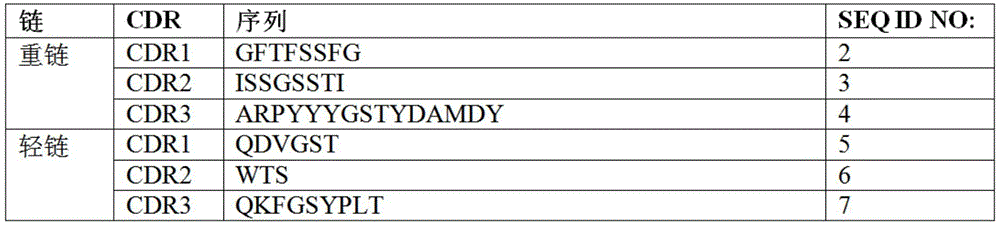
Table 2: protein sequence of antibody C2 variable region

Table 3: nucleotide sequence of antibody C2 variable region
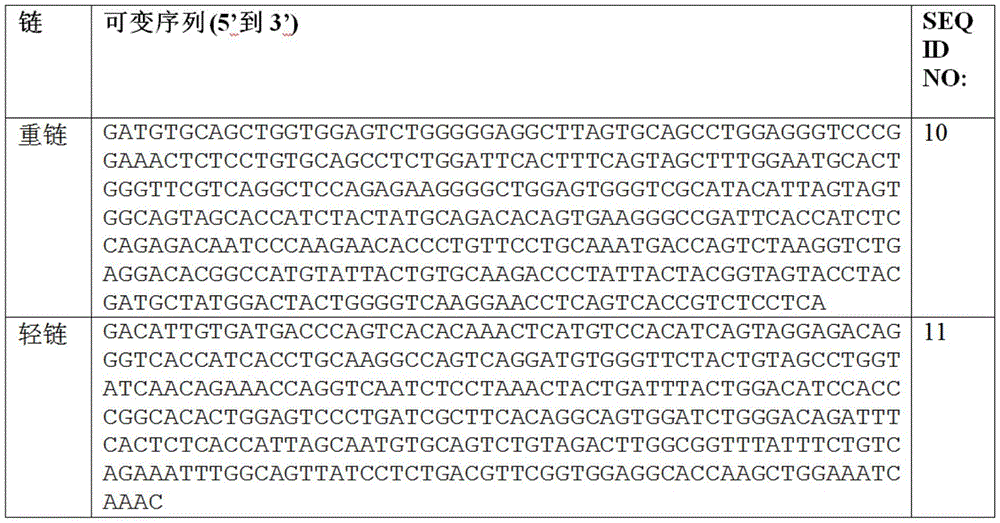
Example 2-monoclonal antibodies against DKK P20/HLA-A2 Complex bind to cancer cells expressing DKK1 and HLA-A2
To confirm that DKK 1P 20/HLA-a2 is the target molecule for antibody C2, peptide binding assays were performed using U266 cells and varying doses of C2 monoclonal antibody (fig. 7C). In addition, peptide binding assays were performed using normal PBMC as well as undefined Monoclonal Gammopathy (MGUS) and (multiple myeloma) MM patient samples (fig. 7D). The binding of the C2 monoclonal antibody was further tested on breast (fig. 8A) and prostate (fig. 8B) cancer cell lines. The C2 monoclonal antibody only bound to HLA-A2 positive cell lines.
Finally, the binding of the C2 monoclonal antibody to T2 cells was studied using a peptide binding assay. T2 cells were incubated overnight with different doses of DKK1 peptides P20 and P66v and analyzed for surface HLA-a 0201-DKK1 expression (MFI) using the C2 monoclonal antibody (fig. 5A). Figure 5C shows the antibody binding ability of T2 cells incubated overnight with different doses of P20 peptide.
Example 3 in vitro function of monoclonal antibodies against DKK P20/HLA-A2 Complex
To observe the effect of C2 binding, T2 cells were incubated overnight with different doses of DKK1 peptide P20, treated with 100 μ g/mL a2-DKK1 monoclonal antibody for 48 hours, and analyzed for apoptosis (fig. 5B). In addition, U266 cells were incubated with different doses of C2 and C3 monoclonal antibodies and detected for apoptosis. Both monoclonal antibodies induced apoptosis in a dose-dependent manner (fig. 9A and 9B). In addition, T2 cells were incubated overnight with different doses of DKK1 peptide P20, treated with 100 μ g/mL of C2 monoclonal antibody for 48 hours, and analyzed for apoptosis (fig. 9C). T2 cells were also incubated with P20 or various non-DKK 1 peptides and tested for apoptosis induced by C2 and C3 mabs. Only P20-loaded T2 cells developed increased apoptosis when bound to the C2 and C3 monoclonal antibodies (fig. 9D). Finally, the C2 and C3 monoclonal antibodies were also tested for their ability to induce apoptosis in myeloma, lymphoma (fig. 9E), breast and prostate cancer cell lines (fig. 9F).
The ability of the C2 and C3 monoclonal antibodies to induce antibody-dependent cytotoxicity was also investigated. ADCC of myeloma cell lines induced by C2 and C3 monoclonal antibodies (fig. 10A and E), lymphoma cell lines (fig. 10A and E), breast cancer cell lines (fig. 10B and F), and prostate cancer cell lines (fig. 10B and G) were tested in a Cr-51 release assay. T2 cells were also incubated with P20 or various non-DKK 1 peptides and detected apoptosis induced by C2 mab. Only P20 loaded T2 cells increased cytotoxicity when bound to the C2 monoclonal antibody (fig. 10H). The IncuCyte ZOOM real-time imaging system showed ADCC of the breast cancer cell line MDA-MB-231 induced by the C2 monoclonal antibody (FIGS. 10C and D).
The ability of the C2 and C3 monoclonal antibodies to induce complement dependent cytotoxicity was tested using different cancer cell lines. The Cr-51 release assay examined CDC of myeloma and lymphoma cell lines induced by C2 and C3 monoclonal antibodies (fig. 11A) and breast and prostate cancer cell lines (fig. 11B). The IncuCyte ZOOM real-time imaging system showed CDC of the C2 monoclonal antibody-induced breast cancer cell line MDA-MB-231 (FIGS. 11C and D). The Inucyte ZOOM real-time imaging system also detects the prostate cell line PC-2-A2 induced by the A2-DKK1 monoclonal antibody-(FIGS. 11E and G) and PC-2-A2+CDC of (FIGS. 11F and G).
Example 4 in vivo function of monoclonal antibodies against DKK P20/HLA-A2 Complex
To investigate the mechanism of action of the A2-DKK1 monoclonal antibody in vivo, SCID mice (5 per group) were subcutaneously transplanted with U266 myeloma cells, followed by treatment with mouse IgG (mIgG), A2-DKK1 monoclonal antibody, A2-DKK1 monoclonal antibody in combination with specific monoclonal antibody-depleted NK cells (NK-depleted) and A2-DKK1 monoclonal antibody in combination with Cobra Venom Factor (CVF) -depleted complement (CP-depleted). Bioluminescence images were obtained at weeks 1,2, 4 and 6 (fig. 1A). Tumor burden was determined twice weekly (fig. 1B). When the subcutaneous tumor reaches 225mm2Or euthanizing the mouse when the mouse is dying. The survival curves are shown in FIG. 1C.
To investigate the therapeutic effect of a2-DKK1mab on primary MM in a SCID-hu model, primary myeloma cells from HLA-a2 patients (n ═ 3) were injected directly into implanted human bone and tumor growth and levels of circulating human M-protein or its light chain were monitored (fig. 2A). Mice received intraperitoneal injections (one every three days for six injections) of 100 μ g A2-DKK1mab (C2) or 100 μ g mouse IgG1 or an equal volume of PBS. When the circulating human M-protein reaches 50 mu g/mL or the subcutaneous tumor reaches 400mm2Mice were euthanized at time. Fig. 2B provides a survival curve. Figure 2C detected X-ray images of mice receiving different treatments.
To investigate the pharmacokinetics of A2-DKK1mab in SCID mice, A2-NSG mice were injected intravenously with U266 myeloma cells, followed by intraperitoneal injection of 50 μ g (C2-50), 100 μ g (C2-100), 200 μ g (C2-200) A2-DKK1mab or 100 μ g mouse IgG1 (once every three days, six injections). Tumor burden was monitored based on circulating human M-protein or its light chain levels (fig. 3A). The A2-DKK1 single-drug pharmacokinetics of mice treated with 100 μ g A2-DKK1mab are shown in FIG. 3B.
To investigate the toxicity and safety of A2-DKK1 monoclonal antibody against A2-SCID mice, A2-SCID mice were challenged with subcutaneous U266 myeloma cells and then treated with intraperitoneal injections of 400. mu. g A2-DKK1 monoclonal antibody or 400. mu.g mouse IgG1(mIgG) (6 injections every three days). Various tissues were analyzed by H & E staining (FIG. 4A), A2-DKK1 monoclonal antibody staining (FIG. 4B), and Tunel test (FIGS. 4C and E). Figure 4D provides the Mean Fluorescence Intensity (MFI) of different tissues and tumors of mice receiving different treatments.
The ability of A2-DKK1mab to exert immunotherapeutic functions in A2-NSG mouse model was studied. A2-NSG mice were treated by i.v. injection of U266 myeloma cells followed by i.p. injection of 100. mu. g A2-DKK1mab (C2) or 100. mu.g mouse IgG1(mIgG) or PBS (once every three days, six total injections). Tumor burden was monitored based on circulating human M-protein or its light chain levels (fig. 6B). When circulating human M-protein reached 50. mu.g/mL or the mice were moribund, the mice were euthanized. Fig. 6A provides bioluminescence images of mice at weeks 2, 4, and 6. Fig. 6C provides survival curves for mice receiving different treatments.
***
All of the methods disclosed and claimed herein can be made and executed without undue experimentation in light of the present disclosure. While the compositions and methods of this disclosure have been described in terms of preferred embodiments, it will be apparent to those of skill in the art that variations may be applied to the steps or in the sequence of steps of the method described herein without departing from the concept, spirit and scope of the disclosure. More specifically, certain agents that are both chemically and physiologically related may be substituted for the agents described herein while the same or similar results would be achieved. All such similar substitutes and modifications apparent to those skilled in the art are deemed to be within the spirit, scope and concept of the disclosure as defined by the appended claims.
Reference to the literature
The following references provide exemplary procedures or other details supplementary to those set forth herein to the extent specifically incorporated herein by reference.
Glinka et al, "Dickkopf-1 is a Member of a New Family of Secreted Proteins and Functions in Head Induction," ("Dickkopf-1 is a Member of a Family of novel Secreted Proteins that plays a role in Head Induction"), Nature,391: 357-.
Gregory et al, "The Wnt Signaling Inhibitor Dickkopf-1is Required for The Reentry of The Cell Cycle of Human Adult Stem Cells From bore Marrow," ("The Wnt Signaling Inhibitor Dickkopf-1is necessary for The Cell Cycle to re-enter Human Adult Stem Cells From Bone Marrow") J.biol.chem.,278:28067-28078,2003.
Mao et al, "LDL-Receptor-Related Protein 6is a Receptor for Dickkopf Proteins," ("LDL Receptor-Related Protein 6is a Receptor for Dickkopf Proteins") Nature,411:321-325,2001.
Tian et al, "The Role of The Wnt-Signaling Antagonist DKK1 in The Development of Osteolytic Lesions in Multiple Myeloma," ("Role of Wnt Signaling Antagonist DKK1 in Development of Osteolytic Lesions in Multiple Myeloma") N.Engl.J.Med.,349:2483 + 2494,2003.
Yaccoby et al, "Antibody-Based Inhibition of DKK1 supresses Tumor-Induced Bone Resorption and Multiple Myeloma Growth In-Vivo," ("Antibody-Based DKK1 inhibits Tumor-Induced Bone Resorption and Multiple Myeloma Growth In Vivo") Blood,109: 2106-.
Yamabuki et al, "Dikkopf-1 as a Novel serological and pathological biomarkers for lung and Esophageal Carcinomas," ("Dikkopf-1 as a Novel serological and Prognostic Biomarker for lung and Esophageal Cancer") Cancer Res.,67: 2517-.
Zorn, "Wnt Signaling: Antagostic Dickkopfs," ("Wnt Signaling: Antagonistic Dickkopfs") Curr biol.,11: R592-595,2001.
Sequence listing
<110> Board of The Board of Regents, The University of Texas System)
<120> monoclonal antibody against MHC-bound human Dickkopf-1 peptide and use thereof
<130> UTFC.P1418WO
<140> filed herewith
<141> 2020-02-03
<150> US 62/800,007
<151> 2019-02-01
<160> 11
<170> PatentIn version 3.5
<210> 1
<211> 10
<212> PRT
<213> Artificial sequence
<220>
<223> synthetic peptide
<400> 1
Ala Leu Gly Gly His Pro Leu Leu Gly Val
1 5 10
<210> 2
<211> 8
<212> PRT
<213> Artificial sequence
<220>
<223> synthetic peptide
<400> 2
Gly Phe Thr Phe Ser Ser Phe Gly
1 5
<210> 3
<211> 8
<212> PRT
<213> Artificial sequence
<220>
<223> synthetic peptide
<400> 3
Ile Ser Ser Gly Ser Ser Thr Ile
1 5
<210> 4
<211> 15
<212> PRT
<213> Artificial sequence
<220>
<223> synthetic peptide
<400> 4
Ala Arg Pro Tyr Tyr Tyr Gly Ser Thr Tyr Asp Ala Met Asp Tyr
1 5 10 15
<210> 5
<211> 6
<212> PRT
<213> Artificial sequence
<220>
<223> synthetic peptide
<400> 5
Gln Asp Val Gly Ser Thr
1 5
<210> 6
<211> 3
<212> PRT
<213> Artificial sequence
<220>
<223> synthetic peptide
<400> 6
Trp Thr Ser
1
<210> 7
<211> 9
<212> PRT
<213> Artificial sequence
<220>
<223> synthetic peptide
<400> 7
Gln Lys Phe Gly Ser Tyr Pro Leu Thr
1 5
<210> 8
<211> 122
<212> PRT
<213> Artificial sequence
<220>
<223> Synthesis of polypeptide
<400> 8
Asp Val Gln Leu Val Glu Ser Gly Gly Gly Leu Val Gln Pro Gly Gly
1 5 10 15
Ser Arg Lys Leu Ser Cys Ala Ala Ser Gly Phe Thr Phe Ser Ser Phe
20 25 30
Gly Met His Trp Val Arg Gln Ala Pro Glu Lys Gly Leu Glu Trp Val
35 40 45
Ala Tyr Ile Ser Ser Gly Ser Ser Thr Ile Tyr Tyr Ala Asp Thr Val
50 55 60
Lys Gly Arg Phe Thr Ile Ser Arg Asp Asn Pro Lys Asn Thr Leu Phe
65 70 75 80
Leu Gln Met Thr Ser Leu Arg Ser Glu Asp Thr Ala Met Tyr Tyr Cys
85 90 95
Ala Arg Pro Tyr Tyr Tyr Gly Ser Thr Tyr Asp Ala Met Asp Tyr Trp
100 105 110
Gly Gln Gly Thr Ser Val Thr Val Ser Ser
115 120
<210> 9
<211> 107
<212> PRT
<213> Artificial sequence
<220>
<223> Synthesis of polypeptide
<400> 9
Asp Ile Val Met Thr Gln Ser His Lys Leu Met Ser Thr Ser Val Gly
1 5 10 15
Asp Arg Val Thr Ile Thr Cys Lys Ala Ser Gln Asp Val Gly Ser Thr
20 25 30
Val Ala Trp Tyr Gln Gln Lys Pro Gly Gln Ser Pro Lys Leu Leu Ile
35 40 45
Tyr Trp Thr Ser Thr Arg His Thr Gly Val Pro Asp Arg Phe Thr Gly
50 55 60
Ser Gly Ser Gly Thr Asp Phe Thr Leu Thr Ile Ser Asn Val Gln Ser
65 70 75 80
Val Asp Leu Ala Val Tyr Phe Cys Gln Lys Phe Gly Ser Tyr Pro Leu
85 90 95
Thr Phe Gly Gly Gly Thr Lys Leu Glu Ile Lys
100 105
<210> 10
<211> 366
<212> DNA
<213> Artificial sequence
<220>
<223> Synthesis of polynucleotides
<400> 10
gatgtgcagc tggtggagtc tgggggaggc ttagtgcagc ctggagggtc ccggaaactc 60
tcctgtgcag cctctggatt cactttcagt agctttggaa tgcactgggt tcgtcaggct 120
ccagagaagg ggctggagtg ggtcgcatac attagtagtg gcagtagcac catctactat 180
gcagacacag tgaagggccg attcaccatc tccagagaca atcccaagaa caccctgttc 240
ctgcaaatga ccagtctaag gtctgaggac acggccatgt attactgtgc aagaccctat 300
tactacggta gtacctacga tgctatggac tactggggtc aaggaacctc agtcaccgtc 360
tcctca 366
<210> 11
<211> 322
<212> PRT
<213> Artificial sequence
<220>
<223> Synthesis of polynucleotides
<400> 11
Gly Ala Cys Ala Thr Thr Gly Thr Gly Ala Thr Gly Ala Cys Cys Cys
1 5 10 15
Ala Gly Thr Cys Ala Cys Ala Cys Ala Ala Ala Cys Thr Cys Ala Thr
20 25 30
Gly Thr Cys Cys Ala Cys Ala Thr Cys Ala Gly Thr Ala Gly Gly Ala
35 40 45
Gly Ala Cys Ala Gly Gly Gly Thr Cys Ala Cys Cys Ala Thr Cys Ala
50 55 60
Cys Cys Thr Gly Cys Ala Ala Gly Gly Cys Cys Ala Gly Thr Cys Ala
65 70 75 80
Gly Gly Ala Thr Gly Thr Gly Gly Gly Thr Thr Cys Thr Ala Cys Thr
85 90 95
Gly Thr Ala Gly Cys Cys Thr Gly Gly Thr Ala Thr Cys Ala Ala Cys
100 105 110
Ala Gly Ala Ala Ala Cys Cys Ala Gly Gly Thr Cys Ala Ala Thr Cys
115 120 125
Thr Cys Cys Thr Ala Ala Ala Cys Thr Ala Cys Thr Gly Ala Thr Thr
130 135 140
Thr Ala Cys Thr Gly Gly Ala Cys Ala Thr Cys Cys Ala Cys Cys Cys
145 150 155 160
Gly Gly Cys Ala Cys Ala Cys Thr Gly Gly Ala Gly Thr Cys Cys Cys
165 170 175
Thr Gly Ala Thr Cys Gly Cys Thr Thr Cys Ala Cys Ala Gly Gly Cys
180 185 190
Ala Gly Thr Gly Gly Ala Thr Cys Thr Gly Gly Gly Ala Cys Ala Gly
195 200 205
Ala Thr Thr Thr Cys Ala Cys Thr Cys Thr Cys Ala Cys Cys Ala Thr
210 215 220
Thr Ala Gly Cys Ala Ala Thr Gly Thr Gly Cys Ala Gly Thr Cys Thr
225 230 235 240
Gly Thr Ala Gly Ala Cys Thr Thr Gly Gly Cys Gly Gly Thr Thr Thr
245 250 255
Ala Thr Thr Thr Cys Thr Gly Thr Cys Ala Gly Ala Ala Ala Thr Thr
260 265 270
Thr Gly Gly Cys Ala Gly Thr Thr Ala Thr Cys Cys Thr Cys Thr Gly
275 280 285
Ala Cys Gly Thr Thr Cys Gly Gly Thr Gly Gly Ala Gly Gly Cys Ala
290 295 300
Cys Cys Ala Ala Gly Cys Thr Gly Gly Ala Ala Ala Thr Cys Ala Ala
305 310 315 320
Ala Cys
Claims (40)
Applications Claiming Priority (3)
| Application Number | Priority Date | Filing Date | Title |
|---|---|---|---|
| US201962800007P | 2019-02-01 | 2019-02-01 | |
| US62/800,007 | 2019-02-01 | ||
| PCT/US2020/016364 WO2020160532A1 (en) | 2019-02-01 | 2020-02-03 | Monoclonal antibodies against mhc-bound human dickkopf-1 peptides and uses thereof |
Publications (2)
| Publication Number | Publication Date |
|---|---|
| CN113747917A true CN113747917A (en) | 2021-12-03 |
| CN113747917B CN113747917B (en) | 2024-11-29 |
Family
ID=71841694
Family Applications (1)
| Application Number | Title | Priority Date | Filing Date |
|---|---|---|---|
| CN202080026280.7A Active CN113747917B (en) | 2019-02-01 | 2020-02-03 | Monoclonal antibodies directed against MHC-binding human Dickkopf-1 peptides and uses thereof |
Country Status (6)
| Country | Link |
|---|---|
| US (1) | US12275781B2 (en) |
| EP (1) | EP3917572A4 (en) |
| CN (1) | CN113747917B (en) |
| AU (1) | AU2020216494A1 (en) |
| CA (1) | CA3128526A1 (en) |
| WO (1) | WO2020160532A1 (en) |
Families Citing this family (2)
| Publication number | Priority date | Publication date | Assignee | Title |
|---|---|---|---|---|
| WO2022256506A2 (en) * | 2021-06-02 | 2022-12-08 | The Methodist Hospital System | Dkk1/hla-a2 binding molecules and methods of their use |
| WO2023039460A1 (en) * | 2021-09-08 | 2023-03-16 | Baylor College Of Medicine | Methods and compositions for immune control through dickkopf-1 |
Citations (6)
| Publication number | Priority date | Publication date | Assignee | Title |
|---|---|---|---|---|
| CN101600449A (en) * | 2006-09-08 | 2009-12-09 | 健泰科生物技术公司 | WNT antagonists and their use in the diagnosis and treatment of WNT-mediated disorders |
| US20100129390A1 (en) * | 2007-05-18 | 2010-05-27 | Qing Yi | Dkk1 as a universal tumor vaccine for immunotherapy of cancers |
| US20120023600A1 (en) * | 2006-01-13 | 2012-01-26 | Janine Shulok | Compositions and methods of use for antibodies of dickkopf-1 |
| CN105837690A (en) * | 2006-06-12 | 2016-08-10 | 新兴产品开发西雅图有限公司 | Single-chain multivalent binding proteins with effector function |
| CN107847553A (en) * | 2015-03-04 | 2018-03-27 | 得克萨斯州大学系统董事会 | Methods of treating cancers with hemizygous deletion of TP53 |
| CN108463247A (en) * | 2015-10-28 | 2018-08-28 | 耶鲁大学 | The anti-DKK2 antibody and its purposes of humanization |
Family Cites Families (4)
| Publication number | Priority date | Publication date | Assignee | Title |
|---|---|---|---|---|
| JP5416338B2 (en) * | 2003-05-09 | 2014-02-12 | デューク ユニバーシティ | CD20-specific antibody and method of use thereof |
| WO2014059028A1 (en) * | 2012-10-09 | 2014-04-17 | Igenica, Inc. | Anti-c16orf54 antibodies and methods of use thereof |
| US10577409B2 (en) * | 2016-05-26 | 2020-03-03 | Sagabio Co., Ltd. | Monoclonal antibody inhibiting immunosuppressive functions of pathogens, antigen-binding fragment thereof, and hybridomas producing such antibody |
| WO2018081437A1 (en) * | 2016-10-26 | 2018-05-03 | Leap Therapeutics, Inc. | Use of beta-catenin as a biomarker for treating cancers using anti-dkk-1 antibody |
-
2020
- 2020-02-03 US US17/425,564 patent/US12275781B2/en active Active
- 2020-02-03 CN CN202080026280.7A patent/CN113747917B/en active Active
- 2020-02-03 AU AU2020216494A patent/AU2020216494A1/en active Pending
- 2020-02-03 WO PCT/US2020/016364 patent/WO2020160532A1/en not_active Ceased
- 2020-02-03 CA CA3128526A patent/CA3128526A1/en active Pending
- 2020-02-03 EP EP20748034.4A patent/EP3917572A4/en active Pending
Patent Citations (6)
| Publication number | Priority date | Publication date | Assignee | Title |
|---|---|---|---|---|
| US20120023600A1 (en) * | 2006-01-13 | 2012-01-26 | Janine Shulok | Compositions and methods of use for antibodies of dickkopf-1 |
| CN105837690A (en) * | 2006-06-12 | 2016-08-10 | 新兴产品开发西雅图有限公司 | Single-chain multivalent binding proteins with effector function |
| CN101600449A (en) * | 2006-09-08 | 2009-12-09 | 健泰科生物技术公司 | WNT antagonists and their use in the diagnosis and treatment of WNT-mediated disorders |
| US20100129390A1 (en) * | 2007-05-18 | 2010-05-27 | Qing Yi | Dkk1 as a universal tumor vaccine for immunotherapy of cancers |
| CN107847553A (en) * | 2015-03-04 | 2018-03-27 | 得克萨斯州大学系统董事会 | Methods of treating cancers with hemizygous deletion of TP53 |
| CN108463247A (en) * | 2015-10-28 | 2018-08-28 | 耶鲁大学 | The anti-DKK2 antibody and its purposes of humanization |
Non-Patent Citations (2)
| Title |
|---|
| SETH D GOLDSTEIN ET AL.: "A monoclonal antibody against the Wnt signaling inhibitor dickkopf-1 inhibits osteosarcoma metastasis in a preclinical model", ONCOTARGET, vol. 7, no. 16, 19 April 2016 (2016-04-19), pages 21114 - 21123 * |
| 袁忠涛;李惠民;: "Dickkopf-1与骨髓瘤骨病的关系及其靶向治疗的研究进展", 重庆医学, no. 16, 10 June 2012 (2012-06-10), pages 1637 - 1641 * |
Also Published As
| Publication number | Publication date |
|---|---|
| AU2020216494A1 (en) | 2021-08-12 |
| EP3917572A4 (en) | 2022-11-09 |
| WO2020160532A1 (en) | 2020-08-06 |
| US20220089707A1 (en) | 2022-03-24 |
| US12275781B2 (en) | 2025-04-15 |
| EP3917572A1 (en) | 2021-12-08 |
| CA3128526A1 (en) | 2020-08-06 |
| CN113747917B (en) | 2024-11-29 |
| WO2020160532A8 (en) | 2021-10-14 |
Similar Documents
| Publication | Publication Date | Title |
|---|---|---|
| JP7779484B2 (en) | Anti-B7-H3 monoclonal antibodies and methods of use thereof | |
| US20250270312A1 (en) | Monoclonal antibodies against endotrophin and the use thereof | |
| CN113412130A (en) | Identification and targeting of pro-tumor cancer-associated fibroblasts for diagnosis and treatment of cancer and other diseases | |
| US20230139944A1 (en) | Targeting alpha3beta1 integrin for treatment of cancer and other diseases | |
| US20220389106A1 (en) | Anti-epha10 antibodies and methods of use thereof | |
| TW202216779A (en) | Therapeutic antibodies and their uses | |
| CN113747917B (en) | Monoclonal antibodies directed against MHC-binding human Dickkopf-1 peptides and uses thereof | |
| JP2022502517A (en) | Monoclonal antibody against human DICKKOPF3 and its usage | |
| US20230128075A1 (en) | Monoclonal antibodies targeting hsp70 and therapeutic uses thereof | |
| US20250084155A1 (en) | Anti-hsp70 antibodies and therapeutic uses thereof | |
| JP7599716B2 (en) | Identifying and targeting pathogenic extracellular matrix for the diagnosis and treatment of cancer and other diseases | |
| US20240085427A1 (en) | AN AGR2Xcd3 BISPECIFIC ENGAGER FOR THE TREATMENT OF CANCER | |
| CN115698070A (en) | CD5L-binding antibodies and uses thereof | |
| HK40061589A (en) | Monoclonal antibodies against endotrophin and the use thereof | |
| HK40089733A (en) | Therapeutic antibodies and their uses |
Legal Events
| Date | Code | Title | Description |
|---|---|---|---|
| PB01 | Publication | ||
| PB01 | Publication | ||
| SE01 | Entry into force of request for substantive examination | ||
| SE01 | Entry into force of request for substantive examination | ||
| GR01 | Patent grant | ||
| GR01 | Patent grant |