CN113747557A - A dual-layer heterogeneous network power control method - Google Patents
A dual-layer heterogeneous network power control method Download PDFInfo
- Publication number
- CN113747557A CN113747557A CN202111049450.6A CN202111049450A CN113747557A CN 113747557 A CN113747557 A CN 113747557A CN 202111049450 A CN202111049450 A CN 202111049450A CN 113747557 A CN113747557 A CN 113747557A
- Authority
- CN
- China
- Prior art keywords
- star
- user
- stars
- base station
- macrocell
- Prior art date
- Legal status (The legal status is an assumption and is not a legal conclusion. Google has not performed a legal analysis and makes no representation as to the accuracy of the status listed.)
- Granted
Links
- 238000000034 method Methods 0.000 title claims abstract description 51
- 239000002355 dual-layer Substances 0.000 title description 7
- 238000005265 energy consumption Methods 0.000 claims abstract description 36
- 230000007246 mechanism Effects 0.000 claims abstract description 32
- 230000000739 chaotic effect Effects 0.000 claims abstract description 31
- 238000005457 optimization Methods 0.000 claims abstract description 20
- 230000033001 locomotion Effects 0.000 claims abstract description 14
- 230000008569 process Effects 0.000 claims abstract description 8
- 230000008859 change Effects 0.000 claims description 32
- 238000004891 communication Methods 0.000 claims description 31
- 230000002452 interceptive effect Effects 0.000 claims description 23
- 238000004364 calculation method Methods 0.000 claims description 8
- 230000005540 biological transmission Effects 0.000 claims description 6
- 238000010606 normalization Methods 0.000 claims description 6
- 238000001228 spectrum Methods 0.000 claims description 5
- 239000000654 additive Substances 0.000 claims description 3
- 230000000996 additive effect Effects 0.000 claims description 3
- 238000013178 mathematical model Methods 0.000 claims description 3
- 230000009471 action Effects 0.000 claims description 2
- 230000007613 environmental effect Effects 0.000 claims description 2
- 238000013507 mapping Methods 0.000 claims 2
- 238000012163 sequencing technique Methods 0.000 claims 1
- XLYOFNOQVPJJNP-UHFFFAOYSA-N water Substances O XLYOFNOQVPJJNP-UHFFFAOYSA-N 0.000 claims 1
- 239000010410 layer Substances 0.000 description 33
- 238000010295 mobile communication Methods 0.000 description 9
- NUFBIAUZAMHTSP-UHFFFAOYSA-N 3-(n-morpholino)-2-hydroxypropanesulfonic acid Chemical compound OS(=O)(=O)CC(O)CN1CCOCC1 NUFBIAUZAMHTSP-UHFFFAOYSA-N 0.000 description 8
- 238000011161 development Methods 0.000 description 7
- 238000010586 diagram Methods 0.000 description 6
- 238000005516 engineering process Methods 0.000 description 5
- 238000013468 resource allocation Methods 0.000 description 5
- 238000004088 simulation Methods 0.000 description 5
- 238000004422 calculation algorithm Methods 0.000 description 3
- 238000013461 design Methods 0.000 description 3
- CURLTUGMZLYLDI-UHFFFAOYSA-N Carbon dioxide Chemical compound O=C=O CURLTUGMZLYLDI-UHFFFAOYSA-N 0.000 description 2
- 238000004458 analytical method Methods 0.000 description 2
- 230000009286 beneficial effect Effects 0.000 description 2
- 230000008303 genetic mechanism Effects 0.000 description 2
- 230000006872 improvement Effects 0.000 description 2
- 239000002245 particle Substances 0.000 description 2
- 238000011160 research Methods 0.000 description 2
- 241000272201 Columbiformes Species 0.000 description 1
- 238000010009 beating Methods 0.000 description 1
- 229910002092 carbon dioxide Inorganic materials 0.000 description 1
- 239000001569 carbon dioxide Substances 0.000 description 1
- 238000000205 computational method Methods 0.000 description 1
- 230000000694 effects Effects 0.000 description 1
- 238000007726 management method Methods 0.000 description 1
- 238000012544 monitoring process Methods 0.000 description 1
- 230000009467 reduction Effects 0.000 description 1
- 238000012384 transportation and delivery Methods 0.000 description 1
Images


Classifications
-
- H—ELECTRICITY
- H04—ELECTRIC COMMUNICATION TECHNIQUE
- H04W—WIRELESS COMMUNICATION NETWORKS
- H04W52/00—Power management, e.g. Transmission Power Control [TPC] or power classes
- H04W52/02—Power saving arrangements
- H04W52/0203—Power saving arrangements in the radio access network or backbone network of wireless communication networks
- H04W52/0206—Power saving arrangements in the radio access network or backbone network of wireless communication networks in access points, e.g. base stations
-
- H—ELECTRICITY
- H04—ELECTRIC COMMUNICATION TECHNIQUE
- H04W—WIRELESS COMMUNICATION NETWORKS
- H04W52/00—Power management, e.g. Transmission Power Control [TPC] or power classes
- H04W52/04—Transmission power control [TPC]
- H04W52/18—TPC being performed according to specific parameters
-
- H—ELECTRICITY
- H04—ELECTRIC COMMUNICATION TECHNIQUE
- H04W—WIRELESS COMMUNICATION NETWORKS
- H04W52/00—Power management, e.g. Transmission Power Control [TPC] or power classes
- H04W52/04—Transmission power control [TPC]
- H04W52/18—TPC being performed according to specific parameters
- H04W52/24—TPC being performed according to specific parameters using SIR [Signal to Interference Ratio] or other wireless path parameters
- H04W52/242—TPC being performed according to specific parameters using SIR [Signal to Interference Ratio] or other wireless path parameters taking into account path loss
-
- H—ELECTRICITY
- H04—ELECTRIC COMMUNICATION TECHNIQUE
- H04W—WIRELESS COMMUNICATION NETWORKS
- H04W52/00—Power management, e.g. Transmission Power Control [TPC] or power classes
- H04W52/04—Transmission power control [TPC]
- H04W52/18—TPC being performed according to specific parameters
- H04W52/24—TPC being performed according to specific parameters using SIR [Signal to Interference Ratio] or other wireless path parameters
- H04W52/243—TPC being performed according to specific parameters using SIR [Signal to Interference Ratio] or other wireless path parameters taking into account interferences
- H04W52/244—Interferences in heterogeneous networks, e.g. among macro and femto or pico cells or other sector / system interference [OSI]
-
- Y—GENERAL TAGGING OF NEW TECHNOLOGICAL DEVELOPMENTS; GENERAL TAGGING OF CROSS-SECTIONAL TECHNOLOGIES SPANNING OVER SEVERAL SECTIONS OF THE IPC; TECHNICAL SUBJECTS COVERED BY FORMER USPC CROSS-REFERENCE ART COLLECTIONS [XRACs] AND DIGESTS
- Y02—TECHNOLOGIES OR APPLICATIONS FOR MITIGATION OR ADAPTATION AGAINST CLIMATE CHANGE
- Y02D—CLIMATE CHANGE MITIGATION TECHNOLOGIES IN INFORMATION AND COMMUNICATION TECHNOLOGIES [ICT], I.E. INFORMATION AND COMMUNICATION TECHNOLOGIES AIMING AT THE REDUCTION OF THEIR OWN ENERGY USE
- Y02D30/00—Reducing energy consumption in communication networks
- Y02D30/70—Reducing energy consumption in communication networks in wireless communication networks
Landscapes
- Engineering & Computer Science (AREA)
- Computer Networks & Wireless Communication (AREA)
- Signal Processing (AREA)
- Mobile Radio Communication Systems (AREA)
Abstract
本发明公开了一种双层异构网络功率控制方法,建立双层异构网络功率控制模型;初始化星体位置和量子位置并进行排序;根据锦标赛选择机制选出新的星系;根据位置混沌变化更新量子旋转角,使用模拟量子旋转门演化星系的寻优搜索过程;判断若未达到最大循环次数返回上一步直到最大循环次数,否则终止循环,将星体进行正向和负向旋转混沌移动,寻找更优星系;判断若未达到最大循环次数,返回上一步;否则终止循环,将新得到的星系与初始星系混合,选出与初始星系相同规模的星系;判断若未达到最大迭代次数,返回根据锦标赛选择机制选出新的星系;否则终止迭代,得到最优的功率分配方案。本发明可以对互相冲突的系统吞吐量和系统能耗同时进行优化。

The invention discloses a power control method for a double-layer heterogeneous network. The power control model of the double-layer heterogeneous network is established; the positions of stars and quantum positions are initialized and sorted; new galaxies are selected according to a tournament selection mechanism; Quantum rotation angle, use the optimization search process of simulating quantum revolving gate evolution galaxy; judge if the maximum number of cycles is not reached, return to the previous step until the maximum number of cycles, otherwise terminate the cycle, move the star to positive and negative rotational chaotic movement, and search for more Excellent galaxy; if it is judged that the maximum number of iterations has not been reached, go back to the previous step; otherwise, terminate the loop, mix the newly obtained galaxy with the initial galaxy, and select a galaxy of the same scale as the initial galaxy; if it is judged that the maximum number of iterations has not been reached, return to the championship The selection mechanism selects new galaxies; otherwise, the iteration is terminated, and the optimal power distribution scheme is obtained. The present invention can simultaneously optimize the conflicting system throughput and system energy consumption.
Description
技术领域technical field
本发明属于资源管理领域,涉及一种双层异构网络功率控制方法,特别是一种基于多目标量子星系搜索机制的双层异构网络多目标功率控制方法。The invention belongs to the field of resource management, and relates to a power control method for a double-layer heterogeneous network, in particular to a double-layer heterogeneous network multi-target power control method based on a multi-target quantum galaxy search mechanism.
背景技术Background technique
随着通信技术的进步,可以看到人们之间的交流变得越来越方便,从数百年前只能通过飞鸽传书和击鼓鸣金传递消息,到后来的邮寄信件或者发电报来实现互相交流,到现在只需一个电话,一条短信就可以达到传递消息的目的,甚至通过视频等方式可以实现想见面的要求,这些通信方面的进步都是我们清晰可见的,同时用户的要求也是越来越高,用户希望的是在哪里都能够拥有高质量的通信,显然,只有无线通信系统才能实现这一理想。With the advancement of communication technology, it can be seen that the communication between people has become more and more convenient. From hundreds of years ago, messages could only be transmitted by flying pigeons and beating drums, to later mailing letters or telegrams. To achieve mutual communication, now only a phone call, a text message can achieve the purpose of message delivery, and even through video and other methods to meet the requirements of wanting to meet, these progress in communication are clearly visible to us, and the requirements of users are also Increasingly, users expect high-quality communications wherever they are. Obviously, only wireless communication systems can achieve this ideal.
无线移动通信发展过程从1G到我们现在熟知的5G,带来的便利肉眼可见。最开始的第一代移动通信,作为发展之初,他有很多的缺点,例如频谱利用率低、安全性差和移动设备体积庞大不利于携带等。发展到第二代移动通信的时候,很多第一代移动通信存在的问题都已经被解决,频谱利用率提高了很多,保密性加强,业务也丰富了很多。第三代移动通信具有了更多的多媒体业务,例如电子邮件、短信等。第四代移动通信的应用便更加广泛,不仅能用在视频通话,在线游戏等日常生活方面,并且能够应用于智能家居,车载导航,监控安防等提高人民生活水平方面。2018年第一个第5代移动通信标准发布,证明我们现在已经进入5G时代。5G的覆盖更广、容量更高、速度更快。可见,在历史发展过程中,通信领域已经为人们生活带来了很多方便之处,人们在无形之间已经离不开无线通信。通信业务在各个方面都有着重要的作用,为社会的进步发展和人民生活水平的提高等方面做出卓越贡献。The development process of wireless mobile communication from 1G to 5G, which we are now familiar with, brings convenience to the naked eye. The first generation of mobile communications, at the beginning of its development, had many shortcomings, such as low spectrum utilization, poor security, and bulky mobile devices that were not conducive to portability. When the second-generation mobile communication develops, many problems existing in the first-generation mobile communication have been solved, the spectrum utilization rate has been greatly improved, the confidentiality has been strengthened, and the services have been enriched a lot. The third generation of mobile communication has more multimedia services, such as e-mail, short messages and so on. The application of the fourth-generation mobile communication is more extensive, not only in daily life such as video calls and online games, but also in smart homes, car navigation, monitoring and security, etc. to improve people's living standards. The first 5th generation mobile communication standard was released in 2018, proving that we have now entered the 5G era. 5G has wider coverage, higher capacity and faster speed. It can be seen that in the process of historical development, the field of communication has brought a lot of convenience to people's lives, and people have been inseparable from wireless communication. Communication services play an important role in all aspects, making outstanding contributions to the progress and development of society and the improvement of people's living standards.
但是目前通信用户人数呈爆发式增长,基站搭建数量相比快速增长的通信人数显得十分微少,严重影响用户服务质量。据统计,移动通信产生的能耗占信息通信技术总能耗的15%~20%,通信业产生的能耗占所有行业总能耗的3%~7%,并且随着通信用户人数的增长和通信业务的多样性增加,通信业的能耗也随之快速增长。通信与信息行业产生的二氧化碳排放量超过全球排放总量的5%,此时寻求方法降低能耗进行绿色发展显得尤为重要。为满足日益增长的用户需求,大功率基站数量需要大幅度增加,但是过多布置大功率基站很明显不符合当前提倡的全世界范围内的绿色可持续发展的理念,而且大功率基站设备相对复杂,也会存在不灵活的问题,但是如果使用低功率基站就会更加方便,不会产生过多的能耗,异构网络也就由此被提出。移动通信现在是人们生活中不可缺少的的一部分,作为它的核心技术的功率控制也被多次研究。However, at present, the number of communication users is increasing explosively, and the number of base stations built is very small compared to the rapidly growing number of communication users, which seriously affects the quality of user services. According to statistics, the energy consumption of mobile communication accounts for 15% to 20% of the total energy consumption of information and communication technology, and the energy consumption of the communication industry accounts for 3% to 7% of the total energy consumption of all industries. With the increase in the diversity of communication services, the energy consumption of the communication industry also increases rapidly. The carbon dioxide emissions generated by the communication and information industry exceed 5% of the total global emissions. At this time, it is particularly important to seek ways to reduce energy consumption for green development. In order to meet the increasing user demand, the number of high-power base stations needs to be greatly increased, but too many high-power base stations are obviously not in line with the current concept of green and sustainable development worldwide, and the equipment of high-power base stations is relatively complex. , there will also be inflexibility problems, but it will be more convenient to use low-power base stations, and will not generate excessive energy consumption, and heterogeneous networks will therefore be proposed. Mobile communication is now an indispensable part of people's lives, and power control as its core technology has also been studied many times.
通过对现有技术文献的检索发现,张新等在计算机工程与设计(2017,38(6):1446-1451)上发表的“异构网络中基于资源分配的功率控制算法”提出的一种基于用户划分的资源分配机制,并根据资源分配策略进行功率控制。通过不断调整基站的发射功率,来减小异构网络之间的干扰,并提高系统的吞吐量。但是该机制只考虑了系统吞吐量的变化,没有考虑系统能耗的变化,不如将系统吞吐量和系统能耗同时作为目标函数更能表现出该功率控制方法的优势。钱进等在通信技术(2013(1):79-82)上发表的“基于能效优化的异构网络资源分配算法设计”,针对双层异构网络之间的干扰,通过对多目标遗传机制的研究,提出以系统能效作为优化目标的资源分配机制。但是机制过于复杂,且优化效果不明显,而采用多目标量子星系搜索机制,可以得到鲁棒性更强并且适合多种情况的功率控制方法。Through the retrieval of prior art literature, it was found that Zhang Xin et al. published a "Power Control Algorithm Based on Resource Allocation in Heterogeneous Networks" published in Computer Engineering and Design (2017, 38(6): 1446-1451). Resource allocation mechanism based on user division and power control according to resource allocation strategy. By continuously adjusting the transmit power of the base station, the interference between heterogeneous networks is reduced and the throughput of the system is improved. However, this mechanism only considers the change of system throughput and does not consider the change of system energy consumption. It is better to take the system throughput and system energy consumption as objective functions at the same time, which can better show the advantages of this power control method. Qian Jin et al. published "Resource Allocation Algorithm Design for Heterogeneous Networks Based on Energy Efficiency Optimization" published in Communication Technology (2013(1):79-82), aiming at the interference between two-layer heterogeneous networks, through the multi-objective genetic mechanism The research of this paper proposes a resource allocation mechanism with system energy efficiency as the optimization goal. However, the mechanism is too complicated, and the optimization effect is not obvious, and the multi-target quantum galaxy search mechanism can be used to obtain a more robust power control method suitable for various situations.
已有文献的检索结果表明,现有的多目标功率控制方法,大多都是将系统吞吐量和能耗在某一线性权重下转化为单目标问题,但在实际情况中,为了提高用户通信质量,需要根据各种通信要求,增加系统吞吐量,提高设备发射功率,可是设备发射功率的提高又会增加能耗,这是不希望被看到的,所以现在缺少一种将系统吞吐量和系统能耗共同作为目标函数进行多目标优化的方法,因此亟待解决双层异构网络功率分配这个高维度优化难题,并能在任何能耗和吞吐量要求下,都获得可行的功率分配方案。The retrieval results of existing literature show that most of the existing multi-objective power control methods transform the system throughput and energy consumption into a single-objective problem under a certain linear weight, but in practical situations, in order to improve the quality of user communication. , it is necessary to increase the system throughput and increase the transmission power of the device according to various communication requirements, but the increase of the transmission power of the device will increase the energy consumption, which is not expected. The energy consumption is used as the objective function for multi-objective optimization. Therefore, it is urgent to solve the high-dimensional optimization problem of power distribution in two-layer heterogeneous networks, and to obtain a feasible power distribution scheme under any energy consumption and throughput requirements.
发明内容SUMMARY OF THE INVENTION
针对上述现有技术,本发明要解决的技术问题是提供一种基于多目标量子星系搜索机制的双层异构网络功率控制方法,对互相冲突的系统吞吐量和系统能耗同时进行优化。In view of the above prior art, the technical problem to be solved by the present invention is to provide a dual-layer heterogeneous network power control method based on a multi-target quantum galaxy search mechanism, which simultaneously optimizes the conflicting system throughput and system energy consumption.
为解决上述技术问题,本发明的一种双层异构网络功率控制方法,包括以下步骤:In order to solve the above-mentioned technical problems, a method for controlling power in a dual-layer heterogeneous network of the present invention includes the following steps:
步骤一,建立双层异构网络功率控制模型;
步骤二,初始化星体的位置和量子位置,将所有星体进行非支配解等级排序,再对每个等级中的所有星体按照拥挤度进行排序;Step 2: Initialize the positions and quantum positions of stars, sort all stars by non-dominated solution level, and then sort all stars in each level according to the crowding degree;
步骤三,进行锦标赛选择机制,选出新的星系;Step 3: Carry out the tournament selection mechanism to select a new galaxy;
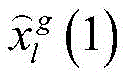
步骤四,根据位置混沌变化更新量子旋转角,使用模拟量子旋转门演化星系的寻优搜索过程;
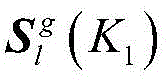
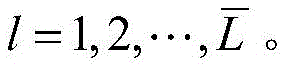
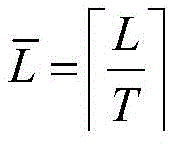
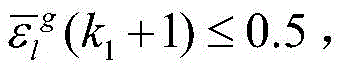
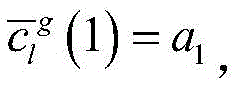
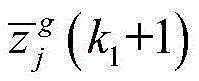
步骤五,判断是否达到最大循环次数K1,若未达到返回步骤四直到达到最大循环次数,否则终止循环,将第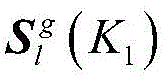


步骤六,将所有星体进行正向和负向旋转混沌移动,寻找更优的星系;Step 6: Move all the stars to positive and negative rotational chaotic movements to find better galaxies;
步骤七,判断是否达到最大循环次数K1+K2,若未达到,令k2=k2+1,返回步骤六;否则终止循环,将第g迭代中得到的新的星系

步骤八,将得到的新的星系与初始星系混合,选出与初始星系相同规模的星系;Step 8: Mix the new galaxies obtained with the initial galaxies, and select galaxies with the same scale as the initial galaxies;
步骤九,判断是否达到最大迭代次数G,若未达到,令g=g+1,

本发明还包括:The present invention also includes:
1.步骤一建立双层异构网络功率控制模型具体为:1. In
构成Macrocell/Femtocell双层异构网络:在一个半径为Rm的宏小区内,随机分布F个半径为Rf的Femtocell,Femtocell的覆盖范围都在宏小区内且之间互不交叉,其中整个Macrocell内随机分布Nm个宏基站用户MUE,每个Femtocell中随机分布Nf个家庭基站用户FUE,然后采用共享频段的方式,将频谱资源一共划分为Q个子信道,所有的MUE和FUE共同使用Q个子信道;信道分配方式为:先在Nm个MUE中随机抽取Q个MUE平均分配在Q个子信道,再将Nm-Q个宏基站用户随机分配到Q个子信道,其中2Q>Nm>Q,将FNf个家庭基站用户随机分配到Q个子信道中,其中Q>FNf,干扰情况具体为:Constitute a Macrocell/Femtocell dual-layer heterogeneous network: In a macro cell with a radius of R m , F Femtocells with a radius of R f are randomly distributed. N m macro base station user MUEs are randomly distributed in the Macrocell, and N f home base station user FUEs are randomly distributed in each Femtocell, and then the spectrum resources are divided into Q sub-channels in a shared frequency band, and all MUEs and FUEs are used together. Q sub-channels; the channel allocation method is: first randomly select Q MUEs from the N m MUEs and distribute them on the Q sub-channels on average, and then randomly assign the N m -Q macro base station users to the Q sub-channels, where 2Q>N m >Q, randomly assign FN f home base station users to Q sub-channels, where Q>FN f , the interference situation is as follows:
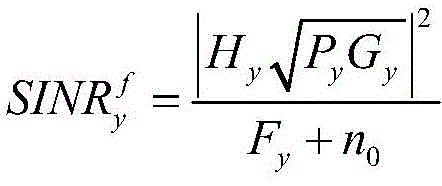
Macrocell层的同层干扰:当Macrocell想要发送信号到用户i时,若Macrocell的用户i和用户y同时占用了信道,那么用户y就为干扰用户,Macrocell对用户i的干扰满足: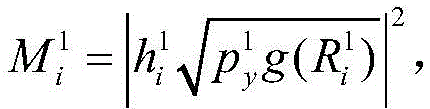


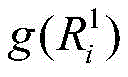


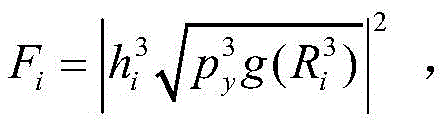
Femtocell对MUE的跨层干扰:当Macrocell想要发送信号到其用户i,若在Macrocell覆盖范围内的Femtocell也为其用户y分配了同一传输Macrocell发送给其用户i信号的子信道时,此时这个Femtocell就是干扰基站,对Macrocell的用户i的干扰为:


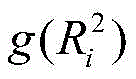


Macrocell对FUE的跨层干扰:当Femtocell想要发送信号到其用户i时,Macrocell同时也为其用户y分配了同一传输Femtocell发送给其用户i信号的子信道时,这时Macrocell就是干扰基站,对Femtocell的用户i的干扰为:


采用加性高斯白噪声作为环境噪声;Using additive white Gaussian noise as the ambient noise;
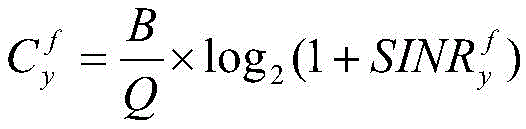
异构网络中对系统吞吐量进行建模为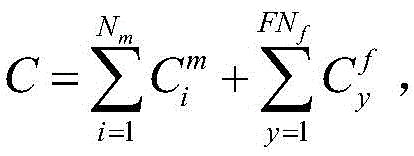



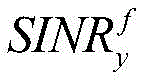
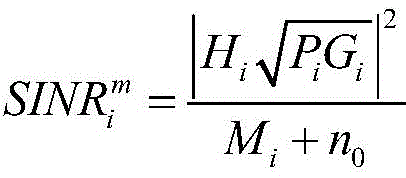
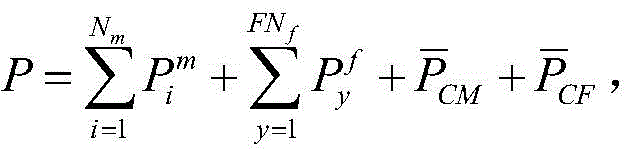
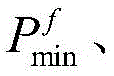
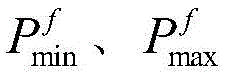
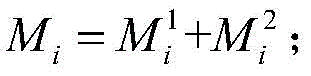
将第1个目标函数系统吞吐量最大化和第2个目标函数系统能耗最小化同时作为目标函数,将能耗最小化问题转变为最大化问题,数学模型建立为公式:Taking the first objective function system throughput maximization and the second objective function system energy consumption minimization as objective functions at the same time, the energy consumption minimization problem is transformed into a maximization problem, and the mathematical model is established as the formula:







2.步骤二初始化星体的位置和量子位置,将所有星体进行非支配解等级排序,再对每个等级中的所有星体按照拥挤度进行排序具体为:2. Step 2: Initialize the positions and quantum positions of the stars, sort all the stars by non-dominated solution level, and then sort all the stars in each level according to the degree of crowding. Specifically:
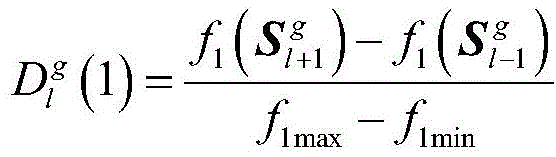
设定最大迭代次数为G,迭代数标号为g,g∈[1,G],设定星系中的星体数目为L,第g次迭代中第l个星体的位置为




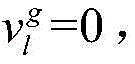


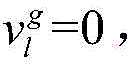

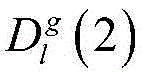
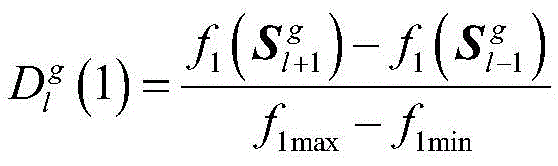
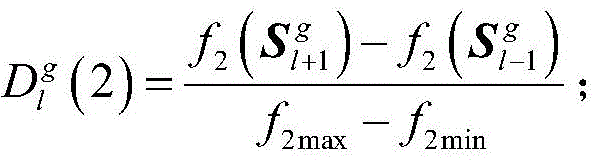
然后将星系从非支配解等级为1开始排序,并判断在每个非支配解等级中的星体数目,若有多个星体具有相同的非支配解等级,将这些星体按照拥挤度从大到小再次进行排序;拥挤度的判断方法为:拥挤度用拥挤距离的归一化来表示,将所有星体按照适应度值从小到大进行排序,第l个星体第a个适应度函数的拥挤距离的归一化的计算方式为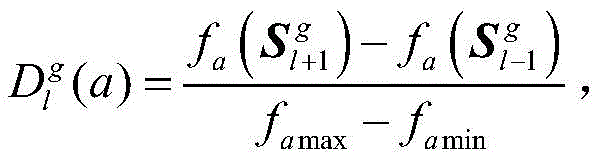
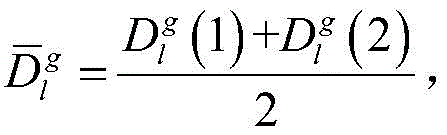



设定最大循环次数为K1,循环次数标号为k1,k1∈[1,K1],第g次迭代中第k1次循环中第l个星体的量子位置可以表示为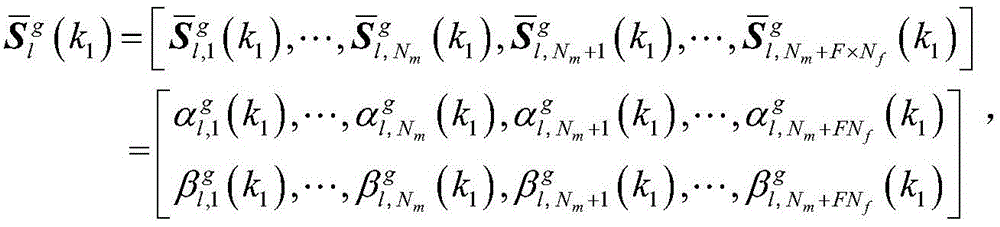

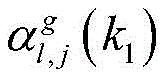


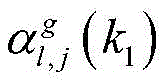
3.步骤三进行锦标赛选择机制,选出新的星系具体为:3. In
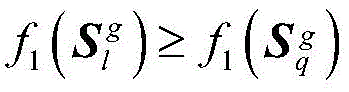
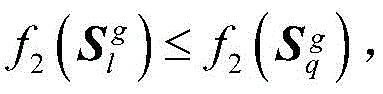
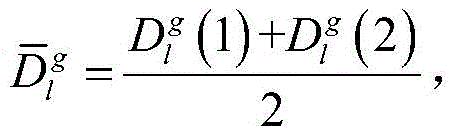
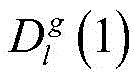
在星系的所有星体中选择T个不同的星体,星体只能进行比较一次,比较非支配解等级,选择非支配解等级最小的,若非支配解等级一样,则选择拥挤距离最大的,若拥挤距离一样,则选择第一个,通过多次选择,选出


4.步骤四根据位置混沌变化更新量子旋转角,使用模拟量子旋转门演化星系的寻优搜索过程具体为:4. Step 4: Update the quantum rotation angle according to the positional chaotic change, and use the simulation quantum revolving gate evolution galaxy to optimize the search process as follows:
对于第k1次循环中第l个星体,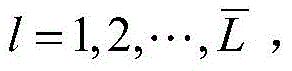
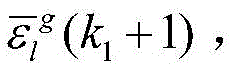




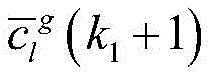



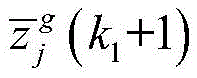

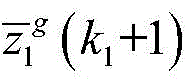


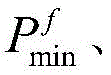





若








5.步骤六将所有星体进行正向和负向旋转混沌移动,寻找更优的星系具体为:5. Step 6: Perform positive and negative rotational chaotic movements on all stars to find a better galaxy. Specifically:
对于第k2次循环中第l个星体,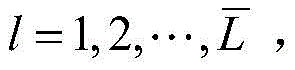
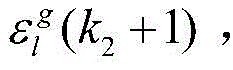






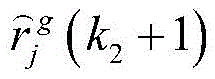


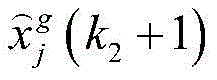


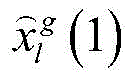
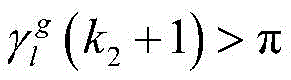


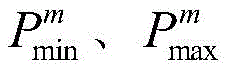


若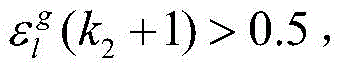




6.步骤八将得到的新的星系与初始星系混合,选出与初始星系相同规模的星系具体为:6. Step 8: Mix the new galaxies obtained with the initial galaxies, and select galaxies of the same scale as the initial galaxies as follows:
将新的星系


本发明的有益效果:本发明针对Macrocell/Femtocell双层异构网络出现的同层和跨层干扰问题,本发明设计了一种智能功率控制方法,将互相冲突的系统吞吐量和系统能耗共同作为优化目标,采用多目标量子星系搜索机制来解决功率分配这个连续矢量优化的高维度难题,使系统吞吐量和能耗同时最优化,并且得到比其他的多目标机制更好的优化结果,体现该机制的优越性。Beneficial effects of the present invention: The present invention aims at the same-layer and cross-layer interference problems that occur in the Macrocell/Femtocell double-layer heterogeneous network. The present invention designs an intelligent power control method, which combines the conflicting system throughput and system energy consumption. As the optimization goal, the multi-objective quantum galaxy search mechanism is used to solve the high-dimensional problem of continuous vector optimization of power distribution, so that the system throughput and energy consumption are optimized at the same time, and better optimization results are obtained than other multi-objective mechanisms, reflecting the superiority of this mechanism.
与现有技术相比,本发明的有益效果是:Compared with the prior art, the beneficial effects of the present invention are:
(1)本发明针对目前快速增长的通信用户群规模和用户对通信质量和速率的高要求,提出了Macrocell/Femtocell双层异构网络,在传统宏基站的覆盖范围内布置低功率基站节点,低功率基站设备简单体积小,方便灵活,而且也不会产生过多的能耗,符合节能减排的绿色发展理念。(1) The present invention proposes a Macrocell/Femtocell double-layer heterogeneous network in view of the current rapidly growing communication user group scale and users' high requirements for communication quality and speed, and arranges low-power base station nodes within the coverage of traditional macro base stations, The low-power base station equipment is simple and small in size, convenient and flexible, and does not generate excessive energy consumption, which is in line with the green development concept of energy saving and emission reduction.
(2)本发明出于对实际情况的考虑,在实际工程应用中,为了提高用户通信质量,就需要增加系统吞吐量,提高设备发射功率,但是设备发射功率的提高又会增加能耗,这是不希望被看到的,所以将系统吞吐量和系统能耗这两个互相冲突的问题同时作为优化目标,进行了多目标优化问题的求解。(2) The present invention is based on the consideration of the actual situation. In practical engineering applications, in order to improve the communication quality of users, it is necessary to increase the system throughput and increase the transmission power of the equipment, but the improvement of the transmission power of the equipment will increase the energy consumption, which It is not expected to be seen, so the two conflicting problems of system throughput and system energy consumption are taken as the optimization goals at the same time, and the multi-objective optimization problem is solved.
(3)本发明针对多目标问题的求解,提出了多目标量子星系搜索机制,实现了对系统吞吐量和系统能耗的同时优化,并且通过与NSGA-Ⅱ和MOPSO优化结果的对比,验证了所设计的多目标量子星系搜索机制的优越性。(3) To solve the multi-objective problem, the present invention proposes a multi-objective quantum galaxy search mechanism, which realizes the simultaneous optimization of system throughput and system energy consumption. The superiority of the designed multi-target quantum galaxy search mechanism.
附图说明Description of drawings
图1本发明所设计的基于多目标量子星系搜索机制的双层异构网络的功率控制方法研究示意图;1 is a schematic diagram of the research on the power control method of the double-layer heterogeneous network based on the multi-target quantum galaxy search mechanism designed by the present invention;
图2是双层异构网络的平面结构图;Fig. 2 is a plane structure diagram of a two-layer heterogeneous network;
图3是本发明MOQGBSA、NSGA-II和MOPSO方法系统吞吐量和相对能耗关系图;Fig. 3 is the MOQGBSA, NSGA-II and MOPSO method system throughput and relative energy consumption relation diagram of the present invention;
图4是信道数目为35条件下本发明MOQGBSA、NSGA-II和MOPSO方法系统吞吐量和相对能耗关系图;Fig. 4 is the relation diagram of system throughput and relative energy consumption of MOQGBSA, NSGA-II and MOPSO method of the present invention under the condition that the number of channels is 35;
图5是信道数目为45条件下本发明MOQGBSA、NSGA-II和MOPSO方法系统吞吐量和相对能耗关系图;Fig. 5 is the relation diagram of system throughput and relative energy consumption of MOQGBSA, NSGA-II and MOPSO method of the present invention under the condition that the number of channels is 45;
图6是FUE实际功率的上限分别为50mW、100mW和150mW,MUE实际功率的上限分别为100mW、200mW和300mW得到的优化结果。Figure 6 shows the optimization results obtained when the upper limit of the actual power of the FUE is 50mW, 100mW and 150mW, and the upper limit of the actual power of the MUE is 100mW, 200mW and 300mW respectively.
具体实施方式Detailed ways
下面结合说明书附图和具体实施方式对本发明做进一步说明。The present invention will be further described below with reference to the accompanying drawings and specific embodiments.
结合图1和图2,本发明具体实施方式包括以下步骤:1 and 2, the specific embodiment of the present invention includes the following steps:
步骤一,建立双层异构网络功率控制模型。
在一个半径为Rm的宏小区内,随机分布F个半径为Rf的Femtocell,Femtocell的覆盖范围都在宏小区内且之间互不交叉,这样就构成了Macrocell/Femtocell双层异构网络。其中整个Macrocell内随机分布Nm个宏基站用户(MUE),每个Femtocell中随机分布Nf个家庭基站用户(FUE)。然后采用共享频段的方式,将频谱资源一共划分为Q个子信道,所有的MUE和FUE共同使用这Q个子信道。信道分配方式为:先在Nm个MUE中随机抽取Q个MUE平均分配在Q个子信道,再将Nm-Q(2Q>Nm>Q)个宏基站用户随机分配到个子信道,将FNf(Q>FNf)个家庭基站用户随机分配到个子信道中。因为存在不同用户占用相同信道的时候,所以就会产生干扰,又因为本发明在设定参数时,家庭基站用户的总数目不会多于信道数目,所以不会存在Femtocell层的同层干扰。下面针对不同情况的干扰可以表示为:In a macro cell with a radius of R m , F Femtocells with a radius of R f are randomly distributed, and the coverage of the Femtocells are all within the macro cell and do not intersect each other, thus forming a Macrocell/Femtocell double-layer heterogeneous network . Among them, N m macro base station users (MUE) are randomly distributed in the entire Macrocell, and N f home base station users (FUE) are randomly distributed in each Femtocell. Then, the spectrum resource is divided into Q sub-channels in a way of sharing frequency bands, and all the MUEs and FUEs share the Q sub-channels. The channel allocation method is as follows: first randomly select Q MUEs from N m MUEs and distribute them on Q sub-channels on average, and then randomly assign N m -Q (2Q>N m >Q) macro base station users to sub-channels, and FN f (Q>FN f ) home base station users are randomly allocated to sub-channels. When different users occupy the same channel, interference will occur, and because the present invention sets parameters, the total number of home base station users will not exceed the number of channels, so there will be no same-layer interference at the Femtocell layer. The following interferences for different situations can be expressed as:
Macrocell层的同层干扰:当Macrocell想要发送信号到用户i时,若Macrocell的用户i和用户y同时占用了信道,那么用户y就为干扰用户,Macrocell对用户i的干扰可以按公式计算: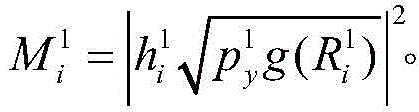




Femtocell对MUE的跨层干扰:当Macrocell想要发送信号到其用户i,若在Macrocell覆盖范围内的Femtocell也为其用户y分配了同一传输Macrocell发送给其用户i信号的子信道时,此时这个Femtocell就是干扰基站,对Macrocell的用户i的干扰可以按照公式计算为: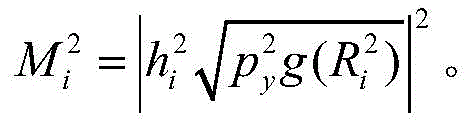


Macrocell对FUE的跨层干扰:当Femtocell想要发送信号到其用户i时,Macrocell同时也为其用户y分配了同一传输Femtocell发送给其用户i信号的子信道时,这时Macrocell就是干扰基站,对Femtocell的用户i的干扰可以按以下公式计算:


实际环境中还有大量其他噪声。高斯白噪声经常被作为通信系统分析中所采用的噪声,本专利中也采用加性高斯白噪声作为环境噪声。There are plenty of other noises in the actual environment. White Gaussian noise is often used as noise used in communication system analysis, and additive white Gaussian noise is also used as environmental noise in this patent.
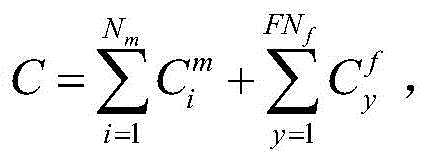
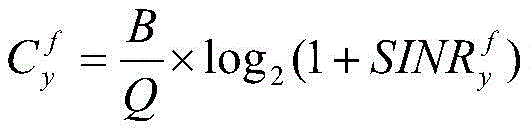
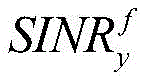
异构网络中可对系统吞吐量进行建模为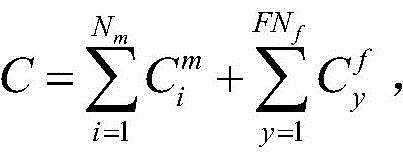


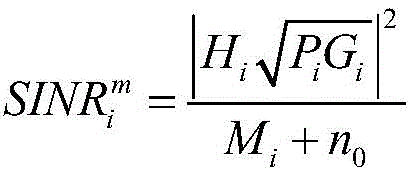
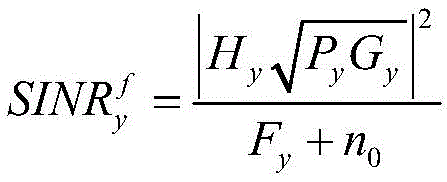
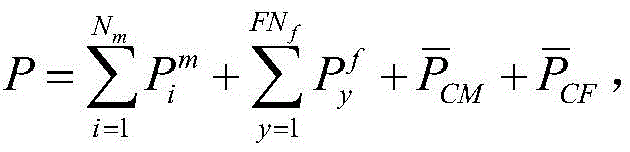
将第1个目标函数系统吞吐量最大化和第2个目标函数系统能耗最小化同时作为目标函数,为了方便分析,将能耗最小化问题转变为最大化问题,所以数学模型建立为公式:


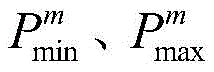


步骤二,初始化星体的位置和量子位置,将所有星体进行非支配解等级排序,再对每个等级中的所有星体按照拥挤度进行排序,具体方法为:Step 2: Initialize the positions and quantum positions of the stars, sort all the stars by non-dominated solution level, and then sort all the stars in each level according to the crowding degree. The specific method is as follows:
首先设定最大迭代次数为G,迭代数标号为g,g∈[1,G]。设定星系中的星体数目为L,第g次迭代中第l个星体的位置为


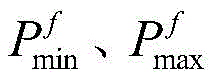


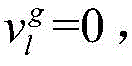


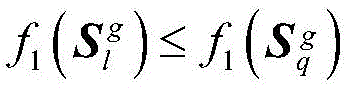
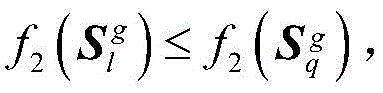


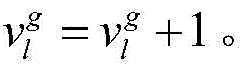


然后将星系从非支配解等级为1开始排序,并判断在每个非支配解等级中的星体数目,若有多个星体具有相同的非支配解等级,将这些星体按照拥挤度从大到小再次进行排序。拥挤度的判断方法为:拥挤度用拥挤距离的归一化来表示,将所有星体按照适应度值从小到大进行排序,第l个星体第a个适应度函数的拥挤距离的归一化的计算方式为


设定最大循环次数为K1,循环次数标号为k1,k1∈[1,K1]。第g次迭代中第k1次循环中第l个星体的量子位置可以表示为


步骤三,进行锦标赛选择机制,选出新的星系,具体步骤为:Step 3: Perform the tournament selection mechanism to select a new galaxy. The specific steps are:
通过锦标赛选择机制进行选择,具体方法为:在星系的所有星体中选择T个不同的星体,星体只能进行比较一次,比较非支配解等级,选择非支配解等级最小的,若非支配解等级一样,则选择拥挤距离最大的,若拥挤距离一样,则选择第一个,通过多次选择,选出


步骤四,根据位置混沌变化更新量子旋转角,使用模拟量子旋转门演化星系的寻优搜索过程,具体步骤为:Step 4: Update the quantum rotation angle according to the positional chaotic change, and use the optimization search process to simulate the evolution of the quantum revolving gate. The specific steps are:
对于第k1次循环中第l个星体,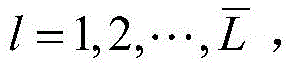




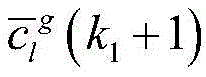

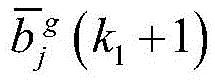

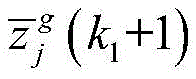


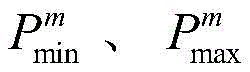





若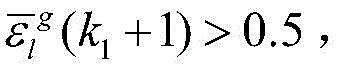








步骤五,判断是否达到最大循环次数K1,若未达到返回步骤四直到达到最大循环次数,否则终止循环,将第
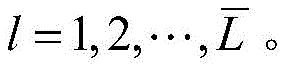

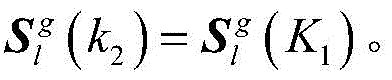
步骤六,将所有星体进行正向和负向旋转混沌移动,寻找更优的星系,具体步骤为:Step 6: Move all the stars to positive and negative rotational chaotic movements to find better galaxies. The specific steps are:
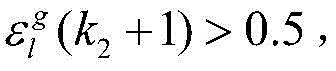
对于第k2次循环中第l个星体,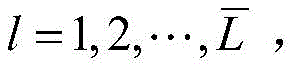

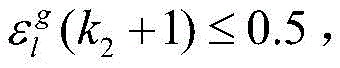





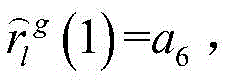



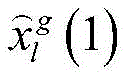


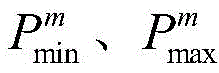
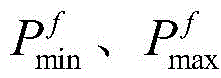

若


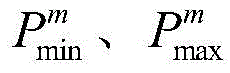


步骤七,判断是否达到最大循环次数K1+K2,若未达到,令k2=k2+1,返回步骤六;否则终止循环,将第g迭代中得到的新的星系
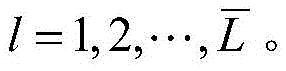
步骤八,将得到的新的星系与初始星系混合,选出与初始星系相同规模的星系,具体步骤为:Step 8: Mix the new galaxies obtained with the initial galaxies, and select galaxies with the same scale as the initial galaxies. The specific steps are:
将新的星系


步骤九,判断是否达到最大迭代次数G,若未达到,令g=g+1,

在图3、图4和图5中,本发明提出的基于多目标量子星系搜索机制的双层异构网络的功率控制方法记为MOQGBSA;基于多目标遗传机制的双层异构网络的功率控制方法记作NSGA-II;基于多目标粒子群机制的双层异构网络的功率控制方法记作MOPSO。NSGA-II的参数选择根据Jain Kunal,Gupta Shashank和Kumar Divya在International Journal forComputational Methods in Engineering Science and Mechanic(2021,22(3):235-243)发表的“Multi-objective power distribution optimization using NSGA-II”。MOPSO的参数选择是根据Yu H,Wang Y.J.和Chen Q在Electronic Science and Technology(2019,32(10):28-33)发表的“Multi-Objective Particle Swarm Optimization Based onMulti-population Dynamic Cooperation”。其余参数选择和MOQGBSA一致。In Fig. 3, Fig. 4 and Fig. 5, the power control method of the double-layer heterogeneous network based on the multi-target quantum galaxy search mechanism proposed by the present invention is denoted as MOQGBSA; the power control method of the double-layer heterogeneous network based on the multi-target genetic mechanism The method is denoted as NSGA-II; the power control method of double-layer heterogeneous network based on multi-objective particle swarm mechanism is denoted as MOPSO. The parameter selection of NSGA-II is based on "Multi-objective power distribution optimization using NSGA-II" published in International Journal for Computational Methods in Engineering Science and Mechanic (2021, 22(3): 235-243) by Jain Kunal, Gupta Shashank and Kumar Divya ". The parameter selection of MOPSO is based on "Multi-Objective Particle Swarm Optimization Based on Multi-population Dynamic Cooperation" published by Yu H, Wang Y.J. and Chen Q in Electronic Science and Technology (2019, 32(10): 28-33). The rest of the parameter selections are consistent with MOQGBSA.
图4和图5信道数量Q分别为35和45得到的优化结果Figures 4 and 5 are optimized results obtained with the number of channels Q being 35 and 45, respectively
图6FUE实际功率的上限分别为100mW、200mW和300mW,MUE实际功率的上限分别为50mW、100mW和150mW得到的优化结果。Fig. 6 The upper limit of the actual power of the FUE is 100mW, 200mW and 300mW, and the upper limit of the actual power of the MUE is 50mW, 100mW and 150mW.
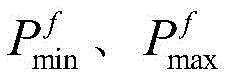
仿真实验参数设置如下:Nm=50,Nf=5,F=5,Rm=500m,Rf=70m,L=80,Q=40,

从仿真图图3中可以看出本发明设计的基于MOQGbSA的双层异构网络的功率控制方法,进行对系统吞吐量和系统能耗的同时优化,并且得到了比NSGA-II和MOPSO更好的优化的结果,不论是系统吞吐量还是系统能耗,MOQGbSA的解都优于NSGA-Ⅱ和MOPSO。将仿真图图3、图4和图5的结果对比来看,当信道改变时,MOQGbSA的优化结果也都强于NSGA-Ⅱ和MOPSO,验证了算法的优越性。从仿真图6可以看出,当FUE和MUE实际功率上限都低的时候,FUE和MUE实际分配到的功率总体偏低,系统的能耗相对较少,相对能耗就相对较多,但是吞吐量会随着FUE和MUE实际分配到的功率低而减少。相反,当FUE和MUE实际功率上限都高的时候,FUE和MUE实际分配到的功率总体偏高,吞吐量会随之增加,但是系统的能耗会随之减少,相对能耗就会相对增多。It can be seen from the simulation diagram FIG. 3 that the power control method of the MOQGbSA-based dual-layer heterogeneous network designed by the present invention optimizes the system throughput and system energy consumption at the same time, and obtains better performance than NSGA-II and MOPSO. The optimization results of MOQGbSA are better than NSGA-II and MOPSO in terms of system throughput and system energy consumption. Comparing the simulation results in Fig. 3, Fig. 4 and Fig. 5, when the channel is changed, the optimization results of MOQGbSA are also stronger than that of NSGA-II and MOPSO, which verifies the superiority of the algorithm. It can be seen from the simulation Figure 6 that when the actual power upper limits of FUE and MUE are both low, the actual power allocated by FUE and MUE is generally low, the energy consumption of the system is relatively small, and the relative energy consumption is relatively large, but the throughput The amount will decrease as the actual power allocated to the FUE and MUE is low. On the contrary, when the actual power upper limit of FUE and MUE is high, the power actually allocated by FUE and MUE is generally high, and the throughput will increase accordingly, but the energy consumption of the system will decrease accordingly, and the relative energy consumption will increase relatively. .
Claims (7)
















































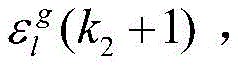




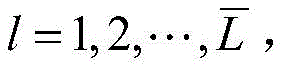
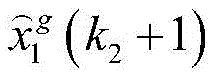


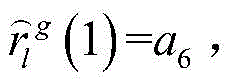











Priority Applications (1)
| Application Number | Priority Date | Filing Date | Title |
|---|---|---|---|
| CN202111049450.6A CN113747557B (en) | 2021-09-08 | 2021-09-08 | Power control method for double-layer heterogeneous network |
Applications Claiming Priority (1)
| Application Number | Priority Date | Filing Date | Title |
|---|---|---|---|
| CN202111049450.6A CN113747557B (en) | 2021-09-08 | 2021-09-08 | Power control method for double-layer heterogeneous network |
Publications (2)
| Publication Number | Publication Date |
|---|---|
| CN113747557A true CN113747557A (en) | 2021-12-03 |
| CN113747557B CN113747557B (en) | 2022-09-27 |
Family
ID=78737007
Family Applications (1)
| Application Number | Title | Priority Date | Filing Date |
|---|---|---|---|
| CN202111049450.6A Active CN113747557B (en) | 2021-09-08 | 2021-09-08 | Power control method for double-layer heterogeneous network |
Country Status (1)
| Country | Link |
|---|---|
| CN (1) | CN113747557B (en) |
Cited By (1)
| Publication number | Priority date | Publication date | Assignee | Title |
|---|---|---|---|---|
| CN113905430A (en) * | 2021-12-10 | 2022-01-07 | 广东安恒电力科技有限公司 | Energy-saving control method and system for double-layer heterogeneous network base station |
Citations (5)
| Publication number | Priority date | Publication date | Assignee | Title |
|---|---|---|---|---|
| CN103916914A (en) * | 2014-04-08 | 2014-07-09 | 东南大学 | Heterogeneous network convergence system downlink base station and relay combined power control method |
| CN105848274A (en) * | 2016-03-25 | 2016-08-10 | 山东大学 | Non-uniform pricing power control method based on Steinberg game theory in bi-layer heterogeneous network |
| CN105916198A (en) * | 2016-04-15 | 2016-08-31 | 东南大学 | Energy-efficiency-fairness-based resource distribution and power control method in heterogeneous network |
| GB201717125D0 (en) * | 2016-11-28 | 2017-11-29 | National Univ Of Defense Technology | Differential evolution method oriented to agile satellite multi-target task planning |
| CN113115456A (en) * | 2021-04-01 | 2021-07-13 | 哈尔滨工程大学 | Double-layer heterogeneous network power distribution method based on quantum galaxy search mechanism |
-
2021
- 2021-09-08 CN CN202111049450.6A patent/CN113747557B/en active Active
Patent Citations (5)
| Publication number | Priority date | Publication date | Assignee | Title |
|---|---|---|---|---|
| CN103916914A (en) * | 2014-04-08 | 2014-07-09 | 东南大学 | Heterogeneous network convergence system downlink base station and relay combined power control method |
| CN105848274A (en) * | 2016-03-25 | 2016-08-10 | 山东大学 | Non-uniform pricing power control method based on Steinberg game theory in bi-layer heterogeneous network |
| CN105916198A (en) * | 2016-04-15 | 2016-08-31 | 东南大学 | Energy-efficiency-fairness-based resource distribution and power control method in heterogeneous network |
| GB201717125D0 (en) * | 2016-11-28 | 2017-11-29 | National Univ Of Defense Technology | Differential evolution method oriented to agile satellite multi-target task planning |
| CN113115456A (en) * | 2021-04-01 | 2021-07-13 | 哈尔滨工程大学 | Double-layer heterogeneous network power distribution method based on quantum galaxy search mechanism |
Non-Patent Citations (1)
| Title |
|---|
| 邱幸运: "基于量子粒子群算法的工程项目多目标优化研究", 《中国优秀硕士学位论文》 * |
Cited By (1)
| Publication number | Priority date | Publication date | Assignee | Title |
|---|---|---|---|---|
| CN113905430A (en) * | 2021-12-10 | 2022-01-07 | 广东安恒电力科技有限公司 | Energy-saving control method and system for double-layer heterogeneous network base station |
Also Published As
| Publication number | Publication date |
|---|---|
| CN113747557B (en) | 2022-09-27 |
Similar Documents
| Publication | Publication Date | Title |
|---|---|---|
| Zhao et al. | Ensemble federated learning with non-IID data in wireless networks | |
| CN112217678B (en) | Double-layer heterogeneous network spectrum allocation method based on quantum emperor butterfly optimization mechanism | |
| Liu et al. | Toward the energy-saving optimization of WLAN deployment in real 3-D environment: A hybrid swarm intelligent method | |
| CN113098008B (en) | A method for optimizing the configuration of photovoltaic storage capacity based on improved political optimization algorithm | |
| CN106358300B (en) | A Distributed Resource Allocation Method in Microcellular Network | |
| CN107105453B (en) | Cut-in method is selected based on the heterogeneous network of analytic hierarchy process (AHP) and evolutionary game theory | |
| Li et al. | Parallel deep reinforcement learning based online user association optimization in heterogeneous networks | |
| Wu et al. | Matching-coalition based cluster formation for D2D multicast content sharing | |
| CN105873214A (en) | Resource allocation method of D2D communication system based on genetic algorithm | |
| CN113747557B (en) | Power control method for double-layer heterogeneous network | |
| Abubakar et al. | A lightweight cell switching and traffic offloading scheme for energy optimization in ultra-dense heterogeneous networks | |
| CN107864507B (en) | Cognitive Radio Power Control Method Based on Quantum Monkey Search Mechanism | |
| CN112954807B (en) | A Multi-Resource Allocation Method for Heterogeneous Massive MIMO Systems Based on Network Slicing | |
| CN113518457B (en) | Power distribution strategy based on one-dimensional deep convolutional neural network | |
| Gao et al. | Quantum-inspired bacterial foraging algorithm for parameter adjustment in green cognitive radio | |
| CN103945388B (en) | A kind of user access network method based on genetic algorithm in heterogeneous network | |
| CN117956557A (en) | 5G-R base station energy-saving control and system based on service load prediction | |
| Wang et al. | Green deployment method of micro base station for ultra-dense heterogeneous cellular networks based on constrained dolphin swarm algorithm | |
| CN113115456B (en) | Double-layer heterogeneous network power distribution method based on quantum galaxy search mechanism | |
| Li et al. | Convolutional neural network-based channel allocation and resource optimization for D2D communications | |
| CN116193546A (en) | A dynamic generalized user NOMA grouping CCHN-MEC network offload decision optimization method | |
| CN113691334A (en) | A Cognitive Radio Dynamic Power Allocation Method Based on Secondary User Group Cooperation | |
| Li et al. | HIQCO: A hierarchical optimization method for computation offloading and resource optimization in multi-cell mobile-edge computing systems | |
| CN115968009A (en) | Multi-target relay selection method of energy acquisition cognitive relay network | |
| Jia et al. | Soft actor-critic based power control algorithm for anti-jamming in D2D communication |
Legal Events
| Date | Code | Title | Description |
|---|---|---|---|
| PB01 | Publication | ||
| PB01 | Publication | ||
| SE01 | Entry into force of request for substantive examination | ||
| SE01 | Entry into force of request for substantive examination | ||
| GR01 | Patent grant | ||
| GR01 | Patent grant |