CN113645531A - A headset virtual space sound playback method, device, storage medium and headset - Google Patents
A headset virtual space sound playback method, device, storage medium and headset Download PDFInfo
- Publication number
- CN113645531A CN113645531A CN202110896744.6A CN202110896744A CN113645531A CN 113645531 A CN113645531 A CN 113645531A CN 202110896744 A CN202110896744 A CN 202110896744A CN 113645531 A CN113645531 A CN 113645531A
- Authority
- CN
- China
- Prior art keywords
- sound signal
- function
- hrtf
- sub
- sound
- Prior art date
- Legal status (The legal status is an assumption and is not a legal conclusion. Google has not performed a legal analysis and makes no representation as to the accuracy of the status listed.)
- Granted
Links
Images


Classifications
-
- H—ELECTRICITY
- H04—ELECTRIC COMMUNICATION TECHNIQUE
- H04R—LOUDSPEAKERS, MICROPHONES, GRAMOPHONE PICK-UPS OR LIKE ACOUSTIC ELECTROMECHANICAL TRANSDUCERS; DEAF-AID SETS; PUBLIC ADDRESS SYSTEMS
- H04R1/00—Details of transducers, loudspeakers or microphones
- H04R1/10—Earpieces; Attachments therefor ; Earphones; Monophonic headphones
-
- H—ELECTRICITY
- H04—ELECTRIC COMMUNICATION TECHNIQUE
- H04R—LOUDSPEAKERS, MICROPHONES, GRAMOPHONE PICK-UPS OR LIKE ACOUSTIC ELECTROMECHANICAL TRANSDUCERS; DEAF-AID SETS; PUBLIC ADDRESS SYSTEMS
- H04R1/00—Details of transducers, loudspeakers or microphones
- H04R1/10—Earpieces; Attachments therefor ; Earphones; Monophonic headphones
- H04R1/1083—Reduction of ambient noise
-
- H—ELECTRICITY
- H04—ELECTRIC COMMUNICATION TECHNIQUE
- H04R—LOUDSPEAKERS, MICROPHONES, GRAMOPHONE PICK-UPS OR LIKE ACOUSTIC ELECTROMECHANICAL TRANSDUCERS; DEAF-AID SETS; PUBLIC ADDRESS SYSTEMS
- H04R5/00—Stereophonic arrangements
- H04R5/033—Headphones for stereophonic communication
-
- H—ELECTRICITY
- H04—ELECTRIC COMMUNICATION TECHNIQUE
- H04S—STEREOPHONIC SYSTEMS
- H04S3/00—Systems employing more than two channels, e.g. quadraphonic
- H04S3/002—Non-adaptive circuits, e.g. manually adjustable or static, for enhancing the sound image or the spatial distribution
- H04S3/004—For headphones
-
- H—ELECTRICITY
- H04—ELECTRIC COMMUNICATION TECHNIQUE
- H04S—STEREOPHONIC SYSTEMS
- H04S3/00—Systems employing more than two channels, e.g. quadraphonic
- H04S3/008—Systems employing more than two channels, e.g. quadraphonic in which the audio signals are in digital form, i.e. employing more than two discrete digital channels
-
- H—ELECTRICITY
- H04—ELECTRIC COMMUNICATION TECHNIQUE
- H04S—STEREOPHONIC SYSTEMS
- H04S7/00—Indicating arrangements; Control arrangements, e.g. balance control
- H04S7/30—Control circuits for electronic adaptation of the sound field
- H04S7/302—Electronic adaptation of stereophonic sound system to listener position or orientation
- H04S7/303—Tracking of listener position or orientation
- H04S7/304—For headphones
-
- H—ELECTRICITY
- H04—ELECTRIC COMMUNICATION TECHNIQUE
- H04S—STEREOPHONIC SYSTEMS
- H04S7/00—Indicating arrangements; Control arrangements, e.g. balance control
- H04S7/30—Control circuits for electronic adaptation of the sound field
- H04S7/307—Frequency adjustment, e.g. tone control
-
- H—ELECTRICITY
- H04—ELECTRIC COMMUNICATION TECHNIQUE
- H04S—STEREOPHONIC SYSTEMS
- H04S7/00—Indicating arrangements; Control arrangements, e.g. balance control
- H04S7/30—Control circuits for electronic adaptation of the sound field
- H04S7/308—Electronic adaptation dependent on speaker or headphone connection
-
- H—ELECTRICITY
- H04—ELECTRIC COMMUNICATION TECHNIQUE
- H04R—LOUDSPEAKERS, MICROPHONES, GRAMOPHONE PICK-UPS OR LIKE ACOUSTIC ELECTROMECHANICAL TRANSDUCERS; DEAF-AID SETS; PUBLIC ADDRESS SYSTEMS
- H04R2201/00—Details of transducers, loudspeakers or microphones covered by H04R1/00 but not provided for in any of its subgroups
- H04R2201/10—Details of earpieces, attachments therefor, earphones or monophonic headphones covered by H04R1/10 but not provided for in any of its subgroups
-
- H—ELECTRICITY
- H04—ELECTRIC COMMUNICATION TECHNIQUE
- H04S—STEREOPHONIC SYSTEMS
- H04S2400/00—Details of stereophonic systems covered by H04S but not provided for in its groups
- H04S2400/01—Multi-channel, i.e. more than two input channels, sound reproduction with two speakers wherein the multi-channel information is substantially preserved
-
- H—ELECTRICITY
- H04—ELECTRIC COMMUNICATION TECHNIQUE
- H04S—STEREOPHONIC SYSTEMS
- H04S2400/00—Details of stereophonic systems covered by H04S but not provided for in its groups
- H04S2400/11—Positioning of individual sound objects, e.g. moving airplane, within a sound field
-
- H—ELECTRICITY
- H04—ELECTRIC COMMUNICATION TECHNIQUE
- H04S—STEREOPHONIC SYSTEMS
- H04S2400/00—Details of stereophonic systems covered by H04S but not provided for in its groups
- H04S2400/13—Aspects of volume control, not necessarily automatic, in stereophonic sound systems
-
- H—ELECTRICITY
- H04—ELECTRIC COMMUNICATION TECHNIQUE
- H04S—STEREOPHONIC SYSTEMS
- H04S2420/00—Techniques used stereophonic systems covered by H04S but not provided for in its groups
- H04S2420/01—Enhancing the perception of the sound image or of the spatial distribution using head related transfer functions [HRTF's] or equivalents thereof, e.g. interaural time difference [ITD] or interaural level difference [ILD]
Landscapes
- Engineering & Computer Science (AREA)
- Physics & Mathematics (AREA)
- Acoustics & Sound (AREA)
- Signal Processing (AREA)
- Multimedia (AREA)
- Stereophonic System (AREA)
Abstract
一种耳机虚拟空间声回放方法,根据待虚拟声源的空间方位信息,对输入的原始声音信号A0通过音色均衡函数C进行滤波处理,获得均衡声音信号AC;再对均衡声音信号AC进行HRTF函数滤波处理,输出左耳声音信号AL和右耳声音信号AR。其中,所述空间方位信息为待虚拟声源的水平面方位角θ、垂直面方位角


A headphone virtual space sound playback method, according to the spatial orientation information of the virtual sound source, the input original sound signal A 0 is filtered through a timbre equalization function C to obtain an equalized sound signal A C ; Perform HRTF function filtering processing to output left ear sound signal AL and right ear sound signal AR . Wherein, the spatial orientation information is the horizontal plane azimuth angle θ and the vertical plane azimuth angle of the virtual sound source.
Description
技术领域technical field
本发明涉及虚拟听觉技术领域,尤其是涉及一种音色均衡后的耳机虚拟空间声回放方法、装置及存储介质,以及一种具有虚拟空间回放效果的耳机。The invention relates to the technical field of virtual hearing, in particular to a method, a device and a storage medium for replaying headphone virtual space sound after timbre equalization, and a headphone with virtual space playback effect.
背景技术Background technique
虚拟空间声回放技术是通过模拟声源到双耳的声学传输过程的方式,对无空间听觉效果的原始声音信号通过模拟后输出的声音在耳机回放时产生相应的空间听觉,即模拟声源从特定或不同的空间方位发出的空间听觉效果。如图1所示,现有虚拟空间声回放技术主要利用头相关传递函数(以下简称为HRTF函数)对无空间听觉效果的原始声音信号A0进行滤波处理,控制和产生等效的双耳声压,得到具有空间听觉效果的双耳声音信号,分别通过耳机输出左耳声音信号AL'和右耳声音信号AR',听者通过耳机中的左耳声音信号AL'和右耳声音信号AR'便可感觉到声音是来自于的某一个特定的空间方位。该HRTF函数是自由场情况下从模拟声源到双耳的声学传递函数,其包括HRTF左耳函数和HRTF右耳函数。利用HRTF函数可实现在便携式移动设备中体验影院般的沉浸式音效。The virtual spatial sound playback technology simulates the acoustic transmission process from the sound source to the two ears. The original sound signal without spatial auditory effect is simulated and the corresponding spatial hearing is generated when the sound is played back by the earphone, that is, the simulated sound source starts from the sound source. Spatial auditory effects emanating from specific or different spatial orientations. As shown in Figure 1, the existing virtual spatial sound playback technology mainly uses the head-related transfer function (hereinafter referred to as HRTF function) to filter the original sound signal A 0 without spatial auditory effect, control and generate equivalent binaural sound pressure to obtain a binaural sound signal with spatial auditory effect, respectively output the left ear sound signal A L ' and the right ear sound signal AR ' through the earphone, and the listener passes the left ear sound signal A L ' and the right ear sound in the earphone. The signal A R ' can sense that the sound is coming from a specific spatial orientation. The HRTF function is an acoustic transfer function from an analog sound source to both ears in a free-field condition, which includes an HRTF left ear function and an HRTF right ear function. Experience cinematic immersive sound effects in portable mobile devices using HRTF functions.
由于HRTF函数是必须改变输入的原始声音信号A0的频率响应曲线来传递3D空间的定位线索,因此通过HRTF函数产生3D空间回放效果时必然会导致声音信号的频谱畸变,尤其是声音中高频段部分的频谱畸变,而声音的频谱畸变表现出来就是声音在回放时音色的改变。目前,通过HRTF函数处理后产生3D空间回放效果和保持音色不变是一对相互矛盾的技术问题。Since the HRTF function must change the frequency response curve of the input original sound signal A 0 to transmit the positioning cues in 3D space, when the 3D space playback effect is generated by the HRTF function, it will inevitably lead to spectral distortion of the sound signal, especially in the middle and high frequency bands of the sound. Part of the spectral distortion, and the spectral distortion of the sound is the change in the timbre of the sound when it is played back. At present, it is a pair of contradictory technical problems to generate 3D space playback effect and keep the timbre unchanged after processing by HRTF function.
发明内容SUMMARY OF THE INVENTION
本发明的目的在于克服现有技术的缺点与不足,提供一种耳机虚拟空间声回放的音色均衡方法,其可进一步改善空间声回放的音色,同时可灵活适应多种音效需求。The purpose of the present invention is to overcome the shortcomings and deficiencies of the prior art, and to provide a timbre equalization method for virtual spatial sound playback of headphones, which can further improve the timbre of spatial sound playback and can flexibly adapt to various sound effects requirements.
本发明是通过以下技术方案实现的:一种耳机虚拟空间声回放方法,包括:The present invention is achieved through the following technical solutions: a headset virtual space sound playback method, comprising:
根据待虚拟声源的空间方位信息,对输入的原始声音信号A0通过音色均衡函数C进行滤波处理,获得均衡声音信号AC;再对均衡声音信号AC进行HRTF函数滤波处理,输出左耳声音信号AL和右耳声音信号AR。According to the spatial orientation information of the virtual sound source, the input original sound signal A 0 is filtered through the timbre equalization function C to obtain an equalized sound signal A C ; the equalized sound signal A C is then subjected to HRTF function filtering processing, and the output left ear The sound signal A L and the right ear sound signal AR .
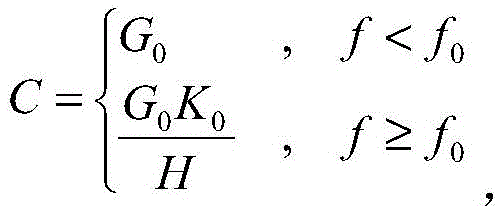
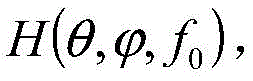
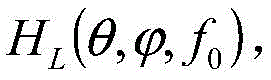
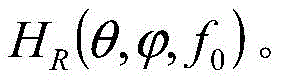
其中,所述待虚拟声源的空间方位信息为水平面方位角θ、垂直面方位角
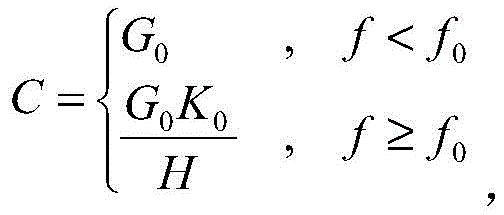
其中f为所述原始声音信号A0的频率,f0为分频点,H为HRTF函数的幅度谱,K0为均衡增益因子,G0为整体增益因子。Where f is the frequency of the original sound signal A 0 , f 0 is the frequency division point, H is the amplitude spectrum of the HRTF function, K 0 is the equalization gain factor, and G 0 is the overall gain factor.
相对于现有技术,本发明使无空间听觉效果的原始声音信号通过HRTF函数滤波产生空间听觉效果的同时,对原始声音信号进行音色均衡减少了虚拟空间声回放时的音色改变且该方法不会影响和改变原始HRTF的空间定位性能。Compared with the prior art, the present invention enables the original sound signal without spatial auditory effect to be filtered by HRTF function to generate spatial auditory effect, and at the same time, the timbre equalization of the original sound signal reduces the timbre change during playback of virtual spatial sound, and the method does not. Affects and alters the spatial localization performance of the original HRTF.
进一步地,所述原始声音信号包括至少两个并行的子原始声音信号,每一子原始声音信号对应一子待虚拟声源的空间方位信息,每一子原始声音信号通过音色均衡函数C滤波处理得到对应子均衡声音信号;再对每一子均衡声音信号进行HRTF函数滤波处理得到对应子左耳声音信号和子右耳声音信号。Further, the original sound signal includes at least two parallel sub-original sound signals, each sub-original sound signal corresponds to the spatial orientation information of a sub-to-be virtual sound source, and each sub-original sound signal is filtered and processed by the timbre equalization function C. A corresponding sub-equalized sound signal is obtained; and then each sub-equalized sound signal is subjected to HRTF function filtering processing to obtain the corresponding sub-left ear sound signal and sub-right ear sound signal.
进一步地,所述分频点f0的取值为400Hz≤f0≤1.5kHz范围中的任意一频率值,该范围的分频点能使音色均衡获得更好的效果。Further, the value of the frequency division point f 0 is any frequency value in the range of 400Hz≤f 0 ≤1.5kHz, and the frequency division point in this range can achieve a better effect of timbre equalization.
进一步地,所述均衡增益因子K0的表达式为Further, the expression of the equalization gain factor K 0 is

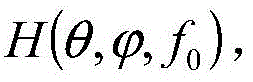
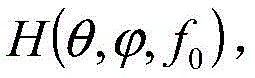
其中,Hf0为所述HRTF函数的幅度谱H在分频点f0的取值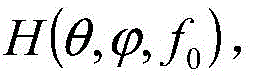


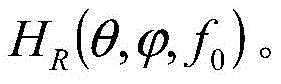
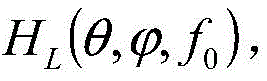
进一步地,所述均衡增益因子K0的表达式为Further, the expression of the equalization gain factor K 0 is

基于同一发明构思,本发明还提供一种耳机虚拟空间声回放装置,包括:音色均衡滤波模块、HRTF滤波模块,其中音色均衡滤波模块获取原始声音信号A0及待虚拟声源的空间方位信息,然后依据待虚拟声源的空间方位信息对原始声音信号A0通过音色均衡函数C进行滤波处理,输出均衡声音信号AC;HRTF滤波模块获取均衡声音信号AC对并对其通过HRTF函数进行滤波处理,输出左耳声音信号AL和右耳声音信号AR。Based on the same inventive concept, the present invention also provides a headphone virtual space sound playback device, comprising: a timbre equalization filter module and an HRTF filter module, wherein the timbre equalization filter module obtains the original sound signal A 0 and the spatial orientation information of the virtual sound source, Then according to the spatial orientation information of the virtual sound source, the original sound signal A 0 is filtered through the timbre equalization function C, and the equalized sound signal A C is output; the HRTF filter module obtains the equalized sound signal A C pair and filter it through the HRTF function Process, and output the left ear sound signal AL and the right ear sound signal AR .
其中,所述待虚拟声源的空间方位信息为水平面方位角θ、垂直面方位角

其中f为所述原始声音信号A0的频率,f0为分频点,H为HRTF函数的幅度谱,K0为均衡增益因子,G0为整体增益因子。Where f is the frequency of the original sound signal A 0 , f 0 is the frequency division point, H is the amplitude spectrum of the HRTF function, K 0 is the equalization gain factor, and G 0 is the overall gain factor.
进一步地,所述原始声音信号包括至少两个并行的子原始声音信号,每一子原始声音信号对应一子待虚拟声源的空间方位信息,每一子原始声音信号通过音色均衡函数C滤波处理得到对应子均衡声音信号;再对每一子均衡声音信号进行HRTF函数滤波处理得到对应子左耳声音信号和子右耳声音信号。Further, the original sound signal includes at least two parallel sub-original sound signals, each sub-original sound signal corresponds to the spatial orientation information of a sub-to-be virtual sound source, and each sub-original sound signal is filtered and processed by the timbre equalization function C. A corresponding sub-equalized sound signal is obtained; and then each sub-equalized sound signal is subjected to HRTF function filtering processing to obtain the corresponding sub-left ear sound signal and sub-right ear sound signal.
进一步地,所述分频点f0的取值为400Hz≤f0≤1.5kHz范围中的任意一频率值。Further, the value of the frequency dividing point f 0 is any frequency value in the range of 400Hz≦f 0 ≦1.5kHz.
进一步地,所述均衡增益因子K0的表达式为Further, the expression of the equalization gain factor K 0 is

其中,Hf0为所述HRTF函数的幅度谱H在分频点f0的取值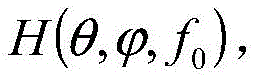


进一步地,所述均衡增益因子K0的表达式为Further, the expression of the equalization gain factor K 0 is

此时均衡增益因子K0可设置为由听者根据自身需求调节的值。At this time, the equalization gain factor K 0 can be set to a value adjusted by the listener according to his own needs.
基于同一发明构思,本发明还提供一种耳机虚拟空间声回放的存储介质,该存储介质作为计算机可读存储介质,主要用于存储程序,该程序包括根据待虚拟声源的空间方位信息,对输入的原始声音信号A0通过音色均衡函数C进行滤波处理,获得均衡声音信号AC;再对均衡声音信号AC进行HRTF函数滤波处理,输出左耳声音信号AL和右耳声音信号AR;Based on the same inventive concept, the present invention also provides a storage medium for virtual spatial sound playback of headphones. The storage medium, as a computer-readable storage medium, is mainly used to store a program, and the program includes, according to the spatial orientation information of the virtual sound source to be virtualized, The input original sound signal A 0 is filtered by the timbre equalization function C to obtain an equalized sound signal A C ; then the equalized sound signal A C is subjected to HRTF function filtering processing, and the left ear sound signal A L and the right ear sound signal A R are output ;
其中,所述待虚拟声源的空间方位信息为水平面方位角θ、垂直面方位角
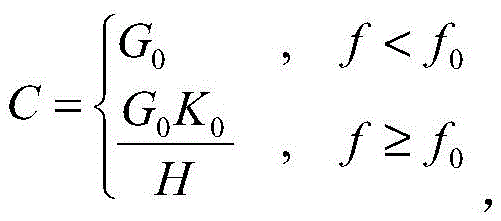
其中f为所述原始声音信号A0的频率,f0为分频点,H为HRTF函数的幅度谱,K0为均衡增益因子,G0为整体增益因子。Where f is the frequency of the original sound signal A 0 , f 0 is the frequency division point, H is the amplitude spectrum of the HRTF function, K 0 is the equalization gain factor, and G 0 is the overall gain factor.
进一步地,所述原始声音信号包括至少两个并行的子原始声音信号,每一子原始声音信号对应一子待虚拟声源的空间方位信息,每一子原始声音信号通过音色均衡函数C滤波处理得到对应子均衡声音信号;再对每一子均衡声音信号进行HRTF函数滤波处理得到对应子左耳声音信号和子右耳声音信号。Further, the original sound signal includes at least two parallel sub-original sound signals, each sub-original sound signal corresponds to the spatial orientation information of a sub-to-be virtual sound source, and each sub-original sound signal is filtered and processed by the timbre equalization function C. A corresponding sub-equalized sound signal is obtained; and then each sub-equalized sound signal is subjected to HRTF function filtering processing to obtain the corresponding sub-left ear sound signal and sub-right ear sound signal.
进一步地,所述分频点f0的取值为400Hz≤f0≤1.5kHz范围中的任意一频率值。Further, the value of the frequency dividing point f 0 is any frequency value in the range of 400Hz≦f 0 ≦1.5kHz.
进一步地,所述均衡增益因子K0的表达式为Further, the expression of the equalization gain factor K 0 is

其中,
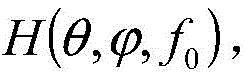
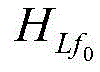
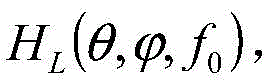


进一步地,所述均衡增益因子K0的表达式为Further, the expression of the equalization gain factor K 0 is

基于同一发明构思,本发明还提供一种具有虚拟空间声回放效果的耳机,该耳机包括虚拟空间声回放装置、左耳扬声器和右耳扬声器,其中虚拟空间声回放装置包括音色均衡滤波模块和HRTF滤波模块,其中音色均衡滤波模块获取原始声音信号A0及待虚拟声源的空间方位信息,然后依据待虚拟声源的空间方位信息对原始声音信号A0通过音色均衡函数C进行滤波处理,输出均衡声音信号AC;HRTF滤波模块获取均衡声音信号AC对并对其通过HRTF函数进行滤波处理,通过左耳扬声器输出左耳声音信号AL,通过右耳扬声器右耳声音信号AR;Based on the same inventive concept, the present invention also provides a headset with a virtual spatial sound playback effect, the headset includes a virtual spatial sound playback device, a left ear speaker and a right ear speaker, wherein the virtual spatial sound playback device includes a timbre equalization filter module and HRTF The filter module, wherein the timbre equalization filter module obtains the original sound signal A 0 and the spatial orientation information of the virtual sound source, and then filters the original sound signal A 0 through the timbre equalization function C according to the spatial orientation information of the virtual sound source, and outputs the Equalize the sound signal A C ; HRTF filtering module obtains the equalization sound signal A C pair and filters it through the HRTF function, outputs the left ear sound signal A L through the left ear speaker, and passes the right ear speaker right ear sound signal AR ;
其中,所述待虚拟声源空间方位信息为水平面方位角θ、垂直面方位角

其中f为所述原始声音信号A0的频率,f0为分频点,H为HRTF函数的幅度谱,K0为均衡增益因子,G0为整体增益因子。Where f is the frequency of the original sound signal A 0 , f 0 is the frequency division point, H is the amplitude spectrum of the HRTF function, K 0 is the equalization gain factor, and G 0 is the overall gain factor.
进一步地,所述原始声音信号包括至少两个并行的子原始声音信号,每一子原始声音信号对应一子待虚拟声源的空间方位信息,每一子原始声音信号通过音色均衡函数C滤波处理得到对应子均衡声音信号;再对每一子均衡声音信号进行HRTF函数滤波处理得到对应子左耳声音信号和子右耳声音信号。Further, the original sound signal includes at least two parallel sub-original sound signals, each sub-original sound signal corresponds to the spatial orientation information of a sub-to-be virtual sound source, and each sub-original sound signal is filtered and processed by the timbre equalization function C. A corresponding sub-equalized sound signal is obtained; and then each sub-equalized sound signal is subjected to HRTF function filtering processing to obtain the corresponding sub-left ear sound signal and sub-right ear sound signal.
进一步地,所述分频点f0的取值为400Hz≤f0≤1.5kHz范围中的任意一频率值。Further, the value of the frequency dividing point f 0 is any frequency value in the range of 400Hz≦f 0 ≦1.5kHz.
进一步地,所述均衡增益因子K0的表达式为Further, the expression of the equalization gain factor K 0 is

其中,Hf0为所述HRTF函数的幅度谱H在分频点f0的取值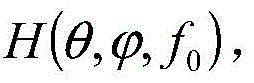
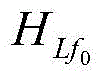



进一步地,所述均衡增益因子K0的表达式为Further, the expression of the equalization gain factor K 0 is

基于同一发明构思,本发明还提供一种虚拟空间声回放的音色均衡方法,其技术方案包括:在对原始声音信号A0进行HRTF函数滤波前,根据待虚拟声源的空间方位信息,对原始声音信号A0通过音色均衡函数C进行音色均衡滤波处理,获得均衡声音信号AC。Based on the same inventive concept, the present invention also provides a timbre equalization method for virtual spatial sound playback, the technical solution of which includes: before performing HRTF function filtering on the original sound signal A0 , The sound signal A 0 is subjected to timbre equalization filtering processing through the timbre equalization function C to obtain an equalized sound signal A C .
其中,所述待虚拟声源的空间方位信息为水平面方位角θ、垂直面方位角

其中f为所述原始声音信号A0的频率,f0为分频点,H为HRTF函数的幅度谱,K0为均衡增益因子,G0为整体增益因子。Where f is the frequency of the original sound signal A 0 , f 0 is the frequency division point, H is the amplitude spectrum of the HRTF function, K 0 is the equalization gain factor, and G 0 is the overall gain factor.
进一步地,所述原始声音信号包括至少两个并行的子原始声音信号,每一子原始声音信号对应一子待虚拟声源的空间方位信息,每一子原始声音信号通过音色均衡函数C滤波处理得到对应子均衡声音信号;再对每一子均衡声音信号进行HRTF函数滤波处理得到对应子左耳声音信号和子右耳声音信号。Further, the original sound signal includes at least two parallel sub-original sound signals, each sub-original sound signal corresponds to the spatial orientation information of a sub-to-be virtual sound source, and each sub-original sound signal is filtered and processed by the timbre equalization function C. A corresponding sub-equalized sound signal is obtained; and then each sub-equalized sound signal is subjected to HRTF function filtering processing to obtain the corresponding sub-left ear sound signal and sub-right ear sound signal.
进一步地,所述分频点f0的取值为400Hz≤f0≤1.5kHz范围中的任意一频率值。Further, the value of the frequency dividing point f 0 is any frequency value in the range of 400Hz≦f 0 ≦1.5kHz.
进一步地,所述均衡增益因子K0的表达式为Further, the expression of the equalization gain factor K 0 is

其中,
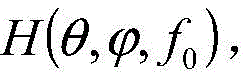


进一步地,所述均衡增益因子K0的表达式为Further, the expression of the equalization gain factor K 0 is

附图说明Description of drawings
图1为现有技术耳机虚拟空间声回放方法的流程图。FIG. 1 is a flow chart of a method for replaying virtual space sound in a headset in the prior art.
图2为本发明实施例1的耳机虚拟空间声回放方法的流程图。FIG. 2 is a flowchart of a method for replaying virtual space sound in a headset according to Embodiment 1 of the present invention.
图3为定义空间方位信息的空间坐标系的示意图。FIG. 3 is a schematic diagram of a spatial coordinate system defining spatial orientation information.
图4为待虚拟声源的空间方位信息的水平面方位角为θ=30°、垂直面方位角为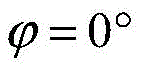
图5为空间坐标的水平方位角θ分区示意图。FIG. 5 is a schematic diagram of the horizontal azimuth θ division of the spatial coordinates.
图6为虚拟声源的空间方位信息的水平面方位角为θ=30°、垂直面方位角为
图7为本发明实施例2的耳机虚拟空间声回放方法的流程框图。FIG. 7 is a flowchart of a method for replaying virtual space sound in a headset according to Embodiment 2 of the present invention.
下面结合附图,对本发明的技术方案进行详细的描述。The technical solutions of the present invention will be described in detail below with reference to the accompanying drawings.
具体实施方式Detailed ways
本发明的构思是基于头相关传递函数(以下简称为HRTF函数)对输入的原始声音信号进行处理的同时,对原始声音信号进行音色均衡,以调整其音色失真的效果。HRTF函数是一类可以通过精密实验测量得到的数据库,该数据库中包含了HRTF函数相关的所有数据,如待虚拟声源的角度、距离、频率等;通过待虚拟声源的空间方位信息可在HRTF数据库中查找到对应的HRTF左耳函数和HRTF右耳函数。在HRTF函数对原始声音信号进行处理的研究中发现,HRTF函数对原始声音信号的低频段和中高频段的影响特性是不同的,并且HRTF函数主要是会导致原始声音信号中的中高频段部分的频谱发生畸变。因此本发明首先对声音信号进行分频,按低频段及中高频段两种频段级别进行不同的音色调整处理。其中,对于低频段声音信号采用整体增益因子进行音色调整,对于中高频段声音信号则以整体增益因子和均衡增益因子补偿经过HRTF函数滤波处理的原始声音信号的音色损失,以减少原始声音信号音色的改变。The concept of the present invention is to process the input original sound signal based on the head-related transfer function (hereinafter referred to as HRTF function), and at the same time, perform timbre equalization on the original sound signal to adjust the effect of timbre distortion. The HRTF function is a kind of database that can be measured through precise experiments. The database contains all the data related to the HRTF function, such as the angle, distance, frequency, etc. of the virtual sound source. The spatial orientation information of the virtual sound source can be found in the The corresponding HRTF left ear function and HRTF right ear function are found in the HRTF database. In the research on the processing of the original sound signal by the HRTF function, it is found that the impact characteristics of the HRTF function on the low frequency and mid-high frequency bands of the original sound signal are different, and the HRTF function mainly causes the middle and high frequency parts of the original sound signal. spectrum is distorted. Therefore, the present invention firstly divides the frequency of the sound signal, and performs different timbre adjustment processing according to the two frequency bands of the low frequency band and the middle and high frequency band. Among them, the overall gain factor is used to adjust the timbre of the low-frequency sound signal, and the overall gain factor and the equalization gain factor are used to compensate the sound loss of the original sound signal filtered by the HRTF function for the mid-high frequency sound signal, so as to reduce the timbre of the original sound signal. change.
基于此,本发明提供一种耳机虚拟空间声回放方法、装置及存储介质,以及具有虚拟空间声回放效果的耳机,具体通过以下多个实施例进行说明。Based on this, the present invention provides a headphone virtual space sound playback method, device, and storage medium, and a headphone with a virtual space sound playback effect, which will be specifically described by the following embodiments.
实施例1Example 1
请参阅图2,其为本发明实施例1的耳机虚拟空间声回放方法的流程框图。本发明实施例1的耳机虚拟空间声回放方法包括以下步骤:Please refer to FIG. 2 , which is a flowchart of a method for replaying virtual space sound in a headset according to Embodiment 1 of the present invention. The headset virtual space sound playback method according to Embodiment 1 of the present invention includes the following steps:
S1:获取原始声音信号A0及待虚拟声源的空间方位信息;S1: Obtain the original sound signal A 0 and the spatial orientation information of the virtual sound source to be virtual;
在步骤S1中,获取的原始声音信号A0是一段来自播放器或系统输入的音频信号。In step S1, the acquired original sound signal A 0 is a piece of audio signal input from the player or the system.
所述待虚拟声源的空间方位信息是听者期望原始声音信号A0经虚拟空间声回放处理后得到的虚拟声源的空间方位信息。例如,听者期望经虚拟空间声回放处理后听到的声音效果是如同声源来自于自己的正前方位置,则此时该正前方位置的空间方位信息就定义为待虚拟声源的空间方位信息。The spatial orientation information of the to-be-virtual sound source is the spatial orientation information of the virtual sound source obtained by the listener expecting the original sound signal A 0 to be processed by the virtual spatial sound playback. For example, if the listener expects the sound effect to be heard after the virtual space sound playback processing is as if the sound source came from the position directly in front of him, then the spatial orientation information of the position directly in front of the listener is defined as the spatial orientation of the virtual sound source. information.
在本发明中,待虚拟声源的空间方位信息以听者头部作为参照中心,以所述待虚拟声源相对于头部的水平面方位角θ和垂直面方位角





在本实施例中,待虚拟声源的空间方位信息的水平面方位角θ和垂直面方位角
S2:对所述原始声音信号A0进行音色均衡滤波处理,得到均衡声音信号AC;S2: perform timbre equalization filtering processing on the original sound signal A 0 to obtain an equalized sound signal A C ;
在步骤S2中,通过音色均衡函数C在所述原始声音信号A0的频域上对所述原始声音信号A0进行均衡滤波处理,得到均衡声音信号AC。所述均衡声音信号AC与所述原始声音信号A0的关系表达式为:AC=A0C。In step S2, equalization filtering is performed on the original sound signal A 0 in the frequency domain of the original sound signal A 0 by using the timbre equalization function C to obtain an equalized sound signal A C . The relational expression between the equalized sound signal A C and the original sound signal A 0 is: A C =A 0 C.
所述音色均衡函数C的表达式定义为The expression of the timbre equalization function C is defined as
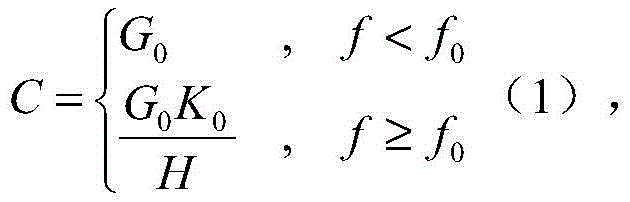
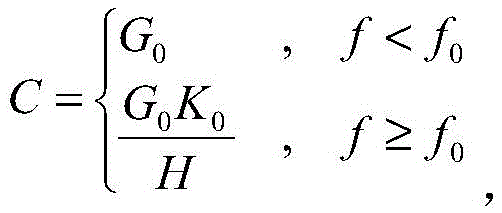
其中f为所述原始声音信号A0的频率,f0为分频点,H为HRTF函数的幅度谱,K0为均衡增益因子,G0为整体增益因子。原始声音信号A0为包含不同频率的一段信号,该音色均衡函数C首先对原始声音信号A0进行分频,以分频点f0为分界点分为低频段及中高频段两组类型的信号。其中,对原始声音信号A0的低频段声音信号采用整体增益因子G0进行调整;对于原始声音信号A0的中高频段声音信号则以整体增益因子G0、均衡增益因子K0和HRTF函数的幅度谱H进行调整。Where f is the frequency of the original sound signal A 0 , f 0 is the frequency division point, H is the amplitude spectrum of the HRTF function, K 0 is the equalization gain factor, and G 0 is the overall gain factor. The original sound signal A 0 is a segment of signals containing different frequencies. The timbre equalization function C first divides the original sound signal A 0 , and divides the frequency division point f 0 into two groups of low frequency and medium and high frequency bands Signal. Among them, the low-frequency sound signal of the original sound signal A 0 is adjusted by the overall gain factor G 0 ; for the middle and high frequency band sound signal of the original sound signal A 0 , the overall gain factor G 0 , the equalization gain factor K 0 and the HRTF function are used for adjustment. The amplitude spectrum H is adjusted.
实际上,本发明设定的上述分频点f0、HRTF函数的幅度谱H、均衡增益因子K0、整体增益因子G0均与所述待虚拟声源的空间方位信息的水平面方位角θ、垂直面方位角

由于所述分频点f0与所述HRTF函数的频响曲线有关,在说明所述分频点f0之前请参阅图4,其为待虚拟声源的空间方位信息的水平面方位角为θ=30°、垂直面方位角为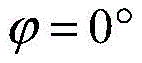
所述分频点f0应选择为HRTF函数对声源低频和中高频影响特性不同的分界点,根据上述分析,其通常在200Hz与1.5kHz之间。此外,由于HRTF函数对声源低频和中高频影响特性不同的分界点还受到待虚拟声源的空间方位信息的影响,通过实际分析HRTF特性,该分频点f0优选取值范围为400Hz≤f0≤1.5kHz。由于HRTF函数是一个非常个性化的参数模型且听觉滤波器的设计是一个多维度衡量的工作,并且由于满足数学和物理最佳设计的值实际未必满足听感上的需求,因此,为了满足个性化的听感需求下音色均衡的要求,在本实施例中分频点f0还可由听者根据自身需求来调节设置。此外,为达到听者需求的特殊声音效果,如当只需要对高频段进行均衡增益时,听者对分频点f0还可以选取为1.5kHz<f0<20kHz。The crossover point f 0 should be selected as the boundary point where the HRTF function has different influence characteristics on the low frequency and the middle and high frequency of the sound source, and according to the above analysis, it is usually between 200 Hz and 1.5 kHz. In addition, because the boundary point where the HRTF function has different influence characteristics on the low-frequency and mid-high frequency of the sound source is also affected by the spatial orientation information of the virtual sound source, through the actual analysis of the HRTF characteristics, the preferred value range of the frequency division point f 0 is 400Hz≤ f 0 ≤ 1.5kHz. Since the HRTF function is a very personalized parameter model and the design of the auditory filter is a multi-dimensional measurement work, and because the values that satisfy the optimal design of mathematics and physics may not actually meet the needs of auditory sense, in order to meet the needs of individuality In order to meet the requirements of timbre balance under the requirements of optimized listening sense, in this embodiment, the frequency crossover point f 0 can also be adjusted and set by the listener according to his own needs. In addition, in order to achieve the special sound effect required by the listener, for example, when only the high frequency band needs to be equalized gain, the listener can also select the crossover point f 0 as 1.5kHz<f 0 <20kHz.
此外,为了保持音色均衡函数C以分频点f0为分界的两段函数的连续性,还需要在分频点f0附近插值做常规平滑处理。In addition, in order to maintain the continuity of the two-stage function of the timbre equalization function C with the frequency division point f 0 as the boundary, it is also necessary to perform conventional smoothing processing near the frequency division point f 0 .
在确定分频点f0后,对于原始声音信号A0的频率f小于分频点f0的低频段,将其乘以整体增益因子G0以对原始声音信号A0的声压级进行调节,所述整体增益因子G0为可根据需要设定的任意常数。After the frequency division point f 0 is determined, for the low frequency band where the frequency f of the original sound signal A 0 is smaller than the frequency division point f 0 , multiply it by the overall gain factor G 0 to adjust the sound pressure level of the original sound signal A 0 , the integral gain factor G 0 is an arbitrary constant that can be set as required.
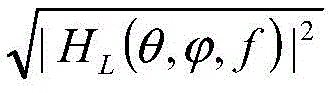
对于原始声音信号A0的频率f大于分频点f0的频段,即中高频段,将其乘以整体增益因子G0、均衡增益因子K0以及HRTF函数的幅度谱H的倒数。其中HRTF函数的幅度谱H为与待虚拟声源同侧耳的HRTF函数的幅度谱,其表达式为For the frequency band where the frequency f of the original sound signal A 0 is greater than the frequency division point f 0 , that is, the mid-high frequency band, multiply it by the overall gain factor G 0 , the equalization gain factor K 0 and the reciprocal of the amplitude spectrum H of the HRTF function. The amplitude spectrum H of the HRTF function is the amplitude spectrum of the HRTF function of the ear on the same side as the virtual sound source, and its expression is:
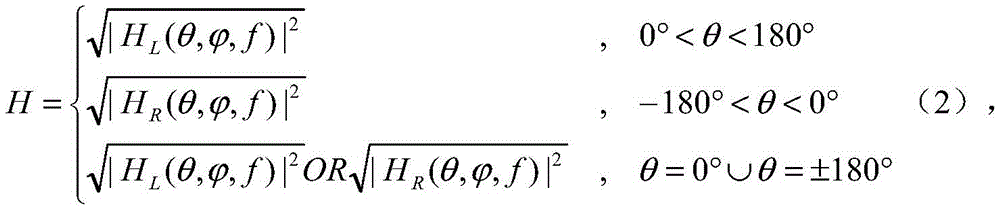
其中

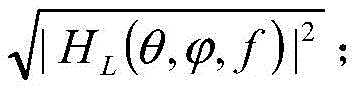


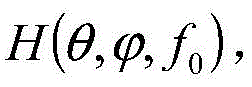
所述均衡增益因子K0的选取与待虚拟声源的空间方位相关,其表达式定义为The selection of the equalization gain factor K 0 is related to the spatial orientation of the virtual sound source, and its expression is defined as

其中




为便于说明所述均衡增益因子K0与所述待虚拟声源的水平方位角θ的关系,本实施例对空间坐标进行分区。请参阅图5,其为空间坐标的水平方位角θ分区示意图,其中区域a为靠近头部左耳区域,该区域的水平方位角θ取值为30°≤θ≤150°;区域b为靠近头部右耳区域,该区域的水平方位角θ取值为-150°≤θ≤-30°;区域c为头部左侧靠近中垂面的区域,该区域的水平方位角θ取值为0°≤θ<30°和150°<θ≤180°;区域d为头部右侧靠近中垂面的区域,该区域的水平方位角θ取值为-180°≤θ<-150°和-30°<θ≤0°。To facilitate the description of the relationship between the equalization gain factor K 0 and the horizontal azimuth angle θ of the to-be-virtual sound source, this embodiment divides the spatial coordinates. Please refer to FIG. 5 , which is a schematic diagram of the horizontal azimuth θ partition of the spatial coordinates, wherein the area a is the area close to the left ear of the head, and the horizontal azimuth angle θ of this area is 30°≤θ≤150°; The right ear area of the head, the horizontal azimuth θ of this area is -150°≤θ≤-30°; the area c is the area on the left side of the head close to the mid-vertical plane, and the horizontal azimuth θ of this area is 0°≤θ<30° and 150°<θ≤180°; area d is the area on the right side of the head close to the mid-vertical plane, and the horizontal azimuth angle θ of this area is -180°≤θ<-150° and -30°<θ≤0°.
当待虚拟声源的空间方位设定在区域a或区域b时,由于头部的作用使得声音的中高频部分到达同侧耳的声压级远大于到达异侧耳的声压级,即待虚拟声源中的高频部分到达同侧耳的声压级同样远大于到达异侧耳的声压级,可以近似地将待虚拟声源到达同侧耳的中高频声压级等于原始声音信号A0的声压级,因此,此时所述均衡增益因子K0的表达式为K0=1。When the spatial orientation of the virtual sound source is set in the area a or the area b, the sound pressure level of the middle and high frequency parts of the sound reaching the ipsilateral ear is much larger than the sound pressure level reaching the opposite ear due to the action of the head. The sound pressure level of the high frequency part of the source reaching the ipsilateral ear is also much greater than that reaching the opposite ear. Therefore, at this time, the expression of the equalization gain factor K 0 is K 0 =1.
当声源的空间方位设定在区域c或区域d时,由于声音的中高频部分到达异侧耳的声压级逐渐逼近到达同侧耳的声压级,即待虚拟声源的中高频部分到达异侧耳的声压级同样逐渐逼近到达同侧耳的声压级,此时待虚拟声源到达异侧耳的声压级将不可再被忽略,为了保证待虚拟声源低频与中高频的能量平衡,需要使待虚拟声源到达左右耳的声功率和与原始声音信号A0的功率相等,即声功率守恒原则,因此,据该原则可得出所述均衡增益因子K0的表达式为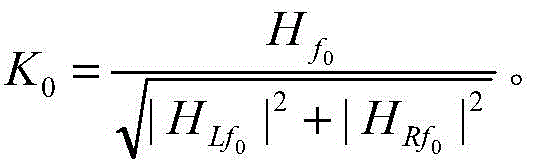
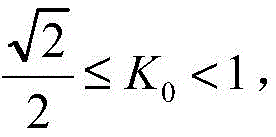
进一步,为适应不同的音色均衡需求,当待虚拟声源的空间方位选择在区域c或区域d时,均衡增益因子K0可设置为由听者根据自身听感需求对进行一定范围的调节,根据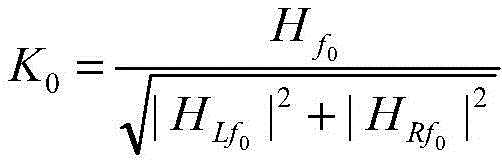


S3:分别通过HRTF左耳函数和HRTF右耳函数对所述均衡声音信号AC进行滤波处S3: filter the equalized sound signal AC through the HRTF left ear function and the HRTF right ear function respectively 理,分别输出左耳声音信号AL和右耳声音信号AR。processing, the left ear sound signal AL and the right ear sound signal AR are respectively output.
在步骤S3中,经过音色均衡后获得的均衡声音信号AC分别通过HRTF左耳函数和HRTF右耳函数进行滤波处理,最终输出的声音信号包括左耳声音信号AL和右耳声音信号AR。其中,所述左耳声音信号AL为所述均衡声音信号AC经HRTF左耳函数滤波处理的声音信号,其与所述均衡声音信号AC的关系表达式为

请参阅图6,其为本实施例1以待虚拟声源的空间方位信息的水平面方位角为θ=30°、垂直面方位角为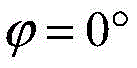
综上,在应用本实施例1的具有音色均衡效果的耳机虚拟空间声回放的方法过程中,使用者首先可对待虚拟声源的空间方位(水平面方位角θ、垂直面方位角
此外,除了进行音色均衡的调节,为了满足使用者的调节音调的需求,所述均衡增益因子K0还可为其它取值,如:当需要升高原始声音信号A0音调时,增强中高频段声功率,使声音听感明亮,此时K0的取值范围为K0>1;当需要降低原始声音信号A0音调时,衰减中高频段声功率,使声音听感沉闷,此时K0的取值范围为
在使用者选择确定了各参数值后,所述音色均衡函数C即可确定,原始声音信号A0经过音色均衡函数C滤波后,其低频段的声音信号的响度将得到增益,其中高频段的声音信号将得到音色均衡增益,最后经过HRTF函数滤波后将得到音色均衡的虚拟空间声。After the user selects and determines each parameter value, the timbre equalization function C can be determined. After the original sound signal A 0 is filtered by the timbre equalization function C, the loudness of the sound signal in the low frequency band will be increased. The sound signal will get the timbre equalization gain, and finally, after filtering by the HRTF function, the virtual space sound with timbre balance will be obtained.
基于本发明实施例1的耳机虚拟空间声回放方法,本实施例还提供一种耳机虚拟空间声回放装置。该装置包括音色均衡滤波模块和HRTF滤波模块,其中音色均衡滤波模块获取原始声音信号A0及待虚拟声源的空间方位信息,然后依据待虚拟声源的空间方位信息对原始声音信号A0通过音色均衡函数C进行滤波处理,输出均衡声音信号AC;HRTF滤波模块获取均衡声音信号AC对并对其通过HRTF函数进行滤波处理,输出左耳声音信号AL和右耳声音信号AR。Based on the headphone virtual space sound playback method according to Embodiment 1 of the present invention, this embodiment further provides a headphone virtual space sound playback device. The device includes a timbre equalization filter module and an HRTF filter module, wherein the timbre equalization filter module obtains the original sound signal A 0 and the spatial orientation information of the virtual sound source, and then passes the original sound signal A 0 according to the spatial orientation information of the virtual sound source. The timbre equalization function C carries out filtering processing, and outputs an equalized sound signal AC; the HRTF filtering module obtains the equalized sound signal AC pair and performs filtering processing on it through the HRTF function, and outputs the left ear sound signal AL and the right ear sound signal AR .
相对于现有技术,本发明对输入的原始声音信号A0以分频点f0为界分频调节,对全频段使用整体增益因子G0调节整体声压级,对中高频段使用均衡增益因子K0调节中高频段整体声功率,使经过HRTF函数滤波处理后的左耳声音信号AL和右耳声音信号AR的整体声功率与输入原始声音信号A0声功率保持近似,从而改善音色。另外,对分频点f0、整体增益因子G0和均衡增益因子K0的还可以根据特殊需求进行特殊取值,以调节音频整体响度、音调和截取音频频段,从而实现不同声音效果,满足不同的听众需求。Compared with the prior art, the present invention performs frequency division adjustment for the input original sound signal A 0 with the frequency division point f 0 as the boundary, uses the overall gain factor G 0 for the entire frequency band to adjust the overall sound pressure level, and uses the balanced gain for the middle and high frequency bands. The factor K 0 adjusts the overall sound power in the middle and high frequency bands, so that the overall sound power of the left ear sound signal A L and the right ear sound signal AR after the HRTF function filtering process is similar to the sound power of the input original sound signal A 0 , so as to improve the performance. timbre. In addition, the frequency division point f 0 , the overall gain factor G 0 and the equalization gain factor K 0 can also be specially selected according to special requirements, so as to adjust the overall audio loudness, tone and cut out the audio frequency band, so as to achieve different sound effects and satisfy the different audience needs.
实施例2Example 2
请参阅图7,其为本发明实施例2的耳机虚拟空间声回放方法的流程框图。本发明实施例2的应用为模拟多通路环绕声的场景,即定义多个固定的待虚拟声源的空间位置,同时通过播放器或系统输入多个与定义的待虚拟声源数量相等的原始声音信号,分别对每个原始声音信号根据其特定的待虚拟声源的空间位置进行音色均衡和HRTF函数空间声回放处理,在左右耳机中分别同时输出多个左耳声音信号和右耳声音信号,实现立体环绕声的声效。具体步骤如下:Please refer to FIG. 7 , which is a flowchart of a method for replaying virtual space sound in a headset according to Embodiment 2 of the present invention. The application of Embodiment 2 of the present invention is to simulate a multi-channel surround sound scenario, that is, to define a plurality of fixed spatial positions of sound sources to be virtualized, and simultaneously input a plurality of original sound sources equal to the number of defined sound sources to be virtualized through a player or system. Sound signal, respectively perform timbre equalization and HRTF function spatial sound playback processing on each original sound signal according to its specific spatial position of the virtual sound source, and output multiple left-ear sound signals and right-ear sound signals in the left and right earphones at the same time. , to achieve the sound effect of stereo surround sound. Specific steps are as follows:
S1:获取原始声音信号,所述原始声音信号包括子原始声音信号A01、A02……A0n及对应的n个子待虚拟声源的空间方位信息;S1: Acquire an original sound signal, where the original sound signal includes the sub-original sound signals A 01 , A 02 . . . A 0n and the spatial orientation information of the corresponding n sub-to-be virtual sound sources;
在步骤S1中,子原始声音信号A0n为第n个输入音频,n≥2。同时子待虚拟声源的空间方位信息包括n个子水平面方位角θ1、θ2……θn和子垂直面方位角
子水平面方位角θ1、θ2……θn和子垂直面方位角

S2:对所述子原始声音信号A01、A02……A0n分别进行音色均衡滤波处理,得到对应的n个子均衡声音信号AC1、AC2……ACn;S2: Perform timbre equalization filtering processing on the sub-original sound signals A 01 , A 02 .
在步骤S2中,通过音色均衡函数Cn分别对子原始声音信号A01、A02……A0n逐一进行均衡滤波处理,所述子均衡声音信号ACn与所述子原始声音信号A0n的关系表达式为:ACn=A0nCn,其中音色均衡函数Cn的表达式为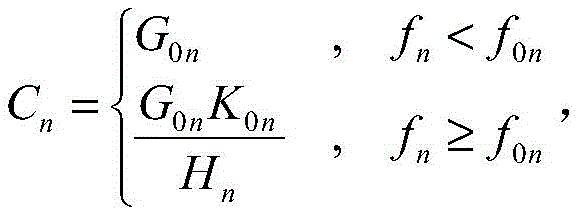
S3:通过n个与子待虚拟声源的空间方位信息对应的HRTF左耳函数和HRTF右耳函数对所述子均衡声音信号AC1、AC2……ACn分别进行滤波处理,得到n个子左耳声音信号AL1、AL2……ALn和n个子右耳声音信号AR1、AR2……ARn。 S3 : Filter the sub-equalized sound signals A C1 , A C2 . The left ear sound signals A L1 , A L2 , . . . A Ln and the n sub-right ear sound signals A R1 , A R2 , . . . A Rn .
在步骤S3中,每个子均衡声音信号AC1、AC2……ACn分别通过其对应的HRTF左耳函数和HRTF右耳函数进行滤波处理,对应输出的子左耳声音信号ALn与子均衡声音信号ACn的表达式为

基于实施例2的耳机虚拟空间声回放方法,以下对应用该方法的一种耳机虚拟空间声回放装置进行说明。该耳机虚拟空间声回放装置包括n个音色均衡滤波模块和n个HRTF滤波模块,其中音色均衡滤波模块分别获取子原始声音信号A01、A02……A0n及对应的n个子待虚拟声源的空间方位信息,然后分别依据待虚拟声源的空间方位信息对对应的子原始声音信号A01、A02……A0n通过音色均衡函数C进行滤波处理,分别输出子均衡声音信号AC1、AC2……ACn;HRTF滤波模块分别获取对应的子均衡声音信号AC1、AC2……ACn对并对其分别通过HRTF函数进行滤波处理,将获得的子左耳声音信号AL1、AL2……ALn合成为一个左耳信号并输出,同时将获得的子右耳声音信号AR1、AR2……ARn合成为一个右耳信号并输出。Based on the headphone virtual space sound playback method of the second embodiment, a headphone virtual space sound playback device applying the method will be described below. The headphone virtual space sound playback device includes n timbre equalization filter modules and n HRTF filter modules, wherein the timbre equalization filter module obtains the sub-original sound signals A 01 , A 02 . . . A 0n and the corresponding n sub-to-be virtual sound sources respectively Then, according to the spatial orientation information of the virtual sound source, the corresponding sub -original sound signals A 01 , A 02 . A C2 ...... A Cn ; the HRTF filtering module obtains the corresponding sub-equalized sound signals A C1 , A C2 ...... A Cn respectively and filters them through the HRTF function respectively, and the obtained sub-left ear sound signals A L1 , A L2 ... A Ln is synthesized into a left ear signal and output, and the obtained sub-right ear sound signals A R1 , A R2 ... A Rn are synthesized into a right ear signal and output.
在实施例2中,本发明实现了同时对多个原始声音信号处理,每个原始声音信号对应不同的待虚拟声源的空间方位信息,产生音色均衡后的空间回放效果的双耳声音信号,听者通过该双耳声音信号可以听到多个声音并能感到声音来自多个特定空间位置。基于此,本发明可应用于模拟多通路环绕声的场景,仅通过耳机就可以实现由多个扬声器才能实现的立体环绕效果,特别是原始声音信号为高品质音频时,可以实现如同置身于影院的沉浸效果。In Embodiment 2, the present invention realizes the simultaneous processing of multiple original sound signals, each original sound signal corresponds to different spatial orientation information of the virtual sound source to be virtualized, and generates a binaural sound signal with a spatial playback effect after timbre equalization, The listener can hear multiple sounds and feel that the sounds come from multiple specific spatial locations through the binaural sound signal. Based on this, the present invention can be applied to the scene of simulating multi-channel surround sound, and the stereo surround effect that can be achieved by multiple speakers can be realized only through headphones, especially when the original sound signal is high-quality audio, it can be realized as if you were in a cinema. immersion effect.
基于实施例1、实施例2的耳机虚拟空间声回放方法,本发明还提供应用该方法的一种耳机虚拟空间声回放的存储介质,该存储介质作为计算机可读存储介质,主要用于存储程序,该程序可以是实施例1、实施例2中耳机虚拟空间声回放方法对应的程序代码。Based on the headphone virtual space sound playback method in Embodiment 1 and Embodiment 2, the present invention also provides a storage medium for headphone virtual space sound playback using the method. The storage medium is a computer-readable storage medium and is mainly used for storing programs. , the program may be the program code corresponding to the headphone virtual spatial sound playback method in Embodiment 1 and Embodiment 2.
基于实施例1、实施例2的耳机虚拟空间声回放方法,本发明还提供应用该方法的一种具有耳机虚拟空间声回放效果的耳机,该耳机包括虚拟空间声回放装置、左耳扬声器和右耳扬声器,其中虚拟空间声回放装置为实施例1、实施例2中的耳机虚拟空间声回放装置,左耳扬声器和右耳扬声器用于输出所述虚拟空间声回放装置的左耳声音信号和右耳声音信号到耳机外部。Based on the headset virtual spatial sound playback method of Embodiment 1 and Embodiment 2, the present invention also provides a headset with headset virtual spatial sound playback effect applying the method, the headset includes a virtual spatial sound playback device, a left ear speaker and a right ear speaker. Ear speakers, wherein the virtual spatial sound playback device is the headset virtual spatial sound playback device in Embodiment 1 and Example 2, and the left-ear speaker and the right-ear speaker are used to output the left-ear sound signal and the right-ear sound signal of the virtual spatial sound playback device. Ear sound signal to the outside of the headset.
基于同一发明构思,本发明还提供一种虚拟空间声回放的音色均衡方法,其技术方案包括:在对原始声音信号A0进行HRTF函数滤波前,根据待虚拟声源的空间方位信息,对原始声音信号A0通过音色均衡函数C进行音色均衡滤波处理,获得均衡声音信号AC。所述音色均衡函数C与实施例1、实施例2中的方法相同,在此不再赘述。Based on the same inventive concept, the present invention also provides a timbre equalization method for virtual spatial sound playback, the technical solution of which includes: before performing HRTF function filtering on the original sound signal A0 , The sound signal A 0 is subjected to timbre equalization filtering processing through the timbre equalization function C to obtain an equalized sound signal A C . The timbre equalization function C is the same as the method in Embodiment 1 and Embodiment 2, and will not be repeated here.
本发明可采用通用DSP硬件电路或软件代码的形式实现,也可以在HRTF/HRIR的数据文件中作为头相关传递函数数据库的一部分实现。本发明的方法可以运用于耳机和自由场条件下的HRTF/HRIR。本发明并不局限于上述实施方式,如果对本发明的各种改动或变形不脱离本发明的精神和范围,倘若这些改动和变形属于本发明的权利要求和等同技术范围之内,则本发明也意图包含这些改动和变形。The present invention can be implemented in the form of general DSP hardware circuits or software codes, and can also be implemented in HRTF/HRIR data files as a part of the header-related transfer function database. The method of the present invention can be applied to HRTF/HRIR under earphone and free field conditions. The present invention is not limited to the above-mentioned embodiments. If various changes or modifications of the present invention do not depart from the spirit and scope of the present invention, and if these changes and modifications belong to the claims of the present invention and the equivalent technical scope, then the present invention is also Intended to contain these alterations and variants.
Claims (25)

































Priority Applications (3)
| Application Number | Priority Date | Filing Date | Title |
|---|---|---|---|
| CN202110896744.6A CN113645531B (en) | 2021-08-05 | 2021-08-05 | A method, device, storage medium and earphone for playing back virtual spatial sound of earphone |
| US18/685,843 US12520100B2 (en) | 2021-08-05 | 2021-10-21 | Method, device, storage medium, and headphones of headphone virtual spatial sound playback |
| PCT/CN2021/125220 WO2023010691A1 (en) | 2021-08-05 | 2021-10-21 | Earphone virtual space sound playback method and apparatus, storage medium, and earphones |
Applications Claiming Priority (1)
| Application Number | Priority Date | Filing Date | Title |
|---|---|---|---|
| CN202110896744.6A CN113645531B (en) | 2021-08-05 | 2021-08-05 | A method, device, storage medium and earphone for playing back virtual spatial sound of earphone |
Publications (2)
| Publication Number | Publication Date |
|---|---|
| CN113645531A true CN113645531A (en) | 2021-11-12 |
| CN113645531B CN113645531B (en) | 2024-04-16 |
Family
ID=78419716
Family Applications (1)
| Application Number | Title | Priority Date | Filing Date |
|---|---|---|---|
| CN202110896744.6A Active CN113645531B (en) | 2021-08-05 | 2021-08-05 | A method, device, storage medium and earphone for playing back virtual spatial sound of earphone |
Country Status (3)
| Country | Link |
|---|---|
| US (1) | US12520100B2 (en) |
| CN (1) | CN113645531B (en) |
| WO (1) | WO2023010691A1 (en) |
Cited By (1)
| Publication number | Priority date | Publication date | Assignee | Title |
|---|---|---|---|---|
| CN115604646A (en) * | 2022-11-25 | 2023-01-13 | 杭州兆华电子股份有限公司(Cn) | Panoramic deep space audio processing method |
Families Citing this family (1)
| Publication number | Priority date | Publication date | Assignee | Title |
|---|---|---|---|---|
| WO2025090827A1 (en) | 2023-10-27 | 2025-05-01 | Sub21, Inc. | A1at modulators |
Citations (11)
| Publication number | Priority date | Publication date | Assignee | Title |
|---|---|---|---|---|
| CN101040565A (en) * | 2004-10-14 | 2007-09-19 | 杜比实验室特许公司 | Improved head-related transfer function for mobile stereo content |
| CN101835072A (en) * | 2010-04-06 | 2010-09-15 | 瑞声声学科技(深圳)有限公司 | Virtual Surround Sound Processing Method |
| CN102572676A (en) * | 2012-01-16 | 2012-07-11 | 华南理工大学 | Real-time rendering method for virtual auditory environment |
| US8428269B1 (en) * | 2009-05-20 | 2013-04-23 | The United States Of America As Represented By The Secretary Of The Air Force | Head related transfer function (HRTF) enhancement for improved vertical-polar localization in spatial audio systems |
| CN104581610A (en) * | 2013-10-24 | 2015-04-29 | 华为技术有限公司 | Virtual stereo synthesis method and device |
| CN106454686A (en) * | 2016-08-18 | 2017-02-22 | 华南理工大学 | Multi-channel surround sound dynamic binaural replaying method based on body-sensing camera |
| CN107205207A (en) * | 2017-05-17 | 2017-09-26 | 华南理工大学 | A kind of approximate acquisition methods of virtual sound image based on middle vertical plane characteristic |
| CN107450819A (en) * | 2016-06-01 | 2017-12-08 | 中兴通讯股份有限公司 | Sound processing method and device |
| CN108616789A (en) * | 2018-04-11 | 2018-10-02 | 北京理工大学 | The individualized virtual voice reproducing method measured in real time based on ears |
| CN111556425A (en) * | 2020-04-20 | 2020-08-18 | 华南理工大学 | A timbre equalization method for speaker virtual sound reproduction |
| CN113038355A (en) * | 2014-03-24 | 2021-06-25 | 三星电子株式会社 | Method and apparatus for rendering acoustic signal, and computer-readable recording medium |
Family Cites Families (7)
| Publication number | Priority date | Publication date | Assignee | Title |
|---|---|---|---|---|
| TW391148B (en) * | 1997-12-01 | 2000-05-21 | Central Research Lab Ltd | Stereo sound expander |
| ATE491314T1 (en) * | 2006-04-05 | 2010-12-15 | Harman Becker Automotive Sys | METHOD FOR AUTOMATICALLY EQUALIZING A SOUND SYSTEM |
| US8619998B2 (en) * | 2006-08-07 | 2013-12-31 | Creative Technology Ltd | Spatial audio enhancement processing method and apparatus |
| CN101511047B (en) | 2009-03-16 | 2010-10-27 | 东南大学 | Two-channel stereo sound processing method based on three-dimensional sound effects of speakers and earphones respectively |
| US10313793B2 (en) * | 2014-06-03 | 2019-06-04 | Dolby Laboratories Licensing Corporation | Passive and active virtual height filter systems for upward firing drivers |
| CN111587582B (en) * | 2017-10-18 | 2022-09-02 | Dts公司 | System, method, and storage medium for audio signal preconditioning for 3D audio virtualization |
| CN113170271B (en) * | 2019-01-25 | 2023-02-03 | 华为技术有限公司 | Method and device for processing stereo signals |
-
2021
- 2021-08-05 CN CN202110896744.6A patent/CN113645531B/en active Active
- 2021-10-21 WO PCT/CN2021/125220 patent/WO2023010691A1/en not_active Ceased
- 2021-10-21 US US18/685,843 patent/US12520100B2/en active Active
Patent Citations (12)
| Publication number | Priority date | Publication date | Assignee | Title |
|---|---|---|---|---|
| CN101040565A (en) * | 2004-10-14 | 2007-09-19 | 杜比实验室特许公司 | Improved head-related transfer function for mobile stereo content |
| US7634092B2 (en) * | 2004-10-14 | 2009-12-15 | Dolby Laboratories Licensing Corporation | Head related transfer functions for panned stereo audio content |
| US8428269B1 (en) * | 2009-05-20 | 2013-04-23 | The United States Of America As Represented By The Secretary Of The Air Force | Head related transfer function (HRTF) enhancement for improved vertical-polar localization in spatial audio systems |
| CN101835072A (en) * | 2010-04-06 | 2010-09-15 | 瑞声声学科技(深圳)有限公司 | Virtual Surround Sound Processing Method |
| CN102572676A (en) * | 2012-01-16 | 2012-07-11 | 华南理工大学 | Real-time rendering method for virtual auditory environment |
| CN104581610A (en) * | 2013-10-24 | 2015-04-29 | 华为技术有限公司 | Virtual stereo synthesis method and device |
| CN113038355A (en) * | 2014-03-24 | 2021-06-25 | 三星电子株式会社 | Method and apparatus for rendering acoustic signal, and computer-readable recording medium |
| CN107450819A (en) * | 2016-06-01 | 2017-12-08 | 中兴通讯股份有限公司 | Sound processing method and device |
| CN106454686A (en) * | 2016-08-18 | 2017-02-22 | 华南理工大学 | Multi-channel surround sound dynamic binaural replaying method based on body-sensing camera |
| CN107205207A (en) * | 2017-05-17 | 2017-09-26 | 华南理工大学 | A kind of approximate acquisition methods of virtual sound image based on middle vertical plane characteristic |
| CN108616789A (en) * | 2018-04-11 | 2018-10-02 | 北京理工大学 | The individualized virtual voice reproducing method measured in real time based on ears |
| CN111556425A (en) * | 2020-04-20 | 2020-08-18 | 华南理工大学 | A timbre equalization method for speaker virtual sound reproduction |
Cited By (1)
| Publication number | Priority date | Publication date | Assignee | Title |
|---|---|---|---|---|
| CN115604646A (en) * | 2022-11-25 | 2023-01-13 | 杭州兆华电子股份有限公司(Cn) | Panoramic deep space audio processing method |
Also Published As
| Publication number | Publication date |
|---|---|
| CN113645531B (en) | 2024-04-16 |
| US20240236613A1 (en) | 2024-07-11 |
| US12520100B2 (en) | 2026-01-06 |
| WO2023010691A1 (en) | 2023-02-09 |
Similar Documents
| Publication | Publication Date | Title |
|---|---|---|
| US10104485B2 (en) | Headphone response measurement and equalization | |
| KR101827032B1 (en) | Stereo image widening system | |
| US10715917B2 (en) | Sound wave field generation | |
| JP5499513B2 (en) | Sound processing apparatus, sound image localization processing method, and sound image localization processing program | |
| CN104335606B (en) | Stereo widening over arbitrarily-configured loudspeakers | |
| JP5357115B2 (en) | Audio system phase equalization | |
| US10469945B2 (en) | Sound wave field generation based on a desired loudspeaker-room-microphone system | |
| CN108632714B (en) | Sound processing method and device of loudspeaker and mobile terminal | |
| US9749743B2 (en) | Adaptive filtering | |
| US20150350805A1 (en) | Sound wave field generation | |
| CN102246544A (en) | Surround sound virtualizer and method with dynamic range compression | |
| CN101511047A (en) | Three-dimensional sound effect processing method for double track stereo based on loudspeaker box and earphone separately | |
| US11405723B2 (en) | Method and apparatus for processing an audio signal based on equalization filter | |
| JP2000050400A (en) | Processing method for sound image localization of audio signals for right and left ears | |
| US20150289059A1 (en) | Adaptive filtering | |
| US10460716B2 (en) | Sound wave field generation based on loudspeaker-room-microphone constraints | |
| CN116367050A (en) | Method for processing audio signal, storage medium, electronic device and audio device | |
| US6990210B2 (en) | System for headphone-like rear channel speaker and the method of the same | |
| CN113645531B (en) | A method, device, storage medium and earphone for playing back virtual spatial sound of earphone | |
| CN109923877B (en) | Apparatus and method for weighting stereo audio signals | |
| US20230319474A1 (en) | Audio crosstalk cancellation and stereo widening | |
| JP2011015118A (en) | Sound image localization processor, sound image localization processing method, and filter coefficient setting device | |
| EP4478735A1 (en) | Earphone | |
| EP4207804A1 (en) | Headphone arrangement | |
| JP2003199200A (en) | Rear channel speaker system similar to headphones and method therefor |
Legal Events
| Date | Code | Title | Description |
|---|---|---|---|
| PB01 | Publication | ||
| PB01 | Publication | ||
| SE01 | Entry into force of request for substantive examination | ||
| SE01 | Entry into force of request for substantive examination | ||
| GR01 | Patent grant | ||
| GR01 | Patent grant |