Distributed edge cloud computing method and system
The present disclosure relates generally to cloud computing. In particular, the present disclosure relates to methods and systems for distributed edge cloud computing.
Background
The large-scale growth of connected devices including sensors and machinery is drastically changing every aspect of human life. This increased socio-economic impact is significant and has transformed various industries such as, but not limited to, broadcasting, travel, transportation, banking, and retail. Accompanying this growth is a challenge associated with the proliferation of devices and exponential growth of personal digital content and machine-generated data. Cloud and cloud computing are major contributing factors to this growth. Today, most popular customer and enterprise applications and solutions are hosted in data centers commonly referred to as "clouds". The cloud computing is necessary for the application programs which enable the fabric, YouTube, Instagram, DropBox and the like. The underlying architecture corresponds to a client-server architecture, in which some nodes or computing devices act as servers and other nodes or computing devices act as clients. Today, most computing nodes operate in a client-server mode, where most servers are located in data centers consisting of server farms spread around the world. The client-server architecture is very efficient for hosting applications that provide multiple client nodes with access to content and information from the server. The application is hosted on a server that handles computationally intensive tasks, and the client software on the edge nodes is used for simpler functions such as presenting information to end users. The main advantage of the existing architecture is the fast and low-cost deployment of (computing and/or storage intensive) applications on a general-purpose server shared among many applications with the help of virtualization and orchestration techniques.
Due to limited central cloud resources and network connectivity (or bandwidth), existing central cloud infrastructures may not meet the ever-increasing demands that are foreseeable in the future. In other words, current architectures make central cloud resources and network connectivity to the central cloud a bottleneck for future growth. Furthermore, existing cloud infrastructures may not be able to meet latency requirements of certain applications. Furthermore, sending data from billions of edge nodes to millions of centralized cloud servers wastes bandwidth and energy, which has serious social and economic impacts.
Yet another disadvantage of the central cloud architecture is the reliance on cloud service providers, which have access to applications and data stored or processed in their servers. Thus, today, a few very large companies have control over the vast majority of customer and business data. Furthermore, despite all the sophisticated security measures, storing data and hosted applications on third party resources exposes the information owner to risk. Cloud resources have been designed to facilitate access by millions of developers and application service providers, which in turn increases vulnerability and security vulnerabilities. This has led to serious abuse of customer and enterprise data privacy and security.
Disclosure of Invention
Systems and methods are disclosed that implement efficient and feasible solutions to address the above-highlighted challenges and shortcomings. In an embodiment, the system achieves decentralization of the cloud by tuning any computing device to a cloud server. By tuning the computing device to a cloud server, it is possible to reduce the role of digital middleman and third party trust elements, as a central hosting service is not necessary for many applications. In this way, a physical edge cloud construct is created that is potentially several orders of magnitude larger than current "central cloud" constructs.
Embodiments of an edge cloud computing device are disclosed. In an embodiment, an edge cloud computing device includes an edge node activation module configured to discover one or more other edge cloud computing devices based on a first set of parameters to establish a connection therebetween. The edge node activation module is further configured to provide a micro-service runtime environment to execute one or more micro-services associated with connections established between the one or more edge cloud computing devices. In an embodiment, the edge node activation module is configured to discover the presence of the one or more edge cloud computing devices regardless of an operating system and/or network type associated with the one or more edge cloud computing devices. The edge node activation module is further configured to discover capabilities and behaviors associated with the one or more edge cloud computing devices and discover one or more microservices supported by the one or more edge cloud computing devices. In an embodiment, the first set of parameters includes a user account associated with each of the one or more edge cloud computing devices, a network associated with the one or more edge cloud computing devices, and a proximity of the one or more edge cloud computing devices.
The edge node activation module is further configured to dynamically form one or more clusters with the one or more edge cloud computing devices and communicate with the one or more edge cloud computing devices at the micro-service level, either directly or through other edge cloud computing devices across the one or more clusters. In an embodiment, the edge node activation module is further configured to connect with the discovered one or more edge cloud computing devices if the discovered one or more edge cloud computing devices select to share data, services and/or resources. The edge node activation module is further configured to expose one or more microservice services through the public embedded network server. In an embodiment, one or more API endpoints for each microservice are accessible through an API gateway from one or more edge cloud computing devices in the cluster. The edge node activation module is further configured to provide flexible container capabilities based at least in part on respective computing environments associated with the one or more edge cloud computing devices. The respective computing environment runs a container daemon to download, deploy, and operate one or more microservices.
In an embodiment, a computing environment runs a container daemon to manage an ad hoc cluster of one or more edge cloud computing devices. The edge node activation module further includes a network server embedded therein. The network server is configured to provide the container management API using a particular language based on an operating system associated with the edge cloud computing device. The edge node activation module further includes one or more software libraries and corresponding APIs.
Computing devices and computer-readable media having instructions to implement various techniques described herein are also disclosed. Example computer-readable media may include tangible, non-transitory computer-readable storage media having computer-executable instructions executable by a processor, which when executed by the processor, cause the processor to perform any combination of the various methods and aspects provided herein. Example computing devices may include servers or client devices including processors, memory, client applications, and/or network services configured to carry out the methods described herein. The foregoing summary is illustrative only and is not intended to be in any way limiting. In addition to the illustrative aspects, embodiments, and features described above, further aspects, embodiments, and features will become apparent by reference to the drawings and the following detailed description.
Drawings
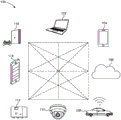
Fig. 1 depicts an embodiment of an edge cloud computing network.
Fig. 2 illustrates the basic building blocks of an edge cloud architecture according to an embodiment.
Fig. 3 illustrates an edge cloud computing device, according to an embodiment.
Fig. 4 illustrates an exemplary edge cloud architecture, according to an embodiment.
Fig. 5 illustrates an exemplary embodiment of discovery, connection, and communication of two edge cloud computing devices belonging to the same user ID in an edge cloud architecture.
Fig. 6 illustrates an exemplary embodiment of a method of providing a cloud computing infrastructure.
Detailed description of the figures
The following detailed description is presented to enable any person skilled in the art to make and use the invention. For purposes of explanation, specific details are set forth in order to provide a thorough understanding of the present invention. However, it will be apparent to one skilled in the art that these specific details are not required in order to practice the present invention. Descriptions of specific applications are provided only as representative examples. Various modifications to the preferred embodiments will be readily apparent to those skilled in the art, and the generic principles defined herein may be applied to other embodiments and applications without departing from the scope of the invention. The present invention is not intended to be limited to the embodiments shown, but is to be accorded the widest scope possible consistent with the principles and features disclosed herein.
Over the past decade, two fundamental trends have been witnessed that make existing client-server architectures less efficient. The first trend is the proliferation of computing devices and embedded computing, as well as the ever-increasing capabilities of edge cloud computing devices. For example, there is more computing, memory, and storage available in today's mobile phones than in powerful servers just a decade ago. This trend will continue in the foreseeable future according to moore's law. The second trend is the huge amount of data generated on edge cloud computing devices. With the advent of social media on mobile devices, a very high amount of personal multimedia content (photos, videos, sensor data, etc.) is generated on the devices, rather than premium content from major studios and broadcasters hosted on central servers in the cloud. In existing cloud computing systems using a server-client architecture, most of the data generated on the edge cloud computing devices is sent back to the central cloud for processing and sharing.
As an example, more than 8000 thousand Sony PlayStation 4 (PS 4;) consoles are currently present in people's homes. This represents over 6 hundred million processor cores and about 40000 gigabytes of storage. In contrast, this represents a much larger computing, storage, and memory resource than the entire Amazon Web services (AWS @) infrastructure. There are billions of PCs, set-top boxes, game consoles, streaming media players, routers, smart phones, tablet computers, and other computing devices that can act as cloud servers and generally have orders of magnitude more computing power than the existing "central cloud". The present disclosure provides systems and methods for creating a cloud fabric of billions of edge cloud computing devices (or nodes or edge nodes) that is orders of magnitude larger than existing central clouds.
Embodiments of a decentralized cloud architecture are disclosed. The disclosed solution does not require the creation of a new network node with dedicated hardware. Instead, the disclosed architecture enables existing computing devices such as PCs, tablets, set-top boxes (STBs), or even home routers, to act as cloud server nodes at the edge of a cloud network if plausible. The disclosed solution does not require any changes to the low-level design of these devices. All that is needed is a downloadable application that runs on top of an existing operating system without any changes to the hardware or OS kernel of the existing device. In addition to providing a powerful weapon base for developers to decentralize existing cloud infrastructure, the disclosed architecture also provides customers with more control over their personal data. Further, the disclosed scheme minimizes the cost of hosting and delivering applications and services, improves network performance, and minimizes latency, among other things.
Embodiments of an edge cloud platform are disclosed. As the next revolution in the field of computing, the disclosed cloud platform has accelerated decentralization. The first step in cloud decentralization is to remove the constraint that servers can only exist in the data center. This is a fundamental constraint that defines the dominant client-server infrastructure of today's internet. The present disclosure provides an alternative architecture/platform and practical solution to this by enabling any computing device to act as a client or server based on the real-time needs of the application. Also disclosed is a cloud platform that uses the edge node activation module and one or more backend services to create an edge cloud construct.
Benefits and advantages of the disclosed architecture include reduced cloud hosting costs, reduced communication bandwidth, increased network efficiency, reduced energy and carbon emissions, reduced latency, increased privacy, and better control of customer and enterprise data.
Embodiments of a method of providing an edge cloud computing infrastructure (or platform) are disclosed. The method is implemented in a communication network that includes one or more edge cloud computing devices in communication with a server computing device or a central cloud. The method includes executing, by a first edge cloud computing device, an edge node activation module. The method further includes dynamically discovering, by the first edge cloud computing device, other edge cloud computing devices independent of operating systems and networks associated with the other edge cloud computing devices. The method further includes exposing, by the first edge cloud computing device, the discovered resource availability, capabilities, and functionality of the other edge cloud computing devices. The method further includes forming and organizing, by the first edge cloud computing device, the one or more clusters of discovered other edge cloud computing devices. The method also includes communicating, by the first edge cloud computing device, within and across the one or more clusters.
In an embodiment, the method includes, after executing the edge node activation module, searching, by the first edge cloud computing device, for a super edge cloud computing device (also referred to as a "super node" in the ongoing description). The super edge cloud computing device is configured to manage global discovery of nodes or edge cloud computing devices.
The method further includes designating, by the first edge cloud computing device, itself as a super edge cloud computing device if the super edge cloud computing device is not found during the search. The method further includes transmitting, by the first edge cloud computing device, a global discovery of its presence, and receiving, by the first edge cloud computing device, a list of one or more edge cloud computing devices within range of the first edge cloud computing device.
The method further includes receiving, by the first edge cloud computing device, a registration request from one or more edge cloud computing devices subsequently entering the one or more clusters, transmitting, by the first edge cloud computing device to the registered one or more edge cloud computing devices, a list of one or more other edge cloud computing devices within range of the first edge cloud computing device and/or within range of the registered one or more edge cloud computing devices.
Fig. 1 depicts an embodiment of an edge cloud computing network 100. In the existing "central cloud" model, as more devices are added or devices generate more content, more servers must be added in the datacenter to support them. With the distributed edge cloud computing network 100 as shown in fig. 1, a cloud construct can be created that scales with the number of edge devices. This reduces the need for additional servers in the data center as the number of edge devices and the content generated by the edge devices grows.
In the ongoing description, "edge device" is interchangeably referred to as a "node" or an "edge cloud computing device". Thus, as the number of edge cloud computing devices grows, the "cloud" capacity increases. Furthermore, given that most data is generated at the edge, the transmission cost and latency to the application is minimized. In the disclosed scheme, most of the processing is performed at the edge, the communication is kept as local as possible, and the edge cloud computing devices cooperate and share computing and other resources. For the purposes of the ongoing description, a "central cloud" refers to one or more servers in a data center, still as valuable resources, as they may be indispensable to many applications that require central storage or processing. However, in the proposed edge cloud platform and architecture, the central cloud will no longer be a bottleneck or "essential" trust element and need not grow in proportion to the edge nodes.
As shown in fig. 1, edge cloud computing network 100 includes a plurality of edge cloud computing devices, such as laptop 102, tablet PC 104, central "cloud" 106, car infotainment system 108, security camera 110, server computing device 112, mobile device 114, and game console 116. In an exemplary embodiment, each edge cloud computing device may be configured to act as a client or server as needed by the edge cloud computing network 100. Further, fig. 1 shows the connections or communication paths between the edge cloud computing devices as dashed lines. As will be appreciated by those skilled in the art, this architecture does not follow a conventional client-server model, in which one or more devices are designated to always act as a "server" and other devices always act as "clients".
In the proposed architecture of the edge cloud computing network 100, there is fragmentation in the operating system and the network, which may be a challenge to make the proposed architecture feasible. For example, each edge cloud computing device may use a different operating system, such as a plurality of variants of Linux, android, iOS, macaS, Windows, Fedora, or the like. Further, the edge cloud computing devices may be configured to operate using different networking technologies, such as: fixed (Ethernet, optical fiber, xDSL, DOCSIS, USB etc.), remove WAN (2G, 3G, 4G etc.), wireless LAN (WiFi etc.), wireless PAN (Bluetooth, WiGig, ZWAve, ZigBee, IrDA etc.) and machine network (SigFox, LoRa, RPMA etc.) wherein the wireless PAN (Bluetooth, WiGig, ZWAve, the following are according to the weight of the following weight of the weight. To address this challenge, the proposed cloud architecture includes edge cloud computing devices (e.g., 114) that, when activated, are configured to connect, communicate, and cooperate with other edge cloud computing devices across many fragmented operating systems and network technologies.
In another aspect of the present disclosure, the availability of network resources may be a challenge in the edge cloud computing network 100. Thus, once the edge cloud computing devices (e.g., 112, 114) act as servers, they can connect and communicate with other edge nodes using uplink network resources. Although network connectivity gradually becomes symmetric, there are typically more downlink resources available than uplink resources available. As an illustrative example, publishing a video from an edge node to a central cloud to be consumed directly by three other edge nodes requires different uplink/downlink resources than streaming the video (directly) from a source node to a destination node. In the centralized cloud network, there are one instance of uplink and three instances of downlink, and in the proposed decentralized edge cloud computing network 100, there are three instances of uplink (assuming none is behind a firewall). Thus, the availability of network resources would be an important aspect of the feasibility of a distributed edge cloud platform. The solution to this problem is explained with respect to the "mertistarcy" principle explained later.
In yet another aspect of the disclosure, unlike servers in a data center, most edge nodes may be non-persistent in nature. There may be less control over its availability and reliability, especially for battery operated mobile devices. The proposed edge cloud computing architecture overcomes this challenge by the "microservice" approach explained below.
With decentralized edge clouds, all nodes including the "central cloud" (e.g., 106 in fig. 1) can act as cloud servers and there is no designated persistent trust element. The edge nodes or edge cloud computing devices are configured to directly communicate, collaborate, and share resources without resorting to third party trust elements. Furthermore, the continuing trend in the software industry makes the proposed decentralization very feasible. The complexity of managing software solutions consisting of a large number of components in the past has led to monolithic solutions. However, the evolution of virtualization technologies towards lighter container management platforms like Docker & CoreOS @), on-demand IT consumption, and ease of communication enrichment (API) significantly reduces complexity. A good software design practice is to develop a solution as a collection of many instances of a single-purpose, well-defined component (hereinafter referred to as a "microservice"). To achieve greater efficiency of software solutions in the proposed architecture, programming using transient microservices (also referred to as "serverless" architectures) is implemented, where microservices are instantiated (started and run) based on API calls made to the microservices themselves.
In an exemplary embodiment, the cloud is extended to the edge by identifying and exposing computing resources and utilizing them in an opportunistic manner when available. Moreover, adding analytics to the way transient microservices are deployed based on availability, policy, and context (including social and other application-level events) enables optimizing the deployment of applications on the edge cloud computing network 100.
The disclosed architecture assumes that existing edge cloud computing devices can be easily tuned to an edge cloud server (or edge cloud server computing device). It is envisaged within the scope of the description that a developer should be able to build an application (supported by the edge cloud) with as little effort as possible. Given the heterogeneous nature of edge cloud computing devices, the disclosed scheme assigns functional roles based on device capabilities. To facilitate developer development of the application, API semantics similar to those of the central cloud, such as Amazon Web Services (AWS) or Microsoft Azure, are implemented and followed. Furthermore, the semantics of light containers running microservices and existing container technologies, such as Docker @orCoreOS @, for example, are implemented.
In a disclosed aspect, an edge node or edge cloud computing device is configured to expose a plurality of capabilities to become potential edge cloud servers or edge cloud server computing devices. The plurality of capabilities includes the ability to discover the presence of other edge nodes or edge cloud computing devices regardless of their associated Operating Systems (OS) or networks. The plurality of capabilities also includes the ability to discover capabilities and behaviors (e.g., hardware specifications, OS, persistence, etc.) of other nodes. The plurality of capabilities further include the ability to discover one or more micro-services supported by other edge nodes or edge cloud computing devices and to dynamically form a cluster along with the other edge nodes or edge cloud computing devices.
In another embodiment, the plurality of capabilities further includes the ability to communicate with other nodes at the microservice level directly or through other nodes across different clusters and to connect with other nodes if the other nodes choose to share data, services and/or resources. In still further embodiments, the plurality of capabilities further includes adapting the assigned functions and roles based on resources and capabilities, as well as the ability to process and analyze data locally. In addition, the plurality of capabilities further includes the capability to be as secure and trusted as the central cloud.
In embodiments, the configuration of an edge node or edge cloud computing device is implemented in a platform agnostic approach to expose multiple capabilities. In embodiments, downloadable application-level software (e.g., an edge node activation module) is provided that tunes any edge cloud computing device to an edge cloud server and thus builds an end-to-end edge cloud platform. Those skilled in the art will note that the proposed solution does not require changes to the device hardware, OS kernel or drivers, and works on most modem hardware (PC, STB, router, tablet, smartphone, etc.). It will also be noted that the proposed software-level application has very little memory footprint and supports microservices that can be easily loaded, run and stopped across edge cloud computing devices.
In addition, the disclosed methods support multi-tenancy, multiple applications, and microservices, where a single software instance supports multiple customers. The disclosed cloud platform has a lightweight but highly scalable backend (service) hosted on a "central cloud" (e.g., 106 in fig. 1), and uses a bootstrapping mechanism for registration of nodes or other edge cloud computing devices. The disclosed cloud platform provides the ability to create dynamic clusters of edge nodes within the same network, proximity, and (user) account, as well as manage inter-cluster and intra-cluster node mobility characteristics (presence and absence).
In an embodiment, the edge cloud computing network 100 provides: managing communication between edge nodes or edge cloud computing devices, directly or through intermediate nodes, and dynamic instantiation of backend resources or services based on demand from edge nodes. Further, the edge cloud computing network 100 creates effective persistence by dynamically pulling cooperating edge nodes and/or resources.
To leverage the power of edge nodes and create large-scale decentralized edge clouds, the disclosed solution considers and implements various principles in the edge cloud architecture. The first principle of decentralization achieved by the disclosed scheme is the "work-performance organizational model". All nodes have equal opportunities to participate in the edge cloud computing network 100. A node may assume any role based on its capabilities. The node owner enabled functions are stored in a node profile. For example, a node with large storage may become a "cache node" or a "backup storage node," a node with good network connectivity may become a "proxy node," and a persistent node may become a holder of knowledge (e.g., device and capability/role profiles) of a cluster of nodes, and so on. The performance organization scheme prevents the need to provide a predefined role for the central element, which results in a hierarchy of nodes.
In embodiments, other principles necessary for performance organizational mode operation, such as "transparency," are also implemented in the disclosed arrangements. For example, nodes should inform facts about their configuration in a transparent manner, or otherwise the principles of the performance organizational scheme cannot be applied effectively. The disclosed architecture removes the motivation to lie (e.g., does not provide any node-specific privileges or rights). Even when there is no apparent lying incentive (e.g., providing false, misleading, or false information), the disclosed architecture implements a mechanism that blacklists nodes lying about their profiles to impair cluster operation in the edge cloud computing network 100. Further, performance organizational patterns may change over time, and nodes may upgrade or downgrade their capabilities and configurations. The disclosed architecture accommodates any such changes to the nodes in real time.
The second principle of decentralization achieved by the disclosed scheme is "distributed discovery". Nodes in the edge cloud computing network 100 need to discover other nodes. In the ongoing disclosure, it is found that a "filtered search" operation is intended to be range-based. Illustrative and non-limiting examples of scopes include user accounts (nodes registered under the same account ID), networks (nodes that are members of the same link-local cluster network), proximity (nodes that report themselves as physically present at a geographic location or within an area defined by a geospatial query). In embodiments, the discovery process uses any combination of these or other scopes without a dedicated central node, e.g., a central node that acts as a presence server. If a node is located behind a firewall and is not reachable from the outside, it should rely on any node that is reachable to become discoverable.
A third principle of decentralization implemented by the disclosed scheme is "clustering". The nodes communicate primarily in the (constrained) cluster. Thus, the communication framework disclosed in the edge cloud takes this into account when assigning roles and responsibilities to nodes within the cluster. A cluster is formed by a first active node (or a first edge cloud computing device) based on a given scope. When a node is "activated," it first looks for a "super node" (also referred to as a "super edge cloud computing device" in the ongoing description). The super nodes supervise global discovery and master knowledge of edge clouds. If no supernode is found, the first node (or first edge cloud computing device) declares or designates itself as a supernode. If a communication network is available, the supernode then notifies global discovery of its presence and receives a list of nodes within a defined range. To maintain efficiency, the supernode notifies other nodes within its range. Subsequently, a better supernode may be identified, and the better supernode may inform them of its existing global discovery, and then behave as a supernode.
Once a cluster is created by a super node, subsequent nodes entering the cluster will be configured to discover existing super nodes, register themselves with the super nodes, and receive a list of nodes within their range. The new node informs other nodes within its range of their presence. The disclosed edge cloud implements this bootstrapping model to avoid overloading any node (whether global or local) and thus reduces traffic and chat, and creates a lightweight and extensible architecture. Given the potential mobility of a node, the presence notification is a function of the node itself, along with the responsibility of deciding which other nodes it wants to notify. Thus, the disclosed edge cloud architecture does not implement a single global presence server or registry point in the disclosed edge cloud computing network. Similarly, the disclosed architecture does not have a "keep alive" mechanism at the infrastructure level between nodes. In embodiments, such a mechanism may be delegated to a microservice if needed in certain scenarios.
A fourth principle of decentralization implemented by the disclosed scheme is "microservice-to-microservice communication". To create a distributed edge cloud construct, applications on edge cloud computing devices or nodes may communicate directly without third party trust elements. This may allow devices to connect edge nodes together at the network level. The microservices running on the edge nodes need to communicate directly. Further, the edge node is configured to load, start, and stop microservices on any other edge node in the edge cloud computing network 100. This configuration ensures that microservice management remains distributed across the open cloud platform top without the need for a central entity.
In an embodiment, microservices enabled on edge nodes expose their services through a common embedded network server. The API endpoints for each service are accessible from all other edge nodes in the edge cluster. In an environment (e.g., Linux) where container daemons may run, the disclosed edge cloud platform provides functionality to manage ad-hoc clusters of edge nodes. In environments where container daemons may not run (e.g., smart phones), the disclosed edge cloud platform provides additional "lightweight" container capabilities with the ability to download, deploy, and operate microservices.
A fifth principle of decentralization implemented by the disclosed scheme is "dynamic resource instantiation. To efficiently decentralize, it is desirable to have very little overhead associated with joining a cluster, leaving a cluster, or taking nodes that allocate resources. For purposes of the ongoing description, the solution implemented by the disclosed edge cloud architecture is referred to as "dynamic resource instantiation. According to this principle, signaling and data resources are dynamically deployed (serviced by the back-end) based on demand from edge nodes within one or more clusters, thereby eliminating the need to reserve computing resources. This increases efficiency and reduces cost by dynamically deploying endpoints (e.g., SEPs, BEPs) that are instantiated only when needed. The disclosed cloud platform assists edge nodes in opportunistically setting up tunneling to increase signaling and data bandwidth efficiency. Resources are deployed based on parameters such as, but not limited to, time-to-live, number of concurrent connections, and communication protocol (HTTP, SSH, Web sockets, or UDP tunneling). If desired, the endpoints may be deployed on available computing resources within the closest proximity of a given cluster.
A sixth principle of decentralization achieved by the disclosed solution is "collaboration". In order to take advantage of the overall power of edge nodes in a decentralized edge cloud network, it is desirable for edge nodes to cooperate and share resources. The sharing of decentralized cloud resources is desirably seamless as in the case of a central cloud. As a first step, the disclosed cloud architecture can use the overall resources of all edge cloud computing devices. For example, video is recorded in HD format on the mobile phone 114, and the recorded content is stored seamlessly on the laptop 102 or even a connected storage dongle. As a next step, the disclosed architecture enables resource sharing with friends and family. For example, family members are allowed to share Network Attached Storage (NAS) as a family resource. In embodiments, the disclosed architecture also provides the ability to lease computing resources to strangers. In this way, a cloud construct is created from numerous edge nodes that are orders of magnitude larger than the central cloud.
A seventh principle of decentralization achieved by the disclosed scheme is "infrastructure independence". As mentioned earlier, for cloud decentralization, it is desirable that the disclosed cloud platform be agnostic to operating system, network (type and technology), and location. For various reasons, there have been many failed industry attempts to standardize decentralized communications between nodes. Thus, the proposed decentralized cloud platform is independent of the evolution of the operating system and the network. In other words, the disclosed cloud platform operates on top of the existing operating system and networking standards of the application layer. This principle ensures that the disclosed cloud platform is deployed and maintained for long periods of time with minimal or no dependencies.
Fig. 2 illustrates the basic building blocks of an edge cloud computing architecture according to an embodiment of a distributed edge cloud platform 200. Based on the above principles, the disclosed distributed edge cloud platform 200 was designed and developed. It is contemplated that a practical way of implementing an edge cloud is enabled by configuring each edge cloud computing device to operate with an edge cloud server. As mentioned earlier, such configuration is performed in a fully distributed manner, agnostic to the hardware platform, operating system, and underlying network technologies. The disclosed cloud platform, microservices, edge nodes (or edge cloud computing devices), and cloud clusters are configured to run on any operating system and communicate over any network. Furthermore, the disclosed cloud platform and distributed cloud services are independent of any infrastructure.
As shown in fig. 2, the distributed edge cloud platform 200 is an end-to-end system that includes as its basic building blocks the central and edge elements. The central element includes a back-end services module 202 provided by the server computing device, and the edge elements include an edge node activation module 222 and one or more microservices (e.g., 318, 320, 322, as described later with reference to fig. 3). Those skilled in the art will appreciate that the disclosed architecture is intended to be distributed, and that the elements (central or edge) may reside anywhere on any reachable edge cloud computing device (e.g., 102, 104, 106, 112).
With reference to the central elements of the distributed edge cloud platform 200, the back-end services module 202 is hosted on servers reachable through the internet and provides the necessary services to support edge nodes or edge cloud computing devices across edge clouds. For purposes of the ongoing description, an edge cloud is defined as a collection of nodes (e.g., 102, 104), each having a globally unique ID based on the context or capability scope of a particular device. In an embodiment, a given node may be a member of multiple clusters (e.g., see node 426 in FIG. 4). For example, the first cluster may correspond to a user account cluster, which is a cluster of nodes belonging to users who register them. The second cluster may correspond to a network cluster, which is a link local network cluster to which it is physically connected. The third cluster may correspond to a proximity cluster, which is a cluster of nodes within a particular surrounding area.
In an embodiment, the backend service module 202 is configured to provide one or more backend services including a discovery service 206, a signaling service 208, an identity service 210. The signaling service 208 further provides resources such as Signaling Endpoints (SEPs) 212 and Bearer Endpoints (BEPs) 214. The backend service modules 202 are hosted using cloud network services 216, such as, but not limited to Amazon network services ® (AWS) in the server computing devices (e.g., 112) or in the cloud 106.
In an embodiment, the segments or portions of the discovery service 206 and the signaling service 208 are implemented on both the backend server (e.g., 112) and the edge node (e.g., 102). For example, the network agents (or nodes) in each cluster are part of the signaling service 208, and the super nodes (or super edge cloud computing devices) in each cluster are part of the discovery service 206. As can be appreciated by those skilled in the art, the disclosed cloud architecture deviates from the existing concept of "services in cloud clients on the edge". Its value comes from the distribution of the service over the whole range from the central cloud (e.g. 106) up to the edge nodes (as explained later with reference to fig. 4).
The discovery service 206 is configured to maintain and provide knowledge to form one or more clusters, the overall state of the clusters, and the nodes within them. Once the cluster is formed, any new nodes register with the super node, which then notifies the discovery service 206 via the super node. To reduce scalable traffic, updates from the supernodes to the discovery service 206 occur in an opportunistic manner and only when changes occur in one or more clusters.
In an embodiment, the discovery service 206 is configured to perform reachability tests on the supernodes. The discovery service 206 tests reachability when a supernode registers itself. The supernode may be behind a firewall and while it may initiate calls to the discovery service 206, the discovery service or other external node may not be able to mimic the calls to the supernode. In this case, the discovery service 206 will request the signaling service 208 to dynamically deploy Signaling Endpoints (SEPs) (e.g., 212) for the cluster. The discovery service 206 then returns the SEP address to the supernode.
In yet another embodiment, the discovery service 206 is configured to store a complete inventory of node and cluster configuration files. The inventory includes the computing resources on all nodes, the state of each node, the location of each node, and the details of the services available on each node. The inventory further includes the end-to-end network topology to each node and cluster, reachability of the cluster, availability of resources, and other relevant information. In other words, the discovery service 206 has full visibility of all resources across the edge cloud computing network 100, and can provision this information to dynamically deploy services on any available resource within the network in real-time. In embodiments, the disclosed architecture uses standard amazon semantics to make it easier for developers to expose resources in a similar manner as in the case of central cloud resources.
In an embodiment, the identity service 210 corresponds to a third party identity software as a service (SaaS), for example based on oauth2.0, which resides in the public cloud and creates and maintains an authentication profile for the node. In an embodiment, the disclosed cloud platform uses identity service 210 for node authorization via token generation and management of one or more token holders. The token holder can be an edge node activation module (e.g., 222, 308), a microservice (e.g., 318, 320, 322) using the edge node activation module, an application developer using the edge node activation module, and an end user of the application. The disclosed cloud platform uses the token to verify the legitimacy of the credentials, token holder, and to authorize access to one or more backend services provided by the backend service module 202. In an embodiment, authorization is performed by using a subset of Jason network tokens (JWT) and standard "claims" for verifying the identity of the token holder.
Both the Signaling Endpoint (SEP) 212 and the Bearer Endpoint (BEP) 214 are resources that are dynamically and on-demand deployed based on requests received from, for example, the discovery service 206 or the signaling service 208.
Turning now to the edge element of the distributed edge cloud platform, the edge computing device 204 includes an edge node activation module 222. As described earlier, the edge node activation module 222 is located above the OS layer 224 and provides a microservice runtime environment for executing one or more microservices using the microservice runtime environment module 220. One or more third party applications 218 served by the edge node activation module 222 are also hosted in the edge cloud computing device 204.
In an embodiment, the edge node activation module 222 is configured to tune any edge device (or edge cloud computing device) to a cloud server and extend the cloud computing infrastructure to the new edge. The edge device may be any device with basic computing capabilities, such as a laptop (e.g., 102), a set-top box, a residential and IoT gateway, a game console connected TV, an automotive infotainment system (e.g., 108), a smart phone (e.g., 114), and so forth. Any edge device may download the edge node activation module 222 and execute it to "become" a cloud server. For purposes of the ongoing description, any edge device that has executed the edge node activation module 222 is referred to as a "node". Such nodes have one or more characteristics intended for the disclosed edge cloud platform and architecture. The one or more characteristics include the ability to discover each other (or other nodes) dynamically, independent of the OS and the network, and include the ability to expose computing and available capabilities and functionality to each other. The one or more characteristics further include the ability to form and organize into clusters (edge clusters) and communicate across and within clusters even without internet availability.
The disclosed edge cloud platform operates by forming cluster nodes according to a third principle of clustering as described above. One or more clusters are formed by the first active node (or first edge cloud computing device) based on the particular scope. When a node (e.g., a first edge cloud computing device) is activated (enabled with the edge node activation module 222), it first looks for a supernode that oversees global discovery and holds knowledge of the edge cloud. If no super node is found, the first node declares itself a super node. If the Internet is available, the supernode then notifies the global discovery of its presence and receives a list of nodes within a defined scope. To maintain efficiency, the supernode notifies other nodes within its range.
After a super node creates a cluster, subsequent nodes entering the cluster discover existing super nodes, register themselves with the super nodes, and receive a list of nodes within their range. The new node informs other nodes within its presence. The disclosed cloud architecture uses this bootstrapping model to avoid overloading any node (whether global or local) and thus reduce traffic and chat. Given the potential non-persistence of a node, there is responsibility for notifying the intent as a function of the node itself, as well as deciding which other nodes it wants to notify.
As explained above, may reside on any edge cloud computing device or server and the edge node activation module 222 may be made available to a variety of hardware platforms and operating systems. In embodiments, the edge node activation module 222 corresponds to application level software and thus may be downloaded on many types of edge cloud computing devices. The back-end services module 202 provides one or more back-end services hosted on a central cloud (e.g., 106) or any reachable and reliable computing resource with sufficient computing and memory, and provides the necessary services to support the edge nodes.
Fig. 3 illustrates an edge cloud computing device 300 according to an embodiment. As shown, the edge cloud computing device 300 includes a processor 302 coupled to a memory 304. The memory corresponds to a non-transitory computer-readable medium having instructions to implement various techniques described herein. Example computer-readable media may include tangible, non-transitory computer-readable storage media having computer-executable instructions executable by processor 302 that, when executed by the processor, cause the processor to perform any combination of the various methods and aspects provided herein. Although not shown, it can be appreciated that all of the edge cloud computing devices (102, 104, 108, 110, 112, 114, 116, 204) and the central cloud (e.g., 106) include at least a processor (e.g., 302), a memory (e.g., 304), and/or various other applications or modules stored in the memory that when executed by the processor(s) perform the methods and aspects described herein.
The
memory 304 includes an
OS layer 306 and an edge
node activation module 308. The
edge activation module 308 further includes a
mesh module 310 with an API gateway. The
edge activation module 308 also includes a container manager microservice (R) ((R))
) An
image repository 312, an HTTP request wrapper (lib) 314, and an embedded
web server 316. As explained earlier, the edge
node activation module 308 is configured to expose one or more microservices to one or more edge nodes. In an embodiment, the edge
node activation module 308 is configured to start/stop, download, deploy any service in the edge cloud, and expose the service using the API gateway. To this end, the edge
node activation module 308 is configured to discover, connect, and communicate with other edge nodes in one or more clusters (within or across clusters). The
memory 304 also includes one or more microservices (f:
) As depicted at 318, 320 and 322 in fig. 3. The
microservice 322 is shown as part of a User Interface (UI)
application 324. The
memory 304 also includes
other UI applications 326 that do not have microservices therein. All microservices (318, 320, and 322) and UI applications (324 and 324) are accessible through third party exposed APIs, as depicted at 328 in fig. 3.
In an embodiment, the edge node activation module 308 corresponds to a collection of software libraries and corresponding APIs. It is intended that developers can also use software libraries and APIs to efficiently address the basic challenges of networking nodes in the new hyperconnection and highly mobile distributed edge computing world. The edge node activation module 308 may be delivered in a heterogeneous environment without regard to the OS, manufacturer, and connected network associated with any edge cloud computing device. Further, depending on the application use case, the edge node activation module 308 may run (be executed) on any PC, server, mobile device, fixed gateway, autonomous car gateway, connected TV, or even in the cloud. As described earlier, once the edge node activation module 308 is loaded onto an edge device, it becomes an edge cloud node.
As shown in fig. 3, the edge node activation module 308 resides between the operating system layer 306 and end-user applications (e.g., 324, 326). There are several microservices (e.g., 318, 320, 322) accessible from the edge node 300, and the edge node activation module 308 provides third parties with the ability to develop their own microservices. The edge node activation module 308 also provides a microservice runtime environment. As described earlier, by incorporating the edge node activation module 308, the computing device is transformed into an intelligent network node or edge node that may form one or more clusters. The edge node activation module 308 takes away the complexity of networking between distributed edge cloud nodes, enabling developers to focus their solutions in a microservice model, even on small mobile devices (e.g., 114).
The nodes in the cluster are configured to assume a particular role or combination of roles depending on the physical hardware capabilities, the OS, the network connectivity attached, the type of microservices running on each node, and the usage/privacy policy settings. Some roles are assigned through the election process, considering other nodes within the cluster at any given time, while other roles are assigned through the selection process. As mentioned earlier, one of the most important roles in the cluster is the role of the super node (or super edge cloud computing device) for which all member nodes elect a node. In the trivial case of a single-node cluster, a node acts as its own super node. The super nodes are configured to carry information about the cluster and all its member nodes. It is the "single fact source" of the cluster. The super nodes are configured to maintain information about other nodes, the microservices deployed on each node, and historical artifacts from the operation of the edge node activation module 308. The super node is configured to assign roles such as link local proxy and link local cache to other nodes in the cluster. In the case where the cluster node resides behind a firewall, the link home agent node supports the communication. Alternatively, nodes with large amounts of physical storage may be assigned the link-local caching role of the cluster.
For each node, the edge node activation module 308 supports a unique user and multiple microservice and application providers (also referred to as "tenants"). In other words, even if a user has loaded multiple applications on the mobile device, the edge node activation module 308, functions, and capabilities that are employed by all of the applications are associated with (and authorized for) the user.
In an embodiment, the edge node activation module 308 provides discovery, connectivity, and communication between edge devices at both the physical level and the microservice level. For example, the edge node activation module 308 provides node and service discovery for all nodes with edge node activation module instances in the local and global network(s) through auto-discovery and auto-routing. Similarly, the edge node activation module 308 provides node and service connections in an ad hoc edge cloud of nodes forming an ad hoc cluster. In an embodiment, the edge node activation module 308 is configured to manage one or more microservices by loading, running, and managing microservice instances. As described earlier, the edge node activation module 308 includes an edge network server for providing a microservice runtime environment.
As described earlier, nodes having the edge node activation module 308 are configured to discover, connect and communicate with each other. In an embodiment, discovery is a "filtered search" operation, based on one or more scopes corresponding to a user account, i.e., nodes registered under the same account ID. In an embodiment, the edge node activation module 308 employs the OAuth 2.0-based OpenID standard with a third party identity, SaaS, provider (acting as the identity service 210 provided by the backend service module 202). The scope may also correspond to a network, such as a node that is a member of the same link local cluster network. In this case, the link local identifier is formed by combining the public IP address and the link local network address. The range may also correspond to proximity, such as reporting themselves as physically present nodes at a geographic location or within an area defined by a geospatial query. The discovery process performed by the edge node activation module 308 may use any combination of the above ranges. In addition, the node and the microservice running on the node have unique identifiers, such as a particular microservice (e.g., driver) on a particular node is uniquely addressable locally and globally.
In addition, the edge node activation module 308 provides a microservice runtime environment to expose services associated with microservices through a public embedded network server. The API endpoints for each service are accessible from all other nodes in the edge cluster through an API gateway that is part of the web module 310. The edge node activation module 308 supplements the container daemon (or Docker @) in two different ways. In an environment that may run container daemons (e.g., Linux @), the edge node activation modules 308 provide functionality to manage the ad hoc clusters of edge nodes, as described earlier. In environments where the container daemon cannot run (e.g., smart phones), the edge node activation module 308 provides additional "lightweight" container capabilities with the ability to download, deploy, and operate microservices. An embedded web server (e.g., 316) provides a subset of the container management (e.g., Docker ® API) APIs with one or more constraints. The one or more constraints include using a particular language based on the underlying OS (java for android, object c for iOS, etc.). The one or more constraints further include the use of the web server provided by the edge node activation module 308 by the microservices running on the "lightweight" container environment (provided by the edge node activation module 308) to optimize the use of limited resources on the underlying platform.
The edge node activation module 308 allows developers to build and host microservices on any node. The disclosed cloud architecture also provides various microservices with the edge node activation module 308 to accelerate application development and enable developers to immediately utilize the distributed edge cloud platform. For example, in the case of driver microservices, abstract access to available storage on edge nodes and distributed fde management via popular APIs may be provided. In another illustrative example, a beam microservice is provided that beam transmits content from node to node(s) and/or to beam to service(s) in a peer-to-peer, one-to-one, and one-to-many manner.
As mentioned earlier, SEPs and BEPs are resources that may be dynamically deployed by a signaling service, on demand, or on a node within a cluster. Therefore, there is no need to reserve computational resources. This increases efficiency and reduces cost by deploying endpoints only when needed. SEPs are used for signaling communications and BEPs are used for data communications, and they combine to assist nodes in opportunistically setting up tunneling to increase signaling and data bandwidth efficiency. SEPs and BEPs are deployed based on parameters such as, but not limited to, time-to-live, number of concurrent connections, and communication protocols (HTTP, SSH, Web sockets, or UDP tunneling). If desired, the endpoints may be deployed on available computing resources within the closest proximity of the cluster.
Fig. 4 illustrates an exemplary edge cloud architecture 400, according to an embodiment. As described earlier, the value of a decentralized cloud comes from the distribution of services across the entire range from the central cloud (e.g., 106) up to the edge nodes. Fig. 4 illustrates a back-end services module 414 configured to provide one or more back-end services including a discovery service 402, a signaling service 404, and an identity service 410. The signaling service 404 is configured to provide a Signaling Endpoint (SEP) 406 and a Bearer Endpoint (BEP) 408. One or more backend services are hosted on cloud network service 416. The disclosed cloud architecture allows for collaboration between the back-end service module 414 and one or more nodes in the cloud to form one or more clusters.
For example, fig. 4 shows 3 clusters: network cluster 1 (422), network cluster 2 (428), and proximity cluster 3 (432). Network cluster 1 (422) includes 3 nodes: node 1 as a super node (416), node 2 (418), and node 3 as a network proxy node (420). Network cluster 2 (428) includes 2 nodes: node 5, which is a super node and network proxy node 424, and node 6, which is a caching proxy node 426. Proximity cluster 3 (432) includes 2 nodes: node 4 (430) and node 6, which is caching proxy node 426. As mentioned earlier, each of these nodes includes an edge node activation module, one or more microservices, and one or more third party applications. As mentioned earlier, the above-mentioned clusters are formed based on one or more ranges. Network clusters 1 and 2 (422 and 428) are formed based on the network as the scope, and proximity cluster 3 is formed based on the proximity as the scope. Further, as shown in fig. 4, a given node may be part of 2 clusters, e.g., node 6, which is a caching proxy node 426, is part of network cluster 2 (428) and proximity cluster 3 (432). Different roles are assigned to different nodes based on considerations explained earlier.
The mechanisms of Signaling (SEP) and Bearer (BEP) endpoints are best illustrated via the example depicted in fig. 5. Fig. 5 illustrates an exemplary embodiment of a system 500, the system 500 having discovery, connection, and communication of two edge cloud computing devices belonging to the same user ID. Similar to fig. 4, fig. 5 depicts a backend services module 514 configured to provide one or more backend services including a discovery service 502, a signaling service 504, and an identity service 510 hosted on a cloud network service 516. The signaling service 504 is configured to dynamically deploy resources such as Signaling Endpoints (SEPs) 506 and Bearer Endpoints (BEPs) 508.
Fig. 5 also shows 2 clusters: network cluster 1 (522) and network cluster 2 (528). Network cluster 1 (522) includes 3 nodes: node 1 (516), node 2 (518) as super nodes and node 3 (520) as network proxy nodes. Network cluster 2 (528) includes 2 nodes: node 5, which is a super node and network proxy node 524, and node 6, which is a caching proxy node 526.
For the purposes of the ongoing description, it is assumed that both nodes (node 2, shown as 518 in network cluster 1 and node 6, shown as 526 in network cluster 2) belong to the same user (account) and have registered with their respective link local network clusters. It will be noted that the two nodes, although belonging to the same user account, are part of two different clusters. The disclosed edge architecture provides SEP 506 as an reachable endpoint for node 6 (526), which may be used to communicate with node 2 (518) as if it were directly accessible. Communication between these two nodes is performed in an inter-cluster manner using the SEP 506. After the signaling is established, the BEP 508 is provided for most of the exchanges between the two nodes 518 and 526. The flexibility to separate signaling and bearer channels allows the creation of "service-specific" BEPs that are not limited to HTTP-based service delivery.
As mentioned earlier, the process of discovery, connection and communication between nodes comprises a first step of sending (by the new node) a discovery request to a super node (e.g. 516) for nodes belonging to a range (e.g. network). The process further includes the step of obtaining a list of nodes from the super node along with appropriate signaling information. The process further includes sending a request to a remote node (in a different cluster) via the SEP (e.g., 406, 506). The process also includes having the remote node request a BEP (e.g., 408, 508) for providing the service. The process ends with the step of consuming the service through the BEP connection and communication provided.
Fig. 6 illustrates an exemplary embodiment of a method 600 of providing a cloud computing infrastructure or platform. Referring to fig. 1-6, the edge cloud computing infrastructure is implemented in a communication network (e.g., edge cloud computing network 100) that includes one or more edge cloud computing devices (e.g., 102, 104) in communication with a server computing device (e.g., 112).
The method includes executing an edge node activation module (e.g., 222, 308) by a first edge cloud computing device (e.g., 204, 300), as in step 602. In an embodiment, the edge activation module is a software-level application downloadable by the first edge cloud computing device. The method further includes dynamically discovering, by the first edge cloud computing device, other edge cloud computing devices (e.g., 110) independent of the operating system and networks associated with the other edge cloud computing devices, as in step 604. The method further includes exposing, by the first edge cloud computing device, the discovered resource availability, capabilities, and functionality of the other edge cloud computing devices (e.g., 110) as in step 606. The method further includes forming and organizing one or more clusters (e.g., 422, 432) of the discovered other edge cloud computing devices by the first edge cloud computing device as in step 608. The method also includes communicating within and across the one or more clusters by the first edge cloud computing device, as in step 610.
In an embodiment, the method further includes searching, by the first edge cloud computing device, for a super edge cloud computing device (or super node) after executing the edge node activation module (e.g., 222). As described earlier, the super edge cloud computing device is configured to manage global discovery. The method further includes designating, by the first edge cloud computing device, itself as the super edge computing device in an instance in which the super edge computing device was not found during the search. In another embodiment, the method includes transmitting, by a first edge cloud computing device, a global discovery of its presence, and receiving, by the first edge computing device, a list of one or more edge cloud computing devices within range of the first edge computing device.
In yet another embodiment, the method further includes receiving, by the first edge cloud computing device, a registration request from one or more edge cloud computing devices subsequently entering the one or more clusters. The method also includes transmitting, by the first edge computing device to the registered one or more edge cloud computing devices, a list of one or more other edge cloud computing devices within range of the first edge computing device.
Embodiments of a server computing device are disclosed. Embodiments relate to a communication network including one or more edge cloud computing devices in communication with a server computing device. In an embodiment, the server computing device includes a back-end services module configured to provide one or more services to support the one or more edge cloud computing devices. The one or more backend services include a discovery service configured to provide knowledge to form one or more clusters of one or more edge cloud computing devices. Each of the one or more clusters includes at least one super edge cloud computing device (or super node). The one or more back-end services further include a signaling service configured to dynamically deploy Signaling Endpoints (SEPs) and Bearer Endpoints (BEPs) for the one or more clusters upon receiving a request from the discovery service. The one or more backend services further include an identity service configured to create and maintain authentication profiles for the one or more edge cloud computing devices.
Once the first cluster is formed, the discovery service is configured to allow new edge cloud computing devices that are not part of the first cluster to register with the super edge cloud computing device corresponding to the first cluster. In an embodiment, the discovery service is further configured to allow each super edge cloud computing device to register itself. In an embodiment, the knowledge to form the one or more clusters includes a configuration file of the one or more clusters, details of computing resources associated with the one or more edge cloud computing devices forming the one or more clusters, a status and location of the one or more edge cloud computing devices forming the one or more clusters, one or more services available on the one or more edge cloud computing devices forming the one or more clusters, an end-to-end network topology to each edge cloud computing device forming the one or more clusters, and reachability of the one or more clusters.
In another embodiment, the discovery service is further configured to provide information associated with resources available in the communication network to dynamically deploy the one or more services on any available edge cloud computing device within the communication network in real-time. In yet another embodiment, the signaling service is configured to dynamically deploy Signaling Endpoints (SEPs) and Bearer Endpoints (BEPs) based on demand for computing resources within one or more clusters.
In still further embodiments, a Signaling Endpoint (SEP) is used for signaling communications and a Bearer Endpoint (BEP) is used for data communications. Dynamic deployment of Signaling Endpoints (SEPs) and Bearer Endpoints (BEPs) increases signaling bandwidth and data bandwidth of one or more edge cloud computing devices in one or more clusters. The signaling service is further configured to dynamically deploy a Signaling Endpoint (SEP) and a Bearer Endpoint (BEP) based on the one or more parameters. The one or more parameters include an online time of the one or more services, a number of concurrent connections in the one or more clusters, and one or more communication protocols associated with one or more edge cloud computing devices in the one or more clusters.
In an embodiment, the signaling service is further configured to dynamically deploy Signaling Endpoints (SEPs) and Bearer Endpoints (BEPs) on available edge cloud computing devices within a closest proximity of the one or more clusters. The identity service is configured to generate and maintain tokens for one or more of: an edge node activation module in each edge cloud computing device, a microservice using the edge node activation module, an application developer using the edge node activation module, and an end user of an application supported by the edge node activation module. In yet another embodiment, the identity service is configured to verify the token holder's credentials and legitimacy and to grant the token holder access to one or more services provided by the back-end service module.
The terms "comprising," "including," and "having," as used herein in the claims and specification, shall be considered as indicating an open group that may include other elements not specified. The terms "a," "an," and the singular forms of words shall be taken to include the plural form of the same words, such that the terms mean that one or more of something is provided. The terms "a" or "an" may be used to indicate one or only one of the intended items. Similarly, when a particular number of things is intended, other particular integer values, such as "two," may be used. The terms "preferably," "preference," "optionally," "may," and similar terms are used to indicate that an item, condition or step being referred to is an optional (not required) feature of the invention.
The invention has been described with reference to various specific and preferred embodiments and techniques. It should be understood, however, that many variations and modifications may be made while remaining within the spirit and scope of the invention. It will be apparent to those of ordinary skill in the art that methods, devices, device elements, materials, procedures and techniques other than those specifically described herein can be applied to the practice of the invention as broadly disclosed herein without resort to undue experimentation. All prior art known functional equivalents to the methods, devices, device elements, materials, procedures and techniques described herein are intended to be encompassed by the present invention. Whenever a range is disclosed, all subranges and individual values are intended to be included. The invention is not limited to the disclosed embodiments, including any embodiments shown in the drawings or exemplified in the specification, which are given by way of illustration and not of limitation.
While the invention has been described with respect to a limited number of embodiments, those skilled in the art, having benefit of this disclosure, will appreciate that other embodiments can be devised which do not depart from the scope of the invention as disclosed herein. Accordingly, the scope of the invention should be limited only by the attached claims.
All references throughout this application, including for example issued or granted patents or equivalents, patent documents and non-patent document documents of patent application publications or other source materials, are hereby incorporated by reference in their entirety to the same extent as if each reference were individually incorporated by reference to the extent that at least some of the references were not inconsistent with the disclosure in this application (e.g., partially inconsistent references are incorporated by reference in addition to portions where the references are partially inconsistent).