CN113591915B - Abnormal traffic identification method based on semi-supervised learning and single-class support vector machine - Google Patents
Abnormal traffic identification method based on semi-supervised learning and single-class support vector machine Download PDFInfo
- Publication number
- CN113591915B CN113591915B CN202110725480.8A CN202110725480A CN113591915B CN 113591915 B CN113591915 B CN 113591915B CN 202110725480 A CN202110725480 A CN 202110725480A CN 113591915 B CN113591915 B CN 113591915B
- Authority
- CN
- China
- Prior art keywords
- data
- model
- abnormal
- traffic
- samples
- Prior art date
- Legal status (The legal status is an assumption and is not a legal conclusion. Google has not performed a legal analysis and makes no representation as to the accuracy of the status listed.)
- Active
Links
Images


Classifications
-
- G—PHYSICS
- G06—COMPUTING OR CALCULATING; COUNTING
- G06F—ELECTRIC DIGITAL DATA PROCESSING
- G06F18/00—Pattern recognition
- G06F18/20—Analysing
- G06F18/21—Design or setup of recognition systems or techniques; Extraction of features in feature space; Blind source separation
- G06F18/214—Generating training patterns; Bootstrap methods, e.g. bagging or boosting
-
- G—PHYSICS
- G06—COMPUTING OR CALCULATING; COUNTING
- G06F—ELECTRIC DIGITAL DATA PROCESSING
- G06F18/00—Pattern recognition
- G06F18/20—Analysing
- G06F18/24—Classification techniques
- G06F18/241—Classification techniques relating to the classification model, e.g. parametric or non-parametric approaches
- G06F18/2411—Classification techniques relating to the classification model, e.g. parametric or non-parametric approaches based on the proximity to a decision surface, e.g. support vector machines
Landscapes
- Engineering & Computer Science (AREA)
- Data Mining & Analysis (AREA)
- Theoretical Computer Science (AREA)
- Computer Vision & Pattern Recognition (AREA)
- Bioinformatics & Cheminformatics (AREA)
- Bioinformatics & Computational Biology (AREA)
- Artificial Intelligence (AREA)
- Evolutionary Biology (AREA)
- Evolutionary Computation (AREA)
- Physics & Mathematics (AREA)
- General Engineering & Computer Science (AREA)
- General Physics & Mathematics (AREA)
- Life Sciences & Earth Sciences (AREA)
- Data Exchanges In Wide-Area Networks (AREA)
Abstract
Description
技术领域Technical Field
本发明涉及电数字数据处理技术领域,尤其涉及一种基于半监督学习和单分类支持向量机的异常流量识别方法。The invention relates to the technical field of electrical digital data processing, and in particular to an abnormal flow recognition method based on semi-supervised learning and a single-classification support vector machine.
背景技术Background Art
随着互联网的飞速发展和计算机应用、手机软件的迅速扩张以及云计算、大数据、人工智能、5G等新技术的诞生,异常流量识别传统方法的准确性和有效性已经无法满足现今大数据时代的需求,而结合机器学习算法的异常流量识别技术日趋成为主流。目前基于机器学习的异常流量识别的主流技术有以下5种:基于贝叶斯网络的异常流量识别技术、基于决策树的异常流量识别技术、基于KNN的异常流量识别技术、基于AdaBoost的异常流量识别技术、基于支持向量机的异常流量识别技术。异常流量识别技术依托于机器学习模型的特性而产生不同的分类效果,这些机器学习模型具有以下技术特点和优缺点。With the rapid development of the Internet, the rapid expansion of computer applications and mobile phone software, and the birth of new technologies such as cloud computing, big data, artificial intelligence, and 5G, the accuracy and effectiveness of traditional methods of abnormal traffic identification can no longer meet the needs of today's big data era, and abnormal traffic identification technology combined with machine learning algorithms is becoming more and more mainstream. At present, there are five mainstream technologies for abnormal traffic identification based on machine learning: abnormal traffic identification technology based on Bayesian networks, abnormal traffic identification technology based on decision trees, abnormal traffic identification technology based on KNN, abnormal traffic identification technology based on AdaBoost, and abnormal traffic identification technology based on support vector machines. Abnormal traffic identification technology relies on the characteristics of machine learning models to produce different classification effects. These machine learning models have the following technical characteristics and advantages and disadvantages.
(1)方法一:基于贝叶斯网络的异常流量识别技术(1) Method 1: Abnormal traffic identification technology based on Bayesian network
贝叶斯网络又名信念网络(Belif Network),其核心是条件概率,本质上是利用先验知识,确立随机变量(特征和类别)之间的关联约束关系,最终达成方便求取条件概率的目的。其优点在于,训练大规模或超大规模流量数据时,由于其针对特征概率进行数学运算,所以该方法计算并生成模型的速度最快。但是,它无法处理多个特征组合所产生的变化结果。The core of Bayesian network, also known as belief network, is conditional probability. It essentially uses prior knowledge to establish the association constraint relationship between random variables (features and categories), and finally achieves the purpose of obtaining conditional probability conveniently. Its advantage is that when training large-scale or ultra-large-scale traffic data, this method calculates and generates the model the fastest because it performs mathematical operations on feature probabilities. However, it cannot handle the changes caused by multiple feature combinations.
(2)方法二:基于决策树的异常流量识别技术(2) Method 2: Abnormal traffic identification technology based on decision tree
该方法采用树型结构,使用层层推理来实现网络流量的最终分类。其优点在于,易于实现、可解释性强,并且完全符合人类的直观思维,应用广泛,也能在相对短时间内对大规模网络流量数据做出可行且效果良好的结果。但是,其容易发生过拟合,并且会忽略流量数据集属性间的相互关联,而且计算的信息增益会不可逆转的偏向数值比较多的特征。This method uses a tree structure and layer-by-layer reasoning to achieve the final classification of network traffic. Its advantages are that it is easy to implement, highly interpretable, and fully in line with human intuitive thinking. It is widely used and can produce feasible and effective results for large-scale network traffic data in a relatively short period of time. However, it is prone to overfitting and will ignore the correlation between the attributes of the traffic data set. In addition, the calculated information gain will irreversibly bias towards features with more numerical values.
(3)方法三:基于KNN的异常流量识别技术(3) Method 3: Abnormal traffic identification technology based on KNN
该方法的思路是,根据最邻近的K个已标识过的网络流量数据,通过多数表决等方式预测新样本的类别。其优点在于,无需参数估计和训练,十分适合多分类问题。但是,当样本不平衡时,如一个类的样本容量很大,而其它类的样本容量很小,加入的新样本可能导致流量分类结果偏向于大容量的分类。并且网络流量的数据量较大时,内存开销大,模型构建的速度较慢,而且对高维网络流量数据的分类表现不佳。The idea of this method is to predict the category of new samples by majority voting based on the K nearest identified network traffic data. Its advantage is that it does not require parameter estimation and training, and is very suitable for multi-classification problems. However, when the samples are unbalanced, such as when the sample size of one class is large and the sample size of other classes is small, the addition of new samples may cause the traffic classification results to be biased towards the large-capacity classification. In addition, when the amount of network traffic data is large, the memory overhead is large, the model construction speed is slow, and the classification performance of high-dimensional network traffic data is poor.
(4)方法四:基于AdaBoost的异常流量识别技术(4) Method 4: Abnormal traffic identification technology based on AdaBoost
该方法是一种由原始网络流量数据集生成不同弱学习器的迭代算法,然后根据结合策略,如投票策略,将这些弱生成器结合为强学习器。其优点在于,作为分类器其精度很高,不容易发生过拟合,并且可以灵活的使用各种回归分类模型来构建弱学习器。但是,其对噪声数据敏感,噪声数据在迭代过程中会获得较高的权重,从而对强学习器的预测准确性造成很大的影响。This method is an iterative algorithm that generates different weak learners from the original network traffic data set, and then combines these weak generators into strong learners according to a combination strategy, such as a voting strategy. Its advantages are that as a classifier, it has high accuracy and is not prone to overfitting, and it can flexibly use various regression classification models to construct weak learners. However, it is sensitive to noisy data, which will obtain higher weights during the iteration process, thus greatly affecting the prediction accuracy of the strong learner.
(5)方法五:基于支持向量机的异常流量识别技术(5) Method 5: Abnormal traffic identification technology based on support vector machine
该方法将网络流量数据样本作为向量映射到高维空间中,在这个空间中建立一个间隔超平面分隔建立的数据空间,超平面与分隔开的数据空间的距离最大化,而分隔开的数据空间为不同的流量类别,因此也被称为最大边缘区分类器。其优点在于,可以通过核函数向高维空间映射,所以可以用作高维流量分类,并且可以解决非线性分类和多特征组合分类的问题,分类思想简单而有效。但是,该方法对缺失数据敏感,数据不平衡或者存在异常样本时,模型预测的准确性将受到影响,并且这种监督学习的方式依赖大量已有标记的纯净数据。This method maps network traffic data samples as vectors into a high-dimensional space, and establishes a data space separated by an interval hyperplane in this space. The distance between the hyperplane and the separated data space is maximized, and the separated data space is a different traffic category, so it is also called the maximum margin area classifier. Its advantage is that it can be mapped to a high-dimensional space through a kernel function, so it can be used for high-dimensional traffic classification, and it can solve the problems of nonlinear classification and multi-feature combination classification. The classification idea is simple and effective. However, this method is sensitive to missing data. When the data is unbalanced or there are abnormal samples, the accuracy of the model prediction will be affected, and this supervised learning method relies on a large amount of labeled clean data.
发明内容Summary of the invention
为了解决上述问题,本发明提出一种基于半监督学习和单分类支持向量机的异常流量识别方法,旨在解决如下技术问题:In order to solve the above problems, the present invention proposes an abnormal traffic identification method based on semi-supervised learning and single-classification support vector machine, aiming to solve the following technical problems:
(1)若采用基于传统机器学习方法,当正常流量远大于异常流量或者没有异常流量时,导致无法生成分类模型或者使用生成的模型产生的预测结果不准确;(1) If the traditional machine learning method is used, when the normal traffic is much larger than the abnormal traffic or there is no abnormal traffic, the classification model cannot be generated or the prediction results generated by the generated model are inaccurate;
(2)以异常流量为载体的未知攻击手段难以识别;(2) Unknown attack methods that use abnormal traffic as a carrier are difficult to identify;
(3)已有标记的网络数据的数据量较少、分布不均匀时,导致生成的分类模型不准确。(3) When the amount of labeled network data is small and the distribution is uneven, the generated classification model is inaccurate.
本发明采用的技术方案如下:The technical solution adopted by the present invention is as follows:
一种基于半监督学习和单分类支持向量机的异常流量识别方法,包括以下步骤:An abnormal traffic identification method based on semi-supervised learning and single-classification support vector machine includes the following steps:
S1.采集网络流量数据并提取数据描述特征;S1. Collect network traffic data and extract data description features;
S2.利用采集的网络流量数据经过单分类支持向量机算法,生成异常流量识别的初始化模型:通过非线性变换将目标样本映射到一个高维特征空间,并在该空间建立一个封闭而紧凑的包含所有正常数据的最优超球体,通过该超球体将网络数据流量数据划分为正常流量和异常流量;S2. Generate an initialization model for abnormal traffic identification using the collected network traffic data through a single-classification support vector machine algorithm: map the target sample to a high-dimensional feature space through nonlinear transformation, and establish a closed and compact optimal hypersphere containing all normal data in the space, and divide the network data traffic data into normal traffic and abnormal traffic through the hypersphere;
S3.将网络流量数据输入样本筛选策略,样本筛选策略选用最近边界策略及其变形;S3. Input the network traffic data into the sample screening strategy, and the sample screening strategy selects the nearest boundary strategy and its variation;
S4.根据样本筛选策略选择典型网络流量,并进行标注,得到典型的已标注样本;S4. Select typical network traffic according to the sample screening strategy and mark it to obtain typical marked samples;
S5.将典型的已标注样本输入异常流量识别的初始化模型中,结合半监督学习思想进行模型的迭代优化以得到异常流量识别模型;S5. Input typical labeled samples into the initialization model of abnormal traffic recognition, and perform iterative optimization of the model in combination with the semi-supervised learning idea to obtain an abnormal traffic recognition model;
S6.将网络流量数据输入异常流量识别模型中,进行异常流量的识别以区分开异常流量和正常流量。S6. Input the network traffic data into the abnormal traffic identification model to identify the abnormal traffic to distinguish the abnormal traffic from the normal traffic.
进一步的,步骤S2包括:Further, step S2 includes:
通过非线映射


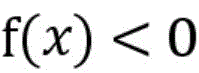
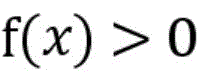
若实例落入超球面内即对应的评价函数值f(x)<0,则被判定为常规正常流量;若实例落在超球面外则评价函数值f(x)>0,被判别为异常流量。If the instance falls within the hypersphere, the corresponding evaluation function value f(x) < 0, and it is judged as regular normal traffic; if the instance falls outside the hypersphere, the evaluation function value f(x) > 0, and it is judged as abnormal traffic.
进一步的,步骤S3包括:Further, step S3 includes:
选用距离分类边界最近的样本进行标注,其核心公式如下:The samples closest to the classification boundary are selected for labeling. The core formula is as follows:

此样本筛选策略结合初始化模型的参数,筛选出低置信度的样本,确定其类型,以提高数据集的纯净程度和模型的检测精确度;并筛选出有代表性样本,使样本尽可能覆盖所有数据区域,以提高模型的完整性,从而筛选出需要标注的典型样本。This sample screening strategy combines the parameters of the initialization model to screen out low-confidence samples and determine their types to improve the purity of the data set and the detection accuracy of the model; and screen out representative samples so that the samples cover all data areas as much as possible to improve the integrity of the model, thereby screening out typical samples that need to be labeled.
进一步的,步骤S5中:Further, in step S5:
训练样本集包括有标签样本和无标签样本,给定m个有标签样本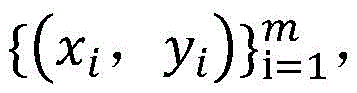
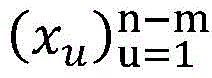




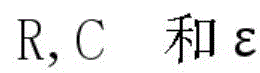
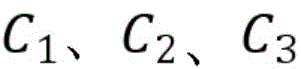
其中,γ≥0为两类标记数据边缘之间的距离,m1表示标签为1的样本,m2表示标签为-1的样本,C1、C2、C3分别为无标记数据、正例数据和负例数据的权衡参数,εi、εj、εk分别均为在优化问题的约束中引入的松弛变量,其取值与样本和球体中心在特征空间的距离成反比,即距离球心较近的样本被错误分类的代价较大。Among them, γ≥0 is the distance between the edges of two types of labeled data, m1 represents samples with label 1, m2 represents samples with label -1, C1 , C2 , and C3 are the trade-off parameters for unlabeled data, positive data, and negative data, respectively. εi , εj , and εk are slack variables introduced in the constraints of the optimization problem, and their values are inversely proportional to the distance between the sample and the center of the sphere in the feature space, that is, the cost of misclassification of samples closer to the center of the sphere is higher.
进一步的,权衡参数C1反映无标记数据的约束作用,若C1取值过大,则模型中标记数据的作用会减弱,直至退化为无监督模型;反之若C1取值过小,则模型中无标记数据作用会减弱,直至退化为只包含少量标记数据的有监督模型。Furthermore, the trade-off parameter C1 reflects the constraint effect of unlabeled data. If the value of C1 is too large, the effect of labeled data in the model will be weakened until it degenerates into an unsupervised model. On the contrary, if the value of C1 is too small, the effect of unlabeled data in the model will be weakened until it degenerates into a supervised model containing only a small amount of labeled data.
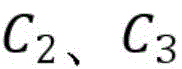
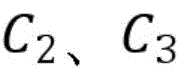
进一步的,权衡参数C2、C3反映标记数据的类型引导作用,对于C2、C3,根据具体情况下对误报率和漏报率的要求进行选择。Furthermore, the weighing parameters C 2 and C 3 reflect the type guidance of the labeled data. C 2 and C 3 are selected according to the requirements of the false alarm rate and the false negative rate in specific situations.
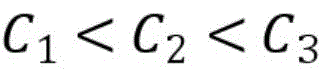
进一步的,由于在异常检测中,将异常数据误判的代价高于正常数据,因此选择C2<C3;将标记数据误判的代价高于无标记数据,因此选择C1<C2<C3。Furthermore, in anomaly detection, the cost of misjudging abnormal data is higher than that of normal data, so C 2 <C 3 is selected; the cost of misjudging labeled data is higher than that of unlabeled data, so C 1 <C 2 <C 3 is selected.
进一步的,步骤S5中,使用的半监督学习思想包括自训练法、期望最大法、多视图法和/或基于图的方法。Furthermore, in step S5, the semi-supervised learning ideas used include self-training method, expectation maximization method, multi-view method and/or graph-based method.
本发明的有益效果在于:The beneficial effects of the present invention are:
(1)本发明利用单分类支持向量机的分类特点,以无监督方式完成模型的初始化过程,经过非线性变换将目标样本映射到一个高维特征空间,并在该空间建立一个封闭而紧凑的包含大多数正常数据的最优超球体,通过该超球体可以将网络数据流量划分为正常流量和异常流量,异常流量可以包含已知的攻击和未知的攻击,在区分异常流量和正常流量的同时,解决了无法识别以异常流量为载体的未知攻击的问题。(1) The present invention utilizes the classification characteristics of a single-class support vector machine to complete the initialization process of the model in an unsupervised manner, maps the target sample to a high-dimensional feature space through a nonlinear transformation, and establishes a closed and compact optimal hypersphere containing most normal data in the space. Through the hypersphere, the network data traffic can be divided into normal traffic and abnormal traffic. The abnormal traffic can include known attacks and unknown attacks. While distinguishing abnormal traffic from normal traffic, the problem of being unable to identify unknown attacks carried by abnormal traffic is solved.
(2)本发明提供了一种采用单分类支持向量机的方法对正常流量进行,该方法不仅具备传统支持向量机建模速度快的特点,还同样适用于大量数据的准确建模。此外,在正常流量的数据量较大,而异常流量的数据量较小这种数据不平衡的情况下,也能准确建立模型,从而达到识别网络异常数据的目的。(2) The present invention provides a method for using a single-classification support vector machine to model normal traffic. This method not only has the characteristics of fast modeling speed of traditional support vector machines, but is also applicable to accurate modeling of large amounts of data. In addition, in the case of data imbalance, such as a large amount of normal traffic data and a small amount of abnormal traffic data, an accurate model can be established, thereby achieving the purpose of identifying abnormal network data.
(3)本发明引入了半监督学习的思想,以较低的标记代价提升单分类支持向量机模型的识别准确性。传统方法依赖高质量的纯净数据集完成正常流量轮廓的建立,然而在实际应用中,纯净数据集难以获取,从原始数据集中挑选和标记数据费时费力,因此该方法实现了以较小标记代价、较低的人工标记成本,提高了异常流量识别模型的性能。(3) The present invention introduces the idea of semi-supervised learning to improve the recognition accuracy of the single-class support vector machine model at a lower labeling cost. Traditional methods rely on high-quality clean data sets to complete the establishment of normal traffic profiles. However, in practical applications, clean data sets are difficult to obtain, and selecting and labeling data from the original data sets is time-consuming and laborious. Therefore, this method achieves a lower labeling cost and lower manual labeling cost, thereby improving the performance of the abnormal traffic recognition model.
综上所述,本发明能够为大量不平衡流量数据提供准确、快速建模的方法,以识别已知和未知攻击。利用网络空间中任意采集的真实数据,通过单分类支持向量机算法快速高效的建立适用性强可扩展更新的异常识别“超球体”;融合半监督学习的思想,在减轻人工标注数据的工作量的同时,有效提高了模型的检测准确度。此外,本发明采用了易于实现的、相对成熟的技术和算法。本发明可以适用于网络空间中从流量数据的主动选择标注、到建立识别模型,达到识别所有异常流量的目的,是现今防范种类繁多的网络攻击的关键一步。In summary, the present invention can provide an accurate and rapid modeling method for a large amount of unbalanced traffic data to identify known and unknown attacks. By utilizing any real data collected in cyberspace, a single-classification support vector machine algorithm is used to quickly and efficiently establish an abnormal recognition "hypersphere" that is highly applicable, scalable and updateable; integrating the idea of semi-supervised learning, while reducing the workload of manual data annotation, the detection accuracy of the model is effectively improved. In addition, the present invention uses easy-to-implement and relatively mature technologies and algorithms. The present invention can be applied to the active selection and annotation of traffic data in cyberspace, to the establishment of recognition models, to achieve the purpose of identifying all abnormal traffic, and is a key step in preventing a wide variety of network attacks today.
附图说明BRIEF DESCRIPTION OF THE DRAWINGS
图1是本发明实施例1中异常流量识别方法的流程图;FIG1 is a flow chart of an abnormal traffic identification method in Embodiment 1 of the present invention;
图2是本发明实施例1中模型的迭代优化流程图。FIG2 is a flowchart of iterative optimization of the model in Example 1 of the present invention.
具体实施方式DETAILED DESCRIPTION
为了对本发明的技术特征、目的和效果有更加清楚的理解,现说明本发明的具体实施方式。应当理解,此处所描述的具体实施例仅用以解释本发明,并不用于限定本发明,即所描述的实施例仅仅是本发明一部分实施例,而不是全部的实施例。基于本发明的实施例,本领域技术人员在没有做出创造性劳动的前提下所获得的所有其他实施例,都属于本发明保护的范围。In order to have a clearer understanding of the technical features, purposes and effects of the present invention, the specific implementation methods of the present invention are now described. It should be understood that the specific embodiments described herein are only used to explain the present invention and are not used to limit the present invention, that is, the embodiments described are only part of the embodiments of the present invention, rather than all the embodiments. Based on the embodiments of the present invention, all other embodiments obtained by those skilled in the art without making creative work are within the scope of protection of the present invention.
实施例1Example 1
如图1所示,一种基于半监督学习和单分类支持向量机的异常流量识别方法,包括以下步骤:As shown in FIG1 , an abnormal traffic identification method based on semi-supervised learning and single-classification support vector machine includes the following steps:
S1.采集网络流量数据并提取数据描述特征;S1. Collect network traffic data and extract data description features;
S2.利用采集的网络流量数据经过单分类支持向量机算法,生成异常流量识别的初始化模型:通过非线性变换将目标样本映射到一个高维特征空间,并在该空间建立一个封闭而紧凑的包含所有正常数据的最优超球体,通过该超球体将网络数据流量数据划分为正常流量和异常流量;S2. Generate an initialization model for abnormal traffic identification using the collected network traffic data through a single-classification support vector machine algorithm: map the target sample to a high-dimensional feature space through nonlinear transformation, and establish a closed and compact optimal hypersphere containing all normal data in the space, and divide the network data traffic data into normal traffic and abnormal traffic through the hypersphere;
S3.将网络流量数据输入样本筛选策略,样本筛选策略选用最近边界策略及其变形;S3. Input the network traffic data into the sample screening strategy, and the sample screening strategy selects the nearest boundary strategy and its variation;
S4.根据样本筛选策略选择典型网络流量,并进行标注,得到典型的已标注样本;S4. Select typical network traffic according to the sample screening strategy and mark it to obtain typical marked samples;
S5.如图2所示,将典型的已标注样本输入异常流量识别的初始化模型中,结合半监督学习思想进行模型的迭代优化以得到异常流量识别模型;优选的,使用的半监督学习思想包括自训练法、期望最大法、多视图法和/或基于图的方法。S5. As shown in Figure 2, typical labeled samples are input into the initialization model of abnormal traffic recognition, and the model is iteratively optimized in combination with semi-supervised learning ideas to obtain an abnormal traffic recognition model; preferably, the semi-supervised learning ideas used include self-training method, expectation maximization method, multi-view method and/or graph-based method.
S6.将网络流量数据输入异常流量识别模型中,进行异常流量的识别以区分开异常流量和正常流量。S6. Input the network traffic data into the abnormal traffic identification model to identify the abnormal traffic to distinguish the abnormal traffic from the normal traffic.
优选的,步骤S2中,通过非线映射


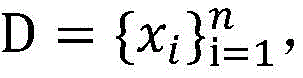

若实例落入超球面内即对应的评价函数值f(x)<0,则被判定为常规正常流量;若实例落在超球面外则评价函数值f(x)>0,被判别为异常流量。If the instance falls within the hypersphere, the corresponding evaluation function value f(x) < 0, and it is judged as regular normal traffic; if the instance falls outside the hypersphere, the evaluation function value f(x) > 0, and it is judged as abnormal traffic.
优选的,步骤S3中,选用距离分类边界最近的样本进行标注,其核心公式如下:Preferably, in step S3, the sample closest to the classification boundary is selected for labeling, and its core formula is as follows:

此样本筛选策略结合初始化模型的参数,筛选出低置信度的样本,确定其类型,以提高数据集的纯净程度和模型的检测精确度;并筛选出有代表性样本,使样本尽可能覆盖所有数据区域,以提高模型的完整性,从而筛选出需要标注的典型样本。This sample screening strategy combines the parameters of the initialization model to screen out low-confidence samples and determine their types to improve the purity of the data set and the detection accuracy of the model; and screen out representative samples so that the samples cover all data areas as much as possible to improve the integrity of the model, thereby screening out typical samples that need to be labeled.
优选的,涉及到的半监督支持向量机的基本思想和构成形式中,训练样本集包括有标签样本和无标签样本,给定m个有标签样本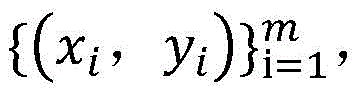





其中,γ≥0为两类标记数据边缘之间的距离,m1表示标签为1的样本,m2表示标签为-1的样本,C1、C2、C3分别为无标记数据、正例数据和负例数据的权衡参数,εi、εj、εk分别均为在优化问题的约束中引入的松弛变量,其取值与样本和球体中心在特征空间的距离成反比,即距离球心较近的样本被错误分类的代价较大。Among them, γ≥0 is the distance between the edges of two types of labeled data, m1 represents samples with label 1, m2 represents samples with label -1, C1 , C2 , and C3 are the trade-off parameters for unlabeled data, positive data, and negative data, respectively. εi , εj , and εk are slack variables introduced in the constraints of the optimization problem, and their values are inversely proportional to the distance between the sample and the center of the sphere in the feature space, that is, the cost of misclassification of samples closer to the center of the sphere is higher.
具体的,权衡参数C1反映无标记数据的约束作用,若C1取值过大,则模型中标记数据的作用会减弱,直至退化为无监督模型;反之若C1取值过小,则模型中无标记数据作用会减弱,直至退化为只包含少量标记数据的有监督模型。权衡参数C2、C3反映标记数据的类型引导作用,对于C2、C3,根据具体情况下对误报率和漏报率的要求进行选择。Specifically, the trade-off parameter C1 reflects the constraint effect of unlabeled data. If C1 is too large, the effect of labeled data in the model will be weakened until it degenerates into an unsupervised model. On the contrary, if C1 is too small, the effect of unlabeled data in the model will be weakened until it degenerates into a supervised model containing only a small amount of labeled data. The trade-off parameters C2 and C3 reflect the type guidance effect of labeled data. For C2 and C3 , they are selected according to the requirements of false alarm rate and false negative rate in specific situations.
优选的,由于在异常检测中,将异常数据误判的代价高于正常数据,因此选择C2<C3;将标记数据误判的代价高于无标记数据,因此选择C1<C2<C3。Preferably, in anomaly detection, since the cost of misjudging abnormal data is higher than that of normal data, C 2 <C 3 is selected; the cost of misjudging labeled data is higher than that of unlabeled data, therefore C 1 <C 2 <C 3 is selected.
本实施例的异常流量识别方法能够为大量不平衡流量数据提供准确、快速建模的方法,以识别已知和未知攻击。利用网络空间中任意采集的真实数据,通过单分类支持向量机算法快速高效的建立适用性强可扩展更新的异常识别“超球体”。融合了半监督学习的思想,在减轻人工标注数据的工作量的同时,有效提高了模型的检测准确度。此外,本异常流量识别方法采用了易于实现的、相对成熟的技术和算法。本异常流量识别方法可以适用于网络空间中从流量数据的主动选择标注、到建立识别模型,达到识别所有异常流量的目的,是现今防范种类繁多的网络攻击的关键一步。The abnormal traffic identification method of this embodiment can provide an accurate and rapid modeling method for a large amount of unbalanced traffic data to identify known and unknown attacks. Using any real data collected in cyberspace, a single-classification support vector machine algorithm is used to quickly and efficiently establish an abnormal recognition "hypersphere" that is highly applicable, scalable and updateable. It integrates the idea of semi-supervised learning, while reducing the workload of manual data annotation, and effectively improves the detection accuracy of the model. In addition, this abnormal traffic identification method uses easy-to-implement and relatively mature technologies and algorithms. This abnormal traffic identification method can be applied to the active selection and annotation of traffic data in cyberspace, to the establishment of recognition models, to achieve the purpose of identifying all abnormal traffic, and is a key step in preventing a wide variety of network attacks today.
实施例2Example 2
本实施例在实施例1的基础上:This embodiment is based on embodiment 1:
本实施例提供了一种计算机设备,包括存储器和处理器,该存储器存储有计算机程序,该处理器执行该计算机程序时实现实施例1的基于半监督学习和单分类支持向量机的异常流量识别方法的步骤。This embodiment provides a computer device, including a memory and a processor, wherein the memory stores a computer program, and when the processor executes the computer program, the steps of the abnormal traffic identification method based on semi-supervised learning and single-classification support vector machine of embodiment 1 are implemented.
其中,计算机程序可以为源代码形式、对象代码形式、可执行文件或者某些中间形式等。Among them, the computer program can be in source code form, object code form, executable file or some intermediate form, etc.
实施例3Example 3
本实施例在实施例1的基础上:This embodiment is based on embodiment 1:
本实施例提供了一种计算机可读存储介质,存储有计算机程序,该计算机程序被处理器执行时实现实施例1的基于半监督学习和单分类支持向量机的异常流量识别方法的步骤。This embodiment provides a computer-readable storage medium storing a computer program. When the computer program is executed by a processor, the steps of the abnormal traffic identification method based on semi-supervised learning and single-classification support vector machine of Embodiment 1 are implemented.
其中,计算机程序可以为源代码形式、对象代码形式、可执行文件或者某些中间形式等。存储介质包括:能够携带计算机程序代码的任何实体或装置、记录介质、计算机存储器、只读存储器(ROM)、随机存取存储器(RAM)、电载波信号、电信信号以及软件分发介质等。需要说明的是,存储介质包含的内容可以根据司法管辖区内立法和专利实践的要求进行适当的增减,例如在某些司法管辖区,根据立法和专利实践,存储介质不包括电载波信号和电信信号。The computer program may be in source code form, object code form, executable file or some intermediate form. Storage media include: any entity or device capable of carrying computer program code, recording medium, computer memory, read-only memory (ROM), random access memory (RAM), electric carrier signal, telecommunication signal and software distribution medium. It should be noted that the content contained in the storage medium may be appropriately increased or decreased according to the requirements of legislation and patent practice in the jurisdiction. For example, in some jurisdictions, according to legislation and patent practice, the storage medium does not include electric carrier signal and telecommunication signal.
以上所述仅是本发明的优选实施方式,应当理解本发明并非局限于本文所披露的形式,不应看作是对其他实施例的排除,而可用于各种其他组合、修改和环境,并能够在本文所述构想范围内,通过上述教导或相关领域的技术或知识进行改动。而本领域人员所进行的改动和变化不脱离本发明的精神和范围,则都应在本发明所附权利要求的保护范围内。The above is only a preferred embodiment of the present invention. It should be understood that the present invention is not limited to the form disclosed herein, and should not be regarded as excluding other embodiments, but can be used in various other combinations, modifications and environments, and can be modified within the scope of the concept described herein through the above teachings or the technology or knowledge of the relevant field. The changes and modifications made by those skilled in the art shall not deviate from the spirit and scope of the present invention, and shall be within the scope of protection of the claims attached to the present invention.
需要说明的是,对于前述的方法实施例,为了简便描述,故将其表述为一系列的动作组合,但是本领域技术人员应该知悉,本申请并不受所描述的动作顺序的限制,因为依据本申请,某些步骤可以采用其他顺序或者同时进行。其次,本领域技术人员也应该知悉,说明书中所描述的实施例均属于优选实施例,所涉及的动作和模块并不一定是本申请所必须的。It should be noted that, for the aforementioned method embodiments, for the sake of simplicity of description, they are expressed as a series of action combinations, but those skilled in the art should be aware that the present application is not limited by the described order of actions, because according to the present application, certain steps can be performed in other orders or simultaneously. Secondly, those skilled in the art should also be aware that the embodiments described in the specification are all preferred embodiments, and the actions and modules involved are not necessarily required by the present application.
Claims (5)



















Priority Applications (1)
| Application Number | Priority Date | Filing Date | Title |
|---|---|---|---|
| CN202110725480.8A CN113591915B (en) | 2021-06-29 | 2021-06-29 | Abnormal traffic identification method based on semi-supervised learning and single-class support vector machine |
Applications Claiming Priority (1)
| Application Number | Priority Date | Filing Date | Title |
|---|---|---|---|
| CN202110725480.8A CN113591915B (en) | 2021-06-29 | 2021-06-29 | Abnormal traffic identification method based on semi-supervised learning and single-class support vector machine |
Publications (2)
| Publication Number | Publication Date |
|---|---|
| CN113591915A CN113591915A (en) | 2021-11-02 |
| CN113591915B true CN113591915B (en) | 2023-05-19 |
Family
ID=78244918
Family Applications (1)
| Application Number | Title | Priority Date | Filing Date |
|---|---|---|---|
| CN202110725480.8A Active CN113591915B (en) | 2021-06-29 | 2021-06-29 | Abnormal traffic identification method based on semi-supervised learning and single-class support vector machine |
Country Status (1)
| Country | Link |
|---|---|
| CN (1) | CN113591915B (en) |
Families Citing this family (7)
| Publication number | Priority date | Publication date | Assignee | Title |
|---|---|---|---|---|
| CN114338077B (en) * | 2021-11-22 | 2024-10-01 | 山东师范大学 | Anonymous flow identification method and system based on single-classification neural network |
| CN114168374B (en) * | 2021-11-30 | 2024-11-29 | 中国电子科技集团公司第二十八研究所 | Abnormal data positioning method based on combination of integrated abnormal detector and root cause analysis |
| CN114900835A (en) * | 2022-04-20 | 2022-08-12 | 广州爱浦路网络技术有限公司 | Malicious traffic intelligent detection method and device and storage medium |
| CN116992372A (en) * | 2022-04-21 | 2023-11-03 | 比亚迪股份有限公司 | Abnormal detection method and device of rail vehicle traction system and rail vehicle |
| CN117061256A (en) * | 2023-10-13 | 2023-11-14 | 北京中超伟业信息安全技术股份有限公司 | Network security system and method based on dynamic honeypot |
| CN117557843B (en) * | 2023-11-13 | 2024-07-05 | 江苏君立华域信息安全技术股份有限公司 | Traffic identification method and system based on semi-supervised learning |
| CN119849701B (en) * | 2025-01-10 | 2025-11-14 | 西安电子科技大学 | A Student Academic Early Warning and Prediction Method Based on Feature Interaction Neural Tree |
Citations (9)
| Publication number | Priority date | Publication date | Assignee | Title |
|---|---|---|---|---|
| CN102611706A (en) * | 2012-03-21 | 2012-07-25 | 清华大学 | Network protocol identification method and system based on semi-supervised learning |
| CN108833409A (en) * | 2018-06-15 | 2018-11-16 | 北京网思科平科技有限公司 | webshell detection method and device based on deep learning and semi-supervised learning |
| CN108848068A (en) * | 2018-05-29 | 2018-11-20 | 上海海事大学 | Based on deepness belief network-Support Vector data description APT attack detection method |
| CN109981672A (en) * | 2019-04-03 | 2019-07-05 | 电子科技大学 | A kind of multi-intrusion detection method based on semi-supervised clustering |
| CN110225055A (en) * | 2019-06-22 | 2019-09-10 | 福州大学 | A kind of network flow abnormal detecting method and system based on KNN semi-supervised learning model |
| CN111832647A (en) * | 2020-07-10 | 2020-10-27 | 上海交通大学 | Abnormal flow detection system and method |
| CN111835707A (en) * | 2020-05-27 | 2020-10-27 | 江苏大学 | A Malware Program Identification Method Based on Improved Support Vector Machine |
| CN111898129A (en) * | 2020-08-07 | 2020-11-06 | 北京理工大学 | Malicious code sample screener and method based on Two-Head anomaly detection model |
| US10873533B1 (en) * | 2019-09-04 | 2020-12-22 | Cisco Technology, Inc. | Traffic class-specific congestion signatures for improving traffic shaping and other network operations |
Family Cites Families (3)
| Publication number | Priority date | Publication date | Assignee | Title |
|---|---|---|---|---|
| US9369476B2 (en) * | 2012-10-18 | 2016-06-14 | Deutsche Telekom Ag | System for detection of mobile applications network behavior-netwise |
| US10749894B2 (en) * | 2017-02-15 | 2020-08-18 | Cisco Technology, Inc. | Prefetch intrusion detection system |
| US11075820B2 (en) * | 2017-12-20 | 2021-07-27 | Cisco Technology, Inc. | Automatically detecting authorized remote administration sessions in a network monitoring system |
-
2021
- 2021-06-29 CN CN202110725480.8A patent/CN113591915B/en active Active
Patent Citations (9)
| Publication number | Priority date | Publication date | Assignee | Title |
|---|---|---|---|---|
| CN102611706A (en) * | 2012-03-21 | 2012-07-25 | 清华大学 | Network protocol identification method and system based on semi-supervised learning |
| CN108848068A (en) * | 2018-05-29 | 2018-11-20 | 上海海事大学 | Based on deepness belief network-Support Vector data description APT attack detection method |
| CN108833409A (en) * | 2018-06-15 | 2018-11-16 | 北京网思科平科技有限公司 | webshell detection method and device based on deep learning and semi-supervised learning |
| CN109981672A (en) * | 2019-04-03 | 2019-07-05 | 电子科技大学 | A kind of multi-intrusion detection method based on semi-supervised clustering |
| CN110225055A (en) * | 2019-06-22 | 2019-09-10 | 福州大学 | A kind of network flow abnormal detecting method and system based on KNN semi-supervised learning model |
| US10873533B1 (en) * | 2019-09-04 | 2020-12-22 | Cisco Technology, Inc. | Traffic class-specific congestion signatures for improving traffic shaping and other network operations |
| CN111835707A (en) * | 2020-05-27 | 2020-10-27 | 江苏大学 | A Malware Program Identification Method Based on Improved Support Vector Machine |
| CN111832647A (en) * | 2020-07-10 | 2020-10-27 | 上海交通大学 | Abnormal flow detection system and method |
| CN111898129A (en) * | 2020-08-07 | 2020-11-06 | 北京理工大学 | Malicious code sample screener and method based on Two-Head anomaly detection model |
Non-Patent Citations (2)
| Title |
|---|
| 一种基于半监督学习的工控网络入侵检测方法;张松清;刘智国;;信息技术与网络安全(第01期);50-53 * |
| 基于SVM的恶意流量检测及其改进方法分析;张远;徐逸卿;;信息与电脑(理论版)(第12期);34-36 * |
Also Published As
| Publication number | Publication date |
|---|---|
| CN113591915A (en) | 2021-11-02 |
Similar Documents
| Publication | Publication Date | Title |
|---|---|---|
| CN113591915B (en) | Abnormal traffic identification method based on semi-supervised learning and single-class support vector machine | |
| CN110070141B (en) | Network intrusion detection method | |
| CN113259331A (en) | Unknown abnormal flow online detection method and system based on incremental learning | |
| CN118032327B (en) | Equipment intelligent lubrication monitoring method and device based on artificial intelligence | |
| CN111242144B (en) | Method and device for detecting abnormality of power grid equipment | |
| CN112800770A (en) | Entity alignment method based on heteromorphic graph attention network | |
| CN117218408A (en) | Open world target detection method and device based on causal correction learning | |
| CN114254738A (en) | Construction method and application of dynamic graph convolutional neural network model with two-layer evolution | |
| CN119887368A (en) | Post-credit management method and system based on big data | |
| CN117171690B (en) | Photovoltaic array fault diagnosis method, device and equipment based on improved label propagation | |
| CN118503826A (en) | A method and system for intelligent classification of plaintext and ciphertext based on LSTM-SiTGRU model | |
| CN119719670B (en) | Distribution network data asset vulnerability identification method, device, system, and storage medium | |
| CN118837752A (en) | Method and device for evaluating battery endurance, storage medium and equipment | |
| Rath | Adaptive modelling approach for row-type dependent predictive analysis (rtdpa): A framework for designing machine learning models for credit risk analysis in banking sector | |
| CN118194044A (en) | Method, device and electronic device for acquiring training data | |
| Duan et al. | Dual cost-sensitive graph convolutional network | |
| CN117633652A (en) | A method and system for diagnosing abnormal electricity bills based on Bayesian network model | |
| Belmir et al. | Applying Machine Learning Approaches with Integrated Internet of Things for Water Management System | |
| CN115758462A (en) | Method, device, processor and computer readable storage medium for realizing sensitive data identification in trusted environment | |
| CN114095260A (en) | Method, device and equipment for detecting abnormal flow of power grid and computer medium | |
| CN119254506B (en) | Network intrusion detection method for advanced measurement system based on twin neural network | |
| Wang et al. | PDHG: An Ethereum phishing detection approach via heterogeneous graph transformer | |
| Miskat et al. | Crop Yield Prediction: A Semi-Supervised Self-Training Approach with Confidence Regularization | |
| Jin et al. | GIN-LDP: A Graph Isomorphism Network-based Model for Loan Default Prediction | |
| Ahmad et al. | Machine learning for missing value imputation |
Legal Events
| Date | Code | Title | Description |
|---|---|---|---|
| PB01 | Publication | ||
| PB01 | Publication | ||
| SE01 | Entry into force of request for substantive examination | ||
| SE01 | Entry into force of request for substantive examination | ||
| GR01 | Patent grant | ||
| GR01 | Patent grant |