CN113590429A - Server fault diagnosis method and device and electronic equipment - Google Patents
Server fault diagnosis method and device and electronic equipment Download PDFInfo
- Publication number
- CN113590429A CN113590429A CN202110947284.5A CN202110947284A CN113590429A CN 113590429 A CN113590429 A CN 113590429A CN 202110947284 A CN202110947284 A CN 202110947284A CN 113590429 A CN113590429 A CN 113590429A
- Authority
- CN
- China
- Prior art keywords
- target
- server
- index
- abnormal point
- abnormal
- Prior art date
- Legal status (The legal status is an assumption and is not a legal conclusion. Google has not performed a legal analysis and makes no representation as to the accuracy of the status listed.)
- Granted
Links
Images


Classifications
-
- G—PHYSICS
- G06—COMPUTING OR CALCULATING; COUNTING
- G06F—ELECTRIC DIGITAL DATA PROCESSING
- G06F11/00—Error detection; Error correction; Monitoring
- G06F11/30—Monitoring
- G06F11/3003—Monitoring arrangements specially adapted to the computing system or computing system component being monitored
- G06F11/302—Monitoring arrangements specially adapted to the computing system or computing system component being monitored where the computing system component is a software system
-
- G—PHYSICS
- G06—COMPUTING OR CALCULATING; COUNTING
- G06F—ELECTRIC DIGITAL DATA PROCESSING
- G06F11/00—Error detection; Error correction; Monitoring
- G06F11/30—Monitoring
- G06F11/3003—Monitoring arrangements specially adapted to the computing system or computing system component being monitored
- G06F11/3024—Monitoring arrangements specially adapted to the computing system or computing system component being monitored where the computing system component is a central processing unit [CPU]
-
- G—PHYSICS
- G06—COMPUTING OR CALCULATING; COUNTING
- G06F—ELECTRIC DIGITAL DATA PROCESSING
- G06F11/00—Error detection; Error correction; Monitoring
- G06F11/30—Monitoring
- G06F11/3051—Monitoring arrangements for monitoring the configuration of the computing system or of the computing system component, e.g. monitoring the presence of processing resources, peripherals, I/O links, software programs
-
- G—PHYSICS
- G06—COMPUTING OR CALCULATING; COUNTING
- G06F—ELECTRIC DIGITAL DATA PROCESSING
- G06F11/00—Error detection; Error correction; Monitoring
- G06F11/30—Monitoring
- G06F11/32—Monitoring with visual or acoustical indication of the functioning of the machine
- G06F11/324—Display of status information
- G06F11/327—Alarm or error message display
-
- G—PHYSICS
- G06—COMPUTING OR CALCULATING; COUNTING
- G06F—ELECTRIC DIGITAL DATA PROCESSING
- G06F11/00—Error detection; Error correction; Monitoring
- G06F11/30—Monitoring
- G06F11/34—Recording or statistical evaluation of computer activity, e.g. of down time, of input/output operation ; Recording or statistical evaluation of user activity, e.g. usability assessment
- G06F11/3466—Performance evaluation by tracing or monitoring
Landscapes
- Engineering & Computer Science (AREA)
- Theoretical Computer Science (AREA)
- Physics & Mathematics (AREA)
- General Engineering & Computer Science (AREA)
- Computing Systems (AREA)
- Quality & Reliability (AREA)
- General Physics & Mathematics (AREA)
- Mathematical Physics (AREA)
- Computer Hardware Design (AREA)
- Debugging And Monitoring (AREA)
Abstract
The embodiment of the invention provides a server fault diagnosis method, a server fault diagnosis device and electronic equipment, wherein the method comprises the following steps: acquiring server time sequence data of the operation parameters of the target server and service time sequence data of the operation parameters of the service operated on the target server; determining an abnormal point corresponding to each pre-specified monitoring index and a timestamp corresponding to the abnormal point from the server time sequence data and the service time sequence data; determining target indexes related to the target hardware failure of the target server in a historical time period based on the abnormal points corresponding to the monitoring indexes and the time stamps corresponding to the abnormal points; and calculating the probability that the target index is the abnormal point, and determining whether the target hardware will break down or not based on the relation between the probability that the target index is the abnormal point and a first preset threshold value. According to the embodiment of the invention, the faults of the application program running on the server caused by the server faults can be reduced.
Description
Technical Field
The present invention relates to the field of fault diagnosis technologies, and in particular, to a server fault diagnosis method and apparatus, and an electronic device.
Background
With the increase of the number of server nodes of data centers such as enterprises and the like, hardware faults of the server nodes occur occasionally, and the running application programs in the server are influenced by the condition of the hardware faults of the server. Server hardware failures, e.g., disk read only, memory failures, etc.
In the related technology, a corresponding monitoring system is set for the condition of server hardware failure, the monitoring system collects hardware parameters of each server and parameters of application programs running on each server, and further judges whether corresponding server hardware fails or not based on preset parameter threshold values, the collected hardware parameters and the collected parameters of the application programs, and outputs alarm information under the condition that the server hardware failure is judged, so that maintenance personnel can repair the server corresponding to the server hardware failure and perform offline processing on the related application programs.
In the related art, when the monitoring system determines that a server hardware fault occurs, the server corresponding to the server hardware fault is repaired and the related application program is offline processed, but at this time, the corresponding server has already failed, and the application program running on the server has been affected, so that the application program running on the server has a fault, and the influence may bring about a more serious fault for the server.
Disclosure of Invention
The embodiment of the invention aims to provide a server fault diagnosis method, a server fault diagnosis device and electronic equipment, so as to reduce faults of application programs running on a server caused by server faults. The specific technical scheme is as follows:
in a first aspect of the present invention, there is provided a server fault diagnosis method, where the method includes:
acquiring server time sequence data of target server operation parameters and service time sequence data of operation parameters of services operated on the target server;
determining abnormal points corresponding to each pre-specified monitoring index and timestamps corresponding to the abnormal points from the server time sequence data and the service time sequence data;
determining target indexes related to the target hardware failure of the target server in a historical time period based on the abnormal points corresponding to the monitoring indexes and the time stamps corresponding to the abnormal points;
and calculating the probability that the target index is an abnormal point, and determining whether the target hardware will break down or not based on the relation between the probability that the target index is an abnormal point and a first preset threshold value.
Optionally, the determining, based on the abnormal point corresponding to each monitoring index and the timestamp corresponding to the abnormal point, a target index associated with a failure of target hardware of the target server in a historical time period includes:
calculating the probability that each monitoring index or each combined monitoring index is an abnormal point in the fault time corresponding to the fault of the target hardware in the historical time period based on the abnormal point corresponding to each monitoring index and the timestamp corresponding to the abnormal point; the combined monitoring index is an index combination at least comprising two monitoring indexes;
judging whether the probability is larger than a second preset threshold value or not;
and if so, determining the monitoring index or the combined monitoring index corresponding to the probability greater than the second preset threshold as the target index.
Optionally, the determining, from the server time series data and the service time series data, an abnormal point corresponding to each pre-specified monitoring index and a timestamp corresponding to the abnormal point includes:
calculating a weight coefficient corresponding to each pre-specified monitoring index in the server time sequence data and the service time sequence data;
based on the weight coefficient, calculating a correction weight coefficient corresponding to the monitoring index;
judging whether the correction weight coefficient is larger than a third preset threshold value or not;
if the monitoring index is larger than the preset monitoring index, the monitoring index is an abnormal point, and a timestamp corresponding to the abnormal point is determined.
Optionally, the calculating the probability that the target indicator is an abnormal point includes:
calculating a correction weight coefficient corresponding to the target index, and determining the correction weight coefficient as the probability that the target index is an abnormal point;
in a case where the target indicator is a combined indicator, the determining whether the target hardware will fail based on a relationship between the probability that the target indicator is an abnormal point and a first preset threshold includes:
judging whether the probability that each sub-target index in the combined index is an abnormal point is not less than the first preset threshold value;
if so, it is determined that the target hardware will fail.
Optionally, the method further comprises:
storing abnormal points corresponding to the monitoring indexes and timestamps corresponding to the abnormal points into a database;
the determining, based on the abnormal point corresponding to each monitoring index and the timestamp corresponding to the abnormal point, a target index associated with a failure of target hardware of the target server in a historical time period includes:
and determining a target index associated with the target hardware failure of the target server in a historical time period based on the abnormal point corresponding to each monitoring index in the database and the timestamp corresponding to the abnormal point.
Optionally, the method further comprises:
and under the condition that the target hardware is determined to be in failure, outputting alarm information.
Optionally, the method further comprises:
migrating the service running on the target server to other normal servers under the condition that the target hardware is determined to be failed.
In a second aspect of the present invention, there is also provided a server failure diagnosis apparatus, including:
the data acquisition module is used for acquiring server time sequence data of the operation parameters of the target server and service time sequence data of the operation parameters of the service operated on the target server;
the first determining module is used for determining abnormal points corresponding to each pre-specified monitoring index and timestamps corresponding to the abnormal points from the server time sequence data and the service time sequence data;
the second determining module is used for determining a target index associated with the target hardware failure of the target server in a historical time period based on the abnormal point corresponding to each monitoring index and the timestamp corresponding to the abnormal point;
and the fault diagnosis module is used for calculating the probability that the target index is an abnormal point and determining whether the target hardware is about to generate faults or not based on the relation between the probability that the target index is an abnormal point and a first preset threshold value.
In another aspect of the present invention, there is also provided an electronic device, including a processor, a communication interface, a memory and a communication bus, where the processor, the communication interface, and the memory complete communication with each other through the communication bus;
a memory for storing a computer program;
and the processor is used for realizing the steps of any one of the server fault diagnosis methods when executing the program stored in the memory.
In yet another aspect of the present invention, there is also provided a computer-readable storage medium having a computer program stored therein, the computer program, when executed by a processor, implementing the steps of a server fault diagnosis method as described in any one of the above.
In yet another aspect of the present invention, there is also provided a computer program product containing instructions which, when run on a computer, cause the computer to perform the steps of a server failure diagnosis method as described in any one of the above.
According to the server fault diagnosis method, the server fault diagnosis device and the electronic equipment, the server time sequence data of the operation parameters of the target server and the service time sequence data of the operation parameters of the service operated on the target server are acquired; determining an abnormal point corresponding to each pre-specified monitoring index and a timestamp corresponding to the abnormal point from the server time sequence data and the service time sequence data; determining target indexes related to the target hardware failure of the target server in a historical time period based on the abnormal points corresponding to the monitoring indexes and the time stamps corresponding to the abnormal points; and calculating the probability that the target index is the abnormal point, and determining whether the target hardware will break down or not based on the relation between the probability that the target index is the abnormal point and a first preset threshold value. Compared with the prior art that the early warning processing is carried out after the server hardware fault is diagnosed, the embodiment of the invention can prejudge and diagnose whether the hardware of the target server will be in fault or not in advance, and further early warning is carried out in advance, so that the warning mode of the server hardware fault and the processing mode after the fault are changed, the faults of the service (or the application program) running on the server caused by the server fault are reduced, and the quality of the service can be improved.
Drawings
In order to more clearly illustrate the embodiments of the present invention or the technical solutions in the prior art, the drawings used in the description of the embodiments or the prior art will be briefly described below.
Fig. 1 is a schematic flowchart of a server fault diagnosis method according to an embodiment of the present invention;
FIG. 2 is a flowchart illustrating an implementation of determining a correlation indicator according to an embodiment of the present invention;
FIG. 3 is a flowchart illustrating an embodiment of determining abnormal points of monitoring indicators according to the present invention;
fig. 4 is a schematic structural diagram of a server fault diagnosis apparatus according to an embodiment of the present invention;
fig. 5 is a schematic structural diagram of an electronic device according to an embodiment of the present invention.
Detailed Description
The technical solutions in the embodiments of the present invention will be described below with reference to the drawings in the embodiments of the present invention.
In order to solve the problem that in the related art, when a monitoring system determines that a server hardware fault occurs, a server corresponding to the server hardware fault is repaired and a related application program is offline, but at this time, the corresponding server has already failed, and the application program running on the server has already been affected, so that the application program running on the server has a fault, the embodiment of the invention provides a server fault diagnosis method and device, and an electronic device. The server fault diagnosis method provided by the embodiment of the invention comprises the following steps:
acquiring server time sequence data of target server operation parameters and service time sequence data of operation parameters of services operated on the target server;
determining abnormal points corresponding to each pre-specified monitoring index and timestamps corresponding to the abnormal points from the server time sequence data and the service time sequence data;
determining target indexes related to the target hardware failure of the target server in a historical time period based on the abnormal points corresponding to the monitoring indexes and the time stamps corresponding to the abnormal points;
and calculating the probability that the target index is an abnormal point, and determining whether the target hardware will break down or not based on the relation between the probability that the target index is an abnormal point and a first preset threshold value.
Compared with the prior art in which the server hardware fault is diagnosed and then early-warning processing is performed, the server fault diagnosis method provided by the embodiment of the invention can be used for pre-judging and diagnosing whether the hardware of the target server will be in fault or not in advance, so that early warning is performed in advance, an alarm mode of the server hardware fault and a processing mode after the fault are changed, the faults of service (or application programs) running on the server caused by the server fault are reduced, and the quality of the service can be improved.
The following describes a server fault diagnosis method provided by an embodiment of the present invention in detail:
an execution subject of the server fault diagnosis method provided by the embodiment of the invention may be an electronic device or a monitoring system and other devices capable of monitoring and processing data. In a specific application, the electronic device may be a terminal or a server, and is not limited to this.
As shown in fig. 1, a server fault diagnosis method provided in the embodiment of the present invention may be implemented by the following steps:
s101, collecting server time sequence data of the operation parameters of the target server and service time sequence data of the operation parameters of the service operated on the target server.
In the process of performing fault diagnosis and prejudgment on the target server, server time sequence data corresponding to the operation parameters of the target server to be monitored and service time sequence data of the operation parameters of the service (or the application program) operated on the target server can be acquired. The operation parameter of the target server may be an operation parameter of a server layer, for example, an operation parameter associated with hardware of the target server, such as a disk utilization rate, a CPU load, a CPU and a memory utilization rate of the target server, and time series data corresponding to the acquired operation parameter of the target server is called server time series data. The operation parameter of the service running on the target server may be an operation parameter at a service or application level, for example, the operation parameter may be an operation parameter associated with the service or application, such as a status code, a response time, and the like of the service running, and the collected time series data corresponding to the operation parameter of the service running on the target server is referred to as service time series data.
In practical applications, any data acquisition tool capable of realizing a data acquisition function may be used to perform real-time data acquisition on the operation parameters of the target server and the operation parameters of the service running on the target server, or may perform periodic data acquisition, for example, data acquisition may be performed at a certain time interval, where the certain time interval may be 1 minute, 10 minutes, or 1 hour.
S102, determining the abnormal points corresponding to each pre-specified monitoring index and the time stamps corresponding to the abnormal points from the server time series data and the service time series data.
In one embodiment, hardware and services of a target server that needs to be monitored in an important manner may be determined in advance, and then a monitoring index associated with the hardware and services of the target server that needs to be monitored in an important manner may be determined, and further, the determined monitoring index may be used as a pre-specified monitoring index.
For example, the monitoring metrics associated with the hardware of the target server may include: CPU load, CPU and memory utilization rate, CPU and memory allocation rate, network card flow, disk utilization rate, data packet loss number, disk read-write speed and the like. The monitoring metrics associated with the service may include: the state code Of service operation, the utilization ratio Of the CPU and the Memory occupied by the service, the allocation ratio Of the CPU and the Memory occupied by the service, Out Of Memory (OOM) events, network card traffic, input and output Of the disk, response time and the like.
In practical applications, the hardware of the target server will have a series of chain reactions before being damaged and the service will be abnormal, and these reactions can be embodied in the performance of the target server and the performance and state of the service. For example, the occurrence of network congestion or network cable failure, high network delay, increased data packet loss rate, overtime service request, low disk read-write speed, high disk utilization rate maintenance, and the like indicates that the hardware or service of the target server is about to be abnormal.
The performance of the target server and the performance and state of the service can be reflected from the operation parameters of the target server and the operation parameters of the service. Before the hardware of the target server is about to be damaged and before the service is about to be abnormal, monitoring indexes related to the hardware and the service generate relatively large fluctuation bulges, and further, after server time sequence data of operation parameters of the target server and service time sequence data of the operation parameters of the service operated on the target server are acquired, an abnormal point corresponding to each pre-specified monitoring index and a timestamp corresponding to the abnormal point are determined from the server time sequence data and the service time sequence data, so that the diagnosis and the pre-judgment of the hardware fault of the target server are further realized.
Specifically, the determination of the abnormal point corresponding to each pre-specified monitoring index and the timestamp corresponding to the abnormal point from the server time series data and the service time series data may be implemented by using a correlation algorithm capable of filtering the extreme point. The algorithm may be, for example, a Sigmoid algorithm or the like.
S103, determining target indexes related to target hardware faults of the target server in the historical time period based on the abnormal points corresponding to the monitoring indexes and the time stamps corresponding to the abnormal points.
The hardware fault of the target server inevitably associates and affects related indexes of the hardware, so that the target index associated with the target hardware fault of the target server in the historical time period, that is, the index or the index combination at which the abnormal point occurs when the target hardware fault occurs in the historical time period, can be determined based on the historical data of each monitoring index, specifically, based on the determined abnormal point corresponding to each monitoring index and the timestamp corresponding to the abnormal point. The historical time period may be set according to actual needs, for example, may be one week, one month, one year, or the like before the current time.
Specifically, a bayesian algorithm may be used to determine a target index associated with a failure of target hardware of the target server in the historical period of time by calculating a probability of an abnormal point index occurring in the event of a failure of the target hardware in the historical period of time. Or through other checking methods, the target index associated with the target hardware failure of the target server in the historical time period is determined, such as a maximum likelihood method and the like.
And S104, calculating the probability that the target index is the abnormal point, and determining whether the target hardware is about to break down or not based on the relation between the probability that the target index is the abnormal point and a first preset threshold value.
After determining the target index associated with the failure of the target hardware in the historical time period, the probability that the target index is an abnormal point may be further calculated, and then the probability that the target index is an abnormal point is compared with a first preset threshold, when the probability that the target index is an abnormal point is greater than the first preset threshold, it is determined that the target hardware will fail, otherwise, it is determined that the target hardware will not fail.
The probability that the target index is an abnormal point may be calculated using the same algorithm as that for determining the abnormal point corresponding to each monitoring index specified in advance, or the probability that the target index is an abnormal point may be calculated using any algorithm that can filter extreme points. The first preset threshold value can be set by those skilled in the art according to actual requirements, for example, the first preset threshold value can be 0.95, 0.86, or 0.98, and so on.
Compared with the prior art in which the server hardware fault is diagnosed and then early-warning processing is performed, the server fault diagnosis method provided by the embodiment of the invention can be used for pre-judging and diagnosing whether the hardware of the target server will be in fault or not in advance, so that early warning is performed in advance, an alarm mode of the server hardware fault and a processing mode after the fault are changed, the faults of service (or application programs) running on the server caused by the server fault are reduced, and the quality of the service can be improved.
As an alternative implementation manner of the embodiment of the present invention, as shown in fig. 2, in step S103, the implementation manner of determining the target index associated with the failure of the target hardware of the target server in the historical time period based on the abnormal point corresponding to each monitoring index and the timestamp corresponding to the abnormal point may include:
s201, calculating the probability that each monitoring index or each combined monitoring index is an abnormal point in the fault time corresponding to the fault of the target hardware in the historical time period based on the abnormal point corresponding to each monitoring index and the timestamp corresponding to the abnormal point.
It can be understood that the target hardware failure may be determined according to the abnormal point corresponding to each monitoring index, and the failure time corresponding to the target hardware failure is determined according to the timestamp corresponding to the abnormal point of each monitoring index. The combined monitoring index is an index combination at least comprising two monitoring indexes. For example, monitoring the abnormal point of the index CPU load, which indicates a hardware CPU fault, and the timestamp corresponding to the abnormal point is the fault time corresponding to the hardware fault.
In one embodiment, a bayesian conditional probability algorithm may be used to calculate the probability that each monitoring index is an abnormal point in the failure time corresponding to the failure of the target hardware in the historical time period by using the following expression:

wherein, represents the correction weight coefficient corresponding to the ith monitoring index,
 if the monitoring index is an abnormal point, the corresponding ith monitoring index is the abnormal point,
 indicating the jth target hardware BMjThe time of failure of (a) is,
 indicating the jth target hardware BM in the history periodjDuring the corresponding time of the failure, the system,
 is the probability of an outlier,
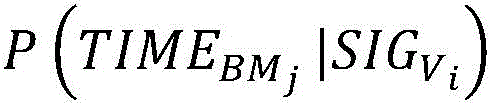 indicating a historical period of time
 The jth target hardware BM being an abnormal pointjThe corresponding time is the probability of the time of failure,
 when showing historyWithin a period of time
 Is the probability of an outlier,
 indicating the jth target hardware BM in the history periodjThe corresponding time is the probability of the time of failure.
The following expression can be used to calculate the probability that each combined monitoring index is an abnormal point in the fault time corresponding to the fault of the target hardware in the historical time period:

wherein, indicating the jth target hardware BM in the history periodjThe combined correction weight coefficient corresponding to the combined monitoring index in the corresponding failure time
 Is the probability of an outlier,
 representing combinations over a historical period of time
 The jth target hardware BM being an abnormal pointjThe corresponding time is the probability of the time of failure,
 representing combinations over a historical period of time
 Is the probability of an outlier,
 indicating a historical period of time
 The jth target hardware BM being an abnormal pointjThe corresponding time is the probability of the failure time, N represents the number of the combined monitoring indexes,
 represents the correction weight coefficient corresponding to the nth monitoring index,
 indicating a historical period of time
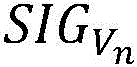 Is the probability of an outlier. Wherein, the combination
 The corresponding 1 st, the other words are abnormal points, and the corresponding i combined monitoring indexes are abnormal points.
The above historical time period may be set according to actual requirements, for example, it may be one week, one month, or one year before the current time.
S202, judging whether the probability is larger than a second preset threshold value.
And judging whether the probability is greater than a second preset threshold value or not after calculating the probability that each monitoring index or each combined monitoring index is an abnormal point in the fault time corresponding to the fault of the target hardware in the historical time period, and executing the operation of the step S203 if the probability is greater than the second preset threshold value, and if the probability is not greater than the second preset threshold value, indicating that the target hardware in the historical time period has the fault and is not associated with the monitoring index. The second preset threshold may be set according to actual requirements, and may be specifically the same as or different from the first preset threshold, for example, the second preset threshold may be 0.95, 0.86, or 0.98, and so on.
And S203, if the probability is larger than the first preset threshold, determining the monitoring index or the combined monitoring index corresponding to the probability larger than the second preset threshold as a target index.
And if the probability that the monitoring index is an abnormal point in the fault time corresponding to the fault of the target hardware in the historical time period is greater than a second preset threshold value, determining the corresponding monitoring index as the target index. And if the probability that the combined monitoring index is an abnormal point in the fault time corresponding to the fault of the target hardware in the historical time period is greater than a second preset threshold value, determining the corresponding combined monitoring index as the target index.
In the embodiment of the invention, the Bayesian conditional probability algorithm is utilized to calculate the target index associated with the target hardware failure of the target server in the historical time period, so that the monitoring index associated with the target hardware failure can be more accurately determined, further, whether the target hardware is about to fail can be more accurately judged and diagnosed, and the failure of the application program running on the server caused by the server failure can be reduced.
As an alternative implementation manner of the embodiment of the present invention, as shown in fig. 3, in the step S102, an implementation manner of determining the abnormal point corresponding to each pre-specified monitoring index and the timestamp corresponding to the abnormal point from the server time series data and the service time series data may include:
s301, aiming at each preassigned monitoring index in the server time sequence data and the service time sequence data, calculating a weight coefficient corresponding to the monitoring index.
Because the hardware of the target server is before being damaged and the service is before being abnormal, the monitoring indexes related to the hardware and the service generate relatively large fluctuation bulges, and due to the characteristics of the Sigmoid algorithm S-type saturation function, abnormal bulges in all indexes can be filtered out. In the embodiment of the present invention, a Sigmoid algorithm may be used, and for each pre-specified monitoring index in the collected server time series data and service time series data, the following preset expression is used to calculate a weight coefficient corresponding to each monitoring index in the server time series data and the service time series data:

wherein, ViRepresents the weight coefficient, Q, corresponding to the ith monitoring indexiCorrection factor, S, representing the ith monitoring indexiIndicates the time series data corresponding to the ith monitoring index, highest (S)iM) represents the i-th monitoring index in the time series data SiMaximum value of M data. Illustratively, M can take the value of 1000, 10000, 50000, etc., QiThe value of (d) may be a value between 0.85 and 0.9.
S302, based on the weight coefficient, calculating a correction weight coefficient corresponding to the monitoring index.
After the weight coefficient corresponding to each monitoring index is obtained through calculation, the correction weight coefficient corresponding to each monitoring index can be calculated by using the following preset expression:

wherein, and showing a correction weight coefficient corresponding to the ith monitoring index, wherein epsilon shows an adjusting parameter. Illustratively, ε may be 0.5.
For example, the time series data of each monitoring index may correspond to a curve in a planar coordinate system, the horizontal axis may represent a time point, and the vertical axis represents an index value, and an abnormal salient point in the curve may be found by using Sigmoid algorithm, where the abnormal salient point is an abnormal point corresponding to the monitoring index.
S303, judging whether the correction weight coefficient is larger than a third preset threshold value.
After the correction weight coefficients corresponding to the monitoring indexes are obtained through calculation, it may be determined, for each monitoring index, whether the correction weight coefficient corresponding to the monitoring index is greater than a third preset threshold, if so, the correction weight coefficient corresponding to the monitoring index is an abnormal point, and the operation of step S304 is executed, and if not, the correction weight coefficient corresponding to the monitoring index is not an abnormal point. The third preset threshold may be set according to actual requirements, and may be specifically the same as or different from the second preset threshold.
S304, if the monitoring index is larger than the preset monitoring index, the monitoring index is an abnormal point, and a timestamp corresponding to the abnormal point is determined.
The correction weight coefficient corresponding to the monitoring index reflects the numerical value change condition of the monitoring index, the correction weight coefficient corresponding to the monitoring index is larger than a third preset threshold value, the correction weight coefficient corresponding to the monitoring index is an abnormal point, correspondingly, the monitoring index is the abnormal point, and due to the fact that the acquired time sequence data of the monitoring index is, under the condition that the abnormal point of the monitoring index is determined, the timestamp corresponding to the abnormal point can be determined.
In the embodiment of the invention, the characteristic of S-shaped saturation function of Sigmoid algorithm is utilized to determine the abnormal points corresponding to each preassigned monitoring index from the server time sequence data and the service time sequence data, so that whether the target hardware is about to fail can be more accurately judged and diagnosed, and the failure of the application program running on the server caused by the server failure is reduced.
As an optional implementation manner of the embodiment of the present invention, in the step S104, the implementation manner of calculating the probability that the target index is the abnormal point may include:
and calculating a correction weight coefficient corresponding to the target index, and determining the correction weight coefficient as the probability that the target index is an abnormal point.
And calculating a weight coefficient corresponding to each target index associated with the fault of the target hardware in the determined historical time period, further calculating a correction weight coefficient corresponding to the target index, and determining the calculated correction weight coefficient as the probability that the target index is an abnormal point. When the target index is a single index, the correction weight coefficient corresponding to the index is directly calculated, and when the target index is a combined index, the correction weight coefficient corresponding to each index in the combined index is respectively calculated. Specifically, the embodiment of calculating the weight coefficient corresponding to each target index and calculating the correction weight coefficient corresponding to each target index may refer to the embodiment of calculating the correction weight coefficient corresponding to the monitoring index, and the details of the embodiment of the present invention are not repeated herein.
When the target index associated with the failure of the target hardware in the determined historical time period is the combined monitoring index, that is, when the determined target index is the combined index, in the step S104, based on the relationship between the probability that the target index is the abnormal point and the first preset threshold, determining whether the target hardware will fail includes:
judging whether the probability that each sub-target index in the combined index is an abnormal point is not less than a first preset threshold value;
if so, it is determined that the target hardware will fail.
And under the condition that the determined target index is the combined index, judging whether the probability that each sub-target index in the combined index is an abnormal point is not less than a first preset threshold, and if not, determining that the target hardware is about to break down.
In the embodiment of the invention, when the target index is the combined index, whether the probability that each sub-target index in the combined index is an abnormal point is not less than a first preset threshold value or not is judged, and when the probability is not less than the first preset threshold value, the target hardware is determined to be in fault, so that inaccurate prejudgment caused by the fact that whether the target hardware is in fault or not is determined according to whether a single index is an abnormal point or not when the target index associated with the fault of the target hardware is the combined monitoring index is avoided.
As an optional implementation manner of the embodiment of the present invention, on the basis of the embodiment shown in fig. 1, after determining the abnormal point corresponding to each pre-specified monitoring index and the timestamp corresponding to the abnormal point from the server time series data and the service time series data, S102 may further perform the following operations:
and storing the abnormal points corresponding to the monitoring indexes and the time stamps corresponding to the abnormal points into a database.
After the server time sequence data of the operation parameters of the target server and the service time sequence data of the operation parameters of the service operated on the target server are collected, the collected server time sequence data and the service time sequence data can be stored in a database, and after the abnormal points corresponding to the monitoring indexes and the time stamps corresponding to the abnormal points are determined, the time stamps corresponding to the abnormal points and the abnormal points corresponding to the monitoring indexes are stored in the database, so that the target indexes related to the faults of the target hardware of the target server in a historical time period can be determined based on the abnormal points corresponding to the monitoring indexes and the time stamps corresponding to the abnormal points, and prejudgment and diagnosis of the target hardware are achieved.
Correspondingly, the step S103 of determining the target index associated with the target hardware failure of the target server in the historical time period based on the abnormal point corresponding to each monitoring index and the timestamp corresponding to the abnormal point may include:
and determining a target index associated with the target hardware failure of the target server in the historical time period based on the abnormal point corresponding to each monitoring index in the database and the timestamp corresponding to the abnormal point.
As an alternative implementation manner of the embodiment of the present invention, on the basis of the embodiment shown in fig. 1, the following operations may be further performed:
and in the case of determining that the target hardware will be in failure, outputting alarm information.
And under the condition that the target hardware is determined to be in fault, outputting alarm information so that a manager can timely perform corresponding processing on the target server to be in fault and the service running on the target server, and the influence of the hardware fault on the service running on the target server is reduced.
As an alternative implementation manner of the embodiment of the present invention, on the basis of the embodiment shown in fig. 1, the following operations may be further performed:
in the event that it is determined that the target hardware will fail, the services running on the target server are migrated to other normal servers.
Under the condition that the target hardware is determined to be in fault, namely before the fault occurs, the service running on the target server is migrated to other normal servers, so that the service running on the target server is not influenced, the quality of the service is improved, and meanwhile, the fault of the service running on the server caused by the fault of the server is reduced.
Corresponding to the foregoing method embodiment, an embodiment of the present invention provides a server fault diagnosis apparatus, and as shown in fig. 4, the apparatus may include:
the data acquisition module 401 is configured to acquire server timing data of the target server operation parameters and service timing data of the operation parameters that operate on the target server;
a first determining module 402, configured to determine, from the server time series data and the service time series data, an abnormal point corresponding to each pre-specified monitoring index and a timestamp corresponding to the abnormal point;
a second determining module 403, configured to determine, based on the abnormal point corresponding to each monitoring index and the timestamp corresponding to the abnormal point, a target index associated with a failure of target hardware of the target server in a historical time period;
and the fault diagnosis module 404 is configured to calculate a probability that the target index is an abnormal point, and determine whether the target hardware will be in fault based on a relationship between the probability that the target index is an abnormal point and a first preset threshold.
The server fault diagnosis device provided by the embodiment of the invention collects the server time sequence data of the operation parameters of the target server and the service time sequence data of the operation parameters of the service operated on the target server; determining an abnormal point corresponding to each pre-specified monitoring index and a timestamp corresponding to the abnormal point from the server time sequence data and the service time sequence data; determining target indexes related to the target hardware failure of the target server in a historical time period based on the abnormal points corresponding to the monitoring indexes and the time stamps corresponding to the abnormal points; and calculating the probability that the target index is the abnormal point, and determining whether the target hardware will break down or not based on the relation between the probability that the target index is the abnormal point and a first preset threshold value. Compared with the prior art that the early warning processing is carried out after the server hardware fault is diagnosed, the embodiment of the invention can prejudge and diagnose whether the hardware of the target server will be in fault or not in advance, and further early warning is carried out in advance, so that the warning mode of the server hardware fault and the processing mode after the fault are changed, the faults of the service (or the application program) running on the server caused by the server fault are reduced, and the quality of the service can be improved.
Optionally, the second determining module 403 includes:
the first calculation submodule is used for calculating the probability that each monitoring index or each combined monitoring index is an abnormal point in the fault time corresponding to the fault of the target hardware in the historical time period based on the abnormal point corresponding to each monitoring index and the timestamp corresponding to the abnormal point; the combined monitoring index is an index combination at least comprising two monitoring indexes;
the first judgment submodule is used for judging whether the probability is greater than a second preset threshold value or not;
and the first determining submodule is used for determining the monitoring index or the combined monitoring index corresponding to the probability greater than the second preset threshold value as the target index when the first judging submodule judges that the probability is greater than the second preset threshold value.
Optionally, the first determining module 402 includes:
the second calculation submodule is used for calculating a weight coefficient corresponding to each preassigned monitoring index in the server time sequence data and the service time sequence data;
the third calculation submodule is used for calculating a correction weight coefficient corresponding to the monitoring index based on the weight coefficient;
the second judgment submodule is used for judging whether the correction weight coefficient is larger than a third preset threshold value or not;
and the second determining submodule is used for determining the monitoring index as an abnormal point and determining a timestamp corresponding to the abnormal point when the second judging submodule judges that the correction weight coefficient is greater than a third preset threshold value.
Optionally, the fault diagnosis module 404 is specifically configured to:
calculating a correction weight coefficient corresponding to the target index, and determining the correction weight coefficient as the probability that the target index is an abnormal point;
when the target indicator is a combined indicator, the fault diagnosis module 404 is specifically configured to:
judging whether the probability that each sub-target index in the combined index is an abnormal point is not less than a first preset threshold value;
if so, it is determined that the target hardware will fail.
Optionally, the apparatus further comprises:
the storage module is used for storing the abnormal points corresponding to the monitoring indexes and the time stamps corresponding to the abnormal points into a database;
the second determining module 403 is specifically configured to:
and determining a target index associated with the target hardware failure of the target server in the historical time period based on the abnormal point corresponding to each monitoring index in the database and the timestamp corresponding to the abnormal point.
Optionally, the apparatus further comprises:
and the alarm module is used for outputting alarm information under the condition that the target hardware is determined to be in fault.
Optionally, the apparatus further comprises:
and the service migration module is used for migrating the service running on the target server to other normal servers under the condition that the target hardware is determined to be in failure.
An embodiment of the present invention further provides an electronic device, as shown in fig. 5, which includes a processor 501, a communication interface 502, a memory 503 and a communication bus 504, where the processor 501, the communication interface 502 and the memory 503 complete mutual communication through the communication bus 504,
a memory 503 for storing a computer program;
the processor 501, when executing the program stored in the memory 503, implements the following steps:
acquiring server time sequence data of the operation parameters of the target server and service time sequence data of the operation parameters of the service operated on the target server;
determining an abnormal point corresponding to each pre-specified monitoring index and a timestamp corresponding to the abnormal point from the server time sequence data and the service time sequence data;
determining target indexes related to the target hardware failure of the target server in a historical time period based on the abnormal points corresponding to the monitoring indexes and the time stamps corresponding to the abnormal points;
and calculating the probability that the target index is the abnormal point, and determining whether the target hardware will break down or not based on the relation between the probability that the target index is the abnormal point and a first preset threshold value.
According to the electronic equipment provided by the embodiment of the invention, the server time sequence data of the operation parameters of the target server and the service time sequence data of the operation parameters of the service operated on the target server are acquired; determining an abnormal point corresponding to each pre-specified monitoring index and a timestamp corresponding to the abnormal point from the server time sequence data and the service time sequence data; determining target indexes related to the target hardware failure of the target server in a historical time period based on the abnormal points corresponding to the monitoring indexes and the time stamps corresponding to the abnormal points; and calculating the probability that the target index is the abnormal point, and determining whether the target hardware will break down or not based on the relation between the probability that the target index is the abnormal point and a first preset threshold value. Compared with the prior art that the early warning processing is carried out after the server hardware fault is diagnosed, the embodiment of the invention can prejudge and diagnose whether the hardware of the target server will be in fault or not in advance, and further early warning is carried out in advance, so that the warning mode of the server hardware fault and the processing mode after the fault are changed, the faults of the service (or the application program) running on the server caused by the server fault are reduced, and the quality of the service can be improved.
The communication bus mentioned in the above terminal may be a Peripheral Component Interconnect (PCI) bus, an Extended Industry Standard Architecture (EISA) bus, or the like. The communication bus may be divided into an address bus, a data bus, a control bus, etc. For ease of illustration, only one thick line is shown, but this does not mean that there is only one bus or one type of bus.
The communication interface is used for communication between the terminal and other equipment.
The Memory may include a Random Access Memory (RAM) or a non-volatile Memory (non-volatile Memory), such as at least one disk Memory. Optionally, the memory may also be at least one memory device located remotely from the processor.
The Processor may be a general-purpose Processor, and includes a Central Processing Unit (CPU), a Network Processor (NP), and the like; the device can also be a Digital Signal Processor (DSP), an Application Specific Integrated Circuit (ASIC), a Field Programmable Gate Array (FPGA) or other Programmable logic device, a discrete Gate or transistor logic device, or a discrete hardware component.
In yet another embodiment of the present invention, a computer-readable storage medium is further provided, in which a computer program is stored, and the computer program, when executed by a processor, implements the steps of a server fault diagnosis method described in any one of the above embodiments.
In yet another embodiment of the present invention, there is also provided a computer program product containing instructions which, when run on a computer, cause the computer to perform the steps of a server failure diagnosis method as described in any one of the above embodiments.
In the above embodiments, the implementation may be wholly or partially realized by software, hardware, firmware, or any combination thereof. When implemented in software, may be implemented in whole or in part in the form of a computer program product. The computer program product includes one or more computer instructions. When loaded and executed on a computer, cause the processes or functions described in accordance with the embodiments of the invention to occur, in whole or in part. The computer may be a general purpose computer, a special purpose computer, a network of computers, or other programmable device. The computer instructions may be stored in a computer readable storage medium or transmitted from one computer readable storage medium to another, for example, from one website site, computer, server, or data center to another website site, computer, server, or data center via wired (e.g., coaxial cable, fiber optic, Digital Subscriber Line (DSL)) or wireless (e.g., infrared, wireless, microwave, etc.). The computer-readable storage medium can be any available medium that can be accessed by a computer or a data storage device, such as a server, a data center, etc., that incorporates one or more of the available media. The usable medium may be a magnetic medium (e.g., floppy Disk, hard Disk, magnetic tape), an optical medium (e.g., DVD), or a semiconductor medium (e.g., Solid State Disk (SSD)), among others.
It is noted that, herein, relational terms such as first and second, and the like may be used solely to distinguish one entity or action from another entity or action without necessarily requiring or implying any actual such relationship or order between such entities or actions. Also, the terms "comprises," "comprising," or any other variation thereof, are intended to cover a non-exclusive inclusion, such that a process, method, article, or apparatus that comprises a list of elements does not include only those elements but may include other elements not expressly listed or inherent to such process, method, article, or apparatus. Without further limitation, an element defined by the phrase "comprising an … …" does not exclude the presence of other identical elements in a process, method, article, or apparatus that comprises the element.
All the embodiments in the present specification are described in a related manner, and the same and similar parts among the embodiments may be referred to each other, and each embodiment focuses on the differences from the other embodiments. In particular, for the device/electronic apparatus embodiments, since they are substantially similar to the method embodiments, the description is relatively simple, and for the relevant points, reference may be made to some descriptions of the method embodiments.
The above description is only for the preferred embodiment of the present invention, and is not intended to limit the scope of the present invention. Any modification, equivalent replacement, or improvement made within the spirit and principle of the present invention shall fall within the protection scope of the present invention.
Claims (10)
1. A server fault diagnosis method, characterized in that the method comprises:
acquiring server time sequence data of target server operation parameters and service time sequence data of operation parameters of services operated on the target server;
determining abnormal points corresponding to each pre-specified monitoring index and timestamps corresponding to the abnormal points from the server time sequence data and the service time sequence data;
determining target indexes related to the target hardware failure of the target server in a historical time period based on the abnormal points corresponding to the monitoring indexes and the time stamps corresponding to the abnormal points;
and calculating the probability that the target index is an abnormal point, and determining whether the target hardware will break down or not based on the relation between the probability that the target index is an abnormal point and a first preset threshold value.
2. The method according to claim 1, wherein the determining a target index associated with a target hardware failure of the target server in a historical time period based on an abnormal point corresponding to each monitoring index and a timestamp corresponding to the abnormal point comprises:
calculating the probability that each monitoring index or each combined monitoring index is an abnormal point in the fault time corresponding to the fault of the target hardware in the historical time period based on the abnormal point corresponding to each monitoring index and the timestamp corresponding to the abnormal point; the combined monitoring index is an index combination at least comprising two monitoring indexes;
judging whether the probability is larger than a second preset threshold value or not;
and if so, determining the monitoring index or the combined monitoring index corresponding to the probability greater than the second preset threshold as the target index.
3. The method according to claim 1, wherein the determining, from the server time series data and the service time series data, an abnormal point corresponding to each pre-specified monitoring index and a timestamp corresponding to the abnormal point comprises:
calculating a weight coefficient corresponding to each pre-specified monitoring index in the server time sequence data and the service time sequence data;
based on the weight coefficient, calculating a correction weight coefficient corresponding to the monitoring index;
judging whether the correction weight coefficient is larger than a third preset threshold value or not;
if the monitoring index is larger than the preset monitoring index, the monitoring index is an abnormal point, and a timestamp corresponding to the abnormal point is determined.
4. The method of claim 3, wherein the calculating the probability that the target indicator is an outlier comprises:
calculating a correction weight coefficient corresponding to the target index, and determining the correction weight coefficient as the probability that the target index is an abnormal point;
in a case where the target indicator is a combined indicator, the determining whether the target hardware will fail based on a relationship between the probability that the target indicator is an abnormal point and a first preset threshold includes:
judging whether the probability that each sub-target index in the combined index is an abnormal point is not less than the first preset threshold value;
if so, it is determined that the target hardware will fail.
5. The method of claim 1, further comprising:
storing abnormal points corresponding to the monitoring indexes and timestamps corresponding to the abnormal points into a database;
the determining, based on the abnormal point corresponding to each monitoring index and the timestamp corresponding to the abnormal point, a target index associated with a failure of target hardware of the target server in a historical time period includes:
and determining a target index associated with the target hardware failure of the target server in a historical time period based on the abnormal point corresponding to each monitoring index in the database and the timestamp corresponding to the abnormal point.
6. The method of claim 1, further comprising:
and under the condition that the target hardware is determined to be in failure, outputting alarm information.
7. The method of claim 1, further comprising:
migrating the service running on the target server to other normal servers under the condition that the target hardware is determined to be failed.
8. An apparatus for diagnosing a server failure, the apparatus comprising:
the data acquisition module is used for acquiring server time sequence data of the operation parameters of the target server and service time sequence data of the operation parameters of the service operated on the target server;
the first determining module is used for determining abnormal points corresponding to each pre-specified monitoring index and timestamps corresponding to the abnormal points from the server time sequence data and the service time sequence data;
the second determining module is used for determining a target index associated with the target hardware failure of the target server in a historical time period based on the abnormal point corresponding to each monitoring index and the timestamp corresponding to the abnormal point;
and the fault diagnosis module is used for calculating the probability that the target index is an abnormal point and determining whether the target hardware is about to generate faults or not based on the relation between the probability that the target index is an abnormal point and a first preset threshold value.
9. An electronic device is characterized by comprising a processor, a communication interface, a memory and a communication bus, wherein the processor and the communication interface are used for realizing mutual communication by the memory through the communication bus;
a memory for storing a computer program;
a processor for implementing the method steps of any of claims 1 to 7 when executing a program stored in the memory.
10. A computer-readable storage medium, characterized in that a computer program is stored in the computer-readable storage medium, which computer program, when being executed by a processor, carries out the method steps of any one of claims 1 to 7.
Priority Applications (1)
| Application Number | Priority Date | Filing Date | Title |
|---|---|---|---|
| CN202110947284.5A CN113590429B (en) | 2021-08-18 | 2021-08-18 | Server fault diagnosis method and device and electronic equipment |
Applications Claiming Priority (1)
| Application Number | Priority Date | Filing Date | Title |
|---|---|---|---|
| CN202110947284.5A CN113590429B (en) | 2021-08-18 | 2021-08-18 | Server fault diagnosis method and device and electronic equipment |
Publications (2)
| Publication Number | Publication Date |
|---|---|
| CN113590429A true CN113590429A (en) | 2021-11-02 |
| CN113590429B CN113590429B (en) | 2024-07-19 |
Family
ID=78238407
Family Applications (1)
| Application Number | Title | Priority Date | Filing Date |
|---|---|---|---|
| CN202110947284.5A Active CN113590429B (en) | 2021-08-18 | 2021-08-18 | Server fault diagnosis method and device and electronic equipment |
Country Status (1)
| Country | Link |
|---|---|
| CN (1) | CN113590429B (en) |
Cited By (8)
| Publication number | Priority date | Publication date | Assignee | Title |
|---|---|---|---|---|
| CN114020583A (en) * | 2021-11-29 | 2022-02-08 | 建信金融科技有限责任公司 | Application system service availability monitoring method, device, processor and storage medium |
| CN114301817A (en) * | 2021-12-17 | 2022-04-08 | 中电信数智科技有限公司 | Equipment monitoring threshold setting method and system based on Netconf protocol |
| CN114358715A (en) * | 2021-12-22 | 2022-04-15 | 北京纪新泰富机电技术股份有限公司 | Data processing method and system, equipment and storage medium |
| CN114706733A (en) * | 2022-05-30 | 2022-07-05 | 支付宝(杭州)信息技术有限公司 | Section program abnormity monitoring method and device |
| CN114966304A (en) * | 2022-04-13 | 2022-08-30 | 中移互联网有限公司 | Fault positioning method and device and electronic equipment |
| CN115168168A (en) * | 2022-06-30 | 2022-10-11 | 苏州浪潮智能科技有限公司 | Server failure prediction method, system, device and medium |
| CN115827656A (en) * | 2022-12-22 | 2023-03-21 | 广州趣研网络科技有限公司 | Abnormal timestamp adjustment method and device for unstable time series data |
| CN120670240A (en) * | 2025-08-22 | 2025-09-19 | 苏州元脑智能科技有限公司 | Server hardware detection method and electronic equipment |
Citations (4)
| Publication number | Priority date | Publication date | Assignee | Title |
|---|---|---|---|---|
| CN103970635A (en) * | 2014-04-28 | 2014-08-06 | 浪潮电子信息产业股份有限公司 | Server hardware fault self-diagnosis method |
| US20150234698A1 (en) * | 2014-02-18 | 2015-08-20 | Netapp, Inc. | Methods for diagnosing hardware component failure and devices thereof |
| US20170147425A1 (en) * | 2015-11-25 | 2017-05-25 | Salesforce.Com, Inc. | System and method for monitoring and detecting faulty storage devices |
| CN108446198A (en) * | 2018-04-24 | 2018-08-24 | 深圳市国鑫恒宇科技有限公司 | hardware fault diagnosis circuit, method and mainboard |
-
2021
- 2021-08-18 CN CN202110947284.5A patent/CN113590429B/en active Active
Patent Citations (4)
| Publication number | Priority date | Publication date | Assignee | Title |
|---|---|---|---|---|
| US20150234698A1 (en) * | 2014-02-18 | 2015-08-20 | Netapp, Inc. | Methods for diagnosing hardware component failure and devices thereof |
| CN103970635A (en) * | 2014-04-28 | 2014-08-06 | 浪潮电子信息产业股份有限公司 | Server hardware fault self-diagnosis method |
| US20170147425A1 (en) * | 2015-11-25 | 2017-05-25 | Salesforce.Com, Inc. | System and method for monitoring and detecting faulty storage devices |
| CN108446198A (en) * | 2018-04-24 | 2018-08-24 | 深圳市国鑫恒宇科技有限公司 | hardware fault diagnosis circuit, method and mainboard |
Cited By (10)
| Publication number | Priority date | Publication date | Assignee | Title |
|---|---|---|---|---|
| CN114020583A (en) * | 2021-11-29 | 2022-02-08 | 建信金融科技有限责任公司 | Application system service availability monitoring method, device, processor and storage medium |
| CN114020583B (en) * | 2021-11-29 | 2024-08-23 | 建信金融科技有限责任公司 | Method, device, processor and storage medium for monitoring service availability of application system |
| CN114301817A (en) * | 2021-12-17 | 2022-04-08 | 中电信数智科技有限公司 | Equipment monitoring threshold setting method and system based on Netconf protocol |
| CN114358715A (en) * | 2021-12-22 | 2022-04-15 | 北京纪新泰富机电技术股份有限公司 | Data processing method and system, equipment and storage medium |
| CN114966304A (en) * | 2022-04-13 | 2022-08-30 | 中移互联网有限公司 | Fault positioning method and device and electronic equipment |
| CN114706733A (en) * | 2022-05-30 | 2022-07-05 | 支付宝(杭州)信息技术有限公司 | Section program abnormity monitoring method and device |
| CN114706733B (en) * | 2022-05-30 | 2022-09-20 | 支付宝(杭州)信息技术有限公司 | Section program abnormity monitoring method and device |
| CN115168168A (en) * | 2022-06-30 | 2022-10-11 | 苏州浪潮智能科技有限公司 | Server failure prediction method, system, device and medium |
| CN115827656A (en) * | 2022-12-22 | 2023-03-21 | 广州趣研网络科技有限公司 | Abnormal timestamp adjustment method and device for unstable time series data |
| CN120670240A (en) * | 2025-08-22 | 2025-09-19 | 苏州元脑智能科技有限公司 | Server hardware detection method and electronic equipment |
Also Published As
| Publication number | Publication date |
|---|---|
| CN113590429B (en) | 2024-07-19 |
Similar Documents
| Publication | Publication Date | Title |
|---|---|---|
| CN113590429B (en) | Server fault diagnosis method and device and electronic equipment | |
| CN102713861B (en) | Operation management device, operation management method and program recorded medium | |
| JP4965064B2 (en) | Self-learning method and system for anomaly detection | |
| US7936260B2 (en) | Identifying redundant alarms by determining coefficients of correlation between alarm categories | |
| US9239988B2 (en) | Network event management | |
| CN111104238B (en) | CE-based memory diagnosis method, device and medium | |
| CN114743703A (en) | Reliability analysis method, device, equipment and storage medium for nuclear power plant units | |
| CN120181315A (en) | A method for predicting Internet equipment failure based on big data | |
| CN118523963B (en) | Power information network security risk assessment method and system | |
| CN117370469A (en) | Method and system for efficient data replication in a big data environment | |
| CN120358147A (en) | Monitoring index dependency analysis and topology establishment method and device and computer equipment | |
| CN113992602B (en) | Cable monitoring data uploading method, device, equipment and storage medium | |
| CN120448223A (en) | Method, device, server and medium for monitoring health of server storage system | |
| JP5007247B2 (en) | Job processing system and job management method | |
| CN120354246B (en) | Troubleshooting methods, systems, and media | |
| CN121050922B (en) | Fault prediction method and program product for operating system | |
| CN110659147B (en) | Self-repairing method and system based on module self-checking behavior | |
| CN119829314B (en) | A method and apparatus for detecting disk array failures | |
| CN119127559A (en) | Abnormal positioning method, device, electronic equipment and storage medium | |
| CN110955587A (en) | A method and device for determining equipment to be replaced | |
| CN118210677A (en) | Server performance evaluation method and device, electronic equipment and storage medium | |
| CN114036026A (en) | Greenplum Database Health Status Monitoring Method and Related Device | |
| CN112671590A (en) | Data transmission method and device, electronic equipment and computer storage medium | |
| CN116992245B (en) | A distributed time series data analysis and processing method | |
| CN121509192A (en) | A method, apparatus, medium, and device for alarm analysis based on keywords. |
Legal Events
| Date | Code | Title | Description |
|---|---|---|---|
| PB01 | Publication | ||
| PB01 | Publication | ||
| SE01 | Entry into force of request for substantive examination | ||
| SE01 | Entry into force of request for substantive examination | ||
| GR01 | Patent grant | ||
| GR01 | Patent grant |