Detailed Description
The embodiment of the invention provides a method, a device, equipment and a storage medium for delivering packages, wherein in the technical scheme of the invention, data preprocessing is firstly carried out on acquired historical package delivery data to obtain target package signing data which accords with a data mining standard; inputting the sign-in data of the target package into a preset user behavior habit model for prediction to obtain sign-in behavior habit information of the user; intention identification is carried out on the sign-in data of the target package through a preset intention identification model, and user intention label data are obtained; associating the intention label data with the signing behavior habit information to generate a user signing portrait of a target user; acquiring parcel information of a parcel to be dispatched, and judging whether the parcel to be dispatched is a first-time warehousing parcel of a current store or not according to the parcel information; and determining a delivery mode of the parcel to be delivered according to the judgment result and the user signing image, and delivering the parcel according to the parcel delivery mode. According to the scheme, the delivery mode of the package to be delivered is predicted through the user behavior habit model and the user signing image, the technical problem that the package delivery mode cannot be determined by fully utilizing package delivery data is solved, and the complaint rate of the user is reduced.
The terms "first," "second," "third," "fourth," and the like in the description and in the claims, as well as in the drawings, if any, are used for distinguishing between similar elements and not necessarily for describing a particular sequential or chronological order. It will be appreciated that the data so used may be interchanged under appropriate circumstances such that the embodiments described herein may be practiced otherwise than as specifically illustrated or described herein. Furthermore, the terms "comprises," "comprising," or "having," and any variations thereof, are intended to cover non-exclusive inclusions, such that a process, method, system, article, or apparatus that comprises a list of steps or elements is not necessarily limited to those steps or elements expressly listed, but may include other steps or elements not expressly listed or inherent to such process, method, article, or apparatus.
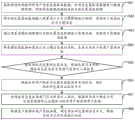
For the sake of understanding, the following describes a specific flow of an embodiment of the present invention, and referring to fig. 1, a first embodiment of a parcel delivery method according to an embodiment of the present invention includes:
101. acquiring historical parcel distribution data of a user in a preset time period, and performing data preprocessing on the historical parcel distribution data to obtain target parcel signing-in data meeting a data mining standard;
in this embodiment, historical parcel delivery data of a user within a preset time period is acquired, and the historical parcel delivery data is subjected to data preprocessing to obtain target parcel signing data meeting a data mining standard. Wherein the historical package delivery data comprises package receipt data. It is to be understood that the executing entity of the present invention may be a package delivery apparatus, and may also be a terminal or a server, which is not limited herein. The embodiment of the present invention is described by taking a server as an execution subject.
In this embodiment, the complaint data may be obtained through a variety of ways, mainly from websites, from hotline phones, and at the end of the root, and the data source is documents and tables. After the preliminary data acquisition is completed, the next step is data preprocessing. The package signing data obtained by the traditional ways are relatively direct in source, relatively strong in data integrity and authenticity, processed by business processing personnel, have the characteristic of integrity, and are main data sources for typical event mining.
Data from the network, which data cannot guarantee its availability and integrity. The unstructured data or semi-structured data from different approaches are used as package receipt data for mining typical events, preprocessing is needed to be carried out on the data to ensure the accuracy and the integrity of the data, the quality of the package receipt data influences the quality of data mining, and the preprocessing is necessary to improve the quality of a data source. The data preprocessing comprises correcting error data and completing data, converting data and denoising data. And correcting the error data is to remove irrelevant data which is inconsistent with the subject of the complaint in the package receipt data and correct the error in the package receipt data, for example, the complaint initiated by the user is not a product complaint or a service complaint, and the time and event description are inconsistent, which can influence the result of data mining. The completion data fills in incomplete parts in the package receipt data, so that the complaint data is consistent on the event description, and the integrity of the data is ensured.
The data conversion is to combine the scattered data and convert the data into a data form which can be processed by a computer. Data conversion
In other words, the problem that the attribute representations of different data sources are different needs to be considered, the same attribute representation of data may be different where the data exist, and the data needs to be unified during data conversion, such as units and expression forms which are not problematic. Data redundancy needs to be processed in data conversion, sometimes description of the same event is too complicated, so that a lot of redundant data is generated, package receipt data needs to be concise, and data mining efficiency is improved.
The package signing data may become very large as time is accumulated, the data dimension is very high due to the large text data amount, and in data mining, high-dimensional data mining causes long time consumption, which causes long waiting time for processing of a system user, so that the vector space dimension needs to be reduced for the high-dimensional data. The data dimensionality reduction does not affect the accuracy of data mining, and the data mining efficiency can be improved. Through preliminary data preprocessing, the complaining data in the database ensures the integrity and accuracy of the data.
102. Inputting the sign-in data of the target package into a preset user behavior habit model for prediction to obtain sign-in behavior habit information of the user;
in the embodiment, the target package signing data is input into a preset user behavior habit model for prediction, so that the signing behavior habit information of the user is obtained. When the acquired target package signing data is input into a pre-established user behavior habit model to obtain the signing-in behavior habit information of the user, preferably, the user behavior habit model comprises a behavior habit score formula, wherein the behavior habit score formula is C (i) ═ α i × Bi + β i × Pi, C (i) represents a behavior habit score corresponding to the ith service, α i and β i respectively represent calculation weights of package distribution data corresponding to the ith service, and Bi and Pi respectively represent package distribution data score scores corresponding to the ith service, so that the signing-in behavior habit information of the user can be obtained according to the behavior habit score formula. It should be noted that the calculation weight may be a fixed value, or may be determined according to the acquired package distribution data, and the calculation weight may be determined according to the acquired package distribution data.
Specifically, the user behavior habit model includes an association relationship between each service and target package delivery data, and the user behavior habit model performs statistics and classification on the obtained target package delivery data according to the association relationship to obtain a service-based user behavior set and a user attribute set.
103. Intention identification is carried out on the sign-in data of the target package through a preset intention identification model, and user intention label data are obtained;
in the embodiment, the intention identification is carried out on the sign-in data of the target package through a preset intention identification model, so that the intention label data of the user is obtained. And analyzing and processing the target package signing data through a preset intention identification model to obtain user intention label data. The user behavior characteristics comprise a user sign-in characteristic and a user operation characteristic. The user signing-in characteristics can comprise user signing-in express delivery mode characteristics and user signing-in habit data item characteristics, and the user complaint characteristics can comprise user product purchasing complaint characteristics and user service complaint characteristics, which are not limited herein.
Optionally, the server acquires package distribution data (user sign-in behavior data and user complaint behavior data) from a preset database, inputs the user operation behavior data into the trained intention recognition model, and extracts features through the trained intention recognition model to obtain user sign-in features and user operation features; the server sequentially carries out semantic similarity calculation and intention identification processing on the user signing-in characteristics and the user operation characteristics to obtain initial intention label data and corresponding intention label confidence values; when the corresponding intention tag confidence value is greater than or equal to the preset intention threshold value, the server determines that the initial intention tag data is the user intention tag data.
104. Associating the intention label data with the signing behavior habit information to generate a user signing portrait of a target user;
in this embodiment, the intention tag data and the sign-off behavior habit information are associated to generate a user sign-off portrait of the target user. Wherein, the label is fine-grained user information, and the user portrait is information integrated based on the labels with different dimensions of the user. Specifically, the server reads an initial user portrait from a preset database by using user identification data, and adds and/or deletes user intention tag data to the initial user portrait by using a corresponding tag updating rule to obtain a target user signing portrait. For example, a user who is used to send a piece to a person in the student age still selects a means of sending a piece to a person as a preferred mode of the user in the state of entering social work, establishing a family or living alone, the user has formed a mode for a fixed signing-in habit for a long time, a solution mode from the habit is provided for treating a contradiction, and even if the working and living address of the user is changed, such as changing work and the like, the processing mode of the user for treating living details still uses the original habit.
For another example, some users can receive a working day to send a courier post with express mails, and take the express mails after work because the working day is not at home; but weekend favorite couriers dispatch to home. Summarizing and summarizing the demand characteristics of the user, and drawing a user (express delivery) signing portrait of the user according to the obtained tags and the association rules among the corresponding tags. When dispatching the express package, firstly finding the mobile phone number of a recipient user according to the freight note number; judging whether the user enters a warehouse for the first time under the store according to the mobile phone number, and judging whether the package enters the warehouse or not according to the user suggestion if the user directly dials an intelligent voice telephone to ask for the package storage post suggestion of the user; and if the recipient user is not the first user, calling the user to sign the receiving portrait, judging the historical signing preference of the user, and if the user is a complaint user, directly intercepting and marking the complaint user and prompting the store user of the telephone connection.
105. Acquiring parcel information of a parcel to be dispatched, and judging whether the parcel to be dispatched is a first-time warehousing parcel of a current store or not according to the parcel information;
in this embodiment, package information of a package to be delivered is acquired, and whether the package to be delivered is a first-time warehouse-in package in a current store is judged according to the package information. The method comprises the following steps that a shop scans a code to obtain package information of packages to be delivered; finding the mobile phone number of the addressee user according to the waybill number; and judging whether the user enters the warehouse for the first time in the current store according to the mobile phone number, and judging whether the package enters the warehouse or not according to the user suggestion if the user directly dials the intelligent voice telephone to ask for the package storage post suggestion of the user.
106. And determining a delivery mode of the parcel to be delivered according to the judgment result and the user signing image, and delivering the parcel according to the parcel delivery mode.
In this embodiment, the delivery mode of the parcel to be delivered is determined according to the judgment result and the user signing image, and the parcel is delivered according to the parcel delivery mode. For example, when sending, a user can decide whether to put a package into a corresponding express delivery network or directly send the package to the home according to the signing-in behavior habit information of the target user and the signing-in portrait of the user. For example, before a certain parcel is put in storage and is to be dispatched, a code is scanned through a store; finding the mobile phone number of the addressee user according to the waybill number; judging whether the user enters a warehouse for the first time under the store according to the mobile phone number, and judging whether the package enters the warehouse or not according to the user suggestion if the user directly dials an intelligent voice telephone to ask for the package storage post suggestion of the user; if the user is not the first time, the user signing portrait is called, the historical signing favor of the user is judged, if the user complains, the user directly intercepts and marks the book, the user of the store and the telephone union is prompted, and the delivery of the package is completed.
In the embodiment of the invention, the acquired historical parcel delivery data is subjected to data preprocessing to obtain target parcel signing data which accords with the data mining standard; inputting the sign-in data of the target package into a preset user behavior habit model for prediction to obtain sign-in behavior habit information of the user; intention identification is carried out on the sign-in data of the target package through a preset intention identification model, and user intention label data are obtained; associating the intention label data with the signing behavior habit information to generate a user signing portrait of a target user; acquiring parcel information of a parcel to be dispatched, and judging whether the parcel to be dispatched is a first-time warehousing parcel of a current store or not according to the parcel information; and determining a delivery mode of the parcel to be delivered according to the judgment result and the user signing image, and delivering the parcel according to the parcel delivery mode. According to the scheme, the delivery mode of the package to be delivered is predicted through the user behavior habit model and the user signing image, the technical problem that the package delivery mode cannot be determined by fully utilizing package delivery data is solved, and the complaint rate of the user is reduced.
Referring to fig. 2, a second embodiment of the parcel delivery method according to the embodiment of the present invention includes:
201. acquiring historical parcel distribution data of a user in a preset time period;
in this embodiment, historical package distribution data of a user within a preset time period is obtained. The historical parcel delivery data may include one or more of access flow, access entry, accessed service, residence time under the accessed service, access time, number of revisits, time interval of revisits, and query keywords during access, and may also be other user interaction behavior information.
In this embodiment, the complaint data may be obtained through a variety of ways, mainly from websites, from hotline phones, and at the end of the root, and the data source is documents and tables. For example, data source, time period: 2020.1.1-2020.9.30, producing package data of complaints, in a total of 320 ten thousand. Data preprocessing, variable selection: the native variables include: the system comprises a waybill number, a store code, a store name, package warehousing time, a waiter, complaint time, complaint type and a complaint user mobile phone number.
202. Screening a plurality of package signing data from historical package distribution data by adopting a preset data processing algorithm, and judging whether each package signing data is a null value;
in this embodiment, a preset data processing algorithm is used to screen out a plurality of package signing data from historical package distribution data, and to determine whether each package signing data is null. The package signing data obtained by the traditional ways are relatively direct in source, relatively strong in data integrity and authenticity, and has the characteristic of integrity after being processed by business processing personnel, and the package signing data is a required data source for typical event mining. Data from the network, which data cannot guarantee its availability and integrity. The unstructured data or semi-structured data from different approaches are used as package receipt data for mining typical events, preprocessing is needed to be carried out on the data to ensure the accuracy and the integrity of the data, the quality of the package receipt data influences the quality of data mining, and the preprocessing is necessary to improve the quality of a data source. And judging whether the package signing data is a null value or not, wherein the incomplete part in the package signing data is filled in, so that the complaint data is kept consistent on the event description, and the integrity of the data is ensured.
203. If the package signing data is null, replacing the package signing data with average numerical data to obtain replaced numerical data, wherein the average numerical data is the average value of all package signing data with the same attribute as the package signing data;
in this embodiment, if the package receipt data is null, the package receipt data is replaced with the average numerical data to obtain the replacement numerical data. And if the target package signing-in data is null, replacing the target package signing-in data with average numerical data to obtain replaced numerical data. The data preprocessing comprises correcting error data and completing data, converting data and denoising data. The error data correction is to remove irrelevant data in the package receipt data, which is inconsistent with the subject of the complaint, and correct errors in the package receipt data, for example, complaints initiated by users are not product complaints or service complaints, and the time and event descriptions are inconsistent, which may affect the result of data mining. The completion data fills in incomplete parts in the package receipt data, so that the complaint data is consistent on the event description, and the integrity of the data is ensured.
Data transformation is the process of merging scattered data and transforming the data into a form that can be processed by a computer. The data conversion needs to consider the problem that the attribute representations of different data sources are different, the data exist in different places, the same attribute representation may be different, and the data conversion needs to perform unification processing, such as unit and expression form non-problem and the like. Data redundancy needs to be processed in data conversion, sometimes description of the same event is too complicated, so that a lot of redundant data is generated, package receipt data needs to be concise, and data mining efficiency is improved.
204. Combining the plurality of replacement numerical data with a plurality of other package signing data to obtain a plurality of supplementary numerical data, and carrying out noise point processing on the plurality of supplementary numerical data to obtain package signing data;
in this embodiment, the plurality of replacement numerical data and the plurality of other package receipt data are combined to obtain a plurality of supplementary numerical data, and the plurality of supplementary numerical data are subjected to noise processing to obtain package receipt data. The supplementary numerical data is the integration of the replaced numerical data and the numerical data which is not replaced, whether each supplementary numerical data is larger than an average noise threshold value or not is judged, if the supplementary numerical data is larger than the average noise threshold value, the server deletes the package signing data corresponding to the supplementary numerical data, and obtains the package signing data corresponding to the supplementary numerical data again, so that the effect of updating the numerical data is achieved, and finally the server inputs the updated numerical data to the corresponding numerical position in the package signing data again, so that the target package signing data is obtained.
205. Acquiring historical package distribution data, and analyzing the historical package distribution data to obtain a format of signing-in behavior habit information of a historical user;
in this embodiment, historical parcel delivery data is acquired and analyzed to obtain a format of signing-in behavior habit information of a historical user. The format of the historical user signing-in behavior habit information can be an algorithm model corresponding to the historical user signing-in behavior habit information, for example, the format of the historical user signing-in behavior habit information can be a deep neural network model. The network structure of the deep neural network model may include an input layer, at least one hidden layer, and an output layer.
206. Performing feature extraction on the behavior habit information to obtain a feature vector;
in this embodiment, feature extraction is performed on the behavior habit information to obtain a feature vector. The feature extraction layer may extract features or process the extracted features by a method such as a filtering method, a packing method, or an integration method. The filtering method is to filter the extracted features to remove redundant feature data. Packaging methods are used to screen the extracted features. The integration method is to integrate a plurality of feature extraction methods together to construct a more efficient and more accurate feature extraction method for extracting features.
207. Training the feature vectors to obtain a user behavior habit model;
in this embodiment, the feature vectors are trained to obtain a user behavior habit model. The user behavior habit information may be information stored in the original terminal. It is understood that the original terminal, which has been used by the user for a long time, may store a large amount of information, such as a large amount of user behavior habit information. If a large amount of user behavior habit information is directly migrated to the target terminal, more resources are occupied.
Therefore, the embodiment can obtain the user behavior habit model by training the user behavior habit information. It can be understood that different types of user behavior habit information can obtain feature vectors of different dimensions after feature extraction. The method not only can simplify the information quantity, but also can better reflect the behavior habits of the user by obtaining the feature vectors with different dimensionalities. In addition, a large amount of user behavior habit information is subjected to feature extraction to obtain feature vectors, so that the model can be trained and learned more conveniently.
For example, the subject user has habituation in signing-in behavior, and the reason for the habituation can be summarized as follows: historical, dependent, balanced. The users are classified according to the formation reasons of the main users, and commonalities among the users are found according to the elements of the representative types. The subject user has habituation in the sign-in behavior, and the reason for the habituation can be summarized as follows: historical, dependent, balanced. The users are classified according to the formation reasons of the main users, and commonalities among the users are found according to the elements of the representative types.
The users with historical habits refer to that the users form a mode for a fixed sign-on habit for a long time, and have a habit-derived solution for treating a contradiction, and even if the working and living addresses of the users are changed greatly, such as changing work and the like, the original habits are still adopted by the users for treating the living details. Embodied here as, for example: originally, users who are used to dispatch to people in the student age still select a means of dispatching to people as a preferred mode of the users when the users enter social work, establish families or live alone.
The dependence habit means that a user can avoid the self-affinity as much as possible when solving the life problem, for example, many old people who do not move conveniently can be classified as the dependence habit.
Balanced ("dual-user") habits refer to thinking factors that such users choose time cost as a life behavior during life, or they can accept that express mail is sent to a post station on a working day and get the express mail after work because the working day is not at home; but weekend favorite couriers dispatch to home.
The term of 'double users' mentioned in the embodiment of the invention is used for describing the situation of users in the research of Windows computer systems in the existing social life to establish double users, and later, the term of double users in the fields is developed to establish double user systems for some smart phones, and the term of double users in the fields is not used for describing the situation of users in the research and does not belong to the same field. The elements of the dual-user phenomenon constitute the dual-user phenomenon, and at the beginning of the user research, two types of user roles in the dual-user phenomenon should be defined. In a specific practical link, the two types of user elements are relatively independent, but in the whole service system, a direct user and an indirect user can be mutually converted through actual conditions, in a specific certain service, a specific one user completes a service flow based on historical habits, and in another service, the service flow is completed based on dependent habits. .
208. Inputting the sign-in data of the target package into a preset user behavior habit model for prediction to obtain sign-in behavior habit information of the user;
209. intention identification is carried out on the sign-in data of the target package through a preset intention identification model, and user intention label data are obtained;
210. associating the intention label data with the signing behavior habit information to generate a user signing portrait of a target user;
211. acquiring parcel information of a parcel to be dispatched, and judging whether the parcel to be dispatched is a first-time warehousing parcel of a current store or not according to the parcel information;
212. and determining a delivery mode of the parcel to be delivered according to the judgment result and the user signing image, and delivering the parcel according to the parcel delivery mode.
The steps 208-212 in this embodiment are similar to the steps 102-106 in the first embodiment, and are not described herein again.
In the embodiment of the invention, the acquired historical parcel delivery data is subjected to data preprocessing to obtain target parcel signing data which accords with the data mining standard; inputting the sign-in data of the target package into a preset user behavior habit model for prediction to obtain sign-in behavior habit information of the user; intention identification is carried out on the sign-in data of the target package through a preset intention identification model, and user intention label data are obtained; associating the intention label data with the signing behavior habit information to generate a user signing portrait of a target user; acquiring parcel information of a parcel to be dispatched, and judging whether the parcel to be dispatched is a first-time warehousing parcel of a current store or not according to the parcel information; and determining a delivery mode of the parcel to be delivered according to the judgment result and the user signing image, and delivering the parcel according to the parcel delivery mode. According to the scheme, the delivery mode of the package to be delivered is predicted through the user behavior habit model and the user signing image, the technical problem that the package delivery mode cannot be determined by fully utilizing package delivery data is solved, and the complaint rate of the user is reduced.
Referring to fig. 3, a third embodiment of the parcel delivery method according to the embodiment of the present invention includes:
301. acquiring historical parcel distribution data of a user in a preset time period, and performing data preprocessing on the historical parcel distribution data to obtain target parcel signing-in data meeting a data mining standard;
302. analyzing the acquired target package signing data, and determining a data interval corresponding to the target package signing data;
in this embodiment, the acquired target package signing data is analyzed, and a data interval corresponding to the target package signing data is determined. When analyzing the acquired target package signing-in data, the acquired target package signing-in data may be compared with a preset threshold, and a data interval corresponding to the target package signing-in data is determined according to the comparison result, where the threshold may be a single user behavior data or user attribute data threshold, for example, an access time threshold, such as an access residence time threshold, and may further include a plurality of user behavior data, for example, the threshold includes a behavior quantity threshold and a behavior time threshold. Accordingly, the data interval is determined according to the threshold, and the number of the data intervals may be two or more, and is not limited herein. For example, if the threshold corresponding to the a service is an access frequency threshold, the access frequency threshold is 10, the corresponding data interval includes a first data interval (0, 10), and a second data interval [10, ∞ ], and the statistical result shows that the user access frequency corresponding to the a service is 4, the data interval corresponding to the acquired user behavior data is determined to be the first data interval (0, 10).
When the acquired target package signing-in data is analyzed to determine the data interval of the acquired target package signing-in data, the integrity of the acquired target package signing-in data can be analyzed to obtain the data integrity, the data interval corresponding to the target package signing-in data is determined according to the comparison between the data integrity and the data integrity threshold, and of course, the data interval corresponding to the user behavior data can be determined by combining the two methods, which is not limited herein.
303. Determining the calculation weight of the target package signing data according to the data interval;
in this embodiment, the calculation weight of the target package receipt data is determined according to the data interval. And each data interval corresponds to a corresponding calculation weight, and the calculation weight of the user behavior data is determined according to the data interval so as to further improve the accuracy of the user behavior habit. For example, if 3 data intervals (0, 5), [5, 20), [20, ∞) are provided, the calculation weights corresponding to the three data intervals are α i-0.2, β i +0.2, α i, β i, α i-0.1, and β i +0.1, respectively, and the data interval corresponding to the user behavior data is [20, ∞ ], the weights of the user behavior data are determined to be α i-0.1 and β i +0.1, respectively.
304. Obtaining signing-in behavior habit information of the user according to the calculation weight, the target package signing-in data score and a preset behavior habit preference score formula;
in the embodiment, the signing-in behavior habit information of the user is obtained according to the calculation weight, the target package signing-in data score and a preset behavior habit preference score formula. And obtaining the behavior habit information of the user according to the calculation weight, the target user behavior data score and a preset behavior habit score formula. Considering that the dependence degree of each behavior on the user behavior data or the user attribute data is different, and the weight of the user behavior data or the user attribute data under each behavior may be different, after the behavior-based user behavior set and the user attribute set are obtained, the behavior habit vector based on the user behavior is obtained according to the defined score calculation mode of the user behavior data corresponding to each specific behavior: (behavior 1, behavior 2.., behavior n) — (B1, B2, B3.., Bn), and a behavior habit vector based on user attributes: (act 1, act 2.., act n) ═ P1, P2, P3.., Pn).
When defining the score calculation mode of the user behavior data or the user attribute data corresponding to each behavior, a specific behavior numerical value or attribute numerical value may be assigned to each specific user behavior or user attribute, and then the user behavior score or the user attribute score corresponding to each behavior is obtained after summing the behavior numerical values or the attribute numerical values corresponding to each behavior or user attribute according to the user behavior or user attribute corresponding to each behavior. As an example, the user behavior data corresponding to behavior 1 is the number of times that the user accesses behavior 1 in 30 days and the residence time of each access, and the defined calculation method of the user behavior data corresponding to behavior 1 is as follows: the score of each visit is defined as 0.8, the score corresponding to the residence time being less than or equal to 10 seconds is 0.1, the score corresponding to the residence time being less than or equal to 10 seconds is 0.2, the score corresponding to the residence time being greater than or equal to 1 minute is 0.6, and if the number of visits of the user to the behavior 1 within 30 days is 3 and the corresponding residence times are 30 seconds, 2 minutes and 5 minutes, respectively, the score of the user behavior B1 corresponding to the behavior 1 is 0.8 × 3+0.2+0.6+ 0.6-3.8.
Then, according to the behavior habit vector based on the user behavior, the behavior habit vector based on the user attribute and a behavior habit score formula: and C (i) ═ α i × Bi + β i × Pi, and a behavior habit vector of the user is calculated: and (act 1, act 2., act n) — (C1, C2, C3., Cn), and outputting the sign-in behavior habit information of the user according to the behavior habit vector.
305. Intention identification is carried out on the sign-in data of the target package through a preset intention identification model, and user intention label data are obtained;
306. associating the intention label data with the signing behavior habit information to generate a user signing portrait of a target user;
307. acquiring parcel information of a parcel to be dispatched, and judging whether the parcel to be dispatched is a first-time warehousing parcel of a current store or not according to the parcel information;
308. and determining a delivery mode of the parcel to be delivered according to the judgment result and the user signing image, and delivering the parcel according to the parcel delivery mode.
Steps 301 and 305-308 in this embodiment are similar to steps 101 and 103-106 in the first embodiment, and are not described herein again.
In the embodiment of the invention, the acquired historical parcel delivery data is subjected to data preprocessing to obtain target parcel signing data which accords with the data mining standard; inputting the sign-in data of the target package into a preset user behavior habit model for prediction to obtain sign-in behavior habit information of the user; intention identification is carried out on the sign-in data of the target package through a preset intention identification model, and user intention label data are obtained; associating the intention label data with the signing behavior habit information to generate a user signing portrait of a target user; acquiring parcel information of a parcel to be dispatched, and judging whether the parcel to be dispatched is a first-time warehousing parcel of a current store or not according to the parcel information; and determining a delivery mode of the parcel to be delivered according to the judgment result and the user signing image, and delivering the parcel according to the parcel delivery mode. According to the scheme, the delivery mode of the package to be delivered is predicted through the user behavior habit model and the user signing image, the technical problem that the package delivery mode cannot be determined by fully utilizing package delivery data is solved, and the complaint rate of the user is reduced.
Referring to fig. 4, a fourth embodiment of the parcel delivery method according to the embodiment of the present invention includes:
401. acquiring historical parcel distribution data of a user in a preset time period, and performing data preprocessing on the historical parcel distribution data to obtain target parcel signing-in data meeting a data mining standard;
402. inputting the sign-in data of the target package into a preset user behavior habit model for prediction to obtain sign-in behavior habit information of the user;
403. intention identification is carried out on the sign-in data of the target package through a preset intention identification model, and user intention label data are obtained;
404. associating the intention label data with the signing behavior habit information to generate a user signing portrait of a target user;
405. acquiring a parcel transportation list of parcels to be dispatched;
in this embodiment, a parcel shipping order for a parcel to be delivered is obtained. The parcel delivery order comprises information such as a parcel delivery destination, an addressee name, a contact way, a parcel delivery order number and the like.
406. Extracting feature points on the parcel shipping list through a target detection algorithm, and calculating the convolution of all the feature points to obtain a corresponding multilayer feature map;
in this embodiment, the feature points on the parcel shipping list are extracted by a target detection algorithm, and the convolution of all the feature points is calculated to obtain a corresponding multilayer feature map. Wherein the target detection algorithm is a candidate region-based target detection. Currently, mainstream target detection algorithms are mainly classified into two categories: two-stage detection and one-stage detection. Wherein the two-stage detection comprises: first, a candidate Region (a term of art: Region pro posal) that may contain an object is generated; and secondly, further classifying and calibrating the candidate region to obtain a final detection result. Represents: R-CNN, SPPNet, Fast R-CNN, Faster R-CNN. And one-stage detection: the step of generating the candidate region is given directly without display, the final result. Represents: yolo, SSD.
407. In the multilayer characteristic diagram, traversing all characteristic points by adopting a sliding window to generate a plurality of prediction external frames, wherein each prediction external frame comprises one piece of transportation information in a parcel transportation list;
in this embodiment, in the multi-layer feature map, a sliding window is used to traverse all feature points, and a plurality of prediction circumscribed frames are generated. The server further obtains the transportation information of the express packages by obtaining package transportation orders of each express package, wherein a target detection algorithm is adopted for identifying the number of the package on each package transportation order, and the principle of the target detection algorithm is that the information of a package transportation order detection object is finally identified by carrying out a series of processing and analysis on characteristic points in the package transportation orders.
It should be noted that the multilayer target feature map is arranged in a pyramid structure, and the arrangement of the pyramid structure is suitable for calculating and analyzing the multi-scale image to be detected, so that the features under all scales have rich semantic information.
408. Obtaining a plurality of category information correspondingly carried by a plurality of prediction external frames, and screening out a target external frame with the information category of a delivery destination, a recipient user contact way and a parcel order number from the plurality of category information;
in this embodiment, a plurality of category information carried by a plurality of prediction external frames correspondingly is obtained, and a target external frame with an information category of a delivery destination, a recipient user contact and a parcel order number is screened from the plurality of category information. Specifically, after obtaining the multi-layer feature map, traversing all feature points in the multi-layer feature map by using a sliding window, thereby generating a plurality of predicted outskirts, wherein the frames in the predicted outskirts are selected as information characters on a parcel shipping list, such as: the recipient name is selected in the frame in the forecast external frame a: zhang III; the box in the forecast external box b selects the contact telephone of the addressee: 12345678910, the frame in the forecast circumscribed box c is the sender name: and 4, plum four. Each obtained prediction circumscribed frame carries a category information, and the category information carried by each prediction circumscribed frame may be the same or different, such as: the category information carried by the external frame a is predicted to be a name, the category information carried by the external frame b is predicted to be a contact way, and the category information carried by the external frame c is predicted to be a name.
409. Determining character information in the target external frame through a character comparison algorithm to obtain package information of a package to be dispatched;
in this embodiment, the character information in the target external frame is determined by a character comparison algorithm, and the package information of the package to be dispatched is obtained. For example, the frame in the predicted circumscribed frame a selects the name of the recipient: zhang III; the box in the forecast external box b selects the contact telephone of the addressee: 12345678910, the frame in the forecast circumscribed box c is the sender name: and 4, plum four. Each obtained prediction circumscribed frame carries a category information, and the category information carried by each prediction circumscribed frame may be the same or different, such as: the category information carried by the external frame a is predicted to be a name, the category information carried by the external frame b is predicted to be a contact way, and the category information carried by the external frame c is predicted to be a name.
410. Judging whether the packages are put in storage for the first time in the current store according to the package information;
in this embodiment, whether the package is put in storage at the current store for the first time is determined according to the package information. Finding the mobile phone number of the recipient user according to the waybill number in the package information; judging whether the user enters a warehouse for the first time under the store according to the mobile phone number, and judging whether the package enters the warehouse or not according to the user suggestion if the user directly dials an intelligent voice telephone to ask for the package storage post suggestion of the user; if the user is not the first user, the user signing portrait is called, the historical signing favor of the user is judged, and if the user is a complaint, the complaint user is directly intercepted and marked, and the store electric connection user is prompted.
411. And determining a delivery mode of the parcel to be delivered according to the judgment result and the user signing image, and delivering the parcel according to the parcel delivery mode.
The steps 401, 404, 411 in this embodiment are similar to the steps 101, 104, 106 in the first embodiment, and are not described herein again.
In the embodiment of the invention, the acquired historical parcel delivery data is subjected to data preprocessing to obtain target parcel signing data which accords with the data mining standard; inputting the sign-in data of the target package into a preset user behavior habit model for prediction to obtain sign-in behavior habit information of the user; intention identification is carried out on the sign-in data of the target package through a preset intention identification model, and user intention label data are obtained; associating the intention label data with the signing behavior habit information to generate a user signing portrait of a target user; acquiring parcel information of a parcel to be dispatched, and judging whether the parcel to be dispatched is a first-time warehousing parcel of a current store or not according to the parcel information; and determining a delivery mode of the parcel to be delivered according to the judgment result and the user signing image, and delivering the parcel according to the parcel delivery mode. According to the scheme, the delivery mode of the package to be delivered is predicted through the user behavior habit model and the user signing image, the technical problem that the package delivery mode cannot be determined by fully utilizing package delivery data is solved, and the complaint rate of the user is reduced.
Referring to fig. 5, a fifth embodiment of the parcel delivery method according to the embodiment of the present invention includes:
501. acquiring historical parcel distribution data of a user in a preset time period, and performing data preprocessing on the historical parcel distribution data to obtain target parcel signing-in data meeting a data mining standard;
502. inputting the sign-in data of the target package into a preset user behavior habit model for prediction to obtain sign-in behavior habit information of the user;
503. intention identification is carried out on the sign-in data of the target package through a preset intention identification model, and user intention label data are obtained;
504. associating the intention label data with the signing behavior habit information to generate a user signing portrait of a target user;
505. acquiring parcel information of a parcel to be dispatched, and judging whether the parcel to be dispatched is a first-time warehousing parcel of a current store or not according to the parcel information;
506. when the parcel to be delivered enters the warehouse for the first time in the current store, triggering an intelligent voice telephone system according to the contact way of the recipient user, and determining the delivery way corresponding to the parcel to be delivered;
in this embodiment, when the parcel to be delivered enters the warehouse for the first time in the current store, the intelligent voice telephone system is triggered according to the contact way of the recipient user, and the delivery way corresponding to the parcel to be delivered is determined. Specifically, the subject user has habituation in the sign-in behavior, and the reason for the habituation can be summarized as follows: historical, dependent, balanced. The users are classified according to the formation reasons of the main users, and commonalities among the users are found according to the elements of the representative types. When the receiving user is a new user, the intelligent voice telephone is directly dialed to ask the user for the parcel storage stager opinions, and whether the parcel is stored in a warehouse or not is judged according to the user opinions. And determining the most appropriate distribution mode according to the user opinion, and reducing the complaint rate of the user.
507. When the parcel to be delivered is not put in storage for the first time in the current store, summarizing and acquiring user data related to the recipient user from a preset database according to the contact way of the recipient user;
in this embodiment, when the package to be dispatched is not put into the warehouse for the first time at the current store, the user data related to the recipient user is obtained from the preset database in a summary manner according to the contact manner of the recipient user. Specifically, the user has habituation in the sign-in behavior, and the reason for the habituation can be summarized as follows: historical, dependent, balanced. The users are classified according to the formation reasons of the main users, and commonalities among the users are found according to the elements of the representative types. The requirements of users are summarized, and the common indirect life forms of the users in the problem discovery stage are divided into two types and three forms. User research and user portrayal will be made from different user perspectives on the observation research and interview research on sign-on behavior under dual-user conditions.
508. And determining a delivery mode of the parcel to be delivered according to the user data and the user signing image, and delivering the parcel according to the delivery mode.
In this embodiment, the delivery mode of the parcel to be delivered is determined according to the user data and the user signing image, and the parcel is delivered according to the delivery mode. For example, the sign-on habit of the user can be summarized as: the method comprises the following steps of summarizing and summarizing the demand characteristics of users according to three types of historical habits, dependence habits and balance habits, determining the delivery mode of packages according to the actual demands of the users, and delivering the packages according to the delivery mode.
The steps 501-505 in the present embodiment are similar to the steps 101-105 in the first embodiment, and are not described herein again.
In the embodiment of the invention, the obtained historical parcel distribution data is subjected to data preprocessing to obtain target parcel signing data which accords with the data mining standard; inputting the sign-in data of the target package into a preset user behavior habit model for prediction to obtain sign-in behavior habit information of the user; intention identification is carried out on the sign-in data of the target package through a preset intention identification model, and user intention label data are obtained; associating the intention label data with the signing behavior habit information to generate a user signing portrait of a target user; acquiring parcel information of a parcel to be dispatched, and judging whether the parcel to be dispatched is a first-time warehousing parcel of a current store or not according to the parcel information; and determining a delivery mode of the parcel to be delivered according to the judgment result and the user signing image, and delivering the parcel according to the parcel delivery mode. According to the scheme, the delivery mode of the package to be delivered is predicted through the user behavior habit model and the user signing image, the technical problem that the package delivery mode cannot be determined by fully utilizing package delivery data is solved, and the complaint rate of the user is reduced.
With reference to fig. 6, the package dispatching method in the embodiment of the present invention is described above, and the package dispatching device in the embodiment of the present invention is described below, where the first embodiment of the package dispatching device in the embodiment of the present invention includes:
the acquisition module 601 is configured to acquire historical parcel delivery data of a user within a preset time period, perform data preprocessing on the historical parcel delivery data, and obtain target parcel signing data meeting a data mining standard;
the prediction module 602 is configured to input the target package signing data into a preset user behavior habit model for prediction, so as to obtain signing-in behavior habit information of the user;
the intention identification module 603 is used for carrying out intention identification on the target package signing data through a preset intention identification model to obtain user intention label data;
a generating module 604, configured to associate the intention tag data with the signing-in behavior habit information, and generate a user signing-in portrait of the target user;
the judging module 605 is configured to obtain package information of a package to be delivered, and judge whether the package to be delivered is a first-time warehouse-in package of a current store according to the package information;
and the determining module 606 is configured to determine a delivery manner of the package to be delivered according to the determination result and the user signing image, and deliver the package according to the package delivery manner.
In the embodiment of the invention, the acquired historical parcel delivery data is subjected to data preprocessing to obtain target parcel signing data which accords with the data mining standard; inputting the sign-in data of the target package into a preset user behavior habit model for prediction to obtain sign-in behavior habit information of the user; intention identification is carried out on the sign-in data of the target package through a preset intention identification model, and user intention label data are obtained; associating the intention label data with the signing behavior habit information to generate a user signing portrait of a target user; acquiring parcel information of a parcel to be dispatched, and judging whether the parcel to be dispatched is a first-time warehousing parcel of a current store or not according to the parcel information; and determining a delivery mode of the parcel to be delivered according to the judgment result and the user signing image, and delivering the parcel according to the parcel delivery mode. According to the scheme, the delivery mode of the package to be delivered is predicted through the user behavior habit model and the user signing image, the technical problem that the package delivery mode cannot be determined by fully utilizing package delivery data is solved, and the complaint rate of the user is reduced.
Referring to fig. 7, a second embodiment of the parcel delivery apparatus according to the embodiment of the present invention specifically includes:
the acquisition module 601 is configured to acquire historical parcel delivery data of a user within a preset time period, perform data preprocessing on the historical parcel delivery data, and obtain target parcel signing data meeting a data mining standard;
the prediction module 602 is configured to input the target package signing data into a preset user behavior habit model for prediction, so as to obtain signing-in behavior habit information of the user;
the intention identification module 603 is used for carrying out intention identification on the target package signing data through a preset intention identification model to obtain user intention label data;
a generating module 604, configured to associate the intention tag data with the signing-in behavior habit information, and generate a user signing-in portrait of the target user;
the judging module 605 is configured to obtain package information of a package to be delivered, and judge whether the package to be delivered is a first-time warehouse-in package of a current store according to the package information;
and the determining module 606 is configured to determine a delivery manner of the package to be delivered according to the determination result and the user signing image, and deliver the package according to the package delivery manner.
In this embodiment, the obtaining module 601 is specifically configured to:
acquiring historical parcel distribution data of a user in a preset time period;
screening a plurality of package signing data from the historical package distribution data by adopting a preset data processing algorithm, and judging whether each package signing data is a null value;
if the package signing data is null, replacing the package signing data with average numerical data to obtain replaced numerical data, wherein the average numerical data is an average value of all package signing data with the same attribute as the package signing data;
and combining the plurality of replacement numerical data with the plurality of other package signing data to obtain a plurality of supplementary numerical data, and carrying out noise processing on the plurality of supplementary numerical data to obtain package signing data.
In this embodiment, the package delivering device further includes:
the analysis module 607 is configured to obtain historical parcel delivery data, and analyze the historical parcel delivery data to obtain a format of the signing-in behavior habit information of the historical user;
a feature extraction module 608, configured to perform feature extraction on the behavior habit information to obtain a feature vector;
and the training module 609 is configured to train the feature vector to obtain a user behavior habit model.
In this embodiment, the prediction module 602 is specifically configured to:
analyzing the acquired target package signing data, and determining a data interval corresponding to the target package signing data;
determining the calculation weight of the target parcel signing data according to the data interval;
and obtaining the signing-in behavior habit information of the user according to the calculation weight, the target package signing-in data score and a preset behavior habit preference score formula, wherein the behavior habit information comprises the signing-in habit of the user.
In this embodiment, the determining module 605 includes:
an obtaining unit 6051 configured to obtain a package transportation order for the package to be delivered;
an input unit 6052, configured to input the package transportation order into a preset package information obtaining model, to obtain package information of the package to be delivered, where the package information includes a delivery destination, a recipient user contact information, and a package order number;
and a judging unit 6053, configured to judge whether the package is put in storage for the first time at the current store according to the package information.
In this embodiment, the input unit 6052 is specifically configured to:
extracting feature points on the parcel shipping bill through a target detection algorithm, and calculating the convolution of all the feature points to obtain a corresponding multilayer feature map;
in the multilayer characteristic diagram, traversing all characteristic points by adopting a sliding window to generate a plurality of prediction external frames, wherein each prediction external frame comprises one piece of transportation information in a parcel transportation list;
obtaining a plurality of category information correspondingly carried by a plurality of prediction external frames, and screening out a target external frame with the information category of a delivery destination, a recipient user contact way and a parcel order number from the plurality of category information;
and determining character information in the target external frame through a character comparison algorithm to obtain the parcel information of the parcel to be dispatched.
In this embodiment, the determining module 606 is specifically configured to:
if the parcel to be dispatched is put in storage for the first time in the current store, triggering an intelligent voice telephone system according to the contact way of the receiving user, and determining the corresponding dispatching way of the parcel to be dispatched;
if the package to be dispatched is not put in storage in the current store for the first time, summarizing and acquiring user data related to the recipient user from a preset database according to the contact way of the recipient user;
and determining a delivery mode of the parcel to be delivered according to the user data and the user signing image, and delivering the parcel according to the delivery mode.
In the embodiment of the invention, the acquired historical parcel distribution data is subjected to data preprocessing to obtain target parcel signing data which accords with the data mining standard; inputting the sign-in data of the target package into a preset user behavior habit model for prediction to obtain sign-in behavior habit information of the user; intention identification is carried out on the sign-in data of the target package through a preset intention identification model, and user intention label data are obtained; associating the intention label data with the signing behavior habit information to generate a user signing portrait of a target user; acquiring parcel information of a parcel to be dispatched, and judging whether the parcel to be dispatched is a first-time warehousing parcel of a current store or not according to the parcel information; and determining a delivery mode of the parcel to be delivered according to the judgment result and the user signing image, and delivering the parcel according to the parcel delivery mode. According to the scheme, the delivery mode of the package to be delivered is predicted through the user behavior habit model and the user signing image, the technical problem that the package delivery mode cannot be determined by fully utilizing package delivery data is solved, and the complaint rate of the user is reduced.
Fig. 6 and 7 describe the package dispatching device in the embodiment of the present invention in detail from the perspective of the modular functional entity, and the package dispatching device in the embodiment of the present invention is described in detail from the perspective of hardware processing.
Fig. 8 is a schematic diagram of a package dispatching device according to an embodiment of the present invention, where the package dispatching device 800 may have a relatively large difference due to different configurations or performances, and may include one or more processors (CPUs) 810 (e.g., one or more processors) and a memory 820, one or more storage media 830 (e.g., one or more mass storage devices) storing an application 833 or data 832. Memory 820 and storage medium 830 may be, among other things, transient or persistent storage. The program stored on the storage medium 830 may include one or more modules (not shown), each of which may include a series of instructions operating on the package delivery apparatus 800. Further, the processor 810 may be configured to communicate with the storage medium 830 and execute a series of instruction operations in the storage medium 830 on the package dispatching device 800 to implement the steps of the package dispatching method provided by the above-described method embodiments.
The package shipping apparatus 800 may also include one or more power supplies 840, one or more wired or wireless network interfaces 850, one or more input-output interfaces 860, and/or one or more operating systems 831, such as Windows Server, Mac OS X, Unix, Linux, FreeBSD, etc. Those skilled in the art will appreciate that the package dispatching device configuration shown in fig. 8 does not constitute a limitation of the package dispatching devices provided herein, and may include more or fewer components than shown, or some components in combination, or a different arrangement of components.
The present invention also provides a computer-readable storage medium, which may be a non-volatile computer-readable storage medium, and which may also be a volatile computer-readable storage medium, having stored therein instructions, which, when executed on a computer, cause the computer to perform the steps of the above package delivery method.
It can be clearly understood by those skilled in the art that, for convenience and brevity of description, the specific working processes of the above-described systems, apparatuses and units may refer to the corresponding processes in the foregoing method embodiments, and are not described herein again.
The integrated unit, if implemented in the form of a software functional unit and sold or used as a stand-alone product, may be stored in a computer readable storage medium. Based on such understanding, the technical solution of the present invention may be embodied in the form of a software product, which is stored in a storage medium and includes instructions for causing a computer device (which may be a personal computer, a server, or a network device) to execute all or part of the steps of the method according to the embodiments of the present invention. And the aforementioned storage medium includes: various media capable of storing program codes, such as a usb disk, a removable hard disk, a read-only memory (ROM), a Random Access Memory (RAM), a magnetic disk, or an optical disk.
The above-mentioned embodiments are only used for illustrating the technical solutions of the present invention, and not for limiting the same; although the present invention has been described in detail with reference to the foregoing embodiments, it will be understood by those of ordinary skill in the art that: the technical solutions described in the foregoing embodiments may still be modified, or some technical features may be equivalently replaced; and such modifications or substitutions do not depart from the spirit and scope of the corresponding technical solutions of the embodiments of the present invention.