CN113467089A - Sensing glasses - Google Patents
Sensing glasses Download PDFInfo
- Publication number
- CN113467089A CN113467089A CN202110679583.5A CN202110679583A CN113467089A CN 113467089 A CN113467089 A CN 113467089A CN 202110679583 A CN202110679583 A CN 202110679583A CN 113467089 A CN113467089 A CN 113467089A
- Authority
- CN
- China
- Prior art keywords
- user
- text
- wearable
- gesture
- language
- Prior art date
- Legal status (The legal status is an assumption and is not a legal conclusion. Google has not performed a legal analysis and makes no representation as to the accuracy of the status listed.)
- Pending
Links
Images






Classifications
-
- G—PHYSICS
- G02—OPTICS
- G02B—OPTICAL ELEMENTS, SYSTEMS OR APPARATUS
- G02B27/00—Optical systems or apparatus not provided for by any of the groups G02B1/00 - G02B26/00, G02B30/00
- G02B27/01—Head-up displays
- G02B27/017—Head mounted
-
- G—PHYSICS
- G02—OPTICS
- G02B—OPTICAL ELEMENTS, SYSTEMS OR APPARATUS
- G02B27/00—Optical systems or apparatus not provided for by any of the groups G02B1/00 - G02B26/00, G02B30/00
- G02B27/01—Head-up displays
- G02B27/017—Head mounted
- G02B27/0172—Head mounted characterised by optical features
-
- G—PHYSICS
- G06—COMPUTING OR CALCULATING; COUNTING
- G06F—ELECTRIC DIGITAL DATA PROCESSING
- G06F1/00—Details not covered by groups G06F3/00 - G06F13/00 and G06F21/00
- G06F1/16—Constructional details or arrangements
- G06F1/1613—Constructional details or arrangements for portable computers
- G06F1/163—Wearable computers, e.g. on a belt
-
- G—PHYSICS
- G06—COMPUTING OR CALCULATING; COUNTING
- G06F—ELECTRIC DIGITAL DATA PROCESSING
- G06F1/00—Details not covered by groups G06F3/00 - G06F13/00 and G06F21/00
- G06F1/16—Constructional details or arrangements
- G06F1/1613—Constructional details or arrangements for portable computers
- G06F1/1633—Constructional details or arrangements of portable computers not specific to the type of enclosures covered by groups G06F1/1615 - G06F1/1626
- G06F1/1684—Constructional details or arrangements related to integrated I/O peripherals not covered by groups G06F1/1635 - G06F1/1675
- G06F1/1686—Constructional details or arrangements related to integrated I/O peripherals not covered by groups G06F1/1635 - G06F1/1675 the I/O peripheral being an integrated camera
-
- G—PHYSICS
- G06—COMPUTING OR CALCULATING; COUNTING
- G06F—ELECTRIC DIGITAL DATA PROCESSING
- G06F1/00—Details not covered by groups G06F3/00 - G06F13/00 and G06F21/00
- G06F1/16—Constructional details or arrangements
- G06F1/1613—Constructional details or arrangements for portable computers
- G06F1/1633—Constructional details or arrangements of portable computers not specific to the type of enclosures covered by groups G06F1/1615 - G06F1/1626
- G06F1/1684—Constructional details or arrangements related to integrated I/O peripherals not covered by groups G06F1/1635 - G06F1/1675
- G06F1/1688—Constructional details or arrangements related to integrated I/O peripherals not covered by groups G06F1/1635 - G06F1/1675 the I/O peripheral being integrated loudspeakers
-
- G—PHYSICS
- G06—COMPUTING OR CALCULATING; COUNTING
- G06F—ELECTRIC DIGITAL DATA PROCESSING
- G06F16/00—Information retrieval; Database structures therefor; File system structures therefor
- G06F16/20—Information retrieval; Database structures therefor; File system structures therefor of structured data, e.g. relational data
- G06F16/29—Geographical information databases
-
- G—PHYSICS
- G06—COMPUTING OR CALCULATING; COUNTING
- G06F—ELECTRIC DIGITAL DATA PROCESSING
- G06F3/00—Input arrangements for transferring data to be processed into a form capable of being handled by the computer; Output arrangements for transferring data from processing unit to output unit, e.g. interface arrangements
- G06F3/01—Input arrangements or combined input and output arrangements for interaction between user and computer
-
- G—PHYSICS
- G06—COMPUTING OR CALCULATING; COUNTING
- G06F—ELECTRIC DIGITAL DATA PROCESSING
- G06F3/00—Input arrangements for transferring data to be processed into a form capable of being handled by the computer; Output arrangements for transferring data from processing unit to output unit, e.g. interface arrangements
- G06F3/01—Input arrangements or combined input and output arrangements for interaction between user and computer
- G06F3/011—Arrangements for interaction with the human body, e.g. for user immersion in virtual reality
-
- G—PHYSICS
- G06—COMPUTING OR CALCULATING; COUNTING
- G06F—ELECTRIC DIGITAL DATA PROCESSING
- G06F3/00—Input arrangements for transferring data to be processed into a form capable of being handled by the computer; Output arrangements for transferring data from processing unit to output unit, e.g. interface arrangements
- G06F3/01—Input arrangements or combined input and output arrangements for interaction between user and computer
- G06F3/011—Arrangements for interaction with the human body, e.g. for user immersion in virtual reality
- G06F3/013—Eye tracking input arrangements
-
- G—PHYSICS
- G06—COMPUTING OR CALCULATING; COUNTING
- G06F—ELECTRIC DIGITAL DATA PROCESSING
- G06F3/00—Input arrangements for transferring data to be processed into a form capable of being handled by the computer; Output arrangements for transferring data from processing unit to output unit, e.g. interface arrangements
- G06F3/01—Input arrangements or combined input and output arrangements for interaction between user and computer
- G06F3/017—Gesture based interaction, e.g. based on a set of recognized hand gestures
-
- G—PHYSICS
- G06—COMPUTING OR CALCULATING; COUNTING
- G06F—ELECTRIC DIGITAL DATA PROCESSING
- G06F3/00—Input arrangements for transferring data to be processed into a form capable of being handled by the computer; Output arrangements for transferring data from processing unit to output unit, e.g. interface arrangements
- G06F3/01—Input arrangements or combined input and output arrangements for interaction between user and computer
- G06F3/03—Arrangements for converting the position or the displacement of a member into a coded form
- G06F3/0304—Detection arrangements using opto-electronic means
-
- G—PHYSICS
- G06—COMPUTING OR CALCULATING; COUNTING
- G06F—ELECTRIC DIGITAL DATA PROCESSING
- G06F40/00—Handling natural language data
- G06F40/40—Processing or translation of natural language
- G06F40/58—Use of machine translation, e.g. for multi-lingual retrieval, for server-side translation for client devices or for real-time translation
-
- G—PHYSICS
- G06—COMPUTING OR CALCULATING; COUNTING
- G06N—COMPUTING ARRANGEMENTS BASED ON SPECIFIC COMPUTATIONAL MODELS
- G06N3/00—Computing arrangements based on biological models
- G06N3/02—Neural networks
- G06N3/08—Learning methods
-
- G—PHYSICS
- G06—COMPUTING OR CALCULATING; COUNTING
- G06T—IMAGE DATA PROCESSING OR GENERATION, IN GENERAL
- G06T19/00—Manipulating 3D models or images for computer graphics
-
- G—PHYSICS
- G06—COMPUTING OR CALCULATING; COUNTING
- G06T—IMAGE DATA PROCESSING OR GENERATION, IN GENERAL
- G06T19/00—Manipulating 3D models or images for computer graphics
- G06T19/006—Mixed reality
-
- G—PHYSICS
- G06—COMPUTING OR CALCULATING; COUNTING
- G06V—IMAGE OR VIDEO RECOGNITION OR UNDERSTANDING
- G06V20/00—Scenes; Scene-specific elements
- G06V20/20—Scenes; Scene-specific elements in augmented reality scenes
-
- G—PHYSICS
- G06—COMPUTING OR CALCULATING; COUNTING
- G06V—IMAGE OR VIDEO RECOGNITION OR UNDERSTANDING
- G06V40/00—Recognition of biometric, human-related or animal-related patterns in image or video data
- G06V40/20—Movements or behaviour, e.g. gesture recognition
- G06V40/28—Recognition of hand or arm movements, e.g. recognition of deaf sign language
-
- G—PHYSICS
- G09—EDUCATION; CRYPTOGRAPHY; DISPLAY; ADVERTISING; SEALS
- G09B—EDUCATIONAL OR DEMONSTRATION APPLIANCES; APPLIANCES FOR TEACHING, OR COMMUNICATING WITH, THE BLIND, DEAF OR MUTE; MODELS; PLANETARIA; GLOBES; MAPS; DIAGRAMS
- G09B21/00—Teaching, or communicating with, the blind, deaf or mute
-
- G—PHYSICS
- G02—OPTICS
- G02B—OPTICAL ELEMENTS, SYSTEMS OR APPARATUS
- G02B27/00—Optical systems or apparatus not provided for by any of the groups G02B1/00 - G02B26/00, G02B30/00
- G02B27/01—Head-up displays
- G02B27/0101—Head-up displays characterised by optical features
- G02B2027/0138—Head-up displays characterised by optical features comprising image capture systems, e.g. camera
-
- G—PHYSICS
- G02—OPTICS
- G02B—OPTICAL ELEMENTS, SYSTEMS OR APPARATUS
- G02B27/00—Optical systems or apparatus not provided for by any of the groups G02B1/00 - G02B26/00, G02B30/00
- G02B27/01—Head-up displays
- G02B27/0101—Head-up displays characterised by optical features
- G02B2027/014—Head-up displays characterised by optical features comprising information/image processing systems
-
- G—PHYSICS
- G02—OPTICS
- G02B—OPTICAL ELEMENTS, SYSTEMS OR APPARATUS
- G02B27/00—Optical systems or apparatus not provided for by any of the groups G02B1/00 - G02B26/00, G02B30/00
- G02B27/01—Head-up displays
- G02B27/0101—Head-up displays characterised by optical features
- G02B2027/0141—Head-up displays characterised by optical features characterised by the informative content of the display
-
- G—PHYSICS
- G02—OPTICS
- G02B—OPTICAL ELEMENTS, SYSTEMS OR APPARATUS
- G02B27/00—Optical systems or apparatus not provided for by any of the groups G02B1/00 - G02B26/00, G02B30/00
- G02B27/01—Head-up displays
- G02B27/017—Head mounted
- G02B2027/0178—Eyeglass type
-
- G—PHYSICS
- G02—OPTICS
- G02B—OPTICAL ELEMENTS, SYSTEMS OR APPARATUS
- G02B27/00—Optical systems or apparatus not provided for by any of the groups G02B1/00 - G02B26/00, G02B30/00
- G02B27/01—Head-up displays
- G02B27/0179—Display position adjusting means not related to the information to be displayed
- G02B2027/0187—Display position adjusting means not related to the information to be displayed slaved to motion of at least a part of the body of the user, e.g. head, eye
-
- G—PHYSICS
- G02—OPTICS
- G02B—OPTICAL ELEMENTS, SYSTEMS OR APPARATUS
- G02B27/00—Optical systems or apparatus not provided for by any of the groups G02B1/00 - G02B26/00, G02B30/00
- G02B27/01—Head-up displays
- G02B27/0179—Display position adjusting means not related to the information to be displayed
-
- G—PHYSICS
- G06—COMPUTING OR CALCULATING; COUNTING
- G06F—ELECTRIC DIGITAL DATA PROCESSING
- G06F3/00—Input arrangements for transferring data to be processed into a form capable of being handled by the computer; Output arrangements for transferring data from processing unit to output unit, e.g. interface arrangements
- G06F3/16—Sound input; Sound output
-
- G—PHYSICS
- G06—COMPUTING OR CALCULATING; COUNTING
- G06T—IMAGE DATA PROCESSING OR GENERATION, IN GENERAL
- G06T2207/00—Indexing scheme for image analysis or image enhancement
- G06T2207/20—Special algorithmic details
- G06T2207/20084—Artificial neural networks [ANN]
-
- G—PHYSICS
- G06—COMPUTING OR CALCULATING; COUNTING
- G06T—IMAGE DATA PROCESSING OR GENERATION, IN GENERAL
- G06T7/00—Image analysis
- G06T7/70—Determining position or orientation of objects or cameras
-
- G—PHYSICS
- G06—COMPUTING OR CALCULATING; COUNTING
- G06V—IMAGE OR VIDEO RECOGNITION OR UNDERSTANDING
- G06V30/00—Character recognition; Recognising digital ink; Document-oriented image-based pattern recognition
- G06V30/10—Character recognition
Landscapes
- Engineering & Computer Science (AREA)
- Theoretical Computer Science (AREA)
- Physics & Mathematics (AREA)
- General Physics & Mathematics (AREA)
- General Engineering & Computer Science (AREA)
- Human Computer Interaction (AREA)
- Computer Hardware Design (AREA)
- Health & Medical Sciences (AREA)
- General Health & Medical Sciences (AREA)
- Optics & Photonics (AREA)
- Multimedia (AREA)
- Audiology, Speech & Language Pathology (AREA)
- Artificial Intelligence (AREA)
- Computational Linguistics (AREA)
- Computer Vision & Pattern Recognition (AREA)
- Software Systems (AREA)
- Computer Graphics (AREA)
- Psychiatry (AREA)
- Social Psychology (AREA)
- Data Mining & Analysis (AREA)
- Databases & Information Systems (AREA)
- Educational Administration (AREA)
- Business, Economics & Management (AREA)
- Biophysics (AREA)
- Remote Sensing (AREA)
- Molecular Biology (AREA)
- Computing Systems (AREA)
- Mathematical Physics (AREA)
- Life Sciences & Earth Sciences (AREA)
- Biomedical Technology (AREA)
- Educational Technology (AREA)
- Evolutionary Computation (AREA)
- User Interface Of Digital Computer (AREA)
- Processing Or Creating Images (AREA)
- Controls And Circuits For Display Device (AREA)
- Image Analysis (AREA)
- Document Processing Apparatus (AREA)
- Machine Translation (AREA)
- Reciprocating, Oscillating Or Vibrating Motors (AREA)
- Materials For Photolithography (AREA)
Abstract
Sensing eyewear systems for mixed reality devices can facilitate user interaction with others or with the environment. As one example, the sensing glasses system can recognize and interpret sign language and present the translated information to a user of the mixed reality device. The wearable system can also identify text in the user's environment, modify the text (e.g., by changing the content or display characteristics of the text), and render the modified text to obscure the original text.
Description
The application is a divisional application of a Chinese patent application 'sensing glasses' with an application number of 201780069300.7 (application date is 2017, 9, 12).
Cross Reference to Related Applications
The present application claims benefit from the priority of U.S. provisional application No.62/394,013 entitled "sensing eye" filed 2016 9/13/2016 and U.S. provisional application No.62/440,320 entitled "Systems and Methods for Augmented Reality" filed 2016 12/29/2016, the disclosures of which are incorporated herein by reference in their entirety, in accordance with 35u.s.c. § 119 (e).
Technical Field
The present disclosure relates to virtual reality and augmented reality imaging and vision systems, and more particularly to recognizing sign language or text in an environment and rendering virtual content based on the recognized sign language or text.
Background
Modern computing and display technologies have facilitated the development of systems for so-called "virtual reality", "augmented reality", or "mixed reality" experiences, in which digitally reproduced images, or portions thereof, are presented to a user in a manner in which they appear to be, or may be perceived to be, real. Virtual reality or "VR" scenes typically involve the presentation of digital or virtual image information, but are not transparent to other real-world visual inputs; augmented reality or "AR" scenes typically involve the presentation of digital or virtual image information as an augmentation to the visualization of the real world around the user; mixed reality or "MR" refers to the merging of the real world and the virtual world together to generate a new environment in which physical and virtual objects coexist and interact in real time. The human visual perception system has proven to be very complex, and it is challenging to develop VR, AR, or MR techniques that facilitate comfortable, natural-feeling, rich presentation of virtual image elements among other virtual or real-world image elements. The systems and methods disclosed herein address various challenges related to VR, AR, and MR technologies.
Disclosure of Invention
Various embodiments of a mixed reality system for recognizing sign language and text in an environment are disclosed. These embodiments may advantageously allow for better interaction between disabled persons.
Sensing eyewear systems for mixed reality devices can facilitate user interaction with others or with the environment. As one example, the sensing glasses system can recognize and interpret sign language and present the translated information to a user of the mixed reality device. The wearable system can also identify text in the user's environment, modify the text (e.g., by altering content or display characteristics of the text), and render the modified text to obscure the original text.
The details of one or more implementations of the subject matter described in this specification are set forth in the accompanying drawings and the description below. Other features, aspects, and advantages will become apparent from the description, the drawings, and the claims. Neither this summary nor the following detailed description is intended to define or limit the scope of the inventive subject matter.
Drawings
FIG. 1 depicts an illustration of a mixed reality scene with certain virtual reality objects and certain physical objects viewed by a person.
Fig. 2A schematically illustrates an example of a wearable system capable of implementing a sensing eyewear system.
Fig. 2B schematically illustrates various example components of a wearable system.
FIG. 3 schematically illustrates aspects of a method of simulating a three-dimensional image using multiple depth planes.
Fig. 4 schematically shows an example of a waveguide stack for outputting image information to a user.
Fig. 5 shows an example exit beam that may be output by a waveguide.
Figure 6 is a schematic diagram showing an optical system including a waveguide device, an optical coupler subsystem to optically couple light to or from the waveguide device, and a control subsystem for generating a multi-focal volumetric display, image, or light field.
Fig. 7 is a block diagram of an example of a wearable system.
FIG. 8 is a flow diagram of an example of a method for rendering virtual content related to a recognized object.
Fig. 9 is a block diagram of another example of a wearable system including a sensing eyewear system.
Fig. 10 is a flow diagram of an example of a method for determining user input to a wearable system.
FIG. 11 is a flow chart of an example of a method for interacting with a virtual user interface.
Fig. 12 schematically illustrates an overall system view depicting multiple wearable systems interacting with each other.
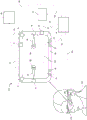
Fig. 13A illustrates an example user experience of a sensing eyewear system, wherein the sensing eyewear system is capable of interpreting sign language (e.g., gestured by a human schematizer).
Fig. 13B illustrates another example user experience of a sensing eyewear system in which target speech and ancillary information are presented.
Fig. 13C illustrates an example user experience of a sensing eyewear system in a telepresence session.
FIG. 13D illustrates an example virtual user interface for interpreting sign language.
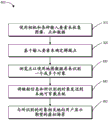
Fig. 14A and 14B illustrate an example process for facilitating interpersonal communication with a sensing eyewear system.
FIG. 14C is a flow diagram of an example method for determining auxiliary information and presenting the auxiliary information associated with converted text.
FIG. 15 illustrates another example process for facilitating interpersonal communication with a sensing eyewear system.
16A-16E illustrate an example user experience of a sensing eyewear system configured to recognize text in an environment, modify display characteristics of the text, and render the modified text.
FIG. 17 illustrates an example process of sensing glasses for facilitating user interaction with an environment.
FIG. 18 illustrates an example of assisting a user in understanding indicia in a physical environment by modifying the content of the indicia.
FIG. 19 illustrates an example process that helps a user understand designations in a physical environment.
Throughout the drawings, reference numerals may be reused to indicate correspondence between reference elements. The drawings are provided to illustrate example embodiments described herein and are not intended to limit the scope of the present disclosure.
Detailed Description
SUMMARY
Wearable systems configured to present AR/VR/MR content can implement sensing eyewear systems to enhance user interaction with others or the environment. An example wearable system may include a head-mounted display, various imaging sensors, and one or more hardware processors. The display may be a see-through display worn in front of one or more eyes.
To enhance the user's interaction experience with others, the wearable system may be configured to capture and interpret sign language. Sign language is primarily communicated using visual gestures (e.g., hand shapes; hand orientations; hand, arm or body movements; or facial expressions). Hundreds of sign languages are used around the world. Some sign languages may be used more frequently than others. For example, the American Sign Language (ASL) is widely used in the united states and canada.
Many people do not know any sign language. People with speech or hearing impairments and conversation partners may not be familiar with the same sign language. This may prevent conversation with the hearing impaired person or the speech impaired person. Thus, a wearable system that can image tokens (signs) (e.g., gestures) made by a conversation partner, convert the tokens into text or graphics (e.g., graphics of sign language gestures in sign language understood by a system user), and then display information associated with the tokens (e.g., translate the tokens into a language understood by the user) would greatly facilitate improved communication between the user and the conversation partner. Furthermore, it would be desirable to have a wearable system that is capable of providing textual or graphical transformations of sign language in real-time (or near real-time), with minimal distraction to the user of the wearable system, and with negligible exertion by the user of the wearable system.
The present disclosure discloses examples of such desirable systems in the context of wearable devices. The wearable device may include a head-mounted component (e.g., a head-mounted display). Such devices may allow a user to visually receive information provided by a computing device in a manner that the information can be viewed alongside (or on) the normally viewable real world at the same time. Such a system may be used to display any form of information that may be displayed on a conventional computer screen, such as characters, image effects, text, graphics, or any type of video.
The wearable systems described herein may combine Sign Language Recognition (SLR) with the display capabilities of the wearable device to provide information to the user based on the detected sign language. For example, an outward facing camera on the wearable device may image a gesture being made, recognize a token in the gesture, translate the token into a language understood by the user, and display the translation to the user. A transcript of the detected sign language (e.g., a title or text bubble) may be displayed to the user by the wearable system. A machine learning algorithm (e.g., a deep neural network) may receive the images and perform recognition and translation of the landmarks. When prompted by the user, the meaning of the words in the transcript or relevant information from an appropriate source may be displayed. The types of auxiliary information that the wearable system can provide may be as unlimited as the vast amount of information resources available on the internet, for example.
In addition to or instead of enhancing the user's interaction experience with others, the sensing eyewear system may also improve the user's experience with the environment. As an example of improving user interaction with an environment, a wearable system implementing a sensing glasses system may identify text in the environment (e.g., text on a logo of a commercial or public display sign, for example), modify display characteristics of the text (e.g., by increasing the size of the text), or modify content of the text (e.g., by translating the text into another language), and render the modified text on physical text in the environment.
As described further herein, the wearable system may receive an image of the user's environment. The images may be acquired by an outward facing imaging system of the wearable device or a totem (totem) associated with the wearable device. The wearable system may determine whether the image includes one or more letters or characters and convert the one or more letters or characters to text. The wearable system may determine whether the image includes letters or characters using various techniques, such as a machine learning algorithm or an Optical Character Recognition (OCR) algorithm. The wearable system may use an object recognizer (e.g., described in fig. 7) to recognize letters and characters and convert them to text.
In particular embodiments, text may be displayed for a user rather than the user seeing the text without a wearable device. For example, the wearable system may cause the head-mounted display to display text at a font size that is different from a font size associated with the letters or characters associated with the original image. The wearable system may also improve the display quality of the text. For example, without a wearable system, various environmental factors such as fog, haze, rain, glare, low light, or color contrast between letters and surrounding images may prevent a user from clearly seeing text in the environment. The wearable system may present an indicia (e.g., with increased contrast or larger font) that will increase the clarity of the text.
The wearable system can also translate text (e.g., text on markup) from its original language to a target language. For example, text may be translated from a language that is not understood by the user to a language understood by the user. The translated text may be rendered on the original text so that the user can easily view the text in a language that the user can understand.
Examples of 3D display of wearable systems
Wearable systems, also referred to herein as Augmented Reality (AR) systems, may be configured to present 2D or 3D virtual images to a user. The images may be still images, frames or video of video, in combination, and the like. At least a portion of the wearable system may be implemented on a wearable device that may present VR, AR, or MR environments, alone or in combination, for user interaction. The wearable device may be a Head Mounted Device (HMD), which is interchangeably usable as an AR device (ARD). Furthermore, for the purposes of this disclosure, the term "AR" can be used interchangeably with the term "MR".
FIG. 1 depicts an illustration of a mixed reality scene with certain virtual reality objects and certain physical objects seen by a person. In fig. 1, an MR scene 100 is depicted, where a user of MR technology sees a real-world park-like setting 110 featuring people, trees, buildings in the background, and a physical platform 120. In addition to these items, the user of MR technology feels that he "sees" a robot statue 130 standing on a real-world platform 120, and a cartoon-style avatar 140 that looks like an avatar of a flying bee, although these elements do not exist in the real world.
In order for a 3D display to produce a realistic depth perception, and more particularly a simulated surface depth perception, it may be desirable for each point in the field of view of the display to produce an adaptive response corresponding to its virtual depth. If the accommodation response to a display point does not correspond to the virtual depth of the point (as determined by the binocular depth cues for convergence and stereo vision), the human eye may experience accommodation conflicts, resulting in unstable imaging, harmful ocular tension, headaches, and an almost complete lack of surface depth without accommodation information.
The VR, AR, and MR experiences may be provided by a display system having a display in which images corresponding to multiple depth planes are provided to a viewer. The images may be different for each depth plane (e.g., providing a slightly different rendering of a scene or object) and may be focused individually by the eyes of the viewer, thereby helping to provide depth cues to the user based on the accommodation required by the eyes, focusing different image features for scenes located on different depth planes or based on viewing different image features on different depth planes out of focus. As discussed elsewhere herein, such depth cues provide reliable depth perception.
FIG. 2A shows an example of a wearable system 200 that may be configured to provide an AR/VR/MR scenario. Wearable system 200 may also be referred to as AR system 200. Wearable system 200 includes a display 220, and various mechanical and electronic modules and systems that support the functionality of display 220. The display 220 may be coupled to a frame 230 that may be worn by a user, wearer, or viewer 210. The display 220 may be positioned in front of the eyes of the user 210. The display 220 may present AR/VR/MR content to the user. The display 220 may comprise a head mounted display worn on the head of the user. In some embodiments, a speaker 240 is coupled to the frame 230 and positioned adjacent to the ear canal of the user (in some embodiments, another speaker, not shown, is positioned adjacent to another ear canal of the user to provide stereo/moldable sound control). The display 220 may include an audio sensor (e.g., microphone) 232 for detecting audio streams from the environment and capturing sounds of the surrounding environment. In some embodiments, one or more other audio sensors, not shown, are provided to provide stereo reception. Stereo reception can be used to determine the location of sound sources. Wearable system 200 may perform voice or speech recognition on the audio stream.
The wearable system 200 may include an outward facing imaging system 464 (shown in fig. 4) that observes the world in the user's surroundings. Wearable system 200 may also include an inward facing imaging system 462 (shown in fig. 4) that may track the user's eye movements. The inward facing imaging system may track the motion of one eye or the motion of both eyes. An inward-facing imaging system 462 may be attached to frame 230 and may be in electrical communication with processing modules 260 and/or 270, and processing modules 260 or 270 may process image information acquired by the inward-facing imaging system to determine, for example, pupil diameter or eye orientation, eye movement or eye pose of user 210.
As an example, wearable system 200 may use outward facing imaging system 464 or inward facing imaging system 462 to acquire images of the user's gestures. The image may be a still image, a frame of video, or video.
The display 220 is operatively coupled 250, such as by a wired wire or wireless connection, to a local data processing module 260, which local data processing module 260 may be mounted in various configurations, such as fixedly attached to the frame 230, fixedly attached to a helmet or hat worn by the user, embedded in a headset, or otherwise removably attached to the user 210 (e.g., in a backpack-style configuration, in a strap-coupled style configuration).
The local processing and data module 260 may include a hardware processor and digital memory, such as non-volatile memory (e.g., flash memory), both of which may be used for processing, buffering, and storage of auxiliary data. The data may include the following: a) data captured from sensors (which may, for example, be operatively coupled to the frame 230 or otherwise attached to the user 210), such as an image capture device (e.g., a camera in an inward facing imaging system or an outward facing imaging system), an audio sensor (e.g., a microphone), an Inertial Measurement Unit (IMU), an accelerometer, a compass, a Global Positioning System (GPS) unit, a radio, or a gyroscope; or b) data acquired or processed using remote processing module 270 or remote data repository 280, perhaps communicated to display 220 after such processing or retrieval. Local processing and data module 260 may be operatively coupled to remote processing module 270 or remote data repository 280 by communication links 262 or 264 (such as via wired or wireless communication links) such that these remote modules are available as resources to local processing and data module 260. In addition, remote processing module 280 and remote data repository 280 may be operatively coupled to each other.
In some embodiments, remote processing module 270 may include one or more processors configured to analyze and process data or image information. In some embodiments, remote data repository 280 may include a digital data storage facility, which may be available in a "cloud" resource configuration through the internet or other network configuration. In some embodiments, all data is stored in the local processing and data module and all calculations are performed, allowing for fully autonomous use from the remote module.
Fig. 2B illustrates a wearable system 200 that may include a display 220 and a frame 230. Enlarged view 202 schematically shows various components of wearable system 200. In some embodiments, one or more of the components shown in fig. 2B may be part of the display 220. The various components, alone or in combination, may collect various data (e.g., audio or visual data) associated with the user of wearable system 200 or the user's environment. It should be understood that other embodiments may have additional or fewer components, depending on the use for which the wearable system is used. However, fig. 2B provides a basic idea of some of the various components and the types of data that may be collected, analyzed, and stored by the wearable system.
Fig. 2B illustrates an example wearable system 200 that may include a display 220. The display 220 may include a display lens 106, and the display lens 106 may be mounted to a user's head or a housing or frame 108 corresponding to the frame 230. The display lens 106 may include one or more transparent mirrors positioned by the housing 108 in front of the user's eyes 302, 304 and may be configured to bounce (bounce) the projected light 38 into the eyes 302, 304 and facilitate beam shaping, while also allowing transmission of at least some light from the local environment. The wavefront of the projection beam 38 can be curved or focused to coincide with the desired focal length of the projection light. As shown, two wide-field-of-view machine vision cameras 16 (also known as world cameras) may be coupled to the housing 108 to image the environment surrounding the user. These cameras 16 may be dual capture visible/invisible (e.g., infrared) light cameras. The camera 16 may be part of the outward facing imaging system 464 shown in fig. 4. The images acquired by the world camera 16 may be processed by a gesture processor 36. For example, the gesture processor 36 may implement one or more object recognizers 708 (e.g., as shown in FIG. 7) to recognize a gesture of the user or another person in the user's environment or to recognize a physical object in the user's environment.
With continued reference to fig. 2B, a pair of scanning laser shaped wavefront (e.g., for depth) light projector modules are shown having display mirrors and optics configured to project light 38 into the eyes 302, 304. The depicted view also shows two miniature infrared cameras 24 paired with infrared light sources 26 (e.g., light emitting diodes "LEDs") configured to be able to track the user's eyes 302, 304 to support rendering and user input. The camera 24 may be part of the inward facing imaging system 462 shown in fig. 4. Wearable system 200 may also have sensor components 39 that may include X, Y and Z-axis accelerometer capabilities as well as a magnetic compass, and X, Y and Z-axis gyroscope capabilities, preferably to provide data at relatively high frequencies such as 200 Hz. The sensor assembly 39 may be part of the IMU described with reference to fig. 2A. The depicted system 200 may also include a head pose processor 36, such as an ASIC (application specific integrated circuit), FPGA (field programmable gate array), or ARM processor (advanced reduced instruction set machine), which may be configured to compute real-time or near real-time user head poses from the wide field of view image information output from the capture device 16. Head pose processor 36 may be a hardware processor and may be implemented as part of local processing and data module 260 shown in fig. 2A.
Also shown is a processor 32 configured to perform digital or analog processing to derive a gesture from gyroscope, compass or accelerometer data from a sensor component 39. Processor 32 may be part of local processing and data module 260 shown in fig. 2A. Wearable system 200 as shown in fig. 2B may also include a location system, such as GPS 37 (global positioning system), to assist with posture and location analysis. In addition, GPS may also provide remote-based (e.g., cloud-based) information about the user's environment. This information may be used to identify objects or information in the user's environment.
The wearable system may combine data acquired by the GPS 37 and a remote computing system (e.g., remote processing module 270, another user's ARD, etc.), which can provide more information about the user's environment. As one example, the wearable system may determine the user's location based on GPS data and retrieve a world map that includes virtual objects associated with the user's location (e.g., by communicating with remote processing module 270). As another example, the wearable system 200 may monitor the environment using the world camera 16 (which may be part of the outward facing imaging system 464 shown in fig. 4). Based on the images acquired by world camera 16, wearable system 200 may detect characters in the environment (e.g., by using one or more object recognizers 708 shown in fig. 7). The wearable system may further interpret the characters using data acquired by the GPS 37. For example, wearable system 200 may identify a geographic area in which the character is located and identify one or more languages associated with the geographic area. Thus, the wearable system can interpret the characters based on the identified language, e.g., based on syntax, grammar, sentence structure, spelling, punctuation marks, etc., associated with the identified language. In one example, a user 210 in germany may perceive a traffic sign while driving on a highway. The wearable system 200 may recognize, based on data acquired from the GPS 37 (alone or in combination with images acquired by the world camera 16), that the user 210 is in germany and that the text from the imaged traffic sign may be german.
In some cases, the images acquired by the world cameras 16 may include incomplete information of objects in the user's environment. For example, the image may include incomplete text (e.g., sentences, letters, or phrases) due to a hazy atmosphere, imperfections or errors in the text, low light levels, blurred images, occlusions, a limited FOV of the world camera 16. Wearable system 200 may use data acquired by GPS 37 as a contextual cue to identify text in an image.
A camera 24 (e.g., a mini infrared camera) may be used to track eye gestures to support rendering and user input. Some exemplary eye gestures may include a position at which the user is looking or a depth at which he or she is focusing (which may be estimated by eye vergence). GPS 37, gyroscopes, compasses, and accelerometers 39 may be used to provide coarse or fast pose estimates. One or more of the cameras 16 may acquire images and gestures that, together with data from associated cloud computing resources, may be used to map the local environment and share user views with others.
The example components depicted in fig. 2B are for illustration purposes only. Multiple sensors are shown along with other functional modules for ease of illustration and description. Some embodiments may include only one or a subset of these sensors or modules. Further, the positions of these components are not limited to the positions shown in fig. 2B. Some components may be mounted to or housed within other components, such as components mounted to or housed on a belt, a hand-held component, or a helmet component. As one example, the image pose processor 36, sensor pose processor 32, and rendering engine 34 may be positioned in a belt pack and configured to communicate with other components of the wearable system, via wireless communication such as ultra-wideband, Wi-Fi, bluetooth, etc., or via wired communication. The depicted housing 108 is preferably head mountable and wearable by a user. However, some components of the wearable system 200 may be worn to other parts of the user's body. For example, the speaker 240 may be inserted into the ear of the user to provide sound to the user.
With respect to projecting light 38 into the user's eyes 302, 304, in some embodiments, the location to which the center of the user's eyes 302, 304 geometrically extends (range) may be measured with the camera 24, which generally coincides with the focal position or "focal depth" of the eyes 302, 304. The three-dimensional surface of all points to which the eye extends may be referred to as a "binocular monograph (horopter)". The focal length may take a finite number of depths, or may vary infinitely. Light from the vergence projection appears to be focused on the subject eye 302, 304, while light in front of or behind the vergence is blurred. Examples of wearable devices and other display systems of the present disclosure are also described in U.S. patent publication No.2016/0270656, which is incorporated herein by reference in its entirety.
The human visual system is complex and providing realistic perception of depth is challenging. A viewer of an object may perceive the object as "three-dimensional" due to a combination of vergence and accommodation. Vergence movement of the two eyes relative to each other (e.g., rolling movement of pupil holes toward or away from each other to converge the eye's line of sight to fixate on an object) is closely related to the focusing (or "accommodation") of the eye's lens. Under normal circumstances, changing the focus of the eye lens or adjusting the eye to change focus from one object at a different distance to another will automatically result in a matching change in vergence to the same distance under a relationship called "accommodation-vergence reflex". Also, under normal circumstances, a change in vergence will cause a matching change in accommodation. A display system that provides a better match between accommodation and vergence may result in a more realistic and comfortable three-dimensional image simulation.
In addition, wherever the eye is focused, the human eye can correctly resolve spatially coherent light with a beam diameter of less than about 0.7 millimeters. Thus, to create the illusion of proper depth of focus, eye vergence may be tracked with camera 24, and all objects on or near the focused monocular view, as well as all other objects defocused to varying degrees (e.g., using intentionally created blur), may be rendered using rendering engine 34 and projection subsystem 18. Preferably, the system 220 renders to the user at a frame rate of about 60 frames per second or higher. As mentioned above, preferably, the camera 24 may be used for eye tracking, and the software may be configured to pick not only the vergence geometry but also the focus position cues for use as user input. Preferably, such a display system is configured with a brightness and contrast suitable for day or night use.
In some embodiments, the display system preferably has a delay in visual object alignment of less than about 20 milliseconds, an angular alignment of less than about 0.1 degrees, and a resolution of about 1 arc minute, which, without being limited by theory, is considered to be approximately the limit of the human eye. Display system 220 may be integrated with a positioning system, which may involve a GPS element, optical tracking, compass, accelerometer, or other data source to assist in position and orientation determination; the positioning information can be utilized to facilitate accurate rendering in the user's view of the relevant world (e.g., such information would help the glasses know their location relative to the real world).
In some embodiments, wearable system 200 is configured to display one or more virtual images based on the adjustment of the user's eyes. Unlike previous 3D display methods that force the user to focus at the location of the projected image, in some embodiments, the wearable system is configured to automatically change the focus of the projected virtual content to allow for more comfortable viewing of the image or images presented to the user. For example, if the user's eyes have a current focus of 1 meter, the image may be projected to coincide with the user's focus. If the user moves the focus to 3 meters, the projected image coincides with the new focus. Thus, rather than forcing the user to reach a predetermined focus, the wearable system 200 of some embodiments allows the user's eyes to function in a more natural manner.
Such a wearable system 200 may eliminate or reduce the incidence of eye fatigue, headaches, and other physiological symptoms typically observed with respect to virtual reality devices. To accomplish this, various embodiments of wearable system 200 are configured to project virtual images at varying focal lengths through one or more variable focal length elements (VFEs). In one or more embodiments, 3D perception may be achieved by a multi-planar focusing system that projects images at a fixed focal plane away from the user. Other embodiments employ variable plane focusing, in which the focal plane moves back and forth in the z-direction to coincide with the user's current focus state.
In both the multi-plane focusing system and the variable plane focusing system, wearable system 200 may employ eye tracking to determine the vergence of the user's eyes, determine the current focus of the user, and project a virtual image at the determined focus. In other embodiments, the wearable system 200 includes a light modulator that variably projects a beam of light of varying focus in a raster pattern across the retina with a fiber optic scanner or other light generating source. Thus, the ability of the display of wearable system 200 to project images at varying focal lengths not only enables the user to easily adjust to view 3D objects, but can also be used to compensate for the user's eye abnormalities, as further described in U.S. patent publication No.2016/0270656, which is incorporated herein by reference in its entirety. In some other embodiments, the spatial light modulator may project an image to a user through various optical components. For example, as described further below, the spatial light modulator may project an image onto one or more waveguides, which then transmit the image to a user.
FIG. 3 illustrates aspects of a method of simulating a three-dimensional image using multiple depth planes. Referring to fig. 3, objects at different distances from the eyes 302 and 304 on the z-axis are accommodated by the eyes 302 and 304 such that those objects are in focus. Eyes 302 and 304 exhibit a particular state of accommodation such that objects at different distances along the z-axis come into focus. Thus, it can be said that a particular accommodation state is associated with a particular one of the depth planes 306, which has an associated focal length, such that an object or part of an object in the particular depth plane is focused when the eye is in the accommodation state of that depth plane. In some embodiments, the three-dimensional image may be simulated by providing a different presentation of the image for each of the eyes 302 and 304, and also by providing a different presentation of the image corresponding to each of the depth planes. Although shown as separate for clarity of illustration, it is understood that the fields of view of eye 302 and eye 304 may overlap, for example, as the distance along the z-axis increases. Additionally, while shown as flat for ease of illustration, it is understood that the profile of the depth plane may be curved in physical space such that all features in the depth plane are in focus with the eye under certain accommodation conditions. Without being limited by theory, it is believed that the human eye can typically interpret a limited number of depth planes to provide depth perception. Thus, by providing the eye with different presentations of the image corresponding to each of these limited number of depth planes, a highly reliable simulation of perceived depth may be achieved.
Waveguide stack assembly
Fig. 4 shows an example of a waveguide stack for outputting image information to a user. The wearable system 400 includes a waveguide stack or stacked waveguide assembly 480 that can be used to provide three-dimensional perception to the eye/brain using a plurality of waveguides 432b, 434b, 436b, 438b, 4400 b. In some embodiments, wearable system 400 corresponds to wearable system 200 of fig. 2A, with fig. 4 schematically illustrating some portions of wearable system 200 in more detail. For example, in some embodiments, the waveguide assembly 480 may be integrated into the display 220 of fig. 2A.
With continued reference to fig. 4, the waveguide assembly 480 may also include a plurality of features 458, 456, 454, 452 between the waveguides. In some embodiments, the features 458, 456, 454, 452 may be lenses. In other embodiments, the features 458, 456, 454, 452 may not be lenses. But they may simply be spacers (e.g., cladding or structures for forming air gaps).
The waveguides 432b, 434b, 436b, 438b, 440b or the plurality of lenses 458, 456, 454, 452 can be configured to transmit image information to the eye at various levels of wavefront curvature or ray divergence. Each waveguide level may be associated with a particular depth plane and may be configured to output image information corresponding to that depth plane. The image injection devices 420, 422, 424, 426, 428 may be used to inject image information into waveguides 440b, 438b, 436b, 434b, 432b, each of which may be configured to distribute incident light through each respective waveguide for output to the eye 410. Light exits the output surfaces of the image injection devices 420, 422, 424, 426, 428 and is injected into the respective input edges of the waveguides 440b, 438b, 436b, 434b, 432 b. In some embodiments, a single beam (e.g., a collimated beam) may be injected into each waveguide such that a particular angle (and amount of divergence) corresponding to the depth plane associated with a particular waveguide outputs the entire field of view of the cloned collimated beam directed toward the eye 410.
In some embodiments, the image injection devices 420, 422, 424, 426, 428 are discrete displays, each display producing image information for injection into a respective waveguide 440b, 438b, 436b, 434b, 432b, respectively. In some other embodiments, the image injection devices 420, 422, 424, 426, 428 are outputs of a single multiplexed display that can convey image information to each of the image injection devices 420, 422, 424, 426, 428, e.g., via one or more light pipes (such as fiber optic cables).
The controller 460 controls the operation of the stacked waveguide assembly 480 and the image injection devices 420, 422, 424, 426, 428. Controller 460 includes programming (e.g., instructions in a non-transitory computer readable medium) that adjusts the timing and provision of image information to waveguides 440b, 438b, 436b, 434b, 432 b. In some embodiments, controller 460 may be a single unitary device or a distributed system connected by wired or wireless communication channels. In some embodiments, controller 460 may be part of processing module 260 or 270 (shown in FIG. 2A).
The waveguides 440b, 438b, 436b, 434b, 432b may be configured to propagate light within each respective waveguide by Total Internal Reflection (TIR). The waveguides 440b, 438b, 436b, 434b, 432b may each be planar or have other shapes (e.g., curved), with major top and bottom surfaces and edges extending between these major top and bottom surfaces. In the illustrated configuration, the waveguides 440b, 438b, 436b, 434b, 432b may each include light extraction optics 440a, 438a, 436a, 434a, 432a configured to extract light out of the waveguides by redirecting light propagating within each respective waveguide to output image information to the eye 410. The extracted light may also be referred to as outcoupled light, and the light extraction optical element may also be referred to as an outcoupling optical element. The extracted light beam is output by the waveguide at a location where light propagating in the waveguide strikes the light redirecting element. The light extraction optical element (440a, 438a, 436a, 434a, 432a) may be, for example, a reflective or diffractive optical feature. Although illustrated as being disposed at the bottom major surface of the waveguides 440b, 438b, 436b, 434b, 432b for ease of description and clarity of drawing, in some embodiments the light extraction optical elements 440a, 438a, 436a, 434a, 432a may be disposed at the top or bottom major surface or may be disposed directly in the volume of the waveguides 440b, 438b, 436b, 434b, 432 b. In some embodiments, the light extraction optical elements 440a, 438a, 436a, 434a, 432a may be formed in a layer of material attached to a transparent substrate to form waveguides 440b, 438b, 436b, 434b, 432 b. In some other embodiments, the waveguides 440b, 438b, 436b, 434b, 432b may be a single piece of material, and the light extraction optical elements 440a, 438a, 436a, 434a, 432a may be formed on a surface of that piece of material or in the interior of that piece of material.
With continued reference to fig. 4, as discussed herein, each waveguide 440b, 438b, 436b, 434b, 432b is configured to output light to form an image corresponding to a particular depth plane. For example, the waveguide 432b closest to the eye may be configured to deliver collimated light to the eye 410 as injected into such waveguide 432 b. The collimated light may represent an optically infinite focal plane. The next up waveguide 434b can be configured to emit collimated light that passes through the first lens 452 (e.g., the negative lens) before it can reach the eye 410. The first lens 452 can be configured to produce a slightly convex wavefront curvature such that the eye/brain interprets light from the next upstream waveguide 434b as coming from a first focal plane that is closer inward from optical infinity toward the eye 410. Similarly, the third upper waveguide 436b passes the output light through the first lens 452 and the second lens 454 before reaching the eye 410. The combined optical power of the first lens 452 and the second lens 454 can be configured to produce another incremental amount of wavefront curvature to cause the eye/brain to interpret light from the third waveguide 436b as coming from a second focal plane that faces inward toward the person closer from optical infinity than light from the next upward traveling waveguide 434 b.
The other waveguide layers (e.g., waveguides 438b, 440b) and lenses (e.g., lenses 456, 458) are similarly configured, with the highest waveguide 440b in the stack sending its output through all of the lenses between it and the eye for aggregate (aggregate) power representing the focal plane closest to the person. To compensate for the stack of lenses 458, 456, 454, 452 when viewing/interpreting light from the world 470 on the other side of the stacked waveguide assembly 480, a compensating lens layer 430 may be disposed at the top of the stack to compensate for the aggregate power of the underlying lens stack 458, 456, 454, 452. This configuration provides as many sensing focal planes as there are waveguide/lens pairs available. The focusing aspects of the light extraction optics and lenses of the waveguide may be static (e.g., not dynamic or electrically active). In some alternative embodiments, either or both may be dynamic using electrically active features.
With continued reference to fig. 4, the light extraction optical elements 440a, 438a, 436a, 434a, 432a may be configured to redirect light out of their respective waveguides and output that light with an appropriate amount of divergence or collimation for the particular depth plane associated with the waveguide. As a result, waveguides having different associated depth planes may have different configurations of light extraction optical elements that output light having different amounts of divergence depending on the associated depth plane. In some embodiments, as discussed herein, the light extraction optical elements 440a, 438a, 436a, 434a, 432a may be volume or surface features that may be configured to output light at a particular angle. For example, the light extraction optical elements 440a, 438a, 436a, 434a, 432a may be volume holograms, surface holograms, or diffraction gratings. Light extraction optical elements such as diffraction gratings are described in U.S. patent publication No.2015/0178939, published on 25/6/2015, which is incorporated herein by reference in its entirety.
In some embodiments, the light extraction optical elements 440a, 438a, 436a, 434a, 432a are diffractive features that form a diffractive pattern or "diffractive optical element" (also referred to herein as a "DOE"). Preferably, the DOE has a relatively low diffraction efficiency, such that only a portion of the beam is deflected by each intersection of the DOE towards the eye 410, while the remainder continues to move through the waveguide via total internal reflection. The light carrying the image information can thus be split into a plurality of related exit beams that exit the waveguide at a plurality of locations, and the result is a fairly uniform pattern of exit emissions towards the eye 304 for that particular collimated beam bouncing within the waveguide.
In some embodiments, one or more DOEs may be switchable between an "on" state in which they actively diffract and an "off" state in which they do not significantly diffract. For example, a switchable DOE may comprise a polymer dispersed liquid crystal layer, wherein the droplets comprise a diffraction pattern in the host medium, and the refractive index of the droplets may be switched to substantially match the refractive index of the host material (in which case the pattern DOEs not significantly diffract incident light), or the droplets may be switched to an index that DOEs not match the index of the host medium (in which case the pattern actively diffracts incident light).
In some embodiments, the number and distribution of depth planes or depth of field may be dynamically changed based on the pupil size or orientation of the viewer's eyes. The depth of field may be inversely proportional to the pupil size of the viewer. Thus, as the size of the pupil of the eye of the viewer decreases, the depth of field increases, such that a plane that is not discernable because its position exceeds the depth of focus of the eye may become discernable and appear more focused as the pupil size decreases and the depth of field correspondingly increases. Similarly, the number of spaced apart depth planes used to present different images to a viewer may decrease as the pupil size decreases. For example, a viewer may not be able to clearly perceive details of the first and second depth planes at one pupil size without adjusting the accommodation of the eye away from one depth plane and to the other. However, the two depth planes may be sufficiently focused at the same time for a user at another pupil size without changing the adaptability.
In some embodiments, the display system may vary the number of waveguides that receive image information, based on a determination of pupil size or orientation or based on receiving an electrical signal indicative of a particular pupil size or orientation. For example, if the user's eye is unable to distinguish between two depth planes associated with two waveguides, the controller 460 (which may be an embodiment of the local processing and data module 260) may be configured or programmed to stop providing image information to one of the waveguides. Advantageously, this may reduce the processing burden on the system, thereby increasing the responsiveness of the system. In embodiments where the DOE of the waveguide is switchable between on and off states, the DOE may be switched to the off state when the waveguide DOEs receive image information.
In some embodiments, it may be desirable for the outgoing light beam to conform to a condition that the diameter is smaller than the diameter of the viewer's eye. However, meeting such conditions can be challenging given the variability of the pupil size of the viewer. In some embodiments, this condition is satisfied over a wide range of pupil sizes by varying the size of the emergent beam in response to a determination of the pupil size of the viewer. For example, as the pupil size decreases, the size of the exiting beam may also decrease. In some embodiments, an iris diaphragm may be used to vary the outgoing beam size.
The wearable system 400 may include an outward facing imaging system 464 (e.g., a digital camera) that images a portion of the world 470. This portion of the world 470 may be referred to as the field of view (FOV) of the world camera, and the imaging system 464 is sometimes referred to as a FOV camera. The FOV of the world camera may or may not be the same as the FOV of the viewer 210, where the FOV of the viewer 210 contains the portion of the world 470 perceived by the viewer 210 at a given time. For example, in some cases, the FOV of the world camera may be larger than that of the viewer 210 of the wearable system 400. The entire area available FOR viewing or imaging by a viewer may be referred to as the field of view (FOR). Since the wearer can move his body, head, or eyes to perceive substantially any direction in space, the FOR can include 4 pi steradians around the solid angle of wearable system 400. In other contexts, the movement of the wearer may be more restricted, and thus the wearer's FOR may subtend a smaller solid angle. Images obtained from the outward-facing imaging system 464 may be used to track gestures made by the user (e.g., hand or finger gestures), detect objects in the world 470 in front of the user, and so forth.
Fig. 5 shows an example of an outgoing light beam output by a waveguide. One waveguide is shown, but it should be understood that other waveguides in the waveguide assembly 480 may function similarly, where the waveguide assembly 480 includes a plurality of waveguides. Light 520 is injected into waveguide 432b at input edge 432c of waveguide 432b and propagates within waveguide 432b by TIR. At the point where light 520 impinges on DOE 432a, a portion of the light exits the waveguide as outgoing light beam 510. The exit light beam 510 is shown as being substantially parallel, but depending on the depth plane associated with the waveguide 432b, the exit light beam 510 may also be redirected at an angle (e.g., to form a diverging exit light beam) to propagate to the eye 410. It should be understood that the substantially parallel exit beams may be indicative of a waveguide having light extraction optics that outcouple the light to form an image that appears to be disposed on a depth plane at a large distance (e.g., optical infinity) from the eye 410. Other waveguides or other groups of light extraction optics may output a more divergent exit beam pattern, which would require the eye 410 to accommodate a closer distance to focus it on the retina and would be interpreted by the brain as light coming from a distance closer to the eye 410 than optical infinity.
Fig. 6 is a schematic diagram showing an optical system including a waveguide arrangement, an optical coupler subsystem to couple light to or from the waveguide arrangement, and a control subsystem for generating a multi-focal stereoscopic display, image, or light field. The optical system may include a waveguide device, an optical coupler subsystem that optically couples light to or from the waveguide device, and a control subsystem. The optical system may be used to generate a multifocal stereo, image, or light field. The optical system may include one or more planar bus waveguides 632a (only one shown in fig. 6) and one or more DOEs 632b associated with each of at least some of the bus waveguides 632 a. The planar waveguide 632b may be similar to the waveguides 432b, 434b, 436b, 438b, 440b discussed with reference to fig. 4. The optical system may relay light along a first axis (the vertical or Y axis shown in fig. 6) using a distributed waveguide device and expand the effective exit pupil of the light along the first axis (e.g., the Y axis). The distributed waveguide apparatus may, for example, include a distributed planar waveguide 622b and at least one DOE 622a (shown by dashed double-dotted lines) associated with the distributed planar waveguide 622 b. The distribution planar waveguide 622b may be similar or identical to, but have a different orientation than, the main planar waveguide 632b in at least some respects. Similarly, at least one DOE 622a can be similar or identical to DOE 632a in at least some respects. For example, the distribution planar waveguide 622b or DOE 622a may be composed of the same material as the main planar waveguide 632b or DOE 632a, respectively. The embodiment of the optical display system 600 shown in fig. 6 may be integrated into the wearable system 200 shown in fig. 2A.
The relayed and exit pupil expanded light can be optically coupled from the distribution waveguide arrangement into one or more main planar waveguides 632 b. The primary planar waveguide 632b may relay light along a second axis (e.g., the horizontal or X-axis in the view of fig. 6), which is preferably orthogonal to the first axis. Notably, the second axis may be a non-orthogonal axis to the first axis. The main planar waveguide 632b expands the effective exit pupil of light along this second axis (e.g., the X-axis). For example, the distribution planar waveguide 622b can relay and expand light along the vertical or Y-axis and deliver the light to the main planar waveguide 632b, which can relay and expand light along the horizontal or X-axis.
The optical system may include one or more colored light sources (e.g., red, green, and blue lasers) 610, which may be optically coupled into the proximal end of a single mode fiber 640. The distal end of the optical fiber 640 may be passed through or received by a hollow tube 642 of piezoelectric material. The distal end protrudes from the tube 642 as an unsecured flexible cantilever 644. The piezoelectric tubes 642 may be associated with four quadrant electrodes (not shown). For example, the electrodes may be plated on the outside, outer surface or periphery or diameter of the tube 642. A core electrode (not shown) may also be located in the core, center, inner periphery, or inner diameter of tube 642.
Drive electronics 650, for example, electrically coupled via leads 660, drive opposing pairs of electrodes to independently bend the piezoelectric tube 642 in both axes. The protruding distal tip of the optical fiber 644 has a mechanical resonance mode. The frequency of resonance may depend on the diameter, length, and material characteristics of the optical fiber 644. By vibrating the piezoelectric tube 642 near the first mechanical resonance mode of the fiber cantilever 644, the fiber cantilever 644 can be made to vibrate and can sweep large deflections.
The tip of the fiber cantilever 644 is scanned bi-axially throughout the area of the two-dimensional (2D) scan by exciting resonances in both axes. By modulating the intensity of one or more light sources 610 in synchronization with the scanning of the fiber optic cantilever 644, the light exiting the fiber optic cantilever 644 may form an image. A description of such an arrangement is provided in U.S. patent publication No.2014/0003762, which is incorporated herein by reference in its entirety.
Components of the optical coupler subsystem may collimate the light exiting the scanning fiber cantilever 644. The collimated light may be reflected by a mirror 648 into a narrow distribution planar waveguide 622b containing at least one Diffractive Optical Element (DOE)622 a. The collimated light can propagate vertically (relative to the view of fig. 6) along the distribution planar waveguide 622b by TIR and repeatedly intersect with the DOE 622 a. The DOE 622a preferably has low diffraction efficiency. This may result in a portion of the light (e.g., 10%) being diffracted towards the edge of the larger main planar waveguide 632b at each intersection with the DOE 622a, and a portion of the light continuing by TIR down the length of the planar waveguide 622b on its original trajectory.
At each intersection with DOE 622a, the additional light may be diffracted towards the entrance of the main waveguide 632 b. By dividing the incident light into a plurality of outcoupling groups, the exit pupil of the light can be vertically expanded in the distribution plane waveguide 622b by the DOE 622 a. This vertically expanded light outcoupled from the distribution planar waveguide 622b may enter the edge of the principal planar waveguide 632 b.
Light entering the main waveguide 632b may propagate horizontally (relative to the view of fig. 6) along the main waveguide 632b via TIR. As light propagates horizontally by TIR along at least a portion of the length of the primary waveguide 632b, the light intersects the DOE 632a at multiple points. The DOE 632a may advantageously be designed or constructed to have a phase profile that is the sum of a linear diffraction pattern and a radially symmetric diffraction pattern to produce deflection and focusing of light. The DOE 632a may advantageously have a low diffraction efficiency (e.g., 10%) such that only a portion of the light of the beam is deflected toward the eye of view at each intersection of the DOE 632a, while the rest of the light continues to propagate through the main waveguide 632b via TIR.
At each intersection between the propagating light and the DOE 632a, a portion of the light is diffracted towards the adjacent facet of the primary waveguide 632b, allowing the light to escape TIR and exit the facet of the primary waveguide 632 b. In some embodiments, the radially symmetric diffraction pattern of the DOE 632a additionally imparts a level of focus to the diffracted light, both shaping the optical wavefront of the individual beams (e.g., imparting curvature) and steering the beams at angles that match the designed level of focus.
Thus, these different paths may couple light out of the main planar waveguide 632b by multiple DOEs 632a at different angles, focus levels, or creating different fill patterns at the exit pupil. Different fill patterns at the exit pupil may be advantageously used to create a light field display having multiple depth planes. Each layer in the waveguide assembly or a set of layers (e.g., 3 layers) in the stack can be used to produce a respective color (e.g., red, blue, green). Thus, for example, a first set of three adjacent layers may be employed to produce red, blue, and green light, respectively, at a first focal depth. A second set of three adjacent layers may be employed to produce red, blue, and green light, respectively, at a second focal depth. Multiple sets can be employed to produce full 3D or 4D color image light fields with various depths of focus.
Other Components of wearable System
In many embodiments, the wearable system may include other components in addition to or in place of the components of the wearable system described above. For example, a wearable system may include one or more haptic devices or components. The haptic device or component may be operable to provide a haptic sensation to a user. For example, a haptic device or component may provide a haptic sensation of pressure or texture when contacting virtual content (e.g., virtual objects, virtual tools, other virtual constructs). The haptic sensation may replicate the sensation of a physical object represented by a virtual object, or may replicate the sensation of an imaginary object or character (e.g., a dragon) represented by virtual content. In some embodiments, the haptic device or component may be worn by a user (e.g., a user wearable glove). In some embodiments, the haptic device or component may be held by a user.
For example, the wearable system may include one or more physical objects that can be manipulated by a user to allow input or interaction with the wearable system. These physical objects may be referred to herein as totems (totem). Some totems may take the form of an inanimate object, such as a piece of metal or plastic, a wall, a surface of a table, for example. In some embodiments, the totem may not actually have any physical input structures (e.g., keys, triggers, joysticks, trackballs, rocker switches). Instead, the totem may simply provide a physical surface, and the wearable system may render a user interface to make the user appear to be on one or more surfaces of the totem. For example, the wearable system may render images of a computer keyboard and a touch pad to appear to reside on one or more surfaces of the totem. For example, the wearable system may render a virtual computer keyboard and a virtual touchpad to appear on the surface of a thin aluminum rectangular panel used as a totem. The rectangular plate itself does not have any physical keys or touch pads or sensors. However, the wearable system may detect user manipulation or interaction or touching the rectangular pad as a selection or input via the virtual keyboard or virtual trackpad. The user input device 466 (shown in fig. 4) may be a totem embodiment, which may include a trackpad, touchpad, trigger, joystick, trackball, rocker or virtual switch, mouse, keyboard, multiple degree of freedom controller, or another physical input device. The user may use totems alone or with gestures to interact with the wearable system or other users.
Examples of haptic devices and totems of the present disclosure for use with wearable devices, HMDs, and display systems are described in U.S. patent publication No.2015/0016777, which is incorporated herein by reference in its entirety.
Example wearable systems, environments, and interfaces
The wearable system may employ various mapping (mapping) related techniques in order to achieve a high depth of field in the rendered light field. When mapping out a virtual world, it is advantageous to know all the features and points in the real world to accurately depict virtual objects related to the real world. To do so, FOV images captured from users of wearable systems may be added to the world model by including new pictures that convey information of various points and features of the real world. For example, the wearable system may collect a set of map points (e.g., 2D points or 3D points) and find new map points to render a more accurate version of the world model. The world model of the first user may be communicated to the second user (e.g., over a network such as a cloud network) so that the second user may experience the world around the first user.
Fig. 7 is a block diagram of an example of an MR environment 700. MR environment 700 may be configured to receive input (e.g., visual input 702 from a user's wearable system, such as stationary input 704 of a room camera, sensing input 706 from various sensors, user input from user input devices 466, gestures, totems, eye tracking, etc.) from one or more user wearable systems (e.g., wearable system 200 or display system 220) or stationary room systems (e.g., room cameras, etc.). The wearable system may use various sensors (e.g., accelerometers, gyroscopes, temperature sensors, motion sensors, depth sensors, GPS sensors, inward facing imaging systems, outward facing imaging systems, etc.) to determine the location of the user's environment, as well as various other attributes. This information may be further supplemented with information from still cameras in the room, which may provide images or various cues from different angles. Image data acquired by a camera, such as a room camera or a camera of an outward facing imaging system, may be reduced to a set of mapped points.
One or more object identifiers 708 may browse the received data (e.g., collection of points) and identify or map points, mark images, and append semantic information to the objects by way of a map database 710. Map database 710 may include various points and their corresponding objects collected over time. The various devices and the map database may be interconnected via a network (e.g., LAN, WAN, etc.) to access the cloud.
Based on this information and the set of points in the map database, the object identifiers 708a-708n may identify objects in the environment. For example, the object identifier may identify a face, a person, a window, a wall, a user input device, a television, a document (e.g., a travel ticket, driver's license, passport described in the security examples herein), other objects in the user's environment, and so forth. One or more object identifiers may be dedicated to objects having certain characteristics. For example, object identifier 708a may be used to identify a face, while another object identifier may be used to identify a document.
Object recognition may be performed using various computer vision techniques. For example, the wearable system may analyze images acquired by the outward-facing imaging system 464 (shown in fig. 4) to perform scene reconstruction, event detection, video tracking, object recognition (e.g., of a person or document), object pose estimation, facial recognition (e.g., from an image on a person or document in the environment), learning, indexing, motion estimation, or image analysis (e.g., to identify markers within a document, such as photographs, signatures, identification information, travel information, etc.), and so forth. One or more computer vision algorithms may be used to perform these tasks. Non-limiting examples of computer vision algorithms include: scale Invariant Feature Transform (SIFT), accelerated robust features (SURF), oriented FAST and rotated BRIEF (ORB), Binary Robust Invariant Scalable Keypoints (BRISK), FAST retinal keypoints (FREAK), Viola-Jones algorithms, Eigenfaces methods, Lucas-Kanade algorithms, Horn-Schunk algorithms, Mean-shift (Mean-shift) algorithms, visual simultaneous localization and mapping (vSLAM) techniques, sequential Bayesian estimators (e.g., Kalman filters, extended Kalman filters, etc.), Beam-method smoothing, adaptive thresholding (and other thresholding techniques), Iterative Closest Points (ICP), semi-global matching (SGM), semi-global block matching (SGBM), feature point histograms, various machine learning algorithms (e.g., support vector machines, k-nearest neighbor algorithms, naive Bayes, neural networks (including convolutional or deep neural networks), or other supervised/unsupervised models, etc.), etc.
One or more object recognizers 708 may also implement various text recognition algorithms to recognize and extract text from the image. Some example text recognition algorithms include: optical Character Recognition (OCR) algorithms, deep learning algorithms (e.g., deep neural networks), pattern matching algorithms, algorithms for preprocessing, and the like.
Object recognition may additionally or alternatively be performed by various machine learning algorithms. Once trained, the machine learning algorithm may be stored by the HMD. Some examples of machine learning algorithms may include: supervised or unsupervised machine learning algorithms, including regression algorithms (e.g., ordinary least squares regression), instance-based algorithms (e.g., learning vector quantization), decision tree algorithms (e.g., classification and regression trees), bayesian algorithms (e.g., na iotave bayes), clustering algorithms (e.g., k-means clustering), association rule learning algorithms (e.g., a priori algorithms), artificial neural network algorithms (e.g., perceptrons), deep learning algorithms (e.g., deep boltzmann machines, or deep neural networks), dimension reduction algorithms (e.g., principal component analysis), integration algorithms (e.g., stacked generalization), or other machine learning algorithms. In some embodiments, individual models may be customized for individual data sets. For example, the wearable device may generate or store a base model. The base model may be used as a starting point to generate additional models that are specific to a data type (e.g., a particular user in a remote presentation session), a data set (e.g., a collection of additional images obtained from a user in a remote presentation session), a condition, or other changes. In some embodiments, the wearable HMD may be configured to utilize a variety of techniques to generate a model for analyzing the aggregated data. Other techniques may include using predefined thresholds or data values.
Based on this information and the collection of points in the map database, the object identifiers 708a-708n may identify and supplement objects with semantic information to give the objects life. For example, if the object identifier identifies a set of points as a door, the system may append some semantic information (e.g., the door has a hinge and has 90 degrees of motion around the hinge). If the object identifier identifies a set of points as a mirror, the system can append semantic information, i.e., the mirror has a reflective surface that can reflect an image of an object in the room. Semantic information may include the visibility of the functionality (affordance) of an object as described herein. For example, the semantic information may include a normal vector (normal) of the object. The system may specify a vector whose direction indicates the normal vector of the object. Over time, map databases may grow as the system (which may reside locally or may be accessed via a wireless network) accumulates more data from the world. Once the object is identified, the information may be communicated to one or more wearable systems. For example, MR environment 700 may include information about a scene occurring in california. The environment 700 may be sent to one or more users in new york. Based on data received from the FOV camera and other inputs, the object identifier and other software components may map points collected from various images, identify objects, etc., so that the scene may be accurately "passed on" to a second user, who may be in a different region of the world. The environment 700 may also use a topology map for localization purposes.
FIG. 8 is a process flow diagram of an example of a method 800 of rendering virtual content associated with an identified object. The method 800 describes how to present a virtual scene to a user of a wearable system. The user may be geographically distant from the scene. For example, the user may be in new york, but may want to view a scene currently in progress in california, or may want to walk away with friends residing in california.
At block 810, the wearable system may receive input from the user and other users regarding the user's environment. This may be achieved through a variety of input devices and knowledge already in the map database. At block 810, the user's FOV camera, sensors, GPS, eye tracking, etc. communicate information to the system. At block 820, the system may determine sparse points based on the information. Sparse points may be used to determine pose data (e.g., head pose, eye pose, body pose, or hand gestures) that may be used to display and understand the orientation and position of various objects in the user's surroundings. At block 830, the object identifiers 708a-708n may browse the collected points using the map database and identify one or more objects. This information may then be communicated to the user's personal wearable system at block 840, and the desired virtual scene may be displayed to the user accordingly at block 850. For example, a desired virtual scene (e.g., a user in California) may be displayed in an appropriate orientation, location, etc. in relation to various objects and other environments of the user in New York.
Fig. 9 is a block diagram of another example of a wearable system. In this example, wearable system 900 includes a map 920, which map 920 may include a map database 710 containing map data of the world. The map may reside in part on the wearable system, and may reside in part at a networked storage location accessible through a wired or wireless network (e.g., in a cloud system). Gesture processing 910 may be performed on a wearable computing architecture (e.g., processing module 260 or controller 460) and utilize data from map 920 to determine a location and orientation of the wearable computing hardware or user. Gesture data may be calculated from data collected from time to time as the user is experiencing the system and operating in the world. The data may include images, data from sensors (e.g., inertial measurement units, which typically include accelerometers and gyroscope assemblies), and surface information related to objects in a real or virtual environment.
The sparse point representation may be the output of a simultaneous localization and mapping (e.g., SLAM or vSLAM, referring to a configuration where the input is image/visual only) process. The system may be configured to not only find the location of various components in the world, but also to know what the world is made up of. Gestures may be component parts that achieve many goals, including populating maps and using data from maps.
In one embodiment, the sparse point location itself may not be entirely sufficient, and further information may be needed to produce a multi-focus AR, VR, or MR experience. A dense representation, which typically involves depth map information, may be used to at least partially fill the gap. Such information may be calculated according to a process known as Stereo 940, where depth information is determined using techniques such as triangulation or time-of-flight sensing. Image information and active (active) patterns, such as infrared patterns created using an active (active) projector, images acquired from an image camera or hand gestures/totems 950 may be used as inputs to the stereoscopic process 940. A large amount of depth map information may be fused together and some of them may be summarized with a surface representation. For example, a mathematically definable surface may be valid (e.g., relative to a large point cloud) and a digestible input to other processing devices such as a game engine. Thus, the output of the stereo process (e.g., depth map) 940 may be combined in the fusion process 930. Gesture 910 may also be an input to the fusion process 930, and the output of fusion process 930 becomes an input to the fill map process 920. For example, in terrain rendering, sub-surfaces may be connected to each other to form a larger surface, and maps become a large mixture of points and surfaces.
To address various aspects in the mixed reality process 960, various inputs may be used. For example, in the embodiment shown in FIG. 9, the game parameters may be inputs to determine that a user of the system is playing a monster battle game with one or more monsters at various locations, monsters dying or escaping under various conditions (such as if the user shoots monsters), walls or other objects at various locations, and so forth. The world map may include position-related information of the object or semantic information of the object, and the world map may be a further valuable input to the mixed reality. World-related gestures also become an input and play a key role for almost any interactive system.
The control or input from the user is another input to wearable system 900. As described herein, user input may include visual input, gestures, totems, audio input, sensory input, and the like. To move around or play a game, for example, the user may need to instruct wearable system 900 as to what he or she wants to do. In addition to merely moving themselves in space, there are various forms of user control that may be used. In one embodiment, a totem (e.g., a user input device) or object such as a toy gun may be held by a user and tracked by the system. The system will preferably be configured to know that the user is holding the item and understand what interaction the user has with the item (e.g., if the tote or object is a gun, the system may be configured to understand the location and orientation, and whether the user is clicking a trigger or other sensing button or element that may be equipped with a sensor (such as an IMU), which may help determine what is happening, even when such activity is not within the field of view of any camera.)
Gesture tracking or recognition may also provide input information. Wearable system 900 may be configured to track and interpret gestures of button presses for actions representing left or right, stop, grab, hold, and the like. For example, in one configuration, a user may want to flip through an email or calendar in a non-gaming environment, or make a "fist bump" with another person or player. Wearable system 900 may be configured to utilize a minimal amount of gestures, which may or may not be dynamic. For example, the gesture may be a simple static gesture, such as open hand for stop, thumb up for ok, thumb down for non-ok; or a hand flick right or left, or up/down for directional commands. Gesture tracking may include tracking gestures made by others in the user's environment, such as others making gestures to communicate using sign language (see, e.g., FIG. 13A).
Eye tracking is another input (e.g., tracking where the user is looking to control the display technology to render at a particular depth or range). In one embodiment, the vergence of the eye may be determined using triangulation, and then the accommodation may be determined using a vergence/accommodation model developed for a particular person. Eye tracking may be performed by one or more eye cameras to determine eye gaze (e.g., direction or orientation of a single eye or both eyes). Other techniques may be used for eye tracking, such as measurement of electrical potential through electrodes located near one or both eyes (e.g., eye movement potentiometry).
The voice tracking may be an additional input that may be used alone or in combination with other inputs (e.g., totem tracking, eye tracking, gesture tracking, etc.). The speech tracking may include speech recognition, voice recognition, alone or in combination. The system 900 may include an audio sensor (e.g., a microphone) that receives an audio stream from the environment. The system 900 may incorporate speech recognition technology to determine who is speaking (e.g., whether the speech is from the wearer of the ARD or from another person or voice (e.g., recorded voice sent by speakers in the environment)) and speech recognition technology to determine what is being said. Local data and processing module 260 or remote processing module 270 may process audio data from the microphone (or audio data in another stream, e.g., a video stream that the user is viewing) to identify the content of speech by applying various speech recognition algorithms, such as hidden markov models, Dynamic Time Warping (DTW) based speech recognition, neural networks, deep learning algorithms such as deep feed forward and recurrent neural networks, end-to-end automatic speech recognition, machine learning algorithms (described with reference to fig. 7), or other algorithms using acoustic modeling or language modeling, etc.
Another input to the mixed reality process 960 may include a designation in the tracking environment. The indicia may include commercial or public display signs. As shown with reference to fig. 16A-19, the system can identify the indicia, identify text in the indicia, adjust features of the text (e.g., increase font size of the text to improve readability), modify content of the text (e.g., translate the text from a foreign language to a language understood by the user), and so forth.
The local data and processing module 260 or the remote processing module 270 may also apply a speech recognition algorithm that may identify the identity of the speaker, such as whether the speaker is the user 210 of the wearable system 900 or another person with whom the user is talking. Some example speech recognition algorithms may include frequency estimation, hidden markov models, gaussian mixture models, pattern matching algorithms, neural networks, matrix representations, vector quantization, speaker ranging (diaprisation), decision trees, and Dynamic Time Warping (DTW) techniques. The voice recognition techniques may also include anti-speaker techniques such as a community (cohort) model and a world model. Spectral features may be used to represent speaker characteristics. The local data and processing module or the remote data processing module 270 may perform speech recognition using various machine learning algorithms described with reference to fig. 7.
The system 900 may also include a sensing glasses system 970 for facilitating user interaction with other people or the environment. Implementations of the sensing glasses system 970 may use these user controls or inputs through the UI. For example, UI elements (e.g., controls, pop-up windows, bubbles, data entry fields, etc.) may be used to eliminate the display of information, such as converted text, graphics, or ancillary information, or to request that ancillary information be displayed. The UI may allow the user to input a list of one or more languages the user understands so that the sensing glasses system 970 knows which language to use in translating the tokens made by the conversation partner in sign language. Examples of such implementations and such uses are further described below.
The sensing glasses system 970 may also include text recognition, modification, and rendering features. These features may be combined with various other components of the wearable system to enhance user interaction with the environment. For example, the HMD may include one or more light sources 11 configured to project images onto the display based on text identified from images of the user's physical environment (e.g., such that the projected images obscure original text from the physical environment). The optically transmissive eyepiece 106 may be configured to transmit light from the one or more light sources 11 to the user 210 as an image. The image may appear to be at a particular depth, which may be only one of many possible depths at which the HMD system 200 has displayed the image. The HMD system 100 may be able to project images to appear at multiple different depths, which may appear as if on different depth planes 306 (see fig. 3). In some embodiments where eyepiece 106 is optically transmissive, eyepiece 106 may allow light from the environment to enter the user's eye. Thus, in such embodiments, the user 210 may see portions of the image from the environment as well as the projected image from the one or more light sources 11.
With respect to camera systems, the example wearable system 900 shown in fig. 9 may include three pairs of cameras: a relatively wide FOV or passive SLAM camera pair arranged on both sides of the user's face, a different camera pair oriented in front of the user to handle the stereo imaging process 940 and also capture gestures and totem/object tracking in front of the user. The FOV camera or camera pair used for the stereoscopic process 940 may also be referred to as camera 16. The FOV camera or camera pair used for the stereoscopic process 940 may be part of the outward facing imaging system 464 (shown in fig. 4). The wearable system 900 may include an eye-tracking camera (which is also shown as eye camera 24 and may be part of the inward-facing imaging system 462 shown in fig. 4) that is positioned toward the user's eye to triangulate eye vectors and other information. Wearable system 900 may also include one or more texture light projectors, such as Infrared (IR) projectors, to inject texture into the scene.
Fig. 10 is a process flow diagram of an example of a method 1000 for determining user input to a wearable system. In this example, the user may interact with the totem. A user may have multiple totems. For example, a user may have a designated one totem of a social media application, another totem playing a game, and so on. At block 1010, the wearable system may detect a movement of the totem. The motion of the totem may be recognized by an outward facing imaging system or may be detected by a sensor (e.g., a haptic glove, an image sensor, a hand tracking device, an eye tracking camera, a head pose sensor, etc.).
At block 1020, based at least in part on the detected gesture, eye pose, head pose, or input through the totem, the wearable system detects a position, orientation, or movement of the totem (or the user's eyes or head or gesture) relative to a reference frame. The reference frame may be a set of map points from which the wearable system converts the motion of the totem (or user) into an action or command. At block 1030, user interactions with the totem are mapped. Based on the mapping of the user interaction with respect to the reference frame 1020, the system determines a user input at block 1040.
For example, a user may move a totem or physical object back and forth to represent a virtual page flipping and moving to the next page or moving from one User Interface (UI) display screen to another. As another example, a user may move their head or eyes to view different real or virtual objects in the user FOR. If the user gazes at a particular real or virtual object for longer than a threshold time, the real or virtual object may be selected as the user input. In some implementations, the vergence of the user's eyes may be tracked and an adaptation/vergence model may be used to determine the adaptation state of the user's eyes, which provides information of the depth plane at which the user is focusing. In some implementations, the wearable system can use ray casting techniques to determine which real or virtual objects are along the direction of the user's head pose or eye pose. In various embodiments, the ray casting technique may include casting a thin pencil ray having a substantially small lateral width or a cast ray having a substantially lateral width (e.g., a cone or frustum).
The user interface may be projected by a display system described herein (e.g., display 220 in fig. 2A). It may also be displayed using various other technologies, such as one or more projectors. The projector may project an image onto a physical object, such as a canvas or a sphere. Interaction with the user interface may be tracked using one or more cameras external to or part of the system (e.g., using an inward facing imaging system 462 or an outward facing imaging system 464).
FIG. 11 is a process flow diagram of an example of a method 1100 for interacting with a virtual user interface. Method 1100 may be performed by a wearable system described herein. Embodiments of method 1100 may be used by a wearable system to detect a person or document in the FOV of the wearable system.
At block 1110, the wearable system may identify a particular UI. The type of UI may be predetermined by the user. The wearable system may identify that a particular UI needs to be populated based on user input (e.g., gestures, visual data, audio data, sensed data, direct commands, etc.). The UI may be specific to a security scenario in which a wearer of the system is observing a user (e.g., a travel checkpoint) presenting a document to the wearer. At block 1120, the wearable system may generate data for the virtual UI. For example, data related to the boundaries, general structure, shape, etc. of the UI may be generated. Additionally, the wearable system may determine map coordinates of the user's physical location such that the wearable system may display a UI related to the user's physical location. For example, if the UI is body-centered, the wearable system may determine coordinates of the user's body pose, head pose, or eye pose, such that a ring UI may be displayed around the user or a planar UI may be displayed on a wall or in front of the user. With the security described herein, the UI may be displayed as if it were around a traveler who is presenting documents to the wearer of the system, so that the wearer can easily view the UI while looking at the traveler and the traveler's documents. If the UI is hand-centered, the map coordinates of the user's hand may be determined. These map points may be derived by data received by the FOV camera, the sensing input, or any other type of collected data.
At block 1130, the wearable system may send data from the cloud to the display, or may send data from a local database to the display component. At block 1140, a UI is displayed to the user based on the transmitted data. For example, the light field display may project a virtual UI into one or both eyes of the user. Once the virtual UI is created, at block 1150, the wearable system may simply wait for a command from the user to generate a plurality of virtual content on the virtual UI. For example, the UI may be a body center ring that surrounds the user's body or the body of a person (e.g., traveler) in the user's environment. The wearable system may then wait for a command (gesture, head or eye movement, voice instruction, input from a user input device, etc.) and, if recognized (block 1160), may display virtual content associated with the command to the user (block 1170).
Additional examples of wearable systems, UIs, and user experiences (UX) are described in U.S. patent publication No.2015/0016777, which is incorporated herein by reference in its entirety.
Example of communication between multiple wearable systems
FIG. 12 schematically illustrates an overall system view depicting multiple user devices interacting with each other. The computing environment 1200 includes user devices 1230a, 1230b, 1230 c. User devices 1230a, 1230b, and 1230c can communicate with each other over a network 1290. User devices 1230a-1230c may each include a network interface to communicate with remote computing system 1220 (which may also include network interface 1271) via network 1290. Network 1290 may be a LAN, WAN, peer-to-peer network, radio, bluetooth, or any other network. The computing environment 1200 may also include one or more remote computing systems 1220. The remote computing systems 1220 may include server computer systems clustered and located at different geographic locations. User devices 1230a, 1230b, and 1230c may communicate with remote computing system 1220 via network 1290.
The remote computing system 1220 may include a remote data repository 1280, which may maintain information about the physical or virtual world of a particular user. The data store 1280 may contain information useful for sensing the eyewear, such as a sign language dictionary, an auxiliary information source, and the like. The remote data repository may be an embodiment of the remote data repository 280 shown in fig. 2A. Remote computing system 1220 may also include a remote processing module 1270. Remote processing module 1270 may be an embodiment of remote processing module 270 shown in fig. 2A. In some implementations, the remote computing system 1220 can be a third party system that is independent of the wearable system 200.
Remote processing module 1270 may include one or more processors that may communicate with user devices (1230a, 1230b, 1230c) and a remote data repository 1280. The processor may process information obtained from the user device and other sources. In some embodiments, at least a portion of the processing or storage may be provided by local processing and data module 260 (as shown in fig. 2A). The remote computing systems 1220 may enable a given user to share information about the particular user's own physical or virtual world with another user.
The user device may be a wearable device (such as an HMD or ARD), a computer, a mobile device, or any other device, alone or in combination. For example, user devices 1230b and 1230c may be embodiments of wearable system 200 shown in fig. 2A (or wearable system 400 shown in fig. 4), which may be configured to present AR/VR/MR content.
One or more user devices may be used with the user input device 466 shown in fig. 4. The user device may obtain information about the user and the user's environment (e.g., using the outward facing imaging system 464 shown in fig. 4). The user device or remote computing system 1220 may use information obtained from the user device to build, update, and build a collection of images, points, and other information. For example, the user device may process the acquired raw information and send the processed information to the remote computing system 1220 for further processing. The user device may also send the raw information to a remote computing system 1220 for processing. The user device may receive the processed information from the remote computing system 1220 and provide final processing before projection to the user. The user equipment may also process the obtained information and pass the processed information to other user equipment. The user device may communicate with the remote data repository 1280 while processing the acquired information. Multiple user devices or multiple server computer systems may participate in the construction or processing of the acquired images.
Information about the physical world may be developed over time and may be based on information collected by different user devices. Models of the virtual world may also be developed over time and based on input from different users. Such information and models may sometimes be referred to herein as world maps or world models. As described with reference to fig. 7 and 9, the information obtained by the user device may be used to construct a world map 1210. World map 1210 may include at least a portion of map 920 depicted in fig. 9. Various object identifiers (e.g., 708a, 708b, 708c.. 708n) may be used to identify objects and tag images, as well as to attach semantic information to the objects. These object identifiers are also depicted in fig. 7.
The remote data repository 1280 may be used to store data and facilitate the construction of the world map 1210. The user device may continuously update information about the user's environment and receive information about the world map 1210. The world map 1210 may be created by a user or others. As discussed herein, the world map 1210 may be built or updated by the user devices (e.g., 1230a, 1230b, 1230c) and the remote computing system 1220, alone or in combination. For example, the user device may communicate with remote processing module 1270 and remote data repository 1280. The user device may obtain or process information about the user and the user's environment. Remote processing module 1270 can communicate with remote data repository 1280 and user devices (e.g., 1230a, 1230b, 1230c) to process information about the user and the user's environment. The remote computing system 1220 may modify information obtained by the user device (e.g., 1230a, 1230b, 1230c), such as selectively cropping the user's image, modifying the user's background, adding virtual objects to the user's environment, annotating the user's voice with ancillary information, and so forth. The remote computing system 1220 may send the processed information to the same or a different user device.
Various functions of embodiments of the sensing eyewear system are described further below.
Example sensing glasses for facilitating user interaction
The wearable system 200 may implement a sensing glasses system 970 to facilitate user interaction with others or with the environment. As one example of interacting with others, the wearable system 200 may interpret sign language by, for example, detecting gestures that may constitute sign language, translating the sign language into another language (e.g., another sign language or spoken language), and presenting the translated information to a user of the wearable device. As another example, the sensing glasses system 970 may translate the speech into sign language and present the sign language to the user.
Wearable system 970 may also facilitate user interaction with the environment by identifying objects in the environment, modifying features of the objects (in the virtual environment), and presenting the modified objects to the user as virtual objects. For example, the wearable system 200 may identify a marker in the user's environment (e.g., a traffic marker, a marker in front of a store, etc.) based on the image acquired by the outward-facing imaging system 464, modify a feature of the marker in the user's environment, and present the modified marker to the user. The modified logo may be overlaid on the user's 3D environment so that the original logo may be occluded.
Example sensing eyewear System as an interpersonal communication tool
In some cases, one or more people in a conversation may express themselves using hand or body gestures (e.g., sign language). The session may occur during a telepresence session or when people are in physical proximity to each other. When the user communicates with the presenter, the wearable system 200 may interpret the sign language of the presenter for the user (also referred to as the observer) of the wearable system 200. The wearable system 200 may also translate the speech or voice-based sign language into graphics (e.g., images of gestures) and present the graphics to the schematics so that the schematics can understand the viewer's voice. For example, an observer wearing a head mounted display may have a reduced field of view, and thus the observer may not be able to observe a complete gesture performed by a presenter using sign language. The wearable system 200 may capture gestures made by the presenter using the outward facing imaging system 464 (as it may have a camera with a wider field of view, the wider field of view content that the user may perceive through the head mounted display). The wearable system 200 may show the captured gestures to the observer as virtual graphics or show text that is translated from the captured gestures to facilitate the observer's understanding of the gestures' speech. Further, wearable system 200 may be configured to translate one sign language into another sign language. For example, one person in a conversation may use american sign language, while another person may use multiple tribute sign languages. Wearable system 200 may translate american sign language to tribute sign language for people using the tribute sign language and translate the tribute sign language to the american sign language for people using the american sign language.
Example sign language Capture
The wearable system may use various techniques to capture and translate the raw speech into the target speech. The speech may be in the form of a hand or body gesture or an audible sound. As described herein, the original speech may be sign language and the target speech may be another sign language or spoken language. Alternatively, the original speech may be spoken, and the target speech is sign language. The wearable system 200 may capture raw speech using the outward facing imaging system 464, the audio sensors 232, or by communicating with another computing device via the network 1290, depending on the context of the speech (e.g., whether the speech is in face or through remote communication).
As an example of capturing raw speech during in-person communication, where the detected gesture language is in physical proximity to the sensing eyewear system, the outward-facing imaging system 464 may capture an image of the user's environment. The wearable system 200 may detect gestures (e.g., hand/body gestures or lip movements) from the image information that may constitute sign language. Wearable system 200 may recognize gestures using algorithms such as deep neural networks, hidden markov models, dynamic programming matching, etc. to recognize tokens represented by gestures made by the speaker. As described with reference to fig. 7, gesture recognition may be performed by one or more object recognizers 708.
As an example of capturing raw speech in the case of remote communication, wearable system 200 may capture and recognize the presence of raw speech by analyzing data received from a remote computing device (e.g., another wearable device) or by analyzing data captured by an outward facing imaging system 464 (e.g., in the case where raw speech is present on a television). In one example, the presenter and the watcher can converse through an internet video chat session. The presenter and the observer may each wear their respective HMD. The HMDs may communicate with each other via a network 1290 (as shown in fig. 12). In the case where the presenter is positioned in front of a reflective surface (e.g., a mirror), the presenter's HMD may capture the presenter's gesture by acquiring a reflected image of the presenter via the outward-facing imaging system 464. The reflected image of the presenter may be sent to the viewer's HMD or remote computing system 1220 to recognize and interpret sign language. As another example, a presenter may be a person in a video program, such as a person presented on a television or internet program. Where the gestures of the schematics may be visually observed at the viewer's location, the wearable system 464 may capture sign language gestures in the same manner as in the case of in-person communication (e.g., via the audio sensor 232 or the outward facing imaging system 464).
In addition to, or instead of, displaying a textual or graphical translation of a sign language that is gestured by another person to the user of wearable system 200, the user of wearable system 200 may communicate in the sign language. In this case, the wearable system may capture the user's own sign language gestures (from the perspective of the first person) through the outward facing imaging system 464. The wearable system may convert the sign language into a target voice that may be expressed in a format of text, audio, images, and so forth. Wearable system 200 may send the results to another wearable system for presentation to another user. As described herein, the conversion from the original speech to the target speech may be performed by a user's wearable system, another user's wearable system, or a remote computing system 1220, alone or in combination. For example, the user's wearable system may capture the user's gestures and send the captured video or images (including sign language gestures) to another user's wearable system or remote computing system 120, which may extract sign language from the video or images and convert the sign language into audio-visual content in a voice language or other sign language. Audiovisual content may include text, graphics, video, animation, sound, and so forth.
Gesture rejection and source localization for gestures
The wearable system may recognize the source of the gesture or sign language using various sensors, such as the audio sensor 232, the outward facing imaging system 464, the stationary input 704, or other sensors in the user's environment. As one example, the wearable system may detect a series of gestures and lip movements from data acquired by the outward facing imaging system 464. The wearable system may find that the gesture is associated with the schematizer because the schematizer also has a corresponding lip motion. As another example, the wearable system may measure a distance between the user and the gesture to determine the gesture source. For example, the wearable system may determine that a series of gestures is from the user because the hand appears relatively large in the image acquired by the outward-facing imaging system 464. But if the hand appears relatively small, the wearable system may find the gesture to be from someone other than the user. As yet another example, the wearable system may discover that the gesture is from audiovisual content (e.g., in a television) by identifying an object that is playing the audiovisual content (e.g., by identifying the television using object identifier 708).
Based on the gesture source, wearable system 200 may be configured to not process gestures from certain people. For example, the wearable system may capture gestures from multiple people in the user's environment, but the wearable system may be configured not to process sign language from people outside the user's FOV center for sign language recognition. As another example, the wearable system may be configured not to handle the user's own sign language.
In some embodiments, the wearable system may configure the sensors to detect the user's own sign language, for example, by positioning the camera at an angle in the outward-facing imaging system 464 so that the user does not have to hold up the hand in order for the outward-facing imaging system 464 to capture the user's gestures. The sensor may also be configured not to detect the user's own sign language. For example, non-detection may be achieved by capturing images in directions other than the user's own hand (typically below the FOV of the user), or filtering out (e.g., by cropping) images in such directions. Thus, the system can distinguish the user's own sign language from the sign languages of others.
Example conversion from sign language to text
Text conversion functions may be implemented by local processing and data module 260, remote processing module 270, remote data repository 280, or remote computing system 1220, alone or in combination. For example, the wearable system 200 may include sign language to text functionality implemented on the HMD. As one example, the wearable system may store the sign language dictionary in local data module 260 or remote data repository 280. The wearable system may accordingly access the sign language dictionary to convert the detected gesture to text. As another example, the wearable system 200 may access sign language to text functionality implemented by the remote computing system 1220. Wearable system 200 may utilize a wireless connection (e.g., through an Application Programming Interface (API)) to a commercial sign language to a text service or data repository. For example, wearable system 200 may provide captured gestures to remote computing system 1220 and receive corresponding text from remote computing system 1220.
Whether the conversion is performed locally or remotely, other processing steps (described further below), such as displaying the converted text and retrieving auxiliary information, may be done locally or remotely, regardless of the location where the text conversion is performed. For example, if the sign language to text conversion is done remotely and the converted text is to be displayed locally (e.g., the user of the system is a viewer), the captured video stream may be sent to a remote processing module 270 or a remote server that performs the conversion over a network; the converted text string is returned to a local component of the system (e.g., local processing and data module 260) for display. As another example, if sign language to text conversion and ancillary information retrieval are done remotely, the captured video stream may be sent to the remote processing module 270 or a remote server via a network, and the retrieved ancillary information may be returned to a local component of the system. Other combinations of local/remote processing are also possible.
Although the examples are described with reference to converting the indicia to text, the indicia may be converted to various other formats, such as graphics, animation, audio, or other types of audiovisual content. Furthermore, the translation of the token does not require that the token be translated into text first.
Example of converting one sign language to another
As described herein, there are hundreds of sign languages around the world. Thus, the wearable system described herein may also be used when both conversation partners are flagged but are in different sign language systems. Advantageously, each such schematizer may use his or her own wearable system to translate the logo of another schematizer into the user's own sign language system. The wearable system may translate the token into text understood by the user or a graphical representation of the user's own sign language.
The wearable system may identify the foreign sign language by means of spoken language or location information in the environment. For example, the wearable system detects italian in the user's environment, or determines that the user is in italy based on GPS-acquired data. Based on this information, the wearable system may automatically activate the function for recognizing italian sign language. As another example, the wearable system may have a priority of sign language that the wearable system is capable of supporting. In this example, ASL may be preferred over italian sign language because the user is from the united states. However, once the wearable system detects that the user is surrounded by an italian user or is physically located in italy, the wearable system may change the order of priority so that italian sign language now precedes ASL. Thus, the wearable system may translate italian sign language into english text or graphics associated with the ASL.
The sensing glasses system may not only help the user understand the foreign sign language, but also help the user represent the foreign sign language with a logo. For example, the wearable system may be configured to translate the user's own language into a foreign sign language. The system may display a foreign sign language gesture (e.g., a translated sign language) on the display. The user can see the gesture in the foreign sign language and mimic the gesture. For example, the user may be talking to a hearing impaired presenter. The wearable system may capture the user's voice and display the corresponding gestures to the user in a sign language understood by the instructor. Thus, a user may make gestures presented by the display to communicate with the schematics. In some embodiments, rather than showing the user gestures, the wearable system may transmit indicia corresponding to the user's speech to the schematizer, enabling the schematizer to understand the user's spoken speech.
The wearable system may include an audio amplifier (e.g., speaker 240) to provide recognized sign language in the audio. For example, the wearable system may convert the sign language of the presenter into an audio stream for playback to the user of the wearable system 200.
Example of determining auxiliary information related to sign language
It is not uncommon for a person to not know or understand words or phrases in a conversation, including conversations involving sign language. The wearable system may display auxiliary information associated with a portion of the displayed text to enhance the user's understanding. The auxiliary information may include information, such as definitions, translations, interpretations, etc., that is augmented and added to the defined context. The auxiliary information may be presented in various forms, such as text, images, graphics, animations, or other audio or visual information. The system may present the auxiliary information visually, for example, via display 220 in fig. 2A. The system may present the auxiliary information in audio to a user without hearing impairment, for example, through audio amplifier 240 in fig. 2A. By providing definitions, translations, interpretations or other information for such words or phrases, the wearable system advantageously can help the user better understand the sign language observed by the user.
The assistance information may be determined based on context information of the user environment, context of speech, and the like. As an example, the wearable system may utilize, at least in part, user behavior to determine whether to display auxiliary information associated with a logo of a conversation partner. For example, the user may temporarily stare in a certain direction (e.g., towards the presenter or the hand of the presenter). The wearable system may detect the gaze direction of the user (e.g., using the inward facing imaging system 462), and in response, may retrieve and display ancillary information associated with the logo of the conversation partner.
The wearable system may include a data repository (e.g., a database) of secondary information. The wearable system may retrieve the auxiliary information associated with the displayed text by accessing a data repository. Such information databases may be stored locally in the wearable device, e.g., in data module 260 in fig. 2A, or remotely, e.g., in remote data repository 270. The wearable system may utilize publicly accessible information, such as information on the internet, to determine the auxiliary information. For example, the wearable system may access a network to send queries about words/phrases in the conversation to resources on the internet, such as dictionaries, encyclopedias, or other similar resources. Such resources may be general (e.g., a general encyclopedia such as wikipedia) or specific (e.g., a drug index such as on rxlist.
Example display, dismissal, and recall of converted flags or ancillary information
The wearable system may present the converted indicia (e.g., in a textual or graphical format) to a user of the wearable system 200, alone or in combination with the auxiliary information. For example, the wearable system 200 may be configured to display the auxiliary information with a sign of the conversion of the sign language, to display the converted sign or the auxiliary information separately (e.g., to display the auxiliary information only during the time the auxiliary information is displayed), or to switch between two display modes. The converted logo alone or in combination with the auxiliary information may sometimes be referred to as a display item.
The converted text or auxiliary information may be presented in various ways. In one example, wearable system 200 may place the converted text or auxiliary information in a text bubble, e.g., text geometrically positioned near the schematizer, such as shown in graph 1355 in fig. 13. As another example, wearable system 200 may be configured to display a rolling transcript of the detected sign language. In this configuration, for example, in the event of a temporary distraction of the user, the missed word or even sentence can be quickly re-read. The converted text transcript of the presenter may be displayed as scrolling text similar to the presentation of the end caption in a movie.
The system displaying the transcript of the converted text may highlight the word or phrase requesting the ancillary information in some manner, such as underlining, coloring, bold text, and the like. These highlights may be displayed prior to retrieving or displaying the auxiliary information. Some embodiments configured in this display mode may allow a user to confirm or cancel a request for highlighted text. Alternatively or additionally, these highlights may be displayed along with the auxiliary information. The display mode may specify to the user the text to which the auxiliary information is associated. The system may allow a user to select current or past converted text and call up or bring back relevant auxiliary information through UI interaction, as described further below.
The wearable system 200 may place the converted text or auxiliary information (e.g., in a text bubble or as a rolling transcript) in order to minimize the user's eye movement, thereby accessing the information via UI interaction. In this way, the UI is simplified and the user need not take his or her attention away from the presenter. The converted text or ancillary information may be positioned to minimize the viewing of the reading action by the conversation partner and, in so doing, provide less distraction and better communication while not revealing the user's access to the converted text or ancillary information. For example, an embodiment capable of determining the location of a presenter may place converted text or ancillary information next to the presenter. Images from the system outward facing imaging system 464 may help determine proper placement, e.g., without occluding, for example, a face of a presenter, a gesture, etc. Wearable system 200 may use the process flow shown in fig. 8 to determine the placement of the converted text or secondary information display. For example, the recognition object in block 850 may be a gesture whose sign language is to be processed for sign language recognition.
As another example of reducing distraction experienced by the user or the session partner, if the converted text or ancillary information is presented in audio (e.g., where the user is not hearing impaired and the session partner is using sign language), the wearable system may present the information to the user at a sufficiently loud volume, but not audible to the session partner (speech impaired but not hearing impaired), or when neither the user nor the session partner is speaking.
The displayed items may remain visible until the condition is satisfied. For example, a displayed item may remain visible for a fixed amount of time until the next displayed item is to be displayed, or until the user action is released. The user action may be passive (e.g., eye movement captured by the inward facing imaging system 462). The wearable system may dismiss the display upon determining that the user has viewed the displayed items. For example, if the displayed items are text, the system may track the user's eye movement through the text (e.g., left to right or top to bottom). Once the wearable system determines that the user has browsed the entire displayed item (or a large portion of the displayed item), the wearable system may dismiss the displayed item accordingly. As another example, a displayed item may be dismissed after the system observes that the user has moved away from the area occupied by viewing (or not viewing) the displayed item. The user action may also be active (e.g., through gestures captured by the outward facing imaging system 464, voice input received by the audio sensor 232, or input from the user input device 466). For example, once the wearable system detects a swipe gesture by the user, the wearable system may automatically dismiss the displayed item.
The wearable system may be configured to support a customized set of User Interface (UI) interactions for a particular user. The UI interaction may take the form of a UI element that resembles a button that is actuated by gazing at and then securing to the button by eye or otherwise, with a finger, some pointer, or stylus. The buttons may be real physical buttons (e.g., on a keyboard) or virtual buttons displayed by the display 220. The UI interaction may take the form of a head gesture, for example, as described above in connection with fig. 4. An example of UI interaction detection is described above in connection with FIG. 10.
The wearable system may prompt the user to delay dismissing the displayed item. For example, wearable system 200 may decrease the brightness or change the color scheme of the displayed items to inform the user that the displayed items will soon be dismissed, e.g., for a few seconds. The dismissal may be deferred using UI interactions such as those described above. For example, the wearable system may detect that the user has looked away from the displayed item. Thus, the wearable system may increase the transparency of the displayed items to inform the user that the displayed items will soon be dismissed. However, if the wearable system detects through eye tracking that the user is reviewing the displayed item, the AR system may defer the dismissal.
UI interactions such as those described above may also be used to recall display items that have been dismissed. For example, an input action via the user input device (e.g., the initiation of a backspace on a keyboard) may be used to recall a most recently displayed item, or to select a particular displayed item for recall.
Sensing an example user experience of an eyewear system
Fig. 13A illustrates an example user experience of a sensing eyewear system, where the sensing eyewear system may interpret a sign language (e.g., made by a gesture) for a user of a wearable system. This example shows a schematic 1301 sensing that a user of the eyewear system is observing. The user may perceive that gesture 1301 is making gesture sequence 1300 as shown in scenes 1305, 1310, and 1315. The gesture in scene 1305 represents the word "how"; a gesture in the scene represents the word "are"; and the gesture in scene 1315 represents the word "you". Thus, the sequence 1300 can be interpreted as "how you are". Sequences 1320 and 1340 show the same gestures as sequence 1300. Gesture 1305 corresponds to gestures 1325 and 1345; gesture 1310 corresponds to gestures 1330 and 1350; and gesture 1315 corresponds to gestures 1335 and 1355. However, sequences 1300, 1320, and 1340 show different user display experiences as described further below.
To translate the gestures in the sequence 1300 into the english phrase "how are you," the outward-facing imaging system 464 of the wearable system 200 may capture the sequence of gestures, either as a series of images or as a video. The wearable system may extract gestures from a series of images or videos. The wearable system may perform sign language recognition on the extracted gestures, e.g., by object recognizer 708 or applying a deep learning algorithm. During this process or when recognizing sign language, the wearable system may access a sign language dictionary stored in local or remote memory. The wearable system may display the text (or graphical representation of the logo) converted from the recognized sign language to a user (not shown) via display 220. The sensing eyewear system may also receive a request for auxiliary information associated with the converted markings and retrieve and display the auxiliary information using the techniques described herein.
In the graphical sequence shown in FIG. 13A, the expression word "how" takes two different gestures, e.g., as shown by graphs 1305 and 1310. The wearable system may wait until after the second gesture (in scene 1310) before displaying the word "how" (as the gesture was made in scene 1305). Additionally or alternatively, the wearable system may delay text conversion or display until a sentence or phrase is completed, such as shown in graphical sequence 1320, where the phrase "how are you" is displayed at the end of scene 1335. The wearable system may display the converted text or auxiliary information as a title or text bubble, for example, as shown in fig. 1355. The headline or text bubble may be positioned in the FOV of the user to minimize distraction to the user, e.g., in close proximity to the presenter without obstructing the user from seeing the presenter face.
Fig. 13B illustrates another example user experience of a sensing eyewear system in which both target speech and ancillary information are presented. In this example, a user (not shown) may wear the HMD and perceive a presenter 1362. The presenter asks the question "where is the PTO? "(the schematic is depicted as a gesture with the letter" O "made at the end of the question). The wearable system may recognize gestures made by the schematics, convert them to text, and display the converted text to the user of the wearable system in text bubble 1360. The wearable system may determine that "PTO" is an acronym and is a word that is not often used by users in everyday speech. For example, the wearable system may maintain a dictionary of commonly used words and phrases and determine that "PTO" is not in the dictionary. Upon detecting that the word "PTO" is not in the dictionary, the wearable system may initiate access to ancillary information associated with the phrase "PTO".
The wearable system may retrieve the auxiliary information about the acronym based on the contextual information. In this example, the system may rely on its location information, e.g., the system (and its user) is currently in alexander city, virginia. The system retrieves the Patent and Trademark Office (Patent and trade Office) as ancillary information to the acronym "PTO". The system displays the auxiliary information to the user as a virtual banner 1365 via display 220. The display mode of the converted text and the auxiliary information shown in fig. 13B is for illustration only. Some embodiments may display them differently, for example, all in a sequentially displayed title.
Multiple users of multiple wearable systems may communicate remotely by means of their respective wearable systems. Fig. 13C illustrates an example user experience of a sensing eyewear system in a telepresence session. For example, as shown in fig. 13C, two users 1372a, 1372b at two physical locations 1370a, 1370b (so that they do not directly see or hear each other without the assistance of a man-made device) may wear wearable devices 1374a, 1374b, respectively. One or both users 1372a, 1372b may converse using sign language. The gestures may be captured by imaging systems of respective wearable systems of the users and transmitted over network 1290. User a's sign language 1372a may be displayed as converted text on user B's device 1372B and vice versa.
The sensing glasses system may locally convert the detected sign language into text and transmit only the converted text through the network 1290. The other user's device may display the text or convert the text to audible speech in the absence of the hearing impairment by the other user. This is advantageous where the bandwidth of network 1290 is constrained, as transmitting text requires less data than transmitting the corresponding image, video, or audio.
The wearable system may also enhance the telepresence session through images presented on display 220. For example, the display 220 may present an avatar of the telepresence, as well as the converted text or ancillary information to participate in the visual sensing of the participant. For example, a wearable device equipped with an inward facing imaging system 464 may capture images to replace a facial region of a wearer occluded by an HMD, which may be used so that a first user may see the non-occluded face of a second user during a telepresence session, and vice versa. World map information associated with the first user may be communicated to a second user of a telepresence session involving the sensing eyewear system. This may enhance the user experience by creating images of the remote user that the HMD wearer will see.
In telepresence applications, capturing image information is performed by a device associated with a user schematic (e.g., from a first-person perspective) rather than a device associated with a user-viewer, which may be typical in a face-to-face scenario. Detecting the presence of sign language and converting sign language to text may be performed by a device associated with the user or by a remote system, such as server computer system 1220. The source of the sign language may be determined based on the device that captured the image, e.g., user a is making a gesture while user a's device captures the image.
FIG. 13D illustrates an example virtual user interface for interpreting sign language. In this example, user 1392 wears wearable device 1380 (which may include at least a portion of wearable system 200). In this example, user 1392 is behind a counter and perceives a person 1394 approaching the counter. For example, user 1392 may be a nurse or an admissions person in a medical facility, a hotel employee (e.g., a door room) to assist a guest, and so forth. Human 1394 may feel uncomfortable and seek medical attention, such as direction to a pharmacy. Wearable device 1380 may observe (e.g., via outward facing imaging system 464) gestures of user 1394, as shown in fig. 13D. The wearable device 1380 may automatically (e.g., using the object recognizer 708) detect that the gesture shown is an expression in sign language, recognize the meaning associated with the gesture, and provide a translation of the gesture in a target language (e.g., english) understood by the user 1392. Wearable device 1380 may present a virtual user interface 1382 to display inputs 1384a captured by the wearable device, translations 1384b corresponding to inputs 1384a (e.g., "do there are pharmacies nearby. The wearable system may also provide user input elements 1384c and 1384d on the virtual user interface 1382. For example, user 1392 may use a gesture (e.g., a press gesture) to select user input element 1384 c. Activation of user input element 1384c may cause the wearable device to provide a list of responses, such as locations of nearby pharmacies, or "i don't know". In some embodiments, the wearable device 1380 may show the respective graphic in the spoken language for response. Thus, user 1392 can respond to person 1394 with a gesture as shown in the graph. As another example, in the event user input element 1384d is activated, the wearable system may provide a list of options, e.g., to deactivate user interface element 1382, or to call for help, etc. In some embodiments, region 1384a of interface 1382 may include output graphics showing sign language gestures that user 1392 may perform to communicate with human 1394 (e.g., a "pharmacy is opposite street" sign).
Example Process of sensing an eyewear System as an interpersonal communication tool
Fig. 14A and 14B illustrate an example process for facilitating interpersonal communication using a sensing eyewear system. The example processes 1400 and 1440 shown in fig. 14A and 14B may be performed by the wearable system shown in fig. 2A.
At block 1404, the wearable system may capture image information in the environment. As described herein, the wearable system may use the outward facing imaging system 464 to capture image information around the user. The wearable system may also capture audio information in the environment. The audio information may be used with data acquired by the outward facing imaging system 464 to determine the source of speech or gestures, or to detect the presence of sign language.
At block 1408, the wearable system detects the presence of sign language in the captured image information. The detection process may be done locally (e.g., by local processing module 71) or remotely (e.g., by remote processing module 72). The wearable system may use various object recognizers to detect the presence of a gesture. For example, the wearable system may find that the sequence of gestures may constitute a phrase or sentence in sign language. As another example, the wearable system may detect a series of gestures as well as lip motion. The wearable system may find gestures and lip movements associated with sign language because such gestures and lip movements are not accompanied by audio information.
In some embodiments, the wearable system may detect and interpret sign language based on the contextual information. For example, the wearable system may receive audio signals (e.g., of dinner conversations), convert these signals to a language, or extract meaning from the language, thereby inferring the type (or other attributes) of the topic of discussion that may be used to interpret sign language (e.g., interpret gestures in a manner consistent with the topic of discussion).
The wearable system may be configured to detect or ignore the user's own sign language. The functionality of block 1408 may differ based on this configuration because the user's own sign language may be captured from a first-person perspective at a relatively close distance. For example, if the system is configured to capture the user's own sign language, an additional outward facing camera pointing downward toward the user's hand may be turned on, or the outward facing imaging system may be configured to a wide angle mode to capture images of the user's hand.
At block 1412, the system determines whether sign language is detected. If sign language is detected, process flow 1400 continues to block 1416. If sign language is not detected, flow returns to block 1408 (as shown) or block 1404 (not shown).
The operations in blocks 1404 through 1412 may be performed continuously or periodically (e.g., at a sampling frequency) when the wearable system (including its imaging system) is turned on or when sign language recognition functionality is enabled. These operations may be performed in parallel with other blocks in flowcharts 1400 and 1440 (e.g., as background tasks driven by timed interrupts). For purposes of illustration, they are shown as discrete blocks in the process flow sequence. They are not limited by the order shown. Many process flows other than the above examples are possible at the discretion of the system designer.
At block 1416, the wearable system may determine a source (e.g., a gesture) of the detected sign language. The source may be a person in the physical vicinity of the user, a person in the user's or user's perceived visual content. The source of sign language may be relevant, for example, if the system is configured to process sign language only from people located at or near the center of the FOV of the wearable system (e.g., when multiple people talk in sign language simultaneously, sign language from people outside the center of the FOV may be discarded and not further processed). As another example, the wearable system may process gestures for sign language recognition only for the person the user is looking at, which may or may not be the person in the center of the FOV. The wearable system may identify the person the user is looking at based on the data acquired by the inward facing imaging system 462 and the outward facing imaging system 464. For example, an outward facing camera may provide information including a position of a presenter relative to a user. The inward facing camera may provide information including the direction the user is looking. Using information from both cameras, the wearable system can determine the person the user is looking at, and whether the person is the source of sign language.
At block 1420, the system determines whether the source of sign language has changed. If there are changes, the flow 1400 continues through block 1424 to block 1444, as shown in FIG. 14B. If the source of the sign language has not changed, flow moves to block 1428 to continue the sign language recognition process, which may include capturing image information (block 1404), detecting the presence of the sign language (block 1408), and the process steps shown in FIG. 14B. For example, if the system determines to continue with the gesture from the same schematic, the system may continue to perform the functions beginning at block 1448 in addition to continuing to capture image information and detect sign language.
At block 1448, the wearable system may translate the sign language into a language understood by the user. For example, the system may convert the recognized sign language into text that may be read by the user when the system is displayed (e.g., as a text bubble or header). In some cases, if the user understands different sign languages, a graphical representation of the logo of other actors may be displayed to the user, for example, as a graph showing the logo converted to the logo with the user's own sign language.
At block 1452, when the system is configured to detect the sign language of the user himself as well as the conversation partner, the example system may determine whether the detected sign language is the user's own sign language. If so, the process passes to block 1484 where the system may send the converted text to the display device of the viewer/conversation partner.
From block 1484, the system may proceed to block 1488 to continue processing. Blocks 1452 and 1484 may be omitted from the flow when the system is configured to ignore the user's own sign language. If the detected sign language is not the user's own sign language, flow continues to block 1456.
At block 1456, the wearable system may display the converted text through the display as described above. In the case where the user of the system is not hearing impaired, the text may be presented in audio, for example, through audio amplifier 240, in addition to or instead of the visual display.
At block 1460, the wearable system may monitor for a request for auxiliary information regarding the converted text. Upon detecting the trigger condition, the user's wearable device may send a request for assistance information. Some example trigger conditions may include an indication of a user, such as a user's gesture or actuation of the user input device 466; or when a word (or phrase) is detected that the user may not understand.
At block 1464, the system determines whether a request has been received. If no request is received, flow moves to block 1476, which is described further below.
If a request is received, at block 1468, the system may retrieve auxiliary information associated with the converted text (or the requested portion thereof). As described herein, the assistance information may be determined and retrieved based on contextual information, such as the user's location, the context of the speech, or other types of information described herein.
At block 1472, the wearable system may display the retrieved auxiliary information via the display 220 of the wearable system. In some implementations, the wearable system can dismiss the display of the converted text before displaying the secondary information.
Flow may proceed from block 1464 or 1472 to block 1476. At block 1476, the system may detect a condition for de-converting the display of text or auxiliary information. When such a condition is detected, at block 1480, the system may dismiss the display of the converted text or auxiliary information and proceed to block 1488. At block 1488, processing continues with sign language recognition in a manner similar to that described above for block 1428.
Similar to that noted above with respect to blocks 1404 through 1412, the operations in flowchart 1440 may be performed in parallel with other blocks in flowcharts 1400 and 1440. They are shown as discrete blocks in the process flow order for purposes of illustration, but they are not limited to the order shown. For example, the system may display auxiliary information for the converted text (at block 1472), while the system converts additional sign language into text (at block 1448), perform auxiliary information request monitoring (at block 1460), or retrieve auxiliary information for another converted text (at block 1468). As another example, the system may convert sign language to text (at block 1448) while it retrieves ancillary information for the previously requested (for ancillary information) converted text (at block 1468). Many other process flows may be left to the discretion of the system designer.
FIG. 14C is a process flow diagram of an example method for determining auxiliary information and presenting the auxiliary information associated with the converted text. This process 1490 may be performed on the wearable system 200 described herein or another computing device that may or may not itself have sign language recognition functionality. This process 1490 may be applicable to the following cases: it is advantageous to use one sensing eyewear system to detect sign language and convert the sign language to text and display the converted text on another device or system. An example situation may be where a presenter wishes to remotely communicate with a second person. The wearable device of the presenter may convert the presenter's own sign language into text. The wearable device may transmit the converted text to a remote system viewable by the second person. Such a process may advantageously require much lower bandwidth from the transmission medium or result in more reliable communications, since the converted text may be transmitted with far fewer information bits than the corresponding image or video.
The process 1490 begins at block 1492 where the device or system is performing some processing, which may or may not be related to sign language processing. At block 1494, the device or system may determine whether text is received from the wearable system. If not, the process may return to block 1492. If so, the process may proceed to block 1496. At block 1496, the device or system may receive text from the wearable system and render the text. The process may then proceed to block 1456. Where the rendering device includes an HMD, the rendering device may render the text as virtual content overlaid on the user's physical environment. The processing in blocks 1456 through 1480 may be performed similarly as described above in connection with fig. 14B.
FIG. 15 illustrates another example process for facilitating interpersonal communication using a sensing eyewear system. The example process 1500 may be performed by one or more components of the wearable system 200 described herein (e.g., by the local processing and data module 260, the remote processing module 270, alone or in combination). As described with reference to fig. 12, one or more of the steps described in fig. 15 may be performed by one or more computing devices that are not part of the user's wearable system, e.g., another user's wearable device, or a third party's server system.
At block 1510, the wearable system may recognize and recognize speech in the environment. The speech may be in the form of sign language. For example, the wearable system may analyze data acquired by the outward facing imaging system 464 to identify gestures that are part of sign language. The wearable system may also analyze audio data acquired by the audio sensor 232, which may include the voice of a person in the user's environment. The wearable system may recognize the speech using object recognizer 708. For example, the wearable system may recognize the presence of a phrase or word by analyzing an image of sign language using an object recognizer. The wearable system may also recognize audio data using various speech recognition algorithms described in fig. 7.
At block 1520, the wearable system may recognize the target language. The target language may be a language used by a user of the wearable system for communication. For example, a user may communicate with others using English, while the recognized original speech (used by another user) is sign language. The target language may also be a language selected by the user or the wearable system. For example, the user may select ASL as the target language because the user may want to communicate with another person using sign language even if the user speaks another language. As another example, the wearable system may automatically select a language based on the user's location. For example, the wearable system may determine the country in which the user is located and select the official language of the country as the target language.
At block 1530, the wearable system may convert the detected speech into the target language. The wearable system may perform such conversion using various techniques described herein, such as dictionary translation.
In block 1540, the wearable system may determine audiovisual content associated with the converted speech for presentation to a user of the wearable system. As one example, the audiovisual content may include text in a target language. As another example, the audiovisual content may be an audio stream in a target language, where the converted speech is spoken. As yet another example, if the target language is sign language, the audiovisual content may be graphics or animation.
At optional block 1550, the wearable system may transmit the audiovisual content to the head-mounted display for presentation. For example, audiovisual content may be transferred from a wearable device of one user to a wearable device of another user. In this example, the first user's wearable device may capture the first user, convert the speech to the target language, and transmit the converted speech to the second user's wearable device.
Example sensing eyewear System as a tool to interact with Environment
In addition to or instead of recognizing another person's gesture, the wearable systems described herein may also utilize various text recognition algorithms, such as those described with reference to fig. 7, to recognize a landmark in the environment. The wearable system may also modify the text (e.g., modify the display features or content of the text) and render the modified text onto the user's physical environment. For example, the modified text may be rendered to overlay and obscure the original text so that the user will perceive the modified text rather than the original text.
Examples of modifying text display characteristics
16A-16E illustrate an example user experience of a sensing eyewear system configured to recognize text in an environment, modify display features associated with the text, and render the modified text. Referring to fig. 16A, a user 210 may wear a wearable device (not shown in fig. 16A) and may see physical objects 1606 in the environment via display 220. The wearable device may include an outward imaging system 464, which outward imaging system 464 may capture an image 1602 including an object 1606 within an image 1602. In addition to or instead of the outward-facing imaging system 464, the wearable system 200 may capture images of physical objects using other sensors or devices. For example, the user input device 466 (e.g., totem) may have imaging capabilities and may capture an image 1602 that includes an image of the object 1606. Object 1606 may include a logo or other object that may contain writing, letters, symbols, characters 1610 thereon or therein. For example, letters may be written on an object; or formed by, embedded in, or embedded in an object. The text may also be a series of static or flashing lights; or an arrangement of one or more physical objects. In the example shown in fig. 16A to 16E, the object 1606 is a traffic stop (stop) sign. In other examples and without limitation, object 1606 may be any type of signage (e.g., commercial or public display signage), books, magazines, paper, computer display screens, television screens, and so forth.
As will be further described with reference to fig. 18, in some embodiments, wearable system 200 may recognize the meaning of the text and convert the text from the original language to the target language. For example, the wearable system 200 may recognize letters, symbols, or characters from various languages, such as english, chinese, spanish, german, arabic, hindi, etc., and translate text from the originally displayed language to another language. In some embodiments, such translation may occur automatically according to previously specified settings (e.g., user preferences or user demographic or geographic information). In some embodiments, the translation may be accomplished in response to a command (e.g., spoken or gestured) from the user.
The wearable system 200 may render the modified text to the user. With continued reference to fig. 16A, a user wearing the HMD may see a virtual image 1614 (rendered by the HMD) that contains a rendered version 1618 of the object 1606. In some implementations, the rendered version 1618 of the object 1606 can occlude the original text. As shown in fig. 16A, the rendered text 1622 is "STOP" and is enlarged compared to the original text 1610. The HMD may render the enlarged text 1622 overlaid on the original text 1610, so the user may not perceive the original text 1610. In this example, by increasing the text size, the user advantageously may more easily perceive, understand, and respond to underlying text 1610, which may actually be smaller and more difficult to perceive.
FIG. 16B illustrates another example of modifying features of text in a user environment. As shown by the rendered text 1634, the wearable system 200 may bold the font of the original text 1610. In addition to or in lieu of bolding the font, other changes may be made to the original text 1610, such as changing text color, shading, outlines, formatting (e.g., italics, underlining, alignment, justification, etc.), and so forth. The wearable system 200 may add (or modify) graphical elements associated with the text 1610, such as causing the rendered text 1634 to blink, rotate, and so on.
Fig. 16C shows an example of rendering modified text with a focus indicator 1640. The focus indicator 1640 may include visual effects such as a bulls-eye, crosshairs, halos, colors, perceived depth changes (e.g., to make rendered text appear closer), additions or changes in the background of the text, animations, or other visual effects that draw the attention of the user. In the example shown in fig. 16C, the wearable system 200 may be configured to display the focus indicator 1640 as a background 1650, rendering the text 1638 against the background 1650. The background 1650 may include a border area 1642 and an interior area 1646. The border area 1642 may bound an inner area 1646. In the illustrated embodiment, the virtual letter 1638 is displayed within the interior region 1646. The text background 1650 can be rendered in the displayed image 1614 such that the text background 1650 is a different background than the user would see without the HMD. In some embodiments, one or more of the interior region 1646 and the border region 1642 are monochromatic (e.g., white, black, or gray). The system may change the background 1650 so that the user sees the rendered text 1638 instead of the original text 1610. For example, the background may be opaque so that it may obscure the original text 1610. The processing electronics may also be configured to display the background 1650 so that it blends into the rest of the image 1614. For example, the background 1650 may have the same color and texture effect as the rest of the image 1614. The wearable system may also display the background 1650 and the text 1638 in a manner that highlights the text 1638 or the background 1650, such as displaying a halo around the text 1638 or the background 1650. In this case, the background 1650 may not be seamlessly integrated with the rest of the image 1614. For example, the inner region 1646 may be outlined by a border region 1642 to emphasize the background 1650 or the text 1638.
In some cases, the visual appearance of the original text may be unclear, for example, due to environmental effects (e.g., rain, fog) between the user and object 1606. FIG. 16D shows an example of modifying features of text and rendering the modified text for greater clarity. In this figure, text 1626 appears blurry to user 210. Text may be perceptually blurred for various reasons. For example, a user with poor eyesight may have difficulty clearly seeing text at a certain distance. A user with myopia may find that nearby text images appear relatively clear, while text appearing at a distance appears blurred. Likewise, those with far vision can clearly see text that appears far away, but have difficulty focusing on text that appears nearby. But the eye condition may not be the only cause of the image appearing blurred. Text that appears closer to or further from the eye 210 may be adjusted for what may also appear blurred. If the text appears to be moving quickly relative to the user, the text 1626 may appear blurred. Other factors mentioned above, such as weather or weather factors, and the resolution of the camera that captures the image may also play a role.
In this example, wearable system 200 may make obscured text 1626 or other hard-to-read text clearer or clearer. In the event that the text appears to be obscured to the user but is not obscured in the images received by the wearable system, the wearable system may analyze images acquired by the outward facing imaging system 464 or another device (e.g., the user input device 466 or a camera external to the wearable system, such as a dashboard camera) to identify the text 1626 using similar techniques described with reference to fig. 13A. The wearable system may virtually render the text, as shown by text 1630. In some implementations, the wearable system can adjust the characteristics of the virtual text 1630 based on the user's or environmental conditions. For example, in the event that the user is near-sighted, the wearable system may enlarge the font of the text 1626 or render the text to appear closer to the user (e.g., on a closer depth plane). As another example, when the environment is dark, the wearable system may increase the contrast between the text 1630 and other areas of the virtual image 1614.
In some cases, the text 1626 appears blurred because the image 1602 obtained by the wearable system is blurred (e.g., due to fast driving speeds or when the resolution of the camera is low). As described herein, the wearable system may use the object identifier 708 to identify the presence of the ambiguous text 1626. For example, the wearable system may determine a likelihood of text being present in object 1606 or on object 1606. In some cases, if the likelihood exceeds a threshold, the wearable system may use one or more text recognition algorithms, such as an OCR algorithm, for example, described with reference to fig. 7, to identify the letter 1630 that most likely corresponds to the obscured text 1626.
Fig. 16E shows a scene when the original text 1610 is partially illegible due to an obstacle 1654. As shown, an obstacle 1654 overlays a portion of original text 1610 in original image 1602. However, the barrier 1654 may take one or more forms. For example, the obstruction 1654 may be the eye 210 or some physical obstruction between the display and the image 1602, such as a pole, a building, or the like. The barrier 1654 may also be an environmental or weather barrier, such as those described above. Obstacle 1654 can also be on object 1606 (e.g., a portion of text 1610 is obscured by another object on sign 1606, or a portion of text 1610 is erased, lost, or covered by a sticker). This may include, for example, a surface on which dust or dirt has accumulated, damage to the surface of the object 1606 where the writing 1610 was found, ink blotches (e.g., from a printer), distortion in the original text 1610, or any other similar obstruction 1654.
The system may use contextual information (also sometimes referred to herein as contextual cues) in determining what the original text 1610 says. The various contextual cues described herein may be used by the wearable system, alone or in combination, to determine the full text of text 1610. An example contextual cue is the location of the user. For example, as described above, GPS system 37 (see fig. 2B) may obtain location data for the user, and based on the location data, the wearable system may provide an initial guess as to what the language of the text is. Where applicable, in some embodiments, the wearable system may obtain additional information from signals received from one or more light sources at wavelengths outside the visible spectrum (e.g., infrared, ultraviolet). For example, the wearable system can emit ultraviolet light to the sign 1606 to display signage information that is only visible under the ultraviolet light (or can detect ultraviolet light reflected from another light source (e.g., the sun) of the signage). In some embodiments, the system may access a database of words, through which the system may examine the visible portion of the original text 1610. In such an example, wearable system 200 may be able to determine which letter or word candidates are most likely. For example, as shown in FIG. 16E, the system infers that the letter spelling "STOP" is due in part to the octahedral shape of object 1606 or the red color of object 1606 (not shown).
The wearable system may be able to rely on surrounding words, symbols, punctuation, or characters as contextual cues to determine what the original text 1610 says. In some embodiments, the system can identify location-specific contextual cues using, for example, machine learning techniques. For example, the system may be able to detect a user driving on a street and may bias recognition of text towards words that are often used on street signs. The wearable system may include a database that may be accessed by the local processing and data module 270 or the remote processing module 280 (see, e.g., fig. 2A). The database may store a category or categories of words associated with a particular activity (e.g., skiing) in which the user is engaged, a geographic location of the user, a travel speed of the user, an altitude of the user, a volume or type of ambient noise received by the system, a level or type of visible or other light in an area received by the system, a temperature or climate around the system, a perceived distance of text from the user, or what the other party picked up by the system says. In some embodiments, the wearable system may use this information as a contextual cue to more accurately study the more likely candidates for words or languages of text seen by the user according to the one or more associations. In some embodiments, the wearable system may use machine learning algorithms (e.g., deep neural networks) to "learn" previous words in various situations and identify possible words based on the current situation. Thus, by performing this learning, wearable system 200 may become user-specific and text may be determined more quickly or efficiently.
In the example described in fig. 16A-16E, the system may determine at which depth to display text based on the perceived distance that the original letter appears to be from the user. Various techniques may be used to measure the perceived distance between the original letter and the user, such as by applying a stereo vision algorithm (e.g., for data acquired by an outward facing imaging system) or by analyzing data acquired by a depth sensor (e.g., lidar). The stereo vision algorithm may include a block matching algorithm, a semi-global block matching algorithm, a disparity map, triangulation, a depth map, a neural network algorithm, a simultaneous localization and mapping algorithm (e.g., SLAM or v-SLAM), and the like. Letters perceived as being close to the user may be displayed at a near depth on the display system 220. In some embodiments, letters that appear closer than a first distance threshold from the user (e.g., about 800cm) appear to be displayed on the system at a first depth. In some embodiments, the first distance threshold is 200cm such that letters appearing closer than about 200cm are displayed at the first depth. In some embodiments, the first distance threshold is about 80 cm. Whether a letter is displayed at the first depth or which first distance threshold to use may depend on a number of factors. One factor may be how many different depths the system is able to display. For example, if an embodiment displays objects at only two different depths, a shorter first distance threshold may be used, whereas a smaller range may be used when an embodiment may display text at a greater number of different depths. For example, if a user is reading a newspaper, the system will perceive the text as being close to the user, so the letters on the newspaper will appear on the system as if at near depth. As shown in fig. 3, the display system 220 may include a plurality of depth planes 306, which plurality of depth planes 306 may cause the virtual object to appear at different distances from the user. In some implementations, the wearable system can adjust the rendering position of the modified text based on the user's eye capabilities. For example, in the event that the user is near-sighted, the wearable system may render the modified text at a depth plane that is closer to the user than the depth plane to which the text originally corresponds. As another example, in the case of far vision of the user, the wearable system may render the modified text at a depth plane that is farther away from the user than where the original text appeared.
Similarly, letters perceived as being far from the user may be displayed on the display system at far depth. In some embodiments, letters that appear to be further from the user than about the second distance threshold are displayed on the system at a second depth that appears to be further than the first depth. In some embodiments, the second distance threshold is about 300 cm. In some embodiments, the second distance threshold is about 600 cm. In some embodiments, the second distance threshold is about 10 m. For example, text seen on a billboard while driving may be rendered at a second depth.
In various embodiments, the difference between the first and second distance thresholds may be different. The size of the difference may be based on many factors, for example, at what depth the system may display text, the ability of the system to perceive the accuracy or precision of the distance to the real world object or text, or what the manual or factory settings are. In some embodiments, the difference is less than 100 m. In some embodiments, the difference is less than 700 cm. In some embodiments, the difference is less than 30 cm. In some embodiments, the difference is zero (e.g., the first distance threshold and the second distance threshold are the same).
In some embodiments, the system may handle negative differences. That is, there is some overlap where the object or text conforms to the criteria for display at the first depth and the second depth. In such embodiments, the wearable system may use contextual cues to determine which depth will provide the most seamless viewing experience for the user. For example, an object that initially appears close to the user but is quickly leaving the user may initially meet the criteria to be displayed at a first depth. However, the system may determine that it will display the object at the second depth due to the trajectory of the location of the object.
Some embodiments of the wearable system are capable of displaying text at three or more depths. In this case, an intermediate distance threshold or distance range corresponding to a third, fourth, etc. depth between the first and second depths may be included. For example, in some embodiments, the text may be rendered at a third depth when the letters appear, for example, between about 100cm and 300cm from the display 220.
Example Process for modifying text display features
FIG. 17 illustrates an example process of sensing glasses for facilitating user interaction with an environment. The process 1700 may be performed by one or more components of the wearable system 200 (e.g., by the local processing and data module 260, the remote processing module 270, alone or in combination).
At block 1704, the wearable system may receive the light signal through one or more cameras. The one or more cameras may be part of the outward facing imaging system 464 or part of another computing device (e.g., a dashboard camera or user input device 466).
At block 1708, the wearable system may include identifying an image from the signal. For example, the wearable system may convert the optical signal into a human-readable image. In some embodiments, recognizing the image from the signal may also include recognizing the content of the image, e.g., performing Optical Character Recognition (OCR) on the image using one or more object recognizers 708. In some embodiments, the optical character recognition process includes identifying possible candidates for text or language for one or more letters or characters. The optical character recognition process may use various contextual information (e.g., contextual clues) to perform the recognition. Some example contextual information may include an activity in which the user or someone in the vicinity of the user is engaged, the geographic location of the user, the current speed of travel of the user, the current altitude of the user, the volume or type of ambient noise detected by the system, the level or type of visible or other light within the area detected by the display system, the temperature or climate detected by the display system, the perceived distance of the characters or letters from the user, or the category or type of words detected by the display.
With continued reference to fig. 17, the process 1700 may also include determining whether the image includes letters or characters, as shown at block 1712. In some embodiments, if the process 1700 determines that the image does not include letters or characters, the process may return to block 1704. If the process 1700 determines that the image includes letters or characters, the method continues to block 1716.
At block 1716, the wearable system may convert the letters or characters to text. This may include, for example, displaying the text in a second language different from the first language (as further described with reference to fig. 18 and 19). In some embodiments, the conversion of one or more letters or characters (from an image) to text may be done in response to receiving an input or command from a user or another person. Such inputs or commands may include various patterns, for example, spoken commands, gestures, movement of the head, or one or more movements of the user's eyes. These examples should not be construed as limiting.
At block 1720, the wearable system may instruct the display to render the text at a first depth of the plurality of depths from the user. In some embodiments, displaying the text includes transmitting light as an image to the user through an optically transmissive eyepiece. The eyepiece may be any eyepiece described herein. For example, light may be directed into the eye of a user to form an image in the eye. The wearable system may use a fiber optic scanning projector as described herein or other projectors. In some embodiments, the method may receive location data from the GPS system 37 (described with reference to fig. 2B). This location data may be used to help the system infer text extracted from the image, as further described herein with reference to fig. 16A-16E.
The wearable system may also modify the text and render the modified text (e.g., project light from the display 220 to the user's eyes). For example, the method may display text relative to the original letter or character in different fonts, font sizes, colors, background or background colors, formats, definitions, languages, or intensities. In some embodiments, the method may include animating or merging the text with virtual objects that interact with the text.
Examples of modifying markup content
In addition to or instead of modifying the display characteristics of the text, the wearable system may also modify the content of the text, such as by translating the text from one language to another language, and display the modified text. Fig. 18 illustrates an example of assisting a user in understanding a markup in a physical environment by modifying the content of the markup, wherein the markup is translated from a local language to a target language understood by the user of the wearable system.
Fig. 18 shows two scenarios 1800a and 1800 b. The scene 1800a is perceived by the user without wearing the HMD described herein. The scene 1800b is perceptible to the user (e.g., via the display 220, without the translation process described) while wearing the HMD. As shown, both scenes 1800a and 1800b include streets 1802 and pedestrians 1804. The scene 1800a also shows street signs 1810a and 1820a including simplified Chinese characters. The flag 1820a also includes English characters. However, the user of the HMD (not shown in fig. 18) may be an english user and may not understand chinese characters. Advantageously, in some embodiments, the wearable system may automatically recognize text on the street signs 1810a and 1820b and convert the foreign language text portions of the street signs into a language understood by the user. The wearable system may also present the translated representation as a virtual image on a physical token, as shown in scene 1800 b. Thus, the user does not perceive the chinese text in the markers 1810a, 1820a, but instead perceives the english text shown in the markers 1810b, 1820b, because the HMD displays a virtual image (with english text) with sufficient brightness to make the underlying chinese text imperceptible.
The HMD (e.g., wearable system 200) may recognize the landmark and identify the landmark in the user's environment using similar techniques as described with reference to fig. 16A-17. In some cases, wearable system 200 may be configured to translate only portions of the token. For example, wearable system 200 translates only the portion of token 1820a with chinese text and does not translate the portion of token 1820a with english text ("gold start") because the user can understand the english portion (e.g., because it is the user's target language). However, where the user is bilingual so that the user can read both english and simplified chinese, wearable system 200 may be configured not to translate any text on markers 1810a and 1820a into markers 1810b and 1820 b.
As shown with reference to fig. 16A-16E, the wearable system 200 may be configured to adjust display characteristics of the sign. For example, the text resulting from the translation of the Chinese portion of flag 1820a may be longer than the original Chinese character on flag 1820 a. As a result, the wearable system can reduce the font size of the translated text (e.g., "shopping center") so that the rendered text (as shown in marker 1820 b) can fit within the boundaries of the original marker.
Although FIG. 18 shows simplified Chinese and English characters, this is for illustration only and not for limitation. The languages identified and converted by embodiments of the wearable display system 200 may include any language, such as english, chinese (simplified or traditional), japanese, korean, french, spanish, german, russian, arabic, roman, indolo, hanzan, asian, hebrew, malay-poli, and the like.
Example Process for modifying markup content
FIG. 19 illustrates a target that helps a user understand a physical environmentDisplay deviceExample process of (a). The example process 1900 may be performed by one or more components of the wearable system 200 (e.g., by the local processing and data module 260, the remote processing module 270,alone or in combination).
At block 1910, the wearable system may receive an image of the user's environment. The image may be captured by a camera on the outward facing imaging system 464, the user input device 466, or another device external to the wearable system. The image may be a still image, a video frame, or a video.
At block 1920, the wearable system may analyze the image to identify a target in the user's environmentDisplay device. The wearable system may perform such identification using object identifier 708. For example, object identifier 708 may detect the presence of text on an object, thereby classifying the object as a token or may identify a token Display deviceE.g., rectangular markers 1810a, 1810b in fig. 18).
At block 1930, the wearable system may identify the targetDisplay device1930. For example, the wearable system may determine which characters or letters are present on the sign. As another example, the wearable system may determine the language in which the text is located. The wearable system may make such a determination based on contextual cues associated with the user or the token, e.g., the user's location, syntax, grammar, spelling of text, and the like. At block 1930, the wearable system may further determine the meaning of the text (e.g., by looking up in a dictionary).
At block 1940, the wearable system may convert at least a portion of the text into a target language. The target language may be determined based on a user's preferences or a user's demographic information. For example, the target language may be an official language associated with the user's home country, the user's native language, the language the user most commonly uses, or the language the user has spoken (e.g., in a voice command to the wearable system, or in a conversation with another user), and so forth. The target language may also be set according to the user's preference. For example, a user may prefer to translate a logo into English even if the user's native language is French.
At optional block 1950, the wearable system may modify display characteristics associated with the text. For example, the wearable system may add a focus indicator to the text (or a background associated with the text), and alter the font size or color of the text. Example modifications of the display features are further described with reference to fig. 16A-17.
At optional block 1960, the wearable system may cause the text to be rendered in the target language by the mixed reality device. The MR device may be an HMD as described herein. In the event that the display features are modified, the wearable system may also cause the modified display features to be rendered. In the case where only a portion of the text is translated into the target language, the wearable system may display only a portion of the translated text or both the translated portion and the untranslated original text portion. The modified text may be rendered over the original text on the physical designation such that the original text may be occluded from the user's view.
Although the examples in fig. 18 and 19 are described with reference to translating text on a label, similar techniques may also be applied to text embodied in other types of media (e.g., books, televisions, computer monitors, etc.).
Other aspects relating to sign language
Further aspects of sensing the application of glasses in sign language are provided further below.
In a first aspect, a method for providing text converted from sign language by an augmented reality system, the method comprising: under control of an Augmented Reality (AR) system including an imaging system: capturing image information via an imaging system; detecting gestures in the image information, the gestures being candidates for sign language recognition; recognizing sign language in the detected gesture; converting the recognized sign language into text; and displays the converted text.
In aspect 2, the method according to aspect 1, further comprising: receiving a request for auxiliary information regarding the converted text; retrieving auxiliary information associated with the requested converted text; displaying the auxiliary information using the AR system; detecting a condition for display of the unconverted text or the auxiliary information; and releasing the display of the converted text or the auxiliary information.
In aspect 3, the method of aspect 2, wherein the condition for dismissing the display of the converted text or auxiliary information is based on a user interface interaction.
In aspect 4, the method of aspect 3, wherein the user interface interaction is based at least in part on eye movement of a user of the AR system.
In aspect 5, the method of any of aspects 2 to 4, wherein the condition for releasing the display of the converted text or auxiliary information is based at least in part on a duration.
In aspect 6, the method according to any one of aspects 2 to 5, wherein the condition for releasing the display of the converted text or the auxiliary information is based at least in part on the conversion of the additional sign language gesture or the reception of the additional auxiliary information.
In aspect 7, the method according to any one of aspects 2 to 6, further comprising: detecting a condition for redisplaying the converted text or the auxiliary information that has been released from display; and redisplaying the converted text or auxiliary information that has been undisplayed.
In aspect 8, the method of any one of aspects 1 through 7, wherein converting the recognized sign language to text comprises applying deep learning techniques.
In aspect 9, the method of aspect 8, wherein the deep learning technique comprises a neural network.
In aspect 10, the method according to any one of aspects 1 to 9, wherein the AR system uses a sign language dictionary in sign language recognition and text conversion.
In aspect 11, the method of any of aspects 1-10, wherein the AR system identifies a sign language foreign to a user of the AR system.
In aspect 12, the method of aspect 11, wherein the AR system identifies the sign language by processing a list of candidate sign languages, the list prioritized based at least in part on a location of the AR system.
In aspect 13, the method according to any one of aspects 11 to 12, wherein the AR system identifies sign language by processing a list of candidate sign languages, the list being prioritized based at least in part on spoken language detected in the environment of the AR system.
In a 14 th aspect, an Augmented Reality (AR) apparatus for translating sign language, comprising: an AR display; an imaging system; a data store configured to store computer-executable instructions and data; and a processor in communication with the data storage, wherein the computer executable instructions, when executed, cause the processor to: receiving image information captured by an imaging system; detecting a gesture in the received image or video information; recognizing sign language in the detected gesture; translating the recognized sign language into a language understood by a user of the AR device; and displaying information related to the translated sign language using the AR display.
In an 15 th aspect, the apparatus of aspect 14, wherein the computer executable instructions, when executed, further cause the processor to: receiving a request for auxiliary information about the translated sign language; retrieving auxiliary information associated with the requested sign language; the retrieved auxiliary information is displayed using the AR display.
In aspect 16, the apparatus according to any one of aspects 14 to 15, wherein the processor detects the gesture and recognizes the sign language by transmitting the received image information to the remote processor through the communication network so that the remote processor detects the gesture and recognizes the sign language.
In aspect 17, the apparatus according to any one of aspects 14 to 16, wherein the imaging system comprises a plurality of cameras or a wide-angle camera.
In an 18 th aspect, the apparatus of any of aspects 14 to 17, wherein the processor is further configured to: determining a source of the detected gesture; and upon determining that the source of the detected gesture is a user of the AR apparatus, sending the translated sign language to another device for display.
In aspect 19, the apparatus according to any one of aspects 14-18, further comprising an audio amplifier, and the processor is further programmed to render the translated sign language in audio through the audio amplifier.
In aspect 20, the apparatus of aspect 19, wherein the processor is further configured to present the auxiliary information in audio through the audio amplifier.
In aspect 21, the apparatus of any of aspects 14 to 20, wherein the language understood by the user of the AR apparatus comprises a sign language different from the recognized sign language.
In a 22 th aspect, an Augmented Reality (AR) system for facilitating telecommunications involving one or more sign languages, comprising: a plurality of wearable AR devices, each wearable AR device comprising: an AR display; an imaging system; and a communication system for communicating over a communication network; one or more data stores configured to store computer-executable instructions and data; and one or more processors in communication with the data storage, wherein the computer-executable instructions, when executed, configure the one or more processors to: receiving image information captured by an imaging system of a first wearable AR device of a plurality of wearable AR devices; detecting sign language in the received image information; converting the detected sign language into text; sending the converted text to a second wearable AR device of the plurality of wearable AR devices over the communication network; displaying the converted text on an AR display of the second wearable AR device.
In aspect 23, the system of aspect 22, wherein the second wearable AR device further displays a world map of the first user.
In aspect 24, the system of aspect 23, wherein the world map of the first user comprises an avatar of the first user.
In aspect 25, the system according to any of aspects 22-24, wherein each of the plurality of wearable AR devices comprises one or more data stores and one or more processors, and the processor functions are performed by the local processor.
In a 26 th aspect, a wearable system for sign language recognition, the wearable system comprising: a head mounted display configured to present virtual content to a user; an imaging system configured to image an environment of a user; and a hardware processor in communication with the head mounted display and the imaging system and programmed to: receiving an image captured by an imaging system; detecting a gesture in the image with an object recognizer; recognizing a meaning of a gesture in a sign language; identifying a target language based on contextual information associated with a user; translating the gesture into a target language based on the recognized meaning; generating virtual content based at least in part on translating the gesture into the target language; and causing the head-mounted display to render the virtual content to the user.
In aspect 27, the wearable system of aspect 26, wherein the imaging system comprises one or more wide-angle cameras configured to image the surroundings of the user.
In aspect 28, the wearable system of any of aspects 26-27, wherein the hardware processor is further programmed to access auxiliary information associated with the gesture; and the virtual content rendered by the head mounted display includes auxiliary information.
In an 29 th aspect, the wearable system of any of aspects 26-28, wherein the target language is identified based on contextual information associated with the user, the hardware processor programmed to: setting the target language as a language understood by the user based on at least one of: a user's voice captured by the wearable system, a user's location, or a user-selected language as input to the target language.
In aspect 30, the wearable system of any of aspects 26-29, wherein the hardware processor is programmed to determine whether the target language is spoken; and in response to determining that the target language is spoken, playing an audio stream of speech associated with the translated gesture in the target language.
In aspect 31, the wearable system of any of aspects 26-29, wherein the hardware processor is programmed to determine whether the target language is another sign language; and in response to determining that the target language is another sign language, presenting a graphic of another gesture in the other sign language as a translation of the gesture.
In a 32 th aspect, the wearable system of any of aspects 26-31, wherein to recognize the meaning of the gesture in sign language, the hardware processor is programmed to apply a deep neural network technique on a portion of an image captured by the imaging system.
In aspect 33, the wearable system of any of aspects 26-32, wherein the hardware processor is further programmed to distinguish sign language from the list of candidate sign languages based at least in part on the location of the user.
In aspect 34, the wearable system of any of aspects 26-33, wherein the gesture is translated to the target language based on the recognized meaning, the hardware processor programmed to translate the gesture to a textual representation of the target language.
In a 35 th aspect, the wearable system of any of aspects 26-34, wherein the hardware processor is programmed to determine a source of the detected gesture; and upon determining that the source of the detected gesture is a user of the wearable system, communicating a translation of the gesture in the target language to a wearable device of another user.
In aspect 36, the wearable system of any of aspects 26-35, wherein the hardware processor is programmed to detect a condition for de-displaying of the virtual content by the head-mounted display, and remove display of the virtual content by the head-mounted display in response to detecting the condition.
In a 37 th aspect, the wearable system according to aspect 36, wherein the condition comprises at least one of: duration, a user's gesture, or input from a user input device.
In aspect 38, the wearable system of any of aspects 26-37, wherein the image comprises one or more frames of a video.
In a 39 th aspect, a method for sign language recognition, the method comprising: receiving an image captured by an imaging system; analyzing the image to detect a gesture of the user; detecting a presence of a communication in a sign language based at least in part on the detected gesture; recognizing the meaning of the gesture in the sign language; identifying a target language into which the gesture is to be translated; translating the gesture into a target language based on the recognized meaning; generating virtual content based at least in part on translating the gesture into the target language; and cause the head-mounted display to render the virtual content to the user.
In aspect 40, the method of aspect 39, wherein the image is received from a first wearable device configured to present mixed reality content while the virtual content is communicated to a second wearable device for rendering, wherein the first wearable device and the second wearable device are configured to present the mixed reality content to the user.
In aspect 41, the method of aspect 39, wherein translating the gesture into the target language based on the recognized meaning includes translating the gesture into a textual representation of the target language.
In aspect 42, the method of any one of aspects 39 to 41, wherein the virtual content comprises a textual representation of the target language or another graphical illustration of the target language.
In aspect 43, the method according to any one of aspects 39 to 42, wherein recognizing the meaning of the gesture in the sign language comprises applying a deep neural network technique on a portion of an image captured by the imaging system.
In aspect 44, the method of any one of aspects 39 to 43, wherein detecting the presence of the communication in sign language comprises: identifying sign language from a list of candidate sign languages; and determining that the detected gesture corresponds to an expression in sign language.
In a 45 th aspect, the method according to aspect 44, wherein determining that the detected gesture corresponds to an expression in sign language comprises analyzing the gesture in relation to lip movements of the person making the gesture and audio data captured while the user is making the gesture.
Other aspects relating to text modification
Other aspects of modifying the characteristics of the text by sensing the glasses are described further below.
In an aspect 1, a head-mounted display device configured to project augmented reality image content, the display device comprising: a frame configured to be wearable on a user's head and configured to support a display in front of the user's eyes; one or more cameras configured to receive optical signals; processing electronics configured to: receiving signals from one or more cameras; identifying an image according to the signal; determining whether the image includes text (e.g., one or more letters or characters); converting the text into modified text; and instruct the display to render the modified text.
In aspect 2, the head-mounted display device of aspect 1, wherein the display comprises one or more light sources and one or more waveguide stacks configured to guide light into an eye of a user to form an image in the eye.
In aspect 3, the head mounted display device of aspect 2, wherein the one or more light sources are configured to direct light into the waveguide stack.
In aspect 4, the head-mounted display device of any one of aspects 2 to 3, wherein the one or more light sources comprise a fiber scanning projector.
In aspect 5, the head mounted display device according to any one of aspects 1 to 4, wherein the one or more cameras comprise one or more video cameras.
In aspect 6, the head mounted display device of any of aspects 1-5, wherein the processing electronics are configured to convert one or more letters or characters in the image to text using an optical character recognition algorithm.
In aspect 7, the head mounted display device of aspect 6, wherein the processing electronics are configured to access a database to identify possible candidates for text or language of the one or more letters or characters.
In aspect 8, the head mounted display device of any of aspects 6-7, wherein the processing electronics are configured to receive input associated with one or more activities in which the user is engaged, a geographic location of the user, a speed of travel of the user, an altitude of the user, a volume or type of ambient noise detected by the display, a level or type of visible or other light in an area detected by the display, a temperature or climate detected by the display, a perceived distance of text from the user, or a category of words detected by the display.
In aspect 9, the head-mounted display device according to any one of aspects 1 to 8 further includes a GPS system.
In aspect 10, the head mounted display device of any of aspects 1 through 9, wherein the modified text has a second font size different from the first font size of the text. The second font size may be larger than the first font size.
In an 11 th aspect, the head mounted display device according to any one of aspects 1 to 10, wherein the modified text is more legible to the user than the text.
In an aspect 12, the head mounted display device according to any one of aspects 1 to 11, wherein the processing electronics are configured to add graphical elements to the text, partially forming the modified text.
In aspect 13, the head mounted display device of any of aspects 1-12, wherein the processing electronics are configured to display the one or more letters or characters of the text in a second font different from the first font of the one or more letters or characters.
In an aspect 14, the head mounted display device of any of aspects 1-13, wherein the processing electronics are configured to enlarge one or more letters or characters of the text relative to what the user would see without the head mounted display.
In an 15 th aspect, the head mounted display device of any of aspects 1-14, wherein the processing electronics are configured to display a boundary region, the boundary region defining an interior region.
In aspect 16, the head mounted display device of aspect 15, wherein the processing electronics are configured to display one or more letters or characters within the interior region.
In an aspect 17, the head mounted display device of any of aspects 1-16, wherein the processing electronics are configured to display one or more letters or characters of the text against a second background that is different from a first background against which the user reads the one or more letters or characters without the head mounted display.
In aspect 18, the head mounted display device of aspect 17, wherein the second background comprises a monochromatic background.
In aspect 19, the head mounted display device of aspect 18, wherein the monochromatic background comprises white.
In aspect 20, the head mounted display device of any of aspects 17-19, wherein the first background comprises content that the user would see without the head mounted display.
In aspect 21, the head mounted display device of any one of aspects 1 to 20, wherein the text is adapted to be edited by a text editor.
Although aspects 1-21 are described with reference to a head-mounted display, similar functions described in these aspects may also be implemented with a head-mounted device or wearable system as described with reference to fig. 2A. Further, the display may include a plurality of depth planes, and the head-mounted device is configured to discern the depth planes to render the modified text based at least in part on the eye capabilities of the user.
In a 22 th aspect, a method for projecting augmented reality image content using a head-mounted display, the method comprising: under control of a hardware processor: receiving optical signals from one or more cameras; identifying an image from the signal using an optical character recognition module; determining whether the image includes one or more letters or characters; converting one or more letters or characters to text; and displaying text on the head mounted display, wherein displaying the text comprises sending light as an image to the user through the optically transmissive eyepiece.
In aspect 23, the method of aspect 22, further comprising directing light into the eye of the user to form an image in the eye.
In aspect 24, the method of any one of aspects 22 to 23, further comprising directing the light into an eyepiece using a fiber scanning projector.
In aspect 25, the method according to any one of aspects 22 to 24, wherein using the optical character recognition module comprises recognizing possible candidates for text or language of one or more letters or characters.
In aspect 26, the method of any one of aspects 22-25, wherein using the optical character recognition module comprises receiving: including input of information associated with one or more activities in which the user is engaged, a geographic location of the user, a speed of travel of the user, an altitude of the user, a volume or type of ambient noise detected by the display, a level or type of visible or other light in an area detected by the display, a temperature or climate detected by the display, a perceived distance of one or more letters or characters from the user, or a category of words detected by the display.
In aspect 27, the method according to any one of aspects 22-26, wherein converting the one or more letters or characters to text comprises displaying the text in a second language different from the first language associated with the one or more letters or characters. In some embodiments of the 27 th aspect, the method includes translating the text into the second language.
In aspect 28, the method according to any one of aspects 22 to 27, further comprising receiving location data from a GPS system.
In aspect 29, the method according to any one of aspects 22-28, wherein displaying the one or more letters or characters on the head mounted display comprises displaying the one or more letters or characters in a second font size different from a first font size of the one or more letters or characters.
In aspect 30, the method according to any one of aspects 22-29, wherein displaying the one or more letters or characters on the head mounted display comprises displaying the one or more letters or characters more clearly to the user than without the head mounted display.
In aspect 31, the method according to any one of aspects 22-30, wherein displaying the one or more letters or characters on the head mounted display comprises displaying the one or more letters or characters in a font size that would appear larger to a user without the head mounted display.
In aspect 32, the method according to any one of aspects 22-31, wherein displaying the one or more letters or characters on the head mounted display includes displaying the one or more letters or characters in a second font different from a first font of the one or more letters or characters.
In aspect 33, the method according to any one of aspects 22-32, wherein displaying the one or more letters or characters on the head mounted display comprises enlarging the one or more letters or characters relative to what the user would see without the head mounted display.
In aspect 34, the method of any one of aspects 22-33, wherein displaying one or more letters or characters on the head mounted display includes displaying a bounding region, the bounding region defining an interior region.
In aspect 35, the method of aspect 34, wherein displaying the one or more letters or characters on the head mounted display includes displaying the one or more letters or characters within the interior region.
In aspect 36, the method according to any one of aspects 22-35, wherein displaying the one or more letters or characters on the head mounted display includes displaying the one or more letters or characters against a second background that is different from a first background against which the user would read the one or more letters or characters without the head mounted display.
In aspect 37, the method of aspect 36, wherein the second background comprises a monochromatic background.
In aspect 38, the method of aspect 37, wherein the monochromatic background comprises white.
In aspect 39, the method of any of aspects 36-38, wherein the first background comprises content that the user would see without the head mounted display.
In aspect 40, the method according to any one of aspects 22 to 39, wherein the text is adapted to be edited by a text editor.
In aspect 41, the method according to any one of aspects 22-40, wherein converting one or more letters or characters to text comprises receiving input from a user.
In aspect 42, the method of aspect 41, wherein receiving input from the user comprises receiving one or more of a spoken command, a gesture, a motion of a head, or a motion of one or more of the user's eyes.
In aspect 43, the method according to any one of aspects 22 to 42, wherein if one or more letters or characters appear closer than the first distance threshold, the text is displayed at a first depth that appears closer than the second depth.
In aspect 44, the method according to any one of aspects 22 to 43, wherein if one or more letters or characters appear farther than the second distance threshold, the text is displayed at a second depth that appears farther than the first depth.
In aspect 45, the method according to any one of aspects 43 to 44, wherein if one or more letters or characters appear farther than the first distance threshold and closer than the second distance threshold, the text is displayed at a third depth that appears farther than the first depth but closer than the second depth.
In aspect 46, the method according to any one of aspects 43 to 45, wherein the first distance threshold is 80 cm.
In aspect 47, the method according to any one of aspects 43 to 46, wherein the second distance threshold is 600 cm.
In aspect 48, the method according to any one of aspects 43 to 47, wherein the difference between the second distance threshold and the first distance threshold is less than 100 m.
Other aspects relating to label modification
In an aspect 1, an augmented reality system includes: an outward-facing imaging system; a non-transitory memory configured to store images obtained by an outward facing imaging system; and a hardware processor programmed to: receiving an image of an environment of a user of an augmented reality system obtained by an outward-facing imaging system; analyzing the image to identify a landmark in the user's environment; recognizing the text on the mark; converting at least a portion of the text to a target language; and instruct the display to render the converted text to the user.
In aspect 2, the augmented reality system of aspect 1, wherein the hardware processor is programmed to modify a display characteristic associated with the text.
In aspect 3, the augmented reality system of aspect 1 or 2, wherein, to convert at least a portion of the text to the target language, the hardware processor is programmed to recognize the language of the text on the markup and convert the language to the target language.
In aspect 4, the augmented reality system of any one of aspects 1-3, wherein the hardware processor is programmed to determine the target language based at least in part on a location of the user.
In aspect 5, the augmented reality system of any one of aspects 1-4, wherein to recognize text on the markup, the hardware processor is programmed to recognize the text as the target language.
In aspect 6, the augmented reality system of aspect 5, wherein the hardware processor is programmed to not convert the text as the target language.
Other considerations
Each of the processes, methods, and algorithms described herein or depicted in the figures can be embodied in, and fully or partially automated by, code modules executed by one or more physical computing systems, hardware computer processors, special purpose circuits, or electronic hardware configured to execute specific and particular computer instructions. For example, a computing system may include a general purpose computer (e.g., a server) or a special purpose computer, special purpose circuitry, and so forth, programmed with specific computer instructions. Code modules may be compiled and linked into executable programs, installed in dynamically linked libraries, or written in interpreted programming languages. In some embodiments, certain operations and methods may be performed by circuitry that is specific to a given function.
Furthermore, certain implementations of the functionality of the present disclosure are sufficiently complex, mathematically, computationally, or technically, that dedicated hardware or one or more physical computing devices (with appropriate dedicated executable instructions) may be required to perform the functionality, e.g., due to the number or complexity of computations involved or to provide the results in substantially real time. For example, an animation or video may include many frames, each having millions of pixels, and specially programmed computer hardware needs to process the video data to provide a desired image processing task or application in a commercially reasonable amount of time.
The code modules or any type of data may be stored on any type of non-transitory computer readable medium, such as physical computer memory, including hard drives, solid state memory, Random Access Memory (RAM), Read Only Memory (ROM), optical disks, volatile or non-volatile memory, the same or a similar combination. The methods and modules (or data) may also be transmitted as a generated data signal (e.g., as part of a carrier wave or other analog or digital propagated signal) over a variety of computer-readable transmission media, including wireless-based and wired/cable-based media, and may take a variety of forms (e.g., as part of a single or multiplexed analog signal, or as multiple discrete digital data packets or frames). The results of the disclosed processes or process steps may be stored persistently or otherwise in any type of non-transitory tangible computer memory, or may be transmitted via a computer-readable transmission medium.
Any process, block, state, step, or function in the flowcharts described herein or depicted in the figures should be understood as potentially representing a code module, segment, or portion of code which includes one or more executable instructions for implementing specific functions (e.g., logical or arithmetic) or steps in a process. Various processes, blocks, states, steps or functions may be combined, rearranged, added to, deleted, modified or otherwise altered with the illustrative examples provided herein. In some embodiments, additional or different computing systems or code modules may perform some or all of the functions described herein. The methods and processes described herein are also not limited to any particular order, and the blocks, steps, or states associated therewith may be performed in any other appropriate order, such as serially, in parallel, or in some other manner. Tasks or events can be added to or deleted from the disclosed example embodiments. Moreover, the separation of various system components in the embodiments described herein is for illustrative purposes, and should not be understood as requiring such separation in all embodiments. It should be understood that the described program components, methods and systems can generally be integrated together in a single computer product or packaged into multiple computer products. Many implementation variations are possible.
The processes, methods, and systems may be implemented in a networked (or distributed) computing environment. Network environments include enterprise-wide computer networks, intranets, Local Area Networks (LANs), Wide Area Networks (WANs), Personal Area Networks (PANs), cloud computing networks, crowd-sourced computing networks, the internet, and the world wide web. The network may be a wired or wireless network or any other type of communication network.
The systems and methods of the present disclosure each have several inventive aspects, no single one of which is responsible for or required for the desirable attributes disclosed herein. The various features and processes described above may be used independently of one another or may be combined in various ways. All possible combinations and sub-combinations are intended to fall within the scope of the present disclosure. Various modifications to the embodiments described in this disclosure may be readily apparent to those skilled in the art, and the generic principles defined herein may be applied to other embodiments without departing from the spirit or scope of the disclosure. Thus, the claims are not intended to be limited to the embodiments or examples shown herein but are to be accorded the widest scope consistent with the present disclosure, the principles and novel features disclosed herein.
Certain features that are described in this specification in the context of separate implementations or embodiments can also be implemented in combination in a single implementation or embodiment. Conversely, various features that are described in the context of a single implementation or embodiment can also be implemented in multiple implementations or embodiments separately or in any suitable subcombination. Furthermore, although features may be described above as acting in certain combinations and even initially claimed as such, one or more features from a claimed combination can in some cases be excised from the combination, and the claimed combination may be directed to a subcombination or variation of a subcombination. No single feature or group of features is essential or essential to each embodiment.
Unless specifically stated otherwise, or understood in the context of use, conditional language, such as "can", "result", "possible", "may", "e.g., (e.g)", and the like, as used herein, is generally intended to convey that certain embodiments include certain features, elements or steps, while other embodiments do not. Thus, such conditional language is not generally intended to imply that features, elements or steps are in any way required for one or more embodiments or that one or more embodiments necessarily include instructions for deciding, with or without author input or prompting, whether these features, elements or steps are included or performed in any particular embodiment. The terms "comprising," "including," "having," and the like are synonymous and are used inclusively, in an open-ended fashion, and do not exclude additional elements, features, acts, operations, and the like. Furthermore, the term "or" is used in its inclusive sense (and not its exclusive sense), so that when used, for example, to connect a list of elements, the term "or" means one, some, or all of the elements in the list. In addition, the articles "a", "an", and "the" as used in this application and the appended claims should be construed to mean "one or more" or "at least one" unless specified otherwise.
As used herein, a phrase referring to "at least one of" a list of items refers to any combination of those items, including a single member. By way of example, "at least one of a, B, or C" is intended to encompass: A. b, C, A and B, A and C, B and C, and A, B and C. Unless specifically stated otherwise, conjunctive language such as the phrase "X, Y and at least one of Z" as used herein is understood using the context, and generally used to express items, terms, etc., may be at least one of X, Y or Z. Thus, such conjunctive language is not generally intended to imply that certain embodiments require at least one of X, at least one of Y, and at least one of Z to each be present.
Similarly, while operations may be shown in the drawings in a particular order, it should be understood that such operations need not be performed in the particular order shown or in sequential order, or that all illustrated operations need not be performed, to achieve desirable results. Further, the figures may schematically depict one or more example processes in the form of a flow diagram. However, other operations not shown may be incorporated into the exemplary methods and processes illustrated schematically. For example, one or more additional operations may be performed before, after, concurrently with, or between any of the illustrated operations. In addition, in other embodiments, the operations may be rearranged or reordered. In certain situations, multitasking and parallel processing may be advantageous. Moreover, the separation of various system components in the implementations described above should not be understood as requiring such separation in all implementations, and it should be understood that the described program components and systems can generally be integrated together in a single software product or packaged into multiple software products. Additionally, other implementations are within the scope of the following claims. In some cases, the actions recited in the claims can be performed in a different order and still achieve desirable results.
Claims (168)
1. A wearable system for sign language recognition, the wearable system comprising:
a head mounted display configured to present virtual content to a user;
an imaging system configured to image an environment of the user; and
a hardware processor in communication with the head mounted display and the imaging system and programmed to:
receiving an image captured by the imaging system;
detecting a gesture in the image with an object recognizer;
identifying a meaning of the gesture in a sign language;
discern a target language based on contextual information associated with the user;
translating the gesture into the target language based on the identified meaning;
generating virtual content based at least in part on translating the gesture into the target language; and
cause the head-mounted display to render the virtual content to the user.
2. The wearable system of claim 1, wherein the imaging system comprises one or more wide-angle cameras configured to image the surroundings of the user.
3. The wearable system of claim 1, wherein the hardware processor is further programmed to access auxiliary information associated with the gesture; and the virtual content rendered by the head mounted display includes the auxiliary information.
4. The wearable system of claim 1, wherein to discern a target language based on contextual information associated with the user, the hardware processor is programmed to:
setting the target language to a language understood by the user based on at least one of: the speech of the user captured by the wearable system, the location of the user, or an input from the user selecting the language as the target language.
5. The wearable system of claim 1, wherein the hardware processor is programmed to determine whether the target language is spoken; and in response to determining that the target language is spoken, playing an audio stream of speech associated with the translated gesture in the target language.
6. The wearable system of claim 1, wherein the hardware processor is programmed to determine whether the target language is another sign language and, in response to determining that the target language is another sign language, present a graphic of another gesture in the another sign language as a translation of the gesture.
7. The wearable system of claim 1, wherein to identify the meaning of the gesture in the sign language, the hardware processor is programmed to apply a deep neural network technique on a portion of an image captured by the imaging system.
8. The wearable system of claim 1, wherein the hardware processor is further programmed to discern the sign language from the list of candidate sign languages based at least in part on the user's location.
9. The wearable system of claim 1, wherein to translate the gesture to the target language based on the recognized meaning, the hardware processor is programmed to translate the gesture to a textual representation of the target language.
10. The wearable system of claim 1, wherein the hardware processor is programmed to determine a source of the detected gesture; and upon determining that the source of the detected gesture is the user of the wearable system, communicating a translation of the gesture in the target language to a wearable device of another user.
11. The wearable system of claim 1, wherein the hardware processor is programmed to detect a condition for dismissing the virtual content from the display by the head-mounted display, and in response to detecting the condition, remove the virtual content from the display by the head-mounted display.
12. The wearable system of claim 11, wherein the condition comprises at least one of: duration, a user's gesture, or input from a user input device.
13. The wearable system of claim 1, wherein the image comprises one or more frames of a video.
14. A method for sign language recognition, the method comprising:
receiving an image captured by an imaging system;
analyzing the image to detect a gesture of a user;
detecting a presence of a communication in sign language based at least in part on the detected gesture;
identifying a meaning of the gesture in the sign language;
identifying a target language into which the gesture is to be translated;
translating the gesture into the target language based on the identified meaning;
generating virtual content based at least in part on translating the gesture into the target language; and
causing a head mounted display to render the virtual content to the user.
15. The method of claim 14, wherein the image is received from a first wearable device configured to present mixed reality content and the virtual content is communicated to a second wearable device for rendering, wherein the first and second wearable devices are configured to present mixed reality content to the user.
16. The method of claim 14, wherein translating the gesture to the target language based on the recognized meaning comprises translating the gesture to a textual expression in the target language.
17. The method of claim 14, wherein the virtual content comprises a text in the target language or a graphic illustrating another of the target language.
18. The method of claim 14, wherein identifying the meaning of the gesture in the sign language comprises: applying a deep neural network technique on a portion of an image captured by the imaging system.
19. The method of claim 14, wherein detecting the presence of the communication in the sign language comprises:
identifying a sign language from a list of candidate sign languages; and
determining that the detected gesture corresponds to an expression of the sign language.
20. The method of claim 19, wherein determining that the detected gesture corresponds to an expression of the sign language comprises analyzing the gesture in relation to lip motion of a person making the gesture and audio data captured while the user is making the gesture.
21. A wearable system for sign language recognition, the wearable system comprising:
a head mounted display configured to present virtual content to a user;
an audio sensor configured to detect audio from the user's environment;
An outward-facing imaging system configured to image the environment of the user; and
a hardware processor in communication with the head mounted display and the imaging system and programmed to:
receiving a plurality of images captured by the outward facing imaging system;
detecting at least one set of hands in the plurality of images with an object identifier;
determining a relative size of the at least one set of hands;
identifying a source of the at least one set of hands among a plurality of people based on relative sizes of the at least one set of hands;
detecting at least one gesture of the at least one set of hands in the plurality of images with the object recognizer;
determining that the source of the at least one gesture belongs to a person other than the user;
identifying a meaning of the at least one gesture in sign language in response to the determination;
discern a target language based on contextual information associated with the user, wherein the contextual information includes:
analyzing the image for the presence of characters in the target language, or
Analyzing the audio data obtained by the audio sensor to obtain the voice of the user;
translating the at least one gesture into the target language based on the identified meaning and further based on determining that a source of the at least one gesture belongs to a person other than the user;
Generating virtual content based at least in part on translating the gesture into the target language; and
cause the head-mounted display to render the virtual content to the user.
22. The wearable system of claim 21, wherein the imaging system comprises one or more wide-angle cameras configured to image the surroundings of the user.
23. The wearable system of claim 21, wherein the hardware processor is further programmed to access auxiliary information associated with the gesture; and the virtual content rendered by the head mounted display includes the auxiliary information.
24. The wearable system of claim 21, wherein to discern a target language based on contextual information associated with the user, the hardware processor is programmed to:
setting the target language to a language understood by the user based on at least one of: the speech of the user captured by the wearable system, the location of the user, or an input from the user selecting the language as the target language.
25. The wearable system of claim 21, wherein the hardware processor is programmed to determine whether the target language is spoken; and in response to determining that the target language is spoken, playing an audio stream of speech associated with the translated gesture in the target language.
26. The wearable system of claim 21, wherein the hardware processor is programmed to determine whether the target language is another sign language and, in response to determining that the target language is another sign language, present a graphic of another gesture in the another sign language as a translation of the gesture.
27. The wearable system of claim 21, wherein to identify the meaning of the gesture in the sign language, the hardware processor is programmed to apply a deep neural network technique on at least a portion of an image captured by the imaging system.
28. The wearable system of claim 21, wherein the hardware processor is further programmed to discern the sign language from the list of candidate sign languages based at least in part on the user's location.
29. The wearable system of claim 21, wherein to translate the gesture to the target language based on the recognized meaning, the hardware processor is programmed to translate the gesture to a textual representation of the target language.
30. The wearable system of claim 21, wherein the hardware processor is programmed to determine a source of the detected gesture; and upon determining that the source of the detected gesture is the user of the wearable system, communicating a translation of the gesture in the target language to a wearable device of another user.
31. The wearable system of claim 21, wherein the hardware processor is programmed to detect a condition for dismissing the virtual content from the display by the head-mounted display, and in response to detecting the condition, remove the virtual content from the display by the head-mounted display.
32. The wearable system of claim 31, wherein the condition comprises at least one of: a duration, a gesture of the user, or an input from a user input device.
33. The wearable system of claim 21, wherein the image comprises one or more frames of a video.
34. A method for sign language recognition, the method comprising:
under control of a wearable system including a head-mounted display configured to present virtual content to a user of the wearable system:
receiving an image captured by an imaging system of the wearable system;
analyzing the image to detect a gesture of the person;
determining a relative size of a set of hands associated with the gesture of the person;
identifying a source of the gesture of the person based on the relative size;
determining that the source of the gesture of the person belongs to a person other than the user;
Detecting a presence of a communication in sign language based at least in part on the detected gesture;
identifying a meaning of the gesture in the sign language if the gesture of the person is not the gesture of the user;
identifying a target language into which the gesture is to be translated, wherein identifying the target language comprises:
analyzing the image to detect the presence of characters in the target language, or
Analyzing audio data obtained by the wearable system to detect speech of the user;
translating the gesture into the target language based on the identified meaning and further based on determining that the source of the gesture of the person belongs to a person other than the user;
generating virtual content based at least in part on translating the gesture into the target language; and
cause the head-mounted display to render the virtual content to the user.
35. The method of claim 34, wherein the wearable system is further configured to: transmitting second virtual content to a second wearable system for rendering by the second wearable system.
36. The method of claim 34, wherein translating the gesture into the target language based on the recognized meaning comprises: converting the gesture to a textual expression in the target language.
37. The method of claim 34, wherein the virtual content comprises a text in the target language or a graphic illustrating the other of the target language.
38. The method of claim 34, wherein identifying the meaning of the gesture in the sign language comprises: applying a deep neural network technique on at least a portion of an image captured by the imaging system.
39. The method of claim 34, wherein detecting the presence of the communication in the sign language comprises:
identifying a sign language from a list of candidate sign languages; and
determining that the detected gesture corresponds to an expression of the sign language.
40. The method of claim 39, wherein determining that the detected gesture corresponds to an expression of the sign language comprises analyzing the gesture in relation to lip motion of a person making the gesture and audio data captured while the person is making the gesture.
41. A computing system, comprising:
a hardware computer processor;
a non-transitory computer-readable medium having stored thereon software instructions for execution by the hardware computer processor to cause the computing system to perform operations comprising:
Communicating with a plurality of wearable AR devices via one or more networks;
receiving image information captured by an outward-facing imaging system of a first wearable AR device of the plurality of wearable AR devices, wherein the image information includes an image of one or more hands of a first wearer of the first wearable AR device;
automatically detecting sign language in the received image information based at least on an analysis of the image of the one or more hands of the first wearer;
converting the detected sign language into text; and
transmitting, over the one or more networks, the converted text to a second wearable AR device of the plurality of wearable AR devices, wherein the second wearable AR device is configured to display the converted text to a second wearer of the second wearable AR device.
42. The system of claim 41, wherein the software instructions are further configured to cause the computing system to:
transmitting a world map of the first wearer of the first wearable AR device over the one or more networks.
43. The system of claim 42, wherein the world map of the first wearer comprises an avatar of the first wearer of the first wearable AR device.
44. The system of claim 41, wherein the software instructions are further configured to cause the computing system to recognize a target language.
45. The system of claim 21, wherein the software instructions are further configured to cause the computing system to:
discerning a target language understood by the second wearer of the second AR device based on at least one of: speech captured by the second AR device, a location of the second AR device, or input from the wearer of the second AR device.
46. The system of claim 45, wherein the converted text is the target language.
47. The system of claim 41, wherein the automatically detecting sign language comprises: a series of gestures in the received image information is detected.
48. The system of claim 47, wherein the converting the detected sign language to text comprises: a sign language dictionary is accessed to translate the detected gesture into text.
49. The system of claim 41, wherein the converting the detected sign language to text comprises: a machine learning algorithm is used.
50. The system of claim 41, wherein the software instructions are further configured to cause the computing system to:
Determining a source of the detected sign language, the source including a person, an
Converting the detected sign language based on the determined source.
51. The system of claim 50, wherein the determining a source of the detected sign language is based at least on a size of the one or more hands in the image information.
52. The system of claim 21, wherein the software instructions are further configured to cause the computing system to:
transmitting an audio stream to the second wearable AR device based on the converted text.
53. A method of facilitating communication between wearable AR devices, the method comprising:
communicating with a plurality of wearable AR devices via one or more networks;
receiving image information captured by an outward-facing imaging system of a first wearable AR device of the plurality of wearable AR devices, wherein the image information includes an image of one or more hands of a first wearer of the first wearable AR device;
automatically detecting sign language in the received image information based at least on an analysis of the image of the one or more hands of the first wearer;
converting the detected sign language into text; and
Transmitting the converted text over one or more networks to a second wearable AR device of the plurality of wearable AR devices, wherein the second wearable AR device is configured to display the converted text to a second wearer of the second wearable AR device.
54. The method of claim 53, comprising: transmitting a world map of the first wearer of the first wearable AR device over the one or more networks.
55. The method of claim 54, wherein the world map of the first wearer comprises an avatar of the first wearer of the first wearable AR device.
56. The method of claim 53, comprising: and identifying the target language.
57. The method of claim 53, comprising discerning a target language understood by the second wearer of the second AR device based on at least one of: speech captured by the second AR device, a location of the second AR device, or input from the wearer of the second AR device.
58. The method of claim 57, wherein the converted text is the target language.
59. The method of claim 53, wherein the automatically detecting sign language comprises: a series of gestures in the received image information is detected.
60. The method of claim 53, wherein the converting the detected sign language to text comprises: a sign language dictionary is accessed to translate the detected gesture into text.
61. The method of claim 53, wherein the converting the detected sign language to text comprises: a machine learning algorithm is used.
62. The method of claim 53, the method comprising:
determining a source of the detected sign language, the source including a person, an
Converting the detected sign language based on the determined source.
63. The method of claim 53, the method comprising: determining that a source of the detected sign language is the wearer of the first wearable AR device based on a size of the one or more hands in the image information.
64. The method of claim 53, the method comprising: transmitting an audio stream to the second wearable AR device based on the converted text.
65. A head-mounted display device configured to project augmented reality image content, the display device comprising:
A frame configured to be worn on a head of a user and configured to support a display in front of eyes of the user;
one or more cameras configured to generate light signals;
processing electronics configured to:
receiving the light signals from the one or more cameras;
discerning at least one physical object in the user's environment from the light signal;
determining whether the at least one physical object includes text;
in response to determining that the at least one physical object comprises text, determining a modification to apply to the text;
generating modified text based at least on the determined modification and the text;
generating a virtual representation of the at least one physical object that includes the modified text;
instruct the display to render the virtual representation of the at least one physical object in the environment of the user to occlude the at least one physical object.
66. The head mounted display device of claim 65, wherein the display comprises one or more light sources and one or more waveguide stacks configured to direct light to the user's eye to form an image in the eye.
67. The head mounted display device of claim 66, wherein the one or more light sources are configured to direct light into the waveguide stack.
68. The head mounted display device of claim 66, wherein the one or more light sources comprise a fiber optic scanning projector.
69. The head mounted display device of claim 65, wherein the one or more cameras comprise one or more video cameras.
70. The head mounted display device of claim 65, wherein the processing electronics are configured to convert one or more letters or characters in the light signal to text using an optical character recognition algorithm.
71. The head mounted display device of claim 70, wherein the processing electronics are configured to access a database to identify possible candidates for the text or language of the one or more letters or characters.
72. The head mounted display device of claim 70, wherein the processing electronics are configured to receive input associated with one or more of: an activity in which the user is engaged, a geographic location of the user, a travel speed of the user, an altitude of the user, a volume or type of ambient noise detected by the display, a level or type of visible or other light in an area detected by the display, a temperature or climate detected by the display, a perceived distance of the text from the user, or a category of words detected by the display.
73. The head mounted display device of claim 65, further comprising a GPS system.
74. The head mounted display device of claim 65, wherein the modified text is in a second font size that is different from a first font size of the text.
75. The head mounted display device of claim 65, wherein the modified text is more legible to the user than the text.
76. The head mounted display device of claim 65, wherein the modified text comprises a graphical element added to the text.
77. The head mounted display device of claim 65, wherein the modified text comprises text having one or more letters or characters of the text in a second font different from a first font of the one or more letters or characters of the text.
78. The head mounted display device of claim 65, wherein the processing electronics are configured to enlarge one or more letters or characters of the text relative to what the user would see without the head mounted display.
79. The head mounted display device of claim 65, wherein the virtual representation comprises a boundary region that defines an interior region.
80. The head mounted display device of claim 79, wherein the processing electronics are configured to display one or more letters or characters of the modified text within the interior region.
81. The head mounted display device of claim 80, wherein the processing electronics are configured to display the one or more letters or characters of the text in a second background different from a first background in which the user would read the one or more letters or characters without the head mounted display.
82. The head mounted display device of claim 81, wherein the second background comprises a monochromatic background.
83. The head mounted display device of claim 82, wherein the monochromatic background comprises white.
84. The head mounted display device of claim 81, wherein the first background comprises content that the user would see without the head mounted display.
85. The head mounted display device of claim 65, wherein the text is adapted to be edited by a text editor.
86. The head mounted display device of claim 65, wherein if the one or more letters or characters of the text appear closer than a first distance threshold, the virtual representation is displayed at a first depth that appears closer to the user than a second depth.
87. The head mounted display device of claim 65, wherein if the one or more letters or characters appear farther than a second distance threshold, the virtual representation is displayed at a second depth that appears farther from the user than the first depth.
88. The head mounted display device of claim 87, wherein if the one or more letters or characters appear farther than a first distance threshold and closer than a second distance threshold, the text is displayed at a third depth that appears farther from the user than the first depth but closer to the user than the second depth.
89. A method for providing text converted from sign language by an augmented reality system, the method comprising: under control of an Augmented Reality (AR) system including an imaging system:
capturing image information by the imaging system;
detecting a gesture in the image information, wherein the gesture is a candidate for sign language recognition;
recognizing a sign language in the detected gesture;
converting the recognized sign language into text; and
the converted text is displayed.
90. The method of claim 89, further comprising:
Receiving a request for auxiliary information of the converted text;
retrieving auxiliary information associated with the requested converted text;
displaying the auxiliary information using the AR system;
detecting a condition for releasing display of the converted text or the auxiliary information; and
the converted text or the auxiliary information is undisplayed.
91. The method of claim 90, wherein the condition for de-displaying the converted text or the auxiliary information is based on a user interface interaction.
92. The method of claim 91, wherein the user interface interaction is based at least in part on eye movement of a user of the AR system.
93. The method of claim 90, wherein the condition for de-displaying the converted text or the auxiliary information is based at least in part on a duration.
94. The method of claim 90, wherein the condition for dismissing the display of the converted text or the auxiliary information is based at least in part on a conversion of an additional sign language gesture or a receipt of additional auxiliary information.
95. The method of claim 90, further comprising: detecting a condition for redisplaying the converted text or the auxiliary information that is released from display; redisplaying the converted text or the auxiliary information that is undisplayed.
96. The method of claim 89, wherein converting the recognized sign language to text comprises: deep learning techniques are applied.
97. The method of claim 96, wherein the deep learning technique comprises a neural network.
98. The method of claim 89, wherein the AR system uses a sign language dictionary in sign language recognition and text conversion.
99. The method of claim 98, wherein the AR system identifies a sign language that is foreign to a user of the AR system.
100. The method of claim 99, wherein the AR system identifies the sign language by processing a list of candidate sign languages, the list prioritized based at least in part on a location of the AR system.
101. The method of claim 99, wherein the AR system identifies the sign language by processing a list of candidate sign languages, the list prioritized based at least in part on spoken languages detected in the environment of the AR system.
102. An Augmented Reality (AR) device for translating sign language, comprising:
an AR display;
an imaging system;
a data store configured to store computer-executable instructions and data; and
A processor in communication with the data storage, wherein the computer executable instructions, when executed, cause the processor to:
receiving image information captured by the imaging system;
detecting a gesture in the received image or video information;
recognizing sign language in the detected gesture;
translating the recognized sign language into a language understood by a user of the AR device; and
displaying information associated with the translated sign language using the AR display.
103. The apparatus of claim 102, wherein the computer executable instructions, when executed, further cause the processor to: receiving a request for auxiliary information about the translated sign language; retrieving auxiliary information associated with the requested sign language; and displaying the retrieved auxiliary information using the AR display.
104. The device of claim 102, wherein the processor detects the gesture and recognizes the sign language by sending the received image information to a remote processor over a communication network, such that the remote processor detects the gesture and recognizes the sign language.
105. The apparatus of claim 102, wherein the imaging system comprises a plurality of cameras or a wide-angle camera.
106. The apparatus of claim 102, wherein the processor is further configured to: determining a source of the detected gesture; and upon determining that the source of the detected gesture is the user of the AR apparatus, transmitting the translated sign language to another device for display.
107. The apparatus of claim 102, further comprising an audio amplifier, and the processor is further programmed to render the translated sign language in audio through the audio amplifier.
108. The apparatus of claim 107, wherein the processor is further configured to present the auxiliary information in audio through the audio amplifier.
109. The device of claim 102, wherein the language understood by the user of the AR device comprises a sign language different from the recognized sign language.
110. An Augmented Reality (AR) system for facilitating telecommunications involving one or more sign languages, comprising:
a plurality of wearable AR devices, each wearable AR device comprising:
an AR display;
an imaging system; and
a communication system for communicating over a communication network;
one or more data stores configured to store computer-executable instructions and data; and
One or more processors in communication with the data store, wherein the computer-executable instructions, when executed, configure the one or more processors to:
receiving image information captured by the imaging system of a first wearable AR device of the plurality of wearable AR devices;
detecting sign language in the received image information; converting the detected sign language into text;
transmitting the converted text to a second wearable AR device of the plurality of wearable AR devices over the communication network; and
displaying the converted text on the AR display of the second wearable AR device.
111. The system of claim 110, wherein the second wearable AR device further displays a world map of the first user.
112. The system of claim 111, wherein the world map of the first user comprises an avatar of the first user.
113. The system of claim 110, wherein each of the plurality of wearable AR devices comprises one or more data stores and one or more processors, and the processor functions are performed by a local processor.
114. A head-mounted display device configured to project augmented reality image content, the display device comprising:
a frame configured to be worn on the head of the user and configured to support a display in front of the eyes of the user;
one or more cameras configured to receive optical signals; and
processing electronics configured to:
receiving signals from the one or more cameras;
discriminating an image from the signal;
determining whether the image includes text;
converting the text to modified text; and
instructing the display to render the modified text.
115. The head mounted display device of claim 114, wherein the display comprises one or more light sources and one or more waveguide stacks configured to direct light to the user's eye to form an image in the eye.
116. The head mounted display device of claim 115, wherein the one or more light sources are configured to direct light into the waveguide stack.
117. The head mounted display device of claim 116, wherein the one or more light sources comprise a fiber optic scanning projector.
118. The head mounted display device of claim 114, wherein the one or more cameras comprise one or more video cameras.
119. The head mounted display device of claim 114, wherein the processing electronics are configured to convert one or more letters or characters in the image to text using an optical character recognition algorithm.
120. The head mounted display device of claim 119, wherein the processing electronics are configured to access a database to identify possible candidates for the text or language of the one or more letters or characters.
121. The head mounted display device of claim 120, wherein the processing electronics are configured to receive input associated with one or more of: an activity in which the user is engaged, a geographic location of the user, a travel speed of the user, an altitude of the user, a volume or type of ambient noise detected by the display, a level or type of visible or other light in an area detected by the display, a temperature or climate detected by the display, a perceived distance of the text from the user, or a category of words detected by the display.
122. The head mounted display device of claim 114, further comprising a GPS system.
123. The head mounted display device of claim 122, wherein the modified text is in a second font size that is different from the first font size of the text. The second font size may be larger than the first font size.
124. The head mounted display device of claim 123, wherein the modified text is more legible to the user than the text.
125. The head mounted display device of claim 124, wherein the processing electronics are configured to partially add graphical elements to the text to form the modified text.
126. The head mounted display device of claim 114, wherein the processing electronics are configured to display the one or more letters or characters of the text in a second font that is different from a first font of the one or more letters or characters.
127. The head mounted display device of claim 114, wherein the processing electronics are configured to enlarge the one or more letters or characters of the text relative to what the user would see without the head mounted display.
128. The head mounted display device of claim 114, wherein the processing electronics are configured to display a boundary region, the boundary region defining an interior region.
129. The head mounted display device of claim 128, wherein the processing electronics are configured to display the one or more letters or characters within the interior region.
130. The head mounted display device of claim 114, wherein the processing electronics are configured to display the one or more letters or characters of the text in a second background different from a first background in which the user would read the one or more letters or characters without the head mounted display.
131. The head mounted display device of claim 130, wherein the second background comprises a monochromatic background.
132. The head mounted display device of claim 131, wherein the monochromatic background comprises white.
133. The head mounted display device of claim 130, wherein the first background comprises content that the user would see without the head mounted display.
134. The head mounted display device of claim 114, wherein the text is adapted to be edited by a text editor.
135. A method for projecting augmented reality image content using a head-mounted display, the method comprising: under control of a hardware processor:
receiving light signals from one or more cameras;
using an optical character recognition module, discriminating an image from the signal; determining whether the image includes one or more letters or characters;
converting the one or more letters or characters to text; and
displaying the text on the head mounted display, wherein displaying the text comprises: transmitting the light as an image to the user through an optically transmissive eyepiece.
136. The method of claim 135, further comprising: directing light to an eye of the user to form an image in the eye.
137. The method of claim 135, further comprising: light is directed to the eyepiece using a fiber scanning projector.
138. The method of claim 135, wherein using an optical character recognition module comprises: identifying possible candidates for the text or language for the one or more letters or characters.
139. The method of claim 135, wherein using an optical character recognition module includes receiving an input including information associated with one or more of: an activity in which the user is engaged, a geographic location of the user, a travel speed of the user, an altitude of the user, a volume or type of ambient noise detected by the display, a level or type of visible or other light in an area detected by the display, a temperature or climate detected by the display, a perceived distance of the one or more letters or characters from the user, or a category of words detected by the display.
140. The method of claim 135, wherein converting the one or more letters or characters to text comprises: displaying the text in a second language different from the first language associated with the one or more letters or characters.
141. The method of claim 140, comprising: translating the text into the second language.
142. The method of claim 135, further comprising: location data is received from a GPS system.
143. The method of claim 135, wherein displaying the one or more letters or characters on the head-mounted display comprises: displaying the one or more letters or characters in a second font size different from the first font size of the one or more letters or characters.
144. The method of claim 135, wherein displaying the one or more letters or characters on the head-mounted display comprises: displaying the one or more letters or characters more legibly to the user than without the head mounted display.
145. The method of claim 135, wherein displaying the one or more letters or characters on the head-mounted display comprises: displaying the one or more letters or characters at a font size that is larger than a font size that the user would appear without the head mounted display.
146. The method of claim 135, wherein displaying the one or more letters or characters on the head-mounted display comprises: displaying the one or more letters or characters in a second font different from the first font of the one or more letters or characters.
147. The method of claim 135, wherein displaying the one or more letters or characters on the head-mounted display comprises: enlarging the one or more letters or characters relative to what the user would see without the head mounted display.
148. The method of claim 135, wherein displaying the one or more letters or characters on the head mounted display includes displaying a boundary region, the boundary region defining an interior region.
149. The method of claim 148, wherein displaying the one or more letters or characters on the head-mounted display comprises: displaying the one or more letters or characters within the interior region.
150. The method of claim 135, wherein displaying the one or more letters or characters on the head-mounted display comprises: displaying the one or more letters or characters in a second background different from a first background in which the user would read the one or more letters or characters without the head-mounted display.
151. The method of claim 150, wherein the second background comprises a monochromatic background.
152. The method of claim 151, wherein the monochromatic background comprises white.
153. The method of claim 150, wherein the first background comprises content that the user would see without the head mounted display.
154. The method of claim 135, wherein the text is adapted to be edited by a text editor.
155. The method of claim 135, wherein converting the one or more letters or characters to text comprises: input from a user is received.
156. The method of claim 155, wherein receiving input from a user comprises receiving one or more of: a spoken command, a gesture, a motion of the head, or a motion of one or more eyes of the user.
157. The method of claim 135, wherein if the one or more letters or characters appear closer than a first distance threshold, the text is displayed at a first depth that appears closer than a second depth.
158. The method of claim 135, wherein if the one or more letters or characters appear farther than a second distance threshold, the text is displayed at a second depth that appears farther than the first depth.
159. The method of claim 157, wherein if the one or more letters or characters appear farther than a first distance threshold and closer than a second distance threshold, the text is displayed at a third depth that appears farther than the first depth but closer than the second depth.
160. The method of claim 157, wherein the first distance threshold is 80 centimeters.
161. The method of claim 157, wherein the second distance threshold is 600 centimeters.
162. The method of claim 157, wherein a difference between the second distance threshold and the first distance threshold is less than 100 meters.
163. An augmented reality system comprising: an outward-facing imaging system; a non-transitory memory configured to store images acquired by the outward-facing imaging system; and a hardware processor programmed to: receiving an image of an environment of a user of the augmented reality system acquired by the outward-facing imaging system; analyzing the image to identify landmarks in the user's environment; recognizing the text on the mark; converting at least a portion of the text to a target language; and instructing a display to render the converted text to the user.
164. An augmented reality system according to claim 163, wherein the hardware processor is programmed to modify a display characteristic associated with the text.
165. An augmented reality system according to claim 163, wherein to convert at least a portion of the text to a target language, the hardware processor is programmed to: recognizing a language of the text on the markup and converting the language into the target language.
166. An augmented reality system according to claim 163, wherein the hardware processor is programmed to: determining the target language based at least in part on a location of the user.
167. An augmented reality system according to claim 163, wherein to recognize text on the indicia, the hardware processor is programmed to: text in the target language is identified.
168. An augmented reality system according to claim 167, wherein the hardware processor is programmed to: not converting the text in the target language.
Applications Claiming Priority (5)
| Application Number | Priority Date | Filing Date | Title |
|---|---|---|---|
| US201662394013P | 2016-09-13 | 2016-09-13 | |
| US62/394,013 | 2016-09-13 | ||
| US201662440320P | 2016-12-29 | 2016-12-29 | |
| US62/440,320 | 2016-12-29 | ||
| CN201780069300.7A CN109923462B (en) | 2016-09-13 | 2017-09-12 | sensing glasses |
Related Parent Applications (1)
| Application Number | Title | Priority Date | Filing Date |
|---|---|---|---|
| CN201780069300.7A Division CN109923462B (en) | 2016-09-13 | 2017-09-12 | sensing glasses |
Publications (1)
| Publication Number | Publication Date |
|---|---|
| CN113467089A true CN113467089A (en) | 2021-10-01 |
Family
ID=61560263
Family Applications (2)
| Application Number | Title | Priority Date | Filing Date |
|---|---|---|---|
| CN202110679583.5A Pending CN113467089A (en) | 2016-09-13 | 2017-09-12 | Sensing glasses |
| CN201780069300.7A Active CN109923462B (en) | 2016-09-13 | 2017-09-12 | sensing glasses |
Family Applications After (1)
| Application Number | Title | Priority Date | Filing Date |
|---|---|---|---|
| CN201780069300.7A Active CN109923462B (en) | 2016-09-13 | 2017-09-12 | sensing glasses |
Country Status (9)
| Country | Link |
|---|---|
| US (6) | US10580213B2 (en) |
| EP (2) | EP3979050A1 (en) |
| JP (4) | JP6798010B2 (en) |
| KR (4) | KR102737708B1 (en) |
| CN (2) | CN113467089A (en) |
| AU (2) | AU2017328161B2 (en) |
| CA (1) | CA3036208A1 (en) |
| IL (3) | IL304038B2 (en) |
| WO (1) | WO2018052901A1 (en) |
Cited By (3)
| Publication number | Priority date | Publication date | Assignee | Title |
|---|---|---|---|---|
| CN114822172A (en) * | 2022-06-23 | 2022-07-29 | 北京亮亮视野科技有限公司 | Character display method and device based on AR glasses |
| CN115294554A (en) * | 2022-07-15 | 2022-11-04 | 熵基科技股份有限公司 | Method and device for identifying attributes of wearing object |
| CN116229974A (en) * | 2023-03-07 | 2023-06-06 | 北京字跳网络技术有限公司 | Sound processing method, device, equipment, storage medium and program product |
Families Citing this family (185)
| Publication number | Priority date | Publication date | Assignee | Title |
|---|---|---|---|---|
| US8977255B2 (en) | 2007-04-03 | 2015-03-10 | Apple Inc. | Method and system for operating a multi-function portable electronic device using voice-activation |
| US8676904B2 (en) | 2008-10-02 | 2014-03-18 | Apple Inc. | Electronic devices with voice command and contextual data processing capabilities |
| JP2016508007A (en) | 2013-02-07 | 2016-03-10 | アップル インコーポレイテッド | Voice trigger for digital assistant |
| US10170123B2 (en) | 2014-05-30 | 2019-01-01 | Apple Inc. | Intelligent assistant for home automation |
| US9715875B2 (en) | 2014-05-30 | 2017-07-25 | Apple Inc. | Reducing the need for manual start/end-pointing and trigger phrases |
| US9338493B2 (en) | 2014-06-30 | 2016-05-10 | Apple Inc. | Intelligent automated assistant for TV user interactions |
| US9886953B2 (en) | 2015-03-08 | 2018-02-06 | Apple Inc. | Virtual assistant activation |
| US10460227B2 (en) | 2015-05-15 | 2019-10-29 | Apple Inc. | Virtual assistant in a communication session |
| CN109409251B (en) | 2015-08-18 | 2023-05-16 | 奇跃公司 | Virtual and augmented reality systems and methods |
| US10331312B2 (en) | 2015-09-08 | 2019-06-25 | Apple Inc. | Intelligent automated assistant in a media environment |
| US10586535B2 (en) | 2016-06-10 | 2020-03-10 | Apple Inc. | Intelligent digital assistant in a multi-tasking environment |
| US12197817B2 (en) | 2016-06-11 | 2025-01-14 | Apple Inc. | Intelligent device arbitration and control |
| DK201670540A1 (en) | 2016-06-11 | 2018-01-08 | Apple Inc | Application integration with a digital assistant |
| CN113467089A (en) | 2016-09-13 | 2021-10-01 | 奇跃公司 | Sensing glasses |
| US11204787B2 (en) | 2017-01-09 | 2021-12-21 | Apple Inc. | Application integration with a digital assistant |
| US10169973B2 (en) * | 2017-03-08 | 2019-01-01 | International Business Machines Corporation | Discontinuing display of virtual content and providing alerts based on hazardous physical obstructions |
| US11393352B2 (en) * | 2017-03-23 | 2022-07-19 | Hello Clover , Llc | Reading and contingent response educational and entertainment method and apparatus |
| CN108229277B (en) * | 2017-03-31 | 2020-05-01 | 北京市商汤科技开发有限公司 | Gesture recognition, gesture control and multi-layer neural network training method, device and electronic equipment |
| US20180329877A1 (en) * | 2017-05-09 | 2018-11-15 | International Business Machines Corporation | Multilingual content management |
| DK179496B1 (en) | 2017-05-12 | 2019-01-15 | Apple Inc. | USER-SPECIFIC Acoustic Models |
| US20180336275A1 (en) | 2017-05-16 | 2018-11-22 | Apple Inc. | Intelligent automated assistant for media exploration |
| US10528794B2 (en) * | 2017-06-05 | 2020-01-07 | Motorola Solutions, Inc. | System and method for tailoring an electronic digital assistant inquiry response as a function of previously detected user ingestion of related video information |
| US11861255B1 (en) | 2017-06-16 | 2024-01-02 | Apple Inc. | Wearable device for facilitating enhanced interaction |
| US12498895B2 (en) | 2017-06-16 | 2025-12-16 | Apple Inc. | Head-mounted device with publicly viewable display |
| US10540778B2 (en) * | 2017-06-30 | 2020-01-21 | Intel Corporation | System for determining anatomical feature orientation |
| US11301734B2 (en) * | 2017-07-12 | 2022-04-12 | Lenovo (Singapore) Pte. Ltd. | Object association determination |
| US10691945B2 (en) | 2017-07-14 | 2020-06-23 | International Business Machines Corporation | Altering virtual content based on the presence of hazardous physical obstructions |
| DE102017216843B4 (en) * | 2017-09-22 | 2024-03-21 | Audi Ag | Method and system for displaying at least a section of space, wherein the section of space is displayed depending on a person's eye position |
| US10593101B1 (en) * | 2017-11-01 | 2020-03-17 | Facebook Technologies, Llc | Marker based tracking |
| US11263409B2 (en) * | 2017-11-03 | 2022-03-01 | Board Of Trustees Of Michigan State University | System and apparatus for non-intrusive word and sentence level sign language translation |
| WO2019094618A1 (en) * | 2017-11-08 | 2019-05-16 | Signall Technologies Zrt | Computer vision based sign language interpreter |
| US10990755B2 (en) * | 2017-12-21 | 2021-04-27 | International Business Machines Corporation | Altering text of an image in augmented or virtual reality |
| WO2019143843A1 (en) | 2018-01-17 | 2019-07-25 | Twentieth Century Fox Film Corporation | Sign language video encoding for digital cinema |
| CN115052139B (en) | 2018-01-19 | 2023-09-08 | 交互数字Vc控股公司 | Method for displaying video and display device |
| WO2019157344A1 (en) | 2018-02-12 | 2019-08-15 | Avodah Labs, Inc. | Real-time gesture recognition method and apparatus |
| US10289903B1 (en) * | 2018-02-12 | 2019-05-14 | Avodah Labs, Inc. | Visual sign language translation training device and method |
| US10304208B1 (en) | 2018-02-12 | 2019-05-28 | Avodah Labs, Inc. | Automated gesture identification using neural networks |
| US10735649B2 (en) | 2018-02-22 | 2020-08-04 | Magic Leap, Inc. | Virtual and augmented reality systems and methods using display system control information embedded in image data |
| US10944957B2 (en) * | 2018-03-22 | 2021-03-09 | Microsoft Technology Licensing, Llc | Active stereo matching for depth applications |
| US10728518B2 (en) | 2018-03-22 | 2020-07-28 | Microsoft Technology Licensing, Llc | Movement detection in low light environments |
| US10643341B2 (en) | 2018-03-22 | 2020-05-05 | Microsoft Technology Licensing, Llc | Replicated dot maps for simplified depth computation using machine learning |
| MX2020009791A (en) * | 2018-03-23 | 2020-11-11 | Pcms Holdings Inc | Multifocal plane based method to produce stereoscopic viewpoints in a dibr system (mfp-dibr). |
| US10818288B2 (en) | 2018-03-26 | 2020-10-27 | Apple Inc. | Natural assistant interaction |
| US10565720B2 (en) * | 2018-03-27 | 2020-02-18 | Microsoft Technology Licensing, Llc | External IR illuminator enabling improved head tracking and surface reconstruction for virtual reality |
| US10922862B2 (en) * | 2018-04-05 | 2021-02-16 | Lenovo (Singapore) Pte. Ltd. | Presentation of content on headset display based on one or more condition(s) |
| US10872470B2 (en) | 2018-04-05 | 2020-12-22 | Lenovo (Singapore) Pte. Ltd. | Presentation of content at headset display based on other display not being viewable |
| EP3776543B1 (en) * | 2018-04-11 | 2022-08-31 | Dolby International AB | 6dof audio rendering |
| CN108549489B (en) * | 2018-04-27 | 2019-12-13 | 哈尔滨拓博科技有限公司 | gesture control method and system based on hand shape, posture, position and motion characteristics |
| US10885320B2 (en) * | 2018-05-03 | 2021-01-05 | Microsoft Technology Licensing, Llc | Enhanced accessibility in mixed reality experience for collaboration tools |
| DK180639B1 (en) | 2018-06-01 | 2021-11-04 | Apple Inc | DISABILITY OF ATTENTION-ATTENTIVE VIRTUAL ASSISTANT |
| US10712901B2 (en) | 2018-06-27 | 2020-07-14 | Facebook Technologies, Llc | Gesture-based content sharing in artificial reality environments |
| US10635895B2 (en) | 2018-06-27 | 2020-04-28 | Facebook Technologies, Llc | Gesture-based casting and manipulation of virtual content in artificial-reality environments |
| US10783712B2 (en) * | 2018-06-27 | 2020-09-22 | Facebook Technologies, Llc | Visual flairs for emphasizing gestures in artificial-reality environments |
| US11816886B1 (en) * | 2018-06-28 | 2023-11-14 | Meta Platforms Technologies, Llc | Apparatus, system, and method for machine perception |
| EP4440104A3 (en) * | 2018-07-05 | 2024-10-23 | InterDigital VC Holdings, Inc. | Method and system for near-eye focal plane overlays for 3d perception of content on 2d displays |
| US10969763B2 (en) * | 2018-08-07 | 2021-04-06 | Embodied, Inc. | Systems and methods to adapt and optimize human-machine interaction using multimodal user-feedback |
| US11462215B2 (en) | 2018-09-28 | 2022-10-04 | Apple Inc. | Multi-modal inputs for voice commands |
| KR20250040098A (en) | 2018-09-28 | 2025-03-21 | 스냅 인코포레이티드 | Neural network system for gesture, wear, activity, or carry detection on a wearable or mobile device |
| US10679042B2 (en) * | 2018-10-09 | 2020-06-09 | Irene Rogan Shaffer | Method and apparatus to accurately interpret facial expressions in American Sign Language |
| KR102374448B1 (en) * | 2018-11-02 | 2022-03-15 | 서울대학교산학협력단 | Method for predicting intention of user and apparatus for performing the same |
| US20200143773A1 (en) * | 2018-11-06 | 2020-05-07 | Microsoft Technology Licensing, Llc | Augmented reality immersive reader |
| US11557297B2 (en) | 2018-11-09 | 2023-01-17 | Embodied, Inc. | Systems and methods for adaptive human-machine interaction and automatic behavioral assessment |
| US10776617B2 (en) | 2019-02-15 | 2020-09-15 | Bank Of America Corporation | Sign-language automated teller machine |
| US11348573B2 (en) | 2019-03-18 | 2022-05-31 | Apple Inc. | Multimodality in digital assistant systems |
| US11045705B2 (en) * | 2019-03-19 | 2021-06-29 | NEX Team Inc. | Methods and systems for 3D ball trajectory reconstruction |
| CN109977906B (en) * | 2019-04-04 | 2021-06-01 | 睿魔智能科技(深圳)有限公司 | Gesture recognition method and system, computer device and storage medium |
| WO2020214272A1 (en) * | 2019-04-15 | 2020-10-22 | Magic Leap, Inc. | Sensor fusion for electromagnetic tracking |
| US11301672B2 (en) * | 2019-04-16 | 2022-04-12 | The Board Of Trustees Of The University Of Alabama | Radar-based methods and apparatus for communication and interpretation of sign languages |
| US11023690B2 (en) * | 2019-04-30 | 2021-06-01 | Microsoft Technology Licensing, Llc | Customized output to optimize for user preference in a distributed system |
| DK201970509A1 (en) | 2019-05-06 | 2021-01-15 | Apple Inc | Spoken notifications |
| US11307752B2 (en) | 2019-05-06 | 2022-04-19 | Apple Inc. | User configurable task triggers |
| JP2021005157A (en) * | 2019-06-25 | 2021-01-14 | 株式会社ソニー・インタラクティブエンタテインメント | Image processing apparatus and image processing method |
| US11263634B2 (en) | 2019-08-16 | 2022-03-01 | Advanced New Technologies Co., Ltd. | Payment method and device |
| CN110444211A (en) * | 2019-08-23 | 2019-11-12 | 青岛海信电器股份有限公司 | A kind of audio recognition method and equipment |
| JP7331933B2 (en) * | 2019-09-10 | 2023-08-23 | 日本電気株式会社 | Language estimation device, language estimation method, and program |
| MX2022003336A (en) * | 2019-09-20 | 2022-05-06 | Interdigital Ce Patent Holdings Sas | DEVICE AND METHOD FOR MANUAL USER INTERACTION IN VIRTUAL REALITY (VR) AND AUGMENTED REALITY (AR) ENVIRONMENTS. |
| US11275453B1 (en) | 2019-09-30 | 2022-03-15 | Snap Inc. | Smart ring for manipulating virtual objects displayed by a wearable device |
| US11430414B2 (en) | 2019-10-17 | 2022-08-30 | Microsoft Technology Licensing, Llc | Eye gaze control of magnification user interface |
| CN112684604A (en) * | 2019-10-18 | 2021-04-20 | 宏达国际电子股份有限公司 | Head-mounted display device and adjusting method |
| CN110850977B (en) * | 2019-11-06 | 2023-10-31 | 成都威爱新经济技术研究院有限公司 | A stereoscopic image interaction method based on 6DOF head-mounted display |
| US11481563B2 (en) * | 2019-11-08 | 2022-10-25 | Adobe Inc. | Translating texts for videos based on video context |
| JP2021090136A (en) * | 2019-12-03 | 2021-06-10 | 富士フイルムビジネスイノベーション株式会社 | Information processing system and program |
| CN117853642A (en) * | 2019-12-06 | 2024-04-09 | 奇跃公司 | Virtual, augmented and mixed reality systems and methods |
| US11687778B2 (en) | 2020-01-06 | 2023-06-27 | The Research Foundation For The State University Of New York | Fakecatcher: detection of synthetic portrait videos using biological signals |
| CN111228777B (en) * | 2020-02-27 | 2021-04-16 | 东北石油大学 | Intelligent basketball referee processing method and device |
| US12307066B2 (en) * | 2020-03-16 | 2025-05-20 | Apple Inc. | Devices, methods, and graphical user interfaces for providing computer-generated experiences |
| CN111443613A (en) * | 2020-03-27 | 2020-07-24 | 珠海格力电器股份有限公司 | Control method and device of electrical equipment, storage medium and electrical equipment |
| US11277597B1 (en) | 2020-03-31 | 2022-03-15 | Snap Inc. | Marker-based guided AR experience |
| US20210321169A1 (en) * | 2020-04-10 | 2021-10-14 | Sony Corporation | Smart glasses closed captioning |
| US11798429B1 (en) | 2020-05-04 | 2023-10-24 | Snap Inc. | Virtual tutorials for musical instruments with finger tracking in augmented reality |
| CN111562815B (en) * | 2020-05-04 | 2021-07-13 | 北京花兰德科技咨询服务有限公司 | Wireless head-mounted device and language translation system |
| US12301635B2 (en) | 2020-05-11 | 2025-05-13 | Apple Inc. | Digital assistant hardware abstraction |
| US11520399B2 (en) | 2020-05-26 | 2022-12-06 | Snap Inc. | Interactive augmented reality experiences using positional tracking |
| US12136433B2 (en) * | 2020-05-28 | 2024-11-05 | Snap Inc. | Eyewear including diarization |
| US11302077B2 (en) | 2020-05-29 | 2022-04-12 | Snap Inc. | Augmented reality guidance that generates guidance markers |
| US11990129B2 (en) * | 2020-06-29 | 2024-05-21 | Innovega, Inc. | Display eyewear with auditory enhancement |
| US11392199B2 (en) * | 2020-06-29 | 2022-07-19 | Snap Inc. | Eyewear with shared gaze-responsive viewing |
| US11995774B2 (en) * | 2020-06-29 | 2024-05-28 | Snap Inc. | Augmented reality experiences using speech and text captions |
| WO2022006116A1 (en) * | 2020-06-30 | 2022-01-06 | Snap Inc. | Augmented reality eyewear with speech bubbles and translation |
| CN111967306B (en) * | 2020-07-02 | 2021-09-14 | 广东技术师范大学 | Target remote monitoring method and device, computer equipment and storage medium |
| US11438683B2 (en) | 2020-07-21 | 2022-09-06 | Apple Inc. | User identification using headphones |
| CN111814433B (en) * | 2020-08-20 | 2022-02-18 | 北京智源人工智能研究院 | Uygur language entity identification method and device and electronic equipment |
| US11686927B2 (en) * | 2020-08-26 | 2023-06-27 | Electronics And Telecommunications Research Institute | Slim immersive display device and slim visualization device |
| WO2022055705A1 (en) | 2020-09-09 | 2022-03-17 | Arris Enterprises Llc | An inclusive video-conference system and method |
| US11925863B2 (en) | 2020-09-18 | 2024-03-12 | Snap Inc. | Tracking hand gestures for interactive game control in augmented reality |
| US11546505B2 (en) | 2020-09-28 | 2023-01-03 | Snap Inc. | Touchless photo capture in response to detected hand gestures |
| EP4264401A1 (en) * | 2020-12-16 | 2023-10-25 | Snap, Inc. | Eyewear including sign language to speech translation |
| CN112541501B (en) * | 2020-12-18 | 2021-09-07 | 北京中科研究院 | Scene character recognition method based on visual language modeling network |
| CN112738499A (en) * | 2020-12-25 | 2021-04-30 | 京东方科技集团股份有限公司 | AR-based information display method, device, AR device, electronic device and medium |
| US12086324B2 (en) | 2020-12-29 | 2024-09-10 | Snap Inc. | Micro hand gestures for controlling virtual and graphical elements |
| US11740313B2 (en) | 2020-12-30 | 2023-08-29 | Snap Inc. | Augmented reality precision tracking and display |
| EP4272051B1 (en) | 2020-12-30 | 2026-01-28 | Snap, Inc. | Augmented reality precision tracking and display |
| KR102580559B1 (en) * | 2021-01-08 | 2023-09-21 | 한국전자통신연구원 | Method, apparatus and system for providing results of translation using visual information |
| US11531402B1 (en) | 2021-02-25 | 2022-12-20 | Snap Inc. | Bimanual gestures for controlling virtual and graphical elements |
| EP4320502A1 (en) | 2021-04-08 | 2024-02-14 | Snap, Inc. | Bimanual interactions between mapped hand regions for controlling virtual and graphical elements |
| CN117178247A (en) | 2021-04-19 | 2023-12-05 | 斯纳普公司 | Gestures for animating and controlling virtual and graphical elements |
| US11817126B2 (en) | 2021-04-20 | 2023-11-14 | Micron Technology, Inc. | Converting sign language |
| WO2022235416A1 (en) * | 2021-05-05 | 2022-11-10 | Disney Enterprises, Inc. | Emotion-based sign language enhancement of content |
| US12205211B2 (en) | 2021-05-05 | 2025-01-21 | Disney Enterprises, Inc. | Emotion-based sign language enhancement of content |
| US20220358855A1 (en) | 2021-05-05 | 2022-11-10 | Disney Enterprises, Inc. | Accessibility Enhanced Content Creation |
| BR112023020488A2 (en) * | 2021-05-05 | 2023-11-21 | Disney Entpr Inc | DISTRIBUTION OF ENHANCED CONTENT IN SIGN LANGUAGE |
| US11729573B2 (en) * | 2021-05-18 | 2023-08-15 | Snap Inc. | Audio enhanced augmented reality |
| IT202100013235A1 (en) * | 2021-05-21 | 2022-11-21 | Dico Tech S R L | SYSTEM AND METHOD FOR NON-VERBAL COMMUNICATION |
| US12307764B2 (en) * | 2021-05-26 | 2025-05-20 | International Business Machines Corporation | Augmented reality translation of sign language classifier constructions |
| JP2022187072A (en) * | 2021-06-07 | 2022-12-19 | 矢崎総業株式会社 | wearable equipment |
| WO2022266209A2 (en) * | 2021-06-16 | 2022-12-22 | Apple Inc. | Conversational and environmental transcriptions |
| JP2023004849A (en) * | 2021-06-25 | 2023-01-17 | 株式会社Jvcケンウッド | Image processing device, image processing method and program |
| KR102718791B1 (en) * | 2021-06-28 | 2024-10-17 | 고려대학교 세종산학협력단 | Device and method for real-time sign language interpretation with AR glasses |
| CN113468616B (en) * | 2021-06-28 | 2023-03-24 | 重庆金康特智能穿戴技术研究院有限公司 | Dial plate display method and system of wearable equipment and readable storage medium |
| US12008717B2 (en) | 2021-07-07 | 2024-06-11 | Meta Platforms Technologies, Llc | Artificial reality environment control through an artificial reality environment schema |
| CN113239903B (en) * | 2021-07-08 | 2021-10-01 | 中国人民解放军国防科技大学 | An Adversarial Dual Contrastive Self-Supervised Learning Approach for Cross-modal Lip Reading |
| CN113609922B (en) * | 2021-07-13 | 2022-05-13 | 中国矿业大学 | Continuous sign language sentence recognition method based on mode matching |
| DE102022208822A1 (en) * | 2021-08-30 | 2023-03-02 | Apple Inc. | VIEW IMAGE DATA BASED ON AMBIENT LIGHT |
| CN115809672A (en) * | 2021-09-14 | 2023-03-17 | 北京小米移动软件有限公司 | Translation method, device, AR glasses, storage medium, and computer program product |
| US20230077446A1 (en) * | 2021-09-16 | 2023-03-16 | International Business Machines Corporation | Smart seamless sign language conversation device |
| US11977853B2 (en) | 2021-09-27 | 2024-05-07 | International Business Machines Corporation | Aggregating and identifying new sign language signs |
| US12190886B2 (en) * | 2021-09-27 | 2025-01-07 | International Business Machines Corporation | Selective inclusion of speech content in documents |
| US20230104182A1 (en) * | 2021-10-06 | 2023-04-06 | Daniel Torres Hinojosa | Smart Wearable Sensor-Based Bi-Directional Assistive Device |
| US20230128422A1 (en) * | 2021-10-27 | 2023-04-27 | Meta Platforms, Inc. | Voice Command Integration into Augmented Reality Systems and Virtual Reality Systems |
| KR20230088100A (en) | 2021-12-10 | 2023-06-19 | 삼성전자주식회사 | Electronic device for using of virtual input device and method of operating the same |
| US20230215295A1 (en) * | 2021-12-31 | 2023-07-06 | T-Mobile Innovations Llc | Spatially accurate sign language choreography in multimedia translation systems |
| US20230229388A1 (en) * | 2022-01-18 | 2023-07-20 | Torrey Pines Logic, Inc. | Scope with text and speech communication system |
| TW202347267A (en) * | 2022-02-04 | 2023-12-01 | 美商元平台技術有限公司 | Sign language detection for smart glasses |
| US20230252822A1 (en) * | 2022-02-04 | 2023-08-10 | Meta Platforms Technologies, Llc | Sign language detection for smart glasses |
| US12067688B2 (en) | 2022-02-14 | 2024-08-20 | Meta Platforms Technologies, Llc | Coordination of interactions of virtual objects |
| US12159412B2 (en) | 2022-02-14 | 2024-12-03 | Snap Inc. | Interactively defining an object segmentation |
| CN118984984A (en) * | 2022-03-31 | 2024-11-19 | 三星电子株式会社 | Method for providing information and electronic device for supporting the method |
| US12265663B2 (en) | 2022-04-04 | 2025-04-01 | Snap Inc. | Gesture-based application invocation |
| WO2023196753A1 (en) * | 2022-04-05 | 2023-10-12 | Callisto Design Solutions Llc | Display devices with in-field calibration |
| US12282607B2 (en) * | 2022-04-27 | 2025-04-22 | Snap Inc. | Fingerspelling text entry |
| WO2023211858A1 (en) * | 2022-04-28 | 2023-11-02 | Universal City Studios Llc | Systems and methods for providing a show effect using a detectable marker |
| US12505557B2 (en) | 2022-04-28 | 2025-12-23 | Universal City Studios Llc | Systems and methods for providing a show effect using a detectable marker |
| US11822736B1 (en) * | 2022-05-18 | 2023-11-21 | Google Llc | Passive-accessory mediated gesture interaction with a head-mounted device |
| CN115410575A (en) * | 2022-08-10 | 2022-11-29 | 湖北星纪时代科技有限公司 | Sign language information display method, medium and wearable device |
| US20240056563A1 (en) * | 2022-08-12 | 2024-02-15 | Apple Inc. | Transparent Display with Blur Effect for Physical Objects |
| WO2024059278A1 (en) * | 2022-09-16 | 2024-03-21 | Zinn Labs, Inc. | Tracking system using a differential camera |
| US11747912B1 (en) | 2022-09-22 | 2023-09-05 | Snap Inc. | Steerable camera for AR hand tracking |
| US12333265B2 (en) | 2022-10-17 | 2025-06-17 | Snap Inc. | Sign language interpretation with collaborative agents |
| US12444152B1 (en) | 2022-10-21 | 2025-10-14 | Meta Platforms Technologies, Llc | Application multitasking in a three-dimensional environment |
| US11868736B1 (en) * | 2022-11-09 | 2024-01-09 | Moonbeam, Inc. | Approaches to deriving and surfacing insights into conversations in virtual environments and systems for accomplishing the same |
| US20240161651A1 (en) * | 2022-11-11 | 2024-05-16 | VoiceSign LLC | Sign to speech device |
| US20240201776A1 (en) * | 2022-12-16 | 2024-06-20 | Apple Inc. | Electronic Device with Centralized User Experience Manager |
| US11947862B1 (en) * | 2022-12-30 | 2024-04-02 | Meta Platforms Technologies, Llc | Streaming native application content to artificial reality devices |
| US20240242541A1 (en) * | 2023-01-13 | 2024-07-18 | Zsófia Jáger | Eyewear processing sign language to issue commands |
| CN120569707A (en) * | 2023-02-20 | 2025-08-29 | 京瓷株式会社 | Electronic device, control method for electronic device, and program |
| US20240331264A1 (en) * | 2023-03-28 | 2024-10-03 | SoftWeir Inc. | Systems, Devices, and Methods for Generating a Display |
| US20240335737A1 (en) * | 2023-04-05 | 2024-10-10 | Sony Interactive Entertainment Inc. | Gesture translation with modification based on game context |
| US12506844B1 (en) | 2023-04-11 | 2025-12-23 | Zoom Communications, Inc. | Determining prioritized participants during a video conference |
| US12434137B2 (en) | 2023-05-01 | 2025-10-07 | Sony Interactive Entertainment Inc. | Dynamic in-game refinement of calibration of user input |
| US12465859B2 (en) | 2023-05-09 | 2025-11-11 | Sony Interactive Entertainment Inc. | Systems and methods for artificial intelligence (AI)-assisted temporal context processing in support of hand-gesture communication in video gaming |
| GB2638041A (en) * | 2023-05-15 | 2025-08-13 | Apple Inc | Head mountable display |
| GB2641146A (en) * | 2023-05-15 | 2025-11-19 | Apple Inc | Head mountable display |
| US20240404429A1 (en) * | 2023-05-31 | 2024-12-05 | International Business Machines Corporation | Artificial intelligence virtual sign language avatar interpreter |
| US11838587B1 (en) * | 2023-05-31 | 2023-12-05 | Maris Jacob Ensing | System and method of providing customized media content |
| US20240420426A1 (en) * | 2023-06-13 | 2024-12-19 | Qualcomm Incorporated | Managing augmented content position and transition states |
| WO2024259497A1 (en) * | 2023-06-21 | 2024-12-26 | Tepy | Communication expression user interface |
| US20250005785A1 (en) * | 2023-06-30 | 2025-01-02 | Rockwell Collins, Inc. | Online correction for context-aware image analysis for object classification |
| US20250069443A1 (en) * | 2023-08-22 | 2025-02-27 | Lenovo (Singapore) Pte. Ltd. | Sign language recognition using parameter keypoints |
| US12536837B2 (en) * | 2023-09-01 | 2026-01-27 | Lenovo (Singapore) Pte. Ltd. | Object identification and labeling with sign language |
| WO2025059512A1 (en) * | 2023-09-15 | 2025-03-20 | Thales Avionics, Inc. | Sign language cabin notification system |
| US20250103831A1 (en) * | 2023-09-21 | 2025-03-27 | Meta Platforms, Inc. | Bilingual multitask machine translation model for live translation on artificial reality devices |
| JP2025049227A (en) * | 2023-09-21 | 2025-04-03 | ソフトバンクグループ株式会社 | system |
| US11908446B1 (en) * | 2023-10-05 | 2024-02-20 | Eunice Jia Min Yong | Wearable audiovisual translation system |
| US20250182410A1 (en) * | 2023-12-05 | 2025-06-05 | Meta Platforms, Inc. | Methods, apparatuses and computer program products for facilitating actions based on text captured by head mounted devices |
| JP2025186092A (en) | 2024-06-11 | 2025-12-23 | 富士フイルムビジネスイノベーション株式会社 | Information processing system and program |
Family Cites Families (103)
| Publication number | Priority date | Publication date | Assignee | Title |
|---|---|---|---|---|
| US6222525B1 (en) | 1992-03-05 | 2001-04-24 | Brad A. Armstrong | Image controllers with sheet connected sensors |
| US5670988A (en) | 1995-09-05 | 1997-09-23 | Interlink Electronics, Inc. | Trigger operated electronic device |
| JPH09179062A (en) * | 1995-12-25 | 1997-07-11 | Canon Inc | Computer system |
| JPH10133840A (en) | 1996-11-01 | 1998-05-22 | Olympus Optical Co Ltd | System device for processing information |
| JP2002207732A (en) * | 2001-01-10 | 2002-07-26 | Hiroshi Ono | Translation device |
| JP2004254218A (en) * | 2003-02-21 | 2004-09-09 | Seiko Epson Corp | Cellular phone, communication method, and communication program |
| US7565295B1 (en) * | 2003-08-28 | 2009-07-21 | The George Washington University | Method and apparatus for translating hand gestures |
| JP4755813B2 (en) | 2003-11-14 | 2011-08-24 | 日立公共システムエンジニアリング株式会社 | Client terminal |
| JP2005197889A (en) * | 2004-01-05 | 2005-07-21 | Mitsubishi Electric Corp | Mobile phone and sign language communication system |
| USD514570S1 (en) | 2004-06-24 | 2006-02-07 | Microsoft Corporation | Region of a fingerprint scanning device with an illuminated ring |
| JP2006139138A (en) * | 2004-11-12 | 2006-06-01 | Matsushita Electric Ind Co Ltd | Information terminal and base station |
| JP3956971B2 (en) * | 2004-12-13 | 2007-08-08 | 富士ゼロックス株式会社 | Information processing apparatus, information processing method, and recording medium |
| US8696113B2 (en) | 2005-10-07 | 2014-04-15 | Percept Technologies Inc. | Enhanced optical and perceptual digital eyewear |
| US11428937B2 (en) | 2005-10-07 | 2022-08-30 | Percept Technologies | Enhanced optical and perceptual digital eyewear |
| US20070081123A1 (en) | 2005-10-07 | 2007-04-12 | Lewis Scott W | Digital eyewear |
| JP2007172251A (en) * | 2005-12-21 | 2007-07-05 | Konica Minolta Photo Imaging Inc | Display device |
| JP4730083B2 (en) | 2005-12-22 | 2011-07-20 | コニカミノルタホールディングス株式会社 | Display device |
| JP2008083289A (en) | 2006-09-27 | 2008-04-10 | Sony Corp | Imaging display device and imaging display method |
| JP5228310B2 (en) | 2006-11-06 | 2013-07-03 | コニカミノルタ株式会社 | Video display device |
| CA2682624C (en) * | 2007-04-02 | 2016-08-23 | Esight Corp. | An apparatus and method for augmenting sight |
| US20100277428A1 (en) * | 2007-08-31 | 2010-11-04 | Itsuo Kumazawa | Touch panel input assisting device, computer operating method using the device, and tactile sense interlocking program |
| US9001036B2 (en) * | 2007-12-20 | 2015-04-07 | University Of Central Florida Research Foundation, Inc. | Systems and methods of camera-based fingertip tracking |
| JP5620651B2 (en) * | 2009-06-26 | 2014-11-05 | キヤノン株式会社 | REPRODUCTION DEVICE, IMAGING DEVICE, AND CONTROL METHOD THEREOF |
| CN102104670B (en) | 2009-12-17 | 2014-03-05 | 深圳富泰宏精密工业有限公司 | Sign language identification system and method |
| US20120249797A1 (en) * | 2010-02-28 | 2012-10-04 | Osterhout Group, Inc. | Head-worn adaptive display |
| US20130278631A1 (en) * | 2010-02-28 | 2013-10-24 | Osterhout Group, Inc. | 3d positioning of augmented reality information |
| JP2011186636A (en) * | 2010-03-05 | 2011-09-22 | Sony Corp | Information processing device and method, and program |
| US8493174B2 (en) | 2010-03-24 | 2013-07-23 | Dharma P. Agrawal | Apparatus for instantaneous translation of sign language |
| US8751215B2 (en) * | 2010-06-04 | 2014-06-10 | Microsoft Corporation | Machine based sign language interpreter |
| US8775156B2 (en) | 2010-08-05 | 2014-07-08 | Google Inc. | Translating languages in response to device motion |
| US9348141B2 (en) | 2010-10-27 | 2016-05-24 | Microsoft Technology Licensing, Llc | Low-latency fusing of virtual and real content |
| US9304319B2 (en) | 2010-11-18 | 2016-04-05 | Microsoft Technology Licensing, Llc | Automatic focus improvement for augmented reality displays |
| US10156722B2 (en) | 2010-12-24 | 2018-12-18 | Magic Leap, Inc. | Methods and systems for displaying stereoscopy with a freeform optical system with addressable focus for virtual and augmented reality |
| CA2822978C (en) | 2010-12-24 | 2019-02-19 | Hong Hua | An ergonomic head mounted display device and optical system |
| US20120215520A1 (en) * | 2011-02-23 | 2012-08-23 | Davis Janel R | Translation System |
| EP2705435B8 (en) | 2011-05-06 | 2017-08-23 | Magic Leap, Inc. | Massive simultaneous remote digital presence world |
| JP5846552B2 (en) * | 2011-06-03 | 2016-01-20 | 国立大学法人九州工業大学 | Sign language recognition method and apparatus |
| US9092674B2 (en) * | 2011-06-23 | 2015-07-28 | International Business Machines Corportion | Method for enhanced location based and context sensitive augmented reality translation |
| US8842909B2 (en) * | 2011-06-30 | 2014-09-23 | Qualcomm Incorporated | Efficient blending methods for AR applications |
| AU2011204946C1 (en) | 2011-07-22 | 2012-07-26 | Microsoft Technology Licensing, Llc | Automatic text scrolling on a head-mounted display |
| TWI484450B (en) * | 2011-08-23 | 2015-05-11 | Hon Hai Prec Ind Co Ltd | Sign language translation system, sign language translation apparatus and method thereof |
| US10795448B2 (en) | 2011-09-29 | 2020-10-06 | Magic Leap, Inc. | Tactile glove for human-computer interaction |
| CN104011788B (en) | 2011-10-28 | 2016-11-16 | 奇跃公司 | Systems and methods for augmented and virtual reality |
| HK1208339A1 (en) * | 2011-11-04 | 2016-03-04 | 马萨诸塞眼科耳科诊所 | Adaptive visual assistive device |
| CN104067316B (en) | 2011-11-23 | 2017-10-27 | 奇跃公司 | 3D virtual and augmented reality display system |
| GB2500417B8 (en) | 2012-03-21 | 2017-06-07 | Sony Computer Entertainment Europe Ltd | Camera device, system and method of imaging |
| CA3111134A1 (en) | 2012-04-05 | 2013-10-10 | Magic Leap, Inc. | Wide-field of view (fov) imaging devices with active foveation capability |
| US9210413B2 (en) | 2012-05-15 | 2015-12-08 | Imagine Mobile Augmented Reality Ltd | System worn by a moving user for fully augmenting reality by anchoring virtual objects |
| US9934614B2 (en) * | 2012-05-31 | 2018-04-03 | Microsoft Technology Licensing, Llc | Fixed size augmented reality objects |
| US9671566B2 (en) | 2012-06-11 | 2017-06-06 | Magic Leap, Inc. | Planar waveguide apparatus with diffraction element(s) and system employing same |
| EP2859403B1 (en) | 2012-06-11 | 2022-10-19 | Magic Leap, Inc. | Multiple depth plane three-dimensional display using a wave guide reflector array projector |
| EP2895910A4 (en) | 2012-09-11 | 2016-04-20 | Magic Leap Inc | ERGONOMIC DISPLAY DEVICE MOUNTED ON THE HEAD (HMD) AND OPTICAL SYSTEM |
| US9966075B2 (en) * | 2012-09-18 | 2018-05-08 | Qualcomm Incorporated | Leveraging head mounted displays to enable person-to-person interactions |
| JP6040715B2 (en) * | 2012-11-06 | 2016-12-07 | ソニー株式会社 | Image display apparatus, image display method, and computer program |
| US9037450B2 (en) * | 2012-12-14 | 2015-05-19 | Microsoft Technology Licensing, Llc | Text overlay techniques in realtime translation |
| US10151875B2 (en) | 2013-01-15 | 2018-12-11 | Magic Leap, Inc. | Ultra-high resolution scanning fiber display |
| IL313175A (en) | 2013-03-11 | 2024-07-01 | Magic Leap Inc | System and method for augmentation and virtual reality |
| NZ751593A (en) | 2013-03-15 | 2020-01-31 | Magic Leap Inc | Display system and method |
| CA2906399A1 (en) * | 2013-03-15 | 2014-10-09 | Translate Abroad, Inc. | Systems and methods for displaying foreign character sets and their translations in real time on resource-constrained mobile devices |
| US9280972B2 (en) * | 2013-05-10 | 2016-03-08 | Microsoft Technology Licensing, Llc | Speech to text conversion |
| US9874749B2 (en) | 2013-11-27 | 2018-01-23 | Magic Leap, Inc. | Virtual and augmented reality systems and methods |
| US10262462B2 (en) | 2014-04-18 | 2019-04-16 | Magic Leap, Inc. | Systems and methods for augmented and virtual reality |
| US20140129207A1 (en) * | 2013-07-19 | 2014-05-08 | Apex Technology Ventures, LLC | Augmented Reality Language Translation |
| JP6225612B2 (en) * | 2013-09-30 | 2017-11-08 | 富士通株式会社 | Program, information processing apparatus, and method |
| JP6293449B2 (en) * | 2013-10-10 | 2018-03-14 | みずほ情報総研株式会社 | Communication support system, communication support method, and communication support program |
| KR102462848B1 (en) | 2013-10-16 | 2022-11-03 | 매직 립, 인코포레이티드 | Virtual or augmented reality headsets having adjustable interpupillary distance |
| US9558756B2 (en) * | 2013-10-29 | 2017-01-31 | At&T Intellectual Property I, L.P. | Method and system for adjusting user speech in a communication session |
| US9547644B2 (en) * | 2013-11-08 | 2017-01-17 | Google Inc. | Presenting translations of text depicted in images |
| CN107329260B (en) * | 2013-11-27 | 2021-07-16 | 奇跃公司 | Virtual and Augmented Reality Systems and Methods |
| US10175478B2 (en) | 2014-05-30 | 2019-01-08 | Magic Leap, Inc. | Methods and systems for generating virtual content display with a virtual or augmented reality apparatus |
| US9857591B2 (en) | 2014-05-30 | 2018-01-02 | Magic Leap, Inc. | Methods and system for creating focal planes in virtual and augmented reality |
| US10007355B2 (en) * | 2013-12-18 | 2018-06-26 | Apple Inc. | Gesture-based information exchange between devices in proximity |
| WO2015117039A1 (en) | 2014-01-31 | 2015-08-06 | Magic Leap, Inc. | Multi-focal display system and method |
| KR102177133B1 (en) | 2014-01-31 | 2020-11-10 | 매직 립, 인코포레이티드 | Multi-focal display system and method |
| JP2015169814A (en) * | 2014-03-07 | 2015-09-28 | サカタインクス株式会社 | Method and system for supporting communication |
| US10203762B2 (en) | 2014-03-11 | 2019-02-12 | Magic Leap, Inc. | Methods and systems for creating virtual and augmented reality |
| WO2015143114A1 (en) * | 2014-03-21 | 2015-09-24 | Thomson Licensing | Sign language translation apparatus with smart glasses as display featuring a camera and optionally a microphone |
| US9672210B2 (en) | 2014-04-25 | 2017-06-06 | Osterhout Group, Inc. | Language translation with head-worn computing |
| US10620700B2 (en) | 2014-05-09 | 2020-04-14 | Google Llc | Systems and methods for biomechanically-based eye signals for interacting with real and virtual objects |
| USD759657S1 (en) | 2014-05-19 | 2016-06-21 | Microsoft Corporation | Connector with illumination region |
| USD752529S1 (en) | 2014-06-09 | 2016-03-29 | Comcast Cable Communications, Llc | Electronic housing with illuminated region |
| US9740687B2 (en) * | 2014-06-11 | 2017-08-22 | Facebook, Inc. | Classifying languages for objects and entities |
| EP3155560B1 (en) * | 2014-06-14 | 2020-05-20 | Magic Leap, Inc. | Methods and systems for creating virtual and augmented reality |
| US9436682B2 (en) * | 2014-06-24 | 2016-09-06 | Google Inc. | Techniques for machine language translation of text from an image based on non-textual context information from the image |
| US9798143B2 (en) | 2014-08-11 | 2017-10-24 | Seiko Epson Corporation | Head mounted display, information system, control method for head mounted display, and computer program |
| JP6476643B2 (en) | 2014-08-11 | 2019-03-06 | セイコーエプソン株式会社 | Head-mounted display device, information system, head-mounted display device control method, and computer program |
| US20160062987A1 (en) * | 2014-08-26 | 2016-03-03 | Ncr Corporation | Language independent customer communications |
| JP6325401B2 (en) * | 2014-09-17 | 2018-05-16 | 株式会社東芝 | Information processing apparatus, image changing method, and program |
| US10725533B2 (en) * | 2014-09-26 | 2020-07-28 | Intel Corporation | Systems, apparatuses, and methods for gesture recognition and interaction |
| JP2016095819A (en) * | 2014-11-17 | 2016-05-26 | 道芳 永島 | Voice display device |
| CN204242466U (en) * | 2014-12-08 | 2015-04-01 | 安徽工程大学 | Sign language translation device |
| KR102630754B1 (en) | 2015-03-16 | 2024-01-26 | 매직 립, 인코포레이티드 | Augmented Reality Pulse Oximetry |
| USD758367S1 (en) | 2015-05-14 | 2016-06-07 | Magic Leap, Inc. | Virtual reality headset |
| US10204451B2 (en) * | 2015-11-30 | 2019-02-12 | Microsoft Technology Licensing, Llc | Multi-optical surface optical design |
| US9697648B1 (en) * | 2015-12-23 | 2017-07-04 | Intel Corporation | Text functions in augmented reality |
| CN105630021B (en) * | 2015-12-31 | 2018-07-31 | 歌尔股份有限公司 | A kind of the tactile vibrations control system and method for intelligent terminal |
| US10317678B2 (en) * | 2016-02-08 | 2019-06-11 | Nvidia Corporation | Catadioptric on-axis virtual/augmented reality glasses system and method |
| KR102450803B1 (en) * | 2016-02-11 | 2022-10-05 | 한국전자통신연구원 | Duplex sign language translation apparatus and the apparatus for performing the duplex sign language translation method |
| USD805734S1 (en) | 2016-03-04 | 2017-12-26 | Nike, Inc. | Shirt |
| USD794288S1 (en) | 2016-03-11 | 2017-08-15 | Nike, Inc. | Shoe with illuminable sole light sequence |
| US9875238B2 (en) * | 2016-03-16 | 2018-01-23 | Vonage America Inc. | Systems and methods for establishing a language translation setting for a telephony communication |
| CN113467089A (en) | 2016-09-13 | 2021-10-01 | 奇跃公司 | Sensing glasses |
| JP2019008570A (en) * | 2017-06-26 | 2019-01-17 | ソニー株式会社 | Information processing apparatus, information processing method, and program |
-
2017
- 2017-09-12 CN CN202110679583.5A patent/CN113467089A/en active Pending
- 2017-09-12 EP EP21210826.0A patent/EP3979050A1/en active Pending
- 2017-09-12 AU AU2017328161A patent/AU2017328161B2/en active Active
- 2017-09-12 JP JP2019512813A patent/JP6798010B2/en active Active
- 2017-09-12 KR KR1020237029947A patent/KR102737708B1/en active Active
- 2017-09-12 IL IL304038A patent/IL304038B2/en unknown
- 2017-09-12 KR KR1020217015218A patent/KR20210060676A/en not_active Ceased
- 2017-09-12 KR KR1020197010297A patent/KR102257181B1/en active Active
- 2017-09-12 KR KR1020227044995A patent/KR102576135B1/en active Active
- 2017-09-12 EP EP17851402.2A patent/EP3513242B1/en active Active
- 2017-09-12 CA CA3036208A patent/CA3036208A1/en active Pending
- 2017-09-12 CN CN201780069300.7A patent/CN109923462B/en active Active
- 2017-09-12 US US15/702,312 patent/US10580213B2/en active Active
- 2017-09-12 IL IL312096A patent/IL312096A/en unknown
- 2017-09-12 WO PCT/US2017/051173 patent/WO2018052901A1/en not_active Ceased
- 2017-09-12 IL IL265120A patent/IL265120B2/en unknown
-
2020
- 2020-02-26 US US16/801,684 patent/US10769858B2/en active Active
- 2020-08-06 US US16/986,935 patent/US11410392B2/en active Active
- 2020-11-18 JP JP2020191518A patent/JP7200195B2/en active Active
-
2022
- 2022-03-03 AU AU2022201504A patent/AU2022201504A1/en not_active Abandoned
- 2022-08-03 US US17/817,127 patent/US11747618B2/en active Active
- 2022-11-04 JP JP2022177129A patent/JP2023016806A/en not_active Withdrawn
-
2023
- 2023-07-24 US US18/357,531 patent/US12055719B2/en active Active
-
2024
- 2024-05-14 JP JP2024078580A patent/JP2024107011A/en active Pending
- 2024-06-28 US US18/758,314 patent/US20240353680A1/en active Pending
Cited By (3)
| Publication number | Priority date | Publication date | Assignee | Title |
|---|---|---|---|---|
| CN114822172A (en) * | 2022-06-23 | 2022-07-29 | 北京亮亮视野科技有限公司 | Character display method and device based on AR glasses |
| CN115294554A (en) * | 2022-07-15 | 2022-11-04 | 熵基科技股份有限公司 | Method and device for identifying attributes of wearing object |
| CN116229974A (en) * | 2023-03-07 | 2023-06-06 | 北京字跳网络技术有限公司 | Sound processing method, device, equipment, storage medium and program product |
Also Published As
Similar Documents
| Publication | Publication Date | Title |
|---|---|---|
| US12055719B2 (en) | Systems and methods for sign language recognition | |
| JP7483798B2 (en) | Wordflow annotation | |
| NZ792193A (en) | Sensory eyewear | |
| NZ792186A (en) | Sensory eyewear |
Legal Events
| Date | Code | Title | Description |
|---|---|---|---|
| PB01 | Publication | ||
| PB01 | Publication | ||
| SE01 | Entry into force of request for substantive examination | ||
| SE01 | Entry into force of request for substantive examination |