CN113438936A - Method and apparatus for monitoring the presence of urine or feces - Google Patents
Method and apparatus for monitoring the presence of urine or feces Download PDFInfo
- Publication number
- CN113438936A CN113438936A CN201980088540.0A CN201980088540A CN113438936A CN 113438936 A CN113438936 A CN 113438936A CN 201980088540 A CN201980088540 A CN 201980088540A CN 113438936 A CN113438936 A CN 113438936A
- Authority
- CN
- China
- Prior art keywords
- urine
- feces
- diaper
- battery
- data
- Prior art date
- Legal status (The legal status is an assumption and is not a legal conclusion. Google has not performed a legal analysis and makes no representation as to the accuracy of the status listed.)
- Pending
Links
Images


Classifications
-
- A—HUMAN NECESSITIES
- A61—MEDICAL OR VETERINARY SCIENCE; HYGIENE
- A61F—FILTERS IMPLANTABLE INTO BLOOD VESSELS; PROSTHESES; DEVICES PROVIDING PATENCY TO, OR PREVENTING COLLAPSING OF, TUBULAR STRUCTURES OF THE BODY, e.g. STENTS; ORTHOPAEDIC, NURSING OR CONTRACEPTIVE DEVICES; FOMENTATION; TREATMENT OR PROTECTION OF EYES OR EARS; BANDAGES, DRESSINGS OR ABSORBENT PADS; FIRST-AID KITS
- A61F13/00—Bandages or dressings; Absorbent pads
- A61F13/15—Absorbent pads, e.g. sanitary towels, swabs or tampons for external or internal application to the body; Supporting or fastening means therefor; Tampon applicators
- A61F13/42—Absorbent pads, e.g. sanitary towels, swabs or tampons for external or internal application to the body; Supporting or fastening means therefor; Tampon applicators with wetness indicator or alarm
-
- G—PHYSICS
- G01—MEASURING; TESTING
- G01N—INVESTIGATING OR ANALYSING MATERIALS BY DETERMINING THEIR CHEMICAL OR PHYSICAL PROPERTIES
- G01N27/00—Investigating or analysing materials by the use of electric, electrochemical, or magnetic means
- G01N27/02—Investigating or analysing materials by the use of electric, electrochemical, or magnetic means by investigating impedance
-
- G—PHYSICS
- G01—MEASURING; TESTING
- G01N—INVESTIGATING OR ANALYSING MATERIALS BY DETERMINING THEIR CHEMICAL OR PHYSICAL PROPERTIES
- G01N33/00—Investigating or analysing materials by specific methods not covered by groups G01N1/00 - G01N31/00
- G01N33/48—Biological material, e.g. blood, urine; Haemocytometers
- G01N33/483—Physical analysis of biological material
- G01N33/4833—Physical analysis of biological material of solid biological material, e.g. tissue samples, cell cultures
-
- G—PHYSICS
- G01—MEASURING; TESTING
- G01N—INVESTIGATING OR ANALYSING MATERIALS BY DETERMINING THEIR CHEMICAL OR PHYSICAL PROPERTIES
- G01N33/00—Investigating or analysing materials by specific methods not covered by groups G01N1/00 - G01N31/00
- G01N33/48—Biological material, e.g. blood, urine; Haemocytometers
- G01N33/483—Physical analysis of biological material
- G01N33/487—Physical analysis of biological material of liquid biological material
- G01N33/48707—Physical analysis of biological material of liquid biological material by electrical means
-
- G—PHYSICS
- G01—MEASURING; TESTING
- G01N—INVESTIGATING OR ANALYSING MATERIALS BY DETERMINING THEIR CHEMICAL OR PHYSICAL PROPERTIES
- G01N33/00—Investigating or analysing materials by specific methods not covered by groups G01N1/00 - G01N31/00
- G01N33/48—Biological material, e.g. blood, urine; Haemocytometers
- G01N33/483—Physical analysis of biological material
- G01N33/487—Physical analysis of biological material of liquid biological material
- G01N33/493—Physical analysis of biological material of liquid biological material urine
-
- G—PHYSICS
- G06—COMPUTING OR CALCULATING; COUNTING
- G06K—GRAPHICAL DATA READING; PRESENTATION OF DATA; RECORD CARRIERS; HANDLING RECORD CARRIERS
- G06K19/00—Record carriers for use with machines and with at least a part designed to carry digital markings
- G06K19/06—Record carriers for use with machines and with at least a part designed to carry digital markings characterised by the kind of the digital marking, e.g. shape, nature, code
- G06K19/067—Record carriers with conductive marks, printed circuits or semiconductor circuit elements, e.g. credit or identity cards also with resonating or responding marks without active components
- G06K19/07—Record carriers with conductive marks, printed circuits or semiconductor circuit elements, e.g. credit or identity cards also with resonating or responding marks without active components with integrated circuit chips
- G06K19/0723—Record carriers with conductive marks, printed circuits or semiconductor circuit elements, e.g. credit or identity cards also with resonating or responding marks without active components with integrated circuit chips the record carrier comprising an arrangement for non-contact communication, e.g. wireless communication circuits on transponder cards, non-contact smart cards or RFIDs
-
- G—PHYSICS
- G06—COMPUTING OR CALCULATING; COUNTING
- G06K—GRAPHICAL DATA READING; PRESENTATION OF DATA; RECORD CARRIERS; HANDLING RECORD CARRIERS
- G06K7/00—Methods or arrangements for sensing record carriers, e.g. for reading patterns
- G06K7/10—Methods or arrangements for sensing record carriers, e.g. for reading patterns by electromagnetic radiation, e.g. optical sensing; by corpuscular radiation
- G06K7/10009—Methods or arrangements for sensing record carriers, e.g. for reading patterns by electromagnetic radiation, e.g. optical sensing; by corpuscular radiation sensing by radiation using wavelengths larger than 0.1 mm, e.g. radio-waves or microwaves
- G06K7/10366—Methods or arrangements for sensing record carriers, e.g. for reading patterns by electromagnetic radiation, e.g. optical sensing; by corpuscular radiation sensing by radiation using wavelengths larger than 0.1 mm, e.g. radio-waves or microwaves the interrogation device being adapted for miscellaneous applications
-
- A—HUMAN NECESSITIES
- A61—MEDICAL OR VETERINARY SCIENCE; HYGIENE
- A61F—FILTERS IMPLANTABLE INTO BLOOD VESSELS; PROSTHESES; DEVICES PROVIDING PATENCY TO, OR PREVENTING COLLAPSING OF, TUBULAR STRUCTURES OF THE BODY, e.g. STENTS; ORTHOPAEDIC, NURSING OR CONTRACEPTIVE DEVICES; FOMENTATION; TREATMENT OR PROTECTION OF EYES OR EARS; BANDAGES, DRESSINGS OR ABSORBENT PADS; FIRST-AID KITS
- A61F13/00—Bandages or dressings; Absorbent pads
- A61F13/15—Absorbent pads, e.g. sanitary towels, swabs or tampons for external or internal application to the body; Supporting or fastening means therefor; Tampon applicators
- A61F13/42—Absorbent pads, e.g. sanitary towels, swabs or tampons for external or internal application to the body; Supporting or fastening means therefor; Tampon applicators with wetness indicator or alarm
- A61F2013/424—Absorbent pads, e.g. sanitary towels, swabs or tampons for external or internal application to the body; Supporting or fastening means therefor; Tampon applicators with wetness indicator or alarm having an electronic device
Landscapes
- Health & Medical Sciences (AREA)
- Engineering & Computer Science (AREA)
- Life Sciences & Earth Sciences (AREA)
- Physics & Mathematics (AREA)
- Biomedical Technology (AREA)
- Chemical & Material Sciences (AREA)
- General Health & Medical Sciences (AREA)
- General Physics & Mathematics (AREA)
- Immunology (AREA)
- Analytical Chemistry (AREA)
- Pathology (AREA)
- Urology & Nephrology (AREA)
- Biochemistry (AREA)
- Food Science & Technology (AREA)
- Biophysics (AREA)
- Hematology (AREA)
- Molecular Biology (AREA)
- Medicinal Chemistry (AREA)
- Theoretical Computer Science (AREA)
- Toxicology (AREA)
- Public Health (AREA)
- Veterinary Medicine (AREA)
- Epidemiology (AREA)
- Heart & Thoracic Surgery (AREA)
- Vascular Medicine (AREA)
- Animal Behavior & Ethology (AREA)
- Computer Hardware Design (AREA)
- Computer Networks & Wireless Communication (AREA)
- Electrochemistry (AREA)
- Optics & Photonics (AREA)
- Microelectronics & Electronic Packaging (AREA)
- Chemical Kinetics & Catalysis (AREA)
- Electromagnetism (AREA)
- Artificial Intelligence (AREA)
- Computer Vision & Pattern Recognition (AREA)
- Absorbent Articles And Supports Therefor (AREA)
- Orthopedics, Nursing, And Contraception (AREA)
Abstract
本文公开了用于确定废物(例如尿液或粪便)的系统和方法。本文还公开了结合本文所述的系统的尿布,用于在受试者穿戴时检测废物(例如尿液或粪便)。
Disclosed herein are systems and methods for determining waste such as urine or feces. Also disclosed herein are diapers incorporating the systems described herein for detecting waste (eg, urine or feces) when worn by a subject.
Description
Cross-referencing
This application claims the benefit of U.S. provisional patent application No. 62/757,947 filed on 2018, 11, 9, which is incorporated herein by reference in its entirety.
Disclosure of Invention
Systems for detecting waste (e.g., urine or feces) are disclosed herein. The system may include a processor, a battery, and at least one sensor. The battery may include a negative electrode and a positive electrode. In the absence of urine, feces, or electrolyte solution, the battery may not be active. The battery may be activated when in contact with urine, feces, or electrolyte solution; thereby powering the processor and sensor in the presence of urine, feces, or electrolyte solution. In some cases, the circuit (e.g., including the battery) may be substantially open in the absence of urine, feces, or electrolyte solution. In some cases, the circuit may be at least partially closed when the sensor is in contact with urine, feces, or an electrolyte solution. The sensor may include a working electrode and a counter electrode. The sensor may be operatively coupled to the battery and the processor. The processor may be configured to measure an impedance between the working electrode and the counter electrode of the at least one sensor in response to the stool or urine, thereby generating data that may be indicative of the urine, the stool, or a combination thereof. In some embodiments, the system may further include a Radio Frequency Identification (RFID) transponder (transponder) operably coupled to the processor and the battery. In some embodiments, the RFID transponder may be configured to transmit data when the battery is activated. In some embodiments, the system may not function without urine or feces. In some embodiments, urine, feces, or a combination thereof may activate the system. In some embodiments, the data may be impedance data. In some embodiments, a system may include a memory module operatively coupled to a processor and a battery, where the memory module may be configured to store data. In some embodiments, the RFID transponder may be configured to access the memory module. In some embodiments, the system may further include an RFID receiver operatively coupled to the processor and the battery. In some embodiments, the RFID receiver may be configured to receive instructions from the device via RF signals to transmit data to the device. In some embodiments, the RFID transponder may be configured to transmit data to the device via RF signals. In some embodiments, the device may be a mobile device. In some embodiments, generating the data may include analog-to-digital conversion of the voltage. In some embodiments, the system may include a plurality of sensors. In some embodiments, the plurality of sensors may be arranged in at least two layers on the surface. In some embodiments, the sensor may comprise a glucose sensor.
Also disclosed herein are diapers that may include the systems and absorbent pads described herein. In some embodiments, the diaper may include a reservoir to store the electrolyte solution. In some embodiments, the reservoir may comprise a frangible membrane. In some embodiments, the electrolyte solution may be at least partially isolated from the battery by a frangible membrane. In some embodiments, the electrolyte solution may be in contact with the battery when the frangible membrane is broken. In some embodiments, rupture of the frangible membrane can activate the cell. In some embodiments, the transmitter may be configured to transmit the impedance data to the device. In some embodiments, the battery may comprise magnesium or a metal thereof. In some embodiments, the battery may include about 10 wt% to about 90 wt% of magnesium or metal thereof, relative to the total weight of the battery. In some embodiments, the battery may comprise copper or a metal thereof. In some embodiments, the battery may comprise about 10 wt% to about 90 wt% copper or metal thereof, relative to the total weight of the battery. In some embodiments, the object may be configured to pierce the frangible membrane, thereby bringing the electrolyte into contact with the battery. In some embodiments, the absorbent pad may include a plurality of sensors. In some embodiments, the plurality of sensors may be arranged in at least two layers on the absorbent pad. In some embodiments, the diaper may further include a porous or hydrophobic material layer covering the plurality of sensors. In some embodiments, the diaper may further comprise a visual indicator configured to provide a visual cue in the presence of urine, feces, or a combination thereof. In some embodiments, the diaper may further include an audio indicator configured to provide an audio cue in the presence of urine, feces, or a combination thereof. In some embodiments, the diaper may further include a processor operatively coupled to the at least one sensor and the battery. In some embodiments, the processor is configured to measure an impedance between the working electrode and the counter electrode of the at least one sensor in response to the stool or urine. In some embodiments, urine or feces may be contacted with the absorbent pad, thereby generating impedance data that may be indicative of the urine or feces. In some embodiments, the diaper may be sized to fit a human. In some embodiments, the human may be about 0 years old to about 17 years old. In some embodiments, the human may be about 0 years old to about 4 years old. In some embodiments, the human may be about 18 years to about 120 years old. In some embodiments, the human may be about 65 years to about 120 years old.
Also disclosed herein are methods for detecting urine or feces. The method may comprise detecting feces or urine by contacting the feces or urine with at least one sensor of the system described herein; thereby generating data; and transmitting the data to the device using the RFID transponder. In some embodiments, the data may be stored on a mobile device or a stationary device. In some embodiments, the analysis of the data may be performed on a mobile device or a stationary device. In some embodiments, the analysis may include an alert for the presence of urine or feces. In some embodiments, the analysis may include measuring the presence of urine or feces over time. In some embodiments, the method may further comprise rupturing the frangible membrane, thereby contacting the cell with the electrolyte solution. In some embodiments, the detection may be performed on a human. In some embodiments, the human may be about 0 years old to about 17 years old. In some embodiments, the human may be about 0 years old to about 4 years old. In some embodiments, the human may be about 18 years to about 120 years old. In some embodiments, the human may be about 65 years to about 120 years old.
Also disclosed herein are methods of detecting urine or feces, which may include detecting feces or urine by contacting the feces or urine with an absorbent pad of a diaper described herein; thereby generating data; and transmitting the data to the device using the transmitter. In some embodiments, the data may be stored on a mobile device or a stationary device. In some embodiments, the data may be uploaded to a remote server via a cloud-based system. In some embodiments, the analysis of the data may be performed on a mobile device or a stationary device. In some embodiments, the analysis of the data may be performed on a remote server. In some embodiments, the analysis may include an alert for the presence of urine or feces. In some embodiments, the analysis may include an alert for urine saturation based on the duration of urine or the frequency of the data. In some embodiments, the analysis may include measuring the presence of urine or feces over time. In some embodiments, the method may further comprise rupturing the frangible membrane, thereby contacting the cell with the electrolyte solution. In some embodiments, the detection may be performed on a human. In some embodiments, the human may be 0-17 years of age. In some embodiments, the human may be 18-120 years of age. In some embodiments, the sensor may comprise a glucose sensor. In some cases, the method may further comprise detecting a glucose level in the urine, feces, or combination thereof by contacting the urine, feces, or combination thereof with a glucose sensor. In some embodiments, the method may further comprise monitoring glucose levels in the urine, feces, or a combination thereof over a period of time. In some embodiments, the method may further comprise determining compliance with the diabetes treatment based on glucose levels of the subject to whom the diabetes treatment is administered. In some embodiments, the method may further comprise administering a drug to the human. In some embodiments, the drug may be selected from: diaper rash cream, zinc oxide, petrolatum, hyaluronic acid, aloe vera, shea butter, jojoba oil, coconut oil, calendula, vitamin B5, vitamin E, BPH treatment, diarrhea treatment, loperamide, diabetes treatment, insulin, and any combination thereof.
Drawings
The novel features believed characteristic of the illustrative embodiments are set forth with particularity in the appended claims. A better understanding of the features and advantages will be obtained by reference to the following detailed description that sets forth illustrative embodiments, in which the principles of the illustrative embodiments are utilized, and the accompanying drawings of which:
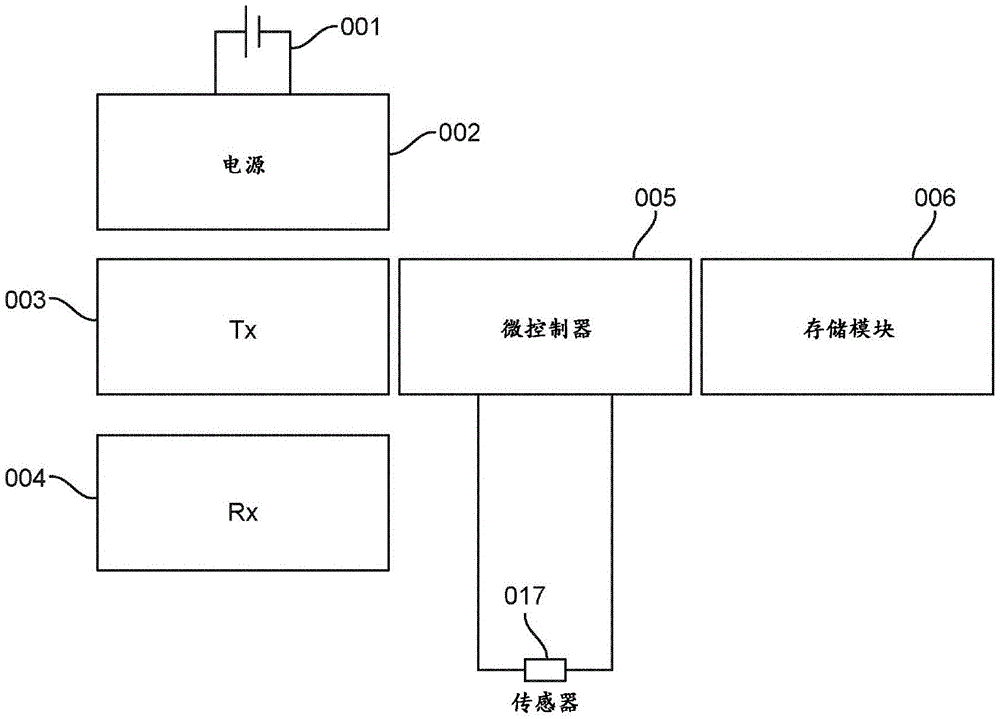
fig. 1 shows an example of a system for detecting the presence and amount of urine and feces.
Fig. 2 shows an example of how a single cell (cell) in a disposable battery is constructed.
Fig. 3 shows an example of how one or more battery cells may be connected to form a disposable battery.
Fig. 4 shows an example of an electrode pattern for detecting urine and feces.
Fig. 5 shows an example of a material covering the electrodes.
Fig. 6 shows an example of an electrolyte chamber separated from a battery cell by a frangible membrane.
Detailed Description
SUMMARY
Disclosed herein are systems for detecting urine and feces. The system may detect the presence of urine or feces, may estimate the amount of urine or feces, and may capture the frequency of urine or feces over a period of time. Such detection may be communicated to the device. In particular, disclosed herein are methods and materials for constructing a low cost, non-toxic and completely disposable system having power, sensing and data transfer modules.
Definition of
The terminology used herein is for the purpose of describing particular situations only and is not intended to be limiting. As used herein, the singular forms "a", "an" and "the" are intended to include the plural forms as well, unless the context clearly indicates otherwise. Furthermore, the extent to which the terms "includes," including, "" includes, "" has, "" with, "or variants thereof are used in the detailed description and/or in the claims is intended to be inclusive in a manner similar to the term" comprising.
The term "about" or "approximately" can mean within an acceptable error range for the particular value as determined by one of ordinary skill in the art, which will depend in part on how the value is measured or determined, e.g., the limitations of the measurement system. For example, "about" may mean ± 10% according to practice in the art. Alternatively, "about" may represent a range of ± 20%, ± 10%, ± 5% or ± 1% of a given value. Alternatively, particularly with respect to biological systems or processes, the term may mean within an order of magnitude, within 5-fold, or within 2-fold of the value. Where particular values are described in the application and claims, unless otherwise stated, it should be assumed that the term "about" means within an acceptable error range for the particular value. Also, where ranges and/or subranges of values are provided, ranges and/or subranges can include the endpoints of the ranges and/or subranges.
As used herein, the term "substantially" may refer to a value that is close to 100% of a given value. In some cases, the term refers to an amount that is at least about 90%, 91%, 92%, 93%, 94%, 95%, 96%, 97%, 98%, 99%, 99.9%, or 99.99% of the total amount. In some cases, the term may refer to an amount of about 100% of the total.
As used herein, the term "subject", "patient" or "individual" can encompass mammals and non-mammals. The mammal can be any member of the mammalian class, including but not limited to humans, non-human primates, such as chimpanzees, apes, or other monkey species; farm animals, such as cattle, horses, sheep, goats, pigs; domestic animals such as rabbits, dogs (or canines) and cats (or felines); experimental animals including rodents such as rats, mice, and guinea pigs, etc. Non-mammals may include birds, fish, and the like. In some embodiments, the subject may be a mammal. In some embodiments, the subject may be a human. In some cases, the human may be an adult. In some cases, the person may be a child. In some cases, the human may be 0-17 years of age. In some cases, the human may be 0-4 years of age.
In some cases, the human may be 18-120 years of age. In some cases, the human may be 65-120 years of age. In some cases, the subject may be a male. In some cases, the subject may be a female. In some cases, the subject may be diagnosed or may be suspected of having a condition or disease. The subject may be a patient. The subject may be an individual. In some cases, the subject, patient, or individual may be used interchangeably.
System for controlling a power supply
Disclosed herein are systems for detecting waste. In some cases, the waste may be urine, feces, or a combination of urine and feces.
Fig. 1 depicts a schematic diagram of an exemplary embodiment of a system described herein. As depicted in fig. 1, the system may include a battery 001, a power supply module 002 that can provide a regulated voltage, a transmitter 003, a receiver 004, a controller 005, a storage module 006, and a sensor 017. Battery 001 and power supply 002 may provide voltage for all system components.
The system may include a controller 005. In some cases, the controller 005 may be a microprocessor. The microprocessor may be a CPU as a discrete component. In some cases, the controller 005 may be a microcontroller. The microcontroller may contain an integrated CPU processor core, computer memory, program memory, and/or programmable input/output peripherals. In some cases, the program memory may include ferroelectric RAM, NOR flash, OTP ROM, or RAM. The controller 005 may supply the AC voltage to the sensor 017 through a D/a converter. The control module 005 can read the current flowing to the sensor 017 through an a/D converter.
A voltage may be applied across the sensor 017 to detect. The voltage may be applied using a pre-programmed or fixed current or voltage to calculate admittance, impedance, conductivity, resistance or voltage, and/or to detect changes in these parameters in the presence of conductive waste such as feces or urine. For example, since the presence of feces can create a path of lower resistance or impedance and a path of higher admittance between the electrodes of sensor 017, an increase in the amount of feces can result in a path of lower resistance or impedance and a higher admittance between the electrodes, thereby reducing the net resistance or resistance between the electrodes and increasing the net admittance in the electrode array. In some cases, the electrodes may include opposing finger electrodes. In some cases, the electrodes may include interleaved parallel electrodes. In some cases, the electrodes may include saw-tooth shaped parallel electrodes.
The applied current or voltage may be Alternating Current (AC) or Direct Current (DC). The applied voltage may be about 0.000V to 0.005V RMS, about 0.005V to about 0.05VRMS, about 0.05V to about 0.5V RMS, or about 5V to about 50V RMS. The frequency of the applied voltage may be about 0.1Hz to about 1Hz, about 10Hz to about 100Hz, about 100Hz to about 1000Hz, about 1000Hz to about 10,000Hz, about 10,000Hz to about 100,000Hz, or about 100,000Hz to about 1,000,000 Hz. In some cases, a resistor, capacitor, inductor, or other electrical component may constitute all or part of the sensor 017 circuitry. For example, a resistor, capacitor, or inductor may be connected in parallel or in series with the electrode array to determine whether the electrode array is electrically open or closed.
The voltage or other values may be converted using an analog-to-digital converter (ADC), and in some instances, one or more processors may execute algorithms to process the data and determine the presence of feces or urine.
In some cases, the system may include complete analog circuitry. In some cases, a complete analog circuit may be used for impedance or admittance calculations. In some cases, a complete analog circuit may reduce battery power usage and extend battery life. In some cases, the RF transmission may be done in analog circuitry. In some cases, custom analog circuitry may perform calculations, data transfers, or a combination of these functions. In some cases, digital circuitry may perform calculations, data transfers, or a combination of these functions. In some cases, the circuit may include a bare chip. In some cases, the circuit may be flexible. In some cases, the circuitry may be incorporated into a flexible package.
In some cases, the impedance or admittance may be calculated across the sensor 017. The impedance or admittance may be calculated by the controller 005 and stored in the memory module 006. The receiver 004 may receive signals to transmit data to the device. The receiver 004 can transmit all or part of the data (e.g., impedance or admittance data) stored in the memory module 006.
The transmitter 003 can transmit data (e.g., impedance, resistance, admittance, conductivity, capacitance, etc.) to a receiving device (e.g., a mobile device or a stationary device). The transmitter 003 can transmit data via a wired or wireless connection. In some cases, the wireless connection may be a Wi-Fi, RF, 3G, 4G LTE, or bluetooth connection. In some cases, the wired connection may be an ethernet, fiber optic, coaxial cable, or USB connection. In some cases, the bluetooth connection may contain multiple standards.
The receiver 004 can receive data (e.g., impedance, resistance, admittance, conductivity, capacitance, etc.) from a receiving device (e.g., a mobile device or a stationary device). The receiver 004 may receive data via a wired or wireless connection. In some cases, the wireless connection may be a Wi-Fi, RF, 3G, 4G LTE, or bluetooth connection. In some cases, the wired connection may be an ethernet, fiber optic, coaxial cable, or USB connection.
The system may further comprise additional means for signalling the presence of urine or faeces. For example, the system may have an audible device operatively coupled to the controller 005 that emits an audible signal when urine or feces are present. The system may also include a visual signaling device, such as a light, operatively coupled to the controller 005 that may be activated when urine or feces are present.
Battery with a battery cell
Fig. 2 depicts an exemplary battery design using magnesium and copper sheets as the negative and positive electrodes 012, 013. A porous hydrophilic nonconductive material 011 may be used to separate the anode 012 and the cathode 013. In some cases, the non-conductive material 011 can absorb an electrolyte. In some cases, the non-conductive material 011, the negative electrode 012, and the positive electrode 013 can be rolled into a cylinder. In some cases, battery 001 may include multiple battery cells connected in series or parallel. Fig. 3 depicts a battery having battery cells 014A, 014B, and 014C connected in series to provide a higher output voltage. Battery 001 may include at least about 1, 2, 3, 4, 5, 6, 7, 8, 9, or more than 10 cells connected in series or parallel. In some cases, a battery cell may include multiple electrodes. In some cases, the plurality of electrodes can include about 2, about 3, about 4, about 5, about 6, about 7, about 8, about 9, about 10, or more than about 10 electrodes. In some cases, the electrode may have a disk shape. In some cases, the disk shape may maximize electrode surface area.
In some cases, each cell in battery 001 may contain a vacuum space such that when bubbles form on the electrode surface, the bubbles are drawn into the vacuum space rather than adhering to the electrode surface. The removal of the gas bubbles increases the maximum output current of the cell because the presence of the gas bubbles leads to a reduction in the surface area of the electrodes.
In embodiments, an electrolyte may be used to activate the battery. The electrolyte may be acidic, neutral or alkaline. Examples of the acidic electrolyte may include sulfuric acid, nitric acid, chloric acid, phosphoric acid, citric acid, hydrochloric acid, citric acid, and acetic acid. Examples of the alkaline electrolyte may include potassium hydroxide, sodium acetate, sodium bicarbonate, imidazolium salt, pyrrolidinium salt, piperidinium salt, ammonium salt, urea, and N-methyl-N-propylpiperidinium-bis (trifluoromethanesulfonyl) imide. Examples of the neutral electrolyte may include water, sodium chloride, copper chloride, lithium chloride, aluminum chloride, potassium chloride, lithium hexafluorophosphate, sodium hexafluorophosphate, potassium hexafluorophosphate, sodium perchlorate and sodium difluoro (oxalato) borate.
In embodiments, the electrolyte may be urine or feces. Urine or feces can act as an electrolyte, activating the battery 001 by bridging the insulated negative and positive electrodes 012, 013. In some cases in the absence of exogenous electrolyte solution, the battery 001 is active only in the presence of urine or feces.
Applications of
The systems described herein may be incorporated into diapers or other incontinence products. Diapers including the system described herein may be used to monitor a subject wearing the diaper for the presence of urine or feces. The diaper may be sized to fit an infant, toddler, or child. In some cases, the diaper may be sized to fit an adult. In addition to the signaling devices described herein, the diaper may also include a color changing strip that reacts with moisture, which may provide other indications of the presence of urine or feces.
The systems described herein may be incorporated into a diaper to allow for the detection of urine or feces. For example, the sensor 017 described herein may be placed in an absorbent pad of a diaper. The sensor 017 may have a pair of elongated electrodes. In some cases, the sensor may comprise conductive ink. In some cases, the conductive ink may comprise a polymer. In some cases, the polymer may comprise a carbon-doped polymer. In some cases, the polymer may comprise a metal-doped polymer. In some cases, the polymer may be in an organic solvent. In some cases, the conductive ink may be dispensed to the surface by a syringe. In some cases, the conductive ink may be dispensed to the surface through an inkjet nozzle. In some cases, the surface may comprise plastic. In some cases, the sensor may comprise a glucose sensor. In some cases, the glucose sensor may include at least two layers. In some cases, the first layer may include one or more electrodes. In some cases, the second layer may comprise glucose oxidase, ferricyanide, or a combination thereof. In some cases, the presence of urine or feces can be detected by detecting glucose in the urine or feces. In some cases, glucose oxidase catalyzes the reaction between glucose and oxygen. In some cases, the reaction between glucose and oxygen produces gluconic acid and peroxides. In some cases, the gluconic acid will react with ferricyanide in the sensor. In some cases, reaction of gluconic acid with ferricyanide may generate ferrocyanide. In some cases, ferrocyanide may be measured by applying a voltage between two or more electrodes. In some cases, the two or more electrodes can include a working electrode and a reference electrode. In some cases, the electrode layer may include two electrodes. In some cases, a two-electrode configuration may include a working electrode and a reference electrode. In some cases, the working electrode surface may comprise gold, platinum, carbon, electrochemically inert materials, or any combination thereof. In some cases, the carbon may comprise glassy carbon. In some cases, the reference electrode can comprise silver, silver chloride, or a combination thereof. In some cases, the reference electrode can include silver having a silver chloride surface. In some cases, the surface area of the reference electrode can be greater than the surface area of the working electrode. In some cases, a voltage may be applied between two or more electrodes. In some cases, the current may be measured across two or more electrodes. In some cases, a fixed current may be applied across two or more electrodes. In some cases, a voltage may be measured across two or more electrodes. In some cases, a trigger electrode may be used to sense the presence of a liquid. In some cases, the trigger electrode may be triggered by the impedance between two or more electrodes that reaches a detection threshold. In some cases, the detection threshold may comprise 1 kohm. In some cases, the trigger electrode may be triggered by an admittance between two or more electrodes that reaches a detection threshold. In some cases, the detection threshold may comprise 1 kS. In some cases, the liquid may be continuously monitored. In some cases, the sensor may include a capillary tube. In some cases, the capillary tube may promote a steady flow of liquid to the sensor. In some cases, the layer may comprise a hydrophilic material. In some cases, the hydrophilic material may facilitate the passage of liquid. In some cases, the sensor may include a thermistor. In some cases, the thermistor may temperature compensate the recorded results. In some cases, the thermistor may detect whether the device is worn. Fig. 4 depicts an embodiment of an arrangement of the elongated electrodes 007 and 008 within the absorbent pad 009. In some cases, electrodes 007 and 008 may be electrically insulated from each other in the absence of urine or feces.
When incorporated into the absorbent pad 009 of a diaper, the sensor 017 can detect urine or feces when the subject excretes. In some cases, urine may be detected in the diaper. When a subject excretes urine into absorbent pad 009, the urine can create an electrical pathway between electrodes 007 and 008, thereby reducing the impedance and increasing the admittance between the two electrodes. After the urine is completely absorbed by the absorbent pad 009 of the diaper, a thin layer of liquid may remain between the electrodes 007 and 008, which may result in higher impedance and lower admittance than when the urine is first discharged. In some cases, fecal material may be detected in the diaper. Fecal material creates an electrical path between electrodes 007 and 008 which creates a persistent low impedance and high admittance between electrodes 007 and 008. In one embodiment, the two electrodes 007 and 008 may be placed on two layers of material, whereby both layers have holes to allow liquid to flow through. In one embodiment, the two electrodes 007 and 008 may be placed on the same layer, while the layer is porous or perforated to allow liquid to flow through.
In order to detect urine or feces when excreted, it may be necessary to arrange the electrodes 007 and 008 in a configuration that allows for rapid contact with the excrement. In some embodiments, the electrodes 007 and 008 can be placed on the outermost layer of the diaper absorbent pad. One potential drawback is that this arrangement is that the electrodes 007 and 008 may be in direct contact with the skin of the subject, which may be wet. Wet skin creates an electrical path of low impedance and high admittance between the electrodes 007 and 008, making it difficult to distinguish whether urine or feces are causing low impedance and high admittance. Fig. 5 depicts an improved arrangement. As shown in fig. 5, a thin, porous or mesh-like layer of hydrophobic material 010 can be placed on top of the electrodes 007 and 008, which allows urine to flow rapidly through and be absorbed by the absorbent pad 009. In this configuration, direct contact between the subject's skin and the electrodes 007 and 008 can be avoided.
As previously described, battery 001 may be activated in the presence of urine or feces. In some cases, battery 001 may be placed in the absorbent pad 009 in a similar manner as the electrodes 007 and 008. Thus, when a subject excretes urine or feces into the diaper, the urine or feces may come into contact with the absorbent pad 009 and with the battery 001. A battery 001 activated by urine or feces may power the system components. For example, the battery 001 powers the controller 005 when activated. When activated, the controller 005 measures the electrical impedance and admittance of the sensor 017, which may be lower in the presence of activated urine or feces than in the absence of activated urine or feces. When the controller 005 measures the low impedance and high admittance of the sensor 017, the controller 005 will send a signal to the mobile device or stationary device through the transmitter 003 that urine or feces is present.
In another embodiment, it is possible to activate the system without urine or feces using exogenous electrolytes. An exogenous electrolyte may be stored in a compartment of the diaper and may be physically separated from the electrodes 007 and 008 by a frangible membrane 018. Figure 6 depicts a schematic representation of the electrolyte stored in the compartment with a frangible membrane 018. When the system is to be activated, a sharp object 016 will pierce the frangible membrane 018, exposing the cell 014 to the electrolyte. Upon activation, the controller 005 measures the electrical impedance of the sensor 017, which would be higher if there were no urine or feces. The controller 005 may continue to measure the impedance of the sensor 017 for a period of time and may store the impedance data in the memory 006. The memory 006 may be accessed from a mobile device or a stationary device using the receiver 004 to monitor the presence or absence of urine or feces in the diaper of the subject. When the subject excretes urine or feces, the impedance will decrease relative to the impedance without urine or feces, and the admittance will increase relative to the admittance without urine or feces, which may prompt the controller 005 to transmit all the data stored in the memory 006 to a receiving device (e.g., a mobile device or a stationary device) via the transmitter 003, thereby providing an alert that urine or feces is present.
In some cases, the receiving device may be installed near the user. For example, the receiving device may be mounted near a hospital bed or wheelchair. Further, the receiving device may be a cloud-based system. In some cases, the data described herein may be uploaded to a server via a cloud-based system, which a local or remote user may access for analysis. In some cases, the data described herein may be stored on a cloud-based system and may be retrieved from the cloud-based system by a user through a networked device.
The controller 005 may be configured to collect impedance and admittance data over a defined or variable period of time. In some cases, the controller 005 may be programmed by a receiving device (e.g., a mobile device or a stationary device) to collect impedance and admittance data for a defined or variable period of time. In some cases, by default, the controller 005 may collect impedance and admittance data for a defined or variable period of time without additional programming by mobile or stationary devices. In some embodiments, the controller 005 can record the length of time that waste (e.g., urine or feces) is present. For example, the controller 005 may be configured to monitor for the presence of low impedance and high admittance events (e.g., initial excretion of urine). Upon reaching a threshold impedance or admittance, the controller 005 can increase the frequency at which impedance and admittance data is collected across the sensor 017. The frequency of impedance and admittance sampling may continue to be increased until the admittance value rises above the threshold. Thus, by changing the impedance and admittance data sampling rate from a low frequency when no waste is present to a high frequency when waste is present, higher density measurements can be collected in the presence of waste, while conserving power within the system by limiting the impedance and admittance sampling rate in the absence of waste.
The activated controller 005 can collect impedance and admittance data from the sensor 017 at least approximately every 10, 15, 20, 25, 30, 35, 40, 45, 50, 55, or 60 seconds. In some cases, the activated controller 005 can be at least about every 1, 2, 3, 4, 5, 6, 7, 8, 9, 10, 11, 12, 13, 14, 15, 16, 17, 18, 19, 20, 21, 22, 23, 24, 25, 26, 27, 28, 29, 30, 31, 32, 33, 34, 35, 36, 37, 38, 39, 40, 41, 42, 43, 44, 45, 46, 47, 48, 49, 50, 51, 52, 53, 54, 55, 56, 57, 58, 59, 60, 61, 62, 63, 64, 65, 66, 67, 68, 69, 70, 71, 72, 73, 74, 75, 76, 77, 78, 79, 80, 81, 82, 83, 84, 85, 86, 87, 88, 89, 90, 91, 92, 93, 94, 95, 96, 97, 98, 99, 100, 101, 102, 103, 104, 105, 106, 110, 111, 112, 111, 114, 109, 114, 112, 114, 112, and/80, 23, or more preferably, and/1, or more preferably, Impedance and admittance data were collected from the sensor 017 for 119 or 120 minutes. In some cases, the activated controller 005 may collect impedance and admittance data from the sensor 017 at least approximately every 0.5, 1, 1.5, 2, 2.5, 3, 3.5, 4, 4.5, 5, 5.5, 6, 6.5, 7, 7.5, 8, 8.5, 9, 9.5, 10, 10.5, 11, 11.5, 12, 12.5, 13, 13.5, 14, 14.5, 15, 15.5, 16, 16.5, 17, 17.5, 18, 18.5, 19, 19.5, 20, 20.5, 21, 21.5, 22, 22.5, 23, 23.5, or 24 hours.
The data transmitted by transmitter 003 can be transmitted to the end user. In some cases, the end user may be a healthcare provider, such as a physician, nurse, caregiver, or technician. In some cases, the end user may be a family or friend of the subject. In some cases, the data may be sent to the healthcare worker at the initial presence of urine or feces. If after a period of time, the diaper or feces is still present in the diaper without change, the data may be sent to family or friends. In some cases, a family or friend can be notified at least about 10, 11, 12, 13, 14, 15, 16, 17, 18, 19, 20, 21, 22, 23, 24, 25, 26, 27, 28, 29, 30, 31, 32, 33, 34, 35, 36, 37, 38, 39, 40, 41, 42, 43, 44, 45, 46, 47, 48, 49, 50, 51, 52, 53, 54, 55, 56, 57, 58, 59, or 60 minutes after voiding urine or feces.
In some embodiments, methods of treating a subject are also disclosed herein. In some cases, the treatment may be administered to the subject after urine, feces, or a combination thereof is detected. In some cases, the treatment may include administration of a drug. In some cases, the drug may comprise a member selected from the group consisting of: diaper rash cream, zinc oxide, petrolatum, hyaluronic acid, aloe vera, shea butter, jojoba oil, coconut oil, calendula, vitamin B5, vitamin E, BPH treatment, diarrhea treatment, loperamide, diabetes treatment, insulin, and any combination thereof.
In some cases, the detection of glucose can be used to monitor glucose levels in urine, feces, or a combination thereof. In some cases, detection of glucose in urine, feces, or a combination thereof can indicate that the subject has diabetes. In some cases, detection of glucose in urine, feces, or a combination thereof may indicate non-compliance or low compliance of the subject with the diabetes drug. In some cases, an undetectable presence of glucose in urine, feces, or a combination thereof may indicate that the subject has compliance or is substantially compliant with a diabetes drug. In some cases, detection of glucose in urine, feces, or a combination thereof may indicate that the subject is in need of a diabetes drug. In some cases, the diabetes drug may comprise insulin. In some cases, monitoring glucose levels can assess the course of treatment for diabetes. In some cases, changes in treatment strategies can be informed by monitoring glucose levels.
Examples
EXAMPLE 1 System construction
A system is constructed that includes an impedance sensor controller employing a microcontroller and is embedded in an adult diaper. The impedance sensor comprises two parallel elongated sensors embedded in a porous layer of an absorbent pad of the diaper. The RFID transponder and receiver are operatively coupled to the microcontroller to communicate with the mobile device. The microcontroller is coupled to an on-board RAM for storing impedance data. A battery including battery cells comprising a copper positive electrode and a magnesium negative electrode is operatively coupled to the system. The copper positive electrode and the magnesium negative electrode are arranged in a cylindrical configuration and are arranged in series. Each cell is constructed in an inactive form without an electrolyte solution.
The absorbent pad includes a color changing strip therein. The strip is configured to change color when contacted by moisture (e.g., urine or feces).
EXAMPLE 2 alternate System configuration
A system is constructed that includes an impedance sensor controller employing a microcontroller and is embedded in an adult diaper. The impedance sensor comprises two parallel elongated sensors embedded in a porous layer of an absorbent pad of the diaper. The RFID transponder and receiver are operatively coupled to the microcontroller to communicate with the mobile device. The microcontroller is coupled to an on-board RAM for storing impedance and admittance data. A battery including battery cells comprising a copper positive electrode and a magnesium negative electrode is operatively coupled to the system. The copper positive electrode and the magnesium negative electrode are arranged in a cylindrical configuration and are arranged in series. Each cell is constructed in an inactive form without an electrolyte solution.
The chamber storing the potassium chloride electrolyte solution is placed adjacent to the battery cell and separated from the battery cell by a frangible membrane. A sharp nail is placed near the frangible membrane, which, when pressed, will rupture the frangible membrane, thereby bringing the electrolyte solution into contact with the battery cell.
An audible speaker unit is operatively coupled to the microcontroller. The microcontroller is programmed to generate an audible noise through the audible speaker unit when the impedance drops by at least about 20% from the baseline impedance or when the admittance increases by at least about 20% from the baseline admittance, the impedance or admittance being collected upon activation of the system by rupture of the frangible membrane.
Example 3 activation by urine
A nursing home subject was fitted with a diaper constructed as described in example 1. Since the electrolyte solution is isolated from the battery cell, the diaper is in an inactive state in the absence of urine. After the subject excretes urine, the urine covers the absorbent pad and contacts the battery cell and the elongated electrodes of the sensor. Upon contacting the sensor, urine allows charge to be transferred between the negative and positive electrodes, thereby activating the battery. Once activated, the battery powers the controller, which begins collecting impedance and admittance data of the sensor along the elongated electrode. The impedance is calculated by dividing the applied voltage by the resistance. The admittance is calculated by dividing 1 by the impedance. If urine is present, impedance may be reduced relative to the absence of urine, and admittance may be increased relative to the absence of urine. Once urine is detected, the microcontroller sends an RF signal to the mobile device or stationary device. Based on the duration and/or frequency of the urine detection signal, the mobile device or stationary device may send an alert to a nurse at the nursing station that urine is present and that a diaper change is required due to possible saturation. After 15 minutes, a second alarm is sent to the nurse that urine is present and a diaper change is required. After another 15 minutes, an alarm is sent to the family member by pushing a notification to the family member's phone, alerting the family member that urine saturation has occurred in the diaper for 30 minutes.
Example 4 activation by feces
The subjects in the hospital wear diapers constructed as described in example 1. Since the electrolyte solution is isolated from the battery cell, the diaper is in an inactive state without feces. After the subject excretes feces, the feces contact the absorbent pad and contact the battery cell and the elongated electrodes of the sensor. Upon contacting the sensor, the feces allow charge to transfer between the negative and positive electrodes, thereby activating the battery. Once activated, the battery powers the controller, which begins collecting impedance and admittance data of the sensor along the elongated electrode. The impedance is calculated by dividing the applied voltage by the resistance. The admittance is calculated by dividing 1 by the impedance. If feces are present, the impedance persists and is lower relative to the absence of feces. If stool is present, admittance is higher and persists relative to the absence of stool. Once feces are detected, the microcontroller immediately sends an alert to the nurse at the nursing station via the mobile device or the stationary device that feces are present. After 15 minutes, a second alarm was sent to the nurse for the presence of feces. After another 15 minutes, an alarm is sent to the family member by the family member's phone push notification, alerting the family member that feces have been present in the diaper for 30 minutes.
Example 5 monitoring incontinence in clinical trials
Subjects participating in the incontinence clinical trial were fitted with diapers constructed as described in example 2. Since the electrolyte solution is isolated from the battery cell, the diaper is in an inactive state in the absence of urine. Prior to the start of the clinical trial, the staples were depressed, which caused the frangible membrane to rupture and activate the battery and system.
In clinical trials, the excretion of urine over time can be monitored by measuring impedance and admittance over time. The microcontroller is programmed to record impedance and admittance measurements every 5 minutes after the treatment is applied to incontinence. In the absence of urine, the impedance between the elongated electrodes is high and the admittance is low. After the subject excretes urine, the urine covers the absorbent pad and contacts the elongated electrodes of the sensor. Initial contact of urine with the sensor results in a transient decrease in impedance and a transient increase in admittance. After urine is absorbed into the absorbent pad, the impedance gradually increases and the admittance gradually decreases. The impedance and admittance data stored in the memory may be accessed by a clinical trial personnel to monitor the progress of the treatment via the RFID transponder/receiver.
Example 6 urine monitoring
The subjects in the hospital wear diapers constructed as described in example 2. Since the electrolyte solution is isolated from the battery cell, the diaper is in an inactive state in the absence of urine. After the diaper is worn, the pins are depressed, which causes the frangible membrane to rupture and activate the battery and system.
Using a mobile device paired with a diaper via an RFID connection, the caregiver can program the diaper's microcontroller to record impedance and admittance measurements every 15 minutes. In hospitals, the excretion of urine over time can be monitored by measuring impedance and admittance over time. In the absence of urine, the impedance between the elongated electrodes is high and the admittance is low. After the subject excretes urine, the urine covers the absorbent pad and contacts the elongated electrodes of the sensor. Initial contact of urine with the sensor results in a transient decrease in impedance and a transient increase in admittance. After urine is absorbed into the absorbent pad, the impedance gradually increases and the admittance gradually decreases. Hospital staff access impedance and admittance data stored in memory using a mobile device paired with the system. After retrieving the data from the system, hospital staff will post-process the data to map the frequency of urination over time. Post-processing analysis links the data map to the subject's profile.
Example 7 fecal monitoring
The subjects in the hospital wear diapers constructed as described in example 2. Since the electrolyte solution is isolated from the battery cell, the diaper is in an inactive state without feces. After the diaper is worn, the pins are depressed, which causes the frangible membrane to rupture and activate the battery and system.
Using a mobile device paired with a diaper via an RFID connection, the caregiver can program the diaper's microcontroller to record impedance and admittance measurements every 15 minutes. By measuring impedance and admittance over time, fecal excretion can be monitored over time. In the absence of stool, the impedance between the elongated electrodes is high and the admittance between the elongated electrodes is low. After the subject excretes feces, impedance persists and is lower relative to absence of feces, while admittance persists and is higher relative to absence of feces. Hospital staff access impedance and admittance data stored in memory using a mobile device paired with the system. After retrieving the data from the system, hospital staff will post-process the data to map the frequency of defecation over time. Post-processing analysis links the data map to the subject's profile.
Although exemplary embodiments have been shown and described herein, such embodiments are by way of example only. Many variations, changes, and substitutions may be made in the exemplary embodiments. It should be understood that various alternatives to the embodiments described herein may be employed.
Claims (57)
1. A system, comprising:
(a) a processor;
(b) a battery comprising a negative electrode and a positive electrode, and
(c) at least one sensor comprising a working electrode and a counter electrode, wherein the at least one sensor is operably coupled to the battery and the processor;
wherein the processor is configured to measure impedance across the working electrode and the counter electrode of the at least one sensor in response to feces or urine, thereby producing data indicative of urine, feces, or a combination thereof; and is
Wherein the circuit is substantially open in the absence of urine, feces, or electrolyte solution and at least partially closed when the sensor is in contact with urine, feces, or electrolyte solution; thereby powering the processor and sensor only in the presence of urine, feces, or electrolyte solution.
2. The system of claim 1, further comprising a Radio Frequency Identification (RFID) transponder operatively coupled to the processor and the battery.
3. The system of claim 2, wherein the RFID transponder is configured to transmit the data in the presence of urine, feces, or an electrolyte solution.
4. The system of any one of claims 1-3, wherein the system does not measure a threshold level of current in the absence of urine, feces, or electrolyte solution.
5. The system of claim 4, wherein the urine, the feces, the electrolyte solution, or a combination thereof generates a threshold level of impedance.
6. The system of any of claims 1-4, wherein the data is impedance data.
7. The system of any of claims 1-6, further comprising a storage module operatively coupled to the processor and the battery, wherein the storage module is configured to store the data.
8. The system of claim 7, wherein the RFID transponder is configured to access the memory module.
9. The system of any of claims 1-8, further comprising an RFID receiver operably coupled to the processor and the battery.
10. The system of claim 9, wherein the RFID receiver is configured to receive instructions from a device via RF signals to transmit the data to the device.
11. The system of claim 10, wherein the RFID transponder is configured to transmit the data to the device via RF signals.
12. The system of claim 10 or 11, wherein the device is a mobile device or a stationary device.
13. The system of claim 10 or 11, wherein the device is mounted near a user.
14. The system of claim 6, wherein the generation of the data comprises analog-to-digital conversion of a voltage.
15. The system of any one of claims 1-14, comprising a plurality of sensors.
16. The system of claim 15, wherein the plurality of sensors are arranged in at least two layers on a surface.
17. The system of any one of claims 1-16, wherein the sensor comprises a glucose sensor.
18. A diaper comprising the system of any one of claims 1-17 and an absorbent pad.
19. The diaper of claim 18, further comprising a reservoir for storing the electrolyte solution.
20. The diaper of claim 19, wherein the reservoir comprises a frangible membrane, wherein the electrolyte solution is at least partially isolated from the battery by the frangible membrane, and wherein the electrolyte solution is in contact with the battery when the frangible membrane is ruptured.
21. The diaper of claim 18, further comprising a transmitter configured to transmit the impedance data to a device.
22. The diaper of claim 21 wherein the battery comprises magnesium or a salt thereof.
23. The diaper of claim 22, wherein the battery comprises from about 10% to about 90% by weight magnesium or salt thereof relative to the total weight of the battery.
24. The diaper of claim 21, wherein the battery comprises copper or a salt thereof.
25. The diaper of claim 24, wherein the battery comprises from about 10% to about 90% by weight copper or a salt thereof relative to the total weight of the battery.
26. The diaper of claim 19, further comprising an object configured to pierce the frangible membrane.
27. The diaper of any of claims 18-26, wherein the absorbent pad comprises a plurality of sensors.
28. The diaper of claim 27, wherein the plurality of sensors are arranged in at least two layers on the absorbent pad.
29. The diaper of claim 28, further comprising a layer of porous or hydrophobic material at least partially covering the plurality of sensors.
30. The diaper of any one of claims 18-29, further comprising a visual indicator configured to provide a visual cue in the presence of urine, feces, or a combination thereof.
31. The diaper of any one of claims 18-29, further comprising an audio indicator configured to provide an audio cue in the presence of urine, feces, or a combination thereof.
32. The diaper of any of claims 18-29, further comprising a processor operatively coupled to the at least one sensor and the battery.
33. The diaper of claim 32, wherein the processor is configured to measure impedance across the working electrode and the counter electrode of the at least one sensor in response to feces, urine, or an electrolyte solution in contact with the absorbent pad, thereby generating impedance data indicative of the urine or the feces.
34. The diaper of any of claims 18-33, sized to fit a human.
35. The diaper of claim 34, wherein the human is about 0 years to about 17 years old.
36. The diaper of claim 35, wherein the human is about 0 years to about 4 years old.
37. The diaper of claim 34, wherein the human is about 18 years to about 120 years old.
38. The diaper of claim 37, wherein the human is about 65 years to about 120 years old.
39. A method, comprising:
(a) detecting feces or urine by contacting said feces or urine with at least one sensor of the system of any one of claims 2-17, thereby generating data; and
(b) the data is transmitted to the device using an RFID transponder.
40. A method, comprising:
(a) detecting feces or urine by contacting the feces or urine with an absorbent pad of the diaper of any one of claims 18-38, thereby generating data; and
(b) the data is transmitted to the device using a transmitter.
41. The method of claim 39 or 40, wherein the data is stored on a mobile device or a stationary device, displayed on the mobile device or the stationary device, or any combination thereof.
42. The method of claim 39 or 40, wherein the data is uploaded, at least in part, to a remote server via a cloud-based system.
43. The method of claim 41, wherein the analysis of the data is performed at least in part on the mobile device or the stationary device.
44. The method of claim 42, wherein the analysis of the data is performed at least in part on the remote server.
45. The method of claim 43 or 44, wherein the analysis comprises an alert for the presence of urine or feces.
46. The method of claim 43 or 44, wherein the analysis comprises an alert of urine saturation based on the duration of urine or the frequency of the data.
47. The method of claim 43, wherein said analyzing comprises measuring the presence of urine or feces over time.
48. The method of claim 40, further comprising rupturing the frangible membrane.
49. The method of claim 48, further comprising contacting the battery with the electrolyte solution.
50. The method of any one of claims 39-47, wherein said detecting is performed on a human.
51. The method of claim 50, wherein the human is about 0-17 years of age.
52. The method of claim 50, wherein the human is about 18-120 years of age.
53. The method of any one of claims 39-52, wherein the sensor comprises a glucose sensor, and wherein the method further comprises detecting glucose levels in urine, feces, or a combination thereof by contacting the urine, feces, or a combination thereof with the glucose sensor.
54. The method of claim 53, further comprising monitoring glucose levels in the urine, the feces, or a combination thereof over a period of time.
55. The method of claim 54, further comprising determining compliance with diabetes treatment as a function of glucose levels of a subject to whom the diabetes treatment is administered.
56. The method of any one of claims 50-55, further comprising administering a drug to the human.
57. The method of claim 56, wherein the drug is selected from the group consisting of: diaper rash cream, zinc oxide, petrolatum, hyaluronic acid, aloe vera, shea butter, jojoba oil, coconut oil, calendula, vitamin B5, vitamin E, BPH treatment, diarrhea treatment, loperamide, diabetes treatment, insulin, and any combination thereof.
Applications Claiming Priority (3)
| Application Number | Priority Date | Filing Date | Title |
|---|---|---|---|
| US201862757947P | 2018-11-09 | 2018-11-09 | |
| US62/757,947 | 2018-11-09 | ||
| PCT/US2019/060588 WO2020097543A1 (en) | 2018-11-09 | 2019-11-08 | Methods and apparatus for monitoring presence of urine or feces |
Publications (1)
| Publication Number | Publication Date |
|---|---|
| CN113438936A true CN113438936A (en) | 2021-09-24 |
Family
ID=70612189
Family Applications (1)
| Application Number | Title | Priority Date | Filing Date |
|---|---|---|---|
| CN201980088540.0A Pending CN113438936A (en) | 2018-11-09 | 2019-11-08 | Method and apparatus for monitoring the presence of urine or feces |
Country Status (4)
| Country | Link |
|---|---|
| US (1) | US20210393448A1 (en) |
| JP (1) | JP2022509924A (en) |
| CN (1) | CN113438936A (en) |
| WO (1) | WO2020097543A1 (en) |
Cited By (1)
| Publication number | Priority date | Publication date | Assignee | Title |
|---|---|---|---|---|
| CN116250988A (en) * | 2023-02-13 | 2023-06-13 | 广东绿展科技有限公司 | Flexible biosensor, preparation method thereof, and paper diaper |
Families Citing this family (2)
| Publication number | Priority date | Publication date | Assignee | Title |
|---|---|---|---|---|
| CA3182828A1 (en) * | 2020-06-30 | 2022-01-06 | Rui Pedro MOREIRA CORREIA | Method of distinguishing between types of excretion in an absorbent hygiene article |
| EP4656170A2 (en) * | 2020-07-07 | 2025-12-03 | Ontex BV | Monitoring device being attachable to an absorbent article and communication method therefor |
Citations (6)
| Publication number | Priority date | Publication date | Assignee | Title |
|---|---|---|---|---|
| US20020145526A1 (en) * | 2001-03-30 | 2002-10-10 | Augmentech, Inc. | Patient positioning monitoring apparatus and method of use thereof |
| CN1380547A (en) * | 1996-05-07 | 2002-11-20 | 科诺克斯安全工程公司 | Wet dampness detection device for diaper and diaper with said device |
| CN101342092A (en) * | 2008-08-18 | 2009-01-14 | 徐菲 | Wireless sensing monitoring system |
| US20160008182A1 (en) * | 2013-03-05 | 2016-01-14 | Jptechnologies, Inc. | Wireless sensor systems and methods |
| CN106999164A (en) * | 2014-08-21 | 2017-08-01 | 古拉森斯股份有限公司 | Systems and methods for performing non-invasive analysis of body fluids |
| US20180263546A1 (en) * | 2015-05-06 | 2018-09-20 | National University Of Ireland, Galway | Non-invasive detection of the backflow of urine |
Family Cites Families (5)
| Publication number | Priority date | Publication date | Assignee | Title |
|---|---|---|---|---|
| US7221279B2 (en) * | 2001-06-11 | 2007-05-22 | Nielsen Wyn Y | Elimination—absorber monitoring system |
| US20050101841A9 (en) * | 2001-12-04 | 2005-05-12 | Kimberly-Clark Worldwide, Inc. | Healthcare networks with biosensors |
| WO2005017683A2 (en) * | 2003-08-05 | 2005-02-24 | Saf-Wav International, Llc | System for managing conditions |
| EP2734166B8 (en) * | 2011-07-20 | 2018-08-15 | etectRx, Inc. | Wetness sensors, wetness monitoring system, and related methods |
| US10238551B2 (en) * | 2015-08-07 | 2019-03-26 | Mavin Wear Inc. | System and methods for monitoring defecation, urination, near-body temperature, body posture and body movements in young children, patients and elderlies |
-
2019
- 2019-11-08 US US17/292,514 patent/US20210393448A1/en not_active Abandoned
- 2019-11-08 CN CN201980088540.0A patent/CN113438936A/en active Pending
- 2019-11-08 WO PCT/US2019/060588 patent/WO2020097543A1/en not_active Ceased
- 2019-11-08 JP JP2021525030A patent/JP2022509924A/en active Pending
Patent Citations (6)
| Publication number | Priority date | Publication date | Assignee | Title |
|---|---|---|---|---|
| CN1380547A (en) * | 1996-05-07 | 2002-11-20 | 科诺克斯安全工程公司 | Wet dampness detection device for diaper and diaper with said device |
| US20020145526A1 (en) * | 2001-03-30 | 2002-10-10 | Augmentech, Inc. | Patient positioning monitoring apparatus and method of use thereof |
| CN101342092A (en) * | 2008-08-18 | 2009-01-14 | 徐菲 | Wireless sensing monitoring system |
| US20160008182A1 (en) * | 2013-03-05 | 2016-01-14 | Jptechnologies, Inc. | Wireless sensor systems and methods |
| CN106999164A (en) * | 2014-08-21 | 2017-08-01 | 古拉森斯股份有限公司 | Systems and methods for performing non-invasive analysis of body fluids |
| US20180263546A1 (en) * | 2015-05-06 | 2018-09-20 | National University Of Ireland, Galway | Non-invasive detection of the backflow of urine |
Cited By (1)
| Publication number | Priority date | Publication date | Assignee | Title |
|---|---|---|---|---|
| CN116250988A (en) * | 2023-02-13 | 2023-06-13 | 广东绿展科技有限公司 | Flexible biosensor, preparation method thereof, and paper diaper |
Also Published As
| Publication number | Publication date |
|---|---|
| WO2020097543A1 (en) | 2020-05-14 |
| JP2022509924A (en) | 2022-01-25 |
| US20210393448A1 (en) | 2021-12-23 |
Similar Documents
| Publication | Publication Date | Title |
|---|---|---|
| EP3706693B1 (en) | A system for managing incontinence | |
| CN106510960B (en) | Intelligent nursing consumables and physiological monitoring device having the same | |
| JP6158804B2 (en) | Wet sensor, wetness monitoring system, and related methods | |
| US20080262376A1 (en) | Wireless sensor system for monitoring skin condition using the body as communication conduit | |
| JP5859847B2 (en) | Liquid detection system | |
| US9314631B2 (en) | Tongue sensors for monitoring multiple physiological parameters and tongue stimulation | |
| CN105125348B (en) | A kind of intelligent urine wet alarm method and system | |
| CN113438936A (en) | Method and apparatus for monitoring the presence of urine or feces | |
| CN105616048A (en) | Human body excretion detecting and monitoring method and system | |
| CN206328830U (en) | Intelligent closestool | |
| KR101962308B1 (en) | A health monitoring system for companion animal by using wireless data communication module and smartphone | |
| CN102711609B (en) | Determinator, Analytical system, power supply device and power supply method | |
| CN110672681B (en) | A wearable urine detection device | |
| WO2017149688A1 (en) | Bladder urodynamic measurement apparatus | |
| CN104055525A (en) | Implantable type low-consumption wireless blood glucose monitor | |
| GB2425180A (en) | Wearable physiological monitor with wireless transmitter | |
| CN110946699A (en) | Urine and excrement recognition alarm system, urine and excrement recognition reminder and nursing product | |
| CN117860244B (en) | Fault detection method and system based on CGM information transmission | |
| CN114630642A (en) | Detection device for detecting the state of a diaper, diaper accommodating such a detection device | |
| CN210631209U (en) | A intelligent shoe-pad for long-range rehabilitation training | |
| JPWO2020097543A5 (en) | ||
| CN110742730A (en) | Urine leakage monitoring system and method | |
| CN120605166B (en) | Excrement intelligent detection method for paper diapers and related device | |
| US12257200B2 (en) | Bed pan assembly with excretion analyzation | |
| CN204791462U (en) | Monitoring devices and monitoring system relieve bowls |
Legal Events
| Date | Code | Title | Description |
|---|---|---|---|
| PB01 | Publication | ||
| PB01 | Publication | ||
| SE01 | Entry into force of request for substantive examination | ||
| SE01 | Entry into force of request for substantive examination | ||
| CB03 | Change of inventor or designer information | ||
| CB03 | Change of inventor or designer information |
Inventor after: Wang Lu Inventor after: Sun Jichao Inventor before: Wang Lu Inventor before: Sun Jichao |
|
| WD01 | Invention patent application deemed withdrawn after publication | ||
| WD01 | Invention patent application deemed withdrawn after publication |
Application publication date: 20210924 |