CN113421123A - Design method and device for point-to-point electric energy trading market containing shared energy storage - Google Patents
Design method and device for point-to-point electric energy trading market containing shared energy storage Download PDFInfo
- Publication number
- CN113421123A CN113421123A CN202110726697.0A CN202110726697A CN113421123A CN 113421123 A CN113421123 A CN 113421123A CN 202110726697 A CN202110726697 A CN 202110726697A CN 113421123 A CN113421123 A CN 113421123A
- Authority
- CN
- China
- Prior art keywords
- energy
- point
- model
- trading market
- seller
- Prior art date
- Legal status (The legal status is an assumption and is not a legal conclusion. Google has not performed a legal analysis and makes no representation as to the accuracy of the status listed.)
- Granted
Links
Images


Classifications
-
- G—PHYSICS
- G06—COMPUTING OR CALCULATING; COUNTING
- G06Q—INFORMATION AND COMMUNICATION TECHNOLOGY [ICT] SPECIALLY ADAPTED FOR ADMINISTRATIVE, COMMERCIAL, FINANCIAL, MANAGERIAL OR SUPERVISORY PURPOSES; SYSTEMS OR METHODS SPECIALLY ADAPTED FOR ADMINISTRATIVE, COMMERCIAL, FINANCIAL, MANAGERIAL OR SUPERVISORY PURPOSES, NOT OTHERWISE PROVIDED FOR
- G06Q30/00—Commerce
- G06Q30/02—Marketing; Price estimation or determination; Fundraising
- G06Q30/0201—Market modelling; Market analysis; Collecting market data
- G06Q30/0206—Price or cost determination based on market factors
-
- G—PHYSICS
- G06—COMPUTING OR CALCULATING; COUNTING
- G06Q—INFORMATION AND COMMUNICATION TECHNOLOGY [ICT] SPECIALLY ADAPTED FOR ADMINISTRATIVE, COMMERCIAL, FINANCIAL, MANAGERIAL OR SUPERVISORY PURPOSES; SYSTEMS OR METHODS SPECIALLY ADAPTED FOR ADMINISTRATIVE, COMMERCIAL, FINANCIAL, MANAGERIAL OR SUPERVISORY PURPOSES, NOT OTHERWISE PROVIDED FOR
- G06Q40/00—Finance; Insurance; Tax strategies; Processing of corporate or income taxes
- G06Q40/04—Trading; Exchange, e.g. stocks, commodities, derivatives or currency exchange
-
- G—PHYSICS
- G06—COMPUTING OR CALCULATING; COUNTING
- G06Q—INFORMATION AND COMMUNICATION TECHNOLOGY [ICT] SPECIALLY ADAPTED FOR ADMINISTRATIVE, COMMERCIAL, FINANCIAL, MANAGERIAL OR SUPERVISORY PURPOSES; SYSTEMS OR METHODS SPECIALLY ADAPTED FOR ADMINISTRATIVE, COMMERCIAL, FINANCIAL, MANAGERIAL OR SUPERVISORY PURPOSES, NOT OTHERWISE PROVIDED FOR
- G06Q50/00—Information and communication technology [ICT] specially adapted for implementation of business processes of specific business sectors, e.g. utilities or tourism
- G06Q50/06—Energy or water supply
-
- Y—GENERAL TAGGING OF NEW TECHNOLOGICAL DEVELOPMENTS; GENERAL TAGGING OF CROSS-SECTIONAL TECHNOLOGIES SPANNING OVER SEVERAL SECTIONS OF THE IPC; TECHNICAL SUBJECTS COVERED BY FORMER USPC CROSS-REFERENCE ART COLLECTIONS [XRACs] AND DIGESTS
- Y04—INFORMATION OR COMMUNICATION TECHNOLOGIES HAVING AN IMPACT ON OTHER TECHNOLOGY AREAS
- Y04S—SYSTEMS INTEGRATING TECHNOLOGIES RELATED TO POWER NETWORK OPERATION, COMMUNICATION OR INFORMATION TECHNOLOGIES FOR IMPROVING THE ELECTRICAL POWER GENERATION, TRANSMISSION, DISTRIBUTION, MANAGEMENT OR USAGE, i.e. SMART GRIDS
- Y04S10/00—Systems supporting electrical power generation, transmission or distribution
- Y04S10/50—Systems or methods supporting the power network operation or management, involving a certain degree of interaction with the load-side end user applications
-
- Y—GENERAL TAGGING OF NEW TECHNOLOGICAL DEVELOPMENTS; GENERAL TAGGING OF CROSS-SECTIONAL TECHNOLOGIES SPANNING OVER SEVERAL SECTIONS OF THE IPC; TECHNICAL SUBJECTS COVERED BY FORMER USPC CROSS-REFERENCE ART COLLECTIONS [XRACs] AND DIGESTS
- Y04—INFORMATION OR COMMUNICATION TECHNOLOGIES HAVING AN IMPACT ON OTHER TECHNOLOGY AREAS
- Y04S—SYSTEMS INTEGRATING TECHNOLOGIES RELATED TO POWER NETWORK OPERATION, COMMUNICATION OR INFORMATION TECHNOLOGIES FOR IMPROVING THE ELECTRICAL POWER GENERATION, TRANSMISSION, DISTRIBUTION, MANAGEMENT OR USAGE, i.e. SMART GRIDS
- Y04S50/00—Market activities related to the operation of systems integrating technologies related to power network operation or related to communication or information technologies
- Y04S50/14—Marketing, i.e. market research and analysis, surveying, promotions, advertising, buyer profiling, customer management or rewards
Landscapes
- Business, Economics & Management (AREA)
- Engineering & Computer Science (AREA)
- Strategic Management (AREA)
- Accounting & Taxation (AREA)
- Finance (AREA)
- Development Economics (AREA)
- Economics (AREA)
- General Business, Economics & Management (AREA)
- Theoretical Computer Science (AREA)
- Marketing (AREA)
- Physics & Mathematics (AREA)
- General Physics & Mathematics (AREA)
- Entrepreneurship & Innovation (AREA)
- Health & Medical Sciences (AREA)
- Data Mining & Analysis (AREA)
- Technology Law (AREA)
- Game Theory and Decision Science (AREA)
- Public Health (AREA)
- Water Supply & Treatment (AREA)
- General Health & Medical Sciences (AREA)
- Human Resources & Organizations (AREA)
- Primary Health Care (AREA)
- Tourism & Hospitality (AREA)
- Management, Administration, Business Operations System, And Electronic Commerce (AREA)
Abstract
本发明提供一种含共享储能的点对点电能交易市场设计方法和装置,其中,方法包括:构建点对点电能交易市场中每个能量销售者的利润最大化模型和每个能量购买者的成本最小化模型;其中,点对点电能交易市场是由分布式能源拥有者作为能量销售者,各个小区、居民楼,或者是大型商场作为能量购买者以及电网组成的交易市场;基于每个能量销售者的利润最大化模型和每个能量购买者的成本最小化模型构建点对点电能交易市场的能量均衡模型;基于能量均衡模型确定电能交易市场中每个能量销售者的销售电量以及每个能量购买者的购买电量。本发明通过实现市场均衡达到市场中能量销售者的利润最大化,能量购买者的成本最小化,实现能量的充分利用、减少电网成本。

The present invention provides a method and device for designing a peer-to-peer electric energy trading market with shared energy storage, wherein the method includes: constructing a profit maximization model for each energy seller and a cost minimization for each energy buyer in the peer-to-peer electric energy trading market Model; among them, the point-to-point power trading market is a trading market composed of distributed energy owners as energy sellers, various communities, residential buildings, or large shopping malls as energy buyers and power grids; based on the maximum profit of each energy seller The energy balance model of the peer-to-peer electric energy trading market is constructed by the optimization model and the cost minimization model of each energy buyer; based on the energy balance model, the sales electricity of each energy seller and the purchased electricity of each energy buyer in the electricity transaction market are determined. The invention maximizes the profit of energy sellers in the market and minimizes the cost of energy buyers by realizing market equilibrium, thereby realizing full utilization of energy and reducing grid costs.
Description
技术领域technical field
本发明涉及新型能源技术领域,尤其涉及一种含共享储能的点对点电能交易市场设计方法和装置。The invention relates to the technical field of novel energy, in particular to a design method and device for a point-to-point electric energy trading market with shared energy storage.
背景技术Background technique
近年来,以风力发电和光伏发电为代表的新能源发电技术快速发展。新能源在构建新型电力系统,实现“碳达峰,碳中和”的进程中将发挥至关重要的作用。包含储能、光伏发电、风力发电等的分布式能源在配电网得到了大力发展。但分布式可再生能源的消纳为电网带来了挑战,如何在保证电网安全和稳定的情况下,尽可能提高分布式能源的利用率。In recent years, new energy power generation technologies represented by wind power generation and photovoltaic power generation have developed rapidly. New energy will play a vital role in the process of building a new power system and achieving "carbon peaking and carbon neutrality". Distributed energy including energy storage, photovoltaic power generation, wind power generation, etc. has been vigorously developed in the distribution network. However, the consumption of distributed renewable energy has brought challenges to the power grid. How to improve the utilization rate of distributed energy as much as possible while ensuring the security and stability of the power grid.
上网电价是一种鼓励分布式能源投资和提高可再生能源的消纳的有效机制,在该机制下,分布式能源拥有者可以按照约定的价格将多余的能量售卖给电网。但是该机制也被批评缺少竞争,并且给用户带来的收益有限。Feed-in tariff is an effective mechanism to encourage distributed energy investment and increase the consumption of renewable energy. Under this mechanism, distributed energy owners can sell excess energy to the grid at an agreed price. But the mechanism has also been criticized for lack of competition and limited benefits to users.
发明内容SUMMARY OF THE INVENTION
本发明提供一种含共享储能的点对点电能交易市场设计方法和装置,用以解决现有技术中用户缺乏竞争力且获得的收益有限的缺陷,实现降低购电者用电成本,提高售电者分布式能源的利用率,使其从分布式能源设备投资中获益。The present invention provides a design method and device for a point-to-point electric energy trading market with shared energy storage, which is used to solve the defects of the prior art that users lack competitiveness and obtain limited benefits, reduce the electricity consumption cost of electricity buyers, and improve electricity sales. The utilization rate of distributed energy resources is increased, so that it can benefit from the investment in distributed energy equipment.
第一方面,本发明提供一种含共享储能的点对点电能交易市场设计方法,包括:In a first aspect, the present invention provides a method for designing a peer-to-peer electric energy trading market with shared energy storage, including:
构建点对点电能交易市场中每个能量销售者的利润最大化模型和每个能量购买者的成本最小化模型;其中,所述点对点电能交易市场是由分布式能源拥有者作为能量销售者,各个小区、各个居民楼,或者是大型商场作为能量购买者以及电网组成的交易市场;Construct the profit maximization model of each energy seller and the cost minimization model of each energy buyer in the peer-to-peer power trading market; wherein, the peer-to-peer power trading market is composed of distributed energy owners as energy sellers, and each cell , various residential buildings, or large shopping malls as energy buyers and trading markets composed of power grids;
基于所述每个能量销售者的利润最大化模型和每个能量购买者的成本最小化模型构建所述点对点电能交易市场的能量均衡模型;constructing an energy balance model of the peer-to-peer electric energy trading market based on the profit maximization model of each energy seller and the cost minimization model of each energy buyer;
基于所述能量均衡模型确定所述点对点电能交易市场中每个能量销售者的销售电量以及每个能量购买者的购买电量。The electricity sold by each energy seller and the electricity purchased by each energy buyer in the peer-to-peer electric energy trading market is determined based on the energy balance model.
根据本发明提供一种的含共享储能的点对点电能交易市场设计方法,其中,所述基于所述能量均衡模型确定所述点对点电能交易市场中每个能量销售者的销售电量以及每个能量购买者的购买电量,具体包括:According to the present invention, a method for designing a peer-to-peer electric energy trading market with shared energy storage is provided, wherein the electricity sold by each energy seller and each energy purchase in the peer-to-peer electric energy trading market are determined based on the energy balance model. The electricity purchased by the user, including:
将所述能量均衡模型中的所述每个能量销售者的利润最大化模型转化为所述每个能量销售者的KKT最优条件模型;Converting the profit maximization model of each energy seller in the energy balance model into the KKT optimal condition model of each energy seller;
将所述能量均衡模型中的所述每个能量购买者的成本最小化模型转化为所述每个能量购买者的KKT最优条件模型;Converting the cost minimization model of each energy buyer in the energy balance model into the KKT optimal condition model of each energy buyer;
基于所述每个能量销售者的KKT最优条件模型和所述每个能量购买者的KKT最优条件模型构建所述点对点电能交易市场的对偶均衡模型;Construct the dual equilibrium model of the peer-to-peer electric energy trading market based on the KKT optimal condition model of each energy seller and the KKT optimal condition model of each energy buyer;
基于所述点对点电能交易市场的对偶均衡模型确定所述点对点电能交易市场中每个能量销售者的销售电量以及每个能量购买者的购买电量。Determine the electricity sold by each energy seller and the electricity purchased by each energy buyer in the peer-to-peer electricity trade market based on the dual equilibrium model of the peer-to-peer electricity trade market.
根据本发明提供一种的含共享储能的点对点电能交易市场设计方法,其中,所述基于所述点对点电能交易市场的对偶均衡模型确定所述点对点电能交易市场中每个能量销售者的销售电量以及每个能量购买者的购买电量,具体为:According to the present invention, a method for designing a peer-to-peer electric energy trading market with shared energy storage is provided, wherein the electricity sold by each energy seller in the peer-to-peer electric energy trading market is determined based on the dual equilibrium model of the peer-to-peer electric energy trading market. and the amount of electricity purchased by each energy buyer, specifically:
采用大M法对所述点对点电能交易市场的对偶均衡模型中的互补松弛条件转化为线性化的互补松弛约束;Transform the complementary slack condition in the dual equilibrium model of the peer-to-peer electric energy trading market into a linearized complementary slack constraint by using the Big M method;
基于所述线性化的互补松弛约束将所述点对点电能交易市场的对偶均衡模型转化为混合整数线性规划模型;transforming the dual equilibrium model of the peer-to-peer electric energy trading market into a mixed integer linear programming model based on the linearized complementary relaxation constraints;
基于所述混合整数线性规划模型确定所述点对点电能交易市场中每个能量销售者的销售电量以及每个能量购买者的购买电量。Based on the mixed integer linear programming model, the electricity sold by each energy seller and the electricity purchased by each energy buyer in the peer-to-peer electricity trading market are determined.
根据本发明提供一种的含共享储能的点对点电能交易市场设计方法,其中,所述点对点电能交易市场中每个能量销售者的利润最大化模型为:According to the present invention, a method for designing a peer-to-peer electric energy trading market with shared energy storage is provided, wherein the profit maximization model of each energy seller in the peer-to-peer electric energy trading market is:



其中,


根据本发明提供一种的含共享储能的点对点电能交易市场设计方法,其中,所述点对点电能交易市场中每个能量购买者的成本最小化模型为:According to the present invention, a method for designing a peer-to-peer electric energy trading market with shared energy storage is provided, wherein the cost minimization model for each energy buyer in the peer-to-peer electric energy trading market is:








其中,


第二方面,本发明提供一种含共享储能的点对点电能交易市场设计装置,包括:In a second aspect, the present invention provides a design device for a peer-to-peer electric energy trading market with shared energy storage, including:
第一处理模块,用于构建点对点电能交易市场中每个能量销售者的利润最大化模型和每个能量购买者的成本最小化模型;其中,所述点对点电能交易市场是由分布式能源拥有者作为能量销售者,各个小区、各个居民楼,或者是大型商场作为能量购买者以及电网组成的交易市场;The first processing module is used to construct the profit maximization model of each energy seller and the cost minimization model of each energy buyer in the peer-to-peer electric energy trading market; wherein, the peer-to-peer electric energy trading market is composed of distributed energy owners As an energy seller, each community, each residential building, or a large shopping mall acts as a trading market composed of energy buyers and power grids;
第二处理模块,用于基于所述每个能量销售者的利润最大化模型和每个能量购买者的成本最小化模型构建所述点对点电能交易市场的能量均衡模型;a second processing module, configured to construct an energy balance model of the peer-to-peer electric energy trading market based on the profit maximization model of each energy seller and the cost minimization model of each energy buyer;
第三处理模块,用于基于所述能量均衡模型确定所述点对点电能交易市场中每个能量销售者的销售电量以及每个能量购买者的购买电量。The third processing module is configured to determine, based on the energy balance model, the electricity sold by each energy seller and the electricity purchased by each energy buyer in the peer-to-peer electric energy trading market.
根据本发明提供一种的含共享储能的点对点电能交易市场设计装置,其中,所述第三模块,具体用于:According to the present invention, there is provided a design device for a peer-to-peer electric energy trading market with shared energy storage, wherein the third module is specifically used for:
将所述能量均衡模型中的所述每个能量销售者的利润最大化模型转化为所述每个能量销售者的KKT最优条件模型;Converting the profit maximization model of each energy seller in the energy balance model into the KKT optimal condition model of each energy seller;
将所述能量均衡模型中的所述每个能量购买者的成本最小化模型转化为所述每个能量购买者的KKT最优条件模型;Converting the cost minimization model of each energy buyer in the energy balance model into the KKT optimal condition model of each energy buyer;
基于所述每个能量销售者的KKT最优条件模型和所述每个能量购买者的KKT最优条件模型构建所述点对点电能交易市场的对偶均衡模型;Construct the dual equilibrium model of the peer-to-peer electric energy trading market based on the KKT optimal condition model of each energy seller and the KKT optimal condition model of each energy buyer;
基于所述点对点电能交易市场的对偶均衡模型确定所述点对点电能交易市场中每个能量销售者的销售电量以及每个能量购买者的购买电量。Determine the electricity sold by each energy seller and the electricity purchased by each energy buyer in the peer-to-peer electricity trade market based on the dual equilibrium model of the peer-to-peer electricity trade market.
根据本发明提供一种的含共享储能的点对点电能交易市场设计方法,其中,所述第三处理模块,还用于为:Provided according to the present invention is a method for designing a peer-to-peer electric energy trading market with shared energy storage, wherein the third processing module is further used for:
采用大M法对所述点对点电能交易市场的对偶均衡模型中的互补松弛条件转化为线性化的互补松弛约束;Transform the complementary slack condition in the dual equilibrium model of the peer-to-peer electric energy trading market into a linearized complementary slack constraint by using the Big M method;
基于所述线性化的互补松弛约束将所述点对点电能交易市场的对偶均衡模型转化为混合整数线性规划模型;transforming the dual equilibrium model of the peer-to-peer electric energy trading market into a mixed integer linear programming model based on the linearized complementary relaxation constraints;
基于所述混合整数线性规划模型确定所述点对点电能交易市场中每个能量销售者的销售电量以及每个能量购买者的购买电量。Based on the mixed integer linear programming model, the electricity sold by each energy seller and the electricity purchased by each energy buyer in the peer-to-peer electricity trading market are determined.
本发明还提供一种电子设备,包括存储器、处理器及存储在存储器上并可在处理器上运行的计算机程序,所述处理器执行所述程序时实现如上述任一种所述含共享储能的点对点电能交易市场设计方法的步骤。The present invention also provides an electronic device, comprising a memory, a processor, and a computer program stored in the memory and running on the processor, when the processor executes the program, the processor implements any one of the above-mentioned shared storage Steps in a design method for a peer-to-peer energy trading market.
本发明还提供一种非暂态计算机可读存储介质,其上存储有计算机程序,该计算机程序被处理器执行时实现如上述任一种所述含共享储能的点对点电能交易市场设计方法的步骤。The present invention also provides a non-transitory computer-readable storage medium on which a computer program is stored, and when the computer program is executed by a processor, realizes the design method of the point-to-point electric energy trading market with shared energy storage described in any of the above. step.
本发明提供的含共享储能的点对点电能交易市场设计方法和装置,通过构建点对点电能交易市场中每个能量销售者的利润最大化模型和每个能量购买者的成本最小化模型;其中,所述点对点电能交易市场是由分布式能源拥有者作为能量销售者,各个小区、各个居民楼,或者是大型商场作为能量购买者以及电网组成的交易市场;即确定每一个市场参与者的利益实现最大化。进而,基于所述每个能量销售者的利润最大化模型和每个能量购买者的成本最小化模型构建所述点对点电能交易市场的能量均衡模型;在市场参与者利益最大化的前提下实现市场中能量的充分利用。故而,基于所述能量均衡模型确定所述点对点电能交易市场中每个能量销售者的销售电量以及每个能量购买者的购买电量。在均衡状态下确保各个参与者所应该购买的电量或者销售的电量。本发明在点对点电能交易市场中,每个点代表一位参与能源交易的用户,他们既可以选择将自己多余的能量共享给周围的用户,也可以在需要能量时从周围用户手中购买。在该市场中,所有的用户可以互相进行能源交易。该交易机制能够赋能用户,使得他们能够按照自己的实际情况制定交易电量和交易价格,达成令双方都满意的交易,既可以降低购电者用电成本,也可以提高售电者分布式能源的利用率,使其从分布式能源设备投资中获益。The method and device for designing a peer-to-peer electric energy trading market with shared energy storage provided by the present invention, by constructing a profit maximization model for each energy seller and a cost minimization model for each energy buyer in the peer-to-peer electric energy trading market; The point-to-point power trading market described above is a trading market composed of distributed energy owners as energy sellers, various communities, residential buildings, or large shopping malls as energy buyers and power grids; that is, it is determined that the interests of each market participant are maximized. change. Furthermore, based on the profit maximization model of each energy seller and the cost minimization model of each energy buyer, the energy balance model of the point-to-point electric energy trading market is constructed; the market is realized under the premise of maximizing the interests of market participants full utilization of energy. Therefore, the electricity sold by each energy seller and the electricity purchased by each energy buyer in the peer-to-peer electric energy trading market are determined based on the energy balance model. In a balanced state, ensure the electricity that each participant should buy or sell. In the point-to-point electric energy trading market of the present invention, each point represents a user participating in energy trading. They can either choose to share their excess energy with surrounding users, or purchase energy from surrounding users when they need it. In this market, all users can trade energy with each other. This transaction mechanism can empower users to set transaction electricity and transaction prices according to their actual conditions, and reach a transaction that satisfies both parties, which can not only reduce the cost of electricity consumption for electricity buyers, but also improve distributed energy resources for electricity sellers. utilization rate, enabling it to benefit from investments in distributed energy equipment.
附图说明Description of drawings
为了更清楚地说明本发明或现有技术中的技术方案,下面将对实施例或现有技术描述中所需要使用的附图作一简单地介绍,显而易见地,下面描述中的附图是本发明的一些实施例,对于本领域普通技术人员来讲,在不付出创造性劳动的前提下,还可以根据这些附图获得其他的附图。In order to explain the present invention or the technical solutions in the prior art more clearly, the following will briefly introduce the accompanying drawings that need to be used in the description of the embodiments or the prior art. Obviously, the accompanying drawings in the following description are the For some embodiments of the invention, for those of ordinary skill in the art, other drawings can also be obtained according to these drawings without any creative effort.
图1是本发明提供的含共享储能的点对点电能交易市场设计方法的流程示意图;1 is a schematic flowchart of a design method for a point-to-point electric energy trading market with shared energy storage provided by the present invention;
图2是本发明提供的含共享储能的点对点电能交易市场设计的结构示意图;2 is a schematic structural diagram of the design of a point-to-point electric energy trading market with shared energy storage provided by the present invention;
图3是本发明提供的含共享储能的点对点电能交易市场设计装置的结构示意图;3 is a schematic structural diagram of a design device for a point-to-point electric energy trading market with shared energy storage provided by the present invention;
图4是本发明提供的电子设备的结构示意图。FIG. 4 is a schematic structural diagram of an electronic device provided by the present invention.
具体实施方式Detailed ways
为使本发明的目的、技术方案和优点更加清楚,下面将结合本发明中的附图,对本发明中的技术方案进行清楚、完整地描述,显然,所描述的实施例是本发明一部分实施例,而不是全部的实施例。基于本发明中的实施例,本领域普通技术人员在没有作出创造性劳动前提下所获得的所有其他实施例,都属于本发明保护的范围。In order to make the objectives, technical solutions and advantages of the present invention clearer, the technical solutions in the present invention will be clearly and completely described below with reference to the accompanying drawings. Obviously, the described embodiments are part of the embodiments of the present invention. , not all examples. Based on the embodiments of the present invention, all other embodiments obtained by those of ordinary skill in the art without creative efforts shall fall within the protection scope of the present invention.
下面结合图1-图2描述本发明实施例提供的一种含共享储能的点对点电能交易市场设计方法,包括:The following describes a design method for a point-to-point power trading market with shared energy storage provided by an embodiment of the present invention with reference to FIGS. 1-2 , including:
步骤100:构建点对点电能交易市场中每个能量销售者的利润最大化模型和每个能量购买者的成本最小化模型;其中,所述点对点电能交易市场是由分布式能源拥有者作为能量销售者,各个小区、各个居民楼,或者是大型商场作为能量购买者以及电网组成的交易市场;Step 100: Construct a profit maximization model for each energy seller and a cost minimization model for each energy buyer in a peer-to-peer electric energy trading market; wherein, the peer-to-peer electric energy trading market consists of distributed energy owners as energy sellers , each community, each residential building, or a large shopping mall as a trading market composed of energy buyers and power grids;
具体地,基于分布式能源在配电网的渗透,伴随着信息通讯技术的发展,点对点(Peer-to-Peer)电能交易应运而生,并被认为是未来电力系统极有发展前景的商业模式。在点对点电能交易市场中,每个点代表一位参与能源交易的用户,他们既可以选择将自己多余的能量共享给周围的用户,也可以在需要能量时从周围用户手中购买。在该市场中,所有的用户可以互相进行能源交易。该交易机制能够赋能用户,使得他们能够按照自己的实际情况制定交易电量和交易价格,达成令双方都满意的交易,既可以降低购电者用电成本,也可以提高售电者分布式能源的利用率,使其从分布式能源设备投资中获益。此外该机制还可以实现可再生能源的就地消纳,将资金留在当地。由于点对点交易发生在同一配电网区域,还能减少能量传输损失、推迟因用电负荷增加而引起的配电网扩容投资。Specifically, based on the penetration of distributed energy in the distribution network, along with the development of information and communication technology, peer-to-peer electric energy trading emerged as the times require, and is considered to be a promising business model for the future power system. . In the peer-to-peer electricity trading market, each point represents a user participating in energy trading. They can either choose to share their excess energy with surrounding users, or buy energy from surrounding users when they need it. In this market, all users can trade energy with each other. This transaction mechanism can empower users to set transaction electricity and transaction prices according to their actual conditions, and reach a transaction that satisfies both parties, which can not only reduce the cost of electricity consumption for electricity buyers, but also improve distributed energy resources for electricity sellers. utilization rate, enabling it to benefit from investments in distributed energy equipment. In addition, the mechanism can also realize the local consumption of renewable energy, and keep the funds locally. Since point-to-point transactions occur in the same distribution network area, it can also reduce energy transmission losses and delay investment in distribution network expansion due to increased electricity load.
参与点对点电能交易的电能消费者可以使用储能设备,实现更加积极的能量管理,目前配电网居民侧常用的储能设备是电池储能。不过对于单个用户来说,购买电池的投入成本较高,且单一用户的用电负荷曲线可能比较固定,所以对电池的利用效率不高。受共享经济的影响,共享储能的商业模式开始出现在用户侧,即用户可以共同使用储能设备,共享储能设备容量使用权。在该模式下,共享储能设备可以由用户共同投资建设,也可以由专门的提供储能服务的机构投资建设。该方式能够减小单个用户对储能设备的投资,同时利用不同用户负荷的互补性,提高储能设备的利用效率。Electric energy consumers participating in point-to-point electric energy trading can use energy storage equipment to achieve more active energy management. At present, the commonly used energy storage equipment on the residential side of the distribution network is battery energy storage. However, for a single user, the input cost of purchasing a battery is relatively high, and the electricity load curve of a single user may be relatively fixed, so the utilization efficiency of the battery is not high. Affected by the sharing economy, the business model of shared energy storage has begun to appear on the user side, that is, users can jointly use energy storage equipment and share the right to use the capacity of energy storage equipment. In this mode, shared energy storage equipment can be jointly invested and constructed by users, or invested and constructed by specialized institutions that provide energy storage services. This method can reduce the investment of a single user in energy storage equipment, and at the same time utilize the complementarity of different user loads to improve the utilization efficiency of energy storage equipment.
本发明实施例提出了一种含共享储能的点对点电能交易市场设计。首先,建立了包含S位能量销售者,B位能量购买者的点对点电能交易市场,能量销售者可以是光伏电站运营商,能量购买者可能是各个小区,各个居民楼,甚至是大型商场。另外能量购买者共同使用共享储能设备的容量使用权,这里共享储能设备采用是租赁模式,即根据用户占用储能设备的容量以及时长收取相应的费用。The embodiment of the present invention proposes a design of a point-to-point electric energy trading market with shared energy storage. First, a peer-to-peer electricity trading market is established that includes S energy sellers and B energy buyers. Energy sellers can be photovoltaic power station operators, and energy buyers can be various communities, residential buildings, or even large shopping malls. In addition, the energy buyers jointly use the capacity use rights of the shared energy storage equipment. Here, the shared energy storage equipment adopts the lease model, that is, the corresponding fee is charged according to the capacity and duration of the energy storage equipment occupied by the user.
图2为含共享储能的点对点电能交易市场设计的结构示意图,主要包含能量销售者,能量购买者,能量购买者共同使用的共享储能设备,电网四部分。市场中有S位能量销售者,B位能量购买者,能量销售者可以是光伏电站运营商,能量购买者可能是各个小区,各个居民楼,甚至是大型商场。能量销售者们能够自由选择将多余的能量售卖给电网或者其他点对点市场参与者;同样,能量购买者也可以自由选择从电网或者其他点对点市场参与者处购买能量,也可以对储能设备进行充放电决策。能量购买者共同使用共享储能设备的容量使用权,这里共享储能设备采用是租赁模式,即根据用户占用储能设备的容量以及时长收取相应的费用。Figure 2 is a schematic structural diagram of the design of a peer-to-peer power trading market with shared energy storage, which mainly includes energy sellers, energy buyers, shared energy storage equipment used by energy buyers, and four parts of the power grid. There are S energy sellers and B energy buyers in the market. Energy sellers can be photovoltaic power station operators, and energy buyers may be various communities, residential buildings, or even large shopping malls. Energy sellers can freely choose to sell excess energy to the grid or other peer-to-peer market participants; similarly, energy buyers can also freely choose to purchase energy from the grid or other peer-to-peer market participants, and can also charge energy storage devices. discharge decision. The energy buyers jointly use the capacity use rights of the shared energy storage equipment. Here, the shared energy storage equipment adopts the lease mode, that is, the corresponding fee is charged according to the capacity and duration of the energy storage equipment occupied by the user.
典型的能量销售者s的利润最大化问题如下:The profit maximization problem of a typical energy seller s is as follows:


每一时刻有两个决策变量
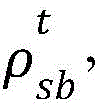


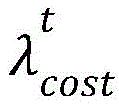
优化目标(1-1a)是能量销售者s的利润最大化问题,其含义是在时间长度为T的情况下,将每一时刻的收益累加得到的总收益最大。第一项表示t时刻与点对点交易市场中的B位能量购买者交易获得的总收益;第二项是t时刻将电能售卖给电网带来的收益,售电价格为馈电的分时电价;第三项是t时刻参与点对点交易的总成本。约束(1-1b)代表t时刻的能量约束,总的点对点交易电量不能超过该时刻销售者能够利用的电量。约束(1-1c)表示每一笔的交易电量非负。两个约束冒号之后的

典型的能量购买者b所要面临的用电成本最低问题如下:A typical energy buyer b faces the problem of minimum electricity cost as follows:


在每一个时刻t,能量购买者有五个决策变量,分别为


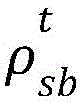


优化目标(1-2a)是时间范围T内能量购买者b的花费最小化问题,第一项表示与点对点交易市场中的S位能量销售者交易的总花费;第二项是从电网买电的花费,第三项表示使用共享储能设备储存电能需要交纳的费用。The optimization objective (1-2a) is to minimize the cost of energy buyer b in the time horizon T. The first term represents the total cost of transactions with S energy sellers in the peer-to-peer market; the second term is to buy electricity from the grid The third item represents the cost of using shared energy storage equipment to store electrical energy.
约束(1-2b)代表t时刻购买者b的功率守恒,右侧代表总负荷,左侧代表总能量来源。约束(1-2c)表示从电网购买电量非负。约束(1-2d)为分时阶梯电价。Constraint (1-2b) represents the power conservation of buyer b at time t, the right side represents the total load, and the left side represents the total energy source. Constraint (1-2c) means that the purchase of electricity from the grid is non-negative. Constraints (1-2d) are time-of-use tiered electricity prices.
约束(1-2e)—(1-2h)为功率约束。功率约束中,(1-2e)表示用户不能同时充放电,这是不理智的;(1-2f)表示用户对共享储能最大的充放电约束;(1-2g)表示所有使用共享储能设备的用户总的充电功率不能超过共享储能设备允许的最大充电功率PcmaxQs,Pcmax为小于1的系数,Qs为共享储能设备的总容量,该最大充电功率和储能设备容量成正比。(1-2h)表示所有使用共享储能设备的用户总的放电功率不能超过共享储能设备允许的最大放电功率PdmaxQs,Pdmax为小于1的系数,该最大放电功率同样和储能设备容量成正比。Constraints (1-2e)—(1-2h) are power constraints. Among the power constraints, (1-2e) means that the user cannot charge and discharge at the same time, which is irrational; (1-2f) means that the user has the largest charge and discharge constraint on the shared energy storage; (1-2g) means that all users use the shared energy storage. The total charging power of the user of the device cannot exceed the maximum charging power P cmax Q s allowed by the shared energy storage device, P cmax is a coefficient less than 1, and Q s is the total capacity of the shared energy storage device. The maximum charging power and the energy storage device capacity is proportional. (1-2h) means that the total discharge power of all users using the shared energy storage device cannot exceed the maximum discharge power P dmax Q s allowed by the shared energy storage device. P dmax is a coefficient less than 1. The maximum discharge power is the same as the energy storage device. proportional to the capacity of the device.
约束(1-2i)—(1-2k)为储能容量约束。(1-2i)表示购买者b的时域耦合的储存电量;(1-2j)表示储存电量非负;(1-2k)表示所有购买者储存电量之和不能超过储能设备可用的容量,这里设置可用容量为总容量的十分之九。Constraints (1-2i)—(1-2k) are energy storage capacity constraints. (1-2i) represents the time-domain coupled stored power of buyer b; (1-2j) represents that the stored power is non-negative; (1-2k) represents that the sum of the stored power of all buyers cannot exceed the available capacity of the energy storage device, Here, the usable capacity is set to 9/10 of the total capacity.
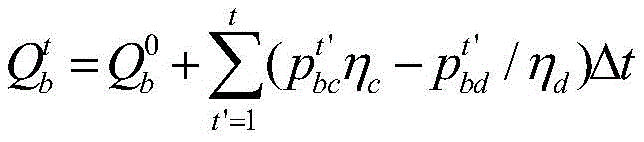
储存电量的时域约束可以改写为:The time domain constraint of stored electricity can be rewritten as:
电池充放电互补松弛的约束(1-2e)和(1-2f)也可以通过引入一个0-1变量


由于在列写KKT条件时,关注的重点是决策变量,所以可以将(1-2)进行一定的改写,并增加上对偶变量,为下一步约束列写KKT条件提供便利。经过修改后的购买者b的优化问题如(1-3)所示:Since the focus is on decision variables when writing KKT conditions, we can rewrite (1-2) to a certain extent and add dual variables to facilitate the next step to constrain the writing of KKT conditions. The modified optimization problem for buyer b is shown in (1-3):




其中,


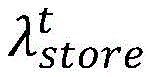

步骤200:基于所述每个能量销售者的利润最大化模型和每个能量购买者的成本最小化模型构建所述点对点电能交易市场的能量均衡模型;Step 200: constructing an energy balance model of the peer-to-peer electric energy trading market based on the profit maximization model of each energy seller and the cost minimization model of each energy buyer;
具体地,每位点对点电能交易市场的参与者都会同时考虑自身的利益最大化问题。销售者/购买者想要更高/更低的交易价格ρsb,最终会达到一个双方都满意的价格。在这种情况下,整个点对点交易市场的数学模型可以列写为一个均衡模型,如(2):Specifically, each participant in the peer-to-peer electric energy trading market will simultaneously consider the issue of maximizing their own interests. The seller/buyer wants a higher/lower transaction price ρ sb , eventually reaching a price that both parties are satisfied with. In this case, the mathematical model of the entire peer-to-peer trading market can be written as an equilibrium model, such as (2):

该均衡模型中很重要的一点是销售者s和购买者b具有相同的决策变量psb和ρsb。An important point in this equilibrium model is that seller s and buyer b have the same decision variables p sb and ρ sb .
步骤300:基于所述能量均衡模型确定所述点对点电能交易市场中每个能量销售者的销售电量以及每个能量购买者的购买电量。Step 300: Determine the electricity sold by each energy seller and the electricity purchased by each energy buyer in the peer-to-peer electric energy trading market based on the energy balance model.
具体地,通过对上述均衡模型进行求解即可获得模型中每个能量销售者的销售电量以及每个能量购买者的购买电量。Specifically, by solving the above equilibrium model, the electricity sold by each energy seller and the electricity purchased by each energy buyer in the model can be obtained.
本发明实施例提供的含共享储能的点对点电能交易市场设计方法,通过构建点对点电能交易市场中每个能量销售者的利润最大化模型和每个能量购买者的成本最小化模型;其中,所述点对点电能交易市场是由分布式能源拥有者作为能量销售者,各个小区、各个居民楼,或者是大型商场作为能量购买者以及电网组成的交易市场;即确定每一个市场参与者的利益实现最大化。进而,基于所述每个能量销售者的利润最大化模型和每个能量购买者的成本最小化模型构建所述点对点电能交易市场的能量均衡模型;在市场参与者利益最大化的前提下实现市场中能量的充分利用。故而,基于所述能量均衡模型确定所述点对点电能交易市场中每个能量销售者的销售电量以及每个能量购买者的购买电量。在均衡状态下确保各个参与者所应该购买的电量或者销售的电量。本发明在点对点电能交易市场中,每个点代表一位参与能源交易的用户,他们既可以选择将自己多余的能量共享给周围的用户,也可以在需要能量时从周围用户手中购买。在该市场中,所有的用户可以互相进行能源交易。该交易机制能够赋能用户,使得他们能够按照自己的实际情况制定交易电量和交易价格,达成令双方都满意的交易,既可以降低购电者用电成本,也可以提高售电者分布式能源的利用率,使其从分布式能源设备投资中获益。The method for designing a peer-to-peer electric energy trading market with shared energy storage provided by the embodiments of the present invention constructs a profit maximization model for each energy seller and a cost minimization model for each energy buyer in the peer-to-peer electric energy trading market; The point-to-point power trading market described above is a trading market composed of distributed energy owners as energy sellers, various communities, residential buildings, or large shopping malls as energy buyers and power grids; that is, it is determined that the interests of each market participant are maximized. change. Furthermore, based on the profit maximization model of each energy seller and the cost minimization model of each energy buyer, the energy balance model of the point-to-point electric energy trading market is constructed; the market is realized under the premise of maximizing the interests of market participants full utilization of energy. Therefore, the electricity sold by each energy seller and the electricity purchased by each energy buyer in the peer-to-peer electric energy trading market are determined based on the energy balance model. In a balanced state, ensure the electricity that each participant should buy or sell. In the point-to-point electric energy trading market of the present invention, each point represents a user participating in energy trading. They can either choose to share their excess energy with surrounding users, or purchase energy from surrounding users when they need it. In this market, all users can trade energy with each other. This transaction mechanism can empower users to set transaction electricity and transaction prices according to their actual conditions, and reach a transaction that satisfies both parties, which can not only reduce the cost of electricity consumption for electricity buyers, but also improve distributed energy resources for electricity sellers. utilization rate, enabling it to benefit from investments in distributed energy equipment.
根据本发明实施例提供的一种的含共享储能的点对点电能交易市场设计方法,其中,所述基于所述能量均衡模型确定所述点对点电能交易市场中每个能量销售者的销售电量以及每个能量购买者的购买电量,具体包括:According to an embodiment of the present invention, a method for designing a peer-to-peer electric energy trading market with shared energy storage is provided, wherein the electricity sold by each energy seller in the peer-to-peer electric energy trading market and the amount of electricity sold by each energy seller in the peer-to-peer electric energy trading market are determined based on the energy balance model. The electricity purchased by each energy buyer, including:
将所述能量均衡模型中的所述每个能量销售者的利润最大化模型转化为所述每个能量销售者的KKT最优条件模型;Converting the profit maximization model of each energy seller in the energy balance model into the KKT optimal condition model of each energy seller;
将所述能量均衡模型中的所述每个能量购买者的成本最小化模型转化为所述每个能量购买者的KKT最优条件模型;Converting the cost minimization model of each energy buyer in the energy balance model into the KKT optimal condition model of each energy buyer;
基于所述每个能量销售者的KKT最优条件模型和所述每个能量购买者的KKT最优条件模型构建所述点对点电能交易市场的对偶均衡模型;Construct the dual equilibrium model of the peer-to-peer electric energy trading market based on the KKT optimal condition model of each energy seller and the KKT optimal condition model of each energy buyer;
基于所述点对点电能交易市场的对偶均衡模型确定所述点对点电能交易市场中每个能量销售者的销售电量以及每个能量购买者的购买电量。Determine the electricity sold by each energy seller and the electricity purchased by each energy buyer in the peer-to-peer electricity trade market based on the dual equilibrium model of the peer-to-peer electricity trade market.
具体地,上述均衡模型(2),该均衡问题有两个难点,其一是优化问题中存在决策变量的乘积项,导致该优化问题的是非线性;其二是交易价格ρsb是通过均衡问题的市场出清最终得到的,不受单个销售者和购买者决定,因此该问题不是纳什均衡问题,也无法使用传统的固定点算法来求解。Specifically, in the above equilibrium model (2), the equilibrium problem has two difficulties. One is that there is a product term of decision variables in the optimization problem, which causes the optimization problem to be nonlinear ; The final market clearing of , is not determined by individual sellers and buyers, so this problem is not a Nash equilibrium problem and cannot be solved using traditional fixed-point algorithms.
根据优化理论,优化问题可以转换为原问题的KKT条件进行求解。如果能够将所有市场参与者KKT条件聚合起来,同时求解KKT条件,也就可以解决原均衡问题(2)。接下来详细介绍每位参与者的KKT条件及最终的KKT均衡问题。According to the optimization theory, the optimization problem can be transformed into the KKT condition of the original problem to solve. If the KKT conditions of all market participants can be aggregated and the KKT conditions can be solved at the same time, the original equilibrium problem (2) can be solved. Next, the KKT conditions of each participant and the final KKT equilibrium problem are introduced in detail.
1.销售者问题KKT条件:1. The seller's problem KKT conditions:
在列写KKT条件时,认为交易价格是常数,这样就可以只对交易电量求导从而获得KKT条件。在KKT条件求解时,交易价格和交易电量就是决策变量。When listing the KKT condition, the transaction price is considered to be constant, so that the KKT condition can be obtained by only derivation of the transaction quantity. When the KKT condition is solved, the transaction price and the transaction quantity are the decision variables.
根据每一个销售者s的优化问题(1-1),对



2.购买者问题KKT条件:2. Buyer's problem KKT conditions:
在每一个购买者b的优化问题(1-3)中,决策变量有5个:


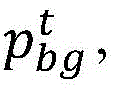
(1)功率平衡约束(1) Power balance constraints

(2)对

这里不考虑
(3)对


(4)对





(5)对



在考虑与
综上,购买者的KKT条件需要将上述条件综合考虑起来,得到完整的描述购买者问题的KKT条件:To sum up, the buyer's KKT condition needs to be considered comprehensively to obtain a complete KKT condition describing the buyer's problem:
(3-2),(3-3),(3-4),(3-5),(3-6) (3-7)(3-2),(3-3),(3-4),(3-5),(3-6) (3-7)
将能量销售者和购买者的KKT条件(3-1)和(3-7)放在一起,得到对偶的均衡问题(3-8):Putting together the KKT conditions (3-1) and (3-7) for energy sellers and buyers, we get the dual equilibrium problem (3-8):

根据本发明实施例提供的一种的含共享储能的点对点电能交易市场设计方法,其中,所述基于所述点对点电能交易市场的对偶均衡模型确定所述点对点电能交易市场中每个能量销售者的销售电量以及每个能量购买者的购买电量,具体为:According to an embodiment of the present invention, a method for designing a peer-to-peer electric energy trading market with shared energy storage is provided, wherein, each energy seller in the peer-to-peer electric energy trading market is determined based on the dual equilibrium model of the peer-to-peer electric energy trading market. The electricity sold and the electricity purchased by each energy buyer are as follows:
采用大M法对所述点对点电能交易市场的对偶均衡模型中的互补松弛条件转化为线性化的互补松弛约束;Transform the complementary slack condition in the dual equilibrium model of the peer-to-peer electric energy trading market into a linearized complementary slack constraint by using the Big M method;
基于所述线性化的互补松弛约束将所述点对点电能交易市场的对偶均衡模型转化为混合整数线性规划模型;transforming the dual equilibrium model of the peer-to-peer electric energy trading market into a mixed integer linear programming model based on the linearized complementary relaxation constraints;
基于所述混合整数线性规划模型确定所述点对点电能交易市场中每个能量销售者的销售电量以及每个能量购买者的购买电量。Based on the mixed integer linear programming model, the electricity sold by each energy seller and the electricity purchased by each energy buyer in the peer-to-peer electricity trading market are determined.
具体地,由于(3-8)中互补松弛条件0≤a⊥b≥0中的a和b均为线性的,因此该问题也被称为线性互补问题。使用大M法,实现互补松弛约束的线性化。标准的线性互补问题形式如下:Specifically, since both a and b in the complementary relaxation condition 0≤a⊥b≥0 in (3-8) are linear, this problem is also called a linear complementarity problem. Linearization of complementary relaxation constraints is achieved using the Big M method. The standard linear complementarity problem is of the form:
0≤(Px+q)⊥y≥0 (4-1)0≤(Px+q)⊥y≥0 (4-1)
其中P为矩阵,q为向量;x是决策变量向量,y是与原约束相对应的对偶变量向量。线性互补问题要求寻找到符合条件(2-8)的x与y。由于在该条件中,如果原约束不为0,则对偶变量必定为0;反之,如果对偶变量不为0,原约束一定为0。大M法正是抓住这种特性,引入一个和y长度相同的辅助0-1变量向量z和一个常数M,将原约束(4-1)改为了只有线性约束的(4-2):where P is a matrix, q is a vector; x is a decision variable vector, and y is a dual variable vector corresponding to the original constraint. The linear complementarity problem requires finding x and y that meet the conditions (2-8). Because in this condition, if the original constraint is not 0, the dual variable must be 0; on the contrary, if the dual variable is not 0, the original constraint must be 0. The big M method seizes this characteristic, introduces an auxiliary 0-1 variable vector z with the same length as y and a constant M, and changes the original constraint (4-1) to only the linear constraint (4-2):
0≤(Px+q)≤M(1-z),0≤y≤Mz (4-2)0≤(Px+q)≤M(1-z), 0≤y≤Mz (4-2)
在(4-2)中,只有两个含有0-1变量的线性约束。其中M的选择需要注意,它既要足够大,以能保证覆盖约束(4-2)最大的取值范围,否则问题可能无解;另外也不能太大,否则会导致收敛性差。但是线性互补问题不能只有约束(4-2),为了保证问题能够求解,还需要一个线性规划问题,该线性规划问题可以描述为一个混合整数线性规划(MILP):In (4-2), there are only two linear constraints with 0-1 variables. The choice of M should be noted that it must be large enough to ensure that it covers the maximum value range of constraint (4-2), otherwise the problem may have no solution; in addition, it should not be too large, otherwise it will lead to poor convergence. However, the linear complementarity problem cannot only have constraints (4-2). In order to ensure that the problem can be solved, a linear programming problem is also required, which can be described as a mixed integer linear programming (MILP):
min:z(Px+q)+(1-z)y (4-3a)min: z(Px+q)+(1-z)y (4-3a)

如果(4-3a)的结果为0,则说明满足原互补松弛条件,否则就说明原互补松弛条件不可行。If the result of (4-3a) is 0, it means that the original complementary relaxation condition is satisfied; otherwise, the original complementary relaxation condition is infeasible.
通过该线性化方法,就能将对偶的均衡问题(3-8)中的互补松弛线性化,这样整个问题就沦为了混合整数线性规划问题,就可以在商用求解软件,如MOSEK中进行求解。Through this linearization method, the complementary relaxation in the dual equilibrium problem (3-8) can be linearized, so that the whole problem is reduced to a mixed integer linear programming problem, which can be solved in commercial software such as MOSEK.
参考图3,本发明实施例提供一种含共享储能的点对点电能交易市场设计装置,包括:Referring to FIG. 3 , an embodiment of the present invention provides a design device for a peer-to-peer electric energy trading market with shared energy storage, including:
第一处理模31,用于构建点对点电能交易市场中每个能量销售者的利润最大化模型和每个能量购买者的成本最小化模型;其中,所述点对点电能交易市场是由分布式能源拥有者作为能量销售者,各个小区、各个居民楼,或者是大型商场作为能量购买者以及电网组成的交易市场;The
第二处理模块32,用于基于所述每个能量销售者的利润最大化模型和每个能量购买者的成本最小化模型构建所述点对点电能交易市场的能量均衡模型;The
第三处理模块33,用于基于所述能量均衡模型确定所述点对点电能交易市场中每个能量销售者的销售电量以及每个能量购买者的购买电量。The
由于本发明实施例提供的装置,可以用于执行上述实施例所述的方法,其工作原理和有益效果类似,故此处不再详述,具体内容可参见上述实施例的介绍。Since the apparatuses provided in the embodiments of the present invention can be used to execute the methods described in the foregoing embodiments, the working principles and beneficial effects thereof are similar, so they are not described in detail here. For details, refer to the descriptions of the foregoing embodiments.
根据本发明实施例提供一种的含共享储能的点对点电能交易市场设计装置,其中,所述第三模块33,具体用于:According to an embodiment of the present invention, a device for designing a peer-to-peer electric energy trading market with shared energy storage is provided, wherein the
将所述能量均衡模型中的所述每个能量销售者的利润最大化模型转化为所述每个能量销售者的KKT最优条件模型;Converting the profit maximization model of each energy seller in the energy balance model into the KKT optimal condition model of each energy seller;
将所述能量均衡模型中的所述每个能量购买者的成本最小化模型转化为所述每个能量购买者的KKT最优条件模型;Converting the cost minimization model of each energy buyer in the energy balance model into the KKT optimal condition model of each energy buyer;
基于所述每个能量销售者的KKT最优条件模型和所述每个能量购买者的KKT最优条件模型构建所述点对点电能交易市场的对偶均衡模型;Construct the dual equilibrium model of the peer-to-peer electric energy trading market based on the KKT optimal condition model of each energy seller and the KKT optimal condition model of each energy buyer;
基于所述点对点电能交易市场的对偶均衡模型确定所述点对点电能交易市场中每个能量销售者的销售电量以及每个能量购买者的购买电量。Determine the electricity sold by each energy seller and the electricity purchased by each energy buyer in the peer-to-peer electricity trade market based on the dual equilibrium model of the peer-to-peer electricity trade market.
根据本发明实施例提供一种的含共享储能的点对点电能交易市场设计方法,其中,所述第三处理模块33,还用于为:According to an embodiment of the present invention, a method for designing a peer-to-peer electric energy trading market with shared energy storage is provided, wherein the
采用大M法对所述点对点电能交易市场的对偶均衡模型中的互补松弛条件转化为线性化的互补松弛约束;Transform the complementary slack condition in the dual equilibrium model of the peer-to-peer electric energy trading market into a linearized complementary slack constraint by using the Big M method;
基于所述线性化的互补松弛约束将所述点对点电能交易市场的对偶均衡模型转化为混合整数线性规划模型;transforming the dual equilibrium model of the peer-to-peer electric energy trading market into a mixed integer linear programming model based on the linearized complementary relaxation constraints;
基于所述混合整数线性规划模型确定所述点对点电能交易市场中每个能量销售者的销售电量以及每个能量购买者的购买电量。Based on the mixed integer linear programming model, the electricity sold by each energy seller and the electricity purchased by each energy buyer in the peer-to-peer electricity trading market are determined.
图4示例了一种电子设备的实体结构示意图,如图4所示,该电子设备可以包括:处理器(processor)410、通信接口(Communications Interface)420、存储器(memory)430和通信总线440,其中,处理器410,通信接口420,存储器430通过通信总线440完成相互间的通信。处理器410可以调用存储器430中的逻辑指令,以执行一种含共享储能的点对点电能交易市场设计方法,该方法包括:构建点对点电能交易市场中每个能量销售者的利润最大化模型和每个能量购买者的成本最小化模型;其中,所述点对点电能交易市场是由分布式能源拥有者作为能量销售者,各个小区、各个居民楼,或者是大型商场作为能量购买者以及电网组成的交易市场;基于所述每个能量销售者的利润最大化模型和每个能量购买者的成本最小化模型构建所述点对点电能交易市场的能量均衡模型;基于所述能量均衡模型确定所述点对点电能交易市场中每个能量销售者的销售电量以及每个能量购买者的购买电量。FIG. 4 illustrates a schematic diagram of the physical structure of an electronic device. As shown in FIG. 4 , the electronic device may include: a processor (processor) 410, a communication interface (Communications Interface) 420, a memory (memory) 430, and a
此外,上述的存储器430中的逻辑指令可以通过软件功能单元的形式实现并作为独立的产品销售或使用时,可以存储在一个计算机可读取存储介质中。基于这样的理解,本发明的技术方案本质上或者说对现有技术做出贡献的部分或者该技术方案的部分可以以软件产品的形式体现出来,该计算机软件产品存储在一个存储介质中,包括若干指令用以使得一台计算机设备(可以是个人计算机,服务器,或者网络设备等)执行本发明各个实施例所述方法的全部或部分步骤。而前述的存储介质包括:U盘、移动硬盘、只读存储器(ROM,Read-Only Memory)、随机存取存储器(RAM,Random Access Memory)、磁碟或者光盘等各种可以存储程序代码的介质。In addition, the above-mentioned logic instructions in the
另一方面,本发明还提供一种计算机程序产品,所述计算机程序产品包括存储在非暂态计算机可读存储介质上的计算机程序,所述计算机程序包括程序指令,当所述程序指令被计算机执行时,计算机能够执行上述各方法所提供的一种含共享储能的点对点电能交易市场设计方法,该方法包括:构建点对点电能交易市场中每个能量销售者的利润最大化模型和每个能量购买者的成本最小化模型;其中,所述点对点电能交易市场是由分布式能源拥有者作为能量销售者,各个小区、各个居民楼,或者是大型商场作为能量购买者以及电网组成的交易市场;基于所述每个能量销售者的利润最大化模型和每个能量购买者的成本最小化模型构建所述点对点电能交易市场的能量均衡模型;基于所述能量均衡模型确定所述点对点电能交易市场中每个能量销售者的销售电量以及每个能量购买者的购买电量。In another aspect, the present invention also provides a computer program product, the computer program product comprising a computer program stored on a non-transitory computer-readable storage medium, the computer program comprising program instructions, when the program instructions are executed by a computer When executed, the computer can execute a method for designing a peer-to-peer electric energy trading market with shared energy storage provided by the above methods. The method includes: constructing a profit maximization model of each energy seller in the peer-to-peer electric energy trading market and each energy The buyer's cost minimization model; wherein, the peer-to-peer electric energy trading market is a trading market composed of distributed energy owners as energy sellers, each community, each residential building, or large shopping malls as energy buyers and power grids; Build an energy balance model of the peer-to-peer electric energy trading market based on the profit maximization model of each energy seller and the cost minimization model of each energy buyer; The electricity sold by each energy seller and the electricity purchased by each energy buyer.
又一方面,本发明还提供一种非暂态计算机可读存储介质,其上存储有计算机程序,该计算机程序被处理器执行时实现以执行上述各提供的一种含共享储能的点对点电能交易市场设计方法,该方法包括:构建点对点电能交易市场中每个能量销售者的利润最大化模型和每个能量购买者的成本最小化模型;其中,所述点对点电能交易市场是由分布式能源拥有者作为能量销售者,各个小区、各个居民楼,或者是大型商场作为能量购买者以及电网组成的交易市场;基于所述每个能量销售者的利润最大化模型和每个能量购买者的成本最小化模型构建所述点对点电能交易市场的能量均衡模型;基于所述能量均衡模型确定所述点对点电能交易市场中每个能量销售者的销售电量以及每个能量购买者的购买电量。In yet another aspect, the present invention also provides a non-transitory computer-readable storage medium on which a computer program is stored, and the computer program is implemented when executed by a processor to execute a peer-to-peer power supply with shared energy storage provided above. A trading market design method, the method comprising: constructing a profit maximization model for each energy seller and a cost minimization model for each energy buyer in a peer-to-peer power trading market; wherein the peer-to-peer power trading market is composed of distributed energy The owner acts as an energy seller, and each community, each residential building, or a large shopping mall acts as a transaction market composed of energy buyers and power grids; based on the profit maximization model of each energy seller and the cost of each energy buyer The minimization model constructs an energy balance model of the peer-to-peer electric energy trading market; based on the energy balance model, the electricity sold by each energy seller and the electricity purchased by each energy buyer in the peer-to-peer electricity exchange market is determined.
以上所描述的装置实施例仅仅是示意性的,其中所述作为分离部件说明的单元可以是或者也可以不是物理上分开的,作为单元显示的部件可以是或者也可以不是物理单元,即可以位于一个地方,或者也可以分布到多个网络单元上。可以根据实际的需要选择其中的部分或者全部模块来实现本实施例方案的目的。本领域普通技术人员在不付出创造性的劳动的情况下,即可以理解并实施。The device embodiments described above are only illustrative, wherein the units described as separate components may or may not be physically separated, and the components shown as units may or may not be physical units, that is, they may be located in One place, or it can be distributed over multiple network elements. Some or all of the modules may be selected according to actual needs to achieve the purpose of the solution in this embodiment. Those of ordinary skill in the art can understand and implement it without creative effort.
通过以上的实施方式的描述,本领域的技术人员可以清楚地了解到各实施方式可借助软件加必需的通用硬件平台的方式来实现,当然也可以通过硬件。基于这样的理解,上述技术方案本质上或者说对现有技术做出贡献的部分可以以软件产品的形式体现出来,该计算机软件产品可以存储在计算机可读存储介质中,如ROM/RAM、磁碟、光盘等,包括若干指令用以使得一台计算机设备(可以是个人计算机,服务器,或者网络设备等)执行各个实施例或者实施例的某些部分所述的方法。From the description of the above embodiments, those skilled in the art can clearly understand that each embodiment can be implemented by means of software plus a necessary general hardware platform, and certainly can also be implemented by hardware. Based on this understanding, the above-mentioned technical solutions can be embodied in the form of software products in essence or the parts that make contributions to the prior art, and the computer software products can be stored in computer-readable storage media, such as ROM/RAM, magnetic A disc, an optical disc, etc., includes several instructions for causing a computer device (which may be a personal computer, a server, or a network device, etc.) to perform the methods described in various embodiments or some parts of the embodiments.
最后应说明的是:以上实施例仅用以说明本发明的技术方案,而非对其限制;尽管参照前述实施例对本发明进行了详细的说明,本领域的普通技术人员应当理解:其依然可以对前述各实施例所记载的技术方案进行修改,或者对其中部分技术特征进行等同替换;而这些修改或者替换,并不使相应技术方案的本质脱离本发明各实施例技术方案的精神和范围。Finally, it should be noted that the above embodiments are only used to illustrate the technical solutions of the present invention, but not to limit them; although the present invention has been described in detail with reference to the foregoing embodiments, those of ordinary skill in the art should understand that it can still be The technical solutions described in the foregoing embodiments are modified, or some technical features thereof are equivalently replaced; and these modifications or replacements do not make the essence of the corresponding technical solutions deviate from the spirit and scope of the technical solutions of the embodiments of the present invention.
Claims (10)





Priority Applications (1)
| Application Number | Priority Date | Filing Date | Title |
|---|---|---|---|
| CN202110726697.0A CN113421123B (en) | 2021-06-29 | 2021-06-29 | Design method and device for peer-to-peer electric energy trading market with shared energy storage |
Applications Claiming Priority (1)
| Application Number | Priority Date | Filing Date | Title |
|---|---|---|---|
| CN202110726697.0A CN113421123B (en) | 2021-06-29 | 2021-06-29 | Design method and device for peer-to-peer electric energy trading market with shared energy storage |
Publications (2)
| Publication Number | Publication Date |
|---|---|
| CN113421123A true CN113421123A (en) | 2021-09-21 |
| CN113421123B CN113421123B (en) | 2024-04-09 |
Family
ID=77717150
Family Applications (1)
| Application Number | Title | Priority Date | Filing Date |
|---|---|---|---|
| CN202110726697.0A Active CN113421123B (en) | 2021-06-29 | 2021-06-29 | Design method and device for peer-to-peer electric energy trading market with shared energy storage |
Country Status (1)
| Country | Link |
|---|---|
| CN (1) | CN113421123B (en) |
Cited By (1)
| Publication number | Priority date | Publication date | Assignee | Title |
|---|---|---|---|---|
| CN116307466A (en) * | 2022-12-27 | 2023-06-23 | 浙江电力交易中心有限公司 | Electricity Market Clearing System |
Citations (10)
| Publication number | Priority date | Publication date | Assignee | Title |
|---|---|---|---|---|
| US20170103468A1 (en) * | 2015-10-13 | 2017-04-13 | TransActive Grid Inc. | Use of Blockchain Based Distributed Consensus Control |
| US20170358041A1 (en) * | 2012-07-31 | 2017-12-14 | Causam Energy, Inc. | Systems and methods for advanced energy settlements, network-based messaging, and applications supporting the same on a blockchain platform |
| CN107863773A (en) * | 2017-11-24 | 2018-03-30 | 清华-伯克利深圳学院筹备办公室 | A kind of multipotency stream energy supply method and system |
| CN109190802A (en) * | 2018-08-13 | 2019-01-11 | 南京邮电大学 | More microgrid game optimization methods based on power generation prediction under cloud energy storage environment |
| CN109190882A (en) * | 2018-07-25 | 2019-01-11 | 南京邮电大学 | Microgrid economic optimization method of commerce under Power Market based on cloud energy storage |
| CN110941798A (en) * | 2019-11-20 | 2020-03-31 | 图灵人工智能研究院(南京)有限公司 | Energy storage shared data processing system and method, equipment and medium |
| CN111027807A (en) * | 2019-11-12 | 2020-04-17 | 国网河北省电力有限公司经济技术研究院 | A method for site selection and capacity determination of distributed power generation based on power flow linearization |
| CN112398164A (en) * | 2020-10-30 | 2021-02-23 | 东南大学 | Micro-energy-source network group optimization operation and cost distribution method containing shared energy storage system |
| CN112446745A (en) * | 2020-12-15 | 2021-03-05 | 天津天大求实电力新技术股份有限公司 | Double-layer stochastic programming-based multi-microgrid-containing power distribution market trading method |
| US20210183175A1 (en) * | 2019-12-12 | 2021-06-17 | Explication Automation, Llc | System of privacy oriented automated electric vehicle miles traveled usage fee assessment and settlement using utility smart grid communication network |
-
2021
- 2021-06-29 CN CN202110726697.0A patent/CN113421123B/en active Active
Patent Citations (10)
| Publication number | Priority date | Publication date | Assignee | Title |
|---|---|---|---|---|
| US20170358041A1 (en) * | 2012-07-31 | 2017-12-14 | Causam Energy, Inc. | Systems and methods for advanced energy settlements, network-based messaging, and applications supporting the same on a blockchain platform |
| US20170103468A1 (en) * | 2015-10-13 | 2017-04-13 | TransActive Grid Inc. | Use of Blockchain Based Distributed Consensus Control |
| CN107863773A (en) * | 2017-11-24 | 2018-03-30 | 清华-伯克利深圳学院筹备办公室 | A kind of multipotency stream energy supply method and system |
| CN109190882A (en) * | 2018-07-25 | 2019-01-11 | 南京邮电大学 | Microgrid economic optimization method of commerce under Power Market based on cloud energy storage |
| CN109190802A (en) * | 2018-08-13 | 2019-01-11 | 南京邮电大学 | More microgrid game optimization methods based on power generation prediction under cloud energy storage environment |
| CN111027807A (en) * | 2019-11-12 | 2020-04-17 | 国网河北省电力有限公司经济技术研究院 | A method for site selection and capacity determination of distributed power generation based on power flow linearization |
| CN110941798A (en) * | 2019-11-20 | 2020-03-31 | 图灵人工智能研究院(南京)有限公司 | Energy storage shared data processing system and method, equipment and medium |
| US20210183175A1 (en) * | 2019-12-12 | 2021-06-17 | Explication Automation, Llc | System of privacy oriented automated electric vehicle miles traveled usage fee assessment and settlement using utility smart grid communication network |
| CN112398164A (en) * | 2020-10-30 | 2021-02-23 | 东南大学 | Micro-energy-source network group optimization operation and cost distribution method containing shared energy storage system |
| CN112446745A (en) * | 2020-12-15 | 2021-03-05 | 天津天大求实电力新技术股份有限公司 | Double-layer stochastic programming-based multi-microgrid-containing power distribution market trading method |
Non-Patent Citations (1)
| Title |
|---|
| 陈玥等: "" 需求侧能量共享:概念、机制与展望"", 《电力系统自动化》, no. 02, 31 January 2021 (2021-01-31) * |
Cited By (2)
| Publication number | Priority date | Publication date | Assignee | Title |
|---|---|---|---|---|
| CN116307466A (en) * | 2022-12-27 | 2023-06-23 | 浙江电力交易中心有限公司 | Electricity Market Clearing System |
| CN116307466B (en) * | 2022-12-27 | 2025-12-02 | 浙江电力交易中心有限公司 | Electricity Market Clearing System |
Also Published As
| Publication number | Publication date |
|---|---|
| CN113421123B (en) | 2024-04-09 |
Similar Documents
| Publication | Publication Date | Title |
|---|---|---|
| CN108711077B (en) | A photovoltaic microgrid transaction method based on blockchain technology | |
| Sabounchi et al. | Towards resilient networked microgrids: Blockchain-enabled peer-to-peer electricity trading mechanism | |
| CN110826940B (en) | Distributed power transaction method in extensible multi-microgrid environment | |
| CN108182507A (en) | A kind of meter and probabilistic sale of electricity quotient the best electric price decision-making technique | |
| Sioshansi | Using storage-capacity rights to overcome the cost-recovery hurdle for energy storage | |
| CN118395668A (en) | VPP two-stage game transaction matching method and system based on blockchain architecture | |
| Su et al. | Distributed energy sharing algorithm for Micro Grid energy system based on cloud computing | |
| Mishra et al. | Peer-to-peer energy trading with active participation of distributed generation | |
| Ye et al. | Federated reinforcement learning for decentralized peer-to-peer energy trading | |
| CN113421123A (en) | Design method and device for point-to-point electric energy trading market containing shared energy storage | |
| CN114039351A (en) | Energy storage capacity configuration method and device | |
| CN118898501A (en) | Hydrogen-based multi-energy microgrid multi-resource sharing decision-making method and device including shared hydrogen storage station | |
| CN116957139B (en) | Multi-energy microgrid optimization operation method and system considering carbon trading between microgrids | |
| CN115511627B (en) | A virtual power plant transaction mechanism based on main-side chain structure | |
| CN118589507A (en) | Energy transfer method, device, apparatus, readable storage medium and program product | |
| CN117522424A (en) | Carbon transaction method, system, equipment and medium based on carbon asset contribution degree | |
| CN117424215A (en) | Power resource clearing control method and device based on carbon trading and green electricity trading | |
| CN117541382A (en) | A two-stage transaction method for microgrid distributed power based on blockchain | |
| CN114936688A (en) | Electric power spot market clearing method and device based on bilateral segmented quotation | |
| Edmund et al. | A blockchain-based peer-to-peer energy trading platform for distributed energy resources | |
| Xing et al. | Application of blockchain technology in autonomous electricity transaction and settlement at the end of distribution network. | |
| CN119398265B (en) | Optimization Methods for the Participation of Integrated Energy System Producers and Consumers in Electricity Carbon Market Decision-Making | |
| Bathe et al. | Improving Scalability in Smart Grid Energy Trading Using Smart Contracts and Layer 2 Blockchain Solutions | |
| CN115099456B (en) | A distributed energy configuration method, device, mobile terminal and storage medium | |
| CN111126854A (en) | A way of considering the use of distributed energy power supply for regenerative electric heating equipment |
Legal Events
| Date | Code | Title | Description |
|---|---|---|---|
| PB01 | Publication | ||
| PB01 | Publication | ||
| SE01 | Entry into force of request for substantive examination | ||
| SE01 | Entry into force of request for substantive examination | ||
| GR01 | Patent grant | ||
| GR01 | Patent grant |