This application claims benefit and priority from U.S. provisional patent application No. 62/781,258 filed on 2018, 12, month 18, the entire disclosure of which is incorporated herein by reference.
Disclosure of Invention
The present invention provides systems and methods for focusing an ultrasound beam through a non-uniform medium to a target region using one or more transient reflectors (e.g., one or more microbubbles). In various embodiments, a transient acoustic reflector is introduced into the patient and reaches near the target region. In one embodiment, a plurality of sonication locations near (e.g., less than 5mm in distance from) or at the target region are identified; and a transient reflector is introduced near each of the identified sonication locations (e.g., a distance less than 5 mm). Subsequently, the ultrasound transducer is activated to sequentially generate a focal point at each of the identified sonication locations, and the signals reflected from the transient reflectors associated with each of the sonication locations may be measured by the transducer elements and/or one or more acoustic signal detectors. Optionally, an initial signal processing procedure may be implemented to select the measured reflected signal from a transient reflector (as opposed to a background reflector such as the skull). The initial signal processing procedure may be based on a comparison of the reflected signals from two consecutive measurements. For example, two consecutively measured reflected signals may be from a transient reflector (as the transient reflector typically evolves/dissipates during the time period between two measurements) when there is a relatively significant change between the two consecutively measured reflected signals. In contrast, the reflected signal from the background reflector is relatively constant during the time period between measurements. As used herein, the term "transient reflector" refers to an acoustic reflector that dissipates or evolves over time during sonication, while the term "background reflector" refers to an acoustic reflector that does not significantly dissipate or evolve during sonication.
In various embodiments, a signal selection method is implemented to select reflected signals from a single reflector based on consistency between the reflected signals. In one embodiment, a coherence function is defined, and the reflected signal is considered to be sufficiently coherent only if the value of the coherence function maximizes or exceeds a predetermined threshold. Thereafter, all (or at least some) transient acoustic reflectors whose reflections are determined to have sufficient coherence may be computationally shifted to coincide at a single location, and the amplitude and/or phase associated with the shifted and/or un-shifted reflected signals at the coinciding location may be determined. Based on this, the amplitude and/or phase associated with the transducer element measuring the reflected signal may be calculated as an average or weighted average of the amplitude and/or phase associated with the shifted reflected signal and/or the un-shifted reflected signal at the coincident position. The amplitude and/or phase associated with the transducer elements reflects the aberrations and transmission of non-uniform tissue from the elements to the target area. This process may be performed on an element-by-element basis in order to determine parameter values (e.g., amplitude and/or phase) for all (or at least some) of the elements of the ultrasound transducer. Subsequently, the ultrasound transducer elements may be activated based on the determined corresponding amplitudes and/or phases, thereby generating a focal point having optimal focusing characteristics at the target. Further, in some embodiments, the process may be iteratively repeated to achieve better focus, and stopped when the focus quality no longer improves or changes.
Further, the coincident position of the transient acoustic reflector may optionally be compared to an sonication position estimated using one or more other methods (e.g., CT images and/or physical models). If a discrepancy is detected, the coincidence location can be computationally shifted to coincide with the sonication location estimated using other methods; and the parameter values of the transducer elements may be updated accordingly. Again, the transducer elements may then be activated based on the corresponding updated parameter values to generate an ultrasound focus point with the best focus characteristics at the target region. As used herein, the term "focusing" refers to shaping an acoustic beam to have a desired beam shape in a target. In various embodiments, the desired shape may be a tight spot, a line spot, or a conformal spot constrained to the target shape.
Accordingly, in a first aspect, the invention relates to a system for focusing an ultrasound transducer. In various embodiments, the system comprises: an ultrasound transducer comprising a plurality of transducer elements for providing ultrasound treatment to at least one target region; and a controller configured to: (a) causing the transducer to generate a plurality of sonications for at least one target region; (b) measuring a reflected signal from each of the ultrasonic treatments of at least one transient acoustic reflector located in the vicinity of at least one target region; (c) select the measured reflected signals, and (d) adjust a parameter value associated with at least one of the transducer elements based at least in part on the selected reflected signals to improve the ultrasound focus at the target region.
In some embodiments, the controller is further configured to repeat (a) - (d) after adjusting the at least one parameter value associated with at least one of the transducer elements. The controller may be configured to select a reflected signal from two consecutive measurements and compare the selected reflected signals. For example, the comparison may correspond to a first processed signal generated by subtracting a first background signal associated with the first set of consecutive measurements from a first reflected signal associated with the first set of consecutive measurements.
In various embodiments, the controller is further configured to generate a second processed signal by subtracting a second background signal associated with the second set of continuous measurements from a second reflected signal associated with the second set of continuous measurements, and select the reflected signal based at least in part on an amplitude ratio of the first processed signal to the second processed signal. The controller may be configured to select the subtracted first processed signal when it is determined that the ratio exceeds a predetermined threshold. In various embodiments, the controller is further configured to: at least one of an amplitude, a travel time, or a phase associated with the first processed signal is determined, and a parameter value associated with at least one of the transducer elements is adjusted based at least in part on the determined amplitude and/or phase and/or travel time.
The controller may also be configured to select at least a portion of each of the measured reflected signals and compare the selected portions of the reflected signals from two consecutive measurements. For example, the controller may be configured to select the (at least one) portion based at least in part on a distance between at least one of the transducer elements and the at least one target region. The controller may be configured to determine at least one of an amplitude or a phase associated with the selected portion of each reflected signal and to determine a difference between the amplitudes and/or phases associated with the selected portions of the reflected signals in two consecutive measurements.
In some embodiments, the controller is further configured to determine a noise level associated with the reflected signal, and select the reflected signal based at least in part on a difference between the noise level and the selected portion of the reflected signal. The controller may, after determining that a difference in amplitude and/or phase associated with the selected portion of the reflected signal exceeds twice the noise level, adjust a parameter value associated with at least one of the transducer elements based at least in part on the difference. The measured signal may be pre-processed, for example, using at least one of a filter or IQ demodulation.
In various embodiments, each of the plurality of transient acoustic reflectors is located near one of the plurality of target areas, and the controller is further configured to: a plurality of sonications is sequentially generated for each of the transient acoustic reflectors and a reflected signal from each of the transient acoustic reflectors is measured and a reflected signal from the plurality of transient acoustic reflectors associated with the plurality of sonications is selected. The controller may be further configured to: determining a correspondence between the reflected signals, associating a reflected signal having sufficient correspondence with the target area, and repeating (a) - (c) upon determining that the reflected signal having sufficient correspondence is from a plurality of target areas that are below a predetermined threshold. For example, the controller may be further configured to select the reflected signals based on a coherence between the reflected signals, e.g., using a coherence function. It can be determined that the two reflected signals are identical only when the value of the coherence function maximizes or exceeds a predetermined threshold. For example, the consistency function may satisfy at least one of the following equations:
wherein W represents a weighting factor; ω -2 π f, f denoting the frequencies associated with the two reflected signals; c is the average speed of sound in the target region;
is the geometric position of the ith transient reflector;
t
iis the travel time of the ith transient reflector;
and
represents the phase associated with the two reflected signals, and
and
are element dependent variables that each represent the distance between one of the transducer elements measuring the two reflected signals and the transient acoustic reflector associated with the two reflected signals. The controller may also be configured to search
Or
To maximize a consistency function.
The controller may be further configured to determine a coincidence between two of the reflected signals from two of the transient acoustic reflectors based at least in part on: (i) at least one of a travel time or a receive phase associated with two of the reflected signals and (ii) a location associated with two of the transient acoustic reflectors. For example, the controller may be configured to: computationally shifting a position of a first of the two transient acoustic reflectors to coincide with a position of a second of the two transient acoustic reflectors, computationally determining at least one of an updated travel time or an updated receive phase associated with a reflected signal from the shifted position of the first of the two transient acoustic reflectors, and computationally determining a parameter value associated with at least one of the transducer elements based at least in part on (i) the updated travel time or the updated receive phase and (ii) a travel time or a receive phase of a reflected signal associated with the second of the two transient acoustic reflectors. Alternatively or additionally, the controller may be configured to determine a parameter value associated with at least one of the transducer elements based at least in part on (i) the updated travel time or updated receive phase and (ii) an average of the travel time or receive phase of the reflected signal associated with the second of the two transient acoustic reflectors.
The controller may be configured to: assigning a weighting factor to each of (i) the updated travel time or updated receive phase and (ii) the travel time or receive phase based on at least one of (i) an amplitude of the corresponding reflected signal or (ii) a coincidence of the corresponding reflected signal with other reflected signals, a parameter value associated with at least one of the transducer elements being determined based at least in part on a weighted average of (i) the updated travel time or updated receive phase and (ii) the travel time or receive phase of the reflected signal associated with the second of the two transient acoustic reflectors. The controller may also be configured to determine a coherence between the more than two reflected signals using a coherence function, and the more than two reflected signals may be measured by at least two different transducer elements. At least one of the reflected signals may originate from at least two transient reflectors.
In some embodiments, the system further comprises an imaging device for acquiring a plurality of images of at least one target region and/or a non-target region surrounding the target region. The controller may be further configured to estimate a location of the at least one target region based at least in part on the acquired images and the physical model, and computationally update parameter values associated with at least one of the transducer elements to generate an ultrasound focus at the estimated target region.
The system may include an application device for introducing at least one transient acoustic reflector to the target. The controller may also be configured to cause the transducer to generate acoustic energy for producing the at least one transient acoustic reflector. The ultrasound focus at the target region may be a tight spot, a line spot, or a conformal spot.
In another aspect, the invention relates to a method of focusing an ultrasound transducer. In various embodiments, the method comprises the steps of: (a) introducing at least one transient acoustic reflector near the at least one target region, (b) generating a plurality of sonications for the at least one target region, (c) measuring a reflected signal from each of the sonications of the at least one transient acoustic reflector, (d) selecting the measured reflected signals, and (e) adjusting a parameter value associated with at least one of the transducer elements based at least in part on the selected reflected signals to improve an ultrasound focus at the target region. For example, the background signal may be a reflected signal or an average of at least two reflected signals.
In some embodiments, the method further comprises repeating steps (b) - (e) after adjusting the at least one parameter value associated with at least one of the transducer elements. The reflected signal can be selected from two consecutive measurements and compared. The comparison may correspond to a first processed signal generated by subtracting a first background signal associated with the first set of consecutive measurements from a first reflected signal associated with the first set of consecutive measurements. In some embodiments, the method further comprises the steps of: a second processed signal is generated by subtracting a second background signal associated with the second set of consecutive measurements from a second reflected signal associated with the second set of consecutive measurements, and the reflected signal is selected based at least in part on an amplitude ratio of the first processed signal to the second processed signal. The subtracted first processed signal may be selected when it is determined that the ratio exceeds a predetermined threshold. The method may further include determining an amplitude, a travel time, and/or a phase associated with the first processed signal, and adjusting a parameter value associated with the transducer element based at least in part on the determined amplitude and/or phase and/or travel time.
In some embodiments, the method further comprises the steps of: at least a portion of each of the measured reflected signals is selected, and the selected portions from two consecutive measurements of reflected signals are compared. The (at least one) portion may be selected based at least in part on a distance between at least one of the transducer elements and the at least one target region. The method may further comprise: an amplitude or phase associated with the selected portion of each reflected signal is determined, and a difference between the amplitudes and/or phases associated with the selected portions of the reflected signals in two consecutive measurements is determined.
In various embodiments, the method further comprises the steps of: a noise level associated with the reflected signal is determined, and the reflected signal is selected based at least in part on a difference between the noise level and the selected portion of the reflected signal. A parameter value associated with at least one of the transducer elements may be adjusted based at least in part on a difference in amplitude and/or phase associated with the selected portion of the reflected signal after determining that the difference exceeds twice the noise level.
The measured signal may be pre-processed, for example, using filters, IQ demodulation, or both. In some embodiments, each of the plurality of transient acoustic reflectors is located near one of the plurality of target regions, and the method further comprises: a plurality of sonications is sequentially generated for each of the transient acoustic reflectors and a reflected signal from each of the transient acoustic reflectors is measured and a reflected signal from the plurality of transient acoustic reflectors associated with the plurality of sonications is selected. The method may further comprise: determining a correspondence between the reflected signals, associating a reflected signal having sufficient correspondence with the target area, and repeating steps (b) - (d) upon determining that the reflected signal having sufficient correspondence is from a plurality of target areas that are below a predetermined threshold.
The reflected signals may be selected based on consistency between the reflected signals. For example, a coherence function may be used to determine coherence between two reflected signals, and two reflected signals may be determined to be coherent only when the value of the coherence function maximizes or exceeds a predetermined threshold. In some embodiments, the coherence function satisfies at least one of the following equations:
wherein W represents a weighting factor; ω -2 π f, f denoting the frequencies associated with the two reflected signals; c is the average speed of sound in the target region;
is the geometric position of the ith transient reflector;
t
iis the travel time of the ith transient reflector;
and
represents the phase associated with the two reflected signals, and
and
are element dependent variables that each represent the distance between one of the transducer elements measuring the two reflected signals and the transient acoustic reflector associated with the two reflected signals. The method can comprise the following steps: searching
Or
To maximize the consistency function.
A coherence between two of the reflected signals from two of the transient acoustic reflectors may be determined based at least in part on: (i) at least one of a travel time or a receive phase associated with two of the reflected signals and (ii) a location associated with two of the transient acoustic reflectors. The method may further comprise: computationally shifting a position of a first of the two transient acoustic reflectors to coincide with a position of a second of the two transient acoustic reflectors, computationally determining at least one of an updated travel time or an updated receive phase associated with a reflected signal from the shifted position of the first of the two transient acoustic reflectors, and computationally determining a parameter value associated with at least one of the transducer elements based at least in part on (i) the updated travel time or the updated travel time and (ii) the travel time or the receive phase of the reflected signal associated with the second of the two transient acoustic reflectors. A parameter value associated with the transducer element may be determined based at least in part on (i) the updated travel time or updated receive phase and (ii) an average of the travel time or receive phase of the reflected signal associated with the second of the two transient acoustic reflectors.
In various embodiments, the method further comprises the steps of: assigning a weighting factor to each of (i) the updated travel time or updated receive phase and (ii) the travel time or receive phase based on at least one of (i) an amplitude of the corresponding reflected signal or (ii) a coincidence of the corresponding reflected signal with other reflected signals, a parameter value associated with at least one of the transducer elements being determined based at least in part on a weighted average of (i) the updated travel time or updated receive phase and (ii) the travel time or receive phase of the reflected signal associated with the second of the two transient acoustic reflectors. Again, a coherence function may be used to determine coherence between more than two reflected signals. More than two reflected signals may be measured by at least two different transducer elements, and at least one of the reflected signals may originate from at least two transient reflectors.
The method may comprise acquiring a plurality of images of at least one target region and/or a non-target region surrounding the target region using an imaging device, and may further comprise the steps of: a position of at least one target region is estimated based at least in part on the acquired images and the physical model, and a parameter value associated with at least one of the transducer elements is computationally updated to generate an ultrasound focus at the estimated target region. In some embodiments, the method further comprises the steps of: the transducer is caused to generate acoustic energy for producing at least one transient acoustic reflector. The ultrasound focus at the target region may be a tight spot, a line spot, or a conformal spot.
As used herein, the term "substantially" refers to ± 10%, and in some embodiments, ± 5%. Reference throughout this specification to "one example," "an example," "one embodiment," or "an embodiment" means that a particular feature, structure, or characteristic described in connection with the example is included in at least one example of the present technology. Thus, the appearances of the phrases "in one example," "in an example," "one embodiment," or "an embodiment" in various places throughout this specification are not necessarily all referring to the same example. Furthermore, the particular features, structures, routines, steps, or characteristics may be combined in any suitable manner in one or more examples of the technology. The headings provided herein are for convenience only and are not intended to limit or interpret the scope or meaning of the claimed technology.
Detailed Description
Fig. 1 shows an exemplary ultrasound system 100 for focusing an ultrasound beam through the skull onto a target region 101 within the brain of a patient. However, one of ordinary skill in the art will appreciate that the ultrasound system 100 described herein may be applied to any part of the human body. In various embodiments, the system 100 includes a phased array 102 of transducer elements 104, a beamformer 106 driving the phased array 102, a controller 108 in communication with the beamformer 106, and a frequency generator 110 providing input electronic signals to the beamformer 106.
The array 102 may have a curved (e.g., spherical or parabolic) shape suitable for placement on the surface of the skull or a body part other than the skull, or may include one or more planar or otherwise shaped portions. The dimensions of which may vary from a few millimeters to a few tens of centimeters depending on the application. The transducer elements 104 of the array 102 may be piezo-ceramic elements and may be mounted in silicone rubber or any other material suitable for mechanical coupling between the damping elements 104. Piezoelectric composites, or generally any material capable of converting electrical energy to acoustic energy, may also be used. To ensure maximum power transfer to the transducer element 104, the element 104 may be configured for 50 Ω electrical resonance, matching the input connector impedance.
The transducer array 102 is coupled to a beamformer 106, the beamformer 106 driving the individual transducer elements 104 such that they collectively produce a focused ultrasound beam or field. For n transducer elements, the beamformer 106 may contain n driver circuits, each circuit including or consisting of an amplifier 118 and a phase delay circuit 120; the drive circuit drives one of the transducer elements 104. The beamformer 106 receives a Radio Frequency (RF) input signal, typically in the range of 0.1MHz to 1.0MHz, from a frequency generator 110, which may be, for example, a model DS345 available from Stanford Research Systems. The input signal may be split into n channels for n amplifiers 118 and delay circuits 120 of the beamformer 106. In some embodiments, the frequency generator 110 is integrated with the beamformer 106. The radio frequency generator 110 and beamformer 106 are configured to drive the individual transducer elements 104 of the transducer array 102 at the same frequency, but with different phases and/or different amplitudes.
Amplification or attenuation factor a applied by the beamformer 1061-αnAnd phase shift a1-anFor transmitting and focusing ultrasound energy through non-uniform tissue (e.g., a patient's skull) to a target region (e.g., a region in a patient's brain). Via adjustment of the magnification factor and/or phase shift, a desired shape and intensity of the focal zone can be produced at the target region.
The amplification factor and phase shift may be calculated using a controller 108, which controller 108 may provide the calculation function by software, hardware, firmware, hardwiring, or any combination thereof. For example, the controller 108 may utilize a general or special purpose digital data processor programmed with software in a conventional manner and without undue experimentation to determine the frequency, phase shift, and/or amplification factor of the transducer elements 104. In certain embodiments, the controller calculations are based on information about the properties of the skull (e.g., structure, thickness, density, etc.) and its effect on acoustic energy propagation. In various embodiments, such information is obtained from an imager 122, such as a Magnetic Resonance Imaging (MRI) device, a Computed Tomography (CT) device, a Positron Emission Tomography (PET) device, a Single Photon Emission Computed Tomography (SPECT) device, or an ultrasound imaging device, for example. The imager 122 may provide a two-dimensional image set suitable for reconstructing a three-dimensional image of the skull from which thickness and density may be inferred; alternatively, the image acquisition may be three-dimensional. Further, image processing functions may be implemented in the imager 122, in the controller 108, or in a separate device.
The system 100 may be modified in various ways within the scope of the invention. For example, the system may also include an acoustic signal detector (e.g., hydrophone) 124, the acoustic signal detector 124 measuring the emitted or reflected ultrasound and may provide signals it receives to the controller 108 for further processing. The reflected and transmitted signals may also provide an alternative or additional source for determining phase shifts and/or amplification factors or feedback for phase and amplitude adjustments of the beamformer 106, as described further below. The system 100 may include a positioner for positioning the array 102 of transducer elements 104 relative to the skull of the patient. To apply ultrasound therapy to body parts other than the brain, the transducer array 102 may take on different (e.g., cylindrical) shapes. In some embodiments, the transducer elements 104 are movably and rotatably mounted, providing a mechanical degree of freedom that may be used to improve the focusing characteristics. Such a movable transducer may be adjusted by a conventional actuator that may be driven by a component of the controller 108 or by a separate mechanical controller.
In various embodiments, the transient acoustic reflector is introduced intravenously into the patient; the transient reflector may be injected systemically into the patient or locally into the target region 101 using the administration system 126. For example, referring to fig. 2A, the transient reflector 202 may comprise or consist of one or more microbubbles introduced into the brain of the patient in the form of droplets that subsequently evaporate to form microbubbles; or as gas-filled bubbles entrained in a liquid carrier, such as a conventional ultrasound contrast agent. Alternatively, other substances suitable for cavitation nucleation may be applied in place of the bubbles (see, e.g., https:// www.springer.com/cda/content/document/cda _ downloaddocument/9783642153426-c1.pdfSGWID ═ 0-0-45-998046-p 174031757).
Due to the encapsulated gas, the microbubbles 202 can act as reflectors for the ultrasound waves and transmit coherent omnidirectional signals 204 and 208 to the transducer 102; the reflected signals 204-208 may be detected substantially simultaneously by the transducer elements 104 and/or the acoustic signal detectors 124 associated therewith, as described further below. Based on the analysis of the reflected signals, the controller 108 may obtain information of the focus characteristics at the target region 101 and then adjust the transducer configuration (e.g., phase shift and/or amplitude) to compensate for aberrations caused by intervening tissue 210 located between the transducer elements 104 and the target 101, thereby improving the focus characteristics at the target region. Methods for improving acoustic beam focusing properties using microbubbles are provided, for example, in international application No. PCT/IB2017/000990 (filed 7/19/2017), the entire contents of which are incorporated herein by reference.
Additionally or alternatively, the microbubbles 202 may be generated by applying acoustic energy from the transducer elements 104 to the target 101. The microbubbles 202 may be formed as a result of negative pressure created by the propagating ultrasonic waves or when the heated liquid is broken and filled with gas/vapor. In one embodiment, the controller 108 uses a physical model to estimate the intensity and/or phase shift of the ultrasonic waves transmitted from each transducer element 104. For example, using conventional techniques implemented without undue experimentation, the physical model may predict the focal characteristics (e.g., shape, size, location, and acoustic power of the focal zone) based on information about the geometry of the transducer elements 104 and their position and orientation relative to the target region 101, as well as the amplitude and phase of the ultrasound waves emitted from the elements 104. Furthermore, the physical model may account for transducer output errors caused, for example, by the transducer element 104 moving or shifting from its intended position during manufacturing, use, and maintenance, and/or due to thermal deformation of the element 104. Techniques for determining sensor output error are provided in U.S. patent No. 7,535,794, the contents of which are incorporated herein by reference.
In some embodiments, the physical model also includes parameters for predicting focal properties at the target 101, such as material properties of the intervening tissue 210 along the beam path (e.g., energy absorption or speed of sound of the tissue at the employed frequency). Likewise, material properties may be collected using imager 122 as described above and/or other suitable devices. With certain inputs set (e.g., desired focusing characteristics, intended and actual geometries of the transducer elements 104, and their positions and orientations relative to the target region 101), the physical model may calculate the required amplitudes and/or phases associated with the transducer elements 104 to produce a focal point at the target region 101. In a simplified example, all transducer elements 104 emit ultrasound waves having a single amplitude value but with various phase shifts to produce a focused intensity that is higher than the threshold for microbubble formation.
Alternatively, the intensity levels and/or relative phases of the transducer elements 104 may be determined based on transmitted and/or reflected ultrasound measured before or during treatment (e.g., during a treatment setup). Furthermore, these measurements may be used to adjust parameters of the physical prediction model. In any case, the estimated intensity level and/or relative phase of the ultrasound beams may be sufficient to generate microbubbles 202 in a focal zone substantially near the target region 101 without fully accounting for acoustic aberrations caused by inhomogeneous intervening tissue.
In some embodiments, after the transient reflector 202 is generated and/or introduced into the target region 101, the controller 108 may activate at least some of the transducer elements 104 to transmit a series of sonications (vibrations) to the microbubbles located at the target region 101. In one implementation, the transducer elements 104 have both transmit and detect capabilities. Thus, at least some of the transducer elements 104 may be operated to measure acoustic signals reflected from the target region 101, for example as described in international application No. PCT/IB2019/000644 (filed 6/4/2019), the contents of which are incorporated herein by reference. Additionally or alternatively, the acoustic signal detector 124 may be used to measure ultrasonic reflections from the transient reflector 202 at the target region 101. The measured reflection signal may then be fed to the controller 108 for analysis; based on this, the controller 108 may adjust transducer parameters (e.g., amplitude and/or phase) to improve the focus characteristics at the target.
However, the reflected signal from the transient reflector 202 may have a relatively low quality (e.g., a signal-to-noise ratio (SNR) below a threshold); thus, analysis based on this may lead to an inaccurate determination of the focus characteristics at the target. Fig. 2B illustrates a method of solving this problem. The ultrasound transducer 102 may be activated to sequentially generate multiple focal points at various sonication locations 222 and 230 near (e.g., less than 5mm from) the target region 101 or at the target region 101, and each location may have one or more transient reflectors 202 associated therewith. For example, transducer elements 104 may generate one or more series of sonications to first sonication location 222 and measure reflections from transient reflectors 232 located near first sonication location 222. Subsequently, transducer elements 104 may generate another series or series of sonications to second sonication location 224 and measure reflections from transient reflector 234 associated with second sonication location 224. This process may continue until a desired number of reflected signals (e.g., at least 10) from sonication locations near the target 101 are measured.
In various embodiments, the sonication location 222 is determined 230 based on images acquired by the imager 122 and/or the ultrasound transducer 102. For example, the imager 122 may acquire images of a target region and/or a non-target region; and the ultrasound transducer 102 may acquire images of the transient reflector 202 in the target area and/or non-target area based on the reflected signals from the target area and/or non-target area. Based on the acquired images of the target region and/or non-target region and the images of the transient reflectors associated with the target region and/or non-target region, the controller 108 may select a sonication location 222 and 230, the sonication location 222 and 230 being near (e.g., less than 5mm away from) the target region and/or at the target region and having one or more transient reflectors in its vicinity (e.g., less than 5mm away from). Methods for acquiring images of transient reflectors Using reflected signals from the transient reflectors are provided, for example, in U.S. patent application entitled "Systems and Methods for Providing Tissue Information in an atomic Target Region Using Reflections from Microbubbles (INS-121 PR)" filed on even date herewith, the entire disclosure of which is incorporated herein by reference.
In some embodiments, after collecting the reflected signals from all (or at least some) of the sonication locations, an initial signal processing procedure is performed to select signals that are more likely to be from the transient reflectors. Such an approach may advantageously eliminate (or at least reduce) the use of reflections from background reflectors (e.g., skull bone), thereby improving the accuracy and reliability of the focus characteristics determined based on the measured reflected signals. Fig. 3A illustrates an exemplary signal processing routine 300 for selecting a reflected signal in accordance with the present disclosure. In a first step 302, for each of the sonication locations 222 and 230, the controller 108 compares the measured reflected signals from two consecutive measurements to determine a difference (or "differential" signal) therebetween. For example, FIG. 3B shows four reflection signals 312 from the first sonication location 222 measured by transducer element E318; differential signal 322 represents the difference between reflected signals 314, 312 (e.g., obtained by subtracting signal 312 from signal 314); the differential signal 324 represents the difference between the reflected signals 314, 316; and the differential signal 326 represents the difference between the reflected signals 316, 318. In this example, signals 312, 314, 318, and 320 are essentially background signals, while signal 316 is a combination of reflections from transient and background signals. Thus, the differential signals 324 and 326 are approximately clean reflections (equivalent to a sign) from the transient reflector signal.
Referring again to fig. 3A, in a second step 304, the controller 108 calculates an amplitude ratio between two consecutive differential signals. For example, referring again to fig. 3B, assuming that the values of the maximum amplitudes associated with differential signals 322, 324, 326, 328 are 1, 5 and 1, respectively, the amplitude ratio of differential signal 322 to differential signal 324 is 0.2 and the amplitude ratio of differential signal 324 to differential signal 326 is 1. Referring again to fig. 3A, the controller 108 then compares the amplitude ratio to a predetermined threshold (e.g., 2) (step 306) and selects a reflected signal based on the comparison (step 308). For example, if the amplitude ratio of the differential signal 326 to the differential signal 328 is greater than a predetermined threshold (e.g., 2), the controller 108 selects the differential signal 326 as a reliable signal for further analysis to determine the focus characteristics at the first sonication location 222. Conversely, the signal 322 is discarded because the ratio of the amplitudes of the differential signal 322 and the differential signal 324 is less than the predetermined threshold.
Implementations of the initial signal processing method 300 may advantageously allow for selection of reflected signals from transient reflectors (e.g., microbubbles) (rather than background reflectors) for further analysis. This is because typically the reflected signal from the background reflector is relatively constant between two consecutive measurements, while the reflected signal from the transient reflector 202 may exhibit a relatively significant change between two consecutive measurements as the transient reflector evolves/dissipates during the measurement interval. Therefore, a differential signal having a relatively small amplitude ratio is likely to originate from the background reflector; conversely, large amplitude reflected signals with a relatively large amplitude ratio are more likely to come from transient reflectors.
In practice, the steps of comparing the measured reflected signals to determine the differential signals and determining the amplitude ratio between the differential signals may be computationally intensive. To improve SNR and/or reduce computation time and/or complexity for comparing and selecting signals, in various embodiments, an alternative initial signal processing method 350 may be utilized. Referring to fig. 3C, in a first step 352, the controller 108 may select a portion (e.g., a time window) of each of the measured reflected signals. In one embodiment, the selection is based on the distance D between the transducer element measuring the reflected signal and the sonication location of the reflected signal. D may be determined based on images of the target region 101 acquired using the imager 122 and/or the ultrasound transducer 102. Such an approach may require registration of images acquired using two or more imaging systems, such as described in U.S. patent No. 9,934,570, which is incorporated herein by reference in its entirety. Once D is determined, the portion of the reflected signal (e.g., the time window) corresponding to the transient reflector that reflected the signal may be determined based on D and the speed of sound in the tissue. Further details regarding the relationship between distance D, speed of sound, and time window are provided, for example, in U.S. patent publication No. 2018/0206816, which is incorporated herein by reference in its entirety. In some embodiments, the signals (e.g., signals 312, 314) are represented by phases and amplitudes computed for the entire signal or selected portions of the signal (e.g., by using IQ demodulation).
FIG. 3D depicts portions 372 and 378, respectively, of the measured reflection signal 312 and 318, which are selected based on the distance between the transient reflector located near the first sonication location 222 (because the reflection signal 312 and 318 came from the first sonication location 222 as described above) and the transducer element E that measured the reflection signal 312 and 318. In various embodiments, once the portions 372-378 are selected, the controller 108 may determine the amplitude and/or phase (which may be represented as a complex number) associated with the selected portions of each of the reflection signals (step 354 in FIG. 3C). Thereafter, the controller 108 may determine the difference between the amplitude and/or phase associated with the selected portion of the reflected signal in two consecutive measurements (step 356 in fig. 3C). For example, controller 108 may (i) subtract the complex numbers representing the amplitude and phase associated with portion 372 from the complex numbers representing the amplitude and phase associated with portion 374, (ii) subtract the complex numbers representing the amplitude and phase associated with portion 374 from the complex numbers representing the amplitude and phase associated with portion 376, and so on. In addition, the controller 108 may determine the noise level associated with the reflected signal 372 and 378 (step 358 in FIG. 3C). In various embodiments, the controller 108 then selects a reflected signal based on the difference between the selected portions of the reflected signal determined in step 356 and the noise level determined in step 358 (step 360 in fig. 3C). For example, referring again to fig. 3D, the controller 108 may select the reflected signal 316 upon determining that the amplitude and/or phase difference between the selected portions 374, 376 exceeds a predetermined threshold (e.g., twice the noise level). Still further, the alternative initial signal processing method 350 may advantageously allow for selection of reflected signals from transient reflectors (e.g., microbubbles) (rather than background reflectors) for further analysis.
In general, the administration system 126 can introduce a low concentration (e.g., 5% of the concentration used for standard imaging) of microbubbles into the target 101 such that the acoustic reflection is from a point target (e.g., having a size less than one-quarter of the sonication wavelength), such as a single microbubble (rather than a bolus of microbubbles). This is because the reflected signal from a cluster of microbubbles may be incoherent and/or exhibit artifacts due to low SNR and/or vibration from multiple microbubbles; thus, the analysis of the reflected signal from the bolus of microbubbles may not be accurate, and adjustments to the transducer parameters based thereon may not be sufficient to account for aberrations caused by the intervening tissue. Furthermore, the analysis of the reflected signal from the bulk of microbubbles can be computationally expensive and time consuming.
Therefore, prior to analyzing the reflected signals, a signal selection method is implemented to select the reflected signals (or differential signals) from a single microbubble event to provide more accurate information about the focal characteristics at the target region and to reduce the computational complexity of analyzing the reflected signals. In some embodiments, the signal selection method selects the reflected signals based on a correspondence between the reflected signals. Fig. 4A depicts an exemplary signal selection method 400 for selecting a reflected signal in accordance with the present disclosure. In a first step 402, the controller 108 may select two reflected signals measured by the transducer element E. In a second step 404, the controller 108 may determine consistency between the selected reflected signals using various methods. For example, referring to FIG. 4B, assuming that the two reflected signals 422, 424 originate from two microbubble events 426, 428, respectively, the travel time t for the respective reflected signals 422, 424 to reach the transducer element E from the microbubble events 426, 4281、t2The following can be calculated:
wherein
And
representing the distance between the transducer element E and the
microbubble events 426, 428, respectively; c represents the speed of sound in intervening tissue located between the transducer element E and the microbubble event; and authentication
1And authentication
2Representing aberrations induced by intervening tissue located between the transducer element E and the
microbubble events 426, 428, respectively.
In various embodiments, the microbubble events 426, 428 are selected based on geometric criteria — for example, they are spatially close (e.g., 2mm apart); thus, if the reflected signals 422, 424 (or differential signals based on the reflected signals) from the microbubble events 426, 428 are consistent, the difference between the aberrations caused by intervening tissue located between the transducer element E and the microbubble events 426, 428 may be ignored. Thus, in various embodiments, the reflected signals 422, 424 are considered to have sufficient consistency when the following equations are satisfied:
alternatively, the coherence between two reflected signals may be determined using a coherence function that takes into account measurements from more than one element. For example, a coherence function
Can be defined as follows:
wherein W represents a weighting factor; ω -2 π f, where f denotes the frequency of the reflected signal; c is the average speed of sound within the target region;
is the geometric position of the ith transient reflector;
and
is an element dependent variable representing the distance between one of the transducer elements measuring the two reflected signals and the transient acoustic reflector associated with the two reflected signals, respectively; t is t
iIs the travel time of the ith transient reflector;
and for each of the transducer elements,
the consistency function in equation (4)
May alternatively be represented as:
wherein
And
representing the phase associated with the two reflected signals. In one embodiment, the two reflected signals are determined to be consistent or have sufficient consistency only when the value of the consistency function maximizes or exceeds a predetermined threshold (e.g., 0.5). For example, such asAs described above, when
The reflected signals 422, 424 are considered consistent; thus, the consistency function defined in equation (4)
Is 1, which is greater than a predetermined threshold.
It should be noted that the coherency functions provided above are by way of example only; any other function suitable for determining the correlation or coherence between two reflected signals may be used as (or in) the coherence function and is therefore within the scope of the present invention.
Referring again to FIG. 4A, when it is determined that the two reflected signals are inconsistent or not consistent enough, the reflected signals may be discarded (step 406). Conversely, when it is determined that the two reflected signals are sufficiently consistent (e.g., when equation (3) is satisfied and/or when the value of the consistency function maximizes or exceeds a predetermined threshold), the two reflected signals may be further processed. In addition, the
controller 108 may discard all signals that are found to be consistent with only a small number (e.g., less than a predefined number) of other signals, and only process signals that are found to be consistent with more than the predefined number of signals. For example, referring to fig. 4C, the
controller 108 may computationally shift the position of one of the two transient acoustic reflectors (e.g., reflector 428) associated with the two reflected signals. It should be noted that shifting the reflector is typically done computationally rather than physically, i.e., the data collected from the reflector is computationally changed to simulate placement of the reflector at different locations. In one embodiment, the transient acoustic reflector is shifted to coincide with the position of another transient acoustic reflector (e.g., reflector 426) (step 408). Thus, the distance between the displaced
reflector 428 and the transducer element E
Can be used forIs represented as follows:
travel time t 'associated with reflected signal from shifted position of reflector 428'2The following can be calculated:
in one embodiment, the controller may search for
And/or
The signal consistency function is maximized. In various embodiments, the
controller 108 may then base the travel time t on
1And t'
2To determine the parameter values (e.g., amplitude and/or phase) associated with the transducer elements E (step 410). Alternatively, due to the phases associated with the reflected
signal 422 and the shifted reflected
signal 424, respectively
And
and a travel time t
1And t'
2The controller 108 may be phase based on the positive correlation
And
to determine the parameter values associated with the transducer elements E. For example, the amplitude and/or phase associated with the transducer element E may be an average of the amplitude and/or phase determined based on the reflected
signal 422 and the shifted reflected
signal 424 as described above. Alternatively, the
controller 108 may assign weighting factors to the travel times/phases associated with the shifted reflected
signal 424 and the un-shifted reflected
signal 422 and determine the amplitude and/or phase associated with the transducer element E based on a weighted average thereof. In one embodiment, the weighting factors are assigned based on the amplitude of the corresponding reflected signal and/or the coherence of the corresponding reflected signal with the other reflected signals. For example, reflection signals having a larger amplitude and/or a higher coherence with other reflection signals (e.g., a higher value of the coherence function) may be assigned a larger weighting factor. Averaging the phase shifts associated with the various reflected signals from different transient reflectors may also advantageously remove artifacts from the measured reflected signals.
Although fig. 4C depicts shifting one transient reflector to another, it should be noted that step 408 may be performed to computationally shift all (or at least some) transient acoustic reflectors determined to have sufficient consistency such that they all coincide at a single location. The amplitude and/or phase associated with the transducer element E may then be calculated as an average or weighted average of the amplitude and/or phase associated with the shifted and/or unshifted reflected signals at the coincident location.
Further, while the signal selection method 400 described above determines consistency between two reflected signals, it should be noted that in some embodiments, the consistency function described above, or any other suitable function, may also be used to determine consistency between reflected signals from the same reflector received by multiple transducer elements. (consistency between signals from multiple reflectors received by the same transducer element may also be measured.) for example, referring to figure 4D,reflected signals from the three transient reflectors 426 and 430 may be passed by transducer element E1And E2And (6) detecting. The controller 108 may determine the measured signal strength of the transducer element (e.g., E) using the methods described above1Or E2) Coincidence between the detected reflections 422, 424 from the respective reflectors 426, 428. In addition, the controller 108 may determine the presence of the transducer element E by comparing the reflections1And E2Coincidence between more than two reflected signals (e.g., reflections 422, 432, 434, 436) from reflectors 428, 430 is detected. For example, it may be based on different distances δ r between the reflector and the transducer element as described above1And δ r2The respective travel times between the two reflectors and the transducer elements are calculated. For example, the coherence may be calculated according to equation 4 or equation 5, and if the reflected signals 422, 432, 434, 436 have sufficient coherence, the reflections may be computationally shifted to coincide at a single location; subsequently, the transducer element E may be determined based on the amplitude, travel time, and/or phase associated with the shifted and/or unshifted reflected signals1And E2E.g., amplitude and/or phase.
Further, while the signal selection method 400 described above determines the consistency between two reflected signals, it should be noted that in some embodiments, a modification of the consistency function described above or any other suitable function may also be used to determine consistency between two reflected signals that capture more than one transient acoustic reflector.
Referring to fig. 4E, the coincident positions 442 of all (or at least some) of the transient reflectors having sufficiently consistent reflected signals may be compared to sonication positions 444 determined using other methods. For example, the imager 122 may be a CT device; by analyzing the acquired CT images of the target region and/or non-target regions surrounding the target region, the sonication location 444 of the ultrasound waves/pulses used to treat the target region may be estimated. In one embodiment, the CT image is combined with a physical model to estimate the sonication location 444. The coincident position 442 of the transient reflector may then be compared to an sonication position 444 estimated using the CT image and/or the physical model. If there is a difference between them, the controller 108 may computationally shift the coincidence location 442 to coincide with the estimated sonication location 444 and then computationally update the parameter values of the transducer elements determined in step 410 to generate an ultrasound focus at the sonication location 444. In some embodiments, the CT images and/or physical models may provide a more accurate estimate of the sonication location for the treatment target, and the parameter values of the transducer elements determined based on the transient reflectors located at the coincidence location 442 may provide the best focus characteristics therein; in these cases, combining these estimates and parameter values (e.g., by shifting the coincidence location 442 and updating the transducer parameter values) may advantageously allow the ultrasound focus to be generated with enhanced positioning accuracy for treatment targets while maintaining optimal focusing characteristics.
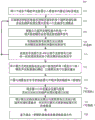
Fig. 5 illustrates an exemplary method 500 for performing auto-focusing of ultrasonic waves/pulses using reflected signals from one or more transient acoustic reflectors, in accordance with various embodiments. In a first step 502, transient acoustic reflectors (e.g., microbubbles) may be introduced into the patient near a target region. The reflectors may be introduced by the applicator device 126 and/or generated by acoustic energy emitted from the transducer 102. In some embodiments, the controller 108 identifies a plurality of sonication locations near (e.g., less than 5mm in distance from) or at the target region; and a transient reflector is introduced in the vicinity of each of the identified sonication locations (e.g., a distance of less than 5 mm). In a second step 504, the ultrasound transducer 102 may be activated to sequentially generate a focal point at each of the identified sonication locations. In a third step 506, the ultrasound signals reflected from the transient reflectors associated with each of the sonication locations may be measured by the transducer elements and/or the acoustic signal detector 124. In an optional fourth step 508, an initial signal processing method 300/350 is implemented to select a measured reflected signal from a transient reflector (as opposed to a background reflector such as a skull). The initial signal processing method may be based on a comparison of the reflected signal between two consecutive measurements. For example, when there is a relatively significant change between two successively measured reflected signals, they may originate from a transient reflector; this is because transient reflectors typically evolve/dissipate during the time period between two measurements, whereas the reflected signal from a persistent background reflector is relatively invariant during the time period between two measurements. Alternatively, the differential signals may be calculated by removing the background signal from the measurement signal, and these calculated signals may be used in a subsequent step instead of the noisy measurement signal. For example, referring back to fig. 3B, signal 316 includes background signal 314 and reflected signal 324 from the transient reflector. Subtracting signal 314 from signal 316 removes the background signal from signal 316, producing a differential signal in which the signal reflected from the transient reflector dominates. Alternatively, the controller 108 may select another signal as the background image (e.g., a signal that is nearly identical to one or more other signals, or alternatively, an average of multiple signals). Additionally or alternatively, the controller 108 may try more than one signal as background signals and select the signal that maximizes the coherence function.
In a fifth step 510, the controller 108 may implement the signal selection method 400 to select a reflected signal from a single microbubble event based on the coincidence between the reflected signals. In one embodiment, a reflected signal is considered to have sufficient coherence only if the relevant parameter of the reflected signal satisfies equation (3) and/or the value of the coherence function defined in, for example, equation (4) or (5) maximizes or exceeds a predetermined threshold. In a sixth step 512, the controller 108 may computationally shift all (or at least some) of the transient acoustic reflectors whose reflections are sufficiently consistent so that they coincide at a single location. In a seventh step 514, the amplitude and/or phase associated with the transducer element measuring the reflected signal may be calculated as an average or weighted average of the amplitudes and/or phases associated with the shifted reflected signal and/or the un-shifted reflected signal at the coincident position to eliminate (or at least reduce) artifacts in the measured reflection. In an optional eighth step 516, the coincident locations in step 512 may be compared to sonication locations estimated using other methods (e.g., CT images and/or physical models). If there is a deviation between them, the controller 108 may computationally shift the coincidence location to coincide with the sonication location estimated using other methods, and then computationally update the parameter values for the transducer elements determined in step 514 (step 518). Step 506-518 may be performed sequentially or substantially simultaneously on an element-by-element basis for determining parameter values (e.g., amplitude and/or phase) for all (or at least some) of the elements of the ultrasound transducer. Thereafter, the transducer elements 104 may be activated based on their corresponding parameter values determined in step 514 or updated in step 518 to generate an ultrasound focus point with the best focus characteristics at the target region (step 520).
In some embodiments, if the number of reflected signals that have been determined to have sufficient coherence in step 510 is below a predetermined threshold (e.g., 10, or 20 in some embodiments), the controller may repeat step 504 and 508 before proceeding to step 512. This ensures that the amplitude and/or phase associated with the transducer elements is determined based on a sufficient number of consistent reflected signals. Additionally or alternatively, in one embodiment, the controller 108 associates a reflected signal with sufficient consistency with the corresponding sonication location from which the reflected signal was reflected; if consistent reflected signals originate from a number of sonication locations below the predetermined threshold (e.g., 5 sonication locations, or in some embodiments 10 sonication locations), the controller 108 may repeat steps 504 and 508 without proceeding to step 512. Again, this approach may ensure that consistent reflected signals originate from a sufficient number of different sonication locations to eliminate (or at least reduce) artifacts in the reflected signals.
Those of ordinary skill in the art will appreciate that variations of the above-described auto-focusing method are possible and are therefore within the scope of the present invention. For example, it may not be necessary to activate a majority of the transducer elements 104 to perform autofocus using the transient reflectors described herein, and the number of transducer elements activated in each sonication in the series of sonications may vary. For example, a small fraction (e.g., 10%) of the transducer elements 104 may be selected to transmit and/or receive ultrasound waves in a first sonication associated with a first sonication location. The calculated phase differences associated with the selected transducer elements may then be interpolated, extrapolated or processed using any suitable estimation method to obtain phase differences associated with the unselected transducer elements. In the next ultrasound processing, a small fraction of the previously unselected transducer elements may be used to repeat the auto-focusing step-i.e., transmit ultrasound waves to and receive reflections from the transient reflector based on the interpolated (or extrapolated) phase differences. The selected transducer elements in the current sonication may or may not include selected transducer elements in previous sonications, and the number of elements selected in each sonication may be different.
In general, the functionality of using reflected signals from one or more transient acoustic reflectors to perform auto-focusing of an ultrasound beam may be constructed in one or more modules implemented in hardware, software, or a combination of both, whether integrated within the controller of the imager 122, ultrasound system 100, and/or application system 126, or provided by a separate external controller or other computing entity or entities. Such functions may include, for example, having one or more transient acoustic reflectors introduced into the patient's body near a target area, identifying a plurality of sonication locations near or at the target area and sequentially generating a focal point at each of the sonication locations, measuring the ultrasound signals reflected from the transient reflectors associated with each of the sonication locations, comparing the measured reflected signals between two consecutive measurements to determine a difference (or differential signal) therebetween, calculating an amplitude ratio between two consecutive differential signals, comparing the amplitude ratio to a predetermined threshold, selecting a reflected signal based on the comparison of the amplitude ratios, selecting a portion (e.g., a time window) of each of the measured reflected signals, determining an amplitude and/or phase associated with the selected portion of each reflected signal, determining an amplitude and/or phase associated with the selected portion of the reflected signal in the two consecutive measurements A difference between the bits, determining a noise level associated with the measured reflected signal, selecting a reflected signal based on the difference and the noise level associated with the selected portion of the reflected signal, selecting two reflected signals measured by transducer element E, determining a coherence between the selected reflected signals using equation (3) and/or a coherence function defined above, computationally shifting the position of one transient acoustic reflector to coincide with the position of the other transient acoustic reflector, determining a parameter value associated with transducer element E based on the travel time/phase associated with the reflected signal, comparing the coincidence position to an ultrasound processing position estimated using other methods, computationally shifting the coincidence position to coincide with an ultrasound processing position estimated using other methods, then computationally updating the parameter value of transducer element E, and activating the transducer elements E based on the determined/updated parameter values, as described above.
Further, the ultrasound controller, imager, and/or administration system may include one or more modules implemented in hardware, software, or a combination thereof. For embodiments in which functionality is provided as one or more software programs, the programs may be written in any of a number of high-level languages, such as PYTHON, FORTRAN, PASCAL, JAVA, C + +, C #, BASIC, various scripting languages, and/or HTML. Further, the software may be implemented in assembly language for a microprocessor residing on a target computer (e.g., controller); for example, if the software is configured to run on an IBM PC or PC clone, the software may be implemented in Intel 80x86 assembly language. Software may be embodied in an article of manufacture that includes, but is not limited to, a floppy disk, a jump drive, a hard disk, an optical disk, magnetic tape, a PROM, an EPROM, an EEPROM, a field programmable gate array, or a CD-ROM. Embodiments using hardware circuitry may be implemented using, for example, one or more FPGA, CPLD, or ASIC processors.
Further, the term "controller" as used herein broadly includes all necessary hardware components and/or software modules for performing any of the functions described above; the controller may include multiple hardware components and/or software modules, and the functionality may be distributed between different components and/or modules.
The foregoing describes certain embodiments of the present invention. However, it is to be expressly noted that the present invention is not limited to these examples; rather, additions and modifications to what is explicitly described herein are also included within the scope of the present invention.