CN113264939A - Benzodiazepine derivatives, compositions and methods for treating cognitive impairment - Google Patents
Benzodiazepine derivatives, compositions and methods for treating cognitive impairment Download PDFInfo
- Publication number
- CN113264939A CN113264939A CN202110582826.3A CN202110582826A CN113264939A CN 113264939 A CN113264939 A CN 113264939A CN 202110582826 A CN202110582826 A CN 202110582826A CN 113264939 A CN113264939 A CN 113264939A
- Authority
- CN
- China
- Prior art keywords
- aliphatic
- isomer
- alkyl
- aryl
- occurrence
- Prior art date
- Legal status (The legal status is an assumption and is not a legal conclusion. Google has not performed a legal analysis and makes no representation as to the accuracy of the status listed.)
- Pending
Links
- 208000010877 cognitive disease Diseases 0.000 title claims abstract description 246
- 208000028698 Cognitive impairment Diseases 0.000 title claims abstract description 177
- 239000000203 mixture Substances 0.000 title claims abstract description 161
- 238000000034 method Methods 0.000 title abstract description 124
- 229940053197 benzodiazepine derivative antiepileptics Drugs 0.000 title abstract description 6
- 125000003310 benzodiazepinyl group Chemical class N1N=C(C=CC2=C1C=CC=C2)* 0.000 title abstract 3
- 208000027061 mild cognitive impairment Diseases 0.000 claims abstract description 67
- 208000024827 Alzheimer disease Diseases 0.000 claims abstract description 65
- 201000000980 schizophrenia Diseases 0.000 claims abstract description 58
- 208000028173 post-traumatic stress disease Diseases 0.000 claims abstract description 57
- 206010012289 Dementia Diseases 0.000 claims abstract description 53
- 208000018737 Parkinson disease Diseases 0.000 claims abstract description 48
- 206010002026 amyotrophic lateral sclerosis Diseases 0.000 claims abstract description 44
- 208000036626 Mental retardation Diseases 0.000 claims abstract description 42
- 208000011117 substance-related disease Diseases 0.000 claims abstract description 39
- 208000020925 Bipolar disease Diseases 0.000 claims abstract description 36
- 231100000867 compulsive behavior Toxicity 0.000 claims abstract description 16
- 150000001875 compounds Chemical class 0.000 claims description 262
- 125000004169 (C1-C6) alkyl group Chemical group 0.000 claims description 230
- 125000001313 C5-C10 heteroaryl group Chemical group 0.000 claims description 165
- 150000003839 salts Chemical class 0.000 claims description 119
- 229910052736 halogen Inorganic materials 0.000 claims description 97
- 150000002367 halogens Chemical class 0.000 claims description 94
- 125000006714 (C3-C10) heterocyclyl group Chemical group 0.000 claims description 73
- 125000000041 C6-C10 aryl group Chemical group 0.000 claims description 70
- 125000000623 heterocyclic group Chemical group 0.000 claims description 65
- 125000000449 nitro group Chemical group [O-][N+](*)=O 0.000 claims description 63
- 125000006376 (C3-C10) cycloalkyl group Chemical group 0.000 claims description 61
- 125000001931 aliphatic group Chemical group 0.000 claims description 60
- 125000002023 trifluoromethyl group Chemical group FC(F)(F)* 0.000 claims description 60
- 239000003814 drug Substances 0.000 claims description 54
- 229910052760 oxygen Inorganic materials 0.000 claims description 45
- 229910052717 sulfur Inorganic materials 0.000 claims description 44
- BUGYDGFZZOZRHP-UHFFFAOYSA-N memantine Chemical compound C1C(C2)CC3(C)CC1(C)CC2(N)C3 BUGYDGFZZOZRHP-UHFFFAOYSA-N 0.000 claims description 43
- 229910052757 nitrogen Inorganic materials 0.000 claims description 43
- 125000005842 heteroatom Chemical group 0.000 claims description 42
- 125000001424 substituent group Chemical group 0.000 claims description 42
- 208000015114 central nervous system disease Diseases 0.000 claims description 41
- 229960004640 memantine Drugs 0.000 claims description 38
- 238000011275 oncology therapy Methods 0.000 claims description 32
- 125000005913 (C3-C6) cycloalkyl group Chemical group 0.000 claims description 31
- 125000006717 (C3-C10) cycloalkenyl group Chemical group 0.000 claims description 25
- 239000000544 cholinesterase inhibitor Substances 0.000 claims description 24
- 125000006719 (C6-C10) aryl (C1-C6) alkyl group Chemical group 0.000 claims description 23
- 206010003805 Autism Diseases 0.000 claims description 23
- 229940124597 therapeutic agent Drugs 0.000 claims description 23
- 208000020706 Autistic disease Diseases 0.000 claims description 22
- 125000001072 heteroaryl group Chemical group 0.000 claims description 22
- 239000008194 pharmaceutical composition Substances 0.000 claims description 20
- 230000000561 anti-psychotic effect Effects 0.000 claims description 18
- ADEBPBSSDYVVLD-UHFFFAOYSA-N donepezil Chemical compound O=C1C=2C=C(OC)C(OC)=CC=2CC1CC(CC1)CCN1CC1=CC=CC=C1 ADEBPBSSDYVVLD-UHFFFAOYSA-N 0.000 claims description 17
- 125000000876 trifluoromethoxy group Chemical group FC(F)(F)O* 0.000 claims description 17
- ASUTZQLVASHGKV-JDFRZJQESA-N galanthamine Chemical compound O1C(=C23)C(OC)=CC=C2CN(C)CC[C@]23[C@@H]1C[C@@H](O)C=C2 ASUTZQLVASHGKV-JDFRZJQESA-N 0.000 claims description 11
- 208000012902 Nervous system disease Diseases 0.000 claims description 9
- 229960003530 donepezil Drugs 0.000 claims description 6
- 238000006467 substitution reaction Methods 0.000 claims description 6
- 238000004519 manufacturing process Methods 0.000 claims description 5
- 229940100578 Acetylcholinesterase inhibitor Drugs 0.000 claims description 4
- CEUORZQYGODEFX-UHFFFAOYSA-N Aripirazole Chemical compound ClC1=CC=CC(N2CCN(CCCCOC=3C=C4NC(=O)CCC4=CC=3)CC2)=C1Cl CEUORZQYGODEFX-UHFFFAOYSA-N 0.000 claims description 4
- 229960004372 aripiprazole Drugs 0.000 claims description 4
- 229960003980 galantamine Drugs 0.000 claims description 4
- ASUTZQLVASHGKV-UHFFFAOYSA-N galanthamine hydrochloride Natural products O1C(=C23)C(OC)=CC=C2CN(C)CCC23C1CC(O)C=C2 ASUTZQLVASHGKV-UHFFFAOYSA-N 0.000 claims description 4
- 229960005017 olanzapine Drugs 0.000 claims description 4
- KVWDHTXUZHCGIO-UHFFFAOYSA-N olanzapine Chemical compound C1CN(C)CCN1C1=NC2=CC=CC=C2NC2=C1C=C(C)S2 KVWDHTXUZHCGIO-UHFFFAOYSA-N 0.000 claims description 4
- 229960000607 ziprasidone Drugs 0.000 claims description 4
- MVWVFYHBGMAFLY-UHFFFAOYSA-N ziprasidone Chemical compound C1=CC=C2C(N3CCN(CC3)CCC3=CC=4CC(=O)NC=4C=C3Cl)=NSC2=C1 MVWVFYHBGMAFLY-UHFFFAOYSA-N 0.000 claims description 4
- XSVMFMHYUFZWBK-NSHDSACASA-N Rivastigmine Chemical compound CCN(C)C(=O)OC1=CC=CC([C@H](C)N(C)C)=C1 XSVMFMHYUFZWBK-NSHDSACASA-N 0.000 claims description 3
- 239000002671 adjuvant Substances 0.000 claims description 3
- 229960004136 rivastigmine Drugs 0.000 claims description 3
- 125000005843 halogen group Chemical group 0.000 claims 1
- BTCSSZJGUNDROE-UHFFFAOYSA-N gamma-aminobutyric acid Chemical compound NCCCC(O)=O BTCSSZJGUNDROE-UHFFFAOYSA-N 0.000 abstract description 178
- 229960003692 gamma aminobutyric acid Drugs 0.000 abstract description 90
- 238000011282 treatment Methods 0.000 abstract description 66
- 208000037265 diseases, disorders, signs and symptoms Diseases 0.000 abstract description 44
- 230000003281 allosteric effect Effects 0.000 abstract description 41
- 230000007000 age related cognitive decline Effects 0.000 abstract description 36
- 208000035475 disorder Diseases 0.000 abstract description 30
- 206010027175 memory impairment Diseases 0.000 abstract description 21
- 210000003169 central nervous system Anatomy 0.000 abstract description 20
- 239000000018 receptor agonist Substances 0.000 abstract description 20
- 208000029560 autism spectrum disease Diseases 0.000 abstract description 18
- 208000033464 Reiter syndrome Diseases 0.000 abstract description 13
- 208000002574 reactive arthritis Diseases 0.000 abstract description 13
- 208000011359 Chromosome disease Diseases 0.000 abstract description 11
- 206010067477 Cytogenetic abnormality Diseases 0.000 abstract description 11
- 210000001766 X chromosome Anatomy 0.000 abstract description 11
- 208000024971 chromosomal disease Diseases 0.000 abstract description 11
- 206010028980 Neoplasm Diseases 0.000 abstract description 8
- 201000011510 cancer Diseases 0.000 abstract description 8
- 238000002560 therapeutic procedure Methods 0.000 abstract description 4
- 235000002639 sodium chloride Nutrition 0.000 description 100
- -1 - (C1-C6) -aliphatic Chemical group 0.000 description 99
- XEKOWRVHYACXOJ-UHFFFAOYSA-N Ethyl acetate Chemical compound CCOC(C)=O XEKOWRVHYACXOJ-UHFFFAOYSA-N 0.000 description 89
- OGNSCSPNOLGXSM-UHFFFAOYSA-N (+/-)-DABA Natural products NCCC(N)C(O)=O OGNSCSPNOLGXSM-UHFFFAOYSA-N 0.000 description 88
- 239000012453 solvate Substances 0.000 description 88
- 125000004093 cyano group Chemical group *C#N 0.000 description 73
- 238000012360 testing method Methods 0.000 description 67
- 230000003920 cognitive function Effects 0.000 description 64
- 241000700159 Rattus Species 0.000 description 59
- 208000024891 symptom Diseases 0.000 description 56
- 239000007787 solid Substances 0.000 description 54
- 238000010171 animal model Methods 0.000 description 49
- 239000000243 solution Substances 0.000 description 46
- XLYOFNOQVPJJNP-UHFFFAOYSA-N water Substances O XLYOFNOQVPJJNP-UHFFFAOYSA-N 0.000 description 46
- 125000003118 aryl group Chemical group 0.000 description 45
- 230000000694 effects Effects 0.000 description 45
- 229910001868 water Inorganic materials 0.000 description 45
- 235000019439 ethyl acetate Nutrition 0.000 description 44
- 102000005962 receptors Human genes 0.000 description 43
- 108020003175 receptors Proteins 0.000 description 43
- LFQSCWFLJHTTHZ-UHFFFAOYSA-N Ethanol Chemical compound CCO LFQSCWFLJHTTHZ-UHFFFAOYSA-N 0.000 description 36
- 239000003795 chemical substances by application Substances 0.000 description 36
- VLKZOEOYAKHREP-UHFFFAOYSA-N n-Hexane Chemical class CCCCCC VLKZOEOYAKHREP-UHFFFAOYSA-N 0.000 description 34
- 230000001149 cognitive effect Effects 0.000 description 33
- HEDRZPFGACZZDS-MICDWDOJSA-N Trichloro(2H)methane Chemical compound [2H]C(Cl)(Cl)Cl HEDRZPFGACZZDS-MICDWDOJSA-N 0.000 description 30
- VYFYYTLLBUKUHU-UHFFFAOYSA-N dopamine Chemical compound NCCC1=CC=C(O)C(O)=C1 VYFYYTLLBUKUHU-UHFFFAOYSA-N 0.000 description 30
- 230000015654 memory Effects 0.000 description 30
- 125000000956 methoxy group Chemical group [H]C([H])([H])O* 0.000 description 30
- 229910052720 vanadium Inorganic materials 0.000 description 30
- 229940126027 positive allosteric modulator Drugs 0.000 description 29
- 230000002829 reductive effect Effects 0.000 description 28
- 239000000460 chlorine Substances 0.000 description 27
- 230000001771 impaired effect Effects 0.000 description 27
- 125000004429 atom Chemical group 0.000 description 26
- 208000030459 obsessive-compulsive personality disease Diseases 0.000 description 26
- 208000007656 osteochondritis dissecans Diseases 0.000 description 26
- BELPJCDYWUCHKF-WAYWQWQTSA-N Methylazoxymethanol acetate Chemical compound CC(=O)OC\N=[N+](\C)[O-] BELPJCDYWUCHKF-WAYWQWQTSA-N 0.000 description 24
- VYPSYNLAJGMNEJ-UHFFFAOYSA-N Silicium dioxide Chemical compound O=[Si]=O VYPSYNLAJGMNEJ-UHFFFAOYSA-N 0.000 description 24
- 241001465754 Metazoa Species 0.000 description 23
- 230000006399 behavior Effects 0.000 description 23
- 230000015572 biosynthetic process Effects 0.000 description 23
- 238000003786 synthesis reaction Methods 0.000 description 23
- 229910052731 fluorine Inorganic materials 0.000 description 22
- 229910052739 hydrogen Inorganic materials 0.000 description 22
- 239000002904 solvent Substances 0.000 description 22
- 241000282412 Homo Species 0.000 description 21
- 210000004556 brain Anatomy 0.000 description 21
- 229940079593 drug Drugs 0.000 description 21
- 235000019441 ethanol Nutrition 0.000 description 21
- 238000001914 filtration Methods 0.000 description 21
- 206010026749 Mania Diseases 0.000 description 20
- 238000006243 chemical reaction Methods 0.000 description 20
- 230000000971 hippocampal effect Effects 0.000 description 20
- 239000000725 suspension Substances 0.000 description 20
- 239000000164 antipsychotic agent Substances 0.000 description 19
- 230000003542 behavioural effect Effects 0.000 description 19
- 150000004677 hydrates Chemical class 0.000 description 19
- 239000000741 silica gel Substances 0.000 description 18
- 229910002027 silica gel Inorganic materials 0.000 description 18
- 230000007423 decrease Effects 0.000 description 17
- 238000001035 drying Methods 0.000 description 17
- RWRDLPDLKQPQOW-UHFFFAOYSA-N tetrahydropyrrole Substances C1CCNC1 RWRDLPDLKQPQOW-UHFFFAOYSA-N 0.000 description 17
- 238000007792 addition Methods 0.000 description 16
- 239000003112 inhibitor Substances 0.000 description 16
- 125000006574 non-aromatic ring group Chemical group 0.000 description 16
- 239000000126 substance Substances 0.000 description 16
- OKKJLVBELUTLKV-UHFFFAOYSA-N Methanol Chemical compound OC OKKJLVBELUTLKV-UHFFFAOYSA-N 0.000 description 15
- QTBSBXVTEAMEQO-UHFFFAOYSA-N acetic acid Substances CC(O)=O QTBSBXVTEAMEQO-UHFFFAOYSA-N 0.000 description 15
- 239000012267 brine Substances 0.000 description 15
- 238000004587 chromatography analysis Methods 0.000 description 15
- 230000007278 cognition impairment Effects 0.000 description 15
- 229960003638 dopamine Drugs 0.000 description 15
- 238000009472 formulation Methods 0.000 description 15
- 229940002612 prodrug Drugs 0.000 description 15
- 239000000651 prodrug Substances 0.000 description 15
- 239000000047 product Substances 0.000 description 15
- HPALAKNZSZLMCH-UHFFFAOYSA-M sodium;chloride;hydrate Chemical compound O.[Na+].[Cl-] HPALAKNZSZLMCH-UHFFFAOYSA-M 0.000 description 15
- IAZDPXIOMUYVGZ-UHFFFAOYSA-N Dimethylsulphoxide Chemical compound CS(C)=O IAZDPXIOMUYVGZ-UHFFFAOYSA-N 0.000 description 14
- 230000006735 deficit Effects 0.000 description 14
- 201000010099 disease Diseases 0.000 description 14
- 208000020016 psychiatric disease Diseases 0.000 description 14
- 230000004044 response Effects 0.000 description 14
- AKEJUJNQAAGONA-UHFFFAOYSA-N sulfur trioxide Inorganic materials O=S(=O)=O AKEJUJNQAAGONA-UHFFFAOYSA-N 0.000 description 14
- 208000011580 syndromic disease Diseases 0.000 description 14
- 239000000556 agonist Substances 0.000 description 13
- 238000011161 development Methods 0.000 description 13
- 230000018109 developmental process Effects 0.000 description 13
- 239000000284 extract Substances 0.000 description 13
- 210000001320 hippocampus Anatomy 0.000 description 13
- 230000013016 learning Effects 0.000 description 13
- 210000002569 neuron Anatomy 0.000 description 13
- 125000001997 phenyl group Chemical group [H]C1=C([H])C([H])=C(*)C([H])=C1[H] 0.000 description 13
- 238000005160 1H NMR spectroscopy Methods 0.000 description 12
- JGFZNNIVVJXRND-UHFFFAOYSA-N N,N-Diisopropylethylamine (DIPEA) Chemical compound CCN(C(C)C)C(C)C JGFZNNIVVJXRND-UHFFFAOYSA-N 0.000 description 12
- 239000007832 Na2SO4 Substances 0.000 description 12
- 210000004027 cell Anatomy 0.000 description 12
- 239000000599 controlled substance Substances 0.000 description 12
- 125000001449 isopropyl group Chemical group [H]C([H])([H])C([H])(*)C([H])([H])[H] 0.000 description 12
- 125000004433 nitrogen atom Chemical group N* 0.000 description 12
- XHXFXVLFKHQFAL-UHFFFAOYSA-N phosphoryl trichloride Chemical compound ClP(Cl)(Cl)=O XHXFXVLFKHQFAL-UHFFFAOYSA-N 0.000 description 12
- 229910052938 sodium sulfate Inorganic materials 0.000 description 12
- PEDCQBHIVMGVHV-UHFFFAOYSA-N Glycerine Chemical compound OCC(O)CO PEDCQBHIVMGVHV-UHFFFAOYSA-N 0.000 description 11
- 239000003693 atypical antipsychotic agent Substances 0.000 description 11
- 125000004432 carbon atom Chemical group C* 0.000 description 11
- 239000012043 crude product Substances 0.000 description 11
- 230000004064 dysfunction Effects 0.000 description 11
- 238000013265 extended release Methods 0.000 description 11
- 239000003921 oil Substances 0.000 description 11
- 239000011541 reaction mixture Substances 0.000 description 11
- 208000007848 Alcoholism Diseases 0.000 description 10
- YNAVUWVOSKDBBP-UHFFFAOYSA-N Morpholine Chemical compound C1COCCN1 YNAVUWVOSKDBBP-UHFFFAOYSA-N 0.000 description 10
- 125000000217 alkyl group Chemical group 0.000 description 10
- 229940005529 antipsychotics Drugs 0.000 description 10
- 235000019198 oils Nutrition 0.000 description 10
- JUJWROOIHBZHMG-UHFFFAOYSA-N pyridine Substances C1=CC=NC=C1 JUJWROOIHBZHMG-UHFFFAOYSA-N 0.000 description 10
- 238000003756 stirring Methods 0.000 description 10
- LMBFAGIMSUYTBN-MPZNNTNKSA-N teixobactin Chemical compound C([C@H](C(=O)N[C@@H]([C@@H](C)CC)C(=O)N[C@@H](CO)C(=O)N[C@H](CCC(N)=O)C(=O)N[C@H]([C@@H](C)CC)C(=O)N[C@@H]([C@@H](C)CC)C(=O)N[C@@H](CO)C(=O)N[C@H]1C(N[C@@H](C)C(=O)N[C@@H](C[C@@H]2NC(=N)NC2)C(=O)N[C@H](C(=O)O[C@H]1C)[C@@H](C)CC)=O)NC)C1=CC=CC=C1 LMBFAGIMSUYTBN-MPZNNTNKSA-N 0.000 description 10
- 208000001914 Fragile X syndrome Diseases 0.000 description 9
- YXFVVABEGXRONW-UHFFFAOYSA-N Toluene Chemical compound CC1=CC=CC=C1 YXFVVABEGXRONW-UHFFFAOYSA-N 0.000 description 9
- 230000032683 aging Effects 0.000 description 9
- 229940127236 atypical antipsychotics Drugs 0.000 description 9
- 125000001797 benzyl group Chemical group [H]C1=C([H])C([H])=C(C([H])=C1[H])C([H])([H])* 0.000 description 9
- 230000006870 function Effects 0.000 description 9
- 230000005764 inhibitory process Effects 0.000 description 9
- 230000014759 maintenance of location Effects 0.000 description 9
- 125000002950 monocyclic group Chemical group 0.000 description 9
- 230000001537 neural effect Effects 0.000 description 9
- 230000006886 spatial memory Effects 0.000 description 9
- 239000003981 vehicle Substances 0.000 description 9
- HOKKHZGPKSLGJE-GSVOUGTGSA-N N-Methyl-D-aspartic acid Chemical compound CN[C@@H](C(O)=O)CC(O)=O HOKKHZGPKSLGJE-GSVOUGTGSA-N 0.000 description 8
- KDLHZDBZIXYQEI-UHFFFAOYSA-N Palladium Chemical compound [Pd] KDLHZDBZIXYQEI-UHFFFAOYSA-N 0.000 description 8
- VREFGVBLTWBCJP-UHFFFAOYSA-N alprazolam Chemical compound C12=CC(Cl)=CC=C2N2C(C)=NN=C2CN=C1C1=CC=CC=C1 VREFGVBLTWBCJP-UHFFFAOYSA-N 0.000 description 8
- 238000003556 assay Methods 0.000 description 8
- 239000002585 base Substances 0.000 description 8
- 125000002619 bicyclic group Chemical group 0.000 description 8
- 125000001309 chloro group Chemical group Cl* 0.000 description 8
- 235000019788 craving Nutrition 0.000 description 8
- 125000001559 cyclopropyl group Chemical group [H]C1([H])C([H])([H])C1([H])* 0.000 description 8
- 239000003480 eluent Substances 0.000 description 8
- 230000001965 increasing effect Effects 0.000 description 8
- 150000003951 lactams Chemical class 0.000 description 8
- 229920006395 saturated elastomer Polymers 0.000 description 8
- QZAYGJVTTNCVMB-UHFFFAOYSA-N serotonin Chemical compound C1=C(O)C=C2C(CCN)=CNC2=C1 QZAYGJVTTNCVMB-UHFFFAOYSA-N 0.000 description 8
- 239000007858 starting material Substances 0.000 description 8
- RTZKZFJDLAIYFH-UHFFFAOYSA-N Diethyl ether Chemical compound CCOCC RTZKZFJDLAIYFH-UHFFFAOYSA-N 0.000 description 7
- 208000028017 Psychotic disease Diseases 0.000 description 7
- 239000002253 acid Substances 0.000 description 7
- 201000007930 alcohol dependence Diseases 0.000 description 7
- 230000027455 binding Effects 0.000 description 7
- 239000013078 crystal Substances 0.000 description 7
- 239000002552 dosage form Substances 0.000 description 7
- 238000011156 evaluation Methods 0.000 description 7
- 235000013305 food Nutrition 0.000 description 7
- 230000008449 language Effects 0.000 description 7
- HICZHPFZMDTJBP-UHFFFAOYSA-N methyl 3,5-diphenylpyridazine-4-carboxylate Chemical compound COC(=O)C1=C(C=2C=CC=CC=2)C=NN=C1C1=CC=CC=C1 HICZHPFZMDTJBP-UHFFFAOYSA-N 0.000 description 7
- YMWUJEATGCHHMB-UHFFFAOYSA-N methylene chloride Substances ClCCl YMWUJEATGCHHMB-UHFFFAOYSA-N 0.000 description 7
- 230000001225 therapeutic effect Effects 0.000 description 7
- 201000010374 Down Syndrome Diseases 0.000 description 6
- DHMQDGOQFOQNFH-UHFFFAOYSA-N Glycine Chemical compound NCC(O)=O DHMQDGOQFOQNFH-UHFFFAOYSA-N 0.000 description 6
- VEXZGXHMUGYJMC-UHFFFAOYSA-N Hydrochloric acid Chemical compound Cl VEXZGXHMUGYJMC-UHFFFAOYSA-N 0.000 description 6
- GUBGYTABKSRVRQ-QKKXKWKRSA-N Lactose Natural products OC[C@H]1O[C@@H](O[C@H]2[C@H](O)[C@@H](O)C(O)O[C@@H]2CO)[C@H](O)[C@@H](O)[C@H]1O GUBGYTABKSRVRQ-QKKXKWKRSA-N 0.000 description 6
- 238000012347 Morris Water Maze Methods 0.000 description 6
- 241000699670 Mus sp. Species 0.000 description 6
- 229910019213 POCl3 Inorganic materials 0.000 description 6
- DNIAPMSPPWPWGF-UHFFFAOYSA-N Propylene glycol Chemical compound CC(O)CO DNIAPMSPPWPWGF-UHFFFAOYSA-N 0.000 description 6
- FAPWRFPIFSIZLT-UHFFFAOYSA-M Sodium chloride Chemical compound [Na+].[Cl-] FAPWRFPIFSIZLT-UHFFFAOYSA-M 0.000 description 6
- YTPLMLYBLZKORZ-UHFFFAOYSA-N Thiophene Chemical compound C=1C=CSC=1 YTPLMLYBLZKORZ-UHFFFAOYSA-N 0.000 description 6
- 230000002159 abnormal effect Effects 0.000 description 6
- 229910052799 carbon Inorganic materials 0.000 description 6
- 210000001638 cerebellum Anatomy 0.000 description 6
- 230000008859 change Effects 0.000 description 6
- 239000003153 chemical reaction reagent Substances 0.000 description 6
- 229910052801 chlorine Inorganic materials 0.000 description 6
- 230000001419 dependent effect Effects 0.000 description 6
- 239000000706 filtrate Substances 0.000 description 6
- 239000012071 phase Substances 0.000 description 6
- 229920001223 polyethylene glycol Polymers 0.000 description 6
- 239000002244 precipitate Substances 0.000 description 6
- 230000002035 prolonged effect Effects 0.000 description 6
- 229940044601 receptor agonist Drugs 0.000 description 6
- 239000002464 receptor antagonist Substances 0.000 description 6
- 230000003252 repetitive effect Effects 0.000 description 6
- 125000000999 tert-butyl group Chemical group [H]C([H])([H])C(*)(C([H])([H])[H])C([H])([H])[H] 0.000 description 6
- 238000012549 training Methods 0.000 description 6
- PEDMFCHWOVJDNW-UHFFFAOYSA-N 5-fluoro-2-nitroaniline Chemical compound NC1=CC(F)=CC=C1[N+]([O-])=O PEDMFCHWOVJDNW-UHFFFAOYSA-N 0.000 description 5
- 208000019901 Anxiety disease Diseases 0.000 description 5
- 208000021384 Obsessive-Compulsive disease Diseases 0.000 description 5
- 230000009471 action Effects 0.000 description 5
- VMWNQDUVQKEIOC-CYBMUJFWSA-N apomorphine Chemical compound C([C@H]1N(C)CC2)C3=CC=C(O)C(O)=C3C3=C1C2=CC=C3 VMWNQDUVQKEIOC-CYBMUJFWSA-N 0.000 description 5
- 229960004046 apomorphine Drugs 0.000 description 5
- 230000004888 barrier function Effects 0.000 description 5
- 230000003925 brain function Effects 0.000 description 5
- 230000003931 cognitive performance Effects 0.000 description 5
- NIJJYAXOARWZEE-UHFFFAOYSA-N di-n-propyl-acetic acid Natural products CCCC(C(O)=O)CCC NIJJYAXOARWZEE-UHFFFAOYSA-N 0.000 description 5
- 238000003745 diagnosis Methods 0.000 description 5
- 230000009429 distress Effects 0.000 description 5
- 239000003937 drug carrier Substances 0.000 description 5
- 150000002148 esters Chemical class 0.000 description 5
- FPULFENIJDPZBX-UHFFFAOYSA-N ethyl 2-isocyanoacetate Chemical compound CCOC(=O)C[N+]#[C-] FPULFENIJDPZBX-UHFFFAOYSA-N 0.000 description 5
- 238000002599 functional magnetic resonance imaging Methods 0.000 description 5
- 230000036541 health Effects 0.000 description 5
- 208000013403 hyperactivity Diseases 0.000 description 5
- 208000014674 injury Diseases 0.000 description 5
- 239000010410 layer Substances 0.000 description 5
- 230000033001 locomotion Effects 0.000 description 5
- 230000008897 memory decline Effects 0.000 description 5
- 230000004770 neurodegeneration Effects 0.000 description 5
- 230000007604 neuronal communication Effects 0.000 description 5
- 239000002858 neurotransmitter agent Substances 0.000 description 5
- 230000036963 noncompetitive effect Effects 0.000 description 5
- LPNYRYFBWFDTMA-UHFFFAOYSA-N potassium tert-butoxide Chemical compound [K+].CC(C)(C)[O-] LPNYRYFBWFDTMA-UHFFFAOYSA-N 0.000 description 5
- 238000000746 purification Methods 0.000 description 5
- 238000010791 quenching Methods 0.000 description 5
- 230000005855 radiation Effects 0.000 description 5
- 238000011552 rat model Methods 0.000 description 5
- 230000003989 repetitive behavior Effects 0.000 description 5
- 208000013406 repetitive behavior Diseases 0.000 description 5
- 238000011160 research Methods 0.000 description 5
- 238000001228 spectrum Methods 0.000 description 5
- 238000013268 sustained release Methods 0.000 description 5
- 230000008733 trauma Effects 0.000 description 5
- MSRILKIQRXUYCT-UHFFFAOYSA-M valproate semisodium Chemical compound [Na+].CCCC(C(O)=O)CCC.CCCC(C([O-])=O)CCC MSRILKIQRXUYCT-UHFFFAOYSA-M 0.000 description 5
- 229960000604 valproic acid Drugs 0.000 description 5
- 125000006570 (C5-C6) heteroaryl group Chemical group 0.000 description 4
- KWTSXDURSIMDCE-QMMMGPOBSA-N (S)-amphetamine Chemical compound C[C@H](N)CC1=CC=CC=C1 KWTSXDURSIMDCE-QMMMGPOBSA-N 0.000 description 4
- VBICKXHEKHSIBG-UHFFFAOYSA-N 1-monostearoylglycerol Chemical compound CCCCCCCCCCCCCCCCCC(=O)OCC(O)CO VBICKXHEKHSIBG-UHFFFAOYSA-N 0.000 description 4
- CAJUSRIHDIZNNF-UHFFFAOYSA-N 3-(3-hydroxypropylsulfanyl)-6,6-dimethyl-1-(1,3-thiazol-2-yl)-5,7-dihydro-2-benzothiophen-4-one Chemical compound S1C(SCCCO)=C2C(=O)CC(C)(C)CC2=C1C1=NC=CS1 CAJUSRIHDIZNNF-UHFFFAOYSA-N 0.000 description 4
- NSPMIYGKQJPBQR-UHFFFAOYSA-N 4H-1,2,4-triazole Chemical compound C=1N=CNN=1 NSPMIYGKQJPBQR-UHFFFAOYSA-N 0.000 description 4
- 125000002373 5 membered heterocyclic group Chemical group 0.000 description 4
- PAYRUJLWNCNPSJ-UHFFFAOYSA-N Aniline Chemical compound NC1=CC=CC=C1 PAYRUJLWNCNPSJ-UHFFFAOYSA-N 0.000 description 4
- 206010010219 Compulsions Diseases 0.000 description 4
- 206010010356 Congenital anomaly Diseases 0.000 description 4
- 108010010914 Metabotropic glutamate receptors Proteins 0.000 description 4
- 102000016193 Metabotropic glutamate receptors Human genes 0.000 description 4
- URLKBWYHVLBVBO-UHFFFAOYSA-N Para-Xylene Chemical group CC1=CC=C(C)C=C1 URLKBWYHVLBVBO-UHFFFAOYSA-N 0.000 description 4
- 238000001604 Rao's score test Methods 0.000 description 4
- CZMRCDWAGMRECN-UGDNZRGBSA-N Sucrose Chemical compound O[C@H]1[C@H](O)[C@@H](CO)O[C@@]1(CO)O[C@@H]1[C@H](O)[C@@H](O)[C@H](O)[C@@H](CO)O1 CZMRCDWAGMRECN-UGDNZRGBSA-N 0.000 description 4
- 229930006000 Sucrose Natural products 0.000 description 4
- 102100023532 Synaptic functional regulator FMR1 Human genes 0.000 description 4
- 206010044688 Trisomy 21 Diseases 0.000 description 4
- 230000005856 abnormality Effects 0.000 description 4
- 230000002411 adverse Effects 0.000 description 4
- 150000001299 aldehydes Chemical class 0.000 description 4
- 125000003342 alkenyl group Chemical group 0.000 description 4
- 230000036506 anxiety Effects 0.000 description 4
- 229940125717 barbiturate Drugs 0.000 description 4
- 230000015556 catabolic process Effects 0.000 description 4
- 230000001684 chronic effect Effects 0.000 description 4
- 230000009194 climbing Effects 0.000 description 4
- 230000019771 cognition Effects 0.000 description 4
- 230000003930 cognitive ability Effects 0.000 description 4
- 238000013270 controlled release Methods 0.000 description 4
- 125000000392 cycloalkenyl group Chemical group 0.000 description 4
- 230000007850 degeneration Effects 0.000 description 4
- 210000005153 frontal cortex Anatomy 0.000 description 4
- RWSXRVCMGQZWBV-WDSKDSINSA-N glutathione Chemical compound OC(=O)[C@@H](N)CCC(=O)N[C@@H](CS)C(=O)NCC(O)=O RWSXRVCMGQZWBV-WDSKDSINSA-N 0.000 description 4
- 235000011187 glycerol Nutrition 0.000 description 4
- 238000003384 imaging method Methods 0.000 description 4
- 238000002347 injection Methods 0.000 description 4
- 239000007924 injection Substances 0.000 description 4
- 238000004895 liquid chromatography mass spectrometry Methods 0.000 description 4
- 230000006996 mental state Effects 0.000 description 4
- 238000010172 mouse model Methods 0.000 description 4
- 230000000926 neurological effect Effects 0.000 description 4
- 238000002600 positron emission tomography Methods 0.000 description 4
- 208000000415 potassium-aggravated myotonia Diseases 0.000 description 4
- 239000000843 powder Substances 0.000 description 4
- 229940044551 receptor antagonist Drugs 0.000 description 4
- 230000011514 reflex Effects 0.000 description 4
- 230000002441 reversible effect Effects 0.000 description 4
- RMAQACBXLXPBSY-UHFFFAOYSA-N silicic acid Chemical compound O[Si](O)(O)O RMAQACBXLXPBSY-UHFFFAOYSA-N 0.000 description 4
- 239000011780 sodium chloride Substances 0.000 description 4
- 239000012258 stirred mixture Substances 0.000 description 4
- 210000003523 substantia nigra Anatomy 0.000 description 4
- 239000005720 sucrose Substances 0.000 description 4
- 230000002459 sustained effect Effects 0.000 description 4
- 150000003852 triazoles Chemical group 0.000 description 4
- 230000021542 voluntary musculoskeletal movement Effects 0.000 description 4
- 125000004178 (C1-C4) alkyl group Chemical group 0.000 description 3
- 125000006728 (C1-C6) alkynyl group Chemical group 0.000 description 3
- DPJCXCZTLWNFOH-UHFFFAOYSA-N 2-nitroaniline Chemical compound NC1=CC=CC=C1[N+]([O-])=O DPJCXCZTLWNFOH-UHFFFAOYSA-N 0.000 description 3
- 125000006163 5-membered heteroaryl group Chemical group 0.000 description 3
- 206010001497 Agitation Diseases 0.000 description 3
- WVDDGKGOMKODPV-UHFFFAOYSA-N Benzyl alcohol Chemical compound OCC1=CC=CC=C1 WVDDGKGOMKODPV-UHFFFAOYSA-N 0.000 description 3
- VEXZGXHMUGYJMC-UHFFFAOYSA-M Chloride anion Chemical compound [Cl-] VEXZGXHMUGYJMC-UHFFFAOYSA-M 0.000 description 3
- 206010067889 Dementia with Lewy bodies Diseases 0.000 description 3
- 206010012335 Dependence Diseases 0.000 description 3
- 206010012559 Developmental delay Diseases 0.000 description 3
- 108010032606 Fragile X Mental Retardation Protein Proteins 0.000 description 3
- 201000011240 Frontotemporal dementia Diseases 0.000 description 3
- 108010010803 Gelatin Proteins 0.000 description 3
- 239000004471 Glycine Substances 0.000 description 3
- 208000004547 Hallucinations Diseases 0.000 description 3
- KFZMGEQAYNKOFK-UHFFFAOYSA-N Isopropanol Chemical compound CC(C)O KFZMGEQAYNKOFK-UHFFFAOYSA-N 0.000 description 3
- YQEZLKZALYSWHR-UHFFFAOYSA-N Ketamine Chemical compound C=1C=CC=C(Cl)C=1C1(NC)CCCCC1=O YQEZLKZALYSWHR-UHFFFAOYSA-N 0.000 description 3
- 235000010643 Leucaena leucocephala Nutrition 0.000 description 3
- 240000007472 Leucaena leucocephala Species 0.000 description 3
- 201000002832 Lewy body dementia Diseases 0.000 description 3
- OFOBLEOULBTSOW-UHFFFAOYSA-N Malonic acid Chemical compound OC(=O)CC(O)=O OFOBLEOULBTSOW-UHFFFAOYSA-N 0.000 description 3
- 208000026139 Memory disease Diseases 0.000 description 3
- 102000010909 Monoamine Oxidase Human genes 0.000 description 3
- 108010062431 Monoamine oxidase Proteins 0.000 description 3
- 241000699666 Mus <mouse, genus> Species 0.000 description 3
- 102000014415 Muscarinic acetylcholine receptor Human genes 0.000 description 3
- 108050003473 Muscarinic acetylcholine receptor Proteins 0.000 description 3
- 238000005481 NMR spectroscopy Methods 0.000 description 3
- 102000006538 Nitric Oxide Synthase Type I Human genes 0.000 description 3
- 108010008858 Nitric Oxide Synthase Type I Proteins 0.000 description 3
- 208000027089 Parkinsonian disease Diseases 0.000 description 3
- 206010034010 Parkinsonism Diseases 0.000 description 3
- 239000002202 Polyethylene glycol Substances 0.000 description 3
- KAESVJOAVNADME-UHFFFAOYSA-N Pyrrole Chemical group C=1C=CNC=1 KAESVJOAVNADME-UHFFFAOYSA-N 0.000 description 3
- CDBYLPFSWZWCQE-UHFFFAOYSA-L Sodium Carbonate Chemical compound [Na+].[Na+].[O-]C([O-])=O CDBYLPFSWZWCQE-UHFFFAOYSA-L 0.000 description 3
- 206010042008 Stereotypy Diseases 0.000 description 3
- 201000004810 Vascular dementia Diseases 0.000 description 3
- 238000010521 absorption reaction Methods 0.000 description 3
- 230000003044 adaptive effect Effects 0.000 description 3
- 125000000304 alkynyl group Chemical group 0.000 description 3
- 102000003802 alpha-Synuclein Human genes 0.000 description 3
- 108090000185 alpha-Synuclein Proteins 0.000 description 3
- 230000003109 amnesic effect Effects 0.000 description 3
- 229940025084 amphetamine Drugs 0.000 description 3
- 229940039856 aricept Drugs 0.000 description 3
- 208000013404 behavioral symptom Diseases 0.000 description 3
- 230000008499 blood brain barrier function Effects 0.000 description 3
- 210000001218 blood-brain barrier Anatomy 0.000 description 3
- 125000001246 bromo group Chemical group Br* 0.000 description 3
- 239000002775 capsule Substances 0.000 description 3
- 238000002512 chemotherapy Methods 0.000 description 3
- KRKNYBCHXYNGOX-UHFFFAOYSA-N citric acid Chemical compound OC(=O)CC(O)(C(O)=O)CC(O)=O KRKNYBCHXYNGOX-UHFFFAOYSA-N 0.000 description 3
- 230000006854 communication Effects 0.000 description 3
- 238000004891 communication Methods 0.000 description 3
- 229940125904 compound 1 Drugs 0.000 description 3
- 125000000753 cycloalkyl group Chemical group 0.000 description 3
- 230000006378 damage Effects 0.000 description 3
- 238000006731 degradation reaction Methods 0.000 description 3
- 230000003111 delayed effect Effects 0.000 description 3
- 125000004177 diethyl group Chemical group [H]C([H])([H])C([H])([H])* 0.000 description 3
- 239000006185 dispersion Substances 0.000 description 3
- 239000003995 emulsifying agent Substances 0.000 description 3
- 239000000839 emulsion Substances 0.000 description 3
- 210000001353 entorhinal cortex Anatomy 0.000 description 3
- 125000003754 ethoxycarbonyl group Chemical group C(=O)(OCC)* 0.000 description 3
- 125000001495 ethyl group Chemical group [H]C([H])([H])C([H])([H])* 0.000 description 3
- 239000008273 gelatin Substances 0.000 description 3
- 229920000159 gelatin Polymers 0.000 description 3
- 235000019322 gelatine Nutrition 0.000 description 3
- 235000011852 gelatine desserts Nutrition 0.000 description 3
- 230000003379 hyperdopaminergic effect Effects 0.000 description 3
- RAXXELZNTBOGNW-UHFFFAOYSA-N imidazole Natural products C1=CNC=N1 RAXXELZNTBOGNW-UHFFFAOYSA-N 0.000 description 3
- 229960003299 ketamine Drugs 0.000 description 3
- 238000011813 knockout mouse model Methods 0.000 description 3
- 230000003340 mental effect Effects 0.000 description 3
- MYWUZJCMWCOHBA-VIFPVBQESA-N methamphetamine Chemical compound CN[C@@H](C)CC1=CC=CC=C1 MYWUZJCMWCOHBA-VIFPVBQESA-N 0.000 description 3
- 229960001252 methamphetamine Drugs 0.000 description 3
- 230000004048 modification Effects 0.000 description 3
- 238000012986 modification Methods 0.000 description 3
- AEXITZJSLGALNH-UHFFFAOYSA-N n'-hydroxyethanimidamide Chemical compound CC(N)=NO AEXITZJSLGALNH-UHFFFAOYSA-N 0.000 description 3
- 239000004081 narcotic agent Substances 0.000 description 3
- 230000004766 neurogenesis Effects 0.000 description 3
- 230000003557 neuropsychological effect Effects 0.000 description 3
- 230000037361 pathway Effects 0.000 description 3
- 239000000546 pharmaceutical excipient Substances 0.000 description 3
- 230000000144 pharmacologic effect Effects 0.000 description 3
- 239000006187 pill Substances 0.000 description 3
- 125000004483 piperidin-3-yl group Chemical group N1CC(CCC1)* 0.000 description 3
- 125000003386 piperidinyl group Chemical group 0.000 description 3
- 238000012545 processing Methods 0.000 description 3
- 230000001737 promoting effect Effects 0.000 description 3
- 108090000623 proteins and genes Proteins 0.000 description 3
- UMJSCPRVCHMLSP-UHFFFAOYSA-N pyridine Natural products COC1=CC=CN=C1 UMJSCPRVCHMLSP-UHFFFAOYSA-N 0.000 description 3
- 150000003856 quaternary ammonium compounds Chemical class 0.000 description 3
- 238000011084 recovery Methods 0.000 description 3
- 230000009467 reduction Effects 0.000 description 3
- 238000002603 single-photon emission computed tomography Methods 0.000 description 3
- 230000003997 social interaction Effects 0.000 description 3
- 239000011734 sodium Substances 0.000 description 3
- 201000009032 substance abuse Diseases 0.000 description 3
- 230000001629 suppression Effects 0.000 description 3
- 239000000375 suspending agent Substances 0.000 description 3
- 239000003826 tablet Substances 0.000 description 3
- 229930192474 thiophene Natural products 0.000 description 3
- JOXIMZWYDAKGHI-UHFFFAOYSA-N toluene-4-sulfonic acid Chemical compound CC1=CC=C(S(O)(=O)=O)C=C1 JOXIMZWYDAKGHI-UHFFFAOYSA-N 0.000 description 3
- 230000000007 visual effect Effects 0.000 description 3
- 239000000080 wetting agent Substances 0.000 description 3
- 230000003936 working memory Effects 0.000 description 3
- AHOUBRCZNHFOSL-YOEHRIQHSA-N (+)-Casbol Chemical compound C1=CC(F)=CC=C1[C@H]1[C@H](COC=2C=C3OCOC3=CC=2)CNCC1 AHOUBRCZNHFOSL-YOEHRIQHSA-N 0.000 description 2
- PUPZLCDOIYMWBV-UHFFFAOYSA-N (+/-)-1,3-Butanediol Chemical compound CC(O)CCO PUPZLCDOIYMWBV-UHFFFAOYSA-N 0.000 description 2
- SNICXCGAKADSCV-JTQLQIEISA-N (-)-Nicotine Chemical compound CN1CCC[C@H]1C1=CC=CN=C1 SNICXCGAKADSCV-JTQLQIEISA-N 0.000 description 2
- JNYAEWCLZODPBN-JGWLITMVSA-N (2r,3r,4s)-2-[(1r)-1,2-dihydroxyethyl]oxolane-3,4-diol Chemical compound OC[C@@H](O)[C@H]1OC[C@H](O)[C@H]1O JNYAEWCLZODPBN-JGWLITMVSA-N 0.000 description 2
- VSWBSWWIRNCQIJ-GJZGRUSLSA-N (R,R)-asenapine Chemical compound O1C2=CC=CC=C2[C@@H]2CN(C)C[C@H]2C2=CC(Cl)=CC=C21 VSWBSWWIRNCQIJ-GJZGRUSLSA-N 0.000 description 2
- BGRJTUBHPOOWDU-NSHDSACASA-N (S)-(-)-sulpiride Chemical compound CCN1CCC[C@H]1CNC(=O)C1=CC(S(N)(=O)=O)=CC=C1OC BGRJTUBHPOOWDU-NSHDSACASA-N 0.000 description 2
- MGRVRXRGTBOSHW-UHFFFAOYSA-N (aminomethyl)phosphonic acid Chemical compound NCP(O)(O)=O MGRVRXRGTBOSHW-UHFFFAOYSA-N 0.000 description 2
- 125000001399 1,2,3-triazolyl group Chemical group N1N=NC(=C1)* 0.000 description 2
- 125000001376 1,2,4-triazolyl group Chemical group N1N=C(N=C1)* 0.000 description 2
- PLRACCBDVIHHLZ-UHFFFAOYSA-N 1-methyl-4-phenyl-1,2,3,6-tetrahydropyridine Chemical compound C1N(C)CCC(C=2C=CC=CC=2)=C1 PLRACCBDVIHHLZ-UHFFFAOYSA-N 0.000 description 2
- IIZPXYDJLKNOIY-JXPKJXOSSA-N 1-palmitoyl-2-arachidonoyl-sn-glycero-3-phosphocholine Chemical compound CCCCCCCCCCCCCCCC(=O)OC[C@H](COP([O-])(=O)OCC[N+](C)(C)C)OC(=O)CCC\C=C/C\C=C/C\C=C/C\C=C/CCCCC IIZPXYDJLKNOIY-JXPKJXOSSA-N 0.000 description 2
- QWENRTYMTSOGBR-UHFFFAOYSA-N 1H-1,2,3-Triazole Chemical group C=1C=NNN=1 QWENRTYMTSOGBR-UHFFFAOYSA-N 0.000 description 2
- 125000000094 2-phenylethyl group Chemical group [H]C1=C([H])C([H])=C(C([H])=C1[H])C([H])([H])C([H])([H])* 0.000 description 2
- FSUYMKXZLQOFQY-UHFFFAOYSA-N 3,4-dihydro-1,2-benzodithiine Chemical compound C1=CC=C2SSCCC2=C1 FSUYMKXZLQOFQY-UHFFFAOYSA-N 0.000 description 2
- LYUQWQRTDLVQGA-UHFFFAOYSA-N 3-phenylpropylamine Chemical compound NCCCC1=CC=CC=C1 LYUQWQRTDLVQGA-UHFFFAOYSA-N 0.000 description 2
- PMXMIIMHBWHSKN-UHFFFAOYSA-N 3-{2-[4-(6-fluoro-1,2-benzoxazol-3-yl)piperidin-1-yl]ethyl}-9-hydroxy-2-methyl-6,7,8,9-tetrahydropyrido[1,2-a]pyrimidin-4-one Chemical compound FC1=CC=C2C(C3CCN(CC3)CCC=3C(=O)N4CCCC(O)C4=NC=3C)=NOC2=C1 PMXMIIMHBWHSKN-UHFFFAOYSA-N 0.000 description 2
- VHYFNPMBLIVWCW-UHFFFAOYSA-N 4-Dimethylaminopyridine Chemical compound CN(C)C1=CC=NC=C1 VHYFNPMBLIVWCW-UHFFFAOYSA-N 0.000 description 2
- 102000040125 5-hydroxytryptamine receptor family Human genes 0.000 description 2
- 108091032151 5-hydroxytryptamine receptor family Proteins 0.000 description 2
- QEHVRGACCVLLNN-UHFFFAOYSA-N 5-methoxy-2-nitroaniline Chemical compound COC1=CC=C([N+]([O-])=O)C(N)=C1 QEHVRGACCVLLNN-UHFFFAOYSA-N 0.000 description 2
- 229920001817 Agar Polymers 0.000 description 2
- GUBGYTABKSRVRQ-XLOQQCSPSA-N Alpha-Lactose Chemical compound O[C@@H]1[C@@H](O)[C@@H](O)[C@@H](CO)O[C@H]1O[C@@H]1[C@@H](CO)O[C@H](O)[C@H](O)[C@H]1O GUBGYTABKSRVRQ-XLOQQCSPSA-N 0.000 description 2
- 241000416162 Astragalus gummifer Species 0.000 description 2
- IJGRMHOSHXDMSA-UHFFFAOYSA-N Atomic nitrogen Chemical compound N#N IJGRMHOSHXDMSA-UHFFFAOYSA-N 0.000 description 2
- 208000006096 Attention Deficit Disorder with Hyperactivity Diseases 0.000 description 2
- 208000036864 Attention deficit/hyperactivity disease Diseases 0.000 description 2
- CPELXLSAUQHCOX-UHFFFAOYSA-M Bromide Chemical compound [Br-] CPELXLSAUQHCOX-UHFFFAOYSA-M 0.000 description 2
- 229940124802 CB1 antagonist Drugs 0.000 description 2
- 208000011597 CGF1 Diseases 0.000 description 2
- 102000017927 CHRM1 Human genes 0.000 description 2
- VTYYLEPIZMXCLO-UHFFFAOYSA-L Calcium carbonate Chemical compound [Ca+2].[O-]C([O-])=O VTYYLEPIZMXCLO-UHFFFAOYSA-L 0.000 description 2
- OKTJSMMVPCPJKN-UHFFFAOYSA-N Carbon Chemical compound [C] OKTJSMMVPCPJKN-UHFFFAOYSA-N 0.000 description 2
- 102000006378 Catechol O-methyltransferase Human genes 0.000 description 2
- 108020002739 Catechol O-methyltransferase Proteins 0.000 description 2
- 101150073075 Chrm1 gene Proteins 0.000 description 2
- 208000032170 Congenital Abnormalities Diseases 0.000 description 2
- 206010010510 Congenital hypothyroidism Diseases 0.000 description 2
- CMSMOCZEIVJLDB-UHFFFAOYSA-N Cyclophosphamide Chemical compound ClCCN(CCCl)P1(=O)NCCCO1 CMSMOCZEIVJLDB-UHFFFAOYSA-N 0.000 description 2
- 206010011971 Decreased interest Diseases 0.000 description 2
- 206010012239 Delusion Diseases 0.000 description 2
- 101150082209 Fmr1 gene Proteins 0.000 description 2
- 206010016845 Foetal alcohol syndrome Diseases 0.000 description 2
- VZCYOOQTPOCHFL-OWOJBTEDSA-N Fumaric acid Chemical compound OC(=O)\C=C\C(O)=O VZCYOOQTPOCHFL-OWOJBTEDSA-N 0.000 description 2
- 241000206672 Gelidium Species 0.000 description 2
- 108010027915 Glutamate Receptors Proteins 0.000 description 2
- 102000018899 Glutamate Receptors Human genes 0.000 description 2
- 108010024636 Glutathione Proteins 0.000 description 2
- AEMRFAOFKBGASW-UHFFFAOYSA-N Glycolic acid Chemical compound OCC(O)=O AEMRFAOFKBGASW-UHFFFAOYSA-N 0.000 description 2
- 229940115480 Histamine H3 receptor antagonist Drugs 0.000 description 2
- 101000980673 Homo sapiens Multicilin Proteins 0.000 description 2
- 229940127492 Kainate Receptor Antagonists Drugs 0.000 description 2
- FFEARJCKVFRZRR-BYPYZUCNSA-N L-methionine Chemical compound CSCC[C@H](N)C(O)=O FFEARJCKVFRZRR-BYPYZUCNSA-N 0.000 description 2
- 235000014647 Lens culinaris subsp culinaris Nutrition 0.000 description 2
- 244000203494 Lens culinaris subsp culinaris Species 0.000 description 2
- WMFOQBRAJBCJND-UHFFFAOYSA-M Lithium hydroxide Chemical compound [Li+].[OH-] WMFOQBRAJBCJND-UHFFFAOYSA-M 0.000 description 2
- 102100036837 Metabotropic glutamate receptor 2 Human genes 0.000 description 2
- AFVFQIVMOAPDHO-UHFFFAOYSA-N Methanesulfonic acid Chemical compound CS(O)(=O)=O AFVFQIVMOAPDHO-UHFFFAOYSA-N 0.000 description 2
- 208000033180 Monosomy 22q13.3 Diseases 0.000 description 2
- 208000003090 Mowat-Wilson syndrome Diseases 0.000 description 2
- 206010028813 Nausea Diseases 0.000 description 2
- 108010025020 Nerve Growth Factor Proteins 0.000 description 2
- 102000007072 Nerve Growth Factors Human genes 0.000 description 2
- 208000029726 Neurodevelopmental disease Diseases 0.000 description 2
- 208000009905 Neurofibromatoses Diseases 0.000 description 2
- 102400001103 Neurotensin Human genes 0.000 description 2
- 101800001814 Neurotensin Proteins 0.000 description 2
- 102000019315 Nicotinic acetylcholine receptors Human genes 0.000 description 2
- 108050006807 Nicotinic acetylcholine receptors Proteins 0.000 description 2
- 206010029897 Obsessive thoughts Diseases 0.000 description 2
- 208000035023 Oculocerebrorenal syndrome of Lowe Diseases 0.000 description 2
- 201000006880 Phelan-McDermid syndrome Diseases 0.000 description 2
- ISWSIDIOOBJBQZ-UHFFFAOYSA-N Phenol Chemical compound OC1=CC=CC=C1 ISWSIDIOOBJBQZ-UHFFFAOYSA-N 0.000 description 2
- 201000011252 Phenylketonuria Diseases 0.000 description 2
- NBIIXXVUZAFLBC-UHFFFAOYSA-N Phosphoric acid Chemical compound OP(O)(O)=O NBIIXXVUZAFLBC-UHFFFAOYSA-N 0.000 description 2
- OAICVXFJPJFONN-UHFFFAOYSA-N Phosphorus Chemical compound [P] OAICVXFJPJFONN-UHFFFAOYSA-N 0.000 description 2
- NQRYJNQNLNOLGT-UHFFFAOYSA-N Piperidine Chemical compound C1CCNCC1 NQRYJNQNLNOLGT-UHFFFAOYSA-N 0.000 description 2
- 206010037660 Pyrexia Diseases 0.000 description 2
- LCTONWCANYUPML-UHFFFAOYSA-N Pyruvic acid Chemical compound CC(=O)C(O)=O LCTONWCANYUPML-UHFFFAOYSA-N 0.000 description 2
- 208000013738 Sleep Initiation and Maintenance disease Diseases 0.000 description 2
- 229920002472 Starch Polymers 0.000 description 2
- 208000007271 Substance Withdrawal Syndrome Diseases 0.000 description 2
- QAOWNCQODCNURD-UHFFFAOYSA-N Sulfuric acid Chemical compound OS(O)(=O)=O QAOWNCQODCNURD-UHFFFAOYSA-N 0.000 description 2
- 206010043118 Tardive Dyskinesia Diseases 0.000 description 2
- 229920001615 Tragacanth Polymers 0.000 description 2
- 206010044565 Tremor Diseases 0.000 description 2
- 208000036142 Viral infection Diseases 0.000 description 2
- 206010047700 Vomiting Diseases 0.000 description 2
- 206010049644 Williams syndrome Diseases 0.000 description 2
- OIPILFWXSMYKGL-UHFFFAOYSA-N acetylcholine Chemical compound CC(=O)OCC[N+](C)(C)C OIPILFWXSMYKGL-UHFFFAOYSA-N 0.000 description 2
- 229960004373 acetylcholine Drugs 0.000 description 2
- 230000001154 acute effect Effects 0.000 description 2
- 235000010419 agar Nutrition 0.000 description 2
- 235000010443 alginic acid Nutrition 0.000 description 2
- 229920000615 alginic acid Polymers 0.000 description 2
- 239000002269 analeptic agent Substances 0.000 description 2
- 239000005557 antagonist Substances 0.000 description 2
- 229960005245 asenapine Drugs 0.000 description 2
- 230000003935 attention Effects 0.000 description 2
- 208000015802 attention deficit-hyperactivity disease Diseases 0.000 description 2
- 201000007197 atypical autism Diseases 0.000 description 2
- 125000002785 azepinyl group Chemical group 0.000 description 2
- 210000004227 basal ganglia Anatomy 0.000 description 2
- 230000006736 behavioral deficit Effects 0.000 description 2
- 230000009286 beneficial effect Effects 0.000 description 2
- 239000000440 bentonite Substances 0.000 description 2
- 235000012216 bentonite Nutrition 0.000 description 2
- 229910000278 bentonite Inorganic materials 0.000 description 2
- SVPXDRXYRYOSEX-UHFFFAOYSA-N bentoquatam Chemical compound O.O=[Si]=O.O=[Al]O[Al]=O SVPXDRXYRYOSEX-UHFFFAOYSA-N 0.000 description 2
- 150000001557 benzodiazepines Chemical class 0.000 description 2
- SESFRYSPDFLNCH-UHFFFAOYSA-N benzyl benzoate Chemical compound C=1C=CC=CC=1C(=O)OCC1=CC=CC=C1 SESFRYSPDFLNCH-UHFFFAOYSA-N 0.000 description 2
- 125000000051 benzyloxy group Chemical group [H]C1=C([H])C([H])=C(C([H])=C1[H])C([H])([H])O* 0.000 description 2
- 208000028683 bipolar I disease Diseases 0.000 description 2
- 230000007698 birth defect Effects 0.000 description 2
- SIPUZPBQZHNSDW-UHFFFAOYSA-N bis(2-methylpropyl)aluminum Chemical compound CC(C)C[Al]CC(C)C SIPUZPBQZHNSDW-UHFFFAOYSA-N 0.000 description 2
- 230000037396 body weight Effects 0.000 description 2
- 150000001649 bromium compounds Chemical class 0.000 description 2
- 239000000872 buffer Substances 0.000 description 2
- 244000309464 bull Species 0.000 description 2
- 239000003557 cannabinoid Substances 0.000 description 2
- 229930003827 cannabinoid Natural products 0.000 description 2
- 150000001721 carbon Chemical group 0.000 description 2
- 239000001768 carboxy methyl cellulose Substances 0.000 description 2
- 230000000747 cardiac effect Effects 0.000 description 2
- 230000003197 catalytic effect Effects 0.000 description 2
- 238000012512 characterization method Methods 0.000 description 2
- 238000007385 chemical modification Methods 0.000 description 2
- OSASVXMJTNOKOY-UHFFFAOYSA-N chlorobutanol Chemical compound CC(C)(O)C(Cl)(Cl)Cl OSASVXMJTNOKOY-UHFFFAOYSA-N 0.000 description 2
- 230000001713 cholinergic effect Effects 0.000 description 2
- 208000031214 ciliopathy Diseases 0.000 description 2
- 229960004170 clozapine Drugs 0.000 description 2
- QZUDBNBUXVUHMW-UHFFFAOYSA-N clozapine Chemical compound C1CN(C)CCN1C1=NC2=CC(Cl)=CC=C2NC2=CC=CC=C12 QZUDBNBUXVUHMW-UHFFFAOYSA-N 0.000 description 2
- 230000006999 cognitive decline Effects 0.000 description 2
- 239000003086 colorant Substances 0.000 description 2
- 230000002860 competitive effect Effects 0.000 description 2
- 229940125782 compound 2 Drugs 0.000 description 2
- 230000001010 compromised effect Effects 0.000 description 2
- 230000003750 conditioning effect Effects 0.000 description 2
- 238000007796 conventional method Methods 0.000 description 2
- 238000001816 cooling Methods 0.000 description 2
- 230000001054 cortical effect Effects 0.000 description 2
- 125000004122 cyclic group Chemical group 0.000 description 2
- 125000001995 cyclobutyl group Chemical group [H]C1([H])C([H])([H])C([H])(*)C1([H])[H] 0.000 description 2
- 125000000113 cyclohexyl group Chemical group [H]C1([H])C([H])([H])C([H])([H])C([H])(*)C([H])([H])C1([H])[H] 0.000 description 2
- 125000001511 cyclopentyl group Chemical group [H]C1([H])C([H])([H])C([H])([H])C([H])(*)C1([H])[H] 0.000 description 2
- 229960004397 cyclophosphamide Drugs 0.000 description 2
- 231100000135 cytotoxicity Toxicity 0.000 description 2
- 230000003013 cytotoxicity Effects 0.000 description 2
- 230000007547 defect Effects 0.000 description 2
- 231100000868 delusion Toxicity 0.000 description 2
- 238000013461 design Methods 0.000 description 2
- 230000006866 deterioration Effects 0.000 description 2
- 239000012954 diazonium Substances 0.000 description 2
- 150000001989 diazonium salts Chemical class 0.000 description 2
- 235000014113 dietary fatty acids Nutrition 0.000 description 2
- 125000002147 dimethylamino group Chemical group [H]C([H])([H])N(*)C([H])([H])[H] 0.000 description 2
- XBDQKXXYIPTUBI-UHFFFAOYSA-N dimethylselenoniopropionate Natural products CCC(O)=O XBDQKXXYIPTUBI-UHFFFAOYSA-N 0.000 description 2
- 239000002270 dispersing agent Substances 0.000 description 2
- 208000002173 dizziness Diseases 0.000 description 2
- 239000003136 dopamine receptor stimulating agent Substances 0.000 description 2
- 229940005501 dopaminergic agent Drugs 0.000 description 2
- 206010013663 drug dependence Diseases 0.000 description 2
- BEFDCLMNVWHSGT-UHFFFAOYSA-N ethenylcyclopentane Chemical compound C=CC1CCCC1 BEFDCLMNVWHSGT-UHFFFAOYSA-N 0.000 description 2
- 239000003971 excitatory amino acid agent Substances 0.000 description 2
- 230000001815 facial effect Effects 0.000 description 2
- 239000000194 fatty acid Substances 0.000 description 2
- 229930195729 fatty acid Natural products 0.000 description 2
- 208000026934 fetal alcohol spectrum disease Diseases 0.000 description 2
- 201000007794 fetal alcohol syndrome Diseases 0.000 description 2
- 239000000945 filler Substances 0.000 description 2
- 230000037406 food intake Effects 0.000 description 2
- 239000012458 free base Substances 0.000 description 2
- 230000002068 genetic effect Effects 0.000 description 2
- 230000005891 glutamate uptake involved in synaptic transmission Effects 0.000 description 2
- 229960003180 glutathione Drugs 0.000 description 2
- 239000008187 granular material Substances 0.000 description 2
- 230000005802 health problem Effects 0.000 description 2
- 239000003395 histamine H3 receptor antagonist Substances 0.000 description 2
- 239000001257 hydrogen Substances 0.000 description 2
- 229960003162 iloperidone Drugs 0.000 description 2
- XMXHEBAFVSFQEX-UHFFFAOYSA-N iloperidone Chemical compound COC1=CC(C(C)=O)=CC=C1OCCCN1CCC(C=2C3=CC=C(F)C=C3ON=2)CC1 XMXHEBAFVSFQEX-UHFFFAOYSA-N 0.000 description 2
- 239000007943 implant Substances 0.000 description 2
- 238000001727 in vivo Methods 0.000 description 2
- 208000035231 inattentive type attention deficit hyperactivity disease Diseases 0.000 description 2
- 239000003701 inert diluent Substances 0.000 description 2
- 208000015181 infectious disease Diseases 0.000 description 2
- 230000010365 information processing Effects 0.000 description 2
- 238000003780 insertion Methods 0.000 description 2
- 230000037431 insertion Effects 0.000 description 2
- 206010022437 insomnia Diseases 0.000 description 2
- 238000007912 intraperitoneal administration Methods 0.000 description 2
- 238000001990 intravenous administration Methods 0.000 description 2
- 150000004694 iodide salts Chemical class 0.000 description 2
- 230000002427 irreversible effect Effects 0.000 description 2
- JVTAAEKCZFNVCJ-UHFFFAOYSA-N lactic acid Chemical compound CC(O)C(O)=O JVTAAEKCZFNVCJ-UHFFFAOYSA-N 0.000 description 2
- 239000008101 lactose Substances 0.000 description 2
- 239000000787 lecithin Substances 0.000 description 2
- 235000010445 lecithin Nutrition 0.000 description 2
- 229940067606 lecithin Drugs 0.000 description 2
- 239000007788 liquid Substances 0.000 description 2
- 239000008297 liquid dosage form Substances 0.000 description 2
- 230000006742 locomotor activity Effects 0.000 description 2
- 229960001432 lurasidone Drugs 0.000 description 2
- PQXKDMSYBGKCJA-CVTJIBDQSA-N lurasidone Chemical compound C1=CC=C2C(N3CCN(CC3)C[C@@H]3CCCC[C@H]3CN3C(=O)[C@@H]4[C@H]5CC[C@H](C5)[C@@H]4C3=O)=NSC2=C1 PQXKDMSYBGKCJA-CVTJIBDQSA-N 0.000 description 2
- HQKMJHAJHXVSDF-UHFFFAOYSA-L magnesium stearate Chemical compound [Mg+2].CCCCCCCCCCCCCCCCCC([O-])=O.CCCCCCCCCCCCCCCCCC([O-])=O HQKMJHAJHXVSDF-UHFFFAOYSA-L 0.000 description 2
- NIXOIRLDFIPNLJ-UHFFFAOYSA-M magnesium;benzene;bromide Chemical compound [Mg+2].[Br-].C1=CC=[C-]C=C1 NIXOIRLDFIPNLJ-UHFFFAOYSA-M 0.000 description 2
- 229940074869 marquis Drugs 0.000 description 2
- 230000002503 metabolic effect Effects 0.000 description 2
- 108010038421 metabotropic glutamate receptor 2 Proteins 0.000 description 2
- 229930182817 methionine Natural products 0.000 description 2
- 230000008450 motivation Effects 0.000 description 2
- 210000002161 motor neuron Anatomy 0.000 description 2
- 210000003205 muscle Anatomy 0.000 description 2
- 230000008693 nausea Effects 0.000 description 2
- 229960002362 neostigmine Drugs 0.000 description 2
- LULNWZDBKTWDGK-UHFFFAOYSA-M neostigmine bromide Chemical compound [Br-].CN(C)C(=O)OC1=CC=CC([N+](C)(C)C)=C1 LULNWZDBKTWDGK-UHFFFAOYSA-M 0.000 description 2
- 201000004931 neurofibromatosis Diseases 0.000 description 2
- PCJGZPGTCUMMOT-ISULXFBGSA-N neurotensin Chemical compound C([C@@H](C(=O)N[C@@H]([C@@H](C)CC)C(=O)N[C@@H](CC(C)C)C(O)=O)NC(=O)[C@H]1N(CCC1)C(=O)[C@H](CCCN=C(N)N)NC(=O)[C@H](CCCN=C(N)N)NC(=O)[C@H]1N(CCC1)C(=O)[C@H](CCCCN)NC(=O)[C@H](CC(N)=O)NC(=O)[C@H](CCC(O)=O)NC(=O)[C@H](CC=1C=CC(O)=CC=1)NC(=O)[C@H](CC(C)C)NC(=O)[C@H]1NC(=O)CC1)C1=CC=C(O)C=C1 PCJGZPGTCUMMOT-ISULXFBGSA-N 0.000 description 2
- 239000003900 neurotrophic factor Substances 0.000 description 2
- 229960002715 nicotine Drugs 0.000 description 2
- SNICXCGAKADSCV-UHFFFAOYSA-N nicotine Natural products CN1CCCC1C1=CC=CN=C1 SNICXCGAKADSCV-UHFFFAOYSA-N 0.000 description 2
- 231100000252 nontoxic Toxicity 0.000 description 2
- 230000003000 nontoxic effect Effects 0.000 description 2
- 230000002474 noradrenergic effect Effects 0.000 description 2
- 108020004707 nucleic acids Proteins 0.000 description 2
- 102000039446 nucleic acids Human genes 0.000 description 2
- 150000007523 nucleic acids Chemical class 0.000 description 2
- 201000006352 oculocerebrorenal syndrome Diseases 0.000 description 2
- 239000004533 oil dispersion Substances 0.000 description 2
- 239000004006 olive oil Substances 0.000 description 2
- 229940005483 opioid analgesics Drugs 0.000 description 2
- 150000007530 organic bases Chemical class 0.000 description 2
- 239000012074 organic phase Substances 0.000 description 2
- DIVDFFZHCJEHGG-UHFFFAOYSA-N oxidopamine Chemical compound NCCC1=CC(O)=C(O)C=C1O DIVDFFZHCJEHGG-UHFFFAOYSA-N 0.000 description 2
- 229960001057 paliperidone Drugs 0.000 description 2
- FIKAKWIAUPDISJ-UHFFFAOYSA-L paraquat dichloride Chemical compound [Cl-].[Cl-].C1=C[N+](C)=CC=C1C1=CC=[N+](C)C=C1 FIKAKWIAUPDISJ-UHFFFAOYSA-L 0.000 description 2
- 238000007911 parenteral administration Methods 0.000 description 2
- 239000004031 partial agonist Substances 0.000 description 2
- 230000001575 pathological effect Effects 0.000 description 2
- 230000007170 pathology Effects 0.000 description 2
- 230000000704 physical effect Effects 0.000 description 2
- 150000004885 piperazines Chemical class 0.000 description 2
- 125000000587 piperidin-1-yl group Chemical group [H]C1([H])N(*)C([H])([H])C([H])([H])C([H])([H])C1([H])[H] 0.000 description 2
- 235000013855 polyvinylpyrrolidone Nutrition 0.000 description 2
- 239000001267 polyvinylpyrrolidone Substances 0.000 description 2
- 229920000036 polyvinylpyrrolidone Polymers 0.000 description 2
- VBUNOIXRZNJNAD-UHFFFAOYSA-N ponazuril Chemical compound CC1=CC(N2C(N(C)C(=O)NC2=O)=O)=CC=C1OC1=CC=C(S(=O)(=O)C(F)(F)F)C=C1 VBUNOIXRZNJNAD-UHFFFAOYSA-N 0.000 description 2
- 229960003370 pralidoxime Drugs 0.000 description 2
- JBKPUQTUERUYQE-UHFFFAOYSA-O pralidoxime Chemical compound C[N+]1=CC=CC=C1\C=N\O JBKPUQTUERUYQE-UHFFFAOYSA-O 0.000 description 2
- 230000035935 pregnancy Effects 0.000 description 2
- 239000003755 preservative agent Substances 0.000 description 2
- 230000008569 process Effects 0.000 description 2
- 230000000750 progressive effect Effects 0.000 description 2
- 125000001436 propyl group Chemical group [H]C([*])([H])C([H])([H])C([H])([H])[H] 0.000 description 2
- 229960004063 propylene glycol Drugs 0.000 description 2
- 102000004169 proteins and genes Human genes 0.000 description 2
- 125000003226 pyrazolyl group Chemical group 0.000 description 2
- LXNHXLLTXMVWPM-UHFFFAOYSA-N pyridoxine Chemical compound CC1=NC=C(CO)C(CO)=C1O LXNHXLLTXMVWPM-UHFFFAOYSA-N 0.000 description 2
- 229960004431 quetiapine Drugs 0.000 description 2
- URKOMYMAXPYINW-UHFFFAOYSA-N quetiapine Chemical compound C1CN(CCOCCO)CCN1C1=NC2=CC=CC=C2SC2=CC=CC=C12 URKOMYMAXPYINW-UHFFFAOYSA-N 0.000 description 2
- 125000002943 quinolinyl group Chemical group N1=C(C=CC2=CC=CC=C12)* 0.000 description 2
- 229940051845 razadyne Drugs 0.000 description 2
- 230000000284 resting effect Effects 0.000 description 2
- YGSDEFSMJLZEOE-UHFFFAOYSA-N salicylic acid Chemical compound OC(=O)C1=CC=CC=C1O YGSDEFSMJLZEOE-UHFFFAOYSA-N 0.000 description 2
- 230000000698 schizophrenic effect Effects 0.000 description 2
- 229940076279 serotonin Drugs 0.000 description 2
- 239000002485 serotonin 2C agonist Substances 0.000 description 2
- 239000003772 serotonin uptake inhibitor Substances 0.000 description 2
- 239000002002 slurry Substances 0.000 description 2
- 230000004039 social cognition Effects 0.000 description 2
- 229910000104 sodium hydride Inorganic materials 0.000 description 2
- 239000004334 sorbic acid Substances 0.000 description 2
- 235000010199 sorbic acid Nutrition 0.000 description 2
- 229940075582 sorbic acid Drugs 0.000 description 2
- 241000894007 species Species 0.000 description 2
- 235000019698 starch Nutrition 0.000 description 2
- 239000008107 starch Substances 0.000 description 2
- 230000035882 stress Effects 0.000 description 2
- 239000012730 sustained-release form Substances 0.000 description 2
- 230000035900 sweating Effects 0.000 description 2
- 230000009182 swimming Effects 0.000 description 2
- 239000006188 syrup Substances 0.000 description 2
- 235000020357 syrup Nutrition 0.000 description 2
- CFMYXEVWODSLAX-QOZOJKKESA-N tetrodotoxin Chemical compound O([C@@]([C@H]1O)(O)O[C@H]2[C@@]3(O)CO)[C@H]3[C@@H](O)[C@]11[C@H]2[C@@H](O)N=C(N)N1 CFMYXEVWODSLAX-QOZOJKKESA-N 0.000 description 2
- 229950010357 tetrodotoxin Drugs 0.000 description 2
- CFMYXEVWODSLAX-UHFFFAOYSA-N tetrodotoxin Natural products C12C(O)NC(=N)NC2(C2O)C(O)C3C(CO)(O)C1OC2(O)O3 CFMYXEVWODSLAX-UHFFFAOYSA-N 0.000 description 2
- 238000004809 thin layer chromatography Methods 0.000 description 2
- 210000001519 tissue Anatomy 0.000 description 2
- 235000010487 tragacanth Nutrition 0.000 description 2
- 239000000196 tragacanth Substances 0.000 description 2
- 229940116362 tragacanth Drugs 0.000 description 2
- VZCYOOQTPOCHFL-UHFFFAOYSA-N trans-butenedioic acid Natural products OC(=O)C=CC(O)=O VZCYOOQTPOCHFL-UHFFFAOYSA-N 0.000 description 2
- 238000011830 transgenic mouse model Methods 0.000 description 2
- DTQVDTLACAAQTR-UHFFFAOYSA-N trifluoroacetic acid Substances OC(=O)C(F)(F)F DTQVDTLACAAQTR-UHFFFAOYSA-N 0.000 description 2
- 230000001960 triggered effect Effects 0.000 description 2
- 230000009385 viral infection Effects 0.000 description 2
- 230000031836 visual learning Effects 0.000 description 2
- 230000002747 voluntary effect Effects 0.000 description 2
- 230000008673 vomiting Effects 0.000 description 2
- 230000009184 walking Effects 0.000 description 2
- 238000005406 washing Methods 0.000 description 2
- AOSZTAHDEDLTLQ-AZKQZHLXSA-N (1S,2S,4R,8S,9S,11S,12R,13S,19S)-6-[(3-chlorophenyl)methyl]-12,19-difluoro-11-hydroxy-8-(2-hydroxyacetyl)-9,13-dimethyl-6-azapentacyclo[10.8.0.02,9.04,8.013,18]icosa-14,17-dien-16-one Chemical compound C([C@@H]1C[C@H]2[C@H]3[C@]([C@]4(C=CC(=O)C=C4[C@@H](F)C3)C)(F)[C@@H](O)C[C@@]2([C@@]1(C1)C(=O)CO)C)N1CC1=CC=CC(Cl)=C1 AOSZTAHDEDLTLQ-AZKQZHLXSA-N 0.000 description 1
- GLGNXYJARSMNGJ-VKTIVEEGSA-N (1s,2s,3r,4r)-3-[[5-chloro-2-[(1-ethyl-6-methoxy-2-oxo-4,5-dihydro-3h-1-benzazepin-7-yl)amino]pyrimidin-4-yl]amino]bicyclo[2.2.1]hept-5-ene-2-carboxamide Chemical compound CCN1C(=O)CCCC2=C(OC)C(NC=3N=C(C(=CN=3)Cl)N[C@H]3[C@H]([C@@]4([H])C[C@@]3(C=C4)[H])C(N)=O)=CC=C21 GLGNXYJARSMNGJ-VKTIVEEGSA-N 0.000 description 1
- LDDMACCNBZAMSG-BDVNFPICSA-N (2r,3r,4s,5r)-3,4,5,6-tetrahydroxy-2-(methylamino)hexanal Chemical compound CN[C@@H](C=O)[C@@H](O)[C@H](O)[C@H](O)CO LDDMACCNBZAMSG-BDVNFPICSA-N 0.000 description 1
- MKJIEFSOBYUXJB-HOCLYGCPSA-N (3S,11bS)-9,10-dimethoxy-3-isobutyl-1,3,4,6,7,11b-hexahydro-2H-pyrido[2,1-a]isoquinolin-2-one Chemical compound C1CN2C[C@H](CC(C)C)C(=O)C[C@H]2C2=C1C=C(OC)C(OC)=C2 MKJIEFSOBYUXJB-HOCLYGCPSA-N 0.000 description 1
- DNXIKVLOVZVMQF-UHFFFAOYSA-N (3beta,16beta,17alpha,18beta,20alpha)-17-hydroxy-11-methoxy-18-[(3,4,5-trimethoxybenzoyl)oxy]-yohimban-16-carboxylic acid, methyl ester Natural products C1C2CN3CCC(C4=CC=C(OC)C=C4N4)=C4C3CC2C(C(=O)OC)C(O)C1OC(=O)C1=CC(OC)=C(OC)C(OC)=C1 DNXIKVLOVZVMQF-UHFFFAOYSA-N 0.000 description 1
- YQOLEILXOBUDMU-KRWDZBQOSA-N (4R)-5-[(6-bromo-3-methyl-2-pyrrolidin-1-ylquinoline-4-carbonyl)amino]-4-(2-chlorophenyl)pentanoic acid Chemical compound CC1=C(C2=C(C=CC(=C2)Br)N=C1N3CCCC3)C(=O)NC[C@H](CCC(=O)O)C4=CC=CC=C4Cl YQOLEILXOBUDMU-KRWDZBQOSA-N 0.000 description 1
- RTHCYVBBDHJXIQ-MRXNPFEDSA-N (R)-fluoxetine Chemical compound O([C@H](CCNC)C=1C=CC=CC=1)C1=CC=C(C(F)(F)F)C=C1 RTHCYVBBDHJXIQ-MRXNPFEDSA-N 0.000 description 1
- QHGUCRYDKWKLMG-QMMMGPOBSA-N (R)-octopamine Chemical compound NC[C@H](O)C1=CC=C(O)C=C1 QHGUCRYDKWKLMG-QMMMGPOBSA-N 0.000 description 1
- BJEPYKJPYRNKOW-REOHCLBHSA-N (S)-malic acid Chemical compound OC(=O)[C@@H](O)CC(O)=O BJEPYKJPYRNKOW-REOHCLBHSA-N 0.000 description 1
- WSPOMRSOLSGNFJ-AUWJEWJLSA-N (Z)-chlorprothixene Chemical compound C1=C(Cl)C=C2C(=C/CCN(C)C)\C3=CC=CC=C3SC2=C1 WSPOMRSOLSGNFJ-AUWJEWJLSA-N 0.000 description 1
- 108091032973 (ribonucleotides)n+m Proteins 0.000 description 1
- 125000004502 1,2,3-oxadiazolyl group Chemical group 0.000 description 1
- 125000004511 1,2,3-thiadiazolyl group Chemical group 0.000 description 1
- 150000000177 1,2,3-triazoles Chemical group 0.000 description 1
- 125000004504 1,2,4-oxadiazolyl group Chemical group 0.000 description 1
- 125000004506 1,2,5-oxadiazolyl group Chemical group 0.000 description 1
- 125000004517 1,2,5-thiadiazolyl group Chemical group 0.000 description 1
- WSLDOOZREJYCGB-UHFFFAOYSA-N 1,2-Dichloroethane Chemical compound ClCCCl WSLDOOZREJYCGB-UHFFFAOYSA-N 0.000 description 1
- 125000004520 1,3,4-thiadiazolyl group Chemical group 0.000 description 1
- 125000003363 1,3,5-triazinyl group Chemical group N1=C(N=CN=C1)* 0.000 description 1
- 229940058015 1,3-butylene glycol Drugs 0.000 description 1
- AICIYIDUYNFPRY-UHFFFAOYSA-N 1,3-dihydro-2H-imidazol-2-one Chemical compound O=C1NC=CN1 AICIYIDUYNFPRY-UHFFFAOYSA-N 0.000 description 1
- LMDZBCPBFSXMTL-UHFFFAOYSA-N 1-Ethyl-3-(3-dimethylaminopropyl)carbodiimide Substances CCN=C=NCCCN(C)C LMDZBCPBFSXMTL-UHFFFAOYSA-N 0.000 description 1
- JTUQXGZRVLWBCR-UHFFFAOYSA-N 1-[1-[2-(phenylmethyl)phenoxy]propan-2-yl]piperidine Chemical compound C1CCCCN1C(C)COC1=CC=CC=C1CC1=CC=CC=C1 JTUQXGZRVLWBCR-UHFFFAOYSA-N 0.000 description 1
- NZVZVGPYTICZBZ-UHFFFAOYSA-N 1-benzylpiperidine Chemical class C=1C=CC=CC=1CN1CCCCC1 NZVZVGPYTICZBZ-UHFFFAOYSA-N 0.000 description 1
- VFWCMGCRMGJXDK-UHFFFAOYSA-N 1-chlorobutane Chemical class CCCCCl VFWCMGCRMGJXDK-UHFFFAOYSA-N 0.000 description 1
- VUQPJRPDRDVQMN-UHFFFAOYSA-N 1-chlorooctadecane Chemical class CCCCCCCCCCCCCCCCCCCl VUQPJRPDRDVQMN-UHFFFAOYSA-N 0.000 description 1
- 125000001462 1-pyrrolyl group Chemical group [*]N1C([H])=C([H])C([H])=C1[H] 0.000 description 1
- 102100027831 14-3-3 protein theta Human genes 0.000 description 1
- SVUOLADPCWQTTE-UHFFFAOYSA-N 1h-1,2-benzodiazepine Chemical class N1N=CC=CC2=CC=CC=C12 SVUOLADPCWQTTE-UHFFFAOYSA-N 0.000 description 1
- TUCYWBVWKLKPMG-UHFFFAOYSA-N 1h-1-benzazepin-2-ol Chemical class N1C(O)=CC=CC2=CC=CC=C21 TUCYWBVWKLKPMG-UHFFFAOYSA-N 0.000 description 1
- SNTWKPAKVQFCCF-UHFFFAOYSA-N 2,3-dihydro-1h-triazole Chemical compound N1NC=CN1 SNTWKPAKVQFCCF-UHFFFAOYSA-N 0.000 description 1
- CHHHXKFHOYLYRE-UHFFFAOYSA-M 2,4-Hexadienoic acid, potassium salt (1:1), (2E,4E)- Chemical compound [K+].CC=CC=CC([O-])=O CHHHXKFHOYLYRE-UHFFFAOYSA-M 0.000 description 1
- PYRKKGOKRMZEIT-UHFFFAOYSA-N 2-[6-(2-cyclopropylethoxy)-9-(2-hydroxy-2-methylpropyl)-1h-phenanthro[9,10-d]imidazol-2-yl]-5-fluorobenzene-1,3-dicarbonitrile Chemical compound C1=C2C3=CC(CC(C)(O)C)=CC=C3C=3NC(C=4C(=CC(F)=CC=4C#N)C#N)=NC=3C2=CC=C1OCCC1CC1 PYRKKGOKRMZEIT-UHFFFAOYSA-N 0.000 description 1
- AOYNUTHNTBLRMT-SLPGGIOYSA-N 2-deoxy-2-fluoro-aldehydo-D-glucose Chemical compound OC[C@@H](O)[C@@H](O)[C@H](O)[C@@H](F)C=O AOYNUTHNTBLRMT-SLPGGIOYSA-N 0.000 description 1
- 125000002941 2-furyl group Chemical group O1C([*])=C([H])C([H])=C1[H] 0.000 description 1
- WMPPDTMATNBGJN-UHFFFAOYSA-N 2-phenylethylbromide Chemical class BrCCC1=CC=CC=C1 WMPPDTMATNBGJN-UHFFFAOYSA-N 0.000 description 1
- 125000004105 2-pyridyl group Chemical group N1=C([*])C([H])=C([H])C([H])=C1[H] 0.000 description 1
- 125000004485 2-pyrrolidinyl group Chemical group [H]N1C([H])([H])C([H])([H])C([H])([H])C1([H])* 0.000 description 1
- 125000000389 2-pyrrolyl group Chemical group [H]N1C([*])=C([H])C([H])=C1[H] 0.000 description 1
- 125000000175 2-thienyl group Chemical group S1C([*])=C([H])C([H])=C1[H] 0.000 description 1
- RJYXUUHRYSSIKQ-UHFFFAOYSA-N 3-(1h-pyrrol-3-yl)propanoic acid Chemical compound OC(=O)CCC=1C=CNC=1 RJYXUUHRYSSIKQ-UHFFFAOYSA-N 0.000 description 1
- BMYNFMYTOJXKLE-UHFFFAOYSA-N 3-azaniumyl-2-hydroxypropanoate Chemical compound NCC(O)C(O)=O BMYNFMYTOJXKLE-UHFFFAOYSA-N 0.000 description 1
- 125000003682 3-furyl group Chemical group O1C([H])=C([*])C([H])=C1[H] 0.000 description 1
- FBTSQILOGYXGMD-LURJTMIESA-N 3-nitro-L-tyrosine Chemical compound OC(=O)[C@@H](N)CC1=CC=C(O)C([N+]([O-])=O)=C1 FBTSQILOGYXGMD-LURJTMIESA-N 0.000 description 1
- 125000003349 3-pyridyl group Chemical group N1=C([H])C([*])=C([H])C([H])=C1[H] 0.000 description 1
- 125000004575 3-pyrrolidinyl group Chemical group [H]N1C([H])([H])C([H])([H])C([H])(*)C1([H])[H] 0.000 description 1
- 125000001397 3-pyrrolyl group Chemical group [H]N1C([H])=C([*])C([H])=C1[H] 0.000 description 1
- 125000001541 3-thienyl group Chemical group S1C([H])=C([*])C([H])=C1[H] 0.000 description 1
- WHGMHGPIJZTKTI-UHFFFAOYSA-N 3h-1,2-benzodithiole Chemical compound C1=CC=C2CSSC2=C1 WHGMHGPIJZTKTI-UHFFFAOYSA-N 0.000 description 1
- WDBQJSCPCGTAFG-QHCPKHFHSA-N 4,4-difluoro-N-[(1S)-3-[4-(3-methyl-5-propan-2-yl-1,2,4-triazol-4-yl)piperidin-1-yl]-1-pyridin-3-ylpropyl]cyclohexane-1-carboxamide Chemical compound FC1(CCC(CC1)C(=O)N[C@@H](CCN1CCC(CC1)N1C(=NN=C1C)C(C)C)C=1C=NC=CC=1)F WDBQJSCPCGTAFG-QHCPKHFHSA-N 0.000 description 1
- BWGRDBSNKQABCB-UHFFFAOYSA-N 4,4-difluoro-N-[3-[3-(3-methyl-5-propan-2-yl-1,2,4-triazol-4-yl)-8-azabicyclo[3.2.1]octan-8-yl]-1-thiophen-2-ylpropyl]cyclohexane-1-carboxamide Chemical compound CC(C)C1=NN=C(C)N1C1CC2CCC(C1)N2CCC(NC(=O)C1CCC(F)(F)CC1)C1=CC=CS1 BWGRDBSNKQABCB-UHFFFAOYSA-N 0.000 description 1
- WUBBRNOQWQTFEX-UHFFFAOYSA-N 4-aminosalicylic acid Chemical compound NC1=CC=C(C(O)=O)C(O)=C1 WUBBRNOQWQTFEX-UHFFFAOYSA-N 0.000 description 1
- 229960000549 4-dimethylaminophenol Drugs 0.000 description 1
- 125000000339 4-pyridyl group Chemical group N1=C([H])C([H])=C([*])C([H])=C1[H] 0.000 description 1
- KDDQRKBRJSGMQE-UHFFFAOYSA-N 4-thiazolyl Chemical group [C]1=CSC=N1 KDDQRKBRJSGMQE-UHFFFAOYSA-N 0.000 description 1
- 102000006902 5-HT2C Serotonin Receptor Human genes 0.000 description 1
- 108010072553 5-HT2C Serotonin Receptor Proteins 0.000 description 1
- 229940124801 5-HT6 antagonist Drugs 0.000 description 1
- CWDWFSXUQODZGW-UHFFFAOYSA-N 5-thiazolyl Chemical group [C]1=CN=CS1 CWDWFSXUQODZGW-UHFFFAOYSA-N 0.000 description 1
- HBAQYPYDRFILMT-UHFFFAOYSA-N 8-[3-(1-cyclopropylpyrazol-4-yl)-1H-pyrazolo[4,3-d]pyrimidin-5-yl]-3-methyl-3,8-diazabicyclo[3.2.1]octan-2-one Chemical class C1(CC1)N1N=CC(=C1)C1=NNC2=C1N=C(N=C2)N1C2C(N(CC1CC2)C)=O HBAQYPYDRFILMT-UHFFFAOYSA-N 0.000 description 1
- 229940098747 AMPA receptor antagonist Drugs 0.000 description 1
- 206010000060 Abdominal distension Diseases 0.000 description 1
- 108010022752 Acetylcholinesterase Proteins 0.000 description 1
- 102000012440 Acetylcholinesterase Human genes 0.000 description 1
- 206010067484 Adverse reaction Diseases 0.000 description 1
- 208000017194 Affective disease Diseases 0.000 description 1
- 206010001540 Akathisia Diseases 0.000 description 1
- 108010088751 Albumins Proteins 0.000 description 1
- 102000009027 Albumins Human genes 0.000 description 1
- 239000005995 Aluminium silicate Substances 0.000 description 1
- 208000000044 Amnesia Diseases 0.000 description 1
- 208000037259 Amyloid Plaque Diseases 0.000 description 1
- 102000013455 Amyloid beta-Peptides Human genes 0.000 description 1
- 108010090849 Amyloid beta-Peptides Proteins 0.000 description 1
- 206010002091 Anaesthesia Diseases 0.000 description 1
- 208000000103 Anorexia Nervosa Diseases 0.000 description 1
- 206010002942 Apathy Diseases 0.000 description 1
- 235000003276 Apios tuberosa Nutrition 0.000 description 1
- 244000105624 Arachis hypogaea Species 0.000 description 1
- 235000010777 Arachis hypogaea Nutrition 0.000 description 1
- 235000010744 Arachis villosulicarpa Nutrition 0.000 description 1
- 239000004475 Arginine Substances 0.000 description 1
- 206010003210 Arteriosclerosis Diseases 0.000 description 1
- 208000036640 Asperger disease Diseases 0.000 description 1
- 201000006062 Asperger syndrome Diseases 0.000 description 1
- NOWKCMXCCJGMRR-UHFFFAOYSA-N Aziridine Chemical compound C1CN1 NOWKCMXCCJGMRR-UHFFFAOYSA-N 0.000 description 1
- 241000894006 Bacteria Species 0.000 description 1
- 108010017384 Blood Proteins Proteins 0.000 description 1
- 102000004506 Blood Proteins Human genes 0.000 description 1
- 241000283690 Bos taurus Species 0.000 description 1
- 208000014644 Brain disease Diseases 0.000 description 1
- VMIYHDSEFNYJSL-UHFFFAOYSA-N Bromazepam Chemical compound C12=CC(Br)=CC=C2NC(=O)CN=C1C1=CC=CC=N1 VMIYHDSEFNYJSL-UHFFFAOYSA-N 0.000 description 1
- KXCHXOCGUHFHNG-UHFFFAOYSA-N C1OC(C=2OCC=2)=C1 Chemical compound C1OC(C=2OCC=2)=C1 KXCHXOCGUHFHNG-UHFFFAOYSA-N 0.000 description 1
- 125000003601 C2-C6 alkynyl group Chemical group 0.000 description 1
- 241000282465 Canis Species 0.000 description 1
- 229920002134 Carboxymethyl cellulose Polymers 0.000 description 1
- 208000002177 Cataract Diseases 0.000 description 1
- 108091006146 Channels Proteins 0.000 description 1
- ZAMOUSCENKQFHK-UHFFFAOYSA-N Chlorine atom Chemical compound [Cl] ZAMOUSCENKQFHK-UHFFFAOYSA-N 0.000 description 1
- 229940126657 Compound 17 Drugs 0.000 description 1
- FBPFZTCFMRRESA-FSIIMWSLSA-N D-Glucitol Natural products OC[C@H](O)[C@H](O)[C@@H](O)[C@H](O)CO FBPFZTCFMRRESA-FSIIMWSLSA-N 0.000 description 1
- FBPFZTCFMRRESA-KVTDHHQDSA-N D-Mannitol Chemical compound OC[C@@H](O)[C@@H](O)[C@H](O)[C@H](O)CO FBPFZTCFMRRESA-KVTDHHQDSA-N 0.000 description 1
- FBPFZTCFMRRESA-JGWLITMVSA-N D-glucitol Chemical compound OC[C@H](O)[C@@H](O)[C@H](O)[C@H](O)CO FBPFZTCFMRRESA-JGWLITMVSA-N 0.000 description 1
- HCYAFALTSJYZDH-UHFFFAOYSA-N Desimpramine Chemical compound C1CC2=CC=CC=C2N(CCCNC)C2=CC=CC=C21 HCYAFALTSJYZDH-UHFFFAOYSA-N 0.000 description 1
- 208000035976 Developmental Disabilities Diseases 0.000 description 1
- FEWJPZIEWOKRBE-JCYAYHJZSA-N Dextrotartaric acid Chemical compound OC(=O)[C@H](O)[C@@H](O)C(O)=O FEWJPZIEWOKRBE-JCYAYHJZSA-N 0.000 description 1
- 235000019739 Dicalciumphosphate Nutrition 0.000 description 1
- 229940123100 Dopamine D1 receptor antagonist Drugs 0.000 description 1
- 229940088353 Dopamine D3 receptor antagonist Drugs 0.000 description 1
- 229940124243 Dopamine D4 receptor antagonist Drugs 0.000 description 1
- 206010052804 Drug tolerance Diseases 0.000 description 1
- LVGKNOAMLMIIKO-UHFFFAOYSA-N Elaidinsaeure-aethylester Natural products CCCCCCCCC=CCCCCCCCC(=O)OCC LVGKNOAMLMIIKO-UHFFFAOYSA-N 0.000 description 1
- 241000196324 Embryophyta Species 0.000 description 1
- 244000166102 Eucalyptus leucoxylon Species 0.000 description 1
- 235000004694 Eucalyptus leucoxylon Nutrition 0.000 description 1
- 241000282324 Felis Species 0.000 description 1
- 239000004606 Fillers/Extenders Substances 0.000 description 1
- PXGOKWXKJXAPGV-UHFFFAOYSA-N Fluorine Chemical compound FF PXGOKWXKJXAPGV-UHFFFAOYSA-N 0.000 description 1
- PLDUPXSUYLZYBN-UHFFFAOYSA-N Fluphenazine Chemical compound C1CN(CCO)CCN1CCCN1C2=CC(C(F)(F)F)=CC=C2SC2=CC=CC=C21 PLDUPXSUYLZYBN-UHFFFAOYSA-N 0.000 description 1
- 241000233866 Fungi Species 0.000 description 1
- 101150014889 Gad1 gene Proteins 0.000 description 1
- 208000011688 Generalised anxiety disease Diseases 0.000 description 1
- 206010018341 Gliosis Diseases 0.000 description 1
- WQZGKKKJIJFFOK-GASJEMHNSA-N Glucose Natural products OC[C@H]1OC(O)[C@H](O)[C@@H](O)[C@@H]1O WQZGKKKJIJFFOK-GASJEMHNSA-N 0.000 description 1
- 102100035902 Glutamate decarboxylase 1 Human genes 0.000 description 1
- 206010019196 Head injury Diseases 0.000 description 1
- 239000004705 High-molecular-weight polyethylene Substances 0.000 description 1
- 101000828537 Homo sapiens Synaptic functional regulator FMR1 Proteins 0.000 description 1
- 108091006905 Human Serum Albumin Proteins 0.000 description 1
- 102000008100 Human Serum Albumin Human genes 0.000 description 1
- ZRJBHWIHUMBLCN-SEQYCRGISA-N Huperzine A Natural products N1C(=O)C=CC2=C1C[C@H]1/C(=C/C)[C@]2(N)CC(C)=C1 ZRJBHWIHUMBLCN-SEQYCRGISA-N 0.000 description 1
- UFHFLCQGNIYNRP-UHFFFAOYSA-N Hydrogen Chemical compound [H][H] UFHFLCQGNIYNRP-UHFFFAOYSA-N 0.000 description 1
- 229920002153 Hydroxypropyl cellulose Polymers 0.000 description 1
- 208000031226 Hyperlipidaemia Diseases 0.000 description 1
- 206010021118 Hypotonia Diseases 0.000 description 1
- DGAQECJNVWCQMB-PUAWFVPOSA-M Ilexoside XXIX Chemical compound C[C@@H]1CC[C@@]2(CC[C@@]3(C(=CC[C@H]4[C@]3(CC[C@@H]5[C@@]4(CC[C@@H](C5(C)C)OS(=O)(=O)[O-])C)C)[C@@H]2[C@]1(C)O)C)C(=O)O[C@H]6[C@@H]([C@H]([C@@H]([C@H](O6)CO)O)O)O.[Na+] DGAQECJNVWCQMB-PUAWFVPOSA-M 0.000 description 1
- PWWVAXIEGOYWEE-UHFFFAOYSA-N Isophenergan Chemical compound C1=CC=C2N(CC(C)N(C)C)C3=CC=CC=C3SC2=C1 PWWVAXIEGOYWEE-UHFFFAOYSA-N 0.000 description 1
- JTPUMZTWMWIVPA-UHFFFAOYSA-O Isopropamide Chemical compound C=1C=CC=CC=1C(C(N)=O)(CC[N+](C)(C(C)C)C(C)C)C1=CC=CC=C1 JTPUMZTWMWIVPA-UHFFFAOYSA-O 0.000 description 1
- LHXOCOHMBFOVJS-OAHLLOKOSA-N Ladostigil Chemical compound CCN(C)C(=O)OC1=CC=C2CC[C@@H](NCC#C)C2=C1 LHXOCOHMBFOVJS-OAHLLOKOSA-N 0.000 description 1
- WHXSMMKQMYFTQS-UHFFFAOYSA-N Lithium Chemical compound [Li] WHXSMMKQMYFTQS-UHFFFAOYSA-N 0.000 description 1
- 239000012448 Lithium borohydride Substances 0.000 description 1
- KDXKERNSBIXSRK-UHFFFAOYSA-N Lysine Natural products NCCCCC(N)C(O)=O KDXKERNSBIXSRK-UHFFFAOYSA-N 0.000 description 1
- 239000004472 Lysine Substances 0.000 description 1
- FYYHWMGAXLPEAU-UHFFFAOYSA-N Magnesium Chemical compound [Mg] FYYHWMGAXLPEAU-UHFFFAOYSA-N 0.000 description 1
- 241000124008 Mammalia Species 0.000 description 1
- 240000003183 Manihot esculenta Species 0.000 description 1
- 235000016735 Manihot esculenta subsp esculenta Nutrition 0.000 description 1
- 229930195725 Mannitol Natural products 0.000 description 1
- XADCESSVHJOZHK-UHFFFAOYSA-N Meperidine Chemical compound C=1C=CC=CC=1C1(C(=O)OCC)CCN(C)CC1 XADCESSVHJOZHK-UHFFFAOYSA-N 0.000 description 1
- 108010065028 Metabotropic Glutamate 5 Receptor Proteins 0.000 description 1
- 102100038357 Metabotropic glutamate receptor 5 Human genes 0.000 description 1
- 229920000168 Microcrystalline cellulose Polymers 0.000 description 1
- KLPWJLBORRMFGK-UHFFFAOYSA-N Molindone Chemical compound O=C1C=2C(CC)=C(C)NC=2CCC1CN1CCOCC1 KLPWJLBORRMFGK-UHFFFAOYSA-N 0.000 description 1
- 206010027940 Mood altered Diseases 0.000 description 1
- 208000019022 Mood disease Diseases 0.000 description 1
- 241000218213 Morus <angiosperm> Species 0.000 description 1
- 240000000249 Morus alba Species 0.000 description 1
- 235000008708 Morus alba Nutrition 0.000 description 1
- 208000016285 Movement disease Diseases 0.000 description 1
- 241000699660 Mus musculus Species 0.000 description 1
- 208000009525 Myocarditis Diseases 0.000 description 1
- AMYVXFGPABWDNV-UHFFFAOYSA-N N'-phenyldecane-1,10-diamine Chemical compound C1(=CC=CC=C1)NCCCCCCCCCCN AMYVXFGPABWDNV-UHFFFAOYSA-N 0.000 description 1
- 102000004868 N-Methyl-D-Aspartate Receptors Human genes 0.000 description 1
- 108090001041 N-Methyl-D-Aspartate Receptors Proteins 0.000 description 1
- NUGPIZCTELGDOS-QHCPKHFHSA-N N-[(1S)-3-[4-(3-methyl-5-propan-2-yl-1,2,4-triazol-4-yl)piperidin-1-yl]-1-pyridin-3-ylpropyl]cyclopentanecarboxamide Chemical compound C(C)(C)C1=NN=C(N1C1CCN(CC1)CC[C@@H](C=1C=NC=CC=1)NC(=O)C1CCCC1)C NUGPIZCTELGDOS-QHCPKHFHSA-N 0.000 description 1
- LFZAGIJXANFPFN-UHFFFAOYSA-N N-[3-[4-(3-methyl-5-propan-2-yl-1,2,4-triazol-4-yl)piperidin-1-yl]-1-thiophen-2-ylpropyl]acetamide Chemical compound C(C)(C)C1=NN=C(N1C1CCN(CC1)CCC(C=1SC=CC=1)NC(C)=O)C LFZAGIJXANFPFN-UHFFFAOYSA-N 0.000 description 1
- 206010056677 Nerve degeneration Diseases 0.000 description 1
- 208000025966 Neurological disease Diseases 0.000 description 1
- 206010029412 Nightmare Diseases 0.000 description 1
- GRYLNZFGIOXLOG-UHFFFAOYSA-N Nitric acid Chemical compound O[N+]([O-])=O GRYLNZFGIOXLOG-UHFFFAOYSA-N 0.000 description 1
- QHGUCRYDKWKLMG-MRVPVSSYSA-N Octopamine Natural products NC[C@@H](O)C1=CC=C(O)C=C1 QHGUCRYDKWKLMG-MRVPVSSYSA-N 0.000 description 1
- 240000007817 Olea europaea Species 0.000 description 1
- ZCQWOFVYLHDMMC-UHFFFAOYSA-N Oxazole Chemical class C1=COC=N1 ZCQWOFVYLHDMMC-UHFFFAOYSA-N 0.000 description 1
- 229910019142 PO4 Inorganic materials 0.000 description 1
- 206010033664 Panic attack Diseases 0.000 description 1
- 206010033799 Paralysis Diseases 0.000 description 1
- AHOUBRCZNHFOSL-UHFFFAOYSA-N Paroxetine hydrochloride Natural products C1=CC(F)=CC=C1C1C(COC=2C=C3OCOC3=CC=2)CNCC1 AHOUBRCZNHFOSL-UHFFFAOYSA-N 0.000 description 1
- RGCVKNLCSQQDEP-UHFFFAOYSA-N Perphenazine Chemical compound C1CN(CCO)CCN1CCCN1C2=CC(Cl)=CC=C2SC2=CC=CC=C21 RGCVKNLCSQQDEP-UHFFFAOYSA-N 0.000 description 1
- 206010034719 Personality change Diseases 0.000 description 1
- PIJVFDBKTWXHHD-UHFFFAOYSA-N Physostigmine Natural products C12=CC(OC(=O)NC)=CC=C2N(C)C2C1(C)CCN2C PIJVFDBKTWXHHD-UHFFFAOYSA-N 0.000 description 1
- 229920003171 Poly (ethylene oxide) Polymers 0.000 description 1
- ZLMJMSJWJFRBEC-UHFFFAOYSA-N Potassium Chemical compound [K] ZLMJMSJWJFRBEC-UHFFFAOYSA-N 0.000 description 1
- 241000288906 Primates Species 0.000 description 1
- ZGUGWUXLJSTTMA-UHFFFAOYSA-N Promazinum Chemical compound C1=CC=C2N(CCCN(C)C)C3=CC=CC=C3SC2=C1 ZGUGWUXLJSTTMA-UHFFFAOYSA-N 0.000 description 1
- 102000007327 Protamines Human genes 0.000 description 1
- 108010007568 Protamines Proteins 0.000 description 1
- 208000001431 Psychomotor Agitation Diseases 0.000 description 1
- 206010037211 Psychomotor hyperactivity Diseases 0.000 description 1
- WTKZEGDFNFYCGP-UHFFFAOYSA-N Pyrazole Chemical group C=1C=NNC=1 WTKZEGDFNFYCGP-UHFFFAOYSA-N 0.000 description 1
- RVOLLAQWKVFTGE-UHFFFAOYSA-N Pyridostigmine Chemical compound CN(C)C(=O)OC1=CC=C[N+](C)=C1 RVOLLAQWKVFTGE-UHFFFAOYSA-N 0.000 description 1
- LCQMZZCPPSWADO-UHFFFAOYSA-N Reserpilin Natural products COC(=O)C1COCC2CN3CCc4c([nH]c5cc(OC)c(OC)cc45)C3CC12 LCQMZZCPPSWADO-UHFFFAOYSA-N 0.000 description 1
- QEVHRUUCFGRFIF-SFWBKIHZSA-N Reserpine Natural products O=C(OC)[C@@H]1[C@H](OC)[C@H](OC(=O)c2cc(OC)c(OC)c(OC)c2)C[C@H]2[C@@H]1C[C@H]1N(C2)CCc2c3c([nH]c12)cc(OC)cc3 QEVHRUUCFGRFIF-SFWBKIHZSA-N 0.000 description 1
- 208000006289 Rett Syndrome Diseases 0.000 description 1
- 235000004443 Ricinus communis Nutrition 0.000 description 1
- 241000283984 Rodentia Species 0.000 description 1
- 206010039897 Sedation Diseases 0.000 description 1
- 206010070834 Sensitisation Diseases 0.000 description 1
- MTCFGRXMJLQNBG-UHFFFAOYSA-N Serine Natural products OCC(N)C(O)=O MTCFGRXMJLQNBG-UHFFFAOYSA-N 0.000 description 1
- ZRJBHWIHUMBLCN-UHFFFAOYSA-N Shuangyiping Natural products N1C(=O)C=CC2=C1CC1C(=CC)C2(N)CC(C)=C1 ZRJBHWIHUMBLCN-UHFFFAOYSA-N 0.000 description 1
- DBMJMQXJHONAFJ-UHFFFAOYSA-M Sodium laurylsulphate Chemical compound [Na+].CCCCCCCCCCCCOS([O-])(=O)=O DBMJMQXJHONAFJ-UHFFFAOYSA-M 0.000 description 1
- 244000061456 Solanum tuberosum Species 0.000 description 1
- 235000002595 Solanum tuberosum Nutrition 0.000 description 1
- SSZBUIDZHHWXNJ-UHFFFAOYSA-N Stearinsaeure-hexadecylester Natural products CCCCCCCCCCCCCCCCCC(=O)OCCCCCCCCCCCCCCCC SSZBUIDZHHWXNJ-UHFFFAOYSA-N 0.000 description 1
- KDYFGRWQOYBRFD-UHFFFAOYSA-N Succinic acid Natural products OC(=O)CCC(O)=O KDYFGRWQOYBRFD-UHFFFAOYSA-N 0.000 description 1
- 241000282887 Suidae Species 0.000 description 1
- FEWJPZIEWOKRBE-UHFFFAOYSA-N Tartaric acid Natural products [H+].[H+].[O-]C(=O)C(O)C(O)C([O-])=O FEWJPZIEWOKRBE-UHFFFAOYSA-N 0.000 description 1
- KLBQZWRITKRQQV-UHFFFAOYSA-N Thioridazine Chemical compound C12=CC(SC)=CC=C2SC2=CC=CC=C2N1CCC1CCCCN1C KLBQZWRITKRQQV-UHFFFAOYSA-N 0.000 description 1
- 229940123445 Tricyclic antidepressant Drugs 0.000 description 1
- HWHLPVGTWGOCJO-UHFFFAOYSA-N Trihexyphenidyl Chemical group C1CCCCC1C(C=1C=CC=CC=1)(O)CCN1CCCCC1 HWHLPVGTWGOCJO-UHFFFAOYSA-N 0.000 description 1
- 208000003443 Unconsciousness Diseases 0.000 description 1
- 208000027418 Wounds and injury Diseases 0.000 description 1
- 238000002441 X-ray diffraction Methods 0.000 description 1
- 240000008042 Zea mays Species 0.000 description 1
- 235000005824 Zea mays ssp. parviglumis Nutrition 0.000 description 1
- 235000002017 Zea mays subsp mays Nutrition 0.000 description 1
- 239000001089 [(2R)-oxolan-2-yl]methanol Substances 0.000 description 1
- PSLUFJFHTBIXMW-WYEYVKMPSA-N [(3r,4ar,5s,6s,6as,10s,10ar,10bs)-3-ethenyl-10,10b-dihydroxy-3,4a,7,7,10a-pentamethyl-1-oxo-6-(2-pyridin-2-ylethylcarbamoyloxy)-5,6,6a,8,9,10-hexahydro-2h-benzo[f]chromen-5-yl] acetate Chemical compound O([C@@H]1[C@@H]([C@]2(O[C@](C)(CC(=O)[C@]2(O)[C@@]2(C)[C@@H](O)CCC(C)(C)[C@@H]21)C=C)C)OC(=O)C)C(=O)NCCC1=CC=CC=N1 PSLUFJFHTBIXMW-WYEYVKMPSA-N 0.000 description 1
- SZPWXAOBLNYOHY-UHFFFAOYSA-N [C]1=CC=NC2=CC=CC=C12 Chemical group [C]1=CC=NC2=CC=CC=C12 SZPWXAOBLNYOHY-UHFFFAOYSA-N 0.000 description 1
- 239000002250 absorbent Substances 0.000 description 1
- 230000002745 absorbent Effects 0.000 description 1
- 229940124532 absorption promoter Drugs 0.000 description 1
- NOSIYYJFMPDDSA-UHFFFAOYSA-N acepromazine Chemical compound C1=C(C(C)=O)C=C2N(CCCN(C)C)C3=CC=CC=C3SC2=C1 NOSIYYJFMPDDSA-UHFFFAOYSA-N 0.000 description 1
- 229960005054 acepromazine Drugs 0.000 description 1
- DPXJVFZANSGRMM-UHFFFAOYSA-N acetic acid;2,3,4,5,6-pentahydroxyhexanal;sodium Chemical compound [Na].CC(O)=O.OCC(O)C(O)C(O)C(O)C=O DPXJVFZANSGRMM-UHFFFAOYSA-N 0.000 description 1
- 229940022698 acetylcholinesterase Drugs 0.000 description 1
- 230000002378 acidificating effect Effects 0.000 description 1
- 150000001251 acridines Chemical class 0.000 description 1
- 239000004480 active ingredient Substances 0.000 description 1
- 125000002252 acyl group Chemical group 0.000 description 1
- 125000005073 adamantyl group Chemical group C12(CC3CC(CC(C1)C3)C2)* 0.000 description 1
- 230000006978 adaptation Effects 0.000 description 1
- 239000000654 additive Substances 0.000 description 1
- 230000000996 additive effect Effects 0.000 description 1
- 239000000048 adrenergic agonist Substances 0.000 description 1
- 239000000674 adrenergic antagonist Substances 0.000 description 1
- 229940126157 adrenergic receptor agonist Drugs 0.000 description 1
- 230000006838 adverse reaction Effects 0.000 description 1
- 230000016571 aggressive behavior Effects 0.000 description 1
- 238000013019 agitation Methods 0.000 description 1
- 206010001584 alcohol abuse Diseases 0.000 description 1
- 208000025746 alcohol use disease Diseases 0.000 description 1
- 239000000783 alginic acid Substances 0.000 description 1
- 229960001126 alginic acid Drugs 0.000 description 1
- 150000004781 alginic acids Chemical class 0.000 description 1
- 229910052783 alkali metal Inorganic materials 0.000 description 1
- 150000001340 alkali metals Chemical class 0.000 description 1
- 150000001447 alkali salts Chemical group 0.000 description 1
- 229910052784 alkaline earth metal Inorganic materials 0.000 description 1
- 150000001350 alkyl halides Chemical class 0.000 description 1
- 102000030484 alpha-2 Adrenergic Receptor Human genes 0.000 description 1
- 108020004101 alpha-2 Adrenergic Receptor Proteins 0.000 description 1
- BJEPYKJPYRNKOW-UHFFFAOYSA-N alpha-hydroxysuccinic acid Natural products OC(=O)C(O)CC(O)=O BJEPYKJPYRNKOW-UHFFFAOYSA-N 0.000 description 1
- WNROFYMDJYEPJX-UHFFFAOYSA-K aluminium hydroxide Chemical compound [OH-].[OH-].[OH-].[Al+3] WNROFYMDJYEPJX-UHFFFAOYSA-K 0.000 description 1
- 229910000147 aluminium phosphate Inorganic materials 0.000 description 1
- 235000012211 aluminium silicate Nutrition 0.000 description 1
- CEGOLXSVJUTHNZ-UHFFFAOYSA-K aluminium tristearate Chemical compound [Al+3].CCCCCCCCCCCCCCCCCC([O-])=O.CCCCCCCCCCCCCCCCCC([O-])=O.CCCCCCCCCCCCCCCCCC([O-])=O CEGOLXSVJUTHNZ-UHFFFAOYSA-K 0.000 description 1
- 229940024548 aluminum oxide Drugs 0.000 description 1
- 229940063655 aluminum stearate Drugs 0.000 description 1
- VXAUWWUXCIMFIM-UHFFFAOYSA-M aluminum;oxygen(2-);hydroxide Chemical compound [OH-].[O-2].[Al+3] VXAUWWUXCIMFIM-UHFFFAOYSA-M 0.000 description 1
- 229940024606 amino acid Drugs 0.000 description 1
- 150000001413 amino acids Chemical class 0.000 description 1
- 125000003277 amino group Chemical group 0.000 description 1
- BIVUUOPIAYRCAP-UHFFFAOYSA-N aminoazanium;chloride Chemical compound Cl.NN BIVUUOPIAYRCAP-UHFFFAOYSA-N 0.000 description 1
- 229960004909 aminosalicylic acid Drugs 0.000 description 1
- 150000003863 ammonium salts Chemical class 0.000 description 1
- 230000037005 anaesthesia Effects 0.000 description 1
- 230000003444 anaesthetic effect Effects 0.000 description 1
- 238000004458 analytical method Methods 0.000 description 1
- 230000008485 antagonism Effects 0.000 description 1
- 239000003242 anti bacterial agent Substances 0.000 description 1
- 230000000844 anti-bacterial effect Effects 0.000 description 1
- 239000003429 antifungal agent Substances 0.000 description 1
- 229940121375 antifungal agent Drugs 0.000 description 1
- 229940034982 antineoplastic agent Drugs 0.000 description 1
- 239000002246 antineoplastic agent Substances 0.000 description 1
- 239000003963 antioxidant agent Substances 0.000 description 1
- 229940027991 antiseptic and disinfectant quinoline derivative Drugs 0.000 description 1
- 239000003420 antiserotonin agent Substances 0.000 description 1
- 238000013459 approach Methods 0.000 description 1
- 239000007864 aqueous solution Substances 0.000 description 1
- ODKSFYDXXFIFQN-UHFFFAOYSA-N arginine Natural products OC(=O)C(N)CCCNC(N)=N ODKSFYDXXFIFQN-UHFFFAOYSA-N 0.000 description 1
- 125000006615 aromatic heterocyclic group Chemical group 0.000 description 1
- 230000037007 arousal Effects 0.000 description 1
- 208000011775 arteriosclerosis disease Diseases 0.000 description 1
- 238000012093 association test Methods 0.000 description 1
- XRWSZZJLZRKHHD-WVWIJVSJSA-N asunaprevir Chemical compound O=C([C@@H]1C[C@H](CN1C(=O)[C@@H](NC(=O)OC(C)(C)C)C(C)(C)C)OC1=NC=C(C2=CC=C(Cl)C=C21)OC)N[C@]1(C(=O)NS(=O)(=O)C2CC2)C[C@H]1C=C XRWSZZJLZRKHHD-WVWIJVSJSA-N 0.000 description 1
- QVGXLLKOCUKJST-UHFFFAOYSA-N atomic oxygen Chemical compound [O] QVGXLLKOCUKJST-UHFFFAOYSA-N 0.000 description 1
- 238000011952 auditory verbal learning test Methods 0.000 description 1
- 238000013542 behavioral therapy Methods 0.000 description 1
- 230000008901 benefit Effects 0.000 description 1
- 229960001871 benproperine Drugs 0.000 description 1
- SRSXLGNVWSONIS-UHFFFAOYSA-N benzenesulfonic acid Chemical compound OS(=O)(=O)C1=CC=CC=C1 SRSXLGNVWSONIS-UHFFFAOYSA-N 0.000 description 1
- 229940092714 benzenesulfonic acid Drugs 0.000 description 1
- 125000003785 benzimidazolyl group Chemical group N1=C(NC2=C1C=CC=C2)* 0.000 description 1
- 125000000499 benzofuranyl group Chemical group O1C(=CC2=C1C=CC=C2)* 0.000 description 1
- 125000004196 benzothienyl group Chemical group S1C(=CC2=C1C=CC=C2)* 0.000 description 1
- 235000019445 benzyl alcohol Nutrition 0.000 description 1
- 229960002903 benzyl benzoate Drugs 0.000 description 1
- WQZGKKKJIJFFOK-VFUOTHLCSA-N beta-D-glucose Chemical compound OC[C@H]1O[C@@H](O)[C@H](O)[C@@H](O)[C@@H]1O WQZGKKKJIJFFOK-VFUOTHLCSA-N 0.000 description 1
- 125000002527 bicyclic carbocyclic group Chemical group 0.000 description 1
- 239000011230 binding agent Substances 0.000 description 1
- 230000004071 biological effect Effects 0.000 description 1
- 239000012620 biological material Substances 0.000 description 1
- 239000000090 biomarker Substances 0.000 description 1
- 230000002599 biostatic effect Effects 0.000 description 1
- 208000024330 bloating Diseases 0.000 description 1
- 229920001400 block copolymer Polymers 0.000 description 1
- 210000004369 blood Anatomy 0.000 description 1
- 239000008280 blood Substances 0.000 description 1
- 210000001124 body fluid Anatomy 0.000 description 1
- 239000010839 body fluid Substances 0.000 description 1
- 229960002729 bromazepam Drugs 0.000 description 1
- 239000006172 buffering agent Substances 0.000 description 1
- 235000019437 butane-1,3-diol Nutrition 0.000 description 1
- KDYFGRWQOYBRFD-NUQCWPJISA-N butanedioic acid Chemical compound O[14C](=O)CC[14C](O)=O KDYFGRWQOYBRFD-NUQCWPJISA-N 0.000 description 1
- 125000000484 butyl group Chemical group [H]C([*])([H])C([H])([H])C([H])([H])C([H])([H])[H] 0.000 description 1
- 229910000019 calcium carbonate Inorganic materials 0.000 description 1
- 235000010216 calcium carbonate Nutrition 0.000 description 1
- 239000001506 calcium phosphate Substances 0.000 description 1
- 159000000007 calcium salts Chemical class 0.000 description 1
- CJZGTCYPCWQAJB-UHFFFAOYSA-L calcium stearate Chemical compound [Ca+2].CCCCCCCCCCCCCCCCCC([O-])=O.CCCCCCCCCCCCCCCCCC([O-])=O CJZGTCYPCWQAJB-UHFFFAOYSA-L 0.000 description 1
- 239000008116 calcium stearate Substances 0.000 description 1
- 235000013539 calcium stearate Nutrition 0.000 description 1
- 238000004364 calculation method Methods 0.000 description 1
- 150000004657 carbamic acid derivatives Chemical class 0.000 description 1
- 150000001720 carbohydrates Chemical class 0.000 description 1
- 235000014633 carbohydrates Nutrition 0.000 description 1
- 235000010948 carboxy methyl cellulose Nutrition 0.000 description 1
- 239000008112 carboxymethyl-cellulose Substances 0.000 description 1
- 239000000969 carrier Substances 0.000 description 1
- 239000004359 castor oil Substances 0.000 description 1
- 239000001913 cellulose Substances 0.000 description 1
- 235000010980 cellulose Nutrition 0.000 description 1
- 229920002678 cellulose Polymers 0.000 description 1
- 230000002490 cerebral effect Effects 0.000 description 1
- 210000001175 cerebrospinal fluid Anatomy 0.000 description 1
- 229960000541 cetyl alcohol Drugs 0.000 description 1
- 150000005829 chemical entities Chemical class 0.000 description 1
- 231100000481 chemical toxicant Toxicity 0.000 description 1
- 229960004782 chlordiazepoxide Drugs 0.000 description 1
- ANTSCNMPPGJYLG-UHFFFAOYSA-N chlordiazepoxide Chemical compound O=N=1CC(NC)=NC2=CC=C(Cl)C=C2C=1C1=CC=CC=C1 ANTSCNMPPGJYLG-UHFFFAOYSA-N 0.000 description 1
- 229960004926 chlorobutanol Drugs 0.000 description 1
- 229960001076 chlorpromazine Drugs 0.000 description 1
- ZPEIMTDSQAKGNT-UHFFFAOYSA-N chlorpromazine Chemical compound C1=C(Cl)C=C2N(CCCN(C)C)C3=CC=CC=C3SC2=C1 ZPEIMTDSQAKGNT-UHFFFAOYSA-N 0.000 description 1
- 229960001552 chlorprothixene Drugs 0.000 description 1
- 230000002759 chromosomal effect Effects 0.000 description 1
- NJMYODHXAKYRHW-DVZOWYKESA-N cis-flupenthixol Chemical compound C1CN(CCO)CCN1CC\C=C\1C2=CC(C(F)(F)F)=CC=C2SC2=CC=CC=C2/1 NJMYODHXAKYRHW-DVZOWYKESA-N 0.000 description 1
- 235000015165 citric acid Nutrition 0.000 description 1
- 238000004140 cleaning Methods 0.000 description 1
- 239000011248 coating agent Substances 0.000 description 1
- 238000000576 coating method Methods 0.000 description 1
- 230000037411 cognitive enhancing Effects 0.000 description 1
- 230000006998 cognitive state Effects 0.000 description 1
- 238000009226 cognitive therapy Methods 0.000 description 1
- 229940075614 colloidal silicon dioxide Drugs 0.000 description 1
- 238000004040 coloring Methods 0.000 description 1
- 229940125758 compound 15 Drugs 0.000 description 1
- 229940125961 compound 24 Drugs 0.000 description 1
- 229940126214 compound 3 Drugs 0.000 description 1
- 229940125844 compound 46 Drugs 0.000 description 1
- 229940125898 compound 5 Drugs 0.000 description 1
- 239000007859 condensation product Substances 0.000 description 1
- 230000001143 conditioned effect Effects 0.000 description 1
- 235000005822 corn Nutrition 0.000 description 1
- 230000002596 correlated effect Effects 0.000 description 1
- 230000000875 corresponding effect Effects 0.000 description 1
- 235000012343 cottonseed oil Nutrition 0.000 description 1
- 239000006071 cream Substances 0.000 description 1
- 239000010779 crude oil Substances 0.000 description 1
- 238000002425 crystallisation Methods 0.000 description 1
- 230000008025 crystallization Effects 0.000 description 1
- 150000003950 cyclic amides Chemical class 0.000 description 1
- 125000001162 cycloheptenyl group Chemical group C1(=CCCCCC1)* 0.000 description 1
- 125000000582 cycloheptyl group Chemical group [H]C1([H])C([H])([H])C([H])([H])C([H])([H])C([H])(*)C([H])([H])C1([H])[H] 0.000 description 1
- 125000000596 cyclohexenyl group Chemical group C1(=CCCCC1)* 0.000 description 1
- 125000002704 decyl group Chemical group [H]C([H])([H])C([H])([H])C([H])([H])C([H])([H])C([H])([H])C([H])([H])C([H])([H])C([H])([H])C([H])([H])C([H])([H])* 0.000 description 1
- 230000007812 deficiency Effects 0.000 description 1
- 230000003412 degenerative effect Effects 0.000 description 1
- 230000002939 deleterious effect Effects 0.000 description 1
- 230000003001 depressive effect Effects 0.000 description 1
- 229960003914 desipramine Drugs 0.000 description 1
- 238000001514 detection method Methods 0.000 description 1
- 229960000632 dexamfetamine Drugs 0.000 description 1
- 206010012601 diabetes mellitus Diseases 0.000 description 1
- 150000008050 dialkyl sulfates Chemical class 0.000 description 1
- AAOVKJBEBIDNHE-UHFFFAOYSA-N diazepam Chemical compound N=1CC(=O)N(C)C2=CC=C(Cl)C=C2C=1C1=CC=CC=C1 AAOVKJBEBIDNHE-UHFFFAOYSA-N 0.000 description 1
- 229960003529 diazepam Drugs 0.000 description 1
- NEFBYIFKOOEVPA-UHFFFAOYSA-K dicalcium phosphate Chemical compound [Ca+2].[Ca+2].[O-]P([O-])([O-])=O NEFBYIFKOOEVPA-UHFFFAOYSA-K 0.000 description 1
- 229940038472 dicalcium phosphate Drugs 0.000 description 1
- 229910000390 dicalcium phosphate Inorganic materials 0.000 description 1
- SPWVRYZQLGQKGK-UHFFFAOYSA-N dichloromethane;hexane Chemical compound ClCCl.CCCCCC SPWVRYZQLGQKGK-UHFFFAOYSA-N 0.000 description 1
- IRUNKQSGDBYUDC-UHFFFAOYSA-N diethoxymethyl acetate Chemical compound CCOC(OCC)OC(C)=O IRUNKQSGDBYUDC-UHFFFAOYSA-N 0.000 description 1
- 238000002598 diffusion tensor imaging Methods 0.000 description 1
- 235000019621 digestibility Nutrition 0.000 description 1
- UGMCXQCYOVCMTB-UHFFFAOYSA-K dihydroxy(stearato)aluminium Chemical compound CCCCCCCCCCCCCCCCCC(=O)O[Al](O)O UGMCXQCYOVCMTB-UHFFFAOYSA-K 0.000 description 1
- FSBVERYRVPGNGG-UHFFFAOYSA-N dimagnesium dioxido-bis[[oxido(oxo)silyl]oxy]silane hydrate Chemical compound O.[Mg+2].[Mg+2].[O-][Si](=O)O[Si]([O-])([O-])O[Si]([O-])=O FSBVERYRVPGNGG-UHFFFAOYSA-N 0.000 description 1
- 125000000118 dimethyl group Chemical group [H]C([H])([H])* 0.000 description 1
- 230000003292 diminished effect Effects 0.000 description 1
- GAFRWLVTHPVQGK-UHFFFAOYSA-N dipentyl sulfate Chemical class CCCCCOS(=O)(=O)OCCCCC GAFRWLVTHPVQGK-UHFFFAOYSA-N 0.000 description 1
- ZPWVASYFFYYZEW-UHFFFAOYSA-L dipotassium hydrogen phosphate Chemical compound [K+].[K+].OP([O-])([O-])=O ZPWVASYFFYYZEW-UHFFFAOYSA-L 0.000 description 1
- 229910000396 dipotassium phosphate Inorganic materials 0.000 description 1
- 235000019797 dipotassium phosphate Nutrition 0.000 description 1
- 208000037765 diseases and disorders Diseases 0.000 description 1
- BNIILDVGGAEEIG-UHFFFAOYSA-L disodium hydrogen phosphate Chemical compound [Na+].[Na+].OP([O-])([O-])=O BNIILDVGGAEEIG-UHFFFAOYSA-L 0.000 description 1
- 238000004090 dissolution Methods 0.000 description 1
- 125000003438 dodecyl group Chemical group [H]C([H])([H])C([H])([H])C([H])([H])C([H])([H])C([H])([H])C([H])([H])C([H])([H])C([H])([H])C([H])([H])C([H])([H])C([H])([H])C([H])([H])* 0.000 description 1
- 239000000433 dopamine 1 receptor blocking agent Substances 0.000 description 1
- 239000002288 dopamine 2 receptor stimulating agent Substances 0.000 description 1
- 239000003210 dopamine receptor blocking agent Substances 0.000 description 1
- 210000004002 dopaminergic cell Anatomy 0.000 description 1
- 231100000673 dose–response relationship Toxicity 0.000 description 1
- 239000008298 dragée Substances 0.000 description 1
- 230000008482 dysregulation Effects 0.000 description 1
- BJOLKYGKSZKIGU-UHFFFAOYSA-N ecothiopate Chemical compound CCOP(=O)(OCC)SCC[N+](C)(C)C BJOLKYGKSZKIGU-UHFFFAOYSA-N 0.000 description 1
- 230000002500 effect on skin Effects 0.000 description 1
- 239000003792 electrolyte Substances 0.000 description 1
- 238000003372 electrophysiological method Methods 0.000 description 1
- 230000013020 embryo development Effects 0.000 description 1
- 230000002996 emotional effect Effects 0.000 description 1
- 230000001804 emulsifying effect Effects 0.000 description 1
- 230000002708 enhancing effect Effects 0.000 description 1
- 230000002255 enzymatic effect Effects 0.000 description 1
- 206010015037 epilepsy Diseases 0.000 description 1
- WSEQXVZVJXJVFP-FQEVSTJZSA-N escitalopram Chemical compound C1([C@]2(C3=CC=C(C=C3CO2)C#N)CCCN(C)C)=CC=C(F)C=C1 WSEQXVZVJXJVFP-FQEVSTJZSA-N 0.000 description 1
- 229960004341 escitalopram Drugs 0.000 description 1
- CCIVGXIOQKPBKL-UHFFFAOYSA-M ethanesulfonate Chemical compound CCS([O-])(=O)=O CCIVGXIOQKPBKL-UHFFFAOYSA-M 0.000 description 1
- AEOCXXJPGCBFJA-UHFFFAOYSA-N ethionamide Chemical compound CCC1=CC(C(N)=S)=CC=N1 AEOCXXJPGCBFJA-UHFFFAOYSA-N 0.000 description 1
- 229960002001 ethionamide Drugs 0.000 description 1
- 229940093499 ethyl acetate Drugs 0.000 description 1
- LVGKNOAMLMIIKO-QXMHVHEDSA-N ethyl oleate Chemical compound CCCCCCCC\C=C/CCCCCCCC(=O)OCC LVGKNOAMLMIIKO-QXMHVHEDSA-N 0.000 description 1
- 229940093471 ethyl oleate Drugs 0.000 description 1
- 238000001704 evaporation Methods 0.000 description 1
- 230000008020 evaporation Effects 0.000 description 1
- 230000000763 evoking effect Effects 0.000 description 1
- 230000005284 excitation Effects 0.000 description 1
- 230000007717 exclusion Effects 0.000 description 1
- 238000002474 experimental method Methods 0.000 description 1
- 150000004665 fatty acids Chemical class 0.000 description 1
- 230000006390 fear memory Effects 0.000 description 1
- 239000012467 final product Substances 0.000 description 1
- 238000010304 firing Methods 0.000 description 1
- 239000000796 flavoring agent Substances 0.000 description 1
- 239000011737 fluorine Substances 0.000 description 1
- 229960002464 fluoxetine Drugs 0.000 description 1
- 229960002419 flupentixol Drugs 0.000 description 1
- 229960002690 fluphenazine Drugs 0.000 description 1
- 239000011888 foil Substances 0.000 description 1
- 239000001530 fumaric acid Substances 0.000 description 1
- 235000011087 fumaric acid Nutrition 0.000 description 1
- 238000007306 functionalization reaction Methods 0.000 description 1
- 230000003371 gabaergic effect Effects 0.000 description 1
- 239000007789 gas Substances 0.000 description 1
- 239000007903 gelatin capsule Substances 0.000 description 1
- 208000029364 generalized anxiety disease Diseases 0.000 description 1
- 238000012252 genetic analysis Methods 0.000 description 1
- 230000007387 gliosis Effects 0.000 description 1
- 239000008103 glucose Substances 0.000 description 1
- 125000005456 glyceride group Chemical group 0.000 description 1
- YQEMORVAKMFKLG-UHFFFAOYSA-N glycerine monostearate Natural products CCCCCCCCCCCCCCCCCC(=O)OC(CO)CO YQEMORVAKMFKLG-UHFFFAOYSA-N 0.000 description 1
- SVUQHVRAGMNPLW-UHFFFAOYSA-N glycerol monostearate Natural products CCCCCCCCCCCCCCCCC(=O)OCC(O)CO SVUQHVRAGMNPLW-UHFFFAOYSA-N 0.000 description 1
- 229960002449 glycine Drugs 0.000 description 1
- JITMSIRHBAVREW-UHFFFAOYSA-N grn-529 Chemical compound FC(F)OC1=CC=C(C(=O)N2CC3=NC=CC=C3C2)C=C1C#CC1=CC=CC=N1 JITMSIRHBAVREW-UHFFFAOYSA-N 0.000 description 1
- 210000004326 gyrus cinguli Anatomy 0.000 description 1
- 230000026781 habituation Effects 0.000 description 1
- 150000004820 halides Chemical class 0.000 description 1
- 238000010438 heat treatment Methods 0.000 description 1
- BXWNKGSJHAJOGX-UHFFFAOYSA-N hexadecan-1-ol Chemical compound CCCCCCCCCCCCCCCCO BXWNKGSJHAJOGX-UHFFFAOYSA-N 0.000 description 1
- 230000008801 hippocampal function Effects 0.000 description 1
- 239000003906 humectant Substances 0.000 description 1
- ZRJBHWIHUMBLCN-YQEJDHNASA-N huperzine A Chemical compound N1C(=O)C=CC2=C1C[C@H]1\C(=C/C)[C@]2(N)CC(C)=C1 ZRJBHWIHUMBLCN-YQEJDHNASA-N 0.000 description 1
- XGIHQYAWBCFNPY-AZOCGYLKSA-N hydrabamine Chemical class C([C@@H]12)CC3=CC(C(C)C)=CC=C3[C@@]2(C)CCC[C@@]1(C)CNCCNC[C@@]1(C)[C@@H]2CCC3=CC(C(C)C)=CC=C3[C@@]2(C)CCC1 XGIHQYAWBCFNPY-AZOCGYLKSA-N 0.000 description 1
- 150000002431 hydrogen Chemical class 0.000 description 1
- ZUFVXZVXEJHHBN-UHFFFAOYSA-N hydron;1,2,3,4-tetrahydroacridin-9-amine;chloride Chemical compound [Cl-].C1=CC=C2C([NH3+])=C(CCCC3)C3=NC2=C1 ZUFVXZVXEJHHBN-UHFFFAOYSA-N 0.000 description 1
- 235000010977 hydroxypropyl cellulose Nutrition 0.000 description 1
- 125000002962 imidazol-1-yl group Chemical group [*]N1C([H])=NC([H])=C1[H] 0.000 description 1
- 239000012535 impurity Substances 0.000 description 1
- 238000000338 in vitro Methods 0.000 description 1
- 238000000099 in vitro assay Methods 0.000 description 1
- 238000011065 in-situ storage Methods 0.000 description 1
- 230000002779 inactivation Effects 0.000 description 1
- 238000012880 independent component analysis Methods 0.000 description 1
- 125000003387 indolinyl group Chemical group N1(CCC2=CC=CC=C12)* 0.000 description 1
- 125000001041 indolyl group Chemical group 0.000 description 1
- 150000007529 inorganic bases Chemical class 0.000 description 1
- 150000002484 inorganic compounds Chemical class 0.000 description 1
- 229910010272 inorganic material Inorganic materials 0.000 description 1
- 230000010354 integration Effects 0.000 description 1
- 210000001153 interneuron Anatomy 0.000 description 1
- 231100000567 intoxicating Toxicity 0.000 description 1
- 230000002673 intoxicating effect Effects 0.000 description 1
- 230000035987 intoxication Effects 0.000 description 1
- 231100000566 intoxication Toxicity 0.000 description 1
- 238000000185 intracerebroventricular administration Methods 0.000 description 1
- 238000007918 intramuscular administration Methods 0.000 description 1
- 238000007914 intraventricular administration Methods 0.000 description 1
- 229910052740 iodine Inorganic materials 0.000 description 1
- 150000002500 ions Chemical class 0.000 description 1
- 239000013038 irreversible inhibitor Substances 0.000 description 1
- 230000007794 irritation Effects 0.000 description 1
- 229960001737 isopropamide Drugs 0.000 description 1
- 125000002183 isoquinolinyl group Chemical group C1(=NC=CC2=CC=CC=C12)* 0.000 description 1
- 125000001786 isothiazolyl group Chemical group 0.000 description 1
- 239000007951 isotonicity adjuster Substances 0.000 description 1
- CTAPFRYPJLPFDF-UHFFFAOYSA-N isoxazole Chemical class C=1C=NOC=1 CTAPFRYPJLPFDF-UHFFFAOYSA-N 0.000 description 1
- NLYAJNPCOHFWQQ-UHFFFAOYSA-N kaolin Chemical compound O.O.O=[Al]O[Si](=O)O[Si](=O)O[Al]=O NLYAJNPCOHFWQQ-UHFFFAOYSA-N 0.000 description 1
- 238000010983 kinetics study Methods 0.000 description 1
- YKYOQIXTECBVBB-AWEZNQCLSA-N l-655,708 Chemical compound O=C1C2=CC(OC)=CC=C2N2C=NC(C(=O)OCC)=C2[C@@H]2CCCN21 YKYOQIXTECBVBB-AWEZNQCLSA-N 0.000 description 1
- 239000004310 lactic acid Substances 0.000 description 1
- 235000014655 lactic acid Nutrition 0.000 description 1
- VJQAFLAZRVKAKM-QQUHWDOBSA-N lactucin Chemical compound O[C@@H]1CC(C)=C2C(=O)C=C(CO)[C@@H]2[C@H]2OC(=O)C(=C)[C@@H]21 VJQAFLAZRVKAKM-QQUHWDOBSA-N 0.000 description 1
- VJQAFLAZRVKAKM-UHFFFAOYSA-N lactucine Natural products OC1CC(C)=C2C(=O)C=C(CO)C2C2OC(=O)C(=C)C21 VJQAFLAZRVKAKM-UHFFFAOYSA-N 0.000 description 1
- 229950008812 ladostigil Drugs 0.000 description 1
- 230000003902 lesion Effects 0.000 description 1
- 231100000518 lethal Toxicity 0.000 description 1
- 230000001665 lethal effect Effects 0.000 description 1
- 229960004145 levosulpiride Drugs 0.000 description 1
- 150000002632 lipids Chemical class 0.000 description 1
- 229910052744 lithium Inorganic materials 0.000 description 1
- 244000144972 livestock Species 0.000 description 1
- 230000003137 locomotive effect Effects 0.000 description 1
- 238000011670 long-evans rat Methods 0.000 description 1
- 230000007787 long-term memory Effects 0.000 description 1
- 238000011866 long-term treatment Methods 0.000 description 1
- 230000007774 longterm Effects 0.000 description 1
- 231100000863 loss of memory Toxicity 0.000 description 1
- 229960000423 loxapine Drugs 0.000 description 1
- YQZBAXDVDZTKEQ-UHFFFAOYSA-N loxapine succinate Chemical compound [H+].[H+].[O-]C(=O)CCC([O-])=O.C1CN(C)CCN1C1=NC2=CC=CC=C2OC2=CC=C(Cl)C=C12 YQZBAXDVDZTKEQ-UHFFFAOYSA-N 0.000 description 1
- 239000007937 lozenge Substances 0.000 description 1
- 239000000314 lubricant Substances 0.000 description 1
- 229920002521 macromolecule Polymers 0.000 description 1
- 239000011777 magnesium Substances 0.000 description 1
- 229910052749 magnesium Inorganic materials 0.000 description 1
- 239000000391 magnesium silicate Substances 0.000 description 1
- 235000019359 magnesium stearate Nutrition 0.000 description 1
- 229910052943 magnesium sulfate Inorganic materials 0.000 description 1
- CSNNHWWHGAXBCP-UHFFFAOYSA-L magnesium sulphate Substances [Mg+2].[O-][S+2]([O-])([O-])[O-] CSNNHWWHGAXBCP-UHFFFAOYSA-L 0.000 description 1
- 229940099273 magnesium trisilicate Drugs 0.000 description 1
- 229910000386 magnesium trisilicate Inorganic materials 0.000 description 1
- 235000019793 magnesium trisilicate Nutrition 0.000 description 1
- 238000002595 magnetic resonance imaging Methods 0.000 description 1
- 238000012423 maintenance Methods 0.000 description 1
- VZCYOOQTPOCHFL-UPHRSURJSA-N maleic acid Chemical compound OC(=O)\C=C/C(O)=O VZCYOOQTPOCHFL-UPHRSURJSA-N 0.000 description 1
- 239000011976 maleic acid Substances 0.000 description 1
- 239000001630 malic acid Substances 0.000 description 1
- 235000011090 malic acid Nutrition 0.000 description 1
- 210000001161 mammalian embryo Anatomy 0.000 description 1
- 229920000940 maneb Polymers 0.000 description 1
- 239000000594 mannitol Substances 0.000 description 1
- 235000010355 mannitol Nutrition 0.000 description 1
- 239000000463 material Substances 0.000 description 1
- 238000005259 measurement Methods 0.000 description 1
- 230000007246 mechanism Effects 0.000 description 1
- 238000002483 medication Methods 0.000 description 1
- 230000007087 memory ability Effects 0.000 description 1
- 230000006386 memory function Effects 0.000 description 1
- 230000007334 memory performance Effects 0.000 description 1
- 230000010387 memory retrieval Effects 0.000 description 1
- 230000003924 mental process Effects 0.000 description 1
- SLVMESMUVMCQIY-UHFFFAOYSA-N mesoridazine Chemical compound CN1CCCCC1CCN1C2=CC(S(C)=O)=CC=C2SC2=CC=CC=C21 SLVMESMUVMCQIY-UHFFFAOYSA-N 0.000 description 1
- 229960000300 mesoridazine Drugs 0.000 description 1
- 108020004999 messenger RNA Proteins 0.000 description 1
- 229910052751 metal Inorganic materials 0.000 description 1
- 239000002184 metal Substances 0.000 description 1
- 229940098779 methanesulfonic acid Drugs 0.000 description 1
- VRQVVMDWGGWHTJ-CQSZACIVSA-N methotrimeprazine Chemical compound C1=CC=C2N(C[C@H](C)CN(C)C)C3=CC(OC)=CC=C3SC2=C1 VRQVVMDWGGWHTJ-CQSZACIVSA-N 0.000 description 1
- 229940042053 methotrimeprazine Drugs 0.000 description 1
- 125000002496 methyl group Chemical group [H]C([H])([H])* 0.000 description 1
- IJFLWNYKGMQQOW-UHFFFAOYSA-N methyl pyridazine-4-carboxylate Chemical compound COC(=O)C1=CC=NN=C1 IJFLWNYKGMQQOW-UHFFFAOYSA-N 0.000 description 1
- 239000004530 micro-emulsion Substances 0.000 description 1
- 244000005700 microbiome Species 0.000 description 1
- 229940016286 microcrystalline cellulose Drugs 0.000 description 1
- 235000019813 microcrystalline cellulose Nutrition 0.000 description 1
- 239000008108 microcrystalline cellulose Substances 0.000 description 1
- 150000007522 mineralic acids Chemical class 0.000 description 1
- 239000002808 molecular sieve Substances 0.000 description 1
- 229960004938 molindone Drugs 0.000 description 1
- 238000012544 monitoring process Methods 0.000 description 1
- CQDGTJPVBWZJAZ-UHFFFAOYSA-N monoethyl carbonate Chemical compound CCOC(O)=O CQDGTJPVBWZJAZ-UHFFFAOYSA-N 0.000 description 1
- 230000007510 mood change Effects 0.000 description 1
- 125000004572 morpholin-3-yl group Chemical group N1C(COCC1)* 0.000 description 1
- 230000036640 muscle relaxation Effects 0.000 description 1
- 230000035772 mutation Effects 0.000 description 1
- 230000000869 mutational effect Effects 0.000 description 1
- 208000010125 myocardial infarction Diseases 0.000 description 1
- 125000001421 myristyl group Chemical group [H]C([*])([H])C([H])([H])C([H])([H])C([H])([H])C([H])([H])C([H])([H])C([H])([H])C([H])([H])C([H])([H])C([H])([H])C([H])([H])C([H])([H])C([H])([H])C([H])([H])[H] 0.000 description 1
- 125000001624 naphthyl group Chemical group 0.000 description 1
- IOMMMLWIABWRKL-WUTDNEBXSA-N nazartinib Chemical compound C1N(C(=O)/C=C/CN(C)C)CCCC[C@H]1N1C2=C(Cl)C=CC=C2N=C1NC(=O)C1=CC=NC(C)=C1 IOMMMLWIABWRKL-WUTDNEBXSA-N 0.000 description 1
- 229940126662 negative allosteric modulator Drugs 0.000 description 1
- 210000001577 neostriatum Anatomy 0.000 description 1
- 210000000653 nervous system Anatomy 0.000 description 1
- 208000015122 neurodegenerative disease Diseases 0.000 description 1
- 210000000715 neuromuscular junction Anatomy 0.000 description 1
- 230000000324 neuroprotective effect Effects 0.000 description 1
- 238000010855 neuropsychological testing Methods 0.000 description 1
- 108010052671 nicotinic receptor alpha4beta2 Proteins 0.000 description 1
- 229910017604 nitric acid Inorganic materials 0.000 description 1
- QJGQUHMNIGDVPM-UHFFFAOYSA-N nitrogen group Chemical group [N] QJGQUHMNIGDVPM-UHFFFAOYSA-N 0.000 description 1
- 239000012457 nonaqueous media Substances 0.000 description 1
- 125000002868 norbornyl group Chemical group C12(CCC(CC1)C2)* 0.000 description 1
- 230000001473 noxious effect Effects 0.000 description 1
- 229960001576 octopamine Drugs 0.000 description 1
- 235000008390 olive oil Nutrition 0.000 description 1
- 230000003287 optical effect Effects 0.000 description 1
- 150000007524 organic acids Chemical class 0.000 description 1
- 235000005985 organic acids Nutrition 0.000 description 1
- 150000002894 organic compounds Chemical class 0.000 description 1
- 150000002895 organic esters Chemical class 0.000 description 1
- KJIFKLIQANRMOU-UHFFFAOYSA-N oxidanium;4-methylbenzenesulfonate Chemical compound O.CC1=CC=C(S(O)(=O)=O)C=C1 KJIFKLIQANRMOU-UHFFFAOYSA-N 0.000 description 1
- TWNQGVIAIRXVLR-UHFFFAOYSA-N oxo(oxoalumanyloxy)alumane Chemical compound O=[Al]O[Al]=O TWNQGVIAIRXVLR-UHFFFAOYSA-N 0.000 description 1
- 239000001301 oxygen Substances 0.000 description 1
- 238000012856 packing Methods 0.000 description 1
- WLJNZVDCPSBLRP-UHFFFAOYSA-N pamoic acid Chemical compound C1=CC=C2C(CC=3C4=CC=CC=C4C=C(C=3O)C(=O)O)=C(O)C(C(O)=O)=CC2=C1 WLJNZVDCPSBLRP-UHFFFAOYSA-N 0.000 description 1
- 208000019906 panic disease Diseases 0.000 description 1
- FJKROLUGYXJWQN-UHFFFAOYSA-N papa-hydroxy-benzoic acid Natural products OC(=O)C1=CC=C(O)C=C1 FJKROLUGYXJWQN-UHFFFAOYSA-N 0.000 description 1
- 239000012188 paraffin wax Substances 0.000 description 1
- 210000001769 parahippocampal gyrus Anatomy 0.000 description 1
- 230000001936 parietal effect Effects 0.000 description 1
- 229960002296 paroxetine Drugs 0.000 description 1
- 230000036961 partial effect Effects 0.000 description 1
- 239000002245 particle Substances 0.000 description 1
- 235000010603 pastilles Nutrition 0.000 description 1
- 230000008529 pathological progression Effects 0.000 description 1
- 239000002304 perfume Substances 0.000 description 1
- 230000009984 peri-natal effect Effects 0.000 description 1
- 230000002093 peripheral effect Effects 0.000 description 1
- 229960000762 perphenazine Drugs 0.000 description 1
- 230000002085 persistent effect Effects 0.000 description 1
- 229960000482 pethidine Drugs 0.000 description 1
- CTRLRINCMYICJO-UHFFFAOYSA-N phenyl azide Chemical compound [N-]=[N+]=NC1=CC=CC=C1 CTRLRINCMYICJO-UHFFFAOYSA-N 0.000 description 1
- WVDDGKGOMKODPV-ZQBYOMGUSA-N phenyl(114C)methanol Chemical compound O[14CH2]C1=CC=CC=C1 WVDDGKGOMKODPV-ZQBYOMGUSA-N 0.000 description 1
- 235000021317 phosphate Nutrition 0.000 description 1
- 150000003013 phosphoric acid derivatives Chemical class 0.000 description 1
- 229910052698 phosphorus Inorganic materials 0.000 description 1
- 239000011574 phosphorus Substances 0.000 description 1
- 230000004962 physiological condition Effects 0.000 description 1
- 229960001697 physostigmine Drugs 0.000 description 1
- PIJVFDBKTWXHHD-HIFRSBDPSA-N physostigmine Chemical compound C12=CC(OC(=O)NC)=CC=C2N(C)[C@@H]2[C@@]1(C)CCN2C PIJVFDBKTWXHHD-HIFRSBDPSA-N 0.000 description 1
- YVUQSNJEYSNKRX-UHFFFAOYSA-N pimozide Chemical compound C1=CC(F)=CC=C1C(C=1C=CC(F)=CC=1)CCCN1CCC(N2C(NC3=CC=CC=C32)=O)CC1 YVUQSNJEYSNKRX-UHFFFAOYSA-N 0.000 description 1
- 229960003634 pimozide Drugs 0.000 description 1
- 125000004482 piperidin-4-yl group Chemical group N1CCC(CC1)* 0.000 description 1
- 239000013612 plasmid Substances 0.000 description 1
- 229920000058 polyacrylate Polymers 0.000 description 1
- 206010036067 polydipsia Diseases 0.000 description 1
- 229920005862 polyol Polymers 0.000 description 1
- 150000003077 polyols Chemical class 0.000 description 1
- 229910052700 potassium Inorganic materials 0.000 description 1
- 239000011591 potassium Substances 0.000 description 1
- 239000004302 potassium sorbate Substances 0.000 description 1
- 235000010241 potassium sorbate Nutrition 0.000 description 1
- 229940069338 potassium sorbate Drugs 0.000 description 1
- 238000000634 powder X-ray diffraction Methods 0.000 description 1
- 210000002442 prefrontal cortex Anatomy 0.000 description 1
- 230000002360 prefrontal effect Effects 0.000 description 1
- 238000002360 preparation method Methods 0.000 description 1
- 238000012746 preparative thin layer chromatography Methods 0.000 description 1
- 230000002265 prevention Effects 0.000 description 1
- 102000004196 processed proteins & peptides Human genes 0.000 description 1
- 108090000765 processed proteins & peptides Proteins 0.000 description 1
- 229960003111 prochlorperazine Drugs 0.000 description 1
- WIKYUJGCLQQFNW-UHFFFAOYSA-N prochlorperazine Chemical compound C1CN(C)CCN1CCCN1C2=CC(Cl)=CC=C2SC2=CC=CC=C21 WIKYUJGCLQQFNW-UHFFFAOYSA-N 0.000 description 1
- 229960003598 promazine Drugs 0.000 description 1
- 229960003910 promethazine Drugs 0.000 description 1
- 235000019260 propionic acid Nutrition 0.000 description 1
- 235000013772 propylene glycol Nutrition 0.000 description 1
- 229950008679 protamine sulfate Drugs 0.000 description 1
- 230000008433 psychological processes and functions Effects 0.000 description 1
- 238000001671 psychotherapy Methods 0.000 description 1
- 125000000561 purinyl group Chemical group N1=C(N=C2N=CNC2=C1)* 0.000 description 1
- 210000000449 purkinje cell Anatomy 0.000 description 1
- 125000003373 pyrazinyl group Chemical group 0.000 description 1
- 125000002206 pyridazin-3-yl group Chemical group [H]C1=C([H])C([H])=C(*)N=N1 0.000 description 1
- 125000002098 pyridazinyl group Chemical group 0.000 description 1
- 229960002290 pyridostigmine Drugs 0.000 description 1
- 235000008160 pyridoxine Nutrition 0.000 description 1
- 239000011677 pyridoxine Substances 0.000 description 1
- 125000000246 pyrimidin-2-yl group Chemical group [H]C1=NC(*)=NC([H])=C1[H] 0.000 description 1
- 125000004527 pyrimidin-4-yl group Chemical group N1=CN=C(C=C1)* 0.000 description 1
- 125000004528 pyrimidin-5-yl group Chemical group N1=CN=CC(=C1)* 0.000 description 1
- 229940107700 pyruvic acid Drugs 0.000 description 1
- IUVKMZGDUIUOCP-BTNSXGMBSA-N quinbolone Chemical compound O([C@H]1CC[C@H]2[C@H]3[C@@H]([C@]4(C=CC(=O)C=C4CC3)C)CC[C@@]21C)C1=CCCC1 IUVKMZGDUIUOCP-BTNSXGMBSA-N 0.000 description 1
- FTSUPYGMFAPCFZ-ZWNOBZJWSA-N quinpirole Chemical compound C([C@H]1CCCN([C@@H]1C1)CCC)C2=C1C=NN2 FTSUPYGMFAPCFZ-ZWNOBZJWSA-N 0.000 description 1
- 229950001037 quinpirole Drugs 0.000 description 1
- ZRJBHWIHUMBLCN-BMIGLBTASA-N rac-huperzine A Natural products N1C(=O)C=CC2=C1C[C@@H]1C(=CC)[C@@]2(N)CC(C)=C1 ZRJBHWIHUMBLCN-BMIGLBTASA-N 0.000 description 1
- 230000002285 radioactive effect Effects 0.000 description 1
- 238000001959 radiotherapy Methods 0.000 description 1
- 238000001525 receptor binding assay Methods 0.000 description 1
- 230000000306 recurrent effect Effects 0.000 description 1
- 230000002787 reinforcement Effects 0.000 description 1
- 238000009256 replacement therapy Methods 0.000 description 1
- BJOIZNZVOZKDIG-MDEJGZGSSA-N reserpine Chemical compound O([C@H]1[C@@H]([C@H]([C@H]2C[C@@H]3C4=C([C]5C=CC(OC)=CC5=N4)CCN3C[C@H]2C1)C(=O)OC)OC)C(=O)C1=CC(OC)=C(OC)C(OC)=C1 BJOIZNZVOZKDIG-MDEJGZGSSA-N 0.000 description 1
- 229960003147 reserpine Drugs 0.000 description 1
- 239000003340 retarding agent Substances 0.000 description 1
- 238000012552 review Methods 0.000 description 1
- 229960001534 risperidone Drugs 0.000 description 1
- RAPZEAPATHNIPO-UHFFFAOYSA-N risperidone Chemical compound FC1=CC=C2C(C3CCN(CC3)CCC=3C(=O)N4CCCCC4=NC=3C)=NOC2=C1 RAPZEAPATHNIPO-UHFFFAOYSA-N 0.000 description 1
- 238000011808 rodent model Methods 0.000 description 1
- MDMGHDFNKNZPAU-UHFFFAOYSA-N roserpine Natural products C1C2CN3CCC(C4=CC=C(OC)C=C4N4)=C4C3CC2C(OC(C)=O)C(OC)C1OC(=O)C1=CC(OC)=C(OC)C(OC)=C1 MDMGHDFNKNZPAU-UHFFFAOYSA-N 0.000 description 1
- 229940080817 rotenone Drugs 0.000 description 1
- JUVIOZPCNVVQFO-UHFFFAOYSA-N rotenone Natural products O1C2=C3CC(C(C)=C)OC3=CC=C2C(=O)C2C1COC1=C2C=C(OC)C(OC)=C1 JUVIOZPCNVVQFO-UHFFFAOYSA-N 0.000 description 1
- 229960004889 salicylic acid Drugs 0.000 description 1
- 239000000523 sample Substances 0.000 description 1
- 208000022610 schizoaffective disease Diseases 0.000 description 1
- 230000036280 sedation Effects 0.000 description 1
- 230000035807 sensation Effects 0.000 description 1
- 230000008313 sensitization Effects 0.000 description 1
- 230000001953 sensory effect Effects 0.000 description 1
- 229960002073 sertraline Drugs 0.000 description 1
- VGKDLMBJGBXTGI-SJCJKPOMSA-N sertraline Chemical compound C1([C@@H]2CC[C@@H](C3=CC=CC=C32)NC)=CC=C(Cl)C(Cl)=C1 VGKDLMBJGBXTGI-SJCJKPOMSA-N 0.000 description 1
- 239000008159 sesame oil Substances 0.000 description 1
- 235000011803 sesame oil Nutrition 0.000 description 1
- 230000036299 sexual function Effects 0.000 description 1
- 230000006403 short-term memory Effects 0.000 description 1
- 230000011664 signaling Effects 0.000 description 1
- 150000004760 silicates Chemical class 0.000 description 1
- 235000012239 silicon dioxide Nutrition 0.000 description 1
- 210000002027 skeletal muscle Anatomy 0.000 description 1
- 229910052708 sodium Inorganic materials 0.000 description 1
- URGAHOPLAPQHLN-UHFFFAOYSA-N sodium aluminosilicate Chemical compound [Na+].[Al+3].[O-][Si]([O-])=O.[O-][Si]([O-])=O URGAHOPLAPQHLN-UHFFFAOYSA-N 0.000 description 1
- 229910000029 sodium carbonate Inorganic materials 0.000 description 1
- 235000019812 sodium carboxymethyl cellulose Nutrition 0.000 description 1
- 229920001027 sodium carboxymethylcellulose Polymers 0.000 description 1
- 229940125794 sodium channel blocker Drugs 0.000 description 1
- 239000003195 sodium channel blocking agent Substances 0.000 description 1
- 239000001509 sodium citrate Substances 0.000 description 1
- NLJMYIDDQXHKNR-UHFFFAOYSA-K sodium citrate Chemical compound O.O.[Na+].[Na+].[Na+].[O-]C(=O)CC(O)(CC([O-])=O)C([O-])=O NLJMYIDDQXHKNR-UHFFFAOYSA-K 0.000 description 1
- 235000019333 sodium laurylsulphate Nutrition 0.000 description 1
- 239000007909 solid dosage form Substances 0.000 description 1
- 239000008247 solid mixture Substances 0.000 description 1
- 239000000600 sorbitol Substances 0.000 description 1
- 235000015096 spirit Nutrition 0.000 description 1
- 230000009154 spontaneous behavior Effects 0.000 description 1
- 230000002269 spontaneous effect Effects 0.000 description 1
- 230000024188 startle response Effects 0.000 description 1
- 238000007920 subcutaneous administration Methods 0.000 description 1
- 231100000736 substance abuse Toxicity 0.000 description 1
- 125000004426 substituted alkynyl group Chemical group 0.000 description 1
- 239000000758 substrate Substances 0.000 description 1
- 238000000967 suction filtration Methods 0.000 description 1
- 235000000346 sugar Nutrition 0.000 description 1
- 150000008163 sugars Chemical class 0.000 description 1
- 229960004940 sulpiride Drugs 0.000 description 1
- 239000004094 surface-active agent Substances 0.000 description 1
- 239000003765 sweetening agent Substances 0.000 description 1
- 210000000225 synapse Anatomy 0.000 description 1
- 230000000946 synaptic effect Effects 0.000 description 1
- 238000010189 synthetic method Methods 0.000 description 1
- 208000006379 syphilis Diseases 0.000 description 1
- 229940066771 systemic antihistamines piperazine derivative Drugs 0.000 description 1
- 230000009885 systemic effect Effects 0.000 description 1
- 229960001685 tacrine Drugs 0.000 description 1
- YLJREFDVOIBQDA-UHFFFAOYSA-N tacrine Chemical compound C1=CC=C2C(N)=C(CCCC3)C3=NC2=C1 YLJREFDVOIBQDA-UHFFFAOYSA-N 0.000 description 1
- 229960003565 tacrine hydrochloride Drugs 0.000 description 1
- 239000000454 talc Substances 0.000 description 1
- 229910052623 talc Inorganic materials 0.000 description 1
- 235000012222 talc Nutrition 0.000 description 1
- 230000008685 targeting Effects 0.000 description 1
- 239000011975 tartaric acid Substances 0.000 description 1
- 235000002906 tartaric acid Nutrition 0.000 description 1
- 230000002123 temporal effect Effects 0.000 description 1
- 210000001550 testis Anatomy 0.000 description 1
- 229960005333 tetrabenazine Drugs 0.000 description 1
- HJUGFYREWKUQJT-UHFFFAOYSA-N tetrabromomethane Chemical compound BrC(Br)(Br)Br HJUGFYREWKUQJT-UHFFFAOYSA-N 0.000 description 1
- BSYVTEYKTMYBMK-UHFFFAOYSA-N tetrahydrofurfuryl alcohol Chemical compound OCC1CCCO1 BSYVTEYKTMYBMK-UHFFFAOYSA-N 0.000 description 1
- 125000003039 tetrahydroisoquinolinyl group Chemical group C1(NCCC2=CC=CC=C12)* 0.000 description 1
- 125000000147 tetrahydroquinolinyl group Chemical group N1(CCCC2=CC=CC=C12)* 0.000 description 1
- CXWXQJXEFPUFDZ-UHFFFAOYSA-N tetralin Chemical compound C1=CC=C2CCCCC2=C1 CXWXQJXEFPUFDZ-UHFFFAOYSA-N 0.000 description 1
- 125000003831 tetrazolyl group Chemical group 0.000 description 1
- 239000002562 thickening agent Substances 0.000 description 1
- VZYCZNZBPPHOFY-UHFFFAOYSA-N thioproperazine Chemical compound C12=CC(S(=O)(=O)N(C)C)=CC=C2SC2=CC=CC=C2N1CCCN1CCN(C)CC1 VZYCZNZBPPHOFY-UHFFFAOYSA-N 0.000 description 1
- 229960003397 thioproperazine Drugs 0.000 description 1
- 229960002784 thioridazine Drugs 0.000 description 1
- 230000036962 time dependent Effects 0.000 description 1
- 238000003354 tissue distribution assay Methods 0.000 description 1
- 231100000331 toxic Toxicity 0.000 description 1
- 230000002588 toxic effect Effects 0.000 description 1
- 239000003440 toxic substance Substances 0.000 description 1
- 230000001988 toxicity Effects 0.000 description 1
- 231100000419 toxicity Toxicity 0.000 description 1
- 238000012301 transgenic model Methods 0.000 description 1
- 230000001052 transient effect Effects 0.000 description 1
- 238000011269 treatment regimen Methods 0.000 description 1
- 125000001425 triazolyl group Chemical group 0.000 description 1
- NFACJZMKEDPNKN-UHFFFAOYSA-N trichlorfon Chemical compound COP(=O)(OC)C(O)C(Cl)(Cl)Cl NFACJZMKEDPNKN-UHFFFAOYSA-N 0.000 description 1
- 239000003029 tricyclic antidepressant agent Substances 0.000 description 1
- 229960002324 trifluoperazine Drugs 0.000 description 1
- ZEWQUBUPAILYHI-UHFFFAOYSA-N trifluoperazine Chemical compound C1CN(C)CCN1CCCN1C2=CC(C(F)(F)F)=CC=C2SC2=CC=CC=C21 ZEWQUBUPAILYHI-UHFFFAOYSA-N 0.000 description 1
- 229960001032 trihexyphenidyl Drugs 0.000 description 1
- 229910052721 tungsten Inorganic materials 0.000 description 1
- 208000001072 type 2 diabetes mellitus Diseases 0.000 description 1
- 238000001291 vacuum drying Methods 0.000 description 1
- 235000015112 vegetable and seed oil Nutrition 0.000 description 1
- 239000008158 vegetable oil Substances 0.000 description 1
- 235000013311 vegetables Nutrition 0.000 description 1
- 229940011671 vitamin b6 Drugs 0.000 description 1
- 230000001755 vocal effect Effects 0.000 description 1
- 239000001993 wax Substances 0.000 description 1
- XOSKJKGKWRIMGV-DGCLKSJQSA-N way-163909 Chemical compound C1NCCN2[C@@H]3CCC[C@@H]3C3=CC=CC1=C32 XOSKJKGKWRIMGV-DGCLKSJQSA-N 0.000 description 1
- 230000004584 weight gain Effects 0.000 description 1
- 235000019786 weight gain Nutrition 0.000 description 1
- 230000036642 wellbeing Effects 0.000 description 1
- 239000002023 wood Substances 0.000 description 1
- 210000002268 wool Anatomy 0.000 description 1
- BPICBUSOMSTKRF-UHFFFAOYSA-N xylazine Chemical compound CC1=CC=CC(C)=C1NC1=NCCCS1 BPICBUSOMSTKRF-UHFFFAOYSA-N 0.000 description 1
- 150000003751 zinc Chemical class 0.000 description 1
Images


Classifications
-
- C—CHEMISTRY; METALLURGY
- C07—ORGANIC CHEMISTRY
- C07D—HETEROCYCLIC COMPOUNDS
- C07D487/00—Heterocyclic compounds containing nitrogen atoms as the only ring hetero atoms in the condensed system, not provided for by groups C07D451/00 - C07D477/00
- C07D487/12—Heterocyclic compounds containing nitrogen atoms as the only ring hetero atoms in the condensed system, not provided for by groups C07D451/00 - C07D477/00 in which the condensed system contains three hetero rings
- C07D487/14—Ortho-condensed systems
-
- A—HUMAN NECESSITIES
- A61—MEDICAL OR VETERINARY SCIENCE; HYGIENE
- A61K—PREPARATIONS FOR MEDICAL, DENTAL OR TOILETRY PURPOSES
- A61K31/00—Medicinal preparations containing organic active ingredients
- A61K31/13—Amines
-
- A—HUMAN NECESSITIES
- A61—MEDICAL OR VETERINARY SCIENCE; HYGIENE
- A61K—PREPARATIONS FOR MEDICAL, DENTAL OR TOILETRY PURPOSES
- A61K31/00—Medicinal preparations containing organic active ingredients
- A61K31/21—Esters, e.g. nitroglycerine, selenocyanates
- A61K31/27—Esters, e.g. nitroglycerine, selenocyanates of carbamic or thiocarbamic acids, meprobamate, carbachol, neostigmine
-
- A—HUMAN NECESSITIES
- A61—MEDICAL OR VETERINARY SCIENCE; HYGIENE
- A61K—PREPARATIONS FOR MEDICAL, DENTAL OR TOILETRY PURPOSES
- A61K31/00—Medicinal preparations containing organic active ingredients
- A61K31/33—Heterocyclic compounds
- A61K31/395—Heterocyclic compounds having nitrogen as a ring hetero atom, e.g. guanethidine or rifamycins
- A61K31/435—Heterocyclic compounds having nitrogen as a ring hetero atom, e.g. guanethidine or rifamycins having six-membered rings with one nitrogen as the only ring hetero atom
- A61K31/44—Non condensed pyridines; Hydrogenated derivatives thereof
- A61K31/445—Non condensed piperidines, e.g. piperocaine
-
- A—HUMAN NECESSITIES
- A61—MEDICAL OR VETERINARY SCIENCE; HYGIENE
- A61K—PREPARATIONS FOR MEDICAL, DENTAL OR TOILETRY PURPOSES
- A61K31/00—Medicinal preparations containing organic active ingredients
- A61K31/33—Heterocyclic compounds
- A61K31/395—Heterocyclic compounds having nitrogen as a ring hetero atom, e.g. guanethidine or rifamycins
- A61K31/495—Heterocyclic compounds having nitrogen as a ring hetero atom, e.g. guanethidine or rifamycins having six-membered rings with two or more nitrogen atoms as the only ring heteroatoms, e.g. piperazine or tetrazines
- A61K31/496—Non-condensed piperazines containing further heterocyclic rings, e.g. rifampin, thiothixene or sparfloxacin
-
- A—HUMAN NECESSITIES
- A61—MEDICAL OR VETERINARY SCIENCE; HYGIENE
- A61K—PREPARATIONS FOR MEDICAL, DENTAL OR TOILETRY PURPOSES
- A61K31/00—Medicinal preparations containing organic active ingredients
- A61K31/33—Heterocyclic compounds
- A61K31/395—Heterocyclic compounds having nitrogen as a ring hetero atom, e.g. guanethidine or rifamycins
- A61K31/55—Heterocyclic compounds having nitrogen as a ring hetero atom, e.g. guanethidine or rifamycins having seven-membered rings, e.g. azelastine, pentylenetetrazole
-
- A—HUMAN NECESSITIES
- A61—MEDICAL OR VETERINARY SCIENCE; HYGIENE
- A61K—PREPARATIONS FOR MEDICAL, DENTAL OR TOILETRY PURPOSES
- A61K31/00—Medicinal preparations containing organic active ingredients
- A61K31/33—Heterocyclic compounds
- A61K31/395—Heterocyclic compounds having nitrogen as a ring hetero atom, e.g. guanethidine or rifamycins
- A61K31/55—Heterocyclic compounds having nitrogen as a ring hetero atom, e.g. guanethidine or rifamycins having seven-membered rings, e.g. azelastine, pentylenetetrazole
- A61K31/551—Heterocyclic compounds having nitrogen as a ring hetero atom, e.g. guanethidine or rifamycins having seven-membered rings, e.g. azelastine, pentylenetetrazole having two nitrogen atoms, e.g. dilazep
-
- A—HUMAN NECESSITIES
- A61—MEDICAL OR VETERINARY SCIENCE; HYGIENE
- A61K—PREPARATIONS FOR MEDICAL, DENTAL OR TOILETRY PURPOSES
- A61K31/00—Medicinal preparations containing organic active ingredients
- A61K31/33—Heterocyclic compounds
- A61K31/395—Heterocyclic compounds having nitrogen as a ring hetero atom, e.g. guanethidine or rifamycins
- A61K31/55—Heterocyclic compounds having nitrogen as a ring hetero atom, e.g. guanethidine or rifamycins having seven-membered rings, e.g. azelastine, pentylenetetrazole
- A61K31/551—Heterocyclic compounds having nitrogen as a ring hetero atom, e.g. guanethidine or rifamycins having seven-membered rings, e.g. azelastine, pentylenetetrazole having two nitrogen atoms, e.g. dilazep
- A61K31/5513—1,4-Benzodiazepines, e.g. diazepam or clozapine
- A61K31/5517—1,4-Benzodiazepines, e.g. diazepam or clozapine condensed with five-membered rings having nitrogen as a ring hetero atom, e.g. imidazobenzodiazepines, triazolam
-
- A—HUMAN NECESSITIES
- A61—MEDICAL OR VETERINARY SCIENCE; HYGIENE
- A61K—PREPARATIONS FOR MEDICAL, DENTAL OR TOILETRY PURPOSES
- A61K45/00—Medicinal preparations containing active ingredients not provided for in groups A61K31/00 - A61K41/00
- A61K45/06—Mixtures of active ingredients without chemical characterisation, e.g. antiphlogistics and cardiaca
-
- A—HUMAN NECESSITIES
- A61—MEDICAL OR VETERINARY SCIENCE; HYGIENE
- A61P—SPECIFIC THERAPEUTIC ACTIVITY OF CHEMICAL COMPOUNDS OR MEDICINAL PREPARATIONS
- A61P25/00—Drugs for disorders of the nervous system
-
- A—HUMAN NECESSITIES
- A61—MEDICAL OR VETERINARY SCIENCE; HYGIENE
- A61P—SPECIFIC THERAPEUTIC ACTIVITY OF CHEMICAL COMPOUNDS OR MEDICINAL PREPARATIONS
- A61P25/00—Drugs for disorders of the nervous system
- A61P25/14—Drugs for disorders of the nervous system for treating abnormal movements, e.g. chorea, dyskinesia
- A61P25/16—Anti-Parkinson drugs
-
- A—HUMAN NECESSITIES
- A61—MEDICAL OR VETERINARY SCIENCE; HYGIENE
- A61P—SPECIFIC THERAPEUTIC ACTIVITY OF CHEMICAL COMPOUNDS OR MEDICINAL PREPARATIONS
- A61P25/00—Drugs for disorders of the nervous system
- A61P25/18—Antipsychotics, i.e. neuroleptics; Drugs for mania or schizophrenia
-
- A—HUMAN NECESSITIES
- A61—MEDICAL OR VETERINARY SCIENCE; HYGIENE
- A61P—SPECIFIC THERAPEUTIC ACTIVITY OF CHEMICAL COMPOUNDS OR MEDICINAL PREPARATIONS
- A61P25/00—Drugs for disorders of the nervous system
- A61P25/28—Drugs for disorders of the nervous system for treating neurodegenerative disorders of the central nervous system, e.g. nootropic agents, cognition enhancers, drugs for treating Alzheimer's disease or other forms of dementia
-
- A—HUMAN NECESSITIES
- A61—MEDICAL OR VETERINARY SCIENCE; HYGIENE
- A61P—SPECIFIC THERAPEUTIC ACTIVITY OF CHEMICAL COMPOUNDS OR MEDICINAL PREPARATIONS
- A61P25/00—Drugs for disorders of the nervous system
- A61P25/30—Drugs for disorders of the nervous system for treating abuse or dependence
-
- A—HUMAN NECESSITIES
- A61—MEDICAL OR VETERINARY SCIENCE; HYGIENE
- A61P—SPECIFIC THERAPEUTIC ACTIVITY OF CHEMICAL COMPOUNDS OR MEDICINAL PREPARATIONS
- A61P35/00—Antineoplastic agents
Landscapes
- Health & Medical Sciences (AREA)
- Chemical & Material Sciences (AREA)
- Veterinary Medicine (AREA)
- Life Sciences & Earth Sciences (AREA)
- Animal Behavior & Ethology (AREA)
- General Health & Medical Sciences (AREA)
- Public Health (AREA)
- Pharmacology & Pharmacy (AREA)
- Medicinal Chemistry (AREA)
- Organic Chemistry (AREA)
- Epidemiology (AREA)
- Engineering & Computer Science (AREA)
- Bioinformatics & Cheminformatics (AREA)
- Neurosurgery (AREA)
- Neurology (AREA)
- Biomedical Technology (AREA)
- Chemical Kinetics & Catalysis (AREA)
- General Chemical & Material Sciences (AREA)
- Nuclear Medicine, Radiotherapy & Molecular Imaging (AREA)
- Psychiatry (AREA)
- Emergency Medicine (AREA)
- Hospice & Palliative Care (AREA)
- Psychology (AREA)
- Addiction (AREA)
- Pharmaceuticals Containing Other Organic And Inorganic Compounds (AREA)
- Acyclic And Carbocyclic Compounds In Medicinal Compositions (AREA)
- Nitrogen Condensed Heterocyclic Rings (AREA)
- Medicines That Contain Protein Lipid Enzymes And Other Medicines (AREA)
Abstract
The present invention relates to benzodiazepine derivatives, compositions comprising therapeutically effective amounts of those benzodiazepine derivatives, and methods of using those derivatives or compositions in the treatment of cognitive impairment associated with Central Nervous System (CNS) disorders. In particular, it relates to α 5-containing GABA as described hereinAReceptor agonists (e.g., GABA containing alpha 5)AReceptor positive allosteric modulators) in a subject in need thereof or at risk thereof, including, but not limited to, subjects with or at risk of age-related cognitive impairment, Mild Cognitive Impairment (MCI), amnestic MCI (amci), age-related memory impairment (AAMI), age-related cognitive decline (ARCD), dementia, Alzheimer's Disease (AD), prodromal AD, Post Traumatic Stress Disorder (PTSD), schizophrenia, bipolar disorder, Amyotrophic Lateral Sclerosis (ALS), cognitive impairment associated with cancer p therapy, mental retardation, Parkinson's Disease (PD), autism spectrum disorders, fragile X chromosome disorder, reiter's syndrome, compulsive behavior, and substance addiction.
Description
The present application is a divisional application of the chinese patent application entitled "benzodiazepine derivatives, compositions and methods for treating cognitive impairment" filed on 17/6/2016 under application number 201680042224.6.
RELATED APPLICATIONS
This application claims benefit and priority from U.S. provisional patent application 62/182,336 filed on day 19/6/2015. The foregoing application is incorporated by reference herein in its entirety.
Statement of government support
The invention was obtained with government support under fund No. u01ag041140 awarded by the National Institute of Health (NIH) and particularly its National Institute of Aging (NIA) division, a U.S. government agency. The U.S. government has certain rights in the invention.
Technical Field
The present invention relates to compounds, compositions and methods for treating cognitive impairment associated with a Central Nervous System (CNS) disorder in a subject in need of such treatment or at risk of cognitive impairment associated with the CNS disorder.
Background
Cognitive ability may decline as a normal consequence of aging or as a consequence of central nervous disorders.
For example, most elderly people experience a decline in cognitive ability that exceeds the decline in cognitive ability typical in normal aging. Such age-related loss of cognitive function is clinically characterized by progressive loss of memory, cognition, reasoning and judgment. Mild Cognitive Impairment (MCI), age-associated memory impairment (AAMI), age-associated cognitive decline (ARCD), or similar clinical groupings are among the disorders associated with such age-associated loss of cognitive function. According to some estimates, over 1,600 million people in the United states alone have AAMI (Barker et al, 1995), and MCI is estimated to affect over 550-.
Cognitive impairment is also associated with other Central Nervous System (CNS) disorders such as dementia, Alzheimer's Disease (AD), prodromal AD (prodromal AD), Post Traumatic Stress Disorder (PTSD), schizophrenia, bipolar disorders, in particular mania, Amyotrophic Lateral Sclerosis (ALS), cognitive impairment associated with cancer therapy, mental retardation, Parkinson's Disease (PD), autism spectrum group disorders (autism spectrum disorders), fragile X disorder, reiter's syndrome, compulsive behavior and substance addiction.
Thus, there is a need for effective treatment of cognitive impairment associated with Central Nervous System (CNS) disorders and improved diagnosis of disorders such as age-related cognitive impairment, MCI, amnestic MCI, AAMI,
The need for cognitive function in patients with or at risk of developing ARCD, dementia, AD, prodromal AD, PTSD, schizophrenia or bipolar disorder, in particular mania, Amyotrophic Lateral Sclerosis (ALS), cognitive impairment associated with cancer therapy, mental retardation, Parkinson's Disease (PD), autism spectrum group disorders, fragile X chromosome disorder, reiter's syndrome, compulsive behavior and substance addiction and similar Central Nervous System (CNS) disorders with cognitive impairment.
GABAAReceptor (GABA)AR) is a pentameric assembly from a pool of different subunits (. alpha.1-6,. beta.1-3,. gamma.1-3,. delta.,. epsilon.,. pi.,. theta.) that form Cl-permeant channels gated by the neurotransmitter gamma-aminobutyric acid (GABA). Different pharmacological effects (including anxiety, epilepsy, insomnia, prodromal anesthesia sedation and muscle relaxation) are due to different GABAASubtype mediation.
Various studies have demonstrated that reduced GABA signaling is associated with different CNS disorders with cognitive impairment. In particular, GABA containing alpha 5 is relatively rare in mammalian brainAR plays a role in altering learning and memory. Previous studies demonstrated GABA in rats with age-related cognitive declineAHippocampal expression of the alpha 5 subunit of the receptor is reduced (see international patent publication WO 2007/019312). These results suggest that GABA containing α 5AUpregulation of R function may be effective in treating cognitive impairment associated with the CNS disorder.
Thus, there is a need for GABA containing α 5 useful as a therapeutic agent for the treatment of cognitive impairment associated with said CNS disordersAA positive allosteric modulator of R.
Disclosure of Invention
The present invention addresses the above-mentioned need by providing a compound of formula I, or a pharmaceutically acceptable salt, hydrate, solvate, polymorph, isomer or combination thereof:
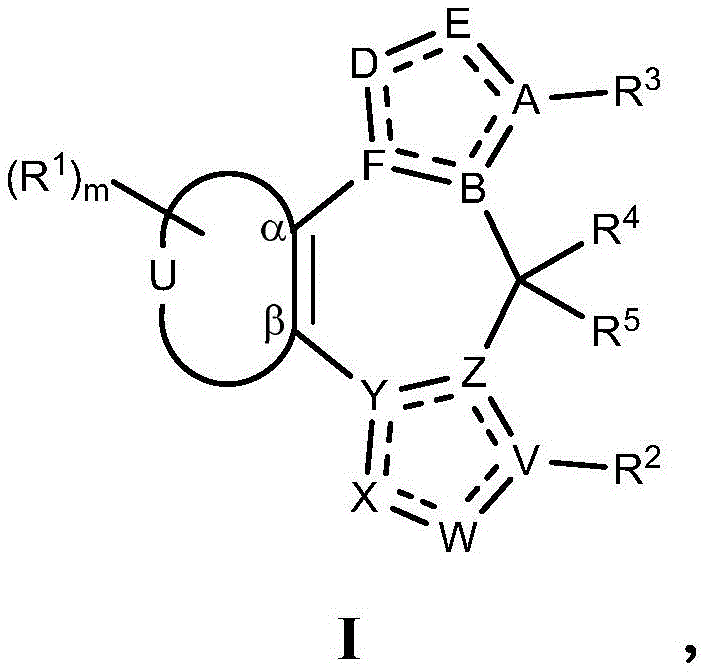
Wherein:
u and the two carbon atoms designated by α and β together form a 5 or 6 membered aromatic ring having 0-2 nitrogen atoms;
a is C, CR6Or N;
b and F are each independently selected from C, CR6And N, wherein B and F cannot both be N;
d is N, NR7、O、CR6Or C (R)6)2;
E is N, NR7、CR6Or C (R)6)2;
W is N, NR7、CR6Or C (R)6)2;
X is N, NR7、O、CR6Or C (R)6)2;
Y and Z are each independently selected from C, CR6And N, wherein Y and Z cannot both be N;
v is C or CR6,
Or when Z is C or CR6When V is C, CR6Or N;
wherein when the ring formed by X, Y, Z, V and W is Then R2is-OR8、-SR8、-(CH2)nOR8、-(CH2)nO(CH2)nR8、-(CH2)pR8And- (CH)2)nN(R”)R10(ii) a And wherein R2Independently substituted with 0-5R';
m and n are independently an integer selected from 0 to 4;
p is an integer selected from 2 to 4;
key with a key body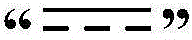 Each occurrence of (a) is a single or double bond;
R1、R2、R4and R5Each occurrence of (a) is independently selected from: halogen, -R, -OR, -NO2、-NCS、-CN、-CF3、-OCF3、-SiR3、-N(R)2、-SR、-SOR、-SO2R、-SO2N(R)2、-SO3R、-(CR2)1-3R、-(CR2)1-3-OR、-(CR2)0-3-C(O)NR(CR2)0-3R、-(CR2)0-3-C(O)NR(CR2)0-3OR、-C(O)R、-C(O)C(O)R、-C(O)CH2C(O)R、-C(S)R、-C(S)OR、-C(O)OR、-C(O)C(O)OR、-C(O)C(O)N(R)2、-OC(O)R、-C(O)N(R)2、-OC(O)N(R)2、-C(S)N(R)2、-(CR2)0-3NHC(O)R、-N(R)N(R)COR、-N(R)N(R)C(O)OR、-N(R)N(R)CON(R)2、-N(R)SO2R、-N(R)SO2N(R)2、-N(R)C(O)OR、-N(R)C(O)R、-N(R)C(S)R、-N(R)C(O)N(R)2、-N(R)C(S)N(R)2、-N(COR)COR、-N(OR)R、-C(=NH)N(R)2、-C(O)N(OR)R、-C(=NOR)R、-OP(O)(OR)2、-P(O)(R)2、-P(O)(OR)2and-P (O), (H), (OR);
R3absent or selected from:
halogen, -R, -OR, -NO2、-NCS、-CN、-CF3、-OCF3、-SiR3、-N(R)2、-SR、-SOR、-SO2R、-SO2N(R)2、-SO3R、-(CR2)1-3R、-(CR2)1-3-OR、-(CR2)0-3-C(O)NR(CR2)0-3R、-(CR2)0-3-C(O)NR(CR2)0- 3OR、-C(O)R、-C(O)C(O)R、-C(O)CH2C(O)R、-C(S)R、-C(S)OR、-C(O)OR、-C(O)C(O)OR、-C(O)C(O)N(R)2、-OC(O)R、-C(O)N(R)2、-OC(O)N(R)2、-C(S)N(R)2、-(CR2)0-3NHC(O)R、-N(R)N(R)COR、-N(R)N(R)C(O)OR、-N(R)N(R)CON(R)2、-N(R)SO2R、-N(R)SO2N(R)2、-N(R)C(O)OR、-N(R)C(O)R、-N(R)C(S)R、-N(R)C(O)N(R)2、-N(R)C(S)N(R)2、-N(COR)COR、-N(OR)R、-C(=NH)N(R)2、-C(O)N(OR)R、-C(=NOR)R、-OP(O)(OR)2、-P(O)(R)2、-P(O)(OR)2and-P (O), (H), (OR);
each R6Independently is-H or- (C1-C6) alkyl;
each R7Independently is-H or- (C1-C6) alkyl;
each R8Independently is- (C1-C6) alkyl, - (C3-C10) -cycloalkyl, (C6-C10) -aryl or 5-10 membered heteroaryl, wherein R8Independently for each occurrence of (a) is substituted with 0-5R';
each R10Independently is- (C3-C10) -cycloalkyl-, 3-10 membered heterocyclyl-, (C6-C10) -aryl, or 5-10 membered heteroaryl, wherein R is 10Independently for each occurrence of (a) is substituted with 0-5R';
each R is independently selected from:
H-,
(C1-C12) -aliphatic radical-,
(C3-C10) -cycloalkyl-,
(C3-C10) -cycloalkenyl-,
[ (C3-C10) -cycloalkyl ] - (C1-C12) -aliphatic-,
[ (C3-C10) -cycloalkenyl ] - (C1-C12) -aliphatic-,
[ (C3-C10) -cycloalkyl ] -O- (C1-C12) -aliphatic-,
[ (C3-C10) -cycloalkenyl ] -O- (C1-C12) -aliphatic-,
(C6-C10) -aryl-,
(C6-C10) -aryl- (C1-C12) aliphatic-,
(C6-C10) -aryl-O- (C1-C12) aliphatic-,
(C6-C10) -aryl-N (R') - (C1-C12) aliphatic-,
3-to 10-membered heterocyclyl-,
(3-10 membered heterocyclyl) - (C1-C12) aliphatic-,
(3-10 membered heterocyclyl) -O- (C1-C12) aliphatic-,
(3-10 membered heterocyclyl) -N (R') - (C1-C12) aliphatic-,
a 5-to 10-membered heteroaryl-,
(5-10 membered heteroaryl) - (C1-C12) -aliphatic-,
(5-10 membered heteroaryl) -O- (C1-C12) -aliphatic-; and
(5-10 membered heteroaryl) -N (R ") - (C1-C12) -aliphatic-;
wherein said heterocyclyl has 1-4 substituents independently selected from N, NH, O, S, SO and SO2And said heteroaryl has 1-4 heteroatoms independently selected from N, NHHeteroatoms of O and S;
wherein each occurrence of R is independently substituted with 0-5R';
or when two R groups are bound to the same atom, the two R groups may be taken together with the atom to which they are bound to form a compound having 0-4 substituents independently selected from N, NH, O, S, SO, and SO 2A 3-10 membered aromatic or non-aromatic ring of a heteroatom of (a), wherein said ring is optionally substituted with 0-5R' and wherein said ring is optionally fused with (C6-C10) aryl, 5-10 membered heteroaryl, (C3-C10) cycloalkyl or 3-10 membered heterocyclyl;
wherein each occurrence of R' is independently selected from the group consisting of halogen, -R ", -OR", oxo, -CH2OR”、-CH2NR”2、-C(O)N(R”)2、-C(O)OR”、-NO2、-NCS、-CN、-CF3、-OCF3and-N (R')2;
Wherein each occurrence of R' is independently selected from the group consisting of H, - (C1-C6) -alkyl, - (C1-C6) -aliphatic, (C3-C6) -cycloalkyl, 3-6 membered heterocyclyl, 5-10 membered heteroaryl-, (C6-C10) -aryl-, (5-10 membered heteroaryl) - (C1-C6) -alkyl-, (C6-C10) -aryl- (C1-C6) -alkyl-, (5-10 membered heteroaryl) -O- (C1-C6) -alkyl-, and (C6-C10) -aryl-O- (C1-C6) -alkyl-, wherein each occurrence of R' is independently substituted with 0-3 substituents selected from the group consisting of: halogen, -Ro、-ORoOxo, -CH2ORo、-CH2NRo 2、-C(O)N(Ro)2、-C(O)ORo、-NO2、-NCS、-CN、-CF3、-OCF3and-N (R)o)2Wherein R isoEach occurrence of (a) is independently selected from: - (C1-C6) -aliphatic, (C3-C6) -cycloalkyl, 3-6 membered heterocyclyl, 5-10 membered heteroaryl-and (C6-C10) -aryl-.
Certain embodiments of the present application provide a compound of formula I, or a pharmaceutically acceptable salt, hydrate, solvate, polymorph, isomer, or combination thereof:
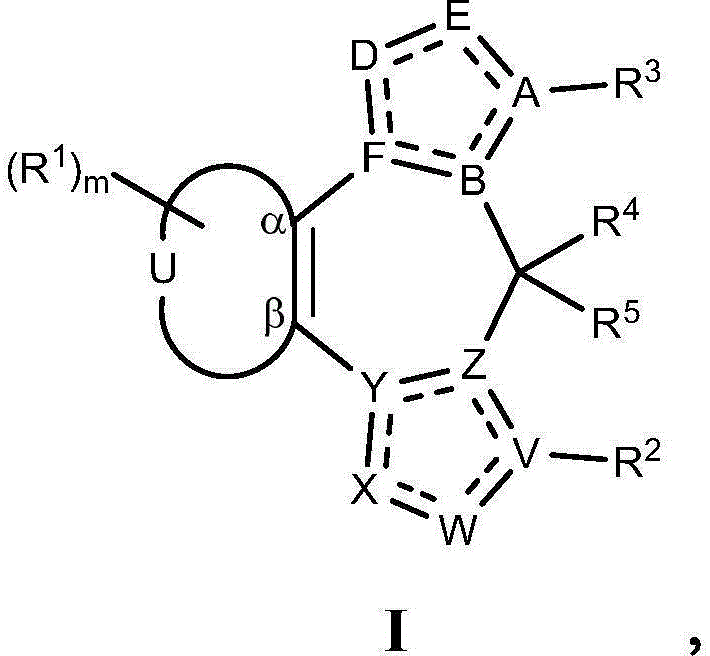
wherein:
u and the two carbon atoms designated by α and β together form a 5 or 6 membered aromatic ring having 0-2 nitrogen atoms;
A is C, CR6Or N;
b and F are each independently selected from C, CR6And N, wherein B and F cannot both be N;
d is N, NR7、O、CR6Or C (R)6)2;
E is N, NR7、CR6Or C (R)6)2;
W is N, NR7、CR6Or C (R)6)2;
X is N, NR7、O、CR6Or C (R)6)2;
Y and Z are each independently selected from C, CR6And N, wherein Y and Z cannot both be N;
v is C or CR6,
Or when Z is C or CR6When V is C, CR6Or N;
wherein when the ring formed by X, Y, Z, V and W is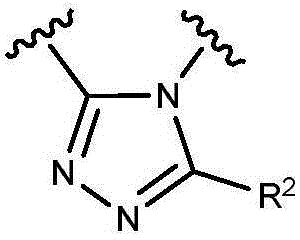 Then R2is-OR8、-SR8、-(CH2)nOR8、-(CH2)nO(CH2)nR8、-(CH2)pR8And- (CH)2)nN(R”)R10(ii) a And wherein R2Independently substituted with 0-5R';
m and n are independently an integer selected from 0 to 4;
p is an integer selected from 2 to 4;
key with a key body Each occurrence of (a) is a single or double bond;
R1、R2、R4and R5Each occurrence of (a) is independently selected from: halogen, -R, -OR, -NO2、-NCS、-CN、-CF3、-OCF3、-SiR3、-N(R)2、-SR、-SOR、-SO2R、-SO2N(R)2、-SO3R、-(CR2)1-3R、-(CR2)1-3-OR、-(CR2)0-3-C(O)NR(CR2)0-3R、-(CR2)0-3-C(O)NR(CR2)0-3OR、-C(O)R、-C(O)C(O)R、-C(O)CH2C(O)R、-C(S)R、-C(S)OR、-C(O)OR、-C(O)C(O)OR、-C(O)C(O)N(R)2、-OC(O)R、-C(O)N(R)2、-OC(O)N(R)2、-C(S)N(R)2、-(CR2)0-3NHC(O)R、-N(R)N(R)COR、-N(R)N(R)C(O)OR、-N(R)N(R)CON(R)2、-N(R)SO2R、-N(R)SO2N(R)2、-N(R)C(O)OR、-N(R)C(O)R、-N(R)C(S)R、-N(R)C(O)N(R)2、-N(R)C(S)N(R)2、-N(COR)COR、-N(OR)R、-C(=NH)N(R)2、-C(O)N(OR)R、-C(=NOR)R、-OP(O)(OR)2、-P(O)(R)2、-P(O)(OR)2and-P (O), (H), (OR);
R3absent or selected from:
halogen, -R, -OR, -NO2、-NCS、-CN、-CF3、-OCF3、-SiR3、-N(R)2、-SR、-SOR、-SO2R、-SO2N(R)2、-SO3R、-(CR2)1-3R、-(CR2)1-3-OR、-(CR2)0-3-C(O)NR(CR2)0-3R、-(CR2)0-3-C(O)NR(CR2)0- 3OR、-C(O)R、-C(O)C(O)R、-C(O)CH2C(O)R、-C(S)R、-C(S)OR、-C(O)OR、-C(O)C(O)OR、-C(O)C(O)N(R)2、-OC(O)R、-C(O)N(R)2、-OC(O)N(R)2、-C(S)N(R)2、-(CR2)0-3NHC(O)R、-N(R)N(R)COR、-N(R)N(R)C(O)OR、-N(R)N(R)CON(R)2、-N(R)SO2R、-N(R)SO2N(R)2、-N(R)C(O)OR、-N(R)C(O)R、-N(R)C(S)R、-N(R)C(O)N(R)2、-N(R)C(S)N(R)2、-N(COR)COR、-N(OR)R、-C(=NH)N(R)2、-C(O)N(OR)R、-C(=NOR)R、-OP(O)(OR)2、-P(O)(R)2、-P(O)(OR)2and-P (O), (H), (OR);
each R6Independently is-H or- (C1-C6) alkyl;
each R7Independently is-H or- (C1-C6) alkyl;
each R8Independently is- (C1-C6) alkyl, - (C3-C10) -cycloalkyl, (C6-C10) -aryl or 5-10 membered heteroaryl, wherein R8Independently for each occurrence of (a) is substituted with 0-5R';
each R10Independently is- (C3-C10) -cycloalkyl-, 3-10 membered heterocyclyl-, (C6-C10) -aryl, or 5-10 membered heteroaryl, wherein R is10Independently for each occurrence of (a) is substituted with 0-5R';
Each R is independently selected from:
H-,
(C1-C12) -aliphatic radical-,
(C3-C10) -cycloalkyl-,
(C3-C10) -cycloalkenyl-,
[ (C3-C10) -cycloalkyl ] - (C1-C12) -aliphatic-,
[ (C3-C10) -cycloalkenyl ] - (C1-C12) -aliphatic-,
[ (C3-C10) -cycloalkyl ] -O- (C1-C12) -aliphatic-,
[ (C3-C10) -cycloalkenyl ] -O- (C1-C12) -aliphatic-,
(C6-C10) -aryl-,
(C6-C10) -aryl- (C1-C12) aliphatic-,
(C6-C10) -aryl-O- (C1-C12) aliphatic-,
(C6-C10) -aryl-N (R') - (C1-C12) aliphatic-,
3-to 10-membered heterocyclyl-,
(3-10 membered heterocyclyl) - (C1-C12) aliphatic-,
(3-10 membered heterocyclyl) -O- (C1-C12) aliphatic-,
(3-10 membered heterocyclyl) -N (R') - (C1-C12) aliphatic-,
a 5-to 10-membered heteroaryl-,
(5-10 membered heteroaryl) - (C1-C12) -aliphatic-,
(5-10 membered heteroaryl) -O- (C1-C12) -aliphatic-; and
(5-10 membered heteroaryl) -N (R ") - (C1-C12) -aliphatic-;
wherein said heterocyclyl has 1-4 substituents independently selected from N, NH, O, S, SO and SO2And said heteroaryl has 1-4 heteroatoms independently selected from N, NH, O, and S;
wherein each occurrence of R is independently substituted with 0-5R';
or when two R groups are bound to the same atom, the two R groups may be taken together with the atom to which they are bound to form a compound having 0-4 substituents independently selected from N, NH, O, S, SO, and SO 2A 3-10 membered aromatic or non-aromatic ring of a heteroatom of (a), wherein said ring is optionally substituted with 0-5R' and wherein said ring is optionally fused with (C6-C10) aryl, 5-10 membered heteroaryl, (C3-C10) cycloalkyl or 3-10 membered heterocyclyl;
wherein each occurrence of R' is independently selected from the group consisting of halogen, -R ", -OR", oxo, -CH2OR”、-CH2NR”2、-C(O)N(R”)2、-C(O)OR”、-NO2、-NCS、-CN、-CF3、-OCF3and-N (R')2;
Wherein each occurrence of R' is independently selected from the group consisting of H, - (C1-C6) -alkyl, (C3-C6) -cycloalkyl, 3-6 membered heterocyclyl, 5-10 membered heteroaryl-, (C6-C10) -aryl-, (5-10 membered heteroaryl) - (C1-C6) -alkyl-, (C6-C10) -aryl- (C1-C6) -alkyl-, (5-10 membered heteroaryl) -O- (C1-C6) -alkyl-and (C6-C10) -aryl-O- (C1-C6) -alkyl-.
Certain embodiments of the present application provide a compound of formula I, or a pharmaceutically acceptable salt, hydrate, solvate, polymorph, isomer, or combination thereof:
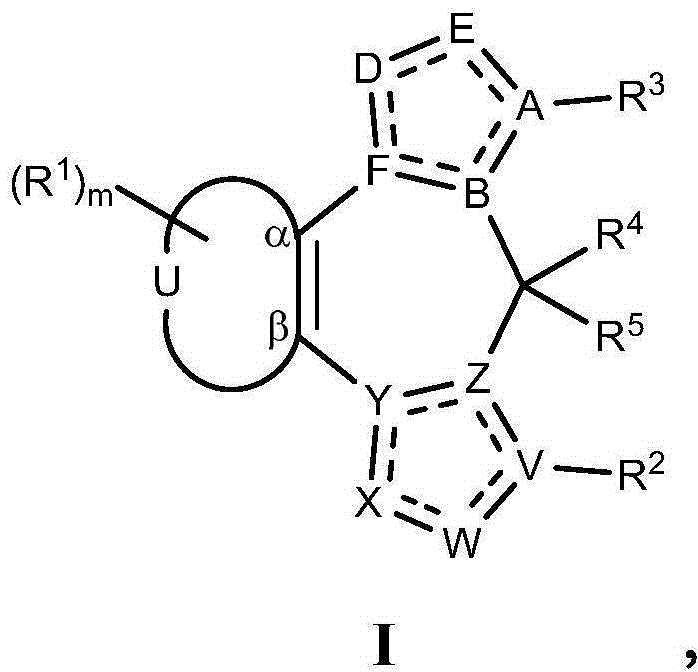
wherein:
u and the two carbon atoms designated by α and β together form a 5 or 6 membered aromatic ring having 0-2 nitrogen atoms;
a is C, CR6Or N;
b and F are each independently selected from C, CR6And N, wherein B and F cannot both be N;
d is N, NR7、O、CR6Or C (R)6)2;
E is N, NR7、CR6Or C (R)6)2;
W is N, NR7、CR6Or C (R)6)2;
X is N, NR7、O、CR6Or C (R)6)2;
Y and Z are each independently selected from C, CR 6And N, wherein Y and Z cannot both be N;
v is C or CR6,
Or when Z is C or CR6When V is C, CR6Or N;
wherein when the ring formed by X, Y, Z, V and W is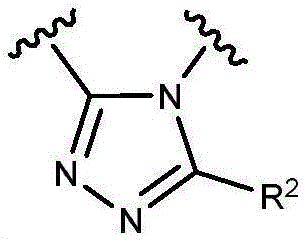 Then R2is-OR8、-SR8Or- (CH)2)nOR8;
m and n are each independently an integer selected from 0 to 4;
key with a key body Each occurrence of (a) is a single or double bond;
R1、R2、R4and R5Each occurrence of (a) is independently selected from: halogen, -R, -OR, -NO2、-NCS、-CN、-CF3、-OCF3、-SiR3、-N(R)2、-SR、-SOR、-SO2R、-SO2N(R)2、-SO3R、-(CR2)1-3R、-(CR2)1-3-OR、-(CR2)0-3-C(O)NR(CR2)0-3R、-(CR2)0-3-C(O)NR(CR2)0-3OR、-C(O)R、-C(O)C(O)R、-C(O)CH2C(O)R、-C(S)R、-C(S)OR、-C(O)OR、-C(O)C(O)OR、-C(O)C(O)N(R)2、-OC(O)R、-C(O)N(R)2、-OC(O)N(R)2、-C(S)N(R)2、-(CR2)0-3NHC(O)R、-N(R)N(R)COR、-N(R)N(R)C(O)OR、-N(R)N(R)CON(R)2、-N(R)SO2R、-N(R)SO2N(R)2、-N(R)C(O)OR、-N(R)C(O)R、-N(R)C(S)R、-N(R)C(O)N(R)2、-N(R)C(S)N(R)2、-N(COR)COR、-N(OR)R、-C(=NH)N(R)2、-C(O)N(OR)R、-C(=NOR)R、-OP(O)(OR)2、-P(O)(R)2、-P(O)(OR)2and-P (O), (H), (OR);
R3absent or selected from:
halogen, -R, -OR, -NO2、-NCS、-CN、-CF3、-OCF3、-SiR3、-N(R)2、-SR、-SOR、-SO2R、-SO2N(R)2、-SO3R、-(CR2)1-3R、-(CR2)1-3-OR、-(CR2)0-3-C(O)NR(CR2)0-3R、-(CR2)0-3-C(O)NR(CR2)0- 3OR、-C(O)R、-C(O)C(O)R、-C(O)CH2C(O)R、-C(S)R、-C(S)OR、-C(O)OR、-C(O)C(O)OR、-C(O)C(O)N(R)2、-OC(O)R、-C(O)N(R)2、-OC(O)N(R)2、-C(S)N(R)2、-(CR2)0-3NHC(O)R、-N(R)N(R)COR、-N(R)N(R)C(O)OR、-N(R)N(R)CON(R)2、-N(R)SO2R、-N(R)SO2N(R)2、-N(R)C(O)OR、-N(R)C(O)R、-N(R)C(S)R、-N(R)C(O)N(R)2、-N(R)C(S)N(R)2、-N(COR)COR、-N(OR)R、-C(=NH)N(R)2、-C(O)N(OR)R、-C(=NOR)R、-OP(O)(OR)2、-P(O)(R)2、-P(O)(OR)2and-P (O), (H), (OR);
each R6Independently is-H or- (C1-C6) alkyl;
each R7Independently is-H or- (C1-C6) alkyl;
each R8Independently is- (C1-C6) alkyl, - (C3-C10) -cycloalkyl, - (C6-C10) -aryl or 5-10 membered heteroaryl, wherein R8Independently for each occurrence of (a) is substituted with 0-5R';
each R is independently selected from:
H-,
(C1-C12) -aliphatic radical-,
(C3-C10) -cycloalkyl-,
(C3-C10) -cycloalkenyl-,
[ (C3-C10) -cycloalkyl ] - (C1-C12) -aliphatic-,
[ (C3-C10) -cycloalkenyl ] - (C1-C12) -aliphatic-,
[ (C3-C10) -cycloalkyl ] -O- (C1-C12) -aliphatic-,
[ (C3-C10) -cycloalkenyl ] -O- (C1-C12) -aliphatic-,
(C6-C10) -aryl-,
(C6-C10) -aryl- (C1-C12) aliphatic-,
(C6-C10) -aryl-O- (C1-C12) aliphatic-,
3-to 10-membered heterocyclyl-,
(3-10 membered heterocyclyl) - (C1-C12) aliphatic-,
(3-10 membered heterocyclyl) -O- (C1-C12) aliphatic-,
a 5-to 10-membered heteroaryl-,
(5-10 membered heteroaryl) - (C1-C12) -aliphatic-and
(5-10 membered heteroaryl) -O- (C1-C12) -aliphatic-;
wherein said heterocyclyl has 1-4 substituents independently selected from N, NH, O, S, SO and SO2And said heteroaryl has 1-4 heteroatoms independently selected from N, NH, O, and S;
wherein each occurrence of R is independently substituted with 0-5R';
or when two R groups are bound to the same atom, the two R groups may be taken together with the atom to which they are bound to form a compound having 0-4 substituents independently selected from N, NH, O, S, SO, and SO23-to 10-membered aromatic or non-aromatic of the hetero atom(s) ofAn aromatic ring, wherein the ring is optionally substituted with 0-5R', and wherein the ring is optionally fused with (C6-C10) aryl, 5-10 membered heteroaryl, (C3-C10) cycloalkyl, or 3-10 membered heterocyclyl;
wherein each occurrence of R' is independently selected from the group consisting of halogen, -R ", -OR", oxo, -CH2OR”、-CH2NR”2、-C(O)N(R”)2、-C(O)OR”、-NO2、-NCS、-CN、-CF3、-OCF3and-N (R')2;
Wherein each occurrence of R' is independently selected from the group consisting of H, - (C1-C6) -alkyl, (C3-C6) -cycloalkyl, 3-6 membered heterocyclyl, 5-10 membered heteroaryl-, (C6-C10) -aryl-, (5-10 membered heteroaryl) - (C1-C6) -alkyl-, (C6-C10) -aryl- (C1-C6) -alkyl-, (5-10 membered heteroaryl) -O- (C1-C6) -alkyl-and (C6-C10) -aryl-O- (C1-C6) -alkyl-.
In another aspect, the present invention provides a compound of formula II, or a pharmaceutically acceptable salt, hydrate, solvate, polymorph, isomer, or combination thereof:

wherein m and R1、R2、R3、R4、R5And R6As defined in formula I.
In another aspect, the present invention provides a compound of formula III, or a pharmaceutically acceptable salt, hydrate, solvate, polymorph, isomer, or combination thereof:
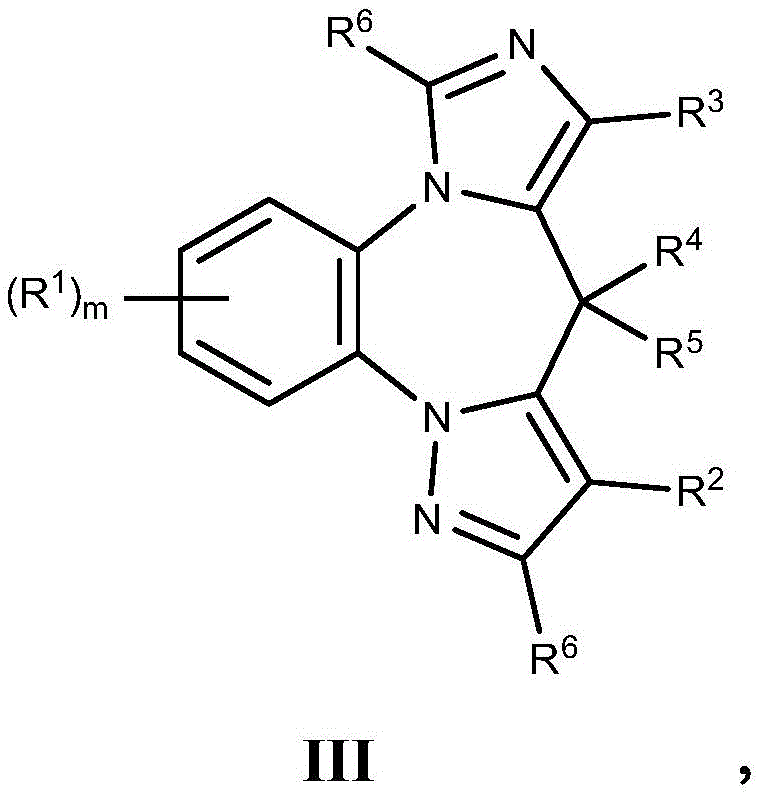
wherein m and R1、R2、R3、R4、R5And R6As defined in formula I.
In another aspect, the present invention provides a compound of formula IV, or a pharmaceutically acceptable salt, hydrate, solvate, polymorph, isomer, or combination thereof:

wherein R is2is-OR8、-SR8Or- (CH)2)nOR8Wherein R is2Independently by 0-5R', and wherein m, n, R1、R3、R4、R5、R6And R8As defined in formula I.
In another aspect, the present invention provides a compound of formula IV, or a pharmaceutically acceptable salt, hydrate, solvate, polymorph, isomer, or combination thereof:
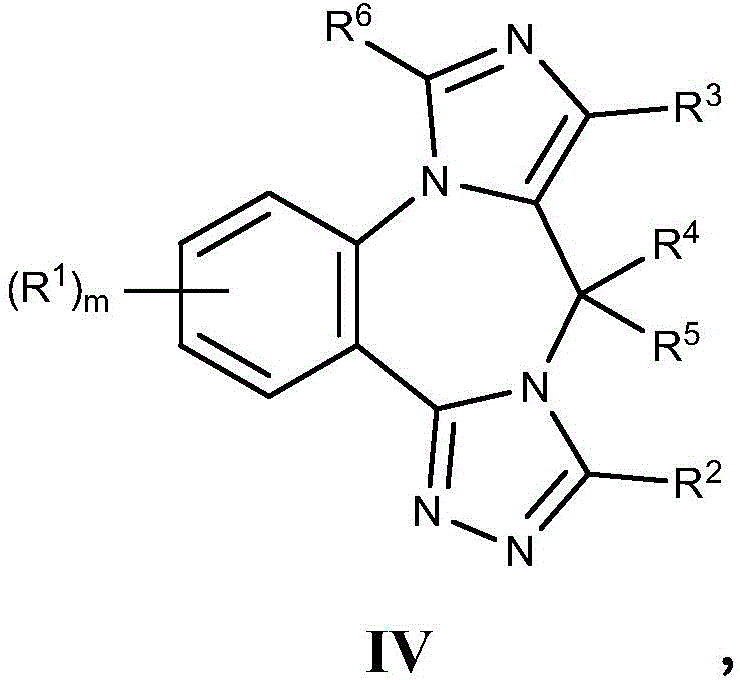
wherein R is2Is- (CH)2)nO(CH2)nR8、-(CH2)pR8Or- (CH)2)nN(R”)R10Wherein R is2Independently by 0-5R', and wherein m, n, p, R1、R3、R4、R5、R6、R8、R10And R "is as defined herein.
The invention also provides pharmaceutical compositions comprising a compound of formula I, II, III or IV, or a pharmaceutically acceptable salt, hydrate, solvate, polymorph, isomer, or combination thereof.
In certain embodiments, the compound of formula I is GABAAAlpha 5 receptor positive allosteric modulators. In certain embodiments, the compound of formula II is GABAAAlpha 5 receptor positive allosteric modulators. In certain embodiments, the compound of formula III is GABAAAlpha 5 receptor positive allosteric modulators. In certain embodiments, the compound of formula IV is GABAAAlpha 5 receptor positive allosteric modulators. Compounds of formula I, II, III or IV may be used to treat the conditions described hereinSuch as by acting as GABAAActivity of α 5 receptor positive allosteric modulators.
In another aspect of the invention, there is provided a method of treating cognitive impairment associated with a CNS disorder in a subject in need of such treatment or at risk of cognitive impairment associated with the CNS disorder, the method comprising the steps of: administering to the subject a therapeutically effective amount of a compound of the present invention, or a pharmaceutically acceptable salt, hydrate, solvate, polymorph, isomer or combination thereof. In certain embodiments, the CNS disorder with cognitive impairment comprises, but is not limited to, age-related cognitive impairment, Mild Cognitive Impairment (MCI), amnestic MCI (acmi), age-related memory impairment (AAMI), age-related cognitive decline (ARCD), dementia, Alzheimer's Disease (AD), prodromal AD, Post Traumatic Stress Disorder (PTSD), schizophrenia, bipolar disorder, Amyotrophic Lateral Sclerosis (ALS), cognitive impairment associated with cancer therapy, mental retardation, Parkinson's Disease (PD), autism spectrum disorders, fragile X chromosome disorder, reiter's syndrome, compulsive behavior, and substance addiction. In another aspect of the invention, there is provided a method of preserving or improving cognitive function in a subject in need thereof, the method comprising the steps of: administering to the subject a therapeutically effective amount of a compound of the present invention, or a pharmaceutically acceptable salt, hydrate, solvate, polymorph, isomer or combination thereof. In certain embodiments of the invention, a compound of the invention, or a pharmaceutically acceptable salt, hydrate, solvate, polymorph, isomer, or combination thereof, is administered every 12 or 24 hours.
In certain embodiments, the compounds and compositions of the present invention are for use as medicaments. In certain embodiments, the compounds and compositions of the present invention are used to treat cognitive impairment associated with a CNS disorder in a subject in need of treatment or at risk of cognitive impairment associated with the CNS disorder. In certain embodiments, the CNS disorder with cognitive impairment comprises, but is not limited to, age-related cognitive impairment, Mild Cognitive Impairment (MCI), amnestic MCI (acmi), age-related memory impairment (AAMI), age-related cognitive decline (ARCD), dementia, Alzheimer's Disease (AD), prodromal AD, Post Traumatic Stress Disorder (PTSD), schizophrenia, bipolar disorder, Amyotrophic Lateral Sclerosis (ALS), cognitive impairment associated with cancer therapy, mental retardation, Parkinson's Disease (PD), autism spectrum disorders, fragile X chromosome disorder, reiter's syndrome, compulsive behavior, and substance addiction.
In certain embodiments, the present application provides the use of a compound or composition described herein in the manufacture of a medicament for treating cognitive impairment associated with a CNS disorder in a subject in need of such treatment or at risk of cognitive impairment associated with the CNS disorder. In certain embodiments, the CNS disorder with cognitive impairment comprises, but is not limited to, age-related cognitive impairment, Mild Cognitive Impairment (MCI), amnestic MCI (acmi), age-related memory impairment (AAMI), age-related cognitive decline (ARCD), dementia, Alzheimer's Disease (AD), prodromal AD, Post Traumatic Stress Disorder (PTSD), schizophrenia, bipolar disorder, Amyotrophic Lateral Sclerosis (ALS), cognitive impairment associated with cancer therapy, mental retardation, Parkinson's Disease (PD), autism spectrum disorders, fragile X chromosome disorder, reiter's syndrome, compulsive behavior, and substance addiction.
Detailed description of the drawings
FIG. 1 is a graph depicting the effect of administering methyl 3, 5-diphenylpyridazine-4-carboxylate to 10 aged-impaired (AI) rats on spatial memory retention in an 8-arm Radial Arm Maze (RAM) assay. Black bars represent rats treated with vehicle alone; open bars represent rats treated with different doses of methyl 3, 5-diphenylpyridazine-4-carboxylate; the hatched bars indicate rats treated with a combination of TB21007 and methyl 3, 5-diphenylpyridazine-4-carboxylate.
FIG. 2 is a graph showing the effect of methyl 3, 5-diphenylpyridazine-4-carboxylate (administered intravenously) on the binding of Ro154513 in the hippocampus and cerebellum. Methyl 3, 5-diphenylpyridazine-4-carboxylate blocks the binding of Ro154513 in the hippocampus, but does not affect the binding of Ro15413 in the cerebellum.
FIG. 3 is a drawing showing intravenous administration of 3, 5-diphenylDose-dependent GABA of pyridazine-4-carboxylic acid methyl esterAGraph of alpha 5 receptor occupancy (occupancy) according to the hippocampus (hyper GABA) of RO 15-4513ARegion of alpha 5 receptor density) exposure to the cerebellum of RO 15-4513 (with low GABA)ARegion of alpha 5 receptor density) or by using GABAAReceptor occupancy was determined by determining complete occupancy of the α 5 selective compound L-655,708(10mg/kg, i.v.).
FIG. 4 is a graph showing the dependence of the exposure occupancy rate of methyl 3, 5-diphenylpyridazine-4-carboxylate in hippocampus. GABA in the case of exposure of methyl 3, 5-diphenylpyridazine-4-carboxylate with behavioral activity in aged, injured ratsAThe alpha 5 receptor occupancy was about 32%.
FIG. 5 is a graph depicting 3-methoxy-7-methyl-9H-benzo [ f ] in an 8-arm Radial Arm Maze (RAM) assay]Imidazo [1,5-a ]][1,2,4]Triazolo [4,3-d][1,4]Diaza derivatives Graph of the effect of 10-ethyl formate on spatial memory retention in 10 aged-impaired (AI) rats. FIG. 5 shows 3-methoxy-7-methyl-9H-benzo [ f]Imidazo [1,5-a ]][1,2,4]Triazolo [4,3-d][1,4]Diaza derivatives
 -Effect of 10-Ethyl formate on spatial memory Retention in RAM assay in 10 aged-impaired (AI) rats, wherein vehicle control was tested 3 times and different doses of 3-methoxy-7-methyl-9H-benzo [ f]Imidazo [1,5-a ]][1,2,4]Triazolo [4,3-d][1,4]Diaza derivatives
 10-
10-Ethyl formate test 2 times; in fig. 5, black bars represent rats treated with vehicle alone, open bars represent 3-methoxy-7-methyl-9H-benzo [ f ] with different doses]Imidazo [1,5-a ]][1,2,4]Triazolo [4,3-d][1,4]Diaza derivatives -10-ethyl formate treated rats.
FIG. 6 shows 3-methoxy-7-methyl-9H-benzo [ f ]Imidazo [1,5-a ]][1,2,4]Triazolo [4,3-d][1,4]Diaza derivatives Graph of the effect of ethyl 10-carboxylate (administered intravenously) on the binding of Ro154513 in hippocampus and cerebellum. 3-methoxy-7-methyl-9H-benzo [ f]Imidazo [1,5-a ]][1,2,4]Triazolo [4,3-d][1,4]Diaza derivatives
 Ethyl-10-formate blocks binding of Ro154513 in hippocampus, but does not affect binding of Ro15413 in cerebellum.
FIG. 7 is a drawing showing 3-methoxy-7-methyl-9H-benzo [ f ] administered intravenously]Imidazo [1,5-a ]][1,2,4]Triazolo [4,3-d][1,4]Diaza derivatives -dose-dependent GABA of ethyl 10-carboxylateAPlot of
 alpha 5 receptor occupancy, as for hippocampus (hyper GABA) according to RO 15-4513ARegion of alpha 5 receptor density) exposure to the cerebellum of RO 15-4513 (with low GABA)AArea of α 5 receptor density) was calculated to determine the full occupancy.
Figures 8(a) - (C) are graphs showing the effect of 6,6 dimethyl-3- (3-hydroxypropyl) thio-1- (thiazol-2-yl) -6, 7-dihydro-2-benzothiophen-4 (5H) -one in aged, injured rats compared to the vehicle Dimethylsulfoxide (DMSO) using the Morris (Morris) water maze behavioral task. Figure 8(a) shows escape latencies during training (i.e. the average time in seconds it takes for rats to find a hidden platform in a pool) for rats receiving 6,6 dimethyl-3- (3-hydroxypropyl) thio-1- (thiazol-2-yl) -6, 7-dihydro-2-benzothiophen-4 (5H) -one and rats receiving vehicle DMSO; figure 8(B) shows the amount of time spent in the target annular region (annulus) and the relative annular region by rats receiving 6,6 dimethyl-3- (3-hydroxypropyl) thio-1- (thiazol-2-yl) -6, 7-dihydro-2-benzothiophen-4 (5H) -one and rats receiving vehicle DMSO; figure 8(C) shows the number of cross-passes in the target and opposite annular regions for rats receiving 6,6 dimethyl-3- (3-hydroxypropyl) thio-1- (thiazol-2-yl) -6, 7-dihydro-2-benzothiophen-4 (5H) -one and rats receiving vehicle DMSO.
Detailed Description
Definition of
Unless defined otherwise herein, scientific and technical terms used in the present application shall have the meanings that are commonly understood by those of skill in the art. In general, the techniques and nomenclature used in connection with and in chemistry, cell and tissue culture, molecular biology, cell and cancer biology, neurobiology, neurochemistry, virology, immunology, microbiology, pharmacology, genetics and protein and nucleic acid chemistry described herein are those well known and commonly used in the art.
Unless otherwise indicated, the methods and techniques of the present invention are generally performed according to conventional methods well known in the art and as described in various general and more specific references that are cited and discussed throughout the specification. See, e.g., "Principles of Neural Science", McGraw-Hill Medical, New York, N.Y. (2000); motulsky, "Intuitive biostatics," Oxford University Press, Inc. (1995); lodish et al, "Molecular Cell Biology, 4 th edition," w.h.freeman & co., New York (2000); griffiths et al, "Introduction to Genetic Analysis, 7 th edition", w.h.freeman & co, n.y. (1999); gilbert et al, "development Biology, 6 th edition," Sinauer Associates, Inc., Sunderland, MA (2000).
Chemical terminology as used herein is used according to conventional practice in The art and is typical in "The McGraw-Hill Dictionary of Chemical Terms", Parker S., eds., McGraw-Hill, San Francisco, C.A. (1985).
All publications, patents and published patent applications referred to in this application are herein incorporated by reference in their entirety for all purposes. In case of conflict, the present specification, including definitions, will control.
Throughout this specification, the word "comprise", or variations such as "comprises" or "comprising", will be understood to imply the inclusion of a stated integer (or component) or group of integers (or components) but not the exclusion of any other integer (or component) or group of integers (or components).
The singular forms "a", "an" and "the" include plural referents unless the context clearly dictates otherwise.
The term "including" is used to mean "including, but not limited to". The terms "including" and "comprising, but not limited to," are used interchangeably.
The term "agent" is used herein to denote a chemical compound (such as an organic or inorganic compound (including, for example, the compounds of the invention), a mixture of chemical compounds), a biological macromolecule (such as a nucleic acid, an antibody (including parts thereof) and humanized, chimeric and human antibodies and monoclonal antibodies, a protein or parts thereof, e.g. peptides, lipids, carbohydrates) or an extract made from biological material such as bacteria, plants, fungi or animal (particularly mammalian) cells or tissues. The reagent includes, for example, a reagent known in terms of structure and a reagent unknown in terms of structure. GABA of such an agent containing α 5 AReceptor agonist activity may make them suitable as "therapeutic agents" in the methods and compositions of the invention.
"patient," "subject," or "individual" are used interchangeably and refer to a human or non-human animal. These terms include mammals, such as humans, primates, livestock animals (including cows, pigs, etc.), companion animals (e.g., canines, felines, etc.), and rodents (e.g., mice and rats).
"cognitive function" or "cognitive state" refers to any higher-level mental process or brain state involving learning and/or memory, respectively, including, but not limited to, attention, information gathering, information processing, working memory, short-term memory, long-term memory, compliant memory, retrograde memory, memory recovery, discriminatory learning, decision making, suppression response control, attention setting-shifting, delayed reinforcement learning, retrograde learning, transient integration of spontaneous behavior, expressing attention to certain environment and self-care, speed of treatment, reasoning and problem solving, and social cognition.
In humans, cognitive function can be measured, for example, but not limited to, by clinical global impression of change scale (CIBIC-plus scale); brief Mental State examination (the mini Mental State team) (MMSE); neuropsychiatric survey (the Neuropsychiatric Inventory) (NPI); clinical Dementia grade Scale (CDR); cambridge Neuropsychological Test Automated suite of tests (CANTAB); mulberry Clinical evaluation of aged medicine (the Sandoz Clinical Association-Geriatic) (SCAG), Buschke Selective recommendation Test (Buschke and Fuld, 1974); oral Paired relevance scores test (the Verbal Pair ordered Associates subtest); a Logical Memory subtest; visual Reproduction score test of the Revised Wechsler Memory Scale (the Wechsler Memory Scale-Revised) (WMS-R) (Wechsler, 1997); this Benton Visual Retention Test, or the explicit 3-alternative forced choice task (the explicit 3-alternative forced choice task) or the schizophrenia cognitive function suite Test consensus (MATRICS consensus). See Folstein et al, J Psychiatric Res 12:189-98, (1975); robbins et al, Dementia 5:266-81, (1994); rey, L' examen clinique en psychologie, (1964); kluger et al, J Geriatr Psychiatry neuron 12:168-79, (1999); marquis et al, 2002 and Masur et al, 1994. See also Buchanan, r.w., Keefe, r.s.e., Umbricht, d., Green, m.f., Laughren, t, and Marder, s.r. (2011), The FDA-NIMH-MATRICS guidelines for clinical trial design of cognitive-enhancing drivers: what do we knock 5years laterSchizophr. Bull.37, 1209-1217.
In animal model systems, cognitive function can be determined in various conventional ways known in the art, including using the Morris Water Maze (MWM), the Barnes annular maze, the elevated radial arm maze, the T-maze, or any other maze in which animals use spatial information. Cognitive function can be evaluated by inverse learning, extrametrical set shifting, conditional discrimination learning, and assessment of reward expectation. Other tests known in the art may also be used to evaluate cognitive function, such as new object recognition and scent recognition tasks.
Cognitive function may also be measured using imaging techniques such as Positron Emission Tomography (PET), functional magnetic resonance imaging (fMRI), Single Photon Emission Computed Tomography (SPECT), or any other imaging technique capable of measuring brain function. In animals, cognitive function can also be measured using electrophysiological techniques.
By "promoting" cognitive function is meant affecting impaired cognitive function such that it more closely resembles the function of a normal, unimpaired subject. Cognitive function may be promoted to any detectable degree, but in humans it is preferably promoted to an activity sufficient to allow the impaired subject to perform a daily normal life at a level of proficiency (level of proficiency) as close as possible to a normal unimpaired subject or an age-matched normal unimpaired subject.
In some cases, "promoting" cognitive function in a subject affected by age-related cognition means affecting impaired cognitive function such that it more closely resembles the function of an age-matched normal, unimpaired subject or the function of a young adult subject. The subject's cognitive function can be promoted to any detectable degree, but in humans it is preferably promoted to a level sufficient to allow the impaired subject to perform activities of daily normal life at a proficiency level as close as possible to that of a normal unimpaired subject or a young adult subject or an age-matched normal unimpaired subject.
By "preserving" cognitive function is meant affecting normal or impaired cognitive function such that it does not decline or does not fall below the level observed in the subject at the time of first presentation or diagnosis or delaying such decline.
"improving" cognitive function includes promoting cognitive function and/or preserving cognitive function in a subject.
By "cognitive impairment" is meant that cognitive function in a subject is not as strong as would be expected in a normal, non-impaired subject. In some cases, cognitive function is reduced by about 5%, about 10%, about 30%, or more, as compared to the cognitive function expected in a normal, non-impaired subject. In some cases, "cognitive impairment" in a subject affected by age-related cognitive impairment means that cognitive function in the subject is not as strong as that expected in an age-matched normal, unimpaired subject or a young adult subject (i.e., a subject with an average score for a given age in a cognitive assay).
By "age-related cognitive impairment" is meant cognitive impairment in an elderly subject in which their cognitive function is not as strong as would be expected in an age-matched normal subject or in a young adult subject. In some cases, cognitive function is reduced by about 5%, about 10%, about 30%, or more compared to that expected in an age-matched normal subject. In some cases, cognitive function is as expected in an age-matched normal subject, but is reduced by about 5%, about 10%, about 30%, about 50%, or more, compared to the cognitive function expected in a young adult subject. Age-related impaired cognitive function may be associated with Mild Cognitive Impairment (MCI), including amnestic and non-amnestic MCI, age-related memory impairment (AAMI) and age-related cognitive decline (ARCD).
"cognitive impairment" associated with or related to or in AD means that cognitive function in a subject is not as strong as would be expected in a subject not diagnosed with AD using conventional methods and criteria.
"mild cognitive impairment" or "MCI" refers to a condition characterized by memory impairment alone without the ability to accompany other cognitive abnormalities and relatively normal function. A set of criteria for clinical characterization of MCI specifies the following characteristics: (1) memory complaints (as reported by the patient, the informant, or the physician); (2) normal Activities of Daily Living (ADL); (3) normal overall cognitive function; (4) age memory abnormalities (defined as scores more than 1.5 standard deviations below the mean of the indicated age); and (5) absence of dementia indication (as defined according to DSM-IV guidelines). Petersen et al, Srch.Neurol.56:303-308 (1999); petersen, "Mild cognitive impact: "Oxford University Press, N.Y. (2003). Cognitive deficits in subjects with MCI may involve any cognitive regional or psychological process, including memory, language, relevance, attention, sensation, problem solving, executive function, and visuospatial skills. See, e.g., Winbald et al, J.Intern.Med.256: 240-; meguro, acta.Neurol.Taiwan.15:55-57,2008; ellison et al, CNS Spectr.13:66-72,2008, Petersen, Semin. neurol.27:22-31,2007. MCI is further subdivided into amnestic MCI (amci) and non-amnestic MCI, which are characterized by memory impairment (or lack thereof) in particular. MCI was defined as aMCI, provided that memory was found to be impaired by subject age and educational level. On the other hand, if the subject's memory is found to be intact by age and education, but other non-memory cognitive domains are impaired, such as language, executive function or visuospatial skills, MCI is defined as non-amnesic MCI. Both acmi and non-amnestic MCI can be further subdivided into single or multi-domain MCIs. aMCI-Single domain represents a condition known in which memory, but not other cognitive domains, is impaired. The aMCI-multidomain denotes a condition in which memory and at least one other cognitive domain are impaired. Non-amnestic MCIs are single domain or multi-domain depending on whether more than one non-memory cognitive domain is impaired. See, e.g., Peterson and Negash, CNS Spectr.13:45-53, 2008.
MCI diagnosis usually requires objective assessment of cognitive impairment, obtainable by using well-established neuropsychological tests, including brief mental state examination (MMSE), cambridge neuropsychological Test automated suite of tests (CANTAB), and individual tests such as the Rey auditory speech learning Test (AVLT), the revised weckersler memory scale logical memory score Test (WMS-R), and the university of New York (NYU) Paragraph memory Test (Paragraph Recall Test). See Folstein et al, J Psychiatric Res 12:189-98 (1975); robbins et al, Dementia 5:266-81 (1994); kluger et al, J Geriatric Psychiatry neuron 12:168-79 (1999).
"age-related memory impairment (AAMI)" means memory decline due to aging. A patient may be considered to have an AAMI if he or she is at least 50 years old and meets all of the following criteria: a) the patient noted a decline in memory performance; b) patients performed worse on memory criteria than young adults; c) all other obvious causes of memory decline other than normal aging were excluded (in other words, memory decline could not be attributed to other causes such as recent heart attack or head injury, depression, adverse reactions to medications, alzheimer's disease, etc.).
"age-related cognitive decline (ARCD)" means a decline in memory and cognitive ability as a normal result of aging in humans (e.g., Craik & Salthoise, 1992). This is true in virtually all mammalian species. Age-related memory impairment means objective memory decline relative to its younger age, but normal cognitive function relative to its peers (Crook et al, 1986). Age-consistent memory decline emphasizes these as lighter signs of deterioration with normal developmental changes (Crook, 1993; Larrabee, 1996), nonpathophysiologic (Smith et al, 1991), and rare progression to overt dementia (Youngjohn & Crook, 1993). DSM-IV (1994) has been organized into the diagnostic classification of ARCD.
By "dementia" is meant a condition characterized by severe cognitive deficits that interfere with activities of daily living. Subjects with dementia also exhibit other symptoms such as impaired judgment, personality changes, disorientation, confusion, behavioral changes, language difficulties, and motor deficits. There are different types of dementia, such as Alzheimer's Disease (AD), vascular dementia, dementia with Lewy bodies, and frontotemporal dementia.
Alzheimer's Disease (AD) is characterized by memory deficits in its early stages. Late symptoms include impaired judgment, disorientation, confusion, behavioral changes, difficulty speaking, and motor deficits. Histologically, AD is characterized by β -amyloid plaques and tangles of protein tau.
Vascular dementia is caused by stroke. Symptoms overlap those of AD, but are not much seen with memory impairment.
Dementia with lewy bodies is characterized by abnormal deposits of alpha-synuclein formed in neurons in the brain. Cognitive impairment may be similar to AD, including impairment of memory and judgment as well as behavioral changes.
Frontotemporal dementia is characterized by gliosis, neuronal loss, superficial spongiform degeneration in the frontal cortex and/or the frontotemporal lobe and picosomes. Symptoms include changes in character and behavior, which include a decline in social skills and language expression/comprehension.
"post-traumatic stress disorder (PTSD)" means an anxiety disorder characterized by an immediate or delayed response to a mutational event, characterized by a renewed experience of trauma, psychological paralysis or avoidance of trauma-related irritation and increased arousal. Secondary experiences include invasive memory as a reminder of the wound, reappearance of hallucinations, nightmares, and psychological or physiological distress. Such reactions produce anxiety and can have significant chronic and acute effects on the quality of life and physical and emotional well-being of patients. PTSD is also associated with impaired cognitive performance, and older individuals with PTSD have greater decline in cognitive performance relative to control patients.
"schizophrenia" means a chronic debilitating disorder characterized by a psychopathological spectrum comprising positive symptoms such as abnormal or distorted psychological features (e.g., hallucinations, delusions), negative symptoms characterized by reduced motivation and appropriate intentional action (e.g., loss of interest, affective flattening, avolition), and cognitive impairment. Although abnormalities in the brain are suggested as the full spectrum basis of psychopathology in schizophrenia, most currently available antipsychotics are ineffective in treating cognitive impairment in patients.
"bipolar disorder" or "BP" or "manic depression" or "manic depressive illness" means a chronic psychological/affective disorder that can be characterized by significant mood changes, including the depressive and intoxicating manic phases. BP can be diagnosed by those skilled in the art based on personal medical history, interview consultation, and physical examination. The term "mania" or "manic period" or other variations refers to a period in which an individual exhibits some or all of the following characteristics: rapid thinking, rapid language, elevated and excited levels of activity, and bloating self-esteem, intoxication, poor judgment, insomnia, inattention and aggression.
"amyotrophic lateral sclerosis," also known as ALS, refers to a progressive, lethal, neurodegenerative disease characterized by degeneration of motor neurons (nerve cells in the central nervous system that control voluntary muscle movement). ALS is also characterized by neuronal degeneration in the entorhinal cortex and hippocampus, memory deficits, and neuronal hyperexcitability in different brain regions such as the cortex.
"cognitive impairment associated with cancer therapy" means cognitive impairment that develops in a subject treated with cancer therapy, such as chemotherapy and radiation. The cytotoxicity and other adverse side effects of cancer therapy to the brain lead to cognitive impairment of such functions as memory, learning, and attention.
Parkinson's Disease (PD) is a neurological disorder characterized by reduced voluntary movement. Patients with disease have reduced locomotor activity and slower voluntary movements than normal individuals. The patient had a characteristic "mask" face, a scurrying tendency when walking, a curved body posture and generalized weakness of muscles. There is a typical "lead tube-like" rigid passive motion. Another important feature of the disease is the reduction in limb tremor and movement at rest.
As used herein, "autism" refers to an autistic spectrum disorder characterized by restricted and repetitive behaviors resulting in neurodevelopmental disorders with impaired social interaction and communication. "autistic spectrum disorder" refers to a group of developmental disabilities that includes: autism disorder; asperger syndrome; systemic developmental delay (PDD-NOS or atypical autism) not specifically described; rett syndrome; and childhood disorganization.
Mental retardation is a generalized disorder characterized by significantly impaired cognitive function and adaptive behavioral deficits. Mental retardation is generally defined as an Intellectual Quotient (IQ) score of less than 70. Among the many potential causes, mental retardation is a congenital cause. Neuronal communication dysfunction is also considered as one of the potential causes of mental retardation (myrche van Spronsen and Casper c. hoogenraw, curr. neurol. neurosci. rep.2010,10, 207-.
In certain instances, mental retardation includes, but is not limited to, down's syndrome, palatal-heart-face syndrome (velocadiof syndrome), fetal alcohol syndrome, fragile X syndrome, kleiniart syndrome, neurofibromatosis, congenital hypothyroidism, williams syndrome, Phenylketonuria (PKU), schroentri-ohltr's syndrome, par-widi syndrome, Phelan-McDermid syndrome, Mowat-Wilson syndrome, ciliated diseases (ciliopathy), Lowe syndrome, and sideridium-type X-linked mental disorders. Down syndrome is a disorder that includes a combination of birth defects, including some degree of mental retardation, characteristic facial features and general cardiac defects, increased infections, problems associated with vision and hearing, and other health problems. Fragile X syndrome is a common form of inherited mental retardation that occurs at a frequency of 1 in 4,000 males and 1 in 8,000 females. This syndrome is also characterized by developmental delays, hyperactivity, attention deficit disorder, and autistic behavior. There is no effective treatment for fragile X syndrome.
Obsessive-compulsive disorder ("OCD") is a mental disorder that is most commonly characterized by intrusive, repetitive, unwanted thoughts that lead to compulsions (obsessions) and mental activities in which an individual feels to drive the behavior (obsessions). Current epidemiological data indicate that OCD is the fourth most common mental disorder in the united states. Some studies have shown that the incidence of OCD is between 1% and 3%, however, the clinically accepted incidence of OCD is much lower, indicating that many individuals with this disorder may not be diagnosed. Patients with OCD are usually diagnosed by psychologists, psychiatrists or psychoanalysts according to Diagnostic and Statistical Manual of Mental Disorders (Diagnostic and Statistical Manual of Mental Disorders, revision 4 th edition (DSM-IV-TR) (2000) Diagnostic criteria, including obsessive behavior and obsessive characteristics.
Substance addiction (e.g., drug addiction, alcohol addiction) is a mental disorder. This addiction is not immediately triggered upon exposure to substance abuse. Rather, it involves a number of complex neurological changes that occur over different time courses ranging from hours to days to months (Kauer j.a.nat. rev. neurosci.2007, 8, 844-858). The route of addiction generally begins with the voluntary application of one or more controlled substances, such as narcotics, barbiturates, methamphetamine, alcohol, nicotine, and any of a variety of other such controlled substances. Over time, prolonged use of controlled substances, the ability to voluntarily avoid controlled substances is compromised by the prolonged effects on brain function and thus behavior. Thus, substance addiction is generally characterized by compulsive substance craving, seeking, and use, which persists even in the face of negative consequences. Craving may represent a potential neurobiological change in a patient whose problem must be solved in a meaningful way if recovery is required. In many cases, substance addiction is also characterized by withdrawal symptoms, which are life-threatening for some substances (e.g., alcohol, barbiturates), while in other cases can lead to significant morbidity (which can include nausea, vomiting, fever, dizziness, and profuse sweating), distress, and a reduced ability to recover. For example, alcoholism, also known as alcohol dependence, is one such substance addiction. Alcoholism is characterized primarily by 4 symptoms, including craving, loss of control, physical dependence, and tolerance. These symptoms may also be indicative of addiction to other controlled substances. The craving for alcohol and other controlled substances is generally as strong as the demand for food or water. Thus, despite serious household, health, and/or legal ramifications, alcohol may continue to be consumed.
By "treating" a condition or patient is meant taking action to obtain a beneficial or desired result, including a clinical result. Beneficial or desired clinical results include, but are not limited to, preventing or slowing the progression of a disease or disorder, or reducing, ameliorating or slowing the progression of one or more symptoms of cognitive impairment associated with a CNS disorder, such as age-related cognitive impairment, Mild Cognitive Impairment (MCI), amnestic MCI (acmi), age-related memory impairment (AAMI), age-related cognitive decline (ARCD), dementia, Alzheimer's Disease (AD), prodromal AD, Post Traumatic Stress Disorder (PTSD), schizophrenia, bipolar disorder, Amyotrophic Lateral Sclerosis (ALS), cognitive impairment associated with cancer therapy, mental retardation, Parkinson's Disease (PD), autism spectrum disorders, fragile X chromosome disorder, reiter's syndrome, compulsive behavior, and substance addiction. In certain embodiments, treating comprises preventing or slowing the progression of a CNS disorder (e.g., as described herein). In certain embodiments, treating comprises reducing, ameliorating, or slowing the progression of one or more symptoms associated with the CNS disorder. In certain embodiments, the symptom to be treated is cognitive impairment or cognitive deficit. Treating age-related cognitive impairment also includes slowing the conversion of age-related cognitive impairment (including, but not limited to MCI, ARCD, and AAMI) to dementia (e.g., AD).
By "treating cognitive impairment" is meant taking measures to improve cognitive function in a subject suffering from cognitive impairment, to improve the performance of the subject in one or more cognitive tests to any detectable degree, or to prevent further decline. Preferably, after treatment of cognitive impairment, the subject's cognitive function more closely resembles that of a normal, unimpaired subject. Treatment of cognitive impairment in humans may improve cognitive function to any detectable degree, but preferably is improved enough to allow impaired subjects to perform activities of daily normal life at the same level of proficiency as normal unimpaired subjects. In some cases, "treating cognitive impairment" means taking measures to improve cognitive function in a subject suffering from cognitive impairment, to improve the performance of the subject in one or more cognitive tests to any detectable degree, or to prevent further decline. Preferably, after treatment of cognitive impairment, the subject's cognitive function more closely resembles that of a normal, unimpaired subject. In some cases, "treating cognitive impairment" in a subject affected by age-related cognitive impairment means taking measures to improve cognitive function in that subject such that the subject's cognitive function after treatment of cognitive impairment more closely resembles that of an age-matched normal, unimpaired subject, or that of a young adult subject.
The "administration" or "administration" of a substance, compound or agent to a subject may be carried out using one of a number of methods known to those skilled in the art. For example, a compound or agent can be administered intravenously, intraarterially, intradermally, intramuscularly, intraperitoneally, intravenously, subcutaneously, ocularly, sublingually, orally (by ingestion), intranasally (by inhalation), intraspinally, intracerebrally, and transdermally (by absorption, e.g., through a dermal delivery tube). The compounds or agents may also be suitably introduced by way of re-chargeable or biodegradable polymeric devices or other devices such as patches and pumps or formulations, which provide for prolonged, slowed or controlled release of the compounds or agents. Administration may also be performed, such as once, multiple times, and/or over one or more extended periods. In some aspects, administration includes direct administration, including self administration; and indirect administration, including prescribing behavior for the drug. For example, as used herein, a clinician who instructs a patient to administer a drug by itself or by another person and/or who provides a patient with a prescription for a drug administers a drug to a patient.
Suitable methods of administration of a substance, compound or agent to a subject also depend, for example, on the age of the subject, whether the subject is active or inactive at the time of administration, whether the subject is cognition impaired at the time of administration; the degree of damage and the chemical and biological properties of the compound or agent (e.g., solubility, digestibility, bioavailability, stability, and toxicity). In certain embodiments, the compound or agent is administered to the subject orally (e.g., by ingestion) or intravenously (e.g., by injection). In certain embodiments, the orally administered compound or agent is in the form of an extended release (extended release) or slow release formulation or administered using a device for such slow release or extended release.
As used herein, "α 5-containing GABAAReceptor agonists "," GABA containing alpha 5AR agonist "or" GABAAAlpha 5 receptor agonists "and other variants used herein mean enhancing α 5-containing GABAAReceptor (GABA)AR) functional compounds, i.e. increasing GABA-gated Cl-A compound of an electric current. In some casesIn embodiments, the GABA containing α 5 used hereinAR agonists represent positive allosteric modulators that enhance GABA activity. GABA containing alpha 5 suitable for use in the present inventionAReceptor agonists include GABA containing alpha 5 of all formulaeAReceptor agonists and specific α 5-containing GABA as described hereinAReceptor agonists and their hydrates, solvates, polymorphs, salts (e.g., pharmaceutically acceptable salts), isomers (e.g., stereoisomers, E/Z isomers, and tautomers), and combinations thereof.
"antipsychotic," "antipsychotic agent," "antipsychotic" or "antipsychotic compound" means (1) a typical or atypical antipsychotic; (2) an agent selected from the group consisting of dopaminergic agents, glutamatergic agents, NMDA receptor positive allosteric modulators, glycine reuptake inhibitors, glutamate reuptake inhibitors, metabotropic glutamate receptor (mGluRs) agonists or Positive Allosteric Modulators (PAMs) (e.g., mGluR2/3 agonists or PAMs), glutamate receptor glur5 Positive Allosteric Modulators (PAMs), M1 muscarinic acetylcholine receptor (mAChR) Positive Allosteric Modulators (PAMs), histamine H3 receptor antagonists, AMPA/kainate receptor antagonists, ampakin (CX-516), glutathione prodrugs, noradrenergic agents, serotonin receptor modulators, cholinergic agents, cannabinoid CB1 antagonists, neurokinin 3 antagonists, neurotensin agonists, MAO B inhibitors, PDE10 inhibitors, nNOS inhibitors, neurotransmitter agents and neurotrophic factors, alpha-7 agonists or Positive Allosteric Modulators (PAMs), A serotonin 2C agonist; and/or (3) agents useful for treating one or more signs or symptoms of schizophrenia or bipolar disorder, particularly mania.
As used herein, "typical antipsychotic" refers to a conventional antipsychotic that produces an antipsychotic effect and activity-related side effects associated with disorders of the nigrostriatal dopamine system. These extrapyramidal side Effects (EPS) include parkinsonism, akathisia, tardive dyskinesia and dystonia. See Baldesarini and Tarazi, Goodman & Gilman's The Pharmacological Basis of Therapeutics 10Edition,2001, pp.485-520.
As used herein, "atypical antipsychotic" means an antipsychotic with little or no EPS to produce an antipsychotic effect and includes, but is not limited to, aripiprazole, asenapine, clozapine, iloperidone, olanzapine, lurasidone, paliperidone, quetiapine, viseme, and ziprasidone. The pharmacological profile of "atypical" antipsychotics differs from that of conventional antipsychotics. Although conventional antipsychotics are primarily characterized by D2Dopamine receptors are blocked, but atypical antipsychotics show antagonism at multiple receptors including 5HTaAnd 5HTcSerotonin receptors and the degree of receptor affinity varies. Atypical antipsychotics often represent serotonin/dopamine antagonists, which reflect an influential hypothesis, namely, with D 2Receptor vs. 5HT2The higher affinity of the receptor is the basis for the effects of "atypical" antipsychotics or "second generation" antipsychotics. However, atypical antipsychotics often exhibit side effects including, but not limited to, weight gain, diabetes (e.g., type II diabetes), hyperlipidemia, QTc interval prolongation, myocarditis, sexual function side effects, extrapyramidal side effects, and cataracts. Therefore, atypical antipsychotics do not represent one and the same type, given their differences in the alleviation of clinical symptoms and their potential to cause side effects such as those listed above. In addition, the usual side effects of atypical antipsychotics as described above often limit the dose of the antipsychotic that can be used for these agents.
The chemical name of memantine is 3, 5-dimethyladamantan-1-amine or 3, 5-dimethyltricyclo [3.3.1.13,7]Decan-1-amine, a non-competitive N-methyl-D-aspartate (NMDA) receptor antagonist, with moderate affinity. The proprietary names for memantine include: and
and (Merz)、
 (Forest Laboratories)、
 and
and (Lundbeck) and
 (Unipharm). Memantine is approved in the united states for the treatment of moderate to severe Alzheimer's Disease (AD) at doses up to 28 mg/day. Derivatives or analogs of memantine include compounds structurally or chemically similar to memantine, which are also useful in the present invention. Derivatives or analogs of memantine include, but are not limited to, those described in U.S. patent nos. 3,391,142, 4,122,193, 4,273,774 and 5,061,703, U.S. patent application publications US20040087658, US20050113458, US20060205822, US20090081259, US20090124659 and US20100227852, european patent application publication EP2260839a2, european patent EP1682109B1 and PCT application publication WO2005079779, all of which are incorporated herein by reference. Memantine useful in the invention includes memantine, derivatives and analogs thereof, as well as hydrates, polymorphs, prodrugs, salts and solvates thereof. Memantine, as used herein, also includes compositions comprising memantine or a derivative or analog, or a pharmaceutically acceptable salt, hydrate, solvate, polymorph or prodrug thereof, wherein said composition optionally further comprises at least one additional therapeutic agent (such as one useful for treating a CNS disorder or cognitive impairment associated therewith). In certain embodiments, the memantine compositions suitable for use in the present invention comprise memantine and a second therapeutic agent which is donepezil (trade name Aricept).
As used herein, "acetylcholinesterase inhibitor" or "AChE-I" refers to an agent that inhibits the ability of acetylcholinesterase to break down the neurotransmitter acetylcholine, thereby increasing the concentration or duration of acetylcholine primarily at brain synapses or neuromuscular junctions. AChE-I suitable for use in the present application may include, for example, a subclass of (I) reversible, noncompetitive inhibitors or reversible, competitive inhibitors, (ii) irreversible and (iii) quasi-irreversible inhibitors.
The term "simultaneous administration" as used herein means that GABA containing α 5 will be administeredAReceptor agonists (e.g., GABA containing alpha 5)AReceptor positive allosteric modulators) and a second therapeutic agent (e.g., an antipsychotic, memantine, or AChE-I) or a pharmaceutically acceptable salt, hydrate, solvate, or polymorph thereof, are administered at intervals of no more than about 15 minutes, and in certain embodiments no more than about 10 minutes. When the drugs are administered simultaneously, GABA containing α 5 may be administeredAReceptor agonists (e.g., GABA containing alpha 5)AReceptor positive allosteric modulators) and a second therapeutic agent (e.g., antipsychotic, memantine, or AChE-I) or salts, hydrates, solvates, or polymorphs thereof, are included in the same dose (e.g., including GABA containing α 5) AReceptor agonists (e.g., GABA containing alpha 5)AReceptor positive allosteric modulators) and a second therapeutic agent (e.g., antipsychotics, memantine, or AChE-I), or in discrete doses (e.g., GABA containing α 5)AReceptor agonists (e.g., GABA containing alpha 5)AA receptor positive allosteric modulator) or a salt, hydrate, solvate, or polymorph thereof in one dosage form and a second therapeutic agent (e.g., an antipsychotic, memantine, or AChE-I) or a salt, hydrate, solvate, or polymorph thereof in another dosage form.
The term "sequential administration" as used herein means that GABA will contain α 5AReceptor agonists (e.g., GABA containing alpha 5)AReceptor positive allosteric modulators) and a second therapeutic agent (e.g., an antipsychotic, memantine, or AChE-I) or a pharmaceutically acceptable salt, hydrate, solvate, polymorph thereof, are administered at intervals of greater than about 15 minutes, and in certain embodiments greater than about 1 hour, or up to 12-24 hours. Can be administered firstGABA with alpha 5AReceptor agonists (e.g., GABA containing alpha 5)AReceptor positive allosteric modulators), or a second therapeutic agent (e.g., an antipsychotic, memantine, or AChE-I) may be administered first. For sequential administration, GABA containing alpha 5 AReceptor agonists (e.g., GABA containing alpha 5)AReceptor positive allosteric modulators) and a second therapeutic agent (e.g., antipsychotics, memantine, or AChE-I) or salts, hydrates, solvents, or polymorphs thereof may be contained in discrete dosage forms, optionally in the same container or package.
A "therapeutically effective amount" of a drug or agent is an amount of the drug or agent that, when administered to a subject, has a specified therapeutic effect (e.g., improves cognitive function in the subject, e.g., a patient suffering from cognitive impairment associated with a CNS disorder). The full therapeutic effect does not necessarily occur by administration of one dose and may occur after administration of a series of doses. Thus, a therapeutically effective amount may be administered in one or more administrations. The precise effective amount required by a subject will depend upon, for example, the nature and extent of the subject's size, health and age, cognitive impairment or other symptoms of the CNS disorder (e.g., age-related cognitive impairment, Mild Cognitive Impairment (MCI), dementia, Alzheimer's Disease (AD), prodromal AD, Post Traumatic Stress Disorder (PTSD), schizophrenia, bipolar disorder (bipolar), ALS, cognitive impairment associated with cancer therapy, mental retardation, Parkinson's Disease (PD), autism spectrum disorders, fragile X disorder, reiter's syndrome, compulsive behavior, and substance addiction), and the therapeutic agent or combination of therapeutic agents selected for administration and mode of administration. The effective amount for a given situation can be readily determined by one skilled in the art by routine experimentation.
The compounds of the present invention also include prodrugs, analogs or derivatives. The term "prodrug" is recognized and intended to include GABA which is converted to contain alpha 5 under physiological conditionsAA compound or agent that is a positive allosteric modulator of R. A common method of making prodrugs consists in selecting moieties that hydrolyze or metabolize under physiological conditions to provide the desired compound or agent. In other embodiments, the prodrug is moved through the hostThe enzymatic activity of the compound is converted into GABAAAlpha 5 positive allosteric modulators.
"analog" is used herein to mean a compound that is functionally similar to another chemical entity, but does not share the same chemical structure. For example, the analog is so similar to the base or parent compound that, although slightly different in structure, it may also replace the base compound in therapeutic applications.
"derivative" is used herein to denote a chemical modification of a compound. Chemical modification of a compound may include, for example, replacement of a hydrogen with an alkyl, acyl, or amino group. Many other modifications are possible.
The term "aliphatic" as used herein denotes a straight or branched alkyl, alkenyl or alkynyl group. It is understood that alkenyl or alkynyl embodiments require at least 2 carbon atoms in the aliphatic chain. Aliphatic groups typically contain 1 (or 2) to 12 carbons, such as 1 (or 2) to 4 carbons.
The term "aryl" as used herein denotes a monocyclic or bicyclic carbocyclic aromatic ring system. Aryl as used herein includes (C6-C12) -aryl-. For example, aryl groups used herein may be C6-C10 monocyclic or C8-C12 bicyclic carbocyclic aromatic ring systems. In certain embodiments, aryl as used herein may be (C6-C10) -aryl-. Phenyl (or Ph) is an example of a monocyclic aromatic ring system. Bicyclic aromatic ring systems include systems in which 2 rings are all aromatic, such as naphthyl, and systems in which only 1 of the 2 rings is aromatic, such as tetrahydronaphthalene.
The term "heterocycle" as used herein means having 1-4 substituents selected from O, N, NH, S, SO or SO in a chemically stable arrangement2A mono-or bicyclic non-aromatic ring system of a heteroatom or heteroatom group of (a). As used herein, heterocycle includes 3-12 membered heterocyclyl having 1-4 substituents independently selected from O, N, NH, S, SO, or SO2A heteroatom of (a). For example, a heterocycle as used herein may be a 3-10 membered monocyclic or 8-12 membered bicyclic non-aromatic ring system having 1-4 members selected from O, N, NH, S, SO or SO in each ring in a chemically stable arrangement2A heteroatom or heteroatom group of (a). In some embodiments In the present case, the heterocyclic ring used herein may be a 3-to 10-membered heterocyclic group-having 1 to 4 substituents independently selected from O, N, NH, S, SO or SO2A heteroatom of (a). In embodiments of the bicyclic non-aromatic ring system of "heterocyclyl", one or both rings may contain the heteroatom or heteroatom group. In another bicyclic "heterocyclyl" embodiment, 1 of the 2 rings may be aromatic. In yet another embodiment of a heterocyclic ring system, a non-aromatic heterocyclic ring may be optionally fused to an aromatic carbocyclic ring.
Examples of the heterocyclic ring include 3-1H-benzimidazol-2-one, 3- (1-alkyl) -benzimidazol-2-one, 2-tetrahydrofuranyl, 3-tetrahydrofuranyl, 2-tetrahydrothienyl, 3-tetrahydrothienyl, 2-morpholino, 3-morpholino, 4-morpholino, 2-thiomorpholino, 3-thiomorpholino, 4-thiomorpholino, 1-pyrrolidinyl, 2-pyrrolidinyl, 3-pyrrolidinyl, 1-tetrahydropyriperazinyl, 2-tetrahydropyriperazinyl, 3-tetrahydropyriperazinyl, 1-piperidinyl, 2-piperidinyl, 3-piperidinyl, 1-pyrazolinyl, 3-pyrazolinyl, 4-pyrazolinyl, 3-morpholinyl, 3- (1-alkyl) -benzimidazol-2-one, 2-morpholino, 4-morpholino, 2-thiomorpholino, 3-pyrrolidinyl, 2-tetrahydropyrinyl, 3-piperazinyl, 3-tetrahydropyrinyl, 3-yl, 3-piperazinyl, 3-piperidinyl, and the like, 5-pyrazolinyl, 1-piperidinyl, 2-piperidinyl, 3-piperidinyl, 4-piperidinyl, 2-thiazolidinyl, 3-thiazolidinyl, 4-thiazolidinyl, 1-imidazolidinyl, 2-imidazolidinyl, 4-imidazolidinyl, 5-imidazolidinyl, indolinyl, tetrahydroquinolinyl, tetrahydroisoquinolinyl, benzothiepilane (benzodithiolane), benzodithiane (benzodithiane), and 1, 3-dihydro-imidazol-2-one.
The term "heteroaryl" as used herein denotes a monocyclic or bicyclic aromatic ring system having 1-4 heteroatoms or heteroatom groups selected from O, N, NH or S in a chemically stable arrangement. Heteroaryl, as used herein, includes 5-12 membered heteroaryl having 1-4 heteroatoms independently selected from O, N, NH or S. In certain embodiments, a heteroaryl group as used herein may be a 5-10 membered heteroaryl group having 1-4 heteroatoms independently selected from O, N, NH or S. For example, a heteroaryl group as used herein may be a 5-10 membered monocyclic or 8-12 membered bicyclic aromatic ring system having 1-4 heteroatoms or heteroatom groups selected from O, N, NH or S in one or both rings in a chemically stable arrangement. In one such bicyclic aromatic ring system embodiment of "heteroaryl":
-both rings are aromatic; and is
One or both rings may contain said heteroatom or heteroatom group.
Examples of heteroaryl rings include 2-furyl, 3-furyl, N-imidazolyl, 2-imidazolyl, 4-imidazolyl, 5-imidazolyl, benzimidazolyl, 3-isoimidazolyl Azolyl, 4-iso
 Azolyl, 5-iso
 Azolyl, 2-
 Azolyl, 4-
 Azolyl, 5-
 Oxazolyl, N-pyrrolyl, 2-pyrrolyl, 3-pyrrolyl, 2-pyridyl, 3-pyridyl, 4-pyridyl, 2-pyrimidinyl, 4-pyrimidinyl, 5-pyrimidinyl, pyridazinyl (e.g., 3-pyridazinyl), 2-thiazolyl, 4-thiazolyl, 5-thiazolyl, tetrazolyl (e.g., 5-tetrazolyl), triazolyl (e.g., 2-triazolyl and 5-triazolyl), 2-thienyl, 3-thienyl, benzofuranyl, benzothienyl, indolyl (e.g., 2-indolyl), pyrazolyl (e.g., 2-pyrazolyl), isothiazolyl, 1,2,3-
  Oxadiazolyl, 1,2,5-
 Oxadiazolyl, 1,2,4-
 Oxadiazolyl, 1,2, 3-triazolyl, 1,2, 3-thiadiazolyl, 1,3, 4-thiadiazolyl, 1,2, 5-thiadiazolyl, purinyl, pyrazinyl, 1,3, 5-triazinyl, quinolinyl (e.g., 2-quinolinyl, 3-quinolinyl, 4-quinolinyl), and isoquinolinyl (e.g., 1-isoquinolinyl, 3-isoquinolinyl, or 4-isoquinolinyl).
The term "cycloalkyl or cycloalkenyl" denotes a monocyclic or fused or bridged bicyclic carbocyclic ring system, which is non-aromatic. For example, cycloalkyl or cycloalkenyl groups as used herein may be a C3-C10 monocyclic or fused or bridged C8-C12 bicyclic carbocyclic ring system, which is not aromatic. The cycloalkenyl ring can have one or more unsaturations. Preferred cycloalkyl or cycloalkenyl groups include cyclopropyl, cyclobutyl, cyclopentyl, cyclohexyl, cyclohexenyl, cycloheptyl, cycloheptenyl, norbornyl, adamantyl, and decahydronaphthyl.
The carbon atom designations used herein can have the integers shown and any intervening integers. For example, the number of carbon atoms in the (C1-C4) -alkyl group is 1,2,3 or 4. It is to be understood that these designations represent the total number of atoms on the appropriate group. For example, on a (C3-C10) -heterocyclyl group, the total number of carbon and heteroatoms is 3 (as in aziridine), 4, 5, 6 (as in morpholine), 7, 8, 9 or 10.
"pharmaceutically acceptable salt" is used herein to refer to an agent or compound according to the invention in the form of the therapeutically active non-toxic base and acid salts of the compound. The acid addition salt forms of the compounds present as the free base forms may be obtained by treating the free base forms with a suitable acid, such as an inorganic acid, for example a hydrohalic acid, such as hydrochloric or hydrobromic acid, sulfuric acid, nitric acid, phosphoric acid and the like; or organic acids such as acetic acid, glycolic acid, propionic acid, lactic acid, pyruvic acid, malonic acid, succinic acid, maleic acid, fumaric acid, malic acid, tartaric acid, citric acid, methanesulfonic acid, ethanesulfonic acid, benzenesulfonic acid, p-toluenesulfonic acid, cyclic acids (cyclics), salicylic acid, p-aminosalicylic acid, pamoic acid, and the like. See, for example, WO 01/062726.
Compounds containing acidic protons may be converted into their therapeutically active non-toxic base addition salt forms, such as metal or amine salts, by treatment with suitable organic and inorganic bases. Suitable basic salt forms include, for example, ammonium salts, alkali metal and alkaline earth metal salts such as lithium, sodium, potassium, magnesium, calcium salts and the like, salts with organic bases such as N-methyl-D-glucosamine, hydrabamine salts and salts with amino acids such as arginine, lysine and the like. Instead, the salt form may be converted to the free form by treatment with a suitable base or acid.
The compounds and salts thereof may be in the form of solvates which are included within the scope of the present invention. Such solvates include, for example, hydrates, alcoholates and the like. See, for example, WO 01/062726.
The term "hydrate" as used herein denotes a combination of water and a compound, wherein the water remains in the same molecular state as water and is absorbed, adsorbed or contained in the crystal lattice of the base compound.
The term "polymorph" as used herein denotes different crystalline forms and other solid state molecular forms of the same compound, including pseudo-polymorphs of the same compound, such as hydrates (e.g., bound water present in the crystal structure) and solvates (e.g., bound solvents other than water). Different crystalline polymorphs have different crystal structures due to different packing of the molecules in the crystal lattice. This leads to different crystal symmetries and/or unit cell parameters that directly affect the physical properties of the crystal, such as the X-ray diffraction characteristics of the crystal or powder. For example, different polymorphs typically diffract at different sets of angles and produce different intensity values. Thus, X-ray powder diffraction can be used to identify different polymorphs or solid forms comprising more than one polymorph in a reproducible and reliable manner. Crystalline polymorphic forms are of interest to the pharmaceutical industry, particularly for those involved in developing suitable dosage forms. If the polymorphic form does not remain constant in clinical studies or stability studies, the exact dosage form used or studied is not comparable between batches. When the compounds are used in clinical research or commercial products, it is also desirable to have a process that produces the compound in a selected polymorphic form with high purity, as the impurities present may produce undesirable toxic effects. Certain polymorphic forms may exhibit enhanced thermodynamic stability or may be easier to manufacture in high purity in large quantities and are therefore more suitable for inclusion in pharmaceutical formulations. Due to the different lattice energies, certain polymorphs may exhibit other advantageous physical properties, such as lack of hygroscopic propensity, improved solubility, and increased dissolution rate.
The present application contemplates all isomers of the compounds of formulas I-IV. As used herein, "isomers" include optical isomers (e.g., stereoisomers, e.g., enantiomers and diastereomers), z (zusammen), or e (entgegen) isomers and tautomers. Many of the compounds used in the methods and compositions of the present invention have at least one stereocenter in their structure. The stereocenters may exist in either the R or S configuration, with the R and S designations conforming to the rules set forth in Pure appl. chem. (1976),45, 11-30. The invention also relates to all stereoisomeric forms, such as enantiomeric and diastereomeric forms of a compound or mixtures thereof (including all possible stereoisomeric mixtures). See, for example, WO 01/062726. In addition, some compounds containing alkenyl groups may exist as z (zusammen) or e (entgegen) isomers. In each case, the invention includes mixtures and individual isomers. The various substituents on the piperidinyl or azepinyl ring may also represent cis or trans relatedness to each other in the plane of the piperidinyl or azepinyl ring. Some compounds may also exist in tautomeric forms. Although not explicitly shown in the general formulae described herein, such forms are intended to be included within the scope of the present invention. With respect to the methods and compositions of the present invention, reference to a compound is intended to include the compound in each of its possible isomeric forms and mixtures thereof, unless the particular isomeric form is specifically indicated. See, for example, WO 01/062726.
Compounds of the invention enhance GABA containing alpha 5AFunction of R, i.e. they are GABA containing alpha 5AR agonists (e.g., GABA containing α 5)AReceptor positive allosteric modulators) and can increase GABA-gated Cl-The current is applied.
The invention also provides pharmaceutical compositions comprising one or more compounds of the invention and a pharmaceutically acceptable carrier or excipient. In certain embodiments, the pharmaceutical compositions of the present application may further comprise a second therapeutic agent, such as an antipsychotic, memantine, or AChE-I.
The invention also provides methods of treating cognitive impairment associated with said CNS disorders to GABA containing alpha 5APositive allosteric modulators of receptors respond, for example, to age-associated cognitive impairment, Mild Cognitive Impairment (MCI), amnestic MCI (acmi), age-associated memory impairment (AAMI), age-related cognitive decline (ARCD), dementia, Alzheimer's Disease (AD), prodromal AD, Post Traumatic Stress Disorder (PTSD), schizophrenia, bipolar disorder, Amyotrophic Lateral Sclerosis (ALS), cognitive impairment associated with cancer therapy, mental retardation, Parkinson's Disease (PD), autism spectrum disorders, fragile X chromosome disorder, reiter's syndrome, compulsive behavior, and substance addiction. In certain embodiments, the method is a method of treating age-related cognitive impairment, Mild Cognitive Impairment (MCI), amnestic MCI (acmi), age-related memory impairment (AAMI), age-related cognitive decline (ARCD), dementia, Alzheimer's Disease (AD), prodromal AD, Post Traumatic Stress Disorder (PTSD), schizophrenia, bipolar disorder, Amyotrophic Lateral Sclerosis (ALS), cognitive impairment associated with cancer therapy, mental retardation, Parkinson's Disease (PD), autism spectrum disorders, fragile X chromosome disorder, reiter's syndrome, compulsive behavior, and substance addiction. In certain embodiments, treating comprises preventing or slowing the progression of a CNS disorder as described herein (such as those described herein). In certain embodiments, treating comprises reducing, ameliorating, or slowing the progression of one or more symptoms associated with the CNS disorder. In certain embodiments, the symptom to be treated is cognitive impairment or cognitive deficit. In another aspect of the invention, there is provided a method of preserving or improving cognitive function in a subject in need thereof, the method comprising the steps of: administering to said subject a therapeutically effective amount of a compound of the invention or a pharmaceutically acceptable salt thereof A salt, hydrate, solvate, polymorph, isomer, or combination thereof.
Various CNS disorders with cognitive impairment (e.g., age-related cognitive impairment, Mild Cognitive Impairment (MCI), amnestic MCI (acmi), age-related memory impairment (AAMI), age-related cognitive decline (ARCD), dementia, Alzheimer's Disease (AD), prodromal AD, Post Traumatic Stress Disorder (PTSD), schizophrenia, bipolar disorder, Amyotrophic Lateral Sclerosis (ALS), cognitive impairment associated with cancer therapy, mental retardation, Parkinson's Disease (PD), autism spectrum disorders, fragile X chromosome disorder, reiter's syndrome, compulsive behavior, and substance addiction) can have multiple etiologies. However, the symptoms of cognitive impairment in each of the above disorders may have overlapping causes. Thus, a composition or method of treatment for cognitive impairment in one CNS disorder may also treat cognitive impairment in another instance.
Benzodiazepine derivatives
The present invention provides a compound of formula I or a pharmaceutically acceptable salt, hydrate, solvate, polymorph, isomer or combination thereof:
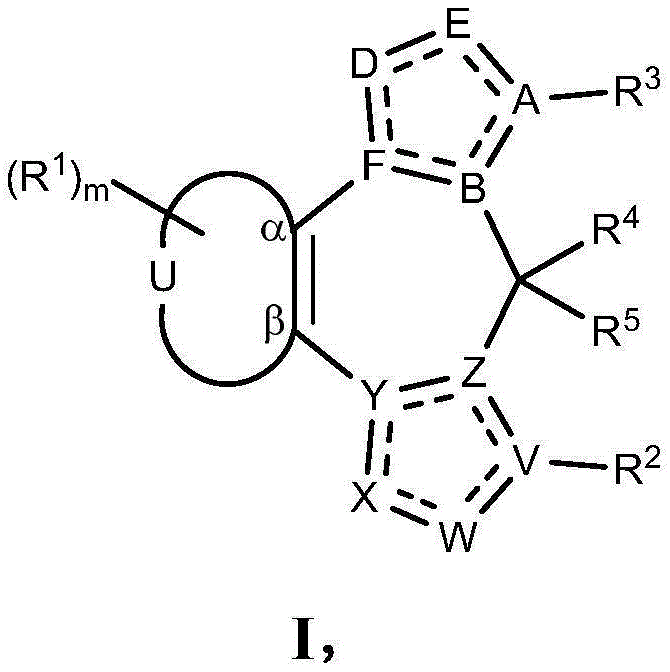
wherein:
u and the two carbon atoms designated by α and β together form a 5 or 6 membered aromatic ring having 0-2 nitrogen atoms;
A is C, CR6Or N;
b and F are each independently selected from C, CR6And N, wherein B and F cannot both be N;
d is N, NR7、O、CR6Or C (R)6)2;
E is N, NR7、CR6Or C (R)6)2;
W is N, NR7、CR6Or C (R)6)2;
X is N, NR7、O、CR6Or C (R)6)2;
Y and Z are each independently selected from C, CR6And N, wherein Y and Z cannot both be N;
v is C or CR6,
Or when Z is C or CR6When V is C, CR6Or N;
wherein when the ring formed by X, Y, Z, V and W is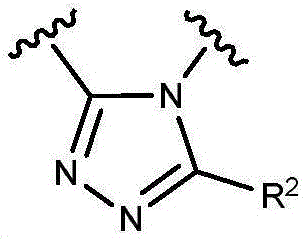 Then R2is-OR8、-SR8、-(CH2)nOR8、-(CH2)nO(CH2)nR8、-(CH2)pR8And- (CH)2)nN(R”)R10(ii) a And wherein R2Independently substituted with 0-5R';
m and n are independently an integer selected from 0 to 4;
p is an integer selected from 2 to 4;
key with a key body Each occurrence of (a) is a single or double bond;
R1、R2、R4and R5Each occurrence of (a) is independently selected from: halogen, -R, -OR, -NO2、-NCS、-CN、-CF3、-OCF3、-SiR3、-N(R)2、-SR、-SOR、-SO2R、-SO2N(R)2、-SO3R、-(CR2)1-3R、-(CR2)1-3-OR、-(CR2)0-3-C(O)NR(CR2)0-3R、-(CR2)0-3-C(O)NR(CR2)0-3OR、-C(O)R、-C(O)C(O)R、-C(O)CH2C(O)R、-C(S)R、-C(S)OR、-C(O)OR、-C(O)C(O)OR、-C(O)C(O)N(R)2、-OC(O)R、-C(O)N(R)2、-OC(O)N(R)2、-C(S)N(R)2、-(CR2)0-3NHC(O)R、-N(R)N(R)COR、-N(R)N(R)C(O)OR、-N(R)N(R)CON(R)2、-N(R)SO2R、-N(R)SO2N(R)2、-N(R)C(O)OR、-N(R)C(O)R、-N(R)C(S)R、-N(R)C(O)N(R)2、-N(R)C(S)N(R)2、-N(COR)COR、-N(OR)R、-C(=NH)N(R)2、-C(O)N(OR)R、-C(=NOR)R、-OP(O)(OR)2、-P(O)(R)2、-P(O)(OR)2and-P (O), (H), (OR);
R3absent or selected from:
halogen, -R, -OR, -NO2、-NCS、-CN、-CF3、-OCF3、-SiR3、-N(R)2、-SR、-SOR、-SO2R、-SO2N(R)2、-SO3R、-(CR2)1-3R、-(CR2)1-3-OR、-(CR2)0-3-C(O)NR(CR2)0-3R、-(CR2)0-3-C(O)NR(CR2)0- 3OR、-C(O)R、-C(O)C(O)R、-C(O)CH2C(O)R、-C(S)R、-C(S)OR、-C(O)OR、-C(O)C(O)OR、-C(O)C(O)N(R)2、-OC(O)R、-C(O)N(R)2、-OC(O)N(R)2、-C(S)N(R)2、-(CR2)0-3NHC(O)R、-N(R)N(R)COR、-N(R)N(R)C(O)OR、-N(R)N(R)CON(R)2、-N(R)SO2R、-N(R)SO2N(R)2、-N(R)C(O)OR、-N(R)C(O)R、-N(R)C(S)R、-N(R)C(O)N(R)2、-N(R)C(S)N(R)2、-N(COR)COR、-N(OR)R、-C(=NH)N(R)2、-C(O)N(OR)R、-C(=NOR)R、-OP(O)(OR)2、-P(O)(R)2、-P(O)(OR)2and-P (O), (H), (OR);
each R6Independently is-H or- (C1-C6) alkyl;
each R7Independently is-H or- (C1-C6) alkyl;
each R8Independently is- (C1-C6) alkyl, - (C3-C10) -cycloalkyl, (C6-C10) -aryl or 5-10 membered heteroaryl, wherein R8Independently for each occurrence of (a) is substituted with 0-5R';
each R10Independently is- (C3-C10) -cycloalkyl-, 3-10 member heterocyclyl-, (C6-C10) -aryl or5-10 membered heteroaryl, wherein R10Independently for each occurrence of (a) is substituted with 0-5R';
Each R is independently selected from:
H-,
(C1-C12) -aliphatic radical-,
(C3-C10) -cycloalkyl-,
(C3-C10) -cycloalkenyl-,
[ (C3-C10) -cycloalkyl ] - (C1-C12) -aliphatic-,
[ (C3-C10) -cycloalkenyl ] - (C1-C12) -aliphatic-,
[ (C3-C10) -cycloalkyl ] -O- (C1-C12) -aliphatic-,
[ (C3-C10) -cycloalkenyl ] -O- (C1-C12) -aliphatic-,
(C6-C10) -aryl-,
(C6-C10) -aryl- (C1-C12) aliphatic-,
(C6-C10) -aryl-O- (C1-C12) aliphatic-,
(C6-C10) -aryl-N (R') - (C1-C12) aliphatic-,
3-to 10-membered heterocyclyl-,
(3-10 membered heterocyclyl) - (C1-C12) aliphatic-,
(3-10 membered heterocyclyl) -O- (C1-C12) aliphatic-,
(3-10 membered heterocyclyl) -N (R') - (C1-C12) aliphatic-,
a 5-to 10-membered heteroaryl-,
(5-10 membered heteroaryl) - (C1-C12) -aliphatic-,
(5-10 membered heteroaryl) -O- (C1-C12) -aliphatic-; and
(5-10 membered heteroaryl) -N (R ") - (C1-C12) -aliphatic-;
wherein said heterocyclyl has 1-4 substituents independently selected from N, NH, O, S, SO and SO2And said heteroaryl has 1-4 heteroatoms independently selected from N, NH, O, and S;
wherein each occurrence of R is independently substituted with 0-5R';
or when two R groups are bound to the same atom, the two R groups may be taken together with the atom to which they are bound to form a group having 0-4 atoms independently selected from N, NH, O, S O and SO2A 3-10 membered aromatic or non-aromatic ring of a heteroatom of (a), wherein said ring is optionally substituted with 0-5R' and wherein said ring is optionally fused with (C6-C10) aryl, 5-10 membered heteroaryl, (C3-C10) cycloalkyl or 3-10 membered heterocyclyl;
wherein each occurrence of R' is independently selected from the group consisting of halogen, -R ", -OR", oxo, -CH2OR”、-CH2NR”2、-C(O)N(R”)2、-C(O)OR”、-NO2、-NCS、-CN、-CF3、-OCF3and-N (R')2;
Wherein each occurrence of R' is independently selected from the group consisting of H, - (C1-C6) -alkyl, - (C1-C6) -aliphatic, (C3-C6) -cycloalkyl, 3-6 membered heterocyclyl, 5-10 membered heteroaryl-, (C6-C10) -aryl-, (5-10 membered heteroaryl) - (C1-C6) -alkyl-, (C6-C10) -aryl- (C1-C6) -alkyl-, (5-10 membered heteroaryl) -O- (C1-C6) -alkyl-, and (C6-C10) -aryl-O- (C1-C6) -alkyl-, wherein each occurrence of R' is independently substituted with 0-3 substituents selected from the group consisting of: halogen, -Ro、-ORoOxo, -CH2ORo、-CH2NRo 2、-C(O)N(Ro)2、-C(O)ORo、-NO2、-NCS、-CN、-CF3、-OCF3and-N (R)o)2Wherein R isoEach occurrence of (a) is independently selected from: - (C1-C6) -aliphatic, (C3-C6) -cycloalkyl, 3-6 membered heterocyclyl, 5-10 membered heteroaryl-and (C6-C10) -aryl-.
In certain embodiments, the present invention provides a compound of formula I, or a pharmaceutically acceptable salt, hydrate, solvate, polymorph, isomer, or combination thereof:
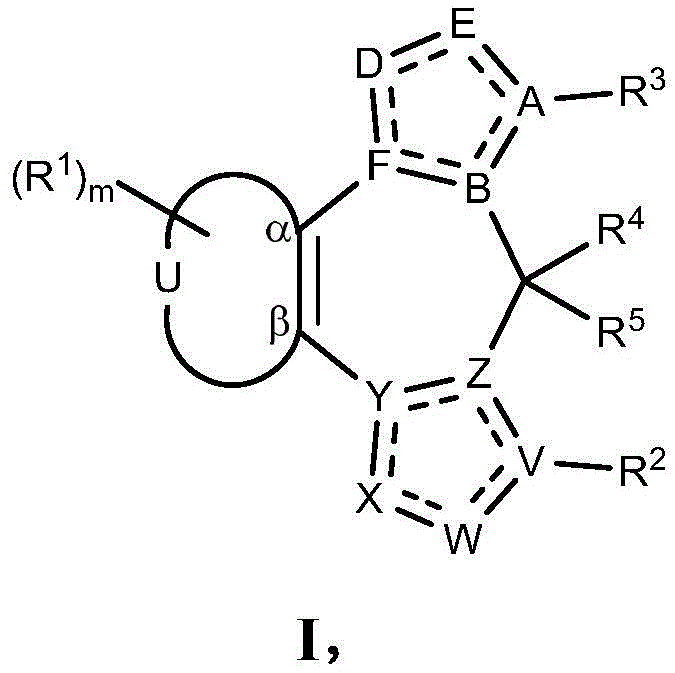
Wherein:
u and the two carbon atoms designated by α and β together form a 5 or 6 membered aromatic ring having 0-2 nitrogen atoms;
a is C, CR6Or N;
b and F eachIs independently selected from C, CR6And N, wherein B and F cannot both be N;
d is N, NR7、O、CR6Or C (R)6)2;
E is N, NR7、CR6Or C (R)6)2;
W is N, NR7、CR6Or C (R)6)2;
X is N, NR7、O、CR6Or C (R)6)2;
Y and Z are each independently selected from C, CR6And N, wherein Y and Z cannot both be N;
v is C or CR6,
Or when Z is C or CR6When V is C, CR6Or N;
wherein when the ring formed by X, Y, Z, V and W is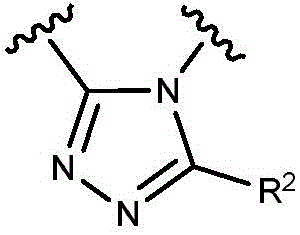 Then R2is-OR8、-SR8、-(CH2)nOR8、-(CH2)nO(CH2)nR8、-(CH2)pR8And- (CH)2)nN(R”)R10(ii) a And wherein R2Independently substituted with 0-5R';
m and n are independently an integer selected from 0 to 4;
p is an integer selected from 2 to 4;
key with a key body Each occurrence of (a) is a single or double bond;
R1、R2、R4and R5Each occurrence of (a) is independently selected from: halogen, -R, -OR, -NO2、-NCS、-CN、-CF3、-OCF3、-SiR3、-N(R)2、-SR、-SOR、-SO2R、-SO2N(R)2、-SO3R、-(CR2)1-3R、-(CR2)1-3-OR、-(CR2)0-3-C(O)NR(CR2)0-3R、-(CR2)0-3-C(O)NR(CR2)0-3OR、-C(O)R、-C(O)C(O)R、-C(O)CH2C(O)R、-C(S)R、-C(S)OR、-C(O)OR、-C(O)C(O)OR、-C(O)C(O)N(R)2、-OC(O)R、-C(O)N(R)2、-OC(O)N(R)2、-C(S)N(R)2、-(CR2)0-3NHC(O)R、-N(R)N(R)COR、-N(R)N(R)C(O)OR、-N(R)N(R)CON(R)2、-N(R)SO2R、-N(R)SO2N(R)2、-N(R)C(O)OR、-N(R)C(O)R、-N(R)C(S)R、-N(R)C(O)N(R)2、-N(R)C(S)N(R)2、-N(COR)COR、-N(OR)R、-C(=NH)N(R)2、-C(O)N(OR)R、-C(=NOR)R、-OP(O)(OR)2、-P(O)(R)2、-P(O)(OR)2and-P (O), (H), (OR);
R3absent or selected from:
halogen, -R, -OR, -NO2、-NCS、-CN、-CF3、-OCF3、-SiR3、-N(R)2、-SR、-SOR、-SO2R、-SO2N(R)2、-SO3R、-(CR2)1-3R、-(CR2)1-3-OR、-(CR2)0-3-C(O)NR(CR2)0-3R、-(CR2)0-3-C(O)NR(CR2)0- 3OR、-C(O)R、-C(O)C(O)R、-C(O)CH2C(O)R、-C(S)R、-C(S)OR、-C(O)OR、-C(O)C(O)OR、-C(O)C(O)N(R)2、-OC(O)R、-C(O)N(R)2、-OC(O)N(R)2、-C(S)N(R)2、-(CR2)0-3NHC(O)R、-N(R)N(R)COR、-N(R)N(R)C(O)OR、-N(R)N(R)CON(R)2、-N(R)SO2R、-N(R)SO2N(R)2、-N(R)C(O)OR、-N(R)C(O)R、-N(R)C(S)R、-N(R)C(O)N(R)2、-N(R)C(S)N(R)2、-N(COR)COR、-N(OR)R、-C(=NH)N(R)2、-C(O)N(OR)R、-C(=NOR)R、-OP(O)(OR)2、-P(O)(R)2、-P(O)(OR)2and-P (O), (H), (OR);
each R6Independently is-H or- (C1-C6) alkyl;
each R7Independently is-H or- (C1-C6) alkyl;
each R8Independently is- (C1-C6) alkyl, - (C3-C10) -cycloalkyl, (C6-C10) -aryl or 5-10 membered heteroaryl, wherein R8Independently for each occurrence of (a) is substituted with 0-5R';
each R10Independently is- (C3-C10) -cycloalkyl-, 3-10 membered heterocyclyl-, (C6-C10) -aryl, or 5-10 membered heteroaryl, wherein R is 10Independently for each occurrence of (a) is substituted with 0-5R';
each R is independently selected from:
H-,
(C1-C12) -aliphatic radical-,
(C3-C10) -cycloalkyl-,
(C3-C10) -cycloalkenyl-,
[ (C3-C10) -cycloalkyl ] - (C1-C12) -aliphatic-,
[ (C3-C10) -cycloalkenyl ] - (C1-C12) -aliphatic-,
[ (C3-C10) -cycloalkyl ] -O- (C1-C12) -aliphatic-,
[ (C3-C10) -cycloalkenyl ] -O- (C1-C12) -aliphatic-,
(C6-C10) -aryl-,
(C6-C10) -aryl- (C1-C12) aliphatic-,
(C6-C10) -aryl-O- (C1-C12) aliphatic-,
(C6-C10) -aryl-N (R') - (C1-C12) aliphatic-,
3-to 10-membered heterocyclyl-,
(3-10 membered heterocyclyl) - (C1-C12) aliphatic-,
(3-10 membered heterocyclyl) -O- (C1-C12) aliphatic-,
(3-10 membered heterocyclyl) -N (R') - (C1-C12) aliphatic-,
a 5-to 10-membered heteroaryl-,
(5-10 membered heteroaryl) - (C1-C12) -aliphatic-,
(5-10 membered heteroaryl) -O- (C1-C12) -aliphatic-; and
(5-10 membered heteroaryl) -N (R ") - (C1-C12) -aliphatic-;
wherein said heterocyclyl has 1-4 substituents independently selected from N, NH, O, S, SO and SO2And said heteroaryl has 1-4 heteroatoms independently selected from N, NH, O, and S;
wherein each occurrence of R is independently substituted with 0-5R';
or when two R groups are bound to the same atom, the two R groups may be taken together with the atom to which they are bound to form a compound having 0-4 substituents independently selected from N, NH, O, S, SO, and SO 2A 3-10 membered aromatic or non-aromatic ring of a heteroatom of (a), wherein said ring is optionally substituted with 0-5R' and wherein said ring is optionally fused with (C6-C10) aryl, 5-10 membered heteroaryl, (C3-C10) cycloalkyl or 3-10 membered heterocyclyl;
wherein each occurrence of R' is independently selected from the group consisting of halogen, -R ", -OR", oxo, -CH2OR”、-CH2NR”2、-C(O)N(R”)2、-C(O)OR”、-NO2、-NCS、-CN、-CF3、-OCF3and-N (R')2;
Wherein each occurrence of R' is independently selected from the group consisting of H, - (C1-C6) -alkyl, (C3-C6) -cycloalkyl, 3-6 membered heterocyclyl, 5-10 membered heteroaryl-, (C6-C10) -aryl-, (5-10 membered heteroaryl) - (C1-C6) -alkyl-, (C6-C10) -aryl- (C1-C6) -alkyl-, (5-10 membered heteroaryl) -O- (C1-C6) -alkyl-and (C6-C10) -aryl-O- (C1-C6) -alkyl-.
Certain embodiments provide a compound of formula I, or a pharmaceutically acceptable salt, hydrate, solvate, polymorph, isomer, or combination thereof:

wherein:
u and the two carbon atoms designated by α and β together form a 5 or 6 membered aromatic ring having 0-2 nitrogen atoms;
a is C, CR6Or N;
b and F are each independently selected from C, CR6And N, wherein B and F cannot both be N;
d is N, NR7、O、CR6Or C (R)6)2;
E is N, NR7、CR6Or C (R)6)2;
W is N, NR7、CR6Or C (R)6)2;
X is N, NR7、O、CR6Or C (R)6)2;
Y and Z are each independently selected from C, CR6And N, wherein Y and Z cannot both be N;
V is C or CR6,
Or when Z is C or CR6When V is C, CR6Or N;
wherein when the ring formed by X, Y, Z, V and W is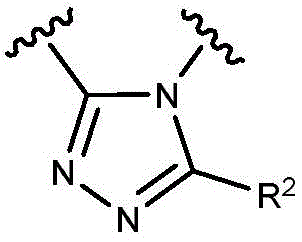 Then R2is-OR8、-SR8Or- (CH)2)nOR8;
m and n are each independently an integer selected from 0 to 4;
key with a key body Each occurrence of (a) is a single or double bond;
R1、R2、R4and R5Each occurrence of (a) is independently selected from: halogen, -R, -OR, -NO2、-NCS、-CN、-CF3、-OCF3、-SiR3、-N(R)2、-SR、-SOR、-SO2R、-SO2N(R)2、-SO3R、-(CR2)1-3R、-(CR2)1-3-OR、-(CR2)0-3-C(O)NR(CR2)0-3R、-(CR2)0-3-C(O)NR(CR2)0-3OR、-C(O)R、-C(O)C(O)R、-C(O)CH2C(O)R、-C(S)R、-C(S)OR、-C(O)OR、-C(O)C(O)OR、-C(O)C(O)N(R)2、-OC(O)R、-C(O)N(R)2、-OC(O)N(R)2、-C(S)N(R)2、-(CR2)0-3NHC(O)R、-N(R)N(R)COR、-N(R)N(R)C(O)OR、-N(R)N(R)CON(R)2、-N(R)SO2R、-N(R)SO2N(R)2、-N(R)C(O)OR、-N(R)C(O)R、-N(R)C(S)R、-N(R)C(O)N(R)2、-N(R)C(S)N(R)2、-N(COR)COR、-N(OR)R、-C(=NH)N(R)2、-C(O)N(OR)R、-C(=NOR)R、-OP(O)(OR)2、-P(O)(R)2、-P(O)(OR)2and-P (O), (H), (OR);
R3absent or selected from:
halogen, -R, -OR, -NO2、-NCS、-CN、-CF3、-OCF3、-SiR3、-N(R)2、-SR、-SOR、-SO2R、-SO2N(R)2、-SO3R、-(CR2)1-3R、-(CR2)1-3-OR、-(CR2)0-3-C(O)NR(CR2)0-3R、-(CR2)0-3-C(O)NR(CR2)0- 3OR、-C(O)R、-C(O)C(O)R、-C(O)CH2C(O)R、-C(S)R、-C(S)OR、-C(O)OR、-C(O)C(O)OR、-C(O)C(O)N(R)2、-OC(O)R、-C(O)N(R)2、-OC(O)N(R)2、-C(S)N(R)2、-(CR2)0-3NHC(O)R、-N(R)N(R)COR、-N(R)N(R)C(O)OR、-N(R)N(R)CON(R)2、-N(R)SO2R、-N(R)SO2N(R)2、-N(R)C(O)OR、-N(R)C(O)R、-N(R)C(S)R、-N(R)C(O)N(R)2、-N(R)C(S)N(R)2、-N(COR)COR、-N(OR)R、-C(=NH)N(R)2、-C(O)N(OR)R、-C(=NOR)R、-OP(O)(OR)2、-P(O)(R)2、-P(O)(OR)2and-P (O), (H), (OR);
each R6Independently is-H or- (C1-C6) alkyl;
each R7Independently is-H or- (C1-C6) alkyl;
each R8Independently is- (C1-C6) alkyl, - (C3-C10) -cycloalkyl, (C6-C10) -aryl or 5-10 membered heteroaryl, wherein R8Independently for each occurrence of (a) is substituted with 0-5R';
each R is independently selected from:
H-,
(C1-C12) -aliphatic radical-,
(C3-C10) -cycloalkyl-,
(C3-C10) -cycloalkenyl-,
[ (C3-C10) -cycloalkyl ] - (C1-C12) -aliphatic-,
[ (C3-C10) -cycloalkenyl ] - (C1-C12) -aliphatic-,
[ (C3-C10) -cycloalkyl ] -O- (C1-C12) -aliphatic-,
[ (C3-C10) -cycloalkenyl ] -O- (C1-C12) -aliphatic-,
(C6-C10) -aryl-,
(C6-C10) -aryl- (C1-C12) aliphatic-,
(C6-C10) -aryl-O- (C1-C12) aliphatic-,
3-to 10-membered heterocyclyl-,
(3-10 membered heterocyclyl) - (C1-C12) aliphatic-,
(3-10 membered heterocyclyl) -O- (C1-C12) aliphatic-,
a 5-to 10-membered heteroaryl-,
(5-10 membered heteroaryl) - (C1-C12) -aliphatic-and
(5-10 membered heteroaryl) -O- (C1-C12) -aliphatic-;
wherein said heterocyclyl has 1-4 substituents independently selected from N, NH, O, S, SO and SO2And said heteroaryl has 1-4 heteroatoms independently selected from N, NH, O, and S;
wherein each occurrence of R is independently substituted with 0-5R';
or when two R groups are bound to the same atom, the two R groups may be taken together with the atom to which they are bound to form a compound having 0-4 substituents independently selected from N, NH, O, S, SO, and SO2A 3-10 membered aromatic or non-aromatic ring of a heteroatom of (a), wherein said ring is optionally substituted with 0-5R' and wherein said ring is optionally fused with (C6-C10) aryl, 5-10 membered heteroaryl, (C3-C10) cycloalkyl or 3-10 membered heterocyclyl;
wherein each occurrence of R' is independently selected from the group consisting of halogen, -R ", -OR", oxo, -CH2OR”、-CH2NR”2、-C(O)N(R”)2、-C(O)OR”、-NO2、-NCS、-CN、-CF3、-OCF3and-N (R')2;
Wherein each occurrence of R' is independently selected from the group consisting of H, - (C1-C6) -alkyl, (C3-C6) -cycloalkyl, 3-6 membered heterocyclyl, 5-10 membered heteroaryl-, (C6-C10) -aryl-, (5-10 membered heteroaryl) - (C1-C6) -alkyl-, (C6-C10) -aryl- (C1-C6) -alkyl-, (5-10 membered heteroaryl) -O- (C1-C6) -alkyl-and (C6-C10) -aryl-O- (C1-C6) -alkyl-.
The present invention provides a compound of formula I or a pharmaceutically acceptable salt, hydrate, solvate, polymorph, isomer or combination thereof:

wherein:
u and the two carbon atoms designated by α and β together form a 5 or 6 membered aromatic ring having 0-2 nitrogen atoms;
a is C, CR6Or N;
b and F are each independently selected from C, CR6And N, wherein B and F cannot both be N;
d is N, NR7、O、CR6Or C (R)6)2;
E is N, NR7、CR6Or C (R)6)2;
W is N, NR7、CR6Or C (R)6)2;
X is N, NR7、O、CR6Or C (R)6)2;
Y and Z are each independently selected from C, CR6And N, wherein Y and Z cannot both be N;
v is C or CR6,
Or when Z is C or CR6When V is C, CR6Or N;
wherein when the ring formed by X, Y, Z, V and W is Then R2Is- (CH)2)nOR8Or- (CH)2)nO(CH2)nR8(ii) a And wherein R2Independently substituted with 0-5R';
m and n are independently an integer selected from 0 to 4;
p is an integer selected from 2 to 4;
key with a key body Each occurrence of (a) is a single or double bond;
each R1Independently selected from: halogen, -R and-OR;
R2selected from: halogen, -R and- (CR)2)1-3-OR;
R3Selected from: -R and-CN;
R4and R5Each independently is-H or- (C1-C6) alkyl;
each R6Independently is-H or- (C1-C6) alkyl;
each R7Independently is-H or- (C1-C6) alkyl;
each R8Independently is- (C1-C6) alkyl, - (C3-C10) -cycloalkyl, (C6-C10) -aryl or 5-10 membered heteroaryl, wherein R 8Independently for each occurrence of (a) is substituted with 0-5R';
each R is independently selected from:
H-,
(C1-C12) -aliphatic radical-,
(C3-C10) -cycloalkyl-,
(C3-C10) -cycloalkenyl-,
[ (C3-C10) -cycloalkyl ] - (C1-C12) -aliphatic-,
[ (C3-C10) -cycloalkenyl ] - (C1-C12) -aliphatic-,
[ (C3-C10) -cycloalkyl ] -O- (C1-C12) -aliphatic-,
[ (C3-C10) -cycloalkenyl ] -O- (C1-C12) -aliphatic-,
(C6-C10) -aryl-,
(C6-C10) -aryl- (C1-C12) aliphatic-,
(C6-C10) -aryl-O- (C1-C12) aliphatic-,
(C6-C10) -aryl-N (R') - (C1-C12) aliphatic-,
3-to 10-membered heterocyclyl-,
(3-10 membered heterocyclyl) - (C1-C12) aliphatic-,
(3-10 membered heterocyclyl) -O- (C1-C12) aliphatic-,
(3-10 membered heterocyclyl) -N (R') - (C1-C12) aliphatic-,
a 5-to 10-membered heteroaryl-,
(5-10 membered heteroaryl) - (C1-C12) -aliphatic-,
(5-10 membered heteroaryl) -O- (C1-C12) -aliphatic-; and
(5-10 membered heteroaryl) -N (R ") - (C1-C12) -aliphatic-;
wherein said heterocyclyl has 1-4 substituents independently selected from N, NH, O, S, SO and SO2And said heteroaryl has 1-4 heteroatoms independently selected from N, NH, O, and S;
wherein each occurrence of R is independently substituted with 0-5R';
or when two R groups are bound to the same atom, the two R groups may be taken together with the atom to which they are bound to form a compound having 0-4 substituents independently selected from N, NH, O, S, SO, and SO 2A 3-10 membered aromatic or non-aromatic ring of a heteroatom of (a), wherein said ring is optionally substituted with 0-5R' and wherein said ring is optionally fused with (C6-C10) aryl, 5-10 membered heteroaryl, (C3-C10) cycloalkyl or 3-10 membered heterocyclyl;
wherein each occurrence of R' is independently selected from the group consisting of halogen, -R ", -OR", oxo, -CH2OR”、-CH2NR”2、-C(O)N(R”)2、-C(O)OR”、-NO2、-NCS、-CN、-CF3、-OCF3and-N (R')2;
Wherein each occurrence of R' is independently selected from the group consisting of H, - (C1-C6) -alkyl, - (C1-C6) -aliphatic, (C3-C6) -cycloalkyl, 3-6 membered heterocyclyl, 5-10 membered heteroaryl-, (C6-C10) -aryl-, (5-10 membered heteroaryl) - (C1-C6) -alkyl-(C6-C10) -aryl- (C1-C6) -alkyl-, (5-10 membered heteroaryl) -O- (C1-C6) -alkyl-and (C6-C10) -aryl-O- (C1-C6) -alkyl-, wherein each occurrence of R "is independently substituted with 0-5 substituents selected from the group consisting of: halogen, -Ro、-ORoOxo, -CH2ORo、-CH2N(Ro)2、-C(O)N(Ro)2、-C(O)ORo、-NO2、-NCS、-CN、-CF3、-OCF3and-N (R)o)2Wherein R isoEach occurrence of (a) is independently selected from: - (C1-C6) -aliphatic, (C3-C6) -cycloalkyl, 3-6 membered heterocyclyl, 5-10 membered heteroaryl-and (C6-C10) -aryl-.
The present invention provides a compound of formula I or a pharmaceutically acceptable salt, hydrate, solvate, polymorph, isomer or combination thereof:
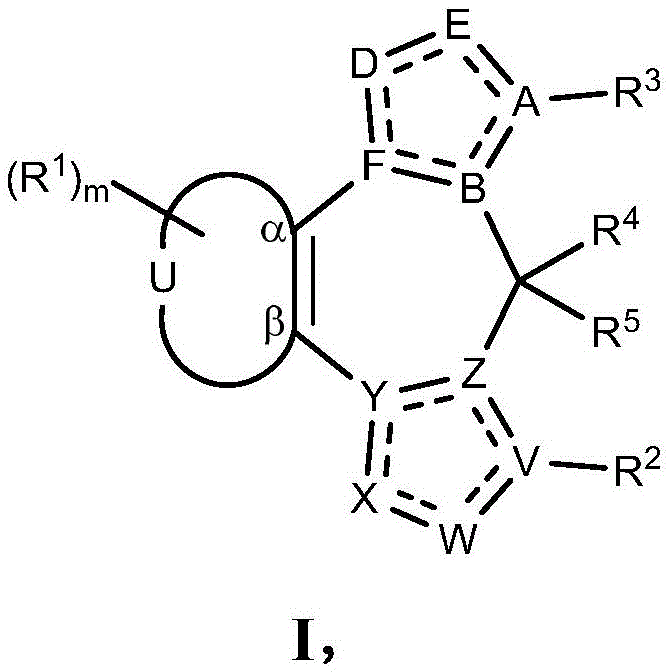
wherein:
u and the two carbon atoms designated by α and β together form a 5 or 6 membered aromatic ring having 0-2 nitrogen atoms;
A is C, CR6Or N;
b and F are each independently selected from C, CR6And N, wherein B and F cannot both be N;
d is N, NR7、O、CR6Or C (R)6)2;
E is N, NR7、CR6Or C (R)6)2;
W is N, NR7、CR6Or C (R)6)2;
X is N, NR7、O、CR6Or C (R)6)2;
Y and Z are each independently selected from C, CR6And N, wherein Y and Z cannot both be N;
v is C or CR6,
Or when Z is C or CR6When V is C, CR6Or N;
wherein when the ring formed by X, Y, Z, V and W is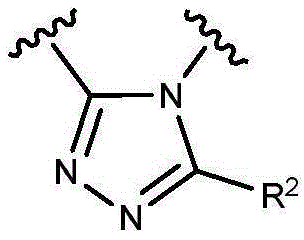 Then R2Is- (CH)2)nOR8Or- (CH)2)nO(CH2)nR8Wherein R is8Is independently at each occurrence- (C1-C6) alkyl or (C6-C10) -aryl (e.g., phenyl), and wherein R2Independently substituted with 0-5R';
m and n are independently integers selected from 0 to 4 (in certain embodiments, m is 1);
p is an integer selected from 2 to 4;
key with a key body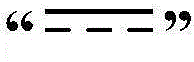 Each occurrence of (a) is a single or double bond;
each R1Independently selected from: -Cl, -F, -OMe and-C ≡ CH;
R2is halogen, - (CR)2)1-3-OR, wherein each occurrence of R is independently selected from-H, - (C1-C6) alkyl, (C6-C10) -aryl- (e.g., phenyl) and (C6-C10) -aryl- (C1-C12) aliphatic- (e.g., phenyl- (C1-C6) alkyl-), and wherein each occurrence of R is independently substituted with 0-5R';
R3selected from: -CN, -C.ident.CH, -C.ident.C- (C1-C6) alkyl, -C.ident.C-phenyl,

R4And R5Each occurrence of (A) is independently-H or- (C1-C6) alkyl;
each R6Independently is-H or- (C1-C6) alkyl;
each R7Independently is-H or- (C1-C6) alkyl;
wherein each occurrence of R' is independently selected from the group consisting of halogen, -R ", -OR"Oxo, -CH2OR”、-CH2NR”2、-C(O)N(R”)2、-C(O)OR”、-NO2、-NCS、-CN、-CF3、-OCF3and-N (R')2;
Wherein each occurrence of R' is independently selected from the group consisting of H, - (C1-C6) -alkyl, - (C1-C6) -aliphatic, (C3-C6) -cycloalkyl, 3-6 membered heterocyclyl, 5-10 membered heteroaryl-, (C6-C10) -aryl-, (5-10 membered heteroaryl) - (C1-C6) -alkyl-, (C6-C10) -aryl- (C1-C6) -alkyl-, (5-10 membered heteroaryl) -O- (C1-C6) -alkyl-, and (C6-C10) -aryl-O- (C1-C6) -alkyl-, wherein each occurrence of R' is independently substituted with 0-5 substituents selected from the group consisting of: halogen, -Ro、-ORoOxo, -CH2ORo、-CH2NRo 2、-C(O)N(Ro)2、-C(O)ORo、-NO2、-NCS、-CN、-CF3、-OCF3and-N (R)o)2Wherein R isoEach occurrence of (a) is independently selected from: - (C1-C6) -aliphatic, (C3-C6) -cycloalkyl, 3-6 membered heterocyclyl, 5-10 membered heteroaryl-and (C6-C10) -aryl-.
In certain of the above embodiments, R3Selected from:
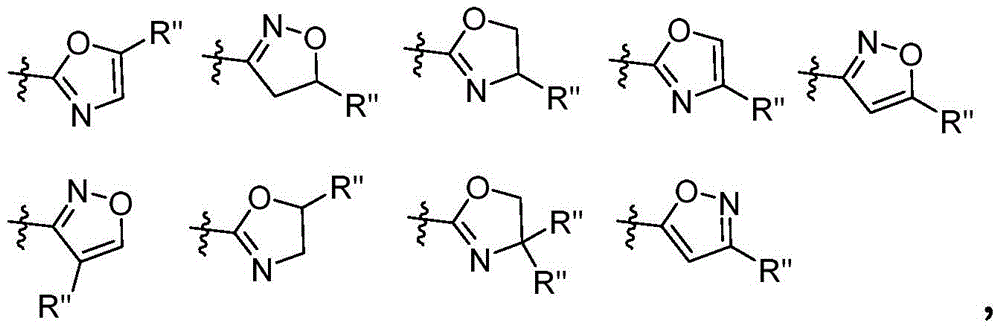
wherein each occurrence of R 'is independently selected from- (C1-C6) -alkyl (e.g., straight or branched), -C.ident.CH, phenyl, thiophene, (5-10 membered heteroaryl) - (C1-C6) -alkyl-, (C6-C10) -aryl- (C1-C6) -alkyl-, wherein each R' is independently substituted with 0-3 substituents selected from: halogen, -R o、-ORoOxo, -CH2ORo、-CH2NRo 2、-C(O)N(Ro)2、-C(O)ORo、-NO2、-NCS、-CN、-CF3、-OCF3and-N (R)o)2Wherein R isoEach occurrence of (a) is independently selected from: - (C1-C6) -aliphatic, (C3-C6) -cycloalkyl, 3-6 membered heterocyclyl, 5-10 memberedHeteroaryl-and (C6-C10) -aryl-.
In certain embodiments of the compounds of formula I, X, Y, Z, V and W together form a 5-membered aromatic or non-aromatic ring having 1-4 nitrogen atoms, wherein the ring is substituted with 0-3R6And 0-2R7And (4) substitution. In certain embodiments, X, Y, Z, V and W together form a 5-membered aromatic ring having 1-3 nitrogen atoms, wherein the ring is substituted with 0-2R6And 0-1R7And (4) substitution.
In certain embodiments, X, Y, Z, V and W form a ring selected from:
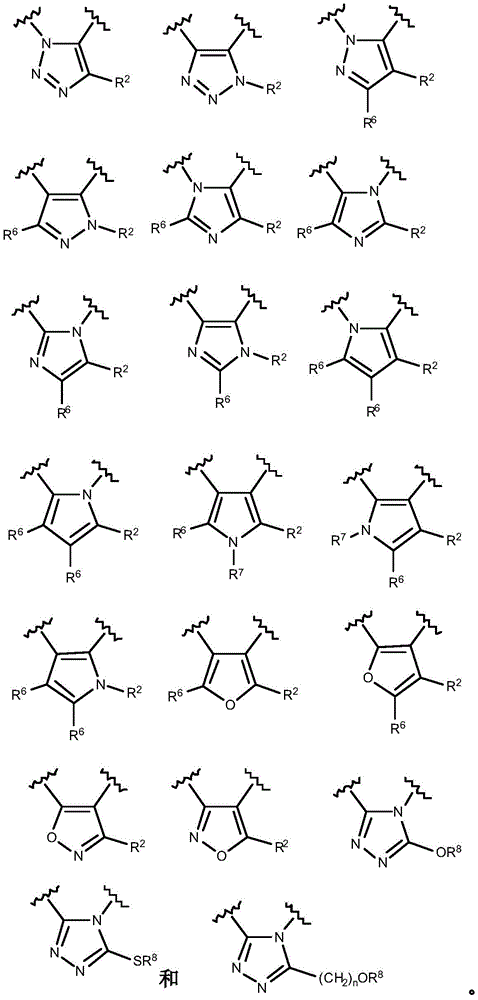
in certain embodiments, X, Y, Z, V and W form a ring selected from:
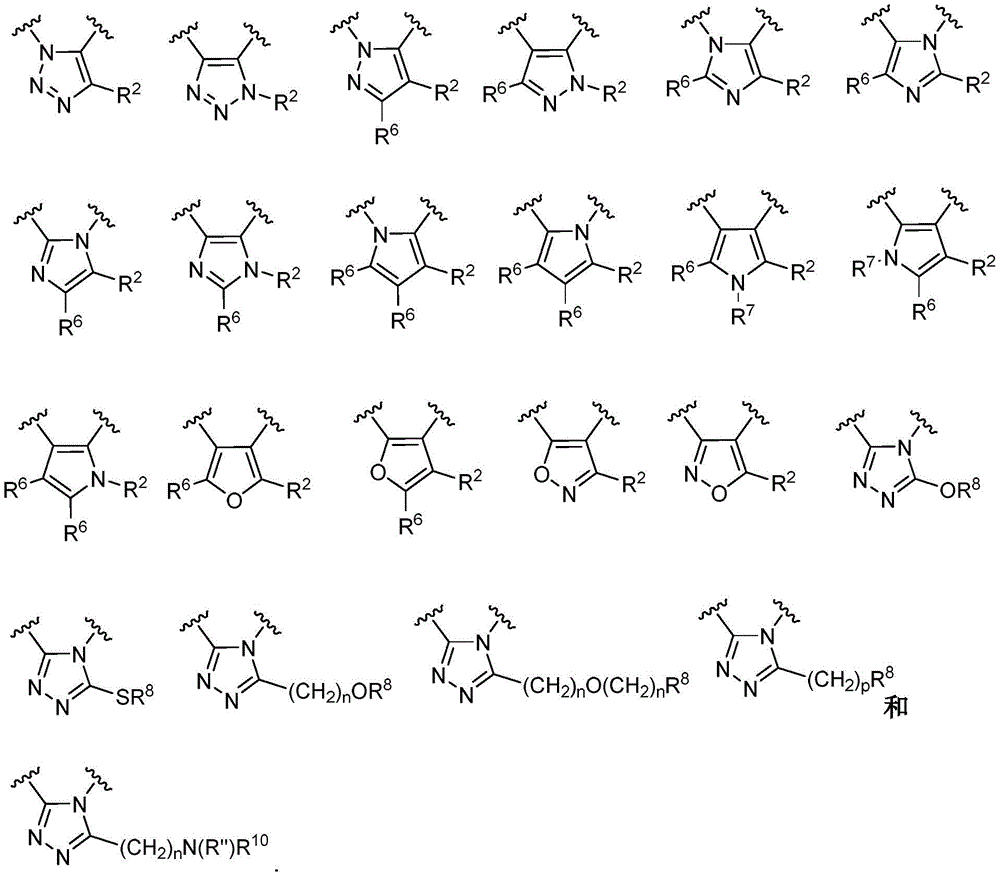
in certain embodiments of the compounds of formula I, W is N. In certain embodiments, W is N, and X, Y, Z, V and W form a ring selected from:
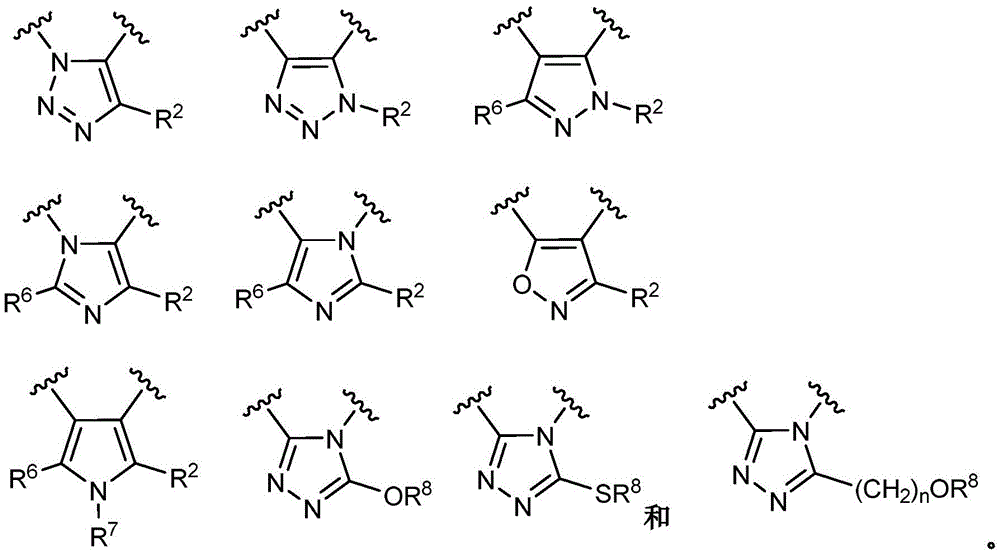
in certain embodiments, W is N, and X, Y, Z, V and W form a ring selected from:
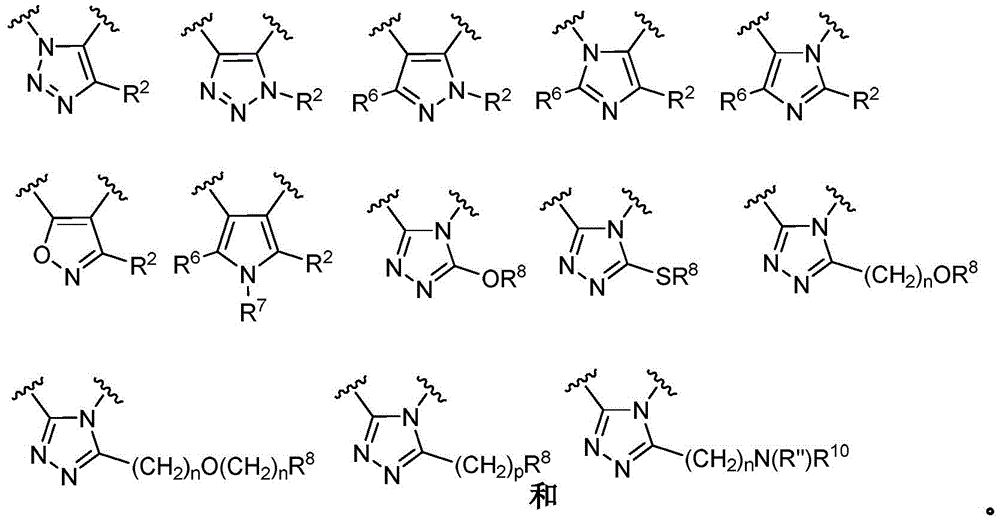
in certain embodiments of the compounds of formula I, the ring formed by X, Y, Z, V and W is:
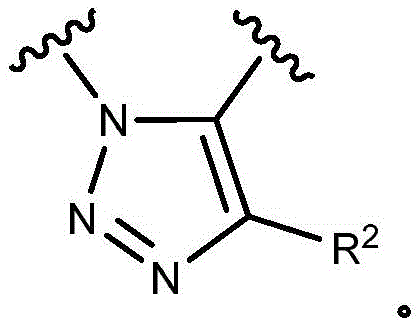
in certain embodiments of the compounds of formula I, the ring formed by X, Y, Z, V and W is:

in certain embodiments of the compounds of formula I, the ring formed by X, Y, Z, V and W is selected from:
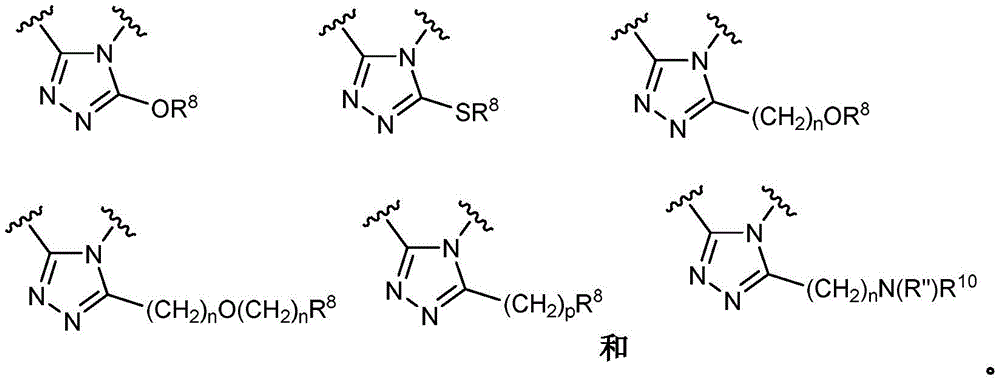
In certain embodiments of the compounds of formula I, the ring formed by X, Y, Z, V and W is selected from: in certain embodiments, the ring formed by X, Y, Z, V and W is:
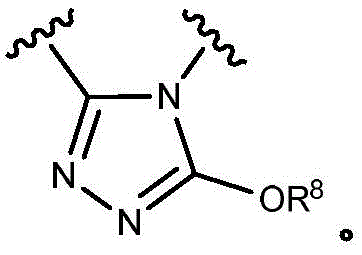 in certain embodiments, the ring formed by X, Y, Z, V and W is:
in certain embodiments of the compounds of formula I, A, B, D, E and F together form a 5-membered aromatic or non-aromatic ring having 1-4 nitrogen atoms, wherein the ring is substituted with 0-3R6And 0-2R7And (4) substitution. In certain embodiments, A, B, D, E and F together form a 5-membered aromatic ring having 1-3 nitrogen atoms, wherein the ring is substituted with 0-2R6And 0-1R7And (4) substitution.
In certain embodiments of the compounds of formula I, A, B, D, E and F form a ring selected from:
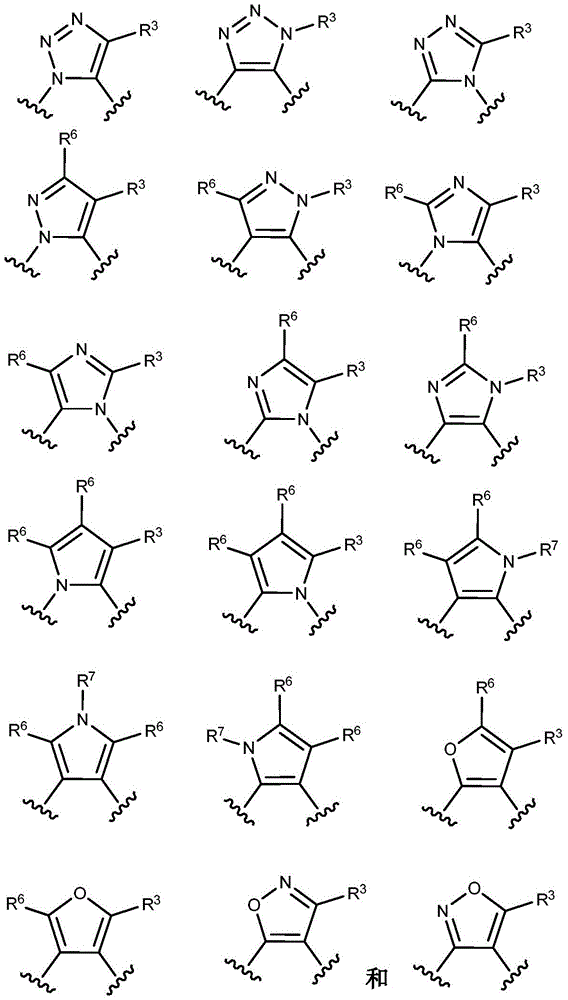
in certain embodiments of the compounds of formula I, the ring formed by A, B, D, F and E is:

in certain embodiments of the compounds of formula I, the compounds have the structure of formula II:
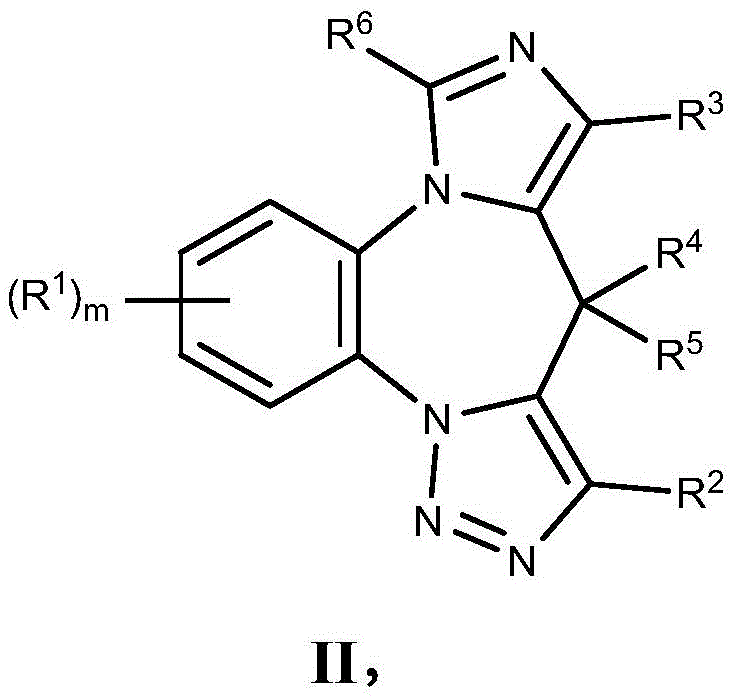
or a pharmaceutically acceptable salt, hydrate, solvate, polymorph, isomer or combination thereof, wherein m, R1、R2、R3、R4、R5And R6As defined in formula I.
In certain embodiments of the compounds of formula I, the compounds have the structure of formula III:

or a pharmaceutically acceptable salt, hydrate, solvate, polymorph, isomer or combination thereof, wherein m, R 1、R2、R3、R4、R5And R6As defined in formula I.
In certain embodiments of the compounds of formula I, the compounds have the structure of formula IV:
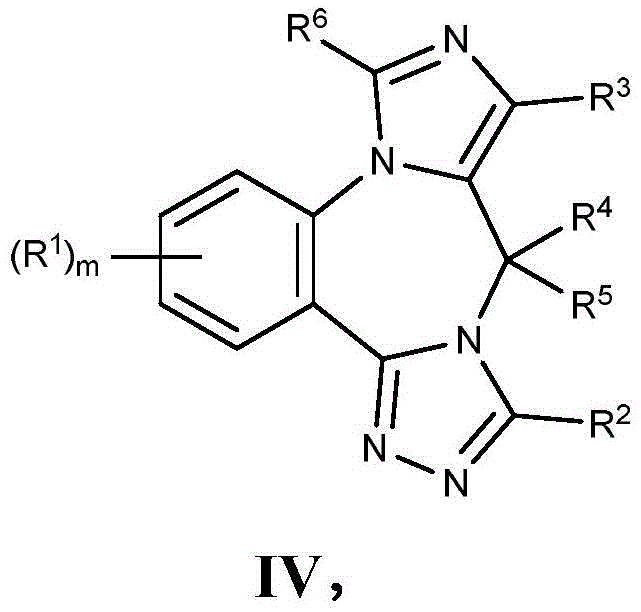
or a pharmaceutically acceptable salt, hydrate, solvate, polymorph, isomer or combination thereof, wherein R is2is-OR8、-SR8Or- (CH)2)nOR8Wherein R is2Independently by 0-5R', and wherein m, n, R1、R3、R4、R5、R6And R8As defined in formula I. In certain embodiments, R2is-OR8. In certain embodiments, R2Is- (CH)2)nOR8。
In certain embodiments of the compounds of formula I, the compounds have the structure of formula IV:
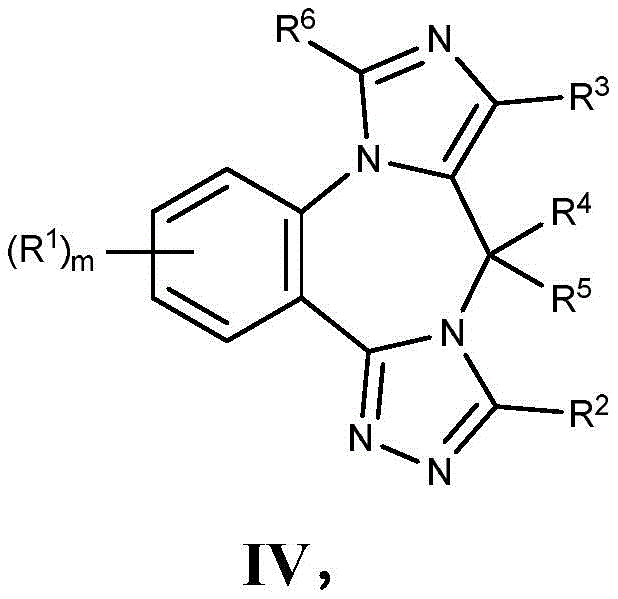
or a pharmaceutically acceptable salt, hydrate, solvate, polymorph, isomer or combination thereof, wherein R is2Is- (CH)2)nO(CH2)nR8、-(CH2)pR8Or- (CH)2)nN(R”)R10Wherein R is2Independently by 0-5R', and wherein m, n, p, R1、R3、R4、R5、R6、R8、R10And R "is as defined herein. In certain embodiments, R2Is- (CH)2)nO(CH2)nR8。
In certain embodiments of the compounds of formula I, II, III or IV, R1Each occurrence of (a) is selected from: halogen, -R, -OR, -NO2、-CN、-CF3、-OCF3、-N(R)2and-N (R) SO2R, wherein each occurrence of R is independently substituted with 0-5R'. In certain embodiments, R1Each occurrence of (a) is independently selected from: halogen, -H, - (C1-C6) alkyl, -OH, -O ((C1-C6) alkyl), -NO 2、-CN、-CF3、-OCF3、-NH2N ((C1-C6) alkyl)2N ((C1-C6) alkyl) SO2((C1-C6) alkyl) and-NHSO2((C1-C6) alkyl), wherein the alkyl is independently substituted with 0-5R'. In certain embodiments, R1Each occurrence of (a) is independently selected from: -H, -F, -Cl, -Br, -OH, -Me, -Et, -OMe, -OEt, -NO2、-CN、-CF3、-OCF3、-NH2、-NMe2、-NEt2、-NHSO2Me and-NHSO2Et. In certain embodiments of the compounds of any of formulas I-IV, at least one R1is-OR. In certain embodiments, at least one R is1is-O ((C1-C6) alkyl), such as-OMe.
In certain embodiments of the compounds of formula I, II or III, R2Selected from: halogen, -R, -OR, -NO2、-(CR2)1- 3R、-(CR2)1-3-OR、-CN、-CF3、-C(O)NR2-C (O) OR and-OCF3Wherein each occurrence of R is independently substituted with 0-5R'. In certain embodiments, R2Selected from: -H, - (C1-C6) alkyl, -CH2-O ((C1-C6) alkyl), - (C ((C1-C6) alkyl)2)1-3-O ((C1-C6) alkyl), -OH, -O ((C1-C6) alkyl), -NO2、-CN、-CF3、-OCF3(C3-C10) -cycloalkyl-, -C (O) N ((C1-C6) alkyl)2-C (O) O ((C1-C6) alkyl), 3-10 membered heterocyclyl-, (C6-C10) aryl-, 5-10 membered heteroaryl-, (C6-C10) aryl- (C1-C12) aliphatic-, (C6-C10) aryl-O- (C1-C12) aliphatic-, (C6-C10) aryl-N (R ') - (C1-C12) aliphatic-, (C6-C10) aryl- (C1-C12) aliphatic-O-, (5-10 membered heteroaryl) - (C1-C12) -aliphatic-, (5-10 membered heteroaryl) -O- (C1-C12) -aliphatic-, (5-10 membered heteroaryl) -N (R ') - (C3634-C12) -aliphatic-, (5-10 membered heteroaryl) -N (R ') - (C1-C12) -aliphatic-, (C12) -aliphatic-), (5-10 membered heteroaryl) - (C1-C12) -aliphatic-O-, (3-10 membered heterocyclyl) - (C1-C12) aliphatic-, (3-10 membered heterocyclyl) -O- (C1-C12) aliphatic-, (3-10 membered heterocyclyl) -N (R ") - (C1-C12) aliphatic-and (3-10 membered heterocyclyl) - (C1-C12) aliphatic-O-, wherein R is 2Independently by 0-5R'.
In certain embodiments of the compounds of formula I, II or III, R2Selected from: -H, -Me, -Et, propyl, isopropyl, butyl, tert-butyl, cyclopropyl, cyclobutyl, cyclopentyl, cyclohexyl, -CF3、-C(O)OMe、-C(O)OEt、-OMe、-CH2OMe、-CH2OEt、-CH2OPh、-CH2-pyrrolidine, -CH2-morpholine, -CH2-pyridine and-CH2Ph, wherein said R2Substituted with 0-3R'. In-situ typeI. In certain embodiments of compounds of II or III, R2is-Me substituted by 0-3R's selected from-R ", -OR", oxo, -CH2OR”、-CH2NR”2、-C(O)N(R”)2、-C(O)OR”、-NO2、-NCS、-CN、-CF3、-OCF3and-N (R')2Wherein R' is independently selected from H, - (C1-C6) -alkyl, (C6-C10) -aryl-and (C6-C10) -aryl- (C1-C6) -alkyl-. In certain embodiments, R2is-Me independently substituted with 0-3R' selected from-N (Me)2、-N(Et)2and-N (Me) (CH)2Ph)。
In certain embodiments of the compounds of formula I, II or III, R2Selected from: -CH2Ph、-CH2CH2Ph、-Ph、-OCH2Ph、-CH2OPh、-OCH2CH2Ph、-CH2CH2OPh、-CH2-pyrrolidine, -CH2-morpholine, -CH2-pyridine and-CH2Ph, wherein the Ph, pyrrolidine, pyridine or morpholine is substituted with 0-5R'. In certain embodiments of the compounds of formula I, II or III, R2Selected from: -CH2Ph、-CH2CH2Ph、-Ph、-OCH2Ph、-CH2OPh、-OCH2CH2Ph、-CH2CH2OPh、-CH2-pyrrolidine, -CH2-morpholine, -CH2-pyridine and-CH2Ph, wherein the Ph, pyrrolidine, pyridine or morpholine is substituted with 0-5R's independently selected from halogen, (C1-C6) -alkyl, -OH, -O ((C1-C6) -alkyl), -CH 2OH、-CH2O (C1-C6) -alkyl), -CH2N (C1-C6) -alkyl)2-C (O) O (C1-C6) -alkyl), -C (O) N (C1-C6) -alkyl)2、-NO2、-CN、-CF3、-OCF3and-N (C1-C6) -alkyl)2. In certain of the above embodiments, R2Is substituted with 0-5R's independently selected from-F, -Cl, -CN, -Me, -Et, -OMe and-OEt. In certain embodiments of the compounds of formula I, II or III, R2is-CH2Ph、-CH2OPh、-CH2-pyridine, -CH2-pyrrolidine or-CH2-morpholine, wherein said-Ph, pyrrolidine, pyridine or morpholine is substituted with 0-3R' independently selected from-F, -Cl, -CN, -Me and-OMe.
In certain embodiments of the compounds of formula IV, R2is-OR8、-SR8、-(CH2)nOR8、-(CH2)nO(CH2)nR8、-(CH2)pR8Or- (CH)2)nN(R”)R10Wherein each R is8Independently is- (C1-C6) alkyl, - (C3-C10) -cycloalkyl, (C6-C10) -aryl or 5-10 membered heteroaryl, wherein R8Independently for each occurrence of (a) is substituted with 0-5R'; n is an integer selected from 0 to 4; p is an integer selected from 2 to 4; and each R10Independently is- (C3-C10) -cycloalkyl-, 3-10 membered heterocyclyl-, (C6-C10) -aryl, or 5-10 membered heteroaryl, wherein R is10Independently for each occurrence of (a) is substituted with 0-5R'. In certain embodiments, R2Is OR8. In certain embodiments, R2Is OR8Wherein R is8Is (C6-C10) -aryl substituted with 0-5R'. In certain embodiments, R 2Is OR8Wherein R is8Is (C6-C10) -aryl substituted with 0-3 halogens, such as-F. In certain embodiments, R2Is- (CH)2)nOR8Or- (CH)2)nO(CH2)nR8. In certain embodiments, R2Is- (CH)2)nOR8Or- (CH)2)nO(CH2)nR8Wherein R is8Is- (C1-C6) alkyl, (C6-C10) -aryl or 5-10 membered heteroaryl, wherein R8Independently for each occurrence of (a) is substituted with 0-5R'.
In certain embodiments of the compounds of formula I, II, III or IV, R3Selected from: halogen, -R, -CN, -CF3、-SO2R、-C(O)N(R)2-C (O) R and-C (O) OR, wherein each occurrence of R is independently substituted with 0-5R'. In some casesIn embodiments, R3Selected from: -F, -Br, -Cl, - (C1-C6) alkyl, -CN, -C.ident.C, -CF3、-SO2((C1-C6) alkyl), -C (O) N ((C1-C6) alkyl)2、-C(O)NH2-C (O) ((C1-C6) alkyl), -SO2((C6-C10) -aryl), -C (O) O ((C1-C6) alkyl), - (C2-C6) -alkenyl, - (C2-C6) -alkynyl, - (C6-C10) -aryl, 5-10 membered heteroaryl-and 3-10 membered heterocyclyl-wherein said alkyl, alkenyl, alkynyl, aryl, heteroaryl or heterocyclyl-is independently substituted with 0-5R'. In certain embodiments of the compounds of formula I, II, III or IV, R3Selected from: -H, -C (O) OMe, -C (O) Et, -C (O) NMe2、-C(O)NH2、-C(O)OEt、-C(O)OCH2(tert-butyl), -C (O) OCH2CF3C (O) O (isopropyl), -C (O) NEt 2、-CHF2、-CN、-C≡C、-SO2Me、-SO2Et、-SO2Ph(Me)、-CF3、-CHF2、-Me、-Et、-Br、-Cl、-CH2Ph、

Wherein R is9Selected from-H, -Me, -Et, -CF3Isopropyl, -OMe, -OEt, -O-isopropyl, -CH2NMe2-tert-butyl and cyclopropyl.
In certain embodiments of the compounds of formula I, II, III or IV, R3is-C (O) OMe or-C (O) OEt. In certain embodiments of the compounds of formula I, II, III or IV, R3Is that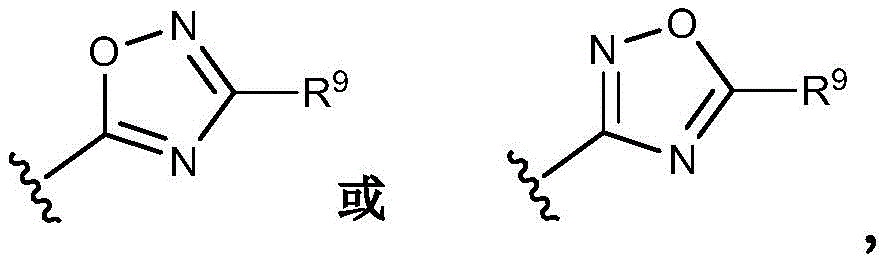 Wherein R is9Selected from-H, -Me, -Et, -CF3Isopropyl, -OMe, -OEt, -O-isopropyl, -CH2NMe2-tert-butyl and cyclopropyl.
In certain embodiments of the compounds of formula I, II, III or IV, R4And R5Each independently selected from-H, halogen and-R, wherein each occurrence of R is independently substituted with 0-5R', orR is4And R5Can form with the carbon atom to which they are bound an alkyl group having 0-3 substituents independently selected from N, O, S, SO and SO2A 3-10 membered aromatic or non-aromatic ring of another heteroatom, wherein the ring is substituted with 0-5R'. In certain embodiments, R4And R5Each independently selected from-H, -Me, -Et, -F, or R4And R5Together with the carbon atoms to which they are attached form a 3-8 membered aliphatic ring. In certain embodiments, R4And R5Are all-H.
In certain embodiments, the present invention provides a compound of formula II, or a pharmaceutically acceptable salt, hydrate, solvate, polymorph, isomer, or combination thereof:
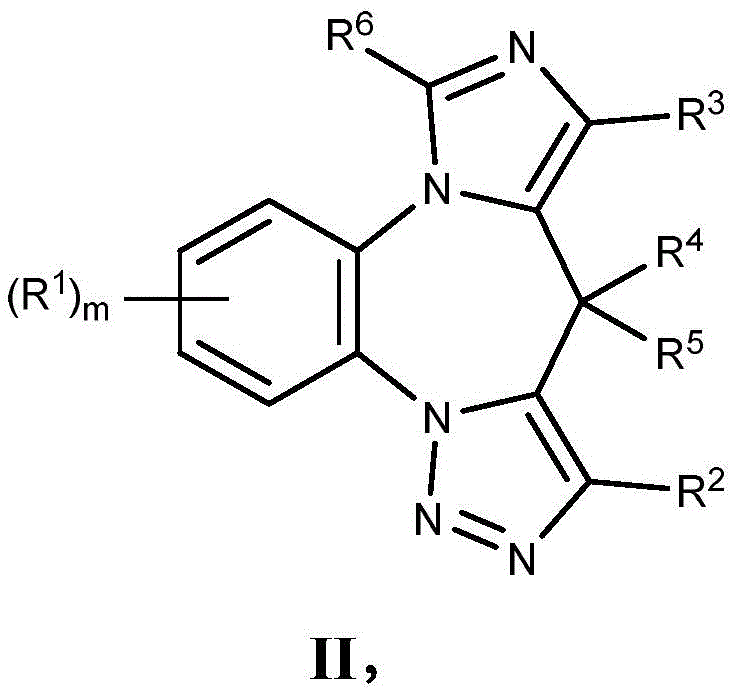
Wherein:
m is 0-3 (e.g., m is 1);
each R1Independently selected from: -Cl, -F, -OMe and-C ≡ CH;
R2is halogen or- (CR)2)1-3-OR, wherein each occurrence of R is independently selected from-H, - (C1-C6) alkyl, (C6-C10) -aryl- (e.g., phenyl) and (C6-C10) -aryl- (C1-C12) aliphatic- (e.g., phenyl- (C1-C6) alkyl-), and wherein each occurrence of R is independently substituted with 0-5R';
R3selected from: -CN, -C.ident.CH, -C.ident.C- (C1-C6) alkyl, -C.ident.C-phenyl,

R4and R5Each occurrence of (A) is independently-H or- (C1-C6) alkyl;
each R6Independently is-H or- (C1-C6) alkyl;
wherein each occurrence of R' is independently selected from the group consisting of halogen, -R ", -OR", oxo, -CH2OR”、-CH2NR”2、-C(O)N(R”)2、-C(O)OR”、-NO2、-NCS、-CN、-CF3、-OCF3and-N (R')2;
Wherein each occurrence of R' is independently selected from H, - (C1-C6) -alkyl, - (C1-C6) -aliphatic, (C3-C6) -cycloalkyl, 3-6 membered heterocyclyl, 5-10 membered heteroaryl-, (C6-C10) -aryl-, (5-10 membered heteroaryl) - (C1-C6) -alkyl-, (C6-C10) -aryl- (C1-C6) -alkyl-, (5-10 membered heteroaryl) -O- (C1-C6) -alkyl-or (C6-C10) -aryl-O- (C1-C6) -alkyl-, wherein each occurrence of R' is independently substituted with 0-5 substituents selected from the group consisting of: halogen, -Ro、-ORoOxo, -CH 2ORo、-CH2N(Ro)2、-C(O)N(Ro)2、-C(O)ORo、-NO2、-NCS、-CN、-CF3、-OCF3and-N (R)o)2Wherein R isoEach occurrence of (a) is independently selected from: - (C1-C6) -aliphatic, (C3-C6) -cycloalkyl, 3-6 membered heterocyclyl, 5-10 membered heteroaryl-and (C6-C10) -aryl-.
In certain of the above embodiments, R3Selected from:

wherein each occurrence of R 'is independently selected from- (C1-C6) -alkyl (e.g., straight or branched), -C.ident.CH, phenyl, thiophene, (5-10 membered heteroaryl) - (C1-C6) -alkyl-and (C6-C10) -aryl- (C1-C6) -alkyl-, wherein each R' is independently substituted with 0-3 substituents selected from: halogen, -Ro、-ORoOxo, -CH2ORo、-CH2N(Ro)2、-C(O)N(Ro)2、-C(O)ORo、-NO2、-NCS、-CN、-CF3、-OCF3and-N (R)o)2Wherein R isoEach occurrence of (a) is independently selected from: - (C1-C6) -aliphatic, (C3-C6) -cycloalkyl, 3-6-membered heterocyclyl, 5-10-membered heteroaryl-And (C6-C10) -aryl-.
In certain embodiments, the present invention provides a compound of formula II, or a pharmaceutically acceptable salt, hydrate, solvate, polymorph, isomer, or combination thereof:
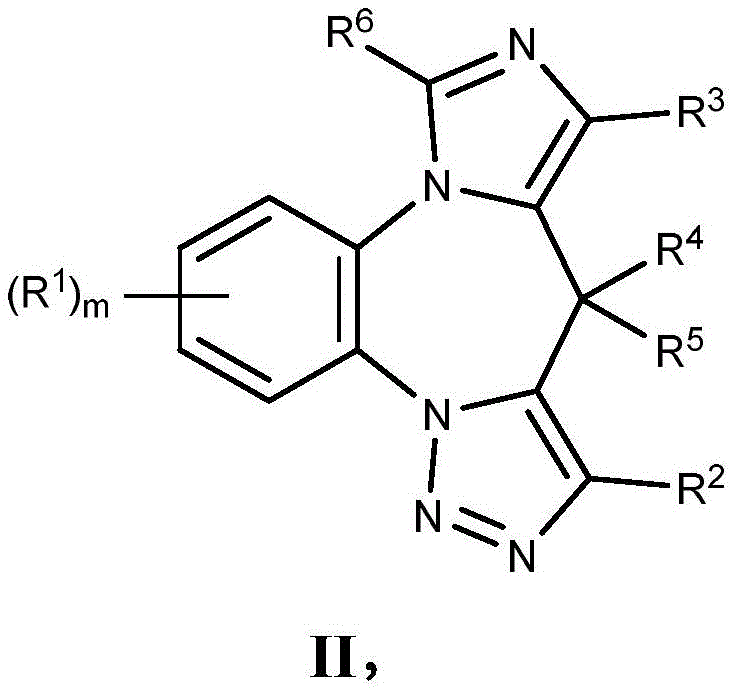
wherein:
m is 0 to 3;
each R1Independently selected from: halogen (e.g., Cl, F), -H, - (C1-C6) alkyl, -OH, -O ((C1-C6) alkyl) (e.g., -OMe), -NO2、-CN、-CF3and-OCF3Wherein R is1Independently substituted with 0-5R';
R2selected from: -H, halogen, - (C1-C6) alkyl, -OH, -O ((C1-C6) alkyl), -C (O) O ((C1-C6) alkyl), -C (O) NR 2(C6-C10) -aryl- (e.g., phenyl), (C6-C10) -aryl- (C1-C12) aliphatic-, (C6-C10) -aryl-O- (C1-C12) aliphatic-, (C6-C10) -aryl-N (R ") - (C1-C12) aliphatic-, (5-10 membered heteroaryl) - (C1-C12) aliphatic-, (5-10 membered heteroaryl) -O- (C1-C12) aliphatic-, (5-10 membered heteroaryl) -N (R") - (C1-C12) aliphatic-, (3-10 membered heterocyclyl) - (C1-C12) aliphatic-, (3-10 membered heterocyclyl) -O- (C1-C12) aliphatic-and (3-10 membered heterocyclyl ) -N (R ") - (C1-C12) aliphatic-,
wherein R is2Independently substituted with 0-5R';
R3selected from: - (C1-C6) alkyl, - (C2-C6) alkenyl (e.g., -CH ═ CH2) -C.ident.CH, -CN, halogen (e.g., Br), -SO2((C6-C10) -aryl), -SO2((C1-C6) alkyl), -C (O) N ((C1-C6) alkyl)2、-C(O)NH2-C (O) O ((C1-C6) alkyl), -C (O) ((C1-C6) alkyl), - (C6-C10) aryl, 5-10 membered heteroaryl (e.g., 5 membered heteroaryl such as optionally substituted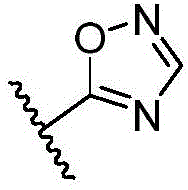 ) And 5-10 membered heterocyclyl (e.g., 5 membered heterocyclyl such as optionally substitutedIs of generation
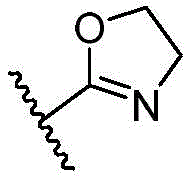 ) Wherein R is3Independently substituted with 0-5R';
R4and R5Each independently selected from-H, halogen, and- (C1-C6) alkyl;
R6selected from-H and- (C1-C6) alkyl;
each R is independently selected from:
H-,
(C1-C12) -aliphatic radical-,
(C3-C10) -cycloalkyl-,
(C3-C10) -cycloalkenyl-,
[ (C3-C10) -cycloalkyl ] - (C1-C12) -aliphatic-,
[ (C3-C10) -cycloalkenyl ] - (C1-C12) -aliphatic-,
[ (C3-C10) -cycloalkyl ] -O- (C1-C12) -aliphatic-,
[ (C3-C10) -cycloalkenyl ] -O- (C1-C12) -aliphatic-,
(C6-C10) -aryl-,
(C6-C10) -aryl- (C1-C12) aliphatic-,
(C6-C10) -aryl-O- (C1-C12) aliphatic-,
(C6-C10) -aryl-N (R') - (C1-C12) aliphatic-,
3-to 10-membered heterocyclyl-,
(3-10 membered heterocyclyl) - (C1-C12) aliphatic-,
(3-10 membered heterocyclyl) -O- (C1-C12) aliphatic-,
(3-10 membered heterocyclyl) -N (R') - (C1-C12) aliphatic-,
a 5-to 10-membered heteroaryl-,
(5-10 membered heteroaryl) - (C1-C12) -aliphatic-,
(5-10 membered heteroaryl) -O- (C1-C12) -aliphatic-; and
(5-10 membered heteroaryl) -N (R ") - (C1-C12) -aliphatic-;
wherein said heterocyclyl has 1-4 substituents independently selected from N, NH, O, S, SO and SO2And said heteroaryl has 1-4 heteroatoms independently selected from N, NH,Heteroatoms of O and S;
wherein each occurrence of R is independently substituted with 0-5R';
or when two R groups are bound to the same atom, the two R groups may be taken together with the atom to which they are bound to form a compound having 0-4 substituents independently selected from N, NH, O, S, SO, and SO 2A 3-10 membered aromatic or non-aromatic ring of a heteroatom of (a), wherein said ring is optionally substituted with 0-5R' and wherein said ring is optionally fused with (C6-C10) aryl, 5-10 membered heteroaryl, (C3-C10) cycloalkyl or 3-10 membered heterocyclyl;
wherein each occurrence of R' is independently selected from the group consisting of halogen, -R ", -OR", oxo, -CH2OR”、-CH2NR”2、-C(O)N(R”)2、-C(O)OR”、-NO2、-NCS、-CN、-CF3、-OCF3and-N (R')2;
Wherein each occurrence of R' is independently selected from the group consisting of H, - (C1-C6) -alkyl, (C3-C6) -cycloalkyl, 3-6 membered heterocyclyl, 5-10 membered heteroaryl-, (C6-C10) -aryl-, (5-10 membered heteroaryl) - (C1-C6) -alkyl-, (C6-C10) -aryl- (C1-C6) -alkyl-, (5-10 membered heteroaryl) -O- (C1-C6) -alkyl-and (C6-C10) -aryl-O- (C1-C6) -alkyl-.
In certain embodiments, the present invention provides a compound of formula II, or a pharmaceutically acceptable salt, hydrate, solvate, polymorph, isomer, or combination thereof:
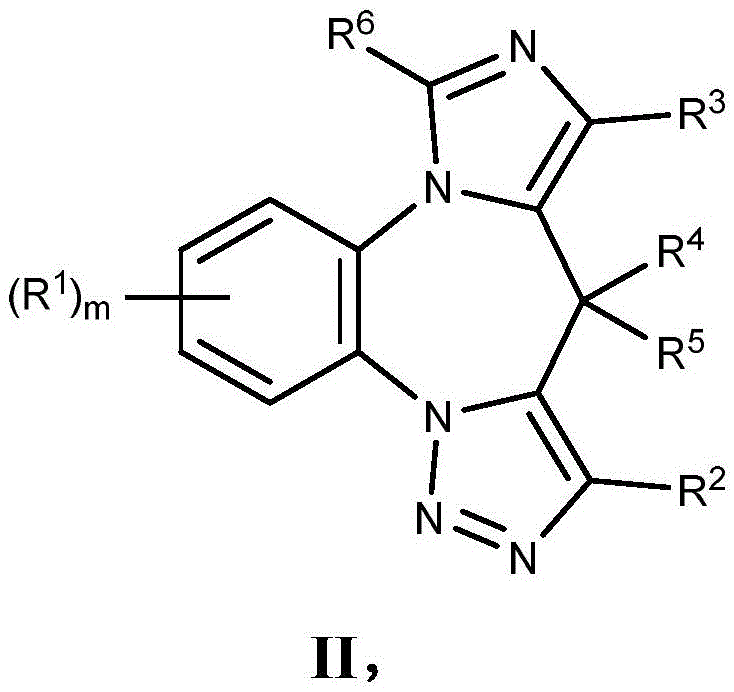
wherein:
m is 0 to 3;
each R1Independently selected from: halogen (e.g., Cl, F), -H, - (C1-C6) alkyl, -OH, -O ((C1-C6) alkyl) (e.g., -OMe), -NO2、-CN、-CF3and-OCF3Wherein R is1Independently substituted with 0-5R';
R2selected from: -H, -C (O) NR2And (C6-C10) -aryl- (e.g., phenyl);
R3selected from: - (C1-C6) alkyl, - (C2-C6) alkenyl (e.g., -CH ═ CH 2) -C.ident.CH, -CN, halogen (e.g., Br), -SO2((C6-C10) -aryl), -SO2((C1-C6) alkyl), -C (O) N ((C1-C6) alkyl)2、-C(O)NH2-C (O) O ((C1-C6) alkyl), -C (O) ((C1-C6) alkyl), - (C6-C10) aryl, 5-10 membered heteroaryl (e.g., 5 membered heteroaryl such as optionally substituted ) And 5-10 membered heterocyclic groups (e.g., 5-membered heterocyclic groups such as optionally substituted
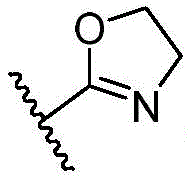 ) Wherein R is3Independently substituted with 0-5R';
R4and R5Each is-H, halogen, and- (C1-C6) alkyl;
R6selected from-H and- (C1-C6) alkyl;
each R is independently selected from:
H-,
(C1-C12) -aliphatic radical-,
(C3-C10) -cycloalkyl-,
(C3-C10) -cycloalkenyl-,
[ (C3-C10) -cycloalkyl ] - (C1-C12) -aliphatic-,
[ (C3-C10) -cycloalkenyl ] - (C1-C12) -aliphatic-,
[ (C3-C10) -cycloalkyl ] -O- (C1-C12) -aliphatic-,
[ (C3-C10) -cycloalkenyl ] -O- (C1-C12) -aliphatic-,
(C6-C10) -aryl-,
(C6-C10) -aryl- (C1-C12) aliphatic-,
(C6-C10) -aryl-O- (C1-C12) aliphatic-,
(C6-C10) -aryl-N (R') - (C1-C12) aliphatic-,
3-to 10-membered heterocyclyl-,
(3-10 membered heterocyclyl) - (C1-C12) aliphatic-,
(3-10 membered heterocyclyl) -O- (C1-C12) aliphatic-,
(3-10 membered heterocyclyl) -N (R') - (C1-C12) aliphatic-,
a 5-to 10-membered heteroaryl-,
(5-10 membered heteroaryl) - (C1-C12) -aliphatic-,
(5-10 membered heteroaryl) -O- (C1-C12) -aliphatic-; and
(5-10 membered heteroaryl) -N (R ") - (C1-C12) -aliphatic-;
wherein said heterocyclyl has 1-4 substituents independently selected from N, NH, O, S, SO and SO2And said heteroaryl has 1-4 heteroatoms independently selected from N, NH, O, and S;
wherein each occurrence of R is independently substituted with 0-5R';
or when two R groups are bound to the same atom, the two R groups may be taken together with the atom to which they are bound to form a compound having 0-4 substituents independently selected from N, NH, O, S, SO, and SO2A 3-10 membered aromatic or non-aromatic ring of a heteroatom of (a), wherein said ring is optionally substituted with 0-5R' and wherein said ring is optionally fused with (C6-C10) aryl, 5-10 membered heteroaryl, (C3-C10) cycloalkyl or 3-10 membered heterocyclyl;
wherein each occurrence of R' is independently selected from the group consisting of halogen, -R ", -OR", oxo, -CH2OR”、-CH2NR”2、-C(O)N(R”)2、-C(O)OR”、-NO2、-NCS、-CN、-CF3、-OCF3and-N (R')2;
Wherein each occurrence of R' is independently selected from the group consisting of H, - (C1-C6) -alkyl, (C3-C6) -cycloalkyl, 3-6 membered heterocyclyl, 5-10 membered heteroaryl-, (C6-C10) -aryl-, (5-10 membered heteroaryl) - (C1-C6) -alkyl-, (C6-C10) -aryl- (C1-C6) -alkyl-, (5-10 membered heteroaryl) -O- (C1-C6) -alkyl-and (C6-C10) -aryl-O- (C1-C6) -alkyl-.
In certain embodiments, the present invention provides a compound of formula II, or a pharmaceutically acceptable salt, hydrate, solvate, polymorph, isomer, or combination thereof:
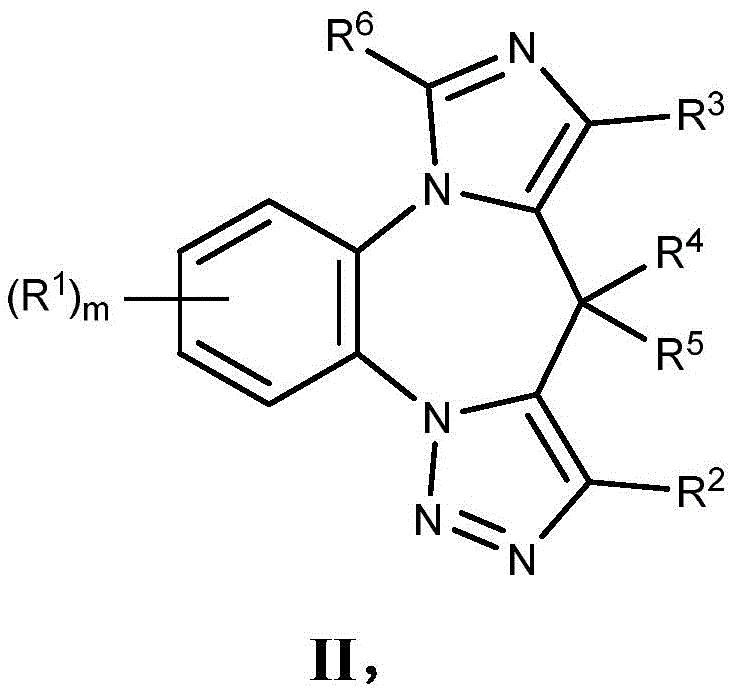
wherein:
m is 0 to 3;
each R1Independently selected from: halogen (e.g., Cl, F) and-O ((C1-C6) alkyl) (e.g., -OMe), wherein R1Independently substituted with 0-5R';
R2selected from: -H, -C (O) NR2And (C6-C10) -aryl- (e.g., phenyl);
R3selected from: halogen (e.g., Br), 5-10 membered heteroaryl (e.g., 5 membered heteroaryl such as optionally substituted ) And 5-10 membered heterocyclic groups (e.g., 5-membered heterocyclic groups such as optionally substituted
 ) Wherein R is3Independently substituted with 0-5R';
R4and R5Each is-H;
R6is-H;
each R is independently selected from:
H-,
(C1-C12) -aliphatic radical-,
(C3-C10) -cycloalkyl-,
(C3-C10) -cycloalkenyl-,
[ (C3-C10) -cycloalkyl ] - (C1-C12) -aliphatic-,
[ (C3-C10) -cycloalkenyl ] - (C1-C12) -aliphatic-,
[ (C3-C10) -cycloalkyl ] -O- (C1-C12) -aliphatic-,
[ (C3-C10) -cycloalkenyl ] -O- (C1-C12) -aliphatic-,
(C6-C10) -aryl-,
(C6-C10) -aryl- (C1-C12) aliphatic-,
(C6-C10) -aryl-O- (C1-C12) aliphatic-,
(C6-C10) -aryl-N (R') - (C1-C12) aliphatic-,
3-to 10-membered heterocyclyl-,
(3-10 membered heterocyclyl) - (C1-C12) aliphatic-,
(3-10 membered heterocyclyl) -O- (C1-C12) aliphatic-,
(3-10 membered heterocyclyl) -N (R') - (C1-C12) aliphatic-,
a 5-to 10-membered heteroaryl-,
(5-10 membered heteroaryl) - (C1-C12) -aliphatic-,
(5-10 membered heteroaryl) -O- (C1-C12) -aliphatic-; and
(5-10 membered heteroaryl) -N (R ") - (C1-C12) -aliphatic-;
wherein said heterocyclyl has 1-4 substituents independently selected from N, NH, O, S, SO and SO2And said heteroaryl has 1-4 heteroatoms independently selected from N, NH, O, and S;
wherein each occurrence of R is independently substituted with 0-5R';
or when two R groups are bound to the same atom, the two R groups may be taken together with the atom to which they are bound to form a compound having 0-4 substituents independently selected from N, NH, O, S, SO, and SO2A 3-10 membered aromatic or non-aromatic ring of a heteroatom of (a), wherein said ring is optionally substituted with 0-5R' and wherein said ring is optionally fused with (C6-C10) aryl, 5-10 membered heteroaryl, (C3-C10) cycloalkyl or 3-10 membered heterocyclyl;
wherein each occurrence of R' is independently selected from the group consisting of halogen, -R ", -OR", oxo, -CH2OR”、-CH2NR”2、-C(O)N(R”)2、-C(O)OR”、-NO2、-NCS、-CN、-CF3、-OCF3and-N (R')2;
Wherein each occurrence of R' is independently selected from the group consisting of H, - (C1-C6) -alkyl, (C3-C6) -cycloalkyl, 3-6 membered heterocyclyl, 5-10 membered heteroaryl-, (C6-C10) -aryl-, (5-10 membered heteroaryl) - (C1-C6) -alkyl-, (C6-C10) -aryl- (C1-C6) -alkyl-, (5-10 membered heteroaryl) -O- (C1-C6) -alkyl-and (C6-C10) -aryl-O- (C1-C6) -alkyl-.
In certain embodiments, the present invention provides a compound of formula II, or a pharmaceutically acceptable salt, hydrate, solvate, polymorph, isomer, or combination thereof:
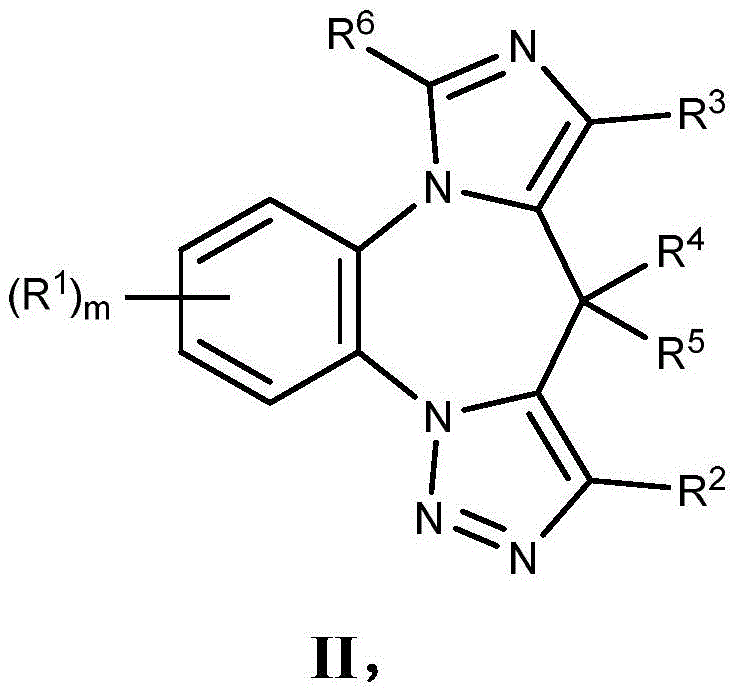
wherein:
m is 0 to 3;
each R1Independently selected from: halogen (e.g., Cl, F), -H, - (C1-C6) alkyl, -OH, -O ((C1-C6) alkyl) (e.g., -OMe), -NO2、-CN、-CF3and-OCF3Wherein R is1Independently substituted with 0-5R';
R2selected from: -H, - (C1-C6) alkyl, -OH, -O ((C1-C6) alkyl), -C (O) O ((C1-C6) alkyl), -C (O) NR2(C6-C10) -aryl- (C6-C10) -aryl- (C1-C12) aliphatic-, (C6-C10) -aryl-O- (C1-C12) aliphatic-, (C6-C10) -aryl-N (R ') - (C1-C12) aliphatic-, (5-10 membered heteroaryl) - (C1-C12) aliphatic-, (5-10 membered heteroaryl) -O- (C1-C12) aliphatic-, (5-10 membered heteroaryl) -N (R') - (C1-C12) aliphatic-, (3-10 membered heterocyclyl) - (C1-C12) aliphatic-, (3-10 membered heterocyclyl) -O- (C1-C12) aliphatic-and (3-10 membered heterocyclyl) -N (R-) " ) - (C1-C12) aliphatic radical-,
wherein R is2Independently substituted with 0-5R';
R3selected from: - (C2-C6) alkenyl (e.g., -CH ═ CH2) And 5-10 membered heterocyclic groups (e.g., 5-membered heterocyclic groups such as optionally substituted ) Wherein R is3Independently substituted with 0-5R';
R4And R5Each independently selected from-H, halogen, and- (C1-C6) alkyl;
R6selected from-H and- (C1-C6) alkyl;
each R is independently selected from:
H-,
(C1-C12) -aliphatic radical-,
(C3-C10) -cycloalkyl-,
(C3-C10) -cycloalkenyl-,
[ (C3-C10) -cycloalkyl ] - (C1-C12) -aliphatic-,
[ (C3-C10) -cycloalkenyl ] - (C1-C12) -aliphatic-,
[ (C3-C10) -cycloalkyl ] -O- (C1-C12) -aliphatic-,
[ (C3-C10) -cycloalkenyl ] -O- (C1-C12) -aliphatic-,
(C6-C10) -aryl-,
(C6-C10) -aryl- (C1-C12) aliphatic-,
(C6-C10) -aryl-O- (C1-C12) aliphatic-,
(C6-C10) -aryl-N (R') - (C1-C12) aliphatic-,
3-to 10-membered heterocyclyl-,
(3-10 membered heterocyclyl) - (C1-C12) aliphatic-,
(3-10 membered heterocyclyl) -O- (C1-C12) aliphatic-,
(3-10 membered heterocyclyl) -N (R') - (C1-C12) aliphatic-,
a 5-to 10-membered heteroaryl-,
(5-10 membered heteroaryl) - (C1-C12) -aliphatic-,
(5-10 membered heteroaryl) -O- (C1-C12) -aliphatic-; and
(5-10 membered heteroaryl) -N (R ") - (C1-C12) -aliphatic-;
wherein said heterocyclyl has 1-4 substituents independently selected from N, NH, O, S, SO and SO2And said heteroaryl has 1-4 heteroatoms independently selected from N, NH, O, and S;
wherein each occurrence of R is independently substituted with 0-5R';
Or when two R groups are bound to the same atom, the two R groups may be taken together with the atom to which they are bound to form a compound having 0-4 substituents independently selected from N, NH, O, S, SO, and SO2A 3-10 membered aromatic or non-aromatic ring of a heteroatom of (a), wherein said ring is optionally substituted with 0-5R' and wherein said ring is optionally fused with (C6-C10) aryl, 5-10 membered heteroaryl, (C3-C10) cycloalkyl or 3-10 membered heterocyclyl;
wherein each occurrence of R' is independently selected from the group consisting of halogen, -R ", -OR", oxo, -CH2OR”、-CH2N(R”)2、-C(O)N(R”)2、-C(O)OR”、-NO2、-NCS、-CN、-CF3、-OCF3and-N (R')2;
Wherein each occurrence of R' is independently selected from the group consisting of H, - (C1-C6) -alkyl, (C3-C6) -cycloalkyl, 3-6 membered heterocyclyl, 5-10 membered heteroaryl-, (C6-C10) -aryl-, (5-10 membered heteroaryl) - (C1-C6) -alkyl-, (C6-C10) -aryl- (C1-C6) -alkyl-, (5-10 membered heteroaryl) -O- (C1-C6) -alkyl-and (C6-C10) -aryl-O- (C1-C6) -alkyl-.
In certain embodiments, the present invention provides a compound of formula II, or a pharmaceutically acceptable salt, hydrate, solvate, polymorph, isomer, or combination thereof:
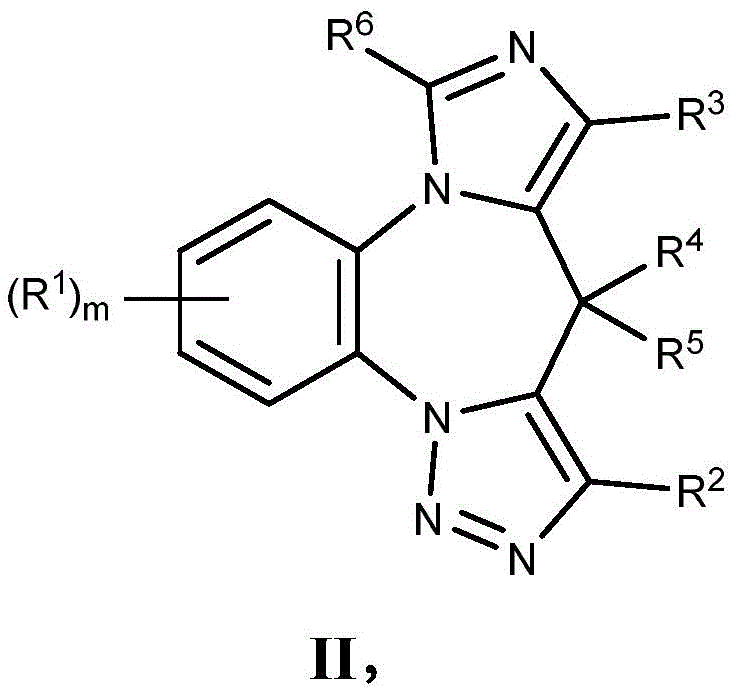
wherein:
m is 0 to 3;
each R1Independently selected from: halogen (e.g., Cl, F) and-O ((C1-C6) alkyl) (e.g., -OMe), wherein R1Independently substituted with 0-5R';
R2Selected from: -H, - (C1-C6) alkyl, (C6-C10) -aryl- (e.g., phenyl) and (C6-C10) -aryl- (C1-C12) aliphatic-,
wherein R is2Independently substituted with 0-5R';
R3selected from: - (C2-C6) alkenyl (e.g., -CH ═ CH2) And 5-10 membered heterocyclic groups (e.g., 5-membered heterocyclic groups such as optionally substituted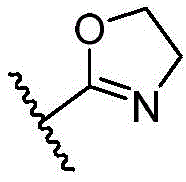 ) Wherein R is3Independently substituted with 0-5R';
R4and R5Each is-H;
R6is-H;
wherein each occurrence of R' is independently selected from the group consisting of halogen, -R ", -OR", oxo, -CH2OR”、-CH2N(R”)2、-C(O)N(R”)2、-C(O)OR”、-NO2、-NCS、-CN、-CF3、-OCF3and-N (R')2;
Wherein each occurrence of R' is independently selected from the group consisting of H, - (C1-C6) -alkyl, (C3-C6) -cycloalkyl, 3-6 membered heterocyclyl, 5-10 membered heteroaryl-, (C6-C10) -aryl-, (5-10 membered heteroaryl) - (C1-C6) -alkyl-, (C6-C10) -aryl- (C1-C6) -alkyl-, (5-10 membered heteroaryl) -O- (C1-C6) -alkyl-and (C6-C10) -aryl-O- (C1-C6) -alkyl-.
In certain embodiments, the present invention provides a compound of formula II, or a pharmaceutically acceptable salt, hydrate, solvate, polymorph, isomer, or combination thereof:

wherein:
m is 0 to 3;
each R1Independently selected from: halogen, -H, - (C1-C6) alkyl, -OH, -O ((C1-C6) alkyl), -NO2、-CN、-CF3and-OCF3Wherein said alkyl is independently substituted with 0-5R';
R2Selected from: - (C1-C6) alkyl, -OH, -O ((C1-C6) alkyl), -C (O) O ((C1-C6) alkyl), (C6-C10) -aryl- (C1-C12) aliphatic-, (C6-C10) -aryl-O- (C1-C12) aliphatic-, (C6-C10) -aryl- (C1-C12) aliphatic-O-, (3-10 membered heterocyclyl) - (C1-C12) aliphatic-, (5-10 membered heteroaryl) - (C1-C12) -aliphatic-, (5-10 membered heteroaryl) -O- (C1-C12) -aliphatic-and (5-10 membered heteroaryl) - (C1-C12) -aliphatic-O-, (C1-C6) alkyl-O-, (3-C3626-C12) alkyl-O-, (3-C6-C12) alkyl-O-, (3-C12) alkyl-C3534-C12-C, wherein said alkyl, aryl or heteroaryl is independently substituted with 0-5R';
R3selected from: - (C1-C6) alkyl, -SO2((C1-C6) alkyl), -C (O) N ((C1-C6) alkyl)2and-C (O) O ((C1-C6) alkyl), wherein said alkyl is independently substituted with 0-5R';
r' is as defined herein;
R4and R5Each independently selected from-H, halogen, and- (C1-C6) alkyl; and is
R6Selected from the group consisting of-H and- (C1-C6) alkyl.
In certain embodiments of the compounds of formula II, m is 0, 1 or 2;
when m is 1 or 2, R1Is halogen or-O ((C1-C6) alkyl) (such as-F and-OMe);
R2selected from: - (C1-C6) alkyl (e.g., -Me), (C6-C10) -aryl- (C1-C12) aliphatic- (e.g., -CH2Ph), (C6-C10) -aryl-O- (C1-C12) aliphatic- (e.g., -CH)2OPh) and (3-10 membered heterocyclyl) - (C1-C12) aliphatic group- (e.g., -CH 2-pyrrolidine and-CH2-morpholine), wherein the aryl (e.g., -Ph) or heterocyclyl (e.g., pyrrolidine or morpholine) is independently substituted with 0-5R's independently selected from-F, -Me, and-OMe, and wherein the alkyl (e.g., -Me) is independently substituted with 0-3 substituents selected from-N (Et)2and-N (Me) (CH)2Ph) is substituted with R'. R3is-C (O) O ((C1-C6) alkyl) (e.g., -COOEt);
R4and R5Are all-H; and is
R6is-H.
In certain embodiments, the present invention provides a compound of formula II, or a pharmaceutically acceptable salt, hydrate, solvate, polymorph, isomer, or combination thereof:
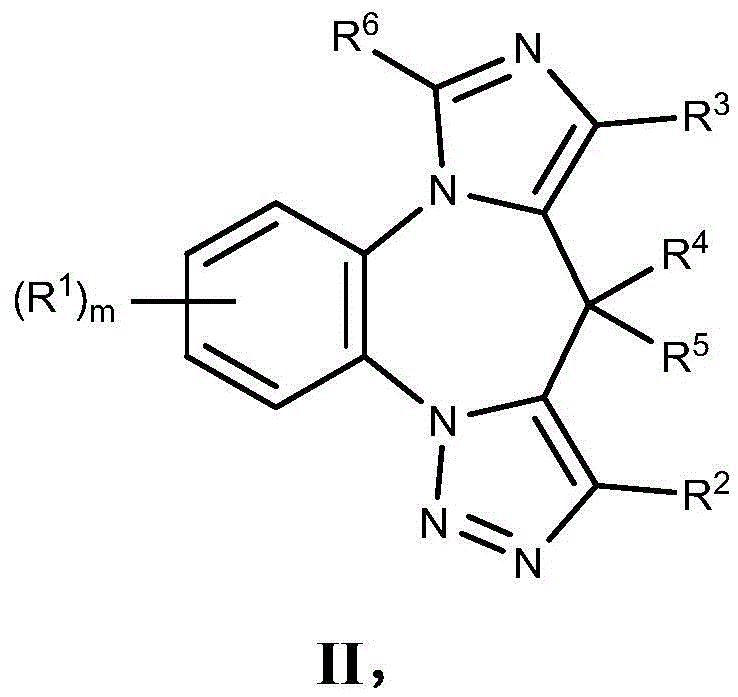
wherein:
m is 0 to 3;
each R1Independently selected from: halogen, -H, - (C1-C6) alkyl, -OH, -O ((C1-C6) alkyl), -NO2、-CN、-CF3and-OCF3Wherein R is1Independently substituted with 0-5R';
R2selected from: - (C1-C6) alkyl, -OH, -O ((C1-C6) alkyl), -C (O) O ((C1-C6) alkyl), (C6-C10) -aryl- (C1-C12) aliphatic-, (C6-C10) -aryl-O- (C1-C12) aliphatic-, (C6-C10) -aryl-N (R ") - (C1-C12) aliphatic-, (5-10 memberedHeteroaryl) - (C1-C12) aliphatic-, (5-10 membered heteroaryl) -O- (C1-C12) aliphatic-, (5-10 membered heteroaryl) -N (R ') - (C1-C12) aliphatic-, (3-10 membered heterocyclyl) - (C1-C12) aliphatic-, (3-10 membered heterocyclyl) -O- (C1-C12) aliphatic-and (3-10 membered heterocyclyl) -N (R') - (C1-C12) aliphatic-,
Wherein R is2Independently substituted with 0-5R';
R3selected from: - (C1-C6) alkyl, -C ≡ C, -CN, halogen, -SO2((C6-C10) -aryl), -SO2((C1-C6) alkyl), -C (O) N ((C1-C6) alkyl)2、-C(O)NH2-C (O) O ((C1-C6) alkyl), -C (O) ((C1-C6) alkyl), - (C6-C10) aryl and 5-10 membered heteroaryl, wherein R is3Independently substituted with 0-5R';
R4and R5Each independently selected from-H, halogen, and- (C1-C6) alkyl;
R6selected from-H and- (C1-C6) alkyl; and is
R 'and R' are as defined herein.
In certain embodiments of the compounds of formula II, m is 0, 1 or 2;
when m is 1 or 2, R1Is halogen or-O ((C1-C6) alkyl);
R2selected from:
- (C1-C6) alkyl, (C6-C10) -aryl- (C1-C12) aliphatic-, (C6-C10) aryl-O- (C1-C12) aliphatic-, (5-10 membered heteroaryl) - (C1-C12) aliphatic-and (3-10 membered heterocyclyl) - (C1-C12) aliphatic-, wherein R is2Independently substituted with 0-3R';
R3is halogen, -CN, -C.ident.C, -C (O) NH2- (C1-C6) alkyl, -C (O) ((C1-C6) alkyl), -C (O) O ((C1-C6) alkyl), -SO2(Ph(Me))、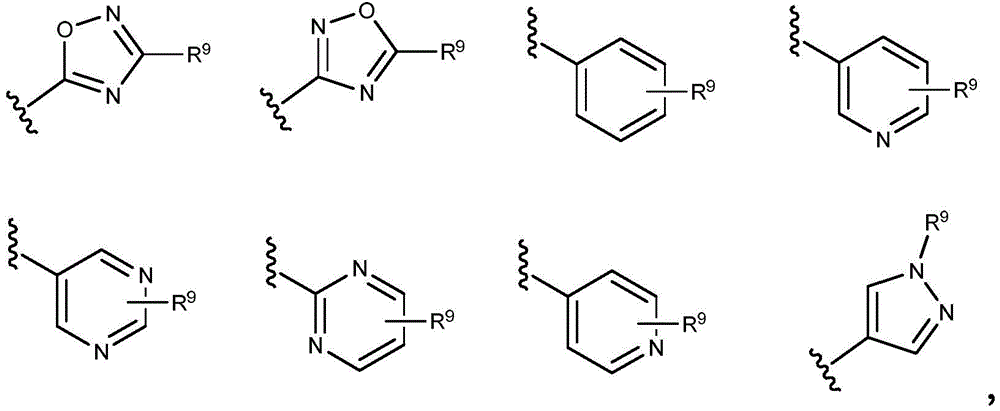 Wherein R is3Independently by 0-3R', and wherein R9Selected from-H, -Me, -Et, -CF3Isopropyl, -OMe, -tert-butyl and cyclopropyl;
R4and R5Are all-H;
R6is-H; and is
R' is as defined herein.
In certain embodiments of the compounds of formula II, R3The method comprises the following steps: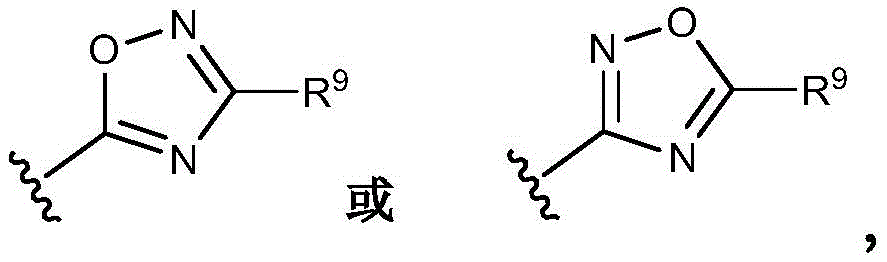 wherein R is9Selected from-H, -Me, -Et, -CF3Isopropyl, -OMe and-tert-butyl.
In certain embodiments, the present invention provides a compound of formula III, or a pharmaceutically acceptable salt, hydrate, solvate, polymorph, isomer, or combination thereof:
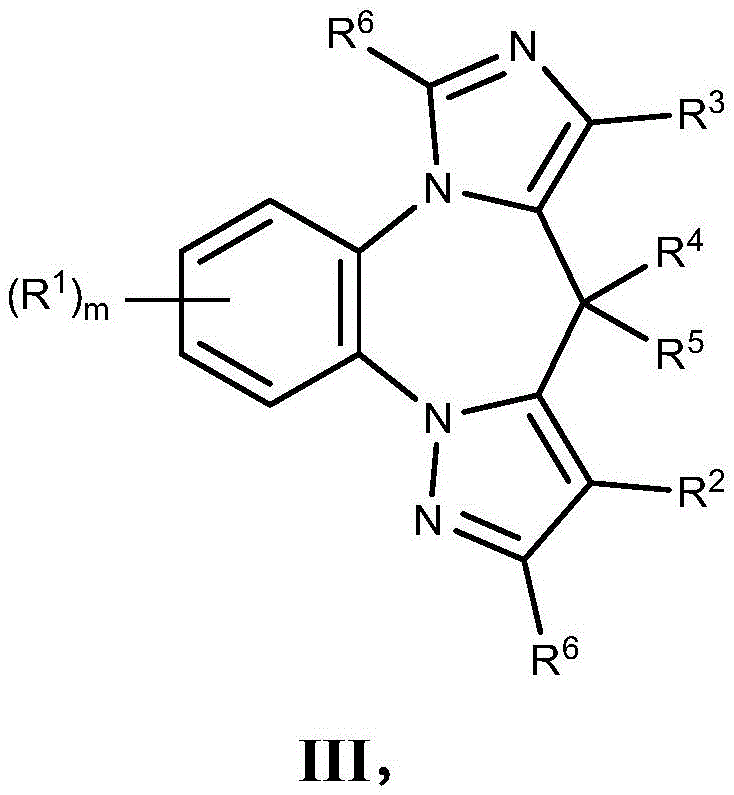
wherein:
m is 0, 1 or 2, and when m is 1 or 2, R1is-O ((C1-C6) alkyl) (such as-OMe);
R2selected from: - (C1-C6) alkyl (e.g., -Me) and (C6-C10) -aryl- (C1-C12) aliphatic- (e.g., -CH)2Ph);
R3is-C (O) O ((C1-C6) alkyl) (e.g., -COOEt);
R4and R5Are all-H; and is
R6is-H.
In another aspect, the present invention provides a compound of formula IV, or a pharmaceutically acceptable salt, hydrate, solvate, polymorph, isomer, or combination thereof:

wherein:
m is 0-3 (e.g., m is 1);
each R1Independently selected from: -Cl, -F, -OMe and-C ≡ CH;
R2is- (CH)2)nOR8Or- (CH)2)nO(CH2)nR8Wherein R is8Is independently at each occurrence- (C1-C6) alkyl or (C6-C10) -aryl (e.g., phenyl), and wherein R2Independently substituted with 0-5R';
R3selected from: -CN, -C.ident.CH, -C.ident.C- (C1-C6) alkyl, -C.ident.C-phenyl,

R4and R5Each occurrence of (A) is independently-H or- (C1-C6) alkyl;
each R6Independently is-H or- (C1-C6) alkyl;
wherein each occurrence of R' is independently selected from the group consisting of halogen, -R ", -OR", oxo, -CH2OR”、-CH2NR”2、-C(O)N(R”)2、-C(O)OR”、-NO2、-NCS、-CN、-CF3、-OCF3and-N (R')2;
Wherein each occurrence of R' is independently selected from the group consisting of H, - (C1-C6) -alkyl, - (C1-C6) -aliphatic, (C3-C6) -cycloalkyl, 3-6 membered heterocyclyl, 5-10 membered heteroaryl-, (C6-C10) -aryl-, (5-10 membered heteroaryl) - (C1-C6) -alkyl-, (C6-C10) -aryl- (C1-C6) -alkyl-, (5-10 membered heteroaryl) -O- (C1-C6) -alkyl-, and (C6-C10) -aryl-O- (C1-C6) -alkyl-, wherein each occurrence of R' is independently substituted with 0-5 substituents selected from the group consisting of: halogen, -Ro、-ORoOxo, -CH2ORo、-CH2N(Ro)2、-C(O)N(Ro)2、-C(O)ORo、-NO2、-NCS、-CN、-CF3、-OCF3and-N (R)o)2Wherein R isoEach occurrence of (a) is independently selected from: - (C1-C6) -aliphatic, (C3-C6) -cycloalkyl, 3-6 membered heterocyclyl, 5-10 membered heteroaryl-and (C6-C10) -aryl-.
In certain of the above embodiments, R3Selected from:
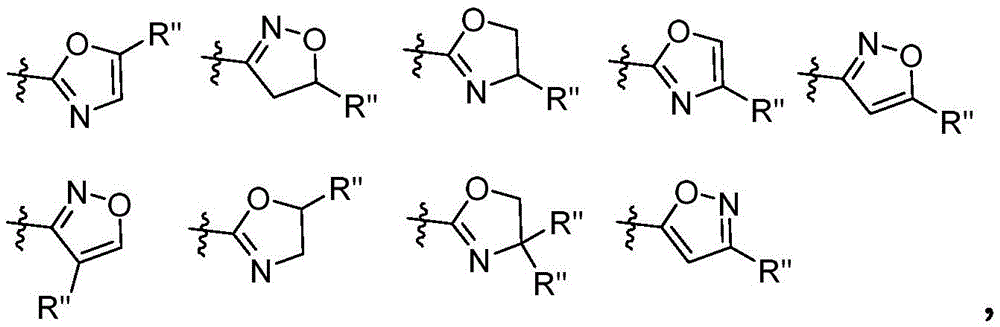
wherein each occurrence of R 'is independently selected from- (C1-C6) -alkyl (e.g., straight or branched), -C.ident.CH, phenyl, thiophene, (5-10 membered heteroaryl) - (C1-C6) -alkyl-and (C6-C10) -aryl- (C1-C6) -alkyl-, wherein each R' is independently substituted with 0-3 substituents selected from: halogen, -R o、-ORoOxo, -CH2ORo、-CH2N(Ro)2、-C(O)N(Ro)2、-C(O)ORo、-NO2、-NCS、-CN、-CF3、-OCF3and-N (R)o)2Wherein R isoEach occurrence of (a) is independently selected from: - (C1-C6) -aliphatic, (C3-C6) -cycloalkyl, 3-6 membered heterocyclyl, 5-10 membered heteroaryl-and (C6-C10) -aryl-.
In another aspect, the present invention provides a compound of formula IV, or a pharmaceutically acceptable salt, hydrate, solvate, polymorph, isomer, or combination thereof:
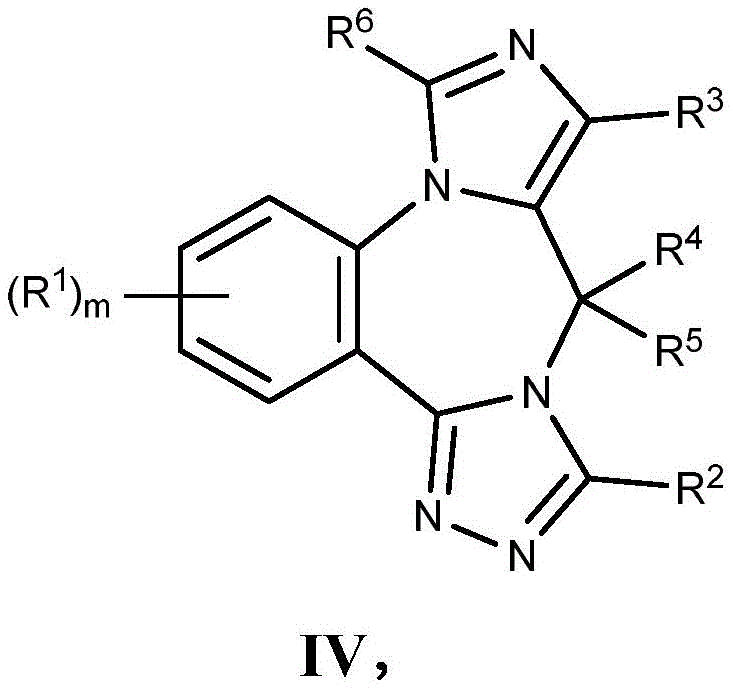
wherein:
m is 0 to 3;
each R1Independently selected from: halogen (e.g., Cl), -H, - (C1-C6) alkyl, -C.ident.CH, -OH, -O ((C1-C6) alkyl) (e.g., OMe), -NO2、-CN、-CF3and-OCF3Wherein R is1Independently substituted with 0-5R';
R2is selected from-OR8、-SR8、-(CH2)nOR8(e.g., -CH)2OMe、-CH2OEt、-CH2O isopropyl, -CH2Opyridyl), - (CH)2)nO(CH2)nR8、-(CH2)pR8And-(CH2)nN(R”)R10Wherein n is an integer selected from 0 to 4; p is an integer selected from 2 to 4; each R8Independently is- (C1-C6) alkyl, - (C3-C10) -cycloalkyl, (C6-C10) -aryl or 5-10 membered heteroaryl, wherein R8Independently for each occurrence of (a) is substituted with 0-5R'; each R10Independently is- (C3-C10) -cycloalkyl-, 3-10 membered heterocyclyl-, (C6-C10) -aryl, or 5-10 membered heteroaryl, wherein R is10Independently for each occurrence of (a) is substituted with 0-5R'; and wherein R2Independently substituted with 0-5R';
R3selected from: -H, -CN, halogen (e.g., Br), -C1-C6 alkyl, -C ≡ CH, -SO 2((C1-C6) alkyl), -C (O) N ((C1-C6) alkyl)2) -C (O) NH ((C1-C6) aliphatic group)2(e.g., -C (O) NH ((C2-C6) alkynyl)2) (C6-C10) -aryl- (C1-C12) aliphatic-, -C (O) ((C1-C6) alkyl), -C (O) O ((C1-C6) alkyl), 5-or 6-membered heterocyclyl- (e.g., optionally substituted) Or optionally substituted
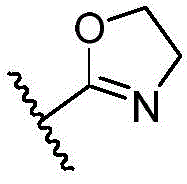 ) And 5 or 6 membered heteroaryl (e.g., optionally substituted)
 Optionally substituted
 Wherein R is9Selected from-Me, -Et, isopropyl, -CF3-OMe, -OEt, -O-isopropyl, -CH2NMe2And a cyclopropyl group; and wherein R3Independently substituted with 0-5R';
R4and R5Each independently selected from-H, halogen, and- (C1-C6) alkyl;
R6selected from-H and- (C1-C6) alkyl;
wherein each occurrence of R' is independently selected from the group consisting of halogen, -R ", -OR", oxo, -CH2OR”、-CH2N(R”)2、-C(O)N(R”)2、-C(O)OR”、-NO2、-NCS、-CN、-CF3、-OCF3and-N (R')2;
Wherein each occurrence of R' is independently selected from the group consisting of H, - (C1-C6) -alkyl, (C3-C6) -cycloalkyl, 3-6 membered heterocyclyl, 5-10 membered heteroaryl-, (C6-C10) -aryl-, (5-10 membered heteroaryl) - (C1-C6) -alkyl-, (C6-C10) -aryl- (C1-C6) -alkyl-, (5-10 membered heteroaryl) -O- (C1-C6) -alkyl-and (C6-C10) -aryl-O- (C1-C6) -alkyl-.
In another aspect, the present invention provides a compound of formula IV, or a pharmaceutically acceptable salt, hydrate, solvate, polymorph, isomer, or combination thereof:

Wherein:
m is 1;
R1is-C ≡ CH optionally substituted with R';
R2is selected from-OR8、-SR8、-(CH2)nOR8(e.g., -CH)2OMe、-CH2OEt、-CH2O isopropyl, -CH2Opyridyl), - (CH)2)nO(CH2)nR8、-(CH2)pR8And- (CH)2)nN(R”)R10Wherein n is an integer selected from 0 to 4; p is an integer selected from 2 to 4; each R8Independently is- (C1-C6) alkyl, - (C3-C10) -cycloalkyl, (C6-C10) -aryl or 5-10 membered heteroaryl, wherein R8Independently for each occurrence of (a) is substituted with 0-5R'; each R10Independently is- (C3-C10) -cycloalkyl-, 3-10 membered heterocyclyl-, (C6-C10) -aryl, or 5-10 membered heteroaryl, wherein R is10Independently for each occurrence of (a) is substituted with 0-5R'; and wherein R2Independently substituted with 0-5R';
R3selected from: -H, -CN, halogen (e.g. Br), -C1-C6 alkyl, -C ≡ C6CH、-SO2((C1-C6) alkyl), -C (O) N ((C1-C6) alkyl)2) -C (O) NH ((C1-C6) aliphatic group)2(e.g., -C (O) NH ((C1-C6) alkynyl)2) (C6-C10) -aryl- (C1-C12) aliphatic-, -C (O) ((C1-C6) alkyl), -C (O) O ((C1-C6) alkyl), 5-or 6-membered heterocyclyl- (e.g., optionally substituted)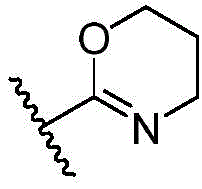 Or optionally substituted
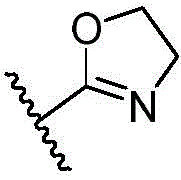 ) And 5 or 6 membered heteroaryl (e.g., optionally substituted)
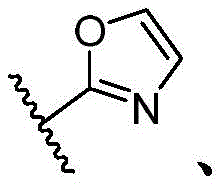 Optionally substituted
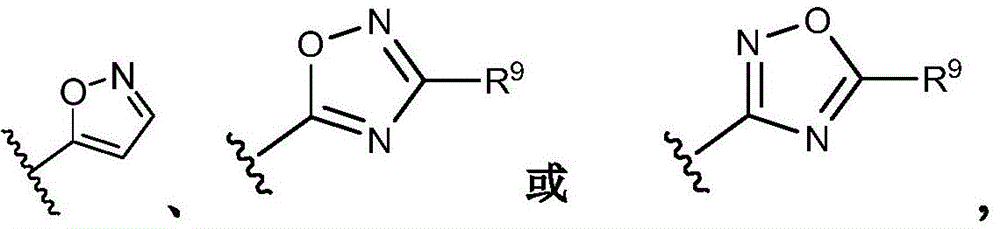 Wherein R is9Selected from-Me, -Et, isopropyl, -CF3-OMe, -OEt, -O-isopropyl, -CH2NMe2And a cyclopropyl group; and wherein R 3Independently substituted with 0-5R';
R4and R5Each independently selected from-H, halogen, and- (C1-C6) alkyl;
R6selected from-H and- (C1-C6) alkyl;
wherein each occurrence of R' is independently selected from the group consisting of halogen, -R ", -OR", oxo, -CH2OR”、-CH2NR”2、-C(O)N(R”)2、-C(O)OR”、-NO2、-NCS、-CN、-CF3、-OCF3and-N (R')2;
Wherein each occurrence of R' is independently selected from the group consisting of H, - (C1-C6) -alkyl, (C3-C6) -cycloalkyl, 3-6 membered heterocyclyl, 5-10 membered heteroaryl-, (C6-C10) -aryl-, (5-10 membered heteroaryl) - (C1-C6) -alkyl-, (C6-C10) -aryl- (C1-C6) -alkyl-, (5-10 membered heteroaryl) -O- (C1-C6) -alkyl-and (C6-C10) -aryl-O- (C1-C6) -alkyl-.
In another aspect, the present invention provides a compound of formula IV, or a pharmaceutically acceptable salt, hydrate, solvate, polymorph, isomer, or combination thereof:
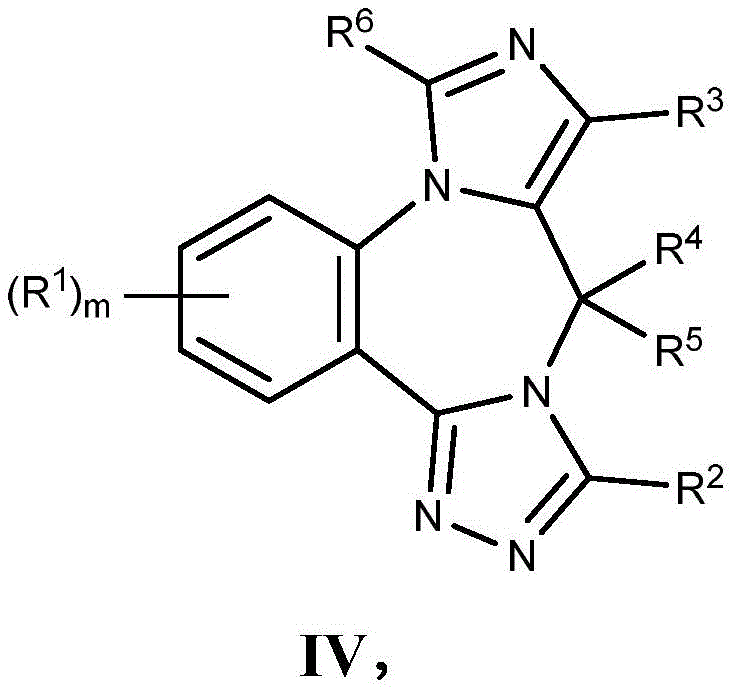
wherein:
m is 1;
each R1is-C ≡ CH optionally substituted with R';
R2is- (CH)2)nOR8(e.g., -CH)2OMe、-CH2OEt、-CH2O isopropyl, -CH2Pyridyl O); and wherein R2Independently substituted with 0-5R';
R3selected from: 5-or 6-membered heterocyclyl- (e.g. optionally substituted)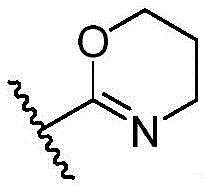 Or optionally substituted
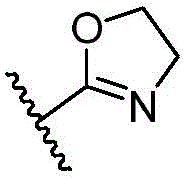 ) And 5 or 6 membered heteroaryl (e.g., optionally substituted)
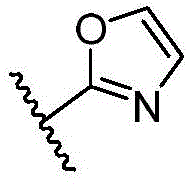 Or optionally substituted
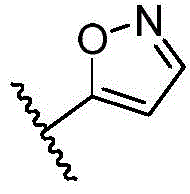 ) (ii) a And wherein R3Independently substituted with 0-5R';
R4and R5Each is-H;
R6is-H; and is
Wherein each occurrence of R' is independently selected from the group consisting of halogen, -R ", -OR", oxo, -CH2OR”、-CH2NR”2、-C(O)N(R”)2、-C(O)OR”、-NO2、-NCS、-CN、-CF3、-OCF3and-N (R')2;
Wherein each occurrence of R' is independently selected from the group consisting of H, - (C1-C6) -alkyl, (C3-C6) -cycloalkyl, 3-6 membered heterocyclyl, 5-10 membered heteroaryl-, (C6-C10) -aryl-, (5-10 membered heteroaryl) - (C1-C6) -alkyl-, (C6-C10) -aryl- (C1-C6) -alkyl-, (5-10 membered heteroaryl) -O- (C1-C6) -alkyl-and (C6-C10) -aryl-O- (C1-C6) -alkyl-.
In another aspect, the present invention provides a compound of formula IV, or a pharmaceutically acceptable salt, hydrate, solvate, polymorph, isomer, or combination thereof:
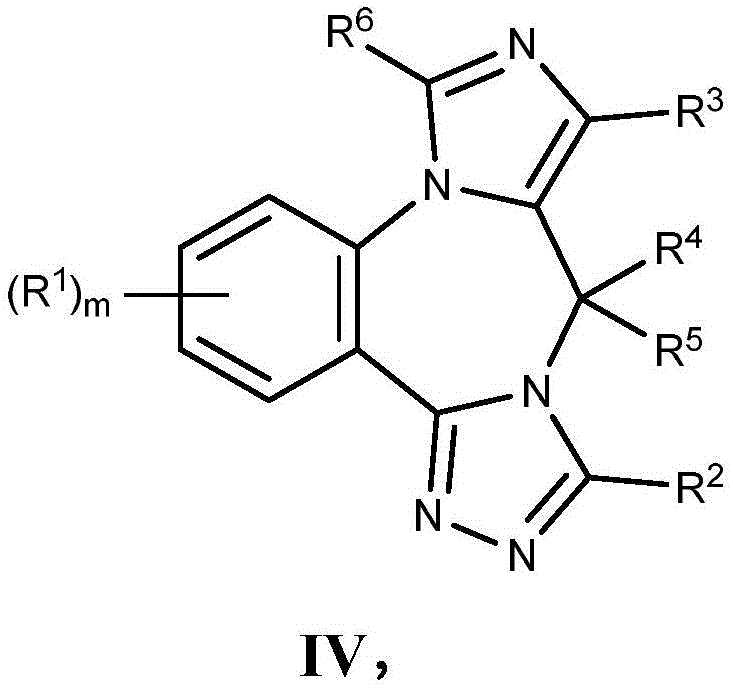
wherein:
m is 0 to 3;
when m is 1 or 2, R1Is-halogen or-O ((C1-C6) alkyl);
each R1Independently selected from: halogen (e.g., Cl), -H, - (C1-C6) alkyl, -C.ident.CH, -OH, -O ((C1-C6) alkyl) (e.g., OMe), -NO2、-CN、-CF3and-OCF3Wherein R is1Independently substituted with 0-5R';
R2is selected from-OR8、-SR8、-(CH2)nOR8(e.g., -CH)2OMe、-CH2OEt、-CH2O isopropyl, -CH2Opyridyl), - (CH)2)nO(CH2)nR8、-(CH2)pR8And- (CH)2)nN(R”)R10Wherein n is an integer selected from 0 to 4; p is an integer selected from 2 to 4; each R8Independently is- (C1-C6) alkyl, - (C3-C10) -cycloalkyl, (C6-C10) -aryl or 5-10 membered heteroaryl, wherein R 8Independently for each occurrence of (a) is substituted with 0-5R'; each R10Independently is- (C3-C10) -cycloalkyl-, 3-10 membered heterocyclyl-, (C6-C10) -aryl, or 5-10 membered heteroaryl, wherein R is10Independently for each occurrence of (a) is substituted with 0-5R'; and wherein R2Independently substituted with 0-5R';
R3selected from: -C ≡ CH, -C (O) NH ((C1-C6) aliphatic group)2(e.g., -C (O) NH ((C1-C6) alkynyl)2) (C6-C10) -aryl- (C1-C12) aliphatic-, 5-or 6-membered heterocyclyl- (e.g., optionally substituted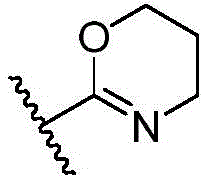 Or optionally substituted
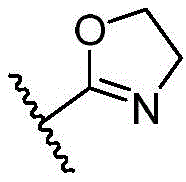 ) Optionally substituted
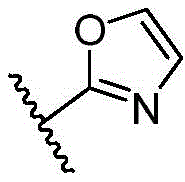 And optionally substituted
 And wherein R3Independently substituted with 0-5R';
R4and R5Each independently selected from-H, halogen, and- (C1-C6) alkyl;
R6selected from-H and- (C1-C6) alkyl; and is
Wherein each occurrence of R' is independently selected from the group consisting of halogen, -R ", -OR", oxo, -CH2OR”、-CH2NR”2、-C(O)N(R”)2、-C(O)OR”、-NO2、-NCS、-CN、-CF3、-OCF3and-N (R')2;
Wherein each occurrence of R' is independently selected from the group consisting of H, - (C1-C6) -alkyl, (C3-C6) -cycloalkyl, 3-6 membered heterocyclyl, 5-10 membered heteroaryl-, (C6-C10) -aryl-, (5-10 membered heteroaryl) - (C1-C6) -alkyl-, (C6-C10) -aryl- (C1-C6) -alkyl-, (5-10 membered heteroaryl) -O- (C1-C6) -alkyl-and (C6-C10) -aryl-O- (C1-C6) -alkyl-.
In another aspect, the present invention provides a compound of formula IV, or a pharmaceutically acceptable salt, hydrate, solvate, polymorph, isomer, or combination thereof:
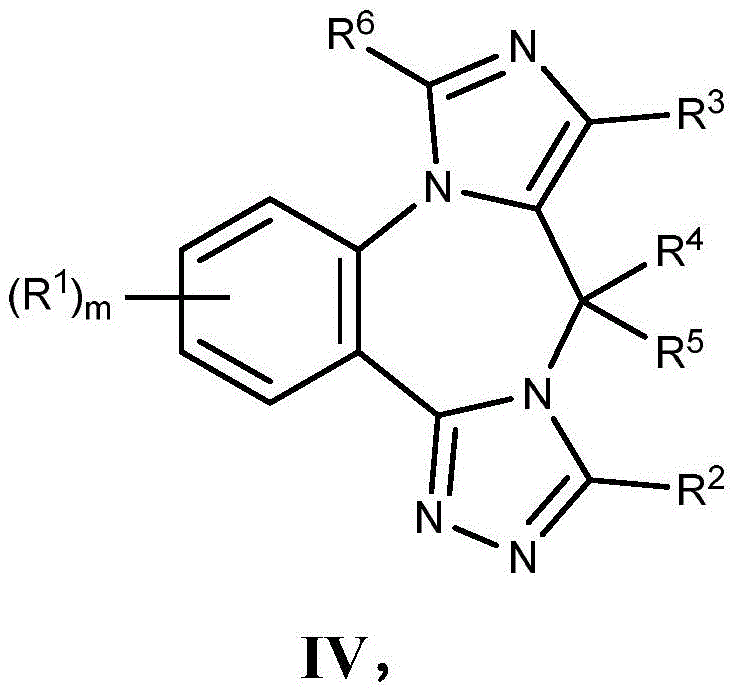
Wherein:
m is 0 to 3;
each R1Independently selected from: halogen (e.g., Cl), -C.ident.CH and-O ((C1-C6) alkyl) (e.g., OMe) wherein R1Independently substituted with 0-5R';
R2is- (CH)2)nOR8(e.g., -CH)2OMe、-CH2OEt、-CH2O-isopropyl, -CH2O-pyridyl), wherein n is an integer selected from 0 to 4; r8Is- (C1-C6) alkyl, - (C3-C10) -cycloalkyl, (C6-C10) -aryl or 5-10 membered heteroaryl, wherein R8Independently for each occurrence of (a) is substituted with 0-5R'; and wherein R2Independently substituted with 0-5R';
R3selected from: -C ≡ CH, -C (O) NH ((C1-C6) aliphatic group)2(e.g., -C (O) NH ((C1-C6) alkynyl)2) - (C6-C10) -aryl- (C1-C12) aliphatic-, 5-or 6-membered heterocyclyl- (e.g., optionally substituted)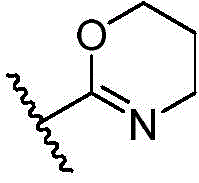 Or optionally substituted
 ) Optionally substituted
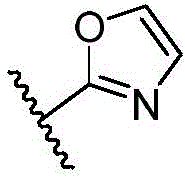 And optionally substituted
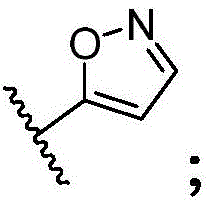 And wherein R3Independently substituted with 0-5R';
R4and R5Each is-H;
R6is-H or- (C1-C6) alkyl; and is
Wherein each occurrence of R' is independently selected from the group consisting of halogen, -R ", -OR", oxo, -CH2OR”、-CH2NR”2、-C(O)N(R”)2、-C(O)OR”、-NO2、-NCS、-CN、-CF3、-OCF3and-N (R')2;
Wherein each occurrence of R' is independently selected from the group consisting of H, - (C1-C6) -alkyl, (C3-C6) -cycloalkyl, 3-6 membered heterocyclyl, 5-10 membered heteroaryl-, (C6-C10) -aryl-, (5-10 membered heteroaryl) - (C1-C6) -alkyl-, (C6-C10) -aryl- (C1-C6) -alkyl-, (5-10 membered heteroaryl) -O- (C1-C6) -alkyl-and (C6-C10) -aryl-O- (C1-C6) -alkyl-.
In another aspect, the present invention provides a compound of formula IV, or a pharmaceutically acceptable salt, hydrate, solvate, polymorph, isomer, or combination thereof:
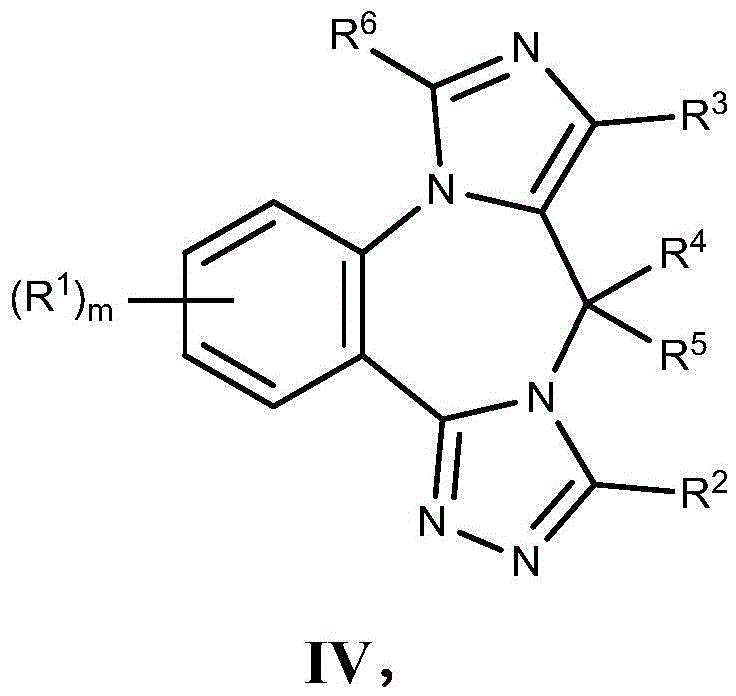
wherein:
m is 0, 1 or 2, and when m is 1 or 2, R1is-O ((C1-C6) alkyl) (such as-OMe);
R2is OR8Wherein R is8Is (C6-C10) -aryl (such as phenyl) substituted with 0-3 halogens (such as-F);
R3is-C (O) O ((C1-C6) alkyl) (e.g., -COOEt);
R4and R5Are all-H; and is
R6is-H.
In another aspect, the present invention provides a compound of formula IV, or a pharmaceutically acceptable salt, hydrate, solvate, polymorph, isomer, or combination thereof:
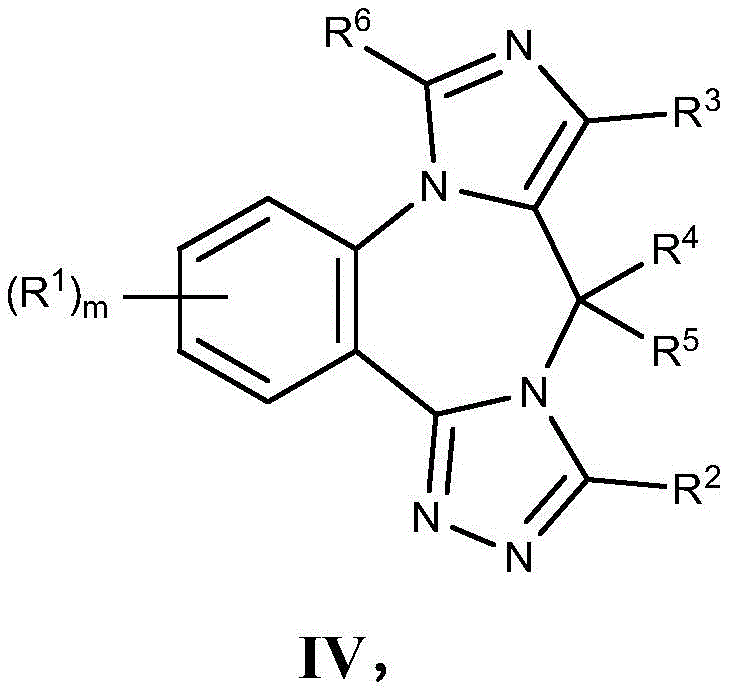
wherein:
m is 0 to 3;
when m is 1 or 2, R1Is-halogen or-O ((C1-C6) alkyl);
each R1Independently selected from: halogen, -H, - (C1-C6) alkyl, -OH, -O ((C1-C6) alkyl), -NO2、-CN、-CF3and-OCF3Wherein R is1Independently substituted with 0-5R';
R2is selected from-OR8、-SR8、-(CH2)nOR8、-(CH2)nO(CH2)nR8、-(CH2)pR8And- (CH)2)nN(R”)R10Wherein n is an integer selected from 0 to 4; p is an integer selected from 2 to 4; each R8Independently is- (C1-C6) alkyl, - (C3-C10) -cycloalkyl, (C6-C10) -aryl or 5-10 membered heteroaryl, wherein R8Independently for each occurrence of (a) is substituted with 0-5R'; each R 10Independently is- (C3-C10) -cycloalkyl-, 3-10 membered heterocyclyl-, (C6-C10) -aryl, or 5-10 membered heteroaryl, wherein R is10Independently for each occurrence of (a) is substituted with 0-5R'; and wherein R2Independently substituted with 0-5R';
R3selected from: -H, -CN, halogen, - (C1-C6) alkyl, -SO2((C1-C6) alkyl), -C (O) N ((C1-C6) alkyl)2-C (O) ((C1-C6) alkyl), -C (O) O ((C1-C6) alkyl), Wherein R is9Selected from-Me, -Et, isopropyl, -CF3-OMe, -OEt, -O-isopropyl, -CH2NMe2And a cyclopropyl group; and wherein R3Independently substituted with 0-5R';
R4and R5Each independently selected from-H, halogen, and- (C1-C6) alkyl;
R6selected from-H and- (C1-C6) alkyl; and is
R 'and R' are as defined herein.
In certain embodiments of the compounds of formula IV:
m is 0, 1 or 2;
R2is-OR8、-(CH2)nOR8、-(CH2)nO(CH2)nR8Wherein n is 1, and wherein R8Is- (C1-C6) alkyl, (C6-C10) -aryl or 5-10 membered heteroaryl, wherein R8Independently of each otherSubstituted with 0-3R';
R3is halogen, -H, -CN, - (C1-C6) alkyl, -C (O) ((C1-C6) alkyl), -C (O) O ((C1-C6) alkyl),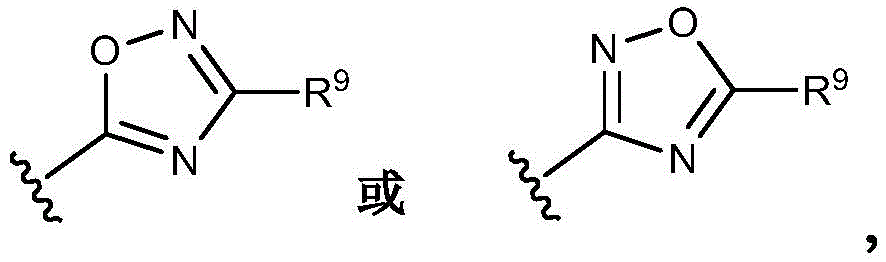 Wherein said alkyl is independently substituted with 0-3R'; r9Selected from-Me, -Et, isopropyl and-CF3;
R4And R5Are all-H;
R6is-H; and is
R' is as defined herein.
Examples of specific compounds of the present application include:

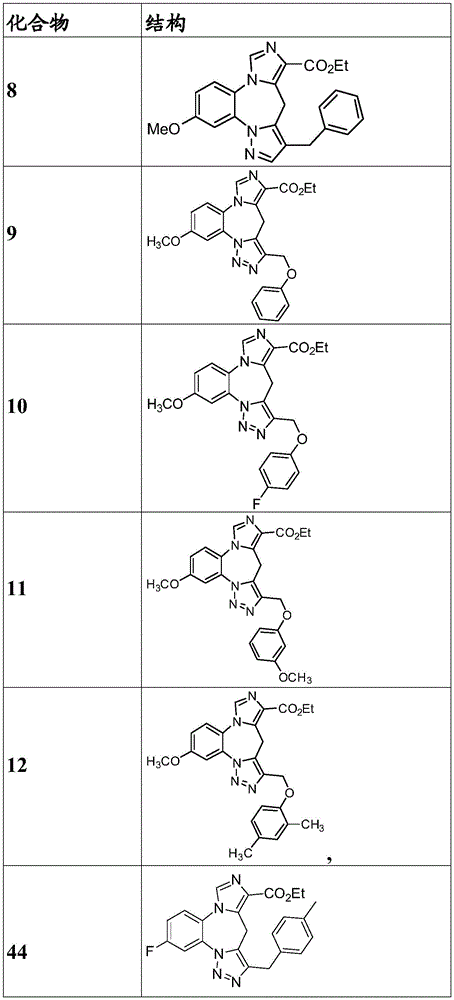
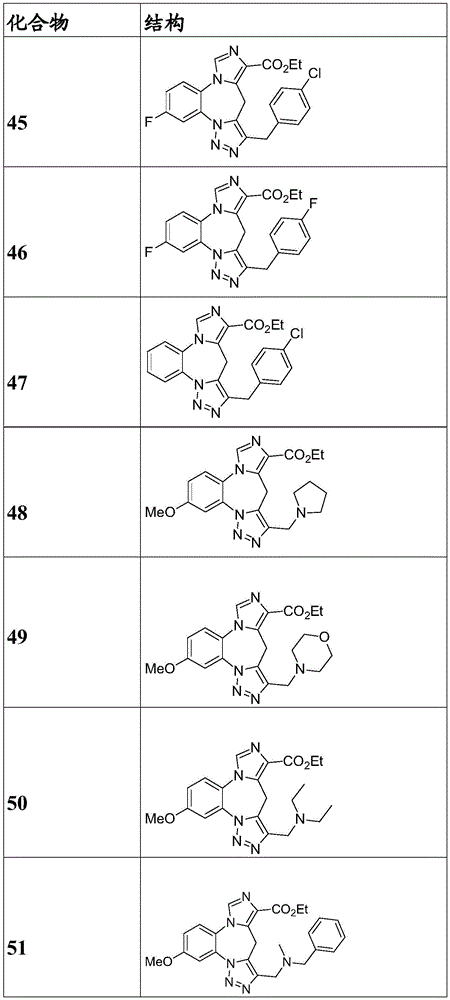


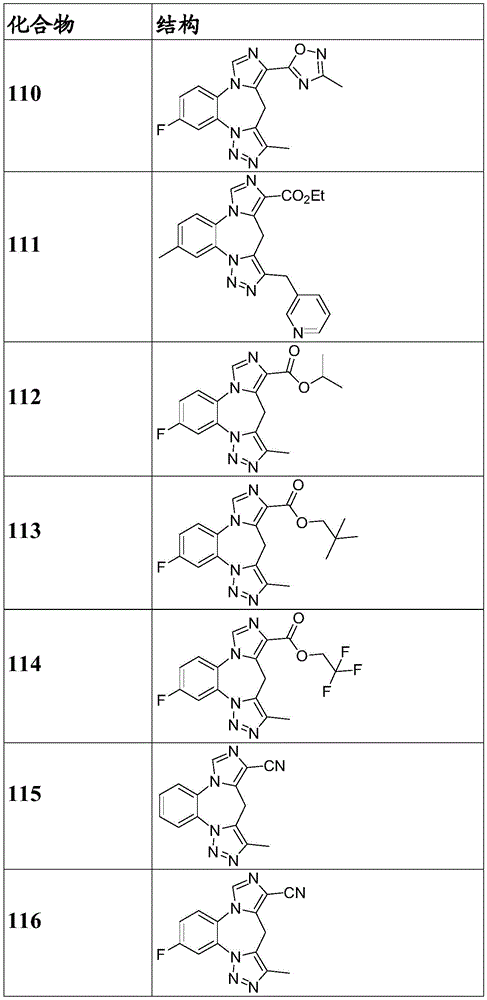
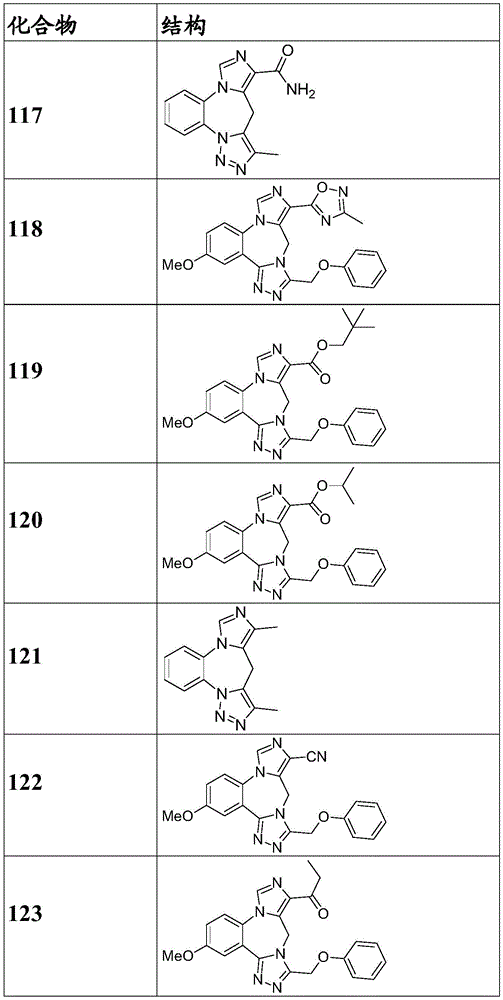
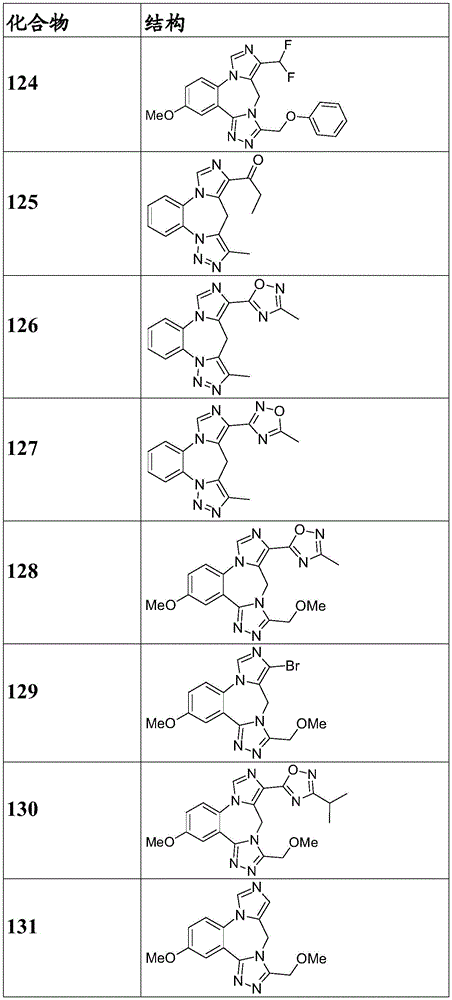
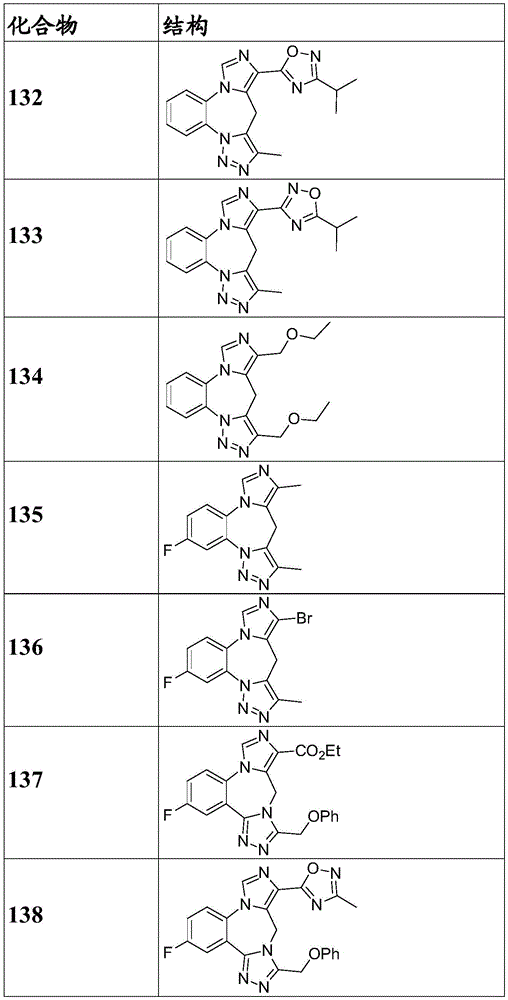
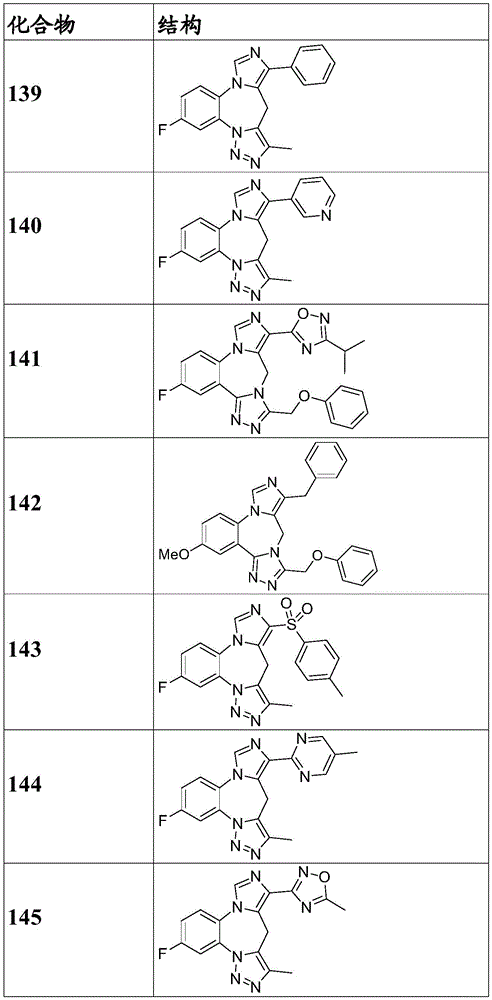

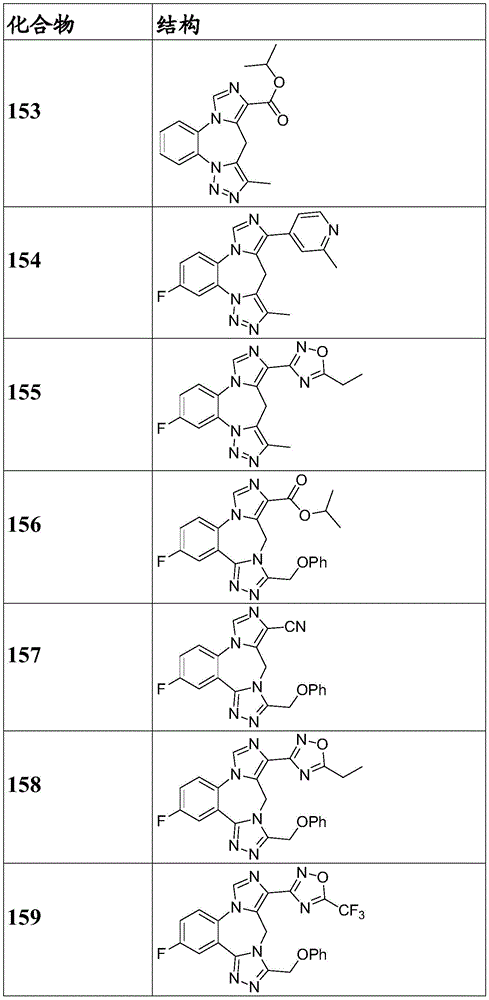

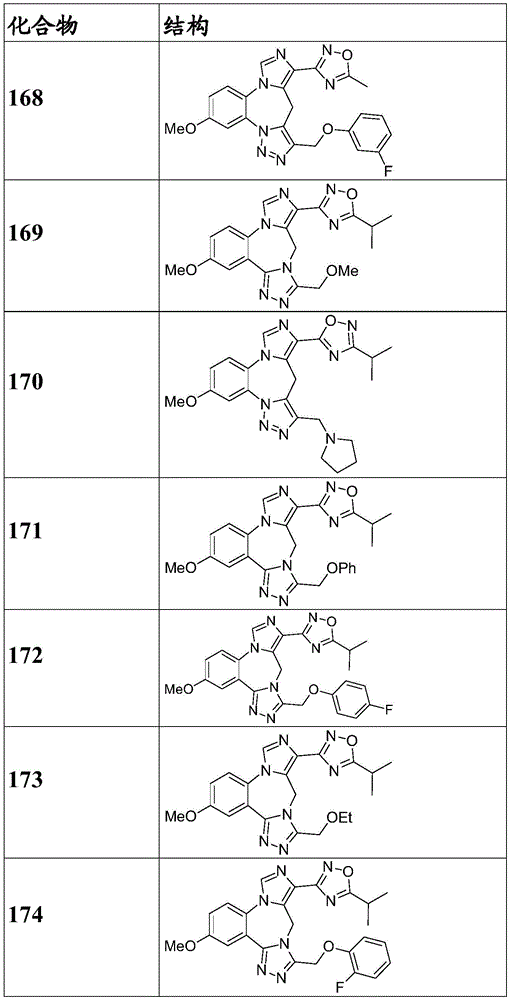

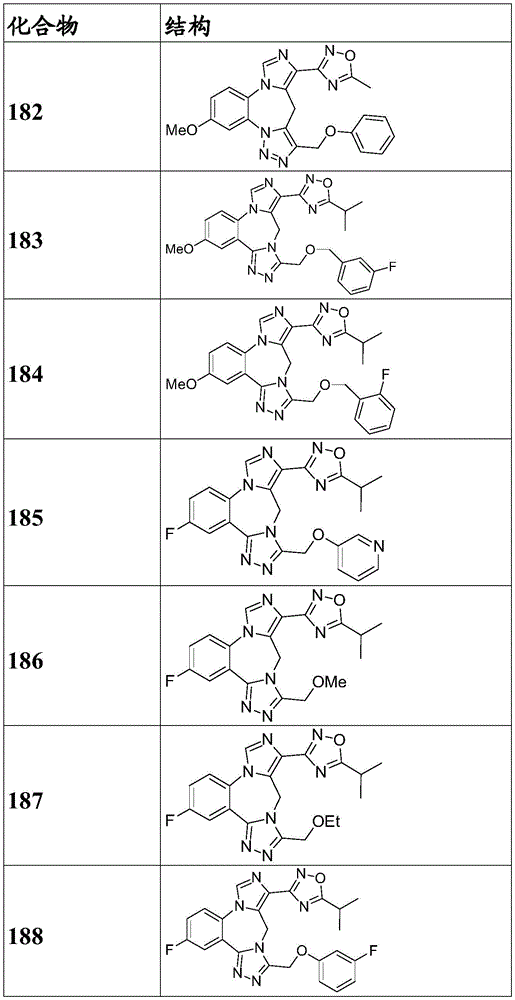
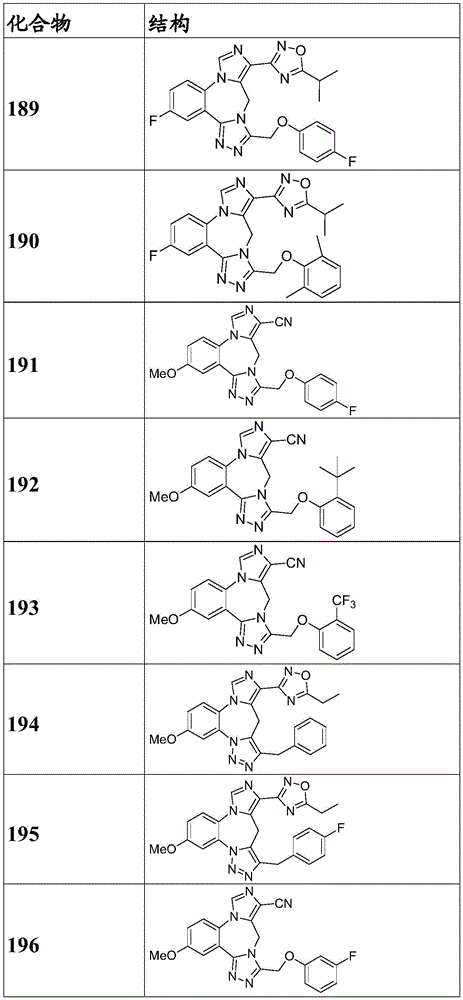


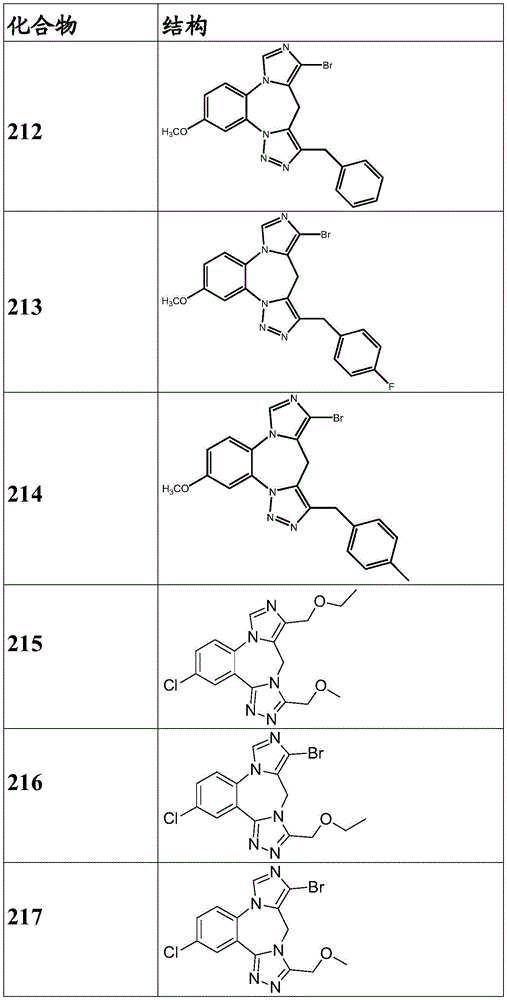
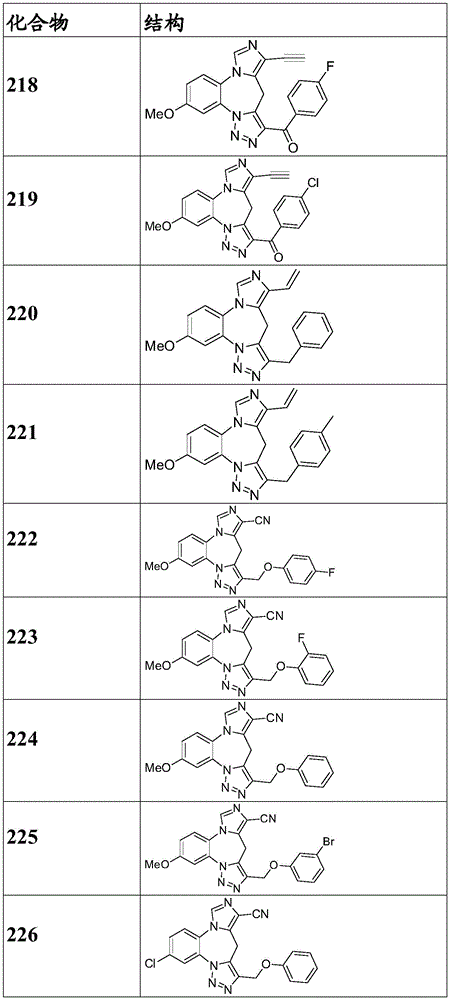

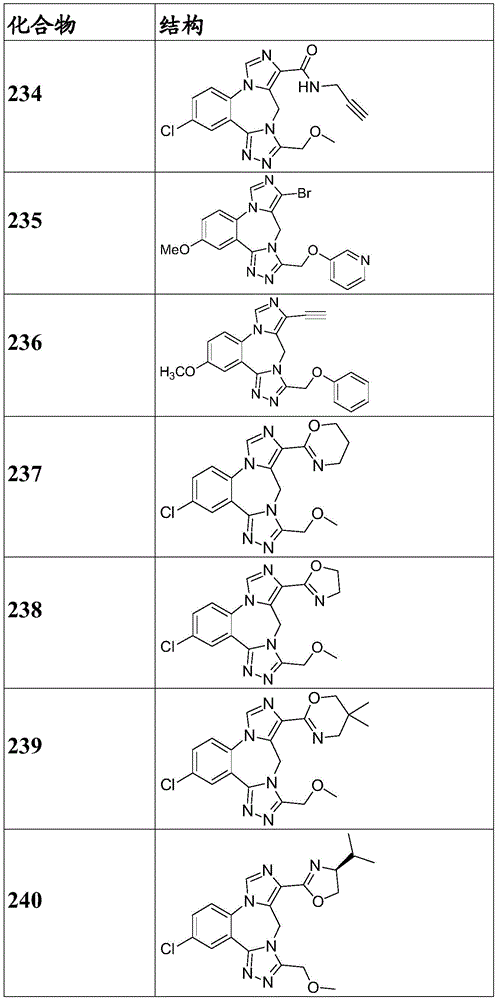
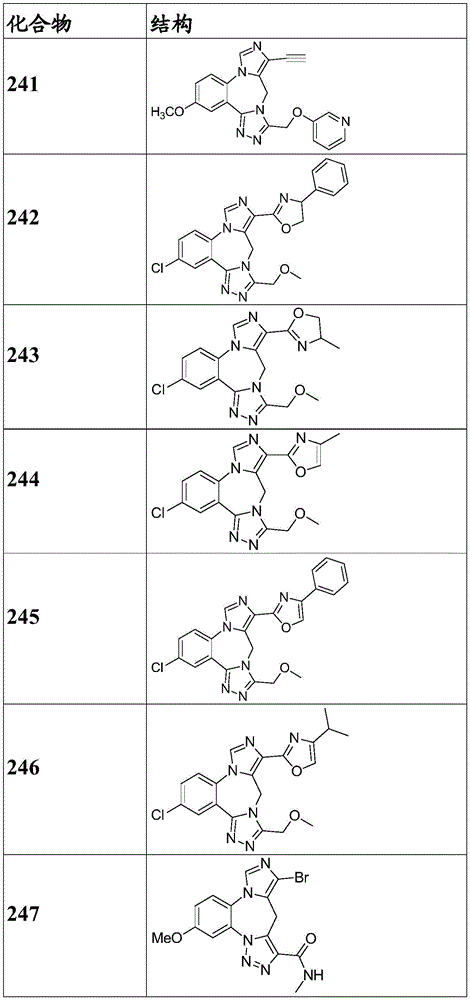
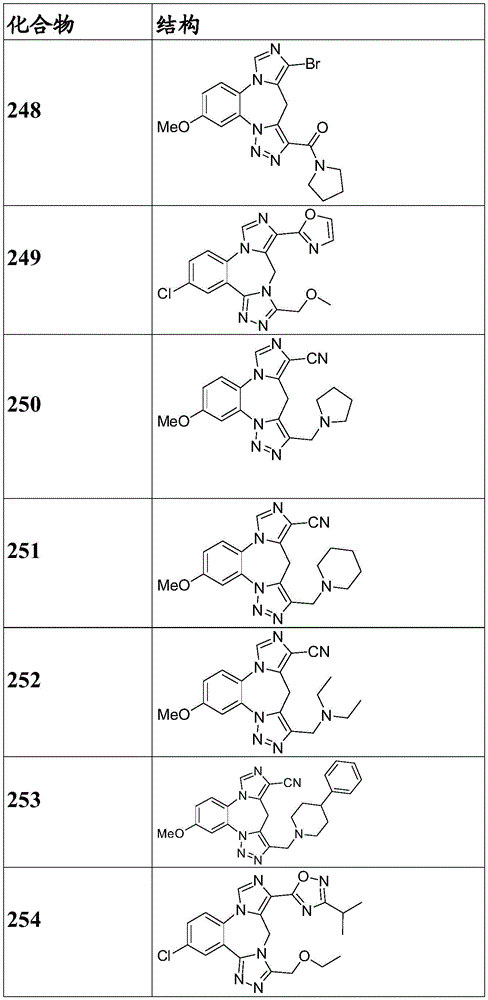


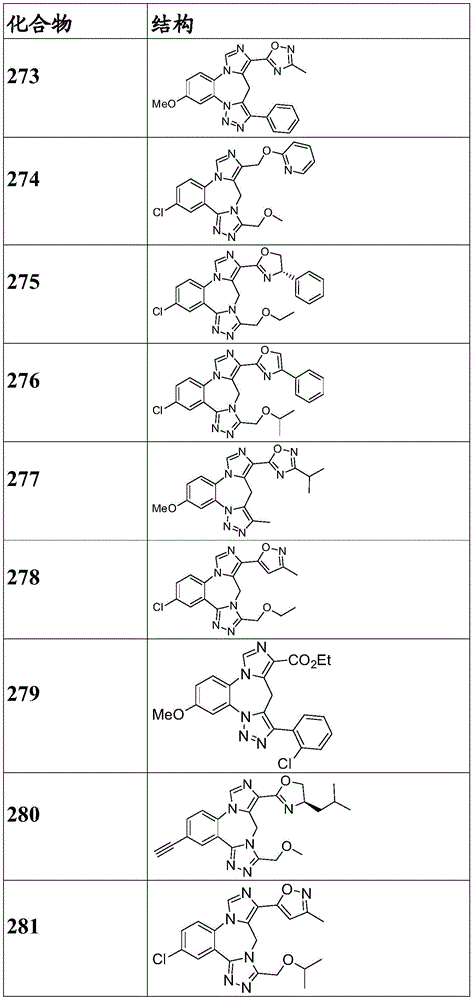

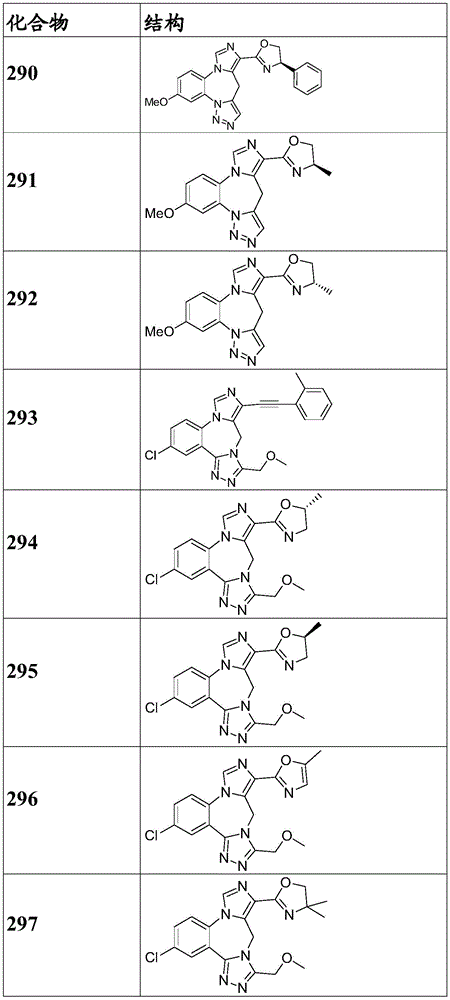
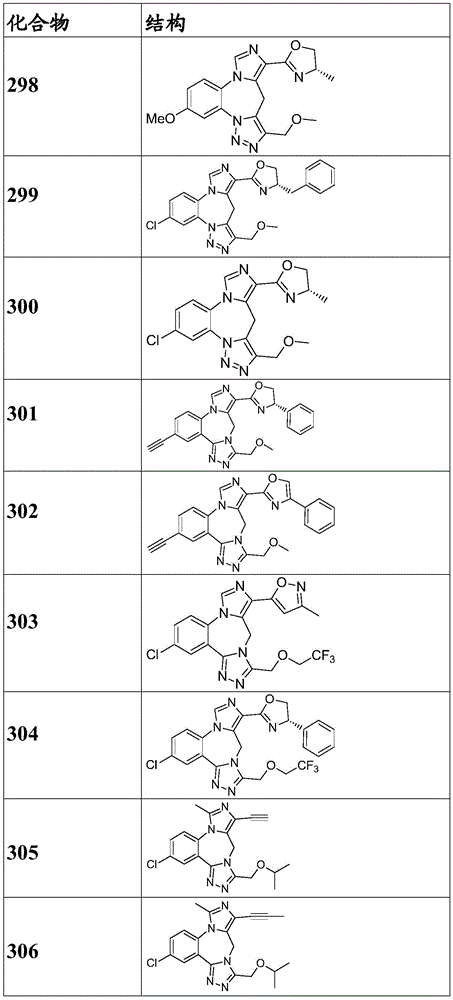

And pharmaceutically suitable salts, hydrates, solvates, polymorphs, isomers or combinations thereof.
The invention also includes R as described above1、R2And R3Various combinations of (a). These combinations may in turn be combined with any or all of the values of the other variables described herein. For example, R1May be-OR OR halogen; r2May be (C1-C4) -alkyl-, -OR8、-(CH2)nOR8Or- (CH)2)nO(CH2)nR8(ii) a And optionally R3is-C (O) OR OR-C (O) N (R)2. In another embodiment, R1is-OR OR halogen; r2Is (C1-C4) -alkyl-, -OR8、-(CH2)nOR8Or- (CH)2)nO(CH2)nR8(ii) a And R is3Is a 5-or 6-membered heteroaryl group, such as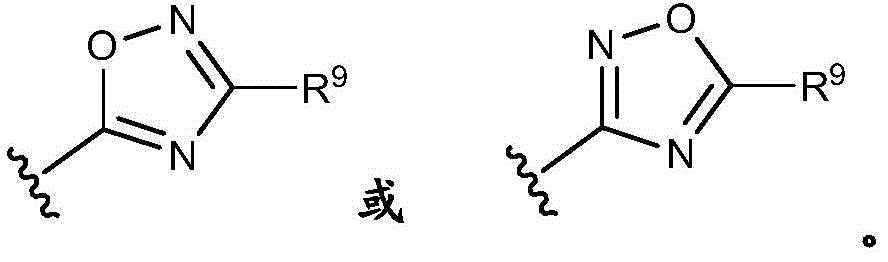 For each of the above embodiments, the compounds may have the particular values of the groups described herein.
Any embodiment described herein is also intended to represent unlabeled forms of the compounds as well as isotopically labeled forms, unless otherwise indicated. Isotopically-labeled compounds are depicted by the structural formulae given hereinBut one or more atoms are replaced by atoms having the atomic mass or mass number selected. Examples of isotopes that can be incorporated into the compounds of the invention include isotopes of hydrogen, carbon, nitrogen, oxygen, phosphorus, fluorine and chlorine, such as2H、3H、11C、13C、14C、15N、18F、31P、32P、35S、36Cl、125I. The invention includes various isotopically-labelled compounds as defined herein, for example wherein a radioactive isotope such as 3H、13C and14those of C. Such isotopically-labeled compounds are useful in metabolic studies (preferably using14C) Reaction kinetics study (using, for example2H or3H) Detection or imaging techniques, such as Positron Emission Tomography (PET) or Single Photon Emission Computed Tomography (SPECT), including drug or substrate tissue distribution assays or in the radiotherapy of patients. In particular, PET or SPECT studies are particularly preferred18F or a labeled compound. Isotopically labeled compounds of the present invention and prodrugs thereof can generally be prepared by carrying out the procedures disclosed in the schemes or in the examples and preparations below, by substituting a readily available isotopically labeled reagent for a non-isotopically labeled reagent.
Any of the various embodiments listed herein may define formula I, II, III or IV separately or may be combined to produce preferred embodiments of the invention.
General synthetic method
In general, the compounds of the present invention may be prepared by methods known to those skilled in the art. The following schemes 1-10 provide general synthetic routes to compounds of formulas I-IV. Other equivalent schemes, which are obvious to the ordinarily skilled organic chemist, may alternatively be used to synthesize different parts of the molecule as exemplified by the following general schemes.
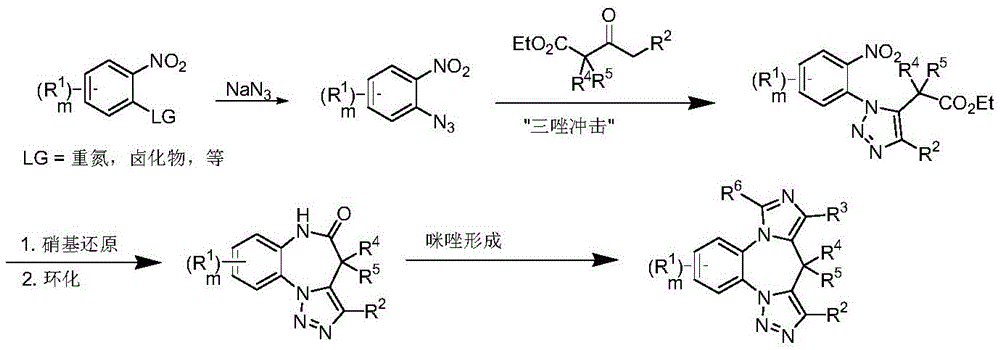
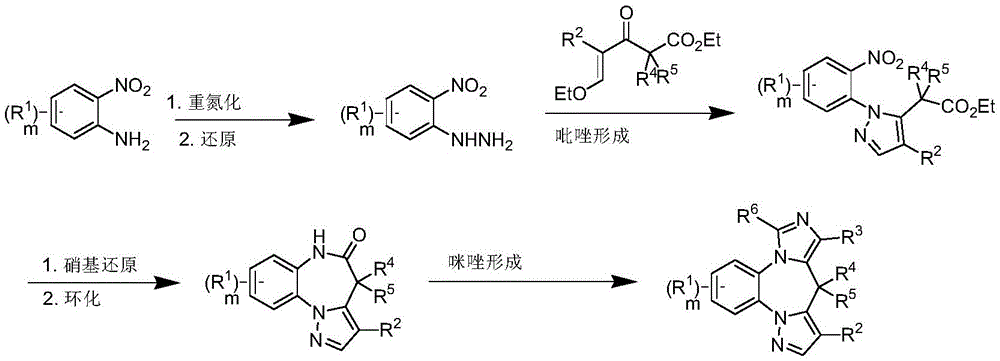
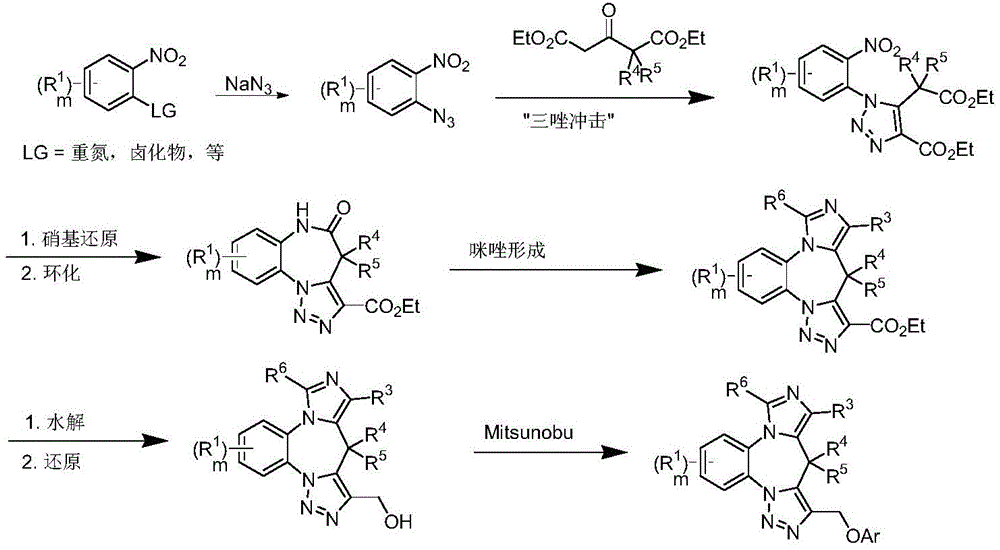
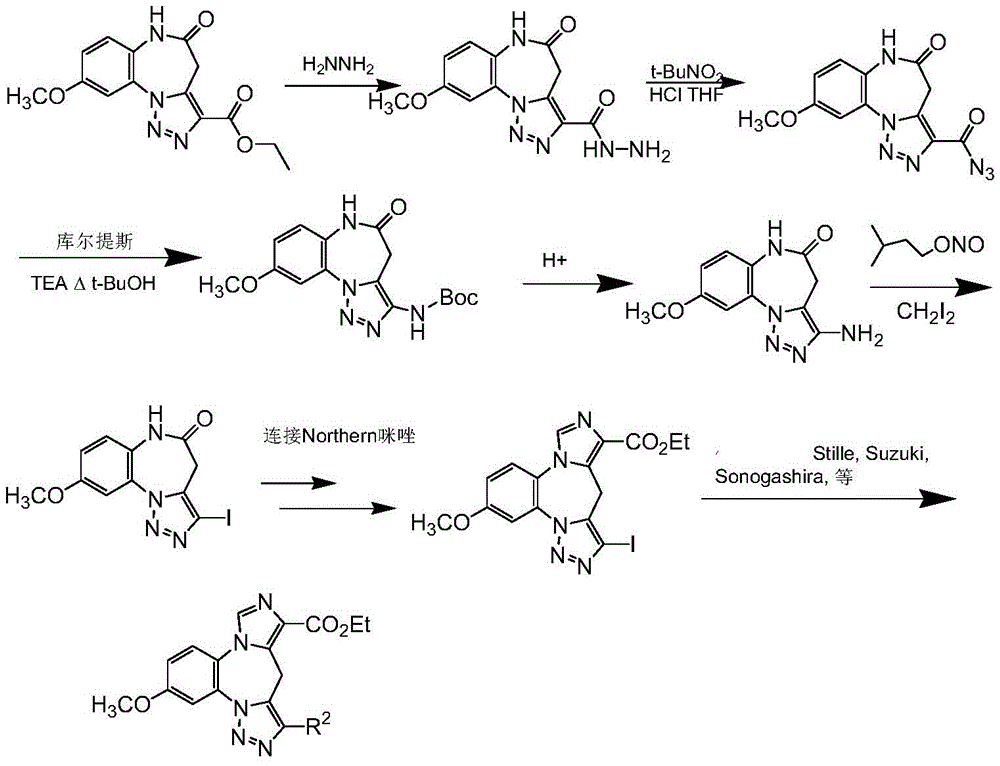

Scheme 6 general synthesis of compounds of formula I (wherein X, Y, Z, V and W form an aralkyl-substituted or heteroaralkyl-substituted 1,2, 3-triazole ring) or compounds of formula II.
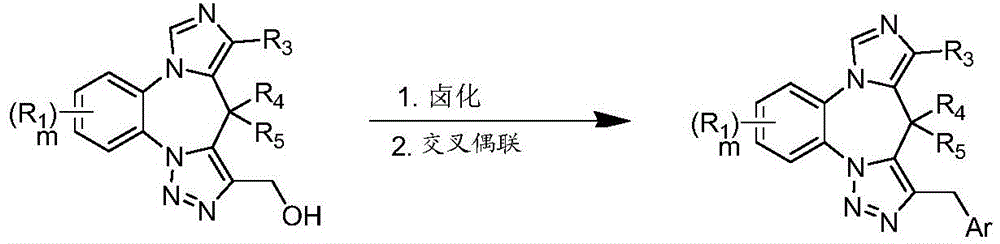
Scheme 7 general synthesis of compounds of formula I or IV wherein X, Y, Z, V and W form a substituted 1,2, 4-triazole ring.

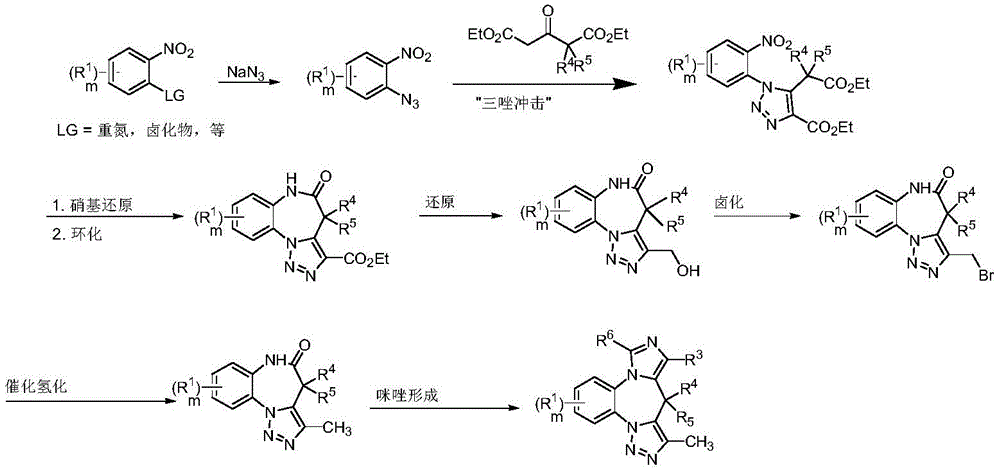
Scheme 9 general synthesis of compounds of formula I (wherein X, Y, Z, V and W form a benzyl-substituted 1,2, 3-triazole ring) or compounds of formula II.
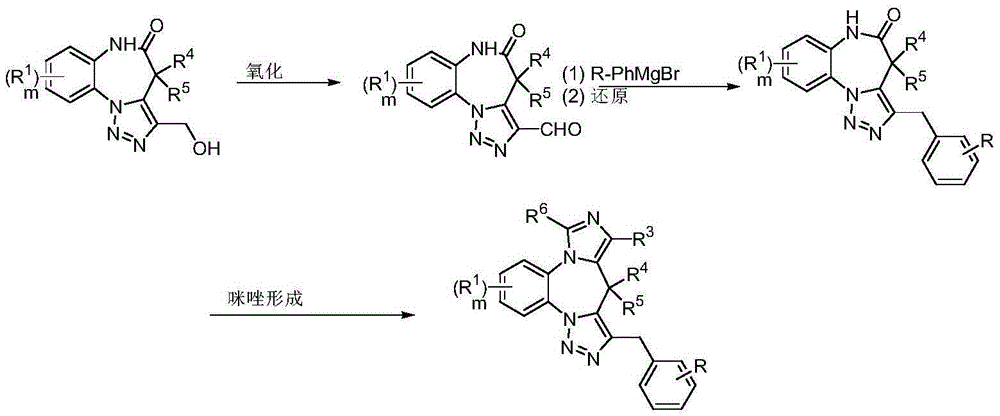

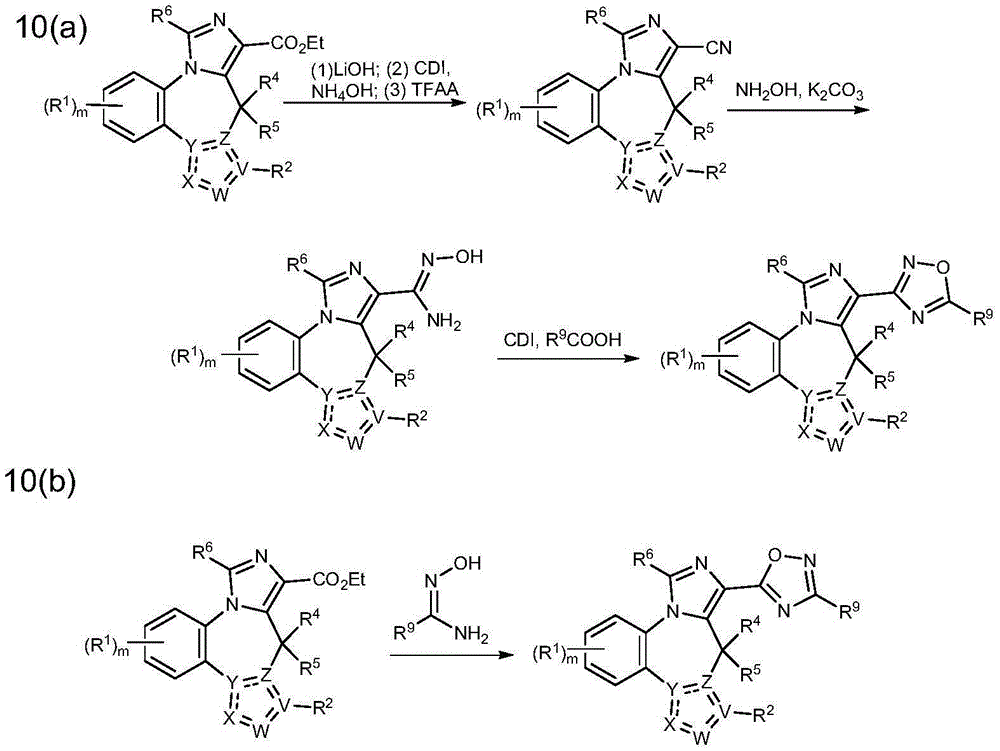
Scheme 10a. compounds (wherein R is)3Is optionally substituted dihydro Azole or
 Oxazinyl ring).

Schemes 10b (a) and 10b (b) compounds (wherein R is illustrated in schemes 10b (a) and 10b (b))3Is optionally substituted Oxazole or iso
 Oxazole).
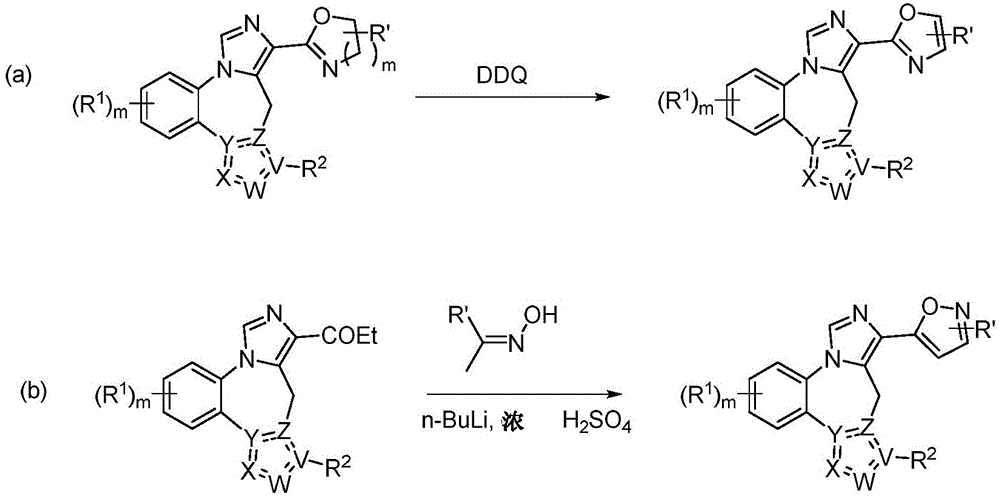
Scheme 10c compounds are illustrated in scheme 10c (where R is3Is an optionally substituted alkynyl).
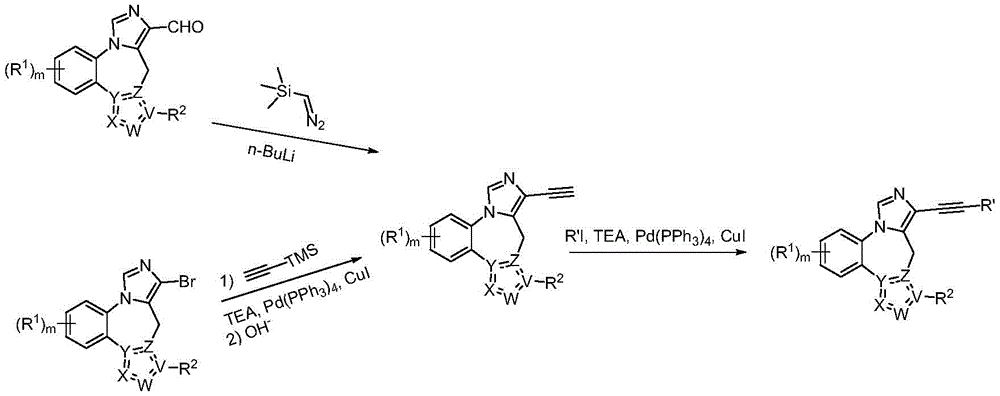
As recognized by the skilled practitioner, compounds of formulae I-IV having variables different from those described above can be prepared by varying the chemical reagents or synthetic routes.
Pharmaceutical compositions and modes of administration
The present invention provides a pharmaceutical composition comprising a pharmaceutically acceptable carrier and a compound of formulas I-IV or a pharmaceutically acceptable salt, hydrate, solvate, polymorph, isomer or combination thereof.
Basic nitrogen-containing groups present in the compounds of the invention may be quaternized with agents such as: lower alkyl halides such as methyl, ethyl, propyl, and butyl chlorides, bromides, and iodides; dialkyl sulfates such as dimethyl, diethyl, dibutyl and diamyl sulfates; long chain halides such as decyl, lauryl, myristyl and stearyl chlorides, bromides and iodides; aralkyl halides such as benzyl and phenethyl bromides and the like. Thereby obtaining a water or oil soluble or dispersible product.
It will be appreciated that the compounds and agents used in the compositions of the invention preferably should readily cross the blood brain barrier upon peripheral administration. However, compounds that do not penetrate the blood brain barrier may still be effectively administered directly into the central nervous system, for example, by intracerebroventricular (intraventricular) or other neuro-compatible routes.
In certain embodiments of the invention, the GABA will contain α 5AThe R positive allosteric modulators are formulated with a pharmaceutically acceptable carrier. Pharmaceutically acceptable carriers that may be used in these compositions include, but are not limited to: ion exchangers, aluminum oxide, aluminum stearate, lecithin, serum proteins, such as human serum albumin, buffer substances, such as phosphates, glycine, sorbic acid, potassium sorbate, partial glyceride mixtures of saturated vegetable fatty acids, water, salts or electrolytes, such as protamine sulfate, disodium hydrogen phosphate, potassium hydrogen phosphate, sodium chloride, zinc salts, colloidal silicon dioxide, magnesium trisilicate, polyvinylpyrrolidone, cellulose-based substances, polyethylene glycol, sodium carboxymethylcellulose, polyacrylates, waxes, polyethylene-polyoxypropylene-block copolymers, polyethylene glycol and wool fat. In other embodiments, no carrier is used. For example, GABA containing α 5 AR agonists (e.g., GABA containing α 5)AReceptor positive allosteric modulators) may be administered alone or as a component of a pharmaceutical formulation (therapeutic composition). GABA containing alpha 5 can be formulatedAR agonists (e.g., GABA containing α 5)AReceptor positive allosteric modulators) for administration in any convenient manner for use in human medicine.
In certain embodiments, the methods of treatment of the present invention comprise topically (topocally), systemically, or locally (locally) administering a composition of the compound or agent. For example, therapeutic compositions of the compounds or agents of the present invention can be formulated for administration by, e.g., injection (e.g., intravenous, subcutaneous, or intramuscular), inhalation or insufflation (through the mouth or nose) or oral, buccal, sublingual, transdermal, nasal, or parenteral administration. The compositions of compounds or agents described herein may be formulated as part of an implant or device, or for sustained or extended release. When administered parenterally, the therapeutic compositions of the compounds or agents used in the present invention are preferably in a pyrogen-free, physiologically acceptable form. Techniques and formulations can generally be found in Remington's Pharmaceutical Sciences, Meade Publishing co.
In certain embodiments, pharmaceutical compositions suitable for parenteral administration may comprise GABA comprising α 5AAn R positive allosteric modulator and, in combination therewith, one or more pharmaceutically acceptable sterile isotonic aqueous or non-aqueous solutions, dispersions, suspensions or emulsions or sterile powders which can be reconstituted into sterile injectable solutions or dispersions just prior to use which may contain antioxidants, buffers, bacteriostats, solutes which render the formulation isotonic with the blood of the intended recipient or suspending or thickening agents. Examples of suitable aqueous and nonaqueous carriers that may be employed in the pharmaceutical compositions of the present invention include water, ethanol, polyols (such as glycerol, propylene glycol, polyethylene glycol, and the like), and suitable mixtures thereof, vegetable oils, such as olive oil, and injectable organic esters, such as ethyl oleate. Proper fluidity can be maintained, for example, by the use of coating materials such as lecithin, by the maintenance of the required particle size in the case of dispersions, and by the use of surfactants.
Comprising GABA containing alpha 5AThe composition of the R positive allosteric modulators may also contain adjuvants such as preservatives, wetting agents, emulsifying agents and dispersing agents (dispersing agents). Prevention of the action of microorganisms can be ensured by including various antibacterial and antifungal agents, for example, parabens, chlorobutanol, phenol sorbic acid, and the like. It may also be desirable to include isotonic agents, such as sugars, sodium chloride, and the like in the compositions. In addition, prolonged absorption of the injectable pharmaceutical form can be brought about by the inclusion of agents which delay absorption such as aluminum monostearate and gelatin.
In certain embodiments of the invention, comprising GABA containing alpha 5ACompositions of the positive allosteric modulators may be administered orally, e.g., in capsules, cachets, pills, tablets, lozenges (i.e., by mouth)Using a flavored base, typically sucrose and acacia or tragacanth), in the form of a powder, granules, or as a solution or suspension in an aqueous or non-aqueous liquid, or as an oil-in-water or water-in-oil liquid emulsion, or as an elixir or syrup, or as pastilles (using an inert base such as gelatin and glycerin, or sucrose and acacia), and the like, each containing a predetermined amount of GABA containing α 5AR positive allosteric modulators as active ingredients.
In solid dosage forms (capsules, tablets, pills, dragees, powders, granules, etc.) for oral administration, one or more compositions comprising GABA containing α 5 can be administeredAThe composition of the R positive allosteric modulator is mixed with one or more pharmaceutically acceptable carriers (such as sodium citrate or dicalcium phosphate) and/or any of the following: (1) fillers or extenders such as starch, lactose, sucrose, glucose, mannitol, and/or silicic acid; (2) binders, for example, carboxymethylcellulose, alginates, gelatin, polyvinylpyrrolidone, sucrose and/or acacia; (3) humectants, such as glycerol; (4) disintegrating agents such as agar-agar, calcium carbonate, potato or tapioca starch, alginic acid, certain silicates, and sodium carbonate; (5) solution retarding agents such as paraffin; (6) absorption promoters, such as quaternary ammonium compounds; (7) wetting agents, for example, cetyl alcohol and glycerol monostearate; (8) absorbents such as kaolin and bentonite clays; (9) lubricants such as talc, calcium stearate, magnesium stearate, solid polyethylene glycols, sodium lauryl sulfate, and mixtures thereof; and (10) a colorant. In the case of capsules, tablets and pills, the pharmaceutical compositions may also comprise buffering agents. Solid compositions of a similar type may also be employed as fillers in soft and hard-filled gelatin capsules and with excipients such as lactose or milk sugar (milk sugar) as well as high molecular weight polyethylene glycols and the like.
Liquid dosage forms for oral administration include pharmaceutically acceptable emulsions, microemulsions, solutions, suspensions, syrups and elixirs. GABA containing other than alpha 5AIn addition to the R positive allosteric modulators, the liquid dosage forms may also contain inert diluents commonly used in the artSuch as water or other solvents, solubilizing agents and emulsifiers, such as ethyl alcohol (ethanol), isopropyl alcohol, ethyl carbonate, ethyl acetate, benzyl alcohol, benzyl benzoate, propylene glycol, 1, 3-butylene glycol, oils (in particular, cottonseed, groundnut, corn, germ, olive, castor, and sesame oils), glycerol, tetrahydrofurfuryl alcohol, polyethylene glycols and fatty acid esters of sorbitan, and mixtures thereof. Besides inert diluents, the oral compositions can also contain adjuvants such as wetting agents, emulsifying and suspending agents, sweetening, flavoring, coloring, perfuming and preservative agents.
Suspensions, in addition to the active compounds, may contain suspending agents as, for example, ethoxylated isostearyl alcohols, polyoxyethylene sorbitol and sorbitan esters, microcrystalline cellulose, aluminum hydroxide oxide (aluminum hydroxide), bentonite, agar-agar and tragacanth, and mixtures thereof.
As described herein, the compounds, agents, and compositions thereof can be administered for sustained, controlled, or extended release. The term "extended release" is widely known in the pharmaceutical arts and is used herein to mean the controlled release of an active compound or agent from a dosage form into the environment over an extended period of time, such as greater than or equal to 1 hour(s), either all the way through or during. An extended release dosage form will release a drug at a substantially constant rate over an extended period of time or in an incremental manner over an extended period of time. The term "extended release" as used herein includes the terms "controlled release", "extended release", "sustained release", "delayed release" or "sustained release", as these terms are used in the pharmaceutical sciences. In certain embodiments, the extended release dose is administered in the form of a patch or pump.
One of ordinary skill in the art (such as a physician) can readily determine the α 5-containing GABA required to treat a subject using the compositions and methods of the present inventionAAmount of R positive allosteric modulator. It will be appreciated that the dosage regimen will be determined for an individual and will take into account, for example, altering GABA containing α 5AVarious factors of the action of R positive allosteric modulators, severity or stage of disease, administrationThe route of administration and individual-specific characteristics such as age, weight, size and degree of cognitive impairment.
It is well known in the art that normalizing the body surface area is a suitable method to infer the dose between species. To calculate the Human Equivalent Dose (HED) from the Dose used to treat age-dependent cognitive impairment in rats, the formula HED (mg/kg) can be used as rat Dose (mg/kg) x 0.16 (see, estimation of the Safe Starting Dose in Clinical laboratories for Therapeutics in additive health volumes, 12 months 2002, Center for biology Evaluation and Research). For example, using this formula, a 10mg/kg dose in rats is equivalent to 1.6mg/kg in humans. This conversion is based on the more general formula HED ═ animal dose in mg/kg x (animal body weight in kg/human body weight in kg) 0.33。
In certain embodiments of the invention, GABA containing α 5AThe dose of the R positive allosteric modulator is between 0.0001 to 100 mg/kg/day (given a typical human subject of 70kg, it is between 0.007 to 7000 mg/day).
In certain embodiments of the invention, the administration interval is 1 time every 12 or 24 hours. Administration at lower frequency intervals, such as 1 time every 6 hours, may also be used.
If administered via an implant, device or sustained or extended release formulation, the GABA containing α 5 can be administeredAThe R positive allosteric modulator is administered once, or periodically one or more times throughout the life of the patient as necessary. Other administration intervals, which are intermediate or shorter than these dosage intervals for clinical use, may also be used and may be determined by one of skill in the art following the methods of the present invention.
The desired time of administration can be determined by one skilled in the art by routine experimentation. For example, GABA containing α 5 may be usedAThe R positive allosteric modulator is administered for a period of 1-4 weeks, 1-3 months, 3-6 months, 6-12 months, 1-2 years, or more up to the lifetime of the patient.
GABA containing other than alpha 5AIn addition to the R positive allosteric modulators, the compositions of the present invention may also comprise other therapeutically useful agents. These other remedies Therapeutically useful agents may be used according to the methods of the invention with GABA containing alpha 5AThe R positive allosteric modulators are administered together in a single formulation, either simultaneously or sequentially.
It will be appreciated by those of ordinary skill in the art that the compositions described herein may be modified and adapted as appropriate for the application in question, and that the compositions described herein may be used for other suitable applications. For example, the compositions of the present application may further comprise a second therapeutic agent. Such other additions and modifications do not depart from the scope thereof.
Pharmaceutical composition with antipsychotic agent
The compounds or compositions of the present application may be used in combination with an antipsychotic agent to treat cognitive impairment associated with schizophrenia or bipolar disorder in a subject having or at risk of said schizophrenia or bipolar disorder (e.g., mania). Antipsychotic agents or pharmaceutically acceptable salts, hydrates, solvates, or polymorphs thereof useful in the methods and compositions of the present invention include typical and atypical antipsychotic agents. In certain embodiments, the compounds or compositions of the invention are useful for treating one or more positive and/or negative symptoms associated with schizophrenia as well as cognitive impairment. In certain embodiments, the compounds or compositions of the present invention are useful for treating one or more symptoms associated with bipolar disorders, particularly mania, and cognitive impairment. In certain embodiments of the invention, the compounds or compositions of the invention prevent or slow the development of cognitive impairment in schizophrenia or bipolar disorder, particularly mania, in said subject.
In certain embodiments, the antipsychotic agent suitable for use in the present invention is selected from an atypical antipsychotic agent. Such atypical antipsychotics include, but are not limited to, those disclosed in, for example, U.S. patents 4,734,416, 5,006,528, 4,145,434, 5,763,476, 3,539,573, 5,229,382, 5,532,372, 4,879,288, 4,804,663, 4,710,500, 4,831,031, and 5,312,925, and european patents EP402644 and EP368388, and pharmaceutically acceptable salts, hydrates, solvates, and polymorphs thereof.
In certain embodiments, atypical antipsychotics suitable for use in the present invention include, but are not limited to, aripiprazole, asenapine, clozapine, iloperidone, olanzapine, lurasidone, paliperidone, quetiapine, risperidone, and ziprasidone, and pharmaceutically acceptable salts, hydrates, solvates, and polymorphs thereof. In certain embodiments, the antipsychotic agent suitable for use herein is selected from aripiprazole (Bristol-Myers Squibb), olanzapine (Lilly), and ziprasidone (Pfizer), and pharmaceutically acceptable salts, hydrates, solvates, and polymorphs thereof.
In certain embodiments, antipsychotics suitable for use in the present invention are typical antipsychotics including, but not limited to, acepromazine, benproperine, bromazepam, brompiperadone, chlorpromazine, chlorprothixene, chlordiazepoxide, cyamethazine, diazepam, desipramine, flupiridol, flupentixol, fluphenazine, fluspirinol, octopamine, isopropamide, levomepromazine, levosulpiride, loxapine, meparone, mesoridazine, molindone, oxyperidine, meperidine, pentafluridol, perlazine, piperazines, perphenazine, primazine, pimozide, piprozine, prochlorperazine, promazine, promethazine, prothiochlorperazine, pyridoxine, sulpride, sulpiride, tetrabenazine, thioproperazine, thiopropazazine, thioridazine, thiothipridine, trifluoperazine, and fluperazine, Trihexyphenidyl and zulothiol and pharmaceutically acceptable salts, hydrates, solvates and polymorphs thereof.
In certain embodiments of the present invention, the antipsychotic agent, or a pharmaceutically acceptable salt, hydrate, solvate, or polymorph thereof, may be selected from the following compounds: it is a dopaminergic agent (such as dopamine D1 receptor antagonist or agonist, dopamine D2Receptor antagonists or partial agonists, dopamine D3 receptor antagonists or partial agonists, dopamine D4 receptor antagonists), glutamatergic agents, N-methyl-D-aspartate (NMDA) receptor positive allosteric modulators, glycine reuptake inhibitors, glutamate reuptake inhibitors, metabotropic glutamate receptor (mGluRs) agonists or positive variantsAllosteric Modulators (PAMs) (e.g., mGluR2/3 agonists or PAMs), glutamate receptor glur5 Positive Allosteric Modulators (PAMs), M1 muscarinic acetylcholine receptor (mAChR) Positive Allosteric Modulators (PAMs), histamine H3 receptor antagonists, alpha-amino-3-hydroxy-5-methylisothiazoles Azole-4-propionic acid (AMPA)/kainate receptor antagonists, ampakine (CX-516), glutathione prodrugs, noradrenergic agents (such as alpha-2 adrenergic receptor agonists or antagonists and catechol-O-methyltransferase (COMT) inhibitors), serotonin receptor modulators (such as 5-HT)2AReceptor antagonists, 5-HT 1APartial receptor agonists, 5-HT2CAgonists and 5-HT6 antagonists, serotonin 2C agonists), cholinergics (such as alpha-7 nicotinic receptor agonists or PAMs, alpha 4-beta 2 nicotinic receptor agonists, allosteric modulators of nicotinic receptors and acetylcholinesterase inhibitors, muscarinic receptor agonists and antagonists), cannabinoid CB1 antagonists, neurokinin 3 antagonists, neurotensin agonists, monoamine oxidase (MAO) B inhibitors, PDE10 inhibitors, neuronal nitric oxide synthase (nNOS) inhibitors, neurosteroids and neurotrophic factors.
In certain embodiments, α 5-containing GABA as described hereinAThe receptor positive allosteric modulator and the antipsychotic agent as described herein or a pharmaceutically acceptable salt, hydrate, solvate, or polymorph thereof are administered simultaneously or sequentially or in a single formulation or in separate formulations packaged together. In other embodiments, the GABA will contain α 5AThe receptor positive allosteric modulators and the antipsychotic agent or their pharmaceutically acceptable salts, hydrates, solvates or polymorphs are administered by different routes. As used herein, "combination" includes administration by any of these formulations or routes of administration.
Pharmaceutical composition with memantine
The compounds or compositions of the present application may be used in combination with memantine, or a derivative or analog thereof, for the treatment of cognitive impairment associated with a Central Nervous System (CNS) disorder in a subject in need or at risk thereof, including, but not limited to, subjects with or at risk of age-related cognitive impairment, Mild Cognitive Impairment (MCI), amnesic MCI, age-related memory impairment (AAMI), age-related cognitive decline (ARCD), dementia, Alzheimer's Disease (AD), prodromal AD, Post Traumatic Stress Disorder (PTSD), schizophrenia or bipolar disorder, Amyotrophic Lateral Sclerosis (ALS), and cognitive impairment associated with cancer therapy.
Memantine, also known chemically as 3, 5-dimethyladamantan-1-amine or 3, 5-dimethyltricyclo [3.3.1.13,7]Decan-1-amine, a moderately affinity, noncompetitive N-methyl-D-aspartate (NMDA) receptor antagonist. The proprietary names for memantine include: and
and (Merz),
 (Forest Laboratories),
 and
and (Lundbeck) and
 (Unipharm). Memantine is currently available in the united states and over 42 countries of the world. It is approved in the united states for the treatment of moderate to severe Alzheimer's Disease (AD) at doses up to 28 mg/day. Memantine and some derivatives and analogs thereof useful in the present invention are disclosed in U.S. patent nos. 3,391,142; 4,122,193, respectively; 4,273,774, respectively; and 5,061,703, all of which are hereby incorporated by reference. Other memantine derivatives or analogs useful in the present invention include, but are not limited to, those compounds disclosed in the following references : U.S. patent application publications US20040087658, US20050113458, US20060205822, US20090081259, US20090124659, and US 20100227852; european patent
 application publication EP2260839a 2; european patent EP1682109B 1; and PCT application publication WO2005079779, both of which are incorporated herein by reference. Memantine useful in the invention includes memantine, derivatives and analogs thereof, as well as hydrates, polymorphs, prodrugs, salts and solvates thereof. Memantine, as used herein, also includes compositions comprising memantine or a derivative or analog, or a pharmaceutically acceptable salt, hydrate, solvate, polymorph or prodrug thereof, wherein said composition optionally further comprises at least one additional therapeutic agent (such as one useful for treating a CNS disorder or cognitive impairment associated therewith). In certain embodiments, the memantine compositions suitable for use in the present invention comprise memantine and a second therapeutic agent which is donepezil (trade name Aricept).
In other embodiments of the invention, the GABA will contain α 5AThe receptor positive allosteric modulator and memantine (or a memantine derivative/analog) or their pharmaceutically acceptable salts, hydrates, solvates, polymorphs, or prodrugs thereof are administered simultaneously or sequentially or in a single formulation or in separate formulations packaged together. In other embodiments, the GABA will contain α 5 AThe receptor positive allosteric modulators and memantine (or a memantine derivative/analog) or their pharmaceutically acceptable salts, hydrates, solvates, polymorphs, or prodrugs thereof are administered by different routes. As used herein, "combination" includes administration by any of these formulations or routes of administration.
Pharmaceutical composition with acetylcholinesterase inhibitor (AChE-I)
The compounds or compositions of the present application may be used in combination with acetylcholinesterase inhibitors for the treatment of cognitive impairment associated with a Central Nervous System (CNS) disorder in a subject in need or at risk thereof, including, but not limited to, subjects with or at risk of age-related cognitive impairment, Mild Cognitive Impairment (MCI), amnesic MCI, age-related memory impairment (AAMI), age-related cognitive decline (ARCD), dementia, Alzheimer's Disease (AD), prodromal AD, Post Traumatic Stress Disorder (PTSD), schizophrenia or bipolar disorder, Amyotrophic Lateral Sclerosis (ALS), and cognitive impairment associated with cancer therapy.
AChE-I, known to those of ordinary skill in the art, may belong to the following subclasses: (i) a reversible non-competitive inhibitor or a reversible competitive inhibitor, (ii) an irreversible, and/or (iii) a quasi-irreversible inhibitor.
In certain embodiments, AChE-I useful in the present invention include those described in: PCT applications WO2014039920 and WO 2002032412; european patent No. 468187; 481429-A; and U.S. Pat. nos. 4,816,456; 4,895,841, respectively; 5,041,455, respectively; 5,106,856, respectively; 5,602,176, respectively; 6,677,330, respectively; 7,340,299, respectively; 7,635,709, respectively; 8,058,268, respectively; 8,741,808, respectively; and 8,853,219, all of which are incorporated herein by reference.
In certain embodiments, typical AChE-I that may be used in accordance with the present invention include, but are not limited to, enramine, ladostigil, phenyl decamethylenediamine, diethylphosphonothiocholine (ethiocholine), ethionamide (Tencilon), tacrine (tacrine hydrochloride), pralidoxime (2-PAM), pyridostigmine (steviolone), physostigmine (serine, Antilium), abemenonium (amberlonium chloride), galantamine (Reminyl, Razadyne), rivastigmine (exendin, SZD-ENA-713), huperzine A, icopiprazole, neostigmine (Prostigmin, Vagostigin), Anrissin (donepezil, E2020), lactucin, monoamine acridines and their derivatives, piperidine and piperazine derivatives, N-benzyl-piperidine derivatives, piperidinyl-alkanoyl heterocycles, 4- (1-benzyl: piperidinyl) -substituted fused quinoline derivatives and cyclic amide derivatives. Other typical AChE-I include carbamates and organophosphonate compounds such as metrazoxane (dipterex). Benzazepine compounds  Alcohols (Benzazepinols) such as galantamine are also useful AChE-I. In certain embodiments, compounds and combinations suitable for use with the present applicationAChE-I used in combination comprises donepezil (aricept), galantamine (razadyne) or rivastigmine (esnerat).
In other embodiments of the invention, the GABA will contain α 5AThe receptor positive allosteric modulator and AChE-I or their pharmaceutically acceptable salts, hydrates, solvates, polymorphs, or prodrugs thereof are administered simultaneously or sequentially or in a single formulation or in separate formulations packaged together. In other embodiments, the GABA will contain α 5AThe receptor positive allosteric modulators and AChE-I or their pharmaceutically acceptable salts, hydrates, solvates, polymorphs, or prodrugs thereof are administered by different routes. As used herein, "combination" includes administration by any of these formulations or routes of administration.
In certain embodiments, the compounds and compositions described herein are for use as a medicament. In certain embodiments, the compounds and compositions of the present invention are used to treat cognitive impairment associated with a CNS disorder in a subject in need of treatment or at risk of cognitive impairment associated with the CNS disorder. In certain embodiments, the CNS disorder with cognitive impairment comprises, but is not limited to, age-related cognitive impairment, Mild Cognitive Impairment (MCI), amnestic MCI (acmi), age-related memory impairment (AAMI), age-related cognitive decline (ARCD), dementia, Alzheimer's Disease (AD), prodromal AD, Post Traumatic Stress Disorder (PTSD), schizophrenia, bipolar disorder, Amyotrophic Lateral Sclerosis (ALS), cognitive impairment associated with cancer therapy, mental retardation, Parkinson's Disease (PD), autism spectrum disorders, fragile X chromosome disorder, reiter's syndrome, compulsive behavior, and substance addiction.
In certain embodiments, the present application provides the use of a compound or composition described herein in the manufacture of a medicament for treating cognitive impairment associated with a CNS disorder in a subject in need of such treatment or at risk of cognitive impairment associated with the CNS disorder. In certain embodiments, the CNS disorder with cognitive impairment comprises, but is not limited to, age-related cognitive impairment, Mild Cognitive Impairment (MCI), amnestic MCI (acmi), age-related memory impairment (AAMI), age-related cognitive decline (ARCD), dementia, Alzheimer's Disease (AD), prodromal AD, Post Traumatic Stress Disorder (PTSD), schizophrenia, bipolar disorder, Amyotrophic Lateral Sclerosis (ALS), cognitive impairment associated with cancer therapy, mental retardation, Parkinson's Disease (PD), autism spectrum disorders, fragile X chromosome disorder, reiter's syndrome, compulsive behavior, and substance addiction.
Methods of assessing cognitive impairment
Animal models serve as an important resource for developing and evaluating treatments for cognitive impairment associated with CNS disorders. The features that characterize cognitive impairment in animal models typically extend to cognitive impairment in humans. Thus, efficacy in such animal models would be expected to be indicative of efficacy in humans. The extent of cognitive impairment in animal models of CNS disorders and the efficacy of methods of treatment of said CNS disorders can be tested and confirmed using a variety of cognitive tests.
The Radial Arm Maze (RAM) behavioral task is an example of a cognitive test (specifically testing spatial memory) (Chappell et al, Neuropharmacology 37: 481-. The RAM device consists of, for example, 8 equally spaced arms. A labyrinth arm extends from each facet of the central platform. A food aperture is located at the distal end of each arm. Food is used as a reward. A barrier may be placed to prevent access to any of the arms. Numerous additional maze cues around the apparatus may also be provided. After the habituation and training period, the spatial memory of the subject can be tested in RAM under control or test compound treatment. As part of this test, subjects were pre-treated with one of a series of doses of vehicle control or test compound prior to the test. At the start of each test, a small set of arms of the eight-arm maze was blocked. During the initial "informative phase" of the trial, subjects were allowed food on the unblocked arm allowing access. The subject is then removed from the maze at a delay period (e.g., 60 seconds delay, 15 minutes delay, 1 hour delay, 2 hours delay, 6 hours delay, 24 hours delay, or longer) between the informational phase and the next "retention test" during which the barrier on the maze is removed, thereby allowing access to all eight arms. After the delay phase, the subject was placed back on the central platform (removing the barrier of the previous barrier arm) during the retention trial phase of the trial and allowed a food reward to be left. The characteristics and configuration of the barrier arms vary during the test. The number of "errors" formed by the subjects during the retention trial phase was tracked. An error occurs in the trial if the subject enters an arm from which food has been retrieved before the delay part of the trial, or if it visits an already visited arm again after the delay period. A smaller number of errors indicates better spatial memory. The number of errors made by the test subject can then be used to compare the efficacy of the test compound in treating cognitive impairment associated with CNS disorders under various test compound treatment regimens.
Another cognitive test that can be used to assess the effect of a test compound on cognitive impairment in a model animal with CNS disorders is the morris water maze. The water maze is a set of novel patterns of pools of water that surround the maze. The training protocol for the water maze may be based on a modified water maze task that has been shown to be hippocampal dependent (de Hoz et al, Eur. J. Neurosci., 22:745-54, 2005; Steele and Morris, Hippocampus 9:118-36, 1999). The subject was trained to locate a submerged escape platform hidden beneath the pool surface. During the training trial, subjects were placed into the maze (water basin) from random starting positions around the periphery of the basin. The starting position was varied between trials. If the subjects do not find a place to escape the platform within the prescribed time, the experimenter guides and places the subjects on the platform to "teach" them where to find the platform. After a delay period after the last training trial, a retention trial without an escape platform was performed to assess spatial memory. The subject's preference level for the (now non-existent) escape platform location indicates better spatial memory, i.e., treatment of cognitive impairment, as measured by, for example, the time spent at or number of times to traverse the location made by the mouse. The preference for escape platform location under different treatment conditions can then be used to compare the efficacy of the test compounds in treating cognitive impairment associated with CNS disorders.
There are a variety of assays known in the art for assessing cognitive function in humans, such as, but not limited to, the clinical global impression of change scale (CIBIC- + scale); brief mental state examination (MMSE); neuropsychiatric survey (NPI); clinical dementia grade scale (CDR); cambridge neuropsychological test automatic kit test (CANTAB); morus multiclinic clinical evaluation (SCAG) in old age medicine, Buschke choice association test (Buschke and full, 1974); oral pairing correlation score test; testing logic memory; visual reproduction score test (WMS-R) of the revised Wiksler memory Scale (Wechsler, 1997); this is a vision retention test; or a cognitive testing consensus edition of schizophrenia cognitive function set comprising working memory, processing speed, memory, language learning, visual learning, reasoning and problem solving and social cognition. See Folstein et al, J Psychiatric Res 12:189-98, (1975); robbins et al, Dementia 5:266-81, (1994); rey, L' examen clinique en psychologie, (1964); kluger et al, J Geriatr Psychiatry neuron 12:168-79, (1999); marquis et al, 2002 and Masur et al, 1994. See also Buchanan, R.W., Keefe, R.S.E., Umbricht, D.D., Green, M.F., Laughren, T.and Marder, S.R. (2011) The FDA-NIMH-MATRICS guidelines for clinical trial design of chemical-enhancing drivers: what do we know 5 layers later schzopher. Bull.37, 1209-1217. Another example of a cognitive test in humans is the explicit 3 option forced selection task. In this test, subjects are presented with a color photograph of a common object, which consists of a mixture of the following 3 types of image pairs: similar pairs, identical pairs and unrelated susets (foils). The second of the pair of similar objects is called a "bait". These image pairs are completely random and are presented individually as a series of images. The subject is instructed to make a determination as to whether the object seen is new, old, or the like. A "similar" response to the presentation of the bait stimulus indicates that the subject's memory retrieval was successful. In contrast, a reference to a bait stimulant as "old" or "new" indicates that a correct memory fetch has not occurred.
In addition to assessing cognitive performance, the progression of age-related cognitive impairment and dementia and the conversion of age-related cognitive impairment to dementia can be monitored by assessing the changes in surrogate in the brain of the subject. Surrogate changes include, but are not limited to, changes in local brain volume, punch-through degradation, and changes in brain function seen by resting state fMRI (R-fMRI) and fluorodeoxyglucose positron emission tomography (FDG-PET). Examples of local brain volume suitable for monitoring the progression of age-related cognitive impairment and dementia include a decrease in hippocampal volume and a decrease in the volume or thickness of the entorhinal cortex. These volumes may be measured in a subject by, for example, MRI. Aisen et al, Alzheimer's & Dementia 6:239-246 (2010). Punch-through pathway degradation has been shown to be associated with age and reduced cognitive function. For example, older adults who are more degenerative than the punch-through pathway tend to perform worse in hippocampal-dependent memory testing. Degradation of the feedthrough pathway in the subject can be monitored by ultra-high resolution Diffusion Tensor Imaging (DTI). Yassa et al, PNAS 107: 12687-. Resting state fMRI (R-fMRI) involves imaging the brain during rest and recording large amplitude spontaneous low frequency (<0.1Hz) fluctuations in temporally correlated fMRI signals across functionally relevant regions. Seed-based functional connectivity, independent component analysis and/or frequency domain analysis of signals are used to reveal functional connectivity between brain regions, particularly those regions whose connectivity increases or decreases with age and the degree of cognitive impairment and/or dementia. FDG-PET uses the uptake of FDG as a measure of local metabolic activity in the brain. Decline in FDG uptake in areas such as the posterior cingulate cortex, temporal parietal cortex, and prefrontal liaison cortex has been shown to involve a degree of cognitive decline and dementia. Aisen et al, Alzheimer's & Dementia 6:239-246(2010), Herholz et al, NeuroImage 17:302-316 (2002).
Age-related cognitive impairment
The present invention provides for the use of GABA containing alpha 5AA receptor positive allosteric modulator (i.e., a compound of the invention), such as one selected from a compound as described herein, or a pharmaceutically acceptable salt, hydrate, solvate, polymorph, isomer, or combination thereof, methods and compositions for treating age-related cognitive impairment, or a risk thereof. In thatIn certain embodiments, treating comprises preventing or slowing the progression of age-related cognitive impairment. In certain embodiments, treating comprises reducing, ameliorating, or slowing the progression of one or more symptoms associated with age-related cognitive impairment. In certain embodiments, treatment of age-related cognitive impairment comprises slowing the conversion of age-related cognitive impairment (including, but not limited to MCI, ARCD, and AAMI) to dementia (e.g., AD). The methods and compositions may be used in clinical applications in human patients to treat or at risk of age-related cognitive impairment in conditions such as MCI, ARCD, and AAMI. As described herein, the dosage and dosage intervals of the compositions used in the methods are safe and effective in those applications. In certain embodiments of the present invention, there is provided a method of preserving or improving cognitive function in a subject having age-related cognitive impairment, the method comprising the steps of: administering to the subject a therapeutically effective amount of a compound of the present invention, or a pharmaceutically acceptable salt, hydrate, solvate, polymorph, isomer or combination thereof.
In certain embodiments, the subject to be treated by the methods and compositions of the invention exhibits age-related cognitive impairment or is at risk of such impairment. In certain embodiments, the age-related cognitive impairment includes, but is not limited to, age-related memory impairment (AAMI), Mild Cognitive Impairment (MCI), and age-related cognitive decline (ARCD).
Animal models serve as an important resource for the development and evaluation of treatments for such age-related cognitive impairment. The features characterizing age-related cognitive impairment in animal models generally extend to age-related cognitive impairment in humans. Thus, efficacy in such animal models is expected to be indicative of efficacy in humans.
Various animal models of age-related cognitive impairment are known in the art. For example, a number of behavioral characteristics have identified a naturally occurring form of cognitive impairment in distant aged Long-Evans rats (Charles River Laboratories; Gallagher et al, Behav. Neurosci.107:618-626, (1993)). In behavioral assessment using the Morris Water Maze (MWM), rats learned and memorized the position of the escape platform guided by the spatial cue configuration around the maze. The cognitive basis of performance was tested in a probe trial using measurements of the spatial preference of animals in searching for the location of the escape platform. Aged rats did not have difficulty migrating to a visible platform in this study population, but age-dependent lesions were detected when the platform was camouflaged and spatial information was used. The performance of individual aged rats in the distant Long-Evans line was very different. For example, some of those rats exhibited the same behavior as young adult rats. However, approximately 40-50% are outside the range of performance in young rats. This variability in aged rats reflects reliable individual variation. Thus, in the aging population some animals are cognitively impaired and are referred to as age-impaired (AI), while other animals are intact and are referred to as age-unimpaired (AU). See, e.g., Colombo et al, Proc.Natl.Acad.Sci.94: 14195-; gallagher and Burwell, Neurobiol. aging 10:691-708, (1989); gallagher et al, Behav. Neurosci.107:618-626, (1993); rapp and Gallagher, Proc. Natl. Acad. Sci.93: 9926-; nicolle et al, Neuroscience 74:741-, (1996); nicolle et al, J.Neurosci.19:9604-9610, (1999); international patent publication WO2007/019312 and International patent publication WO 2004/048551. Such animal models of age-related cognitive impairment can be used to test the effectiveness of the methods and compositions of the present invention in treating age-related cognitive impairment.
The efficacy of the methods and compositions of the present invention in treating age-related cognitive impairment can be assessed using a variety of cognitive tests, including the morris water maze and radial arm maze, as discussed above.
Dementia and method of treatment
The invention also provides the use of GABA containing alpha 5AA receptor positive allosteric modulator, e.g., one selected from the group consisting of a compound as described herein, or a pharmaceutically acceptable salt, hydrate, solvate, polymorph, isomer, or combination thereof, methods and compositions for treating dementia. In certain embodiments, treating comprises preventing or slowing the progression of dementia. At a certain pointIn some embodiments, treating comprises reducing, ameliorating, or slowing the progression of one or more symptoms associated with dementia. In certain embodiments, the symptom to be treated is cognitive impairment. In certain embodiments of the present invention, there is provided a method of preserving or improving cognitive function in a subject suffering from dementia, the method comprising the steps of: administering to the subject a therapeutically effective amount of a compound of the present invention, or a pharmaceutically acceptable salt, hydrate, solvate, polymorph, isomer or combination thereof. In certain embodiments, the dementia is Alzheimer's Disease (AD), vascular dementia, dementia with lewy bodies, or frontotemporal dementia. The methods and compositions can be used in clinical applications in human patients to treat dementia. As described herein, the dosage and dosage intervals of the compositions used in the methods are safe and effective in those applications.
Animal models serve as an important resource for the development and evaluation of treatments for dementia. The features characterizing dementia in animal models generally extend to dementia in humans. Thus, efficacy in such animal models is expected to be indicative of efficacy in humans. Various animal models of dementia are known in the art, such as PDAPP, Tg2576, APP23, TgCRND8, J20, hPS2 Tg and APP + PS1 transgenic mice. Sankaranarayanan, Curr. Top. medicinal Chem.6:609-627, 2006; kobayashi et al, Genes Brain Behav.4: 173-196.2005; ashe and Zahns, neuron.66:631-45, 2010. Such animal models of dementia can be used to determine the effectiveness of the methods and compositions of the invention in treating dementia.
The efficacy of the methods and compositions of the invention in treating dementia or cognitive impairment associated with dementia can be assessed in animal models of dementia as well as human subjects suffering from dementia using a variety of cognitive tests known in the art as discussed herein.
Post traumatic stress disorder
The invention also provides the use of GABA containing alpha 5AA receptor positive allosteric modulator, e.g. one selected from the group consisting of a compound as described herein or a pharmaceutically acceptable salt, hydrate, solvate, polymorph, isomer or combination thereof, for the treatment of Methods and compositions for treating post-traumatic stress disorder (PTSD). In certain embodiments, treating comprises preventing or slowing the progression of PTSD. In certain embodiments, treating comprises reducing, ameliorating, or slowing the progression of one or more symptoms associated with PTSD. In certain embodiments, the symptom to be treated is cognitive impairment. In certain embodiments of the present invention, there is provided a method of preserving or improving cognitive function in a subject having PTSD, the method comprising the steps of: administering to the subject a therapeutically effective amount of a compound of the present invention, or a pharmaceutically acceptable salt, hydrate, solvate, polymorph, isomer or combination thereof. The methods and compositions may be used in clinical applications for human patients to treat PTSD. As described herein, the dosage and dosage intervals of the compositions used in the methods are safe and effective in those applications.
Patients with PTSD (and those exposed to less trauma, not with PTSD) have smaller hippocampal volumes (Woon et al, prog. neuro-Psychopharm. & Biological Psych.34, 1181-. PTSD is also associated with impaired cognitive performance. Older individuals with PTSD were more likely to experience a greater decline in cognitive performance relative to control patients (Yehuda et al, bio. psych.60:714-721, 2006) and to develop dementia (Yaffe et al, arch.gen. psych.678:608-613, 2010).
Animal models serve as an important resource for the development and evaluation of treatments for PTSD. Characterization of PTSD in animal models typically extends to PTSD in humans. Thus, efficacy in such animal models is expected to be indicative of efficacy in humans. Various animal models of PTSD are known in the art.
One rat model of PTSD is the time-dependent sensitization (TDS) model. TDS involves exposing animals to a severe stress event followed by a situational reminder of prior stress. The following are examples of TDS. Rats are placed in the brake and then placed in the swimming pool and allowed to swim for a period of time, e.g., 20 minutes. Each rat was then immediately exposed to gaseous anesthetic until loss of consciousness and finally dried. Animals are left undisturbed for many days, e.g., one week. The rats are then exposed to a "re-stress" period that includes the initial stressor, for example, a swimming pool period (Liberzon et al, Psychoneuroendocrinology 22: 443-. TDS elicits an enhanced Auditory Startle Response (ASR) in rats comparable to exaggerated auditory startle, a significant symptom of PTSD (Khan and Liberzon, Psychopharmacology 172: 225-. Such animal models of PTSD can be used to test the effectiveness of the methods and compositions of the invention in treating PTSD.
The efficacy of the methods and compositions of the invention in treating PTSD or cognitive impairment associated with PTSD can also be assessed in animal models of PTSD as well as human subjects afflicted with PTSD using a variety of cognitive tests known in the art as discussed herein.
Schizophrenia and bipolar disorder
The invention also provides the use of GABA containing alpha 5AA receptor positive allosteric modulator, e.g. one selected from the group consisting of a compound as described herein or a pharmaceutically acceptable salt, hydrate, solvate, polymorph, isomer or combination thereof, methods and compositions for the treatment of schizophrenia or bipolar disorder, in particular mania. In certain embodiments, treatment comprises preventing or slowing the progression of schizophrenia or bipolar disorder, particularly mania. Schizophrenia is characterized by a broad spectrum of psychopathological conditions, including positive symptoms such as abnormal or distorted psychological signs (e.g., hallucinations, delusions), or symptoms associated with dopamine dysregulation (e.g., hyper-dopaminergic responses, hyper-dopaminergic behavioral responses, hyper-dopaminergic hyperactivity or hyperactivity (hypercomorbic activity) or psychosis), negative symptoms characterized by reduced motivation and adaptive target-targeting effects (e.g., loss of interest, affective flattening, lack of affective response) and cognitive impairment. In certain embodiments, treatment includes reducing, ameliorating, or slowing the development of one or more positive and/or negative symptoms associated with schizophrenia as well as cognitive impairment. In addition, there are many other spirits Diseases such as classic schizophrenia (schizotypal disorder) and schizoaffective disorder, other acute and chronic psychoses and bipolar disorders (especially mania), which have complex symptoms overlapping with schizophrenia. In certain embodiments, treatment includes reducing, ameliorating, or slowing the progression of one or more symptoms associated with bipolar disorders (particularly mania) and cognitive impairment. In certain embodiments of the present invention, there is provided a method of preserving or improving cognitive function in a subject suffering from schizophrenia or bipolar disorder, the method comprising the steps of: administering to the subject a therapeutically effective amount of a compound of the present invention, or a pharmaceutically acceptable salt, hydrate, solvate, polymorph, isomer or combination thereof. The methods and compositions may be used in clinical applications in human patients to treat schizophrenia or bipolar disorder (particularly mania). As described herein, the dosage and dosage intervals of the compositions used in the methods are safe and effective in those applications.
Cognitive impairment is also associated with schizophrenia. They precede the onset of psychosis and are present in unaffected relatives. Cognitive impairment associated with schizophrenia constitutes a good predictor of functional outcome and is a central feature of the disorder. Cognitive features in schizophrenia reflect dysfunction in the frontal cortex and hippocampal circuits. Patients with schizophrenia also present with hippocampal pathologies such as reduced hippocampal volume, reduced neuron size, and dysfunctional hyperactivity. An imbalance of excitation and inhibition in these brain regions has also been recorded in patients with schizophrenia, suggesting that the mechanism of targeted inhibition of drugs may be therapeutically effective. See, e.g., Guidotti et al, Psychopharmacology 180:191-205, 2005; zierhut, Psych.Res.neuro mag.183:187-194, 2010; wood et al, NeuroImage 52:62-63, 2010; vinkers et al, Expert Opin Investig.drugs 19: 1217-; young et al, Pharmacol, ther, 122:150-202, 2009.
Animal models serve as an important resource for the development and evaluation of treatments for schizophrenia. The features that characterize schizophrenia in animal models generally extend to schizophrenia in humans. Thus, efficacy in such animal models is expected to be indicative of efficacy in humans. Various animal models of schizophrenia are known in the art.
One animal model of schizophrenia is long-term treatment with methionine. Methionine-treated mice showed a lack of expression of GAD67 in the frontal cortex and hippocampus, similar to that reported in postmenopausal brains of schizophrenic patients. They also show panic and social deficit pre-surge suppression (Tremonizzo et al, PNAS, 99: 17095-. Another animal model of schizophrenia is treatment with methyl azoxymethanol acetate (MAM) in rats. MAM (20mg/kg, i.p.) was administered to pregnant female rats on day 17 of gestation. MAM-processing outlines the pathological progression of the schizophrenia-like phenotype in offspring, including anatomical changes, behavioral deficits, and altered neuronal information processing. More specifically, MAM treated rats showed a decrease in density of small albumin-positive gabaergic interneurons in the prefrontal cortex and hippocampal parts. In behavioral testing, MAM-treated rats showed reduced latent inhibition. Latent inhibition is a behavioral phenomenon in which learning of a stimulus for which there was prior exposure with any outcome is reduced. The tendency to ignore previously benign stimuli and to reduce information associated with such stimuli is believed to prevent sensory overload. A low latent inhibition indicates psychosis. Latent inhibition can be tested in rats in the following manner. The rats were divided into two groups. One group was pre-exposed to one tone in multiple experiments. The other group does not present tones. Both groups were then exposed to an auditory fear conditioning reflex program in which the same tone was presented simultaneously with a noxious stimulus, such as a shocked foot. Subsequently, the tone was presented to both groups, and the change in the motor behavior of the rat was monitored during the tone presentation. After fear conditioning, rats responded to the tone presentation by reducing motor behavior as much as possible. However, the group that had been exposed to this tone before the conditioned reflex period showed strong latent inhibition: the suppression of motor behavior in response to tone presentation is reduced. MAM treated rats, in contrast, show impaired latent inhibition. That is, exposure to the tone prior to the fear-conditioned reflex procedure does not have a significant effect in suppressing fear-conditioned reflex. (see Lodge et al, J.Neurosci., 29: 2344-. Such animal models of schizophrenia may be used to test the effectiveness of the methods and compositions of the invention in the treatment of schizophrenia or bipolar disorders, particularly mania.
MAM-treated rats exhibited a significantly enhanced motor response (or abnormal motor behavior) to low dose dextroamphetamine administration. MAM-treated rats also exhibited a significantly greater number of spontaneously firing ventral canopy Dopamine (DA) neurons. These results are believed to be a result of excessive hippocampal activity, since ventral hippocampal gyrus (vHipp) inactivation (e.g., by administering sodium channel blocker tetrodotoxin (TTX) to MAM rats within vHipp) completely reversed elevated DA neuron population activity and also corrected enhanced amphetamine-induced motor behavior in MAM-treated rats. The correlation of hippocampal dysfunction with the rate of excessive response of the DA system is believed to be based on an enhanced response to amphetamine in MAM-treated animals and psychosis in schizophrenic patients. See Lodge D.J. et al, Neurobiology of Disease (2007), 27(42), 11424 and 11430. The use of MAM-treated rats in the above studies may be useful in determining the effectiveness of the methods and compositions of the present invention in the treatment of schizophrenia or bipolar disorder, particularly mania. For example, MAM-treated animals can be used to evaluate the effects of the methods and compositions of the invention on central hippocampal (vHipp) modulation, increased DA neuronal population activity, and hyperactive response to amphetamine in MAM-treated animals.
In MAM-treated rats, Hippocampal (HPC) dysfunction leads to overactivity of the dopamine system. Test on GABAAbenzodiazepine-Positive Allosteric Modulators (PAM) SH-053-2' F-R-CH with selectivity for the alpha 5 subunit of the receptor3Effect on Hippocampal (HPC) output. SH-053-2' F-R-CH was also examined3The effects of hyperactive locomotor response to phenylpropylamine in MAM-treated animals. When administered systemically and infused directly into ventral HPCs, α 5GABAAR PAM reduced the number of spontaneously active DA neurons in the ventral lateral cover area (VTA) of MAM rats to that of saline-treatedLevels observed in rats (control group). Furthermore, HPC neurons in saline-treated and MAM-treated animals showed reduced cortical evoked responses following treatment with α 5GABAAR PAM. In addition, the motor response to p-propylamine observed in MAM-treated rats was increased at α 5GABAADecreased after R PAM treatment. See Gill K.M et al Neuropsychopharmacology (2011), 1-9. Use of MAM-treated rats in the above studies may be suitable for use in the present invention to determine the effectiveness of the methods and compositions of the present invention in the treatment of schizophrenia or bipolar disorder, particularly mania. For example, MAM-treated animals can be used to evaluate the effect of the methods and compositions of the invention on Hippocampal (HPC) output and hyperactive response to phenylpropylamine in MAM-treated animals.
Administration of MAM to pregnant rats at day 15 of the embryo (E15) severely affected the ability of spatial memory or learning in the offspring to spatially localize the 4 items on the eight-armed radial maze. In addition, embryonic day 17 (E17) MAM-treated rats were able to reach behavioral levels of control rats at the initial stage of training, but were unable to process and recover spatial information at the insertion of a 30min delay, indicating significant impairment of working memory. See, Gourevitch r. et al, (2004), behav. Such animal models of schizophrenia may be used to determine the effectiveness of the methods and compositions of the invention in treating schizophrenia or bipolar disorders, particularly mania.
Climbing (AIC) and stereotypy (AIS) in apomorphine-induced mice are another animal model for use in the present invention. The agent is administered to the mouse at a desired dosage level (e.g., by intraperitoneal administration). Subsequently, such as after 30 minutes, the experimental mice are challenged with apomorphine (e.g., 1mg/kg subcutaneously). 5 minutes after apomorphine injection, the apomorphine-induced snorkel-lick-bite syndrome (stereotypy) and climbing behavior were scored and recorded for each animal. The reading was repeated every 5min during the 30min test. The scores for each syndrome (stereotypy and climbing) were summarized for each animal during the 30min test. Provided that the effect reaches at least 50% inhibition and that the ID is calculated using non-linear least squares calculation and inverse prediction 50Value (95% confidence interval). The average climbing and stereotypical scores can be expressed as a percentage of the control values observed in mice receiving vehicle treatment (e.g., saline treatment) of apomorphine. See Grauer s.m. et al, Psychopharmacology (2009)204, 37-48. Such mouse models may be used to determine the effectiveness of the methods and compositions of the invention in treating schizophrenia or bipolar disorder, particularly mania.
In another well-established preclinical model of schizophrenia, rats chronically exposed to ketamine, a noncompetitive N-methyl-D-aspartate (NMDA) receptor antagonist, develop positive and negative psychotic symptoms and cognitive impairment. At puberty (2 months of age), Long-Evans male rats were injected intraperitoneally with ketamine (30mg/kg, twice daily) for two weeks. When rats reached adulthood (about 4-5 months of age), they were subjected to behavioral testing in order to test the behavioral symptoms of ketamine exposure and to test the efficacy of treatments used to alleviate these symptoms. See, for example, Enomoto et al Progress in Neuro-Psychopharmacology & Biological psychotherapy 33(2009) 668-675.
The efficacy of the methods and compositions of the present invention in treating schizophrenia or cognitive impairment associated therewith can also be assessed in animal models of schizophrenia or bipolar disorders (particularly mania) and in human subjects suffering from schizophrenia using a variety of cognitive tests known in the art as discussed herein.
Amyotrophic Lateral Sclerosis (ALS)
The invention also provides the use of GABA containing alpha 5AA receptor positive allosteric modulator, e.g., one selected from a compound as described herein, or a pharmaceutically acceptable salt, hydrate, solvate, polymorph, isomer, or combination thereof, methods and compositions for treating ALS. In certain embodiments, treating comprises preventing or slowing the progression of ALS. In certain embodiments, treating comprises reducing, ameliorating, or slowing the progression of one or more symptoms associated with ALS. In certain embodiments, the symptom to be treated is cognitive impairment. In certain embodiments of the invention, there is provided a method of treating AL in a subject suffering from ALA method of preserving or improving cognitive function in a subject of S, the method comprising the steps of: administering to the subject a therapeutically effective amount of a compound of the present invention, or a pharmaceutically acceptable salt, hydrate, solvate, polymorph, isomer or combination thereof. The methods and compositions may be used in clinical applications in human patients to treat ALS. As described herein, the dosage and dosage intervals of the compositions used in the methods are safe and effective in those applications.
In addition to motor neuron degeneration, ALS is characterized by neuronal degeneration in the entorhinal cortex and hippocampus, memory deficits, and neuronal hyperexcitability in different brain regions such as the cortex.
The efficacy of the methods and compositions of the invention in treating ALS or cognitive impairment associated with ALS can also be assessed in animal models of ALS as well as human subjects suffering from ALS using a variety of cognitive tests known in the art as discussed herein.
Cognitive impairment associated with cancer treatment
The invention also provides the use of GABA containing alpha 5AA receptor positive allosteric modulator, e.g., one selected from a compound as described herein or a pharmaceutically acceptable salt, hydrate, solvate, polymorph, isomer, or combination thereof, methods and compositions for treating cognitive impairment associated with cancer therapy. In certain embodiments, treating comprises preventing or slowing the progression of cognitive impairment associated with cancer treatment. In certain embodiments, treating comprises reducing, ameliorating, or slowing the development of one or more symptoms associated with cognitive impairment associated with cancer treatment. In certain embodiments of the invention, there is provided a method of preserving or improving cognitive function in a subject having cognitive impairment associated with cancer treatment, the method comprising the steps of: administering to the subject a therapeutically effective amount of a compound of the present invention, or a pharmaceutically acceptable salt, hydrate, solvate, polymorph, isomer or combination thereof. The methods and compositions can be used in clinical applications in human patients to treat cognitive impairment associated with cancer therapy. Dosages and agents of the compositions for use in the methods, as described herein The dose intervals are safe and effective in those applications.
Treatments for cancer therapy, including chemotherapy, radiation, or combinations thereof, can cause cognitive impairment in patients in such functions as memory, learning, and attention. The cytotoxicity and other adverse side effects of brain for cancer therapy are based on this form of cognitive impairment, which can last for ten years. (Dietrich et al, Oncololist 13:1285-95, 2008; Soussain et al, Lancet 374:1639-51, 2009).
Cognitive impairment following cancer treatment reflects frontal cortex and hippocampal circuit dysfunction necessary for normal cognition. In animal models, exposure to chemotherapy or radiation has an adverse effect on cognitive specificity dependent assay profiles of these brain systems, particularly the hippocampus (Kim et al, J.radial.Res.49: 517-494, 526; Yang et al, neurobiol.Learing and Mem.93:487-494, 2010). Thus, drugs targeting these cortical and hippocampal systems can be neuroprotective in patients receiving cancer therapy and effective in treating the symptoms of cognitive impairment, which can continue beyond the intervention of cancer therapy.
Animal models serve as an important resource for developing and evaluating treatments for cognitive impairment associated with cancer treatment. The features characterizing cognitive impairment associated with cancer therapy in animal models generally extend to cognitive impairment associated with cancer therapy in humans. Thus, efficacy in such animal models is expected to be indicative of efficacy in humans. Various animal models of cognitive impairment associated with cancer therapy are known in the art.
Examples of animal models of cognitive impairment associated with cancer therapy include treatment with antineoplastic agents such as Cyclophosphamide (CYP) or with radiation (e.g.,60co gamma rays) to treat the animal. (Kim et al, J.radial.Res.49: 517-494, 2008; Yang et al, neurobiol.learning and Mem.93:487-494, 2010). Cognitive tests can then be used to test the cognitive function of animal models of cognitive impairment associated with cancer therapy to test the effectiveness of the methods and compositions of the invention in treating cognitive impairment associated with cancer therapy. Using as discussed hereinVarious cognitive tests known in the art evaluate the efficacy of the methods and compositions of the invention in treating cognitive impairment associated with cancer therapy and human subjects suffering from cognitive impairment associated with cancer therapy.
Parkinson's Disease (PD)
Parkinson's Disease (PD) is a neurological disorder characterized by reduced voluntary movement. Patients with disease have reduced locomotor activity and slower voluntary movements than normal individuals. The patient had a characteristic "mask" face, a scurrying tendency while walking, a curved body posture and generalized weakness of muscles. There is a typical "lead tube-like" rigid passive motion. Another important feature of the disease is the reduction in limb tremor and movement at rest.
Parkinson's disease (the etiology of which is not known) belongs to a group of the most common movement disorders, called parkinsonism, which affects about 1 in every 1000 people. These additional disorders grouped under the name of parkinsonism can result from viral infection, syphilis, arteriosclerosis, and trauma and from exposure to toxic chemicals and narcotics. However, it is believed that an inappropriate loss of synaptic stability may lead to neuronal circuit disruption and brain disease. Dysfunction in neuronal communication, whether as a result of genetic, drug use, aging processes, viral infection, or various other causes, is believed to be a major cause of many neurological disorders, such as PD (Myrrhe van Spronsen and Casper c. hoogenraw, curr. neurol. neurosci. rep.2010, 10, 207-.
Regardless of the cause of the disease, the main pathological feature is the degeneration of dopaminergic cells in the basal ganglia, especially in the substantia nigra. As dopamine-containing neurons in the substantia nigra die prematurely, the largest structural striatum of the basal ganglia has reduced input from the substantia nigra, resulting in reduced dopamine release. Understanding the main pathology led to the introduction of the first successful treatment, which could alleviate parkinson's disease. Virtually all approaches to the treatment of this disease are based on dopamine replacement. Drugs used in therapy may be converted to dopamine after crossing the blood brain barrier, or they may enhance dopamine synthesis and reduce its breakdown. Unfortunately, the degeneration of cells in the substantia nigra has not been relieved in the main pathological condition. The disease continues to progress and frequently after a certain period of time, dopamine replacement therapy loses its effectiveness.
The present invention provides for the use of GABA containing alpha 5AA receptor positive allosteric modulator, e.g., one selected from a compound as described herein, or a pharmaceutically acceptable salt, hydrate, solvate, polymorph, isomer, or combination thereof, methods and compositions for treating PD. In certain embodiments, treating comprises preventing or slowing the progression of PD. In certain embodiments, treating comprises reducing, ameliorating, or slowing the progression of one or more symptoms associated with PD. In certain embodiments, the symptom to be treated is cognitive impairment. For example, the methods and compositions of the present invention may be used to improve the symptoms of active/cognitive impairment in parkinson's disease. In addition, the methods and compositions of the present disclosure may be used to treat memory impairment symptoms of parkinson's disease. In certain embodiments of the present invention, there is provided a method of preserving or improving cognitive function in a subject with PD, the method comprising the steps of: administering to the subject a therapeutically effective amount of a compound of the present invention, or a pharmaceutically acceptable salt, hydrate, solvate, polymorph, isomer or combination thereof.
There are many animal models of PD. Exemplary animal models of PD include a reserpine model, a methamphetamine model, a 6-hydroxydopamine (6-OHDA) model, a 1-methyl-4-phenyl-1, 2,3, 6-tetrahydropyridine (MPTP) model, a Paraquat (PQ) -maneb model, a rotenone model, a 3-nitrotyrosine model, and a genetic model using a transgenic mouse. Transgenic models include mice that overexpress alpha-synuclein, express human mutants of alpha-synuclein, or express LRKK2 mutations. See Ranjita B. et al for a review of these models (Ranjita B. et al, BioEssays 2002, 24, 308-. Additional information about these animal models is readily available from Jackson Laboratories (see also http:// research. jax. org/grs/parkinsons. html) and a number of publications disclosing the application of these validated models.
The efficacy of the methods and compositions of the invention in treating PD or cognitive impairment associated with PD can be assessed in any of the above-described animal models of PD as well as in human subjects with PD using a variety of cognitive tests known in the art as discussed herein.
Autism
Autism is a neurodevelopmental disorder characterized by dysfunction at three core behavioral levels: repetitive behaviors, social deficits, and cognitive deficits. The field of repetitive behaviors includes compulsions, rare attaching to a target, intractable ink-keeper or etiquette behaviors, and repetitive activity regimes such as stereotype and self-agitation behaviors. Social deficit levels include social communication deficit, lack of eye contact, diminished ability to engage in conversations, and impaired daily social functioning. Cognitive deficits may include language abnormalities. Autistic disorder is a disabling neurological disorder that affects thousands of americans and includes a large number of subtypes, with different putative causes and little literature describing improved treatments. Autistic spectrum disorders may be present at birth or may subsequently develop, for example, at the age of 2 or 3 years. There is no clear biological marker for autism. The diagnosis of this disorder is made by considering the extent to which children match the behavioral syndrome characterized by poor conversation ability, social and cognitive bizarre, and inappropriate behavioral patterns. Neuronal communication dysfunction is considered to be one of the major causes of autism (myrche van Spronsen and Casper c. hoogenraw, curr. neurol. neurosci. rep.2010, 10, 207-. Recent studies have shown the presence of GABA in Autism Spectrum Disorders (ASD) A Alpha 5 deficiency and support further studies of the GABA system in this disease (Mendez MA, et al neuropharmacology.2013,68: 195-201).
The invention also provides the use of GABA containing alpha 5AA receptor positive allosteric modulator, e.g., one selected from a compound as described herein, or a pharmaceutically acceptable salt, hydrate, solvate, polymorph, isomer, or combination thereof, methods and compositions for treating autism. In certain embodiments, treating comprises preventing or slowing the progression of autism. In certain embodiments, treatment includes reducing, ameliorating, or slowingThe development of one or more symptoms associated with autism. In certain embodiments, the symptom to be treated is cognitive impairment or cognitive deficit. For example, the methods and compositions of the present invention may be used to ameliorate the motor/cognitive deficit symptoms of autism. In certain embodiments of the present invention, there is provided a method of preserving or improving cognitive function in a subject suffering from autism, the method comprising the steps of: administering to the subject a therapeutically effective amount of a compound of the present invention, or a pharmaceutically acceptable salt, hydrate, solvate, polymorph, isomer or combination thereof.
The rat model of autistic valproic acid (VPA) using the in vitro electrophysiological technique established by Rodier et al (Rodier, P.M. et al, reprod. Toxicol.1997, 11,417-422) is one of the most well established models of autism based on trauma and is based on the following observations: pregnant women treated with VPA during the last 60 s of the century have a much higher risk of developing autistic children than the normal population during the time window of embryonic development limitation. Offspring of pregnant rats exposed to VPA show anatomical and behavioral symptoms of several typical autism, such as a reduced number of cerebellar purkinje neurons, impaired social interactions, repetitive behaviors and other autistic symptoms, including enhanced fear memory processing. See Rinaldi T. et al Frontiers in Neural Circuits, 2008, 2, 1-7. Another mouse model, BTBR T + tf/j (BTBR) mouse, is an established model with robust behavioral phenotypes associated with three diagnosed behavioral symptoms of autism (abnormal social interactions, impaired communication and repetitive behaviors) that was used to explore the efficacy of the selective negative allosteric modulator of mGluR5 receptor, GRN-529. See, e.g., Silverman j.l. et al Sci trans.med.2012, 4,131. The efficacy of the methods and compositions of the invention in treating autism or the cognitive deficits associated with autism can be assessed in a VPA-treated autism rat model or a BTBR T + tf/j (BTBR) mouse model, as well as in human subjects with autism, using a variety of cognitive tests known in the art as discussed herein.
Mental retardation
Mental retardation is a generalized disorder characterized by significantly impaired cognitive function and deficits in adaptive behavior. Mental retardation is generally defined as an Intellectual Quotient (IQ) score of less than 70. Among the many potential causes, mental retardation is a congenital cause. Neuronal communication dysfunction is also considered as one of the potential causes of mental retardation (myrche van Spronsen and Casper c. hoogenraw, curr. neurol. neurosci. rep.2010,10, 207-.
In certain instances, mental retardation includes, but is not limited to, down's syndrome, palatal-cardio-facial syndrome, fetal alcohol syndrome, fragile X syndrome, klenfert syndrome, neurofibromatosis, congenital hypothyroidism, williams syndrome, Phenylketonuria (PKU), schroentri-oht syndrome, prawidi-Wilson syndrome, Phelan-McDermid syndrome, Mowat-Wilson syndrome, ciliopathies, Lowe syndrome, and sidenium-type X-linked mental disorders. Down syndrome is a disorder that includes a combination of birth defects including some degree of mental retardation, characteristic facial features and general cardiac defects, increased infection, problems associated with vision and hearing, and other health problems. Fragile X syndrome is a common form of inherited mental retardation that occurs at a frequency of 1 in 4,000 males and 1 in 8,000 females. This syndrome is also characterized by developmental delays, hyperactivity, attention deficit disorder, and autistic behavior. There is no effective treatment for fragile X syndrome.
The present invention contemplates methods of treatment of mild, moderate, severe, deep and unspecified severity of mental retardation. Such mental retardation may, but need not, be associated with chromosomal changes (e.g., down's syndrome due to trisomy 21), hereditary, pregnancy and perinatal problems, and other serious mental disorders. The present invention provides for the use of GABA containing alpha 5AReceptor positive allosteric modulators, e.g. one selected from the group of compounds as described herein or a pharmaceutically acceptable salt, hydrate, solvate, polymorph, isomer or combination thereof, methods and compositions for the treatment of mental retardationA compound (I) is provided. In certain embodiments, treating comprises preventing or slowing the development of mental retardation. In certain embodiments, treating comprises reducing, ameliorating, or slowing the progression of one or more symptoms associated with mental retardation. In certain embodiments, the symptom to be treated is cognitive deficit/impairment. For example, the methods and compositions of the present disclosure may be used to improve the symptoms of motor/cognitive impairment of mental retardation. In certain embodiments of the invention, there is provided a method of preserving or improving cognitive function in a subject suffering from mental retardation, the method comprising the steps of: administering to the subject a therapeutically effective amount of a compound of the present invention, or a pharmaceutically acceptable salt, hydrate, solvate, polymorph, isomer or combination thereof.
Several animal models have been developed for mental retardation. For example, a knockout mouse model has been developed for fragile X syndrome. Fragile X syndrome is a common form of mental retardation due to the absence of FMR1 protein, FMRP. Two homologues of FMRP, FXR1P and FXR2P, have been identified. FXR2P was shown to be highly expressed in the brain and testis, such as FMRP. Fxr2 and Fmr1 knockout mice and Fmr1/Fxr2 double knockout mice are considered useful models of mental retardation such as fragile X syndrome. See Bontekoe c.j.m. et al hum.mol.genet.2002, 11 (5): 487-498. The efficacy of the methods and compositions of the invention in treating mental retardation or cognitive deficits/impairments associated with mental retardation can be assessed in these mouse models and other animal models developed for mental retardation, as well as human subjects with mental retardation, using a variety of cognitive tests known in the art as discussed herein.
Compulsive behavior (obsessive compulsive disorder)
Obsessive-compulsive disorder ("OCD") is a mental disorder most commonly characterized by an intrusive, repetitive, unwanted thinking (obsessive-compulsive) that causes individuals to feel compulsions and psychological activities (compulsions) that they are motivated to perform. Current epidemiological data indicate that OCD is the fourth most common mental disorder in the united states. Some studies have shown that the incidence of OCD is between 1% and 3%, although the clinically accepted incidence of OCD is much lower, suggesting that many individuals with this disorder may not be diagnosed. Patients with OCDs are typically diagnosed by psychologists, psychiatrists, or psychologists according to the Diagnostic and Statistical Manual of Mental Disorders (DSM-IV-TR) diagnosis standards (including characteristics of obsessive and compulsive behaviors) (2000) features of obsessive behavior include (1) repetitive and persistent thoughts, impulses, or imaginations that experience as an insertion and result in significant anxiety or distress, (2) thoughts, impulses, or imaginations that are simply not an excessive concern about the current problem, and (3) people attempt to ignore or suppress such thoughts, impulses, or imaginations, or with some other thoughts or actions and their thinking Repetitive behavioral or psychological activities made by the rules of (a); (2) the purpose of a behavioral or psychological activity is to prevent or reduce distress or to prevent some daunting event or situation; however, these behavioral or psychological activities are practically unrelated to the problem, or they are excessive.
Individuals with OCDs typically complete a task (or obsessive-compulsive behavior) seeking relief from anxiety associated with obsessive-compulsive behavior. They often undertake repetitive activities such as washing hands, counting, checking or cleaning, with the aid of obsessive-compulsive thinking or deviation. However, accomplishing these "rituals" provides only a short release. Persons with OCD may also be diagnosed with other spectrum of psychiatric disorders, such as generalized anxiety disorder, anorexia nervosa, panic attacks, or schizophrenia.
Dysfunction in neuronal communication is considered to be one of the root causes of obsessive-compulsive disorder (myrche van Spronsen and Casper c. hoogenraw, curr. neurol. neurosci. rep.2010,10, 207-. Studies suggest that OCD is associated with abnormal levels of a neurotransmitter called serotonin. First line treatment of OCD consists of behavioral therapy, cognitive therapy and drugs. Therapeutic agents include serotonin reuptake inhibitors (SR)I) Such as paroxetine (Seroxat)TM、 XetanorTM、ParoMerckTM、RexetinTM) Sertraline (a)
 StimulotonTM) Fluoxetine (f)
 BioxetinTM) Escitalopram, escitalopram
 And fluvoxamine
 And tricyclic antidepressants, in particular clomipramine
 Benzodiazepines are also used in therapy. However, up to 40-60% of patients do not respond appropriately to SRI therapy, and an even greater proportion of patients do not experience complete relief of their symptoms.
The present invention provides for the use of GABA containing alpha 5AReceptor agonists (e.g., GABA containing alpha 5)AReceptor positive allosteric modulators), e.g., one selected from the group consisting of compounds as described herein, or pharmaceutically acceptable salts, hydrates, solvates, polymorphs, isomers, or combinations thereof, methods and compositions for treating OCD. In certain embodiments, treating comprises preventing or slowing the development of OCD. In certain embodiments, treating comprises reducing, ameliorating, or slowing the progression of one or more symptoms associated with OCD. In certain embodiments, the symptom to be treated is cognitive impairment or cognitive deficit. For example, the methods and compositions of the present disclosure may be used to treat cognitive deficits in OCD and/or improve cognitive function in patients with OCD. In certain embodiments of the invention, there is provided a method of treating a subject suffering from a disease or disorderA method of preserving or improving cognitive function in a subject having an OCD, the method comprising the steps of: administering to the subject a therapeutically effective amount of a compound of the present invention, or a pharmaceutically acceptable salt, hydrate, solvate, polymorph, isomer or combination thereof.
A quinpirole-sensitized rat model has been developed for OCD. Forced examination behavior of quinpirole sensitized rats was discontinued, which is a characteristic attribute of OCD forced behavior. In addition, the efficacy of the novel 5-HT2C receptor agonist WAY-163909 was evaluated using a program-induced polydipsia (SIP) rodent model of obsessive-compulsive disorder. See, e.g., Rosenzweight-Lipson S. et al psychopharmacology (Berl)2007,192,159-70. The efficacy of the methods and compositions of the invention in treating OCD or cognitive impairment or deficits associated with OCD can be assessed in the above and other animal models developed for OCD and in human subjects having OCD using a variety of cognitive tests known in the art as discussed herein.
Substance addiction
Substance addiction (e.g., drug addiction, alcohol addiction) is a mental disorder. Substance addiction is not triggered immediately upon exposure to an abusing substance. More precisely, it involves a number of complex neurological changes that occur over different times ranging from hours to days to months (Kauer j.a.nat. rev. neurosci.2007,8, 844-858). The route of substance addiction generally begins with the voluntary use of one or more controlled substances, such as narcotics, barbiturates, methamphetamine, alcohol, nicotine, and any of a variety of other such controlled substances. Over time, the ability to voluntarily avoid controlled substances due to prolonged use of controlled substances is compromised by the effects of prolonged use on brain function and thus on behavior. Thus, substance addiction is generally characterized by compulsive substance craving, seeking, and use, which persists even in the face of negative consequences. Craving may represent a potential neurobiological change in a patient that may have to be addressed in a meaningful way if recovery is required. Substance addiction is also characterized in many cases by withdrawal symptoms that are life-threatening for some substances (e.g., alcohol, barbiturates), while in other cases can lead to significant morbidity (which can include nausea, vomiting, fever, dizziness, and profuse sweating), distress, and reduced ability to recover. For example, alcoholism (also known as alcohol dependence) is one such substance addiction. Alcoholism is primarily characterized by 4 symptoms, including craving, loss of control, physical dependence, and tolerance. These symptoms may also be indicative of substance addiction to other controlled substances. The craving for alcohol and other controlled substances is often as intense as the demand for food or water. Thus, alcohol may continue to be consumed despite serious household, health, and/or legal ramifications.
Recent work exploring the effects of alcohol abuse, central stimulants and opioids on the Central Nervous System (CNS) has demonstrated a number of adverse effects associated with mental hygiene, including substance-induced cognitive impairment. See Nyberg F.Cognitive images in Drug additives, Chapter 9. These drugs have been observed in several laboratories and clinics to cause substantial impairment of brain function. Among the deleterious effects of drugs of abuse on the brain are those that contribute to accelerated deterioration. One observation that has attracted particular attention during recent years is that long-term drug users exhibit significant impairment in brain regions associated with executive and memory functions. Significant neurological adaptation caused by addictive drugs such as alcohol, central stimulants, and opioids involves a reduction in neurogenesis in the sub-granular zone (SGZ) of the hippocampus. Indeed, it has been suggested that reduced adult neurogenesis in SGZ may alter hippocampal function in a manner that contributes to recurrent and sustained addictive behaviors. It also creates the following possibilities: reduced neurogenesis can contribute to cognitive deficits caused by these drugs of abuse.
The present invention provides for the use of GABA containing alpha 5AA receptor positive allosteric modulator, e.g., one selected from a compound as described herein, or a pharmaceutically acceptable salt, hydrate, solvate, polymorph, isomer, or combination thereof, methods and compositions for treating substance addiction. In certain embodiments, treating comprises preventing or slowing the progression of substance addiction. In that In certain embodiments, treating comprises reducing, ameliorating, or slowing the progression of one or more symptoms associated with substance addiction. In certain embodiments, the symptom to be treated is cognitive impairment. For example, the methods and compositions of the present disclosure may be used to treat cognitive impairment and/or improve cognitive function in a patient with substance addiction. In certain embodiments of the invention, there is provided a method of preserving or improving cognitive function in a subject having substance addiction, the method comprising the steps of: administering to the subject a therapeutically effective amount of a compound of the present invention, or a pharmaceutically acceptable salt, hydrate, solvate, polymorph, isomer or combination thereof.
Several animal models have been developed to study substance addiction. For example, a genetically selected (msP) rat model of Marchigian Sardinian with preference for alcohol was developed to study neurobiology of alcoholism. See Ciccociioppo R. et al, Substance Addition Biology 2006, 11, 339-. The efficacy of the methods and compositions of the invention in treating substance addiction or cognitive impairment associated with substance addiction can be assessed in animal models of substance addiction and human subjects having substance addiction using a variety of cognitive tests known in the art as discussed herein.
Research field standard (RDoC)
The invention also provides for the use of GABA containing alpha 5 as described hereinAMethods and compositions for treating damage in neurological and neuropsychiatric disorders are provided. In certain embodiments, treating comprises reducing, ameliorating, or slowing the development of one or more symptoms associated with the damage. In another aspect of the invention, methods and compositions are provided for preserving or improving cognitive function in a subject in need thereof using a compound of the invention, or a pharmaceutically acceptable salt, hydrate, solvate, polymorph, isomer or combination thereof.
The research field criteria (RDoC) are expected to improve clinical criteria for diagnosing diseases and disorders affecting the nervous systemSuch as DSM and ICD (see, e.g., am.j. psychiatry 167:7 (2010)). RDoC is intended to provide a classification based on findings in genomics and neuroscience as well as clinical observations. GABA containing alpha 5AHigh expression of receptors in specific neural circuits in the nervous system may be a therapeutic target for neural circuit dysfunction identified at RDoC.
Concerning GABAAAssays for alpha 5 subunit binding and receptor positive allosteric modulator activity
Using receptor binding assays known in the art, it can be determined that the test compound pair comprises GABAAGABA of alpha 5 subunitAThe affinity of the receptor. See, for example, U.S. patent 7,642,267 and U.S. patent 6,743,789, which are incorporated herein by reference.
Test compounds can be tested as α 5-containing GABA by electrophysiological methods known in the artAR positive allosteric modulator activity. See, for example, U.S. Pat. No. 4, 7,642,267 and Guidotti et al, Psychopharmacology 180:191-205, 2005. For example, by assaying GABA-induced inclusion of GABAAGABA of alpha 5 subunitAThe chloride conductance of the receptor, a positive allosteric modulator activity can be tested. Cells expressing such receptors may be exposed to an effective amount of a compound of the present invention. Such cells may be contacted with a compound of the invention in vivo as follows: by contacting a body fluid containing the compound, for example by contacting cerebrospinal fluid. In vitro assays can be performed by contacting cells with a compound of the invention in the presence of GABA. Expressing GABA-containing cells in the presence of test compoundsAGABA of alpha 5 subunitAIncreased GABA-induced chloride conductance in cells of the receptor may be indicative of positive allosteric modulator activity of the compound. For example, using injection of GABA AReceptor subunit mRNA (including GABA)A Alpha 5 subunit RNA), methods of using the same, and uses of the coding GABAAThis change in conductance can be detected by voltage clamp assays performed on HEK 293 cells transfected with plasmids of receptor subunits or neurons in vivo, ex vivo or in culture.
It will be appreciated by those of ordinary skill in the art that the methods described herein can be modified and adapted to suit the application for which they are intended, and that the methods described herein can be used for other suitable applications, and that such other additions and modifications do not depart from the scope thereof.
The invention will be better understood from the examples which follow. However, one skilled in the art will readily recognize that the specific methods and results discussed are merely illustrative of the invention described more fully in the embodiments below.
EXAMPLE 1 Synthesis of Compound 1

Scheme 11.

To a stirred mixture of 5-methoxy-2-nitroaniline (5g,29.7mmol) in HCl (conc. 39mL) at 0 deg.C was added NaNO dropwise2(2.05g,29.7mmol) in H2Solution in O (19 mL). The internal temperature was kept below 10 ℃. After addition, the mixture was stirred at room temperature for 1 h. The diazonium salt was collected by filtration and used in the next step. Add NaN dropwise to the diazonium salt in the crystallization dish at room temperature with rapid stirring 3(1.93g,29.6mmol) in H2Solution in O (7 mL). After the gas generation had ceased (3h), it was filtered. The collected solid was recrystallized from MeOH to give 4.342g (75% yield, 2 steps) of product 13 as a yellow solid. To a mixture of azidobenzene 13(1.94g,10mmol) and diethyl 1, 3-acetonato-dicarboxylate (2.20mL,12mmol) in EtOH (40mL) was added Et at room temperature3N (1.67mL,12 mmol). After stirring the mixture at room temperature for 60h, the initial suspension became a clear yellow solution. The solution was concentrated in vacuo and the residue was purified by chromatography (RediSep 24g silica gel column, 10% to 40% EtOAc in hexanes) to give 2.905g of triazole 14 as a yellow solid. MS: [ M +1]=379。
Will contain Pd/C (10 wt%, 407mg,0.38 mm)ol) solution of the above triazole 14(2.95g,7.66mmol) in EtOH (50mL) in H2Stirring for 24h (under balloon). It was filtered through celite. The filtrate was concentrated and the residue was purified by chromatography (RediSep 24g silica gel column, 10% to 50% EtOAc in hexanes) to give 2.453g of aniline 15 as a white solid. (70% yield, 2 steps). MS: [ M +1]=349。
Compound 15(2.45g,7.03mmol) and a catalytic amount of p-TsOH. H2O (24mg) was heated in p-xylene (30mL) in an oil bath at 140 ℃ overnight. The mixture was cooled and filtered. The solid was washed with cold EtOAc. After drying, 1.88g (88% yield) of lactam 16 were obtained. MS: [ M +1 ]=303。
To a suspension of lactam ester 16(837mg,2.77mmol) in THF (20mL) at room temperature was added LiBH4(2M solution in THF, 1.39mL,2.78 mmol). After stirring the mixture at room temperature for 60h, more LiBH was added4(2M solution in THF, 0.28mL,0.56mmol) and stirred at room temperature for an additional 24 h. A mixture of EtOAc/EtOH (10mL/10mL) was added to the reaction and concentrated in vacuo. The residue was dissolved in EtOAc/CH2Cl2In MeOH, and add loose silica gel. After evaporation of the volatile solvent, the solid was loaded onto a RediSep 24g silica gel column. Chromatography (solvent A: EtOAc, solvent B:10:1v/v CH)2Cl2(ii) MeOH; gradient eluent: a to B) gave 540mg (75% yield) of alcohol 17 as a white solid. MS: [ M +1]=261。
Over 20min to alcohol 17(105.4mg,0.40mmol) and CBr4(336mg,1.01mmol) in DMF (3mL) was added PPh slowly3(255mg,0.97mmol) in DMF (1 mL). After addition, TLC indicated the reaction was complete. Water was added to quench the reaction, and the mixture was extracted three times with EtOAc. The combined extracts are successively taken with H2O, brine, and Na2SO4And (5) drying. Filtration and concentration gave the crude product. Chromatography (RediSep 12g silica gel column, CH) 2Cl2To 30% EtOAc in CH2Cl2Solution in (b)) to obtain 439.2mg of bromide 18([ M +1 ]]324) and Ph3A mixture of PO. Will containThe above mixture (439mg) in EtOAc/EtOH (8mL/8mL) with Pd/C (10 wt%, 200mg,0.19mmol) in H2Stir 2h (balloon) then filter through celite. The filtrate was concentrated and the residue was chromatographed (RediSep 12g silica gel column, solvent A:1:1v/v CH)2Cl2Hexane, solvent B EtOAc; gradient eluent: a to B) to yield 99mg (-80% yield, 2 steps) of product 19 as a white solid. MS: [ M +1]=245。
In a separate flask, at 0 deg.C will be in CH 31,2, 3-triazole (55.3mg,0.80mmol) in CN (1mL) with i-Pr2NEt (146. mu.L, 0.84mmol) treatment followed by POCl3(23. mu.L, 0.25 mmol). The solution was stirred at 0 ℃ for 2 h. Lactam 19 was added in one batch and the resulting suspension was heated in an oil bath at 80 ℃ for 20 h. Water was added to quench the reaction. It was extracted three times with EtOAc. The combined extracts were washed with brine and over Na2SO4And (5) drying. Filtration and concentration gave 48.8mg of crude 20, which was used directly in the next step. A solution of KO-t-Bu (37.2mg,0.33mmol) in DMF (0.5mL) was cooled to-50 ℃. Ethylisocyanoacetate (40. mu.L, 0.36mmol) was added dropwise. The mixture was stirred at-50 ℃ for 1 h. The above crude product 20 in DMF (1mL) was added dropwise. The mixture was warmed to 10 ℃ and stirred at 10 ℃ for 1 h. Adding saturated NH 4Aqueous Cl and extracted three times with EtOAc. The combined extracts were washed with water, brine, and Na2SO4And (5) drying. Filtration and concentration gave the crude product.
Chromatography (RediSep 12g silica gel column, solvent A:1:1v/v CH)2Cl2Hexane, solvent B EtOAc; gradient eluent: 20% to 80% solution of B in A) to yield 15mg (21% yield, 2 steps) of compound 1 as an off-white solid (example 1). MS: [ M +1]=340.1H-NMR(500MHz,CDCl3)δ:7.74(s,1H),7.63(d,1H,J=3Hz),7.51(d,1H,J=8.5Hz),7.14(dd,1H,J=3.0,8.5Hz),4.44(q,2H,J=7.0Hz),3.95(s,3H),2.44(s,3H),1.45(t,3H,J=7.0Hz)。
Example 2 Synthesis of Compound 2:
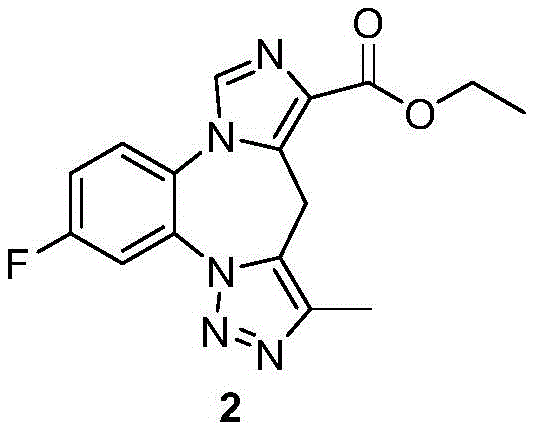
the compound of example 2 was synthesized using a synthetic route analogous to that described for example 1, using 5-fluoro-2-nitro-aniline as starting material to give compound 2 as a light brown solid: MS: [ M +1]=328.1H-NMR(500MHz,CDCl3)δ:7.90(br dd,1H,J=2.5,8.5Hz),7.77(s,1H),7.62(br dd,1H,J=5.0,9.0Hz),7.35(m,1H),4.45(q,2H,J=7.0Hz),2.45(s,3H),1.45(t,3H,J=7.0Hz)。
Example 3: synthesis of Compound 3:
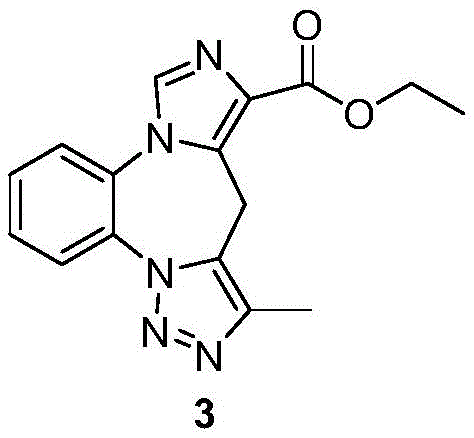
the compound of example 3 was synthesized in a synthetic route analogous to that described for example 1, using 2-nitro-aniline as starting material, to give compound 3 MS: [ M +1 ] as a pale yellow solid]=310;1H-NMR(500MHz,CDCl3)δ:8.161(br d,1H,J=8.5Hz),7.81(s,1H),7.66(m,3H),4.45(q,2H,J=7.0Hz),2.45(s,3H),1.46(t,3H,J=7.0Hz)。
Example 4: synthesis of Compound 110
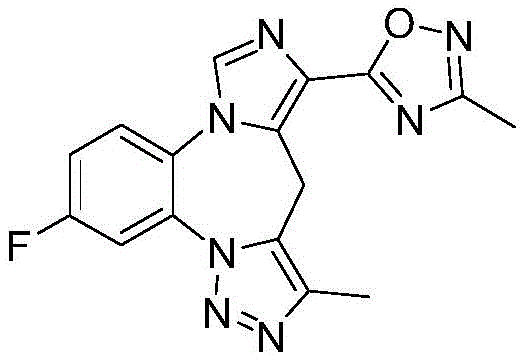
Acetamide oxime was azeotroped three times in toluene prior to use. To a suspension of acetamidoxime (30mg,0.4mmol) in THF (1mL) was added 60% NaH in oil dispersion (16mg,0.4 mmol). The suspension was stirred at room temperature for 15 min. Ester compound 2(65mg,0.2mmol) was added. The vial containing the ester was rinsed with THF (1mL) added to the reaction mixture. The resulting brown suspension was stirred at room temperature for 30 minutes and then heated at 70 ℃ for 2h 30 min. The suspension was quenched with MeOH. The solvent was evaporated and the crude oil was purified by chromatography (RediSep 4g silica gel column, eluted with 70% EtOAc in hexanes) to give 28mg (41% yield) of the product. MS: [ M +1 ]=338.H1NMR(CDCl3)δ7.92(1H,dd,J=2.5,8.5Hz),7.90(1H,s),7.67(1H,dd,J=4.5,9.5Hz),7.38(1H,m),2.51(3H,s),2.46(3H,s)。
Example 5: synthesis of Compound 167

The compound was similarly prepared from compound 1 to give compound 167: MS: [ M +1 ]]=350.H1NMR(CDCl3)δ7.87(1H,s),7.65(1H,d,J=3Hz),7.55(1H,d,J=9Hz),7.17(1H,dd,J=2.5,9Hz),3.96(3H,s),2.5(3H,s),2.45(3H,s)。
Scheme 12.
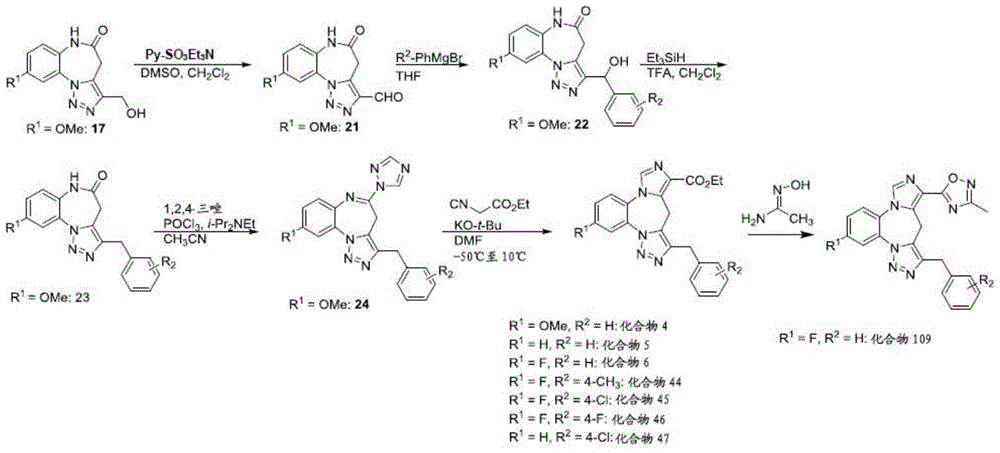
Example 6: synthesis of Compound 4:
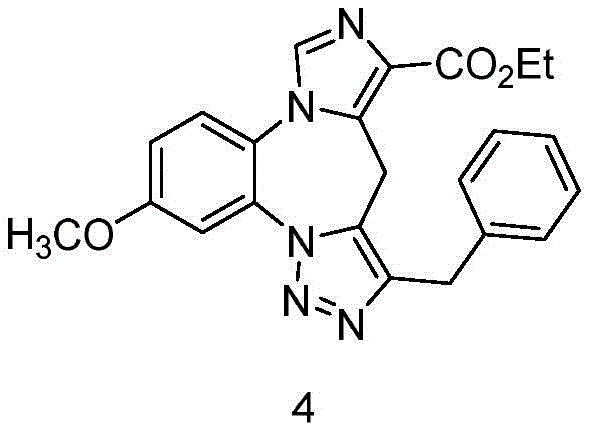
to Compound 17(260mg) prepared as in example 1 in DMSO (4mL) and CH2Cl2Et was added to the solution (6mL)3N (0.7mL,5mmol) was added followed by Py. SO3(398mg,2.5 mmol). It was stirred at room temperature for 1 h. The reaction mixture was poured into water and extracted three times with EtOAc. The combined extracts are successively taken with H2O, brine, and Na2SO4And (5) drying. Filtration and concentration gave 198.5mg of crude aldehyde 21, which was used without further purification. To a suspension of aldehyde 21(198.5mg,0.77mmol) in THF (10mL) was added PhMgBr (1M solution in THF, 1.54mL,1.54mmol) dropwise at 0 ℃. It was stirred at 0 ℃ for 30 min. Adding saturated NH4Aqueous Cl and extracted three times with EtOAc.
The combined extracts were washed with brine and over Na2SO4And (5) drying. Filtered and concentrated to give 252.9mg asBenzyl alcohol 22 as a brown foamy solid. It was used in the next step without further purification. To Et-containing3SiH (0.60mL,3.76mmol) of the crude alcohol 22 above in CH2Cl2To a solution in (8mL) was added TFA (0.64mL,8.27 mmol). The reaction solution was stirred at room temperature for 4 h. After concentration, the residue was purified by chromatography (RediSep 12g silica gel column, 20% to 80% EtOAc in hexanes) to give 34.1mg (12% yield, 4 steps) of the reduced product 23 as a white foamy solid. MS: [ M +1 ]=321。
In a separate flask, 1,2, 4-triazole (27mg,0.39mmol) was added to CH at 0 deg.C3Solution in CN (0.5mL) with i-Pr2NEt (72. mu.L, 0.41mmol), followed by POCl3(11. mu.L, 0.12 mmol). The mixture was stirred at 0 ℃ for 2 h. Lactam mass 23(32.2mg,0.1mmol, solid) was added to the reaction mixture in one portion and heated in an oil bath at 80 ℃ for 20 h. The mixture was cooled to room temperature and a cream solid precipitate was observed. Water (0.5mL) was added and stirred at room temperature for 5 min. The solid precipitate was collected by filtration and washed with 0.5mL of water, followed by drying under high vacuum to give 15.8mg (yield 42%) of addition compound 24 as an off-white fluffy solid. MS: [ M +1]372. A solution of KO-t-Bu (9.5mg, 85. mu. mol) in DMF (0.5mL) was cooled to-50 ℃. Ethylisocyanoacetate (10.4. mu.L, 95. mu. mol) was added dropwise. The resulting mixture was stirred at-50 ℃ for 1 h. Triazolamidine 24(15.8mg, 42. mu. mol, solid) was added in one batch. The stirred mixture was warmed to 10 ℃ over 1h and held at 10 ℃ for 1 h. Adding saturated NH4Aqueous Cl and extracted three times with EtOAc. The combined extracts are successively taken with H2O, brine, and Na 2SO4And (5) drying. Filtration and concentration gave the crude product. Chromatography (RediSep 4g silica gel column, solvent A:1:1v/v CH)2Cl2Hexane, solvent B EtOAc; gradient eluent: a to 50% solution of B in a) gave 16.8mg (yield 95%) of the compound of example 6 as a white solid. MS: [ M +1]=416。1H-NMR(500MHz,CDCl3)δ:7.74(s,1H),7.63(d,1H,J=3.0Hz),7.50(d,1H,J=9.0Hz),7.30(br d,2H,J=7.0Hz),7.29(br d,2H,7.5Hz),7.20(m,1H),7.13(dd,1H,J=2.5,9.0Hz),4.41(q,2H,J=7.5Hz),4.17(s,2H),3.95(s,3H),1.43(t,3H,7.5Hz)。
Example 7: synthesis of Compound 5:
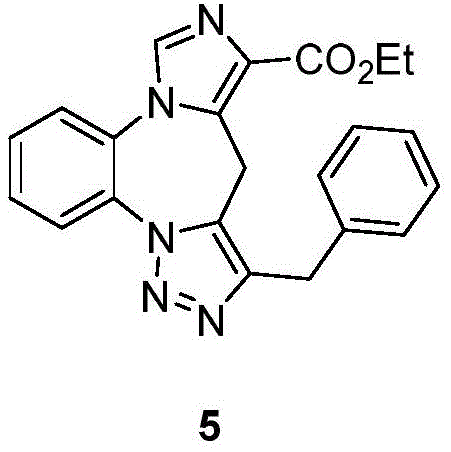
the compound of example 7 was synthesized using 2-nitro-aniline as the starting material in a synthetic route analogous to that described for example 6 to give compound 5: MS: [ M +1 ] as a brown solid]=386.1H-NMR(500MHz,CDCl3)δ:8.16(br d,1H,J=7.0Hz),7.81(s,1H),7.60-7.68(m,3H),7.34(br d,2H,J=8.0Hz),7.29(br d,2H,J=7.0Hz),7.20(m,1H),4.42(q,2H,J=7.0Hz),4.18(s,2H),1.44(t,3H,J=7.0Hz)。
Example 8: synthesis of Compound 6:
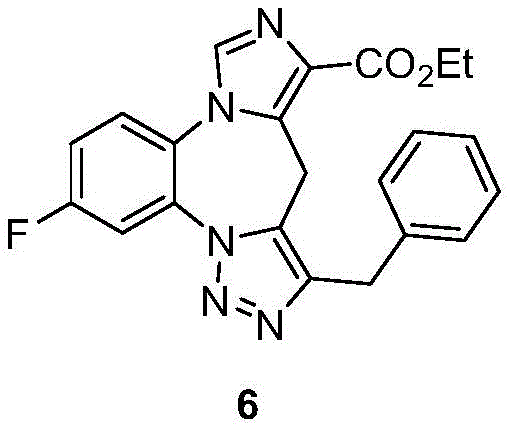
the compound of example 8 was synthesized using a synthetic route analogous to that described for example 6, using 5-fluoro-2-nitro-aniline as starting material to give compound 8 MS: [ M +1 ] as a brown solid]=404.1H-NMR(500MHz,CDCl3)δ:7.90(dd,1H,J=3.5,8.5Hz),7.77(s,1H),7.61(dd,1H,J=5.0,10.5Hz),7.28-7.37(m,5H),7.21(m,1H),4.43(q,2H,J=7.0Hz),4.17(s,2H),1.44(t,3H,J=7.0Hz)。
Example 9: synthesis of compound 44:
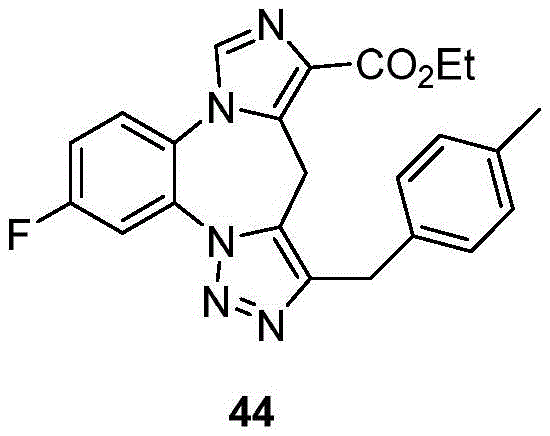
the compound of example 9 was synthesized using a synthetic route analogous to that described for example 6, using 5-fluoro-2-nitro-aniline as starting material, to give the compound of example 9 as a light brown solid MS: [ M +1]=418.1H-NMR(500MHz,CDCl3)δ:7.89(br d,1H,J=9.5Hz),7.76(s,1H),7.60(dd,1H,J=5.5,10.0Hz),7.35(br t,1H,J=6.0Hz),7.22(br d,2H,J=8.5Hz),7.09(br d,2H,J=7.5Hz),4.43(q,2H,J=7.5Hz),4.12(s,2H),2.30(s,3H),1.44(t,3H,J=7.5Hz)。
Example 10: synthesis of compound 45:
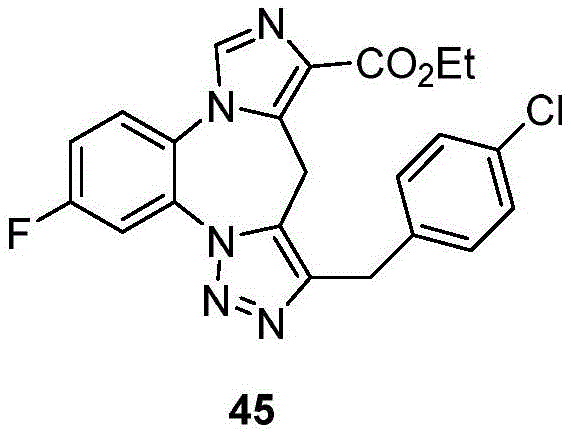
the compound of example 10 was synthesized using a synthetic route analogous to that described for example 6, using 5-fluoro-2-nitro-aniline as starting material, to give the compound of example 10 as a light brown solid MS: [ M +1 ]=438.1H-NMR(500MHz,CDCl3)δ:7.90(dd,1H,J=3.0,8.0Hz),7.77(s,1H),7.61(dd,1H,J=5.0,9.0Hz),7.36(m,1H),7.25(br s,4H),4.42(q,2H,J=7.0Hz),4.14(s,2H),1.44(t,3H,J=7.0Hz)。
Example 11: synthesis of compound 46:

the compound of example 11 was synthesized using a synthetic route analogous to that described for example 6, using 5-fluoro-2-nitro-aniline as starting material, to give the compound of example 11 as a yellowish solid MS: [ M +1]=422.1H-NMR(500MHz,CDCl3)δ:7.90(dd,1H,J=3.0,8.5Hz),7.77(s,1H),7.61(dd,1H,J=5.0,9.0Hz),7.36(m,1H),7.28(m,2H),6.96(m,2H),4.42(q,2H,J=7.5Hz),4.14(s,2H),1.44(t,3H,J=7.0Hz)。
Example 12: synthesis of compound 47:

the compound of example 12 was synthesized using 2-nitro-aniline as the starting material in a synthetic route analogous to that described for example 6 to give the compound of example 12 MS: [ M +1 ] as a yellowish solid]=420.1H-NMR(500MHz,CDCl3)δ:8.16(br d,1H,J=7.0Hz),7.80(s,1H),7.64(m,3H),7.25(m,4H),4.41(q,2H,J=7.0Hz),4.14(s,2H),1.44(t,3H,J=8.0Hz)。
Example 13: synthesis of compound 109:
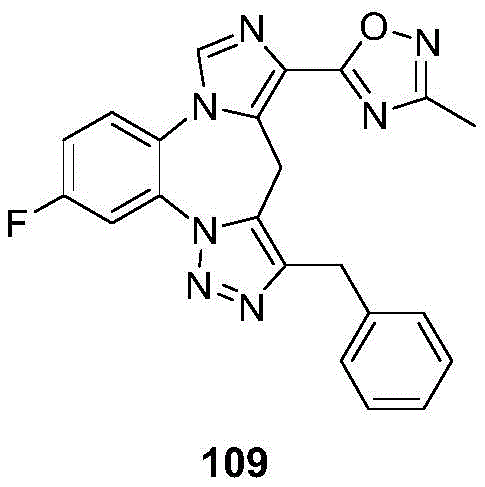
acetamide oxime (50mg, 0.67mmol) was azeotroped 3 times with toluene. THF (5mL) was added followed by a 60% NaH in oil dispersion (25mg,0.62 mmol). The suspension was stirred at room temperature for 30 min. 2mL of this suspension was added to ester compound 6(40mg, 0.099mmol), and the resulting solution was heated at 70 ℃ for 3 h. The solution was quenched with water. The solution was extracted with EtOAc (3 ×). The combined organic phases were washed with brine, over MgSO4And (5) drying. Filtration and concentration gave the crude product. Chromatography (RediSep 12g silica gel column eluted with 50% EtOAc in hexanes) afforded 6mg (20% yield) of the product compound 109 as a yellow solid. MS: [ M +1 ]=414)。H1NMR(CDCl3)δ7.93(1H,dd,J=3,8.5Hz),7.89(1H,s),7.65(1H,dd,J=5.5,9Hz),7.38(1H,m),7.23(5H,m),4.2(2H,s),2.50(3H,s)。
Example 14: synthesis of compound 7:

to a stirred mixture of 5-methoxy-2-nitroaniline (5g,29.7mmol) in HCl (conc. 12.9mL) at 0 deg.C was added NaNO dropwise2(2.05g,29.7mmol) in H2Solution in O (8 mL). The internal temperature was kept below 5 ℃. After addition, the mixture was warmed to room temperature over 1 h. The mixture was cooled to 0 ℃ and SnCl was slowly added dropwise2·2H2A solution of O (20.13g,89.2mmol) in HCl (conc. 13 mL). After addition, it was stirred at room temperature for 2 h. The resulting yellow solid was collected by filtration and washed with cold (0 ℃)6N HCl. After drying in a vacuum drying cabinet 3.245g (yield 50%) were obtained asArylhydrazine 25 as a brown solid. MS: [ M + H2O+Na]224. In a separate flask, a mixture of diethyl 1, 3-acetonate (2.426g,12mmol) and diethoxymethyl acetate (1.946g,12mmol) was heated under microwave radiation at 100 ℃ for 1 h. The reaction mixture was concentrated in vacuo and the residual volatile components were co-distilled off in vacuo together with toluene (5ml) to give condensation product 26, which was used directly in the next step.
Scheme 13.
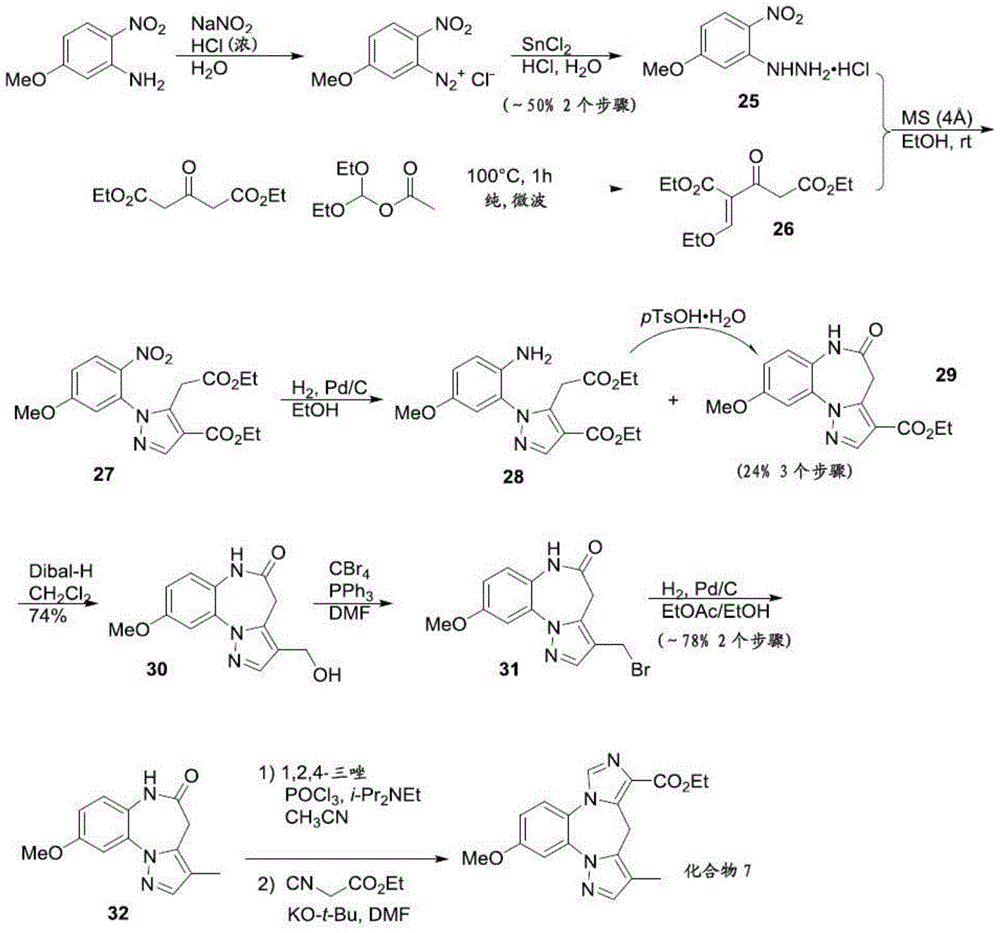
The product 26 from the above step was dissolved in EtOH (30 mL). Adding molecular sieve (C)  2g) And hydrazine hydrochloride 25(2.19g,10 mmol). The suspension was stirred at room temperature for 24 h. It was filtered through celite and the solid was washed with EtOAc (10mL X3). The filtrate was concentrated. The residue was purified by chromatography (RediSep 40g silica gel column, 10% to 40% EtOAc in hexanes) to give 2.091g pyrrole 27, which was used in the next step without further purification. MS: [ M +1]=378。
The nitro group above at 27(2.09g,5.5mmol) was taken up in EtOH (40mL) with Pd/C (10 wt%, 295mg,0.28mmol) in H2Reduction under balloon for 18 h. The mixture was filtered through celite. The filtrate was concentrated and the residue was purified by chromatography (RediSep 24g silica gel column, hexanes to 50% EtOAc in hexanes) to give 1.127g of the uncyclized product 28([ M +1 ] as a yellow viscous oil]348) and 154mg of the cyclised product 29(MS: [ M +1 ] as a grey solid]302). Uncyclized aniline 28(1.127g,3.2mmol) in p-xylene (20mL) was reacted with a catalytic amount of p-TsOH H2O (15mg) was treated in an oil bath at 140 ℃ for 20 h. The reaction mixture was cooled, concentrated, and the residue triturated with cold (0 ℃) EtOAc. Filtration afforded 559mg of lactam product 29 as a yellow solid. The total weight of the combined lactam product 29 was 713mg (24% 3 steps). MS: [ M +1]=302。
To ester 29(566mg,1.88mmol) in CH at-78 deg.C2Cl2To the suspension in (35mL) was added Dibal-H (1M in hexanes, 6.60mL,6.60 mmol). The suspension was stirred at-78 ℃ for 10 min. The cooling bath was removed and stirred for 20min while the temperature was raised to room temperature. At this point, TLC indicated-80% reaction was complete. It was cooled to-78 deg.C and more Dibal-H (1M in hexanes, 1.0mL,1.0mmol) was added. After stirring at-78 ℃ for 30min, LCMS indicated the reaction was complete. The reaction was quenched by addition of rochelle brine solution (20%), followed by addition of EtOAc. It was stirred vigorously at room temperature until it became a clear two-layer mixture. The layers were separated and the aqueous layer was extracted three times with EtOAc. The combined organic phases were washed with brine and over Na2SO4And (5) drying. Filtration and concentration gave 480mg of crude alcohol 30 as a pale yellow solid. MS: [ M +1]=260。
Alcohol 30(200mg,0.77mmol) and CBr were added within 30min4(640mg,1.93mmol) in DMF (8mL) was added PPh slowly3(486mg,1.85mmol) in DMF (2 mL). After the addition, it was stirred at room temperature for 30 min. Water was added to quench the reaction, and the mixture was extracted three times with EtOAc. The combined extracts are successively taken with H 2O, brine, and Na2SO4And (5) drying. Filtration and concentration gave the crude product. Chromatography (RediSep12g silica gel column, solvent A:1:1v/v CH2Cl2Hexane, solvent B EtOAc; gradient eluent: 10% to 40% solution of B in A) to give 221mg of bromide 31 and Ph3A mixture of PO.
The above mixture in EtOAc/EtOH (8mL/8mL) containing Pd/C (10 wt%, 200mg,0.19mmol) in H2Stirring for 1h (under balloon). It was filtered through celite. The filtrate was concentrated and the residue was chromatographed (RediSep12g silica gel column, solvent A:1:1v/v CH)2Cl2Hexane, solvent B EtOAc; gradient eluent: 10% to 40% solution of B in A) to yield 146mg of reduced product 32([ M +1 ]]244) and Ph3A mixture of PO.
In a single bodyIn a flask of (2, 4-triazole) (81mg,1.17mmol) in CH3Solutions in CN (1mL) at 0 ℃ with i-Pr2NEt (214. mu.L, 1.23mmol), followed by POCl3(34. mu.L, 0.36 mmol). The solution was stirred at 0 ℃ for 2 h. Lactam 32(LCMS indicates-60% purity) was added in one batch and the resulting suspension was heated in an oil bath at 80 ℃ for 18 h. Water was added to quench the reaction. It was extracted three times with EtOAc. The combined extracts are successively taken with H 2O, brine, and Na2SO4And (5) drying. Filtration and concentration gave 126.6mg of crude product 33 as a yellow gum which was used directly in the next reaction. MS: [ M +1]295. A solution of KO-t-Bu (97mg,0.86mmol) in DMF (1mL) was cooled to-50 ℃. Ethylisocyanoacetate (104. mu.L, 0.95mmol) was added dropwise. The mixture was stirred at-50 ℃ for 1 h. The above crude product 33 in DMF (1.5mL) was added dropwise. The mixture was warmed to 10 ℃ and stirred at 10 ℃ for 1 h. Adding saturated NH4Aqueous Cl and extracted three times with EtOAc. The combined extracts were washed with water, brine, and Na2SO4And (5) drying. Filtration and concentration gave the crude product. Chromatography (RediSep 12g silica gel column, solvent A:1:1v/v CH)2Cl2Hexane, solvent B EtOAc; gradient eluent: 10% to 40% solution of B in A) to give 22mg of a white solid, which was further purified by preparative TLC (development with 1: 1A/B) to give 12.8mg of the final product, Compound 7, as a white solid (example 14). MS: [ M +1]=339.1H-NMR(500MHz,CDCl3)δ:7.70(s,1H),7.56(s,1H),7.50(d,1H,J=3.0Hz),7.43(d,1H,J=8.5Hz),7.00(dd,1H,J=2.5,9.5Hz),5.29(br s,1H),4.44(q,2H,J=7.0Hz),3.92(s,3H),3.55(br s,1H),2.17(s,3H),1.45(t,3H,J=7.0Hz)。
Example 15: synthesis of compound 8:
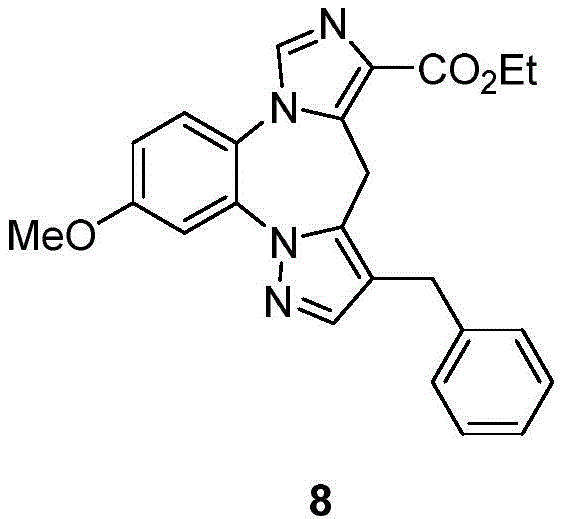
scheme 14.

To the alcohol 30 prepared in example 14 (261mg,1.0mmol) in DMSO (4mL) and CH2Cl2Et was added to the solution (6mL)3N (0.7mL,5mmol) was added followed by Py. SO 3(398mg,2.5 mmol). It was stirred at room temperature for 1 h. The reaction mixture was poured into water and extracted three times with EtOAc. The combined extracts are successively taken with H2O, brine, and Na2SO4And (5) drying. Filtration and concentration gave 226mg of crude aldehyde 34 as a yellow solid. It was used in the next step without purification. MS: [ M +1]=258。
To a suspension of crude aldehyde 34(202mg,0.79mmol) in THF (10mL) was added PhMgBr (1M solution in THF, 1.58mL,1.58mmol) dropwise at 0 ℃. It was stirred at 0 ℃ for 30 min. Adding saturated NH4Aqueous Cl and extracted three times with EtOAc. The combined extracts were washed with brine and over Na2SO4And (5) drying. Filtration and concentration gave 275mg of crude product 35 as a yellow foamy solid, which was used in the next step without purification.
To Et-containing3SiH (0.66mL,4.10mmol) in CH of crude alcohol 35 above2Cl2To a solution in (10mL) was added TFA (0.70mL,9.02 mmol). The reaction solution was stirred at room temperature for 1 h. After concentration, the residue was purified by chromatography (RediSep 24g silica gel column, 10% to 50% EtOAc in hexanes) to give 187.8mg (yield 59%, 3 steps) of product 36 as a gray solid. MS: [ M +1 ]=320。
In a separate flask, 1,2, 4-triazole (127mg,1.83mmol) was added to CH at 0 deg.C3Solution in CN (1.6mL) with i-Pr2NEt (336. mu.L, 1.93mmol), followed by POCl3(53. mu.L, 0.56 mmol). The mixture was stirred at 0 ℃ for 2 h. Lactam 36(150mg,0.47mmol, solid) was added to the reaction mixture in one portion and heated in an oil bath at 80 ℃ for 18 h. The mixture was cooled to room temperature and a solid precipitate was observed. Water (2.1mL) was added and stirred at room temperature for 10 min. Filtration, washing of the solid with 2mL of water, followed byDrying under high vacuum gave 118.8mg (69% yield) of triazolamidine 37 as an off-white fluffy solid. MS: [ M +1]371. A solution of KO-t-Bu (72mg,0.64mmol) in DMF (2mL) was cooled to-50 ℃. Ethylisocyanoacetate (77 μ L, 0.71mol) was added dropwise. The resulting mixture was stirred at-50 ℃ for 1 h. Triazolamidine 37(118.8mg, 42. mu. mol, solid) was added in one portion. The stirred mixture was warmed to 10 ℃ over 1h and held at 10 ℃ for 1 h. Adding saturated NH4Aqueous Cl and extracted three times with EtOAc. The combined extracts are successively taken with H2O, brine, and Na2SO4And (5) drying. Filtration, concentration, and chromatography (RediSep 12g silica gel column. solvent A:1:1v/v CH) 2Cl2Hexane, solvent B EtOAc; gradient eluent: a to 40% solution of B in a) gave 125.1mg (yield 94%) of compound 8 as a white solid. MS: [ M +1]=415。1H-NMR(500MHz;CDCl3)δ:7.72(s,1H),7.54(s,1H),7.51(br s,1H),7.44(br d,1H,J=9.5Hz),7.29(br d,2H,J=7.5Hz),7.20(m,3H),7,01(br d,1H,J=7.5Hz),5.30(br s,1H),4.38(q,2H,J=7.0Hz),3.92(br s,5H),3.54(br s,1H),1.41(t,3H,J=7.0Hz)。
Example 16: synthesis of compound 9:

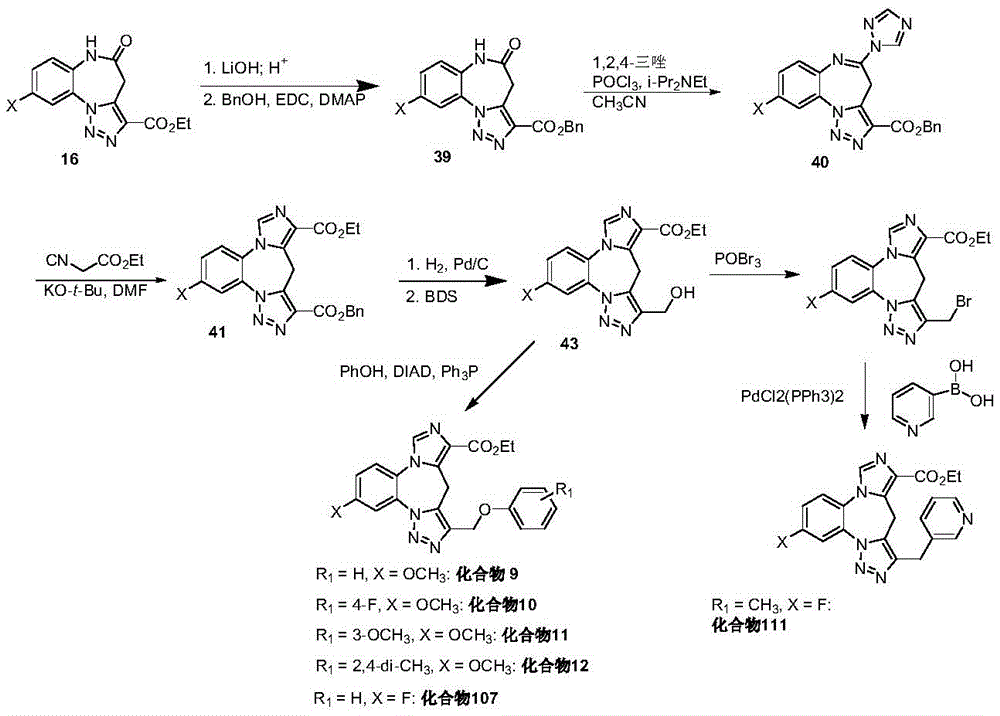
LiOH (1.09g,45.5mmol) was added to a stirred solution of ester 16 (prepared in example 1) (2.75g,9.10mmol) in THF (24mL) and water (20mL) at room temperature. MeOH (4mL) was added and stirring continued at room temperature for 2h, at which time LCMS indicated complete consumption of the ester. After concentration in vacuo, the reaction mixture was acidified to pH 3-4 by addition of 2N HCl (20 mL). After stirring for 20min, the reaction mixture was cooled to 0 ℃, and the solid precipitate was collected by filtration, washed with 3-4ml of water, and dried to yield 1.59g (64%) of the corresponding acid 38 as a light grey solid. MS: [ M +1] ═ 275. To acid 38(1.59g,5.8mmol), suspended and stirred in DCM (30ml), was added EDC (5.6g,29.2mmol), benzyl alcohol (2.5g,23.2mmol) and DMAP (3.54g,29.2 mmol). After stirring at room temperature for 3 days, the reaction mixture was concentrated in vacuo. Water (80mL) was added to the slurry followed by diethyl ether (40mL) and the mixture was stirred vigorously for 40min, at which time the slurry became a precipitate which was collected by suction filtration. The solid was washed with water and a small amount of diethyl ether and dried to give 1.65g (78%) of benzyl ester 39 as a white solid. MS: [ M +1] ═ 365.
A solution of KO-t-Bu (0.739g,6.59mmol) in DMF (11mL) was cooled to-50 ℃. Ethylisocyanoacetate (0.810mL,7.00mmol) was added dropwise. The mixture was stirred at-50 ℃ for 1 h. The above triazole intermediate 40(1.61g,3.87mmol) was added. The mixture was stirred at-50 ℃ for 30min and slowly warmed to room temperature over 4-5 h. Adding saturated NH 4Aqueous Cl (10mL) followed by EtOAc (10 mL). The mixture was sonicated to break up the solid mass and then stirred thoroughly for 30 min. The precipitate was collected by filtration, washed with water and Et2O washed and dried to give the crude product as a white solid. Adding the filtrate in waterAnd EtOAc; the aqueous layer was separated and extracted twice with EtOAc; the combined EtOAc layers were washed with brine and over MgSO4And (5) drying. Filtration and removal of solvent gave a solid residue which was combined with the solid obtained above for chromatographic purification (using a RediSep 24g silica gel column, gradient eluted with 0.5-5% MeOH in DCM) to give 1.78g (100%) of imidazole 41 as a white solid. MS: [ M +1]460. Benzyl ester 41(1.78g,3.87mmol) was hydrogenolyzed (hydrogen balloon) in the presence of catalytic amounts of 10% Pd on charcoal in a solvent mixture of THF (40mL), MeOH (20mL) and EtOAc (20mL) for 20 h. LCMS indicated complete disappearance of starting material. The solid catalyst was removed by filtration through celite and repeated rinsing with sufficient 30% MeOH in DCM until nearly all product was recovered (TLC monitoring). The product-containing filtrate was concentrated in vacuo to give 1.22g (85%) of the acid product 42 as a yellowish solid. MS: [ M +1 ]=370。
To acid 42(1.22g,3.30mmol), suspended and stirred in THF (25mL), was added borane dimethylsulfide complex (2M THF; 19mL,38mmol) dropwise at 0 ℃. The ice bath was removed and the reaction mixture was stirred at rt for 16 h. After cooling in an ice bath, the reaction was carefully quenched with MeOH (20mL) and then stirred at room temperature overnight. The solvent was removed in vacuo. Two more additions of MeOH were performed and removed in vacuo. ISCO purification (RediSep 24g column) using a solution gradient of 1-8% MeOH in DCM yielded 0.625g (53%) of the alcohol product 43 as a white solid. MS: [ M +1] ═ 356.
Diisopropyl azodicarboxylate (48.3mg,0.233mmol) was added dropwise to alcohol 43(37.5mg,0.106mmol), phenol (14.9mg,0.158mmol) and Ph at 0 deg.C3A stirred solution of P (55.6mg,0.212mmol) in dry THF (0.8 mL). The ice bath was removed and stirring continued at room temperature for 16 h. LCMS indicated complete disappearance of the starting alcohol. The reaction mixture was washed with saturated NaHCO3And EtOAc. The organic layer was separated and washed with water, brine and MgSO4And (5) drying. The desired product was isolated from the reaction mixture by two consecutive preparative TLC (4% MeOH in DCM and hexanes/EtOAc/MeOH ═ 47.5/47.5/5, v/v/v) to give 5.3mg (12%) of the product as a white solid, which was compound (iii) 9。MS:[M+1]=432。1H-NMR(500MHz,CDCl3)δ:7.77(s,1H),7.63(d,1H,J=3.5Hz),7.53(d,1H,J=9.0Hz),7.31(m,2H),7.17(dd,1H,J=3.0,8.5Hz),7.08(d,2H,J=7.0Hz),6.99(t,1H,J=6.5Hz),5.30(s,2H),4.40(q,2H,J=7.0Hz),3.96(s,3H),1.38(t,3H,J=7.0Hz)。
Example 17: synthesis of compound 10:

the compound of example 17 was synthesized in a final step using 4-fluoro-phenol in a synthetic route similar to that described for example 16 to give compound 10(4.9mg) as a white solid, MS: [ M +1 ]]=450。1H-NMR(500MHz,CDCl3)δ:7.76(s,1H),7.64(d,1H,J=3.5Hz),7.53(d,1H,J=8.0Hz),7.17(dd,1H,J=2.5,8.0Hz),7.01(m,4H),5.26(s,2H),4.40(q,2H,J=7.0Hz),3.96(s,3H),1.40(t,3H,J=7.0Hz)。
Example 18: synthesis of compound 11:
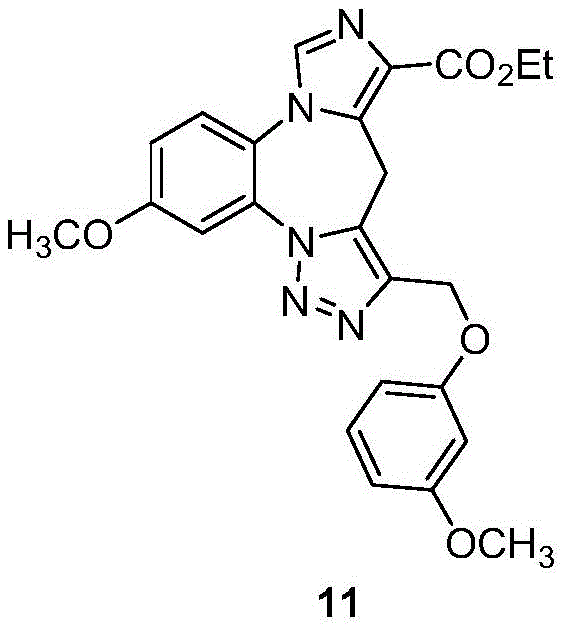
the compound of example 18 was synthesized in a similar synthetic route to that described for example 16, using 3-methoxy-phenol in the final step, to give compound 11(6.1mg) as a white solid, MS: [ M +1 ]]=462。1H-NMR(500MHz,CDCl3)δ:7.76(s,1H),7.63(d,1H,J=2.5Hz),7.53(d,1H,J=9.0Hz),7.15-7.22(m,2H),6.67(m,2H),6.55(br dd,1H,J=2.5,8.0Hz),5.28(s,2H),4.39(q,2H,J=7.0Hz),3.96(s,3H),3.81(s,3H),1.39(t,3H,J=7.0Hz)。
Example 19: synthesis of compound 12:

in a final step using a synthetic route analogous to that described in connection with example 16The compound of example 19 was synthesized from 2, 4-dimethylphenol to give compound 12(3.1mg) as a white solid, MS: [ M +1]=460。1H-NMR(500MHz,CDCl3)δ:7.76(s,1H),7.65(d,1H,J=3.0Hz),7.53(d,1H,J=9.0Hz),7.17(dd,1H,J=2.5,8.5Hz),6.98(m,3H),5.26(s,2H),4.37(q,2H,J=7.0Hz),3.96(s,3H),2.26(s,3H),2.20(s,3H),1.36(t,3H,J=7.0Hz)。
Example 20: synthesis of compound 107:

to alcohol 43 (where X ═ F) (to match where X ═ OCH3Prepared in the same manner as in the example) (60mg,0.17mmol) in THF (0.8mL) was added phenol (30mg,0.32mmol), triphenylphosphine (84mg,0.32 mmol). The reaction mixture was stirred at room temperature for 15 min. It was then cooled with an ice bath and a solution of DIAD (64. mu.L, 0.32mmol) in THF (0.2mL) was added slowly. The ice bath was removed and the reaction mixture was stirred at room temperature for 18 h. LCMS indicated that some starting material was still present. Phenol (10mg), triphenylphosphine (28mg) and DIAD (21. mu.L) were added to the reaction mixture and stirred for an additional 1 hour. The solvent was evaporated and the crude material was purified by chromatography (RediSep 12g silica gel column. elution solvent: EtOAc) and preparative TLC (elution solvent: 5% MeOH/47.5% EtOAc/47.5% hexanes) to give 11.4mg (16% yield) of product compound 107. [ M +1 ] ]=421)。H1NMR(CDCl3)δ7.92(1H,dd,J=3.5,8.5Hz),7.80(1H,s),7.63(1H,dd,J=5,10Hz),7.38(1H,m),7.31(2H,t,J=8.5Hz),7.07(2H,d,J=8.5Hz),7.00(1H,t,J=8.5Hz),5.3(2H,s),4.39(2H,q,J=7Hz),1.38(3H,t,J=7Hz)。
Example 21: synthesis of compound 111:
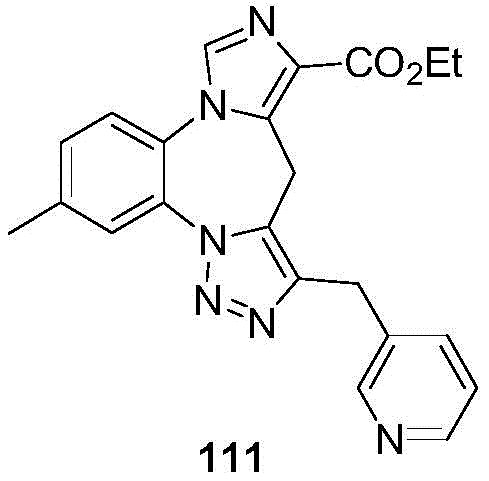
to a suspension of alcohol 43(X ═ Me) (160mg,0.47mmol) in acetonitrile (9mL) was added POBr3(405mg,1.41 mmol). Mixing the reaction mixtureHeating at 80 deg.C for 5 h. The reaction mixture was cooled with an ice bath and saturated NaHCO was added3An aqueous solution. The resulting solution was extracted with DCM (3 ×). The combined organic phases were washed with brine and over MgSO4And (5) drying. The solvent was concentrated to give the desired product (166mg, 88% yield, [ M +1 ]]=403)。
To a suspension of the above alkyl bromide derivative (30 mg; 0.075mmol) in deoxygenated DME (2.7mL) was added 3-pyridineboronic acid (14mg,0.11mmol) and 2M Na2CO3Solution (0.22mL,0.44 mmol). The suspension was stirred at room temperature for 5min, then PdCl was added2(PPh3)2(10mg,0.015 mmol). The suspension was heated in a microwave at 85C for 1 hour. The reaction mixture was cooled, diluted with water, and extracted with EtOAc (twice). The combined extracts were washed with brine and over MgSO4And (5) drying. Filtration and concentration gave the crude product which was purified by 2 preparative TLC (elution system: 3% MeOH in DCM) to give 5.3mg (18% yield) of the product compound 111. MS: [ M +1]=401.H1NMR(CDCl3)δ8.66(1H,bs),8.48(1H,bs),7.96(1H,s),7.79(1H,s),7.66(1H,d,J=8Hz),7.50(1H,d,J=8Hz),7.43(1H,d,J=7Hz),7.23(1H,m),4.42(2H,q,J=7Hz),4.18(2H,s),2.54(3H,s),1.44(3H,t,J=7Hz)。
Example 22: synthesis of compound 48:
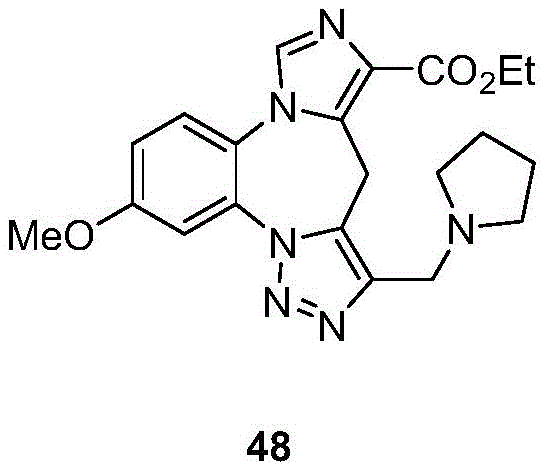
scheme 16.
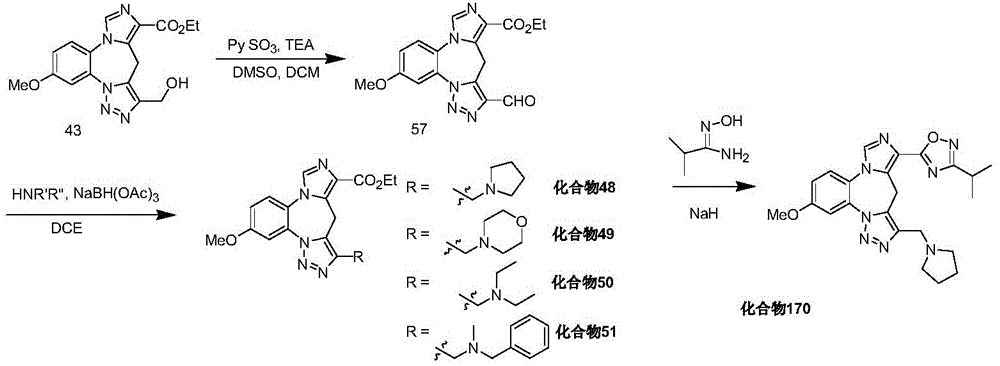
To alcohol 43(186mg,0.523mmol) stirred in DMSO (1mL) and dichloromethane (2.5mL) was added triethylamine (0.394mL,2.82mmol) and pyridine sulfur trioxide complex (225mg,1.41mmol) at room temperature. After stirring for 3h, the reaction was quenched with water (5mL) and extracted three times with ethyl acetate. The combined organic solution was washed with water, brine, and over MgSO4And (5) drying.The aldehyde product 57 was isolated by ISCO flash column chromatography (RediSep 4g column) eluting with a gradient of 0.5-8% MeOH in DCM. 84.4mg (46%) of a yellowish foamy solid are obtained. MS: [ M +1]=354。
To a stirred solution of aldehyde 57(15.5mg,0.0439mmol) in 1, 2-dichloroethane (0.3mL) was added pyrrolidine (5.5uL,0.0658mmol) at room temperature. After stirring for 2min, the solution became clear and NaBH (OAc) was added3(14.4 mg). The reaction mixture was stirred for 4h with saturated NaHCO3Quenched and extracted three times with ethyl acetate. The combined organic layers were washed with water, brine and Na2SO4And (5) drying. Preparative TLC using 10% MeOH in DCM yielded 13.1mg (73%) of the desired compound 48 as a clear membrane-like solid. MS: [ M +1]=409.1H-NMR(500MHz,CDCl3)δ:7.74(s,1H),7.62(d,1H,J=3.0Hz),7.51(d,1H,J=9.0Hz),7.14(dd,1H,J=3.5,9.0Hz),4.42(q,2H,J=6.5Hz),3.94(s,3H),3.87(br s,2H),2.65(br s,4H),1.79(br s,4H),1.44(t,3H,J=7.0Hz)。
Example 23: synthesis of compound 49:
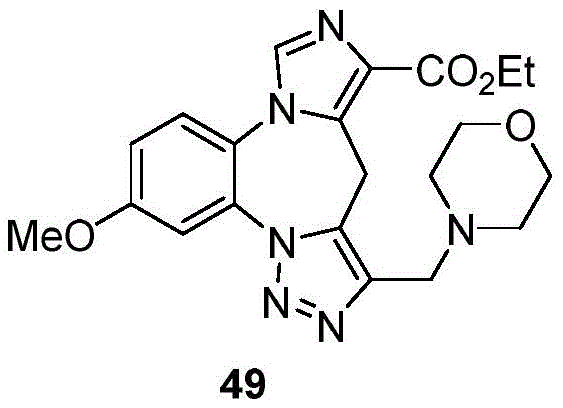
the compound of example 23 was synthesized in a final step using morpholine in a synthetic route analogous to that described for example 22 to give the compound of example 23 as a clear membrane-like solid MS: [ M +1 ]=425。1H-NMR(500MHz,CDCl3)δ:7.75(s,1H),7.63(d,1H,J=3.0Hz),7.52(d,1H,J=9.5Hz),7.15(dd,1H,J=3.0,9.0Hz),4.42(q,2H,J=7.5Hz),3.95(s,3H),3.76(br s,2H),3.71(br s,4H),2.57(br s,4H),1.44(t,3H,J=8.0Hz)。
Example 24: synthesis of compound 50:

in a synthetic route analogous to that described for example 22, used in the final stepDiethylamine, the compound of example 24 was synthesized to obtain the compound of example 24 as a clear membrane-like solid MS: [ M +1]=411。1H-NMR(500MHz,CDCl3)δ:7.74(s,1H),7.64(br d,1H,J=3.0Hz),7.51(d,1H,J=9.0Hz),7.15(dd,1H,J=2.5,9.0Hz),4.43(q,2H,J=6.5Hz),3.96(s,3H),3.86(br s,2H),2.64(br s,4H),1.44(t,3H,J=8.5Hz),1.15(br s,6H)。
Example 25: synthesis of compound 51:
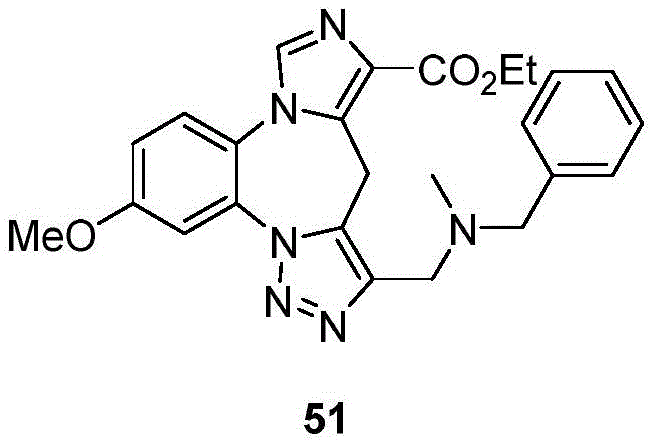
the compound of example 25 was synthesized in a synthetic route similar to that described for example 22 using methylbenzylamine in the final step to give the compound of example 25 as a clear membrane-like solid MS: [ M +1 ]]=459。1H-NMR(500MHz,CDCl3)δ:7.75(s,1H),7.63(d,1H,J=3.0Hz),7.51(d,1H,J=8.5Hz),7.36(br d,2H,J=8.0Hz),7.30(m,2H),7.23(m,1H),7.15(dd,1H,J=3.0,9.0Hz),4.38(q,2H,J=7.5Hz),3.95(s,3H),3.85(br s,2H),3.63(br s,2H),2.25(s,3H),1.41(t,3H,J=7.0Hz)。
Example 26: synthesis of compound 170:
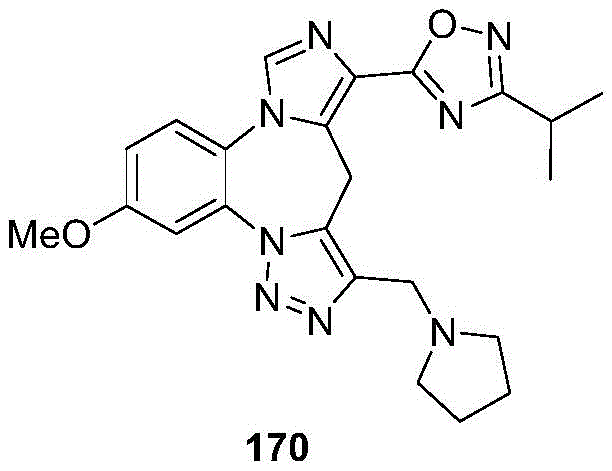
isobutyramidine oxime (isobutryamidoxime) (41.8mg,0.41mmol) and ester 48(27.9mg,0.0683mmol) were azeotroped several times on Rotavap in toluene in a round bottom flask, suspended in anhydrous THF (0.6mL) and then cooled to 0 ℃. NaH (60% oil suspension; 10.9mg,0.273mmol) was added. The ice bath was removed and the reaction mixture was stirred at room temperature for 20min, then heated at 70 ℃ for 6 h and cooled. Water (4mL) was added and the mixture was extracted three times with EtOAc. The combined organic solutions were washed with brine and over MgSO4And (5) drying. Preparative TLC using 10% MeOH in EtOAc yielded 10.4mg (34%) of the desired product, compound 170, as a clear, membrane-like solid. MS: [ M +1 ]=447。
Example 27: synthesis of compound 52:

scheme 17.

The starting alcohol 43(160mg,0.45mmol) was treated with a solution of phosphorus oxide tribromide (400mg,1.4mmol) in acetonitrile (10ml) at 80 ℃ for 5 h. The reaction mixture was then cooled to 0 ℃, quenched with saturated NaHCO3, and extracted twice with dichloromethane. The combined dichloromethane solutions were washed with brine and over MgSO4And (5) drying. Filtration and removal of the solvent in vacuo gave 173.3mg (92%) of bromide as a yellowish foamy solid. MS: [ M +1]=418。
To a suspension of bromide (55mg,0.131mmol) in dimethoxyethane (2 ml; degassed) was added 2M Na2CO3(0.39ml,0.78mmol) and 3-chlorophenylboronic acid (42.2mg,0.27 mmol). The reaction mixture was stirred at room temperature for 2min, then Pd (PPh) was added3)4(75mg,0.065mmol) and the suspension was heated in an oil bath at 85 ℃ for 90 min. After cooling, the reaction mixture was diluted with EtOAc and washed with brine. The aqueous layer was separated and extracted three times with EtOAc. All organic layers were combined and passed over Na2SO4Dried, then filtered, and the solvent removed in vacuo. The product was isolated by continuous preparative TLC using 20% hexane in EtOAc followed by 5% MeOH in DCM. 9.6mg of the product (compound 52) are obtained as a pale brown solid. MS: [ M +1 ]=450.1H-NMR(500MHz,CDCl3)δ:7.75(s,1H),7.64(d,1H,J=3.0Hz),7.51(d,1H,J=9.5Hz),7.31(br s,1H),7.23(br s,1H),7.17(m,3H),4.43(q,2H,J=7.0Hz),4.15(s,2H),3.96(s,3H),1.44(t,3H,J=8.0Hz)。
Example 28: synthesis of compound 53:
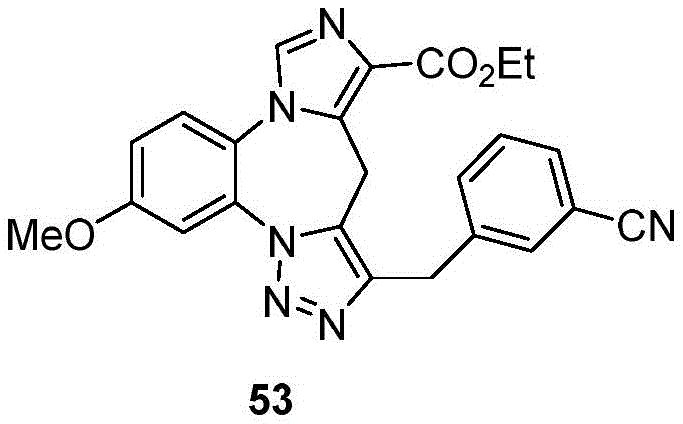
the compound of example 28 was synthesized in a final step using 3-cyanophenylboronic acid in a synthetic route analogous to that described for example 27 to give the compound of example 28 as a light brown solid MS: [ M +1 ]]=441。1H-NMR(500MHz,CDCl3)δ:7.75(s,1H),7.66(br s,1H),7.64(d,1H,J=3.0Hz),7.61(br d,1H,J=7.5Hz),7.39(t,1H,J=7.5Hz),7.16(dd,1H,J=3.5,9.5Hz),4.45(q,2H,J=7.0H),4.20(s,2H),3.96(s,3H),1.45(t,3H,J=7.0Hz)。
Example 29: synthesis of compound 54:
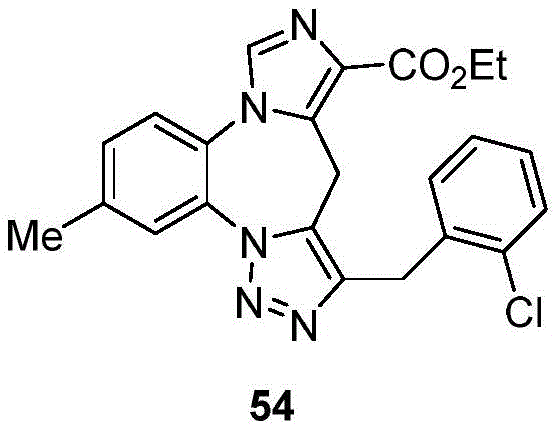
from alcohols (wherein R is1Pivaloyl) and in the final step using 2-chlorophenylboronic acid, the compound of example 29 was synthesized to give the compound of example 29 as a light brown solid MS: [ M +1]=434。
Example 30: synthesis of compound 101:
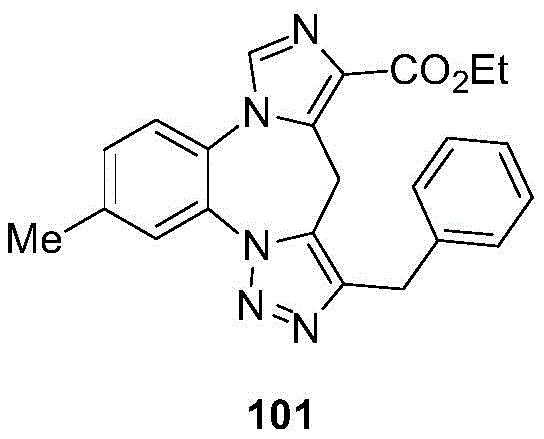
from alcohols (wherein R is1Methyl) and in the final step the compound of example 30 was synthesized using phenylboronic acid to give the compound of example 30 as a light brown solid product, which was purified by chromatography (RediSep 4g silica gel column. Eluting solvent: EtOAc), then purified by preparative TLC (elution system: 40% DCM/40% hexanes/17% EtOAc/3% MeOH) to give 5.9mg (31% yield) of the product, compound 101. MS: [ M +1]=402.H1NMR(CDCl3)δ7.96(1H,s),7.77(1H,s),7.55(1H,m),7.47(1H,m),7.32(5H,m),4.41(2H,q,J=7Hz),4.17(2H,s),2.53(3H,s),1.43(3H,t,J=7Hz)。
Example 31: synthesis of compound 102:
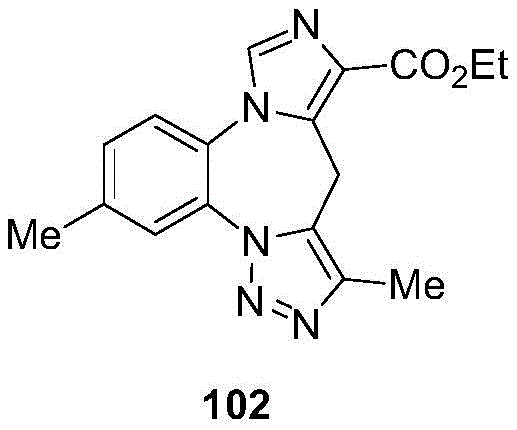
To a suspension of the bromide in EtOAc (2mL) and MeOH (2mL) was added activated 10% Pd/C (5 mg). The suspension was stirred under a hydrogen atmosphere for 48 h. The solution was filtered through celite. The filtrate was concentrated and purified by chromatography (RediSep 4g silica gel column. elution solvent: EtOAc) to give 15.9mg (33%) of the desired product, compound 102. MS: [ M +1]=324.H1NMR(CDCl3)δ7.96(1H,s),7.78(1H,s),7.49(1H,d,J=9Hz),7.42(1H,d,J=8Hz),4.43(2H,q,J=7.5Hz),2.53(3H,s),2.44(3H,s),1.45(3H,t,J=7.5Hz)。
Example 32: synthesis of compound 108:
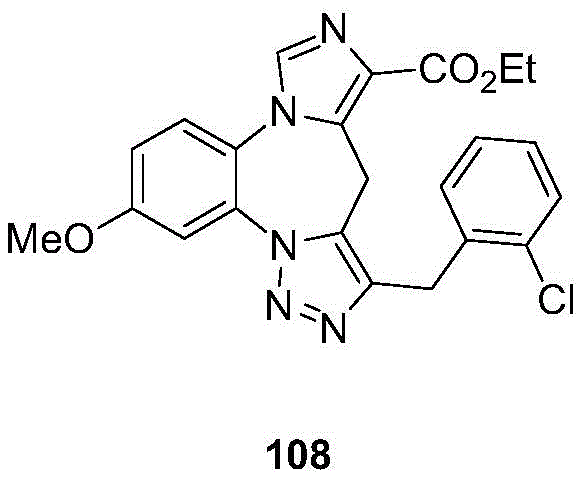
to bromide derivatives (wherein R1OMe) (18 mg; 0.043mmol) in deoxygenated DME (2mL) was added 2-chlorophenylboronic acid (10mg,0.065mmol) and 2M Na2CO3Solution (0.13mL,0.26 mmol). The suspension was stirred at room temperature for 15min, then PdCl was added2dppf (7mg,0.009 mmol). The suspension was heated in an oil bath at 85C for 1 hour. The reaction mixture was diluted with water and extracted with EtOAc (twice). The combined extracts were washed with brine and over Na2SO4And (5) drying. Filtration and concentration gave the crude product which was purified by PrepTLC (elution system: 5% MeOH/47.5% Hex/47.5% EtOAc) to give 3.5mg (18% yield) of the product compound 108. MS: [ M +1]=451.H1NMR(CDCl3)δ7.77(1H,s),7.63(1H,d,J=3Hz),7.52(1H,d,J=11.5Hz),7.36(1H,m),7.31(1H,m),7.18(2H,m),7.14(1H,dd,J=3,9Hz),4.38(2H,q,J=7Hz),4.27(2H,s),3.94(3H,s),1.41(3H,t,J=7Hz)。
Scheme 18a.
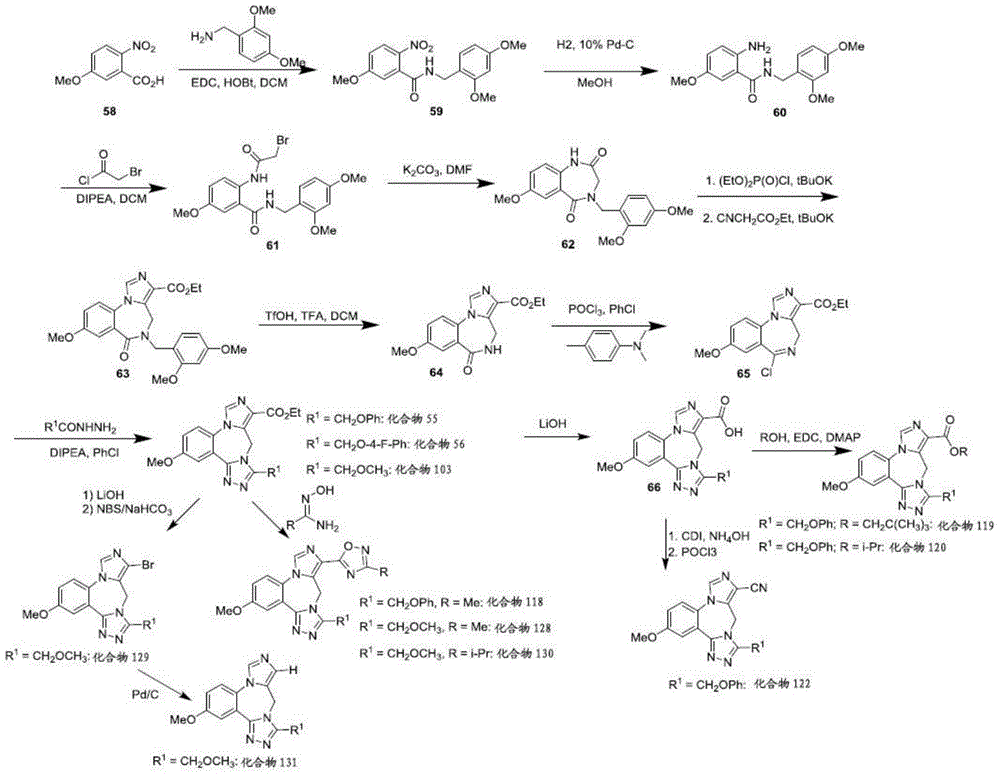
Scheme 18b.

Example 33: synthesis of compound 55:
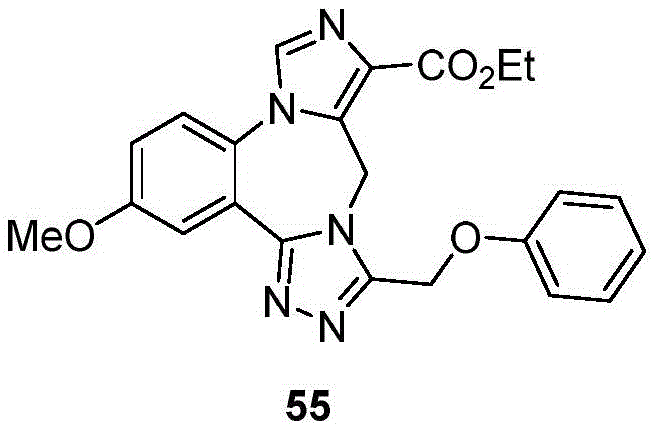
to a solution of compound 58(6.6g,33.5mmol) in dichloromethane (100mL) was added DIPEA (8.65g,67mmol), HOBt (5.4g,36.85mmol) and EDCI (9.6g,50.3 mmol). After stirring for about 15min, a solution of 2, 4-dimethoxybenzylamine (5.6g,33.5mmol) in dichloromethane (50mL) was added dropwise to the homogeneous reaction mixture under a nitrogen atmosphere. The resulting mixture was stirred at room temperature under nitrogen atmosphere for 16 h. The reaction mixture was washed successively with 1N NaOH (100mL), water (100mL) and brine (100 mL). The organic phase is then passed over Na 2SO4Drying and evaporation gave crude solid product 59, which was crystallized from diethyl ether. Filtration and suction filtration with the open air to dry gave 9.8g (96%) of the pure product as an off-white solid (MS: [ M + 1%), (MS: [ M: [ M + ]]=347)。
To a solution of compound 59(9.8g,28.3mmol) in MeOH/EtOAc (1:1,100mL) was added 10% wet Pd-C (1.8g, 10% mmol). After three successive vacuums and nitrogen purges, the heterogeneous reaction mixture was balloon hydrogenated at atmospheric pressure until the uptake of hydrogen ceased for about 4 h. The reaction mixture was filtered through a pad of celite and evaporated to give 8.63g (96%) of the pure desired product 60 as a brown oil (MS: [ M +1 ═ 317 ]). The product was used directly in the next step.
To a solution of compound 60(8.63g,27.3mmol) in dichloromethane (100mL) was added triethylamine (5.5g,54.6 mmol). The mixture was cooled with an ice bath and quenched under a nitrogen atmosphere with bromoacetyl chloride (5.2g,32.76 mmol). The ice bath was removed and the mixture was left to stir for 18 h. The reaction mixture was washed with saturated NaHCO3(100mL), water (100mL) and brine (100mL) were washed successively. The organic phase is then passed over Na2SO4Dried and evaporated to give crude solid product 61. The crude product was crystallized from methanol, filtered and dried to give pure product 10.3g (87%) as a brown solid [ MS:439 ] ]。
To a solution of compound 61(10g,22.9mmol) in DMF (1000mL) was added K2CO3(4.8g,45.8 mmol). The mixture was heated at 50 ℃ for 24 h. LCMS indicated complete conversion to the desired product. The mixture was cooled to room temperature and the inorganic solid was filtered. The solvent was removed under high vacuum. The crude product 62 obtained was crystallized from methanol, filtered and dried to yield 6.4g (78%) of a pure brown solid product, (MS: [ M +1 ]]=357)。
To compound 62(4.46g,12.52mmol) dissolved in 2.5:1THF/DMF (50mL) was added t-BuOK (97%, 1.88g,16.28mmol) at-20 ℃. The mixture was warmed to 25 ℃ and after stirring for 30min, cooled again to-20 ℃. After dropwise addition of diethyl chlorophosphate (2.35mL,16.28mmol), the mixture was stirred for 3h while warming from-20 ℃ to 25 ℃. The reaction mixture was cooled to 0 ℃ again, and ethyl isocyanoacetate (1.92mL,17.53mmol) was added thereto. It was then cooled to-78 deg.C, then t-BuOK (97%, 1.88g,16.28mmol) was added and stirred at room temperature for 5 h. The process was monitored by LC/MS. By adding 1:1 saturated NaHCO3/H2The reaction was quenched with O (140mL), the precipitate was filtered, and H was used2O washing and air drying overnight gave 4.81g (85%) of imidazole derivative 63(MS: [ M +1 ]) as a yellow solid ]=452)。
To compound 63(4.81g, 10.65mmol) in dichloromethane (35mL) was added trifluoroacetic acid (35mL) at 0 deg.C, followed by dropwise addition of trifluoromethanesulfonic acid (1.9mL, 21.31 mmol). The mixture was warmed to room temperature, stirred for 2h, and then concentrated to give a residue, which was dissolved in dichloromethane (120 mL). The crude solution was taken up in cooled saturated NaHCO3And dichloromethane. The organic extracts were combined and dried (MgSO)4) Filtering and concentrating the filtrate to obtain a filtrate,3.2g (99%) of the deprotected product 64 are obtained as a brown solid which is sufficiently pure to proceed to the next step (MS: [ M +1 ]]=302)。
To lactam 64(51.8mg,0.172mmol) and N, N-dimethyl-p-toluidine (93.0mg,0.688mmol) stirred in chlorobenzene (1ml) was added POCl under nitrogen3(52.7mg,0.344 mmol). The reaction was then heated at 135 ℃ for 2 h. After cooling to room temperature, phenoxyacetic acid hydrazide (228.4mg,1.36mmol) was added to imino-chloride 65 in situ followed by DIPEA (90 ul). The reaction was stirred at room temperature for 30min and then heated at 100 ℃ for 90 min. The reaction mixture was cooled and saturated NaHCO was added3(aq) and extracted three times with ethyl acetate; the combined organic layers were washed with brine and over MgSO 4And (5) drying. After filtration and concentration, the product compound 55 was isolated by ISCO flash column chromatography (RediSep 4g column, 1-10% MeOH in DCM as elution gradient) as a white solid, weight: 8.6 mg. MS: [ M +1]=432.1H-NMR(500MHz,CDCl3)δ:7.81(s,1H),7.71(d,1H,J=3.5Hz),7.52(d,1H,J=9.0Hz),7.32(m,2H),7.21(dd,1H,J=2.5,8.5Hz),7.11(d,2H,J=8.5Hz),7.02(m,1H),5.44(s,2H),4.38(q,2H,J=7.5Hz),3.94(s,3H),1.39(t,3H,J=7.0Hz)。
Example 34: synthesis of compound 56:

the compound of example 34 was synthesized in a similar synthetic route to that described for example 33 using 4-fluoro-phenoxyacetic acid hydrazide in the final step to give the compound of example 34 MS: [ M +1] as a yellowish solid]=450.1H-NMR(500MHz,CDCl3)δ:7.82(s,1H),7.73(d,1H,J=3.5Hz),7.53(d,1H,J=10.0Hz),7.22(dd,1H,J=3.5,9.0Hz),7.08-6.99(m,4H),5.41(s,2H),4.41(q,2H,J=7.0Hz),3.95(s,3H),1.42(t,3H,J=6.5Hz)。
Example 35: synthesis of compound 103:
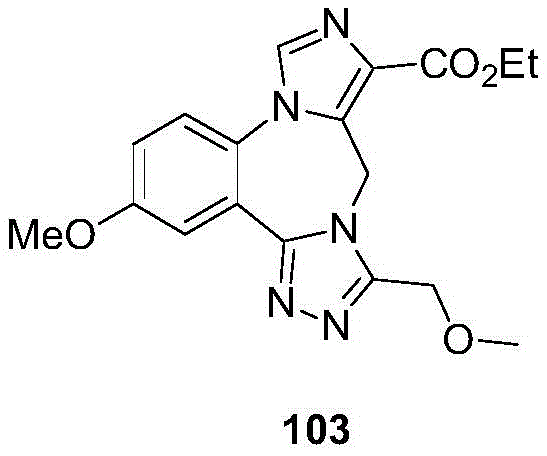
the compound of example 35 was synthesized in a final step using 2-methoxyacetic acid hydrazide in a synthetic route analogous to that described for example 33 to give the compound of example 35 as a yellowish solid MS: [ M +1] ═ 370.
Example 36: synthesis of compound 118:

acetamide oxime (8.4mg, 0.108mmol) was azeotroped three times on Rotavap in toluene and then suspended in THF (1.0 mL). NaH (60% inorganic suspension; 3.3mg,0.081mmol) was added and the mixture was stirred at room temperature for 10 min. Ester 55(23.2mg,0.054mmol) was then added. After stirring at room temperature for 40min, the reaction mixture was heated at 70 ℃ for 4 h. After cooling, cold water (5mL) was added to the reaction mixture, and the precipitate was collected by filtration, washed with water, and dried to give 9.7mg (41%) of the desired product as a yellowish solid. MS: [ M +1] ═ 442.
Example 37: synthesis of compound 128:
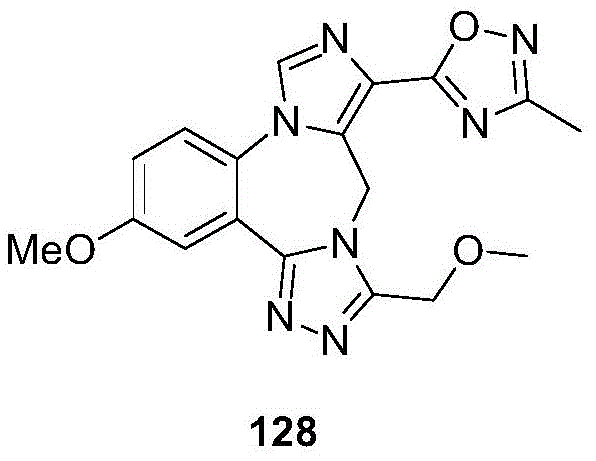
the compound of example 37 was synthesized in a final step using ester compound 103 in a synthetic route analogous to that described above for example 36 to give the compound of example 37 as a light brown solid MS: [ M +1] ═ 380.
Example 38: synthesis of compound 130:

the compound of example 38 was synthesized in a synthetic route analogous to that described for example 36, starting from ester compound 103 and condensing with isobutyramidine oxime to give the compound of example 38 as a yellowish solid MS: [ M +1] ═ 408.
Example 39: synthesis of compound 119:
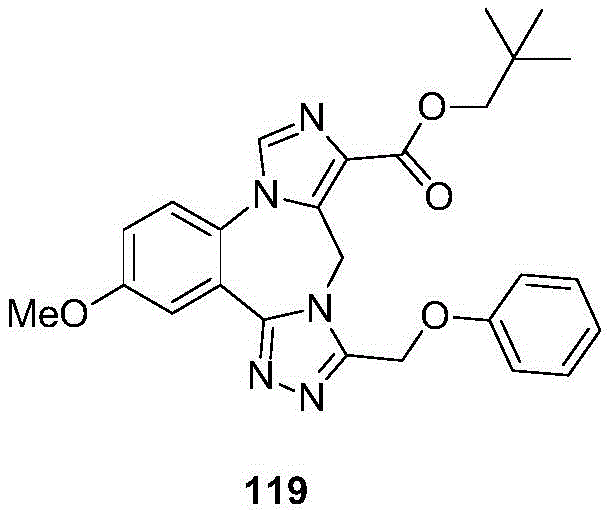
to a stirred carboxylic acid (13.9mg, 0.0345 mmol; obtained by LiOH hydrolysis of the precursor ester 55) in DCM (0.2mL) was added neopentyl alcohol (30.4mg,0.345mmol), DMAP (4.2mg,0.0345mmol) and EDC (20mg,0.104 mmol). After stirring for 5 hours, the reaction mixture was diluted with EtOAc and saturated NH4Cl, saturated NaHCO3Washed with brine and over MgSO4And (5) drying. Silica gel chromatography purification using a gradient of 0-8% MeOH in EtOAc yielded 11.7mg (72%) of the desired product compound 119 as a yellowish solid. MS: [ M +1]=474。
Example 40: synthesis of compound 120:
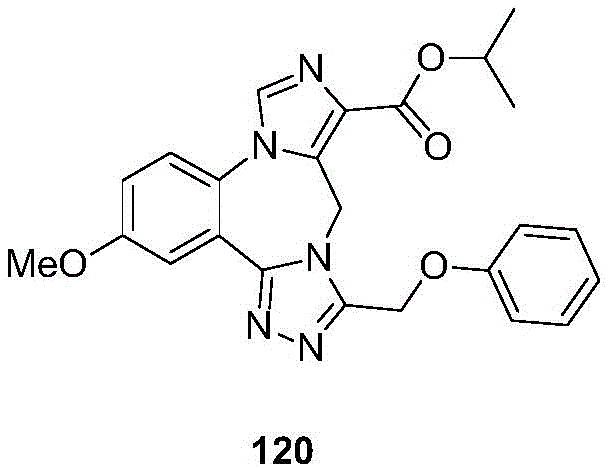
The compound of example 40 was synthesized in a final step using 2-propanol in a synthetic route analogous to that described above for example 39 to give the compound of example 40 as a yellowish solid MS: [ M +1] ═ 446.
Example 41: synthesis of compound 129:

compound 103 (scheme 18a) (66.1mg,0.179mmol) was hydrolyzed in a solvent system of THF/water/MeOH (1.8 ml total, ratio 6/5/1) by treatment with LiOH (21.4mg,0.895mmol) at room temperature for 2 h. Dilute HCl was added to acidify (pH-3) the reaction mixture. The precipitate was collected by filtration, washed with water, and dried to give 49.0mg (80%) of the acid as a light brown solid.
The acid thus obtained was stirred in DMF (0.7mL) at 0 ℃. Adding NaHCO3(48.1mg,0.572mmol) followed by the addition of N-bromosuccinamide (96.7mg,0.543 mmol). After stirring overnight, the reaction was diluted with EtOAc and saturated NaHCO3And (6) washing. The aqueous layer was separated and extracted with EtOAc. The combined organic layers were washed with brine, over MgSO4Dried, filtered and concentrated. The product bromide (compound 129) was obtained as a white solid by silica gel column chromatography eluting with a gradient of 0-13% MeOH in EtOAc. Weight: 28.6mg (53%). MS: [ M +1 ]=377。
Example 42: synthesis of compound 131:
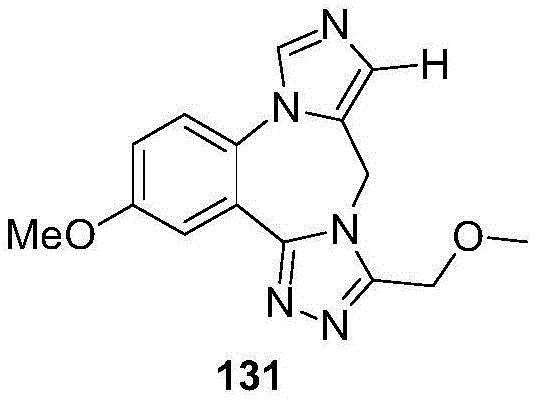
compound 129(22.6mg,0.060mmol) was hydrogenated over 10% Pd-C in EtOAc (1mL) and MeOH (1mL) for 16 h. Filtration through celite and removal of the solvent gave 14.9mg (84%) of the debrominated product compound 131 as a slightly yellow solid. MS: [ M +1] ═ 298.
Example 43: synthesis of compound 122:
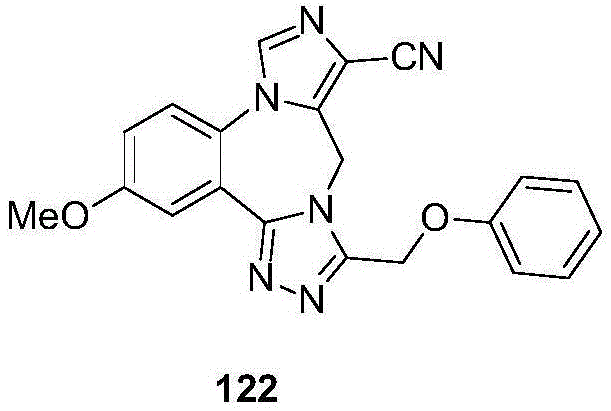
the phenoxy analogue of acid 66(20.4mg, 0.0506mmol) (scheme 18a, R)1= OPh) was suspended in DCM (0.5mL) at room temperature and stirred. Carbonyl diimidazole (16.4mg,0.101mmol) was added. After stirring for 2h, the resulting suspension was cooled to 0 ℃ and ammonia (30uL) was added dropwise. After stirring for 20min, the ice bath was removed and the reaction was allowed to proceed at room temperature for 1 hour. The reaction was concentrated by removing DCM in vacuo. Water (3mL) was added and the precipitate was collected by filtration, washed with water and dried to give 16.2mg crude primary amide, which was used without further purification.
The primary amide (16.2mg,0.0402mmol) was reacted with POCl at 95 deg.C3(46.2mg,0.302mmol) in 1, 4-bis A solution in alkane (0.5mL) was treated overnight. The reaction mixture was then washed with saturated NaHCO3(5mL) was quenched, cooled to 0 deg.C, and the precipitate was collected by suction filtration, washed with water, and dried to give 13.6mg (88%) of nitrile as a light brown solid, compound 122. MS: [ M +1 ]=385。
Example 44: synthesis of compound 123:
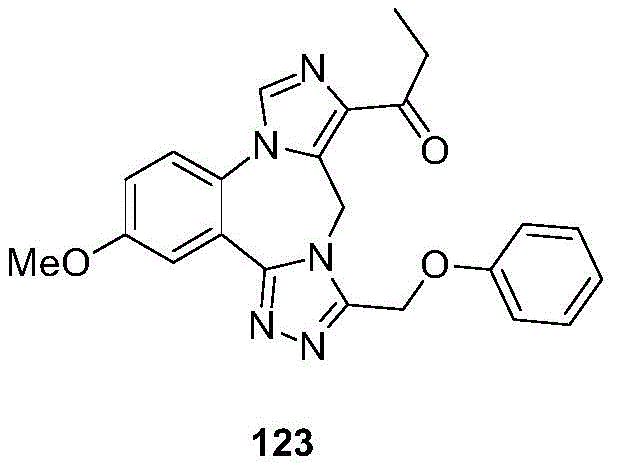
to acid 66(15.8mg,0.0392mmol) stirred in THF (0.15mL) and DCM (0.15mL) were added N, O-dimethylhydroxylamine HCl (4.6mg,0.047mmol) and N-hydroxybenzotriazole hydrate (6.0 mg). EDC (11.3mg,0.0588mmol) and triethylamine (11.9mg,0.118mmol) were then added and the reaction mixture was stirred at room temperature for 12 h, diluted with EtOAc and taken up with saturated NH4Cl, brine, and MgSO4And (5) drying. Filtration and removal of the solvent in vacuo gave 14.4mg (82%) of Weinreb amide, which was used without further purification.
To Weinreb amide (14.4mg, 0.0323mmol) stirred in THF (0.3mL) was added ethylmagnesium bromide ethyl ether complex (3M; 0.323mL) at 0 ℃. The reaction was allowed to warm to room temperature and stirred for 14 hours with saturated NH4Quench Cl and extract three times with EtOAc; the combined organic layers were washed with brine and over MgSO4And (5) drying. Filtration and removal of solvent gave the crude ketone product, which was purified by preparative TLC using 8% MeOH in EtOAc. Weight: 4.6mg (34%) of Compound 123. MS: [ M +1]=416。
Example 45: synthesis of compound 124:
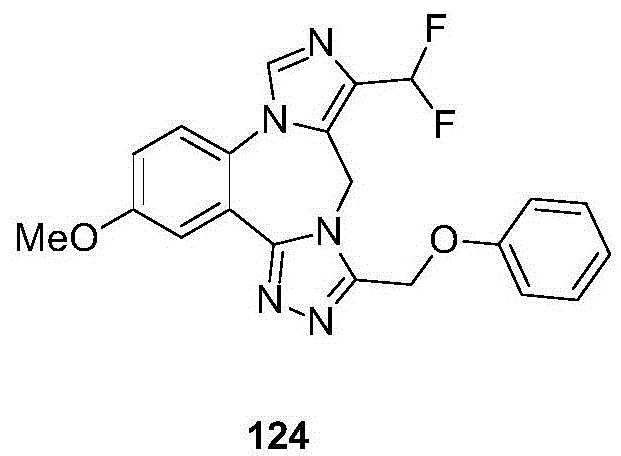
the Weinreb amide (18.0mg,0.0403mmol) described above was reacted with DIBAL (1M THF; 0.363 mL) ) The treatment was carried out at-78 ℃ for 1 hour and then quenched overnight with Rochelle's salt solution (20%) while still at-78 ℃. The aqueous solution was extracted three times with EtOAc; the combined organic layers were washed with brine and over MgSO4And (5) drying. Filtration and removal of the solvent in vacuo gave 13.7mg of crude aldehyde, which was used without further purification.
The crude aldehyde (13.7mg) in DCM (0.7mL) was treated with Deoxo-Fluor (54.8mg,0.248mmol) at RT for 16 h. The reaction was quenched with saturated NaHCO3Quench (5mL) for 20min and extract three times with EtOAc; the combined organic layers were washed with brine and over MgSO4And (5) drying. Filtration and removal of the solvent followed by purification by preparative TLC using 10% MeOH in EtOAc afforded 7.5mg (52%) of the desired difluoride compound 124 as a yellowish solid. MS: [ M +1]=410。
Example 46: synthesis of compound 142:
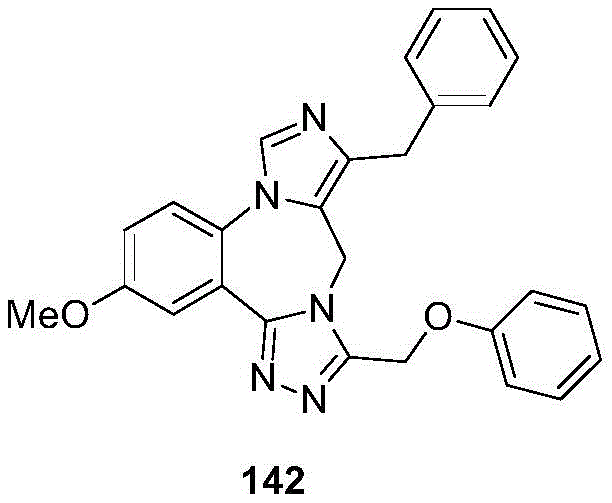
the above Weinreb amide (8.8mg,0.0197mmol) in THF (0.15mL) was treated with phenylmagnesium bromide (1M THF; 0.54mL) at 0 deg.C for 2.5 h with saturated NH4Cl quenched and extracted twice with EtOAc; the combined organic layers were washed with brine and over MgSO4And (5) drying. Filtration and removal of the solvent gave the crude ketone, which was used without further purification. The ketone in THF (0.5mL) was treated with NaBH 4(6mg) treatment at room temperature for 2 h, then with saturated NH4Quench Cl and extract three times with EtOAc; the combined organic layers were washed with brine and over MgSO4And (5) drying. Filtration and removal of the solvent gave the crude alcohol, which was used without further purification. The alcohol thus obtained was treated with triethylsilane (86.4mg,0.75mmol) and trifluoroacetic acid (171.0mg,1.5mmol) in DCM (1.4mL) at 40 deg.C overnight, then concentrated in vacuo, diluted with EtOAc and diluted with saturated NaHCO3Washed with brine and over MgSO4And (5) drying. Filtration and removal of solvent gave crude benzyl product, which was purified by using 0-12%Is purified by silica gel column chromatography using a solution of MeOH in EtOAc as eluent; this gave 3.6mg of compound 142 as a yellowish solid. MS: [ M +1]=450。
Scheme 19:

example 47: synthesis of compound 106:
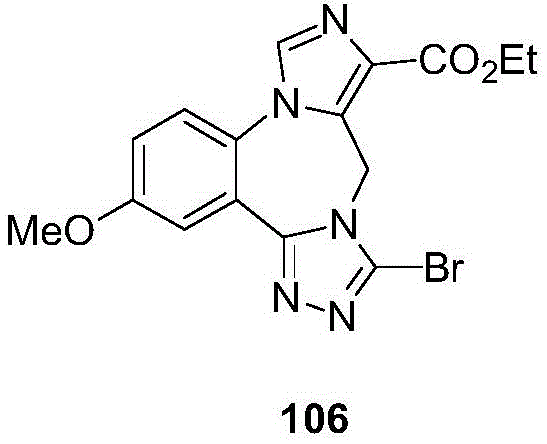
to lactam 64(185.7mg,0.616mmol) in chlorobenzene (5mL) was added N, N-dimethyl-p-toluidine (333.3mg,2.465mmol) and phosphorus oxychloride (188.9mg,1.232 mmol). The reaction mixture was heated at 135 ℃ for 2 h, cooled to room temperature, and the formyl hydrazide (296.0mg,4.93mmol) was added followed by diisopropylethylamine (238.8mg,1.85 mmol). After stirring at room temperature for 30min, the reaction was heated at 100 ℃ for 1 h, cooled, and saturated NaHCO was added 3(15mL), extracted twice with EtOAc; the combined organic layers were washed with brine and over MgSO4And (5) drying. Filtration and removal of the solvent gave the crude triazole product which was purified by silica gel column chromatography eluting with 0-15% MeOH in EtOAc to give 35.9mg (18%) of a light brown solid. MS: [ M +1]=326。
Triazole from above in DCM (1mL) was treated with N-bromosuccinamide (37.6mg,0.21mmol) at 0 ℃. The reaction was allowed to warm slowly to rt and reacted at rt overnight, diluted with EtOAc, with saturated NaHCO3Washed with brine and over MgSO4And (5) drying. Filtration and removal of solvent gave crude bromide, which was purified by silica gel column chromatography using a 0-10% MeOH in EtOAc gradient; 22.9mg (51%) of compound 106 are obtained as an off-white solid [ MS]:406。
Example 48: synthesis of compound 104:
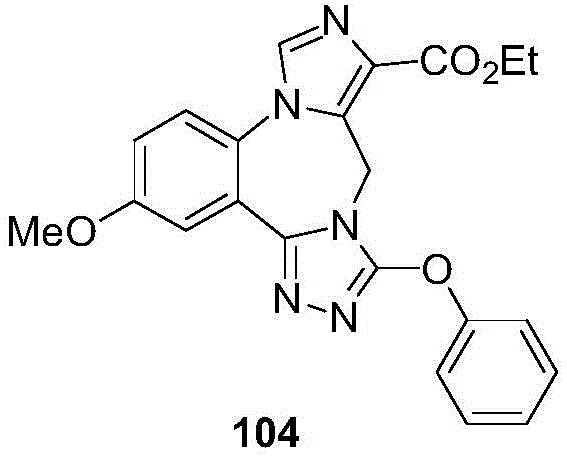
a microwave reaction vessel was charged with phenol (20.3mg,0.216mmol), bromide substrate from example 47 (29.1mg,0.0719mmol), Cs2CO3(117.0mg,0.360mmol), diethyl 1, 3-acetonedicarboxylate (14.5mg,0.0719mmol) and DMF (0.5 ml). The vessel was purged with nitrogen. CuI (6.8mg,0.036mmol) was added and the mixture was stirred at room temperature for 5min, followed by heating at 140 ℃ for 60min under microwave irradiation. The reaction mixture was diluted with EtOAc, washed with water; the aqueous layer was separated and extracted twice with EtOAc; the combined organic solutions were washed with brine and over MgSO 4And (5) drying. Filtration and removal of solvent gave the crude ether product, which was purified by preparative TLC using 5% MeOH in DCM; 6.6mg of compound 104 are obtained as yellowish solid. MS: [ M +1]=418。
Example 49: synthesis of compound 105:
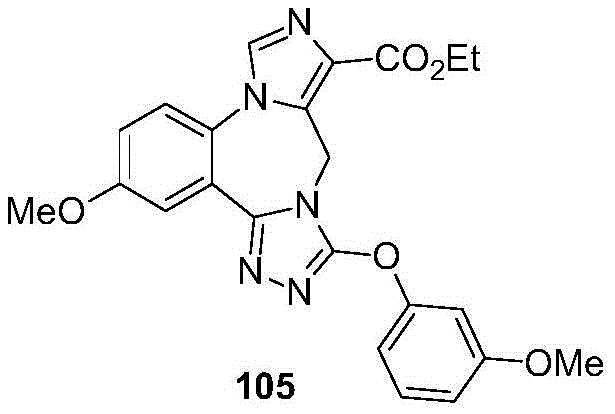
the compound of example 49 was synthesized using 3-methoxyphenol instead of phenol in a synthetic route analogous to that described above for example 48 to give the compound of example 49 as a yellowish foamy solid MS: [ M +1] ═ 448.
Scheme 20:
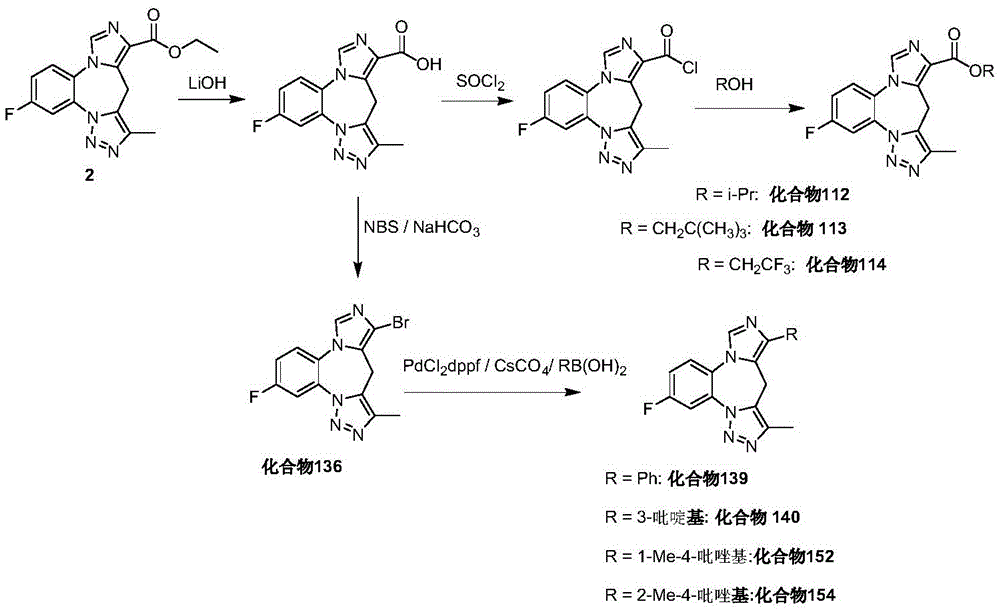
example 50: synthesis of compound 112:

to a solution of compound 2(160mg,0.49mmol) in THF (6mL), water (5mL) and MeOH (1mL) was added LiOH (59 mL)mg,2.45 mmol). The solution was stirred at room temperature for 3 h. The solution was concentrated and the crude material was acidified with 1N HCl until pH 3-4. No solids were observed. EtOAc was added and the organic phase was extracted (3 ×). The combined extracts were washed with brine and over MgSO4And (5) drying. Filtration and concentration gave 112mg (77% yield) of the desired carboxylic acid product as an orange solid. MS: [ M +1]=300。
To a suspension of the acid (30mg,0.1mmol) in dichloroethane (0.2mL) was added thionyl chloride (0.4 mL; 5mmol) and DMF (20. mu.L). The resulting solution was heated at 70C for 1 hour. An additional 0.2mL of thionyl chloride was added and the solution was heated for an additional 30 min. The solvent was removed. The crude material was dried under vacuum.
The crude acid chloride (0.1mmol) was suspended in isopropanol and stirred at room temperature for 18 h. The solvent was evaporated and the crude material was purified by chromatography (RediSep 4g silica gel column, eluting with 10% MeOH in DCM) to give 8.6mg (25% yield) of the product compound 112[ M +1] ═ 342).
H1NMR(CDCl3)δ7.90(1H,d,J=9Hz),7.79(1H,bs),7.63(1H,bs),7.36(1H,bs),3.48(1H,m),2.45(3H,s),1.43(6H,d,J=6.5Hz)。
Example 51: synthesis of compound 113:

the crude acid chloride prepared above (0.066mmol) was suspended in dichloroethane (1mL) and 2, 2-dimethyl-1-propanol (300mg,3.4mmol) was added. The solution was stirred at room temperature for 18 h. No product was formed. DMAP (5mg,0.004mmol) and DCC (15mg,0.073mmol) were added to the above solution. The solution was stirred at room temperature for 2 h. The reaction mixture was applied directly to preparative TLC (elution system: 75EtOAc in hexanes) to give 7.2mg (30% yield) of the product compound 113. MS: [ M +1]=370.H1NMR(CDCl3)δ7.91(1H,dd,J=3,9Hz),7.79(1H,s),7.61(1H,dd,J=4.5,9Hz),7.35(1H,m),4.11(2H,s),2.44(3H,s),1.07(9H,s)。
Example 52: synthesis of compound 114:
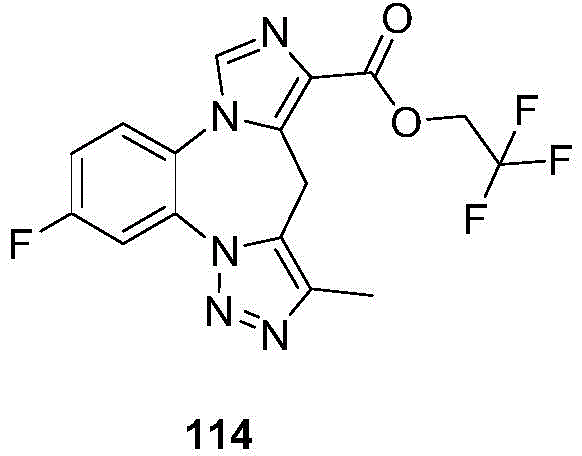
the crude acid chloride prepared above (0.066mmol) was suspended in dichloroethane (1mL) and 2,2, 2-trifluoroethanol (0.1mL, 1.4mmol) was added followed by triethylamine (0.6mL,4.3 mmol). The solution was stirred at room temperature for 2h 30 min. The solvent was evaporated and the crude material was purified by chromatography (RediSep 4g silica gel column, eluted with EtOAc) followed by preparative TLC (elution system: 70% EtOAc in hexanes) to give 8.1mg (32% yield) of the product compound 114[ M +1] ═ 382).
H1NMR(CDCl3)δ7.91(1H,dd,J=3.5,9.5Hz),7.83(1H,s),7.63(1H,dd,J=4.5,9.5Hz),7.35(1H,m),4.77(2H,m),2.43(3H,s)。
Example 53: synthesis of compound 136:
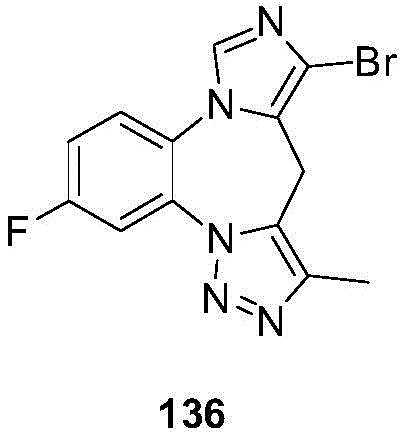
to a solution of the acid prepared in example 50 (100mg, 0.33mmol) in DMF (1.5mL) cooled with an ice bath was added NaHCO3(111mg, 1.32mmol) followed by NBS (117mg, 0.66 mmol). The solution was stirred at room temperature for 14 h. The reaction mixture was diluted with water and extracted with EtOAc (5 ×). The combined extracts were washed with brine (2 ×), and over MgSO4And (5) drying. Filtration and concentration gave the crude product. Chromatography (RediSep 4g silica gel column, eluted with EtOAc) afforded 93mg (85% yield) of the product compound 136[ M +1 ]]=334).H1NMR(CDCl3)δ7.87(1H,dd,J=2.5,8.5Hz),7.72(1H,s),7.56(1H,dd,J=6,10Hz),7.33(1H,m),2.44(3H,s)。
Example 54. synthesis of compound 139:
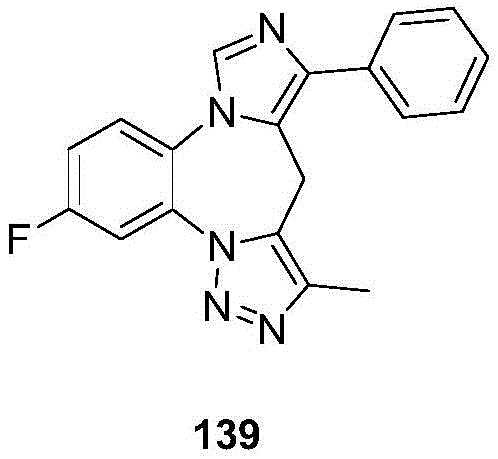
general coupling procedure to a solution of Compound 136(20mg, 0.061mmol) in degassed DME (0.9mL) and water (0.1mL) was added phenylboronic acid (11mg,0.092mmol), cesium carbonate (80mg,0.24mmol) and Pd Cl2dppf (5mg,0.066 mmol). The suspension was heated at 80 ℃ for 1 hour. The reaction mixture was diluted with water and extracted with EtOAc (3 ×). The combined extracts were washed with brine (2 ×), and over MgSO4And (5) drying. Filtration and concentration gave the crude product which was purified by preparative TLC (elution system: 3% MeOH in EtOAc).
Compound 139 was prepared using phenylboronic acid. 10.8mg (54% yield) of the product are obtained. MS: [ M +1 ]=332.H1NMR(CDCl3)δ7.87(1H,dd,J=3.5,9.5Hz),7.85(1H,s),7.63(3H,m),7.50(2H,t,J=6.5Hz),7.35(2H,m),2.41(3H,s)。
Example 55: synthesis of compound 140:
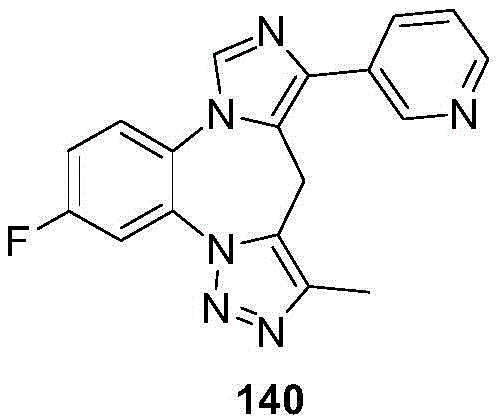
compound 140 was prepared analogously using 3-pyridineboronic acid. 8.9mg (27% yield) of the product are obtained. MS: [ M +1]=333.H1NMR(CDCl3)δ8.86(1H,s),8.63(1H,d,J=5Hz),8.01(1H,m),7.90(2H,m),7.64(1H,dd,J=5.5,9Hz),7.44(1H,m),7.36(1H,m),2.39(3H,s)。
Example 56: synthesis of compound 152:

compound 152 was prepared using 1-methylpyrazole-4-boronic acid, HCl. 12.5mg (63% yield) of the product are obtained. MS: [ M +1]=336.H1NMR(CDCl3+MeOD4)δ9.04(1H,bs),7.99(1H,bs),7.75(2H,m),7.41(2H,m),3.95(3H,s),2.32(3H,s)。
Example 57: synthesis of compound 154:
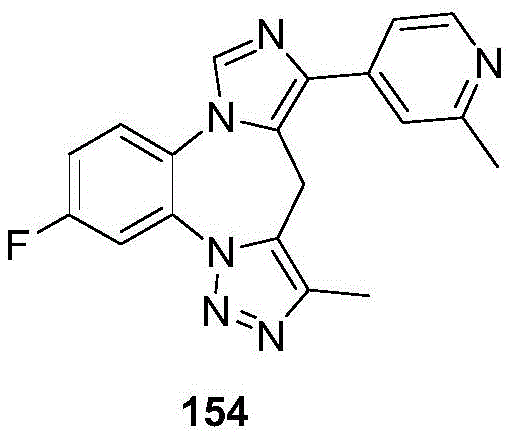
compound 154 was prepared using 2-methylpyridine-4-boronic acid pinacol ester. 7.1mg (34% yield) of the product are obtained. MS: [ M +1]=347。H1NMR(CDCl3)δ8.6(1H,d,J=6Hz),7.89(1H,dd,J=3.5,8.5Hz),7.87(1H,s),7.64(1H,dd,J=5.5,9Hz),7.48(1H,s),7.36(2H,m),2.64(3H,s),2.41(3H,s)。
Scheme 21:
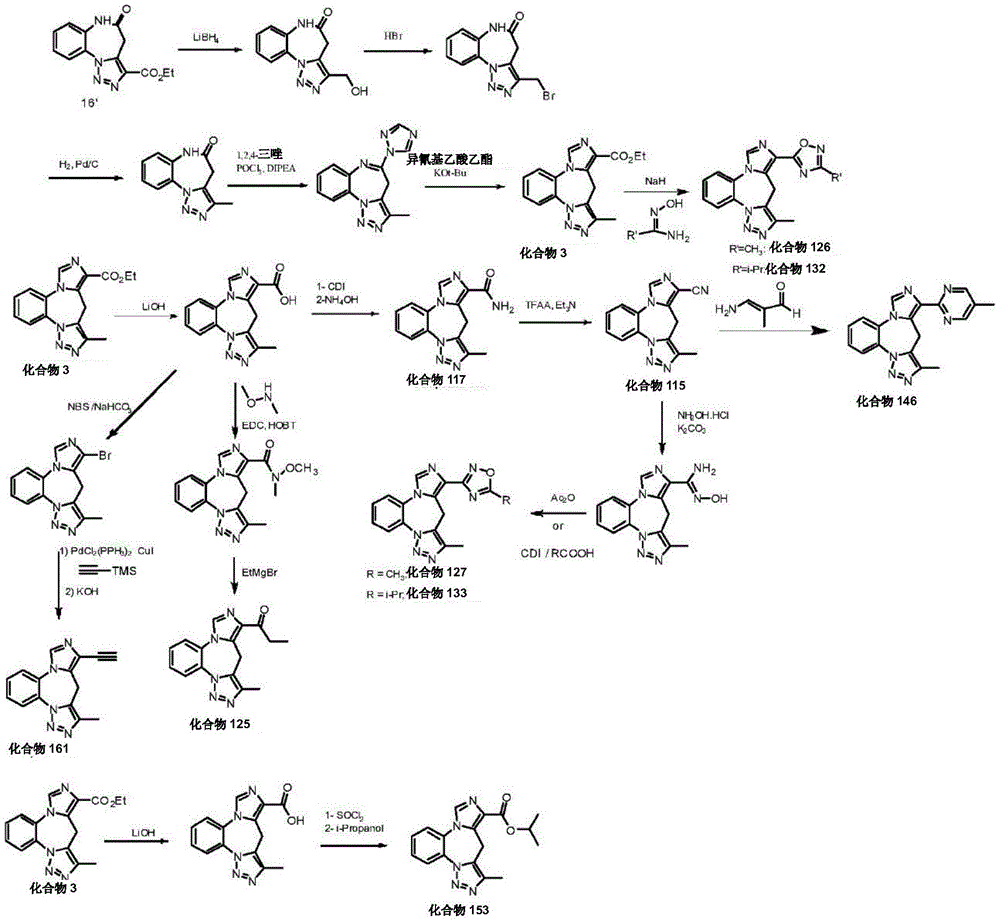
example 58: synthesis of compound 117:

in a 100mL round-bottom flask, lactam ester 16' (2g, 7.35 mmol; prepared in a similar manner to 16 described in scheme 11) was dissolved in 60mL of anhydrous THF. The solution was stirred at room temperature under a nitrogen atmosphere. Slowly add LiBH4(2M solution in THF, 4mL,8 mmol). The reaction mixture was stirred under nitrogen atmosphere for 18 h. Slowly add more LiBH4(2M solution in THF, 2mL,4 mmol). The reaction mixture was stirred for an additional 24 h. A mixture of EtOAc/EtOH (20mL/20mL) was added to the reaction mixture and concentrated. The residue was dissolved in MeOH and silica gel was added. After evaporation of the volatile solvent, the solid was loaded onto a RediSep 40g silica gel column. The desired product was used as 5:1v/v CH 2Cl2MeOH. And (4) eluting. The alcohol was obtained as a white solid (1.14g, 67% yield). MS: [ M +1]=231。
The alcohol (1.14g, 4.96mmol) was suspended in 16mL of 33% HBr in AcOH and heated at 80 ℃ for 18 h. The solution was cooled with an ice bath and diluted with EtOAc. A white solid can be observed. Saturated NaHCO was added slowly3An aqueous solution. The solid was dissolved using copious amounts of EtOAc and MeOH. The organic phase was extracted (3 ×), and the combinedThe organic phase was washed with brine, over MgSO4And (5) drying. Filtration and concentration gave the crude product which was used in the next step without further purification. MS: [ M +1]=293。
To a solution of alkyl bromide derivative (4.96mmol) in EtOAc (50mL), MeOH (200mL), and THF (50mL) was added wet 10% Pd/C (250mg), and the resulting suspension was stirred under a hydrogen atmosphere for 7 days. The suspension was filtered through celite and the resulting solution was concentrated and co-evaporated with toluene. The crude product was used in the next step without further purification.
To 1,2, 4-triazole (2.7g,39.7mmol) in anhydrous CH at 0 deg.C3Adding i-Pr to CN (20mL)2NEt (7.6mL, 43.6 mmol). Once all the triazole had dissolved, POCl was added3(1.11mL,11.9 mmol). The mixture was stirred at 0 ℃ for 2 h. The solution was transferred into a flask containing lactam (4.96 mmol). The resulting solution was heated in an oil bath at 80 ℃ for 16 h. The viscous mixture was cooled with an ice bath and the solvent was evaporated. Dilute with EtOAc and add water. It was extracted 5 times with EtOAc. The combined extracts were washed with brine and over MgSO 4And (5) drying. Filtration and concentration gave the crude product, which was used directly in the next reaction. MS: [ M +1]=266。
A solution of KOtBu (1.11g,9.92mmol) in DMF (10mL) was cooled to-50 ℃ under a nitrogen atmosphere. Ethylisocyanoacetate (1.2mL,10.9mmol) was added slowly. The mixture was stirred for 1h between-60 ℃ and-40 ℃. The crude 1,2, 4-triazolo intermediate from step 4 above (4.96mmol) in DMF (5mL) was added slowly. The mixture was allowed to warm to room temperature over 16 h. Adding saturated NH4Aqueous Cl and extracted three times with EtOAc. The combined extracts were washed with brine (3 ×), and over MgSO4And (5) drying. Filtration and concentration gave the crude product. Chromatography (RediSep 24g silica gel column, eluting with 70% EtOAc in hexanes) afforded 296mg (20% yield, 4 steps) of product. MS: [ M +1]=310。
To a solution of the ester derivative (260mg,0.84mmol) in THF (6mL), water (5mL) and MeOH (1mL) was added LiOH (117mg,4.85 mmol). The solution was stirred at room temperature for 3 h. The solution was concentrated and the crude material was acidified with 1N HCl until pH 3-4. The solid was collected by multiple filtration to give 178mg (75% yield) of the desired product. MS: [ M +1] ═ 282.
To a suspension of the acid (80mg,0.28mmol) in THF (2mL) was added CDI (50mg,0.31 mmol). The suspension was heated at 65C for 3 h. LCMS indicated reaction was not complete. More CDI (10mg) was added and the solution was heated for an additional 1 hour. The solution was cooled to room temperature and NH was added 4OH solution (1 mL). The solution was stirred for 1 hour. The solid was collected by filtration to give 33mg (42%) of the desired product compound 117 as a white solid. MS: [ M +1]=281。H1NMR(MeOD4)δ8.1(1H,s),7.9(1H,s),7.73(3H,m),7.07(2H,s),2.40(3H,s)。
Example 59: synthesis of compound 115:

to a suspension of compound 117(8mg,0.029mmol) and triethylamine (8. mu.L; 0.058mmol) in THF (1mL) was added trifluoroacetic anhydride (8. mu.L; 0.058 mmol). The reaction mixture was stirred at rt for 16 h. LCMS indicated only 30% conversion. More trifluoroacetic anhydride (30. mu.L) and triethylamine (30. mu.L) were added. The solution became clear and stirred for an additional 1 hour. The reaction was quenched with MeOH. The solvent was evaporated and the crude material was purified by preparative TLC (elution system: 70% EtOAc in hexanes) to give 6.6mg (83%) of compound 115. MS: [ M +1]=263。H1NMR(CDCl3)δ8.17(1H,d,J=7Hz),7.88(1H,s),7.67(3H,m),2.46(3H,s)。
Example 60: synthesis of compound 127:
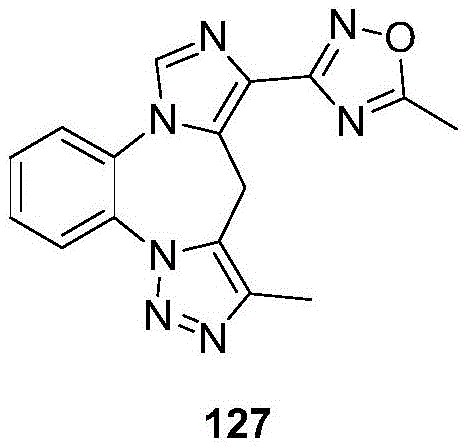
to a suspension of compound 115(16mg,0.06mmol) in EtOH (0.8mL) and water (0.2mL) were added hydroxylamine hydrochloride (6mg,0.09mmol) and potassium carbonate (12mg,0.09 mmol). The suspension was heated at 80 ℃ for 16 h. Will be provided withThe solution was diluted with EtOAc and washed with water. The aqueous layer was separated and extracted with EtOAc (3 ×). The combined organic phases were washed with brine, over MgSO 4And (5) drying. Filtration and concentration gave 12.2mg (67% yield) of the desired product. MS: [ M +1]=296。
A suspension of oxime (10mg,0.034mmol) in acetic anhydride (0.5mL) was heated at 110C for 1 hour. The solution was then heated at 130C for 1 hour. Finally the temperature was raised to 140 ℃ and heated for another 2 h. The reaction mixture was cooled and EtOH (1mL) was added to the reaction mixture, which was heated at 80 ℃ for 16 h. The solvent was evaporated and the crude material was purified by preparative TLC (elution System: EtOAc) to give 6.1mg (56% yield) of the desired product compound 127. MS: [ M +1]=320)。H1NMR(CDCl3)δ8.16(1H,m),7.92(1H,s),7.65(3H,m),2.68(3H,s),2.46(3H,s)。
Example 61: synthesis of compound 133:
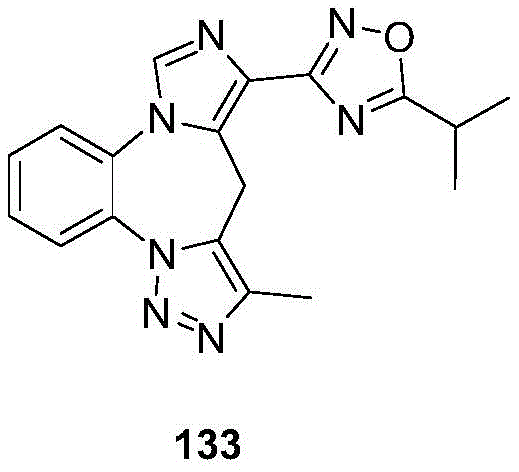
to a solution of isobutyric acid (19 μ L,0.2mmol) in THF (0.5mL) was added CDI (10mg, 0.062 mmol). The solution was stirred at room temperature for 2 h. The solution was then transferred into a vial containing the oxime derivative described above (12mg, 0.041mmol) and heated at 70 ℃ for 2 h. LCMS indicated reaction was not complete. Another batch of reagents (isobutyric acid and CDI) was prepared and added to the reaction mixture, which was heated at 70 ℃ for an additional 1 hour. LCMS indicated all starting material was consumed. The solvent was evaporated and the crude material was suspended in isobutyric acid (1mL) and heated at 130 ℃ for 1 hour. The solvent was evaporated and the crude material was purified by preparative TLC (elution system: 70% EtOAc in hexanes) to give 6.7mg (71%) of the desired product compound 133. MS: [ M +1] ═ 348.
H1NMR(CDCl3)δ8.16(1H,m),7.92(1H,s),7.65(3H,m),3.32(1H,m),2.46(3H,s),1.5(6H,d,J=7Hz)。
Example 62: synthesis of compound 126:
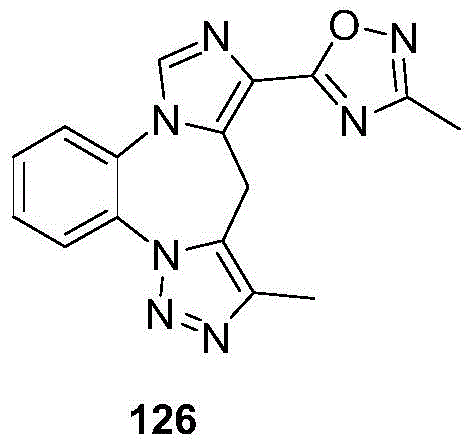
acetamide oxime was azeotroped three times in toluene prior to use. To a suspension of acetamidoxime (24mg,0.32mmol) in THF (1mL) was added 60% NaH in oil dispersion (13mg,0.32 mmol). The suspension was stirred at room temperature for 15 min. Compound 3(50mg,0.16mmol) was added. The vial containing the ester was rinsed with DMF (1mL) added to the reaction mixture. The resulting brown suspension was stirred at room temperature for 30min and then heated at 70 ℃ for 2 h. The suspension was quenched with water and the solution was stored in a refrigerator overnight. The solid was collected by multiple filtration to give 16mg (31% yield) of the product compound 126. MS: [ M +1]=320.H1NMR(CDCl3)δ8.18(1H,m),7.94(1H,s),7.67(3H,m),2.51(3H,s),2.46(3H,s)。
Example 63: synthesis of compound 125:
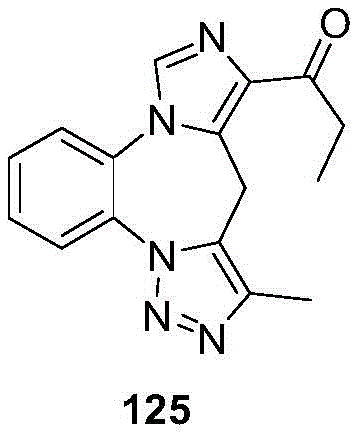
to a suspension of carboxylic acid derived from compound 3 (30mg,0.11mmol), N, O-dimethoxyamine hydrochloride (13mg,0.13mmol), 1-hydroxybenzotriazole hydrate (17mg,0.11mmol) and triethylamine (46. mu.L, 0.33mmol) in THF (0.3mL) and DCM (0.3mL) was added 1- (3-dimethylaminopropyl) -3-ethylcarbodiimide hydrochloride (32mg,0.17 mmol). The solution was stirred at rt for 16 h. The reaction mixture was quenched with saturated ammonium chloride solution and extracted with EtOAc (3 ×). The combined extracts were washed with brine and over MgSO 4And (5) drying. Filtration and concentration gave 31.2mg (88% yield) of an orange solid which was used in the next step without further purification. MS: [ M +1]=325。
To a solution of the above Weinreb amide derivative (31.2mg,0.093mmol) in THF (0.5mL) cooled at-78 deg.C was added a solution of 3M ethyl magnesium bromide (0.31mL,0.93 mmol). The reaction mixture was stirred at-10 ℃ or below for a period of 60 min. It was then quenched with saturated ammonium chloride solution and extracted with EtOAc (2 ×). The combined extractionsThe product was washed with brine and over MgSO4And (5) drying. Filtration and concentration gave the crude product. Chromatography (RediSep 4g silica gel column, eluted with 80% EtOAc in hexanes) afforded 11.1mg (41% yield) of the product compound 125. MS: [ M +1]=294.H1NMR(CDCl3)δ8.15(1H,m),7.76(1H,s),7.65(3H,m),3.08(2H,q,J=7Hz),2.44(3H,s),1.22(3H,t,J=7Hz)。
Example 64: synthesis of compound 132:
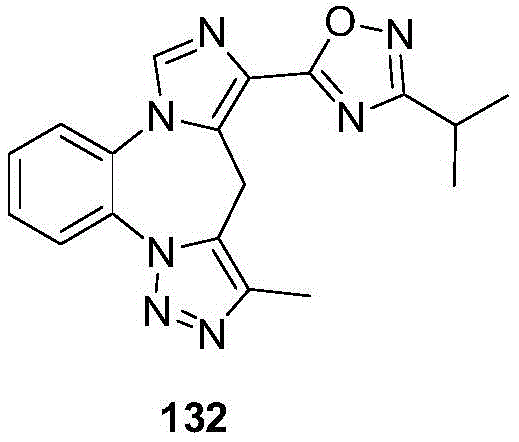
to a solution of isobutyronitrile (2.6 mL; 29mmol) in EtOH (30mL) and water (10mL) were added hydroxylamine hydrochloride (2.01g,29mmol) and potassium carbonate (4g,29 mmol). The resulting suspension was heated at 80 ℃ for 16 h. The solvent was removed under vacuum. The residue was co-evaporated with toluene. The crude material was washed with EtOH and filtered to remove sodium chloride. The filtrate was evaporated, co-evaporated with toluene several times and dried under vacuum to give 2g (69%) of N-hydroxybutamidine.
To a suspension of N-hydroxybutamidine (47mg,0.46mmol) in THF (1mL) was added 60% NaH in oil dispersion (18mg,0.46 mmol). The suspension was stirred at room temperature for 30 min. A solution of compound 3(47mg,0.15mmol) in THF (1mL) was added. The resulting suspension was stirred at room temperature for 30min and then heated at 70 ℃ for 2 h. After 1 hour, only 50% conversion was observed. No change was observed after another 1 hour. Further reagents (N-hydroxybutamidine and NaH) as described above were prepared and added to the reaction mixture which was heated for an additional 40 min. At this time, LCMS indicated the reaction was complete. The suspension was quenched with water. Some MeOH was added to help complete dissolution, and the solution was extracted with EtOAc (3 ×). The combined extracts were washed with brine (3 ×), and over MgSO4And (5) drying. Filtration and concentration gave the crude product. Chromatography (RediSep 4g silica gel column, eluting with EtOAc) afforded 20mg (38% yield) of the product compound 132. MS: [ M +1]=348.H1NMR(CDCl3)δ8.18(1H,d,J=8Hz),7.93(1H,s),7.69(3H,m),3.22(1H,m),2.46(3H,s),1.43(6H,d,J=9.5Hz)
Example 65: synthesis of compound 161:
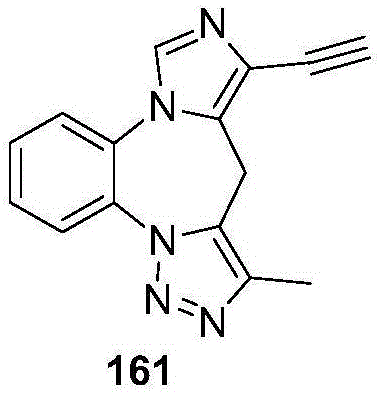
to a solution of the acid derived from compound 3 (90mg,0.32mmol) in DMF (2mL) cooled with an ice bath was added NaHCO3(108mg,1.28mmol) followed by NBS (114mg,0.64mmol) was added. The solution was stirred at room temperature for 18 h. The reaction mixture was diluted with water and extracted with EtOAc (3 ×). The combined extracts were washed with brine (2 ×), and over MgSO 4And (5) drying. Filtration and concentration gave the crude product. Chromatography (RediSep4g silica gel column, eluting with EtOAc) afforded 54mg (53% yield) of the product. MS: [ M +1]=316。
To a bromide derivative (30mg,0.1mmol) in bis To a solution of alkane (1mL) and triethylamine (1mL) was added TMS-acetylene (71. mu.L, 0.5mmol), CuI (2mg,0.01mmol) and PdCl2(PPh3)2(7mg,0.01 mmol). The solution was heated at 110 ℃ for 6 h. More Pd catalyst (7mg) and TMS-acetylene (0.2mL) were added and the reaction mixture was heated for another 12 h. At this point, LCMS indicated about 80% conversion. More Pd catalyst (7mg) and TMS-acetylene (0.2mL) were added and the reaction mixture was heated for another 12 h. LCMS indicated complete conversion. The reaction mixture was then diluted with water and extracted with EtOAc (3 ×). The combined extracts were washed with brine (2 ×), and over MgSO4And (5) drying. Filtration and concentration gave the crude product. Chromatography (RediSep4g silica gel column, eluting with 70% EtOAc in hexanes) afforded 23mg (69% yield) of the product. MS: [ M +1]=334。
Alkyne derivative (23mg,0.069mmol) in MeOH (0.6mL) and H at 0 deg.C2To a solution in O (0.2mL) was added KOH (4mg,0.076 mmol). The solution was warmed to room temperature over 16 h. The reaction mixture was diluted with saturated aqueous ammonium chloride and extracted with EtOAc (2 ×). The combined extracts were washed with brine (2 ×) And over MgSO4And (5) drying. Filtration and concentration gave the crude product which was purified by preparative TLC (elution system: 80% EtOAc in hexanes) to give 8.1mg (45% yield) of the product compound 161. MS: [ M +1]=262.H1NMR(CDCl3)δ8.13(1H,m),7.76(1H,s),7.62(3H,m),4.09(2H,bs),3.28(1H,s),2.44(3H,s)。
Example 66: synthesis of compound 146:

to a solution of 3-amino-2-methylacrolein (65mg,0.76mmol) in anhydrous THF (2mL) was added 60% NaH in oil dispersion (30mg,0.76 mmol). The suspension was stirred at room temperature for 15 min. Compound 115(50mg,0.19mmol) was added and the reaction mixture was heated at 65 ℃ for 3 h. The reaction mixture was cooled with an ice bath and water was added. The reaction mixture was stored in a refrigerator overnight. The solid was collected by filtration to give 27.5mg (44% yield) of compound 146 as a white solid. MS: [ M +1]=330.H1NMR(CDCl3)δ8.66(2H,s),8.15(1H,m),7.89(1H,s),7.65(3H,m),2.44(3H,s),2.36(3H,s)。
Example 67: synthesis of compound 153:
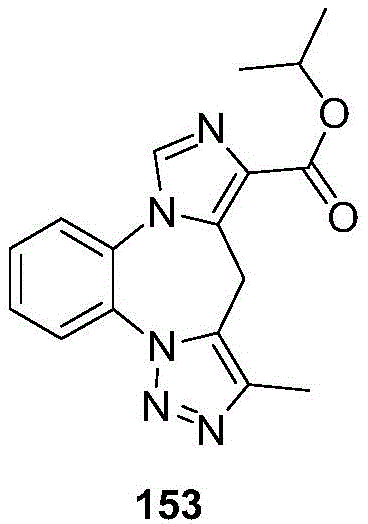
to a suspension of the acid derived from compound 3 (30mg,0.11mmol) in dichloroethane (0.2mL) was added thionyl chloride (1 mL; 13.8mmol) and DMF (20 μ L). The resulting solution was heated at 70 ℃ for 1 hour. The solvent was removed. The crude material was dried under vacuum. The crude material was suspended in isopropanol (2mL) and stirred at room temperature for 16 h. The solvent was evaporated, co-evaporated with methanol and the crude material was purified by preparative TLC (elution System: EtOAc) to give 7.2mg (21% yield) of the product compound 153. MS: [ M +1 ]=324.H1 NMR(CDCl3)δ8.15(1H,d,J=8Hz),7.81(1H,s),7.64(3H,m),5.32(1H,q,J=7Hz),2.45(3H,s),1.43(6H,d,J=7Hz)。
Scheme 22

Example 68: synthesis of compound 116:
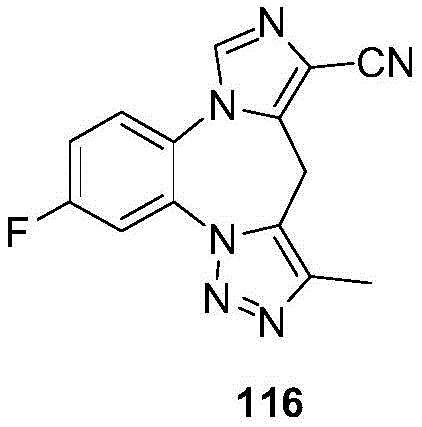
an alternative synthetic route to nitrile-substituted imidazole derivatives is also realized. As an example, compound 116 is prepared from imino-derivatives as shown in scheme 22. A solution of isocyanoacetonitrile (206mg,3.12mmol) in DMF (7mL) was cooled to-50 ℃ under a nitrogen atmosphere. KOtBu (320mg, 2.85mmol) was added. The mixture was stirred at-50 ℃ for 1 h. The imino derivative (prepared in the same manner as the imino derivative shown in scheme 21 above) was added slowly at-50 ℃ (350mg,1.24 mmol). The mixture was allowed to warm to room temperature over 16 h. Adding saturated NH4Aqueous Cl and extracted three times with EtOAc. The combined extracts were washed with brine (3 ×), and over MgSO4And (5) drying. Filtration and concentration gave the crude product. Chromatography (RediSep 12g silica gel column, eluted with 70% EtOAc in hexanes) afforded 230mg (70% yield) of the product compound 116. MS: [ M +1]=281.H1NMR(CDCl3)δ7.92(1H,dd,J=3,8.5Hz),7.81(1H,s),7.61(1H,dd,J=4.5,9Hz),7.38(1H,m),2.47(3H,s)。
Example 69: synthesis of compound 145:
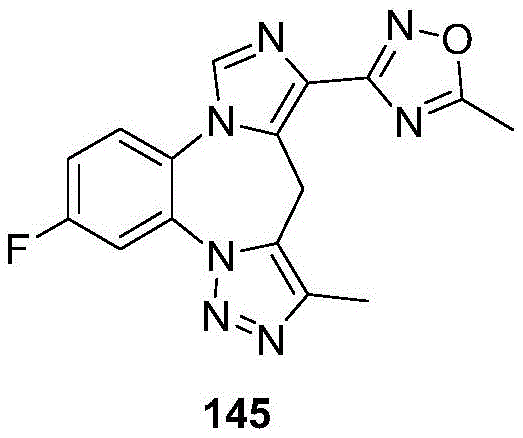
to a suspension of cyanide derivative compound 116(50mg,0.18mmol) in EtOH (1.6mL) and water (0.4mL) were added hydroxylamine hydrochloride (17mg,0.24mmol) and potassium carbonate (28mg,0.2 mmol). The suspension was heated at 80 ℃ for 30min and then cooled to room temperature. The solid precipitate was collected by filtration to give 37.8mg (68% yield) of the desired aminooxime product, [ M +1] ═ 314.
A suspension of amidoxime (10mg,0.032mmol) in acetic anhydride (0.5mL) was heated at 140C for 4 h. The reaction mixture was cooled and EtOH (1mL) was added to the reaction mixture, which was heated at 80 ℃ for 16 h. The solvent was evaporated and the crude material was purified by preparative TLC (elution System: EtOAc) to give 6.6mg (61% yield) of the desired product compound 145. MS: [ M +1]=338.H1NMR(CDCl3)δ7.91(1H,dd,J=3.5,8.5Hz),7.89(1H,s),7.65(1H,dd,J=5.5,10Hz),7.35(1H,m),2.69(3H,s),2.45(3H,s)。
Example 70: synthesis of compound 149:

to a solution of isobutyric acid (30 μ L,0.32mmol) in THF (0.5mL) was added CDI (16mg,0.096 mmol). The solution was stirred at room temperature for 2 h. The above amidoxime derivative (10mg,0.032mmol) was added and the reaction mixture was heated at 70C for 45 min. The solvent was evaporated and the crude material was suspended in isobutyric acid (1mL) and heated at 130 ℃ for 3 h. The solvent was evaporated and the crude material was purified by preparative TLC (elution system: 80% EtOAc in hexanes) to give 10.6mg (91%) of the desired product compound 149. MS: [ M +1]=366.H1NMR(CDCl3)δ7.90(1H,dd,J=3.5,9Hz),7.89(1H,s),7.66(1H,dd,J=4.5,8.5Hz),7.36(1H,m),3.32(1H,q,J=6.5Hz),2.46(3H,s),1.49(6H,d,J=8Hz)。
Example 71: synthesis of compound 150:
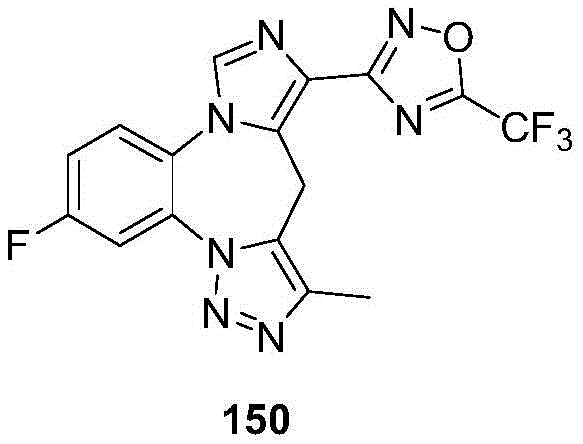
a suspension of the above amidoxime (10mg,0.032mmol) in trifluoroacetic anhydride (0.5mL) was heated at reflux for 10 min. The solvent was evaporated and the crude material was purified by preparative TLC (elution System: 80% EtOAc in hexanes) to give 11.8 mg (94%) of the desired product compound 150. MS: [ M +1]=392。H1NMR(CDCl3)δ7.92(2H,m),7.69(1H,dd,J=5.5,9.5Hz),7.39(1H,m),2.45(3H,s)。
Example 72: synthesis of compound 151:
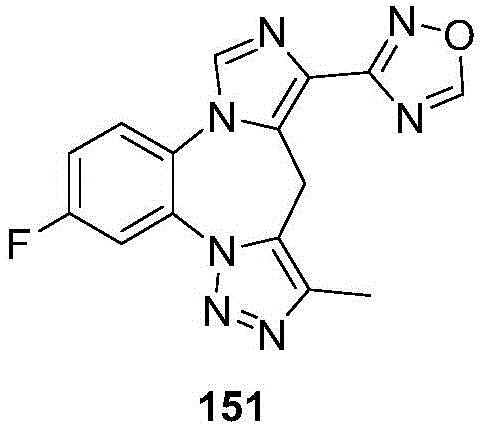
to a solution of formic acid (12 μ L,0.32mmol) in THF (0.5mL) was added CDI (16mg,0.096 mmol). The solution was stirred at room temperature for 2 h. The above amidoxime derivative (10mg,0.032mmol) was added and the reaction mixture was heated at 70 ℃ for 45 min. The solvent was evaporated and the crude material was suspended in formic acid (1mL) and heated at 60 ℃ for 3 h. The solvent was evaporated and the crude material was purified by preparative TLC (elution system: 80% EtOAc in hexanes) to give 2.1mg (20%) of the desired product compound 151. MS: [ M +1]=324.H1NMR(CDCl3)δ8.83(1H,s),7.92(1H,dd,J=3.5,8Hz),7.91(1H,s),7.65(1H,dd,J=4.5,9Hz),7.37(1H,m),2.45(3H,s)。
Example 73: synthesis of compound 155:
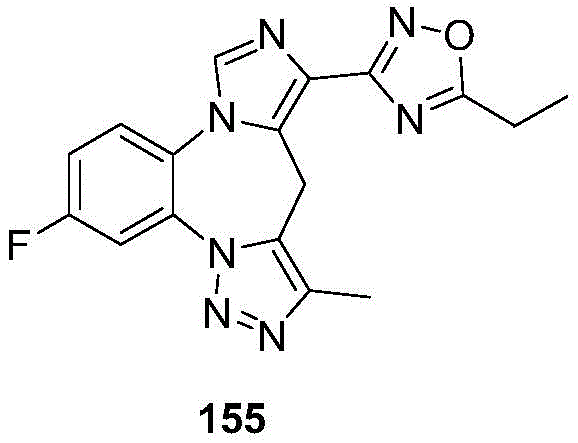
to a solution of propionic acid (22 μ L,0.29mmol) in THF (0.5mL) was added CDI (14mg,0.087 mmol). The solution was stirred at room temperature for 1 hour. The above amidoxime derivative (10mg,0.032mmol) in THF (0.5mL) was added and the reaction mixture was heated at 70 ℃ for 90 min. The solvent was evaporated and the crude material was suspended in propionic acid (1mL) and heated at 130 ℃ for 1 h. The solvent was evaporated and the crude material was purified by preparative TLC (elution system: 80% EtOAc in hexanes) to give 9.4mg (94%) of the desired product compound 155. MS: [ M +1 ]=352.H1NMR(CDCl3)δ7.91(1H,dd,J=2,8.5Hz),7.88(1H,s),7.65(1H,dd,J=6,9.5Hz),7.36(1H,m),3.01(2H,q,J=8.5Hz),2.46(3H,s),1.48(3H,t,J=8.5Hz)。
Example 74: synthesis of compound 160:
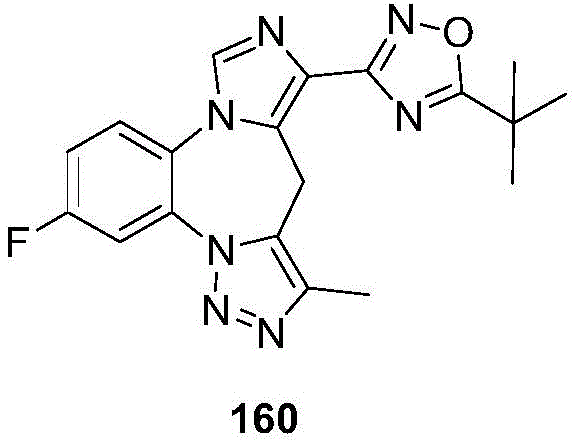
to a solution of pivalic acid (30mg,0.29mmol) in THF (0.5mL) was added CDI (14mg,0.087 mmol). The solution was stirred at room temperature for 1 hour. The above amidoxime derivative (10mg,0.032mmol) in THF (0.5mL) was added and the reaction mixture was heated at 70 ℃ for 90 min. The solvent was evaporated and the crude material was suspended in acetic acid (1mL) and heated at reflux for 3 h. The solvent was evaporated and the crude material was purified by preparative TLC (elution system: 80% EtOAc in hexanes) to give 7.4mg (67%) of the desired product compound 160. MS: [ M +1]=380.H1NMR(CDCl3)δ7.90(1H,dd,J=2.7,9Hz),7.88(1H,s),7.65(1H,dd,J=4.5,9Hz),7.35(1H,m),2.47(3H,s),1.53(9H,s)。
Example 75: synthesis of compound 143:

a solution of KOtBu (40mg,0.36mmol) in DMF (3mL) was cooled to-50 ℃ under a nitrogen atmosphere. P-toluenesulfonylmethyl isocyanide (76mg,0.39mmol) was added. The mixture was stirred at-50 ℃ for 1 h. The imino-derivative from scheme 22 (50mg,0.18mmol) was added and the mixture was allowed to warm to room temperature over 16 h. Adding saturated NH4Aqueous Cl and extracted 5 times with EtOAc. The combined extracts were washed with brine (3 ×), and over MgSO4And (5) drying. Filtration and concentration gave the crude product. Chromatography (RediSep 4g silica gel column, eluting with 70% EtOAc in hexanes) and subsequent preparative TLC (elution system: 30% EtOAc in DCM) gave 22.2mg (30% yield) of compound 143 as a white solid. MS: [ M +1 ]=410。
H1NMR(CDCl3)δ7.91(2H,d,J=8Hz),7.87(1H,dd,J=2.5,8.5Hz),7.74(1H,s),7.65(1H,dd,J=5.5,9Hz),7.34(3H,m),2.50(3H,s),2.42(3H,s)。
Example 76: synthesis of compound 144:
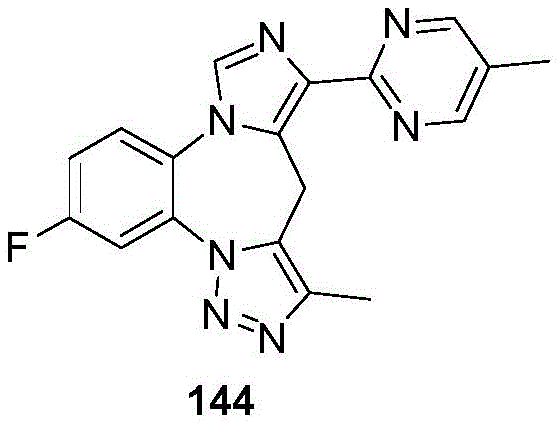
to 3-ethoxymethacrolein (100mg,0.88mmol) was added a 7N solution of ammonia in methanol (1.3mL,8.8 mmol). The solution was stirred at rt for 16 h. The solvent was evaporated and the crude yellow solid corresponding to 3-amino-2-methacrolein was used in the next step without further purification.
To a solution of 3-amino-2-methacrolein (7mg,0.087mmol) in anhydrous THF (1mL) was added 60% NaH in oil dispersion (6mg,0.16 mmol). The suspension was stirred at room temperature for 15 min. Cyanide derivative (22mg,0.079mmol) in THF (1mL) was added and the reaction mixture was heated at 65 ℃ for 1 hour. A new batch of reagent was prepared as described above using a solution of 3-amino-2-methacrolein (20mg) and NaH (20mg) in THF (1mL) and added to the reaction mixture, which was heated at 65 ℃ for an additional 1 hour. LCMS indicated reaction completion. The reaction mixture was quenched with methanol. The solvent was evaporated. The crude material was suspended in water and the solid was collected by filtration to give 5.2mg (19% yield) of compound 144 as a pale red solid. MS: [ M +1]=348.H1NMR(CDCl3)δ8.67(2H,s),7.90(1H,d,J=9.5Hz),7.85(1H,s),7.65(1H,dd,J=4.5,9Hz),7.34(1H,m),2.44(3H,s),2.36(3H,s)。
Scheme 23
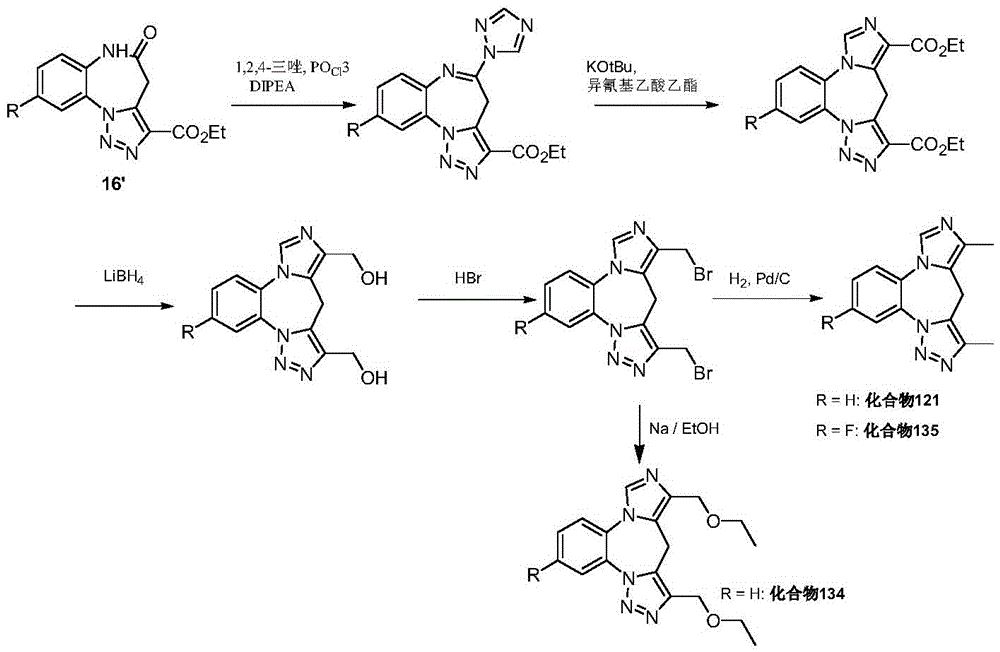
Example 77: synthesis of compound 121:

to 1,2, 4-triazole (2.03g,29.4mmol) in anhydrous CH at 0 deg.C 3Adding i-Pr to CN (20mL)2NEt (5.6mL,32.4 mmol). Once all the triazole had dissolved, POCl was added3(0.82mL,8.8mmol) and compound 16' (1g,3.68 mmol). The mixture was stirred at 0 ℃ for 2 h. The resulting solution was heated in an oil bath at 80 ℃ for 16 h. The mixture was cooled with an ice bath, diluted with EtOAc, and water was added. It was extracted three times with EtOAc. The combined extracts were washed with brine and over MgSO4And (5) drying. Filtration and concentration gave 1.05g (88% yield) of an orange solid which was used directly in the next step. MS: [ M +1]=324。
A solution of KOtBu (696mg,6.2mmol) in DMF (15mL) was cooled to-50 ℃ under a nitrogen atmosphere. Ethylisocyanoacetate (0.75mL,6.8mmol) was added slowly. The mixture was stirred at-50 ℃ for 1 h. The crude product from step 1 above (1g, 3.1mmol) was added and the mixture was allowed to warm to room temperature over 18 h. Adding saturated NH4Aqueous Cl and extracted 8 times with EtOAc. The combined extracts were washed with brine (3 ×), and over MgSO4And (5) drying. Filtration and concentration gave the crude product. Chromatography (RediSep 24g silica gel column, eluted with 70% EtOAc in hexanes) afforded 950mg (83% yield) of the product. MS: [ M +1 ]=368。
To a stirred solution of diester (200mg,0.54mmol) in anhydrous THF (4mL) under a nitrogen atmosphere at room temperature was added LiBH4(2M solution in THF, 0.66mL,1.3 mmol). The reaction mixture was stirred under nitrogen atmosphere for 24 h. A mixture of EtOAc/EtOH (3mL/3mL) was added to the reaction mixture and concentrated. The residue was dissolved in MeOH and silica gel was added. After evaporation of the volatile solvent, the solid was loaded onto a RediSep 4g silica gel column. The expected product was eluted with 10:1v/v CH2Cl 2/MeOH. The diol was obtained as a solid (60mg, 39% yield). MS: [ M +1] ═ 284.
The diol (60mg,0.21mmol) was suspended in 5mL of 33% HBr in AcOH and heated at 80 ℃ for 18 h. The solution was cooled with an ice bath and diluted with EtOAc. Saturated NaHCO was added slowly3An aqueous solution. The solution was extracted with EtOAc (3 ×), and the combined organic phases were washed with brine, over MgSO4And (5) drying. Filtration and concentration gave the crude product, which was taken without further purificationStep (5) was used in the next step. MS: [ M +1]=408。
To a solution of dialkyl bromide derivative (0.21mmol) in EtOAc (10mL) and MeOH (10mL) was added wet 10% Pd/C (catalytic amount) and the resulting suspension was stirred under an atmosphere of hydrogen for 60 h. The suspension was filtered through celite and the resulting solution was concentrated. The crude product was purified by multiplex prep TLC (elution system: 3% MeOH in EtOAc) to give 6.2mg (12% yield, 2 steps) of the desired product compound 121. MS: [ M +1 ]=252.H1NMR(CDCl3)δ8.09(1H,m),7.74(1H,s),7.56(3H,m),7.90(2H,m),2.42(3H,s),2.29(3H,s)。
Example 78: synthesis of compound 135:
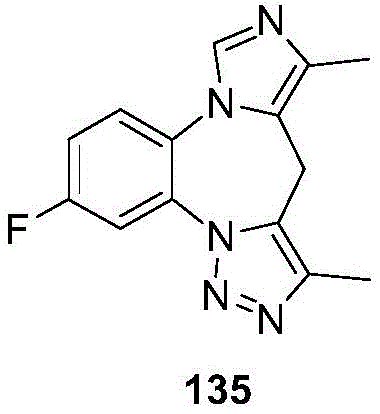
compound 135 was synthesized in a similar manner to compound 121, by adding 1,2, 4-triazole (952mg,13.8mmol) to anhydrous CH at 0 deg.C3Adding i-Pr to CN (20mL)2NEt (2.6mL,15.2 mmol). Once all the triazole had dissolved, POCl was added3(0.45mL,4.8mmol) and lactam ester (1g,3.45 mmol). The mixture was stirred at 0 ℃ for 2 h. The resulting solution was heated in an oil bath at 80 ℃ for 16 h. The mixture was cooled with an ice bath, diluted with EtOAc, and water was added. It was extracted three times with EtOAc. The combined extracts were washed with brine and over MgSO4And (5) drying. Filtration and concentration gave 1.03g (87% yield) of an orange solid which was used directly in the next step. MS: [ M +1]=342。
A solution of KOtBu (658mg,5.9mmol) in DMF (15mL) was cooled to-50 ℃ under a nitrogen atmosphere. Ethylisocyanoacetate (0.71mL,6.5mmol) was added slowly. The mixture was stirred at-50 ℃ for 1 h. The crude product from step 1 above (1g, 2.9mmol) was added and the mixture was allowed to warm to room temperature over 18 h. Adding saturated NH4Aqueous Cl and extracted 8 times with EtOAc. The combined extracts were washed with brine (3 ×), and over MgSO4And (5) drying. Filtration and concentration gave the crude product. Chromatography (RediSep 24g silica gel column, Eluting with 70% EtOAc in hexanes) gave 1.02g (90% yield) of product. MS: [ M +1]=386。
To a stirred solution of diester (600mg,1.56mmol) in anhydrous THF (8mL) under nitrogen atmosphere at room temperature was added LiBH4(2M solution in THF, 3.1mL,6.24 mmol). The reaction mixture was stirred under nitrogen atmosphere for 24 h. A mixture of EtOAc/EtOH (10mL/10mL) was added to the reaction mixture and concentrated. The residue was dissolved in MeOH and silica gel was added. After evaporation of the volatile solvent, the solid was loaded onto a RediSep 12g silica gel column. The expected product is used as 10:1v/v CH2Cl2MeOH elution. The diol was obtained as a solid (187mg, 40% yield). MS: [ M +1]=302。
The diol (80mg,0.27mmol) was suspended in 7mL of a 33% HBr in AcOH and heated at 80 ℃ for 48 h. The solution was cooled with an ice bath and diluted with EtOAc. Saturated NaHCO was added slowly3An aqueous solution. The solution was extracted (3 ×), and the combined organic phases were washed with brine, over MgSO4And (5) drying. Filtration, concentration and co-evaporation with toluene gave 100mg (88% yield) of a beige solid which was used in the next step without further purification. MS: [ M +1]=426。
To a solution of dialkyl bromide derivative (70mg,0.16mmol) in EtOAc (10mL) and MeOH (10mL) was added 10% Pd/C (catalytic amount) and the resulting suspension was stirred under a hydrogen atmosphere for 48 h. The suspension was filtered through celite and the resulting solution was concentrated. The crude product was purified by multiplex prep TLC (elution System 1: 75% EtOAc in hexanes; elution System 2: 5% MeOH in EtOAc; elution System 3: EtOAc) to give 4.1mg (10% yield) of the desired product compound 135. MS: [ M +1 ]=270.H1NMR(CDCl3)δ7.84(1H,dd,J=2.5,9Hz),7.70(1H,s),7.54(1H,dd,J=5,8Hz),7.30(1H,m),2.42(3H,s),2.28(3H,s)。
Example 79: synthesis of compound 134:

to a suspension of the dialkyl bromide derivative described in scheme 23 (R ═ H) (30mg,0.074mmol) in EtOH (1mL) heated at 80 ℃ was added the freshly prepared 2M NaOEt solution (75 μ L,0.15 mmol). The solution was heated for 10 min. The solvent was evaporated. The crude material was suspended in EtOAc and filtered. The filtrate was concentrated and purified by preparative TLC (elution System: EtOAc) to give 3.1mg (12% yield) of the desired product, Compound 134. MS: [ M +1] ═ 340.
Scheme 24
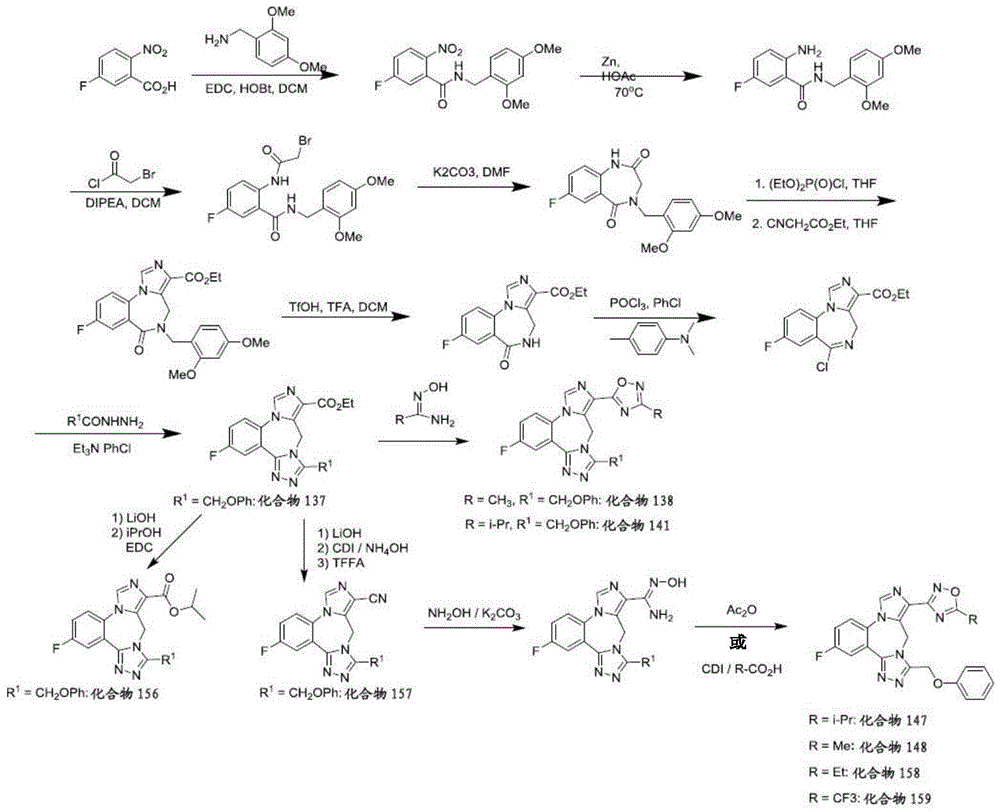
Example 80: synthesis of compound 137:
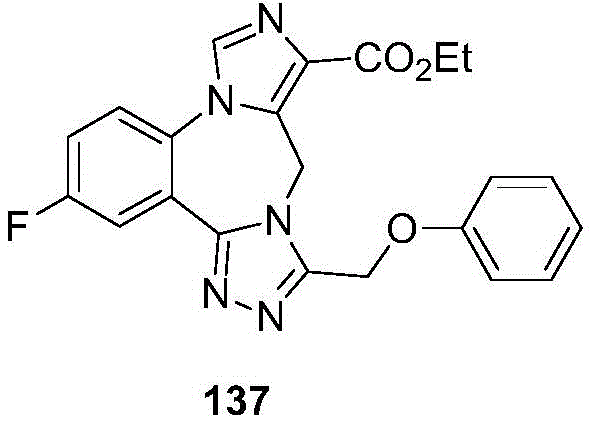
to a solution of 5-fluoro-2-nitrobenzoic acid (6.6g,35.66mmol) in dichloromethane (100mL) was added DIPEA (9.22g,71.3mmol), HOBt (6.0g,39.2mmol) and EDCI (10.2g,53.5 mmol). After stirring for about 15min, a solution of 2, 4-dimethoxybenzylamine (5.96g,35.66mmol) in dichloromethane (50mL) was added dropwise to the reaction mixture under a nitrogen atmosphere. The resulting mixture was stirred at room temperature under nitrogen atmosphere for 16 h. The reaction mixture was washed with 1N HCl (100mL), saturated NaHCO3(100mL) and brine (100mL) were washed successively. The organic phase is then passed over MgSO4And (5) drying. Filtration and removal of the solvent in vacuo gave a yellowish solid, weight: 9.3g (78%). MS: [ M +1 ]=335。
At room temperature to HOAc/THF/MeOH/H2To a mixture of O (25/100/50/25mL) in a solvent, suspended and stirred, nitrobenzene analogue (9.3g, 27.8mmol) was added Zn powder. The mixture was heated to 70 ℃ for 20 hours, cooled, and filtered. The solids were rinsed with THF and the combined filtrates were concentrated in vacuo. To the resulting slurry saturated NaHCO was slowly and carefully added3To avoid excessive formation until the pH reaches 7 to 8. The mixture was extracted with EtOAc (3 ×); the combined organic layers were washed with brine and over MgSO4And (5) drying. Filtration and removal of the solvent gave the crude amine product as a dark brown gummy paste, weight: 8.7 g.
To a solution of the above aniline (8.7g) in dichloromethane (150mL) was added triethylamine (3.37g,33.4 mmol). The mixture was cooled with an ice bath and treated with bromoacetyl chloride (4.81g,30.6mmol) under a nitrogen atmosphere. The ice bath was removed and the mixture was stirred for 72 hours. The reaction mixture was concentrated in vacuo and Et2The resulting slurry was treated with O (100mL) and water (100 mL). The product precipitate was collected by filtration and dried to yield 5.6g of product as a brown solid. Adding Et2The O layer was separated from the aqueous layer and diluted with DCM (50mL), washed with brine and MgSO 4And (5) drying. Filtration and removal of the solvent gave 5.3g of additional product as a foamy brown solid. Total weight 11g (100%).
To a solution of bromide (11g) in DMF (550mL) was added K2CO3(7.1g,51.7 mmol). The mixture was heated at 50 ℃ for 48 hours. The mixture was cooled to room temperature and the inorganic solid was filtered off. The filtrate was concentrated in vacuo, treated with water/MeOH (60/10mL), extracted with DCM (3 ×); the combined organic layers were washed with brine and over MgSO4And (5) drying. Filtration and removal of the solvent followed by silica gel column chromatography using 5-50% EtOAc in DCM gave 3.2g (36%) of 7-membered lactam as a light brown solid. MS: [ M +1]=345。
To a stirred solution of lactam (1.32g,3.83mmol) dissolved in THF (20mL) and DMF (3mL) was added t-BuOK (0.645g,5.75mmol) at-20 ℃. After stirring at-20 ℃ for 30min, diethyl chlorophosphate (1.19mL,6.89mmol) was added dropwise, and the mixture was stirred for 3h while warming from-20 ℃ to 20 ℃. The reaction mixture was cooled to-78 ℃, ethyl isocyanoacetate (0.791mL,6.89mmol) was added thereto, followed by t-BuOK (0.645g,5.75mmol), and stirring was continued overnight while the temperature was brought to room temperature. The reaction is carried out with saturated NH 4Quench Cl and extract with EtOAc (2 ×); the combined organic solutions were washed with brine and over MgSO4And (5) drying. Filtration and removal of solvent gave the crude product, which was purified by silica gel column chromatography using 15-100% EtOAc in DCM, weight: 0.861g (47%) as a brown solid. MS: [ M +1]=440。
To the above imidazole ester (861mg) in dichloromethane (5mL) at 0 deg.C was added trifluoroacetic acid (5mL) followed by trifluoromethanesulfonic acid (0.345 mL). The mixture was warmed to room temperature, stirred for 3h, and then concentrated to give a residue, which was dissolved in dichloromethane (50 mL). To this was added saturated NaHCO3(50mL), followed by stirring for 20 min. The pH of the top aqueous layer was tested basic and separated and extracted with DCM (3 ×); the combined DCM solution was washed with brine and over MgSO4And (5) drying. Filtration and removal of the solvent gave 0.58g (100%) of lactam as a yellowish solid. MS: [ M +1]=290。
To a stirred solution of lactam (209.1mg,0.723mmol) and N, N-dimethyl-p-toluidine (234.7mg,1.74mmol) in chlorobenzene (2.5mL) was added POCl under nitrogen3(133.0mg,0.867 mmol). The reaction mixture was then heated at 135 ℃ for 2 h. After cooling to room temperature, phenoxyacetic acid hydrazide (189.0mg,1.08mmol) was added followed by DIPEA (0.455 mL). The reaction mixture was stirred at room temperature for 30min and then heated at 100 ℃ for 60 min. The reaction mixture was cooled and saturated NH was added 4Cl (aq) and extracted three times with ethyl acetate; the combined organic layers were washed with brine and over MgSO4And (5) drying. After filtration and concentration, the product was purified by ISCO flash column chromatography using 0-10% MeOH in EtOAc, weight: 116.7mg (36%) of Compound 137 as a yellowish membranous solid. MS: [ M +1]=420。
Example 81: synthesis of compound 156:
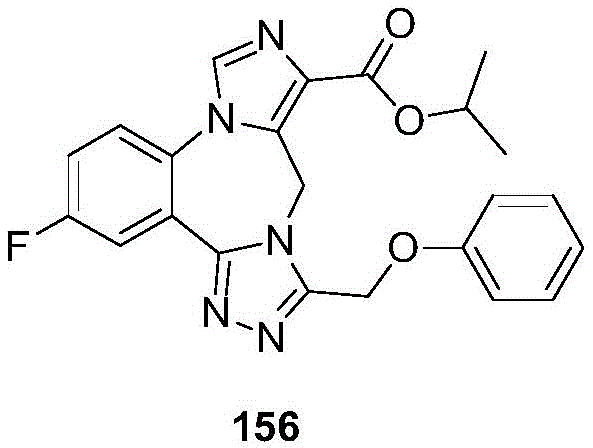
the ethyl ester compound 137(244.2mg,0.582mmol) in a solvent system of THF/water/MeOH (total 6.0mL, ratio 6/5/1) was treated with LiOH (69.7mg,2.91mmol) at room temperature for 4 hours, concentrated in vacuo, acidified to pH-3, and the precipitate collected by filtration. After washing with water and drying, 179.3mg (79%) of the acid are obtained as yellowish solid. MS: [ M +1] ═ 392.
To this acid (10.8mg,0.0276mmol) stirred in DCM (0.1ml) was added EDCI (21.3mg,0.11mmol), DMAP (6.7mg,0.0552mmol) and isopropanol (13.2mg,0.221mmol) at room temperature. After 12 h, the reaction was diluted with EtOAc and saturated NaHCO3Washing; the aqueous layer was separated and extracted with EtOAc, and the combined organic layers were washed with brine and over MgSO4And (5) drying. The concentrate was filtered and purified by preparative TLC using 10% MeOH in EtOAc to give 8.7mg (73%) of isopropyl ester compound 156 as a yellowish foamy solid. MS: [ M +1 ]=434。
Example 82: synthesis of compound 138:

acetamide oxime (10.7mg,0.144mmol) was azeotroped four times in toluene and added to ethyl ester compound 137(9.5mg,0.0226 mmol). THF (0.3mL) was added followed by a 60% NaH oil suspension (4.5mg,0.112 mmol). The reaction mixture was stirred at room temperature for 30min, then heated at 70 ℃ for 2h, cooled to room temperature, and the solvent was removed in vacuo, water (1.5mL) was added to quench the reaction, stirred for 20min, and cooled to 4 ℃. The precipitate was collected by filtration, washed with water, and dried to give 5.2mg (59%) as a pale yellow solid Oxadiazole product compound 138. MS: [ M +1]=430。
Example 83: synthesis of compound 141:

the compound of example 83 was synthesized using isobutyramidine oxime in place of acetamide oxime in a synthetic route analogous to that described for example 82 to give the compound of example 83 as a yellowish solid MS: [ M +1] ═ 458.
Example 84: synthesis of compound 157:
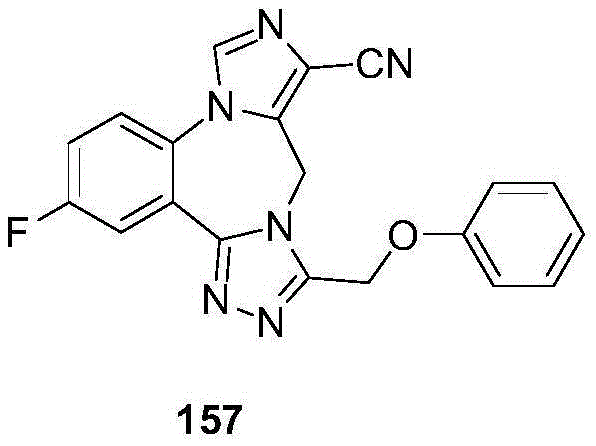
to the acid prepared in example 81 above (60.2mg,0.154mmol) stirred in DCM (0.7mL) was added carbonyldiimidazole (49.9mg,0.308mmol) at room temperature. The mixture was stirred for 40min, then cooled to 0 ℃ and ammonia (0.112ml) was added, warming to room temperature while stirring was continued overnight. The reaction was concentrated, water (8mL) was added, and stirred well for 30 min. The resulting precipitate was collected by filtration, washed with water, and dried to yield 51.1mg (85%) of the primary amide as a light brown solid. MS: [ M +1] ═ 391.
Amide from above (51.1mg) with POCl3(200.8mg,1.31mmol) in 1, 4-bis A solution in alkane (0.9mL) was treated at 90 ℃ for 14 hours. Once cooled to room temperature, the reaction was carefully treated with saturated NaHCO3Quench (5mL) and stir for 20 min. The precipitate was collected by filtration, washed with water, and dried to give 40.9mg (85%) of the nitrile product compound 157 as a light brown solid. MS: [ M +1]=373。
Example 85: synthesis of compound 147:

to a nitrile (45.8mg,0.123mmol) in a round-bottomed flask was added hydroxylamine hydrochloride (14.5mg,0.209mmol), K2CO3(22.3mg,0.161mmol), ethanol (0.6mL), and water (0.15 mL). The reaction mixture was heated at 80 ℃ for 30min, cooled and concentrated in vacuo. The resulting slurry was treated with water (1.5mL), sonicated to aid mixing, and placed in a chamberStir warm for 1h, then cool to 4 ℃. The resulting precipitate was collected by filtration, washed with cold water (1mL), and dried to give 40.8mg (82%) of the addition compound as an off-white solid. MS: [ M +1]=406。
Isobutyric acid (31.4mg,0.582mmol) was treated with a solution of carbonyldiimidazole (28.4mg,0.175mmol) in THF (0.5mL) for 2 hours. N-hydroxyformamide adduct (11.8mg,0.0291mmol) was added and the reaction stirred at room temperature for 30 min. More isobutyric acid (0.5mL) was added and the reaction mixture was heated at 110 ℃ for 16h, cooled and saturated NaHCO was added 3(8mL) and extracted with EtOAc (3X); the combined organic layers were washed with brine and over MgSO4And (5) drying. Preparative TLC (5% MeOH in EtOAc) of the concentrated filtrate afforded 11.2mg (84%) as a white solid An oxadiazole compound 147. MS: [ M +1]=458。
Example 86: synthesis of compound 148:
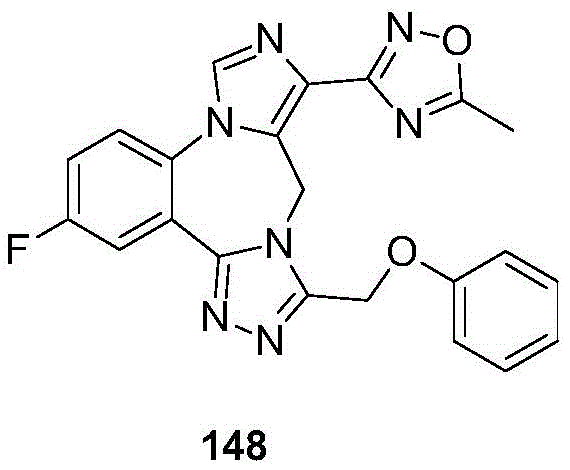
the compound of example 86 was synthesized in a synthetic route analogous to that described for example 85, using acetic acid instead of isobutyric acid, to give the compound of example 86 as a white solid MS: [ M +1] ═ 430.
Example 87: synthesis of compound 158:

the compound of example 87 was synthesized in a synthetic route analogous to that described for example 85, using propionic acid instead of isobutyric acid, to give the compound of example 87 as a white solid MS: [ M +1] ═ 444.
Example 88: synthesis of compound 159:
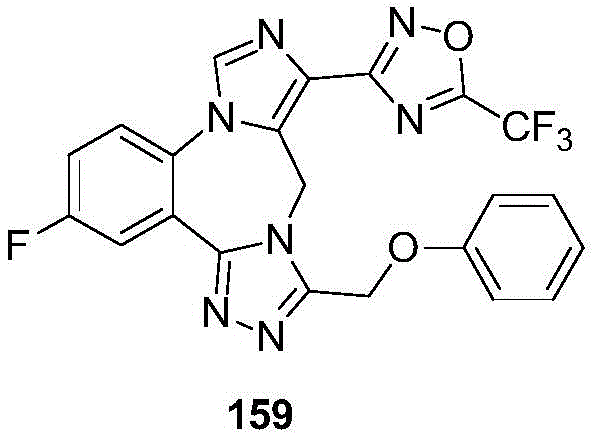
trifluoroacetic anhydride (196.9mg,0.938mmol) was added to the N-hydroxyformamide adduct (19.0mg,0.0469mmol) suspended and stirred in THF (0.2mL) at room temperature. After stirring for 30min, the reaction was heated to 70 ℃ for 1h, cooled to room temperature, and diluted with EtOAc (10mL) to which saturated NaHCO was added3And stirred for 30 min. The aqueous layer was separated and extracted with EtOAc (1 ×); the combined organic layers were washed with brine and over MgSO 4And (5) drying. Filtration and removal of the solvent gave a paste to which nBuOH (5mL) and HOAc (0.5mL) were added. It was heated at 115 ℃ for 16h, cooled, and concentrated in vacuo, diluted with EtOAc and saturated NaHCO3Washed with brine and over MgSO4And (5) drying. Preparative TLC (5% MeOH in EtOAc) of the concentrated filtrate afforded 11.5mg (51%) of the desired trifluoromethyl group as a yellowish solid A diazole analog compound 159. MS: [ M +1]=484。
Scheme 25
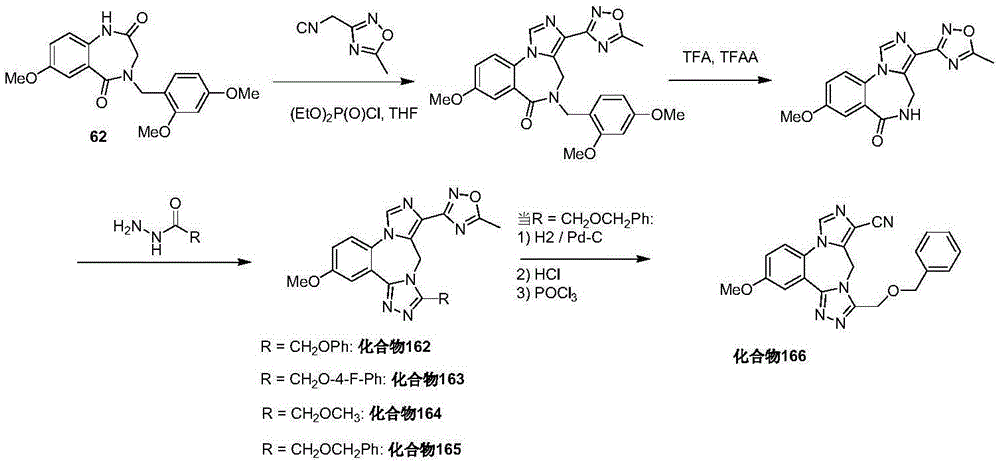
Example 89: synthesis of compound 162:

to a stirred lactam 62(503.4mg,1.42mmol) in THF (2.9mL) and DMF (0.8mL) was added tBuOK (240.2mg) at-20 ℃. After stirring for 30min, diethyl chlorophosphate (377.7mg,2.12mmol) was added dropwise and the reaction mixture was slowly warmed to 8 ℃ over 3h, followed by cooling to-20 ℃. 2.26mL (2.26mmol) was added Diazole isocyanates (cf. JMC,1996,39170; prepared as a 1M THF solution). The reaction mixture was further cooled to-78 ℃, tBuOK (238.4mg) was added, and the reaction was slowly warmed to room temperature overnight. Adding saturated NH4Cl (5mL) and the mixture was extracted with EtOAc (2X), washed with brine and over MgSO4And (5) drying. After filtration and concentration, the product was purified by silica gel column chromatography eluting with a gradient of 0-10% MeOH in EtOAc to give 246.0mg of imidazole product as a yellowish solid. MS: [ M +1 ]=462。
The imidazole obtained above (246.0mg,0.533mmol) was stirred in DCM (3 ml). Trifluoroacetic acid (3mL) was added followed by trifluoromethanesulfonic acid (160.0mg,1.07 mmol). After stirring for 3h, the reaction was diluted with DCM (20mL) and saturated NaHCO3Washing; the aqueous layer was separated and extracted with DCM (2 ×); the combined DCM solution was washed with brine and over MgSO4And (5) drying. Filtration and removal of the solvent in vacuo gave 208.7mg of the crude lactam product as a yellowish flakes solid. [ M +1 ]]=312。
Phosphoryl chloride (29.9mg,0.195mmol) was added under a nitrogen atmosphere to a stirred solution of the lactam obtained above (22.5mg,0.0723mmol) and N, N-dimethyl-p-toluidine (51.8mg,0.383mmol) in chlorobenzene (0.45 mL). The reaction mixture was heated at 135 ℃ for 3h and then cooled to room temperature. Diisopropylethylamine (75.7mg,0.586mmol) and phenoxyacetohydrazide (50.1mg,0.302mmol) were added and the reaction mixture was heated at 100 ℃ for 14h, cooled to room temperature and saturated NH4Partition between Cl and EtOAc. The aqueous layer was separated and extracted with EtOAc; the combined EtOAc solution was washed with brine and MgSO4And (5) drying. After filtration and concentration, the product compound 162 was isolated as a yellowish solid by silica gel column chromatography eluting with a gradient of 0-10% MeOH in EtOAc. Weight: 11.8mg (37%). MS: [ M +1 ]=442。
Example 90: synthesis of compound 163:

the compound of example 90 was synthesized in analogy to the synthesis route described for example 89, using 4-fluorophenoxyacetic acid hydrazide instead of phenoxyacetic acid hydrazide to give the compound of example 90 as a yellowish solid: MS: [ M +1] ═ 460.
Example 91: synthesis of compound 164:

the compound of example 91 was synthesized in analogy to the route described for example 89, using methoxyacetohydrazide instead of phenoxyacetohydrazide to give the compound of example 91 as yellowish solid MS: [ M +1] ═ 380.
Example 92: synthesis of compound 165:
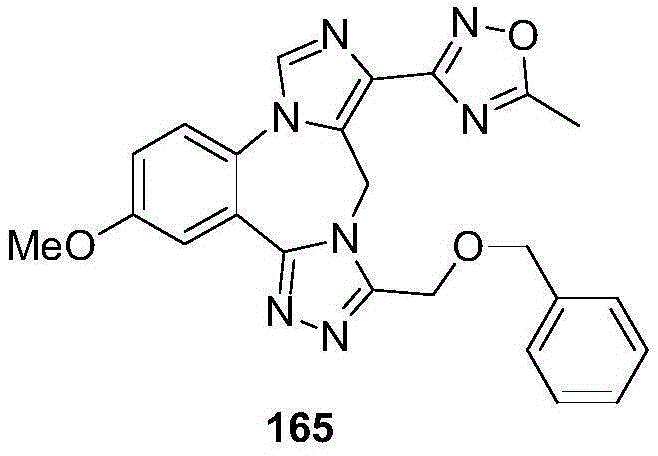
preparation of benzyloxyacethydrazide carbonyl diimidazole (1.52g,9.39mmol) was added to benzyloxyacetic acid (1.2g,7.22mmol) stirred in THF (60mL) at 0 ℃. The ice bath was removed and stirring was continued for 1 hour. The resulting cloudy solution was added to hydrazine (0.927g,28.9mmol) stirred in THF (40mL) at room temperature. After 16 h, the reaction mixture was concentrated to a slurry, to which was added water (120mL), extracted with DCM (3 ×); the combined DCM solution was washed with brine and over MgSO4And (5) drying. Filtration and removal of the solvent gave 0.908g (70%) of the hydrazide as a clear viscous oil. It was azeotroped several times in toluene before use.
The compound of example 92 was synthesized in a synthetic route analogous to that described for example 89, using benzyloxyacethydrazide instead of phenoxyacethydrazide to give the compound of example 92 as a yellowish solid: MS, and [ M +1] ═ 456.
Example 93: synthesis of compound 166:
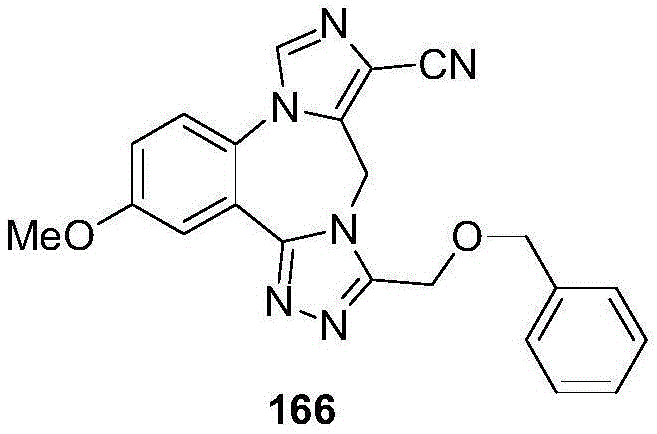
compound 165 from above (58.5mg, 0.128mmol) was treated with 10% Pd-C (cat) in EtOAc (4mL) and MeOH (4mL) under a hydrogen atmosphere for 2 h. The catalyst was filtered through celite. Concentrated HCl (0.89mL) was added to the filtrate, and the mixture was stirred at room temperature for 16 h. Adding excessive Na2CO3(aq), and the solution was extracted with EtOAc (2 ×); the combined organic solutions were washed with brine and over MgSO4And (5) drying. Preparative TLC of the concentrated filtrate, using 15% MeOH in EtOAc, yielded 14.9mg of primary amide ([ M +1] as a yellowish solid]417). The primary amide is used at 90 ℃ in a 1, 4-bis Phosphoryl chloride (54.9mg, 0.358mmol) in an alkane (1mL) was treated for 14 h. After cooling, the reaction mixture was diluted with EtOAc and saturated NaHCO3Washing; the aqueous layer was separated and extracted with EtOAc (1 ×), and the combined organic solutions were washed with brine and over MgSO 4And (5) drying. Preparative TLC of the concentrated filtrate was performed using 5% MeOH in EtOAc to give 5.2mg of the desired nitrile product compound 166 as white needles. [ M +1 ]]=399。
Scheme 26
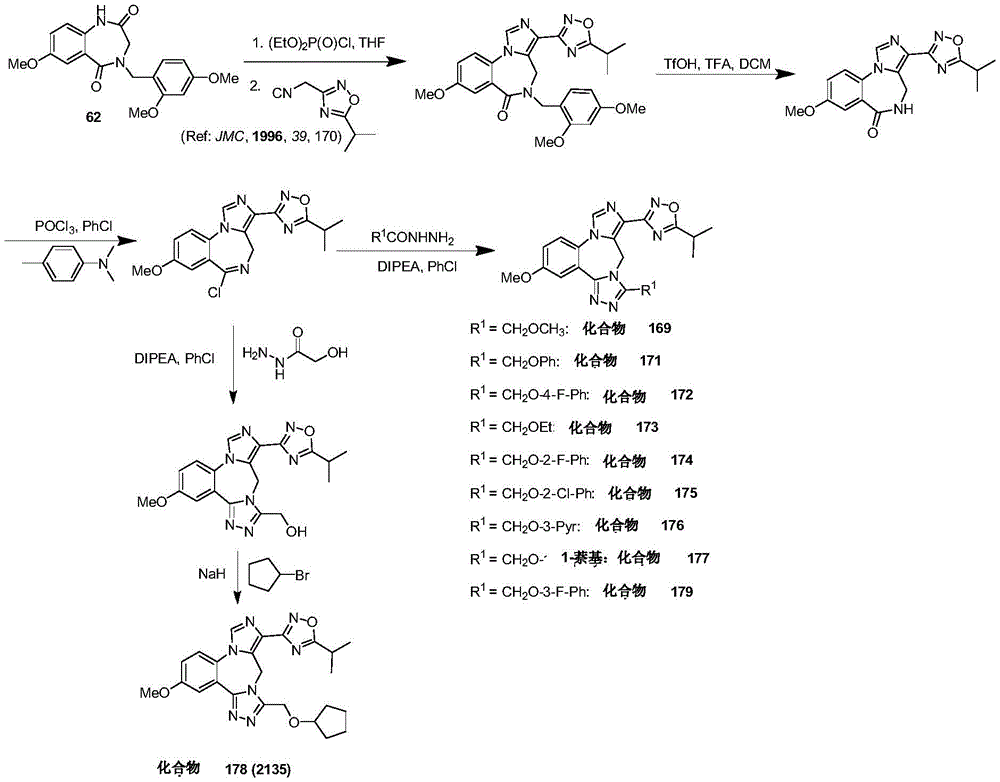
Example 94: synthesis of compound 169:
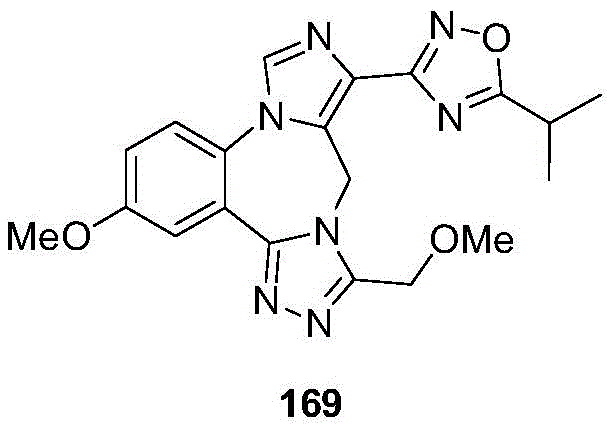
to a stirred lactam 62(2.23g, 6.24mmol) in THF (10mL) and DMF (3mL) was added tBuOK (1.05g,9.36mmol) at-20 ℃. After stirring for 30min, diethyl chlorophosphate (1.66g,9.36mmol) was added dropwise, and the reaction was quenchedThe mixture was allowed to warm slowly to 8-10 ℃ over 3h, then cooled to-20 ℃. 10.0ml (10.0mmol) was added Diazole isocyanates (cf. JMC,1996,39170; prepared as a 1M THF solution). The reaction mixture was further cooled to-78 ℃, tBuOK (1.05g,9.36mmol) was added, and the reaction was slowly warmed to room temperature overnight. Adding saturated NH4Cl (20mL) and the mixture was extracted with EtOAc (3X), washed with brine and over MgSO4And (5) drying. After filtration and concentration, the product was isolated by silica gel column chromatography eluting with a gradient of 10-100% EtOAc in DCM to give 1.07g (35%) of the imidazole product as a yellowish foamy solid. MS: [ M +1]=490。
The imidazole obtained above (1.07g, 2.18mmol) was stirred in DCM (11 mL). Trifluoroacetic acid (11mL) was added followed by trifluoromethanesulfonic acid (0.656g, 4.37 mmol). After stirring for 4h, the reaction mixture was concentrated in vacuo, diluted with DCM (50mL) and saturated NaHCO 3Washing; the aqueous layer was separated and extracted with DCM (2 ×); the combined DCM solution was washed with brine and over MgSO4And (5) drying. Filtration and removal of the solvent in vacuo gave 0.872g of crude lactam product as a light brown solid. [ M +1]]=340。
To a stirred solution of the lactam (45.0mg,0.133mmol) obtained above and N, N-dimethyl-p-toluidine (89.6mg,0.663mmol) in chlorobenzene (0.60mL) was added phosphorus oxychloride (51.0mg,0.333mmol) under a nitrogen atmosphere. The reaction mixture was heated at 135 ℃ for 3h and then cooled to room temperature. Diisopropylethylamine (137.5mg,1.06mmol) and methoxyacetohydrazide (83.1mg,0.798mmol) were added and the reaction mixture was heated at 100 ℃ for 4h, cooled to room temperature, diluted with EtOAc and washed with saturated NaHCO3Washed with brine and over MgSO4And (5) drying. After filtration and concentration, the product compound 169 was isolated as a light brown solid by silica gel column chromatography eluting with a gradient of 0-13% MeOH in EtOAc. Weight: 14.3mg (26%). MS: [ M +1]=408。
Example 95: synthesis of compound 171:
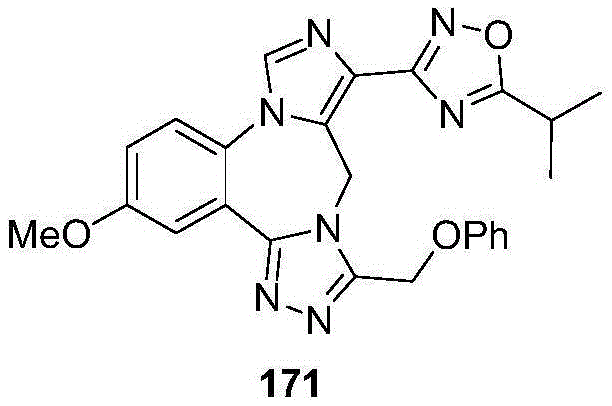
the compound of example 95 was synthesized in a synthetic route analogous to that described for example 94, using phenoxyacethydrazide instead of methoxyacethydrazide to give the compound of example 95 as a yellowish solid MS: [ M +1] ═ 470.
Example 96: synthesis of compound 172:
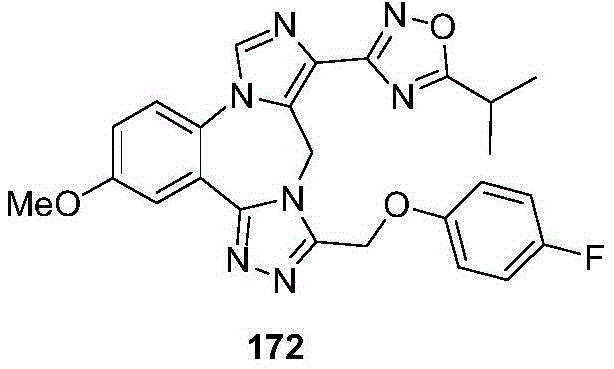
the compound of example 96 was synthesized in analogy to the route described for example 94, using 4-fluoro-phenoxyacetohydrazide instead of methoxyacetohydrazide to give the compound of example 96 as yellowish solid MS: [ M +1] ═ 488.
Example 97: synthesis of compound 173:
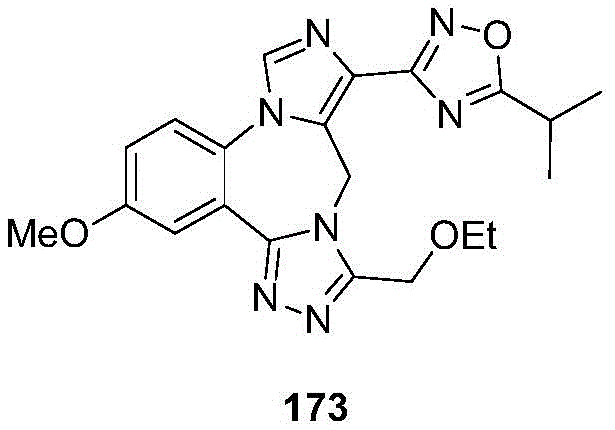
the compound of example 97 was synthesized in analogy to the route described for example 94, using ethoxyacethydrazide instead of methoxyacethydrazide to give the compound of example 97 as yellowish solid MS: [ M +1] ═ 422.
Example 98: synthesis of compound 174:

the compound of example 98 was synthesized in analogy to the route described for example 94, using 2-fluoro-phenoxyacetohydrazide instead of methoxyacetohydrazide to give the compound of example 98 MS: [ M +1] ═ 488 as a yellowish solid.
Example 99: synthesis of compound 175:

the compound of example 99 was synthesized in analogy to the route described for example 94, using 2-chloro-phenoxyacetohydrazide instead of methoxyacetohydrazide to give the compound of example 99 MS: [ M +1] ═ 504 as yellowish solid.
Example 100: synthesis of compound 176:
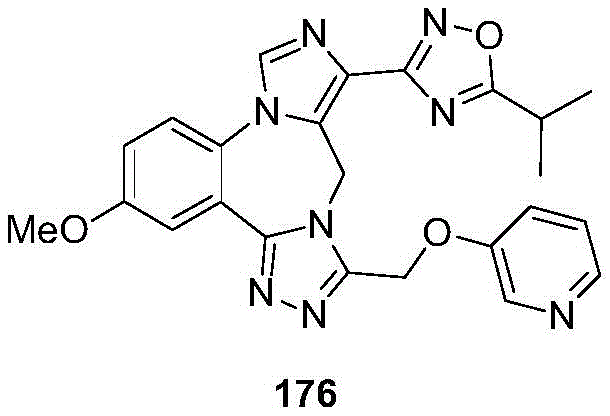
preparation of 3-pyridyloxyacethydrazide A solution of ethyl 3-pyridyloxyacetate (0.50g,2.76mmol) and hydrazine (0.31g,9.66mmol) in isopropanol (35mL) was heated at 85 ℃ for 30 h, cooled, and concentrated in vacuo. The resulting white solid was dissolved in a small amount of saturated NaCl solution and extracted repeatedly with EtOAc. The combined organic solutions were passed over MgSO4And (5) drying. Filtration and removal of the solvent gave 177mg of the desired acetohydrazide as a white solid. Residual moisture was removed by azeotropic boiling in toluene.
The compound of example 100 was synthesized in analogy to the route described for example 94, using 3-pyridyloxyacethydrazide instead of methoxyacethydrazide to give the compound of example 100 MS: [ M +1] ═ 471 as yellowish solid.
Example 101: synthesis of compound 177:
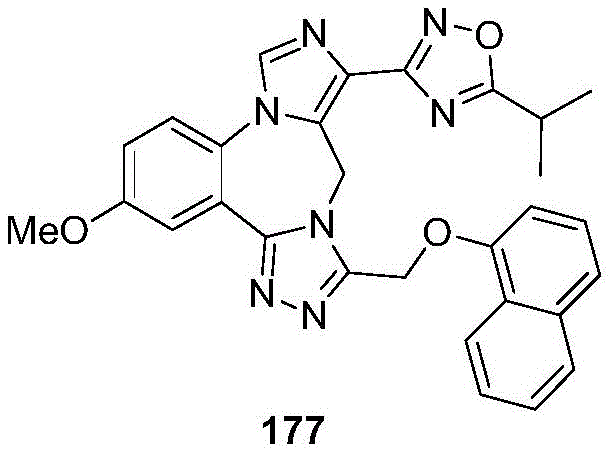
the compound of example 101 was synthesized in analogy to the route described for example 94, using 1-naphthyloxyacetahydrazide instead of methoxyacetohydrazide to give the compound of example 101 as off-white solid MS: [ M +1] ═ 520.
Example 102: synthesis of compound 179:
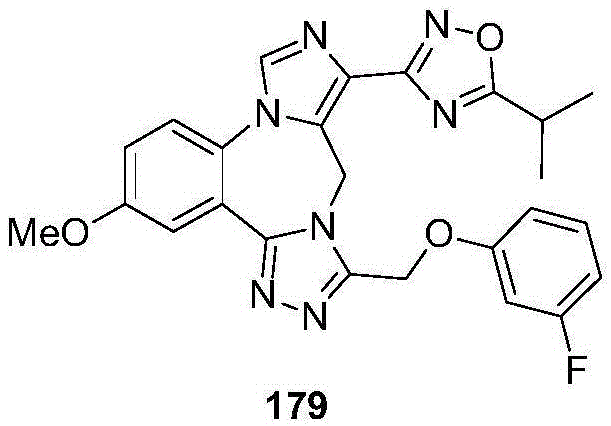
The compound of example 102 was synthesized using 3-fluorophenoxyacetic acid hydrazide instead of methoxyacetic acid hydrazide in a synthetic route analogous to that described for example 94 to give the compound of example 102 MS: [ M +1] ═ 488 as a yellowish solid.
Example 103: synthesis of compound 178:
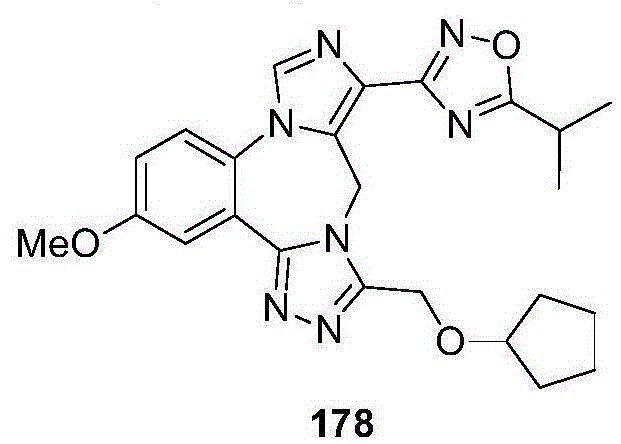
phosphorus oxychloride (64.8mg,0.422mmol) was added under nitrogen atmosphere Diazolylimidazolam (57.5mg,0.169mmol) and N, N-dimethyl-p-toluidine (114.6mg,0.847mmol) in chlorobenzene (0.70ml) were added to a stirred solution. The reaction mixture was heated at 135 ℃ for 3h and then cooled to room temperature. Diisopropylethylamine (174.7mg,1.35mmol), t-BuOH (0.3ml) and 2-hydroxyacetylhydrazine (91.3mg,1.01mmol) were added. The reaction mixture was stirred at room temperature for 20min, then warmed at 50 ℃ for 1 hour, followed by heating at 80 ℃ for 1 hour, and finally at 100 ℃ overnight. After cooling to room temperature, the reaction was diluted with EtOAc, washed with brine, and over MgSO4And (5) drying. Silica gel column chromatography of the concentrated filtrate was performed using a gradient elution of 0-20% MeOH in EtOAc to afford the desired hydroxymethyltriazole product as a yellowish solid. Weight: 18.1mg (27%). MS: [ M +1 ]=394。
To a stirred solution of hydroxymethyltriazole (18.1mg,0.046mmol) from above, cyclopentylbromide (274.0mg,1.84mmol) and HMPA (16.5mg,0.092mmol) in THF (0.5ml) was added NaH (60% suspension; 18.4mg,0.46 mmol). After 10min, the reaction was heated at 100 ℃ for 6 hWhile cooling, saturated NaHCO is used3Quench, extract with EtOAc (2X), wash with brine, and over MgSO4And (5) drying. Preparative TLC of the concentrated filtrate using 8% MeOH in EtOAc gave 5.5mg (26%) of the desired ether compound 178 as a yellowish solid. [ M +1 ]]=462。
Scheme 27
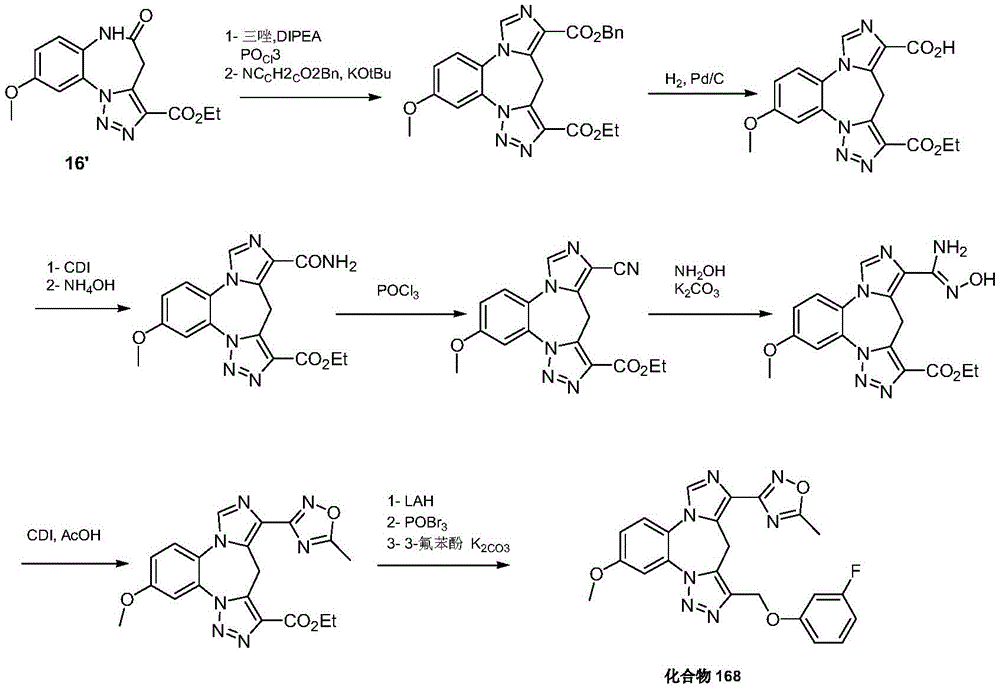
Example 104 Synthesis of Compound 168:

to a suspension of benzyl glycinate hydrochloride (5g,24.8mmol) in DCM (100mL) was added EDC.HCl (6.2g,33.2mmol) and triethylamine (5.2mL,37.2 mmol). The suspension was cooled to-50 ℃ and then a solution of formic acid (1.4mL,37.2mmol) in DCM (5mL) was added. The reaction mixture was stirred at-50 ℃ for 1 hour, then at 4 ℃ for 3 h. The solution was diluted with 1N HCl and extracted with DCM (2 ×). The combined organic phases were washed with brine and over MgSO4And (5) drying. Filtration and concentration gave 3.89g (81% yield) of formylated glycine as an oil (M +1 ═ 194).
To a solution of the formylated glycine derivative (1g,5.2mmol) in DCM (30mL) was added triethylamine (3.2mL,23 mmol). The solution was cooled to-50 ℃ and POCl was added slowly3(1.9mL,20.8 mmol). The solution was stirred at-50 ℃ for 10min and then at room temperature for 40 min. The solution turned a light brown-red color. It was diluted with DCM and 20% sodium carbonate solution (100mL) was added. The reaction mixture was stirred vigorously for 15 min. The organic phase was separated twice and over MgSO4And (5) drying. Filtration and concentration gave the desired benzyl isocyanoacetate in quantitative yield, which was used in the next step without further purification.
To 1,2, 4-triazole (914mg,13.2mmol) in anhydrous CH at 0 deg.C3CN (20mL) solution was addedi-Pr2NEt (2.5mL,14.6 mmol). Once all the triazole had dissolved, POCl was added3(0.43mL,4.6 mmol). The mixture was stirred at 0 ℃ for 2 h. Lactam ester 16' (1g,3.31mmol) was added. The resulting solution was heated in an oil bath at 80 ℃ for 16 h. The mixture was cooled with an ice bath. Dilute with EtOAc, then add water. The aqueous layer was separated and extracted four times with EtOAc. The combined organic extracts were washed with brine and over MgSO4And (5) drying. Filtration and concentration gave a pale yellow solid which was used directly in the next step (M +1 ═ 354).
A solution of benzyl isocyanoacetate (892mg,5.1mmol) in DMF (10mL) was cooled to-50 ℃ under a nitrogen atmosphere. KOtBu (514mg,4.6mmol) was added. The mixture was stirred at-50 ℃ for 1 h. The triazole derivative (900mg,2.55mmol) prepared above in DMF (5mL) was added slowly at-50 ℃. The mixture was allowed to warm to room temperature over 16 h. Adding saturated NH4Aqueous Cl and extracted three times with EtOAc. The combined extracts were washed with brine (3 ×), and over MgSO4And (5) drying. Filtration and concentration gave the crude product. Chromatography (RediSep 24g silica gel column, eluted with 70% EtOAc in hexanes) afforded 886mg (76% yield) of the product (M +1 ═ 460).
To a solution of benzyl ester derivative (770mg,1.68mmol) in EtOAc (10mL) and MeOH (30mL) was added wet Pd/C (60mg) and the resulting suspension was stirred under a hydrogen atmosphere for 48 h. The suspension was filtered through celite and the resulting solution was concentrated. The crude debenzylated product (530mg, 86% yield) was used in the next step without further purification (M +1 ═ 370).
To a suspension of the acid (530mg,1.44mmol) in DCM (10mL) was added CDI (931mg,5.75 mmol). The solution was stirred at room temperature for 2 h. The solution was cooled in an ice bath and NH was added 4OH solution (6 mL). The solution was stirred for 30min and concentrated. The solid was collected by filtration and washed with water to give 422mg (80%) of the desired product as a brown solid. (M +1 ═ 369).
To a primary amide derivative (422mg,1.15mmol) in bis Suspension in an alkane (10mL) POCl was added3(160. mu.L, 1.7 mmol). The suspension was heated at 90 ℃ for 2 h. The resulting solution was cooled in an ice bath and saturated NaHCO3The aqueous solution was quenched. The solid was collected by filtration to give 308mg (77% yield) of the desired cyanide derivative. (M +1 ═ 351).
To a suspension of cyanide derivative (150mg,0.44mmol) in EtOH (4mL) and water (1mL) were added hydroxylamine hydrochloride (40mg,0.57mmol) and potassium carbonate (67mg,0.48 mmol). The suspension was stirred at rt for 16 h. LCMS indicated about 50% conversion. More hydroxylamine hydrochloride (40mg,0.57mmol) and potassium carbonate (67mg,0.48mmol) were added and stirred for an additional 24 h. The solution was diluted with EtOAc and washed with water. The combined organic phases were washed with brine, over MgSO4And (5) drying. Filtration and concentration gave 145mg (86% yield) of the desired product. (M +1 ═ 384).
To a solution of acetic acid (0.22mL,3.8mmol) in THF (5mL) was added CDI (123mg,0.76 mmol). The solution was stirred at room temperature for 2 h. The solution was then poured into a flask containing the oxime derivative (145mg,0.38mmol) and heated at 70C for 1 hour. The solvent was evaporated and the crude material was suspended in acetic acid (8mL) and heated at 130 ℃ for 1 hour. The solvent was evaporated and the crude material triturated with water to give 134mg (86%) of the desired product (M +1 ═ 408).
To a suspension of the ester derivative (50mg,0.12mmol) in THF (1mL) was added lithium aluminum hydride (7mg,0.18 mmol). The suspension was stirred at room temperature for 2 h. LCMS indicated about 70% conversion with some additional by-products and some remaining starting material. More lithium aluminium hydride (4mg) was added and the reaction mixture was stirred at room temperature for a further 30 min. The reaction mixture was quenched with 1N HCl. The solution was extracted with EtOAc (3 ×). The combined organic phases were washed with brine, over MgSO4And (5) drying. Filtration and concentration gave 20mg (45% yield) of the desired alcohol product. (M +1 ═ 366).
To the alcohol (20mg,0.055mmol) in bis POBr was added to the suspension in alkane (1mL)3(31mg,0.11 mmol). The reaction mixture was heated at 110 ℃ for 1 hour. The reaction mixture was cooled with an ice bath and saturated NaHCO was added3An aqueous solution. The resulting solution was extracted with EtOAc (3 ×). The combined organic phases were washed with brine and over MgSO4And (5) drying. The solvent was concentrated to give 22mg (96% yield) of the desired product (M +1 ═ 428).
To a vial containing alkyl bromide derivative (22mg,0.052mmol) was added 3-fluorophenol (58mg,0.52mmol) in bis A solution in an alkane (1mL) and potassium carbonate (72mg,0.52 mmol). The reaction mixture was heated at 90 ℃ for 1 hour. The reaction mixture was washed with saturated NaHCO 3And (5) diluting the aqueous solution. The resulting solution was extracted with EtOac (3 ×). The combined organic phases were washed with brine and over MgSO4And (5) drying. Filtration and concentration gave the crude product. Purification by preparative TLC (elution system: EtOAc) gave 5mg (21% yield) of the desired product compound 168(M +1 ═ 460). H1NMR(CDCl3)δ7.87(1H,s),7.65(1H,d,J=3.5Hz),7.57(1H,d,J=10Hz),7.24(1H,m),7.19(1H,dd,J=3.5,9Hz),6.77(1H,dd,J=2.5,9.5Hz),6.72(2H,m),5.26(2H,s),3.97(3H,s),2.48(3H,s)。
Synthesis of Compound 215-313-
Scheme 28

Intermediate A (15-chloro-9- (methoxymethyl) -2,4,8,10, 11-pentaazatetracyclo [11.4.0.0 ]2,6.08,12]Synthesis of heptadecane-1 (17), ethyl 3,5,9,11,13, 15-heptaene-5-carboxylate).
A solution of ethyl bromoacetate (scheme 28) (10.0 g, 59.87mmol) in 20.0mL of anhydrous THF under a nitrogen atmosphere at 0 deg.C was added dropwise to a solution of (2, 4-dimethoxybenzyl) amine (10.0 g, 59.81mmol) and triethylamine (6.06 g, 59.87mmol) in anhydrous THF (20.0mL)In the liquid. The reaction mixture was warmed to room temperature and stirred overnight. Brine 100mL was added and the reaction mixture was extracted with ethyl acetate (2X 100 mL). The combined extracts were dried over anhydrous MgSO4Dried and concentrated under reduced pressure. Purification was performed using combiFlash chromatography (gradient: 20:80 to 50:50v/v ethyl acetate: hexanes). 7.6 g (yield 50.2%) of the alkylation product are obtained as a colorless liquid. C 13H19NO4[M+H]+Calculated m/z of 254; obtaining: 254.1.
the ester (7.5 g, 29.6mmol) was dissolved in 40.0mL of methanol. The reaction mixture was cooled and aqueous 2N NaOH (88.82mmol,44.0mL) was added dropwise. The reaction mixture was warmed to room temperature and stirred for 2 h. The reaction mixture was diluted with-75.0 mL of water, cooled in an ice bath, and neutralized to a pH of-5.0-4.5 using 2N aqueous HCl. The excess water was concentrated under reduced pressure and air dried to give a white solid powder. The solid was dissolved in 85:15v/v DCM: MeOH (100.0mL) and filtered, and the filtrate was evaporated to give 7.1 g of carboxylic acid as a white powder (hygroscopic). C11H15NO4[M+Na]+Calculated m/z of 248; obtaining: 248.1.
the above compound (7.0 g, 31.08mmol) and 6.14 g, 31.08mmol of 5-chloroisatoic anhydride were mixed in 70.0mL of p-xylene and refluxed at 140 ℃ for 3 h. The reaction mixture was filtered and the crude product was recrystallized from methanol. 8.5 g of 7-chloro-4- [ (2, 4-dimethoxyphenyl) methyl group are obtained as a white powder]-2,3,4, 5-tetrahydro-1H-1, 4-benzodiazepine-2, 5-dione (75.8% yield). C18H17ClN2O4[M+H]+Calculated m/z of 361; obtaining: 361.1.
the above benzodiazepine-2, 5-dione (4 g, 11.1mmol) was dissolved in THF/DMF (57.2/12.7mL) and cooled at-20 ℃. Finely divided potassium tert-butoxide powder (1.9 g, 16.6mmol) was added and the reaction mixture was stirred at-20 ℃ for 20.0 min. 3.1 g, 17.7mmol of diethyl chlorophosphate were added dropwise to the reaction mixture at-20 ℃ and brought to 0-5 ℃ for 3 h. The reaction mixture was stirred at ambient temperature for 10.0 min. 2.1 at-20 deg.C G, 18.4mmol of ethyl isocyanoacetate were added to the reaction mixture and the reaction mixture was further cooled to-78 ℃. 1.9 g, 16.6mmol of finely divided potassium tert-butoxide powder was added at-78 ℃ and the reaction mixture was stirred overnight by slowly warming to ambient temperature. The reaction mixture was washed with saturated NH4Aqueous Cl (10mL) was quenched and extracted with ethyl acetate (3X 20 mL). The combined extracts were dried over anhydrous MgSO4Dried and concentrated under reduced pressure. The crude product was recrystallized from ethyl acetate to give 2.2 g of 12-chloro-8- [ (2, 4-dimethoxyphenyl) methyl group as a white solid]-9-oxo-2, 4, 8-triazacyclo [8.4.0.02,6]Tetradecane-1 (14),3,5,10, 12-pentene-5-carboxylic acid ethyl ester. A second batch was obtained from the mother liquor to give an additional 3.5g of product (64% yield).
The dimethoxybenzyl protecting group was removed by dissolving the above compound (2.2 g, 4.83mmol) in DCM (25.0mL), followed by the addition of 25.0mL of trifluoroacetic acid and 1.45 g, 9.65mmol of trifluoromethanesulfonic acid. The reaction mixture was stirred at room temperature for 90 min. The reaction mixture was washed with NaHCO3The aqueous solution was neutralized, and the precipitate was filtered, washed with water and dried to obtain 1.9 g of 12-chloro-9-oxo-2, 4, 8-triazatricyclo [8.4.0.0 ] as a solid product 2,6]Tetradecane-1 (14),3,5,10, 12-pentene-5-carboxylic acid ethyl ester. C14H12ClN3O3[M+H]+Calculated m/z of 306; obtaining: 306.1.
in a first step, 12-chloro-9-oxo-2, 4, 8-triazacyclo [8.4.0.0 ] from above2,6]Tetradecane-1 (14),3,5,10, 12-pentene-5-carboxylic acid ethyl ester (1.9 g, 6.21mmol) was dissolved in 25.0mL of chlorobenzene, followed by addition of 2.52 g, 18.64mmol of 4, N, N-trimethylaniline, 1.42 g, 9.32mmol of POCl3And the reaction mixture was refluxed at 135 ℃ for 2 h. LCMS indicated that-50% of the starting material remained unreacted. 1.68 g, 12.42mmol of additional 4, N, N-trimethylaniline and 0.95 g, 6.21mmol of POCl were added at room temperature3Further added to the reaction mixture and refluxed at 135 ℃ for 1 h. LCMS indicated that-10% of the starting material remained unreacted. An additional 0.84 g, 6.21mmol of 4, N, N-trimethylbenzene are added at room temperatureAmine (6.0 equiv. total) and 0.48 g, 3.11mmol of POCl3(3 equivalents in total) were further added to the reaction mixture and refluxed at 135 ℃ for 1 h.
In a second step, 4.67 g, 44.75mmol of methoxyacetic hydrazide (7.2 equivalents total), then 7.71 g, 59.66mmol of N, N-diisopropylethylamine were added to the reaction mixture at room temperature and refluxed at 100 ℃ for 1 h. The reaction mixture was cooled to room temperature and quenched with NaHCO 3Aqueous solution (. about.25.0 mL) was neutralized. The organics were extracted with ethyl acetate (75 mL. times.3), then DCM (50.0 mL. times.3) and washed with brine. The EtOAc organic layer was separated by filtration of the insoluble precipitate (0.805 g pure product) and the combined organic layers were passed over anhydrous MgSO4Dried and concentrated under reduced pressure. The crude product was purified by Combiflash chromatography (mobile phase: 0-10% MeOH: EtOAc) to yield an additional 0.8 g of yellow solid. Intermediate A (15-chloro-9- (methoxymethyl) -2,4,8,10, 11-pentaazatetracyclo [11.4.0.0 ]2,6.08,12]-ethyl heptadeca-1 (17),3,5,9,11,13, 15-heptaene-5-carboxylate) in an overall yield of 72.58%. C17H16ClN5O3[M+H]+374; obtaining: 374.1.
intermediate B (15-chloro-9- (methoxymethyl) -2,4,8,10, 11-pentaazatetracyclo [11.4.0.0 ]2,6.08,12]Heptadecane-1 (17),3,5,9,11,13, 15-heptaene-5-carboxylic acid).
Intermediate A (0.4 g, 1.07mmol) was dissolved in THF/H2O/MeOH (3.2/4.8/8.0v/v mL). 0.05 g, 2.14mmol of LiOH were added and the reaction mixture was stirred at room temperature for 3 h. The reaction mixture was acidified with 2N aqueous HCl and the precipitate was collected and washed with deionized water. After drying, 0.36 g of intermediate B (15-chloro-9- (methoxymethyl) -2,4,8,10, 11-pentaazatetracyclo [11.4.0.0 ] are obtained as a white solid 2,6.08,12]Heptadecane-1 (17),3,5,9,11,13, 15-heptaene-5-carboxylic acid). C15H12ClN5O3[M+H]+Calculated m/z of 346; obtaining: 345.9.
scheme 29 illustrates some selected examples of the use of intermediate a to generate novel analogs.
Scheme 29
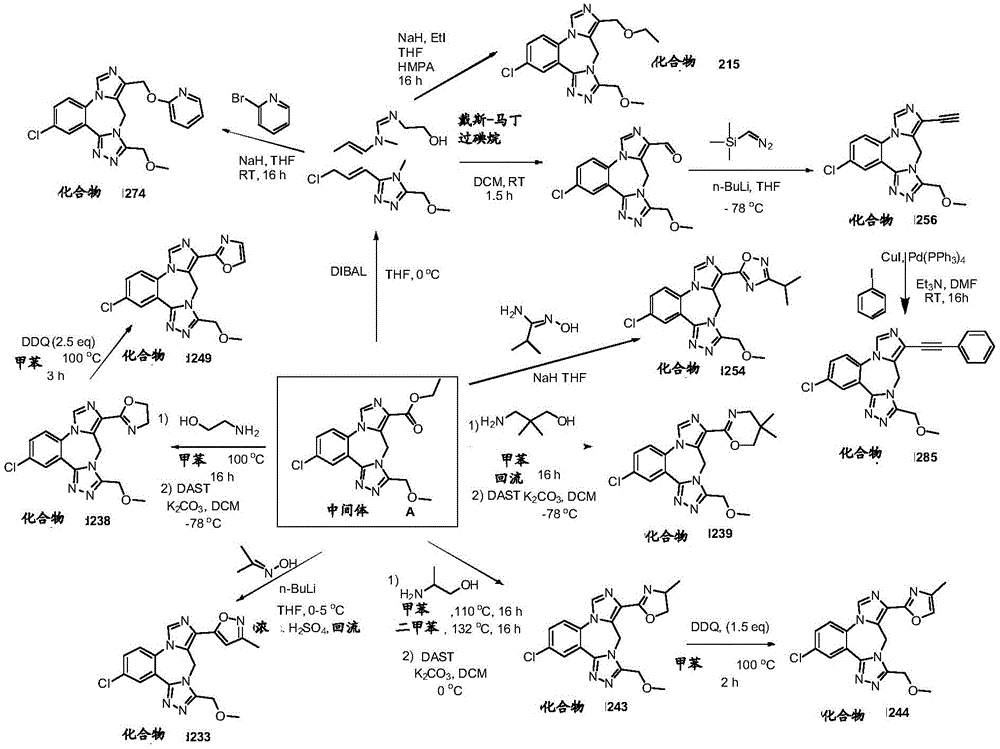
Synthesis of compound 233:
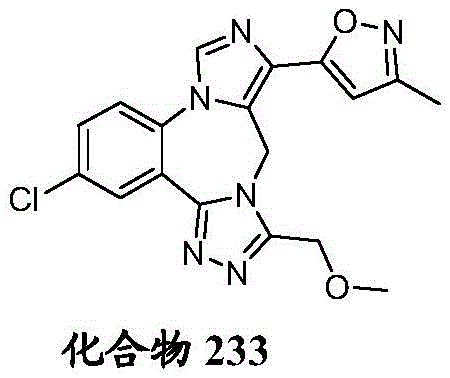
acetone oxime (0.22 g, 0.31mmol) was dissolved in anhydrous THF (0.5 mL). 0.38mL, 0.62mmol of 1.6M n-BuLi was added dropwise and the reaction mixture was stirred in a separate flask at 0-5 ℃ for 1 h. A solution of intermediate a (0.05 g, 0.13mmol) in 1.0mL THF was added via cannula at 0-5 ℃ and the reaction was stirred by gradually warming at rt for 16 h. LCMS indicates the starting material and intermediate m/z 374.1 (. about. 45/14%, two peaks combined), m/z 401 (. about.10%), m/z 402 (18%).
The reaction mixture was taken up in 0.03mL of concentrated H2SO4Then quenched with 0.03mL of deionized water and refluxed for 2 h. LCMS indicates starting material, product and intermediate m/z 374.1 (-43%), m/z 383 (-40%), m/z 402 (17%).
The reaction mixture was concentrated under reduced pressure and combined with NaHCO3The aqueous solution was neutralized and the precipitate was collected and washed with deionized water. After drying, 22.0mg of crude precipitate were obtained. The compound was used 1:99MeOH: CHCl3Purification was by preparative TLC plates.
Synthesis of compound 238:
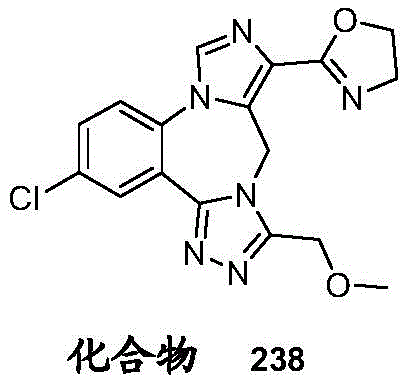
step 1: intermediate a (0.045 g, 0.12mmol) was dissolved in dry toluene (3.0 mL). 0.05mL of 0.25mmol aminoethanol (35.0 equiv.) was added and the reaction mixture was refluxed for 16 h. Toluene was evaporated and the reaction mixture was dissolved in DCM (25.0mL)) In (1). The DCM layer was washed with brine, then deionized water, separated, and over anhydrous MgSO4And (5) drying. Evaporation of the organic layer gave 38.3mg of the corresponding amide. LCMS indicated product formation m/z: 389.
Step 2: the above amide (0.038 g, 0.09mmol) was dissolved in anhydrous DCM (2.0 mL). 0.026mL of 0.2mmol of DAST (2.0 equiv.) was added to the reaction mixture at 0 deg.C and stirred at 0 deg.C for 1.5 h. 0.065 g of solid K are introduced at 0 DEG.C2CO3(4.8 eq.) was added and the reaction mixture was stirred for 30 min. The reaction mixture was washed with NaHCO3The aqueous solution was diluted and extracted with DCM (15.0 mL. times.3). The organic layer was washed with brine, separated and over anhydrous MgSO4And (5) drying. Evaporation of the solvent gave 36mg of the product as a white solid. C17H15ClN6O2[M+H]+371; obtaining: 371.
synthesis of compound 239:
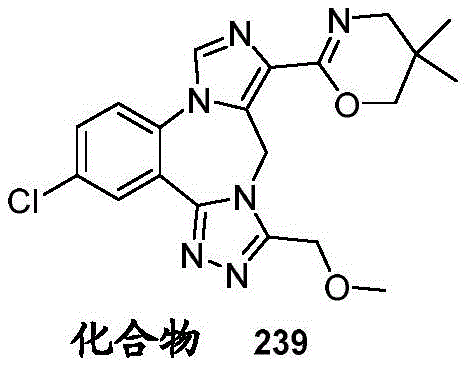
step 1: intermediate A (0.05 g, 0.13mmol) was dissolved in dry toluene (3.0 mL). 0.28 g, 2.67mmol of aminoethanol (20.0 eq) were added and the reaction mixture was refluxed for 16 h. The toluene was evaporated and the reaction mixture was dissolved in DCM (25.0 mL). The DCM layer was washed with brine, then deionized water, separated and over anhydrous MgSO 4And (5) drying. The organic layer was evaporated to give the amide. LCMS indicates product formation m/z:431
Step 2: the above amide (0.057 g, 0.13mmol) was dissolved in anhydrous DCM (2.0 mL). 0.035mL of 0.3mmol of DAST (2.0 equiv.) was added to the reaction mixture at 0 deg.C and stirred for 1.5h at 0 deg.C. LCMS indicated the product formation m/z 413. 0.088 g of solid K are added at 0 DEG.C2CO3(4.8 eq.) was added and the reaction mixture was stirred for 30 min. The reaction mixture was washed with NaHCO3The aqueous solution was diluted and extracted with DCM (15.0 mL. times.3). The organic layer was washed with brine, separated and over anhydrous MgSO4And (5) drying. Concentrating the organic layer to obtain product, and mixing with 20/80Hex/EtOAc triturated together to give a solid, which was collected by filtration and dried: 49.4mg (89%).
Synthesis of compound 243:
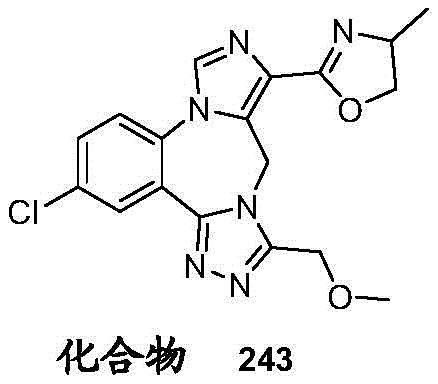
step 1: intermediate A (0.05 g, 0.13mmol) was dissolved in dry toluene (3.0 mL). 0.02mL of 2.67mmol of aminoalcohol (20.0 equiv.) was added and the reaction mixture refluxed for 16 h. LCMS indicated starting material remaining. Xylene (3.0mL) was added and 10.0 equivalents of 3-aminobutan-1-ol were added and the reaction mixture was refluxed for 16 h. Finally a total of 40.0 equivalents of aminoethanol are required to convert all starting materials to the product in refluxing xylene. The reaction mixture was cooled to 0 ℃ and the precipitate was filtered. The filtrate was extracted with DCM (15.0 mL. times.4). The DCM layer was washed with brine, then deionized water, separated and over anhydrous MgSO 4And (5) drying. The organic layer was evaporated to give the corresponding amide. LCMS indicated the product formation m/z: 403.
Step 2: the above amide (0.054 g, 0.13mmol) was dissolved in anhydrous DCM (2.0 mL). 0.05mL of 0.33mmol of DAST was added to the reaction mixture at 0 deg.C and stirred at 0 deg.C for 1.5 h. LCMS indicated product formation. 0.09 g of solid K was added at 0 deg.C2CO3And the reaction mixture was gradually warmed to room temperature. The reaction mixture was washed with NaHCO3The aqueous solution was diluted and extracted with DCM (15.0 mL. times.3). The organic layer was washed with brine, separated and over anhydrous MgSO4And (5) drying. Evaporation of the solvent gave the crude product. Purification was performed by preparative TLC (mobile phase: 95:05, DCM: MeOH). C18H17ClN6O2[M+H]+385; obtaining: 385.
synthesis of compound 244:

compound 243 from above (0.011 g,0.03mmol) was dissolved in toluene (2.0 mL). 0.010 g, 0.04mmol of DDQ were added and the reaction mixture was stirred at 50 ℃ for 1 h. LCMS indicated starting material m/z 385 and a small amount of product m/z 383. The reaction mixture was stirred at 60 ℃ for 3 h. LCMS indicates starting material m/z 385, product m/z 383. The reaction mixture was stirred at 70 ℃ for 2 h. LCMS indicates starting material m/z 385, product m/z 383 and byproduct m/z 421. The reaction mixture was stirred at 40 ℃ for 16 h. LCMS indicated a large amount of product m/z 383 and a small amount of by-product m/z 421 and starting material. Toluene was evaporated and the crude product was purified by preparative TLC plates (mobile phase DCM: MeOH,95:05v/v) to give 4.4mg of product. C 18H15ClN6O2[M+H]+383; obtaining: 383.
synthesis of compound 249:
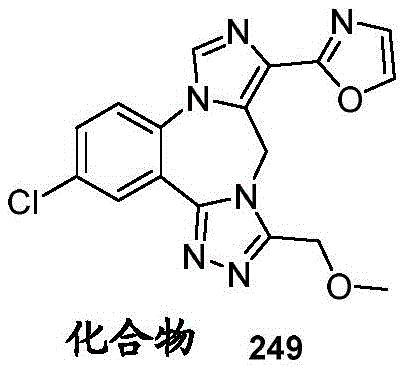
compound 238 from above (0.016 g, 0.05mmol) was dissolved in toluene (2.0 mL). 0.015 g, 0.07mmol of DDQ were added and the reaction mixture was stirred at 50 ℃ for 1 h. LCMS indicates starting material m/z 371. The reaction mixture was stirred at 60 ℃ for 5 h. LCMS indicates starting material m/z 371, product m/z 369 and undesirable material m/z 407. The reaction mixture was stirred at 30 ℃ for 16 h. LCMS indicates starting material m/z 371, product m/z 369 and by-product m/z 407. The reaction mixture was stirred at 65 ℃ for 4 h. LCMS indicated product m/z 369, byproduct m/z 407 and a small amount of starting material. Toluene was evaporated and the crude product was purified by preparative TLC plates (mobile phase DCM: MeOH,95:05v/v) to give 2.3mg of product. C17H13ClN6O2[M+H]+Calculated m/z of 369; obtaining: 369.
synthesis of compound 256:
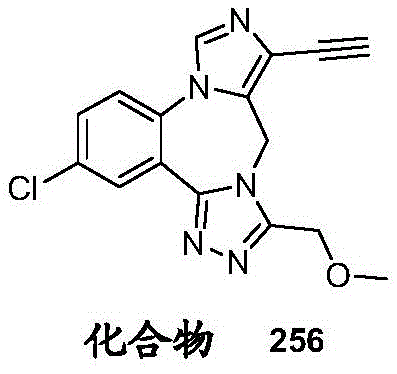
step 1: intermediate A (0.1 g, 0.27mmol) was dissolved in waterWater in THF (3.0 mL). 0.67mL of 0.67mmol of a 1.0M solution of DIBAL in THF was added dropwise and the reaction mixture was stirred at 0-5 deg.C for 2 h. LCMS indicated the formation of m/z 332 by alcohol reduction product. The reaction was quenched with MeOH (1.0mL), then water (0.5 mL). Adding NaHCO 3And the precipitate was filtered through a bed of celite. The product was extracted with DCM (25.0 mL. times.3). The combined DCM layers were washed with brine, separated and washed with anhydrous Na2SO4And (5) drying. Evaporation of the solvent gave 46.1mg of [ 15-chloro-9- (methoxymethyl) -2,4,8,10, 11-pentaazatetracyclo [11.4.0.0 ] as a solid product2,6.08,12]Heptadecan-1 (17),3,5,9,11,13, 15-heptaen-5-yl]Methanol, yield 51.9%. C15H14ClN5O2[M+H]+Calculated m/z of 332; obtaining: 332.
step 2: the above alcohol (0.05 g, 0.14mmol) was dissolved in dry DCM (3.0 mL). 0.09 g of dess-martin periodinane was added and the reaction mixture was stirred at room temperature for 2 h. LCMS indicated the product formation m/z 330. The reaction was quenched with 1N NaOH solution (2-mL). Adding saturated NaHCO3The solution was extracted with DCM (20.0 mL. times.3). The combined DCM layers were washed with brine, separated and washed with anhydrous Na2SO4And (5) drying. Evaporation of the solvent gave the desired aldehyde (15-chloro-9- (methoxymethyl) -2,4,8,10, 11-pentaazatetracyclo [ 11.4.0.0)2,6.08,12]Heptadecane-1 (17),3,5,9,11,13, 15-heptaene-5-carbaldehyde) and the yield was quantitative. C15H12ClN5O2[M+H]+Calculated m/z of 330; obtaining: 330.
and step 3: a solution of 1.6M n-BuLi in hexane (0.68mL,1.08mmol) was added dropwise to a solution of 1.4mL, 0.86mmol of trimethylsilyldiazomethane in hexane (dissolved in 3.0mL of THF) at-78 deg.C. The reaction mixture was stirred at-78 ℃ for 30.0 min. A solution of the aldehyde obtained in step 2 (0.142 g, 0.43mmol) in 3.0mL THF was added dropwise to the reaction mixture at-78 deg.C and gradually warmed to room temperature. LCMS indicated product formation m/z 326 and starting material m/z 330. Subjecting the reaction mixture to Saturated NH4The Cl solution was quenched. The product was extracted with DCM (15.0 mL. times.3). The combined DCM layers were washed with brine, separated and washed with anhydrous Na2SO4And (5) drying. Purification of the crude product was performed by an ISCO Combiflash purification system (mobile phase: ethyl acetate/hexane). 19.0mg of compound 256 are obtained and 71.6mg of the starting material are isolated. C16H12ClN5O[M+H]+Calculated m/z of 326; obtaining: 326.
synthesis of compound 285:
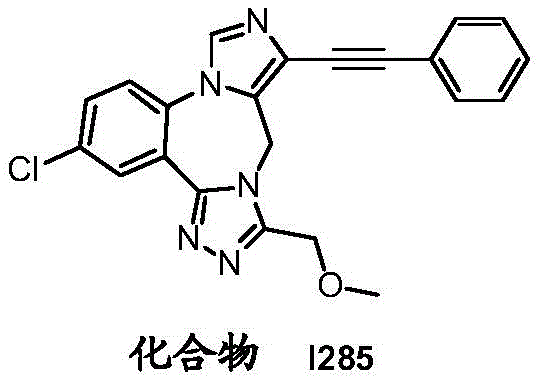
compound 256(0.025 g, 0.08mmol) was dissolved in degassed DMF (2.0 mL). 0.03mL of 0.23mmol iodobenzene was added to the reaction mixture followed by 0.06mL of 0.41mmol TEA. The reaction mixture was stirred at room temperature. 0.04 g of 0.04mmol of Pd (PPh)3)4And 0.003 g, 0.015mmol of CuI mixture was added to the reaction mixture and stirred for 16 h. LCMS indicated the product formation m/z 402. The reaction mixture was diluted with deionized water. The product was extracted with DCM (10.0 mL. times.3). The combined DCM layers were washed with brine, separated and washed with anhydrous Na2SO4And (5) drying. The crude reaction mixture was purified by preparative TLC plate (mobile phase: EtOAc/MeOH). C22H16ClN5O[M+H]+Calculated m/z of 402; obtaining: 402.
synthesis of compound 254:

isobutyronitrile (10.0 g, 144.70mmol) was dissolved in EtOH water (150:50mL, v/v) followed by the addition of 10.0 g, 144.70mmol of hydroxylamine hydrochloride and 20.0 g, 144.70mmol of K 2CO3. The reaction mixture was refluxed at 80 ℃ for 6 h. The solvent was evaporated under reduced pressure and the resulting solid was treated with 150mL ethanol, sonicated, filtered and washed with 100mL ethanol. Combining the filtratesEvaporated under reduced pressure and azeotroped with toluene (25.0mL × 3) to give 8.1 g of N' -hydroxy-2-methylpropionamidine (54.8% yield) as a colorless liquid slurry. The above amide-oxime (1.37 g, 13.38mmol) was azeotroped with toluene (10 mL. times.5) before use and dissolved in 20.0mL of anhydrous THF. 0.27 g, 6.69mmol of NaH was added to the reaction mixture in three portions at 0 deg.C and stirred at ambient temperature for 30.0 min. 0.5 g, 1.34mmol of intermediate A was added and the reaction mixture was stirred at ambient temperature for 45.0min and refluxed at 67 ℃ for 90.0 min. The solvent was evaporated under reduced pressure and the resulting yellow paste was washed with 25.0mL saturated NaHCO3And (4) treating with an aqueous solution. The precipitate was filtered through a funnel and washed with 10.0mL water and 10.0mL hexane to give 0.380 g of a solid (69.1% yield). C19H18ClN7O2[M+H]+Calculated m/z of 412.0; obtaining: 412.1.
synthesis of Compound 215
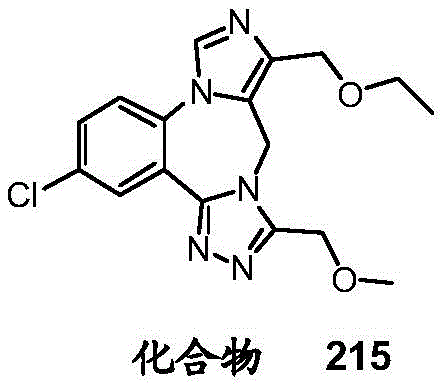
Alcohol [ 15-chloro-9- (methoxymethyl) -2,4,8,10, 11-pentaazatetracyclo [11.4.0.0 ]2,6.08,12]Heptadecan-1 (17),3,5,9,11,13, 15-heptaen-5-yl ]Methanol (prepared in compound 256, step 1) (34mg,0.1025mmol) was suspended in anhydrous THF (2 mL). HMPA (36.7mg,0.205mmol) was added followed by ethyl iodide (0.33mL) and NaH (41mg of a 60% suspension in oil). The reaction was stirred at room temperature for 5min and then heated to 70 ℃ overnight. The mixture was cooled and partitioned between EtOAc and brine. The organic phase was dried and concentrated to give an oil, which was purified by column chromatography (0% to 10% MeOH in DCM) to give 3.7mg of compound 215 as an oil.
Synthesis of Compound 274
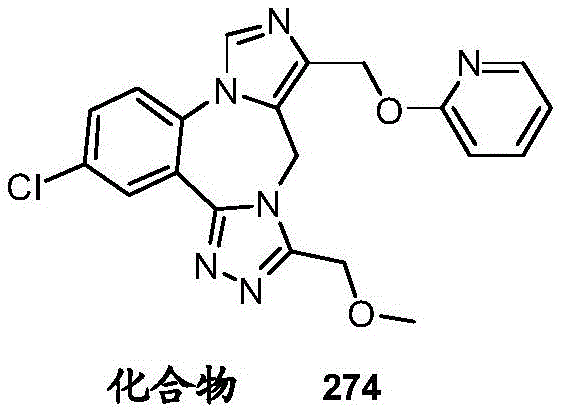
Reacting [ 15-chloro-9- (methoxymethyl)) 2,4,8,10,11 pentaazatetracyclo [11.4.0.02,6.08,12]Heptadecan-1 (17),3,5,9,11,13, 15-heptaen-5-yl]Methanol (0.02 g, 0.06mmol) was dissolved in anhydrous THF (3.0 mL). 0.003 g of NaH was added and the reaction mixture was stirred at room temperature for 30.0 min. 0.012mL, 0.12mmol of 2-bromopyridine was added dropwise and the reaction mixture was stirred at room temperature for 16 h. The reaction mixture was refluxed for an additional 2 h. LCMS indicates m/z 409. The reaction was concentrated under reduced pressure and saturated NaHCO3And (5) diluting the solution. The product was extracted with DCM (10.0 mL. times.4). The combined DCM layers were washed with brine, separated and washed with anhydrous Na 2SO4And (5) drying. Purification was performed by preparative TLC (mobile phase: 95:05, DCM: MeOH). Yield-1.0 mg product. C20H17ClN6O2[M+H]+The calculated value of m/z of (1) is 409; obtaining: 409.

Synthesis of compound 234:

intermediate B (0.043 g, 0.12mmol), 0.3mmol EDC.HCl and 0.048 g, 0.31mmol HOBt hydrate were dissolved in THF/DCM (1:1, v/v 1.5mL) followed by the addition of 0.09mL, 0.62mmol trimethylaniline and 0.016mL, 0.25mmol propargylamine. The reaction mixture was stirred at rt for 16 h. The reaction mixture was diluted with an aqueous ammonium chloride solution and extracted with ethyl acetate. The combined layers were washed with brine, separated and over anhydrous MgSO4And (5) drying. The organic layer was evaporated to give-13.0 mg of crude product. The crude product was purified by preparative TLC plates (mobile phase: 5:95, MeOH, ethyl acetate). C18H15ClN6O3[M+H]+M-Calculated z is 383; obtaining: 383.1
Synthesis of compound 240:
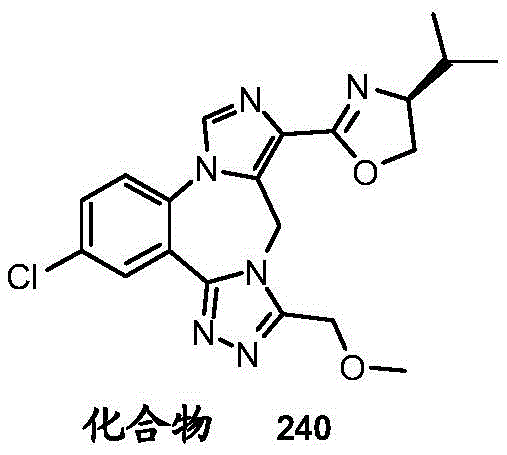
intermediate B from step 1 (0.05 g, 0.15mmol) was dissolved in dry DCM (2.0 mL). 0.05mL, 0.36mmol of trimethylamine (2.5 equiv.) is added followed by 0.024mL, 0.29mmol of oxalyl chloride (2.0 equiv.) and the reaction mixture is stirred at room temperature for 60 min. 0.076mL of 0.7mmol of amino alcohol (5.0 equiv.) was added to the reaction mixture at 0 deg.C and stirred for 2.5 h. The reaction mixture was washed with NaHCO 3The aqueous solution was diluted and extracted with DCM (15.0 mL. times.3). The combined organic layers were washed with brine, separated and over anhydrous MgSO4And (5) drying. Evaporation of the organic layer gave 54.1mg of amide. LCMS indicates product formation m/z:431
synthesis of compound 246:

compound 240 was converted to compound 246 using DDQ, toluene at 50C in a similar manner as compound 245 to give 5.5mg (37%) of compound 246. LCMS indicated the product formation m/z: 411.
Synthesis of compound 242:

synthesis of compound 245:

compound 242(0.015 g,0.03mmol) was dissolved in toluene (1.5 mL). 0.009 g, 0.04mmol of DDQ were added and the reaction mixture was stirred at 50 ℃ for 1.5 h. LCMS indicated a 1:3 ratio of starting material m/z 447 and product m/z 445. Further 0.005 g, 0.022mmol of DDQ was added and the reaction mixture was stirred at 50 ℃ for 1.5 h. Starting material m/z 447 and product m/z 445 in a 1:6 ratio. The reaction mixture was stirred at rt for 16 h. Purification was performed by preparative TLC (mobile phase: 95:05, DCM: MeOH). The band with m/z:445 was separated and 9.3mg of the compound was obtained as a solid (yield 62.4%). C23H17ClN6O2[M+H]+Calculated m/z of 445; obtaining: 445.
synthesis of compound 237:
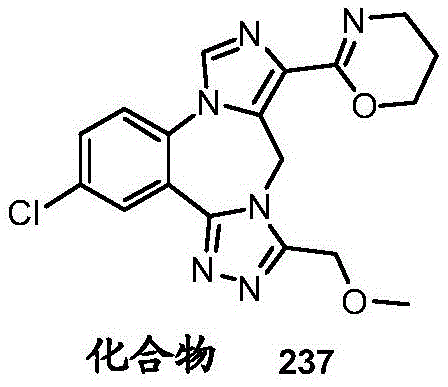
synthesis of compound 263:

synthesis of compound 264:
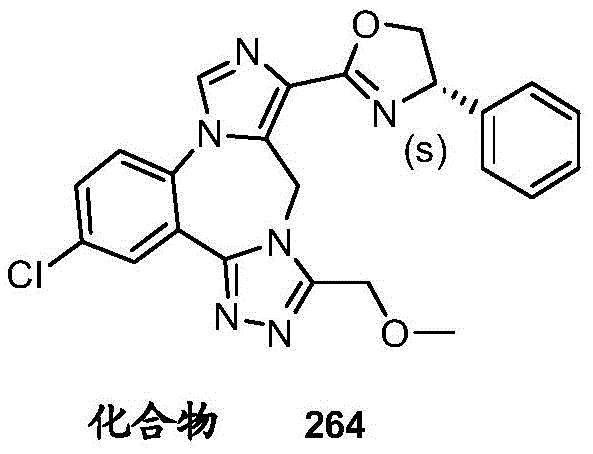
step 2: the above amide (0.04 g, 0.086mmol) was dissolved in anhydrous DCM (2.0 mL). 0.03mL, 0.21mmol of DAST was added and the reaction mixture was stirred at 0 ℃ for 2 h. LCMS indicated product formation m/z 446.9. 0.06 g of solid K is added at 0 DEG C 2CO3And the reaction mixture was gradually warmed to room temperature. The reaction mixture was washed with NaHCO3The aqueous solution was diluted and extracted with DCM (15.0 mL. times.3). The organic layer was washed with brine, separated and washed with anhydrous Na2SO4And (5) drying. Evaporation of the solvent gave the crude product. Purification was performed by preparative TLC (mobile phase: 95:05, DCM: MeOH). 26.4mg of solid product are obtained. C23H19ClN6O2[M+H]+Calculated m/z of 447; obtaining: 446.9.
compounds 180, 181 and 182 were prepared using a synthetic procedure similar to that described in scheme 27 for the synthesis of compound 168.
Compound 183-193 was prepared using a synthetic procedure similar to that described in scheme 26 for the synthesis of compound 169-179.
Compounds 194 and 195 were prepared using synthetic procedures analogous to those described in schemes 21 and 22.
Compounds 196-198 and 206 were prepared using a synthetic procedure similar to that described in scheme 18 a.
Compound 202 was prepared using a synthetic procedure similar to that described in scheme 18a for the synthesis of compound 129.
Compounds 201 and 203 were prepared using a synthetic procedure similar to that described in scheme 24.
Compound 207-210 was prepared using a synthetic procedure similar to that described in scheme 17.
Similar to those transformations shown in scheme 22, the nitrile substituents in compounds 207-210 are generated.
Compound 211-214 was prepared using a synthetic procedure similar to that described in scheme 20.
Compound 255 was prepared from the appropriate starting materials using the synthetic routes described in schemes 28 and 29; analogous to compound 254.
Compound 259 was prepared from the appropriate starting materials using the synthetic routes described in schemes 28 and 29; analogous to compound 243.
Compound 260 was prepared from the appropriate starting materials using the synthetic routes described in schemes 28 and 30; analogous to compound 242.
Compound 261 was prepared from the appropriate starting materials using the synthetic routes described in schemes 28 and 30; analogous to compound 256.
Compound 265 was prepared from the appropriate starting materials using the synthetic routes described in schemes 28 and 30; analogous to compound 264.
Compound 266 was prepared from the appropriate starting materials using the synthetic routes described in schemes 28 and 30; analogous to compound 264.
Compound 267 was prepared from the appropriate starting materials using the synthetic routes described in schemes 28 and 30; analogous to compound 264.
Compound 268 was prepared from the appropriate starting materials using the synthetic routes described in schemes 28 and 30; analogous to compound 263.
Compound 270 is prepared from the appropriate starting materials using the synthetic routes described in schemes 28 and 30; analogous to compound 264.
Compound 271 is prepared from the appropriate starting materials using the synthetic routes described in schemes 28 and 30; analogous to compound 264.
Compound 275 was prepared from the appropriate starting materials using the synthetic routes described in schemes 28 and 30; analogous to compound 264.
Compound 276 is prepared from the appropriate starting materials using the synthetic routes described in schemes 28 and 30; analogous to compound 245.
Compound 278 was prepared from the appropriate starting materials using the synthetic routes described in schemes 28 and 29; in analogy to compound 233.
Compound 281 is prepared from the appropriate starting materials using the synthetic routes described in schemes 28 and 29; in analogy to compound 233.
Compounds 282, 283, 286, 287 are prepared from the appropriate starting materials using the synthetic routes described in schemes 28 and 29; analogous to compound 243.
Compound 288 is prepared from the appropriate starting materials using the synthetic routes described in schemes 28 and 29; analogous to compound 256.
Compound 293 was prepared from the appropriate starting materials using the synthetic routes described in schemes 28 and 29; analogous to compound 285.
Compounds 294, 295 and 296 were prepared from the appropriate starting materials using the synthetic routes described in schemes 28 and 29; similar to compounds 243 and 244.
Compound 303 is prepared from the appropriate starting materials using the synthetic routes described in schemes 28 and 29; in analogy to compound 233.
Compound 304 was prepared from the appropriate starting materials using the synthetic routes described in schemes 28 and 29; analogous to compound 264.
Compound 297 was prepared from the appropriate starting materials using the synthetic routes described in schemes 28 and 29; analogous to compound 243.
Compound 307 was prepared from the appropriate starting materials using the synthetic routes described in schemes 28 and 29; analogous to compound 285.
Compound 308 was prepared from the appropriate starting materials using the synthetic route described in scheme 28; analogous to intermediate a.
Compound 309 is prepared from the appropriate starting materials using the synthetic routes described in schemes 28 and 29; similar to compound 238.
Compound 310 was prepared from the appropriate starting materials using the synthetic routes described in schemes 28 and 29; analogous to compound 285.
Compound 311 was prepared from the appropriate starting materials using the synthetic routes described in schemes 28 and 29; analogous to compound 285.
Compound 312 was prepared from the appropriate starting materials using the synthetic routes described in schemes 28 and 29; analogous to compound 244.
Compound 313 was prepared from the appropriate starting materials using the synthetic routes described in schemes 28 and 29; analogous to compound 244.
Synthesis of Compounds 305 and 306
Scheme 31

Compound 288(0.015 g, 0.042mmol) was dissolved in anhydrous THF (3.0 mL). 0.003mL of 0.05mmol of methyl iodide was added at-78 deg.C followed by 0.05mL of 0.05mmol of 1.0M LDA solution. The reaction mixture was stirred at-78 ℃ and gradually warmed at room temperature. LCMS indicated product formation m/z 368 (predominant), unreacted starting material m/z 354 and dimethylated unknown product m/z 382.1. The reaction mixture was washed with saturated NH4The Cl solution was quenched and extracted with EtOAC. The organic layer was dried and concentrated. Purification of the crude reaction mixture was performed by preparative TLC plates (mobile phase: EtOAc: hexane 75:25v/v mL) to separate the three bands. It was found by MS that band 1 confirmed m/z 354 for the starting material, band 2 confirmed m/z 368 for the monomethyl-substituted product compound 305, and band 3 confirmed m/z 382.1 for the dimethyl-substituted product compound 306. 1H NMR(CDCl3) The data confirm the single methyl substitution on the imidazole ring. Note:1h NMR data confirmed product formation and pure product isolation.
Compound 216 was prepared similarly to compound 129 in scheme 18 a. MS: [ M +1] ═ 395.
Compound 217 was prepared similarly to compound 129 in scheme 18 a. MS: [ M +1] ═ 381.
Scheme 32
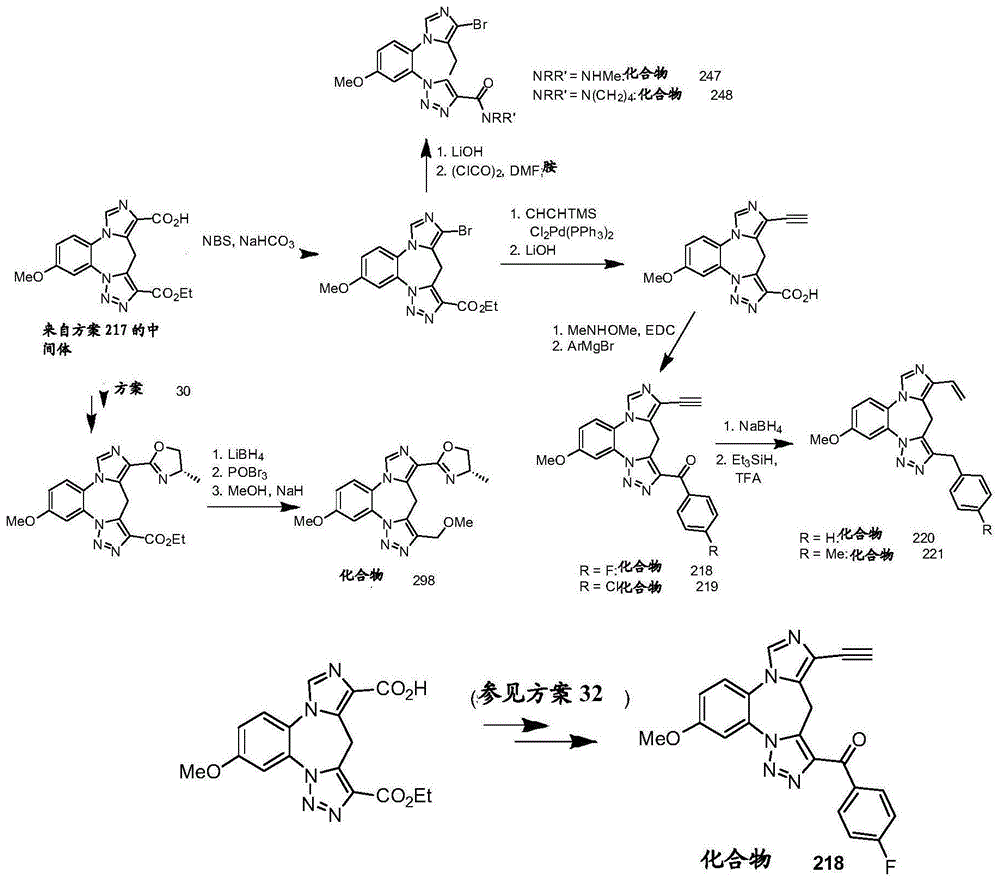
Synthesis of compound 218:
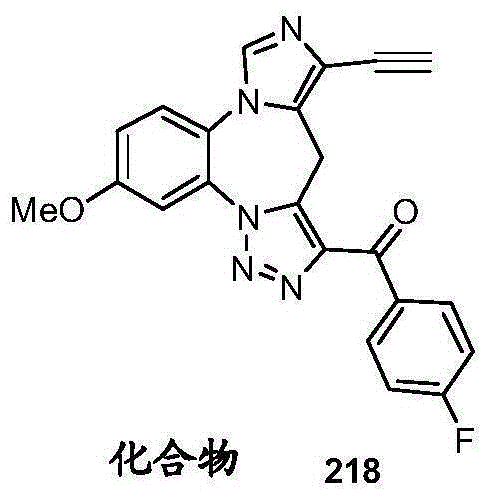
5- (ethoxycarbonyl) -16-methoxy-2, 3,4,10, 12-pentaazatetracyclo [11.4.0.0 ] from scheme 27 at 0 deg.C2,6.08,12]To a stirred solution of heptadecane-1 (17),3,5,8,10,13, 15-heptaene-9-carboxylic acid (0.609g,1.65mmol) in DMF (10ml) was added NaHCO3(0.749g,8.9mmol) and NBS (0.793g,4.45 mmol). The reaction was allowed to proceed to ambient temperature overnight. The reaction was then diluted with EtOAc, cooled to 0 ℃, and saturated sodium thiosulfate was added carefully with stirring. After the bubbling had ceased, the organic layer was separated and washed with saturated NaHCO3Washed with brine and over MgSO4And (5) drying. Filtration and removal of the solvent gave the crude bromide which was purified by flash column chromatography eluting with a gradient of 0-80% EtOAc in hexanes. 424.2mg (64%) of a yellowish solid are obtained. MS: [ M +1]=405。
To the bromide from above (286.7mg,0.709mmol) in the thickwalled rbf was added CuI (121.5mg,0.638mmol), trimethylsilylacetylene (1.04g,10.7mmol), triethylamine (0.717g,7.09mmol), dicyclohexyl (2 ', 6' -dimethoxybiphenyl-2-yl) phosphine (0.349g,0.851mmol) and 1, 4-bis-di-p-henyl-2-yl) phosphine  Alkane (2.5 ml; degassed). The reaction vessel was purged with nitrogen and bis (triphenylphosphine) palladium (II) dichloride (298.2mg,0.425mmol) was added. The reaction mixture was stirred at room temperature for 30min, then heated in a closed tube at 100 ℃ for 16 h, diluted with EtOAc and diluted with saturated NaHCO3Washed with brine and dried (MgSO)4). Filtering and concentrating the reaction mixture, and using 0-100%Silica gel column chromatography of a gradient of EtOAc in hexanes afforded 157.9mg (53%) of the desired trimethylsilylacetylene product as a light brown solid. MS: [ M +1]=422。
The trimethylsilyl alkyne obtained above (128.7mg,0.305mmol) was treated with lithium hydroxide (36.6mg,1.53mmol) in a solvent mixture of THF (0.9ml), water (0.75ml) and MeOH (0.15ml) at room temperature for 2 h. The mixture was then acidified to pH 3-4 with dilute hydrochloric acid and extracted with EtOAc (3 ×). The residual precipitate in the aqueous layer was found to be the product and was collected by filtration and combined with the product separated from the organic layer to give 95.6mg of acid as a yellowish solid.
To the acid (95.6mg,0.298mmol) in THF (1.3ml) and dichloromethane (1.3ml) was added N, O-dimethoxyamine hydrochloride (232.4mg,2.38mmol), EDC hydrochloride (456.7mg,2.38mmol), HOBt hydrate (91.2mg) and triethylamine (0.833ml,5.93 mmol). After stirring for 16 h, the reaction was diluted with EtOAc and saturated NH 4And (5) washing with Cl. The aqueous layer was separated and extracted with EtOAc (3 ×), and the combined organic layers were extracted with saturated NaHCO3Washed with brine and dried (MgSO)4). Filtration followed by removal of the solvent gave 104.8mg of the amide as a yellowish solid.
To a stirred solution of Weinreb amide from above (20.1mg,0.0552mmol) in anhydrous THF (0.8ml) cooled in an ice-salt bath was slowly added 4-fluorophenyl magnesium bromide solution (1 MTHF; 0.828 ml). The reaction mixture was stirred to ambient temperature over 4 hours and then saturated with NH4Quench Cl, extract with EtOAc (3X), and saturate NaHCO3Washed with brine and dried (MgSO)4). Preparative TLC using 5% MeOH in DCM gave 2.0mg of compound 218 as an off-white solid. MS: [ M +1]=400。
Compound 219 is prepared similarly to compound 218 described in scheme 32. MS: [ M +1] ═ 416.
Synthesis of compound 220:

5-benzoyl-9-ethynyl-16-methoxy-2, 3,4,10, 12-pentaazatetracyclo [11.4.0.02,6.08 ,12]Heptadecane-1 (17),3,5,8,10,13, 15-heptaene (90.3mg,0.237 mmol; obtained analogously to 218) were stirred at room temperature in THF (1.5 ml). Adding NaBH4(26.8mg,0.71 mmol). After 1 hour, the reaction was taken up with NH 4The Cl was quenched for 5min and extracted with EtOAc. The organic layer was separated, washed with brine and over MgSO4And (5) drying. Filtration and removal of the solvent in vacuo gave a clear viscous oil which was treated with a solution of triethylsilane (241.9mg,2.08mmol) and trifluoroacetic acid (0.32ml) in DCM (1.5ml) for 3 h. The reaction mixture was placed on a Rotovap to remove the solvent, diluted with EtOAc, and saturated NaHCO3And (6) washing. The aqueous layer was separated and extracted with EtOAc, and the combined organic layers were washed with brine and over MgSO4And (5) drying. Preparative TLC was performed on the filtered concentrate using 2% MeOH in DCM/EtOAc (1:1) to give 2.5mg of compound 220 as a clear membrane-like solid. MS: [ M +1]=370。
Compound 221 is prepared similarly to compound 220 described in scheme 32. MS: [ M +1] ═ 384.
Scheme 33

Synthesis of compound 222:
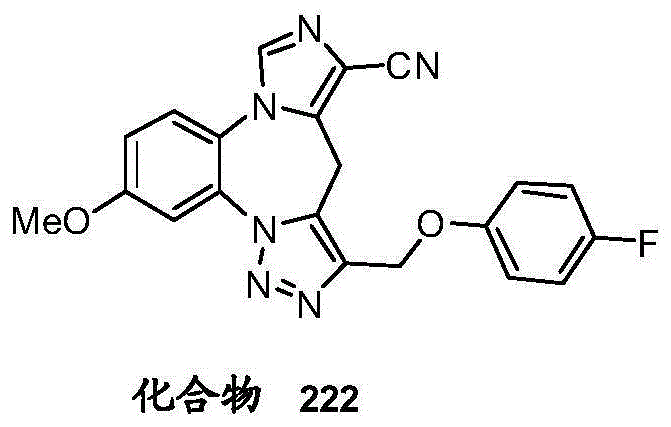
the cyano ester (407.1mg,1.16mmol) was treated with lithium hydroxide (83.5mg,3.49mmol) in a solvent mixture of THF (6ml), water (5ml) and MeOH (1ml) at room temperature for 16 h, then concentrated in vacuo, acidified to pH 3-4 with dilute HCl, and cooled at 0 ℃. The precipitate was collected by filtration, washed with a small amount of water, and dried to give 271.9mg (73%) of the acid as a light grey solid. The acid (27) is reacted at 0 deg.C 1.9mg) was suspended in THF (2ml) and stirred, to which borane dimethylsulfide solution (2M THF; 8.4 ml). The reaction was allowed to proceed to ambient temperature overnight, cooled in an ice bath, quenched with MeOH (10ml) for 2 hours, and concentrated in vacuo. The resulting solid residue was taken up in DCM and saturated NaHCO3Partitioned between and stirred for 20 min. The aqueous layer was separated and extracted with DCM (3 ×). The combined organic layers were washed with brine and over MgSO4And (5) drying. Filtration and removal of the solvent gave 137.8mg of crude alcohol product as a yellowish waxy solid.
The alcohol from above (137.8mg) was reacted with phosphorus tribromide oxide (256.3mg,0.894mmol) at 100 deg.C in 1, 4-bis In an alkane (5ml) for 3 hours. After cooling in an ice bath, the reaction mixture was stirred with saturated NaHCO3(15ml) and EtOAc (15ml) for about 20 min. The basic aqueous layer was separated and extracted with EtOAc (2 ×). The combined organic layers were washed with brine and over MgSO4And (5) drying. Filtration and removal of the solvent in vacuo gave the crude major bromide as a solid paste, which was stored under refrigeration and used without further purification if necessary.
The crude bromide from above (27.0mg,0.0727mmol) was treated with 4-fluorophenol (65.2mg,0.585mmol) and cesium carbonate (47.4mg,0.145mmol) at room temperature for 16 h. The reaction mixture was diluted with EtOAc, washed with brine, and over MgSO 4And (5) drying. Preparative TLC was performed on the filtered concentrate using 5% MeOH in DCM/EtOAc (1:1) to give 1.2mg of compound 222 as a yellowish solid. MS: [ M +1]=403。
Compound 223 is prepared similarly to compound 222 described in scheme 33. MS: [ M +1] ═ 403.
Compound 224 was prepared similarly to compound 222 described in scheme 33. MS: [ M +1] ═ 385.
Compound 225 was prepared similarly to compound 222 described in scheme 33. MS: [ M +1] ═ 464.
Scheme 34
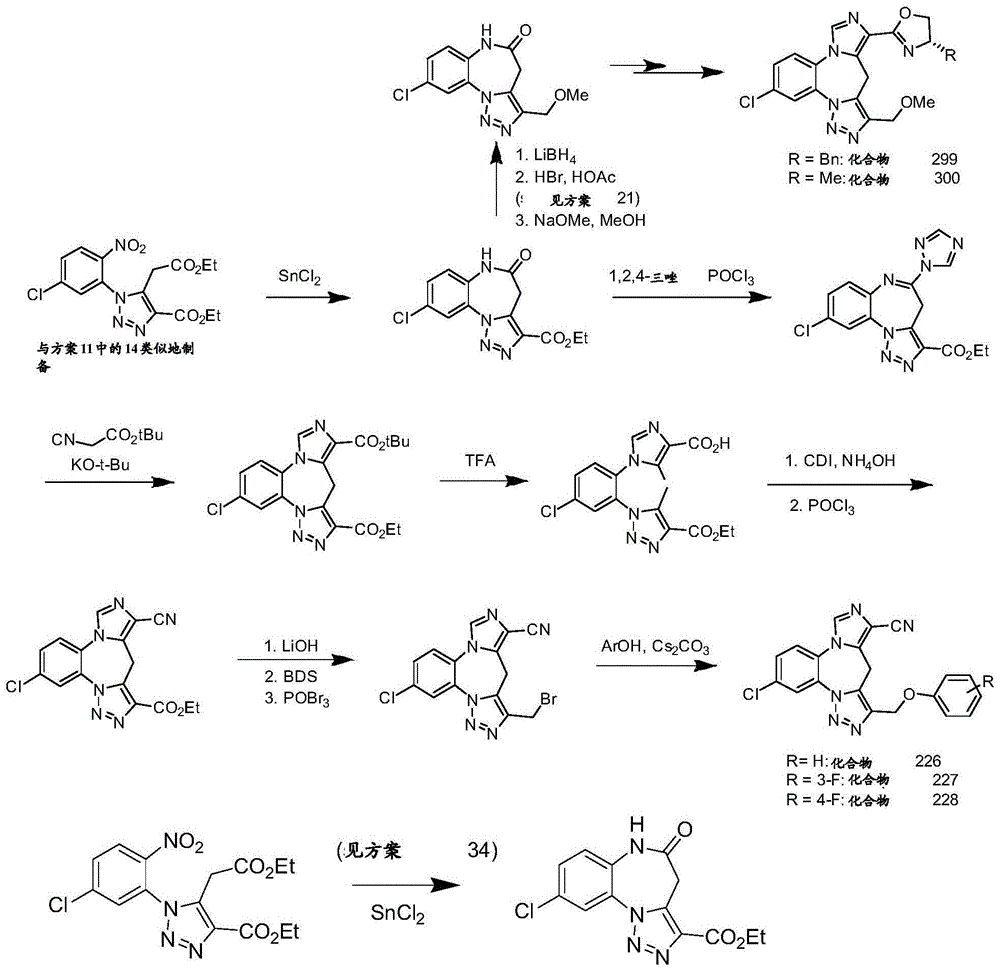
Ethyl 1- (5-chloro-2-nitrophenyl) -5- (2-ethoxy-2-oxoethyl) -1H-1,2, 3-triazole-4-carboxylate (21.2 g; obtained in analogy to 14 in scheme 11) was treated with tin (II) chloride hydrate (60g) in a mixture solvent of EtOAc/EtOH (1:2,300ml) at 70 ℃ for 3 hours. HCl (40 ml; 37%) was added and heating was continued for 3 days. More tin (II) chloride hydrate (25g) and HCl (15ml) were added and heating was continued for 2 days. The reaction was cooled, concentrated under reduced pressure to a pale brown oil, diluted with EtOAc (250ml) and carefully basified with sodium carbonate solution to pH 8-9. The aqueous layer was separated and extracted repeatedly with EtOAc. The combined organic layers were washed with brine and over MgSO4And (5) drying. Filtration and removal of the solvent followed by recrystallization from MeOH yielded 3.3g (51%) of the cyclized mono-ester as a yellowish solid. MS: [ M +1 ]=307。
Preparation of t-butyl isocyanoacetate:
to a suspension of glycine tert-butyl ester hydrochloride (10.0g,60mmol) in DCM (200mL) were added EDC.HCl (14.9g,78mmol) and triethylamine (12.5mL,89.8 mmol). The reaction mixture was cooled to-50 ℃ and a solution of formic acid (3.4mL,89.8mmol) in DCM (10mL) was added slowly. The reaction mixture was stirred at-50 ℃ for 1 hour and then at 4 ℃ for 3 h. Water (150ml) was added. After stirring for 30min, the aqueous layer was separated and extracted with DCM (3 ×). The combined organic layers were washed with brine and over MgSO4And (5) drying. Filtration and removal of the solvent under reduced pressure gave 10g (100%) of the formylamide as a clear viscous oil. H1NMR(CDCl3) δ 8.23(1H, s),6.17(1H, br s),3.98(2H, d, J ═ 5.5Hz), and 1.48(9H, s).
To a solution of formylamide (10.5g,66mmol) in DCM (180mL) was added triethylamine (36.8mL,264 mmol). The solution was cooled in a salt-ice bath and POCl was added slowly3(7.4mL,79.2 mmol). The reaction was stirred in the cold bath for 1 hour. A solution of sodium carbonate (7.7g,72.6mmol) in water (90ml) was then added to the cold reaction mixture. After 15min, the cooling bath was removed and continued in the loopStir at ambient temperature for 1 hour. The aqueous layer was separated and extracted with DCM (3 ×). The combined organic layers were washed with brine and over MgSO 4And (5) drying. Filtration and removal of the solvent under reduced pressure gave 7.9g (84%) of tert-butyl isocyanoacetate as a dark brown liquid. H1NMR(CDCl3) δ 4.12(2H, s), and 1.51(9H, s).
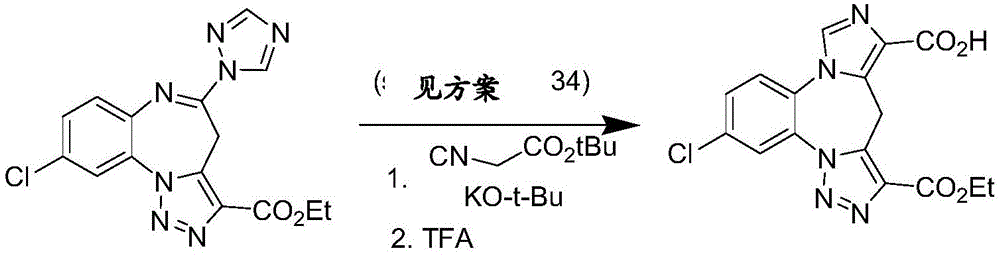
A solution of tert-butyl isocyanoacetate (1.51g,10.7mmol) in DMF (43ml) was cooled to-50 ℃ under a nitrogen atmosphere. Potassium tert-butoxide (1.05g,9.4 mmol; crushed) was added. After stirring for 1 hour at-50 ℃, the 1,2, 4-triazole intermediate (2.32g,6.48 mmol; prepared similarly to compound 20 in scheme 11) was added to the resulting pale red clear solution and the reaction was stirred to ambient temperature overnight. Adding saturated NaHCO3(15ml) and the reaction mixture was extracted with diethyl ether (5 ×), washed with brine and dried (MgSO 5)4). The filtered concentrate was chromatographed on silica gel using a gradient of 0-100% EtOAc in hexanes to give 2.5g (89%) of imidazole tert-butyl ester product as a yellowish solid. MS: [ M +1-tBu]=374。
Tert-butyl imidazole from above (1.1g,2.56mmol) was treated with a solution of trifluoroacetic acid (13ml) in DCM (13ml) for 3 hours or until all of the starting tert-butyl ester was hydrolyzed. The reaction was then concentrated under reduced pressure. Residual TFA was removed by repeated addition and evaporation of toluene. The acid product was obtained as a dark brown viscous oil and used without further purification. MS is [ M +1] ═ 374.
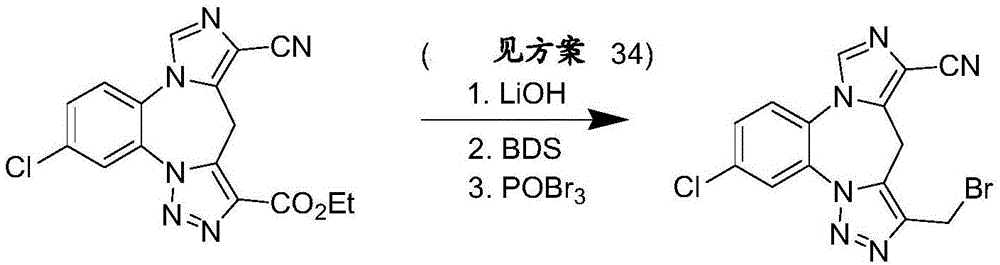
Reacting 16-chloro-9-cyano-2, 3,4,10, 12-pentaazatetracyclo [11.4.0.0 ] at room temperature2,6.08,12]Heptadecane-1 (17), ethyl 3,5,8,10,13, 15-heptaene-5-carboxylate (477mg,1.34 mmol); and 9-cyano-16-methoxy-2, 3,4,10, 12-pentaazatetracyclo in scheme 27[11.4.0.02,6.08,12]Ethyl heptadecane-1 (17),3,5,8,10,13, 15-heptaene-5-carboxylate) was similarly obtained and treated with lithium hydroxide (80.5mg,3.36mmol) in a solvent mixture of THF (6ml), water (5ml) and MeOH (1ml) for 16 h. The reaction was concentrated under reduced pressure, acidified to pH 3-4 with dilute HCl, and cooled to 0 ℃. The precipitate was collected by filtration, washed with a small amount of water, and further dried to give 396.2mg of crude triazolocarboxylic acid product, MS: [ M +1]=327。
Borane dimethylsulfide complex (10.9 ml; 2M THF) was added dropwise at 0 ℃ to a suspension of the crude acid from above (396.2mg) in anhydrous THF (7 ml). The reaction was allowed to proceed to ambient temperature overnight and cooled to 0 ℃ before being slowly quenched with MeOH. After stirring for 30min, the reaction mixture was concentrated in vacuo. The resulting slurry was treated with MeOH, which was subsequently removed in vacuo. This process is repeated several times. The resulting residue was then treated with 5% MeOH in DCM and saturated NaHCO 3And (6) washing. The aqueous layer was extracted with DCM (3 ×), the combined organic layers were washed with brine and over MgSO4And (5) drying. Filtration and removal of the solvent gave the crude alcohol product ([ M +1]]313) and the corresponding primary amide (due to hydrolysis of the cyano group) ([ M + 1)]331). 388.8mg of the crude mixture were obtained and used without further purification.
Alcohol mixture from above (388.8mg) was reacted with phosphorus oxybromide (2.02g) at 100 ℃ in 1, 4-bis In an alkane (10ml) for 8 hours. The reaction was cooled to 0 ℃ and saturated NaHCO was used3(15ml) carefully quench. After stirring for 20min, the reaction mixture was extracted with EtOAc (3 ×), washed with brine, and over MgSO4And (5) drying. Filtration and removal of the solvent under reduced pressure gave the crude bromide as a viscous paste which was used in the next step without further purification.
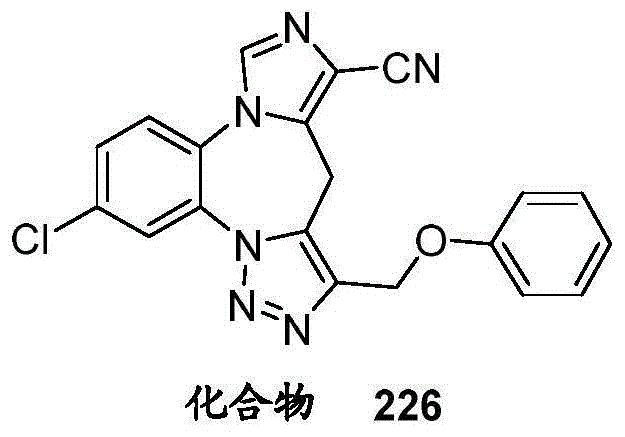
Compound 226 was prepared similarly to compound 222 in scheme 33 using the bromide prepared from above. MS, wherein [ M +1] ═ 389.
Compound 227 was prepared in a similar manner to compound 226 described in scheme 34. MS: [ M +1] ═ 407.
Compound 228 is prepared in a similar manner as compound 226 described in scheme 34. MS: [ M +1] ═ 407.
Scheme 35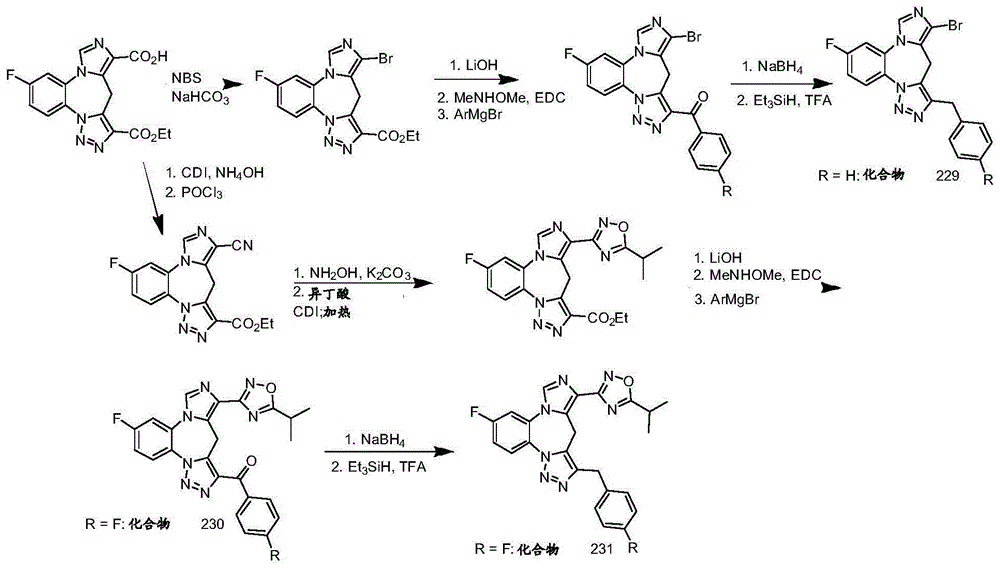
Synthesis of compound 229:
The benzyl analog 229 shown in scheme 35 is prepared similarly to benzyl compound 220 in scheme 32. MS: [ M +1] ═ 411.
Synthesis of compound 230:
the ketone analogs 230 shown in scheme 35 are prepared similarly to ketone 218 in scheme 32. MS: [ M +1] ═ 474.
Synthesis of compound 231:
the benzyl analog 231 shown in scheme 35 was prepared similarly to benzyl compound 220 in scheme 32. MS: [ M +1] ═ 460.
Scheme 36
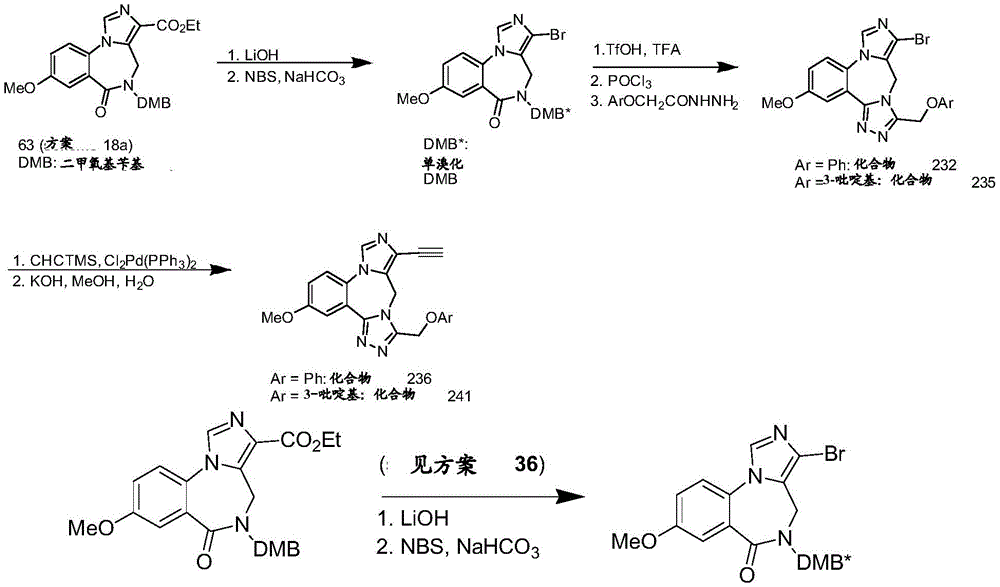
Compound 63(0.805g,1.78 mmol; from scheme 18a) was treated with lithium hydroxide (0.128g,5.34mmol) in a solvent mixture of THF (6ml), water (5ml) and MeOH (1ml) at room temperature for 16 h. The reaction was then concentrated in vacuo and acidified to pH 3-4 with dilute HCl. The resulting precipitate was collected by filtration, washed with water and dried to give 0.638g of acid as a yellow solid. MS: [ M +1] ═ 424.
The acid from above (0.638g,1.5mmol) was treated with NBS (1.61g,9mmol) and NaHCO3(1.51g,18mmol) was treated at room temperature for 16 hours. The reaction mixture was cooled to 0 ℃ and saturated sodium thiosulfate (aqueous solution) was added carefully and slowly). It was extracted with EtOAc (2X) and with saturated NaHCO3Washed with brine and over MgSO4And (5) drying. The filtered concentrate was chromatographed on silica gel with a gradient of 0-100% EtOAc in hexanes to give 0.580g (72%) of the di-bromo product as a yellowish solid. MS: [ M +1 ]=538。
Compound 232 was prepared similarly to compound 55 in scheme 18a using the bromide prepared above. MS: [ M +1] ═ 439.
Compound 235 was prepared similarly to compound 55 in scheme 18a using the bromide prepared above. MS: [ M +1] ═ 440.
Compound 236 alkyne moiety is prepared similarly to compound 161 in scheme 21. MS: [ M +1] ═ 384.
Compound 241 alkyne moiety is prepared similarly to compound 161 in scheme 21. MS: [ M +1] ═ 385.
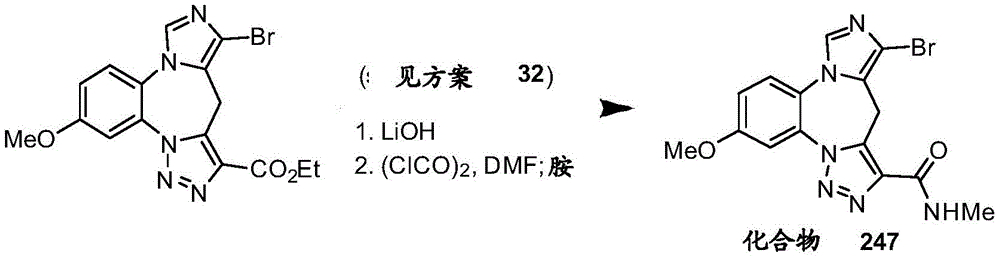
Synthesis of compound 247:
the bromide ester (13.9mg,0.0344mmol) was treated with lithium hydroxide (10mg) in a solvent mixture of THF (0.3ml), water (0.25ml) and MeOH (0.05ml) at room temperature for 16 h. The reaction was then concentrated in vacuo, acidified to pH 3-4 with dilute HCl, and cooled to 0 ℃. The resulting precipitate was collected by filtration, washed with water and dried to give 9.5mg (74%) of the acid as a light brown solid. MS: [ M +1] ═ 377.
To the acid from above (5.1mg,0.0136mmol) stirred in DCM (0.15ml) was added oxalyl chloride (8.6mg,0.0678mmol) and DMF (5 ul). After stirring for 2 hours, the solvent and excess reagent were removed in vacuo. The resulting residue was resuspended in DCM (0.15ml), cooled in an ice-salt bath, and a solution of methylamine in ethanol (100 ul; 33%) was added dropwise. After stirring for 20min, the reaction mixture was applied to a preparative TLC plate and the product was isolated using 5% MeOH in DCM as eluent. This gave 4.3mg (81%) of compound 247 as a white solid. MS: [ M +1] ═ 390.
Compound 248 is prepared similarly to compound 247 described in scheme 32. MS: [ M +1] ═ 430.
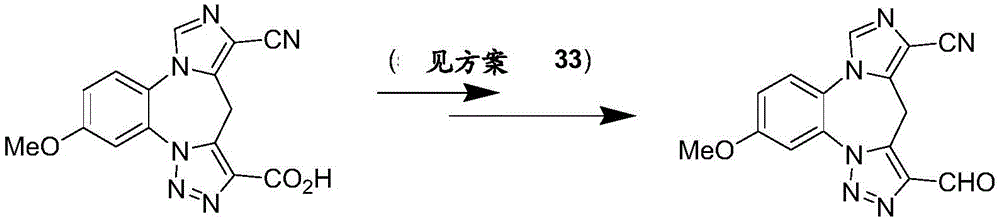
To the acid (108.0mg,0.335mmol) suspended in DCM (2ml) was added oxalyl chloride (170.1mg,1.34mmol) slowly at 0 deg.C followed by DMF (20 ul). After the bubbling ceased, the ice bath was removed and the reaction was allowed to proceed at room temperature for 2 hours. The solvent and excess reagent were removed in vacuo. The resulting light brown solid was cooled to 0 ℃. Adding NaBH4Solution (2.2 ml; 1.5M in methoxyethoxyethane). After 30min, the reaction was quenched with 1N HCl (0.2ml) and stirring was continued until bubbling ceased. EtOAc (10mL) and saturated NaHCO were added3(10ml) and stirred overnight. The aqueous layer was separated and extracted with EtOAc (3 ×); the combined organic layers were washed with brine and over MgSO4And (5) drying. Filtration and removal of the solvent gave 97.0mg (94%) of the alcohol as a yellowish solid. MS: [ M +1]=309。
The alcohol from above (97.0mg,0.315mmol) was treated with dess-martin periodinane (266.9mg,0.629mmol) in DCM (2ml) for 1 h. The reaction mixture was diluted with DCM and saturated NaHCO3And (6) washing. The aqueous layer was separated and extracted with DCM (3 ×), and the combined organic layers were washed with brine and over MgSO 4And (5) drying. Filtration and removal of the solvent under reduced pressure gave a quantitative yield of crude aldehyde as a light brown solid, which was used without further purification.
Compound 250 was prepared similarly to compound 48 in scheme 16 using the aldehyde from above as described in scheme 33. MS: [ M +1] ═ 362
Compound 251 was prepared similarly to compound 250 as described in scheme 33. MS, wherein [ M +1] ═ 376.
Compound 252 was prepared similarly to compound 250 as described in scheme 33. MS: [ M +1] ═ 364.
Compound 253 was prepared similarly to compound 250 as described in scheme 33. MS: [ M +1] ═ 452.
Scheme 37
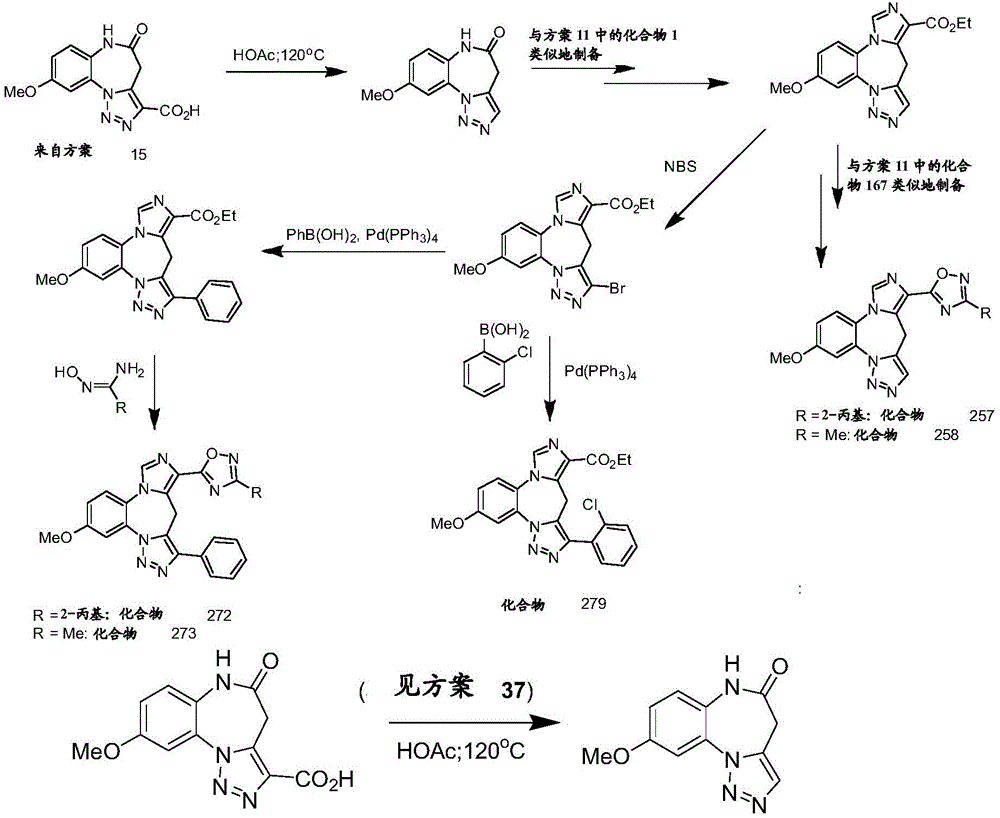
The acid (16 in scheme 15, X ═ OMe; 258.1mg,0.941mmol) was treated with acetic acid (2ml) at 120 ℃ for 5 h. The solvent was then removed in vacuo. The solid residue was treated with sonication in water (7ml), filtered, washed with water and dried to give 158.4mg (73%) of the decarboxylated product as a light brown solid. MS: [ M +1] ═ 231.
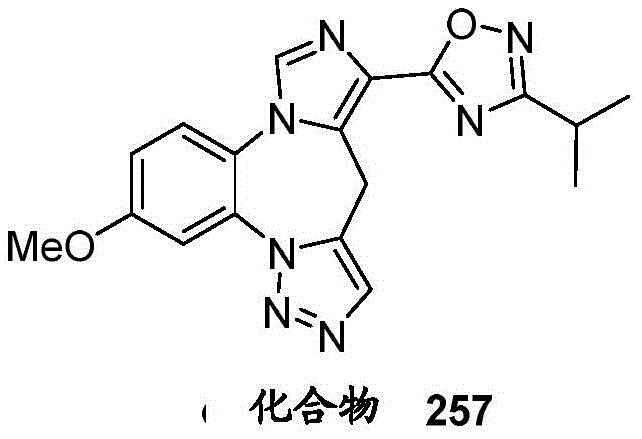
Compound 257 was prepared in a similar manner to compound 167 in scheme 11. MS: [ M +1] ═ 364.
Compound 258 was prepared in a similar manner as compound 167 in scheme 11. MS: [ M +1] ═ 336.
Synthesis of compound 262:
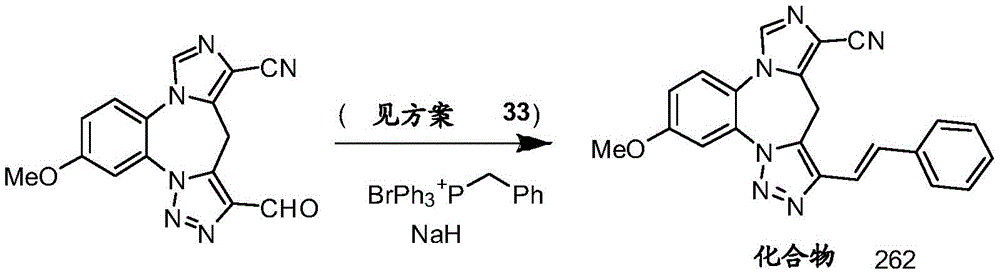
Benzyltriphenylphosphonium bromide (29.0mg,0.0669mmol) was stirred in THF (0.5ml) with cooling in a salt-ice bath. Sodium hydride (4.12mg,0.103 mmol; 60% oil suspension) was added. After stirring for 20min, aldehyde (15.8mg,0.0515mmol) was added. The reaction was allowed to warm slowly to room temperature over 4 hours, then saturated NH was used4Quench Cl, extract with EtOAc (3 ×), wash with brine, and over MgSO4And (5) drying. Compound 262 was isolated by repeated preparative TLC (using 2% MeOH in DCM). 1.1mg of a white solid was isolated. MS: [ M +1]=381。

The starting ester (76) was allowed to stand at room temperature.4mg,0.235mmol) was treated with N-bromosuccinamide (83.6mg,0.470mmol) in acetonitrile (2.3ml) for 3 days. Saturated sodium thiosulfate was added to the reaction mixture. After stirring for 15min, the aqueous layer was separated and extracted with EtOAc (2 ×). The combined organic layers were washed with brine and over MgSO4And (5) drying. The bromide product was isolated by preparative TLC using hexanes: EtOAc ═ 1:3 as the eluting solvent. 50.2mg (52%) of a light brown foamy solid are obtained. MS: [ M +1]=405。
To the bromide from above (24.1mg,0.0596mmol) was added phenylboronic acid (10.3mg,0.083mmol), tetrakis (triphenylphosphine) palladium (0) (6.9mg,0.006mmol), dimethoxyethane (0.69 mL; degassed) and Na under nitrogen atmosphere 2CO3Aqueous solution (77 ul; 2M). The reaction was heated at 100 ℃ for 5 h, cooled to room temperature, diluted with EtOAc and saturated NaHCO3Washed with brine and over MgSO4And (5) drying. Preparative TLC using hexanes: EtOAc ═ 1:3 gave 17.2mg (72%) of Suzuki coupled product as a yellowish amorphous. MS: [ M +1]=402。
Synthesis of compounds 272, 273 and 277:
compound 272 was prepared similarly to compound 167 in scheme 11, starting from the imidazole ester above. MS: [ M +1] ═ 440.
Compound 273 is prepared similarly to compound 167 in scheme 11, starting from the imidazole ester above. MS: [ M +1] ═ 412.
Compound 277 is prepared similarly to compound 167 in scheme 11. MS: [ M +1] ═ 378.
Compound 279 is prepared by Suzuki coupling in a similar manner to that detailed above (see scheme 37). MS: [ M +1] ═ 436.
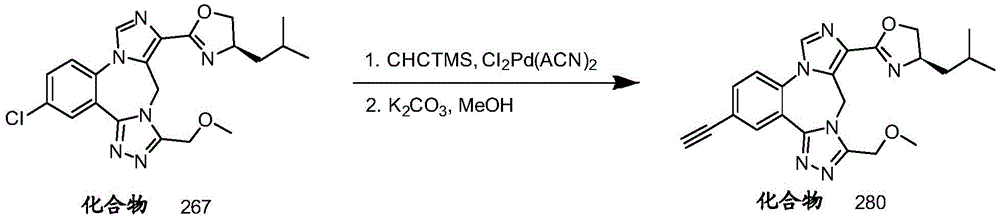
Synthesis of compound 280:
to compound 267(11.7mg,0.0274mmol) was added dicyclohexyl [2- (2,4, 6-triisopropylphenyl) phenyl group under a nitrogen atmosphere]Phosphane (7.8mg,0.0164mmol), cesium carbonate (22.3mg,0.068 mmol)5mmol) and acetonitrile (0.30 ml). The reaction flask was purged with nitrogen and dichlorobis (acetonitrile) palladium (II) (1.42mg,0.0055mol) was added. After stirring at room temperature for 30min, trimethylsilylacetylene (80.7mg,0.822mmol) was added and the reaction was heated at 90 ℃ for 5 h, cooled to room temperature, diluted with EtOAc and diluted with saturated NaHCO 3And (6) washing. The aqueous layer was separated and extracted with EtOAc (2 ×), and the combined organic layers were washed with brine and over MgSO4And (5) drying. Preparative TLC was performed on the filtered concentrate using 5% MeOH in DCM/EtOAc (1:1) to give 4.1mg of the trimethylsilylacetylene derivative as a yellowish solid. MS: [ M +1]=489。
Trimethylsilyl acetylene from above (4.1mg,0.0084mmol) was treated with potassium carbonate (1.2mg,0.0084mmol) in methanol (0.2ml) at room temperature for 3 h. Preparative TLC using 7% MeOH in DCM/EtOAc (1:1) as eluting solvent gave 1.6mg of compound 280 as a yellowish solid. MS, wherein [ M +1] ═ 417.
Synthesis of compounds 284, 301 and 302:
compound 284 was prepared similarly to compound 280 starting from compound 240. MS: [ M +1] ═ 403.
Compound 301 was prepared similarly to compound 280 starting from compound 264. MS, wherein [ M +1] ═ 437.
Compound 302 was prepared similarly to compound 280 starting from compound 245. MS: [ M +1] ═ 435.

Synthesis of compounds 289, 290, 291 and 292:
compound 289 was prepared similarly to compound 263 described in scheme 30. MS: [ M +1] ═ 399.
Compound 290 is prepared similarly to compound 263 as described in scheme 30. MS: [ M +1] ═ 399.
Compound 291 is prepared similarly to compound 243 described in scheme 29. MS: [ M +1] ═ 337.
Compound 292 was prepared similarly to compound 243 described in scheme 29. MS: [ M +1] ═ 337.
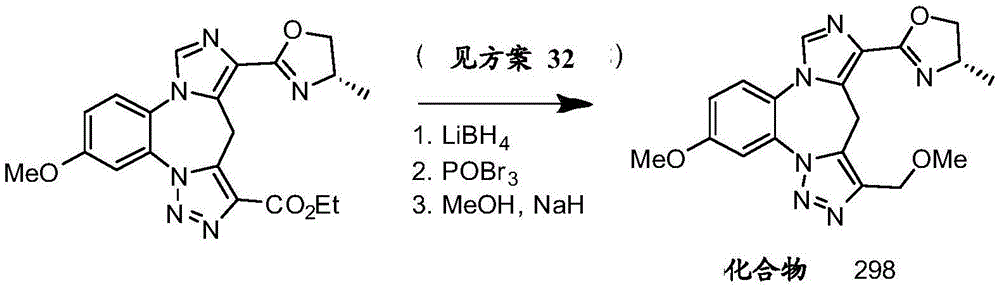
Synthesis of compound 298:
the ester (107.9mg,0.264mmol) in THF (2.4ml) was treated with a solution of lithium borohydride (0.264 ml; 2M THF) at 0 deg.C. The reaction was allowed to warm to ambient temperature over 4 hours and then saturated NaHCO3Quench slowly, extract with EtOAc (4 ×), wash with brine, and over MgSO4And (5) drying. Filtration and removal of the solvent gave 77.3mg (86%) of the alcohol as a yellowish solid.
The alcohol from above (16.4mg,0.0448mmol) was treated with phosphorus tribromide oxide (25.7mg,0.0895mmol) at 95 deg.C in 1, 4-bis In an alkane (0.5ml) for 3 hours. The reaction was then cooled to 0 ℃ with saturated NaHCO3Quench (5mL) for 20min and extract with EtOAc (3X), wash with brine and over MgSO4And (5) drying. Filtration and drying gave 16.6mg of a yellowish solid which was dissolved in anhydrous MeOH (18ul) and THF (0.35 ml). It was cooled to 0 ℃ and NaH (9.2 mg; 60% suspension) was added. After stirring for 2 hours at 0 deg.C, the reaction was quenched with saturated NaHCO3Quench, extract with EtOAc (3X), wash with brine, and over MgSO 4And (5) drying. Preparative TLC using 10% MeOH in DCM yielded 0.8mg of compound 298 as a yellowish solid. MS: [ M +1]=381。
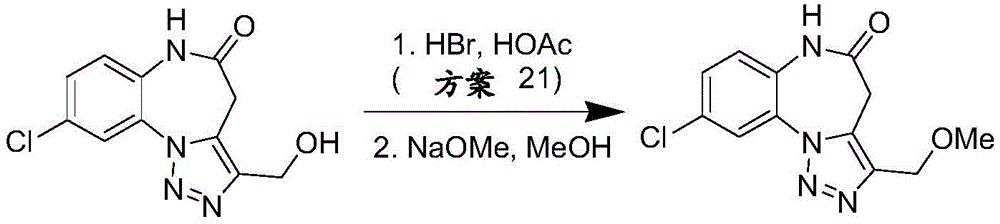
The starting alcohol (616mg) was converted to the corresponding bromide as described earlier (see scheme 21). The crude bromide obtained was dissolved in anhydrous methanol (23ml) and cooled to 0 ℃. NaH (932 mg; 60% suspension) was added portionwise. After the bubbling ceased, the reaction mixture was heated to reflux for 30min, then cooled to room temperature and treated with 2N HCl (11 ml). The resulting precipitate was collected by filtration and the desired methyl ether was isolated by silica gel chromatography (eluting with a gradient of 0-10% MeOH in DCM). 217mg of a yellowish solid was collected. MS: [ M +1] ═ 279.

Synthesis of Compounds 299 and 300
Compound 299 was prepared similarly to compound 289, using the above methyl ether intermediate. MS: [ M +1] ═ 461.
Compound 300 is prepared similarly to compound 289 using the methyl ether intermediate above. MS: [ M +1] ═ 385.
By MS and1h NMR characterizes compound 180-313. MS characterization is summarized in table 5 below.
TABLE 5 MS characterization of Compounds 180-313

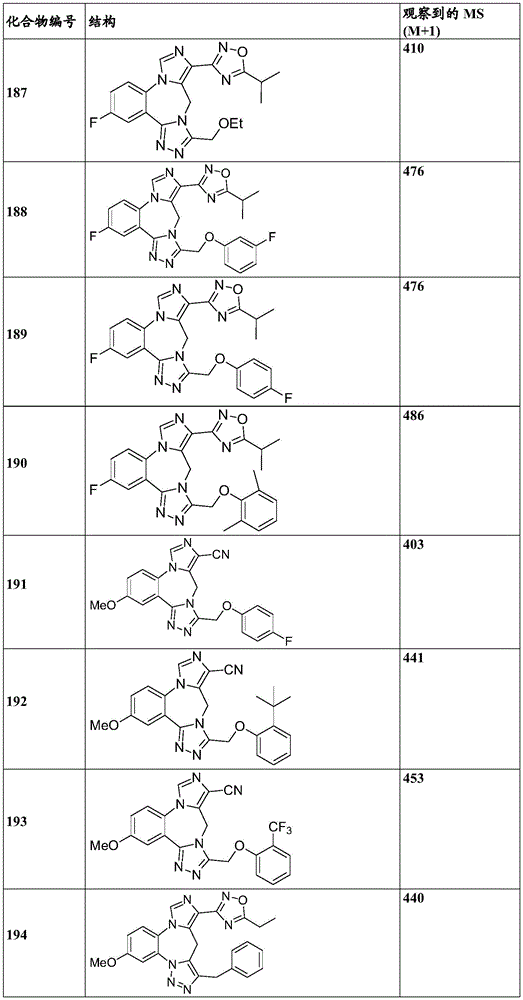
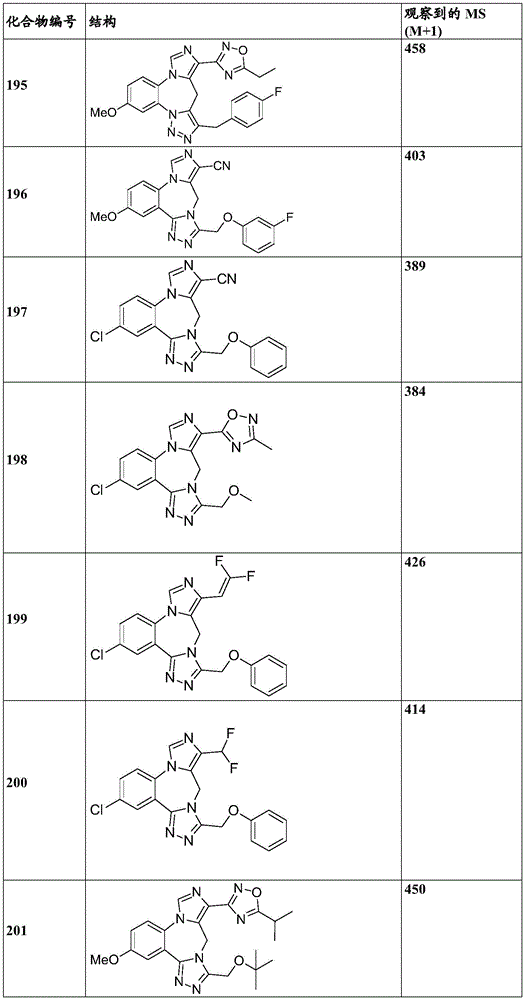
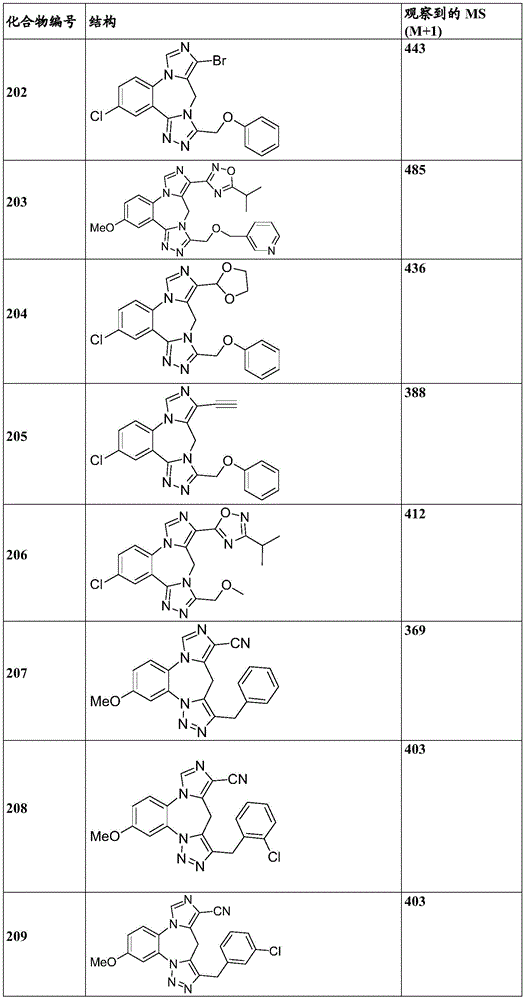

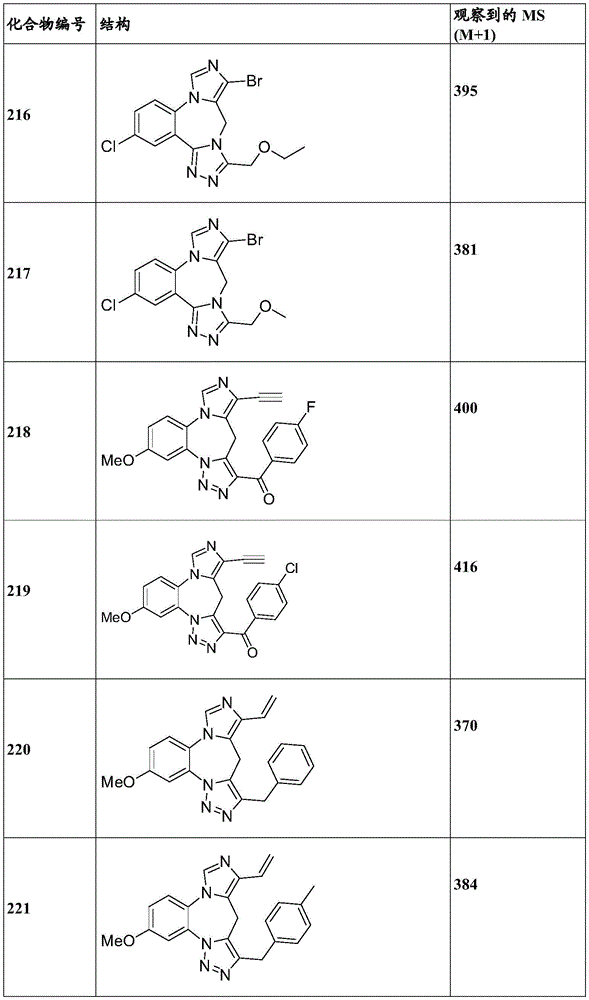

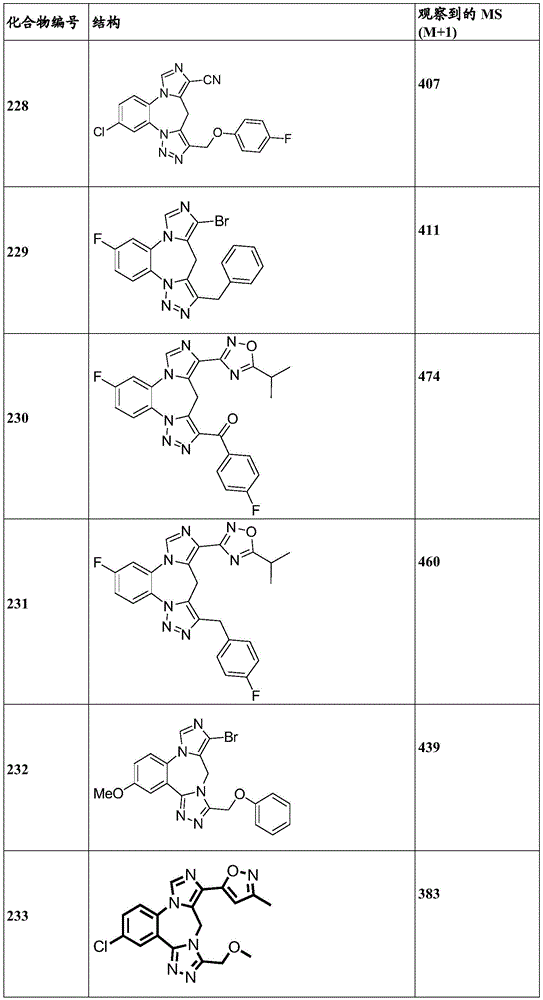
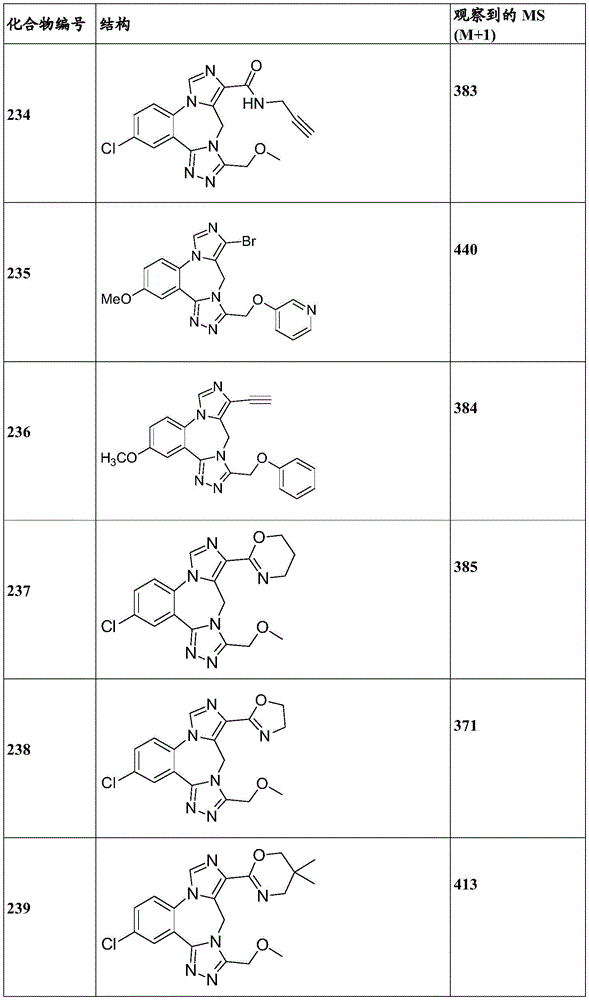
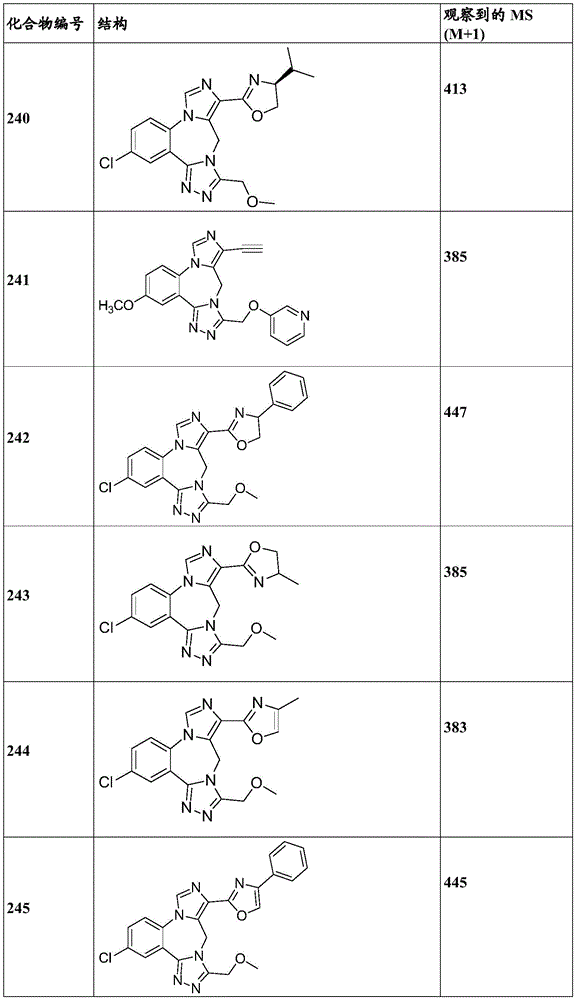
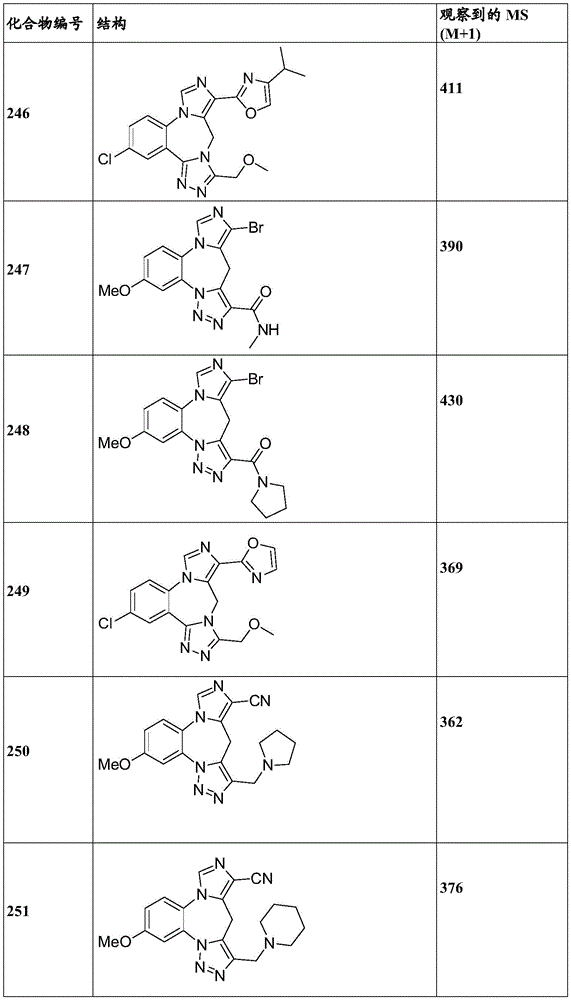
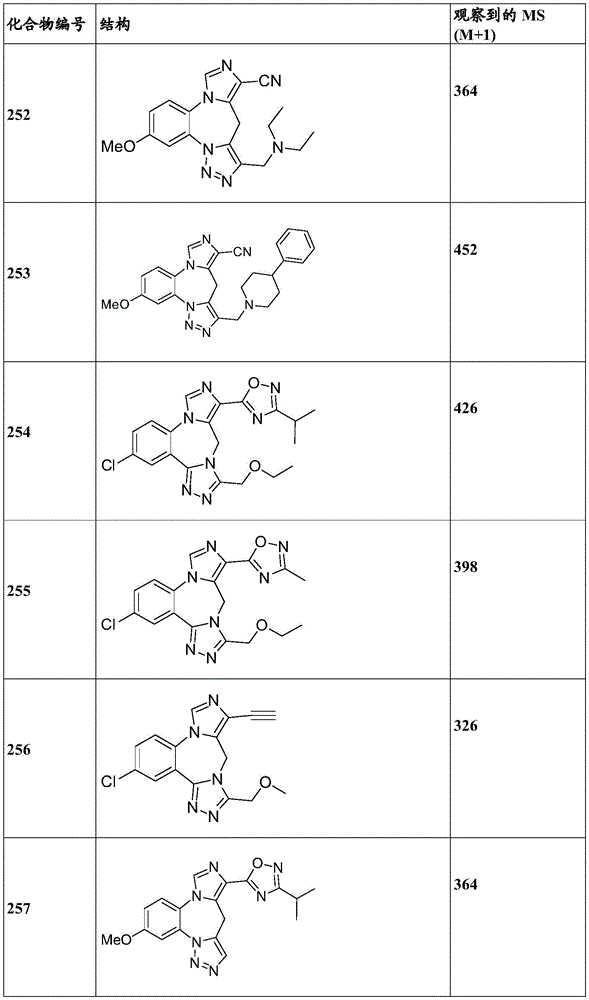
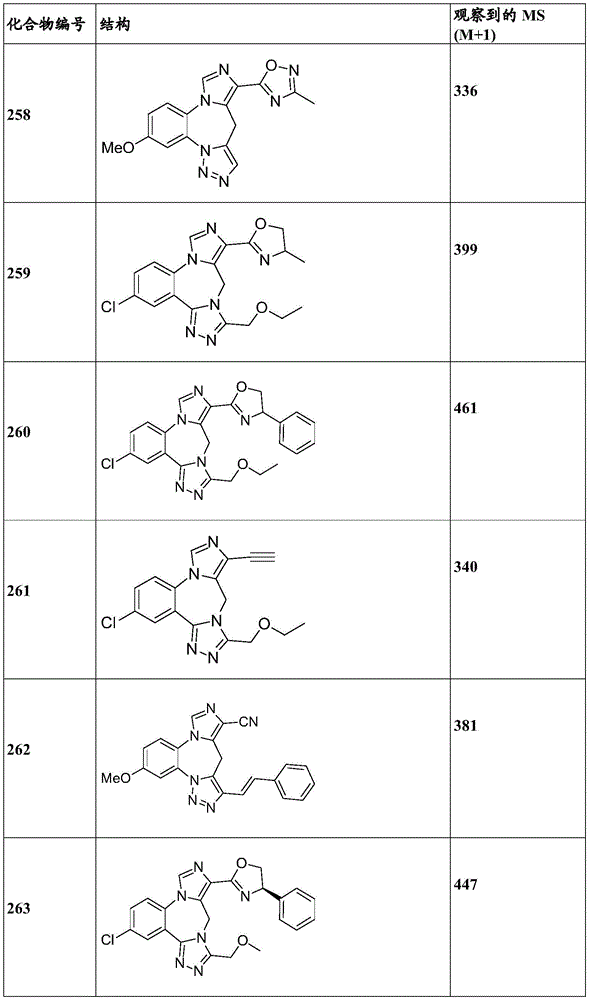
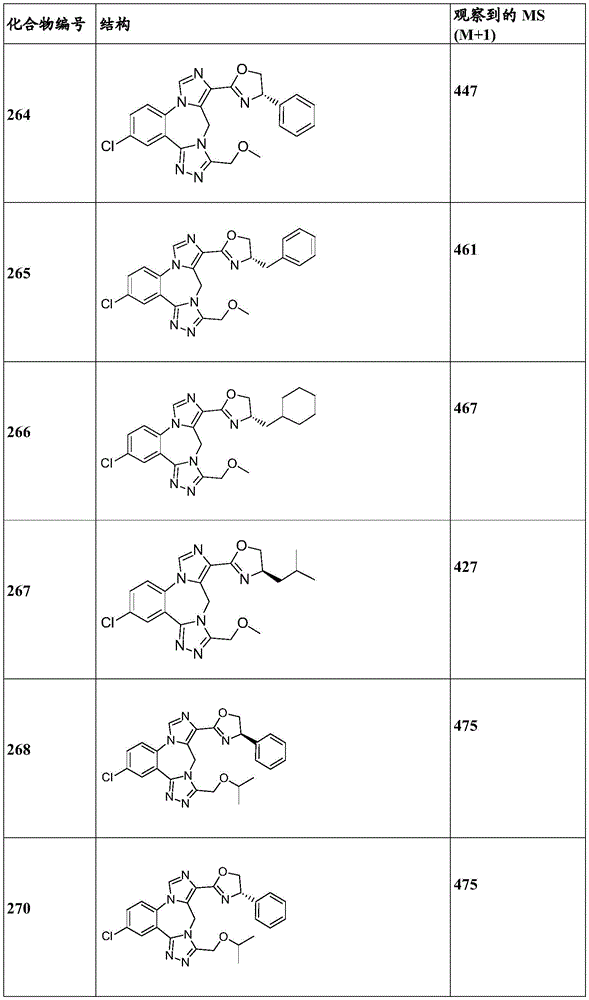
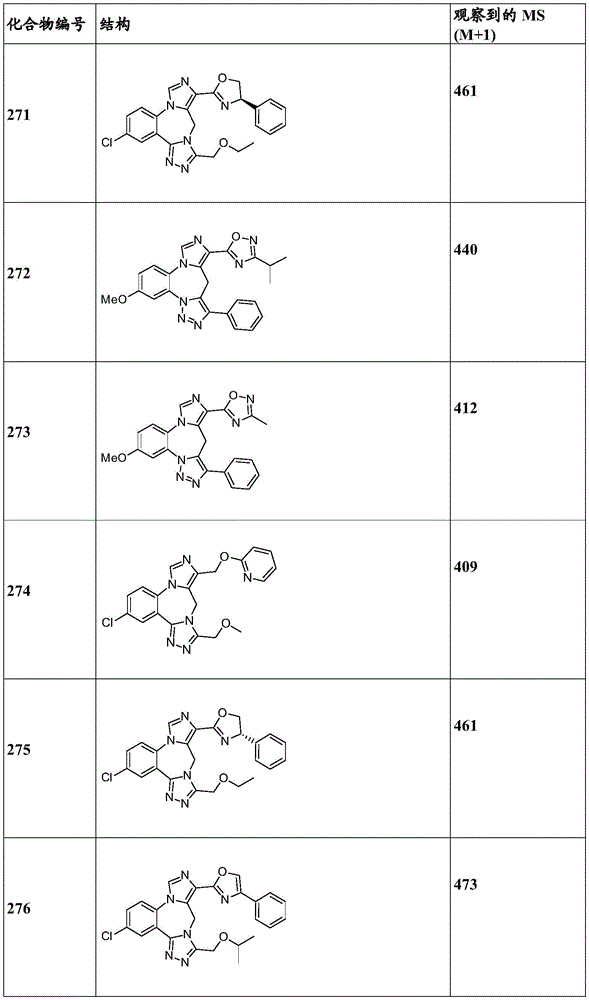
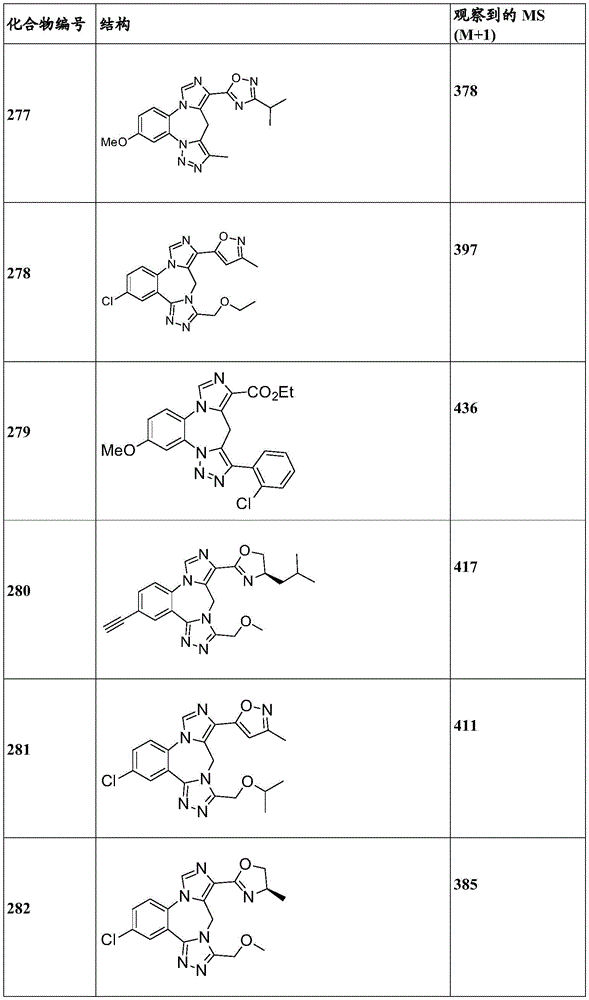

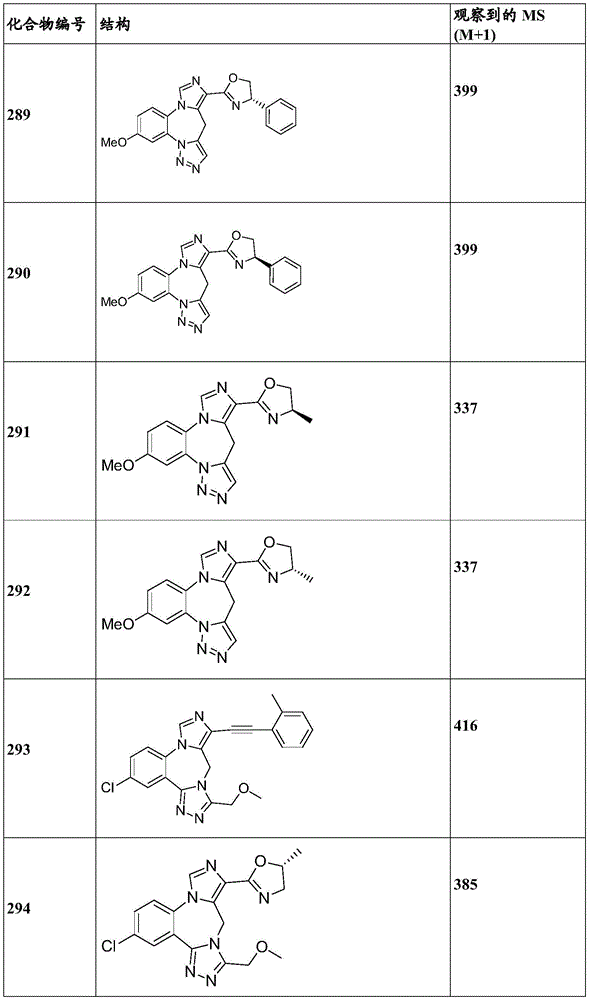
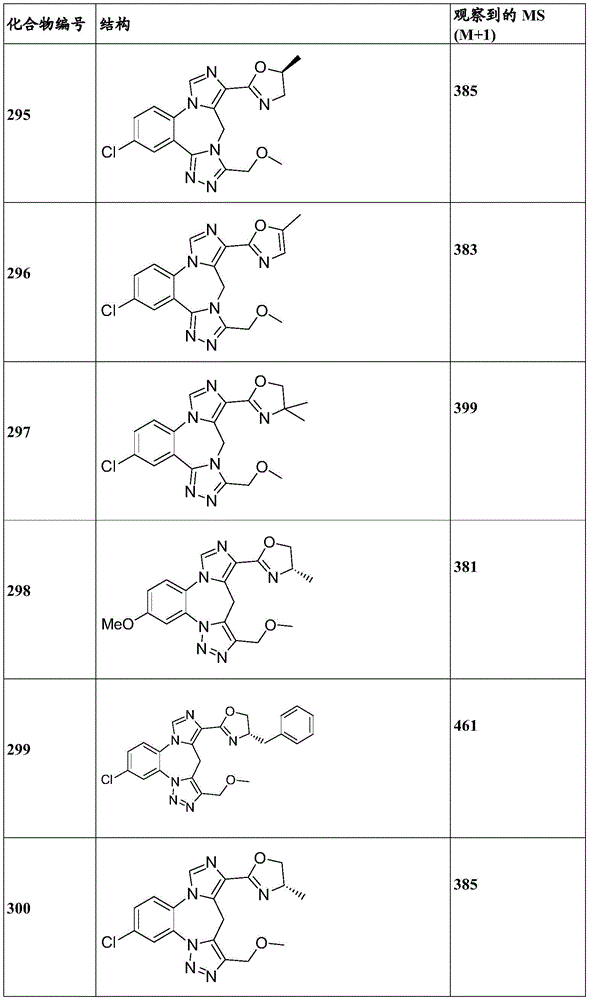
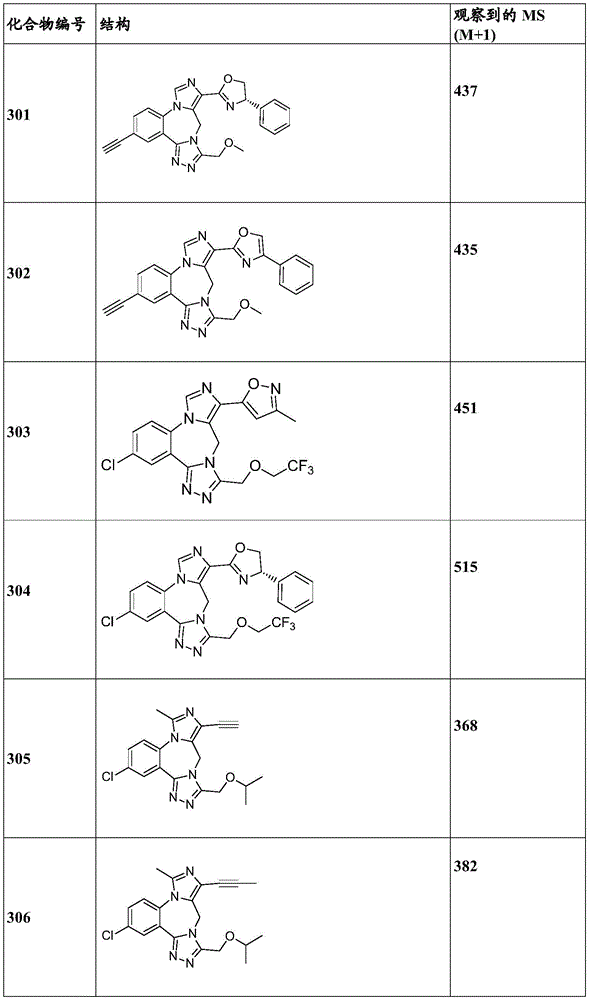

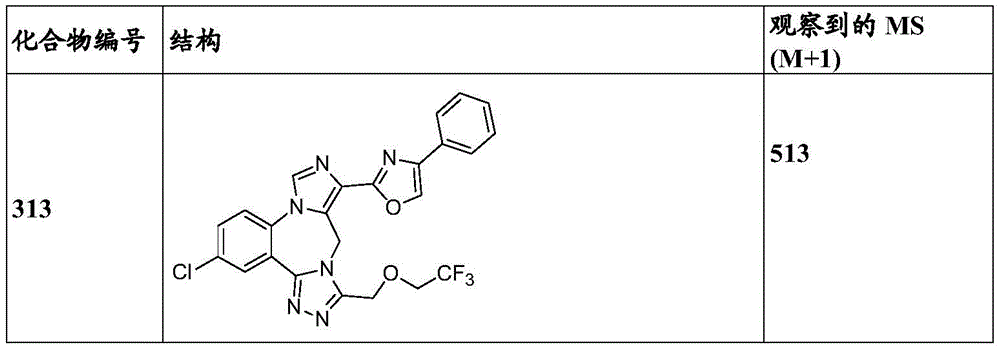
Carrying out reactions similar and analogous to those shown in schemes 1 to 37, the following compounds are also specifically contemplated in the present application:
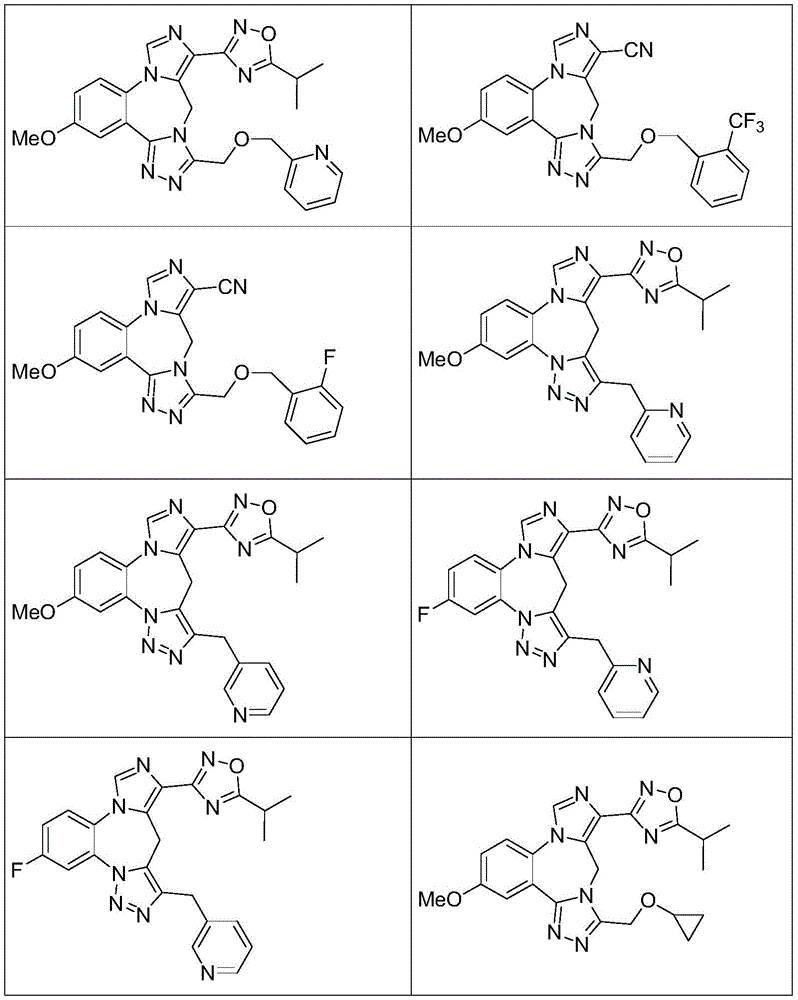
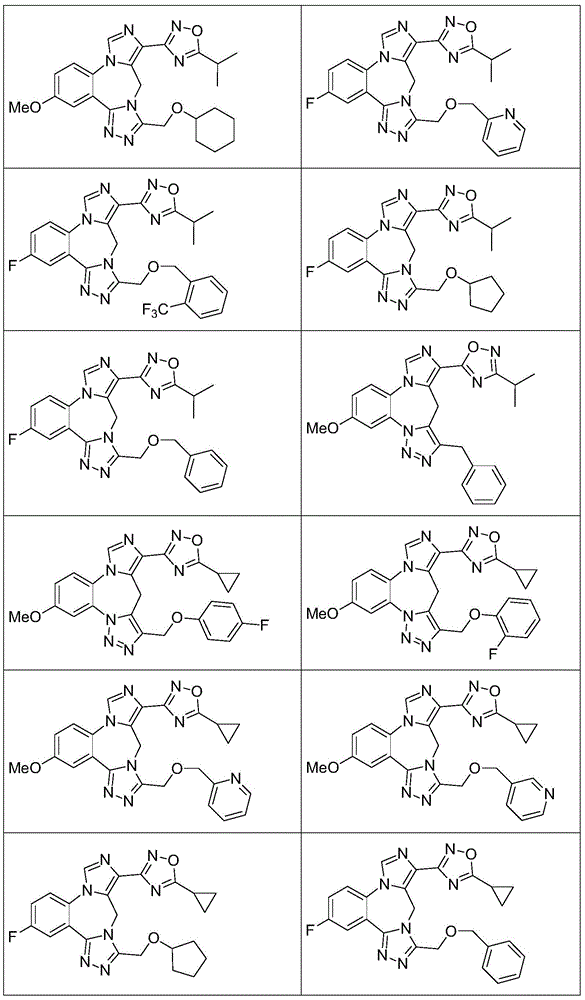
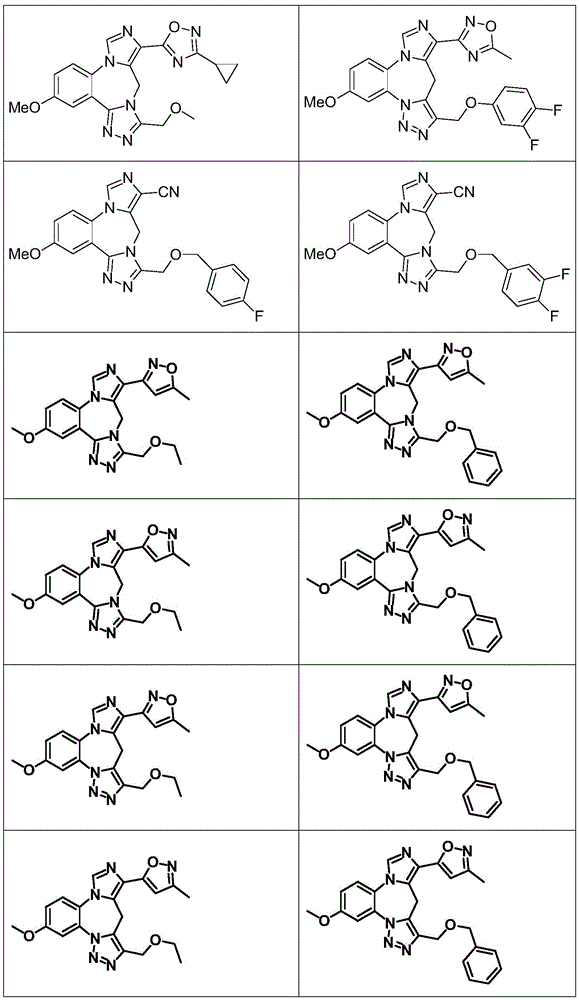
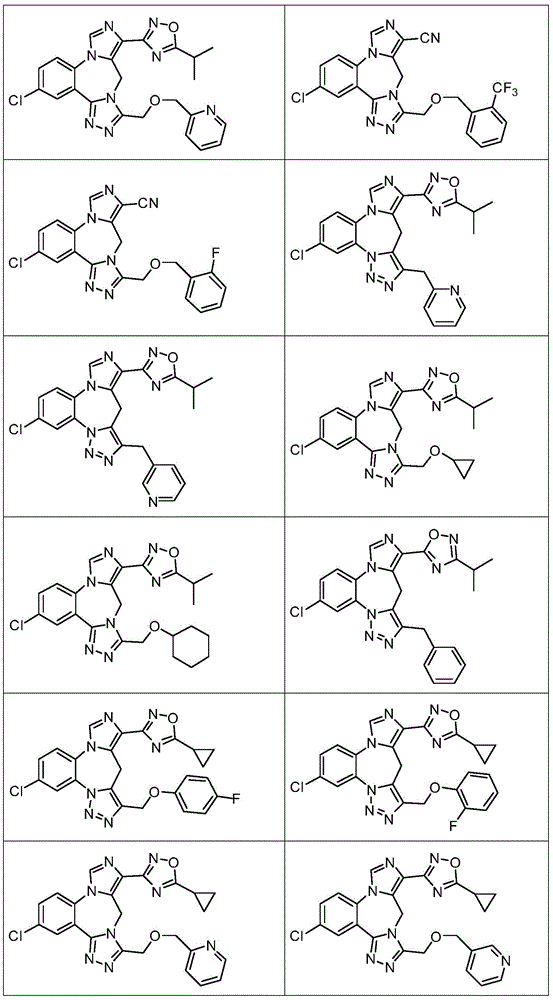
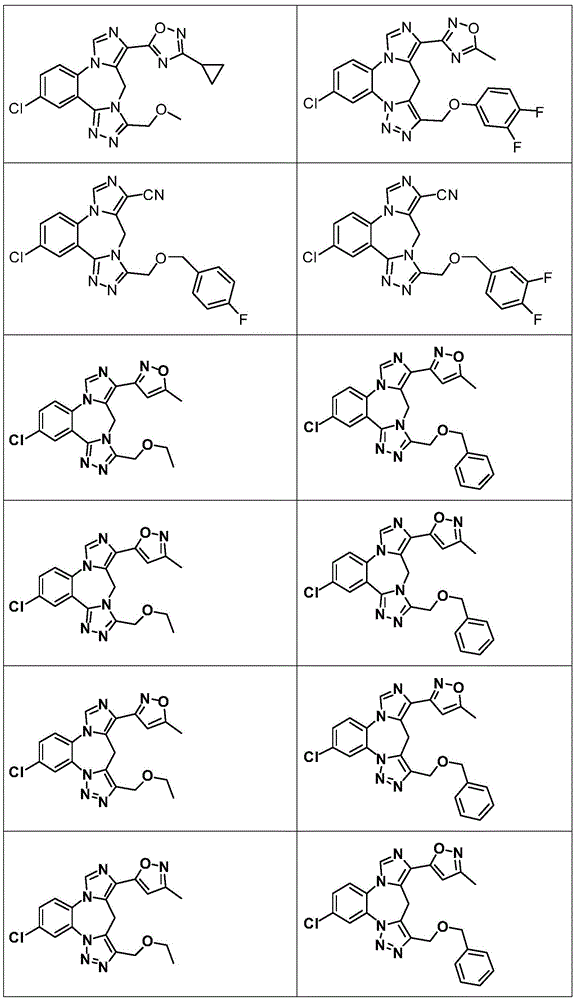

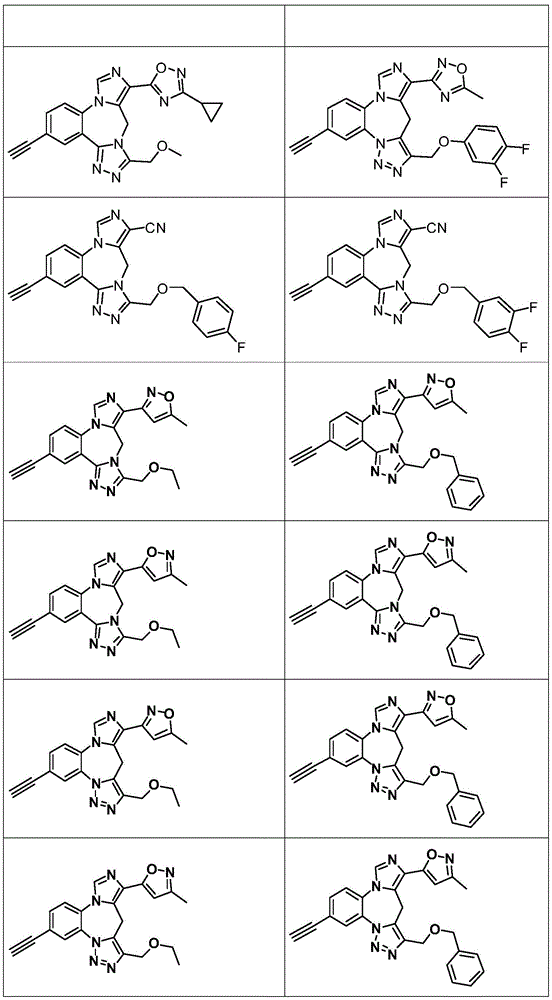
EXAMPLE 105 evaluation of GABA containing α 5AReceptor (GABA)AR) Positive allosteric Modulator Activity
Step 1: establishment of GABAACloning of R subunits (α 5, β 3, γ 2, α 1, α 2 and α 3) and preparation of the corresponding crnas: GABAAHuman clones of the-R α 5, β 3, γ 2, α 1, α 2 and α 3 subunits were obtained from commercial sources (e.g., OriGene, http:// www.origene.com and Genescript, http:// www.genescript.com). These clones were engineered into pRC, pCDM, pcDNA and pBluescript KSM vectors (for oocyte expression) or other equivalent expression vectors. The host cells are transiently transfected using conventional transfection reagents (e.g., FuGene, Lipofectamine 2000, or others).
Step 2-functional GABA of alpha 5 beta 3 gamma 2, alpha 1 beta 3 gamma 2, alpha 2 beta 3 gamma 2 and alpha 3 beta 3 gamma 2 subtypes in Xenopus oocyte expression systemAAnd (3) measuring R: crnas encoding α 5, β 3, γ 2, α 1, α 2 and α 3 subunits were transcribed in vitro using T3 mmesse mMACHINE Kit (Ambion) and injected (in α: β: γ ═ 2:2:1 ratios or other optimized conditions) into freshly prepared oocytes from xenopus laevis. After 2 days of culture, GABA-gated Cl-currents from oocytes were performed using the TEVC protocol (setup) (Warner Instruments, inc., Foster City, CA). GABA, benzodiazepines and diazepam were used as reference compounds to validate the system.
Step 3-test compounds were evaluated for positive allosteric modulator activity on the α 5 β 3 γ 2 subtype and tested for off-target activity on the α 1 to α 3 coupled β 3 γ 2 subtype when the EC50 ═ 5 μ M selectivity cut-off was reached: GABA-gated Cl-currents from oocytes were measured using the TEVC protocol in the presence of test compounds. Each test compound was tested for positive allosteric modulator activity in a 5-point dose-response assay. Test compounds included some reference compounds (EC 50 values for the α 5 β 3 γ 2 subtype are in the range of 3-10 μ M). EC50 of the α 5 β 3 γ 2 subtype was obtained for each compound. If the EC50 for α 5 β 3 γ 2 is ≦ 5 μ M, the EC50 for the other three subtypes (α 1 β 2 γ 2, α 2 β 3 γ 2, and α 3 β 3 γ 2) is further determined individually in order to test the compounds for selectivity for the α 5 β 3 γ 2 subtype over the other subtypes.
Step 4-evaluation of the activity of other test compounds on the α 5 β 3 γ 2 subtype and testing off-target activity when the EC50 ═ 0.5 μ M selectivity cut-off was reached: the second batch of test compounds was tested using the same strategy, but with a lower EC50 cut-off (0.5 μ M). In addition, EC50 for the α 5 β 3 γ 2 subtype was determined for each compound. Only if EC50 for the α 5-containing receptor is <0.5 μ M, then the α 1 to α 3-coupled β 3 γ 2 subtype was tested.
EXAMPLE 106 evaluation of Compounds on GABAABinding of alpha 5 receptor and positive allosteric modulator activity
A(A) Binding Activity of test Compounds on GABAR
Tissue culture and membrane preparation:stably expressing GABAAThe binding was performed on Ltk cells (supplied by Merck co., NJ, USA) of receptors (α 1 β 1 γ 2, α 2 β 3 γ 2, α 3 β 3 γ 2 and α 5 β 3 γ 2). Cells were seeded in 100mm culture plates in DMEM/F12 medium containing 10% serum and antibiotics in 5% CO2 and allowed to grow for 1-2 days. GABA was then induced by dexamethasone as followsAR expresses: for GABA containing alpha 5AR, 0.5. mu.M for 1 day for GABA containing α 1, α 2 and α 3AR, 2. mu.M for 3 days. After induction, cells were collected as follows: scraped into Dulbecco's phosphate buffered saline (DPBS, pH 7.4, Invitrogen, Carlsbad, Calif., USA) and centrifuged at 150 Xg for 10 min. The pellet was washed twice by resuspension and centrifugation. Cell pellets from at least 5 different preparations were combined and suspended in binding assay buffer (50mM KH2PO 4; 1mM EDTA; 0.2M)KCl, pH 7.4) and a membrane was prepared by sonication (3-5 times, 30 seconds) using a Branson Sonifier 150(g.heinmann, germany). Protein content was determined using BCA assay (Bio-Rad Labs, Reinach, switzerland) using bovine serum albumin (Sigma Aldrich, st. Aliquots were prepared and stored at-20 ℃ for further use in binding assays.
Ligand binding:the saturation binding curve was obtained as follows: contacting the membrane with increasing concentrations (0.01-8nM)3H]Rol5-1788(Flumazepil,75-85Ci/mmol, PerkinElmer, MA, USA) were incubated together and nonspecific binding was measured in the presence of 10. mu.M diazepam. At or below GABA containing alpha 1, alpha 2, alpha 3 and alpha 5 determined from the saturation curveAK of RdValue of radioligand concentration, execution of the test compound3H]Inhibition of Rol5-1788 binding.
All binding assays were performed in assay buffer at 4 ℃ for 1 h. The total assay volume was 0.5ml for GABA containing α 5AR membrane contains 0.2mg/ml protein, for GABA containing alpha 1, alpha 2 and alpha 3AThe R membrane contained 0.4mg/ml protein. The incubation was terminated by filtration through GF/B filters using 24-Cell harvester (Brandel, Gaithersburg, Md., USA), followed by 3 washes with ice-cold assay buffer. The filter was transferred to a scintillation vial, 5ml of scintillation fluid was added, vortex mixed and kept in the dark. The next day, radioactivity was obtained using a scintillation counter (Beckman Coulter, break, CA, USA). All assays were performed in triplicate.
And (3) data analysis:saturation and inhibition curves were obtained using GraphPad Prism Software (GraphPad Software, inc., CA, USA). Using Cheng-Prusoff equation K i=IC50/(1+S/Kd) Determination of equilibrium dissociation constant (K) of unlabeled ligandsiValue) in which IC50Is a 50% inhibition3H]Concentration of ligand-bound unlabeled ligand, S is the concentration of radioligand, and KdIs the equilibrium dissociation constant of the radioligand. Determination of K Using the Log range of Compounds (1 nM-10. mu.M)iValues, expressed as mean ± SD from triplicate determinations.
A(B) Positive allosteric modulator activity of test compounds on α 5 β 2 γ 2 subtype GABAR
First, using a substantially similar protocol to that shown above, for their increase GABA is includedAEC of GABA in oocytes of receptor (. alpha.5Beta.2Gamma.2)20Concentration ability compounds of the invention were screened at 100 nM.
On day 1, 1ng/32nL of GABA was addedAThe α 5 β 2 γ 2cDNA was injected into one oocyte. The test was started on day 2. The cDNA injected into the oocytes was a mixture of α, β and γ in a ratio of 1:1:10 (by weight), and the total weight of the mixed 3 subunits to be injected into one oocyte was 1ng in a volume of 32 nl. Injected oocytes may also be tested on day 3. In such a case, the amount of cDNA injected into the oocyte should be reduced by 20%.
The compounds of the invention were tested using the following procedure.
GABA dose-response
1) The 8 oocytes were placed in 8 chambers of OpusXpress and plated thereon with Modified Barth's Saline (MBS) at 3 mL/min. Glass electrodes backfilled with 3M KCl (0.5-3 mega ohm) were used. The membrane potential of the oocytes was clamped at-60 mV.
2) Average EC from the previous experiment20GABA was applied 5-6 times to stabilize oocytes. Between each GABA application, oocytes were washed with MBS for 5-10 min.
3) GABA dose-effect to obtain EC20GABA value.
Control test (diazepam or methyl 3, 5-diphenylpyridazine-4-carboxylate)
1) New experiments were performed using new oocytes.
2) To EC20GABA was applied 5-6 times to stabilize oocytes. Between each GABA application, oocytes were washed with MBS for 5-10 min.
3) Application of EC20GABA to obtain current (I)GABA). Mixing ovum with eggThe blast cells were washed with MBS for 5-10 min.
4) Pre-application of 1 μ M diazepam or methyl 3, 5-diphenylpyridazine-4-carboxylate for 40 seconds, followed by mixing 1 μ M diazepam or methyl 3, 5-diphenylpyridazine-4-carboxylate with EC20GABA was co-applied to obtain ITest of. Will ITest ofIs divided by IGABATo obtain enhancement (boosting) (%).
Multiple doses of test compound
1) Repeat the above steps 1), 2) and 3) in the control experiment.
2) Pre-application of a first concentration of test compound for 40 seconds, followed by the same concentration of the test compound and EC20GABA Co-application to obtain ITest of. Will ITest ofIs divided by IGABATo obtain enhancement (%).
3) Discard all oocytes tested, use new oocytes, and repeat steps 1) and 2) above to test for a second concentration of the same compound. Each oocyte was tested for only one concentration of a single test compound. The procedure was repeated for other test compounds.
In certain embodiments, the compounds of the present application have a potency of less than 200nM, less than 180nM, less than 150nM, or less than 100nM for GABA containing alpha 5ABinding affinity of R (by K)iRepresentation). In certain embodiments, the compounds of the present application have a potency of less than 50nM for α 5-containing GABAABinding affinity of R (by K)iRepresentation). In certain embodiments, the compounds of the present application have a potency of less than 10nM for α 5-containing GABAABinding affinity of R (by K)iRepresentation).
In certain embodiments, the compounds of the present application are directed to α 5-containing GABAAR selectivity over GABA containing alpha 1AAnd R is shown in the specification. In certain embodiments, relative to GABA containing α 1AR for, the compounds of the present application to GABA containing alpha 5 AThe selectivity of R is over 50-fold, over 100-fold, over 500-fold, or over 1000-fold.
In certain embodiments, of the present applicationCompounds have a potency of less than 500nM, less than 100nM, or less than 50nM on GABA containing alpha 5AEC of R50. In certain embodiments, the compounds of the present application have a potency of less than 25nM against α 5-containing GABAAEC of R50。
In certain embodiments, the compounds of the present application cause α 5-containing GABA at 100nMAR enhancement is more than 10%, more than 25%, more than 50% or more than 75%. In certain embodiments, the compounds of the present application cause α 5-containing GABA at 1000nMAR enhancement is more than 10%, more than 25%, more than 50% or more than 75%.
The screening results of the binding and PAM functional activity assays are summarized in tables 1 and 2 below.
Table 1 below illustrates a table of the range of GABA alpha 5 binding Ki's associated with the compounds of the present invention
TABLE 1
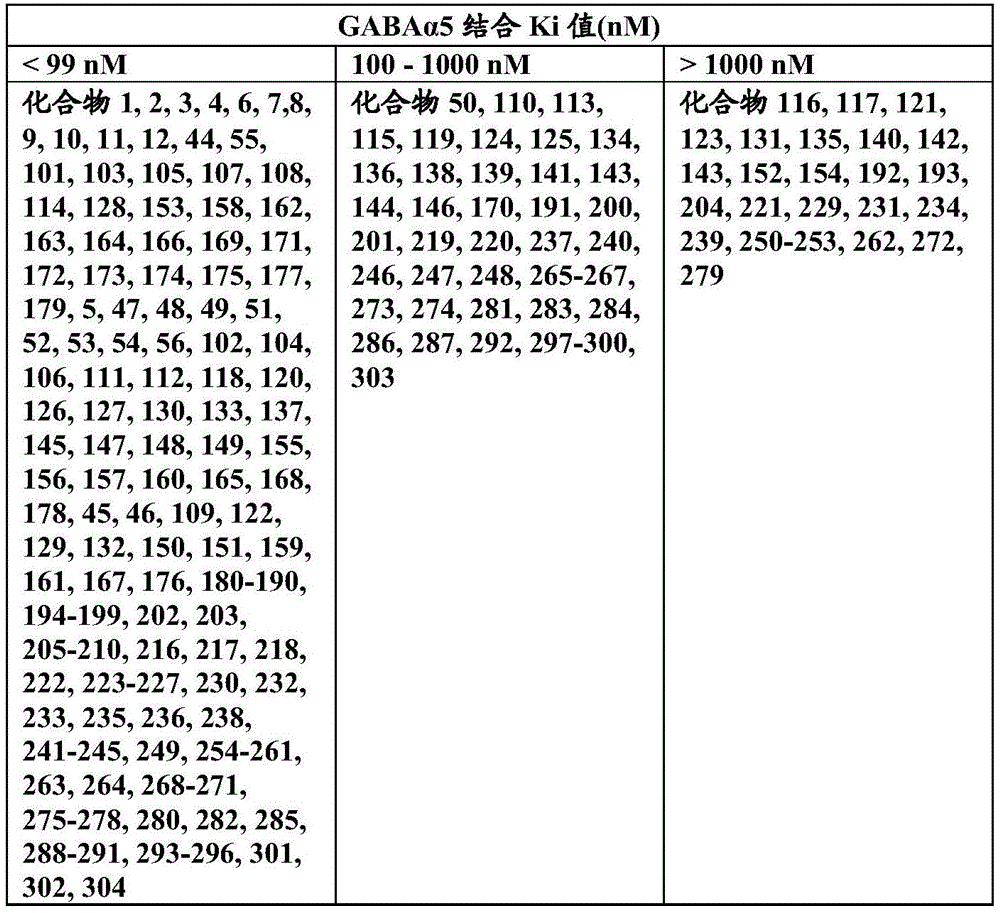
Table 2 below illustrates the range of GABA α 5 function enhancement associated with the compounds of the present invention:
TABLE 2
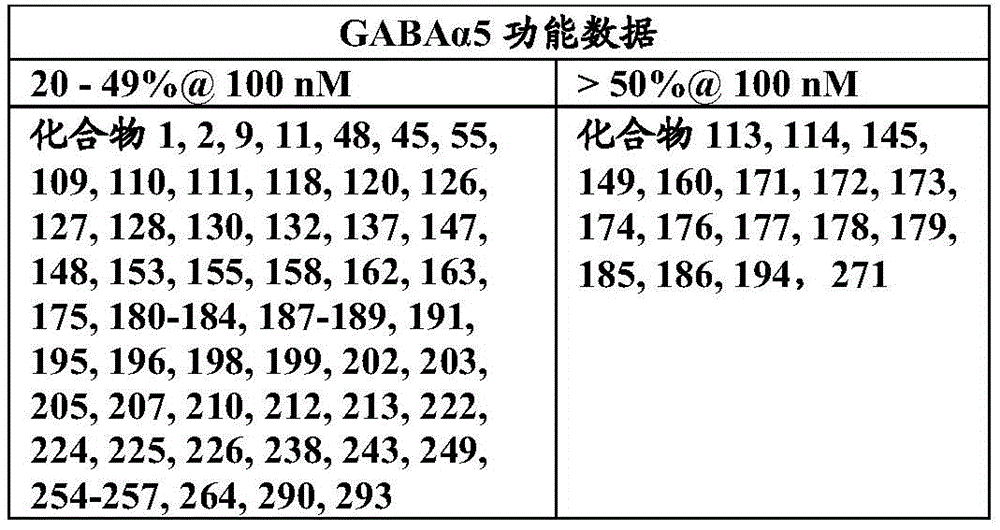
Selected compounds of the invention exhibit > 10-fold binding selectivity relative to GABA α 1, GABA α 2 or GABA α 3.
Example 107 Effect of methyl 3, 5-Diphenylpyridazine-4-carboxylate in aged-impaired (AI) rats
(A) Use of Radial Arm Maze (RAM) behavioral task methyl 3, 5-diphenylpyridazine-4-carboxylate in aged, injured rats
Function of
The effect of methyl 3, 5-diphenylpyridazine-4-carboxylate on the in vivo spatial memory retention in aged-impaired (AI) rats was evaluated in a Radial Arm Maze (RAM) behavioral task using a vehicle control and 4 different dose levels of methyl 3, 5-diphenylpyridazine-4-carboxylate (0.1mg/kg, 0.3mg/kg, 1mg/kg and 3mg/kg, intraperitoneally). RAM behavioral tasks were performed using 8 AI rats. All 5 treatment conditions (vehicle and 4 dose levels) were tested on all 8 rats.
The RAM device used consisted of 8 equally spaced arms. A raised labyrinth arm (7cm width x 75cm length) extends from each facet of the octagonal central platform (30cm diameter, 51.5cm height). The transparent side walls on the arms were 10cm high and angled at 65 ° to form valleys. A food aperture (4cm diameter, 2cm depth) is located at the distal end of each arm. Froot Loops TM(Kellogg Company) was used as a reward. Can be placed by PlexiglasTM(30cm height x 12cm width) to prevent access to any of the arms. Numerous additional maze cues surrounding the device are also provided.
AI rats were first subjected to a pre-training trial (Chappell et al Neuropharmacology 37: 481-. The pre-training trial consists of a habituation period (4 days), a training period on a standard win-replace task (18 days), and another training period (14 days) in which a brief delay phase is added between the presentation of the experimenter-specified arm subset (e.g. 5 arms available and 3 arms closed) and the completion of the 8-arm win-replace task (i.e. all 8 arms available).
In the habituation phase, rats are familiar with the maze for a period of 8-minutes, 4 consecutive days. In each of these periods, food prizes are scattered over RAM, initially on the central platform and arms, and then progressively confined to the arms. After this habituation period, a standard training protocol was used, in which food particles were located at the end of each arm. Rats received the test once a day for 18 days. Each daily trial was terminated when all 8 food particles had been obtained or when 16 selections were made or 15 minutes had elapsed. After the training period, a second training period was performed in which the memory requirements were increased by applying a short delay during the trial. At the start of each experiment, the 3 arms of the 8-arm maze were closed. Rats were allowed access to food on the 5 arms allowed during this initial "informative phase" of the experiment. The rat was then removed from the maze for 60 seconds, during which time the barrier on the maze was removed, thereby allowing access to all 8 arms. The rats were then returned to the central platform and allowed to receive a remaining food reward in this "retention test" of the test. The identity and configuration of the closed arms varied during the test.
The number of "errors" formed in the retention test period by AI rats was tracked. An error in the trial occurs if a rat enters an arm from which food has been retrieved in the delayed anterior part of the trial, or if a rat revisits an arm which it has visited in the delayed period.
After the pre-training trial was completed, rats were subjected to a trial with a more extended delay interval (i.e., 2-hour delay) between the information phase (providing some closed arms) and the retention trial (providing all arms). During the delay period, the rats were kept in their respective home cages on the trolley away from the side of the maze in the laboratory. AI rats were pretreated 30-40 minutes prior to daily testing with a single injection of 5 conditions: 1) vehicle control-5% dimethylsulfoxide, 25% polyethylene glycol 300 and 70% distilled water; 2) methyl 3, 5-diphenylpyridazine-4-carboxylate, 0.1 mg/kg; 3) methyl 3, 5-diphenylpyridazine-4-carboxylate, 0.3 mg/kg; 4) methyl 3, 5-diphenylpyridazine-4-carboxylate, 1 mg/kg); and 5) methyl 3, 5-diphenylpyridazine-4-carboxylate, 3 mg/kg; injection was by intraperitoneal (i.p.). Injections were administered every other day, with intervals of clearance days. Each AI rat was treated with all 5 conditions during the experimental period. To offset any potential bias (bia), drug action was assessed using a ascending-descending dose series, i.e., the dose series was first administered in ascending order and then repeated in descending order. Thus, there are two determinations per dose.
The retention test performance of AI rats in a 2 hour delayed version of the RAM task in the context of different doses of methyl 3, 5-diphenylpyridazine-4-carboxylate and vehicle controls was compared using parametric statistics (paired t-test) (see figure 1). The mean number of errors occurring in the trial was significantly lower for treatment with 3mg/kg of methyl 3, 5-diphenylpyridazine-4-carboxylate (mean number of errors ± Standard Error of Mean (SEM) ═ 1.31 ± 0.40) than for the vehicle control (mean number of errors ± SEM ═ 3.13 ± 0.62). Methyl 3, 5-diphenylpyridazine-4-carboxylate significantly improved memory performance at 3mg/kg relative to vehicle control treatment (t (7) ═ 4.233, p ═ 0.004).
When using 0.3mg/kg TB21007 (i.e. GABA containing alpha 5)AR inverse agonist) the therapeutic dose of 3mg/kg became ineffective when AI rats were treated concurrently. The mean number of errors made by rats treated with combination TB21007/3, 5-diphenylpyridazine-4-carboxylic acid methyl ester (0.3mg/kg TB21007 vs. 3mg/kg 3, 5-diphenylpyridazine-4-carboxylic acid methyl ester) was 2.88. + -. 1.32 and comparable to the vehicle control treated rats (3.13. + -. 1.17 mean error). Thus, the effect of methyl 3, 5-diphenylpyridazine-4-carboxylate on spatial memory is GABA Aα 5 receptor-dependent effects (see fig. 1).
A(B) Effect of methyl 3, 5-diphenylpyridazine-4-carboxylate on the occupancy of GABA receptors containing alpha 5
Animal(s) production
Adult male Long Evans rats (265. sup. 295g, Charles River, Portage, MI, n. 4/group) were used for GABAAAlpha 5 receptor occupancy studies. Rats were individually housed in an air-ventilated stainless steel grid with a 12:12 light/dark cycle. Food and water were freely accessible. In additional studies evaluating compound exposure at behaviorally active doses, young or old Long Evan rats (n-2-4/group) were used in these studies.
Compound (I)
Ro15-4513 as GABA in hippocampus and cerebellumAReceptor Occupancy (RO) tracer of the α 5 receptor site. Based on it on GABAAThe alpha 5 receptor is relative to GABA containing other alpha subunitsAReceptor selectivity and because it has been successfully used in GABA in animals and humansAThe α 5 RO study, Ro15-4513 was chosen as a tracer (see, e.g., Lingford-Hughes et al, J.Cereb.blood Flow Metab.22:878-89 (2002); Pym et al, Br.J.Pharmacol.146:817-825 (2005); and Maeda et al, Synapse 47:200-208 (2003)). Ro15-4513 (1. mu.g/kg) was dissolved in 25% hydroxy-propyl beta-cyclodextrin and administered intravenously 20 minutes before RO evaluation. Methyl 3, 5-diphenylpyridazine-4-carboxylate (0.1-10mg/kg) was synthesized by Nox Pharmaceuticals (India), dissolved in 25% hydroxy-propyl β -cyclodextrin and administered intravenously 15 minutes before tracer injection. The compound was administered in a volume of 0.5ml/kg, except for the highest dose of methyl 3, 5-diphenylpyridazine-4-carboxylate (10mg/kg), which was administered in a volume of 1ml/kg due to solubility limitations.
Tissue preparation and analysis
Rats were sacrificed by cervical dislocation 20 minutes after tracer injection. The intact brain was quickly removed and gently rinsed with sterile water. The trunk blood was collected into EDTA-coated microcentrifuge tubes and stored on wet ice until the end of the study. Hippocampus and cerebellum were dissected and stored in 1.5ml microcentrifuge tubes and placed on wet ice until tissue extraction. In drug naive (drug nasal) rats, 6 cortical brain tissue samples were collected for generating blank and standard curve samples.
Acetonitrile containing 0.1% formic acid was added to each sample in a volume of 4 times the weight of the tissue sample. For the standard curve (0.1-30ng/g) samples, the calculated standard volume was subtracted by the acetonitrile volume. The samples were homogenized (FastPrep-24, lysine Matrix D; 5.5m/s for 60 seconds; or 7-8 Watts power using a sonic probe; Fisher Scientific) and centrifuged at 14,000rpm for 16-minutes. The supernatant solution was diluted (100. mu.l) with 300. mu.l of sterile water (pH 6.5). The solution was then mixed thoroughly and analyzed by LC/MS/MS for Ro 15-4513 (tracer) and methyl 3, 5-diphenylpyridazine-4-carboxylate.
For plasma exposure, blood samples were centrifuged at 14000rpm for 16 minutes. After centrifugation, 50ul of supernatant (plasma) from each sample was added to 200 μ l acetonitrile + 0.1% formic acid. For the standard curve (1-1000ng/ml) samples, the calculated standard volume was subtracted by the acetonitrile volume. The samples were sonicated in an ultrasonic water bath for 5 minutes and then centrifuged at 16000RPM for 30 minutes. 100ul of supernatant was removed from each sample vial and placed into a new glass autosampler vial followed by 300 ul of sterile water (pH 6.5). The solution was then mixed thoroughly and analyzed by LC/MS/MS for methyl 3, 5-diphenylpyridazine-4-carboxylate.
By contrast of the hippocampus (high GABA)A Alpha 5 receptor density region) and cerebellum (with low GABA)ARegion of α 5 receptor density) and additionally by high dose GABAAThe α 5 negative allosteric modulator L-655,708(10mg/kg, intravenous) defines the complete occupancy.
Administration of vehicle followed by tracer (1 μ g/kg of Ro15-4513, intravenously) resulted in > 5-fold higher levels of Ro15-4513 in the hippocampus (1.93. + -. 0.05ng/g) compared to the cerebellum (0.36. + -. 0.02 ng/g). Methyl 3, 5-diphenylpyridazine-4-carboxylate (0.01-10mg/kg, intravenous) reduced Ro15-4513 binding in the hippocampus in a dose-dependent manner, but did not affect the cerebellar levels of Ro15-4513 for the 10mg/kg, intravenous dose (fig. 2), showing an occupancy of > 90% (fig. 3). Both methods of calculating RO gave very similar results, with an ED50 value of 1.8mg/kg or 1.1mg/kg for methyl 3, 5-diphenylpyridazine-4-carboxylate, based on a proportional method or using L-755,608 to define the occupancy.
TABLE 3% GABA using methyl 3, 5-diphenylpyridazine-4-carboxylate (0.01-10mg/kg, intravenously)A Alpha 5 receptor occupancy. Treatment of group 3, 5-Diphenyl in young Long Evans ratsHippocampus and plasma exposure of pyridazine-4-carboxylic acid methyl ester
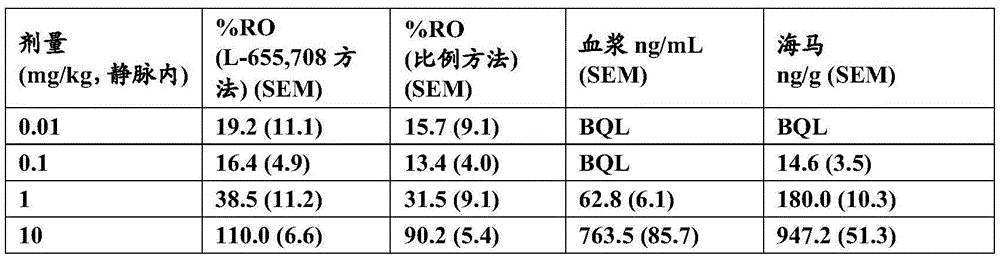
Additional studies were performed in aged Long-Evans rats to determine exposure to the relevant dose to perform in cognitive studies. Exposure in young Long-Evans rats was also determined to correlate with receptor occupancy studies performed in young Long-Evans rats. The exposure was relatively similar in young and old Long-Evans rats (table 4, figure 4). Increasing the dose from 1mg/kg to 3mg/kg (intravenously) by a factor of 3 resulted in greater exposure in hippocampus and plasma than dose rate increases in young and old rats, ranging from 4.5-fold to 6.6-fold.
TABLE 4 Hippocampus and plasma exposures of treatment groups of methyl 3, 5-diphenylpyridazine-4-carboxylate in young Long Evans rats
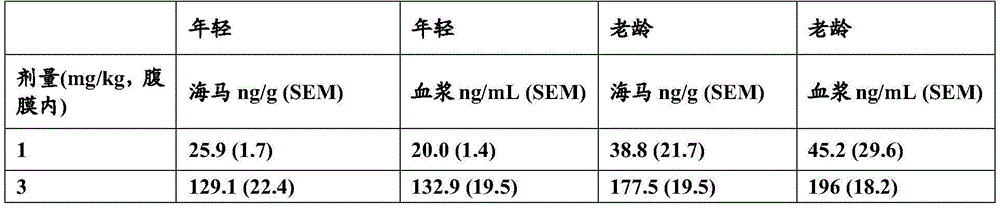
In the RO study, exposure of 180ng/g in the hippocampus (1mg/kg, i.v.) represents 32-39% receptor occupancy, depending on the method used to determine RO. This exposure is comparable to the results observed in aged rats using 3mg/kg (intravenously), suggesting that 30-40% RO is required for cognitive efficacy in this model.
These studies confirmed that methyl 3, 5-diphenylpyridazine-4-carboxylate produces GABAAa5 receptor occupancy with a dose-dependent increase. Methyl 3, 5-diphenylpyridazine-4-carboxylate also showed good brain exposure, brain/plasma ratio>1. The study further demonstrated that methyl 3, 5-diphenylpyridazine-4-carboxylate passes through GABAAPositive allosteric modulation at the a5 subtype receptor produces its cognitive enhancing effects.
Example 108 methoxy-7-methyl-9H-benzo [ f)]Imidazo [1,5-a ]][1,2,4]Triazolo [4,3-d][1,4]Diaza derivatives Effect of Ethyl-10-carboxylate in aged-impaired (AI) rats
3-methoxy-7-methyl-9H-benzo [ f]Imidazo [1,5-a ]][1,2,4]Triazolo [4,3-d][1,4]Diaza derivatives 10-Ethyl formate (corresponding to Compound No. 49 in Achermann et al, bioorg, Med, chem, Lett.,19:5746-AAn R agonist.
3-methoxy-7-methyl-9H-benzo [ f ] f using a vehicle control (25% cyclodextrin, tested 3 times: at the beginning, middle and end of the ascending/descending series) and 6 different dose levels (0.1mg/kg, 0.3mg/kg, 1mg/kg, 3mg/kg, 10mg/kg and 30mg/kg, tested 2 times per dose)]Imidazo [1,5-a ]][1,2,4]Triazolo [4,3-d][1,4]Diaza derivatives -10-Carboxylic acid Ethyl ester, evaluated in a Radial Arm Maze (RAM) behavioural task substantially similar to that described in example 107(A) 3-methoxy-7-methyl-9H-benzo [ f ]Imidazo [1,5-a ]][1,2,4]Triazolo [4,3-d][1,4]Diaza derivatives
 -effect of ethyl 10-formate on in vivo spatial memory retention in Aged Impaired (AI) rats. The same vehicle control and 3-methoxy-7-methyl-9H-benzo [ f ] was used]Imidazo [1,5-a ]][1,2,4]Triazolo [4,3-d][1,4]Diaza derivatives
 10-Ethyl formate dose the same experiment was repeated, with the vehicle control being tested 5 times and the 3mg/kg dose of 3-methoxy-7-methyl-9H-benzo [ f]Imidazo [1,5-a ]][1,2,4]Triazolo [4,3-d][1,4]
Diaza derivatives
4 trials of 10-Ethyl formate, other doses of 3-methoxy-7-methyl-9H-benzo [ f]Imidazo [1,5-a ]][1,2,4]Triazolo [4,3-d][1,4]Diaza derivatives
2 trials of 10-Ethyl formate.
Comparison of 3-methoxy-7-methyl-9H-benzo [ f ] at different doses using parametric statistics (paired t-test)]Imidazo [1,5-a ]][1,2,4]Triazolo [4,3-d][1,4]Diaza derivatives Retention test performance in 4 hour delayed form RAM task in AI rats in the context of 10-ethyl formate and vehicle control (see figure 5). 3-methoxy-7-methyl-9H-benzo [ f ] relative to vehicle control treatment]Imidazo [1,5-a ]][1,2,4]Triazolo [4,3-d][1,4]Diaza derivatives
 Ethyl 10-carboxylate significantly improved memory performance at 3mg/kg (t (7) ═ 4.13, p ═ 0.004, or t (7) ═ 3.08, p ═ 0.018), and at 10mg/kg (t (7) ═ 2.82, p ═ 0.026).
3-methoxy-7-methyl-9H-benzo [ f ] was also investigated following a procedure substantially similar to that described in example 107(B) (see above)]Imidazo [1,5-a ]][1,2,4]Triazolo [4,3-d][1,4]Diaza derivatives -10-Ethyl formate on
 GABA containing α 5AInfluence of receptor occupancy. This study demonstrated that 3-methoxy-7-methyl-9H-benzo [ f]Imidazo [1,5-a ]][1,2,4]Triazolo [4,3-d][1,4]Diaza derivatives Ethyl-10-carboxylate (0.01-10mg/kg, i.v.) reduced Ro 15-4513 binding in hippocampus, without affecting the cerebellar levels of Ro 15-4513 for the 10mg/kg (i.v.) (FIG. 6), confirming that>90% occupancy (fig. 7).
Example 109: effect of 6,6 dimethyl-3- (3-hydroxypropyl) thio-1- (thiazol-2-yl) -6, 7-dihydro-2-benzothiophen-4 (5H) -one in aged, injured rats Using Moris Water maze behavioral task
6,6 dimethyl-3- (3-hydroxypropyl) thio-1- (thiazol-2-yl) -6, 7-dihydro-2-benzothiophen-4 (5H) -one (corresponding to compound 44 in Chambers et al J. Med. chem.46:2227-2240 (2003)) is selective GABA containing α 5AAn R agonist.
The effect of 6,6 dimethyl-3- (3-hydroxypropyl) thio-1- (thiazol-2-yl) -6, 7-dihydro-2-benzothiophen-4 (5H) -one on in vivo spatial memory retention in Aged (AI) rats was evaluated in the morris water maze behavioral task. A water maze is a pool surrounded by a new set of patterns relative to the maze. The training protocol for the water maze may be based on a modified water maze task that has been shown to be hippocampal dependent (de Hoz et al, Eur. J. Neurosci.,22:745-54, 2005; Steele and Morris, Hippocampus9:118-36, 1999).
Cognitively impaired aged rats were implanted unilaterally with a cannula into the lateral ventricle. The functional brain region coordinates were 1.0mm posterior to bregma, 1.5mm lateral to the midline and 3.5mm ventral to the cranial surface. After approximately 1 week of recovery, rats were pre-trained in the water maze for 2 days (6 trials per day) to locate a submerged escape platform hidden beneath the surface of the pool, with the escape platform position changing daily. Intracerebroventricular (ICV) infusions were not administered during the pre-training period.
After pre-training, rats received ICV infusions of 100 μ g of 6,6 dimethyl-3- (3-hydroxypropyl) thio-1- (thiazol-2-yl) -6, 7-dihydro-2-benzothiophen-4 (5H) -one (n ═ 6) or vehicle DMSO (n ═ 5) in 5 μ l DMSO 40min prior to water maze training and testing. Training consisted of 8 trials per day for 2 days with the hidden escape platform remaining in the same location. Rats were given 60 seconds to locate the platform with a 60 second inter-trial interval. The rats were administered a probe test (120 seconds) 24h after training was completed, wherein the escape platform was removed. During the training process, there were 4 blocks with 4 training trials per block.
Rats treated with vehicle and 6,6 dimethyl-3- (3-hydroxypropyl) thio-1- (thiazol-2-yl) -6, 7-dihydro-2-benzothiophen-4 (5H) -one found the escape platform almost simultaneously at the beginning of training (block 1). In this block of training, rats treated with vehicle and 6,6 dimethyl-3- (3-hydroxypropyl) thio-1- (thiazol-2-yl) -6, 7-dihydro-2-benzothiophen-4 (5H) -one both spent about 24 seconds to find an escape platform. However, rats treated with 6,6 dimethyl-3- (3-hydroxypropyl) thio-1- (thiazol-2-yl) -6, 7-dihydro-2-benzothiophen-4 (5H) -one were able to find the platform at the end of training (block 4) more skillfully (i.e. faster) than those treated with vehicle alone. In block 4, rats treated with 6,6 dimethyl-3- (3-hydroxypropyl) thio-1- (thiazol-2-yl) -6, 7-dihydro-2-benzothiophen-4 (5H) -one took about 9.6 seconds to find the escape platform, while rats treated with vehicle took about 19.69 seconds. These results suggest that 6,6 dimethyl-3- (3-hydroxypropyl) thio-1- (thiazol-2-yl) -6, 7-dihydro-2-benzothiophen-4 (5H) -one improved the learning of the water maze task in rats (see fig. 8 (a)).
In a test assay 24h after training, the escape platform was removed. The exploration/swimming mode of the rat was used to measure whether the rat remembers the location where the escape platform was located during pre-test training in order to test the long term memory of the rat. In this trial, the "target annular region" was a designated region 1.5 times the size of the escape platform around the region where the platform was located in the pre-trial training. The "opposing annular region" is a control region of the same size as the target annular region, which is located on the opposite side of the target annular region in the well. If the rat has good long-term memory, it will tend to explore the area around where the platform was located during pre-trial training (i.e., the "target" annulus; not the "opposite" annulus). "time in the annular region" is the amount of time a rat spends in the target or opposing annular region area in seconds. The "number of cross-passes (#)" in the circular region is the number of times the rat swims across the target or opposite circular region area.
The rats that received vehicle spent the same time in the target and opposite annular regions, indicating that these rats did not appear to remember where the platform was in during pre-trial training. In contrast, rats treated with 6,6 dimethyl-3- (3-hydroxypropyl) thio-1- (thiazol-2-yl) -6, 7-dihydro-2-benzothiophen-4 (5H) -one spent significantly more time in the target annular region and crossed more often through the "target annular region" than they spent time in the "opposite annular region" or the number of times they crossed through the "opposite annular region". These results suggest that 6,6 dimethyl-3- (3-hydroxypropyl) thio-1- (thiazol-2-yl) -6, 7-dihydro-2-benzothiophen-4 (5H) -one improved the long-term memory of rats in the water maze task (see, fig. 8(B) and 8 (C)).
The compounds of the present invention exhibit p-GABAAPositive allosteric modulation of the α 5 receptor (see, e.g., example 106). These compounds will increase GABA in GABAAEffects at the α 5 receptor. Thus, the compounds of the present invention will produce cognitive enhancement in elderly, impaired animals (such as rats) similar to other GABAAThe effects of alpha 5 receptor selective agonists such as methyl 3, 5-diphenylpyridazine-4-carboxylate, 3-methoxy-7-methyl-9H-benzo [ f]Imidazo [1,5-a ]][1,2,4]Triazolo [4,3-d][1,4]Diaza derivatives -10-carboxylic acid ethyl ester and 6,6 dimethyl-3- (3-hydroxypropyl) thio-1- (thiazol-2-yl) -6, 7-dihydro-2-benzothien-4 (5H) -one (see, e.g., examples 28-30).
The present application also includes the following specific embodiments:
1. a compound of formula I or a pharmaceutically acceptable salt, hydrate, solvate, polymorph, isomer or combination thereof:
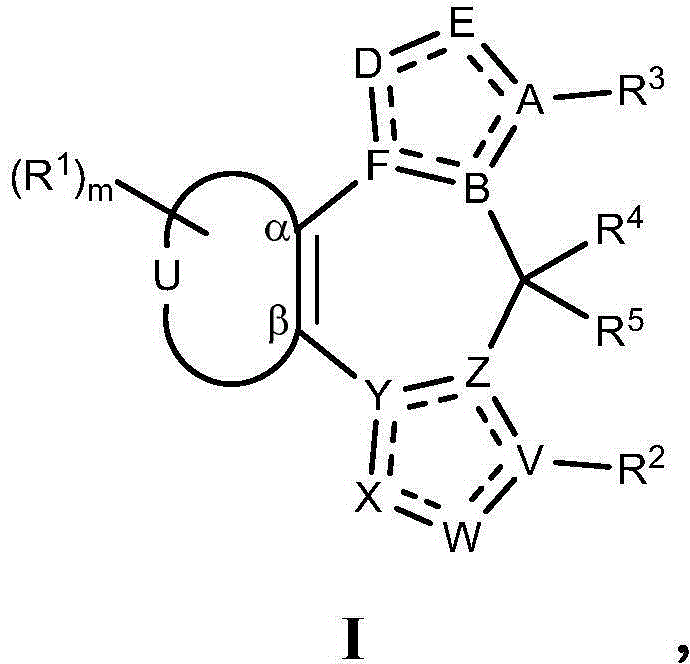
wherein:
u and the two carbon atoms designated by α and β together form a 5 or 6 membered aromatic ring having 0-2 nitrogen atoms;
a is C, CR6Or N;
b and F are each independently selected from C, CR6And N, wherein B and F cannot both be N;
d is N, NR7、O、CR6Or C (R)6)2;
E is N, NR7、CR6Or C (R)6)2;
W is N, NR7、CR6Or C (R)6)2;
X is N, NR7、O、CR6Or C (R)6)2;
Y and Z are each independently selected from C, CR 6And N, wherein Y and Z cannot both be N;
v is C or CR6,
Or when Z is C or CR6When V is C, CR6Or N;
wherein when the ring formed by X, Y, Z, V and W is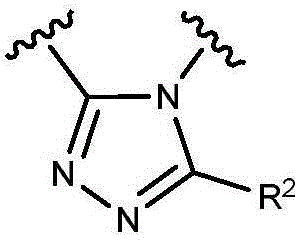 Then R2is-OR8、-SR8、-(CH2)nOR8、-(CH2)nO(CH2)nR8、-(CH2)pR8And- (CH)2)nN(R”)R10(ii) a And wherein R2Independently substituted with 0-5R';
m and n are independently an integer selected from 0 to 4;
p is an integer selected from 2 to 4;
key with a key body Each occurrence of (a) is a single or double bond;
R1、R2、R4and R5Each occurrence of (a) is independently selected from: halogen, -R, -OR, -NO2、-NCS、-CN、-CF3、-OCF3、-SiR3、-N(R)2、-SR、-SOR、-SO2R、-SO2N(R)2、-SO3R、-(CR2)1-3R、-(CR2)1-3-OR、-(CR2)0-3-C(O)NR(CR2)0-3R、-(CR2)0-3-C(O)NR(CR2)0-3OR、-C(O)R、-C(O)C(O)R、-C(O)CH2C(O)R、-C(S)R、-C(S)OR、-C(O)OR、-C(O)C(O)OR、-C(O)C(O)N(R)2、-OC(O)R、-C(O)N(R)2、-OC(O)N(R)2、-C(S)N(R)2、-(CR2)0-3NHC(O)R、-N(R)N(R)COR、-N(R)N(R)C(O)OR、-N(R)N(R)CON(R)2、-N(R)SO2R、-N(R)SO2N(R)2、-N(R)C(O)OR、-N(R)C(O)R、-N(R)C(S)R、-N(R)C(O)N(R)2、-N(R)C(S)N(R)2、-N(COR)COR、-N(OR)R、-C(=NH)N(R)2、-C(O)N(OR)R、-C(=NOR)R、-OP(O)(OR)2、-P(O)(R)2、-P(O)(OR)2and-P (O), (H), (OR);
R3absent or selected from:
halogen, -R, -OR, -NO2、-NCS、-CN、-CF3、-OCF3、-SiR3、-N(R)2、-SR、-SOR、-SO2R、-SO2N(R)2、-SO3R、-(CR2)1-3R、-(CR2)1-3-OR、-(CR2)0-3-C(O)NR(CR2)0-3R、-(CR2)0-3-C(O)NR(CR2)0- 3OR、-C(O)R、-C(O)C(O)R、-C(O)CH2C(O)R、-C(S)R、-C(S)OR、-C(O)OR、-C(O)C(O)OR、-C(O)C(O)N(R)2、-OC(O)R、-C(O)N(R)2、-OC(O)N(R)2、-C(S)N(R)2、-(CR2)0-3NHC(O)R、-N(R)N(R)COR、-N(R)N(R)C(O)OR、-N(R)N(R)CON(R)2、-N(R)SO2R、-N(R)SO2N(R)2、-N(R)C(O)OR、-N(R)C(O)R、-N(R)C(S)R、-N(R)C(O)N(R)2、-N(R)C(S)N(R)2、-N(COR)COR、-N(OR)R、-C(=NH)N(R)2、-C(O)N(OR)R、-C(=NOR)R、-OP(O)(OR)2、-P(O)(R)2、-P(O)(OR)2and-P (O), (H), (OR);
each R6Independently is-H or- (C1-C6) alkyl;
each R7Independently is-H or- (C1-C6) alkaneA group;
each R8Independently is- (C1-C6) alkyl, - (C3-C10) -cycloalkyl, (C6-C10) -aryl or 5-10 membered heteroaryl, wherein R8Independently for each occurrence of (a) is substituted with 0-5R';
each R10Independently is- (C3-C10) -cycloalkyl-, 3-10 membered heterocyclyl-, (C6-C10) -aryl, or 5-10 membered heteroaryl, wherein R is10Independently for each occurrence of (a) is substituted with 0-5R';
each R is independently selected from:
H-,
(C1-C12) -aliphatic radical-,
(C3-C10) -cycloalkyl-,
(C3-C10) -cycloalkenyl-,
[ (C3-C10) -cycloalkyl ] - (C1-C12) -aliphatic-,
[ (C3-C10) -cycloalkenyl ] - (C1-C12) -aliphatic-,
[ (C3-C10) -cycloalkyl ] -O- (C1-C12) -aliphatic-,
[ (C3-C10) -cycloalkenyl ] -O- (C1-C12) -aliphatic-,
(C6-C10) -aryl-,
(C6-C10) -aryl- (C1-C12) aliphatic-,
(C6-C10) -aryl-O- (C1-C12) aliphatic-,
(C6-C10) -aryl-N (R') - (C1-C12) aliphatic-,
3-to 10-membered heterocyclyl-,
(3-10 membered heterocyclyl) - (C1-C12) aliphatic-,
(3-10 membered heterocyclyl) -O- (C1-C12) aliphatic-,
(3-10 membered heterocyclyl) -N (R') - (C1-C12) aliphatic-,
a 5-to 10-membered heteroaryl-,
(5-10 membered heteroaryl) - (C1-C12) -aliphatic-,
(5-10 membered heteroaryl) -O- (C1-C12) -aliphatic-; and
(5-10 membered heteroaryl) -N (R ") - (C1-C12) -aliphatic-;
wherein said heterocyclyl has 1-4 substituents independently selected from N, NH, O, S, SO and SO2And said hetero atomAryl has 1-4 heteroatoms independently selected from N, NH, O, and S;
wherein each occurrence of R is independently substituted with 0-5R';
or when two R groups are bound to the same atom, the two R groups may be taken together with the atom to which they are bound to form a compound having 0-4 substituents independently selected from N, NH, O, S, SO, and SO2A 3-10 membered aromatic or non-aromatic ring of a heteroatom of (a), wherein said ring is optionally substituted with 0-5R' and wherein said ring is optionally fused with (C6-C10) aryl, 5-10 membered heteroaryl, (C3-C10) cycloalkyl or 3-10 membered heterocyclyl;
Wherein each occurrence of R' is independently selected from the group consisting of halogen, -R ", -OR", oxo, -CH2OR”、-CH2NR”2、-C(O)N(R”)2、-C(O)OR”、-NO2、-NCS、-CN、-CF3、-OCF3and-N (R')2;
Wherein each occurrence of R' is independently selected from the group consisting of H, - (C1-C6) -alkyl, - (C1-C6) -aliphatic, (C3-C6) -cycloalkyl, 3-6 membered heterocyclyl, 5-10 membered heteroaryl-, (C6-C10) -aryl-, (5-10 membered heteroaryl) - (C1-C6) -alkyl-, (C6-C10) -aryl- (C1-C6) -alkyl-, (5-10 membered heteroaryl) -O- (C1-C6) -alkyl-, and (C6-C10) -aryl-O- (C1-C6) -alkyl-, wherein each occurrence of R' is independently substituted with 0-3 substituents selected from the group consisting of: halogen, -Ro、-ORoOxo, -CH2ORo、-CH2N(Ro)2、-C(O)N(Ro)2、-C(O)ORo、-NO2、-NCS、-CN、-CF3、-OCF3and-N (R)o)2Wherein R isoEach occurrence of (a) is independently selected from: - (C1-C6) -aliphatic, (C3-C6) -cycloalkyl, 3-6 membered heterocyclyl, 5-10 membered heteroaryl-and (C6-C10) -aryl-.
2. A compound of formula II or a pharmaceutically acceptable salt, hydrate, solvate, polymorph, isomer or combination thereof:
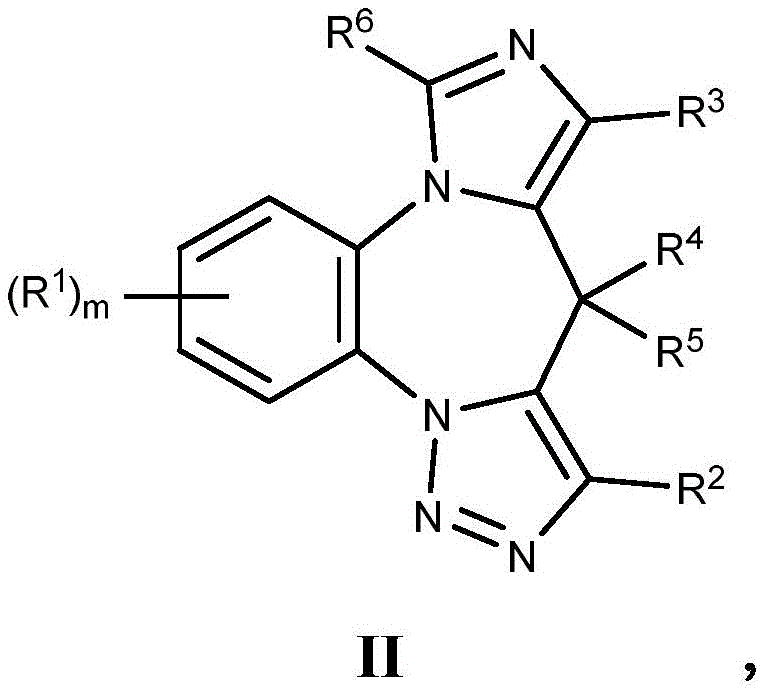
wherein:
m is 0 to 3;
each R1Independently selected from: halogen, -H, - (C1-C6) alkyl, -OH, -O ((C1-C6) alkyl), -NO2、-CN、-CF3and-OCF3Wherein R is1Independently substituted with 0-5R';
R2selected from: -H, halogen, - (C1-C6) alkyl, -OH, -O ((C1-C6) alkyl), -C (O) O ((C1-C6) alkyl), -C (O) NR 2(C6-C10) -aryl-, (C6-C10) -aryl- (C1-C12) aliphatic-, (C6-C10) -aryl-O- (C1-C12) aliphatic-, (C6-C10) -aryl-N (R ') - (C1-C12) aliphatic-, (5-10 membered heteroaryl) - (C1-C12) aliphatic-, (5-10 membered heteroaryl) -O- (C1-C12) aliphatic-, (5-10 membered heteroaryl) -N (R') - (C1-C12) aliphatic-, (3-10 membered heterocyclyl) - (C1-C12) aliphatic-, (3-10 membered heterocyclyl) -O- (C1-C12) aliphatic-and (3-10 membered heterocyclyl) -N (R) N (R) is ") - (C1-C12) aliphatic group-,
wherein R is2Independently substituted with 0-5R';
R3selected from: - (C1-C6) alkyl, - (C2-C6) alkenyl, -C ≡ CH, -CN, halogen, -SO2((C6-C10) -aryl), -SO2((C1-C6) alkyl), -C (O) N ((C1-C6) alkyl)2、-C(O)NH2-C (O) O ((C1-C6) alkyl), -C (O) ((C1-C6) alkyl), - (C6-C10) aryl, 5-10 membered heteroaryl, 5-10 membered heterocyclyl, wherein R is hydrogen, alkyl or alkoxy3Independently substituted with 0-5R';
R4and R5Each independently selected from-H, halogen, and- (C1-C6) alkyl;
R6selected from-H and- (C1-C6) alkyl;
each R is independently selected from:
H-,
(C1-C12) -aliphatic radical-,
(C3-C10) -cycloalkyl-,
(C3-C10) -cycloalkenyl-,
[ (C3-C10) -cycloalkyl ] - (C1-C12) -aliphatic-,
[ (C3-C10) -cycloalkenyl ] - (C1-C12) -aliphatic-,
[ (C3-C10) -cycloalkyl ] -O- (C1-C12) -aliphatic-,
[ (C3-C10) -cycloalkenyl ] -O- (C1-C12) -aliphatic-,
(C6-C10) -aryl-,
(C6-C10) -aryl- (C1-C12) aliphatic-,
(C6-C10) -aryl-O- (C1-C12) aliphatic-,
(C6-C10) -aryl-N (R') - (C1-C12) aliphatic-,
3-to 10-membered heterocyclyl-,
(3-10 membered heterocyclyl) - (C1-C12) aliphatic-,
(3-10 membered heterocyclyl) -O- (C1-C12) aliphatic-,
(3-10 membered heterocyclyl) -N (R') - (C1-C12) aliphatic-,
a 5-to 10-membered heteroaryl-,
(5-10 membered heteroaryl) - (C1-C12) -aliphatic-,
(5-10 membered heteroaryl) -O- (C1-C12) -aliphatic-; and
(5-10 membered heteroaryl) -N (R ") - (C1-C12) -aliphatic-;
wherein said heterocyclyl has 1-4 substituents independently selected from N, NH, O, S, SO and SO2And said heteroaryl has 1-4 heteroatoms independently selected from N, NH, O, and S;
wherein each occurrence of R is independently substituted with 0-5R';
or when two R groups are bound to the same atom, the two R groups may be taken together with the atom to which they are bound to form a compound having 0-4 substituents independently selected from N, NH, O, S, SO, and SO2A 3-10 membered aromatic or non-aromatic ring of a heteroatom of (a), wherein said ring is optionally substituted with 0-5R' and wherein said ring is optionally fused with (C6-C10) aryl, 5-10 membered heteroaryl, (C3-C10) cycloalkyl or 3-10 membered heterocyclyl;
Wherein each occurrence of R' is independently selected from the group consisting of halogen, -R ", -OR", oxo, -CH2OR”、-CH2NR”2、-C(O)N(R”)2、-C(O)OR”、-NO2、-NCS、-CN、-CF3、-OCF3and-N (R')2;
Wherein each occurrence of R' is independently selected from the group consisting of H, - (C1-C6) -alkyl, (C3-C6) -cycloalkyl, 3-6 membered heterocyclyl, 5-10 membered heteroaryl-, (C6-C10) -aryl-, (5-10 membered heteroaryl) - (C1-C6) -alkyl-, (C6-C10) -aryl- (C1-C6) -alkyl-, (5-10 membered heteroaryl) -O- (C1-C6) -alkyl-and (C6-C10) -aryl-O- (C1-C6) -alkyl-.
3. A compound of formula IV or a pharmaceutically acceptable salt, hydrate, solvate, polymorph, isomer or combination thereof:
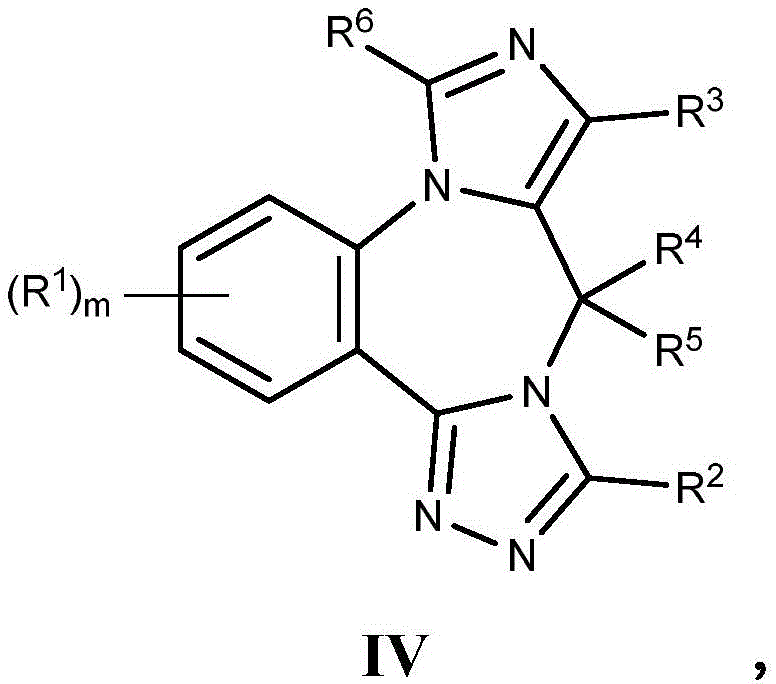
wherein:
m is 0 to 3;
each R1Independently selected from: halogen, -H, - (C1-C6) alkyl, -C ≡ CH, -OH, -O ((C1-C6) alkyl), -NO2、-CN、-CF3、-OCF3Wherein R is1Independently substituted with 0-5R';
R2is selected from-OR8、-SR8、-(CH2)nOR8、-(CH2)nO(CH2)nR8、-(CH2)pR8And- (CH)2)nN(R”)R10Wherein n is an integer selected from 0 to 4; p is an integer selected from 2 to 4; each R8Independently is- (C1-C6) alkyl, - (C3-C10) -cycloalkyl, (C6-C10) -aryl or 5-10 membered heteroaryl, wherein R8Independently for each occurrence of (a) is substituted with 0-5R'; each R10Independently is- (C3-C10) -cycloalkyl-, 3-10 membered heterocyclyl-, (C6-C10) -aryl, or 5-10 membered heteroaryl, wherein R is10Independently for each occurrence of (a) is substituted with 0-5R'; and wherein R 2Independently substituted with 0-5R';
R3selected from: -H, -CN, halogen (e.g., Br), -C1-C6 alkyl, -C ≡ CH, -SO2((C1-C6) alkyl), -C (O) N ((C1-C6) alkyl)2) -C (O) NH ((C1-C6) aliphatic group)2(C6-C10) -aryl- (C1-C12) aliphatic group-, -C (O) ((C1-C6) alkyl), -C (O) O ((C1-C12)6) Alkyl), 5 or 6 membered heterocyclyl and 5 or 6 membered heteroaryl; and wherein R3Independently substituted with 0-5R';
R4and R5Each independently selected from-H, halogen, and- (C1-C6) alkyl;
R6selected from-H and- (C1-C6) alkyl;
wherein each occurrence of R' is independently selected from the group consisting of halogen, -R ", -OR", oxo, -CH2OR”、-CH2NR”2、-C(O)N(R”)2、-C(O)OR”、-NO2、-NCS、-CN、-CF3、-OCF3and-N (R')2;
Wherein each occurrence of R' is independently selected from the group consisting of H, - (C1-C6) -alkyl, (C3-C6) -cycloalkyl, 3-6 membered heterocyclyl, 5-10 membered heteroaryl-, (C6-C10) -aryl-, (5-10 membered heteroaryl) - (C1-C6) -alkyl-, (C6-C10) -aryl- (C1-C6) -alkyl-, (5-10 membered heteroaryl) -O- (C1-C6) -alkyl-and (C6-C10) -aryl-O- (C1-C6) -alkyl-.
4. A compound, or a pharmaceutically acceptable salt, hydrate, solvate, polymorph, isomer, or combination thereof, selected from the group consisting of:

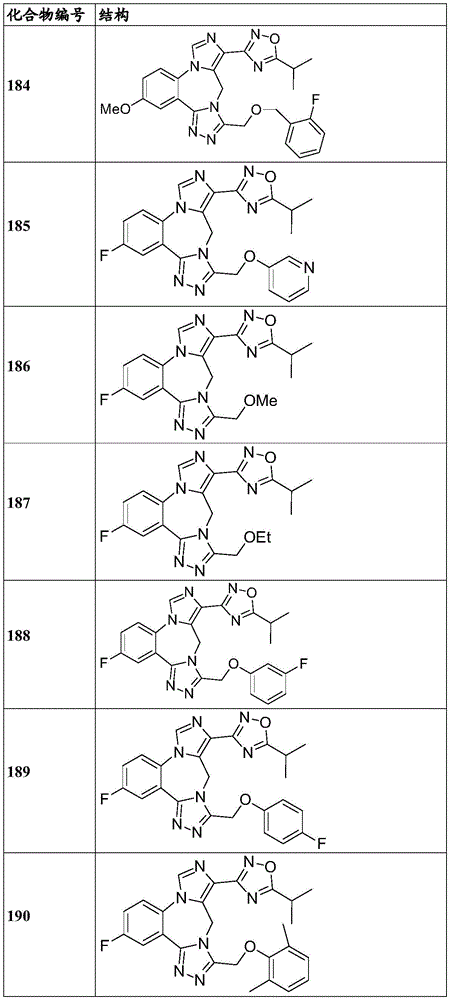
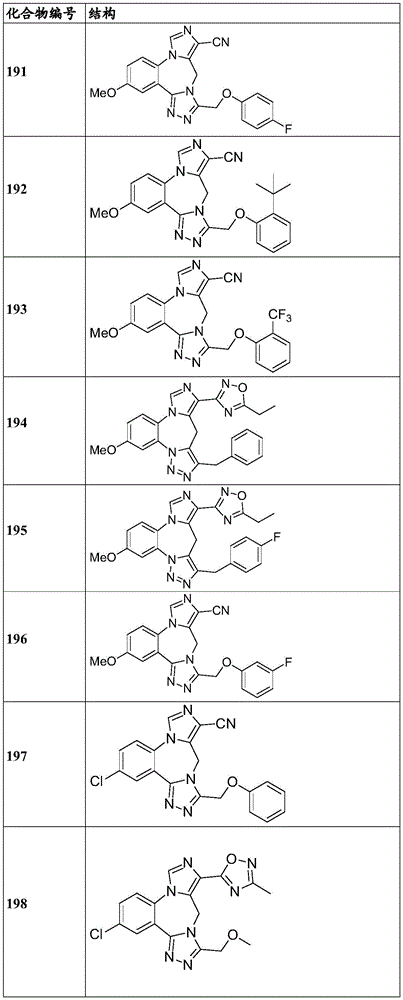
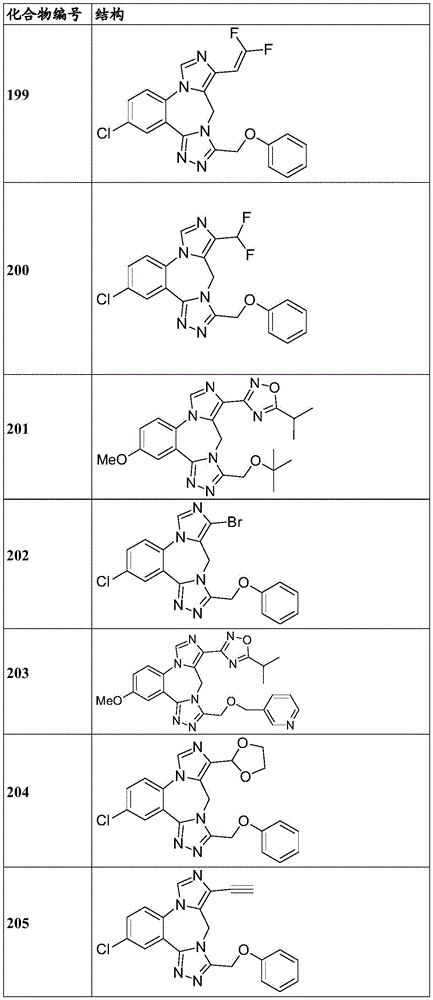
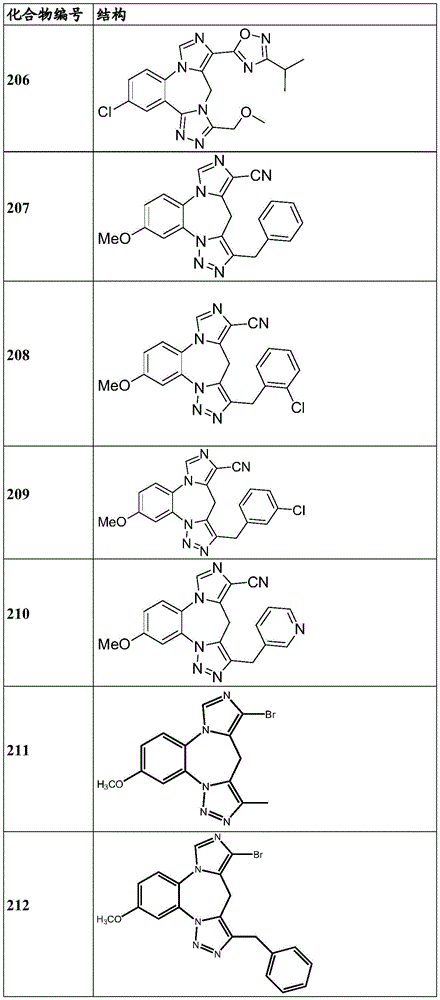

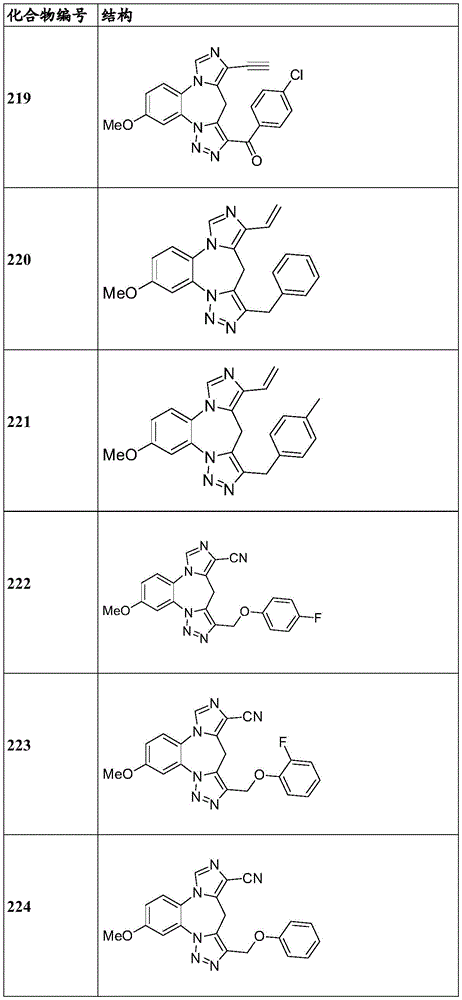
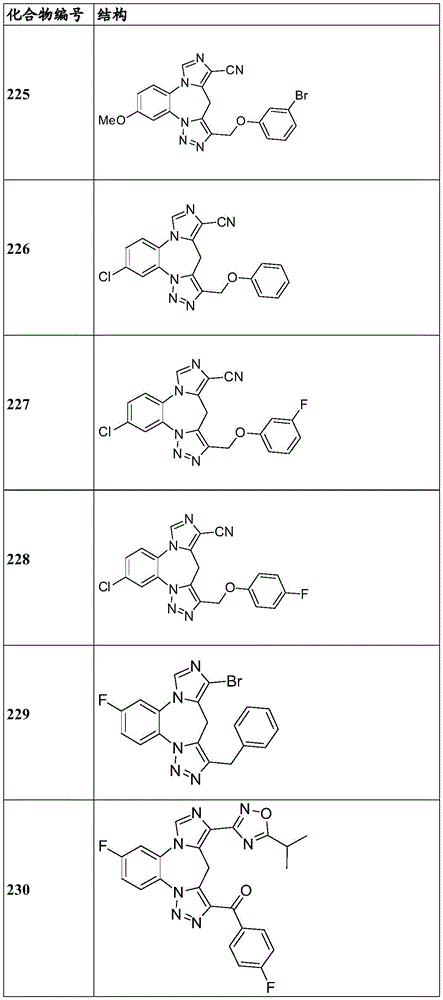

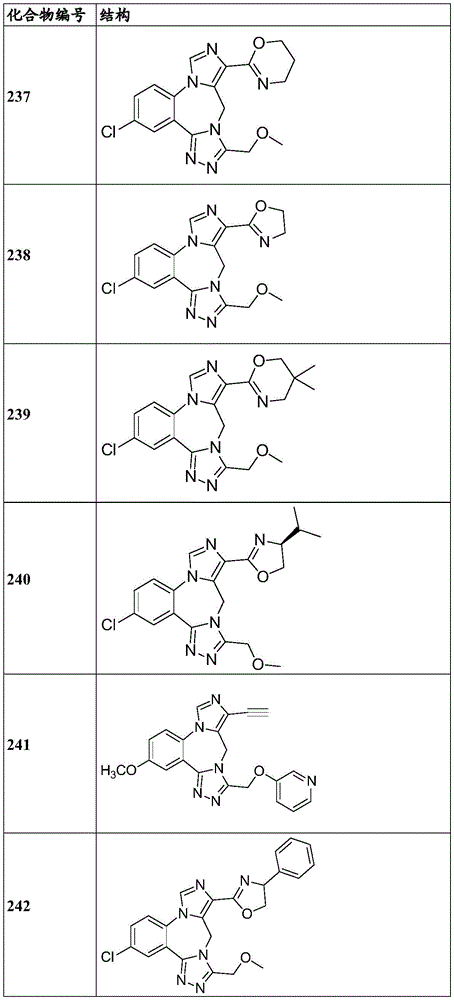
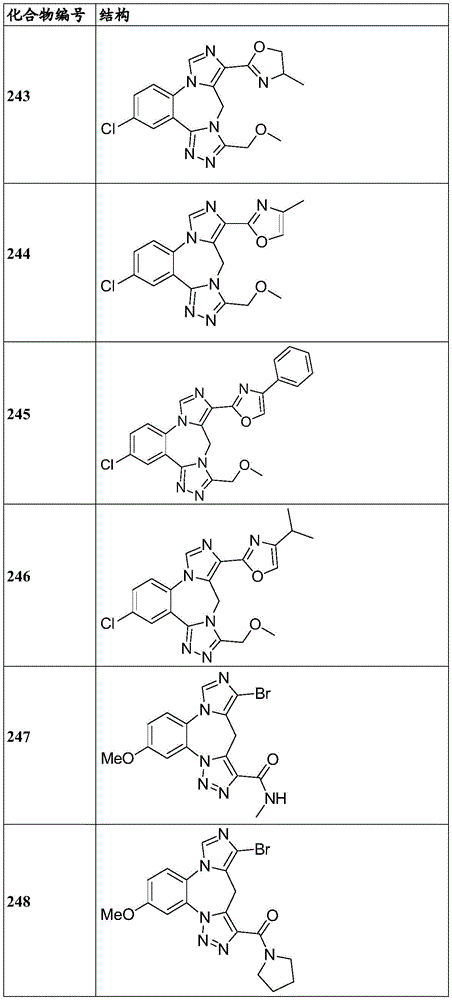
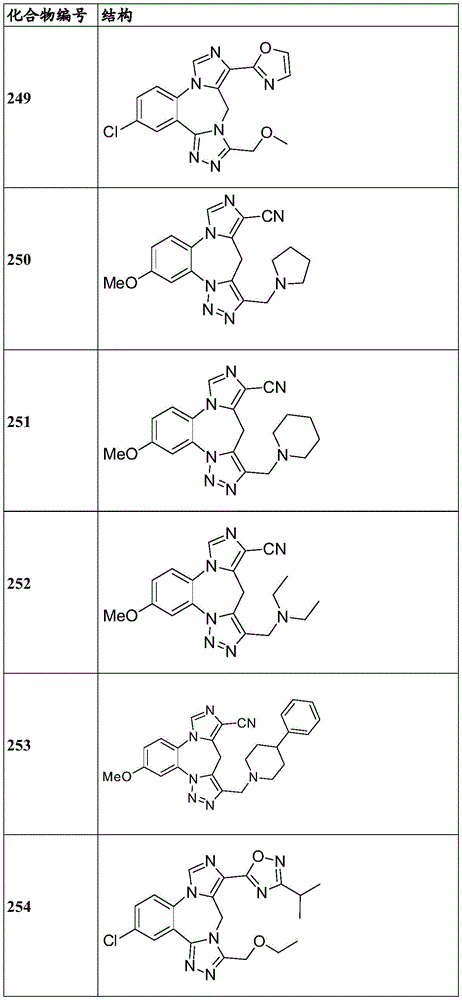

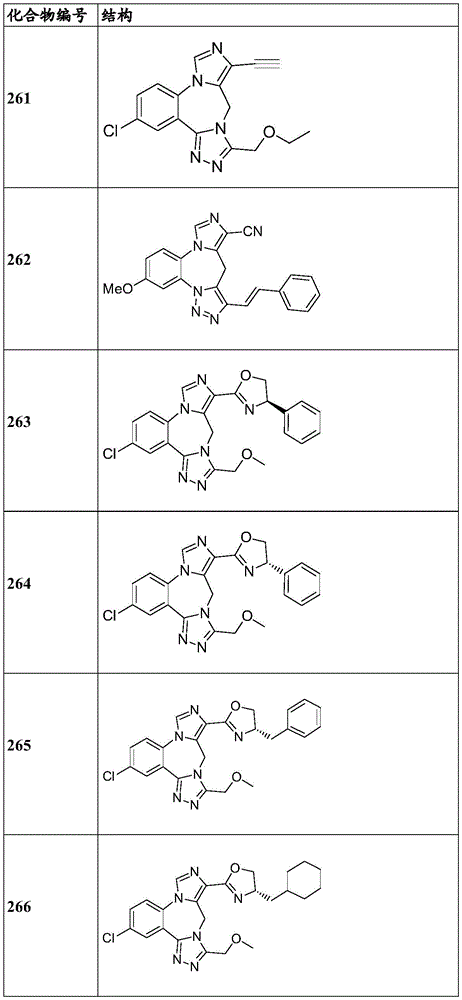


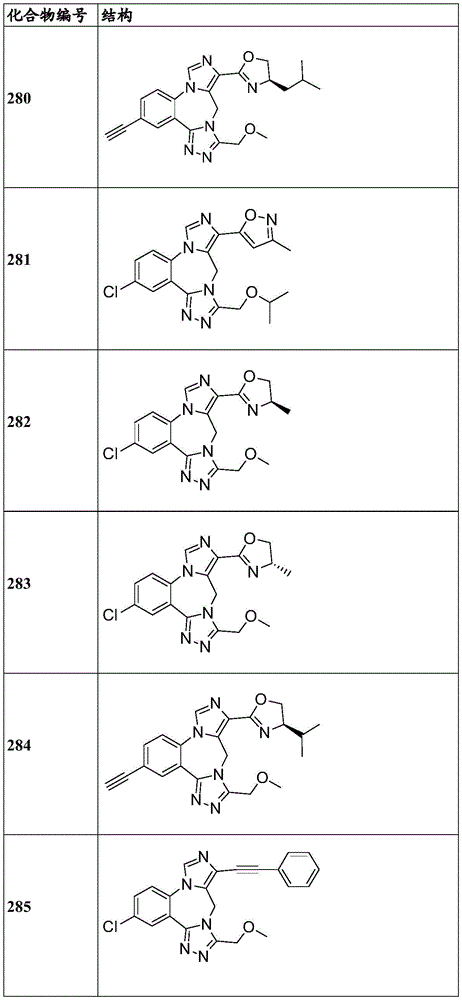
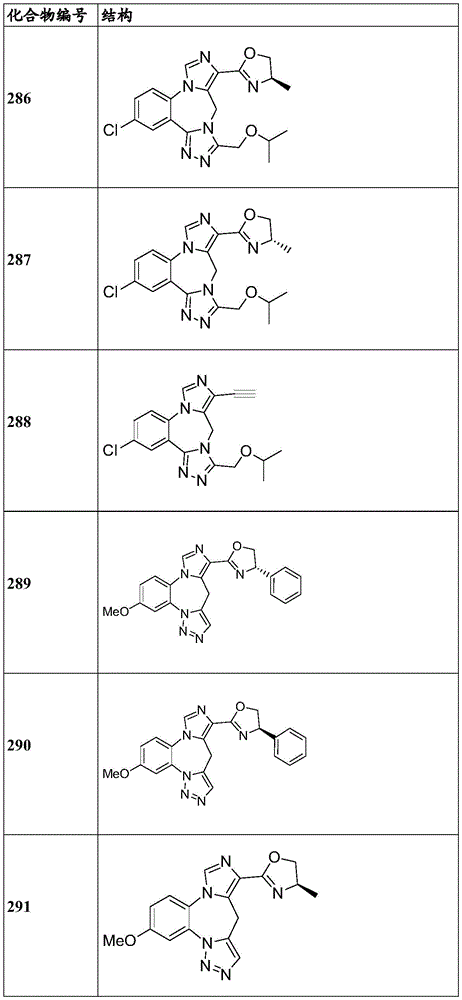
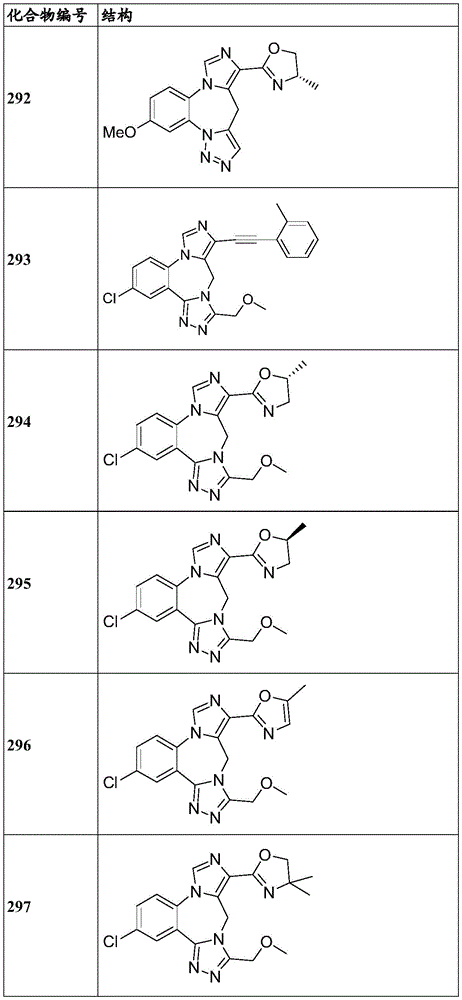
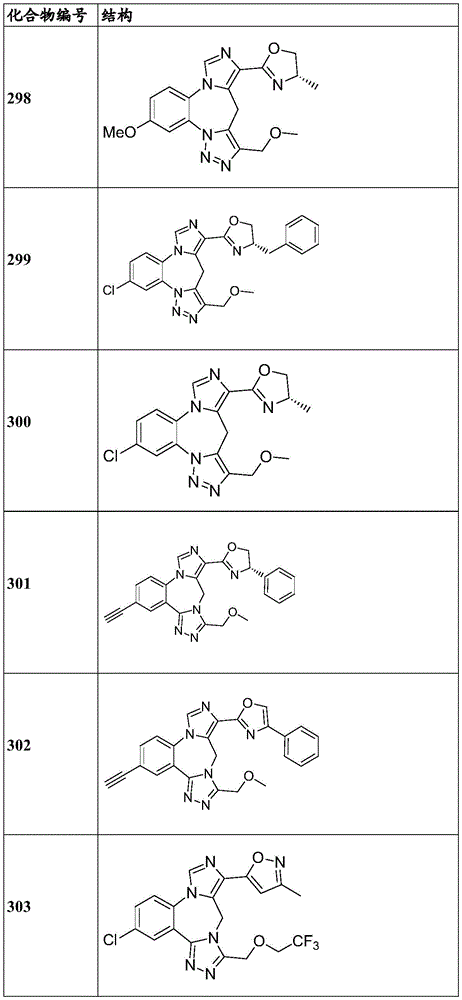

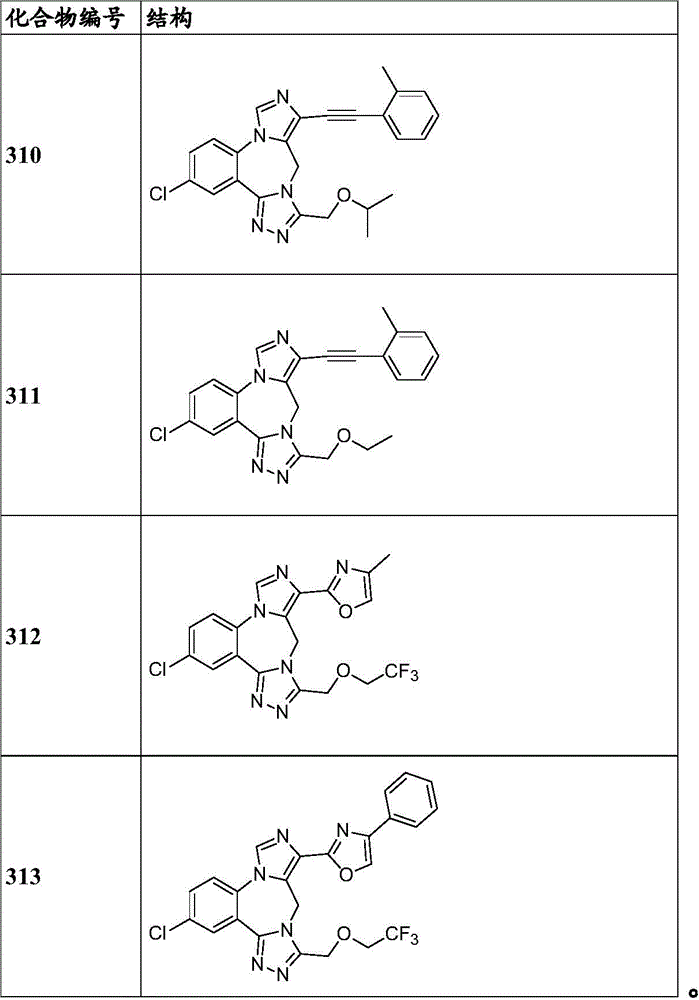
5. a compound, or a pharmaceutically acceptable salt, hydrate, solvate, polymorph, isomer, or combination thereof, selected from the group consisting of:

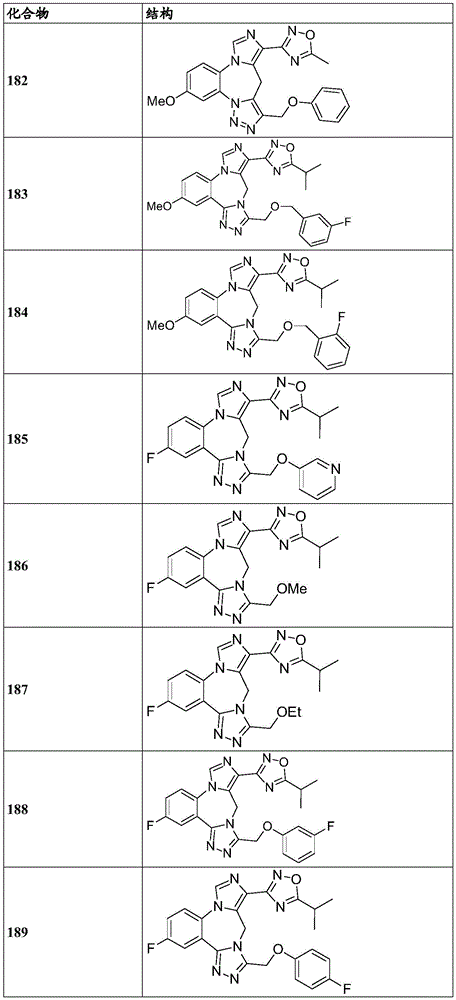
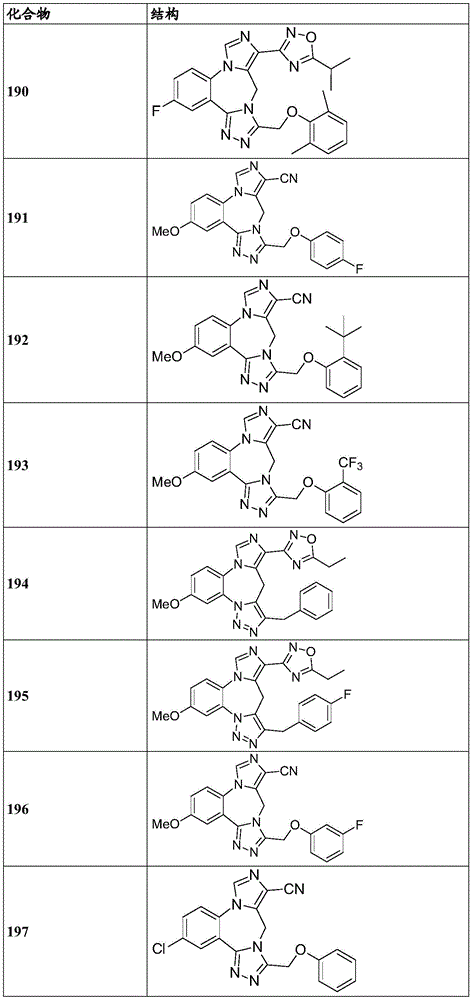

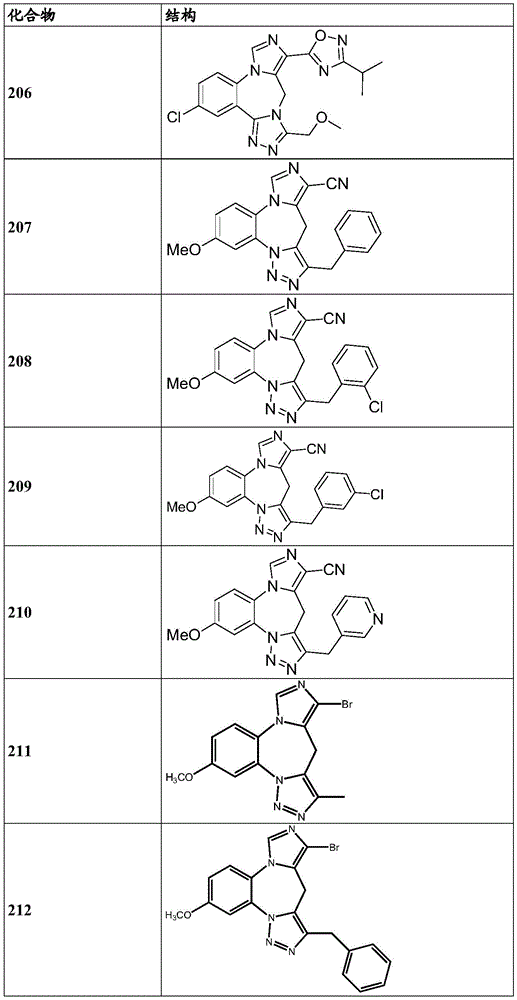
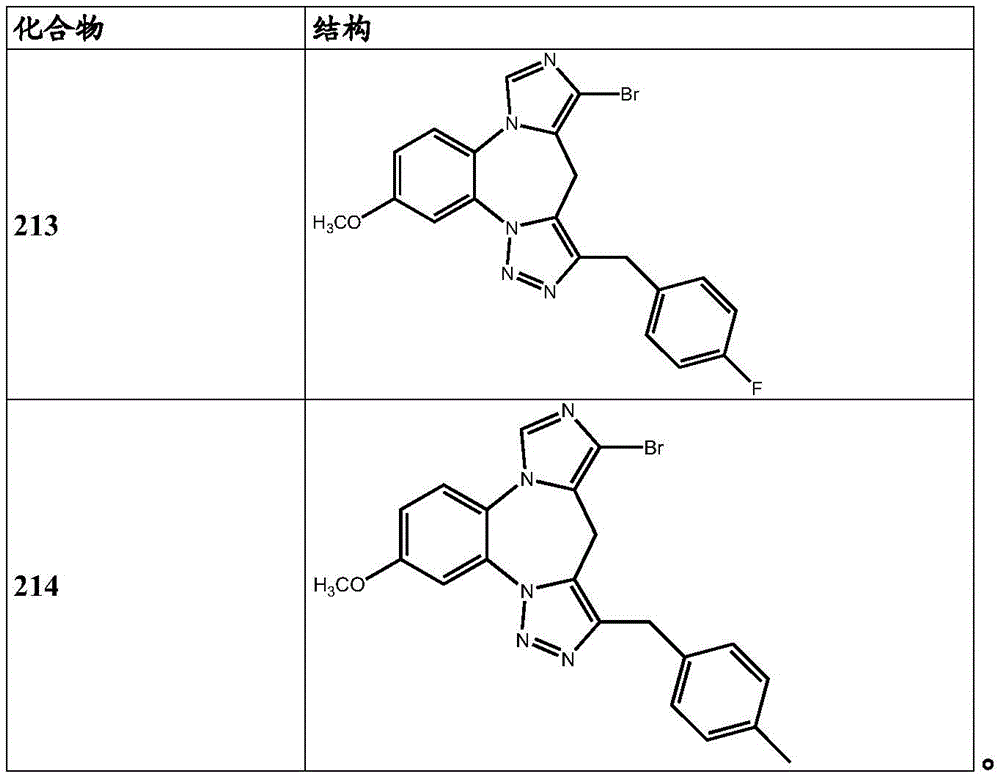
6. A pharmaceutical composition comprising a therapeutically effective amount of a compound according to any one of claims 1-5, or a pharmaceutically acceptable salt, hydrate, solvate, polymorph, isomer or combination thereof; and an acceptable carrier, adjuvant or vehicle.
7. The pharmaceutical composition according to embodiment 6, wherein the composition further comprises a second therapeutic agent.
8. The pharmaceutical composition according to embodiment 7, wherein the second therapeutic agent is selected from the group consisting of antipsychotics, memantine, and acetylcholinesterase inhibitors (AChE-I).
9. The pharmaceutical composition according to embodiment 7, wherein the second therapeutic agent is an antipsychotic selected from aripiprazole, olanzapine and ziprasidone and pharmaceutically acceptable salts, hydrates, solvates and polymorphs thereof.
10. The pharmaceutical composition according to embodiment 7, wherein the second therapeutic agent is memantine, a pharmaceutically acceptable salt, hydrate, solvate, or polymorph thereof.
11. The pharmaceutical composition according to embodiment 7, wherein the second therapeutic agent is AChE-I selected from the group consisting of donepezil, galantamine and rivastigmine, and pharmaceutically acceptable salts, hydrates, solvates and polymorphs thereof.
12. A method of treating cognitive impairment associated with a Central Nervous System (CNS) disorder in a subject in need thereof, the method comprising the steps of: administering a compound according to any one of embodiments 1-5 or a pharmaceutical composition according to any one of embodiments 6-11.
13. The method according to specific embodiment 12, wherein the CNS disorder is age-related cognitive impairment.
14. The method according to specific embodiment 13, wherein the age-related cognitive impairment is Mild Cognitive Impairment (MCI).
15. The method according to specific embodiment 14, wherein the mild cognitive impairment is Amnesic Mild Cognitive Impairment (AMCI).
16. The method according to specific embodiment 12, wherein the CNS disorder is dementia.
17. The method according to specific embodiment 16, wherein the dementia is alzheimer's disease.
18. The method according to specific embodiment 12, wherein the CNS disorder is schizophrenia or bipolar disorder.
19. The method of specific embodiment 12, wherein the CNS disorder is Amyotrophic Lateral Sclerosis (ALS).
20. The method according to specific embodiment 12, wherein the CNS disorder is post-traumatic stress disorder (PTSD).
21. The method according to specific embodiment 12, wherein the CNS disorder is associated with cancer treatment.
22. The method according to specific embodiment 12, wherein the CNS disorder is mental retardation.
23. The method according to specific embodiment 12, wherein the CNS disorder is Parkinson's Disease (PD).
24. The method according to specific embodiment 12, wherein the CNS disorder is autism.
25. The method of specific embodiment 12, wherein the CNS disorder is compulsive behavior.
26. The method of specific embodiment 12, wherein the CNS disorder is substance addiction.
27. A compound according to any one of embodiments 1-5 for use as a medicament.
28. A compound according to any one of embodiments 1-5 for use in treating cognitive impairment associated with a Central Nervous System (CNS) disorder in a subject in need thereof.
29. The compound for use of embodiment 28, wherein the CNS disorder is age-related cognitive impairment.
30. A compound for use according to specific embodiment 29, wherein the age-related cognitive impairment is Mild Cognitive Impairment (MCI).
31. A compound for use according to specific embodiment 30, wherein the mild cognitive impairment is Amnesic Mild Cognitive Impairment (AMCI).
32. A compound for use according to specific embodiment 28, wherein the CNS disorder is dementia.
33. A compound according to specific embodiment 32, wherein the dementia is alzheimer's disease.
34. The compound for use of embodiment 28, wherein the CNS disorder is schizophrenia or bipolar disorder.
35. A compound for use of specific embodiment 28, wherein the CNS disorder is Amyotrophic Lateral Sclerosis (ALS).
36. The compound for use of embodiment 28, wherein the CNS disorder is post-traumatic stress disorder (PTSD).
37. The compound for use of embodiment 28, wherein the CNS disorder is associated with cancer treatment.
38. A compound for use according to specific embodiment 28, wherein the CNS disorder is mental retardation.
39. The compound for use of embodiment 28, wherein the CNS disorder is Parkinson's Disease (PD).
40. The compound for use of embodiment 28, wherein the CNS disorder is autism.
41. The compound for use of embodiment 28, wherein the CNS disorder is compulsive behavior.
42. A compound for use according to embodiment 28, wherein the CNS disorder is substance addiction.
43. Use of a compound according to any one of embodiments 1-5 or a pharmaceutical composition according to any one of embodiments 6-11 in the manufacture of a medicament for treating cognitive impairment associated with a Central Nervous System (CNS) disorder in a subject in need thereof.
44. The use of embodiment 43, wherein the CNS disorder is age-related cognitive impairment.
45. The use of embodiment 44, wherein the age-related cognitive impairment is Mild Cognitive Impairment (MCI).
46. The use of embodiment 45, wherein the mild cognitive impairment is Amnesic Mild Cognitive Impairment (AMCI).
47. The use of embodiment 43, wherein the CNS disorder is dementia.
48. The use of embodiment 47, wherein the dementia is Alzheimer's disease.
49. The use of embodiment 43, wherein the CNS disorder is schizophrenia or bipolar disorder.
50. The use of specific embodiment 43, wherein the CNS disorder is Amyotrophic Lateral Sclerosis (ALS).
51. The use of embodiment 43, wherein the CNS disorder is post-traumatic stress disorder (PTSD).
52. The use of embodiment 43, wherein the CNS disorder is associated with cancer treatment.
53. The use of embodiment 43, wherein the CNS disorder is mental retardation.
54. The use of embodiment 43, wherein the CNS disorder is Parkinson's Disease (PD).
55. The use of embodiment 43, wherein the CNS disorder is autism.
56. The use of embodiment 43, wherein the CNS disorder is compulsive behavior.
57. The use of embodiment 43, wherein the CNS disorder is substance addiction.
Claims (28)
1. A compound of formula IV or a pharmaceutically acceptable salt, stereoisomer, zusammen (z) isomer, entgegen (e) isomer, or tautomer, or a combination of any of the foregoing:

wherein:
R2is selected from-SR8、-(CH2)nOR8And- (CH)2)nO(CH2)nR8(ii) a And wherein R2Independently substituted with 0-5R';
m and n are independently an integer selected from 0 to 4;
R1、R4and R5Each occurrence of (a) is independently selected from: halogen, -R, -OR, -NO2、-NCS、-CN、-CF3、-OCF3、-SiR3、-N(R)2、-SR、-SOR、-SO2R、-SO2N(R)2、-SO3R、-(CR2)1-3R、-(CR2)1-3-OR、-(CR2)0-3-C(O)NR(CR2)0-3R、-(CR2)0-3-C(O)NR(CR2)0-3OR、-C(O)R、-C(O)C(O)R、-C(O)CH2C(O)R、-C(S)R、-C(S)OR、-C(O)OR、-C(O)C(O)OR、-C(O)C(O)N(R)2、-OC(O)R、-C(O)N(R)2、-OC(O)N(R)2、-C(S)N(R)2、-(CR2)0-3NHC(O)R、-N(R)N(R)COR、-N(R)N(R)C(O)OR、-N(R)N(R)CON(R)2、-N(R)SO2R、-N(R)SO2N(R)2、-N(R)C(O)OR、-N(R)C(O)R、-N(R)C(S)R、-N(R)C(O)N(R)2、-N(R)C(S)N(R)2、-N(COR)COR、-N(OR)R、-C(=NH)N(R)2、-C(O)N(OR)R、-C(=NOR)R、-OP(O)(OR)2、-P(O)(R)2、-P(O)(OR)2and-P (O), (H), (OR);
R3selected from:
-R、-OR、-SiR3、-N(R)2、-SR、-SOR、-SO2R、-SO2N(R)2、-SO3R、-(CR2)1-3R、-(CR2)1-3-OR、-(CR2)0-3-C(O)NR(CR2)0-3R、-(CR2)0-3-C(O)NR(CR2)0-3OR、-C(O)R、-C(O)C(O)R、-C(O)CH2C(O)R、-C(S)R、-C(S)OR、-C(O)OR、-C(O)C(O)OR、-C(O)C(O)N(R)2、-OC(O)R、-C(O)N(R)2、-OC(O)N(R)2、-C(S)N(R)2、-(CR2)0-3NHC(O)R、-N(R)N(R)COR、-N(R)N(R)C(O)OR、-N(R)N(R)CON(R)2、-N(R)SO2R、-N(R)SO2N(R)2、-N(R)C(O)OR、-N(R)C(O)R、-N(R)C(S)R、-N(R)C(O)N(R)2、-N(R)C(S)N(R)2、-N(COR)COR、-N(OR)R、-C(=NH)N(R)2、-C(O)N(OR)R、-C(=NOR)R、-OP(O)(OR)2、-P(O)(R)2、-P(O)(OR)2and-P (O), (H), (OR);
R6independently is-H or- (C1-C6) alkyl;
R8independently is- (C1-C6) alkyl, - (C3-C10) -cycloalkyl, (C6-C10) -aryl or 5-10 membered heteroaryl, wherein R8Independently for each occurrence of (a) is substituted with 0-5R';
wherein each occurrence of R' is independently selected from the group consisting of halogen, -R ", -OR", oxo, -CH 2OR”、-CH2NR”2、-C(O)N(R”)2、-C(O)OR”、-NO2、-NCS、-CN、-CF3、-OCF3and-N (R')2;
Each R is independently selected from:
(C1-C12) -aliphatic radical-,
(C3-C10) -cycloalkyl-,
(C3-C10) -cycloalkenyl-,
[ (C3-C10) -cycloalkyl ] - (C1-C12) -aliphatic-,
[ (C3-C10) -cycloalkenyl ] - (C1-C12) -aliphatic-,
[ (C3-C10) -cycloalkyl ] -O- (C1-C12) -aliphatic-,
[ (C3-C10) -cycloalkenyl ] -O- (C1-C12) -aliphatic-,
(C6-C10) -aryl-,
(C6-C10) -aryl- (C1-C12) aliphatic-,
(C6-C10) -aryl-O- (C1-C12) aliphatic-,
(C6-C10) -aryl-N (R') - (C1-C12) aliphatic-,
3-to 10-membered heterocyclyl-,
(3-10 membered heterocyclyl) - (C1-C12) aliphatic-,
(3-10 membered heterocyclyl) -O- (C1-C12) aliphatic-,
(3-10 membered heterocyclyl) -N (R') - (C1-C12) aliphatic-,
a 5-to 10-membered heteroaryl-,
(5-10 membered heteroaryl) - (C1-C12) -aliphatic-,
(5-10 membered heteroaryl) -O- (C1-C12) -aliphatic-; and
(5-10 membered heteroaryl) -N (R ") - (C1-C12) -aliphatic-;
wherein each occurrence of R is independently substituted with 1-5R';
wherein each occurrence of R' is independently selected from- (C1-C6) -alkyl, (C3-C6) -cycloalkyl, 3-6 membered heterocyclyl, 5-10 membered heteroaryl-, (C6-C10) -aryl-, (5-10 membered heteroaryl) - (C1-C6) -alkyl-, (C6-C10) -aryl- (C1-C6) -alkyl-, (5-10 membered heteroaryl) -O- (C1-C6) -alkyl-or (C6-C10) -aryl-O- (C1-C6) -alkyl-;
Wherein each occurrence of R' is independently substituted with 1-3 substituents selected from the group consisting of: halogen, -Ro、-ORoOxo, -CH2ORo、-CH2N(Ro)2、-C(O)N(Ro)2、-C(O)ORo、-NO2、-NCS、-CN、-CF3、-OCF3and-N (R)o)2;
Wherein R isoEach occurrence of (a) is independently selected from: - (C1-C6) -aliphatic, (C3-C6) -cycloalkyl, 3-6 membered heterocyclyl, 5-10 membered heteroaryl-and (C6-C10) -aryl-; and is
Wherein said heterocyclyl has 1-4 independentlySelected from N, NH, O, S, SO and SO2And said heteroaryl has 1-4 heteroatoms independently selected from N, NH, O, and S.
2. The compound according to claim 1, or a pharmaceutically acceptable salt, stereoisomer, zusammen (z) isomer, entgegen (e) isomer, or tautomer, or a combination of any of the foregoing, wherein R3Selected from: -R, -OR, -N (R)2、-(CR2)1-3R, -C (O) R or-C (O) R.
3. The compound according to claim 2, or a pharmaceutically acceptable salt, stereoisomer, zusammen (z) isomer, entgegen (e) isomer or tautomer, or a combination of any of the foregoing, wherein R3is-R.
4. The compound according to claim 2, or a pharmaceutically acceptable salt, stereoisomer, zusammen (z) isomer, entgegen (e) isomer or tautomer, or a combination of any of the foregoing, wherein R 3is-OR.
5. A compound according to any one of claims 1-4, or a pharmaceutically acceptable salt, stereoisomer, zusammen (Z) isomer, entgegen (E) isomer, or tautomer, or a combination of any of the foregoing, wherein each occurrence of R is independently selected from (C1-C12) aliphatic, (C6-C10) -aryl-, (C6-C10) -aryl- (C1-C12) aliphatic-, 3-10 membered heterocyclyl-, (3-10 membered heterocyclyl) - (C1-C12) aliphatic-, 5-10 membered heteroaryl-, or (5-10 membered heteroaryl) - (C1-C12) -aliphatic-, wherein each occurrence of R is independently substituted with 1-5R ".
6. The compound according to claim 5, or a pharmaceutically acceptable salt, stereoisomer, zusammen (z) isomer, entgegen (e) isomer, or tautomer, or a combination of any of the foregoing, wherein R is a (C1-C12) aliphatic group, wherein each occurrence of R is independently substituted with 1-5R ".
7. The compound according to claim 5, or a pharmaceutically acceptable salt, stereoisomer, zusammen (z) isomer, entgegen (e) isomer, or tautomer, or a combination of any of the foregoing, wherein R is (C6-C10) -aryl- (C1-C12) aliphatic-, and wherein each occurrence of R is independently substituted with 1-5R ".
8. The compound according to claim 5, or a pharmaceutically acceptable salt, stereoisomer, zusammen (z) isomer, entgegen (e) isomer, or tautomer, or a combination of any of the foregoing, wherein R is (5-10 membered heteroaryl) - (C1-C12) -aliphatic-, and wherein each occurrence of R is independently substituted with 1-5R ".
9. The compound according to any one of claims 1-8, or a pharmaceutically acceptable salt, stereoisomer, zusammen (z) isomer, entgegen (e) isomer, or tautomer, or a combination of any of the foregoing, wherein each occurrence of R "is independently selected from- (C1-C6) -alkyl, 3-6 membered heterocyclyl, 5-10 membered heteroaryl-, (C6-C10) -aryl-, wherein each occurrence of R" is independently substituted with 1-3 substituents selected from: halogen, -Ro、-ORoOxo, -CH2ORo、-CH2N(Ro)2、-C(O)N(Ro)2、-C(O)ORo、-NO2、-NCS、-CN、-CF3、-OCF3or-N (R)o)2。
10. The compound according to claim 9, or a pharmaceutically acceptable salt, stereoisomer, zusammen (z) isomer, entgegen (e) isomer, or tautomer, or a combination of any of the foregoing, wherein R "is 5-10 membered heteroaryl-, wherein each occurrence of R" is independently substituted with 1-3 substituents selected from the group consisting of: halogen, -Ro、-ORoOxo, -CH2ORo、-CH2N(Ro)2、-C(O)N(Ro)2、-C(O)ORo、-NO2、-NCS、-CN、-CF3、-OCF3or-N (R)o)2。
11. The compound according to claim 9, or a pharmaceutically acceptable salt, stereoisomer, zusammen (z) isomer, entgegen (e) isomer, or tautomer, or a combination of any of the foregoing, wherein R "is a 3-6 membered heterocyclyl, wherein each occurrence of R" is independently substituted with 1-3 substituents selected from the group consisting of: halogen, -R o、-ORoOxo, -CH2ORo、-CH2N(Ro)2、-C(O)N(Ro)2、-C(O)ORo、-NO2、-NCS、-CN、-CF3、-OCF3or-N (R)o)2。
12. The compound according to claim 9, or a pharmaceutically acceptable salt, stereoisomer, zusammen (z) isomer, entgegen (e) isomer, or tautomer, or a combination of any of the foregoing, wherein R "is (C6-C10) -aryl-, wherein each occurrence of R" is independently substituted with 1-3 substituents selected from the group consisting of: halogen, -Ro、-ORoOxo, -CH2ORo、-CH2N(Ro)2、-C(O)N(Ro)2、-C(O)ORo、-NO2、-NCS、-CN、-CF3、-OCF3or-N (R)o)2。
13. The compound according to any one of claims 1-12, or a pharmaceutically acceptable salt, stereoisomer, zusammen (z) isomer, entgegen (e) isomer, or tautomer thereof, or a combination of any of the foregoing, wherein each occurrence of R "is independently substituted with 1-3 substituents selected from the group consisting of: halogen, -Ro、-ORo、-CH2ORo、-CH2N(Ro)2or-N (R)o)2。
14. A compound according to claim 13 or a pharmaceutically acceptable salt, stereoisomer, z thereofusammen (Z) isomer, entgegen (E) isomer or tautomer, or a combination of any of the foregoing, wherein each occurrence of R "is independently substituted with 1-3-CH2ORoAnd (4) substitution.
15. The compound according to claim 13, OR a pharmaceutically acceptable salt, stereoisomer, zusammen (z) isomer, entgegen (e) isomer, OR tautomer, OR a combination of any of the foregoing, wherein each occurrence of R "is independently substituted with 1-3-ORs oAnd (4) substitution.
16. The compound according to any one of claims 1-15, or a pharmaceutically acceptable salt, stereoisomer, zusammen (z) isomer, entgegen (e) isomer, or tautomer, or a combination of any of the foregoing, wherein R isoIs a- (C1-C6) -aliphatic radical.
17. The compound according to any one of claims 1-15, or a pharmaceutically acceptable salt, stereoisomer, zusammen (z) isomer, entgegen (e) isomer, or tautomer, or a combination of any of the foregoing, wherein R isoIs 5-10 membered heteroaryl-and (C6-C10) -aryl-.
18. A pharmaceutical composition comprising a therapeutically effective amount of a compound according to any one of claims 1-17, or a pharmaceutically acceptable salt, stereoisomer, zusammen (z) isomer, entgegen (e) isomer, or tautomer thereof, or a combination of any of the foregoing; and an acceptable carrier, adjuvant or vehicle.
19. The pharmaceutical composition according to claim 18, wherein the composition further comprises a second therapeutic agent.
20. The pharmaceutical composition according to claim 19, wherein the second therapeutic agent is selected from an antipsychotic, memantine, or an acetylcholinesterase inhibitor.
21. The pharmaceutical composition according to claim 20, wherein the second therapeutic agent is an antipsychotic selected from aripiprazole, olanzapine and ziprasidone or a pharmaceutically acceptable salt thereof.
22. The pharmaceutical composition according to claim 20, wherein the second therapeutic agent is memantine, or a pharmaceutically acceptable salt thereof.
23. The pharmaceutical composition according to claim 20, wherein the second therapeutic agent is an acetylcholinesterase inhibitor selected from donepezil, galantamine and rivastigmine or a pharmaceutically acceptable salt thereof.
24. Use of a compound according to any one of claims 1-17, or a pharmaceutically acceptable salt, stereoisomer, zusammen (z) isomer, entgegen (e) isomer or tautomer, or a combination of any of the foregoing, or a pharmaceutical composition according to any one of claims 18-23, for the manufacture of a medicament for treating cognitive impairment associated with a central nervous system disorder in a subject in need thereof.
25. The use according to claim 24, wherein the central nervous system disorder is (1) age-related cognitive impairment, (2) mild cognitive impairment, (3) dementia, (4), alzheimer's disease, (5) schizophrenia or bipolar disorder, (6) amyotrophic lateral sclerosis, (7) post-traumatic stress disorder, (8) mental retardation, (9) parkinson's disease, (10) autism, (11) compulsive behavior, (12) substance addiction, or (13) a central nervous system disorder associated with cancer therapy.
26. The use according to claim 25, wherein the central nervous system disorder is mild cognitive impairment.
27. The use according to claim 26, wherein the mild cognitive impairment is amnestic mild cognitive impairment.
28. The use of claim 25, wherein the central nervous system disorder is alzheimer's disease.
Applications Claiming Priority (3)
| Application Number | Priority Date | Filing Date | Title |
|---|---|---|---|
| US201562182336P | 2015-06-19 | 2015-06-19 | |
| US62/182,336 | 2015-06-19 | ||
| CN201680042224.6A CN108026107B (en) | 2015-06-19 | 2016-06-17 | Benzodiazepine derivatives, compositions and methods for treating cognitive impairment |
Related Parent Applications (1)
| Application Number | Title | Priority Date | Filing Date |
|---|---|---|---|
| CN201680042224.6A Division CN108026107B (en) | 2015-06-19 | 2016-06-17 | Benzodiazepine derivatives, compositions and methods for treating cognitive impairment |
Publications (1)
| Publication Number | Publication Date |
|---|---|
| CN113264939A true CN113264939A (en) | 2021-08-17 |
Family
ID=57546444
Family Applications (2)
| Application Number | Title | Priority Date | Filing Date |
|---|---|---|---|
| CN202110582826.3A Pending CN113264939A (en) | 2015-06-19 | 2016-06-17 | Benzodiazepine derivatives, compositions and methods for treating cognitive impairment |
| CN201680042224.6A Active CN108026107B (en) | 2015-06-19 | 2016-06-17 | Benzodiazepine derivatives, compositions and methods for treating cognitive impairment |
Family Applications After (1)
| Application Number | Title | Priority Date | Filing Date |
|---|---|---|---|
| CN201680042224.6A Active CN108026107B (en) | 2015-06-19 | 2016-06-17 | Benzodiazepine derivatives, compositions and methods for treating cognitive impairment |
Country Status (12)
| Country | Link |
|---|---|
| US (3) | US10815242B2 (en) |
| EP (1) | EP3310785B1 (en) |
| JP (2) | JP6987384B2 (en) |
| CN (2) | CN113264939A (en) |
| AU (2) | AU2016279052A1 (en) |
| CA (1) | CA2990004C (en) |
| EA (1) | EA036844B1 (en) |
| IL (1) | IL256354B (en) |
| MA (1) | MA42624A (en) |
| MX (2) | MX392119B (en) |
| WO (1) | WO2016205739A1 (en) |
| ZA (1) | ZA201800360B (en) |
Families Citing this family (10)
| Publication number | Priority date | Publication date | Assignee | Title |
|---|---|---|---|---|
| NZ722077A (en) | 2013-12-20 | 2021-12-24 | Agenebio Inc | Benzodiazepine derivatives, compositions, and methods for treating cognitive impairment |
| CN113264939A (en) | 2015-06-19 | 2021-08-17 | 艾吉因生物股份有限公司 | Benzodiazepine derivatives, compositions and methods for treating cognitive impairment |
| US20180170941A1 (en) * | 2016-12-19 | 2018-06-21 | Agenebio, Inc. | Benzodiazepine derivatives, compositions, and methods for treating cognitive impairment |
| US11505555B2 (en) | 2016-12-19 | 2022-11-22 | Agenebio, Inc. | Benzodiazepine derivatives, compositions, and methods for treating cognitive impairment |
| US11414425B2 (en) | 2018-06-19 | 2022-08-16 | Agenebio, Inc. | Benzodiazepine derivatives, compositions, and methods for treating cognitive impairment |
| US20220105106A1 (en) * | 2019-02-13 | 2022-04-07 | Centre For Addiction And Mental Health | Compositions and methods relating to use of agonists of alpha5-containing gabaa receptors |
| WO2021127543A1 (en) * | 2019-12-19 | 2021-06-24 | Agenebio, Inc. | Benzodiazepine derivatives, compositions, and methods for treating cognitive impairment |
| CN116457019A (en) * | 2020-07-10 | 2023-07-18 | 艾吉因生物股份有限公司 | GABA A Polymorphs of an alpha 5 agonist and methods of use thereof in the treatment of cognitive impairment |
| US20240132513A1 (en) | 2022-08-19 | 2024-04-25 | Agenebio, Inc. | Benzazepine derivatives, compositions, and methods for treating cognitive impairment |
| WO2024196801A1 (en) * | 2023-03-17 | 2024-09-26 | LAPKO INC, dba AFECTA PHARMACEUTICALS | Methods for treating aberrant behavior and motor activity |
Citations (1)
| Publication number | Priority date | Publication date | Assignee | Title |
|---|---|---|---|---|
| WO2015095783A1 (en) * | 2013-12-20 | 2015-06-25 | Agenebio, Inc. | Benzodiazepine derivatives, compositions, and methods for treating cognitive impairment |
Family Cites Families (81)
| Publication number | Priority date | Publication date | Assignee | Title |
|---|---|---|---|---|
| US3391142A (en) | 1966-02-09 | 1968-07-02 | Lilly Co Eli | Adamantyl secondary amines |
| US3539573A (en) | 1967-03-22 | 1970-11-10 | Jean Schmutz | 11-basic substituted dibenzodiazepines and dibenzothiazepines |
| ES413944A1 (en) | 1972-04-20 | 1976-06-01 | Merz & Co | Drugs or medicines for influencing the central nervous system |
| NL7605526A (en) | 1976-05-24 | 1977-11-28 | Akzo Nv | NEW TETRACYCLICAL DERIVATIVES. |
| JPS54130587A (en) | 1978-03-30 | 1979-10-09 | Otsuka Pharmaceut Co Ltd | Carbostyryl derivative |
| DE2856393C2 (en) | 1978-12-27 | 1983-04-28 | Merz + Co GmbH & Co, 6000 Frankfurt | Medicines used to treat Parkinson's disease |
| US4804663A (en) | 1985-03-27 | 1989-02-14 | Janssen Pharmaceutica N.V. | 3-piperidinyl-substituted 1,2-benzisoxazoles and 1,2-benzisothiazoles |
| IE58370B1 (en) | 1985-04-10 | 1993-09-08 | Lundbeck & Co As H | Indole derivatives |
| GB8607684D0 (en) | 1986-03-27 | 1986-04-30 | Ici America Inc | Thiazepine compounds |
| US4816456A (en) | 1986-10-01 | 1989-03-28 | Summers William K | Administration of monoamine acridines in cholinergic neuronal deficit states |
| NL195004C (en) | 1987-03-04 | 2003-11-04 | Novartis Ag | Pharmaceutical preparation containing phenyl carbamate. |
| FI95572C (en) | 1987-06-22 | 1996-02-26 | Eisai Co Ltd | Process for the preparation of a medicament useful as a piperidine derivative or its pharmaceutical salt |
| US4831031A (en) | 1988-01-22 | 1989-05-16 | Pfizer Inc. | Aryl piperazinyl-(C2 or C4) alkylene heterocyclic compounds having neuroleptic activity |
| US5006528A (en) | 1988-10-31 | 1991-04-09 | Otsuka Pharmaceutical Co., Ltd. | Carbostyril derivatives |
| CA2000786C (en) | 1988-11-07 | 1999-01-26 | Cornelus G. M. Janssen | 3-piperidinyl-1,2-benzisoxazoles |
| US5043345A (en) | 1989-02-22 | 1991-08-27 | Novo Nordisk A/S | Piperidine compounds and their preparation and use |
| EP0392059B1 (en) | 1989-04-14 | 1993-09-15 | Merz & Co. GmbH & Co. | Use of adamantane derivatives in the prevention and treatment of cerebral ischemia |
| DK0402644T3 (en) | 1989-05-19 | 1996-01-02 | Hoechst Roussel Pharma | N- (Aryloxyalkyl) heteroaryl piperidines and heteroaryl piperazines, process for their preparation and their use as medicaments |
| US5229382A (en) | 1990-04-25 | 1993-07-20 | Lilly Industries Limited | 2-methyl-thieno-benzodiazepine |
| JP2807577B2 (en) | 1990-06-15 | 1998-10-08 | エーザイ株式会社 | Cyclic amide derivative |
| JP2800953B2 (en) | 1990-07-06 | 1998-09-21 | 住友製薬株式会社 | New imide derivatives |
| EP0478195B1 (en) | 1990-09-21 | 1999-05-26 | Rohm And Haas Company | Dihydropyridazinones and pyridazinones as fungicides |
| US5190951A (en) | 1990-10-19 | 1993-03-02 | Ss Pharmaceutical Co., Ltd. | Quinoline derivatives |
| JPH07501315A (en) | 1991-05-24 | 1995-02-09 | イー・アイ・デユポン・ドウ・ヌムール・アンド・カンパニー | arthropodicidal anilide |
| US5106856A (en) | 1991-06-07 | 1992-04-21 | Hoechst-Roussel Pharmaceuticals Inc. | [(Arylalkylpiperidin-4-yl)methyl]-2a,3,4,5-tetrahydro-1(2H)-acenaphthylen-1-ones and related compounds |
| TW201311B (en) * | 1991-06-17 | 1993-03-01 | Hoffmann La Roche | |
| US5312925A (en) | 1992-09-01 | 1994-05-17 | Pfizer Inc. | Monohydrate of 5-(2-(4-(1,2-benzisothiazol-3-yl)-1-piperazinyl)-ethyl)-6-chloro-1,3-dihydro-2H-indol-2-one-hydrochloride |
| US5763476A (en) | 1994-03-02 | 1998-06-09 | Akzo Noble N.V. | Sublingual or buccal pharmaceutical composition |
| US6479523B1 (en) | 1997-08-26 | 2002-11-12 | Emory University | Pharmacologic drug combination in vagal-induced asystole |
| AU1041599A (en) | 1997-11-13 | 1999-06-07 | Jose Luis Castro Pineiro | Therapeutic uses of triazolo-pyridazine derivatives |
| US6391922B1 (en) | 1998-01-13 | 2002-05-21 | Synchroneuron, Llc | Treatment of posttraumatic stress disorder, obsessive-compulsive disorder and related neuropsychiatric disorders |
| US6294583B1 (en) | 1998-01-13 | 2001-09-25 | Synchroneuron, Llc | Methods of treating tardive dyskinesia and other movement disorders |
| EP1129094A2 (en) | 1998-11-12 | 2001-09-05 | Merck & Co., Inc. | Therapeutic polymorphs of a gaba-a alpha-5 inverse agonist and pamoate formulations of the same |
| EP1157989B1 (en) | 1999-03-03 | 2004-09-22 | Eisai Co., Ltd. | Fluorides of 4-substituted piperidine derivatives |
| GB9911804D0 (en) | 1999-05-20 | 1999-07-21 | Merck Sharp & Dohme | Therapeutic combination |
| GB9911803D0 (en) | 1999-05-20 | 1999-07-21 | Merck Sharp & Dohme | Therapeutic combination |
| GB9911802D0 (en) | 1999-05-20 | 1999-07-21 | Merck Sharp & Dohme | Therapeutic combination |
| GB9929569D0 (en) | 1999-12-14 | 2000-02-09 | Merck Sharp & Dohme | Therapeutic agents |
| GB0004297D0 (en) | 2000-02-23 | 2000-04-12 | Ucb Sa | 2-oxo-1 pyrrolidine derivatives process for preparing them and their uses |
| US20020151591A1 (en) | 2000-10-17 | 2002-10-17 | Anabella Villalobos | Combination use of acetylcholinesterase inhibitors and GABAa inverse agonists for the treatment of cognitive disorders |
| TWI239333B (en) * | 2000-11-16 | 2005-09-11 | Hoffmann La Roche | Benzodiazepine derivatives as GABA A receptor modulators |
| PA8535601A1 (en) | 2000-12-21 | 2002-11-28 | Pfizer | BENZIMIDAZOL AND PIRIDILIMIDAZOL DERIVATIVES AS LIGANDOS FOR GABAA |
| CZ20032338A3 (en) | 2001-03-01 | 2004-08-18 | Pfizeráproductsáinc | Use of GABA A inversion agonists in combination with partial nicotine receptor agonists, estrogen, estrogen selective modulators or vitamin E when treating cognitive disorders |
| US6686352B2 (en) | 2001-05-18 | 2004-02-03 | Hoffmann-La Roche Inc. | Substituted imidazo [1,5-a] pyrimido [5,4-d] [1] benzazepine derivatives |
| WO2003025122A2 (en) | 2001-08-13 | 2003-03-27 | University Of Kentucky Research Foundation | Gene expression profile biomarkers and therapeutic targets for brain aging and age-related cognitive impairment |
| AU2003210486B2 (en) | 2002-01-16 | 2007-06-28 | Endo Pharmaceuticals Inc. | Pharmaceutical composition and method for treating disorders of the central nervous system |
| GB0218876D0 (en) | 2002-08-13 | 2002-09-25 | Merck Sharp & Dohme | Therapeutic agents |
| DE60325865D1 (en) | 2002-08-13 | 2009-03-05 | Merck Sharp & Dohme | PHENYLPYRIDAZINE DERIVATIVE AS LIGANDS FOR GABA RECEPTORS |
| US7635709B2 (en) | 2002-09-26 | 2009-12-22 | The United States Of America As Represented By The Department Of Veterans Affairs | Compositions and methods for bowel care in individuals with chronic intestinal pseudo-obstruction |
| EP1556019A2 (en) | 2002-10-24 | 2005-07-27 | Merz Pharma GmbH & Co. KGaA | Combination therapy using 1-aminocyclohexane derivatives and acetylcholinesterase inhibitors |
| US20040191803A1 (en) | 2002-11-22 | 2004-09-30 | Michela Gallagher | Target for therapy of cognitive impairment |
| WO2005079779A1 (en) | 2003-10-22 | 2005-09-01 | Merz Pharma Gmbh & Co. Kgaa | THE USE OF 1-AMINOCYCLOHEXANE DERIVATIVES TO MODIFY DEPOSITION OF FIBRILLOGENIC Aß PEPTIDES IN AMYLOIDOPATHIES |
| CN101374525A (en) | 2004-09-23 | 2009-02-25 | 莫茨药物股份两合公司 | Memantine for the treatment of childhood behavioral disorders |
| KR100869388B1 (en) | 2004-10-12 | 2008-11-21 | 에프. 호프만-라 로슈 아게 | Imidazo[1,5-a]triazolo[1,5-d]benzodiazepine derivatives for the treatment of cognitive disorders |
| MX2007004639A (en) * | 2004-10-20 | 2007-06-08 | Hoffmann La Roche | Imidazo-benzodiazepine derivatives. |
| WO2006045429A1 (en) * | 2004-10-20 | 2006-05-04 | F. Hoffmann-La Roche Ag | Halogen substituted benzodiazepine derivatives |
| CA2590333C (en) | 2004-12-14 | 2013-01-08 | F. Hoffmann-La Roche Ag | Tetracyclic imidazo-benzodiazepines as gaba receptors modulators |
| US20060205822A1 (en) | 2004-12-22 | 2006-09-14 | Forest Laboratories, Inc. | 1-Aminocyclohexane derivatives for the treatment of multiple sclerosis, emotional lability and pseudobulbar affect |
| AU2006276998A1 (en) | 2005-05-16 | 2007-02-15 | Wisys Technology Foundation, Inc. | Gabaergic agents to treat memory deficits |
| US8510055B2 (en) | 2005-08-03 | 2013-08-13 | The Johns Hopkins University | Methods for characterizing and treating cognitive impairment in aging and disease |
| EP2682481A3 (en) | 2005-08-03 | 2014-09-17 | The Johns-Hopkins University | Methods for characterizing and treating cognitive impairment in aging and disease |
| ES2348356T3 (en) | 2005-10-11 | 2010-12-03 | F. Hoffmann-La Roche Ag | DERIVATIVES OF IMIDAZO-BENZODIAZEPINA. |
| WO2007053596A1 (en) | 2005-10-31 | 2007-05-10 | Braincells, Inc. | Gaba receptor mediated modulation of neurogenesis |
| US8486979B2 (en) | 2006-12-12 | 2013-07-16 | Abbvie Inc. | 1,2,4 oxadiazole compounds and methods of use thereof |
| US7943619B2 (en) | 2007-12-04 | 2011-05-17 | Hoffmann-La Roche Inc. | Isoxazolo-pyridazine derivatives |
| WO2010014220A1 (en) | 2008-08-01 | 2010-02-04 | Lixte Biotechnology, Inc. | Neuroprotective agents for the prevention and treatment of neurodegenerative diseases |
| WO2010036553A1 (en) | 2008-09-24 | 2010-04-01 | E. I. Du Pont De Nemours And Company | Fungicidal pyridazines |
| CN102223790B (en) | 2008-09-25 | 2015-11-25 | 维乌作物保护有限公司 | Process for producing polymeric nanoparticles and formulations of active ingredients |
| US8344028B2 (en) | 2009-04-17 | 2013-01-01 | Xenoport, Inc. | Gamma-amino-butyric acid derivatives as GABAB receptor ligands |
| WO2011085406A1 (en) | 2010-01-11 | 2011-07-14 | Mithridion, Inc. | Compounds and compositions for cognition-enhancement, methods of making, and methods of treating |
| ES2711973T3 (en) * | 2010-11-05 | 2019-05-08 | Hoffmann La Roche | Use of active pharmaceutical compounds for the treatment of conditions of the central nervous system |
| NO3034079T3 (en) | 2010-11-15 | 2018-06-09 | ||
| AU2011329068A1 (en) | 2010-11-15 | 2013-06-06 | Agenebio, Inc. | Benzodiazepine derivatives, compositions and methods for treating cognitive impairment |
| JPWO2012161133A1 (en) | 2011-05-20 | 2014-07-31 | 日産化学工業株式会社 | Substituted pyridazine compounds and agricultural and horticultural fungicides |
| US20150374705A1 (en) | 2012-02-14 | 2015-12-31 | Shanghai Institues for Biological Sciences | Substances for treatment or relief of pain |
| EP2892521A4 (en) | 2012-09-10 | 2016-06-29 | Ophirex Inc | Administration of acetylcholinesterase inhibitors to mitigate neurotoxin-induced paralysis and residual neuromuscular blockade |
| CN113264939A (en) | 2015-06-19 | 2021-08-17 | 艾吉因生物股份有限公司 | Benzodiazepine derivatives, compositions and methods for treating cognitive impairment |
| US20180170941A1 (en) | 2016-12-19 | 2018-06-21 | Agenebio, Inc. | Benzodiazepine derivatives, compositions, and methods for treating cognitive impairment |
| US11505555B2 (en) | 2016-12-19 | 2022-11-22 | Agenebio, Inc. | Benzodiazepine derivatives, compositions, and methods for treating cognitive impairment |
| CN108567787A (en) | 2017-03-10 | 2018-09-25 | 辛衍雪 | A kind of pharmaceutical composition for treating chronic obstructive pulmonary disease |
| US11414425B2 (en) | 2018-06-19 | 2022-08-16 | Agenebio, Inc. | Benzodiazepine derivatives, compositions, and methods for treating cognitive impairment |
-
2016
- 2016-06-17 CN CN202110582826.3A patent/CN113264939A/en active Pending
- 2016-06-17 CN CN201680042224.6A patent/CN108026107B/en active Active
- 2016-06-17 EA EA201890090A patent/EA036844B1/en not_active IP Right Cessation
- 2016-06-17 MA MA042624A patent/MA42624A/en unknown
- 2016-06-17 WO PCT/US2016/038224 patent/WO2016205739A1/en not_active Ceased
- 2016-06-17 MX MX2020013374A patent/MX392119B/en unknown
- 2016-06-17 CA CA2990004A patent/CA2990004C/en active Active
- 2016-06-17 MX MX2017015752A patent/MX384734B/en unknown
- 2016-06-17 AU AU2016279052A patent/AU2016279052A1/en not_active Abandoned
- 2016-06-17 JP JP2017565726A patent/JP6987384B2/en active Active
- 2016-06-17 IL IL256354A patent/IL256354B/en unknown
- 2016-06-17 US US15/736,697 patent/US10815242B2/en active Active
- 2016-06-17 EP EP16812577.1A patent/EP3310785B1/en active Active
-
2018
- 2018-01-18 ZA ZA2018/00360A patent/ZA201800360B/en unknown
-
2020
- 2020-09-22 US US17/028,917 patent/US11312721B2/en active Active
-
2021
- 2021-01-13 AU AU2021200164A patent/AU2021200164B2/en active Active
- 2021-06-24 JP JP2021105189A patent/JP2021152071A/en not_active Withdrawn
-
2022
- 2022-02-04 US US17/592,679 patent/US12024525B2/en active Active
Patent Citations (1)
| Publication number | Priority date | Publication date | Assignee | Title |
|---|---|---|---|---|
| WO2015095783A1 (en) * | 2013-12-20 | 2015-06-25 | Agenebio, Inc. | Benzodiazepine derivatives, compositions, and methods for treating cognitive impairment |
Also Published As
| Publication number | Publication date |
|---|---|
| HK1254362A1 (en) | 2019-07-19 |
| EP3310785A1 (en) | 2018-04-25 |
| EP3310785A4 (en) | 2018-12-26 |
| NZ739092A (en) | 2024-07-05 |
| US11312721B2 (en) | 2022-04-26 |
| JP2021152071A (en) | 2021-09-30 |
| MX2020013374A (en) | 2022-05-06 |
| JP2018521034A (en) | 2018-08-02 |
| EP3310785B1 (en) | 2024-11-20 |
| MX384734B (en) | 2025-03-14 |
| EA201890090A1 (en) | 2018-09-28 |
| CN108026107B (en) | 2021-07-30 |
| AU2016279052A1 (en) | 2018-02-15 |
| MX2017015752A (en) | 2018-04-13 |
| US10815242B2 (en) | 2020-10-27 |
| US20190055258A1 (en) | 2019-02-21 |
| US12024525B2 (en) | 2024-07-02 |
| AU2021200164B2 (en) | 2022-09-08 |
| MA42624A (en) | 2021-04-28 |
| IL256354B (en) | 2022-09-01 |
| EA036844B1 (en) | 2020-12-28 |
| CA2990004A1 (en) | 2016-12-22 |
| IL256354A (en) | 2018-02-28 |
| CN108026107A (en) | 2018-05-11 |
| US20220274996A1 (en) | 2022-09-01 |
| ZA201800360B (en) | 2023-03-29 |
| CA2990004C (en) | 2024-04-23 |
| AU2021200164A1 (en) | 2021-03-18 |
| US20210009602A1 (en) | 2021-01-14 |
| JP6987384B2 (en) | 2021-12-22 |
| WO2016205739A1 (en) | 2016-12-22 |
| MX392119B (en) | 2025-03-11 |
Similar Documents
| Publication | Publication Date | Title |
|---|---|---|
| CN108026107B (en) | Benzodiazepine derivatives, compositions and methods for treating cognitive impairment | |
| CN112601749B (en) | Benzodiazepine derivatives, compositions and methods for treating cognitive impairment | |
| CN112409363B (en) | Benzodiazepine derivatives, compositions and methods for the treatment of cognitive impairment | |
| US12528819B2 (en) | Benzodiazepine derivatives, compositions, and methods for treating cognitive impairment | |
| US11505555B2 (en) | Benzodiazepine derivatives, compositions, and methods for treating cognitive impairment | |
| HK40057489A (en) | Benzodiazepine derivatives, compositions, and methods for treating cognitive impairment | |
| HK40046882A (en) | Benzodiazepine derivatives, compositions, and methods for treating cognitive impairment | |
| HK40049071A (en) | Benzodiazepine derivatives, compositions, and methods for treating cognitive impairment | |
| HK40016541A (en) | Benzodiazepine derivatives, compositions, and methods for treating cognitive impairment | |
| HK40097181A (en) | Benzodiazepine derivatives, compositions, and methods for treating cognitive impairment | |
| HK1230171A1 (en) | Benzodiazepine derivatives, compositions, and methods for treating cognitive impairment | |
| HK40049071B (en) | Benzodiazepine derivatives, compositions, and methods for treating cognitive impairment | |
| HK1254362B (en) | Benzodiazepine derivatives, compositions, and methods for treating cognitive impairment | |
| HK1230171B (en) | Benzodiazepine derivatives, compositions, and methods for treating cognitive impairment | |
| HK40016046A (en) | Benzodiazepine derivatives, compositions, and methods for treating cognitive impairment | |
| HK40016046B (en) | Benzodiazepine derivatives, compositions, and methods for treating cognitive impairment | |
| BR122023024430A2 (en) | COMPOUNDS DERIVED FROM BENZODIAZEPINE, PHARMACEUTICAL COMPOSITION COMPRISING THE SAME AND USE THEREOF FOR THE TREATMENT OF COGNITIVE DEFICIT ASSOCIATED WITH A DISORDER OF THE CENTRAL NERVOUS SYSTEM (CNS) |
Legal Events
| Date | Code | Title | Description |
|---|---|---|---|
| PB01 | Publication | ||
| PB01 | Publication | ||
| SE01 | Entry into force of request for substantive examination | ||
| SE01 | Entry into force of request for substantive examination | ||
| REG | Reference to a national code |
Ref country code: HK Ref legal event code: DE Ref document number: 40057489 Country of ref document: HK |