CN113096271A - Photographing method and photographing device of mobile terminal - Google Patents
Photographing method and photographing device of mobile terminal Download PDFInfo
- Publication number
- CN113096271A CN113096271A CN202110257429.9A CN202110257429A CN113096271A CN 113096271 A CN113096271 A CN 113096271A CN 202110257429 A CN202110257429 A CN 202110257429A CN 113096271 A CN113096271 A CN 113096271A
- Authority
- CN
- China
- Prior art keywords
- mobile terminal
- photographing method
- working mode
- camera
- processing unit
- Prior art date
- Legal status (The legal status is an assumption and is not a legal conclusion. Google has not performed a legal analysis and makes no representation as to the accuracy of the status listed.)
- Pending
Links
- 238000000034 method Methods 0.000 title claims abstract description 62
- 238000012545 processing Methods 0.000 claims abstract description 40
- 238000013500 data storage Methods 0.000 claims abstract description 7
- 230000001133 acceleration Effects 0.000 claims description 27
- 238000012937 correction Methods 0.000 claims description 3
- 230000015654 memory Effects 0.000 description 13
- 238000001514 detection method Methods 0.000 description 11
- 230000008569 process Effects 0.000 description 11
- 230000005484 gravity Effects 0.000 description 8
- 238000004891 communication Methods 0.000 description 7
- 230000006870 function Effects 0.000 description 6
- 230000000694 effects Effects 0.000 description 5
- 238000012986 modification Methods 0.000 description 5
- 230000004048 modification Effects 0.000 description 5
- 230000000007 visual effect Effects 0.000 description 5
- 230000009471 action Effects 0.000 description 4
- 238000004590 computer program Methods 0.000 description 4
- 238000005516 engineering process Methods 0.000 description 4
- 206010039203 Road traffic accident Diseases 0.000 description 3
- 238000010586 diagram Methods 0.000 description 3
- 230000008878 coupling Effects 0.000 description 2
- 238000010168 coupling process Methods 0.000 description 2
- 238000005859 coupling reaction Methods 0.000 description 2
- 238000013461 design Methods 0.000 description 2
- 230000001939 inductive effect Effects 0.000 description 2
- 238000012544 monitoring process Methods 0.000 description 2
- 230000003287 optical effect Effects 0.000 description 2
- 230000009467 reduction Effects 0.000 description 2
- 230000006641 stabilisation Effects 0.000 description 2
- 238000011105 stabilization Methods 0.000 description 2
- 230000004888 barrier function Effects 0.000 description 1
- 230000006399 behavior Effects 0.000 description 1
- 230000005540 biological transmission Effects 0.000 description 1
- 230000008859 change Effects 0.000 description 1
- 238000006243 chemical reaction Methods 0.000 description 1
- 238000010276 construction Methods 0.000 description 1
- 238000011161 development Methods 0.000 description 1
- 238000006073 displacement reaction Methods 0.000 description 1
- 238000004146 energy storage Methods 0.000 description 1
- 239000012530 fluid Substances 0.000 description 1
- 230000002093 peripheral effect Effects 0.000 description 1
- 238000000053 physical method Methods 0.000 description 1
- 229910052573 porcelain Inorganic materials 0.000 description 1
- 230000002265 prevention Effects 0.000 description 1
- 230000035945 sensitivity Effects 0.000 description 1
- 230000003068 static effect Effects 0.000 description 1
- 238000006467 substitution reaction Methods 0.000 description 1
- 230000002123 temporal effect Effects 0.000 description 1
- 230000003936 working memory Effects 0.000 description 1
Images


Classifications
-
- G—PHYSICS
- G07—CHECKING-DEVICES
- G07C—TIME OR ATTENDANCE REGISTERS; REGISTERING OR INDICATING THE WORKING OF MACHINES; GENERATING RANDOM NUMBERS; VOTING OR LOTTERY APPARATUS; ARRANGEMENTS, SYSTEMS OR APPARATUS FOR CHECKING NOT PROVIDED FOR ELSEWHERE
- G07C5/00—Registering or indicating the working of vehicles
- G07C5/08—Registering or indicating performance data other than driving, working, idle, or waiting time, with or without registering driving, working, idle or waiting time
- G07C5/0841—Registering performance data
- G07C5/0875—Registering performance data using magnetic data carriers
- G07C5/0891—Video recorder in combination with video camera
-
- H—ELECTRICITY
- H04—ELECTRIC COMMUNICATION TECHNIQUE
- H04N—PICTORIAL COMMUNICATION, e.g. TELEVISION
- H04N5/00—Details of television systems
- H04N5/76—Television signal recording
Landscapes
- Engineering & Computer Science (AREA)
- Multimedia (AREA)
- Physics & Mathematics (AREA)
- General Physics & Mathematics (AREA)
- Signal Processing (AREA)
- Studio Devices (AREA)
- Telephone Function (AREA)
Abstract
The present disclosure provides a photographing method of a mobile terminal and a photographing apparatus thereof, the photographing method including the steps of: acquiring a working mode of the mobile terminal; judging whether the working mode of the mobile terminal is a vehicle-mounted mode or not according to the working mode of the mobile terminal; and when the working mode of the mobile terminal is the vehicle-mounted mode, controlling the mobile terminal to record videos by using a wide angle. The disclosure also provides a photographic device of the mobile terminal, which is characterized by comprising a base, wherein the base is provided with a camera module, a data processing module, a data storage module and a shell, and the camera module is a wide-angle camera or a super wide-angle camera and is used for collecting image information; the data processing module comprises an EIS processing unit and a DMBR processing unit. The photographing method and the photographing device of the mobile terminal are convenient to install and use, and the recorded video has the advantages of large field angle, good picture quality and good anti-shake performance.
Description
Technical Field
The present disclosure relates to the field of vehicle-mounted video technologies, and in particular, to a photographing method and a photographing apparatus for a mobile terminal.
Background
The mobile terminal can record video images and sounds of vehicles in the driving process, can provide evidence for traffic accidents, and can be used for recording the process of overcoming difficult dangerous barriers by people who like self-driving tour. The mobile terminal can achieve the function of recording video while walking when driving, and simultaneously records time, speed and position in the video, which is equivalent to a black box of an automobile. The driving recorder is an instrument for recording the image and sound of the vehicle during driving. After the automobile data recorder is installed, video images and sound of the whole automobile driving process can be recorded, evidence can be provided for traffic accidents, people who like self-driving travel can be recorded, the automobile data recorder can be used for recording the process of overcoming difficult and dangerous resistance, the time, the speed and the position are recorded in the video at the same time when the automobile is driven, the automobile data recorder is a 'black box', the automobile data recorder can be used as DV shooting life pleasure at home or used as home monitoring, parking monitoring can be carried out at ordinary times, the automobile data recorder can not be cut, if the automobile data recorder is cut, help cannot be provided after the accident happens, the automobile data recorder also aims to prevent the unavoidable porcelain touching behaviors in the society, and great convenience is provided for the driving and riding life of people.
The traditional mobile terminal always has the problem of small camera angle, in particular, the basic camera angle of the traditional mobile terminal is 90-170 degrees in the diagonal angle FOV (D) of an image in front of a lens, the visual angle of video recording is small, distortion is in direct proportion to the angle, the maximum distortion can reach 60 percent, large-range dead angle blind areas exist on the left side and the right side in front of the lens and cannot be shot, and the visual angle of the video is amplified to cause the peripheral distortion of the image to be serious and cannot be identified. For example, some mobile terminals adopt a panoramic camera technology, at least 4-6 cameras are needed for achieving 360-degree panoramic shooting, and finally, a plurality of obtained images are spliced to form a video.
With the development of science and technology, the existing device terminal is generally provided with a super wide-angle camera. The ultra-wide angle has a shorter focal length than a standard lens and a larger field angle than the standard lens, so that a scene with a larger area can be shot. The camera of the current vehicle-mounted recorder has the conditions of small field angle, unsatisfactory video picture quality and poor anti-shake performance, and brings great trouble to users.
Accordingly, the present disclosure provides a photographing method of a mobile terminal and an apparatus thereof to solve the above problems.
BRIEF SUMMARY OF THE PRESENT DISCLOSURE
The technical problem to be solved by the present disclosure is that current mobile terminals have problems of small field angle, poor picture quality, and poor anti-shake performance, and some mobile terminals have high cost and severe image distortion, so the present disclosure provides a display method, a display device, and a storage medium for panoramic pictures to solve the problems.
The technical scheme adopted by the disclosure for solving the technical problem is as follows:
in a first aspect, the present disclosure provides a photographing method of a mobile terminal, the method including:
acquiring a working mode of the mobile terminal;
judging whether the working mode of the mobile terminal is a vehicle-mounted mode or not according to the working mode of the mobile terminal;
and when the working mode of the mobile terminal is the vehicle-mounted mode, controlling the mobile terminal to record videos by using a wide angle.
In one implementation manner, preferably, the mobile terminal is a smart phone.
In one implementation manner, preferably, the step of acquiring the operating mode of the mobile terminal includes: the working mode of the mobile terminal is obtained through user independent setting or through the mobile terminal, and the working mode is obtained through the mobile terminal through automatically identifying the internal rotation coefficient of the angular velocity and the weight acceleration.
In one implementation, preferably, the angular velocity is measured by a gyroscope disposed in the mobile terminal.
In one implementation, preferably, the weight acceleration is measured by an acceleration sensor provided in the mobile terminal.
In one implementation manner, preferably, the step of acquiring the operating mode of the mobile terminal includes: the working mode of the mobile terminal is obtained through user independent setting or through the mobile terminal, and the working mode is obtained through the mobile terminal through automatically identifying the internal rotation coefficient of the angular velocity and the weight acceleration.
In one implementation manner, preferably, the step of controlling the mobile terminal to record a video using a wide angle further includes turning on the EIS processing unit and the DMBR processing unit simultaneously.
In one implementation, preferably, the EIS processing unit is configured to perform blur correction by dynamically adjusting ISO and/or shutter for the detected body shake on the wide-angle camera, and the DMBR processing unit is configured to correct a blurred picture generated by motion blur restoration.
In a second aspect, the present disclosure further provides a camera device of a mobile terminal, including a base, wherein the base is provided with a camera, a data processing module, a data storage module and a housing, and the camera module is a wide-angle camera or a super wide-angle camera and is used for collecting image information; the data processing module comprises an EIS processing unit and a DMBR processing unit.
In one implementation, the camera of the mobile terminal can be fixed in a car or fixed by a user holding the mobile terminal.
Has the advantages that: according to the shooting method of the mobile terminal, the mobile terminal with the wide-angle camera is arranged, when the working mode of the mobile terminal is the vehicle-mounted mode, the mobile terminal is controlled to record videos by using the wide angle, and whether the working mode of the mobile terminal is the vehicle-mounted mode or not can be judged. The photographing method of the mobile terminal provided by the disclosure can photograph through the existing mobile terminal without special vehicle-mounted video setting, is low in cost, and can provide the photographing method and the photographing device of the mobile terminal which are convenient to install and use, so that the recorded video has a large field angle, good picture quality and good anti-shake performance.
Further embodiments of the present disclosure are also capable of achieving other advantageous technical effects not listed, which other technical effects may be partially described below, and which would be expected and understood by one of ordinary skill in the art upon reading the present disclosure.
This disclosure is intended in part to introduce a selection of concepts and options in a simplified form that are further described below in the detailed description to assist the reader in understanding the disclosure. This disclosure is not intended to identify key features or essential features of the claimed subject matter, nor is it intended to be used to limit the scope of the claimed subject matter. All of the above features are to be understood as exemplary only and further features and objects relating to the structure and method may be gleaned from the present disclosure. A more complete appreciation of the features, details, utilities, and advantages of the present disclosure will be provided in the following written description of various embodiments of the present disclosure, illustrated in the accompanying drawings, and defined in the appended claims. Accordingly, many non-limiting interpretation of the disclosure should not be understood without further reading the entire specification, claims and drawings.
Drawings
Fig. 1 is a flowchart illustrating steps of a first embodiment of a photographing method of a mobile terminal according to the present disclosure;
fig. 2 is a flowchart illustrating steps of a second embodiment of a photographing method of a mobile terminal according to the present disclosure;
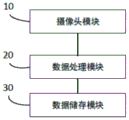
fig. 3 is a structural frame diagram of a camera device of a mobile terminal provided by the present disclosure.
Detailed Description
In order to make the objects, technical solutions and advantages of the present disclosure clearer and clearer, the present disclosure is further described in detail below with reference to the accompanying drawings and examples. It should be understood that the specific embodiments described herein are merely illustrative of the disclosure and are not intended to limit the disclosure.
It is to be understood that the embodiments illustrated and described are not limited in application to the details of construction and the arrangement of components set forth in the following description or illustrated in the following drawings. The illustrated embodiments are capable of other embodiments and of being practiced or of being carried out in various ways. Examples are provided by way of explanation of the disclosed embodiments, not limitation. Indeed, it will be apparent to those skilled in the art that various modifications and variations can be made to the embodiments of the present disclosure without departing from the scope or spirit of the disclosure. For instance, features illustrated or described as part of one embodiment, can be used with another embodiment to yield a still further embodiment. Accordingly, the disclosure is intended to cover such modifications and variations as fall within the scope of the appended claims and their equivalents.
Also, it is to be understood that the phraseology and terminology used herein is for the purpose of description and should not be regarded as limiting. The use of "including," "comprising," or "having" and variations thereof herein is meant to encompass the items listed thereafter and equivalents thereof as well as additional items. Unless limited otherwise, the terms "connected," "coupled," and "mounted," and variations thereof herein are used broadly and encompass direct and indirect connections, couplings, and mountings. Further, the terms "connected" and "connected," and variations thereof, are not restricted to physical or mechanical connections or couplings. In this disclosure, "modular" or "module" means that the modular components or members are independent units with consistent mechanical or data connection interfaces, where the same type of modular components or modules may be reused and replaceable in the display device of this disclosure.
As used herein, the singular forms "a", "an", "the" and "the" are intended to include the plural forms as well, unless the context clearly indicates otherwise. It will be further understood that the terms "comprises" and/or "comprising," when used in this specification, specify the presence of stated features, integers, steps, operations, elements, and/or components, but do not preclude the presence or addition of one or more other features, integers, steps, operations, elements, components, and/or groups thereof. It will be understood that when an element is referred to as being "connected" or "coupled" to another element, it can be directly connected or coupled to the other element or intervening elements may also be present. Further, "connected" or "coupled" as used herein may include wirelessly connected or wirelessly coupled. As used herein, the term "and/or" includes all or any element and all combinations of one or more of the associated listed items.
The present disclosure will now be described in more detail with reference to a few specific embodiments thereof, and with reference to the accompanying drawings. It should be noted that the embodiments and features of the embodiments in the present application may be combined with each other without conflict.
Please refer to fig. 1-3, wherein fig. 1 is a flowchart illustrating steps of a first embodiment of a photographing method of a mobile terminal according to the present disclosure, fig. 2 is a flowchart illustrating steps of a second embodiment of the photographing method of the mobile terminal according to the present disclosure, and fig. 3 is a structural frame diagram illustrating a photographing apparatus of the mobile terminal according to the present disclosure.
The present disclosure provides a photographing method of a mobile terminal, and in a first embodiment, please refer to fig. 1 specifically, fig. 1 is a flowchart illustrating steps of the first embodiment of the photographing method of the mobile terminal provided by the present disclosure, where the photographing method of the mobile terminal includes the following steps:
s01, acquiring the working mode of the mobile terminal;
s02, judging whether the working mode of the mobile terminal is a vehicle-mounted mode or not according to the working mode of the mobile terminal;
and S03, when the working mode of the mobile terminal is the vehicle-mounted mode, controlling the mobile terminal to record videos by using a wide angle.
In step S01, the mobile terminal is preferably a smartphone. In addition, the mobile terminal can also select other devices provided with wide-angle cameras, such as a tablet computer. The wide-angle camera has a wide visual angle range, can cover a large-range scenery, has an operation field that the focal length is reduced to a wide-angle lens below 50mm, is commonly divided into 35, 24, 16-35 and other time periods, and has the characteristics of large depth of field, increased space depth sense and the like. Because of wide visual range and large depth of field, it can be used in the subjects of natural wind and light, city wind and light, etc. and can also be used in the environment portrait.
In step S02, specifically, the operation mode of the mobile terminal is obtained through user-independent setting or through the mobile terminal, and the mobile terminal obtains the operation mode through automatically recognizing the rotation coefficient of the internal angular velocity and the weight acceleration. The vehicle-mounted mode refers to a setting mode that a mobile phone is supposed to be convenient to remind and answer when a person is on a vehicle, for example: the volume of the key is maximum, and the volume of the incoming call ringtone is maximum; according to the difference of the smart phones, the smart phones are directly switched on without hands, the smart phones are automatically switched on and record videos when the power is switched on, the videos before the earliest are automatically recorded in a circulating mode, after the mobile terminals are fully clamped in the memory, the automobiles start to automatically start shooting, and the automobiles stop shooting automatically when the automobiles stop shooting.
Further, the weight acceleration is measured by an acceleration sensor provided to the mobile terminal. An acceleration Sensor (G-Sensor) is a Sensor capable of measuring acceleration. The damper is generally composed of a mass block, a damper, an elastic element, a sensitive element, an adjusting circuit and the like. In the acceleration process, the sensor obtains an acceleration value by measuring the inertial force borne by the mass block and utilizing Newton's second law. Common acceleration sensors include capacitive, inductive, strain, piezoresistive, piezoelectric, etc. depending on the sensor sensing element.
Further, the angular velocity is measured by a gyroscope disposed in the mobile terminal. A gyroscope (also called angular velocity sensor) is different from an acceleration sensor (G-sensor) in that its physical measurement is yaw, the angular velocity of rotation when tilted. The device is designed based on the theory of conservation of angular momentum. A gyroscope is a device for sensing and maintaining direction, designed based on the theory of conservation of angular momentum, and mainly composed of a rotatable rotor located at an axis. Once the gyroscope begins to rotate, the gyroscope has a tendency to resist changes in direction due to the angular momentum of the wheels. Gyroscopes are used in systems such as navigation and positioning.
It should be noted that, in the smart phone, a complete 3D motion cannot be measured or reconstructed by using only an acceleration Sensor (G-Sensor), and a rotational motion cannot be measured. However, the gyroscope can well measure the rotation and deflection actions, so that the actual actions of a user can be accurately analyzed and judged, and then corresponding operations can be performed on the smart phone according to the actions. Therefore, the present disclosure enters the in-vehicle mode by employing the rotation coefficient that automatically recognizes the angular velocity and the weight acceleration inside the mobile terminal.
In step S03, after the mobile terminal enters the vehicle-mounted mode and the mobile terminal is connected to the vehicle-mounted power supply, the vehicle starts to automatically start shooting, and the vehicle stops shooting automatically when the vehicle is turned off. In the step, whether the video is started or not can be determined through manual operation of a user, the video recording function can be set manually in time when the mobile terminal automatically records the video and the video is guaranteed to be smoothly carried out.
It is to be understood that if the camera or photographic subject moves during the exposure, the generated photograph or video will appear blurred. Because the mobile phone is in the process of photo exposure. Capturing the picture is not done instantaneously but in a very short "time period" which is related to the shutter time, and if the relative motion is too fast, or the shake occurs exactly in the "time period" where the picture is captured, a blur phenomenon occurs in taking the picture. A similar situation often occurs in video recording. Therefore, in step S03, the method further includes turning on both the EIS processing unit and the DMBR processing unit.
Specifically, the EIS processing unit, namely EIS (electronic Image stabilization) electronic anti-shake technology, dynamically adjusts ISO, shutter or software to perform blur correction by detecting the degree of body shake. The EIS electronic anti-shake technique is an algorithm operation, which avoids blurring by means of image cutting compensation, and the anti-shake effect depends on the design and efficiency of the algorithm, and is mainly used for image shooting and hand shake prevention. The advantages of the EIS electronic anti-shake technique are that no additional hardware is required, the cost is low, and the EIS electronic anti-shake technique is suitable for miniaturized design, but the resolution and the size of the image must be sacrificed, i.e. the technique of compensating for the shake by reducing the image quality obtains a balance point between the image quality and the image shake.
The DMBR processing unit is implemented by a DMBR (dynamic Motion Blur reduction) algorithm, which is a Motion Blur restoration algorithm. Specifically, the DMBR processing unit may be implemented by a deconvwnr function, a deconvreg function, a deconvlacy function, or a deconvbnd function. Specifically, deconvwnr uses a wiener filter to achieve image deblurring, deconvreg uses a regularized filter to achieve image deblurring, deconvlucy uses a Lucy-Richardson filter to achieve image deblurring, and deconvbind uses a blind deconvolution algorithm to achieve image deblurring.
In step S03, the wide-angle camera itself has a larger field angle, and when recording, the corresponding coefficients around the picture are cut by using an eis (electronic Image stabilization) algorithm, so that a good anti-shake effect can be obtained; meanwhile, the DMBR (dynamic Motion Blur reduction) algorithm is applied, so that the ambiguity of the recorded picture can be well eliminated.
Referring to fig. 2 in detail, fig. 2 is a flowchart illustrating steps of a photographing method of a mobile terminal according to a second embodiment of the present disclosure, where the present disclosure provides a photographing method of a mobile terminal, and in the second embodiment, the photographing method of the mobile terminal includes the following steps:
s01, acquiring the working mode of the mobile terminal;
s02, judging whether the working mode of the mobile terminal is a vehicle-mounted mode or not according to the working mode of the mobile terminal;
s03, when the working mode of the mobile terminal is the vehicle-mounted mode, controlling the mobile terminal to record videos by using a wide angle;
and S04, recording and storing the recorded content in real time, and uploading the stored recorded content to the cloud for safe storage.
Compared with the first embodiment, the photographing method of the mobile terminal further includes step S04, namely, recording and saving the recorded content in real time and uploading the recorded content to the cloud for safe saving. In step S04, the driving process is recorded and saved in real time by the mobile terminal. In our daily life, after the mobile terminal is installed, evidence can be provided for traffic accidents, the general mobile terminal cannot move in the direction after being installed, partial video can be lost after the vehicle-mounted video reaches certain storage, and manual video exporting or memory card replacement is needed. The shooting method of the mobile terminal provided by the disclosure can conveniently export the video content to the mobile terminal with the wide-angle camera, and does not need to replace a memory card. The video recording method has the advantages that the cloud backup can be carried out on the video, corresponding video source files can be recorded and stored in real time, whether the video is uploaded to the cloud in real time to be stored safely can be determined according to user requirements, and the video content can be called conveniently at any time. Meanwhile, the video content is not easy to lose after being uploaded to the cloud end, and the mobile terminal is more convenient and safe to use by checking the video content through the cloud end.
Referring to fig. 3, fig. 3 is a structural frame diagram of a camera device of a mobile terminal according to the present disclosure. The present disclosure also provides a photographing apparatus of a mobile terminal, including a base on which the camera module 10, the data processing module 20, the data storage module 30 and the housing are disposed. Specifically, the camera module 10 is a wide-angle camera or a super wide-angle camera and is configured to collect image information, the data processing module 20 includes an EIS processing unit and a DMBR processing unit, and the data storage module 30 is configured to store content recorded by the camera module 10.
The camera module 10 is automatically started and records videos when the power supply is switched on, the videos are automatically recorded in a circulating mode, the earliest videos are covered when the memory is full, after the mobile terminal is connected with the vehicle-mounted power supply, the automobile starts to automatically start shooting, and the automobile stops shooting automatically when the automobile is switched off. The data processing module 20 is configured to process, in real time, the picture content recorded by the camera module 10, specifically, the EIS processing unit is configured to cut out coefficients corresponding to the periphery of the picture, so that the photographing device of the mobile terminal can obtain a good anti-shake effect, and the DMBR processing unit is configured to eliminate motion blur caused by recording the picture. The data storage module 30 is configured to store the recording content processed by the data processing module 20, and the photographing device of the mobile terminal provided by the present disclosure may conveniently export the recording content to the mobile terminal having the wide-angle camera through the data storage module 30, and does not need to replace a memory card.
In particular, the camera device 100 of the mobile terminal can be fixed in a car or fixed by a user's hand, and the present disclosure is not limited to this fixing manner.
Further, in order to enable the photographing apparatus 100 of the mobile terminal to upload the recorded video to the server, the photographing apparatus 100 of the mobile terminal further includes a communication module, and the communication module is electrically connected to the data processing module 20. In one embodiment, the communication module is a wireless communication module, in one embodiment, the communication module is a 4G network communication module, and the processing module uploads the recorded video information to the server through the communication module, so that the photographing device 100 of the mobile terminal can upload the recorded video to the server, thereby implementing network storage of the recorded video.
In addition, the camera device 100 of the mobile terminal further includes a motion detection module connected to the camera module 10, and the camera module 10 is automatically turned on according to data detected by the motion detection module. In one embodiment, the motion detection module includes a gravity sensor, and the gravity sensor is electrically connected to the camera module 10. The gravity sensor is a cantilever type displacement device made of an elastic sensitive element, and drives an electric contact with an energy storage spring made of the elastic sensitive element to complete the conversion from gravity change to an electric signal, and particularly, the gravity sensor sends a detection signal according to factors such as an inclination angle, an inertia force, impact, collision, vibration and the like in the driving process of an automobile so that a processing module writes a recorded video into a flash storage module, so that when the automobile collides, the gravity sensor detects the collision of the automobile and sends the detection signal to enable the camera module 10 to be started for recording. In one embodiment, the gravity sensor generates a detection signal when the acceleration of the vehicle is greater than a preset threshold, and the camera module 10 is configured to start the camera module 10 to record when receiving the detection signal of the gravity sensor.
In a further embodiment, the motion detection module comprises an acceleration sensor for measuring a weight acceleration. The acceleration sensor is a sensor capable of measuring acceleration. The damper is generally composed of a mass block, a damper, an elastic element, a sensitive element, an adjusting circuit and the like. In the acceleration process, the sensor obtains an acceleration value by measuring the inertial force borne by the mass block and utilizing Newton's second law. Common acceleration sensors include capacitive, inductive, strain, piezoresistive, piezoelectric, etc. depending on the sensor sensing element. The camera module 10 is configured to start the camera module 10 to record when receiving a detection signal of the acceleration sensor.
In another embodiment, the motion detection module includes a gyroscope, which is electrically connected to the camera module 10. Specifically, the gyroscope is an angular motion detection device which uses a momentum moment sensitive shell of a high-speed revolving body to wind one or two axes which are orthogonal to a self-transmission axis relative to an inertia space, and has the advantages of high sensitivity, reliable work, compact structure and the like.
In summary, according to the photographing method of the mobile terminal provided by the present disclosure, by providing the mobile terminal with the wide-angle camera, when the working mode of the mobile terminal is the vehicle-mounted mode, the mobile terminal is controlled to record a video at a wide angle, wherein whether the working mode of the mobile terminal is the vehicle-mounted mode can be determined. The photographing method of the mobile terminal provided by the disclosure can photograph through the existing mobile terminal without special vehicle-mounted video setting, is low in cost, and can provide the photographing method and the photographing device of the mobile terminal which are convenient to install and use, so that the recorded video has a large field angle, good picture quality and good anti-shake performance.
Some embodiments may be implemented, for example, using a machine or tangible computer-readable medium or article which may store an instruction or a set of instructions that, if executed by a machine, may cause the machine to perform a method and/or operations in accordance with the embodiments. Such a machine may include, for example, any suitable processing platform, computing device, processing device, computing system, processing system, computer, processor, or the like, and may be implemented using any suitable combination of hardware and/or software. The machine-readable medium or article may include, for example, any suitable type of memory unit, memory device, memory article, memory medium, storage device, memory article, memory medium and/or storage unit, for example, memory, removable or non-removable media, erasable or non-erasable media, writeable or re-writeable media, digital or analog media, hard disk, floppy disk, compact disk read Only memory (CD-ROM), compact disk recordable (CD-R), compact disk Rewriteable (CD-RW), optical disk, magnetic media, magneto-optical media, removable memory cards or disks, various types of Digital Versatile Disk (DVD), a tape, a cassette, or the like. The instructions may include any suitable type of code, such as source code, compiled code, interpreted code, executable code, static code, dynamic code, encrypted code, and the like, implemented using any suitable high-level, low-level, object-oriented, visual, compiled and/or interpreted programming language.
Unless specifically stated otherwise, it may be appreciated that terms such as "processing," "computing," "calculating," "determining," or the like, refer to the action and/or processes of a computer or computing system, or similar electronic computing device, that manipulates and/or transforms data represented as physical (e.g., electronic) quantities within the computing system's registers and/or memories into other data similarly represented as physical quantities within the computing system memories or registers or other such information storage, transmission or display devices. The embodiments are not limited in this context.
The term "coupled" may be used herein to refer to any type of relationship between the components in question, whether direct or indirect, and may apply to electrical, mechanical, fluid, optical, electromagnetic, electromechanical or other connections. In addition, the terms "first," "second," and the like, are used herein for ease of discussion only, and have no particular temporal or chronological significance unless otherwise stated.
Those skilled in the art will appreciate from the foregoing description that the broad techniques of the embodiments of the present disclosure can be implemented in a variety of forms. Therefore, while the embodiments of this disclosure have been described in connection with particular examples thereof, the true scope of the embodiments of the disclosure should not be so limited since other modifications will become apparent to the skilled practitioner upon a study of the drawings, specification, and following claims.
In addition, some of the present application may be implemented as a computer program product, such as computer program instructions, which when executed by a computer, may invoke or provide methods and/or techniques in accordance with the present application through the operation of the computer. Program instructions which invoke the methods of the present application may be stored on a fixed or removable recording medium and/or transmitted via a data stream on a broadcast or other signal-bearing medium and/or stored within a working memory of a computer device operating in accordance with the program instructions. An embodiment according to the present application comprises an apparatus comprising a memory for storing computer program instructions and a processor for executing the program instructions, wherein the computer program instructions, when executed by the processor, trigger the apparatus to perform a method and/or a solution according to the aforementioned embodiments of the present application.
Finally, it should be noted that: it will be evident to those skilled in the art that the present application is not limited to the details of the foregoing illustrative embodiments, and that the present application may be embodied in other specific forms without departing from the spirit or essential attributes thereof. The present embodiments are therefore to be considered in all respects as illustrative and not restrictive, the scope of the application being indicated by the appended claims rather than by the foregoing description, and all changes which come within the meaning and range of equivalency of the claims are therefore intended to be embraced therein. Any reference sign in a claim should not be construed as limiting the claim concerned. Furthermore, it is obvious that the word "comprising" does not exclude other elements or steps, and the singular does not exclude the plural. A plurality of units or means recited in the system claims may also be implemented by one unit or means in software or hardware. The terms first, second, etc. are used to denote names, but not any particular order. The application of the present disclosure is not limited to the above examples, and modifications may be made to the technical solutions described in the foregoing embodiments, or some technical features may be replaced with equivalents; and such modifications or substitutions do not depart from the spirit and scope of the corresponding technical solutions of the embodiments of the present disclosure.
Claims (10)
1. A photographing method of a mobile terminal, the method comprising:
acquiring a working mode of the mobile terminal;
judging whether the working mode of the mobile terminal is a vehicle-mounted mode or not according to the working mode of the mobile terminal;
and when the working mode of the mobile terminal is the vehicle-mounted mode, controlling the mobile terminal to record videos by using a wide angle.
2. The photographing method of a mobile terminal according to claim 1, wherein the mobile terminal is a smartphone.
3. The photographing method of a mobile terminal according to claim 1, wherein the step of acquiring the operation mode of the mobile terminal includes:
the working mode of the mobile terminal is obtained through user independent setting or through the mobile terminal, and the working mode is obtained through the mobile terminal through automatically identifying the internal rotation coefficient of the angular velocity and the weight acceleration.
4. The photographing method of a mobile terminal according to claim 3, wherein the angular velocity is measured by a gyroscope provided to the mobile terminal.
5. The photographing method of a mobile terminal according to claim 3, wherein the weight acceleration is measured by an acceleration sensor provided to the mobile terminal.
6. The photographing method of a mobile terminal according to claim 1, wherein the photographing method of a mobile terminal further comprises: recording and storing the recorded content in real time, and uploading the stored recorded content to the cloud for safe storage.
7. The photographing method of a mobile terminal according to claim 1, wherein the controlling the mobile terminal to perform video recording using a wide angle further comprises turning on an EIS processing unit and a DMBR processing unit at the same time.
8. The photographing method of the mobile terminal of claim 7, wherein the EIS processing unit is configured to perform a blur correction on a detected body shake on the wide-angle camera by dynamically adjusting ISO and/or a shutter, and the DMBR processing unit is configured to correct a blurred picture generated by motion blur restoration.
9. The camera device of the mobile terminal is characterized by comprising a base, wherein a camera module, a data processing module, a data storage module and a shell are arranged on the base, and the camera module is a wide-angle camera or an ultra-wide-angle camera and is used for collecting image information; the data processing module comprises an EIS processing unit and a DMBR processing unit.
10. The camera device of mobile terminal according to claim 9, wherein said camera device of mobile terminal can be fixed in a car or fixed by a user holding the camera device.
Priority Applications (1)
| Application Number | Priority Date | Filing Date | Title |
|---|---|---|---|
| CN202110257429.9A CN113096271A (en) | 2021-03-09 | 2021-03-09 | Photographing method and photographing device of mobile terminal |
Applications Claiming Priority (1)
| Application Number | Priority Date | Filing Date | Title |
|---|---|---|---|
| CN202110257429.9A CN113096271A (en) | 2021-03-09 | 2021-03-09 | Photographing method and photographing device of mobile terminal |
Publications (1)
| Publication Number | Publication Date |
|---|---|
| CN113096271A true CN113096271A (en) | 2021-07-09 |
Family
ID=76666675
Family Applications (1)
| Application Number | Title | Priority Date | Filing Date |
|---|---|---|---|
| CN202110257429.9A Pending CN113096271A (en) | 2021-03-09 | 2021-03-09 | Photographing method and photographing device of mobile terminal |
Country Status (1)
| Country | Link |
|---|---|
| CN (1) | CN113096271A (en) |
Cited By (1)
| Publication number | Priority date | Publication date | Assignee | Title |
|---|---|---|---|---|
| CN113808022A (en) * | 2021-09-22 | 2021-12-17 | 南京信息工程大学 | Mobile phone panoramic shooting and synthesizing method based on end-side deep learning |
Citations (7)
| Publication number | Priority date | Publication date | Assignee | Title |
|---|---|---|---|---|
| CN102428405A (en) * | 2009-06-16 | 2012-04-25 | 英特尔公司 | Camera Applications in Handheld Devices |
| CN103942852A (en) * | 2014-04-04 | 2014-07-23 | 广东翼卡车联网服务有限公司 | Travelling recording method and system based on mobile phone terminal |
| CN106023340A (en) * | 2016-04-28 | 2016-10-12 | 努比亚技术有限公司 | Driving record implementing method and mobile terminal |
| CN106210544A (en) * | 2016-08-18 | 2016-12-07 | 惠州Tcl移动通信有限公司 | A kind of mobile terminal and shooting the stabilization processing method of video, system |
| CN108401064A (en) * | 2017-02-07 | 2018-08-14 | 中兴通讯股份有限公司 | A kind of terminal works control method, device and terminal |
| CN110278360A (en) * | 2019-06-28 | 2019-09-24 | Oppo广东移动通信有限公司 | Image processing method and device, electronic equipment and computer readable storage medium |
| CN110430365A (en) * | 2019-08-26 | 2019-11-08 | Oppo广东移动通信有限公司 | Anti-shake method, device, computer equipment and storage medium |
-
2021
- 2021-03-09 CN CN202110257429.9A patent/CN113096271A/en active Pending
Patent Citations (7)
| Publication number | Priority date | Publication date | Assignee | Title |
|---|---|---|---|---|
| CN102428405A (en) * | 2009-06-16 | 2012-04-25 | 英特尔公司 | Camera Applications in Handheld Devices |
| CN103942852A (en) * | 2014-04-04 | 2014-07-23 | 广东翼卡车联网服务有限公司 | Travelling recording method and system based on mobile phone terminal |
| CN106023340A (en) * | 2016-04-28 | 2016-10-12 | 努比亚技术有限公司 | Driving record implementing method and mobile terminal |
| CN106210544A (en) * | 2016-08-18 | 2016-12-07 | 惠州Tcl移动通信有限公司 | A kind of mobile terminal and shooting the stabilization processing method of video, system |
| CN108401064A (en) * | 2017-02-07 | 2018-08-14 | 中兴通讯股份有限公司 | A kind of terminal works control method, device and terminal |
| CN110278360A (en) * | 2019-06-28 | 2019-09-24 | Oppo广东移动通信有限公司 | Image processing method and device, electronic equipment and computer readable storage medium |
| CN110430365A (en) * | 2019-08-26 | 2019-11-08 | Oppo广东移动通信有限公司 | Anti-shake method, device, computer equipment and storage medium |
Cited By (2)
| Publication number | Priority date | Publication date | Assignee | Title |
|---|---|---|---|---|
| CN113808022A (en) * | 2021-09-22 | 2021-12-17 | 南京信息工程大学 | Mobile phone panoramic shooting and synthesizing method based on end-side deep learning |
| CN113808022B (en) * | 2021-09-22 | 2023-05-30 | 南京信息工程大学 | A mobile phone panoramic shooting and synthesis method based on device-side deep learning |
Similar Documents
| Publication | Publication Date | Title |
|---|---|---|
| US8619146B2 (en) | Digital camera with integrated accelerometers | |
| US20020028071A1 (en) | Digital camera with integrated accelerometers | |
| CN106210544B (en) | Mobile terminal and anti-shake processing method and system for video shot by mobile terminal | |
| KR102527811B1 (en) | Apparatus and method for generating time lapse image | |
| US7865280B2 (en) | Imaging apparatus and drive recorder system | |
| WO2013108434A1 (en) | Shaking amount detection device, imaging device, and shaking amount detection method | |
| JP5846927B2 (en) | Blur amount detection device, imaging device, and blur amount detection method | |
| CN105144694B (en) | Image Stabilization Correction System for Curved Optical Sensors | |
| JP2014199964A (en) | Imaging apparatus and image processing apparatus | |
| AU2016312297B2 (en) | Image capture system with motion compensation | |
| EP1874041A1 (en) | Imaging device and drive recorder system | |
| US10979641B2 (en) | Imaging device and image shake correcting method | |
| CN113096271A (en) | Photographing method and photographing device of mobile terminal | |
| JP2006345491A (en) | Imaging apparatus and drive recorder system | |
| CN111787200B (en) | Anti-falling protection system and method for lens and image acquisition equipment | |
| KR102688636B1 (en) | Cloud cctv camera apparatus for preparation of earthquake | |
| JP7518695B2 (en) | Shooting metadata recording device and program | |
| KR102144425B1 (en) | Cctv camera apparatus for preparation of earthquake | |
| EP4007266A1 (en) | Image pickup apparatus that drives movable unit so as to be displaced relatively to fixed unit, electronic apparatus that drives movable unit so as to be displaced relatively to fixed unit, and control methods therefor | |
| JP2008259088A (en) | Operation status storage device | |
| CN119277205A (en) | Lens control method, device, equipment, and storage medium | |
| US11815525B1 (en) | System to determine device disposition | |
| KR20150132672A (en) | Video recording system for saving selected frame to high resolution and method of operation thereof | |
| US20230266775A1 (en) | Gimbal and gimbal control method | |
| ISPAS et al. | Using mobile devices for data acquisition in the case of an military vehicle team in fight mission |
Legal Events
| Date | Code | Title | Description |
|---|---|---|---|
| PB01 | Publication | ||
| PB01 | Publication | ||
| SE01 | Entry into force of request for substantive examination | ||
| SE01 | Entry into force of request for substantive examination | ||
| RJ01 | Rejection of invention patent application after publication | ||
| RJ01 | Rejection of invention patent application after publication |
Application publication date: 20210709 |