CN112996812A - Novel agonistic anti-TNFR 2 antibody molecules - Google Patents
Novel agonistic anti-TNFR 2 antibody molecules Download PDFInfo
- Publication number
- CN112996812A CN112996812A CN201980072437.7A CN201980072437A CN112996812A CN 112996812 A CN112996812 A CN 112996812A CN 201980072437 A CN201980072437 A CN 201980072437A CN 112996812 A CN112996812 A CN 112996812A
- Authority
- CN
- China
- Prior art keywords
- ser
- gly
- antibody molecule
- val
- leu
- Prior art date
- Legal status (The legal status is an assumption and is not a legal conclusion. Google has not performed a legal analysis and makes no representation as to the accuracy of the status listed.)
- Granted
Links
Images


Classifications
-
- C—CHEMISTRY; METALLURGY
- C07—ORGANIC CHEMISTRY
- C07K—PEPTIDES
- C07K16/00—Immunoglobulins [IGs], e.g. monoclonal or polyclonal antibodies
- C07K16/18—Immunoglobulins [IGs], e.g. monoclonal or polyclonal antibodies against material from animals or humans
- C07K16/28—Immunoglobulins [IGs], e.g. monoclonal or polyclonal antibodies against material from animals or humans against receptors, cell surface antigens or cell surface determinants
- C07K16/2878—Immunoglobulins [IGs], e.g. monoclonal or polyclonal antibodies against material from animals or humans against receptors, cell surface antigens or cell surface determinants against the NGF-receptor/TNF-receptor superfamily, e.g. CD27, CD30, CD40, CD95
-
- A—HUMAN NECESSITIES
- A61—MEDICAL OR VETERINARY SCIENCE; HYGIENE
- A61K—PREPARATIONS FOR MEDICAL, DENTAL OR TOILETRY PURPOSES
- A61K39/00—Medicinal preparations containing antigens or antibodies
- A61K39/395—Antibodies; Immunoglobulins; Immune serum, e.g. antilymphocytic serum
- A61K39/39533—Antibodies; Immunoglobulins; Immune serum, e.g. antilymphocytic serum against materials from animals
- A61K39/3955—Antibodies; Immunoglobulins; Immune serum, e.g. antilymphocytic serum against materials from animals against proteinaceous materials, e.g. enzymes, hormones, lymphokines
-
- A—HUMAN NECESSITIES
- A61—MEDICAL OR VETERINARY SCIENCE; HYGIENE
- A61K—PREPARATIONS FOR MEDICAL, DENTAL OR TOILETRY PURPOSES
- A61K45/00—Medicinal preparations containing active ingredients not provided for in groups A61K31/00 - A61K41/00
- A61K45/06—Mixtures of active ingredients without chemical characterisation, e.g. antiphlogistics and cardiaca
-
- A—HUMAN NECESSITIES
- A61—MEDICAL OR VETERINARY SCIENCE; HYGIENE
- A61P—SPECIFIC THERAPEUTIC ACTIVITY OF CHEMICAL COMPOUNDS OR MEDICINAL PREPARATIONS
- A61P31/00—Antiinfectives, i.e. antibiotics, antiseptics, chemotherapeutics
-
- A—HUMAN NECESSITIES
- A61—MEDICAL OR VETERINARY SCIENCE; HYGIENE
- A61P—SPECIFIC THERAPEUTIC ACTIVITY OF CHEMICAL COMPOUNDS OR MEDICINAL PREPARATIONS
- A61P35/00—Antineoplastic agents
-
- C—CHEMISTRY; METALLURGY
- C07—ORGANIC CHEMISTRY
- C07K—PEPTIDES
- C07K16/00—Immunoglobulins [IGs], e.g. monoclonal or polyclonal antibodies
- C07K16/18—Immunoglobulins [IGs], e.g. monoclonal or polyclonal antibodies against material from animals or humans
- C07K16/28—Immunoglobulins [IGs], e.g. monoclonal or polyclonal antibodies against material from animals or humans against receptors, cell surface antigens or cell surface determinants
- C07K16/2803—Immunoglobulins [IGs], e.g. monoclonal or polyclonal antibodies against material from animals or humans against receptors, cell surface antigens or cell surface determinants against the immunoglobulin superfamily
- C07K16/2818—Immunoglobulins [IGs], e.g. monoclonal or polyclonal antibodies against material from animals or humans against receptors, cell surface antigens or cell surface determinants against the immunoglobulin superfamily against CD28 or CD152
-
- C—CHEMISTRY; METALLURGY
- C07—ORGANIC CHEMISTRY
- C07K—PEPTIDES
- C07K16/00—Immunoglobulins [IGs], e.g. monoclonal or polyclonal antibodies
- C07K16/18—Immunoglobulins [IGs], e.g. monoclonal or polyclonal antibodies against material from animals or humans
- C07K16/28—Immunoglobulins [IGs], e.g. monoclonal or polyclonal antibodies against material from animals or humans against receptors, cell surface antigens or cell surface determinants
- C07K16/2803—Immunoglobulins [IGs], e.g. monoclonal or polyclonal antibodies against material from animals or humans against receptors, cell surface antigens or cell surface determinants against the immunoglobulin superfamily
- C07K16/283—Immunoglobulins [IGs], e.g. monoclonal or polyclonal antibodies against material from animals or humans against receptors, cell surface antigens or cell surface determinants against the immunoglobulin superfamily against Fc-receptors, e.g. CD16, CD32, CD64
-
- A—HUMAN NECESSITIES
- A61—MEDICAL OR VETERINARY SCIENCE; HYGIENE
- A61K—PREPARATIONS FOR MEDICAL, DENTAL OR TOILETRY PURPOSES
- A61K39/00—Medicinal preparations containing antigens or antibodies
- A61K2039/505—Medicinal preparations containing antigens or antibodies comprising antibodies
-
- A—HUMAN NECESSITIES
- A61—MEDICAL OR VETERINARY SCIENCE; HYGIENE
- A61K—PREPARATIONS FOR MEDICAL, DENTAL OR TOILETRY PURPOSES
- A61K39/00—Medicinal preparations containing antigens or antibodies
- A61K2039/505—Medicinal preparations containing antigens or antibodies comprising antibodies
- A61K2039/507—Comprising a combination of two or more separate antibodies
-
- C—CHEMISTRY; METALLURGY
- C07—ORGANIC CHEMISTRY
- C07K—PEPTIDES
- C07K2317/00—Immunoglobulins specific features
- C07K2317/20—Immunoglobulins specific features characterized by taxonomic origin
- C07K2317/21—Immunoglobulins specific features characterized by taxonomic origin from primates, e.g. man
-
- C—CHEMISTRY; METALLURGY
- C07—ORGANIC CHEMISTRY
- C07K—PEPTIDES
- C07K2317/00—Immunoglobulins specific features
- C07K2317/30—Immunoglobulins specific features characterized by aspects of specificity or valency
-
- C—CHEMISTRY; METALLURGY
- C07—ORGANIC CHEMISTRY
- C07K—PEPTIDES
- C07K2317/00—Immunoglobulins specific features
- C07K2317/30—Immunoglobulins specific features characterized by aspects of specificity or valency
- C07K2317/31—Immunoglobulins specific features characterized by aspects of specificity or valency multispecific
-
- C—CHEMISTRY; METALLURGY
- C07—ORGANIC CHEMISTRY
- C07K—PEPTIDES
- C07K2317/00—Immunoglobulins specific features
- C07K2317/30—Immunoglobulins specific features characterized by aspects of specificity or valency
- C07K2317/33—Crossreactivity, e.g. for species or epitope, or lack of said crossreactivity
-
- C—CHEMISTRY; METALLURGY
- C07—ORGANIC CHEMISTRY
- C07K—PEPTIDES
- C07K2317/00—Immunoglobulins specific features
- C07K2317/30—Immunoglobulins specific features characterized by aspects of specificity or valency
- C07K2317/34—Identification of a linear epitope shorter than 20 amino acid residues or of a conformational epitope defined by amino acid residues
-
- C—CHEMISTRY; METALLURGY
- C07—ORGANIC CHEMISTRY
- C07K—PEPTIDES
- C07K2317/00—Immunoglobulins specific features
- C07K2317/50—Immunoglobulins specific features characterized by immunoglobulin fragments
- C07K2317/56—Immunoglobulins specific features characterized by immunoglobulin fragments variable (Fv) region, i.e. VH and/or VL
- C07K2317/565—Complementarity determining region [CDR]
-
- C—CHEMISTRY; METALLURGY
- C07—ORGANIC CHEMISTRY
- C07K—PEPTIDES
- C07K2317/00—Immunoglobulins specific features
- C07K2317/60—Immunoglobulins specific features characterized by non-natural combinations of immunoglobulin fragments
- C07K2317/62—Immunoglobulins specific features characterized by non-natural combinations of immunoglobulin fragments comprising only variable region components
- C07K2317/622—Single chain antibody (scFv)
-
- C—CHEMISTRY; METALLURGY
- C07—ORGANIC CHEMISTRY
- C07K—PEPTIDES
- C07K2317/00—Immunoglobulins specific features
- C07K2317/70—Immunoglobulins specific features characterized by effect upon binding to a cell or to an antigen
- C07K2317/73—Inducing cell death, e.g. apoptosis, necrosis or inhibition of cell proliferation
-
- C—CHEMISTRY; METALLURGY
- C07—ORGANIC CHEMISTRY
- C07K—PEPTIDES
- C07K2317/00—Immunoglobulins specific features
- C07K2317/70—Immunoglobulins specific features characterized by effect upon binding to a cell or to an antigen
- C07K2317/75—Agonist effect on antigen
-
- C—CHEMISTRY; METALLURGY
- C07—ORGANIC CHEMISTRY
- C07K—PEPTIDES
- C07K2317/00—Immunoglobulins specific features
- C07K2317/70—Immunoglobulins specific features characterized by effect upon binding to a cell or to an antigen
- C07K2317/76—Antagonist effect on antigen, e.g. neutralization or inhibition of binding
-
- C—CHEMISTRY; METALLURGY
- C07—ORGANIC CHEMISTRY
- C07K—PEPTIDES
- C07K2317/00—Immunoglobulins specific features
- C07K2317/90—Immunoglobulins specific features characterized by (pharmaco)kinetic aspects or by stability of the immunoglobulin
- C07K2317/92—Affinity (KD), association rate (Ka), dissociation rate (Kd) or EC50 value
Landscapes
- Health & Medical Sciences (AREA)
- Chemical & Material Sciences (AREA)
- Immunology (AREA)
- Organic Chemistry (AREA)
- Medicinal Chemistry (AREA)
- Life Sciences & Earth Sciences (AREA)
- General Health & Medical Sciences (AREA)
- Proteomics, Peptides & Aminoacids (AREA)
- Molecular Biology (AREA)
- Genetics & Genomics (AREA)
- Biophysics (AREA)
- Biochemistry (AREA)
- Pharmacology & Pharmacy (AREA)
- Public Health (AREA)
- Veterinary Medicine (AREA)
- Animal Behavior & Ethology (AREA)
- Chemical Kinetics & Catalysis (AREA)
- Nuclear Medicine, Radiotherapy & Molecular Imaging (AREA)
- General Chemical & Material Sciences (AREA)
- Oncology (AREA)
- Communicable Diseases (AREA)
- Epidemiology (AREA)
- Bioinformatics & Cheminformatics (AREA)
- Endocrinology (AREA)
- Engineering & Computer Science (AREA)
- Microbiology (AREA)
- Mycology (AREA)
- Peptides Or Proteins (AREA)
- Medicines Containing Antibodies Or Antigens For Use As Internal Diagnostic Agents (AREA)
- Micro-Organisms Or Cultivation Processes Thereof (AREA)
Abstract
描述了新颖抗体分子,所述新颖抗体分子与靶细胞上的TNFR2特异性结合并且由此激动TNFR2但不阻断配体TNF‑α与TNFR2结合。还描述了此类抗体分子在医学中,具体地在治疗癌症或慢性炎性疾病中的用途。

Novel antibody molecules are described that specifically bind to TNFR2 on target cells and thereby agonize TNFR2 without blocking the binding of the ligand TNF-α to TNFR2. The use of such antibody molecules in medicine, in particular in the treatment of cancer or chronic inflammatory diseases is also described.
Description
Technical Field
The present invention relates to novel agonistic antibodies that specifically bind to tumor necrosis factor receptor 2(TNFR2) but do not block the binding of the ligand TNF-alpha to TNFR 2. The invention also relates to the use thereof in medicine, such as in the treatment of cancer or chronic inflammatory diseases.
Background
Tumor Necrosis Factor (TNF) receptor 2(TNFR2, TNFR-2 or TNFRII), also known as tumor necrosis factor receptor superfamily members 1B (TNFRSF1B) and CD120B, is a membrane receptor that binds tumor necrosis factor-alpha (TNF-alpha or TNF alpha). It is found on the surface of i.e.T cells, monocytes and macrophages and can activate the proliferation of TNFR2 receptor expressing cells by the nuclear factor kappa B (NF-kappa B). Notably, TNFR2 is in cancer and specifically in tumor infiltrating immune cells, such as regulatory T cells (tregs), CD8+Cytotoxic effector T cells and different subpopulations of bone marrow cells are highly upregulated.
TNFR2 has been discussed as a promising target for cancer immunotherapy and has been described as highly expressed on the surface of, in particular, intra-tumor Tregs and many human tumor cells (Williams GS et al, tumor target (Oncotargeon) 2016; 7(42): 68278-.
Regulatory T cells (which may be referred to as Treg cells, tregs or T cells)regAnd which was previously referred to as suppressor T cells or suppressor regulatory T cells) constitute a subpopulation of T cells capable of suppressing other immune cells in both normal and pathological immune environments. Tregs are CD4 positive cells (CD 4)+A cell). There are also other CD4 that are not Tregs+A T cell; however, tregs may be substituted for non-Treg CD4+Cells were isolated because tregs were also positive for FOXP3 (FOXP 3)+) Rather than Treg CD4+The cells were FOXP3 negative(FOXP 3)-). Tregs can also be non-Treg CD4+Cells were isolated because Tregs were also CD25+CD127neg/lowRather than Treg CD4+The cell is CD25-CD127+Or CD25+CD127+。
TNFR2 is also discussed in connection with: autoimmune diseases (Faustman DL et al, "Front Immunol" 2013; 4: 478), "clinical and transformed Immunology" (Clin Immunology) 2016 (1, 8), 5(1), "J Neurosci" (J Neurosci) 2016 (5, 4), 36(18):5128-43), and inflammatory diseases (Ait-Ali D et al, "Endocrinology" (Endocrinology) 2008 (6, 149(6): 2840-52), and "scientific report (Sci Rep.)" 2016 (9, 7, 6: 32834).
anti-TNFR 2 antibodies of different types and with various properties have also been described previously. For example, Williams et al (tumor targets 2016, 10, 18; 7(42): 68278) -68291) describe both ligand-blocking agonistic and ligand-non-blocking agonistic antibodies.
WO 2014/124134 discloses the use of TNFR2 agonists, such as agonistic anti-TNFR 2 antibodies and/or for the in vitro production of enriched CD4+ CD25hiNF-. kappa.B activator of the composition in Tregs. The compositions are said to be useful for treating an immunological disorder or an infectious disease in a patient.
WO 2017/040312 discloses anti-TNFR 2 antibodies and particularly agonistic anti-TNFR 2 antibodies capable of promoting TNFR2 signaling and having an effect on the expansion or proliferation of tregs. WO 2017/040312 discloses antibodies that specifically bind to an epitope comprising the sequence KCSPG but not to an epitope comprising the sequence KCRPG, thus excluding the antibodies of US 9821010 described above or alternatively antibodies that do not bind to another TNFR superfamily member. The agonistic antibodies are said to be useful in the treatment of immune diseases. The complete sequence of human TNFR2 is further described in WO 2017/040312.
WO 2017/083525 discusses pharmacological compositions comprising anti-TNFR 2 antibodies and their use in the treatment of disorders associated with TNF- α and/or TNFR2, such as cancer. WO 2017/083525 further discusses antibodies comprising a human IgG1 Fc domain that is ineffective for binding to Fc γ receptors and inhibition of Treg expansion.
In addition, anti-TNFR 2 antibodies capable of acting as TNFR2 agonists are described in: galloway et al (J.Immunol.) 22:3045-3048,1992, Tartaglia et al (J.biol.chem.) 268:18542-18548,1993), Tartaglia et al (J.Immunol.) 151:4637-4641,1993), Smith et al (J.Immunol.) 269:9898-9905,1994), and Amrani et al (J.J.Resr.cell.mol.biol.) 15:55-63,1996.
However, none of these documents teach or suggest an agonistic TNFR2 antibody that specifically binds TNFR2 but does not block the binding of the ligand TNF- α to the same TNFR 2.
Fc receptors are membrane proteins present on the cell surface of immune effector cells, including monocytes, macrophages, dendritic cells, neutrophils, mast cells, basophils, eosinophils and natural killer cells, and B lymphocytes. The name is derived from its binding specificity to the Fc region of an antibody. Fc receptors are present on cell membranes-otherwise known as plasma membranes or cytoplasmic membranes. Fc receptors can be subdivided into activating and inhibiting Fc γ rs, which are known to coordinately regulate cellular activation through binding of aggregated immunoglobulin G Fc's, and transmission of activating or inhibiting signals into cells through intracellular ITAM or ITIM motifs. FcR binding of aggregated immunoglobulins or immune complexes may mediate internalization of the antibody into the cell and may result in antibody-mediated phagocytosis, antibody-dependent cell-mediated cytotoxicity, or antigen presentation or cross-presentation. FcR is also known to mediate or enhance the cross-linking of antibody-bound cell surface receptors. This cross-linking is known to activate the signaling of targeted cells (Li et al, 2011 "Inhibitory Fcgamma receptor for activating adjuvant and Anti-tumor activities of agonistic CD40 antibodies" (Science, 333: 1030-4.; White et al, 2011 "Interaction with Fc γ RIIB is critical for the agonistic activity of Anti-CD40 monoclonal antibody (Interaction with Fcgamma receptor critic for the agonistic activity of Anti-CD40 monoclonal antibody)", journal, 187: 4-63), but not all (Richman et al, CD40 therapy for monoclonal antibody cross-linking is not effective against human tumor tissue) (Fcgamma 11 cross-linking), Fcgamma receptor cross-linking is not effective against human tumor tissue (Fcgamma receptor cross-linking 40), 3e 28610) antibody capacity and may or may not be required to achieve a therapeutic effect.
A subset of Fc receptors are Fc γ receptors (Fc γ receptor, Fc γ R (fcgamma ar) or Fc γ R) that are specific for IgG antibodies. There are two types of Fc γ receptors: an activating Fc gamma receptor (also denoted as activating Fc gamma receptor) and an inhibitory Fc gamma receptor. The activating and inhibitory receptors transmit their signals through an immunoreceptor tyrosine-based activation motif (ITAM) or an immunoreceptor tyrosine-based inhibitory motif (ITIM), respectively. In humans, fcyriib (CD32b) is an inhibitory fcyri receptor, while fcyri (CD64), fcyriia (CD32a), fcyriic (CD32c) and fcyriiia (CD16a) are activating fcyri receptors. Fc γ gRIIIb is a GPI-linked receptor expressed on neutrophils that lacks the ITAM motif but is also considered to be activating through its ability to cross-link lipid rafts and link to other receptors. In mice, the activating receptors are Fc γ RI, Fc γ RIII and Fc γ RIV.
It is well known that antibodies can modulate immune cell activity by interacting with Fc γ receptors. In particular, how antibody immune complexes modulate immune cell activation is determined by the relative linkage of their activating and inhibitory Fc γ receptors. Different antibody isotypes bind with different affinities to activating and inhibitory Fc γ receptors, resulting in different a: I ratios (activation: inhibition ratios) (Nimmerjahn et al; science, 12.2.2005; 310(5753): 1510-2).
By binding to inhibitory Fc γ receptors, antibodies can inhibit, block, and/or down regulate effector cell function. Antibodies can further stimulate cell activation by aggregating antibody-targeted signaling receptors on target cells by binding to Inhibitory Fc γ rs (Li et al, 2011, "Inhibitory Fc γ receptor binding drives adjuvant and anti-tumor activity of agonist CD40 antibodies)", "Science (Science) 333, 1030-4; White et al, 2011" interaction with Fc γ RIIB is critical for agonistic activity of anti-CD40 monoclonal antibodies "," immunology journal, 187, 1754-63; White et al, 2014 "agonist CD40 antibodies in lymphoma therapy" can be overcome by Fc γ receptor-dependent immunization of CD40, 193:1828-35).
By binding to activated Fc γ receptors, antibodies can activate effector cell functions and thereby trigger mechanisms such as antibody-dependent cellular cytotoxicity (ADCC), antibody-dependent cellular phagocytosis (ADCP), cytokine release and/or antibody-dependent endocytosis and, in the case of neutrophils, NETosis (i.e. activation and release of NET neutrophil extracellular traps). Binding of the antibody to an activated Fc γ receptor may also result in an increase in certain activation markers, such as CD40, MHCII, CD38, CD80, and/or CD 86.
In particular, recent data published by the present inventors indicate the criticality and differential dependence of CD 8T Cell agonists and Treg-depleted Anti-4-1 BB Antibodies on binding to activating and inhibitory Fc γ rs, respectively, on therapeutic efficacy (Buchan et al, "Antibodies to co-stimulatory Receptor 4-1BB Enhance Anti-tumor Immunity through T Regulatory Cell Depletion and Promotion of CD 8T Cell Effector Function (Antibodies to synergistic Receptor 4-1BB Immunity-tumor Immunity via T regulation Cell removal and Promotion of CD 8T Cell effect)", "immunology (Immunity) 201849 (5): 958-970). In addition and critically, the simultaneous administration of a CD 8T cell agonist and a Treg-depleted anti-4-1 BB antibody optimizes binding to activating and inhibitory Fc γ rs, respectively, compromising therapeutic activity. These data indicate the critical importance of developing antibodies that appropriately and custom link activating and inhibiting Fc γ rs to maximize the therapeutic activity of antibodies with unique mechanisms of action. At the same time, it suggests that suboptimal ligation of activating and inhibitory Fc γ rs may severely reduce therapeutic efficacy.
These data are surprising because they contrast the discovery of significantly immunostimulatory anti-CD40 antibodies with antibodies to other TNFSR members that show the obligatory requirement for linkage of Inhibitory but not activating Fc γ rs (Li et al, 2011 "Inhibitory Fc γ receptor linkage drives adjuvant and anti-tumor activity of agonistic CD40 antibodies)", "Science (Science), 333: 1030-4; White et al, 2011" interaction with Fc γ RIIB is critical for agonistic activity of anti-CD40 monoclonal antibodies "," journal of immunology, 187: 1754-63). Taken together, these results indicate that Fc γ R dependence may vary in ways that are not easily predictable between antibodies to different targets of the same receptor superfamily, and even between different types of antibodies to the same target, but may be crucial for understanding and utilization in developing antibodies for therapeutic use.
Disclosure of Invention
In work leading to the present invention and in parallel, two main distinct groups of anti-TNFR 2 antibodies with powerful therapeutic effects and different properties and mechanisms of action were identified.
The inventors first identified the powerful therapeutic activity of antagonistic anti-TNFR 2 antibodies that block TNF- α binding to the TNFR2 receptor. For in vivo therapeutic activity, the activity of such antibodies is shown to be dependent on Fc γ R interaction, and specifically binding to activating Fc γ rs. This group or class of powerful anti-TNFR 2 therapeutic agents was found to be characterized by 1) significantly blocking and inhibiting TNF- α -induced TNFR2 signaling, and 2) being dependent on Fc γ R ligation, thereby benefiting most from the activity of ligations that activate inhibitory Fc γ rs.
The inventors then identified a different group of anti-TNFR 2 antibodies with equally strong therapeutic activity in vivo, but with properties in many respects opposite those of TNFR2 antibodies, which constitute the first group of antagonistic blocking classes. This second group of anti-TNFR antibodies is not dependent on the TNF- α blocking or inhibition of therapeutic activity by TNFR2 signaling, but rather is characterized by a strong activation of TNFR2 signaling. In further contrast to the blocking antibodies of the first group, the agonistic antibodies of the second group did not show an obligatory dependence on the Fc γ R linkage, even if their activity was improved by using Fc γ R-linked antibody variants. In further contrast to the first group of antagonistic blocking antibodies, the second group of agonistic antibodies showed the greatest activity in antibody variants with enhanced binding to the inhibitor compared to activating Fc γ R.
The present invention relates to a second group of anti-TNFR 2 antibodies, anti-TNFR 2 antibodies that are agonistic antibody molecules that specifically bind TNFR2 but do not block the binding of the ligand TNF- α to TNFR 2. Such antibodies are powerful therapeutic agents and are useful in medicine.
Antagonistic blocking antibodies belonging to the first group were used in the following examples for comparison with the agonistic non-blocking TNFR2 antibody molecule of the present invention. In the examples, other antibodies similar to the first or second set or both of antibodies with certain properties were also used for comparison, as explained further below.
Accordingly, the present invention relates to agonistic antibody molecules that specifically bind TNFR2 on target cells and do not block the binding of TNF-alpha ligand to TNFR 2.
The invention also relates to specific examples of such novel agonistic TNFR2 antibody molecules.
The present invention also relates to isolated nucleotide sequences encoding at least one of the above antibody molecules.
The invention also relates to a plasmid comprising at least one of the above nucleotide sequences.
The invention also relates to a virus comprising at least one of the above nucleotide sequences or plasmids.
The invention also relates to a cell comprising at least one of the above nucleotide sequences, or at least one of the above plasmids, or at least one of the above viruses.
The invention also relates to the above antibody molecules, nucleotide sequences, plasmids, viruses and/or cells for use in medicine.
The invention also relates to the above antibody molecules, nucleotide sequences, plasmids, viruses and/or cells for use in the treatment of cancer or chronic inflammatory diseases.
The invention also relates to the use of the above antibody molecules, nucleotide sequences, plasmids, viruses and/or cells for the treatment of cancer or chronic inflammatory diseases.
The invention also relates to a pharmaceutical composition comprising or consisting of: at least one of the above antibody molecules, nucleotide sequences, plasmids, viruses and/or cells and optionally a pharmaceutically acceptable diluent, carrier, vehicle and/or excipient. Such pharmaceutical compositions may be used to treat cancer or chronic inflammatory diseases.
Furthermore, the present invention also relates to a method for treating cancer or chronic inflammatory disease in a subject, said method comprising administering to said subject a therapeutically effective amount of at least one of said above antibody molecules, nucleotide sequences, plasmids, viruses and/or cells.
The invention also relates to antibody molecules, antibody molecules for use, isolated nucleotide sequences for use, plasmids, viruses, cells for use, uses, pharmaceutical compositions and methods of treatment as described herein with reference to the accompanying specification, examples and/or figures.
Detailed Description
Thus, the present invention relates to agonistic TNFR2 antibody molecules that specifically bind TNFR2 but do not block the binding of the ligand TNF- α to the same TNFR 2. Preferably, the antibody molecule has intrinsic agonist activity.
The agonistic antibody molecules disclosed herein do not block TNF- α binding to TNFR2, and further they do not block TNFR2 signaling. It has been clearly shown that TNF-. alpha.mediated signaling by TNFR2 initiates a signaling cascade that terminates in the activation of nuclear transcription factor NF-. kappa.B (Thommesen et al, "significant differences between TNF Receptor 1-mediated activation of NF-. kappa.B and TNF Receptor 2-mediated activation of TNF Receptor 2" (Distinguishing diagnostics between TNF Receptor 1-and TNF Receptor 2-mediated activation of NFkappaB), "the Role of the Signal of TNF-TNF Receptor 2 in Regulatory T Cells and Its Therapeutic significance in J Biochem Mol Biol. 2005 5.31., (38: 281-9; Yang et al" TNF-TNF Receptor 2 signaling "in Regulatory T Cells"; 2014: Immunological "788). This in turn leads to activation of the cells and synthesis of several proinflammatory factors, one of which is IFN- γ in NK cells (Liu et al "NF- κ B signaling in inflammation", Signal Transmission Target The.) -2017; pii: 17023; Tato et al "opposite effects of NF- κ B family members in regulating NK cell proliferation and IFN- γ production" (manipulating roles of NF-kappaB family members in the regulation of NK cell proliferation and production of IFN- γ) "," International Immunol (Int Immunol.) -2006 month 4; 18 (4)): 505-13). The terms TNFR2 signaling and TNFR2 activation are used interchangeably herein. The antibody molecule specifically binds TNFR 2. It is well known that antibodies specifically bind or interact with a defined target molecule or antigen, and this means that an antibody preferentially and selectively binds its target and not a non-target molecule. By "antibody molecule that specifically binds TNFR 2" or "TNFR 2-specific antibody molecule" is meant an antibody that binds TNFR2 protein in a dose-dependent manner but does not bind unrelated proteins. In addition, the same antibody bound to cells endogenously expressing TNFR2, and this binding could be blocked by pre-incubation of the same cells with a commercially available polyclonal TNFR2 antibody reagent, showing that nonspecific binding may not be detected when TNFR2 is masked by the polyclonal reagent. This is shown in example 2.
An antibody molecule that specifically binds TNFR2 (or an anti-TNFR 2 antibody molecule) refers to an antibody molecule that specifically binds to at least one epitope in the extracellular domain of TNFR 2. Cell surface antigens and epitopes are terms that are readily understood by those of skill in immunology or cell biology.
Methods for assessing protein binding are known to those of skill in biochemistry and immunology. The skilled person will appreciate that those methods may be used to assess binding of the antibody to the target and/or binding of the Fc region of the antibody to an Fc receptor; as well as relative intensity or specificity, or inhibition or prevention or reduction in those interactions. Examples of methods that can be used to assess protein binding are, for example, immunoassays, BIAcore, western blots, Radioimmunoassays (RIA) and enzyme-linked immunosorbent assays (ELISA), and flow cytometry (FACS). For a discussion of antibody specificity, see basic Immunology, second edition, Levens Press, New York, pp 332-336 (1989).
The target cell expressing TNFR2 bound by an agonistic antibody according to the invention may be any TNFR2 expressing immune cell, such as CD8 positive cells and bone marrow cells.
The effect of binding of an agonistic antibody molecule according to the invention to TNFR2 may be T cell and/or myeloid cell activation; and/or infiltration of T cells and/or bone marrow cells into diseased tissue; and/or a change in the composition of T cells and/or bone marrow cells in the diseased tissue. Variation in the composition of T cells and/or bone marrow cells means herein different absolute or relative counts of various cell subsets, such as tregs, CD8 positive cells, Tumor Associated Macrophages (TAMs) (including different subsets thereof), Myeloid Derived Suppressor Cells (MDSCs) and/or pro-inflammatory macrophages.
Diseased tissue means in this context tumor tissue (i.e. all cells in the tumor microenvironment, including tumor cells, immune cells, endothelial cells and stromal cells) or tissue affected by chronic inflammatory diseases.
In order to decide whether an antibody molecule blocks or does not block ligand binding to TNFR2 in the context of the present invention, it is possible to determine the amount of bound TNF- α ligand of the immobilized TNFR2 receptor in the presence of TNFR2 specific antibodies using an ELISA assay. Non-blocking antibodies will not prevent binding of ligand TNF-alpha to the immobilized receptor TNFR 2. This is illustrated and explained in more detail in example 3 below. More specifically, a non-blocking TNFR2 antibody molecule according to the invention is an antibody molecule that reduces TNF- α binding to TNFR2 by less than 50% compared to TNF- α binding in the presence of an isotype control antibody molecule alone. In some embodiments, this is determined in a high dose single-point ELISA or a dose-titration ELISA, as shown in example 3 and fig. 6 and 7.
In contrast, blocking antagonist antibody molecules are complete blockers that are otherwise capable of antagonizing TNFR2 signaling. Such antibody molecules were used in the following examples for comparison. A complete blocker is defined herein as an antibody molecule that reduces the binding of TNF- α to TNFR2 by more than 98%, i.e. up to 100%, compared to the binding of TNF- α in the presence of an isotype control antibody molecule alone. Isotype control antibodies are antibodies raised against proteins or other structures that are not present in any form in the assay under study. The isotype control ideally has the same framework, but at least the same Fc portion, as the comparative antibody. As is well known to those skilled in the art. In the examples described herein, the isotype control has the same framework, the same Fc portion, and specificity for Fluorescein Isothiocyanate (FITC). In some embodiments, a complete blocker reduces TNF-a binding by more than 99.5%. Other types of blockers are partial blockers and weak blockers. As used herein, a partial blocker is an antibody molecule that reduces the binding of TNF- α to TNFR2 by 60-98% compared to the binding of TNF- α in the presence of an isotype control antibody molecule alone, and a weak blocker is an antibody molecule that reduces the binding of TNF- α to TNFR2 by less than 60%, such as 50-59.9%, compared to the binding of TNF- α in the presence of an isotype control antibody molecule alone.
In the examples, fully blocking antagonistic, partially blocking and weakly blocking antibody molecules were used for comparison with the agonistic non-blocking antibody molecules of the invention.
Several properties and characteristics may establish and (collectively) determine the biological activity of an antibody. In addition to the ability to block or not block ligand binding to the receptor, important such properties include the ability of the antibody molecule to modulate receptor signaling, i.e., agonize or antagonize receptor signaling, and antibody dependence on Fc γ R interactions for conferring therapeutic activity.
The ability of fully blocking, partially blocking and non-blocking antibodies to modulate TNFR2 signaling was first characterized. Two extremes are identified.
In the first extreme, antibodies were identified that completely blocked ligand binding to TNFR2, blocked TNF- α induced TNFR2 signaling, and did not themselves induce signaling upon binding to TNFR2 endogenously expressed by the cell. This group of ligand blocking antagonist antibodies constitutes a separate invention and is included herein for comparison.
In the other extreme, antibodies were identified that did not block ligand binding to TNFR2, but upon binding to TNFR2 expressed endogenously as cell agonist receptors. The second group of antibodies forms the basis of the present invention.
As used herein, a non-blocking antibody is an antibody molecule that reduces the binding of TNF- α to TNFR2 by 0-50% (e.g., 5%, 10%, 15%, 20%, 25%, 30%, 35%, 40%, 45%, or 50%, including all integers and all decimal places therebetween) compared to the binding of TNF- α in the presence of an isotype control antibody molecule alone.
Antibodies and classes defined by partial block agonism, partial block non-agonism, and complete block non-antagonism were additionally identified as exhibiting the complex biology and great heterogeneity of anti-TNFR 2 antibodies, clearly demonstrating that the antibodies of the present invention form a unique group.
To determine whether an antibody has agonist or antagonist activity, it is possible to use a Natural Killer (NK) cell assay as described in example 4. Briefly, NK cells have been described to respond to IL-2 and IL-12 stimulation with secreted IFN- γ. Soluble TNF- α is endogenously produced and present in a robust but suboptimal concentration (about 100pg/ml) for TNFR2 signaling, meaning that IFN- γ can be increased and decreased by modulating TNFR2 signaling. Thus, exogenous addition of TNF- α at an optimal concentration for TNFR2 signaling enhanced IFN- γ concentration in this assay, as did incubation with agonist anti-TNFR 2 antibody. In contrast, co-incubation of the antibodies with the anti-TNF- α or ligand blocking antagonist antibodies described herein for comparison reduced IFN- γ release in this assay. Thus, this assay can be used to identify agonist or antagonist activity of anti-TNFR 2 antibodies or the absence of anti-TNFR 2 antibodies. ("TNF α enhances Cytokine-Induced IFN γ Production by NK cells via TNFR 2" (TNF α Augments Cytokine-Induced NK Cell IFN γ Production through TNFR2) "Almishri W. et al, J Immun (J Innate Immun.) 2016; 8: 617-629).
Thus, the ability of an antibody to agonize, i.e., induce TNFR2 signaling, can be monitored using an experimental setup. Antibodies in the same Natural Killer (NK) cell assay, the ability to induce self-signaling upon binding to TNFR2 can be assessed by monitoring the increase in IFN- γ release and comparing the increase in IFN- γ release to those observed after incubation in the presence or absence of exogenous TNF- α added at the optimal concentration for signaling as described in example 4. Thus, an agonistic TNFR2 antibody can be defined as an antibody that enhances IFN- γ release by NK cells in this assay. Antibodies with intrinsic agonistic capacity enhance IFN- γ release by NK cells in a manner that is independent of neither antibody cross-linking or interaction with Fc γ receptors nor the presence of soluble TNF- α ligands. Thus, intrinsic agonist activity can be assessed using an antibody format that does not bind effectively to an aglycosylated antibody carrying the N297A mutation in an Fc γ R, e.g., Fc domain or lacking an Fc γ R assay system/cell. NK cells are well known to the skilled person (Binyamin, L. et al, (2008) Journal of immunology 180, 6392-6401; "Blocking NK cell inhibitory self-recognition promoting antibody-dependent cytotoxicity in a model of anti-lymphoma thermal") in NK cell inhibitory self-recognition promotion. Using this assay, agonistic antibodies are defined as antibodies that result in > 100% (>2 fold) increase in IFN- γ release. Since this assay uses primary cells from PBMC donors, it needs to contain at least 4 donors and the mean should be calculated from all donors. Cells from each donor to be included in the calculation of the mean must respond to a positive control (soluble TNF-a) treatment with an increase of IFN- γ levels > 100% (>2 fold) compared to the treatment with isotype control.
The agonistic antibody molecules described herein have intrinsic agonistic activity, as explained above.
In some embodiments of the invention, it is preferred that the antibody increases IFN- γ release by NK cells in the above assay by at least 100%.
In some embodiments, agonistic activity may be increased by binding to an antibody molecule to an Fc γ receptor other than binding to TNFR 2. In some such embodiments, the agonistic non-blocking TNFR2 antibody molecule binds with higher affinity than an activating Fc γ receptor versus an inhibitory Fc γ receptor. The meaning of the variant binding with higher affinity to the inhibitory Fc γ receptor than to the activating Fc γ receptor is encompassed by the higher affinity to the inhibitory Fc γ receptor than to the activating Fc γ receptor alone, e.g., than to Fc γ RIIA, Fc γ RIIIA and Fc γ RI.
The relatively high homology between the mouse and human Fc γ R systems explains many general aspects of the conserved Fc γ R-mediated mechanisms between species. However, the mouse and human IgG subclasses differ in their affinity for their cognate fcyr, making it very important in converting Fc γ R-mediated observations in the mouse system to human IgG-based therapeutics to select antibodies, antibody subclasses, and/or engineered subclass variants that show appropriate binding to human activating and inhibitory fcyr. The affinity and/or avidity of human antibody molecules for human Fc γ R alone can be determined using Surface Plasmon Resonance (SPR).
In some embodiments, binding to the Fc receptor occurs through normal interactions between the Fc region of an agonistic antibody molecule and the Fc receptor. In some such embodiments, the antibody molecule is an IgG that has binding to the Fc region of an fey receptor. In some such embodiments, the anti-TNFRII antibody has human Ig with similar intermediate affinities for human inhibitory Fc γ RIIB and human activating Fc γ RIIA and Fc γ RIIIA, but not operably linked to human activating Fc γ RIThe G2 isoform. In some embodiments, the anti-TNFRII antibody has binding to Fc γ RIIB with a higher affinity than IgG2, but also binds to the human activated Fc γ RIIA, Fc γ RIIIA with a higher affinity, and additionally binds to the human IgG1 isotype that activates Fc γ RI with a high affinity. In other embodiments, the anti-TNFRII antibody is the following human IgG: engineered to enhance binding to Fc γ RIIB, e.g. "SELF" (Chu et al "inhibits B cell receptor-mediated activation of primary human B cells by co-ligation of CD19 and Fc γ RIIB with Fc engineered antibodies" (Inhibition of B cell receptor-mediated activation of primary human B cells by co-ligation of CD19 and Fc γ RIIB), "molecular immunology (Mol Immunol) 2008. 9.9.; 45(15):3926-33), and/or engineered to relatively enhance binding to Fc γ RIIB compared to activating Fc γ R, e.g. V9 or V11 mutant R (Mimoto et al," selectively enhances Fc γ RIIB in Fc γ RIIaR131And Fc γ RIIaH131Bound Engineered antibody Fc variants on both (Engineered antibody Fc variant with selectively enhanced Fc γ RIIb binding over both Fc γ RIIaR131 and FcγRIIaH131) Protein engineering, design and selection (Protein Eng Des Sel.) in 2013, month 10; 26(10):589-598. }. In animals humanized to both activating and inhibitory Fc γ R, such IgG variants engineered to enhance binding to or specifically enhance binding affinity specifically to inhibitory Fc γ RIIB but not to activating Fc γ RIIA have been shown to increase in vivo agonist and Therapeutic Activity of CD40 agonist antibody CP-870,893 (Dahan et al, 2016, "Therapeutic Activity of an" Agonistic, Human Anti-CD40 Monoclonal antibody Requires Selective Fc γ R ligation, "Therapeutic Activity of pharmaceutical Activity of agonist, Human Anti-CD40 Monoclonal Antibodies," Cancer cells (Cancer Cell), 29: 820-31).
In addition to TNFR2, Fc receptors to which agonistic antibody molecules may bind are those found on the surface of bone marrow derived cells such as macrophages, monocytes, MDCS, neutrophils, mast cells, basophils, or dendritic cells, or lymphocytes such as NK cells, B cells, or certain T cells.
As mentioned above, antibody molecules are typically linked to Fc receptors through their Fc regions. Because the agonistic antibody molecules disclosed herein have intrinsic agonistic activity, they do not require binding to Fc receptors to agonize TNFR 2. This means that in some embodiments of the invention it is possible to use antibody molecules that do not rely on Fc receptor binding through their Fc regions, and indeed it is possible to use antibody molecules that do not have an Fc region. In some such embodiments, the antibody molecule may be Fab'2Or a pegylated version thereof. In some embodiments, the antibody molecule may be a monoclonal antibody including single chain antibodies Fab, Fv, scFv, Fab's and/or (Fab')2A bivalent or multivalent antibody molecule of (a). In other embodiments, the antibody molecule may include a modified Fc region, such as an aglycosylated variant of an IgG1 antibody molecule. This aglycosylation may be achieved, for example, by an amino acid substitution of asparagine in position 297(N297X) in the antibody chain. The substitution may be with glutamine (N297Q), or with alanine (N297A), or with glycine (N297G), or with asparagine (N297D) or via serine (N297S). Other substitutions have for example been described by Jacobsen FW et al, journal of Biochemistry 2017,292,1865-1875 (see for example Table 1); such additional substitutions comprise L242C, V259C, a287C, R292C, V302C, L306C, V323C, I332C, and/or K334C.
In some embodiments, the agonistic TNFR2 antibody molecule is an IgG1, IgG3, or IgG4 antibody molecule.
In some embodiments, an agonistic TNFR2 antibody molecule is an IgG antibody molecule shown to improve binding to one or several activating Fc receptors and/or engineered for improved binding to one or several activating Fc γ receptors and/or engineered for improved relative binding to activating versus inhibiting Fc γ receptors. In some embodiments, the anti-TNFR 2 antibody is an Fc-engineered human IgG1 antibody. Examples of such Engineered antibody variants include fucosylated antibodies in which binding of the antibody to Fc γ RIIIA is selectively improved, as well as antibodies Engineered by targeting, mutating, or otherwise, with amino acid substitutions that result in improved binding to one or more activated Fc γ RIIB as compared to inhibitory Fc γ RIIB (Richards et al, 2008 "Optimization of binding of the antibody to Fc γ RIIa enhances macrophage phagocytosis of tumor cells (Optimization of antibody binding to fcgammamma ariha enzymes of tumor cells)", "molecular Cancer therapy (Mol Cancer term) 7: 2517-27; Lazar et al, 2006" Engineered antibody Fc variants with enhanced effector function (international Cancer therapy with enhanced effector function ", japan society of america, science 4005-40010).
In some embodiments, the human IgG antibody engineered to improve binding to an activated fey receptor may be a human IgG antibody carrying two mutations S239D and I332E or three mutations S239D, I332E and a330L and/or G236A mutations in its Fc portion. In some embodiments, the human IgG antibody engineered to improve binding to an activated Fc γ receptor may be a fucosylated human IgG antibody.
As explained above, an antibody molecule being an intrinsic agonist means that it is agonistic in both the absence and presence of TNF- α. In some embodiments, the antibody is agonistic in the absence of TNF- α. In some embodiments, the antibody is agonistic in the presence of TNF- α.
Target cells expressing TNFR2 bound by an agonistic antibody according to the invention may be selected from the group consisting of TNFR2 expressing immune cells or cancer cells.
Antibodies are well known to those skilled in the art of immunology and molecular biology. Typically, antibodies comprise two heavy (H) chains and two light (L) chains. Such an intact antibody molecule is sometimes referred to herein as a full-size or full-length antibody. The heavy chain of an antibody comprises one variable domain (VH) and three constant domains (CH1, CH2 and CH3), and the light molecular chain of an antibody comprises one variable domain (VL) and one constant domain (CL). Variable domains (sometimes collectively referred to as F)VRegion) to the target or antigen of the antibody. Each variable domain comprises three loops, called Complementarity Determining Regions (CDRs), which are responsible for target binding. The constant domains are not directly involved in the binding of antibodies to antigens, but exhibit various effector functions. Antibodies or immunoglobulins can be assigned to different classes according to the amino acid sequence of their heavy chain constant region. There are five main classes of immunoglobulins: IgA, IgD, IgE, IgG, and IgM, and in humans, several of these classes are further divided into subclasses (isotypes), e.g., IgG1, IgG2, IgG3, and IgG4, IgA1, and IgA 2.
Another part of an antibody is the Fc region (otherwise known as the fragment crystallizable domain) which comprises two of the constant domains of each of the heavy chains of the antibody. As mentioned above, the Fc region is responsible for the interaction between the antibody and the Fc receptor.
The term antibody molecule as used herein encompasses full length or full size antibodies as well as functional fragments of full length antibodies and derivatives of such antibody molecules.
Functional fragments of full-size antibodies have the same antigen binding properties as the corresponding full-size antibody and comprise the same variable domains (i.e., VH and VL sequences) and/or the same CDR sequences as the corresponding full-size antibody. A functional fragment does not always contain all six CDRs corresponding to a full-length antibody. It will be appreciated that molecules containing three or fewer CDR regions (in some cases, even only a single CDR or portion thereof) are capable of retaining the antigen binding activity of an antibody from which one or more CDRs are derived. For example, Gao et al, 1994, J. Biochem.269: 32389-93, describe that the entire VL chain (containing all three CDRs) has a high affinity for its substrate.
Molecules containing two CDR regions are described, for example, in Vaughan and Sollazzo 2001, Combinatorial Chemistry & High Throughput Screening, 4: 417-. On page 418 (right column-3 "Design Strategy (Our Stratagene for Design)"), minibodies comprising only H1 and H2CDR hypervariable regions interspersed within the framework regions are described. The minibody is described as being capable of binding to a target. Vaughan and Sollazzo refer to the following Pessi et al, 1993, nature, 362:367-9 and Bianchi et al, 1994, journal of molecular biology (j.mol.biol.), 236:649-59, and describe H1 and H2 miniantibodies and their properties in more detail. In Qiu et al, 2007, "Nature Biotechnology" (Nature Biotechnology), 25:921-9, it was demonstrated that a molecule consisting of two linked CDRs is capable of binding antigen. Quiocho 1993, Nature 362:293-4 provides a summary of the "minibody" technology. Ladner 2007, Nature Biotechnology, 25:875-7, states that molecules containing two CDRs are capable of retaining antigen binding activity.
Antibody molecules containing single CDR regions are described, for example, in Laune et al, 1997, J. Biochem., 272:30937-44, where it was demonstrated that a series of hexapeptides derived from CDRs exhibit antigen binding activity, and it was noted that synthetic peptides of the entire single CDR exhibit strong binding activity. In Monnet et al, 1999, journal of biochemistry 274:3789-96, a series of 12-mer peptides and related framework regions were shown to have antigen binding activity, and it was indicated that CDR 3-like peptides alone were capable of binding antigen. In Heap et al, 2005, journal of general virology (J.Gen.Virol.), 86:1791-1800, "miniantibodies" (molecules containing a single CDR) are reported to be capable of binding to antigens, and cyclic peptides derived from anti-HIV antibodies are shown to have antigen binding activity and function. In Nicaise et al, 2004, "Protein Science," 13:1882-91, it is shown that a single CDR can confer antigen binding activity and affinity for its lysozyme antigen.
Thus, antibody molecules having five, four, three, or fewer CDRs are capable of retaining the antigen binding properties of the full-length antibody from which they are derived.
The antibody molecule may also be a derivative of a full length antibody or a fragment of such an antibody. When derivatives are used, the derivatives should have the same antigen binding properties as the corresponding full length antibody, in a sense that the derivatives bind to the same epitope on the target as the full length antibody.
Thus, the term "antibody molecule" as used herein encompasses all types of antibody molecules as well as functional fragments and derivatives thereof, including: monoclonal antibodies, polyclonal antibodies, synthetic antibodies, recombinantly produced antibodies, multispecific antibodies, monoclonal antibodies, polyclonal antibodies, monoclonal antibodies, synthetic antibodies, polyclonal antibodies, monoclonal antibodies, polyclonal antibodies, synthetic antibodies, monoclonal antibodies, polyclonal antibodies,Bispecific antibody, human-derived antibody, humanized antibody, chimeric antibody, single-chain fv (scFv), Fab fragment, F (ab')2Fragments, F (ab') fragments, disulfide-linked fv (sdfv), antibody heavy chains, antibody light chains, homodimers of antibody heavy chains, homodimers of antibody light chains, heterodimers of antibody heavy chains, heterodimers of antibody light chains, antigen-binding functional fragments of such homodimers and heterodimers.
Further, the term "antibody molecule" as used herein encompasses all classes of antibody molecules and functional fragments comprising: IgG, IgG1, IgG2, IgG3, IgG4, IgA, IgM, IgD, and IgE, unless otherwise specified.
In some embodiments, the antibody molecule is a human antibody molecule, a humanized antibody molecule, or an antibody molecule of human origin. In some such embodiments, the antibody molecule is an IgG antibody. It is known that optimal co-stimulation of TNFR superfamily agonist receptors, such as TNFR2, is dependent on antibody attachment of an inhibitory Fc γ RII. In mice, the IgG1 isotype, which is known to bind preferentially to the inhibitory Fc γ receptor (Fc γ RIIB) and only weakly to the activating Fc γ receptor, is optimal for the co-stimulatory activity of monoclonal antibodies targeting the TNFR superfamily. Although direct equivalents of the mouse IgG1 isotype in humans are not described, antibodies can be engineered to show similar enhancement of binding to inhibitory human Fc γ receptors over activating human Fc γ receptors. Such engineered TNFR superfamily targeting Antibodies have also improved costimulatory Activity in transgenic mice engineered to express Human activating and inhibitory Fc γ receptors (Dahan et al, 2016, "Therapeutic Activity of an Agonistic Human Anti-CD40 Monoclonal antibody Requires Selective Fc γ R ligation (Therapeutic Activity of agricultural Activity of inflammatory, Human Anti-CD40 Monoclonal Antibodies Selective Fc γ R Engagement.)". cancer cells 29(6): 820-31). In some embodiments, the antibody molecule therefore has an isotype that links to an inhibitory Fc receptor in an optimal manner. In some embodiments, the antibody molecule is an IgG2 antibody.
In some embodiments, the agonistic antibody molecule that specifically binds TNFR2 may be a lama antibody, and in particular lama hcIgG.Like all mammals, camelidae produces peptides with disulfide bonds in the shape of a Y (IgG)1) Two heavy chains and two light chains bound together constitute a conventional antibody. However, it also produces two distinct subclasses of IgG of immunoglobulin G2And IgG3Also known as heavy chain igg (hcigg). These antibodies consist of a fragment lacking the CH1 domain but carrying at its N-terminus a VHOnly two heavy chains of the antigen binding domain of H. Conventional igs require association of the variable regions from both the heavy and light chains to allow for high diversity of antigen-antibody interactions. Although isolated heavy and light chains still show this ability, they exhibit very low affinity when compared to paired heavy and light chains. A unique feature of hcIgG is its ability of the monomeric antigen-binding region to bind antigen with specificity, affinity, and in particular diversity, comparable to conventional antibodies that do not require pairing with another region.
As outlined above, the invention encompasses different types and forms of antibody molecules and said different types and forms of antibody molecules will be known to the person skilled in the art of immunology. It is well known that antibodies for therapeutic purposes are often modified with additional components that modify the properties of the antibody molecule.
Thus, antibody molecules described herein are included or used as described herein (e.g., monoclonal antibody molecules and/or polyclonal antibody molecules and/or bispecific antibody molecules) include a detectable moiety and/or a cytotoxic moiety.
"detectable moiety" comprises one or more from the group comprising: an enzyme; a radioactive atom; a fluorescent moiety; a chemiluminescent moiety; a bioluminescent portion. The detectable moiety allows visualization of the antibody molecule in vitro and/or in vivo and/or ex vivo.
"cytotoxic moiety" comprises a radioactive moiety and/or an enzyme, for example wherein the enzyme is a caspase and/or a toxin, for example wherein the toxin is a bacterial toxin or a venom; wherein the cytotoxic moiety is capable of inducing cell lysis.
It is further contemplated that the antibody molecule may be in isolated and/or purified form, and/or may be pegylated. Pegylation is a method of adding a polyethylene glycol polymer to a molecule, such as an antibody molecule or derivative, to modify its behavior, for example to extend its half-life by increasing its hydrodynamic size, thereby preventing renal clearance.
As discussed above, the CDRs of the antibody bind to the antibody target. The assignment of amino acids to each CDR described herein complies with the definition according to: kabat EA et al, 1991, "Sequences of Proteins of Immunological Interest (Sequences of Proteins of Immunological Interest)" fifth edition, NIH publication No.: 91-3242, pages xv-xvii.
As the skilled person will appreciate, there are also other methods for assigning amino acids to each CDR. For example, The International ImmunoGeneTiCs information system (IMGT (R)) (http:// www.imgt.org/, and Lefranc "Immunoglobulin profiles (The Immunoglobulin faceBook)", published by Academic Press (2001).
In some embodiments, the antibody molecule that specifically binds TNFR2 is a human antibody.
In some embodiments, the antibody molecule that specifically binds TNFR2 is a human-derived antibody, i.e., an original human antibody that has been modified as described herein.
In some embodiments, the antibody molecule that specifically binds TNFR2 is a humanized antibody, i.e., an original non-human antibody that has been modified to increase its similarity to a human antibody. The humanized antibody may have, for example, a murine antibody or a lama antibody.
In some embodiments, the antibody molecule that specifically binds TNFR2 is a human IgG2 antibody molecule.
In some embodiments, the anti-TNFR 2 antibody is an antibody in the form of a human IgG2 antibody that shows improved binding to one or several inhibitory Fc receptors and/or is engineered for improved binding to one or several inhibitory Fc receptors; thus, in some embodiments, the anti-TNFR 2 antibody is an Fc-engineered human IgG2 antibody.
In some embodiments, the anti-TNFR 2 antibody is a murine or humanized murine IgG3 antibody.
In some embodiments, the anti-TNFR 2 antibody is a monoclonal antibody.
In some embodiments, the anti-TNFR 2 antibody is a polyclonal antibody.
In some embodiments, the antibody molecule that specifically binds TNFR2 is a human IgG1 antibody molecule corresponding to murine IgG2a or is murine IgG2 a.
In some embodiments, an antibody molecule that specifically binds TNFR2 includes one of the VH-CDR1 sequences listed in table 1 below.
In some embodiments, an antibody molecule that specifically binds TNFR2 includes one of the VH-CDR2 sequences listed in table 1 below.
In some embodiments, an antibody molecule that specifically binds TNFR2 includes one of the VH-CDR3 sequences listed in table 1 below.
In some embodiments, an antibody molecule that specifically binds TNFR2 includes one of the VL-CDR1 sequences listed in table 1 below.
In some embodiments, an antibody molecule that specifically binds TNFR2 includes one of the VL-CDR2 sequences listed in table 1 below.
In some embodiments, an antibody molecule that specifically binds TNFR2 includes one of the VL-CDR3 sequences listed in table 1 below.
In some embodiments, the anti-TNFR 2 antibody molecule is an antibody molecule selected from the group consisting of antibody molecules comprising 6 CDRs selected from the group consisting of:
1, 2, 3, 4, 5 and 6;
seq id No. 9, 10, 11, 12, 13 and 14;
17, 18, 19, 20, 21 and 22;
seq id No. 25, 26, 27, 28, 29 and 30;
33, 34, 35, 36, 37 and 38;
41, 42, 43, 44, 45 and 46;
49, 50, 51, 52, 53 and 54;
57, 58, 59, 60, 61 and 62;
seq id No. 65, 66, 67, 68, 69 and 70;
73, 74, 75, 76, 77 and 78;
seq id No. 81, 82, 83, 84, 85 and 86;
89, 90, 91, 92, 93 and 94 of seq id no; and
97, 98, 99, 100, 101 and 102.
In some embodiments, the anti-TNFR 2 antibody molecule is: an antibody molecule comprising 6 CDRs having: 1, 2, 3, 4, 5 and 6; or an antibody molecule comprising 6 CDRs having: seq id No. 9, 10, 11, 12, 13 and 14; or an antibody molecule comprising 6 CDRs having: 17, 18, 19, 20, 21 and 22; or an antibody molecule comprising 6 CDRs having: seq id No. 25, 26, 27, 28, 29 and 30; or an antibody molecule comprising 6 CDRs having: 33, 34, 35, 36, 37 and 38; or an antibody molecule comprising 6 CDRs having: SEQ ID No. 41, 42, 43, 44, 45 and 46.
In some embodiments, the anti-TNFR 2 antibody molecule is: an antibody molecule comprising 6 CDRs having: 1, 2, 3, 4, 5 and 6.
In some embodiments, the anti-TNFR 2 antibody molecule is an antibody molecule selected from the group consisting of antibody molecules comprising a VH selected from the group consisting of: seq id No. 7, 15, 23, 31, 39, 47, 55, 63, 71, 79, 87, 95 and 103.
In some embodiments, the anti-TNFR 2 antibody molecule is an antibody molecule selected from the group consisting of antibody molecules comprising a VL selected from the group consisting of: seq id No. 8, 16, 24, 32, 40, 48, 56, 64, 72, 80, 88, 96 and 104.
In some embodiments, the anti-TNFR 2 antibody molecule is an antibody molecule comprising a VH with: 7, 15, 23, 31, 39 or 47.
In some embodiments, the anti-TNFR 2 antibody molecule is an antibody molecule comprising a VH with: SEQ ID No. 7.
In some embodiments, it is preferred that the anti-TNFR 2 antibody molecule is an antibody molecule comprising a VL having: SEQ ID No. 8, 16, 24, 32, 40 or 48.
In some embodiments, more preferably, the anti-TNFR 2 antibody molecule is an antibody molecule comprising a VL having: SEQ ID No. 8.
In some embodiments, it is preferred that the anti-TNFR 2 antibody molecule comprises a VH having seq.id.no. 7 and a VH having seq.id.no. 8.
In some embodiments, the anti-TNFR 2 antibody molecule comprises a CH having seq.id No. 217.
In some embodiments, the anti-TNFR 2 antibody molecule comprises CL having seq.id No. 218.
In some embodiments, the anti-TNFR 2 antibody molecule comprises a VH having seq.id.no. 7, a VH having seq.id.no. 8, a CH having seq.id.no. 217, and a CL having seq.id.no. 218.
Table 1: specific sequences of agonistic TNFR2 antibody molecules that do not block TNF- α binding to TNFR2 as described herein (CDR sequences are in bold in VH and VL sequences)

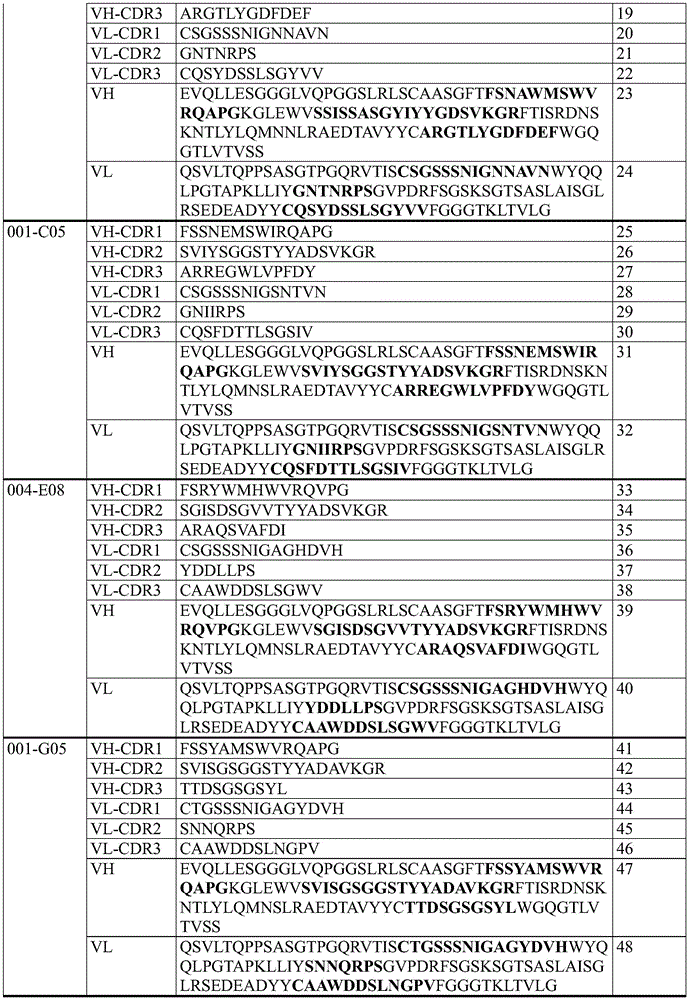


To determine or demonstrate the characteristics of the antibody molecules of the invention, they were compared to antibody molecules that block the binding of TNF- α to TNFR 2. Such antibodies are shown in table 2.
Table 2: blocking specific sequences of TNFR2 antibody molecules mentioned herein as reference antibodies (CDR sequences are in bold in VH and VL sequences)


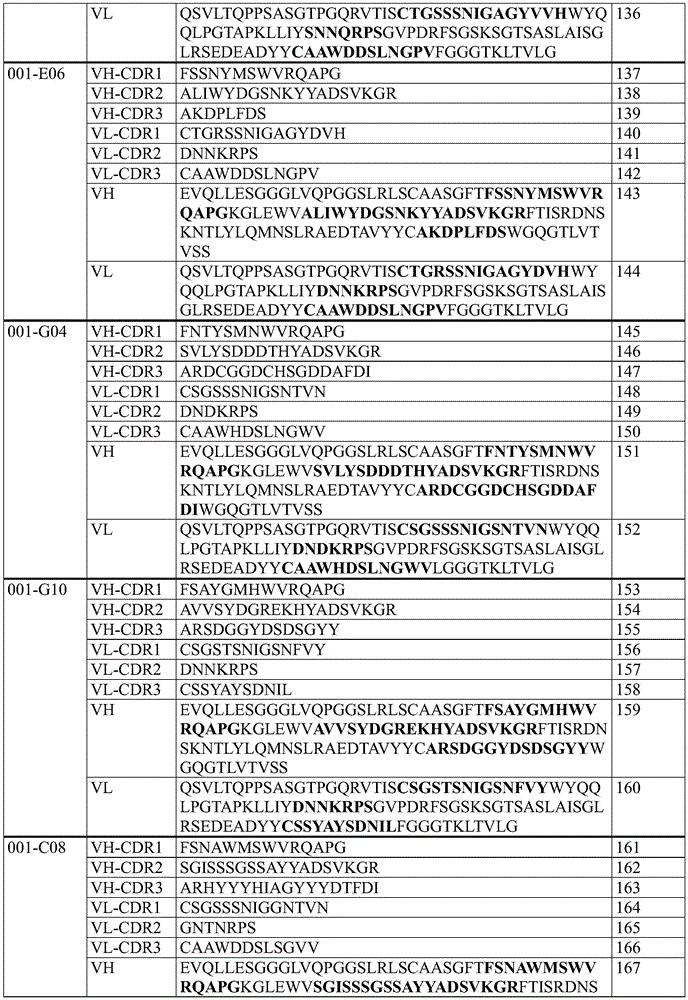

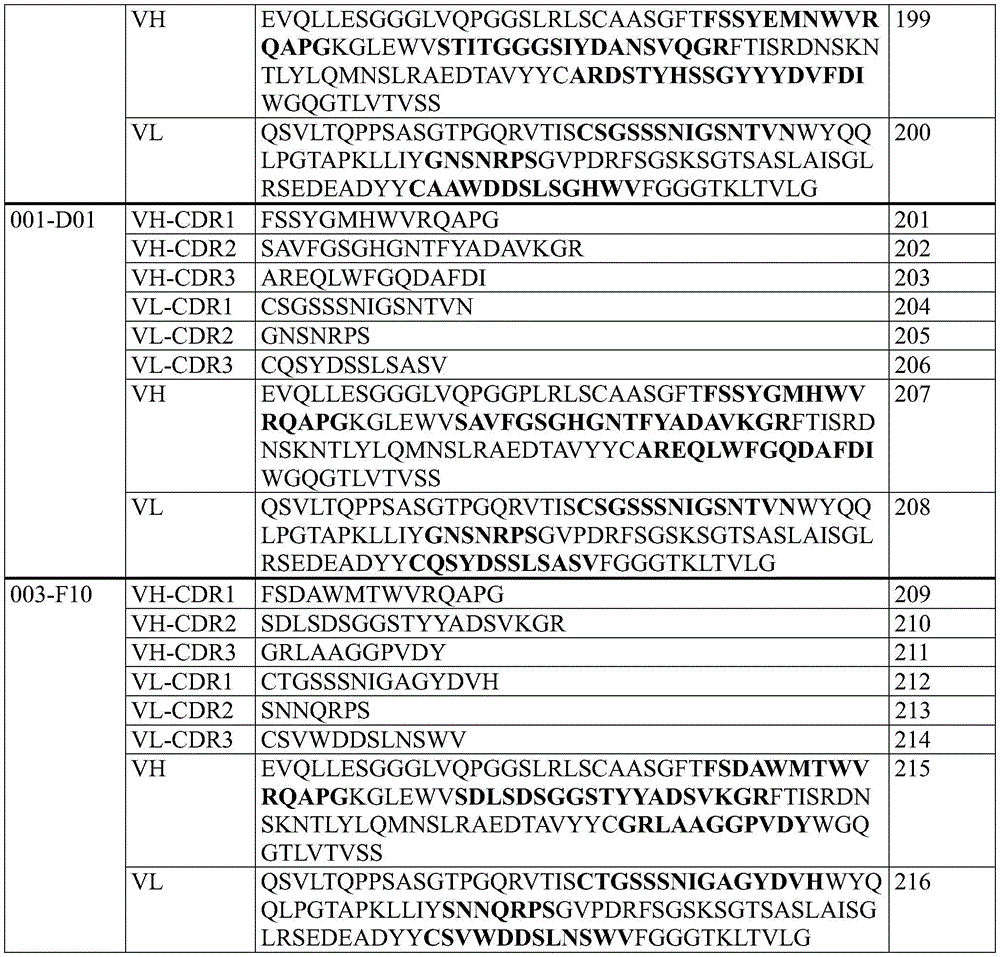
The sequences in tables 1 and 2 above are both of human origin and are derived from Libraries as explained in detail in example 1.
In some embodiments, an antibody molecule that specifically binds TNFR2 described herein may also include one or both of the constant regions (CH and/or CL) listed in table 3 below.
Table 3:


the first CH (SEQ. ID. NO:217) and first CL (SEQ. ID. NO:218) sequences in Table 3 above were of human origin. The second CH (seq. id No.: 219) and the third CH (seq. id No.: 220) in table 3 were both from murine IgG2a, which differs in that the third CH sequence (seq. id No.: 220) contains the N297A mutation. The second CL sequence (SEQ. ID. NO:221) is from a murine lambda light chain constant region. These murine sequences were used in the examples as a replacement for antibodies.
In some embodiments, the antibody molecule binds human TNFR2(hTNFR 2). In some embodiments, it is preferred that the agonistic antibody molecule binds strongly to human TNFR2, i.e., it has a low EC50 value. This is further illustrated in example 2.
In some embodiments, advantageously, the antibody molecule binds to hTNFR2 and cynomolgus monkey TNFR2(cmTNFR2 or cynoTNFR 2). Cross-reactivity with TNFR2 expressed on cells within rhesus monkeys, also known as cynomolgus or cynomolgus monkeys, may be advantageous because it enables animal testing of antibody molecules with special attention to tolerance without the use of alternative antibodies.
In some embodiments, it is desirable to use surrogate antibodies to test the functional activity of an antibody molecule in a relevant in vivo model in mice. In order to ensure comparability between the effect of the antibody molecule in humans and the in vivo results of the surrogate antibody in mice, it is necessary to select functionally equivalent surrogate antibodies with the same in vitro properties as human antibody molecules. In some embodiments, the antibody molecule does not specifically bind to an epitope of TNFR2 that includes or consists of the sequence KCSPG.
In some embodiments, the antibody molecule of the invention or for use according to the invention is an antibody molecule capable of competing with a specific antibody provided herein, e.g. an antibody molecule capable of competing with an antibody molecule comprising: a VH selected from the group consisting of: seq id No. 7, 15, 23, 31, 39, 47, 55, 63, 71, 79, 87, 95 and 103; and/or a VL selected from the group consisting of: seq id No. 8, 16, 24, 32, 40, 48, 56, 64, 72, 80, 88, 96 and 104.
By "capable of competing" is meant that a competing antibody is capable of at least partially inhibiting or otherwise interfering with the binding of an antibody molecule as defined herein to the specific target TNFR 2.
For example, such a competitive antibody molecule is capable of inhibiting the binding of an antibody molecule described herein to TNRF2 by at least about 10%; for example, at least about 20 or at least about 30%, at least about 40%, at least about 50%, at least about 60%, at least about 70%, at least about 80%, at least about 90%, at least about 95%, or about 100%.
Competitive binding can be determined by methods well known to those skilled in the art, such as enzyme-linked immunosorbent assays (ELISAs).
Epitope modification or blocking antibodies can be evaluated using an ELISA assay. Additional methods suitable for identifying competing antibodies are disclosed in "antibodies: a Laboratory Manual, Harlow and Lane, incorporated herein by reference (see, e.g., pages 567 to 569, pages 574 to 576, pages 583, and pages 590 to 612, 1988, Cold Spring Harbor Laboratory (CSHL), New York (NY), ISBN 0-87969-.
In some embodiments, it is of interest not to use the antibody molecule itself, but to use a nucleotide sequence encoding this antibody molecule. Thus, the present invention encompasses nucleotide sequences encoding the above agonistic non-blocking TNFR-2 antibody molecules.
The agonistic non-blocking antibody molecules and nucleotide sequences described above may be used in medicine, and such antibody molecules and/or nucleotide sequences may then be included in a pharmaceutical composition, as discussed further below.
The agonistic non-blocking antibody molecules, nucleotide sequences and/or pharmaceutical compositions described above may be used to treat cancer, as discussed further below.
The agonistic non-blocking antibody molecules, nucleotide sequences and/or pharmaceutical compositions described above may be used to treat chronic inflammatory diseases, as discussed further below.
The agonistic non-blocking antibody molecules and/or nucleotide sequences described above may be used in the manufacture of a pharmaceutical composition for the treatment of cancer.
The agonistic non-blocking antibody molecules and/or nucleotide sequences described above may be used in the manufacture of a pharmaceutical composition for the treatment of chronic inflammatory diseases.
The agonistic non-blocking antibody molecule and/or pharmaceutical composition described above may be used in a method for treating cancer in a patient in which a therapeutically effective amount of the antibody molecule or pharmaceutical composition is administered to the subject.
The agonistic non-blocking antibody molecule and/or pharmaceutical composition described above may be used in a method for treating a chronic inflammatory disease in a patient, in which a therapeutically effective amount of the antibody molecule or pharmaceutical composition is administered to the patient.
In some embodiments directed to treating cancer, the cancer is a solid cancer or a leukemia cancer. A solid tumor is an abnormal tissue mass that generally does not contain cysts or fluid areas. Solid tumors can be benign (not cancer) or malignant (cancer). Malignant solid tumors are referred to herein as solid cancers. Different types of solid tumors or cancers are named for the type of cell that forms them. Examples of solid tumors are sarcomas, carcinomas and lymphomas.
More specific examples of solid cancers are lung cancer, head and neck cancer, stomach cancer, breast cancer, colorectal cancer, prostate cancer, bladder cancer, ovarian cancer, endometrial cancer, kidney cancer, liver cancer, pancreatic cancer, thyroid cancer, brain cancer, central nervous system cancer, melanoma, neuroblastoma, lymphoma, Wilms tumor (Wilms tumor), rhabdomyosarcoma, retinoblastoma, and bone cancer.
More specific examples of leukemia cancers are acute lymphocytic leukemia, chronic myeloproliferative disease, acute non-lymphocytic leukemia, B-cell acute lymphocytic leukemia, chronic lymphocytic leukemia, T-cell acute lymphocytic leukemia, non-Hodgkin lymphoma, and chronic lymphocytic proliferative disease. In some embodiments, the agonistic non-blocking antibody molecules described above may be used in combination with an antibody molecule that specifically binds to a checkpoint inhibitor. Alternatively, the nucleotide sequences encoding agonistic non-blocking TNFR2 antibody molecules discussed above may be used in combination with antibody molecules that specifically bind checkpoint inhibitors or costimulatory agonistic antibodies. Checkpoint suppressionExamples of antibodies to agents are antibodies targeting CTLA4, PD1, PD-L1, VISTA, TIGIT, CD200R, BTLA, LAG3, TIM3, B7-H3, B7-H4, B7-H7. Examples of co-stimulatory agonist antibodies are antibodies targeting OX40, 41BB, OX40L, 41BBL, GITR, ICOS, DR3, DR4, DR5, CD40, CD27, RANK, HVEM, LIGHT and B7-H6. Alternatively, the agonistic non-blocking TNFR2 antibody molecule discussed above may be used in combination with a nucleotide sequence encoding an antibody molecule that specifically binds to a checkpoint inhibitor or co-stimulatory agonist. Alternatively, the nucleotide sequences encoding the agonistic non-blocking TNFR2 antibody molecule discussed above may be used in combination with a nucleotide sequence encoding an antibody molecule that specifically binds to a checkpoint inhibitor or co-stimulatory agonist. In some embodiments, the antibody molecule that specifically binds to the checkpoint inhibitor is an anti-PD-1 antibody. The PD1 antibody is considered to block primary CD8+Inhibitory signals in T cells mediated by PD-L1; and thereby allows for an increase in T cell mediated anti-tumor responses. These treatments may be synergistic with each other. This is also true for other checkpoint inhibitors and agonistic co-stimulatory antibodies.
In addition, the agonistic non-blocking TNFR2 antibody molecule discussed above may be used in combination with other anti-cancer therapies, such as chemotherapy (e.g., without limitation, doxorubicin (doxorubicin), carboplatin, cyclophosphamide, paclitaxel, gemcitabine (gemcitabine), 5-fluorouracil, docetaxel (docetaxel), vincristine (vinristine), Mitoxantrone (Mitoxantrone), metomycin (mutamycin), epirubicin (epirubicin), and methotrexate (methotrexate)), small molecule tyrosine kinase or serine/threonine kinase inhibitors (e.g., without limitation, ibrutinib (ibrutinib), imatinib (imatinib), sunitinib (sunitinib), regorafenib (regorafenib), sorafenib (sorafenib), dasatinib (idavasatinib), valavicularib (valacib), netorinib (gentamitrucin), mirafenib (murafenib), and/gentamitrucatinib (murafenib), and/or a, Rebuscinib (ribociclib), Trametinib (Trametinib) or erlotinib (alectinib)), inhibitors targeting growth factor receptors (such as, but not limited to, drugs targeting EGFR/HER1/ErbB1, EGFR2/HER2/ErbB2, EGFR3/HER3/ErbB3, VEGFR, PDGFR HGFR, RET, insulin-like growth factor receptor IGFR, FGFR), anti-angiogenic agents (such as, but not limited to, Bevacizumab (Bevacizumab), Everolimus (Everolimus), Lenalidomide (Lenalidomide), Thalidomide (Thalidomide), Ziv-aficicept (Ziv-aflibercept)), or radiation. Typically, the above mentioned anti-cancer drugs all cause cancer cell death, which leads to new antigen exposure and inflammation. Synergy of anticancer drugs may occur upon neoantigen exposure and the presence of inflammatory cells in the tumor.
Those skilled in the medical arts will appreciate that drugs may be modified with different additives, for example, to alter the rate at which the body absorbs the drug; and the drug may be modified in different forms, for example to allow a particular route of administration to the body.
Thus, an agonistic non-blocking antibody molecule, nucleotide sequence, plasmid, virus and/or cell comprising the same described herein may be combined with a pharmaceutically acceptable excipient, carrier, diluent, vehicle and/or adjuvant into a pharmaceutical composition. In this context, the term pharmaceutical composition is used interchangeably with the terms pharmaceutical preparation, pharmaceutical formulation, therapeutic composition, therapeutic preparation, therapeutic formulation and therapeutic entity.
The pharmaceutical compositions described herein may include, or in some embodiments may consist of: antibody molecules, nucleotide sequences, plasmids, viruses or cells.
In some embodiments, the pharmaceutical compositions described herein may consist of or comprise a plasmid comprising a nucleotide sequence encoding an antibody molecule as described above or comprising a nucleotide sequence as described above.
In some embodiments, the pharmaceutical composition may comprise a nucleotide sequence encoding a partial or complete antibody molecule of an antibody molecule described herein integrated in the genome of a cell or virus or in a virion. The pharmaceutical composition may then include a cell or virus (or a delivery vehicle encoding a nucleotide sequence of an antibody of the invention) as a delivery vehicle for an antibody of the invention. For example, in practiceIn an embodiment, the virus may be in the form of a therapeutic oncolytic virus comprising a nucleotide sequence encoding at least one of the antibody molecules described herein. In some embodiments, the oncolytic virus comprises a nucleotide sequence encoding a full-length human IgG antibody. In some embodiments, the oncolytic virus comprises a polypeptide encoding scFv, Fab or F (ab')2The nucleotide sequence of the antibody molecule.
In embodiments, the invention relates to a virus comprising a nucleotide sequence of the invention or a plasmid of the invention, as described in the appended claims. Preferably, the virus is an oncolytic virus, such as a therapeutic oncolytic virus. Such viruses are known to those skilled in the medical and virology arts.
In some embodiments, the oncolytic virus comprises a nucleotide sequence having at least 80% identity to a sequence listed in table 1 above of the coding amino acid sequence. In some embodiments, the oncolytic virus comprises an amino acid sequence having at least 85% identity to a sequence listed in table 1 above. In some embodiments, the oncolytic virus comprises an amino acid sequence having at least 90% identity to a sequence listed in table 1 above. In some embodiments, the oncolytic virus comprises an amino acid sequence having at least 95% identity to a sequence listed in table 1 above.
In some embodiments, the oncolytic virus comprises a nucleotide sequence encoding: SEQ ID No. 7 and ID No. 8.
In some embodiments, the oncolytic virus comprises a nucleotide sequence encoding: SEQ ID No. 15 and ID No. 16.
In some embodiments, the oncolytic virus comprises a nucleotide sequence encoding: SEQ ID No. 23 and ID No. 24.
In some embodiments, the oncolytic virus comprises a nucleotide sequence encoding: SEQ ID No. 31 and ID No. 32.
In some embodiments, the oncolytic virus comprises a nucleotide sequence encoding: SEQ ID No. 39 and ID No. 40.
In some embodiments, the oncolytic virus comprises a nucleotide sequence encoding: SEQ ID No. 47 and ID No. 48.
In some embodiments, the oncolytic virus comprises a nucleotide sequence encoding: SEQ ID No. 55 and ID No. 56.
In some embodiments, the oncolytic virus comprises a nucleotide sequence encoding: SEQ ID No. 63 and ID No. 64.
In some embodiments, the oncolytic virus comprises a nucleotide sequence encoding: SEQ ID No. 71 and ID No. 72.
In some embodiments, the oncolytic virus comprises a nucleotide sequence encoding: SEQ ID No. 79 and ID No. 80.
In some embodiments, the oncolytic virus comprises a nucleotide sequence encoding: SEQ ID No. 87 and ID No. 88.
In some embodiments, the oncolytic virus comprises a nucleotide sequence encoding: SEQ ID No. 95 and ID No. 96.
In some embodiments, the oncolytic virus comprises a nucleotide sequence encoding: SEQ ID No. 103 and ID No. 104.
In some embodiments, the oncolytic virus comprises a nucleotide sequence encoding an amino acid sequence having at least 80% identity to a sequence listed in table 1 above. In some embodiments, the oncolytic virus comprises a nucleotide sequence encoding an amino acid sequence having at least 85% identity to a sequence listed in table 1 above. In some embodiments, the oncolytic virus comprises a nucleotide sequence encoding an amino acid sequence having at least 90% identity to a sequence listed in table 1 above. In some embodiments, the oncolytic virus comprises a nucleotide sequence encoding an amino acid sequence having at least 95% identity to a sequence listed in table 1 above.
For example, the nucleotide sequence encoding antibody 001-F02 can be as presented in table 4.
Table 4: examples of nucleotide sequences encoding antibodies 001-F02-portions of underlined sequences in the tables encode VH and VL sequences of 001-F02, respectively

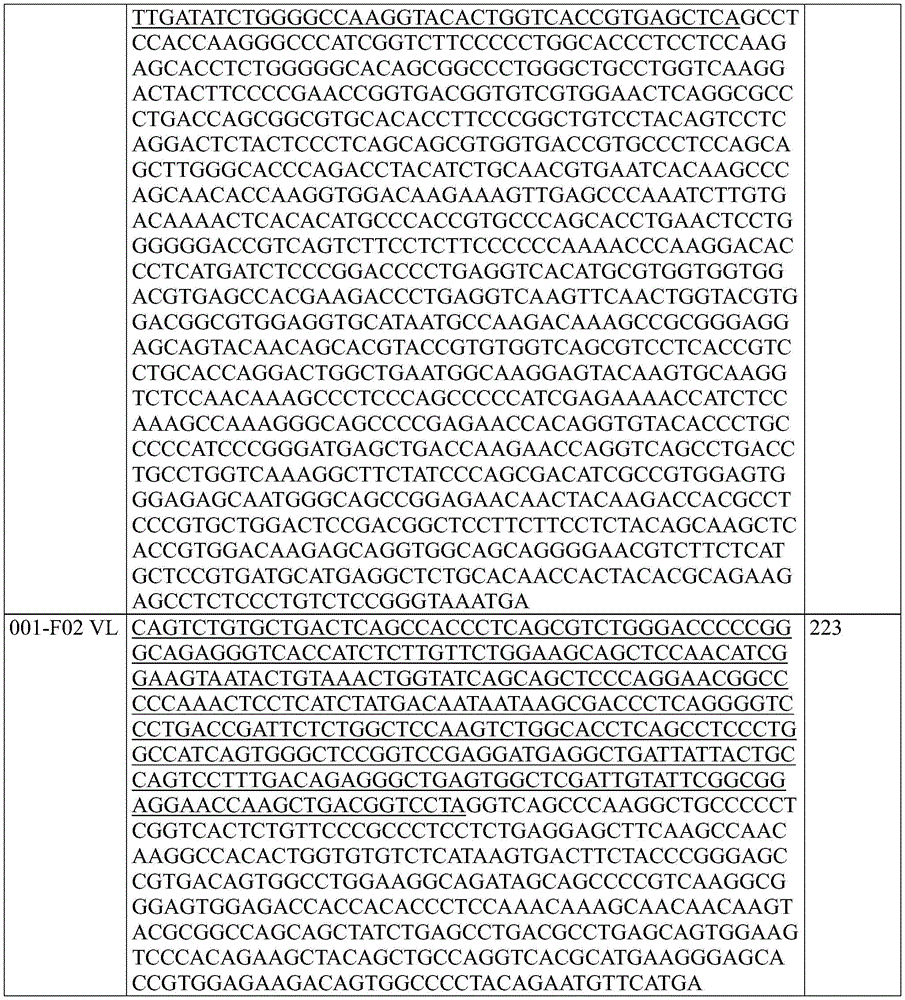
Some oncolytic viruses have the ability to accommodate DNA insertions large enough to accommodate integration of full-length human antibody sequences. Attenuated vaccinia viruses and herpes simplex viruses are examples of therapeutic oncolytic viruses whose genomes are large enough to allow integration of full-length IgG antibody sequences (Chan, w.m. et al, 2014, annual review of virology (Annu Rev Virol) 1(1): 119-141; Bommareddy, p.k. et al 2018, nature review immunology (Nat Rev Immunol) 18(8): 498-513). Full-length IgG antibodies have been successfully integrated into oncolytic vaccinia viruses, which causes expression and extracellular release of full-length IgG antibodies upon infection of virus-susceptible host cells, such as cancer cells (kleinbeter, p. et al, 2016, cancer immunology 5(10): e 1220467). Adenoviruses can also be engineered to encode full-length IgG antibodies that are functionally produced and secreted upon cell infection (Marino, n, et al, 2017, journal of clinical research (J Clin Invest) 123 (6: 2447-.
The invention also encompasses pharmaceutical compositions comprising a virus, such as the oncolytic virus discussed above, and a pharmaceutically acceptable diluent, vehicle and/or adjuvant.
In some embodiments, the pharmaceutical composition can be in the form of a CAR-T cell that carries a partial or complete antibody sequence described herein as part of the sequence encoding its chimeric antigen T cell receptor.
The invention also encompasses pharmaceutical compositions comprising CAR-T cells as discussed above, together with a pharmaceutically acceptable diluent, vehicle and/or adjuvant.
The invention also includes other therapeutic modalities or "shape" drugs, such as antibody drug conjugates, infusion proteins, and the like, as well as pharmaceutical compositions that include such therapeutic modalities.
The antibody molecules, nucleotide sequences, plasmids, viruses, cells and/or pharmaceutical compositions described herein may be suitable for parenteral administration, comprising aqueous and/or non-aqueous sterile injection solutions which may contain antioxidants and/or buffers and/or bacteriostats and/or solutes which render the formulation isotonic with the blood of the intended recipient; and/or aqueous and/or non-aqueous sterile suspensions, which may include suspending agents and/or thickening agents. The antibody molecules, nucleotide sequences, plasmids, cells and/or pharmaceutical compositions described herein may be presented in unit-dose or multi-dose containers (e.g., sealed ampoules and vials) and may be stored in a freeze-dried (i.e., lyophilized) condition requiring only the addition of the sterile liquid carrier, for example, water for injection, immediately prior to use.
Extemporaneous injection solutions and suspensions may be prepared from sterile powders and/or granules and/or tablets of the kind previously described.
For parenteral administration to human patients, daily dosage levels of anti-TNFR 2 antibody molecules will generally range from 1mg/kg patient body weight to 20mg/kg, or in some cases even up to 100mg/kg in a single dose or divided doses. In special cases, for example in combination with long-term administration, lower doses may be used. In any event, the physician will determine the actual dosage which will be most suitable for any individual patient, and the actual dosage will vary with the age, weight and response of the particular patient. The above dosages are exemplary of the general case. There may, of course, be individual instances where higher or lower dosage ranges are of course, and such dosages are within the scope of the invention.
Typically, a pharmaceutical composition (or medicament) comprising an antibody molecule described herein will contain an anti-TNFR 2 antibody molecule at a concentration of between about 2mg/ml and 150mg/ml or between about 2mg/ml and 200 mg/ml.
Generally, in humans, oral or parenteral administration of the antibody molecules, nucleotide sequences, plasmids, viruses, cells and/or pharmaceutical compositions described herein is the preferred route, most convenient. For veterinary use, the antibody molecules, nucleotide sequences, plasmids, viruses, cells and/or pharmaceutical compositions described herein are administered in an appropriately acceptable formulation according to normal veterinary practice, and the veterinarian will determine the dosing regimen and route of administration that are most appropriate for the particular animal. Accordingly, the present invention provides pharmaceutical formulations (as described above and further below) comprising an amount of the antibody molecules, nucleotide sequences, plasmids, viruses and/or cells of the present invention effective for treating various conditions. Preferably, the antibody molecules, nucleotide sequences, plasmids, viruses, cells and/or pharmaceutical compositions described herein are suitable for delivery by a route selected from the group comprising: intravenous (IV or i.v.); intramuscular (IM or i.m.); subcutaneous (SC or s.c.) or intratumoral.
The invention also encompasses antibody molecules, nucleotide sequences, plasmids, viruses, cells and/or pharmaceutical compositions as described herein comprising a pharmaceutically acceptable acid or base addition salt of a target binding molecule or portion of the invention. . The acids used for preparing pharmaceutically acceptable acid addition salts of the above base compounds useful in the present invention are those which form non-toxic acid addition salts, i.e., salts containing pharmacologically acceptable anions, such as hydrochloride, hydrobromide, hydroiodide, nitrate, sulfate, bisulfate, phosphate, acid phosphate, acetate, lactate, citrate, acid citrate, tartrate, bitartrate, succinate, maleate, fumarate, gluconate, saccharate, benzoate, methanesulfonate, ethanesulfonate, benzenesulfonate, p-toluenesulfonate and pamoate [ i.e., 1,1' -methylene-bis- (2-hydroxy-3-naphthoate) ] salts, and the like. Pharmaceutically acceptable base addition salts may also be used to produce the agents according to the invention in the form of pharmaceutically acceptable salts. Chemical bases that can be used as reagents to prepare pharmaceutically acceptable base salts of the agents of the invention that are acidic in nature are those that form non-toxic base salts with such compounds. Such non-toxic base salts include, but are not limited to: base salts derived from such pharmaceutically acceptable cations, such as those of alkali metal cations (e.g., potassium and sodium) and alkaline earth metal cations (e.g., calcium and magnesium); ammonium or water-soluble amine addition salts, such as N-methylglucamine- (meglumine); and other alkali salts of lower alkanolammonium and pharmaceutically acceptable organic amines, and the like. The antibody molecules, nucleotide sequences, plasmids, viruses, and/or cells described herein can be lyophilized for storage prior to use and recombination in a suitable vector. Any suitable lyophilization process (e.g., spray drying, cake drying) and/or recombinant techniques may be employed. Those skilled in the art will appreciate that lyophilization and reconstitution may result in varying degrees of loss of antibody activity (e.g., with conventional immunoglobulins, IgM antibodies tend to have greater activity loss than IgG antibodies), and that usage levels may have to be adjusted upward to compensate. In one embodiment, the lyophilized (freeze-dried) polypeptide binding portion loses no more than about 20% activity (prior to lyophilization) when rehydrated, or no more than about 25%, or no more than about 30%, or no more than about 35%, or no more than about 40%, or no more than about 45%, or no more than about 50%.
The anti-TNFR 2 antibody molecules, nucleotide sequences, and pharmaceutical compositions described herein can be used to treat cancer in a subject or patient. Herein, the terms subject and patient are used interchangeably.
The term "patient" (or subject) as used herein refers to an animal, including a human, that has been diagnosed as having cancer and/or exhibiting symptoms of a particular disease.
In some embodiments, the patient (or subject) is an animal, including a human, that has been diagnosed with cancer.
In some embodiments, the patient (or subject) is an animal, including a human, that has been diagnosed with and/or exhibits symptoms of a chronic inflammatory disease. Chronic inflammatory diseases as used herein include autoimmune diseases. As described above, several different immune cells can express TNFR2, and the relative levels of expression can vary depending on the disease and context. It is well known that, for example, regulatory T cells can express high levels of TNFR2, and that these can be amplified by TNFR2 agonists. Regulatory T cells constitute a subset of T cells that are capable of suppressing other immune cells in normal and pathological immune environments and are considered to contribute to the prevention of autoimmune attack by self tissues. Thus, stimulation of Regulatory T cell activity may be very important in the treatment of autoimmune disorders (Sharabi et al "Regulatory T cells in the treatment of disease" Nature review: Drug discovery (Nat Rev Drug discovery.) "2018, 12.10). Examples of chronic inflammatory diseases other than autoimmune disorders are osteoarthritis and celiac disease. Examples of autoimmune disorders are Rheumatoid Arthritis (RA), Multiple Sclerosis (MS), type I diabetes, Systemic Lupus Erythematosus (SLE), psoriasis, Inflammatory Bowel Disease (IBD) or Myasthenia Gravis (MG).
In some embodiments, the patient (or subject) is a patient with high TNFR2 expression in diseased tissue. In this context, high expression means a higher level of TNFR2 expression compared to the corresponding healthy tissue. Typically, the healthy tissue used for this comparison is a reference tissue (or standard reference) collected from healthy tissue of one or several healthy individuals. The level of expression can be measured by standard techniques, such as Immunohistochemistry (IHC), Fluorescence Activated Cell Sorting (FACS), or mRNA expression measurement.
It is contemplated that the subject may be a mammal or a non-mammal. Preferably, the mammalian patient is a human, horse, cow, sheep, pig, camel, dog or cat. Most preferably, the mammalian patient is a human.
By "exhibiting" a symptom of cancer is meant that the patient exhibits a symptom of cancer and/or a diagnostic marker of cancer and/or that said symptom of cancer and/or diagnostic marker of cancer can be measured and/or assessed and/or quantified.
It is readily understood by the medical skilled person what the cancer symptoms and cancer diagnostic markers will be and how to measure and/or assess and/or quantify whether the severity of the cancer symptoms is reduced or increased, or whether the cancer diagnostic markers are reduced or increased; and how those cancer symptoms and/or cancer diagnostic markers can be used to develop a prognosis for cancer.
Cancer treatments are typically administered in the form of a series of treatments, that is, therapeutic agents are administered over a period of time. The length of time of the series of treatments will depend on a number of factors, which may include the type of therapeutic agent administered, the type of cancer treated, the severity of the cancer treated, and the age and health of the patient, among other reasons.
By "during treatment" is meant that the patient is currently receiving a series of treatments and/or is receiving a therapeutic agent and/or is receiving a series of therapeutic agents.
In some embodiments, the cancer to be treated according to the invention is a solid tumor.
Each of the above cancers is well known and as therapeutic agents for treating those cancers, symptoms and diagnostic markers of cancer are well described. Thus, symptoms, diagnostic markers for cancer, and therapeutic agents for treating the above-mentioned types of cancer will be known to the medical skilled person.
Clinical definitions of diagnosis, prognosis and progression of a large number of cancers rely on certain classifications called staging. Those staging systems are used to check against many different cancer diagnostic markers and cancer symptoms to provide an overview of the diagnosis and/or prognosis and/or progression of cancer. The skilled oncology person will understand how to use the staging system to assess the diagnosis and/or prognosis and/or progression of cancer, and which cancer diagnostic markers and cancer symptoms should be used for the assessment.
"cancer staging" comprises: a Rai staging, the Rai staging comprising a0 stage, an I stage, a II stage, a III stage, and an IV stage; and/or a Binet staging, said Binet staging comprising stages A, B and C; and/or an anburg stage (Ann arbor standing) comprising stages I, II, III, and IV.
It is known that cancer can cause abnormalities in cell morphology. These abnormalities often occur reproducibly in certain cancers, meaning that these changes in morphology can be examined in the diagnosis or prognosis of cancer (otherwise known as histological examination). Techniques for visualizing samples to examine cell morphology and for preparing samples for visualization are well known in the art; such as an optical microscope or a confocal microscope.
The "histological examination" includes: the presence of small mature lymphocytes; and/or the presence of small mature lymphocytes with narrow cytoplasmic borders; the presence of small mature lymphocytes with compact nuclei lacking discernible nucleoli; and/or the presence of small mature lymphocytes with narrow cytoplasmic borders and with compact nuclei lacking discernible nucleoli; and/or the presence of atypical cells and/or lysed cells and/or prolymphocytes.
It is well known that cancer is the result of mutations in cellular DNA that may lead to the avoidance of cell death or uncontrolled proliferation of cells. Therefore, examining these mutations (also known as cytogenetic testing) may be a useful tool for assessing the diagnosis and/or prognosis of cancer. An example of this is the deletion of chromosome position 13q14.1, which is characteristic of chronic lymphocytic leukemia. Techniques for examining cells for mutations are well known in the art; for example, Fluorescence In Situ Hybridization (FISH).
"cytogenetic examination" comprises examining DNA in cells and in particular chromosomes. Cytogenetic testing can be used to identify changes in DNA that may be associated with the presence of refractory and/or recurrent cancer. Such variations may include: a deletion in the long arm of chromosome 13; and/or a deletion at chromosome position 13q 14.1; and/or trisomy of chromosome 12; and/or a deletion in the long arm of chromosome 12; and/or a deletion in the long arm of chromosome 11; and/or 11q is absent; and/or a deletion in the long arm of chromosome 6; and/or 6q deletion; and/or a deletion in the short arm of chromosome 17; and/or 17p deletion; and/or t (11:14) metathesis; and/or (q13: q32) metathesis; and/or antigenic gene receptor rearrangement; and/or BCL2 rearrangement; and/or BCL6 rearrangement; and/or t (14:18) metathesis; and/or t (11:14) metathesis; and/or (q13: q32) metathesis; and/or (3: v) translocation; and/or (8:14) metathesis; and/or (8: v) translocation; and/or t (11:14) and (q13: q 32).
It is known that patients suffering from cancer exhibit certain physical symptoms, which are usually caused by the burden of the cancer on the body. Those symptoms often recur in the same cancer and may therefore be characteristic of the diagnosis and/or prognosis and/or progression of the disease. Those skilled in the medical arts will understand which physical symptoms are associated with which cancers, and how those physical systems are evaluated in relation to the diagnosis and/or prognosis and/or progression of the disease. "physical symptoms" include hepatomegaly and/or splenomegaly.
Drawings
In the examples below, reference is made to the following figures:
figure 1 shows that the antibodies of the invention bind TNFR 2. FIGS. 1A-D: human antibodies were shown by ELISA to bind to human TNFR2 protein in a dose-dependent manner that yielded different EC50 values. FIG. 1E: murine antibodies 3-F10 and 5-a05 bind to mTNFR2 with similar affinity.
FIG. 2 shows TNFR2 specificity Antibodies and in vitro activated CD4+Binding of T cells. With IL-2 and CD3/CD28
 Human blood-derived CD4+T cells (FIGS. 2A-D) and mouse spleen CD4+T cells (fig. 2E) were activated. TNFR2 specificity was analyzed by FACS at concentrations ranging from 0.002-267nM (human) and 0.00003-133nM (mouse)
 Affinity of the antibody for activated cells. The curves show the MFI after subtraction of isotype control background (fig. 2A (full and partial blockers), fig. 2B (partial blockers), fig. 2C and D (non-blockers), fig. 2E (mouse instead of full blocker (3-F10) and non-blocker (5-a 05)).
Although the human TNFR2 antibody binds with different affinities to in vitro activated CD4+T cells bound (EC50 values ranged from 0.59 to 53nM), but mouse TNFR2 antibody bound with similar affinity (EC50 values ranged from 0.072 to 0.11 nM).
FIG. 3 shows TNFR2 The antibody specifically binds
 TNFR 2. Human blood-derived CD4 using recombinant IL-2 and CD3/CD28 activated beads+T cells (FIG. 3A) and mouse spleen CD4+T cells (fig. 3B) were activated for 3 days. Blocking of in vitro activated cells with polyclonal TNFR2 antibody (grey line) or maintaining in vitro activated cells in PBS (black line) for 30 min, followed by suboptimal concentration of different TNFR2 Antibodies or isotype controls (dashed line) stained them for 15 minutes. The cells were then washed and incubated with APC-conjugated secondary antibody for 30 minutes before analysis by flow cytometry.
Binding of all antibodies can be blocked by the polyclonal TNFR2 antibody, thus it shows TNFR2 Antibodies (human and mouse) are specific for
 TNFR 2.
FIG. 4 shows human TNFR2 specificity Cross-reactivity of antibodies with cynomolgus monkeys.
CD4 was isolated from cynomolgus monkey blood+T cells were also stimulated with PMA and Ionomycin (Ionomycin). After 2 days, TNFR2 specificity was applied at 0.1, 1 or 10. mu.g/ml The antibody or isotype control cells were labeled and then incubated with APC-conjugated secondary a-human antibodies. Cells were analyzed by flow cytometry. The figure shows TNFR2 for a single antibody+Percentage of T cells relative to isotype control. The results are mean and SD of 2-3 separate experiments.
Most TNFR2 antibodies showed cross-reactive binding to cynomolgus monkey cells.
FIG. 5 activated cells were blocked by 40 μ g/ml MR2-1 antibody (FIG. 5A, black bar) or were kept with PBS (FIG. 5A, grey bar) for 30 minutes before TNFR 2-specific addition Antibody/polyclonal TNFR2(pTNFR2) and cells were incubated for 15 minutes. After incubation with APC-conjugated secondary antibody, bound TNFR2 was analyzed by FACS
 Percentage of antibody. In FIG. 5B, specificity was determined with 40. mu.g/ml TNFR2
 antibody/pTNFR 2 (black bar) blocks activated CD4+T cells, or they were kept with PBS (grey bar) and then incubated with PE conjugated MR2-1 antibody for 15 minutes. Cells were then analyzed by FACS.
The MR2-1 antibody does not interfere with TNFR2 specificity Binding of antibodies, and
 the antibody did not affect the binding of MR2-1 to activated cells, showing that
 The antibodies all bound to domains of the TNFR2 protein other than the MR2-1 antibody. This shows TNFR2 specificity
 The antibodies all bound to epitopes of the TNFR2 protein other than TNFR2 clone MR 2-1.
Human blood-derived CD4 using rhIL-2 and CD3/CD28 activated beads+T cells were stimulated for 2-3 days. Activated cells were blocked by 40 μ g/ml MR2-1 antibody (FIG. 5A, black bar) or were kept with PBS (FIG. 5A, grey bar) for 30 minutes before TNFR 2-specific addition Antibody/polyclonal TNFR2(pTNFR2), and cells were incubated for 15 minutes. After incubation with APC-conjugated secondary antibody, bound TNFR2 was analyzed by FACS
 Percentage of antibody. In FIG. 5B, specificity was determined with 40. mu.g/ml TNFR2
 antibody/pTNFR 2 (black bar) blocks activated CD4+T cells, or they were retained with PBS (grey bar) and then incubated with PE conjugated MR2-1 antibody for 15 minutes. Cells were then analyzed by FACS.
The MR2-1 antibody does not interfere with TNFR2 specificity Binding of antibodies, and
 the antibody did not affect the binding of MR2-1 to activated cells, showing that
 The antibodies all bound to domains of the TNFR2 protein other than the MR2-1 antibody.
Figure 6 shows data for ligand blocking antibodies. Using compounds specific for hTNFRII The mabs performed blocking ELISA to evaluate ligand blocking properties. FIG. 6A) 10. mu.g/ml incubation was performed for all antibodies. Subsequently, all antibodies that reduced the signal achieved with the isotype control by no more than 50% (indicated by the dashed line) were administered to further explore the ligand blocking potential. Fig. 6B) shows a fully blocking mAb, fig. 6C) and D) show a partially blocking mAb, and fig. 6E) shows a weakly blocking mAb. All other mabs were considered non-blocking mabs.
Figure 7 shows data for ligand blocking antibodies. With specificity for mTNFRII The mabs performed blocking ELISA to evaluate ligand blocking properties. FIG. 7A) all antibodies were incubated at 10. mu.g/ml. Subsequently, all antibodies that reduced the signal achieved with the isotype control by no more than 50% (indicated by the dashed line) were administered to further explore the ligand blocking potential. Figure 7B) shows a full blocking mAb, figures 7C) and D) show a partial blocking mAb, and figure 7E) shows a weak blocking mAb. All other mabs were considered non-blocking mabs.
FIG. 8 shows agonistic non-blocking rather than antagonistic blocking TNFR2 specificity The antibodies enhance IFN- γ production in IL-2 and IL-12 stimulated NK cells. FIG. 8A: human blood-derived NK cells were stimulated with 20ng/ml rhIL-2 and 20ng/ml rhIL-12, and 10. mu.g/ml TNFR 2-specific was added
 Antibody, isotype control or 100ng/ml rhTNF- α for 24 hours. The amount of IFN- γ in the culture supernatant was measured using MSD. The amount of IFN- γ was normalized to an isotype control and is shown in figure 8A. CD4 with greater in vitro activation was not included in the assay+Human antibodies with an EC50 value 25nM high for T cells. Human NK cells also produce TNF-. alpha.in these cultures (see FIG. 8D below). IFN- γ results are the mean of 3 donors in 2 independent experiments. The results show that the non-blocking TNFR2 antibody is agonistic and enhances IFN- γ production by NK cells stimulated by cytokines, whereas the blocking antibody is rather antagonistic and decreases IFN- γ production by NK cells. In addition, FIGS. 8B-D show that agonistic antibodies also have intrinsic agonistic activity, even in the absence of measurable TNF- α ligand. As shown in figure 8B, addition of blocking TNF-alpha antibody reduced the amount of IFN-gamma release, but its ratio to isotype control (figure 8C) remained, even though measurable TNF-alpha was completely absent from the supernatant (figure 8D). FIG. 8D shows the presence or absence of neutralizing antibodies to TNF- αIn this case, the average TNF-. alpha.levels of 2 antibodies.
FIG. 9 shows agonistic non-blocking rather than antagonistic blocking TNFR2 specificity Antibody to transfer memory CD4+T cell population activation, e.g. by CD25+An increase in the proportion of cells is shown. Specificity with recombinant IL-2 and TNFR2
 Antibodies, isotype controls or recombinant TNF-alpha to human blood-derived CD4+T cells (FIG. 9A) and mouse spleen CD4+T cells (fig. 9B) were activated. After 3 days of culture, cells were stained for CD25 and CD45RO (human)/CD 44 and CD62L (mouse) and analyzed by flow cytometry. The results show memory (CD45 RO)+Cell (human)/CD 44+CD62L-(mouse)) percentage of CD25 expressing cells on the population versus CD25 recovered with isotype control in culture+Percentage of cells. Results are mean and SEM of 7 donors (figure 9A, human) and 3 mice (in 2 independent experiments) (figure 9B). Non-blocking TNFR2 antibody induces CD25 in both human and mouse cultures+Percentage of memory cells, whereas blocking antibodies had no effect on the memory population. For both human cultures (FIG. 9A) and mice (FIG. 9B), addition of exogenous TNF- α increased CD25+A population of memory T cells. X ═ p<0.05 as calculated by one-way ANOVA.
Figure 10 shows that anti-TNFR 2 mAb modulates the inhibitory function of bone marrow-derived inhibitory cells (MDSCs). For FIGS. 10A and B, MDSC has been pre-incubated with human anti-TNFR 2 mAb for 30 minutes. Without washing the cells, in CD3/CD28 Titrated amounts of MDSC were combined with CFSE labeled CD3 in the presence of+T cells were incubated together. FIG. 10A: activated CD25 was determined by
 FACS 3 days later+% of T cells. For normalization between different assays, isotype control background was subtracted from all data points. The figure shows a summary of 6 different donors with a 1:4 ratio of MDSCs to T cells in 3 independent experiments. FIG. 10B: the amount of secreted cytokines in the supernatant was assessed by MSD and the ratio between IFN- γ and IL-10 release was calculated relative to isotype controls. Data were pooled based on analysis of culture supernatants obtained from experiments with 5 different donors.
For fig. 10C, CD11b from mouse CT26 tumor was isolated+Bone marrow cells were preincubated for 30 min with mouse anti-TNFR 2 mAb. Titrated numbers of bone marrow cells were co-cultured with CFSE-labeled CD3+ T cells purified from naive Balb/C spleen. Using CD3/CD28 Cells were stimulated for 3 days and then proliferation CFSE was analyzed by FACSlow% of cells. (n-4 independent experiments). In the T cell/MDSC co-culture assay, only agonistic/
non-blocking anti-TNFR 2 mAb was shown to reverse the inhibitory function of MDSCs.
For fig. 10D, MDSCs were pre-incubated with two different human anti-TNFR 2 mabs, one blocking (═ 1H10) and one non-blocking (═ 1F02), for 30 minutes in 3 different isoforms (containing Fc-deficient format), in which amino acid position 297 had been switched, resulting in loss of glycosylation and thereby reduced binding to Fc γ R (designated here as N297Q). Without washing the cells, in CD3/CD28 Titrated amounts of MDSC were combined with CFSE labeled CD3 in the presence of+T cells were incubated together and after 3 days, activated CD25 was determined by FACS+% of T cells. For normalization between different assays, isotype control background was subtracted from all data points. The figure shows that the agonistic activity of the non-blocking 1-F02 antibody is independent of antibody isotype and fcyr binding. The figure shows a summary of 4 different donors with a ratio of MDSC to T cells of 1:4 in 2 independent experiments.
FIG. 11 for FIG. 11, Balb/c mice were injected subcutaneously with 1X 10⁶And CT26 cells. 8 daysThereafter, mice with an average tumor size of 3 x 3mm were treated twice weekly with 10mg/kg antibody i.p. as indicated in the figure. Tumors were measured twice/week until their diameter reached 15mm, and then mice were sacrificed. The upper panel shows tumor growth of isotype-control treated mice, followed by the lower two panels, in the left panel, showing antagonist ligand-blocker antibodies in Fc γ R-deficient Ig format (middle panel) and agonistic non-ligand blocking antibodies (lower panel). The middle panel shows the same antibody in format murine IgG2a linked primarily to an activating Fc γ R, and the right panel is an antibody in format murine IgG1 linked primarily to an inhibiting Fc γ RIIb. For fig. 11B, surviving mice were followed for 70 days. As seen in the figure, non-blocking agonistic antibodies are most effective as tumor therapy in IgG1 format with a primary binding of inhibitory Fc γ R. In addition, agonistic antibodies have Fc γ R independent anti-tumor effects as seen using the N297A format. On the other hand, blocking antagonist antibodies are most effective as tumor therapy in the IgG2a format with primarily linked activating Fc γ rs and have no effect in the format with defective Fc γ R binding. As compared to isotype control<0.001 as calculated by the log rank Mantel Cox test.
FIG. 12C 57/BL6 mice were injected subcutaneously with 1X 10⁶MC38 cells. Mice with an average tumor size of 3 x 3mm were treated twice weekly with 10mg/kg antibody i.p., as indicated in the figure. The figure shows tumor growth curves of individual mice. FIG. 12A: isotype control, fig. 12B: PD-1 targeting antibody, fig. 12C: 5a05 antibody (surrogate antibody, ligand non-blocker, agonist), fig. 12D: 5a05 and PD 1. Tumors were measured twice/week until their diameter reached 15mm, and then mice were sacrificed. Fig. 12E shows survival curves for four different treatment groups, ═ p, compared to isotype controls<0.05,***=p<0.001 as calculated by the log rank Mantel Cox test.
Figure 13 shows that ligand blocking agonistic antibodies are effective as anti-tumor therapy in combination with anti-PD-L1. C57/BL6 mice were injected subcutaneously with 1X 10⁶ MC38 cells. Mice were treated with isotype control antibody or 5a05 twice (day 1 and day 4), or with anti-PD-L1 for four consecutive days, followed two days later by a fifth injection (five injections on day 1, day 2, day 3, day 4 and day 7 in total), or a combination of both, at an average tumor size of 5 x 5 mm. All antibodies were administered at 10mg/kg i.p. Figure 13 shows mean tumor growth +/-SEM, n 10/group. P <0.05, as calculated using one-way ANOVA testing.
FIG. 14 subcutaneous injection of 1X 10 to C57/BL6 mice6And B16 cells. After 3 days, mice were treated i.p. with 10mg/kg antibody twice a week. Tumors were measured twice/week until their diameter reached 15mm, and then mice were sacrificed. FIG. 14A: isotype control, fig. 14B: 5A05 antibody (surrogate antibody, ligand non-blocker, agonist). Fig. 14C shows survival curves for two different treatment groups. As compared to isotype control, ═ p<0.05 as calculated by the log rank Mantel Cox test.
Figure 15 ligand non-blocking agonistic surrogate antibody 5a05 alters immune cell composition in tumors. Mice were inoculated with CT26 tumor cells as described, and when the tumor size reached approximately 7x 7mm, antibodies were injected as indicated. After 3 injections, mice were sacrificed and tumors harvested on day 8 after treatment initiation. Tumor single cell suspensions were analyzed for immune cell content by FACS. A) Ligand non-blocking agonistic surrogate antibody 5A05 resulted in Treg depletion and B) CD8+T cells flow in or expand. This results in Treg/CD8+Change in T cell ratio, as depicted in C), panel D) shows T cells and bone marrow cells, here tumor associated macrophages (TAMs, defined as CD11b+But negative for both Ly6G and Ly 6C) was very significantly reduced. Ligand block antagonist surrogate antibody 3F10 also modulated TAM numbers, but still differs significantly from 5a 05.
FIG. 16 injection of 15-20X 10 to NOG mice i.v6And (4) PBMC cells. After 10-12 days, spleens were removed from mice, single cell suspensions were prepared, and TNFR2 expression was evaluated by FACS. Previously, T cells taken from blood and tumor samples from 3 or 9 cancer patients, respectively, have been evaluated for TNFR2 expression. As shown in the figure, Treg and CD8+TNFR2 expression on T cells in NOG miceThere is a good comparison between human T cells grown and activated in vivo and T cells from human tumors.
FIG. 17 injection of 15-20X 10 to NOG mice i.v6And (4) PBMC cells. After 10-12 days, spleens were removed from mice, single cell suspensions were prepared, and cells were analyzed using FACS. FIG. 17A shows a CD45 definition+CD3+CD4+CD25+CD127low/negDivided by the average percentage of the total number of cells in the spleen. FIG. 17B shows T cells (CD 3)+) Average percentage to total number of cells in spleen. As shown in figure 17, ligand non-blocking agonistic antibody 1F02 increased the number of tregs (expressing the highest levels of TNFR2) and the total number of T cells in this model. In comparison, the ligand blocker antagonist antibody 1H10 did not have this effect.
Figure 18 IFN- γ release induced by various TNFR 2-specific antibodies was measured in three different in vitro systems. As positive controls, anti-CD 3 antibody-OKT 3 or moluzumab-CD 3(Muromonab-CD3), anti-CD 52 antibody-Alemtuzumab (Alemtuzumab), and anti-CD 28 antibody were used. Isotype control was used as a negative control. Each dot represents PBMCs from one human donor. FIG. 18A shows results from high density cell cultures with PBMCs at 1X 10⁷Individual cells/ml culture. After 48 hours, 10. mu.g/ml antibody was added and incubated for 24 hours. As seen in the figure, both alemtuzumab and OKT3 induced significant IFN- γ release, but did not induce any TNFR2 specific antibodies. Figure 18B shows solid phase in vitro culture performed by coating the wells of a 96-well plate with antibody prior to addition of PBMCs. Again, both alemtuzumab and OKT3 induced significant IFN- γ release as well as some TNFR2 specific antibodies, particularly in one of the donors. Figure 18C shows that whole blood was stimulated with antibody, and here alemtuzumab induced significant IFN- γ release, but did not induce any TNFR 2-specific antibodies.
FIG. 19: NOG mice were injected i.v. with 25-106And (4) PBMC cells. After 14 days, when the blood of the mice was shown to consist of approximately 40% human T cells, the mice were treated with 10 μ g of the antibody. 1 hour after injectionBody temperature was measured (fig. 19A). The experiment was terminated 5 hours after injection and blood was analyzed for IFN-. gamma. (FIG. 19B) or TNF-. alpha. (FIG. 19C) content. P<0.0001 and ═ p<0.01 as calculated using one-way ANOVA.
Figure 20 shows binding to TNFR2 variants lacking a single domain. Antibodies that bind to TNFR2 variants expressed on HEK cells were tested by flow cytometry. The absence of domains 1 and 2 did not significantly affect binding (fig. 20A and B), while 3 and partial domain 4 completely abolished the interaction between the antibody and TNFR2 (fig. 20C and D). Similarly, the absence of domain 1+3 completely prevented the binding of all antibodies (except 1F 06) (fig. 20E), while the absence of domain 2+4 completely abolished the binding of agonistic antibodies (1F02, 1F06, 4E08) and also significantly reduced the binding of antagonists (1H10, 4H02, 5B08) (fig. 20F). Dark grey indicates positive control and white indicates negative control antibody.
FIG. 21 shows a comparison of the amino acid sequences of human (H-D3) and mouse (M-D3) domain 3 of TNFR 2. Similar amino acids are marked in white, while differences are marked in grey. The following five sequences represent the 5 different constructs against which the test antibodies were directed. Human exchanges with mouse sequences are underlined, while unlabeled sequences are fully human. Domains 1, 2 and 4 are human and do not contain any substitutions or mutations.
Figure 22, left panel shows binding to wild type human and mouse TNFR 2. The mutated hTNFR2 constructs (m1, m2, m3 and m4) were used to narrow the binding site for different anti-hTNFR 2 antibodies. Flow cytometry analysis showed that the mutation in aa 119-132 did not affect antibody binding, but the mutation in aa 151-160 completely abolished all antibody binding. The mutation in 134-144 only disrupts the binding of the blocking antibody and the antagonistic antibody, but does not significantly affect the agonistic antibody. Dark grey bars represent positive controls and white is a negative control antibody. The dashed line is the level of negative control antibody.
Examples of the invention
Specific non-limiting examples embodying certain aspects of the present invention will now be described.
In many instances, particularly in vivo instances, antibody 5-a05 has been used. This is a mouse antibody, a replacement antibody for the human antibodies disclosed herein. It has been selected as a surrogate antibody based on its similar properties to ligand non-blocking agonistic antibodies with good EC50 values.
In some examples and figures, a slightly different nomenclature of antibody clones is used, e.g., clone 001-F02 is sometimes shortened to 1-F02 or 1F02, 005-B08 is sometimes shortened to 5-B08 or 5B08, etc.
EXAMPLE 1 Generation of antibodies specific for TNFR2
(see also FIG. 1 and the above description of this figure.)
Isolation of scFv antibody fragments
Use is made of The scFv library (available from the company BioInvent,
 e, et al, "Nature Biotechnol (Nat Biotechnol.)" 2000; 18(8) 852-6) to isolate scFv antibody fragments recognizing human or
 mouse TNFR 2.
Phage pools were used in three successive panning against recombinant human or mouse proteins. After phage incubation, cells were washed to remove unbound phage. The bound phage were eluted with trypsin and amplified in e. The resulting phage stock was converted to scFv format. Coli were transformed with the scFv carrying plasmid and individual scFv clones were expressed.
Identification of unique TNFR2 binding scFv
The transformed scFv from the third panning was assayed using a homogeneous FMAT assay (Applied Biosystems, Carlsbad, CA, USA) for binding to 293FT cells transfected to express human or mouse TNFR2 or a non-related protein.
Briefly, transfected cells were added to a clear plate along with scFv-containing supernatant from the expression plate (diluted 1: 7), mouse anti-His Tag antibody (0.4. mu.g/ml; R & D Systems) and APC conjugated goat anti-mouse antibody (0.2. mu.g/ml; catalog number: 115-. FMAT plates were incubated at room temperature for 9 hours prior to reading. Cells transfected with bacterial clones binding TNFR2, but not with non-related proteins, were classified as actives and were best picked into 96-well plates.
IgG binding to TNFR2 in ELISA
96-well plates (Lumitrac 600LIA plates from Glaina, Greiner) were coated with 1 pmol/well of recombinant human or mouse TNFR2-Fc protein (Sino Biological) at 4 ℃ overnight. After washing, titrated doses of 20. mu.g/ml to 0.1ng/ml (133nM to 1pM) of anti-TNFR 2 mAb were allowed to bind for 1 hour. The plates were then washed again and bound antibody was detected with a 50ng/ml dilution of anti-human F (ab) -HRP secondary antibody (Jackson Immunol research laboratory Co., Ltd.). Super Signal ELISA Pico (Thermo Scientific) was used as substrate and Tecan Ultra Microplate reader was used to analyze the plates.
The data shown in Table 5 and FIGS. 1A-D indicate that both human anti-TNFR 2 antibodies bind to human TNFR2 protein. EC50 values ranged from 0.082nM for 1-C08 to 4.4nM for 1-A09.
In addition, mouse antibodies also bound to mTNFR2 protein instead of clones 3-F10 and 5-A05. These two clones bound with very similar affinities (table 5 and fig. 1E).
TABLE 5 EC50 values of antibodies binding to TNFR2 protein (human proteins except clones 3F10 and 5A05)
| Cloning | EC50(nM) |
| 1-C08 | 0.082 |
| 1-E06 | 0.20 |
| 1-G10 | 0.29 |
| 1-H10 | 0.29 |
| 4-H02 | 0.20 |
| 5-B02 | 0.15 |
| 5-B08 | 0.17 |
| 1-G04 | 1.7 |
| 1-H09 | 0.30 |
| 1-D01 | 0.37 |
| 5-F10 | 0.22 |
| 1-B11 | 0.25 |
| 1-C07 | 0.26 |
| 1-B05 | 0.23 |
| 1-F02 | 0.31 |
| 1-F06 | 0.15 |
| 4-E08 | 0.38 |
| 1-G05 | 0.54 |
| 1-A09 | 4.4 |
| 1-B09 | 0.18 |
| 1-C03 | 0.75 |
| 1-C05 | 0.38 |
| 3-F10 (mouse) | 0.97 |
| 5-A05 (mouse) | 1.4 |
Example 2 specificity of the antibodies
(see also FIGS. 2-5 and the above description of these figures.)
CD4+Isolation of T cells
PBMCs from human buffy coat and cynomolgus (crab-eating) whole blood were separated using Ficoll-Paque PLUS (GE healthcare) gradient. CD4, both from Miltenyi, Inc. (Miltenyi), was used by magnetic cell sorting+T cell isolation kit (human) or CD4 microbeads (non-human primates (cynomolgus monkeys)) isolated CD4 from PBMC+T cells. Using CD4 from America and whirlpool+T cell isolation kit (mouse) mouse CD4 was isolated from spleen+T cells.
TNFR2 specificity Titration of antibodies
Use of in vitro activated CD4+TNFR2 obtained from T cells The ability and affinity of the antibody to bind TNFR2 expressed on cells. With 50ng/ml rhIL-2 (R)&D systems Co.) and
 T-Activator CD3/CD28 stimulates human CD4+T cells for expansion or activation of T cells at 37 degrees for 2-3 days. Increased amounts in the range of 0,002-267nM specific for TNFR2 or isotype control
 The antibody labels the activated cells in vitro. Cells were then incubated with APC-conjugated a-human IgG secondary antibodies (jackson) and then analyzed by flow cytometry (pecsverse, BD). The resulting titration curves are shown in FIGS. 3A-D. With 135U/ml rmIL-2 (R)&D systems Co.) and
 T-Activator CD3/CD28 stimulates mouse CD4+T cells to expand or activate T cells at 37 degrees (Gibco) for 2-3 days. Increases in the range of 0.00003-133nM with specificity for TNFR2 or isotype controlAmount of
 The antibody labels the activated cells in vitro. Cells were then incubated with APC-conjugated a-mouse IgG secondary antibodies (jackson) and analyzed by flow cytometry (pecsverse). The titration curve is shown in fig. 3E. EC50 values for the titration curves were calculated in Microsoft Excel and shown in table 6. For human antibodies, EC50 values varied from 0.6nM (4-H02) to 52.7nM (1-C03). Mouse antibodies bound with similar affinities (0.072nM (3-F10) and 0.11nM (5-A05)) to activated cells in vitro.
TNFR2 Specificity of the antibody
Commercial polyclonal TNFR2 antibody (R) was used in FACS blocking experiments&System D) obtained the specificity of TNFR2 antibody for TNFR 2. Polyclonal TNFR2 antibody (R) was administered at 40. mu.g/ml&D systems Co.) will use 50ng/ml rhIL-2 (R)&D systems Inc.) (human)/135U/ml rm IL-2 (R)&D systems Co.) (mouse) and T-Activator CD3/CD28 stimulated for 2-3 days for T cell expansion and activation (Gibco) CD4+T cells (mouse and human) were blocked for 30 min, immediately before TNFR2
 Antibodies or isotype controls were incubated together for 15 minutes. Used in
 Antibody concentrations were based on TNFR2 alone
 Titration curves of the antibodies and suboptimal concentrations of each antibody were selected. The cells were then washed and incubated with APC-conjugated secondary antibody (jackson) for 30 minutes. By flow cytometry (Bidi Corp.)FACSVerse) analysis of cells. TNFR2 specificity
 All binding of the antibodies (both human and mouse) can be blocked by the polyclonal TNFR2 antibody, as shown in figure 4. These results confirm TNFR2
 Antibodies specifically bind to in vitro activated CD4+TNFR2 on T cells.
TNFR2 specificity Antibody mapping against epitope of TNFR2 antibody clone MR2-1
TNFR2 antibody clone MR2-1 (Invitrogen) binds to a specific domain of the TNFR2 protein. TNFR2 specificity tested by FACS blocking experiments Whether the antibody binds to the same domain as MR 2-1.
With 50ng/ml rhIL-2 (R)&D systems Co.) and T-Activator CD3/CD28 human CD4+T cells were stimulated for 2-3 days for T cell expansion or activation (Gibco). Specificity of TNFR2 with 40. mu.g/ml MR2-1 (black bar in FIG. 5A)
 Antibody/polyclonal TNFR2 (R)&System D) (black bar in fig. 6B) or PBS (gray bar in fig. 5) blocked activated cells. Immediately after 30 min incubation, cells were TNFR 2-specific
 antibody/pTNFR 2 (FIG. 5A) or MR2-1 (FIG. 5B) staining was continued for 15 min. The cells in FIG. 5A were also combined with APC-conjugated secondary a-human IgG reagents (Jackson, Inc.)And (5) cultivating. All cells were analyzed by flow cytometry (pecsverse from bidi). Due to blocking
 MR2-1+The percentage of cells was the same as that of unblocked cells (FIG. 5B) and with or without MR2-1 blocking
 The binding of the antibodies was identical (FIG. 5A), so these were
 The antibody may bind to an epitope of the TNFR2 protein other than the MR2-1 antibody.
TNFR2 Binding of antibodies to cynomolgus monkeys
To verify the cross-reactivity of the TNFR2 antibody to cynomolgus monkeys, cynomolgus monkey CD4 was treated with 50ng/ml PMA (Sigma) and 100ng/ml ionomycin (Sigma)+T cells were stimulated for 2 days. Cells were specifically contacted with 3 different concentrations (0.1. mu.g/ml, 1. mu.g/ml and 10. mu.g/ml) of TNFR2 The antibodies were incubated together and then incubated with APC-conjugated secondary a-human IgG reagents (jackson). Cells were analyzed by flow cytometry (pecsverse, pecsde) and the results showed that most human TNFR2 is specific
 Antibodies can bind cynomolgus TNFR2, and the results for the antibody alone are presented in figure 4.
In summary, the data in example 2 shows that human antibodies specifically bind TNFR2 expressed endogenously on human immune cells. Furthermore, the data show that this binding can be blocked by the addition of a polyclonal commercially available antibody of TNFR2 showing very high specificity for TNFR 2. The same is true for the alternative clones 3F10 and 5a05 for murine cells expressing murine TNFR 2. Also, binding of human clones was not affected by the MR2-1 antibody which showed a different epitope specificity than MR 2-1. T is
TABLE 6 CD4 activated in vitro+Titration of TNFR 2-specific antibody for T cells calculated EC50The value is obtained.
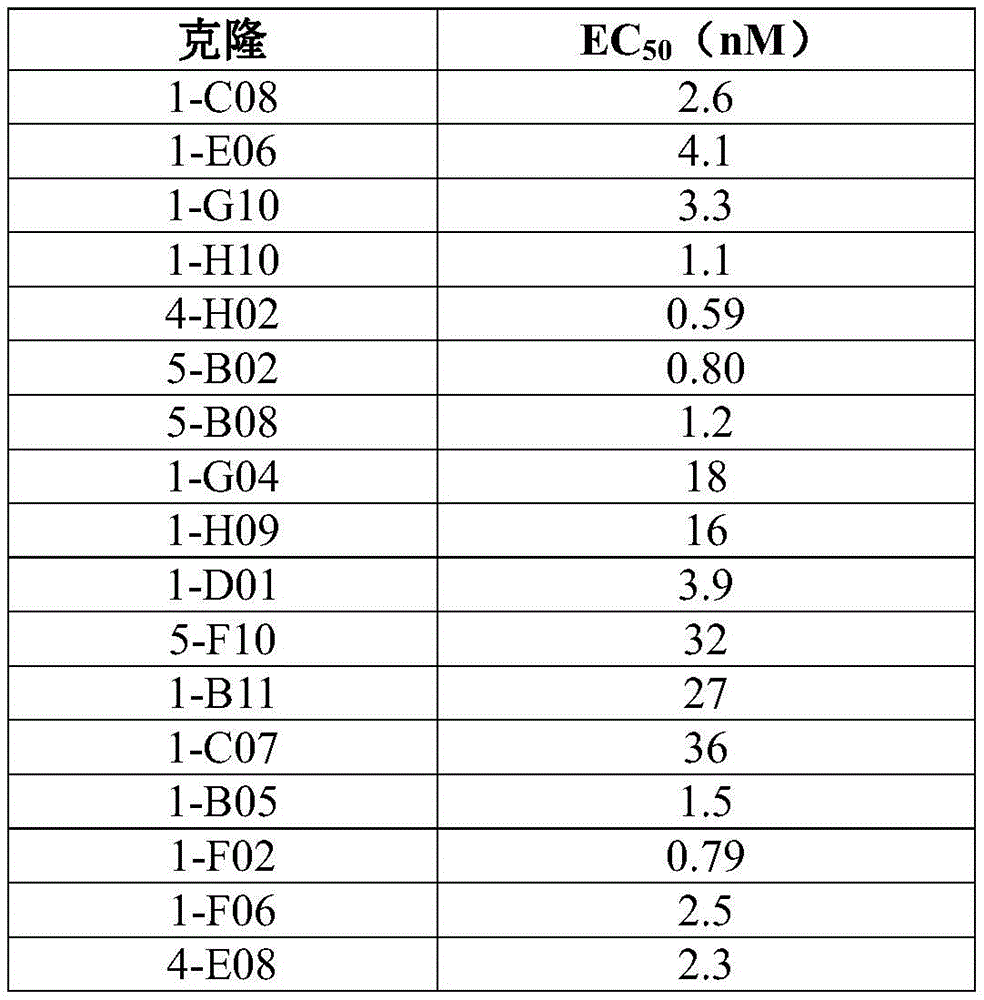
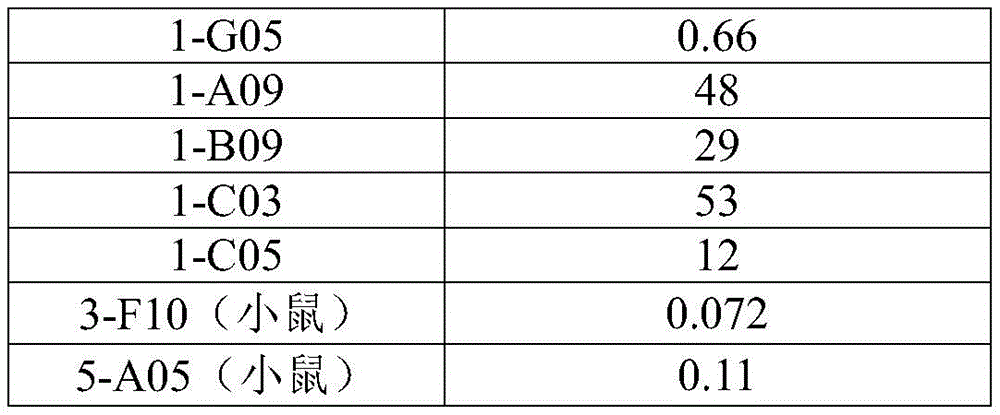
EXAMPLE 3 testing of ligand blocking Properties
(see also FIGS. 6-7 and the above description of these figures.)
ELISA method
96-well plates were coated with hTNFRII (Cat. Italy, N.Y. 10414-H08H) or mTNFRII (Cat. Italy, N.Y. 50128M08H) at 2.5 pmol/well in ELISA coating buffer (0.1M sodium carbonate pH 9.5) and incubated overnight at 4 ℃. After washing in ELISA washing buffer (PBS containing 0.05% Tween 20), plates were incubated with The mAb was incubated at 10. mu.g/ml (single dose ELISA) or 33nM and subsequent dilution of 1:2 (titration ELISA) in blocking buffer containing 0.45% fish gelatin for 1 hour at room temperature with slow stirring. Subsequently, recombinant hTNF- α -bio (R) was added at final concentrations of 5nM and 2nM, respectively&D catalog No. BT210) or mTNF- α (Gibco catalog No. PMC3014) and allowed to incubate for an additional 15 minutes. After that, the plate was washed. For the human ELISA, Streptavidin-HRP (Streptavidin-HRP) (Jackson Cat.No. 016-. Then according to the manufacturerDilution of the substrate (Super Signal ELISA Pico from seimer feishal, catalog No. 37069) is indicated, substrate is added to wells and incubated in the dark for 10 minutes, then read in Tecan Ultra. For mouse ELISA, rabbit anti-mTNF- α (catalog # 50349-RP02, Proteus Biotech) diluted to 1 μ g/ml was added and allowed to incubate for 1 hour at room temperature. After washing, anti-rabbit HRP diluted 1:10000 in blocking buffer was added and incubated again for 1 hour at room temperature. Substrate addition and reading were performed as above.
Data for anti-human and anti-mouse antibodies are presented in tables 7 and 8 below and in figures 6 and 7, respectively.
Table 7.EC50 value of ligand-blocking human antibody: antibodies were titrated and EC50 values were calculated.


Table 8.EC50 values for ligand blocking murine antibodies: antibodies were titrated and EC50 values were calculated.
| Cloning | EC50(nM) | Blocking of |
| 3-F10 | 1.9 | Is totally produced from |
| 4-C01 | 2.7 | Is totally produced from |
| 4-A06 | 2.0 | In part |
| 4-A07 | >500 | In part |
| 4-F06 | 6.2 | In part |
| 5-C09 | 8.6 | In part |
| 2-D09 | 4.4 | In part |
| 4-B12 | >500 | In part |
| 3-G06 | 13 | In part |
| 2- |
25 | Weak (weak) |
| 4-C02 | >500 | Weak (weak) |
| 4-G09 | 2.6 | Weak (weak) |
| 4-C03 | 8.3 | Weak (weak) |
Definition of blockages
A complete blocker is defined as reducing TNF-alpha binding by more than 98%.
Partial blockers are defined as reducing TNF- α binding by 60-98%.
Weak blockers are defined as reducing TNF-alpha binding by less than 60%.
Non-blocking antibodies were defined as not reaching no more than 50% blocking in the high dose single-point ELISA, as shown in fig. 6A and 7A.
The data shown in this example show that various antibodies have been generated, ranging from antibodies that completely inhibit ligand TNF-a binding to antibodies that do not inhibit ligand blockade at all. This is true for both human antibodies and murine substitutes.
Example 4 in vitro function of antibodies
(see also FIGS. 8-10 and the above description of these figures.)
TNF- α non-blocking TNFR2 antibody enhanced cytokine stimulated IFN- γ production in NK cells compared to TNF- α blocking TNFR2 antibody.
The agonistic/antagonistic properties of TNFR 2-specific antibodies were evaluated using the NK cell assay described by Almishri et al. ("TNF α enhances cytokine-induced IFN γ production by NK cells via TNFR 2" -Amishri W et al J Immun 2016; 8: 617-629).
Briefly, human NK cells were isolated from human PBMCs by MACS using "NK isolation kit" (american whirlpool). Mu.l of NK cells(1×10⁶Individual cell/ml) and 20ng/ml rhIL-2 (R)&D systems Co.) and 20ng/ml rhIL-12 (R)&System D) along with 10 μ g/ml TNFR 2-specific antibodies, 10 μ g/ml isotype control, or 100ng/ml TNF- α (R)&System D) together on a U-shaped substrate (Sigma Aldrich ) 96 well TC treated microplates). The supernatant was collected after 24 hours and the amount of IFN- γ produced was estimated by MSD. As a control, an anti-TNF-. alpha.antibody neutralizing TNF-. alpha.was included (Cat. No.: AF-210-NA, R)&D systems corporation). As seen in FIG. 8D, the 1 μ g/ml dose completely neutralized soluble TNF- α, and this dose also reduced IFN- γ release.
Human non-blocking TNFR2 antibody significantly enhanced IL-2 and IL-12 stimulated NK cell IFN- γ production (2-3 fold more IFN- γ compared to isotype control), while antagonistic antibodies (shown here as complete blockers) showed an antagonistic effect on NK cell IFN- γ production (fig. 8A).
This test was considered as non-representative for performance with mouse replacement antibodies due to the lack of endogenously produced TNF- α in murine cultures and the expression of inhibitory Fc γ rs on murine NK cells and activating Fc γ R only on the human counterpart. In contrast, a memory T cell activation assay (induction of CD 25) and a bone Marrow Derived Suppressor Cell (MDSC) inhibition assay (both described below) were used to address the agonist or antagonist properties of mouse surrogate antibodies.
Ligand non-blocking but not TNFR2 antibody induced memory CD4+CD25 expression on T cells.
To further understand the agonistic/antagonistic properties of TNFR2 antibody, it was shown to enhance CD25 expression memory CD4+The capacity of the proportion of T cells was evaluated.
Briefly, CD4 from Gentle and whirly company was used+T cell isolation kit "isolation of human CD4 from PBMC by MACS+T cells. Will CD4+T cells with 10ng/ml rhIL-2 (R)&System D) and 10 μ g/ml TNFR 2-specific antibodyOr a specified amount of rhTNF-alpha (R)&System D) were cultured together. After 3 days, CD25 was analyzed by FACS on memory cells (CD45 RO)+Cells) (fig. 9A).
Similarly, "CD 4" is used+T cell isolation kit "(Meitian whirlpool Co.) mouse CD4 was isolated from spleen by MACS+T cells and mixing them with 10ng/ml rmIL-2 (R)&System D) was incubated with 10 μ g/ml TNFR 2-specific antibody or the indicated amount of rmTNF- α (R)&D systems corporation). 3 days later CD25 was analyzed by FACS on memory cells (CD 44)+CD62L-Cells) (fig. 9B).
The percentage of CD25 expressing cells in memory cell cultures stimulated with non-blocking TNFR2 was enhanced, again demonstrating agonistic effects in both human and mouse. However, stimulation with blocking antibodies did not increase CD25 expression in these cultures.
Inhibitory function of ligand non-blocked but non-blocked anti-TNFR 2 mAb reverse bone marrow-derived inhibitory cells (MDSCs) in T cell/MDSC coculture assay
The effect of human anti-TNFR 2 mAb on the inhibitory function of MDSCs was evaluated in a T cell/MDSC co-culture assay. Briefly, human CD14 isolated by culturing MACS in 50% ascites and 50% R-10 isolated from cancer patients+Monocytes produced MDSCs for 3 days. The MDSC was then washed and pre-incubated with 10. mu.g/ml anti-TNFR 2 mAb for 30 minutes. Without washing the cells, in CD3/CD28 Titrated amounts of MDSC were separated from MACS in the presence of CFSE labeled CD3+T cell co-culture. After 72 hours, activated CD25 was assessed by FACS+Percentage of T cells. IFN-. gamma.and IL-10 secretion was measured by MSD according to the manufacturer's instructions.
In contrast to blocking anti-TNFR 2 mAb (dark grey bar), non-blocking anti-TNFR 2 mAb (light grey bar) was shown to increase activated CD25 in co-culture+Percent (fig. 10A). By measuring secreted interferon-gamma (IFN-gamma) and interleukins in the supernatantAmount of-10, using the ratio of the two cytokines to estimate the Th1/Th2 balance. As shown in figure 10B, the non-blocking anti-TNFR 2 antibody significantly increased the ratio of IFN- γ to IL-10 compared to the blocking antagonist antibody, indicating that the non-blocking antibody induced a shift towards the Th1 pathway.
As for human antibodies, the effect of mouse anti-TNFR 2 antibodies has been tested in a similar inhibition assay. Direct MACS isolation of CD11b from CT26 mouse tumors+Bone marrow cells were preincubated with anti-TNFR 2 mAb for 30 min. CD3 from naive Balb/C spleen+Responder T cells were purified. Bone marrow suppressor cells and CFSE labeled T cells were co-cultured for 3 days at different ratios. Proliferation CFSE determination by FACSlowPercentage of T cells. Similar to the results of the human assay, the percentage of proliferating responder cells after incubation with blocking was significantly lower than with non-blocking antibody (FIG. 10C).
Bone marrow cells express high levels of various Fc γ rs in MDCS-inhibited cultures. To test whether the observed agonism and antagonism were Fc dependent, ligand non-blocking agonistic antibody 1F02 was tested in several formats, hIgG1 bound well to activating Fc γ R, hIgG2 bound well to inhibiting Fc γ RIIB, and the Fc deficient format bound significantly less to all Fc γ rs. The results in fig. 10D show that the agonistic activity of the non-blocking 1-F02 antibody is independent of antibody isotype and fcyr binding.
In summary, the data in example 4 show that the ligand non-blocking antibody is agonistic, as measured by several in vitro methods: NK cell mediated IFN- γ release, CD4 as measured by CD25 expression and T cell proliferation+Activation of memory cells and CD25 expression in MDCS co-culture assays. Furthermore, the data show that this is an inherent property, independent of the presence of ligand and also independent of antibody isotype. It is also shown that the surrogate murine antibody 5a05 has similar agonistic properties. T cell or NK cell stimulating antibodies can be used to treat cancer and can induce an endogenous immune response, ultimately destroying malignant cells.
Agonistic ligand non-blocking antibodies are shown in accordance with the present invention, while antagonistic ligand blocking antibodies are included for comparison.
Example 5-alternative ligand non-blocking agonistic anti-mouse TNFR2
The mAb has in vivo anti-tumor effect
(see also FIGS. 11-17 and the above description of these figures.)
Therapeutic effects of different tumor models
To evaluate the in vivo anti-tumor effect of ligand non-blocking agonistic anti-TNFR 2 mAb, a mouse surrogate called 5-a05 was studied in vivo, using different isotype formats, in different tumor models, and alone or in combination with anti-PD-1 as described below.
Mice were raised and maintained in local facilities according to the guidelines of the home office (home office). Female BalbC and C57/BL6 mice, six to eight weeks old, were supplied by Taconic (Taconic) (Bomholt, Denmark) and maintained in the local animal facility. CT26, MC38, and B16 cells (ATCC) were grown in glutamine (glutamax) buffered RPMI supplemented with 10% FCS. When the cells were hemiconfluent, they were detached from trypsin and resuspended in sterile PBS at 10 × 106 cells/ml. Mice were injected s.c. with 100 μ l of cell suspension, which corresponds to 1 × 10⁶ cells/mouse. Mice were treated 3-8 days after injection (depending on the model), twice weekly with 10mg/kg antibody and i.p. as indicated in the figure (isotype control, 3-F10 or 5-a 05). Tumors were measured twice/week until their diameter reached 15mm, and then mice were sacrificed.
Ligand non-blocking agonism anti-mouse TNFR2 mAb 5-a05 showed therapeutic anti-tumor effects in three different tumor models (fig. 11-14), with a curative effect in more therapeutically sensitive CT26 (fig. 11) and tumor growth inhibition in more therapeutically resistant MC38 and B16 (fig. 12-14).
The anti-tumor effect of ligand non-blocking agonistic anti-mouse TNFR2 mAb does not require Fc γ R binding but is enhanced by this binding
To evaluate the importance of Fc-Fc γ R interaction on the in vivo anti-tumor effect of ligand non-blocking agonism against TNFR2 mouse surrogate mAb 5a05, different Fc formats of this antibody were studied in vivo in the CT26 tumor model, as described below.
Mice were raised and maintained as described above. CT26 cells (ATCC) were grown and injected as described above. When tumors reached 3 × 3mm, mice were treated i.p. twice weekly with 10mg/kg antibody (isotype control, 5a05 IgG1, 5a05 IgG2a or 5-a05-N297A (Fc deficient)). Tumors were measured twice/week until their diameter reached 15mm, and then mice were sacrificed.
Fc-deficient 5-a05-N297A showed significant therapeutic activity compared to isotype control, indicating that Fc ligation is not completely specific to the therapeutic efficacy of this ligand non-blocking agonistic anti-mouse TNFR2 mAb (fig. 11A and B). In addition, both IgG1 and IgG2a formats show enhanced therapeutic efficacy. However, the format of IgG1 that preferentially binds to inhibitory Fc γ receptors showed superior therapeutic efficacy, indicating that agonism is an important mechanism of action for this anti-mouse TNFR2 mAb (fig. 11A-B). This is in contrast to the ligand-blocking antagonist surrogate antibody 3-F10, which is known to preferentially bind to activating Fc γ rs, which is shown to be inactive in the Fc-deficient format and optimal in the murine IgG2a format.
Ligand non-blocking agonistic antibodies (5-a05) are in accordance with the present invention and include ligand blocking antagonistic antibodies (3-F10) for reference.
Combined action of anti-PD-1 mAbs
To evaluate the anti-tumor effect of the ligand non-blocking agonistic anti-TNFR 2 mAb (mouse surrogate (5-a05)) in combination with anti-PD-1 in vivo, therapeutic combinations were studied in the MC38 tumor model in vivo as described below.
Mice were raised and maintained as described above. MC38 cells (ATCC) were grown and injected as described above. Eight days after injection, mice (isotype control, anti-mouse PD-1, 5-a05, or a combination of anti-mouse PD-1 and 5-a05) were treated twice weekly with 10mg/kg antibody i.p., as indicated in fig. 12A-E. Tumors were measured twice/week until their diameter reached 15mm, and then mice were sacrificed.
Anti-mouse PD-1 and ligand non-blocking agonism anti-mouse TNFR2 mAb 5-a05 both showed tumor growth inhibition therapeutic effects in the MC38 model (fig. 12A-E). When anti-PD 1 and 5-a05 were combined, tumors in MC38 were cured that were therapy resistant (fig. 12D-E).
Combined action of anti-PD-L1 mAb
To evaluate the in vivo anti-tumor effect of the combination of agonistic anti-TNFR 2 mAb, mouse surrogate (5a05) was further combined with anti-PD-L1 for treatment in the MC38 tumor model, as described below.
Mice were raised and maintained as described above. MC38 cells (obtained from doctor cragg, m.cragg, University of south ampton (Southampton University)) were grown and injected as described above. Six days after injection, mice were treated twice with either isotype control antibody or 3F10 (days 1 and 4), or with anti-PD-L1 (clone 10f.9g2, Bioxcell corporation) for four consecutive days, followed two days later by a fifth injection (five injections on days 1, 2, 3, 4, and 7 in total), or a combination of both. All antibodies were administered at 10mg/kg i.p. Tumors were measured twice weekly with calipers until their diameter reached a volume of 2000mm3, and then mice were sacrificed.
Both anti-mouse PD-L1 and agonistic anti-mouse TNFR2 mAb 5a05 showed tumor growth inhibition therapeutic effects in the MC38 model (fig. 13). The anti-tumor effect was even further enhanced when anti-PD-L1 and antagonistic anti-mouse TNFR2 mAb 5a05 were combined (fig. 13).
In vivo immune cell modulation
To investigate the in vivo role of immune cells in tumors, BalbC mice were inoculated with CT26 cells as described above. After the tumors reached approximately 7x 7mm, the mice were treated with 10mg/kg antibody administered i.p. as indicated in fig. 15. Mice were treated on days 1, 4 and 7 and sacrificed on day 8. Tumors were dissected, mechanically divided into small pieces, and digested with a mixture of collagenase 100 μ g/ml releasese and 100 μ g/ml deoxyribonuclease at 37 ℃ for 2X 5 minutes, with Vortex placed in between. After filtration through 70 μm filtrate, the cell suspension was washed with PBS containing 10% FBS (400g for 10 min). Thereafter, the cells were resuspended in MACS buffer and stained with antibody panels staining CD45, CD3, CD8, CD4, and CD25 or antibody panels staining MHCII, F4/80, Ly6C, CD11b, and Ly 6G. Before staining, 100. mu.g/ml IVIG (per day)Purified intravenous immunoglobulin) blocks non-specific binding of cells. Cells were analyzed in FACS Verse. Quantification of mouse tregs as CD45+CD3+CD4+CD25+And quantifying TAM to CD11b+Ly6G-Ly6C-F4/80+MHCII+。
As seen in figure 15, treatment with an agonistic TNFR2 antibody resulted in CD8 in tumors+T cell influx increases. A weaker trend towards Treg depletion is also seen. Together, this results in CD8+The ratio of T cells to tregs was greatly increased (fig. 15C). In addition, agonistic antibodies regulate the bone marrow compartment by reducing the number of tumor-associated macrophages.
PBMC-NOG/SCID model
To confirm the in vitro discovery of agonistic/T cell proliferative activity of non-ligand blocking agonistic anti-TNFR 2 mAb 1-F02, the ability of this mAb to induce T cell proliferation in vivo in a PBMC-NOG model as described below was analyzed.
Mice were housed and maintained in local facilities according to the guidelines of the interior. Eight-week old female NOG mice were supplied by tacrolimus (denmark bomholt) and maintained in local animal facilities. For the PBMC-NOG (primary human xenograft) model, human PBMCs were isolated using Ficoll Paque PLUS and washed at 75X 106Cells were resuspended in sterile PBS per cell/ml. NOG mice were i.v. injected with 200. mu.l of cell suspension, which corresponds to 15X 106Individual cells/mouse. Two weeks after injection, mice were treated twice (two days apart) with 10mg/kg of isotype control, Yervoy, anti-CD 25, Campath, 1-F02, or 1-H10 (ligand blocking antagonist anti-TNFR 2 mAb). Spleens of mice were collected 2 days after the final injection. Subpopulations of human T cells were identified and quantified by FACS using the following markers: CD45, CD3, CD4, CD8, CD25, CD127 (all from bidi biosciences). In a separate experiment, spleens from untreated human PBMCs were sacrificed to determine TNFR2 expression on human T cells by FACS (figure 16). This FACS data shows that TNFR2 expression on Treg and CD8+ T cells human T cells and T from human tumors grown and activated in vivo in NOG miceThe cells are very comparable.
1-F02 induced T cell proliferation in vitro and in vivo, while antagonist 1-H10 did not, according to what has been seen using the non-ligand blocking agonistic anti-mouse surrogate TNFR2 mAb (FIG. 17).
In summary, example 5 shows:
1. agonistic ligand non-blocking antibodies may have a strong anti-tumor effect across several tumor models.
2. This effect can be increased by combining with an anti-PD 1 antibody.
3. Agonistic non-ligand blocking antibodies do not show a specific fcyr dependence against the antitumor effect, but the effect is enhanced by the linkage of a mainly inhibitory fcyr.
4. Agonistic non-ligand blocking antibodies can increase the influx of CD8 positive T cells and reduce the number of tregs in the tumor. In addition, it reduces the number of TAMs in the tumor, thereby altering the composition of both T cells and bone marrow cells in the tumor.
5. In human tumors, T cells express TNFR 2.
6. In a human xenograft model in which tumor TNFR2 expression was mimicked on T cells, the agonistic ligand non-blocking antibody 1-F02 increased the number of T cells.
Example 6-agonistic ligand non-blocking antibody does not induce large amounts of proinflammatory cytokines
(see also FIGS. 18-19 and the above description of these figures.)
The release of a large number of pro-inflammatory cytokines is one possible side effect of immunomodulatory antibodies used to treat patients. Thus, cytokine release induced by agonistic ligand non-blocking antibodies was measured here using two different methods. The first method is based on antibody stimulation in vitro cultures and the second method is based on the xenotransplantation of human immune cells into immunodeficient mice. For in vitro culture settings have been shown to largely influence cytokine release (Vessillier et al, J Immunol Methods 2015.9 months; 424: 43-52). To address the differences in approach, three different in vitro culture devices were used according to recent publications.
For high density cell culture (HDC) Cytokine Release Assay (CRA), 1X 10⁷PBMC were cultured in serum-free CTL assay medium (Cell Technology Limited) supplemented with 2mM glutamine, 1mM pyruvate, 100IU/ml penicillin and streptomycin. 2ml of cell culture was plated in 12-well plates. After 48 hours, 1X 10 into a 96-well flat bottom plate5Each pre-incubated PBMC was supplemented with 10. mu.g/ml antibody and incubated for 24 hours.
PBMC Solid Phase (SP) CRA was performed by coating the wells of a 96-well plate with 1. mu.g/ml antibody for 1 hour. After washing the plate with PBS, 1X 10 of the buffer solution was added to each well5200 μ l of complete medium per PBMC and incubation for 48 hours.
Cytokine release was also measured 48 hours after stimulation of 200 μ l of whole blood with 5 μ g/ml of antibody.
At the end of the incubation period, the plates were centrifuged and the culture supernatant was extracted and stored at-20 ℃. According to the manufacturer's instructions (US Meso Scale Discovery), using custom MSD plate measured IFN-gamma, IL-2, IL-4, IL-6, IL-10, IL-8 and TNF-alpha concentration.
In summary, the ligand non-blocking agonistic antibodies induced only any significant cytokine release beyond IFN- γ in any in vitro setting (data not shown). Positive control antibodies alemtuzumab and OKT3 did induce cytokines, the most significant of which was IFN- γ. As seen in figure 18, the non-blocking agonistic antibody did not induce IFN- γ in two of the three in vitro environments; in addition, antibody 1-F02 did not induce IFN- γ in any in vitro environment.
Model of PBMC-NOG tolerance
To investigate the tolerance of ligand non-blocking agonistic anti-human TNFR2 mAb 1-F02, cytokine release in vivo in the PBMC-NOG model was analyzed as described below.
Mice were housed and maintained in local facilities according to the guidelines of the interior. Eight-week old female NOG mice were supplied and maintained locally by Taconli (Denmark Bom Holt)In animal facilities. For the PBMC-NOG (primary human xenograft) model, human PBMCs were isolated using Ficoll Paque PLUS and washed at 125X 106Cells were resuspended in sterile PBS per cell/ml. NOG mice were i.v. injected with 200. mu.l of cell suspension, which corresponds to 25X 106Individual cells/mouse. 2 weeks after injection, blood samples were taken to analyze the "humanization" level, i.e., the amount of human cells in the blood of NOG mice. Mice were considered humanized when blood consisted of approximately 40% human T cells. Mice were then treated with 10 μ g of Yervoy, anti-CD 3(OKT-3), 1-F02, or isotype control mAb. Body temperature was measured before and 1 hour after antibody injection (fig. 19A). As seen in fig. 19A, the positive control antibody OKT3 induced a dramatic decrease in body temperature as previously disclosed, and was consistent with the toxicity seen clinically with this antibody. In contrast, 1-F02 did not show any effect on body temperature. The experiment was terminated five hours after antibody injection and blood was collected for analysis of cytokine release (MSD). The cytokines measured were human IFN-. gamma.TNF-. alpha.IL-6 and IL 1. beta. Of these, IFN-. gamma.and TNF-. alpha.were quantified as reliable at sufficiently high levels. As seen in fig. 19B and C, the positive control antibody OKT3 induced significant release of both IFN- γ and TNF- α (consistent with the toxicity seen clinically for this antibody), whereas mice treated with 1-F02 did not. However, the trend of TNF- α release increased, but not significantly and not as sharply as OKT 3.
In summary, example 6 shows that the TNFR2 ligand non-blocking agonistic antibody exemplified herein with an antibody designated 1-F02 does not induce significant levels of cytokine release as measured by several previously disclosed methods. Since cytokine release is the limiting factor for several immunomodulatory antibodies, this suggests an acceptable safety profile in this regard.
Example 7-generated TNFR2 Targeted epitopes of antibodies
Domain construct knock-out
In a first set of experiments, DNA constructs encoding different variants of TNFR2, lacking one or more of the 4 extracellular domains described in table 9, were used. In a second set of experiments, DNA constructs encoding variants of TNFR2 were used in which different portions of domain 3 were exchanged with the corresponding murine portions as described in table 10. The latter is possible because none of the antibodies cross-react with murine TNFR. In both cases, the constructs were purchased from GeneArt (semer feishel). The construct was cloned into an expression vector of OriP origin (OriP origin) containing a CMV promoter and plasmid replication and transiently expressed in suspension-adapted HEK293-EBNA cells.
Table 9.TNFR2 constructs for transfection with deletion of one or several domains.
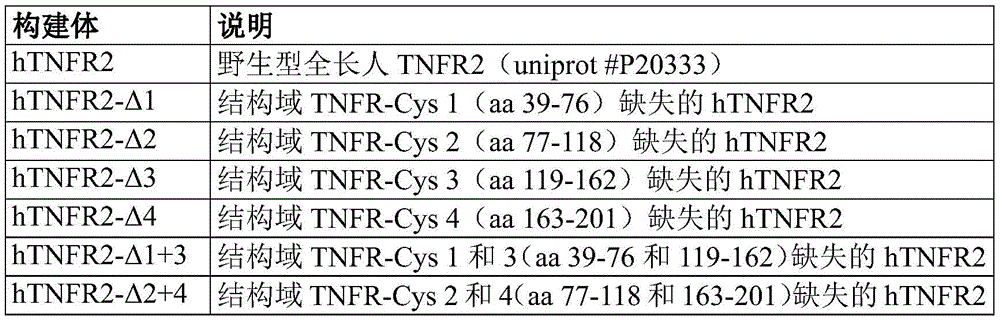
Table 10 TNFR2 constructs for the transfection of the various parts of domain 3 have been exchanged against the corresponding murine sequences.
| Construct | Description of the invention |
| hTNFR2 | Wild type full length human TNFR2(uniprot # P20333) |
| mTNFR2 | Wild type full length mouse TNFR2(uniprot # P25119) |
| hTNFR2-m1 | hTNFR2 with aa 119-132 replaced by aa 120-133 from mTNFR2 |
| hTNFR2-m2 | hTNFR2 with aa 134-144 replaced by aa 135-146 from mTNFR2 |
| hTNFR2-m3 | hTNFR2 with aa 151-160 replaced by aa 153-162 from mTNFR2 |
| hTNFR2-m4 | hTNFR2 with aa 130-144 replaced by aa 131-146 from mTNFR2 |
Flow cytometry-based binding assays
HEK-293-E cells were transfected with the corresponding cDNA plasmid for the TNFR2 variant using Lipofectamin 2000. 48 hours after transfection, cells were harvested and stained with the indicated antibodies for 30 minutes. After 2 washing steps with PBS, the surface bound antibody was stained with a second anti-IgG coupled to the APC. Cells were washed and stained for detection of live/dead before flow cytometry analysis on a BD-Verse flow cytometer.
Flow cytometry-based binding experiments of transfected HEK293 cells clearly show that domain 1 and domain 2 do not affect or only slightly affect the binding of any of the antibodies to these cells (domain 1). A polyclonal anti-human TNFR2 antibody was used as a positive control. Positive control antibodies showed high binding to all tested constructs, while negative antibodies did not (figure 20). All antibodies tested showed complete loss of binding to TNFR2 lacking domain 3. Similarly, if domain 4 is lost, most antibodies may not bind to TNFR 2. All antagonistic antibodies (1H10, 4H02 and 5B08) showed a substantial reduction in binding to TNFR2 Δ 4 by more than 50% compared to TNFR2 Δ 1 and TNFR2 Δ 2. Similarly, the removal of both domains from TNFR2 clearly shows that the absence of domain 3 or 4 severely abrogates the binding of all antibodies tested to TNFR2, with the possible exception of agonistic antibody 1F06, whereas the absence of domain 4 abrogates the binding of the agonistic antibody and significantly reduces the binding of the antagonistic antibody. (FIGS. 20E and F).
Binding to mouse human chimeric TNFR2
To further narrow the binding site and define the epitope, a portion of human TNFR2 domain 3 was replaced with the corresponding mouse sequence. Since all antibodies showed very low cross-reactivity to mouse TNFR2, loss of binding to certain constructs would allow refinement of the binding epitope. Figure 21 shows different mouse-human chimeric TNFR2 constructs. Four different substitutions were made to exchange 14(m1), 12(m2), 10(m3) or 16(m4) amino acids from the human sequence with the corresponding mouse sequence. The other three domains (1, 2, 4) contain exclusively human sequences.
These constructs (TNFR2 domains 1-4 with mutations in 3) were then transfected into HEK293 cells and tested for binding of the antibodies using flow cytometry methods. As positive controls, polyclonal antibodies to mouse TNFR2 and human TNFR2 were used. As expected, due to sequence similarity, both polyclonal control antibodies showed significant cross-reactivity and recognized both human and mouse TNFR 2. Clearly, the best signal is obtained when matching the antibody to its intended target.
Monoclonal antibodies showed strong binding to human TNFR2, but did not bind or bind very little to mouse TNFR2 (left panel of fig. 22). For all clones, almost no reduction was observed similar to the binding of hTNFR 2m 1 construct with mutations in aa 119-132, indicating that no antibody binds to an epitope within this region. However, the mutation in aa 134-144(hTNFR 2m 2 construct) completely abolished the binding of the tested antibody to half of the antagonistic blocking antibodies 1-H10, 4-H02 and 5-B08, indicating that the antibody binds at least partially in this region. 1-G10 is a partial blocker that is also strongly affected by this substitution. Notably, with construct 2, the agonistic antibodies (1-F02, 1-F06, and 4-E08) retained binding, which strongly suggests a different epitope than the antagonistic antibody. Interestingly, all antibodies lost binding to the hTNFR 2m 3 construct with mutations in aa 151-160. This indicates that all antibodies (both agonists and antagonists) have partial epitopes within the sequence. Testing of the slightly larger construct hTNFR 2m 4 with mutations in aa 130-144 showed similar binding to construct hTNFR 2m 2.
Conclusion binding epitopes
Grouping the antibodies into their functional role, agonistic antibodies (1-F02, 1-F06 and 4-E08) appear to bind the very distal C-terminal portion of domain 3 encompassing aa 151-160 and may extend to a greater part of domain 4, whereas the epitopes of antagonists (1-H10, 5-B08 and 4-H02) are more displaced towards the center of domain 3 encompassing aa 134-160 and may cover a smaller part of domain 4. However, their epitopes nevertheless appear to overlap to some extent.
No antibody bound to the N-terminal portion of aa 119-134 of domain 3. The binding site to domain 4 is likely to be directed against all antibodies but is not yet fully identified.
Sequence listing
<110> International BioInventi International AB)
<120> novel agonistic antibody molecules
<130> BI85 PCT
<150> EP 18203996.6
<151> 2018-11-01
<160> 223
<170> PatentIn version 3.5
<210> 1
<211> 14
<212> PRT
<213> Intelligent people
<400> 1
Phe Ser Asp Tyr Tyr Met Ser Trp Val Arg Gln Ala Pro Gly
1 5 10
<210> 2
<211> 19
<212> PRT
<213> Intelligent people
<400> 2
Ala Asn Ile Asn Thr Asp Gly Ser Glu Lys Tyr Tyr Leu Asp Ser Val
1 5 10 15
Lys Gly Arg
<210> 3
<211> 10
<212> PRT
<213> Intelligent people
<400> 3
Ala Arg Glu Glu Tyr Gly Ala Phe Asp Ile
1 5 10
<210> 4
<211> 14
<212> PRT
<213> Intelligent people
<400> 4
Cys Ser Gly Ser Ser Ser Asn Ile Gly Ser Asn Thr Val Asn
1 5 10
<210> 5
<211> 7
<212> PRT
<213> Intelligent people
<400> 5
Asp Asn Asn Lys Arg Pro Ser
1 5
<210> 6
<211> 13
<212> PRT
<213> Intelligent people
<400> 6
Cys Gln Ser Phe Asp Arg Gly Leu Ser Gly Ser Ile Val
1 5 10
<210> 7
<211> 117
<212> PRT
<213> Intelligent people
<400> 7
Glu Val Gln Leu Leu Glu Ser Gly Gly Gly Leu Val Gln Pro Gly Gly
1 5 10 15
Ser Leu Arg Leu Ser Cys Ala Ala Ser Gly Phe Thr Phe Ser Asp Tyr
20 25 30
Tyr Met Ser Trp Val Arg Gln Ala Pro Gly Lys Gly Leu Glu Trp Val
35 40 45
Ala Asn Ile Asn Thr Asp Gly Ser Glu Lys Tyr Tyr Leu Asp Ser Val
50 55 60
Lys Gly Arg Phe Thr Ile Ser Arg Asp Asn Ser Lys Asn Thr Leu Tyr
65 70 75 80
Leu Gln Met Asn Ser Leu Arg Ala Glu Asp Thr Ala Val Tyr Tyr Cys
85 90 95
Ala Arg Glu Glu Tyr Gly Ala Phe Asp Ile Trp Gly Gln Gly Thr Leu
100 105 110
Val Thr Val Ser Ser
115
<210> 8
<211> 112
<212> PRT
<213> Intelligent people
<400> 8
Gln Ser Val Leu Thr Gln Pro Pro Ser Ala Ser Gly Thr Pro Gly Gln
1 5 10 15
Arg Val Thr Ile Ser Cys Ser Gly Ser Ser Ser Asn Ile Gly Ser Asn
20 25 30
Thr Val Asn Trp Tyr Gln Gln Leu Pro Gly Thr Ala Pro Lys Leu Leu
35 40 45
Ile Tyr Asp Asn Asn Lys Arg Pro Ser Gly Val Pro Asp Arg Phe Ser
50 55 60
Gly Ser Lys Ser Gly Thr Ser Ala Ser Leu Ala Ile Ser Gly Leu Arg
65 70 75 80
Ser Glu Asp Glu Ala Asp Tyr Tyr Cys Gln Ser Phe Asp Arg Gly Leu
85 90 95
Ser Gly Ser Ile Val Phe Gly Gly Gly Thr Lys Leu Thr Val Leu Gly
100 105 110
<210> 9
<211> 14
<212> PRT
<213> Intelligent people
<400> 9
Phe Ser Ser Tyr Ala Met His Trp Val Arg Gln Ala Pro Gly
1 5 10
<210> 10
<211> 19
<212> PRT
<213> Intelligent people
<400> 10
Ser Ala Ile Ser Gly Gly Ala Thr Thr Thr Tyr Tyr Ala Asp Ser Val
1 5 10 15
Lys Gly Arg
<210> 11
<211> 13
<212> PRT
<213> Intelligent people
<400> 11
Ala Lys Gly Gly Thr Gly Asp Pro Tyr Tyr Phe Asp Tyr
1 5 10
<210> 12
<211> 15
<212> PRT
<213> Intelligent people
<400> 12
Cys Thr Gly Ser Ser Ser Asn Ile Gly Ala Gly Tyr Asp Val His
1 5 10 15
<210> 13
<211> 7
<212> PRT
<213> Intelligent people
<400> 13
Arg Asn Asn Gln Arg Pro Ser
1 5
<210> 14
<211> 12
<212> PRT
<213> Intelligent people
<400> 14
Cys Ala Ala Arg Asp Asp Gly Leu Ser Gly Pro Val
1 5 10
<210> 15
<211> 120
<212> PRT
<213> Intelligent people
<400> 15
Glu Val Gln Leu Leu Glu Ser Gly Gly Gly Leu Val Gln Pro Gly Gly
1 5 10 15
Ser Leu Arg Leu Ser Cys Ala Ala Ser Gly Phe Thr Phe Ser Ser Tyr
20 25 30
Ala Met His Trp Val Arg Gln Ala Pro Gly Lys Gly Leu Glu Trp Val
35 40 45
Ser Ala Ile Ser Gly Gly Ala Thr Thr Thr Tyr Tyr Ala Asp Ser Val
50 55 60
Lys Gly Arg Phe Thr Ile Ser Arg Asp Asn Ser Lys Asn Thr Leu Tyr
65 70 75 80
Leu Gln Met Asn Ser Leu Arg Ala Glu Asp Thr Ala Val Tyr Tyr Cys
85 90 95
Ala Lys Gly Gly Thr Gly Asp Pro Tyr Tyr Phe Asp Tyr Trp Gly Gln
100 105 110
Gly Thr Leu Val Thr Val Ser Ser
115 120
<210> 16
<211> 112
<212> PRT
<213> Intelligent people
<400> 16
Gln Ser Val Leu Thr Gln Pro Pro Ser Ala Ser Gly Thr Pro Gly Gln
1 5 10 15
Arg Val Thr Ile Ser Cys Thr Gly Ser Ser Ser Asn Ile Gly Ala Gly
20 25 30
Tyr Asp Val His Trp Tyr Gln Gln Leu Pro Gly Thr Ala Pro Lys Leu
35 40 45
Leu Ile Tyr Arg Asn Asn Gln Arg Pro Ser Gly Val Pro Asp Arg Phe
50 55 60
Ser Gly Ser Lys Ser Gly Thr Ser Ala Ser Leu Ala Ile Ser Gly Leu
65 70 75 80
Arg Ser Glu Asp Glu Ala Asp Tyr Tyr Cys Ala Ala Arg Asp Asp Gly
85 90 95
Leu Ser Gly Pro Val Phe Gly Gly Gly Thr Lys Leu Thr Val Leu Gly
100 105 110
<210> 17
<211> 14
<212> PRT
<213> Intelligent people
<400> 17
Phe Ser Asn Ala Trp Met Ser Trp Val Arg Gln Ala Pro Gly
1 5 10
<210> 18
<211> 19
<212> PRT
<213> Intelligent people
<400> 18
Ser Ser Ile Ser Ser Ala Ser Gly Tyr Ile Tyr Tyr Gly Asp Ser Val
1 5 10 15
Lys Gly Arg
<210> 19
<211> 12
<212> PRT
<213> Intelligent people
<400> 19
Ala Arg Gly Thr Leu Tyr Gly Asp Phe Asp Glu Phe
1 5 10
<210> 20
<211> 14
<212> PRT
<213> Intelligent people
<400> 20
Cys Ser Gly Ser Ser Ser Asn Ile Gly Asn Asn Ala Val Asn
1 5 10
<210> 21
<211> 7
<212> PRT
<213> Intelligent people
<400> 21
Gly Asn Thr Asn Arg Pro Ser
1 5
<210> 22
<211> 13
<212> PRT
<213> Intelligent people
<400> 22
Cys Gln Ser Tyr Asp Ser Ser Leu Ser Gly Tyr Val Val
1 5 10
<210> 23
<211> 119
<212> PRT
<213> Intelligent people
<400> 23
Glu Val Gln Leu Leu Glu Ser Gly Gly Gly Leu Val Gln Pro Gly Gly
1 5 10 15
Ser Leu Arg Leu Ser Cys Ala Ala Ser Gly Phe Thr Phe Ser Asn Ala
20 25 30
Trp Met Ser Trp Val Arg Gln Ala Pro Gly Lys Gly Leu Glu Trp Val
35 40 45
Ser Ser Ile Ser Ser Ala Ser Gly Tyr Ile Tyr Tyr Gly Asp Ser Val
50 55 60
Lys Gly Arg Phe Thr Ile Ser Arg Asp Asn Ser Lys Asn Thr Leu Tyr
65 70 75 80
Leu Gln Met Asn Asn Leu Arg Ala Glu Asp Thr Ala Val Tyr Tyr Cys
85 90 95
Ala Arg Gly Thr Leu Tyr Gly Asp Phe Asp Glu Phe Trp Gly Gln Gly
100 105 110
Thr Leu Val Thr Val Ser Ser
115
<210> 24
<211> 112
<212> PRT
<213> Intelligent people
<400> 24
Gln Ser Val Leu Thr Gln Pro Pro Ser Ala Ser Gly Thr Pro Gly Gln
1 5 10 15
Arg Val Thr Ile Ser Cys Ser Gly Ser Ser Ser Asn Ile Gly Asn Asn
20 25 30
Ala Val Asn Trp Tyr Gln Gln Leu Pro Gly Thr Ala Pro Lys Leu Leu
35 40 45
Ile Tyr Gly Asn Thr Asn Arg Pro Ser Gly Val Pro Asp Arg Phe Ser
50 55 60
Gly Ser Lys Ser Gly Thr Ser Ala Ser Leu Ala Ile Ser Gly Leu Arg
65 70 75 80
Ser Glu Asp Glu Ala Asp Tyr Tyr Cys Gln Ser Tyr Asp Ser Ser Leu
85 90 95
Ser Gly Tyr Val Val Phe Gly Gly Gly Thr Lys Leu Thr Val Leu Gly
100 105 110
<210> 25
<211> 14
<212> PRT
<213> Intelligent people
<400> 25
Phe Ser Ser Asn Glu Met Ser Trp Ile Arg Gln Ala Pro Gly
1 5 10
<210> 26
<211> 18
<212> PRT
<213> Intelligent people
<400> 26
Ser Val Ile Tyr Ser Gly Gly Ser Thr Tyr Tyr Ala Asp Ser Val Lys
1 5 10 15
Gly Arg
<210> 27
<211> 12
<212> PRT
<213> Intelligent people
<400> 27
Ala Arg Arg Glu Gly Trp Leu Val Pro Phe Asp Tyr
1 5 10
<210> 28
<211> 14
<212> PRT
<213> Intelligent people
<400> 28
Cys Ser Gly Ser Ser Ser Asn Ile Gly Ser Asn Thr Val Asn
1 5 10
<210> 29
<211> 7
<212> PRT
<213> Intelligent people
<400> 29
Gly Asn Ile Ile Arg Pro Ser
1 5
<210> 30
<211> 13
<212> PRT
<213> Intelligent people
<400> 30
Cys Gln Ser Phe Asp Thr Thr Leu Ser Gly Ser Ile Val
1 5 10
<210> 31
<211> 118
<212> PRT
<213> Intelligent people
<400> 31
Glu Val Gln Leu Leu Glu Ser Gly Gly Gly Leu Val Gln Pro Gly Gly
1 5 10 15
Ser Leu Arg Leu Ser Cys Ala Ala Ser Gly Phe Thr Phe Ser Ser Asn
20 25 30
Glu Met Ser Trp Ile Arg Gln Ala Pro Gly Lys Gly Leu Glu Trp Val
35 40 45
Ser Val Ile Tyr Ser Gly Gly Ser Thr Tyr Tyr Ala Asp Ser Val Lys
50 55 60
Gly Arg Phe Thr Ile Ser Arg Asp Asn Ser Lys Asn Thr Leu Tyr Leu
65 70 75 80
Gln Met Asn Ser Leu Arg Ala Glu Asp Thr Ala Val Tyr Tyr Cys Ala
85 90 95
Arg Arg Glu Gly Trp Leu Val Pro Phe Asp Tyr Trp Gly Gln Gly Thr
100 105 110
Leu Val Thr Val Ser Ser
115
<210> 32
<211> 112
<212> PRT
<213> Intelligent people
<400> 32
Gln Ser Val Leu Thr Gln Pro Pro Ser Ala Ser Gly Thr Pro Gly Gln
1 5 10 15
Arg Val Thr Ile Ser Cys Ser Gly Ser Ser Ser Asn Ile Gly Ser Asn
20 25 30
Thr Val Asn Trp Tyr Gln Gln Leu Pro Gly Thr Ala Pro Lys Leu Leu
35 40 45
Ile Tyr Gly Asn Ile Ile Arg Pro Ser Gly Val Pro Asp Arg Phe Ser
50 55 60
Gly Ser Lys Ser Gly Thr Ser Ala Ser Leu Ala Ile Ser Gly Leu Arg
65 70 75 80
Ser Glu Asp Glu Ala Asp Tyr Tyr Cys Gln Ser Phe Asp Thr Thr Leu
85 90 95
Ser Gly Ser Ile Val Phe Gly Gly Gly Thr Lys Leu Thr Val Leu Gly
100 105 110
<210> 33
<211> 14
<212> PRT
<213> Intelligent people
<400> 33
Phe Ser Arg Tyr Trp Met His Trp Val Arg Gln Val Pro Gly
1 5 10
<210> 34
<211> 19
<212> PRT
<213> Intelligent people
<400> 34
Ser Gly Ile Ser Asp Ser Gly Val Val Thr Tyr Tyr Ala Asp Ser Val
1 5 10 15
Lys Gly Arg
<210> 35
<211> 10
<212> PRT
<213> Intelligent people
<400> 35
Ala Arg Ala Gln Ser Val Ala Phe Asp Ile
1 5 10
<210> 36
<211> 15
<212> PRT
<213> Intelligent people
<400> 36
Cys Ser Gly Ser Ser Ser Asn Ile Gly Ala Gly His Asp Val His
1 5 10 15
<210> 37
<211> 7
<212> PRT
<213> Intelligent people
<400> 37
Tyr Asp Asp Leu Leu Pro Ser
1 5
<210> 38
<211> 12
<212> PRT
<213> Intelligent people
<400> 38
Cys Ala Ala Trp Asp Asp Ser Leu Ser Gly Trp Val
1 5 10
<210> 39
<211> 117
<212> PRT
<213> Intelligent people
<400> 39
Glu Val Gln Leu Leu Glu Ser Gly Gly Gly Leu Val Gln Pro Gly Gly
1 5 10 15
Ser Leu Arg Leu Ser Cys Ala Ala Ser Gly Phe Thr Phe Ser Arg Tyr
20 25 30
Trp Met His Trp Val Arg Gln Val Pro Gly Lys Gly Leu Glu Trp Val
35 40 45
Ser Gly Ile Ser Asp Ser Gly Val Val Thr Tyr Tyr Ala Asp Ser Val
50 55 60
Lys Gly Arg Phe Thr Ile Ser Arg Asp Asn Ser Lys Asn Thr Leu Tyr
65 70 75 80
Leu Gln Met Asn Ser Leu Arg Ala Glu Asp Thr Ala Val Tyr Tyr Cys
85 90 95
Ala Arg Ala Gln Ser Val Ala Phe Asp Ile Trp Gly Gln Gly Thr Leu
100 105 110
Val Thr Val Ser Ser
115
<210> 40
<211> 112
<212> PRT
<213> Intelligent people
<400> 40
Gln Ser Val Leu Thr Gln Pro Pro Ser Ala Ser Gly Thr Pro Gly Gln
1 5 10 15
Arg Val Thr Ile Ser Cys Ser Gly Ser Ser Ser Asn Ile Gly Ala Gly
20 25 30
His Asp Val His Trp Tyr Gln Gln Leu Pro Gly Thr Ala Pro Lys Leu
35 40 45
Leu Ile Tyr Tyr Asp Asp Leu Leu Pro Ser Gly Val Pro Asp Arg Phe
50 55 60
Ser Gly Ser Lys Ser Gly Thr Ser Ala Ser Leu Ala Ile Ser Gly Leu
65 70 75 80
Arg Ser Glu Asp Glu Ala Asp Tyr Tyr Cys Ala Ala Trp Asp Asp Ser
85 90 95
Leu Ser Gly Trp Val Phe Gly Gly Gly Thr Lys Leu Thr Val Leu Gly
100 105 110
<210> 41
<211> 14
<212> PRT
<213> Intelligent people
<400> 41
Phe Ser Ser Tyr Ala Met Ser Trp Val Arg Gln Ala Pro Gly
1 5 10
<210> 42
<211> 19
<212> PRT
<213> Intelligent people
<400> 42
Ser Val Ile Ser Gly Ser Gly Gly Ser Thr Tyr Tyr Ala Asp Ala Val
1 5 10 15
Lys Gly Arg
<210> 43
<211> 10
<212> PRT
<213> Intelligent people
<400> 43
Thr Thr Asp Ser Gly Ser Gly Ser Tyr Leu
1 5 10
<210> 44
<211> 15
<212> PRT
<213> Intelligent people
<400> 44
Cys Thr Gly Ser Ser Ser Asn Ile Gly Ala Gly Tyr Asp Val His
1 5 10 15
<210> 45
<211> 7
<212> PRT
<213> Intelligent people
<400> 45
Ser Asn Asn Gln Arg Pro Ser
1 5
<210> 46
<211> 12
<212> PRT
<213> Intelligent people
<400> 46
Cys Ala Ala Trp Asp Asp Ser Leu Asn Gly Pro Val
1 5 10
<210> 47
<211> 117
<212> PRT
<213> Intelligent people
<400> 47
Glu Val Gln Leu Leu Glu Ser Gly Gly Gly Leu Val Gln Pro Gly Gly
1 5 10 15
Ser Leu Arg Leu Ser Cys Ala Ala Ser Gly Phe Thr Phe Ser Ser Tyr
20 25 30
Ala Met Ser Trp Val Arg Gln Ala Pro Gly Lys Gly Leu Glu Trp Val
35 40 45
Ser Val Ile Ser Gly Ser Gly Gly Ser Thr Tyr Tyr Ala Asp Ala Val
50 55 60
Lys Gly Arg Phe Thr Ile Ser Arg Asp Asn Ser Lys Asn Thr Leu Tyr
65 70 75 80
Leu Gln Met Asn Ser Leu Arg Ala Glu Asp Thr Ala Val Tyr Tyr Cys
85 90 95
Thr Thr Asp Ser Gly Ser Gly Ser Tyr Leu Trp Gly Gln Gly Thr Leu
100 105 110
Val Thr Val Ser Ser
115
<210> 48
<211> 112
<212> PRT
<213> Intelligent people
<400> 48
Gln Ser Val Leu Thr Gln Pro Pro Ser Ala Ser Gly Thr Pro Gly Gln
1 5 10 15
Arg Val Thr Ile Ser Cys Thr Gly Ser Ser Ser Asn Ile Gly Ala Gly
20 25 30
Tyr Asp Val His Trp Tyr Gln Gln Leu Pro Gly Thr Ala Pro Lys Leu
35 40 45
Leu Ile Tyr Ser Asn Asn Gln Arg Pro Ser Gly Val Pro Asp Arg Phe
50 55 60
Ser Gly Ser Lys Ser Gly Thr Ser Ala Ser Leu Ala Ile Ser Gly Leu
65 70 75 80
Arg Ser Glu Asp Glu Ala Asp Tyr Tyr Cys Ala Ala Trp Asp Asp Ser
85 90 95
Leu Asn Gly Pro Val Phe Gly Gly Gly Thr Lys Leu Thr Val Leu Gly
100 105 110
<210> 49
<211> 14
<212> PRT
<213> Intelligent people
<400> 49
Phe Ser Ser Asn Tyr Met Ser Trp Val Arg Gln Ala Pro Gly
1 5 10
<210> 50
<211> 19
<212> PRT
<213> Intelligent people
<400> 50
Ser Val Ile Ser Gly Ser Gly Gly Ser Thr Tyr Tyr Ala Asp Ser Val
1 5 10 15
Lys Gly Arg
<210> 51
<211> 9
<212> PRT
<213> Intelligent people
<400> 51
Ala Arg Asp Arg Gly Trp Phe Asp Pro
1 5
<210> 52
<211> 14
<212> PRT
<213> Intelligent people
<400> 52
Cys Ser Gly Ser Arg Ser Asn Ile Asp Asn Ser Tyr Val Ser
1 5 10
<210> 53
<211> 7
<212> PRT
<213> Intelligent people
<400> 53
Arg Asn Asn Gln Arg Pro Ser
1 5
<210> 54
<211> 12
<212> PRT
<213> Intelligent people
<400> 54
Cys Ala Thr Trp Asp Asp Ser Leu Ser Gly Pro Val
1 5 10
<210> 55
<211> 116
<212> PRT
<213> Intelligent people
<400> 55
Glu Val Gln Leu Leu Glu Ser Gly Gly Gly Leu Val Gln Pro Gly Gly
1 5 10 15
Ser Leu Arg Leu Ser Cys Ala Ala Ser Gly Phe Thr Phe Ser Ser Asn
20 25 30
Tyr Met Ser Trp Val Arg Gln Ala Pro Gly Lys Gly Leu Glu Trp Val
35 40 45
Ser Val Ile Ser Gly Ser Gly Gly Ser Thr Tyr Tyr Ala Asp Ser Val
50 55 60
Lys Gly Arg Phe Thr Ile Ser Arg Asp Asn Ser Lys Asn Thr Leu Tyr
65 70 75 80
Leu Gln Met Asn Ser Leu Arg Ala Glu Asp Thr Ala Val Tyr Tyr Cys
85 90 95
Ala Arg Asp Arg Gly Trp Phe Asp Pro Trp Gly Gln Gly Thr Leu Val
100 105 110
Thr Val Ser Ser
115
<210> 56
<211> 111
<212> PRT
<213> Intelligent people
<400> 56
Gln Ser Val Leu Thr Gln Pro Pro Ser Ala Ser Gly Thr Pro Gly Gln
1 5 10 15
Arg Val Thr Ile Ser Cys Ser Gly Ser Arg Ser Asn Ile Asp Asn Ser
20 25 30
Tyr Val Ser Trp Tyr Gln Gln Leu Pro Gly Thr Ala Pro Lys Leu Leu
35 40 45
Ile Tyr Arg Asn Asn Gln Arg Pro Ser Gly Val Pro Asp Arg Phe Ser
50 55 60
Gly Ser Lys Ser Gly Thr Ser Ala Ser Leu Ala Ile Ser Gly Leu Arg
65 70 75 80
Ser Glu Asp Glu Ala Asp Tyr Tyr Cys Ala Thr Trp Asp Asp Ser Leu
85 90 95
Ser Gly Pro Val Phe Gly Gly Gly Thr Lys Leu Thr Val Leu Gly
100 105 110
<210> 57
<211> 14
<212> PRT
<213> Intelligent people
<400> 57
Phe Ser Arg His Ala Met Asn Trp Val Arg Gln Ala Pro Gly
1 5 10
<210> 58
<211> 19
<212> PRT
<213> Intelligent people
<400> 58
Ser Ser Ile Ser Thr Gly Ser Ser Tyr Ile Asp Tyr Ala Asp Ser Val
1 5 10 15
Lys Gly Arg
<210> 59
<211> 13
<212> PRT
<213> Intelligent people
<400> 59
Ala Arg Glu Lys Gly His Tyr Tyr Tyr Gly Met Asp Val
1 5 10
<210> 60
<211> 15
<212> PRT
<213> Intelligent people
<400> 60
Cys Thr Gly Ser Ser Ser Asn Ile Gly Ala Gly Tyr Asp Val His
1 5 10 15
<210> 61
<211> 7
<212> PRT
<213> Intelligent people
<400> 61
Gly Asn Ser Tyr Arg Pro Ser
1 5
<210> 62
<211> 13
<212> PRT
<213> Intelligent people
<400> 62
Cys Gln Ser Tyr Asp Thr Ser Leu Ser Ala Tyr Val Val
1 5 10
<210> 63
<211> 120
<212> PRT
<213> Intelligent people
<400> 63
Glu Val Gln Leu Leu Glu Ser Gly Gly Gly Leu Val Gln Pro Gly Gly
1 5 10 15
Ser Leu Arg Leu Ser Cys Ala Ala Ser Gly Phe Thr Phe Ser Arg His
20 25 30
Ala Met Asn Trp Val Arg Gln Ala Pro Gly Lys Gly Leu Glu Trp Val
35 40 45
Ser Ser Ile Ser Thr Gly Ser Ser Tyr Ile Asp Tyr Ala Asp Ser Val
50 55 60
Lys Gly Arg Phe Thr Ile Ser Arg Asp Asn Ser Lys Asn Thr Leu Tyr
65 70 75 80
Leu Gln Met Asn Ser Leu Arg Ala Glu Asp Thr Ala Val Tyr Tyr Cys
85 90 95
Ala Arg Glu Lys Gly His Tyr Tyr Tyr Gly Met Asp Val Trp Gly Gln
100 105 110
Gly Thr Leu Val Thr Val Ser Ser
115 120
<210> 64
<211> 113
<212> PRT
<213> Intelligent people
<400> 64
Gln Ser Val Leu Thr Gln Pro Pro Ser Ala Ser Gly Thr Pro Gly Gln
1 5 10 15
Arg Val Thr Ile Ser Cys Thr Gly Ser Ser Ser Asn Ile Gly Ala Gly
20 25 30
Tyr Asp Val His Trp Tyr Gln Gln Leu Pro Gly Thr Ala Pro Lys Leu
35 40 45
Leu Ile Tyr Gly Asn Ser Tyr Arg Pro Ser Gly Val Pro Asp Arg Phe
50 55 60
Ser Gly Ser Lys Ser Gly Thr Ser Ala Ser Leu Ala Ile Ser Gly Leu
65 70 75 80
Arg Ser Glu Asp Glu Ala Asp Tyr Tyr Cys Gln Ser Tyr Asp Thr Ser
85 90 95
Leu Ser Ala Tyr Val Val Phe Gly Gly Gly Thr Lys Leu Thr Val Leu
100 105 110
Gly
<210> 65
<211> 14
<212> PRT
<213> Intelligent people
<400> 65
Phe Ser Asn Ala Trp Met Ser Trp Val Arg Gln Ala Pro Gly
1 5 10
<210> 66
<211> 19
<212> PRT
<213> Intelligent people
<400> 66
Ser Ala Ile Ser Val Ser Gly Ile Asn Thr Tyr Tyr Ala Asp Ser Val
1 5 10 15
Lys Gly Arg
<210> 67
<211> 11
<212> PRT
<213> Intelligent people
<400> 67
Ala Arg Asp Thr Gly Ser Leu Gly Val Asp Tyr
1 5 10
<210> 68
<211> 14
<212> PRT
<213> Intelligent people
<400> 68
Cys Ser Gly Ser Ser Ser Asn Ile Gly Ser Asn Thr Val Asn
1 5 10
<210> 69
<211> 7
<212> PRT
<213> Intelligent people
<400> 69
Arg Asn Asn Gln Arg Pro Ser
1 5
<210> 70
<211> 12
<212> PRT
<213> Intelligent people
<400> 70
Cys Gln Ser Tyr Asp Ser Ser Leu Ser Ile Ser Val
1 5 10
<210> 71
<211> 118
<212> PRT
<213> Intelligent people
<400> 71
Glu Val Gln Leu Leu Glu Ser Gly Gly Gly Leu Val Gln Pro Gly Gly
1 5 10 15
Ser Leu Arg Leu Ser Cys Ala Ala Ser Gly Phe Thr Phe Ser Asn Ala
20 25 30
Trp Met Ser Trp Val Arg Gln Ala Pro Gly Lys Gly Leu Glu Trp Val
35 40 45
Ser Ala Ile Ser Val Ser Gly Ile Asn Thr Tyr Tyr Ala Asp Ser Val
50 55 60
Lys Gly Arg Phe Thr Ile Ser Arg Asp Asn Ser Lys Asn Thr Leu Tyr
65 70 75 80
Leu Gln Met Asn Ser Leu Arg Ala Glu Asp Thr Ala Val Tyr Tyr Cys
85 90 95
Ala Arg Asp Thr Gly Ser Leu Gly Val Asp Tyr Trp Gly Gln Gly Thr
100 105 110
Leu Val Thr Val Ser Ser
115
<210> 72
<211> 111
<212> PRT
<213> Intelligent people
<400> 72
Gln Ser Val Leu Thr Gln Pro Pro Ser Ala Ser Gly Thr Pro Gly Gln
1 5 10 15
Arg Val Thr Ile Ser Cys Ser Gly Ser Ser Ser Asn Ile Gly Ser Asn
20 25 30
Thr Val Asn Trp Tyr Gln Gln Leu Pro Gly Thr Ala Pro Lys Leu Leu
35 40 45
Ile Tyr Arg Asn Asn Gln Arg Pro Ser Gly Val Pro Asp Arg Phe Ser
50 55 60
Gly Ser Lys Ser Gly Thr Ser Ala Ser Leu Ala Ile Ser Gly Leu Arg
65 70 75 80
Ser Glu Asp Glu Ala Asp Tyr Tyr Cys Gln Ser Tyr Asp Ser Ser Leu
85 90 95
Ser Ile Ser Val Phe Gly Gly Gly Thr Lys Leu Thr Val Leu Gly
100 105 110
<210> 73
<211> 14
<212> PRT
<213> Intelligent people
<400> 73
Ser Ser Ser Tyr Trp Met Ser Trp Val Arg Gln Ala Pro Gly
1 5 10
<210> 74
<211> 19
<212> PRT
<213> Intelligent people
<400> 74
Ser Ala Ile Ser Gly Ser Gly Gly Ser Thr Tyr Tyr Ala Asp Ser Val
1 5 10 15
Lys Gly Arg
<210> 75
<211> 11
<212> PRT
<213> Intelligent people
<400> 75
Ala Arg Glu Tyr Ser Gly Tyr Glu Phe Asp Phe
1 5 10
<210> 76
<211> 15
<212> PRT
<213> Intelligent people
<400> 76
Cys Thr Gly Ser Ser Ser Asn Ile Gly Ala Arg Ser Asp Val His
1 5 10 15
<210> 77
<211> 7
<212> PRT
<213> Intelligent people
<400> 77
Gly Asn Arg Asn Arg Pro Ser
1 5
<210> 78
<211> 13
<212> PRT
<213> Intelligent people
<400> 78
Cys Gln Ser Phe Asp Arg Gly Leu Ser Gly Ser Ile Val
1 5 10
<210> 79
<211> 118
<212> PRT
<213> Intelligent people
<400> 79
Glu Val Gln Leu Leu Glu Ser Gly Gly Gly Leu Val Gln Pro Gly Gly
1 5 10 15
Ser Leu Arg Leu Ser Cys Ala Ala Ser Gly Phe Thr Ser Ser Ser Tyr
20 25 30
Trp Met Ser Trp Val Arg Gln Ala Pro Gly Lys Gly Leu Glu Trp Val
35 40 45
Ser Ala Ile Ser Gly Ser Gly Gly Ser Thr Tyr Tyr Ala Asp Ser Val
50 55 60
Lys Gly Arg Phe Thr Ile Ser Arg Asp Asn Ser Lys Asn Thr Leu Tyr
65 70 75 80
Leu Gln Met Asn Ser Leu Arg Ala Glu Asp Thr Ala Val Tyr Tyr Cys
85 90 95
Ala Arg Glu Tyr Ser Gly Tyr Glu Phe Asp Phe Trp Gly Gln Gly Thr
100 105 110
Leu Val Thr Val Ser Ser
115
<210> 80
<211> 113
<212> PRT
<213> Intelligent people
<400> 80
Gln Ser Val Leu Thr Gln Pro Pro Ser Ala Ser Gly Thr Pro Gly Gln
1 5 10 15
Arg Val Thr Ile Ser Cys Thr Gly Ser Ser Ser Asn Ile Gly Ala Arg
20 25 30
Ser Asp Val His Trp Tyr Gln Gln Leu Pro Gly Thr Ala Pro Lys Leu
35 40 45
Leu Ile Tyr Gly Asn Arg Asn Arg Pro Ser Gly Val Pro Asp Arg Phe
50 55 60
Ser Gly Ser Lys Ser Gly Thr Ser Ala Ser Leu Ala Ile Ser Gly Leu
65 70 75 80
Arg Ser Glu Asp Glu Ala Asp Tyr Tyr Cys Gln Ser Phe Asp Arg Gly
85 90 95
Leu Ser Gly Ser Ile Val Phe Gly Gly Gly Thr Lys Leu Thr Val Leu
100 105 110
Gly
<210> 81
<211> 14
<212> PRT
<213> Intelligent people
<400> 81
Ser Ser Ser Tyr Trp Met Ser Trp Val Arg Gln Ala Pro Gly
1 5 10
<210> 82
<211> 19
<212> PRT
<213> Intelligent people
<400> 82
Ser Ala Ile Ser Gly Ser Gly Gly Ser Thr Tyr Tyr Ala Asp Ser Val
1 5 10 15
Lys Gly Arg
<210> 83
<211> 11
<212> PRT
<213> Intelligent people
<400> 83
Ala Arg Glu Tyr Ser Gly Tyr Glu Phe Asp Phe
1 5 10
<210> 84
<211> 15
<212> PRT
<213> Intelligent people
<400> 84
Cys Thr Gly Ser Ser Ser Asn Ile Gly Ala Arg Ser Asp Val His
1 5 10 15
<210> 85
<211> 7
<212> PRT
<213> Intelligent people
<400> 85
Gly Asn Arg Asn Arg Pro Ser
1 5
<210> 86
<211> 13
<212> PRT
<213> Intelligent people
<400> 86
Cys Gln Ser Phe Asp Arg Gly Leu Ser Gly Ser Ile Val
1 5 10
<210> 87
<211> 118
<212> PRT
<213> Intelligent people
<400> 87
Glu Val Gln Leu Leu Glu Ser Gly Gly Gly Leu Val Gln Pro Gly Gly
1 5 10 15
Ser Leu Arg Leu Ser Cys Ala Ala Ser Gly Phe Thr Ser Ser Ser Tyr
20 25 30
Trp Met Ser Trp Val Arg Gln Ala Pro Gly Lys Gly Leu Glu Trp Val
35 40 45
Ser Ala Ile Ser Gly Ser Gly Gly Ser Thr Tyr Tyr Ala Asp Ser Val
50 55 60
Lys Gly Arg Phe Thr Ile Ser Arg Asp Asn Ser Lys Asn Thr Leu Tyr
65 70 75 80
Leu Gln Met Asn Ser Leu Arg Ala Glu Asp Thr Ala Val Tyr Tyr Cys
85 90 95
Ala Arg Glu Tyr Ser Gly Tyr Glu Phe Asp Phe Trp Gly Gln Gly Thr
100 105 110
Leu Val Thr Val Ser Ser
115
<210> 88
<211> 113
<212> PRT
<213> Intelligent people
<400> 88
Gln Ser Val Leu Thr Gln Pro Pro Ser Ala Ser Gly Thr Pro Gly Gln
1 5 10 15
Arg Val Thr Ile Ser Cys Thr Gly Ser Ser Ser Asn Ile Gly Ala Arg
20 25 30
Ser Asp Val His Trp Tyr Gln Gln Leu Pro Gly Thr Ala Pro Lys Leu
35 40 45
Leu Ile Tyr Gly Asn Arg Asn Arg Pro Ser Gly Val Pro Asp Arg Phe
50 55 60
Ser Gly Ser Lys Ser Gly Thr Ser Ala Ser Leu Ala Ile Ser Gly Leu
65 70 75 80
Arg Ser Glu Asp Glu Ala Asp Tyr Tyr Cys Gln Ser Phe Asp Arg Gly
85 90 95
Leu Ser Gly Ser Ile Val Phe Gly Gly Gly Thr Lys Leu Thr Val Leu
100 105 110
Gly
<210> 89
<211> 14
<212> PRT
<213> Intelligent people
<400> 89
Phe Ser Ser Asn Tyr Met Ser Trp Val Arg Gln Ala Pro Gly
1 5 10
<210> 90
<211> 19
<212> PRT
<213> Intelligent people
<400> 90
Ser Ser Ile Ser Ser Ser Ser Ser Tyr Ile Tyr Tyr Ala Asp Ser Val
1 5 10 15
Lys Gly Arg
<210> 91
<211> 11
<212> PRT
<213> Intelligent people
<400> 91
Ala Arg Asp Arg Gly Arg Thr Gly Thr Asp Tyr
1 5 10
<210> 92
<211> 14
<212> PRT
<213> Intelligent people
<400> 92
Cys Ser Gly Thr Thr Ser Asn Ile Gly Ser Tyr Ala Val Asn
1 5 10
<210> 93
<211> 7
<212> PRT
<213> Intelligent people
<400> 93
Gly Asn Ile Asn Arg Pro Ser
1 5
<210> 94
<211> 12
<212> PRT
<213> Intelligent people
<400> 94
Cys Gln Ser Tyr Asp Ser Ser Leu Ser Ala Ser Leu
1 5 10
<210> 95
<211> 118
<212> PRT
<213> Intelligent people
<400> 95
Glu Val Gln Leu Leu Glu Ser Gly Gly Gly Leu Val Gln Pro Gly Gly
1 5 10 15
Ser Leu Arg Leu Ser Cys Ala Ala Ser Gly Phe Thr Phe Ser Ser Asn
20 25 30
Tyr Met Ser Trp Val Arg Gln Ala Pro Gly Lys Gly Leu Glu Trp Val
35 40 45
Ser Ser Ile Ser Ser Ser Ser Ser Tyr Ile Tyr Tyr Ala Asp Ser Val
50 55 60
Lys Gly Arg Phe Thr Ile Ser Arg Asp Asn Ser Lys Asn Thr Leu Tyr
65 70 75 80
Leu Gln Met Asn Ser Leu Arg Ala Glu Asp Thr Ala Val Tyr Tyr Cys
85 90 95
Ala Arg Asp Arg Gly Arg Thr Gly Thr Asp Tyr Trp Gly Gln Gly Thr
100 105 110
Leu Val Thr Val Ser Ser
115
<210> 96
<211> 111
<212> PRT
<213> Intelligent people
<400> 96
Gln Ser Val Leu Thr Gln Pro Pro Ser Ala Ser Gly Thr Pro Gly Gln
1 5 10 15
Arg Val Thr Ile Ser Cys Ser Gly Thr Thr Ser Asn Ile Gly Ser Tyr
20 25 30
Ala Val Asn Trp Tyr Gln Gln Leu Pro Gly Thr Ala Pro Lys Leu Leu
35 40 45
Ile Tyr Gly Asn Ile Asn Arg Pro Ser Gly Val Pro Asp Arg Phe Ser
50 55 60
Gly Ser Lys Ser Gly Thr Ser Ala Ser Leu Ala Ile Ser Gly Leu Arg
65 70 75 80
Ser Glu Asp Glu Ala Asp Tyr Tyr Cys Gln Ser Tyr Asp Ser Ser Leu
85 90 95
Ser Ala Ser Leu Phe Gly Gly Gly Thr Lys Leu Thr Val Leu Gly
100 105 110
<210> 97
<211> 14
<212> PRT
<213> Intelligent people
<400> 97
Phe Ser Ser Tyr Ala Met Ser Trp Val Arg Gln Ala Pro Gly
1 5 10
<210> 98
<211> 19
<212> PRT
<213> Intelligent people
<400> 98
Ser Thr Ile Ile Gly Ser Gly Ala Asn Thr Trp Tyr Ala Asp Ser Val
1 5 10 15
Lys Gly Arg
<210> 99
<211> 13
<212> PRT
<213> Intelligent people
<400> 99
Ala Arg His Glu Gly Tyr Tyr Tyr Tyr Gly Met Asp Val
1 5 10
<210> 100
<211> 15
<212> PRT
<213> Intelligent people
<400> 100
Cys Thr Gly Ser Ser Ser Asn Ile Gly Ala Gly Tyr Val Val His
1 5 10 15
<210> 101
<211> 7
<212> PRT
<213> Intelligent people
<400> 101
Gly Asn Ser Asn Arg Pro Ser
1 5
<210> 102
<211> 12
<212> PRT
<213> Intelligent people
<400> 102
Cys Ala Ala Trp Asp Asp Ser Leu Asn Gly Arg Val
1 5 10
<210> 103
<211> 120
<212> PRT
<213> Intelligent people
<400> 103
Glu Val Gln Leu Leu Glu Ser Gly Gly Gly Leu Val Gln Pro Gly Gly
1 5 10 15
Ser Leu Arg Leu Ser Cys Ala Ala Ser Gly Phe Thr Phe Ser Ser Tyr
20 25 30
Ala Met Ser Trp Val Arg Gln Ala Pro Gly Lys Gly Leu Glu Trp Val
35 40 45
Ser Thr Ile Ile Gly Ser Gly Ala Asn Thr Trp Tyr Ala Asp Ser Val
50 55 60
Lys Gly Arg Phe Thr Ile Ser Arg Asp Asn Ser Lys Asn Thr Leu Tyr
65 70 75 80
Leu Gln Met Asn Ser Leu Arg Ala Glu Asp Thr Ala Val Tyr Tyr Cys
85 90 95
Ala Arg His Glu Gly Tyr Tyr Tyr Tyr Gly Met Asp Val Trp Gly Gln
100 105 110
Gly Thr Leu Val Thr Val Ser Ser
115 120
<210> 104
<211> 112
<212> PRT
<213> Intelligent people
<400> 104
Gln Ser Val Leu Thr Gln Pro Pro Ser Ala Ser Gly Thr Pro Gly Gln
1 5 10 15
Arg Val Thr Ile Ser Cys Thr Gly Ser Ser Ser Asn Ile Gly Ala Gly
20 25 30
Tyr Val Val His Trp Tyr Gln Gln Leu Pro Gly Thr Ala Pro Lys Leu
35 40 45
Leu Ile Tyr Gly Asn Ser Asn Arg Pro Ser Gly Val Pro Asp Arg Phe
50 55 60
Ser Gly Ser Lys Ser Gly Thr Ser Ala Ser Leu Ala Ile Ser Gly Leu
65 70 75 80
Arg Ser Glu Asp Glu Ala Asp Tyr Tyr Cys Ala Ala Trp Asp Asp Ser
85 90 95
Leu Asn Gly Arg Val Phe Gly Gly Gly Thr Lys Leu Thr Val Leu Gly
100 105 110
<210> 105
<211> 14
<212> PRT
<213> Intelligent people
<400> 105
Phe Asp Asp Tyr Gly Met Ser Trp Val Arg Gln Ala Pro Gly
1 5 10
<210> 106
<211> 18
<212> PRT
<213> Intelligent people
<400> 106
Ser Val Ile Tyr Ser Gly Gly Ser Thr Tyr Tyr Ala Asp Ser Val Lys
1 5 10 15
Gly Arg
<210> 107
<211> 16
<212> PRT
<213> Intelligent people
<400> 107
Cys Ala Arg Asp Arg Ser Ser Ser Trp Tyr Arg Asp Gly Met Asp Val
1 5 10 15
<210> 108
<211> 15
<212> PRT
<213> Intelligent people
<400> 108
Cys Thr Gly Ser Ser Ser Asn Ile Gly Ala Gly Tyr Asp Val His
1 5 10 15
<210> 109
<211> 7
<212> PRT
<213> Intelligent people
<400> 109
Gly Asn Ser Asn Arg Pro Ser
1 5
<210> 110
<211> 12
<212> PRT
<213> Intelligent people
<400> 110
Cys Ala Ala Trp Asp Asp Ser Leu Ser Gly Trp Val
1 5 10
<210> 111
<211> 121
<212> PRT
<213> Intelligent people
<400> 111
Glu Val Gln Leu Leu Glu Ser Gly Gly Gly Leu Val Gln Pro Gly Gly
1 5 10 15
Ser Leu Arg Leu Ser Cys Ala Ala Ser Gly Phe Thr Phe Asp Asp Tyr
20 25 30
Gly Met Ser Trp Val Arg Gln Ala Pro Gly Lys Gly Leu Glu Trp Val
35 40 45
Ser Val Ile Tyr Ser Gly Gly Ser Thr Tyr Tyr Ala Asp Ser Val Lys
50 55 60
Gly Arg Phe Thr Ile Ser Arg Asp Asn Ser Lys Asn Thr Leu Tyr Leu
65 70 75 80
Gln Met Asn Ser Leu Arg Ala Glu Asp Thr Ala Val Tyr Tyr Cys Ala
85 90 95
Arg Asp Arg Ser Ser Ser Trp Tyr Arg Asp Gly Met Asp Val Trp Gly
100 105 110
Gln Gly Thr Leu Val Thr Val Ser Ser
115 120
<210> 112
<211> 112
<212> PRT
<213> Intelligent people
<400> 112
Gln Ser Val Leu Thr Gln Pro Pro Ser Ala Ser Gly Thr Pro Gly Gln
1 5 10 15
Arg Val Thr Ile Ser Cys Thr Gly Ser Ser Ser Asn Ile Gly Ala Gly
20 25 30
Tyr Asp Val His Trp Tyr Gln Gln Leu Pro Gly Thr Ala Pro Lys Leu
35 40 45
Leu Ile Tyr Gly Asn Ser Asn Arg Pro Ser Gly Val Pro Asp Arg Phe
50 55 60
Ser Gly Ser Lys Ser Gly Thr Ser Ala Ser Leu Ala Ile Ser Gly Leu
65 70 75 80
Arg Ser Glu Asp Glu Ala Asp Tyr Tyr Cys Ala Ala Trp Asp Asp Ser
85 90 95
Leu Ser Gly Trp Val Phe Gly Gly Gly Thr Lys Leu Thr Val Leu Gly
100 105 110
<210> 113
<211> 14
<212> PRT
<213> Intelligent people
<400> 113
Phe Asp Asp Tyr Gly Met Ser Trp Val Arg Gln Ala Pro Gly
1 5 10
<210> 114
<211> 18
<212> PRT
<213> Intelligent people
<400> 114
Ser Thr Ile Tyr Ser Gly Asp Asn Ala Tyr Tyr Gly Ala Ser Val Arg
1 5 10 15
Gly Arg
<210> 115
<211> 15
<212> PRT
<213> Intelligent people
<400> 115
Ala Arg Val Tyr Ser Ser Ser Trp Arg Lys Arg Ala Phe Asp Ile
1 5 10 15
<210> 116
<211> 14
<212> PRT
<213> Intelligent people
<400> 116
Cys Ser Gly Thr Ser Ser Asn Ile Glu Ser Asn Thr Val Asn
1 5 10
<210> 117
<211> 7
<212> PRT
<213> Intelligent people
<400> 117
Ser Asp Asn Gln Arg Pro Ser
1 5
<210> 118
<211> 12
<212> PRT
<213> Intelligent people
<400> 118
Cys Ala Ala Trp Asp Asp Ser Leu Ser Gly Trp Val
1 5 10
<210> 119
<211> 121
<212> PRT
<213> Intelligent people
<400> 119
Glu Val Gln Leu Leu Glu Ser Gly Gly Gly Leu Val Gln Pro Gly Gly
1 5 10 15
Ser Leu Arg Leu Ser Cys Ala Ala Ser Gly Phe Thr Phe Asp Asp Tyr
20 25 30
Gly Met Ser Trp Val Arg Gln Ala Pro Gly Lys Gly Leu Glu Trp Val
35 40 45
Ser Thr Ile Tyr Ser Gly Asp Asn Ala Tyr Tyr Gly Ala Ser Val Arg
50 55 60
Gly Arg Phe Thr Ile Ser Arg Asp Asn Ser Lys Asn Thr Leu Tyr Leu
65 70 75 80
Gln Met Asn Ser Leu Arg Ala Glu Asp Thr Ala Val Tyr Tyr Cys Ala
85 90 95
Arg Val Tyr Ser Ser Ser Trp Arg Lys Arg Ala Phe Asp Ile Trp Gly
100 105 110
Gln Gly Thr Leu Val Thr Val Ser Ser
115 120
<210> 120
<211> 111
<212> PRT
<213> Intelligent people
<400> 120
Gln Ser Val Leu Thr Gln Pro Pro Ser Ala Ser Gly Thr Pro Gly Gln
1 5 10 15
Arg Val Thr Ile Ser Cys Ser Gly Thr Ser Ser Asn Ile Glu Ser Asn
20 25 30
Thr Val Asn Trp Tyr Gln Gln Leu Pro Gly Thr Ala Pro Lys Leu Leu
35 40 45
Ile Tyr Ser Asp Asn Gln Arg Pro Ser Gly Val Pro Asp Arg Phe Ser
50 55 60
Gly Ser Lys Ser Gly Thr Ser Ala Ser Leu Ala Ile Ser Gly Leu Arg
65 70 75 80
Ser Glu Asp Glu Ala Asp Tyr Tyr Cys Ala Ala Trp Asp Asp Ser Leu
85 90 95
Ser Gly Trp Val Phe Gly Gly Gly Thr Lys Leu Thr Val Leu Gly
100 105 110
<210> 121
<211> 14
<212> PRT
<213> Intelligent people
<400> 121
Phe Ser Asp Tyr Tyr Met Ser Trp Ile Arg Gln Ala Pro Gly
1 5 10
<210> 122
<211> 19
<212> PRT
<213> Intelligent people
<400> 122
Ala Leu Ile Trp Tyr Asp Gly Gly Asn Glu Tyr Tyr Ala Asp Ser Val
1 5 10 15
Lys Gly Arg
<210> 123
<211> 11
<212> PRT
<213> Intelligent people
<400> 123
Val Arg Glu Thr Gly Asn Tyr Gly Met Asp Val
1 5 10
<210> 124
<211> 15
<212> PRT
<213> Intelligent people
<400> 124
Cys Thr Gly Ser Ser Ser Asn Ile Gly Ala Gly Tyr Asp Val His
1 5 10 15
<210> 125
<211> 7
<212> PRT
<213> Intelligent people
<400> 125
Arg Asn Asn Gln Arg Pro Ser
1 5
<210> 126
<211> 12
<212> PRT
<213> Intelligent people
<400> 126
Cys Ala Thr Trp Asp Asp Arg Val Asn Gly Pro Val
1 5 10
<210> 127
<211> 118
<212> PRT
<213> Intelligent people
<400> 127
Glu Val Gln Leu Leu Glu Ser Gly Gly Gly Leu Val Gln Pro Gly Gly
1 5 10 15
Ser Leu Arg Leu Ser Cys Ala Ala Ser Gly Phe Thr Phe Ser Asp Tyr
20 25 30
Tyr Met Ser Trp Ile Arg Gln Ala Pro Gly Lys Gly Leu Glu Trp Val
35 40 45
Ala Leu Ile Trp Tyr Asp Gly Gly Asn Glu Tyr Tyr Ala Asp Ser Val
50 55 60
Lys Gly Arg Phe Thr Ile Ser Arg Asp Asn Ser Lys Asn Thr Leu Tyr
65 70 75 80
Leu Gln Met Asn Ser Leu Arg Ala Glu Asp Thr Ala Val Tyr Tyr Cys
85 90 95
Val Arg Glu Thr Gly Asn Tyr Gly Met Asp Val Trp Gly Gln Gly Thr
100 105 110
Leu Val Thr Val Ser Ser
115
<210> 128
<211> 112
<212> PRT
<213> Intelligent people
<400> 128
Gln Ser Val Leu Thr Gln Pro Pro Ser Ala Ser Gly Thr Pro Gly Gln
1 5 10 15
Arg Val Thr Ile Ser Cys Thr Gly Ser Ser Ser Asn Ile Gly Ala Gly
20 25 30
Tyr Asp Val His Trp Tyr Gln Gln Leu Pro Gly Thr Ala Pro Lys Leu
35 40 45
Leu Ile Tyr Arg Asn Asn Gln Arg Pro Ser Gly Val Pro Asp Arg Phe
50 55 60
Ser Gly Ser Lys Ser Gly Thr Ser Ala Ser Leu Ala Ile Ser Gly Leu
65 70 75 80
Arg Ser Glu Asp Glu Ala Asp Tyr Tyr Cys Ala Thr Trp Asp Asp Arg
85 90 95
Val Asn Gly Pro Val Phe Gly Gly Gly Thr Lys Leu Thr Val Leu Gly
100 105 110
<210> 129
<211> 14
<212> PRT
<213> Intelligent people
<400> 129
Phe Ser Asp Tyr Tyr Met Ser Trp Ile Arg Gln Ala Pro Gly
1 5 10
<210> 130
<211> 19
<212> PRT
<213> Intelligent people
<400> 130
Ala Leu Ile Trp Tyr Asp Gly Gly Asn Glu Tyr Tyr Ala Asp Ser Val
1 5 10 15
Lys Gly Arg
<210> 131
<211> 11
<212> PRT
<213> Intelligent people
<400> 131
Ala Arg Tyr Tyr Gly Asp Gly Gly Phe Asp Pro
1 5 10
<210> 132
<211> 15
<212> PRT
<213> Intelligent people
<400> 132
Cys Thr Gly Ser Ser Ser Asn Ile Gly Ala Gly Tyr Val Val His
1 5 10 15
<210> 133
<211> 7
<212> PRT
<213> Intelligent people
<400> 133
Ser Asn Asn Gln Arg Pro Ser
1 5
<210> 134
<211> 12
<212> PRT
<213> Intelligent people
<400> 134
Cys Ala Ala Trp Asp Asp Ser Leu Asn Gly Pro Val
1 5 10
<210> 135
<211> 118
<212> PRT
<213> Intelligent people
<400> 135
Glu Val Gln Leu Leu Glu Ser Gly Gly Gly Leu Val Gln Pro Gly Gly
1 5 10 15
Ser Leu Arg Leu Ser Cys Ala Ala Ser Gly Phe Thr Phe Ser Asp Tyr
20 25 30
Tyr Met Ser Trp Ile Arg Gln Ala Pro Gly Lys Gly Leu Glu Trp Val
35 40 45
Ala Ile Ile Ser Tyr Asp Gly Gly Gly Lys Tyr Phe Ala Asp Pro Val
50 55 60
Lys Gly Arg Phe Thr Ile Ser Arg Asp Asn Ser Lys Asn Thr Leu Tyr
65 70 75 80
Leu Gln Met Asn Ser Leu Arg Ala Glu Asp Thr Ala Val Tyr Tyr Cys
85 90 95
Ala Arg Tyr Tyr Gly Asp Gly Gly Phe Asp Pro Trp Gly Gln Gly Thr
100 105 110
Leu Val Thr Val Ser Ser
115
<210> 136
<211> 112
<212> PRT
<213> Intelligent people
<400> 136
Gln Ser Val Leu Thr Gln Pro Pro Ser Ala Ser Gly Thr Pro Gly Gln
1 5 10 15
Arg Val Thr Ile Ser Cys Thr Gly Ser Ser Ser Asn Ile Gly Ala Gly
20 25 30
Tyr Val Val His Trp Tyr Gln Gln Leu Pro Gly Thr Ala Pro Lys Leu
35 40 45
Leu Ile Tyr Ser Asn Asn Gln Arg Pro Ser Gly Val Pro Asp Arg Phe
50 55 60
Ser Gly Ser Lys Ser Gly Thr Ser Ala Ser Leu Ala Ile Ser Gly Leu
65 70 75 80
Arg Ser Glu Asp Glu Ala Asp Tyr Tyr Cys Ala Ala Trp Asp Asp Ser
85 90 95
Leu Asn Gly Pro Val Phe Gly Gly Gly Thr Lys Leu Thr Val Leu Gly
100 105 110
<210> 137
<211> 14
<212> PRT
<213> Intelligent people
<400> 137
Phe Ser Ser Asn Tyr Met Ser Trp Val Arg Gln Ala Pro Gly
1 5 10
<210> 138
<211> 19
<212> PRT
<213> Intelligent people
<400> 138
Ala Leu Ile Trp Tyr Asp Gly Ser Asn Lys Tyr Tyr Ala Asp Ser Val
1 5 10 15
Lys Gly Arg
<210> 139
<211> 8
<212> PRT
<213> Intelligent people
<400> 139
Ala Lys Asp Pro Leu Phe Asp Ser
1 5
<210> 140
<211> 15
<212> PRT
<213> Intelligent people
<400> 140
Cys Thr Gly Arg Ser Ser Asn Ile Gly Ala Gly Tyr Asp Val His
1 5 10 15
<210> 141
<211> 7
<212> PRT
<213> Intelligent people
<400> 141
Asp Asn Asn Lys Arg Pro Ser
1 5
<210> 142
<211> 12
<212> PRT
<213> Intelligent people
<400> 142
Cys Ala Ala Trp Asp Asp Ser Leu Asn Gly Pro Val
1 5 10
<210> 143
<211> 115
<212> PRT
<213> Intelligent people
<400> 143
Glu Val Gln Leu Leu Glu Ser Gly Gly Gly Leu Val Gln Pro Gly Gly
1 5 10 15
Ser Leu Arg Leu Ser Cys Ala Ala Ser Gly Phe Thr Phe Ser Ser Asn
20 25 30
Tyr Met Ser Trp Val Arg Gln Ala Pro Gly Lys Gly Leu Glu Trp Val
35 40 45
Ala Leu Ile Trp Tyr Asp Gly Ser Asn Lys Tyr Tyr Ala Asp Ser Val
50 55 60
Lys Gly Arg Phe Thr Ile Ser Arg Asp Asn Ser Lys Asn Thr Leu Tyr
65 70 75 80
Leu Gln Met Asn Ser Leu Arg Ala Glu Asp Thr Ala Val Tyr Tyr Cys
85 90 95
Ala Lys Asp Pro Leu Phe Asp Ser Trp Gly Gln Gly Thr Leu Val Thr
100 105 110
Val Ser Ser
115
<210> 144
<211> 112
<212> PRT
<213> Intelligent people
<400> 144
Gln Ser Val Leu Thr Gln Pro Pro Ser Ala Ser Gly Thr Pro Gly Gln
1 5 10 15
Arg Val Thr Ile Ser Cys Thr Gly Arg Ser Ser Asn Ile Gly Ala Gly
20 25 30
Tyr Asp Val His Trp Tyr Gln Gln Leu Pro Gly Thr Ala Pro Lys Leu
35 40 45
Leu Ile Tyr Asp Asn Asn Lys Arg Pro Ser Gly Val Pro Asp Arg Phe
50 55 60
Ser Gly Ser Lys Ser Gly Thr Ser Ala Ser Leu Ala Ile Ser Gly Leu
65 70 75 80
Arg Ser Glu Asp Glu Ala Asp Tyr Tyr Cys Ala Ala Trp Asp Asp Ser
85 90 95
Leu Asn Gly Pro Val Phe Gly Gly Gly Thr Lys Leu Thr Val Leu Gly
100 105 110
<210> 145
<211> 14
<212> PRT
<213> Intelligent people
<400> 145
Phe Asn Thr Tyr Ser Met Asn Trp Val Arg Gln Ala Pro Gly
1 5 10
<210> 146
<211> 18
<212> PRT
<213> Intelligent people
<400> 146
Ser Val Leu Tyr Ser Asp Asp Asp Thr His Tyr Ala Asp Ser Val Lys
1 5 10 15
Gly Arg
<210> 147
<211> 17
<212> PRT
<213> Intelligent people
<400> 147
Ala Arg Asp Cys Gly Gly Asp Cys His Ser Gly Asp Asp Ala Phe Asp
1 5 10 15
Ile
<210> 148
<211> 14
<212> PRT
<213> Intelligent people
<400> 148
Cys Ser Gly Ser Ser Ser Asn Ile Gly Ser Asn Thr Val Asn
1 5 10
<210> 149
<211> 7
<212> PRT
<213> Intelligent people
<400> 149
Asp Asn Asp Lys Arg Pro Ser
1 5
<210> 150
<211> 12
<212> PRT
<213> Intelligent people
<400> 150
Cys Ala Ala Trp His Asp Ser Leu Asn Gly Trp Val
1 5 10
<210> 151
<211> 123
<212> PRT
<213> Intelligent people
<400> 151
Glu Val Gln Leu Leu Glu Ser Gly Gly Gly Leu Val Gln Pro Gly Gly
1 5 10 15
Ser Leu Arg Leu Ser Cys Ala Ala Ser Gly Phe Thr Phe Asn Thr Tyr
20 25 30
Ser Met Asn Trp Val Arg Gln Ala Pro Gly Lys Gly Leu Glu Trp Val
35 40 45
Ser Val Leu Tyr Ser Asp Asp Asp Thr His Tyr Ala Asp Ser Val Lys
50 55 60
Gly Arg Phe Thr Ile Ser Arg Asp Asn Ser Lys Asn Thr Leu Tyr Leu
65 70 75 80
Gln Met Asn Ser Leu Arg Ala Glu Asp Thr Ala Val Tyr Tyr Cys Ala
85 90 95
Arg Asp Cys Gly Gly Asp Cys His Ser Gly Asp Asp Ala Phe Asp Ile
100 105 110
Trp Gly Gln Gly Thr Leu Val Thr Val Ser Ser
115 120
<210> 152
<211> 111
<212> PRT
<213> Intelligent people
<400> 152
Gln Ser Val Leu Thr Gln Pro Pro Ser Ala Ser Gly Thr Pro Gly Gln
1 5 10 15
Arg Val Thr Ile Ser Cys Ser Gly Ser Ser Ser Asn Ile Gly Ser Asn
20 25 30
Thr Val Asn Trp Tyr Gln Gln Leu Pro Gly Thr Ala Pro Lys Leu Leu
35 40 45
Ile Tyr Asp Asn Asp Lys Arg Pro Ser Gly Val Pro Asp Arg Phe Ser
50 55 60
Gly Ser Lys Ser Gly Thr Ser Ala Ser Leu Ala Ile Ser Gly Leu Arg
65 70 75 80
Ser Glu Asp Glu Ala Asp Tyr Tyr Cys Ala Ala Trp His Asp Ser Leu
85 90 95
Asn Gly Trp Val Leu Gly Gly Gly Thr Lys Leu Thr Val Leu Gly
100 105 110
<210> 153
<211> 14
<212> PRT
<213> Intelligent people
<400> 153
Phe Ser Ala Tyr Gly Met His Trp Val Arg Gln Ala Pro Gly
1 5 10
<210> 154
<211> 19
<212> PRT
<213> Intelligent people
<400> 154
Ala Val Val Ser Tyr Asp Gly Arg Glu Lys His Tyr Ala Asp Ser Val
1 5 10 15
Lys Gly Arg
<210> 155
<211> 14
<212> PRT
<213> Intelligent people
<400> 155
Ala Arg Ser Asp Gly Gly Tyr Asp Ser Asp Ser Gly Tyr Tyr
1 5 10
<210> 156
<211> 14
<212> PRT
<213> Intelligent people
<400> 156
Cys Ser Gly Ser Thr Ser Asn Ile Gly Ser Asn Phe Val Tyr
1 5 10
<210> 157
<211> 7
<212> PRT
<213> Intelligent people
<400> 157
Asp Asn Asn Lys Arg Pro Ser
1 5
<210> 158
<211> 11
<212> PRT
<213> Intelligent people
<400> 158
Cys Ser Ser Tyr Ala Tyr Ser Asp Asn Ile Leu
1 5 10
<210> 159
<211> 121
<212> PRT
<213> Intelligent people
<400> 159
Glu Val Gln Leu Leu Glu Ser Gly Gly Gly Leu Val Gln Pro Gly Gly
1 5 10 15
Ser Leu Arg Leu Ser Cys Ala Ala Ser Gly Phe Thr Phe Ser Ala Tyr
20 25 30
Gly Met His Trp Val Arg Gln Ala Pro Gly Lys Gly Leu Glu Trp Val
35 40 45
Ala Val Val Ser Tyr Asp Gly Arg Glu Lys His Tyr Ala Asp Ser Val
50 55 60
Lys Gly Arg Phe Thr Ile Ser Arg Asp Asn Ser Lys Asn Thr Leu Tyr
65 70 75 80
Leu Gln Met Asn Ser Leu Arg Ala Glu Asp Thr Ala Val Tyr Tyr Cys
85 90 95
Ala Arg Ser Asp Gly Gly Tyr Asp Ser Asp Ser Gly Tyr Tyr Trp Gly
100 105 110
Gln Gly Thr Leu Val Thr Val Ser Ser
115 120
<210> 160
<211> 110
<212> PRT
<213> Intelligent people
<400> 160
Gln Ser Val Leu Thr Gln Pro Pro Ser Ala Ser Gly Thr Pro Gly Gln
1 5 10 15
Arg Val Thr Ile Ser Cys Ser Gly Ser Thr Ser Asn Ile Gly Ser Asn
20 25 30
Phe Val Tyr Trp Tyr Gln Gln Leu Pro Gly Thr Ala Pro Lys Leu Leu
35 40 45
Ile Tyr Asp Asn Asn Lys Arg Pro Ser Gly Val Pro Asp Arg Phe Ser
50 55 60
Gly Ser Lys Ser Gly Thr Ser Ala Ser Leu Ala Ile Ser Gly Leu Arg
65 70 75 80
Ser Glu Asp Glu Ala Asp Tyr Tyr Cys Ser Ser Tyr Ala Tyr Ser Asp
85 90 95
Asn Ile Leu Phe Gly Gly Gly Thr Lys Leu Thr Val Leu Gly
100 105 110
<210> 161
<211> 14
<212> PRT
<213> Intelligent people
<400> 161
Phe Ser Asn Ala Trp Met Ser Trp Val Arg Gln Ala Pro Gly
1 5 10
<210> 162
<211> 19
<212> PRT
<213> Intelligent people
<400> 162
Ser Gly Ile Ser Ser Ser Gly Ser Ser Ala Tyr Tyr Ala Asp Ser Val
1 5 10 15
Lys Gly Arg
<210> 163
<211> 18
<212> PRT
<213> Intelligent people
<400> 163
Ala Arg His Tyr Tyr Tyr His Ile Ala Gly Tyr Tyr Tyr Asp Thr Phe
1 5 10 15
Asp Ile
<210> 164
<211> 14
<212> PRT
<213> Intelligent people
<400> 164
Cys Ser Gly Ser Ser Ser Asn Ile Gly Gly Asn Thr Val Asn
1 5 10
<210> 165
<211> 7
<212> PRT
<213> Intelligent people
<400> 165
Gly Asn Thr Asn Arg Pro Ser
1 5
<210> 166
<211> 12
<212> PRT
<213> Intelligent people
<400> 166
Cys Ala Ala Trp Asp Asp Ser Leu Ser Gly Val Val
1 5 10
<210> 167
<211> 125
<212> PRT
<213> Intelligent people
<400> 167
Glu Val Gln Leu Leu Glu Ser Gly Gly Gly Leu Val Gln Pro Gly Gly
1 5 10 15
Ser Leu Arg Leu Ser Cys Ala Ala Ser Gly Phe Thr Phe Ser Asn Ala
20 25 30
Trp Met Ser Trp Val Arg Gln Ala Pro Gly Lys Gly Leu Glu Trp Val
35 40 45
Ser Gly Ile Ser Ser Ser Gly Ser Ser Ala Tyr Tyr Ala Asp Ser Val
50 55 60
Lys Gly Arg Phe Thr Ile Ser Arg Asp Asn Ser Lys Asn Thr Leu Tyr
65 70 75 80
Leu Gln Met Asn Ser Leu Arg Ala Glu Asp Thr Ala Val Tyr Tyr Cys
85 90 95
Ala Arg His Tyr Tyr Tyr His Ile Ala Gly Tyr Tyr Tyr Asp Thr Phe
100 105 110
Asp Ile Trp Gly Gln Gly Thr Leu Val Thr Val Ser Ser
115 120 125
<210> 168
<211> 111
<212> PRT
<213> Intelligent people
<400> 168
Gln Ser Val Leu Thr Gln Pro Pro Ser Ala Ser Gly Thr Pro Gly Gln
1 5 10 15
Arg Val Thr Ile Ser Cys Ser Gly Ser Ser Ser Asn Ile Gly Gly Asn
20 25 30
Thr Val Asn Trp Tyr Gln Gln Leu Pro Gly Thr Ala Pro Lys Leu Leu
35 40 45
Ile Tyr Gly Asn Thr Asn Arg Pro Ser Gly Val Pro Asp Arg Phe Ser
50 55 60
Gly Ser Lys Ser Gly Thr Ser Ala Ser Leu Ala Ile Ser Gly Leu Arg
65 70 75 80
Ser Glu Asp Glu Ala Asp Tyr Tyr Cys Ala Ala Trp Asp Asp Ser Leu
85 90 95
Ser Gly Val Val Phe Gly Gly Gly Thr Lys Leu Thr Val Leu Gly
100 105 110
<210> 169
<211> 14
<212> PRT
<213> Intelligent people
<400> 169
Phe Ser Ser Tyr Ala Met Ser Trp Val Arg Gln Ala Pro Gly
1 5 10
<210> 170
<211> 19
<212> PRT
<213> Intelligent people
<400> 170
Ala Thr Ile Ser Tyr His Gly Ser Asp Lys Asp Tyr Ala Asp Ser Val
1 5 10 15
Lys Gly Arg
<210> 171
<211> 18
<212> PRT
<213> Intelligent people
<400> 171
Ala Arg Asp Ala Asn Tyr His Ser Ser Gly Tyr Tyr Tyr Asp Val Phe
1 5 10 15
Asp Ile
<210> 172
<211> 14
<212> PRT
<213> Intelligent people
<400> 172
Cys Ser Gly Ser Ser Ser Asn Ile Gly Ser Asn Thr Val Asn
1 5 10
<210> 173
<211> 7
<212> PRT
<213> Intelligent people
<400> 173
Gly Asn Ser Asn Arg Pro Ser
1 5
<210> 174
<211> 12
<212> PRT
<213> Intelligent people
<400> 174
Cys Ala Ala Trp Asp Asp Ser Leu Ser Thr Trp Val
1 5 10
<210> 175
<211> 125
<212> PRT
<213> Intelligent people
<400> 175
Glu Val Gln Leu Leu Glu Ser Gly Gly Gly Leu Val Gln Pro Gly Gly
1 5 10 15
Ser Leu Arg Leu Ser Cys Ala Ala Ser Gly Phe Thr Phe Ser Ser Tyr
20 25 30
Ala Met Ser Trp Val Arg Gln Ala Pro Gly Lys Gly Leu Glu Trp Val
35 40 45
Ala Thr Ile Ser Tyr His Gly Ser Asp Lys Asp Tyr Ala Asp Ser Val
50 55 60
Lys Gly Arg Phe Thr Ile Ser Arg Asp Asn Ser Lys Asn Thr Leu Tyr
65 70 75 80
Leu Gln Met Asn Ser Leu Arg Ala Glu Asp Thr Ala Val Tyr Tyr Cys
85 90 95
Ala Arg Asp Ala Asn Tyr His Ser Ser Gly Tyr Tyr Tyr Asp Val Phe
100 105 110
Asp Ile Trp Gly Gln Gly Thr Leu Val Thr Val Ser Ser
115 120 125
<210> 176
<211> 111
<212> PRT
<213> Intelligent people
<400> 176
Gln Ser Val Leu Thr Gln Pro Pro Ser Ala Ser Gly Thr Pro Gly Gln
1 5 10 15
Arg Val Thr Ile Ser Cys Ser Gly Ser Ser Ser Asn Ile Gly Ser Asn
20 25 30
Thr Val Asn Trp Tyr Gln Gln Leu Pro Gly Thr Ala Pro Lys Leu Leu
35 40 45
Ile Tyr Gly Asn Ser Asn Arg Pro Ser Gly Val Pro Asp Arg Phe Ser
50 55 60
Gly Ser Lys Ser Gly Thr Ser Ala Ser Leu Ala Ile Ser Gly Leu Arg
65 70 75 80
Ser Glu Asp Glu Ala Asp Tyr Tyr Cys Ala Ala Trp Asp Asp Ser Leu
85 90 95
Ser Thr Trp Val Phe Gly Gly Gly Thr Lys Leu Thr Val Leu Gly
100 105 110
<210> 177
<211> 14
<212> PRT
<213> Intelligent people
<400> 177
Phe Ser Asp Tyr Tyr Met Thr Trp Ile Arg Gln Ala Pro Gly
1 5 10
<210> 178
<211> 19
<212> PRT
<213> Intelligent people
<400> 178
Ser Gly Ile Ser Gly Ser Gly Gly Tyr Ile His Tyr Ala Asp Ser Val
1 5 10 15
Lys Gly Arg
<210> 179
<211> 11
<212> PRT
<213> Intelligent people
<400> 179
Ala Arg Glu Gly Leu Leu Pro Asp Ala Phe Asp
1 5 10
<210> 180
<211> 14
<212> PRT
<213> Intelligent people
<400> 180
Cys Ser Gly Ser Ser Ser Asn Ile Gly Asn Asn Tyr Val Ser
1 5 10
<210> 181
<211> 7
<212> PRT
<213> Intelligent people
<400> 181
Arg Asn Asn Gln Arg Pro Ser
1 5
<210> 182
<211> 12
<212> PRT
<213> Intelligent people
<400> 182
Cys Ala Ala Trp Asp Asp Ser Val Ser Gly Trp Val
1 5 10
<210> 183
<211> 119
<212> PRT
<213> Intelligent people
<400> 183
Glu Val Gln Leu Leu Glu Ser Gly Gly Gly Leu Val Gln Pro Gly Gly
1 5 10 15
Ser Leu Arg Leu Ser Cys Ala Ala Ser Gly Phe Thr Phe Ser Asp Tyr
20 25 30
Tyr Met Thr Trp Ile Arg Gln Ala Pro Gly Lys Gly Leu Glu Trp Val
35 40 45
Ser Gly Ile Ser Gly Ser Gly Gly Tyr Ile His Tyr Ala Asp Ser Val
50 55 60
Lys Gly Arg Phe Thr Ile Ser Arg Asp Asn Ser Lys Asn Thr Leu Tyr
65 70 75 80
Leu Gln Met Asn Ser Leu Arg Ala Glu Asp Thr Ala Val Tyr Tyr Cys
85 90 95
Ala Arg Glu Gly Leu Leu Pro Asp Ala Phe Asp Ile Trp Gly Gln Gly
100 105 110
Thr Leu Val Thr Val Ser Ser
115
<210> 184
<211> 111
<212> PRT
<213> Intelligent people
<400> 184
Gln Ser Val Leu Thr Gln Pro Pro Ser Ala Ser Gly Thr Pro Gly Gln
1 5 10 15
Arg Val Thr Ile Ser Cys Ser Gly Ser Ser Ser Asn Ile Gly Asn Asn
20 25 30
Tyr Val Ser Trp Tyr Gln Gln Leu Pro Gly Thr Ala Pro Lys Leu Leu
35 40 45
Ile Tyr Arg Asn Asn Gln Arg Pro Ser Gly Val Pro Asp Arg Phe Ser
50 55 60
Gly Ser Lys Ser Gly Thr Ser Ala Ser Leu Ala Ile Ser Gly Leu Arg
65 70 75 80
Ser Glu Asp Glu Ala Asp Tyr Tyr Cys Ala Ala Trp Asp Asp Ser Val
85 90 95
Ser Gly Trp Val Phe Gly Gly Gly Thr Lys Leu Thr Val Leu Gly
100 105 110
<210> 185
<211> 14
<212> PRT
<213> Intelligent people
<400> 185
Phe Ser Ser Tyr Ser Met Asn Trp Val Arg Gln Ala Pro Gly
1 5 10
<210> 186
<211> 19
<212> PRT
<213> Intelligent people
<400> 186
Ala Val Met Ser Tyr Asp Glu Tyr Asn Thr Tyr Tyr Ala Asp Ser Val
1 5 10 15
Lys Gly Arg
<210> 187
<211> 13
<212> PRT
<213> Intelligent people
<400> 187
Ala Lys Gly Phe Tyr Gly Asp Tyr Pro Leu Trp Asp Tyr
1 5 10
<210> 188
<211> 14
<212> PRT
<213> Intelligent people
<400> 188
Cys Ser Gly Gly Asn Ser Asn Ile Gly Thr Asn Thr Val Asp
1 5 10
<210> 189
<211> 7
<212> PRT
<213> Intelligent people
<400> 189
Ser Asn Asn Gln Arg Pro Ser
1 5
<210> 190
<211> 12
<212> PRT
<213> Intelligent people
<400> 190
Cys Ala Ala Trp Asp Asp Ser Val Asn Gly Pro Val
1 5 10
<210> 191
<211> 120
<212> PRT
<213> Intelligent people
<400> 191
Glu Val Gln Leu Leu Glu Ser Gly Gly Gly Leu Val Gln Pro Gly Gly
1 5 10 15
Ser Leu Arg Leu Ser Cys Ala Ala Ser Gly Phe Thr Phe Ser Ser Tyr
20 25 30
Ser Met Asn Trp Val Arg Gln Ala Pro Gly Lys Gly Leu Glu Trp Val
35 40 45
Ala Val Met Ser Tyr Asp Glu Tyr Asn Thr Tyr Tyr Ala Asp Ser Val
50 55 60
Lys Gly Arg Phe Thr Ile Ser Arg Asp Asn Ser Lys Asn Thr Leu Tyr
65 70 75 80
Leu Gln Met Asn Ser Leu Arg Ala Glu Asp Thr Ala Val Tyr Tyr Cys
85 90 95
Ala Lys Gly Phe Tyr Gly Asp Tyr Pro Leu Trp Asp Tyr Trp Gly Gln
100 105 110
Gly Thr Leu Val Thr Val Ser Ser
115 120
<210> 192
<211> 111
<212> PRT
<213> Intelligent people
<400> 192
Gln Ser Val Leu Thr Gln Pro Pro Ser Ala Ser Gly Thr Pro Gly Gln
1 5 10 15
Arg Val Thr Ile Ser Cys Ser Gly Gly Asn Ser Asn Ile Gly Thr Asn
20 25 30
Thr Val Asp Trp Tyr Gln Gln Leu Pro Gly Thr Ala Pro Lys Leu Leu
35 40 45
Ile Tyr Ser Asn Asn Gln Arg Pro Ser Gly Val Pro Asp Arg Phe Ser
50 55 60
Gly Ser Lys Ser Gly Thr Ser Ala Ser Leu Ala Ile Ser Gly Leu Arg
65 70 75 80
Ser Glu Asp Glu Ala Asp Tyr Tyr Cys Ala Ala Trp Asp Asp Ser Val
85 90 95
Asn Gly Pro Val Phe Gly Gly Gly Thr Lys Leu Thr Val Leu Gly
100 105 110
<210> 193
<211> 14
<212> PRT
<213> Intelligent people
<400> 193
Phe Ser Ser Tyr Glu Met Asn Trp Val Arg Gln Ala Pro Gly
1 5 10
<210> 194
<211> 18
<212> PRT
<213> Intelligent people
<400> 194
Ser Thr Ile Thr Gly Gly Gly Ser Ile Tyr Asp Ala Asn Ser Val Gln
1 5 10 15
Gly Arg
<210> 195
<211> 18
<212> PRT
<213> Intelligent people
<400> 195
Ala Arg Asp Ser Thr Tyr His Ser Ser Gly Tyr Tyr Tyr Asp Val Phe
1 5 10 15
Asp Ile
<210> 196
<211> 14
<212> PRT
<213> Intelligent people
<400> 196
Cys Ser Gly Ser Ser Ser Asn Ile Gly Ser Asn Thr Val Asn
1 5 10
<210> 197
<211> 7
<212> PRT
<213> Intelligent people
<400> 197
Gly Asn Ser Asn Arg Pro Ser
1 5
<210> 198
<211> 13
<212> PRT
<213> Intelligent people
<400> 198
Cys Ala Ala Trp Asp Asp Ser Leu Ser Gly His Trp Val
1 5 10
<210> 199
<211> 124
<212> PRT
<213> Intelligent people
<400> 199
Glu Val Gln Leu Leu Glu Ser Gly Gly Gly Leu Val Gln Pro Gly Gly
1 5 10 15
Ser Leu Arg Leu Ser Cys Ala Ala Ser Gly Phe Thr Phe Ser Ser Tyr
20 25 30
Glu Met Asn Trp Val Arg Gln Ala Pro Gly Lys Gly Leu Glu Trp Val
35 40 45
Ser Thr Ile Thr Gly Gly Gly Ser Ile Tyr Asp Ala Asn Ser Val Gln
50 55 60
Gly Arg Phe Thr Ile Ser Arg Asp Asn Ser Lys Asn Thr Leu Tyr Leu
65 70 75 80
Gln Met Asn Ser Leu Arg Ala Glu Asp Thr Ala Val Tyr Tyr Cys Ala
85 90 95
Arg Asp Ser Thr Tyr His Ser Ser Gly Tyr Tyr Tyr Asp Val Phe Asp
100 105 110
Ile Trp Gly Gln Gly Thr Leu Val Thr Val Ser Ser
115 120
<210> 200
<211> 112
<212> PRT
<213> Intelligent people
<400> 200
Gln Ser Val Leu Thr Gln Pro Pro Ser Ala Ser Gly Thr Pro Gly Gln
1 5 10 15
Arg Val Thr Ile Ser Cys Ser Gly Ser Ser Ser Asn Ile Gly Ser Asn
20 25 30
Thr Val Asn Trp Tyr Gln Gln Leu Pro Gly Thr Ala Pro Lys Leu Leu
35 40 45
Ile Tyr Gly Asn Ser Asn Arg Pro Ser Gly Val Pro Asp Arg Phe Ser
50 55 60
Gly Ser Lys Ser Gly Thr Ser Ala Ser Leu Ala Ile Ser Gly Leu Arg
65 70 75 80
Ser Glu Asp Glu Ala Asp Tyr Tyr Cys Ala Ala Trp Asp Asp Ser Leu
85 90 95
Ser Gly His Trp Val Phe Gly Gly Gly Thr Lys Leu Thr Val Leu Gly
100 105 110
<210> 201
<211> 14
<212> PRT
<213> Intelligent people
<400> 201
Phe Ser Ser Tyr Gly Met His Trp Val Arg Gln Ala Pro Gly
1 5 10
<210> 202
<211> 20
<212> PRT
<213> Intelligent people
<400> 202
Ser Ala Val Phe Gly Ser Gly His Gly Asn Thr Phe Tyr Ala Asp Ala
1 5 10 15
Val Lys Gly Arg
20
<210> 203
<211> 14
<212> PRT
<213> Intelligent people
<400> 203
Ala Arg Glu Gln Leu Trp Phe Gly Gln Asp Ala Phe Asp Ile
1 5 10
<210> 204
<211> 14
<212> PRT
<213> Intelligent people
<400> 204
Cys Ser Gly Ser Ser Ser Asn Ile Gly Ser Asn Thr Val Asn
1 5 10
<210> 205
<211> 7
<212> PRT
<213> Intelligent people
<400> 205
Gly Asn Ser Asn Arg Pro Ser
1 5
<210> 206
<211> 12
<212> PRT
<213> Intelligent people
<400> 206
Cys Gln Ser Tyr Asp Ser Ser Leu Ser Ala Ser Val
1 5 10
<210> 207
<211> 122
<212> PRT
<213> Intelligent people
<400> 207
Glu Val Gln Leu Leu Glu Ser Gly Gly Gly Leu Val Gln Pro Gly Gly
1 5 10 15
Pro Leu Arg Leu Ser Cys Ala Ala Ser Gly Phe Thr Phe Ser Ser Tyr
20 25 30
Gly Met His Trp Val Arg Gln Ala Pro Gly Lys Gly Leu Glu Trp Val
35 40 45
Ser Ala Val Phe Gly Ser Gly His Gly Asn Thr Phe Tyr Ala Asp Ala
50 55 60
Val Lys Gly Arg Phe Thr Ile Ser Arg Asp Asn Ser Lys Asn Thr Leu
65 70 75 80
Tyr Leu Gln Met Asn Ser Leu Arg Ala Glu Asp Thr Ala Val Tyr Tyr
85 90 95
Cys Ala Arg Glu Gln Leu Trp Phe Gly Gln Asp Ala Phe Asp Ile Trp
100 105 110
Gly Gln Gly Thr Leu Val Thr Val Ser Ser
115 120
<210> 208
<211> 111
<212> PRT
<213> Intelligent people
<400> 208
Gln Ser Val Leu Thr Gln Pro Pro Ser Ala Ser Gly Thr Pro Gly Gln
1 5 10 15
Arg Val Thr Ile Ser Cys Ser Gly Ser Ser Ser Asn Ile Gly Ser Asn
20 25 30
Thr Val Asn Trp Tyr Gln Gln Leu Pro Gly Thr Ala Pro Lys Leu Leu
35 40 45
Ile Tyr Gly Asn Ser Asn Arg Pro Ser Gly Val Pro Asp Arg Phe Ser
50 55 60
Gly Ser Lys Ser Gly Thr Ser Ala Ser Leu Ala Ile Ser Gly Leu Arg
65 70 75 80
Ser Glu Asp Glu Ala Asp Tyr Tyr Cys Gln Ser Tyr Asp Ser Ser Leu
85 90 95
Ser Ala Ser Val Phe Gly Gly Gly Thr Lys Leu Thr Val Leu Gly
100 105 110
<210> 209
<211> 14
<212> PRT
<213> Intelligent people
<400> 209
Phe Ser Asp Ala Trp Met Thr Trp Val Arg Gln Ala Pro Gly
1 5 10
<210> 210
<211> 19
<212> PRT
<213> Intelligent people
<400> 210
Ser Asp Leu Ser Asp Ser Gly Gly Ser Thr Tyr Tyr Ala Asp Ser Val
1 5 10 15
Lys Gly Arg
<210> 211
<211> 11
<212> PRT
<213> Intelligent people
<400> 211
Gly Arg Leu Ala Ala Gly Gly Pro Val Asp Tyr
1 5 10
<210> 212
<211> 15
<212> PRT
<213> Intelligent people
<400> 212
Cys Thr Gly Ser Ser Ser Asn Ile Gly Ala Gly Tyr Asp Val His
1 5 10 15
<210> 213
<211> 7
<212> PRT
<213> Intelligent people
<400> 213
Ser Asn Asn Gln Arg Pro Ser
1 5
<210> 214
<211> 12
<212> PRT
<213> Intelligent people
<400> 214
Cys Ser Val Trp Asp Asp Ser Leu Asn Ser Trp Val
1 5 10
<210> 215
<211> 118
<212> PRT
<213> Intelligent people
<400> 215
Glu Val Gln Leu Leu Glu Ser Gly Gly Gly Leu Val Gln Pro Gly Gly
1 5 10 15
Ser Leu Arg Leu Ser Cys Ala Ala Ser Gly Phe Thr Phe Ser Asp Ala
20 25 30
Trp Met Thr Trp Val Arg Gln Ala Pro Gly Lys Gly Leu Glu Trp Val
35 40 45
Ser Asp Leu Ser Asp Ser Gly Gly Ser Thr Tyr Tyr Ala Asp Ser Val
50 55 60
Lys Gly Arg Phe Thr Ile Ser Arg Asp Asn Ser Lys Asn Thr Leu Tyr
65 70 75 80
Leu Gln Met Asn Ser Leu Arg Ala Glu Asp Thr Ala Val Tyr Tyr Cys
85 90 95
Gly Arg Leu Ala Ala Gly Gly Pro Val Asp Tyr Trp Gly Gln Gly Thr
100 105 110
Leu Val Thr Val Ser Ser
115
<210> 216
<211> 112
<212> PRT
<213> Intelligent people
<400> 216
Gln Ser Val Leu Thr Gln Pro Pro Ser Ala Ser Gly Thr Pro Gly Gln
1 5 10 15
Arg Val Thr Ile Ser Cys Thr Gly Ser Ser Ser Asn Ile Gly Ala Gly
20 25 30
Tyr Asp Val His Trp Tyr Gln Gln Leu Pro Gly Thr Ala Pro Lys Leu
35 40 45
Leu Ile Tyr Ser Asn Asn Gln Arg Pro Ser Gly Val Pro Asp Arg Phe
50 55 60
Ser Gly Ser Lys Ser Gly Thr Ser Ala Ser Leu Ala Ile Ser Gly Leu
65 70 75 80
Arg Ser Glu Asp Glu Ala Asp Tyr Tyr Cys Ser Val Trp Asp Asp Ser
85 90 95
Leu Asn Ser Trp Val Phe Gly Gly Gly Thr Lys Leu Thr Val Leu Gly
100 105 110
<210> 217
<211> 330
<212> PRT
<213> Intelligent people
<400> 217
Ala Ser Thr Lys Gly Pro Ser Val Phe Pro Leu Ala Pro Ser Ser Lys
1 5 10 15
Ser Thr Ser Gly Gly Thr Ala Ala Leu Gly Cys Leu Val Lys Asp Tyr
20 25 30
Phe Pro Glu Pro Val Thr Val Ser Trp Asn Ser Gly Ala Leu Thr Ser
35 40 45
Gly Val His Thr Phe Pro Ala Val Leu Gln Ser Ser Gly Leu Tyr Ser
50 55 60
Leu Ser Ser Val Val Thr Val Pro Ser Ser Ser Leu Gly Thr Gln Thr
65 70 75 80
Tyr Ile Cys Asn Val Asn His Lys Pro Ser Asn Thr Lys Val Asp Lys
85 90 95
Lys Val Glu Pro Lys Ser Cys Asp Lys Thr His Thr Cys Pro Pro Cys
100 105 110
Pro Ala Pro Glu Leu Leu Gly Gly Pro Ser Val Phe Leu Phe Pro Pro
115 120 125
Lys Pro Lys Asp Thr Leu Met Ile Ser Arg Thr Pro Glu Val Thr Cys
130 135 140
Val Val Val Asp Val Ser His Glu Asp Pro Glu Val Lys Phe Asn Trp
145 150 155 160
Tyr Val Asp Gly Val Glu Val His Asn Ala Lys Thr Lys Pro Arg Glu
165 170 175
Glu Gln Tyr Asn Ser Thr Tyr Arg Val Val Ser Val Leu Thr Val Leu
180 185 190
His Gln Asp Trp Leu Asn Gly Lys Glu Tyr Lys Cys Lys Val Ser Asn
195 200 205
Lys Ala Leu Pro Ala Pro Ile Glu Lys Thr Ile Ser Lys Ala Lys Gly
210 215 220
Gln Pro Arg Glu Pro Gln Val Tyr Thr Leu Pro Pro Ser Arg Asp Glu
225 230 235 240
Leu Thr Lys Asn Gln Val Ser Leu Thr Cys Leu Val Lys Gly Phe Tyr
245 250 255
Pro Ser Asp Ile Ala Val Glu Trp Glu Ser Asn Gly Gln Pro Glu Asn
260 265 270
Asn Tyr Lys Thr Thr Pro Pro Val Leu Asp Ser Asp Gly Ser Phe Phe
275 280 285
Leu Tyr Ser Lys Leu Thr Val Asp Lys Ser Arg Trp Gln Gln Gly Asn
290 295 300
Val Phe Ser Cys Ser Val Met His Glu Ala Leu His Asn His Tyr Thr
305 310 315 320
Gln Lys Ser Leu Ser Leu Ser Pro Gly Lys
325 330
<210> 218
<211> 105
<212> PRT
<213> Intelligent people
<400> 218
Gln Pro Lys Ala Ala Pro Ser Val Thr Leu Phe Pro Pro Ser Ser Glu
1 5 10 15
Glu Leu Gln Ala Asn Lys Ala Thr Leu Val Cys Leu Ile Ser Asp Phe
20 25 30
Tyr Pro Gly Ala Val Thr Val Ala Trp Lys Ala Asp Ser Ser Pro Val
35 40 45
Lys Ala Gly Val Glu Thr Thr Thr Pro Ser Lys Gln Ser Asn Asn Lys
50 55 60
Tyr Ala Ala Ser Ser Tyr Leu Ser Leu Thr Pro Glu Gln Trp Lys Ser
65 70 75 80
His Arg Ser Tyr Ser Cys Gln Val Thr His Glu Gly Ser Thr Val Glu
85 90 95
Lys Thr Val Ala Pro Thr Glu Cys Ser
100 105
<210> 219
<211> 330
<212> PRT
<213> mouse
<400> 219
Ala Lys Thr Thr Ala Pro Ser Val Tyr Pro Leu Ala Pro Val Cys Gly
1 5 10 15
Asp Thr Thr Gly Ser Ser Val Thr Leu Gly Cys Leu Val Lys Gly Tyr
20 25 30
Phe Pro Glu Pro Val Thr Leu Thr Trp Asn Ser Gly Ser Leu Ser Ser
35 40 45
Gly Val His Thr Phe Pro Ala Val Leu Gln Ser Asp Leu Tyr Thr Leu
50 55 60
Ser Ser Ser Val Thr Val Thr Ser Ser Thr Trp Pro Ser Gln Ser Ile
65 70 75 80
Thr Cys Asn Val Ala His Pro Ala Ser Ser Thr Lys Val Asp Lys Lys
85 90 95
Ile Glu Pro Arg Gly Pro Thr Ile Lys Pro Cys Pro Pro Cys Lys Cys
100 105 110
Pro Ala Pro Asn Leu Leu Gly Gly Pro Ser Val Phe Ile Phe Pro Pro
115 120 125
Lys Ile Lys Asp Val Leu Met Ile Ser Leu Ser Pro Ile Val Thr Cys
130 135 140
Val Val Val Asp Val Ser Glu Asp Asp Pro Asp Val Gln Ile Ser Trp
145 150 155 160
Phe Val Asn Asn Val Glu Val His Thr Ala Gln Thr Gln Thr His Arg
165 170 175
Glu Asp Tyr Asn Ser Thr Leu Arg Val Val Ser Ala Leu Pro Ile Gln
180 185 190
His Gln Asp Trp Met Ser Gly Lys Glu Phe Lys Cys Lys Val Asn Asn
195 200 205
Lys Asp Leu Pro Ala Pro Ile Glu Arg Thr Ile Ser Lys Pro Lys Gly
210 215 220
Ser Val Arg Ala Pro Gln Val Tyr Val Leu Pro Pro Pro Glu Glu Glu
225 230 235 240
Met Thr Lys Lys Gln Val Thr Leu Thr Cys Met Val Thr Asp Phe Met
245 250 255
Pro Glu Asp Ile Tyr Val Glu Trp Thr Asn Asn Gly Lys Thr Glu Leu
260 265 270
Asn Tyr Lys Asn Thr Glu Pro Val Leu Asp Ser Asp Gly Ser Tyr Phe
275 280 285
Met Tyr Ser Lys Leu Arg Val Glu Lys Lys Asn Trp Val Glu Arg Asn
290 295 300
Ser Tyr Ser Cys Ser Val Val His Glu Gly Leu His Asn His His Thr
305 310 315 320
Thr Lys Ser Phe Ser Arg Thr Pro Gly Lys
325 330
<210> 220
<211> 330
<212> PRT
<213> mouse
<400> 220
Ala Lys Thr Thr Ala Pro Ser Val Tyr Pro Leu Ala Pro Val Cys Gly
1 5 10 15
Asp Thr Thr Gly Ser Ser Val Thr Leu Gly Cys Leu Val Lys Gly Tyr
20 25 30
Phe Pro Glu Pro Val Thr Leu Thr Trp Asn Ser Gly Ser Leu Ser Ser
35 40 45
Gly Val His Thr Phe Pro Ala Val Leu Gln Ser Asp Leu Tyr Thr Leu
50 55 60
Ser Ser Ser Val Thr Val Thr Ser Ser Thr Trp Pro Ser Gln Ser Ile
65 70 75 80
Thr Cys Asn Val Ala His Pro Ala Ser Ser Thr Lys Val Asp Lys Lys
85 90 95
Ile Glu Pro Arg Gly Pro Thr Ile Lys Pro Cys Pro Pro Cys Lys Cys
100 105 110
Pro Ala Pro Asn Leu Leu Gly Gly Pro Ser Val Phe Ile Phe Pro Pro
115 120 125
Lys Ile Lys Asp Val Leu Met Ile Ser Leu Ser Pro Ile Val Thr Cys
130 135 140
Val Val Val Asp Val Ser Glu Asp Asp Pro Asp Val Gln Ile Ser Trp
145 150 155 160
Phe Val Asn Asn Val Glu Val His Thr Ala Gln Thr Gln Thr His Arg
165 170 175
Glu Asp Tyr Ala Ser Thr Leu Arg Val Val Ser Ala Leu Pro Ile Gln
180 185 190
His Gln Asp Trp Met Ser Gly Lys Glu Phe Lys Cys Lys Val Asn Asn
195 200 205
Lys Asp Leu Pro Ala Pro Ile Glu Arg Thr Ile Ser Lys Pro Lys Gly
210 215 220
Ser Val Arg Ala Pro Gln Val Tyr Val Leu Pro Pro Pro Glu Glu Glu
225 230 235 240
Met Thr Lys Lys Gln Val Thr Leu Thr Cys Met Val Thr Asp Phe Met
245 250 255
Pro Glu Asp Ile Tyr Val Glu Trp Thr Asn Asn Gly Lys Thr Glu Leu
260 265 270
Asn Tyr Lys Asn Thr Glu Pro Val Leu Asp Ser Asp Gly Ser Tyr Phe
275 280 285
Met Tyr Ser Lys Leu Arg Val Glu Lys Lys Asn Trp Val Glu Arg Asn
290 295 300
Ser Tyr Ser Cys Ser Val Val His Glu Gly Leu His Asn His His Thr
305 310 315 320
Thr Lys Ser Phe Ser Arg Thr Pro Gly Lys
325 330
<210> 221
<211> 105
<212> PRT
<213> mouse
<400> 221
Gln Pro Lys Ser Ser Pro Ser Val Thr Leu Phe Pro Pro Ser Ser Glu
1 5 10 15
Glu Leu Glu Thr Asn Lys Ala Thr Leu Val Cys Thr Ile Thr Asp Phe
20 25 30
Tyr Pro Gly Val Val Thr Val Asp Trp Lys Val Asp Gly Thr Pro Val
35 40 45
Thr Gln Gly Met Glu Thr Thr Gln Pro Ser Lys Gln Ser Asn Asn Lys
50 55 60
Tyr Met Ala Ser Ser Tyr Leu Thr Leu Thr Ala Arg Ala Trp Glu Arg
65 70 75 80
His Ser Ser Tyr Ser Cys Gln Val Thr His Glu Gly His Thr Val Glu
85 90 95
Lys Ser Leu Ser Arg Ala Asp Cys Ser
100 105
<210> 222
<211> 1356
<212> DNA
<213> Intelligent people
<400> 222
gaggtgcagc tgttggagtc tgggggaggc ttggtacagc ctggggggtc cctgagactc 60
tcctgtgcag cctctggatt cacctttgat gattatggca tgagctgggt ccgccaagct 120
ccagggaagg ggctggagtg ggtctcagtt atttatagcg gtggtagtac atattacgca 180
gactccgtga agggccgatt caccatctcc agagacaatt ccaagaacac gctgtatctg 240
caaatgaaca gcctgagagc cgaggacact gccgtgtatt actgtgcgag agatcgaagc 300
agcagctggt accgcgatgg tatggacgtc tggggccaag gtacactggt caccgtgagc 360
tcagcctcca ccaagggccc atcggtcttc cccctggcac cctcctccaa gagcacctct 420
gggggcacag cggccctggg ctgcctggtc aaggactact tccccgaacc ggtgacggtg 480
tcgtggaact caggcgccct gaccagcggc gtgcacacct tcccggctgt cctacagtcc 540
tcaggactct actccctcag cagcgtggtg accgtgccct ccagcagctt gggcacccag 600
acctacatct gcaacgtgaa tcacaagccc agcaacacca aggtggacaa gaaagttgag 660
cccaaatctt gtgacaaaac tcacacatgc ccaccgtgcc cagcacctga actcctgggg 720
ggaccgtcag tcttcctctt ccccccaaaa cccaaggaca ccctcatgat ctcccggacc 780
cctgaggtca catgcgtggt ggtggacgtg agccacgaag accctgaggt caagttcaac 840
tggtacgtgg acggcgtgga ggtgcataat gccaagacaa agccgcggga ggagcagtac 900
aacagcacgt accgtgtggt cagcgtcctc accgtcctgc accaggactg gctgaatggc 960
aaggagtaca agtgcaaggt ctccaacaaa gccctcccag cccccatcga gaaaaccatc 1020
tccaaagcca aagggcagcc ccgagaacca caggtgtaca ccctgccccc atcccgggat 1080
gagctgacca agaaccaggt cagcctgacc tgcctggtca aaggcttcta tcccagcgac 1140
atcgccgtgg agtgggagag caatgggcag ccggagaaca actacaagac cacgcctccc 1200
gtgctggact ccgacggctc cttcttcctc tacagcaagc tcaccgtgga caagagcagg 1260
tggcagcagg ggaacgtctt ctcatgctcc gtgatgcatg aggctctgca caaccactac 1320
acgcagaaga gcctctccct gtctccgggt aaatga 1356
<210> 223
<211> 654
<212> DNA
<213> Intelligent people
<400> 223
cagtctgtgc tgactcagcc accctcagcg tctgggaccc ccgggcagag ggtcaccatc 60
tcctgcactg ggagcagctc caacatcggg gcaggttatg atgtacactg gtatcagcag 120
ctcccaggaa cggcccccaa actcctcatc tatggtaaca gcaatcggcc ctcaggggtc 180
cctgaccgat tctctggctc caagtctggc acctcagcct ccctggccat cagtgggctc 240
cggtccgagg atgaggctga ttattactgt gcagcatggg atgacagcct gagtggttgg 300
gtgttcggcg gaggaaccaa gctgacggtc ctaggtcagc ccaaggctgc cccctcggtc 360
actctgttcc cgccctcctc tgaggagctt caagccaaca aggccacact ggtgtgtctc 420
ataagtgact tctacccggg agccgtgaca gtggcctgga aggcagatag cagccccgtc 480
aaggcgggag tggagaccac cacaccctcc aaacaaagca acaacaagta cgcggccagc 540
agctatctga gcctgacgcc tgagcagtgg aagtcccaca gaagctacag ctgccaggtc 600
acgcatgaag ggagcaccgt ggagaagaca gtggccccta cagaatgttc atga 654
Claims (38)
Priority Applications (2)
| Application Number | Priority Date | Filing Date | Title |
|---|---|---|---|
| CN202511313741.XA CN121248781A (en) | 2018-11-01 | 2019-11-01 | Novel agonistic anti-TNFR2 antibody molecule |
| CN202511313289.7A CN121248780A (en) | 2018-11-01 | 2019-11-01 | Novel agonistic anti-TNFR2 antibody molecule |
Applications Claiming Priority (3)
| Application Number | Priority Date | Filing Date | Title |
|---|---|---|---|
| EP18203996 | 2018-11-01 | ||
| EP18203996.6 | 2018-11-01 | ||
| PCT/EP2019/080003 WO2020089473A2 (en) | 2018-11-01 | 2019-11-01 | Novel agonistic antibody molecules |
Related Child Applications (2)
| Application Number | Title | Priority Date | Filing Date |
|---|---|---|---|
| CN202511313289.7A Division CN121248780A (en) | 2018-11-01 | 2019-11-01 | Novel agonistic anti-TNFR2 antibody molecule |
| CN202511313741.XA Division CN121248781A (en) | 2018-11-01 | 2019-11-01 | Novel agonistic anti-TNFR2 antibody molecule |
Publications (2)
| Publication Number | Publication Date |
|---|---|
| CN112996812A true CN112996812A (en) | 2021-06-18 |
| CN112996812B CN112996812B (en) | 2025-09-12 |
Family
ID=64109795
Family Applications (3)
| Application Number | Title | Priority Date | Filing Date |
|---|---|---|---|
| CN202511313289.7A Pending CN121248780A (en) | 2018-11-01 | 2019-11-01 | Novel agonistic anti-TNFR2 antibody molecule |
| CN202511313741.XA Pending CN121248781A (en) | 2018-11-01 | 2019-11-01 | Novel agonistic anti-TNFR2 antibody molecule |
| CN201980072437.7A Active CN112996812B (en) | 2018-11-01 | 2019-11-01 | Novel agonistic anti-TNFR2 antibody molecules |
Family Applications Before (2)
| Application Number | Title | Priority Date | Filing Date |
|---|---|---|---|
| CN202511313289.7A Pending CN121248780A (en) | 2018-11-01 | 2019-11-01 | Novel agonistic anti-TNFR2 antibody molecule |
| CN202511313741.XA Pending CN121248781A (en) | 2018-11-01 | 2019-11-01 | Novel agonistic anti-TNFR2 antibody molecule |
Country Status (11)
| Country | Link |
|---|---|
| US (2) | US12139547B2 (en) |
| EP (1) | EP3873935A2 (en) |
| JP (1) | JP7664833B2 (en) |
| KR (1) | KR20210087466A (en) |
| CN (3) | CN121248780A (en) |
| AU (1) | AU2019370999A1 (en) |
| BR (1) | BR112021008007A2 (en) |
| CA (1) | CA3117756A1 (en) |
| IL (1) | IL282713A (en) |
| MX (2) | MX2021005151A (en) |
| WO (1) | WO2020089473A2 (en) |
Cited By (3)
| Publication number | Priority date | Publication date | Assignee | Title |
|---|---|---|---|---|
| WO2022267926A1 (en) * | 2021-06-22 | 2022-12-29 | 盛禾(中国)生物制药有限公司 | Anti-tnfr2 antibody and preparation method and application thereof |
| WO2023045606A1 (en) | 2021-09-22 | 2023-03-30 | 上海赛金生物医药有限公司 | Anti-tnfr2 monoclonal antibody and application thereof |
| CN119591710A (en) * | 2024-11-12 | 2025-03-11 | 澳门大学 | Agonistic TNFR2 single domain antibody and application thereof |
Families Citing this family (10)
| Publication number | Priority date | Publication date | Assignee | Title |
|---|---|---|---|---|
| AU2020285473A1 (en) * | 2019-05-28 | 2022-01-20 | The Walter And Eliza Hall Institute Of Medical Research | Methods for modulating T cell activation |
| CN116472286A (en) | 2020-06-12 | 2023-07-21 | 南京维立志博生物科技有限公司 | Antibodies that bind TNFR2 and uses thereof |
| KR20230034367A (en) * | 2020-07-02 | 2023-03-09 | 바이오로직 디자인 리미티드 | Anti-Tumor Necrosis Factor Receptor (TNFR2) Antibodies and Uses Thereof |
| EP4067381A1 (en) * | 2021-04-01 | 2022-10-05 | Julius-Maximilians-Universität Würzburg | Novel tnfr2 binding molecules |
| WO2023154799A1 (en) | 2022-02-14 | 2023-08-17 | The United States Of America, As Represented By The Secretary, Department Of Health And Human Services | Combination immunotherapy for treating cancer |
| JP2025517490A (en) * | 2022-05-26 | 2025-06-05 | ファイザー・インク | Anti-TNFR2 Antibodies and Methods of Use Thereof |
| CN120529914A (en) * | 2023-01-09 | 2025-08-22 | 奥德赛治疗股份有限公司 | Anti-TNFR2 antigen binding protein and its use |
| EP4689072A1 (en) * | 2023-03-31 | 2026-02-11 | AffyXell Therapeutics Co., Ltd. | Genetically modified cells into which a nucleic acid encoding a stefin a protein variants specifically binding to tnfr2 or a fusion protein comprising the same has been introduced, and uses thereof |
| WO2025250701A1 (en) * | 2024-05-28 | 2025-12-04 | Nektar Therapeutics | Anti-tumor necrosis factor receptor 2 (tnfr2) antibodies and methods of use |
| WO2026022721A1 (en) * | 2024-07-26 | 2026-01-29 | Janssen Biotech, Inc. | Anti-tnfr2 antibodies |
Citations (5)
| Publication number | Priority date | Publication date | Assignee | Title |
|---|---|---|---|---|
| WO2014124134A1 (en) * | 2013-02-07 | 2014-08-14 | The General Hospital Corporation | Methods for expansion or depletion of t-regulatory cells |
| WO2016187068A1 (en) * | 2015-05-15 | 2016-11-24 | The General Hospital Corporation | Antagonistic anti-tumor necrosis factor receptor superfamily antibodies |
| WO2017040312A1 (en) * | 2015-08-28 | 2017-03-09 | The General Hospital Corporation | Agonistic anti-tumor necrosis factor receptor 2 antibodies |
| WO2017083525A1 (en) * | 2015-11-11 | 2017-05-18 | Opi Vi- Ip Holdco Llc | Composition and methods for anti-tnfr2 antibodies |
| WO2017197331A2 (en) * | 2016-05-13 | 2017-11-16 | The General Hospital Corporation | Antagonistic anti-tumor necrosis factor receptor superfamily antibodies |
Family Cites Families (2)
| Publication number | Priority date | Publication date | Assignee | Title |
|---|---|---|---|---|
| US5530101A (en) * | 1988-12-28 | 1996-06-25 | Protein Design Labs, Inc. | Humanized immunoglobulins |
| US7628988B2 (en) | 2002-06-27 | 2009-12-08 | The General Hospital Corporation | Methods and compositions for treating type 1 diabetes |
-
2019
- 2019-11-01 CN CN202511313289.7A patent/CN121248780A/en active Pending
- 2019-11-01 JP JP2021523958A patent/JP7664833B2/en active Active
- 2019-11-01 EP EP19805900.8A patent/EP3873935A2/en active Pending
- 2019-11-01 US US17/290,340 patent/US12139547B2/en active Active
- 2019-11-01 AU AU2019370999A patent/AU2019370999A1/en active Pending
- 2019-11-01 WO PCT/EP2019/080003 patent/WO2020089473A2/en not_active Ceased
- 2019-11-01 KR KR1020217014401A patent/KR20210087466A/en active Pending
- 2019-11-01 CA CA3117756A patent/CA3117756A1/en active Pending
- 2019-11-01 MX MX2021005151A patent/MX2021005151A/en unknown
- 2019-11-01 CN CN202511313741.XA patent/CN121248781A/en active Pending
- 2019-11-01 CN CN201980072437.7A patent/CN112996812B/en active Active
- 2019-11-01 BR BR112021008007-4A patent/BR112021008007A2/en unknown
-
2021
- 2021-04-27 IL IL282713A patent/IL282713A/en unknown
- 2021-04-30 MX MX2025014435A patent/MX2025014435A/en unknown
-
2024
- 2024-09-16 US US18/886,853 patent/US20250066492A1/en active Pending
Patent Citations (5)
| Publication number | Priority date | Publication date | Assignee | Title |
|---|---|---|---|---|
| WO2014124134A1 (en) * | 2013-02-07 | 2014-08-14 | The General Hospital Corporation | Methods for expansion or depletion of t-regulatory cells |
| WO2016187068A1 (en) * | 2015-05-15 | 2016-11-24 | The General Hospital Corporation | Antagonistic anti-tumor necrosis factor receptor superfamily antibodies |
| WO2017040312A1 (en) * | 2015-08-28 | 2017-03-09 | The General Hospital Corporation | Agonistic anti-tumor necrosis factor receptor 2 antibodies |
| WO2017083525A1 (en) * | 2015-11-11 | 2017-05-18 | Opi Vi- Ip Holdco Llc | Composition and methods for anti-tnfr2 antibodies |
| WO2017197331A2 (en) * | 2016-05-13 | 2017-11-16 | The General Hospital Corporation | Antagonistic anti-tumor necrosis factor receptor superfamily antibodies |
Non-Patent Citations (1)
| Title |
|---|
| GEOFFREY S. WILLIAMS ET AL: "Phenotypic screening reveals TNFR2 as a promising target for cancer immunotherapy", ONCOTARGET, vol. 7, no. 42, pages 68282 - 68285, XP055486990, DOI: 10.18632/oncotarget.11943 * |
Cited By (4)
| Publication number | Priority date | Publication date | Assignee | Title |
|---|---|---|---|---|
| WO2022267926A1 (en) * | 2021-06-22 | 2022-12-29 | 盛禾(中国)生物制药有限公司 | Anti-tnfr2 antibody and preparation method and application thereof |
| WO2023045606A1 (en) | 2021-09-22 | 2023-03-30 | 上海赛金生物医药有限公司 | Anti-tnfr2 monoclonal antibody and application thereof |
| CN119591710A (en) * | 2024-11-12 | 2025-03-11 | 澳门大学 | Agonistic TNFR2 single domain antibody and application thereof |
| CN119591710B (en) * | 2024-11-12 | 2026-01-13 | 澳门大学 | A single-domain antibody that stimulates TNFR2 and its application |
Also Published As
| Publication number | Publication date |
|---|---|
| CN112996812B (en) | 2025-09-12 |
| US20250066492A1 (en) | 2025-02-27 |
| KR20210087466A (en) | 2021-07-12 |
| JP2022514179A (en) | 2022-02-10 |
| WO2020089473A3 (en) | 2020-07-16 |
| MX2025014435A (en) | 2026-01-07 |
| WO2020089473A2 (en) | 2020-05-07 |
| MX2021005151A (en) | 2021-07-15 |
| CA3117756A1 (en) | 2020-05-07 |
| US12139547B2 (en) | 2024-11-12 |
| IL282713A (en) | 2021-06-30 |
| EP3873935A2 (en) | 2021-09-08 |
| JP7664833B2 (en) | 2025-04-18 |
| WO2020089473A9 (en) | 2020-10-01 |
| BR112021008007A2 (en) | 2021-08-10 |
| US20220002426A1 (en) | 2022-01-06 |
| AU2019370999A1 (en) | 2021-05-20 |
| CN121248781A (en) | 2026-01-02 |
| CN121248780A (en) | 2026-01-02 |
Similar Documents
| Publication | Publication Date | Title |
|---|---|---|
| CN112996812B (en) | Novel agonistic anti-TNFR2 antibody molecules | |
| KR20210087029A (en) | Novel Antagonistic Anti-TNFR2 Antibody Molecules | |
| JP2018532397A (en) | Anti-TIGIT antibody and method of use | |
| CN111683969A (en) | Novel combinations and uses of antibodies | |
| CN114364697A (en) | PD-1 agonists and methods of use thereof | |
| US20240294634A1 (en) | Treatment of cancer with ilt-2 inhibitors | |
| JP2022513729A (en) | Humanized and affinity matured anti-CEACAM1 antibody | |
| RU2840049C2 (en) | Novel molecules of agonistic anti-tnfr2 antibodies | |
| RU2840049C9 (en) | Novel molecules of agonistic anti-tnfr2 antibodies | |
| HK40053328A (en) | Novel agonistic anti tnfr2 antibody molecules | |
| HK40053328B (en) | Novel agonistic anti tnfr2 antibody molecules | |
| RU2829587C2 (en) | Novel molecules of antagonist anti-tnfr2 antibodies | |
| RU2826236C1 (en) | Anti-vsig4 antibody or antigen-binding fragment thereof and use thereof | |
| HK40050308A (en) | Novel antagonistic anti tnfr2 antibody molecules | |
| HK40109442A (en) | Novel antagonistic anti tnfr2 antibody molecules | |
| HK40110145A (en) | Novel antagonistic anti tnfr2 antibody molecules | |
| EA047697B1 (en) | CANCER TREATMENT METHODS USING OX40 ANTIBODIES IN COMBINATION WITH PD1 OR PDL1 ANTIBODIES | |
| HK40029838A (en) | Novel combination and use of antibodies | |
| HK40050308B (en) | Novel antagonistic anti tnfr2 antibody molecules | |
| EA040773B1 (en) | ANTI-TIGIT ANTIBODIES, ANTI-PVRIG ANTIBODIES AND THEIR COMBINATIONS |
Legal Events
| Date | Code | Title | Description |
|---|---|---|---|
| PB01 | Publication | ||
| PB01 | Publication | ||
| SE01 | Entry into force of request for substantive examination | ||
| SE01 | Entry into force of request for substantive examination | ||
| REG | Reference to a national code |
Ref country code: HK Ref legal event code: DE Ref document number: 40053328 Country of ref document: HK |
|
| GR01 | Patent grant | ||
| GR01 | Patent grant |