CN112909246B - A kind of bismuth telluride/carbon nanowire composite material and its preparation method and application - Google Patents
A kind of bismuth telluride/carbon nanowire composite material and its preparation method and application Download PDFInfo
- Publication number
- CN112909246B CN112909246B CN202110071154.XA CN202110071154A CN112909246B CN 112909246 B CN112909246 B CN 112909246B CN 202110071154 A CN202110071154 A CN 202110071154A CN 112909246 B CN112909246 B CN 112909246B
- Authority
- CN
- China
- Prior art keywords
- bismuth telluride
- bismuth
- composite material
- carbon nanowire
- nanowire composite
- Prior art date
- Legal status (The legal status is an assumption and is not a legal conclusion. Google has not performed a legal analysis and makes no representation as to the accuracy of the status listed.)
- Expired - Fee Related
Links
Images


Classifications
-
- H—ELECTRICITY
- H01—ELECTRIC ELEMENTS
- H01M—PROCESSES OR MEANS, e.g. BATTERIES, FOR THE DIRECT CONVERSION OF CHEMICAL ENERGY INTO ELECTRICAL ENERGY
- H01M4/00—Electrodes
- H01M4/02—Electrodes composed of, or comprising, active material
- H01M4/36—Selection of substances as active materials, active masses, active liquids
- H01M4/58—Selection of substances as active materials, active masses, active liquids of inorganic compounds other than oxides or hydroxides, e.g. sulfides, selenides, tellurides, halogenides or LiCoFy; of polyanionic structures, e.g. phosphates, silicates or borates
- H01M4/581—Chalcogenides or intercalation compounds thereof
-
- B—PERFORMING OPERATIONS; TRANSPORTING
- B82—NANOTECHNOLOGY
- B82Y—SPECIFIC USES OR APPLICATIONS OF NANOSTRUCTURES; MEASUREMENT OR ANALYSIS OF NANOSTRUCTURES; MANUFACTURE OR TREATMENT OF NANOSTRUCTURES
- B82Y30/00—Nanotechnology for materials or surface science, e.g. nanocomposites
-
- B—PERFORMING OPERATIONS; TRANSPORTING
- B82—NANOTECHNOLOGY
- B82Y—SPECIFIC USES OR APPLICATIONS OF NANOSTRUCTURES; MEASUREMENT OR ANALYSIS OF NANOSTRUCTURES; MANUFACTURE OR TREATMENT OF NANOSTRUCTURES
- B82Y40/00—Manufacture or treatment of nanostructures
-
- C—CHEMISTRY; METALLURGY
- C01—INORGANIC CHEMISTRY
- C01B—NON-METALLIC ELEMENTS; COMPOUNDS THEREOF; METALLOIDS OR COMPOUNDS THEREOF NOT COVERED BY SUBCLASS C01C
- C01B19/00—Selenium; Tellurium; Compounds thereof
- C01B19/007—Tellurides or selenides of metals
-
- C—CHEMISTRY; METALLURGY
- C01—INORGANIC CHEMISTRY
- C01B—NON-METALLIC ELEMENTS; COMPOUNDS THEREOF; METALLOIDS OR COMPOUNDS THEREOF NOT COVERED BY SUBCLASS C01C
- C01B32/00—Carbon; Compounds thereof
- C01B32/15—Nano-sized carbon materials
-
- H—ELECTRICITY
- H01—ELECTRIC ELEMENTS
- H01M—PROCESSES OR MEANS, e.g. BATTERIES, FOR THE DIRECT CONVERSION OF CHEMICAL ENERGY INTO ELECTRICAL ENERGY
- H01M10/00—Secondary cells; Manufacture thereof
- H01M10/05—Accumulators with non-aqueous electrolyte
- H01M10/052—Li-accumulators
- H01M10/0525—Rocking-chair batteries, i.e. batteries with lithium insertion or intercalation in both electrodes; Lithium-ion batteries
-
- H—ELECTRICITY
- H01—ELECTRIC ELEMENTS
- H01M—PROCESSES OR MEANS, e.g. BATTERIES, FOR THE DIRECT CONVERSION OF CHEMICAL ENERGY INTO ELECTRICAL ENERGY
- H01M4/00—Electrodes
- H01M4/02—Electrodes composed of, or comprising, active material
- H01M4/62—Selection of inactive substances as ingredients for active masses, e.g. binders, fillers
- H01M4/624—Electric conductive fillers
- H01M4/625—Carbon or graphite
-
- C—CHEMISTRY; METALLURGY
- C01—INORGANIC CHEMISTRY
- C01P—INDEXING SCHEME RELATING TO STRUCTURAL AND PHYSICAL ASPECTS OF SOLID INORGANIC COMPOUNDS
- C01P2002/00—Crystal-structural characteristics
- C01P2002/70—Crystal-structural characteristics defined by measured X-ray, neutron or electron diffraction data
- C01P2002/72—Crystal-structural characteristics defined by measured X-ray, neutron or electron diffraction data by d-values or two theta-values, e.g. as X-ray diagram
-
- C—CHEMISTRY; METALLURGY
- C01—INORGANIC CHEMISTRY
- C01P—INDEXING SCHEME RELATING TO STRUCTURAL AND PHYSICAL ASPECTS OF SOLID INORGANIC COMPOUNDS
- C01P2004/00—Particle morphology
- C01P2004/01—Particle morphology depicted by an image
- C01P2004/03—Particle morphology depicted by an image obtained by SEM
-
- C—CHEMISTRY; METALLURGY
- C01—INORGANIC CHEMISTRY
- C01P—INDEXING SCHEME RELATING TO STRUCTURAL AND PHYSICAL ASPECTS OF SOLID INORGANIC COMPOUNDS
- C01P2004/00—Particle morphology
- C01P2004/01—Particle morphology depicted by an image
- C01P2004/04—Particle morphology depicted by an image obtained by TEM, STEM, STM or AFM
-
- C—CHEMISTRY; METALLURGY
- C01—INORGANIC CHEMISTRY
- C01P—INDEXING SCHEME RELATING TO STRUCTURAL AND PHYSICAL ASPECTS OF SOLID INORGANIC COMPOUNDS
- C01P2004/00—Particle morphology
- C01P2004/80—Particles consisting of a mixture of two or more inorganic phases
-
- C—CHEMISTRY; METALLURGY
- C01—INORGANIC CHEMISTRY
- C01P—INDEXING SCHEME RELATING TO STRUCTURAL AND PHYSICAL ASPECTS OF SOLID INORGANIC COMPOUNDS
- C01P2006/00—Physical properties of inorganic compounds
- C01P2006/40—Electric properties
-
- Y—GENERAL TAGGING OF NEW TECHNOLOGICAL DEVELOPMENTS; GENERAL TAGGING OF CROSS-SECTIONAL TECHNOLOGIES SPANNING OVER SEVERAL SECTIONS OF THE IPC; TECHNICAL SUBJECTS COVERED BY FORMER USPC CROSS-REFERENCE ART COLLECTIONS [XRACs] AND DIGESTS
- Y02—TECHNOLOGIES OR APPLICATIONS FOR MITIGATION OR ADAPTATION AGAINST CLIMATE CHANGE
- Y02E—REDUCTION OF GREENHOUSE GAS [GHG] EMISSIONS, RELATED TO ENERGY GENERATION, TRANSMISSION OR DISTRIBUTION
- Y02E60/00—Enabling technologies; Technologies with a potential or indirect contribution to GHG emissions mitigation
- Y02E60/10—Energy storage using batteries
Landscapes
- Chemical & Material Sciences (AREA)
- Engineering & Computer Science (AREA)
- Nanotechnology (AREA)
- Organic Chemistry (AREA)
- Chemical Kinetics & Catalysis (AREA)
- Electrochemistry (AREA)
- General Chemical & Material Sciences (AREA)
- Inorganic Chemistry (AREA)
- Materials Engineering (AREA)
- Manufacturing & Machinery (AREA)
- Crystallography & Structural Chemistry (AREA)
- General Physics & Mathematics (AREA)
- Condensed Matter Physics & Semiconductors (AREA)
- Physics & Mathematics (AREA)
- Composite Materials (AREA)
- Battery Electrode And Active Subsutance (AREA)
Abstract
本申请属于电池储能技术领域。本申请提供了一种碲化铋/碳纳米线复合材料及其制备方法和应用。碲化铋/碳纳米线复合材料是由碳纳米线包覆碲化铋颗粒形成的,且具有自支撑结构。由于碲化铋颗粒封装在具有多孔结构的碳纳米纤维中,不仅提升材料的比容量和倍率性能,还能有效抑制充放电过程中碲化铋材料的体积膨胀,提高了其作为钾离子电池负极材料的循环稳定性;柔韧性好,具有自支撑结构,可保证活性材料与集流体之间的紧密接触,提高电化学性能,最大限度的发挥作为钾离子电极材料的优势。本申请的碲化铋/碳纳米线复合材料具有高容量、良好的倍率性能及长循环稳定性,作为钾离子二次电池负极材料具有广阔的应用前景。
The present application belongs to the technical field of battery energy storage. The present application provides a bismuth telluride/carbon nanowire composite material and a preparation method and application thereof. The bismuth telluride/carbon nanowire composite material is formed by coating bismuth telluride particles with carbon nanowires, and has a self-supporting structure. Since the bismuth telluride particles are encapsulated in carbon nanofibers with a porous structure, not only the specific capacity and rate performance of the material can be improved, but also the volume expansion of the bismuth telluride material during charge and discharge can be effectively suppressed, which improves its use as a negative electrode for potassium ion batteries. Cycle stability of the material; good flexibility and self-supporting structure, which can ensure the close contact between the active material and the current collector, improve the electrochemical performance, and maximize the advantages as a potassium ion electrode material. The bismuth telluride/carbon nanowire composite material of the present application has high capacity, good rate performance and long cycle stability, and has broad application prospects as an anode material for potassium ion secondary batteries.
Description
技术领域technical field
本申请属于电池储能技术领域,尤其涉及一种碲化铋/碳纳米线复合材料及其制备方法和应用。The application belongs to the technical field of battery energy storage, and in particular relates to a bismuth telluride/carbon nanowire composite material and a preparation method and application thereof.
背景技术Background technique
锂离子电池因具有能量密度高、自放电效率低、环境寿命长等诸多优势,在较短时间内占据了储能器件市场很大的份额,并广泛应用于人们生活的各个领域。然而由于锂资源在地壳储量稀少且分布不均匀,致使锂离子电池成本较高,限制了其在储能领域的应用。与锂离子电池相比,钾离子电池(PIBs)具有更低的氧化还原电位且在地壳中钾储量非常高、价格低廉,因此钾离子电池受到研究者的青睐,被认为是最有前景的锂离子电池替代储能器件之一。但是,钾离子体积较大、扩散动力学缓慢,因此开发一种离子电导率高、离子扩散系数高的钾离子电极材料尤为重要。Due to its high energy density, low self-discharge efficiency, and long environmental life, lithium-ion batteries have occupied a large share of the energy storage device market in a relatively short period of time, and are widely used in various fields of people's lives. However, due to the scarcity and uneven distribution of lithium resources in the earth's crust, the high cost of lithium-ion batteries limits its application in the field of energy storage. Compared with lithium-ion batteries, potassium-ion batteries (PIBs) have lower redox potentials, very high potassium reserves in the earth's crust, and low prices. Therefore, potassium-ion batteries are favored by researchers and are considered to be the most promising lithium-ion batteries. Ion battery is one of the alternative energy storage devices. However, potassium ions are bulky and have slow diffusion kinetics, so it is particularly important to develop a potassium ion electrode material with high ionic conductivity and high ionic diffusion coefficient.
铋基硫族化合物,尤其是硫化铋和硒化铋具有较高的储钾理论容量和较低的工作电压,因此被广泛研究。然而此类化合物仍存在电导率较低的问题,且在充放电过程中发生较大的体积变化,导致电极材料逐渐粉化、容量迅速衰减,阻碍了其商业化应用的进程。Bismuth-based chalcogenides, especially bismuth sulfide and bismuth selenide, have been widely studied due to their high theoretical potassium storage capacity and low operating voltage. However, such compounds still have the problem of low electrical conductivity and large volume changes during the charge and discharge process, resulting in the gradual pulverization of electrode materials and rapid capacity decay, hindering their commercial application.
发明内容SUMMARY OF THE INVENTION
有鉴于此,本申请提供了一种碲化铋/碳纳米线复合材料及其制备方法和应用,具有高容量、良好的倍率性能及长循环稳定性。In view of this, the present application provides a bismuth telluride/carbon nanowire composite material and a preparation method and application thereof, which have high capacity, good rate performance and long cycle stability.
本申请的具体技术方案如下:The specific technical scheme of this application is as follows:
本申请提供一种碲化铋/碳纳米线复合材料,是由碳纳米线包覆碲化铋颗粒形成的;The application provides a bismuth telluride/carbon nanowire composite material, which is formed by coating bismuth telluride particles with carbon nanowires;
所述碲化铋/碳纳米线复合材料具有自支撑结构。The bismuth telluride/carbon nanowire composite material has a self-supporting structure.
本申请中,碲化铋化合物的客体离子位点位于平行于单斜晶面的两个连续阳离子或阴离子层之间,其晶格的中间层提供了用于迁移和吸收客体离子的通道,增强容纳钾离子嵌入和脱出的能力;碲化铋化合物具有更高的电导率,使得活性物质的利用率更高,可更高效地被还原为金属Bi,进一步与钾离子发生合金化反应以及去合金化反应,生成K3Bi,且这种合金化反应过程高度可逆,因此将其作为钾离子电池负极材料具有高容量和良好的倍率性能。In this application, the guest ion site of the bismuth telluride compound is located between two consecutive cation or anion layers parallel to the monoclinic crystal plane, and the interlayer of its lattice provides a channel for the migration and absorption of guest ions, enhancing the The ability to accommodate the insertion and extraction of potassium ions; the bismuth telluride compound has higher electrical conductivity, which makes the utilization rate of active materials higher, which can be reduced to metal Bi more efficiently, and further alloying and dealloying with potassium ions. The alloying reaction produces K 3 Bi, and this alloying reaction process is highly reversible, so it has high capacity and good rate performance as a potassium-ion battery anode material.
由于碲化铋颗粒封装在具有多孔结构的碳纳米纤维中,不仅提升材料的比容量和倍率性能,还能有效抑制充放电过程中碲化铋材料的体积膨胀,提高了其作为钾离子电池负极材料的循环稳定性;柔韧性好,具有自支撑结构,可保证活性材料与集流体之间的紧密接触,提高电化学性能,最大限度的发挥作为钾离子电极材料的优势。本申请的碲化铋/碳纳米线复合材料具有高容量、良好的倍率性能及长循环稳定性,作为钾离子二次电池负极材料具有广阔的应用前景。Since the bismuth telluride particles are encapsulated in carbon nanofibers with a porous structure, they not only improve the specific capacity and rate performance of the material, but also effectively suppress the volume expansion of the bismuth telluride material during charge and discharge, improving its use as a potassium-ion battery anode. The cycle stability of the material; good flexibility and self-supporting structure, which can ensure the close contact between the active material and the current collector, improve the electrochemical performance, and maximize the advantages as a potassium ion electrode material. The bismuth telluride/carbon nanowire composite material of the present application has high capacity, good rate performance and long cycle stability, and has broad application prospects as a negative electrode material for potassium ion secondary batteries.
优选的,所述碳纳米线的直径为1.5~3μm,所述碲化铋颗粒的直径为70~130nm。Preferably, the diameter of the carbon nanowires is 1.5-3 μm, and the diameter of the bismuth telluride particles is 70-130 nm.
本申请还提供一种所述碲化铋/碳纳米线复合材料的制备方法,包括如下步骤:The application also provides a preparation method of the bismuth telluride/carbon nanowire composite material, comprising the following steps:
S1:将高分子聚合物溶于溶剂中搅拌,加入铋盐和TEOS搅拌,得到纺丝溶液;S1: Dissolve the high molecular polymer in a solvent and stir, add bismuth salt and TEOS and stir to obtain a spinning solution;
S2:将纺丝溶液进行静电纺丝、干燥,浸于溶液中烘干,得到纺丝样品;S2: performing electrospinning and drying on the spinning solution, and immersing it in the solution for drying to obtain a spinning sample;
S3:在纺丝样品中加入碲粉,进行热处理,得到所述碲化铋/碳纳米线复合材料。S3: adding tellurium powder to the spinning sample, and performing heat treatment to obtain the bismuth telluride/carbon nanowire composite material.
本申请中,高分子聚合物作为碳源,采用铋盐和碲粉作为原料,通过静电纺丝法形成多孔结构的碳纳米线将碲化铋颗粒均匀且致密地包覆封装,可得到比表面积高且具有柔性自支撑结构的碲化铋/碳纳米线复合材料。其中,采用强酸溶液对包覆后的碲化铋纳米纤维进行刻蚀,可以使材料表面疏松多孔,更有利于电解液的浸润以及钾化反应过程中钾离子的进入和脱出。本申请的制备方法步骤简单、原料来源丰富、制得产物的形貌可控,适用于大规模生产。In this application, high molecular polymer is used as carbon source, bismuth salt and tellurium powder are used as raw materials, and carbon nanowires with porous structure are formed by electrospinning method to encapsulate bismuth telluride particles uniformly and densely, and the specific surface area can be obtained. Tall and flexible self-supporting bismuth telluride/carbon nanowire composites. Among them, using a strong acid solution to etch the coated bismuth telluride nanofibers can make the surface of the material loose and porous, which is more conducive to the infiltration of the electrolyte and the entry and extraction of potassium ions during the potassiumization reaction. The preparation method of the present application has simple steps, abundant raw material sources, and controllable appearance of the obtained product, and is suitable for large-scale production.
需要说明的是,所述溶液的质量浓度为10Wt%,用于将纺丝溶液中的二氧化硅刻蚀,生成细致且均匀的孔径结构。所述热处理在惰性气氛条件下进行。It should be noted that the mass concentration of the solution is 10 wt %, which is used to etch the silica in the spinning solution to generate a fine and uniform pore size structure. The heat treatment is carried out under inert atmosphere conditions.
优选的,所述铋源选自碘化铋、氯化铋、次硝酸铋和五水硝酸铋中的一种或多种;Preferably, the bismuth source is selected from one or more of bismuth iodide, bismuth chloride, bismuth subnitrite and bismuth nitrate pentahydrate;
所述高分子聚合物选自聚丙烯腈、聚乙烯吡咯烷酮、聚乙烯吡咯烷酮、聚乙烯吡咯烷酮、聚偏氟乙烯和聚丙烯酸中的一种或多种。The high molecular polymer is selected from one or more of polyacrylonitrile, polyvinylpyrrolidone, polyvinylpyrrolidone, polyvinylpyrrolidone, polyvinylidene fluoride and polyacrylic acid.
优选的,所述聚乙烯吡咯烷酮的分子量为10000,所述聚乙烯吡咯烷酮的分子量为58000,所述聚乙烯吡咯烷酮的分子量为1300000。Preferably, the molecular weight of the polyvinylpyrrolidone is 10,000, the molecular weight of the polyvinylpyrrolidone is 58,000, and the molecular weight of the polyvinylpyrrolidone is 1,300,000.
优选的,所述溶剂选自N,N-二甲基甲酰胺、去离子水、无水乙醇或丙酮;Preferably, the solvent is selected from N,N-dimethylformamide, deionized water, absolute ethanol or acetone;
所述溶液选自硝酸或氢氟酸。The solution is selected from nitric acid or hydrofluoric acid.
优选的,所述高分子聚合物与所述溶剂的用量比为(0.05~0.1)g:1mL;Preferably, the dosage ratio of the high molecular polymer to the solvent is (0.05-0.1) g: 1 mL;
所述铋源与所述高分子聚合物的摩尔比为2m mol/g~3m mol/g。The molar ratio of the bismuth source to the high molecular polymer is 2 mmol/g to 3 mmol/g.
优选的,所述TEOS与所述高分子聚合物的用量比为1mL/g~5mL/g;Preferably, the dosage ratio of the TEOS to the high molecular polymer is 1 mL/g to 5 mL/g;
所述碲源与所述纺丝样品的质量比为3:2。The mass ratio of the tellurium source to the spinning sample was 3:2.
优选的,所述静电纺丝的操作条件为:电压15~18KV,针头直径0.5~1.5mm,纺丝距离12~15cm,温度20~30℃,湿度40%~60%,喷射速度2~5mm/h。Preferably, the operating conditions of the electrospinning are: voltage 15-18KV, needle diameter 0.5-1.5mm, spinning distance 12-15cm, temperature 20-30°C,
优选的,所述干燥的温度为60℃,时间为24h;Preferably, the drying temperature is 60°C and the drying time is 24h;
所述热处理的温度为600~700℃,升温速率为2~5℃/min,时间为2~4h。The temperature of the heat treatment is 600-700°C, the heating rate is 2-5°C/min, and the time is 2-4h.
综上所述,本申请提供了一种碲化铋/碳纳米线复合材料及其制备方法和应用。碲化铋/碳纳米线复合材料是由碳纳米线包覆碲化铋颗粒形成的,且具有自支撑结构。由于碲化铋颗粒封装在具有多孔结构的碳纳米纤维中,不仅提升材料的比容量和倍率性能,还能有效抑制充放电过程中碲化铋材料的体积膨胀,提高了其作为钾离子电池负极材料的循环稳定性;柔韧性好,具有自支撑结构,可保证活性材料与集流体之间的紧密接触,提高电化学性能,最大限度的发挥作为钾离子电极材料的优势。本申请的碲化铋/碳纳米线复合材料具有高容量、良好的倍率性能及长循环稳定性,作为钾离子二次电池负极材料具有广阔的应用前景。In summary, the present application provides a bismuth telluride/carbon nanowire composite material and a preparation method and application thereof. The bismuth telluride/carbon nanowire composite material is formed by coating bismuth telluride particles with carbon nanowires, and has a self-supporting structure. Since the bismuth telluride particles are encapsulated in carbon nanofibers with a porous structure, they not only improve the specific capacity and rate performance of the material, but also effectively suppress the volume expansion of the bismuth telluride material during charge and discharge, improving its use as a potassium-ion battery anode. The cycle stability of the material; good flexibility and self-supporting structure, which can ensure the close contact between the active material and the current collector, improve the electrochemical performance, and maximize the advantages as a potassium ion electrode material. The bismuth telluride/carbon nanowire composite material of the present application has high capacity, good rate performance and long cycle stability, and has broad application prospects as a negative electrode material for potassium ion secondary batteries.
附图说明Description of drawings
为了更清楚地说明本申请实施例或现有技术中的技术方案,下面将对实施例或现有技术描述中所需要使用的附图作简单地介绍,显而易见地,下面描述中的附图仅仅是本申请的一些实施例,对于本领域普通技术人员来讲,在不付出创造性劳动性的前提下,还可以根据这些附图获得其它的附图。In order to more clearly illustrate the embodiments of the present application or the technical solutions in the prior art, the following briefly introduces the accompanying drawings required for the description of the embodiments or the prior art. Obviously, the drawings in the following description are only These are some embodiments of the present application, and for those of ordinary skill in the art, other drawings can also be obtained from these drawings without any creative effort.
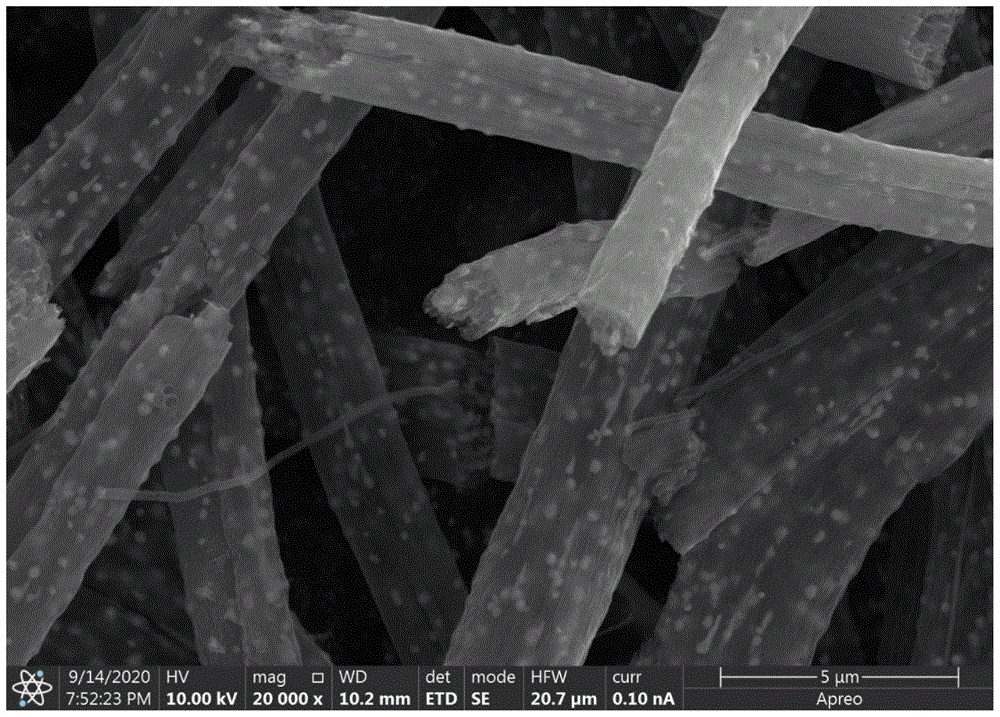
图1为本申请实施例1制得产物的场发射扫描电镜图;Fig. 1 is the field emission scanning electron microscope image of the product obtained in Example 1 of the application;
图2为本申请实施例1制得产物的透射电子显微镜照片;Fig. 2 is the transmission electron microscope photograph of the product obtained in Example 1 of the application;
图3为本申请实施例1制得产物的X-射线衍射图;Fig. 3 is the X-ray diffraction pattern of the product obtained in Example 1 of the application;
图4为本申请实施例1制得产物的自支撑性能实拍图;FIG. 4 is a real shot of the self-supporting performance of the product obtained in Example 1 of the application;
图5为本申请实施例1制得产物的循环性能图;Fig. 5 is the cycle performance diagram of the product obtained in Example 1 of the application;
图6为本申请实施例2制得产物的场发射扫描电镜图;6 is a field emission scanning electron microscope image of the product obtained in Example 2 of the application;
图7为本申请对比例制得产物的场发射扫描电镜图;Fig. 7 is the field emission scanning electron microscope image of the product obtained by the comparative example of the application;
图8为本申请对比例制得产物的循环性能图。Fig. 8 is the cycle performance diagram of the product obtained by the comparative example of the present application.
具体实施方式Detailed ways
为使得本申请的目的、特征、优点能够更加的明显和易懂,对本申请实施例中的技术方案进行清楚、完整地描述,显然,下面所描述的实施例仅仅是本申请一部分实施例,而非全部的实施例。基于本申请中的实施例,本领域普通技术人员在没有做出创造性劳动前提下所获得的所有其它实施例,都属于本申请保护的范围。In order to make the purpose, features and advantages of the present application more obvious and understandable, the technical solutions in the embodiments of the present application are clearly and completely described. Obviously, the embodiments described below are only a part of the embodiments of the present application, and Not all examples. Based on the embodiments in the present application, all other embodiments obtained by those of ordinary skill in the art without creative work fall within the protection scope of the present application.
实施例1Example 1
(1)将0.5g聚丙烯腈(PAN)溶于10mL N,N-二甲基甲酰胺,连续磁力搅拌24小时,得到均匀的黄色溶液。将0.5mmol氯化铋分批次溶于黄色溶液中,再加入1mL TEOS,室温磁力搅拌12小时,得到纺丝溶液;(1) Dissolve 0.5 g of polyacrylonitrile (PAN) in 10 mL of N,N-dimethylformamide, and continue magnetic stirring for 24 hours to obtain a homogeneous yellow solution. Dissolve 0.5 mmol of bismuth chloride in the yellow solution in batches, add 1 mL of TEOS, and magnetically stir at room temperature for 12 hours to obtain a spinning solution;
(2)用注射器取5mL纺丝溶液,选用直径为0.5毫米的钢制针头,设置喷射速度为2mm/h,电压正压为18KV,负压为1KV,接收端采用滚筒接收,用锡箔纸作为接收载体,开始进行静电纺丝,直至纺丝溶液全部喷射完成,放入鼓风干燥箱于60℃干燥24h后取下,放入浓度为10Wt%的氢氟酸中进行刻蚀,取出后用去离子水抽滤4次清洗并烘干,得到纺丝样品;(2) Take 5mL of spinning solution with a syringe, select a steel needle with a diameter of 0.5 mm, set the jet speed to 2mm/h, the positive voltage of 18KV, the negative pressure of 1KV, the receiving end is received by a roller, and tin foil is used as the Receive the carrier, start electrospinning, until the spinning solution is completely sprayed, put it in a blast drying oven at 60 °C for drying for 24 hours, then remove it, put it in a hydrofluoric acid with a concentration of 10Wt% for etching, and use it after removal. Deionized water was filtered for 4 times, cleaned and dried to obtain spinning samples;
(3)将纺丝样品取出加入碲粉放入管式炉,其中,纺丝样品与碲粉的质量比为2:3,在氩气气氛下于600℃热处理2小时,升温速率为5℃/min,得到碲化铋/碳纳米线复合材料。(3) Take out the spinning sample and add tellurium powder into the tube furnace, wherein the mass ratio of the spinning sample to the tellurium powder is 2:3, heat treatment at 600 °C for 2 hours under an argon atmosphere, and the heating rate is 5 °C /min to obtain a bismuth telluride/carbon nanowire composite material.
图1为本申请实施例1制得产物的场发射扫描电镜图,图2为本申请实施例1制得产物的透射电子显微镜照片,可以看出,制得的碲化铋/碳纳米线复合材料中,碲化铋颗粒均匀且致密地分布在多孔碳纳米线中,碳纳米线的宽度为1.8~2.5微米,碲化铋颗粒大小为80~150nm。Fig. 1 is a field emission scanning electron microscope image of the product prepared in Example 1 of the application, and Fig. 2 is a transmission electron microscope photo of the product prepared in Example 1 of the application. It can be seen that the prepared bismuth telluride/carbon nanowire composite In the material, the bismuth telluride particles are uniformly and densely distributed in the porous carbon nanowire, the width of the carbon nanowire is 1.8-2.5 microns, and the size of the bismuth telluride particles is 80-150 nm.
图3为本申请实施例1制得产物的X-射线衍射图,可以看出制得产物的结晶性能好,其X射线衍射峰均可指标为碲化铋化合物,说明制得产物中碲化铋颗粒含量高,能够充分发挥增强容纳钾离子嵌入和脱出的能力,以及改善导电性能和活性物质利用率,表现出高容量和良好的倍率性能。Fig. 3 is the X-ray diffraction pattern of the product obtained in Example 1 of the application, it can be seen that the obtained product has good crystalline properties, and the X-ray diffraction peaks can all be indicators of bismuth telluride compounds, indicating that the telluride in the obtained product is The high content of bismuth particles can fully exert the ability to enhance the insertion and extraction of potassium ions, as well as improve the electrical conductivity and active material utilization, showing high capacity and good rate performance.
图4为本申请实施例1制得产物的自支撑性能实拍图,可见制得产物为自支撑结构,具有柔性且可以弯折,可保证活性材料与集流体之间的紧密接触,且不需要集流体就可以直接装配电池。4 is a real shot of the self-supporting performance of the product obtained in Example 1 of the application. It can be seen that the obtained product is a self-supporting structure, which is flexible and can be bent, which can ensure the close contact between the active material and the current collector, and does not The battery can be assembled directly without a current collector.
图5为本申请实施例1制得产物的循环性能图,电流密度为200mA/g时,经过100圈循环后容量保持率为95.2%,其放电比容量为300mAh/g,说明碲化铋颗粒封装在具有多孔结构的碳纳米纤维中,不仅提升材料的比容量和倍率性能,还能有效抑制充放电过程中碲化铋材料的体积膨胀,提高了其作为钾离子电池负极材料的循环稳定性。Figure 5 is the cycle performance diagram of the product prepared in Example 1 of the application. When the current density is 200mA/g, the capacity retention rate after 100 cycles is 95.2%, and the discharge specific capacity is 300mAh/g, indicating that the bismuth telluride particles Encapsulated in carbon nanofibers with a porous structure not only improves the specific capacity and rate performance of the material, but also effectively suppresses the volume expansion of the bismuth telluride material during charge and discharge, and improves its cycle stability as a potassium-ion battery anode material. .
实施例2Example 2
(1)将0.5g聚丙烯腈(PAN)溶于10mL N,N-二甲基甲酰胺,连续磁力搅拌24小时,得到澄清的黄色溶液。将0.5mmol氯化铋分批次溶于黄色溶液中,再加入3mL TEOS,室温磁力搅拌12小时,得到纺丝溶液;(1) Dissolve 0.5 g of polyacrylonitrile (PAN) in 10 mL of N,N-dimethylformamide, and continue magnetic stirring for 24 hours to obtain a clear yellow solution. Dissolve 0.5 mmol of bismuth chloride in the yellow solution in batches, add 3 mL of TEOS, and magnetically stir at room temperature for 12 hours to obtain a spinning solution;
(2)用注射器取5mL纺丝溶液,选用直径为0.1毫米的钢制针头,设置喷射速度为1.5mm/h,电压正压为15KV,负压为1KV,接收端采用滚筒接收,用锡箔纸作为接收载体,开始进行静电纺丝,直至纺丝溶液全部喷射完成,放入鼓风干燥箱于60℃干燥24h后取下,放入浓度为10Wt%的硝酸酸中进行刻蚀,随后取出用去离子水抽滤4次清洗并烘干,得到纺丝样品;(2) Take 5mL of spinning solution with a syringe, select a steel needle with a diameter of 0.1 mm, set the jet speed to 1.5mm/h, the positive voltage of 15KV, and the negative pressure of 1KV. As a receiving carrier, electrospinning was started until all the spinning solution was sprayed, put it in a blast drying oven at 60 °C for drying for 24 hours, and then removed it, put it into nitric acid with a concentration of 10Wt% for etching, and then took out the Deionized water was filtered for 4 times, cleaned and dried to obtain spinning samples;
(3)将纺丝样品取出加入碲粉放入管式炉,其中,纺丝样品与碲粉的质量比为2:3,在氩气气氛下于650℃热处理2小时,升温速率为5℃/min,得到碲化铋/碳纳米线复合材料。(3) Take out the spinning sample and add tellurium powder into the tube furnace, wherein the mass ratio of the spinning sample to the tellurium powder is 2:3, heat treatment at 650°C for 2 hours under an argon atmosphere, and the heating rate is 5°C /min to obtain a bismuth telluride/carbon nanowire composite material.
图6为本申请实施例2制得产物的场发射扫描电镜图,图中表明碳纳米线表面有明显被刻蚀效果,将碲化铋颗粒均匀且致密地包覆在其中,碳纳米线的宽度为2.5~3微米,碲化铋颗粒大小为80~120nm。6 is a field emission scanning electron microscope image of the product obtained in Example 2 of the application, and the figure shows that the surface of the carbon nanowires has obvious etching effect, and the bismuth telluride particles are uniformly and densely coated therein. The width is 2.5 to 3 microns, and the particle size of bismuth telluride is 80 to 120 nm.
对比例Comparative ratio
(1)将0.5g聚乙烯吡咯烷酮(分子量130000)溶于10mL N,N-二甲基甲酰胺,连续磁力搅拌24小时,得到均匀的透明溶液。将0.5mmol五水硝酸铋分批次溶于透明溶液中,室温磁力搅拌12小时,得到纺丝溶液;(1) Dissolve 0.5 g of polyvinylpyrrolidone (molecular weight 130000) in 10 mL of N,N-dimethylformamide, and continue magnetic stirring for 24 hours to obtain a uniform and transparent solution. Dissolve 0.5 mmol of bismuth nitrate pentahydrate in the transparent solution in batches, and magnetically stir at room temperature for 12 hours to obtain a spinning solution;
(2)用注射器取5mL纺丝溶液,选用直径为0.1毫米的钢制针头,设置喷射速度为2.5mm/h,电压正压为18KV,负压为1KV,接收端采用滚筒接收,用锡箔纸作为接收载体,开始进行静电纺丝,直至纺丝溶液全部喷射完成,放入鼓风干燥箱60℃干燥24h后取出,得到纺丝样品;(2) Take 5mL of spinning solution with a syringe, select a steel needle with a diameter of 0.1 mm, set the jet speed to 2.5mm/h, the positive voltage of 18KV, the negative pressure of 1KV, the receiving end is received by a roller, and the tin foil is used for receiving. As a receiving carrier, start electrospinning until all the spinning solution is sprayed, put it in a blast drying oven at 60°C for 24 hours, and take it out to obtain a spinning sample;
(3)将纺丝样品加入碲粉放入管式炉,其中,纺丝样品与碲粉的质量比为2:3,在氮气气氛下于700℃热处理2小时,升温速率为5℃/min,得到碲化铋/碳纳米线复合材料。(3) Add the spinning sample to the tellurium powder and put it into a tube furnace, wherein the mass ratio of the spinning sample to the tellurium powder is 2:3, heat treatment at 700°C for 2 hours under a nitrogen atmosphere, and the heating rate is 5°C/min , to obtain bismuth telluride/carbon nanowire composites.
图7为本申请对比例制得产物的场发射扫描电镜图,图中表明碳纳米线表面较为光滑,没有刻蚀效果,碲化铋颗粒包覆在其中,碳纳米线的宽度为0.5~1.1微米,碲化铋颗粒大小为70~130nm。Fig. 7 is the field emission scanning electron microscope image of the product obtained by the comparative example of the present application. The figure shows that the surface of the carbon nanowire is relatively smooth and has no etching effect. Micron, bismuth telluride particle size is 70 ~ 130nm.
图8为本申请对比例制得产物的循环性能图,电流密度为200mA/g时,经过100圈循环后容量保持率为57.9%,其放电比容量为175mAh/g,说明虽然碲化铋颗粒封装在碳纳米纤维中,但由于其表面未经刻蚀,导致材料表面的通孔较少,电解液很难浸润,钾离子进入和脱出的效率低,使其电化学循环稳定性差,容量衰减快。Figure 8 is the cycle performance diagram of the product prepared by the comparative example of the application. When the current density is 200 mA/g, the capacity retention rate after 100 cycles is 57.9%, and the discharge specific capacity is 175 mAh/g, which shows that although the bismuth telluride particles It is encapsulated in carbon nanofibers, but because its surface is not etched, there are fewer through holes on the surface of the material, the electrolyte is difficult to infiltrate, and the efficiency of potassium ion entry and extraction is low, resulting in poor electrochemical cycle stability and capacity decay. quick.
以上所述,以上实施例仅用以说明本申请的技术方案,而非对其限制;尽管参照前述实施例对本申请进行了详细的说明,本领域的普通技术人员应当理解:其依然可以对前述各实施例所记载的技术方案进行修改,或者对其中部分技术特征进行等同替换;而这些修改或者替换,并不使相应技术方案的本质脱离本申请各实施例技术方案的精神和范围。As mentioned above, the above embodiments are only used to illustrate the technical solutions of the present application, but not to limit them; although the present application has been described in detail with reference to the foregoing embodiments, those of ordinary skill in the art should understand: The technical solutions described in the embodiments are modified, or some technical features thereof are equivalently replaced; and these modifications or replacements do not make the essence of the corresponding technical solutions deviate from the spirit and scope of the technical solutions in the embodiments of the present application.
Claims (7)
Priority Applications (1)
| Application Number | Priority Date | Filing Date | Title |
|---|---|---|---|
| CN202110071154.XA CN112909246B (en) | 2021-01-19 | 2021-01-19 | A kind of bismuth telluride/carbon nanowire composite material and its preparation method and application |
Applications Claiming Priority (1)
| Application Number | Priority Date | Filing Date | Title |
|---|---|---|---|
| CN202110071154.XA CN112909246B (en) | 2021-01-19 | 2021-01-19 | A kind of bismuth telluride/carbon nanowire composite material and its preparation method and application |
Publications (2)
| Publication Number | Publication Date |
|---|---|
| CN112909246A CN112909246A (en) | 2021-06-04 |
| CN112909246B true CN112909246B (en) | 2022-07-08 |
Family
ID=76116031
Family Applications (1)
| Application Number | Title | Priority Date | Filing Date |
|---|---|---|---|
| CN202110071154.XA Expired - Fee Related CN112909246B (en) | 2021-01-19 | 2021-01-19 | A kind of bismuth telluride/carbon nanowire composite material and its preparation method and application |
Country Status (1)
| Country | Link |
|---|---|
| CN (1) | CN112909246B (en) |
Families Citing this family (4)
| Publication number | Priority date | Publication date | Assignee | Title |
|---|---|---|---|---|
| CN113292099B (en) * | 2021-06-30 | 2022-10-28 | 湖南理工学院 | Preparation method of bismuth sulfide single crystal/carbon nanowire composite material |
| CN114420924B (en) * | 2022-01-11 | 2023-10-27 | 西北工业大学 | A kind of bismuth telluride-based composite negative electrode material for sodium/potassium ion battery and preparation method thereof |
| CN114540989B (en) * | 2022-01-12 | 2024-09-27 | 河北大学 | Preparation method and application of carbon fiber supported bismuth sulfide material |
| CN118398799B (en) * | 2024-06-28 | 2024-10-11 | 南昌大学 | Amorphous carbon-based composite anode material and preparation method and application thereof |
Citations (2)
| Publication number | Priority date | Publication date | Assignee | Title |
|---|---|---|---|---|
| CN103738929A (en) * | 2013-09-03 | 2014-04-23 | 吉林化工学院 | Preparation of graded bismuth telluride micrometer structure with simple solvothermal method |
| CN106744744A (en) * | 2017-01-20 | 2017-05-31 | 济南大学 | The preparation method and products therefrom of a kind of cellular graphite phase carbon nitride nano material of cobalt doped |
Family Cites Families (6)
| Publication number | Priority date | Publication date | Assignee | Title |
|---|---|---|---|---|
| US10276856B2 (en) * | 2015-10-08 | 2019-04-30 | Nanotek Instruments, Inc. | Continuous process for producing electrodes and alkali metal batteries having ultra-high energy densities |
| CN106299297A (en) * | 2016-09-20 | 2017-01-04 | 华中科技大学 | One is one-dimensional mixes bismuth carbon nanocoils composite and its preparation method and application |
| CN106410152B (en) * | 2016-11-04 | 2019-05-31 | 华中科技大学 | A kind of one-dimensional antimony sulfide-carbon composite material, its preparation method and application |
| CN107541811B (en) * | 2017-09-04 | 2019-08-13 | 北京化工大学 | A kind of carbon nano rod composite material and preparation method and application |
| CN107697891B (en) * | 2017-09-30 | 2019-11-26 | 合肥师范学院 | Carbon wraps up the preparation method of core-shell structure bismuth telluride nanometer rods and its carbon package core-shell structure bismuth telluride nanometer rods of preparation and application |
| CN111235696B (en) * | 2020-01-21 | 2021-09-03 | 南京航空航天大学 | Bismuth-phosphorus-sulfur/carbon composite nanofiber negative electrode material for sodium ion battery, preparation method of bismuth-phosphorus-sulfur/carbon composite nanofiber negative electrode material and sodium ion battery |
-
2021
- 2021-01-19 CN CN202110071154.XA patent/CN112909246B/en not_active Expired - Fee Related
Patent Citations (2)
| Publication number | Priority date | Publication date | Assignee | Title |
|---|---|---|---|---|
| CN103738929A (en) * | 2013-09-03 | 2014-04-23 | 吉林化工学院 | Preparation of graded bismuth telluride micrometer structure with simple solvothermal method |
| CN106744744A (en) * | 2017-01-20 | 2017-05-31 | 济南大学 | The preparation method and products therefrom of a kind of cellular graphite phase carbon nitride nano material of cobalt doped |
Also Published As
| Publication number | Publication date |
|---|---|
| CN112909246A (en) | 2021-06-04 |
Similar Documents
| Publication | Publication Date | Title |
|---|---|---|
| CN112909246B (en) | A kind of bismuth telluride/carbon nanowire composite material and its preparation method and application | |
| CN108682815B (en) | A kind of high-efficiency hard carbon material and its preparation method and application | |
| CN111146424B (en) | Metal sulfide/carbon composite material, and preparation method and application thereof | |
| CN102237519A (en) | Fluorine-free preparation method for three-dimensional porous silica powder anode material of lithium ion battery | |
| CN110556517A (en) | Negative electrode material, negative electrode and preparation method of negative electrode | |
| CN110042503B (en) | A kind of MoSe2@C electrospun hollow nanofiber and its preparation method and application | |
| CN107785552B (en) | A nitrogen-doped flower-like hierarchical structure porous carbon-selenium composite cathode material and its preparation method and application | |
| CN114944476B (en) | MoS (MoS) 2 /Fe 2 O 3 Heterostructure @ porous carbon fiber composite material and preparation method and application thereof | |
| CN114142025A (en) | Bimetallic sulfide@porous carbon fiber composites and their preparation and applications in sodium-ion batteries | |
| CN107706392A (en) | A kind of carbon nitrogen coats the preparation method of vanadium phosphate sodium sodium-ion battery positive material altogether | |
| CN110767901A (en) | Preserved plum-shaped iron diselenide electrode material and preparation method and application thereof | |
| CN113161533A (en) | MOF-derived ZnO @ C composite material and application thereof | |
| CN111326706A (en) | Carbon-coated niobium pentoxide composite reduced graphene oxide material and its preparation and application | |
| CN107221637B (en) | A kind of laser ablation oxidation in-situ preparation method of lithium ion battery integration cathode | |
| CN115732655B (en) | Preparation method of M-Sb alloy encapsulated carbon nanofiber anode material and application of material in potassium/lithium ion battery | |
| CN107681141A (en) | A kind of anode material of lithium-ion battery of carbon coating boric acid nanosized nickel rods | |
| CN109817899B (en) | Preparation method and application of hetero-element-doped carbon nanotube-packaged metal sulfide composite negative electrode material | |
| CN107978750A (en) | The forming method of anode material of lithium-ion battery | |
| CN113764631A (en) | A kind of FeS0.5Se0.5/CF composite negative electrode material for sodium ion battery and preparation method thereof | |
| CN116497595A (en) | Cage-shaped cobalt-iron chalcogenide carbon nanofiber composite material and preparation method and application thereof | |
| CN118281220B (en) | A self-supporting sodium ion battery negative electrode material and its preparation method and application | |
| CN115000337B (en) | Defect-rich hydrated vanadium pentoxide nanosheet core-shell structure fiber electrode and preparation method thereof | |
| CN118833802A (en) | Porous silicon/carbon and high-capacity silicon/phosphorus/carbon composite lithium battery anode material and preparation method thereof | |
| CN111261856A (en) | Carbon sheet cage coated porous silicon material and preparation method and application thereof | |
| CN118335924A (en) | Composite negative electrode material for potassium ion battery and preparation method and application thereof |
Legal Events
| Date | Code | Title | Description |
|---|---|---|---|
| PB01 | Publication | ||
| PB01 | Publication | ||
| SE01 | Entry into force of request for substantive examination | ||
| SE01 | Entry into force of request for substantive examination | ||
| CB03 | Change of inventor or designer information |
Inventor after: Zhang Wei Inventor after: Chen Tong Inventor after: Wang Junling Inventor after: Wu Jiawei Inventor after: Wu Yingtao Inventor after: Huang Shaoming Inventor before: Chen Tong Inventor before: Zhang Wei Inventor before: Wang Junling Inventor before: Wu Jiawei Inventor before: Wu Yingtao Inventor before: Huang Shaoming |
|
| CB03 | Change of inventor or designer information | ||
| GR01 | Patent grant | ||
| GR01 | Patent grant | ||
| CF01 | Termination of patent right due to non-payment of annual fee |
Granted publication date: 20220708 |
|
| CF01 | Termination of patent right due to non-payment of annual fee |