CN112778236A - Synthesis, polymerization reaction, polymer preparation and application of beta, gamma-amino acid N-carboxythio carbonyl cyclic internal anhydride monomer - Google Patents
Synthesis, polymerization reaction, polymer preparation and application of beta, gamma-amino acid N-carboxythio carbonyl cyclic internal anhydride monomer Download PDFInfo
- Publication number
- CN112778236A CN112778236A CN201911089413.0A CN201911089413A CN112778236A CN 112778236 A CN112778236 A CN 112778236A CN 201911089413 A CN201911089413 A CN 201911089413A CN 112778236 A CN112778236 A CN 112778236A
- Authority
- CN
- China
- Prior art keywords
- substituted
- unsubstituted
- nta
- alkyl
- group
- Prior art date
- Legal status (The legal status is an assumption and is not a legal conclusion. Google has not performed a legal analysis and makes no representation as to the accuracy of the status listed.)
- Pending
Links
- 239000000178 monomer Substances 0.000 title claims abstract description 172
- 229920000642 polymer Polymers 0.000 title claims abstract description 106
- 238000006116 polymerization reaction Methods 0.000 title claims abstract description 64
- 238000002360 preparation method Methods 0.000 title claims abstract description 20
- 150000008064 anhydrides Chemical class 0.000 title abstract description 26
- 230000015572 biosynthetic process Effects 0.000 title abstract description 13
- 238000003786 synthesis reaction Methods 0.000 title abstract description 13
- 239000000463 material Substances 0.000 claims abstract description 14
- 238000002156 mixing Methods 0.000 claims abstract description 10
- 238000001338 self-assembly Methods 0.000 claims abstract description 7
- 230000000259 anti-tumor effect Effects 0.000 claims abstract description 6
- 239000003814 drug Substances 0.000 claims abstract description 5
- 229940079593 drug Drugs 0.000 claims abstract description 4
- 238000012377 drug delivery Methods 0.000 claims abstract description 4
- 238000001476 gene delivery Methods 0.000 claims abstract description 4
- -1 hydroxy, amino, phenyl Chemical group 0.000 claims description 54
- 229920001577 copolymer Polymers 0.000 claims description 53
- 238000000034 method Methods 0.000 claims description 48
- 125000000623 heterocyclic group Chemical group 0.000 claims description 41
- 150000008065 acid anhydrides Chemical class 0.000 claims description 38
- 125000003118 aryl group Chemical group 0.000 claims description 33
- 125000001424 substituent group Chemical group 0.000 claims description 33
- 150000001412 amines Chemical class 0.000 claims description 30
- 125000004432 carbon atom Chemical group C* 0.000 claims description 27
- 150000007530 organic bases Chemical class 0.000 claims description 27
- 125000000753 cycloalkyl group Chemical group 0.000 claims description 26
- 239000003999 initiator Substances 0.000 claims description 24
- 229910052799 carbon Inorganic materials 0.000 claims description 22
- 229910052739 hydrogen Inorganic materials 0.000 claims description 22
- 238000006467 substitution reaction Methods 0.000 claims description 22
- VEXZGXHMUGYJMC-UHFFFAOYSA-N Hydrochloric acid Chemical compound Cl VEXZGXHMUGYJMC-UHFFFAOYSA-N 0.000 claims description 21
- 239000012442 inert solvent Substances 0.000 claims description 21
- 229910052736 halogen Inorganic materials 0.000 claims description 19
- 150000002367 halogens Chemical group 0.000 claims description 19
- 108090000765 processed proteins & peptides Proteins 0.000 claims description 18
- 125000000882 C2-C6 alkenyl group Chemical group 0.000 claims description 17
- 125000000392 cycloalkenyl group Chemical group 0.000 claims description 17
- 229920001519 homopolymer Polymers 0.000 claims description 17
- 239000001257 hydrogen Substances 0.000 claims description 16
- 125000003601 C2-C6 alkynyl group Chemical group 0.000 claims description 14
- 230000000844 anti-bacterial effect Effects 0.000 claims description 14
- 150000003839 salts Chemical class 0.000 claims description 14
- 125000001072 heteroaryl group Chemical group 0.000 claims description 13
- 125000000217 alkyl group Chemical group 0.000 claims description 12
- 125000001584 benzyloxycarbonyl group Chemical group C(=O)(OCC1=CC=CC=C1)* 0.000 claims description 12
- 125000002924 primary amino group Chemical group [H]N([H])* 0.000 claims description 12
- 125000000171 (C1-C6) haloalkyl group Chemical group 0.000 claims description 11
- CPELXLSAUQHCOX-UHFFFAOYSA-N Hydrogen bromide Chemical compound Br CPELXLSAUQHCOX-UHFFFAOYSA-N 0.000 claims description 11
- 125000001797 benzyl group Chemical group [H]C1=C([H])C([H])=C(C([H])=C1[H])C([H])([H])* 0.000 claims description 11
- 125000003088 (fluoren-9-ylmethoxy)carbonyl group Chemical group 0.000 claims description 9
- 125000002887 hydroxy group Chemical group [H]O* 0.000 claims description 9
- 125000004737 (C1-C6) haloalkoxy group Chemical group 0.000 claims description 8
- ORILYTVJVMAKLC-UHFFFAOYSA-N adamantane Chemical compound C1C(C2)CC3CC1CC2C3 ORILYTVJVMAKLC-UHFFFAOYSA-N 0.000 claims description 8
- 125000004433 nitrogen atom Chemical group N* 0.000 claims description 8
- UYWQUFXKFGHYNT-UHFFFAOYSA-N phenylmethyl ester of formic acid Natural products O=COCC1=CC=CC=C1 UYWQUFXKFGHYNT-UHFFFAOYSA-N 0.000 claims description 8
- 125000005931 tert-butyloxycarbonyl group Chemical group [H]C([H])([H])C(OC(*)=O)(C([H])([H])[H])C([H])([H])[H] 0.000 claims description 8
- 125000002221 trityl group Chemical group [H]C1=C([H])C([H])=C([H])C([H])=C1C([*])(C1=C(C(=C(C(=C1[H])[H])[H])[H])[H])C1=C([H])C([H])=C([H])C([H])=C1[H] 0.000 claims description 8
- QTBSBXVTEAMEQO-UHFFFAOYSA-M Acetate Chemical compound CC([O-])=O QTBSBXVTEAMEQO-UHFFFAOYSA-M 0.000 claims description 7
- BDAGIHXWWSANSR-UHFFFAOYSA-M Formate Chemical compound [O-]C=O BDAGIHXWWSANSR-UHFFFAOYSA-M 0.000 claims description 7
- DTQVDTLACAAQTR-UHFFFAOYSA-M Trifluoroacetate Chemical compound [O-]C(=O)C(F)(F)F DTQVDTLACAAQTR-UHFFFAOYSA-M 0.000 claims description 7
- 229920001400 block copolymer Polymers 0.000 claims description 7
- 125000001997 phenyl group Chemical group [H]C1=C([H])C([H])=C(*)C([H])=C1[H] 0.000 claims description 7
- 125000000999 tert-butyl group Chemical group [H]C([H])([H])C(*)(C([H])([H])[H])C([H])([H])[H] 0.000 claims description 7
- UFHFLCQGNIYNRP-UHFFFAOYSA-N Hydrogen Chemical compound [H][H] UFHFLCQGNIYNRP-UHFFFAOYSA-N 0.000 claims description 6
- 125000006569 (C5-C6) heterocyclic group Chemical group 0.000 claims description 5
- 229940126214 compound 3 Drugs 0.000 claims description 5
- 229920001223 polyethylene glycol Polymers 0.000 claims description 5
- 125000004191 (C1-C6) alkoxy group Chemical group 0.000 claims description 4
- 125000004739 (C1-C6) alkylsulfonyl group Chemical group 0.000 claims description 4
- 125000003320 C2-C6 alkenyloxy group Chemical group 0.000 claims description 4
- 229920000858 Cyclodextrin Polymers 0.000 claims description 4
- 239000002202 Polyethylene glycol Substances 0.000 claims description 4
- 125000003342 alkenyl group Chemical group 0.000 claims description 4
- 125000000449 nitro group Chemical group [O-][N+](*)=O 0.000 claims description 4
- 229910052698 phosphorus Inorganic materials 0.000 claims description 4
- 239000011574 phosphorus Substances 0.000 claims description 4
- HFHDHCJBZVLPGP-UHFFFAOYSA-N schardinger α-dextrin Chemical compound O1C(C(C2O)O)C(CO)OC2OC(C(C2O)O)C(CO)OC2OC(C(C2O)O)C(CO)OC2OC(C(O)C2O)C(CO)OC2OC(C(C2O)O)C(CO)OC2OC2C(O)C(O)C1OC2CO HFHDHCJBZVLPGP-UHFFFAOYSA-N 0.000 claims description 4
- 125000006552 (C3-C8) cycloalkyl group Chemical group 0.000 claims description 3
- 239000007983 Tris buffer Substances 0.000 claims description 3
- 125000002777 acetyl group Chemical group [H]C([H])([H])C(*)=O 0.000 claims description 3
- 125000000612 phthaloyl group Chemical group C(C=1C(C(=O)*)=CC=CC1)(=O)* 0.000 claims description 3
- 125000006239 protecting group Chemical group 0.000 claims description 3
- SNOOUWRIMMFWNE-UHFFFAOYSA-M sodium;6-[(3,4,5-trimethoxybenzoyl)amino]hexanoate Chemical compound [Na+].COC1=CC(C(=O)NCCCCCC([O-])=O)=CC(OC)=C1OC SNOOUWRIMMFWNE-UHFFFAOYSA-M 0.000 claims description 3
- 125000006570 (C5-C6) heteroaryl group Chemical group 0.000 claims description 2
- 125000001041 indolyl group Chemical group 0.000 claims description 2
- 150000002431 hydrogen Chemical class 0.000 claims 3
- 101100037762 Caenorhabditis elegans rnh-2 gene Proteins 0.000 claims 2
- PXQLVRUNWNTZOS-UHFFFAOYSA-N sulfanyl Chemical class [SH] PXQLVRUNWNTZOS-UHFFFAOYSA-N 0.000 claims 1
- 238000010189 synthetic method Methods 0.000 claims 1
- 235000001014 amino acid Nutrition 0.000 abstract description 38
- 150000001413 amino acids Chemical class 0.000 abstract description 33
- 150000001576 beta-amino acids Chemical class 0.000 abstract description 20
- 235000008206 alpha-amino acids Nutrition 0.000 abstract description 8
- 150000001371 alpha-amino acids Chemical class 0.000 abstract 1
- 230000003115 biocidal effect Effects 0.000 abstract 1
- 239000000243 solution Substances 0.000 description 75
- VLKZOEOYAKHREP-UHFFFAOYSA-N n-Hexane Chemical compound CCCCCC VLKZOEOYAKHREP-UHFFFAOYSA-N 0.000 description 74
- XEKOWRVHYACXOJ-UHFFFAOYSA-N Ethyl acetate Chemical compound CCOC(C)=O XEKOWRVHYACXOJ-UHFFFAOYSA-N 0.000 description 72
- 238000006243 chemical reaction Methods 0.000 description 70
- ZMXDDKWLCZADIW-UHFFFAOYSA-N N,N-Dimethylformamide Chemical compound CN(C)C=O ZMXDDKWLCZADIW-UHFFFAOYSA-N 0.000 description 67
- 229940024606 amino acid Drugs 0.000 description 59
- WYURNTSHIVDZCO-UHFFFAOYSA-N Tetrahydrofuran Chemical compound C1CCOC1 WYURNTSHIVDZCO-UHFFFAOYSA-N 0.000 description 50
- IJGRMHOSHXDMSA-UHFFFAOYSA-N Atomic nitrogen Chemical compound N#N IJGRMHOSHXDMSA-UHFFFAOYSA-N 0.000 description 32
- YMWUJEATGCHHMB-UHFFFAOYSA-N Dichloromethane Chemical compound ClCCl YMWUJEATGCHHMB-UHFFFAOYSA-N 0.000 description 30
- 210000004027 cell Anatomy 0.000 description 27
- 239000012074 organic phase Substances 0.000 description 27
- XLYOFNOQVPJJNP-UHFFFAOYSA-N water Substances O XLYOFNOQVPJJNP-UHFFFAOYSA-N 0.000 description 26
- 238000003756 stirring Methods 0.000 description 24
- YLQBMQCUIZJEEH-UHFFFAOYSA-N tetrahydrofuran Natural products C=1C=COC=1 YLQBMQCUIZJEEH-UHFFFAOYSA-N 0.000 description 24
- 239000000203 mixture Substances 0.000 description 23
- 238000007151 ring opening polymerisation reaction Methods 0.000 description 20
- 150000001370 alpha-amino acid derivatives Chemical class 0.000 description 19
- RTZKZFJDLAIYFH-UHFFFAOYSA-N Diethyl ether Chemical compound CCOCC RTZKZFJDLAIYFH-UHFFFAOYSA-N 0.000 description 18
- OKKJLVBELUTLKV-UHFFFAOYSA-N Methanol Chemical compound OC OKKJLVBELUTLKV-UHFFFAOYSA-N 0.000 description 18
- 238000001556 precipitation Methods 0.000 description 18
- 238000005481 NMR spectroscopy Methods 0.000 description 17
- 125000004435 hydrogen atom Chemical class [H]* 0.000 description 17
- 229910052757 nitrogen Inorganic materials 0.000 description 17
- HEMHJVSKTPXQMS-UHFFFAOYSA-M Sodium hydroxide Chemical compound [OH-].[Na+] HEMHJVSKTPXQMS-UHFFFAOYSA-M 0.000 description 15
- 230000008569 process Effects 0.000 description 15
- 239000002904 solvent Substances 0.000 description 15
- 239000008367 deionised water Substances 0.000 description 14
- 229910021641 deionized water Inorganic materials 0.000 description 14
- 238000009826 distribution Methods 0.000 description 14
- IAZDPXIOMUYVGZ-UHFFFAOYSA-N Dimethylsulphoxide Chemical compound CS(C)=O IAZDPXIOMUYVGZ-UHFFFAOYSA-N 0.000 description 13
- 230000001580 bacterial effect Effects 0.000 description 13
- 238000005119 centrifugation Methods 0.000 description 13
- 150000003952 β-lactams Chemical class 0.000 description 13
- CSNNHWWHGAXBCP-UHFFFAOYSA-L Magnesium sulfate Chemical compound [Mg+2].[O-][S+2]([O-])([O-])[O-] CSNNHWWHGAXBCP-UHFFFAOYSA-L 0.000 description 12
- 239000012043 crude product Substances 0.000 description 12
- XZOWICPSVWHCTC-UHFFFAOYSA-N 2-tritylsulfanylethanamine Chemical compound C=1C=CC=CC=1C(C=1C=CC=CC=1)(SCCN)C1=CC=CC=C1 XZOWICPSVWHCTC-UHFFFAOYSA-N 0.000 description 11
- 241000589517 Pseudomonas aeruginosa Species 0.000 description 11
- 239000002585 base Substances 0.000 description 11
- 238000005227 gel permeation chromatography Methods 0.000 description 11
- 239000011541 reaction mixture Substances 0.000 description 11
- WEVYAHXRMPXWCK-UHFFFAOYSA-N Acetonitrile Chemical compound CC#N WEVYAHXRMPXWCK-UHFFFAOYSA-N 0.000 description 10
- 241000191967 Staphylococcus aureus Species 0.000 description 10
- DTQVDTLACAAQTR-UHFFFAOYSA-N Trifluoroacetic acid Chemical compound OC(=O)C(F)(F)F DTQVDTLACAAQTR-UHFFFAOYSA-N 0.000 description 10
- 238000012360 testing method Methods 0.000 description 10
- 125000003396 thiol group Chemical class [H]S* 0.000 description 10
- RXWHWDWMUFSJRK-UHFFFAOYSA-N 3-amino-1,1,1-triphenylpropane-2-thiol Chemical compound C=1C=CC=CC=1C(C=1C=CC=CC=1)(C(S)CN)C1=CC=CC=C1 RXWHWDWMUFSJRK-UHFFFAOYSA-N 0.000 description 9
- YNESATAKKCNGOF-UHFFFAOYSA-N lithium bis(trimethylsilyl)amide Chemical compound [Li+].C[Si](C)(C)[N-][Si](C)(C)C YNESATAKKCNGOF-UHFFFAOYSA-N 0.000 description 9
- 238000001953 recrystallisation Methods 0.000 description 9
- KDXKERNSBIXSRK-YFKPBYRVSA-N L-lysine Chemical compound NCCCC[C@H](N)C(O)=O KDXKERNSBIXSRK-YFKPBYRVSA-N 0.000 description 8
- PHSPJQZRQAJPPF-UHFFFAOYSA-N N-alpha-Methylhistamine Chemical compound CNCCC1=CN=CN1 PHSPJQZRQAJPPF-UHFFFAOYSA-N 0.000 description 8
- 239000007787 solid Substances 0.000 description 8
- 125000004429 atom Chemical group 0.000 description 7
- 239000007788 liquid Substances 0.000 description 7
- 239000002609 medium Substances 0.000 description 7
- 102000004196 processed proteins & peptides Human genes 0.000 description 7
- NJSRYBIBUXBNSW-VIFPVBQESA-N (3s)-3-azaniumyl-4-oxo-4-phenylmethoxybutanoate Chemical compound [O-]C(=O)C[C@H]([NH3+])C(=O)OCC1=CC=CC=C1 NJSRYBIBUXBNSW-VIFPVBQESA-N 0.000 description 6
- BMVXCPBXGZKUPN-UHFFFAOYSA-N 1-hexanamine Chemical compound CCCCCCN BMVXCPBXGZKUPN-UHFFFAOYSA-N 0.000 description 6
- GQHTUMJGOHRCHB-UHFFFAOYSA-N 2,3,4,6,7,8,9,10-octahydropyrimido[1,2-a]azepine Chemical compound C1CCCCN2CCCN=C21 GQHTUMJGOHRCHB-UHFFFAOYSA-N 0.000 description 6
- CZLONQRTHUAGMG-UHFFFAOYSA-N 2-ethoxycarbothioylsulfanylacetic acid Chemical compound CCOC(=S)SCC(O)=O CZLONQRTHUAGMG-UHFFFAOYSA-N 0.000 description 6
- WNLMYNASWOULQY-UHFFFAOYSA-N 4-tert-butylbenzoyl chloride Chemical compound CC(C)(C)C1=CC=C(C(Cl)=O)C=C1 WNLMYNASWOULQY-UHFFFAOYSA-N 0.000 description 6
- QTBSBXVTEAMEQO-UHFFFAOYSA-N Acetic acid Chemical compound CC(O)=O QTBSBXVTEAMEQO-UHFFFAOYSA-N 0.000 description 6
- ZMANZCXQSJIPKH-UHFFFAOYSA-N Triethylamine Chemical compound CCN(CC)CC ZMANZCXQSJIPKH-UHFFFAOYSA-N 0.000 description 6
- 125000004185 ester group Chemical group 0.000 description 6
- 230000002401 inhibitory effect Effects 0.000 description 6
- 238000001955 polymer synthesis method Methods 0.000 description 6
- HPALAKNZSZLMCH-UHFFFAOYSA-M sodium;chloride;hydrate Chemical class O.[Na+].[Cl-] HPALAKNZSZLMCH-UHFFFAOYSA-M 0.000 description 6
- 239000012265 solid product Substances 0.000 description 6
- 235000014469 Bacillus subtilis Nutrition 0.000 description 5
- 241000894006 Bacteria Species 0.000 description 5
- CKLJMWTZIZZHCS-REOHCLBHSA-N L-aspartic acid Chemical compound OC(=O)[C@@H](N)CC(O)=O CKLJMWTZIZZHCS-REOHCLBHSA-N 0.000 description 5
- 125000003545 alkoxy group Chemical group 0.000 description 5
- 239000008346 aqueous phase Substances 0.000 description 5
- 230000004071 biological effect Effects 0.000 description 5
- 239000011521 glass Substances 0.000 description 5
- 239000011261 inert gas Substances 0.000 description 5
- 239000003208 petroleum Substances 0.000 description 5
- 150000003141 primary amines Chemical class 0.000 description 5
- 210000001519 tissue Anatomy 0.000 description 5
- 229910021642 ultra pure water Inorganic materials 0.000 description 5
- 239000012498 ultrapure water Substances 0.000 description 5
- 125000004169 (C1-C6) alkyl group Chemical group 0.000 description 4
- RYHBNJHYFVUHQT-UHFFFAOYSA-N 1,4-Dioxane Chemical compound C1COCCO1 RYHBNJHYFVUHQT-UHFFFAOYSA-N 0.000 description 4
- VHYFNPMBLIVWCW-UHFFFAOYSA-N 4-Dimethylaminopyridine Chemical compound CN(C)C1=CC=NC=C1 VHYFNPMBLIVWCW-UHFFFAOYSA-N 0.000 description 4
- 241000588626 Acinetobacter baumannii Species 0.000 description 4
- 244000063299 Bacillus subtilis Species 0.000 description 4
- 241000222122 Candida albicans Species 0.000 description 4
- 241000221204 Cryptococcus neoformans Species 0.000 description 4
- 241000588724 Escherichia coli Species 0.000 description 4
- RJQXTJLFIWVMTO-TYNCELHUSA-N Methicillin Chemical compound COC1=CC=CC(OC)=C1C(=O)N[C@@H]1C(=O)N2[C@@H](C(O)=O)C(C)(C)S[C@@H]21 RJQXTJLFIWVMTO-TYNCELHUSA-N 0.000 description 4
- UIIMBOGNXHQVGW-UHFFFAOYSA-M Sodium bicarbonate Chemical compound [Na+].OC([O-])=O UIIMBOGNXHQVGW-UHFFFAOYSA-M 0.000 description 4
- 125000003277 amino group Chemical group 0.000 description 4
- 238000012660 binary copolymerization Methods 0.000 description 4
- 230000021164 cell adhesion Effects 0.000 description 4
- 150000001875 compounds Chemical class 0.000 description 4
- ZUOUZKKEUPVFJK-UHFFFAOYSA-N diphenyl Chemical group C1=CC=CC=C1C1=CC=CC=C1 ZUOUZKKEUPVFJK-UHFFFAOYSA-N 0.000 description 4
- 238000002296 dynamic light scattering Methods 0.000 description 4
- 125000000524 functional group Chemical group 0.000 description 4
- 229960003085 meticillin Drugs 0.000 description 4
- 239000006994 mh medium Substances 0.000 description 4
- 239000003960 organic solvent Substances 0.000 description 4
- 229920001184 polypeptide Polymers 0.000 description 4
- 239000013641 positive control Substances 0.000 description 4
- 108090000623 proteins and genes Proteins 0.000 description 4
- 238000000746 purification Methods 0.000 description 4
- 230000035484 reaction time Effects 0.000 description 4
- 230000001954 sterilising effect Effects 0.000 description 4
- 238000004659 sterilization and disinfection Methods 0.000 description 4
- MPWSRGAWRAYBJK-UHFFFAOYSA-N (4-tert-butylphenyl)methanamine Chemical compound CC(C)(C)C1=CC=C(CN)C=C1 MPWSRGAWRAYBJK-UHFFFAOYSA-N 0.000 description 3
- OYBOVXXFJYJYPC-UHFFFAOYSA-N 3-azidopropan-1-amine Chemical compound NCCCN=[N+]=[N-] OYBOVXXFJYJYPC-UHFFFAOYSA-N 0.000 description 3
- MWKMQPSNTJCASD-UHFFFAOYSA-N 4-phenylazetidin-2-one Chemical compound N1C(=O)CC1C1=CC=CC=C1 MWKMQPSNTJCASD-UHFFFAOYSA-N 0.000 description 3
- LFQSCWFLJHTTHZ-UHFFFAOYSA-N Ethanol Chemical compound CCO LFQSCWFLJHTTHZ-UHFFFAOYSA-N 0.000 description 3
- WMFOQBRAJBCJND-UHFFFAOYSA-M Lithium hydroxide Chemical compound [Li+].[OH-] WMFOQBRAJBCJND-UHFFFAOYSA-M 0.000 description 3
- FXHOOIRPVKKKFG-UHFFFAOYSA-N N,N-Dimethylacetamide Chemical compound CN(C)C(C)=O FXHOOIRPVKKKFG-UHFFFAOYSA-N 0.000 description 3
- KWYUFKZDYYNOTN-UHFFFAOYSA-M Potassium hydroxide Chemical compound [OH-].[K+] KWYUFKZDYYNOTN-UHFFFAOYSA-M 0.000 description 3
- IVRMZWNICZWHMI-UHFFFAOYSA-N azide group Chemical group [N-]=[N+]=[N-] IVRMZWNICZWHMI-UHFFFAOYSA-N 0.000 description 3
- 125000002619 bicyclic group Chemical group 0.000 description 3
- 125000003178 carboxy group Chemical group [H]OC(*)=O 0.000 description 3
- 230000003833 cell viability Effects 0.000 description 3
- 239000011248 coating agent Substances 0.000 description 3
- 238000000576 coating method Methods 0.000 description 3
- 125000004122 cyclic group Chemical group 0.000 description 3
- 230000000694 effects Effects 0.000 description 3
- 229940023064 escherichia coli Drugs 0.000 description 3
- FFUAGWLWBBFQJT-UHFFFAOYSA-N hexamethyldisilazane Chemical compound C[Si](C)(C)N[Si](C)(C)C FFUAGWLWBBFQJT-UHFFFAOYSA-N 0.000 description 3
- 238000001840 matrix-assisted laser desorption--ionisation time-of-flight mass spectrometry Methods 0.000 description 3
- MDMPAKJUMKBYNQ-UHFFFAOYSA-N n-prop-2-ynylpropan-1-amine Chemical compound CCCNCC#C MDMPAKJUMKBYNQ-UHFFFAOYSA-N 0.000 description 3
- 239000005416 organic matter Substances 0.000 description 3
- IUBQJLUDMLPAGT-UHFFFAOYSA-N potassium bis(trimethylsilyl)amide Chemical compound C[Si](C)(C)N([K])[Si](C)(C)C IUBQJLUDMLPAGT-UHFFFAOYSA-N 0.000 description 3
- 239000002244 precipitate Substances 0.000 description 3
- 235000018102 proteins Nutrition 0.000 description 3
- 102000004169 proteins and genes Human genes 0.000 description 3
- WRIKHQLVHPKCJU-UHFFFAOYSA-N sodium bis(trimethylsilyl)amide Chemical compound C[Si](C)(C)N([Na])[Si](C)(C)C WRIKHQLVHPKCJU-UHFFFAOYSA-N 0.000 description 3
- 230000002194 synthesizing effect Effects 0.000 description 3
- NGNBDVOYPDDBFK-UHFFFAOYSA-N 2-[2,4-di(pentan-2-yl)phenoxy]acetyl chloride Chemical compound CCCC(C)C1=CC=C(OCC(Cl)=O)C(C(C)CCC)=C1 NGNBDVOYPDDBFK-UHFFFAOYSA-N 0.000 description 2
- 229960000549 4-dimethylaminophenol Drugs 0.000 description 2
- VRJHQPZVIGNGMX-UHFFFAOYSA-N 4-piperidinone Chemical compound O=C1CCNCC1 VRJHQPZVIGNGMX-UHFFFAOYSA-N 0.000 description 2
- XKRFYHLGVUSROY-UHFFFAOYSA-N Argon Chemical compound [Ar] XKRFYHLGVUSROY-UHFFFAOYSA-N 0.000 description 2
- 206010009944 Colon cancer Diseases 0.000 description 2
- 201000007336 Cryptococcosis Diseases 0.000 description 2
- 208000032612 Glial tumor Diseases 0.000 description 2
- 206010018338 Glioma Diseases 0.000 description 2
- DHMQDGOQFOQNFH-UHFFFAOYSA-N Glycine Chemical compound NCC(O)=O DHMQDGOQFOQNFH-UHFFFAOYSA-N 0.000 description 2
- KFZMGEQAYNKOFK-UHFFFAOYSA-N Isopropanol Chemical compound CC(C)O KFZMGEQAYNKOFK-UHFFFAOYSA-N 0.000 description 2
- 241000588915 Klebsiella aerogenes Species 0.000 description 2
- 206010058467 Lung neoplasm malignant Diseases 0.000 description 2
- 239000006137 Luria-Bertani broth Substances 0.000 description 2
- 206010025323 Lymphomas Diseases 0.000 description 2
- LRHPLDYGYMQRHN-UHFFFAOYSA-N N-Butanol Chemical compound CCCCO LRHPLDYGYMQRHN-UHFFFAOYSA-N 0.000 description 2
- ATHHXGZTWNVVOU-UHFFFAOYSA-N N-methylformamide Chemical compound CNC=O ATHHXGZTWNVVOU-UHFFFAOYSA-N 0.000 description 2
- UFWIBTONFRDIAS-UHFFFAOYSA-N Naphthalene Chemical compound C1=CC=CC2=CC=CC=C21 UFWIBTONFRDIAS-UHFFFAOYSA-N 0.000 description 2
- 206010028980 Neoplasm Diseases 0.000 description 2
- 206010060862 Prostate cancer Diseases 0.000 description 2
- 208000000236 Prostatic Neoplasms Diseases 0.000 description 2
- 241000607715 Serratia marcescens Species 0.000 description 2
- CDBYLPFSWZWCQE-UHFFFAOYSA-L Sodium Carbonate Chemical compound [Na+].[Na+].[O-]C([O-])=O CDBYLPFSWZWCQE-UHFFFAOYSA-L 0.000 description 2
- 206010041925 Staphylococcal infections Diseases 0.000 description 2
- 241000191963 Staphylococcus epidermidis Species 0.000 description 2
- 238000002835 absorbance Methods 0.000 description 2
- 239000003513 alkali Substances 0.000 description 2
- 125000003282 alkyl amino group Chemical group 0.000 description 2
- 125000004414 alkyl thio group Chemical group 0.000 description 2
- 125000002947 alkylene group Chemical group 0.000 description 2
- 125000000304 alkynyl group Chemical group 0.000 description 2
- 125000003368 amide group Chemical group 0.000 description 2
- MWPLVEDNUUSJAV-UHFFFAOYSA-N anthracene Chemical compound C1=CC=CC2=CC3=CC=CC=C3C=C21 MWPLVEDNUUSJAV-UHFFFAOYSA-N 0.000 description 2
- 230000008901 benefit Effects 0.000 description 2
- 239000012620 biological material Substances 0.000 description 2
- 239000004305 biphenyl Chemical group 0.000 description 2
- 235000010290 biphenyl Nutrition 0.000 description 2
- 229940095731 candida albicans Drugs 0.000 description 2
- 150000007942 carboxylates Chemical group 0.000 description 2
- 230000000052 comparative effect Effects 0.000 description 2
- 229940125904 compound 1 Drugs 0.000 description 2
- 229940125782 compound 2 Drugs 0.000 description 2
- 238000006482 condensation reaction Methods 0.000 description 2
- 125000004093 cyano group Chemical group *C#N 0.000 description 2
- 238000010511 deprotection reaction Methods 0.000 description 2
- 239000006185 dispersion Substances 0.000 description 2
- 230000032050 esterification Effects 0.000 description 2
- 238000005886 esterification reaction Methods 0.000 description 2
- 125000001495 ethyl group Chemical group [H]C([H])([H])C([H])([H])* 0.000 description 2
- 238000002474 experimental method Methods 0.000 description 2
- 230000006870 function Effects 0.000 description 2
- PCHJSUWPFVWCPO-UHFFFAOYSA-N gold Chemical compound [Au] PCHJSUWPFVWCPO-UHFFFAOYSA-N 0.000 description 2
- 239000010931 gold Substances 0.000 description 2
- 229910052737 gold Inorganic materials 0.000 description 2
- 125000004438 haloalkoxy group Chemical group 0.000 description 2
- 125000001188 haloalkyl group Chemical group 0.000 description 2
- 125000005842 heteroatom Chemical group 0.000 description 2
- 229910000042 hydrogen bromide Inorganic materials 0.000 description 2
- 238000012693 lactam polymerization Methods 0.000 description 2
- 150000003951 lactams Chemical class 0.000 description 2
- 201000005202 lung cancer Diseases 0.000 description 2
- 208000020816 lung neoplasm Diseases 0.000 description 2
- 208000015688 methicillin-resistant staphylococcus aureus infectious disease Diseases 0.000 description 2
- 244000005700 microbiome Species 0.000 description 2
- 125000002950 monocyclic group Chemical group 0.000 description 2
- 125000004043 oxo group Chemical group O=* 0.000 description 2
- 229910052760 oxygen Inorganic materials 0.000 description 2
- 239000002245 particle Substances 0.000 description 2
- FAIAAWCVCHQXDN-UHFFFAOYSA-N phosphorus trichloride Chemical compound ClP(Cl)Cl FAIAAWCVCHQXDN-UHFFFAOYSA-N 0.000 description 2
- 125000004193 piperazinyl group Chemical group 0.000 description 2
- 125000003386 piperidinyl group Chemical group 0.000 description 2
- 125000003367 polycyclic group Chemical group 0.000 description 2
- 230000000379 polymerizing effect Effects 0.000 description 2
- BWHMMNNQKKPAPP-UHFFFAOYSA-L potassium carbonate Chemical compound [K+].[K+].[O-]C([O-])=O BWHMMNNQKKPAPP-UHFFFAOYSA-L 0.000 description 2
- 239000000047 product Substances 0.000 description 2
- 230000004850 protein–protein interaction Effects 0.000 description 2
- 229920005604 random copolymer Polymers 0.000 description 2
- 238000011160 research Methods 0.000 description 2
- 238000007142 ring opening reaction Methods 0.000 description 2
- 238000012216 screening Methods 0.000 description 2
- 150000003335 secondary amines Chemical class 0.000 description 2
- 238000000926 separation method Methods 0.000 description 2
- 229910000030 sodium bicarbonate Inorganic materials 0.000 description 2
- 235000017557 sodium bicarbonate Nutrition 0.000 description 2
- QDRKDTQENPPHOJ-UHFFFAOYSA-N sodium ethoxide Chemical compound [Na+].CC[O-] QDRKDTQENPPHOJ-UHFFFAOYSA-N 0.000 description 2
- 238000010532 solid phase synthesis reaction Methods 0.000 description 2
- 125000003003 spiro group Chemical group 0.000 description 2
- 239000000758 substrate Substances 0.000 description 2
- 150000003512 tertiary amines Chemical class 0.000 description 2
- 125000003718 tetrahydrofuranyl group Chemical group 0.000 description 2
- AQRLNPVMDITEJU-UHFFFAOYSA-N triethylsilane Chemical compound CC[SiH](CC)CC AQRLNPVMDITEJU-UHFFFAOYSA-N 0.000 description 2
- 150000003953 γ-lactams Chemical class 0.000 description 2
- MTCFGRXMJLQNBG-REOHCLBHSA-N (2S)-2-Amino-3-hydroxypropansäure Chemical compound OC[C@H](N)C(O)=O MTCFGRXMJLQNBG-REOHCLBHSA-N 0.000 description 1
- FOXRXVSTFGNURG-VIFPVBQESA-N (2s)-3-amino-2-(phenylmethoxycarbonylamino)propanoic acid Chemical compound NC[C@@H](C(O)=O)NC(=O)OCC1=CC=CC=C1 FOXRXVSTFGNURG-VIFPVBQESA-N 0.000 description 1
- YSPMLLKKKHCTBN-REOHCLBHSA-N (2s)-4-oxoazetidine-2-carboxylic acid Chemical compound OC(=O)[C@@H]1CC(=O)N1 YSPMLLKKKHCTBN-REOHCLBHSA-N 0.000 description 1
- WYTZZXDRDKSJID-UHFFFAOYSA-N (3-aminopropyl)triethoxysilane Chemical group CCO[Si](OCC)(OCC)CCCN WYTZZXDRDKSJID-UHFFFAOYSA-N 0.000 description 1
- 125000004454 (C1-C6) alkoxycarbonyl group Chemical group 0.000 description 1
- CIISBYKBBMFLEZ-UHFFFAOYSA-N 1,2-oxazolidine Chemical compound C1CNOC1 CIISBYKBBMFLEZ-UHFFFAOYSA-N 0.000 description 1
- IGERFAHWSHDDHX-UHFFFAOYSA-N 1,3-dioxanyl Chemical group [CH]1OCCCO1 IGERFAHWSHDDHX-UHFFFAOYSA-N 0.000 description 1
- OGFAWKRXZLGJSK-UHFFFAOYSA-N 1-(2,4-dihydroxyphenyl)-2-(4-nitrophenyl)ethanone Chemical compound OC1=CC(O)=CC=C1C(=O)CC1=CC=C([N+]([O-])=O)C=C1 OGFAWKRXZLGJSK-UHFFFAOYSA-N 0.000 description 1
- SCVJRXQHFJXZFZ-KVQBGUIXSA-N 2-amino-9-[(2r,4s,5r)-4-hydroxy-5-(hydroxymethyl)oxolan-2-yl]-3h-purine-6-thione Chemical compound C1=2NC(N)=NC(=S)C=2N=CN1[C@H]1C[C@H](O)[C@@H](CO)O1 SCVJRXQHFJXZFZ-KVQBGUIXSA-N 0.000 description 1
- 125000004638 2-oxopiperazinyl group Chemical group O=C1N(CCNC1)* 0.000 description 1
- 125000004637 2-oxopiperidinyl group Chemical group O=C1N(CCCC1)* 0.000 description 1
- ZQOZLLNCVHPQMV-UHFFFAOYSA-N 2-tert-butylbenzoyl chloride Chemical compound CC(C)(C)C1=CC=CC=C1C(Cl)=O ZQOZLLNCVHPQMV-UHFFFAOYSA-N 0.000 description 1
- 125000006186 3,5-dimethyl benzyl group Chemical group [H]C1=C(C([H])=C(C([H])=C1C([H])([H])[H])C([H])([H])*)C([H])([H])[H] 0.000 description 1
- 125000004217 4-methoxybenzyl group Chemical group [H]C1=C([H])C(=C([H])C([H])=C1OC([H])([H])[H])C([H])([H])* 0.000 description 1
- 125000006181 4-methyl benzyl group Chemical group [H]C1=C([H])C(=C([H])C([H])=C1C([H])([H])[H])C([H])([H])* 0.000 description 1
- 208000030507 AIDS Diseases 0.000 description 1
- 241000589291 Acinetobacter Species 0.000 description 1
- 239000004475 Arginine Substances 0.000 description 1
- DCXYFEDJOCDNAF-UHFFFAOYSA-N Asparagine Natural products OC(=O)C(N)CC(N)=O DCXYFEDJOCDNAF-UHFFFAOYSA-N 0.000 description 1
- 206010005003 Bladder cancer Diseases 0.000 description 1
- 206010005949 Bone cancer Diseases 0.000 description 1
- 208000018084 Bone neoplasm Diseases 0.000 description 1
- 206010006187 Breast cancer Diseases 0.000 description 1
- 208000026310 Breast neoplasm Diseases 0.000 description 1
- 208000011691 Burkitt lymphomas Diseases 0.000 description 1
- RRXSYZFVDIRTFB-UHFFFAOYSA-N C[CH]C1=CC=C(OC)C=C1 Chemical group C[CH]C1=CC=C(OC)C=C1 RRXSYZFVDIRTFB-UHFFFAOYSA-N 0.000 description 1
- OKTJSMMVPCPJKN-UHFFFAOYSA-N Carbon Chemical compound [C] OKTJSMMVPCPJKN-UHFFFAOYSA-N 0.000 description 1
- 206010008342 Cervix carcinoma Diseases 0.000 description 1
- 208000001333 Colorectal Neoplasms Diseases 0.000 description 1
- 241000588697 Enterobacter cloacae Species 0.000 description 1
- 208000000461 Esophageal Neoplasms Diseases 0.000 description 1
- 208000001382 Experimental Melanoma Diseases 0.000 description 1
- 241000233866 Fungi Species 0.000 description 1
- 208000022072 Gallbladder Neoplasms Diseases 0.000 description 1
- 201000003741 Gastrointestinal carcinoma Diseases 0.000 description 1
- WHUUTDBJXJRKMK-UHFFFAOYSA-N Glutamic acid Natural products OC(=O)C(N)CCC(O)=O WHUUTDBJXJRKMK-UHFFFAOYSA-N 0.000 description 1
- 239000004471 Glycine Substances 0.000 description 1
- 206010073073 Hepatobiliary cancer Diseases 0.000 description 1
- 208000017604 Hodgkin disease Diseases 0.000 description 1
- 208000021519 Hodgkin lymphoma Diseases 0.000 description 1
- 208000010747 Hodgkins lymphoma Diseases 0.000 description 1
- 208000007766 Kaposi sarcoma Diseases 0.000 description 1
- 208000008839 Kidney Neoplasms Diseases 0.000 description 1
- 241000588747 Klebsiella pneumoniae Species 0.000 description 1
- XUJNEKJLAYXESH-REOHCLBHSA-N L-Cysteine Chemical compound SC[C@H](N)C(O)=O XUJNEKJLAYXESH-REOHCLBHSA-N 0.000 description 1
- ONIBWKKTOPOVIA-BYPYZUCNSA-N L-Proline Chemical compound OC(=O)[C@@H]1CCCN1 ONIBWKKTOPOVIA-BYPYZUCNSA-N 0.000 description 1
- QNAYBMKLOCPYGJ-REOHCLBHSA-N L-alanine Chemical compound C[C@H](N)C(O)=O QNAYBMKLOCPYGJ-REOHCLBHSA-N 0.000 description 1
- ODKSFYDXXFIFQN-BYPYZUCNSA-P L-argininium(2+) Chemical compound NC(=[NH2+])NCCC[C@H]([NH3+])C(O)=O ODKSFYDXXFIFQN-BYPYZUCNSA-P 0.000 description 1
- DCXYFEDJOCDNAF-REOHCLBHSA-N L-asparagine Chemical compound OC(=O)[C@@H](N)CC(N)=O DCXYFEDJOCDNAF-REOHCLBHSA-N 0.000 description 1
- WHUUTDBJXJRKMK-VKHMYHEASA-N L-glutamic acid Chemical compound OC(=O)[C@@H](N)CCC(O)=O WHUUTDBJXJRKMK-VKHMYHEASA-N 0.000 description 1
- ZDXPYRJPNDTMRX-VKHMYHEASA-N L-glutamine Chemical compound OC(=O)[C@@H](N)CCC(N)=O ZDXPYRJPNDTMRX-VKHMYHEASA-N 0.000 description 1
- HNDVDQJCIGZPNO-YFKPBYRVSA-N L-histidine Chemical compound OC(=O)[C@@H](N)CC1=CN=CN1 HNDVDQJCIGZPNO-YFKPBYRVSA-N 0.000 description 1
- AGPKZVBTJJNPAG-WHFBIAKZSA-N L-isoleucine Chemical compound CC[C@H](C)[C@H](N)C(O)=O AGPKZVBTJJNPAG-WHFBIAKZSA-N 0.000 description 1
- ROHFNLRQFUQHCH-YFKPBYRVSA-N L-leucine Chemical compound CC(C)C[C@H](N)C(O)=O ROHFNLRQFUQHCH-YFKPBYRVSA-N 0.000 description 1
- FFEARJCKVFRZRR-BYPYZUCNSA-N L-methionine Chemical compound CSCC[C@H](N)C(O)=O FFEARJCKVFRZRR-BYPYZUCNSA-N 0.000 description 1
- COLNVLDHVKWLRT-QMMMGPOBSA-N L-phenylalanine Chemical compound OC(=O)[C@@H](N)CC1=CC=CC=C1 COLNVLDHVKWLRT-QMMMGPOBSA-N 0.000 description 1
- AYFVYJQAPQTCCC-GBXIJSLDSA-N L-threonine Chemical compound C[C@@H](O)[C@H](N)C(O)=O AYFVYJQAPQTCCC-GBXIJSLDSA-N 0.000 description 1
- QIVBCDIJIAJPQS-VIFPVBQESA-N L-tryptophane Chemical compound C1=CC=C2C(C[C@H](N)C(O)=O)=CNC2=C1 QIVBCDIJIAJPQS-VIFPVBQESA-N 0.000 description 1
- OUYCCCASQSFEME-QMMMGPOBSA-N L-tyrosine Chemical compound OC(=O)[C@@H](N)CC1=CC=C(O)C=C1 OUYCCCASQSFEME-QMMMGPOBSA-N 0.000 description 1
- KZSNJWFQEVHDMF-BYPYZUCNSA-N L-valine Chemical compound CC(C)[C@H](N)C(O)=O KZSNJWFQEVHDMF-BYPYZUCNSA-N 0.000 description 1
- ROHFNLRQFUQHCH-UHFFFAOYSA-N Leucine Natural products CC(C)CC(N)C(O)=O ROHFNLRQFUQHCH-UHFFFAOYSA-N 0.000 description 1
- 239000006142 Luria-Bertani Agar Substances 0.000 description 1
- KDXKERNSBIXSRK-UHFFFAOYSA-N Lysine Natural products NCCCCC(N)C(O)=O KDXKERNSBIXSRK-UHFFFAOYSA-N 0.000 description 1
- 239000004472 Lysine Substances 0.000 description 1
- 208000032271 Malignant tumor of penis Diseases 0.000 description 1
- 206010027406 Mesothelioma Diseases 0.000 description 1
- 208000034578 Multiple myelomas Diseases 0.000 description 1
- 208000009277 Neuroectodermal Tumors Diseases 0.000 description 1
- 208000015914 Non-Hodgkin lymphomas Diseases 0.000 description 1
- 229920003188 Nylon 3 Polymers 0.000 description 1
- 206010033128 Ovarian cancer Diseases 0.000 description 1
- 206010061535 Ovarian neoplasm Diseases 0.000 description 1
- 206010061902 Pancreatic neoplasm Diseases 0.000 description 1
- 208000000821 Parathyroid Neoplasms Diseases 0.000 description 1
- 208000002471 Penile Neoplasms Diseases 0.000 description 1
- 206010034299 Penile cancer Diseases 0.000 description 1
- 108091005804 Peptidases Proteins 0.000 description 1
- 108010067902 Peptide Library Proteins 0.000 description 1
- 206010035226 Plasma cell myeloma Diseases 0.000 description 1
- ONIBWKKTOPOVIA-UHFFFAOYSA-N Proline Natural products OC(=O)C1CCCN1 ONIBWKKTOPOVIA-UHFFFAOYSA-N 0.000 description 1
- 239000004365 Protease Substances 0.000 description 1
- 208000015634 Rectal Neoplasms Diseases 0.000 description 1
- 206010038389 Renal cancer Diseases 0.000 description 1
- 201000000582 Retinoblastoma Diseases 0.000 description 1
- 102100037486 Reverse transcriptase/ribonuclease H Human genes 0.000 description 1
- MTCFGRXMJLQNBG-UHFFFAOYSA-N Serine Natural products OCC(N)C(O)=O MTCFGRXMJLQNBG-UHFFFAOYSA-N 0.000 description 1
- VYPSYNLAJGMNEJ-UHFFFAOYSA-N Silicium dioxide Chemical compound O=[Si]=O VYPSYNLAJGMNEJ-UHFFFAOYSA-N 0.000 description 1
- 208000000453 Skin Neoplasms Diseases 0.000 description 1
- 206010041067 Small cell lung cancer Diseases 0.000 description 1
- UIIMBOGNXHQVGW-DEQYMQKBSA-M Sodium bicarbonate-14C Chemical compound [Na+].O[14C]([O-])=O UIIMBOGNXHQVGW-DEQYMQKBSA-M 0.000 description 1
- 208000005718 Stomach Neoplasms Diseases 0.000 description 1
- 208000024313 Testicular Neoplasms Diseases 0.000 description 1
- 206010057644 Testis cancer Diseases 0.000 description 1
- 239000004098 Tetracycline Substances 0.000 description 1
- AYFVYJQAPQTCCC-UHFFFAOYSA-N Threonine Natural products CC(O)C(N)C(O)=O AYFVYJQAPQTCCC-UHFFFAOYSA-N 0.000 description 1
- 239000004473 Threonine Substances 0.000 description 1
- 208000024770 Thyroid neoplasm Diseases 0.000 description 1
- QIVBCDIJIAJPQS-UHFFFAOYSA-N Tryptophan Natural products C1=CC=C2C(CC(N)C(O)=O)=CNC2=C1 QIVBCDIJIAJPQS-UHFFFAOYSA-N 0.000 description 1
- 206010046431 Urethral cancer Diseases 0.000 description 1
- 206010046458 Urethral neoplasms Diseases 0.000 description 1
- 208000007097 Urinary Bladder Neoplasms Diseases 0.000 description 1
- 208000006105 Uterine Cervical Neoplasms Diseases 0.000 description 1
- 208000002495 Uterine Neoplasms Diseases 0.000 description 1
- KZSNJWFQEVHDMF-UHFFFAOYSA-N Valine Natural products CC(C)C(N)C(O)=O KZSNJWFQEVHDMF-UHFFFAOYSA-N 0.000 description 1
- 239000002253 acid Substances 0.000 description 1
- 201000005188 adrenal gland cancer Diseases 0.000 description 1
- 208000024447 adrenal gland neoplasm Diseases 0.000 description 1
- 238000005054 agglomeration Methods 0.000 description 1
- 230000002776 aggregation Effects 0.000 description 1
- 235000004279 alanine Nutrition 0.000 description 1
- 125000001931 aliphatic group Chemical group 0.000 description 1
- 125000005157 alkyl carboxy group Chemical group 0.000 description 1
- 125000005189 alkyl hydroxy group Chemical group 0.000 description 1
- 238000004458 analytical method Methods 0.000 description 1
- 230000000843 anti-fungal effect Effects 0.000 description 1
- 229940121375 antifungal agent Drugs 0.000 description 1
- ODKSFYDXXFIFQN-UHFFFAOYSA-N arginine Natural products OC(=O)C(N)CCCNC(N)=N ODKSFYDXXFIFQN-UHFFFAOYSA-N 0.000 description 1
- 229910052786 argon Inorganic materials 0.000 description 1
- 235000009582 asparagine Nutrition 0.000 description 1
- 229960001230 asparagine Drugs 0.000 description 1
- 229960005261 aspartic acid Drugs 0.000 description 1
- 235000003704 aspartic acid Nutrition 0.000 description 1
- QVGXLLKOCUKJST-UHFFFAOYSA-N atomic oxygen Chemical compound [O] QVGXLLKOCUKJST-UHFFFAOYSA-N 0.000 description 1
- 125000002393 azetidinyl group Chemical group 0.000 description 1
- 230000006399 behavior Effects 0.000 description 1
- 230000009286 beneficial effect Effects 0.000 description 1
- WGLLBHSIXLWVFU-VIFPVBQESA-N benzyl (2s)-4-oxoazetidine-2-carboxylate Chemical compound O=C([C@H]1NC(=O)C1)OCC1=CC=CC=C1 WGLLBHSIXLWVFU-VIFPVBQESA-N 0.000 description 1
- OQFSQFPPLPISGP-UHFFFAOYSA-N beta-carboxyaspartic acid Natural products OC(=O)C(N)C(C(O)=O)C(O)=O OQFSQFPPLPISGP-UHFFFAOYSA-N 0.000 description 1
- 230000008827 biological function Effects 0.000 description 1
- 229910052797 bismuth Inorganic materials 0.000 description 1
- 125000000484 butyl group Chemical group [H]C([*])([H])C([H])([H])C([H])([H])C([H])([H])[H] 0.000 description 1
- 210000004899 c-terminal region Anatomy 0.000 description 1
- FJDQFPXHSGXQBY-UHFFFAOYSA-L caesium carbonate Chemical compound [Cs+].[Cs+].[O-]C([O-])=O FJDQFPXHSGXQBY-UHFFFAOYSA-L 0.000 description 1
- 229910000024 caesium carbonate Inorganic materials 0.000 description 1
- 125000002915 carbonyl group Chemical group [*:2]C([*:1])=O 0.000 description 1
- 125000002843 carboxylic acid group Chemical group 0.000 description 1
- 208000002458 carcinoid tumor Diseases 0.000 description 1
- 230000015556 catabolic process Effects 0.000 description 1
- 230000030833 cell death Effects 0.000 description 1
- 238000001516 cell proliferation assay Methods 0.000 description 1
- 201000010881 cervical cancer Diseases 0.000 description 1
- 239000003153 chemical reaction reagent Substances 0.000 description 1
- 208000029742 colonic neoplasm Diseases 0.000 description 1
- 239000012230 colorless oil Substances 0.000 description 1
- 239000012141 concentrate Substances 0.000 description 1
- 238000007334 copolymerization reaction Methods 0.000 description 1
- 238000005314 correlation function Methods 0.000 description 1
- 239000013078 crystal Substances 0.000 description 1
- 239000012228 culture supernatant Substances 0.000 description 1
- 238000012258 culturing Methods 0.000 description 1
- 230000001186 cumulative effect Effects 0.000 description 1
- 150000001924 cycloalkanes Chemical class 0.000 description 1
- 125000005366 cycloalkylthio group Chemical group 0.000 description 1
- 125000001047 cyclobutenyl group Chemical group C1(=CCC1)* 0.000 description 1
- 125000001995 cyclobutyl group Chemical group [H]C1([H])C([H])([H])C([H])(*)C1([H])[H] 0.000 description 1
- 125000000582 cycloheptyl group Chemical group [H]C1([H])C([H])([H])C([H])([H])C([H])([H])C([H])(*)C([H])([H])C1([H])[H] 0.000 description 1
- 125000000596 cyclohexenyl group Chemical group C1(=CCCCC1)* 0.000 description 1
- 125000000113 cyclohexyl group Chemical group [H]C1([H])C([H])([H])C([H])([H])C([H])(*)C([H])([H])C1([H])[H] 0.000 description 1
- 125000000640 cyclooctyl group Chemical group [H]C1([H])C([H])([H])C([H])([H])C([H])([H])C([H])(*)C([H])([H])C([H])([H])C1([H])[H] 0.000 description 1
- 125000002433 cyclopentenyl group Chemical group C1(=CCCC1)* 0.000 description 1
- 125000001511 cyclopentyl group Chemical group [H]C1([H])C([H])([H])C([H])([H])C([H])(*)C1([H])[H] 0.000 description 1
- 125000001559 cyclopropyl group Chemical group [H]C1([H])C([H])([H])C1([H])* 0.000 description 1
- 235000018417 cysteine Nutrition 0.000 description 1
- XUJNEKJLAYXESH-UHFFFAOYSA-N cysteine Natural products SCC(N)C(O)=O XUJNEKJLAYXESH-UHFFFAOYSA-N 0.000 description 1
- 231100000263 cytotoxicity test Toxicity 0.000 description 1
- 230000007547 defect Effects 0.000 description 1
- 238000006731 degradation reaction Methods 0.000 description 1
- 238000001514 detection method Methods 0.000 description 1
- 238000011161 development Methods 0.000 description 1
- 230000004069 differentiation Effects 0.000 description 1
- 238000009792 diffusion process Methods 0.000 description 1
- 238000004090 dissolution Methods 0.000 description 1
- 238000001035 drying Methods 0.000 description 1
- 238000005516 engineering process Methods 0.000 description 1
- 229940092559 enterobacter aerogenes Drugs 0.000 description 1
- 201000004101 esophageal cancer Diseases 0.000 description 1
- 150000002148 esters Chemical class 0.000 description 1
- 125000001301 ethoxy group Chemical group [H]C([H])([H])C([H])([H])O* 0.000 description 1
- 210000002950 fibroblast Anatomy 0.000 description 1
- 239000012634 fragment Substances 0.000 description 1
- 125000002541 furyl group Chemical group 0.000 description 1
- 201000010175 gallbladder cancer Diseases 0.000 description 1
- 206010017758 gastric cancer Diseases 0.000 description 1
- 208000005017 glioblastoma Diseases 0.000 description 1
- 235000013922 glutamic acid Nutrition 0.000 description 1
- 239000004220 glutamic acid Substances 0.000 description 1
- ZDXPYRJPNDTMRX-UHFFFAOYSA-N glutamine Natural products OC(=O)C(N)CCC(N)=O ZDXPYRJPNDTMRX-UHFFFAOYSA-N 0.000 description 1
- 239000001963 growth medium Substances 0.000 description 1
- 201000010536 head and neck cancer Diseases 0.000 description 1
- 208000014829 head and neck neoplasm Diseases 0.000 description 1
- 238000010438 heat treatment Methods 0.000 description 1
- 125000004051 hexyl group Chemical group [H]C([H])([H])C([H])([H])C([H])([H])C([H])([H])C([H])([H])C([H])([H])* 0.000 description 1
- HNDVDQJCIGZPNO-UHFFFAOYSA-N histidine Natural products OC(=O)C(N)CC1=CN=CN1 HNDVDQJCIGZPNO-UHFFFAOYSA-N 0.000 description 1
- 239000005457 ice water Substances 0.000 description 1
- 125000002632 imidazolidinyl group Chemical group 0.000 description 1
- 125000002636 imidazolinyl group Chemical group 0.000 description 1
- 125000002883 imidazolyl group Chemical group 0.000 description 1
- 238000011534 incubation Methods 0.000 description 1
- 230000000977 initiatory effect Effects 0.000 description 1
- 238000011081 inoculation Methods 0.000 description 1
- 150000007529 inorganic bases Chemical class 0.000 description 1
- 230000003993 interaction Effects 0.000 description 1
- 201000002313 intestinal cancer Diseases 0.000 description 1
- 125000000959 isobutyl group Chemical group [H]C([H])([H])C([H])(C([H])([H])[H])C([H])([H])* 0.000 description 1
- 229960000310 isoleucine Drugs 0.000 description 1
- AGPKZVBTJJNPAG-UHFFFAOYSA-N isoleucine Natural products CCC(C)C(N)C(O)=O AGPKZVBTJJNPAG-UHFFFAOYSA-N 0.000 description 1
- 125000001449 isopropyl group Chemical group [H]C([H])([H])C([H])(*)C([H])([H])[H] 0.000 description 1
- 125000004628 isothiazolidinyl group Chemical group S1N(CCC1)* 0.000 description 1
- 125000001786 isothiazolyl group Chemical group 0.000 description 1
- 125000000842 isoxazolyl group Chemical group 0.000 description 1
- 201000010982 kidney cancer Diseases 0.000 description 1
- 208000032839 leukemia Diseases 0.000 description 1
- 230000031700 light absorption Effects 0.000 description 1
- 208000015486 malignant pancreatic neoplasm Diseases 0.000 description 1
- 208000026045 malignant tumor of parathyroid gland Diseases 0.000 description 1
- 210000004962 mammalian cell Anatomy 0.000 description 1
- 238000004519 manufacturing process Methods 0.000 description 1
- 238000001254 matrix assisted laser desorption--ionisation time-of-flight mass spectrum Methods 0.000 description 1
- 201000001441 melanoma Diseases 0.000 description 1
- 229930182817 methionine Natural products 0.000 description 1
- 125000002496 methyl group Chemical group [H]C([H])([H])* 0.000 description 1
- 230000005012 migration Effects 0.000 description 1
- 238000013508 migration Methods 0.000 description 1
- 230000004048 modification Effects 0.000 description 1
- 238000012986 modification Methods 0.000 description 1
- 239000003607 modifier Substances 0.000 description 1
- 125000002911 monocyclic heterocycle group Chemical group 0.000 description 1
- 208000015325 multicentric Castleman disease Diseases 0.000 description 1
- 125000004108 n-butyl group Chemical group [H]C([H])([H])C([H])([H])C([H])([H])C([H])([H])* 0.000 description 1
- 125000001624 naphthyl group Chemical group 0.000 description 1
- 239000013642 negative control Substances 0.000 description 1
- 208000002154 non-small cell lung carcinoma Diseases 0.000 description 1
- NIHNNTQXNPWCJQ-UHFFFAOYSA-N o-biphenylenemethane Natural products C1=CC=C2CC3=CC=CC=C3C2=C1 NIHNNTQXNPWCJQ-UHFFFAOYSA-N 0.000 description 1
- 125000000160 oxazolidinyl group Chemical group 0.000 description 1
- 125000002971 oxazolyl group Chemical group 0.000 description 1
- 125000003566 oxetanyl group Chemical group 0.000 description 1
- 125000005476 oxopyrrolidinyl group Chemical group 0.000 description 1
- 239000001301 oxygen Substances 0.000 description 1
- 201000002528 pancreatic cancer Diseases 0.000 description 1
- 208000008443 pancreatic carcinoma Diseases 0.000 description 1
- 201000002530 pancreatic endocrine carcinoma Diseases 0.000 description 1
- 125000001147 pentyl group Chemical group C(CCCC)* 0.000 description 1
- COLNVLDHVKWLRT-UHFFFAOYSA-N phenylalanine Natural products OC(=O)C(N)CC1=CC=CC=C1 COLNVLDHVKWLRT-UHFFFAOYSA-N 0.000 description 1
- UHZYTMXLRWXGPK-UHFFFAOYSA-N phosphorus pentachloride Chemical compound ClP(Cl)(Cl)(Cl)Cl UHZYTMXLRWXGPK-UHFFFAOYSA-N 0.000 description 1
- 229920002959 polymer blend Polymers 0.000 description 1
- 238000012805 post-processing Methods 0.000 description 1
- 229910000027 potassium carbonate Inorganic materials 0.000 description 1
- 208000029340 primitive neuroectodermal tumor Diseases 0.000 description 1
- 238000012545 processing Methods 0.000 description 1
- 230000035755 proliferation Effects 0.000 description 1
- 125000001436 propyl group Chemical group [H]C([*])([H])C([H])([H])C([H])([H])[H] 0.000 description 1
- 125000003373 pyrazinyl group Chemical group 0.000 description 1
- 125000002755 pyrazolinyl group Chemical group 0.000 description 1
- 125000003226 pyrazolyl group Chemical group 0.000 description 1
- 125000002098 pyridazinyl group Chemical group 0.000 description 1
- 125000004076 pyridyl group Chemical group 0.000 description 1
- 125000000714 pyrimidinyl group Chemical group 0.000 description 1
- 125000000719 pyrrolidinyl group Chemical group 0.000 description 1
- 125000000168 pyrrolyl group Chemical group 0.000 description 1
- 206010038038 rectal cancer Diseases 0.000 description 1
- 201000001275 rectum cancer Diseases 0.000 description 1
- 201000009410 rhabdomyosarcoma Diseases 0.000 description 1
- 125000006413 ring segment Chemical group 0.000 description 1
- 229920006395 saturated elastomer Polymers 0.000 description 1
- 238000007086 side reaction Methods 0.000 description 1
- 239000000741 silica gel Substances 0.000 description 1
- 229910002027 silica gel Inorganic materials 0.000 description 1
- 238000004088 simulation Methods 0.000 description 1
- 201000000849 skin cancer Diseases 0.000 description 1
- 208000000587 small cell lung carcinoma Diseases 0.000 description 1
- 239000011734 sodium Substances 0.000 description 1
- 229910000029 sodium carbonate Inorganic materials 0.000 description 1
- 241000894007 species Species 0.000 description 1
- 238000001228 spectrum Methods 0.000 description 1
- 230000007480 spreading Effects 0.000 description 1
- 238000003892 spreading Methods 0.000 description 1
- 201000011549 stomach cancer Diseases 0.000 description 1
- 229960005404 sulfamethoxazole Drugs 0.000 description 1
- 229910052717 sulfur Inorganic materials 0.000 description 1
- 125000004434 sulfur atom Chemical group 0.000 description 1
- JLKIGFTWXXRPMT-UHFFFAOYSA-N sulphamethoxazole Chemical compound O1C(C)=CC(NS(=O)(=O)C=2C=CC(N)=CC=2)=N1 JLKIGFTWXXRPMT-UHFFFAOYSA-N 0.000 description 1
- 201000003120 testicular cancer Diseases 0.000 description 1
- 229960002180 tetracycline Drugs 0.000 description 1
- 229930101283 tetracycline Natural products 0.000 description 1
- 235000019364 tetracycline Nutrition 0.000 description 1
- 150000003522 tetracyclines Chemical class 0.000 description 1
- 125000001412 tetrahydropyranyl group Chemical group 0.000 description 1
- 125000003554 tetrahydropyrrolyl group Chemical group 0.000 description 1
- 125000003831 tetrazolyl group Chemical group 0.000 description 1
- 125000001113 thiadiazolyl group Chemical group 0.000 description 1
- 125000001984 thiazolidinyl group Chemical group 0.000 description 1
- 125000000335 thiazolyl group Chemical group 0.000 description 1
- HBDDRESWUAFAHY-UHFFFAOYSA-N thiomorpholin-3-one Chemical compound O=C1CSCCN1 HBDDRESWUAFAHY-UHFFFAOYSA-N 0.000 description 1
- 201000002510 thyroid cancer Diseases 0.000 description 1
- 125000004306 triazinyl group Chemical group 0.000 description 1
- 125000001425 triazolyl group Chemical group 0.000 description 1
- 210000004881 tumor cell Anatomy 0.000 description 1
- 208000029729 tumor suppressor gene on chromosome 11 Diseases 0.000 description 1
- OUYCCCASQSFEME-UHFFFAOYSA-N tyrosine Natural products OC(=O)C(N)CC1=CC=C(O)C=C1 OUYCCCASQSFEME-UHFFFAOYSA-N 0.000 description 1
- 201000005112 urinary bladder cancer Diseases 0.000 description 1
- 206010046766 uterine cancer Diseases 0.000 description 1
- 206010046885 vaginal cancer Diseases 0.000 description 1
- 208000013139 vaginal neoplasm Diseases 0.000 description 1
- 239000004474 valine Substances 0.000 description 1
Classifications
-
- C—CHEMISTRY; METALLURGY
- C07—ORGANIC CHEMISTRY
- C07D—HETEROCYCLIC COMPOUNDS
- C07D279/00—Heterocyclic compounds containing six-membered rings having one nitrogen atom and one sulfur atom as the only ring hetero atoms
- C07D279/04—1,3-Thiazines; Hydrogenated 1,3-thiazines
- C07D279/06—1,3-Thiazines; Hydrogenated 1,3-thiazines not condensed with other rings
-
- A—HUMAN NECESSITIES
- A61—MEDICAL OR VETERINARY SCIENCE; HYGIENE
- A61K—PREPARATIONS FOR MEDICAL, DENTAL OR TOILETRY PURPOSES
- A61K47/00—Medicinal preparations characterised by the non-active ingredients used, e.g. carriers or inert additives; Targeting or modifying agents chemically bound to the active ingredient
- A61K47/30—Macromolecular organic or inorganic compounds, e.g. inorganic polyphosphates
- A61K47/34—Macromolecular compounds obtained otherwise than by reactions only involving carbon-to-carbon unsaturated bonds, e.g. polyesters, polyamino acids, polysiloxanes, polyphosphazines, copolymers of polyalkylene glycol or poloxamers
-
- A—HUMAN NECESSITIES
- A61—MEDICAL OR VETERINARY SCIENCE; HYGIENE
- A61K—PREPARATIONS FOR MEDICAL, DENTAL OR TOILETRY PURPOSES
- A61K8/00—Cosmetics or similar toiletry preparations
- A61K8/18—Cosmetics or similar toiletry preparations characterised by the composition
- A61K8/30—Cosmetics or similar toiletry preparations characterised by the composition containing organic compounds
- A61K8/64—Proteins; Peptides; Derivatives or degradation products thereof
-
- A—HUMAN NECESSITIES
- A61—MEDICAL OR VETERINARY SCIENCE; HYGIENE
- A61L—METHODS OR APPARATUS FOR STERILISING MATERIALS OR OBJECTS IN GENERAL; DISINFECTION, STERILISATION OR DEODORISATION OF AIR; CHEMICAL ASPECTS OF BANDAGES, DRESSINGS, ABSORBENT PADS OR SURGICAL ARTICLES; MATERIALS FOR BANDAGES, DRESSINGS, ABSORBENT PADS OR SURGICAL ARTICLES
- A61L27/00—Materials for grafts or prostheses or for coating grafts or prostheses
- A61L27/14—Macromolecular materials
- A61L27/18—Macromolecular materials obtained otherwise than by reactions only involving carbon-to-carbon unsaturated bonds
-
- C—CHEMISTRY; METALLURGY
- C07—ORGANIC CHEMISTRY
- C07D—HETEROCYCLIC COMPOUNDS
- C07D233/00—Heterocyclic compounds containing 1,3-diazole or hydrogenated 1,3-diazole rings, not condensed with other rings
- C07D233/54—Heterocyclic compounds containing 1,3-diazole or hydrogenated 1,3-diazole rings, not condensed with other rings having two double bonds between ring members or between ring members and non-ring members
- C07D233/64—Heterocyclic compounds containing 1,3-diazole or hydrogenated 1,3-diazole rings, not condensed with other rings having two double bonds between ring members or between ring members and non-ring members with substituted hydrocarbon radicals attached to ring carbon atoms, e.g. histidine
-
- C—CHEMISTRY; METALLURGY
- C07—ORGANIC CHEMISTRY
- C07D—HETEROCYCLIC COMPOUNDS
- C07D279/00—Heterocyclic compounds containing six-membered rings having one nitrogen atom and one sulfur atom as the only ring hetero atoms
- C07D279/04—1,3-Thiazines; Hydrogenated 1,3-thiazines
- C07D279/08—1,3-Thiazines; Hydrogenated 1,3-thiazines condensed with carbocyclic rings or ring systems
-
- C—CHEMISTRY; METALLURGY
- C08—ORGANIC MACROMOLECULAR COMPOUNDS; THEIR PREPARATION OR CHEMICAL WORKING-UP; COMPOSITIONS BASED THEREON
- C08G—MACROMOLECULAR COMPOUNDS OBTAINED OTHERWISE THAN BY REACTIONS ONLY INVOLVING UNSATURATED CARBON-TO-CARBON BONDS
- C08G69/00—Macromolecular compounds obtained by reactions forming a carboxylic amide link in the main chain of the macromolecule
- C08G69/02—Polyamides derived from amino-carboxylic acids or from polyamines and polycarboxylic acids
- C08G69/08—Polyamides derived from amino-carboxylic acids or from polyamines and polycarboxylic acids derived from amino-carboxylic acids
- C08G69/14—Lactams
-
- C—CHEMISTRY; METALLURGY
- C08—ORGANIC MACROMOLECULAR COMPOUNDS; THEIR PREPARATION OR CHEMICAL WORKING-UP; COMPOSITIONS BASED THEREON
- C08G—MACROMOLECULAR COMPOUNDS OBTAINED OTHERWISE THAN BY REACTIONS ONLY INVOLVING UNSATURATED CARBON-TO-CARBON BONDS
- C08G69/00—Macromolecular compounds obtained by reactions forming a carboxylic amide link in the main chain of the macromolecule
- C08G69/02—Polyamides derived from amino-carboxylic acids or from polyamines and polycarboxylic acids
- C08G69/08—Polyamides derived from amino-carboxylic acids or from polyamines and polycarboxylic acids derived from amino-carboxylic acids
- C08G69/14—Lactams
- C08G69/16—Preparatory processes
- C08G69/18—Anionic polymerisation
-
- C—CHEMISTRY; METALLURGY
- C08—ORGANIC MACROMOLECULAR COMPOUNDS; THEIR PREPARATION OR CHEMICAL WORKING-UP; COMPOSITIONS BASED THEREON
- C08G—MACROMOLECULAR COMPOUNDS OBTAINED OTHERWISE THAN BY REACTIONS ONLY INVOLVING UNSATURATED CARBON-TO-CARBON BONDS
- C08G69/00—Macromolecular compounds obtained by reactions forming a carboxylic amide link in the main chain of the macromolecule
- C08G69/02—Polyamides derived from amino-carboxylic acids or from polyamines and polycarboxylic acids
- C08G69/08—Polyamides derived from amino-carboxylic acids or from polyamines and polycarboxylic acids derived from amino-carboxylic acids
- C08G69/14—Lactams
- C08G69/22—Beta-lactams
-
- Y—GENERAL TAGGING OF NEW TECHNOLOGICAL DEVELOPMENTS; GENERAL TAGGING OF CROSS-SECTIONAL TECHNOLOGIES SPANNING OVER SEVERAL SECTIONS OF THE IPC; TECHNICAL SUBJECTS COVERED BY FORMER USPC CROSS-REFERENCE ART COLLECTIONS [XRACs] AND DIGESTS
- Y02—TECHNOLOGIES OR APPLICATIONS FOR MITIGATION OR ADAPTATION AGAINST CLIMATE CHANGE
- Y02P—CLIMATE CHANGE MITIGATION TECHNOLOGIES IN THE PRODUCTION OR PROCESSING OF GOODS
- Y02P20/00—Technologies relating to chemical industry
- Y02P20/50—Improvements relating to the production of bulk chemicals
- Y02P20/55—Design of synthesis routes, e.g. reducing the use of auxiliary or protecting groups
Landscapes
- Chemical & Material Sciences (AREA)
- Organic Chemistry (AREA)
- Health & Medical Sciences (AREA)
- Medicinal Chemistry (AREA)
- Life Sciences & Earth Sciences (AREA)
- Chemical Kinetics & Catalysis (AREA)
- Polymers & Plastics (AREA)
- Public Health (AREA)
- Animal Behavior & Ethology (AREA)
- General Health & Medical Sciences (AREA)
- Epidemiology (AREA)
- Veterinary Medicine (AREA)
- Pharmacology & Pharmacy (AREA)
- Inorganic Chemistry (AREA)
- Proteomics, Peptides & Aminoacids (AREA)
- Dermatology (AREA)
- Oral & Maxillofacial Surgery (AREA)
- Transplantation (AREA)
- Birds (AREA)
- Peptides Or Proteins (AREA)
Abstract
Description
技术领域technical field
本发明属于氨基酸聚合物技术领域,尤其涉及β-、γ-氨基酸N-羧基硫代羰基环内酸酐(β-NTA、γ-NTA)单体、其衍生聚合物及其制备方法和应用。更具体地,涉及β-NTA单体、γ-NTA单体,由胺或有机碱类引发剂引发聚合制备得到的氨基酸聚合物及其多种生物学功能应用。The invention belongs to the technical field of amino acid polymers, in particular to β-, γ-amino acid N-carboxythiocarbonyl intracyclic acid anhydride (β-NTA, γ-NTA) monomers, derived polymers thereof, and preparation methods and applications thereof. More specifically, it relates to β-NTA monomers, γ-NTA monomers, amino acid polymers prepared by polymerization initiated by amine or organic base initiators and their various biological function applications.
背景技术Background technique
β-和γ-氨基酸聚合物具有和天然蛋白质,多肽以及α-氨基酸聚合物类似的二级结构和生物相容性,同时兼有优良的抗蛋白酶降解性能,因而在生物医用材料领域显示出广泛的应用前景,例如蛋白质模拟、抗菌材料、药物和基因传递、刺激响应多肽、组织工程等领域。目前,合成β-氨基酸聚合物的主要方法是β-内酰胺强碱开环法,主要以酰氯(t-BuBzCl)作为引发剂,LiHMDS作为共引发剂,在氮气保护下开环聚合制备β-氨基酸聚合物(也称尼龙-3聚合物)。合成γ-氨基酸聚合物的条件则更为苛刻,主要方法是γ-内酰胺在严格干燥的溶剂中,在强碱、高温并且氮气保护下的条件下聚合。然而,此方法还存在以下不足有待改进:1.对于一些含酯基等官能团的单体在t-BuBzCl/LiHMDS的体系下不能正常可控聚合;2.条件苛刻,需要极为严格的无水无氧条件,不能在敞口(含有空气和水)条件下进行反应,难以实现氨基酸聚合物的工业化大量生产。β- and γ-amino acid polymers have secondary structures and biocompatibility similar to natural proteins, polypeptides and α-amino acid polymers, and at the same time have excellent resistance to protease degradation, so they are widely used in the field of biomedical materials. Its application prospects, such as protein simulation, antibacterial materials, drug and gene delivery, stimuli-responsive peptides, tissue engineering and other fields. At present, the main method for synthesizing β-amino acid polymers is the β-lactam strong base ring-opening method, which mainly uses acid chloride (t-BuBzCl) as an initiator and LiHMDS as a co-initiator to prepare β-amino acid by ring-opening polymerization under nitrogen protection. Amino acid polymers (also known as nylon-3 polymers). The conditions for synthesizing γ-amino acid polymers are even more severe. The main method is to polymerize γ-lactam in a strictly dry solvent under strong alkali, high temperature and nitrogen protection. However, this method still has the following shortcomings to be improved: 1. For some monomers containing ester groups and other functional groups, the polymerization cannot be controlled normally in the t-BuBzCl/LiHMDS system; 2. The conditions are harsh, requiring extremely strict anhydrous and Oxygen conditions, the reaction cannot be carried out under open conditions (containing air and water), and it is difficult to realize the industrialized mass production of amino acid polymers.
同时,α/β、α/γ、β/γ、α/β/γ等氨基酸序列肽和共聚物在模拟蛋白、多肽、蛋白与蛋白相互作用(PPIs)的领域等生物领域中扮演极为重要的角色,但由于其不同的骨架结构使得制备较为困难,只能将α-氨基酸和β-或γ-氨基酸通过缩合反应进行通过固相法制备,周期长,且成本较高,所以α-,β-,γ-氨基酸的共聚物的制备方法的开发显得极为重要。目前制备α-氨基酸聚合物的常用方法是通过伯胺引发α-NCA单体聚合,但是伯胺不能进行β-内酰胺开环聚合;如上面所述,制备β-氨基酸聚合物需要t-BuBzCl/LiHMDS引发β-内酰胺聚合,而制备γ-氨基酸聚合物需要强碱和高温条件下引发γ-内酰胺聚合,这一聚合条件与α-NCA开环共聚不匹配,无法实现α-,β-,γ-氨基酸的二元或者多元共聚物的制备。故目前的聚合方法不能用来制备α-,β-,γ-氨基酸共聚物。At the same time, α/β, α/γ, β/γ, α/β/γ and other amino acid sequence peptides and copolymers play an extremely important role in biological fields such as mimicking proteins, peptides, and protein-protein interactions (PPIs). However, due to its different skeleton structure, it is difficult to prepare. Only α-amino acid and β- or γ-amino acid can be prepared by solid-phase method through condensation reaction. The cycle is long and the cost is high, so α-, β The development of the preparation method of the copolymer of -,γ-amino acid is extremely important. The current common method for preparing α-amino acid polymers is to initiate the polymerization of α-NCA monomers by primary amines, but primary amines cannot undergo β-lactam ring-opening polymerization; as mentioned above, the preparation of β-amino acid polymers requires t-BuBzCl /LiHMDS initiates β-lactam polymerization, while the preparation of γ-amino acid polymers requires strong alkali and high temperature to initiate γ-lactam polymerization. This polymerization condition does not match the ring-opening copolymerization of α-NCA and cannot achieve α-, β -, Preparation of binary or multicomponent copolymers of γ-amino acids. Therefore, the current polymerization method cannot be used to prepare α-, β-, γ-amino acid copolymers.
因此,需要开发需要研发出更为温和的制备β-,γ-氨基酸聚合物的方法,和能够制备α-,β-,γ-氨基酸的序列肽以及二元和多元共聚物的方法。Therefore, there is a need to develop more gentle methods for preparing β-, γ-amino acid polymers, and methods for preparing α-, β-, γ-amino acid sequon and binary and multicomponent copolymers.
发明内容SUMMARY OF THE INVENTION
为了克服现有技术的缺陷,本发明人通过长期广泛而深入的研究,设计了一类结构新颖的β-NTA单体,同时开发了β-NTA单体的制备方法,并且使用引发剂开环聚合β-NTA单体获得一系列结构新颖的β-氨基酸聚合物;本发明还通过引入α-NCA单体和α-NTA制备了α/β-氨基酸共聚物;本发明还进一步获得了具有多种应用(如抗菌、抗肿瘤、组织工程支架以及自组装)的β-氨基酸聚合物和α/β-氨基酸共聚物;本发明的方法避免了采用β-内酰胺开环聚合的苛刻条件,对水分不敏感,可以不在手套箱中操作,可以在无任何保护的情况下在敞口容器中成功操作。在此基础上,发明人完成了本发明。In order to overcome the defects of the prior art, the inventors designed a class of β-NTA monomers with novel structure through extensive and in-depth research for a long time, developed a preparation method of β-NTA monomers, and used an initiator to open the ring. A series of β-amino acid polymers with novel structures are obtained by polymerizing β-NTA monomers; the present invention also prepares α/β-amino acid copolymers by introducing α-NCA monomers and α-NTA; β-amino acid polymers and α/β-amino acid copolymers for various applications (such as antibacterial, anti-tumor, tissue engineering scaffolds and self-assembly); the method of the present invention avoids the harsh conditions of using β-lactam ring-opening polymerization, and is suitable for Insensitive to moisture, it can be operated without a glove box and can be successfully operated in an open container without any protection. On this basis, the inventors have completed the present invention.
本发明的第一方面,提供一种β-或γ-氨基酸N-羧基硫代羰基环内酸酐(β-NTA,γ-NTA)单体,具有如式(I)所示的结构:The first aspect of the present invention provides a β- or γ-amino acid N-carboxythiocarbonyl intracyclic acid anhydride (β-NTA, γ-NTA) monomer, having the structure shown in formula (I):

其中,in,
s为0或1;s is 0 or 1;
R1、R2、R3、R4、R11和R21各自独立地选自取代或未取代的下组基团:氢、C1-C6烷基、C1-C6卤代烷基、C1-C6烷基羟基、C1-C6烷氧基、C1-C6烷基磺酰基、C2-C6烯基、C2-C6炔基、C3-C12环烷基、C6-C12芳基、5-12元杂芳基、5-12元杂环基、C1-C6烷基-C6-C12芳基、氨基、
或R1和R2与和它们连接的碳原子共同构成取代或未取代的C3-C12环烷基、取代或未取代的C4-C12环烯基或5-12元杂环基;Or R 1 and R 2 together with the carbon atoms to which they are attached constitute substituted or unsubstituted C 3 -C 12 cycloalkyl, substituted or unsubstituted C 4 -C 12 cycloalkenyl or 5-12 membered heterocyclyl ;
或R3和R4与和它们连接的碳原子共同构成取代或未取代的C3-C12环烷基、取代或未取代的C4-C12环烯基或取代或未取代的5-12元杂环基;Or R 3 and R 4 together with the carbon atoms to which they are attached constitute substituted or unsubstituted C 3 -C 12 cycloalkyl, substituted or unsubstituted C 4 -C 12 cycloalkenyl or substituted or unsubstituted 5- 12-membered heterocyclyl;
或R1和R3与和它们连接的碳原子共同构成取代或未取代的C6-C12芳基、取代或未取代的C3-C12环烷基、取代或未取代的C4-C12环烯基或5-12元杂环基;Or R 1 and R 3 together with the carbon atoms to which they are attached constitute substituted or unsubstituted C 6 -C 12 aryl, substituted or unsubstituted C 3 -C 12 cycloalkyl, substituted or unsubstituted C 4 - C 12 cycloalkenyl or 5-12 membered heterocyclyl;
或当s为1时,R11和R21与和它们连接的碳原子共同构成取代或未取代的C3-C12环烷基、取代或未取代的C4-C12环烯基或5-12元杂环基;Or when s is 1, R 11 and R 21 together with the carbon atoms to which they are attached constitute substituted or unsubstituted C 3 -C 12 cycloalkyl, substituted or unsubstituted C 4 -C 12 cycloalkenyl or 5 -12-membered heterocyclyl;
或当s为1时,R3和R11与和它们连接的碳原子共同构成取代或未取代的C6-C12芳基、取代或未取代的C3-C12环烷基、取代或未取代的C4-C12环烯基或取代或未取代的5-12元杂环基;Or when s is 1, R 3 and R 11 together with the carbon atom to which they are attached constitute substituted or unsubstituted C 6 -C 12 aryl, substituted or unsubstituted C 3 -C 12 cycloalkyl, substituted or Unsubstituted C 4 -C 12 cycloalkenyl or substituted or unsubstituted 5-12 membered heterocyclyl;
P1为保护基,选自下组:叔丁氧羰基(Boc)、苄氧羰基(Cbz)、芴甲氧羰基(Fmoc)、邻苯二甲酰基(Pht)、乙酰基(Ac)、三氟乙酰基(Tfa)、苄基(Bn)、三苯基甲基(Tr),P2选自下组:氢、取代或未取代的C1-C6烷基、取代或未取代的C6-C12芳基、取代或未取代的5-12元杂芳基、取代或未取代的5-12元杂环基;P 1 is a protecting group selected from the group consisting of tert-butoxycarbonyl (Boc), benzyloxycarbonyl (Cbz), fluorenylmethoxycarbonyl (Fmoc), phthaloyl (Pht), acetyl (Ac), tris Fluoroacetyl (Tfa), benzyl (Bn), triphenylmethyl (Tr), P is selected from the group consisting of hydrogen , substituted or unsubstituted C1 - C6 alkyl, substituted or unsubstituted C 6 -C 12 -aryl, substituted or unsubstituted 5-12-membered heteroaryl, substituted or unsubstituted 5-12-membered heterocyclyl;
所述取代是指被选自下组一个或多个取代基取代:卤素、羟基、氨基、苯基、C1-C6烷基、C1-C6卤代烷基、C1-C6烷氧基、C1-C6卤代烷氧基、C3-C8环烷基。The substitution refers to substitution with one or more substituents selected from the group consisting of halogen, hydroxy, amino, phenyl, C1 - C6 alkyl, C1 - C6 haloalkyl, C1 - C6 alkoxy group, C 1 -C 6 haloalkoxy, C 3 -C 8 cycloalkyl.
在另一优选例中,所述的β-或γ-氨基酸N-羧基硫代羰基环内酸酐(β-NTA,γ-NTA)单体,所述单体具有如式II或III所示的结构:In another preferred embodiment, the β- or γ-amino acid N-carboxythiocarbonyl intracyclic acid anhydride (β-NTA, γ-NTA) monomer has the formula as shown in formula II or III. structure:
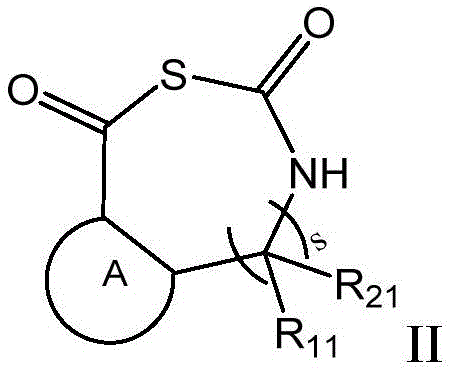
式中,环A独立地选自下组:取代或未取代的C6-C12芳基、取代或未取代的C3-C12环烷基、取代或未取代的C4-C12环烯基或取代或未取代的5-12元杂环基,所述取代是指被选自下组一个或多个取代基取代:卤素、羟基、氨基、C1-C6烷基、C1-C6卤代烷基、C1-C6烷氧基、C1-C6卤代烷氧基;In the formula, Ring A is independently selected from the group consisting of substituted or unsubstituted C 6 -C 12 aryl, substituted or unsubstituted C 3 -C 12 cycloalkyl, substituted or unsubstituted C 4 -C 12 ring Alkenyl or substituted or unsubstituted 5-12 membered heterocyclyl, said substitution means being substituted by one or more substituents selected from the group consisting of halogen, hydroxy, amino, C 1 -C 6 alkyl, C 1 -C 6 haloalkyl, C 1 -C 6 alkoxy, C 1 -C 6 haloalkoxy;

式中,n为0-8的整数;In the formula, n is an integer from 0 to 8;
R3、R4、R11、R21、s的定义如上所述。The definitions of R 3 , R 4 , R 11 , R 21 and s are as described above.
在另一优选例中,所述式I单体选自:L-天冬氨酸1-苄酯N-羧基硫代羰基环内酸酐、DL-β-苯丙氨基N-羧基硫代羰基环内酸酐、DL-β-正亮氨酸N-羧基硫代羰基环内酸酐、N(α)-Z-L-2,3-二氨基丙酸N-羧基硫代羰基环内酸酐、β2,3-降冰片烯N-羧基硫代羰基环内酸酐、β2,3-环己基N-羧基硫代羰基环内酸酐、γ2,3-苯基N-羧基硫代羰基环内酸酐。In another preferred embodiment, the monomer of formula I is selected from: L-aspartic acid 1-benzyl ester N-carboxythiocarbonyl anhydride, DL-β-phenylpropylamino N-carboxythiocarbonyl ring Internal acid anhydride, DL-β-norleucine N-carboxythiocarbonyl intracyclic acid anhydride, N(α)-ZL-2,3-diaminopropionic acid N-carboxythiocarbonyl intracyclic acid anhydride, β 2,3 -Norbornene N-carboxythiocarbonyl intracyclic acid anhydride, β 2,3 -cyclohexyl N-carboxythiocarbonyl intracyclic acid anhydride, γ 2,3 -phenyl N-carboxythiocarbonyl intracyclic acid anhydride.
本发明第二方面,提供一种第一方面所述的β-或γ-氨基酸N-羧基硫代羰基环内酸酐(β-NTA,γ-NTA)单体的合成方法,包括步骤:The second aspect of the present invention provides a method for synthesizing the β- or γ-amino acid N-carboxythiocarbonyl intracyclic acid anhydride (β-NTA, γ-NTA) monomer described in the first aspect, comprising the steps of:

(2)在第二惰性溶剂中,将化合物3与卤化磷反应,得到式I单体;(2) in the second inert solvent, compound 3 is reacted with phosphorus halide to obtain the monomer of formula I;
式中,In the formula,
R5选自:取代或未取代的C1-C6烷基或取代或未取代的苄基;R 5 is selected from: substituted or unsubstituted C 1 -C 6 alkyl or substituted or unsubstituted benzyl;
所述取代是指被选自下组的取代基所取代:卤素、羟基、氨基、C1-C6烷基、C1-C6烷氧基;The substitution refers to being substituted by a substituent selected from the group consisting of halogen, hydroxyl, amino, C 1 -C 6 alkyl, C 1 -C 6 alkoxy;
R1、R2、R3、R4、R11、R21、s的定义如上所述。The definitions of R 1 , R 2 , R 3 , R 4 , R 11 , R 21 , and s are as described above.
在另一优选例中,所述的卤化磷选自下组:三溴化磷、三氯化磷、五溴化磷或五氯化磷;优选为三溴化磷或三氯化磷。In another preferred embodiment, the phosphorus halide is selected from the group consisting of phosphorus tribromide, phosphorus trichloride, phosphorus pentabromide or phosphorus pentachloride; preferably phosphorus tribromide or phosphorus trichloride.
在另一优选例中,所述的式I单体的制备方法,还包括步骤:In another preference, the preparation method of the described formula I monomer, also comprises the steps:

(1)在第一惰性溶剂中,碱存在下,将化合物2和化合物1反应,得到化合物3;(1) in the first inert solvent, in the presence of a base, react compound 2 with compound 1 to obtain compound 3;
式中,In the formula,
R6选自:取代或未取代的C1-C6烷基或取代或未取代的C1-C6烷基羧基;R 6 is selected from: substituted or unsubstituted C 1 -C 6 alkyl or substituted or unsubstituted C 1 -C 6 alkylcarboxy;
所述取代是指被选自下组一个或多个取代基取代:卤素、羟基、氨基、-C1-C6烷基、-C1-C6卤代烷基、-C1-C6烷氧基、-C1-C6卤代烷氧基;The substitution refers to substitution with one or more substituents selected from the group consisting of halogen, hydroxy, amino, -C 1 -C 6 alkyl, -C 1 -C 6 haloalkyl, -C 1 -C 6 alkoxy base, -C 1 -C 6 haloalkoxy;
R1、R2、R3、R4、R5、R11、R21、s的定义如上所述。The definitions of R 1 , R 2 , R 3 , R 4 , R 5 , R 11 , R 21 , and s are as described above.
在另一优选例中,所述步骤(1)中,反应温度为10-70℃;较佳地,为20℃-60℃。In another preferred example, in the step (1), the reaction temperature is 10-70°C; preferably, it is 20°C-60°C.
在另一优选例中,所述步骤(1)中,反应时间为10小时-4天。In another preferred example, in the step (1), the reaction time is 10 hours to 4 days.
在另一优选例中,所述步骤(1)中,在室温时,反应时间一般为2-3天。In another preferred embodiment, in the step (1), at room temperature, the reaction time is generally 2-3 days.
在另一优选例中,所述步骤(1)中,在60℃时,反应时间约为18小时。In another preferred example, in the step (1), at 60° C., the reaction time is about 18 hours.
在另一优选例中,所述步骤(1)为将化合物2和碱溶解于第一惰性溶剂中,加入化合物1搅拌反应;反应结束后,反应液用盐酸调节pH至3左右,用乙酸乙酯萃取3遍,有机相经干燥和浓缩后,柱分离提纯,得到化合物3。In another preferred example, the step (1) is to dissolve the compound 2 and the base in the first inert solvent, and add the compound 1 to stir the reaction; after the reaction, the pH of the reaction solution is adjusted to about 3 with hydrochloric acid, and the The ester was extracted three times, and the organic phase was dried and concentrated, and then purified by column separation to obtain compound 3.
在另一优选例中,所述步骤(1)中,所述碱为无机碱。In another preferred example, in the step (1), the base is an inorganic base.
在另一优选例中,所述步骤(1)中,所述碱独立地选自下组:氢氧化钠、氢氧化钾、氢氧化锂、碳酸钾、碳酸钠、碳酸铯、碳酸氢钠、或其组合;优选氢氧化钠或碳酸氢钠。In another preferred example, in the step (1), the base is independently selected from the following group: sodium hydroxide, potassium hydroxide, lithium hydroxide, potassium carbonate, sodium carbonate, cesium carbonate, sodium bicarbonate, or a combination thereof; preferably sodium hydroxide or sodium bicarbonate.
在另一优选例中,所述步骤(1)中,所述第一惰性溶剂独立地选自下组:水(如去离子水)、甲醇、乙醇、异丙醇、正丁醇、或其组合;优选水(如去离子水)、甲醇、或其组合。In another preferred embodiment, in the step (1), the first inert solvent is independently selected from the following group: water (such as deionized water), methanol, ethanol, isopropanol, n-butanol, or its combination; preferably water (eg, deionized water), methanol, or a combination thereof.
在另一优选例中,所述步骤(2)中,反应温度为0℃±25℃。In another preferred embodiment, in the step (2), the reaction temperature is 0°C±25°C.
在另一优选例中,所述步骤(2)中,反应时间为1-12小时。In another preferred example, in the step (2), the reaction time is 1-12 hours.
在另一优选例中,所述步骤(2)为将(1)中得到化合物3溶于第二惰性溶剂中,在0℃下,惰性气体保护下,加入卤化磷进行反应;反应结束后,除去溶剂,加入乙酸乙酯溶解,并快速用冰水洗3遍,有机相经干燥和浓缩后,提纯,得到式I单体。In another preferred example, the step (2) is to dissolve the compound 3 obtained in (1) in a second inert solvent, and at 0° C. under the protection of an inert gas, add phosphorus halide to carry out the reaction; after the reaction is completed, The solvent was removed, ethyl acetate was added to dissolve, and the solution was quickly washed three times with ice water. After the organic phase was dried and concentrated, it was purified to obtain the monomer of formula I.
在另一优选例中,所述步骤(2)中,所述第二惰性溶剂是干燥的。In another preferred embodiment, in the step (2), the second inert solvent is dry.
在另一优选例中,所述步骤(2)中,所述第二惰性溶剂独立地选自下组:二氯甲烷、四氢呋喃、乙酸乙酯、二氧六环、乙腈、或其组合;优选地选自:二氯甲烷、乙酸乙酯、或其组合。In another preferred embodiment, in the step (2), the second inert solvent is independently selected from the following group: dichloromethane, tetrahydrofuran, ethyl acetate, dioxane, acetonitrile, or a combination thereof; preferably is selected from: dichloromethane, ethyl acetate, or a combination thereof.
在另一优选例中,所述步骤(2)中,所述反应在惰性气体保护下进行;所述的惰性气体优选氮气、氩气、或其组合。In another preferred embodiment, in the step (2), the reaction is carried out under the protection of an inert gas; the inert gas is preferably nitrogen, argon, or a combination thereof.
在另一优选例中,所述步骤(2)中,提纯用的体系选自下组:乙酸乙酯/正己烷、乙酸乙酯/石油醚、二氯甲烷/正己烷、二氯甲烷/石油醚、四氢呋喃/正己烷、四氢呋喃/石油醚、或其组合,优选地选自:乙酸乙酯/正己烷体系。In another preference, in the step (2), the purification system is selected from the following group: ethyl acetate/n-hexane, ethyl acetate/petroleum ether, dichloromethane/n-hexane, dichloromethane/petroleum Ether, tetrahydrofuran/n-hexane, tetrahydrofuran/petroleum ether, or a combination thereof, preferably selected from: ethyl acetate/n-hexane system.
本发明第三方面,提供一种β-或γ-氨基酸均聚物,其单体选自第一方面所述的具有如式(I)所示的结构β-或γ-NTA单体。A third aspect of the present invention provides a β- or γ-amino acid homopolymer, the monomers of which are selected from the β- or γ-NTA monomers having the structure shown in formula (I) described in the first aspect.
在另一优选例中,所述均聚物具有式IV、V、VI所示的结构:In another preferred embodiment, the homopolymer has the structure shown in formula IV, V, VI:

其中,in,
m为5~2000;m is 5~2000;
R、R’各自独立地选自下组:H、取代或未取代的C1-C6烷基、取代或未取代的C6-C12芳基、取代或未取代的C2-C6烯基、取代或未取代的C2-C6炔基;R, R' are each independently selected from the group consisting of H, substituted or unsubstituted C 1 -C 6 alkyl, substituted or unsubstituted C 6 -C 12 aryl, substituted or unsubstituted C 2 -C 6 Alkenyl, substituted or unsubstituted C 2 -C 6 alkynyl;
其中,所述取代是指被选自下组的一个或多个取代基所取代:C1-C6烷基、C6-C12芳基、C2-C6烯基、C2-C6炔基;-N3、C1-C6烷基-(C=O)-O-、C1-C6烷基-(C=O)-N-、氨基、取羟基、巯基、
或R、R’与其邻接的N原子构成取代或未取代的5-12元杂环基;所述取代是指被选自下组一个或多个取代基取代:卤素、羟基、氨基、C1-C6烷基、C1-C6卤代烷基、C1-C6烷氧基、C1-C6卤代烷氧基;Or R, R' and their adjacent N atoms constitute a substituted or unsubstituted 5-12-membered heterocyclic group; the substitution refers to being substituted by one or more substituents selected from the group consisting of halogen, hydroxyl, amino, C 1 -C 6 alkyl, C 1 -C 6 haloalkyl, C 1 -C 6 alkoxy, C 1 -C 6 haloalkoxy;
R1、R2、R3、R4、R11、R21、s的定义如上所述。The definitions of R 1 , R 2 , R 3 , R 4 , R 11 , R 21 , and s are as described above.
在另一优选例中,所述的均聚物具有式VII、VIII、IX所示的结构:In another preference, the homopolymer has the structure shown in formula VII, VIII, IX:

其中,m、n、R、R’、R3、R4、R11、R21、s的定义如上所述。The definitions of m, n, R, R', R 3 , R 4 , R 11 , R 21 , and s are as described above.
在另一优选例中,所述的均聚物具有式X、XI、XII所示的结构:In another preferred embodiment, the homopolymer has the structure shown in formula X, XI, XII:


其中,m、R、R’、A、R11、R21、s的定义如上所述。The definitions of m, R, R', A, R 11 , R 21 , and s are as described above.
在另一优选例中,所述均聚物单体选自下组:L-天冬氨酸1-苄酯N-羧基硫代羰基环内酸酐、DL-β3-苯丙氨基N-羧基硫代羰基环内酸酐、DL-β3-正亮氨酸N-羧基硫代羰基环内酸酐、N(α)-Z-L-2,3-二氨基丙酸N-羧基硫代羰基环内酸酐、β2,3-降冰片烯N-羧基硫代羰基环内酸酐、β2,3-环己基N-羧基硫代羰基环内酸酐、γ2,3-苯基N-羧基硫代羰基环内酸酐,或其组合。In another preferred embodiment, the homopolymer monomer is selected from the following group: L-aspartic acid 1-benzyl ester N-carboxythiocarbonyl intracyclic acid anhydride, DL-β 3 -phenylpropylamino N-carboxyl Thiocarbonyl Intracyclic Acid Anhydride, DL-β 3 -Norleucine N-Carboxythiocarbonyl Intracyclic Acid Anhydride, N(α)-ZL-2,3-Diaminopropionic Acid N-Carboxythiocarbonyl Intracyclic Acid Anhydride , β 2,3 -Norbornene N-carboxythiocarbonyl cyclic acid anhydride, β 2,3 -cyclohexyl N-carboxythiocarbonyl cyclic acid anhydride, γ 2,3 -phenyl N-carboxythiocarbonyl ring Internal anhydride, or a combination thereof.
在另一优选例中,所述均聚物GPC谱图为单峰,分子量分布PDI优选为1.01-1.5。In another preferred embodiment, the GPC spectrum of the homopolymer is a single peak, and the molecular weight distribution PDI is preferably 1.01-1.5.
在另一优选例中,所述均聚物Maldi-Tof-Ms谱图,分子量分布PDI优选为1.01-1.5。In another preferred example, in the Maldi-Tof-Ms spectrum of the homopolymer, the molecular weight distribution PDI is preferably 1.01-1.5.
在另一优选例中,所述的均聚物是用包括以下步骤的方法制备的:In another preferred embodiment, the homopolymer is prepared by a method comprising the following steps:
在第三惰性溶剂中,有机碱引发剂存在下,使任一种第一方面所述的具有如式(I)所示的结构β-或γ-NTA单体进行聚合反应,从而形成所述β-或γ-氨基酸均聚物;In a third inert solvent, in the presence of an organic base initiator, any one of the β- or γ-NTA monomers having the structure shown in the first aspect described in the first aspect is subjected to a polymerization reaction, thereby forming the β- or γ-amino acid homopolymers;
其中,所述有机碱独立地选自:胺、胺的盐、或其他有机碱、或其组合;Wherein, the organic base is independently selected from: an amine, a salt of an amine, or other organic bases, or a combination thereof;
所述胺选自下组:R-NH2、R-NH-R'、
所述胺的盐独立地选自下组:盐酸盐、氢溴酸盐、甲酸盐、醋酸盐、或三氟乙酸盐;The salt of the amine is independently selected from the group consisting of hydrochloride, hydrobromide, formate, acetate, or trifluoroacetate;
R、R’、R”各自独立地选自下组:H、取代或未取代的C1-C6烷基、取代或未取代的C6-C12芳基、取代或未取代的C2-C6烯基、取代或未取代的C2-C6炔基;R, R', R" are each independently selected from the group consisting of H, substituted or unsubstituted C 1 -C 6 alkyl, substituted or unsubstituted C 6 -C 12 aryl, substituted or unsubstituted C 2 -C 6 alkenyl, substituted or unsubstituted C 2 -C 6 alkynyl;
其中,所述取代是指被选自下组的一个或多个取代基所取代:C1-C6烷基、C6-C12芳基、C2-C6烯基、C2-C6炔基;-N3、C1-C6烷基-(C=O)-O-、C1-C6烷基-(C=O)-N-、氨基、羟基、巯基、Q1NQ2、Q3-O-、Q4-S-、5-6元杂环基、金刚烷、杯吡咯、环糊精、聚乙二醇;其中,Q1、Q2各自独立地选自下组:H、C1-C6烷基、C1-C6烷基-O-(C=O)-、C6-C14芳基-C1-C6烷基-O-(C=O)-,且Q1、Q2不同时为H;Q3独立地选自下组:C1-C6烷基、C6-C12芳基-C1-C6烷基;Q4独立地选自下组:C1-C6烷基、C6-C12芳基-C1-C6烷基、C6-C12芳基-C1-C6烷基-(C=O)-O-;且R、R’不同时为H;Wherein, the substitution refers to being substituted by one or more substituents selected from the group consisting of C 1 -C 6 alkyl, C 6 -C 12 aryl, C 2 -C 6 alkenyl, C 2 -C 6 alkynyl; -N 3 , C 1 -C 6 alkyl-(C=O)-O-, C 1 -C 6 alkyl-(C=O)-N-, amino, hydroxyl, mercapto, Q 1 NQ 2 , Q 3 -O-, Q 4 -S-, 5-6 membered heterocyclic group, adamantane, calixpyrrole, cyclodextrin, polyethylene glycol; wherein, Q 1 and Q 2 are each independently selected from The next group: H, C 1 -C 6 alkyl, C 1 -C 6 alkyl-O-(C=O)-, C 6 -C 14 aryl-C 1 -C 6 alkyl-O-(C =O)-, and Q 1 and Q 2 are not H at the same time; Q 3 is independently selected from the group consisting of C 1 -C 6 alkyl, C 6 -C 12 aryl-C 1 -C 6 alkyl; Q 4 is independently selected from the group consisting of C1 - C6 alkyl, C6 -C12 aryl- C1 - C6 alkyl, C6 - C12 aryl- C1 - C6 alkyl-(C =O)-O-; and R, R' are not H at the same time;
或R、R’与其邻接的N原子构成取代或未取代的5-12元杂环基;所述取代是指被选自下组一个或多个取代基取代:卤素、羟基、氨基、C1-C6烷基、C1-C6卤代烷基、C1-C6烷氧基、C1-C6卤代烷氧基。Or R, R' and their adjacent N atoms constitute a substituted or unsubstituted 5-12-membered heterocyclic group; the substitution refers to being substituted by one or more substituents selected from the group consisting of halogen, hydroxyl, amino, C 1 -C 6 alkyl, C 1 -C 6 haloalkyl, C 1 -C 6 alkoxy, C 1 -C 6 haloalkoxy.
在另一优选例中,单体和胺引发剂摩尔比为1-2000:1。In another preferred example, the molar ratio of monomer and amine initiator is 1-2000:1.
在另一优选例中,所述聚合反应是在有或无惰性气体保护的环境下进行的。In another preferred embodiment, the polymerization reaction is carried out in an environment with or without inert gas protection.
在另一优选例中,所述聚合反应是在任何敞口或非敞口反应器中进行的。In another preferred embodiment, the polymerization reaction is carried out in any open or non-open reactor.
在另一优选例中,所述的其他有机碱选自:DBU、HMDS、LiHMDS、NaHMDS、KHMDS、EtONa。In another preferred example, the other organic bases are selected from: DBU, HMDS, LiHMDS, NaHMDS, KHMDS, EtONa.
在另一优选例中,所述第三惰性溶剂独立地选自:THF、DMF、DMAc、MeCN、Dioxane、DMSO。In another preferred embodiment, the third inert solvent is independently selected from: THF, DMF, DMAc, MeCN, Dioxane, DMSO.
在另一优选例中,所述第三惰性溶剂为DMF。In another preferred embodiment, the third inert solvent is DMF.
本发明第四方面,提供一种共聚物或者序列肽,其单体选自:a)第一方面所述的β-或γ-氨基酸N-羧基硫代羰基环内酸酐(β-NTA,γ-NTA)单体中的两种或多种;和任选地b)α-NCA和α-NTA单体中的一种或多种。The fourth aspect of the present invention provides a copolymer or sequence peptide, the monomer of which is selected from: a) the β- or γ-amino acid N-carboxythiocarbonyl cyclic anhydride (β-NTA, γ) described in the first aspect - two or more of NTA) monomers; and optionally b) one or more of alpha-NCA and alpha-NTA monomers.
在另一优选例中,所述共聚物中的α-NCA或α-NTA的质量比为:100%>α-NCA≥0%或者100%>α-NTA≥0%。In another preferred example, the mass ratio of α-NCA or α-NTA in the copolymer is: 100%>α-NCA≥0% or 100%>α-NTA≥0%.
在另一优选例中,所述的共聚物或者序列肽,其具有Cn1Dn2C'n3或Dn1Cn2D'n3的结构单元:In another preferred example, the copolymer or sequence peptide has the structural unit of C n1 D n2 C' n3 or D n1 C n2 D' n3 :
其中,n3独立地为0-2000的整数;n1、n2各自独立地为1-2000的整数;Wherein, n 3 is independently an integer of 0-2000; n 1 and n 2 are each independently an integer of 1-2000;
C、C'不同,且各自独立地为

R7、R8各自独立地为H、-C1-C6烷基-R9、-N3、-(C=O)-O-R9、-(C=O)-NH-R9、-NH-R9、-O-R9、-S-R9、-Ph-R10或5-6元杂环基;R 7 and R 8 are each independently H, -C 1 -C 6 alkyl-R 9 , -N 3 , -(C=O)-OR 9 , -(C=O)-NH-R 9 , - NH-R 9 , -OR 9 , -SR 9 , -Ph-R 10 or 5-6 membered heterocyclyl;
或R8与其相连的C原子及C原子相邻的N原子构成5-6元杂环基;Or R 8 is connected to the C atom and the N atom adjacent to the C atom to form a 5-6 membered heterocyclic group;
R9选自下组一个或多个取代或未取代的取代基取代:氢、C1-C6烷基、苯基、吲哚基、5-6元杂芳基、C2-C6烯基、C2-C6炔基、胍基、苄基、叔丁氧羰基、苄氧羰基、叔丁基、三苯甲基或芴甲氧羰基;所述的取代的取代基选自下组的一个或多个基团:卤素、硝基、C1-C6烷基、C1-C6烷氧基、C2-C6烯基、C2-C6烯氧基或CH3(O-CH2-CH2)y,且y为1-6的整数;R 9 is substituted with one or more substituted or unsubstituted substituents selected from the group consisting of hydrogen, C 1 -C 6 alkyl, phenyl, indolyl, 5-6 membered heteroaryl, C 2 -C 6 alkene base, C 2 -C 6 alkynyl, guanidino, benzyl, tert-butoxycarbonyl, benzyloxycarbonyl, tert-butyl, trityl or fluorenylmethoxycarbonyl; the substituted substituent is selected from the following group one or more groups of: halogen, nitro, C 1 -C 6 alkyl, C 1 -C 6 alkoxy, C 2 -C 6 alkenyl, C 2 -C 6 alkenyloxy or CH 3 ( O-CH 2 -CH 2 )y, and y is an integer of 1-6;
R10选自:H、-OH;R 10 is selected from: H, -OH;
R1、R2、R3、R4、R11、R21、s的定义如上所述。The definitions of R 1 , R 2 , R 3 , R 4 , R 11 , R 21 , and s are as described above.
在另一优选例中,所述的共聚物或序列肽,具有Cn1Dn2C'n3结构单元,优选地n1、n2各自独立地为1-1000的整数,n3独立地为0-1000的整数。In another preferred example, the copolymer or sequence peptide has C n1 D n2 C' n3 structural units, preferably n 1 and n 2 are each independently an integer of 1-1000, and n 3 is independently 0 -1000 integer.
在另一优选例中,所述的共聚物为嵌段聚合物,具有Cn1Dn2C'n3结构单元,优选地n1、n2各自独立地为1-1000的整数,n3独立地为0-1000的整数。In another preferred example, the copolymer is a block polymer with C n1 D n2 C' n3 structural units, preferably n 1 and n 2 are each independently an integer of 1-1000, and n 3 is independently is an integer from 0-1000.
在另一优选例中,所述的共聚物或序列肽,具有Dn1Cn2D'n3结构单元,优选地n1、n2各自独立地为1-1000的整数,n3独立地为0-1000的整数。In another preferred embodiment, the copolymer or sequence peptide has D n1 C n2 D' n3 structural units, preferably n 1 and n 2 are each independently an integer of 1-1000, and n 3 is independently 0 -1000 integer.
在另一优选例中,所述的共混聚合物或者序列肽具有[Cn’1Dn’2C'n’3]Y或[Dn’1Cn’ 2D'n’3]Y结构,Y为10-2000的整数;C、C'、D、D'的定义如上所述;其中,n’3独立地为1>n’3≥0的小数;n’1、n’2各自独立地为>0的小数,且小于1。In another preferred embodiment, the polymer blend or sequence peptide has [C n'1 D n'2 C'n'3 ] Y or [D n'1 C n' 2 D'n'3 ] Y structure, Y is an integer of 10-2000; C, C', D, D' are defined as above; wherein, n' 3 is independently a decimal of 1>n' 3 ≥ 0; n' 1 , n' 2 are each independently a decimal >0 and less than 1.
在另一优选例中,所述共聚物具有如下结构单元:In another preferred embodiment, the copolymer has the following structural units:

R1、R2、R3、R4、R11、R21和s的定义如上所述;R1’的定义同R1,且R1’与R1不同,R2’、R3’、R4’、R11’、R21’的定义以此类推。R 1 , R 2 , R 3 , R 4 , R 11 , R 21 and s are defined as above; R 1 ' is defined as R 1 , and R 1 ' is different from R 1 , R 2 ', R 3 ' , R 4 ', R 11 ', R 21 ' are defined by analogy.
在另一优选例中,所述共聚物或者序列肽具有如下结构单元:In another preferred embodiment, the copolymer or sequence peptide has the following structural units:

R1、R2、R3、R4、R7、R8、R11、R21、R1’、R2’、R3’、R4’、R11’、R21’和s的定义如上所述。R 1 , R 2 , R 3 , R 4 , R 7 , R 8 , R 11 , R 21 , R 1 ′, R 2 ′, R 3 ′, R 4 ′, R 11 ′, R 21 ′ and s Definitions are as above.
在另一优选例中,所述共聚物或者序列肽具有如下结构单元:In another preferred embodiment, the copolymer or sequence peptide has the following structural units:

R1、R2、R3、R4、R7、R8、R11、R21和s的定义如上所述,R7’的定义同R7,R8’的定义同R8。R 1 , R 2 , R 3 , R 4 , R 7 , R 8 , R 11 , R 21 and s are as defined above, R 7 ′ has the same definitions as R 7 , and R 8 ′ has the same definitions as R 8 .
在另一优选例中,所述的共聚物是用包括以下步骤的方法制备的:In another preferred embodiment, the copolymer is prepared by a method comprising the following steps:
(i)在第三惰性溶剂中,将第一方面所述的单体中的两种或多种;和任选地α-NCA和α-NTA单体中的一种或多种混合,(i) in a third inert solvent, mixing two or more of the monomers described in the first aspect; and optionally one or more of the α-NCA and α-NTA monomers,
(ii)在有机碱引发剂存在下,进行聚合反应,从而形成共混型(statisticcoplymer)氨基酸共聚物;(ii) carrying out a polymerization reaction in the presence of an organic base initiator, thereby forming a statisticcoplymer amino acid copolymer;
或(i')在第三惰性溶剂中,在有机碱引发剂存在下,首先将第一单体进行聚合反应,or (i') in a third inert solvent, in the presence of an organic base initiator, firstly subjecting the first monomer to a polymerization reaction,
(ii')待(i')中聚合反应结束后,再加入第二单体,进行聚合反应,(ii') after the polymerization reaction in (i') is completed, then add the second monomer to carry out the polymerization reaction,
和任选地(iii')重复步骤(ii')q次,and optionally (iii') repeating step (ii') q times,
从而形成嵌段型(block copolymer)氨基酸共聚物;Thereby forming block type (block copolymer) amino acid copolymer;
其中,q为≥1的整数;Among them, q is an integer ≥ 1;
第一单体和第二单体不同且独立地选自:第一方面所述的任一种β-NTA或γ-NTA单体、α-NCA单体或α-NTA单体;The first monomer and the second monomer are different and independently selected from: any β-NTA or γ-NTA monomer, α-NCA monomer or α-NTA monomer described in the first aspect;
其中,所述有机碱独立地选自:胺、胺的盐、或其他有机碱、或其组合;Wherein, the organic base is independently selected from: an amine, a salt of an amine, or other organic bases, or a combination thereof;
所述胺选自下组:R-NH2、R-NHR'、
所述胺的盐独立地选自:盐酸盐、氢溴酸盐、甲酸盐、醋酸盐、或三氟乙酸盐;The salts of the amines are independently selected from: hydrochloride, hydrobromide, formate, acetate, or trifluoroacetate;
R、R’、R”的定义如上所述。R, R', R" are as defined above.
本发明第五方面,提供一种第四方面所述共聚物的制备方法,所述方法包括步骤:(i)在惰性溶剂中,将第一方面所述的单体中的两种或多种;和任选地b)α-NCA和α-NTA单体中的一种或多种混合,A fifth aspect of the present invention provides a method for preparing the copolymer of the fourth aspect, the method comprising the steps of: (i) mixing two or more of the monomers described in the first aspect in an inert solvent and optionally b) a mixture of one or more of α-NCA and α-NTA monomers,
(ii)在有机碱引发剂存在下,进行聚合反应,从而形成共混型(statisticcoplymer)β-氨基酸共聚物;(ii) carrying out a polymerization reaction in the presence of an organic base initiator, thereby forming a statisticcoplymer β-amino acid copolymer;
或(i')在惰性溶剂中,在有机碱引发剂存在下,首先将第一单体进行聚合反应,or (i') in an inert solvent, in the presence of an organic base initiator, firstly subjecting the first monomer to a polymerization reaction,
(ii')待(i')中聚合反应结束后,再加入第二单体,进行聚合反应,从而形成嵌段型(block copolymer)β-氨基酸共聚物;(ii') after the polymerization reaction is finished in (i'), add the second monomer again, carry out the polymerization reaction, thereby form block type (block copolymer) β-amino acid copolymer;
和任选地(iii')重复步骤(ii')q次,and optionally (iii') repeating step (ii') q times,
从而形成嵌段型(block copolymer)β-氨基酸共聚物;Thereby forming block type (block copolymer) β-amino acid copolymer;
其中,q为≥1的整数;Among them, q is an integer ≥ 1;
第一单体和第二单体不同且独立地选自:第一方面所述的任一种β-NTA或γ-NTA单体、α-NCA单体或α-NTA单体;The first monomer and the second monomer are different and independently selected from: any β-NTA or γ-NTA monomer, α-NCA monomer or α-NTA monomer described in the first aspect;
其中,所述有机碱独立地选自:胺、胺的盐、或其他有机碱、或其组合;Wherein, the organic base is independently selected from: an amine, a salt of an amine, or other organic bases, or a combination thereof;
所述胺选自下组:R-NH2、R-NHR′、
所述胺的盐独立地选自:盐酸盐、氢溴酸盐、甲酸盐、醋酸盐、或三氟乙酸盐;The salts of the amines are independently selected from: hydrochloride, hydrobromide, formate, acetate, or trifluoroacetate;
R、R’、R”的定义如上所述。R, R', R" are as defined above.
在另一优选例中,所述步骤(iii')中,50≥q≥1,优选地20≥q≥2,优选地q为1、2、3、4、5、6。In another preferred example, in the step (iii'), 50≥q≥1, preferably 20≥q≥2, preferably q is 1, 2, 3, 4, 5, or 6.
在另一优选例中,所述聚合反应是在有或无惰性气体保护的环境下进行的。In another preferred embodiment, the polymerization reaction is carried out in an environment with or without inert gas protection.
在另一优选例中,所述聚合反应是在任何敞口或非敞口反应器中进行的。In another preferred embodiment, the polymerization reaction is carried out in any open or non-open reactor.
在另一优选例中,所述的其他有机碱选自:DBU、HMDS、LiHMDS、NaHMDS、KHMDS、EtONa。In another preferred example, the other organic bases are selected from: DBU, HMDS, LiHMDS, NaHMDS, KHMDS, EtONa.
在另一优选例中,所述第一单体为上述的任一种β-NTA或γ-NTA单体。In another preferred embodiment, the first monomer is any one of the above-mentioned β-NTA or γ-NTA monomers.
在另一优选例中,所述第二单体为α-NCA单体或α-NTA单体。In another preferred example, the second monomer is an α-NCA monomer or an α-NTA monomer.
在另一优选例中,所述第一单体为上述的任一种β-NTA或γ-NTA单体,且所述第二单体为α-NCA单体或α-NTA单体。In another preferred embodiment, the first monomer is any one of the above-mentioned β-NTA or γ-NTA monomers, and the second monomer is an α-NCA monomer or an α-NTA monomer.
在另一优选例中,所述β-NTA或γ-NTA单体选自:L-天冬氨酸1-苄酯N-羧基硫代羰基环内酸酐、DL-β3-苯丙氨基N-羧基硫代羰基环内酸酐、DL-β3-正亮氨酸N-羧基硫代羰基环内酸酐、N(α)-Z-L-2,3-二氨基丙酸N-羧基硫代羰基环内酸酐、β2,3-降冰片烯N-羧基硫代羰基环内酸酐、β2,3-环己基N-羧基硫代羰基环内酸酐、γ2,3-苯基N-羧基硫代羰基环内酸酐或其组合。In another preferred embodiment, the β-NTA or γ-NTA monomer is selected from: L-aspartic acid 1-benzyl ester, N-carboxythiocarbonyl cyclic acid anhydride, DL-β 3 -phenylpropylamino N -Carboxythiocarbonyl anhydride, DL-β 3 -Norleucine N-carboxythiocarbonyl anhydride, N(α)-ZL-2,3-diaminopropionic acid N-carboxythiocarbonyl Internal acid anhydride, β 2,3 -norbornene N-carboxythiocarbonyl intracyclic acid anhydride, β 2,3 -cyclohexyl N-carboxythiocarbonyl intracyclic acid anhydride, γ 2,3 -phenyl N-carboxythiol Carbonyl intracyclic anhydride or a combination thereof.
在另一优选例中,所述α-NCA单体或α-NTA单体选自:L-谷氨酸-5-苄酯-N-羧基环内酸酐、N-ε-叔丁氧羰基-DL-赖氨酸-N-羧基环内酸酐、N-ε-叔丁氧羰基-L-赖氨酸-N-羧基环内酸酐、N-ε-叔丁氧羰基-DL-鸟氨酸-N-羧基环内酸酐、O-叔丁基-L-丝氨酸-N-羧基环内酸酐、DL-正亮氨酸-N-羧基环内酸酐、L-谷氨酸-5-苄酯-N-羧基硫代羰基环内酸酐、N-ε-叔丁氧羰基-DL-赖氨酸-N-羧基硫代羰基环内酸酐、N-ε-叔丁氧羰基-L-赖氨酸-N-羧基硫代羰基环内酸酐、N-ε-叔丁氧羰基-DL-鸟氨酸-N-羧基硫代羰基环内酸酐、O-叔丁基-L-丝氨酸-N-羧基硫代羰基环内酸酐、DL-正亮氨酸-N-羧基硫代羰基环内酸酐、或其组合。In another preferred embodiment, the α-NCA monomer or α-NTA monomer is selected from: L-glutamic acid-5-benzyl ester-N-carboxycyclic acid anhydride, N-ε-tert-butoxycarbonyl- DL-Lysine-N-Carboxyl Intracyclic Acid Anhydride, N-ε-tert-butoxycarbonyl-L-Lysine-N-Carboxyl Intracyclic Acid Anhydride, N-ε-tert-butoxycarbonyl-DL-Ornithine- N-carboxycyclic anhydride, O-tert-butyl-L-serine-N-carboxycyclic anhydride, DL-norleucine-N-carboxycyclic anhydride, L-glutamic acid-5-benzyl ester-N -Carboxythiocarbonyl anhydride, N-ε-tert-butoxycarbonyl-DL-lysine-N-carboxythiocarbonyl anhydride, N-ε-tert-butoxycarbonyl-L-lysine-N -Carboxythiocarbonyl anhydride, N-ε-tert-butoxycarbonyl-DL-ornithine-N-carboxythiocarbonyl anhydride, O-tert-butyl-L-serine-N-carboxythiocarbonyl Intracyclic anhydride, DL-norleucine-N-carboxythiocarbonyl intracyclic anhydride, or a combination thereof.
在另一优选例中,所述聚合反应中,先加入第二单体,待反应结束后,再加入第一单体。In another preferred embodiment, in the polymerization reaction, the second monomer is added first, and the first monomer is added after the reaction is completed.
在另一优选例中,所述聚合反应中,第一单体加入之后,待反应完,加另外一种第一单体。In another preferred embodiment, in the polymerization reaction, after the first monomer is added, another first monomer is added after the reaction is completed.
在另一优选例中,所述聚合反应中,第一单体加入之后待反应完,继续加第二单体。In another preferred example, in the polymerization reaction, after the first monomer is added, the second monomer is continued to be added after the reaction is completed.
在另一优选例中,所述聚合反应中,至少一种第一单体参与反应之后,待反应完,后续的加料包括上述任意的加料顺序。In another preferred embodiment, in the polymerization reaction, after at least one first monomer participates in the reaction, after the reaction is completed, the subsequent feeding includes any of the above-mentioned feeding sequences.
在另一优选例中,所述聚合反应中,惰性溶剂选自下组:四氢呋喃、DMF、DMAc、乙腈、二氧六环、二甲基亚砜,或其组合。优选为四氢呋喃。In another preferred embodiment, in the polymerization reaction, the inert solvent is selected from the group consisting of tetrahydrofuran, DMF, DMAc, acetonitrile, dioxane, dimethyl sulfoxide, or a combination thereof. Tetrahydrofuran is preferred.
本发明第六方面,提供一种第三方面或第四方面所述的聚合物的用途,用于抗菌、抗肿瘤、组织工程、药物和基因递送、自组装材料。A sixth aspect of the present invention provides a use of the polymer described in the third or fourth aspect for antibacterial, anti-tumor, tissue engineering, drug and gene delivery, and self-assembly materials.
在另一优选例中,所述抗菌材料为溶液形式、表面涂层形式。In another preferred embodiment, the antibacterial material is in the form of a solution or a surface coating.
在另一优选例中,所述抗菌对象为细菌和真菌等微生物,可包括Escherichiacoli(E.coli)、Pseudomonas aeruginosa(P.aeruginosa)、Acinetobacter baumannii(A.baumannii)、Enterobacter aerogenes(E.aerogenes)、Klebsiella pneumoniae(K.pneumoniae)、Serratia marcescens(S.marcescens)、Entebacter Cloacae(E.cloacae)、Bacillus subtilis(B.subtilis)、Staphylococcus aureus(S.aureus)、Staphylococcus epidermidis(S.epidermidis)、Candida albicans(C.albicans),Cryptococcus neoformans(C.neoformans)。In another preferred example, the antibacterial objects are microorganisms such as bacteria and fungi, which may include Escherichiacoli (E.coli), Pseudomonas aeruginosa (P.aeruginosa), Acinetobacter baumannii (A. baumannii), Enterobacter aerogenes (E. aerogenes) , Klebsiella pneumoniae(K.pneumoniae), Serratia marcescens(S.marcescens), Entebacter Cloacae(E.cloacae), Bacillus subtilis(B.subtilis), Staphylococcus aureus(S.aureus), Staphylococcus epidermidis(S.epidermidis), Candida albicans (C. albicans), Cryptococcus neoformans (C. neoformans).
在另一优选例中,所述的抗菌用途包括对微生物游离细胞、生物被膜、和孢子等形式。In another preferred example, the antibacterial use includes the forms of free cells, biofilms, and spores of microorganisms.
在另一优选例中,所述聚合物用于治疗肿瘤。In another preferred embodiment, the polymer is used to treat tumors.
在另一优选例中,所述肿瘤选自下组:黑色素瘤、皮肤癌、神经胶质瘤、间皮瘤、淋巴瘤、白血病、乳腺癌、卵巢癌、宫颈癌、成胶质细胞瘤、多发性骨髓瘤、前列腺癌、伯基特淋巴瘤、头颈癌、结肠癌、结直肠癌、非小细胞肺癌、小细胞肺癌、食道癌、胃癌、胰腺癌、肝胆癌、胆囊癌、小肠癌、直肠癌、肾癌、膀胱癌、前列腺癌、阴茎癌、尿道癌、睾丸癌、阴道癌、子宫癌、甲状腺癌、甲状旁腺癌、肾上腺癌、胰腺内分泌癌、类癌、骨癌、视网膜母细胞瘤、霍奇金淋巴瘤、非霍奇金淋巴瘤、卡波西氏肉瘤、多中心卡斯特曼氏病、AIDS相关原发渗出性淋巴瘤、神经外胚层肿瘤或横纹肌肉瘤。In another preferred embodiment, the tumor is selected from the group consisting of melanoma, skin cancer, glioma, mesothelioma, lymphoma, leukemia, breast cancer, ovarian cancer, cervical cancer, glioblastoma, Multiple myeloma, prostate cancer, Burkitt lymphoma, head and neck cancer, colon cancer, colorectal cancer, non-small cell lung cancer, small cell lung cancer, esophagus cancer, stomach cancer, pancreatic cancer, hepatobiliary cancer, gallbladder cancer, small bowel cancer, Rectal cancer, kidney cancer, bladder cancer, prostate cancer, penile cancer, urethral cancer, testicular cancer, vaginal cancer, uterine cancer, thyroid cancer, parathyroid cancer, adrenal cancer, pancreatic endocrine cancer, carcinoid, bone cancer, retinoblastoma Cytoma, Hodgkin's Lymphoma, Non-Hodgkin's Lymphoma, Kaposi's Sarcoma, Multicentric Castleman's Disease, AIDS-Related Primary Exudative Lymphoma, Neuroectodermal Tumor, or Rhabdomyosarcoma.
应理解,在本发明范围内中,本发明的上述各技术特征和在下文(如实施例)中具体描述的各技术特征之间都可以互相组合,从而构成新的或优选的技术方案。限于篇幅,在此不再一一累述。It should be understood that within the scope of the present invention, the above-mentioned technical features of the present invention and the technical features specifically described in the following (eg, the embodiments) can be combined with each other to form new or preferred technical solutions. Due to space limitations, it is not repeated here.
具体实施方式Detailed ways
术语the term
在整个说明书中,使用的术语“任选取代的”或“可以被取代的”等表示该基团可以与或不与一个或多个非-氢取代基进一步取代或稠合(以形成多环体系)。对于合适的化学上合适的特定官能团的取代基对于本领域技术人员来说是显而易见的。Throughout the specification, the terms "optionally substituted" or "may be substituted" and the like are used to indicate that the group may or may not be further substituted or fused with one or more non-hydrogen substituents (to form a polycyclic ring) system). Substituents for suitable chemically suitable specific functional groups will be apparent to those skilled in the art.
如文本所用,术语“C1-C6烷基”是指具有1-6个碳原子的直链或支链烷基,例如甲基、乙基、丙基、异丙基、正丁基、异丁基、叔丁基、戊基、己基等,优选乙基。As used herein, the term " C1 - C6 alkyl" refers to a straight or branched chain alkyl group having 1-6 carbon atoms, such as methyl, ethyl, propyl, isopropyl, n-butyl, isobutyl, tert-butyl, pentyl, hexyl, etc., preferably ethyl.
如文本所用,术语“C1-C6烷氧基”是指具有1-6个碳原子的直链或支链烷氧基,例如甲氧基、乙氧基、丙氧基、异丙氧基、正丁氧基、异丁氧基、叔丁氧基、戊氧基、己氧基等,优选乙氧基。As used herein, the term "C 1 -C 6 alkoxy" refers to a straight or branched chain alkoxy group having 1-6 carbon atoms, such as methoxy, ethoxy, propoxy, isopropoxy group, n-butoxy, isobutoxy, tert-butoxy, pentyloxy, hexyloxy, etc., preferably ethoxy.
如文本所用,术语“C6-C12芳基”是指具有6-12个碳原子的芳香环状烃类化合物基团,尤其指单环和双环基团,如苯基、联苯基或萘基。凡含有两个或两个以上芳香环(双环等),芳基基团的芳香环可由单键联接(如联苯),或稠合(如萘、蒽等等)。The term "C 6 -C 12 aryl" as used herein refers to an aromatic cyclic hydrocarbon compound group having 6-12 carbon atoms, especially monocyclic and bicyclic groups such as phenyl, biphenyl or naphthyl. Where there are two or more aromatic rings (bicyclic rings, etc.), the aromatic rings of the aryl group can be linked by a single bond (eg, biphenyl), or fused (eg, naphthalene, anthracene, etc.).
如文本所用,术语“5-12元杂芳基”是指含有1-3个选自N、O、S原子的5-12元杂芳族体系。杂芳基优选5至10元环,更优选为5元或6元,例如吡咯基、吡唑基、咪唑基、噁唑基、异噁唑基、噻唑基、噻二唑基、异噻唑基、呋喃基、吡啶基、吡嗪基、嘧啶基、哒嗪基、三氮嗪基、三氮唑基及四氮唑基等。“杂芳基”可以是取代的或者未取代的,当被取代时,取代基优选为一个或多个以下基团,其独立地选自烷基、氘代烷基、卤代烷基、烷氧基、卤代烷氧基、烯基、炔基、烷硫基、烷基氨基、卤素、氨基、硝基、羟基、巯基、氰基、环烷基、杂环基、芳基、杂芳基、环烷硫基、氧代基、羧基和羧酸酯基。。As used herein, the term "5-12 membered heteroaryl" refers to a 5-12 membered heteroaromatic system containing 1-3 atoms selected from N, O, S. Heteroaryl is preferably a 5- to 10-membered ring, more preferably 5- or 6-membered, such as pyrrolyl, pyrazolyl, imidazolyl, oxazolyl, isoxazolyl, thiazolyl, thiadiazolyl, isothiazolyl , furanyl, pyridyl, pyrazinyl, pyrimidinyl, pyridazinyl, triazinyl, triazolyl and tetrazolyl, etc. "Heteroaryl" may be substituted or unsubstituted, and when substituted, the substituents are preferably one or more of the following groups independently selected from alkyl, deuterated alkyl, haloalkyl, alkoxy , haloalkoxy, alkenyl, alkynyl, alkylthio, alkylamino, halogen, amino, nitro, hydroxyl, mercapto, cyano, cycloalkyl, heterocyclyl, aryl, heteroaryl, cycloalkane Thio, oxo, carboxyl and carboxylate groups. .
如文本所用,术语“C3-C12环烷基”是指具有3-12个碳原子的完全饱和的环状烃类基团,优选3-8个碳原子的环烷基,每个环中含有3-8个碳原子。“取代C3-C12环烷基”是指环烷基中的一个或多个位置被取代,尤其是1-4个取代基,可在任何位置上取代。包括但不限于环丙基、环丁基、环戊基、环己基、环庚基、环辛基等。As used herein, the term "C 3 -C 12 cycloalkyl" refers to a fully saturated cyclic hydrocarbon group of 3-12 carbon atoms, preferably a cycloalkyl group of 3-8 carbon atoms, each ring Contains 3-8 carbon atoms. "Substituted C3 - C12cycloalkyl " means that one or more positions in the cycloalkyl group are substituted, especially 1-4 substituents, which may be substituted at any position. Including, but not limited to, cyclopropyl, cyclobutyl, cyclopentyl, cyclohexyl, cycloheptyl, cyclooctyl, and the like.
如文本所用,术语“C4-C12环烯基”是指具有4-12个碳原子的具有1-3个双键的不饱和的环状烃类基团,例如环丁烯基、环戊烯基、环己烯基等。As used herein, the term "C 4 -C 12 cycloalkenyl" refers to an unsaturated cyclic hydrocarbon group having 4-12 carbon atoms having 1-3 double bonds, such as cyclobutenyl, cyclo Pentenyl, cyclohexenyl, etc.
如文本所用,术语“5-12元杂环基”是指具有5-12个环原子且具有1-3个杂原子的完全饱和的或部分不饱和的的环状基团(包含但不限于如3-7元单环,6-11元双环,或8-12元三环系统)。其中,氮原子或硫原子可以被氧化,氮原子也可以被季铵化。杂环基团可以连接到环或环系分子的任何杂原子或碳原子的残基上。典型的单环杂环包括但不限于氮杂环丁烷基、吡咯烷基、氧杂环丁烷基、吡唑啉基、咪唑啉基、咪唑烷基、噁唑烷基、异噁唑烷基、噻唑烷基、异噻唑烷基、四氢呋喃基、哌啶基、哌嗪基、2-氧代哌嗪基、2-氧代哌啶基、2-氧代吡咯烷基、六氢吖庚因基、4-哌啶酮基、四氢吡喃基、吗啡啉基、硫代吗啡啉基、硫代吗啡啉亚砜基、硫代吗啡啉砜基、1,3-二噁烷基和四氢-1,1-二氧噻吩等。多环杂环基包括螺环、稠环和桥环的杂环基;其中涉及到的螺环、稠环和桥环的杂环基任选与其他基团通过单键相连接,或者通过环上的任意两个或两个以上的原子与其他环烷基、杂环基、芳基和杂芳基进一步并环连接;杂环基团可以是取代的或者未取代的,当被取代时,取代基优选为一个或多个一下基团,其独立地选自烷基、氘代烷基、卤代烷基、烷氧基、卤代烷氧基、烯基、炔基、烷硫基、烷基氨基、卤素、氨基、硝基、羟基、巯基、氰基、环烷基、杂环基、芳基、杂芳基、环烷硫基、氧代基、羧基和羧酸酯基。,例如四氢吡咯基、四氢呋喃基、哌啶基、哌嗪基等。As used herein, the term "5-12 membered heterocyclyl" refers to a fully saturated or partially unsaturated cyclic group having 5-12 ring atoms and 1-3 heteroatoms (including but not limited to Such as 3-7 membered monocyclic ring, 6-11 membered bicyclic ring, or 8-12 membered tricyclic ring system). Among them, nitrogen atoms or sulfur atoms can be oxidized, and nitrogen atoms can also be quaternized. A heterocyclic group can be attached to the residue of any heteroatom or carbon atom of the ring or ring system molecule. Typical monocyclic heterocycles include, but are not limited to, azetidinyl, pyrrolidinyl, oxetanyl, pyrazolinyl, imidazolinyl, imidazolidinyl, oxazolidinyl, isoxazolidine base, thiazolidinyl, isothiazolidinyl, tetrahydrofuranyl, piperidinyl, piperazinyl, 2-oxopiperazinyl, 2-oxopiperidinyl, 2-oxopyrrolidinyl, hexahydroazepanyl gene, 4-piperidinone, tetrahydropyranyl, morpholino, thiomorpholinyl, thiomorpholinosulfoxide, thiomorpholinone, 1,3-dioxanyl and Tetrahydro-1,1-dioxythiophene, etc. Polycyclic heterocyclic groups include spiro, condensed and bridged heterocyclic groups; the spiro, condensed and bridged heterocyclic groups are optionally connected with other groups through a single bond, or through a ring Any two or more atoms on the cycloalkyl group, heterocyclic group, aryl group and heteroaryl group are further cyclically connected; the heterocyclic group can be substituted or unsubstituted, and when substituted, The substituents are preferably one or more of the following groups independently selected from alkyl, deuterated alkyl, haloalkyl, alkoxy, haloalkoxy, alkenyl, alkynyl, alkylthio, alkylamino, Halogen, amino, nitro, hydroxyl, mercapto, cyano, cycloalkyl, heterocyclyl, aryl, heteroaryl, cycloalkylthio, oxo, carboxyl and carboxylate. , such as tetrahydropyrrolyl, tetrahydrofuranyl, piperidinyl, piperazinyl and the like.
如文本所用,术语“C1-C6烷基羟基”指-C1-C6烷基-OH,例如,-CH2OH、-CH2CH2OH。As used herein, the term " C1 - C6 alkylhydroxy" refers to -C1 - C6 alkyl - OH, eg, -CH2OH , -CH2CH2OH .
如文本所用,术语“C1-C6烷氧基”指-C1-C6烷基-O-,例如,甲氧基、乙氧基、丙氧基等。As used herein, the term "C1-C6 alkoxy" refers to -C1 - C6 alkyl-O-, eg, methoxy, ethoxy, propoxy, and the like.
如文本所用,术语“C1-C6烷基磺酰基”是指C1-C6烷基S(=O)2-。As used herein, the term " C1 - C6 alkylsulfonyl" refers to C1 - C6 alkyl S(=O) 2- .
如文本所用,术语“C1-C6烷基-C6-C12芳基”是指-C1-C6烷基-C6-C12芳基,如-CH2CH2CH2Ph、-Bn。As used herein, the term "C 1 -C 6 alkyl-C 6 -C 12 aryl" refers to -C 1 -C 6 alkyl-C 6 -C 12 aryl, such as -CH 2 CH 2 CH 2 Ph , -Bn.
如文本所用,术语“C1-C6烷基酯基”指C1-C6烷基C(=O)-O-或-(=O)-O-C1-C6烷基。As used herein, the term "C 1 -C 6 alkyl ester group" refers to C 1 -C 6 alkyl C(=O)-O- or -(=O)-OC 1 -C 6 alkyl.
如文本所用,术语“硫代C1-C6烷基酯基”指C1-C6烷基C(=S)-O-或-(=S)-O-C1-C6烷基。As used herein, the term "thio-C1-C6 alkyl ester group" refers to C1 - C6 alkyl C(=S)-O- or -(=S)-OC1 - C6 alkyl.
如文本所用,术语“C1-C6烷基胍基”C1-C6烷基NHC(=NH)NH-。As used herein, the term " C1 - C6 alkylguanidino" C1 - C6 alkylNHC(=NH)NH-.
当取代基处于非末端时,取代基为相应取代基的亚基,例如:烷基,其非末端取代基为亚烷基,此时,烷基与亚烷基可互换使用。When the substituent is non-terminal, the substituent is the subunit of the corresponding substituent, for example, an alkyl group, and the non-terminal substituent is an alkylene group. In this case, the alkyl group and the alkylene group can be used interchangeably.
如文本所用,“结构单元”是指结构片段,所述聚合物或序列肽可包含一种或多种结构单元。As used herein, "building block" refers to a structural fragment, and the polymer or sequon may comprise one or more structural units.
如文本所用,术语“共混型(statistic coplymer)”是指两种或两种以上单体同时聚合得到的无规律地连接形成的聚合物,包括:β/β-、γ/γ-、β/γ-、α/γ-、α/β/γ氨基酸共聚物。As used in the text, the term "statistic coplymer" refers to a polymer formed by the random connection of two or more monomers obtained by the simultaneous polymerization of two or more monomers, including: β/β-, γ/γ-, β /γ-, α/γ-, α/β/γ amino acid copolymers.
如文本所用,术语“嵌段型”是指两种或两种以上的单体先后聚合得到的由不同链段连接形成的聚合物,包括β-β-、γ-γ-、γ-β-、α-β-、α-γ-、α-β-γ-氨基酸共聚物。As used in the text, the term "block type" refers to a polymer formed by the successive polymerization of two or more monomers and formed by the connection of different segments, including β-β-, γ-γ-, γ-β- , α-β-, α-γ-, α-β-γ-amino acid copolymers.
如文本所用,术语“取代的苄基”是指被选自C1-C6烷基、C1-C6烷氧基、苯基的取代基所取代的苄基,例如4-甲基苄基、3,5-二甲基苄基、2,4,6-三甲基苄基、4-甲氧基苄基、3,5-二甲氧基苄基、2,4,6-三甲氧基苄基、1-(4-甲基苯基)乙基、1-(4-甲氧基苯基)乙基等。As used herein, the term "substituted benzyl" refers to a benzyl group substituted with a substituent selected from C1 - C6 alkyl, C1 - C6 alkoxy, phenyl, eg, 4-methylbenzyl , 3,5-dimethylbenzyl, 2,4,6-trimethylbenzyl, 4-methoxybenzyl, 3,5-dimethoxybenzyl, 2,4,6-trimethylbenzyl oxybenzyl, 1-(4-methylphenyl)ethyl, 1-(4-methoxyphenyl)ethyl and the like.
如文本所用,术语“C1-C6烷基羧基”是指-C1-C6烷基COOH,例如-CH2COOH、-CH2CH2COOH、-CH2CH2CH2COOH、-CH2CH2CH2CH2COOH,优选-CH2COOH、-CH2CH2COOH。其中,烷基可以被取代。As used herein, the term " C1 - C6 alkylcarboxy" refers to -C1 - C6 alkylCOOH , eg -CH2COOH , -CH2CH2COOH , -CH2CH2CH2COOH , - CH2CH2CH2CH2COOH , preferably -CH2COOH , -CH2CH2COOH . Wherein, the alkyl group may be substituted.
如本文所用的“取代基”是指与目标分子内的原子共价键合的分子部分。例如,“环取代基”可以是诸如卤素,烷基或本文所述的其他取代基的部分,其与作为环成员的原子,优选碳或氮原子共价键合。如本文所用,术语“取代的”是指指定原子上的任何一个或多个氢被选自指定的取代基取代,条件是不超过指定的原子的正常价,并且取代产生的化合物是稳定的,即可以分离,表征和进行生物活性测试的化合物。"Substituent" as used herein refers to a molecular moiety that is covalently bonded to an atom within the target molecule. For example, a "ring substituent" may be a moiety such as a halogen, alkyl, or other substituent described herein, which is covalently bonded to an atom, preferably a carbon or nitrogen atom, that is a ring member. As used herein, the term "substituted" means that any one or more hydrogens on the designated atom are replaced with a substituent selected from the designated atom, provided that the normal valence of the designated atom is not exceeded, and that the compound resulting from the substitution is stable, That is, compounds that can be isolated, characterized, and tested for biological activity.
本发明给出的单体的结构式或名称,可能仅仅示例性给出一种具体构型或未给出具体构型,该单体也可以包括该给出的构型所对应的其他所有构型。The structural formula or name of the monomer given in the present invention may only exemplify a specific configuration or give no specific configuration, and the monomer may also include all other configurations corresponding to the given configuration .
本发明的β-NTA和γ-NTA单体β-NTA and γ-NTA monomers of the present invention
所述β-NTA和γ-NTA具有式I所示的结构:The β-NTA and γ-NTA have the structures shown in formula I:

其中,in,
s为0或1;s is 0 or 1;
R1、R2、R3、R4、R11和R21各自独立地选自取代或未取代的下组基团:氢、C1-C6烷基、C1-C6卤代烷基、C1-C6烷基羟基、C1-C6烷氧基、C1-C6烷基磺酰基、C2-C6烯基、C2-C6炔基、C3-C12环烷基、C6-C12芳基、5-12元杂芳基、5-12元杂环基、C1-C6烷基-C6-C12芳基、氨基、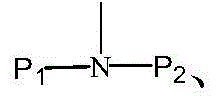
或R1和R2与和它们连接的碳原子共同构成取代或未取代的C3-C12环烷基、取代或未取代的C4-C12环烯基或5-12元杂环基;Or R 1 and R 2 together with the carbon atoms to which they are attached constitute substituted or unsubstituted C 3 -C 12 cycloalkyl, substituted or unsubstituted C 4 -C 12 cycloalkenyl or 5-12 membered heterocyclyl ;
或R3和R4与和它们连接的碳原子共同构成取代或未取代的C3-C12环烷基、取代或未取代的C4-C12环烯基或取代或未取代的5-12元杂环基;Or R 3 and R 4 together with the carbon atoms to which they are attached constitute substituted or unsubstituted C 3 -C 12 cycloalkyl, substituted or unsubstituted C 4 -C 12 cycloalkenyl or substituted or unsubstituted 5- 12-membered heterocyclyl;
或R1和R3与和它们连接的碳原子共同构成取代或未取代的C6-C12芳基、取代或未取代的C3-C12环烷基、取代或未取代的C4-C12环烯基或5-12元杂环基;Or R 1 and R 3 together with the carbon atoms to which they are attached constitute substituted or unsubstituted C 6 -C 12 aryl, substituted or unsubstituted C 3 -C 12 cycloalkyl, substituted or unsubstituted C 4 - C 12 cycloalkenyl or 5-12 membered heterocyclyl;
或当s为1时,R11和R21与和它们连接的碳原子共同构成取代或未取代的C3-C12环烷基、取代或未取代的C4-C12环烯基或5-12元杂环基;Or when s is 1, R 11 and R 21 together with the carbon atoms to which they are attached constitute substituted or unsubstituted C 3 -C 12 cycloalkyl, substituted or unsubstituted C 4 -C 12 cycloalkenyl or 5 -12-membered heterocyclyl;
或当s为1时,R3和R11与和它们连接的碳原子共同构成取代或未取代的C6-C12芳基、取代或未取代的C3-C12环烷基、取代或未取代的C4-C12环烯基或取代或未取代的5-12元杂环基;Or when s is 1, R 3 and R 11 together with the carbon atom to which they are attached constitute substituted or unsubstituted C 6 -C 12 aryl, substituted or unsubstituted C 3 -C 12 cycloalkyl, substituted or Unsubstituted C 4 -C 12 cycloalkenyl or substituted or unsubstituted 5-12 membered heterocyclyl;
P1为保护基,选自下组:叔丁氧羰基(Boc)、苄氧羰基(Cbz)、芴甲氧羰基(Fmoc)、邻苯二甲酰基(Pht)、乙酰基(Ac)、三氟乙酰基(Tfa)、苄基(Bn)、三苯基甲基(Tr),P2选自下组:氢、取代或未取代的C1-C6烷基、取代或未取代的C6-C12芳基、取代或未取代的5-12元杂芳基、取代或未取代的5-12元杂环基;P 1 is a protecting group selected from the group consisting of tert-butoxycarbonyl (Boc), benzyloxycarbonyl (Cbz), fluorenylmethoxycarbonyl (Fmoc), phthaloyl (Pht), acetyl (Ac), tris Fluoroacetyl (Tfa), benzyl (Bn), triphenylmethyl (Tr), P is selected from the group consisting of hydrogen , substituted or unsubstituted C1 - C6 alkyl, substituted or unsubstituted C 6 -C 12 -aryl, substituted or unsubstituted 5-12-membered heteroaryl, substituted or unsubstituted 5-12-membered heterocyclyl;
所述取代是指被选自下组一个或多个取代基取代:卤素、羟基、氨基、苯基、C1-C6烷基、C1-C6卤代烷基、C1-C6烷氧基、C1-C6卤代烷氧基、C3-C8环烷基。The substitution refers to substitution with one or more substituents selected from the group consisting of halogen, hydroxy, amino, phenyl, C1 - C6 alkyl, C1 - C6 haloalkyl, C1 - C6 alkoxy group, C 1 -C 6 haloalkoxy, C 3 -C 8 cycloalkyl.
优选地,所述单体结构如式II所示:Preferably, the monomer structure is shown in formula II:

式中,环A为取代或未取代的芳基、取代或未取代的C3-C12环烷基、取代或未取代的C4-C12环烯基或取代或未取代的5-12元杂环基,所述取代是指被选自下组一个或多个取代基取代:卤素、羟基、氨基、-C1-C6烷基、-C1-C6卤代烷基、-C1-C6烷氧基、-C1-C6卤代烷氧基;In the formula, ring A is substituted or unsubstituted aryl, substituted or unsubstituted C 3 -C 12 cycloalkyl, substituted or unsubstituted C 4 -C 12 cycloalkenyl or substituted or unsubstituted 5-12 A membered heterocyclyl group, the substitution means being substituted with one or more substituents selected from the group consisting of halogen, hydroxy, amino, -C 1 -C 6 alkyl, -C 1 -C 6 haloalkyl, -C 1 -C 6 alkoxy, -C 1 -C 6 haloalkoxy;
优选地,所述单体结构如式III所示:Preferably, the monomer structure is shown in formula III:
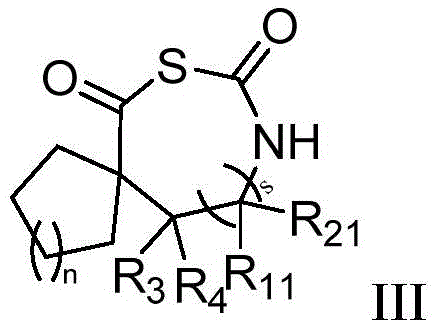
其中,n为0-8的整数。where n is an integer from 0 to 8.
所述β-NTA单体的构型可以为L型、D型、DL混合型中的一种。其中DL混合型可以是L型和D型以任意比例混合。例如可以以1:1的比例混合,但不限于此比例。The configuration of the β-NTA monomer can be one of L-type, D-type, and DL mixed-type. Wherein DL mixed type can be L type and D type mixed in any ratio. For example, it can be mixed in a ratio of 1:1, but is not limited to this ratio.
所述β-NTA单体的侧链还包含氨基、羧基、羟基、巯基、脂肪族、芳香族等中的一种或多种。The side chain of the β-NTA monomer further comprises one or more of amino group, carboxyl group, hydroxyl group, mercapto group, aliphatic, aromatic and the like.
所述β-NTA单体可选自下组:L-天冬氨酸1-苄酯N-羧基硫代羰基环内酸酐、DL-β-苯丙氨基N-羧基硫代羰基环内酸酐、DL-β-正亮氨酸N-羧基硫代羰基环内酸酐、或其组合。The β-NTA monomer can be selected from the following group: L-aspartic acid 1-benzyl ester N-carboxythiocarbonyl intracyclic acid anhydride, DL-β-phenylpropylamino N-carboxythiocarbonyl intracyclic acid anhydride, DL-β-norleucine N-carboxythiocarbonyl intracyclic anhydride, or a combination thereof.
任何合适的α-NCA单体均可用于本发明,本发明示例性的α-NCA单体为式A所示化合物中一种或多种:Any suitable α-NCA monomer can be used in the present invention, and the exemplary α-NCA monomer of the present invention is one or more of the compounds represented by formula A:

式中,In the formula,
n1”为0~4的整数;n 1 ” is an integer from 0 to 4;
X为无、叠氮基团(N3)、酯基(-(C=O)-O-)、酰胺基(-(C=O)-N-)、-NH-、-O-、-S-、苯基或5-6元杂环基;X is none, azide group (N 3 ), ester group (-(C=O)-O-), amide group (-(C=O)-N-), -NH-, -O-, - S-, phenyl or 5-6 membered heterocyclyl;
RA为氢或C1-C6烷基;R A is hydrogen or C 1 -C 6 alkyl;
RB和RC各自独立地为无、氢、C1-C6烷基、C2-C6烯基、C2-C6炔基、苄基、叔丁氧羰基、苄氧羰基、叔丁基、三苯甲基或芴甲氧羰基;R B and R C are each independently none, hydrogen, C 1 -C 6 alkyl, C 2 -C 6 alkenyl, C 2 -C 6 alkynyl, benzyl, tert-butoxycarbonyl, benzyloxycarbonyl, tertiary Butyl, trityl or fluorenemethoxycarbonyl;
RB和RC中的一个或多个氢原子可被选自下组的基团取代:卤素、硝基、C1-C6烷基、C1-C6烷氧基、C2-C6烯基、C2-C6烯氧基或CH3(O-CH2-CH2)y,且y为1-6的整数。One or more hydrogen atoms in R B and R C may be substituted with a group selected from the group consisting of halogen, nitro, C 1 -C 6 alkyl, C 1 -C 6 alkoxy, C 2 -C 6 alkenyl, C 2 -C 6 alkenyloxy or CH 3 (O-CH 2 -CH 2 )y, and y is an integer from 1-6.
优选地,α-NCA单体选自下组:L-谷氨酸-5-苄酯-N-羧基环内酸酐、N-ε-叔丁氧羰基-DL-赖氨酸-N-羧基环内酸酐、N-ε-叔丁氧羰基-L-赖氨酸-N-羧基环内酸酐、N-ε-叔丁氧羰基-DL-鸟氨酸-N-羧基环内酸酐、O-叔丁基-L-丝氨酸-N-羧基环内酸酐、DL-正亮氨酸-N-羧基环内酸酐、或其组合。Preferably, the α-NCA monomer is selected from the group consisting of: L-glutamic acid-5-benzyl ester-N-carboxy intracyclic acid anhydride, N-ε-tert-butoxycarbonyl-DL-lysine-N-carboxyl ring Internal acid anhydride, N-ε-tert-butoxycarbonyl-L-lysine-N-carboxy intracyclic acid anhydride, N-ε-tert-butoxycarbonyl-DL-ornithine-N-carboxyl intracyclic acid anhydride, O-tertiary Butyl-L-serine-N-carboxy intracyclic anhydride, DL-norleucine-N-carboxy intracyclic anhydride, or a combination thereof.
优选地,α-NCA单体还可以是各种单体对应的其他构型(L型、D型、或者DL混合型)。例如,对应L-谷氨酸-5-苄酯-N-羧基环内酸酐,所述氨基酸N-羧基环内酸酐单体还可以是D-谷氨酸-5-苄酯-N-羧基环内酸酐或DL-谷氨酸-5-苄酯-N-羧基环内酸酐。Preferably, the α-NCA monomer can also be other configurations (L-type, D-type, or DL mixed-type) corresponding to various monomers. For example, corresponding to L-glutamic acid-5-benzyl ester-N-carboxy cyclic acid anhydride, the amino acid N-carboxy cyclic acid anhydride monomer can also be D-glutamic acid-5-benzyl ester-N-carboxy ring Internal acid anhydride or DL-glutamic acid-5-benzyl ester-N-carboxycyclic internal acid anhydride.
任何合适的α-NTA单体均可用于本发明,本发明示例性的α-NTA单体为式B所示化合物中一种或多种:Any suitable α-NTA monomer can be used in the present invention, and the exemplary α-NTA monomer of the present invention is one or more of the compounds represented by formula B:
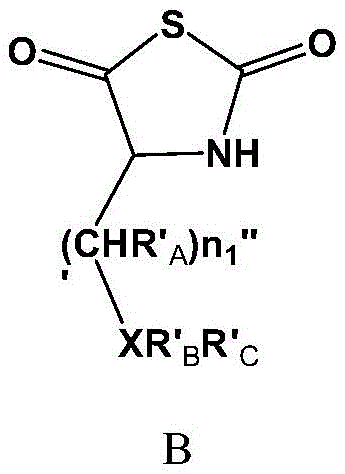
式中,In the formula,
n1”为0~4的整数;n 1 ” is an integer from 0 to 4;
X为无、叠氮基团(N3)、酯基(-(C=O)-O-)、酰胺基(-(C=O)-N-)、-NH-、-O-、-S-、苯基或5-6元杂环;X is none, azide group (N 3 ), ester group (-(C=O)-O-), amide group (-(C=O)-N-), -NH-, -O-, - S-, phenyl or 5-6 membered heterocycle;
RA’为氢或C1-C6烷基; RA ' is hydrogen or C1-C6 alkyl;
RB’和RC’各自独立地为无、氢、C1-C6烷基、C2-C6烯基、C2-C6炔基、苄基、叔丁氧羰基、苄氧羰基、叔丁基、三苯甲基或芴甲氧羰基; RB ' and RC ' are each independently none, hydrogen, C1 - C6 alkyl, C2 - C6 alkenyl, C2 - C6 alkynyl, benzyl, tert-butoxycarbonyl, benzyloxycarbonyl , tert-butyl, trityl or fluorene methoxycarbonyl;
RB’和RC’中的一个或多个氢原子可被选自下组的基团取代:卤素、硝基、C1-C6烷基、C1-C6烷氧基、C2-C6烯基、C2-C6烯氧基或CH3(O-CH2-CH2)y,且y为1-6的整数。One or more hydrogen atoms in RB ' and RC ' may be substituted with a group selected from the group consisting of halogen, nitro, C1-C6 alkyl, C1 - C6 alkoxy, C2 - C 6 alkenyl, C 2 -C 6 alkenyloxy or CH 3 (O-CH 2 -CH 2 )y, and y is an integer from 1-6.
优选地,α-NTA单体选自下组:L-谷氨酸-5-苄酯-N-羧基硫代羰基环内酸酐、N-ε-叔丁氧羰基-DL-赖氨酸-N-羧基硫代羰基环内酸酐、N-ε-叔丁氧羰基-L-赖氨酸-N-羧基硫代羰基环内酸酐、N-ε-叔丁氧羰基-DL-鸟氨酸-N-羧基硫代羰基环内酸酐、O-叔丁基-L-丝氨酸-N-羧基硫代羰基环内酸酐、DL-正亮氨酸-N-羧基硫代羰基环内酸酐、或其组合。Preferably, the α-NTA monomer is selected from the group consisting of L-glutamic acid-5-benzyl ester-N-carboxythiocarbonyl intracyclic anhydride, N-ε-tert-butoxycarbonyl-DL-lysine-N -Carboxythiocarbonyl anhydride, N-ε-tert-butoxycarbonyl-L-lysine-N-carboxythiocarbonyl anhydride, N-ε-tert-butoxycarbonyl-DL-ornithine-N - Carboxythiocarbonyl intracyclic anhydride, O-tert-butyl-L-serine-N-carboxythiocarbonyl intracyclic anhydride, DL-norleucine-N-carboxythiocarbonyl intracyclic anhydride, or a combination thereof.
优选地,α-NTA单体还可以是各种单体对应的其他构型(L型、D型、或者DL混合型)。例如,对应L-谷氨酸-5-苄酯-N-羧基硫代羰基环内酸酐,所述氨基酸N-羧基硫代羰基环内酸酐单体还可以是D-谷氨酸-5-苄酯-N-羧基硫代羰基环内酸酐或DL-谷氨酸-5-苄酯-N-羧基硫代羰基环内酸酐。Preferably, the α-NTA monomer can also be other configurations (L-type, D-type, or DL mixed-type) corresponding to various monomers. For example, corresponding to L-glutamic acid-5-benzyl ester-N-carboxythiocarbonyl intracyclic acid anhydride, the amino acid N-carboxythiocarbonyl intracyclic acid anhydride monomer can also be D-glutamic acid-5-benzyl Ester-N-carboxythiocarbonyl intracyclic acid anhydride or DL-glutamic acid-5-benzyl ester-N-carboxythiocarbonyl intracyclic acid anhydride.
本发明中的α-NTA和α-NCA单体的结构和合成均有文献报导,且可购买,不在此专利保护范围内。The structures and synthesis of α-NTA and α-NCA monomers in the present invention have been reported in the literature and can be purchased, which are not within the scope of protection of this patent.
本发明氨基酸聚合物的制备方法The preparation method of the amino acid polymer of the present invention
1、一种β-或γ-氨基酸聚合物的制备方法1. A kind of preparation method of β- or γ-amino acid polymer

所述方法包括步骤:在有机溶剂中,在伯胺引发剂RNH2,仲胺引发剂RR’NH,三级胺引发剂R3N及其盐的形式存在下,将β-,γ-NTA单体中的一种或多种(如两种、三种或四种或更多种)进行聚合反应,从而形成所述β-,γ-氨基酸聚合物;The method comprises the steps of: in an organic solvent, in the presence of a primary amine initiator RNH 2 , a secondary amine initiator RR'NH, a tertiary amine initiator R 3 N and their salts, β-, γ-NTA is prepared. polymerizing one or more of the monomers (eg, two, three, or four or more) to form the β-,γ-amino acid polymer;
其中,R选自下组:取代或未取代的C1-C6烷基、取代或未取代的C6-C12芳基、取代或未取代的C2-C6烯基、取代或未取代的C2-C6炔基;其中,所述取代是指被选自下组的取代基所取代:C1-C6烷基、C6-C12芳基、C2-C6烯烃、C2-C6炔烃;叠氮基团(N3)、C1-C6烷基酯基(C1-C6烷基-(C=O)-O-)、C1-C6烷基酰胺基(C1-C6烷基-(C=O)-N-)、氨基(NH2-)、羟基(HO-)、巯基(HS-)、5-6元杂环、金刚烷、杯吡咯、环糊精、聚乙二醇;其中,所述氨基(NH2-)上的氢原子可被C1-C6烷基、C1-C6烷氧基羰基(C1-C6烷基-O-(C=O)-)、C6-C14芳基C1-C6烷氧基羰基(C6-C14芳基-C1-C6烷基-O-(C=O)-)取代;所述羟基(HO-)上的氢原子可被C1-C6烷基、C6-C12芳基-C1-C6烷基取代;所述巯基(HS-)上的氢原子可被C1-C6烷基、C6-C12芳基-C1-C6烷基、C6-C12芳基-C1-C6烷基酯基(C6-C12芳基-C1-C6烷基-(C=O)-O-)取代;wherein R is selected from the group consisting of substituted or unsubstituted C 1 -C 6 alkyl, substituted or unsubstituted C 6 -C 12 aryl, substituted or unsubstituted C 2 -C 6 alkenyl, substituted or unsubstituted C 2 -C 6 alkenyl Substituted C 2 -C 6 alkynyl; wherein, the substitution refers to being substituted by a substituent selected from the group consisting of C 1 -C 6 alkyl, C 6 -C 12 aryl, C 2 -C 6 alkene , C 2 -C 6 alkyne; azide group (N 3 ), C 1 -C 6 alkyl ester group (C 1 -C 6 alkyl-(C=O)-O-), C 1 -C 6 alkyl amide group (C 1 -C 6 alkyl-(C=O)-N-), amino (NH 2 -), hydroxyl (HO-), mercapto (HS-), 5-6 membered heterocycle, Adamantane, calixpyrrole, cyclodextrin, polyethylene glycol; wherein, the hydrogen atom on the amino group (NH 2 -) can be replaced by a C 1 -C 6 alkyl group, a C 1 -C 6 alkoxycarbonyl group (C 1 -C 6 alkyl-O-(C=O)-), C 6 -C 14 aryl C 1 -C 6 alkoxycarbonyl (C 6 -C 14 aryl-C 1 -C 6 alkyl- O-(C=O)-) substitution; the hydrogen atom on the hydroxyl group (HO-) can be substituted by C 1 -C 6 alkyl, C 6 -C 12 aryl-C 1 -C 6 alkyl; the The hydrogen atom on the mercapto group (HS-) can be replaced by C 1 -C 6 alkyl, C 6 -C 12 aryl-C 1 -C 6 alkyl, C 6 -C 12 aryl-C 1 -C 6 alkane base ester group (C 6 -C 12 aryl-C 1 -C 6 alkyl-(C=O)-O-) substituted;
成盐的形式选自下组:盐酸盐,氢溴酸盐,甲酸盐,醋酸盐,三氟乙酸盐。The salified form is selected from the group consisting of hydrochloride, hydrobromide, formate, acetate, trifluoroacetate.
所述方法可以将伯胺引发剂RNH2替换成下面所述任意一种有机碱或其组合形式,有机碱优选自DBU、HMDS、LiHMDS、NaHMDS、KHMDS、NaEtO等。The method can replace the primary amine initiator RNH 2 with any one of the organic bases described below or a combination thereof, and the organic bases are preferably selected from DBU, HMDS, LiHMDS, NaHMDS, KHMDS, NaEtO and the like.
所述反应可以在无任何保护的仪器或装置(例如敞口的烧杯、烧瓶或者各种工业上常用的敞口反应器)中进行。The reaction can be carried out in an apparatus or apparatus without any protection (eg, an open beaker, a flask, or a variety of open reactors commonly used in the industry).
所述反应也可以在氮气保护的仪器或装置(例如手套箱)中进行。The reaction can also be performed in a nitrogen blanketed apparatus or apparatus (eg, a glove box).
所述反应中,可以是一种β-NTA进行聚合反应,也可以是两种、三种或四种不同的β-NTA进行聚合反应。In the reaction, one kind of β-NTA can be used for the polymerization reaction, or two, three or four kinds of different β-NTA can be used for the polymerization reaction.
2、α-、β-、γ-氨基酸共混聚合物的制备方法2. The preparation method of α-, β-, γ-amino acid blend polymers

R1、R2、R3、R4、R11、R21、R1’、R2’、R3’、R4’、R11’、R21’和s的定义如上所述;R 1 , R 2 , R 3 , R 4 , R 11 , R 21 , R 1 ′, R 2 ′, R 3 ′, R 4 ′, R 11 ′, R 21 ′ and s are as defined above;
R7或R8为α-氨基酸及其衍生物的侧链结构,其中α-氨基酸选自下组:甘氨酸、丙氨酸、缬氨酸、亮氨酸、异亮氨酸、苯丙氨酸、色氨酸、酪氨酸、天冬氨酸、天冬酰胺、谷氨酸、赖氨酸、谷氨酰胺、甲硫氨酸、丝氨酸、苏氨酸、半胱氨酸、脯氨酸、组氨酸、精氨酸,以及衍生自上述氨基酸的衍生物;所述衍生自上述氨基酸的衍生物为氨基酸上的羧酸基团被酯化(例如苄酯化、叔丁酯化、甲酯化等)的衍生物、氨基酸上的氨基基团上的氢原子被取代(例如被叔丁氧羰基(Boc)、苄氧羰基(Cbz)、芴甲氧羰基(Fmoc)等取代的衍生物)、氨基酸上的羟基基团上的氢原子被取代(例如被叔丁基(tBu)取代)的衍生物)、氨基酸上的游离巯基基团上的氢原子被取代(例如被三苯甲基(Trt)、苄基、苄酯等取代)的衍生物)。这些衍生物在聚合反应体系下都是稳定的。R 7 or R 8 is the side chain structure of α-amino acid and derivatives thereof, wherein α-amino acid is selected from the group consisting of glycine, alanine, valine, leucine, isoleucine, phenylalanine , tryptophan, tyrosine, aspartic acid, asparagine, glutamic acid, lysine, glutamine, methionine, serine, threonine, cysteine, proline, Histidine, arginine, and derivatives derived from the above amino acids; the derivatives derived from the above amino acids are those where the carboxylic acid group on the amino acid is esterified (e.g. benzyl esterification, tert-butyl esterification, methyl ester Derivatives of amino groups of amino acids with hydrogen atoms substituted (for example, derivatives substituted by tert-butoxycarbonyl (Boc), benzyloxycarbonyl (Cbz), fluorenemethoxycarbonyl (Fmoc), etc.) , Derivatives where the hydrogen atom of the hydroxyl group on the amino acid is substituted (for example, by tert-butyl (tBu)), the hydrogen atom on the free thiol group on the amino acid is replaced (for example, by trityl ( Trt), benzyl, benzyl ester, etc. substituted derivatives). These derivatives are stable under the polymerization reaction system.
所述方法包括步骤:在有机溶剂中,在伯胺引发剂RNH2,仲胺引发剂RR’NH,三级胺引发剂R3N及其盐的形式存在下,将β-,γ-NTA单体中的一种或多种(如两种、三种或四种或更多种)与α-NTA或者α-NCA中的一种或多种一起进行聚合反应,从而形成所述共混型α/β-,α/γ-,β/γ-,α/β/γ-等氨基酸聚合物;The method comprises the steps of: in an organic solvent, in the presence of a primary amine initiator RNH 2 , a secondary amine initiator RR'NH, a tertiary amine initiator R 3 N and their salts, β-, γ-NTA is prepared. One or more of the monomers (eg, two, three, or four or more) are polymerized together with one or more of α-NTA or α-NCA to form the blend Type α/β-, α/γ-, β/γ-, α/β/γ- and other amino acid polymers;
所述方法包括步骤:在有机溶剂中,在引发剂存在下,首先将一种β-或者γ-NTA单体进行聚合反应;The method comprises the steps of: in an organic solvent, in the presence of an initiator, firstly carrying out a polymerization reaction of a β- or γ-NTA monomer;
待上述聚合反应结束后,再加入另一种α-NCA或者α-NTA单体,进行聚合反应,从而形成嵌段型α-β-,α-γ-,β-γ-,α-β-γ-氨基酸共聚物。After the above polymerization reaction is completed, another α-NCA or α-NTA monomer is added to carry out the polymerization reaction, thereby forming block type α-β-, α-γ-, β-γ-, α-β- Gamma-amino acid copolymer.
所得到的α/β-,α/γ-,β/γ-,α/β/γ-,α-β-,α-γ-,β-γ-,α-β-γ-氨基酸共聚物的类型取决于α-NCA或者α-NTA,β-NTA,γ-NTA单体的种类及其添加顺序。of the obtained α/β-, α/γ-, β/γ-, α/β/γ-, α-β-, α-γ-, β-γ-, α-β-γ-amino acid copolymers The type depends on the species of α-NCA or α-NTA, β-NTA, γ-NTA monomers and their order of addition.
所述共聚物为两种或两种以上单体以设定比例混合后共聚所得聚合物或嵌段共聚物。The copolymer is a polymer or block copolymer obtained by copolymerizing two or more monomers in a set ratio after mixing.
所述有机溶剂可选自下组:四氢呋喃、DMF、DMAc、乙腈、二氧六环、二甲基亚砜,优选为四氢呋喃。The organic solvent can be selected from the group consisting of tetrahydrofuran, DMF, DMAc, acetonitrile, dioxane, dimethyl sulfoxide, preferably tetrahydrofuran.
所述反应在室温下或加热条件下进行。The reaction is carried out at room temperature or under heating.
所述引发剂的用量根据所需要制备的聚合物的链长决定。The amount of the initiator is determined according to the chain length of the polymer to be prepared.
所述聚合反应的时间视不同单体需要而不同,也视所需制备的聚合物的长短不同而不同。The time of the polymerization reaction varies depending on the needs of different monomers and also depending on the length of the polymer to be prepared.
本发明中的氨基酸聚合物的制备在经过后处理纯化步骤后可以将COS(g)除去干净,并通过GC检测,含量小于5‰。The preparation of the amino acid polymer in the present invention can remove COS (g) completely after the post-processing purification step, and the content is less than 5‰ by GC detection.
本发明的主要优点在于:The main advantages of the present invention are:
1、使用本发明新的β-NTA或γ-NTA单体从根本上解决了传统β-内酰胺强碱开环聚合条件苛刻,对水分敏感,难以敞口反应的缺点;避免手套箱内严格无水环境操作聚合反应。1. The use of the new β-NTA or γ-NTA monomer of the present invention fundamentally solves the shortcomings of the traditional β-lactam strong base ring-opening polymerization, which are harsh conditions, sensitive to moisture, and difficult to open reaction; The polymerization reaction was operated in an anhydrous environment.
2、使用本发明新的β-NTA或γ-NTA单体及聚合物的制备方法可快速简便合成大量多肽库,其可用于抗菌活性、细胞活性筛选等生物活性和其他多肽聚合物功能研究。2. Using the novel β-NTA or γ-NTA monomer and polymer preparation method of the present invention, a large number of polypeptide libraries can be quickly and easily synthesized, which can be used for antibacterial activity, cell activity screening and other biological activities and other polypeptide polymer function research.
下面结合具体实施例,进一步阐述本发明。应理解,这些实施例仅用于说明本发明而不用于限制本发明的范围。下列实施例中未注明具体条件的实验方法,通常按照常规条件,或按照制造厂商所建议的条件。除非另外说明,否则百分比和份数是重量百分比和重量份数。以下实施例中所用的实验材料和试剂如无特别说明均可从市售渠道获得。The present invention will be further described below in conjunction with specific embodiments. It should be understood that these examples are only used to illustrate the present invention and not to limit the scope of the present invention. In the following examples, the experimental methods without specific conditions are usually in accordance with conventional conditions, or in accordance with the conditions suggested by the manufacturer. Percentages and parts are weight percentages and parts unless otherwise specified. The experimental materials and reagents used in the following examples can be obtained from commercial sources unless otherwise specified.
用于检测聚合物分子量和分子量分布的方法Methods for the determination of polymer molecular weight and molecular weight distribution
凝胶渗透色谱(GPC)法Gel permeation chromatography (GPC) method
1H NMR 1 H NMR
Maldi-Tof-MsMaldi-Tof-Ms
实施例1 L-天冬氨酸1-苄酯N-羧基硫代羰基环内酸酐单体(Bn-β3-LCHG NTA)的合成Example 1 Synthesis of L-aspartic acid 1-benzyl ester N-carboxythiocarbonyl intracyclic acid anhydride monomer (Bn-β 3 -LCHG NTA)

将S-乙氧基硫代羰基巯基乙酸(9.0g,50.0mmol)溶解于200mL去离子水的烧瓶中,将固体碳酸氢钠(16.8g,200.0mmol)加入烧瓶中混合搅拌,溶解后再加入L-天冬氨酸1-苄酯(11.2g,50.0mmol)混合搅拌反应,并在室温下搅拌反应约48小时;然后缓慢滴加1M的盐酸溶液,调节PH至3左右,用乙酸乙酯萃取水相的有机物三次,合并有机相,有机相再用饱和食盐水进行淬洗,并用无水硫酸镁干燥;粗产物用乙酸乙酯、正己烷重结晶提纯,得到白色固体中间体(12.0g,产率为77%)。S-ethoxythiocarbonylthioglycolic acid (9.0g, 50.0mmol) was dissolved in a flask of 200mL deionized water, solid sodium bicarbonate (16.8g, 200.0mmol) was added to the flask, mixed and stirred, and then added after dissolution L-aspartic acid 1-benzyl ester (11.2g, 50.0mmol) was mixed and reacted with stirring, and the reaction was stirred at room temperature for about 48 hours; then 1M hydrochloric acid solution was slowly added dropwise, and the pH was adjusted to about 3, and ethyl acetate was used. The organic matter in the aqueous phase was extracted three times, the organic phases were combined, and the organic phase was quenched with saturated brine and dried over anhydrous magnesium sulfate; the crude product was purified by recrystallization with ethyl acetate and n-hexane to obtain a white solid intermediate (12.0 g , the yield was 77%).
在氮气保护下,将干燥的白色中间体(1.6g,5.0mmol)溶于干燥的二氯甲烷溶液(50mL)中,在0℃冰浴条件下混合搅拌,然后滴加三溴化磷(1.4g,5.0mmol)溶液,滴加完成后,升温至25℃,继续反应6小时,待反应结束后,用0℃的去离子水洗有机相三次,无水硫酸镁干燥有机相后,过滤,浓缩除去溶剂,得到粗产物,在氮气保护下,用乙酸乙酯、正己烷重结晶提纯,得到白色固体产物(1.0g,产率为75%)。1H NMR(400MHz,CDCl3):δ7.33-7.41(m,5H,Ph),6.95(s,1H,NH),5.27(s,2H,PhCH2),4.44(dt,J=3.2,10.0Hz,1H,NHCH),3.22(dd,J=3.2,16.4Hz,1H,COCHH),2.97(dd,J=10.0,16.4Hz,1H,COCHH).13C NMR(400MHz,CDCl3):δ193.70,168.02,163.62,134.15,129.30,129.02,128.80,69.02,51.23,42.83.HRMS(ESI-TOF)m/z:[M+Na]+calculated for C12H11NO4S 288.03065;Found288.0305.Under nitrogen protection, the dry white intermediate (1.6 g, 5.0 mmol) was dissolved in a dry dichloromethane solution (50 mL), mixed and stirred at 0 °C in an ice bath, and then phosphorus tribromide (1.4 g, 5.0 mmol) solution, after the dropwise addition was completed, the temperature was raised to 25° C., and the reaction was continued for 6 hours. After the reaction was completed, the organic phase was washed three times with deionized water at 0° C., and the organic phase was dried over anhydrous magnesium sulfate, filtered, and concentrated. The solvent was removed to obtain a crude product, which was purified by recrystallization from ethyl acetate and n-hexane under nitrogen protection to obtain a white solid product (1.0 g, yield 75%). 1 H NMR (400 MHz, CDCl 3 ): δ 7.33-7.41 (m, 5H, Ph), 6.95 (s, 1H, NH), 5.27 (s, 2H, PhCH 2 ), 4.44 (dt, J=3.2, 10.0 Hz, 1H, NCH H ), 3.22 (dd, J=3.2, 16.4 Hz, 1H, COCH H ), 2.97 (dd, J=10.0, 16.4 Hz, 1H, COCH H ). 13 C NMR (400 MHz, CDCl 3 ):δ193.70,168.02,163.62,134.15,129.30,129.02,128.80,69.02,51.23,42.83.HRMS(ESI-TOF)m/z:[M+Na] + calculated for C 12 H 11 NO 4 S 288.03065 ;Found288.0305.
实施例2 DL-β-苯丙氨基N-羧基硫代羰基环内酸酐单体(β3-HPhg NTA)的合成Example 2 Synthesis of DL-β-phenylpropylamino N-carboxythiocarbonyl intracyclic acid anhydride monomer (β 3 -HPhg NTA)

将S-乙氧基硫代羰基巯基乙酸(9.0g,50.0mmol)溶解于200mL去离子水的烧瓶中,将固体氢氧化钠(8.0g,200.0mmol)加入烧瓶中混合搅拌,溶解后再加入DL-β-苯丙氨基(8.3g,50.0mmol)混合搅拌反应,并在室温下搅拌反应约48小时;然后缓慢滴加1M的盐酸溶液,调节PH至3左右,用乙酸乙酯萃取水相的有机物三次后,合并有机相,有机相再用饱和食盐水进行淬洗,并用无水硫酸镁干燥;粗产物用乙酸乙酯、正己烷重结晶提纯,得到白色固体中间体(11.0g,产率为87%)。Dissolve S-ethoxythiocarbonylthioglycolic acid (9.0 g, 50.0 mmol) in a flask of 200 mL of deionized water, add solid sodium hydroxide (8.0 g, 200.0 mmol) into the flask, mix and stir, dissolve and then add DL-β-phenylpropylamino (8.3g, 50.0mmol) was mixed and stirred for reaction, and the reaction was stirred at room temperature for about 48 hours; then 1M hydrochloric acid solution was slowly added dropwise, adjusted pH to about 3, and the aqueous phase was extracted with ethyl acetate After three times of organic matter, the organic phases were combined, and the organic phase was quenched with saturated brine and dried with anhydrous magnesium sulfate; the crude product was purified by recrystallization with ethyl acetate and n-hexane to obtain a white solid intermediate (11.0 g, yield rate of 87%).
在氮气保护下,将干燥的白色中间体(2.5g,10.0mmol)溶于干燥的二氯甲烷溶液(100mL)中,在0℃冰浴条件下,混合搅拌,然后滴加三溴化磷(2.7g,10.0mmol)溶液,滴加完成后,升温至25℃继续反应6小时,待反应结束后,用0℃的去离子水洗有机相三次,无水硫酸镁干燥有机相后,过滤,浓缩除去溶剂得到粗产物,在氮气保护下,用乙酸乙酯、正己烷重结晶提纯,得到白色固体产物(1.8g,产率为85%)。1H NMR(400MHz,CDCl3):δ7.20-7.38(m,5H,Ph),6.00(s,1H,NH),4.50(dd,J=3.6,9.2Hz,1H,NHCH),3.32(dd,J=3.6,14.0Hz,1H,COCHH),2.91(dd,J=9.6,13.6Hz,1H,COCHH).13C NMR(400MHz,CDCl3):δ197.90,166.89,134.52,129.48,129.16,127.84,68.03,39.00.HRMS(EI-TOF)m/z:[M]+calculated forC10H9NO2S207.03540;Found 207.0353.Under nitrogen protection, the dry white intermediate (2.5 g, 10.0 mmol) was dissolved in dry dichloromethane solution (100 mL), mixed and stirred at 0 °C in an ice bath, and then phosphorus tribromide ( 2.7g, 10.0mmol) solution, after the dropwise addition was completed, the temperature was raised to 25°C and the reaction was continued for 6 hours. After the reaction was completed, the organic phase was washed three times with deionized water at 0°C, and the organic phase was dried over anhydrous magnesium sulfate, filtered and concentrated. The solvent was removed to obtain the crude product, which was purified by recrystallization from ethyl acetate and n-hexane under nitrogen protection to obtain a white solid product (1.8 g, yield 85%). 1 H NMR (400 MHz, CDCl 3 ): δ 7.20-7.38 (m, 5H, Ph), 6.00 (s, 1H, NH), 4.50 (dd, J=3.6, 9.2 Hz, 1H, NHC H ), 3.32 (dd, J=3.6, 14.0 Hz, 1H, COCH H ), 2.91 (dd, J=9.6, 13.6 Hz, 1H, COCH H ). 13 C NMR (400 MHz, CDCl 3 ): δ 197.90, 166.89, 134.52, 129.48, 129.16, 127.84, 68.03, 39.00. HRMS(EI-TOF) m/z: [M] + calculated for C 10 H 9 NO 2 S207.03540; Found 207.0353.
实施例3 N(α)-Z-L-2,3-二氨基丙酸N-羧基硫代羰基环内酸酐单体(Cbz-β2-LDAPNTA)的合成Example 3 Synthesis of N(α)-ZL-2,3-diaminopropionic acid N-carboxythiocarbonyl cyclic acid anhydride monomer (Cbz-β 2 -LDAPNTA)

将S-乙氧基硫代羰基巯基乙酸(9.0g,50.0mmol)溶解于200mL去离子水的烧瓶中,将固体氢氧化钠(8.0g,200.0mmol)加入烧瓶中混合搅拌,溶解后再加入N(α)-Z-L-2,3-二氨基丙酸(11.9g,50.0mmol)混合搅拌反应,并在室温下搅拌反应约48小时;然后缓慢滴加1M的盐酸溶液,调节PH至3左右,用乙酸乙酯萃取水相的有机物三次后合并有机相,有机相再用饱和食盐水进行淬洗,并用无水硫酸镁干燥;粗产物用乙酸乙酯、石油醚体系硅胶柱分离提纯,得到无色油状中间体(13.9g,产率为85%)。Dissolve S-ethoxythiocarbonylthioglycolic acid (9.0 g, 50.0 mmol) in a flask of 200 mL of deionized water, add solid sodium hydroxide (8.0 g, 200.0 mmol) into the flask, mix and stir, dissolve and then add N(α)-Z-L-2,3-diaminopropionic acid (11.9g, 50.0mmol) was mixed and reacted with stirring, and the reaction was stirred at room temperature for about 48 hours; then 1M hydrochloric acid solution was slowly added dropwise, and the pH was adjusted to about 3 , the organics in the aqueous phase were extracted three times with ethyl acetate, and the organic phases were combined. The organic phase was quenched with saturated brine and dried with anhydrous magnesium sulfate; the crude product was separated and purified with a silica gel column of ethyl acetate and petroleum ether to obtain Colorless oily intermediate (13.9 g, 85% yield).
在氮气保护下,将干燥后的无色油状物(3.3g,10.0mmol)溶于干燥的二氯甲烷溶液(100mL)中,在0℃冰浴条件下混合搅拌,然后滴加三溴化磷(2.7g,10.0mmol)溶液,滴加完成后,升温至25℃继续反应6小时,待反应结束后,用0℃的去离子水洗有机相三次,无水硫酸镁干燥有机相后,过滤,浓缩除去溶剂得到粗产物,在氮气保护下,用乙酸乙酯、正己烷重结晶提纯,得到白色固体产物(1.7g,产率为60%)。1H NMR(400MHz,CDCl3):δ7.33-7.40(m,5H,Ph),6.60(s,1H,NH),5.59(s,1H,CbzNH),5.13(s,2H,PhCH2),4.56-4.61(m,1H,NHCHH),3.83-3.88(m,1H,CH2,NHCHH),3.42(t,J=12.4Hz,1H,COCH).13C NMR(400MHz,CDCl3):δ194.63,163.72,155.82,135.64,128.81,128.68,128.38,67.87,58.02,42.02.HRMS(EI-TOF)m/z:[M]+calculated for C12H12N2O4S 280.05178,found 280.0520.Under nitrogen protection, the dried colorless oil (3.3 g, 10.0 mmol) was dissolved in a dry dichloromethane solution (100 mL), mixed and stirred at 0 °C in an ice bath, and then phosphorus tribromide was added dropwise. (2.7g, 10.0mmol) solution, after the dropwise addition was completed, the temperature was raised to 25°C and continued to react for 6 hours. After the reaction was completed, the organic phase was washed three times with deionized water at 0°C, and the organic phase was dried over anhydrous magnesium sulfate and filtered. Concentrate to remove the solvent to obtain the crude product, which was purified by recrystallization from ethyl acetate and n-hexane under nitrogen protection to obtain a white solid product (1.7 g, yield 60%). 1 H NMR (400 MHz, CDCl 3 ): δ 7.33-7.40 (m, 5H, Ph), 6.60 (s, 1H, NH), 5.59 (s, 1H, CbzNH ), 5.13 (s, 2H, PhCH 2 ), 4.56-4.61 (m, 1H, NCH H H), 3.83-3.88 (m, 1H, CH 2 , NHCH H ), 3.42 (t, J=12.4Hz, 1H, COCH). 13 C NMR (400MHz, CDCl 3 ):δ194.63,163.72,155.82,135.64,128.81,128.68,128.38,67.87,58.02,42.02.HRMS(EI-TOF)m/z:[M] + calculated for C 12 H 12 N 2 O 4 S 280.05178 ,found 280.0520.
实施例4 DL-β-正亮氨酸N-羧基硫代羰基环内酸酐单体(β3-HNle NTA)的合成Example 4 Synthesis of DL-β-norleucine N-carboxythiocarbonyl intracyclic acid anhydride monomer (β 3 -HNle NTA)

将S-乙氧基硫代羰基巯基乙酸(9.0g,50.0mmol)溶解于200mL去离子水的烧瓶中,将固体氢氧化钠(8.0g,200.0mmol)加入烧瓶中混合搅拌,溶解后再加入DL-β-正亮氨酸(7.3g,50.0mmol)混合搅拌反应,并在室温下搅拌反应约48小时;然后缓慢滴加1M的盐酸溶液,调节PH至3左右,用乙酸乙酯萃取水相的有机物三次,合并有机相,有机相再用饱和食盐水进行淬洗,并用无水硫酸镁干燥;粗产物用乙酸乙酯、正己烷重结晶提纯,得到白色固体中间体(10.5g,产率为90%)。Dissolve S-ethoxythiocarbonylthioglycolic acid (9.0 g, 50.0 mmol) in a flask of 200 mL of deionized water, add solid sodium hydroxide (8.0 g, 200.0 mmol) into the flask, mix and stir, dissolve and then add DL-β-norleucine (7.3g, 50.0mmol) was mixed and stirred for reaction, and the reaction was stirred at room temperature for about 48 hours; then 1M hydrochloric acid solution was slowly added dropwise, adjusted pH to about 3, and water was extracted with ethyl acetate The organic phase was separated three times, the organic phases were combined, the organic phase was quenched with saturated brine, and dried with anhydrous magnesium sulfate; the crude product was purified by recrystallization from ethyl acetate and n-hexane to obtain a white solid intermediate (10.5 g, yield rate of 90%).
在氮气保护下,将干燥的白色中间体(2.3g,10.0mmol)溶于干燥的二氯甲烷溶液(100mL)中,在0℃冰浴条件下混合搅拌,然后滴加三溴化磷(2.7g,10.0mmol)溶液,滴加完成后,升温至25℃继续反应6小时,待反应结束后,用0℃的去离子水洗有机相三次,无水硫酸镁干燥有机相后,过滤,浓缩除去溶剂得到粗产物,在氮气保护下用乙酸乙酯、正己烷重结晶提纯,得到白色固体产物(1.2g,产率为65%)。1H NMR(400MHz,CDCl3):δ7.11(s,1H,NH),3.66-3.73(m,1H,CH,NHCH),2.87(dd,J=2.8,16Hz,1H,COCHH),2.65(dd,J=10.0,16.4Hz,1H,COCHH),1.58-1.75(m,2H,CH3 CH2CH2CH 2CH),1.34-1.41(m,4H,CH3CH 2CH 2),0.92(t,J=6.8Hz,3H,CH3).13C NMR(400MHz,CDCl3):δ196.01,165.75,49.42,45.78,33.63,27.45,22.38,13.94.HRMS(EI-TOF)m/z:[M]+calculated for C8H13NO2S 187.06670;Found187.0665.Under nitrogen protection, the dry white intermediate (2.3 g, 10.0 mmol) was dissolved in a dry dichloromethane solution (100 mL), mixed and stirred at 0 °C in an ice bath, and then phosphorus tribromide (2.7 mmol) was added dropwise. g, 10.0 mmol) solution, after the dropwise addition was completed, the temperature was raised to 25 ° C and the reaction was continued for 6 hours. After the reaction was completed, the organic phase was washed three times with deionized water at 0 ° C. After drying the organic phase with anhydrous magnesium sulfate, it was filtered and concentrated to remove The crude product was obtained from the solvent, which was purified by recrystallization from ethyl acetate and n-hexane under nitrogen protection to obtain a white solid product (1.2 g, yield 65%). 1 H NMR (400 MHz, CDCl 3 ): δ 7.11 (s, 1H, NH), 3.66-3.73 (m, 1H, CH, NHC H ), 2.87 (dd, J=2.8, 16 Hz, 1H, COCH H H ), 2.65 (dd, J=10.0, 16.4Hz, 1H, COCH H ), 1.58-1.75 (m, 2H, CH 3 CH 2 CH 2 CH 2 CH ), 1.34-1.41 (m, 4H, CH 3 C H 2 CH 2 ), 0.92 (t, J=6.8 Hz, 3H, CH 3 ). 13 C NMR (400 MHz, CDCl 3 ): δ 196.01, 165.75, 49.42, 45.78, 33.63, 27.45, 22.38, 13.94.HRMS ( EI-TOF)m/z: [M] + calculated for C 8 H 13 NO 2 S 187.06670; Found187.0665.
实施例5β2,3-降冰片烯N-羧基硫代羰基环内酸酐单体(β2,3-NB NTA)的合成Example 5 Synthesis of β 2,3 -norbornene N-carboxythiocarbonyl intracyclic acid anhydride monomer (β 2,3 -NB NTA)

将S-乙氧基硫代羰基巯基乙酸(6.6g,36.5mmol)溶解于200mL无水DMF的烧瓶中,将三乙胺(25.5mL,182.6mmol)、DMAP(0.9g,7.3mmol)加入烧瓶中混合搅拌,溶解后再加入β2,3-降冰片烯氨基酸(7.0g,36.5mmol)混合搅拌反应,并在室温下搅拌反应约30小时;然后缓慢滴加1M的盐酸溶液,调节PH至3左右,旋去DMF溶剂后,加入100mL去离子水,用乙酸乙酯萃取水相的有机物三次,合并有机相,有机相再用饱和食盐水进行淬洗,并用无水硫酸镁干燥;粗产物用乙酸乙酯、正己烷柱分离提纯,得到白色固体中间体(3.5g,产率为39.5%)。S-ethoxythiocarbonylthioglycolic acid (6.6g, 36.5mmol) was dissolved in a 200mL flask of anhydrous DMF, and triethylamine (25.5mL, 182.6mmol) and DMAP (0.9g, 7.3mmol) were added to the flask Mixing and stirring, adding β 2,3 -norbornene amino acid (7.0g, 36.5mmol) mixing and stirring reaction after dissolving, and stirring reaction at room temperature for about 30 hours; Then slowly drip the hydrochloric acid solution of 1M, adjust pH to 3 or so, after the DMF solvent was removed, 100 mL of deionized water was added, and the organic matter in the aqueous phase was extracted three times with ethyl acetate. The organic phases were combined, and the organic phase was quenched with saturated brine and dried with anhydrous magnesium sulfate; the crude product It was separated and purified with ethyl acetate and n-hexane column to obtain a white solid intermediate (3.5 g, yield 39.5%).
将干燥的白色中间体(1g,4.1mmol)在氮气保护下溶于干燥的二氯甲烷溶液(50mL)中,在0℃冰浴条件下混合搅拌,然后滴加三溴化磷(0.43mL,4.5mmol)溶液,滴加完成后,升温至25℃继续反应6小时,待反应结束后,用0℃的去离子水洗有机相三次,无水硫酸镁干燥有机相后,过滤,浓缩除去溶剂得到粗产物,在氮气保护下用乙酸乙酯、正己烷重结晶提纯,得到白色固体产物(0.5g,产率为61.1%)。1H NMR(400MHz,CDCl3):δ7.61(s,1H),3.77(d,J=8.3Hz,1H),2.79(s,1H),2.73(d,J=8.3Hz,1H),2.42(s,1H),1.68(s,3H),1.43(s,1H),1.31(d,J=10.6Hz,2H).13C NMR(400MHz,CDCl3):δ197.41,164.10,77.27,58.44,54.59,45.82,43.69,34.24,29.70,25.24.HRMS(ESI-TOF)m/z:[M]+calculated forC9H11NO2S198.05887;Found 198.0597.The dry white intermediate (1 g, 4.1 mmol) was dissolved in a dry dichloromethane solution (50 mL) under nitrogen protection, mixed and stirred at 0 °C in an ice bath, and then phosphorus tribromide (0.43 mL, 4.5mmol) solution, after the dropwise addition was completed, it was heated to 25°C and continued to react for 6 hours. After the reaction was completed, the organic phase was washed three times with deionized water at 0°C, and the organic phase was dried over anhydrous magnesium sulfate, filtered, and concentrated to remove the solvent to obtain The crude product was purified by recrystallization from ethyl acetate and n-hexane under nitrogen protection to obtain a white solid product (0.5 g, yield 61.1%). 1 H NMR (400 MHz, CDCl 3 ): δ 7.61 (s, 1H), 3.77 (d, J=8.3 Hz, 1H), 2.79 (s, 1H), 2.73 (d, J=8.3 Hz, 1H), 2.42(s, 1H), 1.68(s, 3H), 1.43(s, 1H), 1.31(d, J=10.6Hz, 2H). 13 C NMR (400 MHz, CDCl 3 ): δ 197.41, 164.10, 77.27, 58.44 ,54.59,45.82,43.69,34.24,29.70,25.24.HRMS(ESI-TOF)m/z:[M] + calculated for C 9 H 11 NO 2 S198.05887; Found 198.0597.
实施例6β2,3-环己基N-羧基硫代羰基环内酸酐单体(β2,3-CH NTA)的合成Example 6 Synthesis of β 2,3 -cyclohexyl N-carboxythiocarbonyl cyclic acid anhydride monomer (β 2,3 -CH NTA)

将S-乙氧基硫代羰基巯基乙酸(4.8g,26.7mmol)溶解于150mL无水DMF的烧瓶中,将三乙胺(18.5mL,133.5mmol)、DMAP(0.7g,5.4mmol)加入烧瓶中混合搅拌,溶解后再加入β2,3-环己基氨基酸(4.8g,26.7mmol)混合搅拌反应,并在室温下搅拌反应约30小时;然后缓慢滴加1M的盐酸溶液,调节PH至3左右,旋去DMF溶剂后,加入100mL去离子水,用乙酸乙酯萃取水相的有机物三次后合并有机相,有机相再用饱和食盐水进行淬洗,并用无水硫酸镁干燥;粗产物用乙酸乙酯、正己烷柱分离提纯,得到无色油状中间体(2.8g,产率为39.7%)。S-ethoxythiocarbonylthioglycolic acid (4.8g, 26.7mmol) was dissolved in a 150mL flask of anhydrous DMF, and triethylamine (18.5mL, 133.5mmol) and DMAP (0.7g, 5.4mmol) were added to the flask Mixing and stirring in the middle, adding β 2,3 -cyclohexyl amino acid (4.8g, 26.7mmol) mixing and stirring reaction after dissolving, and stirring reaction at room temperature for about 30 hours; Then slowly drip the hydrochloric acid solution of 1M, adjust pH to 3 After the DMF solvent was spun off, 100 mL of deionized water was added, the organics in the aqueous phase were extracted three times with ethyl acetate, and the organic phases were combined. The organic phase was quenched with saturated brine and dried with anhydrous magnesium sulfate; the crude product was Separation and purification with ethyl acetate and n-hexane columns gave a colorless oily intermediate (2.8 g, yield 39.7%).
将干燥的无色油状中间体(1g,4.33mmol)在氮气保护下溶于干燥的二氯甲烷溶液(50mL)中,在0℃冰浴条件下混合搅拌,然后滴加三溴化磷(0.45mL,4.76mmol)溶液,滴加完成后,升温至25℃继续反应6小时,待反应结束后,用0℃的去离子水洗有机相三次,无水硫酸镁干燥有机相后,过滤,浓缩除去溶剂得到粗产物,在氮气保护下用乙酸乙酯、正己烷重结晶提纯,得到白色固体产物(0.42g,产率为45.3%)。1H NMR(400MHz,CDCl3):δ7.56(s,1H),3.90–3.78(m,1H),2.81(d,J=9.1Hz,1H),2.06(d,J=8.9Hz,1H),1.88(d,J=3.4Hz,1H),1.69(dd,J=32.5,11.3Hz,4H),1.49(d,J=45.6Hz,2H).13C NMR(400MHz,CDCl3):δ198.94,166.14,77.27,50.32,49.48,29.36,24.23,23.19.δ197.41,164.10,77.27,58.44,54.59,45.82,43.69,34.24,29.70,25.24.HRMS(ESI-TOF)m/z:[M]+calculated forC8H11NO2S186.05887;Found 186.0603.The dry, colorless oily intermediate (1 g, 4.33 mmol) was dissolved in a dry dichloromethane solution (50 mL) under nitrogen protection, mixed and stirred at 0 °C under an ice bath, and then phosphorus tribromide (0.45 mmol) was added dropwise. mL, 4.76 mmol) solution, after the dropwise addition was completed, the temperature was raised to 25 ° C and the reaction was continued for 6 hours. After the reaction was completed, the organic phase was washed three times with deionized water at 0 ° C, and the organic phase was dried over anhydrous magnesium sulfate, filtered, and concentrated to remove The crude product was obtained from the solvent, which was purified by recrystallization from ethyl acetate and n-hexane under nitrogen protection to obtain a white solid product (0.42 g, yield 45.3%). 1 H NMR (400 MHz, CDCl 3 ): δ 7.56 (s, 1H), 3.90-3.78 (m, 1H), 2.81 (d, J=9.1 Hz, 1H), 2.06 (d, J=8.9 Hz, 1H) ), 1.88 (d, J=3.4 Hz, 1H), 1.69 (dd, J=32.5, 11.3 Hz, 4H), 1.49 (d, J=45.6 Hz, 2H). 13 C NMR (400 MHz, CDCl 3 ): δ198.94,166.14,77.27,50.32,49.48,29.36,24.23,23.19.δ197.41,164.10,77.27,58.44,54.59,45.82,43.69,34.24,29.70,25.24.HRMS(ESI-TOF)m/z:[M] + TOF calculated for C 8 H 11 NO 2 S186.05887; Found 186.0603.
实施例7正己胺引发Bn-β3-LCHG NTA聚合Example 7 The polymerization of Bn-β 3 -LCHG NTA initiated by n-hexylamine

在氮气保护的手套箱中,准确称量正己胺(101.2mg,1.0mmol),并用干燥N,N-二甲基甲酰胺配置成0.2M浓度的溶液,备用。In a nitrogen-protected glove box, n-hexylamine (101.2 mg, 1.0 mmol) was accurately weighed, and prepared into a 0.2 M solution with dry N,N-dimethylformamide for use.
将Bn-β3-LCHG NTA单体(53.0mg,0.2mmol)准确称量,用干燥的N,N-二甲基甲酰胺(1mL)溶解于装有搅拌子的反应瓶中。The Bn-β3 - LCHG NTA monomer (53.0 mg, 0.2 mmol) was accurately weighed and dissolved in a reaction flask equipped with a stirring bar with dry N,N-dimethylformamide (1 mL).
在搅拌的反应瓶中,加入浓度为0.2M的正己胺(50μL)溶液。将混合物在手套箱中,室温下搅拌反应3天,将所得溶液转移出手套箱。In a stirred reaction flask, a 0.2 M solution of n-hexylamine (50 μL) was added. The mixture was stirred for 3 days at room temperature in a glove box, and the resulting solution was transferred out of the glove box.
在上述反应混合物中,倒入冷正己烷(45mL),析出的白色絮状物经离心收集,在气流中干燥,并重新溶于四氢呋喃(2.0mL)中,再加入大量冷正己烷(45mL),沉淀。这个溶解-沉淀过程共重复三次,得到聚L-天冬氨酸1-苄酯均聚物(41.3mg,收率96.0%)。In the above reaction mixture, cold n-hexane (45 mL) was poured, and the white flocs precipitated were collected by centrifugation, dried in airflow, and redissolved in tetrahydrofuran (2.0 mL), and then a large amount of cold n-hexane (45 mL) was added. ,precipitation. This dissolution-precipitation process was repeated three times in total to obtain a poly-L-aspartate 1-benzyl ester homopolymer (41.3 mg, 96.0% yield).
通过凝胶渗透色谱(GPC)法鉴定得到的聚合物的分子量Mn=4270及分子量分布PDI=1.18。The molecular weight Mn=4270 and the molecular weight distribution PDI=1.18 of the obtained polymer were identified by gel permeation chromatography (GPC).
实施例8 3-叠氮基丙胺引发Bn-β3-LCHG NTA聚合Example 8 Bn-β 3 -LCHG NTA polymerization initiated by 3-azidopropylamine

在氮气保护的手套箱中,准确称量3-叠氮基丙胺(100.1mg,1.0mmol),并用干燥N,N-二甲基甲酰胺配置成0.2M浓度的溶液,备用。In a nitrogen-protected glove box, accurately weigh 3-azidopropylamine (100.1 mg, 1.0 mmol), and use dry N,N-dimethylformamide to prepare a solution with a concentration of 0.2 M for later use.
将Bn-β3-LCHG NTA单体(53.0mg,0.2mmol)准确称量,用干燥的N,N-二甲基甲酰胺(1mL)溶解于装有搅拌子的反应瓶中。The Bn-β3 - LCHG NTA monomer (53.0 mg, 0.2 mmol) was accurately weighed and dissolved in a reaction flask equipped with a stirring bar with dry N,N-dimethylformamide (1 mL).
在搅拌的反应瓶中,加入浓度为0.2M的3-叠氮基丙胺(100μL)溶液。将混合物在手套箱中室温下搅拌反应3天,将所得溶液转移出手套箱。In a stirred reaction flask, a 0.2M solution of 3-azidopropylamine (100 μL) was added. The mixture was stirred for 3 days at room temperature in a glove box, and the resulting solution was transferred out of the glove box.
在上述反应混合物中倒入冷正己烷(45mL),析出的白色絮状物经离心收集,在气流中干燥,并重新溶于四氢呋喃(2.0mL)中,再加入大量冷正己烷(45mL)沉淀。这个溶解-沉淀过程共重复三次,得到聚L-天冬氨酸1-苄酯均聚物(40.3mg,收率93.5%)。Pour cold n-hexane (45 mL) into the above reaction mixture, the precipitated white flocs were collected by centrifugation, dried in airflow, and redissolved in tetrahydrofuran (2.0 mL), and then a large amount of cold n-hexane (45 mL) was added to precipitate . This dissolution-precipitation process was repeated three times in total to obtain poly-L-aspartate 1-benzyl ester homopolymer (40.3 mg, 93.5% yield).
通过GPC鉴定得到的聚合物的分子量Mn=2230及分子量分布PDI=1.12。The molecular weight Mn=2230 and the molecular weight distribution PDI=1.12 of the obtained polymer were identified by GPC.
实施例9炔基丙胺引发Bn-β3-LCHG NTA聚合Example 9 The polymerization of Bn-β 3 -LCHG NTA initiated by propargyl propylamine
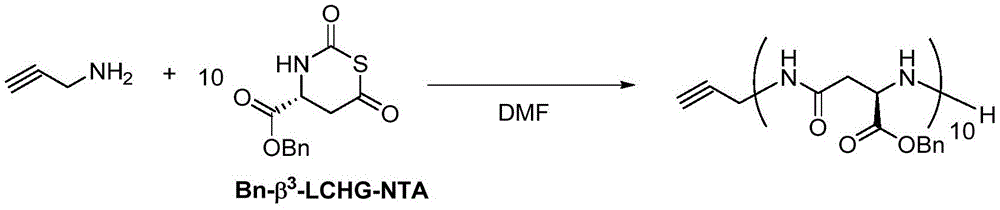
在氮气保护的手套箱中,准确称量炔基丙胺(55.1mg,1.0mmol),并用干燥N,N-二甲基甲酰胺配置成0.2M浓度的溶液,备用。In a nitrogen-protected glove box, propargyl propylamine (55.1 mg, 1.0 mmol) was accurately weighed and prepared into a 0.2 M concentration solution with dry N,N-dimethylformamide for use.
将Bn-β3-LCHG NTA(53.0mg,0.2mmol)准确称量,用干燥的N,N-二甲基甲酰胺(1mL)溶解于装有搅拌子的反应瓶中。Bn-β3 - LCHG NTA (53.0 mg, 0.2 mmol) was accurately weighed and dissolved in dry N,N-dimethylformamide (1 mL) in a reaction flask equipped with a stirring bar.
在搅拌的反应瓶中,加入浓度为0.2M的炔基丙胺(100μL)溶液。将混合物在手套箱中室温下搅拌反应3天,将所得溶液转移出手套箱。In a stirred reaction vial, a 0.2 M solution of propargyl propylamine (100 [mu]L) was added. The mixture was stirred for 3 days at room temperature in a glove box, and the resulting solution was transferred out of the glove box.
在上述反应混合物中倒入冷正己烷(45mL),析出的白色絮状物经离心收集,在气流中干燥,并重新溶于四氢呋喃(2.0mL)中,再加入大量冷正己烷(45mL)沉淀。这个溶解-沉淀过程共重复三次,得到聚L-天冬氨酸1-苄酯均聚物(40.2mg,收率95.3%)。Pour cold n-hexane (45 mL) into the above reaction mixture, the precipitated white flocs were collected by centrifugation, dried in airflow, and redissolved in tetrahydrofuran (2.0 mL), and then a large amount of cold n-hexane (45 mL) was added to precipitate . This dissolution-precipitation process was repeated three times in total to obtain a poly-L-aspartate 1-benzyl ester homopolymer (40.2 mg, 95.3% yield).
通过GPC鉴定得到的聚合物的分子量Mn=2010及分子量分布PDI=1.12。The polymer identified by GPC had a molecular weight Mn=2010 and a molecular weight distribution PDI=1.12.
实施例10 2-三苯基甲基巯基乙胺引发Bn-β3-LCHG NTA聚合Example 10 2-Triphenylmethylmercaptoethylamine Initiated Polymerization of Bn-β 3 -LCHG NTA

在氮气保护的手套箱中,准确称量2-三苯基甲基巯基乙胺(319.5mg,1.0mmol),并用干燥N,N-二甲基甲酰胺配置成0.2M浓度的溶液,备用。In a nitrogen-protected glove box, 2-triphenylmethyl mercaptoethylamine (319.5 mg, 1.0 mmol) was accurately weighed and prepared into a 0.2 M concentration solution with dry N,N-dimethylformamide for use.
将Bn-β3-LCHG NTA(53.0mg,0.2mmol)准确称量,用干燥的N,N-二甲基甲酰胺(1mL)溶解于装有搅拌子的反应瓶中。Bn-β3 - LCHG NTA (53.0 mg, 0.2 mmol) was accurately weighed and dissolved in dry N,N-dimethylformamide (1 mL) in a reaction flask equipped with a stirring bar.
在搅拌的反应瓶中,加入浓度为0.2M的2-三苯基甲基巯基乙胺(50μL)溶液。将混合物在手套箱中室温下搅拌反应3天,将所得溶液转移出手套箱。In a stirred reaction flask, a 0.2 M solution of 2-triphenylmethylmercaptoethylamine (50 μL) was added. The mixture was stirred for 3 days at room temperature in a glove box, and the resulting solution was transferred out of the glove box.
在上述反应混合物中倒入冷正己烷(45mL),析出的白色絮状物经离心收集,在气流中干燥,并重新溶于四氢呋喃(2.0mL)中,再加入大量冷正己烷(45mL)沉淀。这个溶解-沉淀过程共重复三次,得到聚L-天冬氨酸1-苄酯均聚物(40.1mg,收率90.7%)。Pour cold n-hexane (45 mL) into the above reaction mixture, the precipitated white flocs were collected by centrifugation, dried in airflow, and redissolved in tetrahydrofuran (2.0 mL), and then a large amount of cold n-hexane (45 mL) was added to precipitate . This dissolution-precipitation process was repeated three times in total to obtain poly-L-aspartate 1-benzyl ester homopolymer (40.1 mg, 90.7% yield).
通过GPC鉴定得到的聚合物的分子量Mn=3950及分子量分布PDI=1.13。The molecular weight Mn=3950 and the molecular weight distribution PDI=1.13 of the obtained polymer were identified by GPC.
实施例11敞口条件下对叔丁基苄胺引发β3-HPhg NTA聚合Example 11 β 3 -HPhg NTA polymerization initiated by p-tert-butylbenzylamine under open conditions

在室外敞口条件下,准确称量对叔丁基苄胺(16.3g,100mmol),并用干燥N,N-二甲基甲酰胺配置成0.5M浓度的溶液,备用。Under the condition of outdoor exposure, p-tert-butylbenzylamine (16.3 g, 100 mmol) was accurately weighed and prepared into a solution with a concentration of 0.5 M with dry N,N-dimethylformamide, for use.
将β3-HPhg NTA单体(10g,48.3mmol)准确称量,用未干燥处理的N,N-二甲基甲酰胺溶解于装有搅拌子的反应瓶中,配置成0.5M的溶液。β 3 -HPhg NTA monomer (10 g, 48.3 mmol) was accurately weighed, and undried N,N-dimethylformamide was dissolved in a reaction flask equipped with a stirring bar to prepare a 0.5 M solution.
在搅拌的反应瓶中,加入浓度为0.5M的对叔丁基苄胺(4.8mL)溶液。将混合物在手套箱中室温下搅拌反应3天,将所得溶液转移出手套箱。In a stirred reaction flask, a 0.5M solution of p-tert-butylbenzylamine (4.8 mL) was added. The mixture was stirred for 3 days at room temperature in a glove box, and the resulting solution was transferred out of the glove box.
在上述反应混合物中倒入冷正己烷(200mL),析出的白色絮状物经离心收集,在气流中干燥,并重新溶于四氢呋喃(20mL)中,再加入大量冷正己烷沉淀,搅拌过夜,然后过滤得到5.73g(收率76.5%)聚均聚物。Pour cold n-hexane (200 mL) into the above reaction mixture, the precipitated white flocs were collected by centrifugation, dried in airflow, and redissolved in tetrahydrofuran (20 mL), and then a large amount of cold n-hexane was added for precipitation, and the mixture was stirred overnight. It was then filtered to obtain 5.73 g (76.5% yield) of the polyhomopolymer.
通过1H NMR鉴定得到的聚合物的分子量Mn=3106,DP=20。The molecular weight of the obtained polymer was identified by 1 H NMR, Mn=3106, DP=20.
实施例12正己胺引发β3-HNle NTA和β3-HPhg NTA单体的无规共聚Example 12 Random copolymerization of β 3 -HNle NTA and β 3 -HPhg NTA monomers initiated by n-hexylamine

在氮气保护的手套箱中,准确称量正己胺(101.2mg,1.0mmol),并用干燥N,N-二甲基甲酰胺配置成0.2M浓度的溶液,备用。In a nitrogen-protected glove box, n-hexylamine (101.2 mg, 1.0 mmol) was accurately weighed, and prepared into a 0.2 M solution with dry N,N-dimethylformamide for use.
准确称量β3-HNle NTA单体(37.5mg,0.2mmol)和β3-HPhg NTA单体(41.4mg,0.2mmol),用干燥的N,N-二甲基甲酰胺(2mL)溶解于装有搅拌子的反应瓶中。Accurately weigh β 3 -HNle NTA monomer (37.5 mg, 0.2 mmol) and β 3 -HPhg NTA monomer (41.4 mg, 0.2 mmol) and dissolve them in dry N,N-dimethylformamide (2 mL). in a reaction flask equipped with a stir bar.
在搅拌的反应瓶中,加入100μL浓度为0.2M的正己胺溶液。将混合物在手套箱中室温下搅拌反应3天,将所得溶液转移出手套箱。In a stirred reaction flask, add 100 μL of a 0.2 M solution of n-hexylamine. The mixture was stirred for 3 days at room temperature in a glove box, and the resulting solution was transferred out of the glove box.
在上述反应混合物中倒入冷正己烷(45mL),析出的白色絮状物经离心收集,在气流中干燥,并重新溶于四氢呋喃(2.0mL)中,再加入大量冷正己烷沉淀。这个溶解-沉淀过程共重复三次,得到52.4mg(收率92.0%)无规共聚物。Pour cold n-hexane (45 mL) into the above reaction mixture, and the precipitated white flocs were collected by centrifugation, dried in airflow, redissolved in tetrahydrofuran (2.0 mL), and then precipitated by adding a large amount of cold n-hexane. This dissolution-precipitation process was repeated three times in total, yielding 52.4 mg (92.0% yield) of random copolymer.
通过Maldi-Tof-Ms鉴定得到的聚合物的分子量Mn=2750及分子量分布PDI=1.15。The polymer identified by Maldi-Tof-Ms has a molecular weight Mn=2750 and a molecular weight distribution PDI=1.15.
实施例13 2-三苯基甲基巯基乙胺引发β3-HNle NTA和β2-LDAP NTA单体单体制备脱保护后的共混型β-氨基酸共聚物Example 13 Preparation of deprotected blended β-amino acid copolymer with β 3 -HNle NTA and β 2 -LDAP NTA monomers initiated by 2-triphenylmethyl mercaptoethylamine

准确称量2-三苯基甲基巯基乙胺(319.5mg,1.0mmol),并用干燥N,N-二甲基甲酰胺配置成0.2M浓度的溶液,备用。Accurately weigh 2-triphenylmethyl mercaptoethylamine (319.5 mg, 1.0 mmol), and use dry N,N-dimethylformamide to prepare a solution with a concentration of 0.2 M for use.
准确称量β3-HNle NTA单体(37.5mg,0.2mmol)和β2-LDAP NTA单体(56.0mg,0.2mmol),用干燥的N,N-二甲基甲酰胺(2mL)溶解于装有搅拌子的反应瓶中。Accurately weigh β 3 -HNle NTA monomer (37.5 mg, 0.2 mmol) and β 2 -LDAP NTA monomer (56.0 mg, 0.2 mmol), dissolve them in dry N,N-dimethylformamide (2 mL) in a reaction flask equipped with a stir bar.
在搅拌的反应瓶中,加入浓度为0.2M的2-三苯基甲基巯基乙胺(100μL)溶液。将混合物在手套箱中室温下搅拌反应3天,将所得溶液转移出手套箱。In a stirred reaction flask, a 0.2M solution of 2-triphenylmethylmercaptoethylamine (100 μL) was added. The mixture was stirred for 3 days at room temperature in a glove box, and the resulting solution was transferred out of the glove box.
在上述反应混合物中倒入冷正己烷(45mL),析出的白色絮状物经离心收集,在气流中干燥,并重新溶于四氢呋喃(2.0mL)中,再加入大量冷正己烷沉淀。这个溶解-沉淀过程共重复三次,得到无规共聚物(68.3mg,收率90%)。Pour cold n-hexane (45 mL) into the above reaction mixture, and the precipitated white flocs were collected by centrifugation, dried in airflow, redissolved in tetrahydrofuran (2.0 mL), and then precipitated by adding a large amount of cold n-hexane. This dissolution-precipitation process was repeated three times in total to obtain a random copolymer (68.3 mg, 90% yield).
通过1H NMR和Maldi-Tof-Ms鉴定得到的聚合物的分子量Mn=3800及分子量分布PDI=1.15。The molecular weight Mn=3800 and the molecular weight distribution PDI=1.15 of the obtained polymer were identified by 1 H NMR and Maldi-Tof-Ms.
进一步,将得到的嵌段型β-氨基酸共聚物溶解在1.0mL的三氟乙酸和1.0mL含33%的溴化氢的醋酸溶液,室温反应3h后,将溶剂吹干,并重新溶于甲醇(1.0mL)中,再加入大量冷乙醚沉淀。这个溶解-沉淀过程共重复三次,得到脱保护后的共混型β-氨基酸共聚物。Further, the obtained block-type β-amino acid copolymer was dissolved in 1.0 mL of trifluoroacetic acid and 1.0 mL of acetic acid solution containing 33% hydrogen bromide. After 3 hours of reaction at room temperature, the solvent was dried and redissolved in methanol. (1.0 mL), and then a large amount of cold ether was added to precipitate. This dissolution-precipitation process was repeated three times in total to obtain the deprotected blended β-amino acid copolymer.
实施例14 2-三苯基甲基巯基乙胺β3-HPhG NTA单体和Cbz-β2-LDAP NTA单体制备脱保护后的嵌段型β-氨基酸共聚物Example 14 Preparation of deprotected block-type β-amino acid copolymer from 2-triphenylmethylmercaptoethylamine β 3 -HPhG NTA monomer and Cbz-β 2 -LDAP NTA monomer

准确称量2-三苯基甲基巯基乙胺(319.5mg,1.0mmol),并用干燥N,N-二甲基甲酰胺配置成0.2M浓度的溶液,备用。Accurately weigh 2-triphenylmethyl mercaptoethylamine (319.5 mg, 1.0 mmol), and use dry N,N-dimethylformamide to prepare a solution with a concentration of 0.2 M for use.
准确称量β3-HPhG NTA单体(41.4mg,0.2mmol)和Cbz-β2-LDAP NTA单体(56.0mg,0.2mmol),用干燥的N,N-二甲基甲酰胺(1mL)分别溶解于两个装有搅拌子的反应瓶中。Accurately weigh β 3 -HPhG NTA monomer (41.4 mg, 0.2 mmol) and Cbz-β 2 -LDAP NTA monomer (56.0 mg, 0.2 mmol) and use dry N,N-dimethylformamide (1 mL) Dissolved in two reaction flasks equipped with stirring bars, respectively.
在装有Cbz-β2-LDAP NTA单体搅拌的反应瓶中,加入浓度为0.2M的2-三苯基甲基巯基乙胺(100μL)溶液。将混合物在手套箱中室温下搅拌反应结束后,将配置好的β3-HPhGNTA单体加入到反应瓶中继续搅拌反应3天结束后,将所得溶液转移出手套箱。A 0.2M solution of 2-triphenylmethylmercaptoethylamine (100 [mu]L) was added to a stirred reaction vial containing Cbz-[beta] 2 -LDAP NTA monomer. After the mixture was stirred at room temperature in the glove box and the reaction was completed, the prepared β 3 -HPhGNTA monomer was added to the reaction flask and the stirring was continued for 3 days. After the reaction was over for 3 days, the obtained solution was transferred out of the glove box.
在上述反应混合物中倒入冷正己烷(45mL),析出的白色絮状物经离心收集,在气流中干燥,并重新溶于四氢呋喃(2.0mL)中,再加入大量冷正己烷沉淀。这个溶解-沉淀过程共重复三次,得到β-氨基酸嵌段聚合物(70.3mg,收率88.0%)。Pour cold n-hexane (45 mL) into the above reaction mixture, and the precipitated white flocs were collected by centrifugation, dried in airflow, redissolved in tetrahydrofuran (2.0 mL), and then precipitated by adding a large amount of cold n-hexane. This dissolution-precipitation process was repeated three times in total to obtain a β-amino acid block polymer (70.3 mg, 88.0% yield).
通过GPC鉴定得到的聚合物的分子量Mn=3380及分子量分布PDI=1.25。The polymer identified by GPC had a molecular weight Mn=3380 and a molecular weight distribution PDI=1.25.
进一步,将得到的嵌段型β-氨基酸共聚物溶解在1.0mL的三氟乙酸和1.0mL含33%的溴化氢的醋酸溶液,室温反应3h后,将溶剂吹干,并重新溶于甲醇(1.0mL)中,再加入大量冷乙醚沉淀。这个溶解-沉淀过程共重复三次,得到脱保护后的嵌段型β-氨基酸共聚物。Further, the obtained block-type β-amino acid copolymer was dissolved in 1.0 mL of trifluoroacetic acid and 1.0 mL of acetic acid solution containing 33% hydrogen bromide. After 3 hours of reaction at room temperature, the solvent was dried and redissolved in methanol. (1.0 mL), and then a large amount of cold ether was added to precipitate. The dissolution-precipitation process was repeated three times in total to obtain the deprotected block-type β-amino acid copolymer.
实施例15 2-三苯基甲基巯基乙胺引发L-Lys(Boc)α-NCA单体和β3-HPhG NTA单体聚合制备的共混型α/β氨基酸共聚物Example 15 Blended α/β amino acid copolymer prepared by polymerization of L-Lys(Boc)α-NCA monomer and β 3 -HPhG NTA monomer initiated by 2-triphenylmethyl mercaptoethylamine

准确称量2-三苯基甲基巯基乙胺(319.5mg,1.0mmol),并用干燥N,N-二甲基甲酰胺配置成0.2M浓度的溶液,备用。Accurately weigh 2-triphenylmethyl mercaptoethylamine (319.5 mg, 1.0 mmol), and use dry N,N-dimethylformamide to prepare a solution with a concentration of 0.2 M for use.
在氮气保护的手套箱中,将L-Lys(Boc)α-NCA单体(54.4mg,0.2mmol)和β3-HPhGNTA(41.4mg,0.2mmol)准确称量,用干燥N,N-二甲基甲酰胺(2mL)溶解于装有搅拌子的反应瓶中。然后加入浓度为0.2M的2-三苯基甲基巯基乙胺(100μL)溶液。将混合物在手套箱中室温下搅拌反应3天,将所得溶液转移出手套箱。In a nitrogen-protected glove box, L-Lys(Boc) α-NCA monomer (54.4 mg, 0.2 mmol) and β 3 -HPhGNTA (41.4 mg, 0.2 mmol) were accurately weighed, and dried with N,N-bismuth Methylformamide (2 mL) was dissolved in a reaction flask equipped with a stir bar. A 0.2M solution of 2-triphenylmethylmercaptoethylamine (100 [mu]L) was then added. The mixture was stirred for 3 days at room temperature in a glove box, and the resulting solution was transferred out of the glove box.
在上述反应混合物中倒入冷正己烷(45mL),析出的白色絮状物经离心收集,在气流中干燥,并重新溶于四氢呋喃(2.0mL)中,再加入大量冷正己烷沉淀。这个溶解-沉淀过程共重复三次,得到共混型α/β-氨基酸聚合物(75.0mg,收率92.2%)。通过GPC鉴定得到的聚合物的分子量Mn=4250及分子量分布PDI=1.17。Pour cold n-hexane (45 mL) into the above reaction mixture, and the precipitated white flocs were collected by centrifugation, dried in airflow, redissolved in tetrahydrofuran (2.0 mL), and then precipitated by adding a large amount of cold n-hexane. This dissolution-precipitation process was repeated three times in total to obtain a blended α/β-amino acid polymer (75.0 mg, 92.2% yield). The molecular weight Mn=4250 and the molecular weight distribution PDI=1.17 of the obtained polymer were identified by GPC.
进一步,将得到的共混型α/β-氨基酸聚合物溶解在2.0mL的三氟乙酸,室温反应3h后,将溶剂吹干,并重新溶于甲醇(1.0mL)中,再加入大量冷乙醚沉淀。这个溶解-沉淀过程共重复三次,得到脱保护后的共混型α/β-氨基酸聚合物。Further, the obtained blended α/β-amino acid polymer was dissolved in 2.0 mL of trifluoroacetic acid, and after 3 hours of reaction at room temperature, the solvent was blown dry, and redissolved in methanol (1.0 mL), and then a large amount of cold ether was added precipitation. This dissolution-precipitation process was repeated three times in total to obtain the deprotected blended α/β-amino acid polymer.
实施例16 2-三苯基甲基巯基乙胺引发L-Lys(Boc)α-NCA单体和β3-HPhG NTA单体聚合制备的嵌段型α/β氨基酸共聚物Example 16 Block-type α/β amino acid copolymer prepared by polymerization of L-Lys(Boc)α-NCA monomer and β 3 -HPhG NTA monomer initiated by 2-triphenylmethyl mercaptoethylamine

参考实施例15,待2-三苯基甲基巯基乙胺将L-Lys(Boc)α-NCA引发聚合完成后,再加入β3-HPhG NTA单体,等第二个单体反应完后,后处理聚合物,并对聚合物进行脱保护,从而制备出嵌段型α/β氨基酸共聚物。通过GPC鉴定第一个嵌段聚合物α氨基酸聚合物分子量Mn=2500及分子量分布PDI=1.18,连接了β氨基酸聚合物后得到的嵌段型α/β氨基酸共聚物的分子量Mn=3960及分子量分布PDI=1.26。Referring to Example 15, after the polymerization of L-Lys(Boc)α-NCA initiated by 2-triphenylmethyl mercaptoethylamine was completed, β 3 -HPhG NTA monomer was added, and after the second monomer was reacted , post-treatment of the polymer, and deprotection of the polymer to prepare a block-type α/β amino acid copolymer. The molecular weight Mn=2500 and molecular weight distribution PDI=1.18 of the first block polymer α amino acid polymer were identified by GPC, and the molecular weight Mn=3960 and molecular weight of the block type α/β amino acid copolymer obtained after connecting the β amino acid polymer Distribution PDI=1.26.
实施例17 2-三苯基甲基巯基乙胺引发L-Lys(Boc)α-NCA单体和β3-HPhG NTA单体的混合物的二元共聚作为溶液抗细菌材料的应用Example 17 Application of 2-triphenylmethylmercaptoethylamine to initiate binary copolymerization of a mixture of L-Lys(Boc)α-NCA monomer and β 3 -HPhG NTA monomer as a solution antibacterial material

聚合物合成方法同实施例15,其中L-Lys(Boc)α-NCA单体和β3-HPhG NTA单体之间的比例为5:5。反应结束后,通过后处理提纯得到脱保护的聚合物再次用5mL超纯水溶解,过滤,冻干后用于接下来的生物活性测试。The polymer synthesis method is the same as that of Example 15, wherein the ratio between L-Lys(Boc)α-NCA monomer and β 3 -HPhG NTA monomer is 5:5. After the reaction, the deprotected polymer obtained by post-treatment and purification was dissolved in 5 mL of ultrapure water again, filtered, and freeze-dried for the next biological activity test.
最低抑菌浓度(MIC)测试采用如下的方法,细菌用LB液体培养基(Luria-BertaniBroth)在37℃的摇床中以150rpm转速培养过夜,培养所得的细菌细胞通过离心收集并重新分散到MH(Mueller-Hinton Broth)培养基中,用酶标仪读取600nm下的吸光度(OD600)(当OD600=1时,金黄色葡萄球菌浓度大约为1.5×10⁹cfu/mL)。用MH培养基稀释菌液至2×105cfu/mL备用。在96孔板中将聚合物用MH培养基稀释,浓度范围为400到3.13μg/mL。然后往每个孔中加入50μL稀释好的菌液,使菌液和聚合物的总体积为100μL,轻微摇晃10秒,在37℃霉菌培养箱中静置培养9小时。然后再用酶标仪读取OD600,在同一个96孔板中有4个孔只加入MH培养基作为阴性对照,4个孔加入MH培养基和菌液(不含聚合物)作为阳性对照。每次测试两个平行样,并在不同时间重复两次。每个孔细菌生长百分比利用公式(计算。然后将计算好的数据绘制折线图,MIC值为聚合物抑制细菌生长的最低浓度。The minimum inhibitory concentration (MIC) was tested using the following method. The bacteria were cultured in LB liquid medium (Luria-BertaniBroth) overnight at 150 rpm in a shaker at 37°C, and the cultured bacterial cells were collected by centrifugation and redispersed in MH. (Mueller-Hinton Broth) medium, the absorbance (OD 600 ) at 600 nm was read with a microplate reader (when OD 600 =1, the concentration of Staphylococcus aureus was about 1.5×10 9 cfu/mL). Dilute the bacterial solution with MH medium to 2×10 5 cfu/mL for later use. Polymers were diluted in MH medium in 96-well plates at concentrations ranging from 400 to 3.13 μg/mL. Then, 50 μL of the diluted bacterial solution was added to each well to make the total volume of bacterial solution and polymer to be 100 μL, slightly shaken for 10 seconds, and incubated for 9 hours in a 37° C. mold incubator. Then read the OD 600 with a microplate reader. In the same 96-well plate, only MH medium was added to 4 wells as a negative control, and 4 wells were added with MH medium and bacterial liquid (without polymer) as a positive control. . Two parallel samples were tested each time and repeated twice at different times. The percentage of bacterial growth in each well was calculated using the formula ( . Then the calculated data was plotted as a line graph, and the MIC value was the lowest concentration of polymer that inhibited bacterial growth.
测试聚合物对于多种细菌的最低抑菌浓度,包括耐甲氧西林的金黄色葡萄球菌USA300(Staphylococcus aureus USA300)、耐甲氧西林的金黄色葡萄球菌Mu50(Staphylococcus aureus Mu50)、枯草芽孢杆菌(Bacillus subtilis BR-151)、大肠杆菌(Escherichia coli JM109)、铜绿假单胞菌(Pseudomonas aeruginosa ATCC9027)、多药耐药铜绿假单胞菌(Pseudomonas aeruginosa ATCC15442)、磺胺甲恶唑和四环素天然耐药的铜绿假单胞菌(Pseudomonas aeruginosa O1)、鲍曼不动杆菌(Acinetobacter baumanniiATCC BAA-747)。测试的氨基酸聚合物对阳性菌Staphylococcus aureus USA300、Staphylococcus aureus Mu50和Bacillus subtilis BR-151的最低抑菌浓度分别为12.5μg/mL、12.5μg/mL和3.13μg/mL,对阴性菌铜绿假单胞菌Pseudomonas aeruginosaATCC15442、Pseudomonas aeruginosa ATCC9027和Pseudomonas aeruginosa O1的最低抑菌浓度均为50.0μg/mL;对阴性菌鲍曼不动杆菌Acinetobacter baumannii ATCC BAA-747和大肠杆菌Escherichia coli JM109的最低抑菌浓度分别为25.0μg/mL和100.0μg/mL。得到的MIC结果证明此类氨基酸聚合物可具有较强及广谱的抗细菌活性。The minimum inhibitory concentrations of the tested polymers against a variety of bacteria, including methicillin-resistant Staphylococcus aureus USA300 (Staphylococcus aureus USA300), methicillin-resistant Staphylococcus aureus Mu50 (Staphylococcus aureus Mu50), Bacillus subtilis ( Bacillus subtilis BR-151), Escherichia coli JM109, Pseudomonas aeruginosa (Pseudomonas aeruginosa ATCC 90 27), multidrug-resistant Pseudomonas aeruginosa (Pseudomonas aeruginosa ATCC 15 442), sulfamethoxazole and Tetracycline-resistant Pseudomonas aeruginosa (Pseudomonas aeruginosa O1), Acinetobacter baumannii (Acinetobacter baumanniiATCC BAA-747). The minimum inhibitory concentrations of the tested amino acid polymers against the positive bacteria Staphylococcus aureus USA300, Staphylococcus aureus Mu50 and Bacillus subtilis BR-151 were 12.5 μg/mL, 12.5 μg/mL and 3.13 μg/mL, respectively, and for the negative bacteria Pseudomonas aeruginosa The minimum inhibitory concentrations of Pseudomonas aeruginosa ATCC 15 442, Pseudomonas aeruginosa ATCC 90 27 and Pseudomonas aeruginosa O1 were all 50.0 μg/mL; the minimum inhibitory concentrations against negative bacteria Acinetobacter baumannii ATCC BAA-747 and Escherichia coli JM109 The bacterial concentrations were 25.0 μg/mL and 100.0 μg/mL, respectively. The obtained MIC results prove that such amino acid polymers can have strong and broad-spectrum antibacterial activities.
实施例18 2-三苯基甲基巯基乙胺引发β3-HNle NTA和β2-LDAP NTA的混合物的二元共聚作为溶液抗真菌材料的应用Example 18 Application of 2-triphenylmethylmercaptoethylamine to initiate binary copolymerization of a mixture of β 3 -HNle NTA and β 2 -LDAP NTA as a solution antifungal material

聚合物合成方法同实施例13,将脱保护的聚合物再次用超纯水溶解,过滤冻干后用于接下来的生物活性测试。测试的氨基酸聚合物对Candida albicans K1和Cryptococcus neoformans的最低抑菌浓度(MFC),结果为3.13μg/mL(C.albicans K1)和1.56μg/mL(C.neoformans)。The polymer synthesis method was the same as that in Example 13, and the deprotected polymer was dissolved in ultrapure water again, filtered and freeze-dried for the next biological activity test. The minimum inhibitory concentrations (MFC) of the tested amino acid polymers against Candida albicans K1 and Cryptococcus neoformans were 3.13 μg/mL (C. albicans K1 ) and 1.56 μg/mL (C. neoformans).
实施例19 2-三苯基甲基巯基乙胺引发L-Lys(Boc)α-NCA单体和β3-HPhG NTA单体聚合制备的共混型α/β氨基酸共聚物作为表面涂层抗菌材料的应用Example 19 Blended α/β amino acid copolymer prepared by polymerization of L-Lys(Boc)α-NCA monomer and β 3 -HPhG NTA monomer initiated by 2-triphenylmethyl mercaptoethylamine as surface coating antibacterial material application
聚合物合成方法同实施例15,不同点在于,将脱保护后的C端为巯基的氨基酸聚合物接枝在金片表面,表面杀菌测试采用如下的方法,细菌用LB液体培养基(Luria-BertaniBroth)在37℃的摇床中以150rpm转速培养过夜。培养完成后,从锥形瓶内取出7.5mL菌液经4000rpm离心5min收集细菌,并重新分散至PBS内重新离心,重复PBS分散菌液离心三次后收集菌液,用酶标仪读取600nm下的吸光度(OD600)对菌落数定量。菌液用PBS稀释为1×10⁵cfu/mL备用。将准备好的聚合物抗菌表面放入24孔板中,PBS作为对照。将上述浓度的菌液80μL加于聚合物金片表面,其中直接将80μL菌液加入至孔板内作为空白对照,空白孔板内加入PBS控湿,在37℃霉菌培养箱中静置培养2.5小时,取出孔板,在孔板内加入1920μLPBS稀释,超声处理3min,混匀仪下混匀2min,用移液枪取出30μL加于LB琼脂培养基上涂布,置于37℃霉菌培养箱内培养。菌落计数后进行表面抗菌活性分析,实验组记作Csample,空白对照记为Ccontrol。基材表面抗菌活性(细菌杀死率)由下面公式计算得出:The polymer synthesis method is the same as in Example 15, the difference is that the C-terminus after deprotection is the amino acid polymer of sulfhydryl to be grafted on the surface of the gold sheet, the surface sterilization test adopts the following method, and the bacteria use LB liquid medium (Luria- Bertani Broth) were incubated overnight at 150 rpm in a shaker at 37°C. After the cultivation was completed, 7.5 mL of bacterial liquid was taken out from the conical flask and centrifuged at 4000 rpm for 5 min to collect bacteria, and re-dispersed in PBS for re-centrifugation. The absorbance (OD 600 ) was used to quantify the number of colonies. The bacterial solution was diluted with PBS to 1×10 5 cfu/mL for later use. The prepared polymer antibacterial surface was placed in a 24-well plate with PBS as a control. Add 80 μL of the bacterial liquid of the above concentration to the surface of the polymer gold sheet, and directly add 80 μL of the bacterial liquid to the well plate as a blank control. Add PBS to the blank well plate to control the humidity, and incubate it in a 37°C mold incubator for 2.5 minutes. hours, take out the well plate, add 1920 μL of PBS to the well plate to dilute, sonicate for 3 minutes, mix under a mixer for 2 minutes, remove 30 μL with a pipette and add it to LB agar medium for coating, and place it in a 37°C mold incubator nourish. After the colony was counted, the surface antibacterial activity was analyzed, the experimental group was recorded as C sample , and the blank control was recorded as C control . The antibacterial activity (bacterial killing rate) on the surface of the substrate is calculated by the following formula:

测试共混型α/β氨基酸共聚物对于Methicillin-resistant Staphylococcusaureus(MRSA,耐甲氧西林金黄色葡萄球菌)的表面杀菌情况。实验结果证明此共混型α/β氨基酸共聚物表面对MRSA杀菌率可达99.9%,具有优异的表面杀菌功效。The surface sterilization of the blended α/β amino acid copolymer for Methicillin-resistant Staphylococcusaureus (MRSA, Methicillin-resistant Staphylococcus aureus) was tested. The experimental results show that the surface of the blended α/β amino acid copolymer has a sterilization rate of 99.9% against MRSA, and has excellent surface sterilization efficacy.
实施例20 2-三苯基甲基巯基乙胺引发β3-HNle NTA和β2-LDAP NTA单体的混合物二元共聚作为细胞粘附材料的应用Example 20 2-Triphenylmethylmercaptoethylamine-induced binary copolymerization of a mixture of β 3 -HNle NTA and β 2 -LDAP NTA monomers as a cell adhesion material

聚合物合成方法同实施例13,不同点在于β3-HNle NTA和β2-LDAP NTA单体比例x:y为0:10到7:3。在聚合反应结束后将反应液转移到50mL离心管中,并加入45mL石油醚使之析出白色沉淀,得到的沉淀通过离心的方法分离,并重溶于1.5mL四氢呋喃,再次加入45mL正己烷使之析出沉淀,通过三次溶解-沉淀过程提纯合成的两种或两种以上单体以设定比例混合后共聚所得聚合物。将抽干的聚合物加入2mL三氟乙酸和5%(v/v)三乙基硅烷,在室温下,轻轻晃动过夜后,吹掉多余的三氟乙酸,得到的粘稠状液体溶于0.5mL甲醇,后加入45mL冰冻乙醚使之析出白色沉淀,溶解-沉淀过程重复三次,从而得到侧链氨基和端基巯基脱保护的无规聚合物。脱保护的聚合物再次用5mL超纯水溶解,过滤冻干后用于接下来的生物活性测试。The polymer synthesis method is the same as that of Example 13, except that the monomer ratio x:y of β 3 -HNle NTA and β 2 -LDAP NTA is 0:10 to 7:3. After the polymerization reaction, the reaction solution was transferred to a 50 mL centrifuge tube, and 45 mL of petroleum ether was added to precipitate a white precipitate. The obtained precipitate was separated by centrifugation, redissolved in 1.5 mL of tetrahydrofuran, and then added 45 mL of n-hexane to precipitate it. In precipitation, two or more kinds of monomers synthesized through three dissolution-precipitation processes are purified and mixed in a set ratio, and the resulting polymer is copolymerized. Add 2 mL of trifluoroacetic acid and 5% (v/v) triethylsilane to the drained polymer, shake gently overnight at room temperature, blow off excess trifluoroacetic acid, and the resulting viscous liquid is dissolved in 0.5 mL of methanol, then 45 mL of frozen ether was added to precipitate a white precipitate, and the dissolution-precipitation process was repeated three times to obtain a random polymer with deprotected side chain amino groups and terminal mercapto groups. The deprotected polymer was dissolved again with 5 mL of ultrapure water, filtered and lyophilized for the next biological activity test.
将氨基酸聚合物接枝在玻璃基片表面,具体方法如下,用3-氨丙基三乙氧基硅烷作为玻璃表面氨基修饰剂修饰清洗干净表面活化的玻璃片,再用PEG修饰氨基化玻片,最后再接氨基酸聚合物和阳性对照多肽(RGD)。胰蛋白酶消化收集细胞于离心管中,调整细胞密度至8×10⁴cells/mL;将细胞接种至氨基酸聚合物表面的孔中;将聚合物表面放入培养皿中,置于37℃培养箱中培养。细胞孵育2h后,在倒置显微镜下观察细胞在聚合物表面的贴壁、铺展和团聚等状态;随后将贴有细胞的聚合物表面浸没在培养基中继续培养24~48h,并对多个区域使用倒置荧光显微镜观察细胞在氨基酸聚合物表面粘附生长的形态,并计算细胞表面的覆盖面积(%)。实验结果表明在接枝氨基酸聚合物的玻璃表面,小鼠胚胎成纤维细胞(NIH 3T3)在48h展现了不同的粘附效果,β3-HNle和β2-LDAP的比例为6:4的聚合物展示与阳性对照RGD相似的细胞粘附效果,同时通过计数得到接枝了Poly[(β3-HNle)0.6-(β2-LDAP)0.4]聚合物的表面生长的细胞数量为阳性对照RGD表面的细胞数量的80%。细胞粘附是组织工程中细胞与材料作用的关键一步,细胞只有经过粘附才能进行接下来的增殖、迁移、分化等一系列行为,因此支持细胞粘附是生物材料在组织工程的应用中必不可少的性质。The amino acid polymer was grafted on the surface of the glass substrate. The specific method was as follows. The surface-activated glass slide was modified with 3-aminopropyltriethoxysilane as the amino modifier on the glass surface, and then the aminated glass slide was modified with PEG. , and finally connected with amino acid polymer and positive control polypeptide (RGD). Trypsinization to collect the cells in a centrifuge tube, adjust the cell density to 8×10 4 cells/mL; inoculate the cells into the wells on the surface of the amino acid polymer; put the polymer surface into a petri dish and place it in a 37°C incubator cultivated in. After the cells were incubated for 2 h, the adherence, spreading and agglomeration of the cells on the polymer surface were observed under an inverted microscope; then the polymer surface with the cells was immersed in the culture medium for 24 to 48 h, and multiple areas were examined. The morphology of the cells adhering and growing on the surface of the amino acid polymer was observed using an inverted fluorescence microscope, and the coverage area (%) of the cell surface was calculated. The experimental results showed that on the glass surface of the grafted amino acid polymer, mouse embryonic fibroblasts (NIH 3T3) exhibited different adhesion effects at 48h, and the ratio of β 3 -HNle and β 2 -LDAP was 6:4 polymerization The cell adhesion effect was similar to that of the positive control RGD, and the number of cells growing on the surface of the grafted Poly[(β 3 -HNle) 0.6 -(β 2 -LDAP) 0.4 ] polymer was counted as the positive control RGD 80% of the number of cells on the surface. Cell adhesion is a key step in the interaction between cells and materials in tissue engineering. Only after adhesion can cells carry out a series of behaviors such as proliferation, migration, and differentiation. Therefore, supporting cell adhesion is a must in the application of biomaterials in tissue engineering. indispensable nature.
实施例21 2-三苯基甲基巯基乙胺引发β3-HNle NTA和β2-LDAP NTA单体的混合物二元共聚作为抗肿瘤材料的应用Example 21 Application of 2-triphenylmethylmercaptoethylamine to initiate binary copolymerization of a mixture of β 3 -HNle NTA and β 2 -LDAP NTA monomers as an antitumor material

聚合物合成方法同实施例13,不同点在于β3-HNle NTA和β2-LDAP NTA单体比例x:y为0:10到7:3。细胞毒性试验(MTT细胞增殖检测)采用如下的方法,将密度为3×10⁴的NCI-H460细胞、U87细胞、B16细胞分别接种到96孔板上,每孔体积100μL。在37℃下培养细胞24小时。去除旧培养基后,加入含有不同浓度的氨基酸聚合物的培养基,每个浓度设置三个复孔。在37℃下培养细胞24小时后,每孔加入10μL的MTT溶液(5mg/mL,PBS配制),继续孵育4小时,终止培养。小心吸掉孔内培养上清液,每孔加DMSO(150μL),在摇床震荡10分钟,使结晶物充分溶解。在同一块96孔板上,包括了不加任何氨基酸聚合物处理的细胞作为对照组,以及不接种细胞只加DMSO的空白组。选择570nm波长,在酶标仪上测定各孔光吸收值(OD值),并计算细胞存活率:%细胞存活=(OD聚合物–OD空白)/(OD对照–OD空白)×100。在此基础上绘制细胞存活率随着氨基酸聚合物浓度变化的曲线,并从曲线中获得导致The polymer synthesis method is the same as that of Example 13, except that the monomer ratio x:y of β 3 -HNle NTA and β 2 -LDAP NTA is 0:10 to 7:3. The cytotoxicity test (MTT cell proliferation assay) adopts the following method. NCI-H460 cells, U87 cells and B16 cells with a density of 3×10 4 are seeded on 96-well plates, and the volume of each well is 100 μL. Cells were incubated at 37°C for 24 hours. After removing the old medium, add medium containing different concentrations of amino acid polymers, and set up three replicate wells for each concentration. After culturing the cells at 37°C for 24 hours, 10 μL of MTT solution (5 mg/mL, prepared in PBS) was added to each well, and the incubation was continued for 4 hours to terminate the culture. Carefully aspirate the culture supernatant in the wells, add DMSO (150 μL) to each well, and shake on a shaker for 10 minutes to fully dissolve the crystals. On the same 96-well plate, cells without any amino acid polymer treatment were included as a control group, and a blank group without inoculation of cells only with DMSO was included. Select the wavelength of 570nm, measure the light absorption value (OD value) of each well on a microplate reader, and calculate the cell viability: % cell viability=(OD polymer −OD blank )/(OD control −OD blank )×100. On this basis, a curve of cell viability as a function of amino acid polymer concentration was drawn, and the resulting
50%哺乳动物细胞死亡的最低氨基酸浓度(IC50)。Minimum amino acid concentration ( IC50 ) for 50% mammalian cell death.
测试一系列不同氨基酸比例的聚合物(比例从0%β3-HNle+100%β2-LDAP至30%β3-HNle+70%β2-LDAP)对于多种肿瘤细胞(NCI-H460肺癌细胞,U87胶质瘤细胞,B16黑色素瘤细胞)的细胞毒性,实验结果表明当β3-HNle:β2-LDAP=6:4时氨基酸聚合物对NCI-H460肺癌细胞的IC50为100μg/mL,展现了抗肿瘤的效果。A series of polymers with different amino acid ratios (ratios ranging from 0% β3 - HNle + 100% β2-LDAP to 30% β3 - HNle + 70% β2 - LDAP) were tested against various tumor cells (NCI-H460 lung cancer cells, U87 glioma cells, B16 melanoma cells), the experimental results show that when β 3 -HNle:β 2 -LDAP=6:4, the IC 50 of amino acid polymer on NCI-H460 lung cancer cells is 100μg/ mL, showed antitumor effect.
实施例22 2-三苯基甲基巯基乙胺β3-HPhG NTA单体和Cbz-β2-LDAP NTA单体制备脱保护后的嵌段型β-氨基酸共聚物作为自组装材料的应用Example 22 2-triphenylmethylmercaptoethylamine β 3 -HPhG NTA monomer and Cbz-β 2 -LDAP NTA monomer to prepare deprotected block β-amino acid copolymer as self-assembly material
聚合物合成方法同实施例14,将脱保护的聚合物再次用5mL超纯水溶解,过滤冻干后用于接下来的自组装测试。The polymer synthesis method was the same as that in Example 14. The deprotected polymer was dissolved in 5 mL of ultrapure water again, filtered and lyophilized for the next self-assembly test.
聚合物自组装结构的制备采用如下方法,将1mg脱保护后的两亲性聚合物溶于相应体积的超纯水中,配置成0.2mg/mL或0.5mg/mL的溶液,保持溶液在390rpm转速下中速搅拌2h后,再静止12h。将自组装液使用0.8μm过滤头过滤,进行DLS测试。The polymer self-assembled structure was prepared by the following method. 1 mg of the deprotected amphiphilic polymer was dissolved in the corresponding volume of ultrapure water to prepare a solution of 0.2 mg/mL or 0.5 mg/mL, and the solution was kept at 390 rpm. After stirring at a medium speed for 2 hours at the rotating speed, it was left to stand for another 12 hours. The self-assembly solution was filtered through a 0.8 μm filter for DLS testing.
自组装后的样品采用动态光散射(DLS)测试粒径和分散性。将样品置于PS比色皿中,每次测试样品的体积在1.5mL左右,每个样品重复测试三次,测试温度为25℃,测试角设定为90度。数据处理使用对实验相关函数的累计分析,及使用Stokes-Einstein方程式计算扩散系数。The self-assembled samples were tested for particle size and dispersion by dynamic light scattering (DLS). The sample was placed in a PS cuvette, the volume of each test sample was about 1.5 mL, and the test was repeated three times for each sample, the test temperature was 25°C, and the test angle was set to 90°. Data processing used cumulative analysis of experimental correlation functions, and diffusion coefficients were calculated using the Stokes-Einstein equation.
DLS实验结果表明,氨基酸聚合物在水中形成较为稳定的自组装结构,粒径大小为85nm,分散性PD为0.375。The results of DLS experiments showed that the amino acid polymer formed a relatively stable self-assembled structure in water, with a particle size of 85 nm and a dispersion PD of 0.375.
对比例1对叔丁基苯甲酰氯引发(S)-4-氧代-2-氮杂环丁烷羧酸苄酯聚合Comparative Example 1 Polymerization of (S)-4-oxo-2-azetidine carboxylate benzyl ester initiated by p-tert-butylbenzoyl chloride

β-内酰胺的聚合方法参考已报导的文献(J.Am.Chem.Soc.2009,131,1589-1597),在氮气保护的手套箱中,准确称量(S)-4-氧代-2-氮杂环丁烷羧酸苄酯(41.0mg,0.2mmol),并用干燥四氢呋喃(1mL)配置成0.2M浓度的溶液,备用。The polymerization method of β-lactam refers to the reported literature (J.Am.Chem.Soc.2009,131,1589-1597), in a nitrogen-protected glove box, accurately weigh (S)-4-oxo- Benzyl 2-azetidinecarboxylate (41.0 mg, 0.2 mmol) was prepared into a 0.2 M solution with dry tetrahydrofuran (1 mL) for use.
准确称量对叔丁基苯甲酰氯(3.9mg,0.02mmol),用四氢呋喃溶解配置成0.2M的溶液,在配置好备用的(S)-4-氧代-2-氮杂环丁烷羧酸苄酯溶液中加入100μL的对叔丁基苯甲酰氯溶液,加入磁子并搅拌。Accurately weigh p-tert-butylbenzoyl chloride (3.9 mg, 0.02 mmol), dissolve it into a 0.2 M solution with tetrahydrofuran, and prepare (S)-4-oxo-2-azetidine carboxylate for later use. Add 100 μL of p-tert-butylbenzoyl chloride solution to the acid benzyl ester solution, add a magnet and stir.
在搅拌的反应瓶中,加入浓度为0.2M的六甲基二硅基胺基锂(Li(NSiMe3)2,250μL)的四氢呋喃溶液。将混合物在手套箱中室温下搅拌反应6小时,将所得溶液转移出手套箱。In a stirred reaction flask, a 0.2 M solution of lithium hexamethyldisilazide (Li(NSiMe 3 ) 2 , 250 μL) in tetrahydrofuran was added. The mixture was stirred for 6 hours at room temperature in the glove box, and the resulting solution was transferred out of the glove box.
在上述反应混合物中倒入冷正己烷(45mL),析出的白色絮状物经离心收集,在气流中干燥,并重新溶于四氢呋喃(2.0mL)中,再加入大量冷正己烷(45mL)沉淀。这个溶解-沉淀过程共重复三次,得到13.7mg(收率31.5%)产物。Pour cold n-hexane (45 mL) into the above reaction mixture, the precipitated white flocs were collected by centrifugation, dried in airflow, and redissolved in tetrahydrofuran (2.0 mL), and then a large amount of cold n-hexane (45 mL) was added to precipitate . This dissolution-precipitation process was repeated a total of three times, yielding 13.7 mg (31.5% yield) of product.
通过核磁共振氢谱(1H NMR)检测得到的聚合物的苯环丢失,说明酯基在强碱开环条件下不能稳定存在。The loss of the benzene ring of the obtained polymer was detected by hydrogen nuclear magnetic resonance spectroscopy ( 1 H NMR), indicating that the ester group cannot exist stably under the ring-opening condition of strong base.
对比例2敞口条件下对叔丁基苯甲酰氯引发4-苯基-2-氮杂环丁酮聚合Comparative Example 2 The polymerization of 4-phenyl-2-azetidinone was initiated by p-tert-butylbenzoyl chloride under open conditions
在室外敞口条件下,准确称量4-苯基-2-氮杂环丁酮(29.5mg,0.2mmol),并用干燥四氢呋喃(1mL)配置成0.2M浓度的溶液,备用。Under the condition of outdoor exposure, 4-phenyl-2-azetidinone (29.5 mg, 0.2 mmol) was accurately weighed and prepared into a solution of 0.2 M concentration with dry tetrahydrofuran (1 mL) for use.
准确称量对叔丁基苯甲酰氯(3.9mg,0.02mmol),用四氢呋喃溶解配置成0.2M的溶液,在配置好备用的4-苯基-2-氮杂环丁酮溶液中加入的对叔丁基苯甲酰氯(50μL)溶液,加入磁子并搅拌。Accurately weigh p-tert-butylbenzoyl chloride (3.9mg, 0.02mmol), dissolve it in tetrahydrofuran and configure it into a 0.2M solution, and add p-tert-butylbenzoyl chloride to the ready-to-use 4-phenyl-2-azetidinone solution. A solution of tert-butylbenzoyl chloride (50 μL) was added to the magnet and stirred.
在搅拌的反应瓶中,加入浓度为0.2M的六甲基二硅基胺基锂(Li(NSiMe3)2,125μL)的四氢呋喃溶液。将混合物在手套箱中室温下搅拌反应6小时,将所得溶液转移出手套箱。In a stirred reaction flask, a solution of lithium hexamethyldisilazide (Li(NSiMe 3 ) 2 , 125 μL) at a concentration of 0.2 M in tetrahydrofuran was added. The mixture was stirred for 6 hours at room temperature in the glove box, and the resulting solution was transferred out of the glove box.
在上述反应混合物中倒入冷正己烷(45mL),未得到沉淀的聚合产物。Cold n-hexane (45 mL) was poured into the above reaction mixture, and no precipitated polymer product was obtained.
因此,相比于传统的β-内酰胺开环聚合体系,本发明的优势在于:Therefore, compared with the traditional β-lactam ring-opening polymerization system, the advantages of the present invention are:
1.传统的β-内酰胺开环聚合体系,聚合条件苛刻,如常用的t-BuBzCl/LiHMDS引发体系去聚合一些含酯基等官能团的单体,通常不能正常可控。这使得传统的β-内酰胺开环聚合方法去制备侧链含对碱不稳定的官能团的β-氨基酸聚合物变得十分困难,这限制了这一类侧链的β-氨基酸聚合物在生物医学和生物材料领域的应用。1. The traditional β-lactam ring-opening polymerization system has harsh polymerization conditions, such as the commonly used t-BuBzCl/LiHMDS initiation system to depolymerize some monomers containing ester groups and other functional groups, which is usually not controllable. This makes it very difficult to prepare β-amino acid polymers containing alkali-labile functional groups in the side chain by the traditional β-lactam ring-opening polymerization method, which limits the application of this type of side chain β-amino acid polymers in biological Applications in the fields of medicine and biomaterials.
而胺引发本发明的β-NTA或γ-NTA开环聚合,聚合条件温和,尤其对于碱不稳定β-NTA或γ-NTA单体的聚合相对于现有聚合方法有突出优势,同时大大避免了副反应。The amine initiates the ring-opening polymerization of β-NTA or γ-NTA of the present invention, and the polymerization conditions are mild, especially for the polymerization of alkali-labile β-NTA or γ-NTA monomers. side reaction.
2.传统的β-内酰胺开环聚合体系,对水分非常敏感,因此,需要超干溶剂和超干的环境下反应。这种对反应条件和反应环境极其严格的要求,不仅对研究人员的合成技术要求很高,而且也极大地阻碍了多肽库的合成筛选和大规模合成。2. The traditional β-lactam ring-opening polymerization system is very sensitive to moisture. Therefore, ultra-dry solvent and ultra-dry environment are required for the reaction. This extremely strict requirement for reaction conditions and reaction environment not only requires high synthesis technology for researchers, but also greatly hinders the synthesis screening and large-scale synthesis of peptide libraries.
而胺引发本发明的β-NTA或γ-NTA开环聚合,可以无需在手套箱中操作,不需要任何保护的情况下,在不除水的常规溶剂中,在敞口的容器条件下成功操作。这对反应操作人员的技术和经验要求降低很多,有利于更多研究人员的广泛应用。The amine-initiated β-NTA or γ-NTA ring-opening polymerization of the present invention can be successfully operated in an open container in a conventional solvent without water removal without any need for operation in a glove box and without any protection. operate. This greatly reduces the technical and experience requirements of the reaction operator, which is beneficial to the wide application of more researchers.
3.在胺引发本发明的β-NTA或γ-NTA开环聚合过程中,可以同时加入其他类的α-NCA或者α-NTA,从而制备得到共混型或嵌段型α/β/γ氨基酸共聚物。这种极大地提高了传统的制备方法(将α-氨基酸和β-氨基酸通过缩合反应进行通过固相法制备)的周期和成本。3. During the amine-initiated β-NTA or γ-NTA ring-opening polymerization process of the present invention, other types of α-NCA or α-NTA can be added at the same time, thereby preparing a blended or block type α/β/γ Amino acid copolymer. This greatly improves the cycle and cost of the traditional preparation method (preparing α-amino acid and β-amino acid by condensation reaction by solid-phase method).
应理解,本发明通过本发明的β-NTA开环聚合制备的β-氨基酸聚合物和传统通过β-内酰胺开环聚合制备的β-氨基酸聚合物完全不同。这主要是因为这两种开环聚合方法的聚合动力学完全不同;同时,β-NTA开环聚合制备的新型β-氨基酸聚合物是从聚合单体的C端到N端的聚合,而β-内酰胺开环聚合制备的β-氨基酸聚合物是从聚合单体的N端到C端的聚合。这两点导致两种方法制备的β-氨基酸聚合物本身,分子量分布以及理化性质等不同。另外,β-NTA开环聚合和β-内酰胺开环聚合制备的两种β-氨基酸聚合物的两端的结构也不同,β-NTA开环聚合的聚合物的前后端基为伯胺官能团和氨基,而β-内酰胺开环聚合的聚合物的前后端基为酰氯官能团和内酰胺。It should be understood that the β-amino acid polymer prepared by the ring-opening polymerization of β-NTA of the present invention is completely different from the traditional β-amino acid polymer prepared by the ring-opening polymerization of β-lactam. This is mainly because the polymerization kinetics of these two ring-opening polymerization methods are completely different; at the same time, the novel β-amino acid polymer prepared by the ring-opening polymerization of β-NTA is the polymerization from the C-terminal to the N-terminal of the polymerized monomer, while the β- The β-amino acid polymer prepared by the ring-opening polymerization of lactam is the polymerization from the N-terminus to the C-terminus of the polymerized monomer. These two points lead to differences in the molecular weight distribution and physicochemical properties of the β-amino acid polymers prepared by the two methods. In addition, the structures at both ends of the two β-amino acid polymers prepared by β-NTA ring-opening polymerization and β-lactam ring-opening polymerization are also different. Amino group, while the front and back end groups of the polymer of β-lactam ring-opening polymerization are acid chloride functional groups and lactam.
在本发明提及的所有文献都在本申请中引用作为参考,就如同每一篇文献被单独引用作为参考那样。此外应理解,在阅读了本发明的上述讲授内容之后,本领域技术人员可以对本发明作各种改动或修改,这些等价形式同样落于本申请所附权利要求书所限定的范围。All documents mentioned herein are incorporated by reference in this application as if each document were individually incorporated by reference. In addition, it should be understood that after reading the above teaching content of the present invention, those skilled in the art can make various changes or modifications to the present invention, and these equivalent forms also fall within the scope defined by the appended claims of the present application.
Claims (10)
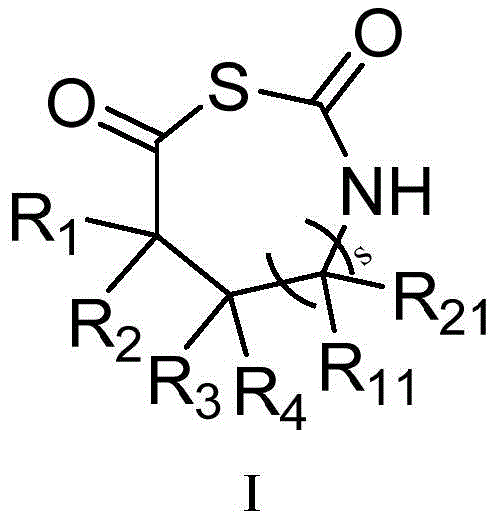
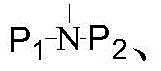

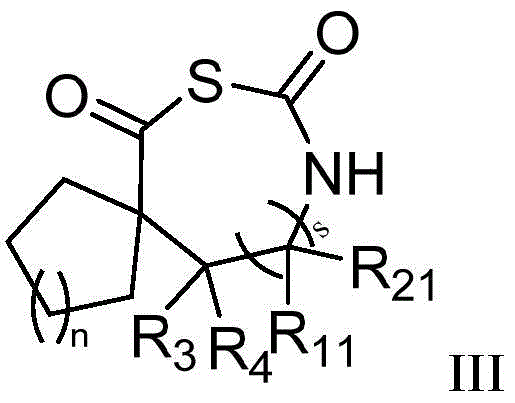

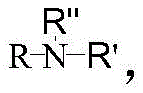
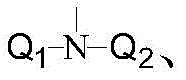
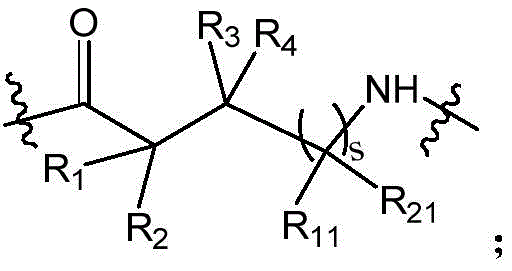
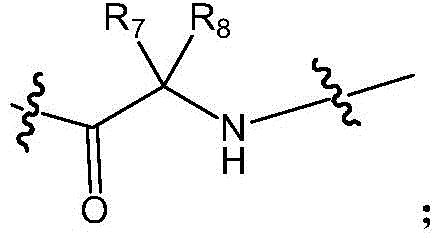
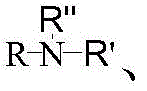
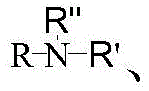
Priority Applications (2)
| Application Number | Priority Date | Filing Date | Title |
|---|---|---|---|
| CN201911089413.0A CN112778236A (en) | 2019-11-08 | 2019-11-08 | Synthesis, polymerization reaction, polymer preparation and application of beta, gamma-amino acid N-carboxythio carbonyl cyclic internal anhydride monomer |
| PCT/CN2020/127637 WO2021089056A1 (en) | 2019-11-08 | 2020-11-09 | SYNTHESIS OF β,γ-AMINO ACID N-CARBOXYL THIOCARBONYL ANHYDRIDE MONOMER, POLYMERIZATION REACTION, PREPARATION OF POLYMER, AND APPLICATION THEREOF |
Applications Claiming Priority (1)
| Application Number | Priority Date | Filing Date | Title |
|---|---|---|---|
| CN201911089413.0A CN112778236A (en) | 2019-11-08 | 2019-11-08 | Synthesis, polymerization reaction, polymer preparation and application of beta, gamma-amino acid N-carboxythio carbonyl cyclic internal anhydride monomer |
Publications (1)
| Publication Number | Publication Date |
|---|---|
| CN112778236A true CN112778236A (en) | 2021-05-11 |
Family
ID=75748505
Family Applications (1)
| Application Number | Title | Priority Date | Filing Date |
|---|---|---|---|
| CN201911089413.0A Pending CN112778236A (en) | 2019-11-08 | 2019-11-08 | Synthesis, polymerization reaction, polymer preparation and application of beta, gamma-amino acid N-carboxythio carbonyl cyclic internal anhydride monomer |
Country Status (2)
| Country | Link |
|---|---|
| CN (1) | CN112778236A (en) |
| WO (1) | WO2021089056A1 (en) |
Cited By (1)
| Publication number | Priority date | Publication date | Assignee | Title |
|---|---|---|---|---|
| CN114560829A (en) * | 2022-03-17 | 2022-05-31 | 中山大学 | Preparation method of macrocyclic monomer and ring-opening polymerization reaction thereof |
Families Citing this family (2)
| Publication number | Priority date | Publication date | Assignee | Title |
|---|---|---|---|---|
| CN113943261B (en) * | 2021-09-15 | 2023-06-20 | 中国科学院长春应用化学研究所 | A kind of acid anhydride in N-carboxyl ring, its preparation method and application |
| KR20250050712A (en) * | 2023-10-06 | 2025-04-15 | 인하대학교 산학협력단 | Novel polymer compounds and compositions for nucleic acid delivery comprising the same |
Citations (2)
| Publication number | Priority date | Publication date | Assignee | Title |
|---|---|---|---|---|
| US20180057634A1 (en) * | 2016-08-29 | 2018-03-01 | Board Of Supervisors Of Louisiana State University And Agricultural And Mechanical College | Methods of making polypeptides |
| CN107987032A (en) * | 2017-11-17 | 2018-05-04 | 浙江大学 | A kind of phenolic hydroxy group amino acid-N- thiocarboxylic acids anhydride monomer and its synthesis and polymerization |
Family Cites Families (1)
| Publication number | Priority date | Publication date | Assignee | Title |
|---|---|---|---|---|
| US4946942A (en) * | 1988-03-11 | 1990-08-07 | Bioresearch, Inc. | Urethane-protected amino acid-N-carboxyanhydrides |
-
2019
- 2019-11-08 CN CN201911089413.0A patent/CN112778236A/en active Pending
-
2020
- 2020-11-09 WO PCT/CN2020/127637 patent/WO2021089056A1/en not_active Ceased
Patent Citations (2)
| Publication number | Priority date | Publication date | Assignee | Title |
|---|---|---|---|---|
| US20180057634A1 (en) * | 2016-08-29 | 2018-03-01 | Board Of Supervisors Of Louisiana State University And Agricultural And Mechanical College | Methods of making polypeptides |
| CN107987032A (en) * | 2017-11-17 | 2018-05-04 | 浙江大学 | A kind of phenolic hydroxy group amino acid-N- thiocarboxylic acids anhydride monomer and its synthesis and polymerization |
Non-Patent Citations (5)
| Title |
|---|
| HANS R. KRICHELDORF: ""Über Synthese und Polymerisation alicyclischer β-Isothiocyanatocarbonsäuren und 2,6-Dioxo-perhydro-l,3-thiazine"", no. 175, pages 3343 - 3356 * |
| HANS R. KRICHELDORF: ""Zur weiteren Kenntnis der Oxazolidindione-(2.5) und Thiazolidindione-( 2.5)"", vol. 104, no. 10, pages 3146 - 3155, XP055811661, DOI: 10.1002/cber.19711041020 * |
| HANS R. KRICHELDORF: "Über Synthese und Polymerisation alicyclischer β-Isothiocyanatocarbonsäuren und 2, 6-Dioxo-perhydro-l, 3-thiazine", 《MAKROMOLECKUARE CHEMIE》, no. 175, pages 3343 - 3356 * |
| HANS R. KRICHELDORF: "Zur weiteren Kenntnis der Oxazolidindione-(2.5) und Thiazolidindione-( 2.5)", 《CHEMISCHE BERICHTE》, vol. 104, no. 10, pages 3146 - 3155, XP055811661, DOI: 10.1002/cber.19711041020 * |
| 朱平 等: ""四氢-1,3-噻嗪-2,6-二酮的制备"", vol. 39, no. 9, pages 647 - 649 * |
Cited By (2)
| Publication number | Priority date | Publication date | Assignee | Title |
|---|---|---|---|---|
| CN114560829A (en) * | 2022-03-17 | 2022-05-31 | 中山大学 | Preparation method of macrocyclic monomer and ring-opening polymerization reaction thereof |
| CN114560829B (en) * | 2022-03-17 | 2023-08-04 | 中山大学 | Preparation method of macrocyclic monomer and ring-opening polymerization reaction thereof |
Also Published As
| Publication number | Publication date |
|---|---|
| WO2021089056A1 (en) | 2021-05-14 |
Similar Documents
| Publication | Publication Date | Title |
|---|---|---|
| US11905369B2 (en) | Strong base-initiated N-carboxyanhydride rapid ring-opening polymerization method | |
| Wu et al. | Recent advances and future developments in the preparation of polypeptides via N-carboxyanhydride (NCA) ring-opening polymerization | |
| US6686446B2 (en) | Methods and compositions for controlled polypeptide synthesis | |
| US6632922B1 (en) | Methods and compositions for controlled polypeptide synthesis | |
| WO2021089056A1 (en) | SYNTHESIS OF β,γ-AMINO ACID N-CARBOXYL THIOCARBONYL ANHYDRIDE MONOMER, POLYMERIZATION REACTION, PREPARATION OF POLYMER, AND APPLICATION THEREOF | |
| Liu et al. | Efficient synthesis and excellent antimicrobial activity of star-shaped cationic polypeptides with improved biocompatibility | |
| CN101891732A (en) | Cyclic carbonate monomer and preparation method thereof | |
| Zheng et al. | Identifying the hydrolysis of carbonyl sulfide as a side reaction impeding the polymerization of N-substituted glycine N-thiocarboxyanhydride | |
| CN110305238A (en) | A kind of preparation method of sugar-containing polymer containing heterogeneous sugar unit in side chain | |
| CN108530637A (en) | A kind of preparation method of simple function branched polyethylene glycol | |
| CN113354811B (en) | Oxazoline polymer with side chain containing amino and/or hydroxyl, preparation method and application thereof | |
| Gkikas et al. | Well-defined homopolypeptides, copolypeptides, and hybrids of poly (L-proline) | |
| CN117624589A (en) | A kind of random copolymerized amino acid containing glycine residue and its synthesis method | |
| CN114957150B (en) | An intracyclic anhydride monomer and its preparation method and application | |
| US20120088848A1 (en) | Methods and compositions for controlled polypeptide synthesis | |
| CN115368558A (en) | Rapid ring-opening polymerization method of carboxyl salt initiated cyclic anhydride monomer | |
| CN109125736B (en) | Non-natural amatoxin antibody conjugate | |
| WO2001094379A2 (en) | Methods and compositions for controlled synthesis of amino acid polymers | |
| WO2009058291A2 (en) | Controlled molecular weight amino acid polymers having functionalizable backbones and end groups and processes for preparing the same | |
| CN101974154B (en) | Modified polyethyleneimine and preparation method thereof | |
| CN108530636A (en) | A kind of single functionalization branched polyethylene glycol | |
| Ayres et al. | Synthesis and controlled polymerisation of a novel gramicidin S analogue | |
| WO2008101542A1 (en) | Synthetic polyamino acids, method of their production and use thereof | |
| Madhanagopal et al. | Silver assisted stereo-directed assembly of branched peptide nucleic acids into four-point nanostars | |
| Li et al. | Oligo (β-peptoid) s with Backbone Chirality from Aspartic Acid Derivatives: Synthesis and Property Investigation |
Legal Events
| Date | Code | Title | Description |
|---|---|---|---|
| PB01 | Publication | ||
| PB01 | Publication | ||
| SE01 | Entry into force of request for substantive examination | ||
| SE01 | Entry into force of request for substantive examination |