CN112689296B - Edge calculation and cache method and system in heterogeneous IoT network - Google Patents
Edge calculation and cache method and system in heterogeneous IoT network Download PDFInfo
- Publication number
- CN112689296B CN112689296B CN202011467098.3A CN202011467098A CN112689296B CN 112689296 B CN112689296 B CN 112689296B CN 202011467098 A CN202011467098 A CN 202011467098A CN 112689296 B CN112689296 B CN 112689296B
- Authority
- CN
- China
- Prior art keywords
- computing
- users
- sbs
- content
- mbs
- Prior art date
- Legal status (The legal status is an assumption and is not a legal conclusion. Google has not performed a legal analysis and makes no representation as to the accuracy of the status listed.)
- Active
Links
- 238000000034 method Methods 0.000 title claims abstract description 43
- 238000004364 calculation method Methods 0.000 title claims description 18
- 238000005265 energy consumption Methods 0.000 claims abstract description 54
- 238000013468 resource allocation Methods 0.000 claims abstract description 27
- 238000004422 calculation algorithm Methods 0.000 claims abstract description 15
- 238000004891 communication Methods 0.000 claims abstract description 15
- 238000005457 optimization Methods 0.000 claims abstract description 11
- 229920000468 styrene butadiene styrene block copolymer Polymers 0.000 claims description 113
- 230000005540 biological transmission Effects 0.000 claims description 38
- 230000006870 function Effects 0.000 claims description 15
- 230000009471 action Effects 0.000 claims description 14
- 239000003795 chemical substances by application Substances 0.000 claims description 14
- 238000003860 storage Methods 0.000 claims description 12
- 238000004458 analytical method Methods 0.000 claims description 2
- 230000007613 environmental effect Effects 0.000 claims description 2
- 239000013307 optical fiber Substances 0.000 claims description 2
- 238000012546 transfer Methods 0.000 claims description 2
- 238000004590 computer program Methods 0.000 description 8
- 238000010586 diagram Methods 0.000 description 8
- 238000012545 processing Methods 0.000 description 6
- 230000002787 reinforcement Effects 0.000 description 6
- 230000008569 process Effects 0.000 description 5
- 238000013459 approach Methods 0.000 description 3
- 230000001934 delay Effects 0.000 description 3
- 238000001228 spectrum Methods 0.000 description 3
- 238000009826 distribution Methods 0.000 description 2
- 238000005516 engineering process Methods 0.000 description 2
- 238000012986 modification Methods 0.000 description 2
- 230000004048 modification Effects 0.000 description 2
- 230000003287 optical effect Effects 0.000 description 2
- 238000011160 research Methods 0.000 description 2
- 238000012549 training Methods 0.000 description 2
- 230000009286 beneficial effect Effects 0.000 description 1
- 238000013527 convolutional neural network Methods 0.000 description 1
- 238000002716 delivery method Methods 0.000 description 1
- 238000011161 development Methods 0.000 description 1
- 230000006872 improvement Effects 0.000 description 1
- 230000003993 interaction Effects 0.000 description 1
- 230000002452 interceptive effect Effects 0.000 description 1
- 230000007786 learning performance Effects 0.000 description 1
- 238000004519 manufacturing process Methods 0.000 description 1
- 238000012067 mathematical method Methods 0.000 description 1
- 238000010295 mobile communication Methods 0.000 description 1
- 238000004088 simulation Methods 0.000 description 1
Images


Classifications
-
- Y—GENERAL TAGGING OF NEW TECHNOLOGICAL DEVELOPMENTS; GENERAL TAGGING OF CROSS-SECTIONAL TECHNOLOGIES SPANNING OVER SEVERAL SECTIONS OF THE IPC; TECHNICAL SUBJECTS COVERED BY FORMER USPC CROSS-REFERENCE ART COLLECTIONS [XRACs] AND DIGESTS
- Y02—TECHNOLOGIES OR APPLICATIONS FOR MITIGATION OR ADAPTATION AGAINST CLIMATE CHANGE
- Y02D—CLIMATE CHANGE MITIGATION TECHNOLOGIES IN INFORMATION AND COMMUNICATION TECHNOLOGIES [ICT], I.E. INFORMATION AND COMMUNICATION TECHNOLOGIES AIMING AT THE REDUCTION OF THEIR OWN ENERGY USE
- Y02D30/00—Reducing energy consumption in communication networks
- Y02D30/70—Reducing energy consumption in communication networks in wireless communication networks
Landscapes
- Mobile Radio Communication Systems (AREA)
Abstract
本公开提供了一种异构IoT网络中的边缘计算与缓存方法及系统,包括以下步骤:构建基于移动边缘计算的异构IoT网络模型;对异构IoT网络中不同类型的用户分别建模分析;针对计算任务型用户,构建上行链路通信模型与计算模型;针对内容请求型用户,构建下行链路通信模型与缓存模型;问题建模,明确系统优化目标,最小化所有用户的时延与能耗的加权和;采用MADDPG算法联合优化计算卸载、资源分配和内容缓存的决策。本公开采用多智能体深度确定性策略梯度算法最小化系统时延与能耗,有效降低了网络通信开销,提升了网络整体性能。

The present disclosure provides an edge computing and caching method and system in a heterogeneous IoT network, including the following steps: constructing a heterogeneous IoT network model based on mobile edge computing; modeling and analyzing different types of users in the heterogeneous IoT network respectively ;Construct uplink communication model and computing model for computing task users; build downlink communication model and cache model for content requesting users; problem modeling, clarify system optimization goals, minimize the delay and delay of all users The weighted sum of energy consumption; the MADDPG algorithm is used to jointly optimize the decision of computing offloading, resource allocation and content caching. The present disclosure adopts a multi-agent deep deterministic policy gradient algorithm to minimize system delay and energy consumption, effectively reduces network communication overhead, and improves overall network performance.
Description
技术领域technical field
本公开属于无线通信技术领域,具体涉及一种异构IoT网络中的边缘计算与缓存方法及系统。The present disclosure belongs to the technical field of wireless communication, and in particular relates to a method and system for edge computing and caching in a heterogeneous IoT network.
背景技术Background technique
本部分的陈述仅仅是提供了与本公开相关的背景技术信息,不必然构成在先技术。The statements in this section merely provide background information related to the present disclosure and do not necessarily constitute prior art.
随着移动通信技术的发展,第三代合作伙伴计划(3GPP)定义的5G应用场景提供了三种计算模式:增强型移动宽带(eMBB),大规模机器类通信(mMTC)以及超可靠低时延通信(uRLLC)。同时,为了满足不断增长的物联网(IoT)应用程序和设备的计算任务与内容请求,运营商采用云计算技术来弥补设备中计算资源与存储容量的局限性。但是从移动设备到远程云计算基础架构长距离的传输可能会导致较大的服务延迟和传输能耗,并且随着设备业务类型增多,IoT设备的并发访问进一步加剧了高带宽需求与频谱资源不足之间的矛盾。因此,移动边缘计算(Mobile Edge Computing,MEC)作为一种有效的解决方案被提出,MEC通过将计算、存储资源部署在用户设备附近来减轻云数据中心的负担。With the development of mobile communication technology, the 5G application scenarios defined by the 3rd Generation Partnership Project (3GPP) provide three computing modes: enhanced mobile broadband (eMBB), massive machine type communication (mMTC) and ultra-reliable low-time Extended communication (uRLLC). At the same time, in order to meet the computing tasks and content requests of the growing Internet of Things (IoT) applications and devices, operators adopt cloud computing technology to compensate for the limitations of computing resources and storage capacity in devices. However, long-distance transmission from mobile devices to remote cloud computing infrastructure may lead to large service delays and transmission energy consumption, and with the increase of device business types, concurrent access to IoT devices further exacerbates high bandwidth requirements and insufficient spectrum resources. contradiction between. Therefore, Mobile Edge Computing (MEC) is proposed as an effective solution. MEC reduces the burden of cloud data centers by deploying computing and storage resources near user equipment.
在基于MEC的IoT网络中,IoT设备可以通过无线信道将全部或部分计算任务卸载到物理上邻近的MEC服务器进行处理,这可以加快任务的处理速度并为设备节省能源。相较于本地计算,MEC可以克服移动设备有限的计算能力;相较于云计算,MEC可以避免将计算任务卸载到远程云而产生的较大延迟。但是,计算卸载通过无线信道进行数据传输,可能导致无线信道拥塞,并且边缘服务器计算资源有限,因此,如何合理的进行计算卸载与资源分配成为一项热点问题。同时,IoT设备产生的内容请求有可能会重复,协作式内容缓存可以通过在移动用户附近缓存流行内容来减轻回程压力和内容访问延迟。因此,研究协作式内容缓存策略对提高数据回传速率和资源利用率至关重要。In an MEC-based IoT network, IoT devices can offload all or part of computing tasks to physically adjacent MEC servers for processing via wireless channels, which can speed up the processing of tasks and save energy for devices. Compared with local computing, MEC can overcome the limited computing power of mobile devices; compared with cloud computing, MEC can avoid large delays caused by offloading computing tasks to remote clouds. However, computing offloading for data transmission through wireless channels may cause wireless channel congestion, and the computing resources of edge servers are limited. Therefore, how to reasonably perform computing offloading and resource allocation has become a hot issue. At the same time, content requests generated by IoT devices may be repeated, and collaborative content caching can reduce backhaul pressure and content access delays by caching popular content near mobile users. Therefore, research on cooperative content caching strategies is crucial to improve the data return rate and resource utilization.
发明人发现,针对异构IoT网络中的MEC计算卸载、资源分配、缓存等问题,传统的优化方法需要经过一系列的复杂操作和迭代来解决此类问题。随着无线网络需求的增加,传统的优化方法面临着巨大挑战。例如,目标函数中的变量数量大幅度增长,大量的变量对基于数学方法的计算和内存空间提出了严峻的挑战,同时无线信道在时域中的动态变化,信道状态信息的不确定性以及计算的高复杂度等因素也会影响传统解决方案的性能。因此为了更好的优化异构IoT网络中的MEC计算卸载、资源分配与缓存策略,强化学习作为一种有效的解决方案被广泛应用。深度强化学习通过与环境的反复交互,采用函数逼近的方法,可以很好地解决复杂高维状态空间中的决策问题。The inventor found that for the problems of MEC computing offloading, resource allocation, and caching in heterogeneous IoT networks, traditional optimization methods need to go through a series of complex operations and iterations to solve such problems. With the increasing demand for wireless networks, traditional optimization methods face great challenges. For example, the number of variables in the objective function has increased significantly, and a large number of variables pose severe challenges to the calculation and memory space based on mathematical methods. At the same time, the dynamic changes of wireless channels in the time domain, the uncertainty of channel state information, and the calculation of Factors such as the high complexity of the traditional solutions also affect the performance of traditional solutions. Therefore, in order to better optimize the MEC computing offloading, resource allocation and caching strategies in heterogeneous IoT networks, reinforcement learning is widely used as an effective solution. Deep reinforcement learning can solve decision-making problems in complex and high-dimensional state spaces well by using the method of function approximation through repeated interaction with the environment.
发明内容SUMMARY OF THE INVENTION
为了解决上述问题,本公开提出了一种异构IoT网络中的边缘计算与缓存方法及系统,在考虑计算卸载与资源分配的同时,考虑内容缓存策略,利用深度确定性策略梯度算法的多智能体强化学习方法(MADDPG)智能地解决联合问题,优化系统的时延与能耗,有效降低了网络通信开销,提升了网络整体性能,实现了对异构IoT网络中计算卸载、资源分配和内容缓存的联合优化。In order to solve the above problems, the present disclosure proposes an edge computing and caching method and system in a heterogeneous IoT network, which considers the content caching strategy while considering the computing offload and resource allocation, and utilizes the multi-intelligence of the deep deterministic strategy gradient algorithm. The body reinforcement learning method (MADDPG) intelligently solves the joint problem, optimizes the delay and energy consumption of the system, effectively reduces the network communication overhead, improves the overall performance of the network, and realizes computing offloading, resource allocation and content in heterogeneous IoT networks. Joint optimization for caching.
为了实现上述目的,本公开采用了如下的技术方案:In order to achieve the above object, the present disclosure adopts the following technical solutions:
本公开的第一方面提供了一种异构IoT网络中的边缘计算与缓存方法。A first aspect of the present disclosure provides an edge computing and caching method in a heterogeneous IoT network.
一种异构IoT网络中的边缘计算与缓存方法,包括以下步骤:An edge computing and caching method in a heterogeneous IoT network, comprising the following steps:
构建基于移动边缘计算的异构IoT网络模型;Build a heterogeneous IoT network model based on mobile edge computing;
对异构IoT网络中不同类型的用户分别建模分析,针对计算任务型用户,构建上行链路通信模型与计算模型,针对内容请求型用户,构建下行链路通信模型与缓存模型;Modeling and analysis of different types of users in heterogeneous IoT networks, building uplink communication models and computing models for computing task users, and building downlink communication models and caching models for content requesting users;
问题建模,明确系统优化目标,最小化所有用户的时延与能耗的加权和;Problem modeling, clarifying system optimization goals, and minimizing the weighted sum of delay and energy consumption for all users;
采用MADDPG算法联合优化计算卸载、资源分配和内容缓存的决策。The MADDPG algorithm is used to jointly optimize the decision of computing offloading, resource allocation and content caching.
本公开的第二方面提供了一种异构IoT网络中的边缘计算与缓存系统,采用了本公开第一方面所述的异构IoT网络中的边缘计算与缓存方法。A second aspect of the present disclosure provides an edge computing and caching system in a heterogeneous IoT network, using the edge computing and caching method in a heterogeneous IoT network described in the first aspect of the present disclosure.
本公开第三方面提供了一种计算机可读存储介质。A third aspect of the present disclosure provides a computer-readable storage medium.
一种计算机可读存储介质,其上存储有程序,该程序被处理器执行时实现如本公开第一方面所述的异构IoT网络中的边缘计算与缓存方法中的步骤。A computer-readable storage medium having a program stored thereon, when the program is executed by a processor, implements the steps in the method for edge computing and caching in a heterogeneous IoT network according to the first aspect of the present disclosure.
本公开第四方面提供了一种电子设备。A fourth aspect of the present disclosure provides an electronic device.
一种电子设备,包括存储器、处理器及存储在存储器上并可在处理器上运行的程序,所述处理器执行所述程序时实现如本公开第一方面所述的异构IoT网络中的边缘计算与缓存方法中的步骤。An electronic device includes a memory, a processor, and a program stored in the memory and executable on the processor, when the processor executes the program, the processor implements the heterogeneous IoT network according to the first aspect of the present disclosure. Steps in an edge computing and caching approach.
与现有技术相比,本公开的有益效果为:Compared with the prior art, the beneficial effects of the present disclosure are:
本公开在考虑计算卸载与资源分配的同时,考虑内容缓存,从计算卸载、资源分配和内容缓存三个方面进行联合优化,利用多智能体深度确定性策略梯度算法(MADDPG)智能地解决联合问题,实现了异构IoT网络中的最优资源分配,有效降低了系统的时延与能耗,减小了网络通信开销,同时提高了用户体验与网络整体性能。In the present disclosure, while considering computation offloading and resource allocation, content caching is considered, joint optimization is carried out from three aspects: computation offloading, resource allocation and content caching, and the joint problem is intelligently solved by using the Multi-Agent Deep Deterministic Policy Gradient Algorithm (MADDPG). , to achieve optimal resource allocation in heterogeneous IoT networks, effectively reduce system delay and energy consumption, reduce network communication overhead, and improve user experience and overall network performance.
附图说明Description of drawings
构成本公开的一部分的说明书附图用来提供对本公开的进一步理解,本公开的示意性实施例及其说明用于解释本公开,并不构成对本公开的不当限定。The accompanying drawings that constitute a part of the present disclosure are used to provide further understanding of the present disclosure, and the exemplary embodiments of the present disclosure and their descriptions are used to explain the present disclosure and do not constitute an improper limitation of the present disclosure.
图1是本公开实施例一中的异构IoT网络架构的模型图;1 is a model diagram of a heterogeneous IoT network architecture in Embodiment 1 of the present disclosure;
图2是本公开实施例一中的异构IoT网络边缘计算与缓存方法的流程图;2 is a flowchart of a method for edge computing and caching in a heterogeneous IoT network in Embodiment 1 of the present disclosure;
图3是本公开实施例一中的深度强化学习模型示意图;3 is a schematic diagram of a deep reinforcement learning model in Embodiment 1 of the present disclosure;
图4是本公开实施例一中的MADDPG算法流程图。FIG. 4 is a flowchart of the MADDPG algorithm in Embodiment 1 of the present disclosure.
具体实施方式:Detailed ways:
下面结合附图与实施例对本公开作进一步说明。The present disclosure will be further described below with reference to the accompanying drawings and embodiments.
应该指出,以下详细说明都是例示性的,旨在对本公开提供进一步的说明。除非另有指明,本文使用的所有技术和科学术语具有与本公开所属技术领域的普通技术人员通常理解的相同含义。It should be noted that the following detailed description is exemplary and intended to provide further explanation of the present disclosure. Unless otherwise defined, all technical and scientific terms used herein have the same meaning as commonly understood by one of ordinary skill in the art to which this disclosure belongs.
需要注意的是,这里所使用的术语仅是为了描述具体实施方式,而非意图限制根据本公开的示例性实施方式。如在这里所使用的,除非上下文另外明确指出,否则单数形式也意图包括复数形式,此外,还应当理解的是,当在本说明书中使用术语“包含”和/或“包括”时,其指明存在特征、步骤、操作、器件、组件和/或它们的组合。It should be noted that the terminology used herein is for the purpose of describing specific embodiments only, and is not intended to limit the exemplary embodiments according to the present disclosure. As used herein, unless the context clearly dictates otherwise, the singular is intended to include the plural as well, furthermore, it is to be understood that when the terms "comprising" and/or "including" are used in this specification, it indicates that There are features, steps, operations, devices, components and/or combinations thereof.
对于本领域的相关科研或技术人员,可以根据具体情况确定上述术语在本实公开中的具体含义,不能理解为对本公开的限制。For the relevant scientific research or technical personnel in the field, the specific meanings of the above terms in the present disclosure can be determined according to specific situations, and should not be construed as limitations on the present disclosure.
在不冲突的情况下,本公开中的实施例及实施例中的特征可以相互组合。The embodiments of this disclosure and features of the embodiments may be combined with each other without conflict.
实施例一Example 1
本公开实施例一介绍了一种异构IoT网络中的边缘计算与缓存方法。Embodiment 1 of the present disclosure introduces an edge computing and caching method in a heterogeneous IoT network.
如图2所示的一种异构IoT网络中的边缘计算与缓存方法,包括以下步骤:As shown in Figure 2, an edge computing and caching method in a heterogeneous IoT network includes the following steps:
步骤S01:构建系统模型,详细描述异构IoT架构中的基础设施与设备;Step S01: Build a system model to describe the infrastructure and equipment in the heterogeneous IoT architecture in detail;
步骤S02:针对计算任务型用户,构建上行链路通信模型;针对内容请求型用户,构建下行链路通信模型;Step S02: building an uplink communication model for computing task users; building a downlink communication model for content requesting users;
步骤S03:针对计算任务型用户,构建任务计算模型,并计算执行时延与能耗;Step S03: for computing task users, build a task computing model, and calculate execution delay and energy consumption;
步骤S04:针对内容请求型用户,构建内容缓存模型,并计算传输时延与能耗;Step S04: for content requesting users, build a content caching model, and calculate transmission delay and energy consumption;
步骤S05:问题建模,通过共同考虑计算卸载,资源分配与内容缓存策略,明确系统优化目标;Step S05: problem modeling, by jointly considering calculation offloading, resource allocation and content caching strategy, clarifying the system optimization goal;
步骤S06:在异构IoT网络中,通过MADDPG算法优化计算卸载、资源分配与内容缓存。Step S06: In the heterogeneous IoT network, the MADDPG algorithm is used to optimize calculation offloading, resource allocation and content caching.
在所述步骤S01中,考虑一个包含多个IoT用户、多个SBS与一个MBS的异构IoT网络(如图1所示)。在网络中,MBS和每个SBS都配备一个MEC服务器,可以提供丰富的计算资源与缓存资源。令Km,Ks分别表示MBS和SBS的集合,K=Km∪Ks={0}∪{1,2,...K}。In the step S01, consider a heterogeneous IoT network (as shown in FIG. 1 ) including multiple IoT users, multiple SBSs and one MBS. In the network, MBS and each SBS are equipped with an MEC server, which can provide abundant computing resources and cache resources. Let K m , K s denote the set of MBS and SBS, respectively, K=K m ∪K s ={0}∪{1,2,...K}.
每个SBS服务一个小区,小区内随机分布多个IoT用户,IoT用户包括计算任务型用户和内容请求型用户,令Io,Ir分别表示计算任务型用户和内容请求型用户的集合,在小区k中,IoT用户集合可表示为





在所述步骤S02中,在IoT用户和SBS之间采用正交频分多址(OFDMA)进行通信。假设同一小区内的用户被分配正交频谱,并且MBS与SBS之间的频谱也是正交的。基于此,在本实施例中仅考虑SBS之间的小区间干扰。In the step S02, Orthogonal Frequency Division Multiple Access (OFDMA) is used for communication between the IoT user and the SBS. It is assumed that users in the same cell are allocated orthogonal spectrums, and the spectrums between MBS and SBS are also orthogonal. Based on this, only the inter-cell interference between SBSs is considered in this embodiment.
在SBS k服务的小区中,计算任务型用户选择将计算任务卸载到MBS或SBS k,其中,MBS与SBS为其关联的用户均等地分配带宽,当SBS小区中的用户关联到MBS时,MBS为其关联用户均等分配带宽;当SBS小区内的用户关联到本小区基站,本小区SBS为其关联用户均等分配带宽。在SBS k服务的小区中,当计算任务型用户


其中,


当计算任务型用户

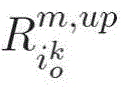

其中,Wm表示MBS的带宽,


在SBS k服务的小区中,SBS k传输内容到内容请求型用户
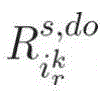

其中,Pk表示SBS k的发射功率,


在所述步骤S03中,定义


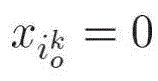
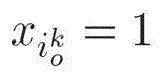

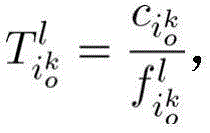
下面给出了三种针对计算任务型用户执行时延与能耗的计算方式:Three calculation methods of execution delay and energy consumption for computing task users are given below:
a1.本地计算:计算任务型用户


a2.卸载到SBS计算:计算任务型用户


a3.卸载到MBS计算:计算任务型用户


由于计算结果的大小小于输入数据的大小,并且下载数据速率高于上传数据速率,因此在本实施例中忽略计算结果的下载传输时延与能耗。Since the size of the calculation result is smaller than the size of the input data, and the download data rate is higher than the upload data rate, the download transmission delay and energy consumption of the calculation result are ignored in this embodiment.
在所述步骤S04中,内容缓存是指将移动设备请求内容及其相关数据缓存在边缘缓存中,以减少用户请求内容的延迟。针对内容缓存,定义N是Internet中内容的总类型,N={1,2,...N},假设内容请求的受欢迎程度被建模为Zipf分布。因此,通过以下方式给出用户

定义缓存决策变量

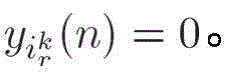


针对提出的异构IoT网络,下面详细描述内容请求型用户
b1.SBS→UE:若内容请求型用户


b2.SBSnb→SBS→UE:若内容请求用户所关联的SBS中未缓存请求内容,则SBS将请求发送到邻居SBS,如果邻居SBS缓存了请求内容,则将内容转发到关联用户的SBS后传给用户。b2. SBS nb → SBS → UE: If the requested content is not cached in the SBS associated with the content requesting user, the SBS sends the request to the neighbor SBS. If the neighbor SBS caches the requested content, it forwards the content to the SBS of the associated user. passed to the user.
考虑到同一MBS覆盖范围内的SBS通过光纤连接且距离较近,且该范围内的内容传输时间较短,因此假设MBS覆盖范围内邻居SBS到SBS单个内容的传输时延为固定值Tsbs,传输能耗为固定值Esbs,MBS到SBS单个内容的传输时延为固定值Tmbs,传输能耗为固定值Embs;若内容请求型用户


b3.MBS→SBS→UE:若内容请求用户所关联的SBS与邻居SBS中均未缓存请求内容,则SBS将请求发送到MBS,若MBS已缓存请求内容,则MBS将内容传输到关联用户的SBS后传给用户。b3. MBS→SBS→UE: If neither the SBS associated with the content requesting user nor the neighbor SBS has cached the requested content, the SBS sends the request to the MBS; if the MBS has cached the requested content, the MBS transmits the content to the associated user's It will be passed to the user after SBS.
若内容请求型用户


b4.Core Network→MBS→SBS→UE:若内容请求用户所关联的SBS,邻居SBS和MBS中均未缓存请求内容,则SBS将请求发送到MBS,MBS配备的MEC服务器从Internet请求内容,之后进行内容回传。b4.Core Network→MBS→SBS→UE: If the SBS associated with the content requesting user, the neighbor SBS and MBS do not cache the requested content, the SBS sends the request to the MBS, and the MEC server equipped with the MBS requests the content from the Internet, and then Perform content postback.
内容请求型用户

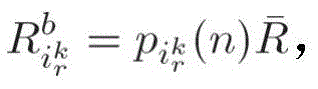


在所述步骤S05中,问题建模,通过共同考虑计算卸载,资源分配与内容缓存策略,明确系统优化目标。In the step S05, the problem is modeled, and the system optimization goal is clarified by jointly considering calculation offloading, resource allocation and content caching strategy.
针对计算任务用户


能耗

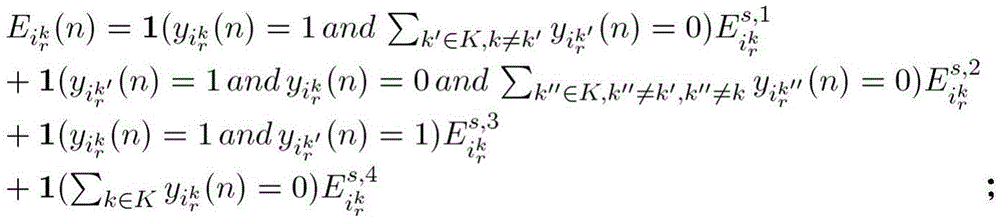
针对内容请求用户


能耗

对于SBS k服务的小区,小区内计算任务用户


内容请求用户



最小化系统中所有小区内不同业务类型用户的时延和能耗的加权和,定义ωt,ωe表示用户的时延与能耗权重参数,最小化系统效用为minx,a,y{U},其中,Minimize the weighted sum of delay and energy consumption of users of different service types in all cells in the system, define ω t , ω e represent the weight parameters of user delay and energy consumption, and minimize the system utility as min x, a, y { U}, where,

最小化系统效用的优化公式为:The optimization formula to minimize system utility is:
minx,a,y{U}min x, a, y {U}
C1:
C2:
C3:
C4:
C5:
C6:
C7:
其中,C1、C2、C3分别表示卸载决策、计算资源分配、内容缓存决策的变量。C4保证计算任务型用户只能选择一种计算方式;C5是SBS配备的MEC服务器的计算资源限制;C6,C7分别是SBS与MBS配备的MEC服务器的缓存资源限制,Ms,Mm分别表示SBS与MBS配置的MEC服务器的存储容量。Among them, C1, C2, and C3 represent the variables of unloading decision, computing resource allocation, and content caching decision, respectively. C4 ensures that users with computing tasks can only choose one computing method; C5 is the computing resource limit of the MEC server equipped with SBS; C6 and C7 are the cache resource limit of the MEC server equipped with SBS and MBS respectively, M s , M m represent respectively The storage capacity of the MEC server configured by SBS and MBS.
在所述步骤S06中,在异构IoT网络中,通过MADDPG算法优化计算卸载、资源分配与内容缓存。In the step S06, in the heterogeneous IoT network, the MADDPG algorithm is used to optimize calculation offloading, resource allocation and content caching.
DDPG是一种行为准则和无模型算法,在高维连续动作空间中学习策略。DDPG将actor-critic方法与DQN相结合。使用actor网络来探索策略,使用critic网络来评估所提议策略的性能。为了提高学习性能,采用了DQN的experience replay和batchnormalization等技术。DDPG的最重要特征是它可以在连续的动作空间中进行决策或分配。MADDPG算法是DDPG算法在多智能体系统下的自然扩展。在本实施例中,考虑使用卷积神经网络改进网络模型。DDPG is a code-of-behavior and model-free algorithm that learns policies in high-dimensional continuous action spaces. DDPG combines the actor-critic approach with DQN. The actor network is used to explore policies and the critic network is used to evaluate the performance of the proposed policy. In order to improve the learning performance, techniques such as DQN's experience replay and batchnormalization are adopted. The most important feature of DDPG is that it can make decisions or assignments in a continuous action space. The MADDPG algorithm is a natural extension of the DDPG algorithm in multi-agent systems. In this embodiment, consider using a convolutional neural network to improve the network model.
针对时隙,定义状态空间,行动空间和奖励函数,构建如图3所示的多智能体深度强化学习算法模型:For the time slot, define the state space, action space and reward function, and construct the multi-agent deep reinforcement learning algorithm model as shown in Figure 3:
构建用于SBS决策计算卸载、资源分配与内容缓存的多智能体深度强化学习模型,基本流程是:在一个时隙,智能体从状态空间中观察到一个状态,然后根据策略和当前状态从动作空间中选择一个动作,即SBS选择服务用户的卸载方式与资源分配,同时决定是否缓存的用户请求内容,并获得奖励值,智能体根据获得的奖励值调整策略,逐步收敛以获得最优奖励。To build a multi-agent deep reinforcement learning model for SBS decision calculation offloading, resource allocation and content caching, the basic process is: in a time slot, the agent observes a state from the state space, and then acts according to the policy and the current state. Select an action in the space, that is, SBS selects the unloading method and resource allocation of the service user, and at the same time decides whether to cache the user's request content, and obtains the reward value. The agent adjusts the strategy according to the obtained reward value, and gradually converges to obtain the optimal reward.
具体的状态、动作及奖励函数设置如下:The specific state, action and reward function settings are as follows:
定义SBS为智能体,SBS之间能够相互通信,共享当前SBS配备的MEC服务器所缓存的内容;Define SBS as an agent, SBS can communicate with each other and share the content cached by the MEC server currently equipped with SBS;
状态空间:时隙t,所有SBS的状态集合:

行动空间:时隙t,所有SBS的动作集合:

奖励函数:智能体通过与环境的相互作用最大化其奖励来做出决策,为了最小化系统中所有用户的时延与能耗的加权和,将奖励函数


通过离线集中训练MADDPG模型,每个SBS充当学习智能体,然后在线执行阶段快速做出计算卸载、资源分配和内容缓存决策。如图4所示,MADDPG算法具体的实施过程如下:By centrally training the MADDPG model offline, each SBS acts as a learning agent, and then quickly makes computation offloading, resource allocation, and content caching decisions in the online execution stage. As shown in Figure 4, the specific implementation process of the MADDPG algorithm is as follows:
1)初始化容量为N的经验池,用于存储训练样本;1) Initialize an experience pool with a capacity of N for storing training samples;
2)随机初始化critic网络Q(s,a|θQ),并随机初始化权重参数θQ;2) Randomly initialize the critic network Q(s, a|θ Q ), and randomly initialize the weight parameter θ Q ;
3)随机初始化actor网络u(s|θu),初始化权重参数等于θu;3) Randomly initialize the actor network u(s|θ u ), and initialize the weight parameter equal to θ u ;
4)for迭代e=1,2,...,Emax:4) for iteration e=1, 2, . . . , E max :
5)定义环境初始设置,智能体通过与环境的交互学习得到初始状态s1;5) Define the initial setting of the environment, and the agent obtains the initial state s 1 through interactive learning with the environment;
6)for时隙t=1,2,...,Tmax;6) for time slot t=1, 2, . . . , T max ;
7)for每一个智能体SBS,通过使用当前策略θu选择动作at=u(st|θu)+Δu,探索噪声Δu,确定计算卸载决策和资源分配向量和内容缓存决策。7) For each agent SBS, by using the current policy θ u to select the action at = u( s t | θ u )+Δu, explore the noise Δu, and determine the computation offloading decision and resource allocation vector and content caching decision.
8)在仿真环境中,执行
9)将获得的参数(st,at,rt,st+1)存储到经验池N中;9) Store the obtained parameters (s t , at , r t , s t +1 ) in the experience pool N;
10)for agent k=1,2,...,Kmax:10) for agent k=1, 2, ..., K max :
11)从经验池中随机采样一小批B信息
12)通过最小化从样本获得的损耗LB更新critic网络:12) Update the critic network by minimizing the loss LB obtained from the samples:

13)通过使用采样的策略梯度来更新actor网络:13) Update the actor network by using the sampled policy gradients:

14)更新target网络:θu′←τθu+(1-τ)θu′和θQ′←τθQ+(1-τ)θQ′ 14) Update the target network: θ u′ ←τθ u +(1-τ)θ u′ and θ Q′ ←τθ Q +(1-τ)θ Q′
15)end for15) end for
16)end for16) end for
17)end for。17) end for.
实施例二Embodiment 2
本公开实施例二介绍了一种异构IoT网络中的边缘计算与缓存系统,系统中采用了本公开实施例一所述的异构IoT网络中的边缘计算与缓存方法。The second embodiment of the present disclosure introduces an edge computing and caching system in a heterogeneous IoT network, and the system adopts the edge computing and caching method in the heterogeneous IoT network described in the first embodiment of the present disclosure.
详细步骤与实施例一提供的异构IoT网络中的边缘计算与缓存方法相同,在此不再赘述。The detailed steps are the same as the edge computing and caching method in the heterogeneous IoT network provided in the first embodiment, and are not repeated here.
实施例三
本公开实施例三提供了一种计算机可读存储介质,其上存储有程序,该程序被处理器执行时实现如本公开实施例一所述的异构IoT网络中的边缘计算与缓存方法中的步骤。The third embodiment of the present disclosure provides a computer-readable storage medium on which a program is stored. When the program is executed by a processor, the method for edge computing and caching in a heterogeneous IoT network according to the first embodiment of the present disclosure is implemented. A step of.
详细步骤与实施例一提供的异构IoT网络中的边缘计算与缓存方法相同,在此不再赘述。The detailed steps are the same as the edge computing and caching method in the heterogeneous IoT network provided in the first embodiment, and are not repeated here.
实施例四Embodiment 4
本公开实施例四提供了一种电子设备,包括存储器、处理器及存储在存储器上并可在处理器上运行的程序,所述处理器执行所述程序时实现如本公开实施例一所述的异构IoT网络中的边缘计算与缓存方法中的步骤。The fourth embodiment of the present disclosure provides an electronic device, including a memory, a processor, and a program stored in the memory and running on the processor, and the processor executes the program to achieve the same implementation as the first embodiment of the present disclosure Steps in the Edge Computing and Caching Approach in Heterogeneous IoT Networks.
详细步骤与实施例一提供的异构IoT网络中的边缘计算与缓存方法相同,在此不再赘述。The detailed steps are the same as the edge computing and caching method in the heterogeneous IoT network provided in the first embodiment, and are not repeated here.
本领域内的技术人员应明白,本公开的实施例可提供为方法、系统、或计算机程序产品。因此,本公开可采用硬件实施例、软件实施例、或结合软件和硬件方面的实施例的形式。而且,本公开可采用在一个或多个其中包含有计算机可用程序代码的计算机可用存储介质(包括但不限于磁盘存储器和光学存储器等)上实施的计算机程序产品的形式。As will be appreciated by one skilled in the art, embodiments of the present disclosure may be provided as a method, system, or computer program product. Accordingly, the present disclosure may take the form of a hardware embodiment, a software embodiment, or an embodiment combining software and hardware aspects. Furthermore, the present disclosure may take the form of a computer program product embodied on one or more computer-usable storage media having computer-usable program code embodied therein, including but not limited to disk storage, optical storage, and the like.
本公开是参照根据本公开实施例的方法、设备(系统)、和计算机程序产品的流程图和/或方框图来描述的。应理解可由计算机程序指令实现流程图和/或方框图中的每一流程和/或方框、以及流程图和/或方框图中的流程和/或方框的结合。可提供这些计算机程序指令到通用计算机、专用计算机、嵌入式处理机或其他可编程数据处理设备的处理器以产生一个机器,使得通过计算机或其他可编程数据处理设备的处理器执行的指令产生用于实现在流程图一个流程或多个流程和/或方框图一个方框或多个方框中指定的功能的装置。The present disclosure is described with reference to flowchart illustrations and/or block diagrams of methods, apparatus (systems), and computer program products according to embodiments of the disclosure. It will be understood that each flow and/or block in the flowchart illustrations and/or block diagrams, and combinations of flows and/or blocks in the flowchart illustrations and/or block diagrams, can be implemented by computer program instructions. These computer program instructions may be provided to the processor of a general purpose computer, special purpose computer, embedded processor or other programmable data processing device to produce a machine such that the instructions executed by the processor of the computer or other programmable data processing device produce Means for implementing the functions specified in a flow or flow of a flowchart and/or a block or blocks of a block diagram.
这些计算机程序指令也可存储在能引导计算机或其他可编程数据处理设备以特定方式工作的计算机可读存储器中,使得存储在该计算机可读存储器中的指令产生包括指令装置的制造品,该指令装置实现在流程图一个流程或多个流程和/或方框图一个方框或多个方框中指定的功能。These computer program instructions may also be stored in a computer-readable memory capable of directing a computer or other programmable data processing apparatus to function in a particular manner, such that the instructions stored in the computer-readable memory result in an article of manufacture comprising instruction means, the instructions The apparatus implements the functions specified in the flow or flow of the flowcharts and/or the block or blocks of the block diagrams.
这些计算机程序指令也可装载到计算机或其他可编程数据处理设备上,使得在计算机或其他可编程设备上执行一系列操作步骤以产生计算机实现的处理,从而在计算机或其他可编程设备上执行的指令提供用于实现在流程图一个流程或多个流程和/或方框图一个方框或多个方框中指定的功能的步骤。These computer program instructions can also be loaded on a computer or other programmable data processing device to cause a series of operational steps to be performed on the computer or other programmable device to produce a computer-implemented process such that The instructions provide steps for implementing the functions specified in the flow or blocks of the flowcharts and/or the block or blocks of the block diagrams.
本领域普通技术人员可以理解实现上述实施例方法中的全部或部分流程,是可以通过计算机程序来指令相关的硬件来完成,所述的程序可存储于计算机可读取存储介质中,该程序在执行时,可包括如上述各方法的实施例的流程。其中,所述的存储介质可为磁碟、光盘、只读存储记忆体(Read-Only Memory,ROM)或随机存储记忆体(RandomAccessMemory,RAM)等。Those of ordinary skill in the art can understand that all or part of the processes in the methods of the above embodiments can be implemented by instructing the relevant hardware through a computer program, and the program can be stored in a computer-readable storage medium, and the program is During execution, it may include the processes of the embodiments of the above-mentioned methods. The storage medium may be a magnetic disk, an optical disk, a read-only memory (Read-Only Memory, ROM), or a random access memory (Random Access Memory, RAM) or the like.
以上所述仅为本公开的优选实施例而已,并不用于限制本公开,对于本领域的技术人员来说,本公开可以有各种更改和变化。凡在本公开的精神和原则之内,所作的任何修改、等同替换、改进等,均应包含在本公开的保护范围之内。The above descriptions are only preferred embodiments of the present disclosure, and are not intended to limit the present disclosure. For those skilled in the art, the present disclosure may have various modifications and changes. Any modification, equivalent replacement, improvement, etc. made within the spirit and principle of the present disclosure shall be included within the protection scope of the present disclosure.
Claims (6)









Priority Applications (1)
| Application Number | Priority Date | Filing Date | Title |
|---|---|---|---|
| CN202011467098.3A CN112689296B (en) | 2020-12-14 | 2020-12-14 | Edge calculation and cache method and system in heterogeneous IoT network |
Applications Claiming Priority (1)
| Application Number | Priority Date | Filing Date | Title |
|---|---|---|---|
| CN202011467098.3A CN112689296B (en) | 2020-12-14 | 2020-12-14 | Edge calculation and cache method and system in heterogeneous IoT network |
Publications (2)
| Publication Number | Publication Date |
|---|---|
| CN112689296A CN112689296A (en) | 2021-04-20 |
| CN112689296B true CN112689296B (en) | 2022-06-24 |
Family
ID=75449394
Family Applications (1)
| Application Number | Title | Priority Date | Filing Date |
|---|---|---|---|
| CN202011467098.3A Active CN112689296B (en) | 2020-12-14 | 2020-12-14 | Edge calculation and cache method and system in heterogeneous IoT network |
Country Status (1)
| Country | Link |
|---|---|
| CN (1) | CN112689296B (en) |
Families Citing this family (8)
| Publication number | Priority date | Publication date | Assignee | Title |
|---|---|---|---|---|
| CN113950066B (en) * | 2021-09-10 | 2023-01-17 | 西安电子科技大学 | Method, system, and device for offloading part of computing from single server in mobile edge environment |
| CN114185677B (en) * | 2021-12-14 | 2025-10-03 | 杭州电子科技大学 | Edge caching method and device based on multi-agent reinforcement learning model |
| CN114281718A (en) * | 2021-12-18 | 2022-04-05 | 中国科学院深圳先进技术研究院 | Industrial Internet edge service cache decision method and system |
| CN115250142B (en) * | 2021-12-31 | 2023-12-05 | 中国科学院上海微系统与信息技术研究所 | Star-earth fusion network multi-node computing resource allocation method based on deep reinforcement learning |
| CN114928862B (en) * | 2022-05-12 | 2024-06-28 | 湖南大学 | System overhead reduction method and system based on task unloading and service caching |
| CN115086993A (en) * | 2022-05-27 | 2022-09-20 | 西北工业大学 | Cognitive cache optimization method based on heterogeneous intelligent agent reinforcement learning |
| CN115499876A (en) * | 2022-09-19 | 2022-12-20 | 南京航空航天大学 | Computing unloading strategy based on DQN algorithm under MSDE scene |
| CN116248763A (en) * | 2022-12-15 | 2023-06-09 | 三峡大学 | Real-time edge caching method for minimizing system energy consumption in mobile edge network |
Citations (9)
| Publication number | Priority date | Publication date | Assignee | Title |
|---|---|---|---|---|
| US10037231B1 (en) * | 2017-06-07 | 2018-07-31 | Hong Kong Applied Science and Technology Research Institute Company Limited | Method and system for jointly determining computational offloading and content prefetching in a cellular communication system |
| CN108964817A (en) * | 2018-08-20 | 2018-12-07 | 重庆邮电大学 | A kind of unloading of heterogeneous network combined calculation and resource allocation methods |
| CN110753319A (en) * | 2019-10-12 | 2020-02-04 | 山东师范大学 | Heterogeneous service-oriented distributed resource allocation method and system in heterogeneous Internet of vehicles |
| CN111031102A (en) * | 2019-11-25 | 2020-04-17 | 哈尔滨工业大学 | Multi-user, multi-task mobile edge computing system cacheable task migration method |
| CN111132191A (en) * | 2019-12-12 | 2020-05-08 | 重庆邮电大学 | Method for unloading, caching and resource allocation of joint tasks of mobile edge computing server |
| CN111414252A (en) * | 2020-03-18 | 2020-07-14 | 重庆邮电大学 | A task offloading method based on deep reinforcement learning |
| CN111447619A (en) * | 2020-03-12 | 2020-07-24 | 重庆邮电大学 | A method for joint task offloading and resource allocation in mobile edge computing networks |
| CN111880563A (en) * | 2020-07-17 | 2020-11-03 | 西北工业大学 | Multi-unmanned aerial vehicle task decision method based on MADDPG |
| CN111918245A (en) * | 2020-07-07 | 2020-11-10 | 西安交通大学 | Computing task offloading and resource allocation method based on multi-agent vehicle speed perception |
Family Cites Families (7)
| Publication number | Priority date | Publication date | Assignee | Title |
|---|---|---|---|---|
| EP3648436B1 (en) * | 2018-10-29 | 2022-05-11 | Commissariat à l'énergie atomique et aux énergies alternatives | Method for clustering cache servers within a mobile edge computing network |
| CN109788069B (en) * | 2019-02-27 | 2021-02-12 | 电子科技大学 | Computing unloading method based on mobile edge computing in Internet of things |
| CN110087318B (en) * | 2019-04-24 | 2022-04-01 | 重庆邮电大学 | Task unloading and resource allocation joint optimization method based on 5G mobile edge calculation |
| CN110377353B (en) * | 2019-05-21 | 2022-02-08 | 湖南大学 | System and method for unloading computing tasks |
| CN110941667B (en) * | 2019-11-07 | 2022-10-14 | 北京科技大学 | Method and system for calculating and unloading in mobile edge calculation network |
| CN111258677B (en) * | 2020-01-16 | 2023-12-15 | 北京兴汉网际股份有限公司 | Task offloading method for edge computing of heterogeneous networks |
| CN111901392B (en) * | 2020-07-06 | 2022-02-25 | 北京邮电大学 | Mobile edge computing-oriented content deployment and distribution method and system |
-
2020
- 2020-12-14 CN CN202011467098.3A patent/CN112689296B/en active Active
Patent Citations (9)
| Publication number | Priority date | Publication date | Assignee | Title |
|---|---|---|---|---|
| US10037231B1 (en) * | 2017-06-07 | 2018-07-31 | Hong Kong Applied Science and Technology Research Institute Company Limited | Method and system for jointly determining computational offloading and content prefetching in a cellular communication system |
| CN108964817A (en) * | 2018-08-20 | 2018-12-07 | 重庆邮电大学 | A kind of unloading of heterogeneous network combined calculation and resource allocation methods |
| CN110753319A (en) * | 2019-10-12 | 2020-02-04 | 山东师范大学 | Heterogeneous service-oriented distributed resource allocation method and system in heterogeneous Internet of vehicles |
| CN111031102A (en) * | 2019-11-25 | 2020-04-17 | 哈尔滨工业大学 | Multi-user, multi-task mobile edge computing system cacheable task migration method |
| CN111132191A (en) * | 2019-12-12 | 2020-05-08 | 重庆邮电大学 | Method for unloading, caching and resource allocation of joint tasks of mobile edge computing server |
| CN111447619A (en) * | 2020-03-12 | 2020-07-24 | 重庆邮电大学 | A method for joint task offloading and resource allocation in mobile edge computing networks |
| CN111414252A (en) * | 2020-03-18 | 2020-07-14 | 重庆邮电大学 | A task offloading method based on deep reinforcement learning |
| CN111918245A (en) * | 2020-07-07 | 2020-11-10 | 西安交通大学 | Computing task offloading and resource allocation method based on multi-agent vehicle speed perception |
| CN111880563A (en) * | 2020-07-17 | 2020-11-03 | 西北工业大学 | Multi-unmanned aerial vehicle task decision method based on MADDPG |
Non-Patent Citations (1)
| Title |
|---|
| 孙彧 ; 曹雷 ; 陈希亮 ; 徐志雄 ; 赖俊.多智能体深度强化学习研究综述.《计算机工程与应用》.2020, * |
Also Published As
| Publication number | Publication date |
|---|---|
| CN112689296A (en) | 2021-04-20 |
Similar Documents
| Publication | Publication Date | Title |
|---|---|---|
| CN112689296B (en) | Edge calculation and cache method and system in heterogeneous IoT network | |
| WO2024174426A1 (en) | Task offloading and resource allocation method based on mobile edge computing | |
| CN111586720B (en) | Task unloading and resource allocation combined optimization method in multi-cell scene | |
| CN111405568B (en) | Calculation offloading and resource allocation method and device based on Q-learning | |
| CN111405569A (en) | Method and device for computing offloading and resource allocation based on deep reinforcement learning | |
| CN111800828B (en) | A mobile edge computing resource allocation method for ultra-dense networks | |
| CN116233926B (en) | Task unloading and service cache joint optimization method based on mobile edge calculation | |
| CN113873022A (en) | An intelligent resource allocation method for mobile edge networks that can be divided into tasks | |
| CN112860350A (en) | Task cache-based computation unloading method in edge computation | |
| CN113286329B (en) | Communication and computing resource joint optimization method based on mobile edge computing | |
| CN110798849A (en) | A computing resource allocation and task offloading method for edge computing of ultra-dense network | |
| CN116260871B (en) | A method for independent task offloading based on local and edge collaborative caching | |
| CN114340016B (en) | Power grid edge calculation unloading distribution method and system | |
| CN117098189A (en) | Computing unloading and resource allocation method based on GAT hybrid action multi-agent reinforcement learning | |
| Younis et al. | Energy-latency computation offloading and approximate computing in mobile-edge computing networks | |
| CN113973113A (en) | Distributed service migration method facing mobile edge computing | |
| CN112491957B (en) | Distributed computing offloading method and system in edge network environment | |
| Ren et al. | Vehicular network edge intelligent management: A deep deterministic policy gradient approach for service offloading decision | |
| CN117135692A (en) | Collaborative task offloading and service caching method based on graph attention multi-agent reinforcement learning | |
| Zhou et al. | Joint offloading decision and resource allocation for multiuser NOMA-MEC systems | |
| CN114564248A (en) | A method for computing offload based on user movement patterns in mobile edge computing | |
| Zhang et al. | Computation offloading and resource allocation in F-RANs: A federated deep reinforcement learning approach | |
| CN114828018B (en) | A multi-user mobile edge computing offloading method based on deep deterministic policy gradient | |
| Jiang et al. | Deep-reinforcement-learning-based task offloading and resource allocation in mobile edge computing network with heterogeneous tasks | |
| Du et al. | Latency-aware computation offloading and DQN-based resource allocation approaches in SDN-enabled MEC |
Legal Events
| Date | Code | Title | Description |
|---|---|---|---|
| PB01 | Publication | ||
| PB01 | Publication | ||
| SE01 | Entry into force of request for substantive examination | ||
| SE01 | Entry into force of request for substantive examination | ||
| GR01 | Patent grant | ||
| GR01 | Patent grant | ||
| TR01 | Transfer of patent right |
Effective date of registration: 20231228 Address after: No. 546, Luoyu Road, Hongshan District, Wuhan, Hubei Province, 430000 Patentee after: HUBEI CENTRAL CHINA TECHNOLOGY DEVELOPMENT OF ELECTRIC POWER Co.,Ltd. Address before: 250014 No. 88, Wenhua East Road, Lixia District, Shandong, Ji'nan Patentee before: SHANDONG NORMAL University |
|
| TR01 | Transfer of patent right |