CN112375826B - Circular RNA composition marker for identifying non-small cell lung cancer subtype and application thereof - Google Patents
Circular RNA composition marker for identifying non-small cell lung cancer subtype and application thereof Download PDFInfo
- Publication number
- CN112375826B CN112375826B CN202011395030.9A CN202011395030A CN112375826B CN 112375826 B CN112375826 B CN 112375826B CN 202011395030 A CN202011395030 A CN 202011395030A CN 112375826 B CN112375826 B CN 112375826B
- Authority
- CN
- China
- Prior art keywords
- circ
- hsa
- lung cancer
- gene
- small cell
- Prior art date
- Legal status (The legal status is an assumption and is not a legal conclusion. Google has not performed a legal analysis and makes no representation as to the accuracy of the status listed.)
- Active
Links
- 208000002154 non-small cell lung carcinoma Diseases 0.000 title claims abstract description 40
- 208000029729 tumor suppressor gene on chromosome 11 Diseases 0.000 title claims abstract description 39
- 108091028075 Circular RNA Proteins 0.000 title abstract description 8
- 239000003550 marker Substances 0.000 title abstract description 6
- 239000003153 chemical reaction reagent Substances 0.000 claims abstract description 14
- 206010041823 squamous cell carcinoma Diseases 0.000 claims description 28
- 208000009956 adenocarcinoma Diseases 0.000 claims description 26
- 101150018082 U6 gene Proteins 0.000 claims description 10
- 108090000623 proteins and genes Proteins 0.000 abstract description 38
- 208000020816 lung neoplasm Diseases 0.000 abstract description 20
- 206010058467 Lung neoplasm malignant Diseases 0.000 abstract description 19
- 201000005202 lung cancer Diseases 0.000 abstract description 19
- 238000003745 diagnosis Methods 0.000 abstract description 5
- 208000010507 Adenocarcinoma of Lung Diseases 0.000 abstract description 2
- 230000009286 beneficial effect Effects 0.000 abstract description 2
- 201000005249 lung adenocarcinoma Diseases 0.000 abstract description 2
- 238000002626 targeted therapy Methods 0.000 abstract description 2
- 201000005243 lung squamous cell carcinoma Diseases 0.000 abstract 1
- 210000001519 tissue Anatomy 0.000 description 31
- 210000004027 cell Anatomy 0.000 description 12
- 238000000034 method Methods 0.000 description 9
- 238000013211 curve analysis Methods 0.000 description 8
- 230000035945 sensitivity Effects 0.000 description 8
- 206010028980 Neoplasm Diseases 0.000 description 6
- 201000011510 cancer Diseases 0.000 description 6
- 238000012360 testing method Methods 0.000 description 6
- 239000000090 biomarker Substances 0.000 description 5
- 238000001574 biopsy Methods 0.000 description 5
- 108091032973 (ribonucleotides)n+m Proteins 0.000 description 4
- 206010027476 Metastases Diseases 0.000 description 4
- 238000011529 RT qPCR Methods 0.000 description 4
- 238000011161 development Methods 0.000 description 4
- 201000010099 disease Diseases 0.000 description 4
- 208000037265 diseases, disorders, signs and symptoms Diseases 0.000 description 4
- 239000003814 drug Substances 0.000 description 4
- 230000000694 effects Effects 0.000 description 4
- 230000009401 metastasis Effects 0.000 description 4
- 230000035755 proliferation Effects 0.000 description 4
- 238000003762 quantitative reverse transcription PCR Methods 0.000 description 4
- 108700026220 vif Genes Proteins 0.000 description 4
- 230000006907 apoptotic process Effects 0.000 description 3
- 238000002247 constant time method Methods 0.000 description 3
- 229940079593 drug Drugs 0.000 description 3
- 108091027963 non-coding RNA Proteins 0.000 description 3
- 102000042567 non-coding RNA Human genes 0.000 description 3
- 238000002271 resection Methods 0.000 description 3
- 235000010469 Glycine max Nutrition 0.000 description 2
- 244000068988 Glycine max Species 0.000 description 2
- 102000000574 RNA-Induced Silencing Complex Human genes 0.000 description 2
- 108010016790 RNA-Induced Silencing Complex Proteins 0.000 description 2
- 238000007792 addition Methods 0.000 description 2
- 238000004458 analytical method Methods 0.000 description 2
- 238000003759 clinical diagnosis Methods 0.000 description 2
- 238000003748 differential diagnosis Methods 0.000 description 2
- 238000012986 modification Methods 0.000 description 2
- 230000004048 modification Effects 0.000 description 2
- 230000008569 process Effects 0.000 description 2
- 238000011160 research Methods 0.000 description 2
- 238000012549 training Methods 0.000 description 2
- 102000040650 (ribonucleotides)n+m Human genes 0.000 description 1
- 102000008682 Argonaute Proteins Human genes 0.000 description 1
- 108010088141 Argonaute Proteins Proteins 0.000 description 1
- 208000005623 Carcinogenesis Diseases 0.000 description 1
- 230000005971 DNA damage repair Effects 0.000 description 1
- 238000009007 Diagnostic Kit Methods 0.000 description 1
- 108700024394 Exon Proteins 0.000 description 1
- 108060002716 Exonuclease Proteins 0.000 description 1
- 108091092195 Intron Proteins 0.000 description 1
- 108091027981 Response element Proteins 0.000 description 1
- 102000039471 Small Nuclear RNA Human genes 0.000 description 1
- 108020004688 Small Nuclear RNA Proteins 0.000 description 1
- 108020000999 Viral RNA Proteins 0.000 description 1
- 230000001594 aberrant effect Effects 0.000 description 1
- 230000033228 biological regulation Effects 0.000 description 1
- 230000036952 cancer formation Effects 0.000 description 1
- 231100000504 carcinogenesis Toxicity 0.000 description 1
- 230000003197 catalytic effect Effects 0.000 description 1
- 230000010261 cell growth Effects 0.000 description 1
- 239000003795 chemical substances by application Substances 0.000 description 1
- 210000000805 cytoplasm Anatomy 0.000 description 1
- 238000001514 detection method Methods 0.000 description 1
- 238000013399 early diagnosis Methods 0.000 description 1
- 230000006718 epigenetic regulation Effects 0.000 description 1
- 102000013165 exonuclease Human genes 0.000 description 1
- 210000001808 exosome Anatomy 0.000 description 1
- 238000002474 experimental method Methods 0.000 description 1
- 230000012010 growth Effects 0.000 description 1
- 230000036541 health Effects 0.000 description 1
- 208000003849 large cell carcinoma Diseases 0.000 description 1
- 230000003902 lesion Effects 0.000 description 1
- 210000004072 lung Anatomy 0.000 description 1
- 208000037841 lung tumor Diseases 0.000 description 1
- 230000036210 malignancy Effects 0.000 description 1
- 108091070501 miRNA Proteins 0.000 description 1
- 230000001575 pathological effect Effects 0.000 description 1
- 238000012216 screening Methods 0.000 description 1
- 230000019491 signal transduction Effects 0.000 description 1
- 208000000649 small cell carcinoma Diseases 0.000 description 1
- 230000004083 survival effect Effects 0.000 description 1
- 239000000107 tumor biomarker Substances 0.000 description 1
- 238000010200 validation analysis Methods 0.000 description 1
- 238000012795 verification Methods 0.000 description 1
Images


Classifications
-
- C—CHEMISTRY; METALLURGY
- C12—BIOCHEMISTRY; BEER; SPIRITS; WINE; VINEGAR; MICROBIOLOGY; ENZYMOLOGY; MUTATION OR GENETIC ENGINEERING
- C12Q—MEASURING OR TESTING PROCESSES INVOLVING ENZYMES, NUCLEIC ACIDS OR MICROORGANISMS; COMPOSITIONS OR TEST PAPERS THEREFOR; PROCESSES OF PREPARING SUCH COMPOSITIONS; CONDITION-RESPONSIVE CONTROL IN MICROBIOLOGICAL OR ENZYMOLOGICAL PROCESSES
- C12Q1/00—Measuring or testing processes involving enzymes, nucleic acids or microorganisms; Compositions therefor; Processes of preparing such compositions
- C12Q1/68—Measuring or testing processes involving enzymes, nucleic acids or microorganisms; Compositions therefor; Processes of preparing such compositions involving nucleic acids
- C12Q1/6876—Nucleic acid products used in the analysis of nucleic acids, e.g. primers or probes
- C12Q1/6883—Nucleic acid products used in the analysis of nucleic acids, e.g. primers or probes for diseases caused by alterations of genetic material
- C12Q1/6886—Nucleic acid products used in the analysis of nucleic acids, e.g. primers or probes for diseases caused by alterations of genetic material for cancer
-
- C—CHEMISTRY; METALLURGY
- C12—BIOCHEMISTRY; BEER; SPIRITS; WINE; VINEGAR; MICROBIOLOGY; ENZYMOLOGY; MUTATION OR GENETIC ENGINEERING
- C12Q—MEASURING OR TESTING PROCESSES INVOLVING ENZYMES, NUCLEIC ACIDS OR MICROORGANISMS; COMPOSITIONS OR TEST PAPERS THEREFOR; PROCESSES OF PREPARING SUCH COMPOSITIONS; CONDITION-RESPONSIVE CONTROL IN MICROBIOLOGICAL OR ENZYMOLOGICAL PROCESSES
- C12Q2600/00—Oligonucleotides characterized by their use
- C12Q2600/112—Disease subtyping, staging or classification
-
- C—CHEMISTRY; METALLURGY
- C12—BIOCHEMISTRY; BEER; SPIRITS; WINE; VINEGAR; MICROBIOLOGY; ENZYMOLOGY; MUTATION OR GENETIC ENGINEERING
- C12Q—MEASURING OR TESTING PROCESSES INVOLVING ENZYMES, NUCLEIC ACIDS OR MICROORGANISMS; COMPOSITIONS OR TEST PAPERS THEREFOR; PROCESSES OF PREPARING SUCH COMPOSITIONS; CONDITION-RESPONSIVE CONTROL IN MICROBIOLOGICAL OR ENZYMOLOGICAL PROCESSES
- C12Q2600/00—Oligonucleotides characterized by their use
- C12Q2600/158—Expression markers
-
- C—CHEMISTRY; METALLURGY
- C12—BIOCHEMISTRY; BEER; SPIRITS; WINE; VINEGAR; MICROBIOLOGY; ENZYMOLOGY; MUTATION OR GENETIC ENGINEERING
- C12Q—MEASURING OR TESTING PROCESSES INVOLVING ENZYMES, NUCLEIC ACIDS OR MICROORGANISMS; COMPOSITIONS OR TEST PAPERS THEREFOR; PROCESSES OF PREPARING SUCH COMPOSITIONS; CONDITION-RESPONSIVE CONTROL IN MICROBIOLOGICAL OR ENZYMOLOGICAL PROCESSES
- C12Q2600/00—Oligonucleotides characterized by their use
- C12Q2600/166—Oligonucleotides used as internal standards, controls or normalisation probes
-
- C—CHEMISTRY; METALLURGY
- C12—BIOCHEMISTRY; BEER; SPIRITS; WINE; VINEGAR; MICROBIOLOGY; ENZYMOLOGY; MUTATION OR GENETIC ENGINEERING
- C12Q—MEASURING OR TESTING PROCESSES INVOLVING ENZYMES, NUCLEIC ACIDS OR MICROORGANISMS; COMPOSITIONS OR TEST PAPERS THEREFOR; PROCESSES OF PREPARING SUCH COMPOSITIONS; CONDITION-RESPONSIVE CONTROL IN MICROBIOLOGICAL OR ENZYMOLOGICAL PROCESSES
- C12Q2600/00—Oligonucleotides characterized by their use
- C12Q2600/178—Oligonucleotides characterized by their use miRNA, siRNA or ncRNA
Landscapes
- Chemical & Material Sciences (AREA)
- Life Sciences & Earth Sciences (AREA)
- Health & Medical Sciences (AREA)
- Organic Chemistry (AREA)
- Proteomics, Peptides & Aminoacids (AREA)
- Engineering & Computer Science (AREA)
- Immunology (AREA)
- Pathology (AREA)
- Analytical Chemistry (AREA)
- Zoology (AREA)
- Genetics & Genomics (AREA)
- Wood Science & Technology (AREA)
- Physics & Mathematics (AREA)
- Biotechnology (AREA)
- Microbiology (AREA)
- Molecular Biology (AREA)
- Hospice & Palliative Care (AREA)
- Biophysics (AREA)
- Oncology (AREA)
- Biochemistry (AREA)
- Bioinformatics & Cheminformatics (AREA)
- General Engineering & Computer Science (AREA)
- General Health & Medical Sciences (AREA)
- Measuring Or Testing Involving Enzymes Or Micro-Organisms (AREA)
Abstract
The application discloses a circular RNA composition marker for diagnosing and identifying non-small cell lung cancer subtypes and application thereof, comprising application of hsa _ circ _0069841, hsa _ circ _001357 and the combination of hsa _ circ _001357 and hsa _ circ _0069841 in identifying non-small cell lung cancer subtypes, and also provides a kit and a gene chip prepared by detecting hsa _ circ _0069841, hsa _ circ _001357 and reagents combined with hsa _ circ _ 0069841. The application finds that hsa _ circ _0069841 and hsa _ circ _001357 can be used alone or in combination for distinguishing lung adenocarcinoma and lung squamous cell carcinoma in non-small cell lung cancer, the diagnosis speed is high, the cost is low, the result is accurate and reliable, the prepared kit and the gene chip are beneficial to quickly and accurately distinguishing lung cancer subtypes, and reliable basis is provided for targeted therapy of non-small cell lung cancer patients.
Description
Technical Field
The invention relates to the technical field of medicine and clinical diagnosis, in particular to a circular RNA composition marker for identifying non-small cell lung cancer subtypes and application thereof.
Background
Malignant tumors have become a serious high-risk disease that seriously threatens human health. The incidence and mortality of lung cancer is the first of all malignancies worldwide.
Among lung cancers, non-small cell lung cancer (NSCLC) is the most common pathological type of lung cancer in clinic, and includes squamous cell carcinoma (squamous carcinoma), adenocarcinoma, large cell carcinoma, which has slower growth and division of cancer cells and relatively late metastasis compared with small cell carcinoma. Accounting for about 85% of the incidence rate of lung cancer. The early screening method with high specificity and sensitivity is limited, local or distant metastasis occurs when about 75% of patients are diagnosed, medium and late stage lung tumors are difficult to be radically cured due to wide lesion range, and the 5-year survival rate is still not more than 20%. Therefore, the search and development of biomarkers with strong specificity and high sensitivity are of great significance for early diagnosis of lung cancer.
In the human genome sequence, less than 2% of the sequences are coding sequences and the remainder are all non-coding sequences, so most transcripts are non-coding RNAs. More and more researches show that non-coding RNA plays an important role in the life regulation process and the occurrence and development of diseases. The circRNA is a non-coding RNA which is formed by a covalent bond structure, does not have a head-tail structure at the 3 'end and a 5' end, is mainly positioned in cytoplasm or stored in an exosome, is not influenced by RNA exonuclease, is more stably expressed and is not easy to degrade, and is proved to be widely present in various eukaryotic organisms. Most of the circRNAs are formed by circularization of exons, and some of the circRNAs have a lasso structure formed by circularization of introns. Meanwhile, as the circRNA contains a large number of MiRNA Response Elements (MREs), the circRNA and AGO protein can form a catalytic core of an RNA-induced silencing complex (RISC), and the circRNA is finally degraded. Depending on the source, circRNAs can be roughly classified into four types, full-exon-type circRNAs, EIcircRNAs consisting of a combination of intron and exon, lasso-type circRNAs consisting of intron, and circRNAs generated by circularization of viral RNA genome, tRNA, rRNA, snRNA, etc.
Aberrant expression of circRNA can lead to the development of a variety of diseases, including cancer. The existing research shows that the circRNA participates in the whole process of tumorigenesis and development from epigenetic regulation, proliferation, apoptosis, metastasis, DNA damage repair, signal transduction and other ways, can be used as a biomarker of diseases, and has wide application prospects in the aspects of clinical diagnosis and treatment.
For the prior art, the effect of lung cancer diagnosis and treatment by using circular RNA is also proposed, for example, chinese patent No. 202010227453.3, "a circular RNA and its application" shows that by changing the expression of circular rnacir _0058040, the proliferation, apoptosis, drug sensitivity and the like of non-small cell lung cancer cells are affected, and it indicates that reducing the expression of circular rnacir _0058040 can inhibit the proliferation of non-small cell lung cancer cells and enhance the sensitivity to targeted drugs, but it does not indicate which gene can accurately detect and detect lung cancer biomarkers. In addition, patent No. CN202010654555.3 discloses "a diagnostic kit for detecting NSCLC and its using method and application", wherein hsa _ circ _0069841 gene is given to be able to detect biomarkers of NSCLC, but there is no way to distinguish the specific type of lung cancer, and the histological sources, cell growth rate, metastasis rate and treatment mode of NSCLC, squamous cell carcinoma and adenocarcinoma are completely different, so that there is still no fast and effective technical means for patients to determine whether patients suffer from squamous cell carcinoma or adenocarcinoma, so as to facilitate doctors to better establish treatment schemes.
Disclosure of Invention
The present invention is directed to solving the above problems and providing a circular RNA composition marker capable of identifying subtypes of lung cancer and the use thereof
In order to achieve the above object, the first aspect of the present invention relates to the use of the agents for the expression level of hsa _ circ _001357 and the combination with hsa _ circ _0069841 in a kit for identifying biomarkers of subtypes of non-small cell lung cancer.
The application of the reagent for the expression quantity of hsa _ circ _001357 and the combination of hsa _ circ _0069841 in the kit and the gene chip for identifying the subtype of lung cancer, wherein the gene sequence of hsa _ circ _001357 is as follows as a preferred experimental scheme:
UCUUCCGUGUGUGCUAAGAUCGUGCAGCUCCUGGGGCAGAAUGAGGUGGACUAUCGCCAGAAGCAGGUGGUCAUCCUGAGCCAGGAUAGCUUCUACCGUGUCCUUACCUCGGAGCAGAAGGCCAAAGCCCUGAAGGGCCAGUUCAACUUUGACCACCCGGAUGCCUUUGACAAUGAACUCAUUCUCAAAACACUCAAAGAAAUCACUGAAGGGAAAACAGUCCAGAUCCCCGUGUAUGACUUUGUCUCCCAUUCCCGGAAGGAGGAGACAGUUACUGUCUAUCCCGCAGACGUGGUGCUCUUUGAAGGGAUCCUGGCCUUCUACUCCCAGGAGGUACGAGACCUGUUCCAGAUGAAGCUUUUUGUGGAUACAGAUGCGGACACCCGGCUCUCACGCAGAGUAUUAAGGGACAUCAGCGAGAGAGGCAGGGAUCUUGAGCAGAUUUUAUCUCAGUACAUUACGUUCGUCAAGCCUGCCUUUGAGGAAUUCUGCUUGCCAACAAAGAAGUAUGCUGAUGUGAUCAUCCCUAGAGGUGCAGAUAAUCUGGUGGCCAUCAACCUCAUCGUGCAGCACAUCCAGGACAUCCUGAAUGGAGGGCCCUCCAAACGGCAGACCAAUGGCUGUCUCAACGGCUACACCCCUUCACGCAAGAGGCAGGCAUCGGAGUCCAGCAGCAGGCCGCAUUGACCCGUCUCCAUCGGACCCCAGCCCCUAUCUCCAAGAGACAGAGGAGGG。
the invention provides a reagent for detecting hsa _ circ _001357 gene and combination of the hsa _ circ _001357 gene and hsa _ circ _0069841 gene, wherein the reagent comprises a primer pair for amplifying hsa _ circ _001357 gene, a primer pair for amplifying hsa _ circ _0069841 gene and a primer pair for amplifying U6 gene.
According to one of the above-described reagents for detecting the hsa _ circ _001357 gene and its combination with the hsa _ circ _0069841 gene, further, the primer pair for amplifying the hsa _ circ _001357 gene comprises the following sequences:
F:GCATTGACCCGTCTCCATC,
R:CCAGGAGCTGCACGATCTTA。
according to one of the above-described reagents for detecting the hsa _ circ _001357 gene and its combination with the hsa _ circ _0069841 gene, further, the primer pair for amplifying the hsa _ circ _0069841 gene comprises the following sequences:
F:AGACACTGATGGGACTGAGG,
R:GTTGCAAAGCCTCCTCTGTT。
according to one of the above-described reagents for detecting the hsa _ circ _001357 gene and its combination with the hsa _ circ _0069841 gene, further, the primer pair for amplifying the U6 gene comprises the following sequences:
F:CTCGCTTCGGCAGCACA,
R:AACGCTTCACGAATTTGCGT。
in a third aspect of the present invention, there is provided a kit or gene chip for discriminating a subtype of lung cancer, comprising a reagent for detecting hsa _ circ _001357 gene and its combination with hsa _ circ _0069841 as described above, which is a primer set for amplifying hsa _ circ _001357 gene and a primer set for amplifying U6 gene.
Further, the reagents may also be a primer pair for amplifying the hsa _ circ _001357 gene, a primer pair for amplifying the hsa _ circ _0069841 gene, and a primer pair for amplifying the U6 gene.
Advantageous effects of the invention
The circular RNA composition marker for identifying the subtype of the lung cancer and the application thereof provided by the invention have the advantages that: the annular RNA composition can diagnose NSCLC, can also distinguish adenocarcinoma and squamous carcinoma in NSCLC, can be used for differential diagnosis of lung adenocarcinoma and lung squamous carcinoma in non-small cell lung cancer, is beneficial to differential diagnosis of lung cancer subtypes, has high diagnosis speed, low cost and accurate and reliable result, and provides important basis for accurate targeted therapy of lung cancer patients. Can be prepared into a diagnosis chip or a kit and has wide application prospect.
Drawings
FIG. 1 is a graph of ROC curve analysis of paired tissues of NSCLC lung cancer by surgical resection (N-100 pairs);
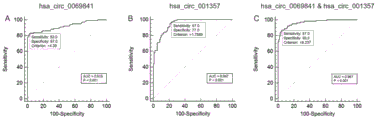
FIG. 2 is a ROC curve analysis chart of the lung cancer matched tissue of NSCLC obtained by surgical resection (N-100 pairs, wherein adenocarcinoma N-69 pairs and squamous carcinoma N-31 pairs);
FIG. 3 is a graph of ROC curve analysis of bronchial biopsy samples in the present invention (N-90 pairs, where adenocarcinoma N-52 pairs and squamous cell carcinoma N-38 pairs);
FIG. 4 is a graph of ROC curve analysis of exfoliated cell samples by bronchial brush in the present invention (N60 pairs, where adenocarcinoma N39 pairs and squamous carcinoma N21 pairs);
FIG. 5 is a thermograph of differential circRNA in 8 NSCLC tissues and their paired paraneoplastic tissues;
Detailed Description
In order to make the technical solutions of the present application better understood by those skilled in the art, the technical solutions in the embodiments of the present application will be clearly and completely described below with reference to examples, and it is obvious that the described embodiments are only some embodiments of the present application, and not all embodiments. All other embodiments, which can be derived by a person skilled in the art from the embodiments given herein without making any creative effort, shall fall within the protection scope of the present application.
In a first aspect the invention relates to the use of hsa _ circ _001357 and its combination with hsa _ circ _0069841 in the identification of biomarkers of subtype of lung cancer. As a preferred experimental protocol, the gene sequence of hsa _ circ _001357 is as follows:
TCTTCCGTGTGTGCTAAGATCGTGCAGCTCCTGGGGCAGAATGAGGTGGACTATCGCCAGAAGCAGGTGGTCATCCTGAGCCAGGATAGCTTCTACCGTGTCCTTACCTCGGAGCAGAAGGCCAAAGCCCTGAAGGGCCAGTTCAACTTTGACCACCCGGATGCCTTTGACAATGAACTCATTCTCAAAACACTCAAAGAAATCACTGAAGGGAAAACAGTCCAGATCCCCGTGTATGACTTTGTCTCCCATTCCCGGAAGGAGGAGACAGTTACTGTCTATCCCGCAGACGTGGTGCTCTTTGAAGGGATCCTGGCCTTCTACTCCCAGGAGGTACGAGACCTGTTCCAGATGAAGCTTTTTGTGGATACAGATGCGGACACCCGGCTCTCACGCAGAGTATTAAGGGACATCAGCGAGAGAGGCAGGGATCTTGAGCAGATTTTATCTCAGTACATTACGTTCGTCAAGCCTGCCTTTGAGGAATTCTGCTTGCCAACAAAGAAGTATGCTGATGTGATCATCCCTAGAGGTGCAGATAATCTGGTGGCCATCAACCTCATCGTGCAGCACATCCAGGACATCCTGAATGGAGGGCCCTCCAAACGGCAGACCAATGGCTGTCTCAACGGCTACACCCCTTCACGCAAGAGGCAGGCATCGGAGTCCAGCAGCAGGCCGCATTGACCCGTCTCCATCGGACCCCAGCCCCTATCTCCAAGAGACAGAGGAGGG。
in a second aspect of the invention, there is provided a reagent for detecting the hsa _ circ _001357 gene and its combination with the hsa _ circ _0069841 gene, which is a primer set for amplifying the hsa _ circ _001357 gene, a primer set for amplifying the hsa _ circ _0069841 gene and a primer set for amplifying the U6 gene.
As a preferred embodiment, the primer pair for amplifying the hsa _ circ _001357 gene comprises the following sequences:
F:GCATTGACCCGTCTCCATC,
R:CCAGGAGCTGCACGATCTTA。
as a further preferred embodiment, the primer pair for amplifying the hsa _ circ _0069841 gene comprises the following sequences:
F:AGACACTGATGGGACTGAGG,
R:GTTGCAAAGCCTCCTCTGTT。
as a further preferred embodiment, the primer pair for amplifying the U6 gene comprises the following sequences:
F:CTCGCTTCGGCAGCACA,
R:AACGCTTCACGAATTTGCGT。
in a third aspect of the present invention, there is provided a kit or gene chip for discriminating a subtype of lung cancer, comprising a reagent for detecting hsa _ circ _001357 gene and its combination with hsa _ circ _0069841 as described above, the reagent being a primer pair for amplifying hsa _ circ _001357 gene and a primer pair for amplifying U6 gene; the reagents can also be a primer pair for amplifying the hsa _ circ _001357 gene, a primer pair for amplifying the hsa _ circ _0069841 gene and a primer pair for amplifying the U6 gene.
Example 1circRNA Gene chip analysis
8 NSCLC (non-small cell lung cancer) patient tissues and matched paracancerous tissues are collected and subjected to circRNA gene chip analysis, and different circRNAs are selected by taking log2FC as more than or equal to 1 and P as less than 0.05 as standards, and the result is shown in figure 5. From FIG. 5, it can be derived that the differences were most significant hsa _ circ _0069841, followed by hsa _ circ _001357, and that both hsa _ circ _0069841 and hsa _ circ _001357 were highly expressed in NSCLC tissue.
Example 2
And detecting the expression levels of hsa _ circ _0069841 and hsa _ circ _001357 in lung cancer paired tissues, bronchial biopsy sample tissues and bronchial brush detection exfoliated cells by using an RT-qPCR method. The primer sequence is as follows:
wherein, the primer sequence of hsa _ circ _0069841
F:AGACACTGATGGGACTGAGG
R:GTTGCAAAGCCTCCTCTGTT
Primer sequence of hsa _ circ _001357
F:GCATTGACCCGTCTCCATC
R:CCAGGAGCTGCACGATCTTA
Primer sequence of U6
F:CTCGCTTCGGCAGCACA
R:AACGCTTCACGAATTTGCGT
And a receiver operating curve (ROC curve) was plotted to investigate the sensitivity and specificity of hsa _ circ _0069841 and hsa _ circ _001357 in diagnosing NSCLC alone and in combination, and in differentiating between adenocarcinoma and squamous carcinoma.
The specific experiment is as follows:
ROC curve analysis of NSCLC (non-small cell lung carcinoma) matched tissues by surgical resection, the number of samples is 100 pairs.
Collecting 100 pairs of NSCLC patient tissues and matched paracarcinoma tissues, cutting soybean grains, grinding, extracting RNA, detecting the relative expression of the combination of hsa _ circ _0069841 and hsa _ circ _001357 and hsa _ circ _0069841 in the NSCLC tissues by using an RT-qPCR method, drawing ROC curves respectively and calculating the value of AUC, wherein the algorithm adopts a 2^ Δ CT method, wherein the Δ Δ Δ CT is Δ CT in the cancer tissues and in the paracarcinoma tissues, and the Δ CT is the value of a target gene CT-Nethern U6CT, and the result is shown in figure 1. As can be seen from FIG. 1, hsa _ circ _0069841, hsa _ circ _001357, and the combination of hsa _ circ _0069841 and hsa _ circ _001357 were found in 100 pairs of NSCLC tissues and their matched paracancerous tissues to have high specificity and sensitivity in detecting NSCLC tissues, so that hsa _ circ _0069841, hsa _ circ _001357, and the combination of hsa _ circ _0069841 and hsa _ circ _001357 were able to identify NSCLC tissues.
ROC curve analysis of the surgically excised NSCLC paired tissues, the number of samples was 100 pairs, 69 pairs of adenocarcinoma samples and 31 pairs of squamous carcinoma samples, as training set.
Collecting 100 NSCLC patient tissues and matching paracarcinoma tissues, wherein the adenocarcinoma samples are 69 pairs, the squamous carcinoma samples are 31 pairs, cutting soybean grains, grinding, extracting RNA, detecting the relative expression amounts of hsa _ circ _0069841 and hsa _ circ _001357, and hsa _ circ _0069841 and hsa _ circ _001357 of adenocarcinoma and squamous carcinoma in the NSCLC tissues by adopting an RT-qPCR method, respectively drawing ROC curves and calculating the value of AUC, and the algorithm adopts a 2^ Δ CT method, wherein the Δ CT is the Δ CT in the cancer tissues and the target gene CT-reference U6CT value, and the result is shown in figure 2. As can be seen from FIG. 2, hsa _ circ _0069841, hsa _ circ _001357, and the combination of hsa _ circ _0069841 and hsa _ circ _001357 all had a better effect in identifying squamous and adenocarcinoma in NSCLC tissue.
Establishing an identification model by taking the NSCLC paired tissues as a training set through the surgical excision, obtaining an identification equation, and then verifying the identification model and the identification equation through a verification set
The ROC curve analysis of bronchial biopsy sample tissue, the number of samples is 90 pairs, wherein the adenocarcinoma sample is 52 pairs and the squamous carcinoma sample is 28 pairs, as the validation group.
Relative expression amounts of the combinations of the adenocarcinoma and the squamous carcinoma of hsa _ circ _0069841 and hsa _ circ _001357 and hsa _ circ _0069841 and hsa _ circ _001357 in the biopsy sample tissue were identified, and ROC curves were plotted by the identification model and the identification equation, and the value of AUC was calculated, and the results are shown in fig. 3. As shown in FIG. 3, the identification model can identify adenocarcinoma and squamous carcinoma through hsa _ circ _0069841 and hsa _ circ _001357 and the combination of hsa _ circ _0069841 and hsa _ circ _001357, and the established identification model is accurate.
And performing ROC curve analysis on the samples of the exfoliated cells detected by the bronchial brush, wherein the number of the samples is 60 pairs, 39 pairs of adenocarcinoma samples are obtained, and 21 pairs of squamous carcinoma samples are obtained, and the samples are used as a test group.
Respectively drawing a ROC curve for distinguishing adenocarcinoma from squamous carcinoma in the hsa _ circ _0069841 sample of the bronchial tube brush test cell, a ROC curve for distinguishing adenocarcinoma from squamous carcinoma in the hsa _ circ _001357 sample of the bronchial tube brush test cell, a ROC curve for distinguishing adenocarcinoma from squamous carcinoma in the hsa _ circ _0069841 and hsa _ circ _001357 combined in the hsa _ circ _001357 sample of the bronchial tube brush test cell, a ROC curve for distinguishing adenocarcinoma from squamous carcinoma in the hsa _ circ _0058040 sample of the bronchial tube brush test cell, and a ROC curve for distinguishing adenocarcinoma from squamous carcinoma in the hsa _ circ _0069841 and hsa _ circ _000058040 combined diagnosis in the hsa _ circ _0069841 sample of the bronchial tube brush test cell. Wherein, the relative expression level of adenocarcinoma and squamous carcinoma in the biopsy sample tissue is detected by a combination of hsa _ circ _0058040, hsa _ circ _0069841 and hsa _ circ _000058040 through an RT-qPCR method, and the preferable primer pair of hsa _ circ _000058040 is as follows:
F:CGTGAAGCCAGGGAACAAAA;
R:TGCATGCTTTGAAGGAAGAACT。
the algorithm for calculating AUC still uses the 2^ Δ Δ CT method, where Δ Δ CT is Δ CT in cancer tissue- Δ CT in paracancer tissue, and Δ CT is the value of CT-internal reference U6CT for the target gene, as shown in fig. 4, and the area under the curve is calculated respectively, it can be seen that hsa _ circ _0069841, hsa _ circ _001357, hsa _ circ _0069841 and hsa _ circ _001357 combine to identify adenocarcinoma and squamous carcinoma with better discrimination ability than hsa _ circ _0058040, and as shown by experimental data, only hsa _ circ _0069841 and hsa _ circ _001357 combine to identify the best specificity and sensitivity for adenocarcinoma and squamous carcinoma. Even the hsa _ circ _0058040 gene, which has important effects on the proliferation, apoptosis, drug sensitivity, etc. of NSCLC cells in the prior art, cannot identify adenocarcinoma and squamous carcinoma in NSCLC tissues by combining with hsa _ circ _ 0069841.
The above description is only a preferred embodiment of the present invention, and it should be noted that, for those skilled in the art, several modifications and additions can be made without departing from the method of the present invention, and these modifications and additions should also be regarded as the protection scope of the present invention.
Claims (2)
1. Use of a reagent for detecting an expression amount of hsa _ circ _001357 and hsa _ circ _0069841 in combination for preparing a kit for identifying a non-small cell lung cancer subtype, which is adenocarcinoma or squamous carcinoma, comprising a primer pair for amplifying hsa _ circ _001357, a primer pair for amplifying hsa _ circ _0069841, and a primer pair for amplifying U6 gene, wherein
The primer pair sequences for amplifying hsa _ circ _001357 are as follows:
F: GCATTGACCCGTCTCCATC,
R: CCAGGAGCTGCACGATCTTA;
the primer pair sequences for amplifying hsa _ circ _0069841 are shown below:
F: AGACACTGATGGGACTGAGG,
R: GTTGCAAAGCCTCCTCTGTT;
the sequences of the primer pairs for amplifying the U6 gene are shown as follows:
F: CTCGCTTCGGCAGCACA,
R: AACGCTTCACGAATTTGCGT。
2. the use of claim 1, wherein the hsa _ circ _001357 sequence is as follows: UCUUCCGUGUGUGCUAAGAUCGUGCAGCUCCUGGGGCAGAAUGAGGUGGACUAUCGCCAGAAGCAGGUGGUCAUCCUGAGCCAGGAUAGCUUCUACCGUGUCCUUACCUCGGAGCAGAAGGCCAAAGCCCUGAAGGGCCAGUUCAACUUUGACCACCCGGAUGCCUUUGACAAUGAACUCAUUCUCAAAACACUCAAAGAAAUCACUGAAGGGAAAACAGUCCAGAUCCCCGUGUAUGACUUUGUCUCCCAUUCCCGGAAGGAGGAGACAGUUACUGUCUAUCCCGCAGACGUGGUGCUCUUUGAAGGGAUCCUGGCCUUCUACUCCCAGGAGGUACGAGACCUGUUCCAGAUGAAGCUUUUUGUGGAUACAGAUGCGGACACCCGGCUCUCACGCAGAGUAUUAAGGGACAUCAGCGAGAGAGGCAGGGAUCUUGAGCAGAUUUUAUCUCAGUACAUUACGUUCGUCAAGCCUGCCUUUGAGGAAUUCUGCUUGCCAACAAAGAAGUAUGCUGAUGUGAUCAUCCCUAGAGGUGCAGAUAAUCUGGUGGCCAUCAACCUCAUCGUGCAGCACAUCCAGGACAUCCUGAAUGGAGGGCCCUCCAAACGGCAGACCAAUGGCUGUCUCAACGGCUACACCCCUUCACGCAAGAGGCAGGCAUCGGAGUCCAGCAGCAGGCCGCAUUGACCCGUCUCCAUCGGACCCCAGCCCCUAUCUCCAAGAGACAGAGGAGGG are provided.
Priority Applications (1)
| Application Number | Priority Date | Filing Date | Title |
|---|---|---|---|
| CN202011395030.9A CN112375826B (en) | 2020-12-03 | 2020-12-03 | Circular RNA composition marker for identifying non-small cell lung cancer subtype and application thereof |
Applications Claiming Priority (1)
| Application Number | Priority Date | Filing Date | Title |
|---|---|---|---|
| CN202011395030.9A CN112375826B (en) | 2020-12-03 | 2020-12-03 | Circular RNA composition marker for identifying non-small cell lung cancer subtype and application thereof |
Publications (2)
| Publication Number | Publication Date |
|---|---|
| CN112375826A CN112375826A (en) | 2021-02-19 |
| CN112375826B true CN112375826B (en) | 2021-08-27 |
Family
ID=74590471
Family Applications (1)
| Application Number | Title | Priority Date | Filing Date |
|---|---|---|---|
| CN202011395030.9A Active CN112375826B (en) | 2020-12-03 | 2020-12-03 | Circular RNA composition marker for identifying non-small cell lung cancer subtype and application thereof |
Country Status (1)
| Country | Link |
|---|---|
| CN (1) | CN112375826B (en) |
Families Citing this family (3)
| Publication number | Priority date | Publication date | Assignee | Title |
|---|---|---|---|---|
| CN113186287B (en) * | 2021-05-10 | 2023-03-24 | 深圳康华君泰生物科技有限公司 | Biomarker for non-small cell lung cancer typing and application thereof |
| CN116144772B (en) * | 2022-11-18 | 2023-08-25 | 昆明医科大学第一附属医院 | Application of Hsa_circ_0006117 in preparation of lung adenocarcinoma treatment drugs |
| CN116103401A (en) * | 2023-01-03 | 2023-05-12 | 南京中医药大学 | Application of primers for detecting biomarkers in preparation of non-small cell lung cancer detection reagents |
Family Cites Families (4)
| Publication number | Priority date | Publication date | Assignee | Title |
|---|---|---|---|---|
| CN102839179B (en) * | 2012-09-14 | 2014-10-29 | 复旦大学附属中山医院 | MicroRNA marker for identifying subtypes of lung cancer and application of microRNA marker |
| CN107208131A (en) * | 2014-05-30 | 2017-09-26 | 基因中心治疗公司 | Method for lung cancer parting |
| CN105154542B (en) * | 2015-09-01 | 2018-04-17 | 杭州源清生物科技有限公司 | One group of gene for being used for lung cancer molecule parting and its application |
| CN111850120B (en) * | 2020-07-08 | 2021-05-28 | 远见生物科技(上海)有限公司 | Diagnostic kit for detecting NSCLC (non-small cell-specific cancer) and use method and application thereof |
-
2020
- 2020-12-03 CN CN202011395030.9A patent/CN112375826B/en active Active
Also Published As
| Publication number | Publication date |
|---|---|
| CN112375826A (en) | 2021-02-19 |
Similar Documents
| Publication | Publication Date | Title |
|---|---|---|
| Tang et al. | Identification of plasma microRNAs as novel noninvasive biomarkers for early detection of lung cancer | |
| Shen et al. | Analysis of MicroRNAs in sputum to improve computed tomography for lung cancer diagnosis | |
| JP7676321B2 (en) | Combination of miRNA markers and kit for diagnosing gastric cancer | |
| CN106661619B (en) | Colorectal cancer detection kit or device and detection method | |
| CN112029863B (en) | Kit or device for detecting biliary tract cancer and detection method | |
| CN112375826B (en) | Circular RNA composition marker for identifying non-small cell lung cancer subtype and application thereof | |
| CN118853879A (en) | Lung cancer detection kit or device and detection method | |
| WO2015071876A2 (en) | Use of microrna markers for diagnosis of thyroid tumors and a diagnostic panel containing such markers. | |
| EP2734636B1 (en) | Micro-rna biomarkers for identifying risk of and/or for diagnosing lung tumour | |
| CN119220676A (en) | Prostate cancer detection kit or device and detection method | |
| CN109837343A (en) | Early stage adenocarcinoma of lung specificity excretion body miRNA and its application | |
| CN107435062B (en) | Peripheral blood gene marker for discriminating benign and malignant pulmonary nodules and application thereof | |
| CN112020566B (en) | Kits, devices and methods for detection of bladder cancer | |
| CN108624688B (en) | Application of hsa _ circ _0012755 as prostate cancer molecular target in preparation of medicines and kits | |
| CN106897579A (en) | New early tumor markers based on chromosomal variation index and its application | |
| KR20130022204A (en) | Method of using ant2 mrna in exosome for breast cancer diagnosis | |
| CN111455053B (en) | Exosomal RNA molecular marker combination for colorectal adenoma diagnosis and its application | |
| CN114015776A (en) | Application of miRNA in predicting sensitivity of lung adenocarcinoma to platinum-containing dual-drug chemotherapy | |
| CN113862369A (en) | Marker related to sensitivity of lung adenocarcinoma to platinum-containing dual-drug chemotherapy and application thereof | |
| CN112501295A (en) | MiRNA combination, kit containing same and application of miRNA combination in lung cancer diagnosis | |
| CN109825597B (en) | Esophageal precancerous lesion miRNAs marker group, application and diagnosis system | |
| WO2020135422A1 (en) | Health risk assessment method | |
| CN107148476B (en) | Head and neck cancer biomarkers and methods of use | |
| CN109182520B (en) | Cervical cancer and precancerous lesion detection kit and application thereof | |
| CN111455051B (en) | Exosomal RNA for diagnosis and prediction of colorectal cancer and its application |
Legal Events
| Date | Code | Title | Description |
|---|---|---|---|
| PB01 | Publication | ||
| PB01 | Publication | ||
| SE01 | Entry into force of request for substantive examination | ||
| SE01 | Entry into force of request for substantive examination | ||
| GR01 | Patent grant | ||
| GR01 | Patent grant |