CN112300153A - Heterocyclic compound, pharmaceutical composition and application - Google Patents
Heterocyclic compound, pharmaceutical composition and application Download PDFInfo
- Publication number
- CN112300153A CN112300153A CN201910680743.0A CN201910680743A CN112300153A CN 112300153 A CN112300153 A CN 112300153A CN 201910680743 A CN201910680743 A CN 201910680743A CN 112300153 A CN112300153 A CN 112300153A
- Authority
- CN
- China
- Prior art keywords
- independently
- group
- heterocycloalkyl
- radical
- hydrogen
- Prior art date
- Legal status (The legal status is an assumption and is not a legal conclusion. Google has not performed a legal analysis and makes no representation as to the accuracy of the status listed.)
- Granted
Links
- 150000002391 heterocyclic compounds Chemical class 0.000 title claims abstract description 28
- 239000008194 pharmaceutical composition Substances 0.000 title claims abstract description 24
- 150000001875 compounds Chemical class 0.000 claims abstract description 117
- 150000003839 salts Chemical class 0.000 claims abstract description 31
- 102200006538 rs121913530 Human genes 0.000 claims abstract description 19
- 239000003814 drug Substances 0.000 claims abstract description 17
- 239000002207 metabolite Substances 0.000 claims abstract description 17
- 239000012453 solvate Substances 0.000 claims abstract description 17
- 229940002612 prodrug Drugs 0.000 claims abstract description 16
- 239000000651 prodrug Substances 0.000 claims abstract description 16
- 206010028980 Neoplasm Diseases 0.000 claims abstract description 12
- 238000002360 preparation method Methods 0.000 claims abstract description 12
- 230000035772 mutation Effects 0.000 claims abstract description 8
- -1 hydroxy, amino Chemical group 0.000 claims description 74
- 239000001257 hydrogen Substances 0.000 claims description 41
- 229910052739 hydrogen Inorganic materials 0.000 claims description 41
- 125000004435 hydrogen atom Chemical class [H]* 0.000 claims description 35
- 150000003254 radicals Chemical class 0.000 claims description 31
- 125000001072 heteroaryl group Chemical group 0.000 claims description 27
- 125000003118 aryl group Chemical group 0.000 claims description 23
- 125000000623 heterocyclic group Chemical group 0.000 claims description 21
- 125000004093 cyano group Chemical group *C#N 0.000 claims description 19
- 125000000217 alkyl group Chemical group 0.000 claims description 18
- 229910052736 halogen Inorganic materials 0.000 claims description 17
- 150000002367 halogens Chemical class 0.000 claims description 17
- 125000000592 heterocycloalkyl group Chemical group 0.000 claims description 17
- 125000000753 cycloalkyl group Chemical group 0.000 claims description 13
- 125000003545 alkoxy group Chemical group 0.000 claims description 12
- 125000006650 (C2-C4) alkynyl group Chemical group 0.000 claims description 11
- 125000004985 dialkyl amino alkyl group Chemical group 0.000 claims description 10
- 125000004438 haloalkoxy group Chemical group 0.000 claims description 10
- 229910052760 oxygen Inorganic materials 0.000 claims description 10
- 125000003710 aryl alkyl group Chemical group 0.000 claims description 9
- 125000002768 hydroxyalkyl group Chemical group 0.000 claims description 9
- 239000000546 pharmaceutical excipient Substances 0.000 claims description 9
- 229920006395 saturated elastomer Polymers 0.000 claims description 9
- 125000003368 amide group Chemical group 0.000 claims description 8
- 229910052717 sulfur Inorganic materials 0.000 claims description 8
- 239000003112 inhibitor Substances 0.000 claims description 7
- 125000002252 acyl group Chemical group 0.000 claims description 6
- 201000011510 cancer Diseases 0.000 claims description 6
- 201000010099 disease Diseases 0.000 claims description 6
- 208000037265 diseases, disorders, signs and symptoms Diseases 0.000 claims description 6
- 125000001495 ethyl group Chemical group [H]C([H])([H])C([H])([H])* 0.000 claims description 6
- 125000004404 heteroalkyl group Chemical group 0.000 claims description 6
- 125000004446 heteroarylalkyl group Chemical group 0.000 claims description 6
- 125000001449 isopropyl group Chemical group [H]C([H])([H])C([H])(*)C([H])([H])[H] 0.000 claims description 6
- 125000002496 methyl group Chemical group [H]C([H])([H])* 0.000 claims description 6
- 125000002757 morpholinyl group Chemical group 0.000 claims description 6
- 125000006716 (C1-C6) heteroalkyl group Chemical group 0.000 claims description 5
- 125000003342 alkenyl group Chemical group 0.000 claims description 5
- 125000004663 dialkyl amino group Chemical group 0.000 claims description 5
- 125000002887 hydroxy group Chemical group [H]O* 0.000 claims description 5
- 125000004193 piperazinyl group Chemical group 0.000 claims description 5
- 125000003386 piperidinyl group Chemical group 0.000 claims description 5
- 125000005962 1,4-oxazepanyl group Chemical group 0.000 claims description 4
- IMNFDUFMRHMDMM-UHFFFAOYSA-N N-Heptane Chemical compound CCCCCCC IMNFDUFMRHMDMM-UHFFFAOYSA-N 0.000 claims description 4
- 125000000113 cyclohexyl group Chemical group [H]C1([H])C([H])([H])C([H])([H])C([H])(*)C([H])([H])C1([H])[H] 0.000 claims description 4
- 125000001559 cyclopropyl group Chemical group [H]C1([H])C([H])([H])C1([H])* 0.000 claims description 4
- 125000001188 haloalkyl group Chemical group 0.000 claims description 4
- 125000004029 hydroxymethyl group Chemical group [H]OC([H])([H])* 0.000 claims description 4
- 125000000956 methoxy group Chemical group [H]C([H])([H])O* 0.000 claims description 4
- 125000000168 pyrrolyl group Chemical group 0.000 claims description 4
- 125000006273 (C1-C3) alkyl group Chemical group 0.000 claims description 3
- 125000006552 (C3-C8) cycloalkyl group Chemical group 0.000 claims description 3
- 125000000278 alkyl amino alkyl group Chemical group 0.000 claims description 3
- 125000002393 azetidinyl group Chemical group 0.000 claims description 3
- 125000001511 cyclopentyl group Chemical group [H]C1([H])C([H])([H])C([H])([H])C([H])(*)C1([H])[H] 0.000 claims description 3
- 125000004984 dialkylaminoalkoxy group Chemical group 0.000 claims description 3
- 125000004415 heterocyclylalkyl group Chemical group 0.000 claims description 3
- 125000002883 imidazolyl group Chemical group 0.000 claims description 3
- 125000001624 naphthyl group Chemical group 0.000 claims description 3
- 125000003566 oxetanyl group Chemical group 0.000 claims description 3
- 125000001997 phenyl group Chemical group [H]C1=C([H])C([H])=C(*)C([H])=C1[H] 0.000 claims description 3
- 125000002023 trifluoromethyl group Chemical group FC(F)(F)* 0.000 claims description 3
- MZVQCMJNVPIDEA-UHFFFAOYSA-N [CH2]CN(CC)CC Chemical group [CH2]CN(CC)CC MZVQCMJNVPIDEA-UHFFFAOYSA-N 0.000 claims description 2
- 125000000218 acetic acid group Chemical group C(C)(=O)* 0.000 claims description 2
- 125000005334 azaindolyl group Chemical group N1N=C(C2=CC=CC=C12)* 0.000 claims description 2
- 125000001164 benzothiazolyl group Chemical group S1C(=NC2=C1C=CC=C2)* 0.000 claims description 2
- 125000004786 difluoromethoxy group Chemical group [H]C(F)(F)O* 0.000 claims description 2
- 125000001028 difluoromethyl group Chemical group [H]C(F)(F)* 0.000 claims description 2
- 125000003453 indazolyl group Chemical group N1N=C(C2=C1C=CC=C2)* 0.000 claims description 2
- 125000001041 indolyl group Chemical group 0.000 claims description 2
- 125000002183 isoquinolinyl group Chemical group C1(=NC=CC2=CC=CC=C12)* 0.000 claims description 2
- HWJRQTQRAADPIC-UHFFFAOYSA-N n-cyanoformamide Chemical compound O=CNC#N HWJRQTQRAADPIC-UHFFFAOYSA-N 0.000 claims description 2
- 125000001436 propyl group Chemical group [H]C([*])([H])C([H])([H])C([H])([H])[H] 0.000 claims description 2
- 125000002943 quinolinyl group Chemical group N1=C(C=CC2=CC=CC=C12)* 0.000 claims description 2
- 125000003718 tetrahydrofuranyl group Chemical group 0.000 claims description 2
- 125000005988 1,1-dioxo-thiomorpholinyl group Chemical group 0.000 claims 1
- 230000002265 prevention Effects 0.000 claims 1
- HNJBEVLQSNELDL-UHFFFAOYSA-N pyrrolidin-2-one Chemical group O=C1CCCN1 HNJBEVLQSNELDL-UHFFFAOYSA-N 0.000 claims 1
- 238000006243 chemical reaction Methods 0.000 description 72
- XEKOWRVHYACXOJ-UHFFFAOYSA-N Ethyl acetate Chemical compound CCOC(C)=O XEKOWRVHYACXOJ-UHFFFAOYSA-N 0.000 description 63
- YMWUJEATGCHHMB-UHFFFAOYSA-N Dichloromethane Chemical compound ClCCl YMWUJEATGCHHMB-UHFFFAOYSA-N 0.000 description 51
- OKKJLVBELUTLKV-UHFFFAOYSA-N Methanol Chemical compound OC OKKJLVBELUTLKV-UHFFFAOYSA-N 0.000 description 42
- 238000004949 mass spectrometry Methods 0.000 description 26
- 238000004809 thin layer chromatography Methods 0.000 description 26
- 210000004027 cell Anatomy 0.000 description 25
- 239000000243 solution Substances 0.000 description 24
- 230000015572 biosynthetic process Effects 0.000 description 22
- 239000007787 solid Substances 0.000 description 22
- 238000003786 synthesis reaction Methods 0.000 description 22
- IJGRMHOSHXDMSA-UHFFFAOYSA-N Atomic nitrogen Chemical compound N#N IJGRMHOSHXDMSA-UHFFFAOYSA-N 0.000 description 21
- ZMANZCXQSJIPKH-UHFFFAOYSA-N Triethylamine Chemical compound CCN(CC)CC ZMANZCXQSJIPKH-UHFFFAOYSA-N 0.000 description 18
- 125000006413 ring segment Chemical group 0.000 description 16
- PMZURENOXWZQFD-UHFFFAOYSA-L Sodium Sulfate Chemical compound [Na+].[Na+].[O-]S([O-])(=O)=O PMZURENOXWZQFD-UHFFFAOYSA-L 0.000 description 14
- 238000001914 filtration Methods 0.000 description 14
- 239000012074 organic phase Substances 0.000 description 14
- 229910052757 nitrogen Inorganic materials 0.000 description 13
- VEXZGXHMUGYJMC-UHFFFAOYSA-N Hydrochloric acid Chemical compound Cl VEXZGXHMUGYJMC-UHFFFAOYSA-N 0.000 description 12
- 239000000203 mixture Substances 0.000 description 12
- 238000010898 silica gel chromatography Methods 0.000 description 12
- XLYOFNOQVPJJNP-UHFFFAOYSA-N water Substances O XLYOFNOQVPJJNP-UHFFFAOYSA-N 0.000 description 12
- 239000002274 desiccant Substances 0.000 description 11
- 230000000694 effects Effects 0.000 description 11
- OKKJLVBELUTLKV-MZCSYVLQSA-N Deuterated methanol Chemical compound [2H]OC([2H])([2H])[2H] OKKJLVBELUTLKV-MZCSYVLQSA-N 0.000 description 10
- 125000004122 cyclic group Chemical group 0.000 description 10
- 238000000034 method Methods 0.000 description 10
- 238000005160 1H NMR spectroscopy Methods 0.000 description 9
- HIXDQWDOVZUNNA-UHFFFAOYSA-N 2-(3,4-dimethoxyphenyl)-5-hydroxy-7-methoxychromen-4-one Chemical compound C=1C(OC)=CC(O)=C(C(C=2)=O)C=1OC=2C1=CC=C(OC)C(OC)=C1 HIXDQWDOVZUNNA-UHFFFAOYSA-N 0.000 description 9
- IAZDPXIOMUYVGZ-UHFFFAOYSA-N Dimethylsulphoxide Chemical compound CS(C)=O IAZDPXIOMUYVGZ-UHFFFAOYSA-N 0.000 description 9
- 102100030708 GTPase KRas Human genes 0.000 description 9
- 101000584612 Homo sapiens GTPase KRas Proteins 0.000 description 9
- RTZKZFJDLAIYFH-UHFFFAOYSA-N ether Substances CCOCC RTZKZFJDLAIYFH-UHFFFAOYSA-N 0.000 description 9
- QGZKDVFQNNGYKY-UHFFFAOYSA-N Ammonia Chemical compound N QGZKDVFQNNGYKY-UHFFFAOYSA-N 0.000 description 8
- 125000002950 monocyclic group Chemical group 0.000 description 8
- KDLHZDBZIXYQEI-UHFFFAOYSA-N palladium Substances [Pd] KDLHZDBZIXYQEI-UHFFFAOYSA-N 0.000 description 8
- UFHFLCQGNIYNRP-UHFFFAOYSA-N Hydrogen Chemical compound [H][H] UFHFLCQGNIYNRP-UHFFFAOYSA-N 0.000 description 7
- 206010061902 Pancreatic neoplasm Diseases 0.000 description 7
- 239000002253 acid Substances 0.000 description 7
- 239000000460 chlorine Substances 0.000 description 7
- 238000004807 desolvation Methods 0.000 description 7
- 229940125399 kras g12c inhibitor Drugs 0.000 description 7
- 239000003208 petroleum Substances 0.000 description 7
- RYHBNJHYFVUHQT-UHFFFAOYSA-N 1,4-Dioxane Chemical compound C1COCCO1 RYHBNJHYFVUHQT-UHFFFAOYSA-N 0.000 description 6
- VHUUQVKOLVNVRT-UHFFFAOYSA-N Ammonium hydroxide Chemical compound [NH4+].[OH-] VHUUQVKOLVNVRT-UHFFFAOYSA-N 0.000 description 6
- 125000004432 carbon atom Chemical group C* 0.000 description 6
- 229940079593 drug Drugs 0.000 description 6
- 125000005842 heteroatom Chemical group 0.000 description 6
- 230000002401 inhibitory effect Effects 0.000 description 6
- 208000015486 malignant pancreatic neoplasm Diseases 0.000 description 6
- 208000002154 non-small cell lung carcinoma Diseases 0.000 description 6
- 201000002528 pancreatic cancer Diseases 0.000 description 6
- 208000008443 pancreatic carcinoma Diseases 0.000 description 6
- 125000003003 spiro group Chemical group 0.000 description 6
- 208000029729 tumor suppressor gene on chromosome 11 Diseases 0.000 description 6
- 125000004429 atom Chemical group 0.000 description 5
- 125000002619 bicyclic group Chemical group 0.000 description 5
- 238000009472 formulation Methods 0.000 description 5
- 239000007924 injection Substances 0.000 description 5
- 238000002347 injection Methods 0.000 description 5
- 239000007788 liquid Substances 0.000 description 5
- QJGQUHMNIGDVPM-UHFFFAOYSA-N nitrogen group Chemical group [N] QJGQUHMNIGDVPM-UHFFFAOYSA-N 0.000 description 5
- 238000000746 purification Methods 0.000 description 5
- OKTJSMMVPCPJKN-UHFFFAOYSA-N Carbon Chemical compound [C] OKTJSMMVPCPJKN-UHFFFAOYSA-N 0.000 description 4
- 206010009944 Colon cancer Diseases 0.000 description 4
- VYPSYNLAJGMNEJ-UHFFFAOYSA-N Silicium dioxide Chemical compound O=[Si]=O VYPSYNLAJGMNEJ-UHFFFAOYSA-N 0.000 description 4
- UIIMBOGNXHQVGW-UHFFFAOYSA-M Sodium bicarbonate Chemical class [Na+].OC([O-])=O UIIMBOGNXHQVGW-UHFFFAOYSA-M 0.000 description 4
- 239000004480 active ingredient Substances 0.000 description 4
- QVGXLLKOCUKJST-UHFFFAOYSA-N atomic oxygen Chemical compound [O] QVGXLLKOCUKJST-UHFFFAOYSA-N 0.000 description 4
- FJDQFPXHSGXQBY-UHFFFAOYSA-L caesium carbonate Chemical compound [Cs+].[Cs+].[O-]C([O-])=O FJDQFPXHSGXQBY-UHFFFAOYSA-L 0.000 description 4
- 229910000024 caesium carbonate Inorganic materials 0.000 description 4
- 230000005764 inhibitory process Effects 0.000 description 4
- 238000004895 liquid chromatography mass spectrometry Methods 0.000 description 4
- 239000001301 oxygen Substances 0.000 description 4
- 125000003367 polycyclic group Chemical group 0.000 description 4
- 238000002953 preparative HPLC Methods 0.000 description 4
- 102000016914 ras Proteins Human genes 0.000 description 4
- 239000000741 silica gel Substances 0.000 description 4
- 229910002027 silica gel Inorganic materials 0.000 description 4
- 239000000126 substance Substances 0.000 description 4
- 125000001424 substituent group Chemical group 0.000 description 4
- 238000012360 testing method Methods 0.000 description 4
- 208000010507 Adenocarcinoma of Lung Diseases 0.000 description 3
- ZAMOUSCENKQFHK-UHFFFAOYSA-N Chlorine atom Chemical compound [Cl] ZAMOUSCENKQFHK-UHFFFAOYSA-N 0.000 description 3
- 208000001333 Colorectal Neoplasms Diseases 0.000 description 3
- PXGOKWXKJXAPGV-UHFFFAOYSA-N Fluorine Chemical compound FF PXGOKWXKJXAPGV-UHFFFAOYSA-N 0.000 description 3
- 206010064571 Gene mutation Diseases 0.000 description 3
- 101150105104 Kras gene Proteins 0.000 description 3
- 238000005481 NMR spectroscopy Methods 0.000 description 3
- FAPWRFPIFSIZLT-UHFFFAOYSA-M Sodium chloride Chemical compound [Na+].[Cl-] FAPWRFPIFSIZLT-UHFFFAOYSA-M 0.000 description 3
- YXFVVABEGXRONW-UHFFFAOYSA-N Toluene Chemical compound CC1=CC=CC=C1 YXFVVABEGXRONW-UHFFFAOYSA-N 0.000 description 3
- 230000002378 acidificating effect Effects 0.000 description 3
- 229910052799 carbon Inorganic materials 0.000 description 3
- JYFJNCCRKBBRKZ-UHFFFAOYSA-N chembl194764 Chemical compound C=1C=CC=C(F)C=1CCN1C(=O)C(CC)=C(C)N=C1C1=CC=CC=C1O JYFJNCCRKBBRKZ-UHFFFAOYSA-N 0.000 description 3
- 239000003153 chemical reaction reagent Substances 0.000 description 3
- 229910052801 chlorine Inorganic materials 0.000 description 3
- 238000001816 cooling Methods 0.000 description 3
- 239000000839 emulsion Substances 0.000 description 3
- 239000011737 fluorine Substances 0.000 description 3
- 229910052731 fluorine Inorganic materials 0.000 description 3
- 150000004677 hydrates Chemical class 0.000 description 3
- 201000005249 lung adenocarcinoma Diseases 0.000 description 3
- 230000007935 neutral effect Effects 0.000 description 3
- 230000002018 overexpression Effects 0.000 description 3
- 150000003384 small molecules Chemical class 0.000 description 3
- 239000007858 starting material Substances 0.000 description 3
- NSILYQWHARROMG-UHFFFAOYSA-N tert-butyl 3-(hydroxymethyl)piperazine-1-carboxylate Chemical compound CC(C)(C)OC(=O)N1CCNC(CO)C1 NSILYQWHARROMG-UHFFFAOYSA-N 0.000 description 3
- QCQCHGYLTSGIGX-GHXANHINSA-N 4-[[(3ar,5ar,5br,7ar,9s,11ar,11br,13as)-5a,5b,8,8,11a-pentamethyl-3a-[(5-methylpyridine-3-carbonyl)amino]-2-oxo-1-propan-2-yl-4,5,6,7,7a,9,10,11,11b,12,13,13a-dodecahydro-3h-cyclopenta[a]chrysen-9-yl]oxy]-2,2-dimethyl-4-oxobutanoic acid Chemical compound N([C@@]12CC[C@@]3(C)[C@]4(C)CC[C@H]5C(C)(C)[C@@H](OC(=O)CC(C)(C)C(O)=O)CC[C@]5(C)[C@H]4CC[C@@H]3C1=C(C(C2)=O)C(C)C)C(=O)C1=CN=CC(C)=C1 QCQCHGYLTSGIGX-GHXANHINSA-N 0.000 description 2
- XKRFYHLGVUSROY-UHFFFAOYSA-N Argon Chemical compound [Ar] XKRFYHLGVUSROY-UHFFFAOYSA-N 0.000 description 2
- WKBOTKDWSSQWDR-UHFFFAOYSA-N Bromine atom Chemical compound [Br] WKBOTKDWSSQWDR-UHFFFAOYSA-N 0.000 description 2
- JGFZNNIVVJXRND-UHFFFAOYSA-N N,N-Diisopropylethylamine (DIPEA) Chemical compound CCN(C(C)C)C(C)C JGFZNNIVVJXRND-UHFFFAOYSA-N 0.000 description 2
- 108700020796 Oncogene Proteins 0.000 description 2
- NBIIXXVUZAFLBC-UHFFFAOYSA-N Phosphoric acid Chemical compound OP(O)(O)=O NBIIXXVUZAFLBC-UHFFFAOYSA-N 0.000 description 2
- NINIDFKCEFEMDL-UHFFFAOYSA-N Sulfur Chemical compound [S] NINIDFKCEFEMDL-UHFFFAOYSA-N 0.000 description 2
- QAOWNCQODCNURD-UHFFFAOYSA-N Sulfuric acid Chemical compound OS(O)(=O)=O QAOWNCQODCNURD-UHFFFAOYSA-N 0.000 description 2
- HEDRZPFGACZZDS-MICDWDOJSA-N Trichloro(2H)methane Chemical compound [2H]C(Cl)(Cl)Cl HEDRZPFGACZZDS-MICDWDOJSA-N 0.000 description 2
- VCOJPHPOVDIRJK-LURJTMIESA-N [(2s)-1-methylpyrrolidin-2-yl]methanol Chemical compound CN1CCC[C@H]1CO VCOJPHPOVDIRJK-LURJTMIESA-N 0.000 description 2
- 238000002835 absorbance Methods 0.000 description 2
- 238000010521 absorption reaction Methods 0.000 description 2
- 150000007513 acids Chemical class 0.000 description 2
- HFBMWMNUJJDEQZ-UHFFFAOYSA-N acryloyl chloride Chemical compound ClC(=O)C=C HFBMWMNUJJDEQZ-UHFFFAOYSA-N 0.000 description 2
- MWPLVEDNUUSJAV-UHFFFAOYSA-N anthracene Chemical compound C1=CC=CC2=CC3=CC=CC=C3C=C21 MWPLVEDNUUSJAV-UHFFFAOYSA-N 0.000 description 2
- 239000012300 argon atmosphere Substances 0.000 description 2
- GDTBXPJZTBHREO-UHFFFAOYSA-N bromine Substances BrBr GDTBXPJZTBHREO-UHFFFAOYSA-N 0.000 description 2
- 229910052794 bromium Inorganic materials 0.000 description 2
- 230000004663 cell proliferation Effects 0.000 description 2
- 238000012054 celltiter-glo Methods 0.000 description 2
- 239000003795 chemical substances by application Substances 0.000 description 2
- 208000029742 colonic neoplasm Diseases 0.000 description 2
- 238000004440 column chromatography Methods 0.000 description 2
- 125000001995 cyclobutyl group Chemical group [H]C1([H])C([H])([H])C([H])(*)C1([H])[H] 0.000 description 2
- MXFYYFVVIIWKFE-UHFFFAOYSA-N dicyclohexyl-[2-[2,6-di(propan-2-yloxy)phenyl]phenyl]phosphane Chemical compound CC(C)OC1=CC=CC(OC(C)C)=C1C1=CC=CC=C1P(C1CCCCC1)C1CCCCC1 MXFYYFVVIIWKFE-UHFFFAOYSA-N 0.000 description 2
- 238000010790 dilution Methods 0.000 description 2
- 239000012895 dilution Substances 0.000 description 2
- 238000004090 dissolution Methods 0.000 description 2
- MVEAAGBEUOMFRX-UHFFFAOYSA-N ethyl acetate;hydrochloride Chemical compound Cl.CCOC(C)=O MVEAAGBEUOMFRX-UHFFFAOYSA-N 0.000 description 2
- 238000002474 experimental method Methods 0.000 description 2
- 238000000605 extraction Methods 0.000 description 2
- 239000000945 filler Substances 0.000 description 2
- 239000000706 filtrate Substances 0.000 description 2
- 125000000524 functional group Chemical group 0.000 description 2
- 238000010438 heat treatment Methods 0.000 description 2
- 239000005457 ice water Substances 0.000 description 2
- 239000012442 inert solvent Substances 0.000 description 2
- 238000007918 intramuscular administration Methods 0.000 description 2
- 238000001990 intravenous administration Methods 0.000 description 2
- 239000012669 liquid formulation Substances 0.000 description 2
- 208000020816 lung neoplasm Diseases 0.000 description 2
- 239000000463 material Substances 0.000 description 2
- 125000000325 methylidene group Chemical group [H]C([H])=* 0.000 description 2
- 239000012299 nitrogen atmosphere Substances 0.000 description 2
- 150000007524 organic acids Chemical class 0.000 description 2
- 235000005985 organic acids Nutrition 0.000 description 2
- 238000007911 parenteral administration Methods 0.000 description 2
- 229940124531 pharmaceutical excipient Drugs 0.000 description 2
- XHXFXVLFKHQFAL-UHFFFAOYSA-N phosphoryl trichloride Chemical compound ClP(Cl)(Cl)=O XHXFXVLFKHQFAL-UHFFFAOYSA-N 0.000 description 2
- 108010014186 ras Proteins Proteins 0.000 description 2
- 238000012827 research and development Methods 0.000 description 2
- 102200006532 rs112445441 Human genes 0.000 description 2
- 102200006541 rs121913530 Human genes 0.000 description 2
- 239000002904 solvent Substances 0.000 description 2
- 238000003756 stirring Methods 0.000 description 2
- UCSJYZPVAKXKNQ-HZYVHMACSA-N streptomycin Chemical compound CN[C@H]1[C@H](O)[C@@H](O)[C@H](CO)O[C@H]1O[C@@H]1[C@](C=O)(O)[C@H](C)O[C@H]1O[C@@H]1[C@@H](NC(N)=N)[C@H](O)[C@@H](NC(N)=N)[C@H](O)[C@H]1O UCSJYZPVAKXKNQ-HZYVHMACSA-N 0.000 description 2
- 239000011593 sulfur Substances 0.000 description 2
- 239000000725 suspension Substances 0.000 description 2
- DYHSDKLCOJIUFX-UHFFFAOYSA-N tert-butoxycarbonyl anhydride Chemical compound CC(C)(C)OC(=O)OC(=O)OC(C)(C)C DYHSDKLCOJIUFX-UHFFFAOYSA-N 0.000 description 2
- 210000004881 tumor cell Anatomy 0.000 description 2
- WSLDOOZREJYCGB-UHFFFAOYSA-N 1,2-Dichloroethane Chemical compound ClCCCl WSLDOOZREJYCGB-UHFFFAOYSA-N 0.000 description 1
- GWHTZJJRUUTEJJ-UHFFFAOYSA-N 1,2-diazabicyclo[3.1.1]heptane Chemical compound C1N2CC1CCN2 GWHTZJJRUUTEJJ-UHFFFAOYSA-N 0.000 description 1
- QAVIPYUSPQRVKA-UHFFFAOYSA-N 1,2-diazaspiro[3.3]heptane Chemical compound C1CCC21NNC2 QAVIPYUSPQRVKA-UHFFFAOYSA-N 0.000 description 1
- 125000005918 1,2-dimethylbutyl group Chemical group 0.000 description 1
- WORJRXHJTUTINR-UHFFFAOYSA-N 1,4-dioxane;hydron;chloride Chemical compound Cl.C1COCCO1 WORJRXHJTUTINR-UHFFFAOYSA-N 0.000 description 1
- GEQZTCMVWVDEDF-UHFFFAOYSA-N 2-cyanoacetyl chloride Chemical compound ClC(=O)CC#N GEQZTCMVWVDEDF-UHFFFAOYSA-N 0.000 description 1
- 125000006176 2-ethylbutyl group Chemical group [H]C([H])([H])C([H])([H])C([H])(C([H])([H])*)C([H])([H])C([H])([H])[H] 0.000 description 1
- 125000004493 2-methylbut-1-yl group Chemical group CC(C*)CC 0.000 description 1
- 125000004105 2-pyridyl group Chemical group N1=C([*])C([H])=C([H])C([H])=C1[H] 0.000 description 1
- BMYNFMYTOJXKLE-UHFFFAOYSA-N 3-azaniumyl-2-hydroxypropanoate Chemical compound NCC(O)C(O)=O BMYNFMYTOJXKLE-UHFFFAOYSA-N 0.000 description 1
- 125000003542 3-methylbutan-2-yl group Chemical group [H]C([H])([H])C([H])(*)C([H])(C([H])([H])[H])C([H])([H])[H] 0.000 description 1
- 125000003349 3-pyridyl group Chemical group N1=C([H])C([*])=C([H])C([H])=C1[H] 0.000 description 1
- YBLXBXPJJAZHDS-UHFFFAOYSA-N 4-bromo-5-methyl-1h-indazole Chemical compound CC1=CC=C2NN=CC2=C1Br YBLXBXPJJAZHDS-UHFFFAOYSA-N 0.000 description 1
- QGZKDVFQNNGYKY-UHFFFAOYSA-O Ammonium Chemical compound [NH4+] QGZKDVFQNNGYKY-UHFFFAOYSA-O 0.000 description 1
- USFZMSVCRYTOJT-UHFFFAOYSA-N Ammonium acetate Chemical compound N.CC(O)=O USFZMSVCRYTOJT-UHFFFAOYSA-N 0.000 description 1
- 239000005695 Ammonium acetate Substances 0.000 description 1
- 239000004475 Arginine Substances 0.000 description 1
- BVKZGUZCCUSVTD-UHFFFAOYSA-M Bicarbonate Chemical compound OC([O-])=O BVKZGUZCCUSVTD-UHFFFAOYSA-M 0.000 description 1
- 108091003079 Bovine Serum Albumin Proteins 0.000 description 1
- COVZYZSDYWQREU-UHFFFAOYSA-N Busulfan Chemical compound CS(=O)(=O)OCCCCOS(C)(=O)=O COVZYZSDYWQREU-UHFFFAOYSA-N 0.000 description 1
- OYPRJOBELJOOCE-UHFFFAOYSA-N Calcium Chemical compound [Ca] OYPRJOBELJOOCE-UHFFFAOYSA-N 0.000 description 1
- AEMOLEFTQBMNLQ-AQKNRBDQSA-N D-glucopyranuronic acid Chemical compound OC1O[C@H](C(O)=O)[C@@H](O)[C@H](O)[C@H]1O AEMOLEFTQBMNLQ-AQKNRBDQSA-N 0.000 description 1
- IAZDPXIOMUYVGZ-WFGJKAKNSA-N Dimethyl sulfoxide Chemical compound [2H]C([2H])([2H])S(=O)C([2H])([2H])[2H] IAZDPXIOMUYVGZ-WFGJKAKNSA-N 0.000 description 1
- 239000006144 Dulbecco’s modified Eagle's medium Substances 0.000 description 1
- 102000004190 Enzymes Human genes 0.000 description 1
- 108090000790 Enzymes Proteins 0.000 description 1
- VGGSQFUCUMXWEO-UHFFFAOYSA-N Ethene Chemical compound C=C VGGSQFUCUMXWEO-UHFFFAOYSA-N 0.000 description 1
- 239000005977 Ethylene Substances 0.000 description 1
- 102100029974 GTPase HRas Human genes 0.000 description 1
- 102100039788 GTPase NRas Human genes 0.000 description 1
- IAJILQKETJEXLJ-UHFFFAOYSA-N Galacturonsaeure Natural products O=CC(O)C(O)C(O)C(O)C(O)=O IAJILQKETJEXLJ-UHFFFAOYSA-N 0.000 description 1
- 241000282412 Homo Species 0.000 description 1
- 101000584633 Homo sapiens GTPase HRas Proteins 0.000 description 1
- 101000744505 Homo sapiens GTPase NRas Proteins 0.000 description 1
- DGAQECJNVWCQMB-PUAWFVPOSA-M Ilexoside XXIX Chemical compound C[C@@H]1CC[C@@]2(CC[C@@]3(C(=CC[C@H]4[C@]3(CC[C@@H]5[C@@]4(CC[C@@H](C5(C)C)OS(=O)(=O)[O-])C)C)[C@@H]2[C@]1(C)O)C)C(=O)O[C@H]6[C@@H]([C@H]([C@@H]([C@H](O6)CO)O)O)O.[Na+] DGAQECJNVWCQMB-PUAWFVPOSA-M 0.000 description 1
- 229940124785 KRAS inhibitor Drugs 0.000 description 1
- 206010058467 Lung neoplasm malignant Diseases 0.000 description 1
- GRYLNZFGIOXLOG-UHFFFAOYSA-N Nitric acid Chemical compound O[N+]([O-])=O GRYLNZFGIOXLOG-UHFFFAOYSA-N 0.000 description 1
- 102000043276 Oncogene Human genes 0.000 description 1
- 229930182555 Penicillin Natural products 0.000 description 1
- JGSARLDLIJGVTE-MBNYWOFBSA-N Penicillin G Chemical compound N([C@H]1[C@H]2SC([C@@H](N2C1=O)C(O)=O)(C)C)C(=O)CC1=CC=CC=C1 JGSARLDLIJGVTE-MBNYWOFBSA-N 0.000 description 1
- NBIIXXVUZAFLBC-UHFFFAOYSA-L Phosphate ion(2-) Chemical compound OP([O-])([O-])=O NBIIXXVUZAFLBC-UHFFFAOYSA-L 0.000 description 1
- ZLMJMSJWJFRBEC-UHFFFAOYSA-N Potassium Chemical compound [K] ZLMJMSJWJFRBEC-UHFFFAOYSA-N 0.000 description 1
- KEAYESYHFKHZAL-UHFFFAOYSA-N Sodium Chemical compound [Na] KEAYESYHFKHZAL-UHFFFAOYSA-N 0.000 description 1
- 230000005856 abnormality Effects 0.000 description 1
- 239000003070 absorption delaying agent Substances 0.000 description 1
- 239000000853 adhesive Substances 0.000 description 1
- 230000001070 adhesive effect Effects 0.000 description 1
- 239000003463 adsorbent Substances 0.000 description 1
- 239000000443 aerosol Substances 0.000 description 1
- 125000001931 aliphatic group Chemical group 0.000 description 1
- 229910000147 aluminium phosphate Inorganic materials 0.000 description 1
- 150000001413 amino acids Chemical class 0.000 description 1
- 229910021529 ammonia Inorganic materials 0.000 description 1
- 229940043376 ammonium acetate Drugs 0.000 description 1
- 235000019257 ammonium acetate Nutrition 0.000 description 1
- 230000003698 anagen phase Effects 0.000 description 1
- 238000004458 analytical method Methods 0.000 description 1
- 230000000181 anti-adherent effect Effects 0.000 description 1
- 230000000259 anti-tumor effect Effects 0.000 description 1
- 239000003911 antiadherent Substances 0.000 description 1
- 239000002246 antineoplastic agent Substances 0.000 description 1
- 229940041181 antineoplastic drug Drugs 0.000 description 1
- ODKSFYDXXFIFQN-UHFFFAOYSA-N arginine Natural products OC(=O)C(N)CCCNC(N)=N ODKSFYDXXFIFQN-UHFFFAOYSA-N 0.000 description 1
- 229910052786 argon Inorganic materials 0.000 description 1
- 239000012298 atmosphere Substances 0.000 description 1
- 230000009286 beneficial effect Effects 0.000 description 1
- WPYMKLBDIGXBTP-UHFFFAOYSA-N benzoic acid group Chemical group C(C1=CC=CC=C1)(=O)O WPYMKLBDIGXBTP-UHFFFAOYSA-N 0.000 description 1
- HSDAJNMJOMSNEV-UHFFFAOYSA-N benzyl chloroformate Chemical compound ClC(=O)OCC1=CC=CC=C1 HSDAJNMJOMSNEV-UHFFFAOYSA-N 0.000 description 1
- CTOUWUYDDUSBQE-UHFFFAOYSA-N benzyl piperazine-1-carboxylate Chemical compound C1CNCCN1C(=O)OCC1=CC=CC=C1 CTOUWUYDDUSBQE-UHFFFAOYSA-N 0.000 description 1
- 239000011230 binding agent Substances 0.000 description 1
- 230000004071 biological effect Effects 0.000 description 1
- 239000006172 buffering agent Substances 0.000 description 1
- 239000011575 calcium Substances 0.000 description 1
- 229910052791 calcium Inorganic materials 0.000 description 1
- 239000007894 caplet Substances 0.000 description 1
- 239000002775 capsule Substances 0.000 description 1
- BVKZGUZCCUSVTD-UHFFFAOYSA-N carbonic acid Chemical compound OC(O)=O BVKZGUZCCUSVTD-UHFFFAOYSA-N 0.000 description 1
- 230000015556 catabolic process Effects 0.000 description 1
- 238000004113 cell culture Methods 0.000 description 1
- 230000010261 cell growth Effects 0.000 description 1
- 238000012200 cell viability kit Methods 0.000 description 1
- 239000002738 chelating agent Substances 0.000 description 1
- QOPVNWQGBQYBBP-UHFFFAOYSA-N chloroethyl chloroformate Chemical compound CC(Cl)OC(Cl)=O QOPVNWQGBQYBBP-UHFFFAOYSA-N 0.000 description 1
- 239000003086 colorant Substances 0.000 description 1
- 239000000470 constituent Substances 0.000 description 1
- 238000013270 controlled release Methods 0.000 description 1
- 239000006071 cream Substances 0.000 description 1
- WZHCOOQXZCIUNC-UHFFFAOYSA-N cyclandelate Chemical compound C1C(C)(C)CC(C)CC1OC(=O)C(O)C1=CC=CC=C1 WZHCOOQXZCIUNC-UHFFFAOYSA-N 0.000 description 1
- 125000002188 cycloheptatrienyl group Chemical group C1(=CC=CC=CC1)* 0.000 description 1
- 125000000582 cycloheptyl group Chemical group [H]C1([H])C([H])([H])C([H])([H])C([H])([H])C([H])(*)C([H])([H])C1([H])[H] 0.000 description 1
- 125000003678 cyclohexadienyl group Chemical group C1(=CC=CCC1)* 0.000 description 1
- 125000000596 cyclohexenyl group Chemical group C1(=CCCCC1)* 0.000 description 1
- 125000000640 cyclooctyl group Chemical group [H]C1([H])C([H])([H])C([H])([H])C([H])([H])C([H])(*)C([H])([H])C([H])([H])C1([H])[H] 0.000 description 1
- 125000002433 cyclopentenyl group Chemical group C1(=CCCC1)* 0.000 description 1
- 230000007547 defect Effects 0.000 description 1
- 238000006731 degradation reaction Methods 0.000 description 1
- 230000003111 delayed effect Effects 0.000 description 1
- 238000001514 detection method Methods 0.000 description 1
- NBIIXXVUZAFLBC-UHFFFAOYSA-M dihydrogenphosphate Chemical compound OP(O)([O-])=O NBIIXXVUZAFLBC-UHFFFAOYSA-M 0.000 description 1
- 239000003085 diluting agent Substances 0.000 description 1
- 230000008034 disappearance Effects 0.000 description 1
- 239000002552 dosage form Substances 0.000 description 1
- 239000006196 drop Substances 0.000 description 1
- 239000003937 drug carrier Substances 0.000 description 1
- 238000001035 drying Methods 0.000 description 1
- 239000003480 eluent Substances 0.000 description 1
- 239000003995 emulsifying agent Substances 0.000 description 1
- 230000001804 emulsifying effect Effects 0.000 description 1
- 238000005516 engineering process Methods 0.000 description 1
- 102000052116 epidermal growth factor receptor activity proteins Human genes 0.000 description 1
- 108700015053 epidermal growth factor receptor activity proteins Proteins 0.000 description 1
- 239000003889 eye drop Substances 0.000 description 1
- 229940012356 eye drops Drugs 0.000 description 1
- 239000012894 fetal calf serum Substances 0.000 description 1
- 239000000796 flavoring agent Substances 0.000 description 1
- 239000006260 foam Substances 0.000 description 1
- 235000013355 food flavoring agent Nutrition 0.000 description 1
- 235000003599 food sweetener Nutrition 0.000 description 1
- 125000002541 furyl group Chemical group 0.000 description 1
- 239000000499 gel Substances 0.000 description 1
- 239000003349 gelling agent Substances 0.000 description 1
- 229940097043 glucuronic acid Drugs 0.000 description 1
- 239000003979 granulating agent Substances 0.000 description 1
- 239000001963 growth medium Substances 0.000 description 1
- 125000005843 halogen group Chemical group 0.000 description 1
- 150000002390 heteroarenes Chemical class 0.000 description 1
- 238000004128 high performance liquid chromatography Methods 0.000 description 1
- XMBWDFGMSWQBCA-UHFFFAOYSA-N hydrogen iodide Chemical compound I XMBWDFGMSWQBCA-UHFFFAOYSA-N 0.000 description 1
- 238000005984 hydrogenation reaction Methods 0.000 description 1
- QAOWNCQODCNURD-UHFFFAOYSA-M hydrogensulfate Chemical compound OS([O-])(=O)=O QAOWNCQODCNURD-UHFFFAOYSA-M 0.000 description 1
- 229940071870 hydroiodic acid Drugs 0.000 description 1
- 239000007943 implant Substances 0.000 description 1
- 238000000338 in vitro Methods 0.000 description 1
- 238000011534 incubation Methods 0.000 description 1
- 238000001802 infusion Methods 0.000 description 1
- 238000001361 intraarterial administration Methods 0.000 description 1
- PNDPGZBMCMUPRI-UHFFFAOYSA-N iodine Chemical compound II PNDPGZBMCMUPRI-UHFFFAOYSA-N 0.000 description 1
- 229910052740 iodine Inorganic materials 0.000 description 1
- 125000000959 isobutyl group Chemical group [H]C([H])([H])C([H])(C([H])([H])[H])C([H])([H])* 0.000 description 1
- 125000001972 isopentyl group Chemical group [H]C([H])([H])C([H])(C([H])([H])[H])C([H])([H])C([H])([H])* 0.000 description 1
- 231100001231 less toxic Toxicity 0.000 description 1
- 238000012417 linear regression Methods 0.000 description 1
- 239000002502 liposome Substances 0.000 description 1
- 239000008297 liquid dosage form Substances 0.000 description 1
- 239000006210 lotion Substances 0.000 description 1
- 239000007937 lozenge Substances 0.000 description 1
- 239000000314 lubricant Substances 0.000 description 1
- 238000004020 luminiscence type Methods 0.000 description 1
- 201000005202 lung cancer Diseases 0.000 description 1
- 159000000003 magnesium salts Chemical class 0.000 description 1
- 230000003211 malignant effect Effects 0.000 description 1
- 238000004519 manufacturing process Methods 0.000 description 1
- 238000005259 measurement Methods 0.000 description 1
- 239000002609 medium Substances 0.000 description 1
- QARBMVPHQWIHKH-UHFFFAOYSA-N methanesulfonyl chloride Chemical compound CS(Cl)(=O)=O QARBMVPHQWIHKH-UHFFFAOYSA-N 0.000 description 1
- 125000001434 methanylylidene group Chemical group [H]C#[*] 0.000 description 1
- 239000004005 microsphere Substances 0.000 description 1
- 239000012046 mixed solvent Substances 0.000 description 1
- 238000002156 mixing Methods 0.000 description 1
- 238000012986 modification Methods 0.000 description 1
- 230000004048 modification Effects 0.000 description 1
- 230000009149 molecular binding Effects 0.000 description 1
- YOHYSYJDKVYCJI-UHFFFAOYSA-N n-[3-[[6-[3-(trifluoromethyl)anilino]pyrimidin-4-yl]amino]phenyl]cyclopropanecarboxamide Chemical compound FC(F)(F)C1=CC=CC(NC=2N=CN=C(NC=3C=C(NC(=O)C4CC4)C=CC=3)C=2)=C1 YOHYSYJDKVYCJI-UHFFFAOYSA-N 0.000 description 1
- 125000004108 n-butyl group Chemical group [H]C([H])([H])C([H])([H])C([H])([H])C([H])([H])* 0.000 description 1
- 125000001280 n-hexyl group Chemical group C(CCCCC)* 0.000 description 1
- 125000000740 n-pentyl group Chemical group [H]C([H])([H])C([H])([H])C([H])([H])C([H])([H])C([H])([H])* 0.000 description 1
- 125000004123 n-propyl group Chemical group [H]C([H])([H])C([H])([H])C([H])([H])* 0.000 description 1
- 239000007922 nasal spray Substances 0.000 description 1
- 229910017604 nitric acid Inorganic materials 0.000 description 1
- 231100000252 nontoxic Toxicity 0.000 description 1
- 230000003000 nontoxic effect Effects 0.000 description 1
- 239000002674 ointment Substances 0.000 description 1
- 229940126701 oral medication Drugs 0.000 description 1
- 239000006072 paste Substances 0.000 description 1
- 230000037361 pathway Effects 0.000 description 1
- 229940049954 penicillin Drugs 0.000 description 1
- 125000003538 pentan-3-yl group Chemical group [H]C([H])([H])C([H])([H])C([H])(*)C([H])([H])C([H])([H])[H] 0.000 description 1
- 230000003285 pharmacodynamic effect Effects 0.000 description 1
- 230000000704 physical effect Effects 0.000 description 1
- 239000002798 polar solvent Substances 0.000 description 1
- 239000011591 potassium Substances 0.000 description 1
- 229910052700 potassium Inorganic materials 0.000 description 1
- 239000000843 powder Substances 0.000 description 1
- 239000003755 preservative agent Substances 0.000 description 1
- 230000008569 process Effects 0.000 description 1
- 239000000047 product Substances 0.000 description 1
- 230000001737 promoting effect Effects 0.000 description 1
- 125000000561 purinyl group Chemical group N1=C(N=C2N=CNC2=C1)* 0.000 description 1
- 125000000719 pyrrolidinyl group Chemical group 0.000 description 1
- 125000005493 quinolyl group Chemical group 0.000 description 1
- 238000010992 reflux Methods 0.000 description 1
- 239000012744 reinforcing agent Substances 0.000 description 1
- 238000011160 research Methods 0.000 description 1
- 125000002914 sec-butyl group Chemical group [H]C([H])([H])C([H])([H])C([H])(*)C([H])([H])[H] 0.000 description 1
- 238000000926 separation method Methods 0.000 description 1
- 210000002966 serum Anatomy 0.000 description 1
- 230000019491 signal transduction Effects 0.000 description 1
- 239000011734 sodium Substances 0.000 description 1
- 229910052708 sodium Inorganic materials 0.000 description 1
- 229910000030 sodium bicarbonate Inorganic materials 0.000 description 1
- 235000017557 sodium bicarbonate Nutrition 0.000 description 1
- 239000011780 sodium chloride Substances 0.000 description 1
- MNWBNISUBARLIT-UHFFFAOYSA-N sodium cyanide Chemical compound [Na+].N#[C-] MNWBNISUBARLIT-UHFFFAOYSA-N 0.000 description 1
- 229910000104 sodium hydride Inorganic materials 0.000 description 1
- 239000012312 sodium hydride Substances 0.000 description 1
- 239000007901 soft capsule Substances 0.000 description 1
- 230000000087 stabilizing effect Effects 0.000 description 1
- 239000011550 stock solution Substances 0.000 description 1
- 229960005322 streptomycin Drugs 0.000 description 1
- 238000007920 subcutaneous administration Methods 0.000 description 1
- 239000000829 suppository Substances 0.000 description 1
- 239000000375 suspending agent Substances 0.000 description 1
- 239000003765 sweetening agent Substances 0.000 description 1
- 239000003826 tablet Substances 0.000 description 1
- 230000008685 targeting Effects 0.000 description 1
- NSILYQWHARROMG-MRVPVSSYSA-N tert-butyl (3r)-3-(hydroxymethyl)piperazine-1-carboxylate Chemical compound CC(C)(C)OC(=O)N1CCN[C@@H](CO)C1 NSILYQWHARROMG-MRVPVSSYSA-N 0.000 description 1
- NSILYQWHARROMG-QMMMGPOBSA-N tert-butyl (3s)-3-(hydroxymethyl)piperazine-1-carboxylate Chemical compound CC(C)(C)OC(=O)N1CCN[C@H](CO)C1 NSILYQWHARROMG-QMMMGPOBSA-N 0.000 description 1
- ISIJQEHRDSCQIU-UHFFFAOYSA-N tert-butyl 2,7-diazaspiro[4.5]decane-7-carboxylate Chemical compound C1N(C(=O)OC(C)(C)C)CCCC11CNCC1 ISIJQEHRDSCQIU-UHFFFAOYSA-N 0.000 description 1
- 125000000999 tert-butyl group Chemical group [H]C([H])([H])C(*)(C([H])([H])[H])C([H])([H])[H] 0.000 description 1
- CZDYPVPMEAXLPK-UHFFFAOYSA-N tetramethylsilane Chemical compound C[Si](C)(C)C CZDYPVPMEAXLPK-UHFFFAOYSA-N 0.000 description 1
- 229940126585 therapeutic drug Drugs 0.000 description 1
- 125000000335 thiazolyl group Chemical group 0.000 description 1
- 125000004568 thiomorpholinyl group Chemical group 0.000 description 1
- 230000000699 topical effect Effects 0.000 description 1
- 239000012049 topical pharmaceutical composition Substances 0.000 description 1
- 125000004205 trifluoroethyl group Chemical group [H]C([H])(*)C(F)(F)F 0.000 description 1
- 125000000876 trifluoromethoxy group Chemical group FC(F)(F)O* 0.000 description 1
- 238000005406 washing Methods 0.000 description 1
- 239000003643 water by type Substances 0.000 description 1
- 239000000080 wetting agent Substances 0.000 description 1
Classifications
-
- C—CHEMISTRY; METALLURGY
- C07—ORGANIC CHEMISTRY
- C07D—HETEROCYCLIC COMPOUNDS
- C07D471/00—Heterocyclic compounds containing nitrogen atoms as the only ring hetero atoms in the condensed system, at least one ring being a six-membered ring with one nitrogen atom, not provided for by groups C07D451/00 - C07D463/00
- C07D471/02—Heterocyclic compounds containing nitrogen atoms as the only ring hetero atoms in the condensed system, at least one ring being a six-membered ring with one nitrogen atom, not provided for by groups C07D451/00 - C07D463/00 in which the condensed system contains two hetero rings
- C07D471/04—Ortho-condensed systems
-
- A—HUMAN NECESSITIES
- A61—MEDICAL OR VETERINARY SCIENCE; HYGIENE
- A61P—SPECIFIC THERAPEUTIC ACTIVITY OF CHEMICAL COMPOUNDS OR MEDICINAL PREPARATIONS
- A61P35/00—Antineoplastic agents
-
- C—CHEMISTRY; METALLURGY
- C07—ORGANIC CHEMISTRY
- C07D—HETEROCYCLIC COMPOUNDS
- C07D519/00—Heterocyclic compounds containing more than one system of two or more relevant hetero rings condensed among themselves or condensed with a common carbocyclic ring system not provided for in groups C07D453/00 or C07D455/00
-
- C—CHEMISTRY; METALLURGY
- C07—ORGANIC CHEMISTRY
- C07B—GENERAL METHODS OF ORGANIC CHEMISTRY; APPARATUS THEREFOR
- C07B2200/00—Indexing scheme relating to specific properties of organic compounds
- C07B2200/07—Optical isomers
Landscapes
- Chemical & Material Sciences (AREA)
- Organic Chemistry (AREA)
- Health & Medical Sciences (AREA)
- General Chemical & Material Sciences (AREA)
- Medicinal Chemistry (AREA)
- Nuclear Medicine, Radiotherapy & Molecular Imaging (AREA)
- Chemical Kinetics & Catalysis (AREA)
- Pharmacology & Pharmacy (AREA)
- Life Sciences & Earth Sciences (AREA)
- Animal Behavior & Ethology (AREA)
- General Health & Medical Sciences (AREA)
- Public Health (AREA)
- Veterinary Medicine (AREA)
- Pharmaceuticals Containing Other Organic And Inorganic Compounds (AREA)
Abstract
The invention discloses a heterocyclic compound, which is a heterocyclic compound shown in a formula I, pharmaceutically acceptable salt thereof, a stereoisomer thereof, a tautomer thereof, a hydrate thereof, a solvate thereof, a metabolite thereof, or a prodrug thereof. The invention provides heterocyclesThe compound can be used for preparing a medicament for treating and/or preventing cancers related to KRAS G12C mutation. The invention also discloses a pharmaceutical composition containing the heterocyclic compound, and application of the compound shown in the formula I, or pharmaceutically acceptable salt, stereoisomer, tautomer, hydrate, solvate, metabolite and prodrug thereof, or the pharmaceutical composition in preparation of medicaments.
Description
Technical Field
The invention belongs to the technical field of biological medicines, and particularly relates to a heterocyclic compound, a pharmaceutical composition and application.
Background
In the field of cancer research, KRAS is one of the most well-known oncogenes, and the oncogene RAS is mutated in human tumors, accounting for about one-third of all malignant mutations in humans. The RAS family includes HRAS, NRAS and KRAS. KRAS is the major subtype of the RAS protein family, with mutations accounting for 86% of all RAS protein mutations and prevalent in pancreatic, colorectal and lung cancers. KRAS gene mutation exists in 15-30% of patients with non-small cell lung cancer (NSCLC), wherein lung adenocarcinoma accounts for 30-50% and is higher than EGFR, ALK and the like; the probability of KRAS gene mutation abnormality of colorectal cancer patients is 30-35%; in pancreatic cancer, more than 90% of patients present KRAS gene mutations. The KRAS signal pathway is an important anti-tumor pathway, and targeting KRAS signals is becoming an important field for discovering anti-tumor drugs. However, due to the lack of a good small molecule binding cavity on the surface of the KRAS protein, the research and development of KRAS-based small molecule inhibitors is one of the difficulties in the field of medicine, and currently, no KRAS inhibitor medicine is available on the market all over the world, so that the research and development of new KRAS small molecule inhibitors have huge clinical value and broad market prospect.
Disclosure of Invention
The invention aims to overcome the technical defects and provides a heterocyclic compound serving as a KRAS G12C inhibitor, wherein the heterocyclic compound has KRAS G12C inhibitory activity and provides a new choice for the KRAS G12C inhibitor; the second aspect of the invention aims to provide a pharmaceutical composition containing the heterocyclic compound; the object of the third aspect of the invention is to propose the use of the heterocyclic compound.
To achieve the above technical objects, the present invention provides a heterocyclic compound, which is a heterocyclic compound represented by formula I, a pharmaceutically acceptable salt thereof, a stereoisomer thereof, a tautomer thereof, a hydrate thereof, a solvate thereof, a metabolite thereof, or a prodrug thereof:

wherein: a is independently C4-C12Mono-, bridged or spiro-heterocycles of (a); c4-C12Is a saturated or partially saturated mono-heterocyclic, bridged heterocyclic or spiroheterocyclic ring optionally substituted with one or more R9Substituted; the R is9Independently hydrogen, halogen, hydroxy, amino, cyano, C1-C4Alkyl radical, C2-C4Alkenyl radical, C2-C4Alkynyl, C2-C8Heteroalkyl, -C (O) OR5、-C(O)N(R5)2、-N(R5)2(ii) a Wherein, the C1-C4Alkyl radical, C2-C4Alkenyl radical, C2-C4Alkynyl or C2-C8Heteroalkyl is optionally substituted by hydrogen, cyano, halogen, hydroxy, amino, -OR5、-C(O)OR5、-C(O)N(R5)2、-N(R5)2Or heteroaryl;
x is independently (CH)2)nWherein n is equal to 1,2 or 3;
y is independently a single bond, O, S or NR5;
R1Independently is Or
Or Wherein R isAIndependently is hydrogen or C1-C3An alkyl group;RBindependently of one another is hydrogen, C1-C3Alkyl, alkylaminoalkyl, dialkylaminoalkyl or heterocyclylalkyl groups; m is 0 or 1; p is 1 or 2; when in use
 In the case of three bonds, m is equal to 0 and P is equal to 1; when in use
 When it is a double bond, m is equal to 1 and P is equal to 2;
R2independently of one another is hydrogen, C1-C12Alkyl radical, C3-C8Cycloalkyl radical, C1-C12Heteroalkyl, -Z-NR5R6、C3-C8Heterocycloalkyl radical, C3-C8Heterocycloalkyl alkyl, aryl, arylalkyl, heteroaryl or heteroarylalkyl, C1-C12Alkyl radical, C3-C8Cycloalkyl radical, C1-C12Heteroalkyl group, C3-C8Heterocycloalkyl radical, C3-C8Heterocycloalkyl, aryl, arylalkyl, heteroaryl or heteroarylalkyl optionally substituted with one or more R8Substituted; wherein Z is C1-C3An alkenyl group; r5And R6Each independently is hydrogen, acyl, C1-C3Alkyl, heteroalkyl, or hydroxyalkyl; the R is8Independently hydrogen, acyl, amido, hydroxyl, hydroxyalkyl, cyano, halogen, C1-C6Alkyl radical, C1-C6Heteroalkyl, arylalkyl, alkoxy, haloalkoxy, C3-C8Cycloalkyl radical, C3-C8Heterocycloalkyl, alkoxy, dialkylamino, dialkylaminoalkoxy, or dialkylaminoalkyl;
R3independently cycloalkyl, heterocycloalkyl, aryl, heteroaryl, said cycloalkyl, heterocycloalkyl, aryl or heteroaryl optionally substituted with one or more R7Substituted; the R is7Independently hydrogen, hydroxy, amino, cyano, C1-C6Alkyl radical, C3-C8Cycloalkyl, alkoxy, haloalkoxy, heteroalkyl, hydroxyalkyl or Q-haloalkoxy, wherein Q is O or S;
R4independently hydrogen, cyano, halogen, amido, haloalkyl or haloalkoxy.
The technical scheme of the invention also provides a pharmaceutical composition, which contains the compound shown in the formula I, or pharmaceutically acceptable salt, stereoisomer, tautomer, hydrate, solvate, metabolite and prodrug thereof, and at least one pharmaceutically acceptable excipient.
The technical scheme of the invention also provides application of the compound shown in the formula I, or pharmaceutically acceptable salts, stereoisomers, tautomers, hydrates, solvates, metabolites and prodrugs of the compound or the pharmaceutical composition of the compound in preparation of medicines for treating diseases caused by over-expression of KRAS G12C, KRAS G12C inhibitors and treating and/or preventing cancers.
Compared with the prior art, the invention has the beneficial effects that:
1. the heterocyclic compound provided by the invention has KRAS G12C inhibitory activity, provides a new choice for KRAS G12C inhibitors, can be used as a medicament for preparing KRAS G12C inhibitors, is used for preventing and/or treating KRAS G12C mutant diseases and is used for preparing medicaments for treating and/or preventing cancers; the heterocyclic compound has very good inhibition effect on KRAS G12C mutant human non-small cell lung cancer cell NCI-H358 and human pancreatic cancer cell Mia Paca-2 cells;
2. the activity test of related enzyme and cell shows that the heterocyclic compound provided by the invention has excellent cell activity, the IC50 value of the heterocyclic compound for cell proliferation in vitro reaches nM level, and the heterocyclic compound can be well applied to various tumors.
Detailed Description
In order to make the objects, technical solutions and advantages of the present invention more apparent, the present invention is further described in detail with reference to the following embodiments. It should be understood that the specific embodiments described herein are merely illustrative of the invention and are not intended to limit the invention.
The invention provides a heterocyclic compound shown as a formula I, a pharmaceutically acceptable salt thereof, a stereoisomer thereof, a tautomer thereof, a hydrate thereof, a solvate thereof, a metabolite thereof, or a prodrug thereof:
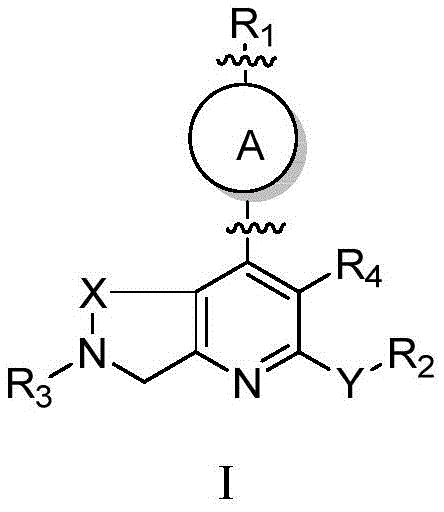
wherein: a is independently C4-C12Mono-, bridged or spiro-heterocycles of (a); c4-C12Is a saturated or partially saturated mono-heterocyclic, bridged heterocyclic or spiroheterocyclic ring optionally substituted with one or more R9Substituted; the R is9Independently hydrogen, halogen, hydroxy, amino, cyano, C1-C4Alkyl radical, C2-C4Alkenyl radical, C2-C4Alkynyl, C2-C8Heteroalkyl, -C (O) OR5、-C(O)N(R5)2、-N(R5)2(ii) a Wherein, the C1-C4Alkyl radical, C2-C4Alkenyl radical, C2-C4Alkynyl or C2-C8Heteroalkyl is optionally substituted by hydrogen, cyano, halogen, hydroxy, amino, -OR5、-C(O)OR5、-C(O)N(R5)2、-N(R5)2Or heteroaryl;
x is independently (CH)2)nWherein n is equal to 1,2 or 3;
y is independently a single bond, O, S or NR5;
R1Independently is Or
Or Wherein R isAIndependently is hydrogen or C1-C3An alkyl group; rBIndependently of one another is hydrogen, C1-C3Alkyl, alkylaminoalkyl, dialkylaminoalkyl or heterocyclylalkyl groups; m is 0 or 1; p is 1 or 2; when in use
 In the case of three bonds, m is equal to 0 and P is equal to 1; when in use
 When it is a double bond, m is equal to 1 and P is equal to 2;
R2independently of one another is hydrogen, C1-C12Alkyl radical, C3-C8Cycloalkyl radical, C1-C12Heteroalkyl, -Z-NR5R6、C3-C8Heterocycloalkyl radical, C3-C8Heterocycloalkyl alkyl, aryl, arylalkyl, heteroaryl or heteroarylalkyl, C1-C12Alkyl radical, C3-C8Cycloalkyl radical, C1-C12Heteroalkyl group, C3-C8Heterocycloalkyl radical, C3-C8Heterocycloalkyl, aryl, arylalkyl, heteroaryl or heteroarylalkyl optionally substituted with one or more R8Substituted; wherein Z is C1-C3An alkenyl group; r5And R6Each independently is hydrogen, acyl, C1-C3Alkyl, heteroalkyl, or hydroxyalkyl; the R is8Independently hydrogen, acyl, amido, hydroxyl, hydroxyalkyl, cyano, halogen, C1-C6Alkyl radical, C1-C6Heteroalkyl, arylalkyl, alkoxy, haloalkoxy, C3-C8Cycloalkyl radical, C3-C8Heterocycloalkyl, alkoxy, dialkylamino, dialkylaminoalkoxy, or dialkylaminoalkyl;
R3independently cycloalkyl, heterocycloalkyl, aryl, heteroaryl, said cycloalkyl, heterocycloalkyl, aryl or heteroaryl optionally substituted with one or more R7Substituted; the R is7Independently hydrogen, hydroxy, amino, cyano, C1-C6Alkyl radical, C3-C8Cycloalkyl, alkoxy, haloalkoxy, heteroalkyl, hydroxyalkyl or Q-haloalkoxy, wherein Q is O or S;
R4independently hydrogen, cyano, halogen, amido, haloalkyl or haloalkoxy.
In some preferred embodiments of the invention, A is independently optionally substituted with one or more R9Substituted C4-C12A mono-heterocyclic ring; more preferably, the mono-heterocyclic ring is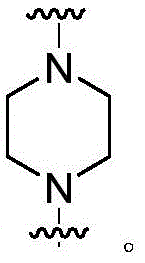
In some preferred embodiments of the invention, A is independently optionally substituted with one or more R9Substituted C4-C12A bridged heterocyclic ring; more preferably, the bridged heterocyclic ring is
In some preferred embodiments of the invention, A is independently optionally substituted with one or more R9Substituted C4-C12A spiro heterocycle; more preferably, the spiroheterocycle is
In some preferred embodiments of the invention, R9Independently selected from hydrogen, halogen, hydroxy, amino, cyano, C1-C4Alkyl radical, C2-C4Alkenyl radical, C2-C4Alkynyl, C2-C8Heteroalkyl, -C (O) OR5、-C(O)N(R5)2、-N(R5)2In which C is1-C4Alkyl radical, C2-C4Alkenyl radical, C2-C4Alkynyl or C2-C8Heteroalkyl optionally being interrupted by one OR more cyano groups, -OR5Or heteroaryl.
More preferably, R9Independently is C2-C4Alkynyl, -CH2CN、C2-C8Heteroalkyl OR optionally substituted by one OR more OR5Substituted C1-C4An alkyl group.
In some preferred embodiments of the invention, R1Independently is-C (O) CH ═ CH2。
In some preferred embodiments of the invention, R2Independently by one or more R8Substituted C3-C8Heterocycloalkyl, wherein the heterocycloalkyl in the heterocycloalkyl group is preferably selected from azetidinyl, oxetanyl, tetrahydrofuryl, pyrrolyl, piperidinyl, piperazinyl, morpholinyl, pyrrolidinonyl, piperidinoalkonyl, 1, 4-oxazepanyl, 1-dioxothiomorpholinyl, 3-azabicyclo [3.1.1] alkyl]Heptane, 2-oxa-5-azabicyclo [2.2.1]Heptane-5-yl, or azabicyclo [2.2.1 ]]Heptane-2-yl; or R2Independently by one or more R8A substituted dialkylaminoalkyl group, wherein dialkylaminoalkyl group is dimethylaminoethyl, dimethylaminopropyl, 2-dimethylaminopropyl, dimethylaminobutyl, 2-dimethylaminobutyl, or diethylaminoethyl; or R2is-Z-NR5R6Wherein Z is C1-C3An alkenyl group.
More preferably, R5And R6Each independently is methyl, ethyl, isopropyl, acetyl, hydroxymethyl, or methoxy.
In some preferred embodiments of the invention, R8Each independently is hydrogen, hydroxy, amido, halogen, C1-C3Alkyl radical, C1–C6Heteroalkyl, alkoxy, C3–C8Cycloalkyl radical, C3–C8Heterocycloalkyl or dialkylamino.
More preferably, R8Each independently of the others hydrogen, chlorine, fluorine, methoxy, hydroxymethyl, methyl, ethyl, isopropyl, cyclopropyl, cyclobutyl, cyclohexyl, azetidinyl, oxetanyl, morpholinyl, -C (O) N (CH3)2, - (CH3)2)2OCH3,-N(CH3)2,-N(CH2CH3)2。
In some preferred embodiments of the invention, R3Independently cycloalkyl, heterocycloalkyl, aryl, heteroaryl, said cycloalkyl, heterocycloalkyl, aryl or heteroaryl optionally substituted with one or more R7And wherein cycloalkyl, heterocycloalkyl, aryl, and heteroaryl are selected from cyclohexyl, cyclopentyl, pyrrolyl, piperidinyl, piperazinyl, morpholinyl, pyrrolidinonyl, piperidinoalkonyl, 1, 4-oxazepanyl, phenyl, naphthyl, quinolinyl, isoquinolinyl, indolyl, azaindolyl, benzothiazolyl, indazolyl, or imidazolyl.
In some preferred embodiments of the invention, R7Independently hydrogen, hydroxy, amino, cyano, methyl, ethyl, propyl, isopropyl, cyclopropyl, methoxy, trifluoromethyl, trifluoromethoxy, difluoromethyl, difluoromethoxy, or hydroxymethyl.
In some preferred embodiments of the invention, R4Independently cyano, formamide or difluoromethyl.
In some preferred embodiments of the invention, formula I is any one of the following compounds:
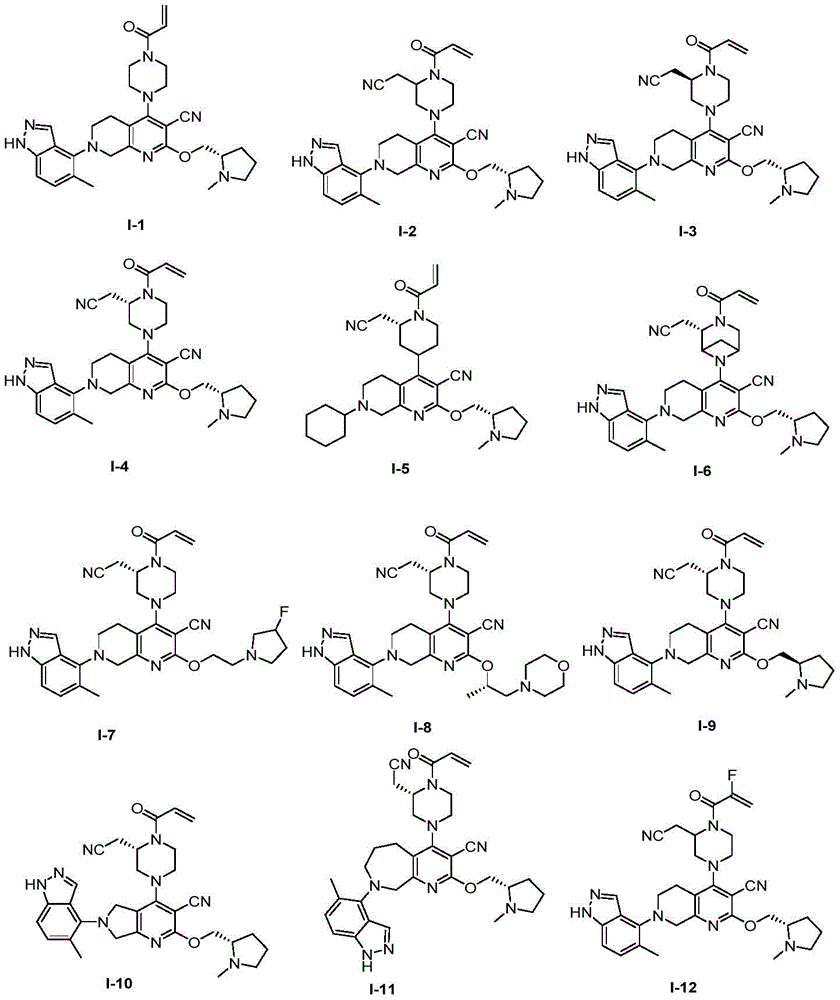


it should be noted that, the groups and substituents thereof in the compound of formula I can be selected by those skilled in the art to provide stable compounds of formula I, or pharmaceutically acceptable salts thereof, or stereoisomers thereof, or tautomers thereof, or hydrates thereof, or solvates thereof, or metabolites thereof, or prodrugs thereof, described in the examples of the present invention, including but not limited to I-1 to I-45 in the examples of the present invention.
The embodiment of the invention also provides a preparation method of the compound shown in the formula I, or a pharmaceutically acceptable salt, a stereoisomer, a tautomer, a hydrate, a solvate, a metabolite or a prodrug thereof.
It should be noted that the following examples are set forth to illustrate the present invention, but it should be understood that the present invention is not limited to these examples, but only to provide a means for practicing the invention.
Embodiments of the present invention also provide a pharmaceutical composition comprising an effective amount of a compound of formula I, or a pharmaceutically acceptable salt thereof, or a stereoisomer thereof, or a tautomer thereof, or a hydrate thereof, or a solvate thereof, or a metabolite thereof, or a prodrug thereof, and at least one pharmaceutically acceptable excipient.
It is to be noted that the pharmaceutically acceptable excipient in the present invention may be those which are widely used in the field of pharmaceutical production. The excipients are used primarily to provide a safe, stable and functional pharmaceutical composition and may also provide methods for dissolving the active ingredient at a desired rate or for promoting the effective absorption of the active ingredient after administration of the composition by a subject. The pharmaceutical excipients may be inert fillers or provide a function such as stabilizing the overall pH of the composition or preventing degradation of the active ingredients of the composition. The pharmaceutical excipients may include one or more of the following excipients: binders, suspending agents, emulsifiers, diluents, fillers, granulating agents, adhesives, disintegrating agents, lubricants, antiadherents, glidants, wetting agents, gelling agents, absorption delaying agents, dissolution inhibitors, reinforcing agents, adsorbents, buffering agents, chelating agents, preservatives, colorants, flavoring agents and sweeteners.
The pharmaceutical compositions of the present invention may be prepared according to the disclosure using any method known to those skilled in the art; for example, conventional mixing, dissolving, granulating, emulsifying, levigating, encapsulating, entrapping or lyophilizing processes.
The pharmaceutical compositions of the present invention may be administered in any form, including injection (intravenous), mucosal, oral (solid and liquid formulations), inhalation, ocular, rectal, topical or parenteral (infusion, injection, implant, subcutaneous, intravenous, intraarterial, intramuscular) administration. The pharmaceutical compositions of the present invention may also be in a controlled release or delayed release dosage form (e.g., liposomes or microspheres). Examples of solid oral formulations include, but are not limited to, powders, capsules, caplets, soft capsules, and tablets. Examples of liquid formulations for oral or mucosal administration include, but are not limited to, suspensions, emulsions, elixirs and solutions. Examples of topical formulations include, but are not limited to, emulsions, gels, ointments, creams, patches, pastes, foams, lotions, drops or serum formulations. Examples of formulations for parenteral administration include, but are not limited to, solutions for injection, dry preparations which can be dissolved or suspended in a pharmaceutically acceptable carrier, suspensions for injection, and emulsions for injection. Examples of other suitable formulations of the pharmaceutical composition include, but are not limited to, eye drops and other ophthalmic formulations; aerosol: such as nasal sprays or inhalants; liquid dosage forms suitable for parenteral administration; suppositories and lozenges. The pharmaceutical composition of the present invention is preferably administered intravenously, preferably orally or intravenously. In actual use, the application route can be applied or selected according to actual conditions; for example, transdermal administration may be highly desirable for patients who are forgetful or whose oral medications are irritable. In particular cases, the pharmaceutical compositions of the invention may also be administered by the transdermal, intramuscular, intranasal or intrarectal route. The route of administration may vary in any manner, limited by the physical nature of the drug, the convenience of the patient and caregiver, and other relevant circumstances.
The embodiment of the invention also provides application of a compound shown in the formula I, or a pharmaceutically acceptable salt, a stereoisomer, a tautomer, a hydrate, a solvate, a metabolite, a prodrug and a pharmaceutical composition thereof, wherein the compound shown in the formula I, or the pharmaceutically acceptable salt, the stereoisomer, the tautomer, the hydrate, the solvate, the metabolite, the prodrug and the pharmaceutical composition can be used for preparing a medicine for treating diseases caused by over-expression of KRAS G12C, preparing KRAS G12C inhibitor medicines and preparing medicines for treating and/or preventing cancers.
The medicine for treating the diseases caused by over-expression of KRAS G12C, which is prepared by applying the compound shown in the formula I, or pharmaceutically acceptable salts thereof, stereoisomers thereof, tautomers thereof, hydrates thereof, solvates thereof, metabolites thereof, or pharmaceutical compositions thereof, can be used for treating and/or preventing one or more diseases related to KRAS G12C activity, and has good clinical application and medical application; the prepared KRAS G12C inhibitor drug has good KRAS G12C inhibitory activity, can be effectively used as a KRAS G12C inhibitor and is used as a therapeutic drug of the KRAS G12C inhibitor; the prepared medicament for treating and/or preventing the cancer can be used for treating and/or preventing the cancer, wherein the cancer which can be treated and/or prevented comprises but is not limited to pancreatic cancer, colorectal cancer and lung cancer.
Unless stated to the contrary, the following terms used in the specification and claims have the following meanings:
"alkyl" refers to a saturated aliphatic hydrocarbon group including straight and branched chain groups of 1 to 20 carbon atoms, such as straight and branched chain groups of 1 to 18 carbon atoms, 1 to 12 carbon atoms, 1 to 8 carbon atoms, 1 to 6 carbon atoms, or 1 to 4 carbon atoms. In this context "alkyl" may be a monovalent, divalent or trivalent radical. Non-limiting examples include methyl, ethyl, n-propyl, isopropyl, n-butyl, isobutyl, tert-butyl, sec-butyl, n-pentyl, 1-dimethylpropyl, 1, 2-dimethylpropyl, 2-dimethylpropyl, 1-ethylpropyl, 2-methylbutyl, 3-methylbutyl, n-hexyl, 1-ethyl-2-methylpropyl, 1, 2-trimethylpropyl, 1-dimethylbutyl, 1, 2-dimethylbutyl, 2-dimethylbutyl, 1, 3-dimethylbutyl, 2-ethylbutyl, and the various branched chain isomers thereof, and the like. Non-limiting examples also include methylene, methine, ethylene, ethylidene, propylidene, butylidene, and various branched chain isomers thereof. Alkyl groups may be optionally substituted or unsubstituted.
"cycloalkyl" refers to a saturated or partially unsaturated monocyclic or polycyclic cyclic hydrocarbon substituent comprising 3 to 12 ring atoms, which may be, for example, 3 to 12, 3 to 10, or 3 to 6 ring atoms, or may be a 3, 4, 5, 6 membered ring. Non-limiting examples of monocyclic radicals include cyclopropyl, cyclobutyl, cyclopentyl, cyclopentenyl, cyclohexyl, cyclohexenyl, cyclohexadienyl, cycloheptyl, cycloheptatrienyl, cyclooctyl and the like. The cyclic group may be optionally substituted or unsubstituted.
"Heterocycloalkyl" means a saturated or partially unsaturated monocyclic or polycyclic cyclic hydrocarbon substituent comprising 3 to 20 ring atoms, which may be, for example, 3 to 16, 3 to 12, 3 to 10 or 3 to 6 ring atoms, wherein one or more ring atoms are selected from nitrogen, oxygen or S (O)m(wherein m is 0, 1, or 2) but does not include the ring moiety of-O-O-, -O-S-, or-S-S-, and the remaining ring atoms are carbon. Preferably 3 to 12 ring atoms of which 1-4 are heteroatoms, more preferably a heterocycloalkyl ring comprising 3 to 10 ring atoms, most preferably a 5-or 6-membered ring of which 1-4 are heteroatoms, more preferably 1-3 are heteroatoms, most preferably 1-2 are heteroatoms. Non-limiting examples of monocyclic heterocyclyl groups include pyrrolidinyl, piperidinyl, piperazinyl, morpholinyl, thiomorpholinyl, homopiperazinyl, and the like. Polycyclic heterocyclic groups include spiro, fused, or bridged heterocyclic groups.
"spiroheterocyclyl" refers to a 5-to 18-membered polycyclic group having two or more cyclic structures wherein the individual rings share a common atom with one another and which contains 1 or more double bonds within the ring, but none of the rings have a completely shared electron system, wherein one or more of the ring atoms is selected from nitrogen, oxygen, or S (O)P(wherein p is selected from 0, 1 or 2) and the remaining ring atoms are carbon. Preferably 6 to 14, more preferably 7 to 10. Spiro heterocyclic groups are classified into a single spiro heterocyclic group, a double spiro heterocyclic group or a multi-spiro heterocyclic group, preferably a single spiro heterocyclic group or a double spiro heterocyclic group, according to the number of spiro atoms shared between rings. More preferred is a 3-membered/6-membered, 4-membered/4-membered, 4-membered/5-membered, 4-membered/6-membered, 5-membered/5-membered or 5-membered/6-membered mono spiroheterocyclic group. It is composed ofThe "a-membered/b-membered monocyclic spiroheterocyclyl" refers to a spiroheterocyclyl in which an a-membered monocyclic ring and a b-membered monocyclic ring share one atom with each other. Non-limiting examples of "spiroheterocyclyl" include, but are not limited to: diazaspiro [3.3]Heptane.
"bridged heterocyclyl" refers to a5 to 14-membered, or 5 to 18-membered, polycyclic group containing two or more cyclic structures sharing two atoms not directly attached to each other, one or more rings may contain one or more double bonds, but none of the rings has a completely co-extensive pi-electron aromatic system in which one or more ring atoms are selected from heteroatoms of nitrogen, oxygen, or sulfur, and the remaining ring atoms are carbon. Preferably 6 to 14, more preferably 7 to 10. They may be classified into bicyclic, tricyclic, tetracyclic or polycyclic bridged heterocyclic groups according to the number of constituent rings, preferably bicyclic, tricyclic or tetracyclic, more preferably bicyclic or tricyclic. Non-limiting examples of "fused heterocyclic groups" include, but are not limited to: diazabicyclo [3.1.1] heptane.
"haloalkyl" or "haloalkoxy" means an alkyl or alkoxy group substituted with one or more of the same or different halogen atoms, and examples of preferred alkyl or alkoxy groups include, but are not limited to: trifluoromethyl, trifluoroethyl, trifluoromethoxy.
"aryl" means a monocyclic, bicyclic, and tricyclic carbon ring system containing 6 to 14 ring atoms, wherein at least one ring system is aromatic, wherein each ring system contains 3 to 7 atoms in the ring and one or more attachment points to the rest of the molecule. Examples include, but are not limited to: phenyl, naphthyl, anthracene, and the like. Preferably, the aryl group is a carbocyclic ring system of 6 to 10 or 6 to 7 ring atoms.
"heteroaryl" means monocyclic, bicyclic, and tricyclic ring systems containing 5 to 14 ring atoms, wherein at least one ring system is aromatic and at least one ring system contains one or more heteroatoms selected from nitrogen, oxygen, and sulfur, wherein each ring system contains a ring of 5 to 7 atoms with one or more attachment points to the rest of the molecule. The term "heteroaryl" may be used interchangeably with the terms "heteroaromatic ring" or "heteroaromatic compound". Examples include, but are not limited to: furyl, imidazolyl, 2-pyridyl, 3-pyridyl, thiazolyl, purinyl and quinolyl. Preferably, the heteroaryl group is a ring system of 5 to 10 ring atoms.
"halogen" means fluorine, chlorine, bromine and iodine, preferably fluorine, chlorine and bromine.
"optional" or "optionally" means that the subsequently described event or circumstance may, but need not, occur, and that the description includes instances where the event or circumstance occurs or does not. For example: "heterocyclic group optionally substituted with alkyl" means that alkyl may, but need not, be present, and this description includes the case where the heterocyclic group is substituted with alkyl and the heterocyclic group is not substituted with alkyl.
"substituted" means that one or more, preferably up to 5, more preferably 1 to 3, hydrogen atoms in a group are independently substituted with a corresponding number of substituents.
"pharmaceutically acceptable salts" refers to salts of the compounds of the present invention, prepared from the compounds of the present invention found to have particular substituents, with relatively nontoxic acids or bases. When compounds of the present invention contain relatively acidic functional groups, base addition salts can be obtained by contacting the neutral form of such compounds with a sufficient amount of a base in neat solution or in a suitable inert solvent. Pharmaceutically acceptable base addition salts include sodium, potassium, calcium, ammonium, organic ammonia or magnesium salts or similar salts. When compounds of the present invention contain relatively basic functional groups, acid addition salts can be obtained by contacting the neutral form of such compounds with a sufficient amount of acid in neat solution or in a suitable inert solvent. Examples of pharmaceutically acceptable acid addition salts include inorganic acid salts including, for example, hydrochloric acid, hydrobromic acid, nitric acid, carbonic acid, bicarbonate, phosphoric acid, monohydrogen phosphate, dihydrogen phosphate, sulfuric acid, hydrogen sulfate, hydroiodic acid, phosphorous acid, and the like; and salts of organic acids including acids such as acetic, propionic, isobutyric, maleic, malonic, benzoic, succinic, suberic, fumaric, lactic, mandelic, phthalic, benzenesulfonic, p-toluenesulfonic, citric, tartaric, methanesulfonic, and the like; also included are Salts of amino acids (e.g., arginine, etc.), and Salts of organic acids such as glucuronic acid (see Berge et al, "Pharmaceutical Salts," Journal of Pharmaceutical Science 66:1-19 (1977)). Certain specific compounds of the invention contain both basic and acidic functionalities and can thus be converted to any base or acid addition salt. Preferably, the neutral form of the compound is regenerated by contacting the salt with a base or acid and isolating the parent compound in a conventional manner. The parent form of the compound differs from the various salt forms by certain physical properties, such as solubility in polar solvents.
"pharmaceutical composition" means a mixture containing one or more compounds of formula I, as described herein, or a pharmaceutically acceptable salt, or stereoisomer, or tautomer, or hydrate, or solvate, or metabolite, or prodrug thereof, in combination with other chemical components, as well as other components, such as pharmaceutically acceptable excipients. The purpose of the pharmaceutical composition is to facilitate administration to an organism, facilitate absorption of the active ingredient and exert biological activity.
It should be noted that: the preparation of the compound of formula I, or a pharmaceutically acceptable salt thereof, or a stereoisomer thereof, or a tautomer thereof, or a hydrate thereof, or a solvate thereof, or a metabolite thereof, or a prodrug thereof, can be accomplished by the following exemplary methods and procedures of the related publications used by those skilled in the art, which, however, are not intended to limit the scope of the present invention.
The structure of the compounds of the invention is determined by Nuclear Magnetic Resonance (NMR) or Mass Spectrometry (MS). NMR was measured using a Bruker AVANCE-400 or Varian Oxford-300 nuclear magnetic instrument in deuterated dimethyl sulfoxide (DMSO-d)6) Deuterated chloroform (CDC 1)3) Deuterated methanol (CD)3OD) internal standard as Tetramethylsilane (TMS) chemical shift is 10-6(ppm) is given as a unit.
MS was measured using an Agilent SQD (ESI) mass spectrometer (manufacturer: Agilent, model: 6110) or Shimadzu SQD (ESI) mass spectrometer (manufacturer: Shimadzu, model: 2020).
HPLC measurements were carried out using an Agilent 1200DAD high pressure liquid chromatograph (Sunfirc C18, 150X 4.6mm, 5wn, column) and a Waters 2695-.
The thin layer chromatography silica gel plate is Qingdao sea GF254 silica gel plate, the specification of the silica gel plate used by Thin Layer Chromatography (TLC) is 0.15mm-0.2mm, and the specification of the thin layer chromatography separation and purification product is 0.4mm-0.5 mm.
Column chromatography generally uses Qingdao ocean 200-mesh and 300-mesh silica gel as a carrier.
Known starting materials for embodiments of the present invention can be synthesized using or according to methods known in the art, companies such as Shaoyuan chemical technology (Accela ChemBio Inc), Beijing coupled Chemicals, and the like.
In the following examples, unless otherwise specified, the reaction was carried out under an argon atmosphere or a nitrogen atmosphere.
An argon atmosphere or nitrogen atmosphere means that the reaction flask is connected to a balloon of argon or nitrogen with a volume of about 1L.
The hydrogen atmosphere refers to a reaction flask connected with a hydrogen balloon with a volume of about 1L. The hydrogenation reaction was usually evacuated and charged with hydrogen and repeated 3 times.
In the following examples, the reaction temperature is room temperature and the temperature range is 20 ℃ to 30 ℃ unless otherwise specified.
The progress of the reaction in the following examples was monitored by Thin Layer Chromatography (TLC) using a system of developing reagents A: dichloromethane and methanol systems; b: petroleum ether and ethyl acetate, the volume ratio of the solvent is adjusted according to the polarity of the compound.
The system of eluents for column chromatography and developing agents for thin layer chromatography used for purifying compounds include a: dichloromethane and methanol systems; b: the volume ratio of the solvent in the petroleum ether and ethyl acetate system is adjusted according to different polarities of the compounds, and a small amount of triethylamine, an acidic or basic reagent and the like can be added for adjustment.
The following synthetic schemes describe the steps for preparing the compounds disclosed herein. Unless otherwise indicated, each substituent has the definition as described herein.
The synthesis scheme is as follows:
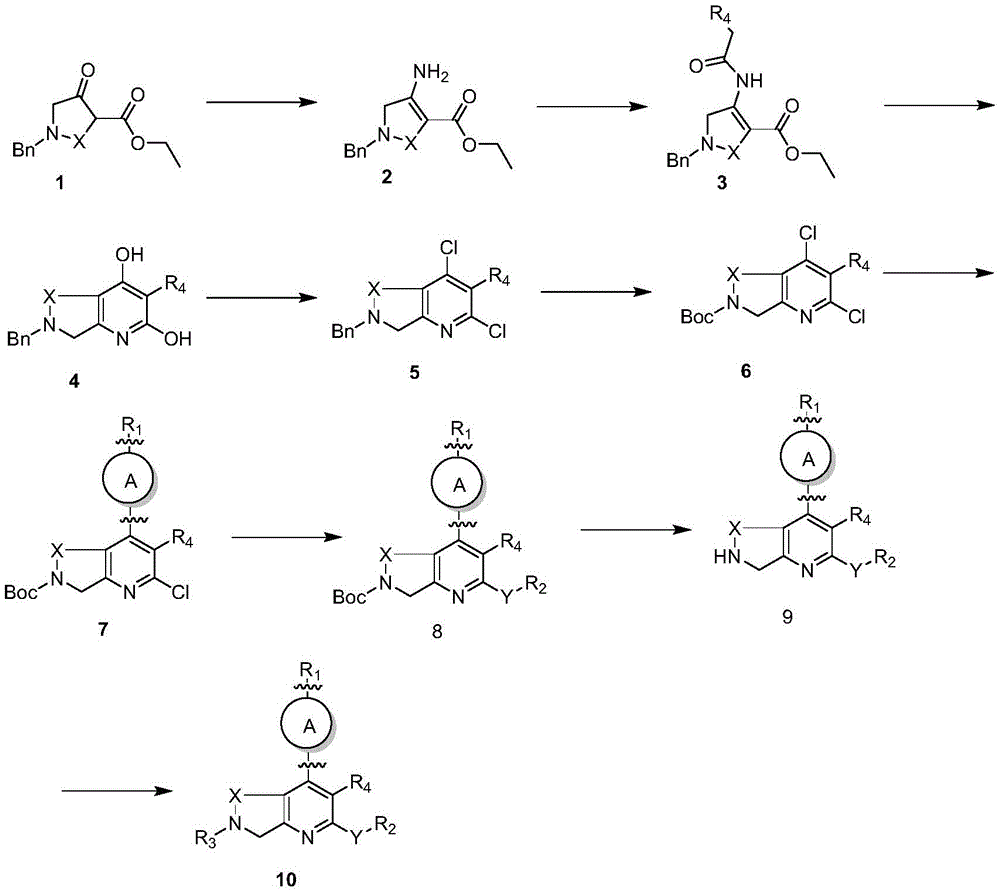
the compounds, pharmaceutical compositions and uses thereof provided by the present invention are further illustrated below with reference to the examples.
Example 1:
example 1 of the present invention provides a preparation of a compound represented by formula I-1

The synthetic route is as follows:
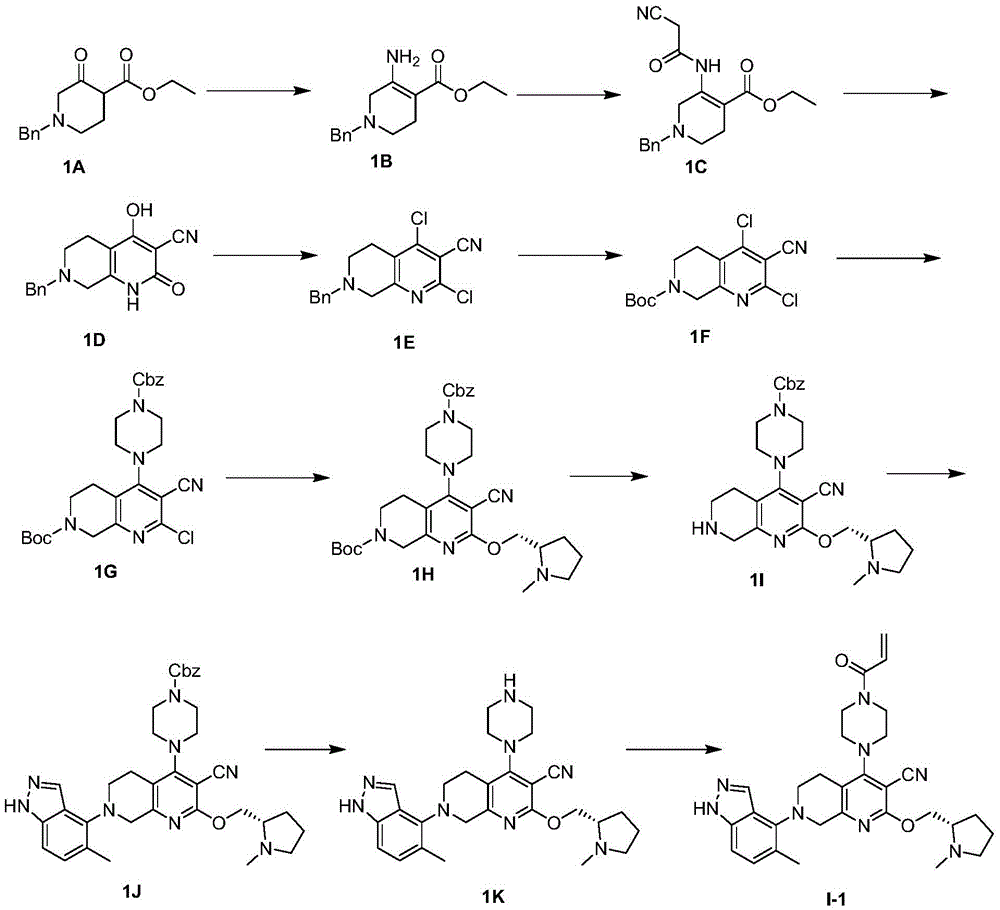
(1) synthesis of compound 1B:
compound 1A (30.0g,115mmol) was added to methanol (200ml), ammonium acetate (44.2g,574mmol) was added at room temperature, then reacted overnight at room temperature, TLC showed disappearance of the starting material, reaction was complete, after concentration under reduced pressure, 500ml water was added for dilution, extraction with ethyl acetate (150ml × 2) was performed, organic phases were combined, dried over anhydrous sodium sulfate and concentrated under reduced pressure to give compound 1B (31g) as a pale yellow solid, which was used in the next step without further purification.
MS m/z(ESI):261.1[M+1]
1H NMR(400MHz,CD3OD)δ7.47-7.21(m,5H),4.09(q,J=7.3Hz,2H),3.79(s,2H),3.33(s,2H),2.75(t,J=6.1Hz,2H),2.44(t,J=5.9Hz,2H),1.21(t,J=7.0Hz,3H).
(2) Synthesis of compound 1C:
the crude compound 1B (31g) was dissolved in dichloromethane (500ml), triethylamine (34.8g,345mmol) was added, cooling to 0 to 5 ℃, then a solution of cyanoacetyl chloride (14.2g,138mmol) in dichloromethane was added dropwise with protection of the internal temperature below 5 ℃, after the addition of the dropwise addition the ice bath was removed, the reaction was warmed to room temperature for 12 hours, TLC showed the reaction to be complete, the reaction solution was washed with saturated aqueous sodium chloride (150ml × 2), the organic phase was dried over anhydrous sodium sulfate, filtered, desolventized under reduced pressure, and the residue was purified by silica gel column chromatography (petroleum ether/ethyl acetate: 5/1(V: V volume ratio)) to give compound 1C (23.3g, pale yellow viscous liquid) in two steps: 62 percent.
MS m/z(ESI):328.1[M+1]
1H NMR(400MHz,CD3Cl):12.02(brs,1H),7.34-7.27(m,5H),4.22(q,J=7.2MHz,2H),3.82(s,2H),3.64(s,2H),3.45(s,2H),2.55-2.52(m,2H),2.45-2.42(m,2H),1.27(t,J=7.2MHz,3H).
(3) Synthesis of compound 1D:
adding the compound 1C (13g,40mmol) into DMF (150mL) at room temperature, stirring for dissolution, cooling to 0-5 ℃ in an ice water bath, then adding 60% sodium hydride (4g,100mmol) in batches, heating the reaction solution to room temperature after the addition is finished, continuing to react for half an hour, heating to 120 ℃ for reaction for 4 hours, wherein TLC shows that the reaction is finished, LCMS shows that target MS is contained, cooling the reaction solution to room temperature, slowly adding water (500mL) for dilution, adjusting the pH value to 3-4 by hydrochloric acid (6N), and extracting by dichloromethane (3X 150 mL). The organic phases were combined and dried over anhydrous sodium sulfate, the drying agent was removed by filtration, desolvation under reduced pressure was performed, and the residue was purified by silica gel column chromatography (dichloromethane/methanol-100/1 (V: V volume ratio)) to give compound 1D (3.7g, a pale yellow solid), yield: 33 percent.
MS m/z(ESI):282.1[M+1].
1H NMR(400MHz,DMSO):9.42(s,1H),7.33-7.25(m,5H),3.56(s,2H),3.05(s,2H),2.53-2.50(m,2H),2.18-2.15(m,2H).
(4) Synthesis of compound 1E:
compound 1D (2.8g,10mmol) was added to toluene (30mL) at room temperature followed by phosphorus oxychloride (4.5g,30mmol), after which the reaction was allowed to warm to 110 ℃ overnight, after TLC showed the reaction to complete, the reaction was cooled to room temperature and quenched by pouring it into a large volume of ice water (100mL) with stirring, followed by addition of saturated sodium bicarbonate solution (100mL) and extraction with ethyl acetate (3X 50 mL). The organic phases were combined and dried over anhydrous sodium sulfate, the drying agent was removed by filtration, desolventizing under reduced pressure, and the residue was purified by silica gel column chromatography (petroleum ether/ethyl acetate: 10/1(V: V volume ratio)) to give compound 1E (2.3g, pale yellow solid), yield: 73 percent.
MS m/z(ESI):318.2[M+1].
1H NMR(400MHz,CD3Cl):7.34-7.27(m,5H),3.73(s,2H),3.71(s,2H),2.96-2.87(m,2H),2.82-2.80(m,2H).
(5) Synthesis of compound 1F:
compound 1E (1.3g,4.08mmol) was dissolved in 1, 2-dichloroethane (15ml), cooled to 0 deg.C, then 1-chloroethyl chloroformate (700mg,4.93mmol) was added and reacted at room temperature overnight, TLC indicated the reaction was complete and the starting material disappeared. After concentrating the reaction solution, methanol (10mL) was added, the resulting mixture was warmed to reflux for 2 hours and cooled to room temperature, triethylamine (1.2g,12mmol) and Boc anhydride (1.7g,8mmol) were added to the reaction solution, and the reaction was carried out at room temperature for 16 hours, TLC and LCMS showed that the reaction was completed, and after the reaction solution was dried, it was diluted with 50mL of water and extracted with ethyl acetate (3X 20 mL). The organic phases were combined and dried over anhydrous sodium sulfate, the drying agent was removed by filtration, desolventization under reduced pressure was carried out, and the residue was purified by silica gel column chromatography (petroleum ether/ethyl acetate: 10/1(V: V volume ratio)) to give compound 1F (0.69g, pale yellow solid) in yield: 53 percent.
MS m/z(ESI):328.2[M+1].
1H NMR(400MHz,CD3Cl):4.67(s,2H),3.74(t,J=6.0MHz,2H),2.88(t,J=6.0MHz,2H),1.49(s,9H).
(6) Synthesis of compound 1G:
compound 1F (3.27g,10mmol), benzyl 1-piperazinecarboxylate (2.6g,12mmol) and DIEA (6.45g,50mmol) were added to dioxane (100mL) at room temperature, the reaction was warmed to 150 ℃ in a microwave reaction apparatus and the reaction was continued for 3 hours, LCMS showed the reaction was complete, the reaction was cooled to room temperature and the reaction was spun dry, diluted with 100mL water and extracted with ethyl acetate (3 × 25 mL). The organic phases were combined and dried over anhydrous sodium sulfate, the drying agent was removed by filtration, desolvation was performed under reduced pressure, and the residue was purified by silica gel column chromatography (dichloromethane/methanol/aqueous ammonia: 99/1/1(V: V volume ratio)) to obtain compound 1G (2.7G, pale yellow solid), yield: 53.2 percent.
MS m/z(ESI):512.2[M+1].
(7) Synthesis of compound 1H:
compound 1G (1.6G,3.11mmol) was dissolved in dioxane (25mL), then N-methyl-L-prolinol (1.08G,9.34mmol), cesium carbonate (3.04G,9.34mmol) and Ruphos-Pd G3(0.260G,0.311mmol) were added in this order, and replaced with nitrogen three times, heated to 100 ℃ under nitrogen, and reacted for 24 hours, TLC showed the reaction to be complete, the reaction was cooled to room temperature, after the reaction was dried, 100mL of water was added, and extracted with ethyl acetate (3X 25 mL). The organic phases were combined and dried over anhydrous sodium sulfate, the drying agent was removed by filtration, desolvation was performed under reduced pressure, and the residue was purified by silica gel column chromatography (dichloromethane/methanol/aqueous ammonia: 99/1/1(V: V volume ratio)) to obtain compound 1H (0.69g, pale yellow solid), yield: 73.2 percent.
MS m/z(ESI):591.2[M+1].
(8) Synthesis of compound 1I:
compound 1H (591mg,1.0mmol) was dissolved in ethyl acetate (5mL) at room temperature, then a solution of ethyl acetate hydrochloride (4N, 5mL) was added, and the mixture was stirred at room temperature for 2 hours. The solution turned from clear to turbid and a solid precipitated out. The reaction was monitored by TLC, after completion of the reaction, the reaction was cooled to 0 ℃, left to stand for 1 hour, filtered, and the solid was washed with ether and dried to give the hydrochloride salt of compound 1I (535mg, white solid) in yield: 95 percent.
MS m/z(ESI):491.1[M+1].
(9) Synthesis of compound 1J:
hydrochloric acid (535mg,0.95mmol), 4-bromo-5-methyl-1H-indazole hydrochloride (535mg, 1.9mmol), cesium carbonate (619mg,1.9mmol) of compound 1I were added to dioxane (15mL), and Ruphos Pd Gen 3(52.9mg,0.06mmol) was then added and replaced with nitrogen three times, heated to 100 degrees under nitrogen, and reacted for 24 hours, TLC showed the reaction to be complete, the reaction was cooled to room temperature, after the reaction was spin dried, diluted with 100mL of water and extracted with ethyl acetate (3 × 25 mL). The organic phases were combined and dried over anhydrous sodium sulfate, the drying agent was removed by filtration, desolvation under reduced pressure was performed, and the residue was purified by silica gel column chromatography (dichloromethane/methanol/aqueous ammonia: 99/1/1(V: V volume ratio)) to give compound 1J (372mg, pale yellow solid) in yield: and (3.2).
MS m/z(ESI):621.1[M+1].
(10) Synthesis of compound 1K:
compound 1J (310mg,0.5mmol) was added to a solution of methanol (10ml) and THF (10ml), 10% palladium on carbon (30mg) was then added and replaced three times with hydrogen balloon, the reaction was allowed to proceed under hydrogen balloon protection for 24 hours, TLC indicated the end of the reaction, after filtration, the crude compound 1K (350mg) was obtained and used in the next step without purification after spin-drying the filtrate.
MS m/z(ESI):487.1[M+1].
(11) Synthesis of Compound I-1:
the crude compound 1K (350mg) obtained in the previous step was dissolved in dichloromethane (10ml), cooled to-10 ℃ and added with triethylamine (202mg,2mmol) and acryloyl chloride (50mg,0.55mmol) in that order, and then allowed to naturally warm to room temperature for 1 hour, after which TLC showed the reaction to be complete. The reaction was quenched by addition of MeOH (1 mL). The resulting residue was isolated and purified by preparative HPLC to give the objective compound represented by the formula I-1 (33mg, white solid). The yield of the two steps is 12.2%.
MS m/z(ESI):541[M+1].
1H NMR(400MHz,CD3Cl):8.06(s,1H),7.29-7.26(m,2H),6.83-6.78(m,1H),6.25(dd,J=16.8MHz,1.6MHz,1H),5.79(dd,J=10.8MHz,2.0MHz,1H),4.34(s,1H),3.83(brs,4H),3.55-3.50(m,7H),2.92-2.90(m,2H),2.88(s,3H),2.40(s,3H),2.07-1.98(m,3H).
Example 2:
example 2 of the present invention provides a preparation of a compound represented by formula I-2

The synthetic route is as follows:

(1) synthesis of compound 2B:
compound 1-BOC-3-hydroxymethylpiperazine (5g,23mmol) and sodium bicarbonate (5.83g,69.4mmol) were added to a mixed solvent of ethyl acetate (50ml) and water (50ml), then the reaction solution was cooled to 0 ℃, Cbz-Cl (4.95ml,34.7mmol) was slowly added dropwise, after the dropwise addition was completed, the reaction was allowed to react overnight at room temperature, TLC showed the completion of the reaction, ethyl acetate was added to dilute the reaction solution (50ml), the organic phase was separated, and then dried with anhydrous sodium sulfate, the drying agent was removed by filtration, desolventization under reduced pressure was performed, and the residue was purified by silica gel column chromatography (petroleum ether/ethyl acetate: 3/1/(V: V volume ratio)), to give compound 2B (7.62g, pale yellow viscous liquid), yield: 94 percent.
MS m/z(ESI):251.1[M-Boc+H]+
(2) Synthesis of compound 2C:
compound 2B (1.69g,4.83mmol) and triethylamine (1.01ml,7.25mmol) were added to dichloromethane (25ml), the reaction solution was cooled to 0 ℃ and MsCl (0.561ml,7.25mmol) was slowly added dropwise, after the addition was completed, the reaction was allowed to react at room temperature for half an hour, and TLC indicated the completion of the reaction. The reaction solution was diluted with dichloromethane (50ml), followed by washing with IN hydrochloric acid, water, saturated sodium bicarbonate and saturated sodium chloride IN this order. The organic phase was dried over anhydrous sodium sulfate and concentrated under reduced pressure to give compound 2C (1.9g) as a pale yellow viscous liquid, which was used in the next step without further purification.
MS m/z(ESI):329.1[M-Boc+H]+
(3) Synthesis of compound 2D:
crude compound 2C (1.9g) and NaCN (0.480g,9.80mmol) were added to DMA (49.0ml) and the temperature was raised to 60 ℃ for 24 h reaction, TLL showed the reaction to be complete. The reaction solution was added to water (300ml), extracted with ethyl acetate (100ml × 3), the organic phases were combined and then dried over anhydrous sodium sulfate, the drying agent was removed by filtration, desolventization under reduced pressure was performed, and the residue was purified by silica gel column chromatography (petroleum ether/ethyl acetate: 5/1/(V: V volume ratio)) to give compound 2D (1.40g, pale yellow viscous liquid), yield: 79.5 percent.
MS m/z(ESI):260.1[M-Boc+H]+
(4) Synthesis of compound 2E:
compound 2D (5.32g,14.8mmol) was added to dichloromethane (25mL), dioxane hydrochloride solution (4.0N,18.5mL,74.0mmol) was added at room temperature, after addition was allowed to react at room temperature for 24 hours, TLC showed the reaction to complete and a solid precipitated, which was collected after filtration to give compound 2E hydrochloride (4.3g, yellow solid), yield: 99 percent.
MS m/z(ESI):260.1[M+H]+
(5) Synthesis of compound 2F:
compound 1F (3.27g,10mmol), compound 2E hydrochloride (3.56g,12mmol) and DIEA (6.45g,50mmol) were added to dioxane (100mL) at room temperature, the reaction was warmed to 150 ℃ in a microwave reaction apparatus and the reaction was continued for 3 hours, LCMS showed the reaction was complete, the reaction was cooled to room temperature and the reaction was spun dry, diluted with 100mL water and extracted with ethyl acetate (3X 25 mL). The organic phases were combined and dried over anhydrous sodium sulfate, the drying agent was removed by filtration, desolvation was performed under reduced pressure, and the residue was purified by silica gel column chromatography (dichloromethane/methanol/aqueous ammonia: 99/1/1(V: V volume ratio)) to obtain compound 2F (2.37g, pale yellow solid), yield: 43.2 percent.
MS m/z(ESI):551.1[M+H]+
(6) Synthesis of compound 2G:
compound 2F (1.71G,3.11mmol) was dissolved in dioxane (25mL), then N-methyl-L-prolinol (1.08G,9.34mmol), cesium carbonate (3.04G,9.34mmol) and Ruphos-Pd G3(0.260G,0.311mmol) were added in this order, and replaced with nitrogen three times, heated to 100 ℃ under nitrogen, and reacted for 24 hours, TLC showed the reaction to be complete, the reaction was cooled to room temperature, after the reaction was dried, 100mL of water was added, and extracted with ethyl acetate (3X 25 mL). The organic phases were combined and dried over anhydrous sodium sulfate, the drying agent was removed by filtration, desolvation was performed under reduced pressure, and the residue was purified by silica gel column chromatography (dichloromethane/methanol/aqueous ammonia: 99/1/1(V: V volume ratio)) to obtain compound 2G (0.94G, pale yellow solid), yield: 47.8 percent.
MS m/z(ESI):630.2[M+1].
(7) Synthesis of compound 2H:
compound 2G (630mg,1.0mmol) was dissolved in ethyl acetate (5mL) at room temperature, then a solution of ethyl acetate hydrochloride (4N, 5mL) was added and the mixture was stirred at room temperature for 2 hours. The solution turned from clear to turbid and a solid precipitated out. The reaction was monitored by TLC, after completion of the reaction, the reaction was cooled to 0 ℃, left to stand for 1 hour, filtered, and the solid was washed with ether and dried to give the hydrochloride salt of compound 2H (554mg, off-white solid) in yield: 92 percent.
MS m/z(ESI):530.1[M+1].
(8) Synthesis of compound 2I:
hydrochloric acid of compound 2H (554mg,0.92mmol), 4-bromo-5-methyl-1H-indazole (399mg,1.9mmol), cesium carbonate (619mg,1.9mmol) were added to dioxane (15mL), then Ruphos Pd Gen 3(52.9mg,0.06mmol) was added and replaced with nitrogen three times, heated to 100 degrees under nitrogen and reacted for 24 hours, TLC showed the reaction to be complete, the reaction was cooled to room temperature, after the reaction was spin dried, 100mL of water was added to dilute and extracted with ethyl acetate (3 × 25 mL). The organic phases were combined and dried over anhydrous sodium sulfate, the drying agent was removed by filtration, desolvation under reduced pressure was performed, and the residue was purified by silica gel column chromatography (dichloromethane/methanol/aqueous ammonia: 99/1/1(V: V volume ratio)) to give compound 2I (371mg, pale yellow solid) in yield: 61.1 percent.
MS m/z(ESI):660.1[M+1].
(9) Synthesis of compound 2J:
compound 2I (330mg,0.5mmol) was added to methanol (10ml) and THF (10ml), 10% palladium on carbon (30mg) was then added and replaced three times with hydrogen balloon, the reaction was allowed to proceed under hydrogen balloon protection for 24 hours, TLC indicated the end of the reaction, after filtration, the filtrate was spun dry and the crude compound 2J (345mg) obtained was used in the next step without purification.
MS m/z(ESI):526.1[M+1].
(10) Synthesis of Compound I-2:
the crude compound 2J (345mg) obtained in the previous step was dissolved in dichloromethane (10ml), cooled to-10 ℃ and added with triethylamine (202mg,2mmol) and acryloyl chloride (50mg,0.55mmol) in that order, allowed to naturally warm to room temperature for 1 hour, after which time TLC indicated the completion of the reaction. The reaction was quenched by addition of MeOH (1 mL). The resulting residue was isolated and purified by preparative HPLC to give the objective compound represented by the formula I-2 (45mg, white solid). The yield of the two steps is 15.3%.
MS m/z(ESI):589.1[M+1].
1HNMR(400MHz,CD3OD):8.18-8.16(m,1H),7.87-7.84(m,1H),7.60(d,J=8.4MHz,1H),7.50-7.46(m,2H),7.42(t,J=8.0MHz,1H),7.19(d,J=8.0MHz,1H),6.83(brs,1H),6.29-6.25(m,1H),5.83-5.81(m,1H),4.88-4.61(m,9H),4.24-3.39(m,4H),3.05-2.94(m,4H),2.65-2.40(m,2H),2.34(s,3H),2.21-2.03(m,2H),2.00-1.93(m,1H),1.67-1.63(m,2H)
Example 3:
example 3 of the present invention provides a preparation of a compound represented by formula I-3

The preparation method comprises the following steps: the compound of formula I-2 was synthesized by reference to the procedure of example 2, except that in the first step, (S) -1-BOC-3-hydroxymethylpiperazine was used in place of 1-BOC-3-hydroxymethylpiperazine, and finally the compound of formula I-3 was isolated by preparative HPLC.
MS m/z(ESI):589.1[M+1].
1HNMR(400MHz,CD3OD):8.19-8.17(m,1H),7.88-7.85(m,1H),7.61(d,J=8.4MHz,1H),7.51-7.47(m,2H),7.41(t,J=8.0MHz,1H),7.18(d,J=8.0MHz,1H),6.84(brs,1H),6.28-6.24(m,1H),5.84-5.81(m,1H),4.87-4.61(m,9H),4.25-3.38(m,4H),3.06-2.95(m,4H),2.64-2.40(m,2H),2.35(s,3H),2.22-2.04(m,2H),2.01-1.93(m,1H),1.68-1.63(m,2H)
Example 4:
example 4 of the present invention provides a preparation of a compound represented by formula I-4

The preparation method comprises the following steps: the compound of formula I-2 was synthesized by reference to the procedure of example 2, except that in the first step, (R) -1-BOC-3-hydroxymethylpiperazine was used in place of 1-BOC-3-hydroxymethylpiperazine, and finally the compound of formula I-4 was isolated by preparative HPLC.
MS m/z(ESI):589.1[M+1].
1HNMR(400MHz,CD3OD):8.17-8.15(m,1H),7.87-7.84(m,1H),7.61(d,J=8.4MHz,1H),7.50-7.45(m,2H),7.41(t,J=8.0MHz,1H),7.20(d,J=8.0MHz,1H),6.84(brs,1H),6.28-6.24(m,1H),5.82-5.80(m,1H),4.87-4.62(m,9H),4.25-3.40(m,4H),3.07-2.96(m,4H),2.66-2.41(m,2H),2.34(s,3H),2.22-2.04(m,2H),2.01-1.94(m,1H),1.68-1.64(m,2H)
Effect example 1:
pharmacodynamic detection experiment: the compounds of the invention are tested for the activity of non-small cell lung cancer cell NCI-H358 of mutant KRAS G12C, human pancreatic cancer cell Mia Paca-2 and human colon cancer cell HCT116 of mutant KRAS G13D and human lung adenocarcinoma cell A549 of mutant KRAS G12S, four cell lines.
The following methods were used to determine the effect of the compounds of the invention on tumor cell proliferation.
Aiming at KRAS G12C mutation, non-small cell lung cancer cell NCI-H358 and human pancreatic cancer cell Mia Paca-2 are adopted, aiming at KRAS G13D mutation, human colon cancer cell HCT116 is adopted, aiming at KRAS G12S mutation, human lung adenocarcinoma cell A549 cell is adopted to carry out the activity determination of the compound for inhibiting the cancer cells, and the related cells are cultured in DMEM culture medium containing 10% fetal calf serum, 100U penicillin and 100yg/mL streptomycin. Cultured at 37 ℃ in 5% CO2In the incubator. Cancer Cell Activity Cell growth inhibition was assessed by measuring ATP levels using the Cell Titer-Glo O R kit (luminescence Cell Viability Assay kit, methods of use see manufacturer's instructions).
The experimental method is operated according to the steps of the kit specification, and is briefly as follows: the test compounds are first dissolved in DMSO to prepare stock solutions, which are then used with the corresponding cellsThe medium was diluted in a gradient to prepare test samples with final concentrations of compound ranging from 10uM to 0.01 nM. Tumor cells in logarithmic growth phase were seeded at appropriate density into 96-well cell culture plates at 37 ℃ in 5% CO2After overnight in the incubator, cells were incubated for a further 72 hours after addition of test compound samples. After incubation, an appropriate volume of Cell Titer-Glo ℃ > R reagent was added to each well and incubated at 37 ℃ for 1-4 hours, followed by reading absorbance values at 450nM for each well on a microplate reader. Percent inhibition of compound at each concentration point was calculated by comparison with absorbance values of control (0.3% DMSO), followed by non-linear regression analysis in GraphPad Prism 5 software at compound concentration log-inhibition to obtain IC of compound inhibition of cell proliferation50The values, experimental results are shown in table 1.
Table 1: the compound shown in the formula I of the invention inhibits the cells of four KRAS mutant subtypes from IC50Data of
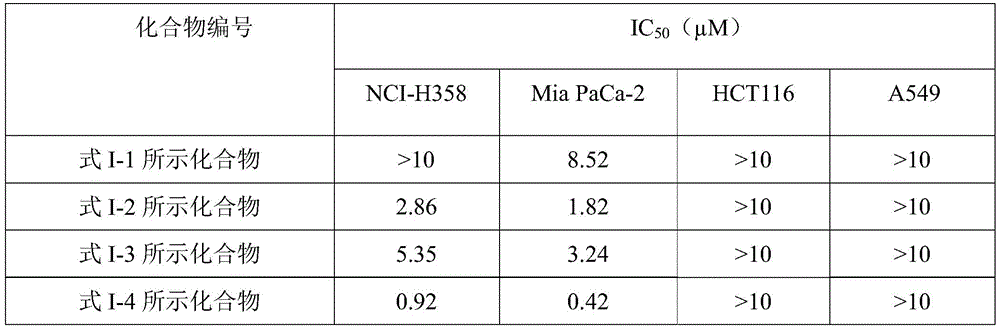
As can be seen from Table 1, the compound shown in formula I of the invention has very good inhibitory effect on KRAS G12C mutant human non-small cell lung cancer cell NCI-H358 and human pancreatic cancer cell Mia Paca-2 cells, for example, the compound I-4 has less than 1 μ M, but has no inhibitory effect on non-KRAS G12C mutant cells, and the activity is more than 10 μ M, so that the compound can be used as a medicament for preparing KRAS G12C inhibitor, and has very good selectivity and expected less toxic and side effects.
In the description herein, references to the description of the term "one embodiment," "some embodiments," "an example," "a specific example" or "some examples" or the like are intended to mean that a particular feature, structure, material, or characteristic described in connection with the embodiment or example is included in at least one embodiment or example of the invention. In this specification, the schematic representations of the terms used above do not necessarily refer to the same embodiment or example. Furthermore, the particular features, structures, materials, or characteristics described may be combined in any suitable manner in any one or more embodiments or examples.
The above-described embodiments of the present invention should not be construed as limiting the scope of the present invention. Any other corresponding changes and modifications made according to the technical idea of the present invention should be included in the protection scope of the claims of the present invention.
Claims (10)
1. A heterocyclic compound, which is a heterocyclic compound represented by formula I, a pharmaceutically acceptable salt thereof, a stereoisomer thereof, a tautomer thereof, a hydrate thereof, a solvate thereof, a metabolite thereof, or a prodrug thereof:

wherein: a is independently C4-C12Mono-, bridged or spiro-heterocycles of (a); c4-C12Is a saturated or partially saturated mono-heterocyclic, bridged heterocyclic or spiroheterocyclic ring optionally substituted with one or more R9Substituted; the R is9Independently hydrogen, halogen, hydroxy, amino, cyano, C1-C4Alkyl radical, C2-C4Alkenyl radical, C2-C4Alkynyl, C2-C8Heteroalkyl, -C (O) OR5、-C(O)N(R5)2、-N(R5)2(ii) a Wherein, the C1-C4Alkyl radical, C2-C4Alkenyl radical, C2-C4Alkynyl or C2-C8Heteroalkyl is optionally substituted by hydrogen, cyano, halogen, hydroxy, amino, -OR5、-C(O)OR5、-C(O)N(R5)2、-N(R5)2Or heteroaryl;
x is independently (CH)2)nWherein n is equal to 1,2 or 3;
y is independently a single bond, O, S or NR5;
R1Independently is Or
Or Wherein R isAIndependently is hydrogen or C1-C3An alkyl group; rBIndependently of one another is hydrogen, C1-C3Alkyl, alkylaminoalkyl, dialkylaminoalkyl or heterocyclylalkyl groups; m is 0 or 1; p is 1 or 2; when in use
 In the case of three bonds, m is equal to 0 and P is equal to 1; when in use
 When it is a double bond, m is equal to 1 and P is equal to 2;
R2independently of one another is hydrogen, C1-C12Alkyl radical, C3-C8Cycloalkyl radical, C1-C12Heteroalkyl, -Z-NR5R6、C3-C8Heterocycloalkyl radical, C3-C8Heterocycloalkyl alkyl, aryl, arylalkyl, heteroaryl or heteroarylalkyl, C1-C12Alkyl radical, C3-C8Cycloalkyl radical, C1-C12Heteroalkyl group, C3-C8Heterocycloalkyl radical, C3-C8Heterocycloalkyl, aryl, arylalkyl, heteroaryl or heteroarylalkyl optionally substituted with one or more R8Substituted; wherein Z is C1-C3An alkenyl group; r5And R6Each independently is hydrogen, acyl, C1-C3Alkyl, heteroalkyl, or hydroxyalkyl; the R is8Independently hydrogen, acyl, amido, hydroxyl, hydroxyalkyl, cyano, halogen, C1-C6Alkyl radical, C1-C6Heteroalkyl, arylalkyl, alkoxy, haloalkoxy, C3-C8Cycloalkyl radical, C3-C8Heterocycloalkyl, alkylOxy, dialkylamino, dialkylaminoalkoxy, or dialkylaminoalkyl;
R3independently cycloalkyl, heterocycloalkyl, aryl, heteroaryl, said cycloalkyl, heterocycloalkyl, aryl or heteroaryl optionally substituted with one or more R7Substituted; the R is7Independently hydrogen, hydroxy, amino, cyano, C1-C6Alkyl radical, C3-C8Cycloalkyl, alkoxy, haloalkoxy, heteroalkyl, hydroxyalkyl or Q-haloalkoxy, wherein Q is O or S;
R4independently hydrogen, cyano, halogen, amido, haloalkyl or haloalkoxy.
2. The heterocyclic compound of claim 1, where a is independently optionally substituted with one or more R9Substituted C4-C12A mono-heterocyclic ring, said mono-heterocyclic ring being
3. The heterocyclic compound of claim 1, where a is independently optionally substituted with one or more R9Substituted C4-C12Bridged heterocyclic ring, which is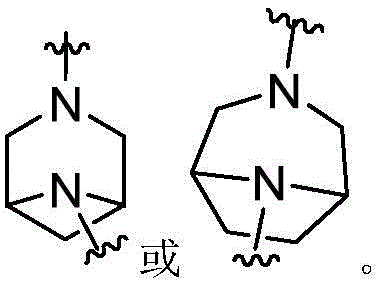
4. The heterocyclic compound of claim 1, where a is independently optionally substituted with one or more R9Substituted C4-C12Spiroheterocycles which are

5. The heterocyclic compound according to claim 1, wherein R is9Independently selected from hydrogen, halogen, hydroxy, amino, cyano, C1-C4Alkyl radical, C2-C4Alkenyl radical, C2-C4Alkynyl, C2-C8Heteroalkyl, -C (O) OR5、-C(O)N(R5)2、-N(R5)2In which C is1-C4Alkyl radical, C2-C4Alkenyl radical, C2-C4Alkynyl or C2-C8Heteroalkyl optionally being interrupted by one OR more cyano groups, -OR5Or heteroaryl.
6. The heterocyclic compound according to claim 1, characterized in that,
the R is1Independently is-C (O) CH ═ CH2;
The R is2Independently by one or more R8Substituted C3-C8Heterocycloalkyl group in the heterocycloalkyl group is an azetidinyl group, an oxetanyl group, a tetrahydrofuryl group, a pyrrolyl group, a piperidinyl group, a piperazinyl group, a morpholinyl group, a pyrrolidinone group, a piperidinoalkonyl group, a 1, 4-oxazepanyl group, a 1, 1-dioxothiomorpholinyl group, a 3-azabicyclo [3.1.1] alkyl group]Heptane, 2-oxa-5-azabicyclo [2.2.1]Heptane-5-yl, or azabicyclo [2.2.1 ]]Heptane-2-yl; or said R2Independently by one or more R8A substituted dialkylaminoalkyl group, wherein dialkylaminoalkyl group is dimethylaminoethyl, dimethylaminopropyl, 2-dimethylaminopropyl, dimethylaminobutyl, 2-dimethylaminobutyl, or diethylaminoethyl; or said R2is-Z-NR5R6Wherein Z is C1-C3An alkenyl group.
The R is3Independently cycloalkyl, heterocycloalkyl, aryl, heteroaryl, said cycloalkyl, heterocycloalkyl, aryl or heteroaryl optionally substituted with one or more R7And wherein cycloalkyl, heterocycloalkyl, aryl, and heteroaryl are selected from cyclohexyl, cyclopentyl, pyrrolyl, piperidinyl, piperazinyl, morpholinyl, pyrrolidinonyl, piperidinoalkonyl, 1, 4-oxazepanyl, phenyl, naphthyl, quinolinyl, isoquinolinyl, indolyl, azaindolyl, benzothiazolyl, indazolyl, or imidazolyl.
The R is4Independently cyano, formamide or difluoromethyl.
7. The heterocyclic compound according to claim 1, characterized in that,
R5and R6Each independently is methyl, ethyl, isopropyl, acetyl, hydroxymethyl, or methoxy;
R8each independently is hydrogen, hydroxy, amido, halogen, C1-C3Alkyl radical, C1–C6Heteroalkyl, alkoxy, C3–C8Cycloalkyl radical, C3–C8Heterocycloalkyl or dialkylamino;
R7each independently is hydrogen, hydroxy, amino, cyano, methyl, ethyl, propyl, isopropyl, cyclopropyl, methoxy, trifluoromethyl, trifluoromethoxy, difluoromethyl, difluoromethoxy, or hydroxymethyl.
8. The heterocyclic compound according to claim 1, wherein the heterocyclic compound represented by the formula I is any one of the following compounds:
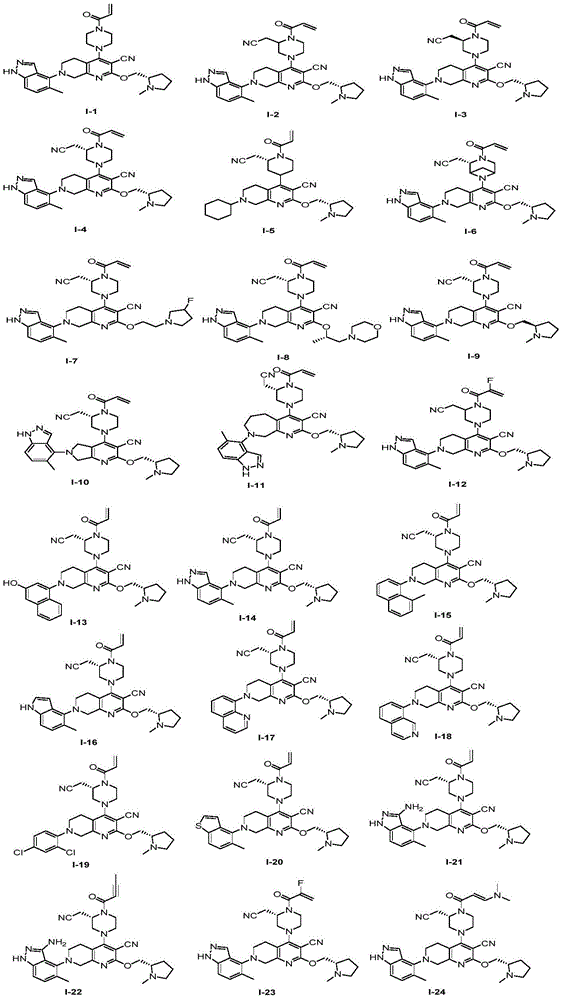

9. a pharmaceutical composition, which comprises a compound of formula I as claimed in any one of claims 1 to 8, or a pharmaceutically acceptable salt thereof, or a stereoisomer thereof, or a tautomer thereof, or a hydrate thereof, or a solvate thereof, or a metabolite thereof, or a prodrug thereof, and at least one pharmaceutically acceptable excipient.
10. Use of a compound of formula I as described in any one of claims 1-8, or a pharmaceutically acceptable salt thereof, or a stereoisomer thereof, or a tautomer thereof, or a hydrate thereof, or a solvate thereof, or a metabolite thereof, or a prodrug thereof, or a pharmaceutical composition of claim 9, for the preparation of a medicament for the treatment of a disease caused by a mutation in KRAS G12C, an inhibitor of KRAS G12C, and for the treatment and/or prevention of cancer.
Priority Applications (1)
| Application Number | Priority Date | Filing Date | Title |
|---|---|---|---|
| CN201910680743.0A CN112300153B (en) | 2019-07-26 | 2019-07-26 | Heterocyclic compound, pharmaceutical composition and application |
Applications Claiming Priority (1)
| Application Number | Priority Date | Filing Date | Title |
|---|---|---|---|
| CN201910680743.0A CN112300153B (en) | 2019-07-26 | 2019-07-26 | Heterocyclic compound, pharmaceutical composition and application |
Publications (2)
| Publication Number | Publication Date |
|---|---|
| CN112300153A true CN112300153A (en) | 2021-02-02 |
| CN112300153B CN112300153B (en) | 2023-06-13 |
Family
ID=74329624
Family Applications (1)
| Application Number | Title | Priority Date | Filing Date |
|---|---|---|---|
| CN201910680743.0A Active CN112300153B (en) | 2019-07-26 | 2019-07-26 | Heterocyclic compound, pharmaceutical composition and application |
Country Status (1)
| Country | Link |
|---|---|
| CN (1) | CN112300153B (en) |
Cited By (10)
| Publication number | Priority date | Publication date | Assignee | Title |
|---|---|---|---|---|
| CN112552295A (en) * | 2019-09-25 | 2021-03-26 | 北京加科思新药研发有限公司 | KRAS mutein inhibitors |
| WO2022170947A1 (en) * | 2021-02-09 | 2022-08-18 | 苏州阿尔脉生物科技有限公司 | Tetrahydronaphthyridine derivatives as kras mutant g12c inhibitors, preparation method therefor, and application thereof |
| CN115028648A (en) * | 2021-03-03 | 2022-09-09 | 武汉誉祥医药科技有限公司 | Tricyclic compound, and pharmaceutical composition and application thereof |
| WO2022194192A1 (en) * | 2021-03-18 | 2022-09-22 | 四川科伦博泰生物医药股份有限公司 | Heteroaromatic compound, and preparation method therefor and use thereof |
| CN115716840A (en) * | 2021-08-24 | 2023-02-28 | 昆药集团股份有限公司 | Heterocyclic compound with KRAS (KRAS-mutated protein) inhibition effect and pharmaceutical composition and application thereof |
| CN116041265A (en) * | 2023-02-20 | 2023-05-02 | 南京优氟医药科技有限公司 | A kind of preparation method of (R)-2-(cyanomethyl)piperazine-1-carboxylate benzyl ester |
| WO2024081674A1 (en) | 2022-10-11 | 2024-04-18 | Aadi Bioscience, Inc. | Combination therapies for the treatment of cancer |
| US12162893B2 (en) | 2020-09-23 | 2024-12-10 | Erasca, Inc. | Tricyclic pyridones and pyrimidones |
| WO2025067459A2 (en) | 2023-09-29 | 2025-04-03 | D3 Bio (Wuxi) Co., Ltd. | Therapies for the treatment of cancer |
| US12286427B2 (en) | 2020-08-28 | 2025-04-29 | Kumquat Biosciences Inc. | Heterocyclic compounds and uses thereof |
Citations (3)
| Publication number | Priority date | Publication date | Assignee | Title |
|---|---|---|---|---|
| WO2018140600A1 (en) * | 2017-01-26 | 2018-08-02 | Araxes Pharma Llc | Fused hetero-hetero bicyclic compounds and methods of use thereof |
| WO2019099524A1 (en) * | 2017-11-15 | 2019-05-23 | Mirati Therapeutics, Inc. | Kras g12c inhibitors |
| CN109843856A (en) * | 2016-05-18 | 2019-06-04 | 米拉蒂治疗股份有限公司 | KRAS G12C inhibitor |
-
2019
- 2019-07-26 CN CN201910680743.0A patent/CN112300153B/en active Active
Patent Citations (3)
| Publication number | Priority date | Publication date | Assignee | Title |
|---|---|---|---|---|
| CN109843856A (en) * | 2016-05-18 | 2019-06-04 | 米拉蒂治疗股份有限公司 | KRAS G12C inhibitor |
| WO2018140600A1 (en) * | 2017-01-26 | 2018-08-02 | Araxes Pharma Llc | Fused hetero-hetero bicyclic compounds and methods of use thereof |
| WO2019099524A1 (en) * | 2017-11-15 | 2019-05-23 | Mirati Therapeutics, Inc. | Kras g12c inhibitors |
Cited By (13)
| Publication number | Priority date | Publication date | Assignee | Title |
|---|---|---|---|---|
| CN112552295A (en) * | 2019-09-25 | 2021-03-26 | 北京加科思新药研发有限公司 | KRAS mutein inhibitors |
| US12365676B2 (en) | 2020-08-28 | 2025-07-22 | Kumquat Biosciences Inc. | Heterocyclic compounds and uses thereof |
| US12286427B2 (en) | 2020-08-28 | 2025-04-29 | Kumquat Biosciences Inc. | Heterocyclic compounds and uses thereof |
| US12162893B2 (en) | 2020-09-23 | 2024-12-10 | Erasca, Inc. | Tricyclic pyridones and pyrimidones |
| CN116600808A (en) * | 2021-02-09 | 2023-08-15 | 苏州阿尔脉生物科技有限公司 | Tetrahydronaphthyridine derivative serving as KRAS mutant G12C inhibitor, and preparation method and application thereof |
| CN116600808B (en) * | 2021-02-09 | 2024-10-22 | 苏州阿尔脉生物科技有限公司 | Tetrahydronaphthyridine derivative serving as KRAS mutant G12C inhibitor, and preparation method and application thereof |
| WO2022170947A1 (en) * | 2021-02-09 | 2022-08-18 | 苏州阿尔脉生物科技有限公司 | Tetrahydronaphthyridine derivatives as kras mutant g12c inhibitors, preparation method therefor, and application thereof |
| CN115028648A (en) * | 2021-03-03 | 2022-09-09 | 武汉誉祥医药科技有限公司 | Tricyclic compound, and pharmaceutical composition and application thereof |
| WO2022194192A1 (en) * | 2021-03-18 | 2022-09-22 | 四川科伦博泰生物医药股份有限公司 | Heteroaromatic compound, and preparation method therefor and use thereof |
| CN115716840A (en) * | 2021-08-24 | 2023-02-28 | 昆药集团股份有限公司 | Heterocyclic compound with KRAS (KRAS-mutated protein) inhibition effect and pharmaceutical composition and application thereof |
| WO2024081674A1 (en) | 2022-10-11 | 2024-04-18 | Aadi Bioscience, Inc. | Combination therapies for the treatment of cancer |
| CN116041265A (en) * | 2023-02-20 | 2023-05-02 | 南京优氟医药科技有限公司 | A kind of preparation method of (R)-2-(cyanomethyl)piperazine-1-carboxylate benzyl ester |
| WO2025067459A2 (en) | 2023-09-29 | 2025-04-03 | D3 Bio (Wuxi) Co., Ltd. | Therapies for the treatment of cancer |
Also Published As
| Publication number | Publication date |
|---|---|
| CN112300153B (en) | 2023-06-13 |
Similar Documents
| Publication | Publication Date | Title |
|---|---|---|
| CN112300153A (en) | Heterocyclic compound, pharmaceutical composition and application | |
| CN114751903B (en) | Nitrogen-containing fused heterocycle SHP2 inhibitor compound, preparation method and application | |
| CN111484477B (en) | Benzopyridone heterocyclic compound and application thereof | |
| JP7716110B2 (en) | Pyrimidin-4(3H)-one heterocyclic compounds, their preparation process and pharmaceutical uses | |
| CN113024544B (en) | Cyano-containing heterocyclic compound and application thereof | |
| CN112745335A (en) | Tri-heterocyclic compound and application thereof | |
| CN114349750A (en) | KRAS mutein inhibitors | |
| CN116162099A (en) | Heterocyclic derivative and preparation method and application thereof | |
| CN115403575A (en) | Heteroaromatic ring derivative and preparation method and application thereof | |
| CN112430234A (en) | Novel KRAS G12C protein inhibitor and preparation method and application thereof | |
| CN112707905A (en) | Tri-heterocyclic compound and preparation method and application thereof | |
| CN112851663B (en) | Parallel heterocyclic compound and application thereof | |
| CN114656482A (en) | Macrocyclic heterocyclic compound as EGFR inhibitor and application thereof | |
| CN112292374A (en) | Novel phosphoinositide 3-kinase inhibitor and preparation method and application thereof | |
| CN113387962A (en) | Pyrazolo [3,4-d ] pyrimidine-3-one derivative, pharmaceutical composition and application thereof | |
| CN115124533A (en) | Tetracyclic derivative, preparation method and medical application thereof | |
| CN116157400B (en) | Heterocyclic derivative and preparation method and application thereof | |
| JPH08337584A (en) | Fused hexacyclic amino compound, pharmaceutical containing the same, and process for producing the same | |
| JP2021501215A (en) | Amino-substituted nitrogen-containing condensed ring compound, its preparation method and use | |
| CN113929681A (en) | Tetracyclic derivatives and preparation methods and uses thereof | |
| WO2022037630A1 (en) | Tetracyclic derivative, method for preparing same and use thereof in medicine | |
| CN110407854B (en) | new tetracyclic compounds | |
| CN112538084A (en) | Novel KRAS G12C protein inhibitor and preparation method and application thereof | |
| CN110357905B (en) | Macrocyclic derivatives as protein kinase inhibitors, and preparation method and application thereof | |
| CN115433207A (en) | Macrocyclic heterocyclic compound as EGFR inhibitor and application thereof |
Legal Events
| Date | Code | Title | Description |
|---|---|---|---|
| PB01 | Publication | ||
| PB01 | Publication | ||
| SE01 | Entry into force of request for substantive examination | ||
| SE01 | Entry into force of request for substantive examination | ||
| GR01 | Patent grant | ||
| GR01 | Patent grant |