CN112220494B - An electroacoustic neuroimaging system based on pulse repetition frequency - Google Patents
An electroacoustic neuroimaging system based on pulse repetition frequency Download PDFInfo
- Publication number
- CN112220494B CN112220494B CN202011026933.XA CN202011026933A CN112220494B CN 112220494 B CN112220494 B CN 112220494B CN 202011026933 A CN202011026933 A CN 202011026933A CN 112220494 B CN112220494 B CN 112220494B
- Authority
- CN
- China
- Prior art keywords
- pulse repetition
- repetition frequency
- acoustic
- module
- signal
- Prior art date
- Legal status (The legal status is an assumption and is not a legal conclusion. Google has not performed a legal analysis and makes no representation as to the accuracy of the status listed.)
- Active
Links
- 238000002610 neuroimaging Methods 0.000 title claims abstract description 17
- 238000002604 ultrasonography Methods 0.000 claims abstract description 34
- 238000003384 imaging method Methods 0.000 claims abstract description 31
- 238000000605 extraction Methods 0.000 claims abstract description 11
- 230000004913 activation Effects 0.000 claims description 21
- 210000004556 brain Anatomy 0.000 claims description 14
- 230000000875 corresponding effect Effects 0.000 claims description 7
- 230000008859 change Effects 0.000 claims description 4
- 230000002596 correlated effect Effects 0.000 claims description 4
- 230000008878 coupling Effects 0.000 claims description 4
- 238000010168 coupling process Methods 0.000 claims description 4
- 238000005859 coupling reaction Methods 0.000 claims description 4
- 230000005515 acousto electric effect Effects 0.000 claims description 3
- 230000003993 interaction Effects 0.000 claims description 3
- 238000010606 normalization Methods 0.000 claims description 3
- 238000001914 filtration Methods 0.000 claims description 2
- 230000001131 transforming effect Effects 0.000 claims 1
- 230000000694 effects Effects 0.000 description 6
- 238000005516 engineering process Methods 0.000 description 6
- 230000002123 temporal effect Effects 0.000 description 6
- 230000001537 neural effect Effects 0.000 description 5
- 238000010586 diagram Methods 0.000 description 4
- 101000827703 Homo sapiens Polyphosphoinositide phosphatase Proteins 0.000 description 3
- 102100023591 Polyphosphoinositide phosphatase Human genes 0.000 description 3
- 230000008901 benefit Effects 0.000 description 3
- 230000006870 function Effects 0.000 description 3
- 238000007917 intracranial administration Methods 0.000 description 3
- 210000004761 scalp Anatomy 0.000 description 3
- 230000008685 targeting Effects 0.000 description 2
- 210000001519 tissue Anatomy 0.000 description 2
- 101001121408 Homo sapiens L-amino-acid oxidase Proteins 0.000 description 1
- 102100026388 L-amino-acid oxidase Human genes 0.000 description 1
- 238000004497 NIR spectroscopy Methods 0.000 description 1
- 101100233916 Saccharomyces cerevisiae (strain ATCC 204508 / S288c) KAR5 gene Proteins 0.000 description 1
- 230000007177 brain activity Effects 0.000 description 1
- 230000003925 brain function Effects 0.000 description 1
- 210000003710 cerebral cortex Anatomy 0.000 description 1
- 238000003759 clinical diagnosis Methods 0.000 description 1
- 239000004020 conductor Substances 0.000 description 1
- 230000001054 cortical effect Effects 0.000 description 1
- 210000005257 cortical tissue Anatomy 0.000 description 1
- 230000005684 electric field Effects 0.000 description 1
- 230000002708 enhancing effect Effects 0.000 description 1
- 238000002599 functional magnetic resonance imaging Methods 0.000 description 1
- 230000010354 integration Effects 0.000 description 1
- 230000002503 metabolic effect Effects 0.000 description 1
- 230000001242 postsynaptic effect Effects 0.000 description 1
- 238000005070 sampling Methods 0.000 description 1
- 210000003625 skull Anatomy 0.000 description 1
Images


Classifications
-
- A—HUMAN NECESSITIES
- A61—MEDICAL OR VETERINARY SCIENCE; HYGIENE
- A61B—DIAGNOSIS; SURGERY; IDENTIFICATION
- A61B8/00—Diagnosis using ultrasonic, sonic or infrasonic waves
- A61B8/08—Clinical applications
- A61B8/0808—Clinical applications for diagnosis of the brain
-
- A—HUMAN NECESSITIES
- A61—MEDICAL OR VETERINARY SCIENCE; HYGIENE
- A61B—DIAGNOSIS; SURGERY; IDENTIFICATION
- A61B5/00—Measuring for diagnostic purposes; Identification of persons
- A61B5/0033—Features or image-related aspects of imaging apparatus, e.g. for MRI, optical tomography or impedance tomography apparatus; Arrangements of imaging apparatus in a room
- A61B5/0035—Features or image-related aspects of imaging apparatus, e.g. for MRI, optical tomography or impedance tomography apparatus; Arrangements of imaging apparatus in a room adapted for acquisition of images from more than one imaging mode, e.g. combining MRI and optical tomography
-
- A—HUMAN NECESSITIES
- A61—MEDICAL OR VETERINARY SCIENCE; HYGIENE
- A61B—DIAGNOSIS; SURGERY; IDENTIFICATION
- A61B5/00—Measuring for diagnostic purposes; Identification of persons
- A61B5/72—Signal processing specially adapted for physiological signals or for diagnostic purposes
- A61B5/7225—Details of analogue processing, e.g. isolation amplifier, gain or sensitivity adjustment, filtering, baseline or drift compensation
-
- A—HUMAN NECESSITIES
- A61—MEDICAL OR VETERINARY SCIENCE; HYGIENE
- A61B—DIAGNOSIS; SURGERY; IDENTIFICATION
- A61B5/00—Measuring for diagnostic purposes; Identification of persons
- A61B5/72—Signal processing specially adapted for physiological signals or for diagnostic purposes
- A61B5/7235—Details of waveform analysis
-
- A—HUMAN NECESSITIES
- A61—MEDICAL OR VETERINARY SCIENCE; HYGIENE
- A61B—DIAGNOSIS; SURGERY; IDENTIFICATION
- A61B5/00—Measuring for diagnostic purposes; Identification of persons
- A61B5/72—Signal processing specially adapted for physiological signals or for diagnostic purposes
- A61B5/7235—Details of waveform analysis
- A61B5/725—Details of waveform analysis using specific filters therefor, e.g. Kalman or adaptive filters
-
- A—HUMAN NECESSITIES
- A61—MEDICAL OR VETERINARY SCIENCE; HYGIENE
- A61B—DIAGNOSIS; SURGERY; IDENTIFICATION
- A61B8/00—Diagnosis using ultrasonic, sonic or infrasonic waves
- A61B8/52—Devices using data or image processing specially adapted for diagnosis using ultrasonic, sonic or infrasonic waves
- A61B8/5215—Devices using data or image processing specially adapted for diagnosis using ultrasonic, sonic or infrasonic waves involving processing of medical diagnostic data
- A61B8/5238—Devices using data or image processing specially adapted for diagnosis using ultrasonic, sonic or infrasonic waves involving processing of medical diagnostic data for combining image data of patient, e.g. merging several images from different acquisition modes into one image
- A61B8/5261—Devices using data or image processing specially adapted for diagnosis using ultrasonic, sonic or infrasonic waves involving processing of medical diagnostic data for combining image data of patient, e.g. merging several images from different acquisition modes into one image combining images from different diagnostic modalities, e.g. ultrasound and X-ray
Landscapes
- Health & Medical Sciences (AREA)
- Life Sciences & Earth Sciences (AREA)
- Engineering & Computer Science (AREA)
- Public Health (AREA)
- Molecular Biology (AREA)
- Veterinary Medicine (AREA)
- General Health & Medical Sciences (AREA)
- Physics & Mathematics (AREA)
- Animal Behavior & Ethology (AREA)
- Biophysics (AREA)
- Pathology (AREA)
- Biomedical Technology (AREA)
- Heart & Thoracic Surgery (AREA)
- Medical Informatics (AREA)
- Surgery (AREA)
- Computer Vision & Pattern Recognition (AREA)
- Signal Processing (AREA)
- Nuclear Medicine, Radiotherapy & Molecular Imaging (AREA)
- Physiology (AREA)
- Artificial Intelligence (AREA)
- Psychiatry (AREA)
- Radiology & Medical Imaging (AREA)
- Neurology (AREA)
- Power Engineering (AREA)
- Investigating Or Analyzing Materials By The Use Of Ultrasonic Waves (AREA)
- Measurement And Recording Of Electrical Phenomena And Electrical Characteristics Of The Living Body (AREA)
Abstract
本发明涉及一种基于脉冲重复频率的声电神经成像系统,包括脉冲重复频率编码与扫描模块、声电信号采集模块、脉冲重复频率特征提取模块、插值成像模块、脉冲重复频率解调重建模块,其中,脉冲重复频率编码与扫描模块用于调节脉冲重复频率的编码模式并发射聚焦超声,包括脉冲重复频率编码模块和可编程相控阵;声电信号采集模块,用于在聚焦超声发射与扫描模块扫描目标区域的同时采集脉冲重复频率编码的声电信号;脉冲重复频率特征提取模块用于对采集到声电信号提取有效特征;插值成像模块用于将提取到的声电信号特征转换成声电图像;脉冲重复频率解调重建模块用于解调声电信号,重建源信号。

The invention relates to a pulse repetition frequency-based acoustic-electric neuroimaging system, comprising a pulse repetition frequency encoding and scanning module, an acoustic-electric signal acquisition module, a pulse repetition frequency feature extraction module, an interpolation imaging module, and a pulse repetition frequency demodulation and reconstruction module. Among them, the pulse repetition frequency encoding and scanning module is used to adjust the encoding mode of pulse repetition frequency and emit focused ultrasound, including pulse repetition frequency encoding module and programmable phased array; the acoustic and electrical signal acquisition module is used for transmitting and scanning focused ultrasound The module scans the target area while collecting pulse repetition frequency coded acoustic and electrical signals; the pulse repetition frequency feature extraction module is used to extract effective features from the collected acoustic and electrical signals; the interpolation imaging module is used to convert the extracted acoustic and electrical signal features into acoustic and electrical signals. Electrical image; the pulse repetition frequency demodulation reconstruction module is used to demodulate the acoustic electrical signal and reconstruct the source signal.
Description
技术领域Technical Field
本发明涉及一种基于脉冲重复频率的声电神经成像系统。The invention relates to an acoustic-electric neural imaging system based on pulse repetition frequency.
背景技术Background Art
现有的神经功能成像技术,如脑电图(electroencephalogram,EEG)、功能磁共振成像、功能近红外光谱等,通常难以兼具高时空分辨率。其中,EEG记录大脑活动时神经元集群同步发生突触后电位的合成信号,是大脑皮层神经电生理活动的总体反映,已广泛应用于临床实践。目前基于头皮电极采集的EEG技术可以获得频率高达1kHz的电生理数据。由于大部分EEG的内源活性皆低于100Hz,因此EEG在时间分辨率上占有极大的优势。但是受到颅内组织容积导体效应的影响,EEG空间分辨率相对较低,通常在厘米量级。这使得几乎不可能基于头皮EEG在颅外监测深层脑功能。为了突破这个限制,声电成像作为一种新兴的成像技术有望用于提高EEG的空间分辨率,实现高时空分辨的神经成像。Existing neurofunctional imaging technologies, such as electroencephalogram (EEG), functional magnetic resonance imaging, and functional near-infrared spectroscopy, usually have difficulty in achieving high temporal and spatial resolution. Among them, EEG is a synthetic signal of postsynaptic potentials that occur synchronously in neuronal clusters when recording brain activity. It is a general reflection of the electrophysiological activity of the cerebral cortex and has been widely used in clinical practice. At present, EEG technology based on scalp electrode collection can obtain electrophysiological data with a frequency of up to 1kHz. Since most of the endogenous activity of EEG is lower than 100Hz, EEG has a great advantage in temporal resolution. However, due to the conductor effect of intracranial tissue volume, the spatial resolution of EEG is relatively low, usually at the centimeter level. This makes it almost impossible to monitor deep brain function outside the skull based on scalp EEG. In order to break through this limitation, electroacoustic imaging, as an emerging imaging technology, is expected to be used to improve the spatial resolution of EEG and achieve high temporal and spatial resolution neuroimaging.
利用声电效应原理与经颅聚焦超声靶向定位的优势,声电神经成像通过声场与电场两种物理场的耦合作用,巧妙地将脑电的高时间分辨率与聚焦超声的高空间分辨率结合起来,从激活源源头对脑电信号进行空间编码,获取具有精确位置信息的脑电信号。脉冲重复频率作为重要的超声场参数,可用于脑电信号的高效编码。为了探明如何利用脉冲重复频率实现脑电空间编码及声电神经成像,提出一种基于脉冲重复频率的声电神经成像系统。Taking advantage of the principle of electroacoustic effect and transcranial focused ultrasound targeting, electroacoustic neuroimaging cleverly combines the high temporal resolution of EEG with the high spatial resolution of focused ultrasound through the coupling of two physical fields, acoustic field and electric field, to spatially encode EEG signals from the activation source and obtain EEG signals with precise location information. Pulse repetition frequency, as an important ultrasonic field parameter, can be used for efficient encoding of EEG signals. In order to explore how to use pulse repetition frequency to achieve EEG spatial encoding and electroacoustic neuroimaging, an electroacoustic neuroimaging system based on pulse repetition frequency is proposed.
经颅聚焦超声(transcranial focus ultrasound,tFUS)具有无损伤地在颅内脑皮层空间聚焦特性,能通过声场作用调制其所聚焦空间的组织电生理信号,赋予其高空间分辨特征,从而增强颅内深层EEG或MEG的电生理神经成像空间分辨率。Transcranial focused ultrasound (tFUS) has the characteristic of focusing in the intracranial cortical space without damage. It can modulate the electrophysiological signals of the tissues in the focused space through the effect of the sound field, giving it high spatial resolution characteristics, thereby enhancing the spatial resolution of electrophysiological neuroimaging of deep intracranial EEG or MEG.
发明内容Summary of the invention
本发明的目的是提供一种基于脉冲重复频率的声电神经成像系统。本发明采用的技术方案是:The purpose of the present invention is to provide an acoustic-electrical neuroimaging system based on pulse repetition frequency. The technical solution adopted by the present invention is:
一种基于脉冲重复频率的声电神经成像系统,包括脉冲重复频率编码与扫描模块、声电信号采集模块、脉冲重复频率特征提取模块、插值成像模块、脉冲重复频率解调重建模块,其中,脉冲重复频率编码与扫描模块用于调节脉冲重复频率的编码模式并发射聚焦超声,包括脉冲重复频率编码模块和可编程相控阵;声电信号采集模块,用于在聚焦超声发射与扫描模块扫描目标区域的同时采集脉冲重复频率编码的声电信号;脉冲重复频率特征提取模块用于对采集到声电信号提取有效特征;插值成像模块用于将提取到的声电信号特征转换成声电图像;脉冲重复频率解调重建模块用于解调声电信号,重建源信号。A pulse repetition frequency-based acoustic and electrical neuroimaging system includes a pulse repetition frequency encoding and scanning module, an acoustic and electrical signal acquisition module, a pulse repetition frequency feature extraction module, an interpolation imaging module, and a pulse repetition frequency demodulation and reconstruction module, wherein the pulse repetition frequency encoding and scanning module is used to adjust the encoding mode of the pulse repetition frequency and transmit focused ultrasound, and includes a pulse repetition frequency encoding module and a programmable phased array; the acoustic and electrical signal acquisition module is used to collect acoustic and electrical signals encoded by the pulse repetition frequency while the focused ultrasound emission and scanning module scans the target area; the pulse repetition frequency feature extraction module is used to extract effective features from the collected acoustic and electrical signals; the interpolation imaging module is used to convert the extracted acoustic and electrical signal features into acoustic and electrical images; the pulse repetition frequency demodulation and reconstruction module is used to demodulate the acoustic and electrical signals and reconstruct the source signals.
脉冲重复频率编码与扫描模块利用可编程相控阵设置不同的脉冲重复频率编码模式,用于聚焦超声的高精度三维扫描,编码满足如下数学关系:The pulse repetition frequency encoding and scanning module uses a programmable phased array to set different pulse repetition frequency encoding modes for high-precision three-dimensional scanning of focused ultrasound. The encoding satisfies the following mathematical relationship:

其中,
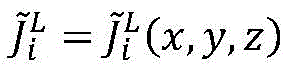
声电信号采集模块:在脉冲重复频率编码与扫描模块扫描目标脑区的同时采集脉冲重复频率编码的声电信号,将微弱的声电信号放大、滤波后存储。Acoustic and electrical signal acquisition module: While the pulse repetition frequency encoding and scanning module is scanning the target brain area, it collects the pulse repetition frequency encoded acoustic and electrical signals, amplifies the weak acoustic and electrical signals, and stores them after filtering.
脉冲重复频率特征提取模块:对采集到声电信号

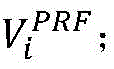


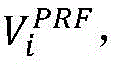


其中,BPFPRF为以脉冲重复频率fPRF为中心频率的带通滤波器,脉冲重复频率调制信号


插值成像模块:取脉冲重复频率调制信号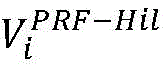
脉冲重复频率解调重建模块:对脉冲重复频率调制信号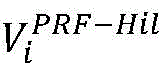
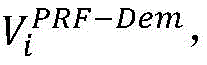

本发明与传统的声电成像方法相比,能够充分挖掘利用超声场的有效参数脉冲重复频率,为声电成像提供一种新思路。重建激活源,有望为新型多模态神经功能成像提供关键技术保障,也为聚焦超声尽快融入神经成像技术应用阶段奠定基础。Compared with traditional electroacoustic imaging methods, this invention can fully exploit the effective parameter pulse repetition frequency of the ultrasound field, providing a new idea for electroacoustic imaging. Reconstructing the activation source is expected to provide key technical support for new multimodal neural function imaging, and also lay the foundation for the integration of focused ultrasound into the application stage of neural imaging technology as soon as possible.
附图说明BRIEF DESCRIPTION OF THE DRAWINGS
图1为本发明的系统结构示意图;FIG1 is a schematic diagram of the system structure of the present invention;
图2为本发明的工作流程图;Fig. 2 is a workflow diagram of the present invention;
图3为本发明的原理示意图;Fig. 3 is a schematic diagram of the principle of the present invention;
图4为本发明的实验数据声电成像及源信号重建结果。FIG. 4 is the result of acoustic and electrical imaging and source signal reconstruction of the experimental data of the present invention.
具体实施方式DETAILED DESCRIPTION
神经成像作为一类重要的脑科学技术手段,不仅可以无创(微创)检测活体脑结构及功能变化,更重要的是可以作为中间枢纽整合宏观结构、功能及微观分子、代谢等信息,因此广泛应用于临床诊断和神经科学研究。兼具高时空分辨率的神经成像新技术的研发在神经科学和临床医学研究中发挥至关重要的作用。聚焦超声因其具有高靶向性和无创性的优势,可用于声电成像获取多源放电的空间分布,以实现超高时空分辨的神经成像。As an important brain science and technology, neuroimaging can not only detect changes in living brain structure and function non-invasively (minimally invasively), but more importantly, it can serve as an intermediate hub to integrate macroscopic structure, function, and microscopic molecular and metabolic information. Therefore, it is widely used in clinical diagnosis and neuroscience research. The development of new neuroimaging technologies with high temporal and spatial resolution plays a vital role in neuroscience and clinical medical research. Focused ultrasound, due to its advantages of high targeting and non-invasiveness, can be used for electroacoustic imaging to obtain the spatial distribution of multi-source discharges, so as to achieve ultra-high temporal and spatial resolution neuroimaging.
结合附图和实施例对本发明的基于脉冲重复频率的声电神经成像系统加以说明。The pulse repetition frequency-based acoustic-electric neural imaging system of the present invention is described in conjunction with the accompanying drawings and embodiments.
本发明借助脉冲重复频率实现声电神经成像及激活源重建。利用经颅聚焦超声扫描感兴趣位置深部皮层组织,聚焦靶区脉冲重复频率编码的声电信号,检测深部皮层电生理活动,实现声电成像与源信号重建。The present invention realizes acoustic and electrical neuroimaging and activation source reconstruction by means of pulse repetition frequency. Transcranial focused ultrasound is used to scan the deep cortical tissue at the location of interest, focusing the acoustic and electrical signals encoded by the pulse repetition frequency of the target area, detecting the electrophysiological activity of the deep cortex, and realizing acoustic and electrical imaging and source signal reconstruction.
本发明的基于脉冲重复频率的声电神经成像系统如图1所示,主要包括脉冲重复频率编码与扫描模块、声电信号采集模块、脉冲重复频率特征提取模块、插值成像模块、脉冲重复频率解调重建模块,其中脉冲重复频率编码与扫描模块用于调节脉冲重复频率的编码模式并发射聚焦超声,由脉冲重复频率编码模块、可编程相控阵组成。声电信号采集模块,用于在聚焦超声发射与扫描模块扫描目标区域的同时采集脉冲重复频率编码的声电信号。脉冲重复频率特征提取模块用于对采集到声电信号提取有效特征。插值成像模块用于将提取到的声电信号特征转换成声电图像。脉冲重复频率解调重建模块用于解调声电信号,重建源信号。The pulse repetition frequency-based acoustic and electrical neuroimaging system of the present invention is shown in Figure 1, and mainly includes a pulse repetition frequency encoding and scanning module, an acoustic and electrical signal acquisition module, a pulse repetition frequency feature extraction module, an interpolation imaging module, and a pulse repetition frequency demodulation and reconstruction module, wherein the pulse repetition frequency encoding and scanning module is used to adjust the encoding mode of the pulse repetition frequency and transmit focused ultrasound, and is composed of a pulse repetition frequency encoding module and a programmable phased array. The acoustic and electrical signal acquisition module is used to collect the acoustic and electrical signals encoded by the pulse repetition frequency while the focused ultrasound emission and scanning module scans the target area. The pulse repetition frequency feature extraction module is used to extract effective features from the collected acoustic and electrical signals. The interpolation imaging module is used to convert the extracted acoustic and electrical signal features into acoustic and electrical images. The pulse repetition frequency demodulation and reconstruction module is used to demodulate the acoustic and electrical signals and reconstruct the source signals.
基于脉冲重复频率的声电神经成像系统的工作流程图如图2所示,大概可以分为以下几个步骤:The workflow of the pulse repetition frequency-based electroacoustic neuroimaging system is shown in Figure 2, which can be roughly divided into the following steps:
1)脉冲重复频率编码与扫描模块:利用可编程相控阵设置不同的脉冲重复频率编码模式;用于聚焦超声的高精度三维扫描,扫描精度为0.05mm;编码算法满足如下数学关系:1) Pulse repetition frequency encoding and scanning module: Use programmable phased array to set different pulse repetition frequency encoding modes; used for high-precision three-dimensional scanning of focused ultrasound with a scanning accuracy of 0.05mm; the encoding algorithm satisfies the following mathematical relationship:

其中,

2)声电信号采集模块:在脉冲重复频率编码与扫描模块扫描目标脑区的同时采集脉冲重复频率编码的声电信号,将微弱的声电信号放大、滤波后存储,采样率20kHz;2) Acoustic and electrical signal acquisition module: while the pulse repetition frequency encoding and scanning module is scanning the target brain area, it collects the pulse repetition frequency encoded acoustic and electrical signals, amplifies and filters the weak acoustic and electrical signals, and stores them with a sampling rate of 20kHz;
3)脉冲重复频率特征提取模块:对采集到声电信号


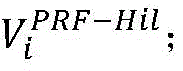
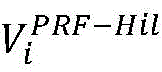



其中,BPFPRF为以脉冲重复频率fPRF为中心频率的带通滤波器,脉冲重复频率调制信号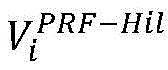


4)插值成像模块:取脉冲重复频率调制信号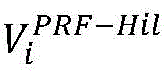
5)脉冲重复频率解调重建模块:对脉冲重复频率调制信号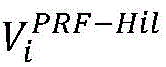
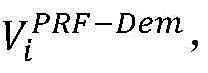

图3为本发明的原理示意图,将脉冲重复频率编码作用于聚焦超声换能器进而发射聚焦超声波,将超声波聚扫描目标脑区(浅灰虚线),其中包括激活脑区(黑色虚线)和非激活脑区(深灰虚线)。在超声扫描脑区的同时采集头皮脑电。激活脑区受到超声调制后产生高频声电信号,而非激活脑区则输出噪声。由此获得脉冲重复频率编码的且具有精确位置信息脑电信号。FIG3 is a schematic diagram of the principle of the present invention, in which the pulse repetition frequency encoding is applied to the focused ultrasonic transducer to emit focused ultrasonic waves, and the ultrasonic waves are focused to scan the target brain area (light gray dotted line), including the activated brain area (black dotted line) and the non-activated brain area (dark gray dotted line). The scalp EEG is collected while the ultrasonic scanning of the brain area. The activated brain area generates a high-frequency acoustic and electrical signal after being modulated by ultrasound, while the non-activated brain area outputs noise. Thus, an EEG signal encoded with pulse repetition frequency and having precise position information is obtained.
图4为本发明的实验数据声电成像及源信号重建结果,一个激活源声电成像结果如图4(a)所示。图4(b)为源点S+(0,0)处不同相位的源信号及对应的解调重建源信号。从中可知,解调重建源信号的频率、幅值、相位与源信号呈正相关。FIG4 is the experimental data acoustic and electrical imaging and source signal reconstruction results of the present invention, and an activated source acoustic and electrical imaging result is shown in FIG4(a). FIG4(b) is the source signal of different phases at the source point S+(0,0) and the corresponding demodulated and reconstructed source signal. It can be seen that the frequency, amplitude, and phase of the demodulated and reconstructed source signal are positively correlated with the source signal.
Claims (2)


Priority Applications (1)
| Application Number | Priority Date | Filing Date | Title |
|---|---|---|---|
| CN202011026933.XA CN112220494B (en) | 2020-09-25 | 2020-09-25 | An electroacoustic neuroimaging system based on pulse repetition frequency |
Applications Claiming Priority (1)
| Application Number | Priority Date | Filing Date | Title |
|---|---|---|---|
| CN202011026933.XA CN112220494B (en) | 2020-09-25 | 2020-09-25 | An electroacoustic neuroimaging system based on pulse repetition frequency |
Publications (2)
| Publication Number | Publication Date |
|---|---|
| CN112220494A CN112220494A (en) | 2021-01-15 |
| CN112220494B true CN112220494B (en) | 2023-05-05 |
Family
ID=74108220
Family Applications (1)
| Application Number | Title | Priority Date | Filing Date |
|---|---|---|---|
| CN202011026933.XA Active CN112220494B (en) | 2020-09-25 | 2020-09-25 | An electroacoustic neuroimaging system based on pulse repetition frequency |
Country Status (1)
| Country | Link |
|---|---|
| CN (1) | CN112220494B (en) |
Families Citing this family (5)
| Publication number | Priority date | Publication date | Assignee | Title |
|---|---|---|---|---|
| CN115813344A (en) * | 2022-12-09 | 2023-03-21 | 天津大学 | Deep brain stimulation noninvasive monitoring system based on sound computer imaging |
| GB202302755D0 (en) * | 2023-02-24 | 2023-04-12 | Imperial College Innovations Ltd | System and method |
| CN118614872B (en) * | 2024-05-30 | 2025-01-03 | 天津大学 | A method for acoustic and electrical imaging with simultaneous detection of multiple sites |
| CN119318507B (en) * | 2024-10-29 | 2025-10-10 | 天津大学 | A synchronous functional-structural brain imaging system based on the electroacoustic effect |
| CN119606425B (en) * | 2024-11-22 | 2025-07-22 | 天津大学 | High-resolution peripheral nerve imaging system based on acoustic-electric coupling |
Citations (3)
| Publication number | Priority date | Publication date | Assignee | Title |
|---|---|---|---|---|
| WO2014179681A1 (en) * | 2013-05-03 | 2014-11-06 | Sunnybrook Health Sciences Centre | Systems and methods for super-resolution ultrasound imaging |
| CN109890267A (en) * | 2016-07-07 | 2019-06-14 | 加州大学评议会 | Use the implantation material of ultrasound backscatter device detection electricity physiological signal |
| CN111643110A (en) * | 2020-03-31 | 2020-09-11 | 天津大学 | Electroencephalogram detection device based on focused ultrasound spatial coding |
Family Cites Families (5)
| Publication number | Priority date | Publication date | Assignee | Title |
|---|---|---|---|---|
| EP1553426A1 (en) * | 2004-01-08 | 2005-07-13 | Institut de Microtechnique de l'Université de Neuchâtel | Method and receiver apparatus for wireless data communication with Ultra Wide Band time coded signals |
| WO2014127091A1 (en) * | 2013-02-14 | 2014-08-21 | Thync, Inc. | Transcranial ultrasound systems |
| US20200107817A1 (en) * | 2017-03-22 | 2020-04-09 | Institut National De La Sante Et De La Recherche Medical (Inserm) | Method for imaging an area of a medium with ultrasound contrast agents and associated device |
| CN109645999B (en) * | 2018-11-29 | 2022-04-26 | 天津大学 | A 4D Transcranial Focused Ultrasound Neuroimaging Method Based on Acoustoelectric Effect |
| CN111227801B (en) * | 2020-02-03 | 2022-06-10 | 天津大学 | An acoustoelectric neuroimaging system for multi-source activation detection |
-
2020
- 2020-09-25 CN CN202011026933.XA patent/CN112220494B/en active Active
Patent Citations (3)
| Publication number | Priority date | Publication date | Assignee | Title |
|---|---|---|---|---|
| WO2014179681A1 (en) * | 2013-05-03 | 2014-11-06 | Sunnybrook Health Sciences Centre | Systems and methods for super-resolution ultrasound imaging |
| CN109890267A (en) * | 2016-07-07 | 2019-06-14 | 加州大学评议会 | Use the implantation material of ultrasound backscatter device detection electricity physiological signal |
| CN111643110A (en) * | 2020-03-31 | 2020-09-11 | 天津大学 | Electroencephalogram detection device based on focused ultrasound spatial coding |
Also Published As
| Publication number | Publication date |
|---|---|
| CN112220494A (en) | 2021-01-15 |
Similar Documents
| Publication | Publication Date | Title |
|---|---|---|
| CN112220494B (en) | An electroacoustic neuroimaging system based on pulse repetition frequency | |
| CN109645999B (en) | A 4D Transcranial Focused Ultrasound Neuroimaging Method Based on Acoustoelectric Effect | |
| US20190083048A1 (en) | Massively Multi-Frequency Ultrasound-Encoded Tomography | |
| CA2861979C (en) | Laser optoacoustic ultrasonic imaging system (louis) and methods of use | |
| CN111643110A (en) | Electroencephalogram detection device based on focused ultrasound spatial coding | |
| CN111227801B (en) | An acoustoelectric neuroimaging system for multi-source activation detection | |
| CN115813344A (en) | Deep brain stimulation noninvasive monitoring system based on sound computer imaging | |
| Zhou et al. | Multisource acoustoelectric imaging with different current source features | |
| US20090171210A1 (en) | Sonoelectric tomography using a frequency-swept ultrasonic wave | |
| CN103156605B (en) | Based on biological tissue's Current density imaging method of acoustoelectric effect | |
| Qin et al. | 4D acoustoelectric imaging of current sources in a human head phantom | |
| Zhou et al. | A source signal modulation mechanism with pulse focused ultrasound for acoustoelectric brain imaging | |
| CN113273987A (en) | Disease detection system based on microwave thermoacoustic imaging and use method | |
| CN106388774B (en) | A kind of pocket induction type magnetosonic two-dimensional conductivity imaging device | |
| CN111938628A (en) | A brain power signal detection device based on transcranial focused ultrasound stimulation | |
| Burton et al. | Development of a mobile platform for acoustoelectric brain imaging in rats | |
| CN120813305A (en) | Transcranial volumetric imaging using conformal ultrasound patches | |
| Amir et al. | Lie detection in interrogations using digital signal processing of brain waves | |
| CN106037802B (en) | A localization system for brain lesions | |
| CN103156604A (en) | Electrical impedance imaging method of ultrasonic-synergy biological tissue | |
| Khan et al. | Biomedical instrumentation of photoacoustic imaging and quantitative sensing for clinical applications | |
| Hakakzadeh et al. | Enhancing Contrast in Circular-view Photoacoustic Computed Tomography Systems | |
| US20210059535A1 (en) | Handheld ultrasound transducer array for 3d transcranial and transthoracic ultrasound and acoustoelectric imaging and related modalities | |
| CN119606425B (en) | High-resolution peripheral nerve imaging system based on acoustic-electric coupling | |
| CN114983426B (en) | Wireless detection method and system of electrophysiological signals based on electromagnetic coupling principle |
Legal Events
| Date | Code | Title | Description |
|---|---|---|---|
| PB01 | Publication | ||
| PB01 | Publication | ||
| SE01 | Entry into force of request for substantive examination | ||
| SE01 | Entry into force of request for substantive examination | ||
| GR01 | Patent grant | ||
| GR01 | Patent grant |