[go: up one dir, main page]

CN112195221A - Multi-temperature single-fluorescence-channel multi-real-time fluorescence quantitative PCR instrument and detection method thereof - Google Patents

Multi-temperature single-fluorescence-channel multi-real-time fluorescence quantitative PCR instrument and detection method thereof Download PDF

Info

Publication number
CN112195221A
CN112195221A CN202010957483.XA CN202010957483A CN112195221A CN 112195221 A CN112195221 A CN 112195221A CN 202010957483 A CN202010957483 A CN 202010957483A CN 112195221 A CN112195221 A CN 112195221A
Authority
CN
China
Prior art keywords
fluorescence
primer
annealing temperature
temperature
annealing
Prior art date
Legal status (The legal status is an assumption and is not a legal conclusion. Google has not performed a legal analysis and makes no representation as to the accuracy of the status listed.)
Granted
Application number
CN202010957483.XA
Other languages
Chinese (zh)
Other versions
CN112195221B (en
Inventor
叶伦
Current Assignee (The listed assignees may be inaccurate. Google has not performed a legal analysis and makes no representation or warranty as to the accuracy of the list.)
Wuhan Mingzhi Diagnostic Technology Co ltd
Original Assignee
Wuhan Shanmu Medical Technology Co ltd
Priority date (The priority date is an assumption and is not a legal conclusion. Google has not performed a legal analysis and makes no representation as to the accuracy of the date listed.)
Filing date
Publication date
Application filed by Wuhan Shanmu Medical Technology Co ltd filed Critical Wuhan Shanmu Medical Technology Co ltd
Priority to CN202010957483.XA priority Critical patent/CN112195221B/en
Publication of CN112195221A publication Critical patent/CN112195221A/en
Application granted granted Critical
Publication of CN112195221B publication Critical patent/CN112195221B/en
Active legal-status Critical Current
Anticipated expiration legal-status Critical

Links

Images

Classifications

    • CCHEMISTRY; METALLURGY
    • C12BIOCHEMISTRY; BEER; SPIRITS; WINE; VINEGAR; MICROBIOLOGY; ENZYMOLOGY; MUTATION OR GENETIC ENGINEERING
    • C12QMEASURING OR TESTING PROCESSES INVOLVING ENZYMES, NUCLEIC ACIDS OR MICROORGANISMS; COMPOSITIONS OR TEST PAPERS THEREFOR; PROCESSES OF PREPARING SUCH COMPOSITIONS; CONDITION-RESPONSIVE CONTROL IN MICROBIOLOGICAL OR ENZYMOLOGICAL PROCESSES
    • C12Q1/00Measuring or testing processes involving enzymes, nucleic acids or microorganisms; Compositions therefor; Processes of preparing such compositions
    • C12Q1/68Measuring or testing processes involving enzymes, nucleic acids or microorganisms; Compositions therefor; Processes of preparing such compositions involving nucleic acids
    • C12Q1/6844Nucleic acid amplification reactions
    • C12Q1/6851Quantitative amplification
    • BPERFORMING OPERATIONS; TRANSPORTING
    • B01PHYSICAL OR CHEMICAL PROCESSES OR APPARATUS IN GENERAL
    • B01LCHEMICAL OR PHYSICAL LABORATORY APPARATUS FOR GENERAL USE
    • B01L7/00Heating or cooling apparatus; Heat insulating devices
    • B01L7/52Heating or cooling apparatus; Heat insulating devices with provision for submitting samples to a predetermined sequence of different temperatures, e.g. for treating nucleic acid samples
    • GPHYSICS
    • G16INFORMATION AND COMMUNICATION TECHNOLOGY [ICT] SPECIALLY ADAPTED FOR SPECIFIC APPLICATION FIELDS
    • G16BBIOINFORMATICS, i.e. INFORMATION AND COMMUNICATION TECHNOLOGY [ICT] SPECIALLY ADAPTED FOR GENETIC OR PROTEIN-RELATED DATA PROCESSING IN COMPUTATIONAL MOLECULAR BIOLOGY
    • G16B25/00ICT specially adapted for hybridisation; ICT specially adapted for gene or protein expression
    • G16B25/20Polymerase chain reaction [PCR]; Primer or probe design; Probe optimisation
    • GPHYSICS
    • G16INFORMATION AND COMMUNICATION TECHNOLOGY [ICT] SPECIALLY ADAPTED FOR SPECIFIC APPLICATION FIELDS
    • G16BBIOINFORMATICS, i.e. INFORMATION AND COMMUNICATION TECHNOLOGY [ICT] SPECIALLY ADAPTED FOR GENETIC OR PROTEIN-RELATED DATA PROCESSING IN COMPUTATIONAL MOLECULAR BIOLOGY
    • G16B40/00ICT specially adapted for biostatistics; ICT specially adapted for bioinformatics-related machine learning or data mining, e.g. knowledge discovery or pattern finding
    • G16B40/10Signal processing, e.g. from mass spectrometry [MS] or from PCR

Landscapes

  • Life Sciences & Earth Sciences (AREA)
  • Health & Medical Sciences (AREA)
  • Chemical & Material Sciences (AREA)
  • Physics & Mathematics (AREA)
  • Engineering & Computer Science (AREA)
  • General Health & Medical Sciences (AREA)
  • Molecular Biology (AREA)
  • Organic Chemistry (AREA)
  • Chemical Kinetics & Catalysis (AREA)
  • Biophysics (AREA)
  • Spectroscopy & Molecular Physics (AREA)
  • Biotechnology (AREA)
  • Bioinformatics & Cheminformatics (AREA)
  • Medical Informatics (AREA)
  • Theoretical Computer Science (AREA)
  • Zoology (AREA)
  • Bioinformatics & Computational Biology (AREA)
  • Genetics & Genomics (AREA)
  • Evolutionary Biology (AREA)
  • Wood Science & Technology (AREA)
  • Proteomics, Peptides & Aminoacids (AREA)
  • Biochemistry (AREA)
  • Computer Vision & Pattern Recognition (AREA)
  • Data Mining & Analysis (AREA)
  • Analytical Chemistry (AREA)
  • Clinical Laboratory Science (AREA)
  • General Engineering & Computer Science (AREA)
  • Signal Processing (AREA)
  • Immunology (AREA)
  • Artificial Intelligence (AREA)
  • Microbiology (AREA)
  • Bioethics (AREA)
  • Databases & Information Systems (AREA)
  • Epidemiology (AREA)
  • Evolutionary Computation (AREA)
  • Public Health (AREA)
  • Software Systems (AREA)
  • Measuring Or Testing Involving Enzymes Or Micro-Organisms (AREA)

Abstract

The invention discloses a multi-temperature single-fluorescence-channel multi-real-time fluorescence quantitative PCR instrument and a detection method thereof. The PCR instrument comprises an optical system, a temperature control system, a fluorescence signal acquisition system and a computer analysis processing system. The temperature control system comprises N annealing temperature control modules, the fluorescence signal acquisition system simultaneously collects fluorescence intensities corresponding to M primer probe sets at N annealing temperatures, the fluorescence signal acquisition system connects and conveys fluorescence signals acquired in real time to the computer analysis and processing system, the computer analysis and processing system processes the fluorescence intensity values, and the computer analysis and processing system draws a plurality of amplification curves of different primer probes according to the calculated fluorescence intensity values at N different annealing temperatures. The invention can collect fluorescence signals and analyze data at a plurality of annealing temperatures or extension temperatures, and can realize single-channel multi-temperature multiple fluorescence quantitative PCR detection by matching with the design scheme of the primers with different Tm values.

Description
Multi-temperature single-fluorescence-channel multi-real-time fluorescence quantitative PCR instrument and detection method thereof
Technical Field
The invention relates to the field of biotechnology detection, in particular to a multi-temperature single-fluorescence-channel multi-real-time fluorescence quantitative PCR instrument and a detection method thereof.
Background
The basic principle of PCR is to use the process that DNA becomes single strand when it is denatured in vitro, and primer and single strand are annealed according to the principle of base complementary pairing when it is at low temperature, then the temperature is adjusted to the optimum reaction temperature of DNA polymerase, and the DNA polymerase synthesizes the complementary strand along the direction from phosphate to carbonless sugar.
The PCR reaction basically consists of three parts of denaturation, annealing and extension:
1) denaturation of template DNA: heating the template DNA to above 95 ℃ for a certain time, dissociating the double-stranded template DNA or the double-stranded DNA fragment formed by PCR amplification to form a single strand so that the single strand can be combined with the primer to prepare for the next reaction;
2) annealing (annealing) of template DNA to primer: heating and denaturing the template DNA into single strands, cooling to about 55 ℃, and pairing and combining the primers and the complementary sequences of the template DNA single strands;
3) extension of the primer: the DNA template-primer combination takes dNTPs as reaction raw materials and a target sequence as a template under the action of DNA polymerase at 72 ℃, and synthesizes a new semi-reserved replication chain which is complementary with a template DNA chain according to the base complementary pairing and semi-reserved replication principles.
Repeating the three processes of denaturation, annealing and extension can obtain more 'semi-retained replication chains', and the new chains can become templates of the next cycle. The amplification of the target gene can be amplified by millions of times within 2 hours after each cycle is completed within 1-4 minutes.
The existing various optimized and improved PCR technologies basically follow the basic principles of three steps of DNA template melting, primer binding with melting template and polymerase extension. For example, isothermal amplification PCR is performed by melting double strands of DNA using various enzymes, binding primers to template DNA, and then performing extension by polymerase. The two-step PCR method adopts 95 ℃ denaturation, the annealing and the extension adopt the same temperature (50-65 ℃), and the extension can be carried out at 50-60 ℃ by adopting low-temperature polymerase, so that the reaction time is saved.
Quantitative Real-time PCR (qPCR) is a technology which is introduced by American corporation in 1996 and is used for controlling the temperature of PCR reaction by adopting a fluorescent Quantitative PCR instrument, and simultaneously, fluorescent dye or a specific probe of fluorescent markers is added in the amplification reaction to collect and analyze fluorescent signals of PCR products so as to realize Quantitative and qualitative detection of initial template nucleic acid.
The qPCR reaction procedure follows three basic steps of denaturation, annealing and extension of the PCR reaction. Generally, the denaturation temperature is set to 95 ℃, the annealing temperature is set to 50-65 ℃, the extension temperature is set to 72 ℃, and the annealing temperature and the extension temperature can be set to the same temperature (50-65 ℃). Fluorescence signal collection was performed during the extension procedure.
The qPCR detection result data is analyzed and presented by software, the abscissa is the cycle number, and the ordinate is a fluorescence signal intensity data graph, as shown in FIG. 1; the graph includes an S-shaped fluorescence amplification curve and a threshold line. Sigmoidal fluorescence amplification curves generally include a baseline phase, an exponential growth phase, a linear growth phase, and a plateau phase. Due to amplification efficiency, primer design, template concentration, etc., the amplification curve may lack a linear growth period and a plateau period, and may not lack a baseline period and an exponential growth period.
qPCR employs an excitation light source to excite a fluorescent dye or fluorophore, which emits fluorescence, and a Charge Coupled Device (CCD) is used to collect the emitted fluorescence signal. Fluorescence signal data tends to be disturbed when there is overlap between fluorescence excitation and emission wavelengths. The existing fluorescent quantitative PCR instrument generally has 5 fluorescent channels at most, as shown in FIG. 2, channel 1: the excitation wavelength is 450-490nm, and the emission wavelength is 510-530 nm; and (3) a channel 2: the excitation wavelength is 515-535nm, and the emission wavelength is 560-580 nm; and (3) passage: an excitation wavelength of 560-; the channel 4 has an excitation wavelength of 620-650nm and an emission wavelength of 675-690 nm; passage 5: an excitation wavelength of 672-684nm and an emission wavelength of 705-730 nm. And selecting proper fluorescent dye or fluorescent group at corresponding excitation wavelength and emission wavelength to carry out qPCR reaction, thereby avoiding mutual interference of fluorescent signals.
The multiplex fluorescent quantitative PCR realizes the amplification and detection of a plurality of target nucleic acid fragments in a single PCR reaction system by adding a plurality of pairs of primers and fluorescent probes. The synchronous amplification reduces the cost of the experiment, shortens the total time of PCR detection, simultaneously can reduce the difference between reactions, reduces the risk of cross contamination, and above all can improve the flux of the detection target segment and realize the detection of a plurality of nucleic acid segments, thereby having wide application in the field of nucleic acid detection.
In the prior art, the qPCR technology is limited by the number of detection channels and the types of dyes, and 5-fold fluorescent quantitative PCR reaction can be carried out in one PCR reaction hole at most. The continuous increase of the PCR reaction weight usually needs to increase the fluorescent channel, and the cost of a qPCR instrument and a fluorescent dye or group is usually greatly increased, so that the fluorescent quantitative PCR detection with more than 5 times cannot be realized.
Therefore, a new detection method of multiplex quantitative fluorescence PCR is needed, which realizes multiplex qPCR detection under a single fluorescence detection channel.
To solve this situation, multiple fluorescence quantitative analysis is often performed using multiple temperature melting curves. By designing the primers, the amplification products can be set to different melting temperatures, melting curve analysis is performed after PCR amplification is finished, and qualitative analysis can be performed on the detection target due to the fact that the amplification products have different melting temperatures. However, this solution has several drawbacks: 1. quantitative analysis cannot be performed; 2. a melting curve analysis is added, and the total time of PCR detection is increased; 3. the melting curve is not standard when an unknown sample is detected, and the result judgment is difficult. 4. There are interferences such as primer dimer, non-specific amplification products, etc. These disadvantages greatly limit the use of multiple melting curve PCR assays for nucleic acid detection.
Disclosure of Invention
The invention provides a multi-temperature single-fluorescence-channel multi-real-time fluorescence quantitative PCR instrument and a detection method thereof for solving the technical problems.
In order to achieve the purpose, the technical scheme of the invention is as follows:
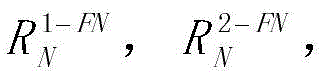
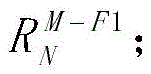
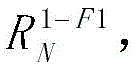
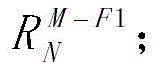
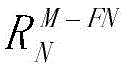
a multi-temperature single-fluorescence-channel multi-real-time fluorescence quantitative PCR instrument comprises an optical system, a temperature control system, a fluorescence signal acquisition system and a computer analysis processing system, wherein the temperature is measured by a temperature measuring instrumentThe control system comprises N annealing temperature control modules, and the fluorescence signal acquisition system simultaneously collects the fluorescence intensity of M primer probe sets corresponding to N annealing temperatures
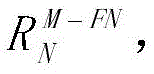
Figure BDA0002679263630000031
Figure BDA0002679263630000032
… to
Figure BDA0002679263630000033
The fluorescence signal collecting system is used for connecting and conveying the fluorescence signals collected in real time to a computer analysis processing system, and the computer analysis processing system is used for processing the fluorescence intensity value to obtain the fluorescence intensity value of the primer probe corresponding to the annealing temperature in each primer probe group at the first annealing temperature as
Figure BDA0002679263630000034
Figure BDA0002679263630000035
… to
Figure BDA0002679263630000036
And calculating the fluorescence intensity value of the primer probe with the corresponding annealing temperature in each primer probe group at the Nth annealing temperature as
Figure BDA0002679263630000037
And sequentially subtracting the fluorescence signal intensity values of the probe group from the first time to the N-1 times to obtain the fluorescence intensity value of each primer probe corresponding to the annealing temperature at the Nth annealing temperature, and drawing a plurality of amplification curves of different primer probes by the computer analysis processing system according to the calculated fluorescence intensity values at the N different annealing temperatures.
A multi-temperature single-fluorescence-channel multi-real-time fluorescence quantitative PCR detection method comprises the following steps:
providing the multi-temperature single-fluorescence-channel multi-real-time fluorescence quantitative PCR instrument;
respectively designing a first primer probe group to an Mth primer probe group aiming at a plurality of target genes, wherein each primer probe group comprises at least one or more primer probes, the at least one or more primer probes respectively correspond to 1 to N different annealing temperatures, and primer probes with similar annealing temperatures are correspondingly arranged between different primer probe groups;
preparing qPCR reaction liquid containing the multiple target genes and M groups of primer probes in one reaction hole;
annealing and extending at a first annealing temperature by the fluorescent quantitative PCR instrument, and collecting the fluorescence intensity value of the primer probe with the corresponding annealing temperature in each primer probe group at the first annealing temperature as
Figure BDA0002679263630000041
… to
Figure BDA0002679263630000042
Wherein N corresponds to a first annealing temperature; annealing and extending at a second annealing temperature, and collecting the fluorescence intensity values of the primer probes corresponding to the annealing temperature in each primer probe group at the second annealing temperature as
Figure BDA0002679263630000043
… to
Figure BDA0002679263630000044
Wherein N corresponds to the second annealing temperature; similarly, the fluorescence intensity value at the Nth annealing temperature is collected as
Figure BDA0002679263630000045
Figure BDA0002679263630000046
… to
Figure BDA0002679263630000047
So many cycles;
the computer analysis processing system receives N annealing temperaturesProcessing the collected fluorescence signal values, wherein the fluorescence intensity value of the primer probe with the annealing temperature corresponding to each primer probe group at the first annealing temperature is
Figure BDA0002679263630000048
… to
Figure BDA0002679263630000049
Wherein N is 1; the fluorescence intensity value of the primer probe with the annealing temperature corresponding to each primer probe group at the Nth annealing temperature is
Figure BDA00026792636300000410
And sequentially subtracting the fluorescence signal intensity of the probe group from the first time to the N-1 times to obtain the fluorescence intensity value of each primer probe corresponding to the annealing temperature at the Nth annealing temperature, and drawing a plurality of amplification curves of different primer probes by the computer analysis processing system according to the calculated fluorescence intensity values at the N different annealing temperatures.
Preferably, when N is 2, the calculation formula of the fluorescence intensity value at the first annealing temperature is as follows:
RCt-h=RA-h+X0-h(1+E1)Ct*Rsformula (1);
the calculation formula of the total fluorescence intensity value collected at the second annealing temperature is as follows:
RCt-z=RA-h+X0-h(1+E1)Ct*Rs+RB-L+X0-L(1+E2)Ct*Rsformula (2);
in the above formulas (1) and (2), RCt-hThe fluorescence intensity of the first annealing temperature at the Ct value, RA-hIs a first annealing temperature background signal, X0-hIs high TmNumber of primers starting DNA, E1Is high TmThe primer amplification efficiency, the cycle number when Ct is the threshold, RsIs the unit signal strength;
RCt-zthe total fluorescence intensity, R, was collected for the second annealing temperature at Ct valueB-LFor the second annealing temperature background signal, X0-LStarting DNA number for primers with Low Tm value, E2To the efficiency of amplification;
the actual fluorescence intensity values at the second annealing temperature were: rCt-l=RCt-z-RCt-h
Preferably, the same fluorochrome is used for the plurality of probes of each primer probe set.
Preferably, the difference value between two adjacent annealing temperatures in the N annealing temperatures is 5-20 ℃.
Preferably, the difference of the Tm values of every two primer probes of each primer probe group is between 5 and 20 ℃.
Preferably, primer probes with substantially the same Tm values are arranged between different primer probe sets, and amplification can be performed at the same annealing temperature.
Preferably, the fluorescent quantitative PCR instrument performs fluorescent signal collection for a plurality of annealing temperatures within one PCR cycle.
Preferably, the fluorescence quantitative PCR instrument is provided with a plurality of fluorescence channels, and each single fluorescence channel can realize multi-temperature multiplex fluorescence quantitative PCR detection.
Preferably, the method is used for keeping the template DNA in a single-stranded state at a plurality of annealing temperatures by adding a single-stranded DNA binding protein with extremely high thermal stability into a qPCR reaction system.
Preferably, the very high thermostability single stranded DNA binding protein is ET SSB.
Preferably, the Tm value of the primer probe is increased by increasing the length of the primer, increasing the GC content of the primer, or subjecting the primer to PNA or LNA modification or insertion.
Preferably, the Tm value of the primer probe is reduced by reducing the length of the primer, modifying the primer with dI, or reducing the GC content.
The beneficial effects of the invention are that: the invention can collect fluorescence signals and analyze data at a plurality of annealing temperatures or extension temperatures, and can realize single-channel multi-temperature multiple fluorescence quantitative PCR detection by matching with the design scheme of the primers with different Tm values.
Drawings
FIG. 1 is a prior art qPCR fluorescent quantitative amplification curve.
FIG. 2 is a schematic diagram of a fluorescence quantitative PCR instrument channel and a fluorophore in the prior art.
FIG. 3 is a fluorescent quantitative PCR curve according to the present invention in example 1.
FIG. 4 is a fluorescent quantitative PCR curve for the ABI 7500 of the prior art in example 1.
FIG. 5 shows all 9 fluorescent quantitative PCR curves in example 2.
Detailed Description
The present invention will be further described with reference to the following drawings and examples, but the present invention is not limited to the following examples.
The invention relates to the name interpretation:
fluorescent dye or fluorescent group is added into a PCR reaction system of Real-time fluorescent Quantitative PCR (Quantitative Real-time PCR, qPCR), and the PCR process is monitored in Real time by using the change of a fluorescent signal, so that the Quantitative and qualitative analysis of the initial template is realized.
Amplification curve: and in the PCR amplification process, the cycle number is used as an abscissa, and the real-time fluorescence intensity of the content of the target fragment in the reaction process is used as an ordinate to establish a curve.
Baseline: the fluorescence signal does not change greatly in the first few cycles of the PCR amplification reaction, and shows a level on the amplification curve, wherein the horizontal part is a base line and represents the background fluorescence value before the reaction fluorescence is obviously increased. This period becomes the baseline period.
Threshold line: a set value is considered on a fluorescence amplification curve and is used as a fluorescence detection line, and the fluorescence detection line is generally set to be 10 times of the standard deviation of 3-15 circulating fluorescence background signals of PCR reaction.
Ct value (Cycle Threshold): the number of PCR cycles that the amplification curve in each reaction tube crossed the threshold line.
Tm value (long Temperature): temperature at which the double helix structure of DNA opens halfway. Denaturation (denaturation): the process of unwinding the template nucleic acid duplex into single strands at high temperature or by a melting enzyme. This temperature is the denaturation temperature.
Annealing (annealing): single strand and single strand, and base pairing and combining of the primer and the template. This temperature is the annealing temperature.
Extension (extension): the polymerase is combined on the complex of the primer and the template, and the DNA double strand is synthesized by taking a plurality of deoxyribonucleic acids as raw materials. The temperature is the extension temperature.
Melting curve (Melting curve): the good DNA binding dye is used for heating a double-stranded amplification product, the double-stranded amplification product is gradually melted along with the increase of temperature, the fluorescence intensity is reduced, a great amount of products are melted when the Tm temperature value is reached, and the fluorescence is sharply reduced. By utilizing the characteristics and different Tm values of the complementary PCR products, different PCR products can be identified.
Example 1
The embodiment provides a multi-temperature single-fluorescence-channel multi-real-time fluorescence quantitative PCR instrument, which comprises an optical system, a temperature control system, a fluorescence signal acquisition system and a computer analysis processing system. The temperature control system comprises N annealing temperature control modules, and the fluorescence signal acquisition system simultaneously collects the fluorescence intensity of M primer probe groups corresponding to N annealing temperatures
Figure BDA0002679263630000071
… to
Figure BDA0002679263630000072
The fluorescence signal acquisition system is used for connecting and conveying the fluorescence signals acquired in real time to a computer analysis processing system, and the computer analysis processing system is used for processing the fluorescence intensity value to obtain the fluorescence intensity value of the primer probe with the annealing temperature corresponding to each primer probe group at the first annealing temperature as
Figure BDA0002679263630000073
Figure BDA0002679263630000074
… to
Figure BDA0002679263630000075
And calculating the fluorescence intensity value of the primer probe with the corresponding annealing temperature in each primer probe group at the Nth annealing temperature as
Figure BDA0002679263630000076
And sequentially subtracting the fluorescence signal intensity values of the probe group from the first time to the N-1 times to obtain the fluorescence intensity value of each primer probe corresponding to the annealing temperature at the Nth annealing temperature, and drawing a plurality of amplification curves of different primer probes by the computer analysis processing system according to the calculated fluorescence intensity values at the N different annealing temperatures.
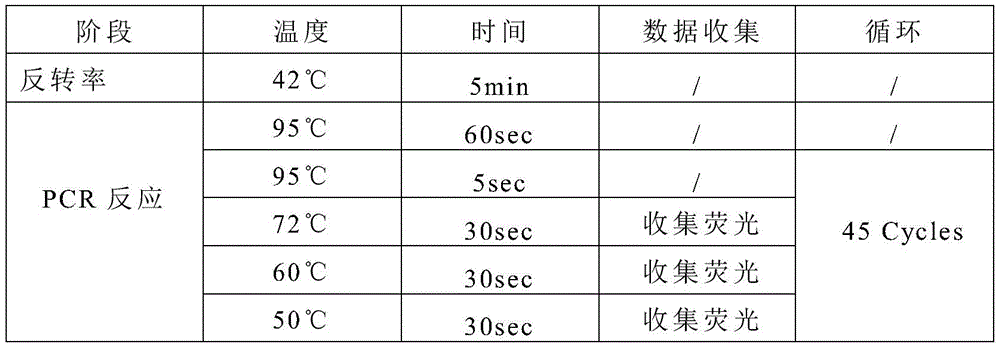
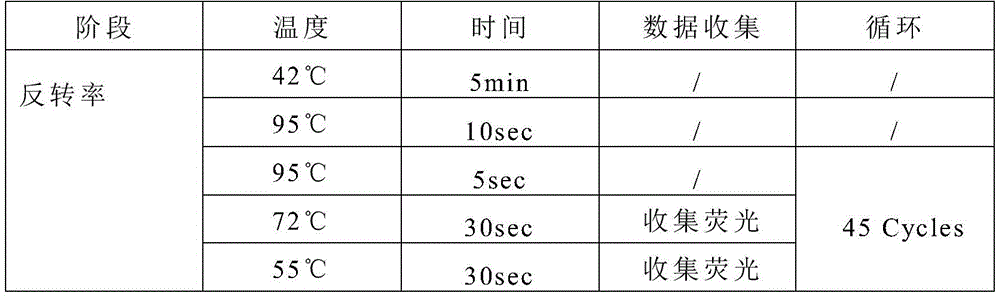
In this example, where N is 2 and M is 1, the primer probe set includes two primer probes, i.e., an N-gene high Tm primer probe and an E-gene low Tm primer probe. The first annealing temperature was 72 ℃ as shown in Table 3, and the second annealing temperature was 55 ℃ as shown in Table 3. Specific detection procedures and detection methods are described in detail below.
This example provides a multi-temperature single-fluorescence channel multiplex real-time fluorescence quantitative PCR detection method, which detects a novel coronavirus (COVID-19) N gene and a novel coronavirus (COVID-19) E gene in the same channel.
Example 1 the same reaction system solution was used to collect fluorescence signals at a high annealing temperature (i.e., the first annealing temperature) and a low annealing temperature (i.e., the second annealing temperature) using the real-time fluorescence quantitative PCR instrument of the present invention, respectively, and the fluorescence signals at a single annealing temperature (annealing temperature of 55 ℃) was collected using a conventional real-time fluorescence quantitative PCR instrument (ABI 7500).
1. Primer design
Aiming at the novel coronavirus N gene, a high Tm primer probe, an N gene normal Tm primer probe and an E gene low Tm primer probe are designed. The primer and probe sequences used for amplification were 9 in total, as shown in table 1:
TABLE 1 primer Probe sequences
Figure BDA0002679263630000077
Figure BDA0002679263630000081
In table 1, underlined bases are LNA modified bases.
2. Sample preparation
The N-gene and E-gene fragment pseudoviruses of COVID-19 were purchased from Nanjing Dingding biology and RNA Extraction was performed using the MiniBEST Viral RNA/DNA Extraction Kit (Takara bio LLC, China) at an RNA concentration of 23 ng/. mu.l.
3. Preparation of reaction solution
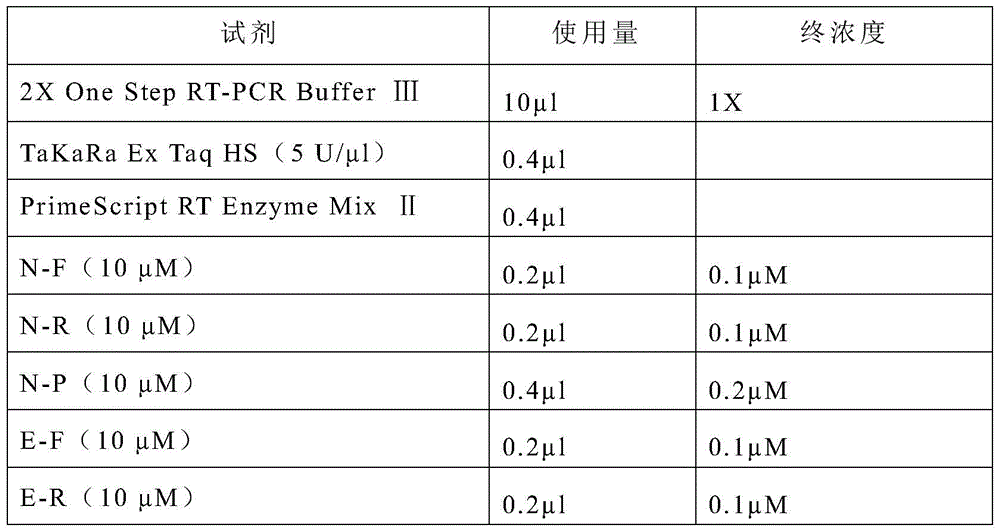
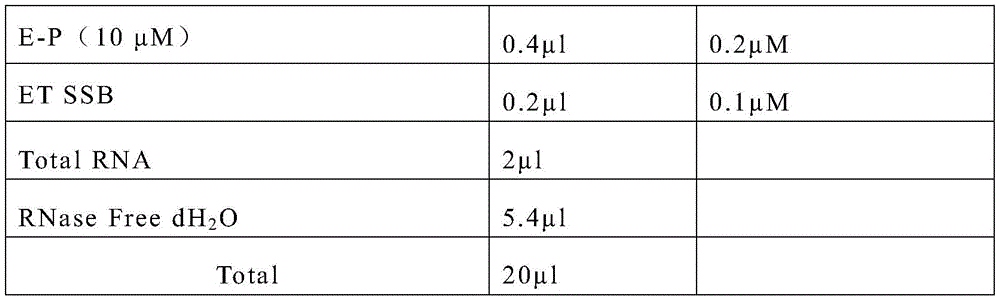
The qPCR reaction solutions shown in table 2 below were placed in the two reaction wells, respectively. One reaction hole is formed by mixing a high Tm value primer probe of an N gene and a low Tm value primer probe of an E gene; the other reaction well adopts a normal Tm value primer probe of the N gene and a low Tm value primer probe of the E gene to be mixed. The reagents in the tables were all from One Step PrimeScript, TakaraTMRT-PCR Kit, a very high thermostable Single-stranded DNA binding protein (ET SSB) from NEB.
TABLE 2 reaction System configuration
Figure BDA0002679263630000082
Figure BDA0002679263630000091
4. Setting of reaction program of PCR instrument
The reaction program was set using the real-time fluorescent quantitative PCR instrument described above, and fluorescent signals were collected at both high and low annealing temperatures. See table 3 for details.
TABLE 3 PCR reaction procedure
Figure BDA0002679263630000092
In order to accurately distinguish the fluorescence signal generated by the amplification of the high Tm value primer from the fluorescence signal generated by the amplification of the low Tm value primer in a single fluorescence channel. The reaction program can be set into two parts, wherein the former part is high annealing temperature and collects fluorescence signals; the latter part is low in annealing temperature, and the fluorescence signal is collected, and the two parts are continuously carried out. Since the low Tm primer cannot perform PCR reaction at high annealing temperature, the fluorescence intensity of the former portion at Ct value is as in formula (1):
RCt-h=RA-h+X0-h(1+E1)Ct*Rsformula (1);
wherein R isCt-hThe fluorescence intensity at Ct value for high annealing temperature, RA-hFor high annealing temperature background signal, X0-hIs high TmNumber of primers starting DNA, E1Is high TmThe primer amplification efficiency, the cycle number when Ct is the threshold, RsIs the unit signal strength;
since the high Tm value primer passes through the former portion at the low annealing temperature, PCR amplification is completed, and no further PCR product and new fluorescent group are generated at the annealing temperature of the latter portion. Although the primer with a high Tm value does not generate a new fluorophore, a fluorophore generated in the former part also generates a fluorescence signal during the latter part of the fluorescence collection process, and thus, the fluorescence intensity collected in the latter part of the same PCR cycle is expressed as in equation (2),
RCt-z=RA-h+X0-h(1+E1)Ct*Rs+RB-L+X0-L(1+E2)Ct*Rsformula (2)
Wherein R isCt-zTotal fluorescence intensity, R, was collected at Ct for low annealing temperaturesB-LFor low annealing temperature background signal, X0-LStarting DNA number for primers with Low Tm value, E2For amplification efficiency, the cycle number at which Ct is the threshold, RsIs the unit signal strength;
at low annealing temperature, the fluorescence signal generated by the primer with low Tm value is shown as formula (3),
RCt-l=RCt-z-RCt-hformula (3)
Wherein R isCt-LThe fluorescence intensity at Ct value for low annealing temperature is shown.
Further, by processing the data, the fluorescence signal generated by the low Tm primer can be simulated separately as shown in formula (4),
RCt-l=RB-L+X0-L(1+E2)Ct*Rsformula (4)
Wherein R isCt-lFluorescence intensity at Ct value for Low annealing temperature, RB-LFor low annealing temperature background signal, X0-LFor low Tm primer start DNA number, E2 is amplification efficiency, N is cycle number, Rs is unit signal intensity.
The equations (1) and (4) are derived simultaneously:
lg(RCt-h-RA-h)=lgX0-h+Ct*lg(1+E1)*Rs,
further Ct-lgX0-h/lg(1+E1)+lg(RCt-h-RA-h)-lgRs/lg(1+E1),
Further Ct ═ k1lgX0-h+a1Formula (5)
lg(RCt-h-RB-h)=lgX0-L+Ct*lg(1+E2)*Rs,
Further Ct-lgX0-l/lg(1+E2)+lg(RCt-l-RB-l)-lgRs/lg(1+E2),
Further Ct ═ k2lgX0-l+a2Formula (6)
In the above formulas (5) and (6), K1And K2Is a constant number, a1And a2Is a constant. As can be seen from (5) and (6), lgX0-hAnd lgX0-lLinear relation with Ct value, further, the initial DNA amount X of the template0-hAnd X0-lLinear with Ct value. It can be shown that the method of the present invention can be applied to accurate quantitative analysis.
5. Conventional PCR instrument reaction program setup
The ABI 7500 real-time fluorescence quantitative PCR instrument is adopted to set a reaction program, and since the instrument cannot collect fluorescence signals at a plurality of annealing temperatures, the reaction program is set to collect fluorescence signals at a low annealing temperature. See table 4 for details.
TABLE 4 PCR reaction procedure
Figure BDA0002679263630000111
Analysis of results
And checking a reaction fluorescence quantitative PCR curve, and selecting different fluorescence signal collection temperature modes. As shown in FIG. 3, two fluorescence quantitative curves can be seen, wherein the black curve is the S-shaped amplification curve of the N gene at the annealing temperature of 72 ℃ and the Ct value is 27.42; the gray curve is the sigmoidal amplification curve of the E gene at an annealing temperature of 55 ℃ and the Ct value is 24.88.
The ABI 7500 fluorescence quantitative PCR instrument can only see one fluorescence quantitative curve, and the curve can not judge the curve generated by the amplification of the N gene or the E gene.
Result analysis shows that the detection method disclosed by the patent can realize double qPCR detection by adopting a single FAM fluorescent channel, while the conventional PCR instrument cannot realize multi-temperature single-fluorescent-channel multi-real-time fluorescent quantitative PCR.
Example 2
The embodiment provides a multi-temperature single-fluorescence-channel multi-real-time fluorescence quantitative PCR detection method, which is used for detecting 9 common respiratory pathogens in a single reaction hole.
In this embodiment, N is 3 and M is 4. As shown in table 8 below, the first annealing temperature was 72 ℃, the second annealing temperature was 60 ℃, and the third annealing temperature was 50 ℃ in this example. This example includes 4 primer probe sets, each corresponding to 4 fluorescence channels, namely, FAM fluorescence channel, VIC fluorescence channel, ROX fluorescence channel, CY5 fluorescence channel. Three primer probes are arranged in the first primer probe group, namely the FAM fluorescent channel, and two primer probes are arranged in the other three primer probe groups.
Specific detection procedures and detection methods are described in detail below. Respiratory tract infections are mostly caused by viral infections, which are one of the most common diseases in clinic. Common respiratory pathogens are parainfluenza virus types 1, 2, 3, mycoplasma pneumoniae, chlamydia pneumoniae, respiratory syncytial virus, adenovirus, influenza a virus, and influenza b virus. Detection of the above 9 pathogens using conventional qPCR often requires multi-well (group) PCR for the reaction. As described in royal yue et al (multiplex real-time fluorescent quantitative PCR for detection of 9 common respiratory pathogens), 4 sets of PCR reactions were required to complete, the first: respiratory syncytial virus, parainfluenza virus type 2; second group: parainfluenza virus types 1, 2 and 3; third group: mycoplasma pneumoniae, chlamydia pneumoniae, adenovirus; and a fourth group: influenza a virus, influenza b virus.
The invention can complete the detection of the 9 pathogens in one reaction hole. Detecting parainfluenza virus types 1, 2, 3 using FAM channels; VIC channel detection of Chlamydia pneumoniae and Mycoplasma pneumoniae; detecting respiratory syncytial virus and adenovirus by adopting a ROX channel; the CY5 channel was used to detect influenza A and B viruses.
1. Primer design
Primers with different Tm values and probes with different fluorescent labels are designed aiming at HN genes of parainfluenza viruses 1, 2 and 3, M gene of respiratory syncytial virus, Mycoplasma pneumoniae P1 cytaldesin gene, chlamydia pneumoniae coat major protein ompA gene, adenovirus penton gene, M gene of influenza A virus and M gene of influenza B virus. The primer and probe sequences used for amplification were 27 in total, as shown in Table 5.
TABLE 5 primer Probe sequences
Figure BDA0002679263630000121
Figure BDA0002679263630000131
Underlined bases in table 5 are LNA modified bases.
2. Sample preparation
The above-mentioned amplified fragment was synthesized by the self-care method described above, and plasmid synthesis was assigned to Shanghai Biotech. Plasmids were extracted using the MiniBEST Plasmid Purification Kit (Takara bio LLC, China) at an average concentration of 36 ng/. mu.l. Mu.l of the mixed plasmid was added to the following reaction solution.
3. Preparation of reaction solution
The qPCR reaction solution of table 6 below was prepared. The reagents in the table were all from Takara Premix Ex Taq, and the very high thermostable single-stranded DNA binding protein (ET SSB) was from NEB.
TABLE 6 reaction system configuration
Figure BDA0002679263630000141
Figure BDA0002679263630000151
4. Reaction program set-up
The reaction program setup was carried out using the real-time fluorescence quantitative PCR instrument described in the present invention, and is shown in Table 7.
TABLE 7 PCR reaction procedure
Figure BDA0002679263630000152
5. Analysis of results
Looking up the reaction fluorescent quantitative PCR curve, all the 9 plasmids in the 4 channels have S-shaped amplification curves, and the detection results are shown in FIG. 5.
The result analysis shows that the annealing temperature of the primers and the probe is reasonably controlled, and the real-time fluorescence electric quantity PCR instrument for collecting the fluorescence signals at multiple annealing temperatures can realize up to 9 times of fluorescence quantitative detection in a single reaction hole, thereby greatly reducing the detection cost and obviously improving the detection flux of the fluorescence quantitative PCR instrument.
It can be understood that the multi-temperature single-fluorescence-channel multi-real-time fluorescence quantitative PCR instrument and the detection method thereof of the invention can be used for detecting the viruses, mycoplasma and chlamydia in the examples 1 and 2, and are also suitable for analyzing human genes, animal genes, plant genes, bacterial genes and fungal genes.

Claims (10)

1.一种多温度单荧光通道多重实时荧光定量PCR仪,所述PCR仪包括光学系统、温控系统、荧光信号采集系统和计算机分析处理系统,其特征在于,所述温控系统包括N个退火温控模块,所述荧光信号采集系统同时收集在N个退火温度下对应M个引物探针组的荧光强度
Figure FDA0002679263620000011
Figure FDA0002679263620000012
所述荧光信号采集系统将实时采集到的荧光信号连接输送到计算机分析处理系统,所述计算机分析处理系统对荧光强度值进行处理,得出第一退火温度下每个引物探针组中具有对应所述退火温度的引物探针的荧光强度值为
Figure FDA0002679263620000013
Figure FDA0002679263620000014
并计算第N退火温度下每个引物探针组中具有对应所述退火温度的引物探针的荧光强度值为
Figure FDA0002679263620000015
依次减去该探针组从第一次至N-1次的荧光信号强度值,即可得到对应所述退火温度的每种引物探针在第N个退火温度下的荧光强度值,所述计算机分析处理系统根据计算得到的N个不同退火温度下的荧光强度值绘制不同引物探针的多条扩增曲线。
1. a multi-temperature single fluorescence channel multiple real-time fluorescence quantitative PCR instrument, the PCR instrument comprises an optical system, a temperature control system, a fluorescence signal acquisition system and a computer analysis and processing system, it is characterized in that, the temperature control system comprises N An annealing temperature control module, wherein the fluorescence signal collection system simultaneously collects fluorescence intensities corresponding to M primer probe sets at N annealing temperatures
Figure FDA0002679263620000011
to
Figure FDA0002679263620000012
The fluorescence signal collection system connects and transmits the fluorescence signal collected in real time to the computer analysis and processing system, and the computer analysis and processing system processes the fluorescence intensity value, and obtains that each primer probe set has a corresponding value at the first annealing temperature. The fluorescence intensity value of the primer probe at the annealing temperature is
Figure FDA0002679263620000013
to
Figure FDA0002679263620000014
And calculate the fluorescence intensity value of the primer probe corresponding to the annealing temperature in each primer probe set at the Nth annealing temperature as
Figure FDA0002679263620000015
Subtracting the fluorescence signal intensity values of the probe set from the first time to the N-1 time in turn, the fluorescence intensity value of each primer probe corresponding to the annealing temperature at the Nth annealing temperature can be obtained. The computer analysis and processing system draws multiple amplification curves of different primer probes according to the calculated fluorescence intensity values under N different annealing temperatures.
2.一种多温度单荧光通道多重实时荧光定量PCR检测方法,其特征在于,包括如下步骤:2. a multi-temperature single fluorescence channel multiple real-time fluorescence quantitative PCR detection method, is characterized in that, comprises the steps: 提供如权利要求1所述的多温度单荧光通道多重实时荧光定量PCR仪;Provide the multi-temperature single fluorescence channel multiple real-time fluorescence quantitative PCR instrument as claimed in claim 1; 针对多个目的基因分别设计第一引物探针组至第M个引物探针组,所述每个引物探针组包括至少一个或多个引物探针,所述至少一个或多个引物探针分别对应1到N个不同的退火温度,不同的引物探针组之间均对应设置有相近退火温度的引物探针;The first primer probe set to the Mth primer probe set are respectively designed for multiple target genes, and each primer probe set includes at least one or more primer probes, the at least one or more primer probes Corresponding to 1 to N different annealing temperatures respectively, and primer probes with similar annealing temperatures are correspondingly set between different primer probe sets; 在一个反应孔中配制包括上述多个目的基因和M组引物探针的qPCR反应液;Prepare a qPCR reaction solution including the above-mentioned multiple target genes and M groups of primer probes in one reaction well; 通过所述的荧光定量PCR仪在第一个退火温度下退火延伸,并收集第一退火温度下每个引物探针组中具有对应所述退火温度的引物探针的荧光强度值为
Figure FDA0002679263620000016
Figure FDA0002679263620000017
其中N对应第一退火温度;再在第二个退火温度下退火延伸,并收集第二退火温度下每个引物探针组中具有对应所述退火温度的引物探针的荧光强度值为
Figure FDA0002679263620000018
Figure FDA0002679263620000019
其中N对应第二退火温度;同理,收集第N退火温度下的荧光强度值为
Figure FDA0002679263620000021
Figure FDA0002679263620000022
Figure FDA0002679263620000023
如此多个循环;
The fluorescent quantitative PCR instrument is used to anneal and extend at the first annealing temperature, and collect the fluorescence intensity value of the primer probe corresponding to the annealing temperature in each primer probe set at the first annealing temperature.
Figure FDA0002679263620000016
to
Figure FDA0002679263620000017
where N corresponds to the first annealing temperature; then anneal and extend at the second annealing temperature, and collect the fluorescence intensity values of the primer probes corresponding to the annealing temperature in each primer-probe group at the second annealing temperature.
Figure FDA0002679263620000018
to
Figure FDA0002679263620000019
where N corresponds to the second annealing temperature; similarly, the fluorescence intensity at the Nth annealing temperature is collected as
Figure FDA0002679263620000021
Figure FDA0002679263620000022
to
Figure FDA0002679263620000023
so many cycles;
所述计算机分析处理系统对N个退火温度下收集到的荧光信号值进行处理,第一退火温度下每个引物探针组中具有对应所述退火温度的引物探针的荧光强度值为
Figure FDA0002679263620000024
Figure FDA0002679263620000025
其中N为1;第N退火温度下每个引物探针组中具有对应所述退火温度的引物探针的荧光强度值为
Figure FDA0002679263620000026
依次减去该探针组从第一次至N-1次的荧光信号强度,即可得到对应所述退火温度的每种引物探针在第N个退火温度下的荧光强度值,所述计算机分析处理系统根据计算得到的N个不同退火温度下的荧光强度值绘制不同引物探针的多条扩增曲线。
The computer analysis and processing system processes the fluorescence signal values collected at N annealing temperatures, and at the first annealing temperature, the fluorescence intensity value of the primer probe corresponding to the annealing temperature in each primer-probe set is:
Figure FDA0002679263620000024
to
Figure FDA0002679263620000025
where N is 1; at the Nth annealing temperature, the fluorescence intensity of the primer probe corresponding to the annealing temperature in each primer probe set is
Figure FDA0002679263620000026
Subtract the fluorescence signal intensity of the probe set from the first time to the N-1 time in turn to obtain the fluorescence intensity value of each primer probe corresponding to the annealing temperature at the Nth annealing temperature, and the computer The analysis and processing system draws multiple amplification curves of different primer probes according to the calculated fluorescence intensity values at N different annealing temperatures.
3.如权利要求2所述的多温度单荧光通道多重实时荧光定量PCR检测方法,其特征在于,当N为2时,所述第一退火温度下的荧光强度值的计算公式为:3. multi-temperature single fluorescence channel multiple real-time fluorescence quantitative PCR detection method as claimed in claim 2, is characterized in that, when N is 2, the calculation formula of the fluorescence intensity value under described first annealing temperature is: RCt-h=RA-h+X0-h(1+E1)Ct*Rs 公式(1);R Ct-h =R Ah +X 0-h (1+E 1 )Ct*R s formula (1); 所述第二退火温度下收集到的总荧光强度值的计算公式为:The calculation formula of the total fluorescence intensity value collected at the second annealing temperature is: RCt-z=RA-h+X0-h(1+E1)Ct*Rs+RB-L+X0-L(1+E2)Ct*Rs 公式(2);R Ct-z =R Ah +X 0-h (1+E 1 )Ct*R s +R BL +X 0-L (1+E 2 )Ct*R s formula (2); 上述公式(1)和公式(2)中,RCt-h为第一退火温度在Ct值时荧光强度,RA-h为第一退火温度本底信号,X0-h为高Tm值引物起始DNA数目,E1为高Tm值引物扩增效率,Ct为阈值时循环数,Rs为单位信号强度;In the above formulas (1) and (2), R Ct-h is the fluorescence intensity at the Ct value of the first annealing temperature, R Ah is the background signal of the first annealing temperature, and X 0-h is the high T m value of the primer. The number of initial DNA, E 1 is the amplification efficiency of primers with high T m value, Ct is the cycle number at the threshold, R s is the unit signal intensity; RCt-z为第二退火温度在Ct值时采集到总的荧光强度,RB-L为第二退火温度本底信号,X0-L为低Tm值引物起始DNA数目,E2为扩增效率;R Ct-z is the total fluorescence intensity collected at the Ct value of the second annealing temperature, R BL is the background signal of the second annealing temperature, X 0-L is the initial DNA number of primers with low Tm value, E 2 is the amplification efficiency; 第二退火温度下实际的荧光强度值为:RCt-l=RCt-z-RCt-hThe actual fluorescence intensity value at the second annealing temperature is: R Ct-l =R Ct-z -R Ct-h . 4.如权利要求2所述的多温度单荧光通道多重实时荧光定量PCR检测方法,其特征在于,所述每个引物探针组的多个探针采取相同的荧光染料。4 . The multi-temperature single-fluorescence channel multiplex real-time fluorescence quantitative PCR detection method according to claim 2 , wherein the multiple probes of each primer-probe group adopt the same fluorescent dye. 5 . 5.如权利要求2所述的多温度单荧光通道多重实时荧光定量PCR检测方法,其特征在于,N个退火温度中相邻两个退火温度的差值为5~20℃之间。5 . The multi-temperature single-fluorescence channel multiplex real-time quantitative PCR detection method according to claim 2 , wherein the difference between two adjacent annealing temperatures in the N annealing temperatures is between 5 and 20° C. 6 . 6.如权利要求2所述的多温度单荧光通道多重实时荧光定量PCR检测方法,其特征在于,所述每两个引物探针组的Tm值的差值为5~20℃之间。6 . The multi-temperature single-fluorescence channel multiplex real-time quantitative PCR detection method according to claim 2 , wherein the difference between the Tm values of each two primer-probe sets is between 5 and 20° C. 7 . 7.如权利要求2所述的多温度单荧光通道多重实时荧光定量PCR检测方法,其特征在于,所述荧光定量PCR仪在一个PCR循环内对多个退火温度进行荧光信号收集。7 . The multi-temperature single fluorescent channel multiplex real-time quantitative PCR detection method according to claim 2 , wherein the fluorescent quantitative PCR instrument collects fluorescent signals for multiple annealing temperatures in one PCR cycle. 8 . 8.如权利要求2所述的多温度单荧光通道多重实时荧光定量PCR检测方法,其特征在于,通过在qPCR反应体系中添加极高热稳定性单链DNA结合蛋白,用于保持模板DNA在多个退火温度时为单链状态。8. The multi-temperature single fluorescence channel multiple real-time fluorescence quantitative PCR detection method as claimed in claim 2, is characterized in that, by adding extremely high thermostability single-stranded DNA binding protein in the qPCR reaction system, for keeping template DNA in multiple single-stranded state at the annealing temperature. 9.如权利要求2所述的多温度单荧光通道多重实时荧光定量PCR检测方法,其特征在于,通过增加引物长度、增加引物GC含量或对引物进行PNA或LNA修饰来提高引物探针的Tm值。9. multi-temperature single fluorescence channel multiple real-time fluorescence quantitative PCR detection method as claimed in claim 2, it is characterized in that, improve the Tm of primer probe by increasing primer length, increasing primer GC content or carrying out PNA or LNA modification to primer value. 10.如权利要求2所述的多温度单荧光通道多重实时荧光定量PCR检测方法,其特征在于,通过减少引物长度、对引物进行dI修饰或降低GC含量来降低引物探针的Tm值。10. The multi-temperature single fluorescent channel multiplex real-time quantitative PCR detection method according to claim 2, wherein the Tm value of the primer probe is reduced by reducing the length of the primer, modifying the primer with dI or reducing the GC content.
CN202010957483.XA 2020-09-13 2020-09-13 A multi-temperature single-fluorescence channel multiplex real-time fluorescence quantitative PCR instrument and its detection method Active CN112195221B (en)

Priority Applications (1)

Application Number Priority Date Filing Date Title
CN202010957483.XA CN112195221B (en) 2020-09-13 2020-09-13 A multi-temperature single-fluorescence channel multiplex real-time fluorescence quantitative PCR instrument and its detection method

Applications Claiming Priority (1)

Application Number Priority Date Filing Date Title
CN202010957483.XA CN112195221B (en) 2020-09-13 2020-09-13 A multi-temperature single-fluorescence channel multiplex real-time fluorescence quantitative PCR instrument and its detection method

Publications (2)

Publication Number Publication Date
CN112195221A true CN112195221A (en) 2021-01-08
CN112195221B CN112195221B (en) 2021-08-06

Family

ID=74014801

Family Applications (1)

Application Number Title Priority Date Filing Date
CN202010957483.XA Active CN112195221B (en) 2020-09-13 2020-09-13 A multi-temperature single-fluorescence channel multiplex real-time fluorescence quantitative PCR instrument and its detection method

Country Status (1)

Country Link
CN (1) CN112195221B (en)

Citations (4)

* Cited by examiner, † Cited by third party
Publication number Priority date Publication date Assignee Title
CN1500151A (en) * 2001-03-02 2004-05-26 ƥ�ȱ���ѧ PCR method
US20050053950A1 (en) * 2003-09-08 2005-03-10 Enrique Zudaire Ubani Protocol and software for multiplex real-time PCR quantification based on the different melting temperatures of amplicons
CN109689889A (en) * 2016-09-15 2019-04-26 豪夫迈·罗氏有限公司 Methods for performing multiplex PCR
CN110592200A (en) * 2019-09-25 2019-12-20 人和未来生物科技(长沙)有限公司 Multiplex PCR method for improving amplification specificity and uniformity

Patent Citations (4)

* Cited by examiner, † Cited by third party
Publication number Priority date Publication date Assignee Title
CN1500151A (en) * 2001-03-02 2004-05-26 ƥ�ȱ���ѧ PCR method
US20050053950A1 (en) * 2003-09-08 2005-03-10 Enrique Zudaire Ubani Protocol and software for multiplex real-time PCR quantification based on the different melting temperatures of amplicons
CN109689889A (en) * 2016-09-15 2019-04-26 豪夫迈·罗氏有限公司 Methods for performing multiplex PCR
CN110592200A (en) * 2019-09-25 2019-12-20 人和未来生物科技(长沙)有限公司 Multiplex PCR method for improving amplification specificity and uniformity

Non-Patent Citations (2)

* Cited by examiner, † Cited by third party
Title
连昌虎等: "六重荧光RT-PCR快速检测A、B型流感等呼吸道病毒方法的建立", 《热带医学杂志》 *
陈云等: "《现代生物医学研究技术实验教程》", 31 January 2009, 武汉大学出版社 *

Also Published As

Publication number Publication date
CN112195221B (en) 2021-08-06

Similar Documents

Publication Publication Date Title
JP2021129582A (en) Nucleic acid amplification
US8236498B2 (en) Method of detecting nucleotide sequence with an intramolecular probe
US20160319354A1 (en) Systems, compositions and methods for detecting and analyzing micro-rna profiles from a biological sample
CN105821138A (en) Method for constructing double-stem-loop structure DNA template to detect nucleic acid based on ligation reaction
CN107760764B (en) Target nucleic acid detection method and kit based on primer fluorescence and quenching label
CN113337620A (en) FLOS-LAMP-based kit and method for detecting Atlantic salmon
US20210363568A1 (en) Methods for temperature-mediated nested polymerase chain reaction
KR20130094498A (en) Method for detecting target genes or their mutations using ligase reaction and nicking amplification reaction
US20240352508A1 (en) Methods, systems and compositions for detection of multiple analytes
CN112195221B (en) A multi-temperature single-fluorescence channel multiplex real-time fluorescence quantitative PCR instrument and its detection method
CN106319079B (en) Method for detecting 22q11.2 copy number loss
EP3387146B1 (en) Methods and kits for joining fragmented nucleic acids together
Vandenbussche et al. Simultaneous detection of bluetongue virus RNA, internal control GAPDH mRNA, and external control synthetic RNA by multiplex real-time PCR
Singh et al. Recent developments in PCR technology
CN107893120B (en) Primer set for detecting motion gene SNP, application and product thereof, and detection method and application for detecting motion gene SNP
CN112391450A (en) High-specificity and high-sensitivity nucleic acid detection method based on modified dNTP
WO2012032510A1 (en) Primers for amplifying dna and methods of selecting same
EP2530166B1 (en) Method for detecting a plurality of nucleotide polymorphisms at a single wavelength using a plurality of oligonucleotides modified with fluorescent dye having the same or close detection wavelength
CN119432984B (en) A method for multiplex target nucleic acid detection based on digital PCR
RU2642273C1 (en) Method of differentiating yersinia pestis strains on basic and nonbasic subtypes by pcr method in real time mode
CN117660674B (en) Specific primer and kit for identifying wild strain and vaccine strain of eimeria acervulina and application of specific primer and kit
JP2024536115A (en) Methods for testing nucleic acid amplification products
TawheedShafi et al. Molecular Diagnosis of Infectious Diseases
CN114585749B (en) Determination of nucleic acid sequence concentration
CN110205364B (en) RET gene mutation detection primer group, kit, system and method

Legal Events

Date Code Title Description
PB01 Publication
PB01 Publication
SE01 Entry into force of request for substantive examination
TA01 Transfer of patent application right

Effective date of registration: 20210712

Address after: 430074 room 17, 14 / F, unit 1, building 6, phase II, Guanggu 8, Guanshan village, Wuhan East Lake New Technology Development Zone, Wuhan City, Hubei Province (Wuhan area of free trade zone)

Applicant after: Wuhan nanuode Medical Technology Co.,Ltd.

Address before: 430074 No.09, 15th floor, building 2, SBI Chuangye street, Dongxin Road, Donghu New Technology Development Zone, Wuhan City, Hubei Province (Wuhan area of free trade zone)

Applicant before: Wuhan Shanmu Medical Technology Co.,Ltd.

GR01 Patent grant
GR01 Patent grant
TR01 Transfer of patent right

Effective date of registration: 20241013

Address after: Building B10, 1st Floor, Building B, Wuhan High tech Medical Equipment Park, No. 818 Gaoxin Avenue, Donghu New Technology Development Zone, Wuhan City, Hubei Province 430000, China

Patentee after: Wuhan Mingzhi Diagnostic Technology Co.,Ltd.

Country or region after: China

Address before: 430074 room 17, 14 / F, unit 1, building 6, phase II, Guanggu 8, Guanshan village, Wuhan East Lake New Technology Development Zone, Wuhan City, Hubei Province (Wuhan area of free trade zone)

Patentee before: Wuhan nanuode Medical Technology Co.,Ltd.

Country or region before: China