CN112187417B - Method and apparatus for indicating time interval for device-to-device communication - Google Patents
Method and apparatus for indicating time interval for device-to-device communication Download PDFInfo
- Publication number
- CN112187417B CN112187417B CN202010560446.5A CN202010560446A CN112187417B CN 112187417 B CN112187417 B CN 112187417B CN 202010560446 A CN202010560446 A CN 202010560446A CN 112187417 B CN112187417 B CN 112187417B
- Authority
- CN
- China
- Prior art keywords
- resource
- harq
- time interval
- user equipment
- sidelink
- Prior art date
- Legal status (The legal status is an assumption and is not a legal conclusion. Google has not performed a legal analysis and makes no representation as to the accuracy of the status listed.)
- Active
Links
- 238000000034 method Methods 0.000 title claims abstract description 62
- 238000004891 communication Methods 0.000 title claims description 56
- 230000005540 biological transmission Effects 0.000 claims abstract description 277
- 230000001960 triggered effect Effects 0.000 claims abstract description 5
- 238000012545 processing Methods 0.000 claims description 44
- 230000004044 response Effects 0.000 claims description 6
- 238000012790 confirmation Methods 0.000 claims 1
- 238000010586 diagram Methods 0.000 description 17
- 238000012546 transfer Methods 0.000 description 16
- 230000011664 signaling Effects 0.000 description 14
- 101150069124 RAN1 gene Proteins 0.000 description 13
- 101100355633 Salmo salar ran gene Proteins 0.000 description 13
- 238000005259 measurement Methods 0.000 description 13
- 230000006870 function Effects 0.000 description 10
- 101000741965 Homo sapiens Inactive tyrosine-protein kinase PRAG1 Proteins 0.000 description 9
- 102100038659 Inactive tyrosine-protein kinase PRAG1 Human genes 0.000 description 9
- 238000005457 optimization Methods 0.000 description 8
- 230000008569 process Effects 0.000 description 8
- 238000013468 resource allocation Methods 0.000 description 8
- 230000007774 longterm Effects 0.000 description 7
- 238000013461 design Methods 0.000 description 6
- 230000000737 periodic effect Effects 0.000 description 5
- 238000010187 selection method Methods 0.000 description 5
- 101150071746 Pbsn gene Proteins 0.000 description 4
- 102100032489 Heat shock 70 kDa protein 13 Human genes 0.000 description 3
- 101001016638 Homo sapiens Heat shock 70 kDa protein 13 Proteins 0.000 description 3
- 101000720079 Stichodactyla helianthus DELTA-stichotoxin-She4a Proteins 0.000 description 3
- 230000004913 activation Effects 0.000 description 3
- 230000001143 conditioned effect Effects 0.000 description 3
- 238000005516 engineering process Methods 0.000 description 3
- 239000011159 matrix material Substances 0.000 description 3
- 238000011160 research Methods 0.000 description 3
- 230000006399 behavior Effects 0.000 description 2
- 238000004590 computer program Methods 0.000 description 2
- 125000004122 cyclic group Chemical group 0.000 description 2
- 230000007246 mechanism Effects 0.000 description 2
- 238000010295 mobile communication Methods 0.000 description 2
- 238000012544 monitoring process Methods 0.000 description 2
- 230000003287 optical effect Effects 0.000 description 2
- 239000002245 particle Substances 0.000 description 2
- 238000012549 training Methods 0.000 description 2
- 241000238876 Acari Species 0.000 description 1
- 101100148830 Arabidopsis thaliana SCI1 gene Proteins 0.000 description 1
- 101150014328 RAN2 gene Proteins 0.000 description 1
- 101100054266 Saccharomyces cerevisiae (strain ATCC 204508 / S288c) SNF4 gene Proteins 0.000 description 1
- 230000006978 adaptation Effects 0.000 description 1
- 230000004075 alteration Effects 0.000 description 1
- 238000013459 approach Methods 0.000 description 1
- 230000008901 benefit Effects 0.000 description 1
- 238000010835 comparative analysis Methods 0.000 description 1
- 230000000295 complement effect Effects 0.000 description 1
- 239000013256 coordination polymer Substances 0.000 description 1
- 238000013500 data storage Methods 0.000 description 1
- 238000011156 evaluation Methods 0.000 description 1
- 239000012634 fragment Substances 0.000 description 1
- 231100001261 hazardous Toxicity 0.000 description 1
- 238000013507 mapping Methods 0.000 description 1
- 238000012986 modification Methods 0.000 description 1
- 230000004048 modification Effects 0.000 description 1
- 239000005022 packaging material Substances 0.000 description 1
- 230000008447 perception Effects 0.000 description 1
- 238000012913 prioritisation Methods 0.000 description 1
- 238000001228 spectrum Methods 0.000 description 1
- 238000012360 testing method Methods 0.000 description 1
- 230000007723 transport mechanism Effects 0.000 description 1
Images


Classifications
-
- H—ELECTRICITY
- H04—ELECTRIC COMMUNICATION TECHNIQUE
- H04L—TRANSMISSION OF DIGITAL INFORMATION, e.g. TELEGRAPHIC COMMUNICATION
- H04L1/00—Arrangements for detecting or preventing errors in the information received
- H04L1/12—Arrangements for detecting or preventing errors in the information received by using return channel
- H04L1/16—Arrangements for detecting or preventing errors in the information received by using return channel in which the return channel carries supervisory signals, e.g. repetition request signals
- H04L1/18—Automatic repetition systems, e.g. Van Duuren systems
- H04L1/1812—Hybrid protocols; Hybrid automatic repeat request [HARQ]
-
- H—ELECTRICITY
- H04—ELECTRIC COMMUNICATION TECHNIQUE
- H04W—WIRELESS COMMUNICATION NETWORKS
- H04W72/00—Local resource management
- H04W72/20—Control channels or signalling for resource management
-
- H—ELECTRICITY
- H04—ELECTRIC COMMUNICATION TECHNIQUE
- H04L—TRANSMISSION OF DIGITAL INFORMATION, e.g. TELEGRAPHIC COMMUNICATION
- H04L1/00—Arrangements for detecting or preventing errors in the information received
- H04L1/12—Arrangements for detecting or preventing errors in the information received by using return channel
- H04L1/16—Arrangements for detecting or preventing errors in the information received by using return channel in which the return channel carries supervisory signals, e.g. repetition request signals
- H04L1/18—Automatic repetition systems, e.g. Van Duuren systems
- H04L1/1867—Arrangements specially adapted for the transmitter end
- H04L1/1887—Scheduling and prioritising arrangements
-
- H—ELECTRICITY
- H04—ELECTRIC COMMUNICATION TECHNIQUE
- H04L—TRANSMISSION OF DIGITAL INFORMATION, e.g. TELEGRAPHIC COMMUNICATION
- H04L1/00—Arrangements for detecting or preventing errors in the information received
- H04L1/12—Arrangements for detecting or preventing errors in the information received by using return channel
- H04L1/16—Arrangements for detecting or preventing errors in the information received by using return channel in which the return channel carries supervisory signals, e.g. repetition request signals
- H04L1/18—Automatic repetition systems, e.g. Van Duuren systems
- H04L1/1829—Arrangements specially adapted for the receiver end
- H04L1/1854—Scheduling and prioritising arrangements
-
- H—ELECTRICITY
- H04—ELECTRIC COMMUNICATION TECHNIQUE
- H04L—TRANSMISSION OF DIGITAL INFORMATION, e.g. TELEGRAPHIC COMMUNICATION
- H04L1/00—Arrangements for detecting or preventing errors in the information received
- H04L1/12—Arrangements for detecting or preventing errors in the information received by using return channel
- H04L1/16—Arrangements for detecting or preventing errors in the information received by using return channel in which the return channel carries supervisory signals, e.g. repetition request signals
- H04L1/18—Automatic repetition systems, e.g. Van Duuren systems
- H04L1/1829—Arrangements specially adapted for the receiver end
- H04L1/1864—ARQ related signaling
-
- H—ELECTRICITY
- H04—ELECTRIC COMMUNICATION TECHNIQUE
- H04L—TRANSMISSION OF DIGITAL INFORMATION, e.g. TELEGRAPHIC COMMUNICATION
- H04L1/00—Arrangements for detecting or preventing errors in the information received
- H04L1/12—Arrangements for detecting or preventing errors in the information received by using return channel
- H04L1/16—Arrangements for detecting or preventing errors in the information received by using return channel in which the return channel carries supervisory signals, e.g. repetition request signals
- H04L1/18—Automatic repetition systems, e.g. Van Duuren systems
- H04L1/1867—Arrangements specially adapted for the transmitter end
- H04L1/1896—ARQ related signaling
-
- H—ELECTRICITY
- H04—ELECTRIC COMMUNICATION TECHNIQUE
- H04L—TRANSMISSION OF DIGITAL INFORMATION, e.g. TELEGRAPHIC COMMUNICATION
- H04L5/00—Arrangements affording multiple use of the transmission path
- H04L5/003—Arrangements for allocating sub-channels of the transmission path
- H04L5/0044—Allocation of payload; Allocation of data channels, e.g. PDSCH or PUSCH
-
- H—ELECTRICITY
- H04—ELECTRIC COMMUNICATION TECHNIQUE
- H04L—TRANSMISSION OF DIGITAL INFORMATION, e.g. TELEGRAPHIC COMMUNICATION
- H04L5/00—Arrangements affording multiple use of the transmission path
- H04L5/003—Arrangements for allocating sub-channels of the transmission path
- H04L5/0053—Allocation of signalling, i.e. of overhead other than pilot signals
- H04L5/0055—Physical resource allocation for ACK/NACK
-
- H—ELECTRICITY
- H04—ELECTRIC COMMUNICATION TECHNIQUE
- H04W—WIRELESS COMMUNICATION NETWORKS
- H04W72/00—Local resource management
- H04W72/02—Selection of wireless resources by user or terminal
-
- H—ELECTRICITY
- H04—ELECTRIC COMMUNICATION TECHNIQUE
- H04W—WIRELESS COMMUNICATION NETWORKS
- H04W72/00—Local resource management
- H04W72/04—Wireless resource allocation
- H04W72/044—Wireless resource allocation based on the type of the allocated resource
- H04W72/0446—Resources in time domain, e.g. slots or frames
-
- H—ELECTRICITY
- H04—ELECTRIC COMMUNICATION TECHNIQUE
- H04W—WIRELESS COMMUNICATION NETWORKS
- H04W72/00—Local resource management
- H04W72/12—Wireless traffic scheduling
- H04W72/1263—Mapping of traffic onto schedule, e.g. scheduled allocation or multiplexing of flows
-
- H—ELECTRICITY
- H04—ELECTRIC COMMUNICATION TECHNIQUE
- H04W—WIRELESS COMMUNICATION NETWORKS
- H04W72/00—Local resource management
- H04W72/20—Control channels or signalling for resource management
- H04W72/25—Control channels or signalling for resource management between terminals via a wireless link, e.g. sidelink
-
- H—ELECTRICITY
- H04—ELECTRIC COMMUNICATION TECHNIQUE
- H04W—WIRELESS COMMUNICATION NETWORKS
- H04W72/00—Local resource management
- H04W72/50—Allocation or scheduling criteria for wireless resources
- H04W72/53—Allocation or scheduling criteria for wireless resources based on regulatory allocation policies
-
- H—ELECTRICITY
- H04—ELECTRIC COMMUNICATION TECHNIQUE
- H04W—WIRELESS COMMUNICATION NETWORKS
- H04W92/00—Interfaces specially adapted for wireless communication networks
- H04W92/16—Interfaces between hierarchically similar devices
- H04W92/18—Interfaces between hierarchically similar devices between terminal devices
Landscapes
- Engineering & Computer Science (AREA)
- Signal Processing (AREA)
- Computer Networks & Wireless Communication (AREA)
- Mobile Radio Communication Systems (AREA)
Abstract
Description
相关申请的交叉引用Cross References to Related Applications
本申请要求2019年7月5日提交的第62/870,987号美国临时专利申请的权益,所述专利申请的整个公开内容以全文引用的方式并入本文中。This application claims the benefit of U.S. Provisional Patent Application No. 62/870,987, filed July 5, 2019, the entire disclosure of which is incorporated herein by reference in its entirety.
技术领域technical field
本公开大体上涉及无线通信网络,且更具体地,涉及一种无线通信系统中用于指示装置到装置通信的时间间隔的方法和设备。The present disclosure relates generally to wireless communication networks, and more particularly, to a method and apparatus for indicating time intervals for device-to-device communications in a wireless communication system.
背景技术Background technique
随着对将大量数据传送到移动通信装置以及从移动通信装置传送大量数据的需求快速增长,传统的移动语音通信网络演变成与互联网协议(Internet Protocol,IP)数据包通信的网络。此IP数据包通信可以为移动通信装置的用户提供IP承载语音、多媒体、多播和点播通信服务。With the rapidly growing demand for the transfer of large amounts of data to and from mobile communication devices, traditional mobile voice communication networks have evolved into networks communicating with Internet Protocol (IP) data packets. The IP data packet communication can provide users of mobile communication devices with voice over IP, multimedia, multicast and on-demand communication services.
示例性网络结构是演进型通用陆地无线接入网(Evolved UniversalTerrestrial Radio Access Network,E-UTRAN)。E-UTRAN系统可以提供高数据吞吐量以便实现上述IP承载语音和多媒体服务。目前,3GPP标准组织正在讨论新下一代(例如,5G)无线电技术。因此,目前在提交和考虑对3GPP标准的当前主体的改变以使3GPP标准演进和完成。An exemplary network structure is an Evolved Universal Terrestrial Radio Access Network (Evolved Universal Terrestrial Radio Access Network, E-UTRAN). The E-UTRAN system can provide high data throughput in order to realize the above-mentioned voice over IP and multimedia services. Currently, the 3GPP standards body is discussing new next-generation (eg, 5G) radio technologies. Accordingly, changes to the current body of 3GPP standards are currently being submitted and considered to evolve and finalize the 3GPP standards.
发明内容Contents of the invention
从第一用户设备(User Equipment,UE)的角度公开一种方法和设备。在一个实施例中,所述方法包含所述第一UE配置或预配置有侧链路资源池以用于侧链路传送。所述方法还包含所述第一UE被触发以选择用于传输块(Transport Block,TB)的资源。所述方法进一步包含所述第一UE选择第一资源以用于TB的传送。另外,所述方法包含所述第一UE选择第二资源以用于所述TB的基于混合自动重传请求-确认(Hybrid Automatic RepeatRequest-Acknowledgement,HARQ-ACK)的重新传送,其中所述第二资源迟于所述第一资源,并且所述第一资源与所述第二资源之间的时间间隔大于或等于第一持续时间。此外,所述方法包含所述第一UE在时隙中的所述第一资源上向第二UE传送侧链路控制信息(SidelinkControl Information,SCI)和所述TB,其中所述SCI指示所述第一资源和所述第二资源。A method and device are disclosed from the perspective of a first user equipment (User Equipment, UE). In one embodiment, the method comprises configuring or pre-configuring the first UE with a pool of sidelink resources for sidelink transmissions. The method also includes the first UE being triggered to select resources for a Transport Block (TB). The method further includes the first UE selecting a first resource for transmission of a TB. Additionally, the method comprises the first UE selecting a second resource for a Hybrid Automatic Repeat Request-Acknowledgment (HARQ-ACK) based retransmission of the TB, wherein the second The resource is later than the first resource, and the time interval between the first resource and the second resource is greater than or equal to a first duration. Additionally, the method comprises the first UE transmitting Sidelink Control Information (SCI) and the TB to a second UE on the first resource in a time slot, wherein the SCI indicates the the first resource and the second resource.
附图说明Description of drawings
图1示出根据一个示例性实施例的无线通信系统的图式。Figure 1 shows a diagram of a wireless communication system according to an exemplary embodiment.
图2是根据一个示例性实施例的传送器系统(也称为接入网络)和接收器系统(也称为用户设备或UE)的框图。Fig. 2 is a block diagram of a transmitter system (also called an access network) and a receiver system (also called a user equipment or UE) according to an exemplary embodiment.
图3是根据一个示例性实施例的通信系统的功能框图。Fig. 3 is a functional block diagram of a communication system according to an exemplary embodiment.
图4是根据一个示例性实施例的图3的程序代码的功能框图。FIG. 4 is a functional block diagram of the program code of FIG. 3 according to an exemplary embodiment.
图5是3GPP TS 36.213 V15.3.0的表14.2-1的再现。Figure 5 is a reproduction of Table 14.2-1 of 3GPP TS 36.213 V15.3.0.
图6是3GPP TS 36.213 V15.3.0的表14.2-2的再现。Figure 6 is a reproduction of Table 14.2-2 of 3GPP TS 36.213 V15.3.0.
图7是3GPP TS 36.213 V15.3.0的表14.2.1-1的再现。Figure 7 is a reproduction of Table 14.2.1-1 of 3GPP TS 36.213 V15.3.0.
图8是3GPP TS 36.213 V15.3.0的表14.2.1-2的再现。Figure 8 is a reproduction of Table 14.2.1-2 of 3GPP TS 36.213 V15.3.0.
图9是3GPP R1-1906796的图5的再现。Figure 9 is a reproduction of Figure 5 of 3GPP R1-1906796.
图10是根据一个示例性实施例的图式。Figure 10 is a diagram according to an exemplary embodiment.
图11是根据一个示例性实施例的图式。Figure 11 is a diagram according to an exemplary embodiment.
图12是根据一个示例性实施例的图式。Figure 12 is a diagram according to an exemplary embodiment.
图13是根据一个示例性实施例的图式。Figure 13 is a diagram according to an exemplary embodiment.
图14是根据一个示例性实施例的图式。Figure 14 is a diagram according to an exemplary embodiment.
图15是根据一个示例性实施例的图式。Figure 15 is a diagram according to an exemplary embodiment.
图16是根据一个示例性实施例的图式。Figure 16 is a diagram according to an exemplary embodiment.
图17是根据一个示例性实施例的图式。Figure 17 is a diagram according to an exemplary embodiment.
图18是根据一个示例性实施例的图式。Figure 18 is a diagram according to an exemplary embodiment.
图19是根据一个示例性实施例的图式。Figure 19 is a diagram according to an exemplary embodiment.
图20是根据一个示例性实施例的流程图。Figure 20 is a flowchart according to an example embodiment.
图21是根据一个示例性实施例的流程图。Figure 21 is a flowchart according to an example embodiment.
图22是根据一个示例性实施例的流程图。Figure 22 is a flowchart according to an exemplary embodiment.
图23是根据一个示例性实施例的流程图。Figure 23 is a flowchart according to an example embodiment.
图24是根据一个示例性实施例的流程图。Figure 24 is a flowchart according to an example embodiment.
具体实施方式detailed description
下文描述的示例性无线通信系统和装置采用支持广播服务的无线通信系统。无线通信系统被广泛部署以提供各种类型的通信,例如,语音、数据等等。这些系统可以基于码分多址(code division multiple access,CDMA)、时分多址(time division multipleaccess,TDMA)、正交频分多址(orthogonal frequency division multiple access,OFDMA)、3GPP长期演进(Long Term Evolution,LTE)无线接入、3GPP长期演进高级(LongTerm Evolution Advanced,LTE-A或LTE-Advanced)、3GPP2超移动宽带(Ultra MobileBroadband,UMB)、WiMax、3GPP新无线电(New Radio,NR)或一些其它调制技术。Exemplary wireless communication systems and devices described below employ wireless communication systems supporting broadcast services. Wireless communication systems are widely deployed to provide various types of communication, eg, voice, data, and so on. These systems can be based on code division multiple access (CDMA), time division multiple access (TDMA), orthogonal frequency division multiple access (OFDMA), 3GPP Long Term Evolution (Long Term Evolution, LTE) wireless access, 3GPP Long Term Evolution Advanced (LongTerm Evolution Advanced, LTE-A or LTE-Advanced), 3GPP2 Ultra Mobile Broadband (Ultra Mobile Broadband, UMB), WiMax, 3GPP New Radio (New Radio, NR) or some other modulation techniques.
具体来说,下文描述的示例性无线通信系统装置可以被设计成支持一个或多个标准,例如,由命名为“第三代合作伙伴计划”(在本文中称为3GPP)的协会提供的标准,包含:R2-162366,“波束成形影响”,诺基亚,阿尔卡特朗讯;R2-163716,“对基于波束成形的高频NR的术语的论述”,三星;R2-162709,“NR中的波束支持”,因特尔;R2-162762,“NR中的主动模式移动性:更高频率中的SINR下降”,爱立信;R3-160947,TR 38.801 V0.1.0,“对新的无线接入技术的研究:无线电访问架构和接口”;R2-164306,“电子邮件讨论[93bis#23][NR]部署情形的汇总”,NTT DOCOMO;3GPP RAN2#94会议纪要;TS 36.213 V15.3.0(2018年9月),“E-UTRA;物理层程序(版本15)”;TS 36.212 V15.2.1(2018年7月),“E-UTRA;多路复用和信道译码(版本15)”;TS 36.214 V14.4.0(2017年12月),“E-UTRA;物理层;测量(版本14);TS36.211 V15.2.0(2018年6月),“E-UTRA;物理信道和调制(版本15)”;R1-1810051,“3GPPTSG RAN WG1#94v1.0.0的项目总结报告(瑞典哥德堡,2018年8月20日至24日)”;R1-1812101,“3GPP TSG RAN WG1#94bis v1.0.0的项目总结报告(中国成都,201810月8日至12日)”;3GPP TSG RAN WG1#95 v0.1.0的草案报告(美国斯波坎,201811月12日至16日);3GPPTSG RAN WG1#AH_1901 v0.1.0的草案报告(中国台北,2019年1月21日至25日);RP-182111,“修改后SID:对NR V2X的研究”,乐金电子公司;以及3GPP TSG RAN WG1#96 v0.1.0的草案报告(希腊阿森斯,2019年2月25日至3月1日);R1-1903769,“议程项目7.2.4.1.1物理层结构的特征主要汇总#3”,乐金电子公司;3GPP TSG RAN WG1会议#96bis的最终主持人纪要(中国西安,2019年4月8日至4月12日);3GPP TSG RAN WG1#97 v0.3.0的草案报告(美国里诺,2019年5月13日至17日);R1-1906796,“用于NR V2X通信的侧链路资源分配模式-2设计”,因特尔公司;TS 36.321 V14.8.0(2018年9月),“演进型通用陆地无线接入(EvolvedUniversal Terrestrial Radio Access,E-UTRA);媒体接入控制(Medium AccessControl,MAC)协议规范(版本14)”。上文所列的标准和文档特此明确地以引用的方式全文并入。Specifically, the exemplary wireless communication system apparatus described below may be designed to support one or more standards, such as those provided by a consortium named "3rd Generation Partnership Project" (herein referred to as 3GPP) , contains: R2-162366, "Beamforming Implications", Nokia, Alcatel-Lucent; R2-163716, "A Discussion of Terminology for Beamforming-Based High-Frequency NR", Samsung; R2-162709, "Beam Support in NR ", Intel; R2-162762, "Active Mode Mobility in NR: SINR Decrease in Higher Frequencies", Ericsson; R3-160947, TR 38.801 V0.1.0, "Research on New Radio Access Technologies : Radio Access Architecture and Interfaces"; R2-164306, "Summary of Email Discussion [93bis#23][NR] Deployment Scenarios", NTT DOCOMO; 3GPP RAN2#94 Meeting Minutes; TS 36.213 V15.3.0 (September 2018 ), "E-UTRA; Physical Layer Procedures (Version 15)"; TS 36.212 V15.2.1 (July 2018), "E-UTRA; Multiplexing and Channel Decoding (Version 15)"; TS 36.214 V14 .4.0 (December 2017), "E-UTRA; Physical Layer; Measurements (Version 14); TS36.211 V15.2.0 (June 2018), "E-UTRA; Physical Channels and Modulation (Version 15)" ;R1-1810051, "3GPP TSG RAN WG1 #94v1.0.0 Project Summary Report (Gothenburg, Sweden, 20-24 August 2018)"; R1-1812101, "3GPP TSG RAN WG1#94bis v1.0.0 Project Summary Report (Chengdu, China, Oct. 8-12, 2018)”; 3GPP TSG RAN WG1#95 v0.1.0 Draft Report (Spokane, USA, Nov. 12-16, 2018); 3GPP TSG RAN WG1#AH_1901 v0.1.0 Draft Report (Taipei, January 21-25, 2019); RP-182111, "Revised SID: A Study on NR V2X", LG Electronics Corporation; and draft of 3GPP TSG RAN WG1#96 v0.1.0 Report (Athens, Greece, 25 February - 1 March 2019); R1-1903769, "Agenda item 7.2.4.1.1 Main summary of characteristics of physical
图1示出根据本发明的一个实施例的多址接入无线通信系统。接入网络100(access network,AN)包含多个天线组,一个天线组包含104和106,另一天线组包含108和110,并且另外的天线组包含112和114。在图1中,每个天线组仅示出两个天线,但是每个天线组可以使用更多或更少的天线。接入终端116(Access terminal,AT)与天线112和114通信,其中天线112和114通过前向链路120向接入终端116传送信息,并通过反向链路118从接入终端116接收信息。接入终端(Access terminal,AT)122与天线106和108通信,其中天线106和108通过前向链路126向接入终端(access terminal,AT)122传送信息,并通过反向链路124从接入终端(access terminal,AT)122接收信息。在FDD系统中,通信链路118、120、124和126可以使用不同频率以供通信。例如,前向链路120可使用与反向链路118所使用频率不同的频率。FIG. 1 shows a multiple access wireless communication system according to one embodiment of the present invention. An access network 100 (access network, AN) includes multiple antenna groups, one antenna group including 104 and 106 , another antenna group including 108 and 110 , and another antenna group including 112 and 114 . In Figure 1, only two antennas are shown per antenna group, but more or fewer antennas may be used per antenna group. Access terminal 116 (Access terminal, AT) is in communication with
每个天线组和/或所述天线组被设计成在其中通信的区域常常称为接入网络的扇区。在实施例中,天线组各自被设计成与接入网络100所覆盖的区域的扇区中的接入终端通信。Each antenna group and/or the area in which it is designed to communicate is often referred to as a sector of the access network. In an embodiment, the antenna groups are each designed to communicate with access terminals in a sector of the area covered by
在通过前向链路120和126的通信中,接入网络100的传送天线可以利用波束成形以便改进不同接入终端116和122的前向链路的信噪比。并且,相比于通过单个天线传送到其所有接入终端的接入网络,使用波束成形以传送到在接入网络的整个覆盖范围中随机分散的接入终端的所述接入网络对相邻小区中的接入终端产生更少的干扰。In communicating over
接入网络(access network,AN)可以是用于与终端通信的固定台或基站,并且还可以称为接入点、Node B、基站、增强型基站、演进型基站(evolved Node B,eNB),或某一其它术语。接入终端(access terminal,AT)还可以称为用户设备(user equipment,UE)、无线通信装置、终端、接入终端或某一其它术语。An access network (access network, AN) may be a fixed station or a base station for communicating with a terminal, and may also be called an access point, Node B, base station, enhanced base station, evolved base station (evolved Node B, eNB) , or some other term. An access terminal (AT) may also be called user equipment (UE), a wireless communication device, terminal, access terminal or some other terminology.
图2是MIMO系统200中的传送器系统210(也称为接入网络)和接收器系统250(也称为接入终端(access terminal,AT)或用户设备(user equipment,UE))的实施例的简化框图。在传送器系统210处,从数据源212将用于多个数据流的业务数据提供到传送(TX)数据处理器214。2 is an implementation of a transmitter system 210 (also referred to as an access network) and a receiver system 250 (also referred to as an access terminal (AT) or user equipment (UE)) in a
在一个实施例中,通过相应的传送天线传送每个数据流。TX数据处理器214基于针对每个数据流选择的特定译码方案来格式化、译码和交错所述数据流的业务数据以提供译码后数据。In one embodiment, each data stream is transmitted over a corresponding transmit antenna.
可以使用OFDM技术将每个数据流的译码后数据与导频数据复用。导频数据通常是以已知方式进行处理的已知数据模式,并且可以在接收器系统处用于估计信道响应。随后基于针对每个数据流选择的特定调制方案(例如,BPSK、QPSK、M-PSK或M-QAM)来调制(即,符号映射)用于所述数据流的复用后导频和译码后数据以提供调制符号。可以通过由处理器230执行的指令来确定用于每个数据流的数据速率、译码和调制。The decoded data for each data stream can be multiplexed with pilot data using OFDM techniques. Pilot data is typically a known data pattern that is processed in a known manner and can be used at the receiver system to estimate the channel response. The multiplexed pilots and decoding for each data stream are then modulated (i.e., symbol mapped) based on the specific modulation scheme (e.g., BPSK, QPSK, M-PSK, or M-QAM) selected for that data stream data to provide modulation symbols. The data rate, coding and modulation for each data stream may be determined by instructions executed by
接着将所有数据流的调制符号提供给TX MIMO处理器220,所述TX MIMO处理器可以进一步处理所述调制符号(例如,用于OFDM)。TX MIMO处理器220接着将NT个调制符号流提供给NT个传送器(TMTR)222a至222t。在某些实施例中,TX MIMO处理器220将波束成形权重应用于数据流的符号以及从其传送所述符号的天线。The modulation symbols for all data streams are then provided to
每个传送器222接收并处理相应符号流以提供一个或多个模拟信号,并且进一步调节(例如,放大、滤波和上变频)所述模拟信号以提供适合于通过MIMO信道传送的调制后信号。接着分别从NT个天线224a至224t传送来自传送器222a至222t的NT个调制后信号。Each transmitter 222 receives and processes a respective symbol stream to provide one or more analog signals, and further conditions (eg, amplifies, filters, and frequency upconverts) the analog signals to provide a modulated signal suitable for transmission over a MIMO channel. NT modulated signals from
在接收器系统250处,由NR个天线252a至252r接收所传送的调制后信号,并且将从每个天线252接收到的信号提供到相应的接收器(RCVR)254a至254r。每个接收器254调节(例如,滤波、放大和下变频)相应的接收信号、数字化调节后信号以提供样本,并且进一步处理所述样本以提供对应的“接收到的”符号流。At
RX数据处理器260接着基于特定接收器处理技术从NR个接收器254接收NR个接收到的符号流并处理NR个接收到的符号流以提供NT个“检测到的”符号流。RX数据处理器260接着对每一检测到的符号流进行解调、解交错和解码以恢复数据流的业务数据。由RX数据处理器260进行的处理与由TX MIMO处理器220和TX数据处理器214在传送器系统210处所执行的处理互补。An
处理器270定期确定使用哪一预译码矩阵(在下文论述)。处理器270制定包括矩阵索引部分和秩值部分的反向链路消息。
反向链路消息可以包括与通信链路和/或接收到的数据流有关的各种类型的信息。反向链路消息接着由TX数据处理器238(其还接收来自数据源236的多个数据流的业务数据)处理,由调制器280调制,由传送器254a至254r调节,及被传送回传送器系统210。Reverse link messages may include various types of information related to the communication link and/or the received data stream. The reverse link message is then processed by TX data processor 238 (which also receives traffic data for multiple data streams from data source 236), modulated by
在传送器系统210处,来自接收器系统250的调制后信号由天线224接收、由接收器222调节、由解调器240解调,并由RX数据处理器242处理,以提取由接收器系统250传送的反向链路消息。接着,处理器230确定使用哪一预译码矩阵来确定波束成形权重,然后处理所提取的消息。At
转向图3,此图示出根据本发明的一个实施例的通信装置的替代简化功能框图。如图3中所示,可以利用无线通信系统中的通信装置300来实现图1中的UE(或AT)116和122或图1中的基站(或AN)100,并且无线通信系统优选地是LTE或NR系统。通信装置300可以包含输入装置302、输出装置304、控制电路306、中央处理单元(central processing unit,CPU)308、存储器310、程序代码312以及收发器314。控制电路306通过CPU 308执行存储器310中的程序代码312,由此控制通信装置300的操作。通信装置300可以接收由用户通过输入装置302(例如,键盘或小键盘)输入的信号,且可以通过输出装置304(例如,监视器或扬声器)输出图像和声音。收发器314用于接收和传送无线信号、将所接收的信号传递到控制电路306,且无线地输出由控制电路306产生的信号。也可以利用无线通信系统中的通信装置300来实现图1中的AN 100。Turning to FIG. 3 , this figure shows an alternative simplified functional block diagram of a communication device according to one embodiment of the present invention. As shown in FIG. 3, the UE (or AT) 116 and 122 in FIG. 1 or the base station (or AN) 100 in FIG. 1 can be realized by a
图4是根据本发明的一个实施例的图3所示的程序代码312的简化框图。在此实施例中,程序代码312包含应用层400、层3部分402以及层2部分404,且耦合到层1部分406。层3部分402通常执行无线电资源控制。层2部分404通常执行链路控制。层1部分406通常执行物理连接。FIG. 4 is a simplified block diagram of the program code 312 shown in FIG. 3 according to one embodiment of the present invention. In this embodiment, program code 312 includes application layer 400 ,
3GPP TS 36.213 V15.3.0指定用于车联网(Vehicle-to-Everything,V2X)传送的UE程序。V2X传送作为侧链路传送模式3或侧链路传送模式4如下执行:3GPP TS 36.213 V15.3.0 specifies UE procedures for vehicle-to-everything (V2X) transmission. V2X transmission as
__________________________________________________________________________________________________________________________________________
14与侧链路相关的UE程序14 UE procedures related to sidelinks
UE可以由高层配置有一个或多个PSSCH资源配置。PSSCH资源配置可以用于PSSCH的接收或用于PSSCH的传送。第14.1小节中描述了物理侧链路共享信道相关程序。The UE may be configured with one or more PSSCH resource configurations by a higher layer. The PSSCH resource configuration can be used for PSSCH reception or for PSSCH transmission. The physical sidelink shared channel related procedures are described in subclause 14.1.
UE可以由高层配置有一个或多个PSCCH资源配置。PSCCH资源配置可以用于PSCCH的接收、用于PSCCH的传送,并且PSCCH资源配置与侧链路传送模式1、2、3或侧链路传送模式4相关联。第14.2小节中描述了物理侧链路控制信道相关程序。The UE may be configured with one or more PSCCH resource configurations by a higher layer. The PSCCH resource configuration can be used for PSCCH reception, for PSCCH transmission, and the PSCCH resource configuration is associated with
[…][…]
14.1物理侧链路共享信道相关程序14.1 Physical side link shared channel related procedures
14.1.1传送PSSCH的UE程序14.1.1 UE procedure for transmitting PSSCH
[…][…]
如果UE根据子帧n中的PSCCH资源配置在PSCCH上传送SCI格式1,则对于一个TB的对应PSSCH传送If the UE transmits
-对于侧链路传送模式3,- For
-使用由PSSCH资源配置指示的子帧池(第14.1.5小节中描述)并使用第14.1.1.4A小节中所描述的SCI格式1中的“重新传送索引以及初始传送和重新传送之间的时间间隔”字段和“初始传送和重新传送的频率资源位置”字段来确定子帧集合和资源块集合。- use the subframe pool indicated by the PSSCH resource configuration (described in section 14.1.5) and use the "retransmission index and The time interval" field and the "frequency resource location for initial transmission and retransmission" field are used to determine the subframe set and resource block set.
-对于侧链路传送模式4,- For
-使用由PSSCH资源配置指示的子帧池(第14.1.5小节中描述)并使用第14.1.1.4B小节中所描述的SCI格式1中的“重新传送索引以及初始传送和重新传送之间的时间间隔”字段和“初始传送和重新传送的频率资源位置”字段来确定子帧集合和资源块集合。- use the subframe pool indicated by the PSSCH resource configuration (described in section 14.1.5) and use the "retransmission index and The time interval" field and the "frequency resource location for initial transmission and retransmission" field are used to determine the subframe set and resource block set.
-如果高层指示子帧中的最后一个符号的速率匹配用于给定PSSCH,则- if higher layers indicate rate matching of the last symbol in the subframe for a given PSSCH, then
-对应SCI格式1的传送格式设定为1,- The transmission format corresponding to
-使用SCI格式1中的“调制和译码方案”字段(IMCS)确定调制阶数。- Determine the modulation order using the "Modulation and Coding Scheme" field (I MCS ) in
-对于0≤IMCS≤28,基于IMCS和表8.6.1-1确定TBS索引(ITBS),- for 0 ≤ I MCS ≤ 28, determine the TBS index (I TBS ) based on I MCS and Table 8.6.1-1,
-对于29≤IMCS≤31,基于IMCS和表14.1.1-2确定TBS索引(ITBS),- for 29 ≤ I MCS ≤ 31, determine the TBS index (I TBS ) based on I MCS and Table 14.1.1-2,
-通过使用ITBS并将表7.1.7.2.1-1的列指示符设定为
-否则-otherwise
-如果存在,则SCI格式1的传送格式设定为0,- if present, the transport format of
-使用SCI格式1中的“调制和译码方案”字段(IMCS)确定调制阶数。对于0≤IMCS≤28,调制阶数设定为Q′=min(4,Q′m),其中根据表8.6.1-1确定Q′m。- Determine the modulation order using the "Modulation and Coding Scheme" field (I MCS ) in
-基于IMCS和表8.6.1-1确定TBS索引(ITBS),并且使用ITBS确定传输块大小以及使用第7.1.7.2.1小节中的程序确定所分配的资源块的数目(NPRB)。- Determine the TBS index (I TBS ) based on the I MCS and Table 8.6.1-1, and use the I TBS to determine the transport block size and the number of allocated resource blocks (N PRB ) using the procedure in subsection 7.1.7.2.1 ).
[…][…]
14.1.1.6用于确定在侧链路传送模式4下在PSSCH资源选择中要报告给高层的资源子集的UE程序14.1.1.6 UE procedure for determining the subset of resources to be reported to higher layers in PSSCH resource selection in
当在子帧n中由高层请求时,UE应根据以下步骤确定要报告给高层以用于PSSCH传送的资源集合。参数LsubCH是用于子帧中的PSSCH传送的子信道的数目,Prsvp_TX是资源预留间隔,并且prioTX是全部由高层提供的将由UE以相关联SCI格式1传送的优先级。根据第14.1.1.4B小节确定Cresel。When requested by the higher layer in subframe n, the UE shall determine the resource set to be reported to the higher layer for PSSCH transmission according to the following steps. The parameters L subCH is the number of subchannels used for PSSCH transmission in a subframe, P rsvp_TX is the resource reservation interval, and prio TX is the priority to be transmitted by the UE in the associated
如果高层不配置部分感测,则使用以下步骤:If higher layers do not configure partial sensing, use the following steps:
1)用于PSSCH传送的候选单子帧资源Rx,y被定义为一组LsubCH个连续子信道,其中子信道x+j在子帧
2)UE应监视子帧

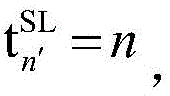


3)参数Tha,b设定成由SL-ThresPSSCH-RSRP-List中的第i个SL-ThresPSSCH-RSRP字段指示的值,其中i=a*8+b+1。3) The parameters Th a,b are set to the values indicated by the i-th SL-ThresPSSCH-RSRP field in the SL-ThresPSSCH-RSRP-List, where i=a*8+b+1.
4)将集合SA初始化为所有候选单子帧资源的并集。将集合SB初始化为空集。4) Initialize the set SA as the union of all candidate single subframe resources. Initialize the set S B as an empty set.
5)如果满足以下所有条件,UE应从集合SA排除任何候选单子帧资源Rx,y:5) The UE shall exclude any candidate single subframe resource R x,y from the set SA if all the following conditions are met:
-在步骤2中,UE尚未监视子帧
-存在符合y+j×P'rsvp_TX=z+Pstep×k×q的整数j,其中j=0、1、…、Cresel-1,P'rsvp_TX=Pstep×Prsvp_TX/100,k是高层参数restrictResourceReservationPeriod所允许的任何值并且q=1、2、…、Q。此处,如果k<1且n'-z≤Pstep×k,则


6)如果满足以下所有条件,UE应从集合SA排除任何候选单子帧资源Rx,y:6) The UE shall exclude any candidate single subframe resource R x,y from the set SA if all the following conditions are met:
-UE在子帧
-根据所接收的SCI格式1的PSSCH-RSRP测量高于
-根据第14.1.1.4C小节,在子帧


7)如果集合SA中剩余的候选单子帧资源的数目小于0.2·Mtotal,则重复步骤4,其中Tha,b增加3dB。7) If the number of remaining candidate single subframe resources in the set S A is less than 0.2·M total , repeat
8)对于集合SA中剩余的候选单子帧资源Rx,y,度量Ex,y在步骤2中被定义为在所监视子帧中针对k=0,...,LsubCH-1的子信道x+k中测量到的S-RSSI的线性平均数,所述度量可以在Prsvp_TX≥100的情况下针对非负整数j由

9)UE将具有来自集合SA的最小度量Ex,y的候选单子帧资源Rx,y移动到集合SB。重复此步骤,直到集合SB中的候选单子帧资源的数目变得大于或等于0.2·Mtotal,9) The UE moves the candidate single subframe resource R x,y with the smallest metric Ex ,y from the set S A to the set S B . Repeat this step until the number of candidate single-subframe resources in the set S B becomes greater than or equal to 0.2 M total ,
UE应向高层报告集合SB。The UE shall report the set S B to higher layers.
14.1.1.7在侧链路传送模式4中当HARQ传送的数目是二时用于选择资源的条件14.1.1.7 Conditions for selecting resources when the number of HARQ transmissions is two in
当已选择一组子帧

14.2物理侧链路控制信道相关程序14.2 Physical side link control channel related procedures
对于侧链路传送模式1,如果UE由高层配置以接收具有通过SL-RNTI加扰的CRC的DCI格式5,则UE应根据表14.2-1中定义的组合对PDCCH/EPDCCH进行解码。For
[标题为“由SL-RNTI配置的PDCCH/EPDCCH”的3GPP TS 36.213 V15.3.0的表14.2-1再现为图5][Table 14.2-1 of 3GPP TS 36.213 V15.3.0 titled "PDCCH/EPDCCH configured by SL-RNTI" is reproduced as Figure 5]
对于侧链路传送模式3,如果UE由高层配置成接收具有经SL-V-RNTI或SL-SPS-V-RNTI加扰的CRC的DCI格式5A,则UE将根据表14.2-2中定义的组合对PDCCH/EPDCCH进行解码。不预期UE在限定DCI格式0的同一搜索空间中接收具有大于DCI格式0的大小的DCI格式5A。For
[标题为“由SL-V-RNTI或SL-SPS-V-RNTI配置的PDCCH/EPDCCH”的3GPP TS 36.213V15.3.0的表14.2-2再现为图6][Table 14.2-2 of 3GPP TS 36.213V15.3.0 titled "PDCCH/EPDCCH configured by SL-V-RNTI or SL-SPS-V-RNTI" is reproduced as Figure 6]
DCI格式5A中的载波指示符字段值对应于v2x-InterFreqInfo。The Carrier Indicator field value in DCI Format 5A corresponds to v2x-InterFreqInfo.
[…][…]
14.2.1用于传送PSCCH的UE程序14.2.1 UE procedure for transmitting PSCCH
对于侧链路传送模式3,For
-UE应如下确定用于传送SCI格式1的子帧和资源块:- The UE shall determine the subframes and resource blocks used to transmit
-在传送对应PSSCH的每个子帧中在每时隙两个物理资源块中传送SCI格式1。-
-如果UE在子帧n中接收具有由SL-V-RNTI加扰的CRC的DCI格式5A,则PSCCH的一个传送在第一子帧中的PSCCH资源LInit中(在第14.2.4小节中描述),所述第一子帧包含在


-如果所配置侧链路准予(描述于[8]中)中的“初始传送和重新传送之间的时间间隔”不等于零,则PSCCH的另一传送在子帧


-如果UE在子帧n中接收到具有由SL-SPS-V-RNTI加扰的CRC的DCI格式5A,则UE应将所接收的DCI信息视为有效的侧链路半持久激活,或仅针对由SL SPS配置索引字段指示的SPS配置而释放。如果接收到的DCI激活SL SPS配置,则PSCCH的一个传送在第一子帧中的PSCCH资源LInit中(在第14.2.4小节中描述),所述第一子帧包含在


-如果所配置侧链路准予([8]中描述)中的“初始传送和重新传送之间的时间间隔”不等于零,则PSCCH的另一传送是在子帧


-UE应将SCI格式1的内容设定如下:- The UE shall set the content of
-UE应如高层所指示设定调制和译码方案。- The UE shall set the modulation and coding scheme as indicated by higher layers.
-UE应根据那些优先级当中由对应于传输块的高层指示的最高优先级设定“优先级”字段。- The UE shall set the "priority" field according to the highest priority among those indicated by the higher layer corresponding to the transport block.
-UE应设定初始传送和重新传送之间的时间间隔字段、初始传送和重新传送的频率资源位置字段以及重新传送索引字段,使得根据第14.1.1.4C小节针对PSSCH确定的一组时间和频率资源与由所配置侧链路准予指示的PSSCH资源分配一致。- The UE shall set the time interval between initial transmission and retransmission field, the frequency resource location field for initial transmission and retransmission, and the retransmission index field such that a set of time and frequency The resources are consistent with the PSSCH resource allocation indicated by the configured sidelink grant.
-UE应基于所指示的值X根据表14.2.1-2设定资源预留,其中X等于由高层提供的资源预留间隔除以100。- The UE shall set the resource reservation according to Table 14.2.1-2 based on the indicated value X, where X is equal to the resource reservation interval provided by higher layers divided by 100.
-SCI格式1的每个传送在一个子帧和子帧的每个时隙的两个物理资源块中传送。- Each transmission of
-UE应在每个PSCCH传送中在{0,3,6,9}当中随机选择循环移位ncs,λ。- The UE shall randomly select the cyclic shift n cs,λ among {0,3,6,9} in each PSCCH transmission.
对于侧链路传送模式4,For
-UE将如下确定用于传送SCI格式1的子帧和资源块:- The UE shall determine the subframes and resource blocks used to transmit
-在传送对应PSSCH的每个子帧中在每时隙两个物理资源块中传送SCI格式1。-
-如果来自高层的所配置侧链路准予指示子帧

-如果所配置侧链路准予(描述于[8]中)中的“初始传送和重新传送之间的时间间隔”不等于零,则PSCCH的另一传送在子帧

-UE应将SCI格式1的内容设定如下:- The UE shall set the content of
-UE应如高层所指示设定调制和译码方案。- The UE shall set the modulation and coding scheme as indicated by higher layers.
-UE应根据那些优先级当中由对应于传输块的高层指示的最高优先级设定“优先级”字段。- The UE shall set the "priority" field according to the highest priority among those indicated by the higher layer corresponding to the transport block.
-UE应设定初始传送和重新传送之间的时间间隔字段、初始传送和重新传送的频率资源位置字段以及重新传送索引字段,使得根据第14.1.1.4C小节针对PSSCH确定的一组时间和频率资源与由所配置侧链路准予指示的PSSCH资源分配一致。- The UE shall set the time interval between initial transmission and retransmission field, the frequency resource location field for initial transmission and retransmission, and the retransmission index field such that a set of time and frequency The resources are consistent with the PSSCH resource allocation indicated by the configured sidelink grant.
-UE应根据表14.2.1-2基于所指示值X来设定资源预留字段,其中X等于由高层提供的资源预留间隔除以100。- The UE shall set the resource reservation field based on the indicated value X according to Table 14.2.1-2, where X is equal to the resource reservation interval provided by higher layers divided by 100.
-SCI格式1的每个传送在一个子帧和子帧的每个时隙的两个物理资源块中传送。- Each transmission of
-UE应在每个PSCCH传送中在{0,3,6,9}当中随机选择循环移位ncs,λ。- The UE shall randomly select the cyclic shift n cs,λ among {0,3,6,9} in each PSCCH transmission.
[标题为“DCI格式5A偏移字段到指示值m的映射”的3GPP TS 36.213 V15.3.0的表14.2.1-1再现为图7][Table 14.2.1-1 of 3GPP TS 36.213 V15.3.0 titled "Mapping of DCI Format 5A Offset Field to Indication Value m" is reproduced as Figure 7]
[标题为“SCI格式1中的资源预留字段的确定”的3GPP TS 36.213 V15.3.0的表14.2.1-2再现为图8][Table 14.2.1-2 of 3GPP TS 36.213 V15.3.0 titled "Determination of the Resource Reservation Field in
3GPP TS 36.214 V14.4.0如下指定用于侧链路传送的一些测量值:3GPP TS 36.214 V14.4.0 specifies some measurements for sidelink transmission as follows:
5.1.28侧链路接收信号强度指示符(S-RSSI)5.1.28 Sidelink Received Signal Strength Indicator (S-RSSI)

5.1.29 PSSCH参考信号接收功率(PSSCH-RSRP)5.1.29 PSSCH Reference Signal Received Power (PSSCH-RSRP)

●注:每资源元素的功率是根据符号的有用部分期间接收的能量而确定,不包括CP。● Note: The power per resource element is determined according to the energy received during the useful part of the symbol, excluding CP.
3GPP TS 36.212 V15.2.1指定下行链路共享信道和下行链路控制信息的CRC附加。下行链路共享信道和下行链路控制信息用于网络节点与UE之间的通信,即,Uu链路。3GPP TS 36.212 V15.2.1 specifies CRC attachment of downlink shared channels and downlink control information. The downlink shared channel and downlink control information are used for communication between the network node and the UE, ie Uu link.
5.3.3.1.9A格式5A5.3.3.1.9A Format 5A
DCI格式5A用于PSCCH的调度,并且还含有用于PSSCH的调度的若干SCI格式1字段。DCI format 5A is used for scheduling of PSCCH, and also contains
以下信息借助于DCI格式5A进行传送:The following information is conveyed by means of DCI format 5A:
-载波指示符-3个位。此字段根据[3]中的定义存在。- Carrier Indicator - 3 bits. This field exists as defined in [3].
-对初始传送的子信道分配的最小索引
-根据5.4.3.1.2的SCI格式1字段:-
-初始传送和重新传送的频率资源位置。- Frequency resource location for initial transmission and retransmission.
-初始传送和重新传送之间的时间间隔。- Time interval between initial transmission and retransmission.
-SL索引-2个位,如[3]的第14.2.1小节中定义(此字段仅呈现用于具有上行链路-下行链路配置0-6的TDD操作的情况)。- SL Index - 2 bits, as defined in subsection 14.2.1 of [3] (this field is only present for the case of TDD operation with uplink-downlink configurations 0-6).
当使用SL-SPS-V-RNTI对格式5A CRC进行加扰时,存在以下字段:When the Format 5A CRC is scrambled using SL-SPS-V-RNTI, the following fields are present:
-SL SPS配置索引-3个位,如[3]的第14.2.1小节中定义。- SL SPS Configuration Index - 3 bits, as defined in subsection 14.2.1 of [3].
-激活/释放指示-1个位,如[3]的子条款14.2.1中定义。- Activation/release indication - 1 bit, as defined in subclause 14.2.1 of [3].
[…][…]
3GPP TS 36.212 V15.2.1还指定侧链路共享信道和侧链路控制信息的CRC附加。侧链路共享信道和侧链路控制信息用于装置之间的通信,即,PC5链路或装置到装置链路。3GPP TS 36.212 V15.2.1 also specifies CRC appending of sidelink shared channels and sidelink control information. The sidelink shared channel and sidelink control information are used for communication between devices, ie, PC5 link or device-to-device link.
5.4.3.1 SCI格式5.4.3.1 SCI format
5.4.3.1.2 SCI格式15.4.3.1.2
SCI格式1用于PSSCH的调度。
以下信息借助于SCI格式1进行传送:The following information is transmitted by means of SCI format 1:
-优先级-3个位,如[7]的第4.4.5.1小节中定义。- Priority - 3 bits, as defined in subsection 4.4.5.1 of [7].
-资源预留-4个位,如[3]的第14.2.1小节中定义。- Resource reservation - 4 bits, as defined in subsection 14.2.1 of [3].
-初始传送和重新传送的频率资源位置
-初始传送和重新传送之间的时间间隔-4个位,如[3]的第14.1.1.4C小节中定义。- Time interval between initial transmission and retransmission - 4 bits, as defined in subsection 14.1.1.4C of [3].
-调制和译码方案-5个位,如[3]的第14.2.1小节中定义。- Modulation and decoding scheme - 5 bits, as defined in subsection 14.2.1 of [3].
-重新传送索引-1个位,如[3]的第14.2.1小节中定义。- Retransmit Index - 1 bit, as defined in subsection 14.2.1 of [3].
-传送格式-1个位,其中值1指示包含速率匹配和TBS缩放的传送格式,且值0指示包含删余和没有TBS缩放的传送格式。仅当由高层选择的传输机制指示支持速率匹配和TBS缩放时,此字段才存在。- Transport format - 1 bit, where a value of 1 indicates a transport format including rate matching and TBS scaling, and a value of 0 indicates a transport format including puncturing and no TBS scaling. This field is only present if the transport mechanism selected by higher layers indicates support for rate matching and TBS scaling.
-添加预留信息位,直到SCI格式1的大小等于32个位。预留位设定为零。- Add reserved information bits until the size of
3GPP TS 36.211 V15.2.0规定物理侧链路共享信道和物理侧链路控制信道的生成。物理侧链路共享信道和物理侧链路控制信道用于装置之间的通信,即PC5链路或装置到装置链路。物理侧链路共享信道(physical sidelink shared channel,PSSCH)为侧链路共享信道传递数据/传输块。物理侧链路控制信道(physical sidelink control channel,PSCCH)传递侧链路控制信息(sidelink control information,SCI)。3GPP TS 36.211 V15.2.0 stipulates the generation of the physical side link shared channel and the physical side link control channel. The physical side link shared channel and the physical side link control channel are used for communication between devices, ie PC5 link or device-to-device link. A physical sidelink shared channel (PSSCH) transfers data/transport blocks for the sidelink shared channel. A physical sidelink control channel (physical sidelink control channel, PSCCH) transmits sidelink control information (sidelink control information, SCI).
_____________________________________________________________________________________________________________________________________________
9侧链路9 side links
9.1概述9.1 Overview
侧链路用于UE之间的ProSe直接通信和ProSe直接发现。The side link is used for ProSe direct communication and ProSe direct discovery between UEs.
9.1.1物理信道9.1.1 Physical channel
侧链路物理信道对应于携载源自高层的信息的一组资源元素,且是3GPP TS36.212[3]和当前文献3GPP TS 36.211之间定义的接口。定义以下侧链路物理信道:A sidelink physical channel corresponds to a set of resource elements carrying information originating from higher layers and is an interface defined between 3GPP TS 36.212 [3] and the current document 3GPP TS 36.211. The following sidelink physical channels are defined:
-物理侧链路共享信道PSSCH- Physical side link shared channel PSSCH
-物理侧链路控制信道PSCCH- Physical side link control channel PSCCH
-物理侧链路发现信道PSDCH- Physical side link discovery channel PSDCH
-物理侧链路广播信道PSBCH- Physical Sidelink Broadcast Channel PSBCH
[…][…]
9.3物理侧链路共享信道9.3 Physical side link shared channel
3GPP RP-182111如下指定关于NR V2X的研究项目的调整和目标:3GPP RP-182111 specifies alignment and objectives of research items on NR V2X as follows:
SA1已识别用于高级V2X服务的25个用例并且将其分类成四个用例组:车辆编队、扩展传感器、高级驾驶和远程驾驶。如下提供每一用例组的详细描述。SA1 has identified 25 use cases for advanced V2X services and categorized them into four use case groups: vehicle platooning, extended sensors, advanced driving and remote driving. A detailed description of each use case group is provided below.
●车辆编队使车辆能够动态地形成一起行进的车队。车队中的所有车辆从领导车辆获得信息以管理此车队。这些信息允许车辆以协调方式比正常情况更靠近地行驶,在相同方向上前进且一起行进。• Vehicle platooning enables vehicles to dynamically form convoys traveling together. All vehicles in the fleet get information from the leader vehicle to manage the fleet. This information allows the vehicles to drive closer than normal, in the same direction and together, in a coordinated fashion.
●扩展传感器实现通过局部传感器或实况视频图像搜集的原始或经处理数据在车辆、道路现场单元、行人的装置且V2X应用程序服务器之间的交换。车辆可以增加对其环境的感知超出其自身传感器可检测的范围,且具有对局部情形的更宽且整体的查看。高数据速率是关键特性之一。● Extended sensors enable the exchange of raw or processed data collected by local sensors or live video images between vehicles, road field units, pedestrian's devices and V2X application servers. A vehicle can increase its awareness of its environment beyond what its own sensors can detect, and have a broader and holistic view of the local situation. High data rate is one of the key features.
●高级驾驶实现半自动化或全自动化驾驶。每一车辆和/或RSU与接近的车辆共享从其局部传感器获得的其自身的感知数据且允许车辆同步和协调其轨迹或机动。每一车辆也与接近的车辆共享其驾驶意图。●Advanced driving realizes semi-automatic or fully automatic driving. Each vehicle and/or RSU shares its own perception data obtained from its local sensors with approaching vehicles and allows the vehicles to synchronize and coordinate their trajectories or maneuvers. Each vehicle also shares its driving intent with approaching vehicles.
●远程驾驶使得远程驾驶员或V2X应用程序能够为自身无法驾驶的那些乘客操作远程车辆或操作位于危险环境中的远程车辆。对于例如公共交通等其中变化受到限制且路线可预测的情况,可以使用基于云计算的驾驶。高可靠性和低时延是主要要求。● Remote driving enables remote drivers or V2X applications to operate remote vehicles for those passengers who cannot drive themselves or operate remote vehicles located in hazardous environments. For situations such as public transport where changes are limited and routes are predictable, cloud-based driving can be used. High reliability and low latency are the main requirements.
在RAN1#94会议(如在3GPP R1-1812101中所述)中,RAN1具有如下关于NR V2X的一些协议:In RAN1#94 meeting (as described in 3GPP R1-1812101), RAN1 has some protocols on NR V2X as follows:
[…][…]
协议:protocol:
RAN1将继续研究至少考虑到上述方面的复用物理信道:RAN1 will continue to study multiplexing physical channels taking into account at least the above aspects:
●PSCCH和相关联PSSCH(此处,“相关联”意指PSCCH至少携载对PSSCH进行解码所需要的信息)的多路复用。- Multiplexing of PSCCH and associated PSSCH (here, "associated" means that the PSCCH carries at least the information needed to decode the PSSCH).
■还研究以下选项:■ Also investigate the following options:
◆选项1:使用非重叠时间资源来传送PSCCH和相关联PSSCH。◆Option 1: Use non-overlapping time resources to transmit PSCCH and associated PSSCH.
●选项1A:由两个信道使用的频率资源是相同的。• Option 1A: The frequency resources used by both channels are the same.
●选项1B:由两个信道使用的频率资源可以是不同的。• Option 1B: The frequency resources used by the two channels may be different.
◆选项2:在用于传送的所有时间资源中使用非重叠频率资源来传送PSCCH和相关联PSSCH。由两个信道使用的时间资源是相同的。◆Option 2: Use non-overlapping frequency resources in all time resources used for transmission to transmit PSCCH and associated PSSCH. The time resources used by both channels are the same.
◆选项3:在非重叠频率资源中使用重叠时间资源来传送一部分的PSCCH和相关联PSSCH,但使用非重叠时间资源来传送另一部分的相关联PSSCH和/或另一部分的PSCCH。◆Option 3: Use overlapping time resources in non-overlapping frequency resources to transmit a part of PSCCH and associated PSSCH, but use non-overlapping time resources to transmit another part of associated PSSCH and/or another part of PSCCH.
[…][…]
协议:protocol:
●对于NR-V2X侧链路通信定义至少两个侧链路资源分配模式●Define at least two sidelink resource allocation modes for NR-V2X sidelink communication
○模式1:基站调度待由UE用于侧链路传送的侧链路资源○ Mode 1: The base station schedules sidelink resources to be used by the UE for sidelink transmissions
○模式2:UE确定(即,基站不调度)在由基站/网络配置的侧链路资源或预配置的侧链路资源内的侧链路传送资源○ Mode 2: UE determines (i.e. base station does not schedule) sidelink transmission resources within sidelink resources configured by base station/network or pre-configured sidelink resources
注:Note:
[…][…]
○模式2定义涵盖潜在侧链路无线电层功能或资源分配子模式(进行进一步细化,包含它们中的一些或全部的合并),其中
a)UE自主选择侧链路资源以用于传送a) UE autonomously selects side link resources for transmission
在RAN1#94会议(如在3GPP R1-1812101中所论述)中,RAN1具有如下关于NR V2X的一些协议:In RAN1#94 meeting (as discussed in 3GPP R1-1812101), RAN1 has some protocols on NR V2X as follows:
协议:protocol:
●通过PSCCH传送层1目标ID。• The
[…][…]
●至少出于识别在使用HARQ反馈时可以在接收中合并哪些传送的目的,通过PSCCH传送额外层1ID。• An
[…][…]
协议:protocol:
●对于单播,支持物理层中的侧链路HARQ反馈和HARQ组合。• For unicast, sidelink HARQ feedback and HARQ combining in the physical layer are supported.
●对于组播,支持物理层中的侧链路HARQ反馈和HARQ组合。• For multicast, sidelink HARQ feedback and HARQ combining in the physical layer are supported.
协议:protocol:
对于PSCCH和相关联PSSCH多路复用For PSCCH and associated PSSCH multiplexing
●支持选项1A、1B和3中的至少一个。• At least one of
[…][…]
协议:protocol:
定义侧链路控制信息(Sidelink control information,SCI)。Define side link control information (Sidelink control information, SCI).
○在PSCCH中传送SCI。○ SCI is transmitted in PSCCH.
○SCI包含至少一个SCI格式,其包含解码对应PSSCH所必要的信息。o The SCI contains at least one SCI format, which contains the information necessary to decode the corresponding PSSCH.
■NDI(若定义)是SCI的一部分。■ NDI (if defined) is part of SCI.
定义侧链路反馈控制信息(Sidelink feedback control information,SFCI)。Define side link feedback control information (Sidelink feedback control information, SFCI).
○SFCI包含至少一个SFCI格式,其包含针对对应PSSCH的HARQ-ACK。o The SFCI contains at least one SFCI format containing the HARQ-ACK for the corresponding PSSCH.
[…][…]
协议:protocol:
针对NR侧链路至少支持资源池At least support resource pool for NR side link
○资源池是可以用于侧链路传送和/或接收的一组时间和频率资源。o A resource pool is a set of time and frequency resources that can be used for sidelink transmission and/or reception.
在RAN1#95会议(如在3GPP RP-182111中所论述)中,RAN1具有如下关于NR V2X的一些协议:In RAN1#95 meeting (as discussed in 3GPP RP-182111), RAN1 has some agreements on NR V2X as follows:
工作假设:Working hypothesis:
●关于PSCCH/PSSCH多路复用,对于CP-OFDM支持至少选项3。• Regarding PSCCH/PSSCH multiplexing, at
[…][…]
协议:protocol:
●定义物理侧链路反馈信道(physical sidelink feedback channel,PSFCH),并且支持通过PSFCH传送SFCI以用于单播和组播。● Define a physical sidelink feedback channel (physical sidelink feedback channel, PSFCH), and support the transmission of SFCI through PSFCH for unicast and multicast.
协议:protocol:
●当启用SL HARQ反馈以用于单播时,对于非CBG情况支持以下操作:● When SL HARQ feedback is enabled for unicast, the following operations are supported for non-CBG cases:
○接收器UE在其成功解码对应TB的情况下生成HARQ-ACK。如果它在解码以接收器UE为目标的相关联PSCCH之后未成功解码对应TB,则所述接收器UE生成HARQ-NACK。o The receiver UE generates a HARQ-ACK if it successfully decodes the corresponding TB. The receiver UE generates a HARQ-NACK if it does not successfully decode the corresponding TB after decoding the associated PSCCH targeted to the receiver UE.
协议:protocol:
●支持在单播和组播中启用和停用SL HARQ反馈。● Support enabling and disabling SL HARQ feedback in unicast and multicast.
在RAN1#AH1901会议(如在3GPP TSG RAN WG1#AH_1901 V0.1.0的草案报告中所论述)中,RAN1具有如下关于NR V2X的一些协议:In the RAN1 #AH1901 meeting (as discussed in the draft report of 3GPP TSG RAN WG1 #AH_1901 V0.1.0), RAN1 has some protocols on NR V2X as follows:
协议:确认工作假设Protocol: Confirming the Working Hypothesis
●工作假设:在NR V2X UE的载波中仅配置一个SL BWP● Working assumption: Only one SL BWP is configured in the carrier of NR V2X UE
[…][…]
协议:protocol:
●为了确定含有HARQ反馈的PSFCH的资源,支持至少针对模式2(a)(c)(d)(如果分别支持)不经由PSCCH传送PSSCH与相关联PSFCH之间的时间间隔- To determine resources for PSFCH with HARQ feedback, support at least for mode 2(a)(c)(d) (if supported respectively) time interval between PSSCH and associated PSFCH not transmitted via PSCCH
工作假设:Working hypothesis:
●当针对组播启用HARQ反馈时,支持(如在RAN1#95中识别的选项):● When HARQ feedback is enabled for multicast, support (options as identified in RAN1#95):
○选项1:接收器UE仅传送HARQ NACK○ Option 1: Receiver UE only transmits HARQ NACK
○选项2:接收器UE传送HARQ ACK/NACK○ Option 2: Receiver UE transmits HARQ ACK/NACK
[…][…]
协议:protocol:
●(预)配置指示在单播和/或组播中是启用还是停用SL HARQ反馈。• (Pre)configuration indicating whether SL HARQ feedback is enabled or disabled in unicast and/or multicast.
○当(预)配置启用SL HARQ反馈时,始终使用SL HARQ反馈还是存在实际使用SLHARQ反馈的额外条件有待进一步研究○ When (pre)configuration enables SL HARQ feedback, whether SL HARQ feedback is always used or there are additional conditions for actually using SL HARQ feedback is for further study
协议:protocol:
●模式-2根据先前协定的定义支持感测和资源(重新)选择程序。• Mode-2 supports sensing and resource (re)selection procedures as defined by previous agreements.
[…][…]
协议:protocol:
●针对PSSCH支持基于子信道的资源分配●Support subchannel-based resource allocation for PSSCH
协议:protocol:
●在感测程序期间应用的SCI解码至少提供关于由传送SCI的UE指示的侧链路资源的信息The SCI decoding applied during the sensing procedure provides at least information about the sidelink resources indicated by the UE transmitting the SCI
在RAN1#96会议(如在3GPP TSG RAN WG1#96 V0.1.0的草案报告中所论述)中,针对(V2X)侧链路传送达到以下协议:In the RAN1#96 meeting (as discussed in the draft report of 3GPP TSG RAN WG1#96 V0.1.0), the following agreement was reached for (V2X) sidelink transmission:
协议:protocol:
●对于关于PSSCH的操作,UE在载波上的时隙中执行传送或接收。• For operations on PSSCH, the UE performs transmission or reception in slots on the carrier.
●NR侧链路为UE支持:●NR side link supports for UE:
○其中时隙中的所有符号都可用于侧链路的情况。o The case where all symbols in a slot are available for the sidelink.
○其中时隙中的仅连续符号的子集可用于侧链路的另一情况o Another case where only a subset of consecutive symbols in a slot are available for the side link
■注:如果不存在前向兼容性问题,则此情况不希望用于ITS谱。在WI阶段最终确定是否存在此问题■ Note: This case is not expected for the ITS spectrum if there are no forward compatibility issues. Finalize at the WI stage if this issue exists
■所述子集不动态地指示给UE■ The subset is not dynamically indicated to the UE
协议:protocol:
●至少对于侧链路HARQ反馈,NR侧链路支持使用时隙中的侧链路可用的最后一个(多个)符号的至少一PSFCH格式。• At least for sidelink HARQ feedback, the NR sidelink supports at least one PSFCH format using the last symbol(s) available for the sidelink in the slot.
协议:protocol:
●(预)配置指示针对模式1和模式2的PSFCH和相关联PSSCH之间的时间间隔。• The (pre)configuration indicates the time interval between PSFCH and associated PSSCH for
协议:protocol:
●NR-V2X支持SL的TB的盲重新传送NR-V2X supports blind retransmission of TB of SL
协议:protocol:
●NR V2X模式-2支持预留至少用于TB的盲重新传送的侧链路资源NR V2X Mode-2 supports reserving at least sidelink resources for blind retransmission of TB
[…][…]
协议:protocol:
●模式-2感测程序利用以下侧链路测量● Mode-2 sensing procedure utilizes the following side-link measurements
○当解码对应SCI时基于侧链路DMRS的L1 SL-RSRP○ L1 SL-RSRP based on sidelink DMRS when decoding corresponding SCI
在3GPP R1-1903769中,如下描述与两个阶段SCI相关的两个提议:In 3GPP R1-1903769, two proposals related to two-phase SCI are described as follows:
所提议的2级SCI描述:
●第1级SCI携载至少用于待由任何UE解码的感测和广播通信的信息。•
○第1级SCI携载于具有用于单播/组播/广播的单个有效负载大小和固定资源大小的PSCCH中。
[...][...]
●第2级SCI携载待由目标UE解码的剩余信息。- The
○用于解码第2级SCI的信息基于第1级SCI中携载的信息而导出。o The information used to decode the
3GPP TSG RAN WG1#96b v1.0.0的最终报告陈述:The final report of 3GPP TSG RAN WG1#96b v1.0.0 states:
协议:protocol:
●至少从载波中的UE的传送角度,允许PSCCH/PSSCH与PSFCH之间的至少TDM用于时隙中的侧链路的PSFCH格式。• A PSFCH format that allows at least TDM between PSCCH/PSSCH and PSFCH for sidelinks in slots, at least from a transmission perspective for UEs in a carrier.
[…][…]
协议:protocol:
●NR V2X基于感测和资源选择程序而支持无预留的TB的初始传送NR V2X supports initial delivery of TB without reservation based on sensing and resource selection procedures
●NR V2X基于感测和资源选择程序而至少通过与不同TB相关联的SCI支持预留用于TB的初始传送的侧链路资源NR V2X supports reserving sidelink resources for initial transmission of TBs at least through SCIs associated with different TBs based on sensing and resource selection procedures
○此功能性可以通过(预)配置启用/停用○ This functionality can be enabled/disabled via (pre)configuration
[…][…]
协议:protocol:
●在资源池中,支持在与资源池相关联的时隙内,可以N个时隙的周期定期(预)配置PSFCH资源●In the resource pool, it supports regular (pre)configuration of PSFCH resources in the period of N time slots in the time slots associated with the resource pool
○N可配置有以下值○N can be configured with the following values
■1■1
■至少一个更多值>1■ at least one more value > 1
○所述配置还应包含没有用于PSFCH的资源的可能性。在此情况下,停用对资源池中所有传送的HARQ反馈o The configuration should also include the possibility that there are no resources for PSFCH. In this case, disable HARQ feedback for all transmissions in the resource pool
●对资源池中的传送的HARQ反馈可以仅在相同资源池中的PSFCH上发送3GPP TSGRAN WG1#97 V0.3.0的草案报告陈述:● HARQ feedback for transmissions in a resource pool can only be sent on PSFCH in the same resource pool The draft report of 3GPP TSGRAN WG1 #97 V0.3.0 states:
协议:protocol:
●支持具有一个符号(不包含AGC训练时段)的基于序列的PSFCH格式。- Supports sequence-based PSFCH format with one symbol (excluding AGC training period).
○这可适用于包含选项1/2的单播和组播。o This applies to both unicast and
○PUCCH格式0的序列是起始点。o The sequence of
[…][…]
●是否支持以下格式有待进一步研究●Whether the following formats are supported is subject to further study
○重复一个符号PSFCH格式(不包含AGC训练时段)的X符号PSFCH格式。o Repeat X symbols PSFCH format of one symbol PSFCH format (excluding AGC training period).
■例如,X=2■For example, X=2
○基于PUCCH格式2的PSFCH格式○ PSFCH format based on
○跨越时隙中的测链路的所有可用符号的PSFCH格式○ PSFCH format across all available symbols of the test link in the slot
协议:protocol:
●PSSCH的传送仅映射到连续PRB上The transmission of PSSCH is only mapped to consecutive PRBs
协议:protocol:
●子信道大小可(预)配置。• The subchannel size is (pre)configurable.
[…][…]
协议:protocol:
●支持从传送器UE到gNB的侧链路HARQ ACK/NACK报告,其中细节有待进一步研究。• Support sidelink HARQ ACK/NACK reporting from transmitter UE to gNB, details of which are for further study.
[…][…]
协议:protocol:
●对于模式1:● For mode 1:
○gNB的动态准予提供资源来传送PSCCH和PSSCH。o The gNB's dynamic grant provides resources to transmit PSCCH and PSSCH.
协议:protocol:
●NR V2X模式-2通过与相同TB的先前传送相关联的信令来支持基于反馈的PSSCH重新传送的资源预留NR V2X Mode-2 supports resource reservation for feedback-based PSSCH retransmission through signaling associated with previous transmission of the same TB
○对后续感测和资源选择程序的影响有待进一步研究○ Impact on subsequent sensing and resource selection procedures is for further study
○至少从此TB的传送器角度,支持使用HARQ反馈来释放未使用资源○ At least from the perspective of the transmitter of this TB, the use of HARQ feedback to free up unused resources is supported
■没有出于通过传送UE释放未使用资源的目的来定义附加信令■ No additional signaling is defined for the purpose of releasing unused resources by the UE by transmitting
■此TB的接收器UE和其它UE的行为有待进一步研究■ Behavior of receiver UE and other UEs for this TB is for further study
协议:protocol:
●RAN1用于在用于盲重新传送的侧链路资源预留的以下选项之间进一步选择:- RAN1 is used to further select between the following options for sidelink resource reservation for blind retransmission:
○选项1:传送可以为无、一个或多于一个盲重新传送预留资源○ Option 1: Transmits can reserve resources for none, one or more than one blind retransmission
○选项2:传送可以为无或一个盲重新传送预留资源○ Option 2: Teleportation can reserve resources for none or one blind retransmission
协议:protocol:
●资源选择窗口被定义为UE选择侧链路资源进行传送的时间间隔The resource selection window is defined as the time interval during which the UE selects side link resources for transmission
○在资源(重新)选择触发并且由至少一个其余包延迟预算限制之后,资源选择窗口开始T1≥0○ Resource selection window starts T1 ≥ 0 after resource (re)selection trigger and limited by at least one remaining packet delay budget
[…][…]
协议:protocol:
●对于PSFCH资源的N个时隙的周期,另外支持N=2和N=4。• For a period of N slots of PSFCH resources, N=2 and N=4 are additionally supported.
协议:protocol:
●对于具有时隙n中的其最后一个符号的PSSCH传送,当应传送对应HARQ反馈时,在时隙n+a含有PSFCH资源的条件下对应HARQ反馈预期处于时隙n+a中,其中a是大于或等于K的最小整数。- For a PSSCH transmission with its last symbol in slot n, when the corresponding HARQ feedback should be transmitted, the corresponding HARQ feedback is expected to be in slot n+a provided that slot n+a contains PSFCH resources, where a is the smallest integer greater than or equal to K.
[…][…]
协议:protocol:
●至少对于当时隙中的PSFCH响应于单个PSSCH时的情况:● At least for the case when PSFCH in a time slot responds to a single PSSCH:
○使用隐式机制来确定所配置的资源池内至少PSFCH的频域和/或码域资源。在隐式机制中使用至少以下参数:o Use an implicit mechanism to determine at least the frequency domain and/or code domain resources of PSFCH within the configured resource pool. Use at least the following parameters in the implicit mechanism:
■与PSCCH/PSSCH/PSFCH相关联的时隙索引(细节有待进一步研究)■Slot index associated with PSCCH/PSSCH/PSFCH (details are for further study)
■与PSCCH/PSSCH相关联的子信道(细节有待进一步研究)■ Sub-channels associated with PSCCH/PSSCH (details are for further study)
■区分选项2组播HARQ反馈的群组中的每个RX UE的标识符(细节有待进一步研究)■ Identifier for each RX UE in the group to distinguish
在3GPP R1-1906796中,一个会话讨论指示预留的侧链路资源的时间间隔的两个方案。在本公开中,超前资源预留信令可以是侧链路传送仅指示未来侧链路预留资源。换句话说,侧链路传送不指示相关联的或指示(此次的)侧链路传送(不同于LTE V2X侧链路)的前述侧链路传送。In 3GPP R1-1906796, a session discusses two schemes indicating the time interval of reserved side link resources. In the present disclosure, the advance resource reservation signaling may be that the sidelink transmission only indicates future sidelink reserved resources. In other words, the sidelink transmission does not indicate the previous sidelink transmission that is associated or indicates (this time) a sidelink transmission (different from the LTE V2X sidelink).
在此章节中,我们提供具有以下两个资源预留信令方案的候选模式-2资源选择方案的系统级评估结果:In this section, we provide system-level evaluation results of a candidate Mode-2 resource selection scheme with the following two resource reservation signaling schemes:
基于链的资源预留信令。根据此方案,每个SCI指示针对有限数目个即将进行的(重新)传送预留的资源。在图5[再现为本申请的图9]中,我们提供基于链的2-TTI资源预留信令的图示,其中每个TTI包含用于当前传送以及用于一个即将进行的(重新)传送的资源预留信息。Chain-based resource reservation signaling. According to this scheme, each SCI indicates resources reserved for a limited number of upcoming (re)transmissions. In Figure 5 [reproduced as Figure 9 of this application], we provide an illustration of chain-based 2-TTI resource reservation signaling, where each TTI contains The resource reservation information sent.
超前资源预留信令。在此方案中,每个侧链路传送携载用于所有调度的(重新)传送的资源预留信息。Advanced resource reservation signaling. In this scheme, each sidelink transmission carries resource reservation information for all scheduled (re)transmissions.
[标题为“基于链的资源预留与超前资源预留信令”的3GPP R1-1906796的图5再现为图9][Figure 5 of 3GPP R1-1906796 entitled "Chain-Based Resource Reservation and Advance Resource Reservation Signaling" is reproduced as Figure 9]
在图6中,我们对高速公路部署方案中的超前和基于链的资源预留信令方案进行比较分析。结合上述资源预留方案,使用具有早期资源优先级排序和基于优化的资源选择的相同资源选择程序。对于超前预留,为所有传送做出资源选择决策并且可以优化资源选择决策,直到进行第一侧链路传送(方案1)。对于基于链的资源预留信令,评估两个可能的资源选择选项:In Fig. 6, we conduct a comparative analysis of the look-ahead and chain-based resource reservation signaling schemes in the highway deployment scenario. In conjunction with the above resource reservation scheme, use the same resource selection procedure with early resource prioritization and optimization-based resource selection. For lookahead reservations, resource selection decisions are made for all transmissions and can be optimized until the first sidelink transmission is made (Scenario 1). For chain-based resource reservation signaling, two possible resource selection options are evaluated:
方案2:通过对非指示资源的资源选择进行连续优化的资源分配Scenario 2: Resource allocation via continuous optimization of resource selection for non-indicative resources
方案3:一次执行资源选择,但信令仅指示用于一个即将进行的重新传送的资源Scenario 3: Resource selection is performed once, but signaling only indicates resources for one upcoming retransmission
3GPP TS 36.321 V14.8.0陈述:3GPP TS 36.321 V14.8.0 states:
5.14.1 SL-SCH数据传送5.14.1 SL-SCH data transmission
5.14.1.1 SL准予接收和SCI传送5.14.1.1 SL grant reception and SCI transmission
[…][…]
如下针对V2X侧链路通信而选择侧链路准予:The sidelink grant is selected for V2X sidelink communication as follows:
-如果MAC实体被配置成在PDCCH上动态地接收侧链路准予,并且数据在STCH中可用,则MAC实体应:- If the MAC entity is configured to receive sidelink grants dynamically on the PDCCH, and data is available on the STCH, the MAC entity shall:
-使用所接收的侧链路准予来确定HARQ重新传送的数目和其中根据[2]的第14.2.1和14.1.1.4A小节进行SCI和SL-SCH的传送的子帧集合;- use the received sidelink grant to determine the number of HARQ retransmissions and the set of subframes in which the transmission of the SCI and SL-SCH is made according to subsections 14.2.1 and 14.1.1.4A of [2];
-将所接收的侧链路准予视为所配置侧链路准予;- treat received sidelink grants as configured sidelink grants;
-如果MAC实体由上层配置成在寻址到SL半静态调度V-RNTI的PDCCH上接收侧链路准予,则针对每个SLSPS配置,MAC实体应:- If the MAC entity is configured by upper layers to receive side link grants on the PDCCH addressed to the SL semi-persistent scheduling V-RNTI, then for each SLSPS configuration the MAC entity shall:
-如果PDCCH内容指示SPS激活:- If the PDCCH content indicates SPS activation:
●-使用所接收的侧链路准予来确定HARQ重新传送的数目和其中根据[2]的第14.2.1和14.1.1.4A小节进行SCI和SL-SCH的传送的子帧集合;- use the received sidelink grant to determine the number of HARQ retransmissions and the set of subframes in which the transmission of the SCI and SL-SCH is made according to subsections 14.2.1 and 14.1.1.4A of [2];
●-将所接收的侧链路准予视为所配置侧链路准予;- Treat received sidelink grants as configured sidelink grants;
-如果PDCCH内容指示SPS发布:- If PDCCH content indicates SPS release:
●-清除对应的所配置侧链路准予;- Clear the corresponding configured side link grant;
-如果仅当上层指示根据[8]的第5.10.13.1a小节允许多个MAC PDU的传送,并且MAC实体选择形成对应于多个MAC PDU的传送的所配置侧链路准予,并且数据在STCH中可用时,MAC实体由上层配置成基于感测,或部分感测,或随机选择使用如[8]的第5.10.13.1小节中所指示的资源池传送,则针对配置用于多个传送的每个侧链路过程,MAC实体应:- if only if the upper layer indicates that the transmission of multiple MAC PDUs is allowed according to subsection 5.10.13.1a of [8], and the MAC entity chooses to form a configured sidelink grant corresponding to the transmission of multiple MAC PDUs, and the data is on the STCH When available in , the MAC entity is configured by upper layers to transmit based on sensing, or partial sensing, or randomly selected to use the resource pool as indicated in subsection 5.10.13.1 of [8], then for the For each sidelink procedure, the MAC entity shall:
-如果SL_RESOURCE_RESELECTION_COUNTER=0并且当SL_RESOURCE_RESELECTION_COUNTER等于1时,MAC实体以相等概率进行随机选择,所述概率是在区间[0,1]中且高于probResourceKeep中由层配置的概率的值;或- if SL_RESOURCE_RESELECTION_COUNTER=0 and when SL_RESOURCE_RESELECTION_COUNTER is equal to 1, the MAC entity randomly selects with equal probability a value in the interval [0,1] higher than the probability configured by the layer in probResourceKeep; or
-如果在最后一秒期间MAC实体没有对所配置侧链路准予中指示的任何资源执行传送或重新传送;或- if the MAC entity has not performed a transmission or retransmission on any resource indicated in the configured sidelink grant during the last second; or
-如果配置sl-ReselectAfter并且在所配置侧链路准予中指示的资源上的连续未使用传送机会的数目等于sl-ReselectAfter;或- if sl-ReselectAfter is configured and the number of consecutive unused transmission opportunities on the resource indicated in the configured sidelink grant is equal to sl-ReselectAfter; or
-如果不存在所配置侧链路准予;或- if there is no sidelink grant configured; or
-如果所配置侧链路准予通过使用maxMCS-PSSCH中由上层配置的最大所允许MCS无法容纳RLC SDU,并且MAC实体选择不分割RLC SDU;或- if the configured sidelink grant cannot accommodate the RLC SDU by using the maximum allowed MCS configured by upper layers in maxMCS-PSSCH, and the MAC entity chooses not to fragment the RLC SDU; or
-如果具有所配置侧链路准予的传送根据相关联PPPP无法满足侧链路逻辑信道中的数据的时延要求,并且MAC实体选择不执行对应于单个MAC PDU的传送;或- if the transmission with the configured sidelink grant cannot meet the latency requirements of the data in the sidelink logical channel according to the associated PPPP, and the MAC entity chooses not to perform the transmission corresponding to a single MAC PDU; or
-如果资源池由上层配置或重新配置,则:- If the resource pool is configured or reconfigured by upper layers, then:
●-清除所配置侧链路准予(如果可用的话);- Clear configured sidelink grants (if applicable);
●-选择restrictResourceReservationPeriod中的由上层配置的所允许值中的一个,并通过将100与所选择的值相乘来设置资源预留区间;- select one of the allowed values configured by the upper layer in restrictResourceReservationPeriod, and set the resource reservation interval by multiplying 100 by the selected value;
●-对于高于或等于100ms的资源预留区间在区间[5,15]中、对于等于50ms的资源预留区间在区间[10,30]中或对于等于20ms的资源预留区间在区间[25,75]中以相等概率随机选择整数值,并且将SL_RESOURCE_RESELECTION_COUNTER设定成选定值;- in interval [5,15] for resource reservation intervals higher than or equal to 100ms, in interval [10,30] for resource reservation intervals equal to 50ms or in interval [ 25,75] randomly select integer values with equal probability, and set SL_RESOURCE_RESELECTION_COUNTER to the selected value;
●-从由上层配置的在pssch-TxConfigList中包含的allowedRetxNumberPSSCH中的所允许数目中选择HARQ重新传送的数目,并且如果由上层配置,则对于侧链路逻辑信道的最高优先级在cbr-pssch-TxConfigList中所指示的allowedRetxNumberPSSCH中重叠,并且如果CBR测量结果可用,则根据[6]由下层测量CBR,或如果CBR测量结果不可用,则由上层配置对应defaultTxConfigIndex;- select the number of HARQ retransmissions from the allowed number in allowedRetxNumberPSSCH contained in pssch-TxConfigList configured by upper layers, and if configured by upper layers, the highest priority for the sidelink logical channel in cbr-pssch- The allowedRetxNumberPSSCH indicated in TxConfigList overlaps, and if the CBR measurement result is available, the CBR is measured by the lower layer according to [6], or if the CBR measurement result is not available, the corresponding defaultTxConfigIndex is configured by the upper layer;
●-在包含在pssch-TxConfigList中的minSubchannel-NumberPSSCH与maxSubchannel-NumberPSSCH之间选择由上层配置的范围内的频率资源量,并且如果由上层配置,则对于侧链路逻辑信道的最高优先级在cbr-pssch-TxConfigList中所指示的minSubchannel-NumberPSSCH与maxSubchannel-NumberPSSCH之间重叠,并且如果CBR测量结果可用,则根据[6]由下层测量CBR或如果CBR测量结果不可用,则由上层配置对应defaultTxConfigIndex;- Select the amount of frequency resources within the range configured by the upper layer between minSubchannel-NumberPSSCH and maxSubchannel-NumberPSSCH contained in pssch-TxConfigList, and if configured by the upper layer, the highest priority for the sidelink logical channel is in cbr - overlap between minSubchannel-NumberPSSCH and maxSubchannel-NumberPSSCH indicated in pssch-TxConfigList, and if CBR measurement results are available, measure CBR by lower layers according to [6] or configure corresponding defaultTxConfigIndex by upper layers if CBR measurement results are not available;
●-如果基于随机选择的传送由上层配置,则:● - if the delivery based on random selection is configured by the upper layer, then:
-根据选定频率资源的量,从资源池中随机选择一个传送机会的时间和频率资源。随机函数应使得每一个所允许的选择都可以以相等概率进行选择;- Randomly select a time and frequency resource of a transmission opportunity from the resource pool according to the amount of the selected frequency resource. The random function should be such that every allowed choice can be chosen with equal probability;
●-否则:●- else:
-根据选定频率资源的量,根据[2]的第14.1.1.6小节从由物理层指示的资源中随机选择一个传送机会的时间和频率资源。随机函数应使得每一个所允许的选择都可以以相等概率进行选择;- Randomly select the time and frequency resource of a transmission opportunity from the resources indicated by the physical layer according to subsection 14.1.1.6 of [2], according to the amount of the selected frequency resource. The random function should be such that every allowed choice can be chosen with equal probability;
●-使用随机选择的资源来选择通过资源预留区间间隔开的周期性资源集合,以用于与在[2]的第14.1.1.4B小节中确定的MAC PDU的传送机会的数目相对应的SCI和SL-SCH的传送机会;- Use randomly selected resources to select periodic resource sets spaced by resource reservation intervals for the number corresponding to the number of transmission opportunities for MAC PDUs determined in subsection 14.1.1.4B of [2] Transmission opportunities for SCI and SL-SCH;
●-如果HARQ重新传送的数目等于1,并且物理层所指示的资源中还存在符合[2]的第14.1.1.7小节中的条件以用于更多传送机会的可用资源,则:- if the number of HARQ retransmissions is equal to 1, and there are also resources available among the resources indicated by the physical layer that meet the conditions in subclause 14.1.1.7 of [2] for more transmission opportunities, then:
-根据选定频率资源的量,从可用资源中随机选择一个传送机会的时间和频率资源。随机函数应使得每一个所允许的选择都可以以相等概率进行选择;- randomly selecting a time and frequency resource of a transmission opportunity from available resources according to the amount of the selected frequency resource. The random function should be such that every allowed choice can be chosen with equal probability;
-使用随机选择的资源来选择通过资源预留区间间隔开的周期性资源集合,以用于与在[2]的第14.1.1.4B小节中确定的MAC PDU的重新传送机会的数目相对应的SCI和SL-SCH的其它传送机会;- Use randomly selected resources to select a set of periodic resources spaced by a resource reservation interval for the number corresponding to the number of retransmission opportunities for the MAC PDU determined in subsection 14.1.1.4B of [2] Other transmission opportunities for SCI and SL-SCH;
-将第一传送机会集合视为新传送机会,并将另一传送机会集合视为重新传送机会;- treating the first set of transfer opportunities as new transfer opportunities and the other set of transfer opportunities as re-transmission opportunities;
-将新传送机会和重新传送机会的集合视为选定侧链路准予。- Consider the set of new transmit opportunities and retransmit opportunities as selected sidelink grants.
●-否则:●- else:
-将所述集合视为选定侧链路准予;- consider said set as a selected sidelink grant;
●-使用选定侧链路准予来确定其中根据[2]的第14.2.1和14.1.1.4B小节进行SCI和SL-SCH的传送的子帧集合;- use the selected sidelink grant to determine the set of subframes in which the transmission of the SCI and SL-SCH is made according to subsections 14.2.1 and 14.1.1.4B of [2];
●-将选定侧链路准予视为所配置侧链路准予;- Treat selected sidelink grants as configured sidelink grants;
-否则,如果SL_RESOURCE_RESELECTION_COUNTER=0并且当SL_RESOURCE_RESELECTION_COUNTER等于1时,MAC实体以相等概率进行随机选择,所述概率是在区间[0,1]中且低于或等于probResourceKeep中由上层配置的概率的值;- else, if SL_RESOURCE_RESELECTION_COUNTER = 0 and when SL_RESOURCE_RESELECTION_COUNTER is equal to 1, the MAC entity makes a random selection with equal probability, which is a value in the interval [0,1] and lower than or equal to the probability configured by the upper layer in probResourceKeep;
●-清除所配置侧链路准予(如果可用的话);- Clear configured sidelink grants (if available);
●-对于高于或等于100ms的资源预留区间在区间[5,15]中、对于等于50ms的资源预留区间在区间[10,30]中或对于等于20ms的资源预留区间在区间[25,75]中以相等概率随机选择整数值,并且将SL_RESOURCE_RESELECTION_COUNTER设定成选定值;- in interval [5,15] for resource reservation intervals higher than or equal to 100ms, in interval [10,30] for resource reservation intervals equal to 50ms or in interval [ 25,75] randomly select integer values with equal probability, and set SL_RESOURCE_RESELECTION_COUNTER to the selected value;
●-使用先前选择的侧链路准予以用于利用资源预留区间在[2]的第14.1.1.4B小节中确定的MAC PDU的传送数目,从而确定其中根据[2]的第14.2.1和14.1.1.4B小节进行SCI和SL-SCH的传送的子帧集合;- Use the previously selected sidelink grant for the number of transmissions of MAC PDUs determined in section 14.1.1.4B of [2] using the resource reservation interval, thereby determining where according to section 14.2.1 of [2] The set of subframes for SCI and SL-SCH transmission in Section 14.1.1.4B;
●-将选定侧链路准予视为所配置侧链路准予;- Treat selected sidelink grants as configured sidelink grants;
-否则,如果MAC实体由上层配置以使用如[8]的第5.10.13.1小节中所指示的资源池传送,则MAC实体选择形成对应于单个MAC PDU的传送的所配置侧链路准予,并且数据在STCH中可用,MAC实体对于侧链路进程应:- else, if the MAC entity is configured by upper layers to transmit using a resource pool as indicated in subsection 5.10.13.1 of [8], the MAC entity chooses to form the configured sidelink grant corresponding to the transmission of a single MAC PDU, and Data is available in the STCH, the MAC entity for the sidelink process shall:
-从由上层配置的在pssch-TxConfigList中包含的allowedRetxNumberPSSCH中的所允许数目中选择HARQ重新传送的数目,并且如果由上层配置,则对于侧链路逻辑信道的最高优先级在cbr-pssch-TxConfigList中所指示的allowedRetxNumberPSSCH中重叠,并且如果CBR测量结果可用,则根据[6]由下层测量CBR,或如果CBR测量结果不可用,则由上层配置对应defaultTxConfigIndex;- Select the number of HARQ retransmissions from the allowed number in allowedRetxNumberPSSCH contained in pssch-TxConfigList configured by upper layers, and if configured by upper layers, the highest priority for the sidelink logical channel in cbr-pssch-TxConfigList The allowedRetxNumberPSSCH indicated in overlaps, and if the CBR measurement result is available, the CBR is measured by the lower layer according to [6], or if the CBR measurement result is not available, the corresponding defaultTxConfigIndex is configured by the upper layer;
-在包含在pssch-TxConfigList中的minSubchannel-NumberPSSCH与maxSubchannel-NumberPSSCH之间选择由上层配置的范围内的频率资源量,并且如果由上层配置,则对于侧链路逻辑信道的最高优先级在cbr-pssch-TxConfigList中所指示的minSubchannel-NumberPSSCH与maxSubchannel-NumberPSSCH之间重叠,并且如果CBR测量结果可用,则根据[6]由下层测量CBR或如果CBR测量结果不可用,则由上层配置对应defaultTxConfigIndex;- Select the amount of frequency resources in the range configured by the upper layer between minSubchannel-NumberPSSCH and maxSubchannel-NumberPSSCH contained in pssch-TxConfigList, and if configured by the upper layer, the highest priority for the sidelink logical channel is in cbr- Overlap between minSubchannel-NumberPSSCH and maxSubchannel-NumberPSSCH indicated in pssch-TxConfigList, and if CBR measurement result is available, measure CBR by lower layer according to [6] or configure corresponding defaultTxConfigIndex by upper layer if CBR measurement result is not available;
-如果基于随机选择的传送由上层配置,则:- If random selection based delivery is configured by upper layers, then:
●-根据选定频率资源的量从资源池中随机选择用于SCI和SL-SCH的一个传送机会的时间和频率资源。随机函数应使得每一个所允许的选择都可以以相等概率进行选择;- Random selection of time and frequency resources for one transmission opportunity of SCI and SL-SCH from the resource pool according to the amount of selected frequency resources. The random function should be such that every allowed choice can be chosen with equal probability;
-否则:-otherwise:
●-根据选定频率资源的量,根据[2]的子条款14.1.1.6从由物理层指示的资源池中随机选择SCI和SL-SCH的一个传送机会的时间和频率资源。随机函数应使得每一个所允许的选择都可以以相等概率进行选择;- Depending on the amount of selected frequency resources, the time and frequency resources of one transmission opportunity for SCI and SL-SCH are randomly selected from the resource pool indicated by the physical layer according to subclause 14.1.1.6 of [2]. The random function should be such that every allowed choice can be chosen with equal probability;
-如果HARQ重新传送的数目等于1,则:- If the number of HARQ retransmissions is equal to 1, then:
●-如果基于随机选择的传送由上层配置,并且存在符合[2]的第14.1.1.7小节中的条件以用于再一个传送机会的可用资源,则:● - if delivery based on random selection is configured by upper layers and there are available resources meeting the conditions in subsection 14.1.1.7 of [2] for yet another delivery opportunity, then:
-根据选定频率资源的量,从可用资源中随机选择与MAC PDU的额外传送相对应的SCI和SL-SCH的另一传送机会的时间和频率资源。随机函数应使得每一个所允许的选择都可以以相等概率进行选择;- random selection of time and frequency resources of another transmission opportunity of SCI and SL-SCH corresponding to additional transmission of MAC PDUs from available resources according to the amount of selected frequency resources. The random function should be such that every allowed choice can be chosen with equal probability;
●-否则,如果基于感测或部分感测的传送由上层配置,并且存在由物理层指示的资源中留下的符合[2]的第14.1.1.7小节的条件以用于再一个传送机会的可用资源,则:- else, if sensing-based or partial-sensing based transmission is configured by the upper layer and there are resources left in the resources indicated by the physical layer that meet the conditions of subsection 14.1.1.7 of [2] for yet another transmission opportunity available resources, then:
-根据选定频率资源的量,从可用资源中随机选择与MAC PDU的额外传送相对应的SCI和SL-SCH的另一传送机会的时间和频率资源。随机函数应使得每一个所允许的选择都可以以相等概率进行选择;- random selection of time and frequency resources of another transmission opportunity of SCI and SL-SCH corresponding to additional transmission of MAC PDUs from available resources according to the amount of selected frequency resources. The random function should be such that every allowed choice can be chosen with equal probability;
●-将在时间上首先出现的传送机会视为新传送机会,并将在时间上稍晚出现的传送机会视为重新传送机会;- Treat teleportation opportunities that occur first in time as new teleportation opportunities, and teleportation opportunities that occur later in time as retransmission opportunities;
●-将这两个传送机会均视为选定侧链路准予;- Treat both transfer opportunities as selected sidelink grants;
-否则:-otherwise:
●-将传送机会视为选定侧链路准予;- Treat the transmission opportunity as a selected sidelink grant;
-使用选定侧链路准予来确定其中根据[2]的第14.2.1和14.1.1.4B小节进行SCI和SL-SCH的传送的子帧;- use the selected sidelink grant to determine the subframe in which the transmission of the SCI and SL-SCH is made according to subsections 14.2.1 and 14.1.1.4B of [2];
-将选定侧链路准予视为所配置侧链路准予;- treat selected sidelink grants as configured sidelink grants;
MAC实体将针对每一子帧:The MAC entity shall, for each subframe:
-如果MAC实体具有在此子帧中出现的所配置侧链路准予,则:- If the MAC entity has a configured sidelink grant present in this subframe, then:
-如果SL_RESOURCE_RESELECTION_COUNTER=1且MAC实体以相等概率进行随机选择,所述概率是在区间[0,1]中且高于probResourceKeep中由上层配置的概率的值:- If SL_RESOURCE_RESELECTION_COUNTER=1 and the MAC entity randomly selects with equal probability, which is a value in the interval [0,1] and higher than the probability configured by upper layers in probResourceKeep:
●-设定等于0的资源预留区间;●-Set the resource reservation interval equal to 0;
-如果所配置侧链路准予对应于SCI的传送,则:- If the configured sidelink grants transmission corresponding to the SCI, then:
●-对于UE自主资源选择中的V2X侧链路通信:- For V2X sidelink communication in UE autonomous resource selection:
-在包含在pssch-TxConfigList中的minMCS-PSSCH与maxMCS-PSSCH之间选择由上层配置的范围内的MCS(如果配置),并且如果由上层配置,则对于MAC PDU中的侧链路逻辑信道的最高优先级在cbr-pssch-TxConfigList中所指示的minMCS-PSSCH与maxMCS-PSSCH之间重叠,并且如果CBR测量结果可用,则根据[6]由下层测量CBR或如果CBR测量结果不可用,则由上层配置对应defaultTxConfigIndex;- select the MCS in the range configured by the upper layer (if configured) between the minMCS-PSSCH and maxMCS-PSSCH contained in the pssch-TxConfigList, and if configured by the upper layer, for the sidelink logical channel in the MAC PDU The highest priority overlaps between minMCS-PSSCH and maxMCS-PSSCH indicated in cbr-pssch-TxConfigList, and CBR is measured by the lower layers according to [6] if CBR measurements are available or by The upper layer configuration corresponds to defaultTxConfigIndex;
●-对于调度资源分配中的V2X侧链路通信:●- For V2X side link communication in scheduling resource allocation:
-选择MCS,除非MCS由上层配置;- select MCS, unless MCS is configured by upper layers;
●-指示物理层传送对应于所配置侧链路准予的SCI;- Instructs the physical layer to transmit the SCI corresponding to the configured sidelink grant;
●-对于V2X侧链路通信,将所配置副链路准予、相关联的HARQ信息以及MAC PDU中的侧链路逻辑信道的最高优先级的值传递到此子帧的侧链路HARQ实体;- For V2X sidelink communication, pass the configured secondary link grant, associated HARQ information, and the highest priority value of the sidelink logical channel in the MAC PDU to the sidelink HARQ entity of this subframe;
-否则如果所配置侧链路准予对应于用于侧链路通信的第一传输块的传送,则:- else if the configured sidelink grant corresponds to the transmission of the first transport block used for sidelink communication, then:
●-将所配置侧链路准予和相关联的HARQ信息传递到此子帧的侧链路HARQ实体。• - Pass the configured sidelink grant and associated HARQ information to the sidelink HARQ entity for this subframe.
下文可以使用以下术语中的一个或多个:One or more of the following terms may be used below:
●时隙:时隙可以是NR中的调度单元。时隙持续时间具有14个OFDM符号。• Slot : A slot can be a scheduling unit in NR. A slot duration has 14 OFDM symbols.
●微时隙:微时隙是具有小于14个OFDM符号的持续时间的调度单元。• Mini-slot : A mini-slot is a scheduling unit with a duration of less than 14 OFDM symbols.
对于LTE/LTE-A V2X和/或P2X传送,存在至少两个传送模式:一个模式是经由网络调度,例如侧链路传送模式3(在3GPP TS 36.212 V15.2.1中所论述);另一个模式是基于感测的传送,例如侧链路传送模式4(在3GPP TS 36.212 V15.2.1中所论述)。由于基于感测的传送不是经由网络调度,因此UE在选择用于传送的资源之前需要执行感测,以便避免来自其它UE或其它UE中的资源冲突和干扰。For LTE/LTE-A V2X and/or P2X transmission, there are at least two transmission modes: one mode is via network scheduling, such as sidelink transmission mode 3 (discussed in 3GPP TS 36.212 V15.2.1); another mode is a sensing based transmission, eg Sidelink transmission mode 4 (discussed in 3GPP TS 36.212 V15.2.1). Since sensing based transmission is not scheduled via the network, the UE needs to perform sensing before selecting resources for transmission in order to avoid resource conflicts and interference from or in other UEs.
对于LTE/LTE-A侧链路传送模式4,UE将自主地从基于感测结果导出的候选资源中(随机)选择资源。在LTE/LTE-A版本14中,V2X资源池配置有传送模式中的一种。因此,在V2X资源池中不混合使用两种传送模式。在LTE/LTE-A版本15中,可以在V2X资源池中混合利用两种传送模式。For LTE/LTE-A
对于LTE/LTE-A侧链路传送模式3,网络节点可以在用于调度物理侧链路控制信道(Physical Sidelink Control Channel,PSCCH)和/或物理侧链路共享信道(PhysicalSidelink Shared Channel,PSSCH)的Uu接口上传送侧链路(SL)准予,例如LTE/LTE-A中的下行链路控制信息(Downlink Control Information,DCI)格式5A。V2X UE可以响应于接收到的DCI格式5A而在PC5接口上执行PSCCH和PSSCH。应注意,V2X UE不会将与DCI格式5A的接收相关联的反馈HARQ-ACK提供到网络节点。Uu接口是指用于网络与UE之间的通信的无线接口。PC5接口是指用于UE之间的通信的无线接口。For LTE/LTE-A
DCI格式5A可以调度PSCCH和/或PSSCH的一个传送时机,其中DCI格式5A具有经由SL-V-RNTI加扰的CRC。或者,DCI格式5A可以调度PSCCH和/或PSSCH的半静态周期性传送时机,其中DCI格式5A具有经由SL-SPS-V-RNTI加扰的CRC。更确切地说,具有经由SL-SPS-V-RNTI加扰的CRC的DCI格式5A可以激活或释放PSCCH和/或PSSCH的半静态周期性传送时机。周期性可以在RRC中以20、50、100、200、...、1000ms中的一个来配置。DCI format 5A may schedule one transmission occasion of PSCCH and/or PSSCH, wherein DCI format 5A has CRC scrambled via SL-V-RNTI. Alternatively, DCI format 5A with CRC scrambled via SL-SPS-V-RNTI may schedule semi-static periodic transmission occasions of PSCCH and/or PSSCH. More specifically, DCI format 5A with CRC scrambled via SL-SPS-V-RNTI may activate or release semi-static periodic transmission occasions of PSCCH and/or PSSCH. The periodicity can be configured in RRC as one of 20, 50, 100, 200, . . . , 1000 ms.
此外,对于LTE中的V2X侧链路,涉及至多一个盲重新传送(例如,SL TX UE在没有反馈指示的情况下重新传送)。LTE侧链路V2X中的流量可能不需要担心太高要求。具有SCI格式1的侧链路控制信息(Sidelink Control Information,SCI)可以指示用于初始侧链路传送的第一资源和/或用于盲重新传送的第二资源。SCI中的重新传送索引字段可以指示当前资源是第一资源还是第二资源。SCI中的时间间隔字段可以经由第一资源与第二资源之间的逻辑时隙偏移(例如,考虑侧链路资源池中的时隙的时隙偏移)指示时域偏移。SCI中的预留资源字段可以指示半静态预留的资源。Furthermore, for the V2X sidelink in LTE, at most one blind retransmission is involved (eg SL TX UE retransmits without feedback indication). The traffic in the LTE side link V2X may not need to worry about too high requirements. Sidelink Control Information (SCI) with
在NR V2X侧链路中,即使一些特征可以从LTE V2X侧链路得到(例如,针对NW调度模式下的UE和/或自主模式下的UE共享的资源池),也可能需要增强,因为识别具有更高可靠性和严格时延要求的越来越多服务。为了增强可靠性,考虑针对侧链路的(SL)-HARQ-ACK反馈和/或更多数目的重新传送(例如,侧链路盲重新传送和/或基于HARQ-ACK的侧链路重新传送)。然而,在不从LTE侧链路V2X进行任何改变的情况下,此增强可以提高SCI信令开销并复杂化SCI设计。另外,为了向周围UE指示预留资源,SL TX UE需要传送指示预留资源的SCI,而不管重新传送还是新的传送。如果重新传送数目增加,则SCI信令开销还可以更高。因此,需要进一步讨论如何设计SCI以指示具有足够信令开销的侧链路的更多重新传送数目。另外,如何确定预留资源用于基于HARQ-ACK的(侧链路)重新传送还是用于(侧链路)盲重新传送可能需要进一步进行研究。In NR V2X sidelink, even if some features can be obtained from LTE V2X sidelink (e.g. for UEs in NW scheduling mode and/or resource pool shared by UEs in autonomous mode), enhancements may be required because identifying An increasing number of services with higher reliability and stringent latency requirements. To enhance reliability, consider (SL)-HARQ-ACK feedback for the side link and/or a higher number of retransmissions (e.g., side link blind retransmissions and/or HARQ-ACK based side link retransmissions ). However, this enhancement can increase SCI signaling overhead and complicate SCI design without any changes from LTE side link V2X. In addition, in order to indicate reserved resources to surrounding UEs, the SL TX UE needs to transmit SCI indicating reserved resources regardless of retransmission or new transmission. The SCI signaling overhead can also be higher if the number of retransmissions increases. Therefore, further discussion is needed on how to design the SCI to indicate more retransmission numbers for sidelinks with sufficient signaling overhead. In addition, how to determine whether to reserve resources for HARQ-ACK-based (side link) retransmission or for (side link) blind retransmission may require further research.
第一UE可以在侧链路资源池中执行侧链路传送。第一UE可以传送第一(调度)SCI,所述第一(调度)SCI指示调度的PSSCH在侧链路资源池中的第一时隙中携载第一传输块(Transport Block,TB)。如果涉及MIMO方案,则可以考虑在调度的PSSCH中携载两个TB。The first UE may perform sidelink transmission in the sidelink resource pool. The first UE may transmit a first (scheduling) SCI indicating that the scheduled PSSCH carries a first Transport Block (TB) in a first slot in the side link resource pool. If a MIMO scheme is involved, it may be considered to carry two TBs in the scheduled PSSCH.
第一UE可以在第一时隙中传送第一TB的初始或新的侧链路传送。第一(调度)SCI可以指示(未来)预留资源。预留资源可以包含长期预留资源和/或短期预留资源。长期预留资源可以以周期性方式(例如,每Z ms重复短期预留资源)。The first UE may transmit an initial or new sidelink transmission of the first TB in the first slot. The first (scheduling) SCI may indicate (future) reserved resources. Reserved resources may include long-term reserved resources and/or short-term reserved resources. Long-term reserved resources may be in a periodic manner (eg, short-term reserved resources are repeated every Z ms).
第一UE可以在长期预留资源上执行携载第二TB的另一侧链路传送。第一UE可以在短期预留资源上执行第一TB的重新传送。第一SCI可以指示用于短期预留资源的第一数目的数量或资源。第一SCI可以指示第一数目的数量或资源的时域和/或频域(例如,在侧链路资源池中占据哪个时隙和/或占据哪个子信道)。第一数目可以指示用于第一TB的(短期)预留资源的数量(将来或以后续方式或随后)。The first UE may perform another side link transmission carrying the second TB on the long-term reserved resource. The first UE may perform retransmission of the first TB on short-term reserved resources. The first SCI may indicate a first number of quantities or resources for short-term reserved resources. The first SCI may indicate the first number of quantities or the time and/or frequency domain of the resource (eg, which time slot is occupied and/or which subchannel is occupied in the sidelink resource pool). The first number may indicate the amount of (short-term) reserved resources for the first TB (in the future or in a subsequent manner or subsequently).
第一SCI中的第一字段(例如,N1)可以指示第一数目的数量或资源。第一SCI中的第二字段(例如,T1)可以指示含有所指示预留资源的两个连续或相邻时隙之间和/或含有第一TB的传送的两个连续或相邻时隙之间的时间间隔。时间间隔可以以侧链路资源池中的时隙为单位。时间间隔可以应用于第一TB的两个连续或相邻(短期预留)资源上。A first field (eg, N1) in the first SCI may indicate a first number of quantities or resources. A second field (e.g., T1) in the first SCI may indicate between two consecutive or adjacent time slots containing the indicated reserved resource and/or between two consecutive or adjacent time slots containing the transmission of the first TB time interval between. The time interval may be in units of time slots in the side link resource pool. The time interval can be applied to two contiguous or adjacent (short-term reserved) resources of the first TB.
第一字段的大小可以是池特定的。第一字段可以是SCI中的共同部分。共同可能意味着RX UE可以在监视或接收SCI之后确认或了解SCI所指示的预留资源。对于两级SCI,其中第一级SCI可以指示多于一个侧链路UE(所有侧链路UE)的信息并且第二级SCI可以指示UE特定或组特定信息,第一字段可以包含在第一级SCI中。如果支持SCI的侧链路资源池可以预留至多Y个预留资源(作为未来预留资源),则SCI中的第一字段的大小可以是上限(log2(Y))。The size of the first field may be pool specific. The first field may be a common part in SCI. Common may mean that the RX UE can acknowledge or know the reserved resources indicated by the SCI after monitoring or receiving the SCI. For a two-level SCI, where the first level SCI may indicate information for more than one sidelink UE (all sidelink UEs) and the second level SCI may indicate UE-specific or group-specific information, the first field may be included in the first Level SCI. If the side link resource pool supporting the SCI can reserve at most Y reserved resources (as future reserved resources), the size of the first field in the SCI may be an upper limit (log2(Y)).
第二字段的大小可以是池特定的。第二字段可以是SCI中的共同部分。对于两级SCI,其中第一级SCI可以指示多于一个侧链路UE(所有侧链路UE)的信息并且第二级SCI可以指示UE特定或组特定信息,第二字段可以包含在第一级SCI中。如果侧链路资源池支持两个连续或相邻时隙之间达到Z个时隙的时间间隔,则第二字段的大小可以是上限(log2(Z))。The size of the second field may be pool specific. The second field may be a common part in the SCI. For a two-level SCI, where the first level SCI may indicate information for more than one sidelink UE (all sidelink UEs) and the second level SCI may indicate UE-specific or group-specific information, the second field may be included in the first Level SCI. If the sidelink resource pool supports a time interval of up to Z slots between two consecutive or adjacent slots, the size of the second field may be an upper limit (log2(Z)).
第一UE可以在第二时隙中的预留资源(由第一SCI指示)中传送第二(调度)SCI。在一个实施例中,第二时隙在时域中可以迟于第一时隙。此外,第二时隙可以是在第一时隙之后或迟于第一时隙的下一和/或最早时隙,其包含第一SCI所指示的预留资源。第二时隙中的预留资源可以用于第一TB的重新传送。The first UE may transmit a second (scheduling) SCI in a reserved resource (indicated by the first SCI) in a second slot. In one embodiment, the second time slot may be later than the first time slot in the time domain. Furthermore, the second time slot may be the next and/or earliest time slot after or later than the first time slot that contains the reserved resources indicated by the first SCI. Reserved resources in the second slot may be used for retransmission of the first TB.
第一UE可以传送第二(调度)SCI,所述第二(调度)SCI指示载送第一TB的调度PSSCH。第二SCI可以指示用于短期预留资源的第二数目的数量或资源。第二SCI可以指示第二数目的数量或资源的时域和/或频域(例如,在侧链路资源池中占据哪个时隙和/或占据哪个子信道)。第二数目还可以指示用于第一TB的(短期)预留资源的数目(将来或以后续方式或随后)。第二SCI可以在第二时隙中调度载送第一TB的PSSCH。The first UE may transmit a second (scheduling) SCI indicating the scheduling PSSCH carrying the first TB. The second SCI may indicate a second number of quantities or resources for short-term reserved resources. The second SCI may indicate a second number of quantities or time and/or frequency domains of resources (eg, which time slot is occupied and/or which subchannel is occupied in the sidelink resource pool). The second number may also indicate the number of (short-term) reserved resources for the first TB (in the future or in a subsequent manner or subsequently). The second SCI may schedule the PSSCH carrying the first TB in the second slot.
例如,在图11中,假设第一UE在时隙tn中传送第一SCI。第一SCI在时隙tn中调度载送第一TB的PSSCH。第一SCI可以指示用于第一TB的预留资源的第一数目(例如,在此实例中,第一数目是3)。第一SCI可以指示在含有用于第一TB的(所指示)预留资源的每两个连续/相邻时隙之间相等地间隔开的时序。在此实例中,相等地间隔开的时序是k(以侧链路资源池中的时隙为单位)。第一UE可以在时隙tn+k中传送第二SCI。第二SCI可以指示用于第一TB的预留资源的第二数目(例如,在此实例中,第二数目是2)。第一SCI所指示的第三时隙中的预留资源与第二SCI所指示的预留资源对准。For example, in FIG. 11 , it is assumed that the first UE transmits the first SCI in time slot t n . The first SCI schedules the PSSCH carrying the first TB in time slot t n . The first SCI may indicate a first number of reserved resources for the first TB (eg, in this example, the first number is 3). The first SCI may indicate the timing equally spaced between every two consecutive/adjacent slots containing the (indicated) reserved resources for the first TB. In this example, the equally spaced timing is k (in units of slots in the sidelink resource pool). The first UE may transmit the second SCI in time slot tn +k . The second SCI may indicate a second number of reserved resources for the first TB (eg, in this example, the second number is 2). The reserved resources in the third time slot indicated by the first SCI are aligned with the reserved resources indicated by the second SCI.
换句话说,第一UE可能不或不会在第三时隙中触发预留资源的资源重选。第一SCI所指示的第三时隙与第二SCI所指示的时隙相同。第三时隙是时隙tn+2k。在此实例中,对于第一SCI中的第一字段(例如,N1)和第二字段(例如,T1),指示N1=3且T1=k。对于第二SCI中的第一字段和第二字段,指示N1=2且T1=k。第三时隙(例如,tn+2k)中的预留资源的所占据子信道与第一时隙(例如,tn)相同。第二时隙(例如,tn+k)中的预留资源的所占据子信道与第四时隙(例如,tn+3k)相同。第二时隙(例如,tn+k)中的预留资源的所占据子信道可以不同于第三时隙中的预留资源。In other words, the first UE may not or may not trigger resource reselection of reserved resources in the third time slot. The third time slot indicated by the first SCI is the same as the time slot indicated by the second SCI. The third time slot is time slot t n+2k . In this example, for the first field (eg, N1 ) and the second field (eg, T1 ) in the first SCI, N1=3 and T1=k are indicated. For the first field and the second field in the second SCI, indicate N1=2 and T1=k. The subchannels occupied by the reserved resources in the third time slot (eg, t n+2k ) are the same as those in the first time slot (eg, t n ). The occupied subchannels of the reserved resources in the second time slot (eg, t n+k ) are the same as the fourth time slot (eg, t n+3k ). The occupied subchannels of the reserved resources in the second time slot (eg, t n+k ) may be different from the reserved resources in the third time slot.
对于第一SCI所指示的(短期)预留资源,一些预留资源可以用于第一TB的盲重新传送。在一个实施例中,一些预留资源可以用于第一TB的基于HARQ-ACK的重新传送。第一UE可以基于HARQ-ACK时机确定预留资源用于第一TB的盲重新传送还是用于第一TB的基于HARQ-ACK的重新传送。在一个实施例中,HARQ-ACK时机可以与第一时隙中的资源相关联(第一时隙中的所述资源用于第一TB的初始传送)。如果(短期)预留资源出现或早于HARQ-ACK时机,则第一UE可以在预留资源上传送第一TB的重新传送。换句话说,第一UE可以认为(短期)预留资源用于盲重新传送。如果(短期)预留资源出现或迟于HARQ-ACK时机,则第一UE可以基于HARQ-ACK时机的结果确定是否在预留资源上传送第一TB的重新传送。换句话说,第一UE可以认为(短期)预留资源用于基于HARQ-ACK的重新传送。For the (short-term) reserved resources indicated by the first SCI, some reserved resources may be used for blind retransmission of the first TB. In one embodiment, some reserved resources may be used for HARQ-ACK based retransmission of the first TB. The first UE may determine whether to reserve resources for blind retransmission of the first TB or for HARQ-ACK based retransmission of the first TB based on the HARQ-ACK occasion. In one embodiment, the HARQ-ACK occasion may be associated with resources in the first slot (the resources in the first slot being used for the initial transmission of the first TB). If (short-term) reserved resources occur or are earlier than the HARQ-ACK opportunity, the first UE may transmit a retransmission of the first TB on the reserved resources. In other words, the first UE may consider (short-term) reserved resources for blind retransmission. If (short-term) reserved resources occur or are later than the HARQ-ACK occasion, the first UE may determine based on the result of the HARQ-ACK occasion whether to transmit a retransmission of the first TB on the reserved resources. In other words, the first UE may consider (short-term) reserved resources for HARQ-ACK based retransmissions.
或者,HARQ-ACK时机可以与(短期)预留资源相关联,所述(短期)预留资源包括调度第一TB的SCI并且包含指示(特殊)值的第一字段。在一个实施例中,每资源池配置(特殊)值。(特殊)值可以指示时域中的用于第一TB的基于HARQ-ACK的重新传送的预留资源数量。(特殊)值可以是1。可以(预)定义和/或(预)配置(特殊)值。这意味着仅一个预留资源用于第一TB的基于HARQ-ACK的重新传送。在含有调度第一TB的SCI并且指示特殊值的预留资源之前,第一TB的预留资源可以用于盲重新传送。Alternatively, the HARQ-ACK occasion may be associated with a (short-term) reserved resource comprising an SCI scheduling the first TB and containing a first field indicating a (special) value. In one embodiment, the (special) values are configured per resource pool. The (special) value may indicate the amount of reserved resources in the time domain for HARQ-ACK based retransmission of the first TB. The (special) value can be 1. (Special) values can be (pre)defined and/or (pre)configured. This means that only one reserved resource is used for HARQ-ACK based retransmission of the first TB. The reserved resources of the first TB may be used for blind retransmission before containing the reserved resources scheduling the first TB's SCI and indicating a special value.
例如,在图12中,HARQ-ACK时机被示为三角形。HARQ-ACK时机与预留资源相关联,所述预留资源含有具有指示特殊值(例如,N1=3)的第一字段的SCI。在此实例中,(特殊)值可以是3。在一个实施例中,在HARQ-ACK时机(例如,第二三角形)之前,可以存在与“N1=5”或“N1=4”相关联的另一HARQ-ACK时机(例如,第一三角形)。For example, in Figure 12, the HARQ-ACK occasions are shown as triangles. A HARQ-ACK occasion is associated with a reserved resource containing an SCI with a first field indicating a special value (eg, N1 = 3). In this example, the (special) value could be 3. In one embodiment, before the HARQ-ACK opportunity (eg, the second triangle), there may be another HARQ-ACK opportunity (eg, the first triangle) associated with "N1=5" or "N1=4" .
在一个实施例中,第一数目可以指示用于第一TB的盲重新传送的(短期)预留资源的数目(将来或以后续方式或随后)。第一数目还可以指示用于第一TB的(短期)预留资源的数目(将来或以后续方式或随后)早于HARQ-ACK时机。HARQ-ACK时机可以与用于第一TB的传送相关联,其中第一数目指示(特定)值。In one embodiment, the first number may indicate the number of (short-term) reserved resources for blind retransmission of the first TB (in the future or in a subsequent manner or subsequently). The first number may also indicate the number of (short-term) reserved resources for the first TB (in the future or in a subsequent manner or later) earlier than the HARQ-ACK opportunity. The HARQ-ACK occasion may be associated with the transmission for the first TB, where the first number indicates a (specific) value.
在一个实施例中,在侧链路资源池中预(配置)HARQ-ACK时机与第一TB的传送之间的时域关系,其中第一数目可以指示(特定)值。换句话说,当SL RX UE接收或解码用于第一TB的传送(其中第一数目指示(特定)值)时,SL RX UE可以隐式地导出HARQ-ACK时机的时域。用于第一TB的传送可以是单播、组播或广播。(特定)值可以是0。In one embodiment, the time domain relationship between the HARQ-ACK occasions and the transmission of the first TB is pre-(configured) in the side link resource pool, where the first number may indicate a (specific) value. In other words, when the SL RX UE receives or decodes the transmission for the first TB (where the first number indicates a (specific) value), the SL RX UE may implicitly derive the time domain of the HARQ-ACK occasions. The delivery for the first TB can be unicast, multicast or broadcast. The (specific) value can be 0.
在一个实施例中,第一SCI中的第一字段(例如,N1)可以指示第一数目的数量或资源。第一SCI中的第二字段(例如,T1)可以指示含有用于第一TB的传送的两个连续或相邻时隙之间的时间间隔,其中两个连续或相邻时隙可以早于HARQ-ACK时机。第一SCI可以指示用于短期预留资源的第三数目的数量或资源。第三数目可以指示用于第一TB的第一数目的(短期)保留资源的副本数量(将来或以后续方式或随后)。第一SCI中的第三字段(例如,N2)可以指示第三数目的数量或资源。第三字段与第一字段可以是第一SCI中的相同字段。In one embodiment, a first field (eg, N1 ) in the first SCI may indicate a first number of quantities or resources. A second field (eg, T1) in the first SCI may indicate the time interval between two consecutive or adjacent time slots containing transmissions for the first TB, where the two consecutive or adjacent time slots may be earlier than HARQ-ACK timing. The first SCI may indicate a third number of quantities or resources for short-term reserved resources. The third number may indicate the number of copies (in the future or in a subsequent manner or subsequently) of the first number of (short-term) reserved resources for the first TB. A third field (eg, N2) in the first SCI may indicate a third number of quantities or resources. The third field and the first field may be the same field in the first SCI.
在一个实施例中,第一SCI中的第四字段(例如,T2)可以指示用于第一TB的两个连续或相邻传送之间的时间间隔,其中两个连续或相邻传送中的一个传送可以早于HARQ-ACK时机并且两个连续或相邻传送中的另一传送可以迟于HARQ-ACK时机(针对第一TB的基于HARQ-ACK的重新传送)。第四字段(例如,T2)所指示的时间间隔可以至少考虑与HARQ-ACK传送、HARQ-ACK接收,和/或信号或信息的生成(或处理时间)相关联的处理时间。此外,第四字段(例如,T2)所指示的时间间隔可以考虑与SL RX UE(例如,第二UE)HARQ-ACK传送、SL TXUE(例如,第一UE)HARQ-ACK接收,和/或信号或信息的SL TX UE(例如,第一UE)生成(或处理时间)相关联的处理时间。In one embodiment, the fourth field (e.g., T2) in the first SCI may indicate the time interval between two consecutive or adjacent transmissions for the first TB, where One transmission may be earlier than the HARQ-ACK occasion and the other of two consecutive or adjacent transmissions may be later than the HARQ-ACK occasion (HARQ-ACK based retransmission for the first TB). The time interval indicated by the fourth field (eg, T2) may at least take into account processing time associated with HARQ-ACK transmission, HARQ-ACK reception, and/or generation (or processing time) of signals or information. In addition, the time interval indicated by the fourth field (eg, T2) may be considered related to SL RX UE (eg, second UE) HARQ-ACK transmission, SL TX UE (eg, first UE) HARQ-ACK reception, and/or SL TX UE (eg, first UE) generation (or processing time) of a signal or information is associated with a processing time.
在一个实施例中,第二字段(例如,T1)所指示的时间间隔可能不考虑与HARQ-ACK传送和/或接收相关联的处理时间。为了选择另一传送资源(为了第一TB的基于HARQ-ACK的重新传送),第一UE无法或被阻止选择另一个传送资源,因此第四字段指示不可用时间间隔值。不可用时间间隔值可以小于与HARQ-ACK传送和/或HARQ-ACK接收和/或信号或信息的生成(或处理时间)相关联的处理时间。为了选择另一传送资源(为了第一TB的基于HARQ-ACK的重新传送),如果一个传送资源与候选资源或时机之间的时间间隔可以小于与HARQ-ACK传送和/或HARQ-ACK接收和/或信号或信息的生成(或处理时间)相关联的处理时间,则第一UE可以排除候选资源或时机。In one embodiment, the time interval indicated by the second field (eg, T1 ) may not take into account the processing time associated with HARQ-ACK transmission and/or reception. In order to select another transmission resource (for HARQ-ACK based retransmission of the first TB), the first UE cannot or is prevented from selecting another transmission resource, so the fourth field indicates the unavailable time interval value. The unavailable time interval value may be less than processing time associated with HARQ-ACK transmission and/or HARQ-ACK reception and/or generation (or processing time) of signals or information. In order to select another transmission resource (for HARQ-ACK-based retransmission of the first TB), if the time interval between a transmission resource and a candidate resource or opportunity can be less than that associated with HARQ-ACK transmission and/or HARQ-ACK reception and and/or processing time associated with generation (or processing time) of the signal or information, the first UE may exclude candidate resources or opportunities.
在一个实施例中,第四字段(例如,T2)所指示的时间间隔可以包括一个传送与HARQ-ACK时机之间的第一时间区间或第一时间间隔。第四字段(例如,T2)所指示的时间间隔还可以包括迟于HARQ-ACK时机的另一个传送与HARQ-ACK时机之间的第二时间区间或第二时间间隔。In one embodiment, the time interval indicated by the fourth field (eg, T2) may include a first time interval or a first time interval between a transmission and a HARQ-ACK opportunity. The time interval indicated by the fourth field (eg, T2) may also include a second time interval or a second time interval between another transmission later than the HARQ-ACK occasion and the HARQ-ACK occasion.
在一个实施例中,第四字段(例如,T2)所指示的时间间隔可以至少考虑与HARQ-ACK接收相关联的处理时间。第二时间区间或第二时间间隔可以至少大于与HARQ-ACK接收相关联的处理时间。用于第一TB的两个连续或相邻传送之间的时间区间或时间间隔可以至少大于包括和/或包含与HARQ-ACK接收相关联的处理时间的持续时间。与HARQ-ACK接收相关联的处理时间可以以物理时隙或物理符合为单位。物理时隙或物理符号可以或可以不属于侧链路资源池。In one embodiment, the time interval indicated by the fourth field (eg, T2) may at least take into account processing time associated with HARQ-ACK reception. The second time interval or second time interval may be at least greater than a processing time associated with HARQ-ACK reception. The time interval or time interval between two consecutive or adjacent transmissions for the first TB may be at least greater than a duration that includes and/or includes processing time associated with HARQ-ACK reception. The processing time associated with HARQ-ACK reception may be in units of physical slots or physical symbols. Physical slots or physical symbols may or may not belong to a sidelink resource pool.
在一个实施例中,与HARQ-ACK接收相关联的处理时间可以从HARQ-ACK时机的第一符号或HARQ-ACK时机的开始符号边界或HARQ-ACK时机的结束符号边界开始。在此情况下,第二字段(例如,T1)所指示的时间间隔可能不考虑与HARQ-ACK接收相关联的处理时间。第四字段(例如,T2)所指示的时间间隔可以大于第二字段(例如,T1)所指示的时间间隔。第四字段(例如,T2)所指示的时间间隔可以不小于第二字段(例如,T1)所指示的时间间隔。第二字段所指示的一些可用时间间隔值(例如,不考虑与HARQ-ACK接收相关联的处理时间)可能不可用于由第四字段指示。第四字段与第二字段可以是第一SCI中的相同字段。In one embodiment, the processing time associated with HARQ-ACK reception may start from the first symbol of the HARQ-ACK occasion or the start symbol boundary of the HARQ-ACK occasion or the end symbol boundary of the HARQ-ACK occasion. In this case, the time interval indicated by the second field (eg, T1) may not take into account the processing time associated with HARQ-ACK reception. The time interval indicated by the fourth field (eg, T2) may be greater than the time interval indicated by the second field (eg, T1). The time interval indicated by the fourth field (eg, T2) may not be smaller than the time interval indicated by the second field (eg, T1). Some available time interval values indicated by the second field (eg, regardless of the processing time associated with HARQ-ACK reception) may not be available to be indicated by the fourth field. The fourth field and the second field may be the same field in the first SCI.
第一UE无法或被阻止选择基于HARQ-ACK的重新传送资源,使得第四字段指示不可用时间间隔值。不可用时间间隔值可能表示小于与HARQ-ACK接收相关联的处理时间。The first UE is unable or prevented from selecting a HARQ-ACK based retransmission resource such that the fourth field indicates an unavailable time interval value. An unavailable time interval value may indicate less than the processing time associated with HARQ-ACK reception.
如果候选资源或时机与HARQ-ACK时机之间的时间间隔小于与HARQ-ACK接收相关联的处理时间,则第一UE可以排除用于第一TB的基于HARQ-ACK的重新传送的候选资源或时机。处理时间(与HARQ-ACK接收相关联)可以包括或包含第一装置的HARQ-ACK接收或解码时间。The first UE may exclude candidate resources or opportunities for HARQ-ACK based retransmission of the first TB if the time interval between the candidate resources or opportunities and the HARQ-ACK occasions is less than the processing time associated with HARQ-ACK reception or opportunity. The processing time (associated with HARQ-ACK reception) may include or include HARQ-ACK reception or decoding time by the first device.
在一个实施例中,第四字段(例如,T2)所指示的时间间隔可以至少考虑第一装置的信号或信息的生成(或处理时间)(例如,第一TB的基于HARQ-ACK的重新传送),其响应于HARQ-ACK信息(例如,ACK、NACK或DTX)而设定或调节。第二时间间隔或第二时间区间可以至少大于第一装置的包括信号或信息的生成(或处理时间)(例如,第一TB的基于HARQ-ACK的重新传送)的处理时间,其响应于HARQ-ACK信息(例如,ACK、NACK或DTX)而设定或调节。In one embodiment, the time interval indicated by the fourth field (eg, T2) may at least take into account the generation (or processing time) of the signal or information of the first device (eg, HARQ-ACK based retransmission of the first TB ), which is set or adjusted in response to HARQ-ACK information (eg, ACK, NACK, or DTX). The second time interval or the second time interval may be at least greater than the processing time of the first device including the generation (or processing time) of signals or information (for example, the HARQ-ACK based retransmission of the first TB), which responds to the HARQ - ACK information (for example, ACK, NACK or DTX) is set or adjusted.
在一个实施例中,第四字段(例如,T2)所指示的时间间隔可以至少考虑与HARQ-ACK传送相关联的处理时间。第一时间间隔可以至少大于与HARQ-ACK传送相关联的处理时间。处理时间可以包括SL RX UE的HARQ-ACK传送或生成时间。在一个实施例中,对于在(侧链路)时隙n中具有其最后一个符号的传送,与传送相关联的HARQ-ACK时机可以预期处于(侧链路)时隙“n+第一时间间隔”中,其中第一时间间隔是大于或等于K的最小整数,条件是(侧链路)时隙“n+第一时间间隔”含有HARQ-ACK资源。K可以至少包括与HARQ-ACK传送相关联的处理时间。K还可以至少包括HARQ-ACK传送或生成时间。In one embodiment, the time interval indicated by the fourth field (eg, T2) may at least take into account the processing time associated with HARQ-ACK transmission. The first time interval may be at least greater than a processing time associated with HARQ-ACK transmission. The processing time may include the HARQ-ACK transmission or generation time of the SL RX UE. In one embodiment, for a transmission having its last symbol in (sidelink) slot n, the HARQ-ACK occasion associated with the transmission may be expected to be at (sidelink) slot "n + first time interval ”, where the first time interval is the smallest integer greater than or equal to K, with the condition that (sidelink) time slots “n+first time interval” contain HARQ-ACK resources. K may include at least processing time associated with HARQ-ACK transmission. K may also include at least the HARQ-ACK transmission or generation time.
例如,在图19中,T2指示用于TB的两个连续或相邻传送之间的时间间隔,其中两个连续或相邻传送中的一个传送早于HARQ-ACK时机(例如,以实线表示的三角形)并且两个连续或相邻传送中的另一个传送迟于HARQ-ACK时机(例如,以实线表示的三角形)。SL TX UE执行将TB传递到SL RX UE的一个传送。时间间隔大于或等于SL RX UE准备HARQ-ACK的处理时间以及与SL TX UE的HARQ-ACK接收相关联的处理时间。换句话说,SL TX UE仅通过保证与从HARQ-ACK时机的HARQ-ACK接收相关联的处理时间来选择基于HARQ-ACK的重新传送的候选资源。不允许或阻止TX UE选择基于HARQ-ACK的重新传送的候选资源,其中候选资源与HARQ-ACK时机之间的时间间隔或时间区间小于处理时间。For example, in FIG. 19, T2 indicates the time interval between two consecutive or adjacent transmissions for a TB, one of which is earlier than the HARQ-ACK opportunity (e.g., in solid line ) and the other of two consecutive or adjacent transmissions is later than the HARQ-ACK opportunity (eg, triangles represented by solid lines). The SL TX UE performs a transfer to deliver the TB to the SL RX UE. The time interval is greater than or equal to the processing time for the SL RX UE to prepare the HARQ-ACK and the processing time associated with the SL TX UE's HARQ-ACK reception. In other words, the SL TX UE selects candidate resources for HARQ-ACK based retransmission only by guaranteeing the processing time associated with HARQ-ACK reception from the HARQ-ACK occasion. The TX UE is not allowed or prevented from selecting a candidate resource for HARQ-ACK based retransmission where the time interval or time interval between the candidate resource and the HARQ-ACK occasion is less than the processing time.
例如,在图13中,T2指示用于第一TB的传送(其中N1等于0)与用于第一TB的连续或相邻传送(其中N1不等于0)(当N2不等于0时)之间的时间间隔。在一个实施例中,T1指示具有相同N2值的两个连续或相邻传送之间的时间间隔。当用于第一TB的传送具有(N2、N1)=(0、0)时,传送是用于第一TB的最后一个(短期)预留资源。For example, in FIG. 13, T2 indicates the difference between a transfer for the first TB (where N1 is equal to 0) and a consecutive or contiguous transfer (where N1 is not equal to 0) for the first TB (when N2 is not equal to 0). time interval between. In one embodiment, T1 indicates the time interval between two consecutive or adjacent transmissions with the same N2 value. When the transfer for the first TB has (N2, N1) = (0, 0), the transfer is the last (short-term) reserved resource for the first TB.
在一个实施例中,SL TX UE执行侧链路传送可以指示用于TB的9个预留资源。当SLRX UE在图13中接收第三SL传送时,SL RX UE将来或以后续方式或随后可以了解六个预留资源。In one embodiment, an SL TX UE performing a sidelink transmission may indicate 9 reserved resources for a TB. When the SLRX UE receives the third SL transmission in Figure 13, the SL RX UE may learn about the six reserved resources in the future or in a subsequent manner or subsequently.
在一个实施例中,第一SCI中的第二字段(例如,T1)和第四字段(例如,T2)可以指示两个时间间隔。例如,在图14中,T1指示具有相同(奇数或偶数)N2值的用于第一TB的两个连续或相邻传送之间的时间间隔。T1还可以指示具有不同N2值的用于第一TB的两个连续或相邻传送之间的时间间隔。在一个实施例中,T2指示具有相同(奇数或偶数)N2值的用于第一TB的两个连续或相邻传送之间的时间间隔。T2还可以指示具有不同N2值的用于第一TB的两个连续/相邻传送之间的时间间隔。In one embodiment, the second field (eg, T1) and the fourth field (eg, T2) in the first SCI may indicate two time intervals. For example, in FIG. 14, T1 indicates the time interval between two consecutive or adjacent transmissions with the same (odd or even) N2 value for the first TB. T1 may also indicate the time interval between two consecutive or adjacent transmissions for the first TB with different N2 values. In one embodiment, T2 indicates the time interval between two consecutive or adjacent transmissions with the same (odd or even) N2 value for the first TB. T2 may also indicate the time interval between two consecutive/adjacent transmissions for the first TB with different N2 values.
在一个实施例中,可以以侧链路资源池中的时隙或符号为单位指示时间间隔。换句话说,对于不属于侧链路资源池的时隙,时隙将不属于所指示时间间隔。In one embodiment, the time interval may be indicated in units of time slots or symbols in the side link resource pool. In other words, for slots that do not belong to the sidelink resource pool, the slot will not belong to the indicated time interval.
此外,时间间隔可以以侧链路时隙或符号为单位指示。换句话说,对于不属于侧链路或不包括用于侧链路的符号的时隙,时隙将不属于所指示时间间隔。Also, the time interval may be indicated in units of sidelink slots or symbols. In other words, for slots that do not belong to the sidelink or do not include symbols for the sidelink, the slot will not belong to the indicated time interval.
另外,可以以物理时隙、物理符合或微秒为单位指示时间间隔。或者,可以以侧链路时隙或侧链路符号为单位指示时间区间。Additionally, the time interval may be indicated in units of physical slots, physical ticks, or microseconds. Alternatively, the time interval may be indicated in units of side link slots or side link symbols.
在一个实施例中,可以以物理时隙、物理符号或微妙为单位指示持续时间。优选地或替代地,可以以侧链路时隙或侧链路符号为单位指示持续时间。In one embodiment, the duration may be indicated in units of physical slots, physical symbols, or microseconds. Preferably or alternatively, the duration may be indicated in units of sidelink slots or sidelink symbols.
在一个实施例中,处理时间可以以物理时隙、物理符号或微妙为单位。In one embodiment, processing time may be in units of physical slots, physical symbols, or microseconds.
如图18中所示,调度用于第一TB的侧链路传送的SCI无法在HARQ-ACK时机之后提前预留用于第一TB的预留资源。SCI可以在HARQ-ACK时机之前预留用于第一TB的一个或多个预留资源。因此,HARQ-ACK时机在SCI所指示的最后一个预留传送时机之后。SL TX UE(例如,第一UE)可以在最后一个预留传送时机之后接收或检测HARQ-ACK。SL RX UE(例如,第二UE)可以在最后一个预留传送时机之后传送HARQ-ACK。As shown in FIG. 18 , the SCI scheduled for the sidelink transmission of the first TB cannot reserve the reserved resources for the first TB in advance after the HARQ-ACK occasion. The SCI may reserve one or more reserved resources for the first TB before the HARQ-ACK opportunity. Therefore, the HARQ-ACK opportunity is after the last reserved transmission opportunity indicated by the SCI. The SL TX UE (eg, the first UE) may receive or detect HARQ-ACK after the last reserved transmission opportunity. The SL RX UE (eg, the second UE) may transmit HARQ-ACK after the last reserved transmission opportunity.
SCI中的第一字段(例如,N1)可以指示用于第一TB的至少预留资源数量(将来或以后续方式或随后包含盲重新传送)。SCI中的第二字段(例如,T1)可以指示用于第一TB的两个连续或相邻侧链路传送之间的时间间隔,其中用于第一TB的两个连续或相邻侧链路传送在HARQ-ACK时机之前或早于HARQ-ACK时机。A first field (eg, N1 ) in the SCI may indicate at least the amount of reserved resources for the first TB (either in the future or in a subsequent manner or subsequently involving blind retransmissions). A second field (e.g., T1) in the SCI may indicate the time interval between two consecutive or adjacent sidelink transmissions for the first TB, where two consecutive or adjacent sidelink transmissions for the first TB transmission before or earlier than the HARQ-ACK opportunity.
在一个实施例中,如果第二HARQ-ACK时机(例如,以虚线表示的三角形)与在HARQ-ACK时机(例如,以实线表示的三角形)之前或早于HARQ-ACK时机的第一TB的第一侧链路传送相关联,则第二UE在第二HARQ-ACK时机不传送解码结果。当第三SL UE在用于第一TB的第一侧链路传送时机接收或检测SCI时,第三UE可以确认或识别用于第一TB的未来预留资源的位置。换句话说,当第三UE执行资源选择以进行传送时,第三UE可以排除第一UE所指示的预留资源。In one embodiment, if the second HARQ-ACK opportunity (e.g., a triangle represented by a dotted line) is different from the first TB of the HARQ-ACK opportunity (e.g., a triangle represented by a solid line), is associated with the first sidelink transmission, the second UE does not transmit the decoding result at the second HARQ-ACK opportunity. When the third SL UE receives or detects the SCI at the first sidelink transmission occasion for the first TB, the third UE may confirm or identify the location of future reserved resources for the first TB. In other words, when the third UE performs resource selection for transmission, the third UE may exclude the reserved resources indicated by the first UE.
在一个实施例中,第一SL UE可以在HARQ-ACK时机之前对第一TB执行资源选择、重选或优化。当或如果第一UE在HARQ-ACK时机接收或检测NACK或DTX,UE可以对第一TB执行资源选择、重选或优化。换句话说,第一SL UE可以传送具有第一和第二字段的不同或相同值的第二SCI,用于调度或预留第一TB的重新传送。优选地,当或如果第一UE在HARQ-ACK时机接收或检测ACK,UE可以不对第一TB执行资源选择、重选或优化。UE可能不传送用于第一TB的侧链路重新传送。In one embodiment, the first SL UE may perform resource selection, reselection or optimization for the first TB before the HARQ-ACK opportunity. When or if the first UE receives or detects NACK or DTX at the HARQ-ACK occasion, the UE may perform resource selection, reselection or optimization for the first TB. In other words, the first SL UE may transmit a second SCI with different or same values of the first and second fields for scheduling or reserving retransmission of the first TB. Preferably, when or if the first UE receives or detects ACK at the HARQ-ACK occasion, the UE may not perform resource selection, reselection or optimization for the first TB. The UE may not transmit a sidelink retransmission for the first TB.
在一个实施例中,用于TB的预留资源的最大数目可以是[(N1的最大值)+1]乘以[(N2的最大值)+1]。SL RX UE(例如,第二UE)可以不组合第一TB和第二TB来解码。In one embodiment, the maximum number of reserved resources for a TB may be [(maximum value of N1)+1] times [(maximum value of N2)+1]. The SL RX UE (eg, the second UE) may decode without combining the first TB and the second TB.
当第二UE检测、解码或监视第一SCI时,第二UE可以确认预留资源由另一UE(例如,第一UE)占据。换句话说,当第二UE执行资源选择时,第二UE可以排除第一SCI所指示的预留资源。When the second UE detects, decodes, or monitors the first SCI, the second UE may confirm that the reserved resource is occupied by another UE (eg, the first UE). In other words, when the second UE performs resource selection, the second UE may exclude the reserved resources indicated by the first SCI.
调度用于第一TB的侧链路传送的SCI可以在HARQ-ACK时机之后预留用于第一TB的(仅)一个(或多于一个)预留资源。SCI可以在HARQ-ACK时机之前预留用于第一TB的一个或多个预留资源。HARQ-ACK时机与第一TB的侧链路传送相关联,其中SCI中的第一字段(例如,N1)指示特定值(例如,N1=1)。在一个实施例中,可以预配置特定值(以池为基础)。特定值可以指示在HARQ-ACK时机之后用于第一TB的预留资源数量。The SCI scheduled for the sidelink transmission of the first TB may reserve (only) one (or more than one) reserved resources for the first TB after the HARQ-ACK occasion. The SCI may reserve one or more reserved resources for the first TB before the HARQ-ACK opportunity. The HARQ-ACK occasion is associated with the sidelink transmission of the first TB, where the first field (eg, N1 ) in the SCI indicates a specific value (eg, N1 = 1). In one embodiment, specific values may be preconfigured (on a pool basis). The specific value may indicate the amount of reserved resources for the first TB after the HARQ-ACK occasion.
SCI中的第一字段(例如,N1)可以指示用于第一TB的至少预留资源数量(将来或以后续方式或随后包含盲重新传送或基于HARQ-ACK的重新传送)。SCI中的第二字段(例如,T1)可以指示用于第一TB的两个连续或相邻侧链路传送之间的时间间隔,其中用于第一TB的两个连续或相邻侧链路传送可以在HARQ-ACK时机之前或早于HARQ-ACK时机。SCI中的第三字段(例如,T2)可以指示用于第一TB的两个连续或相邻传送之间的时间间隔,其中两个连续或相邻传送中的一个可以早于HARQ-ACK时机(用于第一TB的盲重新传送),并且两个连续或相邻传送中的另一传送可以迟于HARQ-ACK时机(用于第一TB的基于HARQ-ACK的重新传送)。The first field in the SCI (eg, N1 ) may indicate at least the amount of reserved resources for the first TB (either in the future or in a subsequent manner or subsequently including blind retransmission or HARQ-ACK based retransmission). A second field (e.g., T1) in the SCI may indicate the time interval between two consecutive or adjacent sidelink transmissions for the first TB, where two consecutive or adjacent sidelink transmissions for the first TB The transmission can be before or earlier than the HARQ-ACK opportunity. A third field (e.g., T2) in the SCI may indicate the time interval between two consecutive or adjacent transmissions for the first TB, where one of the two consecutive or adjacent transmissions may be earlier than the HARQ-ACK opportunity (blind retransmission for the first TB), and the other of the two consecutive or adjacent transmissions may be later than the HARQ-ACK opportunity (for the HARQ-ACK based retransmission of the first TB).
第三字段可以指代HARQ-ACK时机或含有侧链路传送的时隙,其中第一字段等于特定值(例如,N1=1)。第三字段可以在HARQ-ACK时机(例如,PSFCH)中提供足够时间对第一TB的HARQ-ACK进行SL UE解码。在一个实施例中,“足够时间”可以是用于对第一TB的HARQ-ACK进行解码的处理要求。第三字段可以为SL UE提供足够时间以在所述时间内执行资源选择。The third field may refer to a HARQ-ACK occasion or a time slot containing a sidelink transmission, where the first field is equal to a certain value (eg, N1 = 1). The third field may provide enough time in the HARQ-ACK occasion (eg, PSFCH) for SL UE decoding of the HARQ-ACK of the first TB. In one embodiment, "sufficient time" may be a processing requirement for decoding the HARQ-ACK of the first TB. The third field may provide sufficient time for the SL UE to perform resource selection within that time.
在一个实施例中,SL UE可以在由第三字段指示的时间期间执行用于第一TB的资源选择。SL UE还可以在由SCI指示(前述或先前)的用于第一TB的预留资源之前执行资源选择,其中第一字段指示特定值。In one embodiment, the SL UE may perform resource selection for the first TB during the time indicated by the third field. The SL UE may also perform resource selection prior to reserved resources for the first TB indicated by the SCI (previously or previously), where the first field indicates a specific value.
例如,在图16中,对于用于第一TB的第一侧链路传送时机(例如,N1=3),第一SLUE可以传送指示N1=3的SCI。当第二SL UE接收或检测SCI时,第二SL UE可以在将来或以后续方式或随后导出用于第一TB的未来三个预留资源。在一个实施例中,具有N1=3和N1=2和/或N1=2和N1=1的用于第一TB的预留资源之间的时间间隔是T1。或者,具有N1=1和N1=0的用于第一TB的预留资源之间的时间间隔可以是T2。T2可以从HARQ-ACK时机(例如,图中的三角形)开始。这意味着T2可以是HARQ-ACK时机与在HARQ-ACK时机之后用于第一TB的(接下来/最近)一个预留资源之间的时间间隔。For example, in FIG. 16, for the first sidelink transmission opportunity (eg, N1=3) for the first TB, the first SLUE may transmit the SCI indicating N1=3. When the second SL UE receives or detects the SCI, the second SL UE may derive the next three reserved resources for the first TB in the future or in a subsequent manner or subsequently. In one embodiment, the time interval between reserved resources for the first TB with N1=3 and N1=2 and/or N1=2 and N1=1 is T1. Alternatively, the time interval between reserved resources for the first TB with N1=1 and N1=0 may be T2. T2 may start from a HARQ-ACK opportunity (eg, triangle in the figure). This means that T2 may be the time interval between the HARQ-ACK occasion and the (next/nearest) one reserved resource for the first TB after the HARQ-ACK occasion.
在一个实施例中,SCI可以指示与第二UE相同的目标ID。第二UE可以导出与侧链路传送相关联的HARQ-ACK资源(例如,在代码域或频域中),其中SCI中的第一字段指示特定值。在此实例中,HARQ-ACK资源(或HARQ-ACK时机)可以与第三侧链路传送(例如,N1=1)相关联。第二UE可以组合解码结果(例如,可以成功地解码至少一个接收到的传送)。第二UE可以在HARQ-ACK资源上传送解码结果(例如,第一TB的SL-HARQ-ACK)。In one embodiment, the SCI may indicate the same target ID as the second UE. The second UE may derive HARQ-ACK resources (eg, in the code domain or frequency domain) associated with the sidelink transmission, where the first field in the SCI indicates a specific value. In this example, a HARQ-ACK resource (or HARQ-ACK opportunity) may be associated with a third sidelink transmission (eg, N1 = 1). The second UE may combine the decoding results (eg, may successfully decode at least one received transmission). The second UE may transmit the decoding result (eg, SL-HARQ-ACK of the first TB) on the HARQ-ACK resource.
在一个实施例中,如果与第一TB的第一侧链路传送相关联的第二HARQ-ACK时机(例如,以虚线表示的三角形)在HARQ-ACK时机(例如,以实线表示的三角形)之前或早于HARQ-ACK时机,则第二UE在第二HARQ-ACK时机可能不传送解码结果。当第三SL UE在用于第一TB的第一侧链路传送时机(例如,N1=3)接收或检测SCI时,第三UE可以确认用于第一TB的未来预留资源的位置。换句话说,当第三UE执行资源选择以进行传送时,第三UE可以排除第一UE所指示的预留资源。In one embodiment, if the second HARQ-ACK occasion associated with the first sidelink transmission of the first TB (e.g., a triangle represented by a dotted line) is within the HARQ-ACK opportunity (e.g., a triangle represented by a solid line) ) or earlier than the HARQ-ACK opportunity, the second UE may not transmit the decoding result at the second HARQ-ACK opportunity. When the third SL UE receives or detects the SCI at the first sidelink transmission occasion (for example, N1=3) for the first TB, the third UE may confirm the location of future reserved resources for the first TB. In other words, when the third UE performs resource selection for transmission, the third UE may exclude the reserved resources indicated by the first UE.
在一个实施例中,第一SL UE可以在第一TB的第四侧链路传送(例如,N1=0)之前对第一TB执行资源选择、重选或优化。当或如果第一UE在HARQ-ACK时机接收或检测NACK/DTX,UE可以对第一TB执行资源选择、重选或优化。换句话说,第一SL UE可以传送具有第一和第二字段以及第三字段(例如,T1'/T2'/N2')的不同或相同值的第二SCI。In one embodiment, the first SL UE may perform resource selection, reselection or optimization for the first TB before the fourth sidelink transmission (eg, N1=0) of the first TB. When or if the first UE receives or detects NACK/DTX at the HARQ-ACK occasion, the UE may perform resource selection, reselection or optimization for the first TB. In other words, the first SL UE may transmit the second SCI with different or identical values of the first and second fields and the third field (eg, T1'/T2'/N2').
在一个实施例中,在图17中,考虑类似实例,SCI中的第一字段(例如,N1)的特定值是2。当或如果第一UE在HARQ-ACK时机接收或检测ACK,UE可以不对第一TB执行资源选择、重选或优化。UE可能不在第一TB的第四侧链路传送时机(例如,N1=0)传送侧链路传送。In one embodiment, in FIG. 17 , considering a similar example, the specific value of the first field (eg, N1 ) in the SCI is 2. When or if the first UE receives or detects an ACK at the HARQ-ACK occasion, the UE may not perform resource selection, reselection or optimization for the first TB. The UE may not transmit a sidelink transmission on the fourth sidelink transmission occasion (eg, N1 = 0) of the first TB.
在一个实施例中,基于(目标)ID,SL RX UE可以了解侧链路传送是哪种传播类型。对于广播侧链路传送,可以在调度侧链路传送的SCI中指示(特定)目标ID。当SL RX UE接收SCI时,SL RX UE可以确定侧链路传送是广播的。换句话说,考虑到SL RX UE(执行感测或监视侧链路资源池),SL RX UE可以基于SCI所指示的目标ID来确定侧链路传送是否是广播的。In one embodiment, based on the (target) ID, the SL RX UE can know which propagation type the sidelink transmission is. For the broadcast side link transmission, the (specific) target ID may be indicated in the SCI of the scheduling side link transmission. When the SL RX UE receives the SCI, the SL RX UE may determine that the sidelink transmission is broadcast. In other words, considering the SL RX UE (performing sensing or monitoring the side link resource pool), the SL RX UE can determine whether the side link transmission is broadcast based on the target ID indicated by the SCI.
在一个实施例中,SL RX UE可以导出SCI中的时间间隔字段指代含有SCI的时隙,还是含有与SCI所调度的侧链路传送相关联的HARQ-ACK时机的第二时隙。侧链路传送可以携载或含有第一TB。In one embodiment, the SL RX UE may derive whether the time interval field in the SCI refers to the time slot containing the SCI, or the second time slot containing the HARQ-ACK occasion associated with the sidelink transmission scheduled by the SCI. A sidelink transfer may carry or contain the first TB.
在一个实施例中,当SL RX UE检测或监视指示(特定)目标ID(用于广播侧链路传送)的SCI时,SL RX UE可以确定时间间隔字段指代含有SCI的时隙。此外,当SL RX UE检测或监视不指示(特定)目标ID(不用于广播侧链路传送)的SCI时,SL RX UE可以确定时间间隔字段指代含有与SCI所调度的侧链路传送相关联的PSFCH的时隙。In one embodiment, when the SL RX UE detects or monitors an SCI indicating a (specific) target ID (for broadcast side link transmission), the SL RX UE may determine that the time interval field refers to a time slot containing the SCI. Furthermore, when a SL RX UE detects or monitors an SCI that does not indicate a (specific) target ID (not used for broadcasting sidelink transmissions), the SL RX UE may determine that the time interval field refers to a time slot of the associated PSFCH.
在一个实施例中,时间间隔字段可以指示含有第一TB的下一连续或相邻时隙(在侧链路资源池中)。以此方式,对于广播侧链路传送,可以容易地应用用于盲重新传送的预留资源。对于组播或单播侧链路传送,可以容易地应用用于基于HARQ-ACK的重新传送的预留资源。In one embodiment, the time interval field may indicate the next consecutive or adjacent time slot (in the side link resource pool) containing the first TB. In this way, reserved resources for blind retransmissions can be easily applied for broadcast side link transmissions. For multicast or unicast sidelink transmissions, reserved resources for HARQ-ACK based retransmissions can be easily applied.
例如,在图15中,SL RX UE可以在时隙tn-5中检测SCI 1和SCI 2,其中SCI 1可以指示侧链路传送(通过用于广播的特定目标ID),并且SCI 2可以指示单播侧链路传送(其中由SCI 2指示的目标ID可以与SL RX UE的目标ID相同)。在此实例中,SL RX UE可以知晓由SCI1指示的预留资源在时隙tn-2中,而由SCI 2指示的另一预留资源在时隙tn+3中(即使每个SCI中的时间间隔字段指示相同值)。或者,在SCI 2中的一个时间间隔字段(例如,非广播时间间隔字段)可以指示至少两个预留资源。在一个实施例中,至少一个预留资源中的一个可以指代含有SCI 2的时隙(例如,时隙tn-5),并且另一预留资源可以指代时隙tn。For example, in Figure 15, the SL RX UE may detect
第一SL UE可以传送调度用于第一TB的侧链路传送的SCI。SCI可以指示在HARQ-ACK时机之前的用于第一TB的第一预留资源(将来或以后续方式或随后)以及在HARQ-ACK时机之后的用于第一TB的第二预留资源(将来或以后续方式或随后)。The first SL UE may transmit the SCI scheduled for sidelink transmission of the first TB. The SCI may indicate a first reserved resource for the first TB before the HARQ-ACK occasion (in the future or in a subsequent manner or subsequently) and a second reserved resource for the first TB after the HARQ-ACK occasion ( in the future or in a subsequent manner or subsequently).
在一个实施例中,第二SL UE可以接收SCI。优选地,第二SL UE可以导出HARQ-ACK时机。如果第二UE可以在HARQ-ACK时机之前成功地对第一TB进行解码,则第二UE可以在HARQ-ACK时机传送ACK相关信息(例如,这表示第二UE由于组播选项1而可能不传送)。另一方面,如果第二UE可以不对第一TB进行解码(甚至将接收到的TB组合在第一预留资源中),则第二UE可以在HARQ-ACK时机传送NACK相关信息。In one embodiment, the second SL UE may receive the SCI. Preferably, the second SL UE can derive the HARQ-ACK opportunity. If the second UE can successfully decode the first TB before the HARQ-ACK occasion, the second UE can transmit ACK related information at the HARQ-ACK occasion (e.g., this means that the second UE may not be able to due to
可以组合全部或一些以上实施例和/或概念以形成新的实施例。UE可以是执行侧链路传送的装置。UE也可以是车辆。All or some of the above embodiments and/or concepts can be combined to form new embodiments. A UE may be a device that performs sidelink transmission. A UE may also be a vehicle.
对于NR侧链路传送(例如,V2X侧链路传送),RAN1已同意在资源池中,可以通过N个时隙的周期周期性地(预)配置PSFCH资源,其中N可以是1、2或4。可以假设在资源池中,含有PSFCH资源的时隙将与PSSCH的X个时隙相关联。在一个实施例中,X可以等于N。X也可以大于或小于N。(预)配置侧链路反馈资源(例如,PSFCH)的时域资源。UE可以基于一个(预)配置隐式地导出与单播侧链路传送相关联的PSFCH资源的时域。(预)配置可以是侧链路资源池的(预)配置。For NR sidelink transmissions (e.g., V2X sidelink transmissions), RAN1 has agreed that in the resource pool, PSFCH resources can be (pre)configured periodically with a period of N slots, where N can be 1, 2 or 4. It can be assumed that in the resource pool, slots containing PSFCH resources will be associated with X slots of PSSCH. In one embodiment, X may be equal to N. X can also be larger or smaller than N. Time domain resources of sidelink feedback resources (eg, PSFCH) are (pre)configured. The UE may implicitly derive the time domain of PSFCH resources associated with unicast side link transmissions based on a (pre)configuration. The (pre)configuration may be the (pre)configuration of the sidelink resource pool.
例如,在图10中,资源池中的时隙可以表示为虚拟时隙索引“tx”。在资源池中,具有索引tn、tn+4、tn+8、…的时隙含有PSFCH资源(例如,N=4)。在此实例中,响应于时隙tn-k1中的侧链路数据,将在时隙tn中调度/传送SL-HARQ-ACK。在一个实施例中,k1=1、2、…、N。或者,k1=4、5、…、N。For example, in FIG. 10, a time slot in a resource pool may be represented as a virtual time slot index "t x ". In the resource pool, slots with indices t n , t n+4 , t n+8 , ... contain PSFCH resources (eg, N=4). In this example, SL-HARQ-ACK will be scheduled/transmitted in slot t n in response to the sidelink data in slot t n-k1 . In one embodiment, k1=1, 2, . . . , N. Alternatively, k1=4, 5, . . . , N.
在一个实施例中,k1的数目(例如,X)可以小于N。或者,k1的数目(例如,X)可以大于或等于N。另外,k1可以是(预)配置的N个代码点。还可以预定义或(预)配置k1。In one embodiment, the number of k1 (eg, X) may be less than N. Alternatively, the number of k1 (eg, X) may be greater than or equal to N. Additionally, k1 may be a (pre)configured N codepoints. It is also possible to predefine or (pre)configure k1.
在一个实施例中,对于时隙tn-k1加上处理偏移或时间,时隙tn可以是侧链路资源池中的最早时隙。处理偏移或时间可以用于生成(SL)-HARQ-ACK。处理偏移或时间还可以以时隙、毫秒或OFDM符号为单位。在一个实施例中,可以从处理偏移或时间导出k1的数目。子信道(预)配置为多个(连续)PRB(例如,Nsch_PRB=6)。In one embodiment, for time slot tn -k1 plus processing offset or time, time slot tn may be the earliest time slot in the sidelink resource pool. Processing offset or time can be used to generate (SL)-HARQ-ACK. Processing offset or time can also be in units of slots, milliseconds or OFDM symbols. In one embodiment, the number of k1 can be derived from processing offset or time. A subchannel is (pre)configured as a number of (consecutive) PRBs (eg, Nsch_PRB=6).
对于单播侧链路传送,UE可以基于一个或多个以下因数导出与单播侧链路传送相关联的PSFCH资源的频域和/或码域:For unicast side link transmissions, the UE may derive the frequency domain and/or code domain of the PSFCH resources associated with unicast side link transmissions based on one or more of the following factors:
-时隙索引(例如,tn-k1);以及- time slot index (eg, tn-k1); and
-子信道索引- subchannel index
在一个实施例中,时隙索引可以区分不同侧链路时隙(例如,tn-k1)的不同PSFCH资源。例如,在图10中,UE接收占据时隙tn-k1中的“#6#7”子信道的侧链路传送(单播的),所述侧链路传送可以表示为“1”。UE可以在时隙tn中导出用于侧链路传送的具有PSFCH格式(例如,在时隙中占据一个PRB和最后一个OFDM符号)的PSFCH资源。PSFCH资源可以位于标记有#6或#7的时隙内。此外,PSFCH资源可以占据PRB中的一个码域因数或参数。In one embodiment, the slot index can distinguish different PSFCH resources for different sidelink slots (eg, t n-k1 ). For example, in FIG. 10, the UE receives a sidelink transmission (unicast) occupying the "#6#7" subchannel in the time slot tn -k1 , which may be denoted as "1". The UE may derive PSFCH resources with PSFCH format (eg, occupying one PRB and last OFDM symbol in the slot) for sidelink transmission in slot tn . PSFCH resources may be located in slots marked #6 or #7. In addition, PSFCH resources can occupy a code domain factor or parameter in a PRB.
在一个实施例中,第一UE可以(预)配置有侧链路资源池。此外,可以在载波中或在多于一个载波中(预)配置(侧链路)资源池。In one embodiment, the first UE may be (pre)configured with a pool of sidelink resources. Furthermore, a (sidelink) resource pool may be (pre)configured in a carrier or in more than one carrier.
在一个实施例中,侧链路资源池中的时隙可以表示为时隙索引“tx”。侧链路资源池中具有PSFCH资源的时隙可以具有索引tn或tn+N,并且N可以是1、2或4。In one embodiment, a time slot in the sidelink resource pool may be denoted as a time slot index "t x ". A time slot with PSFCH resource in the sidelink resource pool may have index t n or t n+N , and N may be 1, 2 or 4.
在一个实施例中,第一UE可以处于NR侧链路(V2X)模式-1或模式-2中。第一UE可以从网络接收DCI。DCI可以指示用于TB的第一侧链路资源以及用于TB的第一数目的预留侧链路资源。DCI还可以指示相等地间隔开的时间间隔,其中时间间隔以侧链路资源池中的时隙为单位。In one embodiment, the first UE may be in NR side link (V2X) Mode-1 or Mode-2. The first UE may receive DCI from the network. The DCI may indicate a first sidelink resource for the TB and a first number of reserved sidelink resources for the TB. The DCI may also indicate equally spaced time intervals, where the time intervals are in units of slots in the side link resource pool.
在一个实施例中,第一UE可以基于接收DCI的时序、UE的能力(例如,用于DCI的处理时间)、DCI的指示(例如,SL索引),和/或第一UE的时序提前而导出第一侧链路资源的时域。可以从接收DCI的时序、UE的能力(例如,用于DCI的处理时间)、DCI的指示(例如,SL索引),和/或第一UE的时序提前中导出持续时间。In one embodiment, the first UE may be based on the timing of receiving the DCI, the capability of the UE (for example, the processing time for the DCI), the indication of the DCI (for example, the SL index), and/or the timing advance of the first UE. A time domain of the first side link resource is derived. The duration may be derived from the timing of receiving the DCI, the capabilities of the UE (eg, processing time for the DCI), an indication of the DCI (eg, SL index), and/or the timing advance of the first UE.
在一个实施例中,可以类似于LTE侧链路导出第一侧链路资源的时域。换句话说,在持续时间之后,第一侧链路资源可能处于来自侧链路资源池的最早时隙中。In one embodiment, the time domain of the first sidelink resource can be derived similarly to the LTE sidelink. In other words, after the duration, the first sidelink resource may be in the earliest slot from the pool of sidelink resources.
在一个实施例中,DCI可以指示第一UE可以指示的一些字段处于对应SCI字段中。在图12至14以及16至18中示出实例,在图12中,DCI可以针对SCI 1中的对应字段指示第一字段的值和第二字段的值。在图13中,DCI可以针对SCI 2中的对应字段指示第一字段的值、第二字段的值、第三字段的值,以及第四字段的值。在图14中,DCI可以针对SCI 3中的对应字段指示第一字段的值、第二字段的值、第三字段的值,以及第四字段的值。在图16中,DCI可以针对SCI 4中的对应字段指示第一字段的值、第二字段的值,以及第三字段的值。在图17中,DCI可以针对SCI 4中的对应字段指示第一字段的值、第二字段的值,以及第三字段的值。在图18中,DCI可以针对SCI 5中的对应字段指示第一字段的值和第二字段的值。In one embodiment, the DCI may indicate that some fields that the first UE may indicate are in the corresponding SCI fields. Examples are shown in FIGS. 12 to 14 and 16 to 18 , in FIG. 12 the DCI may indicate the value of the first field and the value of the second field for corresponding fields in
在一个实施例中,目标ID可以是L1目标ID或L2目标ID。源ID可以L1源ID或L2源ID。L1目标ID可以是L2目标ID的一部分。L1源ID可以是L2源ID的一部分。L2目标ID的部分可以指示侧链路传送是否是广播的。In one embodiment, the target ID may be an L1 target ID or an L2 target ID. The source ID can be L1 source ID or L2 source ID. The L1 target ID can be part of the L2 target ID. The L1 source ID can be part of the L2 source ID. Part of the L2 Target ID may indicate whether the sidelink transmission is broadcast or not.
第一UE可以在载波或小区中(预)配置有(侧链路)资源池以用于侧链路传送。第一UE可以传送调度TB的侧链路传送的第一SCI。The first UE may be (pre)configured with a pool of (sidelink) resources in a carrier or cell for sidelink transmission. The first UE may transmit a first SCI that schedules sidelink transmission of the TB.
第二UE可以在载波或小区中(预)配置有(侧链路)资源池以用于侧链路传送。第二UE可以接收调度TB的侧链路传送的第一SCI。The second UE may be (pre)configured with a pool of (sidelink) resources in the carrier or cell for sidelink transmission. The second UE may receive the first SCI scheduling the sidelink transmission of the TB.
第一SCI可以通过至少第一字段和第二字段指示无用于TB的预留资源或用于TB的一个或多个预留资源(将来或以后续方式或随后)。第一字段可以指示第一数目的预留资源(将来或以后续方式或随后)并且第二字段指示用于TB的两个连续或相邻资源之间的第一时间间隔。当第二UE执行资源选择时,第二UE可以排除第一SCI所指示的预留资源。时间间隔可以以侧链路资源池中的时隙为单位。The first SCI may indicate, through at least a first field and a second field, no reserved resources for the TB or one or more reserved resources for the TB (in the future or in a subsequent manner or subsequently). The first field may indicate a first number of reserved resources (in the future or in a subsequent manner or later) and the second field indicates a first time interval between two consecutive or adjacent resources for a TB. When the second UE performs resource selection, the second UE may exclude reserved resources indicated by the first SCI. The time interval may be in units of time slots in the side link resource pool.
第一UE可以传送在第一SCI所指示的预留资源中调度TB的第二SCI。第二SCI中的第一字段可以指示第一数目减去一,并且第二SCI中的第二字段指示第一时间间隙。The first UE may transmit a second SCI that schedules the TB in reserved resources indicated by the first SCI. The first field in the second SCI may indicate the first number minus one, and the second field in the second SCI indicates the first time slot.
第二UE可以接收在第一SCI所指示的预留资源中调度TB的第二SCI。第二UE可以确定HARQ-ACK时机以传送TB的HARQ-ACK反馈。TB的侧链路传送可以是单播的(这将需要SL-HARQ-ACK反馈)。HARQ-ACK时机可以与第三SCI所调度的TB的侧链路传送隐式地相关联。相关性可以基于侧链路资源池配置。The second UE may receive a second SCI scheduling the TB in the reserved resource indicated by the first SCI. The second UE may determine a HARQ-ACK occasion to transmit HARQ-ACK feedback for the TB. The sidelink transmission of a TB may be unicast (this would require SL-HARQ-ACK feedback). The HARQ-ACK occasion may be implicitly associated with the sidelink transmission of the TB scheduled by the third SCI. Affinity can be based on sidelink resource pool configuration.
第三SCI中的第一字段可以指示(特定)值。可以在侧链路资源池中(预)配置(特定)值。(特定)值可以表示在HARQ-ACK时机之后TB的预留资源数量。The first field in the third SCI may indicate a (specific) value. A (specific) value may be (pre)configured in the sidelink resource pool. The (specific) value may represent the amount of reserved resources for a TB after the HARQ-ACK occasion.
第一UE和/或第二UE可以将在HARQ-ACK时机之前TB的预留资源视为TB的盲重新传送。第一UE和/或第二UE还可以将在HARQ-ACK时机之后的TB的预留资源视为TB的基于HARQ-ACK的重新传送。TB的盲重新传送可以表示第一UE传送TB,而不接收TB的相关联HARQ-ACK。TB的基于HARQ-ACK的重新传送可以表示第一UE基于TB的接收到的相关联HARQ-ACK传送TB。The first UE and/or the second UE may consider the reserved resources of the TB before the HARQ-ACK opportunity as a blind retransmission of the TB. The first UE and/or the second UE may also consider the reserved resource of the TB after the HARQ-ACK occasion as a HARQ-ACK based retransmission of the TB. A blind retransmission of a TB may mean that the first UE transmits the TB without receiving the TB's associated HARQ-ACK. A HARQ-ACK based retransmission of a TB may mean that the first UE transmits the TB based on the received associated HARQ-ACK of the TB.
第一UE可以在载波或小区中(预)配置有(侧链路)资源池以用于侧链路传送。第一UE可以执行第一资源的资源选择以用于TB的第一侧链路传送。第一UE还可以执行第二资源的资源选择以用于TB的第二侧链路传送。第一UE可以基于TB的侧链路传送的传播类型而导出第二资源是否可以在第一资源和与第一资源相关联的HARQ-ACK时机之间。The first UE may be (pre)configured with a pool of (sidelink) resources in a carrier or cell for sidelink transmission. The first UE may perform resource selection of the first resource for the first sidelink transmission of the TB. The first UE may also perform resource selection of the second resource for the second sidelink transmission of the TB. The first UE may derive whether the second resource may be between the first resource and the HARQ-ACK occasion associated with the first resource based on the propagation type of the sidelink transmission of the TB.
第二UE可以在载波或小区中(预)配置有(侧链路)资源池以用于侧链路传送。第二UE可以接收在第一资源中调度TB的第一侧链路传送的SCI,其中SCI通过指示时间间隔来指示第二资源(将来或以后续方式或随后)。第二UE可以基于TB的侧链路传送是否是广播的而确定时间间隔是否指代第一资源。The second UE may be (pre)configured with a pool of (sidelink) resources in the carrier or cell for sidelink transmission. The second UE may receive the SCI scheduling the first sidelink transmission of the TB in the first resource, where the SCI indicates the second resource (either in the future or in a subsequent manner or subsequently) by indicating a time interval. The second UE may determine whether the time interval refers to the first resource based on whether the sidelink transmission of the TB is broadcast.
如果TB的侧链路传送是广播的(SCI指示用于广播的目标ID),则所述可以确定时间间隔指代第一资源。如果TB的侧链路传送是非广播的(SCI指示除用于广播的目标ID之外的目标ID),则第二UE可以确定时间间隔指代HARQ-ACK时机。If the sidelink transmission of the TB is broadcast (the SCI indicates a target ID for broadcast), the determinable time interval refers to the first resource. If the TB's sidelink transmission is non-broadcast (SCI indicates a target ID other than that used for broadcast), the second UE may determine that the time interval refers to a HARQ-ACK occasion.
第一资源和第二资源可以在时隙中。时间间隔可以以侧链路资源池中的时隙为单位。HARQ-ACK时机可以与SCI所调度的TB的第一侧链路传送隐式地相关联,并且相关性基于侧链路资源池配置。The first resource and the second resource may be in a slot. The time interval may be in units of time slots in the side link resource pool. The HARQ-ACK occasion may be implicitly associated with the first sidelink transmission of the TB scheduled by the SCI, and the correlation is based on the sidelink resource pool configuration.
图20是从第一UE的角度的根据一个示例性实施例的流程图2000。在步骤2005中,第一UE配置或预配置有(侧链路)资源池以用于侧链路传送。在步骤2010中,第一UE被触发以选择用于TB的资源。在步骤2015中,第一UE选择第一资源以用于TB的传送。在步骤2020中,第一UE选择第二资源以用于TB的基于HARQ-ACK的重新传送,其中第二资源迟于第一资源,并且第一资源与第二资源之间的时间间隔大于或等于第一持续时间。在步骤2025中,第一UE在时隙中的第一资源上向第二UE传送SCI和TB,其中SCI SCI第一资源和第二资源。Figure 20 is a
在一个实施例中,第一资源可以早于时域中与第一资源相关联的HARQ-ACK时机,并且第二资源可以迟于时域中的HARQ-ACK时机。第二资源可以仅迟于与第一资源相关联的HARQ-ACK时机,并且HARQ-ACK时机与第二资源之间的时间间隔可以大于或等于第二持续时间。第二资源可以限于迟于与第一资源相关联的HARQ-ACK时机,并且HARQ-ACK时机与第二资源之间的时间间隔限于大于或等于第二持续时间。第一UE可以在侧链路资源池中选择第一资源。第一UE可以在侧链路资源池中选择第二资源。In one embodiment, the first resource may be earlier than the HARQ-ACK occasion associated with the first resource in the time domain, and the second resource may be later than the HARQ-ACK occasion in the time domain. The second resource may be only later than the HARQ-ACK occasion associated with the first resource, and the time interval between the HARQ-ACK occasion and the second resource may be greater than or equal to the second duration. The second resource may be limited to be later than the HARQ-ACK occasion associated with the first resource, and the time interval between the HARQ-ACK opportunity and the second resource limited to be greater than or equal to the second duration. The first UE may select the first resource in the side link resource pool. The first UE may select the second resource in the side link resource pool.
在一个实施例中,对于用于TB的基于HARQ-ACK的重新传送,第一UE可以仅选择第二资源或第一资源,其中HARQ-ACK时机与第二资源之间的时间间隔大于或等于第二持续时间。对于用于TB的盲重新传送,第一UE可以选择第三资源或第一资源,其中允许HARQ-ACK时机与第三资源之间的时间间隔小于第二持续时间,或允许第三资源早于与第一资源相关联的HARQ-ACK时机。In one embodiment, for HARQ-ACK based retransmission for a TB, the first UE may select only the second resource or the first resource, where the time interval between the HARQ-ACK occasion and the second resource is greater than or equal to Second duration. For blind retransmission for a TB, the first UE may select either the third resource or the first resource, wherein the time interval between the allowed HARQ-ACK occasion and the third resource is less than the second duration, or the third resource is allowed earlier than HARQ-ACK occasions associated with the first resource.
在一个实施例中,第一持续时间可以包括第二持续时间。第一持续时间还可以包括第二持续时间以及HARQ-ACK时机与第一资源之间的时间间隔。第二持续时间可以至少包含HARQ-ACK反馈的解码和/或接收时间,和/或用于响应于HARQ-ACK反馈而在第二资源上重新传送TB的生成或处理时间。可以在与第一资源相关联的HARQ-ACK时机接收HARQ-ACK反馈。In one embodiment, the first duration may include the second duration. The first duration may also include the second duration and the time interval between the HARQ-ACK occasion and the first resource. The second duration may include at least decoding and/or reception time for HARQ-ACK feedback, and/or generation or processing time for retransmitting a TB on the second resource in response to HARQ-ACK feedback. HARQ-ACK feedback may be received at a HARQ-ACK occasion associated with the first resource.
在一个实施例中,为了选择第二资源,第一UE可以排除候选资源或时机,其中HARQ-ACK时机与候选资源或时机之间的时间间隔小于第二持续时间。为了选择第二资源,第一UE可以阻止选择候选资源,其中HARQ-ACK时机与候选资源之间的时间间隔小于第二持续时间。为了选择第二资源,可能不允许第一UE选择候选资源,其中HARQ-ACK时机与候选资源之间的时间间隔小于第二持续时间。在一个实施例中,为了选择第一资源,第一UE可以排除候选资源或时机,其中第二资源与候选资源或时机相关联的HARQ-ACK时机之间的时间间隔小于第二持续时间。为了选择第一资源,第一UE可以阻止选择候选资源,其中第二资源与候选资源或时机相关联的HARQ-ACK时机之间的时间间隔小于第二持续时间。为了选择第一资源,可能不允许第一UE选择候选资源,其中第二资源与候选资源或时机相关联的HARQ-ACK时机之间的时间间隔小于第二持续时间。In one embodiment, to select the second resource, the first UE may exclude candidate resources or opportunities, wherein the time interval between the HARQ-ACK opportunity and the candidate resources or opportunities is less than the second duration. In order to select the second resource, the first UE may prevent selection of the candidate resource, wherein the time interval between the HARQ-ACK occasion and the candidate resource is less than the second duration. In order to select the second resource, the first UE may not be allowed to select a candidate resource, where the time interval between the HARQ-ACK occasion and the candidate resource is less than the second duration. In one embodiment, to select the first resource, the first UE may exclude a candidate resource or opportunity, wherein the time interval between the second resource and the HARQ-ACK occasion associated with the candidate resource or opportunity is less than the second duration. To select the first resource, the first UE may prevent selection of a candidate resource, wherein the time interval between the second resource and the HARQ-ACK occasion associated with the candidate resource or occasion is less than a second duration. To select the first resource, the first UE may not be allowed to select a candidate resource, wherein the time interval between the second resource and the HARQ-ACK occasion associated with the candidate resource or occasion is less than a second duration.
在一个实施例中,第一UE可以在与第一资源相关联的HARQ-ACK时机接收HARQ-ACK反馈。如果HARQ-ACK反馈是ACK,则第一UE可以不在第二资源上重新传送TB。如果HARQ-ACK反馈是NACK(否定确认)或第一UE不接收HARQ-ACK反馈,则第一UE可以在第二资源上重新传送TB。可以通过物理侧链路反馈信道(Physical Sidelink Feedback Channel,PSFCH)从第二UE传送HARQ-ACK反馈。In one embodiment, the first UE may receive HARQ-ACK feedback at a HARQ-ACK occasion associated with the first resource. If the HARQ-ACK feedback is ACK, the first UE may not retransmit the TB on the second resource. If the HARQ-ACK feedback is NACK (negative acknowledgment) or the first UE does not receive the HARQ-ACK feedback, the first UE may retransmit the TB on the second resource. The HARQ-ACK feedback may be transmitted from the second UE through a physical sidelink feedback channel (Physical Sidelink Feedback Channel, PSFCH).
在一个实施例中,对于用于TB的基于HARQ-ACK的重新传送,第一UE可以仅选择第二资源或第一资源,其中第一资源与第二资源之间的时间间隔大于或等于第一持续时间。对于用于TB的盲重新传送,第一UE可以选择第三资源或第一资源,其中允许第一资源与第三资源之间的时间间隔小于第一持续时间。In one embodiment, for HARQ-ACK based retransmission for a TB, the first UE may select only the second resource or the first resource, where the time interval between the first resource and the second resource is greater than or equal to the first resource a duration. For blind retransmission for a TB, the first UE may select either the third resource or the first resource, wherein the time interval between the first resource and the third resource is allowed to be less than the first duration.
在一个实施例中,第一UE可以导出或设定SCI中的时间间隔字段,用于指示第一资源与第二资源之间的时间间隔。为了指示用于TB的基于HARQ-ACK的重新传送,时间间隔字段所指示的时间间隔不可以小于第一持续时间。为了指示用于TB的盲重新传送,可以在没有限制的情况下设定时间间隔字段。为了指示用于TB的盲重新传送,可以在不限于小于第一持续时间的情况下设定时间间隔字段。如果时间间隔字段设定成小于第一持续时间的时间间隔,则不支持用于TB的基于HARQ-ACK的重新传送,和/或第一UE不会在与第一资源相关联的HARQ-ACK时机上从第二UE接收HARQ-ACK反馈。In an embodiment, the first UE may derive or set a time interval field in the SCI to indicate the time interval between the first resource and the second resource. In order to indicate HARQ-ACK based retransmission for a TB, the time interval indicated by the time interval field may not be smaller than the first duration. To indicate blind retransmission for a TB, the time interval field may be set without limitation. To indicate blind retransmission for a TB, the time interval field may be set without limitation being less than the first duration. If the time interval field is set to a time interval smaller than the first duration, HARQ-ACK based retransmission for the TB is not supported, and/or the first UE will not Occasionally receive HARQ-ACK feedback from the second UE.
在一个实施例中,为了选择第二资源,第一UE可以排除候选资源或时机,其中第一资源与候选资源或时机之间的时间间隔小于第一持续时间。此外,为了选择第二资源,第一UE可以阻止选择候选资源,其中第一资源与候选资源之间的时间间隔小于第一持续时间。另外,为了选择第二资源,可以不允许第一UE选择候选资源,其中第一资源与候选资源之间的时间间隔小于第一持续时间。在一个实施例中,为了选择第一资源,第一UE可以排除候选资源或时机,其中第二资源与候选资源或时机之间的时间间隔小于第一持续时间。此外,为了选择第一资源,第一UE可以阻止选择候选资源,其中第二资源与候选资源之间的时间间隔小于第一持续时间。另外,为了选择第一资源,可以不允许第一UE选择候选资源,其中第二资源与候选资源之间的时间间隔小于第一持续时间。In one embodiment, to select the second resource, the first UE may exclude candidate resources or opportunities, wherein the time interval between the first resource and the candidate resources or opportunities is less than the first duration. Furthermore, in order to select the second resource, the first UE may prevent selection of a candidate resource, wherein the time interval between the first resource and the candidate resource is less than the first duration. In addition, in order to select the second resource, the first UE may not be allowed to select a candidate resource, wherein the time interval between the first resource and the candidate resource is less than the first duration. In one embodiment, to select the first resource, the first UE may exclude candidate resources or opportunities, wherein the time interval between the second resource and the candidate resources or opportunities is less than the first duration. Furthermore, in order to select the first resource, the first UE may prevent selection of a candidate resource, wherein the time interval between the second resource and the candidate resource is less than the first duration. In addition, in order to select the first resource, the first UE may not be allowed to select the candidate resource, wherein the time interval between the second resource and the candidate resource is less than the first duration.
在一个实施例中,第一资源和第二资源可以在侧链路资源池中的不同时隙中。In one embodiment, the first resource and the second resource may be in different time slots in the sidelink resource pool.
返回参考图3和4,在第一UE配置或预配置有(侧链路)资源池以用于侧链路传送的一个示例性实施例中。第一UE 300包含存储于存储器310中的程序代码312。CPU308可以执行程序代码312以使第一UE能够(i)被触发以选择用于TB的资源,(ii)选择第一资源以用于TB的传送,(iii)选择第二资源以用于TB的基于HARQ-ACK的重新传送,其中第二资源迟于第一资源,并且第一资源与第二资源之间的时间间隔大于或等于等于持续时间,以及(iv)在时隙中的第一资源上向第二UE传送SCI和TB,其中SCI指示第一资源和第二资源。此外,CPU308可以执行程序代码312以执行所有上述动作和步骤或本文中描述的其它动作和步骤。Referring back to Figures 3 and 4, in one exemplary embodiment a first UE is configured or preconfigured with a pool of (sidelink) resources for sidelink transmissions. The
图21是从用于执行侧链路通信的第一UE的角度的根据一个示例性实施例的流程图2100。在步骤2105中,第一UE在载波或小区中配置或预配置有侧链路资源池以用于侧链路传送。在步骤2110中,第一UE传送调度TB的侧链路传送的第一SCI,其中第一SCI通过至少第一字段和第二字段指示无用于TB的预留资源或用于TB的一个或多个预留资源(将来或以后续方式或随后),并且其中第一字段指示第一数目的预留资源(将来或以后续方式或随后)并且第二字段指示用于TB的两个连续或相邻资源之间的第一时间间隔。Figure 21 is a
返回参考图3和4,在用于执行侧链路通信的第一UE的一个示例性实施例中,其中第一UE在载波或小区中配置或预配置有侧链路资源池以用于侧链路传送。第一UE 300包含存储于存储器310中的程序代码312。CPU 308可以执行程序代码312以使第一UE能够传送调度TB的侧链路传送的第一SCI,其中第一SCI通过至少第一字段和第二字段指示无用于TB的预留资源或用于TB的一个或多个预留资源(将来或以后续方式或随后),并且其中第一字段指示第一数目的预留资源(将来或以后续方式或随后)并且第二字段指示用于TB的两个连续或相邻资源之间的第一时间间隔。此外,CPU 308可以执行程序代码312以执行所有上述动作和步骤或本文中描述的其它动作和步骤。Referring back to FIGS. 3 and 4, in an exemplary embodiment of a first UE for performing side link communication, wherein the first UE is configured or pre-configured with a side link resource pool in a carrier or a cell for side link communication link transmission. The
图22是从用于执行侧链路通信的第二UE的角度的根据一个示例性实施例的流程图2200。在步骤2205中,第二UE在载波或小区中配置或预配置有侧链路资源池以用于侧链路传送。在步骤2210中,第二UE接收调度TB的侧链路传送的第一SCI,其中第一SCI通过至少第一字段和第二字段指示无用于TB的预留资源或用于TB的一个或多个预留资源(将来或以后续方式或随后),并且其中第一字段指示第一数目的预留资源(将来或以后续方式或随后)并且第二字段指示用于TB的两个连续或相邻资源之间的第一时间间隔。在步骤2215中,当第二UE执行资源选择时,第二UE排除第一SCI所指示的预留资源。Figure 22 is a
返回参考图3和4,在用于执行侧链路通信的第二UE的一个示例性实施例中,其中第二UE在载波或小区中配置或预配置有侧链路资源池以用于侧链路传送。第二UE 300包含存储于存储器310中的程序代码312。CPU 308可以执行程序代码312以使第二UE能够(i)接收调度TB的侧链路传送的第一SCI,其中第一SCI通过至少第一字段和第二字段指示无用于TB的预留资源或用于TB的一个或多个预留资源(将来或以后续方式或随后),并且其中第一字段指示第一数目的预留资源(将来或以后续方式或随后)并且第二字段指示用于TB的两个连续或相邻资源之间的第一时间间隔,以及(ii)当第二UE执行资源选择时第二UE排除第一SCI所指示的预留资源。此外,CPU 308可以执行程序代码312以执行所有上述动作和步骤或本文中描述的其它动作和步骤。Referring back to FIGS. 3 and 4, in an exemplary embodiment of a second UE for performing side link communication, wherein the second UE is configured or pre-configured with a side link resource pool in a carrier or a cell for side link communication link transmission. The
在图21和22中所说明以及上文论述的实施例的背景下,在一个实施例中,时间间隔可以以侧链路资源池中的时隙为单位。第一UE可以传送在第一SCI所指示的预留资源中调度TB的第二SCI,其中第二SCI中的第一字段指示第一数目减去一并且第二SCI中的第二字段指示第一时间间隔。In the context of the embodiments illustrated in Figures 21 and 22 and discussed above, in one embodiment, the time interval may be in units of time slots in the sidelink resource pool. The first UE may transmit a second SCI that schedules a TB in the reserved resource indicated by the first SCI, wherein the first field in the second SCI indicates the first number minus one and the second field in the second SCI indicates the first a time interval.
在一个实施例中,第二UE可以接收在第一SCI所指示的预留资源中调度TB的第二SCI,其中第二SCI中的第一字段指示第一数目减去一并且第二SCI中的第二字段指示第一时间间隔。第二UE可以确定HARQ-ACK时机以传送TB的HARQ-ACK反馈。In one embodiment, the second UE may receive a second SCI that schedules a TB in the reserved resource indicated by the first SCI, wherein the first field in the second SCI indicates the first number minus one and the second SCI in the second SCI The second field of indicates the first time interval. The second UE may determine a HARQ-ACK occasion to transmit HARQ-ACK feedback for the TB.
在一个实施例中,TB的侧链路传送可以是单播的(这将需要SL-HARQ-ACK反馈)。HARQ-ACK时机可以与第三SCI所调度的TB的侧链路传送隐式地相关联,并且相关性基于侧链路资源池配置。第三SCI中的第一字段可以指示(特定)值。可以在侧链路资源池中(预)配置(特定)值。(特定)值可以表示在HARQ-ACK时机之后TB的预留资源数量。In one embodiment, the sidelink transmission of a TB may be unicast (this would require SL-HARQ-ACK feedback). The HARQ-ACK occasion may be implicitly associated with the sidelink transmission of the TB scheduled by the third SCI, and the correlation is based on the sidelink resource pool configuration. The first field in the third SCI may indicate a (specific) value. A (specific) value may be (pre)configured in the sidelink resource pool. The (specific) value may represent the amount of reserved resources for a TB after the HARQ-ACK occasion.
在一个实施例中,第一UE和/或第二UE可以将在HARQ-ACK时机之前TB的预留资源视为TB的盲重新传送。第一UE和/或第二UE还可以将在HARQ-ACK时机之后的TB的预留资源视为TB的基于HARQ-ACK的重新传送。TB的盲重新传送可以表示第一UE传送TB,而不接收TB的相关联HARQ-ACK。TB的基于HARQ-ACK的重新传送可以表示第一UE基于TB的接收到的相关联HARQ-ACK传送TB。In one embodiment, the first UE and/or the second UE may consider the reserved resources of the TB before the HARQ-ACK opportunity as a blind retransmission of the TB. The first UE and/or the second UE may also consider the reserved resource of the TB after the HARQ-ACK occasion as a HARQ-ACK based retransmission of the TB. A blind retransmission of a TB may mean that the first UE transmits the TB without receiving the TB's associated HARQ-ACK. A HARQ-ACK based retransmission of a TB may mean that the first UE transmits the TB based on the received associated HARQ-ACK of the TB.
图23是从用于执行侧链路通信的第一UE的角度的根据一个示例性实施例的流程图2300。在步骤2305中,第一UE在载波或小区中配置或预配置有侧链路资源池以用于侧链路传送。在步骤2310中,第一UE执行第一资源的资源选择以用于TB的第一侧链路传送。在步骤2315中,第一UE执行第二资源的资源选择以用于TB的第二侧链路传送,其中第一UE基于TB的侧链路传送的传播类型而导出第二资源是否可以在第一资源和与第一资源相关联的HARQ-ACK时机之间。Figure 23 is a
返回参考图3和4,在用于执行侧链路通信的第一UE的一个示例性实施例中,其中第一UE在载波或小区中配置或预配置有侧链路资源池以用于侧链路传送。第一UE 300包含存储于存储器310中的程序代码312。CPU 308可以执行程序代码312以使第一UE能够(i)执行第一资源的资源选择以用于TB的第一侧链路传送,以及(ii)执行第二资源的资源选择以用于TB的第二侧链路传送,其中第一UE基于TB的侧链路传送的传播类型而导出第二资源是否可以在第一资源和与第一资源相关联的HARQ-ACK时机之间。此外,CPU 308可以执行程序代码312以执行所有上述动作和步骤或本文中描述的其它动作和步骤。Referring back to FIGS. 3 and 4, in an exemplary embodiment of a first UE for performing side link communication, wherein the first UE is configured or pre-configured with a side link resource pool in a carrier or cell for use in side link communication. link transmission. The
图24是从用于执行侧链路通信的第二UE的角度的根据一个示例性实施例的流程图2400。在步骤2405中,第二UE在载波或小区中配置或预配置有侧链路资源池以用于侧链路传送。在步骤2410中,第二UE接收在第一资源中调度TB的第一侧链路传送的SCI,其中SCI通过指示时间间隔来指示第二资源(将来或以后续方式或随后)。在步骤2415中,第二UE基于TB的侧链路传送是否是广播的而确定时间间隔是否指代第一资源。Figure 24 is a
返回参考图3和4,在用于执行侧链路通信的第二UE的一个示例性实施例中,其中第二UE在载波或小区中配置或预配置有侧链路资源池以用于侧链路传送。第二UE 300包含存储于存储器310中的程序代码312。CPU 308可以执行程序代码312以使第二UE能够(i)接收在第一资源中调度TB的第一侧链路传送的SCI,其中SCI通过指示时间间隔来指示第二资源(将来或以后续方式或随后),以及(ii)基于TB的侧链路传送是否是广播的而确定时间间隔是否指代第一资源。此外,CPU 308可以执行程序代码312以执行所有上述动作和步骤或本文中描述的其它动作和步骤。Referring back to FIGS. 3 and 4, in an exemplary embodiment of a second UE for performing side link communication, wherein the second UE is configured or pre-configured with a side link resource pool in a carrier or a cell for side link communication link transmission. The
在图23和24所说明且上文所论述的实施例的背景下,在一个实施例中,如果TB的侧链路传送是广播的(SCI指示用于广播的目标ID),则第二UE可以确定时间间隔指代第一资源。如果TB的侧链路传送是非广播的(SCI指示除用于广播的目标ID之外的目标ID),则第二UE可以确定时间间隔指代HARQ-ACK时机。In the context of the embodiments illustrated in Figures 23 and 24 and discussed above, in one embodiment, if the sidelink transmission of the TB is broadcast (the SCI indicates a target ID for broadcast), the second UE It may be determined that the time interval refers to the first resource. If the TB's sidelink transmission is non-broadcast (SCI indicates a target ID other than that used for broadcast), the second UE may determine that the time interval refers to a HARQ-ACK occasion.
在一个实施例中,第一资源和第二资源在时隙中。时间间隔可以以侧链路资源池中的时隙为单位。HARQ-ACK时机可以与SCI所调度的TB的第一侧链路传送隐式地相关联,并且相关性基于侧链路资源池配置确定。In one embodiment, the first resource and the second resource are in a time slot. The time interval may be in units of time slots in the side link resource pool. The HARQ-ACK occasion may be implicitly associated with the first sidelink transmission of the TB scheduled by the SCI, and the correlation is determined based on the sidelink resource pool configuration.
上文已经描述了本公开的各种方面。应明白,本文中的教示可以通过广泛多种形式实施,且本文中所公开的任何具体结构、功能或这两者仅是代表性的。基于本文中的教示,本领域技术人员应了解,本文公开的方面可以独立于任何其它方面实施,且两个或更多个这些方面可以各种方式组合。举例来说,可以使用本文中所阐述的任何数目个方面来实施设备或实践方法。另外,可以使用除了在本文中所阐述的一个或多个方面之外或不同于所述方面的其它结构、功能或结构和功能来实施此种设备或实践此种方法。作为上述概念中的一些的实例,在一些方面中,可以基于脉冲重复频率建立并行信道。在一些方面中,可以基于脉冲位置或偏移建立并行信道。在一些方面中,可以基于时间跳跃序列建立并行信道。在一些方面中,可以基于脉冲重复频率、脉冲位置或偏移、以及时间跳跃序列建立并行信道。Various aspects of the disclosure have been described above. It should be appreciated that the teachings herein can be implemented in a wide variety of forms and that any specific structure, function, or both disclosed herein is merely representative. Based on the teachings herein one skilled in the art should appreciate that an aspect disclosed herein may be implemented independently of any other aspects and that two or more of these aspects may be combined in various ways. For example, any number of the aspects set forth herein may be used to implement an apparatus or practice a method. In addition, such an apparatus may be implemented or such a method may be practiced using other structure, functionality, or structure and functionality in addition to or other than one or more of the aspects set forth herein. As an example of some of the above concepts, in some aspects parallel channels may be established based on pulse repetition frequency. In some aspects, parallel channels can be established based on pulse position or offset. In some aspects, parallel channels can be established based on time hopping sequences. In some aspects, parallel channels can be established based on pulse repetition frequency, pulse position or offset, and time hopping sequence.
本领域技术人员将理解,可以使用多种不同技术及技艺中的任一个来表示信息和信号。举例来说,可以通过电压、电流、电磁波、磁场或磁粒子、光场或光粒子或其任何组合来表示在整个上文描述中可能参考的数据、指令、命令、信息、信号、位、符号和芯片。Those of skill in the art would understand that information and signals may be represented using any of a variety of different technologies and techniques. By way of example, data, instructions, commands, information, signals, bits, symbols that may be referenced throughout the above description may be represented by voltages, currents, electromagnetic waves, magnetic fields or particles, optical fields or particles, or any combination thereof and chips.
本领域技术人员将进一步了解,结合本文中所公开的各方面描述的各种说明性逻辑块、模块、处理器、构件、电路以及算法步骤可以实施为电子硬件(例如,可以使用源译码或某一其它技术进行设计的数字实施、模拟实施或这两者的组合)、并入有指令的各种形式的程序或设计代码(为方便起见,其在本文中可以称为“软件”或“软件模块”)或这两者的组合。为清晰地说明硬件与软件的此可互换性,上文已大体就其功能性描述了各种说明性组件、块、模块、电路和步骤。此类功能性是实施为硬件还是软件取决于特定应用及强加于整个系统的设计约束。本领域技术人员可以针对每一特定应用以不同方式实施所描述的功能性,但此类实施决策不应被解释为引起对本公开的范围的偏离。Those skilled in the art would further appreciate that the various illustrative logical blocks, modules, processors, components, circuits, and algorithm steps described in connection with the aspects disclosed herein may be implemented as electronic hardware (e.g., using source code or digital implementation, analog implementation, or a combination of both), various forms of program or design code incorporating instructions (which, for convenience, may be referred to herein as "software" or "software" or "software") software module") or a combination of both. To clearly illustrate this interchangeability of hardware and software, various illustrative components, blocks, modules, circuits, and steps have been described above generally in terms of their functionality. Whether such functionality is implemented as hardware or software depends upon the particular application and design constraints imposed on the overall system. Skilled artisans may implement the described functionality in varying ways for each particular application, but such implementation decisions should not be interpreted as causing a departure from the scope of the present disclosure.
另外,结合本文中所公开的方面描述的各种说明性逻辑块、模块和电路可以在集成电路(“integrated circuit,IC”)、接入终端或接入点内实施或由所述集成电路、接入终端或接入点执行。IC可以包括通用处理器、数字信号处理器(digital signal processor,DSP)、专用集成电路(application specific integrated circuit,ASIC)、现场可编程门阵列(field programmable gate array,FPGA)或其它可编程逻辑装置、离散门或晶体管逻辑、离散硬件组件、电气组件、光学组件、机械组件,或其经设计以执行本文中所描述的功能的任何组合,且可以执行驻留在IC内、在IC外或这两种情况下的代码或指令。通用处理器可以是微处理器,但在替代方案中,处理器可以是任何常规处理器、控制器、微控制器或状态机。处理器还可以实施为计算装置的组合,例如,DSP与微处理器的组合、多个微处理器的组合、一或多个微处理器与DSP核心结合,或任何其它此种配置。Additionally, the various illustrative logical blocks, modules, and circuits described in connection with the aspects disclosed herein may be implemented within or by an "integrated circuit" ("integrated circuit" (IC"), access terminal, or access point. Executed by an access terminal or access point. The IC may include a general-purpose processor, a digital signal processor (DSP), an application specific integrated circuit (ASIC), a field programmable gate array (FPGA), or other programmable logic devices , discrete gate or transistor logic, discrete hardware components, electrical components, optical components, mechanical components, or any combination thereof designed to perform the functions described herein, and may be performed resident within the IC, external to the IC, or such Code or instructions in both cases. A general-purpose processor can be a microprocessor, but in the alternative, the processor can be any conventional processor, controller, microcontroller, or state machine. A processor may also be implemented as a combination of computing devices, e.g., a DSP in combination with a microprocessor, a plurality of microprocessors, one or more microprocessors in combination with a DSP core, or any other such configuration.
应理解,在任何公开的过程中的步骤的任何具体次序或层次都是样本方法的实例。应理解,基于设计偏好,过程中的步骤的特定次序或层级可以重新布置,同时保持在本公开的范围内。随附的方法主张各种步骤的目前元件呈样本次序,且其并不意味着限于所展示的特定次序或层级。It is understood that any specific order or hierarchy of steps in any disclosed process is an example of a sample approach. Based upon design preferences, it is understood that the specific order or hierarchy of steps in the processes may be rearranged while remaining within the scope of the present disclosure. The accompanying method claims present elements of the various steps in a sample order, and are not meant to be limited to the specific order or hierarchy presented.
结合本文中所公开的方面描述的方法或算法的步骤可以直接用硬件、用由处理器执行的软件模块、或用这两者的组合实施。软件模块(例如,包含可执行指令和相关数据)和其它数据可以驻留在数据存储器中,例如RAM存储器、快闪存储器、ROM存储器、EPROM存储器、EEPROM存储器、寄存器、硬盘、可移除式磁盘、CD-ROM或本领域中已知的任何其它形式的计算机可读存储媒体。样本存储媒体可以耦合到例如计算机/处理器等机器(为方便起见,所述机器在本文中可以称为“处理器”),使得所述处理器可以从存储媒体读取信息(例如,代码)和将信息写入到存储媒体。样本存储媒体可以与处理器一体化。处理器和存储媒体可以驻留在ASIC中。ASIC可以驻留在用户设备中。在替代方案中,处理器和存储媒体可以作为离散组件而驻留在用户设备中。此外,在一些方面中,任何合适的计算机程序产品可以包括计算机可读媒体,所述计算机可读媒体包括与本公开的各方面中的一个或多个相关的代码。在一些方面中,计算机程序产品可以包括封装材料。The steps of a method or algorithm described in connection with aspects disclosed herein may be implemented directly in hardware, in software modules executed by a processor, or in a combination of both. Software modules (e.g., containing executable instructions and associated data) and other data may reside in data storage such as RAM memory, Flash memory, ROM memory, EPROM memory, EEPROM memory, registers, hard disk, removable disk , CD-ROM, or any other form of computer-readable storage medium known in the art. A sample storage medium can be coupled to a machine such as a computer/processor (for convenience, the machine may be referred to herein as a "processor") such that the processor can read information (e.g., code) from the storage medium and write information to storage media. A sample storage medium may be integrated with the processor. Processors and storage media can reside in an ASIC. The ASIC may reside in user equipment. In the alternative, the processor and storage medium may reside as discrete components in the user device. Furthermore, in some aspects, any suitable computer program product may comprise a computer-readable medium comprising code related to one or more of the aspects of the present disclosure. In some aspects, a computer program product may include packaging materials.
虽然已结合各种方面描述本发明,但应理解,本发明能够进行进一步修改。本申请意图涵盖对本发明的任何改变、使用或调适,这通常遵循本发明的原理且包含对本公开的此类偏离,所述偏离处于在本发明所属的技术领域内的已知和惯常实践的范围内。While the invention has been described in conjunction with various aspects, it should be understood that the invention is capable of further modifications. This application is intended to cover any alterations, uses, or adaptations of the invention which generally follow the principles of the invention and include such departures from the present disclosure which come within known and customary practice in the art to which this invention pertains Inside.
Claims (14)
Applications Claiming Priority (2)
| Application Number | Priority Date | Filing Date | Title |
|---|---|---|---|
| US201962870987P | 2019-07-05 | 2019-07-05 | |
| US62/870,987 | 2019-07-05 |
Publications (2)
| Publication Number | Publication Date |
|---|---|
| CN112187417A CN112187417A (en) | 2021-01-05 |
| CN112187417B true CN112187417B (en) | 2023-01-03 |
Family
ID=71108423
Family Applications (1)
| Application Number | Title | Priority Date | Filing Date |
|---|---|---|---|
| CN202010560446.5A Active CN112187417B (en) | 2019-07-05 | 2020-06-18 | Method and apparatus for indicating time interval for device-to-device communication |
Country Status (6)
| Country | Link |
|---|---|
| US (1) | US11057870B2 (en) |
| EP (1) | EP3761546B1 (en) |
| JP (1) | JP2021013158A (en) |
| KR (1) | KR20210005514A (en) |
| CN (1) | CN112187417B (en) |
| TW (1) | TWI732601B (en) |
Families Citing this family (54)
| Publication number | Priority date | Publication date | Assignee | Title |
|---|---|---|---|---|
| US11463205B2 (en) * | 2019-06-27 | 2022-10-04 | Qualcomm Incorporated | Techniques for transmitting sidelink HARQ feedback |
| CN119011105A (en) * | 2019-07-02 | 2024-11-22 | 三星电子株式会社 | Resource selection method and device for side link transmission |
| JP7340087B2 (en) * | 2019-07-10 | 2023-09-06 | エルジー エレクトロニクス インコーポレイティド | Method and apparatus for determining feedback resources in NR V2X |
| CN115226230A (en) * | 2019-07-15 | 2022-10-21 | 上海朗帛通信技术有限公司 | Method and apparatus in a node used for wireless communication |
| US11483802B2 (en) | 2019-07-18 | 2022-10-25 | Ofinno, Llc | Hybrid automatic repeat request feedback in radio systems |
| US12199754B2 (en) | 2019-08-15 | 2025-01-14 | Panasonic Intellectual Property Corporation Of America | Transmission device, reception device, transmission method, and reception method |
| US11395294B2 (en) * | 2019-08-16 | 2022-07-19 | Mediatek Inc. | Method and apparatus for resource selection of multiple transmission occasions in new radio sidelink communications |
| US12075416B2 (en) * | 2019-08-28 | 2024-08-27 | Lg Electronics Inc. | Method and device for transmitting SCI in NR V2X |
| EP4475470A3 (en) * | 2019-10-03 | 2025-02-26 | Ofinno, LLC | Radio resource mapping of a feedback channel |
| EP4022968B1 (en) * | 2019-10-03 | 2023-12-06 | LG Electronics Inc. | Method and apparatus for performing retransmission in wireless communication system |
| SG10201909315QA (en) * | 2019-10-04 | 2021-05-28 | Panasonic Ip Corp America | Communication apparatuses and communication methods for utilisation of sl-rsrp in v2x resource sensing and selection |
| US11700095B2 (en) * | 2019-10-04 | 2023-07-11 | Qualcomm Incorporated | Channel estimation for two-stage sidelink control using sidelink data channel DMRS |
| CN114731540A (en) * | 2019-10-07 | 2022-07-08 | Lg电子株式会社 | Method and apparatus for performing resource reservation in NR V2X |
| CN115051779A (en) * | 2019-10-12 | 2022-09-13 | 华为技术有限公司 | Communication method and device |
| US11589335B2 (en) * | 2019-11-01 | 2023-02-21 | Qualcomm Incorporated | Chained sidelink transmissions |
| US11546937B2 (en) * | 2019-11-08 | 2023-01-03 | Huawei Technologies Co., Ltd. | System and method for reservation and resource selection for sidelink communication |
| US11617160B2 (en) * | 2019-11-08 | 2023-03-28 | Qualcomm Incorporated | Reclaiming resources based on sidelink feedback |
| EP4054267B1 (en) * | 2019-12-06 | 2023-12-06 | LG Electronics Inc. | Method and apparatus for requesting retransmission resource in nr v2x |
| WO2021162370A1 (en) * | 2020-02-12 | 2021-08-19 | 엘지전자 주식회사 | Method and apparatus for performing sidelink communication on basis of sidelink cg resources in nr v2x |
| EP4088414A1 (en) * | 2020-02-17 | 2022-11-16 | Sony Group Corporation | Communications devices and methods |
| CN113543371B (en) * | 2020-04-17 | 2023-07-28 | 华为技术有限公司 | A communication method and device |
| CN115428551A (en) * | 2020-05-14 | 2022-12-02 | 富士通株式会社 | Method and device for sending and receiving side link feedback information |
| US11497036B2 (en) * | 2020-06-24 | 2022-11-08 | Qualcomm Incorporated | Ultra-reliable low-latency communication over sidelink |
| US11825483B2 (en) | 2020-06-24 | 2023-11-21 | Qualcomm Incorporated | Ultra-reliable low-latency communication over sidelink |
| US11553354B2 (en) | 2020-06-29 | 2023-01-10 | At&T Intellectual Property I, L.P. | Apparatuses and methods for enhancing network controls based on communication device information |
| US11956087B2 (en) * | 2020-07-14 | 2024-04-09 | Lg Electronics Inc. | Method and apparatus for selecting SL resources in NR V2X |
| CN113973283B (en) * | 2020-07-23 | 2025-05-13 | 夏普株式会社 | Method performed by user equipment and user equipment |
| US11445529B2 (en) * | 2020-08-05 | 2022-09-13 | Qualcomm Incorporated | Techniques for relaying in sidelink communications |
| US12232113B2 (en) | 2020-08-06 | 2025-02-18 | Apple Inc. | Reduced sensing schemes for sidelink enhancement |
| US11800491B2 (en) * | 2020-08-25 | 2023-10-24 | Qualcomm Incorporated | Resource pool-based communications for sidelink |
| WO2022061774A1 (en) * | 2020-09-25 | 2022-03-31 | Oppo广东移动通信有限公司 | Wireless communication method and terminal |
| US12126567B2 (en) * | 2020-11-11 | 2024-10-22 | Qualcomm Incorporated | Multiple bit feedback channel |
| US11632744B2 (en) * | 2020-12-17 | 2023-04-18 | Qualcomm Incorporated | Hybrid automatic repeat request feedback for a sidelink |
| WO2022164227A1 (en) * | 2021-01-27 | 2022-08-04 | 엘지전자 주식회사 | Method and device for transmitting/receiving signal in wireless communication system |
| US11902950B2 (en) * | 2021-02-11 | 2024-02-13 | Qualcomm Incorporated | Channel occupancy time (COT) aware autonomous sensing for sidelink |
| US11848772B2 (en) * | 2021-03-05 | 2023-12-19 | Qualcomm Incorporated | Rate-matching pattern indications for sidelink carrier aggregation |
| JP7722465B2 (en) * | 2021-03-16 | 2025-08-13 | 日本電気株式会社 | Terminal and method |
| US11683727B2 (en) * | 2021-03-31 | 2023-06-20 | Qualcomm Incorporated | Coexistence of redcap and non-redcap UEs in SL |
| CN117121612A (en) * | 2021-04-05 | 2023-11-24 | 苹果公司 | Partial sensing for resource selection, re-evaluation and preemption |
| EP4309440A2 (en) * | 2021-04-05 | 2024-01-24 | Huawei Technologies Co., Ltd. | Resource selection in a sidelink communication with partial sensing |
| CN115459888B (en) * | 2021-05-21 | 2023-09-12 | 上海朗帛通信技术有限公司 | Method and apparatus in a node for wireless communication |
| US11451949B2 (en) | 2021-06-14 | 2022-09-20 | Ultralogic 6G, Llc | Sidelink V2V, V2X, and low-complexity IoT communication in 5G and 6G |
| CN115580932A (en) * | 2021-06-21 | 2023-01-06 | 华为技术有限公司 | Resource allocation method and resource allocation device |
| WO2023287224A1 (en) * | 2021-07-15 | 2023-01-19 | 엘지전자 주식회사 | Method for transmitting and receiving physical sidelink shared channel in wireless communication system, and device for same |
| US20240381320A1 (en) | 2021-07-30 | 2024-11-14 | Qualcomm Incorporated | Inter-ue coordination information-based resource allocation |
| CN115942273B (en) * | 2021-08-16 | 2025-09-12 | 大唐移动通信设备有限公司 | Resource perception method, terminal and computer-readable storage medium |
| CN113852926B (en) * | 2021-09-09 | 2024-01-23 | 上海移远通信技术股份有限公司 | Communication method and device |
| US12069725B2 (en) * | 2021-11-19 | 2024-08-20 | Qualcomm Incorporated | Starting position control in channel occupancy time for new radio sidelink communications |
| US12432730B2 (en) * | 2022-02-07 | 2025-09-30 | Qualcomm Incorporated | Multi-transport block sidelink scheduling |
| TWI787095B (en) * | 2022-03-09 | 2022-12-11 | 緯創資通股份有限公司 | Method, device and radio access network for adjusting resources of radio access network |
| US12301358B2 (en) * | 2022-07-20 | 2025-05-13 | Qualcomm Incorporated | Transport block size determination for sidelink slot aggregation |
| CN120303913A (en) * | 2022-12-09 | 2025-07-11 | Oppo广东移动通信有限公司 | Wireless communication method, device, equipment, storage medium and program product |
| US20240334244A1 (en) * | 2023-03-30 | 2024-10-03 | Mavenir Systems, Inc. | RAN and UE Driven L4S Marking and Processing for Congestion Management in an O-RAN Based Network Architecture |
| WO2024212147A1 (en) * | 2023-04-13 | 2024-10-17 | Qualcomm Incorporated | Slot level exclusion/resource selection |
Citations (4)
| Publication number | Priority date | Publication date | Assignee | Title |
|---|---|---|---|---|
| WO2018030788A1 (en) * | 2016-08-09 | 2018-02-15 | 엘지전자 주식회사 | Method whereby terminal transmits and receives sidelink signals in wireless communication system |
| WO2018182263A1 (en) * | 2017-03-25 | 2018-10-04 | 엘지전자 주식회사 | V2x communication method of terminal in wireless communication system, and terminal using method |
| WO2019028846A1 (en) * | 2017-08-11 | 2019-02-14 | Zte Corporation | Short transmission time interval based resource assignment |
| WO2019052249A1 (en) * | 2017-09-18 | 2019-03-21 | 电信科学技术研究院有限公司 | Resource selection method and apparatus under multiple carriers, computer device and storage medium |
Family Cites Families (10)
| Publication number | Priority date | Publication date | Assignee | Title |
|---|---|---|---|---|
| US10230500B2 (en) | 2014-09-04 | 2019-03-12 | Lg Electronics Inc. | Method for operating buffer for D2D communication and WAN communication in wireless communication system and apparatus therefor |
| US10069613B2 (en) * | 2016-04-01 | 2018-09-04 | Motorola Mobility Llc | Method and apparatus for scheduling uplink transmissions with reduced latency |
| US10856323B2 (en) * | 2016-05-10 | 2020-12-01 | Lg Electronics Inc. | Method for receiving data in wireless communication system, and apparatus therefor |
| CN109565853A (en) | 2016-07-01 | 2019-04-02 | Lg 电子株式会社 | The method and device thereof of data are sent and received in a wireless communication system |
| WO2018062967A2 (en) * | 2016-09-30 | 2018-04-05 | Innovative Technology Lab Co., Ltd. | Method and apparatus for determining resource pool |
| US11134492B2 (en) * | 2017-04-12 | 2021-09-28 | Samsung Electronics Co., Ltd. | Method and apparatus for beam recovery in next generation wireless systems |
| US11025456B2 (en) * | 2018-01-12 | 2021-06-01 | Apple Inc. | Time domain resource allocation for mobile communication |
| US11382083B2 (en) * | 2018-07-23 | 2022-07-05 | Samsung Electronics Co., Ltd. | Method and apparatus for high reliability transmission in vehicle to everything (V2X) communication |
| US20200037343A1 (en) * | 2018-07-24 | 2020-01-30 | Samsung Electronics Co., Ltd. | Method and apparatus for network controlled resource allocation in nr v2x |
| US11695531B2 (en) * | 2019-05-02 | 2023-07-04 | Intel Corporation | Resources selection for feedback based NR-V2X communication |
-
2020
- 2020-06-18 CN CN202010560446.5A patent/CN112187417B/en active Active
- 2020-06-18 KR KR1020200074275A patent/KR20210005514A/en not_active Ceased
- 2020-06-18 JP JP2020105001A patent/JP2021013158A/en active Pending
- 2020-06-18 EP EP20180701.3A patent/EP3761546B1/en active Active
- 2020-06-18 TW TW109120674A patent/TWI732601B/en active
- 2020-06-18 US US16/905,500 patent/US11057870B2/en active Active
Patent Citations (4)
| Publication number | Priority date | Publication date | Assignee | Title |
|---|---|---|---|---|
| WO2018030788A1 (en) * | 2016-08-09 | 2018-02-15 | 엘지전자 주식회사 | Method whereby terminal transmits and receives sidelink signals in wireless communication system |
| WO2018182263A1 (en) * | 2017-03-25 | 2018-10-04 | 엘지전자 주식회사 | V2x communication method of terminal in wireless communication system, and terminal using method |
| WO2019028846A1 (en) * | 2017-08-11 | 2019-02-14 | Zte Corporation | Short transmission time interval based resource assignment |
| WO2019052249A1 (en) * | 2017-09-18 | 2019-03-21 | 电信科学技术研究院有限公司 | Resource selection method and apparatus under multiple carriers, computer device and storage medium |
Non-Patent Citations (1)
| Title |
|---|
| Sidelink Resource Allocation Mode-2 Design for NR V2X;Intel Corporation;《3GPP tsg ran wg1 Meeting#97: R1-1906796》;20190517;正文第2节 * |
Also Published As
| Publication number | Publication date |
|---|---|
| TWI732601B (en) | 2021-07-01 |
| EP3761546B1 (en) | 2023-03-22 |
| US20210007096A1 (en) | 2021-01-07 |
| KR20210005514A (en) | 2021-01-14 |
| TW202105944A (en) | 2021-02-01 |
| JP2021013158A (en) | 2021-02-04 |
| EP3761546A1 (en) | 2021-01-06 |
| US11057870B2 (en) | 2021-07-06 |
| CN112187417A (en) | 2021-01-05 |
Similar Documents
| Publication | Publication Date | Title |
|---|---|---|
| CN112187417B (en) | Method and apparatus for indicating time interval for device-to-device communication | |
| TWI754381B (en) | Method and apparatus of transmitting device-to-device channel measurement in a wireless communication system | |
| TWI754425B (en) | Method and apparatus for transmitting device-to-device sidelink report in a wireless communication system | |
| CN112468275B (en) | Method and apparatus for handling device-to-device feedback in a wireless communication system | |
| TWI736483B (en) | Method and apparatus for generating device-to-device sidelink harq-ack in a wireless communication system | |
| EP3902343B1 (en) | Method and apparatus of handling time gap for sidelink hybrid automatic request (harq) in network scheduling mode in a wireless communication system | |
| KR102437361B1 (en) | Method and apparatus of handling device-to-device resource pool without physical sidelink feedback channel in a wireless communication system | |
| CN113411844B (en) | Method and apparatus for sidelink resource selection between devices in a wireless communication system | |
| EP3817505B1 (en) | Method and apparatus for handling device-to-device feedback transmission in a wireless communication system | |
| US11570797B2 (en) | Method and apparatus of handling multiple device-to-device resources in a wireless communication system | |
| CN111726871A (en) | Method and apparatus for resource selection for sidelink transmission in a wireless communication system | |
| KR20210102849A (en) | Method and apparatus for scheduling device-to-device sidelink transmission in a wireless communication system | |
| HK40061912B (en) | Method and apparatus of handling time gap for sidelink hybrid automatic request (harq) in network scheduling mode in a wireless communication system | |
| HK40061912A (en) | Method and apparatus of handling time gap for sidelink hybrid automatic request (harq) in network scheduling mode in a wireless communication system |
Legal Events
| Date | Code | Title | Description |
|---|---|---|---|
| PB01 | Publication | ||
| PB01 | Publication | ||
| SE01 | Entry into force of request for substantive examination | ||
| SE01 | Entry into force of request for substantive examination | ||
| GR01 | Patent grant | ||
| GR01 | Patent grant |