CN112153984A - Compounds and their uses - Google Patents
Compounds and their uses Download PDFInfo
- Publication number
- CN112153984A CN112153984A CN201980023925.9A CN201980023925A CN112153984A CN 112153984 A CN112153984 A CN 112153984A CN 201980023925 A CN201980023925 A CN 201980023925A CN 112153984 A CN112153984 A CN 112153984A
- Authority
- CN
- China
- Prior art keywords
- optionally substituted
- compound
- cancer
- μmol
- alkyl
- Prior art date
- Legal status (The legal status is an assumption and is not a legal conclusion. Google has not performed a legal analysis and makes no representation as to the accuracy of the status listed.)
- Pending
Links
Images


Classifications
-
- C—CHEMISTRY; METALLURGY
- C07—ORGANIC CHEMISTRY
- C07D—HETEROCYCLIC COMPOUNDS
- C07D277/00—Heterocyclic compounds containing 1,3-thiazole or hydrogenated 1,3-thiazole rings
- C07D277/02—Heterocyclic compounds containing 1,3-thiazole or hydrogenated 1,3-thiazole rings not condensed with other rings
- C07D277/20—Heterocyclic compounds containing 1,3-thiazole or hydrogenated 1,3-thiazole rings not condensed with other rings having two or three double bonds between ring members or between ring members and non-ring members
- C07D277/32—Heterocyclic compounds containing 1,3-thiazole or hydrogenated 1,3-thiazole rings not condensed with other rings having two or three double bonds between ring members or between ring members and non-ring members with hetero atoms or with carbon atoms having three bonds to hetero atoms with at the most one bond to halogen, e.g. ester or nitrile radicals, directly attached to ring carbon atoms
- C07D277/38—Nitrogen atoms
- C07D277/44—Acylated amino or imino radicals
- C07D277/46—Acylated amino or imino radicals by carboxylic acids, or sulfur or nitrogen analogues thereof
-
- A—HUMAN NECESSITIES
- A61—MEDICAL OR VETERINARY SCIENCE; HYGIENE
- A61K—PREPARATIONS FOR MEDICAL, DENTAL OR TOILETRY PURPOSES
- A61K31/00—Medicinal preparations containing organic active ingredients
- A61K31/33—Heterocyclic compounds
- A61K31/395—Heterocyclic compounds having nitrogen as a ring hetero atom, e.g. guanethidine or rifamycins
- A61K31/54—Heterocyclic compounds having nitrogen as a ring hetero atom, e.g. guanethidine or rifamycins having six-membered rings with at least one nitrogen and one sulfur as the ring hetero atoms, e.g. sulthiame
- A61K31/541—Non-condensed thiazines containing further heterocyclic rings
-
- A—HUMAN NECESSITIES
- A61—MEDICAL OR VETERINARY SCIENCE; HYGIENE
- A61K—PREPARATIONS FOR MEDICAL, DENTAL OR TOILETRY PURPOSES
- A61K31/00—Medicinal preparations containing organic active ingredients
- A61K31/33—Heterocyclic compounds
- A61K31/395—Heterocyclic compounds having nitrogen as a ring hetero atom, e.g. guanethidine or rifamycins
- A61K31/41—Heterocyclic compounds having nitrogen as a ring hetero atom, e.g. guanethidine or rifamycins having five-membered rings with two or more ring hetero atoms, at least one of which being nitrogen, e.g. tetrazole
- A61K31/425—Thiazoles
- A61K31/427—Thiazoles not condensed and containing further heterocyclic rings
-
- A—HUMAN NECESSITIES
- A61—MEDICAL OR VETERINARY SCIENCE; HYGIENE
- A61K—PREPARATIONS FOR MEDICAL, DENTAL OR TOILETRY PURPOSES
- A61K31/00—Medicinal preparations containing organic active ingredients
- A61K31/33—Heterocyclic compounds
- A61K31/395—Heterocyclic compounds having nitrogen as a ring hetero atom, e.g. guanethidine or rifamycins
- A61K31/435—Heterocyclic compounds having nitrogen as a ring hetero atom, e.g. guanethidine or rifamycins having six-membered rings with one nitrogen as the only ring hetero atom
- A61K31/44—Non condensed pyridines; Hydrogenated derivatives thereof
- A61K31/4409—Non condensed pyridines; Hydrogenated derivatives thereof only substituted in position 4, e.g. isoniazid, iproniazid
-
- A—HUMAN NECESSITIES
- A61—MEDICAL OR VETERINARY SCIENCE; HYGIENE
- A61K—PREPARATIONS FOR MEDICAL, DENTAL OR TOILETRY PURPOSES
- A61K31/00—Medicinal preparations containing organic active ingredients
- A61K31/33—Heterocyclic compounds
- A61K31/395—Heterocyclic compounds having nitrogen as a ring hetero atom, e.g. guanethidine or rifamycins
- A61K31/435—Heterocyclic compounds having nitrogen as a ring hetero atom, e.g. guanethidine or rifamycins having six-membered rings with one nitrogen as the only ring hetero atom
- A61K31/44—Non condensed pyridines; Hydrogenated derivatives thereof
- A61K31/4425—Pyridinium derivatives, e.g. pralidoxime, pyridostigmine
-
- A—HUMAN NECESSITIES
- A61—MEDICAL OR VETERINARY SCIENCE; HYGIENE
- A61K—PREPARATIONS FOR MEDICAL, DENTAL OR TOILETRY PURPOSES
- A61K31/00—Medicinal preparations containing organic active ingredients
- A61K31/33—Heterocyclic compounds
- A61K31/395—Heterocyclic compounds having nitrogen as a ring hetero atom, e.g. guanethidine or rifamycins
- A61K31/435—Heterocyclic compounds having nitrogen as a ring hetero atom, e.g. guanethidine or rifamycins having six-membered rings with one nitrogen as the only ring hetero atom
- A61K31/44—Non condensed pyridines; Hydrogenated derivatives thereof
- A61K31/4427—Non condensed pyridines; Hydrogenated derivatives thereof containing further heterocyclic ring systems
- A61K31/4439—Non condensed pyridines; Hydrogenated derivatives thereof containing further heterocyclic ring systems containing a five-membered ring with nitrogen as a ring hetero atom, e.g. omeprazole
-
- A—HUMAN NECESSITIES
- A61—MEDICAL OR VETERINARY SCIENCE; HYGIENE
- A61K—PREPARATIONS FOR MEDICAL, DENTAL OR TOILETRY PURPOSES
- A61K31/00—Medicinal preparations containing organic active ingredients
- A61K31/33—Heterocyclic compounds
- A61K31/395—Heterocyclic compounds having nitrogen as a ring hetero atom, e.g. guanethidine or rifamycins
- A61K31/435—Heterocyclic compounds having nitrogen as a ring hetero atom, e.g. guanethidine or rifamycins having six-membered rings with one nitrogen as the only ring hetero atom
- A61K31/47—Quinolines; Isoquinolines
- A61K31/4709—Non-condensed quinolines and containing further heterocyclic rings
-
- A—HUMAN NECESSITIES
- A61—MEDICAL OR VETERINARY SCIENCE; HYGIENE
- A61K—PREPARATIONS FOR MEDICAL, DENTAL OR TOILETRY PURPOSES
- A61K31/00—Medicinal preparations containing organic active ingredients
- A61K31/33—Heterocyclic compounds
- A61K31/395—Heterocyclic compounds having nitrogen as a ring hetero atom, e.g. guanethidine or rifamycins
- A61K31/495—Heterocyclic compounds having nitrogen as a ring hetero atom, e.g. guanethidine or rifamycins having six-membered rings with two or more nitrogen atoms as the only ring heteroatoms, e.g. piperazine or tetrazines
- A61K31/496—Non-condensed piperazines containing further heterocyclic rings, e.g. rifampin, thiothixene or sparfloxacin
-
- A—HUMAN NECESSITIES
- A61—MEDICAL OR VETERINARY SCIENCE; HYGIENE
- A61K—PREPARATIONS FOR MEDICAL, DENTAL OR TOILETRY PURPOSES
- A61K31/00—Medicinal preparations containing organic active ingredients
- A61K31/33—Heterocyclic compounds
- A61K31/395—Heterocyclic compounds having nitrogen as a ring hetero atom, e.g. guanethidine or rifamycins
- A61K31/495—Heterocyclic compounds having nitrogen as a ring hetero atom, e.g. guanethidine or rifamycins having six-membered rings with two or more nitrogen atoms as the only ring heteroatoms, e.g. piperazine or tetrazines
- A61K31/505—Pyrimidines; Hydrogenated pyrimidines, e.g. trimethoprim
- A61K31/506—Pyrimidines; Hydrogenated pyrimidines, e.g. trimethoprim not condensed and containing further heterocyclic rings
-
- A—HUMAN NECESSITIES
- A61—MEDICAL OR VETERINARY SCIENCE; HYGIENE
- A61K—PREPARATIONS FOR MEDICAL, DENTAL OR TOILETRY PURPOSES
- A61K31/00—Medicinal preparations containing organic active ingredients
- A61K31/33—Heterocyclic compounds
- A61K31/395—Heterocyclic compounds having nitrogen as a ring hetero atom, e.g. guanethidine or rifamycins
- A61K31/535—Heterocyclic compounds having nitrogen as a ring hetero atom, e.g. guanethidine or rifamycins having six-membered rings with at least one nitrogen and one oxygen as the ring hetero atoms, e.g. 1,2-oxazines
- A61K31/5375—1,4-Oxazines, e.g. morpholine
- A61K31/5377—1,4-Oxazines, e.g. morpholine not condensed and containing further heterocyclic rings, e.g. timolol
-
- A—HUMAN NECESSITIES
- A61—MEDICAL OR VETERINARY SCIENCE; HYGIENE
- A61K—PREPARATIONS FOR MEDICAL, DENTAL OR TOILETRY PURPOSES
- A61K45/00—Medicinal preparations containing active ingredients not provided for in groups A61K31/00 - A61K41/00
- A61K45/06—Mixtures of active ingredients without chemical characterisation, e.g. antiphlogistics and cardiaca
-
- A—HUMAN NECESSITIES
- A61—MEDICAL OR VETERINARY SCIENCE; HYGIENE
- A61P—SPECIFIC THERAPEUTIC ACTIVITY OF CHEMICAL COMPOUNDS OR MEDICINAL PREPARATIONS
- A61P35/00—Antineoplastic agents
- A61P35/04—Antineoplastic agents specific for metastasis
-
- C—CHEMISTRY; METALLURGY
- C07—ORGANIC CHEMISTRY
- C07D—HETEROCYCLIC COMPOUNDS
- C07D417/00—Heterocyclic compounds containing two or more hetero rings, at least one ring having nitrogen and sulfur atoms as the only ring hetero atoms, not provided for by group C07D415/00
- C07D417/02—Heterocyclic compounds containing two or more hetero rings, at least one ring having nitrogen and sulfur atoms as the only ring hetero atoms, not provided for by group C07D415/00 containing two hetero rings
- C07D417/04—Heterocyclic compounds containing two or more hetero rings, at least one ring having nitrogen and sulfur atoms as the only ring hetero atoms, not provided for by group C07D415/00 containing two hetero rings directly linked by a ring-member-to-ring-member bond
-
- C—CHEMISTRY; METALLURGY
- C07—ORGANIC CHEMISTRY
- C07D—HETEROCYCLIC COMPOUNDS
- C07D417/00—Heterocyclic compounds containing two or more hetero rings, at least one ring having nitrogen and sulfur atoms as the only ring hetero atoms, not provided for by group C07D415/00
- C07D417/02—Heterocyclic compounds containing two or more hetero rings, at least one ring having nitrogen and sulfur atoms as the only ring hetero atoms, not provided for by group C07D415/00 containing two hetero rings
- C07D417/10—Heterocyclic compounds containing two or more hetero rings, at least one ring having nitrogen and sulfur atoms as the only ring hetero atoms, not provided for by group C07D415/00 containing two hetero rings linked by a carbon chain containing aromatic rings
-
- C—CHEMISTRY; METALLURGY
- C07—ORGANIC CHEMISTRY
- C07D—HETEROCYCLIC COMPOUNDS
- C07D417/00—Heterocyclic compounds containing two or more hetero rings, at least one ring having nitrogen and sulfur atoms as the only ring hetero atoms, not provided for by group C07D415/00
- C07D417/14—Heterocyclic compounds containing two or more hetero rings, at least one ring having nitrogen and sulfur atoms as the only ring hetero atoms, not provided for by group C07D415/00 containing three or more hetero rings
-
- C—CHEMISTRY; METALLURGY
- C07—ORGANIC CHEMISTRY
- C07D—HETEROCYCLIC COMPOUNDS
- C07D471/00—Heterocyclic compounds containing nitrogen atoms as the only ring hetero atoms in the condensed system, at least one ring being a six-membered ring with one nitrogen atom, not provided for by groups C07D451/00 - C07D463/00
- C07D471/02—Heterocyclic compounds containing nitrogen atoms as the only ring hetero atoms in the condensed system, at least one ring being a six-membered ring with one nitrogen atom, not provided for by groups C07D451/00 - C07D463/00 in which the condensed system contains two hetero rings
- C07D471/04—Ortho-condensed systems
-
- A—HUMAN NECESSITIES
- A61—MEDICAL OR VETERINARY SCIENCE; HYGIENE
- A61B—DIAGNOSIS; SURGERY; IDENTIFICATION
- A61B18/00—Surgical instruments, devices or methods for transferring non-mechanical forms of energy to or from the body
- A61B2018/00571—Surgical instruments, devices or methods for transferring non-mechanical forms of energy to or from the body for achieving a particular surgical effect
- A61B2018/00589—Coagulation
Landscapes
- Health & Medical Sciences (AREA)
- Chemical & Material Sciences (AREA)
- Organic Chemistry (AREA)
- Veterinary Medicine (AREA)
- Medicinal Chemistry (AREA)
- Pharmacology & Pharmacy (AREA)
- Life Sciences & Earth Sciences (AREA)
- Animal Behavior & Ethology (AREA)
- General Health & Medical Sciences (AREA)
- Public Health (AREA)
- Epidemiology (AREA)
- Oncology (AREA)
- Chemical Kinetics & Catalysis (AREA)
- General Chemical & Material Sciences (AREA)
- Nuclear Medicine, Radiotherapy & Molecular Imaging (AREA)
- Pharmaceuticals Containing Other Organic And Inorganic Compounds (AREA)
- Medicines That Contain Protein Lipid Enzymes And Other Medicines (AREA)
- Acyclic And Carbocyclic Compounds In Medicinal Compositions (AREA)
- Organic Low-Molecular-Weight Compounds And Preparation Thereof (AREA)
- Thiazole And Isothizaole Compounds (AREA)
- Pyridine Compounds (AREA)
- Plural Heterocyclic Compounds (AREA)
- Nitrogen Condensed Heterocyclic Rings (AREA)
Abstract
Description
背景background
本发明涉及可用于调节BRG1或BRM相关因子(BAF)复合物的化合物。特别地,本发明涉及可用于治疗与BAF复合物功能相关的病症的化合物。The present invention relates to compounds useful for modulating BRG1 or BRM-associated factor (BAF) complexes. In particular, the present invention relates to compounds useful in the treatment of disorders related to BAF complex function.
染色质调控对于基因表达至关重要,并且ATP依赖性染色质重塑是发生这种基因表达的机制。人转化/蔗糖非发酵性(SWI/SNF)染色质重塑复合物(也称为BAF复合物)具有两种SWI2样ATP酶,称为BRG1(Brahma相关基因1)和BRM(Brahma)。转录激活因子BRG1(也称为ATP依赖性染色质重塑剂SMARCA4)由19号染色体上的SMARCA4基因编码。BRG1在一些癌症肿瘤中过表达,并且是癌细胞增殖所需的。BRM(也称为可能的全局转录激活因子SNF2L2和/或ATP依赖性染色质重塑剂SMARCA2)由9号染色体上的SMARCA2基因编码,并且已被证明对以BRG1功能突变丧失为特征的细胞中的肿瘤细胞生长至关重要。BRG和/或BRM的失活导致细胞中的下游效应,包括细胞周期停滞和肿瘤抑制。Chromatin regulation is critical for gene expression, and ATP-dependent chromatin remodeling is the mechanism by which this gene expression occurs. The human transforming/sucrose non-fermenting (SWI/SNF) chromatin remodeling complex (also known as the BAF complex) has two SWI2-like ATPases, termed BRG1 (Brahma-related gene 1) and BRM (Brahma). The transcriptional activator BRG1 (also known as the ATP-dependent chromatin remodeler SMARCA4) is encoded by the SMARCA4 gene on chromosome 19. BRG1 is overexpressed in some cancer tumors and is required for cancer cell proliferation. BRM (also known as a possible global activator of transcription SNF2L2 and/or the ATP-dependent chromatin remodeler SMARCA2) is encoded by the SMARCA2 gene on chromosome 9 and has been shown to be critical in cells characterized by loss-of-function mutations in BRG1 essential for tumor cell growth. Inactivation of BRG and/or BRM results in downstream effects in cells, including cell cycle arrest and tumor suppression.
发明内容SUMMARY OF THE INVENTION
本发明的特征是可用于调节BAF复合物的化合物。在一些实施方案中,所述化合物可用于治疗与BAF复合物的改变相关的病症,例如与BRG1和BRM蛋白中的一者或两者的改变相关的病症。单独或与其他药物活性剂组合的本发明化合物可用于治疗此类病症。The invention features compounds that can be used to modulate the BAF complex. In some embodiments, the compounds are useful in the treatment of disorders associated with alterations in the BAF complex, such as disorders associated with alterations in one or both of BRG1 and BRM proteins. The compounds of the present invention, alone or in combination with other pharmaceutically active agents, are useful in the treatment of such disorders.
本文公开了一种具有式I结构的化合物:Disclosed herein is a compound having the structure of formula I:
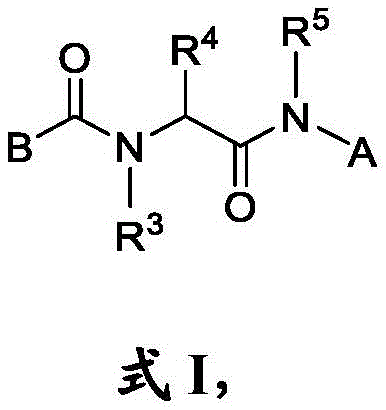
其中in
B是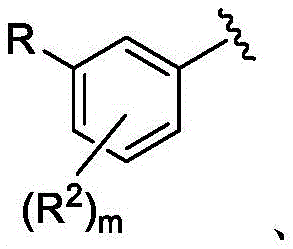
m是0、1、2、3或4;m is 0, 1, 2, 3, or 4;
R是H、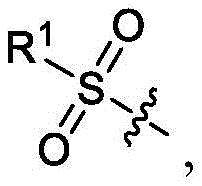
每个R2独立地是卤代基、任选取代的C1-C6烷基、任选取代的C1-C6杂烷基、任选取代的C3-C10碳环基、任选取代的C1-C6烷基C3-C10碳环基、任选取代的C1-C6杂烷基C3-C10碳环基、任选取代的C2-C9杂环基、任选取代的C1-C6烷基C2-C9杂环基、任选取代的C1-C6杂烷基C2-C9杂环基、任选取代的C6-C10芳基、任选取代的C1-C6烷基C6-C10芳基、任选取代的C1-C6杂烷基C6-C10芳基、任选取代的C2-C9杂芳基、任选取代的C1-C6烷基C2-C9杂芳基、任选取代的C1-C6杂烷基C2-C9杂芳基、任选取代的C2-C6烯基、任选取代的C2-C6杂烯基、羟基、硫醇或任选取代的氨基;Each R 2 is independently halo, optionally substituted C 1 -C 6 alkyl, optionally substituted C 1 -C 6 heteroalkyl, optionally substituted C 3 -C 10 carbocyclyl, any optionally substituted C 1 -C 6 alkyl C 3 -C 10 carbocyclyl, optionally substituted C 1 -C 6 heteroalkyl C 3 -C 10 carbocyclyl, optionally substituted C 2 -C 9 heterocyclyl Cyclyl, optionally substituted C 1 -C 6 alkyl C 2 -C 9 heterocyclyl, optionally substituted C 1 -C 6 heteroalkyl C 2 -C 9 heterocyclyl, optionally substituted C 6 -C 10 aryl, optionally substituted C 1 -C 6 alkyl C 6 -C 10 aryl, optionally substituted C 1 -C 6 heteroalkyl C 6 -C 10 aryl, optionally substituted C 2 -C 9 heteroaryl, optionally substituted C 1 -C 6 alkyl C 2 -C 9 heteroaryl, optionally substituted C 1 -C 6 heteroalkyl C 2 -C 9 heteroaryl, any optionally substituted C 2 -C 6 alkenyl, optionally substituted C 2 -C 6 heteroalkenyl, hydroxy, thiol or optionally substituted amino;
每个R3和R5独立地选自由以下组成的组:H、任选取代的C1-C6烷基或任选取代的C1-C6杂烷基;Each R 3 and R 5 is independently selected from the group consisting of H, optionally substituted C 1 -C 6 alkyl or optionally substituted C 1 -C 6 heteroalkyl;
R4是氢、任选取代的C1-C6烷基、任选取代的C1-C6杂烷基、任选取代的C3-C10碳环基、任选取代的C1-C6烷基C3-C10碳环基、任选取代的C1-C6杂烷基C3-C10碳环基、任选取代的C2-C9杂环基、任选取代的C1-C6烷基C2-C9杂环基、任选取代的C1-C6杂烷基C2-C9杂环基、任选取代的C6-C10芳基、任选取代的C1-C6烷基C6-C10芳基、任选取代的C1-C6杂烷基C6-C10芳基、任选取代的C2-C9杂芳基、任选取代的C1-C6烷基C2-C9杂芳基或任选取代的C1-C6杂烷基C2-C9杂芳基;并且R 4 is hydrogen, optionally substituted C 1 -C 6 alkyl, optionally substituted C 1 -C 6 heteroalkyl, optionally substituted C 3 -C 10 carbocyclyl, optionally substituted C 1 - C 6 alkyl C 3 -C 10 carbocyclyl, optionally substituted C 1 -C 6 heteroalkyl C 3 -C 10 carbocyclyl, optionally substituted C 2 -C 9 heterocyclyl, optionally substituted C 1 -C 6 alkyl C 2 -C 9 heterocyclyl, optionally substituted C 1 -C 6 heteroalkyl C 2 -C 9 heterocyclyl, optionally substituted C 6 -C 10 aryl, Optionally substituted C 1 -C 6 alkyl C 6 -C 10 aryl, optionally substituted C 1 -C 6 heteroalkyl C 6 -C 10 aryl, optionally substituted C 2 -C 9 heteroaryl and optionally substituted C 1 -C 6 alkyl C 2 -C 9 heteroaryl or optionally substituted C 1 -C 6 heteroalkyl C 2 -C 9 heteroaryl; and
A是
其中X是N或CRX,其中RX是H、卤代基、任选取代的C1-C6烷基、任选取代的C1-C6杂烷基、任选取代的C3-C10碳环基、任选取代的C2-C9杂环基、任选取代的C6-C10芳基、任选取代的C2-C9杂芳基、任选取代的C2-C6烯基或任选取代的C2-C6杂烯基;wherein X is N or CR X , wherein R X is H, halo, optionally substituted C 1 -C 6 alkyl, optionally substituted C 1 -C 6 heteroalkyl, optionally substituted C 3 - C 10 carbocyclyl, optionally substituted C 2 -C 9 heterocyclyl, optionally substituted C 6 -C 10 aryl, optionally substituted C 2 -C 9 heteroaryl, optionally substituted C 2 -C 6 alkenyl or optionally substituted C 2 -C 6 heteroalkenyl;
Y是N或CRY,其中RY是H、卤代基、任选取代的C1-C6烷基、任选取代的C1-C6杂烷基、任选取代的C3-C10碳环基、任选取代的C2-C9杂环基、任选取代的C6-C10芳基、任选取代的C2-C9杂芳基、任选取代的C2-C6烯基或任选取代的C2-C6杂烯基;Y is N or CRY, wherein R Y is H, halo, optionally substituted C1 - C6 alkyl, optionally substituted C1 - C6 heteroalkyl, optionally substituted C3 - C 10 carbocyclyl, optionally substituted C 2 -C 9 heterocyclyl, optionally substituted C 6 -C 10 aryl, optionally substituted C 2 -C 9 heteroaryl, optionally substituted C 2 - C 6 alkenyl or optionally substituted C 2 -C 6 heteroalkenyl;
Z是S、O或NRZ,其中RZ是H、任选取代的C1-C6烷基或任选取代的C1-C6杂烷基;Z is S, O or NR Z , wherein R Z is H, optionally substituted C 1 -C 6 alkyl or optionally substituted C 1 -C 6 heteroalkyl;
R6和R7独立地是H、卤代基、任选取代的C1-C6烷基、任选取代的C1-C6杂烷基、任选取代的C3-C10碳环基、任选取代的C2-C9杂环基、任选取代的C6-C10芳基、任选取代的C1-C6烷基任选取代的C6-C10芳基、任选取代的C2-C9杂芳基、任选取代的C2-C6烯基、任选取代的C2-C6杂烯基或任选取代的氨基,或两个R7与它们所连接的碳组合形成5或6元环;并且R 6 and R 7 are independently H, halo, optionally substituted C 1 -C 6 alkyl, optionally substituted C 1 -C 6 heteroalkyl, optionally substituted C 3 -C 10 carbocycle base, optionally substituted C 2 -C 9 heterocyclyl, optionally substituted C 6 -C 10 aryl, optionally substituted C 1 -C 6 alkyl, optionally substituted C 6 -C 10 aryl, optionally substituted C 2 -C 9 heteroaryl, optionally substituted C 2 -C 6 alkenyl, optionally substituted C 2 -C 6 heteroalkenyl or optionally substituted amino, or two R 7 with The carbons to which they are attached combine to form a 5- or 6-membered ring; and
n是1、2、3或4,n is 1, 2, 3 or 4,
或其药学上可接受的盐,or a pharmaceutically acceptable salt thereof,
其中如果B是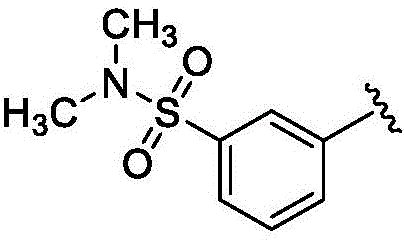
在一些实施方案中,B是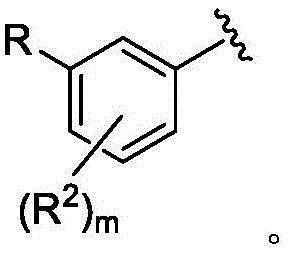
在一些实施方案中,R1是–NR1aR1b,其中每个R1a和R1b独立地是H或CH3。In some embodiments, R 1 is -NR 1a R 1b , wherein each R 1a and R 1b is independently H or CH 3 .
在一些实施方案中,式I化合物具有式II的结构:In some embodiments, the compound of formula I has the structure of formula II:
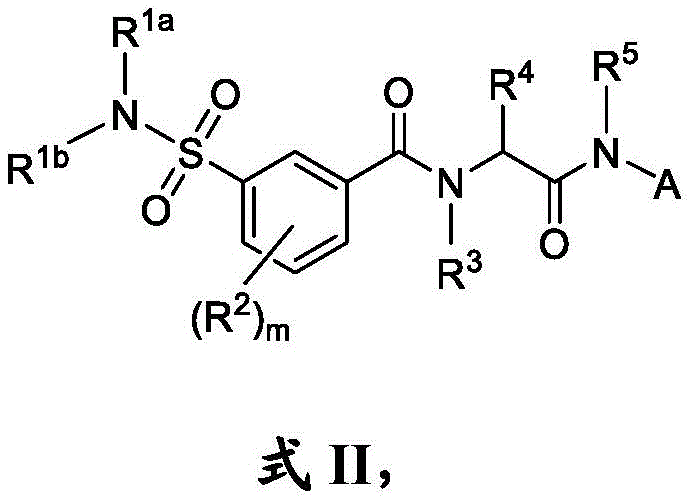
其中R1a和R1b独立地是H或CH3或其药学上可接受的盐。wherein R 1a and R 1b are independently H or CH 3 or a pharmaceutically acceptable salt thereof.
在一些实施方案中,m是0。In some embodiments, m is zero.
在一些实施方案中,式II化合物具有式IIa的结构:In some embodiments, the compound of formula II has the structure of formula IIa:

或其药学上可接受的盐。or a pharmaceutically acceptable salt thereof.
在一些实施方案中,式II化合物具有式IIb的结构:In some embodiments, the compound of formula II has the structure of formula lib:

或其药学上可接受的盐。or a pharmaceutically acceptable salt thereof.
在一些实施方案中,A是
在一些实施方案中,式II化合物具有式IIc的结构:In some embodiments, the compound of Formula II has the structure of Formula IIc:
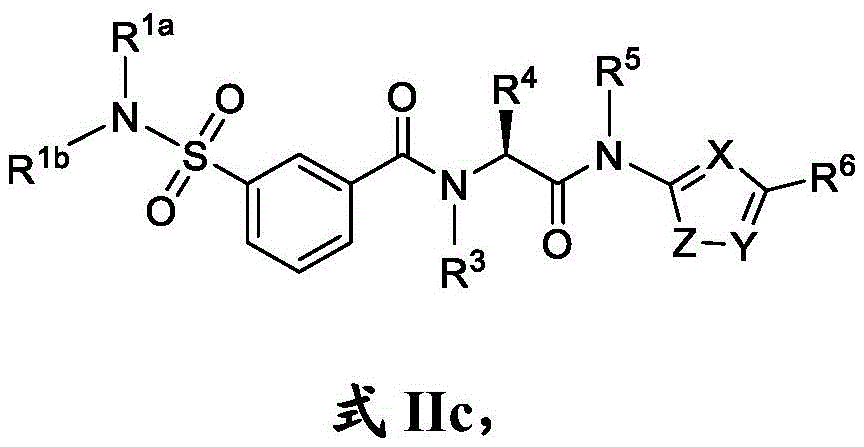
或其药学上可接受的盐。or a pharmaceutically acceptable salt thereof.
在一些实施方案中,式II化合物具有式IId的结构:In some embodiments, the compound of formula II has the structure of formula IId:
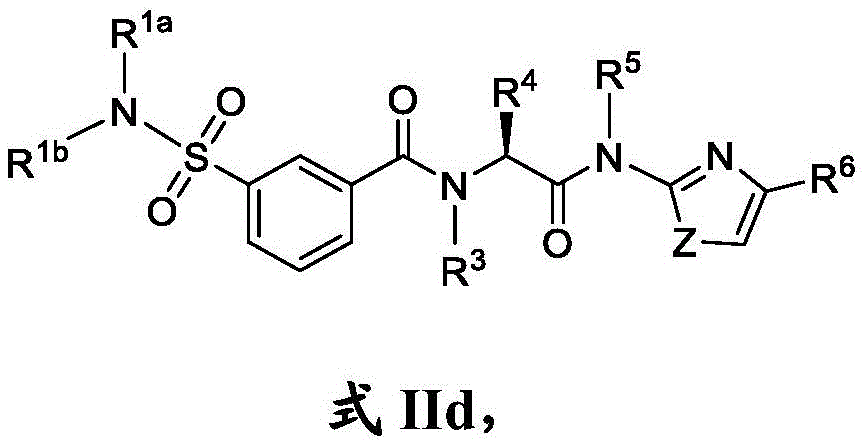
或其药学上可接受的盐。or a pharmaceutically acceptable salt thereof.
在一些实施方案中,式II化合物具有式IIe的结构:In some embodiments, the compound of formula II has the structure of formula IIe:

或其药学上可接受的盐。or a pharmaceutically acceptable salt thereof.
在一些实施方案中,式II化合物具有式IIf的结构:In some embodiments, the compound of formula II has the structure of formula Ilf:

其中p是0、1、2、3、4或5;并且每个R8独立地是任选取代的C1-C6烷基、任选取代的C1-C6杂烷基、任选取代的C1-C6酰基、任选取代的C6-C10芳基、任选取代的C2-C9杂芳基、氰基、羟基、硫醇或任选取代的氨基,或两个R8与它们所连接的碳组合形成5或6元杂环,或其药学上可接受的盐。wherein p is 0, 1, 2, 3, 4, or 5 ; and each R is independently optionally substituted C1 - C6 alkyl, optionally substituted C1 - C6 heteroalkyl, optionally Substituted C 1 -C 6 acyl, optionally substituted C 6 -C 10 aryl, optionally substituted C 2 -C 9 heteroaryl, cyano, hydroxy, thiol or optionally substituted amino, or two The R8s combine with the carbon to which they are attached to form a 5- or 6-membered heterocycle, or a pharmaceutically acceptable salt thereof.
在一些实施方案中,p是0。In some embodiments, p is 0.
在一些实施方案中,式II化合物具有式IIg的结构:In some embodiments, the compound of formula II has the structure of formula IIg:
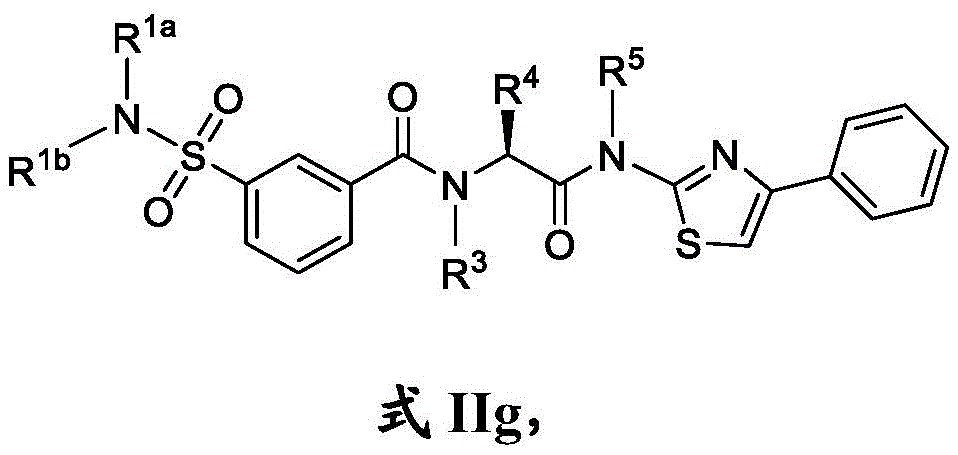
或其药学上可接受的盐。or a pharmaceutically acceptable salt thereof.
在一些实施方案中,A是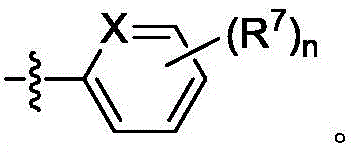
在一些实施方案中,式II化合物具有式IIh的结构:In some embodiments, the compound of formula II has the structure of formula IIh:
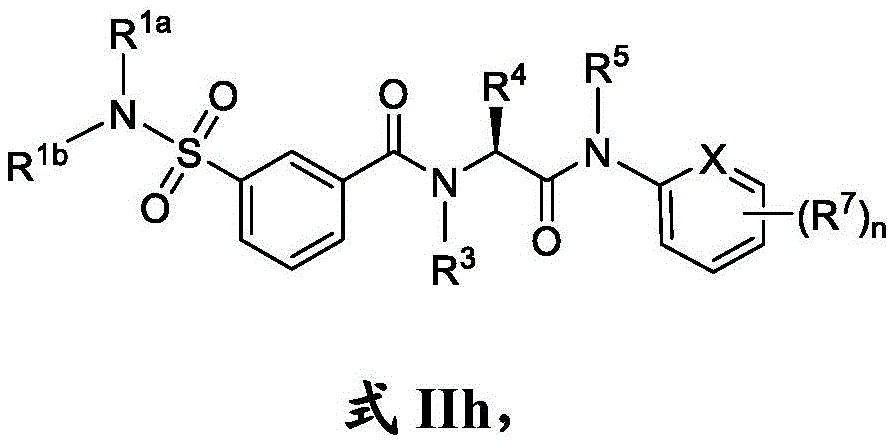
或其药学上可接受的盐。or a pharmaceutically acceptable salt thereof.
在一些实施方案中,n是1。在一些实施方案中,A是
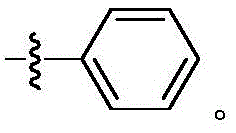
在一些实施方案中,n是0。In some embodiments, n is zero.
在一些实施方案中,式II化合物具有式IIi的结构:In some embodiments, the compound of formula II has the structure of formula IIi:
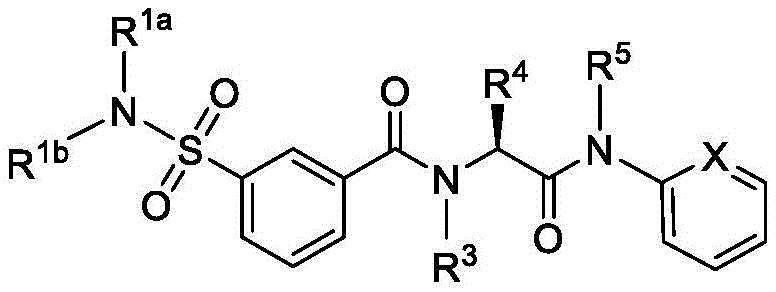

或其药学上可接受的盐。or a pharmaceutically acceptable salt thereof.
在一些实施方案中,X是N。在一些实施方案中,X是CH。In some embodiments, X is N. In some embodiments, X is CH.
在一些实施方案中,每个R1a和R1b独立地选自由H或CH3组成的组。在一些实施方案中,R1a和R1b两者均是H。在一些实施方案中,R1a和R1b两者均是CH3。在一些实施方案中,R1a是H并且R1b是CH3。在一些实施方案中,R3和R5两者均是H。In some embodiments, each R 1a and R 1b is independently selected from the group consisting of H or CH 3 . In some embodiments, both R 1a and R 1b are H. In some embodiments, both R 1a and R 1b are CH 3 . In some embodiments, R 1a is H and R 1b is CH 3 . In some embodiments, both R3 and R5 are H.
在一些实施方案中,R1是任选取代的C1-C3烷基。In some embodiments, R 1 is optionally substituted C 1 -C 3 alkyl.
在一些实施方案中,式I化合物具有式III的结构:In some embodiments, the compound of formula I has the structure of formula III:
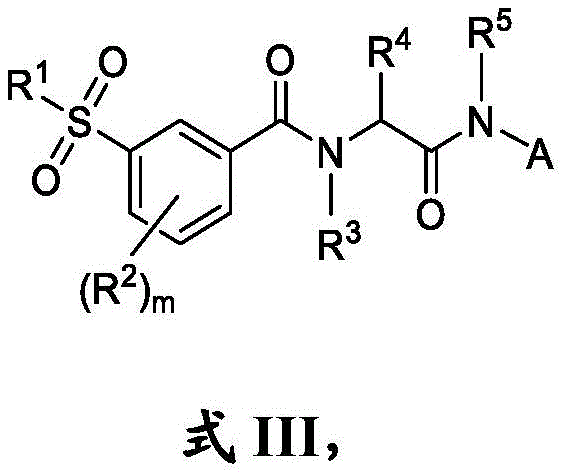
其中R1是任选取代的C1-C3烷基,或其药学上可接受的盐。wherein R 1 is optionally substituted C 1 -C 3 alkyl, or a pharmaceutically acceptable salt thereof.
在一些实施方案中,m是0。In some embodiments, m is zero.
在一些实施方案中,式III化合物具有式IIIa的结构:In some embodiments, the compound of formula III has the structure of formula IIIa:
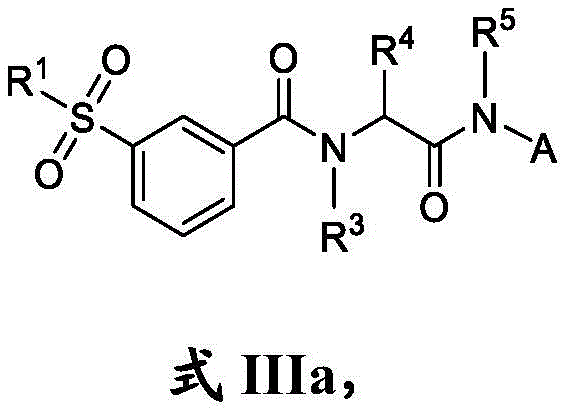
或其药学上可接受的盐。or a pharmaceutically acceptable salt thereof.
在一些实施方案中,式III化合物具有式IIIb的结构:In some embodiments, the compound of formula III has the structure of formula IIIb:

或其药学上可接受的盐。or a pharmaceutically acceptable salt thereof.
在一些实施方案中,A是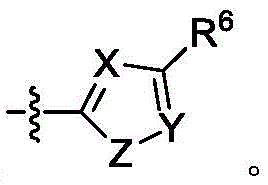
在一些实施方案中,式III化合物具有式IIIc的结构:In some embodiments, the compound of formula III has the structure of formula IIIc:
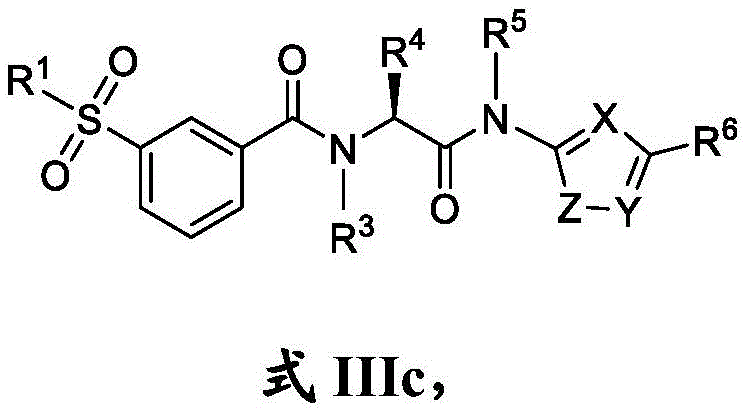
或其药学上可接受的盐。or a pharmaceutically acceptable salt thereof.
在一些实施方案中,式III化合物具有式IIId的结构:In some embodiments, the compound of formula III has the structure of formula IIId:
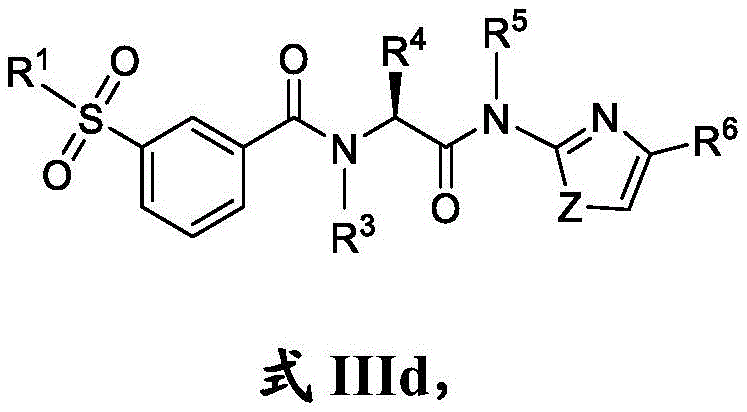
或其药学上可接受的盐。or a pharmaceutically acceptable salt thereof.
在一些实施方案中,式III化合物具有式IIIe的结构:In some embodiments, the compound of formula III has the structure of formula IIIe:

或其药学上可接受的盐。or a pharmaceutically acceptable salt thereof.
在一些实施方案中,式III化合物具有式IIIf的结构:In some embodiments, the compound of formula III has the structure of formula IIIf:

其中p是0、1、2、3、4或5;并且where p is 0, 1, 2, 3, 4, or 5; and
每个R8独立地是任选取代的C1-C6烷基、任选取代的C1-C6杂烷基、氰基、任选取代的C1-C6酰基、任选取代的C6-C10芳基、任选取代的C2-C9杂芳基、羟基、硫醇或任选取代的氨基,或其药学上可接受的盐。Each R8 is independently optionally substituted C1 - C6 alkyl, optionally substituted C1 - C6 heteroalkyl, cyano, optionally substituted C1 - C6 acyl, optionally substituted C1-C6 acyl C 6 -C 10 aryl, optionally substituted C 2 -C 9 heteroaryl, hydroxy, thiol or optionally substituted amino, or a pharmaceutically acceptable salt thereof.
在一些实施方案中,p是0。In some embodiments, p is 0.
在一些实施方案中,式III化合物具有式IIIg的结构:In some embodiments, the compound of formula III has the structure of formula IIIg:
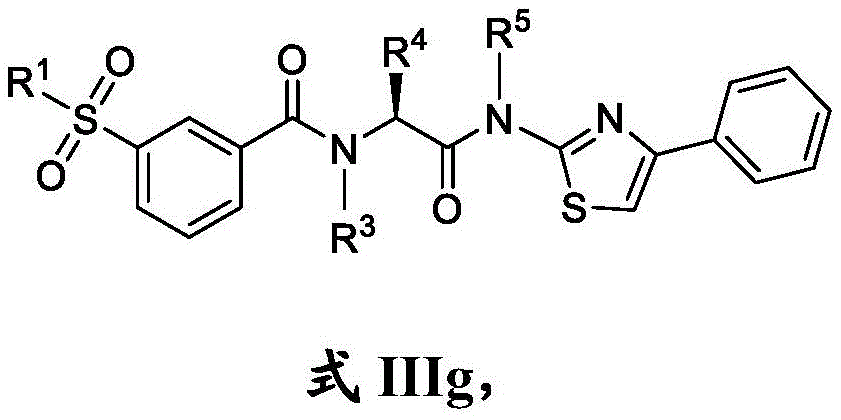
或其药学上可接受的盐。or a pharmaceutically acceptable salt thereof.
在一些实施方案中,A是
在一些实施方案中,式III化合物具有式IIIh的结构:In some embodiments, the compound of formula III has the structure of formula IIIh:
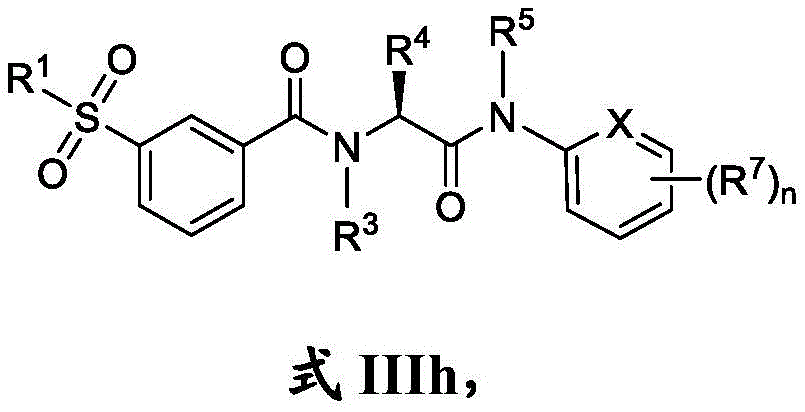
或其药学上可接受的盐。or a pharmaceutically acceptable salt thereof.
在一些实施方案中,n是0。In some embodiments, n is zero.
在一些实施方案中,式III化合物具有式IIIi的结构:In some embodiments, the compound of formula III has the structure of formula IIIi:

或其药学上可接受的盐。or a pharmaceutically acceptable salt thereof.
在一些实施方案中,R1是CH3、异丙基或环丙基。 In some embodiments, R1 is CH3 , isopropyl, or cyclopropyl.
在一些实施方案中,B是任选取代的C2-C9杂芳基或C2-C9杂环基。在一些实施方案中,B是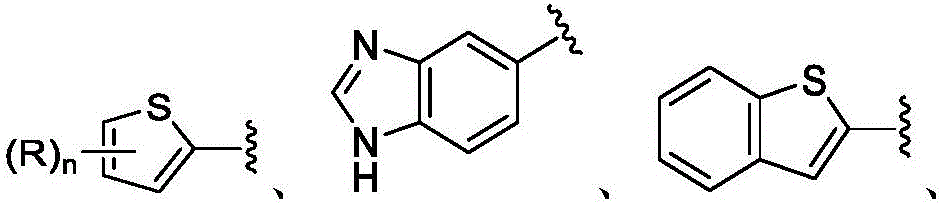

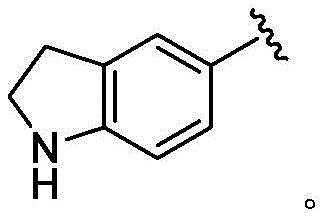
在一些实施方案中,R3和R5两者均是H。 In some embodiments, both R3 and R5 are H.
在一些实施方案中,R4是氢、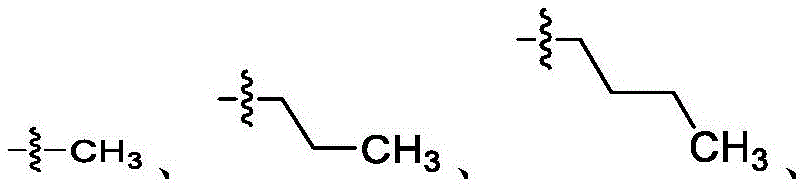



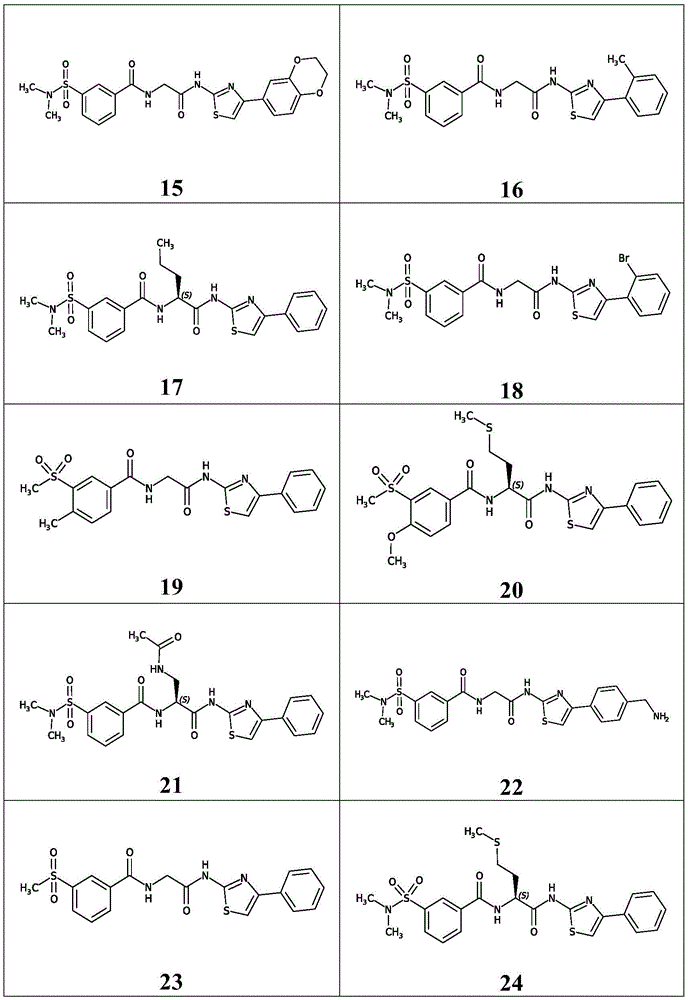
在一些实施方案中,所述化合物是表1中的化合物1-40或88-105中的任一者或其药学上可接受的盐。In some embodiments, the compound is any one of Compounds 1-40 or 88-105 in Table 1, or a pharmaceutically acceptable salt thereof.
表1.Table 1.




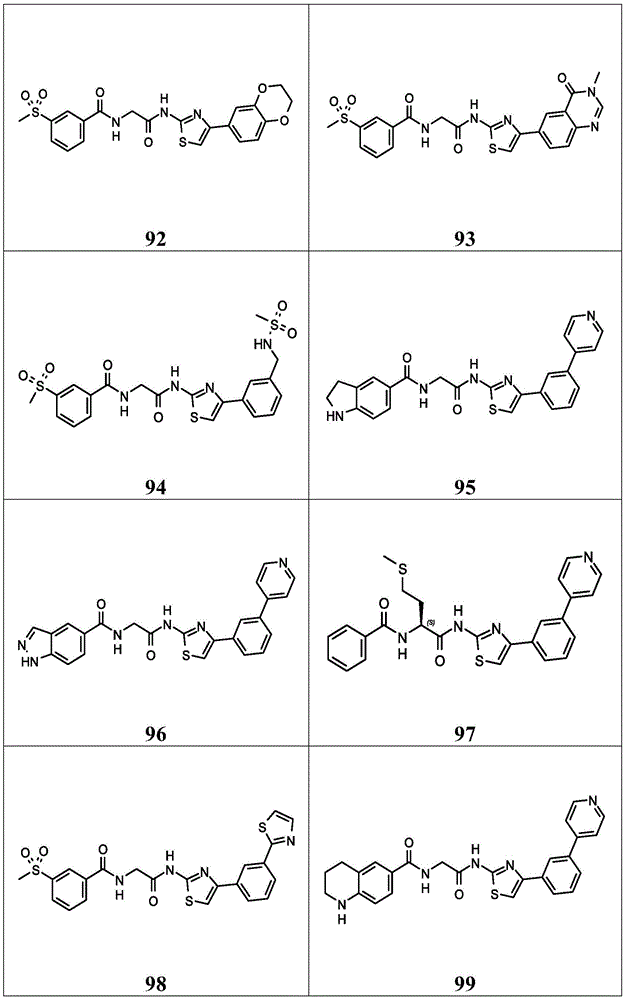
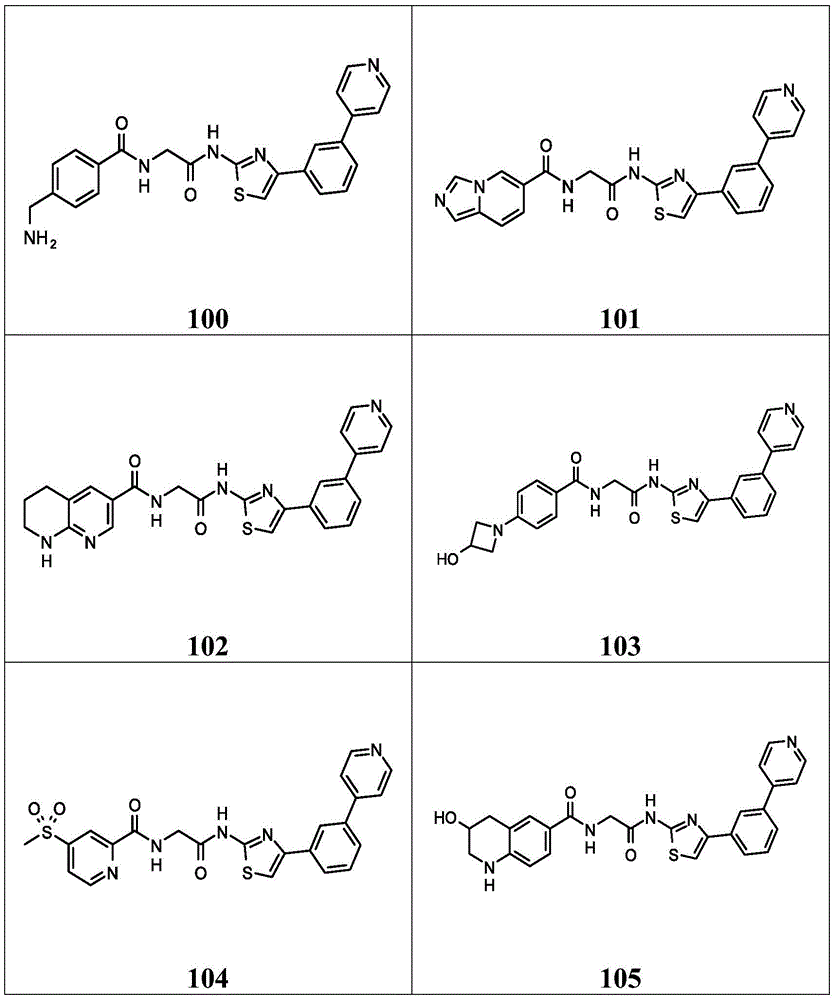
在另一方面,本发明的特征是一种具有式IV结构的化合物:In another aspect, the invention features a compound having the structure of Formula IV:

其中R10是C1-C6烷基、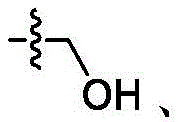
每个R9和R11独立地选自由以下组成的组:H、任选取代的C1-C6烷基或任选取代的C1-C6杂烷基;并且Each R 9 and R 11 is independently selected from the group consisting of H, optionally substituted C 1 -C 6 alkyl or optionally substituted C 1 -C 6 heteroalkyl; and
R12是H、C2-C6烷基、任选取代的C3-C10碳环基、任选取代的C2-C9杂环基、任选取代的C6-C10芳基、任选取代的C2-C9杂芳基、羟基、硫醇、任选取代的C1-C6烷氧基、任选取代的C1-C6硫代烷氧基或任选取代的氨基,或其药学上可接受的盐。R 12 is H, C 2 -C 6 alkyl, optionally substituted C 3 -C 10 carbocyclyl, optionally substituted C 2 -C 9 heterocyclyl, optionally substituted C 6 -C 10 aryl , optionally substituted C 2 -C 9 heteroaryl, hydroxyl, thiol, optionally substituted C 1 -C 6 alkoxy, optionally substituted C 1 -C 6 thioalkoxy or optionally substituted the amino group, or a pharmaceutically acceptable salt thereof.
在一些实施方案中,式IV化合物具有式IVa的结构:In some embodiments, the compound of formula IV has the structure of formula IVa:

或其药学上可接受的盐。or a pharmaceutically acceptable salt thereof.
在一些实施方案中,R9和R11两者均是H。在一些实施方案中,R10是In some embodiments, both R 9 and R 11 are H. In some embodiments, R 10 is
H、
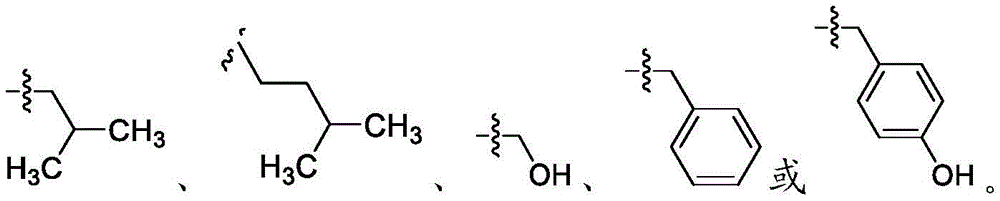
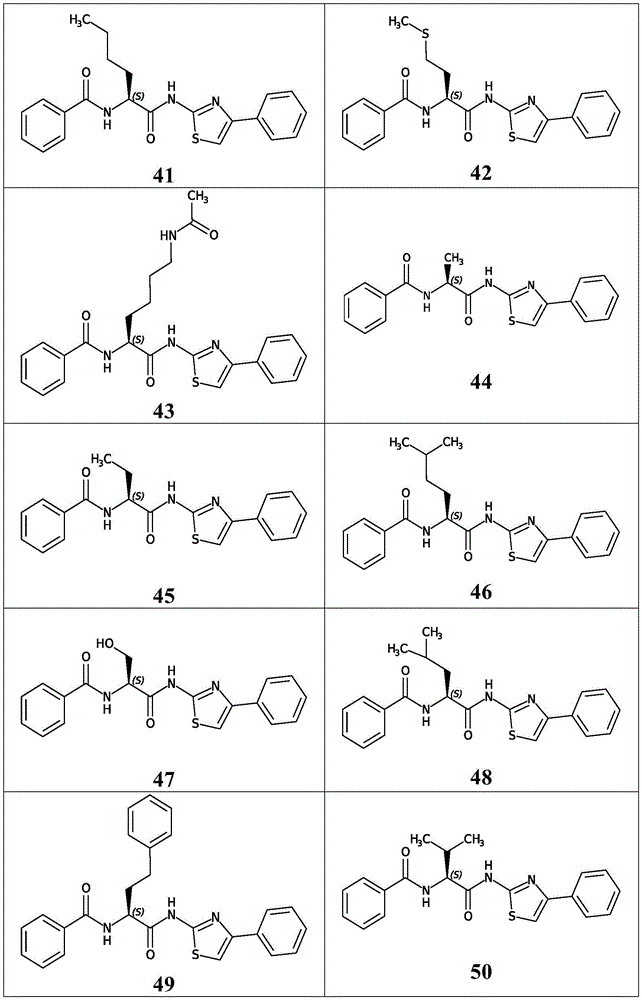
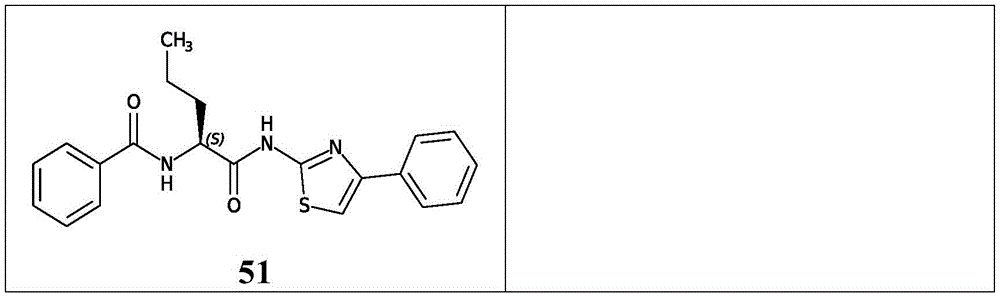
在一些实施方案中,所述化合物是表2中的化合物41-51中的任一者或其药学上可接受的盐。In some embodiments, the compound is any one of Compounds 41-51 in Table 2, or a pharmaceutically acceptable salt thereof.
表2.Table 2.
在另一方面,本发明的特征是一种具有式V结构的化合物:In another aspect, the invention features a compound having the structure of Formula V:
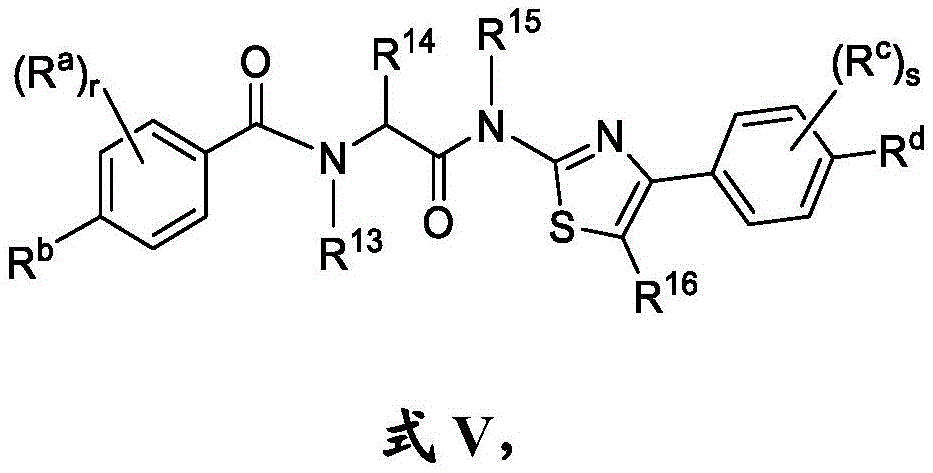
其中R14是氢、任选取代的C1-C6烷基、任选取代的C1-C6杂烷基、任选取代的C3-C10碳环基、任选取代的C2-C9杂环基、任选取代的C6-C10芳基或任选取代的C2-C9杂芳基;wherein R 14 is hydrogen, optionally substituted C 1 -C 6 alkyl, optionally substituted C 1 -C 6 heteroalkyl, optionally substituted C 3 -C 10 carbocyclyl, optionally substituted C 2 -C 9 heterocyclyl, optionally substituted C 6 -C 10 aryl or optionally substituted C 2 -C 9 heteroaryl;
每个R13和R15独立地选自由以下组成的组:H、任选取代的C1-C6烷基或任选取代的C1-C6杂烷基;Each of R 13 and R 15 is independently selected from the group consisting of H, optionally substituted C 1 -C 6 alkyl or optionally substituted C 1 -C 6 heteroalkyl;
R16是H或C1-C6烷基;R 16 is H or C 1 -C 6 alkyl;
r是0、1、2、3或4;r is 0, 1, 2, 3, or 4;
Rb是H、C1-C6全氟烷基、C2-C6烷基、任选取代的C3-C10碳环基、任选取代的C2-C9杂环基、任选取代的C2-C9杂芳基、任选取代的C2-C6烯基、任选取代的C2-C6杂烯基、任选取代的酰基、羟基、硫醇、腈、任选取代的C1-C6硫代烷氧基、任选取代的砜、任选取代的磺酰胺、任选取代的C1-C6烷基胺或任选取代的氨基;R b is H, C 1 -C 6 perfluoroalkyl, C 2 -C 6 alkyl, optionally substituted C 3 -C 10 carbocyclyl, optionally substituted C 2 -C 9 heterocyclyl, any optionally substituted C2 - C9 heteroaryl, optionally substituted C2 - C6 alkenyl, optionally substituted C2 - C6 heteroalkenyl, optionally substituted acyl, hydroxyl, thiol, nitrile, optionally substituted C 1 -C 6 thioalkoxy, optionally substituted sulfone, optionally substituted sulfonamide, optionally substituted C 1 -C 6 alkylamine or optionally substituted amino;
每个Ra独立地是C2-C6烷基、任选取代的C1-C6羟烷基、任选取代的C1-C6氨基烷基、任选取代的C3-C10碳环基、任选取代的C2-C9杂环基、任选取代的C6-C10芳基、任选取代的C2-C9杂芳基、任选取代的C2-C6烯基、任选取代的C2-C6杂烯基、任选取代的酰基、羟基、硫醇、任选取代的硫代烷氧基或任选取代的氨基;Each R is independently C 2 -C 6 alkyl, optionally substituted C 1 -C 6 hydroxyalkyl, optionally substituted C 1 -C 6 aminoalkyl, optionally substituted C 3 -C 10 Carbocyclyl, optionally substituted C 2 -C 9 heterocyclyl, optionally substituted C 6 -C 10 aryl, optionally substituted C 2 -C 9 heteroaryl, optionally substituted C 2 -C 6 alkenyl, optionally substituted C 2 -C 6 heteroalkenyl, optionally substituted acyl, hydroxy, thiol, optionally substituted thioalkoxy or optionally substituted amino;
s是0、1、2、3或4;s is 0, 1, 2, 3 or 4;
Rd是H、任选取代的C3-C10碳环基、任选取代的C2-C9杂芳基、任选取代的C2-C6烯基、任选取代的C2-C6杂烯基、任选取代的酰基、羟基、硫醇或任选取代的C1-C6硫代烷氧基,或Rd和Rc与它们所连接的碳组合形成5或6元杂环;R d is H, optionally substituted C 3 -C 10 carbocyclyl, optionally substituted C 2 -C 9 heteroaryl, optionally substituted C 2 -C 6 alkenyl, optionally substituted C 2 - C6 heteroalkenyl, optionally substituted acyl, hydroxyl, thiol, or optionally substituted C1 - C6 thioalkoxy, or Rd and Rc combined with the carbon to which they are attached to form a 5- or 6-membered Heterocycle;
每个Rc独立地是C2-C6烷基、任选取代的C3-C10碳环基、任选取代的C2-C9杂环基、任选取代的C6-C10芳基、任选取代的C2-C9杂芳基、任选取代的C2-C6烯基、任选取代的C2-C6杂烯基、任选取代的酰基、羟基、硫醇、任选取代的C1-C6硫代烷氧基或任选取代的氨基,或Rd和Rc与它们所连接的碳组合形成5或6元杂环;Each R c is independently C 2 -C 6 alkyl, optionally substituted C 3 -C 10 carbocyclyl, optionally substituted C 2 -C 9 heterocyclyl, optionally substituted C 6 -C 10 Aryl, optionally substituted C2 - C9heteroaryl , optionally substituted C2 - C6alkenyl , optionally substituted C2 - C6heteroalkenyl , optionally substituted acyl, hydroxy, thio alcohol, optionally substituted C1 - C6thioalkoxy, or optionally substituted amino, or Rd and Rc combined with the carbon to which they are attached to form a 5- or 6-membered heterocycle;
如果r是0,则R14是氢、任选取代的C1-C6杂烷基、任选取代的C3-C10碳环基、任选取代的C2-C9杂环基、任选取代的C6-C10芳基或任选取代的C2-C9杂芳基;If r is 0, R 14 is hydrogen, optionally substituted C 1 -C 6 heteroalkyl, optionally substituted C 3 -C 10 carbocyclyl, optionally substituted C 2 -C 9 heterocyclyl, optionally substituted C 6 -C 10 aryl or optionally substituted C 2 -C 9 heteroaryl;
如果Rb是H,Rd是H,并且s是0,则r是1、2、3或4;并且if R b is H, R d is H, and s is 0, then r is 1, 2, 3, or 4; and
如果Rb是H,Rd是H,并且r是0,则s是1、2、3或4,If R b is H, R d is H, and r is 0, then s is 1, 2, 3, or 4,
或其药学上可接受的盐。or a pharmaceutically acceptable salt thereof.
在一些实施方案中,式V化合物具有式Va的结构:In some embodiments, the compound of formula V has the structure of formula Va:
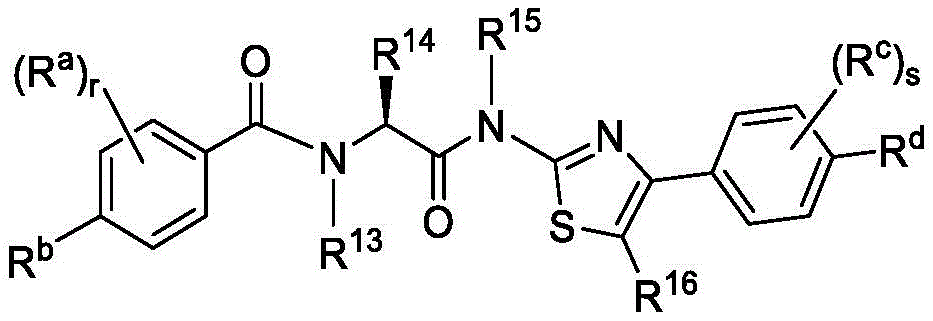

或其药学上可接受的盐。or a pharmaceutically acceptable salt thereof.
在一些实施方案中,R16是H。In some embodiments, R 16 is H.
在一些实施方案中,式V化合物具有式Vb的结构:In some embodiments, the compound of formula V has the structure of formula Vb:

或其药学上可接受的盐。or a pharmaceutically acceptable salt thereof.
在一些实施方案中,Rd是H,并且s是0。In some embodiments, R d is H, and s is 0.
在一些实施方案中,式V化合物具有式Vc的结构:In some embodiments, the compound of formula V has the structure of formula Vc:

或其药学上可接受的盐。or a pharmaceutically acceptable salt thereof.
在一些实施方案中,Rb是H。在一些实施方案中,r是1。在一些实施方案中,式V化合物具有式Vd的结构:In some embodiments, Rb is H. In some embodiments, r is 1. In some embodiments, the compound of formula V has the structure of formula Vd:


或其药学上可接受的盐。or a pharmaceutically acceptable salt thereof.
在一些实施方案中,Ra是任选取代的C1-C6羟烷基、任选取代的C1-C6氨基烷基或任选取代的酰基。在一些实施方案中,Ra是–OH、–NH2、–CH3、–CF3、–CH2OH、–CH2NH2、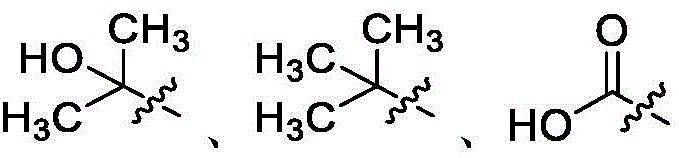

在一些实施方案中,Rb是C2-C6烷基(例如,甲基)、任选取代的砜(例如,-SO2CH3)、任选取代的C1-C6烷基胺(例如,–CH2NH2、–CH2N(CH3)2或-CH2NHC(O)CH3)、任选取代的氨基(例如,–NH2、–NHCH3或–NHSO2CH3)或任选取代的酰基(例如,–C(O)NHCH3)。在一些实施方案中,Rb是–OH、–CH3、–OCH3、–CF3或-CH2OH。In some embodiments, R b is C 2 -C 6 alkyl (eg, methyl), optionally substituted sulfone (eg, -SO 2 CH 3 ), optionally substituted C 1 -C 6 alkylamine (eg, -CH2NH2 , -CH2N ( CH3 ) 2 , or -CH2NHC (O) CH3 ) , optionally substituted amino (eg, -NH2 , -NHCH3 , or -NHSO2CH 3 ) or optionally substituted acyl (eg, -C(O) NHCH3 ). In some embodiments, R b is -OH, -CH 3 , -OCH 3 , -CF 3 or -CH 2 OH.
在一些实施方案中,所述化合物是表3中的化合物52-87中的任一者或其药学上可接受的盐。In some embodiments, the compound is any one of Compounds 52-87 in Table 3, or a pharmaceutically acceptable salt thereof.
表3.table 3.
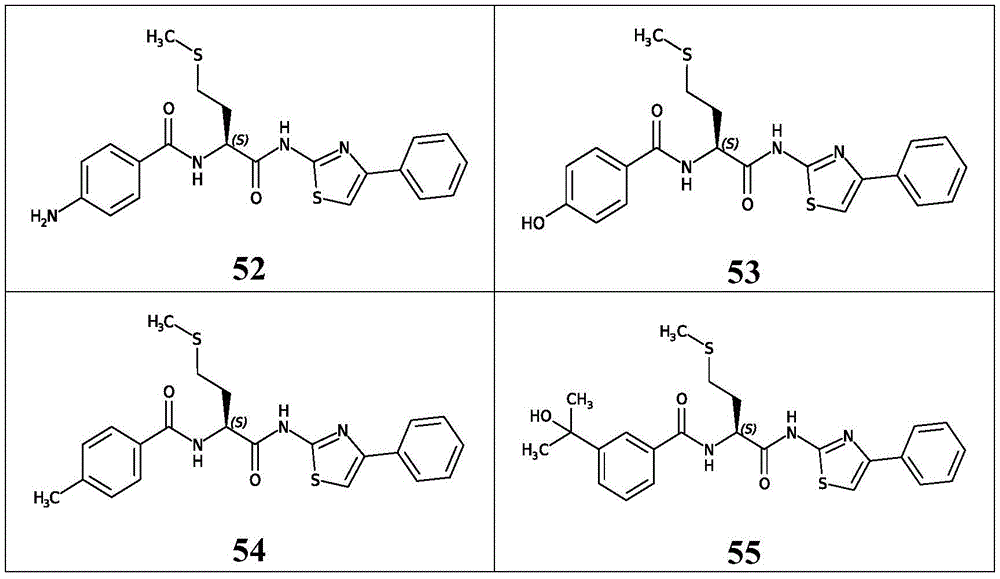
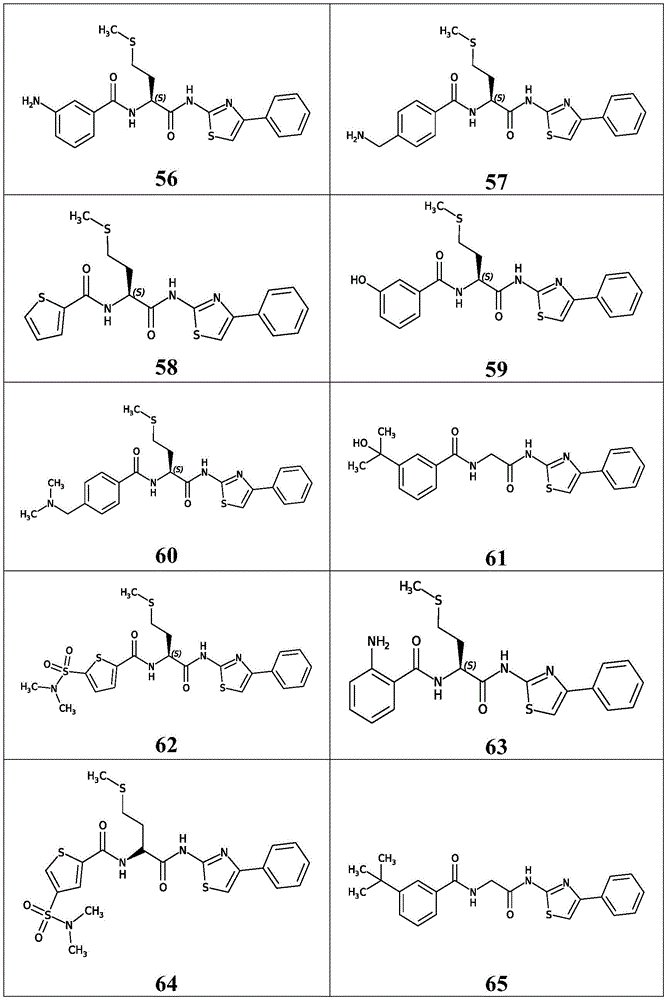

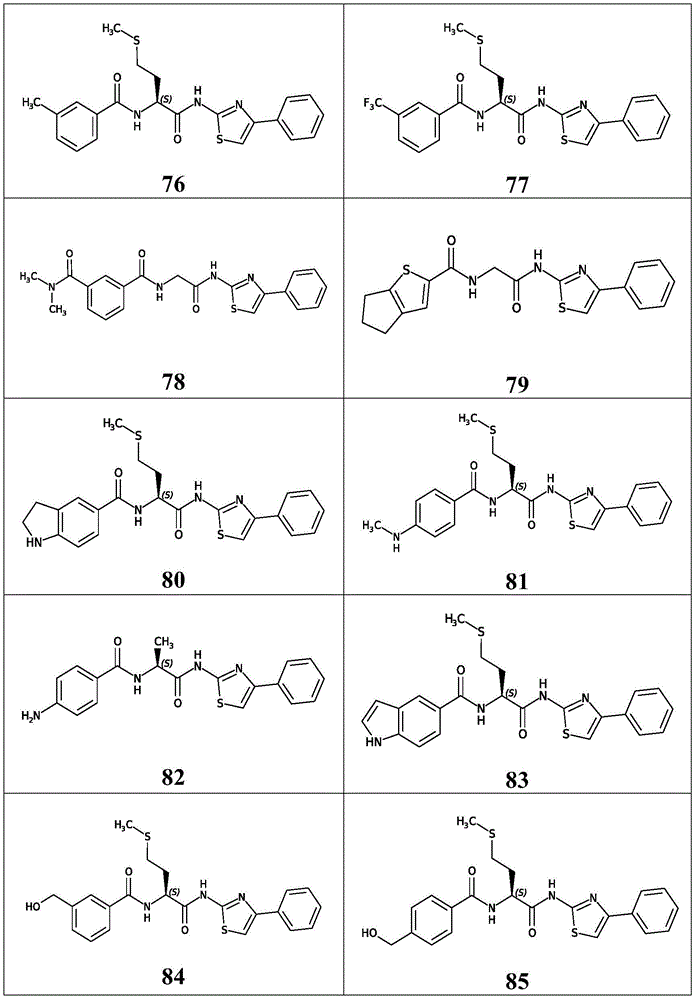

在另一方面,本发明的特征是一种具有以下结构的式VI化合物:In another aspect, the invention features a compound of formula VI having the structure:

其中in
每个R16和R18独立地选自由以下组成的组:H、任选取代的C1-C6烷基或任选取代的C1-C6杂烷基;Each R 16 and R 18 is independently selected from the group consisting of H, optionally substituted C 1 -C 6 alkyl or optionally substituted C 1 -C 6 heteroalkyl;
R17是任选取代的C1-C6烷基、任选取代的C1-C6杂烷基、任选取代的C3-C10碳环基、任选取代的C2-C9杂环基、任选取代的C6-C10芳基或任选取代的C2-C9杂芳基;R 17 is optionally substituted C 1 -C 6 alkyl, optionally substituted C 1 -C 6 heteroalkyl, optionally substituted C 3 -C 10 carbocyclyl, optionally substituted C 2 -C 9 Heterocyclyl, optionally substituted C 6 -C 10 aryl or optionally substituted C 2 -C 9 heteroaryl;
D是
其中X1是N或CRX1,其中RX1是H或任选取代的C1-C6烷基;wherein X 1 is N or CR X1 , wherein R X1 is H or optionally substituted C 1 -C 6 alkyl;
Y1是N或CRY1,其中RY1是H、任选取代的C1-C6烷基、任选取代的C1-C6杂烷基、任选取代的C3-C10碳环基、任选取代的C2-C9杂环基、任选取代的C6-C10芳基、任选取代的C2-C9杂芳基、任选取代的C2-C6烯基、任选取代的C2-C6杂烯基;Y 1 is N or CR Y1 , wherein R Y1 is H, optionally substituted C 1 -C 6 alkyl, optionally substituted C 1 -C 6 heteroalkyl, optionally substituted C 3 -C 10 carbocycle base, optionally substituted C 2 -C 9 heterocyclyl, optionally substituted C 6 -C 10 aryl, optionally substituted C 2 -C 9 heteroaryl, optionally substituted C 2 -C 6 alkene group, optionally substituted C 2 -C 6 heteroalkenyl;
Z是S、O、C(RZ1a)2或NRZ1b,其中RZ1a是H、任选取代的C1-C6烷基、任选取代的C1-C6杂烷基、任选取代的C3-C10碳环基、任选取代的C2-C9杂环基、任选取代的C6-C10芳基、任选取代的C2-C9杂芳基、任选取代的C2-C6烯基、任选取代的C2-C6杂烯基,并且RZ1b是H、任选取代的C1-C6烷基或任选取代的C1-C6杂烷基;Z is S, O, C(R Z1a ) 2 or NR Z1b , wherein R Z1a is H, optionally substituted C 1 -C 6 alkyl, optionally substituted C 1 -C 6 heteroalkyl, optionally substituted C 3 -C 10 carbocyclyl, optionally substituted C 2 -C 9 heterocyclyl, optionally substituted C 6 -C 10 aryl, optionally substituted C 2 -C 9 heteroaryl, optionally substituted substituted C2 - C6 alkenyl, optionally substituted C2 - C6 heteroalkenyl, and R Z1b is H, optionally substituted C1 - C6 alkyl, or optionally substituted C1 - C6 Heteroalkyl;
q是0、1、2、3、4或5;q is 0, 1, 2, 3, 4 or 5;
每个R19是H、卤代基、任选取代的C1-C6烷基、任选取代的C1-C6杂烷基、任选取代的C3-C10碳环基、任选取代的C2-C9杂环基、任选取代的C6-C10芳基、任选取代的C2-C9杂芳基、任选取代的C2-C6烯基、任选取代的C2-C6杂烯基或任选取代的氨基;Each R 19 is H, halo, optionally substituted C 1 -C 6 alkyl, optionally substituted C 1 -C 6 heteroalkyl, optionally substituted C 3 -C 10 carbocyclyl, any Optionally substituted C 2 -C 9 heterocyclyl, optionally substituted C 6 -C 10 aryl, optionally substituted C 2 -C 9 heteroaryl, optionally substituted C 2 -C 6 alkenyl, optionally substituted optionally substituted C 2 -C 6 heteroalkenyl or optionally substituted amino;
每个R20独立地是卤代基、任选取代的C1-C6烷基、任选取代的C1-C6杂烷基、任选取代的C3-C10碳环基、任选取代的C2-C9杂环基、任选取代的C6-C10芳基、任选取代的C2-C9杂芳基、羟基、硫醇、任选取代的砜、任选取代的磺酰胺或任选取代的氨基;并且Each R 20 is independently halo, optionally substituted C 1 -C 6 alkyl, optionally substituted C 1 -C 6 heteroalkyl, optionally substituted C 3 -C 10 carbocyclyl, any optionally substituted C 2 -C 9 heterocyclyl, optionally substituted C 6 -C 10 aryl, optionally substituted C 2 -C 9 heteroaryl, hydroxy, thiol, optionally substituted sulfone, optionally substituted sulfonamide or optionally substituted amino; and
E是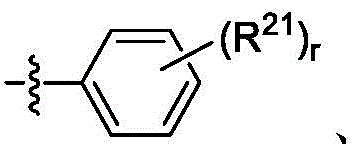
其中in
r是0、1、2、3、4或5;并且r is 0, 1, 2, 3, 4, or 5; and
每个R21独立地是卤代基、任选取代的C1-C6烷基、任选取代的C6-C10芳基、任选取代的C2-C9杂芳基、羟基、硫醇、任选取代的砜、任选取代的磺酰胺或任选取代的氨基,Each R 21 is independently halo, optionally substituted C 1 -C 6 alkyl, optionally substituted C 6 -C 10 aryl, optionally substituted C 2 -C 9 heteroaryl, hydroxy, thiol, optionally substituted sulfone, optionally substituted sulfonamide or optionally substituted amino,
或其药学上可接受的盐。or a pharmaceutically acceptable salt thereof.
在另一方面,本发明的特征是一种具有式VII结构的化合物:In another aspect, the invention features a compound having the structure of formula VII:
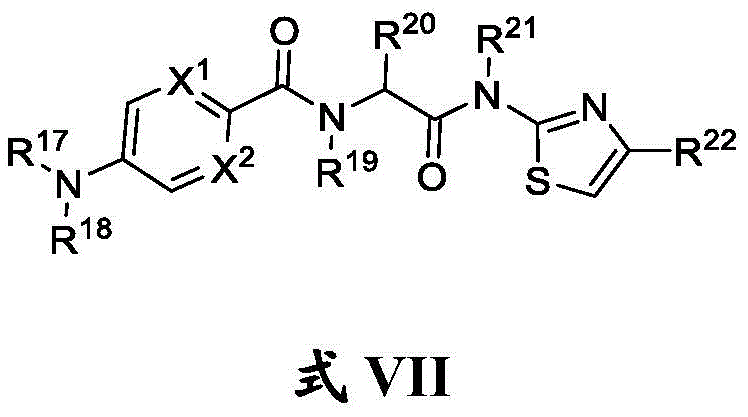
其中R17、R18、R19和R21独立地是H或任选取代的C1-C6烷基;wherein R 17 , R 18 , R 19 and R 21 are independently H or optionally substituted C 1 -C 6 alkyl;
R20是氢、任选取代的C1-C6烷基或任选取代的C1-C6杂烷基;R 20 is hydrogen, optionally substituted C 1 -C 6 alkyl or optionally substituted C 1 -C 6 heteroalkyl;
R22是任选取代的C6-C10芳基、任选取代的C2-C9杂环基或任选取代的C2-C9杂芳基;并且R 22 is optionally substituted C 6 -C 10 aryl, optionally substituted C 2 -C 9 heterocyclyl, or optionally substituted C 2 -C 9 heteroaryl; and
X1和X2独立地是N或CH, X1 and X2 are independently N or CH ,
或其药学上可接受的盐。or a pharmaceutically acceptable salt thereof.
在一些实施方案中,R19是氢。在一些实施方案中,R21是氢。In some embodiments, R 19 is hydrogen. In some embodiments, R 21 is hydrogen.
在一些实施方案中,X1是N。在一些实施方案中,X1是CH。在一些实施方案中,X2是N。在一些实施方案中,X2是CH。In some embodiments, X 1 is N. In some embodiments, X 1 is CH. In some embodiments, X 2 is N. In some embodiments, X2 is CH .
在一些实施方案中,R17是氢。在一些实施方案中,R17是任选取代的C1-C6烷基(例如,甲基)。In some embodiments, R 17 is hydrogen. In some embodiments, R 17 is optionally substituted C 1 -C 6 alkyl (eg, methyl).
在一些实施方案中,R18是任选取代的C1-C6烷基(例如,甲基)。In some embodiments, R 18 is optionally substituted C 1 -C 6 alkyl (eg, methyl).
在一些实施方案中,R20是氢。在一些实施方案中,R20是任选取代的C1-C6杂烷基(例如,

在一些实施方案中,R22是任选取代的C2-C9杂环基(例如,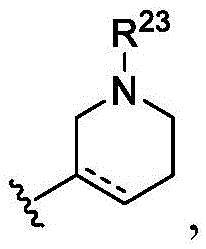
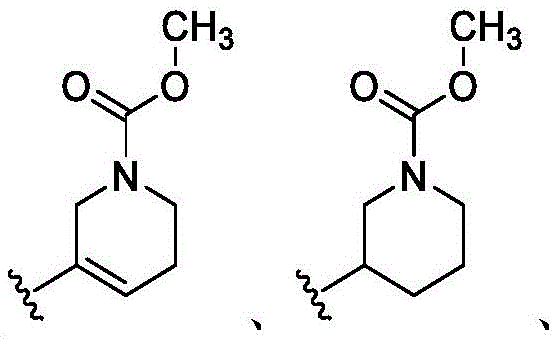
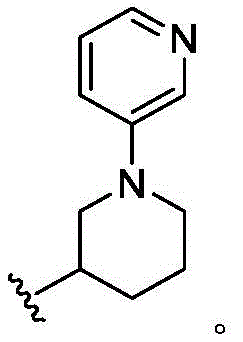

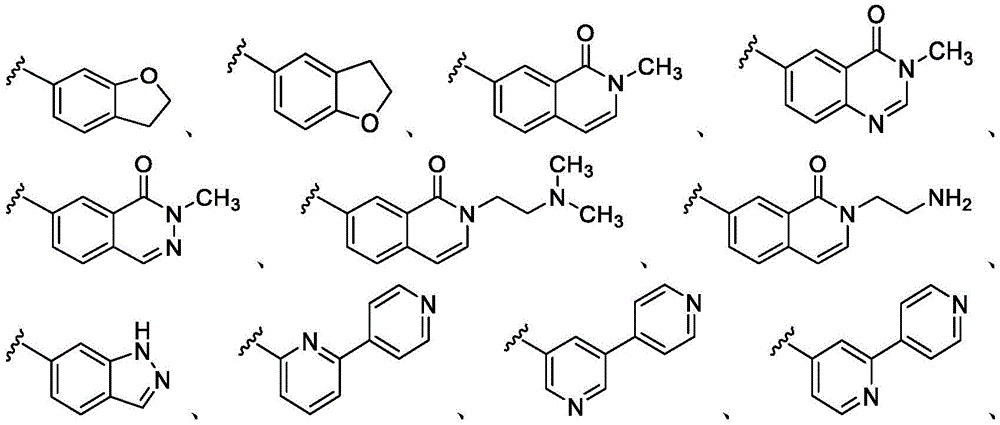


在一些实施方案中,n是1。在一些实施方案中,至少一个R25是氰基。在一些实施方案中,至少一个R25是羟基。在一些实施方案中,至少一个R25是任选取代的C1-C6杂烷基(例如,甲氧基或


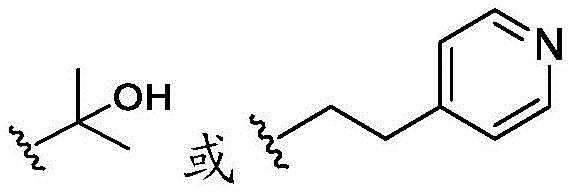
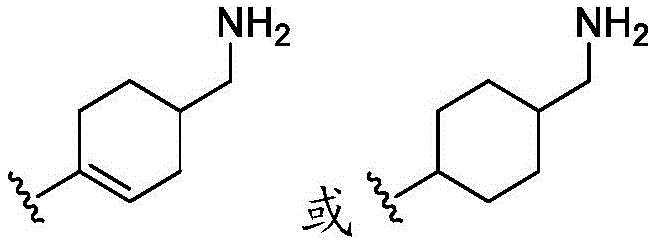
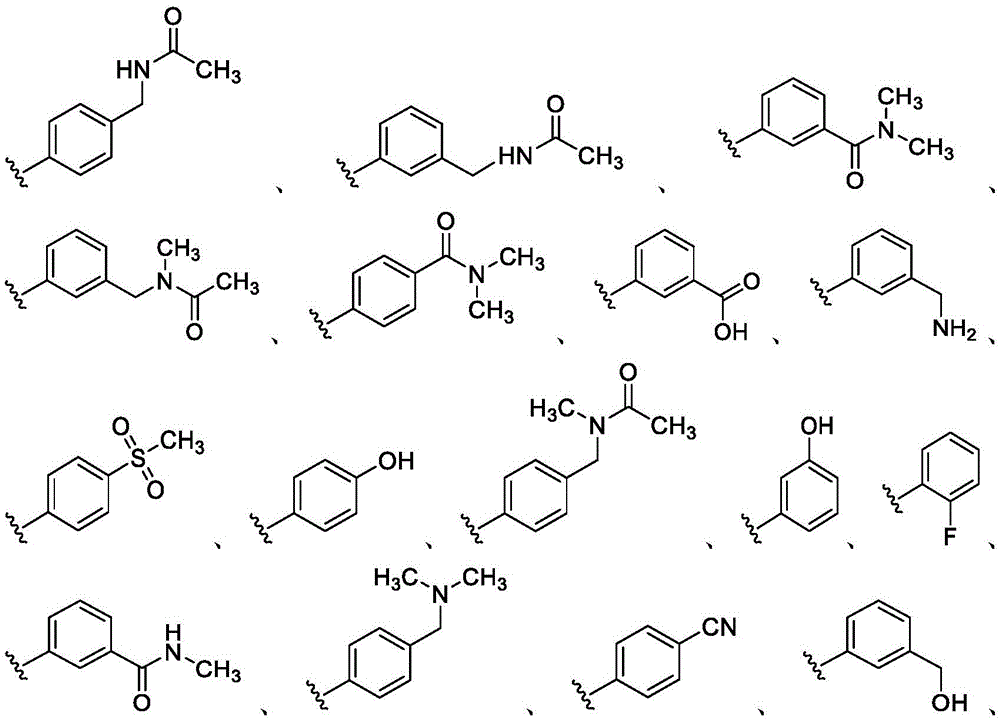
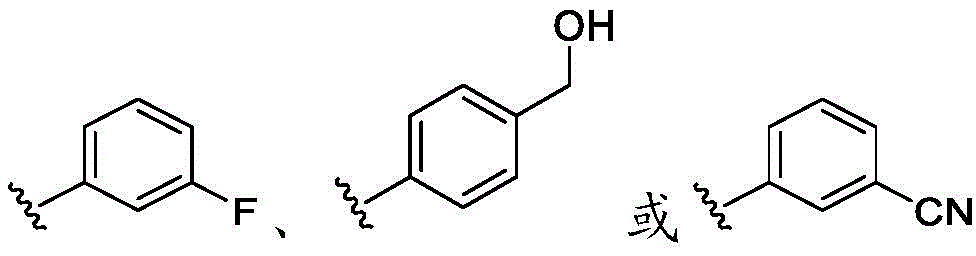



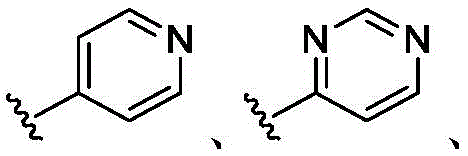

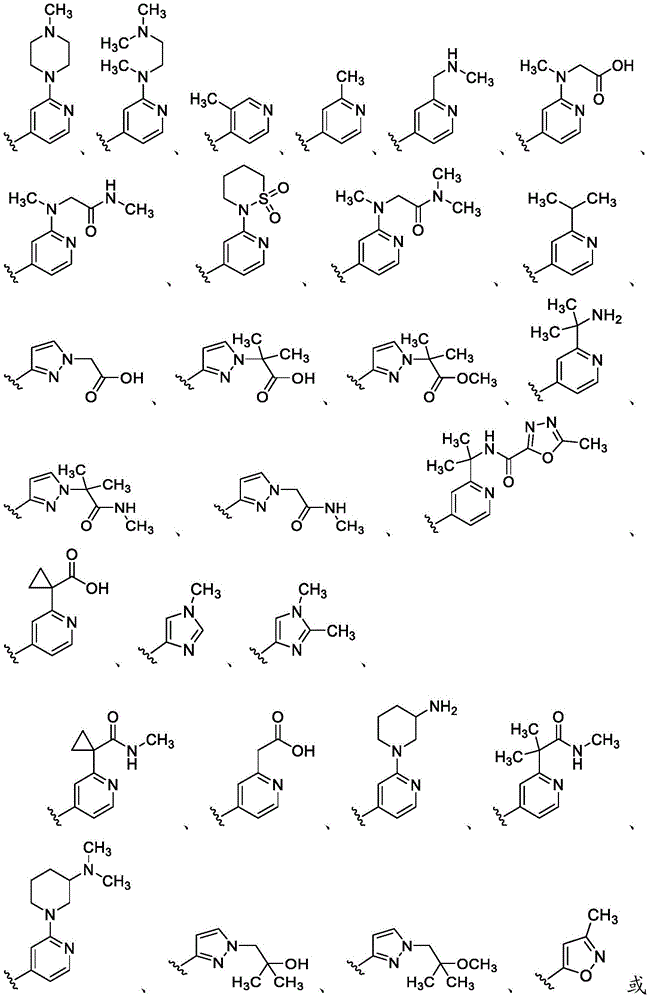

在一些实施方案中,所述化合物是表4中的化合物106-241中的任一者或其药学上可接受的盐。In some embodiments, the compound is any one of Compounds 106-241 in Table 4, or a pharmaceutically acceptable salt thereof.
表4.Table 4.
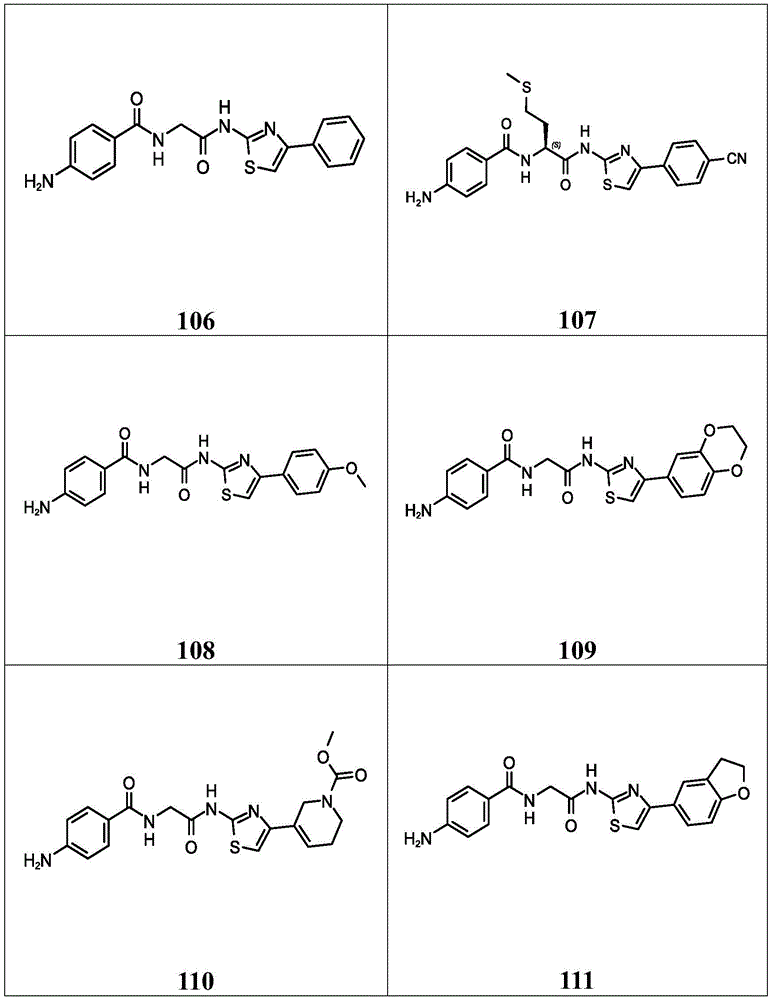
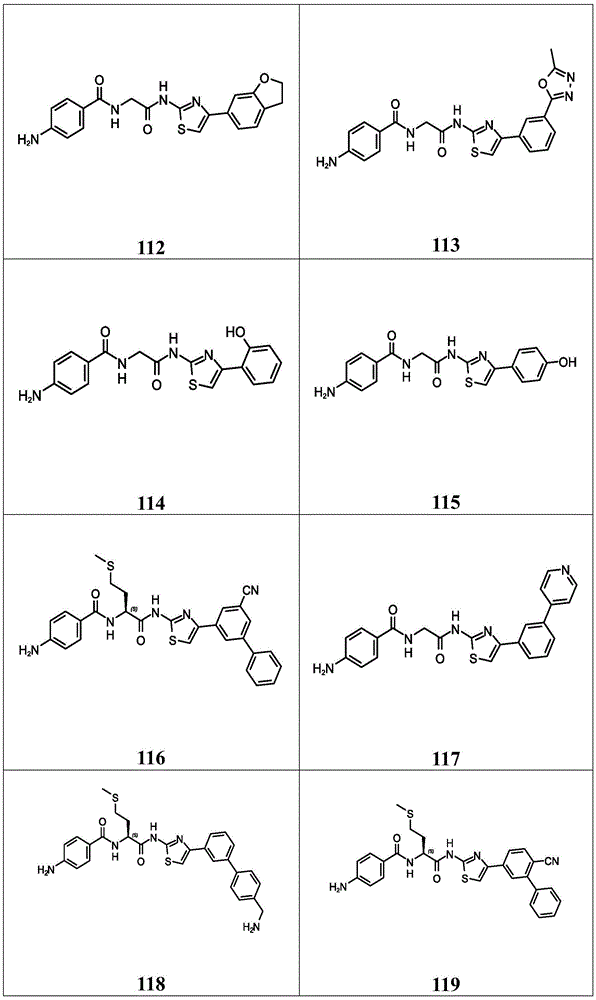

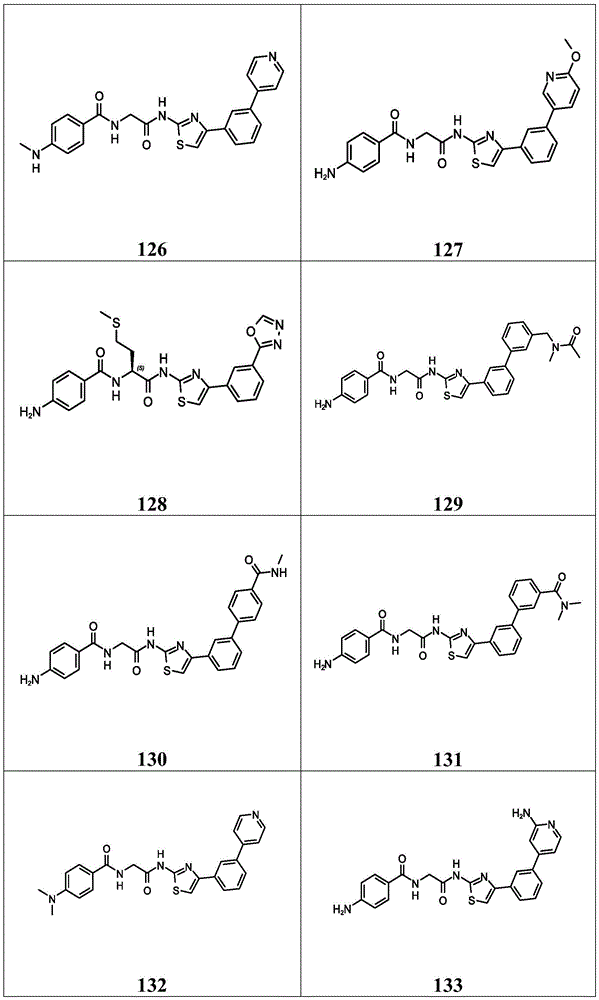

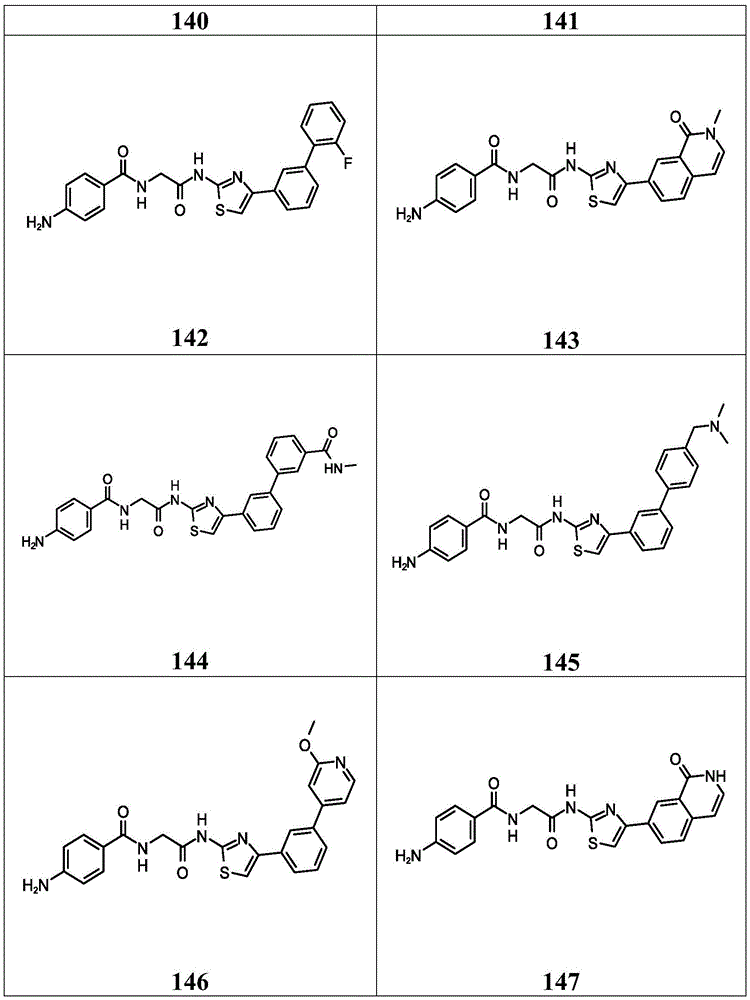


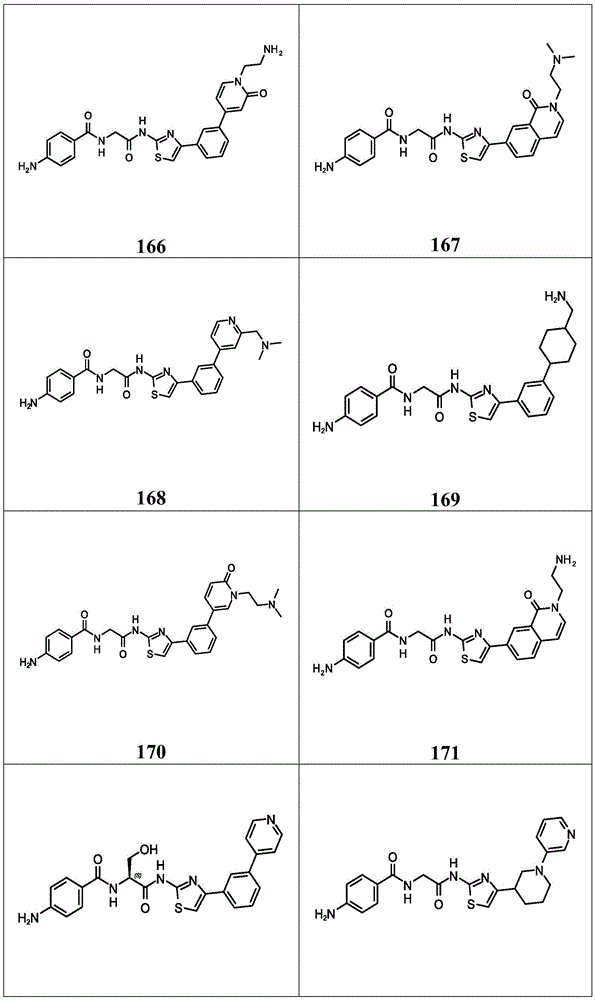
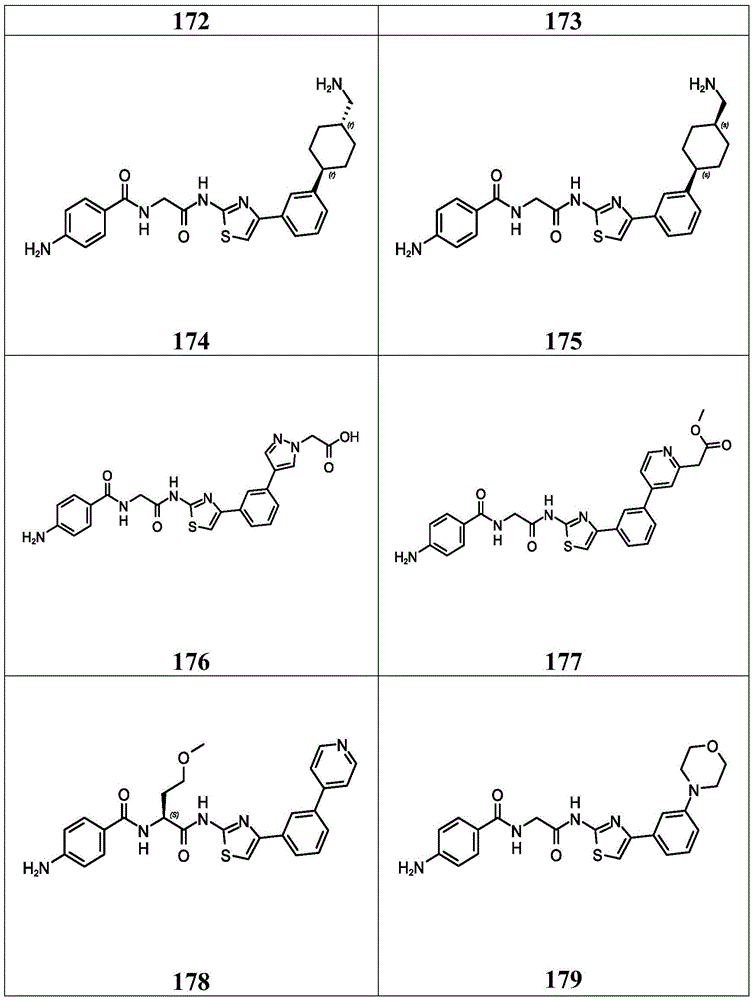

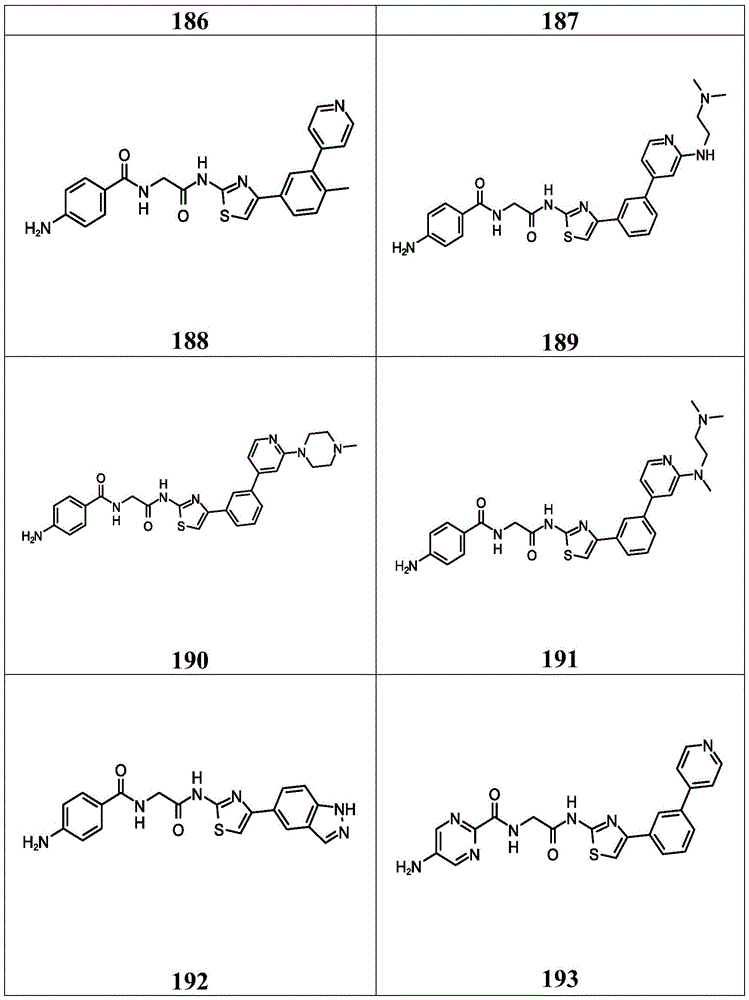
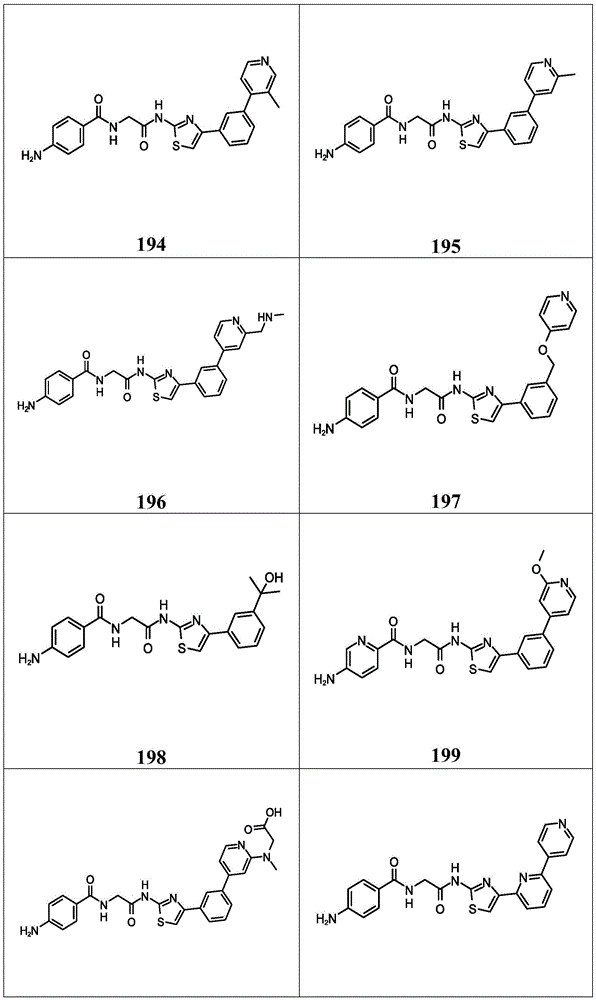


在另一方面,本发明的特征是一种药物组合物,所述药物组合物包含前述化合物中的任一种和药学上可接受的赋形剂。In another aspect, the invention features a pharmaceutical composition comprising any of the foregoing compounds and a pharmaceutically acceptable excipient.
在一些实施方案中,所述药物组合物包含式I、式IV、式V、式VI或式VII的化合物和药学上可接受的赋形剂。In some embodiments, the pharmaceutical composition comprises a compound of Formula I, Formula IV, Formula V, Formula VI, or Formula VII and a pharmaceutically acceptable excipient.
在一些实施方案中,所述化合物是表1、表2、表3和表4中的化合物1-241中的任一种。In some embodiments, the compound is any one of Compounds 1-241 in Table 1, Table 2, Table 3, and Table 4.
在另一方面,本发明的特征是一种降低细胞中的BAF复合物的活性的方法,所述方法包括使所述细胞与有效量的前述化合物中的任一种或其药物组合物接触。In another aspect, the invention features a method of reducing the activity of a BAF complex in a cell, the method comprising contacting the cell with an effective amount of any of the foregoing compounds or a pharmaceutical composition thereof.
在一些实施方案中,所述细胞是癌细胞。In some embodiments, the cells are cancer cells.
在另一方面,本发明的特征是一种治疗有需要的受试者的BAF复合物相关病症的方法,所述方法包括向所述受试者施用有效量的前述化合物中的任一种(例如,BRM/BRG1双重抑制剂化合物或BRM选择性化合物)或其药物组合物。In another aspect, the invention features a method of treating a BAF complex-related disorder in a subject in need thereof, the method comprising administering to the subject an effective amount of any of the foregoing compounds ( For example, a BRM/BRG1 dual inhibitor compound or a BRM selective compound) or a pharmaceutical composition thereof.
在一些实施方案中,所述BAF复合物相关病症是癌症。In some embodiments, the BAF complex-related disorder is cancer.
在另一方面,本发明的特征是一种抑制BRM的方法,所述方法包括使细胞与有效量的前述化合物中的任一种(例如,BRM/BRG1双重抑制剂化合物或BRM选择性化合物)或其药物组合物接触。In another aspect, the invention features a method of inhibiting BRM, the method comprising exposing a cell to an effective amount of any of the foregoing compounds (eg, a dual BRM/BRG1 inhibitor compound or a BRM selective compound) or a pharmaceutical composition thereof.
在一些实施方案中,所述细胞是癌细胞。In some embodiments, the cells are cancer cells.
在另一方面,本发明的特征是一种抑制BRG1的方法,所述方法包括使细胞与有效量的前述化合物中的任一种或其药物组合物接触。In another aspect, the invention features a method of inhibiting BRG1 comprising contacting a cell with an effective amount of any of the foregoing compounds or a pharmaceutical composition thereof.
在一些实施方案中,所述细胞是癌细胞。In some embodiments, the cells are cancer cells.
在另一方面,本发明的特征是一种抑制BRM和BRG1的方法,所述方法包括使细胞与有效量的前述化合物中的任一种或其药物组合物接触。In another aspect, the invention features a method of inhibiting BRM and BRG1, the method comprising contacting a cell with an effective amount of any of the foregoing compounds or a pharmaceutical composition thereof.
在一些实施方案中,所述细胞是癌细胞。In some embodiments, the cells are cancer cells.
在另一方面,本发明的特征是一种治疗有需要的受试者的与BRG1功能丧失性突变有关的病症的方法,所述方法包括向所述受试者施用有效量的前述化合物中的任一种(例如,BRM/BRG1双重抑制剂化合物或BRM选择性化合物)或其药物组合物。In another aspect, the invention features a method of treating a disorder associated with a BRG1 loss-of-function mutation in a subject in need thereof, the method comprising administering to the subject an effective amount of any of the foregoing compounds Any one (eg, a BRM/BRG1 dual inhibitor compound or a BRM selective compound) or a pharmaceutical composition thereof.
在一些实施方案中,所述与BRG1功能丧失性突变有关的病症是癌症。在其他实施方案中,所述受试者被确定为患有BRG1功能丧失性病症,例如被确定为患有BRG1功能丧失性癌症(例如,所述癌症已被确定为包括具有BRG1功能丧失的癌细胞)。In some embodiments, the disorder associated with a BRG1 loss-of-function mutation is cancer. In other embodiments, the subject is determined to have a BRG1 loss-of-function disorder, eg, is determined to have a BRG1-loss-of-function cancer (eg, the cancer has been determined to include cancer cells with BRG1 loss-of-function) .
在另一方面,本发明的特征是一种诱导细胞的细胞凋亡的方法,所述方法包括使所述细胞与有效量的前述化合物中的任一种(例如,BRM/BRG1双重抑制剂化合物或BRM选择性化合物)或其药物组合物接触。In another aspect, the invention features a method of inducing apoptosis in a cell, the method comprising exposing the cell to an effective amount of any of the foregoing compounds (eg, a dual BRM/BRG1 inhibitor compound) or a BRM selective compound) or a pharmaceutical composition thereof.
在一些实施方案中,所述细胞是癌细胞。In some embodiments, the cells are cancer cells.
在另一方面,本发明的特征是一种治疗有需要的受试者的癌症的方法,所述方法包括向所述受试者施用有效量的前述化合物中的任一种(例如,BRM/BRG1双重抑制剂化合物或BRM选择性化合物)或其药物组合物。In another aspect, the invention features a method of treating cancer in a subject in need thereof, the method comprising administering to the subject an effective amount of any of the foregoing compounds (eg, BRM/ BRG1 dual inhibitor compound or BRM selective compound) or a pharmaceutical composition thereof.
在任何前述方法的一些实施方案中,所述癌症是非小细胞肺癌、结肠直肠癌、膀胱癌、原发不明癌症、神经胶质瘤、乳腺癌、黑素瘤、非黑素瘤皮肤癌、子宫内膜癌、食道胃癌、胰腺癌、肝胆管癌、软组织肉瘤、卵巢癌、头颈癌、肾细胞癌、骨癌、非霍奇金淋巴瘤、小细胞肺癌、前列腺癌、胚胎肿瘤、生殖细胞瘤、宫颈癌、甲状腺癌、唾液腺癌、胃肠神经内分泌肿瘤、子宫肉瘤、胃肠间质瘤、CNS癌症、胸腺肿瘤、肾上腺皮质癌、阑尾癌、小肠癌或阴茎癌。In some embodiments of any of the foregoing methods, the cancer is non-small cell lung cancer, colorectal cancer, bladder cancer, cancer of unknown primary origin, glioma, breast cancer, melanoma, non-melanoma skin cancer, uterus Endometrial cancer, esophagus stomach cancer, pancreatic cancer, hepatocholangiocarcinoma, soft tissue sarcoma, ovarian cancer, head and neck cancer, renal cell cancer, bone cancer, non-Hodgkin lymphoma, small cell lung cancer, prostate cancer, embryonal tumor, germ cell tumor , cervical cancer, thyroid cancer, salivary gland cancer, gastrointestinal neuroendocrine tumor, uterine sarcoma, gastrointestinal stromal tumor, CNS cancer, thymus tumor, adrenocortical cancer, appendix cancer, small bowel cancer or penile cancer.
在任何前述方法的一些实施方案中,所述癌症是非小细胞肺癌、结肠直肠癌、膀胱癌、原发不明癌症、神经胶质瘤、乳腺癌、黑素瘤、非黑素瘤皮肤癌、子宫内膜癌或阴茎癌。In some embodiments of any of the foregoing methods, the cancer is non-small cell lung cancer, colorectal cancer, bladder cancer, cancer of unknown primary origin, glioma, breast cancer, melanoma, non-melanoma skin cancer, uterus Endometrial cancer or penile cancer.
在任何前述方法的一些实施方案中,所述癌症是耐药性癌症或对先前疗法没有反应(例如,维莫非尼、达卡巴嗪、CTLA4抑制剂、PD1抑制剂、干扰素疗法、BRAF抑制剂、MEK抑制剂、放射疗法、替莫唑胺、伊立替康、CAR-T疗法、赫赛汀、帕妥珠单抗(perjeta)、他莫昔芬、希罗达、多西紫杉醇、铂剂(如卡铂)、紫杉烷类(如紫杉醇和多西他赛)、ALK抑制剂、MET抑制剂、爱宁达、白蛋白结合型紫杉醇、
在任何前述方法的一些实施方案中,所述癌症具有或已被确定具有BRG1突变。在任何前述方法的一些实施方案中,所述BRG1突变是纯合的。在任何前述方法的一些实施方案中,所述癌症不具有或已被确定不具有表皮生长因子受体(EGFR)突变。在任何前述方法的一些实施方案中,所述癌症不具有或已被确定不具有间变性淋巴瘤激酶(ALK)驱动突变。在任何前述方法的一些实施方案中,所述癌症具有或已被确定具有KRAS突变。在任何前述方法的一些实施方案中,所述BRG1突变位于蛋白质的ATP酶催化结构域中。在任何前述方法的一些实施方案中,所述BRG1突变是BRG1的C-末端处的缺失。In some embodiments of any of the foregoing methods, the cancer has or has been determined to have a BRG1 mutation. In some embodiments of any of the foregoing methods, the BRG1 mutation is homozygous. In some embodiments of any of the foregoing methods, the cancer does not have or has been determined to not have an epidermal growth factor receptor (EGFR) mutation. In some embodiments of any of the foregoing methods, the cancer does not have or has been determined to not have an anaplastic lymphoma kinase (ALK) driver mutation. In some embodiments of any of the foregoing methods, the cancer has or has been determined to have a KRAS mutation. In some embodiments of any of the foregoing methods, the BRG1 mutation is in the ATPase catalytic domain of the protein. In some embodiments of any of the foregoing methods, the BRG1 mutation is a deletion at the C-terminus of BRG1.
在另一方面,本公开提供了一种治疗有需要的受试者的与BAF有关的病症(例如,癌症或病毒感染)的方法。所述方法包括使细胞与有效量的前述化合物中的任一种(例如,BRM/BRG1双重抑制剂化合物或BRM选择性化合物)或其药学上可接受的盐或任何前述药物组合物接触。在一些实施方案中,所述病症是病毒感染,所述病毒感染是被以下病毒感染:逆转录病毒科如慢病毒(例如,人免疫缺陷病毒(HIV)和δ-逆转录病毒属(例如,人T细胞白血病病毒I(HTLV-I)、人T细胞白血病病毒II(HTLV-II))、嗜肝DNA病毒科(例如,乙型肝炎病毒(HBV))、黄病毒科(例如,丙型肝炎病毒(HCV))、腺病毒科(例如,人腺病毒)、疱疹病毒科(例如,人巨细胞病毒(HCMV)、爱泼斯坦-巴尔病毒、单纯疱疹病毒1(HSV-1)、单纯疱疹病毒2(HSV-2)、人疱疹病毒6(HHV-6)、疱疹病毒K*、CMV、水痘-带状疱疹病毒)、乳头瘤病毒科(例如,人乳头瘤病毒(HPV、HPV E1))、细小病毒科(例如,细小病毒B19)、多瘤病毒科(例如,JC病毒和BK病毒)、副粘病毒科(例如,麻疹病毒)、披膜病毒科(例如,风疹病毒)。在一些实施方案中,所述疾病症是科芬-西里斯(Coffin Siris)、神经纤维瘤病(例如,NF-1、NF-2或神经鞘瘤病)或多发性脑膜瘤。In another aspect, the present disclosure provides a method of treating a BAF-related disorder (eg, cancer or viral infection) in a subject in need thereof. The method comprises contacting a cell with an effective amount of any of the foregoing compounds (eg, a dual BRM/BRG1 inhibitor compound or a BRM selective compound), or a pharmaceutically acceptable salt thereof, or any of the foregoing pharmaceutical compositions. In some embodiments, the disorder is a viral infection by a virus of the retroviral family such as lentiviruses (eg, human immunodeficiency virus (HIV) and delta-retroviruses (eg, Human T-cell leukemia virus I (HTLV-I), human T-cell leukemia virus II (HTLV-II)), Hepadnaviridae (eg, Hepatitis B virus (HBV)), Flaviviridae (eg, Type C Hepatitis virus (HCV)), Adenoviridae (eg, human adenovirus), Herpesviridae (eg, human cytomegalovirus (HCMV), Epstein-Barr virus, herpes simplex virus 1 (HSV-1), simplex herpesvirus 2 (HSV-2), human herpesvirus 6 (HHV-6), herpesvirus K*, CMV, varicella-zoster virus), papillomavirus family (eg, human papillomavirus (HPV, HPV E1) )), Parvoviridae (eg, Parvovirus B19), Polyomaviridae (eg, JC virus and BK virus), Paramyxoviridae (eg, Measles virus), Togaviridae (eg, Rubella virus). In some embodiments, the disorder is Coffin Siris, neurofibromatosis (eg, NF-1, NF-2, or schwannomatosis), or multiple meningiomas.
在另一方面,本公开提供了一种用于治疗有需要的受试者的病毒感染的方法。所述方法包括向所述受试者施用有效量的前述化合物中的任一种(例如,BRM/BRG1双重抑制剂化合物或BRM选择性化合物)或其药学上可接受的盐或任何前述药物组合物。在一些实施方案中,所述病毒感染是被以下病毒感染:逆转录病毒科如慢病毒(例如,人免疫缺陷病毒(HIV)和δ-逆转录病毒属(例如,人T细胞白血病病毒I(HTLV-I)、人T细胞白血病病毒II(HTLV-II))、嗜肝DNA病毒科(例如,乙型肝炎病毒(HBV))、黄病毒科(例如,丙型肝炎病毒(HCV))、腺病毒科(例如,人腺病毒)、疱疹病毒科(例如,人巨细胞病毒(HCMV)、爱泼斯坦-巴尔病毒、单纯疱疹病毒1(HSV-1)、单纯疱疹病毒2(HSV-2)、人疱疹病毒6(HHV-6)、疱疹病毒K*、CMV、水痘-带状疱疹病毒)、乳头瘤病毒科(例如,人乳头瘤病毒(HPV、HPV E1))、细小病毒科(例如,细小病毒B19)、多瘤病毒科(例如,JC病毒和BK病毒)、副粘病毒科(例如,麻疹病毒)或披膜病毒科(例如,风疹病毒)。In another aspect, the present disclosure provides a method for treating a viral infection in a subject in need thereof. The method comprises administering to the subject an effective amount of any one of the foregoing compounds (eg, a BRM/BRG1 dual inhibitor compound or a BRM selective compound), or a pharmaceutically acceptable salt thereof, or any combination of the foregoing pharmaceuticals thing. In some embodiments, the viral infection is by a retroviral family such as lentiviruses (eg, human immunodeficiency virus (HIV) and delta-retroviruses (eg, human T-cell leukemia virus I ( HTLV-I), Human T-cell leukemia virus II (HTLV-II)), Hepadnaviridae (eg, Hepatitis B virus (HBV)), Flaviviridae (eg, Hepatitis C virus (HCV)), Adenoviridae (eg, human adenovirus), Herpesviridae (eg, human cytomegalovirus (HCMV), Epstein-Barr virus, herpes simplex virus 1 (HSV-1), herpes simplex virus 2 (HSV-2) ), human herpesvirus 6 (HHV-6), herpesvirus K*, CMV, varicella-zoster virus), papillomaviridae (e.g., human papillomavirus (HPV, HPV E1)), parvoviridae ( For example, Parvovirus B19), Polyomaviridae (eg, JC virus and BK virus), Paramyxoviridae (eg, Measles virus), or Togaviridae (eg, Rubella virus).
在任何前述方面的一些实施方案中,所述化合物是BRM选择性化合物。在一些实施方案中,所述BRM选择性化合物抑制BRM的水平和/或活性是所述化合物抑制BRG1的水平和/或活性的至少10倍,和/或所述化合物与BRM结合是所述化合物与BRG1结合至少10倍。例如,在一些实施方案中,所述BRM选择性化合物的IC50或IP50是针对BRG1的IC50或IP50的至少10。在任何前述方面的一些实施方案中,所述化合物是BRM/BRG1双重抑制剂化合物。在一些实施方案中,所述BRM/BRG1双重抑制剂化合物针对BRM和BRG1两者具有相似的活性(例如,所述化合物针对BRM和BRG1的活性在10倍之内(例如,小于5倍、小于2倍)。在一些实施方案中,所述BRM/BRG1双重抑制剂化合物针对BRM的活性更高。在一些实施方案中,所述BRM/BRG1双重抑制剂化合物针对BRG1的活性更高。例如,在一些实施方案中,所述BRM/BRG1双重抑制剂化合物针对BRM的IC50或IP50在针对BRG1的IC50或IP50的10倍之内。In some embodiments of any of the preceding aspects, the compound is a BRM selective compound. In some embodiments, the BRM-selective compound inhibits BRM at least 10 times the level and/or activity of the compound inhibits BRG1, and/or the compound binds BRM in a way that the compound Binds at least 10-fold to BRG1. For example, in some embodiments, the IC50 or IP50 of the BRM-selective compound is at least 10 of the IC50 or IP50 for BRG1. In some embodiments of any of the preceding aspects, the compound is a dual BRM/BRG1 inhibitor compound. In some embodiments, the dual BRM/BRG1 inhibitor compound has similar activity against both BRM and BRG1 (eg, the compound is within 10-fold (eg, less than 5-fold, less than 10-fold) activity against BRM and BRG1 2 times). In some embodiments, the BRM/BRG1 dual inhibitor compound is more active against BRM. In some embodiments, the BRM/BRG1 dual inhibitor compound is more active against BRG1. For example, In some embodiments, the dual BRM/BRG1 inhibitor compound has an IC50 or IP50 for BRM within 10-fold of the IC50 or IP50 for BRG1.
在另一方面,本发明的特征是一种治疗有需要的受试者的黑素瘤、前列腺癌、乳腺癌、骨癌、肾细胞癌或血液学癌症的方法,所述方法包括向所述受试者施用有效量的前述化合物中的任一种或其药物组合物。In another aspect, the invention features a method of treating melanoma, prostate cancer, breast cancer, bone cancer, renal cell cancer, or hematological cancer in a subject in need thereof, the method comprising administering to the The subject is administered an effective amount of any of the foregoing compounds or a pharmaceutical composition thereof.
在另一方面,本发明的特征是一种减少有需要的受试者的黑素瘤、前列腺癌、乳腺癌、骨癌、肾细胞癌或血液学癌症的肿瘤生长的方法,所述方法包括向所述受试者施用有效量的前述化合物中的任一种或其药物组合物。In another aspect, the invention features a method of reducing tumor growth of melanoma, prostate cancer, breast cancer, bone cancer, renal cell cancer or hematological cancer in a subject in need thereof, the method comprising An effective amount of any of the foregoing compounds or a pharmaceutical composition thereof is administered to the subject.
在另一方面,本发明的特征是一种抑制受试者的黑素瘤、前列腺癌、乳腺癌、骨癌、肾细胞癌或血液学癌症的转移进展的方法,所述方法包括施用有效量的前述化合物中的任一种或其药物组合物。In another aspect, the invention features a method of inhibiting metastatic progression of melanoma, prostate cancer, breast cancer, bone cancer, renal cell cancer, or hematologic cancer in a subject, the method comprising administering an effective amount Any of the aforementioned compounds or a pharmaceutical composition thereof.
在另一方面,本发明的特征是一种抑制受试者的黑素瘤、前列腺癌、乳腺癌、骨癌、肾细胞癌或血液学癌症的转移定殖的方法,所述方法包括施用有效量的前述化合物中的任一种或其药物组合物。In another aspect, the invention features a method of inhibiting metastatic colonization of melanoma, prostate cancer, breast cancer, bone cancer, renal cell cancer, or hematologic cancer in a subject, the method comprising administering an effective amount of any of the foregoing compounds or a pharmaceutical composition thereof.
在另一方面,本发明的特征是一种降低黑素瘤、前列腺癌、乳腺癌、骨癌、肾细胞癌或血液学癌症细胞中的BRG1和/或BRM的水平和/或活性的方法,所述方法包括使所述细胞与有效量的前述化合物中的任一种或其药物组合物接触。In another aspect, the invention features a method of reducing the level and/or activity of BRG1 and/or BRM in melanoma, prostate, breast, bone, renal cell, or hematological cancer cells, The method comprises contacting the cell with an effective amount of any of the foregoing compounds or a pharmaceutical composition thereof.
在任何上述方面的一些实施方案中,黑素瘤、前列腺癌、乳腺癌、骨癌、肾细胞癌或血液细胞在受试者体内。In some embodiments of any of the above aspects, the melanoma, prostate cancer, breast cancer, bone cancer, renal cell carcinoma, or blood cells are in the subject.
在任何上述方面的一些实施方案中,与参考相比,所述化合物的有效量使BRG1的水平和/或活性降低至少5%(例如,6%、7%、8%、9%、10%、15%、20%、25%、30%、35%、40%、45%、50%、55%、60%、65%、70%、75%、80%、85%、90%或95%)。在一些实施方案中,与参考相比,所述化合物的有效量使BRG1的水平和/或活性降低至少50%(例如,55%、60%、65%、70%、75%、80%、85%、90%或95%)。在一些实施方案中,所述化合物的有效量使BRG1的水平和/或活性降低至少90%(例如,91%、92%、93%、94%、95%、96%、97%、98%或99%)。In some embodiments of any of the above aspects, the effective amount of the compound reduces the level and/or activity of BRG1 by at least 5% (eg, 6%, 7%, 8%, 9%, 10%) compared to a reference , 15%, 20%, 25%, 30%, 35%, 40%, 45%, 50%, 55%, 60%, 65%, 70%, 75%, 80%, 85%, 90%, or 95 %). In some embodiments, the effective amount of the compound reduces the level and/or activity of BRG1 by at least 50% (eg, 55%, 60%, 65%, 70%, 75%, 80%, 85%, 90% or 95%). In some embodiments, the effective amount of the compound reduces the level and/or activity of BRG1 by at least 90% (eg, 91%, 92%, 93%, 94%, 95%, 96%, 97%, 98%) or 99%).
在一些实施方案中,与参考相比,所述化合物的有效量使BRG1的水平和/或活性降低至少5%(例如6%、7%、8%、9%、10%、15%、20%、25%、30%、35%、40%、45%、50%、55%、60%、65%、70%、75%、80%、85%、90%或95%)保持至少12小时(例如,14小时、16小时、18小时、20小时、22小时、24小时、30小时、36小时、48小时、72小时或更长时间)。在一些实施方案中,与参考相比,所述化合物的有效量使BRG1的水平和/或活性降低至少5%(例如,6%、7%、8%、9%、10%、15%、20%、25%、30%、35%、40%、45%、50%、55%、60%、65%、70%、75%、80%、85%、90%或95%)保持至少4天(例如,5天、6天、7天、14天、28天或更长时间)。In some embodiments, the effective amount of the compound reduces the level and/or activity of BRG1 by at least 5% (eg, 6%, 7%, 8%, 9%, 10%, 15%, 20%) compared to a reference %, 25%, 30%, 35%, 40%, 45%, 50%, 55%, 60%, 65%, 70%, 75%, 80%, 85%, 90% or 95%) for at least 12 hours (eg, 14 hours, 16 hours, 18 hours, 20 hours, 22 hours, 24 hours, 30 hours, 36 hours, 48 hours, 72 hours or more). In some embodiments, the effective amount of the compound reduces the level and/or activity of BRG1 by at least 5% (eg, 6%, 7%, 8%, 9%, 10%, 15%, 20%, 25%, 30%, 35%, 40%, 45%, 50%, 55%, 60%, 65%, 70%, 75%, 80%, 85%, 90% or 95%) remain at least 4 days (eg, 5 days, 6 days, 7 days, 14 days, 28 days or more).
在任何上述方面的一些实施方案中,与参考相比,所述化合物的有效量使BRM的水平和/或活性降低至少5%(例如,6%、7%、8%、9%、10%、15%、20%、25%、30%、35%、40%、45%、50%、55%、60%、65%、70%、75%、80%、85%、90%或95%)。在一些实施方案中,与参考相比,所述化合物的有效量使BRM的水平和/或活性降低至少50%(例如,55%、60%、65%、70%、75%、80%、85%、90%或95%)。在一些实施方案中,所述化合物的有效量使BRM的水平和/或活性降低至少90%(例如,91%、92%、93%、94%、95%、96%、97%、98%或99%)。In some embodiments of any of the above aspects, the effective amount of the compound reduces the level and/or activity of BRM by at least 5% (eg, 6%, 7%, 8%, 9%, 10%) compared to a reference , 15%, 20%, 25%, 30%, 35%, 40%, 45%, 50%, 55%, 60%, 65%, 70%, 75%, 80%, 85%, 90%, or 95 %). In some embodiments, the effective amount of the compound reduces the level and/or activity of BRM by at least 50% (eg, 55%, 60%, 65%, 70%, 75%, 80%, 85%, 90% or 95%). In some embodiments, the effective amount of the compound reduces the level and/or activity of BRM by at least 90% (eg, 91%, 92%, 93%, 94%, 95%, 96%, 97%, 98%) or 99%).
在一些实施方案中,与参考相比,所述化合物的有效量使BRM的水平和/或活性降低至少5%(例如6%、7%、8%、9%、10%、15%、20%、25%、30%、35%、40%、45%、50%、55%、60%、65%、70%、75%、80%、85%、90%或95%)保持至少12小时(例如,14小时、16小时、18小时、20小时、22小时、24小时、30小时、36小时、48小时、72小时或更长时间)。在一些实施方案中,与参考相比,所述化合物的有效量使BRM的水平和/或活性降低至少5%(例如,6%、7%、8%、9%、10%、15%、20%、25%、30%、35%、40%、45%、50%、55%、60%、65%、70%、75%、80%、85%、90%或95%)保持至少4天(例如,5天、6天、7天、14天、28天或更长时间)。In some embodiments, the effective amount of the compound reduces the level and/or activity of BRM by at least 5% (eg, 6%, 7%, 8%, 9%, 10%, 15%, 20%) compared to a reference %, 25%, 30%, 35%, 40%, 45%, 50%, 55%, 60%, 65%, 70%, 75%, 80%, 85%, 90% or 95%) for at least 12 hours (eg, 14 hours, 16 hours, 18 hours, 20 hours, 22 hours, 24 hours, 30 hours, 36 hours, 48 hours, 72 hours or more). In some embodiments, the effective amount of the compound reduces the level and/or activity of BRM by at least 5% (eg, 6%, 7%, 8%, 9%, 10%, 15%, 20%, 25%, 30%, 35%, 40%, 45%, 50%, 55%, 60%, 65%, 70%, 75%, 80%, 85%, 90% or 95%) remain at least 4 days (eg, 5 days, 6 days, 7 days, 14 days, 28 days or more).
在一些实施方案中,所述受试者患有癌症。在一些实施方案中,所述癌症表达BRG1和/或BRM蛋白,和/或所述细胞或受试者已被鉴定为表达BRG1和/或BRM。在一些实施方案中,所述癌症表达BRG1蛋白,和/或所述细胞或受试者已被鉴定为表达BRG1。在一些实施方案中,所述癌症表达BRM蛋白,和/或所述细胞或受试者已被鉴定为表达BRM。在一些实施方案中,所述癌症是黑素瘤(例如,葡萄膜黑素瘤、粘膜黑素瘤或皮肤黑素瘤)。在一些实施方案中,所述癌症是前列腺癌。在一些实施方案中,所述癌症是血液学癌症,例如多发性骨髓瘤、大细胞淋巴瘤、急性T细胞白血病、急性骨髓性白血病、骨髓增生异常综合征、免疫球蛋白Aλ骨髓瘤、弥漫性混合型组织细胞和淋巴细胞淋巴瘤、B细胞淋巴瘤、急性成淋巴细胞性白血病(例如,T细胞急性成淋巴细胞性白血病或B细胞急性成淋巴细胞性白血病)、弥漫性大细胞淋巴瘤或非霍奇金淋巴瘤。在一些实施方案中,所述癌症是乳腺癌(例如,ER阳性乳腺癌、ER阴性乳腺癌、三阳性乳腺癌或三阴性乳腺癌)。在一些实施方案中,所述癌症是骨癌(例如,尤文氏肉瘤)。在一些实施方案中,所述癌症是肾细胞癌(例如,小眼转录因子(MITF)家族易位性肾细胞癌(tRCC))。在一些实施方案中,所述癌症是转移性癌症(例如,癌症已扩散至肝脏)。转移性癌症可包括表现出迁移细胞的迁移和/或侵袭的细胞和/或包括表现出内皮募集和/或血管生成的细胞。在其他实施方案中,迁移性癌症是细胞迁移癌症。在其他实施方案中,细胞迁移癌症是非转移性细胞迁移癌症。转移性癌症可以是经由接种腹膜、胸膜、心包或蛛网膜下腔的表面而扩散的癌症。或者,转移性癌症可以是经由淋巴系统扩散的癌症,或者是血源性扩散的癌症。在一些实施方案中,降低BRG1和/或BRM的水平和/或活性的剂的有效量是有效抑制癌症向肝转移定殖的量。In some embodiments, the subject has cancer. In some embodiments, the cancer expresses BRG1 and/or BRM protein, and/or the cell or subject has been identified as expressing BRG1 and/or BRM. In some embodiments, the cancer expresses a BRG1 protein, and/or the cell or subject has been identified as expressing BRG1. In some embodiments, the cancer expresses a BRM protein, and/or the cell or subject has been identified as expressing BRM. In some embodiments, the cancer is melanoma (eg, uveal melanoma, mucosal melanoma, or cutaneous melanoma). In some embodiments, the cancer is prostate cancer. In some embodiments, the cancer is a hematological cancer, eg, multiple myeloma, large cell lymphoma, acute T-cell leukemia, acute myeloid leukemia, myelodysplastic syndrome, immunoglobulin Aλ myeloma, diffuse Mixed histiocytic and lymphocytic lymphoma, B-cell lymphoma, acute lymphoblastic leukemia (eg, T-cell acute lymphoblastic leukemia or B-cell acute lymphoblastic leukemia), diffuse large cell lymphoma, or Non-Hodgkin's Lymphoma. In some embodiments, the cancer is breast cancer (eg, ER-positive breast cancer, ER-negative breast cancer, triple-positive breast cancer, or triple-negative breast cancer). In some embodiments, the cancer is bone cancer (eg, Ewing's sarcoma). In some embodiments, the cancer is renal cell carcinoma (eg, microphthalmia transcription factor (MITF) family translocation renal cell carcinoma (tRCC)). In some embodiments, the cancer is metastatic cancer (eg, the cancer has spread to the liver). Metastatic cancers can include cells that exhibit migration and/or invasion of migrating cells and/or include cells that exhibit endothelial recruitment and/or angiogenesis. In other embodiments, the migrating cancer is a cell migrating cancer. In other embodiments, the cell migrating cancer is a non-metastatic cell migrating cancer. Metastatic cancer can be cancer that has spread via inoculation of the surface of the peritoneum, pleura, pericardium, or subarachnoid space. Alternatively, metastatic cancer can be cancer that has spread through the lymphatic system, or cancer that has spread through blood. In some embodiments, the effective amount of the agent that reduces the level and/or activity of BRG1 and/or BRM is an amount effective to inhibit metastatic colonization of the liver by the cancer.
在一些实施方案中,所述癌症在GNAQ中具有突变。在一些实施方案中,所述癌症在GNA11中具有突变。在一些实施方案中,所述癌症在PLCB4中具有突变。在一些实施方案中,所述癌症在CYSLTR2中具有突变。在一些实施方案中,所述癌症在BAP1中具有突变。在一些实施方案中,所述癌症在SF3B1中具有突变。在一些实施方案中,所述癌症在EIF1AX中具有突变。在一些实施方案中,所述癌症具有TFE3易位。在一些实施方案中,所述癌症具有TFEB易位。在一些实施方案中,所述癌症具有MITF易位。在一些实施方案中,所述癌症具有EZH2突变。在一些实施方案中,所述癌症具有SUZ12突变。在一些实施方案中,所述癌症具有EED突变。In some embodiments, the cancer has a mutation in GNAQ. In some embodiments, the cancer has a mutation in GNA11. In some embodiments, the cancer has a mutation in PLCB4. In some embodiments, the cancer has a mutation in CYSLTR2. In some embodiments, the cancer has a mutation in BAP1. In some embodiments, the cancer has a mutation in SF3B1. In some embodiments, the cancer has a mutation in EIF1AX. In some embodiments, the cancer has a TFE3 translocation. In some embodiments, the cancer has a TFEB translocation. In some embodiments, the cancer has a MITF translocation. In some embodiments, the cancer has an EZH2 mutation. In some embodiments, the cancer has a SUZ12 mutation. In some embodiments, the cancer has an EED mutation.
在一些实施方案中,所述方法还包括向所述受试者施用抗癌疗法或使所述细胞与抗癌疗法接触,所述抗癌疗法例如化学治疗剂或细胞毒性剂、免疫疗法、外科手术、放射疗法、热疗法或光凝。在一些实施方案中,所述抗癌疗法是化学治疗剂或细胞毒性剂,例如抗代谢药、抗有丝分裂剂、抗肿瘤抗生素、天冬酰胺特异性酶、双膦酸盐、抗肿瘤药、烷化剂、DNA修复酶抑制剂、组蛋白脱乙酰酶抑制剂、皮质类固醇、去甲基化剂、免疫调节剂、janus相关激酶抑制剂、磷酸肌醇3-激酶抑制剂、蛋白酶体抑制剂或酪氨酸激酶抑制剂。In some embodiments, the method further comprises administering to the subject or contacting the cell with an anticancer therapy, eg, a chemotherapeutic or cytotoxic agent, immunotherapy, surgery Surgery, radiation therapy, heat therapy, or photocoagulation. In some embodiments, the anticancer therapy is a chemotherapeutic or cytotoxic agent, eg, an antimetabolite, an antimitotic agent, an antineoplastic antibiotic, an asparagine specific enzyme, a bisphosphonate, an antineoplastic agent, an alkane DNA repair enzyme inhibitors, histone deacetylase inhibitors, corticosteroids, demethylating agents, immunomodulators, janus-related kinase inhibitors, phosphoinositide 3-kinase inhibitors, proteasome inhibitors or Tyrosine kinase inhibitor.
在一些实施方案中,本发明的化合物与用于治疗葡萄膜黑素瘤的另一种抗癌疗法如外科手术、MEK抑制剂和/或PKC抑制剂组合使用。例如,在一些实施方案中,所述方法还包括在施用本发明的化合物之前、之后或与施用本发明的化合物同时进行外科手术。在一些实施方案中,所述方法还包括在施用本发明的化合物之前、之后或与施用本发明的化合物同时施用MEK抑制剂和/或PKC抑制剂。In some embodiments, the compounds of the present invention are used in combination with another anticancer therapy for the treatment of uveal melanoma, such as surgery, MEK inhibitors and/or PKC inhibitors. For example, in some embodiments, the method further comprises performing a surgical procedure before, after, or concurrently with administering the compound of the present invention. In some embodiments, the method further comprises administering a MEK inhibitor and/or a PKC inhibitor before, after, or concurrently with administering a compound of the present invention.
在一些实施方案中,所述抗癌疗法和本发明的化合物在彼此的28天内施用,并且各自以一起有效治疗受试者的量施用。In some embodiments, the anticancer therapy and the compound of the present invention are administered within 28 days of each other, and each is administered in an amount effective to treat the subject together.
在一些实施方案中,所述受试者或癌症具有和/或已被鉴定为具有BRG1功能丧失性突变。在一些实施方案中,所述受试者或癌症具有和/或已被鉴定为具有BRM功能丧失性突变。In some embodiments, the subject or cancer has and/or has been identified as having a BRG1 loss-of-function mutation. In some embodiments, the subject or cancer has and/or has been identified as having a BRM loss-of-function mutation.
在一些实施方案中,所述癌症对一种或多种化学治疗剂或细胞毒性剂具有抗性(例如,所述癌症已诸如通过遗传标志物被确定为对化学治疗剂或细胞毒性剂具有抗性,或可能对化学治疗剂或细胞毒性剂具有抗性,如对化学治疗剂或细胞毒性剂没有反应的癌症)。在一些实施方案中,所述癌症对一种或多种化学治疗剂或细胞毒性剂没有反应。在一些实施方案中,所述癌症对达卡巴嗪、替莫唑胺、顺铂、曲奥舒凡、福莫司汀、IMCgp100、CTLA-4抑制剂(例如,伊匹单抗)、PD-1抑制剂(例如,纳武单抗或派姆单抗)、PD-L1抑制剂(例如,阿特珠单抗、阿维鲁单抗或德瓦鲁单抗)、有丝分裂原活化蛋白激酶(MEK)抑制剂(例如,司美替尼、比美替尼或曲美替尼)和/或蛋白激酶C(PKC)抑制剂(例如,索曲妥林(sotrastaurin)或IDE196)具有抗性或没有反应。In some embodiments, the cancer is resistant to one or more chemotherapeutic or cytotoxic agents (eg, the cancer has been determined to be resistant to chemotherapeutic or cytotoxic agents, such as by genetic markers) or may be resistant to chemotherapeutic or cytotoxic agents, such as cancers that do not respond to chemotherapeutic or cytotoxic agents). In some embodiments, the cancer does not respond to one or more chemotherapeutic or cytotoxic agents. In some embodiments, the cancer responds to dacarbazine, temozolomide, cisplatin, triosulfan, fomustine, IMCgp100, CTLA-4 inhibitor (eg, ipilimumab), PD-1 inhibitor (eg, nivolumab or pembrolizumab), PD-L1 inhibitors (eg, atezolizumab, avelumab, or durvalumab), mitogen-activated protein kinase (MEK) inhibition resistance or no response to an agent (eg, selumetinib, bimetinib, or trametinib) and/or a protein kinase C (PKC) inhibitor (eg, sotrastaurin or IDE196).
在一些实施方案中,所述癌症对先前施用的用于治疗葡萄膜黑素瘤的治疗剂如MEK抑制剂或PKC抑制剂具有抗性或没有反应。例如,在一些实施方案中,所述癌症对有丝分裂原活化蛋白激酶(MEK)抑制剂(例如,司美替尼、比美替尼或曲美替尼)和/或蛋白激酶C(PKC)抑制剂(例如,索曲妥林或IDE196)具有抗性或没有反应。In some embodiments, the cancer is resistant or unresponsive to a previously administered therapeutic agent for the treatment of uveal melanoma, such as a MEK inhibitor or a PKC inhibitor. For example, in some embodiments, the cancer is resistant to a mitogen-activated protein kinase (MEK) inhibitor (eg, selumetinib, bimetinib, or trametinib) and/or a protein kinase C (PKC) inhibitor (eg, sotrastaurin or IDE196) with resistance or no response.
化学术语chemical term
本文所采用的术语仅仅出于描述特定实施方案的目的,并且不意图是限制性的。The terminology employed herein is for the purpose of describing particular embodiments only and is not intended to be limiting.
对于任何以下化学定义,原子符号后的数字表示存在于特定化学部分中的所述元素的原子总数。应理解,根据需要,可存在其他原子,如H原子或如本文所述的取代基,以满足原子的化合价。例如,未取代的C2烷基具有式–CH2CH3。当与本文所定义的基团一起使用时,提及碳原子数包括乙缩醛和缩酮基团中的二价碳,但不包括酰基、酯、碳酸酯或氨基甲酸酯基团中的羰基碳。提及杂芳基中的氧、氮或硫原子的数目仅包括形成杂环的一部分的那些原子。For any of the following chemical definitions, the number following the atomic symbol represents the total number of atoms of the element in question present in the particular chemical moiety. It is understood that other atoms, such as H atoms or substituents as described herein, may be present as desired to satisfy the valence of the atoms. For example, an unsubstituted C2 alkyl group has the formula -CH2CH3 . When used with a group as defined herein, references to carbon atoms include divalent carbons in acetal and ketal groups, but not acyl, ester, carbonate or carbamate groups carbonyl carbon. References to the number of oxygen, nitrogen or sulfur atoms in a heteroaryl group include only those atoms that form part of the heterocycle.
如本文所用的术语“酰基”表示通过如本文所定义的羰基连接至母体分子基团的H或烷基,并且由甲酰基(即,羧基醛基团)、乙酰基、三氟乙酰基、丙酰基和丁酰基举例说明。示例性未取代的酰基包括1至6个、1至11个或1至21个碳。The term "acyl" as used herein means H or an alkyl group attached to the parent molecular group through a carbonyl group, as defined herein, and consisting of formyl (ie, carboxylaldehyde group), acetyl, trifluoroacetyl, propionyl Acyl and butyryl are exemplified. Exemplary unsubstituted acyl groups include 1 to 6, 1 to 11, or 1 to 21 carbons.
如本文所用的术语“烷基”是指具有1至20个碳原子(例如,1至16个碳原子、1至10个碳原子、1至6个碳原子或1-3个碳原子)的支链或直链单价饱和脂族烃基。The term "alkyl" as used herein refers to a compound having 1 to 20 carbon atoms (eg, 1 to 16 carbon atoms, 1 to 10 carbon atoms, 1 to 6 carbon atoms, or 1-3 carbon atoms) Branched or straight chain monovalent saturated aliphatic hydrocarbon group.
亚烷基是二价烷基。如本文单独或与其他基团组合使用的术语“烯基”是指具有碳-碳双键且具有2至20个碳原子(例如,2至16个碳原子、2至10个碳原子、2至6个碳原子或2个碳原子)的直链或支链烃残基。An alkylene group is a divalent alkyl group. The term "alkenyl," as used herein, alone or in combination with other groups, refers to having a carbon-carbon double bond and having 2 to 20 carbon atoms (eg, 2 to 16 carbon atoms, 2 to 10 carbon atoms, 2 to 6 carbon atoms or 2 carbon atoms) straight or branched chain hydrocarbon residues.
如本文单独或与其他基团组合使用的术语“炔基”是指具有碳-碳三键且具有2至20个碳原子(例如,2至16个碳原子、2至10个碳原子、2至6个碳原子或2个碳原子)的直链或支链烃残基。The term "alkynyl," as used herein, alone or in combination with other groups, refers to having a carbon-carbon triple bond and having 2 to 20 carbon atoms (eg, 2 to 16 carbon atoms, 2 to 10 carbon atoms, 2 to 6 carbon atoms or 2 carbon atoms) straight or branched chain hydrocarbon residues.
如本文所用,术语“氨基”表示–N(RN1)2,其中每个RN1独立地是H、OH、NO2、N(RN2)2、SO2ORN2、SO2RN2、SORN2、N-保护基团、烷基、烷氧基、芳基、芳基烷基、环烷基、酰基(例如,乙酰基、三氟乙酰基或本文所述的其他酰基),其中这些列举的RN1基团中的每一个可任选地被取代;或两个RN1组合形成亚烷基或杂亚烷基,并且其中每个RN2独立地是H、烷基或芳基。本发明的氨基可以是未取代的氨基(即,–NH2)或取代的氨基(即,–N(RN1)2)。As used herein, the term "amino" means -N(R N1 ) 2 , wherein each R N1 is independently H, OH, NO 2 , N(R N2 ) 2 , SO 2 OR N2 , SO 2 R N2 , SOR N2 , N-protecting group, alkyl, alkoxy, aryl, arylalkyl, cycloalkyl, acyl (eg, acetyl, trifluoroacetyl, or other acyl groups described herein), among which these are listed Each of the R N1 groups may be optionally substituted; or two R N1 combine to form an alkylene or heteroalkylene group, and wherein each R N2 is independently H, alkyl, or aryl. The amino group of the present invention may be an unsubstituted amino group (ie, -NH 2 ) or a substituted amino group (ie, -N(R N1 ) 2 ).
如本文所用,术语“芳基”是指具有至少一个芳环的6至12个碳原子的芳族单或多碳环基团。此类基团的实例包括但不限于苯基、萘基、1,2,3,4-四氢萘基、1,2-二氢萘基、茚满基和1H-茚基。As used herein, the term "aryl" refers to an aromatic mono- or polycarbocyclic group of 6 to 12 carbon atoms having at least one aromatic ring. Examples of such groups include, but are not limited to, phenyl, naphthyl, 1,2,3,4-tetrahydronaphthyl, 1,2-dihydronaphthyl, indanyl, and 1H-indenyl.
如本文所用,术语“芳基烷基”表示被芳基取代的烷基。示例性未取代的芳基烷基是7至30个碳(例如,7至16个或7至20个碳,如C1-C6烷基C6-C10芳基、C1-C10烷基C6-C10芳基或C1-C20烷基C6-C10芳基),如苄基和苯乙基。在一些实施方案中,烷基和芳基各自均可进一步被如本文针对相应基团所定义的1、2、3或4个取代基取代。As used herein, the term "arylalkyl" refers to an alkyl group substituted with an aryl group. Exemplary unsubstituted arylalkyl groups are 7 to 30 carbons (eg, 7 to 16 or 7 to 20 carbons, such as C1 - C6 alkyl, C6 - C10 aryl, C1 - C10 alkyl C 6 -C 10 aryl or C 1 -C 20 alkyl C 6 -C 10 aryl), such as benzyl and phenethyl. In some embodiments, each of the alkyl and aryl groups may be further substituted with 1, 2, 3, or 4 substituents as defined herein for the corresponding group.
如本文所用,术语“叠氮基”表示–N3基团。As used herein, the term "azido" refers to the -N3 group.
如本文所用,术语“桥联多环烷基”是指具有1至3个桥的5至20个碳的桥联多环基团。As used herein, the term "bridged polycycloalkyl" refers to a bridged polycyclic group of 5 to 20 carbons having 1 to 3 bridges.
如本文所用,术语“氰基”表示-CN基团。As used herein, the term "cyano" refers to a -CN group.
如本文所用,术语“碳环基”是指其中环由碳原子形成的非芳族C3-C12单环、双环或三环结构。碳环基结构包括环烷基和不饱和碳环基基团。As used herein, the term "carbocyclyl" refers to a non-aromatic C3 - C12 monocyclic, bicyclic or tricyclic structure in which the rings are formed from carbon atoms. Carbocyclyl structures include cycloalkyl and unsaturated carbocyclyl groups.
如本文所用,术语“环烷基”是指具有3至10个、优选3至6个碳原子的饱和、非芳族且单价的单或多碳环基团。此术语进一步有诸如环丙基、环丁基、环戊基、环己基、环庚基、降冰片基和金刚烷基举例说明。As used herein, the term "cycloalkyl" refers to a saturated, non-aromatic and monovalent mono- or polycyclic carbocyclic group having 3 to 10, preferably 3 to 6 carbon atoms. This term is further exemplified by, for example, cyclopropyl, cyclobutyl, cyclopentyl, cyclohexyl, cycloheptyl, norbornyl and adamantyl.
如本文所用,术语“卤代基”是指氟(氟代)、氯(氯代)、溴(溴代)或碘(碘代)基团。As used herein, the term "halo" refers to a fluoro (fluoro), chloro (chloro), bromo (bromo) or iodo (iodo) group.
如本文所用,术语“杂烷基”是指其中一个或多个组成碳原子已被氮、氧或硫取代的如本文所定义的烷基。在一些实施方案中,杂烷基可进一步被如本文针对烷基所描述的1、2、3或4个取代基取代。杂烷基的实例是“烷氧基”,如本文所用,烷氧基是指烷基-O-(例如,甲氧基和乙氧基)。杂亚烷基是二价杂烷基。如本文所用,术语“杂烯基”是指其中一个或多个组成碳原子已被氮、氧或硫取代的如本文所定义的烯基。在一些实施方案中,杂烯基可进一步被如本文针对烯基所描述的1、2、3或4个取代基取代。杂烯基的实例是“烯氧基”,如本文所用,烯氧基是指烯基-O-。杂亚烯基是二价杂烯基。如本文所用,术语“杂炔基”是指其中一个或多个组成碳原子已被氮、氧或硫取代的如本文所定义的炔基。在一些实施方案中,杂炔基可进一步被如本文针对炔基所描述的1、2、3或4个取代基取代。杂炔基的实例是“炔氧基”,如本文所用,炔氧基是指炔基-O-。杂亚炔基是二价杂炔基。As used herein, the term "heteroalkyl" refers to an alkyl group, as defined herein, in which one or more of the constituent carbon atoms have been replaced with nitrogen, oxygen, or sulfur. In some embodiments, the heteroalkyl group can be further substituted with 1, 2, 3, or 4 substituents as described herein for the alkyl group. An example of a heteroalkyl group is "alkoxy," as used herein, alkoxy refers to alkyl-O- (eg, methoxy and ethoxy). A heteroalkylene group is a divalent heteroalkyl group. As used herein, the term "heteroalkenyl" refers to an alkenyl group, as defined herein, wherein one or more of the constituent carbon atoms have been replaced with nitrogen, oxygen, or sulfur. In some embodiments, the heteroalkenyl group can be further substituted with 1, 2, 3, or 4 substituents as described herein for the alkenyl group. An example of a heteroalkenyl group is "alkenyloxy," as used herein, alkenyloxy refers to alkenyl-O-. Heteroalkenylene is a divalent heteroalkenyl. As used herein, the term "heteroalkynyl" refers to an alkynyl group, as defined herein, in which one or more of the constituent carbon atoms have been replaced with nitrogen, oxygen, or sulfur. In some embodiments, the heteroalkynyl group can be further substituted with 1, 2, 3, or 4 substituents as described herein for the alkynyl group. An example of a heteroalkynyl group is "alkynyloxy," as used herein, alkynyloxy refers to alkynyl-O-. A heteroalkynylene group is a divalent heteroalkynyl group.
如本文所用,术语“杂芳基”是指具有至少一个芳环的5至12个原子的芳族单或多环基团,所述芳环含有1、2或3个选自氮氧和硫的环原子,其中剩余的环原子是碳。杂芳基的一个或两个环碳原子可被羰基取代。杂芳基的实例是吡啶基、吡唑基、苯并噁唑基、苯并咪唑基、苯并噻唑基、咪唑基、噁唑基和噻唑基。As used herein, the term "heteroaryl" refers to an aromatic mono- or polycyclic group of 5 to 12 atoms having at least one aromatic ring containing 1, 2 or 3 atoms selected from nitrogen, oxygen and sulfur of ring atoms, where the remaining ring atoms are carbon. One or two ring carbon atoms of a heteroaryl group may be substituted with a carbonyl group. Examples of heteroaryl groups are pyridyl, pyrazolyl, benzoxazolyl, benzimidazolyl, benzothiazolyl, imidazolyl, oxazolyl and thiazolyl.
如本文所用,术语“杂芳基烷基”表示被杂芳基取代的烷基。示例性未取代的杂芳基烷基是7至30个碳(例如,7至16个碳或7至20个碳,如C1-C6烷基C2-C9杂芳基、C1-C10烷基C2-C9杂芳基或C1-C20烷基C2-C9杂芳基)。在一些实施方案中,烷基和杂芳基各自均可进一步被如本文针对相应基团所定义的1、2、3或4个取代基取代。As used herein, the term "heteroarylalkyl" refers to an alkyl group substituted with a heteroaryl group. Exemplary unsubstituted heteroarylalkyl groups are 7 to 30 carbons (eg, 7 to 16 carbons or 7 to 20 carbons, such as C1 - C6 alkyl C2 - C9 heteroaryl, C1 -C 10 alkyl C 2 -C 9 heteroaryl or C 1 -C 20 alkyl C 2 -C 9 heteroaryl). In some embodiments, each of the alkyl and heteroaryl groups can be further substituted with 1, 2, 3, or 4 substituents as defined herein for the corresponding groups.
如本文所用,术语“杂环基”是指具有至少一个环的具有3至12个原子的单或多环基团,所述环含有1、2、3或4个选自N、O或S的环原子,其中没有环是芳族的。杂环基的实例包括但不限于吗啉基、硫代吗啉基、呋喃基、哌嗪基、哌啶基、吡喃基、吡咯烷基、四氢吡喃基、四氢呋喃基和1,3-二噁烷基。As used herein, the term "heterocyclyl" refers to a mono- or polycyclic group of 3 to 12 atoms having at least one ring containing 1, 2, 3 or 4 atoms selected from N, O or S ring atoms in which no ring is aromatic. Examples of heterocyclyl groups include, but are not limited to, morpholinyl, thiomorpholinyl, furanyl, piperazinyl, piperidinyl, pyranyl, pyrrolidinyl, tetrahydropyranyl, tetrahydrofuranyl, and 1,3 - Dioxanyl.
如本文所用,术语“杂环基烷基”表示被杂环基取代的烷基。示例性未取代的杂环基烷基是7至30个碳(例如,7至16个或7至20个碳,如C1-C6烷基C2-C9杂环基、C1-C10烷基C2-C9杂环基或C1-C20烷基C2-C9杂环基)。在一些实施方案中,烷基和杂环基各自均可进一步被如本文针对相应基团所定义的1、2、3或4个取代基取代。As used herein, the term "heterocyclylalkyl" refers to an alkyl group substituted with a heterocyclyl group. Exemplary unsubstituted heterocyclylalkyl groups are 7 to 30 carbons (eg, 7 to 16 or 7 to 20 carbons, such as C1 - C6 alkyl, C2 - C9 heterocyclyl, C1- C 10 alkyl C 2 -C 9 heterocyclyl or C 1 -C 20 alkyl C 2 -C 9 heterocyclyl). In some embodiments, each of the alkyl and heterocyclyl groups can be further substituted with 1, 2, 3, or 4 substituents as defined herein for the corresponding groups.
如本文所用,术语“羟烷基”表示被-OH基团取代的烷基。As used herein, the term "hydroxyalkyl" refers to an alkyl group substituted with an -OH group.
如本文所用,术语“羟基”表示-OH基团。As used herein, the term "hydroxyl" refers to the -OH group.
如本文所用,术语“N-保护基团”表示在合成过程中意图保护氨基免于发生不希望的反应的那些基团。常用的N-保护基团在Greene,“Protective Groups in OrganicSynthesis,”第3版(John Wiley&Sons,New York,1999)中公开。N-保护基团包括但不限于酰基、芳酰基或氨基甲酰基,如甲酰基、乙酰基、丙酰基、新戊酰基、叔丁基乙酰基、2-氯乙酰基、2-溴乙酰基、三氟乙酰基、三氯乙酰基、邻苯二甲酰基、邻硝基苯氧基乙酰基、α-氯丁酰基、苯甲酰基、4-氯苯甲酰基、4-溴苯甲酰基、4-硝基苯甲酰基和手性助剂,如受保护的或未受保护的D、L或D、L-氨基酸,如丙氨酸、亮氨酸和苯丙氨酸;含磺酰基的基团,如苯磺酰基和对甲苯磺酰基;氨基甲酸酯形成基团,如苄氧基羰基、对氯苄氧基羰基、对甲氧基苄氧基羰基、对硝基苄氧基羰基、2-硝基苄氧基羰基、对溴苄氧基羰基、3,4-二甲氧基苄氧基羰基、3,5-二甲氧基苄氧基羰基、2,4-20二甲氧基苄氧基羰基、4-甲氧基苄氧基羰基、2-硝基-4,5-二甲氧基苄氧基羰基、3,4,5-三甲氧基苄氧基羰基、1-(对联苯基甲酰基)-1-甲基乙氧基羰基、α,α-二甲基-3,5-二甲氧基苄氧基羰基、二苯甲基氧基羰基、叔丁氧基羰基、二异丙基甲氧基羰基、异丙氧基羰基、乙氧基羰基、甲氧基羰基、烯丙氧基羰基、2,2,2,-三氯乙氧基羰基、苯氧基羰基、4-硝基苯氧基羰基、芴基-9-甲氧基羰基、环戊氧基羰基、金刚烷基氧基羰基、环己基氧基羰基和苯硫基羰基;芳基烷基,如苄基、三苯基甲基和苄氧基甲基;以及甲硅烷基,如三甲基甲硅烷基。优选的N-保护基团是alloc、甲酰基、乙酰基、苯甲酰基、新戊酰基、叔丁基乙酰基、丙氨酰基、苯磺酰基、苄基、叔丁氧基羰基(Boc)和苄氧基羰基(Cbz)。As used herein, the term "N-protecting group" refers to those groups intended to protect an amino group from undesired reactions during synthesis. Commonly used N-protecting groups are disclosed in Greene, "Protective Groups in Organic Synthesis," 3rd Edition (John Wiley & Sons, New York, 1999). N-protecting groups include, but are not limited to, acyl, aroyl or carbamoyl groups such as formyl, acetyl, propionyl, pivaloyl, tert-butylacetyl, 2-chloroacetyl, 2-bromoacetyl, Trifluoroacetyl, trichloroacetyl, phthaloyl, o-nitrophenoxyacetyl, α-chlorobutyryl, benzoyl, 4-chlorobenzoyl, 4-bromobenzoyl, 4 - nitrobenzoyl and chiral auxiliaries, such as protected or unprotected D, L or D, L-amino acids, such as alanine, leucine and phenylalanine; sulfonyl-containing groups groups such as benzenesulfonyl and p-toluenesulfonyl; carbamate-forming groups such as benzyloxycarbonyl, p-chlorobenzyloxycarbonyl, p-methoxybenzyloxycarbonyl, p-nitrobenzyloxycarbonyl, 2-nitrobenzyloxycarbonyl, p-bromobenzyloxycarbonyl, 3,4-dimethoxybenzyloxycarbonyl, 3,5-dimethoxybenzyloxycarbonyl, 2,4-20 dimethoxycarbonyl Benzyloxycarbonyl, 4-methoxybenzyloxycarbonyl, 2-nitro-4,5-dimethoxybenzyloxycarbonyl, 3,4,5-trimethoxybenzyloxycarbonyl, 1- (p-biphenylformyl)-1-methylethoxycarbonyl, α,α-dimethyl-3,5-dimethoxybenzyloxycarbonyl, benzhydryloxycarbonyl, tert-butoxy Carbonyl, diisopropylmethoxycarbonyl, isopropoxycarbonyl, ethoxycarbonyl, methoxycarbonyl, allyloxycarbonyl, 2,2,2,-trichloroethoxycarbonyl, phenoxy carbonyl, 4-nitrophenoxycarbonyl, fluorenyl-9-methoxycarbonyl, cyclopentyloxycarbonyl, adamantyloxycarbonyl, cyclohexyloxycarbonyl and phenylthiocarbonyl; arylalkyl, such as benzyl, triphenylmethyl and benzyloxymethyl; and silyl groups such as trimethylsilyl. Preferred N-protecting groups are alloc, formyl, acetyl, benzoyl, pivaloyl, tert-butylacetyl, alanyl, benzenesulfonyl, benzyl, tert-butoxycarbonyl (Boc) and Benzyloxycarbonyl (Cbz).
如本文所用,术语“硝基”表示–NO2基团。As used herein, the term "nitro" refers to the -NO 2 group.
如本文所用,术语“硫醇”表示-SH基团。As used herein, the term "thiol" refers to a -SH group.
烷基、烯基、炔基、杂烷基、杂烯基、杂炔基、碳环基(例如,环烷基)、芳基、杂芳基和杂环基可被取代或未被取代。除非另有说明,否则当被取代时,通常将存在1至4个取代基。取代基包括,例如:烷基(例如,未取代的和取代的,其中取代基包括本文所述的任何基团,例如芳基、卤代基、羟基)、芳基(例如,取代的和未取代的苯基)、碳环基(例如,取代的和未取代的环烷基)、卤代基(例如,氟)、羟基、杂烷基(例如,取代的和未取代的甲氧基、乙氧基或硫代烷氧基)、杂芳基、杂环基、氨基(例如,NH2或单或二烷基氨基)、叠氮基、氰基、硝基或硫醇。芳基、碳环基(例如,环烷基)、杂芳基和杂环基也可被烷基(未取代的和取代的,如芳基烷基(例如,取代的和未取代的苄基))取代。Alkyl, alkenyl, alkynyl, heteroalkyl, heteroalkenyl, heteroalkynyl, carbocyclyl (eg, cycloalkyl), aryl, heteroaryl, and heterocyclyl groups can be substituted or unsubstituted. When substituted, typically 1 to 4 substituents will be present unless otherwise specified. Substituents include, for example: alkyl (eg, unsubstituted and substituted, wherein substituents include any group described herein, eg, aryl, halo, hydroxy), aryl (eg, substituted and unsubstituted substituted phenyl), carbocyclyl (eg, substituted and unsubstituted cycloalkyl), halo (eg, fluoro), hydroxy, heteroalkyl (eg, substituted and unsubstituted methoxy, ethoxy or thioalkoxy), heteroaryl, heterocyclyl, amino (eg, NH2 or mono- or dialkylamino), azido, cyano, nitro, or thiol. Aryl, carbocyclyl (eg, cycloalkyl), heteroaryl, and heterocyclyl groups can also be replaced by alkyl (unsubstituted and substituted, such as arylalkyl (eg, substituted and unsubstituted benzyl) ))replace.
本发明的化合物可具有一个或多个不对称碳原子,并且可以光学纯的对映异构体、对映异构体的混合物例如像外消旋体、光学纯的非对映异构体、非对映异构体的混合物、非对映异构外消旋体或非对映异构外消旋体的混合物形式存在。光学活性形式可例如通过拆分外消旋体、通过不对称合成或不对称色谱法(使用手性吸附剂或洗脱剂的色谱法)获得。即,某些公开的化合物可以各种立体异构体形式存在。立体异构体是仅在其空间排列上不同的化合物。对映异构体是成对的立体异构体,它们的镜像不可重叠,最常见的原因是它们含有不对称取代的碳原子,所述碳原子充当手性中心。“对映异构体”是指为彼此的镜像并且不可重叠的一对分子中的一者。非对映异构体是与镜像无关的立体异构体,最常见的原因是它们含有两个或更多个不对称取代的碳原子,并且表示一个或多个手性碳原子周围的取代基构型。化合物的对映异构体可例如通过使用一种或多种熟知的技术和方法,例如像手性色谱法和基于其的分离方法,从外消旋体分离对映异构体来制备。本领域技术人员可容易地确定从外消旋混合物中分离本文所述的化合物的对映异构体的适当技术和/或方法。“外消旋体”或“外消旋混合物”是指含有两种对映异构体的化合物,其中此类混合物未表现出光学活性;即,它们不会旋转偏振光的平面。“几何异构体”是指在与碳-碳双键、环烷基环或桥联双环系统有关的取代基原子的取向方面不同的异构体。碳-碳双键每一侧的原子(除H外)可呈E(取代基在碳-碳双键的25个相对侧)或Z(取代基在同一侧)构型。“R”、“S”、“S*”、“R*”、“E”、“Z”、“顺式”和“反式”表示相对于核心分子的构型。所公开的化合物中的某些可以阻转异构体形式存在。阻转异构体是由于围绕单键的旋转受阻而产生的立体异构体,其中旋转的空间应变屏障足够高以允许构象异构体的分离。本发明的化合物可通过异构体特异性合成而制备为单独的异构体或由异构体混合物拆分。常规拆分技术包括使用光学活性酸形成异构体对的每种异构体的游离碱的盐(随后进行分步结晶和游离碱的再生)、使用光学活性胺形成异构体对的每种异构体的酸形式的盐(随后进行分步结晶和游离酸的再生)、使用光学纯酸、胺或醇形成异构体对的每种异构体的酯或酰胺35(随后进行色谱分离和除去手性助剂),或使用各种众所周知的色谱方法解析起始材料或最终产物的异构体混合物。当通过结构命名或描绘所公开化合物的立体化学时,所述命名或描绘的立体异构体相对于其他立体异构体是至少60重量%、70重量%、80重量%、90重量%、99重量%或99.9重量%。当通过结构命名或描绘单一对映异构体时,所描绘或命名的对映异构体是至少60重量%、70重量%、80重量%、90重量%、99重量%或99.9重量%光学纯的。当通过结构命名或描绘单一非对映异构体时,所描绘或命名的非对映异构体是至少60重量%、70重量%、80重量%、90重量%、99重量%或99.9%重量纯的。光学纯度百分比是对映体的重量相对于对映体的重量加上其光学异构体的重量的比率。按重量计的非对映异构体纯度是一种非对映异构体的重量相对于所有非对映异构体的重量的比率。当通过结构命名或描绘所公开化合物的立体化学时,所述命名或描绘的立体异构体相对于其他立体异构体是按摩尔分数计至少60%、70%、80%、90%、99%或99.9%纯的。当通过结构命名或描绘单一对映异构体时,所描绘或命名的对映异构体是按摩尔分数计至少60%、70%、80%、90%、99%或99.9%纯的。当通过结构命名或描绘单一非对映异构体时,所描绘或命名的非对映异构体是按摩尔分数计至少60%、70%、80%、90%、99%或99.9%纯的。按摩尔分数计的纯度百分比是对映体的摩尔数相对于对映体的摩尔数加上其光学异构体的摩尔数的比率。类似地,按摩尔分数计的纯度百分比是非对映异构体的摩尔数相对于非对映异构体的摩尔数加上其异构体的摩尔数的比率。当通过结构命名或描绘所公开的化合物而未指示立体化学并且所述化合物具有至少一个手性中心时,应理解所述名称或结构涵盖所述化合物的不含相应光学异构体的任一对映异构体、所述化合物的外消旋体混合物或相对于其相应的光学异构体富含一种对映异构体的混合物。当所公开的化合物通过结构命名或描绘而未指示立体化学并且具有两个或更多个手性中心时,应理解,所述名称或结构涵盖不含其他非对映异构体的非对映异构体、不含其他非对映异构体对的许多非对映异构体、非对映异构体的混合物、非对映异构体对的混合物、其中一种非对映异构体相对于其他一种或多种非对映异构体富集的非对映异构体的混合物或其中一种或多种非对映异构体相对于其他非对映异构体富集的非对映异构体的混合物。本发明包括所有这些形式。The compounds of the present invention may have one or more asymmetric carbon atoms and may be optically pure enantiomers, mixtures of enantiomers such as racemates, optically pure diastereomers, Diastereoisomeric mixtures, diastereomeric racemates or mixtures of diastereomeric racemates exist. Optically active forms can be obtained, for example, by resolution of racemates, by asymmetric synthesis or by asymmetric chromatography (chromatography using chiral adsorbents or eluents). That is, some of the disclosed compounds may exist in various stereoisomeric forms. Stereoisomers are compounds that differ only in their spatial arrangement. Enantiomers are pairs of stereoisomers whose mirror images are non-superimposable, most commonly because they contain asymmetrically substituted carbon atoms that act as chiral centers. "Enantiomer" refers to one of a pair of molecules that are mirror images of each other and are not superimposable. Diastereomers are stereoisomers that are not related to mirror images, most commonly because they contain two or more asymmetrically substituted carbon atoms and represent substituents around one or more chiral carbon atoms structure. Enantiomers of compounds can be prepared, for example, by separating the enantiomers from the racemates using one or more well known techniques and methods, such as, for example, chiral chromatography and separation methods based thereon. Those skilled in the art can readily determine appropriate techniques and/or methods for separating enantiomers of the compounds described herein from racemic mixtures. "Racemate" or "racemic mixture" refers to a compound containing two enantiomers, wherein such mixtures exhibit no optical activity; that is, they do not rotate the plane of polarized light. "Geometric isomer" refers to isomers that differ in the orientation of substituent atoms with respect to carbon-carbon double bonds, cycloalkyl rings, or bridged bicyclic ring systems. Atoms (other than H) on each side of the carbon-carbon double bond can be in either the E (substituents on 25 opposite sides of the carbon-carbon double bond) or Z (substituents on the same side) configuration. "R", "S", "S*", "R*", "E", "Z", "cis" and "trans" refer to the configuration relative to the core molecule. Certain of the disclosed compounds may exist as atropisomers. Atropisomers are stereoisomers resulting from hindered rotation about a single bond, where the steric strain barrier for rotation is high enough to allow separation of conformers. The compounds of the present invention can be prepared by isomer-specific synthesis as individual isomers or resolved from isomer mixtures. Conventional resolution techniques include the use of optically active acids to form salts of the free base of each isomer of the isomer pair (followed by fractional crystallization and regeneration of the free base), the use of optically active amines to form each of the isomer pairs Salts of the acid forms of the isomers (followed by fractional crystallization and regeneration of the free acid), esters or amides of each isomer of the isomer pair using optically pure acids, amines or alcohols 35 (followed by chromatography) and removal of chiral auxiliaries), or resolve isomeric mixtures of starting materials or final products using a variety of well-known chromatographic methods. When the stereochemistry of a disclosed compound is named or depicted by structure, the named or depicted stereoisomer is at least 60%, 70%, 80%, 90%, 99% by weight relative to other stereoisomers % by weight or 99.9% by weight. When a single enantiomer is named or depicted by structure, the depicted or named enantiomer is at least 60%, 70%, 80%, 90%, 99%, or 99.9% by weight optical pure. When a single diastereomer is named or depicted by structure, the depicted or named diastereomer is at least 60%, 70%, 80%, 90%, 99%, or 99.9% by weight Pure weight. The percent optical purity is the ratio of the weight of the enantiomer relative to the weight of the enantiomer plus the weight of its optical isomer. Diastereomeric purity by weight is the ratio of the weight of one diastereomer relative to the weight of all diastereomers. When the stereochemistry of a disclosed compound is named or depicted by structure, the named or depicted stereoisomer is at least 60%, 70%, 80%, 90%, 99% by mole relative to other stereoisomers % or 99.9% pure. When a single enantiomer is named or depicted by structure, the depicted or named enantiomer is at least 60%, 70%, 80%, 90%, 99%, or 99.9% pure on a molar basis. When a single diastereomer is named or depicted by structure, the depicted or named diastereomer is at least 60%, 70%, 80%, 90%, 99% or 99.9% pure on a molar fraction basis of. The percent purity in mole fraction is the ratio of moles of enantiomer to moles of enantiomer plus moles of its optical isomer. Similarly, percent purity on a molar basis is the ratio of moles of diastereomer to moles of diastereomer plus moles of its isomer. When a disclosed compound is named or depicted by structure without indication of stereochemistry and the compound has at least one chiral center, it is to be understood that the name or structure encompasses any pair of the compound without the corresponding optical isomer An enantiomer, a racemic mixture of the compound or a mixture enriched in one enantiomer relative to its corresponding optical isomer. When a disclosed compound is named or depicted by structure without indicating stereochemistry and has two or more chiral centers, it is to be understood that the name or structure encompasses diastereomers without other diastereomers Conformer, many diastereomers without other diastereomer pairs, mixture of diastereomers, mixture of diastereomer pairs, one of the diastereomers A mixture of diastereomers enriched relative to one or more other diastereomers or one or more diastereomers enriched relative to other diastereomers A mixture of diastereomers. The present invention includes all such forms.
除非另外定义,否则本文所用的所有技术和科学术语均具有与本发明所属领域的普通技术人员通常所理解的相同的含义。本文描述了用于在本公开中使用的方法和材料;也可使用本领域中已知的其他合适的方法和材料。所述材料、方法以及实施例仅是说明性的并且不意图是限制性的。本文提及的所有公布、专利申请、专利、序列、数据库条目和其他参考文献均以引用的方式整体并入。在冲突的情况下,以包括定义在内的本说明书为准。Unless otherwise defined, all technical and scientific terms used herein have the same meaning as commonly understood by one of ordinary skill in the art to which this invention belongs. Methods and materials are described herein for use in the present disclosure; other suitable methods and materials known in the art can also be used. The materials, methods, and examples are illustrative only and not intended to be limiting. All publications, patent applications, patents, sequences, database entries and other references mentioned herein are incorporated by reference in their entirety. In case of conflict, the present specification, including definitions, will control.
定义definition
在本申请中,除非上下文另有明确说明,否则(i)术语“一个/种”可被理解为是指“至少一个/种”;(ii)术语“或”可被理解为是指“和/或”;并且(iii)术语“包含(comprising)”和“包括(including)”可被理解为涵盖逐项列出的组分或步骤,无论是它们本身呈现还是与一直或多种其他组分或步骤一起呈现。In this application, unless the context clearly dictates otherwise, (i) the term "a" may be understood to mean "at least one"; (ii) the term "or" may be understood to mean "and" and (iii) the terms "comprising" and "including" may be understood to encompass the itemized components or steps, whether presented by themselves or in combination with one or more other groups presented together in subsections or steps.
如本文所用,术语“约”和“大约”是指在所描述的值以上或以下10%以内的值。例如,术语“约5nM”表示4.5至5.5nM的范围。As used herein, the terms "about" and "approximately" refer to a value within 10% above or below the recited value. For example, the term "about 5 nM" refers to the range of 4.5 to 5.5 nM.
如本文所用,术语“施用”是指将组合物(例如,化合物或包含如本文所述的化合物的制剂)施用至受试者或系统。可通过任何适当的途径向动物受试者(例如,人)施用。例如,在一些实施方案中,施用可以是支气管(包括通过支气管滴注)、经颊、肠内、真皮内、动脉内、皮内、胃内、髓内、肌内、鼻内、腹膜内、鞘内、肿瘤内、静脉内、心室内、粘膜、鼻、口服、直肠、皮下、舌下、局部、气管(包括通过气管内滴注)、经皮、阴道和玻璃体。As used herein, the term "administering" refers to administering a composition (eg, a compound or formulation comprising a compound as described herein) to a subject or system. Administration to animal subjects (eg, humans) can be by any suitable route. For example, in some embodiments, administration can be bronchial (including by bronchial instillation), buccal, enteral, intradermal, intraarterial, intradermal, intragastric, intramedullary, intramuscular, intranasal, intraperitoneal, Intrathecal, intratumoral, intravenous, intraventricular, mucosal, nasal, oral, rectal, subcutaneous, sublingual, topical, tracheal (including by intratracheal instillation), percutaneous, vaginal, and vitreous.
如本文所用,术语“BAF复合物”是指人细胞中的BRG1或HRBM相关因子复合物。As used herein, the term "BAF complex" refers to the BRG1 or HRBM-related factor complex in human cells.
如本文所用,术语“BAF复合物相关病症”是指由BAF复合物的活性水平引起或影响的病症。As used herein, the term "BAF complex-related disorder" refers to a disorder caused or affected by the level of activity of the BAF complex.
如本文所用,术语“BRG1功能丧失性突变”是指BRG1中导致蛋白质活性降低的突变(例如,BRG1活性降低至少1%,例如BRG1活性降低2%、5%、10%、25%、50%或100%)。示例性BRG1功能丧失性突变包括但不限于纯合的BRG1突变和BRG1的C-末端处的缺失。As used herein, the term "BRG1 loss-of-function mutation" refers to a mutation in BRG1 that results in a reduction in protein activity (eg, at least a 1% reduction in BRG1 activity, eg, a 2%, 5%, 10%, 25%, 50% reduction in BRG1 activity or 100%). Exemplary BRG1 loss-of-function mutations include, but are not limited to, homozygous BRG1 mutations and deletions at the C-terminus of BRG1.
如本文所用,术语“BRG1功能丧失性病症”是指表现出BRG1活性降低(例如,BRG1活性降低至少1%,例如BRG1活性降低2%、5%、10%、25%、50%或100%)。As used herein, the term "BRG1 loss-of-function disorder" refers to a disorder that exhibits a reduction in BRG1 activity (eg, at least a 1% reduction in BRG1 activity, eg, a 2%, 5%, 10%, 25%, 50%, or 100% reduction in BRG1 activity ).
如本文所用,术语“BRM选择性化合物”是指与针对BRG1相比,针对BRM具有更大活性的化合物(例如,所述化合物抑制BRM的水平和/或活性是所述化合物抑制BRG1的水平和/或活性的至少2倍(例如,至少5倍、至少10倍、至少20倍、至少50倍、至少100倍),和/或所述化合物与BRM结合是所述化合物与BRG1结合的至少2倍(例如,至少5倍、至少10倍、至少20倍、至少50倍、至少100倍)。例如,在一些实施方案中,BRM选择性化合物具有的IC50或IP50是针对BRG1的IC50或IP50的至少2(例如,至少5、至少10、至少20、至少50、至少100)。As used herein, the term "BRM-selective compound" refers to a compound that has greater activity against BRM than against BRG1 (eg, the compound inhibits BRM to a level and/or activity that inhibits BRG1 by the compound and/or At least 2 times the activity (eg, at least 5 times, at least 10 times, at least 20 times, at least 50 times, at least 100 times more active), and/or the compound binds to BRM at least 2 times more than the compound binds to BRG1 (eg, at least 5-fold, at least 10-fold, at least 20-fold, at least 50 -fold, at least 100-fold). For example, in some embodiments, the BRM-selective compound has an IC50 or IP50 that is against BRG1 or at least 2 of IP 50 (eg, at least 5, at least 10, at least 20, at least 50, at least 100).
如本文所用,术语“BRM/BRG1双重抑制剂化合物”是指针对BRM和BRG1两者均具有活性的化合物。在一些实施方案中,BRM/BRG1双重抑制剂化合物针对BRM和BRG1两者具有相似的活性(例如,所述化合物针对BRM和BRG1的活性在10倍之内(例如,小于5倍、小于2倍)。例如,在一些实施方案中,所述BRM/BRG1双重抑制剂化合物针对BRM的IC50或IP50在针对BRG1的IC50或IP50的10倍之内。As used herein, the term "BRM/BRG1 dual inhibitor compound" refers to a compound that is active against both BRM and BRG1. In some embodiments, a dual BRM/BRG1 inhibitor compound has similar activity against both BRM and BRG1 (eg, the compound is within 10-fold (eg, less than 5-fold, less than 2-fold) of activity against BRM and BRG1 For example, in some embodiments, the dual BRM/BRG1 inhibitor compound has an IC50 or IP50 for BRM within 10-fold of the IC50 or IP50 for BRG1.
术语“癌症”是指由恶性赘生性细胞的增殖所引起的疾患,如肿瘤、赘生物、癌、肉瘤、白血病和淋巴瘤。The term "cancer" refers to disorders caused by the proliferation of malignant neoplastic cells, such as tumors, neoplasms, carcinomas, sarcomas, leukemias, and lymphomas.
如本文所用,“组合疗法”或“组合施用”是指将两种(或多种)不同的剂或治疗作为针对特定疾病或疾患的限定治疗方案的一部分施用至受试者。治疗方案定义了每种剂的剂量和施用周期,以使单独剂对受试者的作用重叠。在一些实施方案中,两种或更多种剂的递送是同时或并行的,并且所述剂可共同配制。在一些实施方案中,两种或更多种剂不是共同配制的,并且作为处方方案的一部分以顺序方式施用。在一些实施方案中,两种或更多种剂或治疗的组合施用使得与病症相关的症状或其他参数的减少大于在单独递送的一种剂或治疗或在不存在所述剂的情况下观察到的减少。两种治疗的作用可部分累加、完全累加或大于累加(例如,协同作用)。顺序或实质上同时施用每种治疗剂可通过包括但不限于经口途径、静脉内途径、肌肉内途径以及通过粘膜组织直接吸收的任何适当的途径来实现。可通过相同途径或通过不同途径施用治疗剂。例如,可通过静脉内注射施用组合的第一治疗剂,同时可口服施用组合的第二治疗剂。As used herein, "combination therapy" or "administration in combination" refers to the administration of two (or more) different agents or treatments to a subject as part of a defined treatment regimen for a particular disease or disorder. The treatment regimen defines the dose and period of administration of each agent so that the effects of the individual agents on the subject overlap. In some embodiments, the delivery of two or more agents is simultaneous or concurrent, and the agents may be co-formulated. In some embodiments, the two or more agents are not co-formulated and are administered in a sequential manner as part of a prescription regimen. In some embodiments, the combined administration of two or more agents or treatments results in a greater reduction in symptoms or other parameters associated with the disorder than is observed with one agent or treatment delivered alone or in the absence of the agent to decrease. The effects of the two treatments can be partially additive, fully additive, or more than additive (eg, synergistic). Sequential or substantially simultaneous administration of each therapeutic agent can be accomplished by any suitable route including, but not limited to, the oral route, the intravenous route, the intramuscular route, and direct absorption through mucosal tissue. The therapeutic agents can be administered by the same route or by different routes. For example, the first therapeutic agent of the combination can be administered by intravenous injection, while the second therapeutic agent of the combination can be administered orally.
“确定蛋白质或RNA的水平”是指通过本领域已知的方法直接或间接地检测蛋白质或RNA。“直接确定”是指执行过程(例如,对样品进行测定或测试,或如本文所定义的术语“分析样品”)以获得物理实体或值。“间接确定”是指从一方或来源(例如,直接获取物理实体或值的第三方实验室)接收所述物理实体或值。测量蛋白质水平的方法通常包括但不限于蛋白质印迹、免疫印迹、酶联免疫吸附测定(ELISA)、放射免疫测定(RIA)、免疫沉淀、免疫荧光、表面等离子体共振、化学发光、荧光极化、磷光、免疫组织化学分析、基质辅助激光解吸/电离飞行时间(MALDI-TOF)质谱法、液相色谱(LC)-质谱法、微细胞术、显微、荧光活化细胞分选(FACS)和流式细胞术,以及基于蛋白质性质的测定,包括但不限于酶活性或与其他蛋白质配偶体的相互作用。测量RNA水平的方法是本领域已知的,包括但不限于定量聚合酶链反应(qPCR)和RNA印迹分析。"Determining the level of a protein or RNA" refers to detecting the protein or RNA, directly or indirectly, by methods known in the art. "Direct determination" refers to performing a process (eg, performing an assay or test on a sample, or the term "analyzing a sample" as defined herein) to obtain a physical entity or value. "Indirectly determined" refers to receiving the physical entity or value from a party or source (eg, a third-party laboratory that obtains the physical entity or value directly). Methods for measuring protein levels typically include, but are not limited to, Western blots, immunoblots, enzyme-linked immunosorbent assays (ELISA), radioimmunoassays (RIA), immunoprecipitation, immunofluorescence, surface plasmon resonance, chemiluminescence, fluorescence polarization, Phosphorescence, immunohistochemical analysis, matrix-assisted laser desorption/ionization time-of-flight (MALDI-TOF) mass spectrometry, liquid chromatography (LC)-mass spectrometry, microcytometry, microscopy, fluorescence-activated cell sorting (FACS), and flow cytometry, and assays based on protein properties, including but not limited to enzymatic activity or interactions with other protein partners. Methods of measuring RNA levels are known in the art and include, but are not limited to, quantitative polymerase chain reaction (qPCR) and Northern blot analysis.
蛋白质或RNA的水平“降低”或“水平增加”是指与参考相比,蛋白质或RNA水平分别降低或增加(例如降低或增加约5%、约10%、约15%、约20%、约25%、约30%、约35%、约40%、约45%、约50%、约55%、约60%、约65%、约70%、约75%、约80%、约85%、约90%、约95%、约100%、约150%、约200%、约300%、约400%、约500%或更多;与参考相比,降低或增加超过约10%、约15%、约20%、约50%、约75%、约100%或约200%;降低或增加小于约0.01倍、约0.02倍、约0.1倍、约0.3倍、约0.5倍、约0.8倍或更少;或增加超过约1.2倍、约1.4倍、约1.5倍、约1.8倍、约2.0倍、约3.0倍、约3.5倍、约4.5倍、约5.0倍、约10倍、约15倍、约20倍、约30倍、约40倍、约50倍、约100倍、约1000倍或更多)。蛋白质的水平可以质量/体积(例如,g/dL、mg/mL、μg/mL、ng/mL)或相对于样品中总蛋白质的百分比表示。A "reduced" or "increased level" of the level of a protein or RNA refers to a decrease or increase in the level of the protein or RNA, respectively, as compared to a reference (eg, decrease or increase by about 5%, about 10%, about 15%, about 20%, about 25%, about 30%, about 35%, about 40%, about 45%, about 50%, about 55%, about 60%, about 65%, about 70%, about 75%, about 80%, about 85% , about 90%, about 95%, about 100%, about 150%, about 200%, about 300%, about 400%, about 500% or more; decrease or increase by more than about 10%, about 15%, about 20%, about 50%, about 75%, about 100%, or about 200%; decrease or increase by less than about 0.01 times, about 0.02 times, about 0.1 times, about 0.3 times, about 0.5 times, about 0.8 times or less; or an increase of more than about 1.2 times, about 1.4 times, about 1.5 times, about 1.8 times, about 2.0 times, about 3.0 times, about 3.5 times, about 4.5 times, about 5.0 times, about 10 times, about 15 times , about 20 times, about 30 times, about 40 times, about 50 times, about 100 times, about 1000 times, or more). The level of protein can be expressed in mass/volume (eg, g/dL, mg/mL, μg/mL, ng/mL) or as a percentage relative to the total protein in the sample.
“降低BAF复合物的活性”是指降低与BAF复合物有关的活性的水平或相关的下游效应。降低BAF复合物的活性的非限制性实例是Sox2活化。BAF复合物的活性水平可使用本领域已知的任何方法来测量,例如,Kadoch等人Cell,2013,153,71-85中描述的方法,所述文献的方法以引用的方式并入本文。"Reducing the activity of the BAF complex" refers to reducing the level of activity associated with the BAF complex or an associated downstream effect. A non-limiting example of reducing the activity of the BAF complex is Sox2 activation. Activity levels of BAF complexes can be measured using any method known in the art, eg, as described in Kadoch et al. Cell, 2013, 153, 71-85, the methods of which are incorporated herein by reference.
如本文所用,术语“抑制BRM”是指阻断或降低蛋白质的ATP酶催化结合结构域或布罗莫结构域的水平或活性。BRM抑制可使用本领域已知的方法来确定,例如,BRM ATP酶测定、Nano DSF测定或BRM荧光素酶细胞测定。As used herein, the term "inhibiting BRM" refers to blocking or reducing the level or activity of the ATPase catalytic binding domain or bromo domain of a protein. BRM inhibition can be determined using methods known in the art, eg, BRM ATPase assay, Nano DSF assay, or BRM luciferase cellular assay.
如本文所用,术语“药物组合物”表示含有与药学上可接受的赋形剂一起配制并适合施用于哺乳动物例如人的本文所述化合物的组合物。通常,作为用于治疗哺乳动物疾病的治疗方案的一部分,在政府监管机构的批准下制造或销售药物组合物。可将药物组合物配制例如用于以单位剂型(例如片剂、胶囊、囊片、软胶囊或糖浆剂)口服施用;用于局部施用(例如,呈乳膏、凝胶、洗剂或软膏形式);用于静脉内施用(例如,呈无微粒栓的无菌溶液形式并在适合静脉内使用的溶剂系统中);或以任何其他药学上可接受的制剂。As used herein, the term "pharmaceutical composition" refers to a composition comprising a compound described herein formulated together with a pharmaceutically acceptable excipient and suitable for administration to mammals such as humans. Typically, pharmaceutical compositions are manufactured or sold under approval by governmental regulatory agencies as part of a therapeutic regimen for the treatment of diseases in mammals. Pharmaceutical compositions can be formulated, for example, for oral administration in unit dosage forms (eg, tablets, capsules, caplets, gelcaps, or syrups); for topical administration (eg, in creams, gels, lotions, or ointments); ); for intravenous administration (eg, as a sterile solution free of particulate plugs and in a solvent system suitable for intravenous use); or in any other pharmaceutically acceptable formulation.
如本文所用的“药学上可接受的赋形剂”是指除了本文描述的化合物以外的任何成分(例如,能够悬浮或溶解活性化合物的媒介物)并且在患者中具有大致上无毒和非炎症性的特性。赋形剂可包括例如:抗粘剂、抗氧化剂、粘合剂、包衣、压缩助剂、崩解剂、染料(颜料)、软化剂、乳化剂、填充剂(稀释剂)、成膜剂或包衣、调味剂、香料、助流剂(流动增强剂)、润滑剂、防腐剂、印刷油墨、吸附剂、悬浮剂或分散剂、甜味剂以及水合作用的水。示例性赋形剂包括但不限于:丁羟甲苯(BHT)、碳酸钙、磷酸钙(二碱的)、硬脂酸钙、交联羧甲纤维素、交联聚乙烯吡咯烷酮、柠檬酸、交聚维酮、半胱氨酸、乙基纤维素、明胶、羟丙基纤维素、羟丙基甲基纤维素、乳糖、硬脂酸镁、麦芽糖醇、甘露醇、甲硫氨酸、甲基纤维素、对羟基苯甲酸甲酯、微晶纤维素、聚乙二醇、聚乙烯吡咯烷酮、聚维酮、预胶凝淀粉、对羟基苯甲酸丙酯、棕榈酸视黄酯、虫胶、二氧化硅、羧甲基纤维素钠、柠檬酸钠、淀粉羟基乙酸钠、山梨糖醇、淀粉(玉米)、硬脂酸、蔗糖、滑石、二氧化钛、维生素A、维生素E、维生素C以及木糖醇。"Pharmaceutically acceptable excipient" as used herein refers to any ingredient other than a compound described herein (eg, a vehicle capable of suspending or dissolving the active compound) and which is substantially non-toxic and non-inflammatory in a patient sexual characteristics. Excipients may include, for example: anti-adherents, antioxidants, binders, coatings, compression aids, disintegrants, dyes (pigments), softeners, emulsifiers, fillers (diluents), film formers Or coatings, flavors, fragrances, glidants (flow enhancers), lubricants, preservatives, printing inks, adsorbents, suspending or dispersing agents, sweeteners, and water for hydration. Exemplary excipients include, but are not limited to: butylated hydroxytoluene (BHT), calcium carbonate, calcium phosphate (dibasic), calcium stearate, croscarmellose, crospovidone, citric acid, croscarmellose Povidone, cysteine, ethyl cellulose, gelatin, hydroxypropyl cellulose, hydroxypropyl methylcellulose, lactose, magnesium stearate, maltitol, mannitol, methionine, methyl Cellulose, Methylparaben, Microcrystalline Cellulose, Polyethylene Glycol, Polyvinylpyrrolidone, Povidone, Pregelatinized Starch, Propylparaben, Retinyl Palmitate, Shellac, Dimethicone Silica, Sodium Carboxymethyl Cellulose, Sodium Citrate, Sodium Starch Glycolate, Sorbitol, Starch (Corn), Stearic Acid, Sucrose, Talc, Titanium Dioxide, Vitamin A, Vitamin E, Vitamin C, and Xylitol .
如本文所用,术语“药学上可接受的盐”是指化合物的任何药学上可接受的盐,例如式I、式IV、式V、式VI或式VII的任何化合物。本文所述任何化合物的药学上可接受的盐可包括在合理医学判断范围内适合用于与人和动物的组织接触而没有过度的毒性、激性、过敏性反应并且与合理的利益/风险比相称的那些盐。药学上可接受的盐是本领域众所周知的。例如,药学上可接受的盐描述于:Berge等人,J.Pharmaceutical Sciences 66:1-19,1977和Pharmaceutical Salts:Properties,Selection,and Use,(P.H.Stahl和C.G.Wermuth编辑),Wiley-VCH,2008中。盐可在本文所述化合物的最终分离和纯化过程中原位制备,或通过使游离碱基团与合适的有机酸反应而单独地制备。As used herein, the term "pharmaceutically acceptable salt" refers to any pharmaceutically acceptable salt of a compound, eg, any compound of Formula I, Formula IV, Formula V, Formula VI, or Formula VII. Pharmaceutically acceptable salts of any of the compounds described herein may be included within the scope of sound medical judgment to be suitable for use in contact with human and animal tissues without undue toxicity, irritation, allergic reactions and with a reasonable benefit/risk ratio commensurate with those salts. Pharmaceutically acceptable salts are well known in the art. For example, pharmaceutically acceptable salts are described in: Berge et al., J. Pharmaceutical Sciences 66: 1-19, 1977 and Pharmaceutical Salts: Properties, Selection, and Use, (edited by P.H. Stahl and C.G. Wermuth), Wiley-VCH, in 2008. Salts can be prepared in situ during the final isolation and purification of the compounds described herein, or separately by reacting the free base group with a suitable organic acid.
本发明的化合物可具有可电离的基团,以便能够制备为药学上可接受的盐。这些盐可以是涉及无机或有机酸的酸加成盐,或者在酸性形式的本发明化合物的情况下,所述盐可由由无机或有机碱制备。通常,将化合物制备为药学上可接受的盐或用作制备为药学上可接受的酸或碱的加成产物的药学上可接受的盐。合适的药学上可接受的酸和碱以及用于制备适当的盐的方法是本领域众所周知的。盐可由药学上可接受的无毒酸和碱,包括无机和有机酸和碱制备。代表性酸加成盐包括乙酸盐、己二酸盐、海藻酸盐、抗坏血酸盐、天冬氨酸盐、苯磺酸盐、苯甲酸盐、硫酸氢盐、硼酸盐、丁酸盐、樟脑酸盐、樟脑磺酸盐、柠檬酸盐、环戊烷丙酸盐、二葡萄糖酸盐、十二烷基硫酸盐、乙磺酸盐、富马酸盐、葡庚糖酸盐、甘油磷酸盐、半硫酸盐、庚酸盐、己酸盐、氢溴酸盐、盐酸盐、氢碘酸盐、2-羟基-乙磺酸盐、乳糖酸盐、乳酸盐、月桂酸盐、月桂基硫酸盐、苹果酸盐、马来酸盐、丙二酸盐、甲磺酸盐、2-萘磺酸盐、烟酸盐、硝酸盐、油酸盐、草酸盐、棕榈酸盐、双羟萘酸盐、果胶酸盐、过硫酸盐、3-苯基丙酸盐、磷酸盐、苦味酸盐、新戊酸盐、丙酸盐、硬脂酸盐、琥珀酸盐、硫酸盐、酒石酸盐、硫氰酸盐、甲苯磺酸盐、十一酸盐和戊酸盐。代表性碱金属盐或碱土金属盐包括钠、锂、钾、和镁,以及无毒的铵、季铵和胺阳离子,包括但不限于铵、四甲铵、四乙铵、甲胺、二甲胺、三甲胺、三乙胺和乙胺。The compounds of the present invention may have ionizable groups to enable the preparation of pharmaceutically acceptable salts. These salts may be acid addition salts involving inorganic or organic acids, or in the case of acidic forms of the compounds of the invention, the salts may be prepared from inorganic or organic bases. Typically, compounds are prepared as pharmaceutically acceptable salts or used as pharmaceutically acceptable salts prepared as addition products of pharmaceutically acceptable acids or bases. Suitable pharmaceutically acceptable acids and bases and methods for preparing suitable salts are well known in the art. Salts can be prepared from pharmaceutically acceptable non-toxic acids and bases, including inorganic and organic acids and bases. Representative acid addition salts include acetate, adipate, alginate, ascorbate, aspartate, benzenesulfonate, benzoate, bisulfate, borate, butyrate , camphorate, camphorsulfonate, citrate, cyclopentane propionate, digluconate, lauryl sulfate, ethanesulfonate, fumarate, glucoheptonate, glycerin Phosphate, Hemisulfate, Heptanoate, Caproate, Hydrobromide, Hydrochloride, Hydroiodide, 2-Hydroxy-ethanesulfonate, Lactobate, Lactate, Laurate, Lauryl sulfate, malate, maleate, malonate, mesylate, 2-naphthalenesulfonate, nicotinate, nitrate, oleate, oxalate, palmitate, Pamoate, pectate, persulfate, 3-phenylpropionate, phosphate, picrate, pivalate, propionate, stearate, succinate, sulfate , tartrate, thiocyanate, tosylate, undecanoate and valerate. Representative alkali or alkaline earth metal salts include sodium, lithium, potassium, and magnesium, as well as nontoxic ammonium, quaternary ammonium, and amine cations, including but not limited to ammonium, tetramethylammonium, tetraethylammonium, methylamine, dimethylammonium amine, trimethylamine, triethylamine and ethylamine.
“参考”是指用于比较蛋白质或RNA水平的任何有用的参考。参考可以是用于比较目的的任何样品、标准品、标准曲线或水平。参考可以是正常参考样品或参考标准或水平。“参考样品”可以是例如对照,例如预先确定的阴性对照值,如“正常对照”或取自同一受试者的先前样品;来自正常健康受试者的样品,如正常细胞或正常组织;来自未患疾病的受试者的样品(例如,细胞或组织);来自被诊断患有疾病、但尚未用本发明化合物治疗的受试者的样品;来自已通过本发明化合物治疗的受试者的样品;或已知正常浓度下的纯化蛋白或RNA(例如,本文所述的任一种)的样品。“参考标准或水平”是指源自参考样品的值或数字。“正常对照值”是指示非疾病状态的预先确定的值,例如,在健康对照受试者中预期的值。通常,正常对照值被表示为范围(“介于X与Y之间”)、高阈值(“不高于X”)或低阈值(“不低于X”)。对于特定生物标志物,具有在正常对照值内的测量值的受试者通常被称为对于所述生物标志物“在正常限值内”。正常参考标准或水平可以是从未患疾病或病症(例如,癌症)的正常受试者;已经用本发明化合物治疗的受试者得到的值或数字。在优选的实施方案中,参考样品、标准或水平通过以下标准中的至少一者与样品受试者样品匹配:年龄、体重、性别、疾病阶段和总体健康。在正常参考范围内的纯化的蛋白质或RNA(例如,本文所述的任一种)的水平的标准曲线也可用作参考。"Reference" refers to any useful reference for comparing protein or RNA levels. A reference can be any sample, standard, standard curve or level used for comparison purposes. The reference can be a normal reference sample or a reference standard or level. A "reference sample" can be, for example, a control, such as a predetermined negative control value, such as a "normal control" or a previous sample taken from the same subject; a sample from a normal healthy subject, such as normal cells or normal tissue; from Samples (e.g., cells or tissues) from subjects without the disease; samples from subjects diagnosed with the disease but not yet treated with the compounds of the invention; samples from subjects who have been treated with the compounds of the invention A sample; or a sample of purified protein or RNA (eg, any of those described herein) at known normal concentrations. "Reference standard or level" refers to a value or number derived from a reference sample. A "normal control value" is a predetermined value indicative of a non-disease state, eg, a value expected in a healthy control subject. Typically, normal control values are expressed as a range ("between X and Y"), a high threshold ("not above X"), or a low threshold ("not below X"). A subject with a measurement within normal control values for a particular biomarker is often referred to as being "within normal limits" for that biomarker. A normal reference standard or level can be a value or number obtained in a normal subject who has never had a disease or disorder (eg, cancer); a subject who has been treated with a compound of the invention. In preferred embodiments, the reference sample, standard or level is matched to the sample subject sample by at least one of the following criteria: age, weight, sex, disease stage and general health. A standard curve of levels of purified protein or RNA (eg, any of those described herein) within a normal reference range can also be used as a reference.
如本文所用,术语“受试者”是指可例如出于实验、诊断、预防和/或治疗目的向其施用根据本发明的组合物的任何生物体。典型的受试者包括任何动物(例如,哺乳动物,如小鼠、大鼠、兔、非人灵长类动物和人)。受试者可寻求或需要治疗、要求治疗、正在接受治疗、将接受治疗、或者是针对特定疾病或疾患在受过训练的专业人员护理下的人或动物。As used herein, the term "subject" refers to any organism to which a composition according to the present invention may be administered, eg, for experimental, diagnostic, prophylactic and/or therapeutic purposes. Typical subjects include any animal (eg, mammals such as mice, rats, rabbits, non-human primates, and humans). A subject may seek or need treatment, require treatment, is receiving treatment, will receive treatment, or be a human or animal under the care of a trained professional for a particular disease or disorder.
如本文所用,术语“治疗(treat)”、“治疗(treated)”或“治疗(treating)”是指治疗性治疗或目的是减缓(减轻)不需要的生理状疾患、病症或疾病或获得有益或所需的临床结果的任何措施。有益或所需的临床结果包括但不限于症状的减轻;疾患、病症或疾病的程度减小;疾患、病症或疾病的状态稳定(即,没有恶化);疾患、病症或疾病进展的发作延迟或减缓;疾患、病症或疾病状态的改善或缓解(无论是部分还是全部);至少一个可测量的物理参数的改善,不一定是患者可辨别的;或疾患、病症或疾病的增强或改善。治疗包括在没有过度水平的副作用的情况下引发临床上显著的应答。治疗还包括与不接受治疗情况下的预期存活期相比存活期延长。本发明化合物还可用于例如在处于发展病症的风险增加的受试者中“预防性地”治疗或“预防”所述病症。As used herein, the terms "treat," "treated," or "treating" refer to therapeutic treatment or for the purpose of slowing (relieving) an unwanted physiological condition, condition, or disease or obtaining a benefit or any measure of the desired clinical outcome. Beneficial or desired clinical outcomes include, but are not limited to, alleviation of symptoms; reduction in the extent of the disorder, disorder or disease; stable (ie, no worsening) status of the disorder, disorder or disease; delayed onset or progression of the disorder, disorder or disease Alleviation; improvement or remission (whether in part or in whole) of a disorder, disorder or disease state; improvement in at least one measurable physical parameter, not necessarily discernible by the patient; or enhancement or amelioration of a disorder, disorder or disease. Treatment involves eliciting a clinically significant response without undue levels of side effects. Treatment also includes prolonging survival compared to expected survival if not receiving treatment. The compounds of the invention may also be used to "prophylactically" treat or "prevent" a disorder, eg, in a subject at increased risk of developing the disorder.
如本文所用,术语“变体”和“衍生物”可互换使用,并且是指本文所述的化合物、肽、蛋白质或其他物质的天然存在的、合成的和半合成的类似物。本文所述的化合物、肽、蛋白质或其他物质的变体或衍生物可保留或改善原始材料的生物活性。As used herein, the terms "variant" and "derivative" are used interchangeably and refer to naturally occurring, synthetic and semi-synthetic analogs of the compounds, peptides, proteins or other substances described herein. Variants or derivatives of compounds, peptides, proteins or other substances described herein may retain or improve the biological activity of the original material.
本发明的一个或多个实施方案的细节在以下说明中给出。本发明的其他特征、目的和优点将是从说明书和权利要求书清楚的。The details of one or more embodiments of the invention are set forth in the description below. Other features, objects and advantages of the present invention will be apparent from the description and claims.
附图说明Description of drawings
图1是说明BRG1/BRM抑制剂(化合物87)对几种癌细胞系的细胞增殖的抑制的图。Figure 1 is a graph illustrating the inhibition of cell proliferation of several cancer cell lines by a BRG1/BRM inhibitor (Compound 87).
图2是说明BRG1/BRM抑制剂(化合物87)、MEK抑制剂(司美替尼)和PKC抑制剂(LXS196)对葡萄膜黑素瘤细胞的细胞增殖的抑制的图。Figure 2 is a graph illustrating the inhibition of cell proliferation of uveal melanoma cells by a BRG1/BRM inhibitor (Compound 87), a MEK inhibitor (selumetinib), and a PKC inhibitor (LXS196).
图3是说明BRG1/BRM抑制剂(化合物B)对几种癌细胞系的细胞增殖的抑制的图。Figure 3 is a graph illustrating the inhibition of cell proliferation of several cancer cell lines by a BRG1/BRM inhibitor (Compound B).
具体实施方式Detailed ways
本公开的特征是可用于抑制BRG1和/或BRM的化合物。这些化合物可用于调节BAF复合物的活性,例如,用于治疗BAF相关病症,如癌症。本文所述的示例性化合物包括具有根据式I、式IV、式V或式VII的结构的化合物:The present disclosure features compounds that can be used to inhibit BRG1 and/or BRM. These compounds can be used to modulate the activity of the BAF complex, eg, for the treatment of BAF-related disorders, such as cancer. Exemplary compounds described herein include compounds having a structure according to Formula I, Formula IV, Formula V, or Formula VII:


或其药学上可接受的盐。or a pharmaceutically acceptable salt thereof.
在一些实施方案中,所述化合物或其药学上可接受的盐具有表1、2、3和4中化合物1-241中任一项的结构。In some embodiments, the compound, or a pharmaceutically acceptable salt thereof, has the structure of any one of Compounds 1-241 in Tables 1, 2, 3, and 4.
本文描述了其他实施方案以及用于合成这些化合物的产生的示例性方法。Additional embodiments are described herein along with exemplary methods for synthesizing the production of these compounds.
药物用途drug use
本文描述的化合物可用于本发明的方法,并且尽管不受理论的束缚,但据信发挥其调节BAF复合物的水平、状态和/或活性的能力,即通过抑制哺乳动物的BAF复合物中的BRG1和/或BRM蛋白的活性。BAF复合物相关病症包括但不限于BRG1功能丧失性突变相关的病症。The compounds described herein are useful in the methods of the present invention and, while not being bound by theory, are believed to exert their ability to modulate the level, state and/or activity of the BAF complex, i.e. by inhibiting the BAF complex in mammals Activity of BRG1 and/or BRM proteins. BAF complex-related disorders include, but are not limited to, BRG1 loss-of-function mutation-related disorders.
本发明的一个方面涉及治疗有需要的受试者的与BRG1功能丧失性突变相关的病症的方法,所述病症如癌症(例如,非小细胞肺癌、结肠直肠癌、膀胱癌、原发不明癌症、神经胶质瘤、乳腺癌、黑素瘤、非黑素瘤皮肤癌、子宫内膜癌或阴茎癌)。本发明的另一方面涉及通过施用选择性地抑制BRM的化合物来治疗癌症的方法。例如,选择性地抑制BRM的化合物是本文所述的化合物。在一些实施方案中,以有效产生以下中的一者或多者(例如,两者或更多者、三者或更多者、四者或更多者)的量和时间施用化合物:(a)减小肿瘤大小,(b)降低肿瘤生长的速率,(c)肿瘤细胞死亡增加,(d)肿瘤进展减少,(e)转移数量减少,(f)转移率降低,(g)肿瘤复发减少,(h)受试者存活期增加,(i)受试者的无进展存活期增加。One aspect of the invention pertains to methods of treating a disorder associated with a BRG1 loss-of-function mutation, such as cancer (eg, non-small cell lung cancer, colorectal cancer, bladder cancer, cancer of unknown primary origin, in a subject in need thereof) , glioma, breast cancer, melanoma, non-melanoma skin cancer, endometrial cancer, or penile cancer). Another aspect of the invention pertains to methods of treating cancer by administering compounds that selectively inhibit BRM. For example, compounds that selectively inhibit BRM are those described herein. In some embodiments, the compound is administered in an amount and for a time effective to produce one or more (eg, two or more, three or more, four or more) of: (a ) decreased tumor size, (b) decreased the rate of tumor growth, (c) increased tumor cell death, (d) decreased tumor progression, (e) decreased the number of metastases, (f) decreased the rate of metastases, and (g) decreased tumor recurrence , (h) increased survival of the subject, (i) increased progression-free survival of the subject.
治疗癌症可使得肿瘤的大小或体积减小。例如,在治疗之后,相对于治疗前的大小,肿瘤大小减小5%或更大(例如,10%、20%、30%、40%、50%、60%、70%、80%、90%或更大)。肿瘤大小可通过任何可重复的测量手段来测量。例如,可将肿瘤的大小测量为肿瘤的直径。Treating cancer can result in a reduction in the size or volume of the tumor. For example, after treatment, tumor size is reduced by 5% or greater relative to pre-treatment size (eg, 10%, 20%, 30%, 40%, 50%, 60%, 70%, 80%, 90% % or greater). Tumor size can be measured by any reproducible means of measurement. For example, tumor size can be measured as the diameter of the tumor.
治疗癌症可进一步使得肿瘤数量减少。例如,在治疗之后,相对于治疗前的数量,肿瘤数量减少5%或更多(例如,10%、20%、30%、40%、50%、60%、70%、80%、90%或更多)。可通过任何可重复的测量手段来测量肿瘤的数量,例如,可通过对肉眼或在指定放大倍数(例如,2x、3x、4x、5x、10x或50x)下可见的肿瘤进行计数来测量肿瘤的数量。Treating cancer can further reduce the number of tumors. For example, after treatment, the number of tumors is reduced by 5% or more (eg, 10%, 20%, 30%, 40%, 50%, 60%, 70%, 80%, 90%) relative to the number before treatment Or more). The number of tumors can be measured by any reproducible measure, for example, by counting tumors visible to the naked eye or at a specified magnification (eg, 2x, 3x, 4x, 5x, 10x, or 50x). quantity.
治疗癌症可使得远离原生肿瘤位点的其他组织或器官的转移性结节的数量减少。例如,在治疗后,相对于治疗前的数量,转移性结节的数量减少5%或更多(例如,10%、20%、30%、40%、50%、60%、70%、80%、90%或更多)。转移性结节的数量可通过任何可重复的测量手段进行测量。例如,可通过对肉眼或在指定的放大倍数(例如,2x、10x或50x)下可见的转移性结节进行计数来测量转移性结节的数量。Treating cancer can result in a reduction in the number of metastatic nodules in other tissues or organs distant from the original tumor site. For example, after treatment, the number of metastatic nodules is reduced by 5% or more (eg, 10%, 20%, 30%, 40%, 50%, 60%, 70%, 80%) relative to the number before treatment %, 90% or more). The number of metastatic nodules can be measured by any reproducible measure. For example, the number of metastatic nodules can be measured by counting metastatic nodules visible to the naked eye or under a specified magnification (eg, 2x, 10x, or 50x).
与未治疗的受试者群体相比,治疗癌症可使得根据本发明治疗的受试者群体的平均存活时间增加。例如,平均存活时间增加超过30天(超过60天、90天或120天)。群体的平均存活时间的增加可通过任何可重复的手段来测量。群体的平均存活时间的增加可例如通过在开始用本发明的化合物治疗之后计算群体的平均存活长度来测量。群体的平均存活时间的增加也可例如通过在用本发明的药学上可接受的盐治疗第一轮完成后计算群体的平均存活长度来测量。Treating the cancer results in an increase in the mean survival time of the population of subjects treated in accordance with the present invention as compared to the population of untreated subjects. For example, the mean survival time was increased by more than 30 days (more than 60 days, 90 days or 120 days). An increase in the mean survival time of a population can be measured by any reproducible means. An increase in the mean survival time of a population can be measured, for example, by calculating the mean survival length of the population after initiation of treatment with a compound of the invention. An increase in the mean survival time of a population can also be measured, for example, by calculating the mean survival length of the population after completion of the first round of treatment with a pharmaceutically acceptable salt of the invention.
与未治疗的群体相比,治疗癌症还可使得接受治疗的受试者群体的死亡率降低。例如,死亡率降低超过2%(例如,超过5%、10%或25%)。可通过任何可重复的手段来测量接受治疗的受试者群体的死亡率的降低,例如,通过在开始用本发明的药学上可接受的盐治疗后计算每单位时间内群体的疾病相关死亡的平均数量来测量。群体的死亡率的降低也可例如通过在用本发明的药学上可接受的盐治疗第一轮完成后计算每单位时间内群体的疾病相关死亡的平均数量来测量。Treating cancer may also result in a reduction in mortality in the treated population of subjects compared to the untreated population. For example, mortality is reduced by more than 2% (eg, more than 5%, 10%, or 25%). The reduction in mortality in a population of subjects receiving treatment can be measured by any reproducible means, for example, by calculating the number of disease-related deaths per unit of time in the population after initiation of treatment with a pharmaceutically acceptable salt of the invention. Average quantity to measure. A reduction in mortality of a population can also be measured, for example, by calculating the average number of disease-related deaths of the population per unit time after completion of the first round of treatment with a pharmaceutically acceptable salt of the invention.
可通过本发明治疗的示例性癌症包括但不限于,非小细胞肺癌、小细胞肺癌、结肠直肠癌、膀胱癌、神经胶质瘤、乳腺癌、黑素瘤、非黑素瘤皮肤癌、子宫内膜癌、食道胃癌、胰腺癌、肝胆癌、软组织肉瘤、卵巢癌、头颈癌、肾细胞癌、骨癌、非霍奇金淋巴瘤、前列腺癌、胚胎肿瘤、生殖细胞瘤、宫颈癌、甲状腺癌、唾液腺癌、胃肠神经内分泌肿瘤、子宫肉瘤、胃肠间质瘤、CNS癌症、胸腺肿瘤、肾上腺皮质癌、阑尾癌、小肠癌和阴茎癌。Exemplary cancers that can be treated by the present invention include, but are not limited to, non-small cell lung cancer, small cell lung cancer, colorectal cancer, bladder cancer, glioma, breast cancer, melanoma, non-melanoma skin cancer, uterine Endometrial cancer, esophagus stomach cancer, pancreatic cancer, hepatobiliary cancer, soft tissue sarcoma, ovarian cancer, head and neck cancer, renal cell cancer, bone cancer, non-Hodgkin lymphoma, prostate cancer, embryonal tumor, germ cell tumor, cervical cancer, thyroid carcinoma, salivary gland cancer, gastrointestinal neuroendocrine tumor, uterine sarcoma, gastrointestinal stromal tumor, CNS cancer, thymic tumor, adrenal cortex cancer, appendix cancer, small bowel cancer and penile cancer.
组合制剂及其用途Combination preparation and its use
本发明的化合物可与一种或多种治疗剂组合。特别地,所述治疗剂可以是治疗或预防性地治疗本文所述的任何癌症的治疗剂。The compounds of the present invention may be combined with one or more therapeutic agents. In particular, the therapeutic agent may be a therapeutic agent for the treatment or prophylactic treatment of any of the cancers described herein.
组合疗法combination therapy
本发明的化合物可单独或与另外的治疗剂(例如,治疗癌症或与癌症相关的症状的其他剂)组合或与其他类型的治疗组合使用以治疗癌症。在组合治疗中,一种或多种治疗性化合物的剂量可从单独施用时的标准剂量减少。例如,剂量可根据药物组合和排列经验性地确定,或者可通过等效线图解分析推导(例如,Black等人,Neurology 65:S3-S6,2005)。在这种情况下,在组合时化合物的剂量应提供治疗作用。The compounds of the present invention can be used alone or in combination with additional therapeutic agents (eg, other agents that treat cancer or symptoms associated with cancer) or in combination with other types of therapy to treat cancer. In combination therapy, the dose of one or more therapeutic compounds may be reduced from the standard dose administered alone. For example, dosages can be determined empirically from drug combinations and permutations, or can be derived by isobologram analysis (eg, Black et al., Neurology 65:S3-S6, 2005). In this case, the doses of the compounds, when combined, should provide a therapeutic effect.
在一些实施方案中,第二治疗剂是化学治疗剂(例如,可用于治疗癌症的细胞毒性剂或其他化合物)。这些包括烷化剂、抗代谢药、叶酸类似物、嘧啶类似物、嘌呤类似物和相关的抑制剂、长春花生物碱、表鬼臼毒素、抗生素、L-天冬酰胺酶、拓扑异构酶抑制剂、干扰素、铂配位络合物、蒽二酮取代的尿素、甲基肼衍生物、肾上腺皮质抑制剂、肾上腺皮质类固醇、孕激素、雌激素、抗雌激素、雄激素、抗雄激素以及促性腺激素释放激素类似物。还包括5-氟尿嘧啶(5-FU)、亚叶酸(LV)、伊立替康、奥沙利铂、卡培他滨、紫杉醇和多西他赛。化学治疗剂的非限制性实例包括烷化剂,如噻替派和环磷酰胺;烷基磺酸酯,如白消安、英丙舒凡和哌泊舒凡;氮杂环丙烷,如苯佐多巴(benzodopa)、卡波醌、米特多巴和尤利多巴;乙烯亚胺和甲基蜜胺,包括六甲蜜胺、三亚乙基蜜胺、三亚乙基磷酰胺、三亚乙基硫代磷酰胺和三羟甲基蜜胺;多聚乙酰(尤其是布拉他辛和布拉他辛酮);喜树碱(包括合成类似物托泊替康);苔藓抑素;海绵他汀;CC-1065(包括其阿多来新、卡折来新和比折来新合成类似物);念珠藻素(特别是念珠藻素1和念珠藻素8);尾海兔素;倍癌霉素(包括合成类似物、KW-2189和CB1-TM1);艾榴塞洛素(eleutherobin);水鬼蕉碱;匍枝珊瑚醇;海绵抑素(spongistatin);氮芥,如苯丁酸氮芥、萘氮芥、氯磷酰胺、雌莫司汀、异环磷酰胺、氮芥、氮芥氧化物盐酸盐、美法仑、新恩比兴、苯芥胆甾醇、泼尼莫司汀、曲磷胺和尿嘧啶氮芥;亚硝基脲,如卡莫司汀、氯脲霉素、福莫司汀、洛莫司汀、尼莫司汀和雷莫司汀;抗生素,如烯二炔抗生素(例如,卡奇霉素,尤其卡奇霉素γII和卡奇霉素ωII(参见例如,Agnew,Chem.Intl.Ed Engl.33:183-186(1994));达内霉素,包括达内霉素A;二膦酸盐,如氯膦酸盐;埃斯培拉霉素;以及新制癌菌素生色团和相关色蛋白烯二炔抗生素生色团)、阿克拉霉素、放线菌素、安曲霉素、重氮丝氨酸、博莱霉素、放线菌素C、卡柔比星、洋红霉素、嗜癌菌素、色霉素、更生霉素、道诺霉素、地托比星、6-重氮基-5-氧代基-L-正亮氨酸、





在一些实施方案中,第二治疗剂是治疗剂,其是用于癌症治疗的生物制剂,如细胞因子(例如,干扰素或白介素(例如,IL-2))。在一些实施方案中,生物制剂是抗血管生成剂,如抗VEGF剂,例如贝伐单抗
第二剂可以是非药物治疗的治疗剂。例如,第二治疗剂是放射疗法、冷冻疗法、热疗和/或肿瘤组织的手术切除。The second dose may be a non-pharmacological therapeutic agent. For example, the second therapeutic agent is radiation therapy, cryotherapy, hyperthermia, and/or surgical resection of tumor tissue.
第二剂可以是检查点抑制剂。在一个实施方案中,检查点的抑制剂是抑制性抗体(例如,单特异性抗体,如单克隆抗体)。所述抗体可以是例如人源化或完全人源的。在一些实施方案中,检查点的抑制剂是融合蛋白,例如Fc-受体融合蛋白。在一些实施方案中,检查点的抑制剂是与检查点蛋白相互作用的剂,例如抗体。在一些实施方案中,检查点的抑制剂是与检查点蛋白的配体相互作用的剂,如抗体。在一些实施方案中,检查点的抑制剂是CTLA-4的抑制剂(例如,抑制性抗体或小分子抑制剂)(例如,抗CTLA4抗体,如伊匹单抗/Yervoy或曲美木单抗)。在一些实施方案中,检查点的抑制剂是PD-1的抑制剂(例如,抑制性抗体或小分子抑制剂)(例如,纳武单抗/

在本文所述的任何组合实施方案中,第一治疗剂和第二治疗剂以任一顺序同时或顺序施用。第一治疗剂可在第二治疗剂之前或之后立即、至多1小时、至多2小时、至多3小时、至多4小时、至多5小时、至多6小时、至多7小时、至多8小时、至多到9小时、至多10小时、至多11小时、至多12小时、至多13小时、14小时、至多16小时、至多17小时、至多18小时、至多19小时、至多20小时、至多21小时、至多22小时、至多23小时、至多24小时或至多1-7、1-14、1-21或1-30天施用。In any of the combination embodiments described herein, the first therapeutic agent and the second therapeutic agent are administered concurrently or sequentially in either order. The first therapeutic agent can be immediately before or after the second therapeutic agent, up to 1 hour, up to 2 hours, up to 3 hours, up to 4 hours, up to 5 hours, up to 6 hours, up to 7 hours, up to 8 hours, up to 9 hours hours, up to 10 hours, up to 11 hours, up to 12 hours, up to 13 hours, 14 hours, up to 16 hours, up to 17 hours, up to 18 hours, up to 19 hours, up to 20 hours, up to 21 hours, up to 22 hours, up to Administration for 23 hours, up to 24 hours, or up to 1-7, 1-14, 1-21, or 1-30 days.
药物组合物pharmaceutical composition
优选地,将本发明的化合物配制成药物组合物,以适于体内施用的生物相容性形式向哺乳动物、优选向人施用。因此,在一方面,本发明提供了一种药物组合物,所述药物组合物包含与合适的稀释剂、载体或赋形剂混合的本发明的化合物。Preferably, the compounds of the present invention are formulated into pharmaceutical compositions for administration to mammals, preferably humans, in a biocompatible form suitable for in vivo administration. Thus, in one aspect, the present invention provides a pharmaceutical composition comprising a compound of the present invention in admixture with a suitable diluent, carrier or excipient.
本发明的化合物可以游离碱的形式、以盐、溶剂合物的形式以及以前药形式使用。所有形式均在本发明的范围内。如本领域技术人员所理解的,根据本发明的方法,所描述的化合物或其盐、溶剂合物或前药可根据所选择的施用途径以多种形式施用至患者。本发明的化合物可例如通过口服、胃肠外、经颊、舌下、经鼻、直肠、贴剂、泵或透皮施用来施用,并且相应地配制药物组合物。胃肠外施用包括静脉内、腹膜内、皮下、肌内、经上皮、经鼻、肺内、鞘内、直肠和局部施用方式。胃肠外施用可通过在选定的时间段内连续输注来进行。The compounds of the present invention can be used in free base form, in salt, solvate and prodrug forms. All forms are within the scope of the present invention. As will be appreciated by those skilled in the art, according to the methods of the present invention, the described compounds, or salts, solvates or prodrugs thereof, can be administered to a patient in a variety of forms depending on the chosen route of administration. The compounds of the present invention can be administered, for example, by oral, parenteral, buccal, sublingual, nasal, rectal, patch, pump or transdermal administration, and the pharmaceutical compositions formulated accordingly. Parenteral administration includes intravenous, intraperitoneal, subcutaneous, intramuscular, transepithelial, nasal, intrapulmonary, intrathecal, rectal and topical modes of administration. Parenteral administration can be by continuous infusion over a selected period of time.
本发明的化合物可例如与惰性稀释剂或与可吸收的可食用载体一起口服施用,或者其可被包封在硬壳或软壳明胶胶囊中,或者其可被压制成片剂,或者其可直接与饮食的食物一起并入。对于口服治疗性施用,本发明的化合物可与赋形剂混合并以可摄入片剂、口含片剂、锭剂、胶囊、酏剂、混悬剂、糖浆和糯米纸囊剂的形式使用。本发明的化合物也可胃肠外施用。本发明化合物的溶液可在合适地与诸如羟丙基纤维素的表面活性剂混合的水中制备。还可在甘油、液体聚乙二醇、DMSO及其有或无醇的混合物中以及在油中制备分散液。在正常储存和使用条件下,这些制剂可含有防腐剂以防止微生物生长。用于选择和制备合适制剂的常规程序和成分描述于例如Remington’s Pharmaceutical Sciences(2003,第20版)和1999年出版的The United States Pharmacopeia:The National Formulary(USP 24NF19)中。适于可注射用途的药物形式包括无菌水溶液或分散液和用于临时制备无菌可注射溶液或分散液的无菌粉末。在所有情况下,所述形式都必须是无菌的,并且必须是流体性的达到可经由注射器容易注射的程度。经鼻施用的组合物可方便地配制成气雾剂、滴剂、凝胶剂和粉末。气雾剂制剂通常包括活性物质在生理上可接受的水性或非水性溶剂中的溶液或精细悬浮液,并且通常以无菌形式以单剂量或多剂量形式存在于密封容器中,所述容器可采取药筒或重新装填的形式用于雾化装置。或者,密封的容器可以是一体的分配装置,如单剂量鼻吸入器或配备有意图在使用后丢弃的计量阀的气雾剂分配器。当剂型包括气雾剂分配器时,它将含有推进剂,所述推进剂可以是压缩气体(如压缩空气)或有机推进剂(如氟氯烃)。气雾剂剂型也可采用泵雾化器的形式。适用于经颊或舌下施用的组合物包括片剂、锭剂和软锭剂,其中活性成分与载体如糖、阿拉伯胶、或黄芪胶、明胶和甘油一起配制。用于直肠施用的组合物方便地呈含有常规栓剂基质如可可脂的栓剂形式。本文所述的化合物可肿瘤内施用,例如以肿瘤内注射的形式。肿瘤内注射是直接注射到肿瘤脉管系统中,并且特别考虑用于离散的、实体的、可及的肿瘤。局部、区域或全身性施用也可以是适当的。本文所述的化合物可有利地通过向肿瘤施用例如以大约1cm间隔隔开的注射或多次注射而接触。在外科手术的情况下,本发明可在术前使用,例如使不能手术的肿瘤经受切除。在适当的情况下,也可应用连续施用,例如,通过将导管植入肿瘤或肿瘤脉管系统中。The compounds of the present invention may be administered orally, for example, with an inert diluent or with an ingestible edible carrier, or it may be enclosed in hard or soft shell gelatin capsules, or it may be compressed into a tablet, or it may be Incorporate directly with foods of the diet. For oral therapeutic administration, the compounds of this invention can be mixed with excipients and used in the form of ingestible tablets, buccal tablets, lozenges, capsules, elixirs, suspensions, syrups and wafers . The compounds of the present invention can also be administered parenterally. Solutions of the compounds of the present invention can be prepared in water suitably mixed with a surfactant such as hydroxypropylcellulose. Dispersions can also be prepared in glycerol, liquid polyethylene glycols, DMSO, and mixtures thereof with or without alcohols and in oils. Under normal conditions of storage and use, these preparations may contain a preservative to prevent the growth of microorganisms. Routine procedures and ingredients for the selection and preparation of suitable formulations are described, for example, in Remington's Pharmaceutical Sciences (2003, 20th ed.) and in The United States Pharmacopeia: The National Formulary, published in 1999 (USP 24NF19). The pharmaceutical forms suitable for injectable use include sterile aqueous solutions or dispersions and sterile powders for the extemporaneous preparation of sterile injectable solutions or dispersion. In all cases, the form must be sterile and must be fluid to the extent that it can be easily injected via a syringe. Compositions for nasal administration are conveniently formulated as aerosols, drops, gels and powders. Aerosol formulations typically include solutions or fine suspensions of the active substances in physiologically acceptable aqueous or non-aqueous solvents, and are usually presented in sterile form in single or multiple doses in sealed containers, which can be Takes the form of a cartridge or refill for use in a nebulizer device. Alternatively, the sealed container may be an integral dispensing device, such as a single-dose nasal inhaler or an aerosol dispenser equipped with a metering valve intended to be disposed of after use. When the dosage form includes an aerosol dispenser, it will contain a propellant, which may be a compressed gas (eg, compressed air) or an organic propellant (eg, chlorofluorocarbons). Aerosol dosage forms may also take the form of pump nebulizers. Compositions suitable for buccal or sublingual administration include tablets, lozenges and pastilles wherein the active ingredient is formulated with a carrier such as sugar, acacia, or tragacanth, gelatin and glycerin. Compositions for rectal administration are conveniently in the form of suppositories containing conventional suppository bases such as cocoa butter. The compounds described herein can be administered intratumorally, eg, as an intratumoral injection. Intratumoral injections are injections directly into the tumor vasculature and are particularly contemplated for discrete, solid, accessible tumors. Local, regional or systemic administration may also be appropriate. The compounds described herein may advantageously be contacted by administering to the tumor, for example, injections or multiple injections spaced about 1 cm apart. In the case of surgery, the present invention may be used preoperatively, eg, to subject an inoperable tumor to resection. Continuous administration may also be employed where appropriate, eg, by implanting a catheter into the tumor or tumor vasculature.
如本文所述,本发明的化合物可单独或与药学上可接受的载体组合施用至动物(例如人),其比例由化合物的溶解度和化学性质、所选择的施用途径以及标准药学实践确定。As described herein, the compounds of the present invention can be administered to animals (eg, humans), alone or in combination with a pharmaceutically acceptable carrier, in proportions determined by the solubility and chemical properties of the compound, the chosen route of administration, and standard pharmaceutical practice.
剂量dose
本发明化合物和/或包含本发明化合物的组合物的剂量可根据许多因素而变化,所述因素如化合物的药效学性质;施用方式;接受者的年龄、健康状况和体重;症状的性质和程度;治疗的频率和同时治疗的类型(如果有的话);以及化合物在待治疗动物中的清除率。本领域技术人员可基于上述因素确定合适的剂量。本发明的化合物可最初以适合的剂量施用,所述剂量可根据临床反应根据需要进行调整。一般来说,当将本发明的化合物以例如介于0.05mg与3000mg之间的每日剂量(以固体形式测量)施用至人时,可获得令人满意的结果。剂量范围包括例如介于10-1000mg(例如,50-800mg)之间。在一些实施方案中,施用50、100、150、200、250、300、350、400、450、500、550、600、650、700、750、800、850、900、950或1000mg的化合物。The dosage of a compound of the present invention and/or a composition comprising a compound of the present invention may vary depending on a number of factors, such as the pharmacodynamic properties of the compound; the mode of administration; the age, health and weight of the recipient; the nature of symptoms and extent; frequency of treatment and type (if any) of concomitant treatment; and clearance of the compound in the animal to be treated. One of ordinary skill in the art can determine the appropriate dosage based on the above-mentioned factors. The compounds of the present invention can be initially administered in a suitable dose, which can be adjusted as needed based on clinical response. In general, satisfactory results are obtained when the compounds of the invention are administered to humans, eg, in a daily dose (measured in solid form) of between 0.05 mg and 3000 mg. Dosage ranges include, for example, between 10-1000 mg (eg, 50-800 mg). In some embodiments, 50, 100, 150, 200, 250, 300, 350, 400, 450, 500, 550, 600, 650, 700, 750, 800, 850, 900, 950, or 1000 mg of the compound is administered.
或者,可使用患者的体重来计算剂量的量。例如,向患者施用的化合物或其药物组合物的剂量可在0.1-50mg/kg(例如,0.25-25mg/kg)的范围内。在示例性非限制性实施方案中,剂量可在0.5-5.0mg/kg(例如,0.5、1.0、1.5、2.0、2.5、3.0、3.5、4.0、4.5或5.0mg/kg)或5.0-20mg/kg(例如,5.5、6.0、6.5、7.0、7.5、8.0、8.5、9.0、9.5、10、11、12、13、14、15、16、17、18、19或20mg/kg)的范围内。Alternatively, the body weight of the patient can be used to calculate the amount of the dose. For example, the dose of a compound or pharmaceutical composition thereof administered to a patient may be in the range of 0.1-50 mg/kg (eg, 0.25-25 mg/kg). In exemplary non-limiting embodiments, the dose may be between 0.5-5.0 mg/kg (eg, 0.5, 1.0, 1.5, 2.0, 2.5, 3.0, 3.5, 4.0, 4.5, or 5.0 mg/kg) or 5.0-20 mg/kg kg (eg, 5.5, 6.0, 6.5, 7.0, 7.5, 8.0, 8.5, 9.0, 9.5, 10, 11, 12, 13, 14, 15, 16, 17, 18, 19, or 20 mg/kg).
实施例Example
实施例1. 3-(二甲基氨磺酰基)-N-[2-氧代基-2-[(4-苯基噻唑-2-基)氨基]乙基]苯甲酰胺(化合物13)的制备Example 1. 3-(Dimethylsulfamoyl)-N-[2-oxo-2-[(4-phenylthiazol-2-yl)amino]ethyl]benzamide (Compound 13) preparation
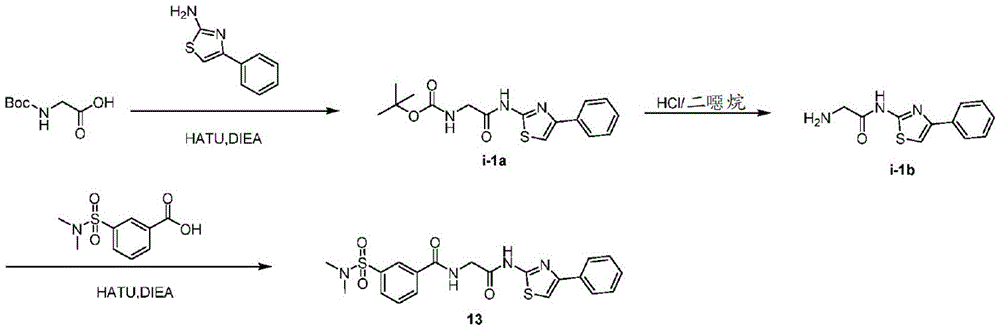
步骤1:N-[2-氧代基-2-[(4-苯基噻唑-2-基)氨基]乙基]氨基甲酸叔丁酯(i-1a)的制备Step 1: Preparation of tert-butyl N-[2-oxo-2-[(4-phenylthiazol-2-yl)amino]ethyl]carbamate (i-1a)

向2-(叔丁氧基羰基氨基)乙酸(1g,5.71mmol)于二甲基甲酰胺(DMF)(20mL)中的溶液添加1-[双(二甲基氨基)亚甲基]-1H-1,2,3-三唑并[4,5-b]吡啶鎓3-氧化物六氟磷酸盐(HATU)(2.39g,6.28mmol)和N-乙基-N-(丙烷-2-基)丙-2-胺(DIPEA)(2.21g,17.13mmol)。将溶液搅拌10分钟,然后添加4-苯基噻唑-2-胺(1.01g,5.71mmol)。将溶液在30℃下搅拌12小时。将反应溶液倒入水(200mL)中,然后用EtOAc(200mL)萃取。将有机层用柠檬酸水溶液(100mL*5)、盐水(200mL)洗涤,然后经Na2SO4干燥。将溶液在真空中浓缩。将残余物通过柱色谱法(SiO2,PE/EtOAc=20/1至3/1)纯化,得到呈黄色固体的中间体i-1a。To a solution of 2-(tert-butoxycarbonylamino)acetic acid (1 g, 5.71 mmol) in dimethylformamide (DMF) (20 mL) was added 1-[bis(dimethylamino)methylene]-1H -1,2,3-Triazolo[4,5-b]pyridinium 3-oxide hexafluorophosphate (HATU) (2.39 g, 6.28 mmol) and N-ethyl-N-(propane-2- yl)propan-2-amine (DIPEA) (2.21 g, 17.13 mmol). The solution was stirred for 10 minutes, then 4-phenylthiazol-2-amine (1.01 g, 5.71 mmol) was added. The solution was stirred at 30°C for 12 hours. The reaction solution was poured into water (200 mL), followed by extraction with EtOAc (200 mL). The organic layer was washed with aqueous citric acid (100 mL*5), brine (200 mL), then dried over Na 2 SO 4 . The solution was concentrated in vacuo. The residue was purified by column chromatography (SiO2, PE/EtOAc = 20/1 to 3/1) to give intermediate i-1a as a yellow solid.
1H NMR(400MHz,CDCl3)δ=10.08(brs,1H),7.83-7.81(m,2H),7.45-7.41(m,2H),7.36-7.34(m,1H),7.28(s,1H),7.17(s,1H),4.04(s,2H),1.51(s,9H)ppm。 1 H NMR (400MHz, CDCl3)δ=10.08(brs,1H), 7.83-7.81(m,2H), 7.45-7.41(m,2H), 7.36-7.34(m,1H), 7.28(s,1H) , 7.17(s, 1H), 4.04(s, 2H), 1.51(s, 9H) ppm.
LCMS(ESI)m/z:[M+H]+=333.9。LCMS (ESI) m/z: [M+H] + =333.9.
步骤2:2-氨基-N-(4-苯基噻唑-2-基)乙酰胺盐酸盐(i-1b)的制备Step 2: Preparation of 2-amino-N-(4-phenylthiazol-2-yl)acetamide hydrochloride (i-1b)

向中间体i-1a(100mg,284.94μmol)于二噁烷(5mL)中的溶液添加HCl/二噁烷(4M,5mL),然后将溶液在30℃下搅拌1小时。将反应溶液在真空中浓缩,得到呈白色固体的中间体i-1b(HCl盐),其直接用于下一步骤。To a solution of intermediate i-1a (100 mg, 284.94 μmol) in dioxane (5 mL) was added HCl/dioxane (4 M, 5 mL) and the solution was stirred at 30° C. for 1 hour. The reaction solution was concentrated in vacuo to give intermediate i-1b (HCl salt) as a white solid, which was used directly in the next step.
LCMS(ESI)m/z:[M+H]+=233.9。LCMS (ESI) m/z: [M+H] + =233.9.
步骤3:3-(二甲基氨磺酰基)-N-[2-氧代基-2-[(4-苯基噻唑-2-基)氨基]乙基]苯甲酰胺(化合物13)的制备Step 3: Analysis of 3-(dimethylsulfamoyl)-N-[2-oxo-2-[(4-phenylthiazol-2-yl)amino]ethyl]benzamide (compound 13) preparation
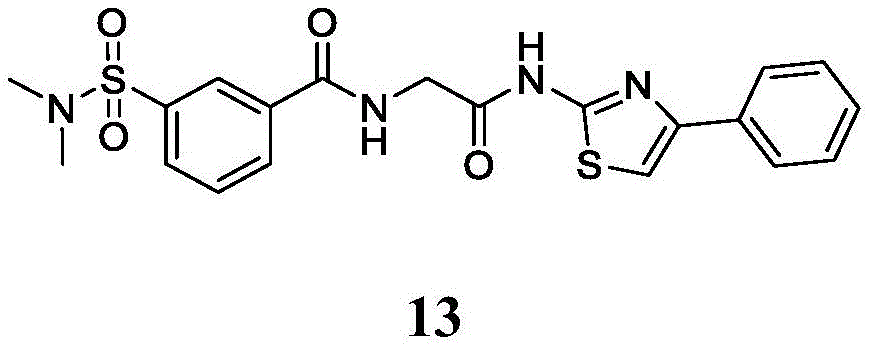
向3-(二甲基氨磺酰基)苯甲酸(75.72mg,330.31μmol)于DCM(10mL)中的溶液添加HATU(125.59mg,330.31μmol)和DIPEA(155.24mg,1.20mmol)。将溶液搅拌10分钟,然后添加中间体i-1b(81mg,300.28μmol)。将溶液在30℃下搅拌12小时。将反应溶液倒入水(50mL)中,并用EtOAc(100mL)萃取。将有机层用盐水(50mL)洗涤,干燥(Na2SO4),并在真空中浓缩。向残余物添加MeOH(20mL),并搅拌20分钟,形成白色固体。将固体过滤并在真空中干燥,得到呈白色固体的化合物13。To a solution of 3-(dimethylsulfamoyl)benzoic acid (75.72 mg, 330.31 μmol) in DCM (10 mL) was added HATU (125.59 mg, 330.31 μmol) and DIPEA (155.24 mg, 1.20 mmol). The solution was stirred for 10 minutes before intermediate i-1b (81 mg, 300.28 μmol) was added. The solution was stirred at 30°C for 12 hours. The reaction solution was poured into water (50 mL), and extracted with EtOAc (100 mL). The organic layer was washed with brine (50 mL), dried ( Na2SO4 ) , and concentrated in vacuo. To the residue was added MeOH (20 mL) and stirred for 20 minutes, forming a white solid. The solid was filtered and dried in vacuo to give compound 13 as a white solid.
LCMS(ESI)m/z:[M+H]+=444.9。LCMS (ESI) m/z: [M+H] + =444.9.
1H NMR(400MHz,DMSO-d6)δ=12.49(s,1H),9.32(t,J=5.6Hz,1H),8.27-8.25(m,2H),7.96-7.90(m,3H),7.81-7.80(m,1H),7.64(s,1H),7.46-7.42(m,2H),7.33-7.30(m,1H),4.23(d,J=5.6Hz,2H),2.65(s,6H)ppm。 1 H NMR (400MHz, DMSO-d6) δ=12.49(s, 1H), 9.32(t, J=5.6Hz, 1H), 8.27-8.25(m, 2H), 7.96-7.90(m, 3H), 7.81 -7.80(m,1H),7.64(s,1H),7.46-7.42(m,2H),7.33-7.30(m,1H),4.23(d,J=5.6Hz,2H),2.65(s,6H) )ppm.
实施例2.化合物(S)-N-(4-(甲硫基)-1-氧代基-1-((4–苯基噻唑-2-基)氨基)丁烷-2-基)苯甲酰胺(化合物42)的制备Example 2. Compound (S)-N-(4-(methylthio)-1-oxo-1-((4-phenylthiazol-2-yl)amino)butan-2-yl)benzene Preparation of formamide (compound 42)

步骤1:(S)-(4-(甲硫基)-1-氧代基-1-((4-苯基噻唑-2-基)氨基)丁烷-2-基)氨基甲酸叔丁酯(中间体i-2a)的制备Step 1: tert-butyl (S)-(4-(methylthio)-1-oxo-1-((4-phenylthiazol-2-yl)amino)butan-2-yl)carbamate Preparation of (Intermediate i-2a)
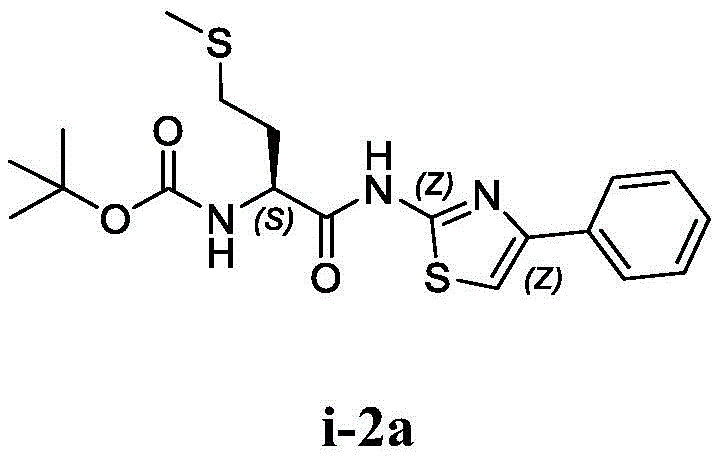
向(2S)-2-(叔丁氧基羰基氨基)-4-甲基硫烷基-丁酸(1g,4.01mmol)于DCM(20mL)中的溶液添加2-乙氧基-1-乙氧基羰基-1,2-二氢喹啉(EEDQ)(1.24g,5.01mmol),然后添加4-苯基噻唑-2-胺(589.05mg,3.34mmol)。将混合物在28℃下搅拌3小时。将反应混合物用EtOAc(400mL)稀释。将有机层用盐水(40mL)洗涤,经Na2SO4干燥,过滤,并在减压下浓缩,得到残余物。将残余物通过柱色谱法(SiO2,石油醚/乙酸乙酯=50/1至8/1)纯化,得到呈白色固体的中间体i-2a。To a solution of (2S)-2-(tert-butoxycarbonylamino)-4-methylsulfanyl-butyric acid (1 g, 4.01 mmol) in DCM (20 mL) was added 2-ethoxy-1-ethyl Oxycarbonyl-1,2-dihydroquinoline (EEDQ) (1.24 g, 5.01 mmol) followed by 4-phenylthiazol-2-amine (589.05 mg, 3.34 mmol). The mixture was stirred at 28°C for 3 hours. The reaction mixture was diluted with EtOAc (400 mL). The organic layer was washed with brine (40 mL), dried over Na2SO4 , filtered, and concentrated under reduced pressure to give a residue. The residue was purified by column chromatography (SiO 2 , petroleum ether/ethyl acetate = 50/1 to 8/1 ) to obtain intermediate i-2a as a white solid.
1H NMR(400MHz,甲醇-d4)δ7.89(d,J=7.6Hz,2H),7.43-7.35(m,3H),7.30-7.27(m,1H),4.41-4.32(m,1H),2.62-2.55(m,2H),2.20-2.11(m,4H),2.00-1.94(m,1H),1.46-1.39(m,9H)ppm。1H NMR(400MHz, methanol-d4)δ7.89(d,J=7.6Hz,2H),7.43-7.35(m,3H),7.30-7.27(m,1H),4.41-4.32(m,1H), 2.62-2.55 (m, 2H), 2.20-2.11 (m, 4H), 2.00-1.94 (m, 1H), 1.46-1.39 (m, 9H) ppm.
LCMS(ESI)m/z:[M+H]+=408.2。LCMS (ESI) m/z: [M+H] + =408.2.
步骤2:(S)-2-氨基-4-(甲硫基)-N-(4-苯基噻唑-2-基)丁酰胺三氟乙酸盐(中间体i-2b)的制备Step 2: Preparation of (S)-2-amino-4-(methylthio)-N-(4-phenylthiazol-2-yl)butanamide trifluoroacetate (intermediate i-2b)
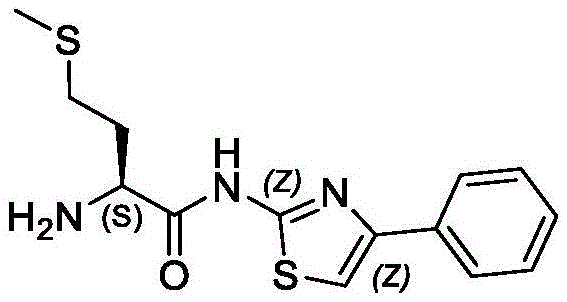
向中间体i-2a(200mg,490.74μmol)于DCM(5mL)中的溶液添加TFA(0.25mL)。将混合物在28℃下搅拌2小时。向反应溶液添加NaHCO3水溶液以将pH调节至7,然后用EtOAc(100mL*2)萃取。将合并的有机层用盐水(20mL)洗涤,经Na2SO4干燥,过滤,并在减压下浓缩,得到残余物。将残余物通过制备型HPLC(TFA条件;柱:Phenomenex Synergi C18 150*25*10μm;流动相:[水(0.1%TFA)-ACN];B%:15%-45%,12分钟)纯化,并冻干,得到呈白色固体的中间体i-2b的TFA盐。To a solution of intermediate i-2a (200 mg, 490.74 μmol) in DCM (5 mL) was added TFA (0.25 mL). The mixture was stirred at 28°C for 2 hours. Aqueous NaHCO 3 solution was added to the reaction solution to adjust pH to 7, followed by extraction with EtOAc (100 mL*2). The combined organic layers were washed with brine (20 mL), dried over Na2SO4 , filtered, and concentrated under reduced pressure to give a residue. The residue was purified by preparative HPLC (TFA conditions; column:
1H NMR(400MHz,甲醇-d4)δ7.91-7.89(m,2H),7.46(s,1H),7.42-7.38(m,2H),7.32-7.31(m,1H),4.27-4.23(m,1H),2.67-2.63(m,2H),2.33-2.22(m,2H),2.14(s,3H)ppm。1H NMR (400MHz, methanol-d4) δ 7.91-7.89(m, 2H), 7.46(s, 1H), 7.42-7.38(m, 2H), 7.32-7.31(m, 1H), 4.27-4.23(m , 1H), 2.67-2.63 (m, 2H), 2.33-2.22 (m, 2H), 2.14 (s, 3H) ppm.
LCMS(ESI)m/z:[M+H]+=308.1。LCMS (ESI) m/z: [M+H] + =308.1.
步骤3:(S)-N-(4-(甲硫基)-1-氧代基-1-((4–苯基噻唑-2-基)氨基)丁烷-2-基)苯甲酰胺(化合物42)的制备Step 3: (S)-N-(4-(Methylthio)-1-oxo-1-((4-phenylthiazol-2-yl)amino)butan-2-yl)benzamide Preparation of (Compound 42)

向苯甲酸(43.70mg,357.80μmol)于DCM(2mL)中的溶液添加EEDQ(120.66mg,487.91μmol),然后添加中间体i-2b(100mg,325.27μmol)。将混合物在28℃下搅拌3小时。将反应混合物用EA(150mL)稀释,用10%柠檬酸水溶液(50mL*4)洗涤,经Na2SO4干燥,过滤,并在减压下浓缩,得到残余物。将残余物通过制备型HPLC(TFA条件;柱:Phenomenex SynergiC18 150*25*10μm;流动相:[水(0.1%TFA)-ACN];B%:45%-75%,13分钟)纯化,并冻干,得到呈白色固体的化合物42。To a solution of benzoic acid (43.70 mg, 357.80 μmol) in DCM (2 mL) was added EEDQ (120.66 mg, 487.91 μmol) followed by intermediate i-2b (100 mg, 325.27 μmol). The mixture was stirred at 28°C for 3 hours. The reaction mixture was diluted with EA (150 mL), washed with 10% aqueous citric acid (50 mL* 4 ), dried over Na2SO4 , filtered, and concentrated under reduced pressure to give a residue. The residue was purified by preparative HPLC (TFA conditions; column:
1H NMR(400MHz,甲醇-d4)δ7.91-7.88(m,4H),7.60-7.51(m,1H),7.50-7.48(m,2H),7.38-7.36(m,3H),7.29-7.27(m,1H),4.93-4.89(m,1H),2.70-2.63(m,2H),2.28-2.21(m,2H),2.13(s,3H)ppm。1H NMR(400MHz, methanol-d4)δ7.91-7.88(m,4H),7.60-7.51(m,1H),7.50-7.48(m,2H),7.38-7.36(m,3H),7.29-7.27 (m, 1H), 4.93-4.89 (m, 1H), 2.70-2.63 (m, 2H), 2.28-2.21 (m, 2H), 2.13 (s, 3H) ppm.
LCMS(ESI)m/z:[M+H]+=412.2。LCMS (ESI) m/z: [M+H] + =412.2.
手性HPLC:AD-3S_3_40_3ML_12MIN_T35.M,4.866分钟。Chiral HPLC: AD-3S_3_40_3ML_12MIN_T35.M, 4.866 min.
实施例3.(S)-3-(N,N-二甲基氨磺酰基)-N-(4-(甲硫基)-1-氧代基-1-((4-苯基噻唑-2-基)氨基)丁烷-2-基)苯甲酰胺(化合物24)的制备Example 3. (S)-3-(N,N-Dimethylsulfamoyl)-N-(4-(methylthio)-1-oxo-1-((4-phenylthiazole- Preparation of 2-yl)amino)butan-2-yl)benzamide (compound 24)

向3-(二甲基氨磺酰基)苯甲酸(59.66mg,260.22μmol)于DCM(2mL)中的溶液添加EEDQ(96.52mg,390.33μmol),然后添加(2S)-2-氨基-4-甲基硫烷基-N-(4-苯基噻唑-2-基)丁酰胺(80mg,260.22μmol)。将混合物在28℃下搅拌2小时。将反应混合物用EtOAc(150mL)稀释。将有机层用盐水(50mL)洗涤,经Na2SO4干燥,过滤,并在减压下浓缩,得到残余物。将残余物通过柱色谱法(SiO2,石油醚/乙酸乙酯=50/1至1:1)纯化,并冻干,得到呈白色固体的化合物24。To a solution of 3-(dimethylsulfamoyl)benzoic acid (59.66 mg, 260.22 μmol) in DCM (2 mL) was added EEDQ (96.52 mg, 390.33 μmol) followed by (2S)-2-amino-4- Methylsulfanyl-N-(4-phenylthiazol-2-yl)butanamide (80 mg, 260.22 μmol). The mixture was stirred at 28°C for 2 hours. The reaction mixture was diluted with EtOAc (150 mL). The organic layer was washed with brine (50 mL), dried over Na2SO4 , filtered, and concentrated under reduced pressure to give a residue. The residue was purified by column chromatography (SiO2, petroleum ether/ethyl acetate = 50/1 to 1:1) and lyophilized to give compound 24 as a white solid.
1H NMR(400MHz,DMSO-d6)δ12.55(s,1H),9.10(d,J=6.8Hz,1H),8.28-8.26(m,2H),7.92-7.89(m,3H),7.80-7.76(m,1H),7.64(s,1H),7.45-7.41(m,2H),7.36-7.30(m,1H),4.83-4.76(m,1H),2.65(s,6H),2.61-2.55(m,2H),2.21-2.16(m,2H),2.10(s,3H)ppm。1H NMR (400MHz, DMSO-d6) δ12.55(s, 1H), 9.10(d, J=6.8Hz, 1H), 8.28-8.26(m, 2H), 7.92-7.89(m, 3H), 7.80- 7.76(m,1H),7.64(s,1H),7.45-7.41(m,2H),7.36-7.30(m,1H),4.83-4.76(m,1H),2.65(s,6H),2.61- 2.55(m, 2H), 2.21-2.16(m, 2H), 2.10(s, 3H) ppm.
LCMS(ESI)m/z:[M+H]+=519.2。LCMS (ESI) m/z: [M+H] + =519.2.
实施例4.(S)-3-(N,N-二甲基氨磺酰基)-N-(1-氧代基-1-((4-苯基噻唑-2-基)氨基)丙烷-2-基)苯甲酰胺(化合物12)的制备Example 4. (S)-3-(N,N-Dimethylsulfamoyl)-N-(1-oxo-1-((4-phenylthiazol-2-yl)amino)propane- Preparation of 2-yl)benzamide (compound 12)
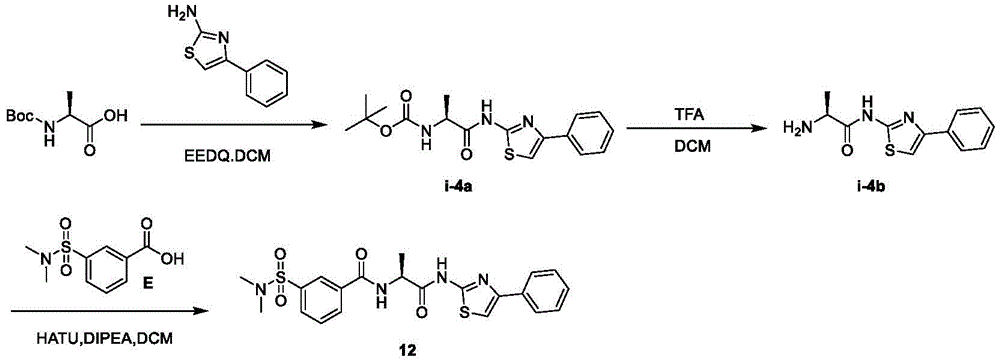
步骤1:(S)-(1-氧代基-1-((4-苯基噻唑-2-基)氨基)丙烷-2-基)氨基甲酸叔丁酯(中间体4a)的制备Step 1: Preparation of tert-butyl (S)-(1-oxo-1-((4-phenylthiazol-2-yl)amino)propan-2-yl)carbamate (Intermediate 4a)

向(2S)-2-(叔丁氧基羰基氨基)丙酸(200mg,1.06mmol)于THF(5mL)中的溶液添加EEDQ(392.09mg,1.59mmol),然后将4-苯基噻唑-2-胺(186.29mg,1.06mmol)添加至混合物。将混合物在25℃下搅拌12小时。添加柠檬酸(10%)80mL(40*2),并用EtOAc(100mL*2)萃取反应混合物。将合并的有机层用盐水(20mL)洗涤,经Na2SO4干燥,过滤,并在减压下浓缩,得到残余物。将残余物通过柱色谱法(SiO2,石油醚/乙酸乙酯=50/1至5:1)纯化,得到呈白色固体的中间体i-4a。To a solution of (2S)-2-(tert-butoxycarbonylamino)propionic acid (200 mg, 1.06 mmol) in THF (5 mL) was added EEDQ (392.09 mg, 1.59 mmol) followed by 4-phenylthiazole-2 - Amine (186.29 mg, 1.06 mmol) was added to the mixture. The mixture was stirred at 25°C for 12 hours. Citric acid (10%) 80 mL (40*2) was added, and the reaction mixture was extracted with EtOAc (100 mL*2). The combined organic layers were washed with brine (20 mL), dried over Na2SO4 , filtered, and concentrated under reduced pressure to give a residue. The residue was purified by column chromatography (SiO 2 , petroleum ether/ethyl acetate = 50/1 to 5:1) to give intermediate i-4a as a white solid.
1HNMR(400MHz,DMSO-d6)δ12.29(s,1H),7.96-7.84(m,2H),7.63(s,1H),7.49-7.39(m,2H),7.35-7.30(m,1H),7.25(d,J=6.8Hz,1H),4.31-4.20(m,1H),1.38(s,7H),1.28(d,J=7.2Hz,4H)ppm。 1 HNMR(400MHz,DMSO-d6)δ12.29(s,1H),7.96-7.84(m,2H),7.63(s,1H),7.49-7.39(m,2H),7.35-7.30(m,1H) ), 7.25 (d, J=6.8Hz, 1H), 4.31-4.20 (m, 1H), 1.38 (s, 7H), 1.28 (d, J=7.2Hz, 4H) ppm.
LCMS(ESI)m/z:[M+H]+=347.9。LCMS (ESI) m/z: [M+H] + =347.9.
SFC HPLC:AD-3-MeOH(DEA)-5-40-3mL-35T.l,1.584分钟。SFC HPLC: AD-3-MeOH(DEA)-5-40-3mL-35T.1, 1.584 min.
步骤2:(S)-2-氨基-N-(4-苯基噻唑-2-基)丙酰胺(中间体i-4b)的制备Step 2: Preparation of (S)-2-amino-N-(4-phenylthiazol-2-yl)propanamide (intermediate i-4b)
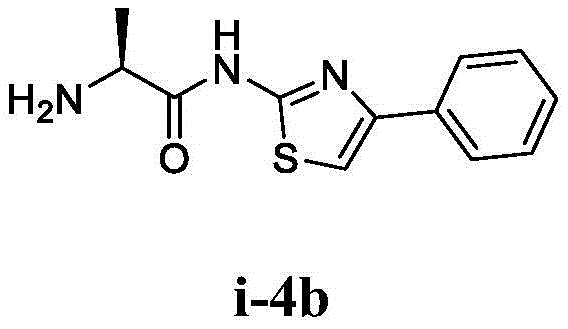
向中间体i-4a(300mg,863.48μmol)于DCM(5mL)中的溶液添加TFA(0.5mL)。将混合物在25℃下搅拌2小时。将反应溶液倒入水(20mL)中,并用NaHCO3将pH调节至7。用EA(100mL*2)萃取反应混合物。将合并的有机层用盐水(40mL)洗涤,经Na2SO4干燥,过滤,并在减压下浓缩,得到呈白色固体的中间体i-4b,其不经进一步纯化即用于下一步骤。To a solution of intermediate i-4a (300 mg, 863.48 μmol) in DCM (5 mL) was added TFA (0.5 mL). The mixture was stirred at 25°C for 2 hours. The reaction solution was poured into water (20 mL), and the pH was adjusted to 7 with NaHCO 3 . The reaction mixture was extracted with EA (100 mL*2). The combined organic layers were washed with brine (40 mL), dried over Na 2 SO 4 , filtered, and concentrated under reduced pressure to give intermediate i-4b as a white solid, which was used in the next step without further purification .
1HNMR(400MHz,DMSO-d6)δ7.93-7.87(m,2H),7.60(s,1H),7.46-7.39(m,2H),7.35-7.28(m,1H),5.46(s,2H),3.59-3.57(m,1H),3.33(s,3H),1.23(d,J=6.8Hz,3H)ppm。 1 HNMR(400MHz,DMSO-d6)δ7.93-7.87(m,2H),7.60(s,1H),7.46-7.39(m,2H),7.35-7.28(m,1H),5.46(s,2H) ), 3.59-3.57 (m, 1H), 3.33 (s, 3H), 1.23 (d, J=6.8Hz, 3H) ppm.
LCMS(ESI)m/z:[M+H]+=248.0。LCMS (ESI) m/z: [M+H] + =248.0.
SFC HPLC:OD-3-MeOH(DEA)-5-40-3mL-35T.l,1.708分钟。SFC HPLC: OD-3-MeOH(DEA)-5-40-3mL-35T.1, 1.708 min.
步骤3:(S)-3-(N,N-二甲基氨磺酰基)-N-(1-氧代基-1-((4-苯基噻唑-2-基)氨基)丙烷-2-基)苯甲酰胺(化合物12)的制备Step 3: (S)-3-(N,N-Dimethylsulfamoyl)-N-(1-oxo-1-((4-phenylthiazol-2-yl)amino)propane-2 Preparation of -yl)benzamide (compound 12)

向3-(二甲基氨磺酰基)苯甲酸(92.70mg,404.34μmol)于DCM(3mL)中的溶液添加HATU(169.12mg,444.78μmol)和DIPEA(156.77mg,1.21mmol,211.29μL),然后将中间体i-4b(100mg,404.34μmol)添加至混合物。将混合物在25℃下搅拌2小时。将反应混合物在减压下浓缩,得到固体。向所述固体添加MeOH(80mL),并搅拌10分钟,然后过滤,通过过滤收集固体并在真空中干燥,得到呈白色固体的化合物12。To a solution of 3-(dimethylsulfamoyl)benzoic acid (92.70 mg, 404.34 μmol) in DCM (3 mL) was added HATU (169.12 mg, 444.78 μmol) and DIPEA (156.77 mg, 1.21 mmol, 211.29 μL), Intermediate i-4b (100 mg, 404.34 μmol) was then added to the mixture. The mixture was stirred at 25°C for 2 hours. The reaction mixture was concentrated under reduced pressure to give a solid. To the solid was added MeOH (80 mL) and stirred for 10 minutes, then filtered, the solid was collected by filtration and dried in vacuo to give compound 12 as a white solid.
1HNMR(400MHz,DMSO-d6)δ12.48(s,1H),9.13(d,J=6.4Hz,1H),8.30-8.23(m,2H),7.92-7.89(m,3H),7.80-7.76(m,1H),7.64(s,1H),7.46-7.41(m,2H),7.36-7.29(m,1H),4.76-4.69(m,1H),2.65(s,6H),1.49(d,J=7.2Hz,3H)ppm。 1 HNMR(400MHz,DMSO-d6)δ12.48(s,1H),9.13(d,J=6.4Hz,1H),8.30-8.23(m,2H),7.92-7.89(m,3H),7.80- 7.76(m,1H),7.64(s,1H),7.46-7.41(m,2H),7.36-7.29(m,1H),4.76-4.69(m,1H),2.65(s,6H),1.49( d, J=7.2Hz, 3H)ppm.
LCMS(ESI)m/z:[M+H]+=459.0。LCMS (ESI) m/z: [M+H] + =459.0.
SFC HPLC:OD-3-EtOH(DEA)-5-40-3mL-35T.lc,2.455分钟。SFC HPLC: OD-3-EtOH(DEA)-5-40-3mL-35T.lc, 2.455 min.
实施例5. 3-(二甲基氨磺酰基)-N-[2-氧代基-2-(3-苯基苯胺基)乙基]苯甲酰胺(化合物40)的制备Example 5. Preparation of 3-(dimethylsulfamoyl)-N-[2-oxo-2-(3-phenylanilino)ethyl]benzamide (Compound 40)
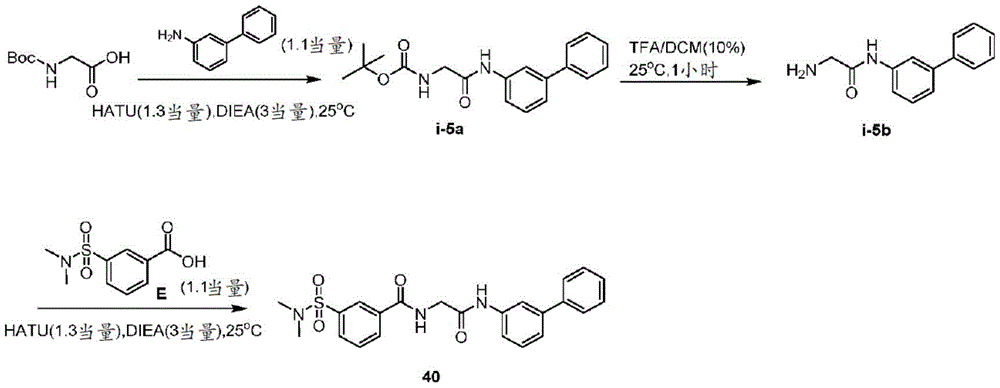
步骤1:N-[2-氧代基-2-(3-苯基苯胺基)乙基]氨基甲酸叔丁酯(中间体i-5a)的制备Step 1: Preparation of tert-butyl N-[2-oxo-2-(3-phenylanilino)ethyl]carbamate (Intermediate i-5a)

向2-(叔丁氧基羰基氨基)乙酸(113.87mg,650.03μmol)于DCM(3mL)中的溶液添加DIPEA(229.12mg,1.77mmol)和HATU(337.04mg,886.41μmol)。将混合物在25℃下搅拌10分钟。添加3-苯基苯胺(100.00mg,590.94μmol),并将混合物在25℃下搅拌2小时。将反应混合物通过添加水(10mL)猝灭,然后用乙酸乙酯(10mL*2)萃取。将合并的有机层用水(10mL*2)洗涤,经Na2SO4干燥,过滤,并在减压下浓缩,得到粗产物。向残余物添加溶剂(EA:PE=1:5,v/v,10mL),并搅拌10分钟,然后过滤,将固体在真空中干燥,得到呈淡黄色固体的中间体i-5a。To a solution of 2-(tert-butoxycarbonylamino)acetic acid (113.87 mg, 650.03 μmol) in DCM (3 mL) was added DIPEA (229.12 mg, 1.77 mmol) and HATU (337.04 mg, 886.41 μmol). The mixture was stirred at 25°C for 10 minutes. 3-Phenylaniline (100.00 mg, 590.94 μmol) was added, and the mixture was stirred at 25° C. for 2 hours. The reaction mixture was quenched by adding water (10 mL), then extracted with ethyl acetate (10 mL*2). The combined organic layers were washed with water (10 mL* 2 ), dried over Na2SO4 , filtered, and concentrated under reduced pressure to give crude product. To the residue was added solvent (EA:PE=1:5, v/v, 10 mL) and stirred for 10 minutes, then filtered and the solid was dried in vacuo to give intermediate i-5a as a pale yellow solid.
LCMS(ESI)m/z:[M+Na]+=349.2。LCMS (ESI) m/z: [M+Na] + =349.2.
步骤2:2-氨基-N-(3-苯基苯基)乙酰胺(中间体i-5b)Step 2: 2-Amino-N-(3-phenylphenyl)acetamide (Intermediate i-5b)
三氟乙酸盐的制备Preparation of trifluoroacetate salt
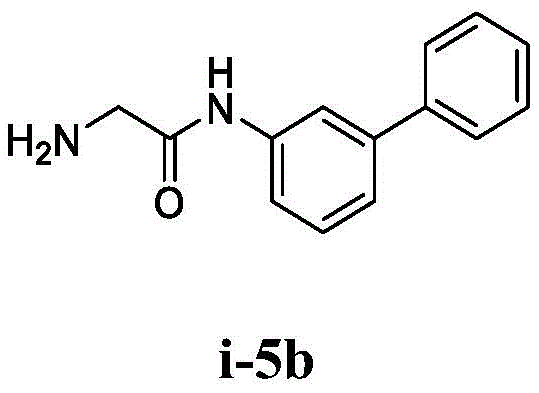
向中间体i-5a(70.11mg,201.48μmol)于DCM(3mL)中的溶液添加TFA(150.00μL)。将混合物在25℃下搅拌1小时。将反应混合物浓缩至干,得到残余物,将残余物用甲基叔丁基醚(5mL)浆化,并通过过滤收集固体,并在真空中干燥,得到呈浅黄色固体的中间体i-5b(TFA盐),其不经进一步纯化即用于下一步骤。To a solution of intermediate i-5a (70.11 mg, 201.48 μmol) in DCM (3 mL) was added TFA (150.00 μL). The mixture was stirred at 25°C for 1 hour. The reaction mixture was concentrated to dryness to give a residue which was slurried with methyl tert-butyl ether (5 mL) and the solid collected by filtration and dried in vacuo to give intermediate i-5b as a pale yellow solid (TFA salt), which was used in the next step without further purification.
LCMS(ESI)m/z:[M+H]+=227.2。LCMS (ESI) m/z: [M+H] + =227.2.
步骤3:3-(二甲基氨磺酰基)-N-[2-氧代基-2-(3-苯基苯胺基)乙基]苯甲酰胺(化合物40)的制备Step 3: Preparation of 3-(dimethylsulfamoyl)-N-[2-oxo-2-(3-phenylanilino)ethyl]benzamide (Compound 40)

向3-(二甲基氨磺酰基)苯甲酸(45.59mg,198.87μmol)于DCM(3mL)中的溶液添加DIPEA(77.11mg,596.62μmol)和HATU(113.43mg,298.31μmol)。将混合物在25℃下搅拌10分钟,然后添加中间体i-5b,并将混合物在25℃下搅拌2小时。将反应混合物在真空中浓缩,得到残余物。向残余物添加甲醇:水=1:1,v/v,(4mL)的混合物,并搅拌10分钟,然后过滤,将滤饼用甲醇(2mL)洗涤,然后冻干,得到呈白色固体的化合物40。To a solution of 3-(dimethylsulfamoyl)benzoic acid (45.59 mg, 198.87 μmol) in DCM (3 mL) was added DIPEA (77.11 mg, 596.62 μmol) and HATU (113.43 mg, 298.31 μmol). The mixture was stirred at 25°C for 10 minutes, then intermediate i-5b was added, and the mixture was stirred at 25°C for 2 hours. The reaction mixture was concentrated in vacuo to give a residue. A mixture of methanol:water = 1:1, v/v, (4 mL) was added to the residue and stirred for 10 minutes, then filtered, and the filter cake was washed with methanol (2 mL), then lyophilized to give the compound as a white solid 40.
1H NMR(400MHz,DMSO-d6)δ10.22(s,1H),9.24(m,1H),8.19-8.32(m,2H),7.90-8.00(m,2H),7.73-7.86(m,1H),7.56-7.65(m,3H),7.32-7.51(m,5H),4.14(m,2H),2.63-2.68(m,6H)ppm;LCMS(ESI)m/z:[M+H]+=438.2。 1 H NMR (400MHz, DMSO-d6)δ10.22(s,1H),9.24(m,1H),8.19-8.32(m,2H),7.90-8.00(m,2H),7.73-7.86(m, 1H), 7.56-7.65 (m, 3H), 7.32-7.51 (m, 5H), 4.14 (m, 2H), 2.63-2.68 (m, 6H) ppm; LCMS (ESI) m/z: [M+H ]+=438.2.
实施例6. 3-(甲基氨磺酰基)-N-[2-氧代基-2-[(4-苯基噻唑-2-基)氨基]乙基]苯甲酰胺(化合物26)的制备Example 6. Preparation of 3-(methylsulfamoyl)-N-[2-oxo-2-[(4-phenylthiazol-2-yl)amino]ethyl]benzamide (Compound 26) preparation

步骤1:2-氨基-N-(4-苯基噻唑-2-基)乙酰胺(中间体6a)三氟乙酸盐的制备Step 1: Preparation of 2-amino-N-(4-phenylthiazol-2-yl)acetamide (Intermediate 6a) trifluoroacetate salt
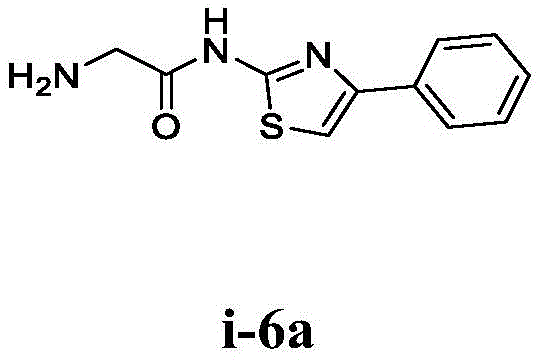
向N-[2-氧代基-2-[(4-苯基噻唑-2-基)氨基]乙基]氨基甲酸叔丁酯(500mg,1.50mmol)于DCM(3mL)中的溶液添加TFA(2.22mL)。将混合物在25℃下搅拌1小时。将反应混合物蒸发至干。向残余物添加MTBE/PE=(2/1,30mL),并搅拌10分钟,然后过滤,得到固体,将所述固体在真空中干燥,得到呈黄色固体的中间体i-6a(TFA盐)。To a solution of tert-butyl N-[2-oxo-2-[(4-phenylthiazol-2-yl)amino]ethyl]carbamate (500 mg, 1.50 mmol) in DCM (3 mL) was added TFA (2.22 mL). The mixture was stirred at 25°C for 1 hour. The reaction mixture was evaporated to dryness. To the residue was added MTBE/PE=(2/1, 30 mL) and stirred for 10 minutes, then filtered to give a solid, which was dried in vacuo to give intermediate i-6a (TFA salt) as a yellow solid .
LCMS(ESI)m/z:[M+H]+=234.2。LCMS (ESI) m/z: [M+H] + = 234.2.
步骤2:3-(甲基氨磺酰基)-N-[2-氧代基-2-[(4-苯基噻唑-2-基)氨基]乙基]苯甲酰胺(化合物26)的制备Step 2: Preparation of 3-(methylsulfamoyl)-N-[2-oxo-2-[(4-phenylthiazol-2-yl)amino]ethyl]benzamide (compound 26)
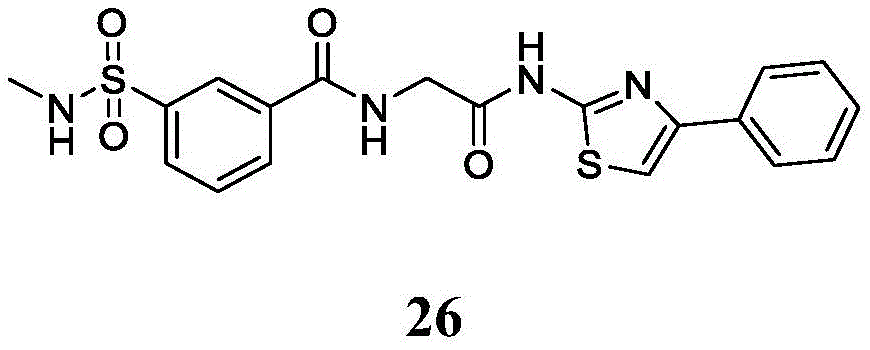
在25℃下向3-(甲基氨磺酰基)苯甲酸(46.13mg,214.33μmol)于DCM(2mL)中的混合物添加HATU(89.64mg,235.75μmol)和DIPEA(138.5mg,1.07mmol)。将混合物在25℃下搅拌10分钟,然后添加中间体6a(50mg,143.96μmol),并搅拌1小时。将反应混合物蒸发至干,得到粗产物。向残余物添加MeOH(30mL),并搅拌10分钟,然后过滤,并将滤饼用MeOH(30mL)洗涤。将固体在真空中干燥,得到呈白色固体的化合物26。To a mixture of 3-(methylsulfamoyl)benzoic acid (46.13 mg, 214.33 μmol) in DCM (2 mL) at 25° C. was added HATU (89.64 mg, 235.75 μmol) and DIPEA (138.5 mg, 1.07 mmol). The mixture was stirred at 25°C for 10 minutes, then Intermediate 6a (50 mg, 143.96 μmol) was added and stirred for 1 hour. The reaction mixture was evaporated to dryness to give crude product. To the residue was added MeOH (30 mL) and stirred for 10 minutes, then filtered and the filter cake was washed with MeOH (30 mL). The solid was dried in vacuo to give compound 26 as a white solid.
1HNMR(400MHz,DMSO-d6)δ=12.47(brs,1H),9.25-9.23(m,1H),8.31(s,1H),8.16(d,J=7.9Hz,1H),7.96(d,J=7.8Hz,1H),7.90(m,2H),7.76-7.74(m,1H),7.64(s,1H),7.00-7.58(m,1H),7.46-7.40(m,2H),7.32-7.29(m,1H),4.23(d,J=5.6Hz,2H),2.43(m,3H)ppm; 1 HNMR (400MHz, DMSO-d 6 )δ=12.47(brs, 1H), 9.25-9.23(m, 1H), 8.31(s, 1H), 8.16(d, J=7.9Hz, 1H), 7.96(d , J=7.8Hz, 1H), 7.90(m, 2H), 7.76-7.74(m, 1H), 7.64(s, 1H), 7.00-7.58(m, 1H), 7.46-7.40(m, 2H), 7.32-7.29(m,1H),4.23(d,J=5.6Hz,2H),2.43(m,3H)ppm;
LCMS(ESI)m/z:[M+H]+=431.1。LCMS (ESI) m/z: [M+H] + =431.1.
实施例7.化合物N-(2-氧代基-2-((4-苯基噻唑-2-基)氨基)乙基)-3-氨磺酰基苯甲酰胺(化合物28)的制备Example 7. Preparation of compound N-(2-oxo-2-((4-phenylthiazol-2-yl)amino)ethyl)-3-sulfamoylbenzamide (compound 28)

步骤1:N-(2-氧代基-2-((4-苯基噻唑-2-基)氨基)乙基)-3-氨磺酰基苯甲酰胺(化合物28)的制备Step 1: Preparation of N-(2-oxo-2-((4-phenylthiazol-2-yl)amino)ethyl)-3-sulfamoylbenzamide (compound 28)
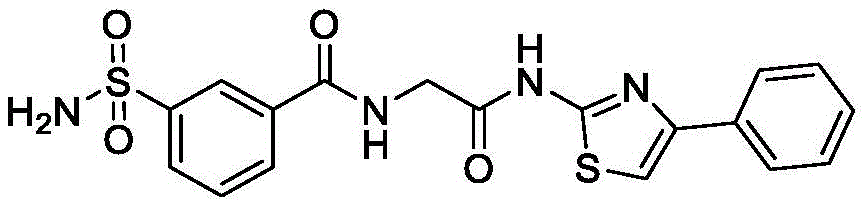

向2-氨基-N-(4-苯基噻唑-2-基)乙酰胺(50mg,143.96μmol)于DCM(2.0mL)中的溶液添加3-氨磺酰基苯甲酸(28.97mg,143.96μmol)和DIPEA(74.42mg,575.85μmol,100.30μL)。然后将HATU(54.74mg,143.96μmol)添加至反应物。将混合物在25℃下搅拌2小时。添加水(80.0mL)并用EtOAc(80.0mL)萃取反应混合物。将合并的有机层用盐水(20.0mL)洗涤,经Na2SO4干燥,过滤,并在减压下浓缩,得到残余物。向残余物添加DCM(80.0mL),然后搅拌10分钟。将固体过滤,并在真空中干燥,得到呈灰白色固体的化合物28。To a solution of 2-amino-N-(4-phenylthiazol-2-yl)acetamide (50 mg, 143.96 μmol) in DCM (2.0 mL) was added 3-sulfamoylbenzoic acid (28.97 mg, 143.96 μmol) and DIPEA (74.42 mg, 575.85 μmol, 100.30 μL). HATU (54.74 mg, 143.96 μmol) was then added to the reaction. The mixture was stirred at 25°C for 2 hours. Water (80.0 mL) was added and the reaction mixture was extracted with EtOAc (80.0 mL). The combined organic layers were washed with brine (20.0 mL), dried over Na2SO4 , filtered, and concentrated under reduced pressure to give a residue. To the residue was added DCM (80.0 mL), followed by stirring for 10 minutes. The solid was filtered and dried in vacuo to give compound 28 as an off-white solid.
1HNMR(400MHz,DMSO-d6)δ=12.47(s,1H),9.21-9.18(m,1H),8.37(s,1H),8.12(d,J=7.6Hz,1H),8.01(d,J=8.0Hz,1H),7.91-7.90(m,2H),7.74-7.72(m,1H),7.64(s,1H),7.48-7.42(m,4H),7.33-7.30(m,1H),4.23(d,J=5.6Hz,2H)ppm。 1 HNMR (400MHz, DMSO-d6) δ=12.47(s, 1H), 9.21-9.18(m, 1H), 8.37(s, 1H), 8.12(d, J=7.6Hz, 1H), 8.01(d, J=8.0Hz, 1H), 7.91-7.90(m, 2H), 7.74-7.72(m, 1H), 7.64(s, 1H), 7.48-7.42(m, 4H), 7.33-7.30(m, 1H) , 4.23 (d, J=5.6 Hz, 2H) ppm.
LCMS(ESI)m/z:[M-t-Bu]+=417.2。LCMS (ESI) m/z: [Mt-Bu] + = 417.2.
实施例8. 3-甲基磺酰基-N-[2-氧代基-2-[(4-苯基噻唑-2-基)氨基]乙基]苯甲酰胺(化合物23)的制备Example 8. Preparation of 3-methylsulfonyl-N-[2-oxo-2-[(4-phenylthiazol-2-yl)amino]ethyl]benzamide (compound 23)

步骤1:2-氨基-N-(4-苯基噻唑-2-基)乙酰胺(中间体8a)三氟乙酸盐的制备Step 1: Preparation of 2-amino-N-(4-phenylthiazol-2-yl)acetamide (Intermediate 8a) trifluoroacetate salt
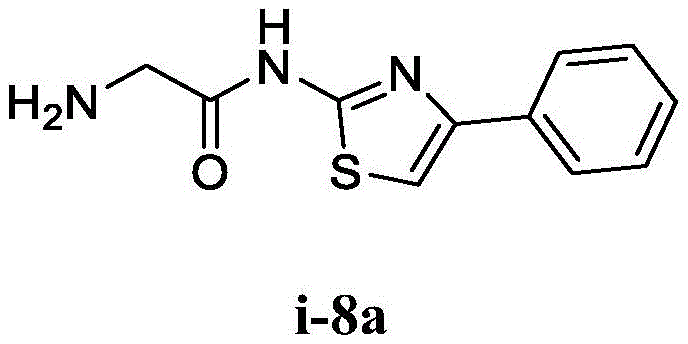
向N-[2-氧代基-2-[(4-苯基噻唑-2-基)氨基]乙基]氨基甲酸叔丁酯(500mg,1.50mmol)于DCM(3mL)中的溶液添加TFA(2.22mL)。将混合物在25℃下搅拌1小时。将反应混合物蒸发至干。向残余物添加MTBE/PE=(2/1,30mL),并搅拌10分钟,然后过滤,得到固体,将所述固体在真空中干燥,得到呈黄色固体的中间体i-8a(TFA盐)。To a solution of tert-butyl N-[2-oxo-2-[(4-phenylthiazol-2-yl)amino]ethyl]carbamate (500 mg, 1.50 mmol) in DCM (3 mL) was added TFA (2.22 mL). The mixture was stirred at 25°C for 1 hour. The reaction mixture was evaporated to dryness. To the residue was added MTBE/PE=(2/1, 30 mL) and stirred for 10 minutes, then filtered to give a solid, which was dried in vacuo to give intermediate i-8a (TFA salt) as a yellow solid .
LCMS(ESI)m/z:[M+H]+=234.2。LCMS (ESI) m/z: [M+H] + = 234.2.
步骤2:3-甲基磺酰基-N-[2-氧代基-2-[(4-苯基噻唑-2-基)氨基]乙基]苯甲酰胺(化合物23)的制备Step 2: Preparation of 3-Methylsulfonyl-N-[2-oxo-2-[(4-phenylthiazol-2-yl)amino]ethyl]benzamide (Compound 23)
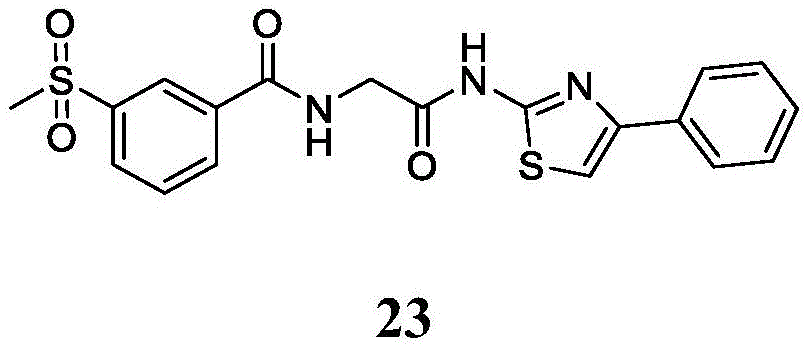
在25℃下向3-甲基磺酰基苯甲酸(42.91mg,214.32μmol)于DCM(2mL)中的溶液添加HATU(89.64mg,235.75μmol)和DIPEA(138.5mg,1.07mmol)。将混合物搅拌10分钟,然后添加中间体i-8a(50mg,143.96μmol),并将混合物在25℃下搅拌1小时。将反应混合物蒸发至干。向残余物添加30mL MeOH,并搅拌10分钟,形成白色固体,将固体滤出,并在真空中干燥,得到呈灰白色固体的化合物23。To a solution of 3-methylsulfonylbenzoic acid (42.91 mg, 214.32 μmol) in DCM (2 mL) was added HATU (89.64 mg, 235.75 μmol) and DIPEA (138.5 mg, 1.07 mmol) at 25°C. The mixture was stirred for 10 minutes, then Intermediate i-8a (50 mg, 143.96 μmol) was added, and the mixture was stirred at 25° C. for 1 hour. The reaction mixture was evaporated to dryness. 30 mL of MeOH was added to the residue and stirred for 10 minutes to form a white solid, which was filtered off and dried in vacuo to give compound 23 as an off-white solid.
1H NMR(400MHz,DMSO-d6)δ12.44(br s,1H),9.26-9.25(m,1H),8.44(s,1H),8.23(d,J=7.6Hz,1H),8.10(d,J=7.6Hz,1H),7.91-7.89(m,2H),7.80-7.78(m,1H),7.63(s,1H),7.45-7.41(m,2H),7.32-7.30(m,1H),4.24(d,J=6.0Hz,2H),3.27(s,3H)ppm。 1 H NMR (400MHz, DMSO-d 6 ) δ 12.44 (br s, 1H), 9.26-9.25 (m, 1H), 8.44 (s, 1H), 8.23 (d, J=7.6Hz, 1H), 8.10 (d, J=7.6Hz, 1H), 7.91-7.89(m, 2H), 7.80-7.78(m, 1H), 7.63(s, 1H), 7.45-7.41(m, 2H), 7.32-7.30(m , 1H), 4.24 (d, J=6.0 Hz, 2H), 3.27 (s, 3H) ppm.
LCMS(ESI)m/z:[M+H]+=416.1。LCMS (ESI) m/z: [M+H] + =416.1.
实施例9. 3-(二甲基氨磺酰基)-N-[2-氧代基-2-[[4-(2-吡啶基)噻唑-2-基]氨基]乙基]苯甲酰胺(化合物32)的制备Example 9. 3-(Dimethylsulfamoyl)-N-[2-oxo-2-[[4-(2-pyridyl)thiazol-2-yl]amino]ethyl]benzamide Preparation of (Compound 32)

步骤1:2-氨基-N-[4-(2-吡啶基)噻唑-2-基]乙酰胺(中间体9a)三氟乙酸盐的制备Step 1: Preparation of 2-amino-N-[4-(2-pyridyl)thiazol-2-yl]acetamide (Intermediate 9a) trifluoroacetate salt

向N-[2-氧代基-2-[[4-(2-吡啶基)噻唑-2-基]氨基]乙基]氨基甲酸叔丁酯(250mg,665.39μmol)于DCM(2mL)中的溶液添加TFA(1.10mL)。将混合物在25℃下搅拌1小时。将反应混合物蒸发至干。向残余物添加MTBE/PE=(2/1,30mL),并搅拌10分钟,然后过滤。将固体在真空中干燥,得到呈黄色固体的中间体i-9a(TFA盐)。To tert-butyl N-[2-oxo-2-[[4-(2-pyridyl)thiazol-2-yl]amino]ethyl]carbamate (250 mg, 665.39 μmol) in DCM (2 mL) TFA (1.10 mL) was added to the solution. The mixture was stirred at 25°C for 1 hour. The reaction mixture was evaporated to dryness. To the residue was added MTBE/PE=(2/1, 30 mL) and stirred for 10 minutes, then filtered. The solid was dried in vacuo to yield intermediate i-9a (TFA salt) as a yellow solid.
LCMS(ESI)m/z:[M+H]+=234.9。LCMS (ESI) m/z: [M+H] + =234.9.
步骤2:3-(二甲基氨磺酰基)-N-[2-氧代基-2-[[4-(2-吡啶基)噻唑-2-基]氨基]乙基]苯甲酰胺(化合物32)的制备Step 2: 3-(Dimethylsulfamoyl)-N-[2-oxo-2-[[4-(2-pyridyl)thiazol-2-yl]amino]ethyl]benzamide ( Preparation of compound 32)
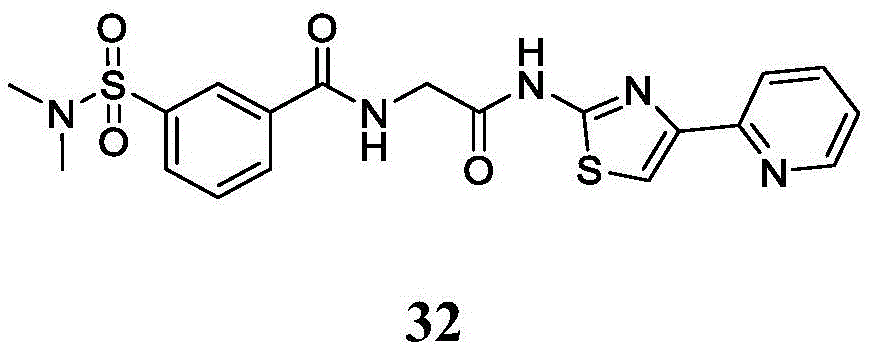
在25℃下向3-(二甲基氨磺酰基)苯甲酸(98.73mg,430.66μmol)于DCM(2mL)中的混合物添加HATU(180.13mg,473.73μmol)和DIPEA(278.30mg,2.15mmol)。将混合物在25℃下搅拌10分钟,然后添加中间体9a(150mg,430.66μmol),并搅拌1小时。将反应混合物蒸发至干。向残余物添加MeOH(30mL),并搅拌10分钟,然后过滤,并将滤饼用MeOH(30mL)洗涤。将滤饼蒸发至干,得到呈灰白色固体的化合物32。To a mixture of 3-(dimethylsulfamoyl)benzoic acid (98.73 mg, 430.66 μmol) in DCM (2 mL) at 25°C was added HATU (180.13 mg, 473.73 μmol) and DIPEA (278.30 mg, 2.15 mmol) . The mixture was stirred at 25°C for 10 minutes, then Intermediate 9a (150 mg, 430.66 μmol) was added and stirred for 1 hour. The reaction mixture was evaporated to dryness. To the residue was added MeOH (30 mL) and stirred for 10 minutes, then filtered and the filter cake was washed with MeOH (30 mL). The filter cake was evaporated to dryness to yield compound 32 as an off-white solid.
1HNMR(400MHz,DMSO-d6)δ=12.49(br s,1H),9.30-9.28(m,1H),8.60(d,J=4.0Hz,1H),8.27-8.21(m,2H),7.98-7.92(m,2H),7.92-7.86(m,1H),7.85-7.80(m,2H),7.36-7.32(m,1H),4.24(d,J=5.6Hz,2H),2.66(s,6H)ppm; 1 HNMR (400MHz, DMSO-d 6 )δ=12.49(br s, 1H), 9.30-9.28(m, 1H), 8.60(d, J=4.0Hz, 1H), 8.27-8.21(m, 2H), 7.98-7.92(m, 2H), 7.92-7.86(m, 1H), 7.85-7.80(m, 2H), 7.36-7.32(m, 1H), 4.24(d, J=5.6Hz, 2H), 2.66( s,6H)ppm;
LCMS(ESI)m/z:[M+H]+=446.2。LCMS (ESI) m/z: [M+H] + =446.2.
实施例10.化合物N-[(1S)-1-[(4-苯基噻唑-2-基)氨基甲酰基]丙基]苯甲酰胺(化合物45)的制备Example 10. Preparation of Compound N-[(1S)-1-[(4-phenylthiazol-2-yl)carbamoyl]propyl]benzamide (Compound 45)
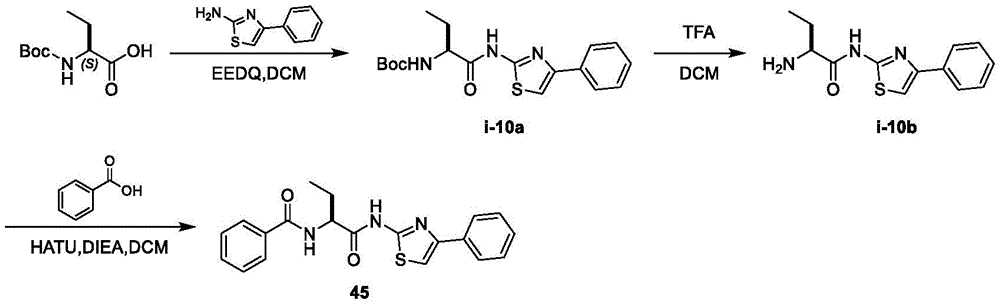
步骤1:N-[(1S)-1-[(4-苯基噻唑-2-基)氨基甲酰基]丙基]氨基甲酸叔丁酯(中间体i-10a)的制备Step 1: Preparation of tert-butyl N-[(1S)-1-[(4-phenylthiazol-2-yl)carbamoyl]propyl]carbamate (Intermediate i-10a)

在20℃下在N2下向(2S)-2-(叔丁氧基羰基氨基)丁酸(200.0mg,984.08μmol)于DCM(5.0mL)中的溶液一次性添加EEDQ(331.85mg,1.34mmol)和4-苯基噻唑-2-胺(157.67mg,894.62μmol)。将混合物在20℃下搅拌8小时。将反应混合物用EtOAc(50.0mL)稀释,并用柠檬酸(10%)(50.0mL*3)洗涤。将有机相用饱和盐水(20.0mL*3)洗涤,并且经Na2SO4干燥,过滤,并在减压下浓缩,得到残余物。将残余物通过柱色谱法(SiO2,石油醚/乙酸乙酯=20/1)纯化,得到呈白色固体的中间体i-10a。To a solution of (2S)-2-(tert-butoxycarbonylamino)butyric acid (200.0 mg, 984.08 μmol) in DCM (5.0 mL) under N at 20 °C was added EEDQ (331.85 mg, 1.34 mg in one portion) mmol) and 4-phenylthiazol-2-amine (157.67 mg, 894.62 μmol). The mixture was stirred at 20°C for 8 hours. The reaction mixture was diluted with EtOAc (50.0 mL) and washed with citric acid (10%) (50.0 mL*3). The organic phase was washed with saturated brine (20.0 mL* 3 ), and dried over Na2SO4 , filtered, and concentrated under reduced pressure to give a residue. The residue was purified by column chromatography (SiO 2 , petroleum ether/ethyl acetate = 20/1) to obtain Intermediate i-10a as a white solid.
1H NMR(400MHz,CDCl3)δ9.90(br s,1H),7.94-7.77(m,2H),7.50-7.38(m,2H),7.37-7.31(m,1H),7.15(s,1H),5.10(br s,1H),4.36(br s,1H),1.50(s,9H),1.40-1.22(m,2H),1.07-0.97(m,3H)ppm。 1 H NMR (400MHz, CDCl 3 ) δ 9.90(br s, 1H), 7.94-7.77(m, 2H), 7.50-7.38(m, 2H), 7.37-7.31(m, 1H), 7.15(s, 1H), 5.10 (br s, 1H), 4.36 (br s, 1H), 1.50 (s, 9H), 1.40-1.22 (m, 2H), 1.07-0.97 (m, 3H) ppm.
LCMS(ESI)m/z:[M+H]+=362.2。LCMS (ESI) m/z: [M+H] + =362.2.
步骤2:(2S)-2-氨基-N-(4-苯基噻唑-2-基)丁酰胺(中间体i-10b)三氟乙酸盐的制备Step 2: Preparation of (2S)-2-amino-N-(4-phenylthiazol-2-yl)butanamide (intermediate i-10b) trifluoroacetate salt
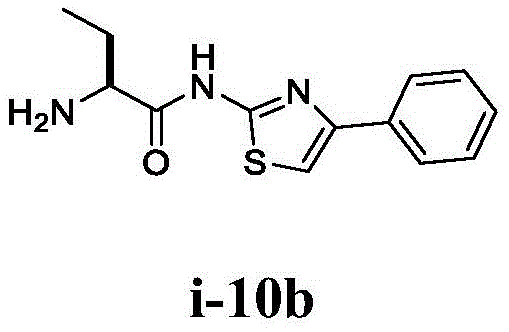
在20℃下在N2下向中间体i-10a(300.00mg,829.97μmol)于DCM(10.0mL)中的溶液一次性添加TFA(1.08mL)。将混合物在20℃下搅拌2小时。将反应混合物在减压下浓缩,得到呈白色固体的中间体i-10b(TFA盐),其不经进一步纯化即用于下一步骤。To a solution of intermediate i-10a (300.00 mg, 829.97 μmol) in DCM (10.0 mL) at 20° C. under N 2 was added TFA (1.08 mL) in one portion. The mixture was stirred at 20°C for 2 hours. The reaction mixture was concentrated under reduced pressure to give intermediate i-10b (TFA salt) as a white solid, which was used in the next step without further purification.
LCMS(ESI)m/z:[M+H]+=262.2。LCMS (ESI) m/z: [M+H] + =262.2.
步骤3:N-[(1S)-1-[(4-苯基噻唑-2-基)氨基甲酰基]丙基]苯甲酰胺(化合物45)的制备Step 3: Preparation of N-[(1S)-1-[(4-phenylthiazol-2-yl)carbamoyl]propyl]benzamide (Compound 45)

在20℃下在N2下向HATU(73.95mg,194.48μmol)和苯甲酸(17.42mg,142.62μmol)于DCM(10.0mL)中的混合物一次性添加DIPEA(67.03mg,518.62μmol)。将混合物在20℃下搅拌10分钟。然后添加中间体i-10b(50.0mg,191.32μmol),并将混合物在20℃下搅拌2小时。将反应混合物在减压下浓缩,得到残余物。将残余物通过制备型HPLC(TFA条件;柱:BostonpH-lex 150*25 10μm;流动相:[水(0.1%TFA)-ACN];B%:47%-77%,10分钟)纯化,并冻干,得到呈白色固体的化合物45。To a mixture of HATU (73.95 mg, 194.48 μmol) and benzoic acid (17.42 mg, 142.62 μmol) in DCM (10.0 mL) at 20° C. under N 2 was added DIPEA (67.03 mg, 518.62 μmol) in one portion. The mixture was stirred at 20°C for 10 minutes. Intermediate i-10b (50.0 mg, 191.32 μmol) was then added, and the mixture was stirred at 20° C. for 2 hours. The reaction mixture was concentrated under reduced pressure to give a residue. The residue was purified by preparative HPLC (TFA conditions; column: Boston pH-
1H NMR(400MHz,CDCl3)δ=8.00(d,J=7.2Hz,2H),7.84(d,J=7.6Hz,2H),7.64-7.54(m,1H),7.53-7.46(m,2H),7.46-7.40(m,2H),7.40-7.33(m,1H),7.17(s,1H),7.00(brd,J=8.0Hz,1H),5.18–5.12(m,1H),2.22-2.17(m,1H),2.05-1.97(m,1H),1.14-1.11(m,3H)ppm。 1 H NMR (400 MHz, CDCl 3 ) δ=8.00 (d, J=7.2 Hz, 2H), 7.84 (d, J=7.6 Hz, 2H), 7.64-7.54 (m, 1H), 7.53-7.46 (m, 2H), 7.46-7.40(m, 2H), 7.40-7.33(m, 1H), 7.17(s, 1H), 7.00(brd, J=8.0Hz, 1H), 5.18-5.12(m, 1H), 2.22 -2.17 (m, 1H), 2.05-1.97 (m, 1H), 1.14-1.11 (m, 3H) ppm.
LCMS(ESI)m/z:[M+H]+=366.0。LCMS (ESI) m/z: [M+H] + =366.0.
手性HPLC:Amycoat-MeOH(DEA)-40-3mL-35T,1.417分钟。Chiral HPLC: Amycoat-MeOH(DEA)-40-3mL-35T, 1.417 min.
实施例11.N-[(1S)-1-(羟甲基)-2-氧代基-2-[(4-苯基噻唑-2-基)氨基]乙基]苯甲酰胺(化合物47)的制备Example 11. N-[(1S)-1-(hydroxymethyl)-2-oxo-2-[(4-phenylthiazol-2-yl)amino]ethyl]benzamide (Compound 47 ) preparation
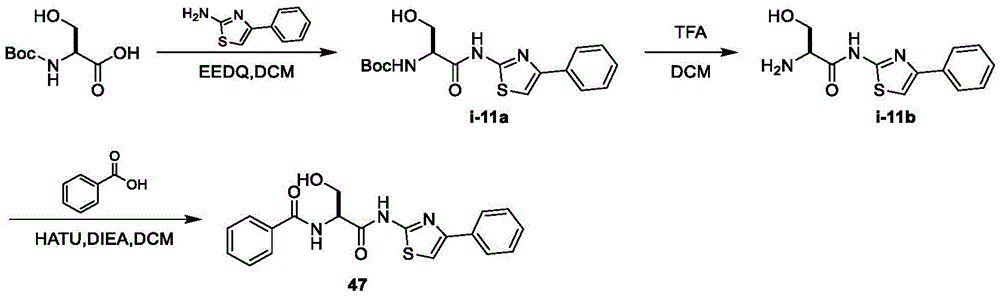
步骤1:N-[(1S)-1-(羟甲基)-2-氧代基-2-[(4-苯基噻唑-2-基)氨基]乙基]氨基甲酸叔丁酯(中间体i-11a)的制备Step 1: tert-butyl N-[(1S)-1-(hydroxymethyl)-2-oxo-2-[(4-phenylthiazol-2-yl)amino]ethyl]carbamate (intermediate Preparation of body i-11a)
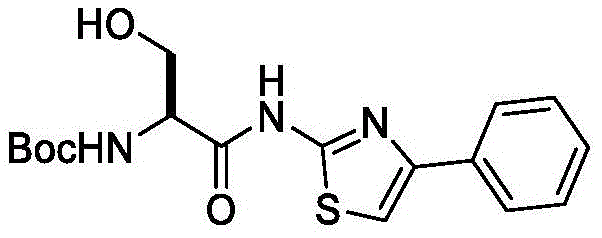

在20℃下在N2下向(2S)-2-(叔丁氧基羰基氨基)-3-羟基-丙酸(200.0mg,974.62μmol)于DCM(5.0mL)中的混合物一次性添加EEDQ(328.66mg,1.33mmol)和4-苯基噻唑-2-胺(156.15mg,886.02μmol)。将混合物在20℃下搅拌3小时。将反应混合物用EtOAc(50.0mL)稀释,并用柠檬酸(10%)(50.0mL*3)洗涤。将有机相用盐水(20.0mL*3)洗涤,并且经Na2SO4干燥,过滤,并在减压下浓缩,得到残余物。将残余物通过柱色谱法(SiO2,石油醚/乙酸乙酯=5/1至2:1)纯化,得到呈无色油状物的中间体i-11a。To a mixture of (2S)-2-(tert-butoxycarbonylamino)-3-hydroxy-propionic acid (200.0 mg, 974.62 μmol) in DCM (5.0 mL) at 20 °C under N 2 was added EEDQ in one portion (328.66 mg, 1.33 mmol) and 4-phenylthiazol-2-amine (156.15 mg, 886.02 μmol). The mixture was stirred at 20°C for 3 hours. The reaction mixture was diluted with EtOAc (50.0 mL) and washed with citric acid (10%) (50.0 mL*3). The organic phase was washed with brine (20.0 mL* 3 ) and dried over Na2SO4 , filtered, and concentrated under reduced pressure to give a residue. The residue was purified by column chromatography (SiO 2 , petroleum ether/ethyl acetate = 5/1 to 2:1) to obtain intermediate i-11a as a colorless oil.
LCMS(ESI)m/z:[M+H]+=364.2。LCMS (ESI) m/z: [M+H] + =364.2.
步骤2:((2S)-2-氨基-3-羟基-N-(4-苯基噻唑-2-基)丙酰胺(中间体i-11b)三氟乙酸盐的制备Step 2: Preparation of ((2S)-2-amino-3-hydroxy-N-(4-phenylthiazol-2-yl)propanamide (intermediate i-11b) trifluoroacetate salt

在20℃下在N2下向中间体i-11a(130.00mg,182.07μmol)于DCM(10.0mL)中的混合物一次性添加三氟乙酸(1.0mL)。将混合物在20℃下搅拌2小时。将反应混合物在减压下浓缩,得到呈白色固体的中间体i-11b(TFA盐),并且其不经进一步纯化即用于下一步骤。To a mixture of intermediate i-11a (130.00 mg, 182.07 μmol) in DCM (10.0 mL) at 20° C. under N 2 was added trifluoroacetic acid (1.0 mL) in one portion. The mixture was stirred at 20°C for 2 hours. The reaction mixture was concentrated under reduced pressure to give intermediate i-11b (TFA salt) as a white solid, which was used in the next step without further purification.
LCMS(ESI)m/z:[M+H]+=264.2。LCMS (ESI) m/z: [M+H] + =264.2.
步骤3:N-[(1S)-1-(羟甲基)-2-氧代基-2-[(4-苯基噻唑-2-基)氨基]乙基]苯甲酰胺(化合物47)的制备Step 3: N-[(1S)-1-(hydroxymethyl)-2-oxo-2-[(4-phenylthiazol-2-yl)amino]ethyl]benzamide (Compound 47) preparation

在20℃下在N2下向HATU(47.91mg,126.00μmol)和苯甲酸(11.29mg,92.48μmol)于DCM(2.0mL)中的混合物一次性添加DIPEA(43.43mg,336.04μmol),并将混合物在20℃下搅拌10分钟。然后添加中间体i-11b(50.0mg,132.51μmol),并将混合物在20℃下搅拌2小时。将反应混合物在减压下浓缩,得到残余物。将残余物通过制备型HPLC(TFA条件;柱:Phenomenex Synergi C18 150*25*10μm;流动相:[水(0.1%TFA)-ACN];B%:35%-65%,9分钟)纯化,并冻干,得到呈白色固体的化合物47。To a mixture of HATU (47.91 mg, 126.00 μmol) and benzoic acid (11.29 mg, 92.48 μmol) in DCM (2.0 mL) at 20 °C under N 2 was added DIPEA (43.43 mg, 336.04 μmol) in one portion, and the The mixture was stirred at 20°C for 10 minutes. Intermediate i-11b (50.0 mg, 132.51 μmol) was then added, and the mixture was stirred at 20° C. for 2 hours. The reaction mixture was concentrated under reduced pressure to give a residue. The residue was purified by preparative HPLC (TFA conditions; column:
1H NMR(400MHz,CDCl3)δ=7.93(d,J=8.0Hz,2H),7.84(d,J=8.0Hz,2H),7.63-7.57(m,1H),7.52-7.37(m,5H),7.18(s,1H),5.02-4.99(m,1H),4.47-4.43(m,1H),3.96-3.92(m,1H)ppm。 1 H NMR (400 MHz, CDCl 3 ) δ=7.93 (d, J=8.0 Hz, 2H), 7.84 (d, J=8.0 Hz, 2H), 7.63-7.57 (m, 1H), 7.52-7.37 (m, 5H), 7.18 (s, 1H), 5.02-4.99 (m, 1H), 4.47-4.43 (m, 1H), 3.96-3.92 (m, 1H) ppm.
LCMS(ESI)m/z:[M+H]+=368.0。LCMS (ESI) m/z: [M+H] + =368.0.
手性HPLC:Amycoat-MeOH(DEA)-40-7min-3mL,2.042分钟。Chiral HPLC: Amycoat-MeOH(DEA)-40-7min-3mL, 2.042min.
实施例12.N-[(1S)-2-甲基-1-[(4-苯基噻唑-2-基)氨基甲酰基]丙基]苯甲酰胺(化合物50)的制备Example 12. Preparation of N-[(1S)-2-methyl-1-[(4-phenylthiazol-2-yl)carbamoyl]propyl]benzamide (Compound 50)
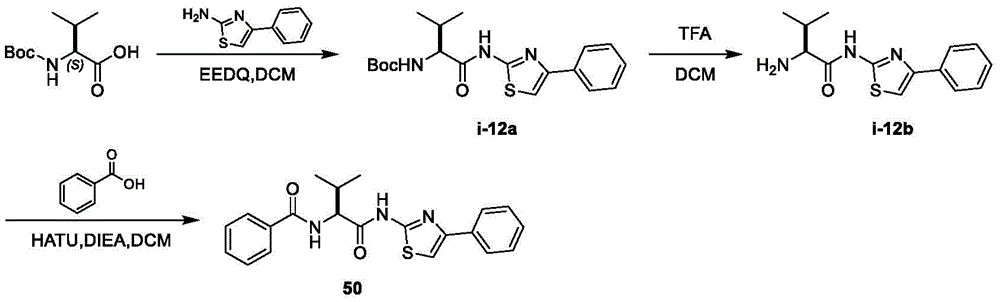
步骤1:N-[(1S)-2-甲基-1-[(4-苯基噻唑-2-基)氨基甲酰基]丙基]氨基甲酸叔丁酯(中间体i-12a)的制备Step 1: Preparation of tert-butyl N-[(1S)-2-methyl-1-[(4-phenylthiazol-2-yl)carbamoyl]propyl]carbamate (intermediate i-12a)

在20℃下在N2下向(2S)-2-(叔丁氧基羰基氨基)-3-甲基-丁酸(200.0mg,920.55μmol)于DCM(5.0mL)中的溶液一次性添加EEDQ(310.42mg,1.26mmol)和4-苯基噻唑-2-胺(147.49mg,836.86μmol)。将混合物在20℃下搅拌8小时。将反应混合物用EtOAc(50.0mL)稀释,并用柠檬酸(10%)(50.0mL*3)洗涤。将合并的有机层用饱和盐水(20.0mL*3)洗涤,经Na2SO4干燥,过滤,并在减压下浓缩,得到残余物。将残余物通过柱色谱法(SiO2,石油醚/乙酸乙酯=20/1)纯化,得到呈无色油状物的中间体i-12a。To a solution of (2S)-2-(tert-butoxycarbonylamino)-3-methyl-butyric acid (200.0 mg, 920.55 μmol) in DCM (5.0 mL) at 20 °C under N 2 was added in one portion EEDQ (310.42 mg, 1.26 mmol) and 4-phenylthiazol-2-amine (147.49 mg, 836.86 [mu]mol). The mixture was stirred at 20°C for 8 hours. The reaction mixture was diluted with EtOAc (50.0 mL) and washed with citric acid (10%) (50.0 mL*3). The combined organic layers were washed with saturated brine (20.0 mL* 3 ), dried over Na2SO4 , filtered, and concentrated under reduced pressure to give a residue. The residue was purified by column chromatography (SiO 2 , petroleum ether/ethyl acetate=20/1) to obtain Intermediate i-12a as a colorless oil.
LCMS(ESI)m/z:[M+H]+=376.2。LCMS (ESI) m/z: [M+H] + =376.2.
步骤2:(2S)-2-氨基-3-甲基-N-(4-苯基噻唑-2-基)丁酰胺(中间体i-12b)三氟乙酸盐的制备Step 2: Preparation of (2S)-2-amino-3-methyl-N-(4-phenylthiazol-2-yl)butanamide (intermediate i-12b) trifluoroacetate salt
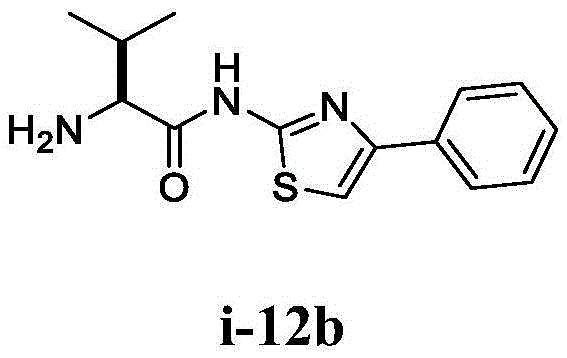
在20℃下在N2下向中间体i-12a(300.00mg,629.59μmol)于DCM(10.0mL)中的混合物一次性添加三氟乙酸(1.0mL)。将混合物在20℃下搅拌2小时。将反应混合物在减压下浓缩,得到呈白色固体的中间体i-12b(TFA盐),其不经纯化即用于下一步骤。To a mixture of intermediate i-12a (300.00 mg, 629.59 μmol) in DCM (10.0 mL) at 20° C. under N 2 was added trifluoroacetic acid (1.0 mL) in one portion. The mixture was stirred at 20°C for 2 hours. The reaction mixture was concentrated under reduced pressure to give intermediate i-12b (TFA salt) as a white solid, which was used in the next step without purification.
LCMS(ESI)m/z:[M+H]+=276.2。LCMS (ESI) m/z: [M+H] + =276.2.
步骤3:N-[(1S)-2-甲基-1-[(4-苯基噻唑-2-基)氨基甲酰基]丙基]苯甲酰胺(化合物50)的制备Step 3: Preparation of N-[(1S)-2-methyl-1-[(4-phenylthiazol-2-yl)carbamoyl]propyl]benzamide (Compound 50)
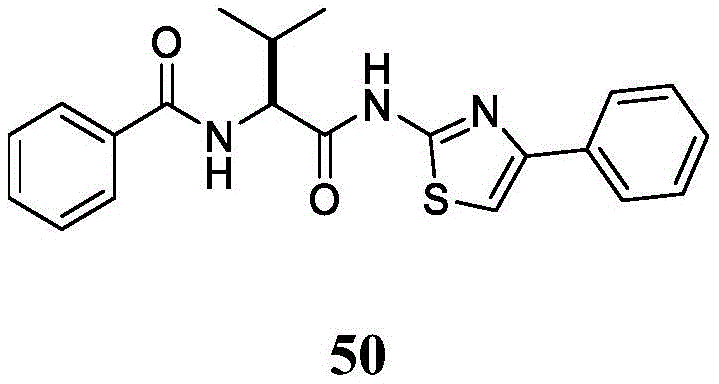
在20℃下在N2下向HATU(61.81mg,162.56μmol)和苯甲酸(14.56mg,119.23μmol)于DCM(2.0mL)中的混合物一次性添加DIPEA(56.03mg,433.53μmol)。将混合物在20℃下搅拌10分钟。然后添加中间体i-12b(50.0mg,128.41μmol),并将混合物在20℃下搅拌2小时。将反应混合物在减压下浓缩,得到残余物。将残余物通过制备型HPLC(TFA条件;柱:BostonpH-lex 150*25 10μm;流动相:[水(0.1%TFA)-ACN];B%:50%-80%,10分钟)纯化,并冻干,得到呈白色固体的化合物50。To a mixture of HATU (61.81 mg, 162.56 μmol) and benzoic acid (14.56 mg, 119.23 μmol) in DCM (2.0 mL) at 20° C. under N 2 was added DIPEA (56.03 mg, 433.53 μmol) in one portion. The mixture was stirred at 20°C for 10 minutes. Intermediate i-12b (50.0 mg, 128.41 μmol) was then added, and the mixture was stirred at 20° C. for 2 hours. The reaction mixture was concentrated under reduced pressure to give a residue. The residue was purified by preparative HPLC (TFA conditions; column: Boston pH-
1H NMR(400MHz,CDCl3)δ10.52(br s,1H),7.99(d,J=8.0Hz,2H),7.81(d,J=8.0Hz,2H),7.61-7.54(m,1H),7.52-7.45(m,2H),7.43-7.36(m,2H),7.36-7.29(m,1H),7.16(s,1H),6.91(d,J=8.0Hz,1H),5.24-5.09(m,1H),2.46-2.38(m,1H),1.16-1.13(m,6H)。 1 H NMR (400 MHz, CDCl 3 ) δ 10.52 (br s, 1H), 7.99 (d, J=8.0 Hz, 2H), 7.81 (d, J=8.0 Hz, 2H), 7.61-7.54 (m, 1H) ), 7.52-7.45(m, 2H), 7.43-7.36(m, 2H), 7.36-7.29(m, 1H), 7.16(s, 1H), 6.91(d, J=8.0Hz, 1H), 5.24- 5.09 (m, 1H), 2.46-2.38 (m, 1H), 1.16-1.13 (m, 6H).
LCMS(ESI)m/z:[M+H]+=380.0。LCMS (ESI) m/z: [M+H] + =380.0.
手性HPLC:Cellucoat-MeOH(DEA)-5-40-3mL-35,1.981分钟。Chiral HPLC: Cellucoat-MeOH(DEA)-5-40-3mL-35, 1.981 min.
实施例13.化合物N-[(1S)-1-[(4-苯基噻唑-2-基)氨基甲酰基]丁基]苯甲酰胺(化合物51)的制备Example 13. Preparation of Compound N-[(1S)-1-[(4-phenylthiazol-2-yl)carbamoyl]butyl]benzamide (Compound 51)
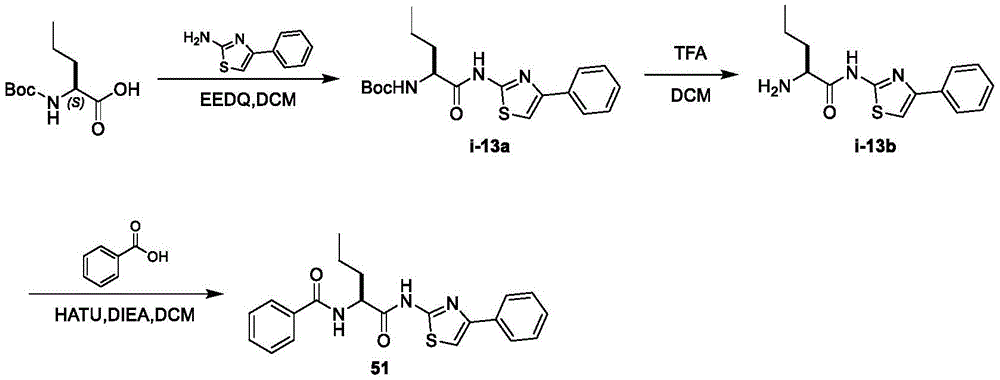
步骤1:N-[(1S)-1-[(4-苯基噻唑-2-基)氨基甲酰基]丁基]氨基甲酸叔丁酯(中间体i-13a)的制备Step 1: Preparation of tert-butyl N-[(1S)-1-[(4-phenylthiazol-2-yl)carbamoyl]butyl]carbamate (Intermediate i-13a)

在20℃下在N2下向(2S)-2-(叔丁氧基羰基氨基)戊酸(200.0mg,920.55μmol)于DCM(5.0mL)中的混合物一次性添加EEDQ(310.42mg,1.26mmol)和4-苯基噻唑-2-胺(147.49mg,836.86μmol)。将混合物在20℃下搅拌8小时。将反应混合物用EtOAC(50.0mL)稀释,并用柠檬酸(10%)(50.0mL*3)洗涤。将合并的有机层用饱和盐水(20.0mL*3)洗涤,经Na2SO4干燥,过滤,并在减压下浓缩,得到残余物。将残余物通过柱色谱法(SiO2,石油醚/乙酸乙酯=20/1)纯化,得到呈无色油状物的中间体i-13a。To a mixture of (2S)-2-(tert-butoxycarbonylamino)pentanoic acid (200.0 mg, 920.55 μmol) in DCM (5.0 mL) at 20 °C under N 2 was added EEDQ (310.42 mg, 1.26 mg in one portion) mmol) and 4-phenylthiazol-2-amine (147.49 mg, 836.86 μmol). The mixture was stirred at 20°C for 8 hours. The reaction mixture was diluted with EtOAc (50.0 mL) and washed with citric acid (10%) (50.0 mL*3). The combined organic layers were washed with saturated brine (20.0 mL* 3 ), dried over Na2SO4 , filtered, and concentrated under reduced pressure to give a residue. The residue was purified by column chromatography (SiO 2 , petroleum ether/ethyl acetate=20/1) to obtain Intermediate i-13a as a colorless oil.
LCMS(ESI)m/z:[M+H]+=376.3。LCMS (ESI) m/z: [M+H] + =376.3.
步骤2:(2S)-2-氨基-3-甲基-N-(4-苯基噻唑-2-基)丁酰胺(中间体i-13b)三氟乙酸盐的制备Step 2: Preparation of (2S)-2-amino-3-methyl-N-(4-phenylthiazol-2-yl)butanamide (intermediate i-13b) trifluoroacetate salt
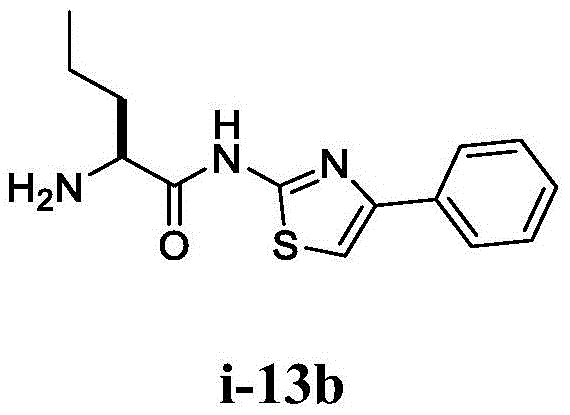
在20℃下在N2下向中间体i-13a(300.00mg,661.55μmol)于DCM(10.0mL)中的混合物一次性添加三氟乙酸(937.48μL)。将混合物在20℃下搅拌2小时。将反应混合物在减压下浓缩,得到呈白色固体的中间体i-13b(TFA盐),其不经进一步纯化即用于下一步骤。To a mixture of intermediate i-13a (300.00 mg, 661.55 μmol) in DCM (10.0 mL) at 20° C. under N 2 was added trifluoroacetic acid (937.48 μL) in one portion. The mixture was stirred at 20°C for 2 hours. The reaction mixture was concentrated under reduced pressure to give intermediate i-13b (TFA salt) as a white solid, which was used in the next step without further purification.
LCMS(ESI)m/z:[M+H]+=276.2。LCMS (ESI) m/z: [M+H] + =276.2.
步骤3:N-[(1S)-1-[(4-苯基噻唑-2-基)氨基甲酰基]丁基]苯甲酰胺(化合物40)的制备Step 3: Preparation of N-[(1S)-1-[(4-phenylthiazol-2-yl)carbamoyl]butyl]benzamide (Compound 40)
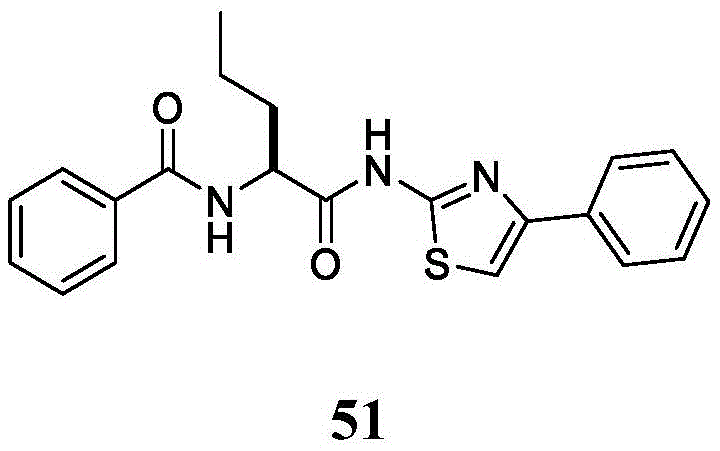
在20℃下在N2下向HATU(51.26mg,134.83μmol)和苯甲酸(15.09mg,123.59μmol)于DCM(2.0mL)中的混合物一次性添加DIPEA(58.08mg,449.42μmol)。将混合物在20℃下搅拌10分钟。然后添加中间体i-13b(50.0mg,181.57μmol,TFA盐),并将混合物在20℃下搅拌2小时。将反应混合物在减压下浓缩,得到残余物。将残余物通过制备型HPLC(TFA条件;柱:Boston pH-lex 150*25 10μm;流动相:[水(0.1%TFA)-ACN];B%:50%-80%,10分钟)纯化,并冻干,得到呈白色固体的化合物51。To a mixture of HATU (51.26 mg, 134.83 μmol) and benzoic acid (15.09 mg, 123.59 μmol) in DCM (2.0 mL) at 20° C. under N 2 was added DIPEA (58.08 mg, 449.42 μmol) in one portion. The mixture was stirred at 20°C for 10 minutes. Intermediate i-13b (50.0 mg, 181.57 μmol, TFA salt) was then added, and the mixture was stirred at 20° C. for 2 hours. The reaction mixture was concentrated under reduced pressure to give a residue. The residue was purified by preparative HPLC (TFA conditions; column: Boston pH-
1H NMR(400MHz,CDCl3)δ7.95-7.93(m,2H),7.78-7.76(m,2H),7.58-7.51(m,1H),7.48-7.41(m,5H),7.12(s,1H),7.08-6.99(m,1H),5.04-4.99(m,1H),2.09-2.03(m,1H),1.95-1.92(m,1H),1.56-1.50(m,2H),1.04-1.00(m,3H)ppm。 1 H NMR (400 MHz, CDCl 3 ) δ 7.95-7.93 (m, 2H), 7.78-7.76 (m, 2H), 7.58-7.51 (m, 1H), 7.48-7.41 (m, 5H), 7.12 (s) ,1H),7.08-6.99(m,1H),5.04-4.99(m,1H),2.09-2.03(m,1H),1.95-1.92(m,1H),1.56-1.50(m,2H),1.04 -1.00(m,3H)ppm.
LCMS(ESI)m/z:[M+H]+=380.0。LCMS (ESI) m/z: [M+H] + =380.0.
手性HPLC:Cellucoat-MeOH(DEA)-5-40-3mL-3,2.141分钟。Chiral HPLC: Cellucoat-MeOH(DEA)-5-40-3mL-3, 2.141 min.
实施例14.N-[(1S)-3-甲基-1-[(4-苯基噻唑-2-基)氨基甲酰基]丁基]苯甲酰胺(化合物48)的制备Example 14. Preparation of N-[(1S)-3-methyl-1-[(4-phenylthiazol-2-yl)carbamoyl]butyl]benzamide (Compound 48)
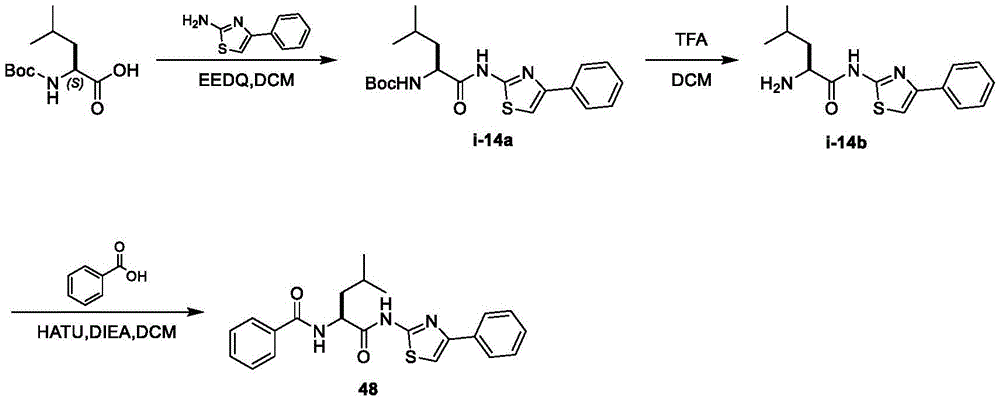
步骤1:N-[(1S)-3-甲基-1-[(4-苯基噻唑-2-基)氨基甲酰基]丁基]氨基甲酸叔丁酯(中间体i-14a)的制备Step 1: Preparation of tert-butyl N-[(1S)-3-methyl-1-[(4-phenylthiazol-2-yl)carbamoyl]butyl]carbamate (Intermediate i-14a)

在20℃下在N2下向(2S)-2-(叔丁氧基羰基氨基)-4-甲基-戊酸;水合物(200.00mg,802.24μmol)于DCM(5.0mL)中的混合物一次性添加EEDQ(270.53mg,1.09mmol)和4-苯基噻唑-2-胺(128.53mg,729.31μmol)。将混合物在20℃下搅拌3小时。将反应混合物用EA(50.0mL)稀释,并用柠檬酸(10%)(50.0mL*3)洗涤。将有机相用饱和盐水(20.0mL*3)洗涤,并且经Na2SO4,过滤,并在减压下浓缩,得到残余物。将残余物通过柱色谱法(SiO2,石油醚/乙酸乙酯=20/1)纯化,得到呈无色油状物的中间体i-14a。A mixture of (2S)-2-(tert-butoxycarbonylamino)-4-methyl-pentanoic acid; hydrate (200.00 mg, 802.24 μmol) in DCM (5.0 mL) at 20 °C under N2 EEDQ (270.53 mg, 1.09 mmol) and 4-phenylthiazol-2-amine (128.53 mg, 729.31 μmol) were added in one portion. The mixture was stirred at 20°C for 3 hours. The reaction mixture was diluted with EA (50.0 mL) and washed with citric acid (10%) (50.0 mL*3). The organic phase was washed with saturated brine (20.0 mL* 3 ), and over Na2SO4 , filtered, and concentrated under reduced pressure to give a residue. The residue was purified by column chromatography (SiO2, petroleum ether/ethyl acetate=20/1) to obtain intermediate i-14a as a colorless oil.
LCMS(ESI)m/z:[M+H]+=390.3。LCMS (ESI) m/z: [M+H] + =390.3.
步骤2:(2S)-2-氨基-3-甲基-N-(4-苯基噻唑-2-基)丁酰胺(中间体i-14b)三氟乙酸盐的制备Step 2: Preparation of (2S)-2-amino-3-methyl-N-(4-phenylthiazol-2-yl)butanamide (intermediate i-14b) trifluoroacetate salt

在20℃下在N2下向中间体i-14a(170.00mg,392.80μmol)于DCM(10.0mL)中的溶液一次性添加三氟乙酸(742.95μL)。将混合物在20℃下搅拌2小时。将反应混合物在减压下浓缩,得到呈白色固体的中间体i-14b(TFA盐),其不经进一步纯化即用于下一步骤。To a solution of intermediate i-14a (170.00 mg, 392.80 μmol) in DCM (10.0 mL) at 20° C. under N 2 was added trifluoroacetic acid (742.95 μL) in one portion. The mixture was stirred at 20°C for 2 hours. The reaction mixture was concentrated under reduced pressure to give intermediate i-14b (TFA salt) as a white solid, which was used in the next step without further purification.
LCMS(ESI)m/z:[M+H]+=290.2。LCMS (ESI) m/z: [M+H] + =290.2.
步骤3:N-[(1S)-3-甲基-1-[(4-苯基噻唑-2-基)氨基甲酰基]丁基]苯甲酰胺(化合物48)的制备Step 3: Preparation of N-[(1S)-3-methyl-1-[(4-phenylthiazol-2-yl)carbamoyl]butyl]benzamide (Compound 48)
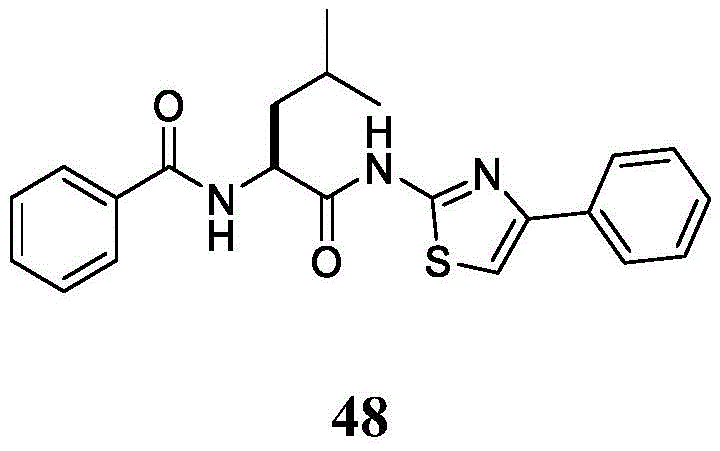
在20℃下在N2下向HATU(69.13mg,181.81μmol)和苯甲酸(16.28mg,133.31μmol)于DCM(2.0mL)中的混合物一次性添加DIPEA(62.66mg,484.82μmol)。将混合物在20℃下搅拌10分钟。然后添加中间体i-14b(50.0mg,172.77μmol TFA盐),并将混合物在20℃下搅拌2小时。将反应混合物在减压下浓缩,得到残余物。将残余物通过制备型HPLC(TFA条件;柱:Boston pH-lex 150*25 10μm;流动相:[水(0.1%TFA)-ACN];B%:53%-83%,10分钟)纯化,得到呈白色固体的化合物48。To a mixture of HATU (69.13 mg, 181.81 μmol) and benzoic acid (16.28 mg, 133.31 μmol) in DCM (2.0 mL) at 20° C. under N 2 was added DIPEA (62.66 mg, 484.82 μmol) in one portion. The mixture was stirred at 20°C for 10 minutes. Intermediate i-14b (50.0 mg, 172.77 μmol TFA salt) was then added, and the mixture was stirred at 20° C. for 2 hours. The reaction mixture was concentrated under reduced pressure to give a residue. The residue was purified by preparative HPLC (TFA conditions; column: Boston pH-
1H NMR(400MHz,CDCl3)δ10.19(br s,1H),7.92-7.87(m,2H),7.86-7.81(m,2H),7.61-7.55(m,1H),7.52-7.46(m,2H),7.45-7.38(m,2H),7.37-7.30(m,1H),7.16(s,1H),6.59(br d,J=8.0Hz,1H),5.10-5.00(m,1H),2.02-1.98(m,1H),1.84-1.79(m,2H),1.05-1.02(m,6H)ppm。 1 H NMR (400MHz, CDCl 3 ) δ 10.19 (br s, 1H), 7.92-7.87 (m, 2H), 7.86-7.81 (m, 2H), 7.61-7.55 (m, 1H), 7.52-7.46 ( m,2H),7.45-7.38(m,2H),7.37-7.30(m,1H),7.16(s,1H),6.59(br d,J=8.0Hz,1H),5.10-5.00(m,1H) ), 2.02-1.98 (m, 1H), 1.84-1.79 (m, 2H), 1.05-1.02 (m, 6H) ppm.
LCMS(ESI)m/z:[M+H]+=394.1。LCMS (ESI) m/z: [M+H] + =394.1.
手性HPLC:Cellucoat-MeOH(DEA)-5-40-3mL-3,1.875分钟。Chiral HPLC: Cellucoat-MeOH(DEA)-5-40-3mL-3, 1.875 min.
实施例15.(1S)-3-甲基-1-[(4-苯基噻唑-2-基)氨基甲酰基]丁基]苯甲酰胺(化合物41)的制备Example 15. Preparation of (1S)-3-methyl-1-[(4-phenylthiazol-2-yl)carbamoyl]butyl]benzamide (Compound 41)
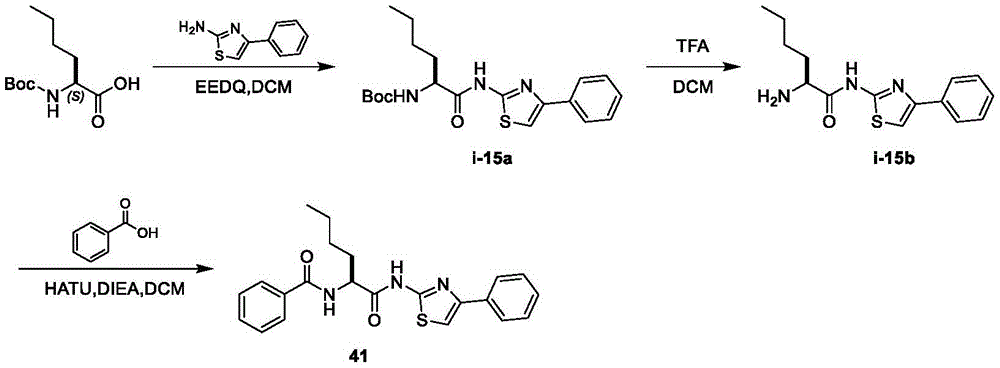
步骤1:N-[(1S)-1-[(4-苯基噻唑-2-基)氨基甲酰基]戊基]氨基甲酸叔丁酯(中间体i-15a)的制备Step 1: Preparation of tert-butyl N-[(1S)-1-[(4-phenylthiazol-2-yl)carbamoyl]pentyl]carbamate (Intermediate i-15a)

在20℃下在N2下向(2S)-2-(叔丁氧基羰基氨基)己酸(200.0mg,864.72μmol)于DCM(5.0mL)中的溶液一次性添加EEDQ(291.60mg,1.18mmol)和4-苯基噻唑-2-胺(138.54mg,786.11μmol)。将混合物在20℃下搅拌8小时。将反应混合物用EtOAc(50.0mL)稀释,并用柠檬酸(10%)(50.0mL*3)洗涤。将有机相用饱和盐水(20.0mL*3)洗涤,并且经Na2SO4干燥,过滤,并在减压下浓缩,得到残余物。将残余物通过柱色谱法(SiO2,石油醚/乙酸乙酯=20/1)纯化。获得呈白色固体的中间体i-15a。To a solution of (2S)-2-(tert-butoxycarbonylamino)hexanoic acid (200.0 mg, 864.72 μmol) in DCM (5.0 mL) under N at 20 °C was added EEDQ (291.60 mg, 1.18 in one portion) mmol) and 4-phenylthiazol-2-amine (138.54 mg, 786.11 μmol). The mixture was stirred at 20°C for 8 hours. The reaction mixture was diluted with EtOAc (50.0 mL) and washed with citric acid (10%) (50.0 mL*3). The organic phase was washed with saturated brine (20.0 mL* 3 ), and dried over Na2SO4 , filtered, and concentrated under reduced pressure to give a residue. The residue was purified by column chromatography (SiO 2 , petroleum ether/ethyl acetate=20/1). Intermediate i-15a was obtained as a white solid.
LCMS(ESI)m/z:[M+H]+=390.3。LCMS (ESI) m/z: [M+H] + =390.3.
步骤2:(2S)-2-氨基-N-(4-苯基噻唑-2-基)己酰胺(中间体i-15b)的制备Step 2: Preparation of (2S)-2-amino-N-(4-phenylthiazol-2-yl)hexanamide (Intermediate i-15b)

在20℃下在N2下向中间体i-15a(230.00mg,590.48μmol)于DCM(10.0mL)中的混合物一次性添加三氟乙酸(1.03mL)。将混合物在20℃下搅拌2小时。将反应混合物在减压下浓缩,得到呈白色固体的中间体i-15b(TFA盐),其不经进一步纯化即用于下一步骤。To a mixture of intermediate i-15a (230.00 mg, 590.48 μmol) in DCM (10.0 mL) at 20° C. under N 2 was added trifluoroacetic acid (1.03 mL) in one portion. The mixture was stirred at 20°C for 2 hours. The reaction mixture was concentrated under reduced pressure to give intermediate i-15b (TFA salt) as a white solid, which was used in the next step without further purification.
LCMS(ESI)m/z:[M+H]+=290.2。LCMS (ESI) m/z: [M+H] + =290.2.
步骤3:N-[(1S)-3-甲基-1-[(4-苯基噻唑-2-基)氨基甲酰基]丁基]苯甲酰胺(化合物41)的制备Step 3: Preparation of N-[(1S)-3-methyl-1-[(4-phenylthiazol-2-yl)carbamoyl]butyl]benzamide (Compound 41)


在20℃下在N2下向HATU(67.32mg,177.05μmol)和苯甲酸(15.86mg,129.84μmol)于DCM(5.0mL)中的混合物一次性添加DIPEA(61.02mg,472.15μmol)。将混合物在20℃下搅拌10分钟。然后添加中间体i-15b(50.0mg,123.94μmol),并将混合物在20℃下搅拌2小时。将反应混合物在减压下浓缩,得到残余物。将残余物通过制备型HPLC(TFA条件;柱:BostonpH-lex 150*25 10μm;流动相:[水(0.1%TFA)-ACN];B%:53%-83%,10分钟)纯化,并冻干,得到呈白色固体的化合物41。To a mixture of HATU (67.32 mg, 177.05 μmol) and benzoic acid (15.86 mg, 129.84 μmol) in DCM (5.0 mL) at 20° C. under N 2 was added DIPEA (61.02 mg, 472.15 μmol) in one portion. The mixture was stirred at 20°C for 10 minutes. Intermediate i-15b (50.0 mg, 123.94 μmol) was then added, and the mixture was stirred at 20° C. for 2 hours. The reaction mixture was concentrated under reduced pressure to give a residue. The residue was purified by preparative HPLC (TFA conditions; column: Boston pH-
1H NMR(400MHz,CDCl3)δ7.98-7.96(m,2H),7.83-7.81(m,2H),7.62-7.55(m,1H),7.53-7.42(m,4H),7.41-7.35(m,1H),7.15(s,1H),7.04-6.95(m,1H),5.13-5.08(m,1H),2.15-2.11(m,1H),1.98-1.94(m,1H),1.51-1.41(m,4H),0.96-0.92(m,3H)ppm。 1 H NMR (400 MHz, CDCl 3 ) δ 7.98-7.96 (m, 2H), 7.83-7.81 (m, 2H), 7.62-7.55 (m, 1H), 7.53-7.42 (m, 4H), 7.41-7.35 (m,1H),7.15(s,1H),7.04-6.95(m,1H),5.13-5.08(m,1H),2.15-2.11(m,1H),1.98-1.94(m,1H),1.51 -1.41 (m, 4H), 0.96-0.92 (m, 3H) ppm.
LCMS(ESI)m/z:[M+H]+=394.0。LCMS (ESI) m/z: [M+H] + =394.0.
手性HPLC:Amycoat-MeOH(DEA)-40-3mL-35T,1.431分钟。Chiral HPLC: Amycoat-MeOH(DEA)-40-3mL-35T, 1.431 min.
实施例16.化合物N-[(1S)-3-苯基-1-[(4-苯基噻唑-2-)氨基甲酰基]丙基]苯甲酰胺(化合物49)的制备Example 16. Preparation of compound N-[(1S)-3-phenyl-1-[(4-phenylthiazole-2-)carbamoyl]propyl]benzamide (compound 49)

步骤1:N-[(1S)-3-苯基-1-[(4-苯基噻唑-2-基)氨基甲酰基]丙基]氨基甲酸叔丁酯(中间体i-16a)的制备Step 1: Preparation of tert-butyl N-[(1S)-3-phenyl-1-[(4-phenylthiazol-2-yl)carbamoyl]propyl]carbamate (Intermediate i-16a)

在20℃下在N2下向4-苯基噻唑-2-胺(114.71mg,650.91μmol)于DCM(5mL)中的混合物一次性添加EEDQ(241.44mg,976.36μmol)和(2S)-2-(叔丁氧基羰基氨基)-4-苯基-丁酸(200.0mg,716.00μmol)。将混合物在20℃下搅拌8小时。将反应混合物用EtOAc(50.0mL)稀释,并用柠檬酸(10%)(50.0mL*3)洗涤。将有机相用饱和盐水(20.0mL*3)洗涤,并且经Na2SO4干燥,过滤,并在减压下浓缩,得到残余物。将残余物通过柱色谱法(SiO2,石油醚/乙酸乙酯=10/1)纯化。获得呈白色固体的中间体i-16a。To a mixture of 4-phenylthiazol-2-amine (114.71 mg, 650.91 μmol) in DCM (5 mL) under N2 at 20 °C was added EEDQ (241.44 mg, 976.36 μmol) and (2S)-2 in one portion -(tert-Butoxycarbonylamino)-4-phenyl-butyric acid (200.0 mg, 716.00 μmol). The mixture was stirred at 20°C for 8 hours. The reaction mixture was diluted with EtOAc (50.0 mL) and washed with citric acid (10%) (50.0 mL*3). The organic phase was washed with saturated brine (20.0 mL* 3 ), and dried over Na2SO4 , filtered, and concentrated under reduced pressure to give a residue. The residue was purified by column chromatography (SiO 2 , petroleum ether/ethyl acetate=10/1). Intermediate i-16a was obtained as a white solid.
LCMS(ESI)m/z:[M+H]+=438.3。LCMS (ESI) m/z: [M+H] + =438.3.
步骤2:(2S)-2-氨基-4-苯基-N-(4-苯基噻唑-2-基)丁酰胺(中间体i-16b)的制备Step 2: Preparation of (2S)-2-amino-4-phenyl-N-(4-phenylthiazol-2-yl)butanamide (Intermediate i-16b)
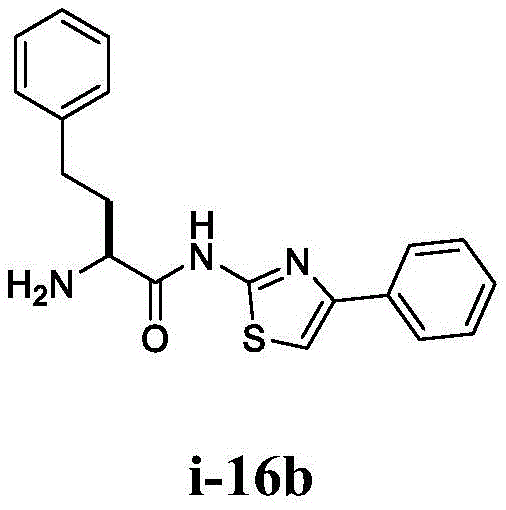
在20℃下在N2下向中间体i-16a(270.00mg,569.67μmol)于DCM(10.0mL)中的混合物一次性添加三氟乙酸(923.19μL)。将混合物在20℃下搅拌1小时。将反应混合物在减压下浓缩,得到呈黄色油状物的中间体i-16b(TFA盐),其不经进一步纯化即用于下一步骤。To a mixture of intermediate i-16a (270.00 mg, 569.67 μmol) in DCM (10.0 mL) at 20° C. under N 2 was added trifluoroacetic acid (923.19 μL) in one portion. The mixture was stirred at 20°C for 1 hour. The reaction mixture was concentrated under reduced pressure to give intermediate i-16b (TFA salt) as a yellow oil, which was used in the next step without further purification.
LCMS(ESI)m/z:[M+H]+=338.2。LCMS (ESI) m/z: [M+H] + =338.2.
步骤3:N-[(1S)-3-苯基-1-[(4-苯基噻唑-2-基)氨基甲酰基]丙基]苯甲酰胺(化合物49)的制备Step 3: Preparation of N-[(1S)-3-phenyl-1-[(4-phenylthiazol-2-yl)carbamoyl]propyl]benzamide (Compound 49)

在20℃下在N2下向HATU(57.62mg,151.54μmol)和苯甲酸(13.57mg,111.13μmol)于DCM(2.0mL)中的混合物一次性添加DIPEA(52.23mg,404.11μmol)。将混合物在20℃下搅拌10分钟。然后添加中间体i-16b(50.0mg,110.75μmol),并将混合物在20℃下搅拌2小时。将反应混合物在减压下浓缩,得到残余物。将残余物在MeOH(10.0mL)中研磨,通过过滤收集固体,并在真空中干燥,得到呈白色固体的化合物49。To a mixture of HATU (57.62 mg, 151.54 μmol) and benzoic acid (13.57 mg, 111.13 μmol) in DCM (2.0 mL) at 20° C. under N 2 was added DIPEA (52.23 mg, 404.11 μmol) in one portion. The mixture was stirred at 20°C for 10 minutes. Intermediate i-16b (50.0 mg, 110.75 μmol) was then added, and the mixture was stirred at 20° C. for 2 hours. The reaction mixture was concentrated under reduced pressure to give a residue. The residue was triturated in MeOH (10.0 mL) and the solid was collected by filtration and dried in vacuo to give compound 49 as a white solid.
1H NMR(400MHz,DMSO-d6)δ=12.54(s,1H),8.85(d,J=7.2Hz,1H),8.02-7.95(m,4H),7.69(s,1H),7.67-7.61(m,1H),7.61-7.54(m,2H),7.53-7.46(m,2H),7.42-7.29(m,5H),7.28-7.22(m,1H),4.80-4.74(m,1H),2.87-2.75(m,1H),2.55-2.45(m,1H),2.23-2.19(m,2H)。 1 H NMR (400MHz, DMSO-d 6 ) δ=12.54(s, 1H), 8.85(d, J=7.2Hz, 1H), 8.02-7.95(m, 4H), 7.69(s, 1H), 7.67- 7.61(m,1H),7.61-7.54(m,2H),7.53-7.46(m,2H),7.42-7.29(m,5H),7.28-7.22(m,1H),4.80-4.74(m,1H) ), 2.87-2.75(m, 1H), 2.55-2.45(m, 1H), 2.23-2.19(m, 2H).
LCMS(ESI)m/z:[M+H]+=442.1。LCMS (ESI) m/z: [M+H] + =442.1.
手性HPLC:Amycoat-MeOH(DEA)-40-7min-3mL,3.118分钟。Chiral HPLC: Amycoat-MeOH(DEA)-40-7min-3mL, 3.118min.
实施例17.化合物3-(二甲基氨磺酰基)-N-[2-[[4-(邻甲苯基)噻唑-2-基]氨基]-2-氧代基-乙基]苯甲酰胺(化合物16)的制备Example 17. Compound 3-(dimethylsulfamoyl)-N-[2-[[4-(o-tolyl)thiazol-2-yl]amino]-2-oxo-ethyl]benzyl Preparation of amide (compound 16)
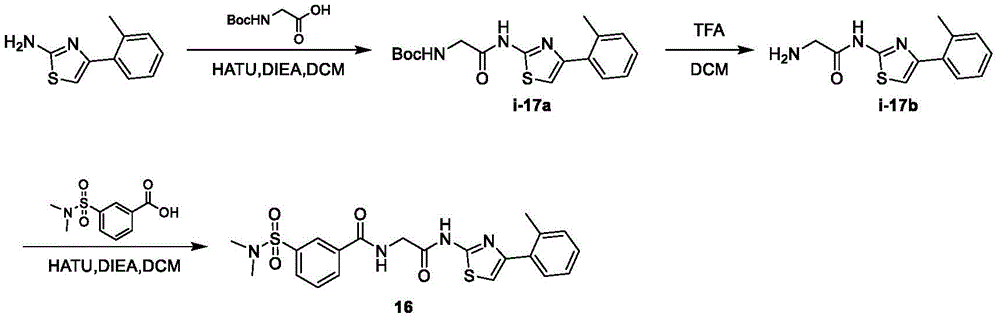
步骤1:(2-氧代基-2-((4-(邻甲苯基)噻唑-2-基)氨基)乙基)氨基甲酸叔丁酯(中间体i-17a)的制备Step 1: Preparation of tert-butyl (2-oxo-2-((4-(o-tolyl)thiazol-2-yl)amino)ethyl)carbamate (Intermediate i-17a)

向2-(叔丁氧基羰基氨基)乙酸(184.15mg,1.05mmol)于DCM(2.0mL)中的溶液添加DIEA(407.57mg,3.15mmol)和HATU(439.65mg,1.16mmol)。在0.5小时后,添加4-(邻甲苯基)噻唑-2-胺(200.0mg,1.05mmol),并将混合物在20℃下搅拌1.5小时。将反应混合物倒入水(10.0mL)中,并用EtOAc(10.0mL*3)萃取。将合并的有机层用盐水(10.0mL)洗涤,经Na2SO4干燥,过滤,并浓缩。将粗产物用MTBE(10.0mL)研磨。通过过滤收集固体,并在真空中干燥,得到呈白色固体的中间体i-17a。To a solution of 2-(tert-butoxycarbonylamino)acetic acid (184.15 mg, 1.05 mmol) in DCM (2.0 mL) was added DIEA (407.57 mg, 3.15 mmol) and HATU (439.65 mg, 1.16 mmol). After 0.5 hours, 4-(o-tolyl)thiazol-2-amine (200.0 mg, 1.05 mmol) was added, and the mixture was stirred at 20°C for 1.5 hours. The reaction mixture was poured into water (10.0 mL) and extracted with EtOAc (10.0 mL*3). The combined organic layers were washed with brine (10.0 mL), dried over Na2SO4 , filtered, and concentrated. The crude product was triturated with MTBE (10.0 mL). The solid was collected by filtration and dried in vacuo to yield Intermediate i-17a as a white solid.
1H NMR(400MHz,CDCl3)δ10.53-10.01(m,1H),7.51(s,1H),7.32-7.30(m,6H),6.94(s,1H),5.01(br s,1H),3.87(br s,2H),2.41(s,3H),1.46(s,9H)ppm 1 H NMR (400MHz, CDCl 3 ) δ 10.53-10.01(m, 1H), 7.51(s, 1H), 7.32-7.30(m, 6H), 6.94(s, 1H), 5.01(br s, 1H) ,3.87(br s,2H),2.41(s,3H),1.46(s,9H)ppm
LCMS(ESI)m/z:[M+H]+=348.1LCMS(ESI) m/z: [M+H] + =348.1
步骤2:2-氨基-N-(4-(邻甲苯基)噻唑-2-基)乙酰胺(中间体i-17b)的制备Step 2: Preparation of 2-amino-N-(4-(o-tolyl)thiazol-2-yl)acetamide (intermediate i-17b)

在20℃下向中间体i-17a(210mg,604.44μmol)于DCM(2.1mL)中的溶液添加TFA(0.3mL)。将混合物在20℃下搅拌16小时。将反应混合物倒入饱和NaHCO3(10.0mL)中,并用EtOAc(20.0mL*3)萃取。将合并的有机萃取物用盐水(20.0mL)洗涤,经Na2SO4干燥,过滤,并浓缩。将残余物通过柱色谱法(SiO2,PE:EA=10:1至8:1至5:1)纯化,得到呈棕色油状物的中间体i-17b。To a solution of intermediate i-17a (210 mg, 604.44 μmol) in DCM (2.1 mL) was added TFA (0.3 mL) at 20 °C. The mixture was stirred at 20°C for 16 hours. The reaction mixture was poured into saturated NaHCO3 (10.0 mL) and extracted with EtOAc (20.0 mL*3). The combined organic extracts were washed with brine (20.0 mL), dried over Na2SO4 , filtered, and concentrated. The residue was purified by column chromatography ( SiO2 , PE:EA = 10:1 to 8:1 to 5:1) to yield intermediate i-17b as a brown oil.
LCMS(ESI)m/z:[M+H]+=248.1LCMS (ESI) m/z: [M+H] + = 248.1
步骤3:-(二甲基氨磺酰基)-N-[2-[[4-(邻甲苯基)噻唑-2-基]氨基]-2-氧代基-乙基]苯甲酰胺(化合物16)的制备Step 3: -(dimethylsulfamoyl)-N-[2-[[4-(o-tolyl)thiazol-2-yl]amino]-2-oxo-ethyl]benzamide (compound 16) Preparation

向3-(二甲基氨磺酰基)苯甲酸(111.24mg,485.21μmol)于DCM(2.0mL)中的溶液添加HATU(202.94mg,533.73μmol)和DIEA(188.13mg,1.46mmol)。将混合物在20℃下搅拌0.5小时。添加中间体D(120.0mg,485.21μmol),并将混合物在20℃下搅拌1.5小时。将反应混合物倒入水(10.0mL)中,并用EtOAc(10.0mL*3)萃取。将合并的有机萃取物用盐水(10.0mL)洗涤,经Na2SO4干燥,过滤,并浓缩。将粗产物用MeOH(10.0mL)研磨。通过过滤收集固体,并在真空中干燥,得到呈白色固体的化合物16。To a solution of 3-(dimethylsulfamoyl)benzoic acid (111.24 mg, 485.21 μmol) in DCM (2.0 mL) was added HATU (202.94 mg, 533.73 μmol) and DIEA (188.13 mg, 1.46 mmol). The mixture was stirred at 20°C for 0.5 hour. Intermediate D (120.0 mg, 485.21 μmol) was added, and the mixture was stirred at 20° C. for 1.5 hours. The reaction mixture was poured into water (10.0 mL) and extracted with EtOAc (10.0 mL*3). The combined organic extracts were washed with brine (10.0 mL), dried over Na2SO4 , filtered, and concentrated. The crude product was triturated with MeOH (10.0 mL). The solid was collected by filtration and dried in vacuo to give compound 16 as a white solid.
1H NMR(400MHz,DMSO-d6)δ12.40(s,1H),9.31-9.28(m,1H),8.26-8.22(m,2H),7.95-7.93(m,1H),7.82-7.80(m,1H),7.59-7.57(m,1H),7.27-7.25(m,4H),4.22(d,J=5.6Hz,2H),2.65(s,6H),2.43(s,3H)ppm 1 H NMR (400MHz, DMSO-d 6 )δ12.40(s,1H), 9.31-9.28(m,1H), 8.26-8.22(m,2H), 7.95-7.93(m,1H), 7.82-7.80 (m,1H),7.59-7.57(m,1H),7.27-7.25(m,4H),4.22(d,J=5.6Hz,2H),2.65(s,6H),2.43(s,3H)ppm
LCMS(ESI)m/z:[M+H]+=459.0LCMS (ESI) m/z: [M+H] + =459.0
实施例18.化合物3-(二甲基氨磺酰基)-N-[2-[[4-(间甲苯基)噻唑-2-基]氨基]-2-氧代基-乙基]苯甲酰胺(化合物1)的制备Example 18. Compound 3-(dimethylsulfamoyl)-N-[2-[[4-(m-tolyl)thiazol-2-yl]amino]-2-oxo-ethyl]benzyl Preparation of Amide (Compound 1)
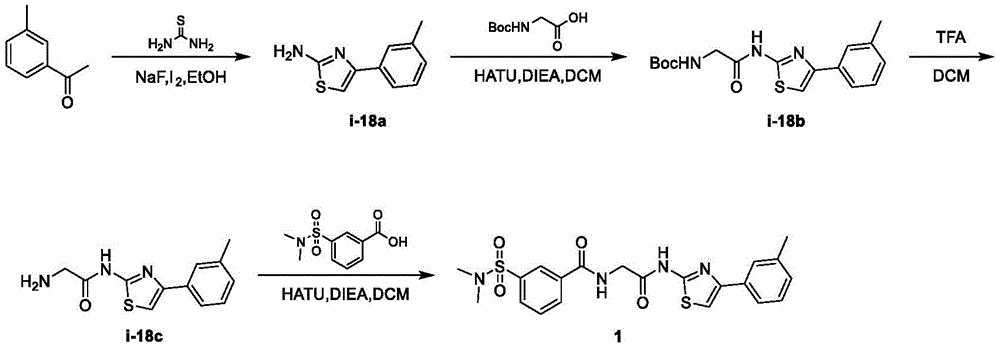
步骤1:4-(间甲苯基)噻唑-2-胺(中间体i-18a)的制备Step 1: Preparation of 4-(m-Tolyl)thiazol-2-amine (Intermediate i-18a)

向1-(间甲苯基)乙酮(100.0mg,745.30μmol)、硫脲(85.10mg,1.12mmol)和I2(189.16mg,745.30μmol)于EtOH(1.0mL)中的混合物添加NaF(10mg,238.16μmol)。将混合物在20℃下搅拌3小时。将反应混合物倒入水(8.0mL)中,并用EtOAc(10.0mL*3)萃取。将合并的有机层用盐水(10.0mL)洗涤,经Na2SO4干燥,过滤,并在真空中浓缩,得到呈绿色油状物的中间体i-18a,其直接用于下一步骤。To a mixture of 1-(m-tolyl)ethanone (100.0 mg, 745.30 μmol), thiourea (85.10 mg, 1.12 mmol) and I 2 (189.16 mg, 745.30 μmol) in EtOH (1.0 mL) was added NaF (10 mg) , 238.16 μmol). The mixture was stirred at 20°C for 3 hours. The reaction mixture was poured into water (8.0 mL) and extracted with EtOAc (10.0 mL*3). The combined organic layers were washed with brine (10.0 mL), dried over Na2SO4 , filtered, and concentrated in vacuo to afford intermediate i-18a as a green oil, which was used directly in the next step.
LCMS(ESI)m/z:[M+H]+=191.1LCMS (ESI) m/z: [M+H] + = 191.1
步骤2:(2-氧代基-2-((4-(间甲苯基)噻唑-2-基)氨基)乙基)氨基甲酸叔丁酯(中间体i-18b)的制备Step 2: Preparation of tert-butyl (2-oxo-2-((4-(m-tolyl)thiazol-2-yl)amino)ethyl)carbamate (intermediate i-18b)

在20℃下向2-(叔丁氧基羰基氨基)乙酸(138.11mg,788.38μmol)于DCM(2.0mL)中的溶液添加DIEA(305.68mg,2.37mmol)和HATU(329.74mg,867.22μmol)。将混合物在20℃下搅拌0.5小时。添加中间体i-18a(150.0mg,788.38μmol),并将混合物在20℃下搅拌1.5小时。将反应混合物倒入水(10.0mL)中,并用EtOAc(10.0mL*3)萃取。将合并的有机萃取物用盐水(10.0mL)洗涤,经Na2SO4干燥,过滤,并浓缩,得到呈棕色油状物的中间体i-18b,其直接用于下一步骤。To a solution of 2-(tert-butoxycarbonylamino)acetic acid (138.11 mg, 788.38 μmol) in DCM (2.0 mL) at 20 °C was added DIEA (305.68 mg, 2.37 mmol) and HATU (329.74 mg, 867.22 μmol) . The mixture was stirred at 20°C for 0.5 hour. Intermediate i-18a (150.0 mg, 788.38 μmol) was added, and the mixture was stirred at 20° C. for 1.5 hours. The reaction mixture was poured into water (10.0 mL) and extracted with EtOAc (10.0 mL*3). The combined organic extracts were washed with brine (10.0 mL), dried over Na2SO4 , filtered, and concentrated to give intermediate i-18b as a brown oil, which was used directly in the next step.
LCMS(ESI)m/z:[M+H]+=348.1LCMS(ESI) m/z: [M+H] + =348.1
步骤3:2-氨基-N-(4-(间甲苯基)噻唑-2-基)乙酰胺(中间体i-18c)的制备Step 3: Preparation of 2-amino-N-(4-(m-tolyl)thiazol-2-yl)acetamide (intermediate i-18c)

在20℃下向中间体i-18b(75mg,215.87μmol)于DCM(1.0mL)中的溶液添加TFA(0.25mL)。将混合物在20℃下搅拌2小时。将反应混合物倒入饱和Na2CO3(10.0mL)中,并用EtOAc(10.0mL*3)萃取。将合并的有机萃取物用盐水(10.0mL)洗涤,经Na2SO4干燥,过滤,并浓缩。将残余物通过制备型HPLC(柱:Phenomenex Synergi C18 150*25*10μm;流动相:[水(0.1%TFA)-ACN];B%:15%-45%,9分钟)纯化,得到级分。然后将所述级分在真空中浓缩,然后倒入饱和Na2CO3(15.0mL)中,并用EtOAc(20.0mL*3)萃取。将合并的有机萃取物用盐水(10.0mL)洗涤,经Na2SO4干燥,过滤,并浓缩,得到呈黄色油状物的中间体i-18c。To a solution of intermediate i-18b (75 mg, 215.87 μmol) in DCM (1.0 mL) was added TFA (0.25 mL) at 20 °C. The mixture was stirred at 20°C for 2 hours. The reaction mixture was poured into saturated Na2CO3 (10.0 mL) and extracted with EtOAc (10.0 mL*3). The combined organic extracts were washed with brine (10.0 mL), dried over Na2SO4 , filtered, and concentrated. The residue was purified by preparative HPLC (column:
LCMS(ESI)m/z:[M+H]+=248.1LCMS (ESI) m/z: [M+H] + = 248.1
步骤4:3-(二甲基氨磺酰基)-N-[2-[[4-(间甲苯基)噻唑-2-基]氨基]-2-氧代基-乙基]苯甲酰胺(化合物1)的制备Step 4: 3-(Dimethylsulfamoyl)-N-[2-[[4-(m-tolyl)thiazol-2-yl]amino]-2-oxo-ethyl]benzamide ( Preparation of compound 1)

在20℃下向3-(二甲基氨磺酰基)苯甲酸(46.35mg,202.17μmol)于DCM(1.0mL)中的溶液添加HATU(84.56mg,222.39μmol)和DIEA(78.39mg,606.51μmol)。将混合物在20℃下搅拌0.5小时。然后添加中间体i-18c(50.0mg,202.17μmol),并将混合物在20℃下搅拌1.5小时。将反应混合物倒入水(5.0mL)中,并用EtOAc(10.0mL*3)萃取。将合并的有机萃取物用盐水(10.0mL)洗涤,经Na2SO4干燥,过滤,并浓缩。将残余物通过制备型HPLC(柱:PhenomenexSynergi C18 150*25*10μm;流动相:[水(0.1%TFA)-ACN];B%:42%-72%,9分钟)纯化,并冻干,得到呈白色固体的化合物1。To a solution of 3-(dimethylsulfamoyl)benzoic acid (46.35 mg, 202.17 μmol) in DCM (1.0 mL) at 20 °C was added HATU (84.56 mg, 222.39 μmol) and DIEA (78.39 mg, 606.51 μmol) ). The mixture was stirred at 20°C for 0.5 hour. Intermediate i-18c (50.0 mg, 202.17 μmol) was then added, and the mixture was stirred at 20° C. for 1.5 hours. The reaction mixture was poured into water (5.0 mL) and extracted with EtOAc (10.0 mL*3). The combined organic extracts were washed with brine (10.0 mL), dried over Na2SO4 , filtered, and concentrated. The residue was purified by preparative HPLC (column:
1H NMR(400MHz,DMSO-d6)δ=12.45(s,1H),9.30-9.27(m,1H),8.26-8.22(m,2H),7.94(d,J=7.6Hz,1H),7.82-7.77(m,1H),7.73-7.65(m,2H),7.60(s,1H),7.32-7.30(m,1H),7.14(d,J=7.6Hz,1H),4.23(d,J=5.6Hz,2H),2.65(s,6H),2.35(s,3H)ppm1H NMR (400MHz, DMSO-d 6 )δ=12.45(s, 1H), 9.30-9.27(m, 1H), 8.26-8.22(m, 2H), 7.94(d, J=7.6Hz, 1H), 7.82 -7.77(m, 1H), 7.73-7.65(m, 2H), 7.60(s, 1H), 7.32-7.30(m, 1H), 7.14(d, J=7.6Hz, 1H), 4.23(d, J =5.6Hz,2H),2.65(s,6H),2.35(s,3H)ppm
LCMS(ESI)m/z:[M+H]+=459.0LCMS (ESI) m/z: [M+H] + =459.0
实施例19. 3-(二甲基氨磺酰基)-N-[2-氧代基-2-[[4-(对甲苯基)噻唑-2-基]氨基]乙基]苯甲酰胺(化合物31)的制备Example 19. 3-(Dimethylsulfamoyl)-N-[2-oxo-2-[[4-(p-tolyl)thiazol-2-yl]amino]ethyl]benzamide ( Preparation of compound 31)
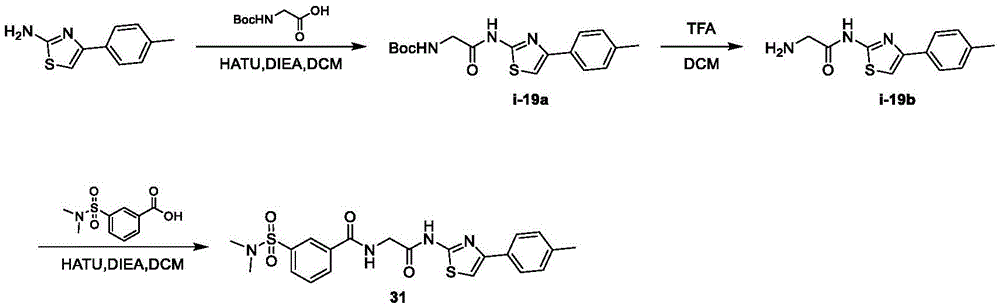
步骤1:N-[2-氧代基-2-[[4-(对甲苯基)噻唑-2-基]氨基]乙基]氨基甲酸叔丁酯(中间体i-19a)的制备Step 1: Preparation of tert-butyl N-[2-oxo-2-[[4-(p-tolyl)thiazol-2-yl]amino]ethyl]carbamate (intermediate i-19a)
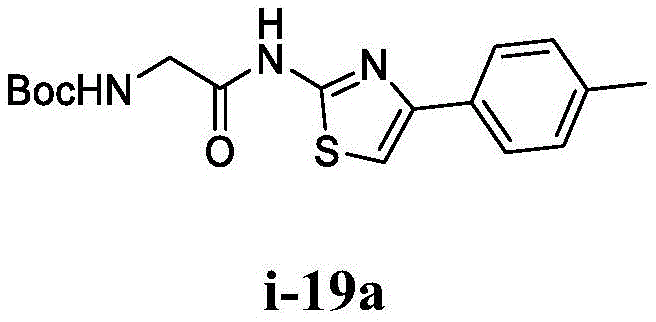
向2-(叔丁氧基羰基氨基)乙酸(184.15mg,1.05mmol)于DCM(2.0mL)中的溶液添加DIEA(407.57mg,3.15mmol)和HATU(439.65mg,1.16mmol)。在0.5小时后,将4-(邻甲苯基)噻唑-2-胺(200.0mg,1.05mmol)添加至混合物,并在20℃下搅拌1.5小时。将反应混合物倒入水(10.0mL)中,并用EtOAc(10.0mL*3)萃取。将合并的有机萃取物用盐水(10.0mL)洗涤,经Na2SO4干燥,过滤,并浓缩。将粗产物用MTBE(10.0mL)研磨。通过过滤收集固体,并在真空中干燥,得到呈白色固体的中间体i-19a。To a solution of 2-(tert-butoxycarbonylamino)acetic acid (184.15 mg, 1.05 mmol) in DCM (2.0 mL) was added DIEA (407.57 mg, 3.15 mmol) and HATU (439.65 mg, 1.16 mmol). After 0.5 hours, 4-(o-tolyl)thiazol-2-amine (200.0 mg, 1.05 mmol) was added to the mixture and stirred at 20°C for 1.5 hours. The reaction mixture was poured into water (10.0 mL) and extracted with EtOAc (10.0 mL*3). The combined organic extracts were washed with brine (10.0 mL), dried over Na2SO4 , filtered, and concentrated. The crude product was triturated with MTBE (10.0 mL). The solid was collected by filtration and dried in vacuo to yield Intermediate i-19a as a white solid.
1H NMR(400MHz,CDCl3)δ9.75(br s,1H),7.71(d,J=8.0Hz,2H),7.23(d,J=8.0Hz,2H),7.11(s,1H),5.22-5.03(m,1H),4.20-3.94(m,2H),2.39(s,3H),1.50(s,9H)。1H NMR (400MHz, CDCl 3 ) δ 9.75 (br s, 1H), 7.71 (d, J=8.0 Hz, 2H), 7.23 (d, J=8.0 Hz, 2H), 7.11 (s, 1H), 5.22 -5.03(m, 1H), 4.20-3.94(m, 2H), 2.39(s, 3H), 1.50(s, 9H).
LCMS(ESI)m/z:[M+H]+=348.1LCMS(ESI) m/z: [M+H] + =348.1
步骤2:2-氨基-N-[4-(对甲苯基)噻唑-2-基]乙酰胺(i-19b)的制备Step 2: Preparation of 2-amino-N-[4-(p-tolyl)thiazol-2-yl]acetamide (i-19b)


在20℃下向中间体i-19a(210mg,604.44μmol)于DCM(2.1mL)中的溶液添加TFA(0.3mL)。将混合物在20℃下搅拌16小时。将反应混合物倒入饱和Na2CO3(10.0mL)中,并用EtOAc(20.0mL*3)萃取。将合并的有机萃取物用盐水(20.0mL)洗涤,经Na2SO4干燥,过滤,并浓缩。将粗产物用MTBE(10.0mL)研磨。通过过滤收集固体,并在真空中干燥,得到呈白色固体的中间体i-19b。To a solution of intermediate i-19a (210 mg, 604.44 μmol) in DCM (2.1 mL) was added TFA (0.3 mL) at 20 °C. The mixture was stirred at 20°C for 16 hours. The reaction mixture was poured into saturated Na2CO3 (10.0 mL) and extracted with EtOAc (20.0 mL*3). The combined organic extracts were washed with brine (20.0 mL), dried over Na2SO4 , filtered, and concentrated. The crude product was triturated with MTBE (10.0 mL). The solid was collected by filtration and dried in vacuo to yield Intermediate i-19b as a white solid.
LCMS(ESI)m/z:[M+H]+=248.1LCMS (ESI) m/z: [M+H] + = 248.1
步骤3:3-(二甲基氨磺酰基)-N-[2-氧代基-2-[[4-(对甲苯基)噻唑-2-基]氨基]乙基]苯甲酰胺(化合物31)的制备Step 3: 3-(Dimethylsulfamoyl)-N-[2-oxo-2-[[4-(p-tolyl)thiazol-2-yl]amino]ethyl]benzamide (compound 31) Preparation
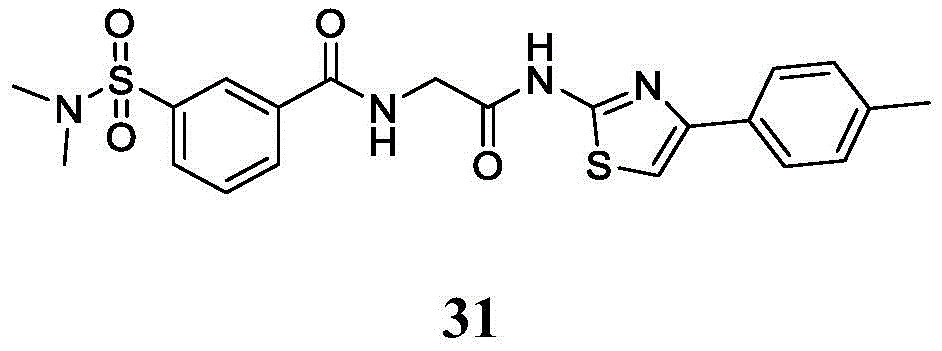
向3-(二甲基氨磺酰基)苯甲酸(139mg,606.32μmol)于DCM(2.0mL)中的溶液添加DIEA(235.09mg,1.82mmol)和HATU(253.59mg,666.95μmol),将混合物在20℃下搅拌0.5小时。然后在20℃下添加中间体D(150.00mg,606.51μmol),并将混合物在20℃下搅拌1.5小时。将反应混合物倒入水(10.0mL)中,并用EtOAc(10.0mL*3)萃取。将合并的有机萃取物用盐水(10.0mL)洗涤,经Na2SO4干燥,过滤,并浓缩。将粗产物用MTBE(10.0mL)研磨。通过过滤收集固体,并在真空中干燥,得到呈白色固体的化合物31。To a solution of 3-(dimethylsulfamoyl)benzoic acid (139 mg, 606.32 μmol) in DCM (2.0 mL) was added DIEA (235.09 mg, 1.82 mmol) and HATU (253.59 mg, 666.95 μmol) and the mixture was placed in Stir at 20°C for 0.5 hour. Intermediate D (150.00 mg, 606.51 μmol) was then added at 20°C, and the mixture was stirred at 20°C for 1.5 hours. The reaction mixture was poured into water (10.0 mL) and extracted with EtOAc (10.0 mL*3). The combined organic extracts were washed with brine (10.0 mL), dried over Na2SO4 , filtered, and concentrated. The crude product was triturated with MTBE (10.0 mL). The solid was collected by filtration and dried in vacuo to give compound 31 as a white solid.
1H NMR(400MHz,DMSO-d6)δ=12.45(s,1H),9.30-9.27(m,1H),8.26-8.22(m,2H),7.94(d,J=8.0Hz,1H),7.82-7.77(m,3H),7.56(s,1H),7.24(d,J=8.0Hz,2H),4.23(d,J=5.6Hz,2H),2.65(s,6H),2.32(s,3H)ppm1H NMR (400MHz, DMSO-d 6 )δ=12.45(s, 1H), 9.30-9.27(m, 1H), 8.26-8.22(m, 2H), 7.94(d, J=8.0Hz, 1H), 7.82 -7.77(m, 3H), 7.56(s, 1H), 7.24(d, J=8.0Hz, 2H), 4.23(d, J=5.6Hz, 2H), 2.65(s, 6H), 2.32(s, 3H)ppm
LCMS(ESI)m/z:[M+H]+=459.0LCMS (ESI) m/z: [M+H] + =459.0
实施例20.N-[2-[[4-(2,6-二甲基苯基)噻唑-2-基]氨基]-2-氧代基-乙基]-3-(二甲基氨磺酰基)苯甲酰胺(化合物29)的制备Example 20. N-[2-[[4-(2,6-Dimethylphenyl)thiazol-2-yl]amino]-2-oxo-ethyl]-3-(dimethylamino Preparation of sulfonyl)benzamide (compound 29)

向N-[2-[(4-溴噻唑-2-基)氨基]-2-氧代基-乙基]-3-(二甲基氨磺酰基)苯甲酰胺(50mg,111.78μmol)和(2,6-二甲基苯基)硼酸(50.29mg,335.33μmol)于二噁烷(2mL)和H2O(0.1mL)中的溶液添加DIPEA(28.89mg,223.55μmol),然后添加Pd(t-Bu3P)2(28.56mg,55.89μmol)。将反应混合物脱气三次,然后在100℃下搅拌12小时。将反应溶液用EtOAc(100mL)稀释,然后用NaHCO3水溶液(100mL)和盐水(100mL)洗涤,将有机层经Na2SO4干燥,然后在真空中浓缩。将残余物通过制备型HPLC(combiflash,CH3CN/H2O:5%至95%,NH3OH)纯化,得到呈粉红色固体的化合物29。To N-[2-[(4-bromothiazol-2-yl)amino]-2-oxo-ethyl]-3-(dimethylsulfamoyl)benzamide (50 mg, 111.78 μmol) and A solution of (2,6-dimethylphenyl)boronic acid (50.29 mg, 335.33 μmol) in dioxane (2 mL) and H 2 O (0.1 mL) was added DIPEA (28.89 mg, 223.55 μmol) followed by Pd (t-Bu 3 P) 2 (28.56 mg, 55.89 μmol). The reaction mixture was degassed three times and then stirred at 100°C for 12 hours. The reaction solution was diluted with EtOAc (100 mL), then washed with aqueous NaHCO 3 (100 mL) and brine (100 mL), and the organic layer was dried over Na 2 SO 4 and concentrated in vacuo. The residue was purified by preparative HPLC (combiflash, CH3CN / H2O : 5% to 95%, NH3OH ) to give compound 29 as a pink solid.
1HNMR(400MHz,MeOD)δ=8.34(s,1H),8.23(d,J=7.2Hz,1H),8.01(d,J=8.0Hz,1H),7.80-7.76(m,1H),7.20-7.16(m,1H),7.11-7.09(m,2H),6.91(s,1H),4.36(s,2H),2.76(s,6H),2.12(s,6H)ppm。 1 HNMR(400MHz,MeOD)δ=8.34(s,1H),8.23(d,J=7.2Hz,1H),8.01(d,J=8.0Hz,1H),7.80-7.76(m,1H),7.20 -7.16(m, 1H), 7.11-7.09(m, 2H), 6.91(s, 1H), 4.36(s, 2H), 2.76(s, 6H), 2.12(s, 6H) ppm.
LCMS(ESI)m/z:[M+H]+=473.3。LCMS (ESI) m/z: [M+H] + =473.3.
实施例21.化合物N-[2-氧代基-2-[(4-苯基噻唑-2-基)氨基]乙基]-5,6-二氢-4H-环戊[b]噻吩-2-甲酰胺(化合物79)的制备Example 21. Compound N-[2-oxo-2-[(4-phenylthiazol-2-yl)amino]ethyl]-5,6-dihydro-4H-cyclopenta[b]thiophene- Preparation of 2-carboxamide (compound 79)

向5,6-二氢-4H-环戊[b]噻吩-2-甲酸(30.0mg,178.35μmol)、HATU(67.81mg,178.35μmol)和DIPEA(83.82mg,648.53μmol,112.96μL)于DCM(0.5mL)中的溶液添加2-氨基-N-(4-苯基噻唑-2-基)乙酰胺(56.31mg,162.13μmol,TFA盐)。将混合物在20℃下搅拌2小时。将反应混合物在减压下浓缩,得到残余物。将残余物用MeOH(10.0mL)研磨,通过过滤收集固体,并在真空中干燥,得到呈白色固体的化合物79To 5,6-dihydro-4H-cyclopenta[b]thiophene-2-carboxylic acid (30.0 mg, 178.35 μmol), HATU (67.81 mg, 178.35 μmol) and DIPEA (83.82 mg, 648.53 μmol, 112.96 μL) in DCM (0.5 mL) was added 2-amino-N-(4-phenylthiazol-2-yl)acetamide (56.31 mg, 162.13 μmol, TFA salt). The mixture was stirred at 20°C for 2 hours. The reaction mixture was concentrated under reduced pressure to give a residue. The residue was triturated with MeOH (10.0 mL) and the solid was collected by filtration and dried in vacuo to give compound 79 as a white solid
1H NMR(400MHz,DMSO-d6)δ=12.41(s,1H),8.79-8.76(m,1H),7.91(d,J=7.2Hz,2H),7.64-7.58(m,2H),7.46-7.42(m,2H),7.37-7.30(m,1H),4.15(d,J=6.0Hz,2H),2.90-2.87(m,2H),2.78-2.69(m,2H),2.41-2.37(m,2H)ppm。1H NMR (400MHz, DMSO-d 6 ) δ=12.41(s, 1H), 8.79-8.76(m, 1H), 7.91(d, J=7.2Hz, 2H), 7.64-7.58(m, 2H), 7.46 -7.42(m, 2H), 7.37-7.30(m, 1H), 4.15(d, J=6.0Hz, 2H), 2.90-2.87(m, 2H), 2.78-2.69(m, 2H), 2.41-2.37 (m,2H)ppm.
LCMS(ESI)m/z:[M+H]+=384.0。LCMS (ESI) m/z: [M+H] + =384.0.
实施例22.化合物N-[(1S)-4-甲基-1-[(4-苯基噻唑-2-基)氨基甲酰基]戊基]苯甲酰胺(化合物46)的制备Example 22. Preparation of Compound N-[(1S)-4-methyl-1-[(4-phenylthiazol-2-yl)carbamoyl]pentyl]benzamide (Compound 46)
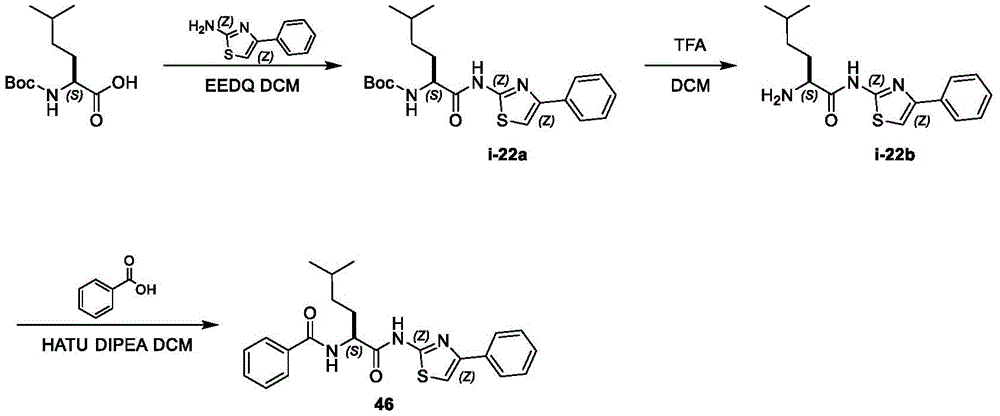
步骤1:N-[(1S)-4-甲基-1-[(4-苯基噻唑-2-基)氨基甲酰基]戊基]氨基甲酸叔丁酯(中间体i-22a)的制备Step 1: Preparation of tert-butyl N-[(1S)-4-methyl-1-[(4-phenylthiazol-2-yl)carbamoyl]pentyl]carbamate (intermediate i-22a)
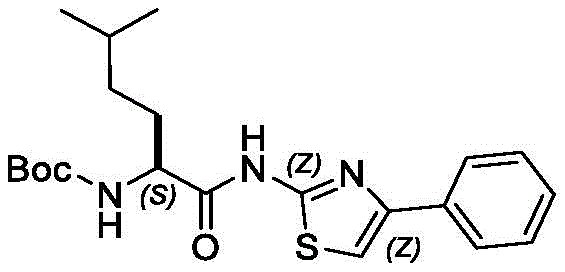
向(2S)-2-(叔丁氧基羰基氨基)-5-甲基-己酸(153.11mg,624.15μmol)和EEDQ(210.47mg,851.12μmol)于DCM(2.0mL)中的溶液添加4-苯基噻唑-2-胺(100.0mg,567.41μmol),将混合物在20℃下搅拌12小时。将反应混合物在减压下浓缩,得到残余物。将残余物通过柱色谱法(SiO2,石油醚/乙酸乙酯=10:1至2:1)纯化,得到呈白色固体的中间体i-22a。To a solution of (2S)-2-(tert-butoxycarbonylamino)-5-methyl-hexanoic acid (153.11 mg, 624.15 μmol) and EEDQ (210.47 mg, 851.12 μmol) in DCM (2.0 mL) was added 4 - Phenylthiazol-2-amine (100.0 mg, 567.41 μmol), the mixture was stirred at 20° C. for 12 hours. The reaction mixture was concentrated under reduced pressure to give a residue. The residue was purified by column chromatography ( SiO2 , petroleum ether/ethyl acetate = 10:1 to 2:1) to give intermediate i-22a as a white solid.
1H NMR(400MHz,DMSO-d6)δ=12.33(s,1H),7.91(d,J=7.2Hz,2H),7.63(s,1H),7.49-7.40(m,2H),7.37-7.28(m,1H),7.20(d,J=7.6Hz,1H),4.31-4.11(m,1H),2.50-2.06(m,5H),1.73-1.56(m,2H),1.55-1.45(m,1H),1.39(s,7H),1.27(s,2H),0.86-0.84(m,6H)ppm。1H NMR (400MHz, DMSO-d 6 ) δ=12.33(s, 1H), 7.91(d, J=7.2Hz, 2H), 7.63(s, 1H), 7.49-7.40(m, 2H), 7.37-7.28 (m, 1H), 7.20(d, J=7.6Hz, 1H), 4.31-4.11(m, 1H), 2.50-2.06(m, 5H), 1.73-1.56(m, 2H), 1.55-1.45(m , 1H), 1.39 (s, 7H), 1.27 (s, 2H), 0.86-0.84 (m, 6H) ppm.
LCMS(ESI)m/z:[M+H]+=404.2。LCMS (ESI) m/z: [M+H] + =404.2.
步骤2:(2S)-2-氨基-5-甲基-N-(4-苯基噻唑-2-基)己酰胺(中间体i-22b)三氟乙酸盐的制备Step 2: Preparation of (2S)-2-amino-5-methyl-N-(4-phenylthiazol-2-yl)hexanamide (intermediate i-22b) trifluoroacetate salt

向中间体i-22a(150.0mg,371.71μmol)于DCM(1.0mL)中的溶液添加TFA(0.1mL,1.35mmol),将混合物在20℃下搅拌12小时。将反应混合物在减压下浓缩,得到呈白色固体的中间体i-22b(TFA盐),其直接用于下一步骤。To a solution of intermediate i-22a (150.0 mg, 371.71 μmol) in DCM (1.0 mL) was added TFA (0.1 mL, 1.35 mmol) and the mixture was stirred at 20 °C for 12 h. The reaction mixture was concentrated under reduced pressure to give intermediate i-22b (TFA salt) as a white solid, which was used directly in the next step.
LCMS(ESI)m/z:[M+H]+=304.2。LCMS (ESI) m/z: [M+H] + =304.2.
步骤3:N-[(1S)-4-甲基-1-[(4-苯基噻唑-2-基)氨基甲酰基]戊基]苯甲酰胺(化合物46)的制备Step 3: Preparation of N-[(1S)-4-methyl-1-[(4-phenylthiazol-2-yl)carbamoyl]pentyl]benzamide (Compound 46)
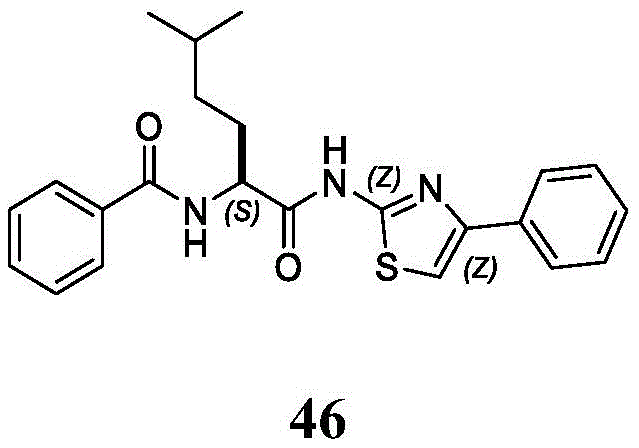
向苯甲酸(16.09mg,131.75μmol,20.11μL)、HATU(50.10mg,131.75μmol)和DIPEA(61.92mg,479.11μmol)于DCM(1.0mL)中的溶液添加中间体i-22b(50.0mg,119.78μmol,TFA盐),将混合物在30℃下搅拌2小时。将反应混合物在减压下浓缩,得到残余物。将残余物通过制备型HPLC(柱:Phenomenex Synergi C18 150*25*10μm;流动相:[水(0.1%TFA)-ACN];B%:58%-88%,9分钟)纯化,并冻干,得到呈白色固体的化合物46。To a solution of benzoic acid (16.09 mg, 131.75 μmol, 20.11 μL), HATU (50.10 mg, 131.75 μmol) and DIPEA (61.92 mg, 479.11 μmol) in DCM (1.0 mL) was added intermediate i-22b (50.0 mg, 119.78 μmol, TFA salt), the mixture was stirred at 30° C. for 2 hours. The reaction mixture was concentrated under reduced pressure to give a residue. The residue was purified by preparative HPLC (column:
1H NMR(400MHz,DMSO-d6)δ12.46(s,1H),8.68(d,J=7.2Hz,1H),7.93-7.90(m,4H),7.63(s,1H),7.60-7.54(m,1H),7.53-7.47(m,2H),7.44-7.42(m,2H),7.37-7.28(m,1H),4.67-4.61(m,1H),1.87-1.83(m,2H),1.59-1.56(m,1H),1.48-1.32(m,1H),1.31-1.15(m,1H),0.90-0.88(m,6H)ppm。1H NMR (400MHz, DMSO-d 6 ) δ 12.46(s, 1H), 8.68(d, J=7.2Hz, 1H), 7.93-7.90(m, 4H), 7.63(s, 1H), 7.60-7.54 (m,1H),7.53-7.47(m,2H),7.44-7.42(m,2H),7.37-7.28(m,1H),4.67-4.61(m,1H),1.87-1.83(m,2H) ,1.59-1.56(m,1H),1.48-1.32(m,1H),1.31-1.15(m,1H),0.90-0.88(m,6H)ppm.
LCMS(ESI)m/z:[M+H]+=408.2LCMS(ESI) m/z: [M+H] + =408.2
手性HPLC:Cellucoat-MeOH(DEA)-5-40-3mL-35T.lcm,1.982分钟。Chiral HPLC: Cellucoat-MeOH(DEA)-5-40-3mL-35T.1cm, 1.982min.
实施例23.化合物3-(二甲基氨磺酰基)-N-[(1S)-1-[(4-苯基噻唑-2-基)氨基甲酰基]丁基]苯甲酰胺(化合物17)的制备Example 23. Compound 3-(dimethylsulfamoyl)-N-[(1S)-1-[(4-phenylthiazol-2-yl)carbamoyl]butyl]benzamide (Compound 17 ) preparation

在20℃下在N2下向HATU(36.25mg,95.35μmol)和3-(二甲基氨磺酰基)苯甲酸(20.04mg,87.40μmol)于DCM(2.0mL)中的混合物一次性添加DIPEA(41.07mg,317.82μmol)。将混合物在20℃下搅拌10分钟。然后添加(2S)-2-氨基-N-(4-苯基噻唑-2-基)戊酰胺(50.0mg,128.41μmol,TFA盐),并将混合物在20℃下搅拌2小时。将反应混合物在减压下浓缩,得到残余物。将残余物通过制备型HPLC(TFA条件;柱:Boston pH-lex 150*25 10μm;流动相:[水(0.1%TFA)-ACN];B%:57%-76%,8分钟)纯化,并冻干,得到呈白色固体的化合物17。To a mixture of HATU (36.25 mg, 95.35 μmol) and 3-(dimethylsulfamoyl)benzoic acid (20.04 mg, 87.40 μmol) in DCM (2.0 mL) at 20 °C under N 2 was added DIPEA in one portion (41.07 mg, 317.82 μmol). The mixture was stirred at 20°C for 10 minutes. Then (2S)-2-amino-N-(4-phenylthiazol-2-yl)pentanamide (50.0 mg, 128.41 μmol, TFA salt) was added, and the mixture was stirred at 20° C. for 2 hours. The reaction mixture was concentrated under reduced pressure to give a residue. The residue was purified by preparative HPLC (TFA conditions; column: Boston pH-
1H NMR(400MHz,DMSO-d6)δ12.52(s,1H),9.05(d,J=7.6Hz,1H),8.29-8.27(m,2H),7.93-7.90(m,3H),7.81-7.79(m,1H),7.64(s,1H),7.54-7.39(m,2H),7.38-7.27(m,1H),4.76-4.70(m,1H),2.68-2.65(m,6H),1.86-1.83(m,2H),1.58-1.31(m,2H),0.96-0.92(m,3H)ppm。 1 H NMR (400MHz, DMSO-d 6 )δ12.52(s, 1H), 9.05(d, J=7.6Hz, 1H), 8.29-8.27(m, 2H), 7.93-7.90(m, 3H), 7.81-7.79(m, 1H), 7.64(s, 1H), 7.54-7.39(m, 2H), 7.38-7.27(m, 1H), 4.76-4.70(m, 1H), 2.68-2.65(m, 6H) ), 1.86-1.83 (m, 2H), 1.58-1.31 (m, 2H), 0.96-0.92 (m, 3H) ppm.
LCMS(ESI)m/z:[M+H]+=487.1。LCMS (ESI) m/z: [M+H] + =487.1.
手性HPLC:Amycoat-MeOH(DEA)-40-7min-3mL,2.022分钟。Chiral HPLC: Amycoat-MeOH(DEA)-40-7min-3mL, 2.022min.
实施例24.化合物N-[(1S)-1-甲基-2-氧代基-2-[(4-苯基噻唑-2-基)氨基]乙基]苯甲酰胺(化合物44)的制备Example 24. Compound N-[(1S)-1-methyl-2-oxo-2-[(4-phenylthiazol-2-yl)amino]ethyl]benzamide (Compound 44) preparation

步骤1:N-[(1S)-1-甲基-2-氧代基-2-[(4-苯基噻唑-2-基)氨基]乙基]氨基甲酸叔丁酯(中间体i-24a)的制备Step 1: tert-butyl N-[(1S)-1-methyl-2-oxo-2-[(4-phenylthiazol-2-yl)amino]ethyl]carbamate (intermediate i- Preparation of 24a)


在20℃下在N2下向(2S)-2-(叔丁氧基羰基氨基)丙酸(2.0g,10.57mmol)于DCM(20.0mL)中的溶液一次性添加EEDQ(3.56g,14.41mmol)和4-苯基噻唑-2-胺(1.69g,9.61mmol)。将混合物在20℃下搅拌8小时。将反应混合物用EtOAc(50.0mL)稀释,并用柠檬酸(10%)(50.0mL*3)洗涤。将有机相用盐水(50.0mL*3)洗涤,并且经Na2SO4干燥,过滤,并在减压下浓缩,得到残余物。将残余物通过柱色谱法(SiO2,石油醚/乙酸乙酯=10/1至3/1)纯化,得到呈白色固体的中间体i-24a。To a solution of (2S)-2-(tert-butoxycarbonylamino)propanoic acid (2.0 g, 10.57 mmol) in DCM (20.0 mL) at 20 °C under N2 was added EEDQ (3.56 g, 14.41 g in one portion) mmol) and 4-phenylthiazol-2-amine (1.69 g, 9.61 mmol). The mixture was stirred at 20°C for 8 hours. The reaction mixture was diluted with EtOAc (50.0 mL) and washed with citric acid (10%) (50.0 mL*3). The organic phase was washed with brine (50.0 mL* 3 ) and dried over Na2SO4 , filtered, and concentrated under reduced pressure to give a residue. The residue was purified by column chromatography (SiO 2 , petroleum ether/ethyl acetate = 10/1 to 3/1) to obtain intermediate i-24a as a white solid.
1H NMR(400MHz,DMSO-d6)δ=12.30(s,1H),7.90(d,J=8.0Hz,2H),7.63(s,1H),7.45-7.41(m,2H),7.36-7.30(m,1H),7.26(d,J=8.0Hz,1H),4.31–4.24(m,1H),1.38–1.28(m,12H)ppm。 1 H NMR (400MHz, DMSO-d 6 ) δ=12.30(s, 1H), 7.90(d, J=8.0Hz, 2H), 7.63(s, 1H), 7.45-7.41(m, 2H), 7.36- 7.30 (m, 1H), 7.26 (d, J=8.0Hz, 1H), 4.31–4.24 (m, 1H), 1.38–1.28 (m, 12H) ppm.
LCMS(ESI)m/z:[M+H]+=348.2。LCMS (ESI) m/z: [M+H] + =348.2.
步骤2:(2S)-2-氨基-N-(4-苯基噻唑-2-基)丙酰胺(中间体i-24b)三氟乙酸盐的制备Step 2: Preparation of (2S)-2-amino-N-(4-phenylthiazol-2-yl)propionamide (intermediate i-24b) trifluoroacetate salt
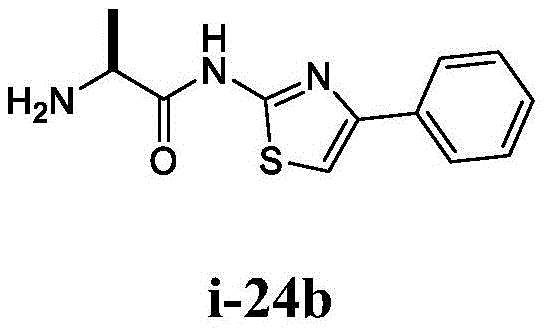
在20℃下在N2下向中间体i-24a(200.0mg,575.65μmol)于DCM(10.0mL)中的溶液一次性添加三氟乙酸(1.0mL)。将混合物在20℃下搅拌2小时。将反应混合物在减压下浓缩,得到呈黄色油状物的中间体i-24b(TFA盐),其不经进一步纯化即用于下一步骤。To a solution of intermediate i-24a (200.0 mg, 575.65 μmol) in DCM (10.0 mL) at 20 °C under N 2 was added trifluoroacetic acid (1.0 mL) in one portion. The mixture was stirred at 20°C for 2 hours. The reaction mixture was concentrated under reduced pressure to give intermediate i-24b (TFA salt) as a yellow oil, which was used in the next step without further purification.
LCMS(ESI)m/z:[M+H]+=248.2。LCMS (ESI) m/z: [M+H] + =248.2.
步骤3:N-[(1S)-1-甲基-2-氧代基-2-[(4-苯基噻唑-2-基)氨基]乙基]苯甲酰胺(化合物44)的制备Step 3: Preparation of N-[(1S)-1-methyl-2-oxo-2-[(4-phenylthiazol-2-yl)amino]ethyl]benzamide (compound 44)
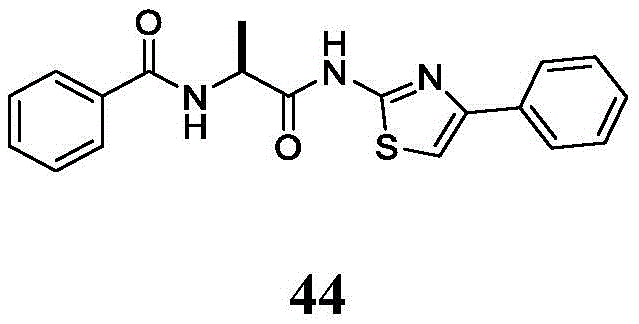
在20℃在N2下向DCM(5.0mL)中的苯甲酸(37.18mg,304.42μmol)一次性添加DIPEA(143.07mg,1.11mmol)和HATU(157.84mg,415.12μmol),并将混合物在20℃下搅拌10分钟。然后添加中间体i-24b(100.0mg,276.75μmol),并将混合物在20℃下搅拌2小时。将反应混合物在减压下浓缩,得到残余物。将残余物通过制备型HPLC(TFA条件;柱:Boston pH-lex150*25 10μm;流动相:[水(0.1%TFA)-ACN];B%:52%-72%,8分钟)纯化,并冻干,得到呈白色固体的化合物44。To benzoic acid (37.18 mg, 304.42 μmol) in DCM (5.0 mL) at 20°C under N2 was added DIPEA (143.07 mg, 1.11 mmol) and HATU (157.84 mg, 415.12 μmol) in one portion, and the mixture was heated at 20 Stir at °C for 10 minutes. Intermediate i-24b (100.0 mg, 276.75 μmol) was then added, and the mixture was stirred at 20° C. for 2 hours. The reaction mixture was concentrated under reduced pressure to give a residue. The residue was purified by preparative HPLC (TFA conditions; column: Boston pH-
1H NMR(400MHz,DMSO-d6)δ12.38(br s,1H),8.75(d,J=8.0Hz,1H),7.94-7.90(m,4H),7.64(s,1H),7.60-7.54(m,1H),7.53-7.47(m,2H),7.47-7.41(m,2H),7.37-7.29(m,1H),4.74-4.67(m,1H),1.48(d,J=8.0Hz,3H)ppm。 1 H NMR (400MHz, DMSO-d 6 )δ12.38(br s,1H),8.75(d,J=8.0Hz,1H),7.94-7.90(m,4H),7.64(s,1H),7.60 -7.54(m, 1H), 7.53-7.47(m, 2H), 7.47-7.41(m, 2H), 7.37-7.29(m, 1H), 4.74-4.67(m, 1H), 1.48(d, J= 8.0Hz, 3H)ppm.
LCMS(ESI)m/z:[M+H]+=352.3。LCMS (ESI) m/z: [M+H] + =352.3.
手性HPLC:Cellucoat-MeOH(DEA)-5-40-3mL-35T.lcm,2.262分钟。Chiral HPLC: Cellucoat-MeOH(DEA)-5-40-3mL-35T.1cm, 2.262 min.
实施例25.(S)-3-甲基-N-(4-(甲硫基)-1-氧代基-1-((4-苯基噻唑-2-基)氨基)丁烷-2-基)苯甲酰胺(化合物76)的制备Example 25. (S)-3-Methyl-N-(4-(methylthio)-1-oxo-1-((4-phenylthiazol-2-yl)amino)butane-2 Preparation of -yl)benzamide (compound 76)

向3-甲基苯甲酸(17.77mg,130.54μmol)于DCM(1mL)中的溶液添加HATU(74.45mg,195.81μmol)和DIPEA(50.61mg,391.61μmol),然后添加(2S)-2-氨基-4-甲基硫烷基-N-(4-苯基噻唑-2-基)丁酰胺(40.13mg,130.54μmol)。将混合物在25℃下搅拌2小时。将反应混合物在减压下浓缩。将残余物通过制备型HPLC(TFA条件;柱:Phenomenex Synergi C18 150*25*10μm;流动相:[水(0.1%TF A)-ACN];B%:55%-85%,9分钟)纯化,并冻干,得到呈白色固体的化合物76。To a solution of 3-methylbenzoic acid (17.77 mg, 130.54 μmol) in DCM (1 mL) was added HATU (74.45 mg, 195.81 μmol) and DIPEA (50.61 mg, 391.61 μmol) followed by (2S)-2-amino -4-Methylsulfanyl-N-(4-phenylthiazol-2-yl)butanamide (40.13 mg, 130.54 μmol). The mixture was stirred at 25°C for 2 hours. The reaction mixture was concentrated under reduced pressure. The residue was purified by preparative HPLC (TFA conditions; column:
1H NMR(400MHz,甲醇-d4)δ7.90(d,J=7.2Hz,2H),7.73-7.70(m,2H),7.42-7.34(m,5H),7.30-7.27(m,1H),4.93-4.89(m,1H),2.71-2.60(m,2H),2.42(s,3H),2.30-2.17(m,2H),2.14(s,3H)ppm。1H NMR(400MHz, methanol-d4)δ7.90(d,J=7.2Hz,2H),7.73-7.70(m,2H),7.42-7.34(m,5H),7.30-7.27(m,1H), 4.93-4.89 (m, 1H), 2.71-2.60 (m, 2H), 2.42 (s, 3H), 2.30-2.17 (m, 2H), 2.14 (s, 3H) ppm.
LCMS(ESI)m/z:[M+H]+=426.0。LCMS (ESI) m/z: [M+H] + =426.0.
SFC HPLC:OD-3_5CM_MEOH(DEA)_5_40_3ML_T3,2.236分钟。SFC HPLC: OD-3_5CM_MEOH(DEA)_5_40_3ML_T3, 2.236 min.
实施例26.化合物(S)-4-甲基-N-(4-(甲硫基)-1-氧代基-1-((4-苯基噻唑-2-基)氨基)丁烷-2-基)苯甲酰胺(化合物54)的制备Example 26. Compound (S)-4-Methyl-N-(4-(methylthio)-1-oxo-1-((4-phenylthiazol-2-yl)amino)butane- Preparation of 2-yl)benzamide (compound 54)

向4-甲基苯甲酸(17.77mg,130.54μmol)于DCM(1mL)中的溶液添加HATU(74.45mg,195.81μmol)和DIPEA(50.61mg,391.62μmol),然后添加(2S)-2-氨基-4-甲基硫烷基-N-(4-苯基噻唑-2-基)丁酰胺(40.13mg,130.54μmol)。将混合物在25℃下搅拌2小时。将反应混合物在减压下浓缩。将残余物通过制备型HPLC(TFA条件;柱:Phenomenex Synergi C18 150*25*10μm;流动相:[水(0.1%TF A)-ACN];B%:55%-85%,9分钟)纯化,得到呈白色固体的化合物54。To a solution of 4-methylbenzoic acid (17.77 mg, 130.54 μmol) in DCM (1 mL) was added HATU (74.45 mg, 195.81 μmol) and DIPEA (50.61 mg, 391.62 μmol) followed by (2S)-2-amino -4-Methylsulfanyl-N-(4-phenylthiazol-2-yl)butanamide (40.13 mg, 130.54 μmol). The mixture was stirred at 25°C for 2 hours. The reaction mixture was concentrated under reduced pressure. The residue was purified by preparative HPLC (TFA conditions; column:
1HNMR(400MHz,甲醇-d4)δ7.90(d,J=7.2Hz,2H),7.81(d,J=8.0Hz,2H),7.42-7.36(m,3H),7.33-7.28(m,3H),4.93-4.89(m,1H),2.75-2.62(m,2H),2.41(s,3H),2.30-2.21(m,2H),2.14(s,3H)ppm。 1 HNMR(400MHz, methanol-d4)δ7.90(d,J=7.2Hz,2H),7.81(d,J=8.0Hz,2H),7.42-7.36(m,3H),7.33-7.28(m, 3H), 4.93-4.89 (m, 1H), 2.75-2.62 (m, 2H), 2.41 (s, 3H), 2.30-2.21 (m, 2H), 2.14 (s, 3H) ppm.
LCMS(ESI)m/z:[M+H]+=426.0。LCMS (ESI) m/z: [M+H] + =426.0.
手性HPLC:OD-3_5CM_MEOH(DEA)_40_3ML_T35.M,1.673分钟。Chiral HPLC: OD-3_5CM_MEOH(DEA)_40_3ML_T35.M, 1.673 min.
实施例27.(S)-3-(甲基磺酰基)-N-(4-(甲硫基)-1-氧代基-1-((4-苯基噻唑-2-基)氨基)丁烷-2-基)苯甲酰胺(化合物3)的制备Example 27. (S)-3-(Methylsulfonyl)-N-(4-(methylthio)-1-oxo-1-((4-phenylthiazol-2-yl)amino) Preparation of butan-2-yl)benzamide (compound 3)

向3-甲基磺酰基苯甲酸(19.00mg,94.91μmol)于DCM(2mL)中的溶液添加HATU(54.13mg,142.36μmol)和DIPEA(49.07mg,379.64μmol),然后添加(2S)-2-氨基-4-甲基硫烷基-N-(4-苯基噻唑-2-基)丁酰胺(40mg,94.91μmol)。将混合物在10℃下搅拌2小时。将反应混合物在减压下浓缩。将残余物通过制备型HPLC(TFA条件;柱:Phenomenex Synergi C18150*25*10μm;流动相:[水(0.1%TF A)-ACN];B%:48%-78%,9分钟)纯化,得到呈白色固体的化合物3。To a solution of 3-methylsulfonylbenzoic acid (19.00 mg, 94.91 μmol) in DCM (2 mL) was added HATU (54.13 mg, 142.36 μmol) and DIPEA (49.07 mg, 379.64 μmol) followed by (2S)-2 -Amino-4-methylsulfanyl-N-(4-phenylthiazol-2-yl)butanamide (40 mg, 94.91 μmol). The mixture was stirred at 10°C for 2 hours. The reaction mixture was concentrated under reduced pressure. The residue was purified by preparative HPLC (TFA conditions; column: Phenomenex Synergi C18150*25*10 μm; mobile phase: [water (0.1% TF A)-ACN]; B%: 48%-78%, 9 minutes),
1HNMR(400MHz,甲醇-d4)δ8.50(s,1H),8.24(d,J=8.0Hz,1H),8.16(d,J=8.0Hz,1H),7.91-7.88(m,2H)7.79-7.77(m,1H),7.42-7.36(m,3H),7.31-7.30(m,1H),4.96-4.92(m,1H),3.18(s,3H),2.77-2.66(m,2H),2.36-2.20(m,2H),2.15(s,3H)ppm。 1 HNMR(400MHz, methanol-d4)δ8.50(s, 1H), 8.24(d, J=8.0Hz, 1H), 8.16(d, J=8.0Hz, 1H), 7.91-7.88(m, 2H) 7.79-7.77(m, 1H), 7.42-7.36(m, 3H), 7.31-7.30(m, 1H), 4.96-4.92(m, 1H), 3.18(s, 3H), 2.77-2.66(m, 2H) ), 2.36-2.20 (m, 2H), 2.15 (s, 3H) ppm.
LCMS(ESI)m/z:[M+H]+=490.0。LCMS (ESI) m/z: [M+H] + =490.0.
实施例28. 3-(叔丁基)-N-(2-氧代基-2-((4-苯基噻唑-2-基)氨基)乙基)苯甲酰胺(化合物65)的制备Example 28. Preparation of 3-(tert-butyl)-N-(2-oxo-2-((4-phenylthiazol-2-yl)amino)ethyl)benzamide (Compound 65)

向3-叔丁基苯甲酸(25.66mg,143.96μmol)于DCM(1mL)中的溶液添加HATU(82.11mg,215.94μmol)、DIPEA(93.03mg,719.81μmol,125.38μL)。将反应混合物在25℃下搅拌0.5小时,然后添加2-氨基-N-(4-苯基噻唑-2-基)乙酰胺(50mg,143.96μmol)。将反应混合物在25℃下搅拌2小时。将反应混合物用MeCN(2mL)稀释,并形成白色沉淀物。将沉淀物滤出,并冻干,得到呈白色固体的化合物65。To a solution of 3-tert-butylbenzoic acid (25.66 mg, 143.96 μmol) in DCM (1 mL) was added HATU (82.11 mg, 215.94 μmol), DIPEA (93.03 mg, 719.81 μmol, 125.38 μL). The reaction mixture was stirred at 25 °C for 0.5 h, then 2-amino-N-(4-phenylthiazol-2-yl)acetamide (50 mg, 143.96 μmol) was added. The reaction mixture was stirred at 25°C for 2 hours. The reaction mixture was diluted with MeCN (2 mL) and a white precipitate formed. The precipitate was filtered off and lyophilized to give compound 65 as a white solid.
LCMS(ESI)m/z:[M+H]+=394.3。LCMS (ESI) m/z: [M+H] + =394.3.
1H NMR(400MHz,DMSO-d6)δ=12.44(s,1H),8.96-8.94(m,1H),7.94-7.90(m,3H),7.73(d,J=8.0Hz,1H),7.64(s,1H),7.60(br d,J=8.4Hz,1H),7.47-7.42(m,3H),7.34-7.31(m,1H),4.21(d,J=5.6Hz,2H),1.33(s,9H)ppm。 1 H NMR (400MHz, DMSO-d6) δ=12.44(s, 1H), 8.96-8.94(m, 1H), 7.94-7.90(m, 3H), 7.73(d, J=8.0Hz, 1H), 7.64 (s, 1H), 7.60 (br d, J=8.4Hz, 1H), 7.47-7.42 (m, 3H), 7.34-7.31 (m, 1H), 4.21 (d, J=5.6Hz, 2H), 1.33 (s,9H)ppm.
实施例29. 3-(2-羟基丙烷-2-基)-N-(2-氧代基-2-((4-苯基噻唑-2-基)氨基)乙基)苯甲酰胺(化合物61)的制备Example 29. 3-(2-Hydroxypropan-2-yl)-N-(2-oxo-2-((4-phenylthiazol-2-yl)amino)ethyl)benzamide (compound 61) Preparation

步骤1:3-(2-羟基丙烷-2-基)苯甲酸(中间体i-29a)的制备Step 1: Preparation of 3-(2-hydroxypropan-2-yl)benzoic acid (intermediate i-29a)

在-65℃下在N2下向3-溴苯甲酸(500mg,2.49mmol)于THF(10mL)中的溶液添加n-BuLi(2mL,4.97mmol,2.5M)。将反应混合物在-65℃下搅拌10分钟,然后在-65℃下添加丙酮(365μL 4.97mmol)。将反应混合物逐渐温至25℃,然后在室温下搅拌50分钟。将反应混合物倒入20mL饱和氯化铵水溶液中。用2M HCl将混合物调节至pH=4。然后用EtOAc(30mL×5)萃取混合物。将合并的有机萃取物用盐水洗涤,经无水硫酸钠干燥,过滤,并浓缩,得到残余物。向残余物添加MeCN,得到沉淀物。将沉淀物滤出,并在真空中干燥,得到呈白色固体的中间体i-29a。To a solution of 3-bromobenzoic acid (500 mg, 2.49 mmol) in THF (10 mL) was added n-BuLi (2 mL, 4.97 mmol, 2.5 M) at -65 °C under N2 . The reaction mixture was stirred at -65°C for 10 minutes, then acetone (365 μL 4.97 mmol) was added at -65°C. The reaction mixture was gradually warmed to 25°C and then stirred at room temperature for 50 minutes. The reaction mixture was poured into 20 mL of saturated aqueous ammonium chloride. The mixture was adjusted to pH=4 with 2M HCl. The mixture was then extracted with EtOAc (30 mL x 5). The combined organic extracts were washed with brine, dried over anhydrous sodium sulfate, filtered, and concentrated to give a residue. MeCN was added to the residue to give a precipitate. The precipitate was filtered off and dried in vacuo to yield intermediate i-29a as a white solid.
1H NMR(400MHz,DMSO-d6)δ=8.09(m,1H),7.80-7.76(m,1H),7.72-7.67(m,1H),7.43(m,1H),5.15(br s,1H),1.44(s,6H)ppm。 1 H NMR (400MHz, DMSO-d6)δ=8.09(m,1H), 7.80-7.76(m,1H), 7.72-7.67(m,1H), 7.43(m,1H), 5.15(br s,1H) ), 1.44(s,6H)ppm.
LCMS(ESI)m/z:[M-H2O+H]+=163.1。LCMS (ESI) m/z: [MH2O + H] + =163.1.
步骤2:3-(2-羟基丙烷-2-基)-N-(2-氧代基-2-((4-苯基噻唑-2-基)氨基)乙基)苯甲酰胺(化合物61)的制备Step 2: 3-(2-Hydroxypropan-2-yl)-N-(2-oxo-2-((4-phenylthiazol-2-yl)amino)ethyl)benzamide (Compound 61 ) preparation
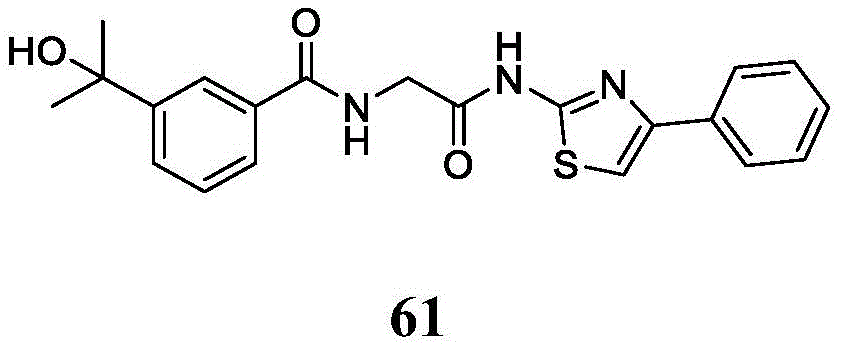
向中间体i-29a(25.94mg,143.96μmol)于DCM(1mL)中的溶液添加HATU(82.11mg,215.94μmol)和DIPEA(93.03mg,719.80μmol)。将反应混合物在25℃下搅拌0.5小时,然后添加2-氨基-N-(4-苯基噻唑-2-基)乙酰胺(50mg,143.96μmol,TFA盐)。将反应混合物在25℃下搅拌2小时。将反应混合物用MeCN(2mL)稀释,并形成白色沉淀物。将沉淀物滤出,并冻干,得到呈白色固体的化合物61。To a solution of intermediate i-29a (25.94 mg, 143.96 μmol) in DCM (1 mL) was added HATU (82.11 mg, 215.94 μmol) and DIPEA (93.03 mg, 719.80 μmol). The reaction mixture was stirred at 25°C for 0.5 h, then 2-amino-N-(4-phenylthiazol-2-yl)acetamide (50 mg, 143.96 μmol, TFA salt) was added. The reaction mixture was stirred at 25°C for 2 hours. The reaction mixture was diluted with MeCN (2 mL) and a white precipitate formed. The precipitate was filtered off and lyophilized to give compound 61 as a white solid.
LCMS(ESI)m/z:[M+H]+=396.3。LCMS (ESI) m/z: [M+H] + =396.3.
1H NMR(400MHz,DMSO-d6)δ=8.93-8.90(m,1H),8.01(s,1H),7.90(d,J=7.6Hz,2H),7.73(d,J=8.0Hz,1H),7.65(d,J=8.0Hz,1H),7.63(s,1H),7.45-7.40(m,3H),7.35-7.30(m,1H),5.14(s,1H),4.19(d,J=5.6Hz,2H),1.46(s,6H)ppm。 1 H NMR (400MHz, DMSO-d6) δ=8.93-8.90(m, 1H), 8.01(s, 1H), 7.90(d, J=7.6Hz, 2H), 7.73(d, J=8.0Hz, 1H) ), 7.65(d, J=8.0Hz, 1H), 7.63(s, 1H), 7.45-7.40(m, 3H), 7.35-7.30(m, 1H), 5.14(s, 1H), 4.19(d, J=5.6Hz, 2H), 1.46 (s, 6H) ppm.
实施例30.(S)-3-(叔丁基)-N-(4-(甲硫基)-1-氧代基-1-((4-苯基噻唑-2-基)氨基)丁烷-2-基)苯甲酰胺(化合物73)的制备Example 30. (S)-3-(tert-Butyl)-N-(4-(methylthio)-1-oxo-1-((4-phenylthiazol-2-yl)amino)butane Preparation of Alk-2-yl)benzamide (Compound 73)

在0℃下向3-叔丁基苯甲酸(21.14mg,118.64μmol)、DIPEA(82.66μL)于DCM(0.5mL)中的溶液添加HATU(67.66mg,177.96μmol)。在添加后,将混合物在此温度下搅拌15分钟,然后在0℃下添加(2S)-2-氨基-4-甲基硫烷基-N-(4-苯基噻唑-2-基)丁酰胺(50mg,118.64μmol)。将所得混合物在20℃下搅拌2小时。将反应混合物用水(1mL)稀释,并用DCM(2*1mL)萃取。将合并的有机萃取物用盐水(2mL)洗涤,经无水Na2SO4干燥,过滤,并在减压下浓缩,得到残余物。将残余物通过制备型HPLC(combiflash,CH3CN/H2O,5%至95%,FA条件)纯化,得到呈白色固体的化合物73。To a solution of 3-tert-butylbenzoic acid (21.14 mg, 118.64 μmol), DIPEA (82.66 μL) in DCM (0.5 mL) was added HATU (67.66 mg, 177.96 μmol) at 0°C. After the addition, the mixture was stirred at this temperature for 15 minutes, then (2S)-2-amino-4-methylsulfanyl-N-(4-phenylthiazol-2-yl)butane was added at 0°C amide (50 mg, 118.64 μmol). The resulting mixture was stirred at 20°C for 2 hours. The reaction mixture was diluted with water (1 mL) and extracted with DCM (2*1 mL). The combined organic extracts were washed with brine ( 2 mL), dried over anhydrous Na2SO4 , filtered, and concentrated under reduced pressure to give a residue. The residue was purified by preparative HPLC (combiflash, CH3CN / H2O , 5% to 95%, FA conditions) to give compound 73 as a white solid.
LCMS(ESI)m/z:[M+H]+=468.3。LCMS (ESI) m/z: [M+H] + =468.3.
1H NMR(400MHz,DMSO-d6)δ=12.62-12.30(br s,1H),8.73(d,J=7.2Hz,1H),7.91-7.89(m,3H),7.76(d,J=8.0Hz,1H),7.63(s,1H),7.62-7.57(m,1H),7.43-7.41(m,3H),7.35-7.30(m,1H),4.79-4.74(m,1H),2.66-2.50(m,2H),2.14-2.12(m,2H),2.10(s,3H),1.32(s,9H)ppm。 1 H NMR (400MHz, DMSO-d6) δ=12.62-12.30 (br s, 1H), 8.73 (d, J=7.2Hz, 1H), 7.91-7.89 (m, 3H), 7.76 (d, J=8.0 Hz,1H),7.63(s,1H),7.62-7.57(m,1H),7.43-7.41(m,3H),7.35-7.30(m,1H),4.79-4.74(m,1H),2.66- 2.50(m, 2H), 2.14-2.12(m, 2H), 2.10(s, 3H), 1.32(s, 9H) ppm.
实施例31.(S)-3-(2-羟基丙烷-2-基)-N-(4-(甲硫基)-1-氧代基-1-((4-苯基噻唑-2-基)氨基)丁烷-2-基)苯甲酰胺(化合物55)的制备Example 31. (S)-3-(2-Hydroxypropan-2-yl)-N-(4-(methylthio)-1-oxo-1-((4-phenylthiazole-2- Preparation of yl)amino)butan-2-yl)benzamide (compound 55)

在0℃下向3-(1-羟基-1-甲基-乙基)苯甲酸(21.38mg,118.64μmol)、DIPEA(82.66μL)于DCM(0.5mL)中的溶液添加HATU(67.66mg,177.96μmol)。将混合物在此温度下搅拌15分钟,然后在0℃下添加(2S)-2-氨基-4-甲基硫烷基-N-(4-苯基噻唑-2-基)丁酰胺(50mg,118.64μmol)。将所得混合物在20℃下搅拌12小时。将反应混合物用水(1mL)稀释,并用DCM(2*1mL)萃取。将合并的有机萃取物用盐水(2mL)洗涤,经无水Na2SO4干燥,过滤,并在减压下浓缩,得到残余物。将残余物通过反相-HPLC(FA条件)纯化,得到呈白色固体的化合物55。To a solution of 3-(1-hydroxy-1-methyl-ethyl)benzoic acid (21.38 mg, 118.64 μmol), DIPEA (82.66 μL) in DCM (0.5 mL) at 0 °C was added HATU (67.66 mg, 177.96 μmol). The mixture was stirred at this temperature for 15 minutes, then (2S)-2-amino-4-methylsulfanyl-N-(4-phenylthiazol-2-yl)butanamide (50 mg, 118.64 μmol). The resulting mixture was stirred at 20°C for 12 hours. The reaction mixture was diluted with water (1 mL) and extracted with DCM (2*1 mL). The combined organic extracts were washed with brine ( 2 mL), dried over anhydrous Na2SO4 , filtered, and concentrated under reduced pressure to give a residue. The residue was purified by reverse phase-HPLC (FA conditions) to give compound 55 as a white solid.
1H NMR(400MHz,DMSO-d6)δ=12.48(s,1H),8.71(br d,J=7.2Hz,1H),8.00(s,1H),7.90(d,J=7.6Hz,2H),7.77(d,J=8.0Hz,1H),7.65-7.62(m,2H),7.45-7.41(m,3H),7.33-7.32(m,1H),5.11(s,1H),4.78-4.77(m,1H),2.66-2.56(m,2H),2.16-2.12(m,2H),2.10(s,3H),1.45(s,6H)ppm。 1 H NMR (400MHz, DMSO-d6)δ=12.48(s, 1H), 8.71(br d, J=7.2Hz, 1H), 8.00(s, 1H), 7.90(d, J=7.6Hz, 2H) ,7.77(d,J=8.0Hz,1H),7.65-7.62(m,2H),7.45-7.41(m,3H),7.33-7.32(m,1H),5.11(s,1H),4.78-4.77 (m, 1H), 2.66-2.56 (m, 2H), 2.16-2.12 (m, 2H), 2.10 (s, 3H), 1.45 (s, 6H) ppm.
LCMS(ESI)m/z:[M+H]+=470.1。LCMS (ESI) m/z: [M+H] + =470.1.
实施例32. 4-甲基-N-[(1S)-3-甲基硫烷基-1-[(4-苯基噻唑-2-基)氨基甲酰基]丙基]-3-甲基磺酰基-苯甲酰胺(化合物2)的制备Example 32. 4-Methyl-N-[(1S)-3-methylsulfanyl-1-[(4-phenylthiazol-2-yl)carbamoyl]propyl]-3-methyl Preparation of sulfonyl-benzamide (compound 2)
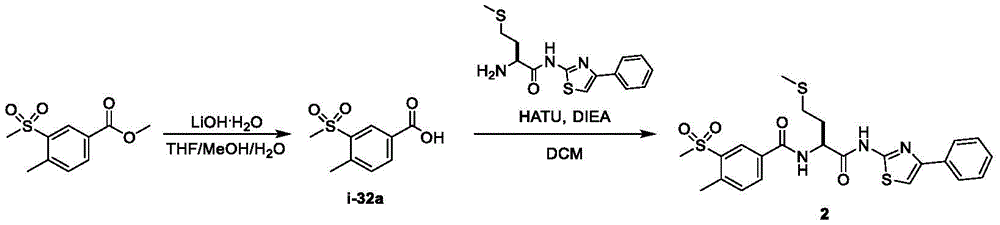
步骤1:4-甲基-3-甲基磺酰基-苯甲酸(中间体i-32a)的制备Step 1: Preparation of 4-methyl-3-methylsulfonyl-benzoic acid (intermediate i-32a)

向4-甲基-3-甲基磺酰基-苯甲酸甲酯(100mg,438.09μmol)于THF(1mL)、MeOH(1mL)和H2O(0.5mL)中的混合物添加LiOH·H2O(55.15mg,1.31mmol),并将混合物在30℃下搅拌2小时。添加水(20mL),并用2N HCl将pH调节至4,然后用EtOAc(20mL*2)萃取混合物。将合并的有机相用盐水洗涤,经无水Na2SO4干燥,过滤,并在真空下浓缩,得到呈白色固体的中间体i-32a,其不经进一步纯化即用于下一步骤。To a mixture of methyl 4-methyl-3-methylsulfonyl-benzoate (100 mg, 438.09 μmol) in THF (1 mL), MeOH (1 mL) and H 2 O (0.5 mL) was added LiOH·H 2 O (55.15 mg, 1.31 mmol) and the mixture was stirred at 30°C for 2 hours. Water (20 mL) was added and the pH was adjusted to 4 with 2N HCl, then the mixture was extracted with EtOAc (20 mL*2). The combined organic phases were washed with brine, dried over anhydrous Na2SO4 , filtered, and concentrated in vacuo to afford intermediate i-32a as a white solid, which was used in the next step without further purification.
LCMS(ESI)m/z:[M+H]+=215.2。LCMS (ESI) m/z: [M+H] + =215.2.
步骤2:4-甲基-N-[(1S)-3-甲基硫烷基-1-[(4-苯基噻唑-2-基)氨基甲酰基]丙基]-3-甲基磺酰基-苯甲酰胺(化合物2)的制备Step 2: 4-Methyl-N-[(1S)-3-methylsulfanyl-1-[(4-phenylthiazol-2-yl)carbamoyl]propyl]-3-methylsulfonic acid Preparation of acyl-benzamide (compound 2)

向中间体i-32a(20.33mg,94.91μmol)于DCM(1mL)中的混合物添加HATU(43.30mg,113.89μmol)和DIEA(36.80mg,284.73μmol),并将混合物在15℃下搅拌5分钟。然后添加(2S)-2-氨基-4-甲基硫烷基-N-(4-苯基噻唑-2-基)丁酰胺(40mg,94.91μmol,TFA盐),并将混合物在15℃下搅拌16小时。在减压下除去溶剂,然后将残余物通过制备型HPLC(柱:Phenomenex Synergi C18 150*25*10μm;流动相:[水(0.1%TFA)-ACN];B%:42%-72%,9分钟)纯化,并冻干,得到呈白色固体的化合物2。To a mixture of intermediate i-32a (20.33 mg, 94.91 μmol) in DCM (1 mL) was added HATU (43.30 mg, 113.89 μmol) and DIEA (36.80 mg, 284.73 μmol) and the mixture was stirred at 15 °C for 5 min . Then (2S)-2-amino-4-methylsulfanyl-N-(4-phenylthiazol-2-yl)butanamide (40 mg, 94.91 μmol, TFA salt) was added and the mixture was heated at 15°C Stir for 16 hours. The solvent was removed under reduced pressure and the residue was passed through preparative HPLC (column:
1H NMR(400MHz,MeOD)δ=8.53(d,J=1.6Hz,1H),8.11-8.09(m,1H),7.91-7.89(m,2H),7.57(d,J=8.0,1H),7.40-7.37(m,3H),7.31-7.27(m,1H),4.93-4.91(m,1H),3.19(s,3H),2.77(s,3H),2.72-2.61(m,2H),2.33-2.18(m,2H),2.14(s,3H)ppm。 1 H NMR (400MHz, MeOD) δ=8.53 (d, J=1.6Hz, 1H), 8.11-8.09 (m, 1H), 7.91-7.89 (m, 2H), 7.57 (d, J=8.0, 1H) ,7.40-7.37(m,3H),7.31-7.27(m,1H),4.93-4.91(m,1H),3.19(s,3H),2.77(s,3H),2.72-2.61(m,2H) , 2.33-2.18 (m, 2H), 2.14 (s, 3H) ppm.
LCMS(ESI)m/z:[M+H]+=504.2。LCMS (ESI) m/z: [M+H] + =504.2.
实施例33. 3-[2-[[2-[[3-(二甲基氨磺酰基)苯甲酰基]氨基]乙酰基]氨基]噻唑-4-基]苯甲酸甲酯(化合物9)的制备Example 33. Methyl 3-[2-[[2-[[3-(dimethylsulfamoyl)benzoyl]amino]acetyl]amino]thiazol-4-yl]benzoate (Compound 9) preparation

在N2下向N-[2-[(4-溴噻唑-2-基)氨基]-2-氧代基-乙基]-3-(二甲基氨磺酰基)苯甲酰胺(30mg,67.07μmol)和(3-甲氧基羰基苯基)硼酸(36.21mg,201.21μmol)于1,4-二噁烷(3mL)和H2O(0.2mL)中的溶液添加Pd(t-Bu3P)2(17.14mg,33.53μmol)和DIEA(43.34mg,335.35μmol,58.41μL)。将混合物在100℃下搅拌2小时,然后倒入H2O(20mL)中,并用EtOAc(5mL*3)萃取。将合并的有机萃取物用H2O(5mL*2)和盐水(5mL*1)洗涤,经Na2SO4干燥,过滤,并在真空下浓缩。将残余物通过制备型HPLC(柱:Phenomenex Gemini 150*25mm*10μm;流动相:[水(0.04%NH3H2O+10mM NH4HCO3)-ACN];B%:36%-66%,10分钟)纯化,并冻干,得到呈白色固体的化合物9。To N-[ 2 -[(4-bromothiazol-2-yl)amino]-2-oxo-ethyl]-3-(dimethylsulfamoyl)benzamide (30 mg, 67.07 μmol) and (3-methoxycarbonylphenyl)boronic acid (36.21 mg, 201.21 μmol) in 1,4-dioxane (3 mL) and H 2 O (0.2 mL) were added Pd(t-Bu 3 P) 2 (17.14 mg, 33.53 μmol) and DIEA (43.34 mg, 335.35 μmol, 58.41 μL). The mixture was stirred at 100°C for 2 hours, then poured into H2O (20 mL) and extracted with EtOAc (5 mL*3). The combined organic extracts were washed with H2O (5 mL*2) and brine (5 mL*1), dried over Na2SO4 , filtered, and concentrated in vacuo. The residue was passed through preparative HPLC (column:
1H NMR(400MHz,DMSO-d6)δ12.58(s,1H),9.33-9.31(m,1H),8.56(s,1H),8.27-8.24(m,2H),8.18(d,J=8.0Hz,1H),7.94-7.91(m,2H),7.83-7.81(m,2H),7.62-7.60(m,1H),4.25(d,J=5.6Hz,2H),3.89(s,3H),2.66(s,6H)ppm 1 H NMR (400MHz, DMSO-d 6 ) δ 12.58(s, 1H), 9.33-9.31(m, 1H), 8.56(s, 1H), 8.27-8.24(m, 2H), 8.18(d, J =8.0Hz,1H),7.94-7.91(m,2H),7.83-7.81(m,2H),7.62-7.60(m,1H),4.25(d,J=5.6Hz,2H),3.89(s, 3H),2.66(s,6H)ppm
LCMS(ESI)m/z:[M+H]+=503.3。LCMS (ESI) m/z: [M+H] + =503.3.
实施例34. 3-[2-[[2-[[3-(二甲基氨磺酰基)苯甲酰基]氨基]乙酰基]氨基]噻唑-4-基]-N-甲基-苯甲酰胺(化合物4)的制备Example 34. 3-[2-[[2-[[3-(dimethylsulfamoyl)benzoyl]amino]acetyl]amino]thiazol-4-yl]-N-methyl-benzyl Preparation of amide (compound 4)

在N2下向N-[2-[(4-溴噻唑-2-基)氨基]-2-氧代基-乙基]-3-(二甲基氨磺酰基)苯甲酰胺(30mg,67.07μmol)和[3-(甲基氨基甲酰基)苯基]硼酸(36.01mg,201.21μmol)于1,4-二噁烷(3mL)和H2O(0.15mL)中的溶液添加Pd(t-Bu3P)2(17.14mg,33.53μmol)和DIEA(43.34mg,335.35μmol,58.41μL)。将混合物在100℃下搅拌2小时,然后倒入H2O(20mL)中,并用EtOAC(5mL*3)萃取。将合并的有机层用H2O(5mL*2)和盐水(5mL)洗涤,经Na2SO4干燥,过滤,并在真空下浓缩。将残余物通过制备型HPLC(柱:Phenomenex Synergi C18 150*25*10μm;流动相:[水(0.1%TFA)-ACN];B%:35%-65%,9分钟)纯化,并冻干,得到呈白色固体的化合物4。To N-[ 2 -[(4-bromothiazol-2-yl)amino]-2-oxo-ethyl]-3-(dimethylsulfamoyl)benzamide (30 mg, 67.07 μmol) and [3-(methylcarbamoyl)phenyl]boronic acid (36.01 mg, 201.21 μmol) in 1,4-dioxane (3 mL) and H 2 O (0.15 mL) were added Pd ( t- Bu3P ) 2 (17.14 mg, 33.53 μmol) and DIEA (43.34 mg, 335.35 μmol, 58.41 μL). The mixture was stirred at 100°C for 2 hours, then poured into H2O (20 mL) and extracted with EtOAc (5 mL*3). The combined organic layers were washed with H2O (5 mL*2) and brine ( 5 mL), dried over Na2SO4 , filtered, and concentrated in vacuo. The residue was purified by preparative HPLC (column:
1H NMR(400MHz,DMSO-d6)δ=12.55(s,1H),9.33-9.30(m,1H),8.52(s,1H),8.40(s,1H),8.27-8.24(m,2H),8.02(d,J=7.6Hz,1H),7.94(d,J=7.6Hz,1H),7.81-7.76(m,3H),7.53-7.51(m,1H),4.25(d,J=5.6Hz,2H),2.81(d,J=4.4Hz,3H),2.66(s,6H),ppm。 1 H NMR (400MHz, DMSO-d 6 )δ=12.55(s,1H), 9.33-9.30(m,1H), 8.52(s,1H), 8.40(s,1H), 8.27-8.24(m,2H) ),8.02(d,J=7.6Hz,1H),7.94(d,J=7.6Hz,1H),7.81-7.76(m,3H),7.53-7.51(m,1H),4.25(d,J= 5.6Hz, 2H), 2.81 (d, J=4.4Hz, 3H), 2.66 (s, 6H), ppm.
LCMS(ESI)m/z:[M+H]+=502.3。LCMS (ESI) m/z: [M+H] + =502.3.
实施例35.N-[2-[[4-(2-溴苯基)噻唑-2-基]氨基]-2-氧代基-乙基]-3-(二甲基氨磺酰基)苯甲酰胺(化合物18)的制备Example 35. N-[2-[[4-(2-Bromophenyl)thiazol-2-yl]amino]-2-oxo-ethyl]-3-(dimethylsulfamoyl)benzene Preparation of formamide (compound 18)
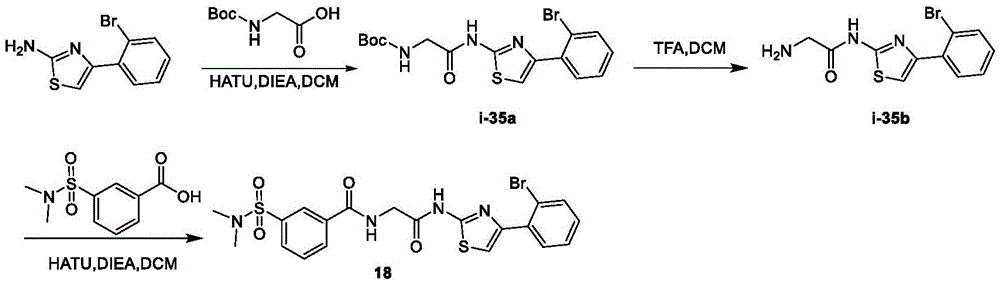
步骤1:N-[2-[[4-(2-溴苯基)噻唑-2-基]氨基]-2-氧代基-乙基]氨基甲酸叔丁酯(中间体i-35a)的制备Step 1: tert-butyl N-[2-[[4-(2-bromophenyl)thiazol-2-yl]amino]-2-oxo-ethyl]carbamate (intermediate i-35a) preparation

向2-(叔丁氧基羰基氨基)乙酸(82.40mg,470.34μmol)于DCM(10mL)中的溶液添加HATU(223.55mg,587.93μmol)和DIEA(151.97mg,1.18mmol),并将混合物在30℃下搅拌30分钟。然后添加4-(2-溴苯基)噻唑-2-胺(100mg,391.95μmol)。将混合物在30℃下再搅拌12小时,然后用DCM(50.0mL)稀释,并用H2O(10.0mL*3)和盐水(10.0mL*2)洗涤,然后经Na2SO4干燥,过滤,并在真空下浓缩,得到呈黄色油状物的中间体i-35a,其直接用于下一步骤。To a solution of 2-(tert-butoxycarbonylamino)acetic acid (82.40 mg, 470.34 μmol) in DCM (10 mL) was added HATU (223.55 mg, 587.93 μmol) and DIEA (151.97 mg, 1.18 mmol), and the mixture was placed in Stir at 30°C for 30 minutes. 4-(2-Bromophenyl)thiazol-2-amine (100 mg, 391.95 μmol) was then added. The mixture was stirred at 30 °C for another 12 h, then diluted with DCM (50.0 mL) and washed with H2O (10.0 mL*3) and brine (10.0 mL*2), then dried over Na2SO4 , filtered, and concentrated in vacuo to afford intermediate i-35a as a yellow oil, which was used directly in the next step.
LCMS(ESI)m/z:[M+H]+=412.3。LCMS (ESI) m/z: [M+H] + =412.3.
步骤2:2-氨基-N-[4-(2-溴苯基)噻唑-2-基]乙酰胺(中间体i-35b)三氟乙酸盐的制备Step 2: Preparation of 2-amino-N-[4-(2-bromophenyl)thiazol-2-yl]acetamide (intermediate i-35b) trifluoroacetate salt
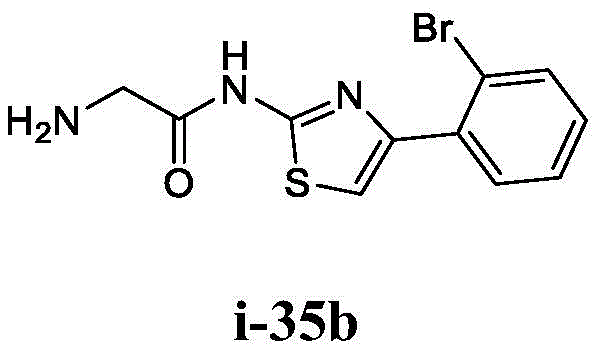
向中间体i-35a(150mg,363.81μmol)于DCM(5.0mL)中的溶液添加TFA(1.0mL)。将溶液在30℃下搅拌2小时。然后将混合物用DCM(20.0mL)稀释,并在真空下浓缩。将此操作重复三次。将残余物用MTBE(5.0mL*2)洗涤,并在真空中干燥,得到呈黄色油状物的中间体i-35b(TFA盐),其直接用于下一步骤。To a solution of intermediate i-35a (150 mg, 363.81 μmol) in DCM (5.0 mL) was added TFA (1.0 mL). The solution was stirred at 30°C for 2 hours. The mixture was then diluted with DCM (20.0 mL) and concentrated in vacuo. Repeat this operation three times. The residue was washed with MTBE (5.0 mL*2) and dried in vacuo to give intermediate i-35b (TFA salt) as a yellow oil, which was used directly in the next step.
LCMS(ESI)m/z:[M+H]+=312.3LCMS(ESI) m/z: [M+H] + =312.3
步骤3:N-[2-[[4-(2-溴苯基)噻唑-2-基]氨基]-2-氧代基-乙基]-3-(二甲基氨磺酰基)苯甲酰胺(化合物18)的制备Step 3: N-[2-[[4-(2-Bromophenyl)thiazol-2-yl]amino]-2-oxo-ethyl]-3-(dimethylsulfamoyl)benzyl Preparation of amide (compound 18)

向3-(二甲基氨磺酰基)苯甲酸(96.82mg,422.33μmol)于DMF(3.0mL)中的溶液添加HATU(401.46mg,1.06mmol)和DIEA(227.43mg,1.76mmol,306.51μL),并将混合物在30℃下搅拌30分钟。然后添加中间体i-35b(150mg,351.94μmol)。将混合物在30℃下搅拌16小时,然后倒入H2O(30.0mL)中,并用EtOAc(5.0mL*3)萃取。将合并的有机萃取物用H2O(5.0mL*2)和盐水(5.0mL)洗涤,然后经Na2SO4干燥,过滤,并在真空下浓缩。将残余物通过制备型HPLC(柱:Phenomenex Synergi C18 150*25*10μm;流动相:[水(0.1%TFA)-ACN];B%:42%-72%,9分钟)纯化,并冻干,得到呈浅黄色固体的化合物18。To a solution of 3-(dimethylsulfamoyl)benzoic acid (96.82 mg, 422.33 μmol) in DMF (3.0 mL) was added HATU (401.46 mg, 1.06 mmol) and DIEA (227.43 mg, 1.76 mmol, 306.51 μL) , and the mixture was stirred at 30 °C for 30 min. Intermediate i-35b (150 mg, 351.94 μmol) was then added. The mixture was stirred at 30°C for 16 hours, then poured into H2O (30.0 mL) and extracted with EtOAc (5.0 mL*3). The combined organic extracts were washed with H2O (5.0 mL*2) and brine (5.0 mL), then dried over Na2SO4 , filtered, and concentrated in vacuo. The residue was purified by preparative HPLC (column:
1H NMR(400MHz,DMSO-d6)δ=12.51(s,1H),9.34-9.31(m,1H),8.27-8.23(m,2H),7.94(d,J=8.0Hz,1H),7.83-7.81(m,1H),7.75-7.69(m,2H),7.54(s,1H),7.48-7.46(m,1H),7.32-7.30(m,1H),4.24(d,J=5.6Hz,2H),2.66(s,6H)ppm 1 H NMR (400MHz, DMSO-d 6 )δ=12.51(s, 1H), 9.34-9.31(m, 1H), 8.27-8.23(m, 2H), 7.94(d, J=8.0Hz, 1H), 7.83-7.81(m, 1H), 7.75-7.69(m, 2H), 7.54(s, 1H), 7.48-7.46(m, 1H), 7.32-7.30(m, 1H), 4.24(d, J=5.6 Hz,2H),2.66(s,6H)ppm
LCMS(ESI)m/z:[M+H]+=525.0。LCMS (ESI) m/z: [M+H] + =525.0.
实施例36.(N-[2-[[4-(3-溴苯基)噻唑-2-基]氨基]-2-氧代基-乙基]-3-(二甲基氨磺酰基)苯甲酰胺(化合物7)的制备Example 36. (N-[2-[[4-(3-Bromophenyl)thiazol-2-yl]amino]-2-oxo-ethyl]-3-(dimethylsulfamoyl) Preparation of benzamide (compound 7)
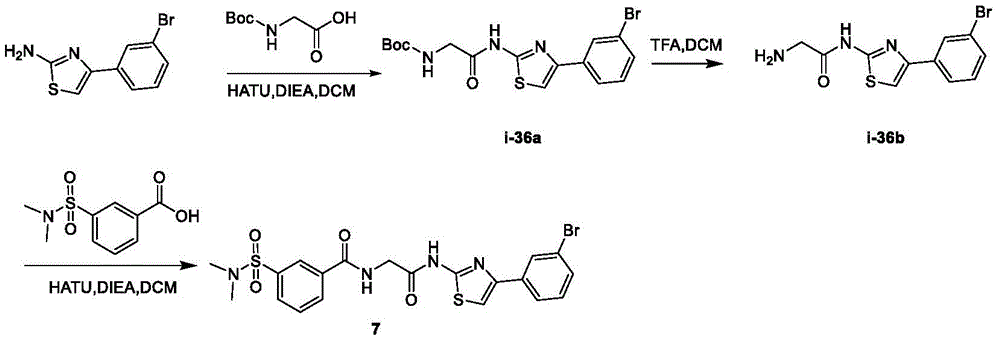
步骤1:N-[2-[[4-(3-溴苯基)噻唑-2-基]氨基]-2-氧代基-乙基]氨基甲酸叔丁酯(中间体i-36a)的制备Step 1: tert-butyl N-[2-[[4-(3-bromophenyl)thiazol-2-yl]amino]-2-oxo-ethyl]carbamate (intermediate i-36a) preparation
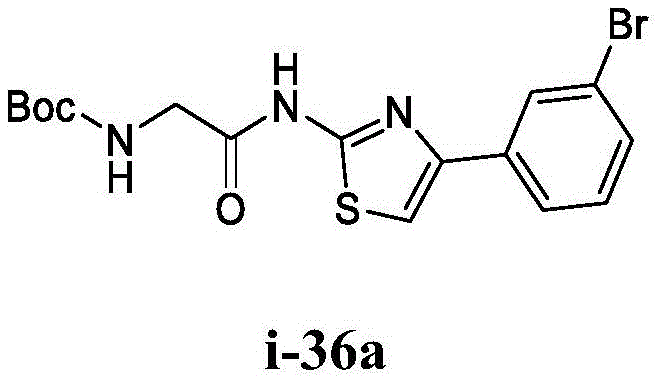
向2-(叔丁氧基羰基氨基)乙酸(82.40mg,470.34μmol)于DCM(10mL)中的溶液添加HATU(223.55mg,587.93μmol)和DIEA(151.97mg,1.18mmol,204.81μL),并将混合物在30℃下搅拌30分钟。然后添加4-(3-溴苯基)噻唑-2-胺(100.00mg,391.95μmol)。将混合物在30℃下再搅拌12小时,然后用DCM(50.0mL)稀释。将溶液用H2O(10.0mL*3)和盐水(10mL*2)洗涤,然后经Na2SO4干燥,过滤,并在真空下浓缩,得到呈黄色油状物的中间体i-36a,其直接用于下一步骤。To a solution of 2-(tert-butoxycarbonylamino)acetic acid (82.40 mg, 470.34 μmol) in DCM (10 mL) was added HATU (223.55 mg, 587.93 μmol) and DIEA (151.97 mg, 1.18 mmol, 204.81 μL), and The mixture was stirred at 30°C for 30 minutes. 4-(3-Bromophenyl)thiazol-2-amine (100.00 mg, 391.95 μmol) was then added. The mixture was stirred at 30°C for an additional 12 hours, then diluted with DCM (50.0 mL). The solution was washed with H2O (10.0 mL*3) and brine (10 mL*2), then dried over Na2SO4 , filtered, and concentrated in vacuo to give intermediate i-36a as a yellow oil, which used directly in the next step.
LCMS(ESI)m/z:[M+H]+=412.3LCMS(ESI) m/z: [M+H] + =412.3
步骤2:2-氨基-N-[4-(3-溴苯基)噻唑-2-基]乙酰胺(中间体i-36b)三氟乙酸盐的制备Step 2: Preparation of 2-amino-N-[4-(3-bromophenyl)thiazol-2-yl]acetamide (intermediate i-36b) trifluoroacetate salt
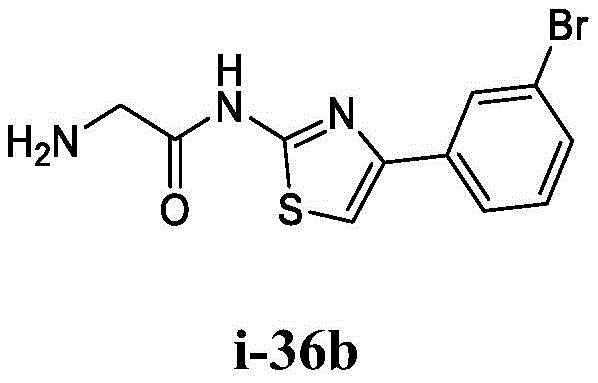
向中间体i-36a(150.00mg,363.81μmol)于DCM(5mL)中的溶液添加TFA(1mL),将溶液在30℃下搅拌2小时。然后将混合物用DCM(20.0mL)稀释,并在真空中浓缩。将此操作重复三次。将残余物用MTBE(5.0mL*2)洗涤,并在真空中干燥,得到呈黄色油状物的中间体i-36b(TFA盐),其直接用于下一步骤。To a solution of intermediate i-36a (150.00 mg, 363.81 μmol) in DCM (5 mL) was added TFA (1 mL) and the solution was stirred at 30 °C for 2 h. The mixture was then diluted with DCM (20.0 mL) and concentrated in vacuo. Repeat this operation three times. The residue was washed with MTBE (5.0 mL*2) and dried in vacuo to give intermediate i-36b (TFA salt) as a yellow oil, which was used directly in the next step.
LCMS(ESI)m/z:[M+H]+=312.3LCMS(ESI) m/z: [M+H] + =312.3
步骤3:(N-[2-[[4-(3-溴苯基)噻唑-2-基]氨基]-2-氧代基-乙基]-3-(二甲基氨磺酰基)苯甲酰胺(化合物7)的制备Step 3: (N-[2-[[4-(3-Bromophenyl)thiazol-2-yl]amino]-2-oxo-ethyl]-3-(dimethylsulfamoyl)benzene Preparation of formamide (compound 7)
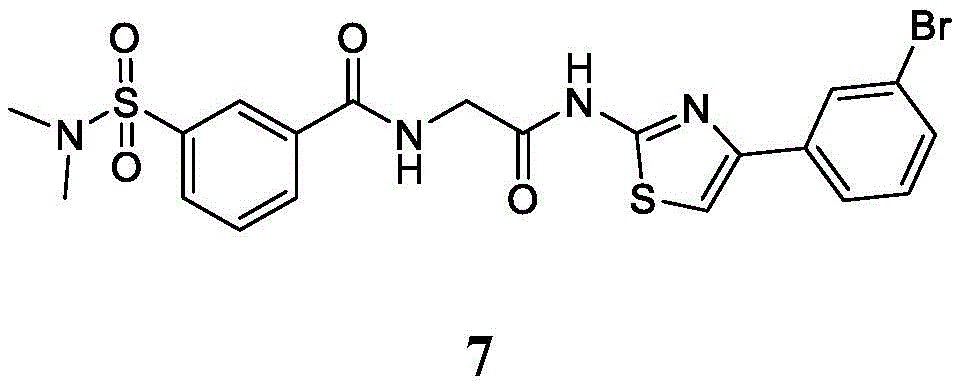
向3-(二甲基氨磺酰基)苯甲酸(96.82mg,422.33μmol)于DMF(3.0mL)中的溶液添加HATU(401.46mg,1.06mmol)和DIEA(227.43mg,1.76mmol,306.51μL),并将混合物在30℃下搅拌30分钟。然后添加中间体i-36b(150mg,351.94μmol)。将混合物在30℃下搅拌16小时,然后倒入H2O(30.0mL)中,并用EtOAc(5.0mL*3)萃取。将合并的有机萃取物用H2O(5.0mL*2)和盐水(5mL)洗涤,然后经Na2SO4干燥,过滤,并在真空下浓缩。将残余物通过制备型HPLC(柱:Phenomenex Synergi C18 150*25*10μm;流动相:[水(0.1%TFA)-ACN];B%:42%-72%,9分钟)纯化,并冻干,得到呈粉红色固体的化合物7。To a solution of 3-(dimethylsulfamoyl)benzoic acid (96.82 mg, 422.33 μmol) in DMF (3.0 mL) was added HATU (401.46 mg, 1.06 mmol) and DIEA (227.43 mg, 1.76 mmol, 306.51 μL) , and the mixture was stirred at 30 °C for 30 min. Intermediate i-36b (150 mg, 351.94 μmol) was then added. The mixture was stirred at 30°C for 16 hours, then poured into H2O (30.0 mL) and extracted with EtOAc (5.0 mL*3). The combined organic extracts were washed with H2O (5.0 mL*2) and brine ( 5 mL), then dried over Na2SO4 , filtered, and concentrated in vacuo. The residue was purified by preparative HPLC (column:
1H NMR(400MHz,DMSO-d6)δ=12.51(s,1H),9.33-9.30(m,1H),8.27-8.23(m,2H),8.11(s,1H),7.94-7.91(m,2H),7.82-7.80(m,2H),7.43-7.42(m,1H),7.41-7.40(m,1H),4.24(d,J=5.6Hz,2H),2.66(s,6H)ppm 1 H NMR (400MHz, DMSO-d 6 )δ=12.51(s, 1H), 9.33-9.30(m, 1H), 8.27-8.23(m, 2H), 8.11(s, 1H), 7.94-7.91(m ,2H),7.82-7.80(m,2H),7.43-7.42(m,1H),7.41-7.40(m,1H),4.24(d,J=5.6Hz,2H),2.66(s,6H)ppm
LCMS(ESI)m/z:[M+H]+=523.2。LCMS (ESI) m/z: [M+H] + =523.2.
实施例37.化合物(S)-N-(4-(甲硫基)-1-氧代基-1-((4-苯基噻唑-2-基)氨基)丁烷-2-基)烟酰胺(化合物70)的制备Example 37. Compound (S)-N-(4-(methylthio)-1-oxo-1-((4-phenylthiazol-2-yl)amino)butan-2-yl)nicotine Preparation of amide (compound 70)
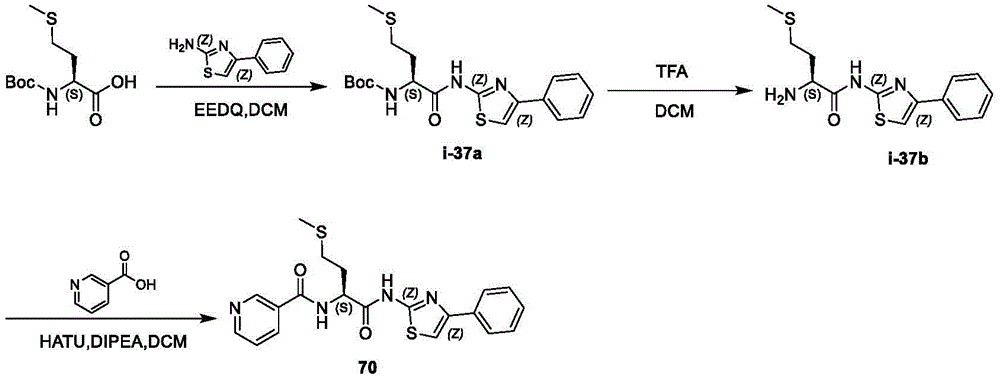
步骤1:(S)-(4-(甲硫基)-1-氧代基-1-((4-苯基噻唑-2-基)氨基)丁烷-2-基)氨基甲酸叔丁酯(中间体i-37a)的制备Step 1: tert-butyl (S)-(4-(methylthio)-1-oxo-1-((4-phenylthiazol-2-yl)amino)butan-2-yl)carbamate Preparation of (Intermediate i-37a)
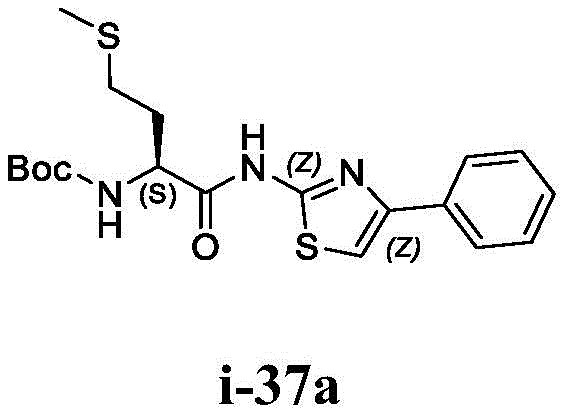
向(2S)-2-(叔丁氧基羰基氨基)-4-甲基硫烷基-丁酸(5.0g,20.05mmol)于DCM(20.0mL)中的溶液添加EEDQ(6.20g,25.07mmol),然后将4-苯基噻唑-2-胺(2.95g,16.71mmol)添加至混合物。将混合物在25℃下搅拌3小时。添加10%的柠檬酸(800.0mL),并用EtOAc(200mL)萃取反应混合物。将合并的有机萃取物用盐水(100mL)洗涤,经Na2SO4干燥,过滤,并在减压下浓缩,得到残余物。将残余物通过柱色谱法(SiO2,石油醚/乙酸乙酯=50/1至8:1)纯化,得到呈白色固体的中间体i-37a。To a solution of (2S)-2-(tert-butoxycarbonylamino)-4-methylsulfanyl-butyric acid (5.0 g, 20.05 mmol) in DCM (20.0 mL) was added EEDQ (6.20 g, 25.07 mmol) ), then 4-phenylthiazol-2-amine (2.95 g, 16.71 mmol) was added to the mixture. The mixture was stirred at 25°C for 3 hours. 10% citric acid (800.0 mL) was added and the reaction mixture was extracted with EtOAc (200 mL). The combined organic extracts were washed with brine (100 mL), dried over Na2SO4 , filtered, and concentrated under reduced pressure to give a residue. The residue was purified by column chromatography (SiO 2 , petroleum ether/ethyl acetate = 50/1 to 8:1 ) to give intermediate i-37a as a white solid.
LCMS(ESI)m/z:[M+H]+=408.0。LCMS (ESI) m/z: [M+H] + =408.0.
SFC HPLC:Amycoat-MeOH(DEA)-5-40-3mL-35,2.284分钟。SFC HPLC: Amycoat-MeOH(DEA)-5-40-3mL-35, 2.284 min.
步骤2:(S)-2-氨基-4-(甲硫基)-N-(4-苯基噻唑-2-基)丁酰胺(中间体i-37b)三氟乙酸盐的制备Step 2: Preparation of (S)-2-amino-4-(methylthio)-N-(4-phenylthiazol-2-yl)butanamide (intermediate i-37b) trifluoroacetate salt

向中间体i-37a(5.8g,14.23mmol)于DCM(20.0mL)中的溶液添加TFA(4.0mL)。将混合物在10℃下搅拌2小时。将反应混合物在减压下浓缩。将粗产物中间体i-37b(TFA盐)冻干,并获得白色固体。此材料不经进一步纯化即用于下一步骤。To a solution of intermediate i-37a (5.8 g, 14.23 mmol) in DCM (20.0 mL) was added TFA (4.0 mL). The mixture was stirred at 10°C for 2 hours. The reaction mixture was concentrated under reduced pressure. The crude intermediate i-37b (TFA salt) was lyophilized and a white solid was obtained. This material was used in the next step without further purification.
LCMS(ESI)m/z:[M+H]+=307.9。LCMS (ESI) m/z: [M+H] + =307.9.
SFC HPLC:Cellucoat-MeOH(DEA)-10-12min-3,8.970分钟。SFC HPLC: Cellucoat-MeOH(DEA)-10-12min-3, 8.970 minutes.
步骤3:(S)-N-(4-(甲硫基)-1-氧代基-1-((4-苯基噻唑-2-基)氨基)丁烷-2-基)烟酰胺(化合物70)的制备Step 3: (S)-N-(4-(methylthio)-1-oxo-1-((4-phenylthiazol-2-yl)amino)butan-2-yl)nicotinamide ( Preparation of compound 70)
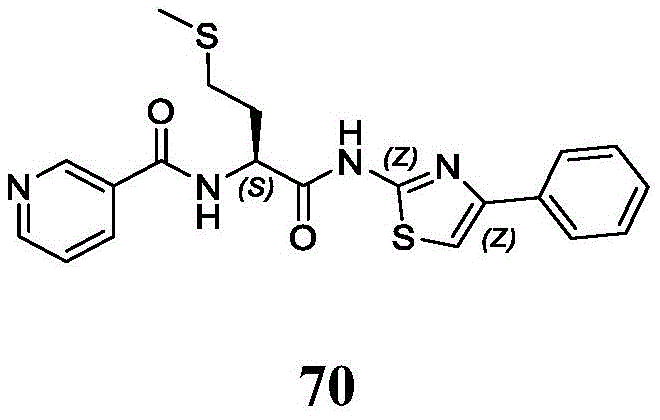
向烟酸(14.61mg,118.64μmol)于DCM(2mL)中的溶液添加HATU(67.66mg,177.95μmol)和DIPEA(61.33mg,474.54μmol,82.66μL),然后添加中间体i-37b(50mg,118.64μmol)。将混合物在10℃下搅拌2小时。将反应混合物在减压下浓缩。将残余物通过制备型HPLC(Phenomenex Gemini 150*25mm*10μm;流动相:[水(10mM NH4HCO3)-ACN];B%:45%-75%,10分钟)纯化,并冻干,得到呈白色固体的化合物70。To a solution of niacin (14.61 mg, 118.64 μmol) in DCM (2 mL) was added HATU (67.66 mg, 177.95 μmol) and DIPEA (61.33 mg, 474.54 μmol, 82.66 μL) followed by intermediate i-37b (50 mg, 118.64 μmol). The mixture was stirred at 10°C for 2 hours. The reaction mixture was concentrated under reduced pressure. The residue was purified by preparative HPLC (
1H NMR(400MHz,甲醇-d4)δ9.06(m,1H),8.72-8.71(m,1H),8.33-8.31(m,1H),7.91-7.89(m,2H),7.58-7.55(m,1H),7.40-7.38(m,3H),7.37-7.30(m,1H),4.94-4.91(m,1H),2.75-2.65(m,2H),2.31-2.29(m,2H),2.14(s,3H)ppm。1H NMR (400MHz, methanol-d4)δ9.06(m,1H), 8.72-8.71(m,1H), 8.33-8.31(m,1H), 7.91-7.89(m,2H), 7.58-7.55(m ,1H),7.40-7.38(m,3H),7.37-7.30(m,1H),4.94-4.91(m,1H),2.75-2.65(m,2H),2.31-2.29(m,2H),2.14 (s,3H)ppm.
LCMS(ESI)m/z:[M+H]+=413.1。LCMS (ESI) m/z: [M+H] + =413.1.
手性HPLC:Cellucoat-MeOH(DEA)-5-40-3mL-35T.lcm,2.269分钟。Chiral HPLC: Cellucoat-MeOH(DEA)-5-40-3mL-35T.1cm, 2.269 minutes.
实施例38. 4-甲氧基-N-[(1S)-3-甲基硫烷基-1-[(4-苯基噻唑-2-基)氨基甲酰基]丙基]苯甲酰胺(化合物67)的制备Example 38. 4-Methoxy-N-[(1S)-3-methylsulfanyl-1-[(4-phenylthiazol-2-yl)carbamoyl]propyl]benzamide ( Preparation of compound 67)
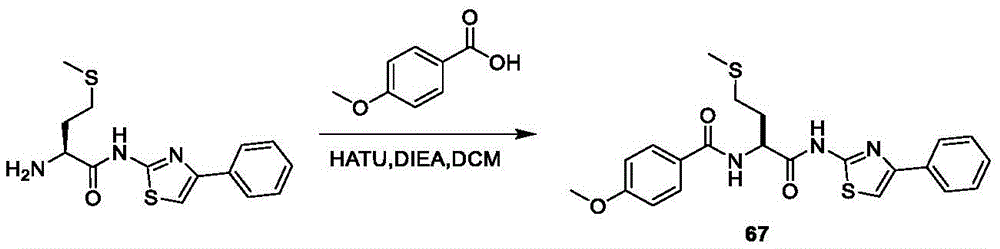
向4-甲氧基苯甲酸(21.66mg,142.36μmol)于DCM(2.0mL)中的溶液添加HATU(90.22mg,237.27μmol)和DIEA(76.66mg,593.18μmol,103.32μL)。将混合物在30℃下搅拌30分钟。然后添加(2S)-2-氨基-4-甲基硫烷基-N-(4-苯基噻唑-2-基)丁酰胺(50mg,118.64μmol)。将混合物在30℃下再搅拌2小时。将反应溶液用DCM(20.0mL)稀释,并用(5.0mL*3)和盐水(5mL)洗涤,经Na2SO4干燥,过滤,并在真空下浓缩。将残余物通过制备型HPLC(柱:Phenomenex Synergi C18 150*25*10μm;流动相:[水(0.1%TFA)-ACN];B%:45%-75%,9分钟)纯化,并冻干,得到呈白色固体的化合物67。To a solution of 4-methoxybenzoic acid (21.66 mg, 142.36 μmol) in DCM (2.0 mL) was added HATU (90.22 mg, 237.27 μmol) and DIEA (76.66 mg, 593.18 μmol, 103.32 μL). The mixture was stirred at 30°C for 30 minutes. Then (2S)-2-amino-4-methylsulfanyl-N-(4-phenylthiazol-2-yl)butanamide (50 mg, 118.64 μmol) was added. The mixture was stirred at 30°C for a further 2 hours. The reaction solution was diluted with DCM (20.0 mL) and washed with (5.0 mL*3) and brine ( 5 mL), dried over Na2SO4 , filtered, and concentrated in vacuo. The residue was purified by preparative HPLC (column:
1HNMR(400MHz,甲醇-d4)δ7.92-7.90(m,4H),7.42-7.38(m,3H),7.33-7.29(m,1H),7.03(d,J=9.2Hz,2H),4.94-4.91(m,1H),3.88(s,3H),2.75-2.65(m,2H),2.36-2.15(m,2H),2.14(s,3H)ppm。 1 H NMR (400 MHz, methanol-d 4 ) δ 7.92-7.90 (m, 4H), 7.42-7.38 (m, 3H), 7.33-7.29 (m, 1H), 7.03 (d, J=9.2Hz, 2H) ,4.94-4.91(m,1H),3.88(s,3H),2.75-2.65(m,2H),2.36-2.15(m,2H),2.14(s,3H)ppm.
LCMS(ESI)m/z:[M+H]+=442.1。LCMS (ESI) m/z: [M+H] + =442.1.
实施例39. 2-羟基-N-[(1S)-3-甲基硫烷基-1-[(4-苯基噻唑-2-基)氨基甲酰基]丙基]苯甲酰胺(化合物69)的制备Example 39. 2-Hydroxy-N-[(1S)-3-methylsulfanyl-1-[(4-phenylthiazol-2-yl)carbamoyl]propyl]benzamide (Compound 69 ) preparation
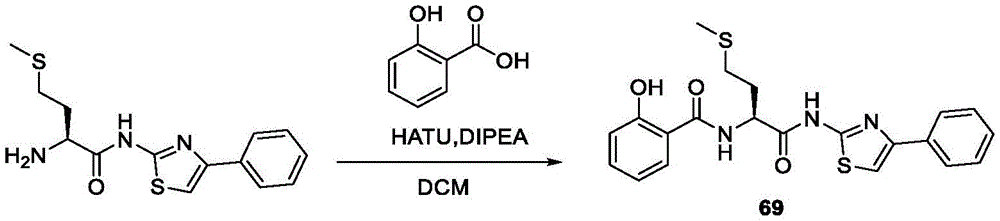
向(2S)-2-氨基-4-甲基硫烷基-N-(4-苯基噻唑-2-基)丁酰胺(50mg,118.64μmol)和2-羟基苯甲酸(16.39mg,118.64μmol)于DCM(1mL)中的混合物添加DIPEA(61.33mg,474.54μmol)。将混合物在30℃下搅拌15分钟,然后添加HATU(67.66mg,177.95μmol),并在30℃下搅拌2小时。将反应混合物蒸发至干,得到粗产物。将残余物通过制备型HPLC(柱:Phenomenex Synergi C18 150*25*10μm;流动相:[水(0.1%TFA)-ACN];B%:51%-71%,12分钟)纯化,并冻干,得到呈白色固体的化合物69。To (2S)-2-amino-4-methylsulfanyl-N-(4-phenylthiazol-2-yl)butanamide (50 mg, 118.64 μmol) and 2-hydroxybenzoic acid (16.39 mg, 118.64 μmol ) in DCM (1 mL) was added DIPEA (61.33 mg, 474.54 μmol). The mixture was stirred at 30°C for 15 minutes, then HATU (67.66 mg, 177.95 μmol) was added and stirred at 30°C for 2 hours. The reaction mixture was evaporated to dryness to give crude product. The residue was purified by preparative HPLC (column:
1H NMR(400MHz,MeOD-d4)δ=7.92-7.89(m,3H),7.43-7.37(m,4H),7.31-7.28(m,1H),6.96-6.92(m,2H),4.98-4.94(m,1H),2.72-2.60(m,2H),2.35-2.27(m,1H),2.25-2.17(m,1H),2.13(s,3H)ppm。 1 H NMR (400MHz, MeOD-d 4 ) δ=7.92-7.89(m,3H), 7.43-7.37(m,4H), 7.31-7.28(m,1H), 6.96-6.92(m,2H), 4.98 -4.94 (m, 1H), 2.72-2.60 (m, 2H), 2.35-2.27 (m, 1H), 2.25-2.17 (m, 1H), 2.13 (s, 3H) ppm.
LCMS(ESI)m/z:[M+H]+=428.1。LCMS (ESI) m/z: [M+H] + =428.1.
手性HPLC:OD-3_5CM_MEOH(DEA)_40_3ML_T35.M,0.822分钟。Chiral HPLC: OD-3_5CM_MEOH(DEA)_40_3ML_T35.M, 0.822 min.
实施例40.化合物(S)-3-羟基-N-(4-(甲硫基)-1-氧代基-1-((4-苯基噻唑-2-基)氨基)丁烷-2-基)苯甲酰胺(化合物59)的制备Example 40. Compound (S)-3-Hydroxy-N-(4-(methylthio)-1-oxo-1-((4-phenylthiazol-2-yl)amino)butane-2 Preparation of -yl)benzamide (Compound 59)

向3-羟基苯甲酸(16.39mg,118.64μmol,9.94μL)和(2S)-2-氨基-4-甲基硫烷基-N-(4-苯基噻唑-2-基)丁酰胺(50mg,118.64μmol)于DCM(2.0mL)中的溶液添加DIPEA(61.33mg,474.56μmol),然后添加HATU(67.66mg,177.96μmol)。将混合物在10℃下搅拌2小时。将反应混合物在减压下浓缩。将残余物通过制备型HPLC(TFA条件;柱:柱:PhenomenexSynergi C18 150*25*10μm;流动相:[水(0.1%TFA)-ACN];B%:45%-75%,9分钟)纯化,并冻干,得到呈白色固体的化合物59。To 3-hydroxybenzoic acid (16.39 mg, 118.64 μmol, 9.94 μL) and (2S)-2-amino-4-methylsulfanyl-N-(4-phenylthiazol-2-yl)butanamide (50 mg , 118.64 μmol) in DCM (2.0 mL) was added DIPEA (61.33 mg, 474.56 μmol) followed by HATU (67.66 mg, 177.96 μmol). The mixture was stirred at 10°C for 2 hours. The reaction mixture was concentrated under reduced pressure. The residue was purified by preparative HPLC (TFA conditions; column: column:
1HNMR(400MHz,甲醇-d4)δ=7.90-7.88(m,2H)7.38-7.34(m,4H),7.30-7.27(m,3H),6.98-6.95(m,1H),4.90-4.87(m,1H),2.69-2.62(m,2H),2.26-2.20(m,2H),2.13(s,3H)ppm 1 HNMR(400MHz, methanol-d4)δ=7.90-7.88(m,2H)7.38-7.34(m,4H),7.30-7.27(m,3H),6.98-6.95(m,1H),4.90-4.87( m,1H),2.69-2.62(m,2H),2.26-2.20(m,2H),2.13(s,3H)ppm
LCMS(ESI)m/z:[M+H]+=428.1。LCMS (ESI) m/z: [M+H] + =428.1.
手性HPLC:AS-3_5CM_MEOH(DEA)_40_3ML_5MIN_T35.M,1.341分钟。Chiral HPLC: AS-3_5CM_MEOH(DEA)_40_3ML_5MIN_T35.M, 1.341 min.
实施例41. 4-羟基-N-[(1S)-3-甲基硫烷基-1-[(4-苯基噻唑-2-基)氨基甲酰基]丙基]苯甲酰胺(化合物53)的制备Example 41. 4-Hydroxy-N-[(1S)-3-methylsulfanyl-1-[(4-phenylthiazol-2-yl)carbamoyl]propyl]benzamide (Compound 53 ) preparation
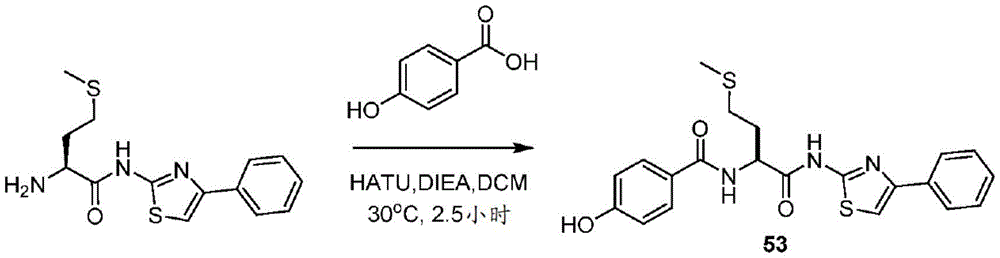
向4-羟基苯甲酸(16.39mg,118.64μmol)和(2S)-2-氨基-4-甲基硫烷基-N-(4-苯基噻唑-2-基)丁酰胺(50mg,118.64μmol)于DCM(2.0mL)中的溶液添加DIEA(76.66mg,593.18μmol,103.32μL)和HATU(90.22mg,237.27μmol)。将混合物在30℃下搅拌2.5小时。将反应物用DCM(20.0mL)稀释,并用水(5.0mL*3)和盐水(5.0mL)洗涤,经Na2SO4干燥,过滤,并在真空下浓缩,得到粗产物。将粗产物通过制备型HPLC(柱:Boston pH-lex 150*25 10μm;流动相:[水(0.1%TFA)-ACN];B%:48%-68%,8分钟)纯化,并冻干,得到呈黄色固体的化合物53。To 4-hydroxybenzoic acid (16.39 mg, 118.64 μmol) and (2S)-2-amino-4-methylsulfanyl-N-(4-phenylthiazol-2-yl)butanamide (50 mg, 118.64 μmol ) in DCM (2.0 mL) was added DIEA (76.66 mg, 593.18 μmol, 103.32 μL) and HATU (90.22 mg, 237.27 μmol). The mixture was stirred at 30°C for 2.5 hours. The reaction was diluted with DCM (20.0 mL) and washed with water (5.0 mL*3) and brine (5.0 mL), dried over Na2SO4 , filtered, and concentrated in vacuo to give crude product. The crude product was purified by preparative HPLC (column: Boston pH-
1H NMR(400MHz,甲醇-d4)δ=7.91(d,J=8.4Hz,2H),7.82(d,J=8.4Hz,2H),7.42-7.38(m,3H),7.32-7.30(m,1H),6.87-6.85(m,2H),4.90-4.86(m,1H),2.72-2.64(m,2H),2.28-2.21(m,2H),2.15(s,3H)ppm。 1 H NMR (400 MHz, methanol-d 4 ) δ=7.91 (d, J=8.4 Hz, 2H), 7.82 (d, J=8.4 Hz, 2H), 7.42-7.38 (m, 3H), 7.32-7.30 ( m, 1H), 6.87-6.85 (m, 2H), 4.90-4.86 (m, 1H), 2.72-2.64 (m, 2H), 2.28-2.21 (m, 2H), 2.15 (s, 3H) ppm.
LCMS(ESI)m/z:[M+H]+=428.3。LCMS (ESI) m/z: [M+H] + =428.3.
实施例42. 2-氨基-N-[(1S)-3-甲基硫烷基-1-[(4-苯基噻唑-2-基)氨基甲酰基]丙基]苯甲酰胺(化合物63)的制备Example 42. 2-Amino-N-[(1S)-3-methylsulfanyl-1-[(4-phenylthiazol-2-yl)carbamoyl]propyl]benzamide (Compound 63 ) preparation

向2-氨基苯甲酸(16.27mg,118.64μmol)和(2S)-2-氨基-4-甲基硫烷基-N-(4-苯基噻唑-2-基)丁酰胺(50mg,118.64μmol)于DCM(1mL)中的混合物添加DIPEA(61.33mg,474.54μmol)。将混合物在30℃下搅拌15分钟,然后添加HATU(67.66mg,177.95μmol),并在30℃下搅拌2小时。将反应混合物蒸发至干,得到粗产物。将残余物通过制备型HPLC(柱:Boston pH-lex 150*25 10μm;流动相:[水(0.1%TFA)-ACN];B%:55%-75%,8分钟)纯化,并冻干,得到呈白色固体的化合物63(TFA盐)。To 2-aminobenzoic acid (16.27 mg, 118.64 μmol) and (2S)-2-amino-4-methylsulfanyl-N-(4-phenylthiazol-2-yl)butanamide (50 mg, 118.64 μmol ) in DCM (1 mL) was added DIPEA (61.33 mg, 474.54 μmol). The mixture was stirred at 30°C for 15 minutes, then HATU (67.66 mg, 177.95 μmol) was added and stirred at 30°C for 2 hours. The reaction mixture was evaporated to dryness to give crude product. The residue was purified by preparative HPLC (column: Boston pH-
1H NMR(400MHz,MeOD-d4)δ=7.91-7.89(m,2H),7.71-7.69(m,1H),7.41-7.37(m,3H),7.35-7.28(m,2H),6.93-6.86(m,2H),4.91-4.87(m,1H),2.75-2.61(m,2H),2.33-2.26(m,1H),2.25-2.16(m,1H),2.15(s,3H)ppm;LCMS(ESI)m/z:[M+H]+=427.3。 1 H NMR (400MHz, MeOD-d 4 ) δ=7.91-7.89(m, 2H), 7.71-7.69(m, 1H), 7.41-7.37(m, 3H), 7.35-7.28(m, 2H), 6.93 -6.86(m, 2H), 4.91-4.87(m, 1H), 2.75-2.61(m, 2H), 2.33-2.26(m, 1H), 2.25-2.16(m, 1H), 2.15(s, 3H) ppm; LCMS (ESI) m/z: [M+H] + =427.3.
手性HPLC:Cellucoat-MeOH(DEA)-40-3mL-35T.1cm,1.540分钟。Chiral HPLC: Cellucoat-MeOH(DEA)-40-3mL-35T.1cm, 1.540min.
实施例43.化合物(S)-3-氨基-N-(4-(甲硫基)-1-氧代基-1-((4-苯基噻唑-2-基)氨基)丁烷-2-基)苯甲酰胺(化合物56)的制备Example 43. Compound (S)-3-amino-N-(4-(methylthio)-1-oxo-1-((4-phenylthiazol-2-yl)amino)butane-2 Preparation of -yl)benzamide (compound 56)

步骤1:(S)-(3-((4-(甲硫基)-1-氧代基-1-((4-苯基噻唑-2-基)氨基)丁烷-2-基)氨基甲酰基)苯基)氨基甲酸叔丁酯(中间体i-42a)的制备Step 1: (S)-(3-((4-(Methylthio)-1-oxo-1-((4-phenylthiazol-2-yl)amino)butan-2-yl)amino Preparation of tert-butyl formyl)phenyl)carbamate (intermediate i-42a)

向3-(叔丁氧基羰基氨基)苯甲酸(28.15mg,118.65μmol)于DCM(2.0mL)中的溶液添加HATU(67.66mg,177.94μmol)和DIPEA(61.33mg,474.54μmol),然后添加(2S)-2-氨基-4-甲基硫烷基-N-(4-苯基噻唑-2-基)丁酰胺(50mg,118.64μmol)。将混合物在10℃下搅拌12小时。将反应混合物在减压下浓缩。将残余物通过制备型HPLC(TFA条件;柱:柱:Phenomenex Synergi C18 150*25*10μm;流动相:[水(0.1%TFA)-ACN];B%:55%-85%,9分钟)纯化,得到呈白色固体的中间体i-42a。To a solution of 3-(tert-butoxycarbonylamino)benzoic acid (28.15 mg, 118.65 μmol) in DCM (2.0 mL) was added HATU (67.66 mg, 177.94 μmol) and DIPEA (61.33 mg, 474.54 μmol) followed by (2S)-2-Amino-4-methylsulfanyl-N-(4-phenylthiazol-2-yl)butanamide (50 mg, 118.64 μmol). The mixture was stirred at 10°C for 12 hours. The reaction mixture was concentrated under reduced pressure. The residue was passed through preparative HPLC (TFA conditions; column: column:
LCMS(ESI)m/z:[M+H]+=527.1。LCMS (ESI) m/z: [M+H] + =527.1.
步骤2:(S)-3-氨基-N-(4-(甲硫基)-1-氧代基-1-((4-苯基噻唑-2-基)氨基)丁烷-2-基)苯甲酰胺(化合物56)三氟乙酸盐的制备Step 2: (S)-3-Amino-N-(4-(methylthio)-1-oxo-1-((4-phenylthiazol-2-yl)amino)butan-2-yl ) Preparation of benzamide (compound 56) trifluoroacetate salt
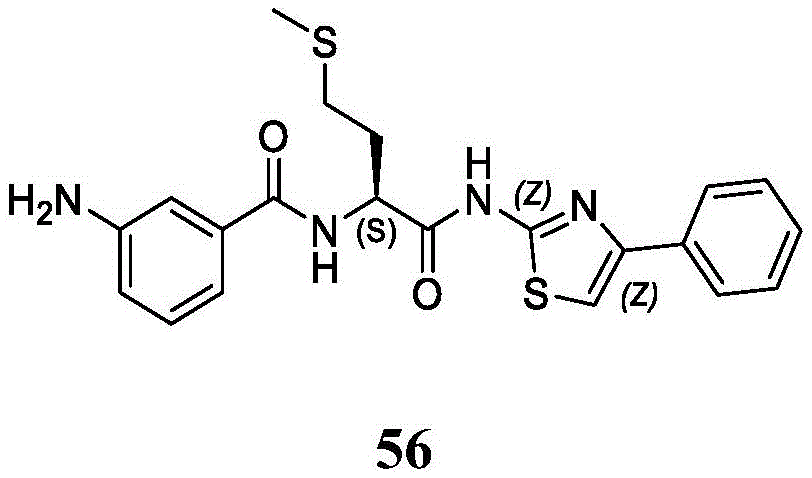
向中间体i-42a(20mg,37.97μmol)于DCM(2.0mL)中的溶液添加TFA(1.0mL)。将混合物在10℃下搅拌2小时。将反应混合物在减压下浓缩。将残余物通过制备型HPLC(TFA条件;柱:Phenomenex Synergi C18 150*25*10μm;流动相:[水(0.1%TFA)-ACN];B%:35%-65%,9分钟)纯化,并冻干,得到呈白色固体的化合物56(TFA盐)。To a solution of intermediate i-42a (20 mg, 37.97 μmol) in DCM (2.0 mL) was added TFA (1.0 mL). The mixture was stirred at 10°C for 2 hours. The reaction mixture was concentrated under reduced pressure. The residue was purified by preparative HPLC (TFA conditions; column:
1H NMR(400MHz,甲醇-d4)δ=7.90-7.88(m,2H),7.84-7.83(m,1H),7.72-7.71(m,1H),7.57-7.55(m,1H),7.40-7.36(m,4H),7.31-7.279(m,1H),4.93-4.91(m,1H),2.70-2.64(m,2H),2.30-2.20(m,2H),2.14(s,3H)ppm。1H NMR (400MHz, methanol-d4)δ=7.90-7.88(m,2H), 7.84-7.83(m,1H), 7.72-7.71(m,1H), 7.57-7.55(m,1H), 7.40-7.36 (m, 4H), 7.31-7.279 (m, 1H), 4.93-4.91 (m, 1H), 2.70-2.64 (m, 2H), 2.30-2.20 (m, 2H), 2.14 (s, 3H) ppm.
LCMS(ESI)m/z:[M+H]+=427.1。LCMS (ESI) m/z: [M+H] + =427.1.
实施例44. 4-氨基-N-[(1S)-3-甲基硫烷基-1-[(4-苯基噻唑-2-基)氨基甲酰基]丙基]苯甲酰胺(化合物52)的制备Example 44. 4-Amino-N-[(1S)-3-methylsulfanyl-1-[(4-phenylthiazol-2-yl)carbamoyl]propyl]benzamide (Compound 52 ) preparation

向4-氨基苯甲酸(19.52mg,142.36μmol)于DCM(2mL)中的溶液添加HATU(90.22mg,237.27μmol)和DIEA(76.66mg,593.18μmol,103.32μL),并将混合物在30℃下搅拌30分钟。然后添加(2S)-2-氨基-4-甲基硫烷基-N-(4-苯基噻唑-2-基)丁酰胺(50mg,118.64μmol)。将混合物在30℃下再搅拌2小时,然后用DCM(20.0mL)稀释。将有机层用(5.0mL*3)和盐水(5mL)洗涤,经Na2SO4干燥,过滤,并在真空下浓缩。将残余物通过制备型HPLC(柱:Phenomenex Synergi C18 150*25*10μm;流动相:[水(0.225%FA)-ACN];B%:40%-70%,9分钟)纯化,并冻干,得到呈白色固体的化合物52(TFA盐)。To a solution of 4-aminobenzoic acid (19.52 mg, 142.36 μmol) in DCM (2 mL) was added HATU (90.22 mg, 237.27 μmol) and DIEA (76.66 mg, 593.18 μmol, 103.32 μL), and the mixture was heated at 30 °C Stir for 30 minutes. Then (2S)-2-amino-4-methylsulfanyl-N-(4-phenylthiazol-2-yl)butanamide (50 mg, 118.64 μmol) was added. The mixture was stirred at 30°C for an additional 2 hours, then diluted with DCM (20.0 mL). The organic layer was washed with (5.0 mL*3) and brine ( 5 mL), dried over Na2SO4 , filtered, and concentrated in vacuo. The residue was purified by preparative HPLC (column:
1H NMR(400MHz,甲醇-d4)δ7.92-7.89(m,2H),7.76-7.74(m,2H),7.42-7.38(m,3H),7.33-7.31(m,1H),6.80(d,J=8.8Hz,2H),4.94-4.88(m,1H),2.71-2.64(m,2H),2.28-2.21(m,2H),2.15(s,3H)ppm。 1 H NMR (400 MHz, methanol-d 4 ) δ 7.92-7.89 (m, 2H), 7.76-7.74 (m, 2H), 7.42-7.38 (m, 3H), 7.33-7.31 (m, 1H), 6.80 (d, J=8.8 Hz, 2H), 4.94-4.88 (m, 1H), 2.71-2.64 (m, 2H), 2.28-2.21 (m, 2H), 2.15 (s, 3H) ppm.
LCMS(ESI)m/z:[M+H]+=427.1。LCMS (ESI) m/z: [M+H] + =427.1.
实施例45.(S)-N-(3-氨基-1-氧代基-1-((4-苯基噻唑-2-基)氨基)丙烷-2-基)-3-(N,N-二甲基氨磺酰基)苯甲酰胺(化合物25)的制备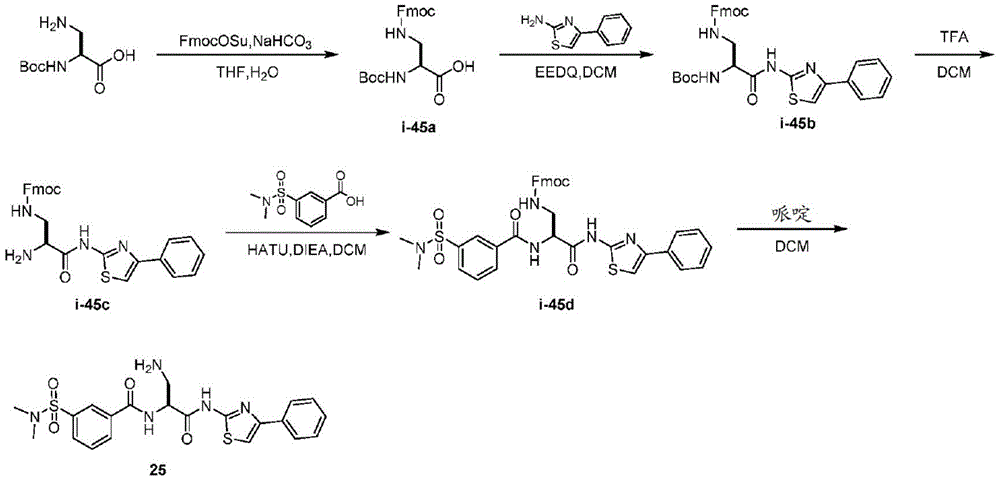
步骤1:(S)-3-((((9H-芴-9-基)甲氧基)羰基)氨基)-2-((叔丁氧基羰基)氨基)丙酸(中间体i-45a)的制备Step 1: (S)-3-((((9H-Fluoren-9-yl)methoxy)carbonyl)amino)-2-((tert-butoxycarbonyl)amino)propionic acid (Intermediate i-45a ) preparation
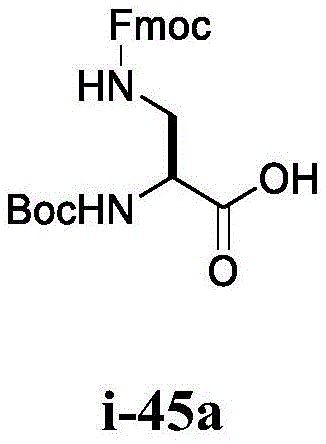
向(2S)-3-氨基-2-(叔丁氧基羰基氨基)丙酸(1.0g,4.90mmol)于THF(10.0mL)和水(10.0mL)中的溶液添加FmocOSu(1.82g,5.39mmol)和NaHCO3(822.69mg,9.79mmol)。将混合物在20℃下搅拌3小时。用柠檬酸溶液将反应混合物调节至pH 4。用EtOAc(10.0mL*3)萃取溶液。将有机层用盐水(20.0mL)洗涤,经Na2SO4干燥并过滤。浓缩滤液,得到残余物。将残余物用MTBE(10.0mL)研磨。将溶液过滤,并将滤饼在真空下干燥,得到呈白色固体的中间体i-45a。To a solution of (2S)-3-amino-2-(tert-butoxycarbonylamino)propionic acid (1.0 g, 4.90 mmol) in THF (10.0 mL) and water (10.0 mL) was added FmocOSu (1.82 g, 5.39 g mmol) and NaHCO3 (822.69 mg, 9.79 mmol). The mixture was stirred at 20°C for 3 hours. The reaction mixture was adjusted to pH 4 with citric acid solution. The solution was extracted with EtOAc (10.0 mL*3). The organic layer was washed with brine (20.0 mL), dried over Na2SO4 and filtered. The filtrate was concentrated to give a residue. The residue was triturated with MTBE (10.0 mL). The solution was filtered and the filter cake was dried under vacuum to yield intermediate i-45a as a white solid.
LCMS(ESI)m/z:[M+Na]+=449.3LCMS(ESI) m/z: [M+Na] + =449.3
步骤2:(S)-(3-氧代基-3-((4-苯基噻唑-2-基)氨基)丙烷-1,2-二基)二氨基甲酸(9H-芴-9-基)甲酯叔丁酯(中间体i-45b)的制备Step 2: (S)-(3-oxo-3-((4-phenylthiazol-2-yl)amino)propane-1,2-diyl)dicarbamic acid (9H-fluoren-9-yl ) Preparation of tert-butyl methyl ester (intermediate i-45b)

向中间体i-45a(1.8g,4.22mmol)于DCM(18.0mL)中的溶液添加EEDQ(1.57g,6.33mmol)和4-苯基噻唑-2-胺(743.86mg,4.22mmol)。将反应混合物在20℃下搅拌12小时,然后倒入水(20.0mL)中。用EtOAc(20.0mL*3)萃取溶液。将合并的有机层用盐水(50.0mL)洗涤,经Na2SO4干燥,并过滤。浓缩滤液,得到残余物。将残余物通过柱色谱法(SiO2,PE:EA=100:1-50:1-10:1-5:1-2:1)纯化,得到呈黄色固体的中间体i-45b。To a solution of intermediate i-45a (1.8 g, 4.22 mmol) in DCM (18.0 mL) was added EEDQ (1.57 g, 6.33 mmol) and 4-phenylthiazol-2-amine (743.86 mg, 4.22 mmol). The reaction mixture was stirred at 20°C for 12 hours, then poured into water (20.0 mL). The solution was extracted with EtOAc (20.0 mL*3). The combined organic layers were washed with brine (50.0 mL), dried over Na2SO4 , and filtered. The filtrate was concentrated to give a residue. The residue was purified by column chromatography ( SiO2 , PE:EA=100:1-50:1-10:1-5:1-2:1) to yield intermediate i-45b as a yellow solid.
LCMS(ESI)m/z:[M+H]+=585.4LCMS (ESI) m/z: [M+H] + =585.4
手性HPLC:Cellucoat-MeOH(DEA)-40-7MIN-3ML,3.031分钟。Chiral HPLC: Cellucoat-MeOH(DEA)-40-7MIN-3ML, 3.031 min.
步骤3:(S)-(2-氨基-3-氧代基-3-((4-苯基噻唑-2-基)氨基)丙基)氨基甲酸(9H-芴-9-基)甲酯(中间体i-45c)的制备Step 3: (9H-Fluoren-9-yl)methyl (S)-(2-amino-3-oxo-3-((4-phenylthiazol-2-yl)amino)propyl)carbamate Preparation of (Intermediate i-45c)

向中间体i-45b(2.5g,4.28mmol)于DCM(25.0mL)中的溶液添加TFA(4.0mL)。将反应混合物在20℃下搅拌1.5小时。浓缩反应混合物,得到残余物。将残余物用PE(10.0mL)研磨。然后将混合物过滤,并将固体在真空中干燥,得到呈白色固体的中间体i-45c(TFA盐)。To a solution of intermediate i-45b (2.5 g, 4.28 mmol) in DCM (25.0 mL) was added TFA (4.0 mL). The reaction mixture was stirred at 20°C for 1.5 hours. The reaction mixture was concentrated to give a residue. The residue was triturated with PE (10.0 mL). The mixture was then filtered and the solid was dried in vacuo to yield Intermediate i-45c (TFA salt) as a white solid.
LCMS(ESI)m/z:[M+Na]+=507.3LCMS (ESI) m/z: [M+Na] + =507.3
手性HPLC:OJ-3-MeOH(DEA)-60-7MIN-3ML-35T,5.436分钟Chiral HPLC: OJ-3-MeOH(DEA)-60-7MIN-3ML-35T, 5.436 min
步骤4:(S)-(2-(3-(N,N-二甲基氨磺酰基)苯甲酰氨基)-3-氧代基-3-((4-苯基噻唑-2-基)氨基)丙基)氨基甲酸(9H-芴-9-基)甲酯(中间体i-45c)的制备Step 4: (S)-(2-(3-(N,N-Dimethylsulfamoyl)benzamido)-3-oxo-3-((4-phenylthiazol-2-yl )amino)propyl)carbamic acid (9H-fluoren-9-yl)methyl ester (intermediate i-45c) preparation
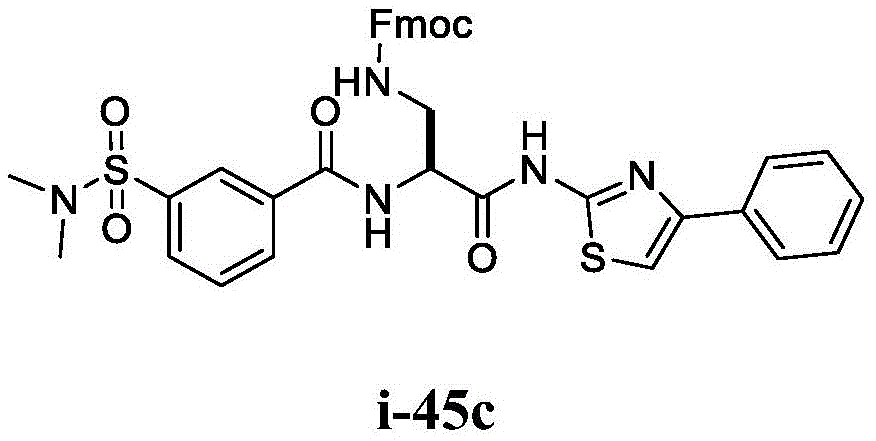
向3-(二甲基氨磺酰基)苯甲酸(38.30mg,167.06μmol)于DCM(1.0mL)中的溶液添加HATU(69.87mg,183.76μmol)、DIEA(64.77mg,501.18μmol,87.30μL)和中间体i-45b(100mg,167.06μmol)。将反应混合物在20℃下搅拌12小时,然后倒入水(2.0mL)中。用EtOAc(2.0mL*3)萃取溶液。将合并的有机萃取物用盐水(5.0mL)洗涤,经Na2SO4干燥并过滤。浓缩滤液,得到残余物。将残余物通过柱色谱法(SiO2.PE/EA=50/1-1/1)纯化,得到呈白色固体的中间体i-45c。To a solution of 3-(dimethylsulfamoyl)benzoic acid (38.30 mg, 167.06 μmol) in DCM (1.0 mL) was added HATU (69.87 mg, 183.76 μmol), DIEA (64.77 mg, 501.18 μmol, 87.30 μL) and intermediate i-45b (100 mg, 167.06 μmol). The reaction mixture was stirred at 20°C for 12 hours, then poured into water (2.0 mL). The solution was extracted with EtOAc (2.0 mL*3). The combined organic extracts were washed with brine (5.0 mL), dried over Na2SO4 and filtered. The filtrate was concentrated to give a residue. The residue was purified by column chromatography ( SiO2.PE/EA=50/1-1/1 ) to give intermediate i-45c as a white solid.
LCMS(ESI)m/z:[M+H]+=696.0LCMS (ESI) m/z: [M+H] + =696.0
手性HPLC:OJ-3-MeOH(DEA)-60-7MIN-3ML-35T,5.276分钟。Chiral HPLC: OJ-3-MeOH(DEA)-60-7MIN-3ML-35T, 5.276 min.
步骤5:(S)-N-(3-氨基-1-氧代基-1-((4-苯基噻唑-2-基)氨基)丙烷-2-基)-3-(N,N-二甲基氨磺酰基)苯甲酰胺(化合物25)甲酸盐的制备Step 5: (S)-N-(3-Amino-1-oxo-1-((4-phenylthiazol-2-yl)amino)propan-2-yl)-3-(N,N- Preparation of dimethylsulfamoyl)benzamide (compound 25) formate
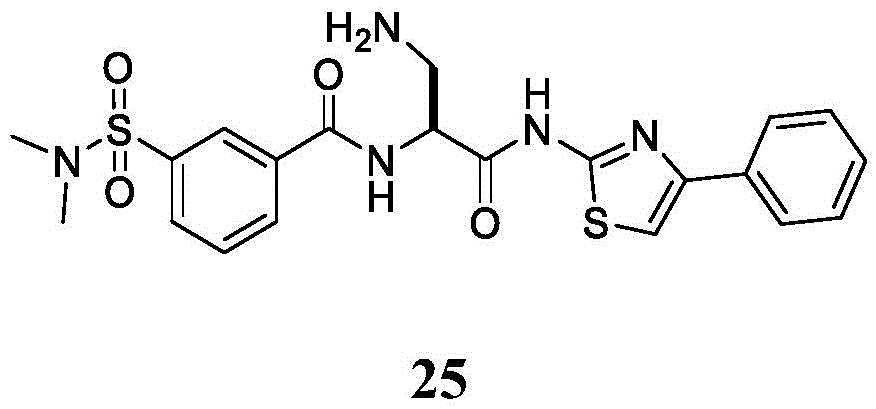
向中间体i-45c(100.0mg,140.84μmol)于DCM(1.0mL)中的溶液添加哌啶(98.00μL)。将溶液在20℃下搅拌2小时。将混合物倒入水(2.0mL)中,用EtOAc(2.0mL*3)萃取。将合并的有机萃取物用盐水(3.0mL)洗涤,经Na2SO4干燥并过滤。浓缩滤液,得到残余物。将残余物通过制备型HPLC(柱:Phenomenex Synergi C18 150*25*10μm;流动相:[水(0.225%FA)-ACN];B%:17%-37%,7分钟)纯化,并冻干,得到呈白色固体的化合物25(FA盐)。To a solution of intermediate i-45c (100.0 mg, 140.84 μmol) in DCM (1.0 mL) was added piperidine (98.00 μL). The solution was stirred at 20°C for 2 hours. The mixture was poured into water (2.0 mL) and extracted with EtOAc (2.0 mL*3). The combined organic extracts were washed with brine (3.0 mL), dried over Na2SO4 and filtered. The filtrate was concentrated to give a residue. The residue was purified by preparative HPLC (column:
1H NMR(400MHz,DMSO-d6)δ=8.30-8.28(m,2H),8.23-8.22(m,2H),7.96-7.89(m,3H),7.81(d,J=8.0Hz,1H),7.63(s,1H),7.45-7.43(m,2H),7.41-7.32(m,1H),4.74(s,1H),3.11(s,2H),2.66(s,6H)ppm 1 H NMR (400MHz, DMSO-d 6 ) δ=8.30-8.28(m, 2H), 8.23-8.22(m, 2H), 7.96-7.89(m, 3H), 7.81(d, J=8.0Hz, 1H ),7.63(s,1H),7.45-7.43(m,2H),7.41-7.32(m,1H),4.74(s,1H),3.11(s,2H),2.66(s,6H)ppm
LCMS(ESI)m/z:[M+H]+=474.3LCMS (ESI) m/z: [M+H] + =474.3
手性HPLC:OJ-3-MeOH(DEA)-40-7MIN-3ML-35T,2.956分钟。Chiral HPLC: OJ-3-MeOH(DEA)-40-7MIN-3ML-35T, 2.956 min.
手性HPLC:AD-3_5CM_MEOH(DEA)_40_3ML_8MIN_T35.MChiral HPLC: AD-3_5CM_MEOH(DEA)_40_3ML_8MIN_T35.M
实施例46.(S)-N-(3-乙酰氨基-1-氧代基-1-((4-苯基噻唑-2-基)氨基)丙烷-2-基)-3-(N,N-二甲基氨磺酰基)苯甲酰胺(化合物21)的制备Example 46. (S)-N-(3-Acetylamino-1-oxo-1-((4-phenylthiazol-2-yl)amino)propan-2-yl)-3-(N, Preparation of N-dimethylsulfamoyl)benzamide (Compound 21)

将N-[(1S)-1-(氨基甲基)-2-氧代基-2-[(4-苯基噻唑-2-基)氨基]乙基]-3-(二甲基氨磺酰基)苯甲酰胺(20.0mg,38.49μmol)于Ac2O(0.2mL)中的溶液在20℃下搅拌2小时。然后将反应混合物倒入水(2.0mL)中,并用EtOAc(2.0mL*3)萃取。将合并的有机萃取物用盐水(5.0mL)洗涤,经Na2SO4干燥并过滤。浓缩滤液,得到残余物。将残余物冻干,得到呈白色固体的化合物21(51.86%ee)。N-[(1S)-1-(aminomethyl)-2-oxo-2-[(4-phenylthiazol-2-yl)amino]ethyl]-3-(dimethylsulfamate A solution of acyl)benzamide (20.0 mg, 38.49 μmol) in Ac2O (0.2 mL) was stirred at 20 °C for 2 h. The reaction mixture was then poured into water (2.0 mL) and extracted with EtOAc (2.0 mL*3). The combined organic extracts were washed with brine (5.0 mL), dried over Na2SO4 and filtered. The filtrate was concentrated to give a residue. The residue was lyophilized to give compound 21 as a white solid (51.86% ee).
1H NMR(400MHz,DMSO-d6)δ=12.54(s,1H),9.12(d,J=6.8Hz,1H),8.23-8.22(m,3H),7.95(d,J=7.6Hz,1H),7.89(d,J=7.2Hz,2H),7.81(s,1H),7.65(s,1H),7.44-7.42(m,2H),7.40-7.31(m,1H),4.72(d,J=6.0Hz,1H),3.62(m,2H),2.65(s,6H),1.83(s,3H)ppm1H NMR(400MHz,DMSO-d6)δ=12.54(s,1H),9.12(d,J=6.8Hz,1H),8.23-8.22(m,3H),7.95(d,J=7.6Hz,1H) ,7.89(d,J=7.2Hz,2H),7.81(s,1H),7.65(s,1H),7.44-7.42(m,2H),7.40-7.31(m,1H),4.72(d,1H) =6.0Hz,1H),3.62(m,2H),2.65(s,6H),1.83(s,3H)ppm
LCMS(ESI)m/z:[M+H]+=516.4LCMS(ESI) m/z: [M+H] + =516.4
手性HPLC:Amycoat-MeOH(DEA)-40-5MIN-3ML-35T,1.514分钟和3.407分钟。Chiral HPLC: Amycoat-MeOH(DEA)-40-5MIN-3ML-35T, 1.514 min and 3.407 min.
实施例47.N-(2-((4-(2-氰基苯基)噻唑-2-基)氨基)-2-氧代乙基)-3-(N,N-二甲基氨磺酰基)苯甲酰胺(化合物27)的制备
步骤1:(2-((4-(2-氰基苯基)噻唑-2-基)氨基)-2-氧代乙基)氨基甲酸叔丁酯(中间体i-47a)的制备Step 1: Preparation of tert-butyl (2-((4-(2-cyanophenyl)thiazol-2-yl)amino)-2-oxoethyl)carbamate (Intermediate i-47a)

在N2下向N-[2-[(4-溴噻唑-2-基)氨基]-2-氧代基-乙基]氨基甲酸叔丁酯(200.0mg,558.65μmol)于甲苯(3.0mL)中的溶液添加2-(4,4,5,5-四甲基-1,3,2-二氧杂硼杂环戊烷-2-基)苄腈(383.93mg,1.68mmol)、Ad2nBuP-Pd-G3(406.85mg,558.65μmol)和K3PO4(177.87mg,837.97μmol)。将反应混合物在60℃下搅拌12小时。浓缩反应混合物,得到残余物。将残余物通过柱色谱法(SiO2,PE/EA=50/1至1/1)纯化,得到呈棕色固体的中间体i-47a。To tert-butyl N-[ 2 -[(4-bromothiazol-2-yl)amino]-2-oxo-ethyl]carbamate (200.0 mg, 558.65 μmol) in toluene (3.0 mL) under N ) was added with 2-(4,4,5,5-tetramethyl-1,3,2-dioxaborol-2-yl)benzonitrile (383.93 mg, 1.68 mmol), Ad2nBuP -Pd-G3 (406.85 mg, 558.65 μmol) and K3PO4 ( 177.87 mg, 837.97 μmol). The reaction mixture was stirred at 60°C for 12 hours. The reaction mixture was concentrated to give a residue. The residue was purified by column chromatography ( Si02 , PE/EA=50/1 to 1/1) to give intermediate i-47a as a brown solid.
LCMS(ESI)m/z:[M+H]+=359.2LCMS (ESI) m/z: [M+H] + =359.2
步骤2:2-氨基-N-(4-(2-氰基苯基)噻唑-2-基)乙酰胺(中间体i-47b)的制备Step 2: Preparation of 2-amino-N-(4-(2-cyanophenyl)thiazol-2-yl)acetamide (intermediate i-47b)

向中间体i-47a(230mg,628.88μmol)于DCM(2.5mL)中的溶液添加TFA(0.25mL)。将混合物在30℃下搅拌2小时。浓缩反应混合物,得到呈黄色固体的中间体i-47b(TFA盐),其直接用于下一步骤。To a solution of intermediate i-47a (230 mg, 628.88 μmol) in DCM (2.5 mL) was added TFA (0.25 mL). The mixture was stirred at 30°C for 2 hours. The reaction mixture was concentrated to give intermediate i-47b (TFA salt) as a yellow solid, which was used directly in the next step.
LCMS(ESI)m/z:[M+Na]+=281.2LCMS (ESI) m/z: [M+Na] + = 281.2
步骤3:N-(2-((4-(2-氰基苯基)噻唑-2-基)氨基)-2-氧代乙基)-3-(N,N-二甲基氨磺酰基)苯甲酰胺(化合物27)的制备Step 3: N-(2-((4-(2-cyanophenyl)thiazol-2-yl)amino)-2-oxoethyl)-3-(N,N-dimethylsulfamoyl) ) preparation of benzamide (compound 27)

向3-(二甲基氨磺酰基)苯甲酸(81.41mg,355.13μmol)于DCM(2.0mL)中的溶液添加HATU(162.04mg,426.15μmol)、DIEA(183.59mg,1.42mmol)和中间体i-47b(110.0mg,355.13μmol)。将反应混合物在30℃下搅拌12小时。将反应混合物倒入水(5.0mL)中。然后用EtOAc(5.0mL*3)萃取溶液。将合并的有机萃取物用盐水(10.0mL)洗涤,经Na2SO4干燥并过滤。浓缩滤液,得到残余物。将残余物通过制备型HPLC(柱:Phenomenex Synergi C18 150*25*10μm;流动相:[水(0.225%FA)-ACN];B%:37%-57%,7分钟)纯化,并冻干,得到呈白色固体的化合物27。To a solution of 3-(dimethylsulfamoyl)benzoic acid (81.41 mg, 355.13 μmol) in DCM (2.0 mL) was added HATU (162.04 mg, 426.15 μmol), DIEA (183.59 mg, 1.42 mmol) and the intermediate i-47b (110.0 mg, 355.13 μmol). The reaction mixture was stirred at 30°C for 12 hours. The reaction mixture was poured into water (5.0 mL). The solution was then extracted with EtOAc (5.0 mL*3). The combined organic extracts were washed with brine (10.0 mL), dried over Na2SO4 and filtered. The filtrate was concentrated to give a residue. The residue was purified by preparative HPLC (column:
1H NMR(400MHz,DMSO-d6)δ=12.43(br s,1H),9.32(m,1H),8.26-8.25(m,2H),7.97-7.92(m,3H),7.80-7.79(m,3H),7.56(m,1H),4.26(d,J=5.6Hz,2H),2.65(s,6H)ppm1H NMR (400MHz, DMSO-d 6 )δ=12.43(br s, 1H), 9.32(m, 1H), 8.26-8.25(m, 2H), 7.97-7.92(m, 3H), 7.80-7.79(m ,3H),7.56(m,1H),4.26(d,J=5.6Hz,2H),2.65(s,6H)ppm
LCMS(ESI)m/z:[M+H]+=470.2LCMS (ESI) m/z: [M+H] + =470.2
实施例48.N-[2-[[4-[3-(氨基甲基)苯基]噻唑-2-基]氨基]-2-氧代基-乙基]-3-(二甲基氨磺酰基)苯甲酰胺(化合物10)的制备Example 48. N-[2-[[4-[3-(Aminomethyl)phenyl]thiazol-2-yl]amino]-2-oxo-ethyl]-3-(dimethylamino Preparation of sulfonyl)benzamide (compound 10)

在N2下向N-[2-[[4-(3-氰基苯基)噻唑-2-基]氨基]-2-氧代基-乙基]-3-(二甲基氨磺酰基)苯甲酰胺(100.0mg,212.98μmol)于MeOH(4.0mL)中的溶液添加雷尼-Ni(99.99mg,1.17mmol)。将混合物在H2(50psi)下在15℃下搅拌16小时。将混合物过滤,并在真空下浓缩滤液,得到残余物。将残余物通过制备型HPLC(TFA条件;柱:PhenomenexSynergi C18 150*25*10μm;流动相:[水(0.1%TFA)-ACN];B%:15%-45%,9分钟)纯化,并冻干,得到呈白色固体的化合物10(TFA盐)。To N-[ 2 -[[4-(3-cyanophenyl)thiazol-2-yl]amino]-2-oxo-ethyl]-3-(dimethylsulfamoyl) under N ) benzamide (100.0 mg, 212.98 μmol) in MeOH (4.0 mL) was added Raney-Ni (99.99 mg, 1.17 mmol). The mixture was stirred under H2 (50 psi) at 15 °C for 16 h. The mixture was filtered and the filtrate was concentrated in vacuo to give a residue. The residue was purified by preparative HPLC (TFA conditions; column:
1H NMR(400MHz,DMSO-d6)δ=12.48(s,1H),9.34-9.31(m,1H),8.27-8.18(m,5H),7.97-7.91(m,3H),7.83-7.79(m,1H),7.62(s,1H),7.53-7.49(m,1H),7.42(d,J=7.6,1H),4.24(d,J=5.6Hz,2H),4.08(m,2H),2.66(m,6H)ppm。 1 H NMR (400MHz, DMSO-d 6 )δ=12.48(s,1H), 9.34-9.31(m,1H), 8.27-8.18(m,5H), 7.97-7.91(m,3H), 7.83-7.79 (m, 1H), 7.62 (s, 1H), 7.53-7.49 (m, 1H), 7.42 (d, J=7.6, 1H), 4.24 (d, J=5.6Hz, 2H), 4.08 (m, 2H) ), 2.66 (m, 6H) ppm.
LCMS(ESI)m/z:[M+H]+=474.2LCMS(ESI) m/z: [M+H] + =474.2
实施例49.N-[2-[[4-(3-氰基苯基)噻唑-2-基]氨基]-2-氧代基-乙基]-3-(二甲基氨磺酰基)苯甲酰胺(化合物8)的制备Example 49. N-[2-[[4-(3-cyanophenyl)thiazol-2-yl]amino]-2-oxo-ethyl]-3-(dimethylsulfamoyl) Preparation of benzamide (compound 8)
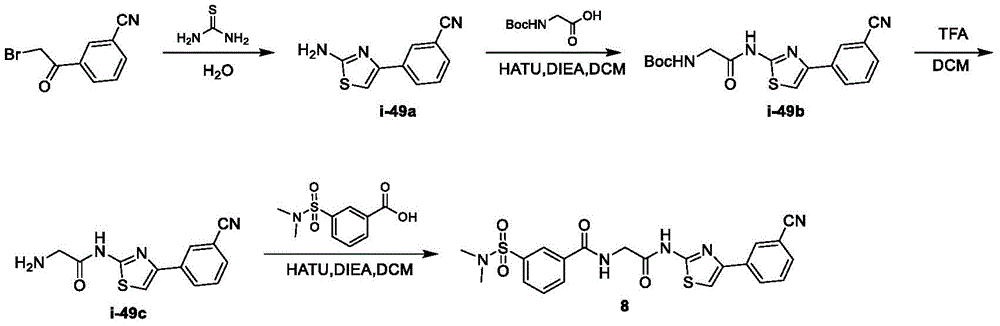
步骤1:2 3-(2-氨基噻唑-4-基)苄腈(中间体i-49a)的制备Step 1 : Preparation of 2 3-(2-Aminothiazol-4-yl)benzonitrile (Intermediate i-49a)

向3-(2-溴乙酰基)苄腈(200.00mg,892.64μmol)于H2O(5.0mL)中的溶液添加硫脲(74.74mg,981.91μmol)。将混合物在25℃下搅拌1.5小时。将反应混合物用水(10.0mL)稀释,并用EtOAC(35.0mL*3)萃取。将合并的有机萃取物用盐水(20.0mL*2)洗涤,经Na2SO4干燥,过滤,并在减压下浓缩,得到呈黄色固体的中间体i-49a。To a solution of 3-(2-bromoacetyl)benzonitrile (200.00 mg, 892.64 μmol) in H2O (5.0 mL) was added thiourea (74.74 mg, 981.91 μmol). The mixture was stirred at 25°C for 1.5 hours. The reaction mixture was diluted with water (10.0 mL) and extracted with EtOAc (35.0 mL*3). The combined organic extracts were washed with brine (20.0 mL* 2 ), dried over Na2SO4 , filtered, and concentrated under reduced pressure to give intermediate i-49a as a yellow solid.
LCMS(ESI)m/z:[M+H]+=202.1。LCMS (ESI) m/z: [M+H] + =202.1.
步骤2:N-[2-[[4-(3-氰基苯基)噻唑-2-基]氨基]-2-氧代基-乙基]氨基甲酸叔丁酯(中间体i-49b)的制备Step 2: tert-butyl N-[2-[[4-(3-cyanophenyl)thiazol-2-yl]amino]-2-oxo-ethyl]carbamate (intermediate i-49b) preparation
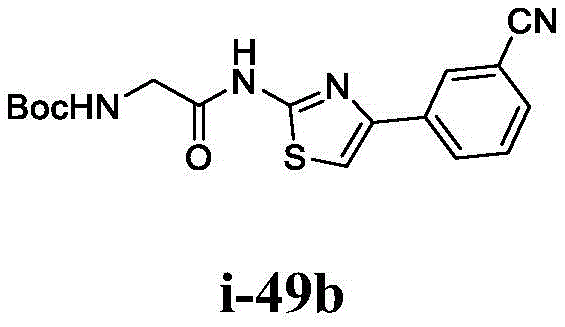
向2-(叔丁氧基羰基氨基)乙酸(129.27mg,737.90μmol)于DCM(8.0mL)中的溶液添加HATU(280.57mg,737.90μmol)、DIEA(260.09mg,2.01mmol,350.52μL)和中间体i-49a(135.0mg,670.82μmol)。将混合物在25℃下搅拌12小时。将反应混合物用水(10.0mL)稀释,并用EtOAc(20.0mL*3)萃取。将合并的有机萃取物用盐水(20.0mL*2)洗涤,经Na2SO4干燥,过滤,并在减压下浓缩,得到残余物。将残余物通过制备型HPLC(TFA条件;柱:Boston pH-lex150*25 10μm;流动相:[水(0.1%TFA)-ACN];B%:40%-70%,10分钟)纯化,并冻干,得到呈白色固体的中间体i-49b。To a solution of 2-(tert-butoxycarbonylamino)acetic acid (129.27 mg, 737.90 μmol) in DCM (8.0 mL) was added HATU (280.57 mg, 737.90 μmol), DIEA (260.09 mg, 2.01 mmol, 350.52 μL) and Intermediate i-49a (135.0 mg, 670.82 μmol). The mixture was stirred at 25°C for 12 hours. The reaction mixture was diluted with water (10.0 mL) and extracted with EtOAc (20.0 mL*3). The combined organic extracts were washed with brine (20.0 mL* 2 ), dried over Na2SO4 , filtered, and concentrated under reduced pressure to give a residue. The residue was purified by preparative HPLC (TFA conditions; column: Boston pH-
LCMS(ESI)m/z:[M+H]+=359.4LCMS (ESI) m/z: [M+H] + =359.4
步骤3:2-氨基-N-[4-(3-氰基苯基)噻唑-2-基]乙酰胺(中间体i-49c)的制备Step 3: Preparation of 2-amino-N-[4-(3-cyanophenyl)thiazol-2-yl]acetamide (intermediate i-49c)

向中间体i-49b(93.0mg,259.48μmol)于DCM(1.0mL)中的溶液添加TFA(0.1mL)。将混合物在25℃下搅拌1.5小时。将混合物在减压下浓缩,得到呈棕色油状物的中间体i-49c(TFA盐),其不经进一步纯化即用于下一步骤。To a solution of intermediate i-49b (93.0 mg, 259.48 μmol) in DCM (1.0 mL) was added TFA (0.1 mL). The mixture was stirred at 25°C for 1.5 hours. The mixture was concentrated under reduced pressure to give intermediate i-49c (TFA salt) as a brown oil, which was used in the next step without further purification.
LCMS(ESI)m/z:[M+H]+=259.1。LCMS (ESI) m/z: [M+H] + =259.1.
步骤4:N-[2-[[4-(3-氰基苯基)噻唑-2-基]氨基]-2-氧代基-乙基]-3-(二甲基氨磺酰基)苯甲酰胺(化合物8)的制备Step 4: N-[2-[[4-(3-Cyanophenyl)thiazol-2-yl]amino]-2-oxo-ethyl]-3-(dimethylsulfamoyl)benzene Preparation of formamide (compound 8)
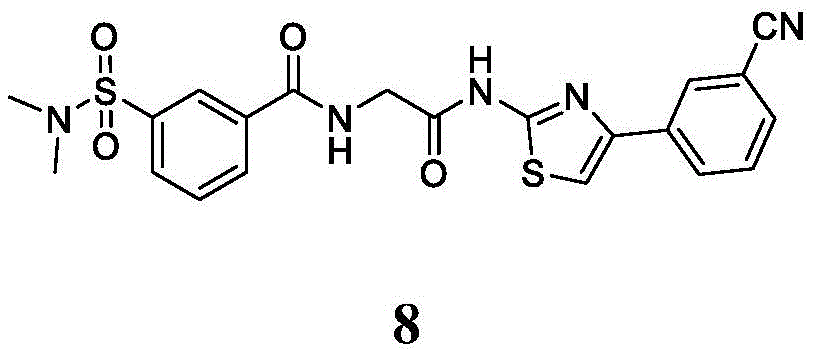
向3-(二甲基氨磺酰基)苯甲酸(75.74mg,330.36μmol)于DCM(2.0mL)中的溶液添加HATU(138.17mg,363.40μmol)、DIEA(170.79mg,1.32mmol,230.17μL)和中间体F(123.0mg,330.36μmol。将混合物在25℃下搅拌12小时。将反应混合物用水(10.0mL)稀释,并用EtOAc(30.0mL*3)萃取。将合并的有机萃取物用盐水(20.0mL*2)洗涤,经Na2SO4干燥,过滤,并在减压下浓缩,得到残余物。将残余物通过制备型HPLC(TFA条件;柱:PhenomenexSynergi C18 150*25*10μm;流动相:[水(0.1%TFA)-ACN];B%:35%-65%,9分钟)纯化,并冻干,得到呈白色固体的化合物8。To a solution of 3-(dimethylsulfamoyl)benzoic acid (75.74 mg, 330.36 μmol) in DCM (2.0 mL) was added HATU (138.17 mg, 363.40 μmol), DIEA (170.79 mg, 1.32 mmol, 230.17 μL) and Intermediate F (123.0 mg, 330.36 μmol. The mixture was stirred at 25 °C for 12 h. The reaction mixture was diluted with water (10.0 mL) and extracted with EtOAc (30.0 mL*3). The combined organic extracts were washed with brine ( 20.0 mL*2) washed, dried over Na2SO4 , filtered, and concentrated under reduced pressure to give a residue. The residue was passed through preparative HPLC (TFA conditions; column:
1HNMR(400MHz,DMSO-d6)δ12.53(s,1H),9.34-9.31(m,1H),8.33(s,1H),8.26-8.22(m,3H),7.94(d,J=8.0Hz,1H),7.88(s,1H),7.82-7.78(m,2H),7.68-7.64(m,1H),4.24(d,J=5.6Hz,2H),2.65(s,6H)。 1 HNMR (400MHz, DMSO-d 6 ) δ12.53(s, 1H), 9.34-9.31(m, 1H), 8.33(s, 1H), 8.26-8.22(m, 3H), 7.94(d, J= 8.0Hz, 1H), 7.88(s, 1H), 7.82-7.78(m, 2H), 7.68-7.64(m, 1H), 4.24(d, J=5.6Hz, 2H), 2.65(s, 6H).
LCMS(ESI)m/z:[M+H]+=470.0。LCMS (ESI) m/z: [M+H] + =470.0.
实施例50.N-[2-[[4-[3-(乙酰氨基甲基)苯基]噻唑-2-基]氨基]-2-氧代基-乙基]-3-(二甲基氨磺酰基)苯甲酰胺(化合物5)的制备Example 50. N-[2-[[4-[3-(acetamidomethyl)phenyl]thiazol-2-yl]amino]-2-oxo-ethyl]-3-(dimethyl Preparation of Sulfamoyl)benzamide (Compound 5)

向N-[2-[[4-(3-氰基苯基)噻唑-2-基]氨基]-2-氧代基-乙基]-3-(二甲基氨磺酰基)苯甲酰胺(100mg,212.98μmol)于MeOH(2.0mL)中的溶液添加NiCl2.6H2O(126.56mg,532.44μmol)和NaBH4(80.57mg,2.13mmol),将混合物在25℃下搅拌2小时,然后将Ac2O(21.74mg,212.98μmol)和TEA(43.10mg,425.95μmol)添加至混合物中。将混合物在25℃下再搅拌2小时,然后在真空下浓缩,得到残余物。将残余物用水(20.0mL)稀释,并用EtOAc(15.0mL*2)萃取。将合并的有机萃取物用盐水(5.0mL*2)洗涤,经Na2SO4干燥,过滤,并在减压下浓缩,得到残余物。将残余物通过制备型HPLC(TFA条件;柱:Phenomenex Synergi C18150*25*10μm;流动相:[水(0.1%TFA)-ACN];B%:30%-53%,7分钟)纯化,并冻干,得到呈白色固体的化合物5。to N-[2-[[4-(3-cyanophenyl)thiazol-2-yl]amino]-2-oxo-ethyl]-3-(dimethylsulfamoyl)benzamide (100 mg, 212.98 μmol) in MeOH (2.0 mL) was added NiCl2.6H2O ( 126.56 mg , 532.44 μmol) and NaBH4 (80.57 mg, 2.13 mmol) and the mixture was stirred at 25 °C for 2 h, Ac2O (21.74 mg, 212.98 μmol) and TEA (43.10 mg, 425.95 μmol) were then added to the mixture. The mixture was stirred at 25°C for an additional 2 hours, then concentrated in vacuo to give a residue. The residue was diluted with water (20.0 mL) and extracted with EtOAc (15.0 mL*2). The combined organic extracts were washed with brine (5.0 mL* 2 ), dried over Na2SO4 , filtered, and concentrated under reduced pressure to give a residue. The residue was purified by preparative HPLC (TFA conditions; column: Phenomenex Synergi C18150*25*10 μm; mobile phase: [water (0.1% TFA)-ACN]; B%: 30%-53%, 7 minutes), and Lyophilization afforded compound 5 as a white solid.
1H NMR(400MHz,DMSO-d6)δ12.52(s,1H),9.31-9.29(m,1H),8.37-8.36(m,1H),8.26-8.23(m,2H),7.94(d,J=8.0Hz,1H),7.82-7.76(m,3H),7.61(s,1H),7.39-7.36(m,1H),7.21(d,J=7.6Hz,1H),4.29(d,J=5.6Hz,2H),4.23(d,J=5.6Hz,2H),2.65(s,6H),1.88(s,3H)ppm。 1 H NMR (400MHz, DMSO-d 6 ) δ 12.52(s, 1H), 9.31-9.29(m, 1H), 8.37-8.36(m, 1H), 8.26-8.23(m, 2H), 7.94(d , J=8.0Hz, 1H), 7.82-7.76(m, 3H), 7.61(s, 1H), 7.39-7.36(m, 1H), 7.21(d, J=7.6Hz, 1H), 4.29(d, J=5.6Hz, 2H), 4.23 (d, J=5.6Hz, 2H), 2.65 (s, 6H), 1.88 (s, 3H) ppm.
LCMS(ESI)m/z:[M+H]+=516.3。LCMS (ESI) m/z: [M+H] + =516.3.
实施例51.N-[2-[[4-[4-(氨基甲基)苯基]噻唑-2-基]氨基]-2-氧代基-乙基]-3-(二甲基氨磺酰基)苯甲酰胺(化合物22)的制备Example 51. N-[2-[[4-[4-(Aminomethyl)phenyl]thiazol-2-yl]amino]-2-oxo-ethyl]-3-(dimethylamino Preparation of sulfonyl)benzamide (compound 22)

步骤1:4-(2-氨基噻唑-4-基)苄腈(中间体i-51a)的制备Step 1: Preparation of 4-(2-Aminothiazol-4-yl)benzonitrile (Intermediate i-51a)
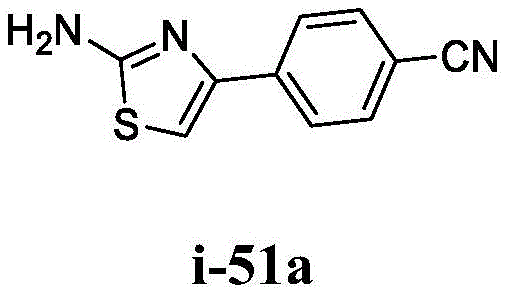
向4-(2-溴乙酰基)苄腈(500mg,2.23mmol,79.78μL)和NaF(0.1g,2.38mmol)于H2O(8.0mL)和MeOH(8.0mL)中的混合物添加硫脲(186.86mg,2.45mmol)。将混合物在下25℃搅拌30分钟,然后用水(10.0mL)稀释,并用EtOAc(35.0mL*3)萃取。将合并的有机萃取物用饱和NaHCO3(20.0mL*2)洗涤,经Na2SO4干燥,过滤,并在减压下浓缩,得到呈黄色固体的中间体i-51a。To a mixture of 4-(2-bromoacetyl)benzonitrile (500 mg, 2.23 mmol, 79.78 μL) and NaF (0.1 g, 2.38 mmol) in H2O (8.0 mL) and MeOH (8.0 mL) was added thiourea (186.86 mg, 2.45 mmol). The mixture was stirred at 25°C for 30 minutes, then diluted with water (10.0 mL) and extracted with EtOAc (35.0 mL*3). The combined organic extracts were washed with saturated NaHCO3 (20.0 mL* 2 ), dried over Na2SO4 , filtered, and concentrated under reduced pressure to give intermediate i-51a as a yellow solid.
1H NMR(400MHz,DMSO-d6)δ=7.97-7.95(m,2H),7.82-7.80(m,2H),7.32(s,1H),7.19(s,2H)ppm。 1 H NMR (400 MHz, DMSO-d 6 ) δ = 7.97-7.95 (m, 2H), 7.82-7.80 (m, 2H), 7.32 (s, 1 H), 7.19 (s, 2H) ppm.
步骤2:N-[2-[[4-(4-氰基苯基)噻唑-2-基]氨基]-2-氧代基-乙基]氨基甲酸叔丁酯(中间体i-51b)的制备Step 2: tert-Butyl N-[2-[[4-(4-cyanophenyl)thiazol-2-yl]amino]-2-oxo-ethyl]carbamate (Intermediate i-51b) preparation
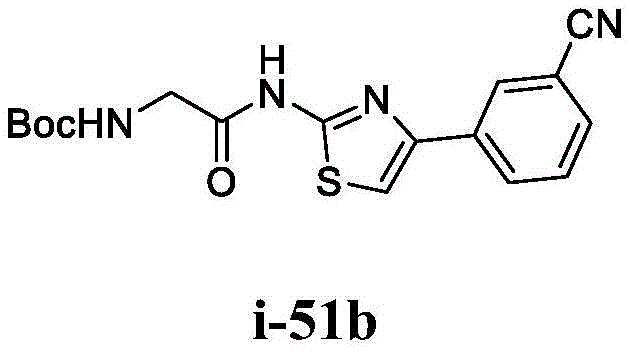
向2-(叔丁氧基羰基氨基)乙酸(287.26mg,1.64mmol)于吡啶(6mL)中的溶液添加EDCI(1.43g,7.45mmol)和中间体i-51a(300.0mg,1.49mmol),并将混合物在25℃下搅拌48小时。将反应混合物用水(15.0mL)稀释,并用EtOAc(30.0mL*3)萃取。将合并的有机萃取物用盐水(20.0mL*2)洗涤,经Na2SO4干燥,过滤,并在减压下浓缩,得到残余物。将残余物通过制备型HPLC(TFA条件;柱:Phenomenex Synergi C18 150*25*10μm;流动相:[水(0.1%TFA)-ACN];B%:38%-68%,9分钟)纯化,并冻干,得到呈白色固体的中间体i-51b。To a solution of 2-(tert-butoxycarbonylamino)acetic acid (287.26 mg, 1.64 mmol) in pyridine (6 mL) was added EDCI (1.43 g, 7.45 mmol) and intermediate i-51a (300.0 mg, 1.49 mmol), And the mixture was stirred at 25°C for 48 hours. The reaction mixture was diluted with water (15.0 mL) and extracted with EtOAc (30.0 mL*3). The combined organic extracts were washed with brine (20.0 mL* 2 ), dried over Na2SO4 , filtered, and concentrated under reduced pressure to give a residue. The residue was purified by preparative HPLC (TFA conditions; column:
LCMS(ESI)m/z:[M+H]+=359.2。LCMS (ESI) m/z: [M+H] + =359.2.
步骤3:2-氨基-N-[4-(4-氰基苯基)噻唑-2-基]乙酰胺(中间体i-51c)的制备Step 3: Preparation of 2-amino-N-[4-(4-cyanophenyl)thiazol-2-yl]acetamide (intermediate i-51c)

向中间体i-51b(250mg,697.52μmol)于DCM(2.0mL)中的溶液添加TFA(0.2mL),并在25℃下搅拌4小时。将混合物在减压下浓缩,得到呈棕色固体的中间体i-51c(TFA盐),其不经进一步纯化即用于下一步骤。To a solution of intermediate i-51b (250 mg, 697.52 μmol) in DCM (2.0 mL) was added TFA (0.2 mL) and stirred at 25 °C for 4 h. The mixture was concentrated under reduced pressure to give intermediate i-51c (TFA salt) as a brown solid, which was used in the next step without further purification.
LCMS(ESI)m/z:[M+H]+=259.1。LCMS (ESI) m/z: [M+H] + =259.1.
步骤4:N-[2-[[4-(4-氰基苯基)噻唑-2-基]氨基]-2-氧代基-乙基]-3-(二甲基氨磺酰基)苯甲酰胺(中间体i-51d)的制备Step 4: N-[2-[[4-(4-Cyanophenyl)thiazol-2-yl]amino]-2-oxo-ethyl]-3-(dimethylsulfamoyl)benzene Preparation of formamide (intermediate i-51d)

向3-(二甲基氨磺酰基)苯甲酸(244.08mg,1.06mmol)于DCM(5.0mL)中的溶液添加HATU(404.82mg,1.06mmol)、DIEA(500.36mg,3.87mmol,674.34μL)和中间体i-51c(250.0mg,967.87μmol。将混合物在25℃下搅拌24小时。将反应混合物用水(10.0mL)稀释,并用EtOAc(15.0mL*3)萃取。将合并的有机萃取物用盐水(10.0mL*2)洗涤,经Na2SO4干燥,过滤,并在减压下浓缩,得到残余物。将残余物通过制备型HPLC(TFA条件;柱:PhenomenexSynergi C18 150*25*10μm;流动相:[水(0.1%TFA)-ACN];B%:45%-75%,9分钟)纯化,并冻干,得到呈白色固体的中间体i-51d。To a solution of 3-(dimethylsulfamoyl)benzoic acid (244.08 mg, 1.06 mmol) in DCM (5.0 mL) was added HATU (404.82 mg, 1.06 mmol), DIEA (500.36 mg, 3.87 mmol, 674.34 μL) and intermediate i-51c (250.0 mg, 967.87 μmol. The mixture was stirred at 25 °C for 24 h. The reaction mixture was diluted with water (10.0 mL) and extracted with EtOAc (15.0 mL*3). The combined organic extracts were extracted with Brine (10.0 mL*2) was washed, dried over Na2SO4 , filtered, and concentrated under reduced pressure to give a residue. The residue was passed through preparative HPLC (TFA conditions; column:
1H NMR(400MHz,DMSO-d6)δ12.27(s,1H),9.33-9.30(m,1H),8.26-8.23(m,2H),8.08(d,J=8.4Hz,2H),7.95-7.89(m,4H),7.82-7.78(m,1H),4.24(d,J=5.6Hz,2H),2.65(s,6H)ppm。1H NMR (400MHz, DMSO-d 6 ) δ 12.27(s, 1H), 9.33-9.30(m, 1H), 8.26-8.23(m, 2H), 8.08(d, J=8.4Hz, 2H), 7.95 -7.89 (m, 4H), 7.82-7.78 (m, 1H), 4.24 (d, J=5.6Hz, 2H), 2.65 (s, 6H) ppm.
LCMS(ESI)m/z:[M+H]+=469.2。LCMS (ESI) m/z: [M+H] + =469.2.
步骤5:N-[2-[[4-[4-(氨基甲基)苯基]噻唑-2-基]氨基]-2-氧代基-乙基]-3-(二甲基氨磺酰基)苯甲酰胺(化合物22)的制备Step 5: N-[2-[[4-[4-(Aminomethyl)phenyl]thiazol-2-yl]amino]-2-oxo-ethyl]-3-(dimethylsulfamate Preparation of acyl)benzamide (compound 22)

在N2下向中间体i-51d(200.0mg,425.95μmol)于MeOH(1.0mL)中的溶液添加雷尼-Ni(200.00mg,2.33mmol)。将混合物在H2(50psi)下在15℃下搅拌16小时。将混合物过滤,并在真空下浓缩滤液。将残余物通过制备型HPLC(基础柱:Phenomenex Gemini 150*25mm*10μm;流动相:[水(0.05%氢氧化氨v/v)-ACN];B%:28%-58%,11.5分钟)纯化,并冻干,得到呈白色固体的化合物22。To a solution of intermediate i-51d (200.0 mg, 425.95 μmol) in MeOH (1.0 mL) was added Raney-Ni (200.00 mg, 2.33 mmol) under N2 . The mixture was stirred under H2 (50 psi) at 15 °C for 16 h. The mixture was filtered and the filtrate was concentrated in vacuo. The residue was passed through preparative HPLC (basic column:
1H NMR(400MHz,DMSO-d6)δ9.16(s,1H),8.26-8.23(m,2H),7.93(d,J=7.6Hz,1H),7.82-7.77(m,3H),7.43(s,1H),7.35(d,J=7.6,2H),4.15(m,2H),3.72(s,2H),2.65(s,6H)ppm。 1 H NMR (400MHz, DMSO-d 6 ) δ 9.16(s, 1H), 8.26-8.23(m, 2H), 7.93(d, J=7.6Hz, 1H), 7.82-7.77(m, 3H), 7.43 (s, 1H), 7.35 (d, J=7.6, 2H), 4.15 (m, 2H), 3.72 (s, 2H), 2.65 (s, 6H) ppm.
LCMS(ESI)m/z:[M+H]+=474.3。LCMS (ESI) m/z: [M+H] + =474.3.
实施例52.N-[2-[[4-[4-(乙酰氨基甲基)苯基]噻唑-2-基]氨基]-2-氧代基-乙基]-3-(二甲基氨磺酰基)苯甲酰胺(化合物11)的制备
向N-[2-[[4-(4-氰基苯基)噻唑-2-基]氨基]-2-氧代基-乙基]-3-(二甲基氨磺酰基)苯甲酰胺(100.00mg,212.98μmol)于MeOH(2.0mL)中的溶液添加NiCl2.6H2O(126.56mg,532.44μmol)和NaBH4(80.57mg,2.13mmol),将混合物在25℃下搅拌2小时,然后添加Ac2O(21.74mg,212.98μmol,19.94μL)和TEA(43.10mg,425.95μmol,59.29μL)。将混合物在25℃下再搅拌2小时,然后在真空下浓缩,得到残余物。将残余物用水(20.0mL)稀释,并用EtOAc(15.0mL*2)萃取。将合并的有机萃取物用盐水(5.0mL*2)洗涤,经无水硫酸钠干燥,过滤,并在减压下浓缩,得到残余物。将残余物通过制备型HPLC(TFA条件;柱:Phenomenex SynergiC18 150*25*10μm;流动相:[水(0.1%TFA)-ACN];B%:30%-53%,7分钟)纯化,并冻干,得到呈白色固体的化合物11。To N-[2-[[4-(4-cyanophenyl)thiazol-2-yl]amino]-2-oxo-ethyl]-3-(dimethylsulfamoyl)benzamide (100.00 mg, 212.98 μmol) in MeOH (2.0 mL) was added NiCl2.6H2O ( 126.56 mg , 532.44 μmol) and NaBH4 (80.57 mg, 2.13 mmol) and the mixture was stirred at 25 °C for 2 h , then Ac2O (21.74 mg, 212.98 μmol, 19.94 μL) and TEA (43.10 mg, 425.95 μmol, 59.29 μL) were added. The mixture was stirred at 25°C for an additional 2 hours, then concentrated in vacuo to give a residue. The residue was diluted with water (20.0 mL) and extracted with EtOAc (15.0 mL*2). The combined organic extracts were washed with brine (5.0 mL*2), dried over anhydrous sodium sulfate, filtered, and concentrated under reduced pressure to give a residue. The residue was purified by preparative HPLC (TFA conditions; column:
1H NMR(400MHz,DMSO-d6)δ=12.49(s,1H),9.32-9.29(m,1H),8.38-8.35(m,1H),8.27-8.23(m,2H),7.95(d,J=8.0Hz,1H),7.86-7.79(m,3H),7.60(s,1H),7.31(d,J=8.4Hz,2H),4.27(d,J=5.6Hz,2H),4.23(d,J=5.6Hz,2H),2.66(s,6H),1.88(s,3H)ppm。 1 H NMR (400MHz, DMSO-d 6 )δ=12.49(s, 1H), 9.32-9.29(m, 1H), 8.38-8.35(m, 1H), 8.27-8.23(m, 2H), 7.95(d , J=8.0Hz, 1H), 7.86-7.79(m, 3H), 7.60(s, 1H), 7.31(d, J=8.4Hz, 2H), 4.27(d, J=5.6Hz, 2H), 4.23 (d, J=5.6 Hz, 2H), 2.66 (s, 6H), 1.88 (s, 3H) ppm.
LCMS(ESI)m/z:[M+H]+=516.3。LCMS (ESI) m/z: [M+H] + =516.3.
实施例53.(S)-N-(6-乙酰氨基-1-氧代基-1-((4-苯基噻唑-2-基)氨基)己烷-2-基)苯甲酰胺(化合物43)的制备Example 53. (S)-N-(6-acetamido-1-oxo-1-((4-phenylthiazol-2-yl)amino)hexane-2-yl)benzamide (compound 43) Preparation

步骤1:(S)-6-((((9H-芴-9-基)甲氧基)羰基)氨基)-2-((叔丁氧基羰基)氨基)己酸(中间体i-53a)的制备Step 1: (S)-6-((((9H-Fluoren-9-yl)methoxy)carbonyl)amino)-2-((tert-butoxycarbonyl)amino)hexanoic acid (Intermediate i-53a ) preparation
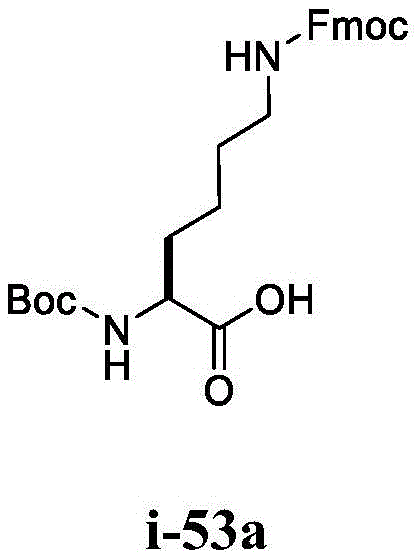
向(2S)-6-氨基-2-(叔丁氧基羰基氨基)己酸(1g,4.06mmol)于THF(10.0mL)中的溶液添加NaHCO3(682.14mg,8.12mmol)于水(10.0mL)中的溶液和FmocOSu(1.51g,4.47mmol)。将反应混合物在20℃下搅拌3小时。将反应混合物倒入水(10.0mL)中。用饱和柠檬酸溶液将溶液调节至pH4。用EtOAc(15mL*3)萃取混合物。将合并的有机萃取物用盐水(20.0mL)洗涤,经Na2SO4干燥并过滤。将滤液浓缩,得到呈白色固体的中间体i-53a。化合物直接用于下一步骤。To a solution of (2S)-6-amino-2-(tert-butoxycarbonylamino)hexanoic acid (1 g, 4.06 mmol) in THF (10.0 mL) was added NaHCO3 (682.14 mg, 8.12 mmol) in water (10.0 mL) and FmocOSu (1.51 g, 4.47 mmol). The reaction mixture was stirred at 20°C for 3 hours. The reaction mixture was poured into water (10.0 mL). The solution was adjusted to pH 4 with saturated citric acid solution. The mixture was extracted with EtOAc (15 mL*3). The combined organic extracts were washed with brine (20.0 mL), dried over Na2SO4 and filtered. The filtrate was concentrated to yield intermediate i-53a as a white solid. The compound was used directly in the next step.
LCMS(ESI)m/z:[M+Na]+=491.4LCMS(ESI) m/z: [M+Na] + =491.4
步骤2:(S)-(6-氧代基-6-((4-苯基噻唑-2-基)氨基)己烷-1,5-二基)二氨基甲酸(9H-芴-9-基)甲酯叔丁酯(中间体i-53b)的制备Step 2: (S)-(6-oxo-6-((4-phenylthiazol-2-yl)amino)hexane-1,5-diyl)dicarbamic acid (9H-fluorene-9- Preparation of tert-butyl methyl) methyl ester (intermediate i-53b)
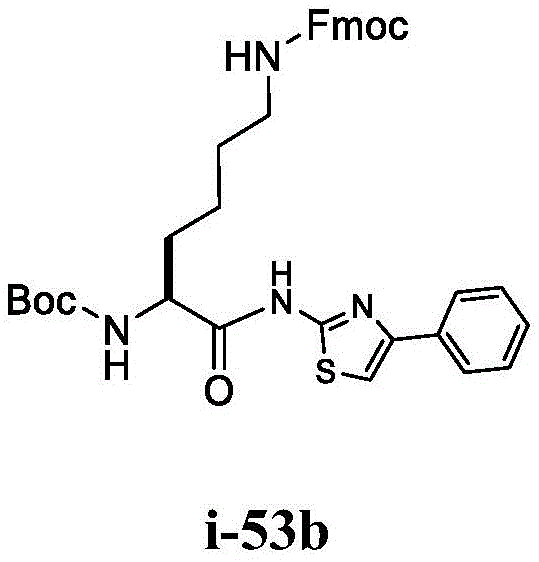
向中间体i-53a(500mg,977.50μmol)于DCM(5.0mL)中的溶液添加EEDQ(362.59mg,1.47mmol)和4-苯基噻唑-2-胺(172.27mg,977.50μmol)。将反应混合物在20℃下搅拌18小时。将反应混合物倒入水(10.0mL)中。用EtOAc(10.0mL*3)萃取溶液。将合并的有机萃取物用盐水(20.0mL)洗涤,经Na2SO4干燥并过滤。浓缩滤液,得到残余物。将残余物通过柱色谱法(SiO2,石油醚/乙酸乙酯=100:1至1:1)纯化,得到呈黄色油状物的中间体i-53b。To a solution of intermediate i-53a (500 mg, 977.50 μmol) in DCM (5.0 mL) was added EEDQ (362.59 mg, 1.47 mmol) and 4-phenylthiazol-2-amine (172.27 mg, 977.50 μmol). The reaction mixture was stirred at 20°C for 18 hours. The reaction mixture was poured into water (10.0 mL). The solution was extracted with EtOAc (10.0 mL*3). The combined organic extracts were washed with brine (20.0 mL), dried over Na2SO4 and filtered. The filtrate was concentrated to give a residue. The residue was purified by column chromatography ( SiO2 , petroleum ether/ethyl acetate = 100:1 to 1:1) to give intermediate i-53b as a yellow oil.
LCMS(ESI)m/z:[M+H]+=627.5LCMS (ESI) m/z: [M+H] + =627.5
步骤3:(S)-(5-氨基-6-氧代基-6-((4-苯基噻唑-2-基)氨基)己基)氨基甲酸(9H-芴-9-基)甲酯(中间体i-53c)的制备Step 3: (S)-(5-Amino-6-oxo-6-((4-phenylthiazol-2-yl)amino)hexyl)carbamic acid (9H-fluoren-9-yl)methyl ester ( Preparation of intermediate i-53c)

向中间体i-53b(440mg,586.68μmol)于DCM(5.0mL)中的溶液添加TFA(417.85μL)。将反应混合物在20℃下搅拌2小时。用饱和NaHCO3溶液将反应混合物调节至pH 8。用EtOAc(5.0mL*3)萃取溶液。将合并的有机萃取物用盐水(10.0mL)洗涤,经Na2SO4干燥并过滤。浓缩滤液,得到残余物。将残余物用MTBE(10.0mL)研磨。将溶液过滤。将滤饼在真空中干燥,得到呈白色固体的中间体i-53c。To a solution of intermediate i-53b (440 mg, 586.68 μmol) in DCM (5.0 mL) was added TFA (417.85 μL). The reaction mixture was stirred at 20°C for 2 hours. The reaction mixture was adjusted to pH 8 with saturated NaHCO3 solution. The solution was extracted with EtOAc (5.0 mL*3). The combined organic extracts were washed with brine (10.0 mL), dried over Na2SO4 and filtered. The filtrate was concentrated to give a residue. The residue was triturated with MTBE (10.0 mL). The solution was filtered. The filter cake was dried in vacuo to yield intermediate i-53c as a white solid.
LCMS(ESI)m/z:[M+Na]+=549.4。LCMS (ESI) m/z: [M+Na] + =549.4.
手性HPLC:AS-3-MeOH(DEA)-5-40-3ML-35T,2.386分钟。Chiral HPLC: AS-3-MeOH(DEA)-5-40-3ML-35T, 2.386 min.
步骤4:(S)-(5-苯甲酰氨基-6-氧代基-6-((4-苯基噻唑-2-基)氨基)己基)氨基甲酸(9H-芴-9-基)甲酯(中间体i-53d)的制备Step 4: (S)-(5-Benzamido-6-oxo-6-((4-phenylthiazol-2-yl)amino)hexyl)carbamic acid (9H-fluoren-9-yl) Preparation of methyl ester (intermediate i-53d)
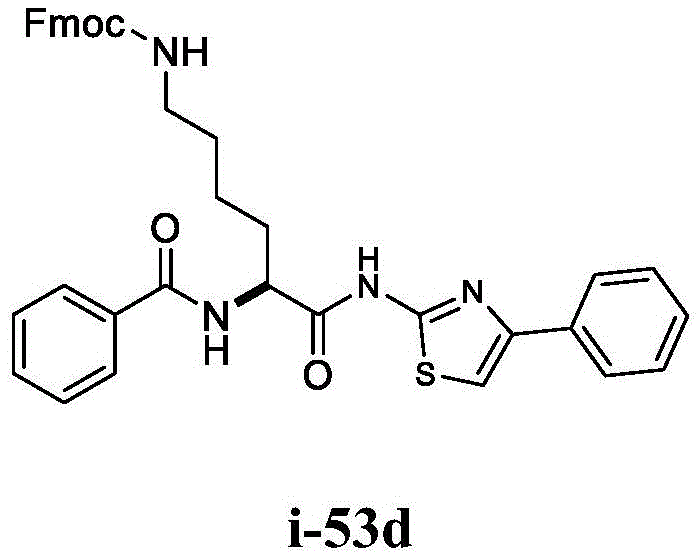
向苯甲酸(41.68mg,341.33μmol,52.10μL)于DCM(2.0mL)中的溶液添加HATU(142.76mg,375.46μmol)、DIEA(176.46mg,1.37mmol)和中间体i-53c(190mg,341.33μmol)。将反应混合物在20℃下搅拌3小时。将反应混合物倒入水(2.0mL)中。用EtOAc(2.0mL*3)萃取溶液。将合并的有机萃取物用盐水(5.0mL)洗涤,经Na2SO4干燥并过滤。浓缩滤液,得到残余物。将残余物通过快速硅胶色谱法(PE:EA=50:1-10:1-3:1-1:1)纯化,得到呈白色固体的中间体i-53d。To a solution of benzoic acid (41.68 mg, 341.33 μmol, 52.10 μL) in DCM (2.0 mL) was added HATU (142.76 mg, 375.46 μmol), DIEA (176.46 mg, 1.37 mmol) and intermediate i-53c (190 mg, 341.33 μmol). The reaction mixture was stirred at 20°C for 3 hours. The reaction mixture was poured into water (2.0 mL). The solution was extracted with EtOAc (2.0 mL*3). The combined organic extracts were washed with brine (5.0 mL), dried over Na2SO4 and filtered. The filtrate was concentrated to give a residue. The residue was purified by flash silica chromatography (PE:EA=50:1-10:1-3:1-1:1) to yield intermediate i-53d as a white solid.
LCMS(ESI)m/z:[M+H]+=631.4。LCMS (ESI) m/z: [M+H] + =631.4.
手性HPLC:OJ-3-MeOH(DEA)-60-7MIN-3ML-35T,3.881分钟。Chiral HPLC: OJ-3-MeOH(DEA)-60-7MIN-3ML-35T, 3.881 min.
步骤5:(S)-N-(6-氨基-1-氧代基-1-((4-苯基噻唑-2-基)氨基)己烷-2-基)苯甲酰胺(中间体i-53e)的制备Step 5: (S)-N-(6-Amino-1-oxo-1-((4-phenylthiazol-2-yl)amino)hexane-2-yl)benzamide (Intermediate i Preparation of -53e)

向中间体i-53d(120mg,179.50μmol)于DCM(1.2mL)中的溶液添加哌啶(120.00μL)。将溶液在20℃下搅拌2小时。将混合物倒入水(2.0mL)中。将反应混合物用饱和NaHCO3溶液(5mL)稀释,并用EtOAc(2.0mL*3)萃取。将合并的有机萃取物用盐水(5.0mL)洗涤,经Na2SO4干燥并过滤。浓缩滤液,得到残余物。将残余物通过制备型HPLC(柱:PhenomenexSynergi C18 150*25*10μm;流动相:[水(0.225%FA)-ACN];B%:17%-37%,7分钟)纯化得到呈白色固体的中间体i-53e(FA盐)。To a solution of intermediate i-53d (120 mg, 179.50 μmol) in DCM (1.2 mL) was added piperidine (120.00 μL). The solution was stirred at 20°C for 2 hours. The mixture was poured into water (2.0 mL). The reaction mixture was diluted with saturated NaHCO3 solution (5 mL) and extracted with EtOAc (2.0 mL*3). The combined organic extracts were washed with brine (5.0 mL), dried over Na2SO4 and filtered. The filtrate was concentrated to give a residue. The residue was purified by preparative HPLC (column:
1H NMR(400MHz,DMSO-d6)δ8.73(d,J=6.8Hz,1H),8.42(s,1H),7.93-7.89(m,4H),7.62(s,1H),7.58-7.54(m,1H),7.50-7.47(m,2H),7.44-7.40(m,2H),7.33-7.30(m,1H),4.67-4.63(m,1H),2.73(s,2H),1.85(d,J=6.4Hz,2H),1.53-1.40(m,4H)ppm。1H NMR (400MHz, DMSO-d 6 ) δ 8.73(d, J=6.8Hz, 1H), 8.42(s, 1H), 7.93-7.89(m, 4H), 7.62(s, 1H), 7.58-7.54 (m,1H),7.50-7.47(m,2H),7.44-7.40(m,2H),7.33-7.30(m,1H),4.67-4.63(m,1H),2.73(s,2H),1.85 (d, J=6.4 Hz, 2H), 1.53-1.40 (m, 4H) ppm.
LCMS(ESI)m/z:[M+H]+=409.3。LCMS (ESI) m/z: [M+H] + =409.3.
手性HPLC:OD-RH_0-60_1ML.M,8.037分钟。Chiral HPLC: OD-RH_0-60_1ML.M, 8.037 min.
步骤6:(S)-N-(6-乙酰氨基-1-氧代基-1-((4-苯基噻唑-2-基)氨基)己烷-2-基)苯甲酰胺(化合物43)的制备Step 6: (S)-N-(6-Acetylamino-1-oxo-1-((4-phenylthiazol-2-yl)amino)hexane-2-yl)benzamide (Compound 43 ) preparation

将中间体i-53e(13mg,31.82μmol)于Ac2O(0.2mL)中的溶液在30℃下搅拌2小时。将反应混合物过滤,得到滤饼。将滤饼用MTBE(2.0mL)洗涤,并在真空中干燥,得到固体。将固体倒入水(2.0mL)中,并将溶液冻干,得到呈白色固体的化合物43。A solution of intermediate i-53e (13 mg, 31.82 μmol) in Ac2O (0.2 mL) was stirred at 30 °C for 2 h. The reaction mixture was filtered to obtain a filter cake. The filter cake was washed with MTBE (2.0 mL) and dried in vacuo to give a solid. The solid was poured into water (2.0 mL), and the solution was lyophilized to give compound 43 as a white solid.
1H NMR(400MHz,DMSO-d6)δ12.46(br s,1H),8.67(d,J=7.2Hz,1H),7.94-7.90(m,4H),7.84(s,1H),7.64(s,1H),7.57-7.51(m,1H),7.53-7.47(m,2H),7.49-7.44(m,2H),7.44-7.42(m,1H),4.67-4.62(m,1H),3.04(m,2H),1.85(m,2H),1.78(s,3H),1.44-1.35(m,4H)ppm。 1 H NMR (400MHz, DMSO-d 6 ) δ 12.46(br s, 1H), 8.67(d, J=7.2Hz, 1H), 7.94-7.90(m, 4H), 7.84(s, 1H), 7.64 (s,1H),7.57-7.51(m,1H),7.53-7.47(m,2H),7.49-7.44(m,2H),7.44-7.42(m,1H),4.67-4.62(m,1H) , 3.04 (m, 2H), 1.85 (m, 2H), 1.78 (s, 3H), 1.44-1.35 (m, 4H) ppm.
LCMS(ESI)m/z:[M+H]+=451.3。LCMS (ESI) m/z: [M+H] + =451.3.
手性HPLC:Cellucoat-MeOH(DEA)-40-3ML-35T,0.767分钟。Chiral HPLC: Cellucoat-MeOH(DEA)-40-3ML-35T, 0.767 min.
实施例54. 3-(异丙基磺酰基)-N-(2-氧代基-2-((4-苯基噻唑-2-基)氨基)乙基)苯甲酰胺(化合物6)的制备Example 54. Preparation of 3-(isopropylsulfonyl)-N-(2-oxo-2-((4-phenylthiazol-2-yl)amino)ethyl)benzamide (Compound 6) preparation

步骤1:3-(异丙硫基)苯甲酸甲酯(中间体i-54a)的制备Step 1: Preparation of methyl 3-(isopropylthio)benzoate (intermediate i-54a)

向3-硫烷基苯甲酸甲酯(200.0mg,1.19mmol)于THF(2.0mL)中的溶液添加2-碘丙烷(303.17mg,1.78mmol)。然后经5分钟以小部分添加NaH(57.07mg,1.43mmol,60%纯度)。将反应混合物在20℃下搅拌1小时,然后倒入1N HCl(6mL)中。用EtOAc(5.0mL*3)萃取溶液。将合并的有机萃取物用盐水(10.0mL)洗涤,经Na2SO4干燥并过滤。浓缩滤液,得到残余物。将残余物通过柱色谱法(SiO2,PE/EA=100/1-1/1)纯化,得到呈黄色油状物的中间体i-54a。To a solution of methyl 3-sulfanylbenzoate (200.0 mg, 1.19 mmol) in THF (2.0 mL) was added 2-iodopropane (303.17 mg, 1.78 mmol). NaH (57.07 mg, 1.43 mmol, 60% purity) was then added in small portions over 5 minutes. The reaction mixture was stirred at 20°C for 1 hour, then poured into 1N HCl (6 mL). The solution was extracted with EtOAc (5.0 mL*3). The combined organic extracts were washed with brine (10.0 mL), dried over Na2SO4 and filtered. The filtrate was concentrated to give a residue. The residue was purified by column chromatography ( SiO2 , PE/EA=100/1-1/1) to give intermediate i-54a as a yellow oil.
LCMS(ESI)m/z:[M+H]+=211.3。LCMS (ESI) m/z: [M+H] + = 211.3.
步骤2:3-(异丙基磺酰基)苯甲酸甲酯(中间体i-54b)的制备Step 2: Preparation of methyl 3-(isopropylsulfonyl)benzoate (intermediate i-54b)

向中间体i-54a(200.0mg,883.15μmol)于DCM(2.0mL)中的溶液添加m-CPBA(320.04mg,1.58mmol,85%纯度)。将混合物在20℃下搅拌1小时,然后倒入饱和NaHCO3水溶液(30.0mL)中。用EtOAc(20.0mL*3)萃取溶液。将合并的有机萃取物用盐水(50.0mL)洗涤,经Na2SO4干燥并过滤。将滤液浓缩,得到呈白色固体的中间体i-54b,其直接用于下一步骤。To a solution of intermediate i-54a (200.0 mg, 883.15 μmol) in DCM (2.0 mL) was added m-CPBA (320.04 mg, 1.58 mmol, 85% pure). The mixture was stirred at 20 °C for 1 h, then poured into saturated aqueous NaHCO3 (30.0 mL). The solution was extracted with EtOAc (20.0 mL*3). The combined organic extracts were washed with brine (50.0 mL), dried over Na2SO4 and filtered. The filtrate was concentrated to give intermediate i-54b as a white solid, which was used directly in the next step.
LCMS(ESI)m/z:[M+H]+=243.3。LCMS (ESI) m/z: [M+H] + =243.3.
步骤3:3-(异丙基磺酰基)苯甲酸(中间体i-54c)的制备Step 3: Preparation of 3-(isopropylsulfonyl)benzoic acid (intermediate i-54c)
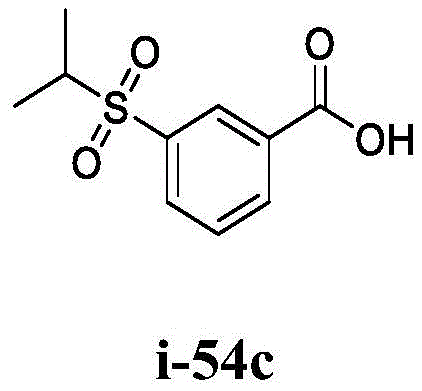
向中间体i-54b(300.0mg,1.24mmol)于二噁烷(3.0mL)和水(2.0mL)中的溶液添加LiOH(59.30mg,2.48mmol)。将反应混合物在20℃下搅拌1小时,然后用饱和柠檬酸溶液调节至pH 6。然后用EtOAc(10.0mL*3)萃取溶液。将合并的有机萃取物用盐水(20.0mL)洗涤,经Na2SO4干燥并过滤。浓缩滤液,得到残余物。将残余物用柱色谱法(SiO2,PE:EA=50:1-20:1-10:1-3:1)纯化,得到呈白色固体的中间体i-54c。To a solution of intermediate i-54b (300.0 mg, 1.24 mmol) in dioxane (3.0 mL) and water (2.0 mL) was added LiOH (59.30 mg, 2.48 mmol). The reaction mixture was stirred at 20°C for 1 hour and then adjusted to pH 6 with saturated citric acid solution. The solution was then extracted with EtOAc (10.0 mL*3). The combined organic extracts were washed with brine (20.0 mL), dried over Na2SO4 and filtered. The filtrate was concentrated to give a residue. The residue was purified by column chromatography ( SiO2 , PE:EA=50:1-20:1-10:1-3:1) to give intermediate i-54c as a white solid.
1H NMR(400MHz,DMSO-d6)δ13.58(s,1H),8.31-8.27(m,2H),8.11-8.03(m,1H),7.82(d,J=7.6Hz,1H),3.53-3.45(m,1H),1.16(d,J=6.8Hz,6H)ppm。 1 H NMR (400MHz, DMSO-d 6 )δ13.58(s, 1H), 8.31-8.27(m, 2H), 8.11-8.03(m, 1H), 7.82(d, J=7.6Hz, 1H), 3.53-3.45 (m, 1H), 1.16 (d, J=6.8Hz, 6H) ppm.
LCMS(ESI)m/z:[M+H]+=229.2。LCMS (ESI) m/z: [M+H] + =229.2.
步骤4:3-(异丙基磺酰基)-N-(2-氧代基-2-((4-苯基噻唑-2-基)氨基)乙基)苯甲酰胺(化合物6)的制备Step 4: Preparation of 3-(isopropylsulfonyl)-N-(2-oxo-2-((4-phenylthiazol-2-yl)amino)ethyl)benzamide (Compound 6)


向中间体i-54c(30.0mg,129.42μmol)于DCM(0.3mL)中的溶液添加HATU(59.05mg,155.30μmol)、DIEA(66.90mg,517.66μmol)和2-氨基-N-(4-苯基噻唑-2-基)乙酰胺(30.19mg,86.93μmol)。将反应混合物在30℃下搅拌12小时,然后倒入水(2.0mL)中。用EtOAc(2.0mL*3)萃取溶液。将合并的有机萃取物用盐水(5.0mL)洗涤,经Na2SO4干燥并过滤。浓缩滤液,得到残余物。向残余物添加MeOH(0.5mL),并搅拌5分钟,然后过滤。将固体冻干,得到呈白色固体的化合物6。To a solution of intermediate i-54c (30.0 mg, 129.42 μmol) in DCM (0.3 mL) was added HATU (59.05 mg, 155.30 μmol), DIEA (66.90 mg, 517.66 μmol) and 2-amino-N-(4- Phenylthiazol-2-yl)acetamide (30.19 mg, 86.93 μmol). The reaction mixture was stirred at 30°C for 12 hours, then poured into water (2.0 mL). The solution was extracted with EtOAc (2.0 mL*3). The combined organic extracts were washed with brine (5.0 mL), dried over Na2SO4 and filtered. The filtrate was concentrated to give a residue. To the residue was added MeOH (0.5 mL) and stirred for 5 minutes, then filtered. The solid was lyophilized to give compound 6 as a white solid.
1H NMR(400MHz,DMSO-d6)δ12.49(s,1H),9.31-9.28(m,1H),8.38(s,1H),8.27(d,J=8.0Hz,1H),8.05(d,J=7.6Hz,1H),7.90(d,J=7.2Hz,2H),7.84-7.80(m,1H),7.65(s,1H),7.45-7.43(m,2H),7.41-7.32(m,1H),4.24(d,J=5.6Hz,2H),3.54-3.47(m,1H),1.18(d,J=6.8Hz,6H)ppm。 1 H NMR (400MHz, DMSO-d 6 ) δ 12.49(s, 1H), 9.31-9.28(m, 1H), 8.38(s, 1H), 8.27(d, J=8.0Hz, 1H), 8.05( d,J=7.6Hz,1H),7.90(d,J=7.2Hz,2H),7.84-7.80(m,1H),7.65(s,1H),7.45-7.43(m,2H),7.41-7.32 (m, 1H), 4.24 (d, J=5.6Hz, 2H), 3.54-3.47 (m, 1H), 1.18 (d, J=6.8Hz, 6H) ppm.
LCMS(ESI)m/z:[M+H]+=444.3。LCMS (ESI) m/z: [M+H] + =444.3.
实施例55. 3-(二甲基氨磺酰基)-N-[2-氧代基-2-[(6-苯基-2-吡啶基)氨基]乙基]苯甲酰胺(化合物41)的制备Example 55. 3-(Dimethylsulfamoyl)-N-[2-oxo-2-[(6-phenyl-2-pyridyl)amino]ethyl]benzamide (Compound 41) preparation
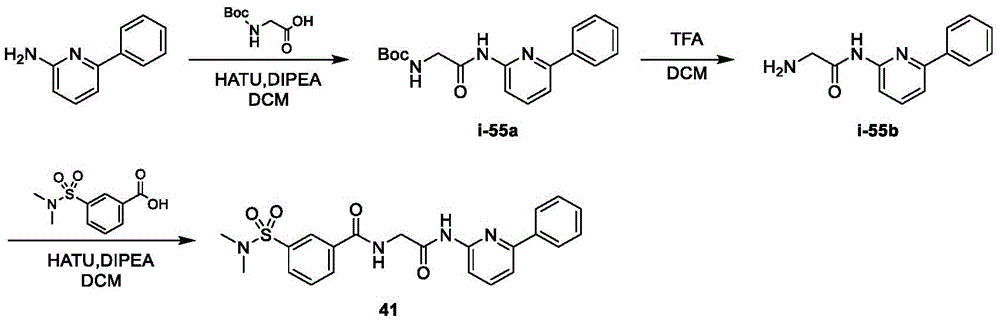
步骤1:N-[2-氧代基-2-[(6-苯基-2-吡啶基)氨基]乙基]氨基甲酸叔丁酯(中间体i-55a)的制备Step 1: Preparation of tert-butyl N-[2-oxo-2-[(6-phenyl-2-pyridyl)amino]ethyl]carbamate (Intermediate i-55a)

向2-(叔丁氧基羰基氨基)乙酸(113.21mg,646.26μmol)、DIPEA(303.73mg,2.35mmol)和HATU(245.73mg,646.26μmol)于DCM(2.0mL)中的溶液添加6-苯基吡啶-2-胺(100.0mg,587.51μmol),并将混合物在20℃下搅拌2小时。将反应混合物在减压下浓缩,得到残余物。将残余物通过柱色谱法(SiO2,石油醚/乙酸乙酯=5:1至2:1)纯化,得到呈浅黄色油状物的中间体i-55a。To a solution of 2-(tert-butoxycarbonylamino)acetic acid (113.21 mg, 646.26 μmol), DIPEA (303.73 mg, 2.35 mmol) and HATU (245.73 mg, 646.26 μmol) in DCM (2.0 mL) was added 6-benzene pyridin-2-amine (100.0 mg, 587.51 μmol), and the mixture was stirred at 20° C. for 2 hours. The reaction mixture was concentrated under reduced pressure to give a residue. The residue was purified by column chromatography (SiO2, petroleum ether/ethyl acetate = 5:1 to 2:1) to give intermediate i-55a as a pale yellow oil.
1H NMR(400MHz,CDCl3)δ8.48(s,1H),8.14(d,J=8Hz,1H),7.96(d,J=7.2Hz,2H),7.82–7.78(m,1H),7.52–7.45(m,4H),5.22-5.21(m,1H),4.03(s,2H),1.52(s,9H)ppm。 1 H NMR (400MHz, CDCl 3 ) δ 8.48(s, 1H), 8.14(d, J=8Hz, 1H), 7.96(d, J=7.2Hz, 2H), 7.82-7.78(m, 1H), 7.52-7.45 (m, 4H), 5.22-5.21 (m, 1H), 4.03 (s, 2H), 1.52 (s, 9H) ppm.
LCMS(ESI)m/z:[M+H]+=328.0。LCMS (ESI) m/z: [M+H] + =328.0.
步骤2:2-氨基-N-(6-苯基-2-吡啶基)乙酰胺(中间体i-55b)的制备Step 2: Preparation of 2-amino-N-(6-phenyl-2-pyridyl)acetamide (intermediate i-55b)
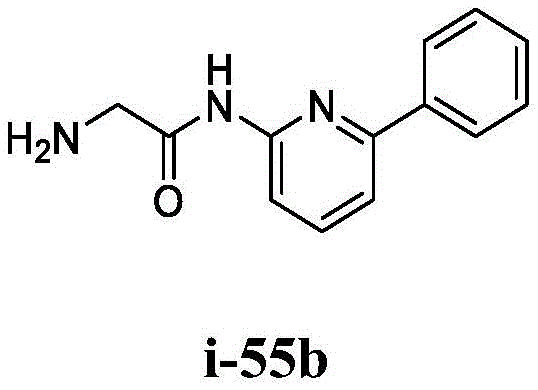
向中间体i-55a(130mg,381.21μmol)于DCM(2.0mL)中的溶液添加TFA(192.00μL),并将混合物在20℃下搅拌12小时。将反应混合物在减压下浓缩,得到残余物。将残余物用MTBE(5mL)研磨,通过过滤收集固体,并在真空中干燥,得到呈白色固体的中间体i-55b(TFA盐)。To a solution of intermediate i-55a (130 mg, 381.21 μmol) in DCM (2.0 mL) was added TFA (192.00 μL) and the mixture was stirred at 20 °C for 12 h. The reaction mixture was concentrated under reduced pressure to give a residue. The residue was triturated with MTBE (5 mL) and the solid was collected by filtration and dried in vacuo to give Intermediate i-55b (TFA salt) as a white solid.
LCMS(ESI)m/z:[M+H]+=228.0。LCMS (ESI) m/z: [M+H] + =228.0.
步骤3:3-(二甲基氨磺酰基)-N-[2-氧代基-2-[(6-苯基-2-吡啶基)氨基]乙基]苯甲酰胺(化合物41)三氟乙酸盐的制备Step 3: 3-(Dimethylsulfamoyl)-N-[2-oxo-2-[(6-phenyl-2-pyridyl)amino]ethyl]benzamide (Compound 41) Tris Preparation of Fluoroacetate

向3-(二甲基氨磺酰基)苯甲酸(36.58mg,159.54μmol)、HATU(60.66mg,159.54μmol)和DIPEA(74.98mg,580.16μmol)于DCM(1.0mL)中的溶液添加中间体i-55b(50.0mg,145.04μmol),并将混合物在25℃下搅拌2小时。将反应混合物在减压下浓缩,得到残余物。将残余物通过制备型HPLC(柱:Phenomenex Synergi C18 150*25*10μm;流动相:[水(0.1%TFA)-ACN];B%:35%-65%,9分钟)纯化,并冻干,得到呈白色固体的化合物41(TFA盐)。To a solution of 3-(dimethylsulfamoyl)benzoic acid (36.58 mg, 159.54 μmol), HATU (60.66 mg, 159.54 μmol) and DIPEA (74.98 mg, 580.16 μmol) in DCM (1.0 mL) was added the intermediate i-55b (50.0 mg, 145.04 μmol), and the mixture was stirred at 25° C. for 2 hours. The reaction mixture was concentrated under reduced pressure to give a residue. The residue was purified by preparative HPLC (column:
1H NMR(400MHz,DMSO-d6)δ10.68(s,1H),9.24-9.21(m,1H),8.27-8.26(m,2H),8.10-8.08(m,2H),8.02(d,J=8.0Hz,1H),7.96-7.93(m,1H),7.90-7.88(m,1H),7.82-7.78(m,1H),7.69(d,J=8.0Hz,1H),7.51-7.46(m,3H),4.23(d,J=6.0Hz,2H),2.68-2.66(m,6H)ppm。 1 H NMR (400MHz, DMSO-d 6 )δ10.68(s, 1H), 9.24-9.21(m, 1H), 8.27-8.26(m, 2H), 8.10-8.08(m, 2H), 8.02(d , J=8.0Hz, 1H), 7.96-7.93(m, 1H), 7.90-7.88(m, 1H), 7.82-7.78(m, 1H), 7.69(d, J=8.0Hz, 1H), 7.51- 7.46 (m, 3H), 4.23 (d, J=6.0Hz, 2H), 2.68-2.66 (m, 6H) ppm.
LCMS(ESI)m/z:[M+H]+=439.0。LCMS (ESI) m/z: [M+H] + =439.0.
实施例56.N-[(1S)-3-甲基硫烷基-1-[(4-苯基噻唑-2-基)氨基甲酰基]丙基]噻吩-2-甲酰胺(化合物58)的制备Example 56. N-[(1S)-3-Methylsulfanyl-1-[(4-phenylthiazol-2-yl)carbamoyl]propyl]thiophene-2-carboxamide (Compound 58) preparation

向噻吩-2-甲酸(22.93mg,178.90μmol)、HATU(68.02mg,178.90μmol)和DIPEA(84.08mg,650.55μmol)于DCM(1.0mL)中的溶液添加(2S)-2-氨基-4-甲基硫烷基-N-(4-苯基噻唑-2-基)丁酰胺(50.00mg,162.64μmol),并将混合物在20℃下搅拌2小时。将反应混合物在减压下浓缩,得到残余物。将残余物通过制备型HPLC(柱:Phenomenex Synergi C18150*25*10μm;流动相:[水(0.1%TFA)-ACN];B%:50%-80%,9分钟)纯化,并冻干,得到呈白色固体的化合物58。To a solution of thiophene-2-carboxylic acid (22.93 mg, 178.90 μmol), HATU (68.02 mg, 178.90 μmol) and DIPEA (84.08 mg, 650.55 μmol) in DCM (1.0 mL) was added (2S)-2-amino-4 -Methylsulfanyl-N-(4-phenylthiazol-2-yl)butanamide (50.00 mg, 162.64 μmol), and the mixture was stirred at 20° C. for 2 hours. The reaction mixture was concentrated under reduced pressure to give a residue. The residue was purified by preparative HPLC (column: Phenomenex Synergi C18150*25*10 μm; mobile phase: [water (0.1% TFA)-ACN]; B%: 50%-80%, 9 minutes) and lyophilized, Compound 58 was obtained as a white solid.
1H NMR(400MHz,CDCl3)δ=7.69(d,J=7.2Hz,2H),7.62-7.61(m,1H),7.48(d,J=4.8Hz,1H),7.40-7.36(m,2H),7.34-7.30(m,1H),7.26–7.24(d,J=8.0Hz,1H),7.07(s,1H),7.06-7.03(m,1H),5.00-4.95(m,1H),2.68-2.63(m,2H),2.29-2.20(m,2H),2.10(s,3H)ppm。 1 H NMR (400 MHz, CDCl 3 ) δ=7.69 (d, J=7.2 Hz, 2H), 7.62-7.61 (m, 1H), 7.48 (d, J=4.8 Hz, 1H), 7.40-7.36 (m, 2H), 7.34-7.30(m, 1H), 7.26-7.24(d, J=8.0Hz, 1H), 7.07(s, 1H), 7.06-7.03(m, 1H), 5.00-4.95(m, 1H) , 2.68-2.63 (m, 2H), 2.29-2.20 (m, 2H), 2.10 (s, 3H) ppm.
LCMS(ESI)m/z:[M+H]+=418.0LCMS(ESI) m/z: [M+H] + =418.0
手性HPLC:Amycoat-MeOH(DEA)-40-7min-3mL-35T,3.772分钟。Chiral HPLC: Amycoat-MeOH(DEA)-40-7min-3mL-35T, 3.772min.
实施例57.(S)-N-(4-(甲硫基)-1-氧代基-1-((4-苯基噻唑-2-基)氨基)丁烷-2-基)苯并[b]噻吩-2-甲酰胺(化合物71)的制备Example 57. (S)-N-(4-(Methylthio)-1-oxo-1-((4-phenylthiazol-2-yl)amino)butan-2-yl)benzo Preparation of [b]thiophene-2-carboxamide (Compound 71)
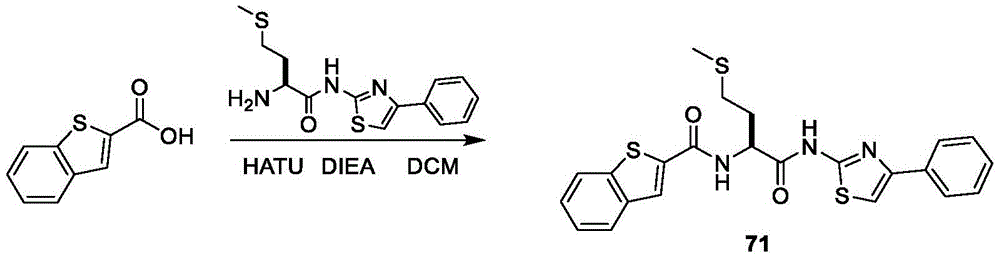
向苯并噻吩-2-甲酸(50.0mg,280.57μmol,47.17μL)于DCM(1.0mL)中的溶液添加HATU(128.02mg,336.69μmol)、DIEA(108.79mg,841.71μmol)和(2S)-2-氨基-4-甲基硫烷基-N-(4-苯基噻唑-2-基)丁酰胺(118.25mg,280.57μmol)。将反应混合物在20℃下搅拌12小时。然后将反应混合物倒入水(2.0mL)中,用EtOAc(2.0mL*3)萃取。将合并的有机萃取物用盐水(5.0mL)洗涤,经Na2SO4干燥,过滤,并在真空下浓缩,得到残余物。将残余物通过制备型HPLC(柱:Phenomenex Synergi C18 150*25*10μm;流动相:[水(0.1%TFA)-ACN];B%:52%-82%,9分钟)纯化,并冻干,得到呈白色固体的化合物71。To a solution of benzothiophene-2-carboxylic acid (50.0 mg, 280.57 μmol, 47.17 μL) in DCM (1.0 mL) was added HATU (128.02 mg, 336.69 μmol), DIEA (108.79 mg, 841.71 μmol) and (2S)- 2-Amino-4-methylsulfanyl-N-(4-phenylthiazol-2-yl)butanamide (118.25 mg, 280.57 μmol). The reaction mixture was stirred at 20°C for 12 hours. The reaction mixture was then poured into water (2.0 mL) and extracted with EtOAc (2.0 mL*3). The combined organic extracts were washed with brine (5.0 mL), dried over Na2SO4 , filtered, and concentrated in vacuo to give a residue. The residue was purified by preparative HPLC (column:
1H NMR(400MHz,DMSO-d6)δ=12.58(s,1H),9.08(d,J=7.2Hz,1H),8.31(s,1H),8.03-7.92(m,2H),7.91(d,J=7.2Hz,2H),7.66(s,1H),7.48-7.43(m,4H),7.41-7.33(m,1H),4.79-4.74(m,1H),2.68-2.66(m,1H),2.59-2.54(m,1H),2.16-2.11(m,5H)ppm。 1 H NMR (400MHz, DMSO-d 6 )δ=12.58(s, 1H), 9.08(d, J=7.2Hz, 1H), 8.31(s, 1H), 8.03-7.92(m, 2H), 7.91( d, J=7.2Hz, 2H), 7.66(s, 1H), 7.48-7.43(m, 4H), 7.41-7.33(m, 1H), 4.79-4.74(m, 1H), 2.68-2.66(m, 1H), 2.59-2.54 (m, 1H), 2.16-2.11 (m, 5H) ppm.
LCMS(ESI)m/z:[M+H]+=468.3。LCMS (ESI) m/z: [M+H] + =468.3.
手性HPLC:Cellucoat-MeOH+CAN(DEA)-40-7MIN-3ML-35T,5.321分钟。Chiral HPLC: Cellucoat-MeOH+CAN(DEA)-40-7MIN-3ML-35T, 5.321 min.
实施例58. 5-(二甲基氨磺酰基)-N-[(1S)-3-甲基硫烷基-1-[(4-苯基噻唑-2-基)氨基甲酰基]丙基]噻吩-2-甲酰胺(化合物62)的制备Example 58. 5-(Dimethylsulfamoyl)-N-[(1S)-3-methylsulfanyl-1-[(4-phenylthiazol-2-yl)carbamoyl]propyl Preparation of ]thiophene-2-carboxamide (Compound 62)

步骤1:4-氯磺酰基噻吩-2-甲酸(中间体i-58a)和5-氯磺酰基噻吩-2-甲酸(中间体i-58b)的制备Step 1: Preparation of 4-chlorosulfonylthiophene-2-carboxylic acid (intermediate i-58a) and 5-chlorosulfonylthiophene-2-carboxylic acid (intermediate i-58b)
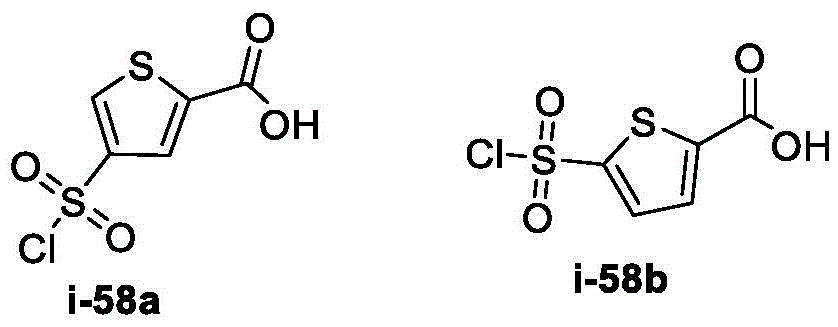
将噻吩-2-甲酸(300.0mg,2.34mmol)添加至氯磺酸(1.36g,11.71mmol)并将混合物在100℃下搅拌1小时。将反应混合物小心地逐滴添加至冰水(30.0mL),并搅拌5分钟。将沉淀物过滤,并在真空中干燥,得到呈白色固体的i-58a和i-58b的混合物,其不经进一步纯化即用于下一步骤。Thiophene-2-carboxylic acid (300.0 mg, 2.34 mmol) was added to chlorosulfonic acid (1.36 g, 11.71 mmol) and the mixture was stirred at 100 °C for 1 hour. The reaction mixture was carefully added dropwise to ice water (30.0 mL) and stirred for 5 minutes. The precipitate was filtered and dried in vacuo to give a mixture of i-58a and i-58b as a white solid, which was used in the next step without further purification.
1H NMR(400MHz,DMSO-d6)δ7.81(d,J=1.6Hz,2H),7.60(d,J=1.6Hz,2H),7.51(d,J=4Hz,1H),7.13(d,J=4Hz,1H)ppm。 1 H NMR (400MHz, DMSO-d 6 )δ7.81(d,J=1.6Hz,2H),7.60(d,J=1.6Hz,2H),7.51(d,J=4Hz,1H),7.13( d, J=4Hz, 1H)ppm.
步骤2:4-(二甲基氨磺酰基)噻吩-2-甲酸(中间体i-58c)和5-(二甲基氨磺酰基)噻吩-2-甲酸(中间体i-58d)的制备Step 2: Preparation of 4-(dimethylsulfamoyl)thiophene-2-carboxylic acid (intermediate i-58c) and 5-(dimethylsulfamoyl)thiophene-2-carboxylic acid (intermediate i-58d)
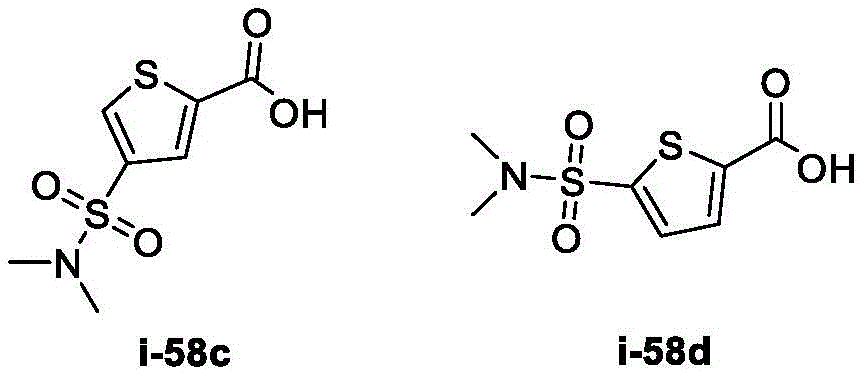
在0℃下向i-58a和i-58b(260.0mg,粗)于THF(2.0mL)中的混合物添加N-甲基甲胺(2.29mL,4.59mmol,2.0M于THF中),将混合物在25℃下搅拌2小时。将反应混合物在减压下浓缩,得到残余物。将残余物通过制备型HPLC(柱:Phenomenex Synergi C18 150*25*10μm;流动相:[水(0.1%TFA)-ACN];B%:18%-40%,12分钟)纯化,并冻干,得到呈白色固体的中间体i-58c和呈白色固体的中间体i-58d。To a mixture of i-58a and i-58b (260.0 mg, crude) in THF (2.0 mL) was added N-methylmethylamine (2.29 mL, 4.59 mmol, 2.0 M in THF) at 0 °C, the mixture was mixed Stir at 25°C for 2 hours. The reaction mixture was concentrated under reduced pressure to give a residue. The residue was purified by preparative HPLC (column:
中间体i-58c:Intermediate i-58c:
1H NMR(400MHz,DMSO-d6)δ8.51(d,J=1.6Hz,1H),7.78(d,J=1.6Hz,1H),2.73-2.66(m,7H)ppm。 1 H NMR (400 MHz, DMSO-d 6 ) δ 8.51 (d, J=1.6 Hz, 1H), 7.78 (d, J=1.6 Hz, 1H), 2.73-2.66 (m, 7H) ppm.
LCMS(ESI)m/z:[M+H]+=236.0。LCMS (ESI) m/z: [M+H] + =236.0.
中间体i-58d:Intermediate i-58d:
1H NMR(400MHz,DMSO-d6)δ7.82(d,J=4.0Hz,1H),7.66(d,J=4.0Hz,1H),2.70-2.67(m,6H)ppm。 1 H NMR (400 MHz, DMSO-d 6 ) δ 7.82 (d, J=4.0 Hz, 1H), 7.66 (d, J=4.0 Hz, 1H), 2.70-2.67 (m, 6H) ppm.
LCMS(ESI)m/z:[M+H]+=236.0。LCMS (ESI) m/z: [M+H] + =236.0.
步骤3:5-(二甲基氨磺酰基)-N-[(1S)-3-甲基硫烷基-1-[(4-苯基噻唑-2-基)氨基甲酰基]丙基]噻吩-2-甲酰胺(化合物62)的制备Step 3: 5-(Dimethylsulfamoyl)-N-[(1S)-3-methylsulfanyl-1-[(4-phenylthiazol-2-yl)carbamoyl]propyl] Preparation of Thiophene-2-carboxamide (Compound 62)
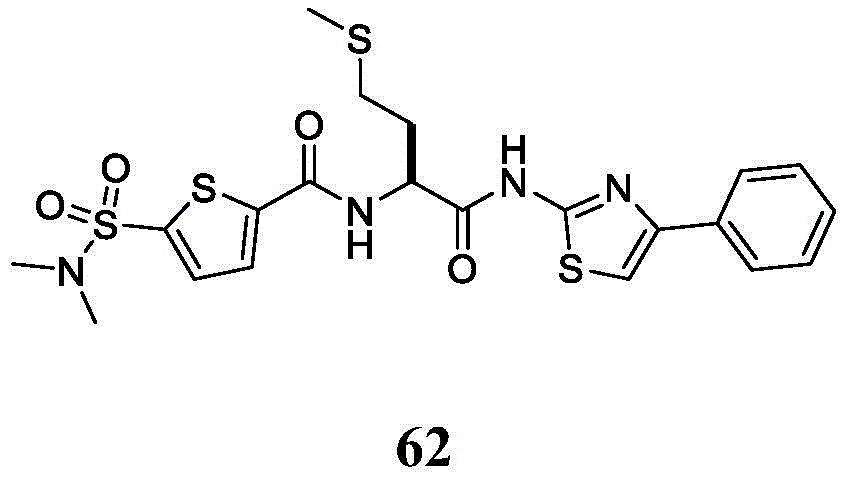
向中间体i-58d(40.0mg,170.01μmol)、DIPEA(87.89mg,680.04μmol)和HATU(71.11mg,187.01μmol)于DCM(1.0mL)中的溶液添加(2S)-2-氨基-4-甲基硫烷基-N-(4-苯基噻唑-2-基)丁酰胺(78.82mg,187.01μmol),并将混合物在30℃下搅拌2小时。将反应混合物在减压下浓缩,得到残余物。将残余物通过制备型HPLC(柱:Phenomenex Synergi C18150*25*10μm;流动相:[水(0.1%TFA)-ACN];B%:43%-73%,10分钟)纯化,并冻干,得到呈白色固体的化合物62。To a solution of intermediate i-58d (40.0 mg, 170.01 μmol), DIPEA (87.89 mg, 680.04 μmol) and HATU (71.11 mg, 187.01 μmol) in DCM (1.0 mL) was added (2S)-2-amino-4 -Methylsulfanyl-N-(4-phenylthiazol-2-yl)butanamide (78.82 mg, 187.01 μmol), and the mixture was stirred at 30° C. for 2 hours. The reaction mixture was concentrated under reduced pressure to give a residue. The residue was purified by preparative HPLC (column: Phenomenex Synergi C18150*25*10 μm; mobile phase: [water (0.1% TFA)-ACN]; B%: 43%-73%, 10 minutes) and lyophilized, Compound 62 was obtained as a white solid.
1H NMR(400MHz,DMSO-d6)δ=12.61(s,1H),9.15(d,J=7.6Hz,1H),8.07(d,J=4.0Hz,1H),7.92-7.90(m,2H),7.71(d,J=4.0Hz,1H),7.66(s,1H),7.46-7.42(m,2H),7.35-7.31(m,1H),4.78-4.67(m,1H),2.69(s,6H),2.65-2.56(m,2H),2.17-2.07(m,5H)ppm。 1 H NMR (400MHz, DMSO-d6)δ=12.61(s, 1H), 9.15(d, J=7.6Hz, 1H), 8.07(d, J=4.0Hz, 1H), 7.92-7.90(m, 2H) ), 7.71(d, J=4.0Hz, 1H), 7.66(s, 1H), 7.46-7.42(m, 2H), 7.35-7.31(m, 1H), 4.78-4.67(m, 1H), 2.69( s, 6H), 2.65-2.56 (m, 2H), 2.17-2.07 (m, 5H) ppm.
LCMS(ESI)m/z:[M+H]+=525.1。LCMS (ESI) m/z: [M+H] + =525.1.
实施例59.N-(2-((4-(2,3-二氢苯并[b][1,4]二噁英-6-基)噻唑-2-基)氨基)-2-氧代乙基)-3-(N,N-二甲基氨磺酰基)苯甲酰胺(化合物15)的制备Example 59. N-(2-((4-(2,3-Dihydrobenzo[b][1,4]dioxin-6-yl)thiazol-2-yl)amino)-2-oxo Preparation of ethyl)-3-(N,N-dimethylsulfamoyl)benzamide (compound 15)

在N2下向N-[2-[(4-溴噻唑-2-基)氨基]-2-氧代基-乙基]-3-(二甲基氨磺酰基)苯甲酰胺(30.0mg,67.07μmol)和2,3-二氢-1,4-苯并二噁英-6-基硼酸(36.21mg,201.20μmol)于二噁烷(2.0mL)和H2O(0.2mL)中的溶液添加DIEA(43.34mg,335.33μmol)和钯;三叔丁基磷烷(17.14mg,33.53μmol)。将混合物在100C下搅拌2小时。将反应混合物过滤。浓缩滤液,得到残余物。将残余物通过制备型HPLC(柱:Boston pH-lex 150*25 10μm;流动相:[水(0.1%TFA)-ACN];B%:39%-59%,8分钟)纯化,并冻干,得到呈白色固体的化合物15。To N-[ 2 -[(4-bromothiazol-2-yl)amino]-2-oxo-ethyl]-3-(dimethylsulfamoyl)benzamide (30.0 mg) under N , 67.07 μmol) and 2,3-dihydro-1,4-benzodioxin-6-ylboronic acid (36.21 mg, 201.20 μmol) in dioxane (2.0 mL) and H 2 O (0.2 mL) To the solution was added DIEA (43.34 mg, 335.33 μmol) and palladium; tri-tert-butylphosphine (17.14 mg, 33.53 μmol). The mixture was stirred at 100C for 2 hours. The reaction mixture was filtered. The filtrate was concentrated to give a residue. The residue was purified by preparative HPLC (column: Boston pH-
1H NMR(400MHz,DMSO-d6)δ=12.42(s,1H),9.30-9.28(m,1H),8.26-8.22(m,2H),7.93(d,J=7.6Hz,1H),7.82-7.80(m,1H),7.48(s,1H),7.39-7.35(m,2H),6.89(d,J=8.0Hz,1H),4.27(s,4H),4.22(d,J=6.0Hz,2H),2.65(s,6H)ppm。1H NMR (400MHz, DMSO-d 6 )δ=12.42(s, 1H), 9.30-9.28(m, 1H), 8.26-8.22(m, 2H), 7.93(d, J=7.6Hz, 1H), 7.82 -7.80(m, 1H), 7.48(s, 1H), 7.39-7.35(m, 2H), 6.89(d, J=8.0Hz, 1H), 4.27(s, 4H), 4.22(d, J=6.0 Hz, 2H), 2.65 (s, 6H) ppm.
LCMS(ESI)m/z:[M+H]+=503.3。LCMS (ESI) m/z: [M+H] + =503.3.
实施例60.(S)-3-(异丙基磺酰基)-N-(4-(甲硫基)-1-氧代基-1-((4-苯基噻唑-2-基)氨基)丁烷-2-基)苯甲酰胺(化合物14)的制备Example 60. (S)-3-(Isopropylsulfonyl)-N-(4-(methylthio)-1-oxo-1-((4-phenylthiazol-2-yl)amino ) preparation of butan-2-yl)benzamide (compound 14)

向3-(异丙基磺酰基)苯甲酸(30.0mg,129.42μmol)于DCM(0.3mL)中的溶液添加HATU(59.05mg,155.30μmol)、DIEA(66.90mg,517.66μmol)和(2S)-2-氨基-4-甲基硫烷基-N-(4-苯基噻唑-2-基)丁酰胺(54.54mg,129.42μmol)。将反应混合物在30℃下搅拌12小时。然后将反应混合物倒入水(2.0mL)中,用EtOAc(2.0mL*3)萃取。将合并的有机萃取物用盐水(5.0mL)洗涤,经Na2SO4干燥并过滤。浓缩滤液,得到残余物。将残余物通过制备型HPLC(柱:Phenomenex Synergi C18 150*25*10μm;流动相:[水(0.1%TFA)-ACN];B%:45%-75%,9分钟)纯化,并冻干,得到呈白色固体的化合物14。To a solution of 3-(isopropylsulfonyl)benzoic acid (30.0 mg, 129.42 μmol) in DCM (0.3 mL) was added HATU (59.05 mg, 155.30 μmol), DIEA (66.90 mg, 517.66 μmol) and (2S) -2-Amino-4-methylsulfanyl-N-(4-phenylthiazol-2-yl)butanamide (54.54 mg, 129.42 μmol). The reaction mixture was stirred at 30°C for 12 hours. The reaction mixture was then poured into water (2.0 mL) and extracted with EtOAc (2.0 mL*3). The combined organic extracts were washed with brine (5.0 mL), dried over Na2SO4 and filtered. The filtrate was concentrated to give a residue. The residue was purified by preparative HPLC (column:
1H NMR(400MHz,DMSO-d6)δ=12.59(s,1H),9.12(d,J=7.2Hz,1H),8.39(s,1H),8.30(d,J=8.0Hz,1H),8.05(d,J=7.6Hz,1H),7.91(d,J=7.2Hz,2H),7.83-7.79(m,1H),7.66(s,1H),7.45-7.41(m,2H),7.34-7.30(m,1H),4.82-4.77(m,1H),3.51(s,1H),2.64-2.55(m,2H),2.16-2.09(m,2H),2.10(s,3H),1.18-1.16(m,6H)ppm。1H NMR (400MHz, DMSO-d 6 )δ=12.59(s, 1H), 9.12(d, J=7.2Hz, 1H), 8.39(s, 1H), 8.30(d, J=8.0Hz, 1H), 8.05(d,J=7.6Hz,1H),7.91(d,J=7.2Hz,2H),7.83-7.79(m,1H),7.66(s,1H),7.45-7.41(m,2H),7.34 -7.30(m,1H),4.82-4.77(m,1H),3.51(s,1H),2.64-2.55(m,2H),2.16-2.09(m,2H),2.10(s,3H),1.18 -1.16(m,6H)ppm.
LCMS(ESI)m/z:[M+H]+=518.3LCMS (ESI) m/z: [M+H] + =518.3
手性HPLC:Cellucoat-MeOH(DEA)-40-3ML-35T,1.119分钟。Chiral HPLC: Cellucoat-MeOH(DEA)-40-3ML-35T, 1.119 min.
实施例61 N-[(1S)-3-甲基硫烷基-1-[(4-苯基噻唑-2-基)氨基甲酰基]丙基]-3-(三氟甲基)苯甲酰胺(化合物77)的制备Example 61 N-[(1S)-3-methylsulfanyl-1-[(4-phenylthiazol-2-yl)carbamoyl]propyl]-3-(trifluoromethyl)benzyl Preparation of amide (compound 77)

向3-(三氟甲基)苯甲酸(22.55mg,118.64μmol)于DCM(3mL)中的溶液添加DIPEA(46.00mg,355.91μmol)和HATU(49.62mg,130.50μmol)。将混合物在30℃下搅拌10分钟。添加(2S)-2-氨基-4-甲基硫烷基-N-(4-苯基噻唑-2-基)丁酰胺(50mg,118.64μmol)并将反应混合物在30℃下搅拌2小时。将反应混合物浓缩至干,得到残余物。将残余物通过制备型HPLC(柱:Phenomenex Synergi C18 150*25*10μm;流动相:[水(0.1%TFA)-ACN];B%:53%-80%,12分钟)纯化,并冻干,得到呈白色固体的化合物77(97.3%ee值)。To a solution of 3-(trifluoromethyl)benzoic acid (22.55 mg, 118.64 μmol) in DCM (3 mL) was added DIPEA (46.00 mg, 355.91 μmol) and HATU (49.62 mg, 130.50 μmol). The mixture was stirred at 30°C for 10 minutes. (2S)-2-Amino-4-methylsulfanyl-N-(4-phenylthiazol-2-yl)butanamide (50 mg, 118.64 μmol) was added and the reaction mixture was stirred at 30° C. for 2 hours. The reaction mixture was concentrated to dryness to give a residue. The residue was purified by preparative HPLC (column:
1H NMR(400MHz,甲醇-d4)δ8.27(m,1H),8.20(d,J=8.0Hz,1H),7.93-7.89(m,3H),7.73(m,1H),7.42-7.39(m,3H),7.34-7.28(m,1H),4.97-4.95(m,1H),2.73-2.66(m,2H),2.30-2.24(m,2H),2.16(s,3H)ppm。 1 H NMR (400MHz, methanol-d4)δ8.27(m,1H),8.20(d,J=8.0Hz,1H),7.93-7.89(m,3H),7.73(m,1H),7.42-7.39 (m, 3H), 7.34-7.28 (m, 1H), 4.97-4.95 (m, 1H), 2.73-2.66 (m, 2H), 2.30-2.24 (m, 2H), 2.16 (s, 3H) ppm.
LCMS(ESI)m/z:[M+H]+=480.1。LCMS (ESI) m/z: [M+H]+=480.1.
手性SFC:OD-3_5CM_MEOH(DEA)_40_3ML_5MIN_T35.M.,0.601分钟。Chiral SFC: OD-3_5CM_MEOH(DEA)_40_3ML_5MIN_T35.M., 0.601 min.
实施例62.N-[(1S)-3-甲基硫烷基-1-[(4-苯基噻唑-2-基)氨基甲酰基]丙基]-4-(三氟甲基)苯甲酰胺(化合物68)的制备Example 62. N-[(1S)-3-methylsulfanyl-1-[(4-phenylthiazol-2-yl)carbamoyl]propyl]-4-(trifluoromethyl)benzene Preparation of formamide (compound 68)
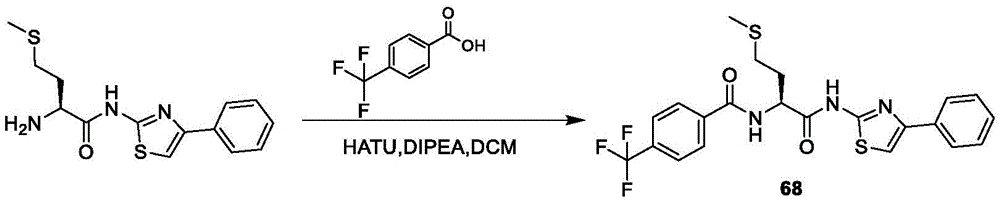
向4-(三氟甲基)苯甲酸(22.55mg,118.64μmol)于DCM(3mL)中的溶液添加DIPEA(46.00mg,355.91μmol)和HATU(49.62mg,130.50μmol)。将混合物在30℃下搅拌10分钟。添加(2S)-2-氨基-4-甲基硫烷基-N-(4-苯基噻唑-2-基)丁酰胺(50mg,118.64μmol)并将反应混合物在30℃下搅拌2小时。将反应混合物浓缩至干,得到残余物。将残余物通过制备型HPLC(柱:Phenomenex Synergi C18 150*25*10μm;流动相:[水(0.1%TFA)-ACN];B%:65%-85%,8分钟)纯化,并冻干,得到呈白色固体的化合物68。To a solution of 4-(trifluoromethyl)benzoic acid (22.55 mg, 118.64 μmol) in DCM (3 mL) was added DIPEA (46.00 mg, 355.91 μmol) and HATU (49.62 mg, 130.50 μmol). The mixture was stirred at 30°C for 10 minutes. (2S)-2-Amino-4-methylsulfanyl-N-(4-phenylthiazol-2-yl)butanamide (50 mg, 118.64 μmol) was added and the reaction mixture was stirred at 30° C. for 2 hours. The reaction mixture was concentrated to dryness to give a residue. The residue was purified by preparative HPLC (column:
1HNMR(400MHz,甲醇-d4)δ8.09(d,J=8.0Hz,1H),7.92(d,J=7.2Hz,1H),7.83(d,J=8.4Hz,2H),7.42-7.39(m,3H),7.33-7.31(m,1H),4.97-4.94(m,1H),2.73-2.66(m,2H),2.33-2.24(m,2H),2.16(s,3H)ppm。 1 HNMR(400MHz, methanol-d4)δ8.09(d,J=8.0Hz,1H),7.92(d,J=7.2Hz,1H),7.83(d,J=8.4Hz,2H),7.42-7.39 (m, 3H), 7.33-7.31 (m, 1H), 4.97-4.94 (m, 1H), 2.73-2.66 (m, 2H), 2.33-2.24 (m, 2H), 2.16 (s, 3H) ppm.
LCMS(ESI)m/z:[M+H]+=480.1。LCMS (ESI) m/z: [M+H]+=480.1.
手性SFC:Cellucoat-MeOH(DEA)-40-7min-3mL-35T,0.937分钟。Chiral SFC: Cellucoat-MeOH(DEA)-40-7min-3mL-35T, 0.937min.
实施例63.N4-甲基-N1-[(1S)-3-甲基硫烷基-1-[(4-苯基噻唑-2-基)氨基甲酰基]丙基]对苯二甲酰胺(化合物72)的制备Example 63. N4-Methyl-N1-[(1S)-3-methylsulfanyl-1-[(4-phenylthiazol-2-yl)carbamoyl]propyl]terephthalamide Preparation of (Compound 72)

步骤1:4-[[(1S)-3-甲基硫烷基-1-[(4-苯基噻唑-2-基)氨基甲酰基]丙基]氨基甲酰基]苯甲酸甲酯(中间体i-63a)的制备Step 1: Methyl 4-[[(1S)-3-methylsulfanyl-1-[(4-phenylthiazol-2-yl)carbamoyl]propyl]carbamoyl]benzoate (middle Preparation of body i-63a)

向4-甲氧基羰基苯甲酸(85.49mg,474.54μmol)于DCM(5mL)中的溶液添加DIPEA(183.99mg,1.42mmol)和HATU(198.48mg,522.00μmol)。将混合物在30℃下搅拌10分钟。添加(2S)-2-氨基-4-甲基硫烷基-N-(4-苯基噻唑-2-基)丁酰胺(200mg,474.54μmol)并将反应混合物在30℃下搅拌2小时。将反应混合物通过添加水(10mL)猝灭,并用乙酸乙酯(10mLx 2)萃取。将合并的有机萃取物用水(10mL)洗涤,经Na2SO4干燥,过滤,并在减压下浓缩,得到呈无色油状物的中间体i-63a,其不经进一步纯化即用于下一步骤。To a solution of 4-methoxycarbonylbenzoic acid (85.49 mg, 474.54 μmol) in DCM (5 mL) was added DIPEA (183.99 mg, 1.42 mmol) and HATU (198.48 mg, 522.00 μmol). The mixture was stirred at 30°C for 10 minutes. (2S)-2-Amino-4-methylsulfanyl-N-(4-phenylthiazol-2-yl)butanamide (200 mg, 474.54 μmol) was added and the reaction mixture was stirred at 30° C. for 2 hours. The reaction mixture was quenched by adding water (10 mL) and extracted with ethyl acetate (10 mL x 2). The combined organic extracts were washed with water (10 mL), dried over Na 2 SO 4 , filtered, and concentrated under reduced pressure to give intermediate i-63a as a colorless oil, which was used in the next step without further purification one step.
LCMS(ESI)m/z:[M+H]+=470.3。LCMS (ESI) m/z: [M+H] + =470.3.
步骤2:4-[[(1S)-3-甲基硫烷基-1-[(4-苯基噻唑-2-基)氨基甲酰基]丙基]氨基甲酰基]苯甲酸(中间体i-63b)的制备Step 2: 4-[[(1S)-3-Methylsulfanyl-1-[(4-phenylthiazol-2-yl)carbamoyl]propyl]carbamoyl]benzoic acid (Intermediate i Preparation of -63b)

向中间体i-63a(258.82mg,468.50μmol)于MeOH(2.0mL)和H2O(2.0mL)中的溶液添加NaOH(36.39mg,909.75μmol)。将混合物在30℃下搅拌18小时。将反应混合物在真空中浓缩。用20%HCl溶液将残余物的pH调节至pH 4。形成白色沉淀物,并将混合物过滤。将滤饼用水(4.0mL)洗涤,并浓缩至干,得到呈灰白色固体的中间体i-63b。To a solution of intermediate i-63a (258.82 mg, 468.50 μmol) in MeOH (2.0 mL) and H2O (2.0 mL) was added NaOH (36.39 mg, 909.75 μmol). The mixture was stirred at 30°C for 18 hours. The reaction mixture was concentrated in vacuo. The pH of the residue was adjusted to pH 4 with 20% HCl solution. A white precipitate formed and the mixture was filtered. The filter cake was washed with water (4.0 mL) and concentrated to dryness to give Intermediate i-63b as an off-white solid.
LCMS(ESI)m/z:[M+H]+=456.3。LCMS (ESI) m/z: [M+H] + =456.3.
步骤3:N4-甲基-N1-[(1S)-3-甲基硫烷基-1-[(4-苯基噻唑-2-基)氨基甲酰基]丙基]对苯二甲酰胺(化合物72)的制备Step 3: N4-Methyl-N1-[(1S)-3-methylsulfanyl-1-[(4-phenylthiazol-2-yl)carbamoyl]propyl]terephthalamide ( Preparation of compound 72)

向中间体i-63b(40mg,81.66μmol)于DCM(3mL)中的溶液添加HATU(36.15mg,95.07μmol)和DIPEA(20.48mg,158.46μmol)。将混合物在30℃下搅拌10分钟。添加甲胺(2M,396.05μL),并将反应混合物在30℃下搅拌3小时。将反应混合物浓缩至干,得到残余物。将残余物通过制备型HPLC(柱:Boston pH-lex 150*25 10μm;流动相:[水(0.1%TFA)-ACN];B%:50%-70%,8分钟)纯化,并冻干,得到呈白色固体的化合物72。To a solution of intermediate i-63b (40 mg, 81.66 μmol) in DCM (3 mL) was added HATU (36.15 mg, 95.07 μmol) and DIPEA (20.48 mg, 158.46 μmol). The mixture was stirred at 30°C for 10 minutes. Methylamine (2M, 396.05 μL) was added, and the reaction mixture was stirred at 30° C. for 3 hours. The reaction mixture was concentrated to dryness to give a residue. The residue was purified by preparative HPLC (column: Boston pH-
1H NMR(400MHz,甲醇-d4)δ8.00(d,J=8.4Hz,2H),7.94-7.91(m,4H),7.42-7.39(m,3H),7.33-7.29(m,1H),4.97-4.94(m,1H),2.95(s,3H),2.73-2.66(m,2H),2.33-2.24(m,2H),2.16(s,3H)ppm。 1 H NMR (400MHz, methanol-d4) δ8.00 (d, J=8.4Hz, 2H), 7.94-7.91 (m, 4H), 7.42-7.39 (m, 3H), 7.33-7.29 (m, 1H) ,4.97-4.94(m,1H),2.95(s,3H),2.73-2.66(m,2H),2.33-2.24(m,2H),2.16(s,3H)ppm.
LCMS(ESI)m/z:[M+H]+=469.3。LCMS (ESI) m/z: [M+H]+=469.3.
实施例64.(S)-3-((4-(甲硫基)-1-氧代基-1-((4-苯基噻唑-2-基)氨基)丁烷-2-基)氨基甲酰基)苄基氨基甲酸叔丁酯(化合物75)的制备Example 64. (S)-3-((4-(methylthio)-1-oxo-1-((4-phenylthiazol-2-yl)amino)butan-2-yl)amino Preparation of tert-butyl formyl)benzylcarbamate (compound 75)

步骤1:(S)-3-((4-(甲硫基)-1-氧代基-1-((4-苯基噻唑-2-基)氨基)丁烷-2-基)氨基甲酰基)苄基氨基甲酸叔丁酯(中间体i-64a)的制备Step 1: (S)-3-((4-(Methylthio)-1-oxo-1-((4-phenylthiazol-2-yl)amino)butan-2-yl)aminomethane Preparation of tert-butyl acyl)benzylcarbamate (intermediate i-64a)
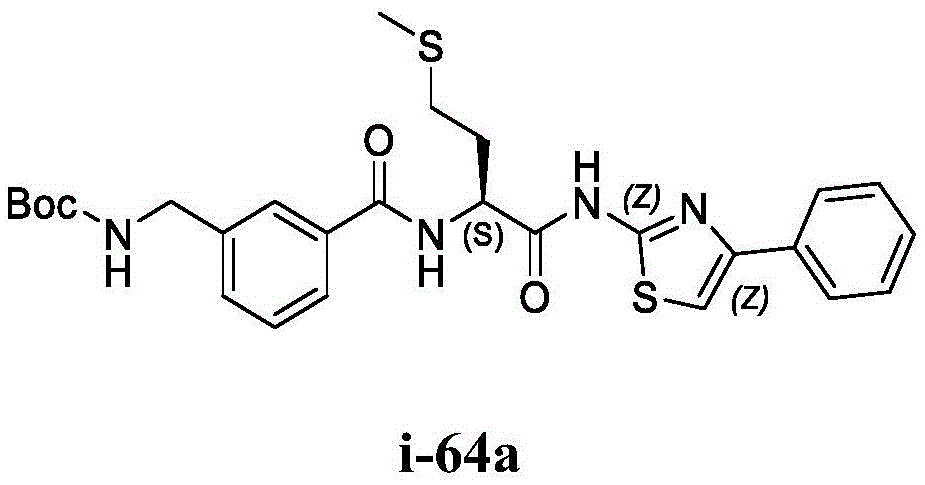
向3-[(叔丁氧基羰基氨基)甲基]苯甲酸(29.81mg,118.64μmol)于DCM(2mL)中的溶液添加HATU(67.66mg,177.96μmol)和DIPEA(61.33mg,474.56μmol),然后添加(2S)-2-氨基-4-甲基硫烷基-N-(4-苯基噻唑-2-基)丁酰胺(50mg,118.64μmol)。将混合物在10℃下搅拌12小时。将反应混合物在减压下浓缩。将残余物通过制备型TLC(SiO2,PE:EA=1:1)纯化,得到呈白色固体的中间体i-64a。To a solution of 3-[(tert-butoxycarbonylamino)methyl]benzoic acid (29.81 mg, 118.64 μmol) in DCM (2 mL) was added HATU (67.66 mg, 177.96 μmol) and DIPEA (61.33 mg, 474.56 μmol) , then (2S)-2-amino-4-methylsulfanyl-N-(4-phenylthiazol-2-yl)butanamide (50 mg, 118.64 μmol) was added. The mixture was stirred at 10°C for 12 hours. The reaction mixture was concentrated under reduced pressure. The residue was purified by preparative TLC (SiO2, PE:EA=1:1) to yield intermediate i-64a as a white solid.
LCMS(ESI)m/z:[M+H]+=541.1。LCMS (ESI) m/z: [M+H] + =541.1.
步骤2:(S)-3-((4-(甲硫基)-1-氧代基-1-((4-苯基噻唑-2-基)氨基)丁烷-2-基)氨基甲酰基)苄基氨基甲酸叔丁酯(化合物75)三氟乙酸盐的制备Step 2: (S)-3-((4-(methylthio)-1-oxo-1-((4-phenylthiazol-2-yl)amino)butan-2-yl)aminomethane Preparation of tert-butyl acyl)benzylcarbamate (compound 75) trifluoroacetate salt

向中间体i-64a(50mg,76.37μmol)于DCM(2.0mL)中的溶液添加TFA(1.0mL)。将混合物在12℃下搅拌2小时。将反应混合物在减压下浓缩以除去DCM。将残余物通过制备型HPLC(TFA条件;柱:Phenomenex Synergi C18 150*25*10μm;流动相:[水(0.1%TF A)-ACN];B%:25%-55%,9分钟)纯化,并冻干,得到呈白色固体的化合物75(TFA盐)。To a solution of intermediate i-64a (50 mg, 76.37 μmol) in DCM (2.0 mL) was added TFA (1.0 mL). The mixture was stirred at 12°C for 2 hours. The reaction mixture was concentrated under reduced pressure to remove DCM. The residue was purified by preparative HPLC (TFA conditions; column:
1H NMR(400MHz,甲醇-d4)δ=7.99-7.97(m,2H),7.91-7.89(m,2H),7.66-7.64(m,1H),7.61-7.59(m,1H),7.41-7.36(m,3H),7.31-7.29(m,1H),4.95-4.91(m,1H),4.19(s,2H),2.72-2.65(m,2H),2.30-2.20(m,2H),2.15(s,3H)ppm。1H NMR (400MHz, methanol-d4)δ=7.99-7.97(m,2H), 7.91-7.89(m,2H), 7.66-7.64(m,1H), 7.61-7.59(m,1H), 7.41-7.36 (m,3H),7.31-7.29(m,1H),4.95-4.91(m,1H),4.19(s,2H),2.72-2.65(m,2H),2.30-2.20(m,2H),2.15 (s,3H)ppm.
LCMS(ESI)m/z:[M+H]+=441.0。LCMS (ESI) m/z: [M+H] + =441.0.
实施例65. 4-(氨基甲基)-N-[3-甲基硫烷基-1-[(4-苯基噻唑-2-基)氨基甲酰基]丙基]苯甲酰胺(化合物57)的制备Example 65. 4-(Aminomethyl)-N-[3-methylsulfanyl-1-[(4-phenylthiazol-2-yl)carbamoyl]propyl]benzamide (Compound 57 ) preparation

步骤1:N-[[4-[[(1S)-3-甲基硫烷基-1-[(4-苯基噻唑-2-基)氨基甲酰基]丙基]氨基甲酰基]苯基]甲基]氨基甲酸叔丁酯(中间体i-65a)的制备Step 1: N-[[4-[[(1S)-3-Methylsulfanyl-1-[(4-phenylthiazol-2-yl)carbamoyl]propyl]carbamoyl]phenyl Preparation of tert-butyl ]methyl]carbamate (intermediate i-65a)
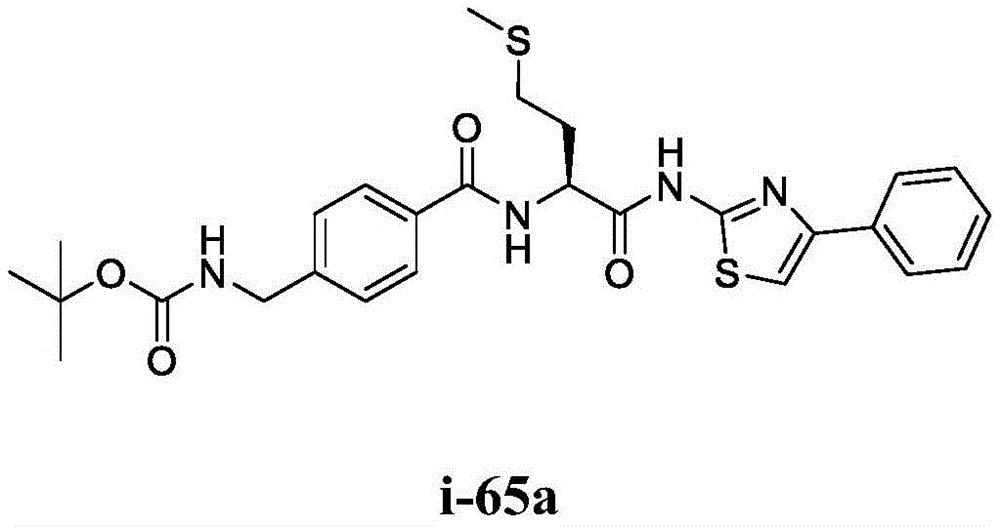
向4-[(叔丁氧基羰基氨基)甲基]苯甲酸(89.43mg,355.91μmol)于DCM(1mL)中的混合物添加HATU(202.99mg,533.86μmol)和DIPEA(247.97μL,1.42mmol)。将混合物在30℃下搅拌15分钟,然后添加(2S)-2-氨基-4-甲基硫烷基-N-(4-苯基噻唑-2-基)丁酰胺(150mg,355.91μmol),并在30℃下搅拌16小时。将反应混合物蒸发至干,得到粗产物。将残余物通过制备型HPLC(柱:Boston pH-lex 150*25 10μm;流动相:[水(0.1%TFA)-ACN];B%:59%-79%,8分钟)纯化,并冻干,得到呈白色固体的中间体i-65a。To a mixture of 4-[(tert-butoxycarbonylamino)methyl]benzoic acid (89.43 mg, 355.91 μmol) in DCM (1 mL) was added HATU (202.99 mg, 533.86 μmol) and DIPEA (247.97 μL, 1.42 mmol) . The mixture was stirred at 30°C for 15 minutes, then (2S)-2-amino-4-methylsulfanyl-N-(4-phenylthiazol-2-yl)butanamide (150 mg, 355.91 μmol) was added, and stirred at 30°C for 16 hours. The reaction mixture was evaporated to dryness to give crude product. The residue was purified by preparative HPLC (column: Boston pH-
1H NMR(400MHz,MeOD-d4)δ=7.91-7.86(m,4H),7.41-7.37(m,5H),7.31-7.28(m,1H),4.92(br d,J=5.2Hz,1H),4.30(s,2H),2.74-2.60(m,2H),2.33-2.17(m,2H),2.14(s,3H),1.46(s,9H)ppm。 1 H NMR (400MHz, MeOD-d 4 )δ=7.91-7.86(m,4H), 7.41-7.37(m,5H), 7.31-7.28(m,1H), 4.92(br d, J=5.2Hz, 1H), 4.30(s, 2H), 2.74-2.60(m, 2H), 2.33-2.17(m, 2H), 2.14(s, 3H), 1.46(s, 9H) ppm.
LCMS(ESI)m/z:[M+H]+=541.3。LCMS (ESI) m/z: [M+H] + =541.3.
步骤2:4-(氨基甲基)-N-[3-甲基硫烷基-1-[(4-苯基噻唑-2-基)氨基甲酰基]丙基]苯甲酰胺三氟乙酸盐(化合物57)的制备Step 2: 4-(Aminomethyl)-N-[3-methylsulfanyl-1-[(4-phenylthiazol-2-yl)carbamoyl]propyl]benzamide trifluoroacetic acid Preparation of salt (compound 57)
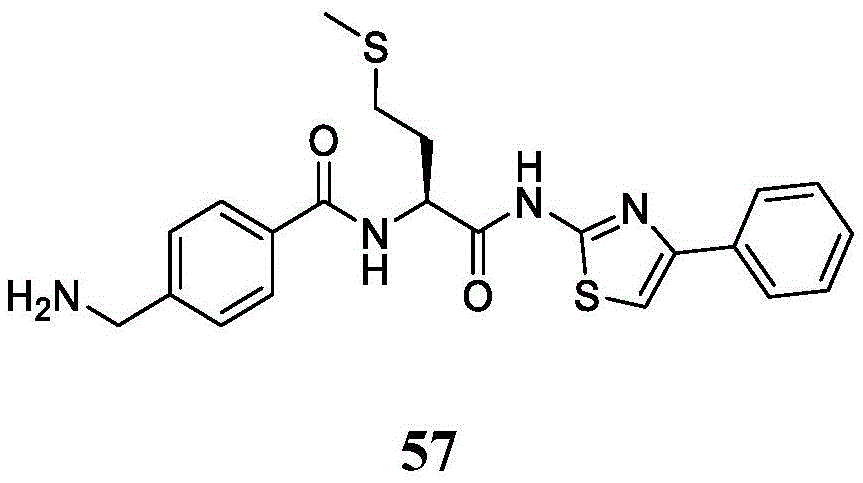
向中间体i-65a(150.00mg,277.42μmol)于DCM(1mL)中的溶液添加TFA(205.40μL)。将混合物在30℃下搅拌2小时。将反应混合物蒸发至干,得到粗产物。将残余物通过制备型HPLC(柱:Phenomenex Synergi C18 150*25*10μm;流动相:[水(0.1%TFA)-ACN];B%:18%-48%,12分钟)纯化,并冻干,得到呈白色固体的化合物57(TFA盐)。To a solution of intermediate i-65a (150.00 mg, 277.42 μmol) in DCM (1 mL) was added TFA (205.40 μL). The mixture was stirred at 30°C for 2 hours. The reaction mixture was evaporated to dryness to give crude product. The residue was purified by preparative HPLC (column:
1H NMR(400MHz,MeOD-d4)δ=8.00(d,J=8.4Hz,2H),7.91-7.89(m,2H),7.58(d,J=8.4Hz,2H),7.41-7.37(m,3H),7.32-7.28(m,1H),4.94-4.91(m,1H),4.20(s,2H),2.71-2.64(m,2H),2.31-2.22(m,2H),2.14(s,3H)ppm。 1 H NMR (400 MHz, MeOD-d 4 ) δ=8.00 (d, J=8.4 Hz, 2H), 7.91-7.89 (m, 2H), 7.58 (d, J=8.4 Hz, 2H), 7.41-7.37 ( m, 3H), 7.32-7.28(m, 1H), 4.94-4.91(m, 1H), 4.20(s, 2H), 2.71-2.64(m, 2H), 2.31-2.22(m, 2H), 2.14( s,3H)ppm.
LCMS(ESI)m/z:[M+H]+=441.2。LCMS (ESI) m/z: [M+H] + =441.2.
实施例66. 4-[(二甲基氨基)甲基]-N-[(1S)-3-甲基硫烷基-1-[(4-苯基噻唑-2-基)氨基甲酰基]丙基]苯甲酰胺(化合物60)的制备Example 66. 4-[(Dimethylamino)methyl]-N-[(1S)-3-methylsulfanyl-1-[(4-phenylthiazol-2-yl)carbamoyl] Preparation of propyl]benzamide (compound 60)
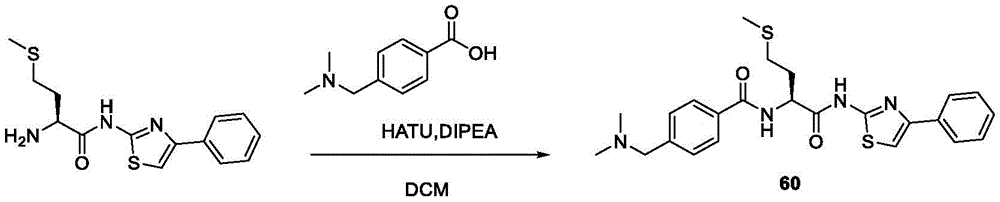
向4-[(二甲基氨基)甲基]苯甲酸;盐酸盐(25.59mg,118.64μmol)于DCM(1mL)中的混合物添加HATU(67.66mg,177.96μmol)和DIPEA(82.66μL,474.56μmol)。将混合物在30℃下搅拌15分钟,然后添加(2S)-2-氨基-4-甲基硫烷基-N-(4-苯基噻唑-2-基)丁酰胺(50mg,118.64μmol),并在30℃下搅拌2小时。将反应混合物蒸发至干。将残余物通过制备型HPLC(柱:Phenomenex Synergi C18 150*25*10μm;流动相:[水(0.1%TFA)-ACN];B%:25%-55%,9分钟)纯化,并冻干,得到呈灰白色固体的化合物60。To a mixture of 4-[(dimethylamino)methyl]benzoic acid; hydrochloride (25.59 mg, 118.64 μmol) in DCM (1 mL) was added HATU (67.66 mg, 177.96 μmol) and DIPEA (82.66 μL, 474.56 μmol). The mixture was stirred at 30°C for 15 minutes, then (2S)-2-amino-4-methylsulfanyl-N-(4-phenylthiazol-2-yl)butanamide (50 mg, 118.64 μmol) was added, and stirred at 30°C for 2 hours. The reaction mixture was evaporated to dryness. The residue was purified by preparative HPLC (column:
1H NMR(400MHz,MeOD-d4)δ=8.03(d,J=8.0Hz,2H),7.90(d,J=8.0Hz,2H),7.63(d,J=8.4Hz,2H),7.40-7.36(m,3H),7.31-7.29(m,1H),4.95-4.91(m,1H),4.39(s,2H),2.88(s,6H),2.71-2.64(m,2H),2.29-2.19(m,2H),2.14(s,3H)ppm。 1 H NMR (400 MHz, MeOD-d 4 ) δ=8.03 (d, J=8.0 Hz, 2H), 7.90 (d, J=8.0 Hz, 2H), 7.63 (d, J=8.4 Hz, 2H), 7.40 -7.36(m,3H),7.31-7.29(m,1H),4.95-4.91(m,1H),4.39(s,2H),2.88(s,6H),2.71-2.64(m,2H),2.29 -2.19(m, 2H), 2.14(s, 3H) ppm.
LCMS(ESI)m/z:[M+H]+=469.1。LCMS (ESI) m/z: [M+H] + =469.1.
实施例67. 4-(乙酰氨基甲基)-N-[3-甲基硫烷基-1-[(4-苯基噻唑-2-基)氨基甲酰基]丙基]苯甲酰胺(化合物74)的制备Example 67. 4-(Acetylaminomethyl)-N-[3-methylsulfanyl-1-[(4-phenylthiazol-2-yl)carbamoyl]propyl]benzamide (compound 74) Preparation

向4-(氨基甲基)-N-[3-甲基硫烷基-1-[(4-苯基噻唑-2-基)氨基甲酰基]丙基]苯甲酰胺(50mg,90.15μmol,TFA盐)于DCM(1mL)中的溶液添加TEA(62.74μL,450.77μmol),随后在0℃下添加Ac2O(21.11μL,225.39μmol)。将混合物在30℃下搅拌1小时。将反应混合物蒸发至干。将残余物通过制备型HPLC(柱:Xtimate C18 150*25mm*5μm;流动相:[水(0.05%氢氧化氨v/v)-ACN];B%:30%-60%,12分钟)纯化,并冻干,得到呈灰白色固体的化合物74。To 4-(aminomethyl)-N-[3-methylsulfanyl-1-[(4-phenylthiazol-2-yl)carbamoyl]propyl]benzamide (50 mg, 90.15 μmol, TFA salt) in DCM (1 mL) was added TEA (62.74 μL, 450.77 μmol) followed by Ac2O (21.11 μL, 225.39 μmol) at 0°C. The mixture was stirred at 30°C for 1 hour. The reaction mixture was evaporated to dryness. The residue was purified by preparative HPLC (column:
1H NMR(400MHz,MeOD-d4)δ=7.90-7.87(m,4H),7.41-7.36(m,5H),7.31-7.27(m,1H),4.92-4.90(m,1H),4.43(s,2H),2.73-2.60(m,2H),2.27-2.21(m,2H),2.13(s,3H),2.01(s,3H)ppm。 1 H NMR (400MHz, MeOD-d 4 ) δ=7.90-7.87(m, 4H), 7.41-7.36(m, 5H), 7.31-7.27(m, 1H), 4.92-4.90(m, 1H), 4.43 (s, 2H), 2.73-2.60 (m, 2H), 2.27-2.21 (m, 2H), 2.13 (s, 3H), 2.01 (s, 3H) ppm.
LCMS(ESI)m/z:[M+H]+=483.3。LCMS (ESI) m/z: [M+H] + =483.3.
实施例68.化合物N-[(1S)-3-甲基硫烷基-1-[(4-苯基噻唑-2-基)氨基甲酰基]丙基]-4-甲基磺酰基-苯甲酰胺(化合物68)的制备Example 68. Compound N-[(1S)-3-methylsulfanyl-1-[(4-phenylthiazol-2-yl)carbamoyl]propyl]-4-methylsulfonyl-benzene Preparation of formamide (compound 68)

向4-甲基磺酰基苯甲酸(23.75mg,118.64μmol)于DCM(3mL)中的溶液添加DIPEA(46.00mg,355.91μmol)和HATU(49.62mg,130.50μmol)。将混合物在30℃下搅拌10分钟。添加(2S)-2-氨基-4-甲基硫烷基-N-(4-苯基噻唑-2-基)丁酰胺(50mg,118.64μmol)并将反应混合物在30℃下搅拌2小时。将反应混合物浓缩至干,得到残余物。将残余物通过制备型HPLC(柱:Phenomenex Synergi C18 150*25*10μm;流动相:[水(0.1%TFA)-ACN];B%:45%-69%,12分钟)纯化,并冻干,得到呈白色固体的化合物68。To a solution of 4-methylsulfonylbenzoic acid (23.75 mg, 118.64 μmol) in DCM (3 mL) was added DIPEA (46.00 mg, 355.91 μmol) and HATU (49.62 mg, 130.50 μmol). The mixture was stirred at 30°C for 10 minutes. (2S)-2-Amino-4-methylsulfanyl-N-(4-phenylthiazol-2-yl)butanamide (50 mg, 118.64 μmol) was added and the reaction mixture was stirred at 30° C. for 2 hours. The reaction mixture was concentrated to dryness to give a residue. The residue was purified by preparative HPLC (column:
1H NMR(400MHz,甲醇-d4)δ=8.19-8.05(m,4H),7.92(d,J=7.2Hz,2H),7.42-7.39(m,3H),7.33-7.31(m,1H),4.97-4.94(m,1H),3.19(s,3H),2.73-2.66(m,2H),2.33-2.24(m,2H),2.16(s,3H)ppm。1H NMR (400MHz, methanol-d4)δ=8.19-8.05(m, 4H), 7.92(d, J=7.2Hz, 2H), 7.42-7.39(m, 3H), 7.33-7.31(m, 1H), 4.97-4.94 (m, 1H), 3.19 (s, 3H), 2.73-2.66 (m, 2H), 2.33-2.24 (m, 2H), 2.16 (s, 3H) ppm.
LCMS(ESI)m/z:[M+H]+=490.1。LCMS (ESI) m/z: [M+H]+=490.1.
实施例69. 4-甲氧基-N-[(1S)-3-甲基硫烷基-1-[(4-苯基噻唑-2-基)氨基甲酰基]丙基]-3-甲基磺酰基-苯甲酰胺(化合物20)的制备Example 69. 4-Methoxy-N-[(1S)-3-methylsulfanyl-1-[(4-phenylthiazol-2-yl)carbamoyl]propyl]-3-methyl Preparation of sulfonyl-benzamide (compound 20)
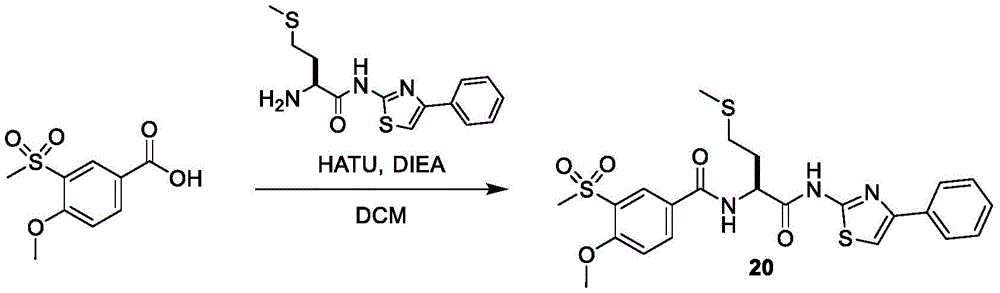
向4-甲氧基-3-甲基磺酰基-苯甲酸(21.85mg,94.91μmol)于DCM(1mL)中的溶液添加HATU(43.30mg,113.89μmol)和DIEA(36.80mg,284.73μmol),并将混合物在15℃下搅拌5分钟。然后添加(2S)-2-氨基-4-甲基硫烷基-N-(4-苯基噻唑-2-基)丁酰胺(40mg,94.91μmol),并将混合物在15℃下搅拌1小时。在减压下除去溶剂,并将残余物通过制备型HPLC(柱:Phenomenex Synergi C18 150*25*10μm;流动相:[水(0.1%TFA)-ACN];B%:42%-72%,9分钟)纯化,并冻干,得到呈白色固体的化合物20。To a solution of 4-methoxy-3-methylsulfonyl-benzoic acid (21.85 mg, 94.91 μmol) in DCM (1 mL) was added HATU (43.30 mg, 113.89 μmol) and DIEA (36.80 mg, 284.73 μmol), And the mixture was stirred at 15°C for 5 minutes. Then (2S)-2-amino-4-methylsulfanyl-N-(4-phenylthiazol-2-yl)butanamide (40 mg, 94.91 μmol) was added, and the mixture was stirred at 15° C. for 1 hour . The solvent was removed under reduced pressure and the residue was passed through preparative HPLC (column:
1H NMR(400MHz,MeOD)δ=8.49(d,J=2.4,1H),8.26-8.23(m,1H),7.90-7.88(m,2H),7.40-7.36(m,4H),7.31-7.27(m,1H),4.92-4.91(m,1H),4.08(s,3H),3.26(s,3H),2.73-2.60(m,2H),2.34-2.17(m,2H),2.14(s,3H)ppm。 1 H NMR (400MHz, MeOD) δ=8.49 (d, J=2.4, 1H), 8.26-8.23 (m, 1H), 7.90-7.88 (m, 2H), 7.40-7.36 (m, 4H), 7.31- 7.27(m, 1H), 4.92-4.91(m, 1H), 4.08(s, 3H), 3.26(s, 3H), 2.73-2.60(m, 2H), 2.34-2.17(m, 2H), 2.14( s,3H)ppm.
LCMS(ESI)m/z:[M+H]+=520.1。LCMS (ESI) m/z: [M+H] + =520.1.
实施例70. 4-甲基-3-(甲基磺酰基)-N-(2-氧代基-2-((4-苯基噻唑-2-基)氨基)乙基)苯甲酰胺(化合物19)的制备Example 70. 4-Methyl-3-(methylsulfonyl)-N-(2-oxo-2-((4-phenylthiazol-2-yl)amino)ethyl)benzamide ( Preparation of compound 19)

步骤1:4-甲基-3-(甲基磺酰基)苯甲酸(中间体i-70a)的制备Step 1: Preparation of 4-methyl-3-(methylsulfonyl)benzoic acid (intermediate i-70a)
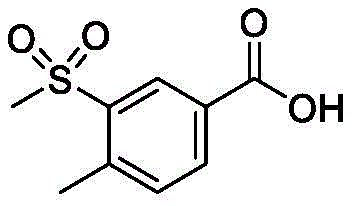
将NaOH(13.14mg,328.57μmol)溶解于H2O(1mL)中,然后添加至4-甲基-3-甲基磺酰基-苯甲酸甲酯(50mg,219.04μmol)于THF(0.5mL)和MeOH(0.2mL)中的溶液。将反应混合物在30℃下搅拌17小时。将反应混合物用水(3mL)稀释,然后用EtOAc(5mL)洗涤。将水层用2M HCl水溶液调节至pH=3,然后用EtOAc(5mL*3)萃取。将合并的有机萃取物用盐水洗涤,经无水硫酸钠干燥,过滤,并浓缩,得到呈白色固体的中间体i-70a。NaOH (13.14 mg, 328.57 μmol) was dissolved in H2O (1 mL), then added to methyl 4-methyl-3-methylsulfonyl-benzoate (50 mg, 219.04 μmol) in THF (0.5 mL) and MeOH (0.2 mL). The reaction mixture was stirred at 30°C for 17 hours. The reaction mixture was diluted with water (3 mL), then washed with EtOAc (5 mL). The aqueous layer was adjusted to pH=3 with 2M aqueous HCl, then extracted with EtOAc (5 mL*3). The combined organic extracts were washed with brine, dried over anhydrous sodium sulfate, filtered, and concentrated to give intermediate i-70a as a white solid.
LCMS(ESI)m/z:[M+H]+=215.0。LCMS (ESI) m/z: [M+H]+=215.0.
步骤2:4-甲基-3-(甲基磺酰基)-N-(2-氧代基-2-((4-苯基噻唑-2-基)氨基)乙基)苯甲酰胺(化合物19)的制备Step 2: 4-Methyl-3-(methylsulfonyl)-N-(2-oxo-2-((4-phenylthiazol-2-yl)amino)ethyl)benzamide (compound 19) Preparation

向中间体i-70a(25mg,116.69μmol)于DCM(1mL)中的溶液添加HATU(66.56mg,175.04μmol)和DIPEA(75.41mg,583.46μmol),然后添加2-氨基-N-(4-苯基噻唑-2-基)乙酰胺(40.53mg,116.69μmol)。在30℃下搅拌2小时后形成沉淀物。通过过滤收集沉淀物,并冻干,得到呈白色固体的化合物19。To a solution of intermediate i-70a (25 mg, 116.69 μmol) in DCM (1 mL) was added HATU (66.56 mg, 175.04 μmol) and DIPEA (75.41 mg, 583.46 μmol) followed by 2-amino-N-(4- Phenylthiazol-2-yl)acetamide (40.53 mg, 116.69 μmol). A precipitate formed after stirring at 30°C for 2 hours. The precipitate was collected by filtration and lyophilized to give compound 19 as a white solid.
1H NMR(400MHz,DMSO-d6)δ=12.09-10.54(br s,1H),9.20-9.19(m,1H),8.44(s,1H),8.13-7.10(m,1H),7.91-7.89(m,2H),7.63-7.60(m,2H),7.45-7.40(m,2H),7.35-7.32(m,1H),4.22(d,J=5.6Hz,2H),3.27(s,3H),2.71(s,3H)ppm。 1 H NMR (400MHz, DMSO-d6)δ=12.09-10.54(br s, 1H), 9.20-9.19(m, 1H), 8.44(s, 1H), 8.13-7.10(m, 1H), 7.91-7.89 (m,2H),7.63-7.60(m,2H),7.45-7.40(m,2H),7.35-7.32(m,1H),4.22(d,J=5.6Hz,2H),3.27(s,3H) ), 2.71(s,3H)ppm.
LCMS(ESI)m/z:[M+H]+=430.3。LCMS (ESI) m/z: [M+H] + =430.3.
实施例71.化合物4-(二甲基氨磺酰基)-N-[(1S)-3-甲基硫烷基-1-[(4-苯基噻唑-2-基)氨基甲酰基]丙基]噻吩-2-甲酰胺(化合物64)的制备Example 71. Compound 4-(dimethylsulfamoyl)-N-[(1S)-3-methylsulfanyl-1-[(4-phenylthiazol-2-yl)carbamoyl]propane Preparation of thiophene-2-carboxamide (Compound 64)
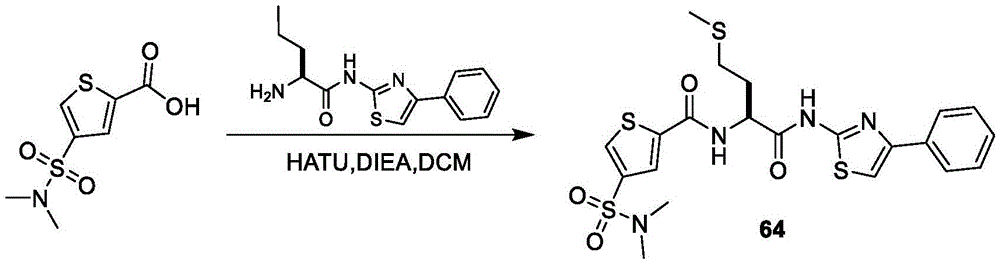
向4-(二甲基氨磺酰基)噻吩-2-甲酸(40.00mg,170.01μmol)、DIPEA(87.89mg,680.04μmol,118.45μL)和HATU(71.11mg,187.01μmol)于DCM(1.0mL)中的溶液添加(2S)-2-氨基-4-甲基硫烷基-N-(4-苯基噻唑-2-基)丁酰胺(78.82mg,187.01μmol),并将混合物在30℃下搅拌2小时。将反应混合物在减压下浓缩,得到残余物。将残余物通过制备型HPLC(柱:Phenomenex Synergi C18 150*25*10μm;流动相:[水(0.1%TFA)-ACN];B%:45%-75%,10分钟)纯化,并冻干,得到呈白色固体的化合物64。To 4-(dimethylsulfamoyl)thiophene-2-carboxylic acid (40.00 mg, 170.01 μmol), DIPEA (87.89 mg, 680.04 μmol, 118.45 μL) and HATU (71.11 mg, 187.01 μmol) in DCM (1.0 mL) (2S)-2-amino-4-methylsulfanyl-N-(4-phenylthiazol-2-yl)butanamide (78.82 mg, 187.01 μmol) was added to the solution in , and the mixture was heated at 30 °C Stir for 2 hours. The reaction mixture was concentrated under reduced pressure to give a residue. The residue was purified by preparative HPLC (column:
1H NMR(400MHz,DMSO-d6)δ=12.60(s,1H),9.09(d,J=7.2Hz,1H),8.46(d,J=1.6Hz,1H),8.27(d,J=1.6Hz,1H),7.92-7.90(m,2H),7.67(s,1H),7.46-7.42(m,2H),7.35-7.33(m,1H),4.77–4.73(m,1H),2.73-2.67(m,6H),2.66-2.53(m,2H),2.10-2.03(m,5H)ppm。1H NMR (400MHz, DMSO-d 6 )δ=12.60(s, 1H), 9.09(d, J=7.2Hz, 1H), 8.46(d, J=1.6Hz, 1H), 8.27(d, J=1.6 Hz,1H),7.92-7.90(m,2H),7.67(s,1H),7.46-7.42(m,2H),7.35-7.33(m,1H),4.77-4.73(m,1H),2.73- 2.67 (m, 6H), 2.66-2.53 (m, 2H), 2.10-2.03 (m, 5H) ppm.
LCMS(ESI)m/z:[M+H]+=525.0LCMS (ESI) m/z: [M+H] + =525.0
实施例72. 3-环丙基磺酰基-N-[2-氧代基-2-[(4-苯基噻唑-2-基)氨基]乙基]苯甲酰胺(化合物39)的制备Example 72. Preparation of 3-Cyclopropylsulfonyl-N-[2-oxo-2-[(4-phenylthiazol-2-yl)amino]ethyl]benzamide (Compound 39)
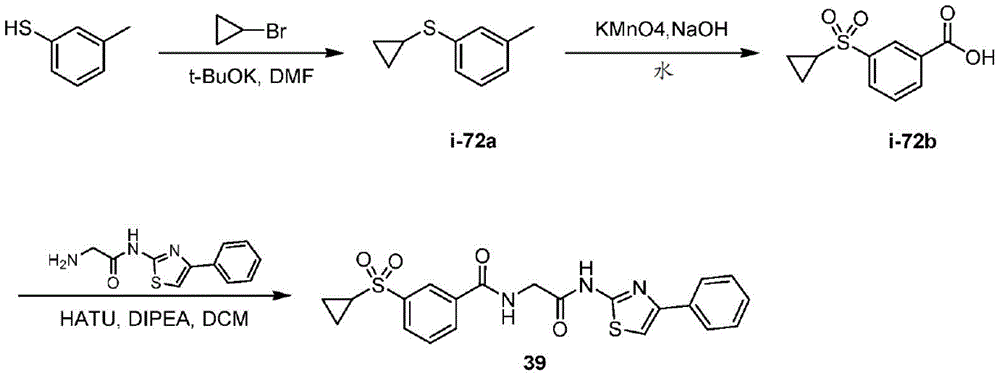
步骤1:1-环丙基硫烷基-3-甲基-苯(中间体i-72a)的制备Step 1: Preparation of 1-Cyclopropylsulfanyl-3-methyl-benzene (Intermediate i-72a)
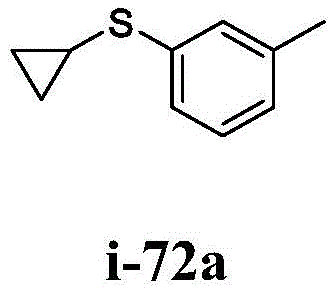
将3-甲基苯硫醇(100.0mg,805.13μmol)、溴环丙烷(292.21mg,2.42mmol)和t-BuOK(99.38mg,885.65μmol)于DMSO(0.5mL)中的混合物在100℃下搅拌12小时。将反应混合物用水(2.0mL)稀释,并用EtOAc(2.0mL*3)萃取。将合并的有机萃取物经Na2SO4干燥,过滤,并在减压下浓缩,得到残余物。将残余物通过柱色谱法(SiO2,石油醚)纯化,得到呈无色油状物的中间体i-72a。A mixture of 3-methylbenzenethiol (100.0 mg, 805.13 μmol), bromocyclopropane (292.21 mg, 2.42 mmol) and t-BuOK (99.38 mg, 885.65 μmol) in DMSO (0.5 mL) at 100 °C Stir for 12 hours. The reaction mixture was diluted with water (2.0 mL) and extracted with EtOAc (2.0 mL*3). The combined organic extracts were dried over Na2SO4 , filtered, and concentrated under reduced pressure to give a residue. The residue was purified by column chromatography ( SiO2 , petroleum ether) to yield intermediate i-72a as a colorless oil.
1H NMR(400MHz,CDCl3)δ=7.18(s,1H),7.10(d,J=4.0Hz,3H),6.88-6.86(m,1H),2.29-2.25(m,3H),2.14-2.09(m,1H),1.01-0.96(m,2H),0.63-0.60(m,2H)ppm。 1 H NMR (400 MHz, CDCl 3 ) δ=7.18 (s, 1H), 7.10 (d, J=4.0 Hz, 3H), 6.88-6.86 (m, 1H), 2.29-2.25 (m, 3H), 2.14- 2.09 (m, 1H), 1.01-0.96 (m, 2H), 0.63-0.60 (m, 2H) ppm.
步骤2:3-环丙基磺酰基苯甲酸(中间体i-72b)的制备Step 2: Preparation of 3-cyclopropylsulfonylbenzoic acid (intermediate i-72b)

向中间体i-72a(60.0mg,365.26μmol)和KMnO4(230.89mg,1.46mmol)于水(1.0mL)中的溶液添加NaOH(7.30mg,182.63μmol)。将混合物在100℃下搅拌16小时。将反应混合物倒入饱和Na2SO3(20.0mL)中,然后将1N HCl(20.0mL)添加至混合物,并用EtOAc(20.0mL*3)萃取。将合并的有机萃取物用盐水(20.0mL)洗涤,经Na2SO4干燥,过滤,并在减压下浓缩,得到呈黄色油状物的中间体i-72b。To a solution of intermediate i-72a (60.0 mg, 365.26 μmol) and KMnO 4 (230.89 mg, 1.46 mmol) in water (1.0 mL) was added NaOH (7.30 mg, 182.63 μmol). The mixture was stirred at 100°C for 16 hours. The reaction mixture was poured into saturated Na2SO3 (20.0 mL), then IN HCl (20.0 mL) was added to the mixture and extracted with EtOAc (20.0 mL* 3 ). The combined organic extracts were washed with brine (20.0 mL), dried over Na2SO4 , filtered, and concentrated under reduced pressure to afford intermediate i-72b as a yellow oil.
1H NMR(400MHz,DMSO-d6)δ=8.35(s,1H),8.26(d,J=7.6Hz,1H),8.13(d,J=7.6Hz,1H),7.82-7.78(m,1H),2.99-2.93(m,1H),1.17-1.06(m,4H)ppm。 1 H NMR (400MHz, DMSO-d6)δ=8.35(s, 1H), 8.26(d, J=7.6Hz, 1H), 8.13(d, J=7.6Hz, 1H), 7.82-7.78(m, 1H) ), 2.99-2.93 (m, 1H), 1.17-1.06 (m, 4H) ppm.
LCMS(ESI)m/z:[M+H]+=227.0LCMS (ESI) m/z: [M+H] + = 227.0
步骤3:3-环丙基磺酰基-N-[2-氧代基-2-[(4-苯基噻唑-2-基)氨基]乙基]苯甲酰胺(化合物39)的制备Step 3: Preparation of 3-Cyclopropylsulfonyl-N-[2-oxo-2-[(4-phenylthiazol-2-yl)amino]ethyl]benzamide (Compound 39)

向中间体i-72b(30.0mg,132.60μmol)、HATU(60.50mg,159.12μmol)和DIPEA(68.55mg,530.39μmol)于DCM(1.0mL)中的溶液添加2-氨基-N-(4-苯基噻唑-2-基)乙酰胺(50.66mg,145.86μmol)。然后将混合物在30℃下搅拌4小时。将反应混合物在减压下浓缩,得到残余物。将残余物用MeOH(4.0mL)研磨,通过过滤收集固体,并在真空中干燥,得到白色固体。然后将固体悬浮于水(3.0mL)中,并冻干,得到呈白色固体的化合物39。To a solution of intermediate i-72b (30.0 mg, 132.60 μmol), HATU (60.50 mg, 159.12 μmol) and DIPEA (68.55 mg, 530.39 μmol) in DCM (1.0 mL) was added 2-amino-N-(4- Phenylthiazol-2-yl)acetamide (50.66 mg, 145.86 μmol). The mixture was then stirred at 30°C for 4 hours. The reaction mixture was concentrated under reduced pressure to give a residue. The residue was triturated with MeOH (4.0 mL) and the solid was collected by filtration and dried in vacuo to give a white solid. The solid was then suspended in water (3.0 mL) and lyophilized to give compound 39 as a white solid.
1H NMR(400MHz,DMSO-d6)δ=12.46(s,1H),9.27(m,1H),8.42(s,1H),8.25(d,J=8.0Hz,1H),8.10(d,J=8.4Hz,1H),7.92-7.90(m,2H),7.81-7.79(m,1H),7.64(s,1H),7.44-7.42(m,2H),7.33-7.31(m,1H),4.24(d,J=5.6Hz,2H),2.95-2.90(m,1H),1.19-1.07(m,4H)ppm。 1 H NMR (400MHz, DMSO-d 6 )δ=12.46(s, 1H), 9.27(m, 1H), 8.42(s, 1H), 8.25(d, J=8.0Hz, 1H), 8.10(d, J=8.4Hz, 1H), 7.92-7.90(m, 2H), 7.81-7.79(m, 1H), 7.64(s, 1H), 7.44-7.42(m, 2H), 7.33-7.31(m, 1H) , 4.24 (d, J=5.6Hz, 2H), 2.95-2.90 (m, 1H), 1.19-1.07 (m, 4H) ppm.
LCMS(ESI)m/z:[M+H]+=442.3。LCMS (ESI) m/z: [M+H] + =442.3.
实施例73. 3-[2-[[2-[[3-(二甲基氨磺酰基)苯甲酰基]氨基]乙酰基]氨基]噻唑-4-基]-N,N-二甲基-苯甲酰胺(化合物37)的制备Example 73. 3-[2-[[2-[[3-(dimethylsulfamoyl)benzoyl]amino]acetyl]amino]thiazol-4-yl]-N,N-dimethyl - Preparation of benzamide (compound 37)
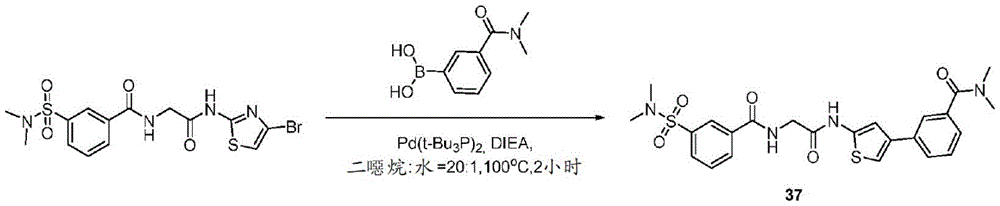
在N2下向N-[2-[(4-溴噻唑-2-基)氨基]-2-氧代基-乙基]-3-(二甲基氨磺酰基)苯甲酰胺(50.0mg,111.78μmol)和[3-(二甲基氨基甲酰基)苯基]硼酸(64.72mg,335.33μmol)于二噁烷(3.0mL)和H2O(0.3mL)中的溶液添加Pd(t-Bu3P)2(28.56mg,55.89μmol)和DIEA(72.23mg,558.88μmol,97.34μL)。将混合物在100℃下搅拌2小时。将溶液冷却至至30℃,并形成固体。将混合物过滤,得到呈固体的粗产物。将粗产物溶解于MeOH(1.0mL)和DMSO(1.0mL)中,通过制备型HPLC(柱:Phenomenex Synergi C18 150*25*10μm;流动相:[水(0.1%TFA)-ACN];B%:30%-60%,9分钟)纯化,并冻干,得到呈白色固体的化合物37。To N-[ 2 -[(4-bromothiazol-2-yl)amino]-2-oxo-ethyl]-3-(dimethylsulfamoyl)benzamide (50.0 mg) under N , 111.78 μmol) and [3-(dimethylcarbamoyl)phenyl]boronic acid (64.72 mg, 335.33 μmol) in dioxane (3.0 mL) and H 2 O (0.3 mL) were added Pd (t -Bu3P )2 ( 28.56 mg, 55.89 μmol) and DIEA (72.23 mg, 558.88 μmol, 97.34 μL). The mixture was stirred at 100°C for 2 hours. The solution was cooled to 30°C and a solid formed. The mixture was filtered to give the crude product as a solid. The crude product was dissolved in MeOH (1.0 mL) and DMSO (1.0 mL) and analyzed by preparative HPLC (column:
1H NMR(400MHz,DMSO-d6)δ=12.47(s,1H),9.30-9.29(m,1H),8.27-8.23(m,2H),7.98-7.93(m,3H),7.81-7.75(m,2H),7.50-7.52(m,1H),7.34(d,J=7.60Hz,1H),4.25(d,J=5.6Hz,2H),3.01-2.94(m,6H),2.66(s,6H)ppm。 1 H NMR (400MHz, DMSO-d 6 ) δ=12.47(s, 1H), 9.30-9.29(m, 1H), 8.27-8.23(m, 2H), 7.98-7.93(m, 3H), 7.81-7.75 (m,2H),7.50-7.52(m,1H),7.34(d,J=7.60Hz,1H),4.25(d,J=5.6Hz,2H),3.01-2.94(m,6H),2.66( s,6H)ppm.
LCMS(ESI)m/z:[M+H]+=516.0。LCMS (ESI) m/z: [M+H] + =516.0.
实施例74. 3-甲基磺酰基-N-[2-氧代基-2-[[4-(3-苯基苯基)噻唑-2-基]氨基]乙基]苯甲酰胺(化合物36)的制备Example 74. 3-Methylsulfonyl-N-[2-oxo-2-[[4-(3-phenylphenyl)thiazol-2-yl]amino]ethyl]benzamide (compound 36) Preparation
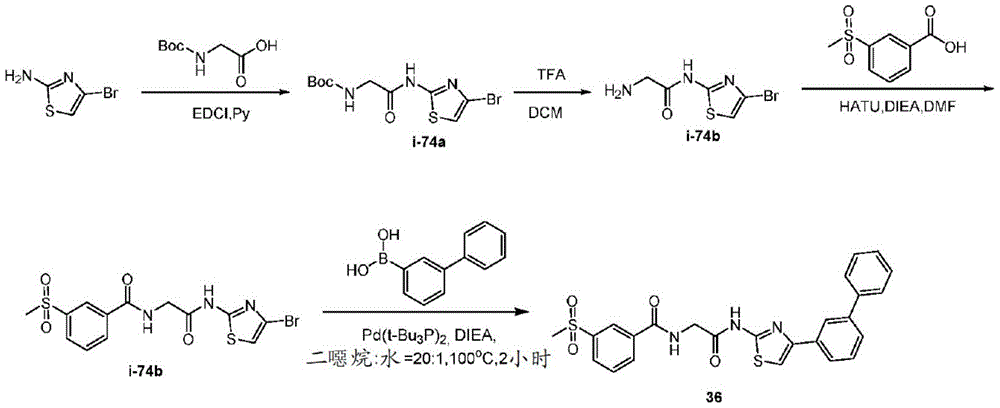
步骤1:N-[2-[(4-溴噻唑-2-基)氨基]-2-氧代基-乙基]氨基甲酸叔丁酯(中间体i-74a)的制备Step 1: Preparation of tert-butyl N-[2-[(4-bromothiazol-2-yl)amino]-2-oxo-ethyl]carbamate (intermediate i-74a)

向4-溴噻唑-2-胺(3.0g,16.76mmol)和2-(叔丁氧基羰基氨基)乙酸(4.40g,25.13mmol)于吡啶(30.0mL)中的溶液添加EDCI(16.06g,83.78mmol)。将混合物在15℃下搅拌16小时。然后将反应混合物在减压下浓缩。将残余物用0.5N HCl(100.0mL)稀释,并用EtOAc(50mL*3)萃取。将合并的有机萃取物用NaHCO3(50.0mL)和盐水(50.0mL)洗涤,经Na2SO4干燥,过滤,并在减压下浓缩,得到残余物。将残余物通过柱色谱法(SiO2,石油醚/乙酸乙酯=7/1至3:1)纯化,得到呈白色固体的中间体i-74a。To a solution of 4-bromothiazol-2-amine (3.0 g, 16.76 mmol) and 2-(tert-butoxycarbonylamino)acetic acid (4.40 g, 25.13 mmol) in pyridine (30.0 mL) was added EDCI (16.06 g, 83.78 mmol). The mixture was stirred at 15°C for 16 hours. The reaction mixture was then concentrated under reduced pressure. The residue was diluted with 0.5N HCl (100.0 mL) and extracted with EtOAc (50 mL*3). The combined organic extracts were washed with NaHCO3 (50.0 mL) and brine (50.0 mL), dried over Na2SO4 , filtered, and concentrated under reduced pressure to give a residue. The residue was purified by column chromatography (SiO 2 , petroleum ether/ethyl acetate = 7/1 to 3:1 ) to give intermediate i-74a as a white solid.
LCMS(ESI)m/z:[M+Na]+=358.1LCMS(ESI) m/z: [M+Na] + =358.1
步骤2:2-氨基-N-(4-溴噻唑-2-基)乙酰胺(中间体i-74b)的制备Step 2: Preparation of 2-amino-N-(4-bromothiazol-2-yl)acetamide (intermediate i-74b)
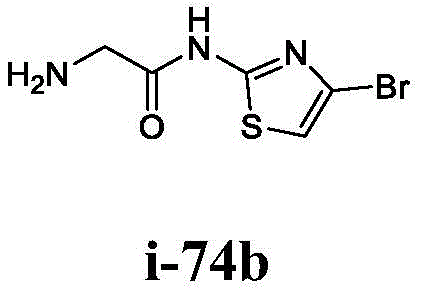
将中间体i-74a(300mg,892.31μmol)于DCM(5.0mL)和TFA(1.0mL)中的混合物在30℃下搅拌2小时。将混合物用DCM(20.0mL)稀释,并在真空下浓缩。将此操作重复三次。将残余物用MTBE(5mL*2)洗涤,得到呈黄色油状物的中间体i-74b(TFA盐),其直接用于下一步骤。A mixture of intermediate i-74a (300 mg, 892.31 μmol) in DCM (5.0 mL) and TFA (1.0 mL) was stirred at 30 °C for 2 h. The mixture was diluted with DCM (20.0 mL) and concentrated in vacuo. Repeat this operation three times. The residue was washed with MTBE (5 mL*2) to give intermediate i-74b (TFA salt) as a yellow oil, which was used directly in the next step.
LCMS(ESI)m/z:[M+Na]+=236.1LCMS (ESI) m/z: [M+Na] + = 236.1
步骤3:N-[2-[(4-溴噻唑-2-基)氨基]-2-氧代基-乙基]-3-甲基磺酰基-苯甲酰胺(中间体i-74c)的制备Step 3: N-[2-[(4-Bromothiazol-2-yl)amino]-2-oxo-ethyl]-3-methylsulfonyl-benzamide (intermediate i-74c) preparation

向3-甲基磺酰基苯甲酸(171.55mg,856.87μmol)于DMF(10.0mL)中的溶液添加HATU(977.42mg,2.57mmol)和DIEA(553.72mg,4.28mmol)。将混合物在30℃下搅拌30分钟。然后添加中间体i-74b(300.0mg,856.87μmol),并将混合物在30℃下再搅拌2小时。将混合物倒入H2O(100.0mL)中,并用EtOAc(10.0mL*3)萃取。将合并的有机层用H2O(5.0mL*3)和盐水(5.0mL*2)洗涤,然后经Na2SO4干燥,过滤,并在减压下浓缩。将残余物通过制备型HPLC(柱:Phenomenex Synergi C18 150*25*10μm;流动相:[水(0.1%TFA)-ACN];B%:32%-62%,9分钟)纯化,并冻干,得到呈浅黄色固体的中间体i-74c。To a solution of 3-methylsulfonylbenzoic acid (171.55 mg, 856.87 μmol) in DMF (10.0 mL) was added HATU (977.42 mg, 2.57 mmol) and DIEA (553.72 mg, 4.28 mmol). The mixture was stirred at 30°C for 30 minutes. Intermediate i-74b (300.0 mg, 856.87 μmol) was then added, and the mixture was stirred at 30° C. for an additional 2 hours. The mixture was poured into H2O (100.0 mL) and extracted with EtOAc (10.0 mL*3). The combined organic layers were washed with H2O (5.0 mL*3) and brine (5.0 mL*2), then dried over Na2SO4 , filtered, and concentrated under reduced pressure. The residue was purified by preparative HPLC (column:
LCMS(ESI)m/z:[81BrM+H]+=419.9。LCMS (ESI) m/z: [ 81 BrM+H] + =419.9.
步骤4:3-甲基磺酰基-N-[2-氧代基-2-[[4-(3-苯基苯基)噻唑-2-基]氨基]乙基]苯甲酰胺(化合物36)的制备Step 4: 3-Methylsulfonyl-N-[2-oxo-2-[[4-(3-phenylphenyl)thiazol-2-yl]amino]ethyl]benzamide (Compound 36 ) preparation

向中间体i-74c(60.0mg,143.44μmol)和(3-苯基苯基)硼酸(85.22mg,430.33μmol)于二噁烷(3.0mL)和H2O(0.15mL)中的溶液添加Pd(t-Bu3P)2(36.65mg,71.72μmol)和DIEA(92.69mg,717.21μmol,124.92μL)。将混合物在100℃下搅拌2小时。将混合物冷却至30℃,并形成固体。将混合物过滤,得到呈黄色固体的粗产物,将粗产物溶解于MeOH(1.0mL)和DMSO(1.0mL)中,并通过制备型HPLC(柱:Phenomenex Synergi C18 150*25*10μm;流动相:[水(0.1%TFA)-ACN];B%:45%-75%,9分钟)纯化,并冻干,得到呈白色固体的化合物36。To a solution of intermediate i-74c (60.0 mg, 143.44 μmol) and (3-phenylphenyl)boronic acid (85.22 mg, 430.33 μmol) in dioxane (3.0 mL) and H 2 O (0.15 mL) was added Pd(t- Bu3P ) 2 (36.65 mg, 71.72 μmol) and DIEA (92.69 mg, 717.21 μmol, 124.92 μL). The mixture was stirred at 100°C for 2 hours. The mixture was cooled to 30°C and a solid formed. The mixture was filtered to give the crude product as a yellow solid, which was dissolved in MeOH (1.0 mL) and DMSO (1.0 mL) and passed through preparative HPLC (column:
1H NMR(400MHz,DMSO-d6)δ=12.49(s,1H),9.27-9.25(m,1H),8.46(s,1H),8.25-8.21(m,2H),8.13(d,J=7.80Hz,1H),7.90(d,J=7.80Hz,1H),7.81-7.79(m,2H),7.73-7.71(m,2H),7.65-7.60(m,1H),7.54-7.49(m,3H),7.48-7.40(m,1H),4.25(d,J=5.6Hz,2H),3.29(s,3H)ppm 1 H NMR (400MHz, DMSO-d 6 )δ=12.49(s, 1H), 9.27-9.25(m, 1H), 8.46(s, 1H), 8.25-8.21(m, 2H), 8.13(d, J =7.80Hz,1H),7.90(d,J=7.80Hz,1H),7.81-7.79(m,2H),7.73-7.71(m,2H),7.65-7.60(m,1H),7.54-7.49( m,3H),7.48-7.40(m,1H),4.25(d,J=5.6Hz,2H),3.29(s,3H)ppm
LCMS(ESI)m/z:[M+H]+=492.0。LCMS (ESI) m/z: [M+H] + =492.0.
实施例75. 4-(甲磺酰氨基)-N-[(1S)-3-甲基硫烷基-1-[(4-苯基噻唑-2-基)氨基甲酰基]丙基]苯甲酰胺(化合物38)的制备Example 75. 4-(Methanesulfonylamino)-N-[(1S)-3-methylsulfanyl-1-[(4-phenylthiazol-2-yl)carbamoyl]propyl]benzene Preparation of formamide (compound 38)

向(2S)-2-氨基-4-甲基硫烷基-N-(4-苯基噻唑-2-基)丁酰胺(50.0mg,118.64μmol)和4-(甲磺酰氨基)苯甲酸(30.64mg,142.36μmol)于吡啶(1mL)中的混合物添加EDCI(68.23mg,355.91μmol)。将混合物在30℃下搅拌2小时。将反应混合物在减压下浓缩,得到残余物。将残余物通过制备型HPLC(柱:Boston Green ODS 150*30 5μ;流动相:[水(0.1%TFA)-ACN];B%:42%-72%,9分钟)纯化,并冻干,得到呈白色固体的化合物38。To (2S)-2-amino-4-methylsulfanyl-N-(4-phenylthiazol-2-yl)butanamide (50.0 mg, 118.64 μmol) and 4-(methanesulfonamido)benzoic acid (30.64 mg, 142.36 μmol) in pyridine (1 mL) was added EDCI (68.23 mg, 355.91 μmol). The mixture was stirred at 30°C for 2 hours. The reaction mixture was concentrated under reduced pressure to give a residue. The residue was purified by preparative HPLC (column:
1H NMR(400MHz,MeOD-d4)δ=7.91-7.88(m,4H),7.40-7.29(m,6H),4.92-4.88(m,1H),3.03(s,3H),2.70-2.63(m,2H),2.30-2.20(m,2H),2.13(s,3H)ppm。 1 H NMR (400MHz, MeOD-d 4 )δ=7.91-7.88(m, 4H), 7.40-7.29(m, 6H), 4.92-4.88(m, 1H), 3.03(s, 3H), 2.70-2.63 (m, 2H), 2.30-2.20 (m, 2H), 2.13 (s, 3H) ppm.
LCMS(ESI)m/z:[M+H]+=505.3。LCMS (ESI) m/z: [M+H] + =505.3.
实施例76. 3-(二甲基氨磺酰基)-N-[2-[(4-异丙基噻唑-2-基)氨基]-2-氧代乙基]苯甲酰胺(化合物35)的制备Example 76. 3-(Dimethylsulfamoyl)-N-[2-[(4-isopropylthiazol-2-yl)amino]-2-oxoethyl]benzamide (Compound 35) preparation

向2-[[3-(二甲基氨磺酰基)苯甲酰基]氨基]乙酸(50.0mg,174.64μmol)、4-异丙基噻唑-2-胺(24.84mg,174.64μmol)于DCM(1.0mL)中的溶液添加DIEA(67.71mg,523.92μmol,91.26μL)、EDCI(50.22mg,261.96μmol)和HOBt(35.40mg,261.96μmol)。将混合物在15℃下搅拌16小时。将反应混合物在真空中浓缩,得到残余物。将残余物通过制备型HPLC(FA条件)纯化,得到呈白色固体的化合物35。To 2-[[3-(dimethylsulfamoyl)benzoyl]amino]acetic acid (50.0 mg, 174.64 μmol), 4-isopropylthiazol-2-amine (24.84 mg, 174.64 μmol) in DCM ( 1.0 mL) was added DIEA (67.71 mg, 523.92 μmol, 91.26 μL), EDCI (50.22 mg, 261.96 μmol) and HOBt (35.40 mg, 261.96 μmol). The mixture was stirred at 15°C for 16 hours. The reaction mixture was concentrated in vacuo to give a residue. The residue was purified by preparative HPLC (FA conditions) to give compound 35 as a white solid.
1HNMR(400MHz,DMSO-d6)δ=12.26(br s,1H),9.26-9.24(m,1H),8.26-8.22(m,2H),7.94(d,J=8.0Hz,1H),7.81-7.78(m,1H),6.75(s,1H),4.17(d,J=5.6Hz,2H),2.96-2.90(m,1H),2.65(s,6H),1.22(d,J=6.8Hz,6H)ppm。 1 HNMR(400MHz,DMSO-d6)δ=12.26(br s,1H),9.26-9.24(m,1H),8.26-8.22(m,2H),7.94(d,J=8.0Hz,1H),7.81 -7.78(m, 1H), 6.75(s, 1H), 4.17(d, J=5.6Hz, 2H), 2.96-2.90(m, 1H), 2.65(s, 6H), 1.22(d, J=6.8 Hz, 6H)ppm.
LCMS(ESI)m/z:[M+H]+=411.1。LCMS (ESI) m/z: [M+H] + =411.1.
实施例77.N-[2-[(4-环己基噻唑-2-基)氨基]-2-氧代基-乙基]-3-(二甲基氨磺酰基)苯甲酰胺(化合物34)的制备Example 77. N-[2-[(4-Cyclohexylthiazol-2-yl)amino]-2-oxo-ethyl]-3-(dimethylsulfamoyl)benzamide (Compound 34 ) preparation

向2-[[3-(二甲基氨磺酰基)苯甲酰基]氨基]乙酸(50mg,174.64μmol)、4-环己基噻唑-2-胺(31.83mg,174.64μmol)于DCM(2.0mL)中的溶液添加DIEA(67.71mg,523.92μmol,91.26μL)、EDCI(50.22mg,261.96μmol)和HOBt(35.40mg,261.96μmol)。将混合物在15℃下搅拌16小时。将反应混合物在真空中浓缩,得到残余物。将残余物通过制备型HPLC(FA条件)纯化,得到呈黄色固体的化合物34。To 2-[[3-(dimethylsulfamoyl)benzoyl]amino]acetic acid (50 mg, 174.64 μmol), 4-cyclohexylthiazol-2-amine (31.83 mg, 174.64 μmol) in DCM (2.0 mL) ) was added DIEA (67.71 mg, 523.92 μmol, 91.26 μL), EDCI (50.22 mg, 261.96 μmol) and HOBt (35.40 mg, 261.96 μmol). The mixture was stirred at 15°C for 16 hours. The reaction mixture was concentrated in vacuo to give a residue. The residue was purified by preparative HPLC (FA conditions) to give compound 34 as a yellow solid.
1H NMR(400MHz,DMSO-d6)δ=12.23(br s,1H),9.26-9.24(m,1H),8.25-8.21(m,2H),7.94(d,J=8.0Hz,1H),7.81-7.77(m,1H),6.72(s,1H),4.17(d,J=5.6Hz,2H),2.64(s,6H),2.59-2.56(m,1H),1.94-1.92(m,2H),1.76-1.73(m,3H),1.39-1.31(m,4H),1.18-1.15(m,1H)ppm。1H NMR (400MHz, DMSO-d6) δ=12.23 (br s, 1H), 9.26-9.24 (m, 1H), 8.25-8.21 (m, 2H), 7.94 (d, J=8.0Hz, 1H), 7.81 -7.77(m, 1H), 6.72(s, 1H), 4.17(d, J=5.6Hz, 2H), 2.64(s, 6H), 2.59-2.56(m, 1H), 1.94-1.92(m, 2H) ), 1.76-1.73 (m, 3H), 1.39-1.31 (m, 4H), 1.18-1.15 (m, 1H) ppm.
LCMS(ESI)m/z:[M+H]+=451.0。LCMS (ESI) m/z: [M+H] + =451.0.
实施例78. 3-[2-[[2-[[3-(二甲基氨磺酰基)苯甲酰基]氨基]乙酰基]氨基]噻唑-4-基]苯甲酸(化合物33)的制备Example 78. Preparation of 3-[2-[[2-[[3-(dimethylsulfamoyl)benzoyl]amino]acetyl]amino]thiazol-4-yl]benzoic acid (compound 33)
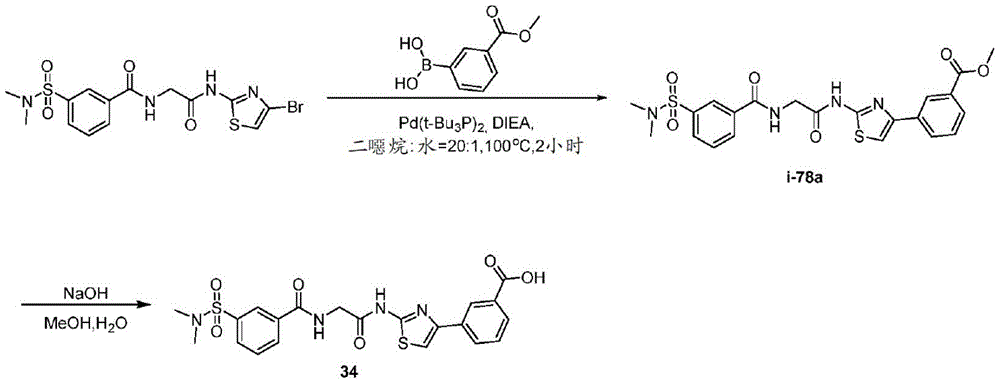
步骤1:3-[2-[[2-[[3-(二甲基氨磺酰基)苯甲酰基]氨基]乙酰基]氨基]噻唑-4-基]苯甲酸甲酯(中间体i-78a)的制备Step 1: Methyl 3-[2-[[2-[[3-(dimethylsulfamoyl)benzoyl]amino]acetyl]amino]thiazol-4-yl]benzoate (intermediate i- Preparation of 78a)
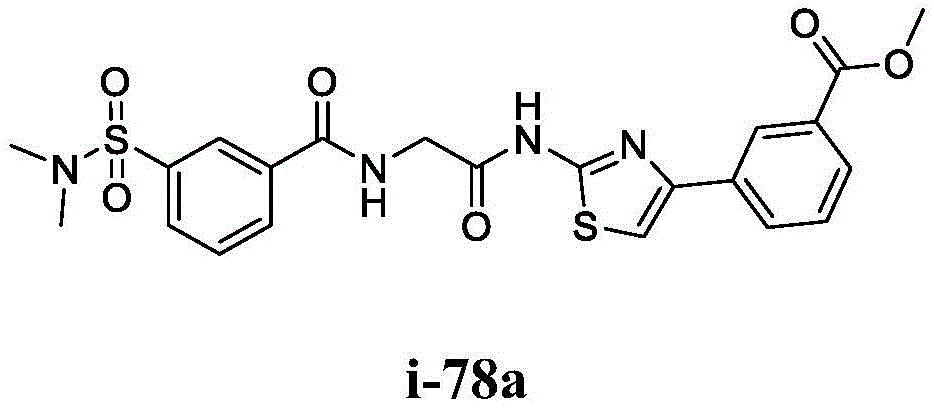
在N2下向N-[2-[(4-溴噻唑-2-基)氨基]-2-氧代基-乙基]-3-(二甲基氨磺酰基)苯甲酰胺(30.0mg,67.07μmol)和(3-甲氧基羰基苯基)硼酸(36.21mg,201.21μmol)于二噁烷(2.0mL)和H2O(0.1mL)中的溶液添加Pd(t-Bu3P)2(17.14mg,33.53μmol)和DIEA(43.34mg,335.35μmol,58.41μL)。将混合物在100℃下搅拌2小时。在冷却至30℃后形成固体。将固体过滤,并在EtOAc(3mL)中研磨,然后在真空中干燥,得到呈浅黄色固体的中间体i-78a,其直接用于下一步骤。To N-[ 2 -[(4-bromothiazol-2-yl)amino]-2-oxo-ethyl]-3-(dimethylsulfamoyl)benzamide (30.0 mg) under N , 67.07 μmol) and (3-methoxycarbonylphenyl)boronic acid (36.21 mg, 201.21 μmol) in dioxane (2.0 mL) and H 2 O (0.1 mL) was added Pd(t-Bu 3 P ) 2 (17.14 mg, 33.53 μmol) and DIEA (43.34 mg, 335.35 μmol, 58.41 μL). The mixture was stirred at 100°C for 2 hours. A solid formed after cooling to 30°C. The solid was filtered and triturated in EtOAc (3 mL), then dried in vacuo to afford intermediate i-78a as a pale yellow solid, which was used directly in the next step.
LCMS(ESI)m/z:[M+H]+=503.2。LCMS (ESI) m/z: [M+H] + =503.2.
步骤2:3-[2-[[2-[[3-(二甲基氨磺酰基)苯甲酰基]氨基]乙酰基]氨基]噻唑-4-基]苯甲酸(化合物34)的制备Step 2: Preparation of 3-[2-[[2-[[3-(dimethylsulfamoyl)benzoyl]amino]acetyl]amino]thiazol-4-yl]benzoic acid (compound 34)
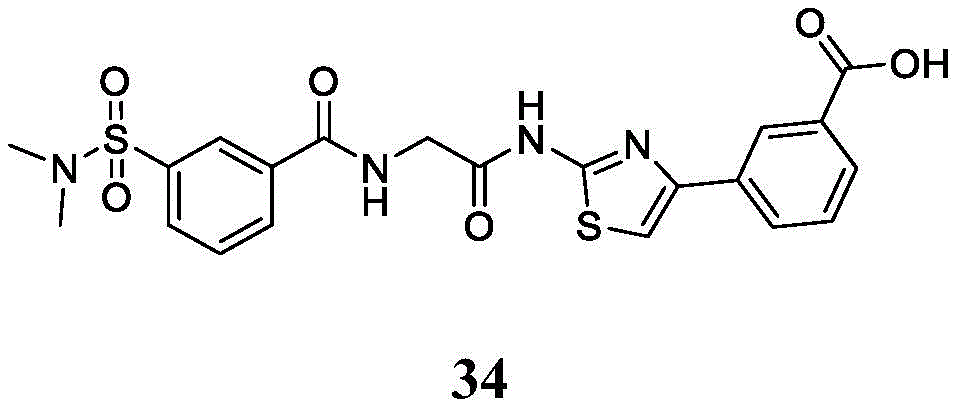
向中间体i-78a(15.0mg,29.85μmol)于MeOH(2.0mL)和H2O(1.0mL)中的溶液添加NaOH(1.19mg,29.85μmol)。将混合物在30℃下搅拌12小时,然后用MeOH(10.0mL)稀释,并用HCl(1M)处理至pH 5至6。将混合物在真空中浓缩,得到残余物。将残余物通过制备型HPLC(柱:Phenomenex Synergi C18 150*25*10μm;流动相:[水(0.1%TFA)-ACN];B%:28%-58%,9分钟)纯化,并冻干,得到呈灰白色固体的化合物34。To a solution of intermediate i-78a (15.0 mg, 29.85 μmol) in MeOH (2.0 mL) and H2O (1.0 mL) was added NaOH (1.19 mg, 29.85 μmol). The mixture was stirred at 30 °C for 12 h, then diluted with MeOH (10.0 mL) and treated with HCl (1 M) to pH 5-6. The mixture was concentrated in vacuo to give a residue. The residue was purified by preparative HPLC (column:
1H NMR(400MHz,DMSO-d6)δ13.02(br s,1H),12.53(s,1H),9.31-9.30(m,1H),8.54(s,1H),8.27-8.24(m,2H),8.13(d,J=8.0Hz,1H),7.94(d,J=7.6Hz,1H),7.90(d,J=7.60Hz,1H),7.83-7.81(m,2H),7.77-7.57(m,1H),4.25(d,J=5.6Hz,2H),2.66(s,6H)ppm。 1 H NMR(400MHz, DMSO-d 6 )δ13.02(br s,1H),12.53(s,1H),9.31-9.30(m,1H),8.54(s,1H),8.27-8.24(m, 2H),8.13(d,J=8.0Hz,1H),7.94(d,J=7.6Hz,1H),7.90(d,J=7.60Hz,1H),7.83-7.81(m,2H),7.77- 7.57 (m, 1H), 4.25 (d, J=5.6Hz, 2H), 2.66 (s, 6H) ppm.
LCMS(ESI)m/z:[M+H]+=488.9。LCMS (ESI) m/z: [M+H] + =488.9.
实施例79. 3-(羟甲基)-N-[(1S)-3-甲基硫烷基-1-[(4-苯基噻唑-2-基)氨基甲酰基]丙基]苯甲酰胺(化合物84)的制备Example 79. 3-(Hydroxymethyl)-N-[(1S)-3-methylsulfanyl-1-[(4-phenylthiazol-2-yl)carbamoyl]propyl]benzyl Preparation of amide (compound 84)

在25℃下向3-(羟甲基)苯甲酸(14.85mg,97.58μmol)和(2S)-2-氨基-4-甲基硫烷基-N-(4-苯基噻唑-2-基)丁酰胺(30.00mg,97.58μmol)于DCM(0.5mL)中的溶液添加DIPEA(37.83mg,292.75μmol)和HATU(55.66mg,146.37μmol)。将混合物在25℃下搅拌16小时。将反应混合物在减压下浓缩,得到残余物。将残余物通过制备型HPLC(FA条件)纯化,得到呈白色固体的化合物84。To 3-(hydroxymethyl)benzoic acid (14.85 mg, 97.58 μmol) and (2S)-2-amino-4-methylsulfanyl-N-(4-phenylthiazol-2-yl) at 25 °C ) butanamide (30.00 mg, 97.58 μmol) in DCM (0.5 mL) was added DIPEA (37.83 mg, 292.75 μmol) and HATU (55.66 mg, 146.37 μmol). The mixture was stirred at 25°C for 16 hours. The reaction mixture was concentrated under reduced pressure to give a residue. The residue was purified by preparative HPLC (FA conditions) to give compound 84 as a white solid.
LCMS(ESI)m/z:[M+H]+=442.1。LCMS (ESI) m/z: [M+H] + =442.1.
1HNMR(400MHz,甲醇-d4):δ=7.90-7.88(m,3H),7.80(d,J=8.0Hz,1H),7.56(d,J=7.6Hz,1H),7.48-7.46(m,1H),7.40-7.36(m,3H),7.29(m,1H),4.94-4.90(m,1H),4.68(m,2H),2.71-2.64(m,2H),2.28-2.22(m,2H),2.13(s,3H)ppm。 1 H NMR (400 MHz, methanol-d 4 ): δ=7.90-7.88 (m, 3H), 7.80 (d, J=8.0 Hz, 1H), 7.56 (d, J=7.6 Hz, 1H), 7.48-7.46 ( m,1H),7.40-7.36(m,3H),7.29(m,1H),4.94-4.90(m,1H),4.68(m,2H),2.71-2.64(m,2H),2.28-2.22( m, 2H), 2.13 (s, 3H) ppm.
实施例80. 4-(羟甲基)-N-[(1S)-3-甲基硫烷基-1-[(4-苯基噻唑-2-基)氨基甲酰基]丙基]苯甲酰胺(化合物85)的制备Example 80. 4-(Hydroxymethyl)-N-[(1S)-3-methylsulfanyl-1-[(4-phenylthiazol-2-yl)carbamoyl]propyl]benzyl Preparation of amide (compound 85)

在25℃下向4-(羟甲基)苯甲酸(14.85mg,97.58μmol)和(2S)-2-氨基-4-甲基硫烷基-N-(4-苯基噻唑-2-基)丁酰胺(30.00mg,97.58μmol)于DCM(0.5mL)中的溶液添加DIPEA(37.83mg,292.75μmol)和HATU(55.66mg,146.37μmol)。将混合物在25℃下搅拌16小时。将反应混合物在减压下浓缩,得到残余物。将残余物通过制备型HPLC(FA条件)纯化,得到呈白色固体的化合物85。To 4-(hydroxymethyl)benzoic acid (14.85 mg, 97.58 μmol) and (2S)-2-amino-4-methylsulfanyl-N-(4-phenylthiazol-2-yl) at 25 °C ) butanamide (30.00 mg, 97.58 μmol) in DCM (0.5 mL) was added DIPEA (37.83 mg, 292.75 μmol) and HATU (55.66 mg, 146.37 μmol). The mixture was stirred at 25°C for 16 hours. The reaction mixture was concentrated under reduced pressure to give a residue. The residue was purified by preparative HPLC (FA conditions) to give compound 85 as a white solid.
1HNMR(DMSO-d6,400MHz):δ=12.37(br s,1H),8.68(d,J=7.2Hz,1H),7.92-7.89(m,4H),7.63(s,1H),7.45-7.42(m,4H),7.35-7.33(m,1H),5.32(br s,1H),4.79-4.73(m,1H),4.57(m,2H),2.59-2.50(m,3H),2.15-2.10(m,5H)ppm。 1 H NMR (DMSO-d 6 , 400MHz): δ=12.37 (br s, 1H), 8.68 (d, J=7.2Hz, 1H), 7.92-7.89 (m, 4H), 7.63 (s, 1H), 7.45 -7.42(m,4H),7.35-7.33(m,1H),5.32(br s,1H),4.79-4.73(m,1H),4.57(m,2H),2.59-2.50(m,3H), 2.15-2.10 (m, 5H) ppm.
LCMS(ESI)m/z:[M+H]+=441.9。LCMS (ESI) m/z: [M+H] + =441.9.
实施例81. 4-氨基-N-[(1S)-1-甲基-2-氧代基-2-[(4-苯基噻唑-2-基)氨基]乙基]苯甲酰胺(化合物82)的制备Example 81. 4-Amino-N-[(1S)-1-methyl-2-oxo-2-[(4-phenylthiazol-2-yl)amino]ethyl]benzamide (compound 82) Preparation

步骤1:N-[(1S)-1-甲基-2-氧代基-2-[(4-苯基噻唑-2-基)氨基]乙基]氨基甲酸叔丁酯(中间体i-81a)的制备Step 1: tert-butyl N-[(1S)-1-methyl-2-oxo-2-[(4-phenylthiazol-2-yl)amino]ethyl]carbamate (intermediate i- Preparation of 81a)
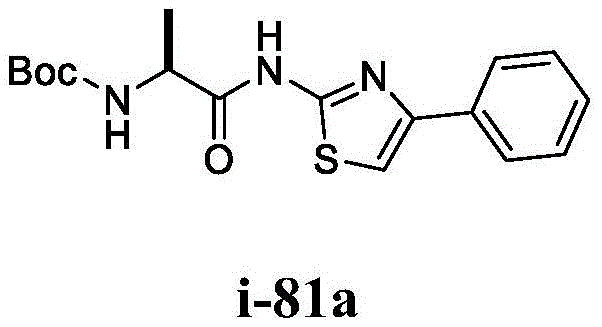
在25℃下在N2下向4-苯基噻唑-2-胺(200.0mg,1.13mmol)和(2S)-2-(叔丁氧基羰基氨基)丙酸(214.72mg,1.13mmol)于DCM(2.0mL)中的混合物一次性添加DIPEA(440.00mg,3.40mmol)和HATU(647.24mg,1.70mmol)。将混合物在25℃下搅拌2小时。将混合物倒入水(10.0mL)中,并搅拌5分钟。用DCM(10.0mL*2)萃取水相。将合并的有机萃取物用盐水(10.0mL)洗涤,经无水Na2SO4干燥,过滤,并在真空中浓缩,得到呈浅黄色油状物的中间体i-81a,其不经纯化即用于下一步骤。To 4-phenylthiazol-2-amine (200.0 mg, 1.13 mmol) and (2S)-2-(tert-butoxycarbonylamino)propionic acid (214.72 mg, 1.13 mmol) at 25 °C under N2 To the mixture in DCM (2.0 mL) was added DIPEA (440.00 mg, 3.40 mmol) and HATU (647.24 mg, 1.70 mmol) in one portion. The mixture was stirred at 25°C for 2 hours. The mixture was poured into water (10.0 mL) and stirred for 5 minutes. The aqueous phase was extracted with DCM (10.0 mL*2). The combined organic extracts were washed with brine (10.0 mL), dried over anhydrous Na 2 SO 4 , filtered, and concentrated in vacuo to afford intermediate i-81a as a pale yellow oil, which was used without purification in the next step.
LCMS(ESI)m/z:[M+H]+=348.1。LCMS (ESI) m/z: [M+H] + =348.1.
步骤2:(S)-2-氨基-N-(4-苯基噻唑-2-基)丙酰胺盐酸盐(中间体i-81b)的制备Step 2: Preparation of (S)-2-amino-N-(4-phenylthiazol-2-yl)propionamide hydrochloride (intermediate i-81b)
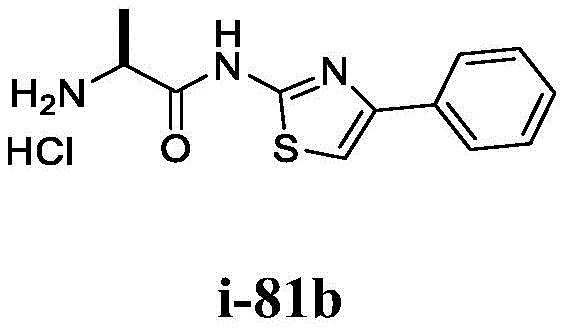
在25℃下向中间体i-81a(500mg,1.44mmol)于二噁烷(5.0mL)中的混合物一次性添加HCl/二噁烷(4M,1.80mL)。将混合物在25℃下搅拌30分钟,并且固体沉淀。将混合物过滤,并将滤饼用EtOAc(10mL)洗涤。然后将固体在真空中干燥,得到呈白色固体的中间体i-81b(HCl盐)。To a mixture of intermediate i-81a (500 mg, 1.44 mmol) in dioxane (5.0 mL) at 25 °C was added HCl/dioxane (4M, 1.80 mL) in one portion. The mixture was stirred at 25°C for 30 minutes and a solid precipitated. The mixture was filtered, and the filter cake was washed with EtOAc (10 mL). The solid was then dried in vacuo to yield Intermediate i-81b (HCl salt) as a white solid.
1H NMR(400MHz,D2O)δ=7.84-7.79(m,1H),7.49-7.43(m,1H),4.39-4.35(m,1H),2.80(s,1H),1.67(d,J=6.8Hz,3H)。 1 H NMR (400MHz, D 2 O) δ=7.84-7.79(m, 1H), 7.49-7.43(m, 1H), 4.39-4.35(m, 1H), 2.80(s, 1H), 1.67(d, J=6.8Hz, 3H).
手性HPLC:OD-3_5CM_MeOH(DEA)_5_40_3ML_T35。Chiral HPLC: OD-3_5CM_MeOH(DEA)_5_40_3ML_T35.
LCMS(ESI)m/z:[M+H]+=248.1。LCMS (ESI) m/z: [M+H] + =248.1.
步骤3:4-氨基-N-[(1S)-1-甲基-2-氧代基-2-[(4-苯基噻唑-2-基)氨基]乙基]苯甲酰胺(化合物82)的制备Step 3: 4-Amino-N-[(1S)-1-methyl-2-oxo-2-[(4-phenylthiazol-2-yl)amino]ethyl]benzamide (Compound 82 ) preparation

在25℃下向中间体i-81b(50mg,176.19μmol)和4-氨基苯甲酸(24.16mg,176.19μmol)于DCM(1.0mL)中的混合物一次性添加DIPEA(91.09mg,704.78μmol)和HATU(100.49mg,264.29μmol)。将混合物在25℃下搅拌12小时。将混合物在真空中浓缩,得到残余物。将残余物通过反相柱(FA条件)纯化,得到呈白色固体的化合物82。To a mixture of intermediate i-81b (50 mg, 176.19 μmol) and 4-aminobenzoic acid (24.16 mg, 176.19 μmol) in DCM (1.0 mL) at 25° C. was added DIPEA (91.09 mg, 704.78 μmol) and HATU (100.49 mg, 264.29 μmol). The mixture was stirred at 25°C for 12 hours. The mixture was concentrated in vacuo to give a residue. The residue was purified by reverse phase column (FA conditions) to give compound 82 as a white solid.
1H NMR(400MHz,甲醇-d4)δ=7.88(d,J=7.2Hz,2H),7.69(d,J=8.6Hz,2H),7.40-7.37(m,3H),7.31-7.27(m,1H),6.68(d,J=8.6Hz,2H),4.77-4.72(m,1H),1.56(d,J=7.2Hz,3H)ppm。 1 H NMR (400 MHz, methanol-d 4 ) δ=7.88 (d, J=7.2 Hz, 2H), 7.69 (d, J=8.6 Hz, 2H), 7.40-7.37 (m, 3H), 7.31-7.27 ( m, 1H), 6.68 (d, J=8.6Hz, 2H), 4.77-4.72 (m, 1H), 1.56 (d, J=7.2Hz, 3H) ppm.
LCMS(ESI)m/z:[M+H]+=367.0。LCMS (ESI) m/z: [M+H] + =367.0.
手性HPLC:Amycoat_MeOH+CAN(DEA)_40_3mL-35T,1.474分钟。Chiral HPLC: Amycoat_MeOH+CAN(DEA)_40_3mL-35T, 1.474 min.
实施例82. 4-(甲基氨基)-N-[(1S)-3-甲基硫烷基-1-[(4-苯基噻唑-2-基)氨基甲酰基]丙基]苯甲酰胺(化合物81)的制备Example 82. 4-(Methylamino)-N-[(1S)-3-methylsulfanyl-1-[(4-phenylthiazol-2-yl)carbamoyl]propyl]benzyl Preparation of amide (compound 81)

在25℃下向4-(甲基氨基)苯甲酸(10.76mg,71.18μmol)于DCM(0.5mL)中的溶液添加DIPEA(27.60mg,213.55μmol)和HATU(40.60mg,106.77μmol)。将混合物在25℃下搅拌1小时。向反应混合物添加(2S)-2-氨基-4-甲基硫烷基-N-(4-苯基噻唑-2-基)丁酰胺(30mg,71.18μmol)。将反应混合物在25℃下搅拌16小时。然后将混合物在减压下浓缩,得到残余物。将残余物通过反相HPLC(FA条件)且随后制备型TLC(PE/EA=1/1)纯化,得到呈白色固体的化合物81。To a solution of 4-(methylamino)benzoic acid (10.76 mg, 71.18 μmol) in DCM (0.5 mL) was added DIPEA (27.60 mg, 213.55 μmol) and HATU (40.60 mg, 106.77 μmol) at 25°C. The mixture was stirred at 25°C for 1 hour. To the reaction mixture was added (2S)-2-amino-4-methylsulfanyl-N-(4-phenylthiazol-2-yl)butanamide (30 mg, 71.18 μmol). The reaction mixture was stirred at 25°C for 16 hours. The mixture was then concentrated under reduced pressure to give a residue. The residue was purified by reverse phase HPLC (FA conditions) followed by preparative TLC (PE/EA=1/1) to give compound 81 as a white solid.
1H NMR(400MHz,甲醇-d4)δ=7.89(d,J=7.6Hz,2H),7.74(d,J=8.4Hz,2H),7.40(m,3H),7.30(m,1H),6.61(d,J=8.8Hz,2H),4.89(m,1H),2.81(s,3H),2.69(m,2H),2.26(m,2H),2.12(s,3H)ppm。 1 H NMR (400 MHz, methanol-d 4 ) δ=7.89 (d, J=7.6 Hz, 2H), 7.74 (d, J=8.4 Hz, 2H), 7.40 (m, 3H), 7.30 (m, 1H) , 6.61(d, J=8.8Hz, 2H), 4.89(m, 1H), 2.81(s, 3H), 2.69(m, 2H), 2.26(m, 2H), 2.12(s, 3H) ppm.
LCMS(ESI)m/z:[M+H]+=441.0。LCMS (ESI) m/z: [M+H]+=441.0.
手性HPLC:Cellucoat-MeOH+ACN(DEA)-40-5min-3mL-35T,1.895分钟。Chiral HPLC: Cellucoat-MeOH+ACN(DEA)-40-5min-3mL-35T, 1.895min.
实施例83.N-[(1S)-3-甲基硫烷基-1-[(4-苯基噻唑-2-基)氨基甲酰基]丙基]吲哚啉-5-甲酰胺(化合物80)的制备Example 83. N-[(1S)-3-methylsulfanyl-1-[(4-phenylthiazol-2-yl)carbamoyl]propyl]indoline-5-carboxamide (compound 80) Preparation

在25℃下向吲哚啉-5-甲酸(11.61mg,71.18μmol)于DCM(0.5mL)中的溶液添加DIPEA(27.60mg,213.55μmol)和HATU(40.60mg,106.77μmol)。将混合物在25℃下搅拌1小时,然后添加(2S)-2-氨基-4-甲基硫烷基-N-(4-苯基噻唑-2-基)丁酰胺(30.0mg,71.18μmol)。将反应混合物在25℃下搅拌16小时。将反应混合物在真空中浓缩,得到残余物。将残余物通过反相HPLC(FA条件)且随后制备型TLC(PE/EA=1/1)纯化,得到呈白色固体的化合物80。To a solution of indoline-5-carboxylic acid (11.61 mg, 71.18 μmol) in DCM (0.5 mL) was added DIPEA (27.60 mg, 213.55 μmol) and HATU (40.60 mg, 106.77 μmol) at 25°C. The mixture was stirred at 25°C for 1 hour, then (2S)-2-amino-4-methylsulfanyl-N-(4-phenylthiazol-2-yl)butanamide (30.0 mg, 71.18 μmol) was added . The reaction mixture was stirred at 25°C for 16 hours. The reaction mixture was concentrated in vacuo to give a residue. The residue was purified by reverse phase HPLC (FA conditions) followed by preparative TLC (PE/EA=1/1) to give compound 80 as a white solid.
1HNMR(400MHz,MeOD)δ=7.88-7.86(m,2H),7.63-7.59(m,2H),7.39-7.36(m,3H),7.28-7.26(m,1H),6.58-6.52(m,1H),4.89-4.86(m,1H),3.59-3.54(m,2H),3.04-3.00(m,2H),2.68-2.63(m,2H),2.20-2.12(m,2H),2.11(s,3H)ppm。 1 HNMR(400MHz,MeOD)δ=7.88-7.86(m,2H),7.63-7.59(m,2H),7.39-7.36(m,3H),7.28-7.26(m,1H),6.58-6.52(m ,1H),4.89-4.86(m,1H),3.59-3.54(m,2H),3.04-3.00(m,2H),2.68-2.63(m,2H),2.20-2.12(m,2H),2.11 (s,3H)ppm.
LCMS(ESI)m/z:[M+H]+=453.0。LCMS (ESI) m/z: [M+H] + =453.0.
手性HPLC:Cellucoat-MeOH+ACN(DEA)-40-5min-3mL-35T,1.444分钟。Chiral HPLC: Cellucoat-MeOH+ACN(DEA)-40-5min-3mL-35T, 1.444min.
实施例84.(S)-N-(4-(甲硫基)-1-氧代基-1-((4-苯基噻唑-2-基)氨基)丁烷-2-基)-1H-吲哚-5-甲酰胺(化合物83)的制备Example 84. (S)-N-(4-(Methylthio)-1-oxo-1-((4-phenylthiazol-2-yl)amino)butan-2-yl)-1H - Preparation of indole-5-carboxamide (compound 83)

向1H-吲哚-5-甲酸(19.12mg,118.64μmol)于DCM(1.0mL)中的溶液添加DIPEA(46.00mg,355.91μmol)、HATU(67.66mg,177.95μmol),且随后添加(2S)-2-氨基-4-甲基硫烷基-N-(4-苯基噻唑-2-基)丁酰胺(36.47mg,118.64μmol)。将反应混合物在30℃下搅拌2小时。然后将反应混合物倒入水(5.0mL)中,并用EtOAc(5.0mL×2)萃取。将合并的有机层用盐水洗涤,经无水硫酸钠干燥,过滤,并浓缩,得到残余物。将残余物通过制备型HPLC(FA条件)纯化,得到呈棕色固体的化合物83。To a solution of 1H-indole-5-carboxylic acid (19.12 mg, 118.64 μmol) in DCM (1.0 mL) was added DIPEA (46.00 mg, 355.91 μmol), HATU (67.66 mg, 177.95 μmol), and then (2S) -2-Amino-4-methylsulfanyl-N-(4-phenylthiazol-2-yl)butanamide (36.47 mg, 118.64 μmol). The reaction mixture was stirred at 30°C for 2 hours. The reaction mixture was then poured into water (5.0 mL) and extracted with EtOAc (5.0 mL x 2). The combined organic layers were washed with brine, dried over anhydrous sodium sulfate, filtered, and concentrated to give a residue. The residue was purified by preparative HPLC (FA conditions) to give compound 83 as a brown solid.
1H NMR(400MHz,DMSO-d6)δ=12.43(br s,1H),11.34(s,1H),8.56(d,J=7.2Hz,1H),8.24(s,1H),7.91-7.89(m,2H),7.70-7.68(m,1H),7.63(s,1H),7.44-7.41(m,4H),7.32-7.31(m,1H),6.56(s,1H),4.79-4.74(m,1H),2.68-2.65(m,1H),2.59-2.55(m,1H),2.14-2.12(m,2H),2.10(s,3H)ppm。1H NMR (400MHz, DMSO-d6)δ=12.43(br s, 1H), 11.34(s, 1H), 8.56(d, J=7.2Hz, 1H), 8.24(s, 1H), 7.91-7.89(m ,2H),7.70-7.68(m,1H),7.63(s,1H),7.44-7.41(m,4H),7.32-7.31(m,1H),6.56(s,1H),4.79-4.74(m , 1H), 2.68-2.65 (m, 1H), 2.59-2.55 (m, 1H), 2.14-2.12 (m, 2H), 2.10 (s, 3H) ppm.
LCMS(ESI)m/z:[M+H]+=451.3。LCMS (ESI) m/z: [M+H] + =451.3.
手性SFC:OD-3_5CM_MeOH(DEA)_40_3ML_T35.M,2.392分钟。Chiral SFC: OD-3_5CM_MeOH(DEA)_40_3ML_T35.M, 2.392 min.
实施例85.(S)-N-(4-(甲硫基)-1-氧代基-1-((4-苯基噻唑-2-基)氨基)丁烷-2-基)-1H-苯并[d]咪唑-5-甲酰胺(化合物66)的制备Example 85. (S)-N-(4-(Methylthio)-1-oxo-1-((4-phenylthiazol-2-yl)amino)butan-2-yl)-1H - Preparation of benzo[d]imidazole-5-carboxamide (compound 66)

向1H-苯并咪唑-5-甲酸(19.24mg,118.64μmol)于DCM(1.0mL)中的溶液添加DIPEA(46.00mg,355.91μmol)、HATU(67.66mg,177.95μmol),然后添加(2S)-2-氨基-4-甲基硫烷基-N-(4-苯基噻唑-2-基)丁酰胺(36.47mg,118.64μmol)。将反应混合物在30℃下搅拌2小时。将反应混合物倒入水(5.0mL)中,并用EtOAc(5.0mL×2)萃取。将合并的有机萃取物用盐水洗涤,经无水硫酸钠干燥,过滤,并浓缩,得到残余物。将残余物通过制备型HPLC(FA条件)纯化,得到呈黄色固体的化合物66。To a solution of 1H-benzimidazole-5-carboxylic acid (19.24 mg, 118.64 μmol) in DCM (1.0 mL) was added DIPEA (46.00 mg, 355.91 μmol), HATU (67.66 mg, 177.95 μmol) followed by (2S) -2-Amino-4-methylsulfanyl-N-(4-phenylthiazol-2-yl)butanamide (36.47 mg, 118.64 μmol). The reaction mixture was stirred at 30°C for 2 hours. The reaction mixture was poured into water (5.0 mL) and extracted with EtOAc (5.0 mL x 2). The combined organic extracts were washed with brine, dried over anhydrous sodium sulfate, filtered, and concentrated to give a residue. The residue was purified by preparative HPLC (FA conditions) to give compound 66 as a yellow solid.
1H NMR(400MHz,DMSO-d6)δ=12.50(br s,1H),8.73(d,J=7.2Hz,1H),8.34(s,1H),8.25(s,1H),7.91-7.81(m,2H),7.80-7.79(m,1H),7.62-7.61(m,2H),7.44-7.40(m,2H),7.32-7.31(m,1H),4.80-4.75(m,1H),2.68-2.65(m,1H),2.59-2.56(m,1H),2.17-2.14(m,2H),2.10(s,3H)ppm。 1 H NMR (400MHz, DMSO-d6)δ=12.50(br s, 1H), 8.73(d, J=7.2Hz, 1H), 8.34(s, 1H), 8.25(s, 1H), 7.91-7.81( m,2H),7.80-7.79(m,1H),7.62-7.61(m,2H),7.44-7.40(m,2H),7.32-7.31(m,1H),4.80-4.75(m,1H), 2.68-2.65 (m, 1H), 2.59-2.56 (m, 1H), 2.17-2.14 (m, 2H), 2.10 (s, 3H) ppm.
LCMS(ESI)m/z:[M+H]+=452.3。LCMS (ESI) m/z: [M+H] + =452.3.
手性SFC:Cellucoat-MeOH(DEA)-40-3mL-35T,0.942分钟。Chiral SFC: Cellucoat-MeOH(DEA)-40-3mL-35T, 0.942 min.
实施例86.化合物87的合成Example 86. Synthesis of Compound 87
通过以下方案中所示的方法合成化合物87:Compound 87 was synthesized by the method shown in the following scheme:
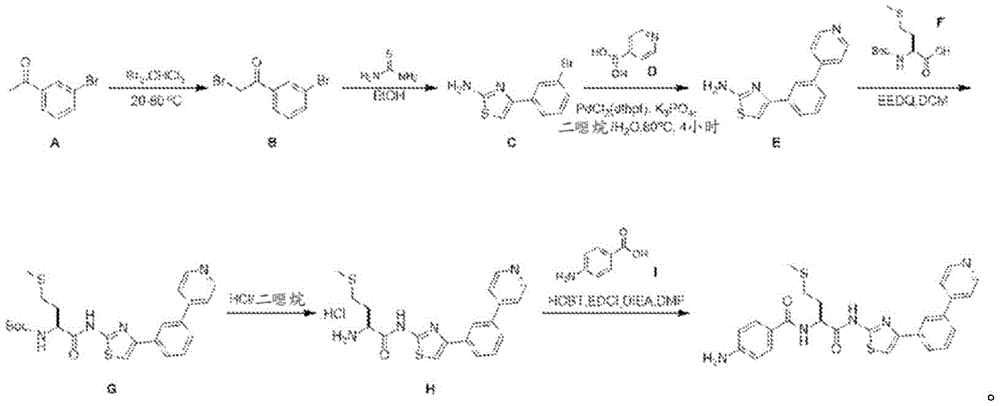
(S)-4-氨基-N-(4-(甲硫基)-1-氧代基-1-((4-(3-(吡啶-4-基)苯基)噻唑-2-基)氨基)丁烷-2-基)苯甲酰胺(化合物87)的制备(S)-4-Amino-N-(4-(methylthio)-1-oxo-1-((4-(3-(pyridin-4-yl)phenyl)thiazol-2-yl) Preparation of amino)butan-2-yl)benzamide (compound 87)
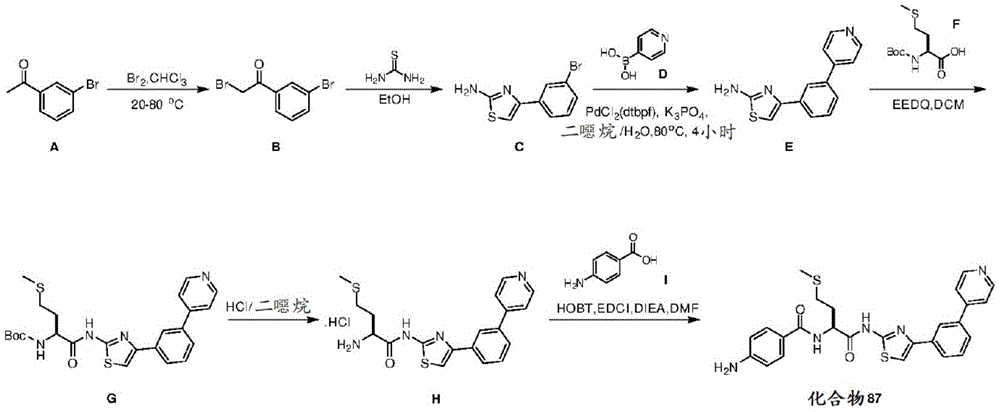
步骤1:2-溴-1-(3-溴苯基)乙烯酮(中间体B)的制备Step 1: Preparation of 2-bromo-1-(3-bromophenyl)ketene (Intermediate B)
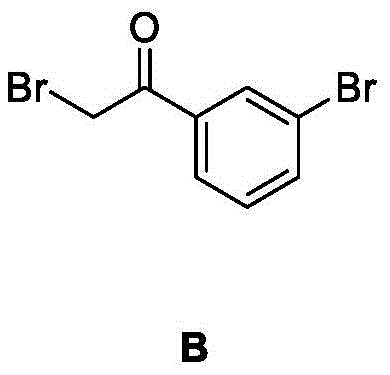
在N2下在20℃下向1-(3-溴苯基)乙酮(200g,1.00mol,132.45mL)于CHCl3(250mL)中的溶液逐滴添加Br2(240.86g,1.51mol,77.70mL)。将混合物在80℃下搅拌1小时。将反应混合物浓缩,得到呈黄色油状物的中间体B(279.27g,粗),其直接用于下一步骤。To a solution of 1-(3-bromophenyl)ethanone (200 g, 1.00 mol, 132.45 mL) in CHCl3 (250 mL) at 20 °C under N2 was added Br2 (240.86 g , 1.51 mol, dropwise) at 20 °C. 77.70 mL). The mixture was stirred at 80°C for 1 hour. The reaction mixture was concentrated to give Intermediate B (279.27 g, crude) as a yellow oil, which was used directly in the next step.
步骤2:4-(3-溴苯基)噻唑-2-胺(中间体C)的制备Step 2: Preparation of 4-(3-Bromophenyl)thiazol-2-amine (Intermediate C)

向硫脲(229.23g,3.01mol)于EtOH(1.5L)中的溶液添加中间体B(279g,1.00mol)。将混合物在85℃下搅拌2小时。然后将混合物在真空中浓缩,得到残余物。将残余物倒入NaHCO3(2L)溶液中以将pH调节至8,然后用EA(2L*3)萃取溶液。将合并的有机层用盐水(4L)洗涤,经Na2SO4干燥并过滤。浓缩滤液,得到残余物。将残余物通过柱色谱法(SiO2.PE:EA=5:1)纯化,得到呈黄色固体的中间体C(130g,494.40mmol,49.25%产率)。LCMS(ESI)m/z:[M+H]+=257.0.1H NMR(400MHz,DMSO-d6)δ=7.98(m,1H),7.79(d,J=8.0Hz,1H),7.44-7.42(m,1H),7.33-7.29(m,1H),7.14(s,1H),7.09(s,2H)ppm。To a solution of thiourea (229.23 g, 3.01 mol) in EtOH (1.5 L) was added Intermediate B (279 g, 1.00 mol). The mixture was stirred at 85°C for 2 hours. The mixture was then concentrated in vacuo to give a residue. The residue was poured into NaHCO3 (2L) solution to adjust pH to 8, then the solution was extracted with EA (2L*3). The combined organic layers were washed with brine (4 L), dried over Na 2 SO 4 and filtered. The filtrate was concentrated to give a residue. The residue was purified by column chromatography ( SiO2.PE:EA=5:1 ) to give Intermediate C (130 g, 494.40 mmol, 49.25% yield) as a yellow solid. LCMS (ESI) m/z: [M+H] + = 257.0. 1 H NMR (400 MHz, DMSO-d6) δ = 7.98 (m, 1H), 7.79 (d, J = 8.0 Hz, 1H), 7.44- 7.42 (m, 1H), 7.33-7.29 (m, 1H), 7.14 (s, 1H), 7.09 (s, 2H) ppm.
步骤3:4-[3-(4-吡啶基)苯基]噻唑-2-胺(中间体E)的制备Step 3: Preparation of 4-[3-(4-pyridyl)phenyl]thiazol-2-amine (Intermediate E)
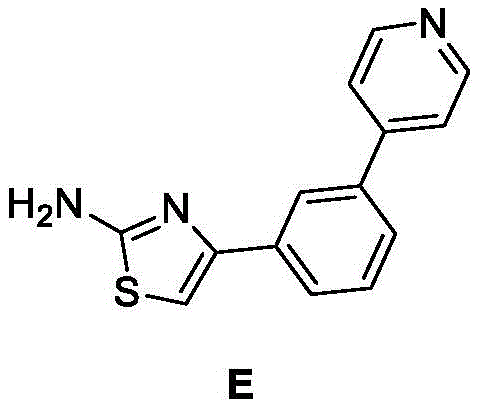
将4-(3-溴苯基)噻唑-2-胺(20g,78.40mmol)、4-吡啶基硼酸(28.9g,239.18mmol)、二叔丁基(环戊基)磷烷;二氯钯;铁(2.56g,3.92mmol)和K3PO4(66.56g,313.56mmol)溶解于二噁烷(240mL)和H2O(24mL)中。将混合物用N2吹扫三次,然后在80℃下搅拌7小时。添加水(800mL),并用EtOAc(800mL*3)萃取混合物。将合并的有机层用盐水洗涤,经无水Na2SO4干燥,过滤,并在真空下浓缩。将残余物添加至DCM(30mL)和MTBE(100mL)中,然后搅拌5分钟。通过过滤收集沉淀物,并用MTBE(10mL)洗涤,得到呈黄色固体的中间体E(16.2g,61.17mmol,78.03%产率)。4-(3-Bromophenyl)thiazol-2-amine (20 g, 78.40 mmol), 4-pyridylboronic acid (28.9 g, 239.18 mmol), di-tert-butyl(cyclopentyl)phosphine; dichloropalladium ; Iron (2.56 g, 3.92 mmol) and K3PO4 (66.56 g, 313.56 mmol) were dissolved in dioxane (240 mL) and H2O (24 mL). The mixture was purged with N 3 times and then stirred at 80 °C for 7 h. Water (800 mL) was added and the mixture was extracted with EtOAc (800 mL*3). The combined organic layers were washed with brine, dried over anhydrous Na2SO4 , filtered, and concentrated in vacuo. The residue was added to DCM (30 mL) and MTBE (100 mL), then stirred for 5 minutes. The precipitate was collected by filtration and washed with MTBE (10 mL) to give Intermediate E (16.2 g, 61.17 mmol, 78.03% yield) as a yellow solid.
LCMS(ESI)m/z:[M+H]+=254.0。LCMS (ESI) m/z: [M+H] + =254.0.
步骤4:N-[(1S)-3-甲基硫烷基-1-[[4-[3-(4-吡啶基)苯基]噻唑-2-基]氨基甲酰基]丙基]氨基甲酸叔丁酯(中间体G)的制备Step 4: N-[(1S)-3-Methylsulfanyl-1-[[4-[3-(4-pyridyl)phenyl]thiazol-2-yl]carbamoyl]propyl]amino Preparation of tert-butyl formate (intermediate G)
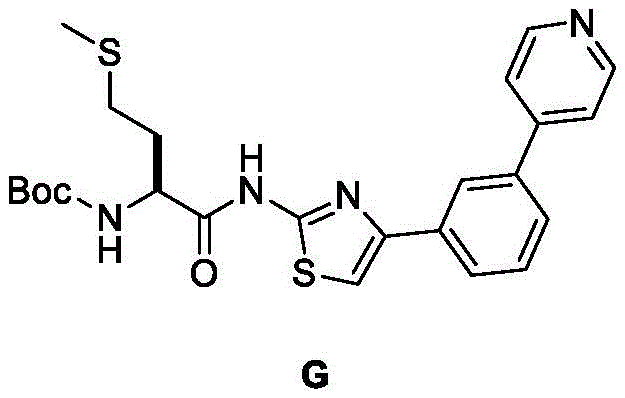
向中间体E(12.6g,49.74mmol)和(2S)-2-(叔丁氧基羰基氨基)-4-甲基硫烷基-丁酸(18.6g,74.61mmol)于DCM(900mL)中的混合物添加EEDQ(24.6g,99.48mmol),并将混合物在25℃下搅拌2小时。在真空中移除溶剂。将残余物用DCM(100mL)、随后MeOH(200mL)研磨,得到呈白色固体的中间体G(11.7g,23.73mmol,47.71%产率,ee%=99.44%)。LCMS(ESI)m/z:[M+H]+=485.1。1H NMR(400MHz,DMSO)δ=12.39(s,1H),8.68-8.66(m,2H),8.30(s,1H),8.02-7.99(m,1H),7.83(s,1H),7.76-7.74(m,3H),7.61-7.57(m,1H),7.28(d,J=7.6Hz,1H),4.31-4.30(m,1H),2.65-2.44(m,2H),2.06(s,3H)2.01-1.85(m,2H),1.38(s,9H)ppm。注意:此反应的关键点是浓度。(1mmol E与17-18mL DCM是最佳条件)To Intermediate E (12.6 g, 49.74 mmol) and (2S)-2-(tert-butoxycarbonylamino)-4-methylsulfanyl-butyric acid (18.6 g, 74.61 mmol) in DCM (900 mL) To the mixture was added EEDQ (24.6 g, 99.48 mmol), and the mixture was stirred at 25°C for 2 hours. The solvent was removed in vacuo. The residue was triturated with DCM (100 mL) followed by MeOH (200 mL) to give Intermediate G (11.7 g, 23.73 mmol, 47.71% yield, ee%=99.44%) as a white solid. LCMS (ESI) m/z: [M+H] + =485.1. 1 H NMR (400MHz, DMSO)δ=12.39(s,1H), 8.68-8.66(m,2H), 8.30(s,1H), 8.02-7.99(m,1H), 7.83(s,1H), 7.76 -7.74(m, 3H), 7.61-7.57(m, 1H), 7.28(d, J=7.6Hz, 1H), 4.31-4.30(m, 1H), 2.65-2.44(m, 2H), 2.06(s) , 3H) 2.01-1.85 (m, 2H), 1.38 (s, 9H) ppm. NOTE: The critical point for this reaction is concentration. (1 mmol E and 17-18 mL DCM are optimal conditions)
步骤5:(2S)-2-氨基-4-甲基硫烷基-N-[4-[3-(4-吡啶基)苯基]噻唑-2-基]丁酰胺(中间体H)的制备Step 5: (2S)-2-amino-4-methylsulfanyl-N-[4-[3-(4-pyridyl)phenyl]thiazol-2-yl]butanamide (Intermediate H) preparation
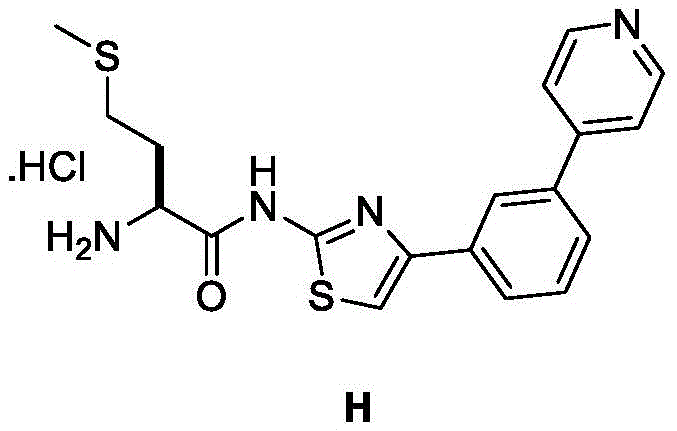
向中间体G(11.5g,23.73mmol)于MeOH(50mL)中的混合物添加HCl/二噁烷(4M,100mL),并将混合物在25℃下搅拌1小时。将混合物倒入MTBE(1000mL)中,并通过过滤收集沉淀物,得到呈黄色固体的中间体H(9.99g,23.73mmol,100.00%产率,HCl盐)。LCMS(ESI)m/z:[M+H]+=385.0To a mixture of Intermediate G (11.5 g, 23.73 mmol) in MeOH (50 mL) was added HCl/dioxane (4M, 100 mL) and the mixture was stirred at 25°C for 1 hour. The mixture was poured into MTBE (1000 mL) and the precipitate was collected by filtration to give Intermediate H (9.99 g, 23.73 mmol, 100.00% yield, HCl salt) as a yellow solid. LCMS(ESI) m/z: [M+H] + =385.0
步骤6:4-氨基-N-[(1S)-3-甲基硫烷基-1-[[4-[3-(4-吡啶基)苯基]噻唑-2-基]氨基甲酰基]丙基]苯甲酰胺(中间体E)的制备Step 6: 4-Amino-N-[(1S)-3-methylsulfanyl-1-[[4-[3-(4-pyridyl)phenyl]thiazol-2-yl]carbamoyl] Preparation of propyl]benzamide (intermediate E)
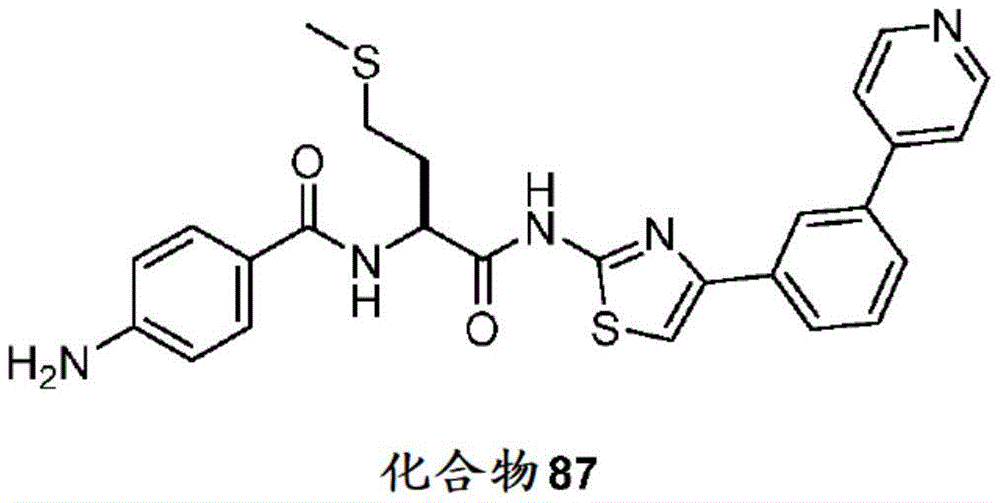
向中间体H(4g,9.50mmol)和4-氨基苯甲酸(1.30g,9.50mmol)于DMF(40mL)中的混合物添加DIEA(4.91g,38.01mmol,6.62mL)、EDCI(2.73g,14.25mmol)和HOBt(1.93g,14.25mmol)。将溶液在25℃下搅拌14小时,然后倒入水(200mL)中,并通过过滤收集沉淀物。将固体在MeOH(200mL)中研磨(形成凝胶状固体)。通过过滤收集沉淀物,并将固体通过柱色谱法(SiO2,DCM:MeOH=80:1-20:1)进一步纯化,得到呈白色固体的化合物87(2.13g,4.19mmol,44.11%产率,ee%=99.28%)。LCMS(ESI)m/z:[M+H]+=504.0。1H NMR(400MHz,DMSO)δ=12.40(s,1H),8.68-8.66(m,2H),8.31-8.30(m,1H),8.22(d,J=7.2Hz,1H),8.02-7.99(m,1H),7.82(s,1H),7.76-7.74(m,3H),7.67-7.63(m,2H),7.61-7.57(m,1H),6.58-6.54(m,2H),5.67(s,2H),4.72-4.67(m,1H),2.65-2.54(m,2H),2.12-2.06(m,5H)ppm。To a mixture of Intermediate H (4 g, 9.50 mmol) and 4-aminobenzoic acid (1.30 g, 9.50 mmol) in DMF (40 mL) was added DIEA (4.91 g, 38.01 mmol, 6.62 mL), EDCI (2.73 g, 14.25 g) mmol) and HOBt (1.93 g, 14.25 mmol). The solution was stirred at 25°C for 14 hours, then poured into water (200 mL) and the precipitate was collected by filtration. The solid was triturated in MeOH (200 mL) (a gelatinous solid formed). The precipitate was collected by filtration, and the solid was further purified by column chromatography ( SiO2 , DCM:MeOH=80:1-20:1) to give compound 87 (2.13 g, 4.19 mmol, 44.11% yield) as a white solid , ee%=99.28%). LCMS (ESI) m/z: [M+H] + =504.0. 1 H NMR (400MHz, DMSO) δ=12.40(s, 1H), 8.68-8.66(m, 2H), 8.31-8.30(m, 1H), 8.22(d, J=7.2Hz, 1H), 8.02-7.99 (m,1H),7.82(s,1H),7.76-7.74(m,3H),7.67-7.63(m,2H),7.61-7.57(m,1H),6.58-6.54(m,2H),5.67 (s, 2H), 4.72-4.67 (m, 1H), 2.65-2.54 (m, 2H), 2.12-2.06 (m, 5H) ppm.
实施例87.本发明化合物的实验数据Example 87. Experimental Data for Compounds of the Invention

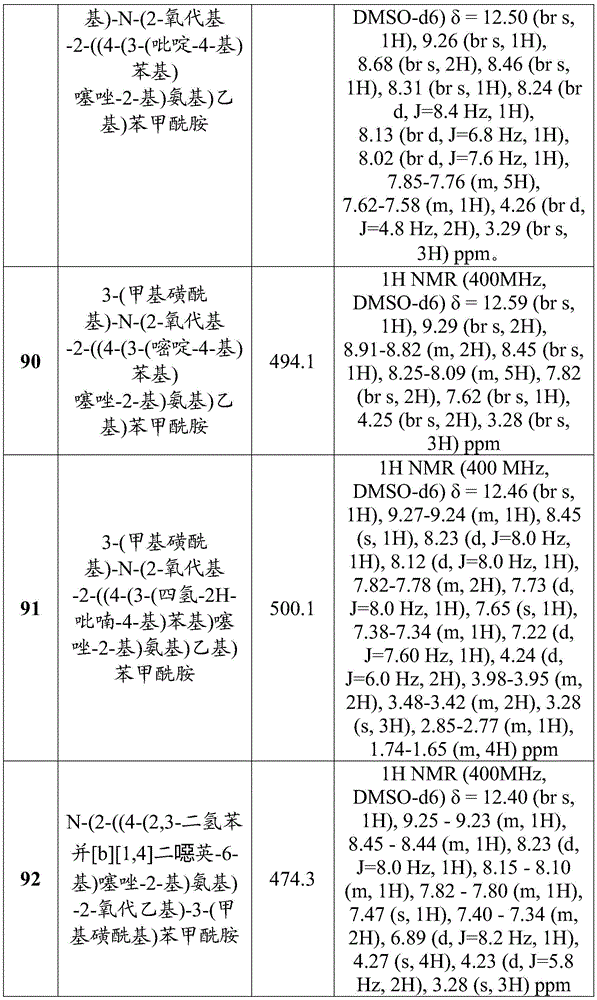


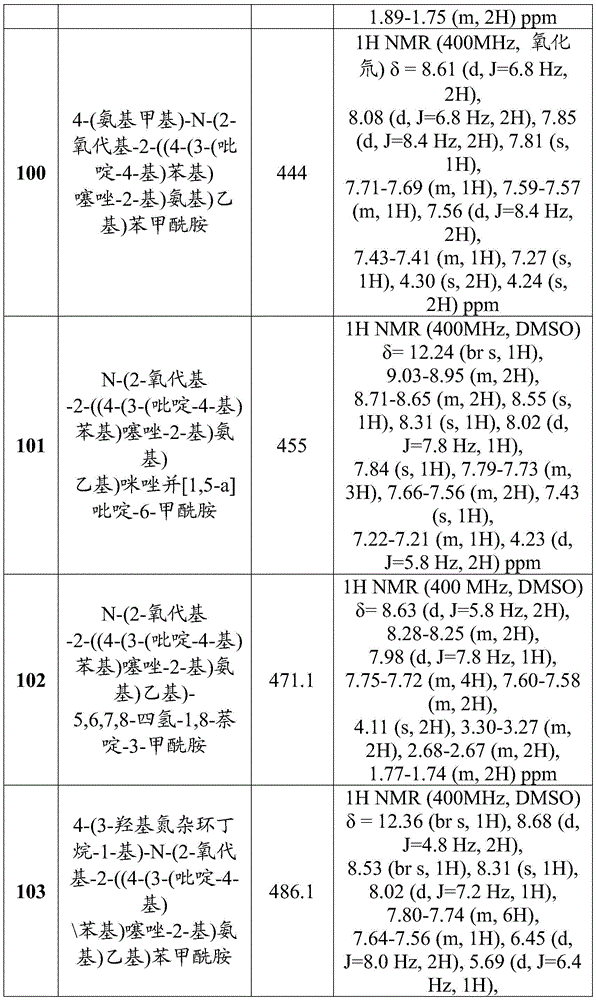
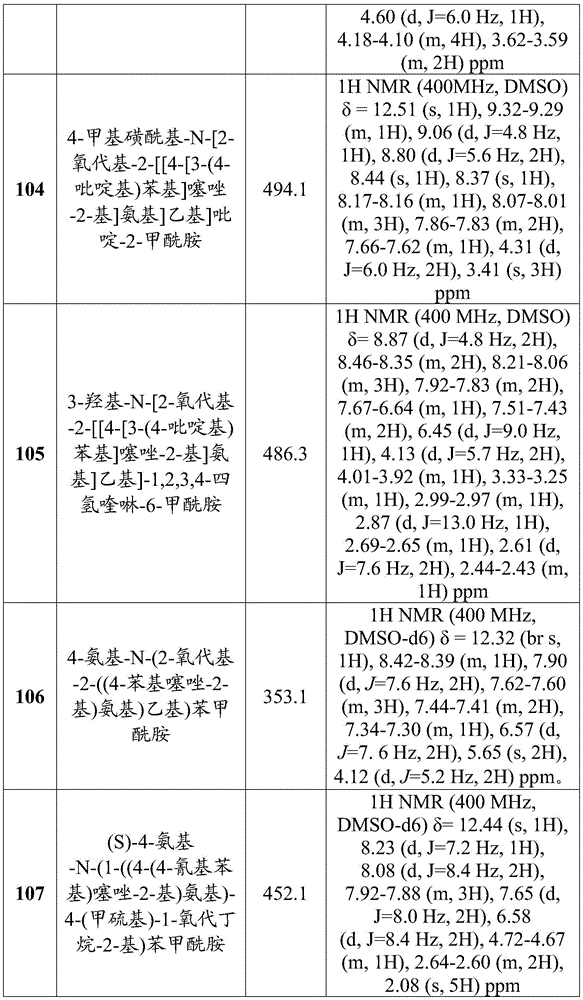

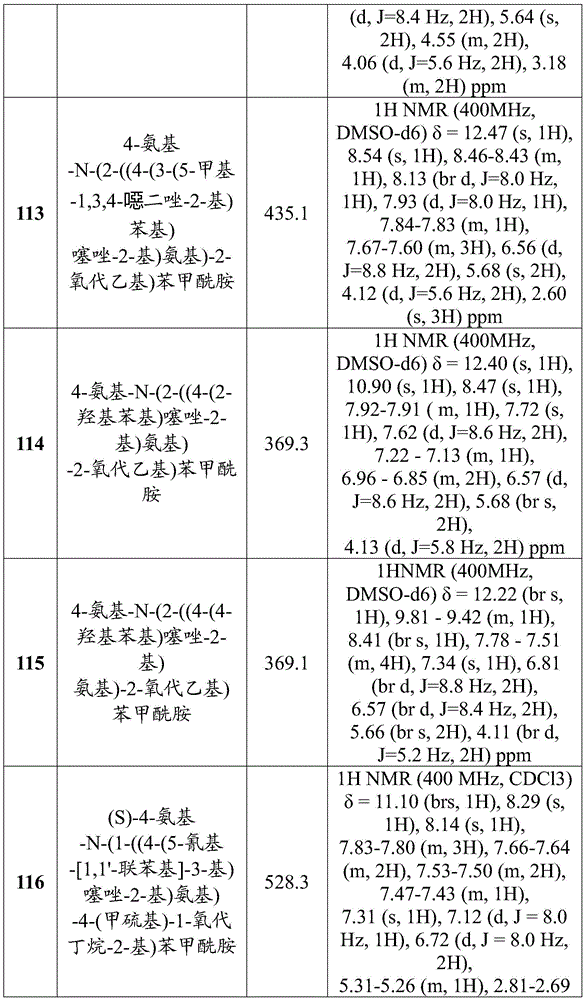
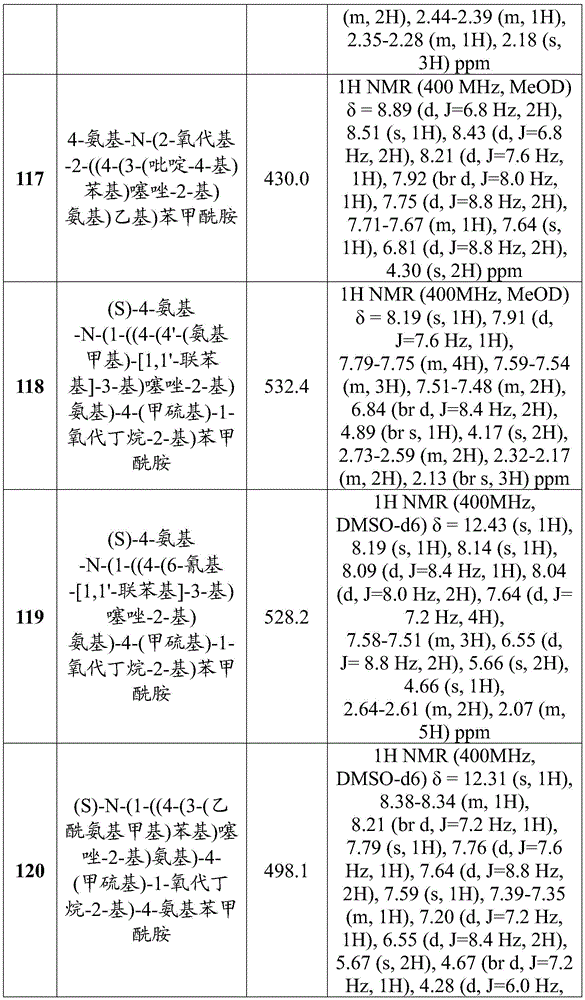
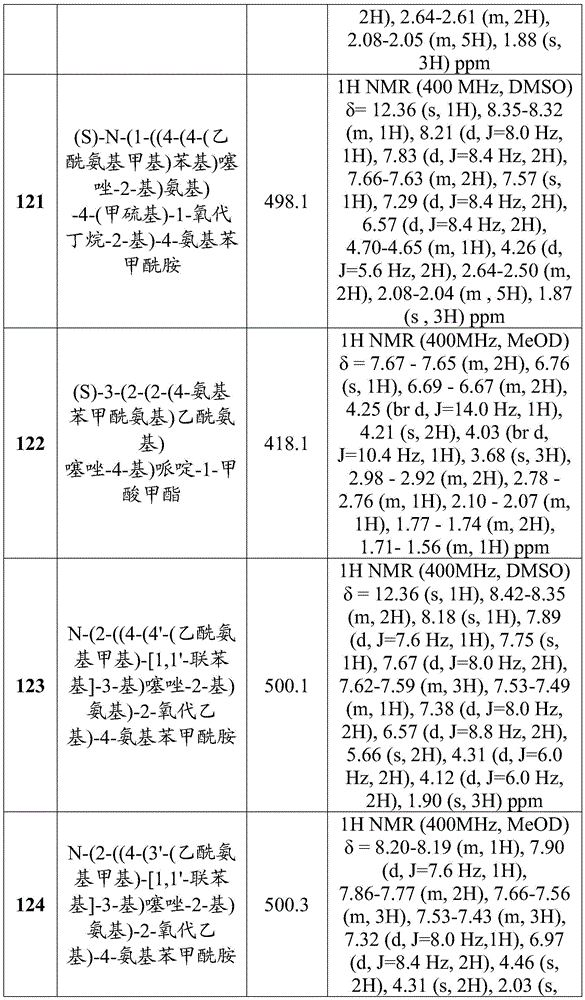
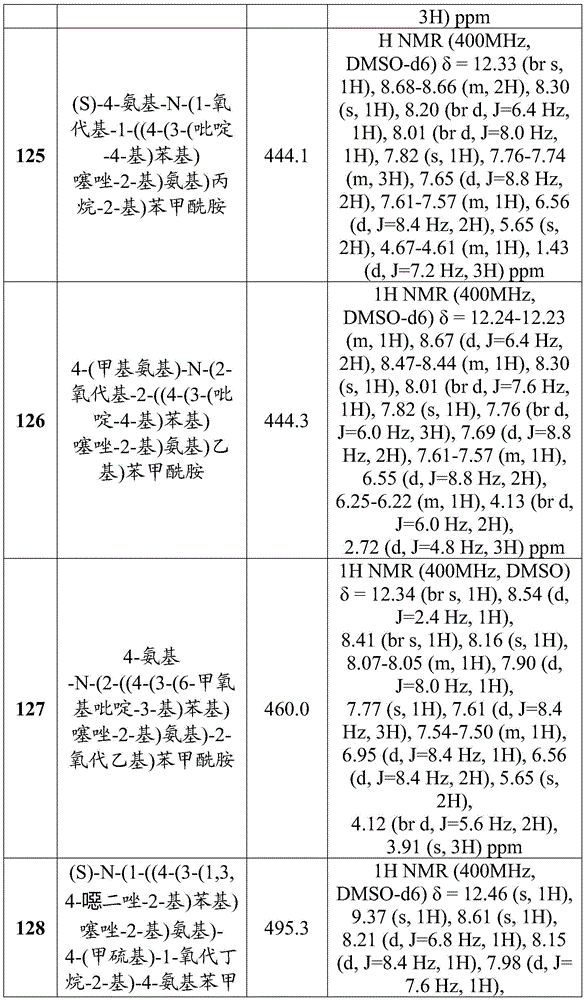
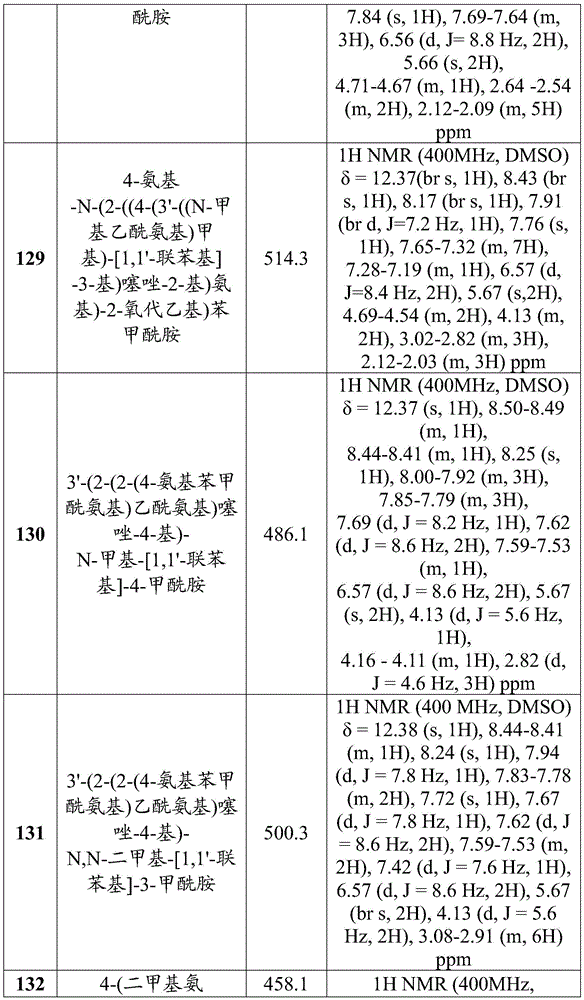
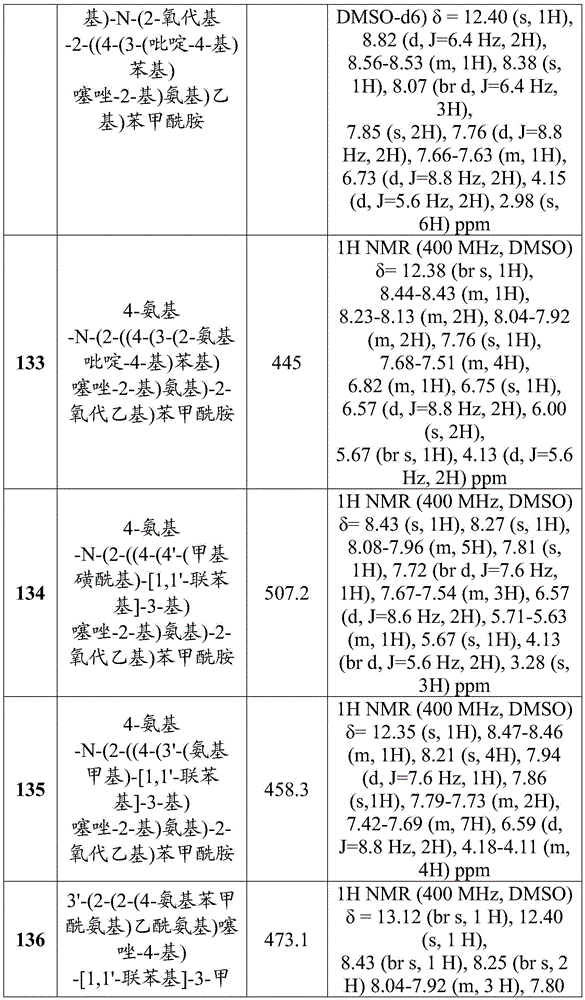

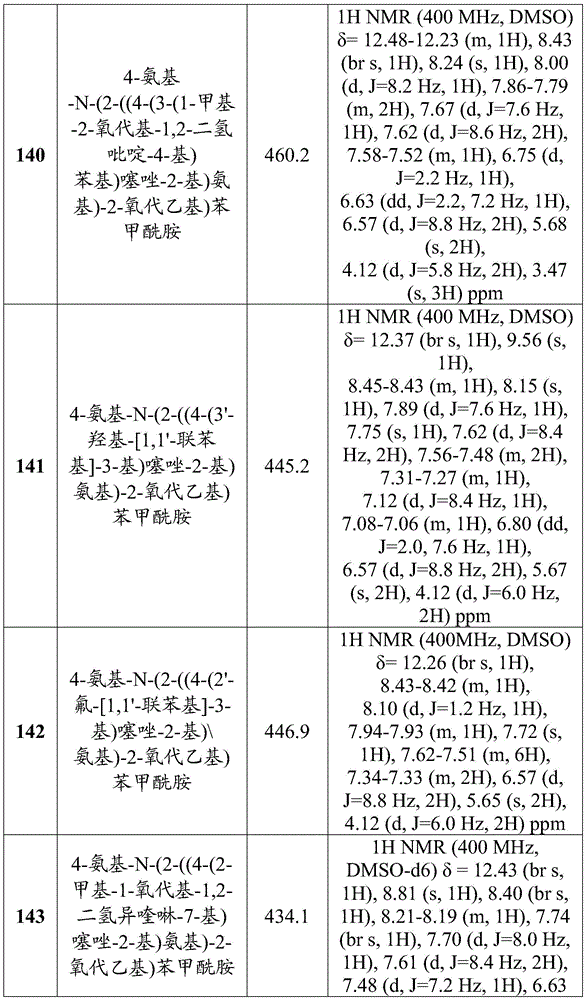


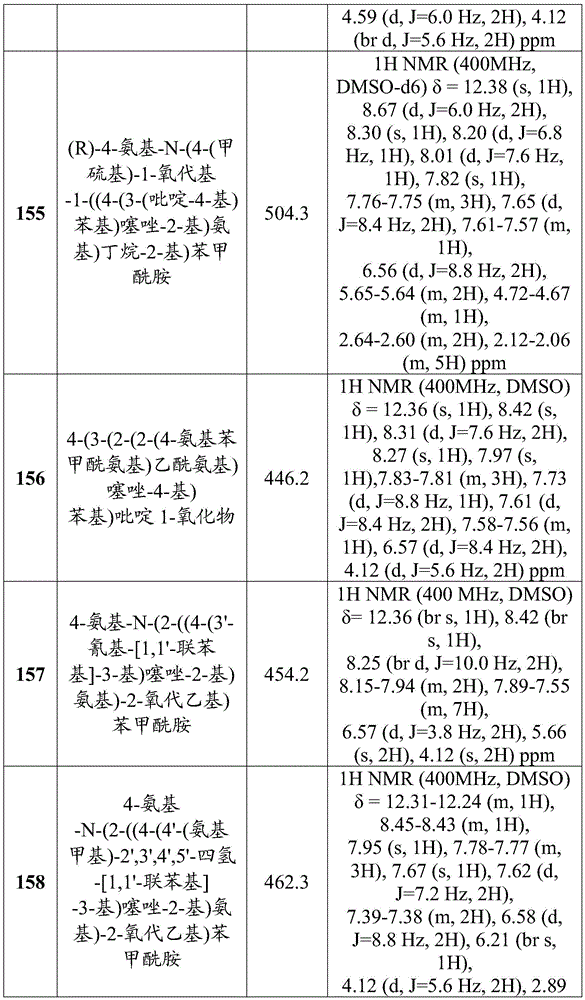
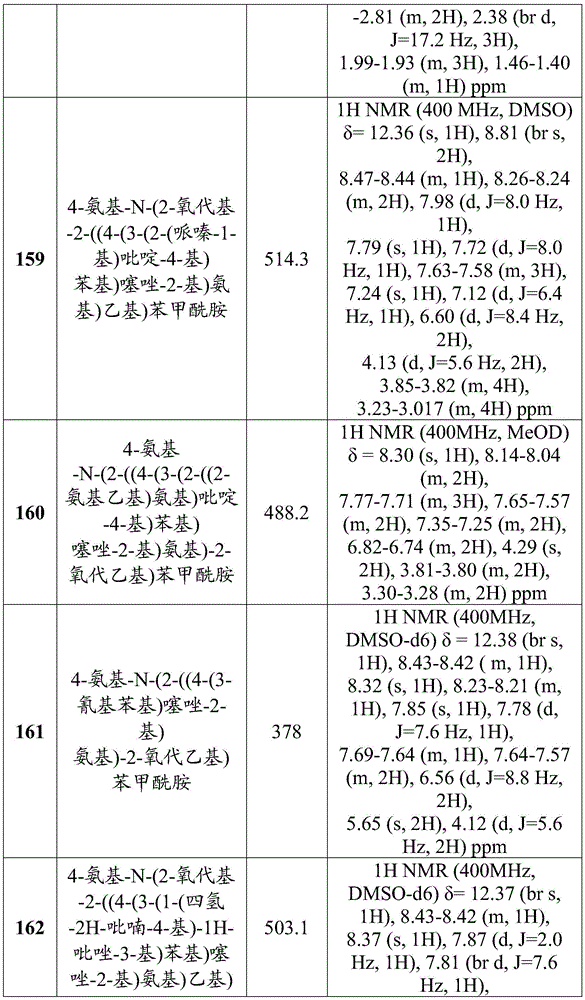
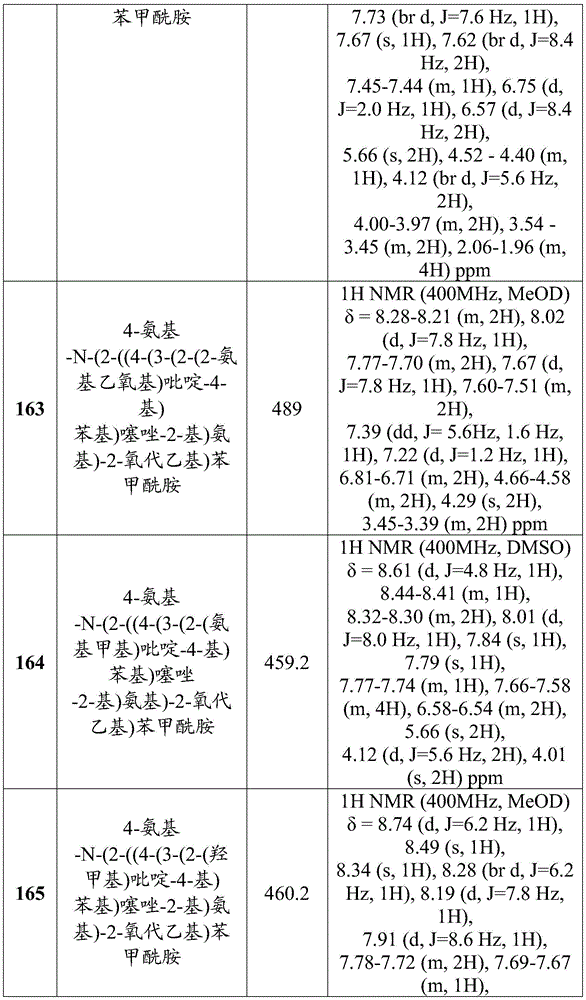
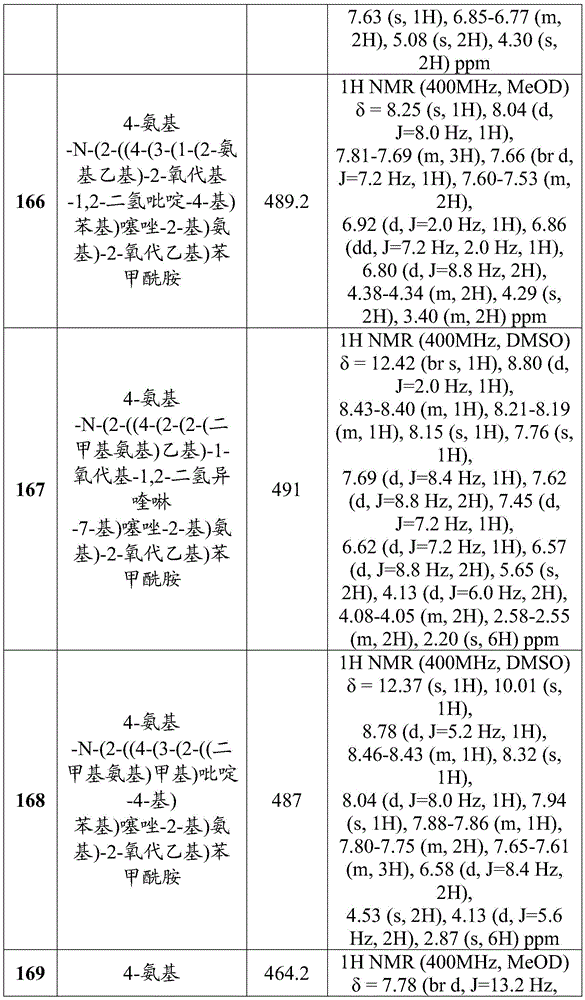
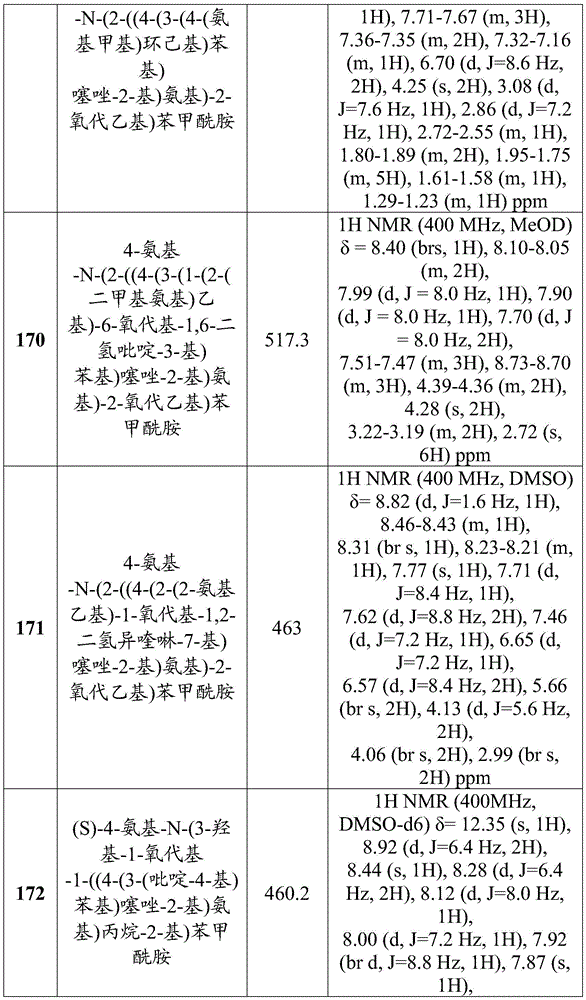
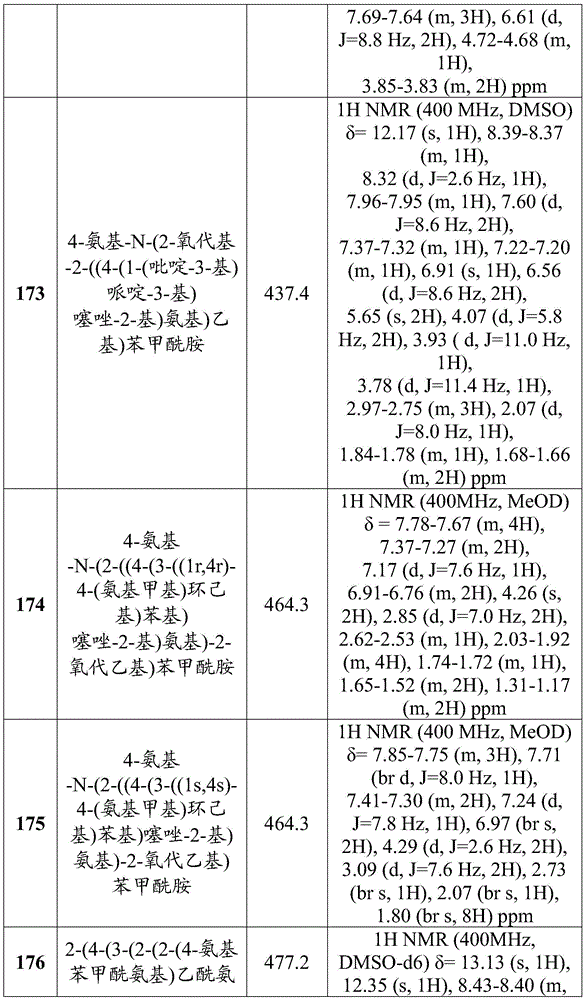

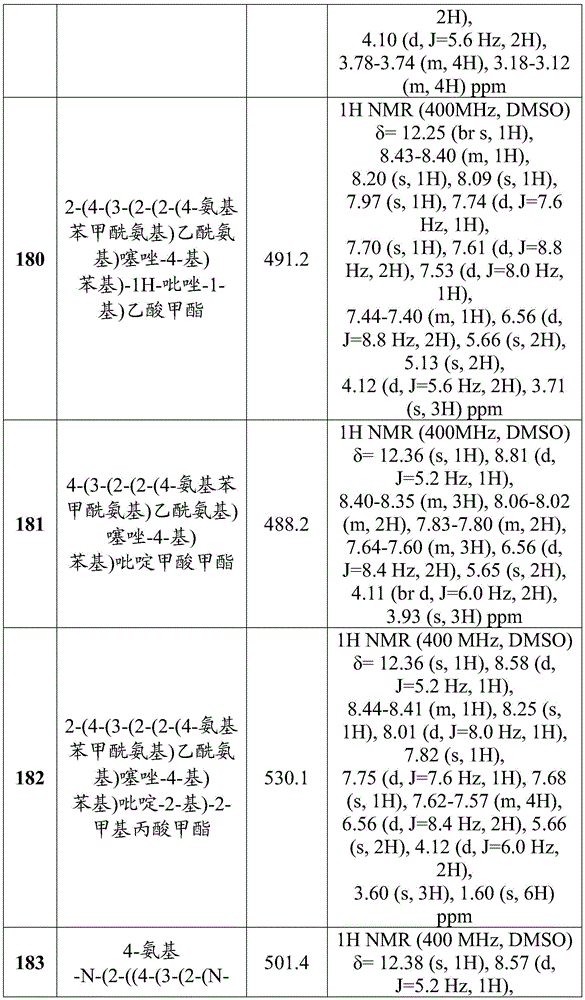


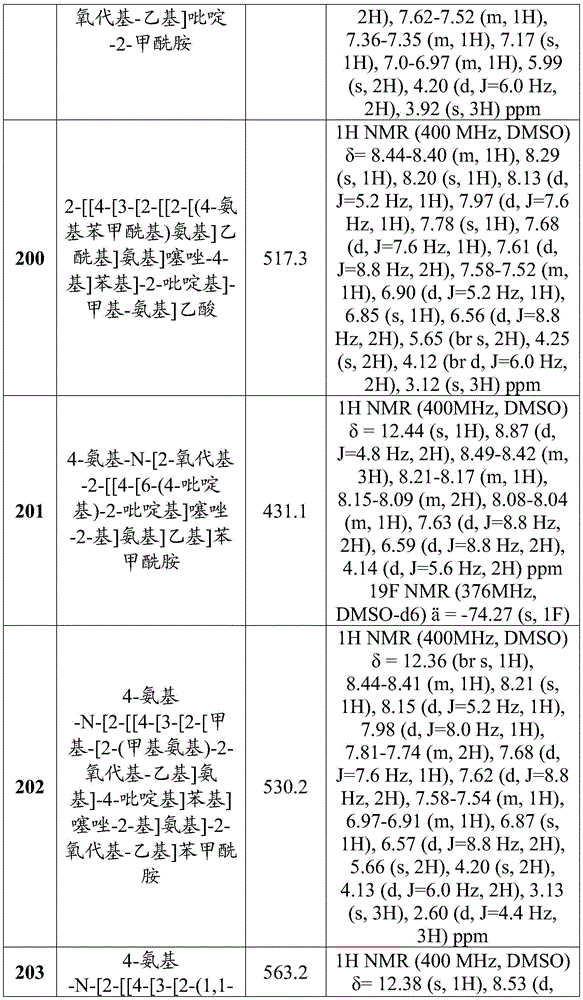
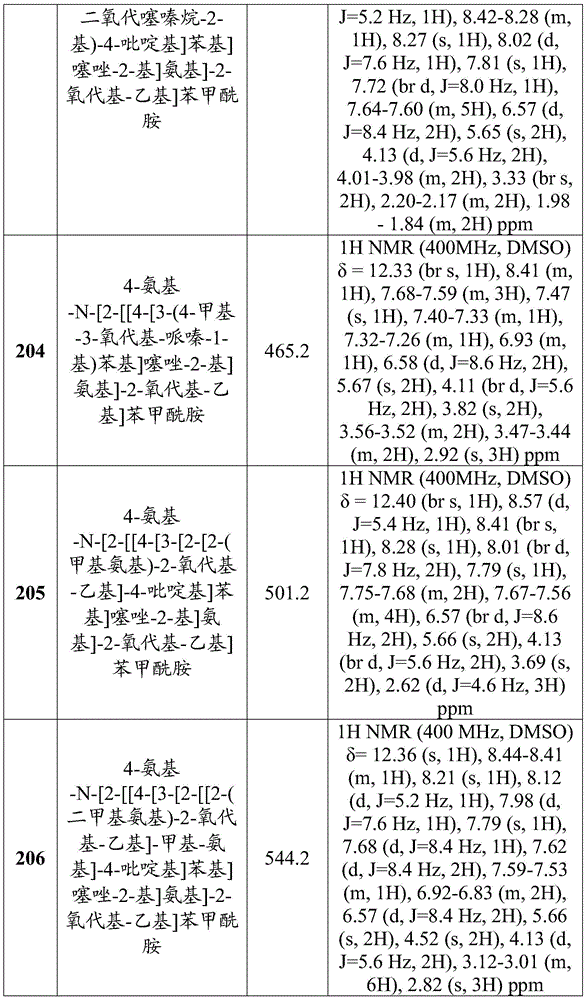


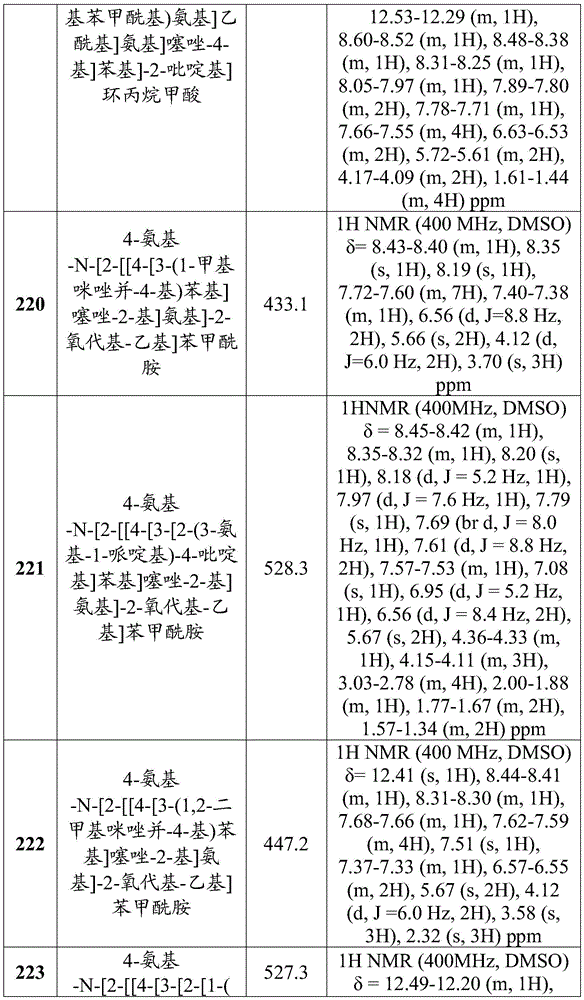


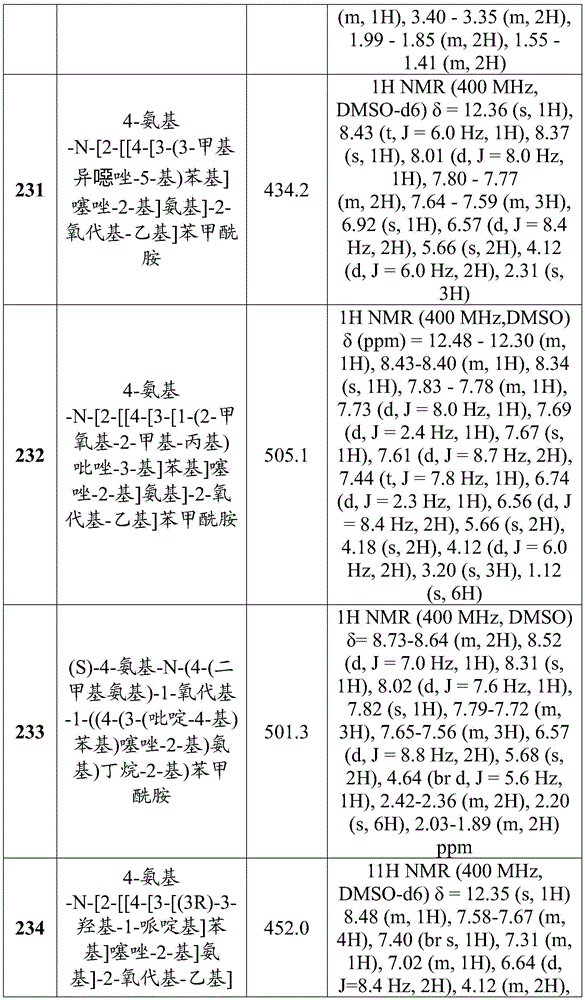
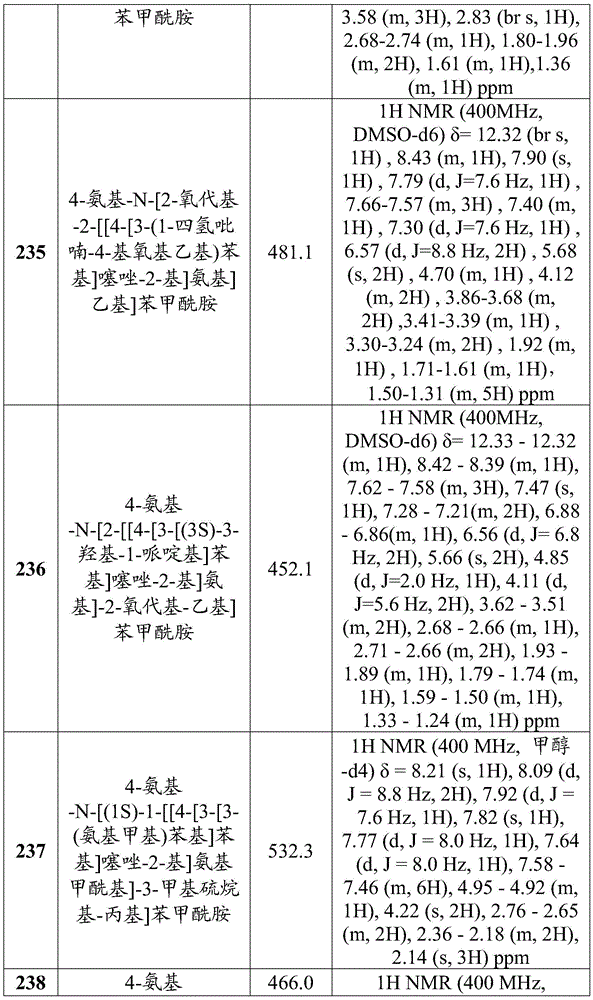

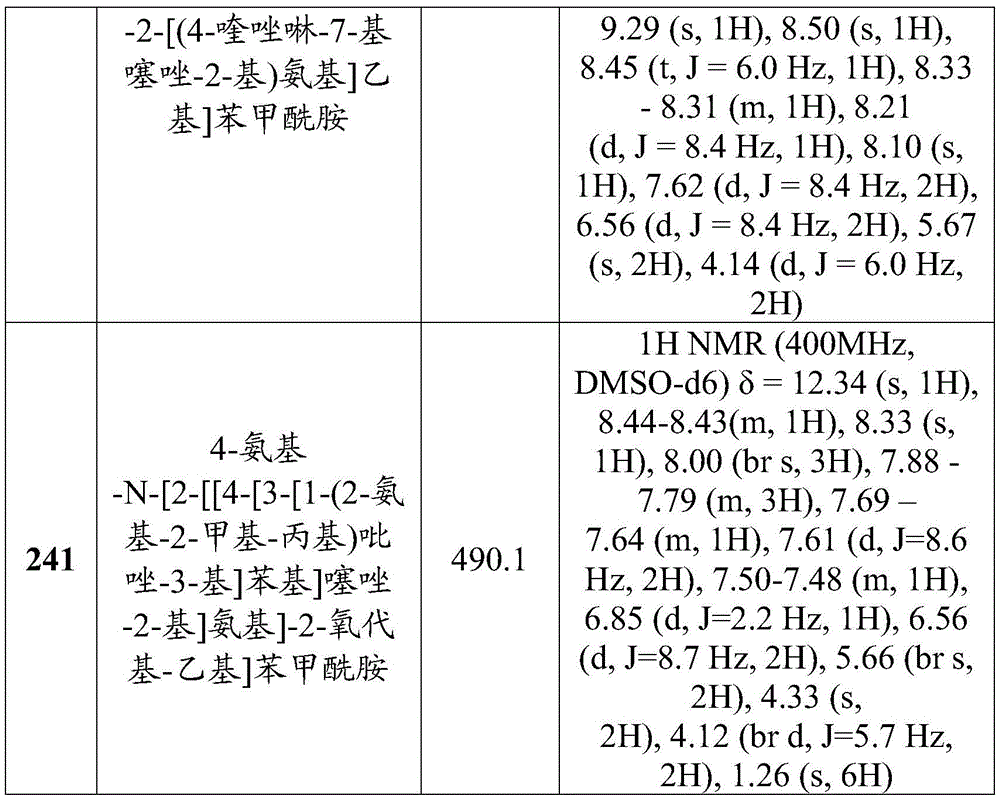
实施例88.针对BRM和BRG-1的ATP酶催化活性的测定Example 88. Determination of ATPase catalytic activity against BRM and BRG-1
使用ADP-GloTM(Promega,V9102)通过体外生物化学测定来测量BRM或BRG-1的ATP酶催化活性。一旦反应完成,就在两个步骤中进行ADP-GloTM激酶测定。第一步骤是耗尽反应中任何未消耗的ATP。第二步骤是将反应产物ADP转换为ATP,其将被荧光素酶利用来产生发光,并通过发光阅读器(如Envision)进行检测。The ATPase catalytic activity of BRM or BRG-1 was measured by an in vitro biochemical assay using ADP-Glo ™ (Promega, V9102). Once the reaction was complete, the ADP-Glo ™ kinase assay was performed in two steps. The first step is to deplete any unconsumed ATP in the reaction. The second step is to convert the reaction product ADP to ATP, which will be utilized by luciferase to generate luminescence and detected by a luminescence reader such as Envision.
测定反应混合物(10μL)在ATP酶测定缓冲液中含有30nM的BRM或BRG-1、20nM鲑鱼精子DNA(来自Invitrogen,UltraPureTM鲑鱼精子DNA溶液,目录号15632011)和400μM ATP,所述ATP酶测定缓冲液由20mM Tris(pH 8)、20mM MgCl2、50mM NaCl、0.1%Tween-20和1mM新鲜DTT(PierceTM DTT(二硫苏糖醇),目录号20290)组成。通过在小体积白色Proxiplate-384 plus板(PerkinElmer,目录号6008280)上将2.5μL ATP酶溶液添加至2.5μL ATP/DNA溶液中来起始反应,并在室温下孵育1小时。然后,在添加试剂盒中提供的5μL ADP-GloTM试剂后,将反应物在室温下孵育40分钟。然后添加试剂盒中提供的10μL激酶检测试剂以将ADP转化为ATP,并将反应物在室温下孵育60分钟。最后,使用读板式光度计(如Envision)收集发光测量值。The assay reaction mixture (10 μL) contained 30 nM of BRM or BRG-1, 20 nM salmon sperm DNA (from Invitrogen, UltraPure ™ salmon sperm DNA solution, cat. no. 15632011) and 400 μM ATP in ATPase assay buffer, the ATPase assay The buffer consisted of 20 mM Tris (pH 8), 20 mM MgCl2 , 50 mM NaCl, 0.1% Tween-20 and 1 mM fresh DTT (Pierce ™ DTT (dithiothreitol), cat. no. 20290). The reaction was initiated by adding 2.5 μL of ATPase solution to 2.5 μL of ATP/DNA solution on a small volume white Proxiplate-384 plus plate (PerkinElmer, cat. no. 6008280) and incubated for 1 hour at room temperature. The reaction was then incubated for 40 minutes at room temperature after the addition of 5 μL of ADP-Glo ™ reagent provided in the kit. 10 μL of kinase detection reagent provided in the kit was then added to convert ADP to ATP and the reaction was incubated for 60 min at room temperature. Finally, luminescence measurements are collected using a plate-reading luminometer such as Envision.
BRM和BRG-1是从high five昆虫细胞系以大于90%的纯度合成的。来自本文描述的ATP酶催化活性测定的化合物1-241的IP50数据在下表5和表6中显示。BRM and BRG-1 were synthesized with greater than 90% purity from high five insect cell lines. The IP50 data for Compound 1-241 from the ATPase catalytic activity assay described herein are shown in Tables 5 and 6 below.
表5.table 5.
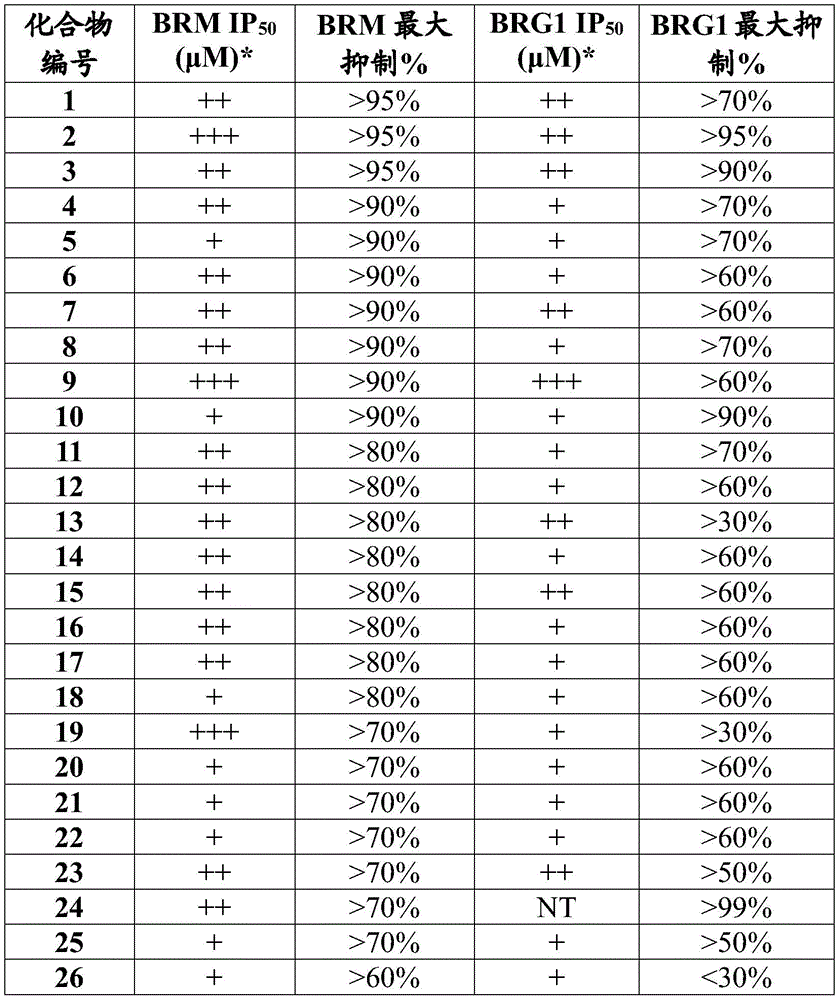
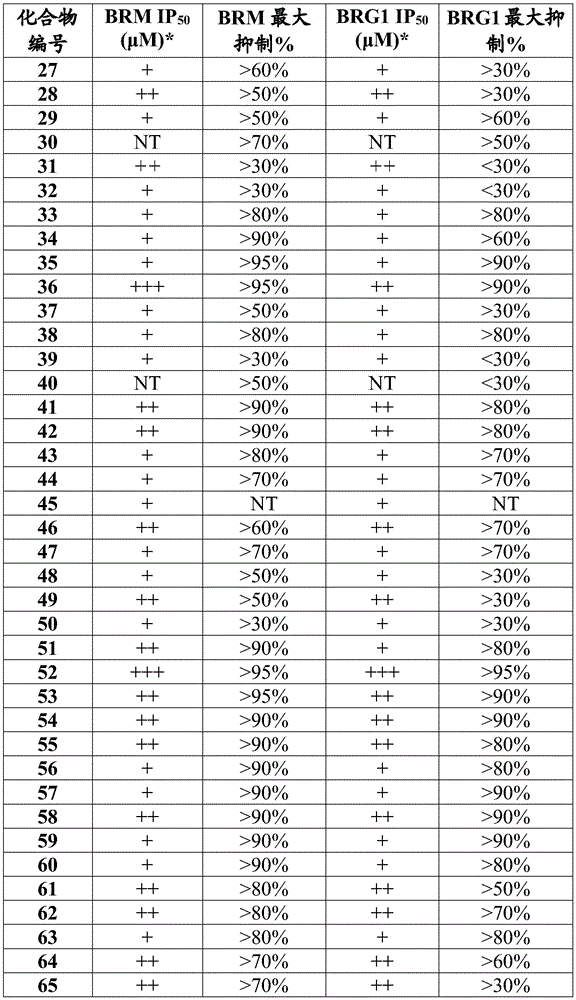

“+”表示>10μM的抑制作用;“++”表示1-10μM的抑制作用;“+++”表示<1μM的抑制作用;“NT”表示未测试"+" indicates >10 μM inhibition; "++" indicates 1-10 μM inhibition; "+++" indicates <1 μM inhibition; "NT" indicates not tested
表6.Table 6.


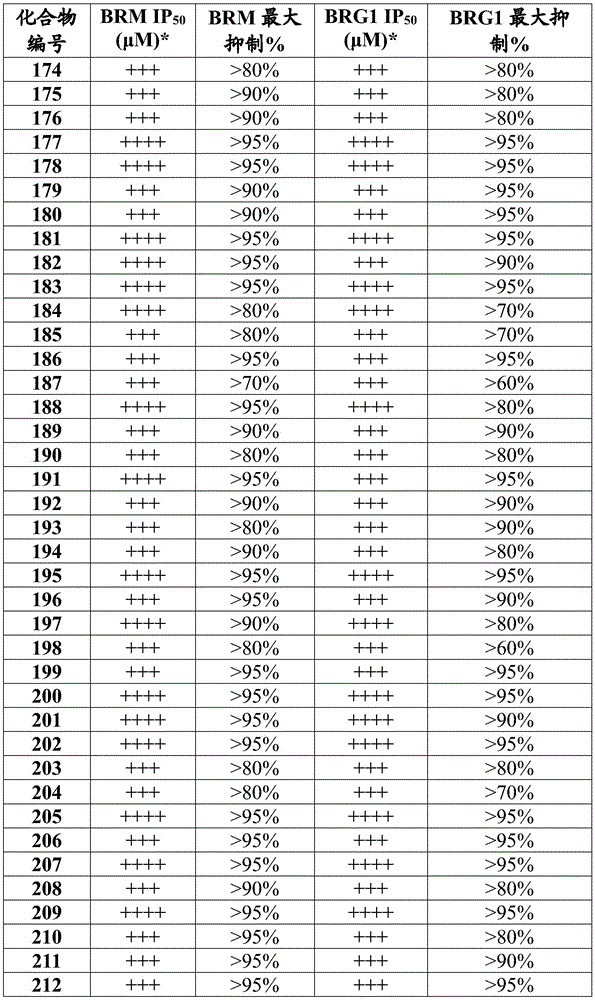
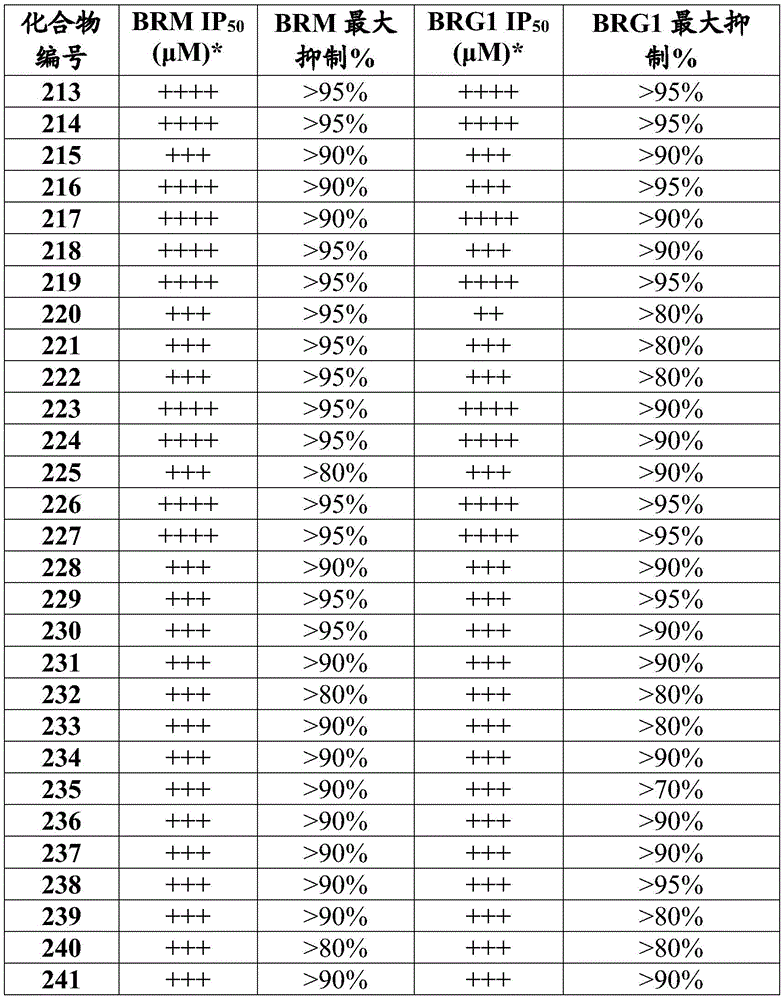
“+”表示>10μM的抑制作用;“++”表示1-10μM的抑制作用;“+++”表示0.1-1μM的抑制作用,“++++”表示<0.1μM的抑制作用"+" means >10μM inhibition; "++" means 1-10μM inhibition; "+++" means 0.1-1μM inhibition, "++++" means <0.1μM inhibition
实施例89.BRG1/BRM ATP酶抑制作用对葡萄膜黑素瘤和血液学癌细胞系生长的影响Example 89. Effect of BRG1/BRM ATPase Inhibition on Growth of Uveal Melanoma and Hematology Cancer Cell Lines
程序:将葡萄膜黑素瘤细胞系(92-1、MP41、MP38、MP46)、前列腺癌细胞系(LNCAP)、肺癌细胞系(NCIH1299)和永生化胚肾系(HEK293T)涂铺到具有生长培养基的96孔板中(参见表7)。将BRG1/BRM ATP酶抑制剂(化合物87)溶解于DMSO中,并在涂铺时以0至10微摩尔的浓度梯度添加至细胞中。将细胞在37摄氏度下孵育3天。在处理三天后,从细胞中除去培养基,并向细胞中添加30微升的TrypLE(Gibco),保持10分钟。使细胞与板脱离,并通过添加170微升生长培养基重悬。对来自两个DMSO处理的对照孔的细胞进行计数,并将在实验开始时涂铺的初始数量的细胞重新涂铺到含有新鲜化合物的板中,在37摄氏度下再进行四天。在第7天,如上所述收获细胞。在第3天和第7天,通过添加Cell-titer glo(Promega)测量相对细胞生长,并在Envision读板仪(Perkin Elmer)上测量发光。使用Graphpad Prism计算每种细胞系的生长被抑制50%(GI50)时的化合物浓度,并绘制在下面。对于多发性骨髓瘤细胞系(OPM2、MM1S、LP1)、ALL细胞系(TALL1、JURKAT、RS411)、DLBCL细胞系(SUDHL6、SUDHL4、DB、WSUDLCL2、PFEIFFER)、AML细胞系(OCIAML5)、MDS细胞系(SKM1)、卵巢癌细胞系(OV7、TYKNU)、食道癌细胞系(KYSE150)、横纹肌瘤细胞系(RD、G402、G401、HS729、A204)、肝癌细胞系(HLF、HLE、PLCRPF5)和肺癌细胞系(SW1573、NCIH2444),对上述方法进行了以下修改:将细胞涂铺在96孔板中,并在第二天,将BRG1/BRM ATP酶抑制剂(化合物87)溶解于DMSO中并以0至10微摩尔的浓度梯度添加至细胞中。在第3天和第7天细胞分裂时,将细胞分到新的96孔板中,并在重新涂铺后四小时添加新鲜化合物。Procedure: Uveal melanoma cell lines (92-1, MP41, MP38, MP46), prostate cancer cell lines (LNCAP), lung cancer cell lines (NCIH1299), and immortalized embryonic kidney lines (HEK293T) were plated onto cells with growth culture medium in 96-well plates (see Table 7). The BRG1/BRM ATPase inhibitor (Compound 87) was dissolved in DMSO and added to cells at a concentration gradient of 0 to 10 micromolar at the time of plating. Cells were incubated at 37 degrees Celsius for 3 days. After three days of treatment, the medium was removed from the cells and 30 microliters of TrypLE (Gibco) was added to the cells for 10 minutes. The cells were detached from the plate and resuspended by adding 170 microliters of growth medium. Cells from two DMSO-treated control wells were counted, and the initial number of cells plated at the start of the experiment were re-plated into plates containing fresh compound for an additional four days at 37 degrees Celsius. On day 7, cells were harvested as described above. On
表7列出所测试的细胞系和所用的生长培养基。Table 7 lists the cell lines tested and growth media used.
表7.细胞系和生长培养基Table 7. Cell Lines and Growth Media
结果:如图1所示,与其他测试的细胞系相比,葡萄膜黑素瘤和血液学癌细胞系对BRG1/BRM抑制更敏感。对葡萄膜黑素瘤和血液学癌细胞系的抑制作用持续到第7天。Results: As shown in Figure 1, uveal melanoma and hematology cancer cell lines were more sensitive to BRG1/BRM inhibition compared to other tested cell lines. Inhibition of uveal melanoma and hematology cancer cell lines persisted until day 7.
实施例90.葡萄膜黑素瘤细胞系中BRG1/BRM抑制剂与临床PKC和MEK抑制剂的比较Example 90. Comparison of BRG1/BRM inhibitors with clinical PKC and MEK inhibitors in uveal melanoma cell lines
程序:在生长培养基存在下,将葡萄膜黑素瘤细胞系92-1或MP41涂铺在96孔板中(参见表7)。将BAF ATP酶抑制剂(化合物87)、PKC抑制剂(LXS196;MedChemExpress)或MEK抑制剂(司美替尼;Selleck Chemicals)溶解于DMSO中,并在涂铺时以0至10微摩尔的浓度梯度添加至细胞中。将细胞在37摄氏度下孵育3天。在处理三天后,用Cell-titer glow(Promega)测量细胞生长,并在Envision读板仪(Perkin Elmer)上读取发光。Procedure: Uveal melanoma cell lines 92-1 or MP41 were plated in 96-well plates in the presence of growth medium (see Table 7). BAF ATPase inhibitor (Compound 87), PKC inhibitor (LXS196; MedChemExpress) or MEK inhibitor (selumetinib; Selleck Chemicals) were dissolved in DMSO and applied at a concentration of 0 to 10 micromolar The gradient is added to the cells. Cells were incubated at 37 degrees Celsius for 3 days. Three days after treatment, cell growth was measured with Cell-titer glow (Promega) and luminescence was read on an Envision plate reader (Perkin Elmer).
结果:如图2所示,化合物87显示出与临床PKC和MEK抑制剂相当的葡萄膜黑素瘤细胞生长抑制。此外,发现与临床PKC和MEK抑制剂相比,化合物87产生更快的抑制作用开始。Results: As shown in Figure 2, compound 87 showed comparable uveal melanoma cell growth inhibition to clinical PKC and MEK inhibitors. Furthermore, Compound 87 was found to produce a faster onset of inhibition compared to clinical PKC and MEK inhibitors.
实施例91.化合物B的合成Example 91. Synthesis of Compound B
BRG1/BRM抑制剂化合物B具有结构:BRG1/BRM inhibitor compound B has the structure:
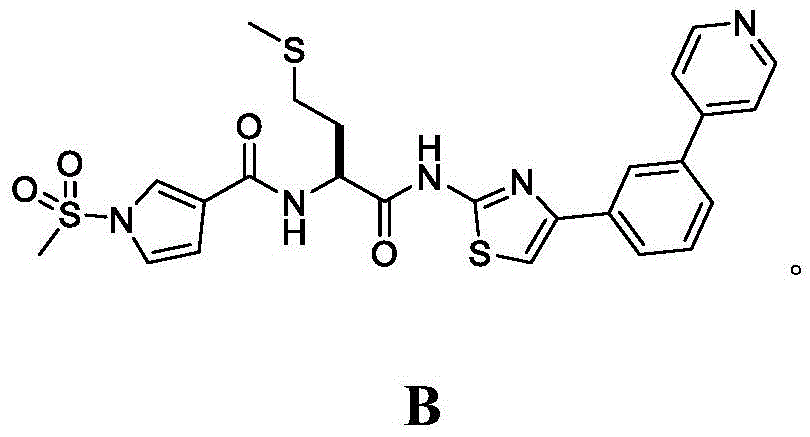
如以下方案2中所示合成化合物B。Compound B was synthesized as shown in Scheme 2 below.
方案2.化合物B的合成Scheme 2. Synthesis of Compound B
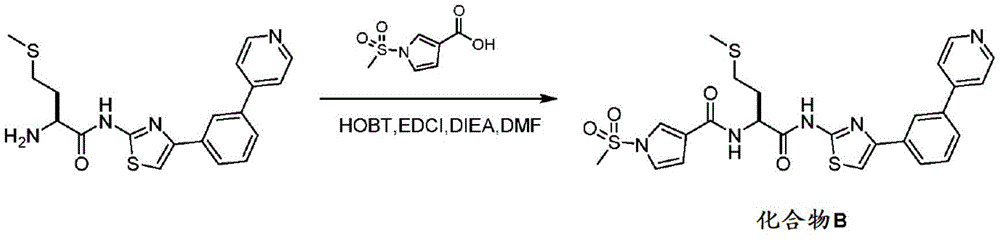
步骤1:(S)-1-(甲基磺酰基)-N-(4-(甲硫基)-1-氧代基-1-((4-(3-(吡啶-4-基)苯基)噻唑-2-基)氨基)丁烷-2-基)-1H-吡咯-3-甲酰胺(化合物B)的制备Step 1: (S)-1-(Methylsulfonyl)-N-(4-(methylthio)-1-oxo-1-((4-(3-(pyridin-4-yl)benzene) Preparation of yl)thiazol-2-yl)amino)butan-2-yl)-1H-pyrrole-3-carboxamide (compound B)

向(2S)-2-氨基-4-甲基硫烷基-N-[4-[3-(4-吡啶基)苯基]噻唑-2-基]丁酰胺(2g,4.75mmol,HCl盐)和1-甲基磺酰基吡咯-3-甲酸(898.81mg,4.75mmol)于DMF(20mL)中的混合物添加EDCI(1.37g,7.13mmol)、HOBt(962.92mg,7.13mmol)和DIEA(2.46g,19.00mmol,3.31mL),并将混合物在25℃下搅拌3小时。将混合物倒入H2O(100mL)中,并通过过滤收集沉淀物。将固体在MeOH(20mL)中研磨,并通过过滤收集沉淀物。将固体溶解于DMSO(10mL)中,然后将混合物倒入MeOH(50mL)中,并通过过滤收集所形成的沉淀物,并冻干,得到呈白色固体的化合物B(2.05g,3.66mmol,77.01%产率)。LCMS(ESI)m/z[M+H]+=555.9。1HNMR(400MHz,DMSO)δ12.49(s,1H),8.68-8.66(m,2H),8.46(d,J=7.2Hz,1H),8.31-8.30(m,1H),8.02-8.00(m,1H),7.94-7.96(m,1H),7.83(s,1H),7.73-7.74(m,3H),7.61-7.57(m,1H),7.31-7.29(m,1H),6.79-6.77(m,1H),4.74-4.69(m,1H),3.57(s,3H),2.67-2.53(m,2H),2.13-2.01(m,5H)。SFC:AS-3-MeOH(DEA)-40-3mL-35T.lcm,t=0.932分钟,ee%=100%。To (2S)-2-amino-4-methylsulfanyl-N-[4-[3-(4-pyridyl)phenyl]thiazol-2-yl]butanamide (2 g, 4.75 mmol, HCl salt ) and 1-methylsulfonylpyrrole-3-carboxylic acid (898.81 mg, 4.75 mmol) in DMF (20 mL) was added EDCI (1.37 g, 7.13 mmol), HOBt (962.92 mg, 7.13 mmol) and DIEA (2.46 g, 19.00 mmol, 3.31 mL) and the mixture was stirred at 25°C for 3 hours. The mixture was poured into H2O (100 mL) and the precipitate was collected by filtration. The solid was triturated in MeOH (20 mL) and the precipitate was collected by filtration. The solid was dissolved in DMSO (10 mL), then the mixture was poured into MeOH (50 mL) and the resulting precipitate was collected by filtration and lyophilized to give compound B (2.05 g, 3.66 mmol, 77.01 g) as a white solid %Yield). LCMS (ESI) m/z [M+H] + =555.9. 1 HNMR(400MHz,DMSO)δ12.49(s,1H),8.68-8.66(m,2H),8.46(d,J=7.2Hz,1H),8.31-8.30(m,1H),8.02-8.00( m,1H),7.94-7.96(m,1H),7.83(s,1H),7.73-7.74(m,3H),7.61-7.57(m,1H),7.31-7.29(m,1H),6.79- 6.77(m,1H), 4.74-4.69(m,1H), 3.57(s,3H), 2.67-2.53(m,2H), 2.13-2.01(m,5H). SFC: AS-3-MeOH(DEA)-40-3mL-35T.1cm, t=0.932 min, ee%=100%.
实施例92.BRG1/BRM ATP酶抑制对葡萄膜黑素瘤、血液学癌症、前列腺癌、乳腺癌和尤文氏肉瘤细胞系生长的影响Example 92. Effect of BRG1/BRM ATPase Inhibition on Growth of Uveal Melanoma, Hematological Cancer, Prostate Cancer, Breast Cancer and Ewing's Sarcoma Cell Lines
程序:也用化合物B如上所述对上文在实施例89中描述的所有细胞系进行了测试。此外,还如下对以下细胞系进行了测试。简言之,对于尤文氏肉瘤细胞系(CADOES1、RDES、SKES1)、成视网膜细胞瘤细胞系(WERIRB1)、ALL细胞系(REH)、AML细胞系(KASUMI1)、前列腺癌细胞系(PC3、DU145、22RV1)、黑素瘤细胞系(SH4、SKMEL28、WM115、COLO829、SKMEL3、A375)、乳腺癌细胞系(MDAMB415、CAMA1、MCF7、BT474、HCC1419、DU4475、BT549)、B-ALL细胞系(SUPB15)、CML细胞系(K562、MEG01)、伯基特氏淋巴瘤细胞系(RAMOS2G64C10、DAUDI)、套细胞淋巴瘤细胞系(JEKO1、REC1)、膀胱癌细胞系(HT1197)和肺癌细胞系(SBC5),对上述方法进行了以下修改:将细胞涂铺在96孔板中,并且在第二天,将BRG1/BRM ATP酶抑制剂(化合物B)溶解于DMSO中,并以0至10微摩尔的浓度梯度添加至细胞中。在第3天和第7天细胞分裂时,将细胞分到新的96孔板中,并在重新涂铺后四小时添加新鲜化合物。Procedure: All cell lines described above in Example 89 were also tested with Compound B as described above. In addition, the following cell lines were also tested as follows. Briefly, for Ewing's sarcoma cell lines (CADOES1, RDES, SKES1), retinoblastoma cell lines (WERIRB1), ALL cell lines (REH), AML cell lines (KASUMI1), prostate cancer cell lines (PC3, DU145 , 22RV1), melanoma cell lines (SH4, SKMEL28, WM115, COLO829, SKMEL3, A375), breast cancer cell lines (MDAMB415, CAMA1, MCF7, BT474, HCC1419, DU4475, BT549), B-ALL cell line (SUPB15) ), CML cell lines (K562, MEG01), Burkitt's lymphoma cell lines (RAMOS2G64C10, DAUDI), mantle cell lymphoma cell lines (JEKO1, REC1), bladder cancer cell lines (HT1197) and lung cancer cell lines (SBC5 ), with the following modifications: cells were plated in 96-well plates, and on the second day, the BRG1/BRM ATPase inhibitor (Compound B) was dissolved in DMSO at 0 to 10 μmolar concentration gradient added to the cells. On
表8 列出所测试的细胞系和所用的生长培养基。Table 8 lists the cell lines tested and the growth media used.
结果:如图3所示,与其他测试的细胞系相比,葡萄膜黑素瘤、血液学癌症、前列腺癌、乳腺癌和尤文氏肉瘤细胞系对BRG1/BRM抑制更敏感。对葡萄膜黑素瘤、血液学癌症、前列腺癌、乳腺癌和尤文氏肉瘤细胞系的抑制作用持续到第7天。Results: As shown in Figure 3, uveal melanoma, hematological cancer, prostate cancer, breast cancer and Ewing's sarcoma cell lines were more sensitive to BRG1/BRM inhibition compared to the other cell lines tested. Inhibition of uveal melanoma, hematological cancer, prostate cancer, breast cancer and Ewing's sarcoma cell lines persisted through day 7.
其他实施方案Other implementations
尽管本发明已经结合其具体实施方案进行了描述,但应理解能够对本发明进行进一步的修改,并且本申请意图涵盖任何一般而言遵循本发明的原理的变化、用途或改编,并且包括在本发明所属领域的已知或习用实践内并且可应用于前文所示的关键特征且遵循权利要求的范围的此类偏离本公开的内容。Although this invention has been described in conjunction with specific embodiments thereof, it should be understood that the invention is capable of further modification, and this application is intended to cover any variations, uses or adaptations that follow the principles of the invention in general and are included in the present invention Such departures from the present disclosure come within known or customary practice in the art and which may be applied to the key features described above and which follow the scope of the claims.
其他实施方案在权利要求中。Other embodiments are in the claims.
Claims (157)
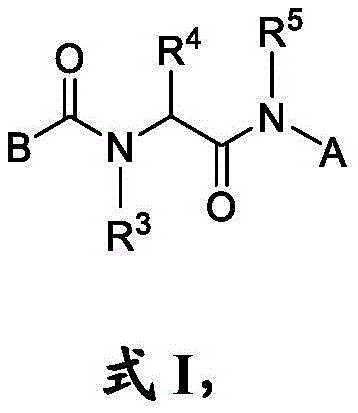

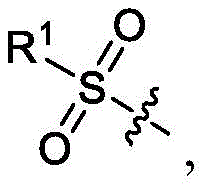
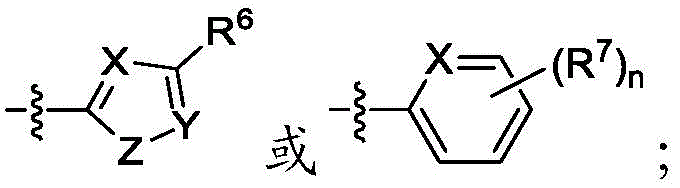
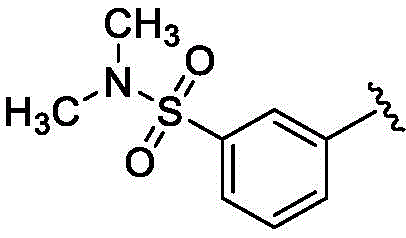


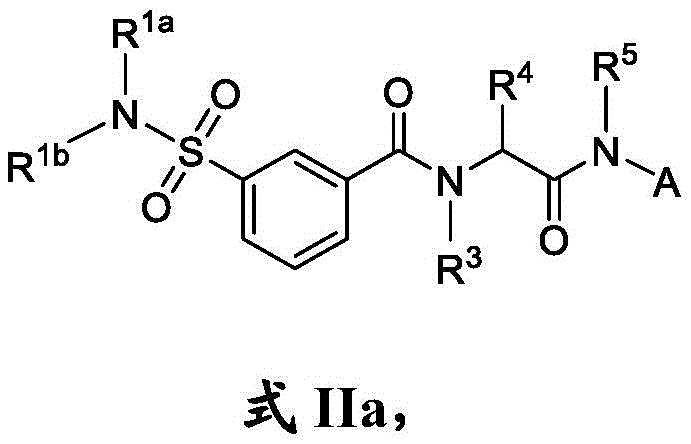


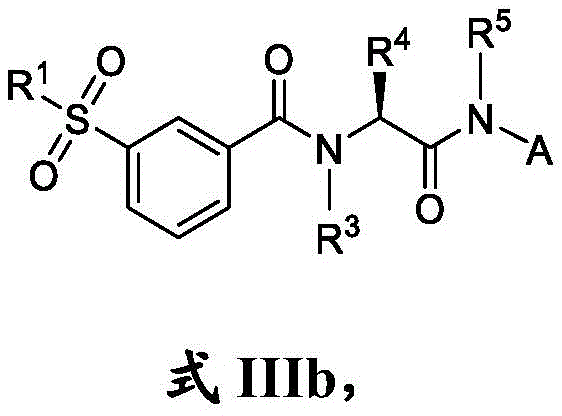
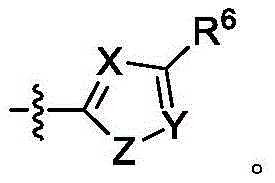




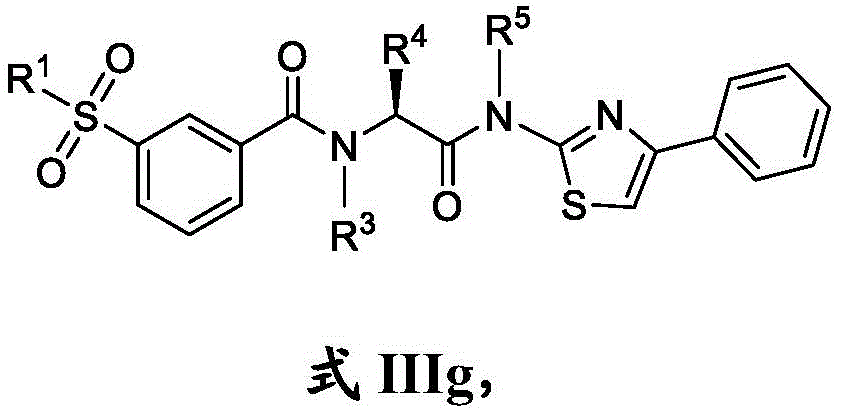

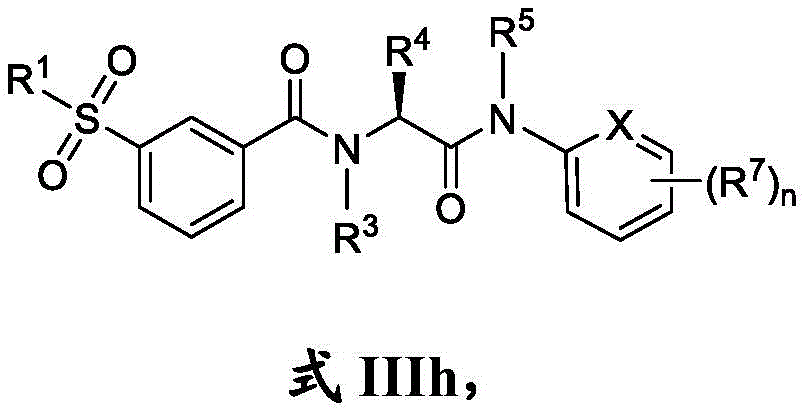
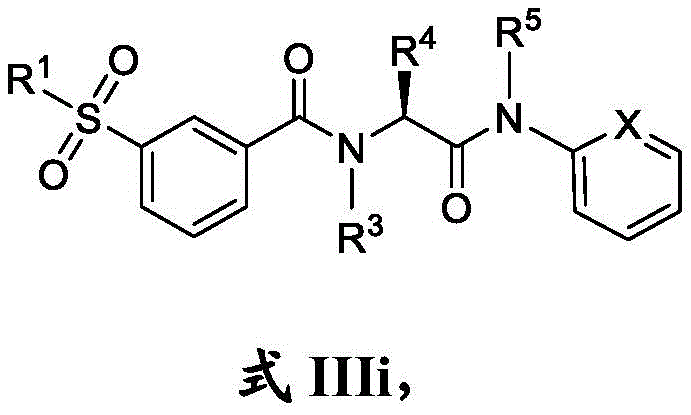
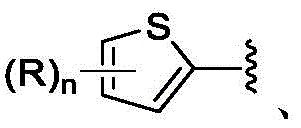
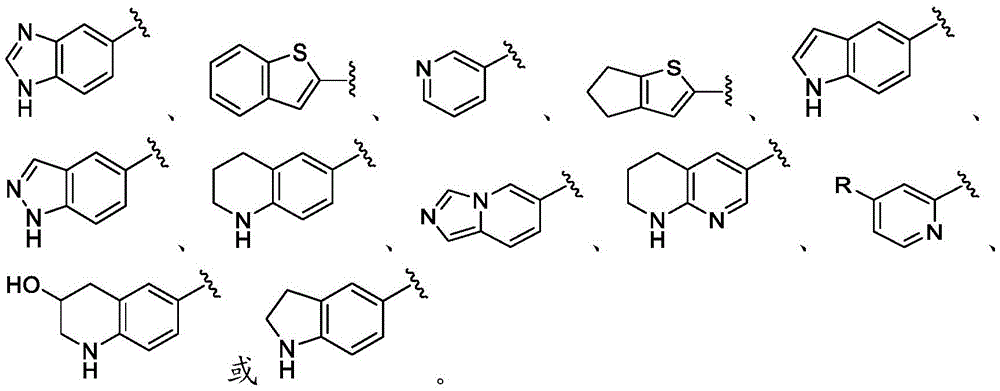


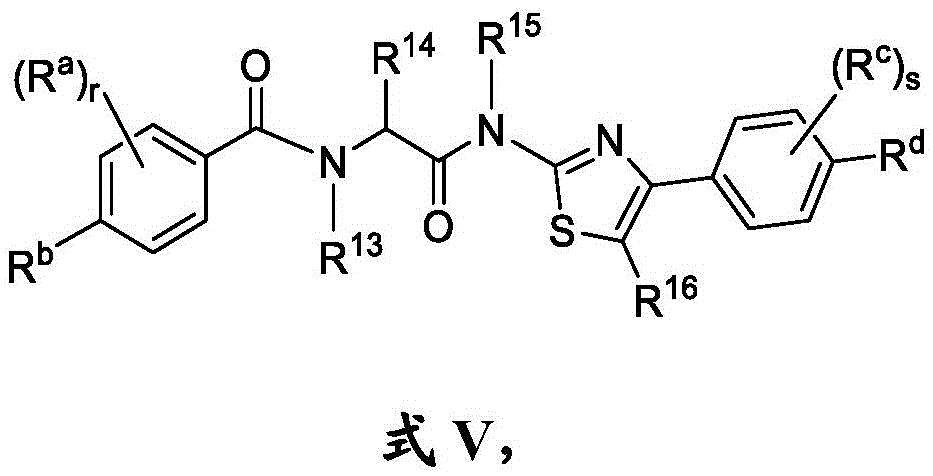
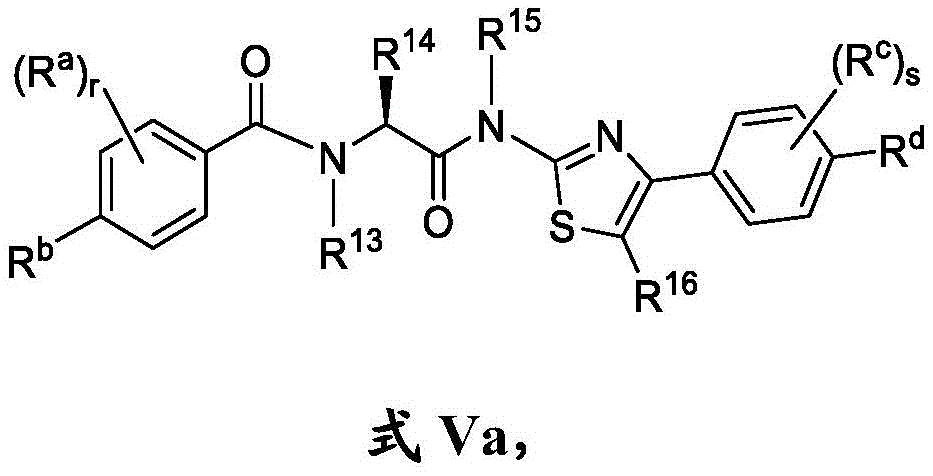
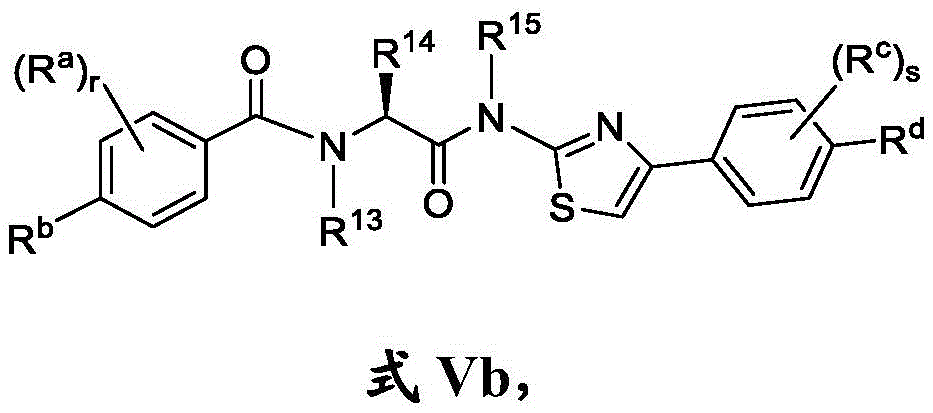
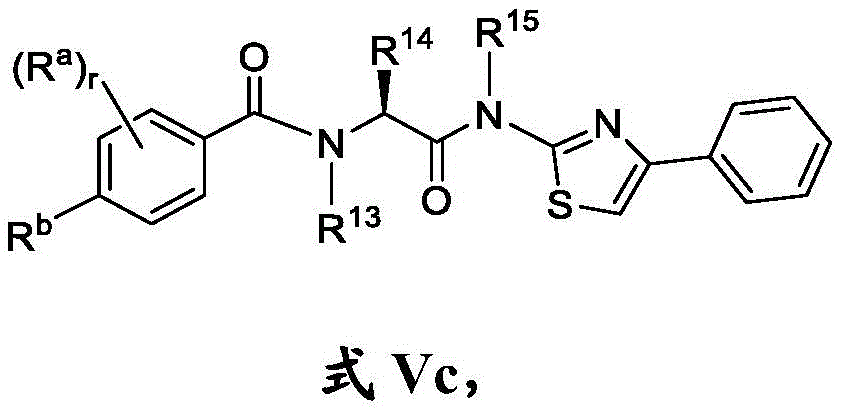


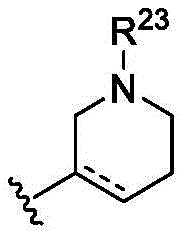
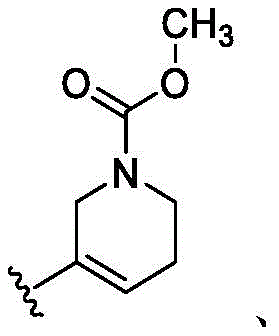

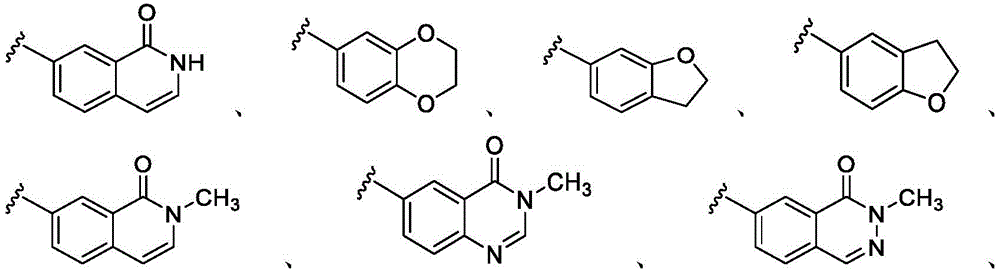
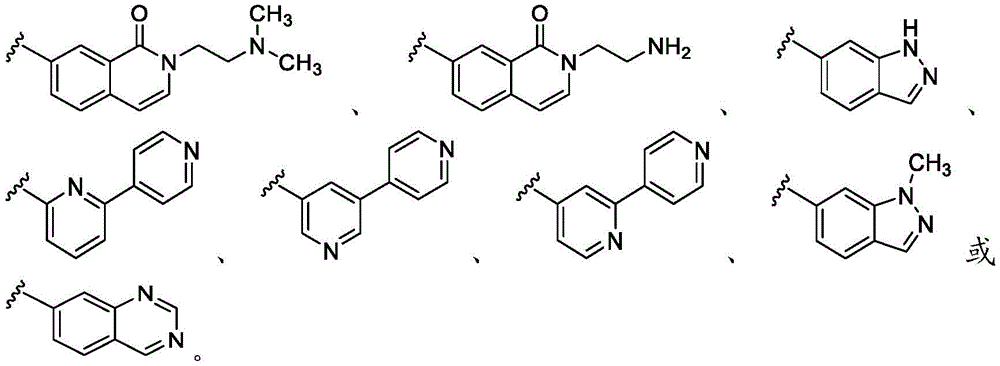
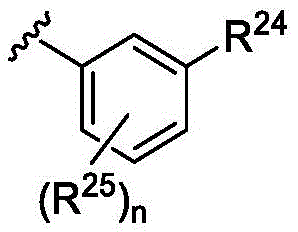
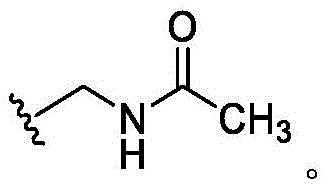


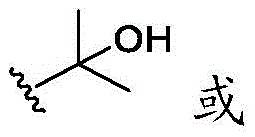

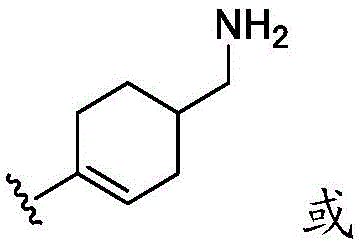


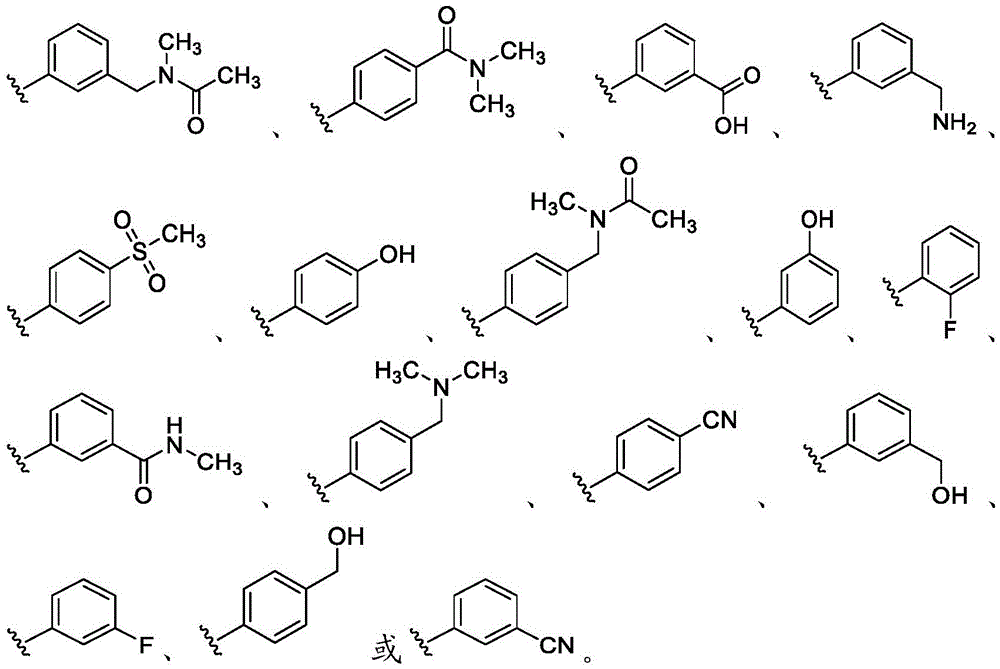


Applications Claiming Priority (9)
| Application Number | Priority Date | Filing Date | Title |
|---|---|---|---|
| US201862623907P | 2018-01-30 | 2018-01-30 | |
| US62/623907 | 2018-01-30 | ||
| US201862653229P | 2018-04-05 | 2018-04-05 | |
| US62/653229 | 2018-04-05 | ||
| US201862770431P | 2018-11-21 | 2018-11-21 | |
| US62/770431 | 2018-11-21 | ||
| US201962789260P | 2019-01-07 | 2019-01-07 | |
| US62/789260 | 2019-01-07 | ||
| PCT/US2019/015722 WO2019152437A1 (en) | 2018-01-30 | 2019-01-29 | Compounds and uses thereof |
Publications (1)
| Publication Number | Publication Date |
|---|---|
| CN112153984A true CN112153984A (en) | 2020-12-29 |
Family
ID=67478426
Family Applications (1)
| Application Number | Title | Priority Date | Filing Date |
|---|---|---|---|
| CN201980023925.9A Pending CN112153984A (en) | 2018-01-30 | 2019-01-29 | Compounds and their uses |
Country Status (5)
| Country | Link |
|---|---|
| US (2) | US11497752B2 (en) |
| EP (1) | EP3746124A4 (en) |
| JP (1) | JP2021512166A (en) |
| CN (1) | CN112153984A (en) |
| WO (1) | WO2019152437A1 (en) |
Families Citing this family (32)
| Publication number | Priority date | Publication date | Assignee | Title |
|---|---|---|---|---|
| WO2017087885A1 (en) | 2015-11-19 | 2017-05-26 | Dana-Farber Cancer Institute, Inc. | Methods of identifying compounds that interfere with erg-driven misguidance of baf complexes in tmprss2-erg driven prostate cancers |
| WO2019140380A1 (en) | 2018-01-12 | 2019-07-18 | Kymera Therapeutics, Inc. | Protein degraders and uses thereof |
| CN112153984A (en) | 2018-01-30 | 2020-12-29 | 福宏治疗公司 | Compounds and their uses |
| EP3817822A4 (en) | 2018-07-06 | 2022-07-27 | Kymera Therapeutics, Inc. | PROTEIN DEGRADING AGENTS AND THEIR USES |
| US12473334B2 (en) | 2018-10-17 | 2025-11-18 | Dana-Farber Cancer Institute, Inc. | SWI/SNF family chromatin remodeling complexes and uses thereof |
| KR20210108416A (en) | 2018-12-19 | 2021-09-02 | 레오 파마 에이/에스 | Amino acid anilides as small molecule modulators of IL-17 |
| US12384776B2 (en) | 2019-01-29 | 2025-08-12 | Foghorn Therapeutics Inc. | Compounds and uses thereof |
| WO2020160180A1 (en) | 2019-01-29 | 2020-08-06 | Foghorn Therapeutics Inc. | Compounds and uses thereof |
| US12509453B2 (en) | 2019-01-29 | 2025-12-30 | Foghorn Therapeutics Inc. | BRM/BRG1 inhibitors and uses thereof |
| WO2020160192A1 (en) | 2019-01-29 | 2020-08-06 | Foghorn Therapeutics Inc. | Compounds and uses thereof |
| EP3917517A4 (en) | 2019-01-29 | 2023-01-25 | Foghorn Therapeutics Inc. | Compounds and uses thereof |
| WO2020251972A1 (en) | 2019-06-10 | 2020-12-17 | Kymera Therapeutics, Inc. | Smarca degraders and uses thereof |
| US11845724B2 (en) | 2019-09-11 | 2023-12-19 | Vincere Biosciences, Inc. | USP30 inhibitors and uses thereof |
| CN115297931A (en) | 2019-12-23 | 2022-11-04 | 凯麦拉医疗公司 | SMARCA degrading agents and uses thereof |
| EP4096657A4 (en) * | 2020-01-29 | 2024-07-10 | Foghorn Therapeutics Inc. | COMPOUNDS AND THEIR USES |
| JP7561195B2 (en) * | 2020-01-29 | 2024-10-03 | フォグホーン セラピューティクス インコーポレイテッド | Compounds and their uses |
| WO2021155100A1 (en) * | 2020-01-29 | 2021-08-05 | Foghorn Therapeutics Inc. | Compounds and uses thereof |
| AU2021213258B2 (en) * | 2020-01-29 | 2024-05-02 | Foghorn Therapeutics Inc. | Compounds and uses thereof |
| AU2021214805B2 (en) | 2020-01-29 | 2024-10-03 | Foghorn Therapeutics Inc. | Compounds and uses thereof |
| EP4096668A4 (en) * | 2020-01-29 | 2024-02-28 | Foghorn Therapeutics Inc. | Compounds and uses thereof |
| BR112022014968A2 (en) | 2020-01-29 | 2022-09-20 | Foghorn Therapeutics Inc | COMPOUND, PHARMACEUTICAL COMPOSITION AND METHODS OF INHIBITING BRD9 LEVEL IN A CELL, INHIBITING BRD9 ACTIVITY IN A CELL, TREATMENT OF A DISORDER, TREATMENT OF CANCER IN A SUBJECT IN NEED AND TREATMENT OF INFECTION IN A SUBJECT IN NEED |
| WO2021236080A1 (en) * | 2020-05-20 | 2021-11-25 | Foghorn Therapeutics Inc. | Methods of treating cancers |
| US12383555B2 (en) | 2020-05-20 | 2025-08-12 | Foghorn Therapeutics Inc. | Methods of treating cancers |
| US11787800B2 (en) | 2020-07-29 | 2023-10-17 | Foghorn Therapeutics Inc. | BRD9 degraders and uses thereof |
| CA3194868A1 (en) * | 2020-10-16 | 2022-04-21 | Georg Winter | Heterocyclic cullin ring ubiquitin ligase compounds and uses thereof |
| KR20230106648A (en) * | 2020-11-10 | 2023-07-13 | 포그혼 쎄라퓨틱스 인크. | Compounds and Uses Thereof |
| EP4294790A4 (en) * | 2021-02-19 | 2025-02-26 | Kymera Therapeutics, Inc. | SMARCA DEGRADER AND USES THEREOF |
| WO2023283263A1 (en) | 2021-07-06 | 2023-01-12 | Foghorn Therapeutics Inc. | Citrate salt, pharmaceutical compositions, and methods of making and using the same |
| EP4376886A4 (en) * | 2021-07-29 | 2025-05-14 | Foghorn Therapeutics Inc. | METHODS FOR TREATING CANCER |
| WO2024086577A1 (en) * | 2022-10-17 | 2024-04-25 | Foghorn Therapeutics Inc. | Methods of reducing or preventing metastases |
| WO2024099440A1 (en) * | 2022-11-11 | 2024-05-16 | 苏州信诺维医药科技股份有限公司 | Fused ring compound, use thereof, and pharmaceutical composition containing same |
| WO2025017207A1 (en) * | 2023-07-20 | 2025-01-23 | Cemm - Forschungszentrum Für Molekulare Medizin Gmbh | Inhibitors of smndc1 and their therapeutic use |
Citations (5)
| Publication number | Priority date | Publication date | Assignee | Title |
|---|---|---|---|---|
| US3717642A (en) * | 1969-07-22 | 1973-02-20 | Warner Lambert Co | N quinoline 5 aminooxazoles |
| CN103038231A (en) * | 2010-03-17 | 2013-04-10 | 台维克斯医疗公司 | Modulators of HEC1 activity and methods thereof |
| WO2015120320A1 (en) * | 2014-02-06 | 2015-08-13 | Rutgers, The State University Of New Jersey | Antibacterial agents: n(alpha)-aroyl-n-aryl-phenylalaninamides |
| CN105473141A (en) * | 2013-03-15 | 2016-04-06 | 实发生物医学公司 | Anti-PCSK9 compounds and methods for the treatment and/or prevention of cardiovascular diseases |
| CN107531668A (en) * | 2015-02-25 | 2018-01-02 | 基因泰克公司 | Therapeutic pyridazine compound and application thereof |
Family Cites Families (156)
| Publication number | Priority date | Publication date | Assignee | Title |
|---|---|---|---|---|
| US2788341A (en) * | 1953-03-06 | 1957-04-09 | Ciba Pharm Prod Inc | Process for the manufacture of aminoacyl compounds |
| US4109496A (en) | 1977-12-20 | 1978-08-29 | Norris Industries | Trapped key mechanism |
| US4147343A (en) | 1978-02-25 | 1979-04-03 | Hyde Phillip R | Acrobatic amusement device |
| FR2568880B1 (en) | 1984-08-07 | 1986-12-12 | Synthelabo | IMIDAZO ACYLAMINOMETHYL-3 DERIVATIVES (1,2-A) PYRIDINES, THEIR PREPARATION AND THEIR THERAPEUTIC APPLICATION |
| US4868103A (en) | 1986-02-19 | 1989-09-19 | Enzo Biochem, Inc. | Analyte detection by means of energy transfer |
| US5080891A (en) | 1987-08-03 | 1992-01-14 | Ddi Pharmaceuticals, Inc. | Conjugates of superoxide dismutase coupled to high molecular weight polyalkylene glycols |
| EP0354785B1 (en) | 1988-08-10 | 1993-03-31 | Tokyo Sintered Metals Corp. | Cycle type athletic equipment |
| US5223409A (en) | 1988-09-02 | 1993-06-29 | Protein Engineering Corp. | Directed evolution of novel binding proteins |
| US5858358A (en) | 1992-04-07 | 1999-01-12 | The United States Of America As Represented By The Secretary Of The Navy | Methods for selectively stimulating proliferation of T cells |
| US6534055B1 (en) | 1988-11-23 | 2003-03-18 | Genetics Institute, Inc. | Methods for selectively stimulating proliferation of T cells |
| US6905680B2 (en) | 1988-11-23 | 2005-06-14 | Genetics Institute, Inc. | Methods of treating HIV infected subjects |
| US6352694B1 (en) | 1994-06-03 | 2002-03-05 | Genetics Institute, Inc. | Methods for inducing a population of T cells to proliferate using agents which recognize TCR/CD3 and ligands which stimulate an accessory molecule on the surface of the T cells |
| US5016870A (en) | 1990-02-09 | 1991-05-21 | Bulloch Russell G | Exercise device |
| TW204343B (en) | 1991-05-31 | 1993-04-21 | Sumitomo Pharmaceutics Co Ltd | |
| DE69326967T2 (en) | 1992-01-17 | 2000-06-15 | Lakowicz, Joseph R. | Phase modulation energy transfer fluoroimmunoassay |
| DE69333366T2 (en) | 1992-10-30 | 2004-09-16 | The General Hospital Corp., Boston | A NEW CELL CYCLE CONTROL PROTEIN |
| US5569128A (en) | 1994-02-03 | 1996-10-29 | Icon Health & Fitness, Inc. | Leg and upper body exerciser |
| US5656465A (en) | 1994-05-04 | 1997-08-12 | Therion Biologics Corporation | Methods of in vivo gene delivery |
| US7175843B2 (en) | 1994-06-03 | 2007-02-13 | Genetics Institute, Llc | Methods for selectively stimulating proliferation of T cells |
| US6692964B1 (en) | 1995-05-04 | 2004-02-17 | The United States Of America As Represented By The Secretary Of The Navy | Methods for transfecting T cells |
| US7067318B2 (en) | 1995-06-07 | 2006-06-27 | The Regents Of The University Of Michigan | Methods for transfecting T cells |
| US5677158A (en) | 1995-06-07 | 1997-10-14 | Research Foundation Of State University Of New York | In vitro packaging of adeno-associated virus DNA |
| US5801030A (en) | 1995-09-01 | 1998-09-01 | Genvec, Inc. | Methods and vectors for site-specific recombination |
| US6180612B1 (en) | 1997-10-31 | 2001-01-30 | The University Of Virginia Patent Foundation | Methods and compositions for targeting DNA metabolic processes using aminoglycoside derivatives |
| US6683058B1 (en) | 1998-04-15 | 2004-01-27 | Regents Of The University Of California | Methods for therapy of neurodegenerative disease of the brain |
| ES2326893T3 (en) | 1998-05-27 | 2009-10-21 | Genzyme Corporation | AAV VECTORS FOR THE MANUFACTURE OF MEDICINES FOR ADMINISTRATION POTENTIATED BY CONVECTION. |
| JP2000095767A (en) | 1998-09-28 | 2000-04-04 | Takeda Chem Ind Ltd | Antagonist for gonadotrophic hormone-releasing hormone |
| WO2000024392A1 (en) * | 1998-10-26 | 2000-05-04 | Sumitomo Pharmaceuticals Company, Limited | β-AMYLOID FORMATION INHIBITORS |
| ES2226812T3 (en) | 1999-04-02 | 2005-04-01 | Neurogen Corporation | AMINOALQUILIMIDAZOL DERIVATIVES CONDENSED WITH ARILO AND HETEROARILO: SELESCTIVE MODULATORS OF THE GABAA PRESEPTORS. |
| CA2369553A1 (en) | 1999-04-02 | 2000-10-12 | Raymond F. Horvath | N-benzimidazolylmethyl and n-indolylmethyl-benzamides and their use as crf modulators |
| WO2001059094A2 (en) | 2000-02-11 | 2001-08-16 | The Salk Institute For Biological Studies | Method of regulating transcription in a cell by altering remodeling of cromatin |
| US7572631B2 (en) | 2000-02-24 | 2009-08-11 | Invitrogen Corporation | Activation and expansion of T cells |
| US6797514B2 (en) | 2000-02-24 | 2004-09-28 | Xcyte Therapies, Inc. | Simultaneous stimulation and concentration of cells |
| ES2302726T3 (en) | 2000-02-24 | 2008-08-01 | Invitrogen Corporation | STIMULATION AND SIMULTANEOUS CONCENTRATION OF CELLS. |
| US6867041B2 (en) | 2000-02-24 | 2005-03-15 | Xcyte Therapies, Inc. | Simultaneous stimulation and concentration of cells |
| US6547702B1 (en) | 2000-03-29 | 2003-04-15 | Innovative Applications, Inc. | Exercise device |
| US20020037281A1 (en) | 2000-05-26 | 2002-03-28 | Davidson Beverly L. | Methods of transducing neural cells using lentivirus vectors |
| AU2001288955A1 (en) | 2000-09-07 | 2002-03-22 | Vanderbilt University | Genome engineering by cell-permeable dna site-specific recombinases |
| WO2002064834A1 (en) | 2001-01-04 | 2002-08-22 | Myriad Genetics, Inc. | Novel two-hybrid system and use thereof |
| JP2003033179A (en) | 2001-07-05 | 2003-02-04 | Asahi Kasei Corp | Reversible gene transfer vector |
| JP2003077651A (en) | 2001-08-30 | 2003-03-14 | Sharp Corp | Method for manufacturing organic electroluminescence device |
| ES2367422T3 (en) | 2001-10-09 | 2011-11-03 | Amgen Inc. | IMIDAZOL DERIVATIVES AS ANTI-INFLAMMATORY AGENTS. |
| US20050079512A1 (en) | 2003-02-26 | 2005-04-14 | Emerson Beverly M. | Methods of modulating gene expression |
| WO2004078939A2 (en) | 2003-03-03 | 2004-09-16 | University Of Massachusetts | REGULATION OF Mdm2 FUNCTION |
| WO2005007877A2 (en) | 2003-07-18 | 2005-01-27 | University Of Massachusetts | Regulatable promoters for synthesis of small hairpin rna |
| MXPA06004329A (en) | 2003-10-20 | 2006-06-05 | Nsgene As | In vivo gene therapy of parkinson's disease. |
| US20060058255A1 (en) | 2004-03-01 | 2006-03-16 | Jianzhu Chen | RNAi-based therapeutics for allergic rhinitis and asthma |
| US20050289659A1 (en) | 2004-05-18 | 2005-12-29 | Jacks E T | Cre-lox based method for conditional RNA interference |
| EP1768955A1 (en) | 2004-07-12 | 2007-04-04 | Istituto Di Ricerche Di Biologia Molecolare P. Angeletti S.P.A. | Amide derivatives as inhibitors of histone deacetylase |
| CA2585315A1 (en) | 2004-11-11 | 2006-05-18 | Ferrer Internacional, S.A. | Imidazo[1,2-a]pyridine compounds, compositions, uses and methods related thereto |
| WO2006070806A1 (en) | 2004-12-28 | 2006-07-06 | Taiho Pharmaceutical Co., Ltd. | Novel benzimidazole compound and medicinal composition containing the compound |
| WO2006119435A2 (en) | 2005-05-04 | 2006-11-09 | Invitrogen Corporation | Identification of cancer biomarkers and phosphorylated proteins |
| CA2660169A1 (en) | 2006-08-24 | 2008-02-28 | Australian Nuclear Science & Technology Organisation | Fluorinated ligands for targeting peripheral benzodiazepine receptors |
| US8324367B2 (en) | 2006-11-03 | 2012-12-04 | Medtronic, Inc. | Compositions and methods for making therapies delivered by viral vectors reversible for safety and allele-specificity |
| WO2008147962A1 (en) * | 2007-05-23 | 2008-12-04 | Siga Technologies, Inc. | Antiviral drugs for treatment or prevention of dengue infection |
| WO2008157500A1 (en) | 2007-06-17 | 2008-12-24 | Kalypsys, Inc. | Aminoquinazoline cannabinoid receptor modulators for treatment of disease |
| US7927258B2 (en) | 2007-08-17 | 2011-04-19 | Real Ryder, LLC | Bicycling exercise apparatus |
| WO2009086303A2 (en) | 2007-12-21 | 2009-07-09 | University Of Rochester | Method for altering the lifespan of eukaryotic organisms |
| CA2618163A1 (en) | 2008-02-07 | 2009-08-07 | K. W. Michael Siu | Head and neck cancer biomarkers |
| WO2009111277A1 (en) | 2008-02-29 | 2009-09-11 | Array Biopharma Inc. | Imdizo [4. 5-b] pyridine derivatives used as raf inhibitors |
| US8703761B2 (en) * | 2008-07-15 | 2014-04-22 | Novartis Ag | Organic compounds |
| EP2393480A1 (en) | 2009-02-05 | 2011-12-14 | Targeted Delivery Technologies Limited | Methods of reducing the proliferation and viability of microbial agents |
| BR112012027104B8 (en) | 2010-04-22 | 2020-02-27 | British Columbia Cancer Agency Branch | agreement method to determine whether an individual's endometriosis is likely to progress to ovarian clear cell carcinoma, endometrioid carcinoma, endometrial carcinoma and uterine carcinoma, to determine the prognosis for a person suffering from ovarian clear cell carcinoma, and / or to determine whether standard chemotherapeutic agents are likely to be effective in the treatment of ovarian clear cell carcinoma, endometrioid carcinoma, endometrial carcinoma and uterine carcinoma |
| US20120035244A1 (en) | 2010-07-29 | 2012-02-09 | The Regents Of The University Of Michigan | Parp1 targeted therapy |
| US9072052B2 (en) | 2010-08-09 | 2015-06-30 | Blackberry Limited | Communication system providing context-based mobile wireless communications device power consumption management and related methods |
| US8647240B2 (en) | 2010-10-08 | 2014-02-11 | Innovative Applications, Inc. | Exercise device |
| US9656959B2 (en) | 2010-12-22 | 2017-05-23 | Purdue Pharma L.P. | Substituted pyridines as sodium channel blockers |
| AU2012240246A1 (en) | 2011-04-04 | 2013-05-09 | Netherlands Cancer Institute | Methods and compositions for predicting resistance to anticancer treatment with protein kinase inhibitors |
| US11149254B2 (en) | 2011-04-15 | 2021-10-19 | Genelux Corporation | Clonal strains of attenuated vaccinia viruses and methods of use thereof |
| US9403843B2 (en) | 2012-02-01 | 2016-08-02 | The Trustees Of Columbia University In The City Of New York | Cysteine protease inhibitors and uses thereof |
| US9284283B2 (en) | 2012-02-02 | 2016-03-15 | Ensemble Therapeutics Corporation | Macrocyclic compounds for modulating IL-17 |
| US9227106B2 (en) | 2012-05-21 | 2016-01-05 | Todd Richards | Weight lifting machine |
| PT3241902T (en) | 2012-05-25 | 2018-05-28 | Univ California | METHODS AND COMPOSITIONS FOR MODIFICATION OF TARGETED TARGET DNA BY RNA AND FOR MODULATION DIRECTED BY TRANSCRIPTION RNA |
| US8697359B1 (en) | 2012-12-12 | 2014-04-15 | The Broad Institute, Inc. | CRISPR-Cas systems and methods for altering expression of gene products |
| EP4234696A3 (en) | 2012-12-12 | 2023-09-06 | The Broad Institute Inc. | Crispr-cas component systems, methods and compositions for sequence manipulation |
| KR20150105634A (en) | 2012-12-12 | 2015-09-17 | 더 브로드 인스티튜트, 인코퍼레이티드 | Engineering and optimization of improved systems, methods and enzyme compositions for sequence manipulation |
| US9410943B2 (en) | 2013-03-14 | 2016-08-09 | The Board Of Trustees Of The Leland Stanford Junior University | Methods, compositions and screens for therapeutics for the treatment of synovial sarcoma |
| EP2971094B1 (en) | 2013-03-15 | 2021-09-15 | Novartis AG | Biomarkers associated with brm inhibition |
| US10976320B2 (en) | 2013-05-21 | 2021-04-13 | The Board Of Trustees Of The Leland Stanford Junior University | Methods for identifying and treating cancer patients |
| EP3018123B1 (en) | 2013-07-03 | 2023-05-10 | Takeda Pharmaceutical Company Limited | Amide compound |
| WO2015005473A1 (en) | 2013-07-12 | 2015-01-15 | 独立行政法人国立がん研究センター | Method of predicting response of cancer to treatment |
| EP3022197B1 (en) | 2013-07-15 | 2017-09-06 | Boehringer Ingelheim International GmbH | Novel tetra- and pentasubstituted benzimidazolium compounds |
| WO2015046193A1 (en) | 2013-09-25 | 2015-04-02 | 塩野義製薬株式会社 | Aromatic heterocyclic amine derivative having trpv4 inhibiting activity |
| CA2935683A1 (en) | 2013-12-30 | 2015-07-09 | Lifesci Pharmaceuticals, Inc. | Therapeutic inhibitory compounds |
| GB201402771D0 (en) | 2014-02-17 | 2014-04-02 | Isis Innovation | Biomarker & therapeutic target for sarcoma |
| PL3177640T3 (en) | 2014-08-08 | 2020-11-02 | The Board Of Trustees Of The Leland Stanford Junior University | High affinity pd-1 agents and methods of use |
| US9708348B2 (en) | 2014-10-03 | 2017-07-18 | Infinity Pharmaceuticals, Inc. | Trisubstituted bicyclic heterocyclic compounds with kinase activities and uses thereof |
| US9636323B2 (en) | 2014-10-27 | 2017-05-02 | Baylor College Of Medicine | Method of treating cancer that overexpresses TopBP1 |
| CN104530013B (en) | 2014-12-04 | 2016-06-29 | 中国农业大学 | Pyrazol acid amide compounds based on indole ring as disinfectant use in agriculture purposes |
| US9546296B2 (en) | 2014-12-15 | 2017-01-17 | Ppg Industries Ohio, Inc. | Coating compositions, coatings and methods for sound and vibration damping and water resistance |
| US9932340B2 (en) | 2014-12-18 | 2018-04-03 | Abbvie Inc. | Substituted indoles |
| US9694084B2 (en) | 2014-12-23 | 2017-07-04 | Dana-Farber Cancer Institute, Inc. | Methods to induce targeted protein degradation through bifunctional molecules |
| JP6815318B2 (en) | 2014-12-23 | 2021-01-20 | ダナ−ファーバー キャンサー インスティテュート,インコーポレイテッド | How to Induce Targeted Proteolysis by Bifunctional Molecules |
| WO2016160718A1 (en) * | 2015-03-27 | 2016-10-06 | University Of Washington | Methods for treatment of retinal disease by photoreceptor gene expression modulation |
| WO2016164482A1 (en) | 2015-04-06 | 2016-10-13 | The University Of North Carolina At Chapel Hill | Methods and compositions for treatment of heart failure |
| EP3108883A1 (en) * | 2015-06-22 | 2016-12-28 | Fundació Institut de Recerca Biomèdica de Bellvitge | Therapeutic uses of non-peptide inhibitors of the calcineurin - nfat signalling pathway |
| WO2017007612A1 (en) | 2015-07-07 | 2017-01-12 | Dana-Farber Cancer Institute, Inc. | Methods to induce targeted protein degradation through bifunctional molecules |
| EP3331905B1 (en) | 2015-08-06 | 2022-10-05 | Dana-Farber Cancer Institute, Inc. | Targeted protein degradation to attenuate adoptive t-cell therapy associated adverse inflammatory responses |
| US9630049B2 (en) | 2015-09-21 | 2017-04-25 | Joseph D Hartman | Reciprocating rehabilitation device |
| US20170100396A1 (en) | 2015-10-07 | 2017-04-13 | F. Hoffmann-La Roche Ag | Pyrrolopyrazine derivatives for use in the treatment, amelioration or prevention of influenza |
| PT3362065T (en) | 2015-10-15 | 2024-06-21 | Servier Lab | COMBINATION THERAPY COMPRISING IVOSIDENIB, CYTARABINE AND DAUNORUBICIN OR IDARUBICIN FOR THE TREATMENT OF ACUTE MYELOID LEUKEMIA |
| WO2017087885A1 (en) | 2015-11-19 | 2017-05-26 | Dana-Farber Cancer Institute, Inc. | Methods of identifying compounds that interfere with erg-driven misguidance of baf complexes in tmprss2-erg driven prostate cancers |
| US12233060B2 (en) | 2016-01-08 | 2025-02-25 | The Institute Of Cancer Research: Royal Cancer Hospital | Inhibitors of Ataxia-Telangiectasia Mutated and Rad3-related protein kinase (ATR) for use in methods of treating cancer |
| AU2016393870B2 (en) | 2016-02-26 | 2023-01-19 | Celgene Corporation | IDH1 inhibitors for the treatment of haematological malignancies and solid tumours |
| GB201604638D0 (en) | 2016-03-18 | 2016-05-04 | Mission Therapeutics Ltd | Novel compounds |
| CN109562107A (en) | 2016-05-10 | 2019-04-02 | C4医药公司 | Heterocycle degron body for target protein degradation |
| EP3455218A4 (en) | 2016-05-10 | 2019-12-18 | C4 Therapeutics, Inc. | CARBON-BONDED GLUTARIMIDE-TYPE DEGRONIMERS FOR THE DEGRADATION OF TARGET PROTEINS |
| EP4483875A3 (en) | 2016-05-10 | 2025-04-02 | C4 Therapeutics, Inc. | Spirocyclic degronimers for target protein degradation |
| US10207998B2 (en) | 2016-09-29 | 2019-02-19 | Duke University | Substituted benzimidazole and substituted benzothiazole inhibitors of transforming growth factor-β kinase and methods of use thereof |
| WO2018064589A1 (en) | 2016-09-29 | 2018-04-05 | Dana-Farber Cancer Institute, Inc. | Targeted protein degradation using a mutant e3 ubiquitin ligase |
| EP3579847A4 (en) | 2017-02-08 | 2020-12-09 | Dana Farber Cancer Institute, Inc. | ADJUSTABLE ENDOGENIC PROTEIN DEGRADATION WITH HETEROBIFUNCTIONAL COMPONENTS |
| CN110366418A (en) | 2017-02-28 | 2019-10-22 | 埃皮兹姆公司 | Inhibition of SMARCA2 for cancer treatment |
| EP3601326A4 (en) | 2017-03-20 | 2020-12-16 | The Broad Institute, Inc. | COMPOUNDS AND PROCEDURES FOR REGULATING INSULIN SECRETION |
| IL272637B2 (en) | 2017-08-21 | 2024-03-01 | Merck Patent Gmbh | Benzimidazole derivatives, their preparation and medicaments containing them |
| WO2019040098A1 (en) | 2017-08-21 | 2019-02-28 | Dana-Farber Cancer Institute, Inc. | Methods for modulating the interaction between ews-fli1 and baf complexes |
| WO2019138017A1 (en) | 2018-01-15 | 2019-07-18 | Ucb Biopharma Sprl | Fused imidazole derivatives as il-17 modulators |
| WO2019142192A1 (en) | 2018-01-17 | 2019-07-25 | Gavish-Galilee Bio Applications Ltd. | New methionine metabolic pathway inhibitors |
| EP3746135A4 (en) | 2018-01-30 | 2022-03-09 | Foghorn Therapeutics Inc. | Methods and compounds for treating disorders |
| CN112153984A (en) | 2018-01-30 | 2020-12-29 | 福宏治疗公司 | Compounds and their uses |
| US11447502B2 (en) * | 2018-05-25 | 2022-09-20 | Rutgers, The State University Of New Jersey | Antibacterial agents: dual-targeted RNA polymerase inhibitors |
| US20210260171A1 (en) | 2018-06-21 | 2021-08-26 | Foghorn Therapeutics Inc. | Methods of treating disorders |
| WO2019246430A1 (en) | 2018-06-21 | 2019-12-26 | Foghorn Therapeutics Inc. | Methods of treating disorders |
| CN118666832A (en) | 2018-08-17 | 2024-09-20 | 诺华股份有限公司 | Urea compounds and compositions as SMARCA2/BRM atpase inhibitors |
| WO2020041756A1 (en) | 2018-08-23 | 2020-02-27 | Foghorn Therapeutics Inc. | Methods of treating cancer |
| US20210388040A1 (en) | 2018-10-17 | 2021-12-16 | Dana-Farber Cancer Institute, Inc. | Non-canonical swi/snf complex and uses thereof |
| US12473334B2 (en) | 2018-10-17 | 2025-11-18 | Dana-Farber Cancer Institute, Inc. | SWI/SNF family chromatin remodeling complexes and uses thereof |
| WO2020106915A1 (en) | 2018-11-21 | 2020-05-28 | Foghorn Therapeutics Inc. | Methods of treating cancers |
| KR20210108416A (en) | 2018-12-19 | 2021-09-02 | 레오 파마 에이/에스 | Amino acid anilides as small molecule modulators of IL-17 |
| US12384776B2 (en) | 2019-01-29 | 2025-08-12 | Foghorn Therapeutics Inc. | Compounds and uses thereof |
| US12509453B2 (en) | 2019-01-29 | 2025-12-30 | Foghorn Therapeutics Inc. | BRM/BRG1 inhibitors and uses thereof |
| WO2020160180A1 (en) | 2019-01-29 | 2020-08-06 | Foghorn Therapeutics Inc. | Compounds and uses thereof |
| JP2022525149A (en) | 2019-03-20 | 2022-05-11 | スミトモ ダイニッポン ファーマ オンコロジー, インコーポレイテッド | Treatment of Acute Myeloid Leukemia (AML) with Venetoclax Failure |
| MX2022002244A (en) | 2019-09-12 | 2022-03-22 | Aurigene Discovery Tech Ltd | Method for identifying responders to smarca2/4 degraders. |
| WO2021081032A1 (en) | 2019-10-25 | 2021-04-29 | Dana-Farber Cancer Institute, Inc. | Compositions comprising modified smarcb1 and uses thereof |
| EA202192101A1 (en) | 2019-11-21 | 2021-12-09 | Фогхорн Терапьютикс Инк. | COMPOUNDS AND THEIR APPLICATIONS |
| JP7561195B2 (en) | 2020-01-29 | 2024-10-03 | フォグホーン セラピューティクス インコーポレイテッド | Compounds and their uses |
| AU2021213258B2 (en) | 2020-01-29 | 2024-05-02 | Foghorn Therapeutics Inc. | Compounds and uses thereof |
| BR112022014968A2 (en) | 2020-01-29 | 2022-09-20 | Foghorn Therapeutics Inc | COMPOUND, PHARMACEUTICAL COMPOSITION AND METHODS OF INHIBITING BRD9 LEVEL IN A CELL, INHIBITING BRD9 ACTIVITY IN A CELL, TREATMENT OF A DISORDER, TREATMENT OF CANCER IN A SUBJECT IN NEED AND TREATMENT OF INFECTION IN A SUBJECT IN NEED |
| EP4096668A4 (en) | 2020-01-29 | 2024-02-28 | Foghorn Therapeutics Inc. | Compounds and uses thereof |
| EP4096657A4 (en) | 2020-01-29 | 2024-07-10 | Foghorn Therapeutics Inc. | COMPOUNDS AND THEIR USES |
| AU2021214805B2 (en) | 2020-01-29 | 2024-10-03 | Foghorn Therapeutics Inc. | Compounds and uses thereof |
| US20250283871A1 (en) | 2020-03-13 | 2025-09-11 | Dana-Farber Cancer Institute, Inc. | Compositions and methods for modulating the interaction between ss18-ssx fusion oncoprotein and nucleosomes |
| WO2021236080A1 (en) | 2020-05-20 | 2021-11-25 | Foghorn Therapeutics Inc. | Methods of treating cancers |
| US12383555B2 (en) | 2020-05-20 | 2025-08-12 | Foghorn Therapeutics Inc. | Methods of treating cancers |
| CN117295500A (en) | 2021-03-09 | 2023-12-26 | 福宏治疗公司 | Crystalline forms, compositions containing the crystalline forms, and methods of using the same |
| WO2022192621A1 (en) | 2021-03-12 | 2022-09-15 | Celgene Corporation | Methods for using a hypomethylating agent to treat diseases and disorders based on gene mutation profiles |
| EP4308124A4 (en) | 2021-03-19 | 2025-01-15 | Foghorn Therapeutics Inc. | THERAPEUTIC REGIMEN CONTAINING AN INHIBITOR OF BRG1 AND BRM ENZYMATIC ACTIVITY |
| EP4376886A4 (en) | 2021-07-29 | 2025-05-14 | Foghorn Therapeutics Inc. | METHODS FOR TREATING CANCER |
| US20250325553A1 (en) | 2022-04-08 | 2025-10-23 | Foghorn Therapeutics Inc. | Methods of treating cancer |
| CN119343142A (en) | 2022-04-08 | 2025-01-21 | 福宏治疗公司 | Methods of treating a subject having clinically significant signs and symptoms associated with blood cell differentiation |
| WO2023196565A1 (en) | 2022-04-08 | 2023-10-12 | Foghorn Therapeutics, Inc. | Methods of treating cancer |
| JPWO2024024428A1 (en) | 2022-07-29 | 2024-02-01 | ||
| CN218451564U (en) | 2022-08-09 | 2023-02-07 | 宁波立奇电器有限公司 | Double-pot double-air-duct type air fryer |
| WO2024086577A1 (en) | 2022-10-17 | 2024-04-25 | Foghorn Therapeutics Inc. | Methods of reducing or preventing metastases |
| WO2024216151A1 (en) | 2023-04-13 | 2024-10-17 | Foghorn Therapeutics Inc. | Combination therapy for treating hematological cancers |
| WO2024216136A1 (en) | 2023-04-13 | 2024-10-17 | Foghorn Therapeutics Inc. | Combination therapy for the treatment of hematological cancers |
-
2019
- 2019-01-29 CN CN201980023925.9A patent/CN112153984A/en active Pending
- 2019-01-29 WO PCT/US2019/015722 patent/WO2019152437A1/en not_active Ceased
- 2019-01-29 US US16/965,822 patent/US11497752B2/en active Active
- 2019-01-29 JP JP2020562099A patent/JP2021512166A/en active Pending
- 2019-01-29 EP EP19748410.8A patent/EP3746124A4/en active Pending
-
2022
- 2022-10-13 US US17/965,145 patent/US12383560B2/en active Active
Patent Citations (5)
| Publication number | Priority date | Publication date | Assignee | Title |
|---|---|---|---|---|
| US3717642A (en) * | 1969-07-22 | 1973-02-20 | Warner Lambert Co | N quinoline 5 aminooxazoles |
| CN103038231A (en) * | 2010-03-17 | 2013-04-10 | 台维克斯医疗公司 | Modulators of HEC1 activity and methods thereof |
| CN105473141A (en) * | 2013-03-15 | 2016-04-06 | 实发生物医学公司 | Anti-PCSK9 compounds and methods for the treatment and/or prevention of cardiovascular diseases |
| WO2015120320A1 (en) * | 2014-02-06 | 2015-08-13 | Rutgers, The State University Of New Jersey | Antibacterial agents: n(alpha)-aroyl-n-aryl-phenylalaninamides |
| CN107531668A (en) * | 2015-02-25 | 2018-01-02 | 基因泰克公司 | Therapeutic pyridazine compound and application thereof |
Non-Patent Citations (1)
| Title |
|---|
| LEHMANN: "Reaction of Aminothiazoles with 5-Oxazolones", 《CHEMINFORM》 * |
Also Published As
| Publication number | Publication date |
|---|---|
| WO2019152437A1 (en) | 2019-08-08 |
| EP3746124A4 (en) | 2021-10-27 |
| EP3746124A1 (en) | 2020-12-09 |
| US11497752B2 (en) | 2022-11-15 |
| US20210038611A1 (en) | 2021-02-11 |
| US12383560B2 (en) | 2025-08-12 |
| US20230138480A1 (en) | 2023-05-04 |
| JP2021512166A (en) | 2021-05-13 |
Similar Documents
| Publication | Publication Date | Title |
|---|---|---|
| CN112153984A (en) | Compounds and their uses | |
| US12509453B2 (en) | BRM/BRG1 inhibitors and uses thereof | |
| JP7479486B2 (en) | Compounds and their uses | |
| CN116745288B (en) | Compounds and uses thereof | |
| JP7600396B2 (en) | Compounds and their uses | |
| KR20220133258A (en) | Compounds and uses thereof | |
| JP2023512038A (en) | Compounds and uses thereof | |
| IL285177B1 (en) | Compounds and uses thereof | |
| JP7531656B2 (en) | Compounds and their uses | |
| CN115666575A (en) | Compound and use thereof | |
| CA3178647A1 (en) | Substituted tricyclic amides, analogues thereof, and methods using same | |
| EA049084B1 (en) | COMPOUNDS AND THEIR APPLICATIONS |
Legal Events
| Date | Code | Title | Description |
|---|---|---|---|
| PB01 | Publication | ||
| PB01 | Publication | ||
| SE01 | Entry into force of request for substantive examination | ||
| SE01 | Entry into force of request for substantive examination |