CN112106322A - Password-based threshold token generation - Google Patents
Password-based threshold token generation Download PDFInfo
- Publication number
- CN112106322A CN112106322A CN201880093249.8A CN201880093249A CN112106322A CN 112106322 A CN112106322 A CN 112106322A CN 201880093249 A CN201880093249 A CN 201880093249A CN 112106322 A CN112106322 A CN 112106322A
- Authority
- CN
- China
- Prior art keywords
- token
- client
- hash
- server
- servers
- Prior art date
- Legal status (The legal status is an assumption and is not a legal conclusion. Google has not performed a legal analysis and makes no representation as to the accuracy of the status listed.)
- Granted
Links
Images


Classifications
-
- H—ELECTRICITY
- H04—ELECTRIC COMMUNICATION TECHNIQUE
- H04L—TRANSMISSION OF DIGITAL INFORMATION, e.g. TELEGRAPHIC COMMUNICATION
- H04L9/00—Cryptographic mechanisms or cryptographic arrangements for secret or secure communications; Network security protocols
- H04L9/32—Cryptographic mechanisms or cryptographic arrangements for secret or secure communications; Network security protocols including means for verifying the identity or authority of a user of the system or for message authentication, e.g. authorization, entity authentication, data integrity or data verification, non-repudiation, key authentication or verification of credentials
- H04L9/3226—Cryptographic mechanisms or cryptographic arrangements for secret or secure communications; Network security protocols including means for verifying the identity or authority of a user of the system or for message authentication, e.g. authorization, entity authentication, data integrity or data verification, non-repudiation, key authentication or verification of credentials using a predetermined code, e.g. password, passphrase or PIN
-
- H—ELECTRICITY
- H04—ELECTRIC COMMUNICATION TECHNIQUE
- H04L—TRANSMISSION OF DIGITAL INFORMATION, e.g. TELEGRAPHIC COMMUNICATION
- H04L9/00—Cryptographic mechanisms or cryptographic arrangements for secret or secure communications; Network security protocols
- H04L9/08—Key distribution or management, e.g. generation, sharing or updating, of cryptographic keys or passwords
- H04L9/0816—Key establishment, i.e. cryptographic processes or cryptographic protocols whereby a shared secret becomes available to two or more parties, for subsequent use
- H04L9/085—Secret sharing or secret splitting, e.g. threshold schemes
-
- H—ELECTRICITY
- H04—ELECTRIC COMMUNICATION TECHNIQUE
- H04L—TRANSMISSION OF DIGITAL INFORMATION, e.g. TELEGRAPHIC COMMUNICATION
- H04L9/00—Cryptographic mechanisms or cryptographic arrangements for secret or secure communications; Network security protocols
- H04L9/32—Cryptographic mechanisms or cryptographic arrangements for secret or secure communications; Network security protocols including means for verifying the identity or authority of a user of the system or for message authentication, e.g. authorization, entity authentication, data integrity or data verification, non-repudiation, key authentication or verification of credentials
- H04L9/3236—Cryptographic mechanisms or cryptographic arrangements for secret or secure communications; Network security protocols including means for verifying the identity or authority of a user of the system or for message authentication, e.g. authorization, entity authentication, data integrity or data verification, non-repudiation, key authentication or verification of credentials using cryptographic hash functions
-
- H—ELECTRICITY
- H04—ELECTRIC COMMUNICATION TECHNIQUE
- H04L—TRANSMISSION OF DIGITAL INFORMATION, e.g. TELEGRAPHIC COMMUNICATION
- H04L9/00—Cryptographic mechanisms or cryptographic arrangements for secret or secure communications; Network security protocols
- H04L9/32—Cryptographic mechanisms or cryptographic arrangements for secret or secure communications; Network security protocols including means for verifying the identity or authority of a user of the system or for message authentication, e.g. authorization, entity authentication, data integrity or data verification, non-repudiation, key authentication or verification of credentials
- H04L9/3236—Cryptographic mechanisms or cryptographic arrangements for secret or secure communications; Network security protocols including means for verifying the identity or authority of a user of the system or for message authentication, e.g. authorization, entity authentication, data integrity or data verification, non-repudiation, key authentication or verification of credentials using cryptographic hash functions
- H04L9/3239—Cryptographic mechanisms or cryptographic arrangements for secret or secure communications; Network security protocols including means for verifying the identity or authority of a user of the system or for message authentication, e.g. authorization, entity authentication, data integrity or data verification, non-repudiation, key authentication or verification of credentials using cryptographic hash functions involving non-keyed hash functions, e.g. modification detection codes [MDCs], MD5, SHA or RIPEMD
Landscapes
- Engineering & Computer Science (AREA)
- Computer Security & Cryptography (AREA)
- Computer Networks & Wireless Communication (AREA)
- Signal Processing (AREA)
- Storage Device Security (AREA)
Abstract
Description
相关申请交叉引用Cross-reference to related applications
本申请要求2018年5月8日提交的标题为“基于密码的阈值令牌生成(PASSWORDBASED THRESHOLD TOKEN GENERATION)”的第62/668,725号美国临时申请案的权益,其以全文引用的方式并入本文中。This application claims the benefit of US Provisional Application No. 62/668,725, filed May 8, 2018, entitled "PASSWORDBASED THRESHOLD TOKEN GENERATION," which is incorporated herein by reference in its entirety. middle.
背景技术Background technique
基于令牌的认证经常用于保护和获得对互联网上和企业网络上的资源、服务和应用程序的被授权访问。存在许多方式来执行基于令牌的认证,其中基于密码的技术最为常见。Token-based authentication is often used to secure and gain authorized access to resources, services, and applications on the Internet and on corporate networks. There are many ways to perform token-based authentication, with password-based techniques being the most common.
例如,存在广泛使用的开放标准,例如JSON Web令牌(JWT)和安全断言标记语言(SAML),所述标准通过允许用户使用用户名/密码验证等标准机制进行初始认证来促进单点登录认证。随后,用户获得认证令牌并在cookie中或在其计算装置的其它本地存储装置中本地存储所述认证令牌。在此令牌到期之前,可在无任何用户参与的情况下呈现所述令牌以获得对各种应用程序的访问。For example, there are widely used open standards such as JSON Web Tokens (JWT) and Security Assertion Markup Language (SAML) that facilitate single sign-on authentication by allowing users to initially authenticate using standard mechanisms such as username/password authentication . The user then obtains an authentication token and stores the authentication token locally in a cookie or in other local storage on his computing device. Before this token expires, it can be presented without any user involvement to gain access to various applications.
其它基于令牌的认证的开放标准,例如开放授权(OAuth)和OpenID,利用类似的认证机制。通过受保护资源的所有者的批准,由认证服务器将访问令牌发给用户。用户可向资源服务器提供访问令牌,以便在无需与资源服务器相关联的任何密码或凭证的情况下获得对受保护资源的访问。许多公司利用这些开放标准来使其用户能够在用户不必透露其密码的情况下与第三方应用程序或网站共享有关其帐户的信息。Other open standards for token-based authentication, such as Open Authorization (OAuth) and OpenID, utilize similar authentication mechanisms. With the approval of the owner of the protected resource, an access token is issued to the user by the authentication server. A user can provide an access token to the resource server to gain access to protected resources without any password or credentials associated with the resource server. Many companies leverage these open standards to enable their users to share information about their accounts with third-party applications or websites without users having to reveal their passwords.
还存在利用基于令牌的认证的网络认证协议,例如Kerberos。这些协议由企业(例如,Windows服务器中的活动目录(Active Directory))用于周期性地但不频繁地通过用户的凭证来认证用户并向用户发布票据授予票据(TGT),用户可使用所述TGT来请求访问企业网络上的各种服务,例如打印机、内部网站等。There are also network authentication protocols that utilize token-based authentication, such as Kerberos. These protocols are used by enterprises (eg, Active Directory in Windows servers) to periodically but infrequently authenticate users through their credentials and issue Ticket Granting Tickets (TGTs) to users, which can be used by the user TGT to request access to various services on the corporate network, such as printers, intranet sites, etc.
基于令牌的认证的典型过程流程可涉及用户通过认证服务器(例如通过将用户密码的散列发送到认证服务器)初始地注册用户名/密码。认证服务器存储每个用户的散列的密码和凭证,同时还会基于主秘密密钥来发放用于用户的认证令牌。可通过计算消息上的数字签名或消息认证码(MAC)来生成此令牌。用户的计算装置可接收并存储令牌,可提供所述令牌以获得对受保护资源的访问。A typical process flow for token-based authentication may involve a user initially registering a username/password with an authentication server (eg, by sending a hash of the user's password to the authentication server). The authentication server stores each user's hashed password and credentials, and also issues authentication tokens for the user based on the master secret key. This token can be generated by computing a digital signature or message authentication code (MAC) on the message. The user's computing device can receive and store the token, which can be provided to gain access to the protected resource.
然而,认证服务器充当单点故障。攻破认证服务器的恶意攻击者可恢复主秘密密钥并伪造认证令牌,以获得对受保护资源和信息的访问。此外,攻击者可获得存储的散列的密码以用作离线字典攻击的一部分来恢复用户凭证。尽管存在例如加盐和新的内存依赖散列函数的技术来阻止攻击者,但此类技术对于攻击者来说只是更为资源密集或困难,而不能从根本上解决具有单点故障的问题。However, the authentication server acts as a single point of failure. A malicious attacker who breaches the authentication server can recover the master secret key and forge authentication tokens to gain access to protected resources and information. Additionally, an attacker can obtain stored hashed passwords to use as part of an offline dictionary attack to recover user credentials. Although techniques such as salting and new memory-dependent hashing functions exist to deter attackers, such techniques are simply more resource-intensive or difficult for attackers and do not fundamentally solve problems with single points of failure.
因此,需要一种能解决此问题的基于令牌的认证的方法,使得密钥和用户凭证无法被破解(例如,被获得进入认证服务器的攻击者破解)。Therefore, there is a need for a method of token-based authentication that addresses this problem so that keys and user credentials cannot be cracked (eg, by an attacker who gains access to the authentication server).
发明内容SUMMARY OF THE INVENTION
本公开涵盖用于基于密码的阈值令牌生成和认证的方法和计算系统,所述方法和计算系统可用于以抵御服务器攻破的方式保护和授权对安全资源、服务和应用程序的访问,而服务器攻破可能会破解长期密钥和用户凭证。实施例可使用基于密码的阈值认证,其将认证服务器作用分布在多个服务器当中。The present disclosure covers methods and computing systems for password-based threshold token generation and authentication that can be used to protect and authorize access to secure resources, services, and applications in a manner that is resistant to server compromise, while the server A breach could potentially crack long-term keys and user credentials. Embodiments may use password-based threshold authentication, which distributes authentication server roles among multiple servers.
在一些实施例中,注册过程可在每个服务器处建立散列部分,其中所述散列部分是通过服务器与客户端之间的消息生成的。例如,服务器可使用秘密份额对用户凭证的盲化散列进行加密,客户端可对加密的盲化散列解盲化以生成要在服务器处保存的散列部分。为了获得令牌,客户端可发送使用新接收到的用户凭证新生成的盲化散列,所述盲化散列可由服务器使用相应的秘密份额来再次加密。通过散列部分加密的令牌份额可在其匹配服务器处保存的散列部分时由客户端使用新生成的散列部分来解密,这将是初始用户凭证与新接收到的用户凭证匹配时的情况。In some embodiments, the registration process may establish a hash portion at each server, wherein the hash portion is generated through messages between the server and the client. For example, the server may encrypt a blinded hash of the user's credentials using a secret share, and the client may unblind the encrypted blinded hash to generate a portion of the hash to be saved at the server. To obtain the token, the client can send a newly generated blinded hash using the newly received user credentials, which can be re-encrypted by the server using the corresponding secret share. The token share encrypted by the hash portion can be decrypted by the client using the newly generated hash portion when it matches the hash portion held at the server, which will be when the initial user credential matches the newly received user credential Happening.
下文详细描述本公开的这些和其它实施例。例如,其它实施例涉及与本文所描述的方法相关联的系统、装置和计算机可读介质。These and other embodiments of the present disclosure are described in detail below. For example, other embodiments relate to systems, apparatus, and computer-readable media associated with the methods described herein.
可参考以下详细描述和附图来更好地理解本公开的实施例的性质和优势。The nature and advantages of embodiments of the present disclosure may be better understood with reference to the following detailed description and accompanying drawings.
附图说明Description of drawings
图1示出描绘现有的基于软件的秘密管理协议的流程图。Figure 1 shows a flow diagram depicting an existing software-based secret management protocol.
图2示出认证令牌的示例内容。FIG. 2 shows example contents of an authentication token.
图3A示出在基于密码的阈值认证(PbTA)协议下的注册流程图。Figure 3A shows a registration flow diagram under the Password Based Threshold Authentication (PbTA) protocol.
图3B示出在基于密码的阈值认证(Password-based Threshold Authentication,PbTA)协议下的登录流程图。FIG. 3B shows a login flowchart under the Password-based Threshold Authentication (PbTA) protocol.
图4示出与阈值一对多Diffie-Hellman密钥交换算法(Threshold One-MoreDiffie-Hellman,TOMDH)博弈相关联的定义。Figure 4 shows the definitions associated with the Threshold One-More Diffie-Hellman (TOMDH) game.
图5示出与不可预测性相关联的定义,所述不可预测性是与阈值不经意伪随机函数(threshold oblivious pseudo-random function)相关联的性质。Figure 5 shows a definition associated with unpredictability, a property associated with a threshold oblivious pseudo-random function.
图6示出与不经意性相关联的定义,所述不经意性是与阈值不经意伪随机函数相关联的性质。Figure 6 shows definitions associated with inadvertentness, which is a property associated with a threshold inadvertent pseudo-random function.
图7示出与PbTA的安全博弈相关联的定义。Figure 7 shows the definitions associated with the security game of PbTA.
图8示出与基于PASsword的阈值认证(PASsword-based ThresholdAuthentication,PASTA)相关联的一组定义和要求。Figure 8 shows a set of definitions and requirements associated with PASsword-based Threshold Authentication (PASTA).
图9示出描绘根据本发明的实施例在PASTA下生成令牌的框图。9 shows a block diagram depicting the generation of tokens under PASTA in accordance with an embodiment of the present invention.
图10示出描绘根据本发明的实施例在PASTA下的注册阶段的框图。Figure 10 shows a block diagram depicting the registration phase under PASTA according to an embodiment of the present invention.
图11示出描绘根据本发明的实施例在PASTA下请求令牌的框图。11 shows a block diagram depicting a request for a token under PASTA in accordance with an embodiment of the present invention.
图12示出线图,展示在基于PASTA的方案中客户端侧的计算时间对阈值t的依赖性。Figure 12 shows a line graph showing the dependence of the computation time on the client side on the threshold t in a PASTA-based scheme.
图13示出条形图,展示在LAN和WAN网络中与朴素解决方案(
图14示出与对称密钥PbTA方案相关联的定义。Figure 14 shows the definitions associated with the symmetric key PbTA scheme.
图15示出与安全双方密钥协定协议相关联的定义。Figure 15 shows the definitions associated with a secure two-party key agreement protocol.
图16示出描述根据本发明实施例的客户端获得令牌的流程图。FIG. 16 shows a flowchart describing a client obtaining a token according to an embodiment of the present invention.
图17示出描述根据本发明实施例的多个服务器中的服务器提供令牌份额的流程图。FIG. 17 shows a flow chart describing a server of a plurality of servers providing token shares according to an embodiment of the present invention.
图18示出可结合根据本发明的实施例的系统和方法使用的示例计算机系统的框图。18 illustrates a block diagram of an example computer system that may be used in conjunction with systems and methods according to embodiments of the present invention.
术语the term
在本公开中,提出用于基于密码的阈值令牌生成和认证的方法和计算系统,所述方法和计算系统可用于以抵御服务器攻破的方式保护和授权对安全资源、服务和应用程序的访问,而服务器攻破可能会破解长期密钥和用户凭证。在论述这些方法和系统的实施例的细节之前,对一些术语的描述可有助于理解各种实施例。In the present disclosure, methods and computing systems are presented for password-based threshold token generation and authentication that can be used to protect and authorize access to secure resources, services, and applications in a manner that is resistant to server breaches , while a server breach could potentially compromise long-term keys and user credentials. Before discussing the details of embodiments of these methods and systems, a description of some terms may be helpful in understanding the various embodiments.
“处理器”可包括任何合适的一个或多个数据计算装置。处理器可包括一起工作以实现所要功能的一个或多个微处理器。处理器可包括CPU,所述CPU包括足以执行用于执行用户和/或系统生成的请求的程序组件的至少一个高速数据处理器。所述CPU可以是微处理器,例如AMD的速龙(Athlon)、钻龙(Duron)和/或皓龙(Opteron);IBM和/或摩托罗拉(Motorola)的PowerPC;IBM和索尼(Sony)的Cell处理器;英特尔(Intel)的赛扬(Celeron)、安腾(Itanium)、奔腾(Pentium)、至强(Xeon)和/或XScale;以及/或类似处理器。A "processor" may include any suitable data computing device or devices. A processor may include one or more microprocessors that work together to implement desired functions. The processor may include a CPU including at least one high-speed data processor sufficient to execute program components for executing user- and/or system-generated requests. The CPU may be a microprocessor such as AMD's Athlon, Duron and/or Opteron; IBM and/or Motorola's PowerPC; IBM and Sony's Cell processors; Intel's Celeron, Itanium, Pentium, Xeon and/or XScale; and/or similar processors.
“存储器”可以是可存储电子数据的任何合适的一个或多个装置。合适的存储器可包括非瞬态计算机可读介质,其存储可由处理器执行以实施所要方法的指令。存储器的示例可包括一个或多个存储器芯片、磁盘驱动器等。此类存储器可使用任何合适的电气、光学和/或磁性操作模式来操作。A "memory" can be any suitable device or devices that can store electronic data. Suitable memories may include non-transitory computer-readable media that store instructions executable by a processor to implement the desired methods. Examples of memory may include one or more memory chips, disk drives, and the like. Such memories may operate using any suitable electrical, optical and/or magnetic modes of operation.
“应用程序”可以是存储在计算机可读介质(例如,存储器元件或安全元件)上的计算机代码或其它数据,所述计算机代码或其它数据可由处理器执行以完成任务。An "application" may be computer code or other data stored on a computer-readable medium (eg, a memory element or a secure element) that is executable by a processor to perform tasks.
“基于令牌的认证”可指使用广泛范围的开放标准和网络认证协议实现网络上、移动应用程序中和企业网络上的单点登录体验的任何过程:传统上关于基于令牌的认证方案,客户端会使用其用户名/密码向认证服务器进行最初认证,以获得通过主秘密密钥生成的密码令牌,并存储令牌以便将来访问各种服务和应用程序。然而,认证服务器呈现单点故障,如果被攻破,会使攻击者能够伪造任意令牌或安装离线字典攻击以恢复客户端凭证。"Token-based authentication" can refer to any process that enables a single sign-on experience on the web, in mobile applications, and on enterprise networks using a wide range of open standards and network authentication protocols: traditionally on token-based authentication schemes, The client initially authenticates to the authentication server using its username/password to obtain a cryptographic token generated from the master secret key, and stores the token for future access to various services and applications. However, the authentication server presents a single point of failure that, if compromised, would allow an attacker to forge arbitrary tokens or install an offline dictionary attack to recover client credentials.
“基于密码的令牌生成”可指普通的基于密码的令牌生成协议,其通常是用于生成在基于令牌的认证中使用的令牌的传统方式。一般来说,存在初始注册阶段,客户端在此期间会通过将其用户名和散列的密码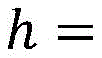

“基于密码的阈值令牌生成”可指生成认证令牌(例如,发放给用户以获得对受保护资源的访问)的过程,其包括在满足或未满足某一资源阈值时令牌生成或恢复的内置限制。例如,可存在一起共同工作以生成认证令牌的多个认证服务器,使得仅在阈值数目的认证服务器被破解时才可能获得与令牌生成相关联的长期密钥和用户凭证。"Password-based threshold token generation" may refer to the process of generating an authentication token (eg, issued to a user to gain access to a protected resource) that includes token generation or recovery when a certain resource threshold is or is not met built-in restrictions. For example, there may be multiple authentication servers that work together to generate an authentication token, so that the long-term key and user credentials associated with token generation are only likely to be obtained when a threshold number of authentication servers are compromised.
“基于密码的阈值认证”可大体上指涉及基于密码的阈值令牌生成的任何基于令牌的认证方法,或根据术语中的字母大小写,所述术语可具体指基于密码的阈值认证(Password-based Threshold Authentication,在本文中缩写为PbTA)。"Password-based threshold authentication" may refer generally to any token-based authentication method involving password-based threshold token generation, or depending on the capitalization of the term, the term may specifically refer to password-based threshold authentication. -based Threshold Authentication, abbreviated as PbTA in this article).
“基于密码的阈值认证”或PbTA是一种协议,其建立的特定目标是,使基于密码的令牌生成能抵御服务器攻破,而服务器攻破可能会破解长期密钥和用户凭证。在存在可能攻破身份服务器子组的敌手的情况下,PbTA建立必要的令牌不可伪造性和密码安全性的安全要求。为了实现这种不可伪造性和密码安全性,PbTA可能会将身份提供商(例如,认证服务器)作用分布在n个服务器当中,所述服务器共同验证客户端的密码并为客户端生成认证令牌。PbTA使任何t(2≤t≤n)个服务器能够认证客户端并生成有效令牌,而最多破解t-1个服务器的任何攻击者无法伪造有效令牌或安装离线词典攻击。"Password-Based Threshold Authentication" or PbTA is a protocol established with the specific goal of making password-based token generation resistant to server breaches that could potentially compromise long-term keys and user credentials. PbTA establishes the necessary security requirements of token unforgeability and cryptographic security in the presence of an adversary that could compromise a subgroup of identity servers. To achieve this unforgeability and cryptographic security, PbTA may distribute the role of an identity provider (eg, an authentication server) among n servers that collectively verify the client's password and generate an authentication token for the client. PbTA enables any t (2≤t≤n) servers to authenticate clients and generate valid tokens, while any attacker cracking at most t-1 servers cannot forge valid tokens or install offline dictionary attacks.
“基于PASsword的阈值认证”或PASTA是基于令牌的认证的总体框架,涉及阈值不经意伪随机函数(TOPRF)和任意阈值令牌生成(threshold token generation,TTG)方案(即,阈值MAC或数字签名)。PASTA可遵守PbTA协议,并且符合令牌不可伪造性和密码安全性的安全要求。"PASsword-based Threshold Authentication" or PASTA is an overall framework for token-based authentication involving Threshold Inattentive Pseudo-Random Functions (TOPRF) and arbitrary Threshold Token Generation (TTG) schemes (i.e., Threshold MAC or Digital Signatures) ). PASTA complies with the PbTA protocol and meets the security requirements for token unforgeability and cryptographic security.
“消息认证码”(message authentication code,MAC),有时称为标记,是用于认证消息并确认消息未被改变且来自所述发送方的一个短信息。因此,MAC可通过允许验证者检测消息内容的任何改变来保护消息的数据完整性以及其真实性。MAC的作用可与密码散列函数类似,并且必须抵抗选定明文攻击下存在的伪造。MAC与数字签名的不同之处在于,MAC均使用同一秘密密钥生成和验证。因此,MAC的发送方和接收方必须在发起通信(例如,对称加密)之前协定同一秘密密钥。A "message authentication code" (MAC), sometimes called a token, is a short message used to authenticate a message and confirm that the message has not been altered and is from the sender. Therefore, the MAC can protect the data integrity of the message as well as its authenticity by allowing the verifier to detect any changes in the content of the message. A MAC can act like a cryptographic hash function and must resist forgery under chosen-plaintext attacks. A MAC differs from a digital signature in that both are generated and verified using the same secret key. Therefore, the sender and receiver of a MAC must agree on the same secret key before initiating communication (eg, symmetric encryption).
“阈值不经意伪随机函数(TOPRF)”可以是满足不可预测性(在函数输出中)和不经意性这两个性质的函数。如果在函数应用于随机输入值时难以预测函数的输出,则所述函数符合不可预测性性质。如果在输出(例如将函数应用于输入值的结果)可获得时难以猜测输入值,则所述函数符合不经意性性质。A "threshold inadvertent pseudo-random function (TOPRF)" can be a function that satisfies both properties of unpredictability (in the output of the function) and inadvertence. A function conforms to the unpredictability property if it is difficult to predict the output of the function when applied to random input values. If the input value is difficult to guess when the output (eg, the result of applying the function to the input value) is available, the function conforms to the inadvertent property.
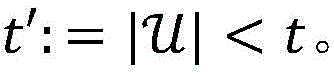
“阈值令牌生成(TTG)方案”是生成用于基于令牌的认证中的令牌的方式,其中生成认证令牌的任务分布在一组n个服务器当中,使得必须联系至少阈值t数目的服务器来计算令牌。TTG提供强大的不可伪造性保证:即使服务器中的t′<t个服务器遭攻陷(corrupt),任何时候需要关于某一新值的令牌,都必须联系至少t-t′个服务器。A "threshold token generation (TTG) scheme" is a way of generating tokens for use in token-based authentication, where the task of generating an authentication token is distributed among a set of n servers such that at least a threshold t number of server to calculate the token. TTG provides strong unforgeability guarantees: even if t'<t of servers are corrupted, anytime a token of a new value is needed, at least t-t' servers must be contacted.
具体实施方式Detailed ways
在本节中,首先提供对基于令牌的认证的概述,然后是本文所用的某些记法的基本正式定义。随后论述基于密码的阈值认证(PbTA)协议以及遵守PbTA的令牌认证的系统方法的实施例,所述实施例可用于以抵御服务器攻破的方式保护和授权对安全资源、服务和应用程序的访问,而服务器攻破可能会破解长期密钥和用户凭证。具体地说,认证服务器的作用可分布在多个服务器计算机当中,所述多个服务器计算机必须一起共同操作以执行令牌生成或认证。任何t个服务器能够共同验证密码并生成认证令牌,而t-1个服务器无法完成这一点。因此,如果t-1个服务器被攻击者破解,攻击者将无法伪造有效令牌或安装离线字典攻击。In this section, an overview of token-based authentication is provided first, followed by basic formal definitions of some of the notations used in this paper. Embodiments of a password-based threshold authentication (PbTA) protocol and a system method for PbTA-compliant token authentication that can be used to protect and authorize access to secure resources, services, and applications in a manner that is resistant to server breaches are then discussed , while a server breach could potentially compromise long-term keys and user credentials. Specifically, the role of the authentication server may be distributed among multiple server computers that must operate together to perform token generation or authentication. Any t servers are able to jointly verify the password and generate an authentication token, which cannot be done by t-1 servers. Therefore, if t-1 servers are compromised by an attacker, the attacker will not be able to forge a valid token or install an offline dictionary attack.
论述PbTA之后解释作为建构PbTA方案的总体框架的基于PASsword的阈值认证(PASTA),所述框架允许利用基于密码的阈值令牌生成的不同方法,同时仍保留PbTA的常见特征,例如强密码安全性和不可伪造性。提供遵守PASTA的一些示例性阈值令牌生成方案,并将这些方案的性能结果与基于令牌的认证的典型性能结果进行比较。为此目的呈现各种证明。The discussion of PbTA is followed by an explanation of PASsword-based Threshold Authentication (PASTA) as an overarching framework for constructing a PbTA scheme that allows for different methods of utilizing password-based threshold token generation, while still retaining common features of PbTA, such as strong password security and unforgeability. Some exemplary threshold token generation schemes that comply with PASTA are provided and the performance results of these schemes are compared to typical performance results of token-based authentication. Various proofs are presented for this purpose.
I.基于令牌的认证的概述I. Overview of Token-Based Authentication
典型的基于令牌的认证方法利用普通的基于密码的令牌生成协议来生成认证令牌,这无法抵御认证服务器攻破。图1示出描绘一般实施于许多基于令牌的认证方案中的示例令牌生成阶段的流程图。Typical token-based authentication methods utilize common password-based token generation protocols to generate authentication tokens, which are not resistant to authentication server breaches. FIG. 1 shows a flowchart depicting an example token generation phase typically implemented in many token-based authentication schemes.
应注意,图1中显示的令牌生成阶段前面是单次初始注册阶段(未示出),在单次初始注册阶段期间,客户端102注册其用户名/密码,并且客户端102将其用户名和散列的密码h=H(密码)存储在ID服务器105(一种服务器计算机)上。更具体地说,作为注册阶段的部分,客户端102可向ID服务器105注册
在步骤1,在登录阶段,客户端102将其用户名(uid)和散列的密码h'发送到ID服务器105。由于ID服务器105已从注册阶段拥有了散列的密码h,因此ID服务器105查看是否h′=h(例如其在注册期间记录的用户名的值)。In
在步骤2,如果校验通过,则ID服务器105使用主秘密密钥msk来计算所述用户名的令牌authmsk(x),其中auth是MAC或数字签名,并且x是要签名的数据(例如,认证请求中提供的用户名或其它数据)。In
在步骤3,ID服务器105可将令牌发送到客户端102,所述客户端可存储令牌以用于获取对例如应用程序服务器104的受保护资源的访问。当客户端102寻求登录到应用程序服务器104时,接着在步骤4,客户端102可向应用程序服务器104提供令牌。应用程序服务器104可具有验证密钥(vk),以校验签名的(即,利用主秘密密钥msk签名的)令牌对于要签名的数据有效。在步骤5,应用程序服务器104可准予或拒绝客户端102对受保护资源的访问。At
图2示出这些现有的基于令牌的认证方案中使用的典型认证令牌的示例内容,所述认证方案利用普通的基于密码的令牌生成协议来生成认证令牌。具体地说,此图示出使用散列消息认证码(HMAC)的样本JSONWeb令牌的内容。Figure 2 shows example contents of a typical authentication token used in these existing token-based authentication schemes that utilize a common password-based token generation protocol to generate authentication tokens. Specifically, this figure shows the contents of a sample JSON Web Token using a Hash Message Authentication Code (HMAC).
在图2中,base64编码令牌的内容示于左图202上。这是发送和存储的内容。解码内容显示在右侧,在右图204、206和208中。当内容被解码时,令牌含有带有算法和令牌类型的标头(在图204中示出)、包括各种属性的有效负载(在图206中示出)以及标头/有效负载的HMAC(在图208中示出)。In Figure 2, the content of the base64 encoded token is shown on the
现在回来参考图1,从图1中可看出,在典型的基于令牌的认证方案中,如果ID服务器105被攻破,则主秘密密钥msk和散列的密码h都会被破解。尽管被散列,客户端密码仍可使用离线字典攻击予以恢复。在字典攻击中,攻击者可尝试不同的密码,并将所述不同密码散列以查看它们是否匹配特定用户名的条目。字典可用于选择要尝试的密码。此类攻击可揭示与特定散列相对应的密码,其中所述密码可能与其它服务器一起使用,因为用户通常重复使用密码。由于攻击者具有散列和用户名的列表,因此攻击者可能已经能够获得此特定服务的访问权。使用加盐(例如添加某一程度的随机性到用户名)或使用内存依赖函数,可减缓针对散列的密码的离线字典攻击,但它们未从根本上解决问题。Referring now back to FIG. 1, it can be seen that in a typical token-based authentication scheme, if the ID server 105 is compromised, both the master secret key msk and the hashed password h are broken. Although hashed, the client password can be recovered using an offline dictionary attack. In a dictionary attack, an attacker can try different passwords and hash the different passwords to see if they match an entry for a particular username. A dictionary can be used to select passwords to try. Such attacks can reveal passwords corresponding to particular hashes that may be used with other servers, since users often reuse passwords. Since the attacker has a list of hashes and usernames, the attacker may have been able to gain access to this particular service. Offline dictionary attacks on hashed passwords can be mitigated using salting (eg adding some degree of randomness to usernames) or using memory dependent functions, but they do not fundamentally solve the problem.
现在预期对这些传统的基于令牌的认证方法的各种特征和修改,以实现解决这些问题的特定目标。在本文所描述的基于令牌的认证系统的一些实施例中,可通过将主秘密密钥(msk)分布在多个认证服务器当中而使其抵御攻破。具体地说,主秘密密钥可分布在服务器当中,使得服务器中的任何服务器可一起使用阈值认证(TA)方案(即,阈值MAC或签名)来生成令牌。然而,在无必要的阈值t个服务器(例如t-1或更少)的情况下,服务器无法伪造有效令牌或恢复msk。Various features and modifications to these traditional token-based authentication methods are now contemplated to achieve specific goals that address these issues. In some embodiments of the token-based authentication system described herein, the master secret key (msk) can be made resistant to breaches by distributing it among multiple authentication servers. Specifically, the master secret key can be distributed among the servers so that any of the servers can use a threshold authentication (TA) scheme together (ie, a threshold MAC or signature) to generate a token. However, with an unnecessary threshold of t servers (eg, t-1 or less), the servers cannot forge valid tokens or recover msk.
为了保护用户散列的密码免遭恢复,在一些实施例中,散列函数(H)可替换为伪随机函数F。每个客户端可生成和使用其自身秘密密钥k,且其秘密密钥k存储在认证服务器(例如ID服务器105)处。为实现这一点,不经意伪随机函数(OPRF)协议可允许客户端获得h=Fk(pw)而无须记住/获得k或向服务器揭示关于其密码(pw)的任何信息。这可防止偷听者对密码的恢复,但被破解服务器仍可安装字典攻击,因为它知道k且因此可计算不同密码的Fk(pw′)。To protect the user's hashed password from recovery, the hash function (H) may be replaced by a pseudo-random function F in some embodiments. Each client can generate and use its own secret key k, and its secret key k is stored at an authentication server (eg, ID server 105). To achieve this, the Oblivious Pseudo-Random Function (OPRF) protocol may allow the client to obtain h= Fk (pw) without having to remember/obtain k or reveal any information about its password (pw) to the server. This prevents an eavesdropper from recovering the password, but the cracked server can still install a dictionary attack because it knows k and can therefore calculate Fk (pw') for different passwords.
为了消除字典攻击的可能性,在一些实施例中,可使用阈值不经意伪随机函数(TOPRF)来替代散列函数,并且每个客户端的秘密密钥k可在服务器之间共享,使得其中任何t个服务器可共同计算Fk(pw)但任何t-1个服务器无法计算。然而,所得登录协议将至少需要四个消息:客户端和服务器执行TOPRF协议(这使客户端至少需要两个消息来计算h),客户端将其返回到服务器作为第三消息以进行验证,并且服务器通过令牌认证方案的令牌份额响应以作为第四消息。To eliminate the possibility of dictionary attacks, in some embodiments, a threshold inadvertent pseudo-random function (TOPRF) can be used in place of the hash function, and each client's secret key k can be shared among servers such that any of t A number of servers can collectively compute Fk (pw) but no t-1 servers can compute it. However, the resulting login protocol will require at least four messages: the client and server execute the TOPRF protocol (which makes the client need at least two messages to compute h), the client returns it to the server as a third message for verification, and The server responds with the token share of the token authentication scheme as the fourth message.
因此,为了减小往返消息和交互的数目,在一些实施例中,服务器可存储h=Fk)pw)(来自注册阶段),发送其在从h(即,Eh(·),其中E是对称密钥加密方案)导出的密钥下加密的令牌认证方案的消息(例如其令牌份额)的加密。此消息连同TOPRF的第二消息一起发送。如果客户端在TOPRF的第一消息中使用了正确的密码,则客户端可计算h并解密密文以获得t个令牌份额,并将令牌份额组合以恢复可用于获得安全资源访问权的最终令牌。然而,可能仍存在客户端伪装攻击可能性的细微安全问题。具体地说,攻击者可能破解单个服务器并检取h,然后即使在不知道h所属的客户端密码的情况下也伪装成所述客户端。然后,攻击者可参与登录协议以获得令牌;由于攻击者知道h,因此它可在从不知道客户端的密码的情况下解密服务器发送的密文并将令牌份额组合以获得有效令牌。Therefore, in order to reduce the number of round-trip messages and interactions, in some embodiments, the server may store h = F k )pw) (from the registration phase), send it from h (ie, E h (·), where E is the encryption of a message (eg its token share) of a token authentication scheme encrypted under a key derived from a symmetric key encryption scheme. This message is sent along with the second message of TOPRF. If the client used the correct cipher in the first message of TOPRF, the client can compute h and decrypt the ciphertext to obtain t token shares, and combine the token shares to restore the final token. However, there may still be subtle security issues with the possibility of client-side masquerading attacks. Specifically, an attacker could hack a single server and retrieve h, then masquerade as the client to which h belongs without knowing the secret of the client to which h belongs. The attacker can then participate in the login protocol to obtain a token; since the attacker knows h, it can decrypt the ciphertext sent by the server and combine the token shares to obtain a valid token without ever knowing the client's password.
为了消除客户端伪装攻击的可能性,在一些实施例中,可修改注册阶段,使得在注册阶段计算h的客户端仅发送hi=H′(h,i)到服务器i,其中H′假设为随机预言。换句话说,从不向任何服务器揭示或由任何服务器存储h,并且每个服务器仅习知其对应的hi。因此,客户端伪装攻击不再起作用,因为破解最多t-1个服务器仅向攻击者揭示hi中的t-1个,攻击者仍会缺少一个份额来生成有效令牌。To eliminate the possibility of client masquerading attacks, in some embodiments, the registration phase may be modified such that the client computing h during the registration phase only sends h i = H'(h, i) to server i, where H' assumes is a random prediction. In other words, h is never revealed to or stored by any server, and each server only knows its corresponding hi . Therefore, the client masquerading attack no longer works, because cracking at most t-1 servers only reveals t-1 of hi to the attacker, who would still be missing a share to generate a valid token.
最后,存在以下问题:攻击者能够获得所有可能密码的所有PRF值h=PRFk(password),然后利用针对一个客户端的在线攻击来针对另一客户端。具体地说,攻击者通过与服务器参与单点登录协议来伪装成另一客户端。由于攻击者已知道所有可能的PRF值,因此它可尝试使用收集到的PRF值字典(离线)来解密从服务器发送的密文,以找到正确值并因此恢复密码。应注意,将客户端用户名包括为PRF的输入的部分不能解决问题,因为服务器无法在不向结构添加此效果昂贵的零知识证明的情况下校验攻击者在TOPRF协议中并入了什么用户名。Finally, there is the problem that an attacker can obtain all PRF values h = PRF k (password) for all possible passwords and then use an online attack against one client to target another client. Specifically, the attacker pretends to be another client by engaging in a single sign-on protocol with the server. Since the attacker already knows all possible PRF values, it can try to decrypt the ciphertext sent from the server using the collected dictionary of PRF values (offline) to find the correct value and thus recover the password. It should be noted that including the client username as part of the input to the PRF does not solve the problem, as the server cannot verify what user the attacker has incorporated into the TOPRF protocol without adding this expensive zero-knowledge proof to the structure name.
一个自然解决方案是使每个客户端具有不同TOPRF密钥,以使得从一个客户端习得的PRF值观对于任何其它客户端都是无用的。这意味着服务器需要在全局设置阶段生成足够大量的TOPRF密钥,但这并不现实。然而,每个客户端可生成其自身的TOPRF密钥和秘密份额,其在注册阶段将所述TOPRF密钥和秘密份额分布在服务器之间。因此,在一些实施例中,每个客户端生成其自身的可分布在服务器当中的唯一TOPRF密钥和唯一秘密份额集。在一些实施例中,客户端可能不必持久存储所述唯一TOPRF密钥或密钥份额,因为客户端能够在没有所述唯一TOPRF密钥或密钥份额的情况下生成认证令牌。A natural solution is to have each client have a different TOPRF key, so that the PRF values learned from one client are useless to any other client. This means that the server needs to generate a sufficiently large number of TOPRF keys during the global setup phase, which is not realistic. However, each client may generate its own TOPRF key and secret share, which it distributes among the servers during the registration phase. Thus, in some embodiments, each client generates its own set of unique TOPRF keys and unique secret shares that can be distributed among the servers. In some embodiments, the client may not have to persistently store the unique TOPRF key or key share because the client can generate an authentication token without the unique TOPRF key or key share.
这些修改和特征涵盖于基于密码的阈值认证(PbTA)方案中,将在本文所用的某些记法和术语的以下基本的正式定义之后进一步描述所述方案。These modifications and features are encompassed in a password-based threshold authentication (PbTA) scheme, which will be further described following the following basic formal definitions of certain notations and terms used herein.
II.基本概念II. Basic Concepts
A.记法A. Notation
本节定义并描述了在整个公开中将会出现的一些记法。This section defines and describes some of the notations that will appear throughout this disclosure.
令κ表示安全参数。令Z表示所有整数的集合,并且Zn表示集{0,1,2,...,n-1}。
令x←$S表示x是从集合S随机统一取样。令PPT为概率多项式时间的速记并且negl表示可忽略函数。Let x←$S denote that x is randomly uniformly sampled from the set S. Let PPT be shorthand for probabilistic polynomial time and negl denote a negligible function.
令[[a]]充当(a,a1,...,an)的速记,其中a1,...,an是a的份额。具体方案将指定如何生成份额。n的值自上下文可知。Let [[a]] act as a shorthand for ( a , a1,..., an ), where a1 ,...,an are shares of a. Specific scenarios will specify how shares are generated. The value of n is known from the context.
令预言描述中的任何“要求”语句都与对输入施行一些校验相关联。如果任何校验失败,则预言输出⊥。Let any "require" statement in the oracle description be associated with performing some validation on the input. If any check fails, the oracle outputs ⊥.
在任何安全博弈中(例如与图7相关联的安全博弈),令<O>表示博弈中限定的所有预言的集合。例如,如果博弈限定预言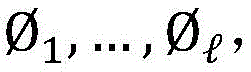

B.秘密共享和秘密份额B. Secret Sharing and Secret Shares
本公开参考份额,例如秘密份额。在此类情况下,秘密(例如令牌或密钥)可分成份额,所述份额可在不直接揭示秘密的情况下进行分布。拥有足够量的份额可实现根据所述份额来重建秘密。This disclosure refers to shares, such as secret shares. In such cases, the secret (eg, token or key) can be divided into shares, which can be distributed without directly revealing the secret. Having a sufficient number of shares enables the secret to be reconstructed from the shares.
沙米尔的秘密共享(Shamir's secret sharing)可指生成秘密的份额以使得阈值份额足以重建秘密但任何较小数目会将秘密完全隐蔽的方式。例如,令GenShare为算法,其采用输入p、n、t、{(i,αi)}i∈S s.t.t≤n<p,p为素数,
为了生成(T、N)——秘密s∈Zp的沙米尔共享,给予Genshare p、n、t和(0、s)作为输入以产生份额s0、s1、...、sn。使用如上文所定义的速记,可将输出紧凑地写为
本公开还引用循环群生成器。令GroupGen为PPT算法,当输入为1κ时输出(p,g,G),其中p=Θ(κ),p为素数,G是阶次p的群,并且д是G的生成器。乘法用于表示群运算。This disclosure also refers to cyclic group generators. Let GroupGen be the PPT algorithm that outputs (p, g, G) when the input is 1 κ , where p = Θ(κ), p is a prime number, G is a group of order p, and д is the generator of G. Multiplication is used to represent group operations.
C.难度假设C. Difficulty Assumption
本公开参考阈值阈值不经意伪随机函数(TOPRF)。可假设被视作TOPRF的函数满足已证实与TOPRF相关联的某些性质。例如,在随机预言模型中,可假设阈值不经意PRF(TOPRF)在间隙阈值一对多Diffie-Hellman密钥交换算法(Gap-TOMDH)下是UC安全的。Gap-TOMDH可能在通用群模型中很难。The present disclosure refers to Threshold Threshold Inadvertent Pseudo-Random Function (TOPRF). It can be assumed that the function considered as TOPRF satisfies certain properties that have been shown to be associated with TOPRF. For example, in a random oracle model, a threshold inadvertent PRF (TOPRF) can be assumed to be UC secure under a gap threshold one-to-many Diffie-Hellman key exchange algorithm (Gap-TOMDH). Gap-TOMDH can be difficult in general group models.
具体地说,对于


因此,如果对于所有t′,t,n,N使得t′<t≤n并且对于所有PPT敌手Adv,存在可忽略函数negl s.t.,则循环群生成器GroupGen满足间隙阈值一对多Diffie-Hellman密钥交换算法(Gap-TOMDH)假设。One-MoreAdv(1κ,t′,t,n,N)输出1,其中概率最多为negl(κ)。One-MoreAdv(1κ,t′,t,n,N)如下定义:Therefore, the cyclic group generator GroupGen satisfies the gap threshold one-to-many Diffie-Hellman secret if for all t', t, n, N such that t'< t≤n and for all PPT adversaries Adv there is a negligible function negl st Key exchange algorithm (Gap-TOMDH) assumption. One-More Adv (1 κ , t', t, n, N) outputs 1 with probability at most negl(κ). One-More Adv ( 1κ , t', t, n, N) is defined as:
One-MoreAdv(1κ,t′,t,n,N):One-More Adv ( 1κ , t', t, n, N):
1.
2.
3.

4.
5.q1,...,qn:=05. q 1 , ..., q n :=0
6.
7.输出1,当且仅当7.
-
-

-

·要求:
·将qi递增1Increment q i by 1
·返回

·要求:g1,g2,h1,
·返回1,当且仅当


在图4中进一步示出One-MoreAdv(1κ,t′,t,n,N),但在此处为了方便起见已予以重现。One-More Adv ( 1κ , t', t, n, N) is further shown in Figure 4, but reproduced here for convenience.
这可参考Gap-TOMDH博弈进行论述,其中次数为t-1的随机多项式被挑选,但Adv要在t′点选择其值(步骤3和4)。Adv获得对两个预言的访问:This can be discussed with reference to the Gap-TOMDH game, where a random polynomial of degree t-1 is chosen, but Adv chooses its value at point t' (
·对于其不知道的ki,

·
直观地讲,为了计算形式为


如果Adv坚持此策略,则其需要完全重复此策略来针对不同基数h计算


当然,敌手不会限于按上文所描述的方式产生对。然而,Gap-TOMDH假设不管PPT敌手采用什么策略,其实际上也就只能到达这个程度。Of course, the adversary is not limited to generating pairs in the manner described above. However, Gap-TOMDH assumes that no matter what strategy the PPT adversary employs, it can only go so far.
D.阈值令牌生成D. Threshold token generation
如先前所提及,阈值令牌生成(TTG)方案,或者阈值认证(TA)方案,将生成认证令牌的任务分布在一组n个务器当中,使得必须联系至少阈值t数目的服务器来计算令牌。TTG提供强大的不可伪造性保证:即使服务器中的t′<t个服务器遭攻陷(corrupt),任何时候需要关于某一新值x的令牌,都必须联系至少t-t′个服务器。As mentioned earlier, a threshold token generation (TTG) scheme, or a threshold authentication (TA) scheme, distributes the task of generating an authentication token among a set of n servers such that at least a threshold t number of servers must be contacted to Calculate the token. TTG provides strong unforgeability guarantees: even if t'<t of the servers are corrupted, anytime a token for some new value x is needed, at least t-t' servers must be contacted.
这些TTG方案可进一步正式定义为四个PPT算法(Setup、PartEval、Combine、Verify)中的元组:These TTG schemes can be further formally defined as tuples in the four PPT algorithms (Setup, PartEval, Combine, Verify):
·
·PartEval(ski,x)→yi。此算法生成某一输入的令牌份额。第i方通过利用ski和x运行PartEval来计算x的第i份额yi。· PartEval(ski,x)→ yi . This algorithm generates token shares for a certain input. The ith party computes the ith share yi of x by running PartEval with ski and x.
·Combine({i,yi}i∈S)=:tk/⊥。此算法组合从集合S中的各方接收到的份额以生成令牌tk。如果算法失败,其输出由⊥标示。· Combine({i,yi}i∈S)=:tk/⊥. This algorithm combines the shares received from the parties in the set S to generate the token tk. If the algorithm fails, its output is denoted by ⊥.
·Verify(vk,tk)=:1/0。此算法使用验证密钥vk验证令牌tk是否有效。(输出1表示有效性。)· Verify(vk, tk) =: 1/0. This algorithm verifies that the token tk is valid using the verification key vk. (
为了校验一致性,对于所有κ∈N,任何n,t∈N,使得t≤n,通过Setup(1κ,n,t)生成的所有(

TTG方案还遵守并满足不可伪造性(Unforgeability)性质,其可正式定义为,对于所有PPT敌手Adv,存在可忽略函数negl,使得以下不可伪造性博弈输出1的概率最多是negl(κ):The TTG scheme also obeys and satisfies the property of Unforgeability, which can be formally defined as, for all PPT adversaries Adv, there is a negligible function negl, such that the probability of the following unforgeability game outputting 1 is at most negl(κ):
UnforgeabilityTOP,Adv(1κ,n,t):UnforgeabilityTOP, Adv ( 1κ ,n,t):
·初始化。运行Setup(1κ,n,t)以获得(sk,vk,pp)。提供pp到Adv。·initialization. Run Setup(1 κ , n, t) to obtain (sk, vk, pp). Provide pp to Adv.
·攻陷。从Adv接收一组攻陷方

·评估。响应于Adv的查询(Eval,x,i),其中
·质询。Adv输出
-
-
如果两个校验均成功,输出1。If both checks are successful,
因此,可通过首先运行Setup(1k,n,t)获得(
本公开现在开始论述如本文所预期的基于密码的阈值认证(PbTA)协议,该协议为了增加安全性而引入了优于传统的基于令牌的认证方案的修改和特征。The present disclosure now begins with a discussion of the Password-Based Threshold Authentication (PbTA) protocol, as contemplated herein, which introduces modifications and features over traditional token-based authentication schemes for increased security.
III.基于密码的阈值认证III. Password-Based Threshold Authentication
A.PbTA简介A. Introduction to PbTA
在基于密码的阈值认证(PbTA)协议下,身份提供商(例如,认证服务器)作用被分布在n个服务器当中,所述服务器共同验证客户端的密码并为客户端生成认证令牌。PbTA使任何t(2≤t≤n)个服务器能够认证客户端并生成有效令牌,而最多破解t-1个服务器的任何攻击者无法伪造有效令牌或安装离线词典攻击。Under the Password Based Threshold Authentication (PbTA) protocol, the role of an identity provider (eg, an authentication server) is distributed among n servers that collectively verify a client's password and generate an authentication token for the client. PbTA enables any t (2≤t≤n) servers to authenticate clients and generate valid tokens, while any attacker cracking at most t-1 servers cannot forge valid tokens or install offline dictionary attacks.
更具体地说,在基于密码的阈值认证(PbTA)系统中,存在n个服务器和任何数目的客户端。PbTA自然分为四个阶段:(i)全局设置阶段;(ii)注册阶段;(iii)登录阶段;以及(iv)验证阶段。在全局设置阶段期间,主秘密密钥在服务器当中共享,服务器稍后将所述主秘密密钥用于生成认证令牌。在注册阶段,客户端C基于其用户名和密码计算注册消息(每个服务器一个消息),并将所述消息发送到服务器,每个服务器处理其接收的消息并存储该客户端的唯一记录。在登录阶段,客户端通过发送其中并入有其用户名/密码和要包括在令牌中的额外信息的请求消息来发起认证。每个服务器使用其用户记录来计算响应。此响应含有客户端最终想要获得的认证令牌的份额。如果客户端的密码匹配,则客户端能够将令牌份额组合且最终确定单个有效令牌以用于将来的访问。在验证阶段期间,可使用验证算法来验证最终确定的令牌,所述验证算法采用公用或专用(取决于令牌类型)验证密钥来验证所述令牌是使用唯一主秘密密钥而生成。验证过程也可分布在多个服务器当中(基于MAC的令牌可能需要这一点)。More specifically, in a password-based threshold authentication (PbTA) system, there are n servers and any number of clients. PbTA is naturally divided into four phases: (i) global setup phase; (ii) registration phase; (iii) login phase; and (iv) verification phase. During the global setup phase, a master secret key is shared among the servers, which are later used by the servers to generate authentication tokens. During the registration phase, client C computes registration messages (one message per server) based on its username and password, and sends said messages to the servers, each of which processes the messages it receives and stores a unique record for that client. During the login phase, the client initiates authentication by sending a request message incorporating its username/password and additional information to be included in the token. Each server uses its user record to calculate the response. This response contains the share of the authentication token that the client ultimately wants to obtain. If the client's passwords match, the client can combine token shares and finalize a single valid token for future access. During the verification phase, the finalized token can be verified using a verification algorithm that employs a public or private (depending on token type) verification key to verify that the token was generated using a unique master secret key . The authentication process can also be distributed among multiple servers (this may be required for MAC based tokens).
在PbTA下,服务器的身份可以是固定和公开的。具体地说,客户端能够使用加密到第i服务器的公用密钥PKi。在一些实施例中,仅在注册过程中需要公用密钥,而在令牌生成期间不需要。客户端不需要存储任何永久秘密信息。客户端唯一需要的秘密是其密码,所述密码不会存储在任何位置。客户端用于注册和登陆的装置可存储系统的某些公共参数(例如服务器的公用密钥)。Under PbTA, the identity of the server can be fixed and public. Specifically, the client can use the public key PK i encrypted to the i-th server. In some embodiments, the public key is only required during registration and not during token generation. The client does not need to store any permanent secret information. The only secret the client needs is its password, which is not stored anywhere. The means used by the client to register and log in may store certain public parameters of the system (eg the server's public key).
PbTA方案可正式定义为满足正确性要求的七个PPT算法(GlobalSetup、SignUp、Store、Request、Respond、Finalize、Verify)中的元组。The PbTA scheme can be formally defined as a tuple of seven PPT algorithms (GlobalSetup, SignUp, Store, Request, Respond, Finalize, Verify) that satisfy the correctness requirements.
GlobalSetup(1κ,n,t,P)→(sk,vk,pp,(SK1,...,SKn))算法将安全参数、服务器数目n、阈值t和密码空间P作为输入。为了令牌生成,其输出秘密密钥sk、密钥的份额sk1、sk2、...、skn以及验证密钥vk。为了与服务器的安全通信,其生成IND-CCA2公用密钥加密密钥对(PK1,SK1)、...、(PKn,SKn)。公共参数pp包括GlobalSetup的所有输入、公用密钥PK1、...、PKn和其它信息。(pp将是下文算法中的隐式输入。)n个服务器将由S1、...、Sn标示。对于i∈[n],Si接收(ski,SKi,pp)并初始化一组记录
在注册阶段期间,SignUp(C,pwd)→{(C,msgi)}i∈[n]算法将客户端id C和密码pwd∈P作为输入,并为每个服务器输出消息。Store(SKi,C,msgi):reci,C算法将秘密密钥SKi、客户端id C和消息msg作为输入,并输出记录reci,C。在不存在C的记录的情况下,Si在其记录列表reci中存储(C,reci,C),否则,其不做任何动作。During the registration phase, the SignUp(C, pwd) → {(C, msgi )} i ∈ [n] algorithm takes the client id C and the password pwd ∈ P as input and outputs a message for each server. Store(SK i , C, msgi ): The rec i ,C algorithm takes as input the secret key SK i , the client id C and the message msg, and outputs the record rec i,C . In case there is no record for C, Si stores (C, reci , C ) in its record list reci , otherwise it does nothing.
在登录阶段,


在验证阶段期间,Verify(vk,C,x,tk)→{0,1}.算法将验证密钥vk、客户端id C、值x和令牌tk作为输入,并输出1(表示有效性)或0。During the verification phase, Verify(vk, C, x, tk) → {0, 1}. The algorithm takes as input the verification key vk, client id C, value x and token tk and outputs 1 (indicating validity ) or 0.
对于所有


·((C,msg1),...,(C,msgn))←SignUp(C,pwd),·((C, msg 1 ), ..., (C, msg n ))←SignUp(C, pwd),
·reci,C:=Store(Ski,C,msgi),其中i∈[n],rec i,C :=Store(Sk i ,C, msgi ), where i∈[n],
·
·resi←Respond(ski,reci,C,x,reqi),其中
·
则Verify(vk,C,x,tk)=1。Then Verify(vk, C, x, tk)=1.
为了更好地理解PbTA方案的运行方式,分别在图3A和图3B中示出在PbTA协议下的注册和登录阶段。To better understand how the PbTA scheme works, the registration and login phases under the PbTA protocol are shown in Figures 3A and 3B, respectively.
具体地说,图3A示出在基于密码的阈值认证(PbTA)协议下的注册流程图。Specifically, FIG. 3A shows a flow chart of registration under the Password Based Threshold Authentication (PbTA) protocol.
PbTA方案中可存在两个或更多个认证服务器。在图中示出的实施例中,示出三个服务器:ID服务器311、ID服务器312和ID服务器313。There may be two or more authentication servers in the PbTA scheme. In the embodiment shown in the figure, three servers are shown: ID server 311 , ID server 312 and ID server 313 .
在一些实施例中,每个认证服务器可拥有和利用客户端301共享和已知的不同秘密份额。这些秘密份额可在初始设置阶段期间生成。In some embodiments, each authentication server may possess and utilize a different secret share shared and known by
然而,在其它实施例中,客户端301可生成一组密码份额并将其分布在认证服务器当中。系统中每个认证服务器可能有不同的秘密份额。在下文更详细地论述此类实施例。However, in other embodiments, the
在注册过程期间,客户端301从用户接收用户标识符(例如,用户名)和密码凭证。在一些实施例中,客户端301可计算密码的散列(h)。During the registration process, the
代替由客户端301将此唯一散列的密码(h)发送到每个可用服务器,客户端301可通过仅客户端知道的随机性来创建密码的盲化散列。可将盲化散列发送给每个服务器。Instead of having the
在一些实施例中,客户端301还可根据充当主秘密密钥的散列的密码(h)生成一组秘密份额(ski)。因此,秘密份额将从h导出,并且秘密份额的数目将对应于认证服务器的数目。In some embodiments,
在步骤1,客户端301发送密码i的盲化散列、对应的秘密份额和用户标识符到三个ID服务器中的每个服务器:ID服务器311、ID服务器312和ID服务器313。在一些实施例中,如图所示,客户端301可针对每个服务器生成消息记录uid,其可含有用户名或用户标识符(uid)、盲化散列和/或从h导出的用于该服务器的对应秘密份额。In
在一些实施例中,客户端301还可通过将服务器的对应秘密份额应用到盲化散列来为每个服务器生成散列部分。客户端301可在所述消息内或在单独通信中发送该散列部分。每个散列部分可称为hi,其中hi=H′(h,i)对应服务器i,并且H′假设为随机预言。在图中,示出三个服务器,因此客户端301向相应服务器提供三个散列部分,h1、h2和h3。这相对于图10和11进行了额外详细描述。In some embodiments,
在步骤2,每个ID服务器可存储其接收的记录或信息,例如消息中对应于特定用户标识符的秘密份额,以及还基于用户标识符保存的对应散列部分(例如,来自客户端301)。At
在一些实施例中,客户端301不必继续存储散列的密码(h)、生成的秘密份额或散列的部分,因为客户端301能够在客户端301请求用于生成认证令牌的令牌份额时从认证服务器间接检取该信息。In some embodiments, the
图3B示出在注册之后在基于密码的阈值认证(PbTA)协议下的登录流程图。Figure 3B shows a login flow diagram under Password Based Threshold Authentication (PbTA) protocol after registration.
在步骤1,客户端351向三个ID服务器中的每个服务器发送请求消息:ID服务器361、ID服务器362和ID服务器363。每个请求消息在图中指示为请求uid。客户端351从每个服务器请求加密令牌份额(例如,其对令牌认证方案的消息的加密)。在每个消息中,客户端351可提供用户标识符,认证服务器可使用所述用户标识符来检取与该用户标识符(其在注册过程期间存储)相关联的秘密份额ski。令牌份额可在从该服务器的用户散列部分hi(即,使用Eh(·),其中E是对称密钥加密方案)导出的密钥下加密,所述密钥在注册过程期间保存。At
在步骤2,每个ID服务器计算其令牌的加密份额,在图中指示为令牌i uid。每个服务器针对与客户端351相关联的用户提供基于该服务器的用户散列部分hi加密的令牌份额。例如,ID服务器361可将h1用于加密密钥,ID服务器361可将h2用于加密密钥,诸如此类。In
在步骤3,每个ID服务器在响应消息中将其加密令牌份额发送到客户端351。加密令牌份额标记为令牌i uid。In
在步骤4,客户端351可解密响应消息中的所有加密令牌份额,以获得所有令牌份额(在此实例中为三个)。客户端351可解密每个加密令牌份额,因为客户端351最初生成在注册过程期间分布到认证服务器的所有散列部分hi,并且客户端351可使用每个服务器的对应散列部分来解密从该服务器接收的加密令牌份额。替代地(例如,如果客户端351未本地保存散列部分),客户端351可从可用于确定散列部分的服务器接收部分散列响应。相对于图10和11进一步描述了此方法。通过所有令牌份额,客户端351可将其组合以恢复最终令牌,所述最终令牌可用来获得对安全资源(例如,应用程序服务器352)的访问。最终令牌标记为令牌uid。At
在步骤5,客户端351将完整令牌发送到应用程序服务器352,所述应用程序服务器具有可用于验证令牌的验证密钥(vk)。在步骤6,应用程序服务器352将通知客户端351其是否成功(例如令牌是否有效)。At step 5, the
在一些实施例中,客户端351可能未本地存储在注册期间分布到认证服务器的秘密份额或散列部分hi,这意味着客户端351可能需要来自认证服务器的额外信息才能解密加密令牌份额。关于图10到11更详细地论述此类实施例。In some embodiments, the
由于现在已经了解了PbTA方案的基本操作,现在进一步论述在PbTA方案中发现的重要特征。Now that the basic operation of the PbTA scheme is understood, important features found in the PbTA scheme are now discussed further.
B.阈值不经意伪随机函数(TOPRF)B. Threshold Inadvertent Pseudo-Random Function (TOPRF)
PbTA的一个特征是使用阈值不经意伪随机函数(TOPRF)。伪随机函数(PRF)系列是确定性函数的带密钥系列。从所述系列随机选择的函数与随机函数无区别。不经意PRF(OPRF)是PRF到双方场景的扩展,其中服务器S持有密钥,而P方持有输入。S可在基于输入计算PRF值时帮助P,但这样做时,P不应获得任何其它信息,并且S不应习得P的输入。阈值不经意伪随机函数(TOPRF)是对此的进一步扩展,其天然满足不经意性和不可预测性这两个性质。A feature of PbTA is the use of a threshold inadvertent pseudorandom function (TOPRF). A pseudorandom function (PRF) series is a keyed series of deterministic functions. A function randomly selected from the series is indistinguishable from a random function. Inadvertent PRF (OPRF) is an extension of PRF to the two-party scenario, where server S holds the key and party P holds the input. S may help P in computing the PRF value based on the input, but in doing so, P should not gain any other information, and S should not learn P's input. Threshold inadvertent pseudo-random function (TOPRF) is a further extension of this, which naturally satisfies both inadvertent and unpredictable properties.
具体地说,TOPRF可被称为
·Setup(1κ,n,t)→(sk,pp)。此算法生成n秘密密钥份额sk1、sk2、...、skn和公共参数pp。份额ski被给予i方。• Setup( 1κ ,n,t)→(sk,pp). This algorithm generates n secret key shares sk 1 , sk 2 , ..., sk n and public parameters pp. The share sk i is given to the i party.
·Encode(x,ρ)=:c。此算法使用随机性
·Eval(ski,c)→zi。此算法从编码生成TOPRF的份额值。i方通过利用ski和c运行Eval而从c计算出第i份额zi。· Eval(ski, c)→ zi . This algorithm generates the share value of TOPRF from the encoding. Party i computes the i -th share zi from c by running Eval with ski and c.
·Combine(x,{(i,zi)}i∈S,ρ)=:h/⊥。此算法组合从集合S中的各方接收到的份额,使用随机性ρ以生成值h。如果算法失败,其输出由⊥标示。· Combine(x, {(i, zi )} i∈S , ρ)=: h/⊥. This algorithm combines the shares received from the parties in the set S, using randomness p to generate the value h. If the algorithm fails, its output is denoted by ⊥.
通过TOPRF,不管用于编码x的随机性和其份额被组合的各方集合如何,Combine算法的输出不会改变(只要Combine算法给定用于编码的相同随机性即可)。更具体地说,对于所有


此特征使令牌份额能够组合成令牌,并且Combine算法的输出可被称为TOPRF基于x的输出,并由TOP(sk,x)标示。This feature enables token shares to be combined into tokens, and the output of the Combine algorithm may be referred to as the TOPRF x-based output, denoted by TOP(sk,x).
Combine算法可分为两个独立算法,PubCombine和Decode。PubCombine可由仅有权访问部分评估zi的任何人运行;其输出编码PRF值z′。Decode可与Combine相同或其可采用(x,z′,ρ)作为输入。由于任何x∈χ、

TOPRF协议可在随机预言模型中在间隙阈值一对多Diffie-Hellman密钥交换算法(Gap-TOMDH)假设下是UC安全的,而该Gap-TOMDH在通用群模型中较难。The TOPRF protocol can be UC secure in the random oracle model under the assumption of a gap thresholded one-to-many Diffie-Hellman key exchange algorithm (Gap-TOMDH), which is harder in the general swarm model.
可假设这种难度。令U为长度n的二元向量集。向量u∈U的权重是其中的1的数目。令t′,t∈N s.t.t′<t≤n。限定MAXt′,t(q1,...,qn)为


图4示出与间隙阈值一对多Diffie-Hellman密钥交换算法(Gap-TOMDH)博弈相关联的进一步假设。Figure 4 shows further assumptions associated with the Gap Threshold One-to-Many Diffie-Hellman Key Exchange Algorithm (Gap-TOMDH) game.
在图4中所示的内容下,循环群生成器GroupGen满足(t′,t,n,N)-阈值一对多Diffie-Hellman密钥交换算法(TOMDH)假设,其中t′<t≤n,条件是,对于所有PPT敌手Adv,存在可忽略函数negl s.t.。One-MoreAdv(1κ,t′,t,n,N)输出1,概率最多为negl(κ)。Under what is shown in Figure 4, the cyclic group generator GroupGen satisfies the (t',t,n,N)-threshold one-to-many Diffie-Hellman key exchange algorithm (TOMDH) assumption, where t'<t≤n , provided that, for all PPT adversaries Adv, there exists a negligible function negl st. One-More Adv (1 κ ,t′,t,n,N) outputs 1 with probability at most negl(κ).
TOPRF方案还可具有两个性质:不可预测性和不经意性。不可预测性意指基于随机值,必须难以预测TOPRF输出,而不经意性意指即使TOPRF输出可获得,但随机值本身难以猜测。TOPRF schemes can also have two properties: unpredictability and inadvertent. Unpredictability means that the TOPRF output must be difficult to predict based on random values, while inadvertent means that even though the TOPRF output is available, the random value itself is difficult to guess.
图5示出与不可预测性相关联的假设和定义,所述不可预测性是与TOPRF相关联的性质。Figure 5 illustrates assumptions and definitions associated with unpredictability, a property associated with TOPRF.
因此,如果对于所有


其中术语不可预测性(Unpredictability)定义见图5。The definition of the term Unpredictability is shown in Figure 5.
图6示出与不经意性相关联的假设和定义,所述不经意性是与TOPRF相关联的性质。Figure 6 illustrates assumptions and definitions associated with inadvertentness, a property associated with TOPRF.
因此,如果对于所有


其中术语不经意性(Obliviousness)在图6中定义。The term Obliviousness is defined in FIG. 6 .
TOPRFTOP可基于输入空间χ的TOMDH假设而描述如下:[topsep=0pt]TOPRFTOP can be described based on the TOMDH assumption of the input space x as follows: [topsep=0pt]
·Setup(1κ,n,t)。运行GroupGen(1κ)以获得


·Encode(x,ρ)。输出
·Eval(ski,c)。输出
·Combine(x,{(i,zi)}i∈S,ρ)。如果|S|<t-1,则输出⊥。否则,使用S查找系数{λi}i∈S并输出
很容易发现TOP是个一致的
可将PubCombine({(i,zi)}i∈S)限定到输出z,其为Combine中的中间值。给定x、z和ρ,则Combine的输出固定。因此,如果部分评估的任意集产生相同的z,则Combine将输出相同的结果。此外,如果PubCombine产生不同于z的


除了具有不可预测性和不经意性的TOPRF外,PbTA还列出了一些安全要求,例如密码安全性和令牌不可伪造性。在安全博弈的上下文内可更好地理解这两个性质。In addition to TOPRF, which is unpredictable and inadvertent, PbTA lists security requirements such as cryptographic security and token unforgeability. Both properties are better understood in the context of security games.
图7示出与PbTA的安全博弈相关联的假设。安全博弈先前已在基本概念部分进行了详述。在此上下文内,正式定义PbTA的两个安全性质(密码安全性和令牌不可伪造性)。这些安全性质的正式证明位于本公开的末尾。Figure 7 shows the assumptions associated with the security game of PbTA. Security games have been previously detailed in the Basic Concepts section. Within this context, two security properties of PbTA (cryptographic security and token unforgeability) are formally defined. Formal proofs of these security properties are at the end of this disclosure.
如果对于所有


如果对于所有

如果

否则,如果

IV.PASTAIV.PASTA
A.PASTA简介A.PASTA Introduction
与PbTA相关联的这些不同概念可被考虑并用于制定基于PASsword的阈值认证(PASTA),其为建构PbTA方案的总体框架,其允许使用不同的基于密码的阈值令牌生成方法。PASTA提供了一种方法来以黑盒方式组合任何阈值令牌生成方案(TTG),例如阈值MAC或数字签名以及任何阈值不经意伪随机函数(TOPRF),以建构确保强密码安全性和不可伪造性的PbTA方案。These different concepts associated with PbTA can be considered and used to formulate PASsword-based Threshold Authentication (PASTA), an overall framework for constructing a PbTA scheme that allows the use of different password-based threshold token generation methods. PASTA provides a way to combine any threshold token generation scheme (TTG) such as a threshold MAC or digital signature and any threshold inadvertent pseudo-random function (TOPRF) in a black-box fashion to construct a structure that ensures strong cryptographic security and unforgeability The PbTA scheme.
因此,PASTA可适用于对称密钥令牌(即MAC)和公用密钥令牌(即数字签名)两者,同时仍遵守PbTA协议的严格安全要求,并且符合令牌不可伪造性和密码安全性的要求。虽然对称密钥和公用密钥令牌的验证程序在专用或公用方面不同,但其令牌生成程序都是专用的。由于PASTA侧重于生成令牌,因此其可适用于两种类型的令牌。Thus, PASTA is applicable to both symmetric key tokens (ie MAC) and public key tokens (ie digital signatures), while still adhering to the strict security requirements of the PbTA protocol, and complying with token unforgeability and cryptographic security requirements. While the validators for symmetric-key and public-key tokens differ in private or public, their token-generating procedures are private. Since PASTA focuses on generating tokens, it is applicable to both types of tokens.
在一些实施例中,在PASTA下生成的认证方案可能需要最少的客户端交互。具体地说,在单次全局设置以秘密共享主秘密密钥之后,服务器不必彼此通信,而且客户端可通过单个“注册”消息向认证服务器注册其用户名/密码。注册的客户端可使用双消息协议登录,所述协议确保如果客户端密码正确,则客户端会获得有效认证令牌。In some embodiments, authentication schemes generated under PASTA may require minimal client interaction. Specifically, after a single global setup to secretly share the master secret key, the servers do not have to communicate with each other, and clients can register their username/password with the authentication server via a single "register" message. Registered clients can log in using a two-message protocol that ensures that if the client password is correct, the client gets a valid authentication token.
图8示出与基于PASsword的阈值认证(PASTA)相关联的正式要求和描述的集合。例如,可看出,TTG方案包括四个算法(TTG.Setup、TTG.Parteval、TTG.Combine和TTG.Verify),并且TOPRF也包括四个算法(TOP.Setup、TOP.Encode、TOP.Eval和TOP.Combine)。PASTA可以极轻权重的方式使用这两个主要的基础原语TTG和TOPRF。Figure 8 shows a set of formal requirements and descriptions associated with PASsword based threshold authentication (PASTA). For example, it can be seen that the TTG scheme includes four algorithms (TTG.Setup, TTG.Parteval, TTG.Combine, and TTG.Verify), and that TOPRF also includes four algorithms (TOP.Setup, TOP.Encode, TOP.Eval and TOP. Combine). PASTA can use these two main base primitives, TTG and TOPRF, in a very light-weight manner.
可包括三个算法(Request、Respond和Finalize)的登录阶段不会在原语可能有的内容的基础上添加任何公用密钥运算。当运行Request算法时,运行一次TOP.Encode。Respond运行TOP.Eval和TTG.PartEval两者,但每一个仅一次。Finalize运行TOP.Combine和TTG.Combine各一次。即使Finalize中的解密次数与t成比例,这些运算也是极快的对称密钥运算。因此,PASTA最低限度地利用其所基于的两个原语,而其性能主要受控于这些原语的效率。The login phase, which can include three algorithms (Request, Respond, and Finalize), does not add any public key operations to what the primitive might have. When running the Request algorithm, run TOP.Encode once. Respond runs both TOP.Eval and TTG.PartEval, but each only once. Finalize runs TOP.Combine and TTG.Combine once each. Even though the number of decryptions in Finalize is proportional to t, these operations are extremely fast symmetric key operations. Therefore, PASTA makes minimal use of the two primitives on which it is based, and its performance is mainly governed by the efficiency of these primitives.
在遵守PASTA的一些实施例中,可使用密钥绑定对称密钥加密方案,使得当密文被错误密钥解密时,解密失败。可极高效地在随机预言模型中(例如通过将秘密密钥的散列附加于每个密文)获得密钥绑定。In some embodiments that comply with PASTA, a key binding symmetric key encryption scheme may be used such that when the ciphertext is decrypted by the wrong key, the decryption fails. Key bindings can be obtained extremely efficiently in a random oracle model (eg, by appending a hash of the secret key to each ciphertext).
在登录阶段,PASTA框架可假设服务器与客户端通过认证的信道通信,使得敌手无法代表诚实服务器向客户端发送任意消息。PASTA并不假设这些信道提供任何机密性。如果在另一方向存在认证的信道,即,服务器可标识其接收的每个消息的发送方,则无需密码,并且PbTA方案无实际意义。During the login phase, the PASTA framework can assume that the server communicates with the client through an authenticated channel, so that the adversary cannot send arbitrary messages to the client on behalf of the honest server. PASTA does not assume that these channels provide any confidentiality. If there is an authenticated channel in the other direction, ie the server can identify the sender of every message it receives, then no password is required and the PbTA scheme is moot.
PASTA可提供与典型PbTA方案相关联的强密码安全性和不可伪造性的正式保证。具体地说,如果TTG是不可伪造阈值令牌生成方案,TOP是不可预测和不经意TOPRF,并且对称密钥加密方案(SKE)是密钥绑定CPA安全对称密钥加密方案,则PASTA下的PbTA方案在H建模为随机预言时是密码安全和不可伪造的。PASTA may provide the formal guarantees of strong cryptographic security and unforgeability associated with typical PbTA schemes. Specifically, if TTG is an unforgeable threshold token generation scheme, TOP is an unpredictable and inadvertent TOPRF, and a symmetric key encryption scheme (SKE) is a key binding CPA secure symmetric key encryption scheme, then PbTA under PASTA The scheme is cryptographically secure and unforgeable when H is modeled as a random oracle.
尤其从证明安全性的视角看,PASTA的重要特征是对TOPRF和TTG的使用重叠性极小。TOPRF的输出用于加密TTG的部分评估,但在此之外,这两者独立地操作。因此,即使TTG以某一方式遭破坏,但这不会影响客户端密码的安全。此外,即使TOPRF遭破坏,但仍将需要阈值数目的服务器来生成令牌。Especially from the point of view of proving security, an important feature of PASTA is that the use of TOPRF and TTG overlaps very little. The output of TOPRF is used for partial evaluation of the encrypted TTG, but beyond that, the two operate independently. Therefore, even if the TTG is compromised in some way, this does not affect the security of the client's password. Furthermore, even if TOPRF were compromised, a threshold number of servers would still be required to generate tokens.
B.基于PASTA的方案的示例操作B. Example operation of the PASTA-based scheme
参考图9到11描述和论述对于PASTA下的所有方案都常见的这些重要特征。These important features that are common to all schemes under PASTA are described and discussed with reference to Figures 9 to 11 .
总的来说,与图1中的技术相比,PASTA下的认证方案的实施例可使用多个服务器,其中需要指定数目(例如t)的服务器来提供有效响应以用于生成有效令牌。服务器可存储主密钥的不同份额(例如秘密份额),使得如果(t-1)个服务器被破解,则主密钥不会被破解。t的值可以是可变参数。但是,如果在每个服务器处仍存储用户名和散列的列表,则此类解决方案不会阻止字典攻击。并且,期望不要重建密钥,因为这样可允许密钥被破解。因此,实施例可使服务器提供t个有效响应(例如令牌份额,其可使用相应密钥份额生成),并且客户端可重建令牌。In general, in contrast to the technique in FIG. 1, embodiments of the authentication scheme under PASTA may use multiple servers, where a specified number (eg, t) of servers are required to provide valid responses for generating valid tokens. The servers may store different shares of the master key (eg, secret shares) such that if (t-1) servers are cracked, the master key will not be cracked. The value of t can be a variable parameter. However, such solutions will not prevent dictionary attacks if a list of usernames and hashes is still stored at each server. Also, it is desirable not to rebuild the key, as this would allow the key to be cracked. Thus, embodiments may enable the server to provide t valid responses (eg, token shares, which may be generated using the corresponding key shares), and the client may reconstruct the token.
图9示出根据本发明的实施例在PASTA下完整令牌的生成。提供此图以示出完整令牌可如何通过组合令牌份额而生成,这一概念在图10到11中展开。Figure 9 illustrates the generation of a full token under PASTA according to an embodiment of the present invention. This diagram is provided to show how a full token can be generated by combining token shares, a concept that unfolds in Figures 10-11.
在登录阶段,客户端902可例如从用户输入获得用户标识符以及凭证(例如,对应于用户标识符的密码)。然后,客户端902向n个服务器中的每一者发送请求消息904,其中每个消息含有用户标识符和要添加到令牌的额外数据x,例如时间戳、有效期、访问策略等。在一些实施例中,请求消息904还可包括用户提供的凭证的盲化散列。可存在与客户端902相关联的散列引擎。在所示图中,存在五个服务器:服务器912、914、916、918和920。During the login phase, the
每个服务器接收请求消息,并使用其在注册阶段为该用户存储的信息来计算响应消息。服务器可查找其为该用户标识符存储的密码份额。在一些实施例中,服务器可查找存储的对应于用户标识符的散列部分。在一些实施例中,对于每个服务器来说,对应于用户标识符的秘密份额和散列部分是不同的。Each server receives the request message and computes the response message using the information it stored for that user during the registration phase. The server can look up the password share it has stored for that user ID. In some embodiments, the server may look up the stored hashed portion corresponding to the user identifier. In some embodiments, the secret share and hash portion corresponding to the user identifier is different for each server.
每个服务器可基于用户标识符和对应于该用户标识符的秘密份额来生成认证令牌份额905。然后,每个服务器可对此令牌份额905加密,并且服务器可一起在响应消息中将加密令牌份额905发回客户端902。可使用存储的与用户标识符对应的散列部分导出的密钥来加密此令牌份额905。Each server may generate an authentication
客户端902能够解密每个加密令牌份额905。然后,客户端902可根据来自n个响应消息(例如产生于每个服务器处的认证)的所有令牌份额905重建认证令牌910。可存在组合令牌份额905以生成令牌910的组合引擎以及验证此令牌910的验证算法。
因此,每个服务器基本上提供令牌份额905(即,在请求得到验证的情况下)到客户端902,其中令牌份额通过例如先前描述的沙米尔的秘密共享的方法生成,使得具有足够阈值的份额足以重建令牌910。例如在图中所示,如果服务器914和916已被破解,这两个服务器仅具有总计五个令牌份额905中的两个令牌份额,这意味着无法伪造令牌910。此外,服务器914和916将不能确定密码,所述密码仅由客户端902拥有。因此,来自服务器912、914、916、918和920的所有五个响应都需要是有效的,以便恢复令牌。少于此数目的任何数目将导致无法恢复客户端902所拥有的密码或令牌910。Thus, each server essentially provides a token share 905 (ie, if the request is authenticated) to the
在各种实施例中,所述方案可使用各种类型的非交互阈值令牌生成(NITTG),例如基于对称密钥的MAC,基于公用密钥的MAC、秘密共享(沙米尔)RSA式数字签名或基于配对的数字签名。NITTG可允许客户端902向所有服务器发送消息,服务器可在无来自客户端902的任何进一步交互的情况下生成其令牌份额,并将所述令牌份额发回客户端902。In various embodiments, the scheme may use various types of non-interactive threshold token generation (NITTG), such as symmetric key based MAC, public key based MAC, secret sharing (Shamir) RSA-style numbers Signature or pair-based digital signature. NITTG may allow
在一些实施例中,可使用如本文所描述的阈值不经意伪随机函数(TOPRF)来执行组合引擎。为了实现对令牌份额的组合,客户端902可对密码(或其它凭证)进行散列,但客户端将在注册阶段(图10中描述)使散列盲化并将密码的盲化散列发送到服务器。归因于盲化,服务器在该过程中不会接收到关于密码的任何信息。客户端可为每个服务器生成特殊密钥,其中每个特殊密钥被发送到相应服务器。In some embodiments, the combination engine may be executed using a threshold inadvertent pseudo-random function (TOPRF) as described herein. To achieve the combination of token shares, the
图10示出根据本发明的实施例在PASTA下的注册阶段。Figure 10 illustrates a registration phase under PASTA according to an embodiment of the present invention.
在注册阶段,客户端1005的用户可注册服务。多个服务器(在此情况下,存在5个服务器:服务器1012、1014、1016、1018和1020)的使用可对客户端1005的用户隐藏。然而,可建立和固定服务器的数目,以及其它安全参数,例如阈值t。During the registration phase, the user of the
在一些实施例中,服务器的数目、阈值等可能已用于生成全局适用秘密密钥(sk)、密钥份额(例如,秘密份额sk1、sk2等)以及验证密钥(vk)。秘密份额的数目将对应于服务器的数目,并且每个秘密份额可分布到不同服务器。可与客户端共享这些秘密份额。In some embodiments, the number of servers, thresholds, etc. may have been used to generate globally applicable secret keys (sk), key shares (eg, secret shares sk 1 , sk 2 , etc.) and verification keys (vk). The number of secret shares will correspond to the number of servers, and each secret share may be distributed to different servers. These secret shares can be shared with clients.
在一些实施例中,每个客户端(例如,客户端1005)可选择或生成唯一秘密密钥和与服务器数目相对应的数个密钥份额(例如,秘密份额)。例如,可基于所选密码或散列的密码来生成秘密份额。这些秘密份额可一对一分布在服务器当中,并且对于客户端和/或用户可以是唯一的。因此,每个服务器将接收和存储对应于系统中的每个客户端和/或用户的唯一秘密份额。相对于图10和11进一步描述了此类实施例。In some embodiments, each client (eg, client 1005) may select or generate a unique secret key and a number of key shares (eg, secret shares) corresponding to the number of servers. For example, the secret share can be generated based on a selected password or a hashed password. These secret shares can be distributed among servers one-to-one and can be unique to clients and/or users. Thus, each server will receive and store a unique secret share corresponding to each client and/or user in the system. Such embodiments are further described with respect to FIGS. 10 and 11 .
在此类实施例中,客户端1005可在用户首次注册时向用户请求用户名和密码凭证。客户端1005可生成密码的散列(h)。在一些实施例中,客户端301可使用TOPRF对密码进行散列。在一些实施例中,客户端1005可将散列的密码盲化以创建散列的密码的盲化散列。例如,可通过提升到随机值R的幂来盲化所述散列。In such embodiments, the
客户端1005可将用户标识符、散列的密码的盲化散列和/或对应的秘密份额发送到每个服务器。例如,到第一服务器1012的消息1001可含有用户标识符和盲化散列,并且可能含有秘密份额sk1。在一些实施例中,每个服务器可基于其所发放的秘密份额、用户标识符和/或密码的盲化散列来生成用户的唯一记录,然后基于用户标识符存储所述唯一记录。The
在一些实施例中,通过将提供给每个服务器的密码份额应用于其接收到的盲化散列,每个服务器可使用所述秘密份额来生成部分应答(也称为部分散列响应)。例如,可由服务器1012接收盲化散列,所述服务器将所述盲化散列提升到服务器1012的秘密份额sk1,由此获得结果(称为部分应答),所述结果是提升到R乘以sk1的量的幂的散列的密码。每个服务器的部分散列响应将不同,因为每个服务器的秘密份额不同。在一些实施例中,每个服务器可将部分应答发回到客户端1005。例如,服务器1012可通过消息1002发送所述部分应答。In some embodiments, each server may use the secret share provided to each server to generate a partial answer (also referred to as a partial hash response) by applying the secret share provided to each server to the blinded hash it receives. For example, the blinded hash may be received by
对于接收到的每个部分应答,客户端1005处理并解盲化接收到的部分应答,由此获得可发送回到相应服务器的散列部分hi。例如,对于从服务器1002接收的部分应答,客户端1005可通过将部分应答提升到R倒数的幂来移除R,由此获得散列部分h1(密码的散列提升到sk1的幂)。每个服务器随后存储其接收到的相应散列部分,其中基于用户标识符来存储所述散列部分。For each partial reply received, the
在一些实施例中,每个服务器可基于其所发放的秘密份额、用户标识符和/或盲化散列来使用所述秘密份额生成用户的唯一记录,然后基于用户标识符存储所述唯一记录。In some embodiments, each server may use the secret share to generate a unique record of the user based on its issued secret share, user identifier and/or blinded hash, and then store the unique record based on the user identifier .
在一些实施例中,每个服务器可将部分应答发回到客户端1005。例如,服务器1012可通过消息1002发送所述部分应答。对于每个服务器,客户端接着解盲化接收到的部分应答,由此获得可发送回到相应服务器的散列部分hi。然后,每个服务器基于用户标识符存储相应的散列部分。In some embodiments, each server may send a partial reply back to the
因此,对于特定用户标识符,认证服务器将具有在注册过程期间接收到的密码的盲化散列、密码份额以及在注册过程期间接收到的散列部分。Thus, for a particular user identifier, the authentication server will have a blinded hash of the password received during the registration process, the share of the password, and the portion of the hash received during the registration process.
注册后,客户端可在登录过程期间请求令牌。After registration, clients can request tokens during the login process.
图11示出根据本发明的实施例的在PASTA下请求令牌。Figure 11 illustrates requesting a token under PASTA according to an embodiment of the present invention.
在前一注册阶段,n个服务器(在此示例中为5个:服务器1112、1114、1116、1118和1120)中的每一者可能已接收到并存储了与来自注册阶段的用户标识符(例如用户名)一致的秘密份额(ski)和散列部分(hi)。这些内容可能存储在与用户相关联的唯一记录中。During the previous registration phase, each of the n servers (5 in this example:
在登录过程期间,客户端1105可向尝试访问受保护资源的用户请求用户标识符(例如,用户名)和密码凭证。此密码凭证应与注册过程期间所用的密码凭证相同。客户端1105可生成由用户供应的此密码凭证的盲化散列。During the login process, the
然后,客户端1105可将令牌请求消息1101发送到多个服务器中的每一者(图中示出五个服务器,包括服务器1112、1114、1116、1118和1120)。每个请求1101可包括密码的盲化散列、要签名的数据x(例如,用户名、时间戳、有效期和访问策略),以及——如果x中未包括——用户名。每个服务器可使用用户名来标识散列部分hi以及对应于用户名的在注册过程期间发放给服务器的秘密份额。
服务器可使用要签名的数据x和秘密份额来生成令牌份额。可使用存储的与在注册过程期间接收到的用户名相关联的散列部分hi加密此令牌份额。同时,使用与注册阶段中使用的相同算法,服务器还可使用与令牌请求消息1101中提供的用户名和盲化散列相关联的服务器的秘密份额来计算部分应答(例如,部分散列响应)。例如,如果在注册过程期间,盲化散列被提升到服务器的秘密份额的幂,则通过将提供于令牌请求消息1101中的盲化散列通过服务器的秘密份额提升而将再次计算部分应答。The server may generate a token share using the data x to be signed and the secret share. This token share may be encrypted using the stored hash portion hi associated with the username received during the registration process. At the same time, using the same algorithm as used in the registration phase, the server may also use the server's secret share associated with the username and blinded hash provided in the
然后,每个服务器可将消息1102发送回到客户端1105,所述消息可包括对应服务器生成的部分应答和加密令牌份额。仅需要阈值数目的响应,因此并不需要发生注册的每个服务器的响应。Each server may then send a
客户端1105接着可通过解盲化接收到的部分应答来生成每个服务器的对应散列部分hi。在注册阶段中使用的盲化/解盲化过程可不同于此请求阶段使用的盲化/解盲化,因为每个解盲化都会提供散列部分。如果密码相同,则获得的散列部分应与注册过程中的对应散列部分相同。换句话说,如果用户在请求消息中使用了正确的密码,则客户端1105将能够重建对应于所有服务器的所有散列部分(例如,h1、H2、H3、H4、H5)。这些散列部分可用于解密从服务器接收的所有对应加密令牌份额(例如,如果服务器使用其存储的h1副本加密令牌份额,则客户端可使用根据部分应答重建的h1来解密所述令牌份额,所述部分应答与加密令牌份额在同一消息中接收)。所有令牌份额解密后,客户端1105能够将其组合以生成令牌1110,所述令牌然后可用于获得对受保护资源的访问。
以此方式,服务器实际上不会习得密码的散列,因为它们仅获得盲化的散列。此外,每个服务器甚至可能接收不同的盲化散列。并且,每当客户端进行请求,盲化的散列可改变。并且,每个服务器存储不同散列部分,即,秘密份额和散列的结果。因此,即使攻击者破解服务器,但其无法再执行字典攻击,因为秘密在服务器当中共享,并且没有一个服务器知道实际密钥。例如图中所示,如果服务器1114和1116已被破解,则攻击者将仅能够获得两个部分应答(例如与散列部分h2和h3相关联)并且仅解密总计五个令牌份额中的两个令牌份额。将需要破解所有五个服务器1112、1114、1116、1118和1120以便产生令牌1110或通过字典攻击获得密码。In this way, the servers do not actually learn the hash of the password, since they only get the blinded hash. Furthermore, each server may even receive a different blinded hash. Also, the blinded hash can change every time a client makes a request. Also, each server stores a different hash part, ie, the secret share and the result of the hash. So even if an attacker cracks the server, he can no longer perform a dictionary attack because the secret is shared among the servers and none of the servers know the actual key. For example, as shown in the figure, if
V.性能评估V. Performance Evaluation
虽然图9到11描绘了基于PASTA的方案当中的一些共性,但一个偏差来源可能是所用的阈值令牌生成(TTG)方案。基于MAC或数字签名,可存在基于密码的令牌生成的各种实施方案。本文预期并综述了遵守PASTA的四个不同的认证方案示例(基于不同的阈值令牌生成方案),包括:(1)对称密钥阈值MAC;(2)公用密钥阈值MAC;(3)基于阈值配对的签名;以及(4)基于阈值RSA的签名。While Figures 9 to 11 depict some commonalities among PASTA-based schemes, one source of deviation may be the threshold token generation (TTG) scheme used. Various implementations of cryptographic-based token generation may exist based on MAC or digital signatures. This paper anticipates and reviews four examples of different authentication schemes (based on different threshold token generation schemes) complying with PASTA, including: (1) symmetric key threshold MAC; (2) public key threshold MAC; (3) based on Threshold paired signatures; and (4) Threshold RSA based signatures.
A.实施细节A. Implementation Details
针对这四个TTG方案中的每一者实施PASTA并观察结果揭示,关于性能,每个类型的令牌都可能具有其自身的优势和缺点。此测试使用来自AES-NI的伪随机函数(PRF)和来自Blake2[2]的散列函数执行;椭圆曲线运算、配对运算和RSA运算来自Relic库[12]。AES-NI中的密钥长度为128位。TOP和基于公用密钥的MAC中所用的循环群是256位Barreto-Naehrig曲线(BN曲线)上的群G_1[13]。在256位BN曲线上实施配对。基于RSA的签名的密钥长度是2048位。Implementing PASTA for each of these four TTG schemes and observing the results reveal that each type of token may have its own advantages and disadvantages with respect to performance. This test is performed using a pseudorandom function (PRF) from AES-NI and a hash function from Blake2 [2]; elliptic curve operations, pairing operations, and RSA operations are from the Relic library [12]. The key length in AES-NI is 128 bits. The cyclic group used in TOP and public key based MAC is the group G_1 on the 256-bit Barreto-Naehrig curve (BN curve) [13]. Pairing was implemented on the 256-bit BN curve. The key length for RSA-based signatures is 2048 bits.
为了评估这四个方案的性能,在具有2x24核2.2GHz CPU和64GB RAM的单个服务器上运行实验。各方在同一服务器的不同核上运行,并且使用Linux tc命令模拟网络连接:LAN设置为10Gbps网络带宽和0.1ms往返时延;WAN设置为40Mbps网络带宽和模拟的80ms往返时延。To evaluate the performance of these four scenarios, experiments were run on a single server with 2x24-core 2.2GHz CPU and 64GB RAM. The parties run on different cores of the same server and use the Linux tc command to simulate network connections: LAN is set to 10Gbps network bandwidth and 0.1ms round-trip latency; WAN is set to 40Mbps network bandwidth and simulated 80ms round-trip latency.
B.令牌生成时间B. Token Generation Time
下表(表1)示出客户端在PASTA下注册后在登录阶段生成单个令牌的总运行时。示出各种类型的令牌在LAN和WAN设置和不同(n,t)值时的结果,其中n是服务器的数目,而t是阈值。报告的时间是10,000个令牌请求的平均值。The following table (Table 1) shows the total runtime for a client to generate a single token during the login phase after registering under PASTA. Results are shown for various types of tokens at LAN and WAN settings and different (n, t) values, where n is the number of servers and t is the threshold. The time reported is an average of 10,000 token requests.
表1在LAN和WAN设置中,对于服务器数目n和阈值t,PASTA下用于生成单个令牌的总运行时(以毫秒为单位)。Table 1 Total runtime (in milliseconds) under PASTA for generating a single token for number of servers n and threshold t in both LAN and WAN settings.
注意,对于相同的阈值t=2和相同类型的令牌,n的不同值产生类似运行时。这是因为对于阈值t,客户端仅需要与t个服务器通信,而且每个服务器的通信和计算成本都相同,因此总运行时也应该相同。因此,总运行时独立于n并且仅取决于阈值t。对于阈值t的其它值,仅针对n=10报告运行时,但n的其它值的运行时大致相同。Note that for the same threshold t=2 and the same type of token, different values of n yield similar runtimes. This is because for a threshold t, the client only needs to communicate with t servers, and each server has the same communication and computational cost, so the total runtime should also be the same. Therefore, the total runtime is independent of n and only depends on the threshold t. For other values of threshold t, the runtime is reported only for n=10, but the runtime is about the same for other values of n.
另注意,对于相同的(n,t)和相同类型的令牌,WAN设置中的运行时大致是LAN设置中的运行时加上80ms的往返时延。这是因为在PASTA下,客户端并行地发送请求到服务器以及接收服务器的响应。通信复杂度极小,因此大部分通信开销大致是往返时延。值得注意的是,PASTA涉及最少两轮交互,因此此开销在WAN设置中不可避免。Also note that the runtime in the WAN setup is roughly the runtime in the LAN setup plus a round-trip delay of 80ms for the same (n, t) and same type of token. This is because under PASTA, the client sends a request to the server and receives the server's response in parallel. The communication complexity is minimal, so most of the communication overhead is roughly round-trip delay. It is worth noting that PASTA involves a minimum of two rounds of interaction, so this overhead is unavoidable in a WAN setup.
基于公用密钥的MAC和基于配对的签名的运行时在相同设置下几乎相同。这是因为基于公用密钥的MAC和基于配对的签名的方案都是在成群
最后,所述表未报告用户注册的运行时,因为:(i)每个用户只完成一次用户注册;以及(ii)用户注册比获得令牌更高效。Finally, the table does not report the runtime of user registration because: (i) user registration is only done once per user; and (ii) user registration is more efficient than obtaining a token.
C.时间分解C. Time decomposition
下表(表2)示出LAN设置中三个不同(n,t)值的运行时分解。对于表中的每个值(n,t),第一行是总运行时,而第二行和第三行分别是客户端侧和单个服务器上的计算时间。The following table (Table 2) shows the runtime decomposition of three different (n, t) values in a LAN setup. For each value (n, t) in the table, the first row is the total runtime, while the second and third rows are the computation time on the client side and on a single server, respectively.
表2LAN设置中的运行时分解(以毫秒为单位)。Table 2. Runtime breakdown (in milliseconds) in LAN settings.
如表中所示,对于相同的令牌类型,单个服务器上的计算时间不会改变。另一方面,客户端上的计算会随着阈值而增长。As shown in the table, the computation time on a single server does not change for the same token type. On the other hand, the computation on the client side grows with the threshold.
图12示出线图,展示在基于PASTA的方案中客户端侧的计算时间对阈值t的此依赖性。具体地说,对于所有四种类型的令牌,可看出计算时间在阈值t中以线性方式增长。Figure 12 shows a line graph showing this dependence of the computation time on the client side on the threshold t in a PASTA-based scheme. Specifically, for all four types of tokens, it can be seen that the computation time grows linearly in the threshold t.
D.与朴素解决方案的比较D. Comparison with Naive Solution
这些各种基于PASTA的方案的性能还可与不遵守PASTA的其它基于令牌的认证方案(称为朴素解决方案)进行比较。选择两个朴素解决方案:普通解决方案和阈值解决方案。在普通解决方案下,客户端通过其用户名/密码向单个服务器进行认证。服务器验证其凭证且接着使用主秘密密钥发放认证令牌。在阈值解决方案下,利用阈值认证方案。阈值认证方案的秘密密钥份额sk1、sk2、...、skn分布在服务器当中。客户端通过其用户名/密码向t个服务器进行认证,其中每个服务器验证其凭证且接着发放令牌的份额。客户端组合从服务器接收的份额以生成最终令牌。The performance of these various PASTA-based schemes can also be compared to other token-based authentication schemes (called naive solutions) that do not comply with PASTA. Choose two naive solutions: the common solution and the threshold solution. Under the common solution, the client authenticates to a single server via its username/password. The server verifies its credentials and then issues an authentication token using the master secret key. Under the threshold solution, the threshold authentication scheme is utilized. The secret key shares sk 1 , sk 2 , . . . , sk n of the threshold authentication scheme are distributed among the servers. The client authenticates with its username/password to t servers, where each server verifies its credentials and then issues a share of the token. The client combines the shares received from the server to generate the final token.
在普通解决方案中,被攻破服务器将使攻击者能够(i)恢复主秘密密钥;以及(ii)执行离线字典攻击,以恢复用户的密码。当相比于普通解决方案,基于PASTA的方案呈现保护主秘密密钥和用户密码的额外成本。在阈值解决方案中,如果多达t-1个服务器被攻破,则主秘密密钥保持安全,但用户密码容易受到离线字典攻击。当相比于阈值解决方案,基于PASTA的方案呈现保护用户密码的额外成本。In a common solution, a compromised server would enable an attacker to (i) recover the master secret key; and (ii) perform an offline dictionary attack to recover the user's password. When compared to common solutions, PASTA-based solutions present additional costs for protecting master secret keys and user passwords. In the threshold solution, if up to t-1 servers are compromised, the master secret key remains secure, but user passwords are vulnerable to offline dictionary attacks. When compared to the threshold solution, the PASTA-based solution presents an additional cost of protecting the user's password.
下表(表3)示出客户端在使用普通解决方案和阈值解决方案注册后针对不同的(n,t)值生成单个令牌的总运行时。报告的时间是在LAN和WAN设置中的10,000个令牌请求的平均值。对于相同的设置和相同类型的令牌,出于上文针对所述协议论述的相同原因,WAN网络中的运行时大致是LAN网络中的运行时加上80ms的往返时延。The following table (Table 3) shows the total runtime for a client to generate a single token for different values of (n, t) after registering with the normal solution and the threshold solution. The reported times are an average of 10,000 token requests in both LAN and WAN settings. For the same settings and the same type of token, the runtime in a WAN network is roughly the runtime in a LAN network plus a round-trip delay of 80ms for the same reasons discussed above for the protocol.

表3针对LAN和WAN网络中的不同设置使用朴素解决方案生成单个令牌的总运行时(以毫秒为单位)。Table 3 Total runtime (in milliseconds) to generate a single token using the naive solution for different settings in LAN and WAN networks.
注意,在阈值解决方案中,总运行时独立于n并且仅取决于阈值t。因此,仅示出针对相同n=10和不同阈值的运行时。Note that in the threshold solution, the total runtime is independent of n and only depends on the threshold t. Therefore, only runtimes for the same n=10 and different thresholds are shown.
通过图13将这两个朴素解决方案的结果与针对四个基于PASTA的方案获得的结果进行比较。更具体地说,图13示出条形图,展示在LAN和WAN网络中与朴素解决方案相比,基于PASTA的方案在运行时中的乘法开销。The results for these two naive solutions are compared with the results obtained for the four PASTA-based schemes by Figure 13. More specifically, Figure 13 shows a bar graph showing the multiplicative overhead in runtime of the PASTA-based solution compared to the naive solution in both LAN and WAN networks.
两个图表分别表示LAN和WAN网络中的比较。在每个图表中,第一组四个条表示与普通解决方案相比的所有四个基于PASTA的方案的开销。应注意,普通解决方案中不存在(n,t)的概念,因此选择设置(5,3)以与普通解决方案进行比较。如果将普通解决方案与其它(n,t)设置进行比较,结果将略有不同。每个图中其余的五组条(每组具有四个条)表示针对各种(n,t)值与阈值解决方案相比的所有四个基于PASTA的方案的开销。与那些方案比较时,在基于PASTA的方案与阈值解决方案之间使用相同的(n,t)设置。The two graphs represent the comparison in LAN and WAN networks, respectively. In each graph, the first set of four bars represent the overhead of all four PASTA-based schemes compared to the common solution. It should be noted that the concept of (n, t) does not exist in the ordinary solution, so the setting (5, 3) is chosen for comparison with the ordinary solution. If you compare the common solution with other (n, t) settings, the results will be slightly different. The remaining five sets of bars in each figure (of four bars each) represent the overhead of all four PASTA-based schemes compared to the threshold solution for various (n, t) values. The same (n, t) settings are used between the PASTA-based scheme and the threshold solution when comparing with those schemes.
在LAN网络中,注意,基于RSA的令牌生成几乎没有开销。基于公用密钥的MAC和基于配对的签名的开销是个小常数。基于对称密钥的MAC的开销较高。这是因为朴素解决方案仅涉及对称密钥运算,而我们的解决方案涉及贵得多的公用密钥运算。由于必须要公用密钥运算来实现PbTA系统,因此这种开销是必要的。In a LAN network, note that RSA-based token generation has almost no overhead. The overhead of public key-based MACs and pair-based signatures is a small constant. The overhead of MAC based on symmetric key is high. This is because the naive solution involves only symmetric key operations, while our solution involves much more expensive public key operations. This overhead is necessary since public key operations are necessary to implement a PbTA system.
在WAN网络中,由于最耗时的部分是基于PASTA的方案以及朴素解决方案中的网络时延,因此与朴素解决方案相比,所有基于PASTA的方案的开销都极其小。具体地说,在所有设置和所有令牌类型中,开销小于5%。In a WAN network, since the most time-consuming part is the PASTA-based scheme and the network delay in the naive solution, the overhead of all the PASTA-based schemes is extremely small compared to the naive solution. Specifically, the overhead is less than 5% across all settings and all token types.
因此,从这些结果可看出,在登录阶段,在客户端通过互联网(例如WAN网络)连接到服务器的最可能情境中,与使用散列的密码和单服务器令牌生成的朴素解决方案相比,使用基于PASTA的方案获得抵抗服务器攻破的安全性的开销最多是6%。这主要是因为:在此情况下,对于所有令牌类型,网络时延在总运行时间中占了大部分。Thus, from these results, it can be seen that during the login phase, in the most likely scenario where the client connects to the server over the Internet (eg WAN network), compared to the naive solution using hashed passwords and single-server token generation , the overhead of obtaining security against server breaches using the PASTA-based scheme is at most 6%. This is mainly because: In this case, for all token types, network latency accounts for the majority of the total runtime.
与朴素单服务器解决方案相比,针对LAN设置中基于对称密钥的令牌,基于PASTA的方案可能开销较大,因为公用密钥运算在PASTA的运行时间中占主导,而朴素解决方案仅有对称密钥运算。然而,登录(即密码验证+令牌生成)的总运行时仍然很快,范围从(n,t)=(3,2)、对称密钥MAC令牌情况下的1.3ms到(n,t)=(10,10)基于RSA的令牌情况下的22ms,其中n是服务器数目,并且t是阈值。Compared to naive single-server solutions, PASTA-based schemes can be expensive for symmetric key-based tokens in LAN settings, since public key operations dominate the runtime of PASTA, while naive solutions have only Symmetric key operations. However, the overall runtime for login (i.e. password verification + token generation) is still fast, ranging from 1.3ms in the case of (n, t) = (3, 2), symmetric key MAC token to (n, t ) = (10, 10) 22ms in the case of RSA based tokens, where n is the number of servers and t is the threshold.
因此,在客户端和服务器通过互联网通信的最可能设置中,与朴素单服务器解决方案相比,基于PASTA的方案中保护秘密和凭证免遭攻破的开销极低(1-6%)。由于公用密钥与对称密钥密码术的固有成本,在LAN中,基于MAC的令牌情况下的开销较高(但仍然仅为几毫秒)。Therefore, in the most probable setup where client and server communicate over the Internet, the overhead of protecting secrets and credentials from compromise is extremely low (1-6%) in PASTA-based schemes compared to naive single-server solutions. Due to the inherent cost of public key versus symmetric key cryptography, the overhead in the case of MAC-based tokens in LANs is higher (but still only a few milliseconds).
在这些示例性基于PASTA的方案中,阈值MAC TTG提供了更高效的解决方案,但令牌不能公开验证,因为验证器需要秘密密钥进行验证。涉及阈值RSA和阈值基于配对的令牌生成的基于PASTA的方案更昂贵但可公开验证。在基于签名的基于PASTA的方案中,基于配对的方案较快,因为签名无需配对,但基于RSA的解决方案的优势在于产生与现有应用程序兼容的标准RSA签名。In these exemplary PASTA-based schemes, the threshold MAC TTG provides a more efficient solution, but the token cannot be publicly verified because the authenticator requires a secret key for verification. PASTA-based schemes involving threshold RSA and threshold pair-based token generation are more expensive but publicly verifiable. Of the signature-based PASTA-based schemes, the pairing-based scheme is faster because the signature does not require pairing, but the RSA-based solution has the advantage of producing standard RSA signatures that are compatible with existing applications.
值得注意的是,与出于比较目的而呈现的两个朴素单服务器解决方案相比,存在其它替代方案。然而,即使存在高效替代方案,但此类替代方案通常无法满足PbTA协议的要求。It is worth noting that other alternatives exist compared to the two naive single-server solutions presented for comparison purposes. However, even if efficient alternatives exist, such alternatives often fail to meet the requirements of the PbTA protocol.
例如,阈值密码认证的密钥交换(T-PAKE)后跟着阈值签名/MAC的简单构成既不符合效率也不符合PbTA协议的安全要求。为了效率,需要最低限度的交互;服务器在单次设置程序之后不必彼此通信,并且密码验证和令牌生成可在两个(最优)轮次中同时执行(例如,(1)客户端发送请求消息到服务器的子组并且服务器通过其自身的消息响应;以及(2)如果客户端密码匹配,则客户端可组合服务器响应以获得有效令牌,或者客户端未得知任何内容)。相比之下,最高效的T-PAKE方案需要客户端与服务器之间至少三个轮次的交互以及服务器之间的额外通信(当与阈值令牌生成组合时可进一步增多)。为了安全起见,尚不清楚如何使此类构成符合不可伪造性和密码安全性的PbTA要求。For example, the simple composition of a threshold cryptographically authenticated key exchange (T-PAKE) followed by a threshold signature/MAC meets neither the efficiency nor the security requirements of the PbTA protocol. For efficiency, minimal interaction is required; servers do not have to communicate with each other after a single setup procedure, and password verification and token generation can be performed concurrently in two (optimal) rounds (eg, (1) client sends request message to a subgroup of servers and the server responds with its own message; and (2) if the client secrets match, the client can combine the server responses to obtain a valid token, or the client knows nothing). In contrast, the most efficient T-PAKE scheme requires at least three rounds of interaction between client and server and additional communication between servers (which can be further increased when combined with threshold token generation). For security reasons, it is not clear how such a composition can be made to comply with PbTA requirements for unforgeability and cryptographic security.
作为不可行替代方案的另一示例,基于密码的秘密共享(PBSS)考虑了在多个服务器当中共享秘密的相关问题,其中如果客户端的密码验证,则服务器可重建秘密。然而,这不会使秘密始终保持分布以用在阈值认证方案中。此外,通常在其中每个客户端都有其自身的唯一秘密的单客户端设置中研究PBSS,而多客户端设置和用于所有客户端的共用主密钥会引入额外技术挑战。As another example of an infeasible alternative, password-based secret sharing (PBSS) considers the related problem of sharing a secret among multiple servers, where the server can reconstruct the secret if the client's password authenticates. However, this does not keep secrets distributed all the time for use in threshold authentication schemes. Furthermore, PBSS is typically studied in a single-client setup where each client has its own unique secret, whereas a multi-client setup and a common master key for all clients introduce additional technical challenges.
与这些替代方案相比,基于PASTA的方案将自然符合不可伪造性和密码安全性的严格PbTA要求。此外,基于PASTA的方案充当可基于单向函数的黑盒使用而构造的安全双方密钥协定协议。可证实基于PASTA的认证方案的这些关键益处。Compared to these alternatives, PASTA-based schemes will naturally meet the strict PbTA requirements for unforgeability and cryptographic security. Furthermore, the PASTA-based scheme acts as a secure two-party key agreement protocol that can be constructed based on the black-box use of one-way functions. These key benefits of PASTA-based authentication schemes can be demonstrated.
VI.证明VI. Proof
A.TOPRF-不可预测性A. TOPRF - Unpredictability
假设存在PPT敌手Adv,使得:Suppose there is a PPT adversary Adv such that:

考虑Adv的两个情况。在第一情况中,存在


更仔细地查看第一情况,可构建敌手B,其可打破间隙TOMDH假设(例如,使得不存在可忽略函数negl s.t.,One-MoreAdv(1κ,t′,t,n,N)输出1,概率最多为negl(κ))。其首先从TOMDH博弈


然后对于


·基于Adv对


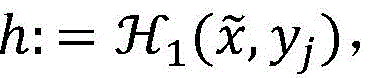

·基于Adv对

·基于Adv对


·基于Adv对


Adv在博弈UnpredictabilityTOP,Adv(1κ,n,t)中的观察(view)是理论上与随机预言模型中由
·Hyb0:第一混合体是Adv在现实博弈UnpredictabilityTOP,Adv(1κ,n,t)中的观察。Hyb 0 : The first hybrid is Adv's observation in the real game Unpredictability TOP, Adv ( 1κ ,n,t).
·Hyb1:除了在对


·Hyb2:除了

·Hyb3:此混合体是由

根据B的构建,得知


因此,
在第二情况中,对于任何


PredictingAdv(1κ)和预测博弈正式定义如下。Predicting Adv ( 1κ ) and prediction game are formally defined as follows.
PredictingAdv(1κ):Predicting Adv (1 κ ):
1.对于每个x∈χ:h←${0,1}κ,
2.
3.k:=03.k:=0
4.
5.当且仅当

·将k递增1Increment k by 1
·返回

·如果
可能会构建打破预测博弈的敌手


·基于Adv对


·基于Adv对
·基于Adv对

·基于Adv对
-如果

-如果


-如果


返回h到Adv。Return h to Adv.
·基于Adv对

Adv在博弈UnpredictabilityTOP,Adv(1κ,n,t)中的观察是理论上与随机预言模型中由
·Ayb0:第一混合体是Adv在现实博弈UnpredictabilityTOP,Adv(1κ,n,t)中的观察。• Ayb 0 : The first mixture is Adv's observation in the real game Unpredictability TOP, Adv ( 1κ ,n,t).
·Hyb1:除了在对


·Hyb2:除了
·Hyb3:此混合体是由


因此,如果Adv打破博弈UnpredictabilityTOP,Adv(1κ,n,t),则

这是理论上不可能的信息,会导致矛盾,因此证明结束。This is theoretically impossible information and leads to a contradiction, so the proof ends.
B.TOPRF--输入不经意性B.TOPRF--input inadvertent
在本节中,已证实TOPRF的输入不经意性(Obliviousness)。假设存在PPT敌手Adv以使得In this section, the input Obliviousness of TOPRF is demonstrated. Suppose there is a PPT adversary Adv such that

考虑Adv的以下两个情况。在第一情况中,存在


转到第一情况,存在


在第二情况中,每当第k次Adv调用具有有效(x,y)对的


GuessingAdv(1κ)和猜测博弈正式定义如下。Guessing Adv ( 1κ ) and guessing games are formally defined as follows.
GuessingAdv(1κ):Guessing Adv ( 1κ ):
1.
2.k:=02.k:=0
3.
4.当且仅当

·将k递增1Increment k by 1
·如果
可构建打破猜测博弈的敌手


·基于Adv对


·基于Adv对
·基于Adv对
-如果

-如果
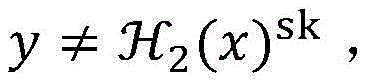

-如果


返回h到Adv。Return h to Adv.
·基于Adv对

Adv在博弈ObliviousnessTOP,Adv(1κ,n,t)中的观察是理论上与随机预言模型中由
·Hyb0:第一混合体是Adv在现实博弈ObliviousnessTOP,Adv(1κ,n,t)中的观察。Hyb 0 : The first hybrid is Adv's observation in the realistic game Obliviousness TOP, Adv ( 1κ ,n,t).
·Hyb1:除了在对


·Hyb2:除了
·Hyb3:此混合体是由


因此,如果Adv打破博弈ObliviousnessTOP,Adv(1κ,n,t),则

这是理论上不可能的信息,会导致矛盾,因此证明结束。This is theoretically impossible information and leads to a contradiction, so the proof ends.
C.PASTA--密码安全性C.PASTA--Password Security
PASTA的密码安全性主要依赖于TOP的不经意性。直观地讲,如果TOPRF用在客户端密码上,则TOPRF的不经意性会使密码难以猜测。然而,可存在若干攻击PbTA方案的不同方式。例如,用于编码密码的随机性可能以某种方式泄漏(破解TOPRF的安全性)。敌手Adv可能会在客户端与服务器之间重放消息,向服务器发送虚假请求,向客户端提供虚假响应,等等。它还可能利用阈值认证方案中的漏洞攻击TOPRF。The cryptographic security of PASTA relies primarily on the inadvertent nature of TOP. Intuitively, if TOPRF is used on client passwords, the inadvertent nature of TOPRF makes passwords difficult to guess. However, there may be several different ways of attacking the PbTA scheme. For example, the randomness used to encode the password could be leaked in some way (breaking the security of TOPRF). An adversary Adv may replay messages between client and server, send fake requests to servers, provide fake responses to clients, etc. It may also exploit vulnerabilities in the threshold authentication scheme to attack TOPRF.
可构建敌手


此问题可使用中间混合体来解决。图7中的安全博弈的预言可修改。原始博弈称为Hyb0,而新博弈称为Hyb1。在图7中,Hyb0基本上用PASTA取代Π。This problem can be solved using an intermediate hybrid. The oracle of the security game in Figure 7 can be modified. The original game is called Hyb 0 , and the new game is called Hyb 1 . In Figure 7, Hyb 0 basically replaces Π with PASTA.
Hyb0:PASTA的SecGame如下所示:Hyb 0 : SecGame of PASTA looks like this:
SecGamePASTA,Adv(1κ,n,t,P):SecGame PASTA, Adv ( 1κ , n, t, P):
·(tsk,tvk,tpp)←TTG.Setup(1κ,n,t)·(tsk, tvk, tpp)←TTG.Setup( 1κ ,n,t)
·对于所有i∈[n],vk:=tvk和pp:=(κ,n,t,P,tpp),设ski:=tski。• For all i∈[n], vk:=tvk and pp:=(κ,n,t,P,tpp), let sk i :=tsk i .
·
·对于i∈[n],

·ct:=0,LiveSession=[]ct:=0, LiveSession=[]
·对于所有C,i∈[n]以及x,Qc,i,Qc,x:=0· For all C,i∈[n] and x,Qc ,i ,Qc ,x :=0
·

·
·如果

·要求:PwdList[C]=⊥·Requirement: PwdList[C]=⊥
·pwd←$P·pwd← $ P
·添加(C,pwd)到PwdListAdd (C, pwd) to PwdList
·(k,opp)←TOP.Setup(1κ,n,t)·(k, opp)←TOP.Setup( 1κ ,n,t)
·对于i∈[n],h:=TOP(k,pwd)并且
·对于所有i∈[n],reci,C:=(ki,hi)· For all i∈[n], rec i ,C :=( ki ,hi)
·对于所有i∈[n],添加reci,C到reci Add rec i, C to rec i for all i ∈ [n]

·如果PwdList[C]=⊥或
·对于随机ρ,c:=TOP.Encode(PwdList[C],ρ)· For random ρ, c:=TOP.Encode(PwdList[C], ρ)
·对于i∈[n],设reqi:=c· For i∈[n], let req i :=c
·
·对于
·将ct递增1Increment ct by 1
·返回

·要求:
·如果
·如果
·zi:=TOP.Eval(ki,reqi)· z i :=TOP.Eval( ki , req i )
·yi←TTG.PartEval(tski,C||x)· y i ←TTG.PartEval(tsk i , C||x)
·设resi:=(zi,SKE.Encrypt(hi,yi))· Let res i : = (z i , SKE.Encrypt( hi , y i ) )
·将QC,x递增1·
·返回resi ·Return res i

·st:=LiveSessions[ct]st:=LiveSessions[ct]
·将resi解析为(z′i,ctxt′i)并将st解析为
·如果
·
·对于
·设
·添加tk到TokList·Add tk to TokList
·返回tkReturn to tk

·返回tTG.Verify(tvk,C||x,tk)Return tTG.Verify(tvk, C||x, tk)
混合体Hyb1:PASTA的SecGame如下所示:Hybrid Hyb 1 : PASTA's SecGame looks like this:
SecGamePASTA,Adv(1κ,n,t,P):SecGame PASTA, Adv ( 1κ , n, t, P):
与Hyb0相同,但当


·如果

·对于随机ρ,
·设reqi:=c其中i∈[n]zi:=TOP.Eval(ki,reqi)· Let req i :=c where i∈[n]z i :=TOP.Eval( ki ,req i )

·对于

·将ct递增1Increment ct by 1
·返回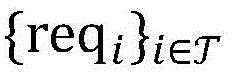

·要求: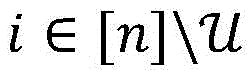
·如果

·如果


-zi:=TOP.Eval(ki,reqi)-z i :=TOP.Eval( ki , req i )
否则:otherwise:
-令zi为与LiveSessions中的输入
·
·设resi:=(zi,SKE.Encrypt(hi,yi))· Let res i : = (z i , SKE.Encrypt( hi , y i ) )
·将
·返回resi ·Return res i

·
·将resi解析为(z′i,ctxt′i)Parse res i as (z′ i , ctxt′ i )
·如果


-返回⊥- back ⊥
·对于
·设
·添加tk到TokList·Add tk to TokList
·返回tkReturn to tk
在Hyb1中,对于目标客户端


对于


Hyh0与Hyh1不同的关键步骤是在PubCombine的两个输出不匹配时。Hyb0没有对这种情况进行任何测试,而Hyb1只是输出⊥。为了让这些混合体不可区分,我们需要证明在Hyb0中如果PubCombine的输出不匹配,其也会输出⊥(至少具有较高概率)。The key step where Hyh 0 differs from Hyh 1 is when the two outputs of PubCombine do not match. Hyb 0 doesn't do any testing for this case, and Hyb 1 just outputs ⊥. To make these mixtures indistinguishable, we need to show that in Hyb 0 , if the output of PubCombine does not match, it will also output ⊥ (at least with higher probability).
注意,针对Hyb0明确定义正确的zi和h;它们可从pwd和ρ导出。如果有人在此混合体中进行公共组合测试并且失败,则有高概率h′≠h。因此,使用

由于缺少编码随机性ρ不会阻止对


与Hyb1相同,但当

·要求:


·对于所有i∈[n],添加

·如果


·对于i∈[n],设reqi:=c· For i∈[n], let req i :=c
·
·对于

·将ct递增1Increment ct by 1
·返回

·要求:
·如果

·如果

·如果
-查询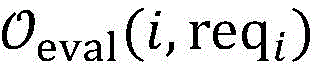
·否则:·otherwise:
-令zi为与LiveSessions中的输入
·
·设resi:=(zi,SKE.Encrypt(hi,yi))· Let res i : = ( zi , SKE.Encrypt( hi , yi ) )
·将
·返回resi ·Return res i
当


就如注册预言,请求预言仅在


最后,


D.PASTA–不可伪造性D.PASTA – Unforgeability
在本节中,PASTA的不可伪造性得到证实。考虑


当


可构建敌手


即使


因此,


这也给了


由第i服务器发送的任何令牌份额都使用hi加密。在高层级,Adv可解密来自比如第j诚实服务器的至少一个令牌份额,以构建令牌。获取此密钥的一个方式是通过关于h||j查询
VII.阈值认证方案描述VII. Description of Threshold Authentication Scheme
在本节中,已描述实施的阈值认证方案(例如,如在性能评估章节所论述):In this section, implemented threshold authentication schemes (eg, as discussed in the Performance Evaluation section) have been described:
·Naor、Pinkas和Reingold[61]的作为公用密钥阈值MAC的基于DDH的DPRF方案DDH-based DPRF scheme as public key threshold MAC by Naor, Pinkas and Reingold [61]
·Naor、Pinkas和Reingold[61]的作为对称密钥MAC的仅PRF的DPRF方案PRF-only DPRF scheme as a symmetric key MAC by Naor, Pinkas, and Reingold [61]
·Shoup[65]的作为基于RSA假设的阈值签名方案的阈值RSA签名方案Threshold RSA signature scheme of Shoup [65] as a threshold signature scheme based on the RSA assumption
·Boldyreva[25]的作为基于间隙-DDH假设的阈值签名方案的基于配对的签名方案Boldyreva [25]'s pair-based signature scheme as a threshold signature scheme based on the gap-DDH assumption
Naor、Pinkas和Reingold[61]的作为公用密钥阈值MAC的基于DDH的DPRF方案如下所述:The DDH-based DPRF scheme of Naor, Pinkas, and Reingold [61] as a public key threshold MAC is described as follows:
要素:设

·Setup(1κ,n,t)→(sk,vk,pp)。抽取

·PartEval(ski,x)→yi。计算
·Combine({i,yi}i∈S)=:tk/⊥。如果|S|<t,则输出⊥。否则对于i∈S,将yi解析为hi并且输出
·Verify(vk,x,tk)=:1/0。当且仅当
Naor、Pinkas和Reingold[61]的作为对称密钥MAC的仅PRF的DPRF方案如下所述:The PRF-only DPRF scheme of Naor, Pinkas, and Reingold [61] as a symmetric key MAC is described as follows:
要素:设f:{0,1}k×{0,1}*→{0,1}*为伪随机函数。Elements: Let f: {0, 1} k × {0, 1} * → {0, 1} * be a pseudo-random function.
·Setup(1κ,n,t)→(sk,vk,pp)。对于f,挑选
对于i∈[n],设ski:={kj|i∈Djforallj∈[d]}且vk:=(k1,...,kd)。设pp:=f且将(ski,pp)给第i方。For i∈[n], let ski :={k j | i∈D j forallj∈ [d]} and vk :=(k 1 , . . . , k d ). Let pp:=f and give (ski, pp) to the i -th party.
·PartEval(ski,x)→yi。对于所有k∈ski,计算hi,k:=fk(x)且输出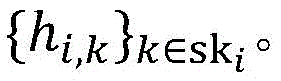
·Combine({i,yi}i∈S)=:tk/⊥。如果|S|<t,则输出⊥。否则对于i∈S,将yi解析为


·Verify(vk,x,tk)=:1/0。当且仅当
Shoup[65]的作为基于RSA假设的阈值签名方案的阈值RSA签名方案如下所述:The threshold RSA signature scheme of Shoup [65], which is a threshold signature scheme based on the RSA assumption, is described as follows:
要素:设GenShare是沙米尔的秘密共享方案,且
·Setup(1κ,n,t)→(sk,vk,pp)。设p′,q′是长度相等的两个随机选择的大素数,并且设p:=2p′+1且q=2q′+1。设N:=pq。随机选择另一个大素数e并且计算d≡e-1modΦ(N),其中
·PartEval(ski,x)→yi。输出
·Combine({i,yi}i∈S)=:tk/⊥。如果|S|<t,则输出⊥,否则计算


·Verify(vk,x,tk)=1/0。当且仅当
Boldyreva[25]的作为基于间隙-DDH假设的阈值签名方案的基于配对的签名方案如下所述:The pair-based signature scheme of Boldyreva [25], which is a threshold signature scheme based on the gap-DDH assumption, is described as follows:
要素:设


·Setup(1κ,n,t)→(sk,vk,pp)。抽取

·PartEval(ski,x)→yi。计算
·Combine({i,yi}i∈S)=:tk/⊥。如果|S|<t,则输出⊥.否则对于i∈S,将yi解析为hi并且输出
·Verify(vk,x,tk)=:1/0。当且仅当
VIII.PASTA的公用密钥运行的必要性VIII. Necessity of public key operation of PASTA
在PASTA中,客户端在注册阶段使用公共密钥加密来加密其发送到服务器的消息,但是在登录阶段没有公用密钥操作。然而,PASTA的TOPRF组件可以用Jarecki等人的使用公用密钥操作的2Hash TDH协议[53]实例化。在此类实施例中,即使阈值认证方法是纯对称密钥,PASTA的实例化也在登录阶段中使用公用密钥操作。与朴素不安全解决方案相比,在某些情况下,这可能会成为重要的开销。一个自然的问题是,是否可以在登录阶段避免公用密钥操作(即使在一次性注册中使用了公用密钥操作),或者换种说法,这仅仅是PASTA及其实例的产物吗?In PASTA, the client uses public key encryption to encrypt the messages it sends to the server during the registration phase, but there is no public key operation during the login phase. However, the TOPRF component of PASTA can be instantiated with the 2Hash TDH protocol of Jarecki et al. [53] that operates using public keys. In such embodiments, even though the threshold authentication method is pure symmetric key, the instantiation of PASTA operates using the public key in the login phase. In some cases this can be a significant overhead compared to the naive unsafe solution. A natural question is, is it possible to avoid public key operations during the login phase (even if used in a one-time registration), or to put it another way, is this just an artifact of PASTA and its instances?
在本节中,证明了在构建任何安全的PbTA方案时,在登录阶段确实必须进行公用密钥操作。特别是,已经证明,如果可以构建PbTA,除了在注册过程中使用PKE加密/解密消息之外,仅使黑盒使用单向函数,那么也可通过仅使黑盒使用单向函数来构建安全的双方密钥协商协议。Impagliazzo和Rudich[50]指出,仅使黑盒使用单向函数的安全的双方密钥协商协议将暗示P,NP。因此,这提供了证据,表明在登录阶段仅使用对称密钥操作不太可能构建PbTA。换句话说,其它类型的公用密钥操作也是必需的。In this section, it is demonstrated that public key manipulation is indeed necessary during the login phase when building any secure PbTA scheme. In particular, it has been shown that if it is possible to build a PbTA that uses only one-way functions for the black box in addition to encrypting/decrypting messages using PKE during the registration process, then it is also possible to build a secure Two-party key agreement protocol. Impagliazzo and Rudich [50] pointed out that a secure two-way key agreement protocol that only makes the black box use a one-way function would imply P, NP. Thus, this provides evidence that it is unlikely to construct a PbTA using only symmetric key operations during the login phase. In other words, other types of public key operations are also required.
为了证明这一点,首先定义了一种称为对称密钥PbTA的特殊类型的PbTA方案,除了注册过程中的加密/解密之外,所述方案仅使黑盒使用单向函数。然后,可以以黑盒方式根据对称密钥PbTA构建安全密钥协商协议。这形成安全的密钥协商协议,其仅使黑盒使用单向函数,因而与Impagliazzo和Rudich[50]的不可能结果相矛盾。To demonstrate this, a special type of PbTA scheme called symmetric key PbTA is first defined, which makes the black box use only one-way functions, except for encryption/decryption during registration. Then, a secure key agreement protocol can be constructed from the symmetric key PbTA in a black-box fashion. This results in a secure key agreement protocol that only enables the black box to use a one-way function, thus contradicting the impossible result of Impagliazzo and Rudich [50].
为了构建安全的密钥协商协议,考虑将密钥协商协议中的双方P1、分别视为单个客户端C和PbTA协议中的所有服务器的集合。将密码空间设为仅包含一个密码pwd,这意味着C的密码对于双方都是已知的。由于P2代表所有服务器的集合,因此它可以自行运行GlobalSetup和C的注册阶段。然后,双方运行登录阶段,以便P1获得x=0的令牌。由于双方都知道密码,因此P2可以自行模拟登录阶段,以生成x=0的令牌。生成的令牌是双方协商的密钥。In order to construct a secure key agreement protocol, consider both parties P 1 in the key agreement protocol as a single client C and a set of all servers in the PbTA protocol, respectively. Make the cipher space to contain only one cipher pwd, which means that C's cipher is known to both parties. Since P2 represents the set of all servers, it can run the registration phase of GlobalSetup and C by itself. Then, both parties run a login phase so that P1 gets a token with x=0. Since both parties know the password, P2 can simulate the login phase by itself to generate a token with x=0. The resulting token is a key negotiated by both parties.
注意,生成的令牌可能不是密钥协商协议的有效输出,但是双方可以将随机性提取器应用于令牌并获得随机性以生成有效密钥。Note that the resulting token may not be a valid output of the key agreement protocol, but both parties can apply a randomness extractor to the token and obtain randomness to generate a valid key.
密钥协商协议的安全性取决于对称密钥PbTA方案的不可伪造性。直观地讲,如果存在一个PPT敌手以不可忽略的概率输出由P1和P2协商的令牌,则敌手能够在对称密钥PbTA方案中以不可忽略的概率生成有效令牌,其中对于所有i,QC,i=0,这与不可伪造性相矛盾。The security of the key agreement protocol depends on the unforgeability of the symmetric key PbTA scheme. Intuitively, if there exists a PPT adversary that outputs the token negotiated by P 1 and P 2 with non-negligible probability, the adversary is able to generate valid tokens with non-negligible probability in the symmetric key PbTA scheme, where for all i , QC ,i = 0, which contradicts unforgeability.
接下来,提供了对称密钥PbTA方案和安全的双方密钥协商协议的正式定义和证明。Next, the formal definitions and proofs of the symmetric key PbTA scheme and the secure two-party key agreement protocol are provided.
图14示出与对称密钥PbTA方案相关联的定义。基于对称密钥密码的阈值认证(PbTA)方案Πsym可以正式定义为六个PPT算法的元组
图15示出与安全的两方密钥协商协议相关联的描述和要求。Figure 15 shows the description and requirements associated with a secure two-party key agreement protocol.
基于图14中的对称密钥PbTA方案的定义,可以显示,如图15所定义的安全的双方密钥协商协议可以以黑盒方式根据任何对称密钥PbTA方案构建。Based on the definition of the symmetric key PbTA scheme in Figure 14, it can be shown that a secure two-party key agreement protocol as defined in Figure 15 can be constructed in a black-box fashion according to any symmetric key PbTA scheme.
设

敌手


在针对

然而,由于Adv以不可忽略的概率输出tk,因此令牌
将以上定理与Impagliazzo和Rudich[25]的结果相结合,得出以下推论:如果存在对称密钥PbTA方案,则P≠NP。Combining the above theorem with the results of Impagliazzo and Rudich [25] leads to the following corollary: If there is a symmetric key PbTA scheme, then P≠NP.
此推论提供了证明不太可能构建对称密钥PbTA方案的证据。This corollary provides evidence that it is unlikely to construct a symmetric key PbTA scheme.
IX.流程图IX. Flowchart
现在通过使用流程图总结本文描述的令牌认证方案的实施例。Embodiments of the token authentication scheme described herein are now summarized by using a flow diagram.
A.客户端A. Client
现在转到图16,图示出根据本发明的实施例客户端获得令牌的流程图。Turning now to FIG. 16, a flow diagram of a client obtaining a token according to an embodiment of the present invention is illustrated.
在前一注册阶段,n个服务器(在此示例中为5个:服务器1112、1114、1116、1118和1120)中的每一者可能已接收到并存储了与来自注册阶段的用户标识符(例如用户名)一致的秘密份额(ski)和散列部分(hi)。这些内容可能存储在与用户相关联的唯一记录中。During the previous registration phase, each of the n servers (5 in this example:
然后,客户端1105可将令牌请求消息1101发送到多个服务器中的每一者(图中示出五个服务器,包括服务器1112、1114、1116、1118和1120)。每个请求1101可以包括密码的盲化散列、要签名的数据x(例如,用户名),以及——如果x中未包括——用户名。每个服务器可使用用户名来标识散列部分hi以及对应于用户名的在注册过程期间发放给服务器的秘密份额。
服务器可使用要签名的数据x和秘密份额来生成令牌份额。可使用存储的与在注册过程期间接收到的用户名相关联的散列部分hi加密此令牌份额。同时,使用与注册阶段中使用的相同算法,服务器还可使用与令牌请求消息1101中提供的用户名和盲化散列相关联的服务器的秘密份额来计算部分应答(例如,部分散列响应)。例如,如果在注册过程期间,盲化散列被提升到服务器的秘密份额的幂,则通过将提供于令牌请求消息1101中的盲化散列通过服务器的秘密份额提升而将再次计算部分应答。The server may generate a token share using the data x to be signed and the secret share. This token share may be encrypted using the stored hash portion hi associated with the username received during the registration process. At the same time, using the same algorithm as used in the registration phase, the server may also use the server's secret share associated with the username and blinded hash provided in the
然后,每个服务器可将消息1102发送回到客户端1105,所述消息可包括对应服务器生成的部分应答和加密令牌份额。Each server may then send a
客户端1105接着可通过解盲化接收到的部分应答来生成每个服务器的对应散列部分hi。在注册阶段中使用的盲化/解盲化过程可不同于此请求阶段使用的盲化/解盲化,因为每个解盲化都会提供散列部分。如果密码相同,则获得的散列部分应与注册过程中的对应散列部分相同。换句话说,如果用户在请求消息中使用了正确的密码,则客户端1105将能够重建对应于所有服务器的所有散列部分(例如,h1、H2、H3、H4、H5)。这些散列部分可用于解密从服务器接收的所有对应加密令牌份额(例如,如果服务器使用其存储的h1副本加密令牌份额,则客户端可使用根据部分应答重建的h1来解密所述令牌份额,所述部分应答与加密令牌份额在同一消息中接收)。所有令牌份额解密后,客户端1105能够将其组合以生成令牌1110,所述令牌然后可用于获得对受保护资源的访问。
以此方式,服务器实际上不会习得密码的散列,因为它们仅获得盲化的散列。此外,每个服务器甚至可能接收不同的盲化散列。并且,每当客户端进行请求,盲化的散列可改变。并且,每个服务器存储不同散列部分,即,秘密份额和散列的结果。因此,即使攻击者破解服务器,但其无法再执行字典攻击,因为秘密在服务器当中共享,并且没有一个服务器知道实际密钥。例如图中所示,如果服务器1114和1116已被破解,则攻击者将仅能够获得两个部分应答(例如与散列部分h2和h3相关联)并且仅解密总计五个令牌份额中的两个令牌份额。将需要破解所有五个服务器1112、1114、1116、1118和1120以便产生令牌1110或通过字典攻击获得密码。In this way, the servers do not actually learn the hash of the password, since they only get the blinded hash. Furthermore, each server may even receive a different blinded hash. Also, the blinded hash can change every time a client makes a request. Also, each server stores a different hash part, ie, the secret share and the result of the hash. Therefore, even if an attacker cracks the server, he can no longer perform a dictionary attack because the secret is shared among the servers and none of the servers know the actual key. For example, as shown in the figure, if
在框1602,客户端可以接收用于获得对计算机资源的访问的凭证(例如,密码)。应与用户标识符或客户端标识符一起接收此凭证,所述用户标识符或客户端标识符与凭证相对应(例如,它们在注册过程期间一起注册)。例如,可以从希望访问受保护资源的用户输入的用户输入接收凭证和用户标识符。At
在框1604,客户端可以散列凭证以获得第一散列(h)。在一些实施例中,可以使用任何散列函数。在一些实施例中,可以使用阈值不经意伪随机函数(TOPRF)来执行散列。在一些实施例中,客户端可以盲化第一散列以生成盲化散列。例如,可以将第一散列提升到随机选择的R的幂。在一些实施例中,可以从第一散列生成多个盲化散列,每个盲化散列都是不同的,并且预期分布到不同的认证服务器。At
在框1606,客户端可以向多个服务器(例如,认证服务器)发送请求消息(例如,请求令牌份额),每个请求消息包括盲化散列和用户标识符。用户标识符可以是在初始注册过程期间与凭证相关联的用户名。因此,客户端不需要直接发送第一散列(h)。在利用多个盲化散列的实施例中,每个请求消息可以包含针对特定服务器的盲化散列。At
服务器可以接收请求消息并利用用户标识符来查找来自注册过程的存储且链接到所述用户标识符的信息,例如在注册过程期间接收到的所述用户标识符的秘密份额和/或所述用户标识符的散列部分。每个服务器可以使用先前在注册过程期间接收到的所存储散列部分来对令牌份额进行加密。每个服务器还可以计算通过将共享秘密(如在注册期间接收到的针对所述用户标识符的)应用到请求消息中接收到的盲化散列而生成的部分散列响应。The server may receive the request message and use the user identifier to look up information from the registration process stored and linked to the user identifier, such as a secret share of the user identifier and/or the user received during the registration process The hashed portion of the identifier. Each server may encrypt the token share using the stored hash portion previously received during the registration process. Each server may also compute a partial hash response generated by applying a shared secret (as received during registration for the user identifier) to the blinded hash received in the request message.
在框1608,客户端可以从多个服务器接收响应消息。来自每个服务器的响应消息可以包括使用在请求消息中提供给对应服务器的盲化散列和在先前注册过程期间提供给对应服务器的秘密份额两者生成的部分散列响应。每个响应消息还可以包括来自对应服务器的加密令牌份额,所述加密令牌份额通过使用先前(例如,在注册过程期间)由客户端生成并发送到对应服务器的散列部分对令牌份额进行加密而生成。此散列部分可由客户端通过解盲化从服务器接收的部分应答而生成,其中所述部分应答通过将服务器的秘密份额应用到盲化散列(或更具体地,注册期间提供的密码的盲化散列)而生成。At
在框1610,客户端可以从所有响应消息中解盲化每一个部分散列响应以从每个部分散列响应获得散列部分。换句话说,根据从服务器接收到的每个响应消息,客户端可能够通过以与生成请求消息中发送的盲化散列时所使用的盲化过程相反的方式解盲化部分散列响应而从自所述服务器接收到的部分散列响应重建散列部分。At
在框1612,客户端可以使用对应的重建散列部分对每个加密令牌份额进行解密,以便获得各种令牌份额。由于每个服务器都用注册期间存储的散列部分加密了其令牌份额,然后假设对应的重建散列部分与先前存储的散列部分相同(例如,由用户提供的密码与注册的密码相同),因此与特定服务器相关联的重建散列部分可以用来解密从所述服务器接收的对应加密令牌份额(例如,来自响应消息)。所得的令牌份额数量应当等同于多个服务器中的服务器数量。At
在框1614,客户端可以将所有令牌份额组合以获得访问令牌。这可以使用Combine算法来完成,所述算法组合所有令牌份额以生成令牌(例如,基于沙米尔的秘密共享)。由于只需要t个服务器来提供响应,所以注册可以包括向一个或多个额外服务器发送一个或多个额外散列部分。只需要所有服务器的一部分来提供响应消息以获得访问令牌。At
A.服务器端A. Server side
图17示出描述根据本发明实施例的多个服务器中的服务器提供令牌份额的流程图。FIG. 17 shows a flow chart describing a server of a plurality of servers providing token shares according to an embodiment of the present invention.
在框1702,多个服务器中的服务器可以从客户端接收请求消息。此请求消息可以包括凭证的第一散列的盲化散列以及用户标识符。可以由用户在客户端输入用户标识符(例如,用户名)以及在注册过程期间与所述用户名一起注册的凭证。客户端可以散列凭证以获得第一散列(h),然后盲化第一散列以生成盲化散列。例如,可以将第一散列提升到随机选择的R的幂。服务器将仅接收此盲化散列而不会知道凭证的值、第一散列的值或使用的散列算法。At
在框1704,服务器可以使用盲化散列和秘密份额来生成部分散列响应。具体地说,服务器可以利用请求消息中的用户标识符来查找来自注册过程的存储且链接到所述用户标识符的信息,例如在注册过程期间接收到的所述用户标识符的秘密份额和/或所述用户标识符的散列部分。服务器可以采用此共享份额并将其应用到请求消息中接收到的盲化散列,以便生成部分散列响应(例如,以在注册过程期间服务器采用的方式类似的方式)。At
在框1706,服务器还可以确定对应于用户标识符的散列部分,例如在注册过程期间接收到的所述用户标识符的散列部分。在注册过程期间,客户端将生成此散列部分并将其提供给服务器(例如,通过对从服务器接收的部分应答解盲化,其中通过将服务器的秘密份额应用于盲化散列而生成所述部分应答,或更具体地说,客户端在注册期间提供的密码凭证的盲化散列),服务器将此散列部分与用户标识符相关联地存储。At
在框1708,服务器可以基于用户标识符和秘密共享来生成令牌共享。At
在框1710,服务器可以使用与用户标识符对应的先前存储的散列部分对此令牌份额进行加密。At
在框1712,服务器可以将响应消息发回客户端。响应消息可以包括计算的部分散列响应和加密令牌份额。当客户端接收到来自多个服务器中的所有服务器的响应消息时,客户端可能够使用这些响应消息的内容来重建提供给每个服务器的散列部分、解密所有加密令牌份额,然后组合令牌份额以生成认证令牌。先前在图16中描述了此过程。At
X.实施X. Implementation
本文中提及的任何计算机系统都可利用任何合适数目个子系统。在图17中示出计算机系统10中的此类子系统的实例。在一些实施例中,计算机系统包括单一计算机设备,其中子系统可以是计算机设备的组件。在其它实施例中,计算机系统可以包括具有内部组件的多个计算机设备,每个计算机设备是子系统。计算机系统可以包括台式计算机和笔记本电脑、平板计算机、移动电话和其它移动装置。Any of the computer systems mentioned herein may utilize any suitable number of subsystems. An example of such a subsystem in
图17中所示的子系统经由系统总线75互连。示出了诸如打印机74、键盘78、存储装置79、耦合到显示适配器82的监视器76等等的额外子系统。耦合到输入/输出(I/O)控制器71的外围装置和I/O装置可以通过本领域中已知的各种构件连接到计算机系统,所述构件例如是输入/输出(I/O)端口77(例如USB、
计算机系统可以包括多个相同组件或子系统,所述组件或子系统例如通过外部接口81、通过内部接口或经由可装卸式存储装置连接在一起,所述可装卸式存储装置可以从一个组件连接和移除到另一组件。在一些实施例中,计算机系统、子系统或设备可通过网络通信。在此类情况下,一个计算机可以被视为客户端且另一个计算机被视为服务器,其中每台计算机都可以是同一计算机系统的一部分。客户端和服务器可各自包括多个系统、子系统或组件。A computer system may include multiple identical components or subsystems connected together, for example, by
实施例的各个方面可以使用硬件电路(例如,专用集成电路或现场可编程门阵列)和/或以模块化或集成方式借助大体上可编程处理器使用计算机软件以控制逻辑的形式实施。如本文所使用,处理器可以包括单核处理器、在同一集成芯片上的多核处理器,或在单个电路板上或联网的多个处理单元,以及专用硬件。基于本文中提供的公开内容和教示,本领域普通技术人员将知道并了解到使用硬件及硬件和软件的组合实施本发明的实施例的其它方式及/或方法。Aspects of the embodiments may be implemented in the form of control logic using hardware circuits (eg, application specific integrated circuits or field programmable gate arrays) and/or in a modular or integrated manner using computer software using substantially programmable processors. As used herein, a processor may include a single-core processor, a multi-core processor on the same integrated chip, or multiple processing units on a single circuit board or networked, as well as dedicated hardware. Based on the disclosure and teachings provided herein, those of ordinary skill in the art will know and appreciate other ways and/or methods of implementing embodiments of the invention using hardware and combinations of hardware and software.
本申请中描述的任何软件组件或功能可实施为使用例如Java、C、C++、C#、Objective-C、Swift的任何合适的计算机语言或例如Perl或Python的脚本语言使用例如常规的或面向对象的技术由处理器执行的软件代码。软件代码可以作为一系列指令或命令存储在计算机可读介质上以进行存储和/或传输。合适的非瞬态计算机可读介质可以包括随机存取存储器(RAM)、只读存储器(ROM)、例如硬盘驱动器或软盘的磁性介质或例如光盘(CD)或DVD(数字通用光盘)的光学介质、闪存存储器等。计算机可读介质可以是此类存储或传输装置的任何组合。Any software components or functions described in this application may be implemented using any suitable computer language such as Java, C, C++, C#, Objective-C, Swift or a scripting language such as Perl or Python using, for example, conventional or object-oriented Technology Software code executed by a processor. The software code may be stored on a computer-readable medium for storage and/or transmission as a series of instructions or commands. Suitable non-transitory computer readable media may include random access memory (RAM), read only memory (ROM), magnetic media such as hard drives or floppy disks, or optical media such as compact discs (CDs) or DVDs (digital versatile discs). , flash memory, etc. The computer-readable medium can be any combination of such storage or transmission devices.
此类程序也可以使用载波信号来编码和传输,所述载波信号适合于经由符合多种协议的有线、光学和/或无线网络来传输,包括因特网。因此,可以使用以此类程序编码的数据信号来创建计算机可读介质。以程序代码编码的计算机可读介质可与兼容装置一起封装或与其它装置分开提供(例如,通过因特网下载)。任何此类计算机可读媒体可以驻存在单个计算机产品(例如,硬盘驱动器,CD或整个计算机系统)之上或其内部,并且可以存在于系统或网络内的不同计算机产品上或其内部。计算机系统可以包括用于向用户提供本文中提及的任何结果的监视器、打印机或其它合适显示器。Such programs may also be encoded and transmitted using carrier signals suitable for transmission over wired, optical and/or wireless networks conforming to various protocols, including the Internet. Accordingly, a data signal encoded with such a program can be used to create a computer-readable medium. Computer-readable media encoded with program code may be packaged with compatible devices or provided separately from other devices (eg, downloaded via the Internet). Any such computer-readable media can reside on or within a single computer product (eg, a hard drive, a CD, or an entire computer system), and may reside on or within different computer products within a system or network. The computer system may include a monitor, printer, or other suitable display for providing any of the results mentioned herein to the user.
本文所描述的任何方法可完全或部分地通过计算机系统执行,所述计算机系统包括可被配置以执行所述步骤的一个或多个处理器。因此,实施例可以涉及配置成执行本文中所描述的任何方法的步骤、可能具有执行相应步骤或相应步骤群组的不同组件的计算机系统。虽然呈现为带编号的步骤,但本文的方法的步骤可以同时或在不同时间或以不同次序执行。另外,这些步骤的部分可与其它方法的其它步骤的部分一起使用。另外,步骤的全部或部分可以是任选的。另外,任何方法的任一个步骤可以利用用于执行这些步骤的模块、单元、电路或系统的其它构件来执行。Any of the methods described herein may be performed, in whole or in part, by a computer system including one or more processors that may be configured to perform the steps described. Accordingly, embodiments may relate to computer systems configured to perform the steps of any of the methods described herein, possibly having different components that perform the corresponding steps or corresponding groups of steps. Although presented as numbered steps, the steps of the methods herein may be performed simultaneously or at different times or in different orders. Additionally, portions of these steps may be used with portions of other steps of other methods. Additionally, all or some of the steps may be optional. Additionally, any step of any method may be performed using modules, units, circuits, or other components of a system for performing the steps.
特定实施例的具体细节可按任何合适的方式组合而不脱离本发明实施例的精神和范围。然而,本发明的其它实施例可以涉及与每个个别方面或这些个别方面的特定组合相关的特定实施例。The specific details of a particular embodiment may be combined in any suitable manner without departing from the spirit and scope of the embodiments of the present invention. However, other embodiments of the invention may involve specific embodiments relating to each individual aspect or a specific combination of these individual aspects.
上文对本发明的实例实施例的描述已经出于图示和描述的目的呈现。不旨在是详尽的,或将本发明局限为所描述的精确形式,并且根据上文的教示许多修改和变化是可能的。The foregoing description of example embodiments of the present invention has been presented for purposes of illustration and description. It is not intended to be exhaustive or to limit the invention to the precise form described, and many modifications and variations are possible in light of the above teachings.
除非具体地相反指示,否则“一(a/an)”或“所述(the)”的叙述打算意指“一个或多个”。除非明确指示为相反情况,否则“或”的使用旨在表示“包括性的或”,而不是“排除性的或”。提到“第一”组件并不一定要求提供第二组件。而且,除非明确指出,否则提到“第一”或“第二”组件并不将提到的组件限制到特定位置。术语“基于”旨在表示“至少部分地基于”。The recitation of "a/an" or "the" is intended to mean "one or more" unless specifically indicated to the contrary. The use of "or" is intended to mean an "inclusive or" rather than an "exclusive or" unless expressly indicated to the contrary. Reference to a "first" component does not necessarily require the provision of a second component. Moreover, reference to a "first" or "second" component does not limit the reference to a component to a particular location unless explicitly stated. The term "based on" is intended to mean "based at least in part on".
本文中所提及的所有专利、专利申请、公开案和描述都出于所有目的以全文引用的方式并入。并非承认它们是现有技术。All patents, patent applications, publications, and descriptions mentioned herein are incorporated by reference in their entirety for all purposes. Not an admission that they are prior art.
XI.参考XI. References
[1]亚马逊OpenID。docs.aws.amazon.com/cognito/latest/developerguide/open-id.html。于2018年5月9日访问。[1] Amazon OpenID. docs.aws.amazon.com/cognito/latest/developerguide/open-id.html. Accessed on May 9, 2018.
[2]BLAKE2-快速安全散列。blake2.net/。于2018年5月9日访问。[2] BLAKE2 - Fast and secure hashing. blake2.net/. Accessed on May 9, 2018.
[3]脸书登录。developers.facebook.com/docs/facebook-login。于2018年5月9日访问。[3] Facebook login. developers.facebook.com/docs/facebook-login. Accessed on May 9, 2018.
[4]谷歌身份平台-OpenID连接。developers.google.com/identity/protocols/openidconnect。于2018年5月9日访问。[4] Google Identity Platform - OpenID Connect. developers.google.com/identity/protocols/openidconnect. Accessed on May 9, 2018.
[5]JSON网络令牌。jwt.io/。于2018年5月9日访问。[5] JSON Web Token. jwt.io/. Accessed on May 9, 2018.
[6]Kerberos:网络认证协议。web.mit.edu/kerberos/。于2018年5月9日访问。[6] Kerberos: Network Authentication Protocol. web.mit.edu/kerberos/. Accessed on May 9, 2018.
[7]密码散列竞争。password-hashing.net/。于2018年5月9日访问。[7] Cryptographic hash competition. password-hashing.net/. Accessed on May 9, 2018.
[8]SAML工具包。developers.onelogin.com/saml。于2018年5月9日访问。[8] SAML Toolkit. developers.onelogin.com/saml. Accessed on May 9, 2018.
[9]OAuth 2.0授权框架:不记名令牌使用。tools.ietf.org/html/rfc6750。于2018年5月9日访问。[9] OAuth 2.0 Authorization Framework: Use of Bearer Tokens. tools.ietf.org/html/rfc6750. Accessed on May 9, 2018.
[10]OpenID连接。openid.net/connect/。[10] OpenID Connect. openid.net/connect/.
[11]Hashicorp库。www.vaultproject.io/docs/internals/token.html。于2018年5月9日访问。[11] Hashicorp library. www.vaultproject.io/docs/internals/token.html. Accessed on May 9, 2018.
[12]M.Abdalla、O.Chevassut、P.-A.Fouque和D.PointCheval。短秘密的简单阈值认证密钥交换(A simple threshold authenticated key exchange from shortsecrets)。B.K.Roy编辑,ASIACRYPT 2005,LNCS第3788卷,第566-584页。施普林格出版社(Springer),海德堡,2005年12月。[12] M. Abdalla, O. Chevassut, P.-A. Fouque and D. Point Cheval. A simple threshold authenticated key exchange from shortsecrets. Edited by B.K.Roy, ASIACRYPT 2005, LNCS Vol. 3788, pp. 566-584. Springer, Heidelberg, December 2005.
[13]M.Abdalla、M.Cornejo、A.Nitulescu和D.PointCheval。鲁棒密码保护的秘密共享(Robust password protected secret sharing)。I.G.Askoxylakis、S.Ioannidis、S.K.Katsikas和C.A.Meadows编辑,ESORICS 2016,第II部分,LNCS第9879卷,第61-79页。施普林格出版社(Springer),海德堡,2016年9月。[13] M. Abdalla, M. Cornejo, A. Nitulescu and D. Point Cheval. Robust password protected secret sharing. Edited by I.G. Askoxylakis, S. Ioannidis, S.K. Katsikas and C.A. Meadows, ESORICS 2016, Part II, LNCS Vol. 9879, pp. 61-79. Springer, Heidelberg, September 2016.
[14]M.Abdalla、P.-A.Fouque和D.Pointcheval。三方设置中基于密码的认证密钥交换(Password-based authenticated key exchange in the three-party setting)。S.Vaudenay编辑,PKC 2005,LNCS第3386卷,第65-84页。施普林格出版社(Springer),海德堡,2005年1月。[14] M. Abdalla, P.-A. Fouque and D. Pointcheval. Password-based authenticated key exchange in the three-party setting. Edited by S. Vaudenay, PKC 2005, LNCS Vol. 3386, pp. 65-84. Springer, Heidelberg, January 2005.
[15]M.Abdalla、S.Miner和C.Namprempre。前向安全阈值签名方案(Forward-secure threshold signature schemes)。RSA会议的密码学者跟踪,第441-456页。施普林格出版社(Springer),2001年。[15] M. Abdalla, S. Miner and C. Namprempre. Forward-secure threshold signature schemes. Cryptographers Track of the RSA Conference, pp. 441-456. Springer, 2001.
[16]J.Alwen、B.Chen、C.Kamath、V.Kolmogorov、K.Pietrzak和S.Tessaro。关于并行随机预言模型中的scrypt复杂性和空间校验(On thecomplexity of scrypt andproofs of space in the parallel random oracle model)。M.Fischlin和J.-S.Coron编辑,EUROCRYPT 2016,第II部分,LNCS第9666卷,第358-387页。施普林格出版社(Springer),海德堡,2016年5月。[16] J. Alwen, B. Chen, C. Kamath, V. Kolmogorov, K. Pietrzak and S. Tessaro. On the complexity of scrypt and proofs of space in the parallel random oracle model. Edited by M. Fischlin and J.-S. Coron, EUROCRYPT 2016, Part II, LNCS Vol. 9666, pp. 358-387. Springer, Heidelberg, May 2016.
[17]J.Alwen、B.Chen、K.Pietrzak、L.Reyzin和S.Tessaro。SCRYPT最大程度地依赖内存(Scrypt is maximally memory-hard)。J.Coron和J.B.Nielsen编辑,EUROCRYPT2017,第II部分,LNCS第10211卷,第33-62页。施普林格出版社(Springer),海德堡,2017年5月。[17] J. Alwen, B. Chen, K. Pietrzak, L. Reyzin and S. Tessaro. SCRYPT is maximally memory-hard (Scrypt is maximally memory-hard). Edited by J. Coron and J.B. Nielsen, EUROCRYPT2017, Part II, LNCS Vol. 10211, pp. 33-62. Springer, Heidelberg, May 2017.
[18]D.F.Aranha和C.P.L.Gouvêa。RELIC是高校密码库(RELIC is an EfficientLIbrary for Cryptography)。github.com/relic-toolkit/relic。[18] D.F. Aranha and C.P.L. Gouvêa. RELIC is an EfficientLIbrary for Cryptography. github.com/relic-toolkit/relic.
[19]A.Bagherzandi、S.Jarecki、N.Saxena和Y.Lu。密码保护的秘密共享(Password-protected secret sharing)。Y.Chen、G.Danezis和V.Shmatikov编辑,ACM CCS11,第433-444页。ACM出版社(ACM Press),2011年10月。[19] A. Bagherzandi, S. Jarecki, N. Saxena and Y. Lu. Password-protected secret sharing. Edited by Y. Chen, G. Danezis and V. Shmatikov, ACM CCS 11, pp. 433-444. ACM Press, October 2011.
[20]P.S.L.M.Barreto和M.Naehrig。素数阶的易于配对的椭圆曲线(Pairing-friendly elliptic curves of prime order)。B.Preneel和S.Tavares编辑,SAC 2005,LNCS第3897卷,第319-331页。施普林格出版社(Springer),海德堡,2006年8月。[20] P.S.L.M. Barreto and M. Naehrig. Pairing-friendly elliptic curves of prime order. Edited by B. Preneel and S. Tavares, SAC 2005, LNCS Vol. 3897, pp. 319-331. Springer, Heidelberg, August 2006.
[21]M.Bellare、D.Pointcheval和P.Rogaway。认证密钥交换能抵御字典攻击(Authenticated key exchange secure against dictionary attacks)。B.Preneel编辑,EUROCRYPT 2000,LNCS第1807卷,第139-155页。施普林格出版社(Springer),海德堡,2000年5月。[21] M. Bellare, D. Pointcheval and P. Rogaway. Authenticated key exchange secure against dictionary attacks. Edited by B. Preneel, EUROCRYPT 2000, LNCS Vol. 1807, pp. 139-155. Springer, Heidelberg, May 2000.
[22]M.Bellare和R.Sandhu。实用双方RSA签名方案的安全性(The security ofpractical two-party RSA signature schemes)。密码研究预印本,报告2001/060,2001年。eprint.iacr.org/2001/060。[22] M. Bellare and R. Sandhu. The security of practical two-party RSA signature schemes. Cryptographic Research Preprint, Report 2001/060, 2001. eprint.iacr.org/2001/060.
[23]J.Blocki和A.Datta。现金:可实现最佳密码保护的成本非对称安全散列算法(CASH:A cost asymmetric secure hash algorithm for optimal passwordprotection)。IEEE第29界计算机安全基础研讨会,CSF 2016,葡萄牙里斯本,2016年6月27-7月1日,第371-386页,2016年。[23] J. Blocki and A. Datta. CASH: A cost asymmetric secure hash algorithm for optimal password protection (CASH). IEEE 29th Symposium on Fundamentals of Computer Security, CSF 2016, Lisbon, Portugal, June 27-July 1, 2016, pp. 371-386, 2016.
[24]J.Blocki和S.Zhou。关于Argon2i的深度-鲁棒性和累积pebbling成本(Onthe depth-robustness and cumulative pebbling cost of Argon2i)。Y.Kalai和L.Reyzin编辑,TCC 2017,第I部分,LNCS第10677卷,第445-465页。施普林格出版社(Springer),海德堡,2017年11月。[24] J. Blocki and S. Zhou. On the depth-robustness and cumulative pebbling cost of Argon2i. Edited by Y. Kalai and L. Reyzin, TCC 2017, Part I, LNCS Vol. 10677, pp. 445-465. Springer, Heidelberg, November 2017.
[25]A.Boldyreva。基于间隙Diffie-Hellman群签名方案的阈值签名、多重签名和盲签名(Threshold signatures,multisignatures and blind signatures based on thegap-Diffie-Hellman-group signature scheme)。Y.Desmedt编辑,PKC 2003,LNCS第2567卷,第31-46页。施普林格出版社(Springer),海德堡,2003年1月。[25] A. Boldyreva. Threshold signatures, multisignatures and blind signatures based on the gap-Diffie-Hellman-group signature scheme. Edited by Y. Desmedt, PKC 2003, LNCS Vol. 2567, pp. 31-46. Springer, Heidelberg, January 2003.
[26]D.Boneh、K.Lewi、H.W.Montgomery和A.Raghunathan。密钥同态PRF及其应用(Key homomorphic PRFs and their applications)。R.Canetti和J.A.Garay编辑,CRYPTO2013,第I部分,LNCS第8042卷,第410-428页。施普林格出版社(Springer),海德堡,2013年8月。[26] D. Boneh, K. Lewi, H. W. Montgomery and A. Raghunathan. Key homomorphic PRFs and their applications. Edited by R. Canetti and J.A. Garay, CRYPTO2013, Part I, LNCS Vol. 8042, pp. 410-428. Springer, Heidelberg, August 2013.
[27]V.Boyko、P.D.MacKenzie和S.Patel。使用Diffie-Hellman密钥交换算法的可证明安全的密码认证密钥交换(Provably secure password-authenticated keyexchange using Diffie-Hellman)。B.Preneel编辑,EUROCRYPT 2000,LNCS第1807卷,第156-171页。施普林格出版社(Springer),海德堡,2000年5月。[27] V. Boyko, P. D. MacKenzie and S. Patel. Provably secure password-authenticated keyexchange using Diffie-Hellman key exchange algorithm. Edited by B. Preneel, EUROCRYPT 2000, LNCS Vol. 1807, pp. 156-171. Springer, Heidelberg, May 2000.
[28]J.Camenisch、R.R.Enderlein和G.Neven。双服务器密码认证秘密共享的UC-抵御瞬态损坏(Two-server password-authenticated secret sharing UC-secureagainst transient corruptions)。J.Katz编辑,PKC 2015,LNCS第9020卷,第283-307页。施普林格出版社(Springer),海德堡,2015年3月/4月。[28] J. Camenisch, R.R. Enderlein and G.Neven. Two-server password-authenticated secret sharing UC-secureagainst transient corruptions. Edited by J. Katz, PKC 2015, LNCS Vol. 9020, pp. 283-307. Springer, Heidelberg, March/April 2015.
[29]J.Camenisch、A.Lehmann、A.Lysyanskaya和G.Neven。备忘录:如何在敌对环境中根据单个密码来重建您的秘密(Memento:How to reconstruct your secrets from asingle password in a hostile environment)。J.A.Garay和R.Gennaro编辑,CRYPTO2014,第II部分,LNCS第8617卷,第256-275页。施普林格出版社(Springer),海德堡,2014年8月。[29] J. Camenisch, A. Lehmann, A. Lysyanskaya and G. Neven. Memento: How to reconstruct your secrets from asingle password in a hostile environment. Edited by J.A.Garay and R.Gennaro, CRYPTO2014, Part II, LNCS Vol. 8617, pp. 256-275. Springer, Heidelberg, August 2014.
[30]J.Camenisch、A.Lehmann和G.Neven。最佳分布式密码验证(Optimaldistributed password verification)。I.Ray、N.Li和C.Kruegel编辑,ACM CCS 15,第182-194页。ACM出版社(ACM Press),2015年10月。[30] J. Camenisch, A. Lehmann and G. Neven. Optimal distributed password verification. Edited by I. Ray, N. Li and C. Kruegel,
[31]J.Camenisch、A.Lehmann、G.Neven和K.Samelin。虚拟智能卡:如何使用密码和服务器签名(Virtual smart cards:How to sign with a password and a server)。V.Zikas和R.De Prisco编辑,SCN 16,LNCS第9841卷,第353-371页。施普林格出版社(Springer),海德堡,2016年8月/9月。[31] J. Camenisch, A. Lehmann, G. Neven and K. Samelin. Virtual smart cards: How to sign with a password and a server. Edited by V. Zikas and R. De Prisco,
[32]J.Camenisch、A.Lysyanskaya和G.Neven。实用且通用可组合的双服务器密码认证秘密共享(Practical yet universally composable two-server password-authenticated secret sharing)。T.Yu、G.Danezis和V.D.Gligor编辑,ACM CCS 12,第525-536页。ACM出版社(ACM Press),2012年10月。[32] J. Camenisch, A. Lysyanskaya and G. Neven. Practical yet universally composable two-server password-authenticated secret sharing. Edited by T. Yu, G. Danezis and V. D. Gligor,
[33]R.Canetti。通用可组合的安全性:加密协议的新范式(Universallycomposable security:A new paradigm for cryptographic protocols)。第42界FOCS,第136-145页。IEEE计算机协会出版社(IEEE Computer Society Press),2001年10月。[33] R. Canetti. Universally composable security: A new paradigm for cryptographic protocols. 42nd FOCS, pp. 136-145. IEEE Computer Society Press, October 2001.
[34]R.Canetti、S.Halevi、J.Katz、Y.Lindell和P.D.MacKenzie。通用可组合的基于密码的密钥交换(Universally composable password-based key exchange)。R.Cramer编辑,EUROCRYPT 2005,LNCS第3494卷,第404-421页。施普林格出版社(Springer),海德堡,2005年5月。[34] R. Canetti, S. Halevi, J. Katz, Y. Lindell and P. D. MacKenzie. Universally composable password-based key exchange. Edited by R. Cramer, EUROCRYPT 2005, LNCS Vol. 3494, pp. 404-421. Springer, Heidelberg, May 2005.
[35]I.
[36]Daniel Sewell。离线密码破解:针对它的攻击和最佳防御(OfflinePassword Cracking:The Attack and the Best Defense Against It)。www.alpinesecurity.com/blog/offline-password-cracking-the-attack-and-the-best-defense-against-it。于2018年5月9日访问。[36] Daniel Sewell. OfflinePassword Cracking: The Attack and the Best Defense Against It. www.alpinesecurity.com/blog/offline-password-cracking-the-attack-and-the-best-defense-against-it. Accessed on May 9, 2018.
[37]A.De Santis、Y.Desmedt、Y.Frankel和M.Yung。如何安全地共享功能(How toshare a function securely)。第26界ACM STOC,第522-533页。ACM出版社(ACM Press),1994年5月。[37] A. De Santis, Y. Desmedt, Y. Frankel and M. Yung. How to share a function securely. 26th ACM STOC, pp. 522-533. ACM Press, May 1994.
[38]Y.Desmedt和Y.Frankel。阈值密码系统(Threshold cryptosystems)。G.Brassard编辑,CRYPTO'89,LNCS第435卷,第307-315页。施普林格出版社(Springer),海德堡,1990年8月。[38] Y. Desmedt and Y. Frankel. Threshold cryptosystems. Edited by G. Brassard, CRYPTO '89, LNCS Vol. 435, pp. 307-315. Springer, Heidelberg, August 1990.
[39]M.Di Raimondo和R.Gennaro。可证明安全的阈值密码认证密钥交换(Provably secure threshold passwordauthenticated key exchange)。E.Biham编辑,EUROCRYPT 2003,LNCS第2656卷,第507-523页。施普林格出版社(Springer),海德堡,2003年5月。[39] M. Di Raimondo and R. Gennaro. Provably secure threshold password authenticated key exchange. Edited by E. Biham, EUROCRYPT 2003, LNCS Vol. 2656, pp. 507-523. Springer, Heidelberg, May 2003.
[40]D.Dinu、D.Khovratovich、J.-P.Aumasson和S.Neves。Argon2。github.com/P-H-C/phc-winner-argon2。Github库:于2018年5月9日访问。[40] D. Dinu, D. Khovratovich, J.-P. Aumasson and S. Neves. Argon2. github.com/P-H-C/phc-winner-argon2. Github repository: Accessed on May 9, 2018.
[41]N.FIPS.198:带密钥散列消息认证码(hmac)(The keyed-hash messageauthentication code(hmac))。美国国家标准与技术研究所,联邦信息处理标准,第29页,2002年。[41] N.FIPS.198: The keyed-hash message authentication code (hmac) . National Institute of Standards and Technology, Federal Information Processing Standards, p. 29, 2002.
[42]M.J.Freedman、Y.Ishai、B.Pinkas和O.Reingold。关键字搜索和不经意伪随机函数(Keyword search and oblivious pseudorandom functions)。J.Kilian编辑,TCC2005,LNCS第3378卷,第303-324页。施普林格出版社(Springer),海德堡,2005年2月。[42] M.J. Freedman, Y. Ishai, B. Pinkas and O. Reingold. Keyword search and oblivious pseudorandom functions. Edited by J. Kilian, TCC2005, LNCS Vol. 3378, pp. 303-324. Springer, Heidelberg, February 2005.
[43]R.Ganesan。Yaksha:使用公用密钥密码法增强Kerberos(Yaksha:augmentingkerberos with public key cryptography)。1995年网络和分布式系统安全研讨会,(S)NDSS'95,加利福尼亚州圣地亚哥,1995年2月16日至17日,第132-143页,1995年。[43] R. Ganesan. Yaksha: Augmenting Kerberos with public key cryptography (Yaksha: augmenting kerberos with public key cryptography). 1995 Symposium on Network and Distributed Systems Security, (S)NDSS'95, San Diego, CA, February 16-17, 1995, pp. 132-143, 1995.
[44]R.Gennaro、S.Goldfeder和A.Narayanan。阈值-最佳DSA/ECDSA签名和对比特币钱包安全性的应用(Threshold-optimal DSA/ECDSA signatures and an applicationto bitcoin wallet security)。M.Manulis、A.-R.Sadeghi和S.Schneider编辑,ACNS 16,LNCS第9696卷,第156-174页。施普林格出版社(Springer),海德堡,2016年6月。[44] R. Gennaro, S. Goldfeder and A. Narayanan. Threshold-optimal DSA/ECDSA signatures and an application to bitcoin wallet security. Edited by M. Manulis, A.-R. Sadeghi and S. Schneider,
[45]R.Gennaro、S.Halevi、H.Krawczyk和T.Rabin。动态和临时群阈值RSA(Threshold RSA for dynamic and ad-hoc groups)。N.P.Smart编辑,EUROCRYPT 2008,LNCS第4965卷,第88-107页。施普林格出版社(Springer),海德堡,2008年4月。[45] R. Gennaro, S. Halevi, H. Krawczyk and T. Rabin. Threshold RSA for dynamic and ad-hoc groups. Edited by N.P. Smart, EUROCRYPT 2008, LNCS Vol. 4965, pp. 88-107. Springer, Heidelberg, April 2008.
[46]R.Gennaro、S.Jarecki、H.Krawczyk和T.Rabin。鲁棒阈值DSS签名(Robustthreshold DSS signatures)。U.M.Maurer编辑,EUROCRYPT'96,LNCS第1070卷,第354-371页。施普林格出版社(Springer),海德堡,1996年5月。[46] R. Gennaro, S. Jarecki, H. Krawczyk and T. Rabin. Robustthreshold DSS signatures. Edited by U.M. Maurer, EUROCRYPT '96, LNCS Vol. 1070, pp. 354-371. Springer, Heidelberg, May 1996.
[47]K.Gjosteen和O.Thuen。基于密码的签名(Password-based signatures)。公用密钥基础设施、服务和应用-第8届欧洲研讨会,EuroPKI2011,比利时鲁汶市,2011年9月15日至16日,修订后的文件修订版,第17-33页,2011年。[47] K. Gjosteen and O. Thuen. Password-based signatures. Public Key Infrastructures, Services and Applications - 8th European Symposium, EuroPKI2011, Leuven, Belgium, 15-16 September 2011, Revised document revision, pp. 17-33, 2011.
[48]A.Groce和J.Katz。用于基于密码的高效认证密钥交换的新框架(A newframework for efficient password-based authenticated key exchange)。E.Al-Shaer、A.D.Keromytis和V.Shmatikov编辑,ACM CCS 10,第516-525页。ACM出版社(ACMPress),2010年10月。[48] A. Groce and J. Katz. A new framework for efficient password-based authenticated key exchange. Edited by E.Al-Shaer, A.D.Keromytis and V.Shmatikov,
[49]Y.Harchol、I.Abraham和B.Pinkas。具有主动RSA阈值签名的分布式SSH密钥管理(Distributed ssh key management with proactive rsa threshold signatures)。密码研究预印本,报告2018/389,2018年。eprint.iacr.org/2018/389。[49] Y. Harchol, I. Abraham and B. Pinkas. Distributed ssh key management with proactive rsa threshold signatures. Cryptographic Research Preprint, Report 2018/389, 2018. eprint.iacr.org/2018/389.
[50]R.Impagliazzo和S.Rudich。对单向排列可能的结果的限制(Limits on theprovable consequences of one-way permutations)。S.Goldwasser编辑,Crypto'88,LNCS第403卷,第8-26页。施普林格出版社(Springer),海德堡,1990年8月。[50] R. Impagliazzo and S. Rudich. Limits on theprovable consequences of one-way permutations. Edited by S. Goldwasser, Crypto'88, LNCS Vol. 403, pp. 8-26. Springer, Heidelberg, August 1990.
[51]S.Jarecki、A.Kiayias和H.Krawczyk。仅密码模型中的循环最佳密码保护秘密共享和T-PAKE(Round-optimal password-protected secret sharing and T-PAKE inthe password-only model)。P.Sarkar和T.Iwata编辑,Asiacrypt2014,第II部分,LNCS第8874卷,第233-253页。施普林格出版社(Springer),海德堡,2014年12月。[51] S. Jarecki, A. Kiayias and H. Krawczyk. Round-optimal password-protected secret sharing and T-PAKE in the password-only model. Edited by P. Sarkar and T. Iwata, Asiacrypt2014, Part II, LNCS Vol. 8874, pp. 233-253. Springer, Heidelberg, December 2014.
[52]S.Jarecki、A.Kiayias、H.Krawczyk和J.Xu。高效且可组合的密码保护秘密共享(或:如何在线保护您的比特币钱包)(Highly-efficient and composable password-protected secret sharing(or:How to protect your bitcoin wallet online))。IEEE欧洲安全与隐私研讨会,EuroS&P 2016,德国萨尔布吕肯,2016年3月21日至24日,第276-291页,2016年。[52] S. Jarecki, A. Kiayias, H. Krawczyk and J. Xu. Highly-efficient and composable password-protected secret sharing (or: How to protect your bitcoin wallet online) (or: How to protect your bitcoin wallet online). IEEE European Symposium on Security and Privacy, EuroS&P 2016, Saarbrücken, Germany, 21-24 March 2016, pp. 276-291, 2016.
[53]S.Jarecki、A.Kiayias、H.Krawczyk和J.Xu。TOPPSS:基于阈值OPRF的成本最低的密码保护秘密共享(TOPPSS:Cost-minimal passwordprotected secret sharingbased on threshold OPRF)。D.Gollmann、A.Miyaji和H.Kikuchi编辑,ACNS 17,LNCS第10355卷,第39-58页。施普林格出版社(Springer),海德堡,2017年7月。[53] S. Jarecki, A. Kiayias, H. Krawczyk and J. Xu. TOPPSS: Cost-minimal password protected secret sharing based on threshold OPRF (TOPPSS: Cost-minimal password protected secret sharing based on threshold OPRF). Edited by D. Gollmann, A. Miyaji and H. Kikuchi, ACNS 17, LNCS Vol. 10355, pp. 39-58. Springer, Heidelberg, July 2017.
[54]J.Katz、P.MacKenzie、G.Taban和V.Gligor。双服务器仅密码认证的密钥交换(Two-server password-only authenticated key exchange)。J.Ioannidis、A.Keromytis和M.Yung编辑,应用密码学与网络安全(Applied Cryptography and Network Security),第1-16页,柏林,海德堡,2005年。施普林格出版社(Springer),柏林,海德堡。[54] J. Katz, P. MacKenzie, G. Taban and V. Gligor. Two-server password-only authenticated key exchange. Edited by J. Ioannidis, A. Keromytis and M. Yung, Applied Cryptography and Network Security, pp. 1-16, Berlin, Heidelberg, 2005. Springer, Berlin, Heidelberg.
[55]J.Katz、R.Ostrovsky和M.Yung。使用人类可记忆密码进行高效密码认证的密钥交换(Efficient password-authenticated key exchange using human-memorablepasswords)。B.Pfitzmann编辑,EUROCRYPT 2001,LNCS第2045卷,第475-494页。施普林格出版社(Springer),海德堡,2001年5月。[55] J. Katz, R. Ostrovsky and M. Yung. Efficient password-authenticated key exchange using human-memorablepasswords. Edited by B. Pfitzmann, EUROCRYPT 2001, LNCS Vol. 2045, pp. 475-494. Springer, Heidelberg, May 2001.
[56]J.Katz、R.Ostrovsky和M.Yung。仅密码密钥交换协议中的前向保密(Forwardsecrecy in password-only key exchange protocols)。S.Cimato、C.Galdi和G.Persiano编辑,SCN 02,LNCS第2576卷,第29-44页。施普林格出版社(Springer),海德堡,2003年9月。[56] J. Katz, R. Ostrovsky and M. Yung. Forwardsecrecy in password-only key exchange protocols. Edited by S. Cimato, C. Galdi and G. Persiano, SCN 02, LNCS Vol. 2576, pp. 29-44. Springer, Heidelberg, September 2003.
[57]J.Katz和V.Vaikuntanathan。基于密码的循环最佳认证密钥交换(Round-optimal password-based authenticated key exchange)。Y.Ishai编辑,TCC 2011,LNCS第6597卷,第293-310页。施普林格出版社(Springer),海德堡,2011年3月。[57] J. Katz and V. Vaikuntanathan. Round-optimal password-based authenticated key exchange based on password. Edited by Y. Ishai, TCC 2011, LNCS Vol. 6597, pp. 293-310. Springer, Heidelberg, March 2011.
[58]P.MacKenzie和M.K.Reiter。容易实现的联网密码装置(Networkedcryptographic devices resilient to capture)。国际信息安全杂志(InternationalJournal of Information Security),2(1):1-20,2003年。[58] P. MacKenzie and M.K. Reiter. Networked cryptographic devices resilient to capture. International Journal of Information Security, 2(1): 1-20, 2003.
[59]P.D.MacKenzie、T.Shrimpton和M.Jakobsson。阈值密码认证的密钥交换(Threshold passwordauthenticated key exchange)。M.Yung编辑,CRYPTO 2002,LNCS第2442卷,第385-400页。施普林格出版社(Springer),海德堡,2002年8月。[59] P.D. MacKenzie, T. Shrimpton and M. Jakobsson. Threshold password authenticated key exchange. Edited by M. Yung, CRYPTO 2002, LNCS Vol. 2442, pp. 385-400. Springer, Heidelberg, August 2002.
[60]K.M.Martin、J.Pieprzyk、R.Safavi-Naini、H.Wang和P.R.Wild。阈值macs(Threshold macs)。P.J.Lee和C.H.Lim编辑,信息安全与密码(Information Security andCryptology)-ICISC 2002,第237-252页,柏林,海德堡,2003年。施普林格出版社(Springer),柏林,海德堡。[60] K.M. Martin, J. Pieprzyk, R. Safavi-Naini, H. Wang and P.R. Wild. Threshold macs (Threshold macs). Edited by P.J. Lee and C.H. Lim, Information Security and Cryptology - ICISC 2002, pp. 237-252, Berlin, Heidelberg, 2003. Springer, Berlin, Heidelberg.
[61]M.Naor、B.Pinkas和O.Reingold。分布式伪随机函数和KDC(Distributedpseudo-random functions and KDCs)。J.Stern编辑,EUROCRYPT'99,LNCS第1592卷,第327-346页。施普林格出版社(Springer),海德堡,1999年5月。[61] M. Naor, B. Pinkas and O. Reingold. Distributed pseudo-random functions and KDCs (Distributedpseudo-random functions and KDCs). Edited by J. Stern, EUROCRYPT '99, LNCS Vol. 1592, pp. 327-346. Springer, Heidelberg, May 1999.
[62]K.G.Paterson和D.Stebila。一次性密码认证的密钥交换(One-time-password-authenticated key exchange)。R.Steinfeld和P.Hawkes编辑,ACISP 10,LNCS第6168卷,第264-281页。施普林格出版社(Springer),海德堡,2010年7月。[62] K.G. Paterson and D. Stebila. One-time-password-authenticated key exchange. Edited by R. Steinfeld and P. Hawkes,
[63]Raluca Ada Popa。CS-161:计算机安全—Password hashing.www-inst.cs.berkeley.edu/~cs161/sp16/slides/3.11.password.pdf。讲座注释(加州大学伯克利分校);于2018年5月9日访问。[63] Raluca Ada Popa. CS-161: Computer Security—Password hashing.www-inst.cs.berkeley.edu/~cs161/sp16/slides/3.11.password.pdf. Lecture Notes (UC Berkeley); accessed May 9, 2018.
[64]D.Security。加密密码散列-正确操作(Salted Password Hashing-Doing itRight)。crackstation.net/hashing-security.htm?=rd。于2018年5月9日访问。[64] D. Security. Encrypted Password Hashing-Doing itRight. crackstation.net/hashing-security.htm? =rd. Accessed on May 9, 2018.
[65]V.Shoup。实用阈值签名(Practical threshold signatures)。B.Preneel编辑,EUROCRYPT 2000,LNCS第1807卷,第207-220页。施普林格出版社(Springer),海德堡,2000年5月。[65] V. Shoup. Practical threshold signatures. Edited by B. Preneel, EUROCRYPT 2000, LNCS Vol. 1807, pp. 207-220. Springer, Heidelberg, May 2000.
[66]Tarsnap.Scrypt.github.com/Tarsnap/scrypt。Github库:于2018年5月9日访问。[66] Tarsnap.Scrypt.github.com/Tarsnap/scrypt. Github repository: Accessed on May 9, 2018.
[67]Thycotic团队。如何使用密码实现更好的网络安全。thycotic.com/company/blog/2015/05/12/how-to-use-passwords/。于2018年5月9日访问。[67] Thycotic Team. How to use passwords for better cybersecurity. thycotic.com/company/blog/2015/05/12/how-to-use-passwords/. Accessed on May 9, 2018.
[68]D.Wang和P.Wang。使用智能卡对密码认证方案进行脱机字典攻击(Offlinedictionary attack on password authentication schemes using smart cards)。2014:1--16,01 2013。[68] D. Wang and P. Wang. Offlinedictionary attack on password authentication schemes using smart cards. 2014:1--16,01 2013.
[69]S.Xu和R.S.Sandhu。服务器辅助阈值签名的两种高效且可证明安全的方案。M.Joye编辑,CT-RSA 2003,LNCS第2612卷,第355-372页。施普林格出版社(Springer),海德堡,2003年4月。[69] S. Xu and R.S. Sandhu. Two efficient and provably secure schemes for server-assisted threshold signatures. Edited by M. Joye, CT-RSA 2003, LNCS Vol. 2612, pp. 355-372. Springer, Heidelberg, April 2003.
[70]X.Yi、F.Hao、L.Chen和J.K.Liu。实用阈值密码认证的秘密共享协议(Practical threshold password-authenticated secret sharing protocol)。G.Pernul、P.Y.A.Ryan和E.R.Weippl编辑,Esorics 2015,第I部分,LNCS第9326卷,第347-365页。施普林格出版社(Springer),海德堡,2015年9月。[70] X. Yi, F. Hao, L. Chen and J. K. Liu. Practical threshold password-authenticated secret sharing protocol. Edited by G. Pernul, P.Y.A. Ryan and E.R. Weippl, Esorics 2015, Part I, LNCS Vol. 9326, pp. 347-365. Springer, Heidelberg, September 2015.
Claims (19)
Applications Claiming Priority (3)
| Application Number | Priority Date | Filing Date | Title |
|---|---|---|---|
| US201862668725P | 2018-05-08 | 2018-05-08 | |
| US62/668,725 | 2018-05-08 | ||
| PCT/US2018/055947 WO2019216950A1 (en) | 2018-05-08 | 2018-10-15 | Password based threshold token generation |
Publications (2)
| Publication Number | Publication Date |
|---|---|
| CN112106322A true CN112106322A (en) | 2020-12-18 |
| CN112106322B CN112106322B (en) | 2024-05-24 |
Family
ID=64083180
Family Applications (1)
| Application Number | Title | Priority Date | Filing Date |
|---|---|---|---|
| CN201880093249.8A Active CN112106322B (en) | 2018-05-08 | 2018-10-15 | Password-based threshold token generation |
Country Status (5)
| Country | Link |
|---|---|
| US (2) | US11509478B2 (en) |
| EP (1) | EP3791533A1 (en) |
| CN (1) | CN112106322B (en) |
| SG (1) | SG11202010960YA (en) |
| WO (1) | WO2019216950A1 (en) |
Cited By (1)
| Publication number | Priority date | Publication date | Assignee | Title |
|---|---|---|---|---|
| CN118400363A (en) * | 2024-06-25 | 2024-07-26 | 东北大学 | Server resource management system and method |
Families Citing this family (21)
| Publication number | Priority date | Publication date | Assignee | Title |
|---|---|---|---|---|
| US10911234B2 (en) * | 2018-06-22 | 2021-02-02 | Experian Information Solutions, Inc. | System and method for a token gateway environment |
| US20220014354A1 (en) * | 2019-03-07 | 2022-01-13 | Ziva Connect Pty Ltd | Systems, methods and devices for provision of a secret |
| GB201907396D0 (en) * | 2019-05-24 | 2019-07-10 | Nchain Holdings Ltd | Hash function attacks |
| GB201907392D0 (en) | 2019-05-24 | 2019-07-10 | Nchain Holdings Ltd | Proof-of-work |
| GB2584154A (en) | 2019-05-24 | 2020-11-25 | Nchain Holdings Ltd | Knowledge proof |
| US11570164B2 (en) * | 2019-07-30 | 2023-01-31 | Dell Products L.P. | System and method of single sign on to master website and silent authentication for subservient websites |
| US11539517B2 (en) * | 2019-09-09 | 2022-12-27 | Cisco Technology, Inc. | Private association of customer information across subscribers |
| US11683159B2 (en) * | 2019-11-07 | 2023-06-20 | Google Llc | Hybrid content protection architecture |
| US11296875B2 (en) * | 2019-11-29 | 2022-04-05 | NEC Laboratories Europe GmbH | Password-authenticated public key establishment |
| US11336438B2 (en) * | 2020-03-31 | 2022-05-17 | EMC IP Holding Company LLC | Remote approval and execution of restricted operations |
| US11558183B2 (en) * | 2020-05-15 | 2023-01-17 | Bank Of America Corporation | System for exchanging symmetric cryptographic keys using computer network port knocking |
| US12052346B2 (en) * | 2020-07-02 | 2024-07-30 | International Business Machines Corporation | Secure secret recovery |
| TWI772926B (en) * | 2020-10-19 | 2022-08-01 | 財團法人資訊工業策進會 | Log processing device and log processing method thereof |
| US12341773B1 (en) * | 2021-01-17 | 2025-06-24 | Bijan Reza Bahari | Systems and methods for decentralized network management |
| US11593472B2 (en) * | 2021-03-25 | 2023-02-28 | Dell Products, L.P. | Systems and methods for consolidated authentication for modern workspaces |
| CN113904833B (en) * | 2021-09-30 | 2022-07-22 | 北京大学 | Dynamic multi-factor identity authentication method and communication method based on threshold |
| CN114143008B (en) * | 2021-11-10 | 2024-04-05 | 重庆亲笔签数字科技有限公司 | HASH-based electronic signature encryption and decryption method and system |
| US20230179406A1 (en) * | 2021-12-06 | 2023-06-08 | Vmware, Inc. | Distributed Registration and Authentication via Threshold Secret Sharing |
| US20230298035A1 (en) * | 2022-03-21 | 2023-09-21 | Mastercard International Incorporated | Completing a Transaction |
| CN114760059B (en) * | 2022-04-22 | 2025-04-22 | 安徽大学 | A privacy-preserving data aggregation method |
| CN115766033B (en) * | 2022-11-18 | 2024-04-16 | 电子科技大学 | Threshold single sign-on method for privacy protection |
Citations (3)
| Publication number | Priority date | Publication date | Assignee | Title |
|---|---|---|---|---|
| CN1922845A (en) * | 2004-02-23 | 2007-02-28 | 弗里塞恩公司 | Token authentication system and method |
| US9753964B1 (en) * | 2017-01-19 | 2017-09-05 | Acquire Media Ventures, Inc. | Similarity clustering in linear time with error-free retrieval using signature overlap with signature size matching |
| US20170346851A1 (en) * | 2016-05-30 | 2017-11-30 | Christopher Nathan Tyrwhitt Drake | Mutual authentication security system with detection and mitigation of active man-in-the-middle browser attacks, phishing, and malware and other security improvements. |
Family Cites Families (6)
| Publication number | Priority date | Publication date | Assignee | Title |
|---|---|---|---|---|
| US5491752A (en) * | 1993-03-18 | 1996-02-13 | Digital Equipment Corporation, Patent Law Group | System for increasing the difficulty of password guessing attacks in a distributed authentication scheme employing authentication tokens |
| US7690026B2 (en) * | 2005-08-22 | 2010-03-30 | Microsoft Corporation | Distributed single sign-on service |
| US9658892B2 (en) * | 2011-08-31 | 2017-05-23 | International Business Machines Corporation | Management of storage cluster performance with hybrid workloads |
| FR3027177B1 (en) * | 2014-10-13 | 2016-11-04 | Morpho | METHOD OF AUTHENTICATING A CLIENT DEVICE FROM A SERVER USING A SECRET ELEMENT |
| US9860237B2 (en) * | 2015-10-08 | 2018-01-02 | International Business Machines Corporation | Password-based authentication in server systems |
| US20210089676A1 (en) * | 2018-02-16 | 2021-03-25 | Ecole Polytechnique Fédérale De Lausanne Epfl-Tto | Methods and systems for secure data exchange |
-
2018
- 2018-10-15 SG SG11202010960YA patent/SG11202010960YA/en unknown
- 2018-10-15 US US17/053,022 patent/US11509478B2/en active Active
- 2018-10-15 CN CN201880093249.8A patent/CN112106322B/en active Active
- 2018-10-15 EP EP18796562.9A patent/EP3791533A1/en active Pending
- 2018-10-15 WO PCT/US2018/055947 patent/WO2019216950A1/en not_active Ceased
-
2022
- 2022-09-28 US US17/955,304 patent/US11722305B2/en active Active
Patent Citations (3)
| Publication number | Priority date | Publication date | Assignee | Title |
|---|---|---|---|---|
| CN1922845A (en) * | 2004-02-23 | 2007-02-28 | 弗里塞恩公司 | Token authentication system and method |
| US20170346851A1 (en) * | 2016-05-30 | 2017-11-30 | Christopher Nathan Tyrwhitt Drake | Mutual authentication security system with detection and mitigation of active man-in-the-middle browser attacks, phishing, and malware and other security improvements. |
| US9753964B1 (en) * | 2017-01-19 | 2017-09-05 | Acquire Media Ventures, Inc. | Similarity clustering in linear time with error-free retrieval using signature overlap with signature size matching |
Non-Patent Citations (1)
| Title |
|---|
| 杨晓燕;侯孟波;魏晓超;: "基于验证元的三方口令认证密钥交换协议", 计算机研究与发展, no. 10, pages 101 - 109 * |
Cited By (1)
| Publication number | Priority date | Publication date | Assignee | Title |
|---|---|---|---|---|
| CN118400363A (en) * | 2024-06-25 | 2024-07-26 | 东北大学 | Server resource management system and method |
Also Published As
| Publication number | Publication date |
|---|---|
| WO2019216950A1 (en) | 2019-11-14 |
| US20230074927A1 (en) | 2023-03-09 |
| US11509478B2 (en) | 2022-11-22 |
| US11722305B2 (en) | 2023-08-08 |
| SG11202010960YA (en) | 2020-12-30 |
| CN112106322B (en) | 2024-05-24 |
| US20210243026A1 (en) | 2021-08-05 |
| EP3791533A1 (en) | 2021-03-17 |
Similar Documents
| Publication | Publication Date | Title |
|---|---|---|
| US11722305B2 (en) | Password based threshold token generation | |
| Agrawal et al. | PASTA: password-based threshold authentication | |
| Katz et al. | Two-server password-only authenticated key exchange | |
| US7814320B2 (en) | Cryptographic authentication, and/or establishment of shared cryptographic keys, using a signing key encrypted with a non-one-time-pad encryption, including (but not limited to) techniques with improved security against malleability attacks | |
| Camenisch et al. | Memento: How to reconstruct your secrets from a single password in a hostile environment | |
| CN107342859B (en) | Anonymous authentication method and application thereof | |
| Pathak et al. | Secure authentication using zero knowledge proof | |
| Ruan et al. | After-the-fact leakage-resilient identity-based authenticated key exchange | |
| CN117242742A (en) | Inadvertent transmission of key encapsulation mechanisms | |
| Katz et al. | Two-server password-only authenticated key exchange | |
| Abusukhon et al. | Efficient and secure key exchange protocol based on elliptic curve and security models | |
| Abusukhon et al. | An authenticated, secure, and mutable multiple‐session‐keys protocol based on elliptic curve cryptography and text‐to‐image encryption algorithm | |
| Shin et al. | Leakage-resilient authenticated key establishment protocols | |
| İşler et al. | Distributed single password protocol framework | |
| Djimnaibeye et al. | POST-QUANTUM CRYPTOGRAPHY FOR HEALTHCARE: A NUMBER THEORY BASED TWO-FACTOR MUTUAL AUTHENTICATION AND KEY EXCHANGE PROTOCOL OVER LATTICES FOR TMIS. | |
| Yoneyama | Efficient and strongly secure password-based server aided key exchange | |
| Yi et al. | ID-Based group password-authenticated key exchange | |
| Olimid | Cryptanalysis of a password-based group key exchange protocol using secret sharing | |
| Yang et al. | A provably-secure and efficient verifier-based anonymous password-authenticated key exchange protocol | |
| Nam et al. | An offline dictionary attack against a three-party key exchange protocol | |
| Kwon et al. | One-round protocol for two-party verifier-based password-authenticated key exchange | |
| Shim et al. | Security analysis of password-authenticated key agreement protocols | |
| Zhang et al. | Security analysis of an id-based two-server password-authenticated key exchange | |
| Gang et al. | Improved client-to-client password-authenticated key exchange protocol | |
| Boyd et al. | Password-based protocols |
Legal Events
| Date | Code | Title | Description |
|---|---|---|---|
| PB01 | Publication | ||
| PB01 | Publication | ||
| SE01 | Entry into force of request for substantive examination | ||
| SE01 | Entry into force of request for substantive examination | ||
| GR01 | Patent grant | ||
| GR01 | Patent grant |