CN112055737B - Shaped siliceous abrasive agglomerates with shaped abrasive particles, abrasive articles, and related methods - Google Patents
Shaped siliceous abrasive agglomerates with shaped abrasive particles, abrasive articles, and related methods Download PDFInfo
- Publication number
- CN112055737B CN112055737B CN201980016286.3A CN201980016286A CN112055737B CN 112055737 B CN112055737 B CN 112055737B CN 201980016286 A CN201980016286 A CN 201980016286A CN 112055737 B CN112055737 B CN 112055737B
- Authority
- CN
- China
- Prior art keywords
- shaped abrasive
- particles
- abrasive
- shaped
- agglomerate
- Prior art date
- Legal status (The legal status is an assumption and is not a legal conclusion. Google has not performed a legal analysis and makes no representation as to the accuracy of the status listed.)
- Active
Links
Images


Classifications
-
- C—CHEMISTRY; METALLURGY
- C09—DYES; PAINTS; POLISHES; NATURAL RESINS; ADHESIVES; COMPOSITIONS NOT OTHERWISE PROVIDED FOR; APPLICATIONS OF MATERIALS NOT OTHERWISE PROVIDED FOR
- C09K—MATERIALS FOR MISCELLANEOUS APPLICATIONS, NOT PROVIDED FOR ELSEWHERE
- C09K3/00—Materials not provided for elsewhere
- C09K3/14—Anti-slip materials; Abrasives
- C09K3/1436—Composite particles, e.g. coated particles
-
- C—CHEMISTRY; METALLURGY
- C09—DYES; PAINTS; POLISHES; NATURAL RESINS; ADHESIVES; COMPOSITIONS NOT OTHERWISE PROVIDED FOR; APPLICATIONS OF MATERIALS NOT OTHERWISE PROVIDED FOR
- C09K—MATERIALS FOR MISCELLANEOUS APPLICATIONS, NOT PROVIDED FOR ELSEWHERE
- C09K3/00—Materials not provided for elsewhere
- C09K3/14—Anti-slip materials; Abrasives
- C09K3/1409—Abrasive particles per se
- C09K3/1418—Abrasive particles per se obtained by division of a mass agglomerated by sintering
Landscapes
- Chemical & Material Sciences (AREA)
- Engineering & Computer Science (AREA)
- Materials Engineering (AREA)
- Organic Chemistry (AREA)
- Composite Materials (AREA)
- Polishing Bodies And Polishing Tools (AREA)
Abstract
本发明描述了一种成型磨料团聚颗粒,所述成型磨料团聚颗粒包含粘结在硅质基质中的成型磨料颗粒。所述硅质基质包含碱金属硅酸盐和硬化剂的反应产物。所述磨料团聚颗粒可用于磨料制品。还描述了制备所述成型磨料团聚颗粒和研磨工件的方法。
The present invention describes a shaped abrasive agglomerate particle comprising shaped abrasive particles bound in a siliceous matrix. The siliceous matrix comprises the reaction product of an alkali metal silicate and a hardener. The abrasive agglomerated particles can be used in abrasive articles. Methods of making the shaped abrasive agglomerate particles and abrading workpieces are also described.
Description
相关申请的交叉引用CROSS-REFERENCE TO RELATED APPLICATIONS
本申请要求2018年3月1日提交的美国临时申请62/637,083的优先权,该临时申请的公开内容全文以引用方式并入本文。This application claims priority to US
背景技术Background technique
在陶瓷基质中包含各种磨料颗粒的成型磨料团聚物已在美国专利5,975,988(Christianson)、6,319,108、6,702,650和6,951,504(各自授予Adefris)和国际专利申请公布WO2015/088953(Kasai)中公开。在有机树脂基质中包含成型磨料颗粒的成型磨料团聚物已在美国专利申请公布2014/0080393(Ludwig)中公开。Shaped abrasive agglomerates comprising various abrasive particles in a ceramic matrix have been disclosed in US Patents 5,975,988 (Christianson), 6,319,108, 6,702,650 and 6,951,504 (each to Adefris) and International Patent Application Publication WO2015/088953 (Kasai). Shaped abrasive agglomerates comprising shaped abrasive particles in an organic resin matrix have been disclosed in US Patent Application Publication 2014/0080393 (Ludwig).
通过模制溶胶-凝胶、干燥并烧结干燥后的溶胶-凝胶以获得成型陶瓷磨料颗粒而产生的成型磨料颗粒已在美国专利5,201,916(Berg)、5,984,988(Berg)、Re.35,570(Rowenhorst)、8,034,137(Erickson)、8,123,828(Culler)、8,142,531(Adefris)、8,142,891(Culler)、8,142,532(Erickson)和8,764,865(Boden)以及美国专利申请公布2010/0319269(Erickson)和2015/0052825(Adefris)中描述。Shaped abrasive particles produced by molding a sol-gel, drying and sintering the dried sol-gel to obtain shaped ceramic abrasive particles have been described in US Pat. Nos. 5,201,916 (Berg), 5,984,988 (Berg), Re. 35,570 (Rowenhorst) , 8,034,137 (Erickson), 8,123,828 (Culler), 8,142,531 (Adefris), 8,142,891 (Culler), 8,142,532 (Erickson), and 8,764,865 (Boden) and U.S. Patent Application Publications 2010/0319269 (Erickson) and 2015/0052825 (Adefris) .
在铝硅酸盐粘结剂中包含细粒初级磨料晶粒的磨料团聚物已在美国专利9,102,858(Gebhardt)中描述。Abrasive agglomerates comprising fine-grained primary abrasive grains in an aluminosilicate bond have been described in US Pat. No. 9,102,858 (Gebhardt).
发明内容SUMMARY OF THE INVENTION
优异的磨削性能和长的工作寿命是磨料制品的期望特性。根据本公开的成型磨料团聚颗粒可用于提供可在长工作寿命内表现出稳定的切割速率的磨料制品。本公开的团聚颗粒通常且有利地为磨料制品提供磨削期间的可蚀性和耐久性的平衡。所述团聚物可有利地提供在研磨工件之前不需要修整的磨料制品。还有利地,在一些实施方案中,本公开的成型磨料团聚颗粒可在低温工艺(例如,至多500℃)中制备。Excellent grinding performance and long working life are desirable characteristics of abrasive articles. Shaped abrasive agglomerate particles according to the present disclosure can be used to provide abrasive articles that can exhibit stable cut rates over long working lives. The agglomerated particles of the present disclosure generally and advantageously provide abrasive articles with a balance of erodibility and durability during grinding. The agglomerates can advantageously provide abrasive articles that do not require conditioning prior to abrading the workpiece. Also advantageously, in some embodiments, the shaped abrasive agglomerate particles of the present disclosure can be prepared in a low temperature process (eg, up to 500°C).
在一个方面,本公开提供了一种成型磨料团聚颗粒,所述成型磨料团聚颗粒包含粘结在硅质基质中的成型磨料颗粒。所述硅质基质包含碱金属硅酸盐和硬化剂的反应产物。In one aspect, the present disclosure provides a shaped abrasive agglomerate particle comprising shaped abrasive particles bound in a siliceous matrix. The siliceous matrix comprises the reaction product of an alkali metal silicate and a hardener.
在另一方面,本公开提供了一种磨料制品,所述磨料制品包括保持在粘结剂中的多个成型磨料团聚颗粒。In another aspect, the present disclosure provides an abrasive article comprising a plurality of shaped abrasive agglomerate particles retained in a binder.
在另一方面,本公开提供一种研磨工件的方法。所述方法包括使工件与上文和下文所述的磨料制品接触,并且使所述工件和所述磨料制品相对于彼此移动以研磨所述工件。In another aspect, the present disclosure provides a method of grinding a workpiece. The method includes contacting a workpiece with an abrasive article as described above and below, and moving the workpiece and the abrasive article relative to each other to abrade the workpiece.
在另一方面,本公开提供了一种制备多个成型磨料团聚颗粒的方法。所述方法包括用包含碱金属硅酸盐、硬化剂、所述成型磨料颗粒、水和任选的流变改性剂的浆液填充具有多个腔的模具,并且在所述模具中加热所述浆液以反应以提供所述成型磨料团聚颗粒。In another aspect, the present disclosure provides a method of making a plurality of shaped abrasive agglomerate particles. The method includes filling a mold having a plurality of cavities with a slurry comprising an alkali metal silicate, a hardener, the shaped abrasive particles, water, and an optional rheology modifier, and heating the mold in the mold. The slurry reacts to provide the shaped abrasive agglomerate particles.
在本申请中,术语诸如“一个”、“一种”和“该/所述”并非旨在仅指单一实体,而是包括可用于例示的具体示例的一般类别。术语“一个”、“一种”、“该”和“所述”可与术语“至少一个(种)”互换使用。In this application, terms such as "a," "an," and "the/the" are not intended to refer to only a single entity, but rather include general categories of specific examples that may be used to illustrate. The terms "a", "an", "the" and "said" are used interchangeably with the term "at least one".
后接列表的短语“……中的至少一个(种)”和“包含……中的至少一个(种)”是指列表中项目中的任一项以及列表中两项或更多项的任何组合。The phrases "at least one (species) of ..." and "comprising at least one (species) of ..." followed by a list refer to any one of the items in the list and any of two or more of the items in the list combination.
如本文所用,术语“陶瓷”是指玻璃、结晶陶瓷、玻璃-陶瓷以及它们的组合。As used herein, the term "ceramic" refers to glass, crystalline ceramics, glass-ceramics, and combinations thereof.
术语“硬化剂”是指引发和/或增强含水硅酸盐溶液固化的材料;固化意味着溶解的二氧化硅缩聚成三维Si-O-Si(Al,P)键网络和/或新相的结晶;硬化剂可至少部分地作为配制的硬化剂和碱金属硅酸盐的反应产物存在。The term "hardener" refers to a material that initiates and/or enhances the solidification of an aqueous silicate solution; solidification means the polycondensation of dissolved silica into a three-dimensional Si-O-Si(Al,P) bond network and/or a new phase Crystalline; the hardener may be present, at least in part, as the reaction product of the formulated hardener and an alkali metal silicate.
术语“固化”和“可固化”是指通过共价化学键将聚合物链连接在一起(通常通过使分子或基团交联)以形成网络。因此,在本公开中,术语“经固化的”和“交联的”可以互换使用。The terms "cured" and "curable" refer to the linking of polymer chains together by covalent chemical bonds (usually by cross-linking molecules or groups) to form a network. Thus, in this disclosure, the terms "cured" and "crosslinked" are used interchangeably.
如本文所用,术语“成型磨料颗粒”和“成型磨料团聚颗粒”是指其中颗粒的至少一部分具有预先确定的形状的磨料颗粒或磨料团聚颗粒,该预先确定的形状由用于形成成型前体磨料颗粒的模具腔复制而得。通常,成型磨料颗粒和成型磨料团聚颗粒具有以这种方式预先确定的至少两个尺寸。在模具腔的一侧或两侧敞开的情况下,成型磨料团聚颗粒和/或成型磨料颗粒可具有不平坦的面,但颗粒仍将被认为具有预先确定的形状。除了磨料碎片(例如,如美国专利8,034,137(Erickson)中所述)的情况之外,成型磨料颗粒通常会具有预先确定的几何形状,该几何形状基本上复制用于形成成型磨料颗粒的模具腔。在磨料碎片的情况下,成型磨料颗粒通常将具有基本上复制用于形成成型磨料颗粒的模具腔的至少一个面或两侧的至少一部分。如本文所用,成型磨料颗粒不包括通过机械粉碎操作获得的磨料颗粒。As used herein, the terms "shaped abrasive particles" and "shaped abrasive agglomerate particles" refer to abrasive particles or abrasive agglomerate particles in which at least a portion of the particles have a predetermined shape used to form the shaped precursor abrasive The mold cavity of the pellet is replicated. Typically, the shaped abrasive particles and the shaped abrasive agglomerate particles have at least two dimensions predetermined in this manner. With one or both sides of the mold cavity open, the shaped abrasive agglomerate particles and/or shaped abrasive particles may have uneven faces, but the particles will still be considered to have a predetermined shape. Except in the case of abrasive chips (eg, as described in US Pat. No. 8,034,137 (Erickson)), shaped abrasive particles will typically have a predetermined geometry that substantially replicates the mold cavity used to form the shaped abrasive particles. In the case of abrasive chips, the shaped abrasive particles will typically have at least a portion of at least one face or both sides that substantially replicate the mold cavity used to form the shaped abrasive particles. As used herein, shaped abrasive particles do not include abrasive particles obtained by mechanical pulverization operations.
在与主体对角线相对的表面上测量成型磨料颗粒和成型磨料团聚颗粒的最长线性尺寸。在其中成型团聚磨料颗粒和成型团聚颗粒具有规则形状的实施方案中,线性尺寸通常在边缘上测量。The longest linear dimension of the shaped abrasive particles and shaped abrasive agglomerate particles is measured on the surface diagonally opposite the body. In embodiments in which the shaped agglomerated abrasive particles and the shaped agglomerated particles have a regular shape, the linear dimension is typically measured at the edge.
除非另行指出,否则所有数值范围都包括其端值以及在端值之间的非整数值(例如1至5包括1、1.5、2、2.75、3、3.80、4和5)。Unless otherwise indicated, all numerical ranges are inclusive of their endpoints and non-integer values between the endpoints (eg, 1 to 5 includes 1, 1.5, 2, 2.75, 3, 3.80, 4, and 5).
本公开的上述概述并非旨在描述本公开的每个公开实施方案或每种实现方式。以下描述更为具体地举例说明了例示性实施方案。因此,应当理解,以下描述不应被理解为是对本公开范围的不当限制。The above summary of the present disclosure is not intended to describe each disclosed embodiment or every implementation of the present disclosure. The following description illustrates exemplary embodiments in more detail. Therefore, it should be understood that the following description should not be construed to unduly limit the scope of the present disclosure.
附图说明Description of drawings
图1A是根据本公开的包括成型磨料颗粒的成型磨料团聚颗粒的实施方案的简化透视图;并且1A is a simplified perspective view of an embodiment of a shaped abrasive agglomeration particle including shaped abrasive particles according to the present disclosure; and
图1B示出了图1A中所示的成型磨料团聚颗粒或成型磨料颗粒的剖视图;Figure 1B shows a cross-sectional view of the shaped abrasive agglomerate particle or shaped abrasive particle shown in Figure 1A;
图2是根据本公开的磨料团聚物的实施方案的局部剖视图;2 is a partial cross-sectional view of an embodiment of an abrasive agglomerate according to the present disclosure;
图3是用于制备根据本公开的成型磨料颗粒或成型磨料团聚颗粒的模具的实施方案的示意性边缘剖视图;3 is a schematic edge cross-sectional view of an embodiment of a mold for making shaped abrasive particles or shaped abrasive agglomerate particles according to the present disclosure;
图4A是根据本公开的成型磨料颗粒或成型磨料团聚颗粒的实施方案的示意性透视图;4A is a schematic perspective view of an embodiment of a shaped abrasive particle or shaped abrasive agglomerate particle according to the present disclosure;
图4B是根据本公开的成型磨料颗粒或成型磨料团聚颗粒的另一个实施方案的示意性透视图;4B is a schematic perspective view of another embodiment of a shaped abrasive particle or shaped abrasive agglomerate particle according to the present disclosure;
图5A和图5B是根据本公开的成型磨料颗粒或成型磨料团聚颗粒的一些实施方案中的拐角的示意性俯视图,示出了如果它们具有弯曲表面则如何计算它们的内角;5A and 5B are schematic top views of corners in some embodiments of shaped abrasive particles or shaped abrasive agglomeration particles according to the present disclosure, showing how their interior angles are calculated if they have curved surfaces;
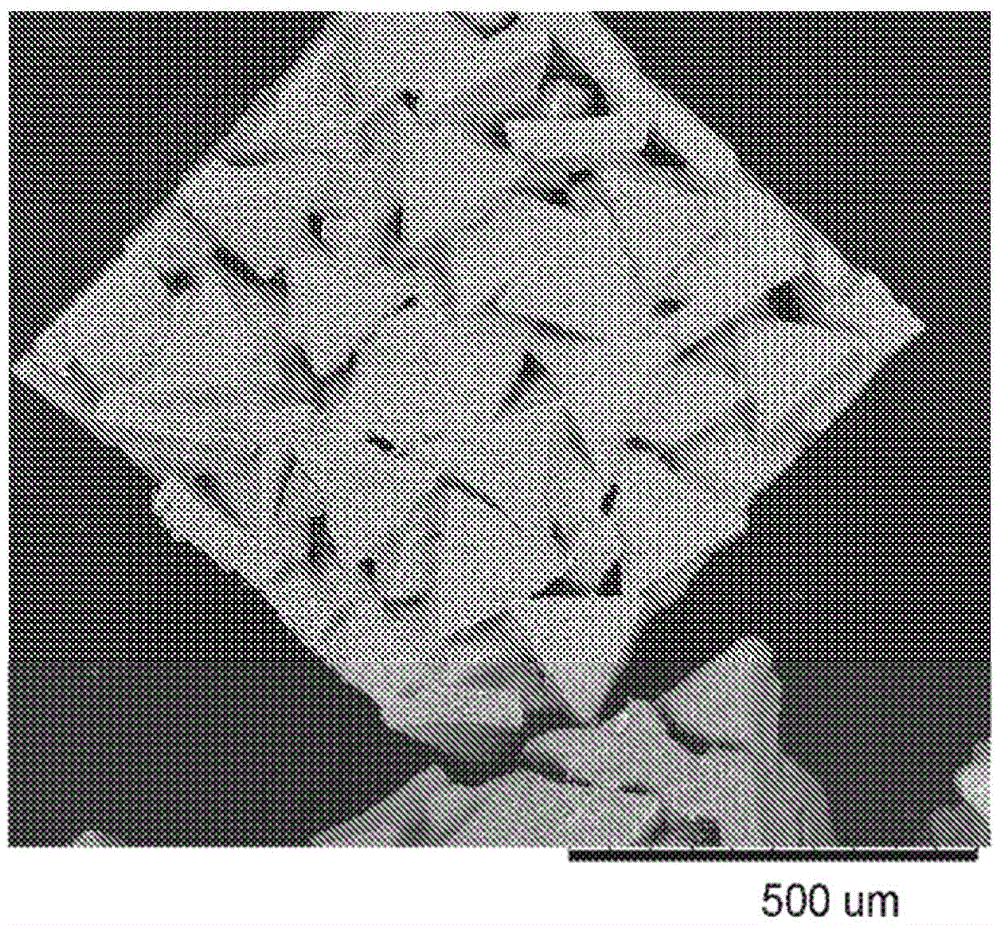
图6是如实施例1中所述的成型磨料团聚颗粒的显微照片;Figure 6 is a photomicrograph of shaped abrasive agglomerate particles as described in Example 1;
图7是如实施例1中所述的成型磨料团聚颗粒的断裂表面的显微照片;7 is a photomicrograph of the fractured surface of a shaped abrasive agglomeration particle as described in Example 1;
图8是根据本公开的涂覆磨料制品的实施方案的边缘剖视图;8 is an edge cross-sectional view of an embodiment of a coated abrasive article according to the present disclosure;
图9是根据本公开的粘结磨料制品的实施方案的透视图;并且9 is a perspective view of an embodiment of a bonded abrasive article according to the present disclosure; and
图10是根据本公开的非织造磨料制品的实施方案的放大侧视图。10 is an enlarged side view of an embodiment of a nonwoven abrasive article according to the present disclosure.
虽然以上说明的附图和图片示出了本公开的实施方案,但正如具体实施方式中所指出的那样,还可以想到其他的实施方案。在所有情况下,本公开通过示例性而非限制性的方式介绍本发明。应当理解,本领域的技术人员可设计出许多其他修改形式和实施方案,这些修改形式和实施方案均落在本公开的范围内。附图可不按比例绘制。While the drawings and pictures described above illustrate embodiments of the present disclosure, other embodiments are also contemplated, as indicated in the Detailed Description. In all cases, this disclosure presents the invention by way of illustration and not limitation. It should be understood that numerous other modifications and embodiments can be devised by those skilled in the art, which fall within the scope of this disclosure. The drawings may not be drawn to scale.
具体实施方式Detailed ways
参见图1A,示出了本公开的成型磨料团聚颗粒10的实施方案的简化图。成型磨料团聚颗粒10包含粘结在硅质基质7中的成型磨料颗粒5。为了简单起见,图1A仅示出了一个成型磨料颗粒5,但成型磨料团聚颗粒10通常将具有多个成型磨料颗粒。在一些实施方案中,在成型磨料团聚颗粒10内存在至少10、20或25个成型磨料颗粒5。Referring to FIG. 1A, a simplified diagram of an embodiment of a shaped
在包括所示实施方案的一些实施方案中,成型磨料颗粒5或成型磨料团聚颗粒10中的至少一者的形状是至少部分直线的。在这些实施方案中,成型磨料团聚颗粒通常在表面上具有最长的团聚线性尺寸L。在一些实施方案中,沿成型磨料团聚颗粒10的最长团聚线性尺寸L存在至少3、4、或5或至多10个成型磨料颗粒。尺寸W通常与最长的团聚线性尺寸L一起帮助限定成型磨料团聚颗粒的第二面14,其长度可与最长的线性尺寸L相同或比其短。成型磨料颗粒5通常在表面上还具有最长的线性尺寸l。尺寸W与最长的颗粒线性尺寸L一起帮助限定成型磨料颗粒的第二面4,其长度可与最长的颗粒线性尺寸L相同或比其短。In some embodiments, including the illustrated embodiment, the shape of at least one of the shaped abrasive particles 5 or the shaped abrasive
图1B是图1A中所示的成型磨料团聚颗粒10和/或成型磨料颗粒5的剖视图的图示。在一些实施方案中,包括图1A和图1B所示的实施方案,第一面26和第二面24的周边29被选择为几何形状,并且第一面26和第二面24通常被选择为具有相同的几何形状。第一面和第二面可具有多种有用的形状。在一些实施方案中,第一面26和第二面24在尺寸上不同,其中第二面24大于第一面26。在这些实施方案中,根据本公开的成型磨料团聚颗粒或包括在其中的成型磨料颗粒中的至少一者为截头棱锥形,其也可被称为截棱锥。在一些实施方案中,成型磨料颗粒或成型团聚颗粒中的至少一者具有三角形截锥形状、正方形截锥形状或六边形截锥形状。在第一面26和第二面24是全等的其他实施方案中,成型磨料团聚颗粒和成型磨料颗粒的有用形状的示例包括三角形、矩形、正方形、五边形和六边形棱柱。FIG. 1B is an illustration of a cross-sectional view of the shaped abrasive
为了有利于从用于制备根据本公开的成型磨料团聚颗粒10或它们中的成型磨料颗粒5中的至少一者的模具中将其移除并且在某些情况下为了提高在研磨应用中的性能,所述成型磨料团聚颗粒或成型磨料颗粒可对应于模具的脱模角是锥形的,例如,如在美国专利8,142,531(Adefris等人)中所述。因此,在一些实施方案中,成型磨料颗粒5或成型磨料团聚颗粒10中的至少一者具有倾斜侧壁。在图1B中所示的实施方案中,第一面26和第二面24通过至少一个倾斜侧壁22彼此连接。在一些实施方案中,可存在不止一个倾斜侧壁22,并且每个倾斜侧壁22的倾斜度或角度可与图1B中示出的相同或不同。参见图1B,可改变在成型磨料团聚颗粒10和成型磨料颗粒5的第一面26和倾斜侧壁22之间的角度α以改变每个面的相对尺寸。在一些实施方案中,成型磨料颗粒或成型磨料团聚颗粒中的至少一者在第一面和倾斜侧壁之间具有在95度至130度范围内的角度α。在各种实施方案中,角度α可在大约95度至大约130度之间、或在约95度至约125度之间、或在约95度至约120度之间、或在约95度至约115度之间、或在约95度至约110度之间、或在约95度至约105度之间、或在约95度至约100度之间。三个倾斜侧壁22构成成型磨料颗粒5的周向表面8,并且三个倾斜侧壁22构成图1A中所示的成型磨料团聚颗粒10的周向表面18。在其他实施方案中,成型磨料团聚颗粒或成型磨料颗粒中的至少一者的周向表面不渐缩(即,图1B中的侧壁22可为竖直的),并且/或者第一面26和第二面24可具有相同的尺寸和形状。To facilitate removal from the mold used to prepare the shaped abrasive
再次参见图1A和图1B,成型磨料团聚颗粒10在表面L上具有垂直于最长团聚线性尺寸的最短团聚尺寸t。在一些实施方案中,表面L上的最长团聚线性尺寸是最短团聚尺寸t的至少两倍。在一些实施方案中,最长团聚线性尺寸L是最短团聚尺寸t的至少3、4、5或10倍。厚度t也可被认为是成型团聚颗粒的第一面26和第二面24之间的距离。同样,成型磨料颗粒5在表面l上具有垂直于最长颗粒线性尺寸的最短尺寸t。在一些实施方案中,表面l上的最长颗粒线性尺寸是最短颗粒尺寸t的至少两倍。在一些实施方案中,最长颗粒线性尺寸L是最短颗粒尺寸t的至少3、4、5或10倍。厚度t也可被认为是成型磨料颗粒的第一面26和第二面24之间的距离。Referring again to FIGS. 1A and 1B , the shaped abrasive
图2示出了本公开的成型团聚颗粒或其中包括的成型磨料颗粒中的至少一者的另一实施方案。颗粒60具有第二面64、第一面66和倾斜侧壁62。在图2所示的实施方案中,最长颗粒线性尺寸小于厚度(t)的两倍(在一些实施方案中,小于1.5倍、1.25倍、1.2倍或1.15倍)。团聚颗粒60的厚度(t)从第二面64到第一面66测量。2 illustrates another embodiment of at least one of the shaped agglomerated particles of the present disclosure or shaped abrasive particles included therein. The
第一面26和倾斜侧壁22之间的角度通常由用于制备成型磨料颗粒5和成型磨料团聚颗粒10的模具的脱模角确定。术语“脱模角”是指锥形的角,该角结合到模具腔的壁中使得模具腔的开口宽于其基部。现在参见图3,其示出了模具100和模具腔105的横截面,脱模角μ是模具基部150和模具壁130之间的角度。可改变脱模角以改变成型磨料颗粒5和成型磨料团聚颗粒10的第一面26和第二面24的相对尺寸。具有略微圆形或圆角的拐角以用材料彻底填充模具并从模具中移除成型磨料团聚颗粒或成型磨料颗粒可能是有用的。此类半径在图2中也示出为半径r,其是侧壁62与第一面66相交处的拐角的内半径。The angle between the
在一些实施方案中,第一面26是基本上平面的,第二面24是基本上平面的,或第一面26和第二面24都是基本上平面的。在其他实施方案中,这些面可以是凹的或凸的,如在美国专利8,142,891(Culler等人)中更详细讨论的。另外,在一些实施方案中可存在穿过面的开口或孔,如在美国专利8,142,532(Erickson等人)中更详细讨论的。在一些实施方案中,第一面26和第二面24基本上彼此平行。在其他实施方案中,第一面26和第二面24可以不平行,使得一个面相对于另一个面倾斜,并且与每一个面相切的假想线都将相交于一点。在一些实施方案中,模具腔105的空气界面处的面可以不是平面的。In some embodiments, the
根据本公开的成型磨料团聚颗粒和包括在它们中的成型磨料颗粒的其他有用形状包括除正多边形之外的形状。图4A和图4B描绘了大致箭头形的成型磨料颗粒或成型磨料团聚颗粒。现在参见图4A,成型磨料颗粒或成型磨料团聚颗粒300包括具有周边320的第一表面310。周边320包括第一边缘330、第二边缘332和第三边缘334。第一边缘330是凹的单调曲线,而第二边缘332和第三边缘334是基本上直的边缘。第二表面370与第一主表面310相对,并且不接触第一主表面310。周向表面380具有预先确定的形状,并且被设置在第一表面310和第二表面370之间并且连接该第一表面和该第二表面。周向表面380包括第一壁382、第二壁384和第三壁386。第一边缘330、第二边缘332和第三边缘334分别表示第一壁382、第二壁384和第三壁386与周边320的相交处。周边320的第一区域390包括向内延伸的第一边缘330并且在第一拐角350和第二拐角352处终止,第一拐角350和第二拐角352限定相应的第一锐角内角360和第二锐角内角362。Other useful shapes for shaped abrasive agglomerate particles according to the present disclosure and shaped abrasive particles included therein include shapes other than regular polygons. 4A and 4B depict generally arrow-shaped shaped abrasive particles or shaped abrasive agglomerate particles. Referring now to FIG. 4A , shaped abrasive particles or shaped
如图4A所示,周边320的第一区域390可包括至少单个向内弯曲的延伸边缘,然而还设想周边320的第一区域390可包括多个边缘(例如,2、3、4、5、6、7、8、9、10个或更多个边缘),例如,如图4B所示。As shown in FIG. 4A, the
现在参见图4B,成型磨料颗粒或成型磨料团聚颗粒400包括具有周边420的第一表面410。周边420包括基本上直的第一边缘430、第二边缘432、第三边缘434和第四边缘436。第二表面470与第一表面410相对,并且不接触第一表面410。周向表面480包括第一壁482、第二壁484、第三壁486和第四壁488。周向表面480具有预先确定的形状,并且被设置在第一主表面410和第二表面470之间并连接该第一主表面和该第二表面。第一边缘430、第二边缘432、第三边缘434和第四边缘436分别表示第一壁482、第二壁484、第三壁486和第四壁488与周边420的相交处。周边420的第一区域490包括第一边缘430和第四边缘436,并且向内延伸。第一区域490在第一拐角450和第二拐角452处终止,第一拐角450和第二拐角452限定相应的第一锐角内角460和第二锐角内角462。Referring now to FIG. 4B , shaped abrasive particles or shaped abrasive
在一些实施方案中,在周边的向内延伸的第一区域390、490和一个或两个相邻边缘之间形成的内角小于在向内延伸的第一区域例如被单个直线段或凸边缘替换的情况下的内角。例如,在等边三角形的情况下,所有的拐角具有60度的内角,而对于具有替换三角形的边缘之一的凹边缘的对应形状,与向内延伸的区域相邻的两个拐角的内角可显著减小。例如,在成型磨料团聚颗粒或成型磨料颗粒通常具有三个拐角350、352、450、452的情况下,内角360、362、460、462可在5、10、15、20、25或30度至最高35、40、45、50或55度、或40至55度的范围内。在一些实施方案中,内角可以为在35至55度、40至55度、或甚至45至55度的范围内,但其他值也是可以的。相似地,如果三角形的边缘中的两个(或三个)被向内延伸的弯曲的边缘替换,它们相邻拐角的内角可落在相同范围内或甚至更低。在具有四个或更多个边缘的周边的情况中趋势相同,但内角值可能趋于更大。In some embodiments, the interior angle formed between the inwardly extending
为了测量周边的拐角的内角(θ),采用形成在相应边缘的切线(T1、T2)之间的角度,所述相应边缘在其最靠近拐角的点处形成拐角,所述最靠近拐角的点相对于向内延伸的区域未经过拐点。在相交的直边的情况下,此类切线具有与边缘本身相同的斜率,并且内角可容易地确定。在其中一个或两个边缘是单调向内延伸的曲线的情况下(例如,如图5A和图5B所示),切线(分别为T1a和T2a或T1b和T2b)同样可通过沿弯曲边缘趋近拐角来容易地确定。然而,如果拐角是圆的或以其他方式变形,则拐角的内角的测量可能变得更成问题。因此,在此类情况下,应通过在每个相邻边缘趋近邻近拐角的拐点(如果存在)时测量该边缘的切线来确定切线。To measure the interior angle (θ) of a corner of the perimeter, the angle formed between the tangents (T 1 , T 2 ) of the respective edge that forms the corner at its point closest to the corner is taken The point does not pass the inflection point relative to the inwardly extending region. In the case of intersecting straight edges, such tangents have the same slope as the edges themselves, and the interior angles can be easily determined. In cases where one or both edges are monotonically inwardly extending curves (eg, as shown in FIGS. 5A and 5B ), the tangents (T 1a and T 2a or T 1b and T 2b , respectively) can likewise pass along the Curved edges approach corners to be easily determined. However, if the corners are rounded or otherwise deformed, the measurement of the inside corners of the corners may become more problematic. Therefore, in such cases, the tangents should be determined by measuring the tangents of each adjacent edge as it approaches the inflection point (if any) of the adjacent corner.
在成型磨料颗粒或成型磨料团聚颗粒具有向内延伸的第一区域390、490的情况下,表面上的最长线性尺寸通常为直边缘332、334、432、434。然而,如果如在向内延伸的边缘第一边缘330中所有边缘都是弯曲的,则可将表面上的最长线性尺寸作为向内边缘330终止处的两个拐角350和352之间的距离。在不规则形状颗粒的其他情况下,可将表面上的最长线性尺寸作为两点之间的最远距离。在图4A和图4B中,第二面310、410大于第一面370、470,这由于上述原因可能是有用的。在其他实施方案中,图4A和图4B中所示的大致箭头形的颗粒可具有全等的第一面370、470和第二面310、410。关于具有带向内面向边缘的形状的成型磨料颗粒的更多信息,参见美国专利申请2015/0052825(Adefris)。Where the shaped abrasive particles or shaped abrasive agglomerate particles have inwardly extending
在一些实施方案中,成型磨料团聚颗粒和成型磨料颗粒具有相同的形状。即,成型磨料团聚颗粒和成型磨料颗粒两者可被描述为例如三角形截锥、正方形截锥或箭头形状。在其他实施方案中,成型磨料团聚颗粒和成型磨料颗粒具有不同的形状。图6示出了如实施例1中所述的成型磨料团聚颗粒的一个实施方案,其中成型磨料团聚颗粒具有正方形截锥形状,并且包含在其中的成型磨料颗粒具有三角形截锥形状。例如,实施例2中描述了成型磨料团聚颗粒的一个实施方案,其中成型磨料团聚颗粒和包含在其中的成型磨料颗粒均具有三角形截锥形状。In some embodiments, the shaped abrasive agglomerate particles and the shaped abrasive particles have the same shape. That is, both the shaped abrasive agglomerate particles and the shaped abrasive particles can be described as, for example, triangular truncated cones, square truncated cones, or arrowhead shapes. In other embodiments, the shaped abrasive agglomerate particles and the shaped abrasive particles have different shapes. 6 illustrates one embodiment of the shaped abrasive agglomerate particles as described in Example 1, wherein the shaped abrasive agglomerate particles have a square frustoconical shape and the shaped abrasive particles contained therein have a triangular frustoconical shape. For example, one embodiment of the shaped abrasive agglomerate particles is described in Example 2, wherein the shaped abrasive agglomerate particles and the shaped abrasive particles contained therein each have a triangular truncated cone shape.
成型磨料团聚颗粒内的成型磨料颗粒可全部为相同的形状或具有不同的形状。在一些实施方案中,成型磨料团聚颗粒内的成型磨料颗粒的至少50%、60%、75%、80%、90%或95%具有相同的形状。在一些实施方案中,成型磨料颗粒是磨料碎片,诸如当前体磨料颗粒(如下所述)在模具内破裂时形成的那些,如美国专利8,034,137(Erickson)中所述。在这些实施方案中,成型磨料团聚颗粒内的成型磨料颗粒将具有不同的形状。The shaped abrasive particles within the shaped abrasive agglomerate particles can all be the same shape or have different shapes. In some embodiments, at least 50%, 60%, 75%, 80%, 90%, or 95% of the shaped abrasive particles within the shaped abrasive agglomerate particles have the same shape. In some embodiments, the shaped abrasive particles are abrasive chips, such as those formed when precursor abrasive particles (described below) are fractured within a mold, as described in US Pat. No. 8,034,137 (Erickson). In these embodiments, the shaped abrasive particles within the shaped abrasive agglomerate particles will have different shapes.
在根据本公开的团聚物内的具有不同形状的成型磨料颗粒的一些实施方案中,最长的颗粒线性尺寸可以是最短颗粒尺寸的至少两倍。此外,在一些实施方案中,团聚物内的成型磨料颗粒具有大致相似的厚度。在一些实施方案中,成型磨料团聚颗粒内的成型磨料颗粒的至少50%、60%、75%、80%、90%或95%具有在成型磨料颗粒的平均厚度的10%、5%或2.5%内的厚度。成型磨料颗粒的厚度与最短颗粒尺寸相同。In some embodiments of shaped abrasive particles having different shapes within agglomerates according to the present disclosure, the longest particle linear dimension can be at least twice the size of the shortest particle. Furthermore, in some embodiments, the shaped abrasive particles within the agglomerates have substantially similar thicknesses. In some embodiments, at least 50%, 60%, 75%, 80%, 90%, or 95% of the shaped abrasive particles within the shaped abrasive agglomerate particles are at 10%, 5%, or 2.5% of the average thickness of the shaped abrasive particles Thickness in %. The thickness of the shaped abrasive particles is the same as the shortest particle size.
在可用于根据本公开的具有直线形状的成型磨料团聚颗粒中的成型磨料颗粒中,表面上的最长颗粒线性尺寸可为至多1600微米、至多1000微米、至多500微米、至多300微米或至多200微米。可用的成型磨料颗粒可在表面上具有在约一微米至1600微米、一微米至1000微米、一微米至500微米、十微米至300微米、15微米至300微米、25微米至300微米或大于25微米至300微米范围内的最长颗粒线性尺寸。In shaped abrasive particles useful in shaped abrasive agglomerate particles having linear shapes according to the present disclosure, the longest particle linear dimension on the surface may be at most 1600 microns, at most 1000 microns, at most 500 microns, at most 300 microns, or at most 200 microns microns. Useful shaped abrasive particles can have on the surface between about one micron to 1600 microns, one micron to 1000 microns, one micron to 500 microns, ten microns to 300 microns, 15 microns to 300 microns, 25 microns to 300 microns, or greater than 25 microns. Longest particle linear dimension in the range of microns to 300 microns.
对于根据本公开的具有直线形状的成型磨料团聚颗粒的实施方案,成型磨料团聚颗粒可在表面上具有至少400微米、在一些实施方案中至少500微米、或至少600微米的最长团聚线性尺寸。在一些实施方案中,根据本公开的成型磨料团聚颗粒在表面上具有至多5毫米(mm)、至多2mm、至多1.5mm、至多1.4mm、至多1.25mm、至多1mm、或至多0.9mm的最长团聚线性尺寸。在一些实施方案中,团聚颗粒在表面上具有在约400微米至5mm、400微米至2mm、400微米至1000微米、500微米至1000微米、500微米至900微米或600微米至900微米范围内的最长团聚线性尺寸。通常,在成型磨料团聚颗粒的表面上最长的团聚线性尺寸是在团聚颗粒中的成型磨料颗粒的表面上最长的颗粒线性尺寸的至少约3、5或10倍。For embodiments of shaped abrasive agglomerate particles having a linear shape according to the present disclosure, the shaped abrasive agglomerate particles can have a longest agglomerated linear dimension on the surface of at least 400 microns, in some embodiments at least 500 microns, or at least 600 microns. In some embodiments, shaped abrasive agglomerate particles according to the present disclosure have a longest length on the surface of at most 5 millimeters (mm), at most 2 mm, at most 1.5 mm, at most 1.4 mm, at most 1.25 mm, at most 1 mm, or at most 0.9 mm Agglomerated linear dimensions. In some embodiments, the agglomerated particles have on the surface a range of about 400 microns to 5 mm, 400 microns to 2 mm, 400 microns to 1000 microns, 500 microns to 1000 microns, 500 microns to 900 microns, or 600 microns to 900 microns The longest agglomerate linear dimension. Typically, the longest agglomerated linear dimension on the surface of the shaped abrasive agglomerate particles is at least about 3, 5 or 10 times the longest particle linear dimension on the surface of the shaped abrasive particles in the agglomerated particle.
根据本公开的成型磨料团聚颗粒和包括在它们中的成型磨料颗粒中的任一者可根据磨料行业认可的规定标称等级来确定尺寸。磨料行业认可的分级标准的示例包括由ANSI(美国国家标准学会)、FEPA(欧洲磨料制造者联盟)和JIS(日本工业标准)颁布的那些标准。这类工业接纳的分级标准包括:例如ANSI 4、ANSI 6、ANSI 8、ANSI 16、ANSI 24、ANSI30、ANSI 36、ANSI 40、ANSI 50、ANSI 60、ANSI 80、ANSI 100、ANSI 120、ANSI 150、ANSI180、ANSI 220、ANSI 240、ANSI 280、ANSI 320、ANSI 360、ANSI 400和ANSI 600;FEPA P8、FEPA P12、FEPA P16、FEPA P24、FEPA P30、FEPA P36、FEPA P40、FEPA P50、FEPA P60、FEPAP80、FEPA P100、FEPA P120、FEPA P150、FEPA P180、FEPA P220、FEPA P320、FEPA P400、FEPA P500、FEPA P600、FEPA P800、FEPA P1000和FEPA P1200;以及JIS 8、JIS 12、JIS 16、JIS 24、JIS 36、JIS 46、JIS 54、JIS 60、JIS 80、JIS 100、JIS 150、JIS 180、JIS 220、JIS240、JIS 280、JIS 320、JIS 360、JIS 400、JIS 400、JIS 600、JIS 800、JIS 1000、JIS1500、JIS 2500、JIS 4000、JIS 6000、JIS 8000和JIS 10,000。Any of the shaped abrasive agglomerate particles according to the present disclosure and the shaped abrasive particles included therein may be sized according to a specified nominal grade recognized by the abrasive industry. Examples of abrasive industry recognized grading standards include those promulgated by ANSI (American National Standards Institute), FEPA (Federation of European Abrasive Manufacturers), and JIS (Japanese Industrial Standards). Such industry-accepted grading standards include, for example, ANSI 4, ANSI 6, ANSI 8, ANSI 16,
术语“磨料行业认可的规定标称等级”还包括磨料行业认可的规定标称筛选等级。例如,规定的标称筛选等级可使用符合ASTM E-11-09“用于测试目的的筛布和筛网的标准规格(Standard Specification for Wire Cloth and Sieves for Testing Purposes)”的美国标准测试筛网。ASTM E-11-09阐明了测试筛网的设计和构造需求,所述测试筛网利用安装在框架中的织造筛布为介质,根据指定粒度对材料进行分类。典型标号可表示为-18+20,意指成型磨料颗粒或成型磨料团聚颗粒通过符合ASTM E11-09“织造测试筛布和测试筛网的标准规格(Standard Specification for Woven Wire Test Sieve Cloth andTest Sieves)”针对18号筛网规格的测试筛网并且保留在符合ASTM E11-09针对20号筛网规格的测试筛网上。在一些实施方案中,可用于实施本公开的成型磨料颗粒或成型磨料团聚颗粒可具有包括以下的标称筛分等级:-18+20、-20/+25、-25+30、-30+35、-35+40、5-40+45、-45+50、-50+60、-60+70、-70/+80、-80+100、-100+120、-120+140、-140+170、-170+200、-200+230、-230+270、-270+325、-325+400、-400+450、-450+500或-500+635。The term "Abrasives Industry-Approved Specified Nominal Grade" also includes Abrasives Industry-Accepted Specified Nominal Screening Grades. For example, a specified nominal screen rating may use a US standard test screen conforming to ASTM E-11-09 "Standard Specification for Wire Cloth and Sieves for Testing Purposes" . ASTM E-11-09 addresses the design and construction requirements for test screens that use a woven screen cloth mounted in a frame as a medium to classify materials according to specified particle sizes. A typical designation may be expressed as -18+20, which means that the shaped abrasive particles or shaped abrasive agglomerate particles pass ASTM E11-09 "Standard Specification for Woven Wire Test Sieve Cloth and Test Sieves" ” a test screen for No. 18 mesh size and retained on a test screen that conforms to ASTM E11-09 for No. 20 mesh size. In some embodiments, shaped abrasive particles or shaped abrasive agglomerate particles useful in practicing the present disclosure may have nominal sieve ratings including the following: -18+20, -20/+25, -25+30, -30+ 35, -35+40, 5-40+45, -45+50, -50+60, -60+70, -70/+80, -80+100, -100+120, -120+140, - 140+170, -170+200, -200+230, -230+270, -270+325, -325+400, -400+450, -450+500, or -500+635.
在一些实施方案中,可用于根据本公开的成型磨料团聚颗粒的成型磨料颗粒包含陶瓷材料。在一些实施方案中,它们可基本上由陶瓷材料组成或甚至由陶瓷材料组成,但它们可包含非陶瓷相(如,像在玻璃-陶瓷中那样)。合适的陶瓷材料的示例包括α氧化铝、熔融的氧化铝-氧化锆以及熔融的氮氧化物。关于适用于成型陶瓷磨料颗粒的溶胶-凝胶衍生的陶瓷材料另外细节可见于例如美国专利4,314,827(Leitheiser等人);美国专利4,518,397(Leitheiser等人);美国专利4,623,364(Cottringer等人);美国专利4,744,802(Schwabel);美国专利4,770,671(Monroe等人);美国专利4,881,951(Wood等人);美国专利4,960,441(Pellow等人);美国专利5,139,978(Wood);美国专利5,201,916(Berg等人);美国专利5,366,523(Rowenhorst等人);美国专利5,429,647(Larmie);美国专利5,547,479(Conwell等人);美国专利5,498,269(Larmie);美国专利5,551,963(Larmie);美国专利5,725,162(Garg等人)和美国专利6,054,093(Torre等人)。In some embodiments, the shaped abrasive particles useful in the shaped abrasive agglomerate particles according to the present disclosure comprise a ceramic material. In some embodiments, they may consist essentially of or even consist of ceramic materials, although they may contain non-ceramic phases (eg, as in glass-ceramics). Examples of suitable ceramic materials include alpha alumina, fused alumina-zirconia, and fused oxynitride. Additional details regarding sol-gel derived ceramic materials suitable for use in shaping ceramic abrasive particles can be found in, for example, US Pat. No. 4,314,827 (Leitheiser et al.); US Pat. No. 4,518,397 (Leitheiser et al.); US Pat. 4,744,802 (Schwabel); US Patent 4,770,671 (Monroe et al); US Patent 4,881,951 (Wood et al); US Patent 4,960,441 (Pellow et al); US Patent 5,139,978 (Wood); US Patent 5,201,916 (Berg et al); 5,366,523 (Rowenhorst et al.); US Patent 5,429,647 (Larmie); US Patent 5,547,479 (Conwell et al.); US Patent 5,498,269 (Larmie); US Patent 5,551,963 (Larmie); Torre et al).
多种方法可用于制备用于本公开的成型磨料团聚颗粒中的成型磨料颗粒,例如模制、挤出和模切。在一些实施方案中,可根据多步骤工艺来制备成型磨料颗粒。该工艺可使用陶瓷前体分散体(如,包含陶瓷前体材料的分散体(如,溶胶-凝胶)来实施。Various methods can be used to prepare shaped abrasive particles for use in the shaped abrasive agglomerate particles of the present disclosure, such as molding, extrusion, and die cutting. In some embodiments, shaped abrasive particles can be prepared according to a multi-step process. The process may be carried out using a ceramic precursor dispersion (eg, a dispersion comprising a ceramic precursor material (eg, a sol-gel).
简而言之,该方法可包括以下步骤:制备可被转变为对应的陶瓷的有晶种或无晶种的陶瓷前体分散体(如,可转变成α氧化铝的勃姆石或假勃姆石溶胶-凝胶);用陶瓷前体分散体填充具有期望的成型磨料颗粒外部形状的一个或多个模具腔,干燥陶瓷前体分散体以形成成型陶瓷前体颗粒;从模具腔移除成型陶瓷前体颗粒;煅烧成型陶瓷前体颗粒以形成经煅烧的成型陶瓷前体颗粒,然后烧结经煅烧的成型陶瓷前体颗粒以形成成型陶瓷磨料颗粒。在一些实施方案中,省略煅烧步骤并且成型陶瓷前体颗粒在从模具中移除之后直接进行烧结。在一些实施方案中,模具由在煅烧或烧结期间烧尽的牺牲材料(例如,聚烯烃材料)制成,从而在加工期间消除将陶瓷前体颗粒从模具中分离的步骤。Briefly, the method can include the steps of preparing a seeded or unseeded ceramic precursor dispersion (eg, boehmite or phantom, which can be converted to alpha alumina) that can be converted to the corresponding ceramic mucilite sol-gel); fill one or more mold cavities with the desired outer shape of the shaped abrasive particles with the ceramic precursor dispersion, dry the ceramic precursor dispersion to form the shaped ceramic precursor particles; remove from the mold cavity shaping ceramic precursor particles; calcining the shaped ceramic precursor particles to form calcined shaped ceramic precursor particles, and then sintering the calcined shaped ceramic precursor particles to form shaped ceramic abrasive particles. In some embodiments, the calcination step is omitted and the shaped ceramic precursor particles are sintered directly after removal from the mold. In some embodiments, the mold is made of a sacrificial material (eg, a polyolefin material) that burns out during calcination or sintering, thereby eliminating the step of separating the ceramic precursor particles from the mold during processing.
制备成型磨料颗粒的方法可包括提供可被转变为陶瓷材料的陶瓷前体材料的有晶种或无晶种分散体(即,陶瓷前体分散体)。陶瓷前体分散体常常包含挥发性液体组分。在一些实施方案中,挥发性液体组分是水。陶瓷前体分散体应当包含足量的液体以使分散体的粘度足够低以能够填充模具腔并且复制模具表面,但是液体的量不能太多,以致引起随后将液体从模具腔中移除的过高成本。在一个实施方案中,陶瓷前体分散体包含2重量%至90重量%的可被转变为陶瓷的颗粒(诸如氧化铝一水合物(勃姆石)或另一种氧化铝前体的颗粒),以及至少10重量%至98重量%、或50重量%至70重量%、或50重量%至60重量%的挥发性组分(诸如水)。相反地,在一些实施方案中,陶瓷前体分散体包含30重量%至50重量%、或40重量%至50重量%的固体。Methods of making shaped abrasive particles can include providing a seeded or unseeded dispersion (ie, a ceramic precursor dispersion) of a ceramic precursor material that can be converted into a ceramic material. Ceramic precursor dispersions often contain volatile liquid components. In some embodiments, the volatile liquid component is water. The ceramic precursor dispersion should contain sufficient liquid so that the viscosity of the dispersion is low enough to fill the mold cavity and replicate the mold surface, but not so much as to cause excessive subsequent removal of the liquid from the mold cavity. high cost. In one embodiment, the ceramic precursor dispersion comprises 2% to 90% by weight of particles that can be converted into ceramics (such as particles of alumina monohydrate (boehmite) or another alumina precursor) , and at least 10% to 98% by weight, or 50% to 70% by weight, or 50% to 60% by weight of volatile components such as water. Conversely, in some embodiments, the ceramic precursor dispersion comprises 30% to 50%, or 40% to 50% by weight solids.
可用的陶瓷前体分散体的示例包括氧化锆溶胶、氧化钒溶胶、氧化铈溶胶、氧化铝溶胶以及它们的组合。可用的氧化铝分散体包括例如勃姆石分散体、假勃姆石分散体、如例如在美国专利申请公布2015/0267097(Rosenflanz等人)中所述的微粉化的氧化铝分散体和其他氧化铝水合物分散体。勃姆石和假勃姆石可通过已知的技术来制备或可商购获得。可商购获得勃姆石和假勃姆石的示例包括得自巴斯夫公司(BASF Corporation)的商品名为“HIQ-40”和得自萨索尔北美有限公司(Sasol North America)的“DISPERAL”和“DISPAL”的产品。这些氧化铝一水合物相对较纯;即,它们除了一水合物外只包含相对较少的(如果有的话)其他水合物相,并且具有高表面积。关于陶瓷前体分散体包括改性添加剂、成核剂、胶溶剂、消泡剂和其他添加剂的进一步信息可见于例如美国专利申请公布2015/0052825(Adefris)。Examples of useful ceramic precursor dispersions include zirconia sols, vanadium oxide sols, ceria sols, alumina sols, and combinations thereof. Useful alumina dispersions include, for example, boehmite dispersions, pseudo-boehmite dispersions, micronized alumina dispersions as described, for example, in US Patent Application Publication 2015/0267097 (Rosenflanz et al.), and other oxides. Aluminium hydrate dispersion. Boehmite and pseudo-boehmite can be prepared by known techniques or are commercially available. Examples of commercially available boehmite and pseudo-boehmite include "HIQ-40" from BASF Corporation and "DISPERAL" and "DISPERAL" from Sasol North America. Products of "DISPAL". These alumina monohydrates are relatively pure; that is, they contain relatively few, if any, hydrate phases other than the monohydrate and have a high surface area. Further information on ceramic precursor dispersions including modifying additives, nucleating agents, peptizers, defoamers, and other additives can be found, for example, in US Patent Application Publication 2015/0052825 (Adefris).
所得成型陶瓷磨料颗粒的物理特性一般将取决于陶瓷前体分散体中使用的材料类型。The physical properties of the resulting shaped ceramic abrasive particles will generally depend on the type of material used in the ceramic precursor dispersion.
模制成型磨料颗粒可使用与模制成型磨料团聚颗粒相似的模具和方法来进行,如下所述。Molding the abrasive particles can be performed using similar molds and methods to molding the abrasive agglomerate particles, as described below.
成型陶瓷前体颗粒可在从模具中移除之后干燥或煅烧。如果陶瓷前体分散体在模具中干燥至所需程度,则不需要额外的干燥步骤。然而,在一些情况下,采用额外的干燥步骤来使陶瓷前体分散体停留在模具中的时间最小化可能是经济的。通常,成型磨料颗粒前体将在50℃至160℃、或在120℃至150℃的温度下干燥10分钟至480分钟、或120分钟至400分钟。在任选的煅烧期间,基本上所有的挥发性物质都被去除,并且存在于陶瓷前体分散体中的各种组分均被转化成金属氧化物。通常,将成型陶瓷前体颗粒加热至400℃至800℃的温度,并且将其保持在该温度范围内,直至去除游离水和90重量%以上的任何结合的挥发性物质为止。在任选步骤中,可期望通过浸渍工艺引入改性添加剂。可通过浸渍将水溶性盐引入经煅烧的成型陶瓷前体颗粒的孔隙中。然后再次对成型陶瓷前体颗粒进行预焙烧。该可选步骤在美国专利5,164,348(Wood)中进行了进一步描述。The shaped ceramic precursor particles may be dried or calcined after removal from the mold. If the ceramic precursor dispersion is dried in the mold to the desired degree, no additional drying step is required. However, in some cases it may be economical to employ an additional drying step to minimize the time the ceramic precursor dispersion remains in the mold. Typically, the shaped abrasive particle precursor will be dried at a temperature of 50°C to 160°C, or 120°C to 150°C, for 10 minutes to 480 minutes, or 120 minutes to 400 minutes. During the optional calcination, substantially all volatile species are removed and various components present in the ceramic precursor dispersion are converted to metal oxides. Typically, the shaped ceramic precursor particles are heated to a temperature of 400°C to 800°C and maintained within this temperature range until free water and more than 90% by weight of any bound volatiles are removed. In an optional step, it may be desirable to introduce modifying additives through an impregnation process. Water-soluble salts can be introduced into the pores of the calcined shaped ceramic precursor particles by impregnation. The shaped ceramic precursor particles are then pre-fired again. This optional step is further described in US Patent 5,164,348 (Wood).
烧结成型陶瓷前体颗粒以形成陶瓷颗粒通常是实现可用的成型陶瓷磨料颗粒的所需硬度所必需的。通过将成型陶瓷前体颗粒加热至1000℃至1650℃的温度来进行烧结。为了实现此转变程度而必须使经煅烧的成型陶瓷前体颗粒暴露于烧结温度下的时间长度取决于多种因素,但通常为5秒至48小时。在一些实施方案中,烧结步骤的持续时间在一分钟至90分钟的范围内。烧结之后,成型陶瓷磨料颗粒可具有10GPa(吉帕斯卡)、16GPa、18GPa、20GPa或更大的维氏硬度。Sintering the shaped ceramic precursor particles to form the ceramic particles is generally necessary to achieve the desired hardness of usable shaped ceramic abrasive particles. Sintering is performed by heating the shaped ceramic precursor particles to a temperature of 1000°C to 1650°C. The length of time the calcined shaped ceramic precursor particles must be exposed to the sintering temperature in order to achieve this degree of transformation depends on a variety of factors, but is typically from 5 seconds to 48 hours. In some embodiments, the duration of the sintering step ranges from one minute to 90 minutes. After sintering, the shaped ceramic abrasive particles may have a Vickers hardness of 10 GPa (Giga Pascals), 16 GPa, 18 GPa, 20 GPa, or greater.
可使用其他步骤来修改所述工艺,例如将材料从煅烧温度快速加热至烧结温度、对陶瓷前体分散体进行离心以去除淤渣和/或废物。此外,如果需要,则可以通过组合这些方法步骤中的两个或更多个来修改该方法。可以用来修改本公开的工艺的常规工艺步骤在美国专利4,314,827(Leitheiser)中进行了更完整的描述。Other steps can be used to modify the process, such as rapidly heating the material from calcination temperature to sintering temperature, centrifuging the ceramic precursor dispersion to remove sludge and/or waste. Furthermore, if desired, the method can be modified by combining two or more of these method steps. General process steps that can be used to modify the process of the present disclosure are more fully described in US Patent 4,314,827 (Leitheiser).
可根据例如美国专利5,213,591(Celikkaya等人)中描述的方法,使用溶胶-凝胶α氧化铝颗粒前体来制备由α氧化铝、镁铝尖晶石以及稀土六铝酸盐的晶粒组成的成型陶瓷磨料颗粒。α氧化铝磨料颗粒可包含氧化锆,如美国专利5,551,963(Larmie)中所公开。作为另外一种选择,α氧化铝磨料颗粒可以具有微观结构或添加剂,例如,如美国专利6,277,161(Castro)中所公开。关于制备成型陶瓷磨料颗粒的方法的更多信息公开于美国专利8,123,828(Culler等人)和8,034,137(Erickson)中,这些专利描述了例如用于制备磨料碎片的条件。Sol-gel alpha alumina particle precursors can be used to prepare grains of alpha alumina, magnesia-alumina spinel, and rare earth hexaaluminate according to methods described, for example, in US Pat. No. 5,213,591 (Celikkaya et al.). Shaped ceramic abrasive particles. The alpha alumina abrasive particles may comprise zirconia, as disclosed in US Pat. No. 5,551,963 (Larmie). Alternatively, the alpha alumina abrasive particles may have a microstructure or additives, eg, as disclosed in US Pat. No. 6,277,161 (Castro). More information on methods of making shaped ceramic abrasive particles is disclosed in US Pat. Nos. 8,123,828 (Culler et al.) and 8,034,137 (Erickson), which describe, for example, conditions for making abrasive chips.
根据本公开的成型团聚颗粒包括硅质基质。硅质基质包括至少碱金属硅酸盐和硬化剂的反应产物。合适的碱金属硅酸盐包括硅酸铯、硅酸锂、硅酸钾、硅酸钠以及它们的组合。在一些实施方案中,碱金属硅酸盐包括硅酸锂、硅酸钠或硅酸钾中的至少一种。在一些实施方案中,碱金属硅酸盐包括硅酸锂或硅酸钾中的至少一种。Shaped agglomerated particles according to the present disclosure include a siliceous matrix. The siliceous matrix includes at least the reaction product of an alkali metal silicate and a hardener. Suitable alkali metal silicates include cesium silicate, lithium silicate, potassium silicate, sodium silicate, and combinations thereof. In some embodiments, the alkali metal silicate includes at least one of lithium silicate, sodium silicate, or potassium silicate. In some embodiments, the alkali metal silicate includes at least one of lithium silicate or potassium silicate.
碱金属硅酸盐可例如以水溶液或固体喷雾干燥粉末形式得自商业来源,例如宾夕法尼亚马尔文的PQ公司(PQ Corporation,Malvern,PA)。合适的硅酸锂可例如以商品名“LITHISIL 829”和“LITHISIL 25”从PQ公司获得。另外合适的碱金属硅酸盐是SiO2:Na2O重量比在1.6至2.5范围内的硅酸钠和SiO2:K2O重量比在1.6至2.5范围内的硅酸钾。其他合适的碱金属硅酸盐包括钠或铵稳定的硅溶胶,诸如得自伊利诺伊州内珀维尔的纳尔科公司(Nalco Company,Naperville,Ill)的那些。硅酸盐溶液中的有用浓度为至少40重量%至42重量%固体,并且二氧化硅与锂、钠或钾的氧化物的重量比通常在1:1至10:1范围内。在固体硅酸盐的情况下,快速溶解的喷雾干燥粉末可以是有用的。这些粉末在其结构中通常含有约20重量%的水。合适的碱金属硅酸盐粉末包括例如以商品名“BRITESIL C 205”和“KASOLV 16”得自PQ公司的那些。当使用固体碱金属硅酸盐粉末时,通常加入水以制备硅酸盐基质。Alkali metal silicates can be obtained, for example, from commercial sources, such as PQ Corporation, Malvern, PA, as an aqueous solution or as a solid spray-dried powder. Suitable lithium silicates are available, for example, from the company PQ under the trade names "LITHISIL 829" and "LITHISIL 25". Further suitable alkali metal silicates are sodium silicate with a SiO2 :Na2O weight ratio in the range from 1.6 to 2.5 and potassium silicate with a SiO2 : K2O weight ratio in the range from 1.6 to 2.5. Other suitable alkali metal silicates include sodium or ammonium stabilized silica sols, such as those available from Nalco Company, Naperville, Ill. Useful concentrations in the silicate solution are at least 40% to 42% by weight solids, and the weight ratio of silica to lithium, sodium or potassium oxide is typically in the range of 1:1 to 10:1. In the case of solid silicates, fast dissolving spray dried powders can be useful. These powders typically contain about 20% by weight of water in their structure. Suitable alkali metal silicate powders include, for example, those available from PQ Corporation under the trade names "BRITESIL C 205" and "KASOLV 16". When solid alkali metal silicate powders are used, water is usually added to prepare the silicate matrix.
碱金属硅酸盐与至少一种硬化剂反应以形成硅质基质。合适的硬化剂的示例包括磷酸铝、铝硅酸盐、氟硅酸盐(例如,Na2SiF6)、波特兰水泥、冰晶石(例如,Na3AlF6)、钙盐(例如,CaCl2)和硅酸钙。在一些实施方案中,硬化剂是磷酸铝、铝硅酸盐(例如偏高岭土和高岭石)、氟硅酸盐、波特兰水泥、合成冰晶石或硅酸钙中的至少一种。在一些实施方案中,硬化剂包括铝硅酸盐。硬化剂可得自商业来源,诸如德国布登海姆的布登海姆公司(Budenheim,Inc.,Budenheim,Germany);德克萨斯州休斯顿的索尔维氟化物有限公司(SolvayFluorides,LLC,Houston,TX);以及新泽西州弗洛勒姆帕克的巴斯夫公司(BASF,FlorhamPark,N.J)。The alkali metal silicate reacts with at least one hardener to form a siliceous matrix. Examples of suitable hardeners include aluminum phosphates, aluminosilicates, fluorosilicates (eg, Na2SiF6 ), Portland cement, cryolite (eg, Na3AlF6 ), calcium salts (eg, CaCl ) 2 ) and calcium silicate. In some embodiments, the hardener is at least one of aluminum phosphate, aluminosilicate (eg, metakaolin and kaolinite), fluorosilicate, Portland cement, synthetic cryolite, or calcium silicate. In some embodiments, the hardener includes an aluminosilicate. Hardeners are available from commercial sources such as Budenheim, Inc., Budenheim, Germany; Solvay Fluorides, LLC, Houston, Texas Houston, TX); and BASF, Florham Park, NJ.
硬化剂与碱金属硅酸盐的可用比率可根据硅质基质的所需组成而变化。在一些实施方案中,碱金属硅酸盐与硬化剂的比率在20:1至2:1的范围内。Na2SiF6和Na3AlF6(合成冰晶石)可以最终混合物的3重量%至10重量%的量使用,并且铝硅酸盐(例如偏高岭土和高岭石)可以基于液体硅酸盐的重量计10重量%至50重量%的量使用。无氟铝磷酸盐(例如,以商品名“FABUTIT”得自新泽西州利堡的BassTech公司(BassTech International,FortLee,NJ)的那些)可在液体硅酸盐中以30%至45%的SiO2的量使用。便利地,硬化剂可与含水硅酸盐组合添加,并且在与成型磨料颗粒组合之前至少部分地预先溶解在含水硅酸盐中。Useful ratios of hardener to alkali metal silicate can vary depending on the desired composition of the siliceous matrix. In some embodiments, the ratio of alkali metal silicate to hardener is in the range of 20:1 to 2:1. Na2SiF6 and Na3AlF6 (synthetic cryolite) can be used in amounts ranging from 3 % to 10 % by weight of the final mixture, and aluminosilicates such as metakaolin and kaolinite can be based on liquid silicates It is used in an amount of 10% to 50% by weight. Fluorine-free aluminophosphates (eg, those available under the trade designation "FABUTIT" from BassTech International, Fort Lee, NJ) are available in liquid silicates as 30% to 45% SiO 2 amount used. Conveniently, the hardener may be added in combination with the hydrous silicate and at least partially pre-dissolved in the hydrous silicate prior to combining with the shaped abrasive particles.
本公开的成型磨料团聚颗粒通常包括成型磨料颗粒、孔和任选的添加剂在化学固化的硅质基质中的均匀分布。碱金属硅酸盐和硬化剂的反应通常产生无定形聚合物≡Si-O-Si(Al,P)≡网络、OH基团形式的结构水和结晶副产物(诸如MxFy和Mx(PO4)y或它们的混合盐),其中M是Li、Na、K、Ca或Mg,并且其中x和y取决于金属的化合价。无定形网络被认为是凝胶。如本文所用,“凝胶”是分散在液体中的固体的三维网络。在硅质基质是铝硅酸盐的实施方案中,网络中硅与铝的摩尔比影响其特性。例如,低的Si:Al比(诸如1:1至3:1)提供相对刚性的化学固化网络。高的Si:l比(例如高于15:1)提供更柔韧的网络。在一些实施方案中,Si:Al比为至少1:1,并且为至多20:1、25:1、100:1、200:1或300:1。在一些实施方案中,Si:Al比大于20:1或至少25:1且至多100:1、200:1或300:1。The shaped abrasive agglomeration particles of the present disclosure generally include a uniform distribution of shaped abrasive particles, pores, and optional additives in a chemically cured siliceous matrix. The reaction of alkali metal silicates and hardeners typically produces amorphous polymers ≡Si-O-Si(Al,P)≡ networks, structural water in the form of OH groups, and crystalline by -products such as MxFy and Mx ( PO4 ) y or their mixed salts), where M is Li, Na, K, Ca, or Mg, and where x and y depend on the valence of the metal. Amorphous networks are considered gels. As used herein, a "gel" is a three-dimensional network of solids dispersed in a liquid. In embodiments where the siliceous matrix is an aluminosilicate, the molar ratio of silicon to aluminum in the network affects its properties. For example, low Si:Al ratios (such as 1:1 to 3:1) provide relatively rigid chemically cured networks. A high Si:1 ratio (eg, above 15:1) provides a more flexible network. In some embodiments, the Si:Al ratio is at least 1:1, and at most 20:1, 25:1, 100:1, 200:1, or 300:1. In some embodiments, the Si:Al ratio is greater than 20:1 or at least 25:1 and at most 100:1, 200:1 or 300:1.
本领域技术人员将理解,本文所述的硅质基质不是玻璃质基质。即,硅质基质不满足作为在原子尺度上具有无定形(例如,非结晶)结构并且当向液态加热时表现出玻璃化转变的固体的玻璃的定义。本文所公开的团聚物中的硅质基质是非玻璃化的(也是非玻璃质的)。硅质基质不是通过熔化和熔合颗粒诸如玻璃熔料而形成,而是通过化学交联形成。Those skilled in the art will understand that the siliceous matrix described herein is not a vitreous matrix. That is, a siliceous matrix does not satisfy the definition of a glass as a solid that has an amorphous (eg, non-crystalline) structure at the atomic scale and exhibits a glass transition when heated to a liquid state. The siliceous matrix in the agglomerates disclosed herein is non-vitrified (also non-vitreous). The siliceous matrix is not formed by melting and fusing particles such as frit, but by chemical crosslinking.
根据本公开的团聚颗粒中的硅质基质可例如基于所需的热膨胀系数(CTE)来选择。在一些实施方案中,对于硅质基质和成型磨料颗粒,具有相似的CTE是有用的,例如彼此的±100%、50%、40%、25%或20%。熔融氧化铝的CTE通常为约8×10⁻⁶/开尔文(K)。硅质基质可被选择成具有在4×10-6/K至16×10-6/K范围内的CTE。The siliceous matrix in the agglomerated particles according to the present disclosure can be selected, for example, based on the desired coefficient of thermal expansion (CTE). In some embodiments, it is useful for the siliceous matrix and shaped abrasive particles to have similar CTEs, eg, ±100%, 50%, 40%, 25%, or 20% of each other. The CTE of fused alumina is typically about 8×10 −6 /Kelvin (K). The siliceous matrix can be selected to have a CTE in the range of 4×10 −6 /K to 16×10 −6 /K.
基于成型磨料团聚颗粒的总重量计,成型磨料团聚颗粒包含约50重量%至95重量%的成型磨料颗粒和50重量%至5重量%的硅质基质。在一些实施方案中,基于成型磨料团聚颗粒的总重量计,成型磨料团聚颗粒包含约55重量%至75重量%的成型磨料颗粒和45重量%至25重量%的硅质基质。在一些实施方案中,基于团聚颗粒的总重量计,成型磨料团聚颗粒包含约55重量%至70重量%的成型磨料颗粒和45重量%至30重量%的硅质基质。在根据本公开的成型磨料团聚颗粒的一些实施方案中,硅质基质的量相对较小(例如,至多50、45、40、35、30、25、20、15或5%),这可用于促进成型磨料团聚颗粒的所需侵蚀,例如在用于无心磨削应用的涂覆带中。The shaped abrasive agglomerate particles comprise from about 50% to 95% by weight of the shaped abrasive particles and 50% to 5% by weight of the siliceous matrix, based on the total weight of the shaped abrasive agglomerate particles. In some embodiments, the shaped abrasive agglomerate particles comprise about 55% to 75% by weight shaped abrasive particles and 45% to 25% by weight siliceous matrix, based on the total weight of the shaped abrasive agglomerate particles. In some embodiments, the shaped abrasive agglomerate particles comprise about 55% to 70% by weight shaped abrasive particles and 45% to 30% by weight siliceous matrix, based on the total weight of the agglomerate particles. In some embodiments of shaped abrasive agglomerate particles according to the present disclosure, the amount of siliceous matrix is relatively small (eg, up to 50, 45, 40, 35, 30, 25, 20, 15, or 5%), which can be used for Facilitates the desired erosion of shaped abrasive agglomerate particles, such as in coated belts for centerless grinding applications.
本公开的成型磨料团聚颗粒通常是多孔的。孔隙率可通过促进所用成型磨料颗粒的释放来影响研磨过程期间团聚颗粒的侵蚀。然而,太大的孔隙率可能会损害团聚物的耐久性。成型磨料团聚颗粒中的孔隙率例如受硅质基质中游离水含量的影响。降低游离水含量通常导致硅质基质的固有孔隙率最小化。在一些情况下,用额外量的低粘度(<50cps)的碱金属硅酸盐溶液浸渍完全固化和干燥的团聚物,以便阻塞开口孔隙率并改善外观和耐久性。在一些实施方案中,如通过扫描电子显微镜观察到的,成型磨料团聚颗粒包括约五体积%至约60体积%的孔,在一些情况下包括约五体积%至约25体积%的孔。在一些情况下,由于硅质基质中的固有孔隙率,可能不需要通过使用填料或其他成孔剂来设计成型磨料团聚颗粒的孔隙率。The shaped abrasive agglomerate particles of the present disclosure are generally porous. Porosity can affect the erosion of agglomerated particles during the grinding process by promoting the release of the used shaped abrasive particles. However, too much porosity may impair the durability of the agglomerates. The porosity in the shaped abrasive agglomerate particles is affected, for example, by the free water content in the siliceous matrix. Reducing the free water content generally results in the minimization of the intrinsic porosity of the siliceous matrix. In some cases, the fully cured and dried agglomerates were impregnated with an additional amount of low viscosity (<50 cps) alkali metal silicate solution in order to block open porosity and improve appearance and durability. In some embodiments, the shaped abrasive agglomerate particles comprise from about 5% to about 60% by volume pores, in some cases from about 5% to about 25% by volume, as observed by scanning electron microscopy. In some cases, due to the inherent porosity in the siliceous matrix, it may not be necessary to engineer the porosity of the shaped abrasive agglomerate particles through the use of fillers or other pore formers.
本公开的成型磨料团聚颗粒可包括流变性、耐久性和/或水性稳定性改善添加剂。合适的耐久性和流变改性添加剂的示例包括部分无序/脱水的高岭石或埃洛石(Al2Si2O5(OH)4)、纤维硅灰石(CaSiO3)和无定形微二氧化硅(SiO2),诸如亲水性热解法二氧化硅。这些添加剂可以基于成型磨料团聚颗粒的总重量计至多5重量%的量存在。The shaped abrasive agglomerate particles of the present disclosure may include rheology, durability, and/or aqueous stability improving additives. Examples of suitable durability and rheology modifying additives include partially disordered/dehydrated kaolinite or halloysite (Al 2 Si 2 O 5 (OH) 4 ), fibrous wollastonite (CaSiO 3 ), and amorphous Microsilica ( SiO2 ), such as hydrophilic fumed silica. These additives may be present in an amount of up to 5% by weight, based on the total weight of the shaped abrasive agglomerate particles.
团聚颗粒还可包含其他添加剂,诸如填料、助磨剂、颜料(例如金属氧化物颜料)、粘附促进剂、粉碎磨料颗粒和其他加工材料。填料的示例包括可改善团聚物的可蚀性的小玻璃泡、固体玻璃球体、氧化铝、氧化锆、二氧化钛、金属氧化物填料和成孔剂(例如萘)。助磨剂的示例包括蜡、有机卤化物、卤化物盐、金属及其合金。有机卤化物化合物将通常在研磨期间分解,并且释放卤酸或气态卤化物。此类材料的示例包括氯化蜡,如四氯化萘、五氯化萘;和聚氯乙烯。卤化物盐的示例包括氯化钠、钾冰晶石、钠冰晶石、铵冰晶石、四氟硼酸钾、四氟硼酸钠、氟化硅、氯化钾和氯化镁。其他助磨剂的示例包括硫、有机硫化合物、石墨和金属硫化物。可使用不同助磨剂的组合。颜料的示例包括氧化铁、二氧化钛和炭黑。加工材料即加工助剂的示例包括液体,诸如有机溶剂。有机溶剂的示例包括烷烃、醇类诸如异丙醇、酮类诸如甲乙酮、酯和醚。The agglomerated particles may also contain other additives such as fillers, grinding aids, pigments (eg, metal oxide pigments), adhesion promoters, pulverized abrasive particles, and other processing materials. Examples of fillers include small glass bubbles, solid glass spheres, alumina, zirconia, titania, metal oxide fillers, and pore formers (eg, naphthalene) that can improve the erodibility of the agglomerates. Examples of grinding aids include waxes, organic halides, halide salts, metals and alloys thereof. The organic halide compound will typically decompose during milling and liberate the halogen acid or gaseous halide. Examples of such materials include chlorinated waxes, such as tetrachlorinated naphthalene, pentachlorinated naphthalene; and polyvinyl chloride. Examples of halide salts include sodium chloride, potassium cryolite, sodium cryolite, ammonium cryolite, potassium tetrafluoroborate, sodium tetrafluoroborate, silicon fluoride, potassium chloride, and magnesium chloride. Examples of other grinding aids include sulfur, organosulfur compounds, graphite and metal sulfides. Combinations of different grinding aids can be used. Examples of pigments include iron oxide, titanium dioxide, and carbon black. Examples of processing materials, ie, processing aids, include liquids, such as organic solvents. Examples of organic solvents include alkanes, alcohols such as isopropanol, ketones such as methyl ethyl ketone, esters and ethers.
多种方法可用于制备根据本公开的成型磨料团聚颗粒。一种用于制备成型磨料团聚颗粒的方法包括例如混合包含碱金属硅酸盐、硬化剂、成型磨料颗粒和水的起始物质以制备含水分散体。任选地,如上所述的其他添加剂和加工助剂(例如,无机填料和助磨剂)可以用于制备成型团聚颗粒。一些无机填料诸如热解法二氧化硅填料可用作例如含水分散体的流变改性剂。起始物质可通过产生均匀混合物的任何常规技术混合在一起。例如,成型磨料颗粒可在机械混合装置诸如行星式混合器中混合,并共混直到获得均匀的混合物,通常为5至30分钟。A variety of methods can be used to prepare shaped abrasive agglomerate particles according to the present disclosure. One method for preparing shaped abrasive agglomerate particles includes, for example, mixing starting materials comprising an alkali metal silicate, a hardener, shaped abrasive particles, and water to prepare an aqueous dispersion. Optionally, other additives and processing aids (eg, inorganic fillers and grinding aids) as described above can be used to prepare the shaped agglomerated particles. Some inorganic fillers such as fumed silica fillers can be used, for example, as rheology modifiers for aqueous dispersions. The starting materials can be mixed together by any conventional technique that produces a homogeneous mixture. For example, the shaped abrasive particles can be mixed in a mechanical mixing device, such as a planetary mixer, and blended until a homogeneous mixture is obtained, typically 5 to 30 minutes.
在一些实施方案中,基于含水分散体的总重量计,水在含水分散体中以至多60重量%(在一些实施方案中至多55重量%、50重量%、45重量%、40重量%、35重量%、30重量%、25重量%或至多20重量%)存在。在一些实施方案中,基于含水分散体的总重量计,水在含水分散体中以在10重量%至60重量%、10重量%至50重量%、或10重量%至35重量%的范围存在。在含水分散体中具有至少10重量%的水有利于在如下所述的模具中制备磨料团聚颗粒。In some embodiments, water is present in the aqueous dispersion at up to 60 wt % (in some embodiments up to 55 wt %, 50 wt %, 45 wt %, 40 wt %, 35 wt % in some embodiments, based on the total weight of the aqueous dispersion % by weight, 30% by weight, 25% by weight, or up to 20% by weight) are present. In some embodiments, the water is present in the aqueous dispersion in a range of 10 to 60 wt%, 10 to 50 wt%, or 10 to 35 wt%, based on the total weight of the aqueous dispersion . Having at least 10 weight percent water in the aqueous dispersion facilitates the preparation of abrasive agglomerate particles in molds as described below.
然后可将包括碱金属硅酸盐、硬化剂、成型磨料颗粒和水的含水分散体成型并加工以形成成型团聚颗粒。分散体可例如通过模制、挤出和冲切来成型。通常将存在与缩合反应相关联的一些收缩,并且在确定初始形状和尺寸时可考虑该收缩。成型工艺可以分批工艺或以连续方式完成。在一些实施方案中,通过将已经组合并形成均匀混合物的含水分散体置于具有成型磨料团聚颗粒的相反形状的模具中来进行团聚物的成型。在一些实施方案中,模具被形成为生产工具,其可以是例如束带、片材、连续纤维网、轮转凹辊等涂布辊、安装在涂布辊上的套筒、或模头。The aqueous dispersion comprising the alkali metal silicate, hardener, shaped abrasive particles, and water can then be shaped and processed to form shaped agglomerated particles. Dispersions can be formed, for example, by molding, extrusion and die cutting. There will generally be some shrinkage associated with the condensation reaction and this shrinkage can be taken into account when determining the initial shape and size. The forming process can be done in a batch process or in a continuous manner. In some embodiments, the forming of the agglomerates is performed by placing the aqueous dispersions that have combined and formed a homogeneous mixture into a mold having the opposite shape of the shaped abrasive agglomerate particles. In some embodiments, the mold is formed as a production tool, which may be a coating roll such as a belt, sheet, continuous web, gravure roll, or the like, a sleeve mounted on the coating roll, or a die.
模具可以是允许颗粒释放的任何模具。在一些实施方案中,模具包含聚合物材料。合适的聚合物材料的示例包括热塑性塑料(诸如聚酯、聚碳酸酯、聚(醚砜)、聚(甲基丙烯酸甲酯)、聚氨酯、聚氯乙烯、聚烯烃、聚苯乙烯、聚丙烯、聚乙烯或它们的组合)、有机硅、或热固性材料。在一些实施方案中,整个模具均由聚合物材料制成。在其他实施方案中,在进行干燥时与陶瓷前体分散体接触的模具的表面(诸如多个腔的表面)包含聚合物材料,并且该模具的其他部分可由其他材料制成。例如,可将合适的聚合物涂层涂覆到金属模具上以改变其表面张力特性。如果需要,可使用脱模剂以有助于从模具移除颗粒。典型的脱模剂包括油类(诸如花生油或矿物油、鱼油)、有机硅、聚四氟乙烯、硬脂酸锌和石墨。一般来讲,将在液体诸如水或醇中的脱模剂诸如花生油施加到与陶瓷前体分散体接触的生产工具的表面,使得当需要脱模时,每单位面积模具上存在在约0.1mg/in2(0.02mg/cm2)至约3.0mg/in2(0.5mg/cm2)之间、或在约0.1mg/in2(0.02mg/cm2)至约5.0mg/in2(0.8mg/cm2)之间的脱模剂。The mold can be any mold that allows the particles to be released. In some embodiments, the mold comprises a polymeric material. Examples of suitable polymeric materials include thermoplastics (such as polyester, polycarbonate, poly(ethersulfone), poly(methyl methacrylate), polyurethane, polyvinyl chloride, polyolefin, polystyrene, polypropylene, polyethylene or a combination thereof), silicone, or thermosets. In some embodiments, the entire mold is made of polymeric material. In other embodiments, the surface of the mold that is in contact with the ceramic precursor dispersion when drying, such as the surfaces of the cavities, comprises a polymeric material, and other parts of the mold can be made of other materials. For example, a suitable polymer coating can be applied to a metal mold to alter its surface tension properties. If desired, a mold release agent can be used to aid in the removal of particles from the mold. Typical release agents include oils (such as peanut oil or mineral oil, fish oil), silicones, polytetrafluoroethylene, zinc stearate, and graphite. Generally, a mold release agent such as peanut oil in a liquid such as water or alcohol is applied to the surface of the production tool in contact with the ceramic precursor dispersion such that when mold release is required, about 0.1 mg per unit area of the mold is present /in 2 (0.02 mg/cm 2 ) to about 3.0 mg/in 2 (0.5 mg/cm 2 ), or between about 0.1 mg/in 2 (0.02 mg/cm 2 ) to about 5.0 mg/in 2 ( 0.8 mg/cm 2 ) of release agent.
从模具的顶部表面或底部表面中的开口均可进入腔中。在一些情况下,腔可延伸过模具的整个厚度。另选地,腔可仅延伸至模具的厚度的一部分。在一个实施方案中,顶部表面大体平行于模具的底部表面,其中模具腔具有大体均匀的深度。在碱金属硅酸盐和硬化剂的反应期间,模具的至少一个边缘,即其中形成腔的边缘,可保持暴露于周围大气环境。The cavity can be accessed from openings in either the top surface or the bottom surface of the mold. In some cases, the cavity may extend through the entire thickness of the mold. Alternatively, the cavity may only extend to a portion of the thickness of the mould. In one embodiment, the top surface is generally parallel to the bottom surface of the mold, wherein the mold cavity has a generally uniform depth. During the reaction of the alkali metal silicate and the hardener, at least one edge of the mold, ie, the edge in which the cavity is formed, may remain exposed to the surrounding atmosphere.
腔具有特定三维形状,以制备成型磨料颗粒和成型磨料团聚颗粒。深度尺寸等于从顶部表面到底部表面上最低点的垂直距离。给定腔的深度可为均匀的,或者可沿其长度和/或宽度而发生变化。给定模具的腔可具有相同的形状或不同的形状。The cavity has a specific three-dimensional shape to produce shaped abrasive particles and shaped abrasive agglomerate particles. The depth dimension is equal to the vertical distance from the top surface to the lowest point on the bottom surface. The depth of a given cavity may be uniform, or may vary along its length and/or width. The cavities of a given mold may have the same shape or different shapes.
可通过常规技术将包括碱金属硅酸盐、硬化剂、水和成型磨料颗粒的分散体引入到模具腔中。在一些实施方案中,可使用刀辊涂布机或真空槽模涂布机。可使用刮刀或矫直棒迫使分散体完全进入模具的腔中。可将未进入腔的磨料分散体的剩余部分从模具的顶部表面移除,并将其回收利用。在一些实施方案中,分散体的一小部分可保留在顶部表面上,并且在其他实施方案中,顶部表面可基本上不含分散体。The dispersion comprising the alkali metal silicate, hardener, water, and shaped abrasive particles can be introduced into the mold cavity by conventional techniques. In some embodiments, a knife roll coater or a vacuum slot die coater may be used. A doctor blade or straightening rod can be used to force the dispersion completely into the cavity of the mold. The remainder of the abrasive dispersion that did not enter the cavity can be removed from the top surface of the mold and recycled. In some embodiments, a small portion of the dispersion may remain on the top surface, and in other embodiments, the top surface may be substantially free of dispersion.
然后,可将含有分散体的模具置于烘箱中并加热,以促进碱金属硅酸盐和硬化剂之间的反应,并至少部分地去除任何过量的水。温度可在35℃至200℃之间,在一些实施方案中为50℃至200℃、50℃至150℃、75℃至125℃、50℃至100℃、或50℃至80℃。然后从模具中移除固化的团聚物。在一些实施方案中,加热速率为在5℃/min至50℃/min范围内的一个或多个速率。加热速率和温度的选择可能受到正在固化的团聚物的组成和/或尺寸的影响。The mold containing the dispersion can then be placed in an oven and heated to promote the reaction between the alkali metal silicate and the hardener and at least partially remove any excess water. The temperature may be between 35°C and 200°C, in some embodiments 50°C to 200°C, 50°C to 150°C, 75°C to 125°C, 50°C to 100°C, or 50°C to 80°C. The cured agglomerates are then removed from the mold. In some embodiments, the heating rate is one or more rates in the range of 5°C/min to 50°C/min. The choice of heating rate and temperature may be influenced by the composition and/or size of the agglomerates being cured.
在一些实施方案中,加热以两个阶段进行,例如,第一阶段至少部分地在35℃至200℃范围或以上任何范围内的温度下进行,并且第二阶段至少部分地在200℃至500℃范围内的温度下进行。本公开的成型磨料团聚物中的硅质基质是化学固化的,并且碱金属硅酸盐与硬化剂之间的反应通常不需要高于100℃的温度。然而,二次加热可用于使结构致密化并消除残余的OH-基团,这可导致Si-O-Si(Al)网络的交联度提高。在一些实施方案中,成型磨料团聚颗粒不经受例如在高于200℃、250℃、300℃、350℃、400℃、450℃或500℃温度下的二次加热。在这些实施方案中,制备本公开的成型磨料团聚物的方法不包括在高于500℃、400℃、300℃或200℃的温度下加热团聚颗粒。在一些实施方案中,制备本公开的成型磨料团聚物的方法不包括在高于500℃、400℃、300℃、等于或高于200℃、高于195℃、高于175℃、高于150℃或高于125℃的温度下加热团聚颗粒。在以下实施例中,表4中的数据显示,在100℃或更低温度下加热的团聚颗粒的抗断裂性高于在700℃下经历第二加热步骤的团聚颗粒。在700℃下处理的实施例1的材料的显微镜观察清楚地显示出如图7所示的裂纹的形成。据信裂纹与磨料氧化铝颗粒和固化硅质树脂之间的干燥和热膨胀不匹配有关。在本公开的方法中,温度是指成型磨料团聚颗粒所暴露于的环境(例如,烘箱)的设定温度。In some embodiments, heating is performed in two stages, eg, the first stage is at least partially at a temperature in the range of 35°C to 200°C or any range above, and the second stage is at least partially at 200°C to 500°C temperature in the range of °C. The siliceous matrix in the shaped abrasive agglomerates of the present disclosure is chemically cured, and the reaction between the alkali metal silicate and the hardener generally does not require temperatures above 100°C. However, secondary heating can be used to densify the structure and eliminate residual OH-groups, which can lead to increased cross-linking of the Si-O-Si(Al) network. In some embodiments, the shaped abrasive agglomerate particles are not subjected to secondary heating, eg, at temperatures above 200°C, 250°C, 300°C, 350°C, 400°C, 450°C, or 500°C. In these embodiments, the methods of making the shaped abrasive agglomerates of the present disclosure do not include heating the agglomerated particles at a temperature greater than 500°C, 400°C, 300°C, or 200°C. In some embodiments, the methods of making the shaped abrasive agglomerates of the present disclosure do not include temperatures above 500°C, 400°C, 300°C, at or above 200°C, above 195°C, above 175°C, above 150°C The agglomerated particles are heated at or above 125°C. In the following examples, the data in Table 4 show that the fracture resistance of agglomerated particles heated at 100°C or lower is higher than that of agglomerated particles subjected to a second heating step at 700°C. Microscopic observation of the material of Example 1 treated at 700° C. clearly showed the formation of cracks as shown in FIG. 7 . The cracks are believed to be related to the drying and thermal expansion mismatch between the abrasive alumina particles and the cured silicone. In the methods of the present disclosure, temperature refers to the set temperature of the environment (eg, oven) to which the shaped abrasive agglomerate particles are exposed.
成型磨料团聚颗粒可含有无机颗粒的涂层,该无机颗粒的涂层可用于在成型磨料团聚颗粒的制造期间使它们彼此之间的团聚最小化。然而,并不认为涂层是成型磨料团聚颗粒的一部分,因为它们未掺入在基质内或粘结在基质中。The shaped abrasive agglomerate particles can contain a coating of inorganic particles that can be used to minimize agglomeration of the shaped abrasive agglomerate particles with each other during their manufacture. However, the coatings are not considered to be part of the shaped abrasive agglomerate particles because they are not incorporated or bound in the matrix.
适用于涂覆根据本公开的成型磨料团聚颗粒的无机颗粒的示例包括填料和磨料晶粒,例如金属碳酸盐、二氧化硅、硅酸盐、金属硫酸盐、金属碳化物、金属氮化物、金属硼化物、石膏、金属氧化物、石墨和金属亚硫酸盐。无机颗粒可包含熔融氧化铝。在一些实施方案中,无机颗粒的尺寸范围为约10微米至500微米,在一些实施方案中为25微米至250微米。无机颗粒的涂层可通过在成型磨料团聚颗粒成型(例如从模具中移除)之后将其与无机颗粒混合来制备。也可加入少量的以下物质中的至少一种:水、溶剂或临时有机粘结剂前体(例如,基于团聚物前体的重量计,范围为5重量%至15重量%或6重量%至12重量%的量),以有助于将无机颗粒固定到团聚物前体的表面。Examples of inorganic particles suitable for use in coating shaped abrasive agglomerate particles according to the present disclosure include fillers and abrasive grains such as metal carbonates, silicas, silicates, metal sulfates, metal carbides, metal nitrides, Metal borides, gypsum, metal oxides, graphite and metal sulfites. The inorganic particles may comprise fused alumina. In some embodiments, the inorganic particles range in size from about 10 microns to 500 microns, in some embodiments from 25 microns to 250 microns. Coatings of inorganic particles can be prepared by mixing the shaped abrasive agglomerate particles with the inorganic particles after they have been shaped (eg, removed from a mold). Small amounts of at least one of the following: water, solvent, or a temporary organic binder precursor (eg, ranging from 5 to 15 or 6 to 15 wt % based on the weight of the agglomerate precursor 12% by weight) to help fix the inorganic particles to the surface of the agglomerate precursor.
本公开的成型磨料团聚颗粒具有与具有标准玻璃质基质的团聚物的抗断裂性相当的抗断裂性,如以下实施例中的表4所示。当在一些加工条件下制备时,本公开的团聚物的抗断裂性甚至可超过具有标准玻璃质基质的团聚物的抗断裂性。然而,制备本公开的团聚物通常且有利地不需要制备玻璃质基质所需的高烧制温度。The shaped abrasive agglomerate particles of the present disclosure have fracture resistance comparable to the fracture resistance of agglomerates with a standard vitreous matrix, as shown in Table 4 in the Examples below. When prepared under some processing conditions, the fracture resistance of the agglomerates of the present disclosure may even exceed the fracture resistance of agglomerates with standard vitreous matrices. However, the preparation of the agglomerates of the present disclosure typically and advantageously does not require the high firing temperatures required to prepare the vitreous matrix.
根据本公开的成型磨料团聚颗粒可用于例如涂覆磨料、非织造磨料、磨料刷和粘结磨料。涂覆磨料可包含粘结到背衬的多个成型磨料团聚颗粒。非织造磨料可包含粘结到蓬松的多孔非织造基底上和粘结到其中的多个成型磨料团聚颗粒。一般来讲,磨料制品包含保持在粘结剂中的多个成型磨料团聚颗粒。用于涂覆和非织造的磨料的粘结剂材料通常为有机粘结剂。Shaped abrasive agglomerate particles according to the present disclosure can be used, for example, in coated abrasives, nonwoven abrasives, abrasive brushes, and bonded abrasives. The coated abrasive may comprise a plurality of shaped abrasive agglomerate particles bonded to a backing. The nonwoven abrasive may comprise a plurality of shaped abrasive agglomerate particles bonded to and into a fluffy porous nonwoven substrate. Generally, abrasive articles comprise a plurality of shaped abrasive agglomerate particles held in a binder. Binder materials for coated and nonwoven abrasives are typically organic binders.
在一些实施方案中,磨料制品中的根据本公开的多个成型磨料团聚颗粒具有相同的形状。在一些实施方案中,磨料制品内的至少50%、60%、75%、80%、90%或95%的成型磨料团聚颗粒具有相同的形状。此外,在一些实施方案中,磨料制品内的成型磨料团聚颗粒具有大致相似的厚度。在一些实施方案中,磨料制品内的成型磨料团聚颗粒的至少50%、60%、75%、80%、90%或95%具有在成型磨料团聚颗粒的平均厚度的10%、5%或2.5%内的厚度。厚度是根据本公开的团聚物中的最短团聚尺寸。In some embodiments, the plurality of shaped abrasive agglomerate particles according to the present disclosure in an abrasive article have the same shape. In some embodiments, at least 50%, 60%, 75%, 80%, 90%, or 95% of the shaped abrasive agglomerate particles within the abrasive article have the same shape. Furthermore, in some embodiments, the shaped abrasive agglomerate particles within the abrasive article have substantially similar thicknesses. In some embodiments, at least 50%, 60%, 75%, 80%, 90%, or 95% of the shaped abrasive agglomerate particles in the abrasive article have at least 10%, 5%, or 2.5% of the average thickness of the shaped abrasive agglomerate particles Thickness in %. Thickness is the shortest agglomerate dimension in an agglomerate according to the present disclosure.
包含根据本公开的团聚颗粒的涂覆的磨料的一个实施方案示于图8中。在图8所示的实施方案中,涂覆的磨料制品800包含背衬802和磨料层803。磨料层803包括通过底胶层805和复胶层806固定至背衬802的主表面的成型磨料团聚颗粒804。在一些情况下,使用顶胶涂层(未示出)。One embodiment of a coated abrasive comprising agglomerated particles according to the present disclosure is shown in FIG. 8 . In the embodiment shown in FIG. 8 , coated
多种背衬802适用于根据本公开的涂覆的磨料制品。合适的背衬802的示例包括聚合物膜、涂底漆的聚合物膜、坯布、布、纸、硫化纤维、非织造织物、这些的经处理形式,以及它们的组合。背衬802可包含任选的添加剂,例如填料、纤维、抗静电剂、润滑剂、润湿剂、表面活性剂、颜料、染料、偶联剂、增塑剂和悬浮剂。这些任选材料的量取决于所需的性质。背衬可被选择成使得其具有足够的强度和耐热性,以承受其在研磨下的工艺和使用条件。另外,如果磨料制品旨在用于湿或润滑环境中,则背衬可被选择成使得其具有足够的耐水性和/或耐油性,通过用热固性树脂处理背衬来获得,使得其在研磨期间不会劣化。可用的树脂包括可任选地用橡胶改性的酚醛树脂;可任选地用芴化合物改性的环氧树脂;和双马来酰亚胺树脂。A variety of
在涂覆磨料中,底胶层805和复胶层806可统称为粘结剂,并且它们可由相同或不同的粘结剂前体制成。在制造涂覆磨料制品期间,粘结剂前体暴露于能量源,该能量源有助于引发粘结剂前体的聚合或固化。能量源的示例包括热能和辐射能(例如电子束、紫外光和可见光)。在所述聚合过程中,粘结剂前体聚合或固化,并转化为凝固粘结剂。In coated abrasives, make
粘结剂可由可固化(例如,经由能量诸如紫外光或热量)有机材料形成。示例包括氨基树脂、烷基化脲醛树脂、三聚氰胺-甲醛树脂和烷基化苯并胍胺-甲醛树脂;丙烯酸酯树脂(包括丙烯酸酯和甲基丙烯酸酯),诸如丙烯酸乙烯酯、丙烯酸酯化环氧树脂、丙烯酸酯化聚氨酯、丙烯酸酯化聚酯、丙烯酸酯化丙烯酸树脂、丙烯酸酯化聚醚、乙烯基醚、丙烯酸酯化油和丙烯酸酯化有机硅;醇酸树脂,诸如氨基甲酸酯醇酸树脂、聚酯树脂、反应性氨基甲酸乙酯树脂;酚醛树脂,诸如可溶酚醛树脂和线型酚醛树脂、酚醛/胶乳树脂;环氧树脂,诸如双酚环氧树脂、异氰酸酯、异氰脲酸酯;聚硅氧烷树脂(包括烷基烷氧基硅烷树脂)、反应性乙烯基树脂、和酚醛树脂(可溶酚醛树脂和线型酚醛树脂)。所述树脂可作为单体、低聚物、聚合物或它们的组合而提供。The binder may be formed from an organic material that can be cured (eg, via energy such as ultraviolet light or heat). Examples include amino resins, alkylated urea-formaldehyde resins, melamine-formaldehyde resins, and alkylated benzoguanamine-formaldehyde resins; acrylate resins (including acrylates and methacrylates) such as vinyl acrylate, acrylated ring Oxygen resins, acrylated polyurethanes, acrylated polyesters, acrylated acrylic resins, acrylated polyethers, vinyl ethers, acrylated oils and acrylated silicones; alkyd resins such as urethanes Alkyd resins, polyester resins, reactive urethane resins; phenolic resins such as resole and novolac resins, phenolic/latex resins; epoxy resins such as bisphenol epoxy resins, isocyanates, isocyanurates Uric acid esters; polysiloxane resins (including alkyl alkoxysilane resins), reactive vinyl resins, and phenolic resins (resol and novolac). The resins can be provided as monomers, oligomers, polymers, or combinations thereof.
粘结剂前体可为缩合可固化树脂、加成可聚合树脂、自由基可固化树脂,和/或此类树脂的组合和共混物。一种粘结剂前体为经由自由基机制聚合的树脂或树脂混合物。通过将粘结剂前体以及适当的催化剂暴露于能量源(诸如热能或辐射能)来引发聚合过程。辐射能的示例包括电子束、紫外光或可见光。The binder precursor may be a condensation curable resin, an addition polymerizable resin, a free radical curable resin, and/or combinations and blends of such resins. A binder precursor is a resin or resin mixture that polymerizes via a free-radical mechanism. The polymerization process is initiated by exposing the binder precursor and a suitable catalyst to an energy source, such as thermal or radiant energy. Examples of radiant energy include electron beams, ultraviolet light, or visible light.
合适的粘结剂前体的示例包括酚醛树脂、脲醛树脂、氨基塑料树脂、氨基甲酸乙酯树脂、三聚氰胺甲醛树脂、氰酸酯树脂、异氰脲酸酯树脂、(甲基)丙烯酸酯树脂(例如,(甲基)丙烯酸酯改性聚氨酯、(甲基)丙烯酸酯改性环氧树脂、烯键式不饱和自由基可聚合化合物、具有α,β-不饱和羰基侧基的氨基塑料衍生物、具有至少一个丙烯酸酯侧基的异氰脲酸酯衍生物、以及具有至少一个丙烯酸酯侧基的异氰酸酯衍生物)、乙烯基醚、环氧树脂,以及它们的混合物和组合。如本文所用,术语“(甲基)丙烯酰基”涵盖丙烯酰基或甲基丙烯酰基。烯键式不饱和单体或低聚物、或者(甲基)丙烯酸酯单体或低聚物可为单官能、双官能、三官能或四官能、或甚至更高官能。Examples of suitable binder precursors include phenolic resins, urea-formaldehyde resins, aminoplast resins, urethane resins, melamine-formaldehyde resins, cyanate resins, isocyanurate resins, (meth)acrylate resins ( For example, (meth)acrylate-modified polyurethanes, (meth)acrylate-modified epoxy resins, ethylenically unsaturated radically polymerizable compounds, aminoplast derivatives with pendant α,β-unsaturated carbonyl groups , isocyanurate derivatives having at least one pendant acrylate group, and isocyanate derivatives having at least one pendant acrylate group), vinyl ethers, epoxy resins, and mixtures and combinations thereof. As used herein, the term "(meth)acryloyl" encompasses acryloyl or methacryloyl. The ethylenically unsaturated monomer or oligomer, or (meth)acrylate monomer or oligomer may be monofunctional, difunctional, trifunctional or tetrafunctional, or even higher functional.
酚醛树脂具有良好的热特性、可得性和相对较低的成本,而且易于处理。酚醛树脂有两种类型:可溶酚醛树脂和线型酚醛树脂。可溶酚醛树脂中甲醛与酚的摩尔比为大于或等于1:1、通常在1.5:1.0至3.0:1.0的范围内。线型酚醛树脂中甲醛与酚的摩尔比为小于1:1。可商购获得的酚醛树脂的示例包括下述已知商品名的那些:“DUREZ”和“VARCUM”,得自德克萨斯州达拉斯的西方化学公司(Occidental Chemicals Corp.,Dallas,Texas);“RESINOX”,得自密苏里州圣路易斯的孟山都公司(Monsanto Co.,Saint Louis,Missouri);以及“AEROFENE”和“AROTAP”,得自俄亥俄州都柏林的亚什兰专用化学品公司(Ashland Specialty Chemical Co.,Dublin,Ohio)。Phenolic resins have good thermal properties, availability and relatively low cost, and are easy to handle. There are two types of phenolic resins: resole and novolac. The molar ratio of formaldehyde to phenol in the resol is greater than or equal to 1:1, typically in the range of 1.5:1.0 to 3.0:1.0. The molar ratio of formaldehyde to phenol in the novolac resin is less than 1:1. Examples of commercially available phenolic resins include those known under the following trade names: "DUREZ" and "VARCUM" from Occidental Chemicals Corp., Dallas, Texas; "RESINOX" from Monsanto Co., Saint Louis, Missouri; and "AEROFENE" and "AROTAP" from Ashland Specialty Chemical Co., Dublin, Ohio ., Dublin, Ohio).
(甲基)丙烯酸酯化聚氨酯包括羟基封端的NCO扩链的聚酯或聚醚的二(甲基)丙烯酸酯。可商购获得的丙烯酸酯化聚氨酯的示例包括可以CMD6600、CMD 8400和CMD 8805得自新泽西州西帕特森的氰特工业公司(Cytec Industries,West Paterson,New Jersey)的那些。(Meth)acrylated polyurethanes include hydroxyl terminated NCO chain extended polyester or polyether di(meth)acrylates. Examples of commercially available acrylated polyurethanes include those available as CMD6600, CMD 8400 and CMD 8805 from Cytec Industries, West Paterson, New Jersey.
(甲基)丙烯酸酯化环氧树脂包括环氧树脂的二(甲基)丙烯酸酯,诸如双酚A环氧树脂的二丙烯酸酯。可商购获得的丙烯酸酯化环氧树脂的示例包括可以CMD 3500、CMD3600和CMD 3700得自氰特工业公司(Cytec Industries)的那些。(Meth)acrylated epoxy resins include di(meth)acrylates of epoxy resins, such as diacrylates of bisphenol A epoxy resins. Examples of commercially available acrylated epoxy resins include those available from Cytec Industries as CMD 3500, CMD 3600 and CMD 3700.
烯键式不饱和自由基可聚合化合物包括含有碳原子、氢原子和氧原子以及任选氮和卤素的单体和聚合物化合物。氧原子或氮原子或两者通常存在于醚、酯、聚氨酯、酰胺和脲基中。烯键式不饱和自由基可聚合化合物通常具有低于约4,000克/摩尔的分子量,并且通常为由含有单个脂族羟基基团或多个脂族羟基基团的化合物与不饱和羧酸(诸如丙烯酸、甲基丙烯酸、衣康酸、巴豆酸、异巴豆酸和马来酸等)反应制成的酯。(甲基)丙烯酸酯化合物的代表性示例包括甲基丙烯酸甲酯、甲基丙烯酸乙酯苯乙烯、二乙烯基苯、乙烯基甲苯、乙二醇二丙烯酸酯、乙二醇甲基丙烯酸酯、己二醇二丙烯酸酯、三乙二醇二丙烯酸酯、三羟甲基丙烷三丙烯酸酯、甘油三丙烯酸酯、季戊四醇三丙烯酸酯、季戊四醇甲基丙烯酸酯、四丙烯酸季戊四醇酯和季戊四醇四硬脂酸酯。其他烯键式不饱和化合物包括羧酸的单烯丙基、聚烯丙基和聚甲基烯丙基酯和酰胺,诸如二烯丙基邻苯二甲酸酯、二烯丙基己二酸酯和N,N-二烯丙基己二酰胺。其他烯键式不饱和化合物包括含氮化合物,诸如三(2-丙烯酰-氧乙基)异氰脲酸酯、1,3,5-三(2-甲基丙烯酰氧乙基)-均三嗪、丙烯酰胺、N-甲基丙烯酰胺、N,N-二甲基丙烯酰胺、N-乙烯基吡咯烷酮和N-乙烯基哌啶酮。Ethylenically unsaturated free radical polymerizable compounds include monomeric and polymeric compounds containing carbon atoms, hydrogen atoms, and oxygen atoms, and optionally nitrogen and halogen. Oxygen or nitrogen atoms or both are commonly present in ether, ester, polyurethane, amide and urea groups. The ethylenically unsaturated free radical polymerizable compounds typically have molecular weights below about 4,000 grams per mole and are typically composed of compounds containing a single aliphatic hydroxyl group or multiple aliphatic hydroxyl groups with unsaturated carboxylic acids such as Acrylic acid, methacrylic acid, itaconic acid, crotonic acid, isocrotonic acid and maleic acid, etc.) Representative examples of (meth)acrylate compounds include methyl methacrylate, ethyl methacrylate styrene, divinylbenzene, vinyltoluene, ethylene glycol diacrylate, ethylene glycol methacrylate, Hexylene glycol diacrylate, triethylene glycol diacrylate, trimethylolpropane triacrylate, glycerol triacrylate, pentaerythritol triacrylate, pentaerythritol methacrylate, pentaerythritol tetraacrylate and pentaerythritol tetrastearate ester. Other ethylenically unsaturated compounds include monoallyl, polyallyl and polymethallyl esters and amides of carboxylic acids such as diallyl phthalate, diallyl adipic acid ester and N,N-diallyl adipamide. Other ethylenically unsaturated compounds include nitrogen-containing compounds such as tris(2-acryloyl-oxyethyl)isocyanurate, 1,3,5-tris(2-methacryloyloxyethyl)-homogeneous Triazine, acrylamide, N-methacrylamide, N,N-dimethylacrylamide, N-vinylpyrrolidone and N-vinylpiperidone.
可用的氨基塑料树脂的每个分子或每个低聚物具有至少一个α,β-不饱和羰基侧基基团。这些不饱和羰基基团可以是丙烯酸酯、甲基丙烯酸酯或丙烯酰胺型基团。此类材料的示例包括N-羟甲基丙烯酰胺、N,N'-氧基二亚甲基双丙烯酰胺、邻位丙烯酰胺甲基化苯酚及对位丙烯酰胺甲基化苯酚、丙烯酰胺甲基化线型酚醛树脂以及它们的组合。这些材料在美国专利4,903,440和5,236,472(均授予Kirk等人)中进一步描述。Useful aminoplast resins have at least one pendant α,β-unsaturated carbonyl group per molecule or per oligomer. These unsaturated carbonyl groups can be acrylate, methacrylate or acrylamide type groups. Examples of such materials include N-methylol acrylamide, N,N'-oxydimethylenebisacrylamide, ortho-acrylamidomethylated phenol and para-acrylamidomethylated phenol, acrylamide methylated Alkylated novolac resins and combinations thereof. These materials are further described in US Pat. Nos. 4,903,440 and 5,236,472 (both to Kirk et al.).
异氰尿酸酯衍生物具有至少一个侧基丙烯酸基团。具有至少一个侧基丙烯酸基团的异氰酸酯衍生物在美国专利4,652,274(Boettcher等人)中进一步描述。一种异氰脲酸酯材料的示例为三(羟乙基)异氰脲酸酯的三丙烯酸酯。Isocyanurate derivatives have at least one pendant acrylic group. Isocyanate derivatives having at least one pendant acrylic group are further described in US Pat. No. 4,652,274 (Boettcher et al.). An example of an isocyanurate material is the triacrylate of tris(hydroxyethyl)isocyanurate.
环氧树脂具有一个或多个环氧基基团,并且可以通过环氧基基团的开环反应聚合。此类环氧树脂包括单体环氧树脂和低聚环氧树脂。可用的环氧树脂的示例包括:2,2-双[4-(2,3-环氧丙氧基)-苯丙烷](双酚的二缩水甘油醚)和以EPON 828、EPON 1004和EPON1001F得自俄亥俄州哥伦布的迈图特种化学品公司(Momentive Specialty Chemicals,Columbus,Ohio);以及以DER-331、DER-332和DER-334从密歇根州米德兰市的陶氏化学公司(Dow Chemical Co.,Midland,Michigan)获得的材料。其他合适的环氧树脂包括以DEN-431、DEN-428从陶氏化学公司(Dow Chemical Co)商购获得的线型酚醛树脂的缩水甘油醚。Epoxy resins have one or more epoxy groups and can be polymerized by a ring-opening reaction of the epoxy groups. Such epoxy resins include monomeric epoxy resins and oligomeric epoxy resins. Examples of useful epoxy resins include: 2,2-bis[4-(2,3-glycidoxy)-phenylpropane] (diglycidyl ether of bisphenol) and epoxy resins as EPON 828, EPON 1004 and EPON 1001F from Momentive Specialty Chemicals, Columbus, Ohio; and DER-331, DER-332, and DER-334 from Dow Chemical, Midland, Michigan Co., Midland, Michigan). Other suitable epoxy resins include glycidyl ethers of novolac resins commercially available as DEN-431, DEN-428 from The Dow Chemical Co.
环氧树脂可通过添加合适阳离子固化剂的阳离子机理来聚合。阳离子固化剂产生酸源以引发环氧树脂的聚合。这些阳离子固化剂可包括具有鎓阳离子的盐和包含金属或准金属的络合物阴离子的卤素。还可使用用于环氧树脂和酚醛树脂的其他固化剂(例如,胺硬化剂和胍)。Epoxy resins can be polymerized by a cationic mechanism with the addition of suitable cationic curing agents. Cationic curing agents generate an acid source to initiate the polymerization of epoxy resins. These cationic curing agents may include salts with onium cations and halogens containing metal or metalloid complex anions. Other curing agents for epoxy resins and phenolic resins (eg, amine hardeners and guanidines) can also be used.
其他阳离子固化剂包括具有有机金属络合物阳离子的盐和包含金属或准金属的络合物阴离子的卤素,所述固化剂在美国专利4,751,138(Tumey等人)中进一步描述。其他示例是有机金属盐和鎓盐,这在美国专利4,985,340(Palazzotto等人);5,086,086(布朗-温斯利(Brown-Wensley)等人);和5,376,428(Palazzotto等人)中有所描述。其他阳离子固化剂包括有机金属络合物的离子型盐,其中金属选自在美国专利5,385,954(Palazzotto等人)中描述的元素周期表中第IVB、VB、VIB、VIIB和VIIIB族元素。Other cationic curing agents include salts with organometallic complex cations and halogens containing metal or metalloid complex anions, which are further described in US Pat. No. 4,751,138 (Tumey et al.). Other examples are organometallic and onium salts, which are described in US Pat. Nos. 4,985,340 (Palazzotto et al.); 5,086,086 (Brown-Wensley et al.); and 5,376,428 (Palazzotto et al.). Other cationic curing agents include ionic salts of organometallic complexes in which the metal is selected from Groups IVB, VB, VIB, VIIB and VIIIB of the Periodic Table of the Elements described in US Pat. No. 5,385,954 (Palazzotto et al.).
自由基可聚合烯键式不饱和化合物在暴露于通过自由基热引发剂和/或光引发剂的分解而形成的自由基时、或通过暴露于微粒(电子束)或高能辐射(γ射线)而聚合。在暴露于光化电磁辐射(例如,紫外线或可见光电磁辐射)的情况下,产生自由基源的化合物通常称为光引发剂。Free-radically polymerizable ethylenically unsaturated compounds when exposed to free radicals formed by the decomposition of free-radical thermal initiators and/or photoinitiators, or by exposure to particulates (electron beams) or high-energy radiation (gamma rays) And aggregate. Compounds that generate a source of free radicals upon exposure to actinic electromagnetic radiation (eg, ultraviolet or visible electromagnetic radiation) are often referred to as photoinitiators.
自由基热引发剂的示例包括过氧化物,例如,过氧化苯甲酰和偶氮化合物。Examples of free radical thermal initiators include peroxides such as benzoyl peroxide and azo compounds.
光引发剂的示例包括苯偶姻及其衍生物诸如α-甲基苯偶姻;α-苯基安息香;α-烯丙基安息香;α-苄基安息香;苯偶姻醚,诸如苯偶酰二甲基缩酮(可以IRGACURE 651从纽约州塔里敦的汽巴精化公司(Ciba Specialty Chemicals,Tarrytown,New York)商购获得)、苯偶姻甲基醚、苯偶姻乙基醚、苯偶姻正丁基醚;苯乙酮及其衍生物,诸如,2-羟基-2-甲基-1-苯基-1-丙酮(可以DAROCUR 1173得自汽巴精化公司(Ciba Specialty Chemicals))和1-羟基环己基苯基酮(可以IRGACURE 184得自汽巴精化公司(Ciba Specialty Chemicals));2-甲基-1-[4-(甲硫基)苯基]-2-(4-吗啉基)-1-丙酮(可以IRGACURE 907得自汽巴精化公司(Ciba Specialty Chemicals));2-苄基-2-(二甲基氨基)-1-[4-(4-吗啉基)苯基]-1-丁酮(可以IRGACURE 369得自汽巴精化公司(Ciba Specialty Chemicals))。其他可用的光引发剂包括,例如,新戊偶姻(pivaloin)乙醚、茴香偶姻乙醚、蒽醌(例如,蒽醌、2-乙基蒽醌、1-氯蒽醌、1,4-二甲基蒽醌、1-甲氧基蒽醌或苯并蒽醌)、卤代甲基三嗪、二苯甲酮和它的衍生物、碘鎓盐和锍盐、钛络合物,诸如双(η5-2,4-环戊二烯-1-基)-双[2,6-二氟-3-(1H-吡咯-1-基)苯基]钛(例如,以CGI 784DC得自汽巴精化公司);卤代硝基苯(例如,4-溴甲基硝基苯)、单酰基膦和双酰基膦(例如,以IRGACURE 1700、IRGACURE 1800、IRGACURE 1850、DAROCUR 4263和DAROCUR 4265全部得自汽巴精化公司的,以及可以LUCIRIN TPO从北卡罗来纳州夏洛特市的BASF公司(BASF Corporation,Charlotte,North Carolina)获得的2,4,6-三甲基苯甲酰基-二苯基膦氧化物。可使用光引发剂的组合。Examples of photoinitiators include benzoin and derivatives thereof such as α-methylbenzoin; α-phenylbenzoin; α-allylbenzoin; α-benzylbenzoin; benzoin ethers such as benzil Dimethyl ketal (commercially available as IRGACURE 651 from Ciba Specialty Chemicals, Tarrytown, New York), benzoin methyl ether, benzoin ethyl ether, Benzoin n-butyl ether; acetophenone and derivatives thereof, such as, 2-hydroxy-2-methyl-1-phenyl-1-propanone (available as DAROCUR 1173 from Ciba Specialty Chemicals )) and 1-hydroxycyclohexyl phenyl ketone (available as IRGACURE 184 from Ciba Specialty Chemicals); 2-methyl-1-[4-(methylthio)phenyl]-2- (4-Morpholinyl)-1-propanone (available as IRGACURE 907 from Ciba Specialty Chemicals); 2-benzyl-2-(dimethylamino)-1-[4-(4 - Morpholinyl)phenyl]-1-butanone (available as IRGACURE 369 from Ciba Specialty Chemicals). Other useful photoinitiators include, for example, pivaloin ethyl ether, anisioin ethyl ether, anthraquinones (eg, anthraquinone, 2-ethylanthraquinone, 1-chloroanthraquinone, 1,4-di methylanthraquinone, 1-methoxyanthraquinone or benzoanthraquinone), halomethyltriazines, benzophenone and its derivatives, iodonium and sulfonium salts, titanium complexes such as bis (η5-2,4-Cyclopentadien-1-yl)-bis[2,6-difluoro-3-(1H-pyrrol-1-yl)phenyl]titanium (eg, as CGI 784DC from Steam Halogenated nitrobenzene (eg, 4-bromomethylnitrobenzene), monoacylphosphine and bisacylphosphine (eg, as IRGACURE 1700, IRGACURE 1800, IRGACURE 1850, DAROCUR 4263 and DAROCUR 4265 all 2,4,6-Trimethylbenzoyl-diphenyl from BASF Corporation, Charlotte, North Carolina, and available as LUCIRIN TPO from BASF Corporation, Charlotte, North Carolina Phosphine oxides. Combinations of photoinitiators can be used.
通常,基于粘结剂材料前体的重量计,固化剂(例如,自由基引发剂(光或热)或阳离子固化催化剂)以0.1重量%至10重量%、优选地2重量%至4重量%的量使用,但也可使用其他量。另外,优选的是在加入任何微粒材料(例如磨料颗粒和/或填料颗粒)之前将引发剂均匀地分散或溶解在粘结剂基质前体中。可与光引发剂一起使用一种或多种光谱敏化剂(例如,染料),例如,以便提高光引发剂对具体光化辐射源的灵敏度。合适的敏化剂的示例包括噻吨酮和9,10-蒽醌。通常,基于粘结剂材料前体的重量计,光敏剂的量可从约0.01重量%变为10重量%、更优选地从0.25重量%变为4.0重量%。光敏剂的示例包括可以QUANTICURE ITX、QUANTICURE QTX、QUANTICURE PTX、QUANTICURE EPD得自纽约州纽约市的比德索耶公司(Biddle Sawyer Corp.,New York,New York)的那些。Typically, curing agents (eg, free radical initiators (light or heat) or cationic curing catalysts) are present at 0.1 to 10 wt %, preferably 2 to 4 wt %, based on the weight of the binder material precursor amount, but other amounts may also be used. Additionally, it is preferred to disperse or dissolve the initiator uniformly in the binder matrix precursor prior to the addition of any particulate material (eg, abrasive particles and/or filler particles). One or more spectral sensitizers (eg, dyes) can be used with the photoinitiator, eg, in order to increase the sensitivity of the photoinitiator to a particular source of actinic radiation. Examples of suitable sensitizers include thioxanthone and 9,10-anthraquinone. Typically, the amount of photosensitizer may vary from about 0.01 wt % to 10 wt %, more preferably from 0.25 wt % to 4.0 wt %, based on the weight of the binder material precursor. Examples of photosensitizers include those available from Biddle Sawyer Corp., New York, New York, QUANTICURE ITX, QUANTICURE QTX, QUANTICURE PTX, QUANTICURE EPD.
为了促进粘结剂和成型磨料团聚颗粒之间的联接,可以在成型磨料团聚颗粒和粘结剂前体的浆液中包含硅烷偶联剂;通常,量为约0.01重量%至5重量%、更典型地量为约0.01重量%至3重量%、更典型地量为约0.01重量%至1重量%,但也可使用其他量,例如取决于磨料颗粒的尺寸。合适的硅烷偶联剂的示例包括例如甲基丙烯酰氧基丙基三甲氧基硅烷、乙烯基三乙氧基硅烷、乙烯基三(2-甲氧基乙氧基)硅烷、3,4-环氧环己基甲基三甲氧基硅烷、γ-缩水甘油氧基丙基三甲氧基硅烷和γ-巯丙基三甲氧基硅烷(例如,分别以商品名A-174、A-151、A-172、A-186、A-187和A-189购自康涅狄格州格林威治的维特克公司(WitcoCorp.of Greenwich,Connecticut))、烯丙基三乙氧基硅烷、二烯丙基二氯硅烷、二乙烯基二乙氧基硅烷和间、对-苯乙烯基乙基三甲氧基硅烷(例如,分别以商品名A0564、D4050、D6205和S1588从宾夕法尼亚州布里斯托尔的联合化学工业公司(United ChemicalIndustries,Bristol,Pennsylvania)商购获得)、二甲基二乙氧基硅烷、二羟基二苯基硅烷、三乙氧基硅烷、三甲氧基硅烷、三乙氧基硅烷醇、3-(2-氨基乙基氨基)丙基三甲氧基硅烷、甲基三甲氧基硅烷、乙烯基三乙酰氧基硅烷、甲基三乙氧硅烷、正硅酸乙酯、正硅酸甲酯、乙基三乙氧基硅烷、戊基三乙氧基硅烷、乙基三氯硅烷、戊基三氯硅烷、苯基三氯硅烷、苯基三乙氧基硅烷、甲基三氯硅烷、甲基二氯硅烷、二甲基二氯硅烷、二甲基二乙氧基硅烷,以及它们的组合。To facilitate the coupling between the binder and the shaped abrasive agglomerate particles, a silane coupling agent can be included in the slurry of the shaped abrasive agglomerate particles and the binder precursor; typically, in an amount of about 0.01 wt% to 5 wt%, or more A typical amount is from about 0.01% to 3% by weight, more typically from about 0.01% to 1% by weight, although other amounts may be used, eg depending on the size of the abrasive grains. Examples of suitable silane coupling agents include, for example, methacryloxypropyltrimethoxysilane, vinyltriethoxysilane, vinyltris(2-methoxyethoxy)silane, 3,4- Epoxycyclohexylmethyltrimethoxysilane, γ-glycidoxypropyltrimethoxysilane, and γ-mercaptopropyltrimethoxysilane (for example, under the trade names A-174, A-151, A- 172, A-186, A-187 and A-189 from WitcoCorp. of Greenwich, Connecticut), allyltriethoxysilane, diallyldichlorosilane , divinyldiethoxysilane, and m-,p-styrylethyltrimethoxysilane (for example, available under the trade names A0564, D4050, D6205, and S1588, respectively, from Union Chemical Industries, Bristol, PA ( Commercially available from United Chemical Industries, Bristol, Pennsylvania), dimethyldiethoxysilane, dihydroxydiphenylsilane, triethoxysilane, trimethoxysilane, triethoxysilanol, 3-(2 -aminoethylamino)propyltrimethoxysilane, methyltrimethoxysilane, vinyltriacetoxysilane, methyltriethoxysilane, ethyl orthosilicate, methyl orthosilicate, ethyl triacetate Ethoxysilane, pentyltriethoxysilane, ethyltrichlorosilane, pentyltrichlorosilane, phenyltrichlorosilane, phenyltriethoxysilane, methyltrichlorosilane, methyldichlorosilane , dimethyldichlorosilane, dimethyldiethoxysilane, and combinations thereof.
粘结剂和/或粘结剂前体可任选地包含添加剂,诸如,例如着色剂、助磨剂、填料、粘度调节剂、润湿剂、分散剂、光稳定剂和抗氧化剂。The binder and/or binder precursor may optionally contain additives such as, for example, colorants, grinding aids, fillers, viscosity modifiers, wetting agents, dispersants, light stabilizers, and antioxidants.
可用于粘结剂中的填料通常具有0.1微米至50微米,通常1微米至30微米的平均粒度范围。可用的填料的示例包括金属碳酸盐(例如碳酸钙,诸如白垩、方解石、泥灰岩、石灰华、大理石和石灰石;碳酸钙镁;碳酸钠;和碳酸镁)、二氧化硅(例如石英、玻璃珠、玻璃泡和玻璃纤维)、硅酸盐(例如滑石、粘土如蒙脱石、长石、云母、硅酸钙、偏硅酸钙、硅铝酸钠、硅酸钠、锂硅酸盐、含水和无水硅酸钾)、金属硫酸盐(例如硫酸钙、硫酸钡、硫酸钠、硫酸铝钠、硫酸铝)、石膏、蛭石、木粉、三水合铝、炭黑、金属氧化物(例如氧化钙诸如石灰、氧化铝、氧化锡诸如二氧化锡、二氧化钛)、亚硫酸盐(例如亚硫酸钙)、热塑性颗粒(例如聚碳酸酯、聚醚酰亚胺、聚酯、聚乙烯、聚砜、聚苯乙烯、丙烯腈-丁二烯-苯乙烯嵌段共聚物、聚丙烯、缩醛聚合物、聚氨酯、尼龙颗粒)和热固性颗粒(例如酚醛气泡、酚醛珠、聚氨酯泡沫颗粒)。该填料还可为盐,诸如卤化物盐。卤化物盐的示例包括氯化钠、钾冰晶石、钠冰晶石、氯化铵、四氟硼酸钾、四氟硼酸钠、四氟化硅、氯化钾和氯化镁。其他杂类填料包括硫、有机硫化合物、石墨和金属硫化物。Fillers that can be used in the binder typically have an average particle size range of 0.1 to 50 microns, typically 1 to 30 microns. Examples of useful fillers include metal carbonates (eg, calcium carbonate, such as chalk, calcite, marl, travertine, marble, and limestone; calcium magnesium carbonate; sodium carbonate; and magnesium carbonate), silica (eg, quartz, glass beads, glass bubbles and glass fibers), silicates (eg talc, clays such as montmorillonite, feldspar, mica, calcium silicate, calcium metasilicate, sodium aluminosilicate, sodium silicate, lithium silicate , aqueous and anhydrous potassium silicate), metal sulfates (such as calcium sulfate, barium sulfate, sodium sulfate, sodium aluminum sulfate, aluminum sulfate), gypsum, vermiculite, wood flour, aluminum trihydrate, carbon black, metal oxides (eg calcium oxide such as lime, alumina, tin oxide such as tin dioxide, titanium dioxide), sulfites (eg calcium sulfite), thermoplastic particles (eg polycarbonate, polyetherimide, polyester, polyethylene, Polysulfone, polystyrene, acrylonitrile-butadiene-styrene block copolymer, polypropylene, acetal polymers, polyurethane, nylon particles) and thermoset particles (eg phenolic bubbles, phenolic beads, polyurethane foam particles). The filler can also be a salt, such as a halide salt. Examples of halide salts include sodium chloride, potassium cryolite, sodium cryolite, ammonium chloride, potassium tetrafluoroborate, sodium tetrafluoroborate, silicon tetrafluoride, potassium chloride, and magnesium chloride. Other miscellaneous fillers include sulfur, organosulfur compounds, graphite, and metal sulfides.
在一些实施方案中,聚合物粘结剂的努普硬度小于60。例如,通过选择填料和偶联剂可以影响聚合物粘结剂的努普硬度。在一些实施方案中,基于所述聚合物粘结剂组合物的总重量计,该聚合物粘结剂包含小于50重量%的上述填料中的任一种。在一些实施方案中,基于聚合物粘结剂组合物的总重量计,聚合物粘结剂不包含填料或包含少于上述填料中的任一种的5重量%、4重量%、3重量%、2重量%或1重量%。不含填料的聚合物粘结剂的努普硬度值通常在20至50的范围内。努普硬度可使用ASTM D1474-85(方法A)测量。在一些实施方案中,基于聚合物粘结剂组合物的总重量计,聚合物粘结剂不包含硅烷偶联剂或包含小于0.5重量%、0.2重量%或0.1重量%的硅烷偶联剂。In some embodiments, the polymeric binder has a Knoop hardness of less than 60. For example, the Knoop hardness of the polymeric binder can be influenced by the choice of filler and coupling agent. In some embodiments, the polymeric binder comprises less than 50% by weight of any of the foregoing fillers, based on the total weight of the polymeric binder composition. In some embodiments, the polymeric binder contains no fillers or less than 5 wt%, 4 wt%, 3 wt% of any of the foregoing fillers, based on the total weight of the polymeric binder composition , 2 wt % or 1 wt %. The Knoop hardness value of the unfilled polymeric binder is generally in the range of 20 to 50. Knoop hardness can be measured using ASTM D1474-85 (Method A). In some embodiments, the polymeric binder contains no silane coupling agent or less than 0.5, 0.2, or 0.1 wt% silane coupling agent, based on the total weight of the polymeric binder composition.
多种方法可适于制造根据本公开的涂覆的磨料制品。再次参见图8,可以通过任何合适的技术,诸如喷涂、辊涂、模涂、粉末涂覆、热熔涂覆或刮涂,将包含第一有机基粘结剂前体的底胶层805施加到背衬802的主表面。可如上所述制备的成型磨料团聚颗粒804可投射在底胶层前体上并粘附在底胶层前体中。在一些实施方案中,成型磨料团聚颗粒是滴涂的。在一些实施方案中,团聚颗粒804在背衬802上形成单层。A variety of methods may be suitable for making coated abrasive articles according to the present disclosure. Referring again to FIG. 8, the
在一些实施方案中,成型磨料团聚颗粒804被静电涂覆在底胶层前体上。静电涂覆的成型磨料团聚颗粒最佳地附着到底胶树脂涂覆的背衬802上,使得它们的最长轴垂直于背衬802,如图8所示。对于诸如立方体形状的块状成型团聚物,此类附接是观察不到的。In some embodiments, the shaped abrasive
所得构造然后暴露于第一能量源,诸如如上所述的热或辐射,以至少部分地固化第一粘结剂前体,以形成不流动的底胶层。例如,所得的构造可被暴露以在50℃至130℃之间的温度下进行加热,在一些实施方案中在80℃至110℃之间的温度下进行加热,持续范围为30分钟至3小时的一段时间。在此之后,通过任何常规技术,例如通过喷涂、辊涂和幕涂,将包含可与第一粘结剂前体相同或不同的第二粘结剂前体的复胶层施加在团聚颗粒上。最后,将所得磨料制品暴露于第二能量源,该第二能量源可与第一能量源相同或不同,以使底胶层和第二粘结剂前体完全固化或聚合成热固性聚合物。The resulting construction is then exposed to a first energy source, such as heat or radiation as described above, to at least partially cure the first binder precursor to form a no-flow primer layer. For example, the resulting construct can be exposed to heating at a temperature between 50°C and 130°C, and in some embodiments between 80°C and 110°C, for a duration ranging from 30 minutes to 3 hours period of time. Thereafter, a size layer comprising a second binder precursor, which may be the same as or different from the first binder precursor, is applied over the agglomerated particles by any conventional technique, such as by spraying, roller coating and curtain coating . Finally, the resulting abrasive article is exposed to a second energy source, which may be the same as or different from the first energy source, to fully cure or polymerize the make layer and second binder precursor into a thermoset polymer.
对于如图8所示的那些涂覆磨料制品,金属粘结剂也可用于代替底胶层805和/或复胶层806。例如,电沉积金属可用于将成型磨料团聚颗粒固定到背衬802。此类涂覆的磨料制品可例如通过将金属沉积到基底上直到获得所需厚度来制备。然后可将根据本公开的成型磨料团聚颗粒引入到镀浴中并沉积在镀覆金属上。金属的进一步电沉积可用于将成型磨料团聚颗粒附连到背衬。作为该电沉积过程的结果,单层的成型磨料团聚颗粒可通过电沉积金属涂层附连到基底上。关于金属粘结磨料制品的另外的细节可见于美国专利6,319,108(Adefris等人)中。在其他实施方案中,玻璃质粘结剂也可用于代替底胶层805和/或复胶层806。多种玻璃组合物可能是有用的。A metallic bond may also be used in place of
粘结磨料制品通常包括通过有机粘结剂、金属粘结剂或玻璃化粘结剂保持在一起的成型磨料颗粒团块。此类成型团块可以是例如轮(例如,诸如磨削轮或切割轮)、磨石或磨刀石的形式。磨削轮的直径通常为约1cm至超过1米;切割轮的直径为约1cm至80cm以上(更通常为3cm至约50cm)。切割轮的厚度通常为约0.5mm至约5cm,更通常为约0.5mm至约2cm。成型团块还可以为例如珩磨石、砂瓦、磨头、圆盘(例如,双盘磨床)或其他常规粘结磨料形状的形式。基于粘结磨料制品的总体积计,粘结磨料制品通常包含约3体积%至50体积%的粘结材料、约30体积%至90体积%的磨料颗粒(或磨料颗粒共混物)、至多50体积%的添加剂(包括助磨剂)和至多70体积%的孔。有机粘结剂可包括上述用于涂覆磨料制品的那些中的任一种。可调节有机粘结剂的量以适应成型磨料团聚颗粒中的孔隙率。Bonded abrasive articles typically include shaped agglomerates of abrasive particles held together by organic, metallic, or vitrified binders. Such shaped agglomerates may be in the form of, for example, a wheel (eg, such as a grinding or cutting wheel), a grindstone or a whetstone. Grinding wheels are typically about 1 cm to over 1 meter in diameter; cut-off wheels are about 1 cm to over 80 cm in diameter (more typically 3 cm to about 50 cm). The thickness of the cutting wheel is typically about 0.5 mm to about 5 cm, more typically about 0.5 mm to about 2 cm. Shaped agglomerates can also be in the form of, for example, honing stones, sand tiles, grinding heads, discs (eg, double disc grinders), or other conventional bonded abrasive shapes. Based on the total volume of the bonded abrasive article, the bonded abrasive article typically comprises from about 3% to 50% by volume of bond material, from about 30% to 90% by volume of abrasive grains (or blends of abrasive grains), up to 50% by volume of additives (including grinding aids) and up to 70% by volume of pores. The organic binder may include any of those described above for coating abrasive articles. The amount of organic binder can be adjusted to accommodate the porosity in the shaped abrasive agglomerate particles.
图9中示出了磨削轮的一个实施方案。参见图9,示出了磨削轮900,其包括模制在轮中并安装在轮毂912上的根据本公开的成型磨料团聚颗粒911。One embodiment of a grinding wheel is shown in FIG. 9 . Referring to FIG. 9 , a
非织造磨料制品通常包括开孔式的、多孔的膨松有弹性的聚合物长丝结构,其中磨料颗粒分布在整个结构中并且通过有机粘结剂粘附性地粘结在其中。长丝的示例包括聚酯纤维、聚酰胺纤维和聚芳族聚酰胺纤维。图10中示出了根据本公开的非织造磨料制品的一个实施方案。参见图10,示出了典型非织造磨料制品1000的多倍放大的示意图,包含作为基底的膨松有弹性的开孔式多孔垫1050,根据本公开制备的成型磨料团聚颗粒1052通过粘结剂1054粘附到该垫上。Nonwoven abrasive articles generally include an open-celled, porous, lofty, elastic polymeric filament structure in which abrasive particles are distributed throughout the structure and are adhesively bound therein by an organic binder. Examples of filaments include polyester fibers, polyamide fibers, and polyaramid fibers. One embodiment of a nonwoven abrasive article according to the present disclosure is shown in FIG. 10 . Referring to FIG. 10, a multiple magnified schematic diagram of a typical nonwoven
根据本公开的非织造磨料包括适用于磨料的非织造幅材。术语“非织造”指的是具有单独纤维或纺丝的结构的材料,这些纤维或纺丝是夹层的,但不是以可识别方式诸如以针织织物进行夹层的。通常,非织造幅材包括缠结的纤维幅材。纤维可包括连续纤维、短纤维或它们的组合。例如,非织造幅材可以包括长度为至少约20mm、至少约30mm或至少约40mm以及小于约110mm、小于约85mm或小于约65mm的短纤维,但也可以使用更短和更长的纤维(例如连续细丝)。纤维可以具有至少约1.7分特(dtex,即,克/10000米)、至少约6dtex或至少约17dtex,并且小于约560dtex、小于约280dtex或小于约120dtex的细度或线密度,尽管具有更小和/或更大线密度的纤维可能也是可用的。具有不同线密度的纤维的混合物可以用于例如提供磨料制品,所述磨料制品在使用时将会产生尤其优选的表面光洁度。如果使用的是纺粘非织造物,那么细丝可以具有大得多的直径,例如,直径为至多2mm或更大。Nonwoven abrasives according to the present disclosure include nonwoven webs suitable for use in abrasives. The term "nonwoven" refers to a material having a structure of individual fibers or spun fibers that are interlayered, but not interlayered in an identifiable manner, such as in a knitted fabric. Typically, nonwoven webs include entangled fibrous webs. Fibers can include continuous fibers, staple fibers, or a combination thereof. For example, the nonwoven web can include short fibers having lengths of at least about 20 mm, at least about 30 mm, or at least about 40 mm, and less than about 110 mm, less than about 85 mm, or less than about 65 mm, although shorter and longer fibers can also be used (eg, continuous filament). The fibers can have a fineness or linear density of at least about 1.7 dtex (ie, grams per 10000 meters), at least about 6 dtex, or at least about 17 dtex, and less than about 560 dtex, less than about 280 dtex, or less than about 120 dtex, although less and/or higher linear density fibers may also be available. Mixtures of fibers having different linear densities can be used, for example, to provide abrasive articles that, in use, will result in a particularly preferred surface finish. If a spunbond nonwoven is used, the filaments can have a much larger diameter, eg, up to 2 mm in diameter or more.
可例如通过常规的气流成网、梳理、缝编、纺粘、湿法成网和/或熔喷过程制造非织造幅材。可使用设备,诸如,例如可商品名“RANDO WEBBER”从纽约州马其顿的兰多机器公司(Rando Machine Company,Macedon,New York)商购获得设备的制备气流成网非织造幅材。Nonwoven webs can be manufactured, for example, by conventional airlaid, carded, stitchbonded, spunbond, wetlaid, and/or meltblown processes. Airlaid nonwoven webs can be prepared using equipment such as, for example, equipment commercially available under the trade designation "RANDO WEBBER" from Rando Machine Company, Macedon, New York.
通常选择这样的非织造幅材:所述非织造幅材与粘附粘结剂和磨料颗粒适宜地相容、同时还可与制品的其他组件组合地加工,并且通常可以承受加工条件(例如温度),例如涂覆和固化可固化组合物的过程中采用的那些条件。可挑选该纤维,以影响磨料制品的特性,诸如例如为柔韧性、弹性、耐久性或保质期、磨损性以及精加工特性。可为合适的纤维的示例包括天然纤维、合成纤维以及天然纤维和/或合成纤维的混合物。合成纤维的示例包括由聚酯(例如,聚对苯二甲酸乙二醇酯)、尼龙(例如,六亚甲基己二酰胺、聚己内酰胺)、聚丙烯、丙烯腈(即,丙烯酸类树脂)、人造丝、醋酸纤维素、聚偏二氯乙烯-氯乙烯共聚物、以及氯乙烯-丙烯腈共聚物制成的那些。合适的天然纤维的示例包括棉花、羊毛、黄麻和大麻。纤维可为原始材料或为例如从服装裁剪、地毯制造、纤维制造或纺织品加工中回收的再循环材料或废料。纤维可为均一化的或可为复合材料,诸如双组分纤维(例如,共纺的皮-芯型纤维)。这些纤维可以是拉伸的和卷曲的,但是也可为连续长丝,诸如通过挤出工艺形成的那些长丝。也可以使用纤维的组合。Nonwoven webs are generally selected that are suitably compatible with the adhering binder and abrasive particles, while also being processable in combination with other components of the article, and generally can withstand processing conditions such as temperature ), such as those employed during application and curing of the curable composition. The fibers can be selected to affect abrasive article properties such as, for example, flexibility, elasticity, durability or shelf life, abrasion resistance, and finishing properties. Examples of fibers that may be suitable include natural fibers, synthetic fibers, and mixtures of natural and/or synthetic fibers. Examples of synthetic fibers include those made of polyester (eg, polyethylene terephthalate), nylon (eg, hexamethylene adipamide, polycaprolactam), polypropylene, acrylonitrile (ie, acrylic resins) , rayon, cellulose acetate, polyvinylidene chloride-vinyl chloride copolymers, and those made of vinyl chloride-acrylonitrile copolymers. Examples of suitable natural fibers include cotton, wool, jute and hemp. The fibers may be virgin materials or recycled materials or waste materials recovered, for example, from garment cutting, carpet manufacturing, fiber manufacturing, or textile processing. The fibers may be homogeneous or may be composite materials, such as bicomponent fibers (eg, co-spun sheath-core fibers). These fibers can be drawn and crimped, but can also be continuous filaments, such as those formed by extrusion processes. Combinations of fibers can also be used.
可用于将根据本公开的成型磨料团聚颗粒粘结到非织造幅材上和粘结到非织造幅材中的粘结剂可包括上述那些中的任一种。在用粘结剂前体浸渍之前,当进行任何涂覆(例如,用具有可固化组合物或可选的预粘结树脂涂覆)之前测量时,非织造纤维幅材每单位面积的重量(即,基重)通常为:至少约50克/平方米(gsm),至少约100gsm,或至少约200gsm;和/或小于约400gsm、小于约350gsm或小于约300gsm,尽管也可以使用更大和更小的基重。另外,在浸渍粘结剂前体之前,纤维幅材的厚度通常为至少约5mm、至少约6mm或至少约10mm;和/或小于约200mm、小于约75mm,或小于约30mm,尽管也可以使用更大和更小的厚度。Binders useful for bonding shaped abrasive agglomerate particles according to the present disclosure to and into nonwoven webs may include any of those described above. The weight per unit area of the nonwoven fibrous web ( That is, basis weight) is typically: at least about 50 grams per square meter (gsm), at least about 100 gsm, or at least about 200 gsm; and/or less than about 400 gsm, less than about 350 gsm, or less than about 300 gsm, although larger and more Small basis weight. Additionally, prior to impregnation with the binder precursor, the fibrous web typically has a thickness of at least about 5 mm, at least about 6 mm, or at least about 10 mm; and/or less than about 200 mm, less than about 75 mm, or less than about 30 mm, although it is also possible to use Larger and smaller thicknesses.
与非织造磨料制品、磨轮和它们的制造方法相关的其他细节可见于例如美国专利2,958,593(Hoover等人)、美国专利5,591,239(Larson等人);美国专利6,017,831(Beardsley等人);和美国专利申请公布2006/0041065A1(Barber,Jr.)中。Additional details related to nonwoven abrasive articles, grinding wheels, and methods of making them can be found, for example, in US Patent 2,958,593 (Hoover et al.); US Patent 5,591,239 (Larson et al.); US Patent 6,017,831 (Beardsley et al.); and US Patent Application Published in 2006/0041065A1 (Barber, Jr.).
很多情况下,在用粘结剂前体涂覆之前将预粘结树脂施加到非织造幅材是可用的。预粘结树脂用于例如在处理期间帮助保持非织造幅材的完整性,并且还可以促进粘结剂与非织造幅材的粘结。预粘结树脂的示例包括酚醛树脂、聚氨基甲酸酯树脂、皮胶、丙烯酸类树脂、脲醛树脂、三聚氰胺甲醛树脂、环氧树脂以及它们的组合。通常将以这种方式使用的预粘结树脂的量朝符合在纤维的交叉接触点处将纤维粘结在一起的最小量进行调节。如果非织造幅材包括可热粘合的纤维,那么非织造幅材的热粘合也可以有助于在加工过程中保持幅材的完整性。In many cases, it is useful to apply a prebond resin to the nonwoven web prior to coating with the binder precursor. Pre-bonding resins are used, for example, to help maintain the integrity of the nonwoven web during processing, and may also promote the bonding of the adhesive to the nonwoven web. Examples of prebond resins include phenolic resins, polyurethane resins, hide glues, acrylic resins, urea-formaldehyde resins, melamine-formaldehyde resins, epoxy resins, and combinations thereof. The amount of pre-bonding resin used in this manner is typically adjusted toward a minimum amount that will bond the fibers together at their cross-contact points. If the nonwoven web includes thermally bondable fibers, thermal bonding of the nonwoven web can also help maintain the integrity of the web during processing.
根据本公开的磨料制品可例如被转换成带、带卷、盘或片材。它们可以手工使用或与诸如带式磨削机的机器组合使用。对于带应用,将磨料片材的两个自由端接合在一起并拼接,从而形成环形带。也可使用无接头皮带,例如,如美国专利5,573,619(Benedict等人)中所述。一般来讲,环形磨料带可横贯至少一个惰辊和压板或接触轮。调整压板或接触轮的硬度以获得所需的切割速率和工件表面光洁度。磨料带速度取决于所需切割速率和表面光洁度,并且通常范围在约20表面米/秒至100表面米/秒的任何位置,通常在30表面米/秒至70表面米/秒之间。带尺寸的范围可以是约0.5cm至100cm宽或1.0cm至30cm宽,以及约5cm至1,000cm长或50cm至500cm长。磨料带是磨料制品的连续长度,并且其宽度范围可为约1mm至1,000mm或约5mm至250mm。磨料带通常是展开的,横贯支撑垫,该支撑垫迫使带抵靠工件,然后重绕。磨料带可以连续地通过研磨界面进给并且可以被分度。磨料盘也可以包括在磨料领域中称为“菊花”形状的磨料盘,其直径的范围可以为约50mm至1,000mm或约50mm至约100mm。通常,磨料盘通过连接装置固定到支撑垫上,并且可以在100转/分钟至20,000转/分钟之间,通常在1,000转/分钟至15,000转/分钟之间旋转。Abrasive articles according to the present disclosure may be converted, for example, into tapes, tape rolls, disks, or sheets. They can be used by hand or in combination with machines such as belt grinders. For belt applications, the two free ends of the abrasive sheet are joined together and spliced to form an endless belt. Endless belts can also be used, eg, as described in US Pat. No. 5,573,619 (Benedict et al.). Generally, an endless abrasive belt may traverse at least one idler roll and a platen or contact wheel. Adjust the hardness of the platen or contact wheel to obtain the desired cut rate and workpiece surface finish. Abrasive belt speed depends on the desired cut rate and surface finish, and typically ranges anywhere from about 20 to 100 surface meters per second, usually between 30 and 70 surface meters per second. Belt dimensions may range from about 0.5 cm to 100 cm wide or 1.0 cm to 30 cm wide, and about 5 cm to 1,000 cm long or 50 cm to 500 cm long. An abrasive belt is a continuous length of abrasive article and can range in width from about 1 mm to 1,000 mm or from about 5 mm to 250 mm. The abrasive belt is typically unrolled, traversing a support pad that forces the belt against the workpiece, and then rewound. The abrasive belt can be continuously fed through the abrasive interface and can be indexed. Abrasive discs may also include what are known in the abrasive art as "chrysanthemum" shaped abrasive discs, which may range in diameter from about 50mm to 1,000mm or from about 50mm to about 100mm. Typically, the abrasive disc is secured to the backing pad by means of a connection and can rotate between 100 rpm and 20,000 rpm, typically between 1,000 rpm and 15,000 rpm.
可用的磨料刷包括具有与背衬成一体的多根刷毛的那些磨料刷(参见如美国专利5,427,595(Pihl等人)、美国专利5,443,906(Pihl等人)、美国专利5,679,067(Johnson等人)和美国专利5,903,951(Ionta等人))。有利地,通过注塑聚合物和磨料颗粒的混合物来制备此类刷。Useful abrasive brushes include those having a plurality of bristles integral with the backing (see, e.g., US Pat. No. 5,427,595 (Pihl et al.), US Pat. No. 5,443,906 (Pihl et al.), US Pat. Patent 5,903,951 (Ionta et al.). Advantageously, such brushes are prepared by injection molding a mixture of polymer and abrasive particles.
磨料制品可被用于研磨工件。工件可以是任何类型的材料,诸如金属、金属合金、异金属合金、陶瓷、玻璃、木材、木材类材料、复合材料、涂漆表面、塑料、增强塑料、石头以及它们的组合。工件可为平坦的或可具有与其相关联的形状或轮廓。工件的示例包括玻璃眼镜、塑料眼镜、塑料镜片、玻璃电视屏幕、金属汽车部件(例如,离合器片和其他平坦汽车部件)、不锈钢线圈、塑料部件、刨花板、涂漆汽车部件、磁性介质、管道、板、液压杆和电梯井。Abrasive articles can be used to abrade workpieces. The workpiece can be any type of material, such as metal, metal alloys, dissimilar metal alloys, ceramics, glass, wood, wood-like materials, composite materials, painted surfaces, plastics, reinforced plastics, stone, and combinations thereof. The workpiece may be flat or may have a shape or profile associated therewith. Examples of workpieces include glass glasses, plastic glasses, plastic lenses, glass TV screens, metal auto parts (eg clutch plates and other flat auto parts), stainless steel coils, plastic parts, particle board, painted auto parts, magnetic media, pipes, Plates, hydraulic rods and elevator shafts.
在研磨期间,磨料制品和工件相对于彼此移动,使得磨料制品磨损工件。磨料制品相对于工件移动,或反之亦然。根据应用情况,研磨界面处力的范围可以为约0.1kg至超过1000kg。一般来讲,此研磨界面处力的范围在1kg至500kg之间。此外,研磨可在湿条件下进行。湿条件可包括水和/或液体有机化合物。典型的液体有机化合物的示例包括润滑剂、油、乳化有机化合物、切割流体和皂。这些液体还可以包含其他添加剂,诸如消泡剂,脱脂剂和抗蚀剂。磨料制品在使用期间可在研磨界面处振荡,这可导致工件上的精细表面被研磨。During grinding, the abrasive article and the workpiece move relative to each other, causing the abrasive article to wear the workpiece. The abrasive article moves relative to the workpiece, or vice versa. Depending on the application, the force at the abrasive interface can range from about 0.1 kg to over 1000 kg. Generally, the force at this abrasive interface ranges from 1 kg to 500 kg. Additionally, grinding can be performed under wet conditions. Wet conditions may include water and/or liquid organic compounds. Examples of typical liquid organic compounds include lubricants, oils, emulsifying organic compounds, cutting fluids, and soaps. These liquids may also contain other additives such as defoamers, degreasers and resists. Abrasive articles can oscillate at the abrasive interface during use, which can cause fine surfaces on the workpiece to be abraded.
对于许多研磨工艺而言,在研磨工具的寿命期间一致的材料去除率是期望的。然而,研磨工具的使用寿命可能受到使用开始时所需的磨合时间和/或在显著磨损后达到特定材料去除率的较高所需力所限制,这可能导致不合格的表面处理或工件烧伤。For many abrasive processes, consistent material removal rates are desirable over the life of the abrasive tool. However, the useful life of an abrasive tool may be limited by the break-in time required at the beginning of use and/or the higher force required to achieve a specific material removal rate after significant wear, which may result in substandard finishes or workpiece burns.
为了获得一致的材料去除率,可以通过影响晶粒内的微观结构和二次相来确定磨料矿物的特定硬度、化学性质和破坏/破裂行为。然而,这种方法并不总能导致材料去除率的期望一致性。To achieve consistent material removal rates, the specific hardness, chemistry, and failure/fracture behavior of abrasive minerals can be determined by influencing the microstructure and secondary phases within the grains. However, this approach does not always result in the desired consistency of material removal rates.
通过将预先确定的颗粒团聚成另一种形状,可调整团聚物的分解特性以提供长久且一致的材料去除特性。这些团聚物将导致磨削性能不会下降的磨料制品。使用本公开的成型磨料团聚颗粒获得在磨料制品的寿命内更一致的切割速率,所述磨料团聚颗粒在预定的几何形状中组合团聚物的自锐特性和团聚物的成型,从而产生意料不到的磨削性能。下面的实施例表明,团聚物的形状对于确定团聚物的性能很重要。By agglomerating predetermined particles into another shape, the disintegration properties of the agglomerates can be tuned to provide long-lasting and consistent material removal properties. These agglomerates will result in abrasive articles with no degradation in grinding performance. More consistent cut rates over the life of the abrasive article are obtained using the shaped abrasive agglomerate particles of the present disclosure, which combine the self-sharpening properties of the agglomerates and the shaping of the agglomerates in predetermined geometries, resulting in unexpected grinding performance. The following examples show that the shape of the agglomerates is important in determining the properties of the agglomerates.
实施例7相对于实施例9和实施例8相对于实施例10的磨削结果的比较表明,对于在高温下制备的根据本公开的成型磨料团聚颗粒,块状形状(例如,更立方体形状)可用于提供可表现出意想不到的磨削性能、延长的寿命和在该延长的寿命内稳定的切割速率的磨料制品。A comparison of the grinding results of Example 7 with respect to Example 9 and Example 8 with respect to Example 10 shows that for the shaped abrasive agglomerate particles according to the present disclosure prepared at elevated temperature, a block shape (eg, a more cubic shape) It can be used to provide abrasive articles that can exhibit unexpected grinding performance, extended life, and stable cut rates over the extended life.
实施例12相对于实施例11和实施例14相对于实施例13的磨削结果的比较表明,对于在低温下制备的根据本公开的成型磨料团聚颗粒,最长团聚线性尺寸是最短团聚尺寸的至少两倍的团聚物可用于提供这样的磨料制品,该磨料制品与具有块状形状(例如,更立方体形状)的成型团聚物相比,表现出意想不到的磨削性能、延长的寿命和在该延长的寿命内稳定的切割速率。值得注意的是,在100℃下制备的实施例14继续持续且一致地研磨工件45个循环。A comparison of the grinding results of Example 12 relative to Example 11 and Example 14 relative to Example 13 shows that the longest agglomerated linear dimension is the shortest agglomerate dimension for shaped abrasive agglomerate particles prepared at low temperatures according to the present disclosure At least twice as many agglomerates can be used to provide abrasive articles that exhibit unexpected grinding performance, extended life and in Stable cutting rate over this extended life. Notably, Example 14, prepared at 100°C, continued to grind the workpiece consistently and consistently for 45 cycles.
本公开的一些实施方案Some embodiments of the present disclosure
在第一实施方案中,本公开提供了一种成型磨料团聚颗粒,所述成型磨料团聚颗粒包含粘结在硅质基质中的成型磨料颗粒,其中所述硅质基质包含至少碱金属硅酸盐和硬化剂的反应产物。In a first embodiment, the present disclosure provides a shaped abrasive agglomerate particle comprising shaped abrasive particles bound in a siliceous matrix, wherein the siliceous matrix comprises at least an alkali metal silicate and the reaction product of the hardener.
在第二实施方案中,本公开提供了根据第一实施方案所述的成型磨料团聚颗粒,其中所述碱金属硅酸盐包括硅酸锂、硅酸钠或硅酸钾中的至少一种。In a second embodiment, the present disclosure provides shaped abrasive agglomerate particles according to the first embodiment, wherein the alkali metal silicate comprises at least one of lithium silicate, sodium silicate, or potassium silicate.
在第三实施方案中,本公开提供了根据第一实施方案或第二实施方案所述的成型磨料团聚颗粒,其中所述硬化剂包括磷酸铝、铝硅酸盐、氟硅酸盐、波特兰水泥、合成冰晶石或硅酸钙中的至少一种。In a third embodiment, the present disclosure provides shaped abrasive agglomerate particles according to the first or second embodiment, wherein the hardener comprises aluminum phosphate, aluminosilicate, fluorosilicate, porter At least one of blue cement, synthetic cryolite or calcium silicate.
在第四实施方案中,本公开提供了根据第一实施方案至第三实施方案中任一项所述的成型磨料团聚颗粒,其中所述硬化剂包括铝硅酸盐,并且其中所述硅质基质的硅与铝摩尔比为至多300:1。In a fourth embodiment, the present disclosure provides the shaped abrasive agglomeration particle of any one of the first to third embodiments, wherein the hardener comprises an aluminosilicate, and wherein the siliceous The silicon to aluminum molar ratio of the matrix is at most 300:1.
在第五实施方案中,本公开提供了一种成型磨料团聚颗粒,所述成型磨料团聚颗粒包含粘结在硅质基质中的成型磨料颗粒,其中所述硅质基质包含无定形聚合物≡Si-O-Si(Al,P)≡网络。In a fifth embodiment, the present disclosure provides a shaped abrasive agglomerate particle comprising shaped abrasive particles bound in a siliceous matrix, wherein the siliceous matrix comprises an amorphous polymer ≡Si -O-Si(Al,P)≡ network.
在第六实施方案中,本公开提供了根据第五实施方案所述的成型磨料团聚颗粒,其中所述硅质基质包含硅与铝摩尔比为至多300:1的铝硅酸盐。In a sixth embodiment, the present disclosure provides shaped abrasive agglomerate particles according to the fifth embodiment, wherein the siliceous matrix comprises an aluminosilicate having a silicon to aluminum molar ratio of up to 300:1.
在第七实施方案中,本公开提供了根据第一实施方案至第六实施方案中任一项所述的成型磨料团聚颗粒,其中所述成型磨料颗粒在表面上具有最长颗粒线性尺寸和垂直于所述最长颗粒线性尺寸的最短颗粒尺寸,其中所述最长颗粒线性尺寸是所述最短颗粒尺寸的至少两倍或所述最短颗粒尺寸的至少三倍。In a seventh embodiment, the present disclosure provides shaped abrasive agglomeration particles according to any one of the first to sixth embodiments, wherein the shaped abrasive particles have a longest particle linear dimension on a surface and a vertical The shortest particle size to the longest particle linear dimension, wherein the longest particle linear dimension is at least twice the shortest particle size or at least three times the shortest particle size.
在第八实施方案中,本公开提供了根据第七实施方案所述的成型磨料团聚颗粒,其中所述最长颗粒线性尺寸为至多1600微米。In an eighth embodiment, the present disclosure provides shaped abrasive agglomerate particles according to the seventh embodiment, wherein the longest particle linear dimension is at most 1600 microns.
在第九实施方案中,本公开提供了根据第八实施方案所述的成型磨料团聚颗粒,其中所述最长颗粒线性尺寸为至多500微米。In a ninth embodiment, the present disclosure provides shaped abrasive agglomerate particles according to the eighth embodiment, wherein the longest particle linear dimension is at most 500 microns.
在第十实施方案中,本公开提供了根据第一实施方案至第九实施方案中任一项所述的成型磨料团聚颗粒,其中所述成型磨料团聚颗粒在表面上具有最长团聚线性尺寸和垂直于所述最长团聚线性尺寸的最短团聚尺寸,其中所述最长团聚线性尺寸是所述最短团聚尺寸的至少两倍或所述最短团聚尺寸的至少三倍。In a tenth embodiment, the present disclosure provides the shaped abrasive agglomerate particle of any one of the first to ninth embodiments, wherein the shaped abrasive agglomerate particle has a longest agglomerated linear dimension on the surface and The shortest agglomerate dimension perpendicular to the longest agglomerate linear dimension, wherein the longest agglomerate linear dimension is at least twice the shortest agglomerate dimension or at least three times the shortest agglomerate dimension.
在第十一实施方案中,本公开提供了根据第十实施方案所述的成型磨料团聚颗粒,其中所述最长团聚线性尺寸为至多5毫米。In an eleventh embodiment, the present disclosure provides shaped abrasive agglomerate particles according to the tenth embodiment, wherein the longest agglomerated linear dimension is at most 5 millimeters.
在第十二实施方案中,本公开提供了根据第十一实施方案所述的成型磨料团聚颗粒,其中所述最长团聚线性尺寸为至多2毫米。In a twelfth embodiment, the present disclosure provides shaped abrasive agglomerate particles according to the eleventh embodiment, wherein the longest agglomerated linear dimension is at most 2 millimeters.
在第十三实施方案中,本公开提供了根据第一实施方案至第十二实施方案中任一项所述的成型磨料团聚颗粒,其中所述成型磨料颗粒具有倾斜的侧壁。In a thirteenth embodiment, the present disclosure provides the shaped abrasive agglomeration particles of any one of the first to twelfth embodiments, wherein the shaped abrasive particles have sloped sidewalls.
在第十四实施方案中,本公开提供了根据第一实施方案至第十三实施方案中任一项所述的成型磨料团聚颗粒,其中所述成型磨料团聚颗粒具有倾斜的侧壁。In a fourteenth embodiment, the present disclosure provides the shaped abrasive agglomerate particles of any one of the first to thirteenth embodiments, wherein the shaped abrasive agglomerate particles have sloped sidewalls.
在第十五实施方案中,本公开提供了根据第十三实施方案或第十四实施方案所述的成型磨料团聚颗粒,其中所述成型磨料颗粒在第一面和所述倾斜侧壁之间具有在95度至130度范围内的角度。In a fifteenth embodiment, the present disclosure provides shaped abrasive agglomerate particles according to the thirteenth embodiment or the fourteenth embodiment, wherein the shaped abrasive particles are between the first face and the sloped sidewall Has an angle in the range of 95 degrees to 130 degrees.
在第十六实施方案中,本公开提供了根据第十四实施方案或第十五实施方案所述的成型磨料团聚颗粒,其中所述成型磨料团聚颗粒在第一面和所述倾斜侧壁之间具有在95度至130度范围内的角度。In a sixteenth embodiment, the present disclosure provides the shaped abrasive agglomerate particle of the fourteenth or fifteenth embodiment, wherein the shaped abrasive agglomerate particle is between the first side and the sloped sidewall. have an angle in the range of 95 degrees to 130 degrees.
在第十七实施方案中,本公开提供了根据第一实施方案至第十六实施方案中任一项所述的成型磨料团聚颗粒,其中所述成型磨料颗粒具有截头棱锥形状。In a seventeenth embodiment, the present disclosure provides the shaped abrasive agglomeration particles of any one of the first to sixteenth embodiments, wherein the shaped abrasive particles have a frusto-pyramid shape.
在第十八实施方案中,本公开提供了根据第一实施方案至第十七实施方案中任一项所述的成型磨料团聚颗粒,其中所述成型磨料团聚颗粒具有截头棱锥形状。In an eighteenth embodiment, the present disclosure provides the shaped abrasive agglomerate particles of any one of the first to seventeenth embodiments, wherein the shaped abrasive agglomerate particles have a truncated pyramid shape.
在第十九实施方案中,本公开提供了根据第一实施方案至第十八实施方案中任一项所述的成型磨料团聚颗粒,其中所述成型磨料颗粒或所述成型磨料团聚颗粒中的至少一者具有三角形截锥形状或正方形截锥形状。In a nineteenth embodiment, the present disclosure provides the shaped abrasive agglomerate particle of any one of the first to eighteenth embodiments, wherein the shaped abrasive particle or the shaped abrasive agglomerate particle At least one has a triangular truncated cone shape or a square truncated cone shape.
在第二十实施方案中,本公开提供了根据第一实施方案至第十六实施方案中任一项所述的成型磨料团聚颗粒,其中所述成型磨料团聚颗粒或所述成型磨料颗粒中的至少一者具有内角小于60度的周边。In a twentieth embodiment, the present disclosure provides the shaped abrasive agglomerate particles of any one of the first to sixteenth embodiments, wherein the shaped abrasive agglomerate particles or the shaped abrasive particles At least one has a perimeter with an interior angle of less than 60 degrees.
在第二十一实施方案中,本公开提供了根据第一实施方案至第十六实施方案或第二十实施方案中任一项所述的成型磨料团聚颗粒,其中所述成型磨料团聚颗粒或所述成型磨料颗粒中的至少一者具有箭头形状。In a twenty-first embodiment, the present disclosure provides the shaped abrasive agglomerate particle of any one of the first to sixteenth or twentieth embodiment, wherein the shaped abrasive agglomerate particle or At least one of the shaped abrasive particles has an arrow shape.
在第二十二实施方案中,本公开提供了根据第一实施方案至第二十一实施方案中任一项所述的成型磨料团聚颗粒,其中所述成型磨料颗粒和所述成型磨料团聚颗粒具有相同的形状。In a twenty-second embodiment, the present disclosure provides the shaped abrasive agglomerate particles of any one of the first to twenty-first embodiments, wherein the shaped abrasive particles and the shaped abrasive agglomerate particles have the same shape.
在第二十三实施方案中,本公开提供了根据第一实施方案至第十六实施方案中任一项所述的成型磨料团聚颗粒,其中所述成型磨料颗粒包含磨料碎片。In a twenty-third embodiment, the present disclosure provides the shaped abrasive agglomeration particles of any one of the first to sixteenth embodiments, wherein the shaped abrasive particles comprise abrasive chips.
在第二十四实施方案中,本公开提供了根据第一实施方案至第二十三实施方案中任一项所述的成型磨料团聚颗粒,其中所述成型磨料颗粒包含陶瓷。In a twenty-fourth embodiment, the present disclosure provides the shaped abrasive agglomeration particles of any one of the first to twenty-third embodiments, wherein the shaped abrasive particles comprise a ceramic.
在第二十五实施方案中,本公开提供了根据第一实施方案至第二十四实施方案中任一项所述的成型磨料团聚颗粒,其中所述成型磨料颗粒包含α氧化铝。In a twenty-fifth embodiment, the present disclosure provides the shaped abrasive agglomeration particles of any one of the first to twenty-fourth embodiments, wherein the shaped abrasive particles comprise alpha alumina.
在第二十六实施方案中,本公开提供了根据第一实施方案至第二十五实施方案中任一项所述的成型磨料团聚颗粒,其中基于所述成型磨料团聚颗粒的重量计,所述成型磨料颗粒以50重量%至95重量%的范围存在,并且所述硅质基质以至少5重量%存在。In a twenty-sixth embodiment, the present disclosure provides the shaped abrasive agglomerate particle of any one of the first to twenty-fifth embodiments, wherein, based on the weight of the shaped abrasive agglomerate particle, the The shaped abrasive particles are present in a range of 50% to 95% by weight and the siliceous matrix is present in at least 5% by weight.
在第二十七实施方案中,本公开提供了根据第一实施方案至第二十六实施方案中任一项所述的成型磨料团聚颗粒,其中基于所述成型磨料团聚颗粒的重量计,所述成型磨料颗粒以50重量%至75重量%的范围存在,并且所述硅质基质以至少15重量%存在。In a twenty-seventh embodiment, the present disclosure provides the shaped abrasive agglomerate particle of any one of the first to twenty-sixth embodiments, wherein, based on the weight of the shaped abrasive agglomerate particle, the The shaped abrasive particles are present in a range of 50% to 75% by weight, and the siliceous matrix is present in at least 15% by weight.
在第二十八实施方案中,本公开提供了根据第一实施方案至第二十七实施方案中任一项所述的成型磨料团聚颗粒,其中所述硅质基质具有在4×10⁻⁶/K至16×10-6/K范围内的热膨胀系数。In a twenty-eighth embodiment, the present disclosure provides the shaped abrasive agglomeration particle of any one of the first to twenty-seventh embodiments, wherein the siliceous matrix has a range of 4×10 −6 Coefficient of thermal expansion in the range of /K to 16×10 -6 /K.
在第二十九实施方案中,本公开提供了根据第一实施方案至第二十三实施方案中任一项所述的成型磨料团聚颗粒,其中所述磨料团聚颗粒具有按体积计在百分之五至百分之六十范围内的孔。In a twenty-ninth embodiment, the present disclosure provides the shaped abrasive agglomerate particles of any one of the first to twenty-third embodiments, wherein the abrasive agglomerate particles have a percent by volume 5 to 60 percent of the holes.
在第三十实施方案中,本公开提供了一种制备根据第一实施方案至第二十九实施方案中任一项所述的多个成型磨料团聚颗粒的方法,所述方法包括:In a thirtieth embodiment, the present disclosure provides a method of making a plurality of shaped abrasive agglomerate particles according to any one of the first to twenty-ninth embodiments, the method comprising:
用包含碱金属硅酸盐、硬化剂、成型磨料颗粒和水的分散体填充具有多个腔的模具;以及filling a mold having multiple cavities with a dispersion comprising an alkali metal silicate, a hardener, shaped abrasive particles, and water; and
在所述模具中加热所述分散体以提供所述成型磨料团聚颗粒。The dispersion is heated in the mold to provide the shaped abrasive agglomerate particles.
在第三十一实施方案中,本公开提供了根据第三十实施方案所述的方法,其中所述分散体还包含流变改性剂。In a thirty-first embodiment, the present disclosure provides the method of the thirtieth embodiment, wherein the dispersion further comprises a rheology modifier.
在第二十二实施方案中,本公开提供了根据第三十一实施方案所述的方法,其中所述流变改性剂是热解法二氧化硅。In the twenty-second embodiment, the present disclosure provides the method of the thirty-first embodiment, wherein the rheology modifier is fumed silica.
在第三十三实施方案中,本公开提供了根据第三十实施方案至第二十二实施方案中任一项所述的方法,其中加热所述分散体在设定在至多500℃、400℃、300℃或200℃的温度的环境下进行。In a thirty-third embodiment, the present disclosure provides the method of any one of the thirtieth embodiment to the twenty-second embodiment, wherein the dispersion is heated at a temperature set at up to 500°C, 400°C ℃, 300℃ or 200℃ temperature environment.
在第三十四实施方案中,本公开提供了根据第三十实施方案至第三十三实施方案中任一项所述的方法,其中所述成型磨料团聚颗粒所经受的任何环境的设定温度为200℃、300℃、400℃或500℃或低于200℃、300℃、400℃或500℃。In a thirty-fourth embodiment, the present disclosure provides the method of any one of the thirtieth embodiment to the thirty-third embodiment, wherein the setting of any environment to which the shaped abrasive agglomerate particles are subjected The temperature is 200°C, 300°C, 400°C or 500°C or less than 200°C, 300°C, 400°C or 500°C.
在第三十五实施方案中,本公开提供了一种磨料制品,所述磨料制品包含保持在粘结剂中的多个根据第一实施方案至第二十九实施方案中任一项所述的成型磨料团聚颗粒。In a thirty-fifth embodiment, the present disclosure provides an abrasive article comprising a plurality of the plurality of any one of the first to twenty-ninth embodiments retained in a binder of shaped abrasive agglomerates.
在第三十六实施方案中,本公开提供了根据第三十五实施方案所述的磨料制品,其中所述磨料制品是涂覆磨料制品,所述涂覆磨料制品包含背衬和用聚合物粘结剂附接到所述背衬的所述多个成型磨料团聚颗粒。In a thirty-sixth embodiment, the present disclosure provides the abrasive article of the thirty-fifth embodiment, wherein the abrasive article is a coated abrasive article comprising a backing and a polymer A binder is attached to the plurality of shaped abrasive agglomerate particles of the backing.
在第三十七实施方案中,本公开提供了根据第三十六实施方案所述的磨料制品,其中所述聚合物粘结剂包括酚醛树脂粘结剂。In a thirty-seventh embodiment, the present disclosure provides the abrasive article of the thirty-sixth embodiment, wherein the polymeric binder comprises a phenolic resin binder.
在第三十八实施方案中,本公开提供了根据第三十五实施方案所述的磨料制品,其中所述磨料制品包括非织造磨料制品。In a thirty-eighth embodiment, the present disclosure provides the abrasive article of the thirty-fifth embodiment, wherein the abrasive article comprises a nonwoven abrasive article.
在第三十九实施方案中,本公开提供了根据第三十五实施方案至第三十八实施方案中任一项所述的磨料制品,其中所述磨料制品是带、带卷、盘或片材。In a thirty-ninth embodiment, the present disclosure provides the abrasive article of any one of the thirty-fifth to thirty-eighth embodiments, wherein the abrasive article is a tape, a tape roll, a disk, or Sheet.
在第四十实施方案中,本公开提供了根据第三十五实施方案所述的磨料制品,其中所述磨料制品包括粘结磨料制品。In a fortieth embodiment, the present disclosure provides the abrasive article of the thirty-fifth embodiment, wherein the abrasive article comprises a bonded abrasive article.
在第四十一实施方案中,本公开提供了根据第四十实施方案所述的磨料制品,其中所述粘结磨料制品包括粘结磨轮。In a forty-first embodiment, the present disclosure provides the abrasive article of the fortieth embodiment, wherein the bonded abrasive article comprises a bonded abrasive wheel.
在第四十二实施方案中,本公开提供了一种研磨工件的方法,所述方法包括:In a forty-second embodiment, the present disclosure provides a method of grinding a workpiece, the method comprising:
使所述工件与根据第三十五实施方案至第四十一实施方案中任一项所述的磨料制品接触,以及contacting the workpiece with the abrasive article of any one of the thirty-fifth to the forty-first embodiment, and
使所述工件和所述磨料制品相对于彼此移动以研磨所述工件。The workpiece and the abrasive article are moved relative to each other to abrade the workpiece.
在第四十三实施方案中,本公开公开了根据第四十二实施方案所述的方法,其中所述工件包括不锈钢、碳钢或钛中的至少一种。In the forty-third embodiment, the present disclosure discloses the method of the forty-second embodiment, wherein the workpiece comprises at least one of stainless steel, carbon steel, or titanium.
为了可以更全面地理解本公开,给出以下实施例。应当理解,这些实施例仅为了进行示意性的说明,而不应被解释为以任何方式限制本公开。例如,这些实施例中所提到的具体材料及其量以及其他条件和细节,均不应被解释为对本公开的不当限制。In order that the present disclosure may be more fully understood, the following examples are given. It should be understood that these examples are for illustrative purposes only and should not be construed to limit the present disclosure in any way. For example, the specific materials and amounts thereof recited in these examples, as well as other conditions and details, should not be construed to unduly limit this disclosure.
实施例Example
除非另有说明,否则实施例及本说明书其余部分中的所有份数、百分比、比等均以重量计。除非另外说明,否则所有其他试剂均得自或购自精细化学品供应商诸如密苏里州圣路易斯的西格玛奥德里奇公司(Sigma-Aldrich Company,St.Louis,Missouri),或者可通过已知的方法合成。All parts, percentages, ratios, etc. in the examples and the remainder of this specification are by weight unless otherwise indicated. Unless otherwise stated, all other reagents were obtained or purchased from fine chemical suppliers such as Sigma-Aldrich Company, St. Louis, Missouri, or can be synthesized by known methods .
在这些实施例中,℃是指摄氏度,cm是指厘米,g是指克,g/m2是指克/平方米,rpm是指转/分钟,mm是指毫米,并且wt.%是指重量百分比。In these examples, °C refers to degrees Celsius, cm refers to centimeters, g refers to grams, g/m refers to grams per square meter, rpm refers to revolutions per minute, mm refers to millimeters, and wt.% refers to weight percent.
实施例中使用的材料描述于下表1中。The materials used in the examples are described in Table 1 below.
表1Table 1

铝硅酸盐树脂的制备Preparation of aluminosilicate resin
铝硅酸盐树脂浆液AR1的制备Preparation of Aluminosilicate Resin Slurry AR1
将9.0g固体氢氧化钾KOH溶解在20.1g的Lithisil 829中。用实验室混合器将溶液以1000rpm搅拌直至通过目测检查变得均匀。将9.9g METAMAX和1g AEROSIL 200加入到溶液中,并以1000rpm继续搅拌15分钟,得到具有近似标称(K+Li):Al:Si原子比为2.3:1:2并且H2O与Al的比率约为10的铝硅酸盐浆液。9.0 g of solid potassium hydroxide KOH were dissolved in 20.1 g of Lithisil 829. The solution was stirred with a laboratory mixer at 1000 rpm until homogeneous by visual inspection. 9.9 g of METAMAX and 1 g of
铝硅酸盐树脂浆液AR2的制备Preparation of Aluminosilicate Resin Slurry AR2
将10.3g固体氢氧化钾KOH溶解在14.0g的Lithisil 829中。用实验室混合器将溶液以1000rpm搅拌直至通过目测检查变得均匀。将18.4g METAMAX和1.0g AEROSIL 200加入到溶液中,并以1000rpm继续搅拌15分钟,得到具有近似标称(K+Li):Al:Si原子比为1.2:1:2并且H2O与Al的比率约为4的铝硅酸盐浆液。10.3 g of solid potassium hydroxide KOH were dissolved in 14.0 g of Lithisil 829. The solution was stirred with a laboratory mixer at 1000 rpm until homogeneous by visual inspection. 18.4 g METAMAX and 1.0
实施例1Example 1
向AR1的混合物中加入60g SAP,并以500rpm继续搅拌10分钟,得到60%填充有氧化铝磨料颗粒的粘性均匀浆液。将浆液浇铸到具有腔的聚丙烯模具中。这些腔具有正方形开口,其侧边为0.870mm,深度为0.760mm,并且腔壁上的脱模角为98度(模具1)。固化分两个阶段进行:第一阶段为在60℃下3小时,在该阶段之后将颗粒从模具中释放。在第二阶段下以10℃/min的加热速率将释放的颗粒加热至700℃并在700℃下保持一小时。完全固化的干燥团聚物产生69重量%的磨料颗粒(以干重计)。所得团聚物具有带正方形底部的截棱锥形。图6和图7中分别示出了对代表性的所得团聚物以及团聚物的断裂表面拍摄的扫描电子显微镜(SEM)图像。60 g of SAP was added to the mixture of AR1 and stirring was continued for 10 minutes at 500 rpm, resulting in a viscous
实施例2Example 2
重复实施例1中一般描述的程序,不同之处在于使用不同的模具(模具2)代替模具1。模具2是具有腔的聚丙烯模具。这些腔具有三角形开口,测得其每侧为1.693mm,深度为0.42mm,并且腔壁上的脱模角为98度。所得团聚物具有三棱柱形状(如图4所示)。The procedure generally described in Example 1 was repeated, except that a different mold (Mold 2) was used in place of
实施例3Example 3
向AR2的混合物中加入50.0g SAP,并以500rpm继续搅拌10分钟。将浆液浇铸到模具1中。在60℃下进行固化至少3小时,之后将颗粒从工具中释放。干燥团聚物产生56重量%的磨料颗粒(以干重计)。50.0 g of SAP was added to the AR2 mixture and stirring was continued for 10 minutes at 500 rpm. The slurry was cast into
实施例4Example 4
重复实施例3中一般描述的程序,不同之处在于使用模具2代替模具1。The procedure generally described in Example 3 was repeated, except that Die 2 was used instead of
实施例5Example 5
重复实施例3中一般描述的程序,不同之处在于在100℃下固化至少3小时。The procedure generally described in Example 3 was repeated with the exception of curing at 100°C for at least 3 hours.
实施例6Example 6
重复实施例5中一般描述的程序,不同之处在于使用模具2代替模具1。The procedure generally described in Example 5 was repeated, except that Die 2 was used instead of
实施例7Example 7
用123g/m2的由49.15份的PR、40.56份的碳酸钙(以商品名“HUBERCARB Q325”得自佐治亚州亚特兰大的胡贝尔碳酸盐公司(Huber Carbonates LLC,Atlanta,Georgia))、10.19份的水和0.10%的EMU组成的底胶树脂涂覆以“DYNOS VULCANIZED FIBER”得自德国特罗斯多夫的Dynos股份有限公司(Dynos GmbH,Troisdorf Germany)的直径为7英寸(17.8cm)、中心孔为0.86英寸(2.2厘米)的纤维盘,使用刮刀填充背衬织物并去除过量的树脂。通过静电涂覆将由实施例1制备的团聚物施加到底胶树脂涂覆的背衬。在样品上团聚物的涂覆重量为10克。将磨料涂覆的背衬置于烘箱中在90℃下持续90分钟并在105℃下持续60分钟以使底胶树脂部分固化。将由29.42份的PR、18.12份的水、50.65份的冰晶石(德克萨斯州休斯顿的苏威氟化盐公司(Solvay Fluorides,LLC,Houston,Texas))和1.81份的EMU组成的复胶树脂以327g/m2的基重施加到背衬材料的每个条带,并且将涂覆的纤维盘置于烘箱中在90℃下持续90分钟并在105℃下持续12小时以固化。With 123 g/m 2 of 49.15 parts of PR, 40.56 parts of calcium carbonate (obtained under the trade name "HUBERCARB Q325" from Huber Carbonates LLC, Atlanta, Georgia), 10.19 parts A primer resin composed of water and 0.10% EMU was coated with "DYNOS VULCANIZED FIBER" from Dynos GmbH, Troisdorf Germany, 7 inches (17.8 cm) in diameter, centered A fiber disk with 0.86 inch (2.2 cm) holes was used to fill the backing fabric and remove excess resin using a spatula. The agglomerate prepared from Example 1 was applied to a primer-coated backing by electrostatic coating. The coating weight of the agglomerates on the samples was 10 grams. The abrasive coated backing was placed in an oven at 90°C for 90 minutes and 105°C for 60 minutes to partially cure the make resin. A lamination consisting of 29.42 parts PR, 18.12 parts water, 50.65 parts cryolite (Solvay Fluorides, LLC, Houston, Texas) and 1.81 parts EMU Resin was applied to each strip of backing material at a basis weight of 327 g/m 2 and the coated fiber discs were placed in an oven at 90°C for 90 minutes and 105°C for 12 hours to cure.
实施例8Example 8
重复实施例7中一般描述的程序,不同之处在于在样品上团聚物的涂覆重量为15克而不是10克。The procedure generally described in Example 7 was repeated, except that the coating weight of the agglomerates on the samples was 15 grams instead of 10 grams.
实施例9Example 9
重复实施例7中一般描述的程序,不同之处在于施加由实施例2制备的团聚物而不是由实施例1制备的团聚物。The procedure generally described in Example 7 was repeated, except that the agglomerates prepared from Example 2 were applied instead of the agglomerates prepared from Example 1 .
实施例10Example 10
重复实施例8中一般描述的程序,不同之处在于施加由实施例2制备的团聚物而不是由实施例1制备的团聚物。The procedure generally described in Example 8 was repeated, except that the agglomerates prepared from Example 2 were applied instead of the agglomerates prepared from Example 1 .
实施例11Example 11
重复实施例8中一般描述的程序,不同之处在于施加由实施例3制备的团聚物而不是由实施例1制备的团聚物。The procedure generally described in Example 8 was repeated, except that the agglomerates prepared from Example 3 were applied instead of the agglomerates prepared from Example 1 .
实施例12Example 12
重复实施例8中一般描述的程序,不同之处在于施加由实施例4制备的团聚物而不是由实施例1制备的团聚物。The procedure generally described in Example 8 was repeated, except that the agglomerates prepared from Example 4 were applied instead of the agglomerates prepared from Example 1 .
实施例13Example 13
重复实施例8中一般描述的程序,不同之处在于施加由实施例5制备的团聚物而不是由实施例1制备的团聚物。The procedure generally described in Example 8 was repeated, except that the agglomerates prepared from Example 5 were applied instead of the agglomerates prepared from Example 1 .
实施例14Example 14
重复实施例8中一般描述的程序,不同之处在于施加由实施例6制备的团聚物而不是由实施例1制备的团聚物。The procedure generally described in Example 8 was repeated, except that the agglomerates prepared from Example 6 were applied instead of the agglomerates prepared from Example 1 .
例示性实施例AExemplary Embodiment A
通过混合表2中列出的组分来制备浆液。使用高剪切混合器将组分混合30分钟。将所得浆液涂覆到模具1中。然后将浆液在23℃下干燥1小时,并在烘箱中在110℃下持续30分钟,以形成成型团聚物。A slurry was prepared by mixing the components listed in Table 2. The components were mixed for 30 minutes using a high shear mixer. The resulting slurry was coated into
表2Table 2
使用超声变幅杆将干燥成型团聚物从模具中释放,然后在箱式窑中的耐火段中在更高温度下烧结(条件如表3中所计划)。所得的烧结团聚物由75份的SAP1和25份的GP组成。The dried shaped agglomerates were released from the moulds using ultrasonic horns and then sintered at higher temperatures in the refractory section of the box kiln (conditions as planned in Table 3). The resulting sintered agglomerate consisted of 75 parts of SAP1 and 25 parts of GP.
表3table 3

抗断裂性测试Fracture resistance test
由实施例1、3和5以及例示性实施例A制备的团聚物的抗断裂性通过得自纽约州锡达赫斯特的电动设备公司(Electromatic Equipment Company,Cedarhurst,New York)的FGE型Shimpo数字测力仪(0-50kg)测量。实施例1、实施例3、实施例5和例示性实施例A的二十种随机选择的颗粒的断裂负载(粉碎断裂力)的结果示于表4中。Fracture resistance of the agglomerates prepared from Examples 1, 3, and 5 and Exemplary Example A was obtained by Shimpo Model FGE from Electric Equipment Company, Cedarhurst, New York Digital dynamometer (0-50kg) measurement. The results of breaking load (pulverized breaking force) for twenty randomly selected particles of Example 1, Example 3, Example 5, and Exemplary Example A are shown in Table 4.
表4Table 4
磨料盘性能测试Abrasive disc performance test
使用以下程序测试磨料盘。将用于评估的磨料盘附接到配有7英寸(17.8cm)有棱纹的盘垫面板(以“80514 EXTRA HARD RED”得自明尼苏达州圣保罗的3M公司(3M Company,St.Paul,Minnesota))的转台磨床。然后启动磨床,并使磨床在12磅(4.5千克)的负载下抵靠0.75英寸×0.75英寸(1.9cm×1.9cm)的预称重的1045中碳钢条的端面。盘垫面板在上述负载条件下抵靠工件的旋转速度保持在5000转/分钟。使工件在这些条件下研磨一定数量的10秒磨削间隔(循环)。每个10秒循环后,使工件冷却至室温并称重,以确定研磨操作的切割量。测试结果以累积切割量或增量切割量相对于循环数报告。当切割量小于初始切割量的20%时停止测试。Use the following procedure to test the abrasive disc. Abrasive discs for evaluation were attached to a 7 inch (17.8 cm) ribbed disc pad panel (obtained as "80514 EXTRA HARD RED" from 3M Company, St. Paul, Minnesota). )) of the rotary table grinder. The grinder was then started and placed against the end face of a 0.75 inch by 0.75 inch (1.9 cm by 1.9 cm) pre-weighed 1045 medium carbon steel bar under a 12 lb (4.5 kg) load. The rotational speed of the pad panel against the workpiece was maintained at 5000 rpm under the load conditions described above. The workpiece was ground under these conditions for a number of 10 second grinding intervals (cycles). After each 10-second cycle, the workpiece was allowed to cool to room temperature and weighed to determine the cut volume for the grinding operation. Test results are reported as cumulative cut or incremental cut versus cycle count. The test was stopped when the cut amount was less than 20% of the initial cut amount.
根据磨料盘性能测试的描述测试由实施例7至14制备的涂覆纤维盘。实施例7-10的累积切割量相对于循环数的测试结果示于表5中。实施例11-14的累积切割量相对于循环数的测试结果示于表6中。The coated fiber discs prepared from Examples 7 to 14 were tested according to the description of Abrasive Disc Performance Testing. The test results of cumulative cutting amount versus cycle number for Examples 7-10 are shown in Table 5. The test results of cumulative cut versus cycle number for Examples 11-14 are shown in Table 6.
表5table 5

表6Table 6
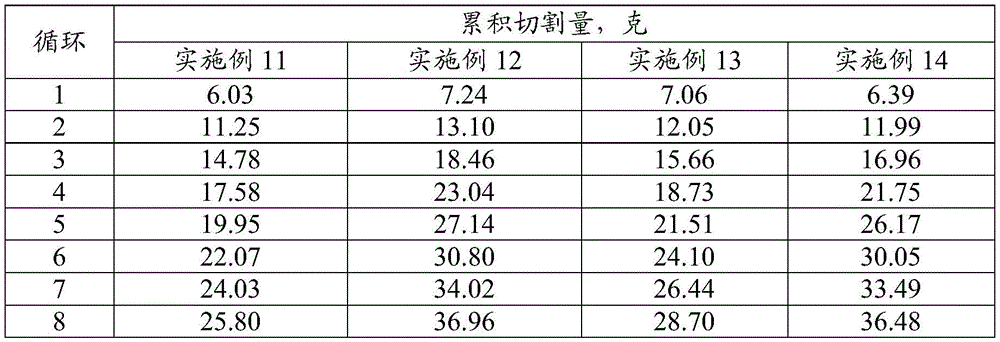
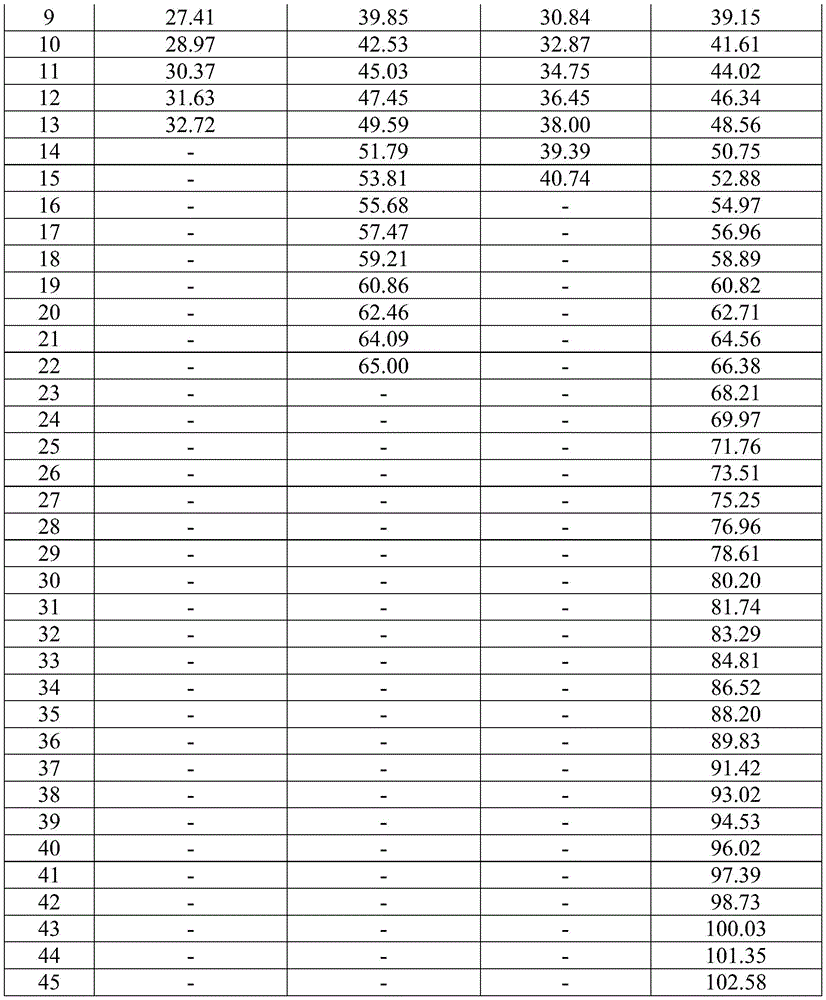
本公开不限于上述实施方案,但应受以下权利要求书和权利要求书的任何等同物中示出的限制条件的约束。本公开可在不存在本公开中未具体公开的任何要素的情况下以适当方式实施。The present disclosure is not limited to the above-described embodiments, but should be subject to the limitations set forth in the following claims and any equivalents of the claims. This disclosure may be practiced in a suitable manner in the absence of any element not specifically disclosed in this disclosure.
Claims (15)
Applications Claiming Priority (3)
| Application Number | Priority Date | Filing Date | Title |
|---|---|---|---|
| US201862637083P | 2018-03-01 | 2018-03-01 | |
| US62/637,083 | 2018-03-01 | ||
| PCT/IB2019/051680 WO2019167022A1 (en) | 2018-03-01 | 2019-03-01 | Shaped siliceous abrasive agglomerate with shaped abrasive particles, abrasive articles, and related methods |
Publications (2)
| Publication Number | Publication Date |
|---|---|
| CN112055737A CN112055737A (en) | 2020-12-08 |
| CN112055737B true CN112055737B (en) | 2022-04-12 |
Family
ID=65951832
Family Applications (1)
| Application Number | Title | Priority Date | Filing Date |
|---|---|---|---|
| CN201980016286.3A Active CN112055737B (en) | 2018-03-01 | 2019-03-01 | Shaped siliceous abrasive agglomerates with shaped abrasive particles, abrasive articles, and related methods |
Country Status (4)
| Country | Link |
|---|---|
| US (1) | US12006464B2 (en) |
| EP (1) | EP3759191B1 (en) |
| CN (1) | CN112055737B (en) |
| WO (1) | WO2019167022A1 (en) |
Families Citing this family (34)
| Publication number | Priority date | Publication date | Assignee | Title |
|---|---|---|---|---|
| KR20170018102A (en) | 2011-12-30 | 2017-02-15 | 생-고뱅 세라믹스 앤드 플라스틱스, 인코포레이티드 | Shaped abrasive particle and method of forming same |
| CA2860755C (en) | 2012-01-10 | 2018-01-30 | Saint-Gobain Ceramics & Plastics, Inc. | Abrasive particles having complex shapes and methods of forming same |
| KR101813466B1 (en) | 2012-05-23 | 2017-12-29 | 생-고뱅 세라믹스 앤드 플라스틱스, 인코포레이티드 | Shaped abrasive particles and methods of forming same |
| KR101736085B1 (en) | 2012-10-15 | 2017-05-16 | 생-고뱅 어브레이시브즈, 인코포레이티드 | Abrasive particles having particular shapes and methods of forming such particles |
| EP2978566B1 (en) | 2013-03-29 | 2024-04-24 | Saint-Gobain Abrasives, Inc. | Abrasive particles having particular shapes and methods of forming such particles |
| AU2014324453B2 (en) | 2013-09-30 | 2017-08-03 | Saint-Gobain Ceramics & Plastics, Inc. | Shaped abrasive particles and methods of forming same |
| MX380754B (en) | 2013-12-31 | 2025-03-12 | Saint Gobain Abrasives Inc | ABRASIVE ARTICLE INCLUDING PROFILED ABRASIVE PARTICLES. |
| US9771507B2 (en) | 2014-01-31 | 2017-09-26 | Saint-Gobain Ceramics & Plastics, Inc. | Shaped abrasive particle including dopant material and method of forming same |
| JP6321209B2 (en) | 2014-04-14 | 2018-05-09 | サン−ゴバン セラミックス アンド プラスティクス,インコーポレイティド | Abrasive articles containing shaped abrasive particles |
| US9914864B2 (en) | 2014-12-23 | 2018-03-13 | Saint-Gobain Ceramics & Plastics, Inc. | Shaped abrasive particles and method of forming same |
| TWI634200B (en) | 2015-03-31 | 2018-09-01 | 聖高拜磨料有限公司 | Fixed abrasive article and method of forming same |
| WO2016161157A1 (en) | 2015-03-31 | 2016-10-06 | Saint-Gobain Abrasives, Inc. | Fixed abrasive articles and methods of forming same |
| EP3307483B1 (en) | 2015-06-11 | 2020-06-17 | Saint-Gobain Ceramics&Plastics, Inc. | Abrasive article including shaped abrasive particles |
| KR102422875B1 (en) | 2016-05-10 | 2022-07-21 | 생-고뱅 세라믹스 앤드 플라스틱스, 인코포레이티드 | Abrasive particles and methods of forming same |
| CN109415615A (en) | 2016-05-10 | 2019-03-01 | 圣戈本陶瓷及塑料股份有限公司 | Abrasive particles and methods of forming the same |
| WO2018017695A1 (en) | 2016-07-20 | 2018-01-25 | 3M Innovative Properties Company | Shaped vitrified abrasive agglomerate, abrasive articles, and method of abrading |
| US11230653B2 (en) | 2016-09-29 | 2022-01-25 | Saint-Gobain Abrasives, Inc. | Fixed abrasive articles and methods of forming same |
| CN109890564B (en) | 2016-10-25 | 2022-04-29 | 3M创新有限公司 | Shaped vitrified abrasive agglomerates with shaped abrasive particles, abrasive articles, and related methods |
| US10759024B2 (en) | 2017-01-31 | 2020-09-01 | Saint-Gobain Ceramics & Plastics, Inc. | Abrasive article including shaped abrasive particles |
| US10563105B2 (en) | 2017-01-31 | 2020-02-18 | Saint-Gobain Ceramics & Plastics, Inc. | Abrasive article including shaped abrasive particles |
| WO2018236989A1 (en) | 2017-06-21 | 2018-12-27 | Saint-Gobain Ceramics & Plastics, Inc. | PARTICULATE MATERIALS AND METHODS OF FORMATION THEREOF |
| EP3924150A1 (en) | 2019-02-11 | 2021-12-22 | 3M Innovative Properties Company | Abrasive article |
| MX2022007621A (en) * | 2019-12-20 | 2022-11-09 | Saint Gobain Abrasives Inc | Bonded abrasive and methods of forming same. |
| CN119238386A (en) | 2019-12-27 | 2025-01-03 | 圣戈本陶瓷及塑料股份有限公司 | Abrasive article and method of forming the same |
| KR102877276B1 (en) | 2019-12-27 | 2025-10-28 | 세인트-고바인 세라믹스 앤드 플라스틱스, 인크. | Abrasive article and method for forming same |
| EP4081370A4 (en) | 2019-12-27 | 2024-04-24 | Saint-Gobain Ceramics & Plastics Inc. | Abrasive articles and methods of forming same |
| US20230116900A1 (en) | 2020-03-18 | 2023-04-13 | 3M Innovative Properties Company | Abrasive Article |
| EP4161733A1 (en) | 2020-06-04 | 2023-04-12 | 3M Innovative Properties Company | Incomplete polygonal shaped abrasive particles, methods of manufacture and articles containing the same |
| CN115666859A (en) | 2020-06-04 | 2023-01-31 | 3M创新有限公司 | Shaped abrasive particles, methods of manufacture, and articles comprising the same |
| WO2022034397A1 (en) | 2020-08-10 | 2022-02-17 | 3M Innovative Properties Company | Abrasive system and method of using the same |
| KR20240148817A (en) | 2021-12-30 | 2024-10-11 | 세인트-고바인 아브라시브즈 인크. | Abrasive article and method of forming same |
| EP4457055A4 (en) | 2021-12-30 | 2025-12-24 | Saint Gobain Abrasives Inc | Grinding articles and methods for shaping them |
| US12496686B2 (en) | 2021-12-30 | 2025-12-16 | Saint-Gobain Abrasives, Inc. | Abrasive articles and methods of forming same |
| US20250214899A1 (en) * | 2023-12-28 | 2025-07-03 | Gold Bond Building Products, Llc | Reclaim Composition Having Enhanced Properties |
Citations (2)
| Publication number | Priority date | Publication date | Assignee | Title |
|---|---|---|---|---|
| CN104066808A (en) * | 2012-09-12 | 2014-09-24 | 研磨剂与耐火品研究与开发中心C.A.R.R.D.有限公司 | Contains aggregated abrasive particles bound to hollow microspheres |
| WO2018017695A1 (en) * | 2016-07-20 | 2018-01-25 | 3M Innovative Properties Company | Shaped vitrified abrasive agglomerate, abrasive articles, and method of abrading |
Family Cites Families (84)
| Publication number | Priority date | Publication date | Assignee | Title |
|---|---|---|---|---|
| US1528543A (en) | 1923-09-06 | 1925-03-03 | Carborundum Co | Process of making crystalline mineral particles |
| US1951555A (en) | 1932-02-01 | 1934-03-20 | Swann Res Inc | Polishing grain and surface treatment of same |
| US2213332A (en) | 1935-11-29 | 1940-09-03 | Carborundum Co | Abrasive articles and the method of manufacturing the same |
| US2294523A (en) | 1938-11-29 | 1942-09-01 | Patent & Licensing Corp | Process of coloring granules |
| US2301123A (en) | 1941-07-02 | 1942-11-03 | Norton Co | Abrasive grain |
| US2527044A (en) | 1945-06-14 | 1950-10-24 | Exolon Company | Surface-coated abrasive grain |
| US2685851A (en) | 1953-06-11 | 1954-08-10 | Arnold A Zachman | Greenhouse structure |
| DE1694594C3 (en) | 1960-01-11 | 1975-05-28 | Minnesota Mining And Manufacturing Co., Saint Paul, Minn. (V.St.A.) | Cleaning and polishing media |
| US3269815A (en) | 1963-10-04 | 1966-08-30 | Gen Abrasive Company Inc | Coated abrasive grain |
| US3479201A (en) | 1966-01-18 | 1969-11-18 | Minnesota Mining & Mfg | Color-coated roofing granules |
| JPS5524813A (en) | 1978-08-03 | 1980-02-22 | Showa Denko Kk | Alumina grinding grain |
| US4518397A (en) | 1979-06-29 | 1985-05-21 | Minnesota Mining And Manufacturing Company | Articles containing non-fused aluminum oxide-based abrasive mineral |
| US4314827A (en) | 1979-06-29 | 1982-02-09 | Minnesota Mining And Manufacturing Company | Non-fused aluminum oxide-based abrasive mineral |
| DE3147597C1 (en) | 1981-12-02 | 1983-02-03 | Dynamit Nobel Ag, 5210 Troisdorf | Corundum abrasive grain with ceramic coating |
| US5191101A (en) | 1982-11-22 | 1993-03-02 | Minnesota Mining And Manufacturing Company | Energy polymerizable compositions containing organometallic initiators |
| US4623364A (en) | 1984-03-23 | 1986-11-18 | Norton Company | Abrasive material and method for preparing the same |
| US4574003A (en) | 1984-05-03 | 1986-03-04 | Minnesota Mining And Manufacturing Co. | Process for improved densification of sol-gel produced alumina-based ceramics |
| CA1254238A (en) | 1985-04-30 | 1989-05-16 | Alvin P. Gerk | Process for durable sol-gel produced alumina-based ceramics, abrasive grain and abrasive products |
| US4652274A (en) | 1985-08-07 | 1987-03-24 | Minnesota Mining And Manufacturing Company | Coated abrasive product having radiation curable binder |
| US4770671A (en) | 1985-12-30 | 1988-09-13 | Minnesota Mining And Manufacturing Company | Abrasive grits formed of ceramic containing oxides of aluminum and yttrium, method of making and using the same and products made therewith |
| US4751138A (en) | 1986-08-11 | 1988-06-14 | Minnesota Mining And Manufacturing Company | Coated abrasive having radiation curable binder |
| US4960441A (en) | 1987-05-11 | 1990-10-02 | Norton Company | Sintered alumina-zirconia ceramic bodies |
| US4881951A (en) | 1987-05-27 | 1989-11-21 | Minnesota Mining And Manufacturing Co. | Abrasive grits formed of ceramic containing oxides of aluminum and rare earth metal, method of making and products made therewith |
| AU604899B2 (en) | 1987-05-27 | 1991-01-03 | Minnesota Mining And Manufacturing Company | Abrasive grits formed of ceramic, impregnation method of making the same and products made therewith |
| US4950696A (en) | 1987-08-28 | 1990-08-21 | Minnesota Mining And Manufacturing Company | Energy-induced dual curable compositions |
| US5086086A (en) | 1987-08-28 | 1992-02-04 | Minnesota Mining And Manufacturing Company | Energy-induced curable compositions |
| US4985340A (en) | 1988-06-01 | 1991-01-15 | Minnesota Mining And Manufacturing Company | Energy curable compositions: two component curing agents |
| US5102429A (en) | 1988-10-14 | 1992-04-07 | Minnesota Mining And Manufacturing Company | Shelling-resistant abrasive grain, a method of making the same, and abrasive products |
| US4903440A (en) | 1988-11-23 | 1990-02-27 | Minnesota Mining And Manufacturing Company | Abrasive product having binder comprising an aminoplast resin |
| US5139978A (en) | 1990-07-16 | 1992-08-18 | Minnesota Mining And Manufacturing Company | Impregnation method for transformation of transition alumina to a alpha alumina |
| US5236472A (en) | 1991-02-22 | 1993-08-17 | Minnesota Mining And Manufacturing Company | Abrasive product having a binder comprising an aminoplast binder |
| KR0161543B1 (en) | 1991-12-20 | 1998-12-15 | 테릴 켄트 쿠알리 | Method of preparation of a coated abrasive belt with an endless seamless backing |
| TW307801B (en) | 1992-03-19 | 1997-06-11 | Minnesota Mining & Mfg | |
| US5203884A (en) * | 1992-06-04 | 1993-04-20 | Minnesota Mining And Manufacturing Company | Abrasive article having vanadium oxide incorporated therein |
| US5201916A (en) | 1992-07-23 | 1993-04-13 | Minnesota Mining And Manufacturing Company | Shaped abrasive particles and method of making same |
| RU95105160A (en) | 1992-07-23 | 1997-01-10 | Миннесота Майнинг энд Мануфакчуринг Компани (US) | Method of preparing abrasive particles, abrasive articles and articles with abrasive coating |
| US5366523A (en) | 1992-07-23 | 1994-11-22 | Minnesota Mining And Manufacturing Company | Abrasive article containing shaped abrasive particles |
| US5213591A (en) | 1992-07-28 | 1993-05-25 | Ahmet Celikkaya | Abrasive grain, method of making same and abrasive products |
| JP3560341B2 (en) | 1992-09-25 | 2004-09-02 | ミネソタ・マイニング・アンド・マニュファクチュアリング・カンパニー | Abrasives containing alumina and zirconia |
| KR950703624A (en) | 1992-09-25 | 1995-09-20 | 워렌 리처드 보비 | METHOD OF MAKING ABRASIVE GRAIN CONTAINING ALUMINA AND CERIA |
| WO1994007969A1 (en) | 1992-09-25 | 1994-04-14 | Minnesota Mining And Manufacturing Company | Abrasive grain including rare earth oxide therein |
| CN1105698C (en) | 1993-11-12 | 2003-04-16 | 美国3M公司 | Abrasive particles and method of making the same |
| CN1139949A (en) | 1993-12-28 | 1997-01-08 | 美国3M公司 | Alpha alumina-based abrasive grain having an as sintered outer surface |
| US5551959A (en) | 1994-08-24 | 1996-09-03 | Minnesota Mining And Manufacturing Company | Abrasive article having a diamond-like coating layer and method for making same |
| US5591239A (en) | 1994-08-30 | 1997-01-07 | Minnesota Mining And Manufacturing Company | Nonwoven abrasive article and method of making same |
| BR9509116A (en) | 1994-09-30 | 1997-11-18 | Minnesota Mining & Mfg | Abrasive article coated processes for producing the same and process for roughing a hard part |
| US6054093A (en) | 1994-10-19 | 2000-04-25 | Saint Gobain-Norton Industrial Ceramics Corporation | Screen printing shaped articles |
| US5725162A (en) | 1995-04-05 | 1998-03-10 | Saint Gobain/Norton Industrial Ceramics Corporation | Firing sol-gel alumina particles |
| US5679067A (en) | 1995-04-28 | 1997-10-21 | Minnesota Mining And Manufacturing Company | Molded abrasive brush |
| US5903951A (en) | 1995-11-16 | 1999-05-18 | Minnesota Mining And Manufacturing Company | Molded brush segment |
| AU5853396A (en) | 1996-05-03 | 1997-11-26 | Minnesota Mining And Manufacturing Company | Nonwoven abrasive articles |
| CN1139462C (en) | 1998-02-19 | 2004-02-25 | 美国3M公司 | Adrasive article and method for grinding glass |
| US6458018B1 (en) | 1999-04-23 | 2002-10-01 | 3M Innovative Properties Company | Abrasive article suitable for abrading glass and glass ceramic workpieces |
| US6319108B1 (en) | 1999-07-09 | 2001-11-20 | 3M Innovative Properties Company | Metal bond abrasive article comprising porous ceramic abrasive composites and method of using same to abrade a workpiece |
| US6110241A (en) | 1999-08-06 | 2000-08-29 | Saint-Gobain Industrial Ceramics, Inc. | Abrasive grain with improved projectability |
| US6277161B1 (en) | 1999-09-28 | 2001-08-21 | 3M Innovative Properties Company | Abrasive grain, abrasive articles, and methods of making and using the same |
| DE60112740T2 (en) | 2000-05-09 | 2006-06-01 | 3M Innovative Properties Co., Saint Paul | POROUS GRINDING WITH CERAMIC GRINDING COMPOSITES, METHOD OF PREPARATION AND METHOD OF USE |
| US6609951B1 (en) | 2000-06-30 | 2003-08-26 | 3M Innovative Properties Company | Method of making a surface treating article |
| EP1770143A3 (en) | 2000-10-06 | 2008-05-07 | 3M Innovative Properties Company | Agglomerate abrasive grain and a method of making the same |
| US6645624B2 (en) | 2000-11-10 | 2003-11-11 | 3M Innovative Properties Company | Composite abrasive particles and method of manufacture |
| US6797023B2 (en) | 2002-05-14 | 2004-09-28 | Saint-Gobain Abrasives Technology Company | Coated abrasives |
| US6979713B2 (en) | 2002-11-25 | 2005-12-27 | 3M Innovative Properties Company | Curable compositions and abrasive articles therefrom |
| DE10257554B4 (en) | 2002-12-10 | 2008-04-10 | Treibacher Schleifmittel Gmbh | Abrasive grains coated with an aqueous binder and a complex fine oxide compound, methods for treating such abrasive grains, and their use for resin bonded abrasives |
| US6951504B2 (en) * | 2003-03-20 | 2005-10-04 | 3M Innovative Properties Company | Abrasive article with agglomerates and method of use |
| US7344574B2 (en) | 2005-06-27 | 2008-03-18 | 3M Innovative Properties Company | Coated abrasive article, and method of making and using the same |
| US7399330B2 (en) | 2005-10-18 | 2008-07-15 | 3M Innovative Properties Company | Agglomerate abrasive grains and methods of making the same |
| WO2009085841A2 (en) | 2007-12-27 | 2009-07-09 | 3M Innovative Properties Company | Shaped, fractured abrasive particle, abrasive article using same and method of making |
| US8123828B2 (en) | 2007-12-27 | 2012-02-28 | 3M Innovative Properties Company | Method of making abrasive shards, shaped abrasive particles with an opening, or dish-shaped abrasive particles |
| EP2327088B1 (en) | 2008-08-28 | 2019-01-09 | 3M Innovative Properties Company | Structured abrasive article, method of making the same, and use in wafer planarization |
| EP2174751B1 (en) | 2008-10-10 | 2014-07-23 | Center for Abrasives and Refractories Research & Development C.A.R.R.D. GmbH | Abrasive grain agglomerates, method for their manufacture and their application |
| US10137556B2 (en) | 2009-06-22 | 2018-11-27 | 3M Innovative Properties Company | Shaped abrasive particles with low roundness factor |
| US8142531B2 (en) | 2008-12-17 | 2012-03-27 | 3M Innovative Properties Company | Shaped abrasive particles with a sloping sidewall |
| US8142532B2 (en) | 2008-12-17 | 2012-03-27 | 3M Innovative Properties Company | Shaped abrasive particles with an opening |
| EP2370232B1 (en) | 2008-12-17 | 2015-04-08 | 3M Innovative Properties Company | Shaped abrasive particles with grooves |
| US8142891B2 (en) | 2008-12-17 | 2012-03-27 | 3M Innovative Properties Company | Dish-shaped abrasive particles with a recessed surface |
| WO2012141905A2 (en) | 2011-04-14 | 2012-10-18 | 3M Innovative Properties Company | Nonwoven abrasive article containing elastomer bound agglomerates of shaped abrasive grain |
| EP3590657A1 (en) * | 2011-09-07 | 2020-01-08 | 3M Innovative Properties Company | Bonded abrasive article |
| US9771504B2 (en) | 2012-04-04 | 2017-09-26 | 3M Innovative Properties Company | Abrasive particles, method of making abrasive particles, and abrasive articles |
| MX2015005167A (en) | 2012-10-31 | 2015-09-04 | 3M Innovative Properties Co | Shaped abrasive particles, methods of making, and abrasive articles including the same. |
| WO2015088953A1 (en) | 2013-12-09 | 2015-06-18 | 3M Innovative Properties Company | Conglomerate abrasive particles, abrasive articles including the same, and methods of making the same |
| JP6838811B2 (en) | 2014-05-02 | 2021-03-03 | スリーエム イノベイティブ プロパティズ カンパニー | Method of polishing intermittent structured polished articles and workpieces |
| US10350732B2 (en) | 2014-11-21 | 2019-07-16 | 3M Innovative Properties Company | Bonded abrasive articles and methods of manufacture |
| US11078345B2 (en) | 2016-05-20 | 2021-08-03 | 3M Innovative Properties Company | Pore inducer and porous abrasive form made using the same |
| CN109890564B (en) | 2016-10-25 | 2022-04-29 | 3M创新有限公司 | Shaped vitrified abrasive agglomerates with shaped abrasive particles, abrasive articles, and related methods |
-
2019
- 2019-03-01 CN CN201980016286.3A patent/CN112055737B/en active Active
- 2019-03-01 WO PCT/IB2019/051680 patent/WO2019167022A1/en not_active Ceased
- 2019-03-01 EP EP19713863.9A patent/EP3759191B1/en active Active
- 2019-03-01 US US16/976,548 patent/US12006464B2/en active Active
Patent Citations (2)
| Publication number | Priority date | Publication date | Assignee | Title |
|---|---|---|---|---|
| CN104066808A (en) * | 2012-09-12 | 2014-09-24 | 研磨剂与耐火品研究与开发中心C.A.R.R.D.有限公司 | Contains aggregated abrasive particles bound to hollow microspheres |
| WO2018017695A1 (en) * | 2016-07-20 | 2018-01-25 | 3M Innovative Properties Company | Shaped vitrified abrasive agglomerate, abrasive articles, and method of abrading |
Also Published As
| Publication number | Publication date |
|---|---|
| US12006464B2 (en) | 2024-06-11 |
| CN112055737A (en) | 2020-12-08 |
| US20210002533A1 (en) | 2021-01-07 |
| EP3759191B1 (en) | 2022-05-04 |
| EP3759191A1 (en) | 2021-01-06 |
| WO2019167022A1 (en) | 2019-09-06 |
Similar Documents
| Publication | Publication Date | Title |
|---|---|---|
| CN112055737B (en) | Shaped siliceous abrasive agglomerates with shaped abrasive particles, abrasive articles, and related methods | |
| CN109890564B (en) | Shaped vitrified abrasive agglomerates with shaped abrasive particles, abrasive articles, and related methods | |
| CN105813808B (en) | Conglomerate abrasive grain, the abrasive product and preparation method thereof containing conglomerate abrasive grain | |
| EP3837086B1 (en) | Structured abrasive article and method of making the same | |
| EP3519135B1 (en) | Open coat abrasive article and method of abrading | |
| EP3487664B1 (en) | Shaped vitrified abrasive agglomerate, abrasive articles, and method of abrading | |
| KR100733948B1 (en) | Abrasive Products and Methods for Glass Grinding | |
| CN109890566A (en) | Bonded abrasive wheel and preparation method thereof | |
| JP2001516652A (en) | Abrasive slurry and abrasive article containing multiple abrasive particle grades | |
| KR20200131856A (en) | Structured abrasive containing polishing material for home use | |
| CN116133794A (en) | Coated abrasive article and method of making same | |
| US20230356362A1 (en) | Coated abrasive article and method of making the same | |
| WO2022023845A1 (en) | Abrasive article and method of making the same |
Legal Events
| Date | Code | Title | Description |
|---|---|---|---|
| PB01 | Publication | ||
| PB01 | Publication | ||
| SE01 | Entry into force of request for substantive examination | ||
| SE01 | Entry into force of request for substantive examination | ||
| GR01 | Patent grant | ||
| GR01 | Patent grant |