CN112005273A - Hierarchical disparity hypothesis generation with oblique support windows - Google Patents
Hierarchical disparity hypothesis generation with oblique support windows Download PDFInfo
- Publication number
- CN112005273A CN112005273A CN201980025255.4A CN201980025255A CN112005273A CN 112005273 A CN112005273 A CN 112005273A CN 201980025255 A CN201980025255 A CN 201980025255A CN 112005273 A CN112005273 A CN 112005273A
- Authority
- CN
- China
- Prior art keywords
- image
- disparity
- hypothesis
- pixel
- image block
- Prior art date
- Legal status (The legal status is an assumption and is not a legal conclusion. Google has not performed a legal analysis and makes no representation as to the accuracy of the status listed.)
- Pending
Links
Images


Classifications
-
- G—PHYSICS
- G06—COMPUTING OR CALCULATING; COUNTING
- G06T—IMAGE DATA PROCESSING OR GENERATION, IN GENERAL
- G06T7/00—Image analysis
- G06T7/50—Depth or shape recovery
- G06T7/55—Depth or shape recovery from multiple images
- G06T7/593—Depth or shape recovery from multiple images from stereo images
-
- H—ELECTRICITY
- H04—ELECTRIC COMMUNICATION TECHNIQUE
- H04N—PICTORIAL COMMUNICATION, e.g. TELEVISION
- H04N13/00—Stereoscopic video systems; Multi-view video systems; Details thereof
- H04N13/20—Image signal generators
- H04N13/204—Image signal generators using stereoscopic image cameras
-
- G—PHYSICS
- G06—COMPUTING OR CALCULATING; COUNTING
- G06T—IMAGE DATA PROCESSING OR GENERATION, IN GENERAL
- G06T2207/00—Indexing scheme for image analysis or image enhancement
- G06T2207/10—Image acquisition modality
- G06T2207/10004—Still image; Photographic image
- G06T2207/10012—Stereo images
-
- H—ELECTRICITY
- H04—ELECTRIC COMMUNICATION TECHNIQUE
- H04N—PICTORIAL COMMUNICATION, e.g. TELEVISION
- H04N13/00—Stereoscopic video systems; Multi-view video systems; Details thereof
- H04N2013/0074—Stereoscopic image analysis
- H04N2013/0081—Depth or disparity estimation from stereoscopic image signals
Landscapes
- Engineering & Computer Science (AREA)
- Computer Vision & Pattern Recognition (AREA)
- Physics & Mathematics (AREA)
- General Physics & Mathematics (AREA)
- Theoretical Computer Science (AREA)
- Multimedia (AREA)
- Signal Processing (AREA)
- Image Processing (AREA)
- Testing, Inspecting, Measuring Of Stereoscopic Televisions And Televisions (AREA)
Abstract
Description
背景技术Background technique
在成像系统中,可以通过将左立体图像和右立体图像关联以匹配立体图像之间的像素来获得深度成像。可以通过确定左图像和右图像之间哪些像素最相似来匹配像素。在左立体图像和右立体图像之间关联的像素可以用于确定深度信息。例如,可以使用双目视差技术将左图像中的像素的位置和右图像中的相对应的像素的位置之间的视差用于计算深度信息。可以产生包含诸如与场景中的物体相对于相机的视点多深或多远相关的信息的场景的深度信息的图像。这样的图像例如在用于诸如手势跟踪和对象识别的应用的感知计算中是有用的。In an imaging system, depth imaging can be obtained by correlating left and right stereoscopic images to match pixels between the stereoscopic images. Pixels can be matched by determining which pixels are most similar between the left and right images. Pixels associated between the left stereoscopic image and the right stereoscopic image may be used to determine depth information. For example, the disparity between the position of a pixel in the left image and the position of the corresponding pixel in the right image can be used to calculate depth information using binocular disparity techniques. An image may be generated that contains depth information of the scene, such as information related to how deep or far objects in the scene are relative to the camera's viewpoint. Such images are useful, for example, in perceptual computing for applications such as gesture tracking and object recognition.
附图说明Description of drawings
通过参考附图,可以更好地理解本公开,并且本公开的许多特征和优点对于本领域技术人员来说是显而易见的。在不同的附图中使用相同的参考符号指示相似或相同的项。The present disclosure may be better understood, and its numerous features and advantages made apparent to those skilled in the art by referencing the accompanying drawings. The use of the same reference signs in different drawings indicates similar or identical items.
图1是根据本公开的至少一个实施例的被配置为产生用于AR/VR应用的深度图的主动立体成像系统的框图。1 is a block diagram of an active stereoscopic imaging system configured to generate depth maps for AR/VR applications in accordance with at least one embodiment of the present disclosure.
图2是说明根据本公开的至少一个实施例的图像预处理器的操作的图。FIG. 2 is a diagram illustrating the operation of an image preprocessor according to at least one embodiment of the present disclosure.
图3A至图3B是说明根据本公开的至少一个实施例的图像初始化器执行分层初始化的操作的图。3A-3B are diagrams illustrating an operation of an image initializer to perform hierarchical initialization according to at least one embodiment of the present disclosure.
图4是说明根据本公开的至少一个实施例的传播区块级下的假设的方法的流程图。4 is a flowchart illustrating a method of propagating hypotheses at the block level in accordance with at least one embodiment of the present disclosure.
图5是说明根据本公开的至少一个实施例的精修每区块估计以推断每像素视差的方法的流程图。5 is a flowchart illustrating a method of refining per-block estimates to infer per-pixel disparity in accordance with at least one embodiment of the present disclosure.
图6是说明根据本公开的至少一个实施例的根据立体图像对估计深度的方法的流程图。6 is a flowchart illustrating a method of estimating depth from a stereoscopic image pair in accordance with at least one embodiment of the present disclosure.
具体实施方式Detailed ways
各种深度感测技术用于包括远程呈现、3D场景重建、对象识别和机器人的计算机视觉任务中。这些深度感测技术包括选通或连续波飞行时间(time-of-flight,ToF)系统、基于三角测量的空间系统、时间结构光(structured light,SL)系统或主动立体系统。这种技术传统上是计算密集型的,或者受到其他缺点(例如,ToF系统的多路径)的影响。由于深度成像可以用于各种各样的应用,因此可能期望的是使深度成像更加准确且可靠。然而,根据立体图像对对深度进行有效估计在计算上是昂贵的,并且是计算机视觉方面的核心问题之一。经常需要多次存储器访问来从存储器中检索所存储的图像补片。因此,这些算法在存储器方面和计算方面两者是受限的。因此,计算复杂度与例如图像中的像素的数量的样本尺寸成比例地增加。Various depth sensing techniques are used in computer vision tasks including telepresence, 3D scene reconstruction, object recognition, and robotics. These depth sensing techniques include gated or continuous wave time-of-flight (ToF) systems, triangulation-based spatial systems, temporal structured light (SL) systems, or active stereo systems. This technique is traditionally computationally intensive or suffers from other drawbacks (eg, multipathing of ToF systems). Since depth imaging can be used for a wide variety of applications, it may be desirable to make depth imaging more accurate and reliable. However, efficient depth estimation from stereo image pairs is computationally expensive and one of the central problems in computer vision. Often multiple memory accesses are required to retrieve stored image patches from memory. Therefore, these algorithms are both memory and computationally limited. Thus, the computational complexity increases proportionally to the sample size, eg the number of pixels in the image.
立体匹配技术的效率可以使用主动立体(即,立体匹配,其中场景纹理通过主动光投影仪增强)来提高,至少部分是由于与飞行时间或传统结构光技术相比的提高的鲁棒性。进一步,放松要求对于给定图像补片视差恒定的平面平行假设允许改善立体重建。因此,图1至图6描述了用于将图像划分成多个不重叠的区块的系统和方法。本公开提供了用于通过在这些区块上分摊计算来探索对应于视差空间平面的大得多的成本量的技术,从而消除了在确定立体对应关系时对用于计算左图像补片和右图像补片之间的相关性的任何显式窗口尺寸的依赖性。The efficiency of stereo matching techniques can be improved using active stereo (ie, stereo matching, where scene texture is enhanced by active light projectors), at least in part due to improved robustness compared to time-of-flight or traditional structured light techniques. Further, relaxing the plane-parallel assumption that requires constant disparity for a given image patch allows for improved stereo reconstruction. Thus, Figures 1-6 describe systems and methods for dividing an image into multiple non-overlapping blocks. The present disclosure provides techniques for exploring a much larger amount of cost corresponding to the disparity space plane by amortizing the computation over these tiles, thereby eliminating the need for computing left image patches and right image patches when determining stereo correspondence. Any explicit window size dependence of the correlation between image patches.
在一些实施例中,根据立体图像的深度估计的方法包括在一对相机处捕获场景的第一图像和第二图像。第一图像和第二图像形成立体对并且各自包括多个像素。用视差假设初始化第二图像中的多个像素中的每一个。该方法包括从较小像素尺寸的图像区块到较大像素尺寸的图像区块递归地确定第二图像中的多个像素中的每一个像素的视差假设的匹配成本,以生成包括多个图像区块的初始拼块式视差图,其中初始拼块式视差图的每一个图像区块被分配有视差值估计。每一个图像区块的视差值估计被精修以包括倾斜假设。附加地,每一个区块的视差值估计和倾斜假设可以由来自相邻区块的更好匹配的视差-倾斜估计来代替,以结合加强连续表面的平滑性成本。基于每一个图像区块的精修视差值估计来确定第二图像的每一个像素的最终视差估计(包括倾斜假设),该最终视差值估计随后用于基于所确定的最终视差估计来生成深度图。In some embodiments, a method of depth estimation from a stereoscopic image includes capturing a first image and a second image of a scene at a pair of cameras. The first image and the second image form a stereo pair and each includes a plurality of pixels. Each of the plurality of pixels in the second image is initialized with a disparity hypothesis. The method includes recursively determining a matching cost of disparity hypotheses for each of a plurality of pixels in a second image from an image block of a smaller pixel size to an image block of a larger pixel size to generate an image comprising a plurality of images An initial tiled disparity map of blocks, where each image block of the initial tiled disparity map is assigned a disparity value estimate. The disparity value estimate for each image block is refined to include skew assumptions. Additionally, the disparity value estimates and tilt assumptions for each block can be replaced by better-matched disparity-tilt estimates from neighboring blocks, in combination with the cost of enhancing the smoothness of the continuous surface. A final disparity estimate for each pixel of the second image (including the skew assumption) is determined based on the refined disparity value estimate for each image block, which final disparity value estimate is then used to generate a final disparity estimate based on the determined final disparity estimate depth map.
图1是根据本公开的至少一个实施例的被配置为产生深度图以用于AR/VR应用的主动立体成像系统100的框图。主动立体成像系统100包括用户设备102,诸如平板电脑、支持计算的蜂窝电话(例如,“智能手机”)、头戴式显示器(head-mounted display,HMD)、笔记本电脑、个人数字助理(personal digital assistant,PDA)、游戏系统遥控器、电视遥控器、带有或不带有屏幕的相机附件等。为了便于说明,主动立体成像系统100在此通常在诸如平板电脑或智能手机的移动设备的示例情境中描述;然而,主动立体成像系统100不限于这些示例实施方式。例如,在其他实施例中,用户设备102可以包括另一类型的移动设备,诸如汽车、机器人、遥控无人机或其他空中设备等。主动立体成像系统100的一些实施例包括被配置成解决计算机视觉问题的其他设备,诸如台式计算机、服务器等。由主动立体成像系统100解决的计算机视觉问题的示例包括立体图像的标识、立体匹配、深度图的产生、对象分类、前景/背景分割、视差估计、图像检索、特征近似、背景去除、身体部位分类、手姿态估计、动作识别、3D扫描、非刚性重建、3D场景理解等。1 is a block diagram of an active
用户设备102包括处理器104和存储器106。处理器104可以用于执行存储在存储器106中的指令,并在存储器106中存储信息,诸如所执行的指令的结果。用户设备102还实施用于获取图像的一个或多个相机。在图1的实施例中,主动立体成像系统100包括用于捕获至少第一左图像110的左红外(IR)相机108。主动立体成像系统100还包括用于捕获至少第一右图像114的右红外相机112。处理器104被配置为对代表图像110、114的像素进行操作,并且存储器106被配置为存储图像110、114的像素值。尽管在该实施例中相机108、112与用户设备102是一体的,但是在用户设备102(或其他处理设备)的一些实施例中,这些相机对由外部图像获取设备获取的图像进行操作。附加地,尽管这里在红外相机的情境中进行了描述,但是本领域技术人员将认识到,在不脱离本公开的范围的情况下,可以使用任何类型的成像相机。
由于相机108、112之间的物理分离,一个图像(例如,左图像110)中的每一个像素在其立体对的位于相同的垂直轴线(例如,沿着y轴)上但是在不同的水平位置(例如,沿着x轴)的另一图像(例如,右图像114)中具有对应关系匹配。当在透视下投影到两个不同的相机时相同三维(3D)点的图像位置的这种差异被称为“视差”,并被用于提取深度信息。然而,在图像的无纹理区域中(例如,当观看白墙或蓝天时),找到像素之间的对应关系可能是困难的。Due to the physical separation between
因此,在各种实施例中,用户设备还包括主动光投影仪116,诸如衍射光学元件(diffractive optical element,DOE)投影仪,其将能量投影到用户设备102周围的真实世界环境中,以在场景中人工地产生纹理。主动光投影仪116将图案(例如,点图案、条纹图案或其他图案结构)投影到周围环境中,以为相机108、112的视场提供纹理,以用于立体匹配。在一些实施例中,主动光投影仪116结合相机108、112在红外光谱中操作。在其他实施例中,主动光投影仪116在可见光谱中操作。由主动光投影仪116和一个或多个相机提供的主动立体视觉配置允许对无纹理区域执行基于视差矢量的深度计算,并且消除了投影已知结构化光(structured light,SL)图案的需要。Thus, in various embodiments, the user equipment further includes an
尽管这里在具有主动光投影仪和两个相机的主动立体视觉配置的情境中描述了主动立体成像系统100的深度图的产生,但是本领域技术人员将认识到,在不脱离本公开的范围的情况下,可以使用能够将图案输出到场景中的任何类型的投影仪和能够接收图像数据的任何数量的传感器。例如,在一些实施例中,深度估计也可以在具有单个投影仪和单个相机的结构化光配置中执行。在另一实施例中,深度估计也可以在没有主动光投影仪的被动配置中执行。在其他实施例中,深度估计也可以在运动立体配置中使用单个相机而不使用主动光投影仪来执行。Although the generation of the depth map of the active
当评估视差假设时,传统的立体算法通过将图像补片以参考帧的像素为中心来解决对应关系问题。图像补片被显示在第二图像中,以标识第二图像中的那个像素的匹配点。这些传统立体算法的隐含假设是图像补片内的所有像素具有恒定的视差(即,称为平面平行假设)。实际上,平面平行假设不可能对全部像素成立,因为图像补片通常包括位于与中心像素不同的表面上的像素,或者图像补片捕获相对于相机轴倾斜的表面(即,非平面平行)。因此,为了减少与视差(以及因此深度)和倾斜的估计相关联的计算开销以找到立体图像之间的对应关系,在各种实施例中,主动立体成像系统100包括使用局部平滑性来在整个立体流水线上分摊视差计算。在各种实施例中,主动立体成像系统100包括图像预处理器模块118、图像初始化模块120、传播模块122和精修模块124。这些模块中的每一个代表被配置为执行本文描述的操作的硬件、软件或它们的组合。When evaluating disparity assumptions, traditional stereo algorithms address the correspondence problem by centering the image patch on the pixels of the reference frame. An image patch is displayed in the second image to identify matching points for that pixel in the second image. An implicit assumption of these traditional stereo algorithms is that all pixels within an image patch have constant disparity (ie, known as the plane-parallel assumption). In practice, the plane-parallel assumption may not hold for all pixels, since image patches typically include pixels that lie on a different surface than the central pixel, or image patches capture surfaces that are tilted relative to the camera axis (ie, non-plane-parallel). Therefore, in order to reduce the computational overhead associated with the estimation of disparity (and thus depth) and tilt to find correspondence between stereoscopic images, in various embodiments, active
图像预处理器模块118利用局部对比度归一化(local contrast normalization,LCN)来处理左图像110和右图像114的原始IR信号,使得可以使用更简单的匹配成本来确定立体对应关系。图像初始化模块120执行分层搜索,其中图像的每一个像素被植入多个视差假设,然后图像初始化模块120通过将图像划分成增加的像素尺寸的多个不重叠的区块,以从细到粗的方式递归地检查这些视差假设,如下文进一步详细描述。由图像初始化模块120执行的分层搜索生成拼块式视差图,其中每一个区块被分配单个视差值作为初始估计。随后,传播模块122通过精修初始估计以联合优化表面角度、表面平滑性约束和匹配成本来传播区块级下的视差假设。传播模块122输出描述局部区块表面的每区块假设,包括每一个区块的视差和倾斜的估计。在传播之后,精修模块124执行区块假设的精修,以通过使用经调整的每区块假设和局部匹配成本来推断每像素视差从而在执行明显错误的值的最终失效和平滑化之前写出每像素视差。The
图2是说明根据本公开的至少一个实施例的诸如图1的图像预处理器模块118的图像预处理器预处理图像的操作的图。图像预处理器模块118接收经校正的立体图像对(例如,在本公开中也可互换地称为IL的左图像110以及在本公开中也可互换地称为IR的右图像114)作为输入。在给定立体图像对110、114的情况下,校正确定每一个图像平面的变换,使得共轭对极线变得共线并且平行于图像轴之一。相应地,一个图像(例如,左图像110)中的每一个像素p=(x,y)与其在其立体对的位于相同的y轴上但是在不同的x轴坐标的另一个图像(例如,右图像114)中的相对应的像素p′具有对应关系匹配。图像预处理器模块118利、用局部对比度归一化(LCN)对左图像110和右图像114进行预处理,以生成左LCN图像210和右LCN图像214(在此称为左-右LCN图像对202)。LCN对左图像110和右图像114进行归一化,使得可以使用更简单的匹配用于立体对应关系。FIG. 2 is a diagram illustrating the operation of an image preprocessor, such as the
图3A至图3B是说明根据本公开的至少一个实施例的诸如图1的图像初始化模块120的图像初始化器执行分层初始化的操作的图。图像初始化器接收经校准和校正的图像对(例如,图2的左右LCN对202)作为输入,并执行分层搜索以输出初始拼块式视差图,其中每一个区块内的视差值遵循平面等式。图像初始化器为每一个像素302计算与视差假设集304相关联的匹配成本。在一些实施例中,视差假设集304包括K数量个随机或预定义的整数视差假设(即,整数视差值)。3A-3B are diagrams illustrating the operation of an image initializer, such as the
一个图像(例如,左图像110)中的每一个像素p=(x,y)302与其在其立体对的位于相同的y轴上但是在不同的x轴坐标
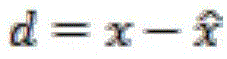
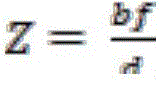
在每像素级别下,图像初始化器使用匹配成本计算来标识视差假设集304中的具有最佳成本的单个视差假设。例如,在一些实施例中,逐像素的绝对差和(sum of absolutedifference,SAD)计算标识视差假设集304中的具有最佳成本的单个视差假设。SAD计算包括相对于像素在立体图像对中的相对应的像素之间的视差比较该像素的视差假设集304中的假设之间的绝对差。如图3A所示,存储每一个像素302的具有最佳成本(即,最低匹配成本)的单个视差假设,以生成其中区块为1×1像素宽的拼块式视差图306。在其他实施例中,实施各种其他匹配成本计算(例如,平方差和、零均值归一化互相关(zero-meannormalized cross-correlation,ZNCC)等)来标识视差假设集304中的具有最佳成本的单个视差假设。At a per-pixel level, the image initializer uses a matching cost calculation to identify the single disparity hypothesis in the set of
以从细到粗的排序和聚集方式,图像初始化器然后将区块增加到2×2像素宽的尺寸,并递归地检查包含来自前一级的获胜假设的2×2非重叠区块。图像初始化器针对每一个2×2非重叠区块308计算匹配成本,该匹配成本与来自前一级递归的与这个区块308相关联的四个获胜视差假设相关联。视差图306中的像素302的值通过存储区块308的每一个像素的具有最佳成本的单个视差假设来更新。也就是说,每一个2×2非重叠区块308的像素302(为了便于说明,仅在图3A中由虚线突出显示一个区块)存储来自前一级递归的获胜假设的值,图像初始化器在像素空间中跨整个2×2非重叠区块308(例如,使用SAD)对该值进行评估。假设候选被排序,并且每区块308的获胜假设被提供为下一级(例如,更粗的粒度)递归的输入。Sorting and clustering from fine to coarse, the image initializer then increases the blocks to a size of 2 × 2 pixels wide, and recursively checks for 2 × 2 non-overlapping blocks containing winning hypotheses from the previous level. The image initializer computes for each 2x2 non-overlapping block 308 a matching cost associated with the four winning disparity hypotheses associated with this
如所示的,在下一级递归中,图像初始化器将区块增加到4×4像素宽的尺寸,并递归地检查包含来自前一级的获胜假设的4×4不重叠的区块。图像初始化器为每一个4×4非重叠区块310计算与来自前一级递归的四个2×2区块308的四个获胜视差假设(例如,由区块310的中心处的四个值312的集合表示)相关联的匹配成本。视差图306中的像素302的值通过存储区块310的每一个像素的具有最佳成本的单个视差假设来更新。也就是说,每一个4×4非重叠区块310的像素302(为了便于说明,仅在图3B中由虚线突出显示一个区块)存储来自前一级递归的获胜假设的值,图像初始化器在像素空间中跨整个4×4非重叠区块310(例如,使用SAD)对该值进行评估。假设候选被排序,并且每区块310的获胜假设被提供为下一级(例如,更粗的粒度)递归的输入。As shown, in the next level of recursion, the image initializer increases the blocks to a size of 4x4 pixels wide and recursively checks for 4x4 non-overlapping blocks containing the winning hypothesis from the previous level. The image initializer computes four winning disparity hypotheses for each 4x4
每一级递归将区块的宽度和高度加倍,但将每一个维度中必须处理的区块的数量减半。如图3B的示例中所示,图像初始化器使用8×8非重叠区块314执行另一轮匹配成本比较,以生成具有每一个8×8非重叠区块314的假设的初始拼块式视差图316。也就是说,图像初始化器为每一个8×8非重叠区块314计算与来自前一级递归的四个4×4区块310的四个获胜视差假设(例如,由区块314的中心处的四个值318的集合表示)相关联的匹配成本,对这些假设候选进行排序(即,四个值的集合318),并将具有最低匹配成本的获胜假设传播到区块314的其余部分。Each level of recursion doubles the width and height of blocks, but halves the number of blocks that must be processed in each dimension. As shown in the example of FIG. 3B , the image initializer performs another round of matching cost comparisons using the 8×8
尽管这里在执行递归生成具有8×8像素的区块尺寸的初始拼块式视差图316的分层搜索的情境中描述了初始化,但是本领域的技术人员将认识到,在不脱离本公开的范围的情况下,可以执行任意数量级的递归。例如,在另一实施例中,执行另外级的递归以生成具有16×16像素的区块尺寸的初始拼块式视差图。此外,本领域的技术人员将认识到,尽管这里在针对每一级递归将区块的宽度和高度用二的因子加倍的情境中进行描述,但是其他实施例包括将区块尺寸改变不同的倍数(例如,第一级递归下的1×1区块,第二级递归下的3×3区块,第三级递归下的9×9区块等)。在其他实施例中,对于每一级递归,区块尺寸改变不同的倍数(例如,第一级递归处的1×1区块,第二级递归处的2×2区块,第三级递归处的6×6区块,第四级递归处的12×12区块等)。Although initialization is described herein in the context of performing a hierarchical search that recursively generates an initial tiled disparity map 316 having a block size of 8x8 pixels, those skilled in the art will recognize that without departing from the scope of this disclosure In the case of a range, any order of recursion can be performed. For example, in another embodiment, an additional level of recursion is performed to generate an initial tiled disparity map with a block size of 16x16 pixels. Furthermore, those skilled in the art will recognize that although described herein in the context of doubling the width and height of a block by a factor of two for each level of recursion, other embodiments include varying the block size by a different factor (eg, 1x1 blocks at the first level of recursion, 3x3 blocks at the second level of recursion, 9x9 blocks at the third level of recursion, etc.). In other embodiments, the block size changes by a different factor for each level of recursion (eg, 1x1 blocks at the first level of recursion, 2x2 blocks at the second level of recursion, 3rd level of recursion 6x6 blocks at , 12x12 blocks at the fourth level of recursion, etc.).
以这样的方式,对于所有时间大小,正确视差的重建误差较低——以低成本快速拒绝真负性(例如,不良重建误差和不正确视差)候选,并且图像初始化器以这样的方式在更精细的递归级下对许多视差空间进行采样。假正性(例如,好的重建误差但不良视差)和真正性(例如,好的重建误差和正确的视差)候选在层级中向上传播,其中越来越大的区块允许去除假正性而保留真正性。本文描述的初始化输出具有每一个区块(例如,如图3B所示的每一个8×8区块314)的单个视差假设的初始视差图。假定视差假设是平面平行的,使得当从不同的有利视点观看时,3D世界中对应于区块的物理点具有相似的外观,并且每一个区块内的深度是均匀的。然而,这种平面平行的假定经常被违反,因为3D场景很少仅由直立的平面表面组成。因此,如下文进一步描述的那样,初始拼块式视差图被精修以放松平面平行约束。In this way, the reconstruction error for correct disparity is low for all temporal sizes - quickly rejecting true negative (e.g., bad reconstruction error and incorrect disparity) candidates at low cost, and the image initializer in this way is more Many disparity spaces are sampled at a fine recursive level. False positives (eg, good reconstruction error but bad disparity) and true (eg, good reconstruction error and correct parallax) candidates propagate up the hierarchy, where larger and larger blocks allow false positives to be removed while preserve authenticity. The initialization described herein outputs an initial disparity map with a single disparity hypothesis for each block (eg, each
图4是说明根据本公开的至少一个实施例的诸如通过使用图1的传播模块122的传播区块级下的假设的方法400的流程图。如上所讨论的那样,图像初始化器输出初始视差图,其中每一个区块(例如,图3B的8×8区块314)被分配有单个视差值d。然而,初始拼块式视差图包括来自用于找到区块中的一些的最小成本表面的匹配成本确定的不正确的局部最小值。附加地,来自图像初始化器的初始视差图的输出包括全图像的平面平行深度区块。然而,需要放松这种平面平行约束,以允许场景中的倾斜表面。FIG. 4 is a flowchart illustrating a
在框402,方法400开始于倾斜估计和子像素精修过程,其中传播模块122经由成本空间中的标准抛物线拟合来精修每一个区块的视差d。传播模块122评估具有视差d-1、视差d和视差d+1的全区块(例如,图3B的8×8区块314)的匹配成本(例如,使用SAD等)。在其他实施例中,传播模块122评估具有视差d-a参数(例如,除1之外的值)、视差d和视差d+a参数(例如,除1之外的值)的全区块(例如,图3B的8×8区块314)的匹配成本(例如,使用SAD等)。传播模块122将抛物线拟合到由那些重建误差描述的局部成本空间。使用标准的封闭形式表达式,传播模块122提取该二次多项式的最小值,并将该最小值指定为视差d的精修估计。然而,精修估计仍然对应于平面平行平面解。在绝大多数场景中,这种平面平行假设不成立,并且因此必须取消。At
因此,传播模块122将模型的度增加1,使得视差空间中的几何结构由视差空间中的平面表示,而不是由恒定整数值表示。由于深度和视差彼此成反比,视差空间中的平面等式对应于深度上的平滑二次曲面。当考虑平面平行深度时,以下等式定义了左图像xL中的像素如何与右图像xR中的像素相关:Therefore, the
xL=xR-d (1)x L = x R -d (1)
通过描述视差空间中的平面l=[d,dx,dy],等式(1)的关系变为:By describing the plane l=[d, d x , dy ] in the disparity space, the relation of equation (1) becomes:
xL=xR+S(xL,l) (2)x L =x R +S(x L ,l) (2)
S(xL,l)=kxdx+kydy-dS(x L , l)=k x d x +k y d y -d
其中,kx、ky是从补片中心的任何偏移,以及dx、dy是控制平面的取向的系数。类似于d的精修,传播模块122通过将抛物线拟合到通过评估区块上的三个不同平面假设(例如,平面平行、+30度倾斜和-30度倾斜)而计算的成本来优化dx和dy的值。对于大多数区块,二次函数的最小值接近真正的最小值。一旦该精修完成,拼块式视差图的每一个区块与遵循平面等式的视差模型相关联。where kx , ky are any offsets from the center of the patch, and dx , dy are coefficients that control the orientation of the plane. Similar to the refinement of d, the
然而,初始拼块式视差图通常包括来自用于找到区块中的一些的最小成本表面的匹配成本确定的不正确的局部最小值。在框404,方法400继续传播过程,其中传播模块122经由成本空间中的标准抛物线拟合来精修每一个区块的视差d。传播模块122执行补片级传播,并加强局部视差一致性和平滑性,并对局部表面倾斜和曲率进行建模。进一步,传播模块122通过使用关于表面和局部匹配成本的邻近补片假设来执行子像素精修,从而允许添加小于补片尺寸的深度细节(同时仍然受到图像中存在的特征尺寸限制)。However, the initial patchwise disparity map often includes incorrect local minima from the matching cost determination of the minimum cost surface used to find some of the patches. At
在各种实施例中,传播模块122定义对应于平面假设li下的区块i的重建误差的数据项ψu(li),如以下等式所示:In various embodiments,

其中对区块i中包含的像素集
相反,传播模块122评估对应于区块i的上方、下方、左侧和右侧的区块的相邻区块

其中c(i)返回像素在区块i的中心处的位置,并且
与当前区块及其

其被用作区块i的新视差值,表示描述局部表面的每区块的假设匹配成本。It is used as the new disparity value for patch i, representing the hypothetical matching cost per patch describing the local surface.
如图4所示,框402和404的传播操作被迭代多次,以对倾斜表面进行建模、加强局部平滑性以及填充由初始化留下的间隙。因此,在方法400的传播操作期间,每一个区块的视差和倾斜估计可以由来自相邻区块的更好匹配的视差-倾斜估计来代替,以结合加强连续表面的平滑性成本。一般而言,执行上述传播操作的两次迭代足以收敛到好的解。在框406,输出描述局部平滑性的每区块假设。一旦传播完成,使用另一抛物线拟合利用所估计的li来精修每一个区块处的视差,如下面进一步详细描述的那样。As shown in FIG. 4, the propagation operations of
图5是说明根据本公开的至少一个实施例的诸如通过使用图1的精修模块124的精修每区块估计以推断每像素差异的方法500的流程图。传播完成后,拼块式视差图的每一个区块包括视差和倾斜的估计。用于估计区块的倾斜的上述传播过程的倾斜二次近似在30度到-30度范围内是具有鲁棒性的。虽然这个角度范围提供了相对于假定的平面平行区块更高质量的推断解,但是对于大于30度的角度,真实表面可能更陡并且二次近似变得更弱。因此,精修模块使用中心差来计算每一个区块的最终倾斜,该中心差是使用相邻区块的中心处的视差构建的。FIG. 5 is a flowchart illustrating a
为了获得精确的每像素结果,方法500在框502处通过以下开始:在x轴和y轴方向两者上将拼块式视差图的每一个区块扩展50%,使得任何给定像素(除了在图像边界处)与4个扩展区块重叠。在其他实施例中,不是在x轴和y轴方向两者上扩展拼块式视差图的每一个区块,而是如果在一个或多个方向上的区块假设相对于区块(即,要扩展区块)的当前区块假设高于差异阈值(例如,基于预定的差异水平),则在该方向上扩展拼块式视差图的区块。这种方法以模糊小细节为代价来节省计算。To obtain accurate per-pixel results,
在框504,精修模块124为每一个扩展区块构建使用相对应的平面假设li获得的重建误差(例如,SAD等)的整体区块。附加地,在框506,精修模块124为每个扩展区块构建两个附加的整体区块,这捕获了具有添加到li的视差分量的小增量的重建误差。在框508处,精修模块124对扩展区块的每一个像素使用以上整体区块执行它们各自成本量的四个抛物线拟合。抛物线拟合后,每一个扩展区块包括每像素的视差和成本。因此,原始图像(例如,左图像110或右图像114)中的每一个像素被多达四个扩展区块覆盖。在框510,精修模块124通过将每一个像素的最终值标识为在扩展区块(来自最多四个扩展片)中计算的值中的最佳值,来确定最终的每像素视差和成本值。每一个像素的成本被定义为重建误差,并在以所讨论的像素为中心的补片上计算,其中最小的插值重建误差被保存为最终的视差估计。At
图6是说明根据本公开的至少一个实施例的根据立体图像对估计深度的方法600的流程图。在框602,图1的IR相机108、112各自捕获场景的图像,从而形成立体图像对。如图1所示,左IR相机108捕捉左图像110,并且右IR相机112捕捉右图像114。在该实施例中,左图像110是从其中确定视差的参考图像。在其他实施例中,右图像114是参考图像。6 is a flowchart illustrating a
在框604,图像预处理器模块118用局部对比度归一化(LCN)来处理框602的左图像110和右图像114的原始IR信号,使得可以使用更简单的匹配成本来确定立体对应关系。在框606,图像初始化模块120执行分层搜索,其中图像的每一个像素被植入多个视差假设,然后图像初始化模块120通过将图像划分成增加的像素尺寸的多个不重叠的区块,以从细到粗的方式递归地检查这些视差假设,如以上关于图3A至图3B进一步详细描述的那样。At
在各种实施例中,以从细到粗的排序和聚集方式,图像初始化模块120递归地检查包含来自前一级的获胜假设的非重叠区块。图像初始化模块120为区块(例如,图3A的2×2非重叠区块308)计算匹配成本,该匹配成本与来自前一级递归的与这个区块308相关联的四个获胜视差假设相关联。视差图306中的像素302的值通过存储区块308的每一个像素的具有最佳成本的单个视差假设来更新。也就是说,每一个2×2非重叠区片308的像素存储来自前一级递归的获胜假设的值,图像初始化模块120在像素空间中跨整个2×2非重叠区片308(例如,使用SAD等)对该值进行评估。假设候选被排序,并且每区块308的获胜假设被提供为下一级(例如,具有较大区块的更粗的粒度,例如2×2非重叠区块310)递归的输入。由图像初始化模块120执行的分层搜索生成拼块式视差图,其中每一个区块被分配单个视差值作为初始估计。In various embodiments, the
在框608,传播模块122通过精修初始估计以联合优化表面角度、表面平滑性约束和匹配成本来传播区块级下的视差假设,如上文相对于图4进一步详细描述的那样。传播模块122输出描述局部区块表面的每区块假设,包括每一个区块的视差和倾斜的估计。At
在传播之后,在框610,精修模块124执行区块假设的精修,以通过使用经调整的每区块假设和局部匹配成本来推断每像素视差从而写出每像素视差,如上文相对于图5进一步详细描述的那样。在一些实施例中,精修模块124在x轴和y轴方向中的一个或多个方向上扩展拼块式视差图的每一个区块,使得任何给定像素(除了在图像边界处)重叠多达四个扩展区块。精修模块124为每一个扩展区块构建使用相对应的平面假设li获得的重建误差(例如,SAD等)的整体区块。附加地,精修模块124每扩展区块构建两个附加的整体区块,这捕获了具有添加到li的视差分量的小增量的重建误差。精修模块124对扩展区块的每一个像素使用以上整体区块执行它们各自成本量的四个抛物线拟合。每一个像素的成本被定义为重建误差,并在以所讨论的像素为中心的补片上计算,其中最小的插值重建误差被保存为最终的视差估计。After propagation, at
在框612,处理器执行明显错误值的最终失效和平滑化。在给定主动立体系统的固有物理限制(例如,暗或远表面上的差的信噪比、遮挡)的情况下,没有足够的数据可用于针对任何给定像素执行鲁棒估计。传统的失效方法包括左右一致性检查、过滤和/或连通分量分析——全部是计算成本很高的方法。相反,方法600使用视差估计过程的副产品来执行快速和精确的失效。特别地,处理器确实考虑具有大于75度的倾斜度的区块。进一步,当最终匹配成本高于预定义阈值θ时,处理器在精修后使像素失效。At
因此,如本文所述,经由初始化快速提取每像素的高质量初始视差估计,这以金字塔的方式聚集结果,并且仅保持良好的假设。关于像素级下的视差的推理允许快速丢弃不好的视差假设,并将计算资源的使用转移到更好的假设,从而提高计算效率。通过连续精修来精修初始视差估计(即视差)候选,随后是失效步骤。Therefore, as described herein, high-quality initial disparity estimates per pixel are quickly extracted via initialization, which aggregates the results in a pyramid fashion and preserves only good assumptions. Reasoning about disparity at the pixel level allows to quickly discard bad disparity hypotheses and shift the usage of computational resources to better hypotheses, improving computational efficiency. The initial disparity estimate (ie, disparity) candidates are refined by successive refinements, followed by an invalidation step.
在第一方面,一种方法可以包括:使用成像系统的至少一个成像相机捕获场景的第一图像和第二图像,其中第一图像和第二图像形成立体图像对并且各自包括多个像素;在成像系统的处理器处用视差假设初始化第二图像中的多个像素中的每一个像素。该方法还包括:在处理器处从较小像素尺寸的图像区块到较大像素尺寸的图像区块递归地确定第二图像中的多个像素中的每一个像素的视差假设的匹配成本,以生成包括多个图像区块的初始拼块式视差图,其中初始拼块式视差图中的每一个图像区块被分配有视差值估计;在处理器处精修每一个图像区块的视差值估计,并且进一步将每一个图像区块的视差值估计与倾斜假设相关联;基于每一个图像区块的所精修的视差值估计,在处理器处确定第二图像的每一个像素的最终视差值估计;以及使用第一图像和第二图像的多个像素之间的对应关系并且基于第二图像的每一个像素的所确定的最终视差值估计,生成场景的深度图。In a first aspect, a method may include capturing a first image and a second image of a scene using at least one imaging camera of an imaging system, wherein the first image and the second image form a stereoscopic image pair and each include a plurality of pixels; Each of the plurality of pixels in the second image is initialized at the processor of the imaging system with the disparity hypothesis. The method also includes recursively determining, at the processor, a matching cost for disparity hypotheses for each of the plurality of pixels in the second image from an image block of a smaller pixel size to an image block of a larger pixel size, To generate the initial patch-type disparity map comprising a plurality of image blocks, wherein each image block in the initial patch-type disparity diagram is assigned with disparity value estimation; Disparity value estimation, and further associate the disparity value estimation of each image block with the tilt hypothesis; Based on the refined disparity value estimation of each image block, determine at the processor each a final disparity value estimate for one pixel; and generating a depth of the scene using the correspondence between the plurality of pixels of the first image and the second image and based on the determined final disparity value estimate for each pixel of the second image picture.
在第一方面的一个实施例中,该方法包括用视差假设初始化第二图像中的多个像素中的每一个像素,包括:将第二图像中的多个像素中的每一个像素植入有视差假设集;以及对于多个像素中的第一像素,相对于立体图像对中的对应像素之间的视差,比较视差假设集中的假设之间的匹配成本;以及存储视差假设集中的具有最低匹配成本的一个视差假设作为视差假设。在特定实施例中,该方法包括递归地确定第二图像中的多个像素中的每一个像素的视差假设的匹配成本,进一步包括:对于较小像素尺寸的图像区块计算与较小像素尺寸的图像区块相关联的像素的视差假设相关联的匹配成本;以及对于较小像素尺寸的图像区块,存储被标识为具有最低匹配成本的假设;以及将所标识的假设提供给下一级递归。在更特定的实施例中,该方法包括:对于较大像素尺寸的图像区块,计算与较大像素尺寸的图像区块相关联的像素的视差假设相关联的匹配成本,其中视差假设包括来自较小像素尺寸的图像区块的所标识的假设;对于较大像素尺寸的图像区块,存储具有最低匹配成本的所标识的假设;并将所标识的假设提供给下一级递归。In one embodiment of the first aspect, the method includes initializing each pixel of the plurality of pixels in the second image with a disparity hypothesis, comprising embedding each of the plurality of pixels in the second image with a a set of disparity hypotheses; and for a first pixel of the plurality of pixels, comparing a cost of matching between the hypotheses in the set of disparity hypotheses with respect to disparity between corresponding pixels in the stereo image pair; and storing the one with the lowest match in the set of disparity hypotheses A disparity assumption of the cost as the disparity assumption. In certain embodiments, the method includes recursively determining a matching cost for disparity hypotheses for each of the plurality of pixels in the second image, further including: The matching cost associated with the disparity hypothesis of the pixel associated with the image block; and for the image block of the smaller pixel size, the storage is identified as having the hypothesis with the lowest matching cost; and the identified hypothesis is provided to the next level recursive. In a more specific embodiment, the method comprises: for an image block of a larger pixel size, calculating a matching cost associated with a disparity hypothesis for a pixel associated with the image block of the larger pixel size, wherein the disparity hypothesis includes data from The identified hypotheses for image blocks of smaller pixel size; for image blocks of larger pixel size, store the identified hypotheses with the lowest matching cost; and provide the identified hypotheses to the next level of recursion.
在第一方面的另一实施例中,该方法包括精修每一个图像区块的视差值估计,进一步包括用具有较低重建成本的相邻图像区块的视差值估计和倾斜估计来替换至少一个图像区块的视差值估计和倾斜估计。在另一实施例中,该方法包括:确定第二图像的每一个像素的最终视差估计,进一步包括:扩展初始拼块式视差图的每一个图像区块以重叠多个相邻图像区块;以及基于所扩展的图像区块生成多个整体区块。在特定实施例中,该方法包括:对于扩展的图像区块的每一个像素,使用多个整体区块执行成本量的多个抛物线拟合;在以扩展的图像区块的每一个像素为中心的补片上计算重建误差;以及保存最小重建误差作为初始拼块式视差图的每一个像素的最终视差估计。In another embodiment of the first aspect, the method includes refining the disparity value estimate for each image block, further comprising using disparity value estimates and tilt estimates for adjacent image blocks with lower reconstruction costs to The disparity value estimation and the tilt estimation of at least one image block are replaced. In another embodiment, the method comprises: determining a final disparity estimate for each pixel of the second image, further comprising: expanding each image block of the initial tiled disparity map to overlap multiple adjacent image blocks; and generating a plurality of overall blocks based on the expanded image blocks. In certain embodiments, the method includes: for each pixel of the expanded image block, performing a plurality of parabolic fits of the cost amount using a plurality of overall blocks; centering on each pixel of the expanded image block Compute the reconstruction error on the patch of ; and save the minimum reconstruction error as the final disparity estimate for each pixel of the initial patchwise disparity map.
在第二方面,电子设备可以包括相机对,其用于捕获场景的第一图像和第二图像的,其中第一图像和第二图像形成立体图像对并且各自包括多个像素,并且进一步其中第一图像中的多个像素中的每一个像素与视差值相关联。该电子设备还可以包括处理器,该处理器被配置为:用视差假设初始化第二图像中的多个像素中的每一个像素;从较小像素尺寸的图像区块到较大像素尺寸的图像区块递归地确定第二图像中的多个像素中的每一个像素的视差假设的匹配成本,以生成包括多个图像区块的初始拼块式视差图,其中初始拼块式视差图中的每一个图像区块被分配有视差值估计;精修每一个图像区块的视差值估计并将每一个图像区块的视差值估计与倾斜假设相关联;基于每一个图像区块的所精修的视差值估计来确定第二图像的每一个像素的最终视差值估计;以及使用第一图像和第二图像的多个像素之间的对应关系并且基于第二图像的每一个像素的所确定的最终视差值估计来生成场景的深度图。In a second aspect, the electronic device may include a camera pair for capturing a first image and a second image of a scene, wherein the first image and the second image form a stereoscopic image pair and each include a plurality of pixels, and further wherein the first image and the second image form a stereoscopic image pair Each of the plurality of pixels in an image is associated with a disparity value. The electronic device may also include a processor configured to: initialize each pixel of the plurality of pixels in the second image with disparity assumptions; from the smaller pixel size image block to the larger pixel size image The block recursively determines the matching cost of the disparity hypothesis for each of the plurality of pixels in the second image to generate an initial tiled disparity map comprising the plurality of image blocks, wherein the Each image block is assigned a disparity value estimate; refines the disparity value estimate for each image block and associates the disparity value estimate for each image block with a tilt hypothesis; the refined disparity value estimates to determine a final disparity value estimate for each pixel of the second image; and using the correspondence between the plurality of pixels of the first image and the second image and based on each of the second images The determined final disparity value estimates of the pixels are used to generate a depth map of the scene.
在第二方面的一个实施例中,处理器还被配置为:将第二图像中的多个像素中的每一个像素植入有视差假设集;对于多个像素中的第一像素,相对于立体图像对中的相对应的像素之间的视差,比较视差假设集中的假设之间的匹配成本;以及存储视差假设集中的具有最低匹配成本的一个视差假设作为视差假设。在特定实施例中,处理器还被配置为对于较小像素尺寸的图像区块计算与较小像素尺寸的图像区块相关联的像素的视差假设相关联的匹配成本;并且对于较小像素尺寸的图像区块,存储被标识为具有最低匹配成本的假设;并且将所标识的假设提供给下一级递归。在更特定的实施例中,处理器还被配置为:对于较大像素尺寸的图像区块,为与较大像素尺寸的图像区块相关联的像素计算与视差假设相关联的匹配成本,其中视差假设包括来自较小像素尺寸的图像区块的所标识的假设;为较大像素尺寸的图像区块存储具有最低匹配成本的所标识的假设;并将所标识的假设提供给下一级递归。In one embodiment of the second aspect, the processor is further configured to: implant each pixel of the plurality of pixels in the second image with a set of disparity assumptions; for the first pixel of the plurality of pixels, relative to disparity between corresponding pixels in the stereo image pair, comparing matching costs between hypotheses in the disparity hypothesis set; and storing one disparity hypothesis with the lowest matching cost in the disparity hypothesis set as the disparity hypothesis. In certain embodiments, the processor is further configured to calculate, for image blocks of smaller pixel size, matching costs associated with disparity hypotheses for pixels associated with image blocks of smaller pixel size; and for smaller pixel sizes , store the hypothesis identified as having the lowest matching cost; and provide the identified hypothesis to the next level of recursion. In a more specific embodiment, the processor is further configured to: for image blocks of larger pixel size, calculate a matching cost associated with the disparity hypothesis for pixels associated with the image block of larger pixel size, wherein Disparity hypotheses include identified hypotheses from image blocks of smaller pixel size; store identified hypotheses with lowest matching cost for image blocks of larger pixel size; and provide identified hypotheses to the next level of recursion .
在第二方面的另一实施例中,处理器还被配置为:用具有较低重建成本的相邻图像区块的视差值估计和倾斜估计来替换至少一个图像区块的视差值估计和倾斜估计。在另外的实施例中,处理器还被配置为扩展初始拼块式视差图的每个图像区块以重叠多个相邻图像区块;并基于所扩展的图像区块生成多个整体区块。在特定实施例中,处理器还被配置为:对于扩展的图像区块的每个像素,使用多个整体区块执行成本量的多个抛物线拟合;在以扩展的图像区块的每个像素为中心的补片上计算重建误差;以及保存最小重建误差作为初始拼块式视差图的每个像素的最终视差估计。In another embodiment of the second aspect, the processor is further configured to replace the disparity value estimate of at least one image block with the disparity value estimate and the tilt estimate of an adjacent image block having a lower reconstruction cost and skew estimation. In further embodiments, the processor is further configured to expand each image block of the initial tiled disparity map to overlap a plurality of adjacent image blocks; and generate a plurality of overall blocks based on the expanded image blocks . In certain embodiments, the processor is further configured to: for each pixel of the expanded image block, perform a plurality of parabolic fits of the cost amount using the plurality of overall blocks; The reconstruction error is computed on the pixel-centered patch; and the minimum reconstruction error is saved as the final disparity estimate for each pixel of the initial patchwise disparity map.
在第三方面,一种系统可以包括:相机对,其用于捕获场景的第一图像和第二图像,其中第一图像和第二图像形成立体图像对并且各自包括多个像素,并且进一步其中第一图像中的多个像素中的每一个像素与视差值相关联;初始化模块,该初始化模块被配置为用视差假设初始化第二图像中的多个像素中的每一个像素,其中初始化模块还被配置为从较小像素尺寸的图像区块到较大像素尺寸的图像区块递归地确定第二图像中的多个像素中的每一个像素的视差假设的匹配成本,以生成包括多个图像区块的初始拼块式视差图,其中初始拼块式视差图的每一个图像区块被分配有视差值估计;传播模块,该传播模块被配置为精修每一个图像区块的视差值估计并将每一个图像区块的视差值估计与倾斜假设相关联;以及精修模块,该精修模块被配置为基于每一个图像区块的精修视差值估计来确定第二图像的每一个像素的最终视差值估计。In a third aspect, a system may include a camera pair for capturing a first image and a second image of a scene, wherein the first image and the second image form a stereoscopic image pair and each include a plurality of pixels, and further wherein each of the plurality of pixels in the first image is associated with a disparity value; an initialization module configured to initialize each of the plurality of pixels in the second image with the disparity hypothesis, wherein the initialization module Also be configured to recursively determine the matching cost of the disparity hypothesis of each pixel in a plurality of pixels in the second image from the image block of the smaller pixel size to the image block of the larger pixel size, to generate a plurality of The initial patch-type disparity map of the image block, wherein each image block of the initial patch-type disparity map is assigned with a disparity value estimate; a propagation module, the propagation module is configured to refine the view of each image block. difference estimation and associating the disparity value estimate for each image block with the tilt hypothesis; and a refinement module configured to determine a second based on the refined disparity value estimate for each image block The final disparity value estimate for each pixel of the image.
在第三方面的一个实施例中,初始化模块还被配置为;将第二图像中的多个像素中的每一个像素植入有视差假设集;对于多个像素中的第一像素,相对于立体图像对中的相对应的像素之间的视差,比较视差假设集中的假设之间的匹配成本;以及存储视差假设集中的具有最低匹配成本的一个视差假设作为视差假设。在特定实施例中,初始化模块还被配置为对于较小像素尺寸的图像区块计算与较小像素尺寸的图像区块相关联的像素的视差假设相关联的匹配成本;并且对于较小像素尺寸的图像区块,存储被标识为具有最低匹配成本的假设;并且将所标识的假设提供给下一级递归。在更特定的实施例中,初始化模块还被配置:对于较大像素尺寸的图像区块,计算与较大像素尺寸的图像区块相关联的像素的视差假设相关联的匹配成本,其中视差假设包括来自较小像素尺寸的图像区块的所标识的假设;对于较大像素尺寸的图像区块,存储具有最低匹配成本的所标识的假设;以及将所标识的假设提供给下一级递归。In one embodiment of the third aspect, the initialization module is further configured to: implant each pixel of the plurality of pixels in the second image with a set of disparity assumptions; for the first pixel of the plurality of pixels, relative to disparity between corresponding pixels in the stereo image pair, comparing matching costs between hypotheses in the disparity hypothesis set; and storing one disparity hypothesis with the lowest matching cost in the disparity hypothesis set as the disparity hypothesis. In certain embodiments, the initialization module is further configured to calculate, for image blocks of smaller pixel size, matching costs associated with disparity hypotheses for pixels associated with image blocks of smaller pixel size; and for smaller pixel sizes , store the hypothesis identified as having the lowest matching cost; and provide the identified hypothesis to the next level of recursion. In a more specific embodiment, the initialization module is further configured to: for image blocks of larger pixel size, compute matching costs associated with disparity hypotheses for pixels associated with image blocks of larger pixel size, wherein the disparity hypotheses Including identified hypotheses from smaller pixel size image blocks; for larger pixel size image blocks, storing the identified hypotheses with the lowest matching cost; and providing the identified hypotheses to the next level of recursion.
在第三方面的另一实施例中,传播模块还被配置为:用具有较低重建成本的相邻图像区块的视差值估计和倾斜估计来替换至少一个图像区块的视差值估计和倾斜估计。在又一实施例中,精修模块还被配置为:扩展初始拼块式视差图的每一个图像拼块式以重叠多个相邻图像区块;基于扩展的图像区块生成多个整体区块;对于扩展的图像区块的每个像素,使用多个整体区块执行成本量的多个抛物线拟合;在以扩展的图像区块的每个像素为中心的补片上计算重建误差;以及保存最小重建误差作为初始拼块式视差图的每个像素的最终视差估计。In another embodiment of the third aspect, the propagation module is further configured to replace the disparity value estimate of at least one image block with the disparity value estimate and the tilt estimate of an adjacent image block having a lower reconstruction cost and skew estimation. In yet another embodiment, the refinement module is further configured to: expand each image patch of the initial patch disparity map to overlap multiple adjacent image blocks; generate multiple overall regions based on the expanded image blocks block; for each pixel of the extended image block, perform multiple parabolic fits of the cost amount using a plurality of overall blocks; calculate the reconstruction error on a patch centered on each pixel of the extended image block; and The minimum reconstruction error is saved as the final disparity estimate for each pixel of the initial patched disparity map.
在一些实施例中,以上描述技术的某些方面可以由执行软件的处理系统的一个或多个处理器来实施。该软件包括存储在或以其他方式有形地体现在非暂时性计算机可读存储介质上的一个或多个可执行指令集。软件可以包括指令和某些数据,这些指令和某些数据当由一个或多个处理器执行时操纵一个或多个处理器来执行上以上描述的技术中的一个或多个方面。非暂时性计算机可读存储介质可以包括例如磁盘或光盘存储设备、诸如闪存的固态存储设备、高速缓存、随机存取存储器(random access memory,RAM)或一个或多个其他非易失性存储设备等。存储在非暂时性计算机可读存储介质上的可执行指令可以是以源代码、汇编语言代码、目标代码或由一个或多个处理器解释或以其他方式可执行的其他指令格式的形式。In some embodiments, certain aspects of the techniques described above may be implemented by one or more processors of a processing system executing software. The software includes one or more sets of executable instructions stored or otherwise tangibly embodied on a non-transitory computer-readable storage medium. Software may include instructions and certain data that, when executed by one or more processors, manipulate one or more processors to perform one or more aspects of the techniques described above. Non-transitory computer-readable storage media may include, for example, magnetic or optical disk storage devices, solid-state storage devices such as flash memory, cache memory, random access memory (RAM), or one or more other non-volatile storage devices Wait. Executable instructions stored on a non-transitory computer-readable storage medium may be in the form of source code, assembly language code, object code, or other instruction formats that are interpreted or otherwise executable by one or more processors.
计算机可读存储介质可以包括在使用期间可由计算机系统访问以向计算机系统提供指令和/或数据的任何存储介质或存储介质的组合。这种存储介质可以包括但不限于光学介质(例如,光盘(compact disc,CD)、数字多功能盘(DVD)、蓝光光盘)、磁性介质(例如,软盘、磁带或磁性硬盘驱动器)、易失性存储器(例如,随机存取存储器(RAM)或高速缓存)、非易失性存储器(例如,只读存储器(read-only memory,ROM)或闪存)、或基于微机电系统(microelectromechanical system,MEMS)的存储介质。计算机可读存储介质可以嵌入在计算系统中(例如,系统RAM或ROM),固定地附接到计算系统(例如,磁硬盘驱动器),可移除地附接到计算系统(例如,光盘或基于通用串行总线(Universal Serial Bus,USB)的闪存),或者经由有线或无线网络(例如,网络可访问存储装置(network accessiblestorage,NAS))耦合到计算机系统。A computer-readable storage medium may include any storage medium or combination of storage media that can be accessed by a computer system to provide instructions and/or data to the computer system during use. Such storage media may include, but are not limited to, optical media (eg, compact disc (CD), digital versatile disc (DVD), Blu-ray disc), magnetic media (eg, floppy disk, tape, or magnetic hard drive), volatile nonvolatile memory (eg, random access memory (RAM) or cache), nonvolatile memory (eg, read-only memory (ROM) or flash memory), or based on microelectromechanical systems (MEMS) ) storage medium. A computer-readable storage medium can be embedded in a computing system (eg, system RAM or ROM), fixedly attached to the computing system (eg, a magnetic hard drive), removably attached to the computing system (eg, an optical disc or based on Universal Serial Bus (USB) flash memory), or coupled to the computer system via a wired or wireless network (eg, network accessible storage (NAS)).
注意,并非以上在一般性描述中描述的所有活动或元素都是必需的,可能不需要特定活动或设备的一部分,并且除了所描述的那些之外,可以执行一个或多个另外的活动或包括的元素。再进一步,列出活动的顺序不一定是它们被执行的顺序。而且,已经参考具体实施例描述了这些概念。然而,本领域普通技术人员理解,在不脱离如以下权利要求中阐述的本公开的范围的情况下,可以进行各种修改和改变。因此,说明书和附图被认为是说明性的,而不是限制性的,并且所有这些修改都旨在包括在本公开的范围内。Note that not all activities or elements described above in the general description are required, a particular activity or part of a device may not be required, and that one or more additional activities may be performed in addition to those described or include Elements. Still further, the order in which activities are listed is not necessarily the order in which they are performed. Furthermore, these concepts have been described with reference to specific embodiments. However, one of ordinary skill in the art appreciates that various modifications and changes can be made without departing from the scope of the present disclosure as set forth in the claims below. Accordingly, the specification and drawings are to be regarded in an illustrative rather than a restrictive sense, and all such modifications are intended to be included within the scope of the present disclosure.
上面已经针对具体实施例描述了益处、其他优点和问题的解决方案。然而,益处、优点、问题的解决方案以及可能导致任何益处、优点或解决方案出现或变得更加显著的任何(多个)特征不应被解释为任何或所有权利要求的关键、必需或必要特征。此外,以上公开的特定实施例仅是说明性的,因为所公开的主题可以以对受益于本文教导的本领域技术人员来说是显而易见的、不同但等效的方式进行修改和实践。除了在以下的权利要求中描述的以外,不旨在对本文所示的构造或设计的细节进行限制。因此,显而易见的是,以上公开的特定实施例可以被改变或修改,并且所有这些变化都被认为在所公开的主题的范围内。因此,在以下的权利要求中阐述在此寻求的保护。Benefits, other advantages, and solutions to problems have been described above with regard to specific embodiments. However, benefits, advantages, solutions to problems, and any feature(s) that might cause any benefit, advantage, or solution to arise or become more pronounced should not be construed as a key, required or essential feature of any or all claims . Furthermore, the specific embodiments disclosed above are illustrative only, as the disclosed subject matter may be modified and practiced in different but equivalent manners apparent to those skilled in the art having the benefit of the teachings herein. No limitations are intended to the details of construction or design herein shown, other than as described in the claims below. Therefore, it is apparent that the specific embodiments disclosed above may be changed or modified and all such changes are considered to be within the scope of the disclosed subject matter. Accordingly, the protection sought herein is set forth in the following claims.
Claims (20)
Applications Claiming Priority (5)
| Application Number | Priority Date | Filing Date | Title |
|---|---|---|---|
| US201862642856P | 2018-03-14 | 2018-03-14 | |
| US62/642,856 | 2018-03-14 | ||
| US16/158,676 | 2018-10-12 | ||
| US16/158,676 US10839541B2 (en) | 2018-03-14 | 2018-10-12 | Hierarchical disparity hypothesis generation with slanted support windows |
| PCT/US2019/019177 WO2019177761A1 (en) | 2018-03-14 | 2019-02-22 | Hierarchical disparity hypothesis generation with slanted support windows |
Publications (1)
| Publication Number | Publication Date |
|---|---|
| CN112005273A true CN112005273A (en) | 2020-11-27 |
Family
ID=67905874
Family Applications (1)
| Application Number | Title | Priority Date | Filing Date |
|---|---|---|---|
| CN201980025255.4A Pending CN112005273A (en) | 2018-03-14 | 2019-02-22 | Hierarchical disparity hypothesis generation with oblique support windows |
Country Status (4)
| Country | Link |
|---|---|
| US (1) | US10839541B2 (en) |
| EP (1) | EP3665651B1 (en) |
| CN (1) | CN112005273A (en) |
| WO (1) | WO2019177761A1 (en) |
Families Citing this family (7)
| Publication number | Priority date | Publication date | Assignee | Title |
|---|---|---|---|---|
| US10839543B2 (en) * | 2019-02-26 | 2020-11-17 | Baidu Usa Llc | Systems and methods for depth estimation using convolutional spatial propagation networks |
| US11100664B2 (en) | 2019-08-09 | 2021-08-24 | Google Llc | Depth-aware photo editing |
| WO2021168484A1 (en) * | 2020-02-21 | 2021-08-26 | Google Llc | Real-time stereo matching using a hierarchical iterative refinement network |
| CN112530008B (en) * | 2020-12-25 | 2024-10-18 | 中国科学院苏州纳米技术与纳米仿生研究所 | Method, device, equipment and storage medium for determining parameters of stripe structured light |
| CN115222782B (en) * | 2021-04-16 | 2025-08-08 | 安霸国际有限合伙企业 | Installation and calibration of structured light projectors in monocular camera stereo systems |
| US20240046577A1 (en) * | 2022-08-05 | 2024-02-08 | Samsung Electronics Co., Ltd. | Video See-Through Augmented Reality |
| WO2025012746A1 (en) * | 2023-07-13 | 2025-01-16 | Alma Mater Studiorum - Università di Bologna | Image-processing apparatus, and corresponding method and computer program product |
Citations (6)
| Publication number | Priority date | Publication date | Assignee | Title |
|---|---|---|---|---|
| EP1610271A2 (en) * | 2004-06-25 | 2005-12-28 | STMicroelectronics, Inc. | Segment based image matching method and system |
| CN101933335A (en) * | 2008-01-29 | 2010-12-29 | 汤姆森特许公司 | Method and system for converting two-dimensional image data into stereoscopic image data |
| CN103947197A (en) * | 2011-11-23 | 2014-07-23 | Lg伊诺特有限公司 | Apparatus and method for hierarchical stereo matching |
| CN104662589A (en) * | 2012-08-21 | 2015-05-27 | 派力肯影像公司 | Systems and methods for parallax detection and correction in images captured using an array camera |
| US20150178936A1 (en) * | 2013-12-20 | 2015-06-25 | Thomson Licensing | Method and apparatus for performing depth estimation |
| CN106210691A (en) * | 2015-05-26 | 2016-12-07 | 韩国电子通信研究院 | For the method and apparatus generating anaglyph |
-
2018
- 2018-10-12 US US16/158,676 patent/US10839541B2/en active Active
-
2019
- 2019-02-22 WO PCT/US2019/019177 patent/WO2019177761A1/en not_active Ceased
- 2019-02-22 CN CN201980025255.4A patent/CN112005273A/en active Pending
- 2019-02-22 EP EP19709350.3A patent/EP3665651B1/en active Active
Patent Citations (6)
| Publication number | Priority date | Publication date | Assignee | Title |
|---|---|---|---|---|
| EP1610271A2 (en) * | 2004-06-25 | 2005-12-28 | STMicroelectronics, Inc. | Segment based image matching method and system |
| CN101933335A (en) * | 2008-01-29 | 2010-12-29 | 汤姆森特许公司 | Method and system for converting two-dimensional image data into stereoscopic image data |
| CN103947197A (en) * | 2011-11-23 | 2014-07-23 | Lg伊诺特有限公司 | Apparatus and method for hierarchical stereo matching |
| CN104662589A (en) * | 2012-08-21 | 2015-05-27 | 派力肯影像公司 | Systems and methods for parallax detection and correction in images captured using an array camera |
| US20150178936A1 (en) * | 2013-12-20 | 2015-06-25 | Thomson Licensing | Method and apparatus for performing depth estimation |
| CN106210691A (en) * | 2015-05-26 | 2016-12-07 | 韩国电子通信研究院 | For the method and apparatus generating anaglyph |
Non-Patent Citations (2)
| Title |
|---|
| DANIEL SCHARSTEIN 等: "A Taxonomy and Evaluation of Dense Two-Frame Stereo Correspondence Algorithms", 《PROCEEDINGS OF THE IEEE WORKSHOP ON STEREO AND MULTI-BASELINE VISION》 * |
| JEROME REVAUD 等: "DeepMatching: Hierarchical Deformable Dense Matching", 《INTERNATIONAL JOURNAL OF COMPUTER VISION》 * |
Also Published As
| Publication number | Publication date |
|---|---|
| US10839541B2 (en) | 2020-11-17 |
| EP3665651B1 (en) | 2021-10-20 |
| EP3665651A1 (en) | 2020-06-17 |
| WO2019177761A1 (en) | 2019-09-19 |
| US20190287259A1 (en) | 2019-09-19 |
Similar Documents
| Publication | Publication Date | Title |
|---|---|---|
| CN111145238B (en) | Three-dimensional reconstruction method, device and terminal equipment of monocular endoscopic images | |
| KR102687339B1 (en) | Image processing method based on iterative closest point (icp) technique | |
| JP7173772B2 (en) | Video processing method and apparatus using depth value estimation | |
| CN112005273A (en) | Hierarchical disparity hypothesis generation with oblique support windows | |
| CN108537837B (en) | A method and related device for determining depth information | |
| US8326025B2 (en) | Method for determining a depth map from images, device for determining a depth map | |
| CN106228507B (en) | A kind of depth image processing method based on light field | |
| TWI861016B (en) | Electronic device and method of recovering depth map | |
| US20130051626A1 (en) | Method And Apparatus For Object Pose Estimation | |
| EP2158573A1 (en) | System and method for stereo matching of images | |
| JP2018101408A (en) | System and method for image processing | |
| CN117726747A (en) | Three-dimensional reconstruction method, device, storage medium and equipment for complementing weak texture scene | |
| CN115035235B (en) | Three-dimensional reconstruction method and device | |
| GB2567245A (en) | Methods and apparatuses for depth rectification processing | |
| Xie et al. | Omnividar: Omnidirectional depth estimation from multi-fisheye images | |
| CN115409949A (en) | Model training method, perspective image generation method, device, equipment and medium | |
| Chen et al. | Multiview stereo via noise suppression PatchMatch | |
| CN107330930A (en) | Depth of 3 D picture information extracting method | |
| Li et al. | Robust 3D reconstruction from uncalibrated small motion clips | |
| JP2019507934A (en) | 3D motion evaluation apparatus, 3D motion evaluation method, and program | |
| CN117745532A (en) | Video stitching method based on target object tracking | |
| Kawai et al. | Video completion for generating omnidirectional video without invisible areas | |
| Ikehata et al. | Confidence-based refinement of corrupted depth maps | |
| Raviya et al. | Depth and Disparity Extraction Structure for Multi View Images-Video Frame-A Review | |
| Zhou et al. | Depth Estimation Based on Fisheye Cameras |
Legal Events
| Date | Code | Title | Description |
|---|---|---|---|
| PB01 | Publication | ||
| PB01 | Publication | ||
| SE01 | Entry into force of request for substantive examination | ||
| SE01 | Entry into force of request for substantive examination | ||
| AD01 | Patent right deemed abandoned |
Effective date of abandoning: 20221223 |
|
| AD01 | Patent right deemed abandoned |