CN112004919A - Method for reducing emulsion by bouillon washing - Google Patents
Method for reducing emulsion by bouillon washing Download PDFInfo
- Publication number
- CN112004919A CN112004919A CN201980023335.6A CN201980023335A CN112004919A CN 112004919 A CN112004919 A CN 112004919A CN 201980023335 A CN201980023335 A CN 201980023335A CN 112004919 A CN112004919 A CN 112004919A
- Authority
- CN
- China
- Prior art keywords
- microbial
- oil
- cells
- fermentation broth
- microbial cells
- Prior art date
- Legal status (The legal status is an assumption and is not a legal conclusion. Google has not performed a legal analysis and makes no representation as to the accuracy of the status listed.)
- Pending
Links
Images


Classifications
-
- C—CHEMISTRY; METALLURGY
- C11—ANIMAL OR VEGETABLE OILS, FATS, FATTY SUBSTANCES OR WAXES; FATTY ACIDS THEREFROM; DETERGENTS; CANDLES
- C11B—PRODUCING, e.g. BY PRESSING RAW MATERIALS OR BY EXTRACTION FROM WASTE MATERIALS, REFINING OR PRESERVING FATS, FATTY SUBSTANCES, e.g. LANOLIN, FATTY OILS OR WAXES; ESSENTIAL OILS; PERFUMES
- C11B1/00—Production of fats or fatty oils from raw materials
- C11B1/02—Pretreatment
- C11B1/025—Pretreatment by enzymes or microorganisms, living or dead
-
- A—HUMAN NECESSITIES
- A23—FOODS OR FOODSTUFFS; TREATMENT THEREOF, NOT COVERED BY OTHER CLASSES
- A23D—EDIBLE OILS OR FATS, e.g. MARGARINES, SHORTENINGS OR COOKING OILS
- A23D9/00—Other edible oils or fats, e.g. shortenings or cooking oils
- A23D9/02—Other edible oils or fats, e.g. shortenings or cooking oils characterised by the production or working-up
-
- C—CHEMISTRY; METALLURGY
- C11—ANIMAL OR VEGETABLE OILS, FATS, FATTY SUBSTANCES OR WAXES; FATTY ACIDS THEREFROM; DETERGENTS; CANDLES
- C11B—PRODUCING, e.g. BY PRESSING RAW MATERIALS OR BY EXTRACTION FROM WASTE MATERIALS, REFINING OR PRESERVING FATS, FATTY SUBSTANCES, e.g. LANOLIN, FATTY OILS OR WAXES; ESSENTIAL OILS; PERFUMES
- C11B1/00—Production of fats or fatty oils from raw materials
- C11B1/02—Pretreatment
- C11B1/04—Pretreatment of vegetable raw material
-
- C—CHEMISTRY; METALLURGY
- C11—ANIMAL OR VEGETABLE OILS, FATS, FATTY SUBSTANCES OR WAXES; FATTY ACIDS THEREFROM; DETERGENTS; CANDLES
- C11B—PRODUCING, e.g. BY PRESSING RAW MATERIALS OR BY EXTRACTION FROM WASTE MATERIALS, REFINING OR PRESERVING FATS, FATTY SUBSTANCES, e.g. LANOLIN, FATTY OILS OR WAXES; ESSENTIAL OILS; PERFUMES
- C11B1/00—Production of fats or fatty oils from raw materials
- C11B1/10—Production of fats or fatty oils from raw materials by extracting
-
- C—CHEMISTRY; METALLURGY
- C11—ANIMAL OR VEGETABLE OILS, FATS, FATTY SUBSTANCES OR WAXES; FATTY ACIDS THEREFROM; DETERGENTS; CANDLES
- C11B—PRODUCING, e.g. BY PRESSING RAW MATERIALS OR BY EXTRACTION FROM WASTE MATERIALS, REFINING OR PRESERVING FATS, FATTY SUBSTANCES, e.g. LANOLIN, FATTY OILS OR WAXES; ESSENTIAL OILS; PERFUMES
- C11B1/00—Production of fats or fatty oils from raw materials
- C11B1/10—Production of fats or fatty oils from raw materials by extracting
- C11B1/108—Production of fats or fatty oils from raw materials by extracting after-treatment, e.g. of miscellae
Landscapes
- Chemical & Material Sciences (AREA)
- Life Sciences & Earth Sciences (AREA)
- Engineering & Computer Science (AREA)
- Oil, Petroleum & Natural Gas (AREA)
- Wood Science & Technology (AREA)
- Organic Chemistry (AREA)
- Chemical Kinetics & Catalysis (AREA)
- Microbiology (AREA)
- Biochemistry (AREA)
- Food Science & Technology (AREA)
- Polymers & Plastics (AREA)
- Preparation Of Compounds By Using Micro-Organisms (AREA)
- Fats And Perfumes (AREA)
Abstract
本文公开了用于在通过将所述发酵肉汤用至少1X量的水洗涤来从一种或多种微生物细胞中获得包含一种或多种多不饱和脂肪酸(PUFA)的微生物油的过程期间减少或消除乳液的方法。本文进一步公开了通过本文描述的至少一种方法从微生物细胞中回收的包含一种或多种PUFA的微生物油。
This document discloses a method for reducing or eliminating emulsions during a process of obtaining microbial oils containing one or more polyunsaturated fatty acids (PUFAs) from one or more microbial cells by washing the fermented broth with at least 1X of water. This document further discloses microbial oils containing one or more PUFAs recovered from microbial cells by at least one method described herein.
Description
相关申请的交叉引用CROSS-REFERENCE TO RELATED APPLICATIONS
本申请要求2018年3月30日提交的美国临时专利申请号62/650,361和2018年4月4日提交的62/652,611的申请日的权益,将所述临时专利申请的公开内容特此通过引用以其整体并入。This application claims the benefit of the filing dates of US Provisional Patent Application Nos. 62/650,361, filed March 30, 2018, and 62/652,611, filed April 4, 2018, the disclosures of which are hereby incorporated by reference. It is incorporated in its entirety.
技术领域technical field
本发明涉及一种从含有脂质的生物质中获得含有多不饱和脂肪酸的脂质的方法。The present invention relates to a method for obtaining lipids containing polyunsaturated fatty acids from lipid-containing biomass.
背景技术Background technique
本文公开了用于从一种或多种微生物细胞中获得包含一种或多种多不饱和脂肪酸(PUFA)的微生物油的方法。本文进一步公开了通过本文描述的至少一种方法从微生物细胞中回收的包含一种或多种PUFA的微生物油。Disclosed herein are methods for obtaining microbial oils comprising one or more polyunsaturated fatty acids (PUFAs) from one or more microbial cells. Further disclosed herein are microbial oils comprising one or more PUFAs recovered from microbial cells by at least one method described herein.
含有一种或多种PUFA的微生物油通过例如像藻类和真菌的微生物产生。Microbial oils containing one or more PUFAs are produced by microorganisms such as, for example, algae and fungi.
用于从微生物细胞中获得含有PUFA的油的典型方法涉及使能够产生所希望的油的微生物在发酵罐、池或生物反应器中生长以产生微生物细胞生物质;从其中所述生物质生长的发酵培养基中分离所述生物质;使用水不混溶性有机溶剂(例如,己烷)将所述微生物细胞生物质干燥以从干燥的细胞中提取油;以及从所述油中除去有机溶剂(例如,己烷)。A typical method for obtaining PUFA-containing oil from microbial cells involves growing microorganisms capable of producing the desired oil in a fermentor, pond or bioreactor to produce microbial cell biomass; isolating the biomass from a fermentation medium; drying the microbial cell biomass using a water-immiscible organic solvent (eg, hexane) to extract oil from the dried cells; and removing the organic solvent from the oil ( For example, hexane).
另一种用于从微生物细胞中获得含有PUFA的油的方法涉及使能够产生所希望的油的微生物在发酵罐、池或生物反应器中生长以产生微生物细胞生物质;通过使用机械力(例如,均化)、酶处理、或化学处理破坏细胞壁将所述含有PUFA的油释放到其中所述细胞生长的发酵培养基中;以及使用水混溶性有机溶剂从包含含有PUFA的油、细胞碎片、和液体的所得组合物中回收所述油。可以将所述油从所述组合物中机械分离,并且必须从所述油和生物质含水废物流两者中除去醇。Another method for obtaining PUFA-containing oil from microbial cells involves growing microorganisms capable of producing the desired oil in a fermenter, pond or bioreactor to produce microbial cell biomass; by using mechanical forces (eg, , homogenization), enzymatic treatment, or chemical treatment to disrupt cell walls to release the PUFA-containing oil into the fermentation medium in which the cells grow; The oil is recovered in the resulting composition of liquid and liquid. The oil can be mechanically separated from the composition, and alcohol must be removed from both the oil and the biomass aqueous waste stream.
更最近,开发了第三无溶剂方法,用于从微生物细胞中获得含有PUFA的油。所述用于从微生物细胞中获得含有PUFA的油的无溶剂方法涉及使能够产生所希望的油的微生物在发酵罐、池或生物反应器中生长以产生微生物细胞生物质;通过使用机械力(例如,均化)、酶处理、或化学处理破坏细胞壁将所述含有PUFA的油释放到其中所述细胞生长的发酵培养基中;以及通过升高pH,添加盐,加热和/或搅拌所得组合物从包含含有PUFA的油、细胞碎片、和液体的所得组合物中回收粗油。More recently, a third solvent-free method was developed for obtaining PUFA-containing oils from microbial cells. The solvent-free method for obtaining PUFA-containing oil from microbial cells involves growing microorganisms capable of producing the desired oil in a fermentor, pond or bioreactor to produce microbial cell biomass; by using mechanical force ( For example, homogenization), enzymatic treatment, or chemical treatment to disrupt cell walls to release the PUFA-containing oil into the fermentation medium in which the cells grow; and by raising the pH, adding salts, heating and/or stirring the resulting combination Crude oil was recovered from the resulting composition comprising PUFA-containing oil, cell debris, and liquid.
以上无溶剂方法具有避免使用大量挥发性和易燃性有机溶剂的益处。然而,这种方法需要破坏在细胞裂解并且将油释放并且与细胞碎片和发酵肉汤组分混合后产生的浓稠乳液。这导致长的油回收时间、大量化学试剂(盐、酸、碱等)的使用和/或许多步骤,它们都可能增加加工成本。另外,在细胞裂解步骤过程中乳液的形成降低了油提取过程的效率,并且直接影响此类过程的提取产率。The above solvent-free approach has the benefit of avoiding the use of large amounts of volatile and flammable organic solvents. However, this method requires disruption of the thick emulsion produced after the cells are lysed and the oil is released and mixed with cell debris and fermentation broth components. This results in long oil recovery times, the use of large amounts of chemical reagents (salts, acids, bases, etc.) and/or many steps, all of which can increase processing costs. Additionally, the formation of emulsions during the cell lysis step reduces the efficiency of oil extraction processes and directly affects the extraction yield of such processes.
因此,需要鉴定造成乳液形成并且影响油品质、分离和总方法效率的条件。成功鉴定此类条件可能导致乳液的减少或甚至消除,从而使油提取步骤的数目最少,缩短油回收时间,并且有助于提供高的含有PUFA的高品质油的产率。Therefore, there is a need to identify the conditions that cause emulsion formation and affect oil quality, separation, and overall process efficiency. Successful identification of such conditions may result in a reduction or even elimination of emulsions, thereby minimizing the number of oil extraction steps, shortening oil recovery time, and helping to provide high yields of high-quality PUFA-containing oils.
发明内容SUMMARY OF THE INVENTION
在一个实施方案中,本发明涉及一种用于从发酵肉汤中的一种或多种微生物细胞中获得包含一种或多种多不饱和酸的微生物油的方法,其中所述方法包括:In one embodiment, the present invention relates to a method for obtaining a microbial oil comprising one or more polyunsaturated acids from one or more microbial cells in a fermentation broth, wherein the method comprises:
(a)将所述发酵肉汤用至少1X量的水稀释;(a) diluting the fermentation broth with at least 1X amount of water;
(b)从所述发酵肉汤中分离所述细胞;(b) isolating the cells from the fermentation broth;
(c)将包含所述微生物油的细胞裂解以形成裂解的细胞组合物;(c) lysing cells comprising the microbial oil to form a lysed cell composition;
(d)将所述裂解的细胞组合物破乳以形成破乳的裂解的细胞组合物;(d) breaking the lysed cell composition to form a broken lysed cell composition;
(e)从所述破乳的裂解的细胞组合物中分离所述油;以及(e) isolating the oil from the demulsified lysed cell composition; and
(f)回收所述油。(f) recovering the oil.
在一个实施方案中,在步骤(a)中,将所述发酵肉汤用1X与4X量之间的水稀释。在另一个实施方案中,步骤(b)可以通过离心进行。In one embodiment, in step (a), the fermentation broth is diluted with between IX and 4X amounts of water. In another embodiment, step (b) may be performed by centrifugation.
在一个实施方案中,所述微生物细胞能够产生至少约10wt.%、至少约20wt.%、优选至少约30wt.%、更优选至少约40wt.%的作为脂质的其生物质。在一个实施方案中,所述多不饱和脂质包含DHA、EPA和ARA中的一种或任何组合。In one embodiment, the microbial cells are capable of producing at least about 10 wt. %, at least about 20 wt. %, preferably at least about 30 wt. %, more preferably at least about 40 wt. % of their biomass as lipids. In one embodiment, the polyunsaturated lipid comprises one or any combination of DHA, EPA and ARA.
在一个实施方案中,所述微生物细胞来自藻类、真菌、原生生物、细菌、微藻、及其混合物。在另一个实施方案中,所述微生物细胞来被孢霉属(Mortierella)、隐甲藻属(Crypthecodinium)、或破囊壶菌目(Thraustochytriales)。在另一个实施方案中,所述微生物细胞来自破囊壶菌属(Thraustochytrium)、裂殖壶菌属(Schizochytrium)、或其混合物。在另一个实施方案中,所述微生物细胞来自高山被孢霉(Mortierella Alpina)。In one embodiment, the microbial cells are from algae, fungi, protists, bacteria, microalgae, and mixtures thereof. In another embodiment, the microbial cell is from the genus Mortierella, Crypthecodinium, or Thraustochytriales. In another embodiment, the microbial cell is from Thraustochytrium, Schizochytrium, or a mixture thereof. In another embodiment, the microbial cell is from Mortierella Alpina.
在一个实施方案中,本发明涉及一种用于从包含一种或多种微生物细胞的发酵肉汤中获得包含一种或多种多不饱和酸的微生物油的方法,其中将所述发酵肉汤用至少1X量的水稀释,然后将所述细胞从所述发酵肉汤中分离并且裂解以释放所述微生物油。在具体实施方案中,将所述发酵肉汤用1X与4X量之间的水稀释。In one embodiment, the present invention relates to a method for obtaining a microbial oil comprising one or more polyunsaturated acids from a fermentation broth comprising one or more microbial cells, wherein the fermented meat is The broth is diluted with at least 1X amount of water, and the cells are separated from the fermentation broth and lysed to release the microbial oil. In specific embodiments, the fermentation broth is diluted with between IX and 4X amounts of water.
附图说明Description of drawings
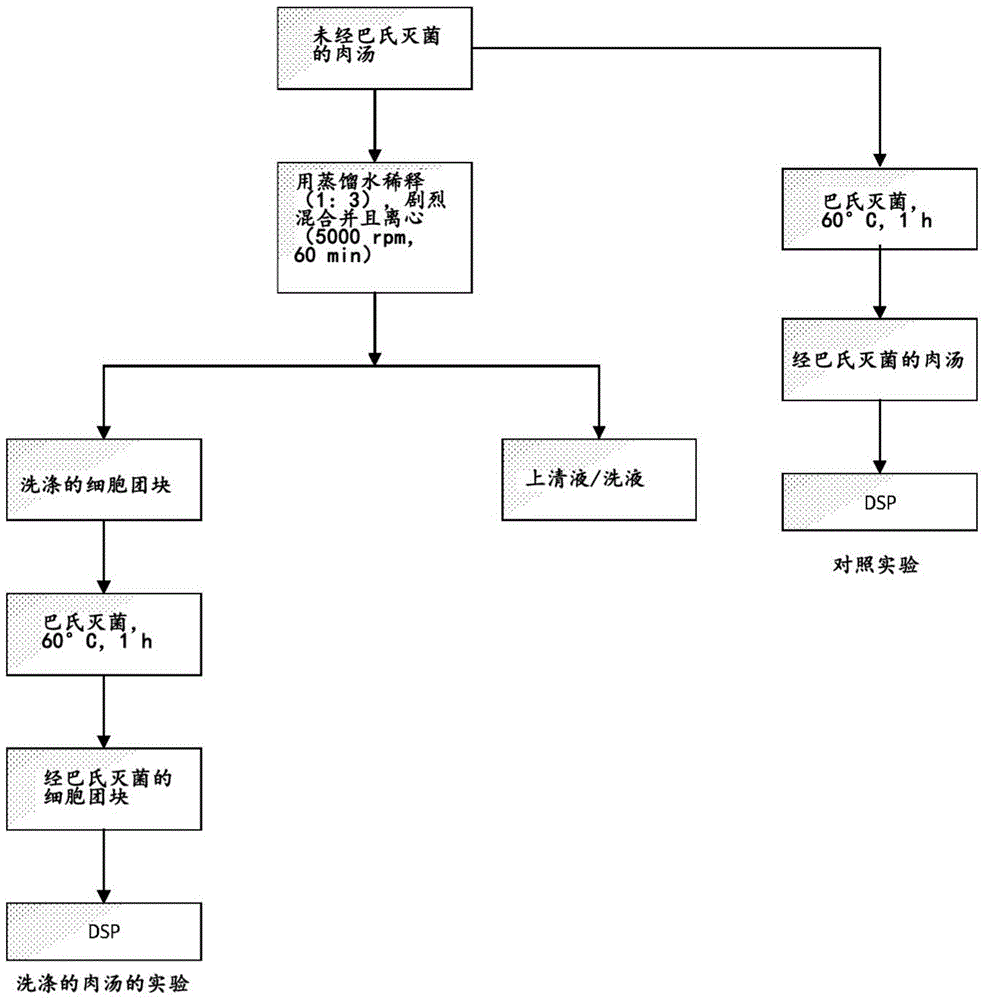
图1是展示了实验设计的图,所述实验设计用于在下游过程(DSP)期间检查肉汤洗涤对乳液形成/相分离的影响。Figure 1 is a graph showing the experimental design to examine the effect of broth washing on emulsion formation/phase separation during a downstream process (DSP).
图2示出了未洗涤的肉汤样品与洗涤的样品之间蛋白质和碳水化合物的量的显着差异。Figure 2 shows significant differences in the amount of protein and carbohydrates between unwashed broth samples and washed samples.
图3示出了在未洗涤的肉汤样品和洗涤的样品中从油相中回收的脂肪、从乳液相中回收的脂肪以及在重相中损失的脂肪的分布。Figure 3 shows the distribution of fat recovered from the oil phase, fat recovered from the emulsion phase, and fat lost in the heavy phase in unwashed broth samples and washed samples.
具体实施方式Detailed ways
在阅读下面详细描述时,本领域普通技术人员可以更容易地理解本发明的特征和优点。应当理解,出于清楚性原因而在单独的实施方案的背景下在上下文中描述的本发明的某些特征还可以组合以形成其子组合。The features and advantages of the present invention may be more readily understood by those of ordinary skill in the art upon reading the following detailed description. It is understood that certain features of the invention which are, for reasons of clarity, described in the context of separate embodiments, may also be combined to form sub-combinations thereof.
本文中鉴定为示例性的实施方案旨在是说明性的而非限制性的。The embodiments identified herein as exemplary are intended to be illustrative and not restrictive.
本文公开了一种用于从发酵肉汤中的一种或多种微生物细胞中获得包含一种或多种多不饱和酸的微生物油的方法,其中所述方法包括:Disclosed herein is a method for obtaining a microbial oil comprising one or more polyunsaturated acids from one or more microbial cells in a fermentation broth, wherein the method comprises:
(a)将所述发酵肉汤用至少1X量的水稀释;(a) diluting the fermentation broth with at least 1X amount of water;
(b)从所述发酵肉汤中分离所述细胞;(b) isolating the cells from the fermentation broth;
(c)将包含所述微生物油的细胞裂解以形成裂解的细胞组合物;(c) lysing cells comprising the microbial oil to form a lysed cell composition;
(d)将所述裂解的细胞组合物破乳以形成破乳的裂解的细胞组合物;(d) breaking the lysed cell composition to form a broken lysed cell composition;
(e)从所述破乳的裂解的细胞组合物中分离所述油;以及(e) isolating the oil from the demulsified lysed cell composition; and
(f)回收所述油。(f) recovering the oil.
在本发明中描述的方法的特别优点是,通过用蒸馏水洗涤收获的微生物细胞,显著地减少或消除了乳液的形成。尽管不希望受到任何特定理论的束缚,但是本申请的诸位发明人认为洗涤收获的微生物细胞有助于除去发酵培养基中导致乳液的一种或多种组分。此类组分包括但不限于简单的碳水化合物、寡糖和多糖、蛋白质、及其复合物。根据本发明,非常令人惊讶地发现,仅用蒸馏水洗涤收获细胞显著地降低了乳液程度。A particular advantage of the method described in the present invention is that by washing the harvested microbial cells with distilled water, the formation of emulsions is significantly reduced or eliminated. While not wishing to be bound by any particular theory, the inventors of the present application believe that washing the harvested microbial cells helps to remove one or more components of the fermentation medium that lead to the emulsion. Such components include, but are not limited to, simple carbohydrates, oligo- and polysaccharides, proteins, and complexes thereof. According to the present invention, it was very surprisingly found that only washing the harvested cells with distilled water significantly reduced the degree of emulsion.
在本发明中已经鉴定了优选的肉汤洗涤水平。在一个实施方案中,将发酵肉汤用至少1X量的水洗涤。1X意指添加的水是待稀释的发酵肉汤的1倍或相同体积。在另一个实施方案中,将发酵肉汤用大于1X量的水稀释,所述大于1X量的水稀释可以是至少2X、3X、4X、5X、6X、7X、8X、9X或10X量的水。在另一个实施方案中,将所述发酵肉汤用1X与4X量之间的水稀释。在另一个实施方案中,将所述发酵肉汤用1X与10X量之间的水稀释。随后将细胞从稀释的发酵肉汤中分离并且裂解以释放油。Preferred levels of broth washing have been identified in the present invention. In one embodiment, the fermentation broth is washed with at least a IX amount of water. 1X means that the water added is 1 times or the same volume of the fermentation broth to be diluted. In another embodiment, the fermentation broth is diluted with a greater than IX amount of water, which dilution may be at least a 2X, 3X, 4X, 5X, 6X, 7X, 8X, 9X or 10X amount of water . In another embodiment, the fermentation broth is diluted with between IX and 4X amounts of water. In another embodiment, the fermentation broth is diluted with between IX and 10X amounts of water. The cells are then separated from the diluted fermentation broth and lysed to release the oil.
在另一个实施方案中,将细胞洗涤多于一次。在一个实施方案中,将发酵肉汤用至少1X量的水稀释,并且将发酵肉汤中的细胞与发酵肉汤的液体部分分离并且重悬于至少1X量的水中,并且任选地将这些步骤重复多于一次。在另一个实施方案中,将发酵肉汤中的细胞与发酵肉汤的液体部分分离并且重悬于至少1X量的水中,并且任选地将这些步骤重复多于一次。In another embodiment, the cells are washed more than once. In one embodiment, the fermentation broth is diluted with at least 1X amount of water, and the cells in the fermentation broth are separated from the liquid portion of the fermentation broth and resuspended in at least 1X amount of water, and optionally these The steps are repeated more than once. In another embodiment, the cells in the fermentation broth are separated from the liquid portion of the fermentation broth and resuspended in at least IX amount of water, and these steps are optionally repeated more than once.
除以上方法外,本发明可以使用已知通过机械手段、化学手段、物理手段及其组合来降低发酵肉汤中各种组分的浓度的任何方法。In addition to the above methods, the present invention may use any method known to reduce the concentration of various components in the fermentation broth by mechanical means, chemical means, physical means, and combinations thereof.
本文还公开了一种通过本文描述的任何方法获得的微生物油。Also disclosed herein is a microbial oil obtained by any of the methods described herein.
本文描述的微生物油是指包含一种或多种PUFA并且从微生物细胞中获得的油。Microbial oils described herein refer to oils that contain one or more PUFAs and are obtained from microbial cells.
多不饱和脂肪酸(PUFA)是基于从脂肪酸的甲基末端开始的第一双键的位置来分类的;ω-3(n-3)脂肪酸在第三个碳处含有第一双键,而ω-6(n-6)脂肪酸在第六个碳处含有第一双键。例如,二十二碳六烯酸(DHA)是具有22个碳的链长和6个双键的ω-3长链多不饱和脂肪酸(LC-PUFA),通常命名为“22:6n-3”。在一个实施方案中,PUFA选自ω-3脂肪酸、ω-6脂肪酸、及其混合物。在另一个实施方案中,PUFA选自LC-PUFA。在仍进一步的实施方案中,PUFA选自二十二碳六烯酸(DHA)、二十碳五烯酸(EPA)、二十二碳五烯酸(DPA)、花生四烯酸(ARA)、γ-亚麻酸(GLA)、二高-γ-亚麻酸(DGLA)、十八碳四烯酸(SDA)、及其混合物。在另一个实施方案中,PUFA选自DHA、ARA、及其混合物。在进一步的实施方案中,PUFA是DHA。在进一步的实施方案中,PUFA是EPA。在又进一步的实施方案中,PUFA是ARA。Polyunsaturated fatty acids (PUFA) are classified based on the position of the first double bond from the methyl terminus of the fatty acid; omega-3(n-3) fatty acids contain the first double bond at the third carbon, while omega -6(n-6) fatty acids contain the first double bond at the sixth carbon. For example, docosahexaenoic acid (DHA) is an omega-3 long-chain polyunsaturated fatty acid (LC-PUFA) with a chain length of 22 carbons and 6 double bonds, commonly named "22:6n-3 ". In one embodiment, the PUFA is selected from the group consisting of omega-3 fatty acids, omega-6 fatty acids, and mixtures thereof. In another embodiment, the PUFAs are selected from LC-PUFAs. In still further embodiments, the PUFA is selected from the group consisting of docosahexaenoic acid (DHA), eicosapentaenoic acid (EPA), docosapentaenoic acid (DPA), arachidonic acid (ARA) , gamma-linolenic acid (GLA), dihomo-gamma-linolenic acid (DGLA), stearidonic acid (SDA), and mixtures thereof. In another embodiment, the PUFA is selected from DHA, ARA, and mixtures thereof. In further embodiments, the PUFA is DHA. In further embodiments, the PUFA is EPA. In yet further embodiments, the PUFA is ARA.
LC-PUFA是含有至少3个双键并且具有18个或更多个碳或20个或更多个碳的链长的脂肪酸。ω-6系列的LC-PUFA包括但不限于二-高-γ亚油酸(C20:3n-6)、花生四烯酸(C20:4n-6)、二十二碳四烯酸或肾上腺酸(C22:4n-6)、和二十二碳五烯酸(C22:5n-6)。ω-3系列的LC-PUFA包括但不限于二十碳三烯酸(C20:3n-3)、二十碳四烯酸(C20:4n-3)、二十碳五烯酸(C20:5n-3)、二十二碳五烯酸(C22:5n-3)、和二十二碳六烯酸(C22:6n-3)。LC-PUFA还包括具有多于22个碳和4个或更多个双键的脂肪酸,包括但不限于C24:6(n-3)和C28:8(n-3)。LC-PUFAs are fatty acids containing at least 3 double bonds and having a chain length of 18 or more carbons or 20 or more carbons. LC-PUFAs of the omega-6 series include, but are not limited to, di-homo-gamma linoleic acid (C20:3n-6), arachidonic acid (C20:4n-6), docosatetraenoic acid or adrenal acid (C22:4n-6), and docosapentaenoic acid (C22:5n-6). LC-PUFAs of the omega-3 series include but are not limited to eicosatrienoic acid (C20:3n-3), eicosatetraenoic acid (C20:4n-3), eicosapentaenoic acid (C20:5n) -3), docosapentaenoic acid (C22:5n-3), and docosahexaenoic acid (C22:6n-3). LC-PUFAs also include fatty acids with more than 22 carbons and 4 or more double bonds, including but not limited to C24:6(n-3) and C28:8(n-3).
PUFA可以呈游离脂肪酸、盐、脂肪酸酯(例如,甲酯或乙酯)、单酰基甘油(MAG)、二酰基甘油(DAG)、三酰基甘油(TAG)、和/或磷脂(PL)的形式。PUFAs can be in the form of free fatty acids, salts, fatty acid esters (eg, methyl or ethyl esters), monoacylglycerols (MAG), diacylglycerols (DAG), triacylglycerols (TAG), and/or phospholipids (PL). form.
高度不饱和脂肪酸(HUFA)是含有4个或更多个不饱和碳-碳键的ω-3和/或ω-6多不饱和脂肪酸。Highly unsaturated fatty acids (HUFAs) are omega-3 and/or omega-6 polyunsaturated fatty acids containing 4 or more unsaturated carbon-carbon bonds.
如本文所用,“细胞”是指含有油的生物材料,诸如源自产油微生物的生物材料。由微生物产生或从微生物细胞中获得的油被称为“微生物油”。由藻类和/或真菌产生的油也分别被称为藻油和/或真菌油。As used herein, "cell" refers to oil-containing biological material, such as biological material derived from oleaginous microorganisms. Oils produced by microorganisms or obtained from microbial cells are referred to as "microbial oils". Oils produced by algae and/or fungi are also referred to as algal oils and/or fungal oils, respectively.
如本文所用,“微生物细胞”或“微生物”是指诸如以下的生物体:藻类、细菌、真菌、酵母、原生生物、及其组合,例如单细胞生物体。在一些实施方案中,微生物细胞是真核细胞。微生物细胞包括但不限于金藻(例如,不等鞭毛界(Stramenopiles)微生物);绿藻;硅藻;鞭毛藻(例如,横裂甲藻目(Dinophyceae)微生物,包括隐甲藻属(Crypthecodinium),例如像寇氏隐甲藻(Crypthecodinium cohnii或C.cohnii));破囊壶菌目微藻;酵母(子囊菌(Ascomycetes)或担子菌(Basidiomycetes));和毛霉属(Mucor)、被孢霉属(Mortierella)(包括但不限于高山被孢霉(Mortierella alpina)和Mortierella sect.schmuckeri)和腐霉属(Pythium)(包括但不限于隐袭腐霉(Pythium insidiosum))真菌。As used herein, "microbial cell" or "microorganism" refers to organisms such as algae, bacteria, fungi, yeast, protists, and combinations thereof, such as unicellular organisms. In some embodiments, the microbial cells are eukaryotic cells. Microbial cells include, but are not limited to, golden algae (eg, Stramenopiles microorganisms); green algae; diatoms; dinoflagellates (eg, Dinophyceae microorganisms, including Crypthecodinium) such as Crypthecodinium cohnii or C. cohnii); microalgae of the order Thraustochytrid; yeast (Ascomycetes or Basidiomycetes); Mortierella (including but not limited to Mortierella alpina and Mortierella sect. schmuckeri) and Pythium (including but not limited to Pythium insidiosum) fungi.
在一个实施方案中,所述微生物细胞来被孢霉属(Mortierella)、隐甲藻属(Crypthecodinium)、或破囊壶菌目(Thraustochytriales)。在仍进一步的实施方案中,所述微生物细胞来自寇氏隐甲藻。在又甚至进一步的实施方案中,所述微生物细胞选自寇氏隐甲藻、高山被孢霉、破囊壶菌属、裂殖壶菌属、及其混合物。In one embodiment, the microbial cell is from the genus Mortierella, Crypthecodinium, or Thraustochytriales. In still further embodiments, the microbial cell is from Cryptodiinae konjac. In yet even further embodiments, the microbial cell is selected from the group consisting of Cryptodiinae konzei, Mortierella alpina, Thraustochytrium, Schizochytrium, and mixtures thereof.
在仍进一步的实施方案中,所述微生物细胞包括但不限于属于以下的微生物:被孢霉属、耳霉属(Conidiobolus)、腐霉属、疫霉属(Phytophthora)、青霉菌属(Penicillium)、枝孢属(Cladosporium)、毛霉属、镰刀菌属(Fusarium)、曲霉属(Aspergillus)、红酵母属(Rhodotorula)、虫霉属(Entomophthora)、刺孢囊霉属(Echinosporangium)、和水霉属(Saprolegnia)。在另一个实施方案中,ARA获得自来自被孢霉属的微生物细胞,所述被孢霉属包括但不限于长孢被孢霉(Mortierella elongata)、微小被孢霉(Mortierella exigua)、喜湿被抱霉(Mortierella hygrophila)、高山被孢霉、Mortierella schmuckeri、和小被孢霉(Mortierella minutissima)。In still further embodiments, the microbial cells include, but are not limited to, microorganisms belonging to the genus Mortierella, Conidiobolus, Pythium, Phytophthora, Penicillium , Cladosporium, Mucor, Fusarium, Aspergillus, Rhodotorula, Entomophthora, Echinosporangium, and water Saprolegnia. In another embodiment, the ARA is obtained from microbial cells from the genus Mortierella, including but not limited to Mortierella elongata, Mortierella exigua, hygrophila Mortierella hygrophila, Mortierella alpine, Mortierella schmuckeri, and Mortierella minutissima.
在甚至进一步的实施方案中,所述微生物细胞来自以下的微藻:破囊壶菌目,其包括但不限于破囊壶菌属(物种包括arudimentale、金黄色破囊壶菌(aureum)、benthicola、球破囊壶菌(globosum)、金尼破囊壶菌(kinnei)、动孢破囊壶菌(motivum)、多增殖性破囊壶菌(multirudimentale)、厚皮破囊壶菌(pachydermum)、层出破囊壶菌(proliferum)、粉红破囊壶菌(roseum)、纹带破囊壶菌(striatum));裂殖壶菌属(物种包括聚生裂殖壶菌(aggregatum)、limnaceum、红树林裂殖壶菌(mangrovei)、微小裂殖壶菌(minutum)、八孢裂殖壶菌(octosporum));吾肯氏壶菌属(Ulkenia)(物种包括变形吾肯氏壶菌(amoeboidea)、克格伦吾肯氏壶菌(kerguelensis)、小吾肯氏壶菌(minuta)、深海吾肯氏壶菌(profunda)、、辐射吾肯氏壶菌(radiate)、sailens、沙氏吾肯氏壶菌(sarkariana)、schizochytrops、威瑟氏吾肯氏壶菌(visurgensis)、约肯氏吾肯氏壶菌(yorkensis));Aurantiacochytrium属;Oblongichytrium属;Sicyoidochytium属;Parientichytrium属;Botryochytrium属;及其组合。描述在吾肯氏壶菌属中的物种将被认为是裂殖壶菌属的成员。在另一个实施方案中,所述微生物细胞来自破囊壶菌目。在又另一个实施方案中,所述微生物细胞来自破囊壶菌属。在仍进一步的实施方案中,所述微生物细胞来自裂殖壶菌属。在仍进一步的实施方案中,所述微生物细胞选自破囊壶菌属、裂殖壶菌属、或其混合物。In even further embodiments, the microbial cells are from the following microalgae: Thraustochytrium, which includes, but is not limited to, Thraustochytrium (species including arudimentale, aureum, benthicola , globosum, kinnei, motivum, multirudimentale, pachydermum , proliferum, roseum, striatum); Schizochytrium (species including aggregatum, limnaceum , mangrovei, mangrovei, minutum, octosporum); Ulkenia (species including Ulkenia mutans ( amoeboidea), kerguelensis, minuta, profunda, radiate, sailens, Sabouraud sarkariana, schizochytrops, visurgensis, yorkensis); Aurantiacochytrium; Oblongichytrium; Sicyoidochytium; Parientichytrium; Botryochytrium ; and combinations thereof. Species described in the genus Ukenchichytrium are to be considered members of the genus Schizochytrium. In another embodiment, the microbial cell is from the order Thraustochytrid. In yet another embodiment, the microbial cell is from Thraustochytrid. In still further embodiments, the microbial cells are from the genus Schizochytrium. In still further embodiments, the microbial cell is selected from Thraustochytrium, Schizochytrium, or a mixture thereof.
在一个实施方案中,所述方法包括将包含微生物油的微生物细胞裂解以形成裂解的细胞组合物。术语“裂解(lyse和lysing)”是指微生物细胞的壁和/或膜破裂的过程。在一个实施方案中,通过经受选自机械、化学、酶、物理、及其组合的至少一种处理来将微生物细胞裂解。在另一个实施方案中,所述方法包括将包含微生物油的微生物细胞裂解以形成裂解的细胞组合物,其中所述裂解选自机械、化学、酶、物理、及其组合。In one embodiment, the method comprises lysing microbial cells comprising the microbial oil to form a lysed cell composition. The terms "lyse and lysing" refer to the process by which the walls and/or membranes of microbial cells are disrupted. In one embodiment, the microbial cells are lysed by being subjected to at least one treatment selected from the group consisting of mechanical, chemical, enzymatic, physical, and combinations thereof. In another embodiment, the method comprises lysing microbial cells comprising the microbial oil to form a lysed cellular composition, wherein the lysing is selected from the group consisting of mechanical, chemical, enzymatic, physical, and combinations thereof.
如本文所用,“裂解的细胞组合物”是指包含以下的组合物:一种或多种裂解的细胞(包括细胞碎片和细胞的其他内容物)与微生物油(来自裂解的细胞)的组合以及任选地含有液体(例如,水)、营养素和微生物细胞的发酵肉汤。在一些实施方案中,微生物细胞包含在发酵肉汤或包含水的培养基中。在一些实施方案中,裂解的细胞组合物是指包含以下的组合物:裂解的细胞组合物是指包含一种或多种裂解的细胞、细胞碎片、微生物油、细胞的天然内容物、和来自发酵肉汤的水性组分。在一个实施方案中,裂解的细胞组合物包含液体、细胞碎片、和微生物油。在一些实施方案中,裂解的细胞组合物呈水包油乳液的形式,所述水包油乳液包含连续水相和分散油相的混合物。As used herein, a "lysed cell composition" refers to a composition comprising one or more lysed cells (including cell debris and other contents of the cells) in combination with microbial oil (from the lysed cells) and A fermentation broth optionally containing liquid (eg, water), nutrients, and microbial cells. In some embodiments, the microbial cells are contained in a fermentation broth or medium comprising water. In some embodiments, a lysed cell composition refers to a composition comprising: a lysed cell composition refers to a composition comprising one or more of lysed cells, cell debris, microbial oil, the natural contents of cells, and derived from Aqueous component of fermentation broth. In one embodiment, the lysed cell composition comprises liquid, cell debris, and microbial oil. In some embodiments, the lysed cell composition is in the form of an oil-in-water emulsion comprising a mixture of a continuous aqueous phase and a dispersed oily phase.
一般而言,本文描述的方法可以应用于在脂质提取过程期间可以形成乳液的任何含有脂质的微生物细胞。在一个实施方案中,所述微生物细胞选自藻类、真菌、原生生物、细菌、微藻、及其混合物。在另一个实施方案中,所述微藻选自不等鞭毛门(Stramenopiles),特别是破囊壶菌科,优选裂殖壶菌属。在另一个实施方案中,表面描述的微生物细胞能够产生至少约10wt.%、至少约20wt.%、优选至少约30wt.%、更优选至少约40wt.%的作为脂质的其生物质。在另一个实施方案中,所述多不饱和脂质包含DHA、EPA和ARA中的一种或任何组合。In general, the methods described herein can be applied to any lipid-containing microbial cell that can form an emulsion during the lipid extraction process. In one embodiment, the microbial cells are selected from the group consisting of algae, fungi, protists, bacteria, microalgae, and mixtures thereof. In another embodiment, the microalgae are selected from the phylum Stramenopiles, in particular the family Thraustochytrid, preferably the genus Schizochytrium. In another embodiment, the surface-described microbial cells are capable of producing at least about 10 wt.%, at least about 20 wt.%, preferably at least about 30 wt.%, more preferably at least about 40 wt.% of their biomass as lipids. In another embodiment, the polyunsaturated lipid comprises one or any combination of DHA, EPA and ARA.
实施例Example
实施例1Example 1
在此实施例中,检查另外的细胞肉汤洗涤步骤对乳液形成/相分离的影响。In this example, the effect of an additional cell broth washing step on emulsion formation/phase separation was examined.
实验设计在图1中示出。在对照实验中,将含有微生物细胞的未经巴氏灭菌的细胞肉汤进行巴氏灭菌,并且经受随后的下游过程,而不经任何洗涤步骤。在洗涤的肉汤的实验中,首先将含有微生物细胞的未经巴氏灭菌的细胞肉汤用蒸馏水洗涤,然后进行巴氏灭菌并且经受随后的下游过程。The experimental design is shown in Figure 1. In control experiments, unpasteurized cell broth containing microbial cells was pasteurized and subjected to subsequent downstream processes without any washing steps. In the washed broth experiments, non-pasteurized cell broth containing microbial cells was first washed with distilled water, then pasteurized and subjected to subsequent downstream processes.
测试1A-未洗涤的肉汤的实验Test 1A - Experiment with Unwashed Broth
在此对照实验中,将生物质密度超过100g/l的含有微生物细胞(裂殖壶菌属物种(Schizochytrium sp.))的未洗涤细胞肉汤在搅拌的3颈圆底烧瓶中加热至60℃持续1小时,以进行巴氏灭菌。巴氏灭菌后,收集样品并且分析其蛋白质和碳水化合物含量。结果在图2中示出。对于剩余的巴氏灭菌肉汤,通过使用苛性钠(20wt.-%NaOH溶液)将pH调节至7.5,然后添加0.15wt.-%的量(按肉汤重量计)的呈液态形式的蛋白酶(Novozymes产品37071)。在60℃下继续搅拌2小时。之后,将裂解的细胞混合物加热至90℃的温度。通过从裂解的肉汤中蒸发水来浓缩混合物,直到达到约36.6wt.-%的总干物质含量。然后通过添加苛性钠(20wt.-%NaOH溶液)将pH改为10.5,使浓缩的肉汤破乳。在破乳开始时添加的苛性钠的总量为约5.96wt.-%(基于初始肉汤重量),确保pH始终低于10.5。24小时后,通过添加硫酸溶液(3N)将破乳的肉汤中和至pH 7.5。中和后,取约250g均化的肉汤样品,并且通过以4500rpm离心15min来进行细胞碎片的分离。测量从油相中回收的油、从乳液相中回收的油以及在重相中损失的油的脂肪分布百分比。结果在图3中示出。In this control experiment, unwashed cell broth containing microbial cells (Schizochytrium sp.) with biomass densities above 100 g/l was heated to 60°C in a stirred 3-neck round bottom flask 1 hour for pasteurization. After pasteurization, samples were collected and analyzed for protein and carbohydrate content. The results are shown in FIG. 2 . For the remaining pasteurized broth, the pH was adjusted to 7.5 by using caustic soda (20 wt.-% NaOH solution) and then protease in liquid form was added in an amount of 0.15 wt.-% (by weight of broth) (Novozymes product 37071). Stirring was continued for 2 hours at 60°C. Afterwards, the lysed cell mixture was heated to a temperature of 90°C. The mixture was concentrated by evaporating water from the lysed broth until a total dry matter content of about 36.6 wt.-% was reached. The concentrated broth was then demulsified by adding caustic soda (20 wt.-% NaOH solution) to change the pH to 10.5. The total amount of caustic soda added at the beginning of the demulsification was about 5.96 wt.-% (based on the initial broth weight), ensuring that the pH was always below 10.5. After 24 hours, the demulsified meat was demulsified by adding sulfuric acid solution (3N). The soup was neutralized to pH 7.5. After neutralization, approximately 250 g of homogenized broth samples were taken and isolation of cell debris was performed by centrifugation at 4500 rpm for 15 min. The percent fat distribution of the oil recovered from the oil phase, the oil recovered from the emulsion phase, and the oil lost in the heavy phase was measured. The results are shown in FIG. 3 .
测试1B-洗涤的肉汤的实验Experiments to test 1B-washed broth
在此实验中,将未经巴氏灭菌的肉汤用蒸馏水稀释(肉汤:蒸馏水比率为1:3)。将此混合物剧烈摇动并且然后离心。将上清液(水洗液)与细胞分离。In this experiment, the unpasteurized broth was diluted with distilled water (1:3 broth:distilled water ratio). This mixture was shaken vigorously and then centrifuged. The supernatant (water wash) was separated from the cells.
将生物质密度超过100g/l的含有微生物细胞(裂殖壶菌属物种)的洗涤细胞肉汤在搅拌的3颈圆底烧瓶中加热至60℃持续1小时,以进行巴氏灭菌。巴氏灭菌后,收集样品并且分析其蛋白质和碳水化合物含量。结果在图2中示出。对于剩余的巴氏灭菌肉汤,通过使用苛性钠(20wt.-%NaOH溶液)将pH调节至7.5,然后添加0.15wt.-%的量(按肉汤重量计)的呈液态形式的蛋白酶(Novozymes产品37071)。在60℃下继续搅拌2小时。之后,将裂解的细胞混合物加热至90℃的温度。通过从裂解的肉汤中蒸发水来浓缩混合物,直到达到约35.7wt.-%的总干物质含量。然后通过添加苛性钠(20wt.-%NaOH溶液)将pH改为10.5,使浓缩的肉汤破乳。在破乳开始时添加的苛性钠的总量为约3.87wt.-%(基于初始肉汤重量),确保pH始终低于10.5。24小时后,通过添加硫酸溶液(3N)将破乳的肉汤中和至pH 7.5。中和后,取约250g均化的肉汤样品,并且通过以4500rpm离心15min来进行细胞碎片的分离。测量从油相中回收的油、从乳液相中回收的油以及在重相中损失的油的脂肪分布百分比。结果在图3中示出。Washed cell broth containing microbial cells (Schizochytrium spp.) with a biomass density in excess of 100 g/l was pasteurized by heating to 60°C for 1 hour in a stirred 3 neck round bottom flask. After pasteurization, samples were collected and analyzed for protein and carbohydrate content. The results are shown in FIG. 2 . For the remaining pasteurized broth, the pH was adjusted to 7.5 by using caustic soda (20 wt.-% NaOH solution) and then protease in liquid form was added in an amount of 0.15 wt.-% (by weight of broth) (Novozymes product 37071). Stirring was continued for 2 hours at 60°C. Afterwards, the lysed cell mixture was heated to a temperature of 90°C. The mixture was concentrated by evaporating water from the lysed broth until a total dry matter content of about 35.7 wt.-% was reached. The concentrated broth was then demulsified by adding caustic soda (20 wt.-% NaOH solution) to change the pH to 10.5. The total amount of caustic soda added at the beginning of the demulsification was about 3.87 wt.-% (based on the initial broth weight), ensuring that the pH was always below 10.5. After 24 hours, the demulsified meat was demulsified by adding sulfuric acid solution (3N). The soup was neutralized to pH 7.5. After neutralization, approximately 250 g of homogenized broth samples were taken and isolation of cell debris was performed by centrifugation at 4500 rpm for 15 min. The percent fat distribution of the oil recovered from the oil phase, the oil recovered from the emulsion phase, and the oil lost in the heavy phase was measured. The results are shown in FIG. 3 .
Claims (13)
Applications Claiming Priority (5)
| Application Number | Priority Date | Filing Date | Title |
|---|---|---|---|
| US201862650361P | 2018-03-30 | 2018-03-30 | |
| US62/650,361 | 2018-03-30 | ||
| US201862652611P | 2018-04-04 | 2018-04-04 | |
| US62/652,611 | 2018-04-04 | ||
| PCT/US2019/024764 WO2019191545A1 (en) | 2018-03-30 | 2019-03-29 | Method of reducing emulsion by broth washing |
Publications (1)
| Publication Number | Publication Date |
|---|---|
| CN112004919A true CN112004919A (en) | 2020-11-27 |
Family
ID=68060803
Family Applications (1)
| Application Number | Title | Priority Date | Filing Date |
|---|---|---|---|
| CN201980023335.6A Pending CN112004919A (en) | 2018-03-30 | 2019-03-29 | Method for reducing emulsion by bouillon washing |
Country Status (6)
| Country | Link |
|---|---|
| US (1) | US12312556B2 (en) |
| EP (1) | EP3775118A4 (en) |
| CN (1) | CN112004919A (en) |
| BR (1) | BR112020019920A2 (en) |
| CA (1) | CA3094704A1 (en) |
| WO (1) | WO2019191545A1 (en) |
Families Citing this family (10)
| Publication number | Priority date | Publication date | Assignee | Title |
|---|---|---|---|---|
| US11324234B2 (en) | 2014-10-02 | 2022-05-10 | Evonik Operations Gmbh | Method for raising animals |
| CA2958439C (en) | 2014-10-02 | 2022-09-20 | Evonik Industries Ag | Feedstuff of high abrasion resistance and good stability in water, containing pufas |
| JP6998935B2 (en) | 2016-07-13 | 2022-01-18 | エボニック オペレーションズ ゲーエムベーハー | How to Separate Lipids from Dissolved Lipid-Containing Biomass |
| ES2872009T3 (en) | 2016-12-27 | 2021-11-02 | Evonik Degussa Gmbh | Method of isolating lipids from a biomass containing lipids |
| CN111356767A (en) | 2017-08-17 | 2020-06-30 | 赢创运营有限公司 | Enhancing lipid production by limiting at least two limiting nutrient sources |
| EP3470502A1 (en) | 2017-10-13 | 2019-04-17 | Evonik Degussa GmbH | Method of separating lipids from a lysed lipids containing biomass |
| EP3527664A1 (en) | 2018-02-15 | 2019-08-21 | Evonik Degussa GmbH | Method of isolating lipids from a lipids containing biomass |
| WO2019219443A1 (en) | 2018-05-15 | 2019-11-21 | Evonik Operations Gmbh | Method of isolating lipids from a lipids containing biomass with aid of hydrophobic silica |
| BR112020023222A2 (en) | 2018-05-15 | 2021-03-23 | Evonik Operations Gmbh | method of isolating lipids from a biomass containing lipids lysed by emulsion inversion |
| WO2020074488A1 (en) | 2018-10-12 | 2020-04-16 | Evonik Operations Gmbh | Animal feed for improving the growth performance |
Citations (5)
| Publication number | Priority date | Publication date | Assignee | Title |
|---|---|---|---|---|
| CN1217029A (en) * | 1996-03-28 | 1999-05-19 | 吉斯特-布罗卡迪斯股份有限公司 | Process for the preparation of oils containing microbial polyunsaturated fatty acids from pasteurized biomass |
| CN1416469A (en) * | 2000-01-19 | 2003-05-07 | 奥米加技术公司 | Solvent-free extraction method |
| CN1447850A (en) * | 2000-08-02 | 2003-10-08 | Dsm公司 | Purifying crude pufa oils |
| CN1447860A (en) * | 2000-08-02 | 2003-10-08 | Dsm公司 | Separation of microbial oil |
| CN103124791A (en) * | 2010-06-01 | 2013-05-29 | 帝斯曼知识产权资产管理有限公司 | Extraction of lipids from cells and products obtained therefrom |
Family Cites Families (8)
| Publication number | Priority date | Publication date | Assignee | Title |
|---|---|---|---|---|
| US5399493A (en) * | 1989-06-15 | 1995-03-21 | The Regents Of The University Of Michigan | Methods and compositions for the optimization of human hematopoietic progenitor cell cultures |
| AU2008229885B2 (en) * | 2000-01-19 | 2011-11-17 | Dsm Ip Assets B.V. | Solventless extraction process |
| CN1268328C (en) | 2001-05-30 | 2006-08-09 | 拉克斯戴尔有限公司 | Coenzyme q and eicosapentaenoic acid (EPA) |
| WO2008103370A1 (en) | 2007-02-22 | 2008-08-28 | Children's Hospital And Research Center At Oakland | Fatty acid formulations and methods of use thereof |
| BRPI1012026A2 (en) * | 2009-05-26 | 2018-07-17 | Solazyme Inc | microbial biomass fractionation containing oil |
| AU2014369042B2 (en) * | 2013-12-20 | 2020-04-30 | Dsm Ip Assets B.V. | Processes for obtaining microbial oil from microbial cells |
| MX383112B (en) * | 2013-12-20 | 2025-03-13 | Dsm Ip Assets Bv | PROCEDURES FOR OBTAINING MICROBIAL OIL FROM MICROBIAL CELLS. |
| EP3083546B1 (en) | 2013-12-20 | 2022-03-02 | DSM IP Assets B.V. | Processes for obtaining microbial oil from microbial cells |
-
2019
- 2019-03-29 CN CN201980023335.6A patent/CN112004919A/en active Pending
- 2019-03-29 WO PCT/US2019/024764 patent/WO2019191545A1/en not_active Ceased
- 2019-03-29 BR BR112020019920-6A patent/BR112020019920A2/en not_active Application Discontinuation
- 2019-03-29 EP EP19775240.5A patent/EP3775118A4/en active Pending
- 2019-03-29 US US17/042,791 patent/US12312556B2/en active Active
- 2019-03-29 CA CA3094704A patent/CA3094704A1/en active Pending
Patent Citations (5)
| Publication number | Priority date | Publication date | Assignee | Title |
|---|---|---|---|---|
| CN1217029A (en) * | 1996-03-28 | 1999-05-19 | 吉斯特-布罗卡迪斯股份有限公司 | Process for the preparation of oils containing microbial polyunsaturated fatty acids from pasteurized biomass |
| CN1416469A (en) * | 2000-01-19 | 2003-05-07 | 奥米加技术公司 | Solvent-free extraction method |
| CN1447850A (en) * | 2000-08-02 | 2003-10-08 | Dsm公司 | Purifying crude pufa oils |
| CN1447860A (en) * | 2000-08-02 | 2003-10-08 | Dsm公司 | Separation of microbial oil |
| CN103124791A (en) * | 2010-06-01 | 2013-05-29 | 帝斯曼知识产权资产管理有限公司 | Extraction of lipids from cells and products obtained therefrom |
Also Published As
| Publication number | Publication date |
|---|---|
| EP3775118A1 (en) | 2021-02-17 |
| BR112020019920A2 (en) | 2021-01-05 |
| EP3775118A4 (en) | 2022-03-09 |
| US20210017467A1 (en) | 2021-01-21 |
| WO2019191545A1 (en) | 2019-10-03 |
| CA3094704A1 (en) | 2019-10-03 |
| US12312556B2 (en) | 2025-05-27 |
Similar Documents
| Publication | Publication Date | Title |
|---|---|---|
| US12312556B2 (en) | Method of reducing emulsion by broth washing | |
| CN112004935B (en) | Method for obtaining microbial oil and method for reducing emulsion by maintaining low carbohydrate concentration | |
| CN109477122B (en) | Method for extracting microbial oil containing polyunsaturated fatty acid from fermentation broth containing oleaginous microorganisms | |
| JP7487961B2 (en) | Method for obtaining microbial oils from microbial cells | |
| JP6266681B2 (en) | Extraction of lipids from cells and products derived therefrom | |
| JP7426376B2 (en) | How to reduce the self-heating tendency of biomass | |
| JP2017500041A (en) | Method for obtaining microbial oil from microbial cells | |
| US20260035636A1 (en) | Method for enhancing the efficiency of oil extraction process | |
| EP3938339A1 (en) | Methods of obtaining lipids from a microbial cell composition | |
| EP3938480A1 (en) | Methods of obtaining lipids from a microbial cell composition by enzyme and ph shock | |
| WO2021122770A1 (en) | Method of reducing the self-heating propensity of microbial lc-pufa comprising biomass | |
| BR112019000547B1 (en) | METHOD FOR INCREASING DEMULSIFICATION OF A FERMENTATION BROTH CONTAINING LYSED OLEAGINOUS MICROORGANISMS |
Legal Events
| Date | Code | Title | Description |
|---|---|---|---|
| PB01 | Publication | ||
| PB01 | Publication | ||
| SE01 | Entry into force of request for substantive examination | ||
| SE01 | Entry into force of request for substantive examination |