CN112001385A - Target cross-domain detection and understanding method, system, equipment and storage medium - Google Patents
Target cross-domain detection and understanding method, system, equipment and storage medium Download PDFInfo
- Publication number
- CN112001385A CN112001385A CN202010845641.2A CN202010845641A CN112001385A CN 112001385 A CN112001385 A CN 112001385A CN 202010845641 A CN202010845641 A CN 202010845641A CN 112001385 A CN112001385 A CN 112001385A
- Authority
- CN
- China
- Prior art keywords
- target
- semantic
- cross
- domain
- probability
- Prior art date
- Legal status (The legal status is an assumption and is not a legal conclusion. Google has not performed a legal analysis and makes no representation as to the accuracy of the status listed.)
- Granted
Links
Images


Classifications
-
- G—PHYSICS
- G06—COMPUTING OR CALCULATING; COUNTING
- G06V—IMAGE OR VIDEO RECOGNITION OR UNDERSTANDING
- G06V10/00—Arrangements for image or video recognition or understanding
- G06V10/20—Image preprocessing
- G06V10/25—Determination of region of interest [ROI] or a volume of interest [VOI]
-
- G—PHYSICS
- G06—COMPUTING OR CALCULATING; COUNTING
- G06V—IMAGE OR VIDEO RECOGNITION OR UNDERSTANDING
- G06V20/00—Scenes; Scene-specific elements
- G06V20/50—Context or environment of the image
- G06V20/56—Context or environment of the image exterior to a vehicle by using sensors mounted on the vehicle
- G06V20/58—Recognition of moving objects or obstacles, e.g. vehicles or pedestrians; Recognition of traffic objects, e.g. traffic signs, traffic lights or roads
- G06V20/582—Recognition of moving objects or obstacles, e.g. vehicles or pedestrians; Recognition of traffic objects, e.g. traffic signs, traffic lights or roads of traffic signs
-
- G—PHYSICS
- G06—COMPUTING OR CALCULATING; COUNTING
- G06F—ELECTRIC DIGITAL DATA PROCESSING
- G06F18/00—Pattern recognition
- G06F18/20—Analysing
- G06F18/21—Design or setup of recognition systems or techniques; Extraction of features in feature space; Blind source separation
- G06F18/213—Feature extraction, e.g. by transforming the feature space; Summarisation; Mappings, e.g. subspace methods
- G06F18/2137—Feature extraction, e.g. by transforming the feature space; Summarisation; Mappings, e.g. subspace methods based on criteria of topology preservation, e.g. multidimensional scaling or self-organising maps
-
- G—PHYSICS
- G06—COMPUTING OR CALCULATING; COUNTING
- G06F—ELECTRIC DIGITAL DATA PROCESSING
- G06F18/00—Pattern recognition
- G06F18/20—Analysing
- G06F18/21—Design or setup of recognition systems or techniques; Extraction of features in feature space; Blind source separation
- G06F18/214—Generating training patterns; Bootstrap methods, e.g. bagging or boosting
-
- G—PHYSICS
- G06—COMPUTING OR CALCULATING; COUNTING
- G06F—ELECTRIC DIGITAL DATA PROCESSING
- G06F18/00—Pattern recognition
- G06F18/20—Analysing
- G06F18/22—Matching criteria, e.g. proximity measures
-
- G—PHYSICS
- G06—COMPUTING OR CALCULATING; COUNTING
- G06F—ELECTRIC DIGITAL DATA PROCESSING
- G06F18/00—Pattern recognition
- G06F18/20—Analysing
- G06F18/23—Clustering techniques
- G06F18/231—Hierarchical techniques, i.e. dividing or merging pattern sets so as to obtain a dendrogram
-
- G—PHYSICS
- G06—COMPUTING OR CALCULATING; COUNTING
- G06F—ELECTRIC DIGITAL DATA PROCESSING
- G06F18/00—Pattern recognition
- G06F18/20—Analysing
- G06F18/24—Classification techniques
- G06F18/241—Classification techniques relating to the classification model, e.g. parametric or non-parametric approaches
- G06F18/2415—Classification techniques relating to the classification model, e.g. parametric or non-parametric approaches based on parametric or probabilistic models, e.g. based on likelihood ratio or false acceptance rate versus a false rejection rate
-
- G—PHYSICS
- G06—COMPUTING OR CALCULATING; COUNTING
- G06F—ELECTRIC DIGITAL DATA PROCESSING
- G06F18/00—Pattern recognition
- G06F18/20—Analysing
- G06F18/24—Classification techniques
- G06F18/243—Classification techniques relating to the number of classes
- G06F18/24323—Tree-organised classifiers
-
- G—PHYSICS
- G06—COMPUTING OR CALCULATING; COUNTING
- G06F—ELECTRIC DIGITAL DATA PROCESSING
- G06F40/00—Handling natural language data
- G06F40/30—Semantic analysis
-
- G—PHYSICS
- G06—COMPUTING OR CALCULATING; COUNTING
- G06N—COMPUTING ARRANGEMENTS BASED ON SPECIFIC COMPUTATIONAL MODELS
- G06N20/00—Machine learning
-
- G—PHYSICS
- G06—COMPUTING OR CALCULATING; COUNTING
- G06N—COMPUTING ARRANGEMENTS BASED ON SPECIFIC COMPUTATIONAL MODELS
- G06N3/00—Computing arrangements based on biological models
- G06N3/02—Neural networks
- G06N3/04—Architecture, e.g. interconnection topology
- G06N3/045—Combinations of networks
-
- G—PHYSICS
- G06—COMPUTING OR CALCULATING; COUNTING
- G06N—COMPUTING ARRANGEMENTS BASED ON SPECIFIC COMPUTATIONAL MODELS
- G06N3/00—Computing arrangements based on biological models
- G06N3/02—Neural networks
- G06N3/04—Architecture, e.g. interconnection topology
- G06N3/0464—Convolutional networks [CNN, ConvNet]
-
- G—PHYSICS
- G06—COMPUTING OR CALCULATING; COUNTING
- G06N—COMPUTING ARRANGEMENTS BASED ON SPECIFIC COMPUTATIONAL MODELS
- G06N3/00—Computing arrangements based on biological models
- G06N3/02—Neural networks
- G06N3/04—Architecture, e.g. interconnection topology
- G06N3/047—Probabilistic or stochastic networks
-
- G—PHYSICS
- G06—COMPUTING OR CALCULATING; COUNTING
- G06N—COMPUTING ARRANGEMENTS BASED ON SPECIFIC COMPUTATIONAL MODELS
- G06N3/00—Computing arrangements based on biological models
- G06N3/02—Neural networks
- G06N3/06—Physical realisation, i.e. hardware implementation of neural networks, neurons or parts of neurons
- G06N3/063—Physical realisation, i.e. hardware implementation of neural networks, neurons or parts of neurons using electronic means
-
- G—PHYSICS
- G06—COMPUTING OR CALCULATING; COUNTING
- G06N—COMPUTING ARRANGEMENTS BASED ON SPECIFIC COMPUTATIONAL MODELS
- G06N3/00—Computing arrangements based on biological models
- G06N3/02—Neural networks
- G06N3/08—Learning methods
-
- G—PHYSICS
- G06—COMPUTING OR CALCULATING; COUNTING
- G06N—COMPUTING ARRANGEMENTS BASED ON SPECIFIC COMPUTATIONAL MODELS
- G06N3/00—Computing arrangements based on biological models
- G06N3/02—Neural networks
- G06N3/08—Learning methods
- G06N3/084—Backpropagation, e.g. using gradient descent
-
- G—PHYSICS
- G06—COMPUTING OR CALCULATING; COUNTING
- G06N—COMPUTING ARRANGEMENTS BASED ON SPECIFIC COMPUTATIONAL MODELS
- G06N3/00—Computing arrangements based on biological models
- G06N3/02—Neural networks
- G06N3/08—Learning methods
- G06N3/09—Supervised learning
-
- G—PHYSICS
- G06—COMPUTING OR CALCULATING; COUNTING
- G06N—COMPUTING ARRANGEMENTS BASED ON SPECIFIC COMPUTATIONAL MODELS
- G06N3/00—Computing arrangements based on biological models
- G06N3/02—Neural networks
- G06N3/08—Learning methods
- G06N3/096—Transfer learning
-
- G—PHYSICS
- G06—COMPUTING OR CALCULATING; COUNTING
- G06N—COMPUTING ARRANGEMENTS BASED ON SPECIFIC COMPUTATIONAL MODELS
- G06N5/00—Computing arrangements using knowledge-based models
- G06N5/01—Dynamic search techniques; Heuristics; Dynamic trees; Branch-and-bound
-
- G—PHYSICS
- G06—COMPUTING OR CALCULATING; COUNTING
- G06V—IMAGE OR VIDEO RECOGNITION OR UNDERSTANDING
- G06V10/00—Arrangements for image or video recognition or understanding
- G06V10/70—Arrangements for image or video recognition or understanding using pattern recognition or machine learning
- G06V10/764—Arrangements for image or video recognition or understanding using pattern recognition or machine learning using classification, e.g. of video objects
-
- G—PHYSICS
- G06—COMPUTING OR CALCULATING; COUNTING
- G06V—IMAGE OR VIDEO RECOGNITION OR UNDERSTANDING
- G06V10/00—Arrangements for image or video recognition or understanding
- G06V10/70—Arrangements for image or video recognition or understanding using pattern recognition or machine learning
- G06V10/82—Arrangements for image or video recognition or understanding using pattern recognition or machine learning using neural networks
-
- G—PHYSICS
- G06—COMPUTING OR CALCULATING; COUNTING
- G06N—COMPUTING ARRANGEMENTS BASED ON SPECIFIC COMPUTATIONAL MODELS
- G06N3/00—Computing arrangements based on biological models
- G06N3/02—Neural networks
- G06N3/04—Architecture, e.g. interconnection topology
- G06N3/048—Activation functions
-
- Y—GENERAL TAGGING OF NEW TECHNOLOGICAL DEVELOPMENTS; GENERAL TAGGING OF CROSS-SECTIONAL TECHNOLOGIES SPANNING OVER SEVERAL SECTIONS OF THE IPC; TECHNICAL SUBJECTS COVERED BY FORMER USPC CROSS-REFERENCE ART COLLECTIONS [XRACs] AND DIGESTS
- Y02—TECHNOLOGIES OR APPLICATIONS FOR MITIGATION OR ADAPTATION AGAINST CLIMATE CHANGE
- Y02D—CLIMATE CHANGE MITIGATION TECHNOLOGIES IN INFORMATION AND COMMUNICATION TECHNOLOGIES [ICT], I.E. INFORMATION AND COMMUNICATION TECHNOLOGIES AIMING AT THE REDUCTION OF THEIR OWN ENERGY USE
- Y02D10/00—Energy efficient computing, e.g. low power processors, power management or thermal management
Landscapes
- Engineering & Computer Science (AREA)
- Theoretical Computer Science (AREA)
- Physics & Mathematics (AREA)
- General Physics & Mathematics (AREA)
- Data Mining & Analysis (AREA)
- Evolutionary Computation (AREA)
- Artificial Intelligence (AREA)
- General Engineering & Computer Science (AREA)
- Life Sciences & Earth Sciences (AREA)
- Software Systems (AREA)
- Health & Medical Sciences (AREA)
- Computing Systems (AREA)
- General Health & Medical Sciences (AREA)
- Computer Vision & Pattern Recognition (AREA)
- Mathematical Physics (AREA)
- Computational Linguistics (AREA)
- Biomedical Technology (AREA)
- Biophysics (AREA)
- Molecular Biology (AREA)
- Multimedia (AREA)
- Bioinformatics & Cheminformatics (AREA)
- Bioinformatics & Computational Biology (AREA)
- Evolutionary Biology (AREA)
- Medical Informatics (AREA)
- Databases & Information Systems (AREA)
- Probability & Statistics with Applications (AREA)
- Neurology (AREA)
- Audiology, Speech & Language Pathology (AREA)
- Image Analysis (AREA)
Abstract
本发明公开了一种目标跨域检测与理解方法、系统、设备及存储介质,属于目标检测与识别领域。通过空间概率控制与显著点池化,联合编码位置概率与图像特征的耦合关系,高效定位目标候选框对角线顶点,简化网络复杂度,以满足面向实际检测的应用需求;通过跨域引导语义提取与知识迁移,探究面向不同域的目标深度视觉特征与引导语义包含关系,指导网络训练,提取跨域不变特征以增强模型的跨域感知;通过对目标值得注意度解析,探究语义层次跨域感知映射作用与反传机理,解决具体意图下值得注意的目标预测与引导语义理解的准确性问题。本发明能够精确模拟视觉系统对目标的重要性扫描与语义判断的过程,从而提高环境视觉感知能力及主动安全性。

The invention discloses a target cross-domain detection and understanding method, system, equipment and storage medium, which belong to the field of target detection and identification. Through spatial probability control and salient point pooling, the coupling relationship between position probability and image features is jointly encoded to efficiently locate the diagonal vertices of the target candidate frame, simplifying the network complexity to meet the application requirements for practical detection; through cross-domain guidance semantics Extraction and knowledge transfer, explore the inclusion relationship between target depth visual features and guided semantics for different domains, guide network training, and extract cross-domain invariant features to enhance the cross-domain perception of the model; Domain-aware mapping function and back-propagation mechanism to solve the problem of accuracy of target prediction and guided semantic understanding under specific intentions. The invention can accurately simulate the process of the visual system's importance scanning and semantic judgment on the target, thereby improving the environmental visual perception ability and active safety.
Description
技术领域technical field
本发明属于目标检测与识别领域,涉及一种目标跨域检测与理解方法、系统、设备及存储介质。The invention belongs to the field of target detection and identification, and relates to a method, system, device and storage medium for target cross-domain detection and understanding.
背景技术Background technique
随着计算机技术的发展以及计算机视觉原理的广泛普及,目标检测与识别应用于很多方面:智能监控系统、军工目标检测、医学手术跟踪以及交通标志校测等。对于同一方面内容,各个国家所设计的实体分别由不同的颜色与图形表示,但大部分的指示引导语义是相同的;每个国家的不同地方也会在设计基础上略有变化,即在同一域内的形状、大小、几何变化等方面有差异,但其指示引导作用同样不变。With the development of computer technology and the widespread popularization of computer vision principles, target detection and recognition are used in many aspects: intelligent monitoring systems, military target detection, medical surgery tracking, and traffic sign calibration. For the same content, the entities designed by each country are represented by different colors and graphics, but most of the instruction and guidance semantics are the same; different places in each country will also have slight changes on the basis of design, that is, in the same There are differences in the shape, size, geometric changes, etc. within the domain, but the guiding role is also unchanged.
在同一场景下,目标对于参与者的引导指示作用重要程度不同。在复杂场景中,需要对多个目标进行实时处理时,目标选择性检测和识别尤为重要。以目标检测在交通标志方面应用为例,随着城市建设规模与基础设施功能的扩展,在道路两侧或50-100米视场以内,往往会同时有多个交通标志杆,每个交通标志杆上有多个交通标志。通常情况下,根据自身行进意图,每个道路使用者对交通标志的引导需求及注意度不尽相同。道路使用者通过人眼视觉系统快速扫描从各种交通标志中找到与其行进意图相关性强的交通标志,即值得注意的交通标志;且能够快速提取其对应的引导语义,来指导当前的交通行为或作为下一时刻交通行为的决策依据。In the same scene, the importance of the goal to the participants' guiding instructions is different. In complex scenes, when multiple targets need to be processed in real time, target selective detection and recognition is particularly important. Taking the application of target detection in traffic signs as an example, with the expansion of urban construction scale and infrastructure functions, there are often multiple traffic sign poles on both sides of the road or within a field of view of 50-100 meters. There are multiple traffic signs on the pole. Under normal circumstances, each road user has different guiding needs and attention to traffic signs according to their own travel intentions. Road users can quickly scan various traffic signs to find traffic signs that are highly relevant to their travel intentions through the human visual system, that is, noteworthy traffic signs; and can quickly extract their corresponding guidance semantics to guide the current traffic behavior. Or as the basis for decision-making of traffic behavior at the next moment.
现有基于深度学习的目标检测与识别算法,面向不同数据集并不具备理想的泛化能力,且都是被动检测出图像中的所有目标,并没有考虑目标对不同意图的使用者的有效性与值得注意度影响的问题。对于目标检测与识别在自动驾驶的具体应用而言,通过现有的交通标志检测与识别方法得到的交通标志,作为自动驾驶决策系统的输入会增加融合的难度和冗余度,以及带来大量多余的系统计算开支。Existing target detection and recognition algorithms based on deep learning do not have ideal generalization ability for different data sets, and passively detect all targets in the image, without considering the effectiveness of targets for users with different intentions Issues with notable effects. For the specific application of target detection and recognition in automatic driving, the traffic signs obtained through the existing traffic sign detection and recognition methods, as the input of the automatic driving decision-making system, will increase the difficulty and redundancy of fusion, and bring a lot of Excessive system computing overhead.
因此,面向不同目标域,高效地感知当前意图相关的值得注意的目标,及理解其对应的引导语义,是基于卷积神经网络的目标检测与理解研究的攻关难点。Therefore, facing different target domains, efficiently perceiving notable targets related to current intentions, and understanding their corresponding guidance semantics, are the key points of target detection and understanding research based on convolutional neural networks.
发明内容SUMMARY OF THE INVENTION
本发明的目的在于克服上述现有技术中,目标跨域检测与理解方法应用于实际系统计算难度较大和费用较高的技术问题,提供一种目标跨域检测与理解方法、系统、设备及存储介质。The purpose of the present invention is to overcome the technical problems in the above-mentioned prior art that the method for target cross-domain detection and understanding is applied to the actual system with high computational difficulty and high cost, and to provide a target cross-domain detection and understanding method, system, equipment and storage. medium.
为了达到上述目的,本发明采用以下技术方案予以实现:In order to achieve the above object, the present invention adopts the following technical solutions to be realized:
一种基于注意估计的目标跨域检测与理解方法,包括如下步骤:A target cross-domain detection and understanding method based on attention estimation, including the following steps:
步骤1:以空间概率控制层作为输入图像通道,结合边缘显著交叉点池化层,构建一种轻量化卷积神经网络;Step 1: Using the spatial probability control layer as the input image channel, combined with the edge significant intersection pooling layer, construct a lightweight convolutional neural network;
步骤2:利用引导语义层次包含关系进行跨域建模,利用目标跨域训练样本引导语义的提取与表示;基于引导语义之间的深层包含关系,构建具有引导语义层次包含关系的树形结构,用于对具体意图下的NEGSS-NET跨域增强感知;Step 2: Use the introductory semantic level inclusion relationship for cross-domain modeling, and use the target cross-domain training samples to guide the extraction and representation of semantics; It is used to enhance the perception of NEGSS-NET cross-domain under specific intentions;
步骤3:基于步骤2的树形结构,在复杂场景视觉特征与引导语义之间建立映射预测网络,获得特征映射具体过程及定义、映射网络具体结构及定义,实现图像视觉特征空间到语义空间的映射;Step 3: Based on the tree structure of Step 2, a mapping prediction network is established between the visual features of the complex scene and the guiding semantics, and the specific process and definition of the feature mapping, the specific structure and definition of the mapping network are obtained, and the image visual feature space to the semantic space is realized. map;
步骤4:定义联合引导语义损失和基于意图的目标值得注意度估计,获得基于意图的值得注意度。Step 4: Define joint-guided semantic loss and intent-based target notability estimation to obtain intent-based notability.
优选地,所述步骤1具体包括:Preferably, the
步骤11,利用多尺度空间概率划分方法建立位置概率控制通道;Step 11, using the multi-scale space probability division method to establish a position probability control channel;
步骤12,通过Mobilenet v3输出的特征图进行卷积得到F={fl,fr,ft,fb},然后进行显著点池化,获得对角线顶点预测热图、偏置以及嵌入值,得到轻量化卷积神经网络。Step 12: Convolve the feature map output by Mobilenet v3 to obtain F={f l ,f r ,f t ,f b }, and then perform salient point pooling to obtain the diagonal vertex prediction heat map, bias and embedding value to obtain a lightweight convolutional neural network.
进一步优选地,所述步骤11所述的构建位置概率控制通道具体包括:Further preferably, the construction of the position probability control channel described in the step 11 specifically includes:
步骤111,分析目标的先验位置统计特征,将数据集内样本图像分辨率预处理为W*H;然后,通过


最后,利用pm=k/n计算得出像素点m处出现目标的概率;Finally, use p m =k/n to calculate the probability of the target appearing at the pixel point m;
步骤112,利用不同大小的刻度,分别将输入样本图像划分为多个相同的区域;Step 112, using scales of different sizes to divide the input sample image into multiple identical regions respectively;
步骤113,计算出步骤112中同一区域内所有像素点出现的目标概率值之和,作为该区域内每个像素点的概率值;然后,将不同区域下每个像素点的概率值相加并进行归一化,之后建立基于目标中心点概率统计的空间概率控制模版。Step 113, calculate the sum of the target probability values of all pixels in the same area in step 112, as the probability value of each pixel in the area; then, add the probability values of each pixel in different areas and combine After normalization, a spatial probability control template based on the probability statistics of the target center point is established.
进一步优选地,所述步骤12所述的显著点池化过程的具体操作如下:Further preferably, the specific operations of the salient point pooling process described in step 12 are as follows:
首先,假设特征图fl和f大小为W*H,像素位置(i,j)处的特征值分别为fl(i,j)和ft(i,j);然后,按照式(2)计算fl(i,j)与fl(i,j+Step)之间的最大值dij,按照式(3)计算ft(i,j)与ft(i,j+Step)之间的最大值gij,First, assume that the size of the feature maps f l and f is W*H, and the eigenvalues at the pixel position (i, j) are f l(i, j) and f t(i, j) respectively; then, according to formula (2 ) Calculate the maximum value d ij between f l(i,j) and f l(i,j+Step) , and calculate f t(i,j) and f t(i,j+Step) according to formula (3) The maximum value g ij between ,


最后,按照式(4)将像素位置(i,j)处的两个最大值相加得到的特征值h(i,j),作为像素位置(i,j)处的最终特征值。Finally, according to formula (4), the eigenvalue h (i,j) obtained by adding the two maximum values at the pixel position (i, j) is used as the final eigenvalue at the pixel position (i, j).
优选地,所述步骤2的具体操作如下:Preferably, the specific operations of the step 2 are as follows:
步骤21,获得目标类别标注;Step 21, obtain the target category label;
步骤22,将多个域涉及到的目标样本及类别文本标签进行语义空间映射,得到对应的语义类别向量;Step 22, performing semantic space mapping on target samples and category text labels involved in multiple domains to obtain corresponding semantic category vectors;
步骤23,在目标引导语义向量空间中形成超类向量,以超类向量作为引导语义层次树节点,构建引导语义层次树;Step 23, forming a superclass vector in the target guiding semantic vector space, and using the superclass vector as a guiding semantic hierarchy tree node to construct a guiding semantic hierarchy tree;
步骤24,基于引导语义层次树的网络训练,使目标底层视觉特征空间与引导语义空间形成映射。Step 24, based on the network training of the guided semantic hierarchy tree, to form a mapping between the target underlying visual feature space and the guided semantic space.
优选地,所述步骤23的具体操作如下:Preferably, the specific operations of step 23 are as follows:
通过L1距离或余弦相似度表示目标引导语义向量空间中各向量之间的相关性,利用聚类算法,根据相似性在目标引导语义向量空间中形成超类向量,作为引导语义层次树节点,采用t-SNE降维可视化的方法,对聚类后的类别标签词向量初步进行可视化处理。The correlation between the vectors in the target-guided semantic vector space is represented by the L1 distance or cosine similarity, and the clustering algorithm is used to form a superclass vector in the target-guided semantic vector space according to the similarity. The t-SNE dimensionality reduction visualization method preliminarily visualizes the clustered category label word vectors.
优选地,所述步骤24中,在超类向量上迭代聚类,形成更高层次超类向量,由此构成引导语义层次树。Preferably, in the step 24, iterative clustering is performed on the superclass vector to form a higher-level superclass vector, thereby forming a guided semantic hierarchy tree.
一种基于注意估计的目标跨域检测与理解系统,包括:A target cross-domain detection and understanding system based on attention estimation, including:
卷积神经网络模块,用于以空间概率控制层作为输入图像通道,结合边缘显著交叉点池化层,构建一种轻量化卷积神经网络;The convolutional neural network module is used to construct a lightweight convolutional neural network with the spatial probability control layer as the input image channel, combined with the edge significant intersection pooling layer;
语义树模块,用于对引导语义层次包含关系进行跨域建模,构建具有引导语义层次包含关系的树形结构;The semantic tree module is used for cross-domain modeling of the inclusion relationship of the guiding semantic level, and constructing a tree structure with the inclusion relationship of the guiding semantic level;
值得注意度估计模块,用于定义联合引导语义损失和基于意图的目标值得注意度估计。Notability Estimation Module to define joint guided semantic loss and intent-based target notability estimation.
一种计算机设备,包括存储器、处理器以及存储在所述存储器中并可在所述处理器上运行的计算机程序,所述处理器执行所述计算机程序时实现上述基于注意估计的目标跨域检测与理解方法的步骤。A computer device, comprising a memory, a processor, and a computer program stored in the memory and executable on the processor, when the processor executes the computer program, the above-mentioned target cross-domain detection based on attention estimation is realized and understanding the steps of the method.
一种计算机可读存储介质,所述计算机可读存储介质存储有计算机程序,所述计算机程序被处理器执行时实现上述基于注意估计的目标跨域检测与理解方法的步骤。A computer-readable storage medium storing a computer program, when the computer program is executed by a processor, implements the steps of the above-mentioned method for target cross-domain detection and understanding based on attention estimation.
与现有技术相比,本发明具有以下有益效果:Compared with the prior art, the present invention has the following beneficial effects:
本发明公开了一种目标跨域检测与理解方法,通过空间概率控制与显著点池化,以空间概率控制层作为输入图像通道能够减小部分区域权重,边缘显著交叉点池化层可以帮助网络更好地定位目标点;通过跨域引导语义提取与知识迁移,探究面向不同域的目标深度视觉特征与引导语义包含关系,指导网络训练,提取跨域不变特征以增强模型的跨域感知;通过对目标值得注意度解析,探究语义层次跨域感知映射作用与反传机理,解决具体意图下值得注意的目标预测与引导语义理解的准确性问题。本发明方法能够精确模拟视觉系统对目标的重要性扫描与语义判断的过程,其成果将指导当前行为或作为下一时刻行为的决策依据,提高环境视觉感知能力及主动安全性。依据具体意图,对值得注意的目标进行检测与理解,方法高效,客观全面,能够有效提高环境视觉感知能力及主动安全性。同时,因为通过联合编码位置概率与图像特征的耦合关系,高效定位目标候选框对角线的顶点,简化网络复杂度,避免了融合的难度和冗余度,节省了系统计算开支,能够满足面向实际检测的应用需求。The invention discloses a target cross-domain detection and understanding method. Through spatial probability control and significant point pooling, the spatial probability control layer is used as an input image channel to reduce the weight of some regions, and the edge significant intersection point pooling layer can help the network. To better locate target points; through cross-domain guided semantic extraction and knowledge transfer, explore the relationship between target depth visual features and guided semantics for different domains, guide network training, and extract cross-domain invariant features to enhance the model's cross-domain perception; By analyzing the degree of attention of the target, we explore the role of semantic-level cross-domain perception mapping and the mechanism of back propagation, and solve the problem of the accuracy of target prediction and guidance for semantic understanding under specific intentions. The method of the invention can accurately simulate the process of the visual system's importance scanning and semantic judgment on the target, and the results will guide the current behavior or serve as the decision basis for the next moment behavior, and improve the environmental visual perception ability and active safety. According to the specific intention, the detection and understanding of noteworthy targets is efficient, objective and comprehensive, which can effectively improve the environmental visual perception ability and active safety. At the same time, because the coupling relationship between the position probability and image features is jointly encoded, the vertices of the diagonal of the target candidate frame can be efficiently located, which simplifies the network complexity, avoids the difficulty and redundancy of fusion, and saves system computing expenses. Actual testing application requirements.
进一步地,利用偏置修正由对角线顶点预测热图预测的位置,根据已定义的嵌入阈值判断左上顶点和右下顶点是否来自同一个目标候选框,如果超出阈值,表示来自同一个目标候选框,通过soft-NMS去除冗余框。将显著点池化模块设置在Mobilenet v3最后一层的bottleneck之后,能够提高计算效率。Further, use the bias to correct the predicted position of the heat map predicted by the diagonal vertices, and judge whether the upper left vertex and the lower right vertex are from the same target candidate frame according to the defined embedding threshold. If it exceeds the threshold, it means that it is from the same target candidate Boxes, redundant boxes are removed by soft-NMS. Setting the salient point pooling module after the bottleneck of the last layer of Mobilenet v3 can improve the computational efficiency.
进一步地,利用多尺度空间概率划分方法建立位置概率控制通道,因为目标出现在场景图中的位置是有规律可循的,涉及该通道的目的在于对图像不同区域出现目标的概率进行统计,将其作为图像的第四个输入层输入网络。以减少目标出现概率小的区域的权重,减少网络复杂度。通过显著点池化模块输出对角线顶点预测热图、偏置以及嵌入值,避免了使用锚带来的网络冗余。Further, the multi-scale spatial probability division method is used to establish a position probability control channel, because the position of the target appearing in the scene graph is regular and followable, and the purpose of involving this channel is to count the probability of the target appearing in different areas of the image. It is fed into the network as the fourth input layer of the image. In order to reduce the weight of the area with low probability of target appearance, reduce the network complexity. The salient point pooling module outputs the diagonal vertex prediction heatmap, bias and embedding values, avoiding the network redundancy caused by using anchors.
进一步地,位置概率控制通道将输入图像统一为H*W,以方便网络后期处理。将图像划分为不同区域进行统计,是为了取概率均值以提升统计结果的准确度。Further, the position probability control channel unifies the input image into H*W to facilitate network post-processing. The purpose of dividing the image into different regions for statistics is to take the probability mean to improve the accuracy of the statistical results.
进一步地,设置显著点池化模块,是因为指定行业需要检测的目标大小是有规律可循的。以交通标志检测为例,其在图像中出现的像素是在128px*128px以内,所以在池化过程中只要选取部分像素即可,不需要处理整个图像,这样会大大减少本发明系统的运营成本。Further, the salient point pooling module is set up because the target size that needs to be detected in the specified industry can be followed regularly. Taking traffic sign detection as an example, the pixels appearing in the image are within 128px*128px, so only some pixels need to be selected during the pooling process, and the entire image does not need to be processed, which will greatly reduce the operating cost of the system of the present invention .
进一步地,构建引导语义层次树,即不同域的目标在语义表达上是接近一致的。通过形成引导语义层次树可以对跨域检测提供帮助,并且帮助使用者对当前情境进行理解。Further, a guided semantic hierarchy tree is constructed, that is, the goals of different domains are close to the same in terms of semantic expression. By forming a guided semantic hierarchy tree, it can help cross-domain detection and help users understand the current situation.
进一步地,构建超类向量,即将基类提取为更高级别的类,在检测器没有检测到基类目标的情况下,超类向量会对检测结果提供帮助。构建超类向量能够提高跨域检测的查全率。Further, the superclass vector is constructed, that is, the base class is extracted as a higher-level class. In the case that the detector does not detect the base class target, the superclass vector will help the detection result. Constructing superclass vectors can improve the recall rate of cross-domain detection.
本发明还公开了一种基于注意估计的目标跨域检测与理解系统,包括三个模块,分别为卷积神经网络模块,用于以空间概率控制层作为输入图像通道,结合边缘显著交叉点池化层,构建一种轻量化卷积神经网络;语义树模块,用于对引导语义层次包含关系进行跨域建模,构建具有引导语义层次包含关系的树形结构;值得注意度估计模块,用于定义联合引导语义损失和基于意图的目标值得注意度估计。将本发明系统用于自动驾驶方面,能够解决现有的目标跨域检测与理解方法应用于实际系统计算难度较大和费用较高的技术问题,能够在确保正确识别道路交通标志的前提下,大大节约成本。The invention also discloses a target cross-domain detection and understanding system based on attention estimation, which includes three modules, which are respectively a convolutional neural network module, which is used for using the spatial probability control layer as an input image channel, combined with edge significant intersection pooling The semantic layer is used to construct a lightweight convolutional neural network; the semantic tree module is used for cross-domain modeling of the inclusion relationship of the guiding semantic level, and the tree structure with the inclusion relationship of the guiding semantic level is constructed; the attention degree estimation module is used For defining joint-guided semantic loss and intent-based target attentionability estimation. Applying the system of the present invention to the aspect of automatic driving can solve the technical problems that the existing method for cross-domain detection and understanding of targets is applied to the actual system with relatively difficult calculation and high cost, and on the premise of ensuring the correct recognition of road traffic signs, it can greatly improve the performance of the system. save costs.
附图说明Description of drawings
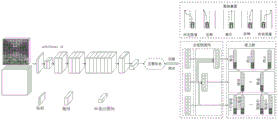
图1是本发明的总体框架图;Fig. 1 is the overall frame diagram of the present invention;
图2是空间概率控制示意图,其中图2-1为数据集中目标出现位置概率统计,图2-2为位置概率通道形成过程;Figure 2 is a schematic diagram of spatial probability control, in which Figure 2-1 is the probability statistics of the target occurrence position in the data set, and Figure 2-2 is the formation process of the position probability channel;
图3是显著点池化模块示意图;Figure 3 is a schematic diagram of a salient point pooling module;
图4是边缘显著交叉点池化(注:其中W=H=8,Step=3)示意图;Figure 4 is a schematic diagram of edge significant intersection pooling (Note: where W=H=8, Step=3);
图5是类别标签词向量聚类结果示意图;Figure 5 is a schematic diagram of the clustering result of the category label word vector;
图6-1和6-2是引导语义层次树;Figures 6-1 and 6-2 are the bootstrap semantic hierarchy tree;
图7是NEGSS-NET引导语义映射方法示意图;Fig. 7 is the schematic diagram of NEGSS-NET guidance semantic mapping method;
图8是引导语义映射网络示意图;8 is a schematic diagram of a guided semantic mapping network;
图9是添加语义树过程示意图。Figure 9 is a schematic diagram of the process of adding a semantic tree.
具体实施方式Detailed ways
下面结合附图对本发明做进一步详细描述:Below in conjunction with accompanying drawing, the present invention is described in further detail:
实施例1Example 1
如图1所示,本发明的基于注意估计的目标跨域检测与理解方法,具体包括如下步骤:As shown in FIG. 1 , the method for cross-domain detection and understanding of targets based on attention estimation of the present invention specifically includes the following steps:
步骤1:采用轻量化网络mobilenet v3作为骨干网络,并且引入空间概率控制层与边缘显著交叉点池化层,构建一种面向目标实际检测应用的高效轻量化卷积神经网络,如图1所示;Step 1: The lightweight network mobilenet v3 is used as the backbone network, and the spatial probability control layer and the edge significant intersection pooling layer are introduced to construct an efficient and lightweight convolutional neural network oriented to the actual target detection application, as shown in Figure 1. ;
步骤1包括步骤11和步骤12:
步骤11,提出一种多尺度空间概率划分方法,构建位置概率控制通道,如图2所示;具体包括:Step 11, propose a multi-scale space probability division method to construct a position probability control channel, as shown in Figure 2; specifically including:
步骤111,分析目标的先验位置统计特征,如图2-1所示,计算得出像素点m处出现目标的概率,具体如下:Step 111, analyze the priori position statistical characteristics of the target, as shown in Figure 2-1, calculate the probability of the target appearing at the pixel point m, as follows:
首先,分析目标的先验位置统计特征,将数据集内样本图像分辨率预处理为W*H;然后,通过


最后,利用pm=k/n计算得出像素点m处出现目标的概率。Finally, the probability of the target appearing at the pixel point m is calculated by using p m =k/n.
步骤112,利用不同大小的刻度,分别将图像划分为16、64和256个正方形区域,每个正方形区域所包含的像素点为l1=W*H/16、l2=W*H/64和l3=W*H/64个,如图2-2所示。Step 112, using scales of different sizes to divide the image into 16, 64 and 256 square areas respectively, and the pixels contained in each square area are l 1 =W*H/16, l 2 =W*H/64 and l 3 =W*H/64, as shown in Figure 2-2.
对其进行示例,如表1所示,将图像分为16个大小相同的区域,统计出每个区域出现目标的概率(注:表1和表2中的数据仅用于演示举例,非源于实际)As an example, as shown in Table 1, the image is divided into 16 regions of the same size, and the probability of the target appearing in each region is counted (Note: The data in Table 1 and Table 2 are only for demonstration and examples, not source in reality)
表1.16个大小相同区域的目标出现概率Table 1. The probability of occurrence of 16 targets in the same size area
将上面16个区域中的四个小区域合并为一个大区域,进一步计算得到表2:Combine the four small areas in the above 16 areas into a large area, and further calculate to get Table 2:
表2.合并区域后的目标出现概率Table 2. Object occurrence probability after merging regions
步骤113,建立基于目标中心点概率统计的空间概率控制模版;具体如下:Step 113, establishing a spatial probability control template based on the probability statistics of the target center point; the details are as follows:
首先,计算出同一正方形区域内所有像素点出现目标概率值之和,作为该正方形区域内每个像素点的概率值;然后,将三种分区情况下每个像素点的概率值相加并进行归一化;最后,建立基于目标中心点概率统计的空间概率控制模版。First, calculate the sum of the target probability values of all pixels in the same square area as the probability value of each pixel in the square area; then, add the probability values of each pixel in the three partitions and carry out Normalization; finally, establish a spatial probability control template based on the probability statistics of the target center point.
步骤12,引入显著点池化模块,获得候选框对角线两个顶点的预测热图、偏置以及嵌入向量,如图3所示,具体包括:Step 12: Introduce the salient point pooling module to obtain the predicted heat map, bias and embedding vector of the two diagonal vertices of the candidate frame, as shown in Figure 3, including:
步骤121,对Mobilenet v3输出的特征图进行卷积得到F={fl,fr,ft,fb},进行显著点池化,具体如下:Step 121: Convolve the feature map output by Mobilenet v3 to obtain F={f l ,f r ,f t ,f b }, and perform salient point pooling, as follows:
首先,假设特征图fl和f大小为W*H,像素位置(i,j)处的特征值分别为是fl(i,j)和ft(i,j);然后,分别计算fl(i,j)与fl(i,j+Step)之间的最大值dij,如式(2),以及ft(i,j)与之间的最大值gij,如式(3);最后,将像素位置(i,j)处的两个最大值相加得到的特征值h(i,j)作为像素位置(i,j)处的最终特征值,如图4所示。First, assume that the size of the feature maps f l and f is W*H, and the feature values at the pixel position (i, j) are f l(i, j) and f t(i, j) respectively; then, calculate f respectively The maximum value d ij between l(i,j) and f l(i,j+Step) , as in equation (2), and the maximum value g ij between f t(i,j) and f t(i,j), as in equation ( 3); Finally, the eigenvalue h (i, j) obtained by adding the two maximum values at the pixel position (i, j) is used as the final eigenvalue at the pixel position (i, j), as shown in Figure 4 .


步骤122,显著点池化模块输出对角线顶点热图、偏置以及嵌入值,利用偏置修正由热图预测的位置,根据已定义的嵌入阈值判断左上顶点和右下顶点是否来自同一个目标候选框,如果超出阈值表示来自同一个目标候选框,通过soft-NMS去除冗余框。显著点池化模块设置在Mobilenet3最后一层的bottleneck之后。Step 122, the salient point pooling module outputs the diagonal vertex heat map, offset and embedded value, uses the offset to correct the position predicted by the heat map, and judges whether the upper left vertex and the lower right vertex are from the same according to the defined embedding threshold. If the target candidate box exceeds the threshold, it means that it is from the same target candidate box, and the redundant box is removed by soft-NMS. The salient point pooling module is set after the bottleneck of the last layer of Mobilenet3.
步骤2:对引导语义层次包含关系进行跨域建模,同时在复杂场景视觉特征与引导语义之间建立映射预测网络;Step 2: Carry out cross-domain modeling on the inclusion relationship of the guiding semantic level, and establish a mapping prediction network between the visual features of the complex scene and the guiding semantics;
步骤2包括步骤21和步骤22,Step 2 includes step 21 and step 22,
步骤21,生成跨域训练数据标签词汇的向量化表示,实现目标跨域训练样本引导语义的提取与表示,具体包括如下步骤:Step 21: Generate a vectorized representation of the cross-domain training data label vocabulary, and realize the extraction and representation of the target cross-domain training sample-guided semantics, which specifically includes the following steps:
步骤211,获得更细粒度的目标类别标注,具体如下:Step 211, obtaining more fine-grained target category annotations, as follows:
以交通标志数据集为例,研究现有交通标志数据集,去掉类别数较少的数据集,对现有包含50类左右的交通标志数据集((Belgium,62类),LISA(USA,47类),GTSDB(Germany,43类),TT-100k(China,45类),CCTSDB(China,48类))类别进行整理与扩充,细化类别标注并设定相应的类别文本标签,以获得更细粒度的交通标志类别标注。Take the traffic sign dataset as an example, study the existing traffic sign datasets, remove the datasets with fewer categories, and analyze the existing traffic sign datasets ((Belgium, 62 categories), LISA (USA, 47) that contain about 50 categories. category), GTSDB (Germany, category 43), TT-100k (China, category 45), CCTSDB (China, category 48)) categories are sorted and expanded, the category labels are refined and the corresponding category text labels are set to obtain More fine-grained traffic sign category annotations.
步骤212,将多个域涉及到的目标样本类别文本标签进行语义空间映射,得到对应的语义类别向量。具体如下:Step 212 , perform semantic space mapping on the target sample category text labels involved in multiple domains to obtain corresponding semantic category vectors. details as follows:
利用自然语言处理通过维基百科、推特以及谷歌新闻等媒体收集的大型语料库,通过Word2Vec、Glove等模型,将多个域涉及到的目标样本类别文本标签y进行语义空间S的映射(S由大型语料库获取的词向量构成),得到对应的语义类别向量
步骤22,挖掘引导语义之间深层包含关系,构建具有引导语义层次包含关系的树形结构,实现对具体行进意图下的NEGSS-NET跨域增强感知。所述步骤22具体包括如下步骤:Step 22: Mining the deep inclusion relationship between the guiding semantics, constructing a tree structure with the guiding semantics hierarchical inclusion relationship, and realizing the enhanced perception of NEGSS-NET across domains under the specific traveling intention. The step 22 specifically includes the following steps:
步骤221,在目标引导语义向量空间中形成超类向量,使超类向量作为引导语义层次树节点,具体如下:Step 221, forming a superclass vector in the target guiding semantic vector space, and making the superclass vector as the guiding semantic hierarchy tree node, as follows:
通过L1距离或余弦相似度表示目标引导语义向量空间中各向量之间的相关性,利用聚类算法,根据相似性在目标引导语义向量空间中形成超类向量,作为引导语义层次树节点,已采用t-SNE降维可视化的方法,对聚类后的类别标签词向量初步进行了可视化处理,如图5所示。The correlation between vectors in the target-guided semantic vector space is represented by the L1 distance or cosine similarity, and the clustering algorithm is used to form a superclass vector in the target-guided semantic vector space according to the similarity. Using the t-SNE dimensionality reduction visualization method, the clustered category label word vector is preliminarily visualized, as shown in Figure 5.
步骤222,构建引导语义层次树,具体如下:Step 222, constructing a guiding semantic hierarchy tree, which is as follows:
在超类向量上迭代聚类,形成更高层次超类向量,由此构成引导语义层次树。以交通标志为例,最高层次共包含三个顶层节点,分别定义为警告标志、禁令标志、指示标志,最终构建引导语义层次树,如图6所示。Iteratively clustering on the superclass vector forms a higher-level superclass vector, thereby forming a guided semantic hierarchy tree. Taking traffic signs as an example, the highest level consists of three top-level nodes, which are defined as warning signs, prohibition signs, and indication signs, and finally build a guiding semantic hierarchy tree, as shown in Figure 6.
步骤223,基于引导语义层次树的网络训练,将域不变视觉特征空间映射问题转化为目标底层视觉特征空间与引导语义空间的映射问题。Step 223 , based on the network training of the guided semantic hierarchy tree, transform the domain-invariant visual feature space mapping problem into the mapping problem between the target underlying visual feature space and the guided semantic space.
步骤3:获得基于意图的目标值得注意度估计。所述步骤3具体包括如下步骤:Step 3: Obtain intent-based target notability estimates. The step 3 specifically includes the following steps:
步骤31,构建引导语义映射网络。由多个全连接层级联构建映射网络,实现图像视觉特征空间到语义空间的映射,如图7所示,Step 31, build a guided semantic mapping network. A mapping network is constructed by multiple fully connected layers to realize the mapping from the image visual feature space to the semantic space, as shown in Figure 7.
特征映射具体过程及定义,具体如下:The specific process and definition of feature mapping are as follows:
首先,基于训练数据集Dtrain训练softmax分类器ptest,通过softmax得到的最高置信度的类别标签,如式(4):First, the softmax classifier p test is trained based on the training data set D train , and the category label with the highest confidence obtained by softmax, as shown in formula (4):

其中ptest(y|x)表示输入图像x属于某个类别标签y的概率;接着,引导语义映射网络会输出其中置信度最高的若干个类别标签,令

其中

映射网络具体结构及定义,具体如下:The specific structure and definition of the mapping network are as follows:
通过步骤311部分的映射方法,引导语义映射网络通过两个步骤预测目标超类标签。第一步分别预测在不同的类、超类层上的类别标签,如图8左侧虚线框,第二步是将语义层次结构编码到超类标签预测过程中,即对第一步中当前层以及最底层的类或低层超类预测结果进行组合,如图8右侧虚线框,其中“FC”表示全连接层。Through the mapping method in the step 311 part, the semantic mapping network is guided to predict the target superclass label in two steps. The first step is to predict the category labels on different class and superclass layers, as shown in the dotted box on the left of Figure 8. The second step is to encode the semantic hierarchy into the superclass label prediction process, that is, the current Layer and the bottom-level class or low-level superclass prediction results are combined, as shown in the dashed box on the right side of Figure 8, where "FC" represents the fully connected layer.
在第一步中,首先使用三个带有softmax层的非共享全连接层,给定一个目标样本,每个全连接层都会给出其在对应层的类或超类概率分布。第二步,使用两个非共享全连接层分别在其对应超类层预测类别标签。为了将层次结构融入到连续的全连接层中,将第一步中当前层与低层的输出向量对应叠加,作为相应层第二步全连接网络的输入。对于最低的超类层(l2层)而言,将第一步中最低两层的输出进行组合作为其输入,如式(6),In the first step, three non-shared fully connected layers with softmax layers are used first, given a target sample, each fully connected layer will give its class or superclass probability distribution in the corresponding layer. In the second step, two non-shared fully connected layers are used to predict class labels at their corresponding superclass layers, respectively. In order to incorporate the hierarchical structure into successive fully connected layers, the output vectors of the current layer and the lower layer in the first step are superimposed correspondingly as the input of the second step fully connected network of the corresponding layer. For the lowest superclass layer (l2 layer), the output of the lowest two layers in the first step is combined as its input, as in Eq. (6),

其中pl1表示第一步中类别层的预测结果,pl2表示第一步中最低超类层的预测结果。


其中f(·)表示NEGSS-NET骨干网络图像特征提取前向传播步骤,


步骤32,定义基于意图的目标值得注意度估计,包括如下步骤:Step 32, defining an intention-based target attention-getting degree estimation, including the following steps:
步骤321,估计基于意图的值得注意度,具体如下:Step 321, estimating the degree of attention based on intent, as follows:
以交通标志为例,首先,用一个5D向量来描述行进意图,称其为意图特征fint=[lc,lt,s,rt,rc],其中lc,lt,s,rt,rc分别表示左转、向左换道、直行、向右换道以及右转五种行进意图;接着,对意图特征与目标视觉特征进行特征融合:


其中,z表示目标交通标志在特定行进意图下的真实值得注意度,
步骤322,定义联合引导语义损失,具体如下:Step 322, define the joint-guided semantic loss, as follows:
首先,NEGSS-Net对重要度低的语义信息进行剔除,并将余下的重要目标语义向量进行拼接,形成联合引导语义建议语义向量vpredict,如式(11):First, NEGSS-Net removes the semantic information with low importance, and splices the remaining important target semantic vectors to form a joint-guided semantic suggestion semantic vector v predict , as shown in formula (11):

其中,K表示一副图片中目标总数,sk表示每个单独目标对应的语义向量,
vlabel为真实联合引导语义建议对应的语义向量,基于此,定义联合引导语义损失

其中,vlabel是一个行向量,表示真实联合引导语义建议对应的语义向量,vpredict是一个行向量,表示模型预测的联合引导语义建议对应的语义向量,vj所有错误引导语义建议对应的语义向量,margin是一个常数等于0.1。在获取联合引导语义建议特征向量后,将其映射为对应的文本信息,最终,NEGSS-Net给出基于当前意图下所有值得注意目标的联合语义引导建议。Among them, v label is a row vector, representing the semantic vector corresponding to the real joint-guided semantic suggestion, v predict is a row vector, representing the semantic vector corresponding to the joint-guided semantic suggestion predicted by the model, v j The semantics corresponding to all false-guided semantic suggestions vector, margin is a constant equal to 0.1. After obtaining the joint-guided semantic proposal feature vector, it is mapped to the corresponding text information, and finally, NEGSS-Net gives joint semantic-guided proposals based on all noteworthy objects under the current intent.
综上论述,具体意图下NEGSS-Net的损失函数定义为三部分,如式(13):In summary, the loss function of NEGSS-Net under the specific intention is defined as three parts, such as formula (13):

其中,


为了验证本发明方法的有效性,在TT100K交通标志数据集上进行了训练和测试,其中TT100K数据集part1包含6105张训练图片、3071张测试图片和7641张其他图片,这些图片涵盖了不同的天气和照度变化。在训练集上进行测试,并应用测试集给予验证。In order to verify the effectiveness of the method of the present invention, training and testing are carried out on the TT100K traffic sign dataset, wherein the TT100K dataset part1 contains 6105 training images, 3071 testing images and 7641 other images, which cover different weather conditions. and illumination changes. Test on the training set and apply the test set for validation.
A、参数设置A. Parameter setting
使用keras+tensorflow来实现模型方法,使用coco dataset的mobilenet网络参数来预训练模型,实验环境在intel Xeon CPU E5-2603和TITAN X Pascal GPU下进行。对于训练的参数设置,选用adam优化器对模型进行优化,训练参数为:输入图像大小608X608,批量大小8,基本学习率为0.0001,采用keras的ReduceLROnPlateau方法来调节学习率,其中factor=0.1,patience=3。采用EarlyStopping方法辅助训练。Use keras+tensorflow to implement the model method, use the mobilenet network parameters of the coco dataset to pre-train the model, and the experimental environment is performed under intel Xeon CPU E5-2603 and TITAN X Pascal GPU. For the parameter settings of training, the adam optimizer is used to optimize the model. The training parameters are: input image size 608X608, batch size 8, basic learning rate 0.0001, using the ReduceLROnPlateau method of keras to adjust the learning rate, where factor=0.1, patience =3. The EarlyStopping method is used to assist training.
在本发明中,使用kmeans算法在数据集上聚类为网络设置初始框,共设置9种预设框,长宽大小分别为[16,18],[21,23],[26,28],[30,35],[38,40],[46,50],[59,64],[79,85],[117,125],网络预测出的所有框通过NMS算法优选之后进行输出。In the present invention, the kmeans algorithm is used to cluster the data set to set the initial frame for the network, and a total of 9 kinds of preset frames are set, the length and width are [16, 18], [21, 23], [26, 28] , [30, 35], [38, 40], [46, 50], [59, 64], [79, 85], [117, 125], all the boxes predicted by the network are optimized by the NMS algorithm and then output .
B、添加位置通道B. Add location channel
网络首先采用mobilenet v3加FPN的思想,在极大的减少了网络参数量的前提下保证了小物体的检测精度,使得网络的参数量从yolo3的240M减少到了27M,轻量的网络更适合在移动设备端搭载,使得网络对自动驾驶等对硬件设备有限制的场景下应用。同时网络引入位置通道,在网络深度较浅时充分融合区部区域特征,实验发现可以在现有网络的基础上对精确度进行提高,如表3所示。The network first adopts the idea of mobilenet v3 plus FPN, which ensures the detection accuracy of small objects on the premise of greatly reducing the amount of network parameters, which reduces the amount of network parameters from 240M of yolo3 to 27M. It is installed on the mobile device side, which enables the network to be applied in scenarios such as automatic driving that have restrictions on hardware devices. At the same time, the network introduces the location channel, and fully integrates the regional features when the network depth is shallow. The experiment found that the accuracy can be improved on the basis of the existing network, as shown in Table 3.
表3基于TT100K数据集的网络性能对比表Table 3 Network performance comparison table based on TT100K dataset
注:PSE为位置通道。Note: PSE is the position channel.
C、添加语义树C. Add a semantic tree
创新性的将语义树应用在了网络中,使得网络对没有训练过的类别预测出超类或是对训练时不平衡的基类类别做出补充式预测。在本实施例中,语义树一共有三个层次,其中底层类就是TT100K中的基类,包含各种路标一共221类,中层类代表TT100K中的基类进行融合得到的中层超类,一共设置了27个类别,顶层代表高度融合的顶层超类,一共有3个类别。具体的,首先通过网络预测出基类,然后将基类的预测结果与深层网络分支的输出进行融合来预测中层超类,紧接着将中层超类的结果与更深层的网络输出进行融合来预测顶层超类,如图9所示。The innovative application of semantic tree to the network enables the network to predict superclasses for untrained categories or make supplementary predictions for unbalanced base categories during training. In this embodiment, the semantic tree has three levels, in which the bottom class is the base class in TT100K, including various road signs, a total of 221 classes, and the middle class represents the middle-level superclass obtained by merging the base classes in TT100K. There are 27 categories, the top layer represents a highly integrated top-level superclass, and there are a total of 3 categories. Specifically, the base class is first predicted by the network, and then the prediction result of the base class is fused with the output of the deep network branch to predict the middle-level superclass, and then the result of the middle-level superclass is fused with the output of the deeper network to predict The top-level superclass, as shown in Figure 9.
D、结果D. the result
Mobilenet v3具有网络参数量少的优点,FPN具有速度快速度快、需要内存少的优点,满足交通标志检测中对于实时性的要求。在本实施例中将Mobilenet v3与FPN结合,并加入位置控制层与语义树,提出了NEGSS-Net。基于TT100K交通标志数据集,对NEGSS-Net的准确度进行了实验验证。此外,基于未经训练的德国FullIJCNN2013数据集,对NEGSS-Net的域适应性进行了实验验证,验证结果表明,NEGSS-Net中的顶层超类可有效弥补基类预测不准确的情况,从而提高准确性;该网络可以预测德国FullIJCNN2013数据集中的交通标志,证明了其能够实现跨域检测。Mobilenet v3 has the advantages of less network parameters, and FPN has the advantages of fast speed and less memory, and meets the real-time requirements in traffic sign detection. In this embodiment, Mobilenet v3 is combined with FPN, and the position control layer and semantic tree are added to propose NEGSS-Net. Based on the TT100K traffic sign dataset, the accuracy of NEGSS-Net is experimentally verified. In addition, based on the untrained German FullIJCNN2013 dataset, the domain adaptability of NEGSS-Net is experimentally verified, and the verification results show that the top-level superclass in NEGSS-Net can effectively compensate for the inaccurate prediction of the base class, thereby improving the Accuracy; the network can predict traffic signs in the German FullIJCNN2013 dataset, proving its ability to achieve cross-domain detection.
本发明基于深度神经网络的信道估计方法如果以软件功能单元的形式实现并作为独立的产品销售或使用时,可以存储在一个计算机可读取存储介质中。基于这样的理解,本发明实现上述实施例方法中的全部或部分流程,也可以通过计算机程序来指令相关的硬件来完成,所述的计算机程序可存储于一计算机可读存储介质中,该计算机程序在被处理器执行时,可实现上述各个方法实施例的步骤。其中,所述计算机程序包括计算机程序代码,所述计算机程序代码可以为源代码形式、对象代码形式、可执行文件或某些中间形式等。计算机可读存储介质包括永久性和非永久性、可移动和非可移动媒体可以由任何方法或技术来实现信息存储。信息可以是计算机可读指令、数据结构、程序的模块或其他数据。需要说明的是,所述计算机可读介质包含的内容可以根据司法管辖区内立法和专利实践的要求进行适当的增减,例如在某些司法管辖区,根据立法和专利实践,计算机可读介质不包括电载波信号和电信信号。其中,所述计算机存储介质可以是计算机能够存取的任何可用介质或数据存储设备,包括但不限于磁性存储器(例如软盘、硬盘、磁带、磁光盘(MO)等)、光学存储器(例如CD、DVD、BD、HVD等)、以及半导体存储器(例如ROM、EPROM、EEPROM、非易失性存储器(NANDFLASH)、固态硬盘(SSD))等。If the channel estimation method based on the deep neural network of the present invention is implemented in the form of a software functional unit and sold or used as an independent product, it can be stored in a computer-readable storage medium. Based on this understanding, the present invention can implement all or part of the processes in the methods of the above embodiments, and can also be completed by instructing relevant hardware through a computer program, and the computer program can be stored in a computer-readable storage medium. When the program is executed by the processor, the steps of the foregoing method embodiments can be implemented. Wherein, the computer program includes computer program code, and the computer program code may be in the form of source code, object code, executable file or some intermediate form, and the like. Computer-readable storage media includes both persistent and non-permanent, removable and non-removable media, and storage of information can be implemented by any method or technology. Information may be computer readable instructions, data structures, modules of programs, or other data. It should be noted that the content contained in the computer-readable media may be appropriately increased or decreased according to the requirements of legislation and patent practice in the jurisdiction, for example, in some jurisdictions, according to legislation and patent practice, the computer-readable media Electric carrier signals and telecommunication signals are not included. Wherein, the computer storage medium can be any available medium or data storage device that can be accessed by a computer, including but not limited to magnetic memory (such as floppy disk, hard disk, magnetic tape, magneto-optical disk (MO), etc.), optical memory (such as CD, DVD, BD, HVD, etc.), and semiconductor memory (eg, ROM, EPROM, EEPROM, non-volatile memory (NANDFLASH), solid-state disk (SSD)), and the like.
在示例性实施例中,还提供计算机设备,包括存储器、处理器以及存储在所述存储器中并可在所述处理器上运行的计算机程序,所述处理器执行所述计算机程序时实现所述基于深度神经网络的信道估计方法的步骤。处理器可能是中央处理单元(CentralProcessingUnit,CPU),还可以是其他通用处理器、数字信号处理器(DigitalSignal Processor,DSP)、专用集成电路(Application Specific Integrated Circuit,ASIC)、现成可编程门阵列(Field-Programmable Gate Array,FPGA)或者其他可编程逻辑器件、分立门或者晶体管逻辑器件、分立硬件组件等。In an exemplary embodiment, there is also provided a computer apparatus comprising a memory, a processor, and a computer program stored in the memory and executable on the processor, the processor implementing the computer program when executed Steps of a deep neural network based channel estimation method. The processor may be a Central Processing Unit (CPU), other general-purpose processors, a Digital Signal Processor (DSP), an Application Specific Integrated Circuit (ASIC), an off-the-shelf programmable gate array ( Field-Programmable Gate Array, FPGA) or other programmable logic devices, discrete gate or transistor logic devices, discrete hardware components, etc.
本领域内的技术人员应明白,本发明的实施例可提供为方法、系统、或计算机程序产品。因此,本发明可采用完全硬件实施例、完全软件实施例、或结合软件和硬件方面的实施例的形式。而且,本发明可采用在一个或多个其中包含有计算机可用程序代码的计算机可用存储介质(包括但不限于磁盘存储器、CD-ROM、光学存储器等)上实施的计算机程序产品的形式。As will be appreciated by one skilled in the art, embodiments of the present invention may be provided as a method, system, or computer program product. Accordingly, the present invention may take the form of an entirely hardware embodiment, an entirely software embodiment, or an embodiment combining software and hardware aspects. Furthermore, the present invention may take the form of a computer program product embodied on one or more computer-usable storage media (including, but not limited to, disk storage, CD-ROM, optical storage, etc.) having computer-usable program code embodied therein.
本发明是参照根据本发明实施例的方法、设备(系统)、和计算机程序产品的流程图来描述的。应理解可由计算机程序指令实现方框图中的每一方框、以及与其它方框的结合。可提供这些计算机程序指令到通用计算机、专用计算机、嵌入式处理机或其他可编程数据处理设备的处理器以产生一个机器,使得通过计算机或其他可编程数据处理设备的处理器执行的指令产生用于实现在流程图一个流程或多个流程中指定的功能的装置。The present invention is described with reference to flowchart illustrations of methods, apparatus (systems), and computer program products according to embodiments of the invention. It will be understood that each block of the block diagrams, and combinations with other blocks, can be implemented by computer program instructions. These computer program instructions may be provided to the processor of a general purpose computer, special purpose computer, embedded processor or other programmable data processing device to produce a machine such that the instructions executed by the processor of the computer or other programmable data processing device produce A device that implements the functions specified in one or more of the flow charts.
这些计算机程序指令也可存储在能引导计算机或其他可编程数据处理设备以特定方式工作的计算机可读存储器中,使得存储在该计算机可读存储器中的指令产生包括指令装置的制造品,该指令装置实现在流程图一个方框图一个方框或多个方框中指定的功能。These computer program instructions may also be stored in a computer-readable memory capable of directing a computer or other programmable data processing apparatus to function in a particular manner, such that the instructions stored in the computer-readable memory result in an article of manufacture comprising instruction means, the instructions The means implement the functions specified in a block or blocks of a block diagram of the flowchart.
以上内容仅为说明本发明的技术思想,不能以此限定本发明的保护范围,凡是按照本发明提出的技术思想,在技术方案基础上所做的任何改动,均落入本发明权利要求书的保护范围之内。The above content is only to illustrate the technical idea of the present invention, and cannot limit the protection scope of the present invention. Any changes made on the basis of the technical solution according to the technical idea proposed by the present invention all fall within the scope of the claims of the present invention. within the scope of protection.
Claims (10)



Priority Applications (2)
| Application Number | Priority Date | Filing Date | Title |
|---|---|---|---|
| CN202010845641.2A CN112001385B (en) | 2020-08-20 | 2020-08-20 | Target cross-domain detection and understanding method, system, equipment and storage medium |
| US17/405,468 US20210383231A1 (en) | 2020-08-20 | 2021-08-18 | Target cross-domain detection and understanding method, system and equipment and storage medium |
Applications Claiming Priority (1)
| Application Number | Priority Date | Filing Date | Title |
|---|---|---|---|
| CN202010845641.2A CN112001385B (en) | 2020-08-20 | 2020-08-20 | Target cross-domain detection and understanding method, system, equipment and storage medium |
Publications (2)
| Publication Number | Publication Date |
|---|---|
| CN112001385A true CN112001385A (en) | 2020-11-27 |
| CN112001385B CN112001385B (en) | 2024-02-06 |
Family
ID=73472896
Family Applications (1)
| Application Number | Title | Priority Date | Filing Date |
|---|---|---|---|
| CN202010845641.2A Active CN112001385B (en) | 2020-08-20 | 2020-08-20 | Target cross-domain detection and understanding method, system, equipment and storage medium |
Country Status (2)
| Country | Link |
|---|---|
| US (1) | US20210383231A1 (en) |
| CN (1) | CN112001385B (en) |
Cited By (6)
| Publication number | Priority date | Publication date | Assignee | Title |
|---|---|---|---|---|
| CN112784836A (en) * | 2021-01-22 | 2021-05-11 | 浙江康旭科技有限公司 | Text and graphic offset angle prediction and correction method thereof |
| CN112860946A (en) * | 2021-01-18 | 2021-05-28 | 四川弘和通讯有限公司 | Method and system for converting video image information into geographic information |
| CN113140005A (en) * | 2021-04-29 | 2021-07-20 | 上海商汤科技开发有限公司 | Target object positioning method, device, equipment and storage medium |
| CN113792783A (en) * | 2021-09-13 | 2021-12-14 | 陕西师范大学 | A deep learning-based automatic recognition method and system for the face and face stage |
| CN116128926A (en) * | 2023-02-15 | 2023-05-16 | 中国人民解放军战略支援部队航天工程大学 | Satellite video single-target tracking method, system, equipment and storage medium |
| CN118312496A (en) * | 2024-04-22 | 2024-07-09 | 广州永融科技股份有限公司 | Data migration method and system from multi-relational database to non-relational database |
Families Citing this family (33)
| Publication number | Priority date | Publication date | Assignee | Title |
|---|---|---|---|---|
| CN111507222B (en) * | 2020-04-09 | 2023-07-07 | 中山大学 | A framework for 3D object detection based on multi-source data knowledge transfer |
| WO2022205685A1 (en) * | 2021-03-29 | 2022-10-06 | 泉州装备制造研究所 | Lightweight network-based traffic sign recognition method |
| US11995403B2 (en) * | 2021-11-11 | 2024-05-28 | Adobe Inc. | Teaching a machine classifier to recognize a new class |
| US11948358B2 (en) * | 2021-11-16 | 2024-04-02 | Adobe Inc. | Self-supervised hierarchical event representation learning |
| CN114332559B (en) * | 2021-12-17 | 2024-08-06 | 安徽理工大学 | RGB-D significance target detection method based on self-adaptive cross-mode fusion mechanism and deep attention network |
| CN114241290B (en) * | 2021-12-20 | 2024-06-14 | 嘉兴市第一医院 | Indoor scene understanding method, equipment, medium and robot for edge calculation |
| CN114463772B (en) * | 2022-01-13 | 2022-11-25 | 苏州大学 | Deep learning-based traffic sign detection and identification method and system |
| US20230316715A1 (en) * | 2022-03-07 | 2023-10-05 | Ridecell, Inc. | Identifying Unseen Objects From Shared Attributes Of Labeled Data Using Weak Supervision |
| CN115205893B (en) * | 2022-06-10 | 2025-10-17 | 西安工业大学 | Unsupervised cross-domain pedestrian re-identification method based on position attention and refined clustering |
| CN115131623B (en) * | 2022-06-15 | 2024-11-12 | 天津科技大学 | A car body scratch detection method based on improved Faster RCNN |
| CN115146488B (en) * | 2022-09-05 | 2022-11-22 | 山东鼹鼠人才知果数据科技有限公司 | Variable business process intelligent modeling system and method based on big data |
| CN115601742B (en) * | 2022-11-21 | 2023-03-10 | 松立控股集团股份有限公司 | Scale-sensitive license plate detection method based on graph relation ranking |
| CN115761279B (en) * | 2022-11-29 | 2023-06-23 | 中国国土勘测规划院 | Spatial layout similarity detection method, device, storage medium and apparatus |
| CN116129535A (en) * | 2023-01-12 | 2023-05-16 | 支付宝(杭州)信息技术有限公司 | Cross-domain training method and system for recognition model and cross-domain recognition method and system |
| CN116109952A (en) * | 2023-02-27 | 2023-05-12 | 南京航空航天大学 | UAV visual scene understanding method based on multi-task learning network |
| CN116311518B (en) * | 2023-03-20 | 2025-06-10 | 北京工业大学 | A hierarchical human interaction detection method based on human interaction intention information |
| CN116452960A (en) * | 2023-04-20 | 2023-07-18 | 南京航空航天大学 | Multi-mode fusion military cross-domain combat target detection method |
| CN116543218B (en) * | 2023-05-11 | 2025-12-12 | 湖南工业大学 | A few-shot learning method guided by class label hierarchical tree and its application |
| CN116311535B (en) * | 2023-05-17 | 2023-08-22 | 哈尔滨工业大学(深圳)(哈尔滨工业大学深圳科技创新研究院) | Risky behavior analysis method and system based on human interaction detection |
| CN117079098B (en) * | 2023-07-07 | 2025-11-07 | 北京理工大学 | Space small target detection method based on position coding |
| CN116958936A (en) * | 2023-07-31 | 2023-10-27 | 哈尔滨工业大学(鞍山)工业技术研究院 | A traffic sign detection and recognition method based on multi-information attention fusion network |
| CN117036724B (en) * | 2023-08-08 | 2025-12-30 | 江苏智能无人装备产业创新中心有限公司 | A brain-like feedback-based target detection method, system, device, and medium |
| CN117061177B (en) * | 2023-08-17 | 2024-05-28 | 西南大学 | A data privacy protection enhancement method and system in an edge computing environment |
| CN117237659B (en) * | 2023-08-22 | 2025-12-26 | 上海设序科技有限公司 | A 3D model classification method based on geometric semantic pre-training and graph networks |
| CN117648493B (en) * | 2023-12-13 | 2024-05-31 | 南京航空航天大学 | Cross-domain recommendation method based on graph learning |
| CN117932544B (en) * | 2024-01-29 | 2024-08-23 | 福州城投新基建集团有限公司 | Prediction method, device and storage medium based on multi-source sensor data fusion |
| CN119380095B (en) * | 2024-10-25 | 2025-11-07 | 中建三局集团华南有限公司 | Delivery acceptance method, equipment and storage medium for decoration material |
| CN119625588B (en) * | 2024-12-09 | 2025-09-02 | 中国科学技术大学 | A method for predicting 3D human-object interaction elements based on first-person video |
| CN119516617B (en) * | 2025-01-17 | 2025-05-06 | 中南大学 | A pedestrian re-identification method, device and medium |
| CN119863617B (en) * | 2025-03-25 | 2025-06-10 | 中国人民解放军国防科技大学 | Remote sensing image target detection method and system based on consistency relation reasoning |
| CN120689745A (en) * | 2025-05-28 | 2025-09-23 | 广州城市信息研究所有限公司 | AI-assisted natural resource element cross-layer indicator correlation method and system |
| CN120318782B (en) * | 2025-06-12 | 2025-09-02 | 武汉大学 | Ultra-wide angle traffic sign detection method and system based on self-adaptive dynamic pruning |
| CN120374960B (en) * | 2025-06-23 | 2025-09-12 | 湖南工商大学 | Scene graph generation method based on collaborative learning and IoST data |
Citations (4)
| Publication number | Priority date | Publication date | Assignee | Title |
|---|---|---|---|---|
| WO2018188240A1 (en) * | 2017-04-10 | 2018-10-18 | 北京大学深圳研究生院 | Cross-media retrieval method based on deep semantic space |
| WO2019144575A1 (en) * | 2018-01-24 | 2019-08-01 | 中山大学 | Fast pedestrian detection method and device |
| CN110188705A (en) * | 2019-06-02 | 2019-08-30 | 东北石油大学 | A long-distance traffic sign detection and recognition method suitable for vehicle-mounted systems |
| CN111428733A (en) * | 2020-03-12 | 2020-07-17 | 山东大学 | A zero-sample target detection method and system based on semantic feature space transformation |
Family Cites Families (7)
| Publication number | Priority date | Publication date | Assignee | Title |
|---|---|---|---|---|
| US11409825B2 (en) * | 2009-12-18 | 2022-08-09 | Graphika Technologies, Inc. | Methods and systems for identifying markers of coordinated activity in social media movements |
| US11868878B1 (en) * | 2018-03-23 | 2024-01-09 | Amazon Technologies, Inc. | Executing sublayers of a fully-connected layer |
| CA3123622A1 (en) * | 2018-12-18 | 2020-06-25 | Technological Resources Pty. Limited | Automated updating of geological model boundaries for improved ore extraction |
| GB2586869B (en) * | 2019-09-06 | 2023-02-15 | Imperial College Innovations Ltd | Scene representation using image processing |
| US11322019B2 (en) * | 2019-10-23 | 2022-05-03 | Zoox, Inc. | Emergency vehicle detection |
| CN111161301B (en) * | 2019-12-31 | 2021-07-27 | 上海商汤智能科技有限公司 | Image segmentation method and device, electronic equipment and storage medium |
| EP4107650A1 (en) * | 2020-02-18 | 2022-12-28 | Google LLC | Systems and methods for object detection including pose and size estimation |
-
2020
- 2020-08-20 CN CN202010845641.2A patent/CN112001385B/en active Active
-
2021
- 2021-08-18 US US17/405,468 patent/US20210383231A1/en not_active Abandoned
Patent Citations (4)
| Publication number | Priority date | Publication date | Assignee | Title |
|---|---|---|---|---|
| WO2018188240A1 (en) * | 2017-04-10 | 2018-10-18 | 北京大学深圳研究生院 | Cross-media retrieval method based on deep semantic space |
| WO2019144575A1 (en) * | 2018-01-24 | 2019-08-01 | 中山大学 | Fast pedestrian detection method and device |
| CN110188705A (en) * | 2019-06-02 | 2019-08-30 | 东北石油大学 | A long-distance traffic sign detection and recognition method suitable for vehicle-mounted systems |
| CN111428733A (en) * | 2020-03-12 | 2020-07-17 | 山东大学 | A zero-sample target detection method and system based on semantic feature space transformation |
Non-Patent Citations (2)
| Title |
|---|
| 邬亚男;李君君;张彬彬;: "语境信息约束下的多目标检测网络", 智能计算机与应用, no. 06 * |
| 青晨;禹晶;肖创柏;段娟;: "深度卷积神经网络图像语义分割研究进展", 中国图象图形学报, no. 06 * |
Cited By (8)
| Publication number | Priority date | Publication date | Assignee | Title |
|---|---|---|---|---|
| CN112860946A (en) * | 2021-01-18 | 2021-05-28 | 四川弘和通讯有限公司 | Method and system for converting video image information into geographic information |
| CN112860946B (en) * | 2021-01-18 | 2023-04-07 | 四川弘和通讯集团有限公司 | Method and system for converting video image information into geographic information |
| CN112784836A (en) * | 2021-01-22 | 2021-05-11 | 浙江康旭科技有限公司 | Text and graphic offset angle prediction and correction method thereof |
| CN113140005A (en) * | 2021-04-29 | 2021-07-20 | 上海商汤科技开发有限公司 | Target object positioning method, device, equipment and storage medium |
| CN113140005B (en) * | 2021-04-29 | 2024-04-16 | 上海商汤科技开发有限公司 | Target object positioning method, device, equipment and storage medium |
| CN113792783A (en) * | 2021-09-13 | 2021-12-14 | 陕西师范大学 | A deep learning-based automatic recognition method and system for the face and face stage |
| CN116128926A (en) * | 2023-02-15 | 2023-05-16 | 中国人民解放军战略支援部队航天工程大学 | Satellite video single-target tracking method, system, equipment and storage medium |
| CN118312496A (en) * | 2024-04-22 | 2024-07-09 | 广州永融科技股份有限公司 | Data migration method and system from multi-relational database to non-relational database |
Also Published As
| Publication number | Publication date |
|---|---|
| US20210383231A1 (en) | 2021-12-09 |
| CN112001385B (en) | 2024-02-06 |
Similar Documents
| Publication | Publication Date | Title |
|---|---|---|
| CN112001385A (en) | Target cross-domain detection and understanding method, system, equipment and storage medium | |
| CN115115872B (en) | Image recognition method, device, equipment and storage medium | |
| CN111476284B (en) | Image recognition model training and image recognition method and device and electronic equipment | |
| CN113516116B (en) | Text detection method, system and medium suitable for complex natural scene | |
| Qin et al. | A robust framework combined saliency detection and image recognition for garbage classification | |
| Min et al. | New approach to vehicle license plate location based on new model YOLO‐L and plate pre‐identification | |
| Liu et al. | Vehicle-related scene understanding using deep learning | |
| CN110659601B (en) | Dense vehicle detection method for remote sensing images based on deep fully convolutional network based on central points | |
| CN109446430A (en) | Method, apparatus, computer equipment and the readable storage medium storing program for executing of Products Show | |
| CN110837811A (en) | Method, device and equipment for generating semantic segmentation network structure and storage medium | |
| CN113221882B (en) | Image text aggregation method and system for curriculum field | |
| CN115797736A (en) | Object detection model training and object detection method, device, equipment and medium | |
| Hong et al. | Goss: Towards generalized open-set semantic segmentation | |
| CN114783021A (en) | Intelligent detection method, device, equipment and medium for wearing of mask | |
| CN120147676B (en) | A cross-domain target detection method based on DETR dual-domain pseudo-label generation | |
| Xiang et al. | Crowd density estimation method using deep learning for passenger flow detection system in exhibition center | |
| CN118097341B (en) | Target detection method, model training method and related device | |
| Zhang et al. | Efficient feature fusion network based on center and scale prediction for pedestrian detection | |
| Chen et al. | Real-time lane detection model based on non bottleneck skip residual connections and attention pyramids | |
| Miao et al. | Multi-level dynamic graph convolutional networks for weakly supervised crowd counting | |
| CN114898346B (en) | Training method and device for scene text detection model and storage medium | |
| CN111738213A (en) | Person attribute identification method and device, computer equipment and storage medium | |
| Liu et al. | Efficient dense attention fusion network with channel correlation loss for road damage detection | |
| Liu et al. | Complex background classification network: A deep learning method for urban images classification | |
| Deng et al. | Real-time object detection based on YOLO-v2 for tiny vehicle object |
Legal Events
| Date | Code | Title | Description |
|---|---|---|---|
| PB01 | Publication | ||
| PB01 | Publication | ||
| SE01 | Entry into force of request for substantive examination | ||
| SE01 | Entry into force of request for substantive examination | ||
| GR01 | Patent grant | ||
| GR01 | Patent grant |