CN111887974A - Adjusting irrigation rate in Radio Frequency (RF) ablation in response to contact force changes - Google Patents
Adjusting irrigation rate in Radio Frequency (RF) ablation in response to contact force changes Download PDFInfo
- Publication number
- CN111887974A CN111887974A CN202010373142.8A CN202010373142A CN111887974A CN 111887974 A CN111887974 A CN 111887974A CN 202010373142 A CN202010373142 A CN 202010373142A CN 111887974 A CN111887974 A CN 111887974A
- Authority
- CN
- China
- Prior art keywords
- ablation
- tissue
- signal
- contact force
- flow rate
- Prior art date
- Legal status (The legal status is an assumption and is not a legal conclusion. Google has not performed a legal analysis and makes no representation as to the accuracy of the status listed.)
- Granted
Links
Images


Classifications
-
- A—HUMAN NECESSITIES
- A61—MEDICAL OR VETERINARY SCIENCE; HYGIENE
- A61B—DIAGNOSIS; SURGERY; IDENTIFICATION
- A61B18/00—Surgical instruments, devices or methods for transferring non-mechanical forms of energy to or from the body
- A61B18/04—Surgical instruments, devices or methods for transferring non-mechanical forms of energy to or from the body by heating
- A61B18/12—Surgical instruments, devices or methods for transferring non-mechanical forms of energy to or from the body by heating by passing a current through the tissue to be heated, e.g. high-frequency current
- A61B18/14—Probes or electrodes therefor
-
- A—HUMAN NECESSITIES
- A61—MEDICAL OR VETERINARY SCIENCE; HYGIENE
- A61B—DIAGNOSIS; SURGERY; IDENTIFICATION
- A61B18/00—Surgical instruments, devices or methods for transferring non-mechanical forms of energy to or from the body
- A61B18/04—Surgical instruments, devices or methods for transferring non-mechanical forms of energy to or from the body by heating
- A61B18/12—Surgical instruments, devices or methods for transferring non-mechanical forms of energy to or from the body by heating by passing a current through the tissue to be heated, e.g. high-frequency current
-
- A—HUMAN NECESSITIES
- A61—MEDICAL OR VETERINARY SCIENCE; HYGIENE
- A61B—DIAGNOSIS; SURGERY; IDENTIFICATION
- A61B18/00—Surgical instruments, devices or methods for transferring non-mechanical forms of energy to or from the body
- A61B18/04—Surgical instruments, devices or methods for transferring non-mechanical forms of energy to or from the body by heating
- A61B18/12—Surgical instruments, devices or methods for transferring non-mechanical forms of energy to or from the body by heating by passing a current through the tissue to be heated, e.g. high-frequency current
- A61B18/14—Probes or electrodes therefor
- A61B18/1492—Probes or electrodes therefor having a flexible, catheter-like structure, e.g. for heart ablation
-
- A—HUMAN NECESSITIES
- A61—MEDICAL OR VETERINARY SCIENCE; HYGIENE
- A61B—DIAGNOSIS; SURGERY; IDENTIFICATION
- A61B18/00—Surgical instruments, devices or methods for transferring non-mechanical forms of energy to or from the body
- A61B18/04—Surgical instruments, devices or methods for transferring non-mechanical forms of energy to or from the body by heating
- A61B18/12—Surgical instruments, devices or methods for transferring non-mechanical forms of energy to or from the body by heating by passing a current through the tissue to be heated, e.g. high-frequency current
- A61B18/1206—Generators therefor
-
- A—HUMAN NECESSITIES
- A61—MEDICAL OR VETERINARY SCIENCE; HYGIENE
- A61B—DIAGNOSIS; SURGERY; IDENTIFICATION
- A61B18/00—Surgical instruments, devices or methods for transferring non-mechanical forms of energy to or from the body
- A61B18/04—Surgical instruments, devices or methods for transferring non-mechanical forms of energy to or from the body by heating
- A61B18/12—Surgical instruments, devices or methods for transferring non-mechanical forms of energy to or from the body by heating by passing a current through the tissue to be heated, e.g. high-frequency current
- A61B18/14—Probes or electrodes therefor
- A61B18/1482—Probes or electrodes therefor having a long rigid shaft for accessing the inner body transcutaneously in minimal invasive surgery, e.g. laparoscopy
-
- A—HUMAN NECESSITIES
- A61—MEDICAL OR VETERINARY SCIENCE; HYGIENE
- A61B—DIAGNOSIS; SURGERY; IDENTIFICATION
- A61B90/00—Instruments, implements or accessories specially adapted for surgery or diagnosis and not covered by any of the groups A61B1/00 - A61B50/00, e.g. for luxation treatment or for protecting wound edges
- A61B90/06—Measuring instruments not otherwise provided for
-
- A—HUMAN NECESSITIES
- A61—MEDICAL OR VETERINARY SCIENCE; HYGIENE
- A61B—DIAGNOSIS; SURGERY; IDENTIFICATION
- A61B18/00—Surgical instruments, devices or methods for transferring non-mechanical forms of energy to or from the body
- A61B2018/00005—Cooling or heating of the probe or tissue immediately surrounding the probe
- A61B2018/00011—Cooling or heating of the probe or tissue immediately surrounding the probe with fluids
-
- A—HUMAN NECESSITIES
- A61—MEDICAL OR VETERINARY SCIENCE; HYGIENE
- A61B—DIAGNOSIS; SURGERY; IDENTIFICATION
- A61B18/00—Surgical instruments, devices or methods for transferring non-mechanical forms of energy to or from the body
- A61B2018/00005—Cooling or heating of the probe or tissue immediately surrounding the probe
- A61B2018/00011—Cooling or heating of the probe or tissue immediately surrounding the probe with fluids
- A61B2018/00029—Cooling or heating of the probe or tissue immediately surrounding the probe with fluids open
-
- A—HUMAN NECESSITIES
- A61—MEDICAL OR VETERINARY SCIENCE; HYGIENE
- A61B—DIAGNOSIS; SURGERY; IDENTIFICATION
- A61B18/00—Surgical instruments, devices or methods for transferring non-mechanical forms of energy to or from the body
- A61B2018/00315—Surgical instruments, devices or methods for transferring non-mechanical forms of energy to or from the body for treatment of particular body parts
- A61B2018/00345—Vascular system
- A61B2018/00351—Heart
-
- A—HUMAN NECESSITIES
- A61—MEDICAL OR VETERINARY SCIENCE; HYGIENE
- A61B—DIAGNOSIS; SURGERY; IDENTIFICATION
- A61B18/00—Surgical instruments, devices or methods for transferring non-mechanical forms of energy to or from the body
- A61B2018/00315—Surgical instruments, devices or methods for transferring non-mechanical forms of energy to or from the body for treatment of particular body parts
- A61B2018/00345—Vascular system
- A61B2018/00351—Heart
- A61B2018/00357—Endocardium
-
- A—HUMAN NECESSITIES
- A61—MEDICAL OR VETERINARY SCIENCE; HYGIENE
- A61B—DIAGNOSIS; SURGERY; IDENTIFICATION
- A61B18/00—Surgical instruments, devices or methods for transferring non-mechanical forms of energy to or from the body
- A61B2018/00571—Surgical instruments, devices or methods for transferring non-mechanical forms of energy to or from the body for achieving a particular surgical effect
- A61B2018/00577—Ablation
-
- A—HUMAN NECESSITIES
- A61—MEDICAL OR VETERINARY SCIENCE; HYGIENE
- A61B—DIAGNOSIS; SURGERY; IDENTIFICATION
- A61B18/00—Surgical instruments, devices or methods for transferring non-mechanical forms of energy to or from the body
- A61B2018/00636—Sensing and controlling the application of energy
- A61B2018/00642—Sensing and controlling the application of energy with feedback, i.e. closed loop control
-
- A—HUMAN NECESSITIES
- A61—MEDICAL OR VETERINARY SCIENCE; HYGIENE
- A61B—DIAGNOSIS; SURGERY; IDENTIFICATION
- A61B18/00—Surgical instruments, devices or methods for transferring non-mechanical forms of energy to or from the body
- A61B2018/00636—Sensing and controlling the application of energy
- A61B2018/00696—Controlled or regulated parameters
- A61B2018/00702—Power or energy
- A61B2018/00708—Power or energy switching the power on or off
-
- A—HUMAN NECESSITIES
- A61—MEDICAL OR VETERINARY SCIENCE; HYGIENE
- A61B—DIAGNOSIS; SURGERY; IDENTIFICATION
- A61B18/00—Surgical instruments, devices or methods for transferring non-mechanical forms of energy to or from the body
- A61B2018/00636—Sensing and controlling the application of energy
- A61B2018/00696—Controlled or regulated parameters
- A61B2018/00744—Fluid flow
-
- A—HUMAN NECESSITIES
- A61—MEDICAL OR VETERINARY SCIENCE; HYGIENE
- A61B—DIAGNOSIS; SURGERY; IDENTIFICATION
- A61B18/00—Surgical instruments, devices or methods for transferring non-mechanical forms of energy to or from the body
- A61B2018/00636—Sensing and controlling the application of energy
- A61B2018/00773—Sensed parameters
- A61B2018/00791—Temperature
-
- A—HUMAN NECESSITIES
- A61—MEDICAL OR VETERINARY SCIENCE; HYGIENE
- A61B—DIAGNOSIS; SURGERY; IDENTIFICATION
- A61B18/00—Surgical instruments, devices or methods for transferring non-mechanical forms of energy to or from the body
- A61B2018/00636—Sensing and controlling the application of energy
- A61B2018/00773—Sensed parameters
- A61B2018/00839—Bioelectrical parameters, e.g. ECG, EEG
-
- A—HUMAN NECESSITIES
- A61—MEDICAL OR VETERINARY SCIENCE; HYGIENE
- A61B—DIAGNOSIS; SURGERY; IDENTIFICATION
- A61B90/00—Instruments, implements or accessories specially adapted for surgery or diagnosis and not covered by any of the groups A61B1/00 - A61B50/00, e.g. for luxation treatment or for protecting wound edges
- A61B90/06—Measuring instruments not otherwise provided for
- A61B2090/064—Measuring instruments not otherwise provided for for measuring force, pressure or mechanical tension
- A61B2090/065—Measuring instruments not otherwise provided for for measuring force, pressure or mechanical tension for measuring contact or contact pressure
-
- A—HUMAN NECESSITIES
- A61—MEDICAL OR VETERINARY SCIENCE; HYGIENE
- A61B—DIAGNOSIS; SURGERY; IDENTIFICATION
- A61B2218/00—Details of surgical instruments, devices or methods for transferring non-mechanical forms of energy to or from the body
- A61B2218/001—Details of surgical instruments, devices or methods for transferring non-mechanical forms of energy to or from the body having means for irrigation and/or aspiration of substances to and/or from the surgical site
- A61B2218/002—Irrigation
Landscapes
- Health & Medical Sciences (AREA)
- Surgery (AREA)
- Life Sciences & Earth Sciences (AREA)
- Engineering & Computer Science (AREA)
- Veterinary Medicine (AREA)
- General Health & Medical Sciences (AREA)
- Nuclear Medicine, Radiotherapy & Molecular Imaging (AREA)
- Public Health (AREA)
- Biomedical Technology (AREA)
- Heart & Thoracic Surgery (AREA)
- Medical Informatics (AREA)
- Molecular Biology (AREA)
- Animal Behavior & Ethology (AREA)
- Otolaryngology (AREA)
- Plasma & Fusion (AREA)
- Physics & Mathematics (AREA)
- Cardiology (AREA)
- Oral & Maxillofacial Surgery (AREA)
- Pathology (AREA)
- Surgical Instruments (AREA)
- Investigating Or Analysing Biological Materials (AREA)
- Devices For Medical Bathing And Washing (AREA)
- Medicines Containing Plant Substances (AREA)
Abstract
Description
技术领域technical field
本发明整体涉及射频(RF)消融,并且具体地涉及心脏RF消融。The present invention relates generally to radio frequency (RF) ablation, and in particular to cardiac RF ablation.
背景技术Background technique
先前在专利文献中提出了用于控制RF消融的技术。例如,美国专利申请公布2016/0213282描述了一种方法和设备,该方法和设备利用力-时间积分来实时估计基于导管的消融系统中的消融灶尺寸。设备测量由接触消融探针对靶组织施加的力,并对消融探针的通电时间内的力求积分。可计算并利用力-时间积分来实时提供所估计的消融灶尺寸(深度、体积和/或面积)。力-时间积分还可以实时考虑递送至目标组织的功率的变化,以提供对消融灶尺寸的改善的估计。在一个实施方案中,力度量可以用作反馈以建立递送至探头以防止蒸汽爆裂的期望的功率水平。在其他实施方案中,除了减少或禁用通电之外或取代减少或禁用通电,控制系统可适于增加冲洗。Techniques for controlling RF ablation have been proposed previously in the patent literature. For example, US Patent Application Publication 2016/0213282 describes a method and apparatus that utilizes force-time integration for real-time estimation of lesion size in a catheter-based ablation system. The device measures the force exerted by the contact ablation probe on the target tissue and integrates the force over the energization time of the ablation probe. Force-time integration can be calculated and utilized to provide estimated lesion size (depth, volume and/or area) in real time. The force-time integration can also account for changes in power delivered to the target tissue in real time to provide an improved estimate of lesion size. In one embodiment, the amount of power can be used as feedback to establish a desired level of power delivered to the probe to prevent steam pop. In other embodiments, the control system may be adapted to increase flushing in addition to or instead of reducing or disabling energization.
又如,美国专利9,962,217描述了组织消融系统和方法,其中心脏导管结合了用于在接合消融部位时感测抵靠远侧尖端的机械力的压力检测器。控制件对压力检测器作出响应,以根据部位的接触压力、消融器的功率输出和能量施加时间之间的关系计算消融体积。该系统以某一施加时间和某一功率水平向组织施加指定剂量的能量以消融组织,其中剂量的施加时间和功率水平中的至少一者取决于机械力。监视器可通过改变所计算的消融体积的视觉指示来动态地显示消融的进度。As another example, US Patent 9,962,217 describes a tissue ablation system and method in which a cardiac catheter incorporates a pressure detector for sensing mechanical force against the distal tip when engaging the ablation site. The control is responsive to the pressure detector to calculate the ablation volume based on the relationship between the contact pressure of the site, the power output of the ablation device, and the time of energy application. The system applies a specified dose of energy to tissue to ablate the tissue at a certain application time and a certain power level, wherein at least one of the application time of the dose and the power level depends on the mechanical force. The monitor can dynamically display the progress of the ablation by changing the visual indication of the calculated ablation volume.
发明内容SUMMARY OF THE INVENTION
本发明的实施方案提供了一种身体组织消融方法,该方法包括生成消融信号并且将消融信号提供给与组织接触的消融探针。将冲洗流体递送到消融探针,以便在所述消融信号被施加到所述组织时将所述冲洗流体施加在所述组织附近。从所述消融探针接收信号,所述信号指示由所述消融探针抵靠所述组织施加的估计的瞬时接触力。响应于所述估计的瞬时接触力来调整所述冲洗流体的流速。Embodiments of the present invention provide a method of ablation of body tissue, the method comprising generating an ablation signal and providing the ablation signal to an ablation probe in contact with the tissue. Irrigation fluid is delivered to the ablation probe to apply the irrigation fluid adjacent the tissue when the ablation signal is applied to the tissue. A signal is received from the ablation probe, the signal indicative of an estimated instantaneous contact force exerted by the ablation probe against the tissue. The flow rate of the flushing fluid is adjusted in response to the estimated instantaneous contact force.
在一些实施方案中,该方法还包括监测组织的温度并且响应于所监测的温度来调整冲洗流速。In some embodiments, the method further includes monitoring the temperature of the tissue and adjusting the irrigation flow rate in response to the monitored temperature.
在一些实施方案中,调整流速包括增加或降低流速同时将消融信号在在最大功率水平处保持最短消融持续时间。In some embodiments, adjusting the flow rate includes increasing or decreasing the flow rate while maintaining the ablation signal at the maximum power level for the shortest ablation duration.
在一个实施方案中,消融持续时间和最大功率水平为预定常量。In one embodiment, the ablation duration and maximum power level are predetermined constants.
在另一个实施方案中,该方法还包括在施加消融信号时,连续地评估消融指数并且在消融指数达到消融指数阈值时停止消融信号。In another embodiment, the method further comprises continuously evaluating the ablation index while applying the ablation signal and stopping the ablation signal when the ablation index reaches an ablation index threshold.
在一些实施方案中,消融指数取决于消融信号的功率水平。In some embodiments, the ablation index depends on the power level of the ablation signal.
在一些实施方案中,消融指数取决于瞬时接触力。In some embodiments, the ablation index depends on the instantaneous contact force.
在一个实施方案中,响应于估计的瞬时接触力来调整流速包括响应于瞬时接触力的估计的增加或降低来相应增加或降低流速。In one embodiment, adjusting the flow rate in response to the estimated instantaneous contact force includes correspondingly increasing or decreasing the flow rate in response to an estimated increase or decrease in the instantaneous contact force.
根据本发明的实施方案,另外提供了一种用于身体组织消融的系统,该系统包括发生器、冲洗模块和处理器。发生器被配置成生成消融信号并且将消融信号提供给与组织接触的消融探针。冲洗模块被配置成将冲洗流体递送到消融探针,以便在消融信号被施加到组织时将冲洗流体施加在组织附近。处理器被配置成从消融探针接收指示由消融探针抵靠组织施加的估计的瞬时接触力的信号,并且响应于估计的瞬时接触力来控制冲洗模块以调整冲洗流体的流速。According to an embodiment of the present invention, there is additionally provided a system for body tissue ablation, the system including a generator, an irrigation module and a processor. The generator is configured to generate an ablation signal and provide the ablation signal to an ablation probe in contact with the tissue. The irrigation module is configured to deliver irrigation fluid to the ablation probe so as to apply the irrigation fluid in the vicinity of the tissue when the ablation signal is applied to the tissue. The processor is configured to receive a signal from the ablation probe indicative of the estimated instantaneous contact force exerted by the ablation probe against the tissue, and to control the irrigation module to adjust the flow rate of the irrigation fluid in response to the estimated instantaneous contact force.
结合附图,通过以下对本发明的实施方案的详细描述,将更全面地理解本发明,其中:The present invention will be more fully understood from the following detailed description of embodiments of the present invention in conjunction with the accompanying drawings, wherein:
附图说明Description of drawings
图1是根据本发明的实施方案的用于心脏射频(RF)消融疗法的系统的示意性图解说明图;并且1 is a schematic illustration of a system for cardiac radiofrequency (RF) ablation therapy according to an embodiment of the present invention; and
图2是根据本发明的实施方案的示意性地描述图1的RF消融系统的操作中所执行的算法的步骤的流程图。Figure 2 is a flow chart schematically describing the steps of an algorithm executed in the operation of the RF ablation system of Figure 1, according to an embodiment of the present invention.
具体实施方式Detailed ways
概述Overview
为了控制旨在产生给定尺寸的消融灶的消融过程,心脏消融系统诸如射频(RF)消融系统可改变冲洗速率、消融(例如,RF)功率输入和消融持续时间,同时确保被消融组织的温度不超过最大值。然而,所得消融灶尺寸可因消融电极在消融期间与组织接触的机械力的变化而改变。因此,除非进行补偿,否则变化的接触力可导致RF消融的不受控和/或不准确的结果。In order to control an ablation process aimed at producing a lesion of a given size, a cardiac ablation system such as a radio frequency (RF) ablation system can vary the irrigation rate, ablation (eg, RF) power input, and ablation duration, while ensuring the temperature of the tissue being ablated Do not exceed the maximum value. However, the resulting ablation lesion size may vary due to changes in the mechanical force with which the ablation electrode is in contact with the tissue during ablation. Thus, unless compensated, varying contact forces can lead to uncontrolled and/or inaccurate results of RF ablation.
下文所述的本发明的实施方案提供了用于RF消融的改善的方法和系统。本发明所公开的技术中的基础假设条件是,在的RF消融期间用于在预设时间内产生特定消融灶尺寸的仅有变量为被消融的组织上的瞬时(即,即时)接触力、冲洗流速和组织温度。假设组织温度为大致恒定的,一些实施方案将所递送的功率保持为基本上恒定并且通过调整冲洗流速来补偿所测量的瞬时接触力的变化。Embodiments of the invention described below provide improved methods and systems for RF ablation. The underlying assumption in the disclosed techniques is that the only variables used to produce a particular lesion size within a preset time during RF ablation are the instantaneous (ie, instantaneous) contact force on the tissue being ablated, Flush flow rate and tissue temperature. Assuming that the tissue temperature is approximately constant, some embodiments keep the delivered power substantially constant and compensate for changes in the measured instantaneous contact force by adjusting the irrigation flow rate.
通常,对于在升高的瞬时接触力条件下继续进行的消融过程而言,运行用于消融的算法的处理器将在容许范围内命令增加冲洗流速。如果瞬时接触力降低,则运行用于消融的算法的处理器将命令降低冲洗流速,使得消融过程保持有效。Typically, for an ablation procedure that continues under elevated transient contact force conditions, the processor running the algorithm for ablation will command an increase in the irrigation flow rate within tolerances. If the momentary contact force decreases, the processor running the algorithm for ablation will command a decrease in the irrigation flow rate so that the ablation process remains effective.
在其他实施方案中,所监测温度的变化也通过调整冲洗流速来补偿。通常,处理器监测组织的温度,并且响应于所监测温度并在一些实施方案中响应于所监测温度的相应增加或降低来命令调整(例如,增加或降低)冲洗流速。In other embodiments, changes in the monitored temperature are also compensated for by adjusting the flush flow rate. Typically, the processor monitors the temperature of the tissue and commands an adjustment (eg, increase or decrease) of the irrigation flow rate in response to the monitored temperature and, in some embodiments, in response to a corresponding increase or decrease in the monitored temperature.
在一些实施方案中,本发明所公开的方法包括以下步骤:(a)将探针诸如导管插入到活体受检者的身体内,(b)将探针设置成与身体内的组织接触,(c)预设功率输出水平和消融时间,(d)预设容许的冲洗流速的范围,(e)测量瞬时接触力,(f)生成消融信号并且将消融信号提供给与组织接触的消融探针(即,经由探针的一个或多个消融电极来将预设的功率量沉积到组织中),(g)将冲洗流体递送到消融探针,以便在消融信号被施加到组织时将冲洗流体施加在组织附近,(h)从消融探针接收指示由消融探针抵靠组织施加的估计的瞬时接触力的信号,以及(j)响应于估计的瞬时接触力来调整冲洗流体的流速。In some embodiments, the methods disclosed herein include the steps of: (a) inserting a probe, such as a catheter, into the body of a living subject, (b) placing the probe in contact with tissue in the body, ( c) preset power output levels and ablation times, (d) preset a range of permissible irrigation flow rates, (e) measure instantaneous contact force, (f) generate and provide an ablation signal to an ablation probe in contact with tissue (ie, depositing a preset amount of power into the tissue via one or more ablation electrodes of the probe), (g) delivering irrigation fluid to the ablation probe so that the irrigation fluid will be applied when the ablation signal is applied to the tissue Applied proximate the tissue, (h) receiving a signal from the ablation probe indicative of the estimated instantaneous contact force exerted by the ablation probe against the tissue, and (j) adjusting the flow rate of the irrigation fluid in response to the estimated instantaneous contact force.
在一些实施方案中,提供了一种用于身体组织消融的系统,该系统包括:(i)存储器,该存储器被配置成存储在患者身体内的组织中产生指定消融灶所需的消融能量的目标量的值,并且还存储最大功率水平和最短消融持续时间的相应值;(ii)冲洗模块,该冲洗模块被配置成将冲洗流体递送到消融探针,其中消融探针被配置成:(iia)使其与组织接触;(iib)将冲洗流体施加在组织附近。该消融探针还包括用于感测由探针抵靠组织施加的瞬时接触力的装置。In some embodiments, a system for body tissue ablation is provided, the system comprising: (i) a memory configured to store an amount of ablation energy required to produce a specified ablation focus in tissue within a patient's body a value for the target amount, and also storing corresponding values for the maximum power level and the minimum ablation duration; (ii) an irrigation module configured to deliver irrigation fluid to the ablation probe, wherein the ablation probe is configured to: ( iia) bringing it into contact with the tissue; (iib) applying the irrigation fluid adjacent to the tissue. The ablation probe also includes means for sensing the instantaneous contact force exerted by the probe against the tissue.
所提供的系统还包括:发生器,该发生器被配置成生成消融信号并且将消融信号提供给消融探针;以及处理器,该处理器被配置成:(a)从消融探针接收指示由消融探针抵靠组织施加的估计的瞬时接触力的信号,并且(b)响应于估计的瞬时接触力来控制冲洗模块以调整冲洗流体的流速。The provided system also includes: a generator configured to generate an ablation signal and provide the ablation signal to the ablation probe; and a processor configured to: (a) receive an indication from the ablation probe to be A signal of the estimated instantaneous contact force applied by the ablation probe against the tissue, and (b) the irrigation module is controlled to adjust the flow rate of the irrigation fluid in response to the estimated instantaneous contact force.
通过响应性地改变冲洗的流速来补偿电极施加到组织上的瞬时接触力的变化的本发明所公开的RF消融技术可允许将最大RF功率水平保持最短消融持续时间,并且由此可改善基于导管的RF消融规程的临床结果。The RF ablation techniques disclosed herein, which compensate for changes in the instantaneous contact force applied by the electrodes to the tissue by responsively varying the flow rate of the irrigation, may allow the maximum RF power level to be maintained for the shortest duration of ablation, and thus may improve catheter-based Clinical outcomes of the RF ablation procedure.
系统描述System specification
图1为根据本发明的实施方案的用于心脏射频(RF)消融疗法的系统12的示意性图解说明图。通常,系统20的存储器45存储用于不同临床场景的多种消融方案,诸如图2中描述的方案。1 is a schematic illustration of a system 12 for cardiac radiofrequency (RF) ablation therapy according to an embodiment of the present invention. Typically, the
医师26将导管28穿过血管插入到受试者22的心脏24的腔室中,并且操纵该导管以使导管的远侧端部32接触心内膜待处理的区域。在插图25中所见的导管28的尖端电极51包括一个或多个接触力传感器50。
在将远侧端部32定位在消融部位处并且确保尖端与心内膜接触之后,操作员26致动控制台42中的RF能量发生器44,以经由缆线38向远侧端部32供应RF能量。同时,包括可控制式冲洗泵48的冲洗模块55将冷却流体诸如生理盐水溶液经由管40和导管28中的管腔供应到远侧端部。通常,在消融之前和期间,显示器46向医师26显示消融参数的值,诸如下表I中所列的那些。After positioning the
为了操作系统12,处理器41控制冲洗模块55,如下文进一步描述的。具体地,处理器41运行如本文所公开的包括在图2中的专用算法,该专用算法使得处理器41能够执行所公开的步骤,如下文进一步描述的。In order to operate the system 12, the
可调节RF能量发生器和冲洗泵的操作,以在消融过程中提供适当体积的冲洗液来冷却导管的尖端和组织,而不会向心脏加入过多的冲洗流体。每个接触力传感器50向控制台42提供反馈以用于控制冲洗流速。The operation of the RF energy generator and irrigation pump can be adjusted to provide an appropriate volume of irrigation fluid to cool the catheter tip and tissue during ablation without adding too much irrigation fluid to the heart. Each
在一个实施方案中,在消融期间,位于导管28的尖端电极51中的一个或多个温度传感器52可感测组织温度并且将温度指示信号传输到处理器41以供分析和使用。In one embodiment, during ablation, one or
处理器41利用存储于存储器45中的软件来操作系统20。该软件可例如以电子形式通过网络下载到处理器41,或者另选地或另外地,该软件可被提供和/或存储在非临时性有形介质诸如磁存储器、光学存储器或电子存储器上。具体地,处理器41运行如本文所公开的包括在图2中的专用算法,该专用算法使得处理器41能够执行所公开的步骤,如下文进一步描述的。The
尽管图示实施方案具体地涉及利用尖端消融装置来消融心脏组织,但本文所述的方法可另选地应用于包括多个消融电极的消融装置中,在这种情况下,每个电极的冲洗操作由处理器41独立地控制。在另选的实施方案中,处理器41控制由所有电极共用的冲洗流体。利用对所有电极上的最大瞬时接触力的反馈,处理器调整冲洗的共同流速。Although the illustrated embodiment specifically relates to ablation of cardiac tissue using a tip ablation device, the methods described herein may alternatively be applied in an ablation device that includes multiple ablation electrodes, in which case the irrigation of each electrode Operation is independently controlled by
响应于接触力变化来调整射频(RF)消融中的冲洗速率Adjusting Irrigation Rates in Radio Frequency (RF) Ablation in Response to Contact Force Changes
图2为根据本发明的实施方案的示意性地描述图1的RF消融系统20的操作中所执行的算法的步骤的流程图。该过程开始于参数范围预设步骤70,在该步骤期间,医师26预设消融功率和时间(即,持续时间)。此步骤可涉及存储用于不同临床场景的多种方案,其中此类方案被保存在例如系统20的存储器45中。Figure 2 is a flow chart schematically describing the steps of an algorithm performed in the operation of the
在一个实施方案中,这些值/范围如表I中所示来设定:In one embodiment, these values/ranges are set as shown in Table 1:
I表Table I
参数范围设置步骤70在医师26执行消融之前实施。具体地,消融时间(即,消融持续时间)和最大功率水平为预定常量。然而,功率、时间和流速的值/范围可例如根据消融灶深度目标而被不同地设置。用于低深度(小于2mm)、中等深度(2mm-3.5mm)、高深度(3.5mm-5.0mm)和超高深度(大于5.0mm)的表描述于2019年2月28日提交的名称为“Energy-GuidedRadiofrequency(RF)Ablation”的美国专利申请16/288,838中,该专利申请已转让给本专利申请的受让人并且其公开内容以引用方式并入本文。The parameter
在一些实施方案中,在消融期间,通过提供最大容许消融指数(AI)即消融指数阈值(AIT)并且求解积分以取出随给定AIT输入而变化的持续时间来确定消融的持续时间T,该消融指数阈值(AIT)为功率水平乘以接触力在持续时间内的积分。处理器被配置成在消融过程期间连续地评估AI,并且在AI达到AIT时停止消融。In some embodiments, during ablation, the duration of ablation, T, is determined by providing the maximum allowable ablation index (AI), the ablation index threshold (AIT), and solving the integral to get the duration as a function of a given AIT input, which is Ablation Index Threshold (AIT) is the power level times the integral of the contact force over the duration. The processor is configured to continuously evaluate the AI during the ablation process, and stop ablation when the AI reaches the AIT.
AIT的公式的一个示例描述于美国专利公布2017/0014181中,该专利公布已转让给本专利申请的受让人并且其公开内容以引用方式并入本文。这种示例性消融指数阈值(AIT)(以AIT1表示)具有形式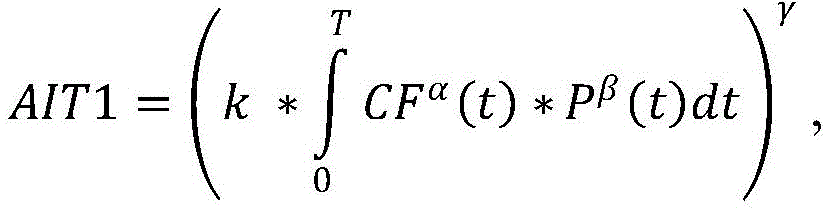
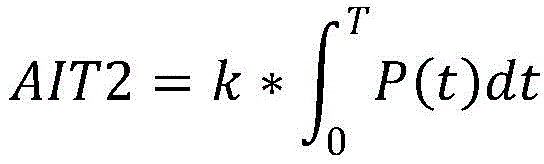
在消融治疗开始时,在导管引入步骤72中,医师26利用结合到系统20中的导管位置跟踪系统将导管28插入到心脏24中的期望位置中。At the beginning of the ablation treatment, in a
接下来,在电极-组织接触步骤74处,医师26实现电极尖端51与心内膜组织之间的物理接触。在接触力确定步骤76处,处理器41从导管28上的传感器接收接触力指示信号,并且确定瞬时接触力和/或确定接触力是否增加或降低。Next, at an electrode-
在冲洗步骤78处,处理器41响应于瞬时机械力的所确定的相应的增加或降低来控制冲洗模块55以增加或降低冲洗流速。例如,如果瞬时接触力已增加,则处理器41引导冲洗模块55来即时地增加冲洗流速,使得通过冲洗实现的热移除速率将匹配因电极与组织之间的较好物理接触而导致的沉积热的增加。另一方面,如果瞬时接触力已降低,即意味着较少热被沉积并且组织可能过冷,则处理器41引导冲洗模块55来即时地降低冲洗流速。At
在RF递送步骤80中,医师26利用在步骤70中选择的参数值来操作系统20,以便执行电极51的消融。系统20的显示器46可被配置成通过本领域已知的方法向医师26显示RF到电极的递送的进度。In
在RF递送过程期间,处理器41通过循环返回到步骤78利用N次重复测量结果来监测瞬时接触力。重复次数N通过表I中的消融时间和接触力采样率的乘积来计算,其中例如N=20。处理器41根据瞬时接触力响应性地命令冲洗模块55以通过重复步骤78来修改冲洗流速。During the RF delivery process, the
在消融能量监测步骤82处,在每次重复时,处理器41检查预设量的消融能量是否被递送。在消融结束步骤84处,处理器84在基于在步骤70中预设的功率和时间而产生的消融能量已被实现或所指示的时间已完成之后结束消融。At the ablation
图2所示的示例性流程图完全是为了概念清晰而选择的。接触力的采样率是以举例的方式引入的,其中可使用更高的速率。本实施方案还包括算法的附加步骤,诸如检查组织温度,这些附加步骤已被有意地从本文的公开内容中省略以便提供较简化的流程图。The exemplary flow diagram shown in Figure 2 has been chosen purely for conceptual clarity. The sampling rate of the contact force is introduced by way of example, where higher rates can be used. This embodiment also includes additional steps of the algorithm, such as checking tissue temperature, which have been intentionally omitted from the disclosure herein in order to provide a more simplified flow diagram.
尽管本文所述的实施方案主要涉及心脏应用,但本文所述的方法和系统也可用于消融身体的其他器官,诸如肾(例如,用于肾脏去神经)和肺。Although the embodiments described herein primarily relate to cardiac applications, the methods and systems described herein may also be used to ablate other organs of the body, such as the kidney (eg, for renal denervation) and the lung.
因此应当理解,上面描述的实施方案以举例的方式被引用,并且本发明不限于上文特定示出和描述的内容。相反,本发明的范围包括上文描述的各种特征的组合和子组合以及它们的变型和修改,本领域的技术人员在阅读上述描述时将会想到该变型和修改,并且该变型和修改并未在现有技术中公开。以引用方式并入本专利申请的文献被视为本申请的整体部分,不同的是如果这些并入的文献中限定的任何术语与本说明书中明确或隐含地给出的定义相冲突,则应仅考虑本说明书中的定义。It is therefore to be understood that the embodiments described above are cited by way of example and that the invention is not limited to what has been specifically shown and described above. Rather, the scope of the invention includes combinations and subcombinations of the various features described above, as well as variations and modifications thereof, which will occur to those skilled in the art upon reading the above description, and which do not disclosed in the prior art. Documents incorporated by reference into this patent application are considered an integral part of this application, except that if any term defined in such incorporated document conflicts with a definition expressly or implicitly given in this specification, then Only the definitions in this specification should be considered.
Claims (16)
Applications Claiming Priority (2)
| Application Number | Priority Date | Filing Date | Title |
|---|---|---|---|
| US16/403865 | 2019-05-06 | ||
| US16/403,865 US11452563B2 (en) | 2019-05-06 | 2019-05-06 | Adapting irrigation rate in radiofrequency (RF) ablation in response to contact-force variation |
Publications (2)
| Publication Number | Publication Date |
|---|---|
| CN111887974A true CN111887974A (en) | 2020-11-06 |
| CN111887974B CN111887974B (en) | 2025-09-05 |
Family
ID=70553911
Family Applications (1)
| Application Number | Title | Priority Date | Filing Date |
|---|---|---|---|
| CN202010373142.8A Active CN111887974B (en) | 2019-05-06 | 2020-05-06 | Adjusting irrigation rate in radiofrequency (RF) ablation in response to contact force changes |
Country Status (7)
| Country | Link |
|---|---|
| US (1) | US11452563B2 (en) |
| EP (1) | EP3735926B1 (en) |
| JP (1) | JP7493996B2 (en) |
| KR (1) | KR102902058B1 (en) |
| CN (1) | CN111887974B (en) |
| IL (1) | IL274005B2 (en) |
| RU (1) | RU2737762C1 (en) |
Families Citing this family (2)
| Publication number | Priority date | Publication date | Assignee | Title |
|---|---|---|---|---|
| US11771488B2 (en) | 2019-10-21 | 2023-10-03 | Biosense Webster (Israel) Ltd. | Ablation of lesions of low-medium depths using ultrahigh radiofrequency (RF) power for ultrashort durations |
| CN112791262B (en) * | 2020-12-31 | 2023-02-03 | 杭州堃博生物科技有限公司 | Radio frequency operation data regulation and control method and device and injection pump |
Citations (11)
| Publication number | Priority date | Publication date | Assignee | Title |
|---|---|---|---|---|
| US20110270246A1 (en) * | 2010-04-28 | 2011-11-03 | Clark Jeffrey L | Irrigated ablation catheter with improved fluid flow |
| CN102448400A (en) * | 2009-06-04 | 2012-05-09 | 皇家飞利浦电子股份有限公司 | Visualization apparatus |
| US20140276740A1 (en) * | 2013-03-15 | 2014-09-18 | Covidien Lp | Recirculating Cooling System For Energy Delivery Device |
| US20140336640A1 (en) * | 2012-03-20 | 2014-11-13 | Biosense Webster (Israel) Ltd. | Catheter with multiple irrigated electrodes and a force sensor |
| CN105286986A (en) * | 2014-07-30 | 2016-02-03 | 上海微创电生理医疗科技有限公司 | Catheter ablation device and electrode radiofrequency ablation catheter thereof |
| CN105992564A (en) * | 2013-11-29 | 2016-10-05 | Mc10股份有限公司 | Systems, methods, and devices having stretchable integrated circuitry for sensing and delivering therapy |
| CN106572884A (en) * | 2014-08-20 | 2017-04-19 | 柯惠有限合伙公司 | Systems and methods for spherical ablations |
| US20170181794A1 (en) * | 2015-12-24 | 2017-06-29 | Biosense Webster (Israel) Ltd. | Estimating a temperature during ablation |
| EP3292831A1 (en) * | 2016-09-12 | 2018-03-14 | Biosense Webster (Israel), Ltd. | Ablation catheter with strain gauges |
| EP3360499A1 (en) * | 2017-02-10 | 2018-08-15 | Biosense Webster (Israel) Ltd. | Estimation of tissue thickness |
| JP2018149301A (en) * | 2017-03-14 | 2018-09-27 | バイオセンス・ウエブスター・(イスラエル)・リミテッドBiosense Webster (Israel), Ltd. | Simultaneous control of power and perfusion during ablation |
Family Cites Families (10)
| Publication number | Priority date | Publication date | Assignee | Title |
|---|---|---|---|---|
| US6083223A (en) * | 1997-08-28 | 2000-07-04 | Baker; James A. | Methods and apparatus for welding blood vessels |
| US8298227B2 (en) | 2008-05-14 | 2012-10-30 | Endosense Sa | Temperature compensated strain sensing catheter |
| CN104605928B (en) | 2009-05-08 | 2018-01-05 | 圣犹达医疗用品国际控股有限公司 | System for controlling lesion size in catheter-based ablation therapy |
| US9962217B2 (en) | 2009-12-23 | 2018-05-08 | Biosense Webster (Israel) Ltd. | Estimation and mapping of ablation volume |
| US9220433B2 (en) | 2011-06-30 | 2015-12-29 | Biosense Webster (Israel), Ltd. | Catheter with variable arcuate distal section |
| RU2657960C2 (en) * | 2013-03-07 | 2018-06-18 | Артрокер Корпорейшн | Electrosurgical systems and methods |
| CA2896195A1 (en) | 2014-07-22 | 2016-01-22 | Biosense Webster (Israel) Ltd. | Catheter with multiple irrigated electrodes and a force sensor |
| WO2016090175A1 (en) * | 2014-12-03 | 2016-06-09 | Metavention, Inc. | Systems and methods for modulating nerves or other tissue |
| US10517670B2 (en) | 2015-07-16 | 2019-12-31 | Biosense Webster (Israel) Ltd. | Estimation of lesion size |
| WO2019195354A1 (en) * | 2018-04-04 | 2019-10-10 | Advanced Cooling Therapy, Inc. | Esophageal heat transfer devices and methods for cardiac tissue ablation |
-
2019
- 2019-05-06 US US16/403,865 patent/US11452563B2/en active Active
-
2020
- 2020-04-16 IL IL274005A patent/IL274005B2/en unknown
- 2020-04-27 RU RU2020114754A patent/RU2737762C1/en active
- 2020-04-28 KR KR1020200051563A patent/KR102902058B1/en active Active
- 2020-05-01 JP JP2020081011A patent/JP7493996B2/en active Active
- 2020-05-05 EP EP20173010.8A patent/EP3735926B1/en active Active
- 2020-05-06 CN CN202010373142.8A patent/CN111887974B/en active Active
Patent Citations (11)
| Publication number | Priority date | Publication date | Assignee | Title |
|---|---|---|---|---|
| CN102448400A (en) * | 2009-06-04 | 2012-05-09 | 皇家飞利浦电子股份有限公司 | Visualization apparatus |
| US20110270246A1 (en) * | 2010-04-28 | 2011-11-03 | Clark Jeffrey L | Irrigated ablation catheter with improved fluid flow |
| US20140336640A1 (en) * | 2012-03-20 | 2014-11-13 | Biosense Webster (Israel) Ltd. | Catheter with multiple irrigated electrodes and a force sensor |
| US20140276740A1 (en) * | 2013-03-15 | 2014-09-18 | Covidien Lp | Recirculating Cooling System For Energy Delivery Device |
| CN105992564A (en) * | 2013-11-29 | 2016-10-05 | Mc10股份有限公司 | Systems, methods, and devices having stretchable integrated circuitry for sensing and delivering therapy |
| CN105286986A (en) * | 2014-07-30 | 2016-02-03 | 上海微创电生理医疗科技有限公司 | Catheter ablation device and electrode radiofrequency ablation catheter thereof |
| CN106572884A (en) * | 2014-08-20 | 2017-04-19 | 柯惠有限合伙公司 | Systems and methods for spherical ablations |
| US20170181794A1 (en) * | 2015-12-24 | 2017-06-29 | Biosense Webster (Israel) Ltd. | Estimating a temperature during ablation |
| EP3292831A1 (en) * | 2016-09-12 | 2018-03-14 | Biosense Webster (Israel), Ltd. | Ablation catheter with strain gauges |
| EP3360499A1 (en) * | 2017-02-10 | 2018-08-15 | Biosense Webster (Israel) Ltd. | Estimation of tissue thickness |
| JP2018149301A (en) * | 2017-03-14 | 2018-09-27 | バイオセンス・ウエブスター・(イスラエル)・リミテッドBiosense Webster (Israel), Ltd. | Simultaneous control of power and perfusion during ablation |
Non-Patent Citations (1)
| Title |
|---|
| 齐琳: "《持续性房颤患者射频消融术后复发的超声心动图相关因素评价》", 《中国优秀硕士学位论文全文数据库》, 1 May 2019 (2019-05-01), pages 8 - 10 * |
Also Published As
| Publication number | Publication date |
|---|---|
| EP3735926B1 (en) | 2025-05-14 |
| RU2737762C1 (en) | 2020-12-02 |
| IL274005B1 (en) | 2023-03-01 |
| JP7493996B2 (en) | 2024-06-03 |
| IL274005B2 (en) | 2023-07-01 |
| KR20200130133A (en) | 2020-11-18 |
| IL274005A (en) | 2020-11-30 |
| KR102902058B1 (en) | 2025-12-22 |
| EP3735926A1 (en) | 2020-11-11 |
| US11452563B2 (en) | 2022-09-27 |
| US20200352641A1 (en) | 2020-11-12 |
| CN111887974B (en) | 2025-09-05 |
| JP2020182845A (en) | 2020-11-12 |
Similar Documents
| Publication | Publication Date | Title |
|---|---|---|
| JP7455610B2 (en) | Energy-guided radiofrequency (RF) ablation | |
| CN111887974B (en) | Adjusting irrigation rate in radiofrequency (RF) ablation in response to contact force changes | |
| EP3769710B1 (en) | Myocardial tissue ablation with narrow temperature variation | |
| EP3659536A1 (en) | Irrigation control during ablation | |
| EP3656325A2 (en) | Irrigation control during ablation | |
| US20240024018A1 (en) | Ablation of lesions of low-medium depths using ultrahigh radiofrequency (rf) power for ultrashort durations | |
| CN111616792B (en) | Lesion formation based on a predetermined curve of ablation energy amount and lesion size |
Legal Events
| Date | Code | Title | Description |
|---|---|---|---|
| PB01 | Publication | ||
| PB01 | Publication | ||
| SE01 | Entry into force of request for substantive examination | ||
| SE01 | Entry into force of request for substantive examination | ||
| GR01 | Patent grant | ||
| GR01 | Patent grant |